WO2020235362A1 - 分散物、及び、建築材料の補強材 - Google Patents
分散物、及び、建築材料の補強材 Download PDFInfo
- Publication number
- WO2020235362A1 WO2020235362A1 PCT/JP2020/018680 JP2020018680W WO2020235362A1 WO 2020235362 A1 WO2020235362 A1 WO 2020235362A1 JP 2020018680 W JP2020018680 W JP 2020018680W WO 2020235362 A1 WO2020235362 A1 WO 2020235362A1
- Authority
- WO
- WIPO (PCT)
- Prior art keywords
- dispersion
- mass
- polymer
- content
- present disclosure
- Prior art date
- Legal status (The legal status is an assumption and is not a legal conclusion. Google has not performed a legal analysis and makes no representation as to the accuracy of the status listed.)
- Ceased
Links
Images


Classifications
-
- C—CHEMISTRY; METALLURGY
- C01—INORGANIC CHEMISTRY
- C01F—COMPOUNDS OF THE METALS BERYLLIUM, MAGNESIUM, ALUMINIUM, CALCIUM, STRONTIUM, BARIUM, RADIUM, THORIUM, OR OF THE RARE-EARTH METALS
- C01F7/00—Compounds of aluminium
- C01F7/02—Aluminium oxide; Aluminium hydroxide; Aluminates
- C01F7/16—Preparation of alkaline-earth metal aluminates or magnesium aluminates; Aluminium oxide or hydroxide therefrom
-
- C—CHEMISTRY; METALLURGY
- C04—CEMENTS; CONCRETE; ARTIFICIAL STONE; CERAMICS; REFRACTORIES
- C04B—LIME, MAGNESIA; SLAG; CEMENTS; COMPOSITIONS THEREOF, e.g. MORTARS, CONCRETE OR LIKE BUILDING MATERIALS; ARTIFICIAL STONE; CERAMICS; REFRACTORIES; TREATMENT OF NATURAL STONE
- C04B41/00—After-treatment of mortars, concrete, artificial stone or ceramics; Treatment of natural stone
- C04B41/60—After-treatment of mortars, concrete, artificial stone or ceramics; Treatment of natural stone of only artificial stone
- C04B41/61—Coating or impregnation
- C04B41/65—Coating or impregnation with inorganic materials
-
- E—FIXED CONSTRUCTIONS
- E04—BUILDING
- E04G—SCAFFOLDING; FORMS; SHUTTERING; BUILDING IMPLEMENTS OR AIDS, OR THEIR USE; HANDLING BUILDING MATERIALS ON THE SITE; REPAIRING, BREAKING-UP OR OTHER WORK ON EXISTING BUILDINGS
- E04G23/00—Working measures on existing buildings
- E04G23/02—Repairing, e.g. filling cracks; Restoring; Altering; Enlarging
Definitions
- This disclosure relates to dispersions and reinforcing materials for building materials.
- Patent Document 1 describes a step of supplying a concrete modifier containing an alkali metal silicate and a first composition containing water to a concrete surface, and a step of supplying the concrete surface with a first composition. It has a step of supplying a concrete modifier containing an alkali metal silicate, a calcium salt and a second composition containing water, and the second composition is the concrete modifier and calcium.
- a concrete reinforcement method is described, which comprises a composition in which salt and salt are mixed in advance.
- Patent Document 2 describes an ultrafine calcium hydroxide slurry characterized in that the median diameter (d50) of the accumulated passage distribution is 0.5 ⁇ m or less, and d90-d10 of the integrated passage distribution is 0.5 ⁇ m or less. Is described.
- Patent Document 3 describes Agent A containing fine particle silica, a dispersant, and water having an average particle size of 1.0 ⁇ m or less measured using a laser diffraction type particle size distribution meter without performing ultrasonic dispersion treatment.
- An injection material composed of a calcium compound having an average particle size of 1.0 ⁇ m or less, a dispersant, and a water-containing agent B measured using a laser diffraction type particle size distribution meter without performing ultrasonic dispersion treatment is described. ing.
- Non-Patent Document 1 describes the evaluation of the pore size that controls the structural change and neutralization of concrete due to curing conditions.
- Patent Document 1 Japanese Patent Application Laid-Open No. 2012-241475
- Patent Document 2 Japanese Patent Application Laid-Open No. 2007-31212
- Patent Document 3 Japanese Patent Application Laid-Open No. 2011-26572
- Non-Patent Document 1 Japan Society of Civil Engineers Proceedings No. 718 / V-57, 59-68, 2002.11.
- An object to be solved by the embodiment of the present disclosure is to provide a dispersion of calcium hydroxide particles having a small average particle size and excellent dispersibility.
- An object to be solved by other embodiments of the present disclosure is to provide a reinforcing material for a building material containing the above dispersion.
- the means for solving the above problems include the following aspects. ⁇ 1>
- the volume average particle diameter in the dispersion measured by the small-angle X-ray scattering method is 1 nm to 50 nm, and the cumulative 90 volumes from the small diameter side in the particle size distribution in the dispersion measured by the small-angle X-ray scattering method.
- ⁇ 3> The dispersion according to ⁇ 1> or ⁇ 2>, which further contains a polymer having a sulfonic acid group.
- ⁇ 4> The dispersion according to ⁇ 3>, wherein the polymer further has a carboxylic acid group.
- ⁇ 5> The dispersion according to ⁇ 3> or ⁇ 4>, wherein the weight average molecular weight of the polymer is 3,000 or more.
- ⁇ 7> The dispersion according to ⁇ 4>, wherein the content of the carboxylic acid group in the polymer is 10% by mass or more with respect to the total mass of the polymer.
- ⁇ 8> The dispersion according to any one of ⁇ 3> to ⁇ 7>, wherein the content of the polymer is 0.05% by mass to 10% by mass with respect to the total mass of the dispersion.
- ⁇ 9> The dispersion according to any one of ⁇ 1> to ⁇ 8>, wherein the content of the calcium hydroxide particles is 0.18% by mass to 10% by mass with respect to the total mass of the dispersion. ..
- ⁇ 10> The dispersion according to any one of ⁇ 1> to ⁇ 9>, wherein the dispersion medium is water or a mixture of water and ethylene glycol.
- ⁇ 12> A reinforcing material for a building material containing the dispersion according to any one of ⁇ 1> to ⁇ 11>.
- ⁇ 13> The reinforcing material for building materials according to ⁇ 12>, which is a reinforcing material for concrete.
- the embodiment of the present disclosure it is possible to provide a dispersion of calcium hydroxide particles having a small average particle size and excellent dispersibility. Further, according to another embodiment of the present disclosure, it is possible to provide a reinforcing material for a building material containing the above dispersion.
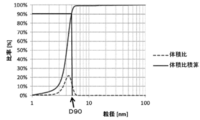
- FIG. 1 It is a flow chart which shows the preferable embodiment of the manufacturing method of the dispersion which concerns on this disclosure. It is a schematic diagram which shows the measurement data of the particle size distribution of the calcium hydroxide particle obtained by the small angle X-ray scattering method in the dispersion of Example 1. FIG. It is a schematic diagram which shows an example of the pH measurement curve at the time of measuring the content of a carboxylic acid group.
- total solid content refers to the total mass of the components excluding the dispersion medium from the total composition of the dispersion.
- solid content is a component excluding the dispersion medium as described above, and may be, for example, a solid or a liquid at 25 ° C.
- (meth) acrylic represents both acrylic and methacrylic, or either
- (meth) acrylate represents both acrylate and methacrylate, or either.
- the amount of each component in the composition is the sum of the plurality of applicable substances present in the composition unless otherwise specified, when a plurality of substances corresponding to each component are present in the composition. Means quantity.
- the term “process” in the present specification is not limited to an independent process, and even if it cannot be clearly distinguished from other processes, the term “process” will be used as long as the intended purpose of the process is achieved. included.
- % by mass and % by weight are synonymous, and “parts by mass” and “parts by weight” are synonymous.
- a combination of two or more preferred embodiments is a more preferred embodiment.
- the dispersion according to the present disclosure has a volume average particle diameter of 1 nm to 50 nm in the dispersion measured by the small-angle X-ray scattering method, and has a small diameter in the particle size distribution in the dispersion measured by the small-angle X-ray scattering method. It contains calcium hydroxide particles having a particle diameter D90 of 100 nm or less, which is a cumulative 90% by volume from the side, and a dispersion medium.
- the composition containing a calcium salt described in Patent Document 1 is a saturated aqueous solution of calcium hydroxide, and its content concentration is as low as 0.17 g / 100 cm 3, and the composition is concentrated to obtain a higher reinforcing effect. Calcium is difficult.
- the present inventor has found that the calcium hydroxide concentration in the liquid can be increased by forming calcium hydroxide particles and dispersing them in the aqueous solution.
- Non-Patent Document 1 describes the evaluation of the pore size that controls the structural change and neutralization of concrete under curing conditions, and the main pore size is as small as 100 nm or less. It is shown. Therefore, in order to obtain a higher reinforcing effect, it is necessary to penetrate the composition deeper. For this purpose, the present inventor has found that it is important to make the particle size of the calcium hydroxide particles sufficiently smaller than the pore size of the concrete to be injected.
- the range value of the median diameter is 0.5 ⁇ m, which is larger than the pore diameter of concrete or the like, and although the particle size distribution of calcium hydroxide particles is mentioned, the particle size such as d90 is mentioned. No mention is made of large diameter zones in the distribution. If the ratio of the large particle size to the pore size of concrete or the like is large, there is a concern that they will block the pores of the concrete or the like and the smaller particles will not penetrate deep enough. Further, also in Patent Document 3, the range value of the average particle size is as large as 1.0 ⁇ m, and the particle size distribution and the threshold value of the large diameter are not mentioned at all.
- Patent Document 2 or Patent Document 3 when obtaining a calcium hydroxide particle dispersion having a small particle size, a commercially available calcium hydroxide particle having a large particle size is crushed by a bead mill or the like. It is usually crushed into small pieces, and is generally called the breakdown method. However, in this method, the particle size distribution is wide, and there is a high possibility that particles having a large diameter remain in a certain proportion or more. Further, in order to make the average particle size sufficiently smaller than the pore diameter of concrete or the like, a very large amount of energy and a long processing time are required, which is not industrially practical.
- the calcium hydroxide particles are aggregated. It was found that it can suppress calcium hydroxide and has excellent dispersibility. Further, since the volume average particle diameter of the calcium hydroxide particles is small, the permeability to various materials is excellent, so that the reinforcing effect is excellent, and it can be suitably used as a reinforcing material of a building material in particular.
- the dispersion according to the present disclosure may be in the form of a liquid or a paste, depending on the content of calcium hydroxide particles and the like.
- the liquid dispersion according to the present disclosure is also referred to as the dispersion according to the present disclosure.
- the "sulfonic acid base” refers to a salt of a sulfonic acid group (-SO 3 M, M represents a counter cation other than a hydrogen atom (proton)). The same applies to the carboxylic acid base.
- the dispersion according to the present disclosure has a volume average particle diameter of 1 nm to 50 nm in the dispersion measured by the small-angle X-ray scattering method, and has a small diameter in the particle size distribution in the dispersion measured by the small-angle X-ray scattering method. It contains calcium hydroxide particles having a particle diameter D90 of 100 nm or less, which is a cumulative 90% by volume from the side.
- the volume average particle diameter of the calcium hydroxide particles contained in the dispersion according to the present disclosure is preferably 1 nm to 25 nm, more preferably 1 nm to 20 nm, and 1 nm from the viewpoint of dispersibility and permeability.
- the particle size D90 of the calcium hydroxide particles contained in the dispersion according to the present disclosure is preferably 50 nm or less, more preferably 30 nm or less, and more preferably 20 nm or less from the viewpoint of dispersibility and permeability. Is more preferable, and 10 nm or less is particularly preferable.
- the particle size D90 of the calcium hydroxide particles contained in the dispersion according to the present disclosure may be, for example, 1 nm or more, or 3 nm or more.
- the volume average particle diameter of the calcium hydroxide particles is 1 nm to 20 nm and the D90 is 50 nm or less.
- the volume average particle diameter in the dispersion measured by the small-angle X-ray scattering method and the particle size distribution in the dispersion measured by the small-angle X-ray scattering method in the present disclosure show a cumulative 90% by volume from the small diameter side.
- the measuring method of D90 shall be as follows.
- the dispersion is measured with a small-angle X-ray scatterer NANOSTAR manufactured by BRUKER.
- NANOSTAR manufactured by BRUKER
- ultrapure water is measured as a blank solution and subtracted as a background from the measurement results.
- the particle size distribution is calculated by the maximum entropy method.
- the volume average particle size is the arithmetic mean particle size (MV) of the obtained measurement data.
- D90 is a particle diameter at a volume ratio integrated value of 90% of the particle diameter.
- the calcium hydroxide particles may contain voids, a dispersion medium such as water, a carbonate of calcium, a metal salt, or the like.
- the content of calcium hydroxide in the calcium hydroxide particles is preferably 80% by mass or more, more preferably 90% by mass or more, and more preferably 95% by mass or more, based on the total mass of the particles. Especially preferable.
- the content of the calcium hydroxide particles in the dispersion according to the present disclosure can be appropriately set according to the intended use, but from the viewpoint of dispersibility, 0.01% by mass to 20% by mass with respect to the total mass of the dispersion. It is preferably by mass, more preferably 0.05% by mass to 15% by mass, further preferably 0.18% by mass to 10% by mass, and 0.40% by mass to 10% by mass. It is particularly preferable to have.
- the dispersion according to the present disclosure includes a dispersion medium.
- the dispersion medium in the present disclosure is preferably a compound having a molecular weight of 1,000 or less, and more preferably a compound having a molecular weight of 500 or less.
- the dispersion medium is not particularly limited, and a known dispersion medium can be used.
- As the dispersion medium for example, water, a water-soluble organic solvent and the like are preferably mentioned.
- the water-soluble organic solvent examples include alcohol compounds such as methanol, ethanol, n-propanol, isopropanol, n-butanol, isobutanol and sec-butanol; glycols such as ethylene glycol, propylene glycol, diethylene glycol, triethylene glycol and dipropylene glycol.
- the dispersion medium preferably contains water from the viewpoint of dispersibility, and preferably contains ethylene glycol from the viewpoint of increasing the content of calcium hydroxide particles.
- the dispersion according to the present disclosure has a total content of at least one compound selected from the group consisting of water and ethylene glycol of 50 mass by mass with respect to 100 parts by mass of the total content of the dispersion medium. % Or more, more preferably 80 parts by mass or more, even more preferably 90 parts by mass or more, and 100 parts by mass, that is, the dispersion medium comprises water and ethylene glycol. It is particularly preferred that it is at least one compound selected from the group.
- the dispersion medium is preferably water or a mixture of water and ethylene glycol, and more preferably a mixture of water and ethylene glycol.
- the dispersion according to the present disclosure may have one type of dispersion medium alone or two or more types of dispersion medium.
- the content of the dispersion medium in the dispersion according to the present disclosure is preferably 50% by mass to 99.98% by mass, and 70% by mass to 99.98% by mass, based on the total mass of the dispersion. It is more preferably 9% by mass, and particularly preferably 80% by mass to 99.4% by mass.
- the dispersion according to the present disclosure preferably contains a dispersant from the viewpoints of dispersibility, storage stability, and particle size control of calcium hydroxide particles.
- the dispersant is not particularly limited, and is, for example, a styrene resin (styrene- (meth) acrylic acid copolymer, styrene-maleic anhydride copolymer, etc.), an acrylic resin (methyl (meth) acrylate- (.
- examples of the dispersant include a surfactant.
- an anionic surfactant is preferably mentioned, and an alkyl sulfate compound
- the dispersion according to the present disclosure further includes, as the dispersant, a dispersant having a sulfonic acid group from the viewpoint of suppressing aggregation of calcium hydroxide particles and easily achieving the volume average particle size and the range of D90. It is preferable to contain it, and it is more preferable to further contain a polymer having a sulfonic acid group. Further, in the dispersion according to the present disclosure, at least a part or all of the sulfonic acid groups in the dispersant or the polymer may be sulfonic acid bases.
- the polymer having a sulfonic acid group may have either a sulfonic acid group or a sulfonic acid base, or both, but from the viewpoint of dispersibility, it has at least a sulfonic acid base. It is preferable to do so.
- the salt of the sulfonic acid base is not particularly limited, but is preferably an alkali metal salt or an ammonium salt, and more preferably an alkali metal salt, from the viewpoint of aggregation inhibitory property and storage stability.
- the polymer having a sulfonic acid group further has a carboxylic acid group (carboxy group) from the viewpoint of suppressing aggregation of calcium hydroxide particles and easily achieving the volume average particle size and the range of D90.
- the dispersion according to the present disclosure contains a sulfonic acid group and a carboxylic acid group as the dispersant from the viewpoint of suppressing aggregation of calcium hydroxide particles and easily achieving the volume average particle size and the range of D90. It is preferable to further contain a polymer having.
- at least a part or all of the carboxylic acid groups in the polymer may be carboxylic acid bases.
- the polymer having a sulfonic acid group and a carboxylic acid group may have either a carboxylic acid group or a carboxylic acid base, or may have both.
- the salt of the carboxylic acid base is not particularly limited, but is preferably an alkali metal salt or an ammonium salt, and more preferably an alkali metal salt, from the viewpoint of aggregation inhibitory property and storage stability.
- the above-mentioned polymer having a sulfonic acid group is a styrene resin (styrene- (meth) acrylic acid copolymer, styrene-maleic anhydride copolymer, etc.) and acrylic resin ((meth) acrylic acid) having a sulfonic acid group.
- styrene resin styrene- (meth) acrylic acid copolymer, styrene-maleic anhydride copolymer, etc.
- acrylic resin ((meth) acrylic acid) having a sulfonic acid group.
- Methyl- (meth) acrylic acid copolymer, poly (meth) acrylic acid, etc.) water-soluble urethane resin, water-soluble acrylic urethane resin, water-soluble epoxy resin, water-soluble polyester resin, cellulose derivative, natural polymer, etc. Be done.
- the polymer is preferably an acrylic resin having a sulfonic acid group from the viewpoint of dispersibility, and more preferably a copolymer of (meth) acrylic acid having a sulfonic acid group or a salt thereof. preferable.
- the polymer having a sulfonic acid group is preferably a polymer having a structural repeating unit having a sulfonic acid group, and is an acrylic resin having a structural repeating unit having a sulfonic acid group from the viewpoint of dispersibility. It is more preferable that the acrylic resin has a structural repeating unit having a sulfonic acid group and a structural repeating unit having a carboxylic acid group, and a structural repeating unit having a sulfonic acid group and (meth) acrylic acid or a (meth) acrylic acid thereof. It is particularly preferable that the acrylic resin has a structural repeating unit formed of a salt.
- the content of the sulfonic acid group in the polymer having a sulfonic acid group is preferably 3% by mass to 30% by mass, and 5% by mass to 25% by mass, based on the total mass of the polymer. It is more preferably mass%, and particularly preferably 10 mass% to 20 mass%. Further, the content of the sulfonic acid group in the polymer having the sulfonic acid group is the polymer from the viewpoint of suppressing aggregation of calcium hydroxide particles and easily achieving the volume average particle size and the range of D90. It is preferably 12% by mass or more based on the total mass of the above.
- the content and the content of the sulfonic acid group in the polymer in the present disclosure that the total weight of the polymer was converted all sulfonic acid groups and sulfonic acid salt in which the polymer has a -SO 3 H It is a mass ratio.
- the content of sulfonic acid groups in the dispersant shall be measured and calculated by the method shown below. Weigh 100 ⁇ L of the dispersant sample and add 5 mL of nitric acid. This is incinerated at 260 ° C. in a quartz container with a microwave device (UltraWave manufactured by Milestone General). Pure water is added to this so as to be 40 mL, which is diluted 10 times, and the amount of sulfur is quantified by an inductively coupled plasma emission spectrophotometer (ICP-OES, Optima 7300DV manufactured by PerkinElmer). The content of the sulfonic acid group in the dispersant is calculated from this amount, and the content of the sulfonic acid group is calculated by dividing by the total amount of the dispersant.
- ICP-OES inductively coupled plasma emission spectrophotometer
- the content of the carboxylic acid group in the polymer having the sulfonic acid group and the carboxylic acid group is preferably 5% by mass to 30% by mass with respect to the total mass of the polymer. It is more preferably from mass% to 25% by mass, and particularly preferably from 15% by mass to 25% by mass. Further, the content of the carboxylic acid group in the polymer having the sulfonic acid group and the carboxylic acid group is from the viewpoint of suppressing aggregation of calcium hydroxide particles and easily achieving the volume average particle size and the range of D90. , 10% by mass or more is preferable with respect to the total mass of the above polymer.
- the content of the carboxylic acid group in the polymer in the present disclosure is the content mass ratio of all the carboxylic acid groups and the carboxylic acid bases of the polymer as -COOH to the total mass of the polymer. Is.
- the content of the carboxylic acid group in the dispersant shall be measured and calculated by the method shown below.
- the dispersant sample is adjusted with pure water so that the solid content concentration is 3% by mass, and then a 1 mol / L sodium hydroxide aqueous solution is added to raise the pH to 12.0.
- the pH value is recorded (PH-230SD manufactured by Mother Tool) while adding 1 mol / L hydrochloric acid in an amount of 200 ⁇ L each to obtain a pH measurement curve as shown in FIG.
- the weight average molecular weight of the polymer having a sulfonic acid group (or the dispersant) is preferably 1,000 or more, more preferably 2,000 or more, and 3,000. The above is more preferable, and 4,500 or more is particularly preferable. From the viewpoint of dispersibility, the weight average molecular weight is preferably 500,000 or less, more preferably 300,000 or less, further preferably 200,000 or less, and 100,000 or less. Is particularly preferable. Unless otherwise specified, the weight average molecular weight (Mw) of the polymer in the present disclosure shall be measured by gel permeation chromatography (GPC).
- polymer having a sulfonic acid group a commercially available product can also be used.
- examples thereof include GH-234, GL-246, GL-366, and GH-004; of the aqualic series made of catalyst.
- the above-mentioned dispersant may be used alone or in combination of two or more.
- the polymer having a sulfonic acid group may be used alone or in combination of two or more.
- the content of the dispersant in the dispersion according to the present disclosure preferably the content of the polymer having a sulfonic acid group, is 0.01% by mass to 50% by mass with respect to the total mass of the dispersion from the viewpoint of dispersibility. It is preferably 0.02% by mass to 30% by mass, more preferably 0.05% by mass to 20% by mass, and more preferably 0.05% by mass to 10% by mass. Is particularly preferable.
- the dispersion according to the present disclosure may contain a dispersant other than the above-mentioned polymer as the dispersant, but the content of the dispersant other than the above-mentioned polymer is the above in terms of mass ratio from the viewpoint of dispersibility. It is preferably less than the content of the polymer, more preferably less than 1/5 of the content of the polymer, and particularly preferably not containing a dispersant other than the polymer.
- the dispersion according to the present disclosure may contain other components other than the above.
- the other components are not particularly limited and may be appropriately selected depending on the intended use.
- known additives such as ultraviolet absorbers, preservatives, pH adjusters, defoamers, surfactants and colorants. Can be used.
- the content of sodium ions in the dispersion according to the present disclosure is preferably 2,000 ppm or less with respect to the total mass of the dispersion from the viewpoint of dispersibility and storage stability. It is more preferably 000 ppm or less, and particularly preferably 750 ppm or less.
- the content of sodium ions in the dispersion shall be measured and calculated by the method shown below.
- ICP-OES Optima 7300 DV manufactured by PerkinElmer
- the dispersion according to the present disclosure it is preferable that at least calcium hydroxide is dissolved in the dispersion medium from the viewpoint of dispersibility and qualitative storage.
- concentration of calcium hydroxide dissolved in the dispersion medium in the dispersion according to the present disclosure is not particularly limited, but from the viewpoint of dispersibility and qualitative storage, the saturation concentration is 80% by mass to 100% by mass. It is preferable that the saturation concentration is 90% by mass to 100% by mass, and more preferably.
- the method for producing the dispersion according to the present disclosure is not particularly limited as long as it is a method for producing the dispersion according to the present disclosure.
- the batch A method for producing a dispersion by a method may be used, but a method for producing a dispersion using a flow reactor is preferable.
- a solution containing a calcium salt compound and the above dispersion medium hereinafter, also referred to as “calcium salt-containing solution”
- a basic compound hereinafter, also referred to as “basic compound-containing solution”
- the method includes a step of reacting a solution containing a dispersion medium (hereinafter, also referred to as “basic compound-containing solution”) with a flow-type reactor.
- Calcium salt compounds and basic compounds are preferably used as raw materials for the calcium hydroxide particles in the dispersion according to the present disclosure.
- Calcium hydroxide can be easily obtained by reacting a calcium salt compound with a basic compound.
- the calcium salt compound include calcium carbonate, calcium lactate, calcium phosphate, calcium gluconate, calcium acetate, calcium formate, and calcium nitrate. Among these, calcium carbonate, calcium acetate, calcium formate, or calcium nitrate are preferably mentioned, and calcium acetate is more preferably mentioned.
- the calcium salt compound is preferably a water-soluble calcium salt compound.
- the water-soluble calcium salt compound in the present disclosure means a compound having a solubility in water at 25 ° C. of 1% by mass or more.
- the content of the calcium salt compound contained in the calcium salt-containing solution is not particularly limited, and can be appropriately selected in consideration of the amount of calcium hydroxide particles in the obtained dispersion and the like.
- the dispersion medium contained in the calcium salt-containing solution is the above-mentioned dispersion medium, and the preferred embodiment is also the same.
- the content of the dispersion medium contained in the calcium salt-containing solution is not particularly limited, and can be appropriately selected in consideration of the amount of the dispersion medium in the basic compound-containing solution and the like. Above all, it is preferable to contain water as the dispersion medium.
- the calcium salt-containing solution may contain the above-mentioned dispersant.
- a preferred embodiment of the dispersant is the same as the dispersant described above.
- the content of the dispersant contained in the calcium salt-containing solution is not particularly limited, and can be appropriately selected in consideration of the amount of the dispersant in the obtained dispersion, the amount of the dispersant in the basic compound-containing solution, and the like. ..
- the basic compound is not particularly limited as long as it can react with the calcium salt compound to produce calcium hydroxide, but metal hydroxides are preferable, and alkali metal hydroxides are more preferable. Therefore, lithium hydroxide is particularly preferable.
- the content of the calcium salt compound contained in the calcium salt-containing solution is not particularly limited, but is relative to the molar equivalent of the basic compound required to react with 1 molar equivalent of the calcium salt compound to produce calcium hydroxide. It is preferably 0.8 times molar equivalent to 1.2 times molar equivalent, more preferably 0.85 times molar equivalent to 1.15 times molar equivalent, and 0.9 times molar equivalent to 1.1 times molar equivalent. It is particularly preferably molar equivalent. Specifically, for example, 1 molar equivalent of calcium acetate reacts with 2 molar equivalents of lithium hydroxide to produce calcium hydroxide.
- the dispersion medium contained in the basic compound-containing solution is the above-mentioned dispersion medium, and the preferred embodiment is also the same.
- the content of the dispersion medium contained in the basic compound-containing solution is not particularly limited, and can be appropriately selected in consideration of the amount of the dispersion medium in the calcium salt-containing solution and the like. Above all, it is preferable to contain water as the dispersion medium.
- the dispersant contained in the basic compound-containing solution is the above-mentioned dispersant, and the preferred embodiment is also the same.
- the content of the dispersant contained in the basic compound-containing solution is not particularly limited, and should be appropriately selected in consideration of the amount of the dispersant in the obtained dispersion, the amount of the dispersant in the calcium salt-containing solution, and the like. Can be done.
- each component in the calcium salt-containing solution and the basic compound-containing solution may be used alone or in combination of two or more.
- the flow type reaction apparatus is not particularly limited as long as it is an apparatus in which a calcium salt-containing solution and a basic compound-containing solution are reacted while being fed, but a T-shaped mixer is preferable.
- the T-shaped mixer is a structure of a T-shaped tube.
- the one of the embodiment of FIG. 1 is preferably used.
- the opening to which the first flow path is connected is any one.
- the connecting portion to which the second flow path is connected may be any of two openings excluding the opening to which the first flow path is connected. Further, it is preferable that the first flow path and the second flow path are each connected to the openings of the T-shaped mixer facing each other.
- the material of the T-shaped mixer is not particularly limited, and for example, perfluoroalkoxy alkane (PFA), Teflon (registered trademark), aromatic polyetherketone resin, stainless steel, copper (or its alloy), nickel (or its alloy), etc. ), Titanium (or its alloy), quartz glass, lime soda glass, and other materials can be used.
- the cross-sectional shape of the opening of the T-shaped mixer is not particularly limited, and may be a polygonal shape such as a rectangle or a square as well as a circular shape or an elliptical shape. From the viewpoint of making it difficult for the liquid to stay inside the mixer, it is more preferable that the cross-sectional shape of the tube of the T-shaped mixer is circular.
- the equivalent diameter of the opening of the T-shaped mixer is preferably 0.1 mm to 5 mm, more preferably 0.2 mm to 2 mm from the viewpoint of mixing performance, pressure loss, and the like.
- the equivalent diameters of the three openings of the T-shaped mixer may be the same or different.
- Equivalent diameter also called equivalent (straight) diameter, is a term used in the field of mechanical engineering. When a pipe or flow path having an arbitrary cross-sectional shape in a pipe or a circular pipe equivalent to an opening is assumed, the diameter of the cross section in the pipe of the equivalent circular pipe is called an equivalent diameter.
- an equivalent diameter for example, Maruzen Co., Ltd., 1997, "Mechanical Engineering Dictionary” edited by the Japan Society of Mechanical Engineers can be referred to.
- T-shaped mixers that can be used in the present disclosure include, for example, Union Tea (manufactured by Swagelok), Low Debt Volume Type Union Tea (manufactured by Swagelok), and Tea Union (manufactured by Upchurch). , 3-way joint (manufactured by Tokyo Rika Kikai Co., Ltd.), micro volume connector (manufactured by VICI), and nano volume fitting (manufactured by VICI).
- the dispersion according to the present disclosure can be used for various uses using calcium hydroxide, for example, reinforcing materials for building materials such as concrete, mortar, and plaster, neutralizing agents for acidified rivers and soil, and agglomeration.
- Agents agents for removing sulfur oxides in exhaust gas, water conditioners for adjusting calcium hardness, water-based inks, deodorants, paints, cement admixtures, corrosion inhibitors for machine tools, antibacterial agents, lubricants, and difficulties. Used as a fuel filler, etc. Above all, it can be suitably used as a reinforcing material for building materials, and can be more preferably used as a reinforcing material for concrete.
- the reinforcing material for building materials according to the present disclosure contains the dispersion according to the present disclosure.
- the building material include concrete, mortar, plaster and the like, and concrete is preferable. That is, the reinforcing material for building materials according to the present disclosure is preferably a reinforcing material for concrete.
- the reinforcing material for building materials according to the present disclosure may further contain an alkali metal silicate. Further, optionally, an alkali metal source, an acid, a colorant, a filler, water, a solvent and the like may be further contained. Further, when reinforcing the building material, the dispersion according to the present disclosure (reinforcing material for the building material according to the present disclosure) and the alkali metal silicate may be used sequentially or alternately.
- the alkali metal silicate can be used in the present disclosure, lithium, sodium, and cationic components of an alkali metal such as potassium, orthosilicate anion (SiO 4 4-), metasilicate anion (SiO 3 2-), meta disilicate (Si 2 O 5 2-), silicate (SiO 2) units include a plurality coupled to the alkali metal silicate in combination and that forms the anionic species.
- the reinforcing material of the building material according to the present disclosure may further contain a silane-based insulating material.
- an alkali metal source, an acid, a colorant, a filler, water, a solvent and the like may be further contained.
- silane-based insulating material examples include alkylalkoxysilane, alkylalkoxysiloxane, isobutyltriethoxysilane, octylriethoxysilane, low-viscosity propylethoxysiloxane, or those containing two or more of these. These condensates can be adopted. Further, in some cases, a compound having an amino group, for example, aminosilane, aminopropyltriethoxysilane, or an aminoalcohol or diethylaminoethanol that can be mixed with the silane system used, can be mixed with a long-chain carboxylic acid, or the above.
- an insulating agent by mixing with a calcium salt or magnesium salt of a carboxylic acid or calcium dinonylnaphthalinsulfonate and optionally adding or adding other components (for example, water, a solvent or a processing aid). Can be adopted. Further, by mixing these components well or stirring them together, those containing organosilane, organosiloxane or other components can be adopted. Further, when reinforcing the building material, the dispersion according to the present disclosure (reinforcing material for the building material according to the present disclosure) and the silane-based insulating material may be used sequentially or alternately.
- the method for reinforcing the building material by using the reinforcing material for the building material according to the present disclosure is not particularly limited, but as an example, the first composition containing an alkali metal silicate and water with respect to the surface of the building material.
- a method including a first step of supplying a material and a second step of supplying a reinforcing material (second composition) for a building material according to the present disclosure to a concrete surface is preferably mentioned.
- a method including a first step of supplying a material and a second step of supplying a reinforcing material (second composition) for a building material according to the present disclosure to a concrete surface is preferably mentioned.
- the surface of the building material is supplied with the first composition containing an alkali metal silicate and water.
- the method for preparing the first composition is not particularly limited, and examples thereof include a method in which the alkali metal silicate is diluted with water and stirred well.
- the method of supplying the building material to the surface can be appropriately changed according to the object to which the building material is applied, and may be applied to the surface or injected into cracks or the like.
- the first composition is applied with a sprayer, a brush, a roller or the like (selected according to the construction site situation) and penetrated into the surface of the building material.
- a pressure means such as a syringe to inject into the crack.
- the reinforcing material (second composition) of the building material according to the present disclosure is supplied to the surface of the building material.
- the reinforcing material of the building material according to the present disclosure used in the second step preferably further contains an alkali metal silicate. A higher construction effect can be exhibited by using the mixture in advance with an alkali metal silicate in the second step.
- the dispersion according to the present disclosure is permeated in the first step, and the composition containing alkali metal silicate and water is permeated in the second step;
- a method in which the composition containing a silane-based insulating material and water is permeated in the second step, etc. Is preferably mentioned.
- the flow type reaction system 100 having the configuration shown in FIG. 1 was constructed.
- 1 is a first flow path
- 2 is a second flow path
- 3 is a confluence area
- 3a is a T-shaped mixer
- 4 is a reaction flow path
- 5 is a calcium salt-containing solution introducing means (syringe pump)
- 6 Is a basic compound-containing solution introducing means (syringe pump)
- 7 is a recovery container
- 8 is a heating region
- 9 is a cooling region
- P is a pressure gauge.
- a SUS316 tube was used as the first flow path 1, the second flow path 2, and the reaction flow path 4.
- a syringe pump PLD ULTRA manufactured by HARVARD
- PLD ULTRA manufactured by HARVARD
- each syringe pump was filled with a syringe (volume 100 mL) containing a calcium salt-containing aqueous solution and basic.
- a syringe (volume 100 mL) containing a compound-containing aqueous solution was attached to each.
- the tip of the syringe containing the calcium salt-containing solution was connected to a first flow path having an outer diameter of 1/8 inch (In) (3.18 mm) and an inner diameter of 2.17 mm. Further, the tip of the syringe containing the basic compound-containing solution was connected to a second flow path having an outer diameter of 1/8 In (3.18 mm) and an inner diameter of 2.17 mm.
- a pressure gauge P was installed in the second flow path 2 so that the pressure in the flow path during liquid feeding could be measured.
- the downstream region of the first flow path 1 has a structure in which a pipe having a length of 50 cm, an outer diameter of 1/16 In (1.59 mm), and an inner diameter of 1 mm is wound in a coil shape, and is arranged in the heating region 8.
- the heating region 8 is an oil bath in this embodiment.
- the downstream region of the second flow path 2 has a structure in which a pipe having a length of 50 cm, an outer diameter of 1/16 In (1.59 mm), and an inner diameter of 1 mm is wound in a coil shape and arranged in the heating region 8. I set it up.
- a T-shaped mixer 3a (manufactured by Upchrch) having an inner diameter of 0.5 mm is installed at the downstream end of the first flow path 1 and the second flow path 2 so that the calcium salt-containing solution and the basic compound-containing solution collide head-on.
- Each flow path was connected to an opening (A and B) of a T-shaped mixer (trade name: T-Union, manufactured by Upchurch).
- the remaining opening O of the T-shaped mixer is connected to a flow path having a coiled length of 2 m, an outer diameter of 1/8 In (3.18 mm), and an inner diameter of 2.17 mm, and this flow path is connected to the heating region 8 (heating region 8).
- ⁇ Method of measuring the content of sulfonic acid groups in the dispersant 100 ⁇ L of the dispersant sample was weighed and 5 mL of nitric acid was added. This was incinerated at 260 ° C. in a quartz container with a microwave device (UltraWave manufactured by Milestone General). Pure water was added to this so as to be 40 mL, and this was diluted 10-fold, and the amount of sulfur was quantified by ICP-OES (Optima 7300DV manufactured by PerkinElmer). The content of the sulfonic acid group in the dispersant was calculated from this amount, and the content of the sulfonic acid group was calculated by dividing by the total amount of the dispersant.
- ICP-OES Optima 7300DV manufactured by PerkinElmer
- Example 1 Calcium acetate solution (calcium acetate solution) by dissolving calcium acetate and a dispersant (acrylic acid copolymer having a sodium sulfonate base (-SO 3 Na), A-6012 manufactured by Toa Synthesis Co., Ltd., Mw: 10,000) in a solvent. Calcium acetate concentration 0.114 mol / L, dispersant concentration 2.0% by mass) was prepared. Further, a lithium hydroxide solution (lithium hydroxide concentration 0.226 mol / L) was prepared by dissolving lithium hydroxide and a dispersant in a solvent.
- a dispersant acrylic acid copolymer having a sodium sulfonate base (-SO 3 Na), A-6012 manufactured by Toa Synthesis Co., Ltd., Mw: 10,000
- 100 mL of the above calcium acetate aqueous solution and 100 mL of the sodium hydroxide aqueous solution were filled in glass syringes (volume 100 mL), respectively, and set in the syringe pump of the flow type reaction system shown in FIG. Each solution was sent at 2.5 mL / min.
- the temperature of the heating region 8 was set to 25 ° C.
- 100 mL of the liquid (dispersion containing dispersed particles 1) that had passed through the reaction channel was recovered in a recovery container (polyethylene container having a volume of 250 mL).
- the content of the dispersed particles 1 (calcium hydroxide particles) in the dispersion was 0.42% by mass.
- Comparative Example 1 Calcium hydroxide particles (M-300 manufactured by Inoue Mitsuyoshi Shoten Co., Ltd., particle size 5 ⁇ m) were added to water so that the content was 0.42% by mass and the content of A-6012 was 2% by mass. A total of 0.7 parts by mass was placed in a microtube (T334-5SPR, 1.5 mL, manufactured by AS ONE Corporation). Further, 0.3 parts by mass of zirconia beads (YTZ-0.3, 0.3 mm diameter manufactured by Nikkato Co., Ltd.) were added thereto, and the delta mixer (Se-08 manufactured by Titec Co., Ltd.) was used at 2,800 rpm for 8 Shake for hours. Zirconia beads were removed from this to obtain a dispersion of Comparative Example 1.
- Example 2 to 22 and Comparative Examples 2 to 13 As shown in Table 1, a dispersion of calcium hydroxide particles was obtained in the same manner as in Example 1 except that each component and its amount were changed.
- Example 23 Method of preparing calcium hydroxide particle-containing dispersion by batch synthesis- Calcium acetate solution (calcium acetate solution) by dissolving calcium acetate and a dispersant (acrylic acid copolymer having a sodium sulfonate base (-SO 3 Na), A-6012 manufactured by Toa Synthetic Co., Ltd., Mw: 10,000) in a solvent. Calcium acetate concentration 0.114 mol / L, dispersant concentration 2.0% by mass) was prepared. Further, a lithium hydroxide solution (lithium hydroxide concentration 0.226 mol / L) was prepared by dissolving lithium hydroxide and a dispersant in a solvent.
- a dispersant acrylic acid copolymer having a sodium sulfonate base (-SO 3 Na), A-6012 manufactured by Toa Synthetic Co., Ltd., Mw: 10,000
- Example 24 When 5 g of the dispersion of Example 5 was prepared and 50% by mass (2.5 g) of acetone was added thereto, the dispersion became cloudy (aggregated). This liquid is centrifuged (3,000 rpm (revolutions per minute) x 4 min) with a centrifuge CN-2060 manufactured by AS ONE Corporation, and after the supernatant is discarded, pure water has a content of calcium hydroxide particles. It was added so as to be 0.42% by mass, stirred with a stirrer, and redispersed.
- Example 25 When 5 g of the dispersion of Example 24 was prepared and 50% by mass (2.5 g) of acetone was added thereto, the dispersion became cloudy (aggregated). This liquid is centrifuged (3,000 rpm x 4 min) with a centrifuge CN-2060 manufactured by AS ONE Corporation, and after the supernatant is discarded, the pure water contains 0.42% by mass of calcium hydroxide particles. The particles were added so as to be, stirred with a stirrer, and redispersed.
- the dispersion according to the present disclosure obtained in Examples is excellent in dispersibility of calcium hydroxide particles as compared with the dispersion of conventional calcium hydroxide particles. Further, the dispersion according to the present disclosure has a sufficiently small volume average particle diameter and D90 of the contained calcium hydroxide particles and is excellent in dispersibility, so that it is excellent in permeability to various substances, for example, a reinforcing material for concrete. When used in, it can penetrate more into the concrete and is considered to be suitable.
Landscapes
- Chemical & Material Sciences (AREA)
- Engineering & Computer Science (AREA)
- Architecture (AREA)
- Organic Chemistry (AREA)
- Structural Engineering (AREA)
- Ceramic Engineering (AREA)
- Inorganic Chemistry (AREA)
- Electrochemistry (AREA)
- Civil Engineering (AREA)
- Mechanical Engineering (AREA)
- Materials Engineering (AREA)
- Chemical Kinetics & Catalysis (AREA)
- Life Sciences & Earth Sciences (AREA)
- Geology (AREA)
- Working Measures On Existing Buildindgs (AREA)
- Aftertreatments Of Artificial And Natural Stones (AREA)
- Compounds Of Alkaline-Earth Elements, Aluminum Or Rare-Earth Metals (AREA)
- Compositions Of Macromolecular Compounds (AREA)
Abstract
X線小角散乱法で測定した分散物中での体積平均粒子径が1nm~50nmであり、かつX線小角散乱法で測定した分散物中での粒度分布において小径側から累積90体積%となる粒子径D90が100nm以下である水酸化カルシウム粒子、及び、分散媒を含有する分散物、並びに、上記分散物を含む建築材料の補強材。
Description
本開示は、分散物、及び、建築材料の補強材に関する。
本来、コンクリートは非常に耐久性が高いものであるが、環境条件等によっては予想以上に早く劣化が進行する場合がある。特に海水に起因する塩害や、大気中の二酸化炭素等の酸化性ガスの影響による、いわゆる中性化が問題とされている。
そこで、既設コンクリートについては、様々なコンクリート改質手法が提案されている。例えば、コンクリート改質剤としてアルカリ金属ケイ酸塩の水溶液(いわゆる水ガラス)を既設のコンクリートに塗布し、更にアルカリ金属ケイ酸塩及びカルシウム塩を含む水溶液を塗布することによって、高い動弾性係数を得ることができ、更には、高い透水防止効果を得ることができる。
そこで、既設コンクリートについては、様々なコンクリート改質手法が提案されている。例えば、コンクリート改質剤としてアルカリ金属ケイ酸塩の水溶液(いわゆる水ガラス)を既設のコンクリートに塗布し、更にアルカリ金属ケイ酸塩及びカルシウム塩を含む水溶液を塗布することによって、高い動弾性係数を得ることができ、更には、高い透水防止効果を得ることができる。
具体的には例えば、特許文献1には、コンクリート表面に対して、アルカリ金属ケイ酸塩を含有するコンクリート改質剤及び水を含有する第一の組成物を供給する工程と、コンクリート表面に対して、アルカリ金属ケイ酸塩を含有するコンクリート改質剤、カルシウム塩及び水を含有する第二の組成物を供給する工程を有し、上記第二の組成物が、上記コンクリート改質剤とカルシウム塩とがあらかじめ混合された組成物であることを特徴とする、コンクリート補強工法が記載されている。
特許文献2には、通過分積算分布のメディアン径(d50)が0.5μm以下で、かつ通過分積算分布のd90-d10が0.5μm以下であることを特徴とする超微粒子水酸化カルシウムスラリーが記載されている。
また、特許文献3には、超音波分散処理を行うことなく、レーザー回折式粒度分布計を用いて測定した平均粒径が1.0μm以下である微粒子シリカ、分散剤及び水を含有するA剤と、超音波分散処理を行うことなく、レーザー回折式粒度分布計を用いて測定した平均粒径1.0μm以下のカルシウム化合物、分散剤及び水を含有するB剤とからなる注入材が記載されている。
また、非特許文献1には、養生条件によるコンクリートの組織変化と中性化を支配する細孔径の評価について記載されている。
特許文献1:特開2012-241475号公報
特許文献2:特開2007-31212号公報
特許文献3:特開2011-26572号公報
特許文献2:特開2007-31212号公報
特許文献3:特開2011-26572号公報
非特許文献1:土木学会論文集No.718/V-57,59-68,2002.11
本開示の実施形態が解決しようとする課題は、平均粒径が小さく、分散性に優れる水酸化カルシウム粒子の分散物を提供することである。
本開示の他の実施形態が解決しようとする課題は、上記分散物を含む建築材料の補強材を提供することである。
本開示の他の実施形態が解決しようとする課題は、上記分散物を含む建築材料の補強材を提供することである。
上記課題を解決するための手段には、以下の態様が含まれる。
<1> X線小角散乱法で測定した分散物中での体積平均粒子径が1nm~50nmであり、かつX線小角散乱法で測定した分散物中での粒度分布において小径側から累積90体積%となる粒子径D90が100nm以下である水酸化カルシウム粒子、及び、分散媒を含有する分散物。
<2> 上記水酸化カルシウム粒子の上記体積平均粒子径が1nm~20nmであり、かつ上記D90が50nm以下である<1>に記載の分散物。
<3> スルホン酸基を有する重合体を更に含有する<1>又は<2>に記載の分散物。
<4> 上記重合体が、カルボン酸基を更に有する<3>に記載の分散物。
<5> 上記重合体の重量平均分子量が、3,000以上である<3>又は<4>に記載の分散物。
<6> 上記重合体におけるスルホン酸基の含有量が、上記重合体の全質量に対し、12質量%以上である<3>~<5>のいずれか1つに記載の分散物。
<7> 上記重合体におけるカルボン酸基の含有量が、上記重合体の全質量に対し、10質量%以上である<4>に記載の分散物。
<8> 上記重合体の含有量が、上記分散物の全質量に対し、0.05質量%~10質量%である<3>~<7>のいずれか1つに記載の分散物。
<9> 上記水酸化カルシウム粒子の含有量が、上記分散物の全質量に対し、0.18質量%~10質量%である<1>~<8>のいずれか1つに記載の分散物。
<10> 上記分散媒が、水、又は、水とエチレングリコールとの混合物である<1>~<9>のいずれか1つに記載の分散物。
<11> 上記分散物中のナトリウムイオンの含有量が、上記分散物の全質量に対し、1,000ppm以下である<1>~<10>のいずれか1つに記載の分散物。
<12> <1>~<11>のいずれか1つに記載の分散物を含有する建築材料の補強材。
<13> コンクリートの補強材である<12>に記載の建築材料の補強材。
<1> X線小角散乱法で測定した分散物中での体積平均粒子径が1nm~50nmであり、かつX線小角散乱法で測定した分散物中での粒度分布において小径側から累積90体積%となる粒子径D90が100nm以下である水酸化カルシウム粒子、及び、分散媒を含有する分散物。
<2> 上記水酸化カルシウム粒子の上記体積平均粒子径が1nm~20nmであり、かつ上記D90が50nm以下である<1>に記載の分散物。
<3> スルホン酸基を有する重合体を更に含有する<1>又は<2>に記載の分散物。
<4> 上記重合体が、カルボン酸基を更に有する<3>に記載の分散物。
<5> 上記重合体の重量平均分子量が、3,000以上である<3>又は<4>に記載の分散物。
<6> 上記重合体におけるスルホン酸基の含有量が、上記重合体の全質量に対し、12質量%以上である<3>~<5>のいずれか1つに記載の分散物。
<7> 上記重合体におけるカルボン酸基の含有量が、上記重合体の全質量に対し、10質量%以上である<4>に記載の分散物。
<8> 上記重合体の含有量が、上記分散物の全質量に対し、0.05質量%~10質量%である<3>~<7>のいずれか1つに記載の分散物。
<9> 上記水酸化カルシウム粒子の含有量が、上記分散物の全質量に対し、0.18質量%~10質量%である<1>~<8>のいずれか1つに記載の分散物。
<10> 上記分散媒が、水、又は、水とエチレングリコールとの混合物である<1>~<9>のいずれか1つに記載の分散物。
<11> 上記分散物中のナトリウムイオンの含有量が、上記分散物の全質量に対し、1,000ppm以下である<1>~<10>のいずれか1つに記載の分散物。
<12> <1>~<11>のいずれか1つに記載の分散物を含有する建築材料の補強材。
<13> コンクリートの補強材である<12>に記載の建築材料の補強材。
本開示の実施形態によれば、平均粒径が小さく、分散性に優れる水酸化カルシウム粒子の分散物を提供することができる。
また、本開示の他の実施形態によれば、上記分散物を含む建築材料の補強材を提供することができる。
また、本開示の他の実施形態によれば、上記分散物を含む建築材料の補強材を提供することができる。
以下において、本開示の内容について詳細に説明する。以下に記載する構成要件の説明は、本開示の代表的な実施態様に基づいてなされることがあるが、本開示はそのような実施態様に限定されるものではない。
なお、本明細書において、数値範囲を示す「~」とはその前後に記載される数値を下限値及び上限値として含む意味で使用される。
本明細書において「全固形分」とは、分散物の全組成から分散媒を除いた成分の総質量をいう。また、「固形分」とは、上述のように、分散媒を除いた成分であり、例えば、25℃において固体であっても、液体であってもよい。
また、本明細書において、「(メタ)アクリル」はアクリル及びメタクリルの双方、又は、いずれかを表し、「(メタ)アクリレート」はアクリレート及びメタクリレートの双方、又は、いずれかを表す。
更に、本明細書において組成物中の各成分の量は、組成物中に各成分に該当する物質が複数存在する場合、特に断らない限り、組成物中に存在する該当する複数の物質の合計量を意味する。
また、本明細書中の「工程」の用語は、独立した工程だけではなく、他の工程と明確に区別できない場合であっても、その工程の所期の目的が達成されれば本用語に含まれる。 また、本開示において、「質量%」と「重量%」とは同義であり、「質量部」と「重量部」とは同義である。
更に、本開示において、2以上の好ましい態様の組み合わせは、より好ましい態様である。
以下、本開示を詳細に説明する。
なお、本明細書において、数値範囲を示す「~」とはその前後に記載される数値を下限値及び上限値として含む意味で使用される。
本明細書において「全固形分」とは、分散物の全組成から分散媒を除いた成分の総質量をいう。また、「固形分」とは、上述のように、分散媒を除いた成分であり、例えば、25℃において固体であっても、液体であってもよい。
また、本明細書において、「(メタ)アクリル」はアクリル及びメタクリルの双方、又は、いずれかを表し、「(メタ)アクリレート」はアクリレート及びメタクリレートの双方、又は、いずれかを表す。
更に、本明細書において組成物中の各成分の量は、組成物中に各成分に該当する物質が複数存在する場合、特に断らない限り、組成物中に存在する該当する複数の物質の合計量を意味する。
また、本明細書中の「工程」の用語は、独立した工程だけではなく、他の工程と明確に区別できない場合であっても、その工程の所期の目的が達成されれば本用語に含まれる。 また、本開示において、「質量%」と「重量%」とは同義であり、「質量部」と「重量部」とは同義である。
更に、本開示において、2以上の好ましい態様の組み合わせは、より好ましい態様である。
以下、本開示を詳細に説明する。
(分散物)
本開示に係る分散物は、X線小角散乱法で測定した分散物中での体積平均粒子径が1nm~50nmであり、かつX線小角散乱法で測定した分散物中での粒度分布において小径側から累積90体積%となる粒子径D90が100nm以下である水酸化カルシウム粒子、及び、分散媒を含有する。
本開示に係る分散物は、X線小角散乱法で測定した分散物中での体積平均粒子径が1nm~50nmであり、かつX線小角散乱法で測定した分散物中での粒度分布において小径側から累積90体積%となる粒子径D90が100nm以下である水酸化カルシウム粒子、及び、分散媒を含有する。
特許文献1に記載されているカルシウム塩を含む組成物は、水酸化カルシウムの飽和水溶液であり、その含有濃度は0.17g/100cm3と低く、より高い補強効果を得るための組成物の濃厚化は、困難である。
この点に関して、水酸化カルシウム粒子を形成し、水溶液中に分散させることで、液中の水酸化カルシウム濃度を高めることができることを、本発明者は見出した。
一方で、非特許文献1には、養生条件によるコンクリートの組織変化と中性化を支配する細孔径の評価について記載されており、その主要な孔径は100nm以下と非常に小さいものであることが示されている。
このため、より高い補強効果を得るためには、より組成物を深くまで浸透させることが必要である。このためには、水酸化カルシウム粒子の粒径を、注入するコンクリートなどの孔径よりも十分に小さくすることが重要であることを、本発明者は見出した。
この点に関して、水酸化カルシウム粒子を形成し、水溶液中に分散させることで、液中の水酸化カルシウム濃度を高めることができることを、本発明者は見出した。
一方で、非特許文献1には、養生条件によるコンクリートの組織変化と中性化を支配する細孔径の評価について記載されており、その主要な孔径は100nm以下と非常に小さいものであることが示されている。
このため、より高い補強効果を得るためには、より組成物を深くまで浸透させることが必要である。このためには、水酸化カルシウム粒子の粒径を、注入するコンクリートなどの孔径よりも十分に小さくすることが重要であることを、本発明者は見出した。
例えば、特許文献2では、メディアン径の域値が0.5μmと、コンクリートなどの孔径に対して大きく、また、水酸化カルシウム粒子の粒径分布については言及されているものの、d90など、粒径分布における大きな径の域値については何ら言及されていない。コンクリートなどの孔径に対し、粒径分布のうち大きな粒径の割合が大きいと、それらがコンクリートなどの細孔を塞ぎ、より小さい粒子が十分深くまで浸透されない懸念がある。
また、特許文献3においても、平均粒径の域値が1.0μmと大きく、また粒径分布、及び大きな径の閾値については何ら言及されていない。
特許文献2又は特許文献3の実施例において記載されているように、小さい粒径の水酸化カルシウム粒子分散液を得る際には、市販の粒径の大きな水酸化カルシウム粒子をビーズミルなどの破砕装置で細かく砕くことが通常であり、一般的にブレークダウン法と呼ばれる。しかしこの方法では、粒径分布が広く、大きな径の粒子が一定割合以上残ってしまう可能性が高い。また、平均粒径をコンクリートなどの細孔径に対し十分小さくするためには、非常に大きなエネルギーと長い処理時間を必要とし、工業的に現実的でない。
そこで、発明者らが鋭意検討した結果、特定の組成物を用い、粒子をブレークダウンではなく、ビルドアップにより水酸化カルシウムを合成することにより、粒径が小さく、分散性に優れた水酸化カルシウム粒子を飽和溶解度以上の高濃度で含む分散物を得ることに成功した。
また、特許文献3においても、平均粒径の域値が1.0μmと大きく、また粒径分布、及び大きな径の閾値については何ら言及されていない。
特許文献2又は特許文献3の実施例において記載されているように、小さい粒径の水酸化カルシウム粒子分散液を得る際には、市販の粒径の大きな水酸化カルシウム粒子をビーズミルなどの破砕装置で細かく砕くことが通常であり、一般的にブレークダウン法と呼ばれる。しかしこの方法では、粒径分布が広く、大きな径の粒子が一定割合以上残ってしまう可能性が高い。また、平均粒径をコンクリートなどの細孔径に対し十分小さくするためには、非常に大きなエネルギーと長い処理時間を必要とし、工業的に現実的でない。
そこで、発明者らが鋭意検討した結果、特定の組成物を用い、粒子をブレークダウンではなく、ビルドアップにより水酸化カルシウムを合成することにより、粒径が小さく、分散性に優れた水酸化カルシウム粒子を飽和溶解度以上の高濃度で含む分散物を得ることに成功した。
本発明者が鋭意検討した結果、上記構成をとることにより、平均粒径が小さく、分散性に優れる水酸化カルシウム粒子の分散物を提供できることを見出した。
上記構成による優れた効果の作用機構は明確ではないが、以下のように推定している。
従来の分散物では、上記のような体積平均粒子径の小さな水酸化カルシウム粒子は、凝集が生じ、体積平均粒子径が大きくなったり、粒子が沈降し沈殿物が生じる等の問題があった。また、水酸化カルシウム粒子を上記体積平均粒子径に分散すること自体も、従来の方法では困難であった。
本発明者が鋭意検討した結果、上記水酸化カルシウム粒子のX線小角散乱法で測定した分散物中での体積平均粒子径、及び、D90を上記範囲とすることにより、水酸化カルシウム粒子の凝集や沈降を抑制でき、分散性に優れることを見出した。
また、水酸化カルシウム粒子の体積平均粒子径が小さいことにより、種々の材質への浸透性にも優れるため、補強効果に優れ、特に建築材料の補強材として、好適に用いることができる。
上記構成による優れた効果の作用機構は明確ではないが、以下のように推定している。
従来の分散物では、上記のような体積平均粒子径の小さな水酸化カルシウム粒子は、凝集が生じ、体積平均粒子径が大きくなったり、粒子が沈降し沈殿物が生じる等の問題があった。また、水酸化カルシウム粒子を上記体積平均粒子径に分散すること自体も、従来の方法では困難であった。
本発明者が鋭意検討した結果、上記水酸化カルシウム粒子のX線小角散乱法で測定した分散物中での体積平均粒子径、及び、D90を上記範囲とすることにより、水酸化カルシウム粒子の凝集や沈降を抑制でき、分散性に優れることを見出した。
また、水酸化カルシウム粒子の体積平均粒子径が小さいことにより、種々の材質への浸透性にも優れるため、補強効果に優れ、特に建築材料の補強材として、好適に用いることができる。
本開示に係る分散物は、水酸化カルシウム粒子の含有量等に応じて、液状であっても、ペースト状であってもよい。なお、本開示において、液状の本開示に係る分散物は、本開示に係る分散液ともいう。
また、本開示において、「スルホン酸塩基」とは、スルホン酸基の塩(-SO3M、Mは水素原子(プロトン)以外の対カチオンを表す。)のことをいう。また、カルボン酸塩基についても同様である。
また、本開示において、「スルホン酸塩基」とは、スルホン酸基の塩(-SO3M、Mは水素原子(プロトン)以外の対カチオンを表す。)のことをいう。また、カルボン酸塩基についても同様である。
<水酸化カルシウム粒子>
本開示に係る分散物は、X線小角散乱法で測定した分散物中での体積平均粒子径が1nm~50nmであり、かつX線小角散乱法で測定した分散物中での粒度分布において小径側から累積90体積%となる粒子径D90が100nm以下である水酸化カルシウム粒子を含有する。
本開示に係る分散物に含まれる水酸化カルシウム粒子の上記体積平均粒子径は、分散性及び浸透性の観点から、1nm~25nmであることが好ましく、1nm~20nmであることがより好ましく、1nm~10nmであることが更に好ましく、1nm~8nmであることが特に好ましい。
また、本開示に係る分散物に含まれる水酸化カルシウム粒子の上記粒子径D90は、分散性及び浸透性の観点から、50nm以下であることが好ましく、30nm以下であることがより好ましく、20nm以下であることが更に好ましく、10nm以下であることが特に好ましい。
本開示に係る分散物に含まれる水酸化カルシウム粒子の上記粒子径D90は、例えば、1nm以上であってもよく、3nm以上であってもよい。
更に、本開示に係る分散物において、分散性及び浸透性の観点から、上記水酸化カルシウム粒子の上記体積平均粒子径が1nm~20nmであり、かつ上記D90が50nm以下であることが好ましい。
本開示に係る分散物は、X線小角散乱法で測定した分散物中での体積平均粒子径が1nm~50nmであり、かつX線小角散乱法で測定した分散物中での粒度分布において小径側から累積90体積%となる粒子径D90が100nm以下である水酸化カルシウム粒子を含有する。
本開示に係る分散物に含まれる水酸化カルシウム粒子の上記体積平均粒子径は、分散性及び浸透性の観点から、1nm~25nmであることが好ましく、1nm~20nmであることがより好ましく、1nm~10nmであることが更に好ましく、1nm~8nmであることが特に好ましい。
また、本開示に係る分散物に含まれる水酸化カルシウム粒子の上記粒子径D90は、分散性及び浸透性の観点から、50nm以下であることが好ましく、30nm以下であることがより好ましく、20nm以下であることが更に好ましく、10nm以下であることが特に好ましい。
本開示に係る分散物に含まれる水酸化カルシウム粒子の上記粒子径D90は、例えば、1nm以上であってもよく、3nm以上であってもよい。
更に、本開示に係る分散物において、分散性及び浸透性の観点から、上記水酸化カルシウム粒子の上記体積平均粒子径が1nm~20nmであり、かつ上記D90が50nm以下であることが好ましい。
本開示におけるX線小角散乱法で測定した分散物中での体積平均粒子径、及び、X線小角散乱法で測定した分散物中での粒度分布において小径側から累積90体積%となる粒子径D90の測定方法は、以下の方法により測定するものとする。
分散物をBRUKER社製小角X線散乱装置NANOSTARにて測定する。
測定データの解析として、超純水をブランク液として測定し、測定結果からバックグラウンドとして差し引く。
また、粒度分布は、最大エントロピー法により算出する。
体積平均粒子径は、得られた測定データの算術平均粒子径(MV)とする。
また、D90は、粒子径の体積比積算値90%での粒子径とする。
分散物をBRUKER社製小角X線散乱装置NANOSTARにて測定する。
測定データの解析として、超純水をブランク液として測定し、測定結果からバックグラウンドとして差し引く。
また、粒度分布は、最大エントロピー法により算出する。
体積平均粒子径は、得られた測定データの算術平均粒子径(MV)とする。
また、D90は、粒子径の体積比積算値90%での粒子径とする。
上記水酸化カルシウム粒子は、粒子中に空隙や、水などの分散媒、カルシウムの炭酸塩又は金属塩等を含んでいてもよい。
上記水酸化カルシウム粒子における水酸化カルシウムの含有量は、粒子の全質量に対し、80質量%以上であることが好ましく、90質量%以上であることがより好ましく、95質量%以上であることが特に好ましい。
上記水酸化カルシウム粒子における水酸化カルシウムの含有量は、粒子の全質量に対し、80質量%以上であることが好ましく、90質量%以上であることがより好ましく、95質量%以上であることが特に好ましい。
本開示に係る分散物における上記水酸化カルシウム粒子の含有量は、用途に応じて適宜設定することができるが、分散性の観点から、分散物の全質量に対し、0.01質量%~20質量%であることが好ましく、0.05質量%~15質量%であることがより好ましく、0.18質量%~10質量%であることが更に好ましく、0.40質量%~10質量%であることが特に好ましい。
含有量が高いほど、コンクリート改質剤などとの反応性を高めることができ、上記範囲であると、分散物の粘度が適度であり流動性に優れ、コンクリート細孔などへの浸透性に優れる。
含有量が高いほど、コンクリート改質剤などとの反応性を高めることができ、上記範囲であると、分散物の粘度が適度であり流動性に優れ、コンクリート細孔などへの浸透性に優れる。
<分散媒>
本開示に係る分散物は、分散媒を含む。
また、本開示における分散媒は、分子量1,000以下の化合物であることが好ましく、500以下の化合物であることがより好ましい。
上記分散媒としては、特に制限はなく、公知の分散媒を用いることができる。
上記分散媒としては、例えば、水、水溶性有機溶媒等が好適に挙げられる。
上記水溶性有機溶媒としては、メタノール、エタノール、n-プロパノール、イソプロパノール、n-ブタノール、イソブタノール、sec-ブタノールなどのアルコール化合物;エチレングリコール、プロピレングリコール、ジエチレングリコール、トリエチレングリコール、ジプロピレングリコールなどグリコール化合物;グリセリンなどのトリオール化合物等が挙げられる。
中でも、上記分散媒としては、分散性の観点からは、水を含むことが好ましく、水酸化カルシウム粒子の含有量を増やす観点からは、エチレングリコールを含むことが好ましい。
本開示に係る分散物は、分散媒を含む。
また、本開示における分散媒は、分子量1,000以下の化合物であることが好ましく、500以下の化合物であることがより好ましい。
上記分散媒としては、特に制限はなく、公知の分散媒を用いることができる。
上記分散媒としては、例えば、水、水溶性有機溶媒等が好適に挙げられる。
上記水溶性有機溶媒としては、メタノール、エタノール、n-プロパノール、イソプロパノール、n-ブタノール、イソブタノール、sec-ブタノールなどのアルコール化合物;エチレングリコール、プロピレングリコール、ジエチレングリコール、トリエチレングリコール、ジプロピレングリコールなどグリコール化合物;グリセリンなどのトリオール化合物等が挙げられる。
中でも、上記分散媒としては、分散性の観点からは、水を含むことが好ましく、水酸化カルシウム粒子の含有量を増やす観点からは、エチレングリコールを含むことが好ましい。
本開示に係る分散物は、分散性の観点から、水及びエチレングリコールよりなる群から選ばれた少なくとも1種の化合物の総含有量が、分散媒の全含有量100質量部に対し、50質量%以上であることが好ましく、80質量部以上であることがより好ましく、90質量部以上であることがより更に好ましく、100質量部である、すなわち、上記分散媒が、水及びエチレングリコールよりなる群から選ばれた少なくとも1種の化合物であることが特に好ましい。
上記分散媒は、分散性の観点から、水、又は、水とエチレングリコールとの混合物であることが好ましく、水とエチレングリコールとの混合物であることがより好ましい。
水とエチレングリコールとの混合物における混合比は特に制限はないが、分散性の観点から、質量比で、水:エチレングリコール=50:1~1:50であることが好ましく、20:1~1:20であることがより好ましい。
上記分散媒は、分散性の観点から、水、又は、水とエチレングリコールとの混合物であることが好ましく、水とエチレングリコールとの混合物であることがより好ましい。
水とエチレングリコールとの混合物における混合比は特に制限はないが、分散性の観点から、質量比で、水:エチレングリコール=50:1~1:50であることが好ましく、20:1~1:20であることがより好ましい。
本開示に係る分散物は、分散媒を1種単独で有していても、2種以上を有していてもよい。
本開示に係る分散物における上記分散媒の含有量は、分散性の観点から、分散物の全質量に対し、50質量%~99.98質量%であることが好ましく、70質量%~99.9質量%であることがより好ましく、80質量%~99.4質量%であることが特に好ましい。
本開示に係る分散物における上記分散媒の含有量は、分散性の観点から、分散物の全質量に対し、50質量%~99.98質量%であることが好ましく、70質量%~99.9質量%であることがより好ましく、80質量%~99.4質量%であることが特に好ましい。
<分散剤>
本開示に係る分散物は、分散性、保存安定性、及び、水酸化カルシウム粒子の粒子径制御の観点から、分散剤を含むことが好ましい。
分散剤としては、特に制限はないが、例えば、スチレン系樹脂(スチレン-(メタ)アクリル酸共重合体、スチレン-無水マレイン酸共重合体など)、アクリル樹脂((メタ)アクリル酸メチル-(メタ)アクリル酸共重合体、ポリ(メタ)アクリル酸など)、水溶性ウレタン樹脂、水溶性アクリルウレタン樹脂、水溶性エポキシ樹脂、水溶性ポリエステル樹脂、セルロース誘導体(ニトロセルロース;エチルセルロースなどのアルキルセルロース;エチルヒドロキシエチルセルロースなどのアルキル-ヒドロキシアルキルセルロース;ヒドロキシエチルセルロース、ヒドロキシプロピルセルロースなどのヒドロキシアルキルセルロース;カルボキシメチルセルロースなどのカルボキシアルキルセルロース等)、ポリビニルアルコール、ポリアルキレングリコール(ポリエチレングリコール、ポリプロピレングリコールなど)、天然高分子(ゼラチン、デキストリン、アラビアガム、カゼインなどの多糖類など)が挙げられる。
また、分散剤としては、界面活性剤も挙げられる。上記界面活性剤としては、アニオン性界面活性剤が好ましく挙げられ、アルキル硫酸塩化合物がより好ましく挙げられる。
本開示に係る分散物は、分散性、保存安定性、及び、水酸化カルシウム粒子の粒子径制御の観点から、分散剤を含むことが好ましい。
分散剤としては、特に制限はないが、例えば、スチレン系樹脂(スチレン-(メタ)アクリル酸共重合体、スチレン-無水マレイン酸共重合体など)、アクリル樹脂((メタ)アクリル酸メチル-(メタ)アクリル酸共重合体、ポリ(メタ)アクリル酸など)、水溶性ウレタン樹脂、水溶性アクリルウレタン樹脂、水溶性エポキシ樹脂、水溶性ポリエステル樹脂、セルロース誘導体(ニトロセルロース;エチルセルロースなどのアルキルセルロース;エチルヒドロキシエチルセルロースなどのアルキル-ヒドロキシアルキルセルロース;ヒドロキシエチルセルロース、ヒドロキシプロピルセルロースなどのヒドロキシアルキルセルロース;カルボキシメチルセルロースなどのカルボキシアルキルセルロース等)、ポリビニルアルコール、ポリアルキレングリコール(ポリエチレングリコール、ポリプロピレングリコールなど)、天然高分子(ゼラチン、デキストリン、アラビアガム、カゼインなどの多糖類など)が挙げられる。
また、分散剤としては、界面活性剤も挙げられる。上記界面活性剤としては、アニオン性界面活性剤が好ましく挙げられ、アルキル硫酸塩化合物がより好ましく挙げられる。
本開示に係る分散物は、上記分散剤として、水酸化カルシウム粒子の凝集抑制、及び、上記体積平均粒子径及び上記D90の範囲を容易に達成する観点から、スルホン酸基を有する分散剤を更に含有することが好ましく、スルホン酸基を有する重合体を更に含有することがより好ましい。
また、本開示に係る分散物中において、上記分散剤又は上記重合体におけるスルホン酸基の少なくとも一部又は全てが、スルホン酸塩基となっていてもよい。
上記スルホン酸基を有する重合体は、スルホン酸基又はスルホン酸塩基のいずれかを有していても、その両方を有していてもよいが、分散性の観点から、スルホン酸塩基を少なくとも有していることが好ましい。
また、上記スルホン酸塩基における塩としては、特に制限はないが、凝集抑制性及び保存安定性の観点から、アルカリ金属塩又はアンモニウム塩であることが好ましく、アルカリ金属塩であることがより好ましい。
また、本開示に係る分散物中において、上記分散剤又は上記重合体におけるスルホン酸基の少なくとも一部又は全てが、スルホン酸塩基となっていてもよい。
上記スルホン酸基を有する重合体は、スルホン酸基又はスルホン酸塩基のいずれかを有していても、その両方を有していてもよいが、分散性の観点から、スルホン酸塩基を少なくとも有していることが好ましい。
また、上記スルホン酸塩基における塩としては、特に制限はないが、凝集抑制性及び保存安定性の観点から、アルカリ金属塩又はアンモニウム塩であることが好ましく、アルカリ金属塩であることがより好ましい。
更に、上記スルホン酸基を有する重合体は、水酸化カルシウム粒子の凝集抑制、及び、上記体積平均粒子径及び上記D90の範囲を容易に達成する観点から、カルボン酸基(カルボキシ基)を更に有することが好ましい。
すなわち、本開示に係る分散物は、上記分散剤として、水酸化カルシウム粒子の凝集抑制、及び、上記体積平均粒子径及び上記D90の範囲を容易に達成する観点から、スルホン酸基及びカルボン酸基を有する重合体を更に含有することが好ましい。
また、本開示に係る分散物中において、上記重合体におけるカルボン酸基の少なくとも一部又は全てが、カルボン酸塩基となっていてもよい。
すなわち、本開示に係る分散物は、上記分散剤として、水酸化カルシウム粒子の凝集抑制、及び、上記体積平均粒子径及び上記D90の範囲を容易に達成する観点から、スルホン酸基及びカルボン酸基を有する重合体を更に含有することが好ましい。
また、本開示に係る分散物中において、上記重合体におけるカルボン酸基の少なくとも一部又は全てが、カルボン酸塩基となっていてもよい。
上記スルホン酸基及びカルボン酸基を有する重合体は、カルボン酸基又はカルボン酸塩基のいずれかを有していても、その両方を有していてもよい。
また、上記カルボン酸塩基における塩としては、特に制限はないが、凝集抑制性及び保存安定性の観点から、アルカリ金属塩又はアンモニウム塩であることが好ましく、アルカリ金属塩であることがより好ましい。
また、上記カルボン酸塩基における塩としては、特に制限はないが、凝集抑制性及び保存安定性の観点から、アルカリ金属塩又はアンモニウム塩であることが好ましく、アルカリ金属塩であることがより好ましい。
上記スルホン酸基を有する重合体は、スルホン酸基を有する、スチレン系樹脂(スチレン-(メタ)アクリル酸共重合体、スチレン-無水マレイン酸共重合体など)、アクリル樹脂((メタ)アクリル酸メチル-(メタ)アクリル酸共重合体、ポリ(メタ)アクリル酸など)、水溶性ウレタン樹脂、水溶性アクリルウレタン樹脂、水溶性エポキシ樹脂、水溶性ポリエステル樹脂、セルロース誘導体、天然高分子等が挙げられる。
これらの中でも、上記重合体は、分散性の観点から、スルホン酸基を有するアクリル樹脂であることが好ましく、スルホン酸基を有する(メタ)アクリル酸又はその塩の共重合体であることがより好ましい。
これらの中でも、上記重合体は、分散性の観点から、スルホン酸基を有するアクリル樹脂であることが好ましく、スルホン酸基を有する(メタ)アクリル酸又はその塩の共重合体であることがより好ましい。
また、上記スルホン酸基を有する重合体は、分散性の観点から、スルホン酸基を有する構成繰り返し単位を有する重合体であることが好ましく、スルホン酸基を有する構成繰り返し単位を有するアクリル樹脂であることがより好ましく、スルホン酸基を有する構成繰り返し単位とカルボン酸基を有する構成繰り返し単位とを有するアクリル樹脂であることが更に好ましく、スルホン酸基を有する構成繰り返し単位と(メタ)アクリル酸又はその塩より形成された構成繰り返し単位とを有するアクリル樹脂であることが特に好ましい。
上記スルホン酸基を有する重合体におけるスルホン酸基の含有量は、分散性の観点から、上記重合体の全質量に対し、3質量%~30質量%であることが好ましく、5質量%~25質量%であることがより好ましく、10質量%~20質量%であることが特に好ましい。
また、上記スルホン酸基を有する重合体におけるスルホン酸基の含有量は、水酸化カルシウム粒子の凝集抑制、及び、上記体積平均粒子径及び上記D90の範囲を容易に達成する観点から、上記重合体の全質量に対し、12質量%以上であることが好ましい。
なお、本開示における上記重合体におけるスルホン酸基の含有量とは、上記重合体の
全質量に対し、上記重合体が有する全てのスルホン酸基及びスルホン酸塩基を-SO3Hとして換算した含有質量割合である。
また、上記スルホン酸基を有する重合体におけるスルホン酸基の含有量は、水酸化カルシウム粒子の凝集抑制、及び、上記体積平均粒子径及び上記D90の範囲を容易に達成する観点から、上記重合体の全質量に対し、12質量%以上であることが好ましい。
なお、本開示における上記重合体におけるスルホン酸基の含有量とは、上記重合体の
全質量に対し、上記重合体が有する全てのスルホン酸基及びスルホン酸塩基を-SO3Hとして換算した含有質量割合である。
本開示において、分散剤におけるスルホン酸基の含有量は、下記に示す方法により測定及び算出するものとする。
分散剤試料100μLを秤量し、硝酸5mLを添加する。これを石英容器にてマイクロウェーブ装置(Milestone General社製UltraWave)にて260℃で灰化する。これに純水を40mLとなるよう追加し、これを10倍に希釈したものを、誘導結合プラズマ発光分光分析装置(ICP-OES、パーキンエルマー社製Optima7300DV)にて硫黄量を定量する。この量から分散剤中のスルホン酸基の含有量を計算し、分散剤全体の量で割ることで、スルホン酸基の含有量を算出する。
分散剤試料100μLを秤量し、硝酸5mLを添加する。これを石英容器にてマイクロウェーブ装置(Milestone General社製UltraWave)にて260℃で灰化する。これに純水を40mLとなるよう追加し、これを10倍に希釈したものを、誘導結合プラズマ発光分光分析装置(ICP-OES、パーキンエルマー社製Optima7300DV)にて硫黄量を定量する。この量から分散剤中のスルホン酸基の含有量を計算し、分散剤全体の量で割ることで、スルホン酸基の含有量を算出する。
上記スルホン酸基及びカルボン酸基を有する重合体におけるカルボン酸基の含有量は、分散性の観点から、上記重合体の全質量に対し、5質量%~30質量%であることが好ましく、10質量%~25質量%であることがより好ましく、15質量%~25質量%であることが特に好ましい。
また、上記スルホン酸基及びカルボン酸基を有する重合体におけるカルボン酸基の含有量は、水酸化カルシウム粒子の凝集抑制、及び、上記体積平均粒子径及び上記D90の範囲を容易に達成する観点から、上記重合体の全質量に対し、10質量%以上であることが好ましい。
なお、本開示における上記重合体におけるカルボン酸基の含有量とは、上記重合体の
全質量に対し、上記重合体が有する全てのカルボン酸基及びカルボン酸塩基を-COOHとして換算した含有質量割合である。
また、上記スルホン酸基及びカルボン酸基を有する重合体におけるカルボン酸基の含有量は、水酸化カルシウム粒子の凝集抑制、及び、上記体積平均粒子径及び上記D90の範囲を容易に達成する観点から、上記重合体の全質量に対し、10質量%以上であることが好ましい。
なお、本開示における上記重合体におけるカルボン酸基の含有量とは、上記重合体の
全質量に対し、上記重合体が有する全てのカルボン酸基及びカルボン酸塩基を-COOHとして換算した含有質量割合である。
本開示において、分散剤におけるカルボン酸基の含有量は、下記に示す方法により測定及び算出するものとする。
分散剤試料を固形分濃度3質量%となるよう純水で調整した後、1mol/Lの水酸化ナトリウム水溶液を添加し、pHを12.0まで引き上げる。その後200μLずつ1mol/Lの塩酸を添加しながらpH値を記録(Mother Tool社製PH-230SD)し、図3に示すようなpH測定曲線を得る。
上記pH測定曲線から求めた下記EP1、及び、下記EP2を、以下の式に入れて、分散剤1g中におけるカルボン酸基の濃度(mg/g)を求め、これを分散剤におけるカルボン酸基の含有量(質量%)に変換する。
分散剤1g中におけるカルボン酸基の濃度(mg/g)=(EP2-EP1)×FA1×C1×K1/SIZE
EP1:第一終点滴定量(mL)
EP2:第二終点滴定量(mL)
FA1:滴定液のファクタ(1.004)
C1:濃度換算係数(44mg/mL)
K1:単位換算係数(1)
SIZE:試料採取量(3g)
分散剤試料を固形分濃度3質量%となるよう純水で調整した後、1mol/Lの水酸化ナトリウム水溶液を添加し、pHを12.0まで引き上げる。その後200μLずつ1mol/Lの塩酸を添加しながらpH値を記録(Mother Tool社製PH-230SD)し、図3に示すようなpH測定曲線を得る。
上記pH測定曲線から求めた下記EP1、及び、下記EP2を、以下の式に入れて、分散剤1g中におけるカルボン酸基の濃度(mg/g)を求め、これを分散剤におけるカルボン酸基の含有量(質量%)に変換する。
分散剤1g中におけるカルボン酸基の濃度(mg/g)=(EP2-EP1)×FA1×C1×K1/SIZE
EP1:第一終点滴定量(mL)
EP2:第二終点滴定量(mL)
FA1:滴定液のファクタ(1.004)
C1:濃度換算係数(44mg/mL)
K1:単位換算係数(1)
SIZE:試料採取量(3g)
上記スルホン酸基を有する重合体(又は上記分散剤)の重量平均分子量は、分散性の観点から、1,000以上であることが好ましく、2,000以上であることがより好ましく、3,000以上であることが更に好ましく、4,500以上であることが特に好ましい。また、上記重量平均分子量は、分散性の観点から、500,000以下であることが好ましく、300,000以下であることがより好ましく、200,000以下であることが更に好ましく、100,000以下であることが特に好ましい。
本開示における重合体の重量平均分子量(Mw)は、特に断りのない限り、ゲルパーミエーションクロマトグラフィー(GPC)により測定するものとする。
本開示における重合体の重量平均分子量(Mw)は、特に断りのない限り、ゲルパーミエーションクロマトグラフィー(GPC)により測定するものとする。
上記スルホン酸基を有する重合体としては、市販品を用いることもでき、例えば、東亞合成(株)製アロンシリーズのA-6012、A-6017、A-6020、AK-6013;(株)日本触媒製アクアリックシリーズのGH-234、GL-246、GL-366、GH-004;等が挙げられる。
上記分散剤は、1種単独で使用しても、2種以上を併用してもよい。
また、上記スルホン酸基を有する重合体は、1種単独で使用しても、2種以上を併用してもよい。
本開示に係る分散物における分散剤の含有量、好ましくはスルホン酸基を有する重合体の含有量は、分散性の観点から、分散物の全質量に対し、0.01質量%~50質量%であることが好ましく、0.02質量%~30質量%であることがより好ましく、0.05質量%~20質量%であることが更に好ましく、0.05質量%~10質量%であることが特に好ましい。
また、上記スルホン酸基を有する重合体は、1種単独で使用しても、2種以上を併用してもよい。
本開示に係る分散物における分散剤の含有量、好ましくはスルホン酸基を有する重合体の含有量は、分散性の観点から、分散物の全質量に対し、0.01質量%~50質量%であることが好ましく、0.02質量%~30質量%であることがより好ましく、0.05質量%~20質量%であることが更に好ましく、0.05質量%~10質量%であることが特に好ましい。
本開示に係る分散物は、分散剤として、上記重合体以外の分散剤を含んでいてもよいが、上記重合体以外の分散剤の含有量は、分散性の観点から、質量比で、上記重合体の含有量よりも少ないことが好ましく、上記重合体の含有量の1/5未満であることがより好ましく、上記重合体以外の分散剤を含まないことが特に好ましい。
また、本開示に係る分散物は、上記以外のその他の成分を含んでいてもよい。
その他の成分としては、特に制限はなく、用途に応じ適宜選択することができ、例えば、紫外線吸収剤、防腐剤、pH調整剤、消泡剤、界面活性剤、着色剤等の公知の添加剤を用いることができる。
その他の成分としては、特に制限はなく、用途に応じ適宜選択することができ、例えば、紫外線吸収剤、防腐剤、pH調整剤、消泡剤、界面活性剤、着色剤等の公知の添加剤を用いることができる。
<ナトリウムイオンの含有量>
また、本開示に係る分散物中のナトリウムイオンの含有量は、分散性、及び、保存安定性の観点から、上記分散物の全質量に対し、2,000ppm以下であることが好ましく、1,000ppm以下であることがより好ましく、750ppm以下であることが特に好ましい。
また、本開示に係る分散物中のナトリウムイオンの含有量は、分散性、及び、保存安定性の観点から、上記分散物の全質量に対し、2,000ppm以下であることが好ましく、1,000ppm以下であることがより好ましく、750ppm以下であることが特に好ましい。
本開示において、分散物中のナトリウムイオンの含有量は、下記に示す方法により測定及び算出するものとする。
分散物50μLを秤量し、ここに硝酸5mLを添加する。これを石英容器にてマイクロウェーブ装置(Milestone General社製UltraWave)にて260℃で灰化する。これに純水を50mLとなるよう追加し、ICP-OES(パーキンエルマー社製Optima7300DV)にてNa量を定量し、分散物におけるナトリウムイオンの含有量(単位:ppm)を算出する。
分散物50μLを秤量し、ここに硝酸5mLを添加する。これを石英容器にてマイクロウェーブ装置(Milestone General社製UltraWave)にて260℃で灰化する。これに純水を50mLとなるよう追加し、ICP-OES(パーキンエルマー社製Optima7300DV)にてNa量を定量し、分散物におけるナトリウムイオンの含有量(単位:ppm)を算出する。
また、本開示に係る分散物は、分散性、及び、保存館定性の観点から、分散媒中に水酸化カルシウムが少なくとも溶解していることが好ましい。
本開示に係る分散物における分散媒中に溶解している水酸化カルシウムの濃度は、特に制限はないが、分散性、及び、保存館定性の観点から、飽和濃度の80質量%~100質量%であることが好ましく、飽和濃度の90質量%~100質量%であることがより好ましい。
本開示に係る分散物における分散媒中に溶解している水酸化カルシウムの濃度は、特に制限はないが、分散性、及び、保存館定性の観点から、飽和濃度の80質量%~100質量%であることが好ましく、飽和濃度の90質量%~100質量%であることがより好ましい。
(分散物の製造方法)
本開示に係る分散物の製造方法は、本開示に係る分散物を製造する方法であれば、特に制限はなく、例えば、フロー式反応装置を用いた分散物の製造方法であっても、バッチ法による分散物の製造方法であってもよいが、フロー式反応装置を用いた分散物の製造方法が好ましく挙げられる。
中でも、本開示に係る分散物を容易に製造する観点から、カルシウム塩化合物及び上記分散媒を含む溶液(以下、「カルシウム塩含有溶液」ともいう。)と、塩基性化合物、上記分散剤及び上記分散媒を含む溶液(以下、「塩基性化合物含有溶液」ともいう。)と、をフロー式反応装置により反応させる工程を含む方法であることが好ましい。
本開示に係る分散物の製造方法は、本開示に係る分散物を製造する方法であれば、特に制限はなく、例えば、フロー式反応装置を用いた分散物の製造方法であっても、バッチ法による分散物の製造方法であってもよいが、フロー式反応装置を用いた分散物の製造方法が好ましく挙げられる。
中でも、本開示に係る分散物を容易に製造する観点から、カルシウム塩化合物及び上記分散媒を含む溶液(以下、「カルシウム塩含有溶液」ともいう。)と、塩基性化合物、上記分散剤及び上記分散媒を含む溶液(以下、「塩基性化合物含有溶液」ともいう。)と、をフロー式反応装置により反応させる工程を含む方法であることが好ましい。
本開示に係る分散物における水酸化カルシウム粒子の原料としては、カルシウム塩化合物及び塩基性化合物が好適に挙げられる。カルシウム塩化合物を塩基性化合物と反応させることで、水酸化カルシウムが容易に得られる。
カルシウム塩化合物としては、炭酸カルシウム、乳酸カルシウム、リン酸カルシウム、グルコン酸カルシウム、酢酸カルシウム、蟻酸カルシウム、硝酸カルシウムが挙げられる。これらの中でも、炭酸カルシウム、酢酸カルシウム、蟻酸カルシウム、又は、硝酸カルシウムが好適に挙げられ、酢酸カルシウムがより好適に挙げられる。
また、カルシウム塩化合物としては、水溶性カルシウム塩化合物であることが好ましい。本開示における水溶性カルシウム塩化合物とは、水への25℃における溶解度が1質量%以上の溶解性を有するものを意味する。
カルシウム塩含有溶液に含まれるカルシウム塩化合物の含有量は、特に制限はなく、得られる分散物における水酸化カルシウム粒子の量等を考慮し、適宜選択することができる。
カルシウム塩化合物としては、炭酸カルシウム、乳酸カルシウム、リン酸カルシウム、グルコン酸カルシウム、酢酸カルシウム、蟻酸カルシウム、硝酸カルシウムが挙げられる。これらの中でも、炭酸カルシウム、酢酸カルシウム、蟻酸カルシウム、又は、硝酸カルシウムが好適に挙げられ、酢酸カルシウムがより好適に挙げられる。
また、カルシウム塩化合物としては、水溶性カルシウム塩化合物であることが好ましい。本開示における水溶性カルシウム塩化合物とは、水への25℃における溶解度が1質量%以上の溶解性を有するものを意味する。
カルシウム塩含有溶液に含まれるカルシウム塩化合物の含有量は、特に制限はなく、得られる分散物における水酸化カルシウム粒子の量等を考慮し、適宜選択することができる。
カルシウム塩含有溶液に含まれる分散媒は、上述した分散媒であり、好ましい態様も同様である。
カルシウム塩含有溶液に含まれる分散媒の含有量は、特に制限はなく、塩基性化合物含有溶液における分散媒の量等を考慮し、適宜選択することができる。中でも、分散媒としては、水を含むことが好ましい。
また、カルシウム塩含有溶液は、上記分散剤を含んでいてもよい。分散剤の好ましい態様は、上述した分散剤と同様である。
カルシウム塩含有溶液に含まれる分散剤の含有量は、特に制限はなく、得られる分散物における分散剤の量、塩基性化合物含有溶液における分散剤の量等を考慮し、適宜選択することができる。
カルシウム塩含有溶液に含まれる分散媒の含有量は、特に制限はなく、塩基性化合物含有溶液における分散媒の量等を考慮し、適宜選択することができる。中でも、分散媒としては、水を含むことが好ましい。
また、カルシウム塩含有溶液は、上記分散剤を含んでいてもよい。分散剤の好ましい態様は、上述した分散剤と同様である。
カルシウム塩含有溶液に含まれる分散剤の含有量は、特に制限はなく、得られる分散物における分散剤の量、塩基性化合物含有溶液における分散剤の量等を考慮し、適宜選択することができる。
上記塩基性化合物としては、上記カルシウム塩化合物と反応し水酸化カルシウムを生成可能なものであれば、特に制限はないが、金属水酸化物が好ましく挙げられ、アルカリ金属水酸化物がより好ましく挙げられ、水酸化リチウムが特に好ましく挙げられる。
カルシウム塩含有溶液に含まれるカルシウム塩化合物の含有量は、特に制限はないが、上記カルシウム塩化合物1モル当量と反応し水酸化カルシウムを生成するために必要な塩基性化合物のモル当量に対し、0.8倍モル当量~1.2倍モル当量であることが好ましく、0.85倍モル当量~1.15倍モル当量であることがより好ましく、0.9倍モル当量~1.1倍モル当量であることが特に好ましい。
具体的には、例えば、酢酸カルシウム1モル当量には、水酸化リチウム2モル当量が反応し、水酸化カルシウムを生成する。
カルシウム塩含有溶液に含まれるカルシウム塩化合物の含有量は、特に制限はないが、上記カルシウム塩化合物1モル当量と反応し水酸化カルシウムを生成するために必要な塩基性化合物のモル当量に対し、0.8倍モル当量~1.2倍モル当量であることが好ましく、0.85倍モル当量~1.15倍モル当量であることがより好ましく、0.9倍モル当量~1.1倍モル当量であることが特に好ましい。
具体的には、例えば、酢酸カルシウム1モル当量には、水酸化リチウム2モル当量が反応し、水酸化カルシウムを生成する。
塩基性化合物含有溶液に含まれる分散媒は、上述した分散媒であり、好ましい態様も同様である。
塩基性化合物含有溶液に含まれる分散媒の含有量は、特に制限はなく、カルシウム塩含有溶液における分散媒の量等を考慮し、適宜選択することができる。中でも、分散媒としては、水を含むことが好ましい。
また、塩基性化合物含有溶液に含まれる分散剤は、上述した分散剤であり、好ましい態様も同様である。
塩基性化合物含有溶液に含まれる分散剤の含有量は、特に制限はなく、得られる分散物における分散剤の量、及び、カルシウム塩含有溶液における分散剤の量等を考慮し、適宜選択することができる。
塩基性化合物含有溶液に含まれる分散媒の含有量は、特に制限はなく、カルシウム塩含有溶液における分散媒の量等を考慮し、適宜選択することができる。中でも、分散媒としては、水を含むことが好ましい。
また、塩基性化合物含有溶液に含まれる分散剤は、上述した分散剤であり、好ましい態様も同様である。
塩基性化合物含有溶液に含まれる分散剤の含有量は、特に制限はなく、得られる分散物における分散剤の量、及び、カルシウム塩含有溶液における分散剤の量等を考慮し、適宜選択することができる。
また、カルシウム塩含有溶液及び塩基性化合物含有溶液における各成分はそれぞれ、1種単独で使用してもよいし、2種以上を併用してもよい。
本開示に係る分散物の製造方法は、カルシウム塩含有溶液と、塩基性化合物含有溶液とをフロー式反応装置により反応させることが好ましい。
フロー式反応装置としては、カルシウム塩含有溶液と塩基性化合物含有溶液とを送液しながら反応させる装置であれば、特に制限はないが、T字型ミキサーが好ましく挙げられる。
フロー式反応装置としては、カルシウム塩含有溶液と塩基性化合物含有溶液とを送液しながら反応させる装置であれば、特に制限はないが、T字型ミキサーが好ましく挙げられる。
-T字型ミキサー-
T字型ミキサーは、T字管の構造体である。T字型ミキサーとしては、図1の実施形態のものが好適に用いられる。T字型ミキサーにおいて、T字型ミキサーが有する3つの開口部のうち、第1流路が接続される開口部は任意の1つである。また、第2流路が接続される接続部は、第1流路が接続される開口部を除く2つの開口部のうちいずれでもよい。また、第1流路と第2流路はそれぞれ、T字型ミキサーの互いに対向する開口部に接続されることが好ましい。
T字型ミキサーは、T字管の構造体である。T字型ミキサーとしては、図1の実施形態のものが好適に用いられる。T字型ミキサーにおいて、T字型ミキサーが有する3つの開口部のうち、第1流路が接続される開口部は任意の1つである。また、第2流路が接続される接続部は、第1流路が接続される開口部を除く2つの開口部のうちいずれでもよい。また、第1流路と第2流路はそれぞれ、T字型ミキサーの互いに対向する開口部に接続されることが好ましい。
T字型ミキサーの材質に特に制限はなく、例えば、パーフルオロアルコキシアルカン(PFA)、テフロン(登録商標)、芳香族ポリエーテルケトン系樹脂、ステンレス、銅(又はその合金)、ニッケル(又はその合金)、チタン(又はその合金)、石英ガラス、ライムソーダガラスなどの材質からなるものを用いることができる。
T字型ミキサの開口部の断面形状に特に制限はなく、円形、楕円形の他、矩形、正方形等の多角形状であってもよい。ミキサー内部で液の滞留を生じにくくする観点から、T字型ミキサの管の断面形状は円形であることがより好ましい。
T字型ミキサの開口部の断面形状に特に制限はなく、円形、楕円形の他、矩形、正方形等の多角形状であってもよい。ミキサー内部で液の滞留を生じにくくする観点から、T字型ミキサの管の断面形状は円形であることがより好ましい。
T字型ミキサーの開口部の等価直径は、混合性能、圧損等の観点から、0.1mm~5mmが好ましく、0.2mm~2mmがより好ましい。T字型ミキサーの3つの開口部の等価直径は同一でも異なっていてもよい。
等価直径(equivalent diameter)は、相当(直)径とも呼ばれ、機械工学の分野で用いられる用語である。任意の管内断面形状の配管若しくは流路、又は、開口部に対し等価な円管を想定するとき、その等価円管の管内断面の直径を等価直径という。例えば、(社)日本機械学会編「機械工学事典」1997年、丸善(株)を参照することができる。
等価直径(equivalent diameter)は、相当(直)径とも呼ばれ、機械工学の分野で用いられる用語である。任意の管内断面形状の配管若しくは流路、又は、開口部に対し等価な円管を想定するとき、その等価円管の管内断面の直径を等価直径という。例えば、(社)日本機械学会編「機械工学事典」1997年、丸善(株)を参照することができる。
本開示に用いることができるT字型ミキサーの市販品としては、例えば、ユニオン・ティー(Swagelok社製)、ロー・デット・ボリューム型ユニオン・ティー(Swagelok社製)、ティーユニオン(Upchurch社製)、3方ジョイント(東京理化機械(株)製)、マイクロボリュームコネクタ(VICI社製)、及び、ナノボリュームフィッティング(VICI社製)を挙げることができる。
<分散物の用途>
本開示に係る分散物は、水酸化カルシウムを使用する種々の用途に用いることができ、例えば、コンクリート、モルタル、漆喰等の建築材料の補強材、酸性化した河川や土壌の中和剤、凝集剤、排ガス中の硫黄酸化物の除去剤、カルシウム硬度を調整する水質調整剤、水性インキ、脱臭剤、塗料、セメント混和剤、工作機械用の腐食防止剤、抗菌剤、潤滑剤、及び、難燃化充填剤等に用いられる。
中でも、建築材料の補強材に好適に用いることができ、コンクリートの補強材により好適に用いることができる。
本開示に係る分散物は、水酸化カルシウムを使用する種々の用途に用いることができ、例えば、コンクリート、モルタル、漆喰等の建築材料の補強材、酸性化した河川や土壌の中和剤、凝集剤、排ガス中の硫黄酸化物の除去剤、カルシウム硬度を調整する水質調整剤、水性インキ、脱臭剤、塗料、セメント混和剤、工作機械用の腐食防止剤、抗菌剤、潤滑剤、及び、難燃化充填剤等に用いられる。
中でも、建築材料の補強材に好適に用いることができ、コンクリートの補強材により好適に用いることができる。
(建築材料の補強材)
本開示に係る建築材料の補強材は、本開示に係る分散物を含有する。
上記建築材料としては、コンクリート、モルタル、漆喰等が挙げられ、コンクリートが好ましく挙げられる。すなわち、本開示に係る建築材料の補強材は、コンクリートの補強材であることが好ましい。
本開示に係る建築材料の補強材は、アルカリ金属ケイ酸塩を更に含有していてもよい。 また、任意で、アルカリ金属源、酸、着色剤、充填材、水、溶剤等を更に含有していてもよい。また、建築材料の補強時において、本開示に係る分散物(本開示に係る建築材料の補強材)と、アルカリ金属ケイ酸塩とを逐次、あるいは交互に使用してもよい。
本開示に係る建築材料の補強材は、本開示に係る分散物を含有する。
上記建築材料としては、コンクリート、モルタル、漆喰等が挙げられ、コンクリートが好ましく挙げられる。すなわち、本開示に係る建築材料の補強材は、コンクリートの補強材であることが好ましい。
本開示に係る建築材料の補強材は、アルカリ金属ケイ酸塩を更に含有していてもよい。 また、任意で、アルカリ金属源、酸、着色剤、充填材、水、溶剤等を更に含有していてもよい。また、建築材料の補強時において、本開示に係る分散物(本開示に係る建築材料の補強材)と、アルカリ金属ケイ酸塩とを逐次、あるいは交互に使用してもよい。
本開示に用いることができるアルカリ金属ケイ酸塩としては、リチウム、ナトリウム、カリウム等のアルカリ金属のカチオン成分と、オルトケイ酸アニオン(SiO4
4-)、メタケイ酸アニオン(SiO3
2-)、メタ二ケイ酸(Si2O5
2-)、ケイ酸(SiO2)単位が複数個連結してアニオン種を形成したものとを組み合せたアルカリ金属ケイ酸塩が挙げられる。
本開示にかかる建築材料の補強材は、シラン系絶縁材を更に含有していてもよい。
また、任意で、アルカリ金属源、酸、着色剤、充填材、水、溶剤等を更に含有してもよい。本開示に用いることができるシラン系絶縁材としては、アルキルアルコキシシラン、アルキルアルコキシシロキサン、イソブチルトリエトキシシラン、オクチルトリエトキシシラン、低粘性のプロピルエトキシシロキサン、又はこれら二種以上を含有するもの、あるいはこれらの縮合物を採用することができる。また、場合によりアミノ基を有する化合物、例えば、アミノシラン、アミノプロピルトリエトキシシラン、または使用されるシラン系と混和可能であるアミノアルコール、ジエチルアミノエタノールと混合して、長鎖のカルボン酸、又は、上記カルボン酸のカルシウム塩若しくはマグネシウム塩、ジノニルナフタリンスルホン酸カルシウムと混合して、場合によりその他の成分(例えば水、溶剤または加工助剤)を付与又は添加したものを含有させることにより、絶縁剤として採用することができる。更に、これらの成分を良好に混合若しくは一緒に撹拌することによって、オルガノシラン又はオルガノシロキサンその他成分を含有するものを採用することができる。
また、建築材料の補強時において、本開示に係る分散物(本開示に係る建築材料の補強材)と、シラン系絶縁材とを逐次、あるいは交互に使用してもよい。
本開示にかかる建築材料の補強材は、シラン系絶縁材を更に含有していてもよい。
また、任意で、アルカリ金属源、酸、着色剤、充填材、水、溶剤等を更に含有してもよい。本開示に用いることができるシラン系絶縁材としては、アルキルアルコキシシラン、アルキルアルコキシシロキサン、イソブチルトリエトキシシラン、オクチルトリエトキシシラン、低粘性のプロピルエトキシシロキサン、又はこれら二種以上を含有するもの、あるいはこれらの縮合物を採用することができる。また、場合によりアミノ基を有する化合物、例えば、アミノシラン、アミノプロピルトリエトキシシラン、または使用されるシラン系と混和可能であるアミノアルコール、ジエチルアミノエタノールと混合して、長鎖のカルボン酸、又は、上記カルボン酸のカルシウム塩若しくはマグネシウム塩、ジノニルナフタリンスルホン酸カルシウムと混合して、場合によりその他の成分(例えば水、溶剤または加工助剤)を付与又は添加したものを含有させることにより、絶縁剤として採用することができる。更に、これらの成分を良好に混合若しくは一緒に撹拌することによって、オルガノシラン又はオルガノシロキサンその他成分を含有するものを採用することができる。
また、建築材料の補強時において、本開示に係る分散物(本開示に係る建築材料の補強材)と、シラン系絶縁材とを逐次、あるいは交互に使用してもよい。
本開示に係る建築材料の補強材を用い、建築材料を補強する方法としては、特に制限はないが、一例として、建築材料表面に対して、アルカリ金属ケイ酸塩及び水を含む第一の組成物を供給する第一工程と、コンクリート表面に対して、本開示に係る建築材料の補強材(第二の組成物)を供給する第二工程と、を含む方法が好ましく挙げられる。このように、水酸化カルシウムを含有しない第一の組成物と、水酸化カルシウム粒子を含有する本開示に係る建築材料の補強材(第二の組成物)とを建築材料表面に供給することで、高い強度を有する建築材料表面が得られる。
-第一工程-
第一工程では、建築材料表面に対して、アルカリ金属ケイ酸塩及び水を含む第一の組成物と供給する。第一の組成物の調製方法は、特に限定されないが、アルカリ金属ケイ酸塩を、水によって希釈してよく撹拌する方法が挙げられる。
建築材料表面への供給方法は、適用する対象に併せて適宜変更可能であり、表面への塗布であっても、クラック等への注入であってもよい。塗布の場合、第一の組成物を、噴霧器、刷毛、ローラー等(施工場所状況により選択)にて塗布し建築材料の表面に浸透させる。注入の場合、注射器等の付圧手段を用いて、クラック内に注入する。
第一工程では、建築材料表面に対して、アルカリ金属ケイ酸塩及び水を含む第一の組成物と供給する。第一の組成物の調製方法は、特に限定されないが、アルカリ金属ケイ酸塩を、水によって希釈してよく撹拌する方法が挙げられる。
建築材料表面への供給方法は、適用する対象に併せて適宜変更可能であり、表面への塗布であっても、クラック等への注入であってもよい。塗布の場合、第一の組成物を、噴霧器、刷毛、ローラー等(施工場所状況により選択)にて塗布し建築材料の表面に浸透させる。注入の場合、注射器等の付圧手段を用いて、クラック内に注入する。
-第二工程-
第二工程では、建築材料表面に対して、本開示に係る建築材料の補強材(第二の組成物)を供給する。
また、第二工程に用いる本開示に係る建築材料の補強材は、アルカリ金属ケイ酸塩を更に含むことが好ましい。第二工程においてあらかじめアルカリ金属ケイ酸塩と混合して使用することによって、より高い施工効果を発揮することができる。
このように、2工程からなる補強方法の他に、本開示に係る分散物を第一工程で浸透させ、更に、アルカリ金属ケイ酸塩及び水を含む組成物を第二工程で浸透させる方法;本開示に係る分散物を第一工程で浸透させ、更に、水を含む組成物を第二工程で浸透させる方法;シラン系絶縁材と水とを含む組成物を第二工程で浸透させる方法などが好ましく挙げられる。
第二工程では、建築材料表面に対して、本開示に係る建築材料の補強材(第二の組成物)を供給する。
また、第二工程に用いる本開示に係る建築材料の補強材は、アルカリ金属ケイ酸塩を更に含むことが好ましい。第二工程においてあらかじめアルカリ金属ケイ酸塩と混合して使用することによって、より高い施工効果を発揮することができる。
このように、2工程からなる補強方法の他に、本開示に係る分散物を第一工程で浸透させ、更に、アルカリ金属ケイ酸塩及び水を含む組成物を第二工程で浸透させる方法;本開示に係る分散物を第一工程で浸透させ、更に、水を含む組成物を第二工程で浸透させる方法;シラン系絶縁材と水とを含む組成物を第二工程で浸透させる方法などが好ましく挙げられる。
以下、実施例により本開示を詳細に説明するが、本開示はこれらに限定されるものではない。なお、本実施例において、「%」、「部」とは、特に断りのない限り、それぞれ「質量%」、「質量部」を意味する。
<フロー式反応システムの構築>
図1に示す構成のフロー式反応システム100を構築した。
図1中、1は第1流路、2は第2流路、3は合流領域、3aはT字型ミキサー、4は反応流路、5はカルシウム塩含有溶液導入手段(シリンジポンプ)、6は塩基性化合物含有溶液導入手段(シリンジポンプ)、7は回収容器、8は加熱領域、9は冷却領域、及びPは圧力計をそれぞれ示す。
図1に示す構成のフロー式反応システム100を構築した。
図1中、1は第1流路、2は第2流路、3は合流領域、3aはT字型ミキサー、4は反応流路、5はカルシウム塩含有溶液導入手段(シリンジポンプ)、6は塩基性化合物含有溶液導入手段(シリンジポンプ)、7は回収容器、8は加熱領域、9は冷却領域、及びPは圧力計をそれぞれ示す。
第1流路1、第2流路2、及び反応流路4として、SUS316製チューブを用いた。カルシウム塩含有溶液導入手段5及び塩基性化合物含有溶液導入手段6として、シリンジポンプ(HARVARD社製 PHD ULTRA)を用い、各シリンジポンプに、カルシウム塩含有水溶液が入ったシリンジ(容積100mL)及び塩基性化合物含有水溶液が入ったシリンジ(容積100mL)をそれぞれ装着する構成とした。
カルシウム塩含有溶液が入ったシリンジの先端を、外径1/8インチ(In)(3.18mm)及び内径2.17mmの第1流路に接続した。また、塩基性化合物含有溶液が入ったシリンジの先端を、外径1/8In(3.18mm)及び内径2.17mmの第2流路に接続した。第2流路2には圧力計Pを設置し、送液中の流路内の圧力を測定できるようにした。
第1流路1のうち下流側領域は、長さ50cm、外径1/16In(1.59mm)、内径1mmの管をコイル状に巻いた構造とし、加熱領域8内に配設した。加熱領域8は、本実施例ではオイルバスである。また、第2流路2のうち下流側領域も同様に、長さ50cm、外径1/16In(1.59mm)、内径1mmの管をコイル状に巻いた構造とし、加熱領域8内に配設した。
第1流路1及び第2流路2の下流側末端に内径0.5mmのT字型ミキサー3a(Upchrch社製)を設置し、カルシウム塩含有溶液及び塩基性化合物含有溶液が正面衝突するように、各流路とT字型ミキサー(商品名:ティーユニオン、Upchurch社製)の開口部(A及びB)とを接続した。T字型ミキサー残りの開口部Oを、コイル状に巻いた長さ2m、外径1/8In(3.18mm)、内径2.17mmの流路に接続してこの流路を加熱領域8(オイルバス(25℃))内に設置し、更にその下流に、コイル状に巻いた長さ1m、外径1/8In(3.18mm)、内径2.17mmの流路を接続し、冷却領域9内に設置した。冷却領域9の下流に回収容器7を設置し、反応液を回収する構成とした。
第1流路1のうち下流側領域は、長さ50cm、外径1/16In(1.59mm)、内径1mmの管をコイル状に巻いた構造とし、加熱領域8内に配設した。加熱領域8は、本実施例ではオイルバスである。また、第2流路2のうち下流側領域も同様に、長さ50cm、外径1/16In(1.59mm)、内径1mmの管をコイル状に巻いた構造とし、加熱領域8内に配設した。
第1流路1及び第2流路2の下流側末端に内径0.5mmのT字型ミキサー3a(Upchrch社製)を設置し、カルシウム塩含有溶液及び塩基性化合物含有溶液が正面衝突するように、各流路とT字型ミキサー(商品名:ティーユニオン、Upchurch社製)の開口部(A及びB)とを接続した。T字型ミキサー残りの開口部Oを、コイル状に巻いた長さ2m、外径1/8In(3.18mm)、内径2.17mmの流路に接続してこの流路を加熱領域8(オイルバス(25℃))内に設置し、更にその下流に、コイル状に巻いた長さ1m、外径1/8In(3.18mm)、内径2.17mmの流路を接続し、冷却領域9内に設置した。冷却領域9の下流に回収容器7を設置し、反応液を回収する構成とした。
<X線小角散乱法による体積平均粒子径及びD90の測定方法>
各実施例及び比較例の分散物について、原液(分散物自体)をBRUKER社製小角X線散乱装置NANOSTARにて測定した。測定データの解析として、超純水をブランク液として測定し、測定結果からバックグラウンドとして差し引いた。
また、粒度分布は、最大エントロピー法により算出した。
体積平均粒子径は、得られたデータの算術平均粒子径(MV)とした。
また、D90は、粒子径の体積比積算値90%での粒子径とした。
具体例として、実施例1の測定データ(粒度分布)を、図2に示す。図2の縦軸は、粒子の体積比率を表し、図2の横軸は、粒子の粒子径を表す。
各実施例及び比較例の分散物について、原液(分散物自体)をBRUKER社製小角X線散乱装置NANOSTARにて測定した。測定データの解析として、超純水をブランク液として測定し、測定結果からバックグラウンドとして差し引いた。
また、粒度分布は、最大エントロピー法により算出した。
体積平均粒子径は、得られたデータの算術平均粒子径(MV)とした。
また、D90は、粒子径の体積比積算値90%での粒子径とした。
具体例として、実施例1の測定データ(粒度分布)を、図2に示す。図2の縦軸は、粒子の体積比率を表し、図2の横軸は、粒子の粒子径を表す。
<分散剤におけるスルホン酸基の含有量の測定方法>
分散剤試料100μLを秤量し、硝酸5mLを添加した。これを石英容器にてマイクロウェーブ装置(Milestone General社製UltraWave)にて260℃で灰化した。これに純水を40mLとなるよう追加し、これを10倍に希釈したものを、ICP-OES(パーキンエルマー社製Optima7300DV)にて硫黄量を定量した。この量から分散剤中のスルホン酸基の含有量を計算し、分散剤全体の量で割ることで、スルホン酸基の含有量を算出した。
分散剤試料100μLを秤量し、硝酸5mLを添加した。これを石英容器にてマイクロウェーブ装置(Milestone General社製UltraWave)にて260℃で灰化した。これに純水を40mLとなるよう追加し、これを10倍に希釈したものを、ICP-OES(パーキンエルマー社製Optima7300DV)にて硫黄量を定量した。この量から分散剤中のスルホン酸基の含有量を計算し、分散剤全体の量で割ることで、スルホン酸基の含有量を算出した。
<分散剤におけるカルボン酸基の含有量の測定方法>
分散剤試料を固形分濃度3質量%となるよう純水で調整した後、1mol/Lの水酸化ナトリウム水溶液を添加し、pHを12.0まで引き上げた。その後200μLずつ1N(=mol/L)の塩酸を添加しながらpH値を記録(Mother Tool社製PH-230SD)し、図3に示す曲線を得た。図3の縦軸は、試料のpHを表し、図3の横軸は、塩酸の添加量を表す。
図3に示す曲線から求めたEP1、EP2を、以下の式に入れて、分散剤1g中におけるカルボン酸基の濃度(mg/g)を求め、これを分散剤におけるカルボン酸基の含有量(質量%)に変換した。
分散剤1g中におけるカルボン酸基の濃度(mg/g)=(EP2-EP1)×FA1×C1×K1/SIZE
EP1:第一終点滴定量(mL)
EP2:第二終点滴定量(mL)
FA1:滴定液のファクタ(1.004)
C1:濃度換算係数(44mg/mL)
K1:単位換算係数(1)
SIZE:試料採取量(3g)
分散剤試料を固形分濃度3質量%となるよう純水で調整した後、1mol/Lの水酸化ナトリウム水溶液を添加し、pHを12.0まで引き上げた。その後200μLずつ1N(=mol/L)の塩酸を添加しながらpH値を記録(Mother Tool社製PH-230SD)し、図3に示す曲線を得た。図3の縦軸は、試料のpHを表し、図3の横軸は、塩酸の添加量を表す。
図3に示す曲線から求めたEP1、EP2を、以下の式に入れて、分散剤1g中におけるカルボン酸基の濃度(mg/g)を求め、これを分散剤におけるカルボン酸基の含有量(質量%)に変換した。
分散剤1g中におけるカルボン酸基の濃度(mg/g)=(EP2-EP1)×FA1×C1×K1/SIZE
EP1:第一終点滴定量(mL)
EP2:第二終点滴定量(mL)
FA1:滴定液のファクタ(1.004)
C1:濃度換算係数(44mg/mL)
K1:単位換算係数(1)
SIZE:試料採取量(3g)
<ナトリウムイオンの含有量(Na濃度)の測定方法>
分散物50μLを秤量し、ここに硝酸5mLを添加した。これを石英容器にてマイクロウェーブ装置(Milestone General社製UltraWave)にて260℃で灰化した。これに純水を50mLとなるよう追加し、ICP-OES(パーキンエルマー社製Optima7300DV)にてNa量を定量し、分散物におけるナトリウムイオンの含有量(Na濃度、単位:ppm)を算出した。
分散物50μLを秤量し、ここに硝酸5mLを添加した。これを石英容器にてマイクロウェーブ装置(Milestone General社製UltraWave)にて260℃で灰化した。これに純水を50mLとなるよう追加し、ICP-OES(パーキンエルマー社製Optima7300DV)にてNa量を定量し、分散物におけるナトリウムイオンの含有量(Na濃度、単位:ppm)を算出した。
(実施例1)
酢酸カルシウム及び分散剤(スルホン酸ナトリウム塩基(-SO3Na)を有するアクリル酸共重合体、東亞合成(株)製A-6012、Mw:10,000)を溶媒に溶解させて酢酸カルシウム溶液(酢酸カルシウム濃度0.114mol/L、分散剤濃度2.0質量%)を調製した。また、水酸化リチウム及び分散剤を溶媒に溶解させて水酸化リチウム溶液(水酸化リチウム濃度0.226mol/L)を調製した。
上記酢酸カルシウム水溶液100mL及び水酸化ナトリウム水溶液100mLを、それぞれガラス製シリンジ(容積100mL)に充填し、図1に示すフロー式反応システムのシリンジポンプにセットした。各液をそれぞれ2.5mL/minで送液した。このフロー式反応系において、加熱領域8の温度は25℃とした。反応流路を通過してきた液(分散粒子1を含む分散物)を回収容器(容積250mLのポリエチレン容器)に100mL回収した。分散物中、分散粒子1(水酸化カルシウム粒子)の含有量は、0.42質量%であった。
酢酸カルシウム及び分散剤(スルホン酸ナトリウム塩基(-SO3Na)を有するアクリル酸共重合体、東亞合成(株)製A-6012、Mw:10,000)を溶媒に溶解させて酢酸カルシウム溶液(酢酸カルシウム濃度0.114mol/L、分散剤濃度2.0質量%)を調製した。また、水酸化リチウム及び分散剤を溶媒に溶解させて水酸化リチウム溶液(水酸化リチウム濃度0.226mol/L)を調製した。
上記酢酸カルシウム水溶液100mL及び水酸化ナトリウム水溶液100mLを、それぞれガラス製シリンジ(容積100mL)に充填し、図1に示すフロー式反応システムのシリンジポンプにセットした。各液をそれぞれ2.5mL/minで送液した。このフロー式反応系において、加熱領域8の温度は25℃とした。反応流路を通過してきた液(分散粒子1を含む分散物)を回収容器(容積250mLのポリエチレン容器)に100mL回収した。分散物中、分散粒子1(水酸化カルシウム粒子)の含有量は、0.42質量%であった。
(比較例1)
水酸化カルシウム粒子(有限会社井上満吉商店製M-300、粒径5μm)を含有量が0.42質量%、及び、A-6012の含有量が2質量%となるように水に添加し、合計0.7質量部を、マイクロチューブ(T334-5SPR、1.5mL、アズワン(株)製)に入れた。ここに更にジルコニアビーズ((株)ニッカトー製YTZ-0.3、0.3mm径)を0.3質量部添加し、デルタミキサー((株)タイテック製Se-08)にて2,800rpmで8時間振盪した。ここからジルコニアビーズを取り除き、比較例1の分散物を得た。
水酸化カルシウム粒子(有限会社井上満吉商店製M-300、粒径5μm)を含有量が0.42質量%、及び、A-6012の含有量が2質量%となるように水に添加し、合計0.7質量部を、マイクロチューブ(T334-5SPR、1.5mL、アズワン(株)製)に入れた。ここに更にジルコニアビーズ((株)ニッカトー製YTZ-0.3、0.3mm径)を0.3質量部添加し、デルタミキサー((株)タイテック製Se-08)にて2,800rpmで8時間振盪した。ここからジルコニアビーズを取り除き、比較例1の分散物を得た。
(実施例2~実施例22、及び、比較例2~比較例13)
表1に記載のように、各成分及びその量を変更した以外は、実施例1と同様にして、水酸化カルシウム粒子の分散物を得た。
表1に記載のように、各成分及びその量を変更した以外は、実施例1と同様にして、水酸化カルシウム粒子の分散物を得た。
(実施例23)
-バッチ合成による水酸化カルシウム粒子含有分散物の作製方法-
酢酸カルシウム及び分散剤(スルホン酸ナトリウム塩基(-SO3Na)を有するアクリル酸共重合体、東亞合成(株)製A-6012、Mw:10,000)を溶媒に溶解させて酢酸カルシウム溶液(酢酸カルシウム濃度0.114mol/L、分散剤濃度2.0質量%)を調製した。また、水酸化リチウム及び分散剤を溶媒に溶解させて水酸化リチウム溶液(水酸化リチウム濃度0.226mol/L)を調製した。
上記酢酸カルシウム水溶液のうち、50mLを、スターラーにて撹拌しながら、水酸化ナトリウム水溶液50mLを10秒かけて添加したのち、更に5分間攪拌し、分散液100mLを得た。
-バッチ合成による水酸化カルシウム粒子含有分散物の作製方法-
酢酸カルシウム及び分散剤(スルホン酸ナトリウム塩基(-SO3Na)を有するアクリル酸共重合体、東亞合成(株)製A-6012、Mw:10,000)を溶媒に溶解させて酢酸カルシウム溶液(酢酸カルシウム濃度0.114mol/L、分散剤濃度2.0質量%)を調製した。また、水酸化リチウム及び分散剤を溶媒に溶解させて水酸化リチウム溶液(水酸化リチウム濃度0.226mol/L)を調製した。
上記酢酸カルシウム水溶液のうち、50mLを、スターラーにて撹拌しながら、水酸化ナトリウム水溶液50mLを10秒かけて添加したのち、更に5分間攪拌し、分散液100mLを得た。
(実施例24)
実施例5の分散物を5g用意し、ここに、50質量%量(2.5g)のアセトンを添加したところ、白濁(凝集)した。この液をアズワン(株)製遠心分離機CN-2060にて、遠心分離(3,000rpm(revolutions per minute)×4min)し、上澄み廃却した後、純水を水酸化カルシウム粒子の含有量が0.42質量%となるように添加し、スターラーにて撹拌し、再分散した。
実施例5の分散物を5g用意し、ここに、50質量%量(2.5g)のアセトンを添加したところ、白濁(凝集)した。この液をアズワン(株)製遠心分離機CN-2060にて、遠心分離(3,000rpm(revolutions per minute)×4min)し、上澄み廃却した後、純水を水酸化カルシウム粒子の含有量が0.42質量%となるように添加し、スターラーにて撹拌し、再分散した。
(実施例25)
実施例24の分散物を5g用意し、ここに、50質量%量(2.5g)のアセトンを添加したところ、白濁(凝集)した。この液をアズワン(株)製遠心分離機CN-2060にて、遠心分離(3,000rpm×4min)し、上澄み廃却した後、純水を水酸化カルシウム粒子の含有量が0.42質量%となるように添加し、スターラーにて撹拌し、再分散した。
実施例24の分散物を5g用意し、ここに、50質量%量(2.5g)のアセトンを添加したところ、白濁(凝集)した。この液をアズワン(株)製遠心分離機CN-2060にて、遠心分離(3,000rpm×4min)し、上澄み廃却した後、純水を水酸化カルシウム粒子の含有量が0.42質量%となるように添加し、スターラーにて撹拌し、再分散した。
<分散物における水酸化カルシウム粒子の分散性評価>
最初に目視により、得られた分散物における沈殿の有無を観察し、以下の基準で分散性を評価した。
A:沈殿無く、目視で透明
B:沈殿無く、目視で白濁
沈殿:沈殿物あり
最初に目視により、得られた分散物における沈殿の有無を観察し、以下の基準で分散性を評価した。
A:沈殿無く、目視で透明
B:沈殿無く、目視で白濁
沈殿:沈殿物あり

上述した以外の、表1に記載の略称の詳細を以下に示す。
EG:エチレングリコール
ゼラチン:富士フイルム和光純薬(株)製、品番077-03155
PVA:ポリビニルアルコール、東京化成工業(株)製、製品コードP0469
SDS:ドデシル硫酸ナトリウム、富士フイルム和光純薬(株)製、品番192-14042
EG:エチレングリコール
ゼラチン:富士フイルム和光純薬(株)製、品番077-03155
PVA:ポリビニルアルコール、東京化成工業(株)製、製品コードP0469
SDS:ドデシル硫酸ナトリウム、富士フイルム和光純薬(株)製、品番192-14042
また、表2に他の分散剤の詳細を示す。
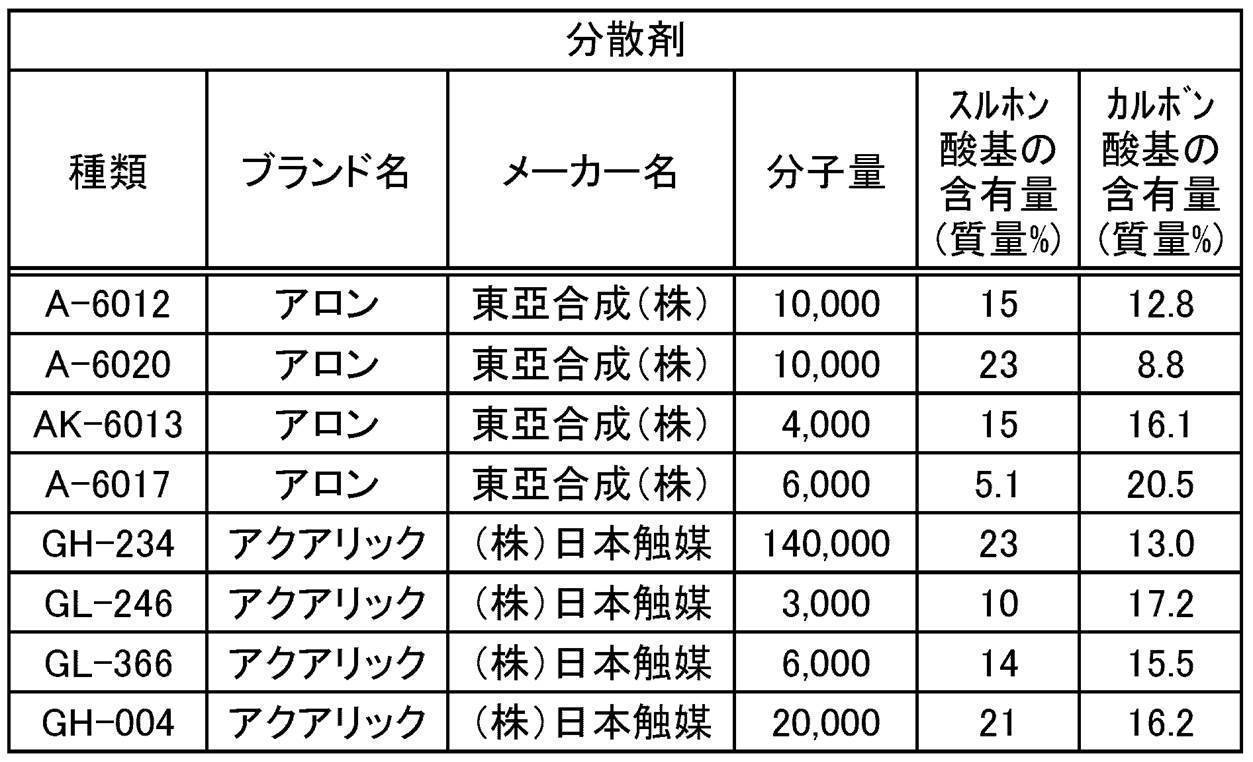
表1に示すように、実施例で得られた本開示に係る分散物は、従来の水酸化カルシウム粒子の分散物に比較して、水酸化カルシウム粒子の分散性に優れているものである。
また、本開示に係る分散物は、含有する水酸化カルシウム粒子の体積平均粒子径及びD90が十分小さく、かつ分散性に優れるため、種々の物質への浸透性に優れ、例えば、コンクリートの補強材に用いた場合、コンクリート内部へより浸透することができ、好適であると考えられる。
また、本開示に係る分散物は、含有する水酸化カルシウム粒子の体積平均粒子径及びD90が十分小さく、かつ分散性に優れるため、種々の物質への浸透性に優れ、例えば、コンクリートの補強材に用いた場合、コンクリート内部へより浸透することができ、好適であると考えられる。
2019年5月23日に出願された日本国特許出願2019-096562号の開示は、その全体が参照により本明細書に取り込まれる。
本明細書に記載された全ての文献、特許出願、及び技術規格は、個々の文献、特許出願、及び技術規格が参照により取り込まれることが具体的かつ個々に記された場合と同程度に、本明細書に参照により取り込まれる。
本明細書に記載された全ての文献、特許出願、及び技術規格は、個々の文献、特許出願、及び技術規格が参照により取り込まれることが具体的かつ個々に記された場合と同程度に、本明細書に参照により取り込まれる。
Claims (13)
- X線小角散乱法で測定した分散物中での体積平均粒子径が1nm~50nmであり、かつX線小角散乱法で測定した分散物中での粒度分布において小径側から累積90体積%となる粒子径D90が100nm以下である水酸化カルシウム粒子、及び、
分散媒を含有する分散物。 - 前記水酸化カルシウム粒子の前記体積平均粒子径が1nm~20nmであり、かつ前記D90が50nm以下である請求項1に記載の分散物。
- スルホン酸基を有する重合体を更に含有する請求項1又は請求項2に記載の分散物。
- 前記重合体が、カルボン酸基を更に有する請求項3に記載の分散物。
- 前記重合体の重量平均分子量が、3,000以上である請求項3又は請求項4に記載の分散物。
- 前記重合体におけるスルホン酸基の含有量が、前記重合体の全質量に対し、12質量%以上である請求項3~請求項5のいずれか1項に記載の分散物。
- 前記重合体におけるカルボン酸基の含有量が、前記重合体の全質量に対し、10質量%以上である請求項4に記載の分散物。
- 前記重合体の含有量が、前記分散物の全質量に対し、0.05質量%~10質量%である請求項3~請求項7のいずれか1項に記載の分散物。
- 前記水酸化カルシウム粒子の含有量が、前記分散物の全質量に対し、0.18質量%~10質量%である請求項1~請求項8のいずれか1項に記載の分散物。
- 前記分散媒が、水、又は、水とエチレングリコールとの混合物である請求項1~請求項9のいずれか1項に記載の分散物。
- 前記分散物中のナトリウムイオンの含有量が、前記分散物の全質量に対し、1,000ppm以下である請求項1~請求項10のいずれか1項に記載の分散物。
- 請求項1~請求項11のいずれか1項に記載の分散物を含有する建築材料の補強材。
- コンクリートの補強材である請求項12に記載の建築材料の補強材。
Priority Applications (1)
| Application Number | Priority Date | Filing Date | Title |
|---|---|---|---|
| JP2021520703A JP7209822B2 (ja) | 2019-05-23 | 2020-05-08 | 分散物、及び、建築材料の補強材 |
Applications Claiming Priority (2)
| Application Number | Priority Date | Filing Date | Title |
|---|---|---|---|
| JP2019096562 | 2019-05-23 | ||
| JP2019-096562 | 2019-05-23 |
Publications (1)
| Publication Number | Publication Date |
|---|---|
| WO2020235362A1 true WO2020235362A1 (ja) | 2020-11-26 |
Family
ID=73459203
Family Applications (1)
| Application Number | Title | Priority Date | Filing Date |
|---|---|---|---|
| PCT/JP2020/018680 Ceased WO2020235362A1 (ja) | 2019-05-23 | 2020-05-08 | 分散物、及び、建築材料の補強材 |
Country Status (2)
| Country | Link |
|---|---|
| JP (1) | JP7209822B2 (ja) |
| WO (1) | WO2020235362A1 (ja) |
Citations (5)
| Publication number | Priority date | Publication date | Assignee | Title |
|---|---|---|---|---|
| JP2007326728A (ja) * | 2006-06-06 | 2007-12-20 | Sumitomo Osaka Cement Co Ltd | コンクリートの製造方法及びコンクリート |
| JP2011026572A (ja) * | 2009-07-01 | 2011-02-10 | Denki Kagaku Kogyo Kk | 注入材及び注入工法 |
| JP2013001597A (ja) * | 2011-06-15 | 2013-01-07 | Takenaka Komuten Co Ltd | セメント含有組成物、地盤改良用スラリー及び地盤改良方法 |
| CN104291371A (zh) * | 2014-10-30 | 2015-01-21 | 杨富巍 | 一种纳米氢氧化钙的制备方法 |
| US20180264403A1 (en) * | 2017-03-17 | 2018-09-20 | Graymont (Pa) Inc. | Calcium hydroxide-containing compositions and associated systems and methods |
-
2020
- 2020-05-08 JP JP2021520703A patent/JP7209822B2/ja active Active
- 2020-05-08 WO PCT/JP2020/018680 patent/WO2020235362A1/ja not_active Ceased
Patent Citations (5)
| Publication number | Priority date | Publication date | Assignee | Title |
|---|---|---|---|---|
| JP2007326728A (ja) * | 2006-06-06 | 2007-12-20 | Sumitomo Osaka Cement Co Ltd | コンクリートの製造方法及びコンクリート |
| JP2011026572A (ja) * | 2009-07-01 | 2011-02-10 | Denki Kagaku Kogyo Kk | 注入材及び注入工法 |
| JP2013001597A (ja) * | 2011-06-15 | 2013-01-07 | Takenaka Komuten Co Ltd | セメント含有組成物、地盤改良用スラリー及び地盤改良方法 |
| CN104291371A (zh) * | 2014-10-30 | 2015-01-21 | 杨富巍 | 一种纳米氢氧化钙的制备方法 |
| US20180264403A1 (en) * | 2017-03-17 | 2018-09-20 | Graymont (Pa) Inc. | Calcium hydroxide-containing compositions and associated systems and methods |
Non-Patent Citations (1)
| Title |
|---|
| ALESSIO NANNI, LUIGI DEI: "Ca(OH)2 Nanoparticles from W/O Microemulsions.", LANGMUIR, vol. 19, no. 3, 4 February 2003 (2003-02-04), pages 933 - 938, XP055762892 * |
Also Published As
| Publication number | Publication date |
|---|---|
| JPWO2020235362A1 (ja) | 2020-11-26 |
| JP7209822B2 (ja) | 2023-01-20 |
Similar Documents
| Publication | Publication Date | Title |
|---|---|---|
| CN107311504B (zh) | 一种提升水泥基材料强度的外加剂、其制备方法及其应用 | |
| CN102869633B (zh) | 铁铝酸钙化合物、水泥混合材及其制造方法、水泥组合物 | |
| EP3080052B1 (en) | Accelerating admixture for cementitious compositions | |
| EP2882696B1 (en) | Process for preparing a hardening accelerator composition | |
| JP7425414B2 (ja) | セメンチング組成物用シリカ系添加剤、セメンチング組成物及びセメンチング方法 | |
| CN104292451A (zh) | 一种不饱和聚醚的制备方法及其应用 | |
| JP2016513144A (ja) | 水硬性凝結材料のための添加剤 | |
| CN104774293B (zh) | 一种抗泥型聚羧酸减水剂及其制备方法 | |
| JP6325523B2 (ja) | 液体急結剤 | |
| CN104291371A (zh) | 一种纳米氢氧化钙的制备方法 | |
| HK1199440A1 (en) | Slurry for treatment of oxyanion contamination in water | |
| CN101805148B (zh) | 一种混凝土引气剂的制备方法 | |
| CN107759174A (zh) | 一种利用碳酸化预养护钢渣制备人工鱼礁混凝土的方法 | |
| Lyu et al. | Corrosion of ordinary Portland cement and metakaolin-based geopolymer immersed in nitric acid solution | |
| KR20230156718A (ko) | 지르코늄 원소 함유 금속 산화물 분산액의 제조 방법 및 지르코늄 원소 함유 금속 산화물 분산액 | |
| JP2017109901A (ja) | 吹付コンクリート組成物およびその製造方法 | |
| CN102557497A (zh) | 一种金属尾矿制作大掺量水泥活性混合材的方法 | |
| WO2020235362A1 (ja) | 分散物、及び、建築材料の補強材 | |
| CN104312558A (zh) | 偏高岭土水性悬浮液及其制备方法和应用及油田固井用水泥浆 | |
| WO2016169981A1 (en) | Method for producing a calcium silicate hydrate-comprising hardening accelerator in powder form | |
| WO2018052307A1 (en) | Microsilica slurry and method for producing such slurry | |
| JP4753265B2 (ja) | 地盤注入材および地盤注入工法 | |
| JP5213515B2 (ja) | 鉄−シリカ水処理凝集剤の製造方法 | |
| JP5783633B2 (ja) | 注入工法 | |
| JP5189274B2 (ja) | 地盤注入材及びそれを用いた地盤注入工法 |
Legal Events
| Date | Code | Title | Description |
|---|---|---|---|
| 121 | Ep: the epo has been informed by wipo that ep was designated in this application |
Ref document number: 20810289 Country of ref document: EP Kind code of ref document: A1 |
|
| ENP | Entry into the national phase |
Ref document number: 2021520703 Country of ref document: JP Kind code of ref document: A |
|
| NENP | Non-entry into the national phase |
Ref country code: DE |
|
| 122 | Ep: pct application non-entry in european phase |
Ref document number: 20810289 Country of ref document: EP Kind code of ref document: A1 |