WO2020218579A1 - 分化誘導のために馴化された多能性幹細胞の作製方法 - Google Patents
分化誘導のために馴化された多能性幹細胞の作製方法 Download PDFInfo
- Publication number
- WO2020218579A1 WO2020218579A1 PCT/JP2020/017839 JP2020017839W WO2020218579A1 WO 2020218579 A1 WO2020218579 A1 WO 2020218579A1 JP 2020017839 W JP2020017839 W JP 2020017839W WO 2020218579 A1 WO2020218579 A1 WO 2020218579A1
- Authority
- WO
- WIPO (PCT)
- Prior art keywords
- cells
- cell
- differentiation
- medium
- culture
- Prior art date
- Legal status (The legal status is an assumption and is not a legal conclusion. Google has not performed a legal analysis and makes no representation as to the accuracy of the status listed.)
- Ceased
Links
Images

Classifications
-
- C—CHEMISTRY; METALLURGY
- C12—BIOCHEMISTRY; BEER; SPIRITS; WINE; VINEGAR; MICROBIOLOGY; ENZYMOLOGY; MUTATION OR GENETIC ENGINEERING
- C12N—MICROORGANISMS OR ENZYMES; COMPOSITIONS THEREOF; PROPAGATING, PRESERVING, OR MAINTAINING MICROORGANISMS; MUTATION OR GENETIC ENGINEERING; CULTURE MEDIA
- C12N5/00—Undifferentiated human, animal or plant cells, e.g. cell lines; Tissues; Cultivation or maintenance thereof; Culture media therefor
- C12N5/06—Animal cells or tissues; Human cells or tissues
- C12N5/0602—Vertebrate cells
- C12N5/0634—Cells from the blood or the immune system
- C12N5/0647—Haematopoietic stem cells; Uncommitted or multipotent progenitors
-
- C—CHEMISTRY; METALLURGY
- C12—BIOCHEMISTRY; BEER; SPIRITS; WINE; VINEGAR; MICROBIOLOGY; ENZYMOLOGY; MUTATION OR GENETIC ENGINEERING
- C12M—APPARATUS FOR ENZYMOLOGY OR MICROBIOLOGY; APPARATUS FOR CULTURING MICROORGANISMS FOR PRODUCING BIOMASS, FOR GROWING CELLS OR FOR OBTAINING FERMENTATION OR METABOLIC PRODUCTS, i.e. BIOREACTORS OR FERMENTERS
- C12M23/00—Constructional details, e.g. recesses, hinges
- C12M23/20—Material Coatings
-
- C—CHEMISTRY; METALLURGY
- C12—BIOCHEMISTRY; BEER; SPIRITS; WINE; VINEGAR; MICROBIOLOGY; ENZYMOLOGY; MUTATION OR GENETIC ENGINEERING
- C12N—MICROORGANISMS OR ENZYMES; COMPOSITIONS THEREOF; PROPAGATING, PRESERVING, OR MAINTAINING MICROORGANISMS; MUTATION OR GENETIC ENGINEERING; CULTURE MEDIA
- C12N2501/00—Active agents used in cell culture processes, e.g. differentation
- C12N2501/10—Growth factors
- C12N2501/125—Stem cell factor [SCF], c-kit ligand [KL]
-
- C—CHEMISTRY; METALLURGY
- C12—BIOCHEMISTRY; BEER; SPIRITS; WINE; VINEGAR; MICROBIOLOGY; ENZYMOLOGY; MUTATION OR GENETIC ENGINEERING
- C12N—MICROORGANISMS OR ENZYMES; COMPOSITIONS THEREOF; PROPAGATING, PRESERVING, OR MAINTAINING MICROORGANISMS; MUTATION OR GENETIC ENGINEERING; CULTURE MEDIA
- C12N2501/00—Active agents used in cell culture processes, e.g. differentation
- C12N2501/10—Growth factors
- C12N2501/145—Thrombopoietin [TPO]
-
- C—CHEMISTRY; METALLURGY
- C12—BIOCHEMISTRY; BEER; SPIRITS; WINE; VINEGAR; MICROBIOLOGY; ENZYMOLOGY; MUTATION OR GENETIC ENGINEERING
- C12N—MICROORGANISMS OR ENZYMES; COMPOSITIONS THEREOF; PROPAGATING, PRESERVING, OR MAINTAINING MICROORGANISMS; MUTATION OR GENETIC ENGINEERING; CULTURE MEDIA
- C12N2501/00—Active agents used in cell culture processes, e.g. differentation
- C12N2501/10—Growth factors
- C12N2501/15—Transforming growth factor beta (TGF-β)
-
- C—CHEMISTRY; METALLURGY
- C12—BIOCHEMISTRY; BEER; SPIRITS; WINE; VINEGAR; MICROBIOLOGY; ENZYMOLOGY; MUTATION OR GENETIC ENGINEERING
- C12N—MICROORGANISMS OR ENZYMES; COMPOSITIONS THEREOF; PROPAGATING, PRESERVING, OR MAINTAINING MICROORGANISMS; MUTATION OR GENETIC ENGINEERING; CULTURE MEDIA
- C12N2501/00—Active agents used in cell culture processes, e.g. differentation
- C12N2501/10—Growth factors
- C12N2501/155—Bone morphogenic proteins [BMP]; Osteogenins; Osteogenic factor; Bone inducing factor
-
- C—CHEMISTRY; METALLURGY
- C12—BIOCHEMISTRY; BEER; SPIRITS; WINE; VINEGAR; MICROBIOLOGY; ENZYMOLOGY; MUTATION OR GENETIC ENGINEERING
- C12N—MICROORGANISMS OR ENZYMES; COMPOSITIONS THEREOF; PROPAGATING, PRESERVING, OR MAINTAINING MICROORGANISMS; MUTATION OR GENETIC ENGINEERING; CULTURE MEDIA
- C12N2501/00—Active agents used in cell culture processes, e.g. differentation
- C12N2501/10—Growth factors
- C12N2501/165—Vascular endothelial growth factor [VEGF]
-
- C—CHEMISTRY; METALLURGY
- C12—BIOCHEMISTRY; BEER; SPIRITS; WINE; VINEGAR; MICROBIOLOGY; ENZYMOLOGY; MUTATION OR GENETIC ENGINEERING
- C12N—MICROORGANISMS OR ENZYMES; COMPOSITIONS THEREOF; PROPAGATING, PRESERVING, OR MAINTAINING MICROORGANISMS; MUTATION OR GENETIC ENGINEERING; CULTURE MEDIA
- C12N2501/00—Active agents used in cell culture processes, e.g. differentation
- C12N2501/20—Cytokines; Chemokines
- C12N2501/22—Colony stimulating factors (G-CSF, GM-CSF)
-
- C—CHEMISTRY; METALLURGY
- C12—BIOCHEMISTRY; BEER; SPIRITS; WINE; VINEGAR; MICROBIOLOGY; ENZYMOLOGY; MUTATION OR GENETIC ENGINEERING
- C12N—MICROORGANISMS OR ENZYMES; COMPOSITIONS THEREOF; PROPAGATING, PRESERVING, OR MAINTAINING MICROORGANISMS; MUTATION OR GENETIC ENGINEERING; CULTURE MEDIA
- C12N2501/00—Active agents used in cell culture processes, e.g. differentation
- C12N2501/20—Cytokines; Chemokines
- C12N2501/23—Interleukins [IL]
- C12N2501/2303—Interleukin-3 (IL-3)
-
- C—CHEMISTRY; METALLURGY
- C12—BIOCHEMISTRY; BEER; SPIRITS; WINE; VINEGAR; MICROBIOLOGY; ENZYMOLOGY; MUTATION OR GENETIC ENGINEERING
- C12N—MICROORGANISMS OR ENZYMES; COMPOSITIONS THEREOF; PROPAGATING, PRESERVING, OR MAINTAINING MICROORGANISMS; MUTATION OR GENETIC ENGINEERING; CULTURE MEDIA
- C12N2501/00—Active agents used in cell culture processes, e.g. differentation
- C12N2501/20—Cytokines; Chemokines
- C12N2501/23—Interleukins [IL]
- C12N2501/2306—Interleukin-6 (IL-6)
-
- C—CHEMISTRY; METALLURGY
- C12—BIOCHEMISTRY; BEER; SPIRITS; WINE; VINEGAR; MICROBIOLOGY; ENZYMOLOGY; MUTATION OR GENETIC ENGINEERING
- C12N—MICROORGANISMS OR ENZYMES; COMPOSITIONS THEREOF; PROPAGATING, PRESERVING, OR MAINTAINING MICROORGANISMS; MUTATION OR GENETIC ENGINEERING; CULTURE MEDIA
- C12N2501/00—Active agents used in cell culture processes, e.g. differentation
- C12N2501/20—Cytokines; Chemokines
- C12N2501/26—Flt-3 ligand (CD135L, flk-2 ligand)
-
- C—CHEMISTRY; METALLURGY
- C12—BIOCHEMISTRY; BEER; SPIRITS; WINE; VINEGAR; MICROBIOLOGY; ENZYMOLOGY; MUTATION OR GENETIC ENGINEERING
- C12N—MICROORGANISMS OR ENZYMES; COMPOSITIONS THEREOF; PROPAGATING, PRESERVING, OR MAINTAINING MICROORGANISMS; MUTATION OR GENETIC ENGINEERING; CULTURE MEDIA
- C12N2501/00—Active agents used in cell culture processes, e.g. differentation
- C12N2501/40—Regulators of development
- C12N2501/415—Wnt; Frizzeled
-
- C—CHEMISTRY; METALLURGY
- C12—BIOCHEMISTRY; BEER; SPIRITS; WINE; VINEGAR; MICROBIOLOGY; ENZYMOLOGY; MUTATION OR GENETIC ENGINEERING
- C12N—MICROORGANISMS OR ENZYMES; COMPOSITIONS THEREOF; PROPAGATING, PRESERVING, OR MAINTAINING MICROORGANISMS; MUTATION OR GENETIC ENGINEERING; CULTURE MEDIA
- C12N2506/00—Differentiation of animal cells from one lineage to another; Differentiation of pluripotent cells
- C12N2506/45—Differentiation of animal cells from one lineage to another; Differentiation of pluripotent cells from artificially induced pluripotent stem cells
-
- C—CHEMISTRY; METALLURGY
- C12—BIOCHEMISTRY; BEER; SPIRITS; WINE; VINEGAR; MICROBIOLOGY; ENZYMOLOGY; MUTATION OR GENETIC ENGINEERING
- C12N—MICROORGANISMS OR ENZYMES; COMPOSITIONS THEREOF; PROPAGATING, PRESERVING, OR MAINTAINING MICROORGANISMS; MUTATION OR GENETIC ENGINEERING; CULTURE MEDIA
- C12N2533/00—Supports or coatings for cell culture, characterised by material
- C12N2533/50—Proteins
- C12N2533/52—Fibronectin; Laminin
Definitions
- the present invention is a differentiated cell that combines a method for conditioned pluripotent stem cells for inducing differentiation, induction of differentiation by adhesion culture from pluripotent stem cells acclimated by the method, and sorting using a differentiation marker. Regarding the purification method of.
- HPC hematopoietic progenitor cells
- HPC induction is roughly divided into two stages: induction of hematopoietic endothelial cells (HE) from PSC and subsequent induction of HPC, and the former is further conditioned to use the stocked PSC for differentiation induction (conditioning). It is divided into a process of inducing differentiation of acclimated PSC into HE.
- HE hematopoietic endothelial cells
- Non-Patent Documents 1 and 2 the standard for inducing HPC differentiation from PSC is a modified method of embryoid body formation by Gordon Keller et al.
- Stable production is difficult due to variations in the size and density of the embryoid body (EB).
- EB embryoid body
- MCS magnetically activated cell separation
- an object of the present invention is to provide a culture system for producing HPC from PSC, which can solve the above three problems and produce a large amount of HPC stably and at low cost to the extent that clinical application is possible. is there.
- the present inventors subjected the obtained spherical iPS cell mass to planar adhesive culture instead of suspension culture, and the cell mass spontaneously flattened and was substantially flattened. It has a two-dimensional structure. After exchanging the medium with the HE differentiation-inducing medium and culturing, the cell mass was detached from the dish, dissected, and subjected to MACS with CD34 positive as an index. As a result, the cell mass could be dissociated efficiently, and high-purity HE was successfully obtained in a stable manner. Furthermore, it was also found that HE can be efficiently converted to HPC by the subsequent differentiation-inducing culture without purifying HE from the cell mass after planar adhesive culture.
- the present inventors have succeeded in efficiently and stably converting HE into HPC by using a combination of a specific medium composition and extracellular matrix for the problem (3) above.
- the conventional method could efficiently induce HPC only about once every five times, whereas according to the method of the present inventors, the probability is 3 to 4 times out of 5 times.
- the present inventors By setting the period of this suspension culture to a short period of 6 to 48 hours, for example, about 1 day, the present inventors have a spherical PSC mass having the same size and number of cells while maintaining the undifferentiated state of PSC. Succeeded in producing a large amount and stably. Therefore, PSC conditioning using EZSPHERE (registered trademark) can be widely applied not only to mesoderm-series cells such as HPC, but also to induce differentiation into endoderm / ectoderm-series cells.
- EZSPHERE registered trademark
- a spherical PSC mass obtained by suspension culture using EZSPHERE (registered trademark) is subjected to planar adhesive culture, the cell mass is changed to a substantially two-dimensional structure, and then differentiation induction is performed to obtain a desired differentiated cell. Since it can be efficiently purified by a sorting technique known per se, it is possible to obtain a more stable and large amount of arbitrary differentiated cells by combining the techniques. As a result of further research based on these findings, the present inventors have completed the present invention.
- a method for producing pluripotent stem cells acclimatized for inducing differentiation.
- a culture vessel having a non-adhesive or low-adhesive culture surface as an inner bottom surface, in which a plurality of recesses that are the same as each other are densely arranged so as to be adjacent to each other.
- Pluripotent stem cells are suspended for 6 to 48 hours using the culture vessel having an inner wall surface having a funnel-shaped slope and a bottom surface having a concave curved surface smoothly connected to the inner wall surface.
- a method comprising culturing and forming a spherical cell mass in each recess; and (2) a step of planar adhesive culturing the spherical cell mass obtained in step (1).
- the pluripotent stem cells to be subjected to the step (1) are adherently cultured using a culture vessel coated with an extracellular matrix having a known composition.
- the extracellular matrix is laminin or a fragment thereof.
- [5] The method according to any one of [1] to [4], wherein the pluripotent stem cells are of human origin.
- [6] A method for producing a predetermined differentiated cell from pluripotent stem cells. (1) A step of adhering and culturing the conditioned pluripotent stem cells obtained by the method according to any one of [1] to [5] in a medium that induces differentiation into the differentiated cells; 2) A method comprising a step of selecting the differentiated cells from a cell population containing the predetermined differentiated cells obtained in the step (1) using a differentiation marker peculiar to the differentiated cells as an index. [7] The method according to [6], wherein the step (2) is performed by magnetically activated cell separation.
- the predetermined differentiated cell is a mesoderm cell.
- the predetermined differentiated cell is a blood cell or a progenitor cell thereof.
- the progenitor cell is a hematopoietic endothelial cell or a hematopoietic progenitor cell.
- a method for producing hematopoietic progenitor cells is a hematopoietic endothelial cell or a hematopoietic progenitor cell.
- the predetermined differentiated cells are skeletal muscle cells, chondrocytes, renal cells, cardiomyocytes or adipocytes, or progenitor cells thereof.
- the predetermined differentiated cell is an ectoderm or endoderm cell.
- the ectoderm cells are nervous system cells, sensory system cells or epidermal cells, or progenitor cells thereof.
- the endoblastic cells are pancreatic ⁇ cells, hepatocytes, intestinal cells, lung cells or thyroid cells, or progenitor cells thereof.
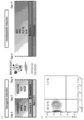
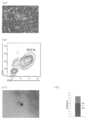
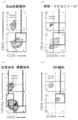
- (B) Flow cytometric plots of representative CD45 and CD34 of the entire culture 7 days after stimulation with a hematopoietic cocktail.
- C It is a typical phase difference image of granulocytes / macrophage progenitor cells generated by CFU assay from hematopoietic progenitor cells 11 days after the start of differentiation induction.
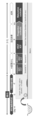
- D The colony forming units of granulocytes / macrophage progenitor cells (CFU-M, CFU-G, CFU-GM) generated by the CFU assay are shown. It is a schematic diagram of the conditioning of PSC used in Example 2 and the method of inducing differentiation of HE, HPC and various blood cells.
- Example 6D On the 4th day after the start of differentiation, the medium was changed to Stemline® Stemline II medium supplemented with SCF and Flt-3L and cultured for 8 days. After 12 days from the start of differentiation, the cells were replaced with Stemline® Stemline II medium supplemented with SCF, Flt-3L, IL-7, and IL-15 and cultured for 36 days to obtain CD56 + CD314 + NK cells.
- Macrophages CX3CR1 positive and CD14 positive
- C Red blast lineage
- CD235a positive and CD33 negative 16 days after the start of differentiation
- Myeloid lineage CD235a negative and CD33 positive
- D 48 days after the start of differentiation It is a flow cytometry plot showing the differentiation into NK cells (CD314 positive and CD56 positive) of the eye.
- ES cells may be ES cells generated by nuclear reprogramming from somatic cells. ES cells or iPS cells are preferable.
- the pluripotent stem cell is not particularly limited as long as it is derived from a mammal, but is preferably a human-derived pluripotent stem cell.
- somatic cell means any animal cell (preferably a mammalian cell including human) except a germline cell such as an egg, an egg mother cell, an ES cell, or a differentiation pluripotent cell, and a fetal (pup).
- somatic cells include, for example, (1) tissue stem cells (somatic stem cells) such as nerve stem cells, hematopoietic stem cells, mesenchymal stem cells, and dental pulp stem cells, (2) tissue precursor cells, (3) lymphocytes, and epithelium.
- pluripotent stem cells eg, primate ES cell medium, mTeSR1, StemFit AK02N, StemFit AK03N, Essential 8 and the like
- a commercially available medium for pluripotent stem cells eg, primate ES cell medium, mTeSR1, StemFit AK02N, StemFit AK03N, Essential 8 and the like
- mTeSR1 primate ES cell medium
- StemFit AK02N StemFit AK02N
- StemFit AK03N e.g., Essential 8 and the like
- the medium can be a serum-containing medium or a serum-free medium.
- a serum-free medium can be used.
- Serum-free medium means a medium that does not contain any untreated or unpurified serum, and thus includes media containing purified blood-derived components or animal tissue-derived components (such as growth factors).
- Concentrations of serum eg, fetal bovine serum (FBS), human serum, etc.
- FBS fetal bovine serum
- human serum etc.
- SFM may or may not contain any serum substitute.
- the medium may contain other additives known per se.
- growth factors eg, insulin, etc.
- polyamino acids eg, putresin, etc.
- minerals eg, sodium selenate, etc.
- sugars eg, glucose, etc.
- organic acids eg, pyruvate, lactic acid, etc.
- Amino acids eg, non-essential amino acids (NEAA), L-glutamine, etc.
- reducing agents eg, 2-mercaptoethanol, etc.
- vitamins eg, ascorbic acid, d-biotin, etc.
- steroids eg, [beta] -Estradiol, progesterone, etc.
- antibiotics eg, streptomycin, penicillin, gentamycin, etc.
- buffers eg, HEPES, etc.
- nutritional additives eg, B27 supplement, N2 supplement, StemPro®, etc.
- nutritional additives eg, B27 supplement,
- PSCs may be cultured in the presence or absence of feeder cells, but considering clinical application to humans, it is desirable that PSCs be cultured in the absence of feeder cells. Therefore, in a preferred embodiment of the present invention, PSCs are cultured under feeder-free conditions.
- the culture vessel used for maintaining and culturing PSC is not particularly limited, but is limited to a flask, a tissue culture flask, a dish, a petri dish, a tissue culture dish, a multi-dish, a microplate, a microwell plate, a multi-plate, and a multi.
- Well plates, microslides, chamber slides, petri dishes, tubes, trays, culture bags, and roller bottles can be mentioned.
- the culture vessel can be cell adherent.
- the cell adhesion culture vessel can be coated with any cell adhesion substrate such as extracellular matrix (ECM) for the purpose of improving the adhesion of the surface of the culture vessel to cells.
- ECM extracellular matrix
- the cell adhesion substrate can be any substance intended for adhesion of PSCs or feeder cells (if used).
- Substrates for cell adhesion include laminin, collagen, gelatin, poly-L-lysine, poly-D-lysine, poly-L-ornectin, and fibronectin and their mixtures, such as matrigel, and lysed cell membrane preparations. Preparations) (Klimanskaya I et al 2005. Lancet 365: p1636-1641). These cell adhesion substrates are coated on the culture vessel at the concentrations normally used for culturing PSC, depending on their type.
- the PSC plated on the culture vessel for example, a cell density of about 10 4 to 10 5 cells / cm 2, under an atmosphere of 1 ⁇ 10% CO 2/99 ⁇ 90% air, about in an incubator It can be cultured at 30-40 ° C, preferably about 37 ° C.
- the medium can be exchanged in the middle of the culturing period.
- the medium used for the medium exchange may be a medium having the same components as the medium before the medium exchange, or a medium having different components.
- a medium having the same components is used.
- the time of medium replacement is not particularly limited, but is carried out, for example, every 1 day, 2 days, 3 days, 4 days, or 5 days after the start of culturing in a fresh medium.
- cryopreserved PSC As a method for thawing the cryopreserved PSC, a method well known in the art can be used (for example, Freshney RI, Culture of Animal cells: A Manual of Basic Technique, 4th Edition, 2000, Wiley-Liss, Inc., See Chapter 19). Preferably, it is thawed rapidly in a hot water bath at about 37 ° C.
- a highly cytotoxic cryoprotectant such as DMSO
- the diluent for example, serum-containing or serum-free medium, physiological saline or PBS can be used.
- the thawed PSC is put to sleep by adhesive culture on a flat medium. After removing the supernatant, the cell pellet is tapped and disrupted, and undifferentiated maintenance medium (eg, primate ES cell medium, mTeSR1, StemFit AK02N, StemFit AK03N, Essential 8 etc.) (ROCK inhibitor (eg, Y) if necessary.
- undifferentiated maintenance medium eg, primate ES cell medium, mTeSR1, StemFit AK02N, StemFit AK03N, Essential 8 etc.
- ROCK inhibitor eg, Y
- a substrate for cell adhesion an extracellular matrix having a known composition, for example, laminin or fibronectin, is used rather than a matrix gel or a lysed cell membrane preparation in which various factors such as TGF ⁇ are mixed in order to maintain the undifferentiated state of PSC.
- laminin or a fragment thereof for example, laminin 511 E8 fragment (eg, iMatrix-511)
- medium exchange can be performed the day after the passage and every other day thereafter. Incubate until 70-80% confluent and pick up grown colonies.
- the micro-processed culture container used in the step (1) of the PSC conditioning method of the present invention is a culture container having a non-adhesive or low-adhesive culture surface as an inner bottom surface, and the culture is described above.
- a plurality of recesses (microwells) that are the same as each other are densely arranged on the surface so as to be adjacent to each other, and each recess has a funnel-shaped inclined inner wall surface and a concave shape that is smoothly connected to the inner wall surface. It is characterized by having a bottom surface which is a curved surface of.
- each other means that when cells are seeded in each recess at the same density, the plurality of spherical cell clusters formed in each recess have a uniform size and number of cells. It means that the size (opening diameter, depth, etc.) and shape of the recesses are similar to each other, and do not have to be exactly the same.
- the plurality of recesses are "same size to each other" and “same shape to each other"
- “Densely arranged” means that the total opening area of the recesses occupies a larger proportion of the culture surface (that is, such as a square matrix arrangement or a finely arranged (honeycomb) arrangement). It means a state in which the recesses are arranged so as to be as close to each other as possible and adjacent to each other so that the ratio of the partition wall portion between the recesses becomes smaller).
- a “funnel-shaped slope” is a slope whose opening diameter decreases from the opening toward the bottom surface, such as the inner slope of a mortar.
- the "concave curved surface” is a concave curved surface such as a hemispherical concave surface or a parabola-shaped concave surface that can promote cell aggregation.
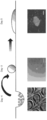
- FIG. 1 (A) shows an enlarged view of a cross section of the microfabricated culture vessel used in the present invention
- FIG. 1 (B) shows the steps of the PSC conditioning method of the present invention from the production of the microfabricated culture vessel.
- the situation up to 1) is schematically shown.
- a plurality of fine recesses (microwells) having the same shape are densely formed on the bottom surface of the culture vessel usually used for culturing cells by laser irradiation (eg, CO 2 gas laser).
- laser irradiation eg, CO 2 gas laser
- Examples of the shape of the culture vessel include, but are not limited to, dishes (eg, 10 mm, 35 mm, 100 mm, etc.) and multi-well plates (eg, 6-well, 96-well, etc.).
- the material of the culture vessel is not particularly limited as long as a desired microwell can be provided by laser irradiation, and examples thereof include polymer materials such as plastic and polystyrene.
- the dimensions of the microwell that can be laser-machined are an opening diameter of about 200 to 2000 ⁇ m and a depth (length from the opening to the bottom surface) of about 100 to 900 ⁇ m.
- the diameter of the spherical PSC mass after suspension culture for 6 to 48 hours is 10 to 800 ⁇ m, preferably 20 to 500 ⁇ m. It is desirable to have an opening diameter and depth such that preferably 40 to 100 ⁇ m, for example, the average diameter of the openings is 200 to 2000 ⁇ m, preferably 200 to 1000 ⁇ m, more preferably 200 to 500 ⁇ m, still more preferably 400 to 400. 500 ⁇ m, the average depth is 100 to 900 ⁇ m, preferably 100 to 400 ⁇ m, and more preferably 100 to 200 ⁇ m.
- the PSC seeded as a single cell drops evenly into each microwell, and adjacent cells bind to each other to form a spherical cell mass having a uniform size in a short time without adhering to the bottom surface. Can be done. It is preferable that the inner wall surfaces of the recesses adjacent to each other are smoothly connected to each other so that there is no flat surface between the recesses adjacent to each other. This allows most of the seeded cells to fall into the wells and form spherical cell clusters without loss of cells.
- the microfabricated culture vessel can be produced, for example, by the method described in WO 2017/047735.
- a microfabrication culture container commercially available ones (eg, EZSPHERE (registered trademark) manufactured by AGC Technograss, AggreWell TM manufactured by StemCell Technologies, Elplasia (registered trademark) manufactured by Kuraray, etc.) are used. You can also do it.
- the seeding density of PSC may be such that the number of cells per microwell is 100 to 1000 cells, preferably 100 to 400 cells, and more preferably 150 to 300 cells.
- 96-well plate type EZSPHERE® since about 95 microwells are provided per well, for example, about 10,000 to about 100,000 cells per well, preferably about 10,000 to About 40,000 cells, more preferably 15,000 to 30,000 cells, can be seeded.
- the culture period of PSC in the step (1) is not particularly limited as long as it is necessary and sufficient for the PSC to form a spherical cell mass in a state where the whole cell mass remains undifferentiated, but the culture period is 3 days or more. If this is the case, the size of the spherical PSC mass may increase and undifferentiated state may not be maintained, so it is desirable that the time is less than 3 days. It is preferably within 48 hours, more preferably within 36 hours.
- spherical cell clusters are formed rapidly (about 3-6 hours), so the lower limit of the culture period is 3 hours, but the adhesion culture in step (2) and it In the subsequent induction of differentiation, in order to obtain differentiated cells stably and efficiently, it is preferably 6 hours or more, and more preferably 12 hours or more.
- a preferable range of the culture period can be, for example, 6 to 48 hours, more preferably 12 to 36 hours, and particularly preferably about 24 hours.
- the size of the obtained spherical PSC mass varies depending on the seeding density of PSC and the size of the recess (microwell) of the microfabrication culture vessel.
- the diameter of the cell mass is 10 to 800 ⁇ m, preferably 20 to 500 ⁇ m, and more preferably 40 to 100 ⁇ m.
- 96-well plate type EZSPHERE® with an opening diameter of 400 to 500 ⁇ M and a depth of 100 to 200 ⁇ M (in this product, about 95 recesses (microwells) for each of 96 wells).
- the number of PSC seeded cells per microwell is 100 to 400, preferably 150 to 300, so that a spherical PSC mass of a desired size can be obtained by culturing for 1 to 2 days. Can be prepared. In this case, when converted to the number of seeded cells per well (each of 96 wells in which microwells are arranged), about 10,000 to about 40,000 cells, preferably about 15,000 to about 30,000 cells are seeded. It will be.
- Step (2) In the step (2) of the PSC conditioning method of the present invention, the spherical cell mass obtained in the step (1) is subjected to planar adhesive culture to spontaneously flatten the cell mass, and the cell has a substantially two-dimensional structure. Turn into a lump.
- Spherical PSC masses are collected from microprocessed culture vessels by pipetting, etc., suspended in undifferentiated maintenance medium (eg, primate ES cell medium, mTeSR1, StemFit AK02N, StemFit AK03N, Essential 8 etc.), and laminin, collagen , Gelatin, poly-L-lysine, poly-D-lysine, poly-L-ornectin, and fibronectin and mixtures thereof, such as Matrigel, and coated with cell adhesion substrates such as lysed cell membrane preparations. Seed on the culture medium and incubate in a 5% CO2 incubator at 37 ° C.
- undifferentiated maintenance medium eg, primate ES cell medium, mTeSR1, StemFit AK02N, StemFit AK03N, Essential 8 etc.
- laminin collagen
- Gelatin poly-L-lysine
- poly-D-lysine poly-L-ornectin
- fibronectin and mixtures thereof
- an extracellular matrix having a known composition such as laminin and fibronectin
- a matrix gel or a lysed cell membrane preparation containing various factors such as TGF ⁇ in order to maintain the undifferentiated state of PSC.
- fragments thereof eg, laminin 511 E8 fragment (eg, iMatrix-511)
- the seeding density is not particularly limited, but may be, for example, 1 to 10 cell clusters / cm 2 , preferably 2 to 5 cell clusters / cm 2 .
- the culture period of the PSC mass in the step (2) is not particularly limited as long as it is sufficient for the PSC mass to spontaneously flatten and form a substantially two-dimensional structure, but for example, 2 to 4 days. It can be preferably about 3 days.
- the present invention also provides highly purified target differentiated cells or progenitor cells thereof from the conditioned PSCs obtained by the PSC conditioning method of the present invention. (Hereinafter, also referred to as “the method for inducing differentiation of the present invention”) is provided.
- the method for inducing differentiation of the present invention (1) A step of adhering and culturing the conditioned PSC obtained by the PSC conditioning method of the present invention in a medium that induces differentiation into a desired differentiated cell (or a progenitor cell thereof); and (2) From the cell population containing the differentiated cells (or their progenitor cells) obtained in (1), the differentiated cells (or their progenitor cells) are selected using the differentiation marker specific to the differentiated cells (or their progenitor cells) as an index.
- the “target differentiated cell” means the differentiated cell to be finally produced
- the "progenitor cell” means a multi-step process during differentiation of the PSC into the target differentiated cell.
- the progenitor cells When a differentiation induction step is required, it means a cell that passes through during the differentiation induction.
- the progenitor cells can also be said to be “target cells”. Including progenitor cells, they are collectively referred to as “target differentiated cells” and "predetermined differentiated cells”.
- basal medium for differentiation induction medium examples include Neurobasal medium, Neural Progenitor Basal medium, NS-A medium, BME medium, BGJb medium, CMRL 1066 medium, minimum essential medium (MEM), Eagle MEM medium, ⁇ MEM medium, and Dalveco modification.
- Examples include Eagle's medium (DMEM), Glasgow MEM medium, Improved MEM Zinc Option medium, IMDM medium, Medium 199 medium, DMEM / F12 medium, ham medium, RPMI 1640 medium, Fischer's medium, and a mixed medium thereof.
- Commercially available media such as Essential 8, Essential 6, and Stemline® Stemline II can also be used.
- the concentrations of SB431542 are, for example, 1nM, 1OnM, 5OnM, 1OOnM, 5OOnM, 750nM, 1 ⁇ M, 2 ⁇ M, 3 ⁇ M, 4 ⁇ M, 5 ⁇ M, 6 ⁇ M, 7 ⁇ M, 8 ⁇ M, 9 ⁇ M, 10 ⁇ M, 15 ⁇ M, 20 ⁇ M, 25 ⁇ M, 30 ⁇ M, 40 ⁇ M, 50 ⁇ M or these concentrations, but not limited to these.
- Culturing in step (ii) can be carried out at 37 ° C. in a 5% CO 2 incubator (preferably under hypoxic conditions of 5% O 2 ) for 2-3 days.
- the differentiated cells are selected from the cell population containing the differentiated cells obtained in the step (1) using the differentiation marker peculiar to the differentiated cells as an index.
- the differentiation marker those known per se can be used depending on the target differentiated cells. For example, in the case of HE, CD34 positive can be used as an index for selection.
- FACS or MACS can be used as a means for selecting the desired differentiated cells from the cell population, but it is more preferable to use MACS from the viewpoint of less damage to the cells.
- the high-purity differentiated cells selected by the differentiation-inducing method of the present invention are progenitor cells of the cells of the final target, the selected differentiated cells are further subjected to a differentiation-inducing method known per se.
- the final target differentiated cells can be obtained in large quantities and stably.
- a large amount of HPC can be stably produced by further subjecting the selected high-purity HE to the HPC induction method. it can.
- the present invention also Provided is a method for producing HPC, which comprises (1) a step of providing a selected HE obtained by the differentiation induction method of the present invention; and (2) a step of inducing differentiation of the HE into HPC.
- the culture in step (2) can be carried out in a 5% CO 2 incubator at 37 ° C. (preferably under hypoxic conditions of 5% O 2 ) for 5 to 10 days.
- the HPC obtained in this step can be confirmed and selected by FACS, MACS, etc. using CD34-positive and CD45-positive as indicators, and a functional HPC has been obtained by a colony forming assay known per se. You can confirm that.
- the HPC obtained as described above can be further differentiated (matured) into various blood cells by a method known per se.
- a method known per se for example, in the basal medium exemplified in the induction of differentiation from HE to HPC, for example, SCF, TPO, Flt-3 ligand, IL-6 / IL-6R ⁇ , IL-3, IL-11, IGF-1, EPO, Factors such as VEGF, bFGF, BMP4, SHH, and angiotensin II can be added in appropriate combinations according to the target blood cells, and HPC can be cultured to differentiate into the target blood cells.
- the culture can be carried out in a 5% CO 2 incubator at 37 ° C. (preferably under hypoxic conditions of 5% O 2 ) for about 5 to 20 days, but is not limited thereto.
- how to induce differentiation into megakaryocyte progenitor cells and platelets is described in detail in WO 2018/038242.
- the various blood cells obtained as described above have the presence or absence of cell surface molecules specific to each blood cell (for example, CX3CR1 positive and CD14 positive in the case of monocytes / macrophages; CD33 in the case of erythroid cells).
- Negative and CD235a positive; in the case of myeloid cells, CD33 positive and CD235a negative; in the case of NK cells, CD314 positive, CD56 positive, etc. can be used as an index for confirmation and selection by FACS or MACS.
- the differentiation induction method of the present invention when various blood cells are induced to differentiate via HE and HPC, a cell population containing HE is transferred to HPC without selecting HE.
- the obtained HPC may be subjected to differentiation induction, and after confirmation and selection by FACS or MACS, for example, using CD34-positive and CD45-positive as indicators, differentiation may be induced into various blood cells, or obtained.
- the cell population containing HPC may be used for inducing differentiation into various blood cells without selecting the HPC.
- PSC Spheroid Plating (3 days ago) PSC spheroids were collected in 15 mL conical tubes by gentle pipetting with a P1000 Pipetman and allowed to settle by allowing the spheroids to stand at room temperature for 2 minutes. The supernatant was aspirated, suspended in spheroid plate medium, the suspension was dispensed to a density of 4-spheroid / cm 2 , and cultured in a 37% incubator with 5% CO 2 for 3 days.
- EHT Endothelial-to-Hematopoietic Transition
- Floating cells and adherent cells were mixed, the cells were centrifuged at 200 ⁇ g for 3 minutes, and the supernatant was aspirated. The cells were then resuspended in 50 ⁇ L FACS buffer and reacted with the anti-CD34 and anti-CD45 antibodies for 1 hour in the dark at room temperature. The cells were washed twice with PBS (Ca / Mg free) and centrifuged at 200 xg for 3 minutes. The supernatant was aspirated and resuspended in 0.5 mL FACS buffer containing 0.5 ⁇ g / mL DAPI. The expression of CD34 and CD45 was measured by LSR Fortessa.
- FIG. 3 (A) The schematic process of hematopoietic cell induction is shown in FIG. 3 (A).
- the medium was sequentially changed to induce mesoderm organoids.
- the PSC colonies gradually became a sunny side-up structure during differentiation.
- hematopoietic endothelial cells were purified from mesoderm organoids by magnetic selection (Fig. 3 (B)), suspended in EHT medium, and then seeded on fibronectin.
- -Induction of erythroblastic / myeloid cells (Fig. 6C): Stemline (registration) in which VEGF, SCF, TPO, Flt-3L, IL-3, IL-6, and EPO were added to the medium on the 4th day after the start of differentiation.
- the present invention it is possible to stably produce a large amount of arbitrary differentiated cells such as HE and HPC from PSC, and to produce a disease model and a robust drug efficacy / toxicity evaluation system for drug discovery. Extremely useful for construction and even clinical application.
Landscapes
- Health & Medical Sciences (AREA)
- Life Sciences & Earth Sciences (AREA)
- Engineering & Computer Science (AREA)
- Wood Science & Technology (AREA)
- Zoology (AREA)
- Bioinformatics & Cheminformatics (AREA)
- Biomedical Technology (AREA)
- Organic Chemistry (AREA)
- Chemical & Material Sciences (AREA)
- Genetics & Genomics (AREA)
- Biotechnology (AREA)
- Immunology (AREA)
- Microbiology (AREA)
- Biochemistry (AREA)
- General Engineering & Computer Science (AREA)
- General Health & Medical Sciences (AREA)
- Hematology (AREA)
- Sustainable Development (AREA)
- Clinical Laboratory Science (AREA)
- Developmental Biology & Embryology (AREA)
- Cell Biology (AREA)
- Micro-Organisms Or Cultivation Processes Thereof (AREA)
Priority Applications (1)
| Application Number | Priority Date | Filing Date | Title |
|---|---|---|---|
| JP2021516306A JPWO2020218579A1 (https=) | 2019-04-26 | 2020-04-24 |
Applications Claiming Priority (2)
| Application Number | Priority Date | Filing Date | Title |
|---|---|---|---|
| JP2019-086767 | 2019-04-26 | ||
| JP2019086767 | 2019-04-26 |
Publications (1)
| Publication Number | Publication Date |
|---|---|
| WO2020218579A1 true WO2020218579A1 (ja) | 2020-10-29 |
Family
ID=72942575
Family Applications (1)
| Application Number | Title | Priority Date | Filing Date |
|---|---|---|---|
| PCT/JP2020/017839 Ceased WO2020218579A1 (ja) | 2019-04-26 | 2020-04-24 | 分化誘導のために馴化された多能性幹細胞の作製方法 |
Country Status (2)
| Country | Link |
|---|---|
| JP (1) | JPWO2020218579A1 (https=) |
| WO (1) | WO2020218579A1 (https=) |
Cited By (1)
| Publication number | Priority date | Publication date | Assignee | Title |
|---|---|---|---|---|
| JPWO2022039165A1 (https=) * | 2020-08-18 | 2022-02-24 |
Citations (5)
| Publication number | Priority date | Publication date | Assignee | Title |
|---|---|---|---|---|
| WO2014115799A1 (ja) * | 2013-01-23 | 2014-07-31 | 東京エレクトロン株式会社 | 多能性幹細胞の継代培養方法 |
| WO2015122478A1 (ja) * | 2014-02-14 | 2015-08-20 | 日産化学工業株式会社 | 活性エステル基を含む繊維製造用組成物及びその繊維を用いた細胞培養足場材料 |
| JP2016073323A (ja) * | 2011-01-31 | 2016-05-12 | 協和発酵バイオ株式会社 | ヒト多能性幹細胞の培養方法 |
| JP2017023019A (ja) * | 2015-07-17 | 2017-02-02 | 国立大学法人京都大学 | 多能性幹細胞から中胚葉前駆細胞および血液血管前駆細胞への分化誘導法 |
| WO2018203499A1 (ja) * | 2017-05-02 | 2018-11-08 | 剛士 田邊 | 医薬品組成物及び化粧品組成物 |
-
2020
- 2020-04-24 WO PCT/JP2020/017839 patent/WO2020218579A1/ja not_active Ceased
- 2020-04-24 JP JP2021516306A patent/JPWO2020218579A1/ja active Pending
Patent Citations (5)
| Publication number | Priority date | Publication date | Assignee | Title |
|---|---|---|---|---|
| JP2016073323A (ja) * | 2011-01-31 | 2016-05-12 | 協和発酵バイオ株式会社 | ヒト多能性幹細胞の培養方法 |
| WO2014115799A1 (ja) * | 2013-01-23 | 2014-07-31 | 東京エレクトロン株式会社 | 多能性幹細胞の継代培養方法 |
| WO2015122478A1 (ja) * | 2014-02-14 | 2015-08-20 | 日産化学工業株式会社 | 活性エステル基を含む繊維製造用組成物及びその繊維を用いた細胞培養足場材料 |
| JP2017023019A (ja) * | 2015-07-17 | 2017-02-02 | 国立大学法人京都大学 | 多能性幹細胞から中胚葉前駆細胞および血液血管前駆細胞への分化誘導法 |
| WO2018203499A1 (ja) * | 2017-05-02 | 2018-11-08 | 剛士 田邊 | 医薬品組成物及び化粧品組成物 |
Non-Patent Citations (4)
| Title |
|---|
| HIROMICHI KUMAGAI, ALIMJAN IDIRIS: "Microfabric vessels for embryoid body formation of pluripotent stem cells", BIO CLINICA, vol. 31, no. 11, 2016, pages 89 (1201) - 92 (1204), XP009524604, ISSN: 0919-8237 * |
| MATSUBARA HIROYUKI; NIWA AKIRA; NAKAHATA TATSUTOSHI; SAITO MEGUMU K: "Induction of human pluripotent stem cell -derived natural killer cells for immunotherapy under chemically defined conditions", BIOCHEMICAL AND BIOPHYSICAL RESEARCH COMMUNICATIONS, vol. 515, no. 1, 2 April 2019 (2019-04-02), pages 1 - 8, XP085705650, ISSN: 0006-291X, DOI: 10.1016/j.bbrc.2019.03.085 * |
| RYO OHTA; RYOHICHI SUGIMURA; AKIRA NIWA; MEGUMU K SAITO: "Hemogenic Endothelium Differentiation from Human Pluripotent Stem Cells in A Feeder- and Xeno-free Defined Condition", JOURNAL OF VISUALIZED EXPERIMENTS, vol. 148, e59823, 1 June 2019 (2019-06-01), pages 1 - 5, XP055736778, DOI: 10.3791/59823 * |
| SAGAR B M M; RENTALA S; GOPAL P N V; SHARMA S; MUKHOPADHYAY A: "Fibronectin and laminin enhance engraftibility of cultured hematopoietic stem cells", BIOCHEMICAL AND BIOPHYSICAL RESEARCH COMMUNICATIONS, vol. 350, no. 4, 1 December 2006 (2006-12-01), pages 1000 - 1005, XP024924747, ISSN: 0006-291X, DOI: 10.1016/j.bbrc.2006.09.140 * |
Cited By (2)
| Publication number | Priority date | Publication date | Assignee | Title |
|---|---|---|---|---|
| JPWO2022039165A1 (https=) * | 2020-08-18 | 2022-02-24 | ||
| WO2022039165A1 (ja) * | 2020-08-18 | 2022-02-24 | 東ソー株式会社 | 多能性幹細胞の外胚葉、中胚葉及び内胚葉系細胞への分化誘導方法 |
Also Published As
| Publication number | Publication date |
|---|---|
| JPWO2020218579A1 (https=) | 2020-10-29 |
Similar Documents
| Publication | Publication Date | Title |
|---|---|---|
| US10828335B2 (en) | Production of midbrain dopaminergic neurons and methods for the use thereof | |
| CN112041428B (zh) | 用于在悬浮培养物中分化人多能干细胞系的方法 | |
| JP6678107B2 (ja) | 膵前駆細胞の増殖方法 | |
| JP5777115B2 (ja) | 多能性幹細胞から中胚葉細胞への分化誘導法 | |
| US10100283B2 (en) | Efficient chondrocyte induction method | |
| Xu et al. | Strategies for derivation of endothelial lineages from human stem cells | |
| EP3260536B1 (en) | Novel method for inducing chondrocyte | |
| EP3250680A1 (en) | Methods and compositions for inducing hematopoietic cell differentiation | |
| AU2018376391B2 (en) | Method for culture of cells | |
| JP6646311B2 (ja) | 多能性幹細胞から中胚葉前駆細胞および血液血管前駆細胞への分化誘導法 | |
| JP7437766B2 (ja) | 中内胚葉系への分化抵抗性が解除された多能性幹細胞の作製方法 | |
| WO2020218579A1 (ja) | 分化誘導のために馴化された多能性幹細胞の作製方法 | |
| WO2020203538A1 (ja) | 多能性幹細胞を含む細胞集団及びその製造方法 | |
| JP2024531682A (ja) | コミットされた心臓始原細胞の製造方法 | |
| JP7072756B2 (ja) | 多能性幹細胞から中胚葉前駆細胞および血液血管前駆細胞への分化誘導法 | |
| JP6305186B2 (ja) | 多能性幹細胞から血液細胞または心筋細胞を製造する方法 | |
| WO2024247915A1 (ja) | 骨髄ニッチ細胞およびその製造方法 | |
| WO2026088993A1 (ja) | 造血幹細胞の製造方法 | |
| HK40029689A (en) | Method for culture of cells | |
| EA044339B1 (ru) | Способ культивирования клеток | |
| Ikäheimo | Differentiation of human pluripotent stem cells into cardiomyocytes |
Legal Events
| Date | Code | Title | Description |
|---|---|---|---|
| 121 | Ep: the epo has been informed by wipo that ep was designated in this application |
Ref document number: 20796119 Country of ref document: EP Kind code of ref document: A1 |
|
| ENP | Entry into the national phase |
Ref document number: 2021516306 Country of ref document: JP Kind code of ref document: A |
|
| NENP | Non-entry into the national phase |
Ref country code: DE |
|
| 122 | Ep: pct application non-entry in european phase |
Ref document number: 20796119 Country of ref document: EP Kind code of ref document: A1 |