WO2020218577A1 - フラビウイルス感染症治療剤 - Google Patents
フラビウイルス感染症治療剤 Download PDFInfo
- Publication number
- WO2020218577A1 WO2020218577A1 PCT/JP2020/017837 JP2020017837W WO2020218577A1 WO 2020218577 A1 WO2020218577 A1 WO 2020218577A1 JP 2020017837 W JP2020017837 W JP 2020017837W WO 2020218577 A1 WO2020218577 A1 WO 2020218577A1
- Authority
- WO
- WIPO (PCT)
- Prior art keywords
- ala
- virus
- infection
- flavivirus
- group
- Prior art date
- Legal status (The legal status is an assumption and is not a legal conclusion. Google has not performed a legal analysis and makes no representation as to the accuracy of the status listed.)
- Ceased
Links
Images










Classifications
-
- A—HUMAN NECESSITIES
- A61—MEDICAL OR VETERINARY SCIENCE; HYGIENE
- A61K—PREPARATIONS FOR MEDICAL, DENTAL OR TOILETRY PURPOSES
- A61K33/00—Medicinal preparations containing inorganic active ingredients
- A61K33/24—Heavy metals; Compounds thereof
- A61K33/26—Iron; Compounds thereof
-
- A—HUMAN NECESSITIES
- A61—MEDICAL OR VETERINARY SCIENCE; HYGIENE
- A61K—PREPARATIONS FOR MEDICAL, DENTAL OR TOILETRY PURPOSES
- A61K31/00—Medicinal preparations containing organic active ingredients
- A61K31/185—Acids; Anhydrides, halides or salts thereof, e.g. sulfur acids, imidic, hydrazonic or hydroximic acids
- A61K31/19—Carboxylic acids, e.g. valproic acid
- A61K31/195—Carboxylic acids, e.g. valproic acid having an amino group
- A61K31/197—Carboxylic acids, e.g. valproic acid having an amino group the amino and the carboxyl groups being attached to the same acyclic carbon chain, e.g. gamma-aminobutyric acid [GABA], beta-alanine, epsilon-aminocaproic acid or pantothenic acid
-
- A—HUMAN NECESSITIES
- A61—MEDICAL OR VETERINARY SCIENCE; HYGIENE
- A61P—SPECIFIC THERAPEUTIC ACTIVITY OF CHEMICAL COMPOUNDS OR MEDICINAL PREPARATIONS
- A61P31/00—Antiinfectives, i.e. antibiotics, antiseptics, chemotherapeutics
- A61P31/12—Antivirals
- A61P31/14—Antivirals for RNA viruses
-
- Y—GENERAL TAGGING OF NEW TECHNOLOGICAL DEVELOPMENTS; GENERAL TAGGING OF CROSS-SECTIONAL TECHNOLOGIES SPANNING OVER SEVERAL SECTIONS OF THE IPC; TECHNICAL SUBJECTS COVERED BY FORMER USPC CROSS-REFERENCE ART COLLECTIONS [XRACs] AND DIGESTS
- Y02—TECHNOLOGIES OR APPLICATIONS FOR MITIGATION OR ADAPTATION AGAINST CLIMATE CHANGE
- Y02A—TECHNOLOGIES FOR ADAPTATION TO CLIMATE CHANGE
- Y02A50/00—TECHNOLOGIES FOR ADAPTATION TO CLIMATE CHANGE in human health protection, e.g. against extreme weather
- Y02A50/30—Against vector-borne diseases, e.g. mosquito-borne, fly-borne, tick-borne or waterborne diseases whose impact is exacerbated by climate change
Definitions
- the present invention generally relates to a prophylactic and / or therapeutic agent for flavivirus infections, and a method for preventing and / or treating flavivirus infections.
- Flaviviridae is composed of enveloped viruses whose genome is + strand RNA, and most of them are mediated by blood-sucking arthropods.
- Mosquito-borne flaviviruses include Japanese encephalitis virus (see Non-Patent Document 1), dengue virus (see Non-Patent Document 2), decavirus (see Non-Patent Document 3), Westnile virus, yellow fever virus, and ticks.
- Examples of the mediated flavivirus include a tick-borne dengue virus.
- the flavivirus genus contains many pathogens that cause infectious diseases that have become a public health problem all over the world, such as Japanese encephalitis, tick-borne encephalitis, dengue hemorrhagic fever, and congenital Zika virus infection. Since it is difficult for animals other than humans to carry and amplify these viruses and to completely eliminate contact with infected mosquitoes or infected mites, the development of specific therapeutic agents for these viruses is an important issue ( See Non-Patent Document 4). Furthermore, due to recent global warming, there are concerns about the spread of flavivirus infectious diseases due to the expansion of the habitat and habitat of mosquitoes that transmit flavivirus infectious diseases.
- Non-Patent Document 5 In recent years, as the function and structure of flavivirus proteins have been clarified, the development of many specific inhibitors has been promoted (see Non-Patent Document 5). For example, nitazoxanide (see Non-Patent Document 6) is known to suppress the replication of Japanese encephalitis virus. Further, it is known that niclosamide and the like (see Non-Patent Document 7) suppress the replication of Zika virus. Hemin (see Non-Patent Document 8) is known to suppress Zika virus replication in vitro. It is also known that ribavirin (see Non-Patent Documents 9 and 10), Lucidone (Non-Patent Document 11), and certain indole derivatives (Non-Patent Document 12) suppress dengue virus replication.
- 5-Aminolevulinic acid is present in the mitochondria of cells, is biosynthesized in the mitochondria in animals, is combined with iron and becomes a raw material for heme and cytochrome, and is an essential component for metabolism. In plants, it is an essential component. , It is known that it is biosynthesized in chloroplasts and combined with magnesium to form chlorophyll, which is an essential component for photosynthesis. Further, Patent Document 1 discloses a method for producing 5-ALA phosphate, and further describes that a method for synthesizing 5-ALA hydrochloride has already been known. In addition, Patent Document 2 also discloses a method for producing 5-ALA by microorganisms.
- Patent Document 3 describes a prophylactic and / or therapeutic agent for influenza virus infection including 5-ALA. Further, Patent Document 4 describes a preventive and / or therapeutic agent for viral infections including 5-ALA, and examples of the virus to be treated include hepatitis B virus, hepatitis C virus, ebora virus, and AIDS virus. Simple herpesvirus, varicella-zoster virus, and natural pox virus are listed. Patent Document 5 describes a subject's viral infection, which comprises administering 5-ALA to a subject, accumulating protoporphyrin in virus-infected cells, and destroying the cells by applying red light to the cells. The method of treatment is described.
- Patent Document 6 describes 5-aminolevulinic acid (5-ALA) in the production of compositions for use in photodynamic therapy (PDT) on animals for the treatment of viral infections of the vaginal cavity, cervix or lining of the uterus.
- PDT photodynamic therapy
- the use of hexyl esters or salts that can be used as their agents is described.
- Patent Documents 3 to 6 the effect of 5-ALA on a virus belonging to the genus Flaviviridae of the Flaviviridae family has not been investigated.
- Non-Patent Documents 13, 14 and 15 show that the combined use of 5-ALA and sodium ferrous citrate (SFC) increased the amount of heme oxygenase-1 (HO-1) in the cell. It is shown.
- Non-Patent Document 14 shows that 5-ALA alone induced the expression of HO-1.
- Non-Patent Document 16 reports that HO-1 has antiviral activity against various viruses including dengue virus.
- Non-Patent Document 8 shows that heme, which exhibits HO-1 -inducing activity, reduced Zika virus replication in vitro.
- Non-Patent Document 11 shows that Lucidone, which has antiviral activity against dengue virus, increased intracellular HO-1.
- a prophylactic and / or therapeutic agent for flavivirus infection which comprises at least one selected from 5-aminolevulinic acid (5-ALA) or an ester thereof, or a salt thereof.
- 5-ALA 5-aminolevulinic acid
- the prophylactic and / or therapeutic agent for flavivirus infection according to [1] wherein the flavivirus is dengue virus, Zika virus, Japanese encephalitis virus, tick-borne encephalitis virus, Westnile virus, or yellow fever virus.
- the prophylactic and / or therapeutic agent for flavivirus infection according to [1] which further comprises an iron compound.
- a flavivirus comprising administering to a subject a prophylactic and / or therapeutic agent for a flavivirus infection, which comprises at least one selected from 5-aminolevulinic acid (5-ALA) or an ester thereof, or a salt thereof. How to prevent and / or treat an infectious disease.
- a prophylactic and / or therapeutic agent for a flavivirus infection which comprises at least one selected from 5-aminolevulinic acid (5-ALA) or an ester thereof, or a salt thereof. How to prevent and / or treat an infectious disease.
- a flavivirus infection which comprises at least one selected from 5-aminolevulinic acid (5-ALA) or an ester thereof, or a salt thereof. How to prevent and / or treat an infectious disease.
- a prophylactic and / or therapeutic agent for flavivirus infection which comprises at least one selected from 5-aminolevulinic acid (5-ALA) or an ester thereof, or a salt thereof according to an embodiment of the present invention, replicates flavivirus. It can be suppressed and thus can have the effect of preventing and / or treating flavivirus infections.
- a prophylactic and / or therapeutic agent for flavivirus infection which comprises at least one selected from 5-aminolevulinic acid (5-ALA) or an ester thereof, or a salt thereof according to an embodiment of the present invention, is mediated by HO-1. It can provide a more enhanced antiflavivirus effect than Lucidone, which is thought to exert an antiviral effect.
- prophylactic and / or therapeutic agents for flavivirus infections comprising at least one selected from 5-aminolevulinic acid (5-ALA) or an ester thereof, or a salt thereof according to an embodiment of the present invention, are compared with Lucidone.
- 5-ALA 5-aminolevulinic acid
- Lucidone a salt thereof
- FIG. 1 is a graph showing the inhibitory effect of 5-ALA on dengue virus replication when cells are treated with 5-ALA prior to infection.
- FIG. 2 is a graph showing the inhibitory effect of 5-ALA on dengue virus replication when cells are treated with 5-ALA at the same time as infection.
- FIG. 3 is a graph showing the inhibitory effect of 5-ALA on dengue virus replication when cells are treated with 5-ALA for one day after infection.
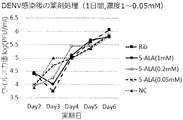
- FIG. 4 is a graph showing the concentration-dependent inhibitory effect of 5-ALA on dengue virus replication when cells are treated with 5-ALA for one day after infection.
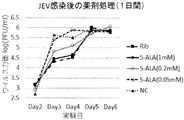
- FIG. 5 is a graph showing the concentration-dependent inhibitory effect of 5-ALA on Japanese encephalitis virus replication when cells are treated with 5-ALA for one day after infection.
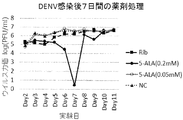
- FIG. 6 is a graph showing the inhibitory effect of 5-ALA on dengue virus replication when cells are treated with 5-ALA for 7 days after infection.
- FIG. 7 is a graph showing the inhibitory effect of 5-ALA on Japanese encephalitis virus replication when cells are treated with 5-ALA for 7 days after infection.
- FIG. 8 is a graph showing the inhibitory effect of 5-ALA on dengue virus replication when cells are treated with 5-ALA for 4 days after infection.
- FIG. 9 is a graph showing the inhibitory effect of 5-ALA on dengue virus replication when cells are treated with 5-ALA for 2 days after infection.
- FIG. 10 is a graph showing the inhibitory effect of 5-ALA on Japanese encephalitis virus replication when cells are treated with 5-ALA for 4 days after infection.
- FIG. 10 is a graph showing the inhibitory effect of 5-ALA on Japanese encephalitis virus replication when cells are treated with 5-ALA for 4 days after infection.
- FIG. 11 is a graph showing the inhibitory effect of 5-ALA on Japanese encephalitis virus replication when cells are treated with 5-ALA for 2 days after infection.
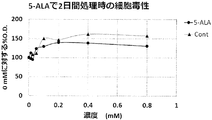
- FIG. 12 is a graph showing the cytotoxicity of 5-ALA when uninfected cells were treated with a 5-ALA solution for 2 days.
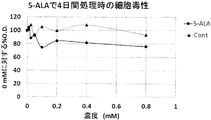
- FIG. 13 is a graph showing the cytotoxicity of 5-ALA when uninfected cells are treated with a 5-ALA solution for 4 days.
- FIG. 14 is a graph showing the cytotoxicity of 5-ALA when uninfected cells are treated with a 5-ALA solution for 7 days.
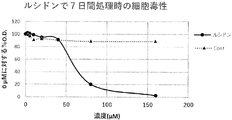
- FIG. 15 is a graph showing the cytotoxicity of Lucidone when uninfected cells were treated with Lucidone solution for 7 days.
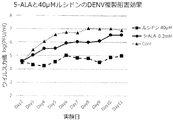
- FIG. 16 is a graph showing the inhibitory effect of 5-ALA or Lucidone on dengue virus replication when cells are treated with 5-ALA or 40 ⁇ M Lucidone for 7 days after infection.
- FIG. 17 is a graph showing the inhibitory effect of 5-ALA or Lucidone on Japanese encephalitis virus replication when cells are treated with 5-ALA or 40 ⁇ M Lucidone for 7 days after infection.
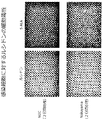
- FIG. 18 shows optical micrographs of cells at the time of treatment with 0.2 mM 5-ALA or 40 ⁇ M Lucidone for 2 days in the tests shown in FIGS. 16 and 17.
- FIG. 19 is a graph showing the inhibitory effect of 5-ALA or Lucidone on dengue virus replication when cells are treated with 5-ALA or low dose Lucidone for 7 days after infection.
- FIG. 19 is a graph showing the inhibitory effect of 5-ALA or Lucidone on dengue virus replication when cells are treated with 5-ALA or low dose Lucidone for 7 days after infection.
- FIG. 20 is a graph showing the inhibitory effect of 5-ALA or Lucidone on Japanese encephalitis virus replication when cells are treated with 5-ALA or low-dose Lucidone for 7 days after infection.
- FIG. 21 is a schematic diagram showing the timing of drug treatment, virus infection treatment, and the like in each example.
- FIG. 22 is a graph showing the inhibitory effect of 5-ALA on dengue virus type 1 replication when cells are treated with 5-ALA for 7 days after infection.
- FIG. 23 is a graph showing the inhibitory effect of 5-ALA on dengue virus type 3 replication when cells are treated with 5-ALA for 7 days after infection.
- FIG. 24 is a graph showing the inhibitory effect of 5-ALA on dengue virus type 4 replication when cells are treated with 5-ALA for 7 days after infection.
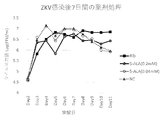
- FIG. 25 is a graph showing the inhibitory effect of 5-ALA on Zika virus replication when cells are treated with 5-ALA for 7 days after infection.
- One embodiment of the present invention is a prophylactic and / or therapeutic agent for flavivirus infection, which comprises at least one selected from 5-aminolevulinic acid (5-ALA) or an ester thereof, or a salt thereof.
- one embodiment of the present invention is at least one use selected from 5-aminolevulinic acid (5-ALA) or an ester thereof, or a salt thereof in a prophylactic and / or therapeutic agent for flavivirus infection.
- Yet another embodiment of the present invention is a composition for preventing and / or treating flavivirus infections comprising at least one selected from 5-aminolevulinic acid (5-ALA) or an ester thereof, or a salt thereof. is there.
- 5-aminolevulinic acid is a compound also referred to as ⁇ -aminolevulinic acid.
- “5-ALA or an ester thereof” is “5-ALA or 5-ALA ester” and is represented by the following formula (I).
- the "salts thereof” in the description of "5-ALA or an ester thereof, or a salt thereof” means a salt of 5-ALA or a salt of 5-ALA ester. Examples of this salt include hydrochloride, hydrobromide, hydroiodide, phosphate, methyl phosphate, ethyl phosphate, phosphite, hypophosphate, nitrate, sulfate, acetate, etc.
- R1 is a hydrogen atom, a linear or branched alkyl group, a cycloalkyl group, an aryl group or an aralkyl group.
- the formula (I) represents 5-ALA.
- R1 is a linear or branched alkyl group, cycloalkyl group, aryl group or aralkyl group
- the above formula (I) represents a 5-ALA ester.
- the linear or branched alkyl group represented by R1 is preferably an alkyl group having 1 to 18 carbon atoms, for example, a methyl group, an ethyl group, an n-propyl group, an isopropyl group, an n-butyl group, and the like.
- cycloalkyl group examples include not only a cyclopropyl group, a cyclobutyl group, a cyclopentyl group, a cyclohexyl group, a cycloheptyl group, a cyclooctyl group and the like, but also a cycloalkyl group having an alkyl substituent, for example, 1 carbon number.
- Cycloalkyl groups having up to 6 alkyl substituents for example, 3-methylcyclohexyl group, 4-methylcyclohexyl group, 4-ethylcyclohexyl group, 2-methylcyclooctyl group and the like can also be mentioned.
- an alkyl group having 1 to 16 carbon atoms is more preferable, and a methyl group, an ethyl group, an n-butyl group, an n-hexadecyl group or a 2-ethylhexyl group is particularly preferable.
- Examples of the aryl group shown in R1 include a phenyl group and a naphthyl group.
- the aryl group is, for example, a methyl group, an ethyl group, an n-propyl group, an isopropyl group, an n-butyl group, an isobutyl group, a tert-butyl group, an n-pentyl group, an n-hexyl group, a cyclopropyl group and a cyclobutyl group.
- Alkyl groups having 1 to 6 carbon atoms such as cyclohexyl groups, methoxy groups, ethoxy groups, n-propoxy groups, n-butoxy groups, isobutoxy groups, tert-butoxy groups and other alkoxy groups having 1 to 6 carbon atoms, hydroxyl groups, It may be substituted with 1 to 3 substituents such as an amino group, a nitro group, a cyano group, a halogen atom such as fluorine, chlorine, bromine and iodine, and a carboxy group.
- the aralkyl group shown in R1 is preferably composed of an alkyl group having 1 to 6 carbon atoms and an aryl group having 6 to 20 carbon atoms.
- alkyl group having 1 to 6 carbon atoms include a methyl group, an ethyl group, an n-propyl group, an isopropyl group, an n-butyl group, an isobutyl group, a tert-butyl group, an n-pentyl group and an n-hexyl group.
- Cyclopropyl group, cyclobutyl group, cyclohexyl group and the like can be mentioned, and examples of the aryl group having 6 to 20 carbon atoms include a phenyl group and a naphthyl group.
- a benzyl group or a phenethyl group is preferable, and a benzyl group is particularly preferable.
- the aryl group of the aralkyl group has 1 to 6 carbon atoms such as the above-mentioned alkyl group having 1 to 6 carbon atoms, methoxy group, ethoxy group, n-propoxy group, n-butoxy group, isobutoxy group and tert-butoxy group.
- substituents such as an alkoxy group, a hydroxyl group, an amino group, a nitro group, a cyano group, a halogen atom such as fluorine, chlorine, bromine and iodine, and a carboxy group.
- At least one selected from 5-ALA or an ester thereof, or a salt thereof may be used as an active ingredient, and this active ingredient may be used. May be used alone, or the active ingredient may be in the form of a combination of multiple types.
- the active ingredient used in this embodiment may be any of 5-ALA, 5-ALA ester, 5-ALA salt, or 5-ALA ester salt. Further, for example, it may be a combination of salts of 5-ALA and 5-ALA ester.
- At least one selected from 5-ALA or esters used in the present embodiment, or salts thereof may be in a purified state, in a crudely purified state, or obtained by synthesis.
- 5-ALA salt is preferably used as the active ingredient, and more preferably 5-ALA hydrochloride and / or 5-ALA phosphate is used as the active ingredient.
- At least one selected from 5-ALA or esters thereof used in the present invention, or salts thereof, can be produced by known methods.
- the "flavivirus” is a virus classified into the flavivirus genus of the Flaviviridae family.
- the flavivirus include dengue virus, decavirus, Japanese encephalitis virus, Westnile virus, yellow fever virus, Murray valley encephalitis virus, St. Louis encephalitis virus, Omsk hemorrhagic fever virus, and tick-borne encephalitis virus.
- the flavivirus to be prevented and / or treated is a virus classified into the flavivirus family flavivirus genus, but the flavivirus to be prevented and / or treated is preferably. Dengue virus, Zika virus, Japanese encephalitis virus, tick-borne encephalitis virus, Westnile virus, or yellow fever virus, more preferably dengue virus, Zika virus, or Japanese encephalitis virus.
- flavivirus infection is a disease caused by infecting a target such as a human or a non-human animal with the flavivirus.
- flavivirus infections in humans include dengue fever caused by dengue virus infection, dengue hemorrhagic fever, and dengue shock syndrome, dengue virus disease caused by dengue virus infection, congenital dengue virus infection, and Japanese encephalitis virus.
- Japanese encephalitis caused by infection with, West Nile fever and West Nile encephalitis caused by West Nile virus infection Yellow fever caused by yellow fever virus infection, Malay valley encephalitis caused by virus infection, St. Louis encephalitis Examples include St.
- Flavivirus infections in animals other than humans include, for example, encephalitis caused by infection of horses with Japanese encephalitis virus, abortion caused by infection of pregnant pigs, and encephalitis caused by infection of horses with West Nile virus. , And abortion caused by infection with pregnant sheep, but is not limited to these.
- prevention of flavivirus infection means, for example, suppressing the onset of flavivirus infection, that is, completely suppressing the onset or reducing the incidence rate, but is not limited thereto. ..
- treatment of flavivirus infection includes, for example, prevention, alleviation, and complete cure of flavivirus infection, but is not limited thereto.
- prevention and / or treatment means that any of the following (1) to (3) may be used: (1) prevention, (2) treatment, (3) prevention and treatment. Both.
- the prophylactic and / or therapeutic agent for flavivirus infection can be in any route of administration, dosage form and composition as long as the infection to be administered can be prevented and / or treated.
- the prophylactic and / or therapeutic agent for flavivirus infection includes oral administration, intravenous administration, intranasal administration, transdermal administration, inhalation administration, administration by suppository, and the like. It can be administered by various routes not limited to these.
- the route of administration of the prophylactic and / or therapeutic agent for flavivirus infection is oral administration.
- the preventive and / or therapeutic agent for flavivirus infection can be in a dosage form suitable for the route of administration, eg, tablets, powders, capsules, elixirs, suspensions. , Emulsions, solutions, syrups, ointments, suppositories, spreading agents and the like.
- the prophylactic and / or therapeutic agent for flavivirus infection may be in the form of food.
- the prophylactic and / or therapeutic agent for flavivirus infection may be in the form of a feed provided to animals other than humans.
- the prophylactic and / or therapeutic agent for flavivirus infection comprises an iron compound.
- the iron compound is not particularly limited, and examples of the iron compound may include a complex with a polymer compound such as an organic salt, an inorganic salt, or a protein of iron.
- organic salts of iron include ferrous citrate, sodium iron citrate, sodium ferrous citrate, citrates such as ammonium iron citrate, iron malate, sodium iron succinate, iron lactate, and tartrate acid.
- Hydroxycarboxylates such as iron and iron glycolate, ferrous succinate, iron acetate, iron oxalate, dextran iron, iron gluconate, sodium ethylenediamine tetraacetate, potassium ethylenediamine tetraacetate, ammonium ethylenediamine tetraacetate, Examples thereof include sodium diethylenetriamine pentaacetate, potassium diethylenetriamine pentaacetate, ammonium diethylenetriamine pentaacetate, and iron glycerophosphate.
- the inorganic salt of iron include iron oxide, iron chloride, iron nitrate, iron sulfate, iron ammonium sulfate, ferrous pyrophosphate, ferric pyrophosphate and the like.
- the iron compound may be an iron-binding protein such as lactoferrin iron or transferrin iron, or heme iron.
- the iron compound may be one kind, or a plurality of kinds of iron compounds may be used in combination.
- the iron compound is sodium ferrous citrate.
- the amount of iron compound contained in the prophylactic and / or therapeutic agent for flavivirus infection is the total molar amount of 5-aminolevulinic acid (5-ALA) or an ester thereof, or a salt thereof:
- the molar amount of iron atoms in the iron compound is 1: 0.05 to 1: 5, preferably 1: 0.1 to 1: 1.
- the prophylactic and / or therapeutic agent for flavivirus infection is, as required, various pharmaceutically or food hygiene-acceptable carriers and additives, or feeds for non-human animals.
- the flavivirus infection prophylactic and / or therapeutic agent may also be a flavivirus infection prophylactic and / or therapeutic composition comprising these necessary components.
- Another embodiment of the invention administers a prophylactic and / or therapeutic agent for flavivirus infections comprising at least one selected from 5-aminolevulinic acid (5-ALA) or an ester thereof, or a salt thereof.
- a method of preventing and / or treating a flavivirus infection including the above.
- another embodiment of the present invention is the use of at least one selected from 5-aminolevulinic acid (5-ALA) or an ester thereof, or a salt thereof in a subject for preventing and / or treating a flavivirus infection. is there.
- the target of prevention and / or treatment of flavivirus infection in the method for preventing and / or treating flavivirus infection according to the embodiment of the present invention is not particularly limited, but includes humans, non-human mammals and birds. Be done.
- the dose of 5-aminolevulinic acid (5-ALA) or an ester thereof, or a salt thereof is appropriately determined according to the type of virus, the degree of symptoms, and the like. It is determined.
- the administration frequency and administration period are not particularly limited.
- the prophylactic and / or therapeutic agent for flavivirus infection comprises at least one selected from 5-aminolevulinic acid (5-ALA) or an ester thereof, or a salt thereof, and is irradiated with light.
- the prophylactic and / or therapeutic agent for flavivirus infection comprises at least one selected from 5-aminolevulinic acid (5-ALA) or an ester thereof, or a salt thereof, and is irradiated with light. No, it is a prophylactic and / or therapeutic agent for flavivirus infections.
- a method for preventing and / or treating a flavivirus infection comprises flavi containing at least one selected from 5-aminolevulinic acid (5-ALA) or an ester thereof, or a salt thereof.
- a method for preventing and / or treating a flavivirus infection which comprises administering a prophylactic and / or therapeutic agent for the viral infection to a subject and does not require light irradiation.
- a method of preventing and / or treating a flavivirus infection comprises at least one selected from 5-aminolevulinic acid (5-ALA) or an ester thereof, or a salt thereof.
- a method of preventing and / or treating a flavivirus infection which comprises administering a prophylactic and / or therapeutic agent to a subject and does not irradiate light.
- Examples of the "light irradiation" in these embodiments include light irradiation as used in photodynamic therapy (PDT) utilizing the photosensitivity of protoporphyrin (protoporphyrin IX) accumulated in cells.
- the inhibitory effect on dengue virus (DENV) or Japanese encephalitis virus (JEV) replication when cells were treated with a drug such as 5-ALA before, at the same time as, or after infection with flavivirus was confirmed according to the following procedure.
- a drug such as 5-ALA before, at the same time as, or after infection with flavivirus.
- the culture medium was MEM + 10% fetal bovine serum + 10 mM non-essential amino acids + 1000 U / ml penicillin + 100 ⁇ g / ml streptomycin.
- the drug to be examined was added to the culture medium at this point.
- 5-aminolevphosphate was used as 5-ALA
- sodium ferrous citrate (SFC) was used as the iron-containing compound
- 300 ⁇ M ribavirin or various concentrations of lucidone were used as positive controls.
- And water was used as a negative control.
- the cells were washed with phosphate buffer (PBS) to completely remove the inoculum.
- Maintenance culture medium (MEM + 1% fetal bovine serum + 10 mM non-essential amino acid + 1000 U / ml penicillin + 100 ⁇ g / ml streptomycin + 1 mM HEPES) was added to a 1 ml plate, and cells were cultured at 37 ° C. and 5% CO2.
- the drug to be examined was added to the maintenance culture medium at this point.
- the infectious titer of the virus was measured according to the following procedure. (1) The day before the experiment, Vero cells were seeded on a 24-well plate and cultured at 37 ° C. and 5% CO2. (2) The titer measurement sample was thawed, and a 10-fold serial dilution series was prepared using the maintenance culture solution. (3) The culture solution of the prepared plate was removed, and 200 microliters of the dilution series prepared in the procedure (2) was inoculated. After 1 hour of adsorption, the inoculum was removed from the plate, 1% methylcellulose (MEM + 1% methylcellulose + 1% fetal bovine serum) was added to the 1 ml plate, and the plate was allowed to stand at 37 ° C.
- MEM + 1% methylcellulose + 1% fetal bovine serum fetal bovine serum
- a 2-fold serial dilution series of 5-ALA was prepared using a maintenance culture medium (MEM + 1% fetal bovine serum + 10 mM non-essential amino acid + 1000 U / ml penicillin + 100 ⁇ g / ml streptomycin + 1 mM HEPES) ( ⁇ 0.8 mM). .. Water was used as a negative control.
- a 2-fold serial dilution series was prepared for Lucidone ( ⁇ 160 ⁇ M).
- thiazolyl blue tetrazolium bromide was dissolved in an equal amount mixture of 2 ⁇ MEM and sterilized water (10 mg / ml) and sterilized by filtration (prepared before use). (6) The culture solution was removed from the plate, isopropyl alcohol was added to the 100 ⁇ l plate, and the mixture was shaken at room temperature for about 5 minutes. (7) The absorbance at 570 nm was measured, and the% absorbance with respect to the absorbance of the 0 mM treated well was calculated.
- the inhibitory effect on dengue virus replication in pre-infection drug treatment was investigated.
- the drugs used were 5-ALA (1 mM), 5-ALA (1 mM) + SFC (0.25 mM) (that is, a combination of 5-ALA and SFC), SFC (0.25 mM), ribavirin (300 ⁇ M, Rib in the figure). , And water (NC in the figure).
- Titers of progeny virus released from drug-treated cells are assessed and shown in FIG. 1 as log (PFU / ml) (PFU: plaque-forming unit).
- 5-ALA (1 mM) and 5-ALA (1 mM) + SFC (0.25 mM) did not show an inhibitory effect on dengue virus replication when administered pre-infection.
- the inhibitory effect on dengue virus replication in drug treatment at the same time as infection was investigated.
- the drugs used were 5-ALA (1 mM), 5-ALA (1 mM) + SFC (0.25 mM), SFC (0.25 mM), ribavirin (300 ⁇ M, Rib in the figure), and water (NC in the figure). It was.
- Treatment with the drug was one day (Day 1) at the same time as infection.
- Titers of progeny virus released from treated cells are assessed and shown in FIG. 2 as log (PFU / ml) (PFU: plaque forming unit).
- 5-ALA (1 mM) and 5-ALA (1 mM) + SFC (0.25 mM) showed an inhibitory effect on dengue virus replication when co-treated with infection. By removing the drug from the culture medium, this inhibitory effect disappeared over time.
- the inhibitory effect on dengue virus replication in drug treatment after infection was investigated.
- the drugs used were 5-ALA (1 mM), 5-ALA (1 mM) + SFC (0.25 mM), SFC (0.25 mM), ribavirin (300 ⁇ M, Rib in the figure), and water (NC in the figure). It was.
- Treatment with the drug was from 1 day after infection to 1 day (Day 2).
- Titers of progeny virus released from treated cells are assessed and shown in FIG. 3 as log (PFU / ml) (PFU: plaque forming unit).
- 5-ALA (1 mM) and 5-ALA (1 mM) + SFC (0.25 mM) showed an inhibitory effect on dengue virus replication in the case of post-infection treatment. By removing the drug from the culture medium, this inhibitory effect disappeared over time.
- the dose-dependent inhibitory effect of dengue virus replication on post-infection drug treatment was investigated.
- the drugs used were 5-ALA (1 mM), 5-ALA (0.2 mM), 5-ALA (0.05 mM), ribavirin (300 ⁇ M, Rib in the figure), and water (NC in the figure).
- Treatment with the drug was from 1 day after infection to 1 day (Day 2).
- Titers of progeny virus released from treated cells are assessed and shown as log (PFU / ml) in FIG.
- 5-ALA showed a dose-dependent inhibitory effect on dengue virus replication at a concentration of 0.05 mM to 1 mM. By removing the drug from the culture medium, this inhibitory effect disappeared over time.
- the inhibitory effect on dengue virus replication during drug treatment for 7 days after infection was examined.
- the drugs used were 5-ALA (0.2 mM), 5-ALA (0.05 mM), ribavirin (300 ⁇ M, Rib in the figure), and water (NC in the figure).
- Treatment with the drug was from 1 day to 7 days after infection (from Day 2 to the end of Day 8). Titers of progeny virus released from treated cells are assessed and shown as log (PFU / ml) in FIG. As shown in FIG. 6, treatment with 5-ALA (0.2 mM) showed an inhibitory effect on dengue virus replication that increased with the lapse of the treatment period up to Day 7.
- the inhibitory effect of treatment with 5-ALA (0.2 mM) on dengue virus replication was stronger than that with ribavirin (300 ⁇ M).
- the inhibitory effect on dengue replication by treatment with 5-ALA (0.2 mM) was reduced.
- the appearance of 5-ALA resistant virus is considered to be one of the causes of the decrease in the inhibitory effect.
- a decrease in the inhibitory effect due to continued treatment with the drug was also observed in ribavirin treatment.
- the inhibitory effect of Japanese encephalitis virus replication on drug treatment for 7 days after infection was examined.
- the drugs used were 5-ALA (0.2 mM), 5-ALA (0.05 mM), ribavirin (300 ⁇ M, Rib in the figure), and water (NC in the figure).
- Treatment with the drug was from 1 day to 7 days after infection (from Day 2 to the end of Day 8). Titers of progeny virus released from treated cells are assessed and shown as log (PFU / ml) in FIG. As shown in FIG. 7, treatment with 5-ALA (0.2 mM and 0.05 mM) showed an inhibitory effect on Japanese encephalitis virus replication.
- the inhibitory effect on dengue virus replication during drug treatment for 4 days after infection was examined.
- the drugs used were 5-ALA (0.2 mM), 5-ALA (0.05 mM), ribavirin (300 ⁇ M, Rib in the figure), and water (NC in the figure).
- Treatment with the drug was from 1 day after infection to 4 days (from Day 2 to the end of Day 6). Titers of progeny virus released from treated cells are assessed and shown as log (PFU / ml) in FIG.
- treatment with 5-ALA (0.2 mM) showed an inhibitory effect on dengue virus replication. By removing the drug from the culture medium, this inhibitory effect disappeared over time.
- the inhibitory effect on dengue virus replication during drug treatment for 2 days after infection was investigated.
- the drugs used were 5-ALA (0.2 mM), 5-ALA (0.05 mM), ribavirin (300 ⁇ M, Rib in the figure), and water (NC in the figure).
- Treatment with the drug was from 1 day to 2 days after infection (from Day 2 to the end of Day 4). Titers of progeny virus released from treated cells are assessed and shown as log (PFU / ml) in FIG.
- FIG. 9 treatment with 5-ALA (0.2 mM) showed an inhibitory effect on dengue virus replication. By removing the drug from the culture medium, this inhibitory effect disappeared over time. From the results of FIGS. 6, 8 and 9, it was revealed that the 4-day and 2-day 5-ALA treatment showed a lower inhibitory effect on dengue virus replication than the 7-day 5-ALA treatment.
- the inhibitory effect of Japanese encephalitis virus replication on drug treatment for 4 days after infection was examined.
- the drugs used were 5-ALA (0.2 mM), 5-ALA (0.05 mM), ribavirin (300 ⁇ M, Rib in the figure), and water (NC in the figure).
- Treatment with the drug was from 1 day after infection to 4 days (from Day 2 to the end of Day 6). Titers of progeny virus released from treated cells are assessed and shown as log (PFU / ml) in FIG.
- treatment with 5-ALA (0.2 mM) showed an inhibitory effect on Japanese encephalitis virus replication. By removing the drug from the culture medium, this inhibitory effect disappeared over time.
- the inhibitory effect of Japanese encephalitis virus replication on drug treatment for 2 days after infection was investigated.
- the drugs used were 5-ALA (0.2 mM), 5-ALA (0.05 mM), ribavirin (300 ⁇ M, Rib in the figure), and water (NC in the figure).
- Treatment with the drug was from 1 day to 2 days after infection (from Day 2 to the end of Day 4). Titers of progeny virus released from treated cells are assessed and shown as log (PFU / ml) in FIG.
- treatment with 5-ALA (0.2 mM) showed an inhibitory effect on Japanese encephalitis virus replication. By removing the drug from the culture medium, this inhibitory effect disappeared over time. From the results of FIGS. 7, 10 and 11, it was clarified that the 4-day and 2-day 5-ALA treatment showed a lower inhibitory effect on Japanese encephalitis virus replication than the 7-day 5-ALA treatment. It was.
- Cytotoxicity of uninfected cells treated with 5-ALA solution for 7 days was examined according to the MTT assay described above. The results of cytotoxicity treated with 5-ALA solution for 7 days are shown in FIG. “Cont” in FIGS. 12, 13 and 14 is a negative control. Dose-dependent cytotoxicity of 5-ALA was observed in non-infected cells. CC50 (concentration of a drug that causes cytotoxicity in 50% of cells) was above 0.8 mM after treatment with 5-ALA for 7 days. This 0.8 mM concentration was higher than the 0.2 mM concentration of 5-ALA, which had an inhibitory effect on virus replication in Examples 6 and 7. From this, it is inferred that 5-ALA can prevent and / or treat flavivirus infection while suppressing side effects caused by cytotoxicity.
- Cytotoxicity after treatment with Lucidone for 7 days was examined according to the MTT assay described above.
- the results of cytotoxicity of uninfected cells treated with Lucidone for 7 days are shown in FIG. “Cont” in FIG. 15 is a negative control.
- the cytotoxicity of Lucidone was observed in a dose-dependent manner.
- the CC50 concentration of the drug that causes cytotoxicity in 50% of cells
- Lucidone showed no cytotoxicity at a concentration of 40 ⁇ M against cells not infected with flavivirus. Therefore, in the following examples, the concentration of Lucidone when examining the antiflavivirus activity was set to 40 ⁇ M.
- the inhibitory effect of 5-ALA on dengue replication during drug treatment 7 days after infection was compared to 40 ⁇ M lucidone.
- the agents used were 5-ALA (0.2 mM), Lucidone (40 ⁇ M), and water (Cont in the figure).
- Treatment with the drug was from 1 day to 7 days after infection (from Day 2 to the end of Day 8). Titers of progeny virus released from treated cells are assessed and shown as log (PFU / ml) in FIG.
- 40 ⁇ M Lucidone showed a stronger inhibitory effect on dengue virus replication than 0.2 mM 5-ALA.
- the inhibitory effect of 5-ALA on Japanese encephalitis virus replication in drug treatment 7 days after infection was compared with 40 ⁇ M Lucidone.
- the agents used were 5-ALA (0.2 mM), Lucidone (40 ⁇ M), and water (Cont in the figure).
- Treatment with the drug was from 1 day to 7 days after infection (from Day 2 to the end of Day 8). Titers of progeny virus released from treated cells are assessed and shown as log (PFU / ml) in FIG.
- 40 ⁇ M Lucidone showed a stronger inhibitory effect on Japanese encephalitis virus replication than 0.2 mM 5-ALA.
- Example 16 and Example 17 The cytotoxicity of Lucidone and 5-ALA against flavivirus-infected cells was investigated.
- the state of cells when cells infected with dengue virus type 2 New Guinea C strain (DENV2 NGC) or Japanese encephalitis virus Nakayama strain (JEV Nakayama) were treated with a drug for 2 days. was observed with an optical microscope.
- a photomicrograph showing the state of each cell is shown in FIG.
- NGC indicates a dengue virus type 2 New Guinea C strain (DENV2 NGC)
- Nakayama indicates a Japanese encephalitis virus Nakayama strain (JEV Nakayama).
- Example 16 ie, FIG. 16
- Example 17 ie, FIG. 17
- Lucidone kills the infected cells themselves, which are the hosts of dengue virus and Japanese encephalitis virus, and reduces the number of host cells for viral growth in this experimental system.
- Lucidone kills the infected cells themselves, which are the hosts of dengue virus and Japanese encephalitis virus, and reduces the number of host cells for viral growth in this experimental system.
- Lucidone kills the infected cells themselves, which are the hosts of dengue virus and Japanese encephalitis virus, and reduces the number of host cells for viral growth in this experimental system.
- the amount of virus present in the culture medium decreased in the presence of Lucidone.
- Examples 16 and 17 are not the results of accurately comparing the anti-flavivirus activity other than the cytotoxicity of Lucidone with the anti-flavivirus activity of 5-ALA.
- a comparison of the anti-flavivirid activity of Lucidone and 5-ALA should be made at concentrations of each drug that are not cytotoxic. Therefore, in the following Examples 19 and 20, the antiflavivirus activity of Lucidone and 5-ALA was compared at a concentration that does not cause cytotoxicity.
- the inhibitory effect of 5-ALA on dengue replication during drug treatment 7 days after infection was compared to 10 ⁇ M and 2.5 ⁇ M lucidone.
- the drugs used were 5-ALA (0.2 mM), Lucidone (10 ⁇ M), Lucidone (2.5 ⁇ M) and water (NC in the figure). Treatment with the drug was from 1 day to 7 days after infection (from Day 2 to the end of Day 8). Titers of progeny virus released from treated cells are assessed and shown as log (PFU / ml) in FIG. As shown in FIG. 19, 0.2 mM 5-ALA showed a stronger inhibitory effect on dengue virus replication than 10 ⁇ M and 2.5 ⁇ M Lucidone.
- the inhibitory effect of 5-ALA on Japanese encephalitis virus replication during drug treatment 7 days after infection was compared with 10 ⁇ M and 2.5 ⁇ M Lucidone.
- the drugs used were 5-ALA (0.2 mM), Lucidone (10 ⁇ M), Lucidone (2.5 ⁇ M) and water (NC in the figure). Treatment with the drug was from 1 day to 7 days after infection (from Day 2 to the end of Day 8). Titers of progeny virus released from treated cells are assessed and shown as log (PFU / ml) in FIG. As shown in FIG. 20, 0.2 mM 5-ALA showed a stronger inhibitory effect on Japanese encephalitis virus replication than 10 ⁇ M and 2.5 ⁇ M Lucidone.
- the difference in concentration showing cytotoxicity and drug efficacy is as follows.
- 5-ALA antiflavivirus activity has been confirmed above 0.2 mM and cytotoxicity is at least 0.8 mM (cytotoxicity of 5-ALA above 0.8 mM has not been investigated). Therefore, the therapeutic window of 5-ALA is 0.2 mM ⁇ 5-ALA ⁇ 0.8 mM or more.
- the anti-flavivirus activity of Lucidone was confirmed at 40 ⁇ M, and the cytotoxicity was also confirmed at 40 ⁇ M, so that there is no therapeutic window.
- 5-ALA is a more useful prophylactic and / or therapeutic agent for flavivirus infections than Lucidone.
- the increase of HO-1 in cells is known. Therefore, even if the increase in intracellular HO-1 is known as the antiviral effect of 5-ALA, the usefulness of 5-ALA as a preventive and / or therapeutic agent for flavivirus infection is simply HO-. It is clear that it is not solely due to what is expected from the increase of 1. It can be said that this advantageous effect of 5-ALA is an unexpected effect far exceeding the effect caused only by the increase of HO-1 as shown by Lucidone.
- Example 6 Similar to Example 6, against four viruses, dengue virus type 1 Mochizuki strain (DENV1), dengue virus type 3 CH53489 strain (DENV3), dengue virus type 4 TVP360 strain (DENV4), and Zika virus PRVABC59 strain (ZKV).
- DENV1 dengue virus type 1 Mochizuki strain
- DENV3 dengue virus type 3 CH53489 strain
- DENV4 dengue virus type 4 TVP360 strain
- ZKV Zika virus PRVABC59 strain
- the drugs used were 5-ALA (0.2 mM), 5-ALA (0.04 mM), ribavirin (300 ⁇ M, Rib in the figure), and water (NC in the figure).
- Example 21-1 Examination of Inhibitory Effect of Dengue Virus Type 1 Replication in Drug Treatment for 7 Days After Infection As shown in FIG. 22, treatment with 5-ALA (0.2 mM) showed an inhibitory effect on dengue virus type 1 up to Day 9. It was. The inhibitory effect of treatment with 5-ALA (0.2 mM) on dengue virus replication was stronger than that with ribavirin (300 ⁇ M). By removing the drug from the culture medium, this inhibitory effect disappeared over time.
- Example 21-2 Examination of Inhibitory Effect of Dengue Virus Type 3 Replication in Drug Treatment 7 Days After Infection As shown in FIG. 23, treatment with 5-ALA (0.2 mM) showed an inhibitory effect on dengue virus type 3 up to Day 7. It was. The inhibitory effect of treatment with 5-ALA (0.2 mM) on dengue virus replication was stronger than that with ribavirin (300 ⁇ M). On Day 8, the inhibitory effect on dengue replication by treatment with 5-ALA (0.2 mM) was reduced. The appearance of 5-ALA resistant virus is considered to be one of the causes of the decrease in the inhibitory effect. A decrease in the inhibitory effect due to continued treatment with the drug was also observed from Day 7 in the ribavirin treatment.
- Example 21-3 Examination of Inhibitory Effect of Dengue Virus Type 4 Replication in Drug Treatment 7 Days After Infection As shown in FIG. 24, treatment with 5-ALA (0.2 mM) showed an inhibitory effect on dengue virus type 4 up to Day 7. It was. The effect of ribavirin (300 ⁇ M) was stronger than the inhibitory effect of dengue virus replication by treatment with 5-ALA (0.2 mM). On Day 8, the inhibitory effect on dengue replication by treatment with 5-ALA (0.2 mM) was reduced. The appearance of 5-ALA resistant virus is considered to be one of the causes of the decrease in the inhibitory effect. A decrease in the inhibitory effect due to continued treatment with the drug was also observed in ribavirin treatment.
- Example 21-4 Examination of Inhibitory Effect of Zika Virus Replication in Drug Treatment for 7 Days After Infection As shown in FIG. 25, treatment with 5-ALA (0.2 mM) showed an inhibitory effect on Zika virus up to Day 8. The inhibitory effect of Zika virus replication on treatment with 5-ALA (0.2 mM) was stronger than that on ribavirin (300 ⁇ M) on Days 5, 6 and 8. After Day 9, the inhibitory effect on dengue virus replication by treatment with 5-ALA (0.2 mM) decreased. The appearance of 5-ALA resistant virus is considered to be one of the causes of the decrease in the inhibitory effect. A decrease in the inhibitory effect due to continued treatment with the drug was also observed in ribavirin treatment.
- a prophylactic and / or therapeutic agent for flavivirus infection which comprises at least one selected from 5-aminolevulinic acid (5-ALA) or an ester thereof, or a salt thereof, which is an embodiment of the present invention, and an embodiment of the present invention.
- Flavivirus infections that are prophylactic and / or therapeutic methods can be used for the prevention and / or treatment of flavivirus infections.
Landscapes
- Health & Medical Sciences (AREA)
- Life Sciences & Earth Sciences (AREA)
- Pharmacology & Pharmacy (AREA)
- Veterinary Medicine (AREA)
- Chemical & Material Sciences (AREA)
- Public Health (AREA)
- General Health & Medical Sciences (AREA)
- Medicinal Chemistry (AREA)
- Animal Behavior & Ethology (AREA)
- Epidemiology (AREA)
- Virology (AREA)
- Oncology (AREA)
- Organic Chemistry (AREA)
- Nuclear Medicine, Radiotherapy & Molecular Imaging (AREA)
- General Chemical & Material Sciences (AREA)
- Chemical Kinetics & Catalysis (AREA)
- Communicable Diseases (AREA)
- Inorganic Chemistry (AREA)
- Molecular Biology (AREA)
- Pharmaceuticals Containing Other Organic And Inorganic Compounds (AREA)
- Acyclic And Carbocyclic Compounds In Medicinal Compositions (AREA)
Priority Applications (4)
| Application Number | Priority Date | Filing Date | Title |
|---|---|---|---|
| US17/606,413 US20220193124A1 (en) | 2019-04-26 | 2020-04-24 | Therapeutic Agent for Flavivirus Infection |
| JP2021516304A JPWO2020218577A1 (https=) | 2019-04-26 | 2020-04-24 | |
| EP20795639.2A EP3960241A4 (en) | 2019-04-26 | 2020-04-24 | THERAPEUTIC AGAINST FLAVIVIRUS INFECTION |
| CN202080031534.4A CN113747946B (zh) | 2019-04-26 | 2020-04-24 | 黄病毒感染症治疗剂 |
Applications Claiming Priority (2)
| Application Number | Priority Date | Filing Date | Title |
|---|---|---|---|
| JP2019-086554 | 2019-04-26 | ||
| JP2019086554 | 2019-04-26 |
Publications (1)
| Publication Number | Publication Date |
|---|---|
| WO2020218577A1 true WO2020218577A1 (ja) | 2020-10-29 |
Family
ID=72942078
Family Applications (1)
| Application Number | Title | Priority Date | Filing Date |
|---|---|---|---|
| PCT/JP2020/017837 Ceased WO2020218577A1 (ja) | 2019-04-26 | 2020-04-24 | フラビウイルス感染症治療剤 |
Country Status (6)
| Country | Link |
|---|---|
| US (1) | US20220193124A1 (https=) |
| EP (1) | EP3960241A4 (https=) |
| JP (1) | JPWO2020218577A1 (https=) |
| CN (1) | CN113747946B (https=) |
| TW (1) | TW202106293A (https=) |
| WO (1) | WO2020218577A1 (https=) |
Cited By (2)
| Publication number | Priority date | Publication date | Assignee | Title |
|---|---|---|---|---|
| WO2021132626A1 (ja) * | 2019-12-27 | 2021-07-01 | 国立大学法人北海道大学 | 豚熱の治療及び/又は予防剤 |
| WO2021215517A1 (ja) * | 2020-04-22 | 2021-10-28 | ネオファーマジャパン株式会社 | 新型コロナウイルス感染症(covid-19)の治療及び/又は予防剤 |
Citations (8)
| Publication number | Priority date | Publication date | Assignee | Title |
|---|---|---|---|---|
| JP2000510123A (ja) | 1996-05-08 | 2000-08-08 | ニューヨーク・ブラッド・センター・インコーポレイテッド | ウイルス感染の治療方法 |
| JP2005333907A (ja) | 2004-05-28 | 2005-12-08 | Kyowa Hakko Kogyo Co Ltd | 5−アミノレブリン酸の製造法 |
| JP2006182753A (ja) | 2004-03-30 | 2006-07-13 | Cosmo Oil Co Ltd | 5−アミノレブリン酸リン酸塩、その製造方法及びその用途 |
| WO2011003071A1 (en) * | 2009-07-02 | 2011-01-06 | The United States Of America, As Represented By The Secretary, Department Of Health & Human Services | Methods of modulating hepatitis c virus infection |
| WO2014013664A1 (ja) | 2012-07-19 | 2014-01-23 | Sbiファーマ株式会社 | インフルエンザウイルス感染症の予防・治療剤 |
| JP2014094963A (ja) | 2007-01-11 | 2014-05-22 | Photocure Asa | アミノレブリン酸およびその誘導体の使用 |
| WO2016163082A1 (ja) | 2015-04-10 | 2016-10-13 | Sbiファーマ株式会社 | Ala類を含むウイルス感染症予防/治療剤 |
| WO2019059027A1 (ja) * | 2017-09-19 | 2019-03-28 | ネオファーマジャパン株式会社 | 5-アミノレブリン酸を含むエビ目用組成物 |
Family Cites Families (1)
| Publication number | Priority date | Publication date | Assignee | Title |
|---|---|---|---|---|
| US5234940A (en) * | 1989-07-28 | 1993-08-10 | Queen's University | Photochemotherapeutic method using 5-aminolevulinic acid and precursors thereof |
-
2020
- 2020-04-24 JP JP2021516304A patent/JPWO2020218577A1/ja active Pending
- 2020-04-24 EP EP20795639.2A patent/EP3960241A4/en not_active Withdrawn
- 2020-04-24 CN CN202080031534.4A patent/CN113747946B/zh not_active Expired - Fee Related
- 2020-04-24 TW TW109113893A patent/TW202106293A/zh unknown
- 2020-04-24 US US17/606,413 patent/US20220193124A1/en not_active Abandoned
- 2020-04-24 WO PCT/JP2020/017837 patent/WO2020218577A1/ja not_active Ceased
Patent Citations (8)
| Publication number | Priority date | Publication date | Assignee | Title |
|---|---|---|---|---|
| JP2000510123A (ja) | 1996-05-08 | 2000-08-08 | ニューヨーク・ブラッド・センター・インコーポレイテッド | ウイルス感染の治療方法 |
| JP2006182753A (ja) | 2004-03-30 | 2006-07-13 | Cosmo Oil Co Ltd | 5−アミノレブリン酸リン酸塩、その製造方法及びその用途 |
| JP2005333907A (ja) | 2004-05-28 | 2005-12-08 | Kyowa Hakko Kogyo Co Ltd | 5−アミノレブリン酸の製造法 |
| JP2014094963A (ja) | 2007-01-11 | 2014-05-22 | Photocure Asa | アミノレブリン酸およびその誘導体の使用 |
| WO2011003071A1 (en) * | 2009-07-02 | 2011-01-06 | The United States Of America, As Represented By The Secretary, Department Of Health & Human Services | Methods of modulating hepatitis c virus infection |
| WO2014013664A1 (ja) | 2012-07-19 | 2014-01-23 | Sbiファーマ株式会社 | インフルエンザウイルス感染症の予防・治療剤 |
| WO2016163082A1 (ja) | 2015-04-10 | 2016-10-13 | Sbiファーマ株式会社 | Ala類を含むウイルス感染症予防/治療剤 |
| WO2019059027A1 (ja) * | 2017-09-19 | 2019-03-28 | ネオファーマジャパン株式会社 | 5-アミノレブリン酸を含むエビ目用組成物 |
Non-Patent Citations (25)
| Title |
|---|
| AISAKA, KOZO: "Treatment of endometriosis drug therapy add-back therapy", JAPANESE JOURNAL OF CLINICAL MEDICINE, 2001, pages 129 - 132, XP009524679 * |
| CHAKER EL KALAMOUNI, FRUMENCE ETIENNE, BOS SANDRA, TURPIN JONATHAN, NATIVEL BRICE, HARRABI WISSAL, WILKINSON DAVID, MEILHAC OLIVIE: "Subversion of the heme oxygenase-1 antiviral activity by zika virus", VIRUSES, vol. 11, no. 2, 2018, pages 1 - 13, XP055759260, DOI: 10.3390/v11010002 * |
| DOROTHEE BARDIOT ET AL.: "Discovery of Indole Derivatives as Novel and Potent Dengue Virus Inhibitors", JOURNAL OF MEDICINAL CHEMISTRY, vol. 61, no. 18, 27 August 2018 (2018-08-27), pages 8390 - 8401 |
| ESPINOZA JAGONZALEZ PAKALERGIS AM: "Modulation of Antiviral Immunity by Heme Oxygenase-1", AM J PATHOL, vol. 187, no. 3, March 2017 (2017-03-01), pages 487 - 493, XP055759251, DOI: 10.1016/j.ajpath.2016.11.011 |
| HANXIA HUANG ET AL.: "Nrf2-dependent induction of innate host defense via heme oxygenase-1 inhibits Zika virus replication", VIROLOGY, vol. 03, 5 March 2017 (2017-03-05), pages 1 - 5 |
| HIDENORI ITO, NISHIO YOSHIAKI, HARA TAKESHI, SUGIHARA HIDEMITSU, TANAKA TOHRU, LI XIAO-KANG: "Oral administration of 5- aminolevulinic acid induces heme oxygenase-1 expression in peripheral blood mononuclear cells of healthy human subjects in combination with ferrous iron", EUROPEAN JOURNAL OF PHARMACOLOGY, vol. 833, 15 August 2018 (2018-08-15), pages 25 - 33, XP055759241, ISSN: 0014-2999, DOI: 10.1016/j.ejphar.2018.05.009 * |
| HIDENORI ITO: "Oral administration of 5-aminolevulinic acid induces heme oxygenase-1 expression in peripheral blood mononuclear cells of healthy human subjects in combination with ferrous iron", EUROPEAN JOURNAL OF PHARMACOLOGY, vol. 833, 10 May 2018 (2018-05-10), pages 25 - 33, XP055759241, DOI: 10.1016/j.ejphar.2018.05.009 |
| HUANG HANXIA; FALGOUT BARRY; TAKEDA KAZUYO; YAMADA KENNETH M; DHAWAN SUBHASH: "Nrf2-dependent induction of innate host defense via heme oxygenase-1 inhibits zika virus replication", VIROLOGY, vol. 503, 6 January 2017 (2017-01-06), pages 1 - 5, XP029929097, ISSN: 0042-6822, DOI: 10.1016/j.virol.2016.12.019 * |
| J.B. LEE, CHOI J.Y., CHUN J.S., YUN S.J., LEE S.C., OH J., PARK H.R.: "Relationship of protoporphyrin IX synthesis to photodynamic effects by 5- aminolaevulinicacid and its esters on various cell lines derived from the skin", BRITISH JOURNAL OF DERMATOLOGY, vol. 159, no. 1, 1 July 2008 (2008-07-01), pages 61 - 67, XP055759264, ISSN: 0007-0963, DOI: 10.1111/j.1365-2133.2008.08611.x * |
| JANYRA A. ESPINOZA, GONZÁLEZ PABLO A., KALERGIS ALEXIS M.: "Modulation of antiviral immunity by heme oxygenase-1", AMERICAN JOURNAL OF PATHOLOGY, vol. 187, no. 3, 2017, pages 487 - 493, XP055759251, ISSN: 0002-9440, DOI: 10.1016/j.ajpath.2016.11.011 * |
| KEI SAITO, FUJIWARA TOHRU, OTA URARA, HATTA SHUNSUKE, ICHIKAWA SATOSHI, KOBAYASHI MASAHIRO, OKITSU YOKO, FUKUHARA NORIKO, ONISHI Y: "Dynamics of absorption, metabolism, and excretion of 5-aminolevulinic acid in human intestinal Caco-2 cells", BIOCHEMISTRY AND BIOPHYSICS REPORTS, vol. 11, 1 September 2017 (2017-09-01), pages 10 5 - 111, XP055759248, ISSN: 2405-5808, DOI: 10.1016/j.bbrep.2017.07.006 * |
| KEI SAITO: "Dynamics of absorption, metabolism, and excretion of 5-aminolevulinic acid in human intestinal Caco-2 cells", BIOCHEMISTRY AND BIOPHYSICS REPORTS, vol. 11, 13 July 2017 (2017-07-13), pages 105 - 111, XP055759248, DOI: 10.1016/j.bbrep.2017.07.006 |
| MIAO XU ET AL.: "Identification of small-molecule inhibitors of Zika virus infection and induced neural cell death via a drug repurposing screen", NATURE MEDICINE, vol. 22, no. 10, 29 August 2016 (2016-08-29), pages 1101 - 1107, XP055383662, DOI: 10.1038/nm.4184 |
| MINGYI ZHAO, HUIMING GUO, JIMEI CHEN, MASAYUKI FUJINO, HIDENORI ITO, KIWAMU TAKAHASHI, FUMINORI ABE, MOTOWO NAKAJIMA, TOHRU TANAKA: "5-Aminolevulinic acid combined with sodium ferrous citrate ameliorates H202- induced cardiomyocyte hypertrophy via activation of the MAPK/Nrf2/HO-1 pathway", AMERICAN JOURNAL OF PHYSIOLOGY CELL PHYSIOLOGY, vol. 308, no. 8, 15 April 2015 (2015-04-15), pages C665 - C672, XP055759245, ISSN: 0363-6143, DOI: 10.1152/ajpcell.00369.2014 * |
| MINGYI ZHAO: "5-Aminolevulinic acid combined with sodium ferrous citrate ameliorates H202-induced cardiomyocyte hypertrophy via activation of the MAPK/Nrf2/HO-l pathway", AMERICAN JOURNAL OF PHYSIOLOGY CELL PHYSIOLOGY, vol. 308, 2015, pages C665 - C672, XP055759245, DOI: 10.1152/ajpcell.00369.2014 |
| OUMAR FAYE ET AL.: "Molecular Evolution of Zika Virus during Its Emergence in the 20th Century", PLOS NEGLECTED TROPICAL DISEASES, vol. 8, January 2014 (2014-01-01), pages e2636, XP055326222, DOI: 10.1371/journal.pntd.0002636 |
| RATREE TAKHAMPUNYA ET AL.: "Inhibition of dengue virus replication by mycophenolic acid and ribavirin", JOURNAL OF GENERAL VIROLOGY, vol. 87, 2006, pages 1947 - 1952 |
| SANG-IM YUNYOUNG-MIN LEE: "Japanese encephalitis The virus and vaccines", HUMAN VACCINES & IMMUNOTHERAPEUTICS, vol. 10, no. 2, February 2014 (2014-02-01), pages 263 - 279 |
| TOMOHIRO ISHIKAWAEIJI KONISHI, VIRUS, vol. 61, no. 2, 2011, pages 221 - 238 |
| VEACESLAV BOLDESCU ET AL.: "Broad-spectrum agents for flaviviral infections:dengue, Zika and beyond", NATURE REVIEWS, vol. 16, 5 May 2017 (2017-05-05), pages 565 - 586, XP037115037, DOI: 10.1038/nrd.2017.33 |
| W. MARKLAND ET AL.: "Broad-Spectrum Antiviral Activity of the IMP Dehydrogenase Inhibitor VX-497: a Comparison with Ribavirin and Demonstration of Antiviral Additivity with Alpha Interferon", ANTIMICROBIAL AGENTS AND CHEMOTHERAPY, vol. 44, no. 4, 2000, pages 859 - 866, XP002959145, DOI: 10.1128/AAC.44.4.859-866.2000 |
| WEI-CHUN CHEN ET AL.: "Lucidone suppresses dengue viral replication through the induction of heme oxygenase-1", VIRULENCE, vol. 9, no. 1, 2018, pages 588 - 603, XP055759280, DOI: 10.1080/21505594.2017.1421893 |
| WEI-CHUN CHEN, TSENG CHIN-KAI, LIN CHUN-KUANG, WANG SHEN-NIEN, WANG WEN-HUNG, HSU SHIH-HSIEN, WU YU-HSUAN, HUNG LING-CHIEN, CHEN Y: "Lucidone suppresses dengue viral replication through the induction of heme oxygenase-1", VIRULENCE, vol. 9, no. 1, 31 December 2018 (2018-12-31), pages 588 - 603, XP055759280, ISSN: 2150-5594, DOI: 10.1080/21505594.2017.1421893 * |
| YI-LIN CHENG ET AL.: "Activation of Nrf2 by the dengue virus causes an increase in CLEC5A, which enhances TNF-a production by mononuclear phagocytes", SCIENTIFIC REPORTS, vol. 6, 26 August 2016 (2016-08-26), pages 32000 |
| ZIXUE SHI ET AL.: "Nitazoxanide inhibits the replication of Japanese encephalitis virus in cultured cells and in a mouse model", VIROLOGY JOURNAL, vol. 11, 23 January 2014 (2014-01-23), pages 10, XP021177025, DOI: 10.1186/1743-422X-11-10 |
Cited By (4)
| Publication number | Priority date | Publication date | Assignee | Title |
|---|---|---|---|---|
| WO2021132626A1 (ja) * | 2019-12-27 | 2021-07-01 | 国立大学法人北海道大学 | 豚熱の治療及び/又は予防剤 |
| WO2021215517A1 (ja) * | 2020-04-22 | 2021-10-28 | ネオファーマジャパン株式会社 | 新型コロナウイルス感染症(covid-19)の治療及び/又は予防剤 |
| JP2022008060A (ja) * | 2020-04-22 | 2022-01-13 | ネオファーマジャパン株式会社 | 新型コロナウイルス感染症(covid-19)の治療及び/又は予防剤 |
| JP7058026B2 (ja) | 2020-04-22 | 2022-04-21 | ネオファーマジャパン株式会社 | 新型コロナウイルス感染症(covid-19)の治療及び/又は予防剤 |
Also Published As
| Publication number | Publication date |
|---|---|
| EP3960241A4 (en) | 2023-06-07 |
| US20220193124A1 (en) | 2022-06-23 |
| JPWO2020218577A1 (https=) | 2020-10-29 |
| EP3960241A1 (en) | 2022-03-02 |
| TW202106293A (zh) | 2021-02-16 |
| CN113747946B (zh) | 2023-08-29 |
| CN113747946A (zh) | 2021-12-03 |
Similar Documents
| Publication | Publication Date | Title |
|---|---|---|
| CN102151256B (zh) | 原儿茶酸在制备防治畜禽病毒感染性疾病的药物中的应用 | |
| CA3206486A1 (en) | Antiviral agent | |
| AU2021205039B2 (en) | Method of viral inhibition | |
| JP2021066728A (ja) | 偽狂犬病ウイルス(prv)感染の予防及び/または治療製剤の調製におけるegcgの応用、偽狂犬病ウイルス(prv)感染の予防及び/または治療製剤 | |
| WO2016163082A1 (ja) | Ala類を含むウイルス感染症予防/治療剤 | |
| JP4105535B2 (ja) | 抗ウイルス性物質 | |
| CN113747946B (zh) | 黄病毒感染症治疗剂 | |
| CN106668013A (zh) | 吡啶芳香酯类化合物在制备抗肠道病毒71型药物中的应用 | |
| US20160000749A1 (en) | Method of Inhibiting or Treating a Dengue Virus Infection with Quercetin | |
| Stefanou et al. | Pomegranate as an anti-viral agent and immune system stimulant | |
| IL237119A (en) | Heterocyclic carboxamides for the treatment of viral diseases | |
| CN104203265A (zh) | 抗黄病毒的抗病毒组合物 | |
| CN106983750A (zh) | 孟鲁司特钠在抑制寨卡病毒、登革病毒及黄热病病毒感染中的应用 | |
| Deng et al. | Baicalein inhibits Micropterus salmoides rhabdovirus replication in vitro and in vivo | |
| WO2021244481A1 (en) | Compositions and methods for treating a sars-cov-2 infection | |
| EP1447083A1 (en) | Preventives/remedies for viral infection | |
| WO2007106675A2 (en) | Composition and method of retarding viral activity and reducing viral replication | |
| CN108014129A (zh) | 铁离子在抑制rna病毒中的应用 | |
| WO2020099696A1 (es) | Uso de ésteres derivados del ácido gálico como antivirales | |
| KR20160097014A (ko) | 방향성 정유를 함유하는 레몬그라스 추출물을 유효성분으로 포함하는 항바이러스용 조성물 | |
| JP7777329B2 (ja) | 抗ウイルス剤 | |
| JP7787491B2 (ja) | コロナウイルスメインプロテアーゼ阻害剤、コロナウイルス予防剤、コロナウイルス治療剤及びコロナウイルス予防食品 | |
| US7282599B2 (en) | Dithiocarbamate antiviral agents and methods of using same | |
| WO2024027844A1 (zh) | 一种药物组合物及其用途 | |
| CN118717804A (zh) | 锌在防治传染性脾肾坏死病毒感染中的应用 |
Legal Events
| Date | Code | Title | Description |
|---|---|---|---|
| 121 | Ep: the epo has been informed by wipo that ep was designated in this application |
Ref document number: 20795639 Country of ref document: EP Kind code of ref document: A1 |
|
| ENP | Entry into the national phase |
Ref document number: 2021516304 Country of ref document: JP Kind code of ref document: A |
|
| NENP | Non-entry into the national phase |
Ref country code: DE |
|
| ENP | Entry into the national phase |
Ref document number: 2020795639 Country of ref document: EP Effective date: 20211126 |