WO2020203965A1 - 細胞接着用粒子及びその使用 - Google Patents
細胞接着用粒子及びその使用 Download PDFInfo
- Publication number
- WO2020203965A1 WO2020203965A1 PCT/JP2020/014538 JP2020014538W WO2020203965A1 WO 2020203965 A1 WO2020203965 A1 WO 2020203965A1 JP 2020014538 W JP2020014538 W JP 2020014538W WO 2020203965 A1 WO2020203965 A1 WO 2020203965A1
- Authority
- WO
- WIPO (PCT)
- Prior art keywords
- cells
- particles
- cell adhesion
- cell
- intermediate water
- Prior art date
- Legal status (The legal status is an assumption and is not a legal conclusion. Google has not performed a legal analysis and makes no representation as to the accuracy of the status listed.)
- Ceased
Links
Images








Classifications
-
- C—CHEMISTRY; METALLURGY
- C12—BIOCHEMISTRY; BEER; SPIRITS; WINE; VINEGAR; MICROBIOLOGY; ENZYMOLOGY; MUTATION OR GENETIC ENGINEERING
- C12N—MICROORGANISMS OR ENZYMES; COMPOSITIONS THEREOF; PROPAGATING, PRESERVING, OR MAINTAINING MICROORGANISMS; MUTATION OR GENETIC ENGINEERING; CULTURE MEDIA
- C12N11/00—Carrier-bound or immobilised enzymes; Carrier-bound or immobilised microbial cells; Preparation thereof
- C12N11/02—Enzymes or microbial cells immobilised on or in an organic carrier
- C12N11/08—Enzymes or microbial cells immobilised on or in an organic carrier the carrier being a synthetic polymer
- C12N11/082—Enzymes or microbial cells immobilised on or in an organic carrier the carrier being a synthetic polymer obtained by reactions only involving carbon-to-carbon unsaturated bonds
- C12N11/087—Acrylic polymers
-
- C—CHEMISTRY; METALLURGY
- C08—ORGANIC MACROMOLECULAR COMPOUNDS; THEIR PREPARATION OR CHEMICAL WORKING-UP; COMPOSITIONS BASED THEREON
- C08F—MACROMOLECULAR COMPOUNDS OBTAINED BY REACTIONS ONLY INVOLVING CARBON-TO-CARBON UNSATURATED BONDS
- C08F120/00—Homopolymers of compounds having one or more unsaturated aliphatic radicals, each having only one carbon-to-carbon double bond, and only one being terminated by only one carboxyl radical or a salt, anhydride, ester, amide, imide or nitrile thereof
- C08F120/02—Monocarboxylic acids having less than ten carbon atoms; Derivatives thereof
- C08F120/10—Esters
- C08F120/26—Esters containing oxygen in addition to the carboxy oxygen
- C08F120/28—Esters containing oxygen in addition to the carboxy oxygen containing no aromatic rings in the alcohol moiety
-
- C—CHEMISTRY; METALLURGY
- C09—DYES; PAINTS; POLISHES; NATURAL RESINS; ADHESIVES; COMPOSITIONS NOT OTHERWISE PROVIDED FOR; APPLICATIONS OF MATERIALS NOT OTHERWISE PROVIDED FOR
- C09D—COATING COMPOSITIONS, e.g. PAINTS, VARNISHES OR LACQUERS; FILLING PASTES; CHEMICAL PAINT OR INK REMOVERS; INKS; CORRECTING FLUIDS; WOODSTAINS; PASTES OR SOLIDS FOR COLOURING OR PRINTING; USE OF MATERIALS THEREFOR
- C09D133/00—Coating compositions based on homopolymers or copolymers of compounds having one or more unsaturated aliphatic radicals, each having only one carbon-to-carbon double bond, and at least one being terminated by only one carboxyl radical, or of salts, anhydrides, esters, amides, imides, or nitriles thereof; Coating compositions based on derivatives of such polymers
- C09D133/04—Homopolymers or copolymers of esters
- C09D133/14—Homopolymers or copolymers of esters of esters containing halogen, nitrogen, sulfur or oxygen atoms in addition to the carboxy oxygen
-
- C—CHEMISTRY; METALLURGY
- C12—BIOCHEMISTRY; BEER; SPIRITS; WINE; VINEGAR; MICROBIOLOGY; ENZYMOLOGY; MUTATION OR GENETIC ENGINEERING
- C12N—MICROORGANISMS OR ENZYMES; COMPOSITIONS THEREOF; PROPAGATING, PRESERVING, OR MAINTAINING MICROORGANISMS; MUTATION OR GENETIC ENGINEERING; CULTURE MEDIA
- C12N5/00—Undifferentiated human, animal or plant cells, e.g. cell lines; Tissues; Cultivation or maintenance thereof; Culture media therefor
- C12N5/06—Animal cells or tissues; Human cells or tissues
- C12N5/0602—Vertebrate cells
- C12N5/0634—Cells from the blood or the immune system
- C12N5/0644—Platelets; Megakaryocytes
-
- C—CHEMISTRY; METALLURGY
- C12—BIOCHEMISTRY; BEER; SPIRITS; WINE; VINEGAR; MICROBIOLOGY; ENZYMOLOGY; MUTATION OR GENETIC ENGINEERING
- C12N—MICROORGANISMS OR ENZYMES; COMPOSITIONS THEREOF; PROPAGATING, PRESERVING, OR MAINTAINING MICROORGANISMS; MUTATION OR GENETIC ENGINEERING; CULTURE MEDIA
- C12N5/00—Undifferentiated human, animal or plant cells, e.g. cell lines; Tissues; Cultivation or maintenance thereof; Culture media therefor
- C12N5/06—Animal cells or tissues; Human cells or tissues
- C12N5/0602—Vertebrate cells
- C12N5/0693—Tumour cells; Cancer cells
-
- C—CHEMISTRY; METALLURGY
- C12—BIOCHEMISTRY; BEER; SPIRITS; WINE; VINEGAR; MICROBIOLOGY; ENZYMOLOGY; MUTATION OR GENETIC ENGINEERING
- C12M—APPARATUS FOR ENZYMOLOGY OR MICROBIOLOGY; APPARATUS FOR CULTURING MICROORGANISMS FOR PRODUCING BIOMASS, FOR GROWING CELLS OR FOR OBTAINING FERMENTATION OR METABOLIC PRODUCTS, i.e. BIOREACTORS OR FERMENTERS
- C12M47/00—Means for after-treatment of the produced biomass or of the fermentation or metabolic products, e.g. storage of biomass
- C12M47/04—Cell isolation or sorting
Definitions
- the present invention uses cell adhesion particles for selectively adhering and separating predetermined cells existing in blood or the like in a living body, and predetermined cells existing in blood or the like using the cell adhesion particles. It relates to a method of selectively adhering and capturing.
- This application claims priority based on Japanese Patent Application No. 2019-69462 filed in Japan on March 30, 2019 and Japanese Patent Application No. 2019-79696 filed in Japan on April 18, 2019. However, those contents are incorporated here.
- biopsy in which tissue at the lesion site is collected and various tests are performed, has been clinically performed.
- general biopsy involves excision of tissue and the like, there is a problem that it is highly invasive to patients.
- liquid biopsy liquid biopsy
- body fluids such as blood and saliva of the patient are collected, and the target substance contained in the body fluid is analyzed mainly by instrumental analysis. Therefore, the liquid biopsy can reduce the invasiveness to the patient. At the same time, it has the merit of being able to acquire various information at low cost.
- the main test target is molecules such as lipids and proteins that are dissolved in the body fluid, but in the body fluid especially for the purpose of cancer treatment and the like. It is required to collect existing tumor cells. Further, in the field of regenerative medicine, since stem cells existing in the body are collected and cultured and used for treatment and the like, it is desired to collect stem cells by a method with low invasiveness as in biopsy.
- the body fluid as a target for collecting tumor cells, stem cells, etc. is typically blood or lymph.
- most of the cells contained in blood and lymph are blood cell cells such as erythrocytes, leukocytes and platelets, and tumor cells and stem cells are present only at a very low frequency. Therefore, when collecting target cells from body fluids such as blood, target cells that are present at low frequency are selectively collected from blood cell cells that are present at high density and high frequency in the body fluid.
- the process of performing is indispensable, and various methods for realizing this are being studied.
- a method for separating target cells for example, a method of separating and collecting by a filter or centrifugation using a difference in cell size, a method of separating and collecting by a microfluidic device using a difference in dielectrophoretic characteristics, etc. are known. Further, there is known a method of adhering and recovering a target cell by utilizing the selective binding property exhibited by the antibody on a surface on which a ligand such as an antibody against a membrane antigen of the target cell is fixed.
- a method for separating a specific cell type existing in blood or the like at a low density a method of using fine particles having a ligand such as an antibody fixed therein and adhering them to a target cell to separate them has been studied. There is.
- the method of using fine particles as a carrier of a ligand can increase the specific surface area of the surface to which cells are adhered, and is therefore particularly suitable for the use of adhering cell types rarely present in blood or the like.
- Patent Document 1 describes a colloidal particle size of 90 to 150 nm in which an anti-EpCAM antibody against EpCAM (epithelial cell adhesion molecule) expressed in many cancers is fixed.
- CTC blood circulating tumor cells
- magnetic particles antibody-magnetic particle complex
- Patent Document 1 describes the characteristics required for particles such as CTC that selectively adhere to target cells.
- An antibody as a biological ligand that specifically reacts with the target cells is bound to the particle surface. That, ii) the particles have a size of 90-150 nm and can be colloidally suspended in an aqueous solution to ensure the opportunity to bind to the target cells present in the specimen, ii) with the particles.
- the particles are magnetic particles, and iv) to prevent non-specific binding of biopolymers existing in the living body to the particles. It is described that the particles are coated with a sufficient amount of the base coating material (paragraphs 0012 to 0015).
- magnetic particles having a diameter of 90 to 150 nm which are base-coated with bovine serum albumin (BSA) or the like and to which an anti-EpCAM antibody is immobilized, functioned preferably (paragraphs 0032 to 0038).
- BSA bovine serum albumin
- Patent Document 1 for the purpose of counting CTC and the like, the nanometer-sized magnetic particles sufficiently smaller than the cells do not interfere with the counting, and therefore do not need to be removed from the cells before analysis ( In paragraph 0033) and the example using 28 ⁇ m particles, a method of removing the magnetic particles by replacing the antibody bound to the cell surface with a predetermined reagent, or binding between the antibody and the magnetic particles with a predetermined reagent. It is described that it is necessary to desorb the magnetic particles bound to the cells by a method of desorbing only the magnetic particles by cutting the sample (paragraph 0041).
- the cells obtained by the means described in Patent Document 1 are cells in which nanometer-sized magnetic particles are adhered or cells whose surface structure has been modified in order to desorb the magnetic particles.
- the use of the recovered cells is limited to mere counting, etc., and it is considered that there is a problem as a target of various biological evaluations by undergoing culture after recovery.
- Patent Document 2 and the like also describe a technique for selectively adhering a predetermined stem cell using magnetic beads or the like on which a predetermined antibody is immobilized as carrier particles, but the carrier is formed by binding the antibody to the surface of the stem cell. Since it is adhered to the particles, it is expected that the same problem as in Patent Document 1 will occur.
- the above EpCAM is not necessarily expressed in all CTCs, and there is a problem that EpCAM is lost due to pretreatment of separation treatment or the like. Therefore, the result obtained by the method using an antibody against the membrane antigen of the target cell. May not necessarily reflect the desired phenomenon. Further, when the target cell adhered to the carrier particle via the antibody is desorbed, the antibody is replaced with a predetermined reagent, or only the carrier particle is desorbed while the antibody remains in the target cell. Since it is necessary, the target cells may be transformed, which may interfere with the subsequent culture and evaluation.
- cells such as tumor cells and stem cells existing in blood can be selectively adhered and separated from blood or the like without using an antibody or the like as a means for selectively adhering target cells. It is an object of the present invention to provide novel cells for cell adhesion. Another object of the present invention is to provide a method for selectively adhering and capturing tumor cells, stem cells, etc. existing in blood or the like by using the cell adhesion particles.
- a hydrated composition that is a cell adhesion particle for adhering highly adhesive cells existing in an aqueous solution, and has an intermediate water content of 1 to 30 wt% at least on a part of the surface when saturated water is contained. Particles for cell adhesion.
- the cell adhesion particles having an average particle diameter of 2 to 500 ⁇ m.
- the highly adhesive cells include tumor cells, stem cells, vascular endothelial cells, nerve cells, macrophages, dendritic cells, mononuclear cells, neutrophils, smooth muscle cells, fibroblasts, myocardial cells, and skeleton.
- the highly adhesive cells include tumor cells, stem cells, vascular endothelial cells, nerve cells, macrophages, dendritic cells, mononuclear cells, neutrophils, smooth muscle cells, fibroblasts, myocardial cells, and skeleton.
- the above-mentioned capture method including muscle cells, hepatic parenchymal cells, non-hepatic parenchymal cells, and pancreatic La Island cells.
- the method for capturing cells, wherein the hydrated composition is a polymer containing methoxyethyl acrylate.
- the highly adhesive cells include tumor cells, stem cells, vascular endothelial cells, nerve cells, macrophages, dendritic cells, mononuclear cells, neutrophils, smooth muscle cells, fibroblasts, myocardial cells, and skeleton.
- the above-mentioned particle-cell complex including muscle cells, hepatic parenchymal cells, non-hepatic parenchymal cells, and pancreatic La Island cells.
- the complex of the particles and cells in which the hydrated composition is a polymer containing methoxyethyl acrylate.
- a cell culture method in which cells obtained by the above method are cultured in a cell culture medium.
- the cell adhesion particles according to the present invention it becomes possible to adhere tumor cells, stem cells, etc. as target cells in an aqueous solution such as blood to form a complex, and separate and recover the cells from the aqueous solution. It can be easily done. Further, in particular, by using particles for cell adhesion having a particle diameter of 2 ⁇ m or more, the cells are subsequently autonomously detached in a medium or the like, so that the target cells can be blood-stained while suppressing damage to the cells. It is possible to separate and collect from the above.
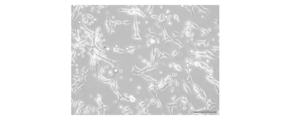
- 8 is an optical microscope image of HT-1080 cells adhered to cell adhesion particles. The rate of elimination of HT-1080 cells from cell adhesion particles. 8 is an optical microscope image of HT-1080 cells adhered to cell adhesion particles. 8 is an optical microscope image of HT-1080 cells desorbed from cell adhesion particles. It is an SEM image of a particle after a platelet adhesion test. It is an SEM image of a particle after a platelet adhesion test. It is an SEM image of a particle after a platelet adhesion test. It is an SEM image of a particle after a platelet adhesion test. 8 is an optical microscope image of HT-1080 cells desorbed from cell adhesion particles.
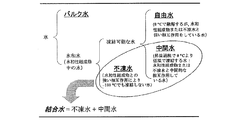
- Intermediate water uses a hydrated composition containing water molecules in a state called intermediate water when water is contained, as a means for selectively adhering target cells mixed with blood cells and the like. It is characterized by doing. Intermediate water is considered to be a collection of water molecules in a state in which the degree of freedom is limited by a weak interaction with the hydrated composition or the like among the water molecules contained in the hydrated composition. There is. Then, it has been confirmed that on the surface where the intermediate water exists, blood compatibility such as difficulty in adhering blood components such as blood cell cells is exhibited. The mechanism by which the surface on which the intermediate water is present develops blood compatibility is considered as follows.
- hydrated shells On the other hand, it is considered that the hydrated shell comes into direct contact with the surface of a foreign substance and is disturbed or destroyed to adhere to and activate the surface of the foreign substance.
- a typical example thereof is a reaction in which platelets, which are stably present in blood vessels, are activated by contacting the surface of a foreign substance due to bleeding or the like to coagulate blood.
- the action of the cushioning material prevents the intermediate water from forming a kind of hydrated shell and the biological substance from directly contacting the surface.
- the degree of disturbing the hydrated shells of cells and proteins that come into contact with the surface becomes mild, and as a result, blood compatibility such as difficulty in adhering blood components and the like occurs. It is considered. Since it has been confirmed that intermediate water also exists on the surface of various cells and in the hydrated shell formed by proteins, the surface of the hydrated composition containing the intermediate water is the surface of biological tissue. It is also considered to imitate the structure of.
- the threshold of the amount of intermediate water that determines whether or not a cell produces significant adhesion is determined according to the adhesive ability of the cell, and since normal blood cell cells have low adhesiveness, the ratio is about 1 wt% or more. It is considered difficult to adhere to the surface of the hydrated composition containing an intermediate amount of water. Utilizing this phenomenon, the present inventors select tumor cells such as metastatic cancer cells, stem cells, vascular endothelial cells, etc., which are cells showing high adhesion contained in blood, etc., in distinction from blood cell cells, etc.
- Patent Document 3 discloses a technique for specifically adhering and separating the cells.
- cells such as tumor cells, stem cells, and vascular endothelial cells that can adhere to the surface of a hydrated composition containing an intermediate water amount at a ratio of about 1 wt% or more are referred to as "highly adhesive”.
- Cell may be described. Further, while substantially not adhering blood cell cells or the like existing in blood at a high density, adhering the highly adhesive cells may be simply described as “selectively adhering” or the like.
- Patent Document 4 since the surface containing intermediate water in a predetermined ratio is also suitable as a base material for culturing various cells, antibodies as described in Patent Documents 1 and 2 are used. It is expected that the method described in Patent Document 3 can adhere and separate tumor cells and the like while avoiding damage to the cells, as compared with the means for adhering specific cells using the method.
- a hydrated composition having an intermediate water content in the range of about 1 to 30 wt% in the form of a flat membrane when saturated water is contained high adhesion of tumor cells, stem cells, vascular endothelial cells, etc. It is possible to selectively adhere sex cells and separate them from blood cell cells and the like. Then, by applying the findings found in the flat membrane-like hydrated composition to adhesion / separation with target cells using carrier particles, efficient high adhesion is achieved by increasing the specific surface area and the like. It is expected that sex cells will be targeted and adhered to be separable.
- specific cells existing in an aqueous solution such as blood are selectively selected by particles composed of a hydrated composition having an intermediate water content of 1 to 30 wt% when at least a part of the surface is saturated and water-containing.
- An invention is specified that allows the composite to be formed by adhesion and then separated from the aqueous solution by means such as centrifugation. Further, an invention is specified in which particles composed of a hydrated composition having an intermediate water content of 1 to 30 wt% when at least a part of the surface is saturated water content is used for cell adhesion.
- the cells autonomously desorbed from the particles and the medium by setting the particle size of the particles to an appropriate range. It was observed to move up. That is, by using cell adhesion particles having a particle size of 2 to 3 ⁇ m or more, which is about the same as that of cells, the complex of the particles and cells is added to the medium for cell culture and held for a predetermined time. By doing so, the cells autonomously desorb from the particles and move into the medium at a predetermined ratio. Therefore, without performing a treatment that affects the cell surface as described in Patent Document 1, the usual procedure is followed thereafter. It has been found that cell culture is possible.
- the particle size of the cell adhesion particles to 10 ⁇ m or more, it was observed that almost all cells autonomously desorbed from the particles in about 2 hours after being placed in the medium, and are present in blood and the like. It is possible to efficiently collect various highly adherent cells and use them for biological studies.
- the particle size in the present invention is an average value of the particle size measured by DLS (Dynamic Light Scattering) (or SLS (Static Light Scattering)).
- the cells adhered to and separated from the particles are subsequently autonomously removed in the cell culture medium. It is preferable in that it causes separation.
- setting the average particle diameter to 5 ⁇ m or more or 10 ⁇ m or more is preferable in that cells autonomously desorb from the particles at a high rate within a short period of time.
- the cell adhesion particles according to the present invention are used by being dispersed (suspended) in an aqueous solution such as blood, they are not more than a degree that does not cause precipitation in a short time depending on the density of the particles used. It is preferable to select the particle size.
- the particle size can be set to about 500 ⁇ m or less so that the particles can be dispersed in the aqueous solution by gentle stirring.
- the particle diameter is set to about 50 ⁇ m or less so that the particles can be dispersed in the aqueous solution by gentle stirring. ..
- the particle size of the cell adhesion particles is generally within the above range. It is desirable that it is large.
- the particles can be separated by centrifugation or the like.
- magnetic particles as the central particles, good separation can be achieved by using a magnetic field regardless of the particle size.
- the particle size of the cell adhesion particles used is small, but especially when particles of 2 ⁇ m or less are mixed, the efficiency of autonomous desorption of cells adhering to the particles decreases. Particles having an average particle size of 2 ⁇ m or more that can be monodispersed and have a narrow particle size distribution are preferable.
- the complex obtained by adhering various cells to the cell adhesion particles according to the present invention in an aqueous solution is an aqueous solution by various means. Can be separated from the inside.
- cell adhesion particles containing the above complex can be enriched and separated from the aqueous solution by centrifugation.
- the magnetic particles in the cell adhesion particles it becomes possible to separate them using a magnetic field.
- particles for cell adhesion having a particle size of a predetermined size or larger it is possible to separate the particles from the aqueous solution by filtration using a filter.
- the cells adhered to the cell adhesion particles separated from the aqueous solution can be used while being adhered to the cell adhesion particles or desorbed from the cell adhesion particles, depending on the purpose.
- a hydrated composition containing intermediate water in a predetermined ratio has excellent properties as a base material for cell culture. It is possible to culture cells in a medium while adhering to the cell adhesion particles according to the present invention.
- the cell adhesion particles according to the present invention by using cell adhesion particles having an average particle diameter of 2 ⁇ m or more, cells are autonomously detached in the medium, so that they are for cell adhesion. By putting the complex of particles and cells in the medium, it is possible to carry out normal cell culture.
- a hydrated composition having a lower limit critical dissolution temperature (LCST) in a predetermined temperature range is used as a hydrated composition containing intermediate water.
- LCST lower limit critical dissolution temperature
- cells can be desorbed from cell adhesion particles by washing, shaking, treatment with a chelating agent such as EDTA (Ethylenediaminetetraacetic acid) or EGTA (Ethyleneglycol tetraacetic acid), or sonication. ..
- EDTA Ethylenediaminetetraacetic acid
- EGTA Ethyleneglycol tetraacetic acid
- tumor cells, stem cells, etc. which exist at a low density in an aqueous solution such as blood, can be adhered as target cells to form a complex.
- particles for cell adhesion having a particle diameter of 2 ⁇ m or more the cells are subsequently autonomously detached in a medium or the like, so that the target cells can be targeted while further suppressing damage to the cells. It can be separated and collected from blood and the like.
- the present invention is a hydrated composition containing 1 to 30 wt% of intermediate water when it reaches saturated water content in contact with an aqueous solution such as blood, lymph, or physiological saline. It is characterized by using.
- aqueous solution such as blood, lymph, or physiological saline.
- the saturated water-containing hydrated composition there are water molecules that are not constrained by the composition molecules and behave in the same manner as water molecules in pure water. Classified as "free water". Free water, like pure water, is characterized by coagulation and dissolution at around 0 ° C.
- a bio-related substance such as a protein or a hydrated composition such as a specific synthetic polymer is impregnated, water molecules showing behaviors that are not classified into the above-mentioned "antifreeze water” and "free water” are generated. It has been shown to be present and such water molecules are classified as "intermediate water”.
- Intermediate water is typically characterized by the release and absorption of the unique latent heat seen during the heating process after supercooling.
- latent heat release is observed around -50 to -20 ° C in the process of cooling and heating in the temperature range of -100 to -20 ° C, and -15 ° C to 0.
- Specific release and absorption of latent heat are observed, such as absorption of latent heat observed in the temperature range of ° C.
- Such release and absorption of latent heat can be quantitatively observed by a DSC (Differential Scanning Calorimeter) or the like.
- the release of latent heat in the vicinity of -50 to -20 ° C is irregular ⁇ regular transformation (CC: cold crystallization) in the process in which the intermediate water solidified in an irregular state during quenching is then gradually heated.
- CC cold crystallization
- the absorption of latent heat in the temperature range of ⁇ 15 ° C. to 0 ° C. corresponds to the latent heat and melting of free water when the regularized intermediate water undergoes phase transformation (melting).
- the amount of intermediate water contained in the hydrated composition can be calculated from the amount of latent heat transfer (the amount of change in enthalpy) caused by the phase transformation of the intermediate water. Specifically, in the process of observing the amount of latent heat transfer in the process of cooling or heating the water-containing hydrated composition using DSC or the like in a temperature range of -100 to -20 ° C, particularly -50 to -50.
- the amount of intermediate water contained in the hydrated composition by measuring the amount of latent heat released ( ⁇ Hcc) near ⁇ 20 ° C. and dividing this by the latent heat of melting water (Cp: 334 J / g) according to the formula (1).
- the amount of free water (Wf) contained in the hydrated composition can be calculated from, for example, the amount of latent heat released near 0 ° C. in the cooling process, the temperature is ⁇ 15 ° C. to 0 ° C. in the heating process.
- the amount of absorption expected to be due to free water is obtained, and this is divided by the latent heat of melting of water.
- the amount of intermediate water contained in the hydrated composition can also be calculated.
- the amount of antifreeze water contained in the hydrated composition is calculated by subtracting the amounts corresponding to intermediate water and free water from the total water content (Wc).
- the hydrated composition on the surface of the cell adhesion particles reaches saturated water content at the time of use.
- the content of intermediate water content is defined as saturated intermediate water content (SWfb).
- Table 1 shows an example of the results of the present inventor measuring the amount of saturated intermediate water for various hydrated compositions.
- the amount of saturated intermediate water varies depending on the molecular weight of the polymer used for the measurement and does not correspond to a constant invariant physical property value. Therefore, when the cells for cell adhesion according to the present invention are to be produced, the amount of saturated intermediate water varies. It is desirable to confirm the amount of intermediate water for each hydrated composition used.
- the intermediate water is contained in various hydrated compositions and the saturated intermediate water amount changes depending on the molecular structure. It is also known that intermediate water is present in a large proportion even in bio-derived polymers such as BSA. Since all of the above PMEA, PMC3A, PHEMA and the like are water-insoluble, they can be used for highly adhesive cell adhesion by using them on the surface of cell adhesion particles. Further, it is known that PMPC contains intermediate water in a high proportion, but exhibits water solubility by itself. For this reason, it is possible to make the polymer water-insoluble by mixing monomers showing water insolubility during synthesis to form a copolymer, and to appropriately reduce the amount of saturated intermediate water. Therefore, the amount of intermediate water is adjusted. Suitable for producing particles for cell adhesion.
- a hydrated composition having a saturated intermediate water content of 1 to 30 wt% is present on at least a part of the particle surface.
- the target cells can be selectively adhered, and the internal structure thereof is not particularly limited. That is, the particles for cell adhesion according to the present invention are obtained by granulating a hydrated composition having a saturated intermediate water content of 1 to 30 wt% to a desired particle size by an appropriate means, or as core particles of an appropriate material.
- a hydrated composition having a saturated intermediate water content of 1 to 30 wt% is coated, and a mixture of a hydrated composition having a saturated intermediate water content of 1 to 30 wt% and fine particles of an appropriate material is used as an appropriate means. It is possible to adopt an appropriate structure such as one obtained by granulating to a desired particle size.
- a hydrated composition having a saturated intermediate water content of 1 to 30 wt% is coated on the central particles of an appropriate material, almost the entire surface of the particles is the cells having the hydrated composition.
- adhesive particles it is possible to add various properties depending on the material of the central particles.
- magnetic particles are used as central particles, and the hydrated composition is coated on the central particles to enrich the cell adhesion particles to which the desired target cells are adhered by applying a magnetic field to enrich the aqueous solution. Etc. can be separated.
- the coating of the central particles with the hydrated composition can be performed by an appropriate means, and is not particularly limited.
- means such as adding the central particles to a solution in which the hydrated composition is dissolved in a solvent, stirring the particles, separating the particles, and drying the particles are used.
- a polymer when used as a hydrated composition, the central particles are put into a solution in which a monomer that produces the polymer by polymerization is dissolved, and the polymerization is caused by a polymerization initiator or the like. It is possible to coat the core particles with the desired hydrated composition. It is also desirable that the surface of the central particles be previously treated to improve the affinity with the hydrated composition.
- any hydrated composition having a saturated intermediate water amount according to the purpose can be used.
- an organic polymer having a predetermined intermediate water an inorganic substance such as hydroxyapatite, a protein such as gelatin, collagen and albumin, a polysaccharide such as hyaluronic acid and chondroitin sulfate can be used.
- polyethylene glycol (PEG), polyvinylpyrrolidone (PVP), polymethyl vinyl ether (PMVE), poly (2-methacryloyloxyethyl phosphorylcholine), polytetrahydrofurfuryl acrylate, polyoxazoline, etc. which are known as biocompatible polymers, may be used.
- preferable polymers include poly (2-ethoxyethyl acrylate), poly (2-methoxyethyl acrylate), and poly [2- (2-methoxyethoxy) ethyl, which are represented by the following chemical formula (1).
- Methacrylate poly [2- (2-ethoxyethoxy) ethyl acrylate], poly [2- (2-methoxyethoxy) ethoxy] ethyl methacrylate], poly [2- (2- (2-methoxyethoxy) ethyl acrylate] ], Poly [2- (2-ethoxyethoxy) ethyl methacrylate], polyethylene glycol (PEG), polyvinylpyrrolidone (PVP), polymethylvinyl ether (PMVE), methoxyethyl (meth) acrylamide, methoxyethyl vinyl ether, polytetrahydrofurfuryl (Meta) acrylate, polyoxazoline and the like are included.
- PEG polyethylene glycol
- PVP polyvinylpyrrolidone
- PMVE polymethylvinyl ether
- methoxyethyl (meth) acrylamide methoxyethyl vinyl ether
- R 1 is a hydrogen atom or a methyl group
- R 2 is a methyl group or an ethyl group
- m is 1 to 6
- n is a repeating unit.
- poly (2-methoxyethyl acrylate (PMEA)) represented by the following chemical formula (2) is particularly preferable because it has excellent biocompatibility.
- the monomers constituting these polymers may be used as a material having a desired amount of intermediate water.
- poly [2- (2-ethoxyethoxy) ethyl acrylate] has intermediate water and a lower limit critical eutectic temperature (LCST) of 14 ° C. in an aqueous solution at a temperature lower than this. It has the characteristic of dissolving in.
- LCST lower limit critical eutectic temperature
- the cells can be easily detached by cooling the cell adhesion particles to which the cells are adhered in an aqueous solution.
- Highly adhesive cells existing in body fluid such as blood are adhered by the cell adhesion particles according to the present invention.
- Examples of cells having high adhesiveness include metastatic cancer cells contained in blood and the like, tumor cells such as leukemia cells.
- tumor cells such as leukemia cells.
- stem cells vascular endothelial cells, nerve cells, macrophages, dendritic cells, mononuclear cells, neutrophils, smooth muscle cells, fibroblasts, myocardial cells, skeletal muscle cells, hepatic parenchymal cells, hepatic nonparenchymal cells, pancreas. It can also be used to detect cells such as La island cells.
- the saturated intermediate water amount on the surface of the cell adhesion particles is set according to the purpose of separating the cells by the cell adhesion particles according to the present invention, the type of the target cell to be separated, and the like, and the saturated intermediate water amount is set. It is preferable to select and use a hydrated composition showing the above.
- the cell adhesion particles according to the present invention use body fluids such as blood and lymph, which are expected to have target cells to be separated, as samples. , It is used by putting it in the sample at a predetermined ratio.
- body fluids such as blood and lymph
- For blood, etc. to which cell adhesion particles are to be added for the purpose of facilitating the adhesion process between the cell adhesion particles and the target cells, enrichment by dilution or centrifugation in advance, addition of anticoagulant, etc. It is also possible to perform processing. After adding the cell adhesion particles to the sample at a predetermined ratio, it is desirable to stir under appropriate conditions in order to increase the collision frequency between the cell adhesion particles and the target cells.
- the conditions for stirring are preferably such that the cells for cell adhesion to be used do not disperse in the sample and cause precipitation, and stirring at an excessive rate inhibits adhesion by increasing the relative speed of the particles for cell adhesion of the target cells. However, it is not preferable in that it causes detachment of target cells from cell adhesion particles.
- the cell adhesion particles to which the target cells are adhered are separated from the sample by an appropriate method.
- the method for separating the cell adhesion particles can be appropriately determined according to the size, density, physical properties, etc. of the cell adhesion particles.
- the cell adhesion particles may be settled by centrifugation, or the cell adhesion particles may be separated by filtration through a filter.
- the cell adhesion particles containing a magnetic substance it is also possible to collect the cell adhesion particles by a magnetic field. It is preferable that the collected cell adhesion particles to which the target cells are adhered are subsequently put into PBS to protect the cells.
- the cells are autonomously detached by putting the particles to which the target cells are adhered into the cell adhesion medium.
- Target cells can be obtained without damaging.
- various types of cells are desorbed from cell adhesion particles by means used for desorbing cells from the substrate, such as treatment with a chelating agent such as EDTA or EGTA, ultrasonic treatment, shaking, and washing. It can be used for evaluation and the like.
- the cells desorbed from the cell adhesion particles include a plurality of types of cells existing in blood or the like, it is preferable to select and separate the target cells under a microscope for use.
- the separated cells particularly tumor cells and the like can be used as an index for knowing the degree and characteristics of tumor progression and the possibility of metastasis from the counting results.
- tumor cells and the like can be used for identifying the primary tumor lesion and screening for candidate substances for anticancer agents that are expected to have medicinal effects.
- stem cells and the like can be used for regenerative medicine by culturing in a predetermined environment.
- the cell adhesion particles according to the present invention can be packed in a column and used to separate target cells. Specifically, for example, the target cells are separated from a sample such as body fluid through a step of adsorbing the target cells to the cell adhesion particles in the column and a step of eluting the target cells from the cell adhesion particles in the column. Can be done.
- the size of the column, the conditions for adsorbing the target cells to the cell adhesion particles in the column, the conditions for eluting the target cells from the cell adhesion particles in the column, and the like can be appropriately set.
- a body fluid containing the target cells may be brought into contact with the cell adhesion particles packed in the column.
- the body fluid or the like may have been diluted, centrifuged, or appropriately pretreated in advance.
- a medium may be used as an eluate, an eluate containing a chelating agent may be used, or an appropriate eluate may be used. Means can be adopted.
- the purified product was dried under reduced pressure all day and night. A colorless, transparent, starch syrup-like polymer was obtained. The yield (yield) was 12.3 g (82%). The obtained polymer structure was confirmed by 1H-NMR. From the result of the molecular weight analysis of GPC, the number average molecular weight (Mn) was 26,000 and the molecular weight distribution (Mw / Mn) was 3.27. PMEA is soluble in methanol and insoluble in water.
- the synthesized PMEA was sufficiently moistened by immersion in water for a maximum of 7 days, and the saturated intermediate water content in PMEA was measured by the following method.
- the measurement is performed by taking a predetermined amount of a water-containing hydrated composition sample, spreading it thinly on the bottom of a pre-weighed aluminum oxide pan, and hydrating in the process of changing the temperature in a differential scanning calorimeter (DSC). This was performed by measuring the amount of heat absorption and heat generated by the sex composition sample.
- DSC differential scanning calorimeter
- the water content weight (Wl: g) of the hydrated composition sample is measured, and then a pinhole is made in the aluminum oxide pan and the sample is sufficiently dried in vacuum, and then the dry weight (Wo: g) is obtained. ) was measured, and the weight loss was taken as the water content (Wc: g) of the hydrated composition sample. Then, the amount of intermediate water (wt%) contained in the hydrated composition sample was calculated by dividing the total amount (g) of the intermediate water by the dry weight (Wo: g) of the hydrated composition sample.
- the above measurement was performed a plurality of times, and the maximum value of the obtained intermediate water amount was defined as the saturated intermediate water amount (SWfb) in PMEA.
- the saturated intermediate water amount of PMEA used in the following evaluation was 4.0 wt%.
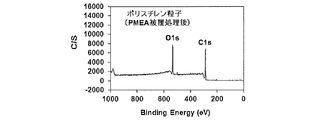
- FIGS. 3 and 4 show the results of XPS (X-ray Photoelectron Spectroscopy) measurement of polystyrene particles (20 ⁇ m) and magnetic particles (4.5 ⁇ m) before and after the coating of PMEA, respectively.
- the XPS is measured by applying the dispersions obtained by dispersing the particles coated with PMEA in PBS on a glass plate and then drying them in a constant temperature bath (37 ° C.) for about 10 hours as a sample, and using AlK ⁇ rays as a sample. (1486.7eV) was used as the X-ray source.
- XPS measurements were also carried out using an aqueous solution obtained by redispersing each of the obtained particles that had not been coated with PMEA on a glass plate and dried.
- both the polystyrene particles and the magnetic particles have a clear change in the measurement result by XPS before and after the coating treatment of PMEA, and the polystyrene particles and the magnetic particles coated with PMEA have a clear change.
- the same measurement results were obtained in. Further, it was identified that the peak near 535 eV, which is remarkably observed in the polystyrene particles and the magnetic particles after the coating treatment of PMEA, was derived from the oxygen atom (O1s), and the peak near 287 eV was derived from the carbon atom (C1s). Therefore, it was inferred that the surface of all the particles was coated with PMEA by the coating treatment of PMEA.
- the cells were washed by adding PBS to obtain a PBS suspension of HT-1080 cells (cell concentration in suspension: 2 ⁇ 10 6 cells / ml).
- the cell concentration was measured using a TC20 fully automatic cell counter (BIORAD, 1450101J1).
- Adhesion of various particles and HT-1080 cells by mixing the PBS suspension of HT-1080 cells with the PBS suspension of various particles coated with PMEA prepared above, mounting the mixture on a rotator, and stirring. was done.
- 5 ⁇ 10 5 (0.25 ml as a suspension) HT-1080 cells were mixed with a dispersion in which the numbers of various particles shown in Table 2 were dispersed and tubed. The cells were fixed in a rotator and rotated at 3 rpm at room temperature for a predetermined time to adhere HT-1080 cells to various particles. The number of each particle was adjusted so that the total area was substantially the same.
- the particles for cell adhesion are precipitated and separated by centrifugation, the number (concentration) of cancer cells contained in the supernatant is measured, and the number of cancer cells added is compared with the number of cancer cells introduced.
- the adhesion rate of cancer cells to various particles was calculated.
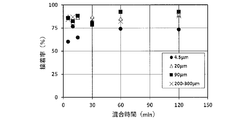
- FIG. 5 shows the change in the adhesion rate of HT-1080 cells to various particles when the mixing time of various particles and cancer cells was changed.
- Table 3 shows the adhesion rate of HT-1080 cells when the mixing time of various particles and cancer cells was 15 minutes and 120 minutes.
- HT-1080 cells could be adhered to the particles and separated from the solution at a high ratio for particles of any particle size.
- particles having a particle size of about 10 ⁇ m or more it was shown that by using particles having a particle size of about 10 ⁇ m or more, HT-1080 cells can be adhered at a sufficient ratio even by mixing for a short time of about 15 minutes.
- FIG. 6 shows an optical microscope image of HT-1080 cells adhered to particles having a particle diameter of 4.5 ⁇ m and 20 ⁇ m as described above. In the 4.5 ⁇ m particles, it was observed that the particles adhered to each other in the form of a plurality of particles adhering to the periphery of each cell.
- HT-1080 cells were adhered to each particle by stirring for 1 minute. Then, the particles are precipitated and separated by centrifugation or a magnetic field so that unadhered cells are not mixed in the particles, and after washing by adding PBS, they are seeded in a medium containing no fetal bovine serum (FBS). After culturing in an incubator at 37 ° C. in a 5% carbon dioxide atmosphere for 2 hours, the proportion of HT-1080 cells desorbed from the particles was counted with an optical microscope. The count is to visually count the number of cells that remain adhered to the particles and the number of cancer cells that have detached from the particles and moved into the medium within the range observed in the field of view of an optical microscope (10x). Was done by.
- FBS fetal bovine serum
- FIG. 7 shows the elimination rate of HT-1080 cells for each particle size.
- FIG. 8 shows an optical micrograph of the particles and cells observed above.
- the ratio of cells adhering to the particles to be autonomously desorbed changes depending on the particle size of the particles used, and when 1.0 ⁇ m particles are used, the particles are cells. It was observed that there were almost no HT-1080 cells present in the medium alone, which aggregated while adhering to the periphery of the cells (Fig. 8A).
- Fig. 8A shows that when 4.5 ⁇ m particles were used, it was observed that about 70% of HT-1080 cells autonomously moved into the medium, and when 20 ⁇ m particles were used, it was observed in the medium. It was observed that by retention, almost all cells autonomously detached from the particles (Fig. 8B).
- a human platelet solution (platelet density: 1.0 ⁇ 10 8 cells / ml) was prepared using a hemocytometer.
- the human platelet solution 0.5 ml: relative (platelet count 0.5 ⁇ 10 8 cells), presence / absence of the magnetic particles PMEA coat each number shown in Table 5 (DN) and polystyrene particles (PS) Chupu
- DN presence / absence of the magnetic particles
- PS polystyrene particles
- Table 5 shows the adhesion rate of human platelets by the various particles evaluated above. As shown in Table 5, it was observed that 50% or more of platelets adhered to the particles by mixing the particles without PMEA coat for 60 minutes regardless of the particle size of the particles. On the other hand, in the PMEA-coated particles, a substantially decrease in the number of platelets in the human platelet solution was not observed after mixing, indicating that the frequency of platelet adhesion to the particles was low.
- the PET substrate is fixed to a SEM (Scanning Electron Microscope) dedicated sample table using a conductive tape, and platinum-palladium is vacuum-deposited on the sample surface using an ion coater to prepare a sample for SEM observation. ) was observed.
- SEM Sccanning Electron Microscope
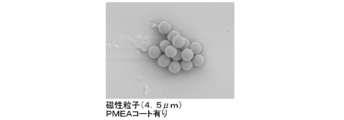
- FIG. 9 shows the results of observing the particles after the platelet adhesion test by SEM.
- the PMEA coating is performed regardless of the material and particle size of the particles.
- the above results are rarely present as a result of preferential adhesion of platelets and the like present in blood at high density to the particle surface when magnetic particles and polystyrene particles without PMEA coating are mixed in blood. It suggests that adhesion of particles, stem cells, etc. is practically difficult.
- particles having PMEA on the surface containing a predetermined amount of intermediate water when hydrated are selected because platelet adhesion is not substantially observed, but tumor cells and the like adhere frequently. It has been shown to produce typical cell adhesion. This result is similar to the evaluation result in the flat membrane-shaped sample reported by the present inventors in Patent Document 3, and the presence of intermediate water on the particle surface allows predetermined cells to be selectively selected according to the amount of intermediate water. It suggests that it adheres to. Then, by using particles whose surface contains an amount of intermediate water corresponding to the adhesion target when hydrated, cancer cells, stem cells, etc. are selectively adhered in the blood in which blood cell cells are present at a high density. It is suggested that it is possible.
- Adhesion test of cancer cells in simulated blood As described above, by using particles having a hydrated composition on the surface containing a predetermined amount of intermediate water by hydration, tumor cells and the like are selectively adhered. It was possible, and it was suggested that by setting the particle size to about 3 ⁇ m or more, the adhered cells were autonomously detached and moved to the surface of the culture dish, etc., and the subsequent culture could be performed well. Therefore, in the following, the cells for cell adhesion according to the present invention are mixed in an environment in which tumor cells and platelets coexist, and the tumor cells are actually distinguished from platelets and selectively adhered and separated, and then recovered in a medium. Tried that.
- HT-1080 cells cell concentration in suspension: 2.0 ⁇ 10 6 cells / ml
- human platelets platelet concentration: 1.0 ⁇ 10 8 cells / ml
- concentration of HT-1080 cells and human platelets contained in the supernatant were measured and converted into the adhesion rate to each particle. ..
- the same mixed solution as above was rotated for 120 minutes, and then the cell adhesion particles were precipitated and separated by centrifugation. After discarding the supernatant and washing with PBS, the cells were seeded in a medium containing no fetal bovine serum (FBS) and cultured in an incubator at 37 ° C. under a 5% carbon dioxide atmosphere for 24 hours under an optical microscope. The state of the cells was observed at.
- Table 6 shows the adhesion rates of HT-1080 cells and human platelets measured above.
- FIG. 10 shows an optical micrograph of the HT-1080 cells observed above.
- HT-1080 cells were adhered at a high ratio by the particles coated with PMEA and having a particle diameter of 20 ⁇ m while suppressing the adhesion of platelets. Therefore, the tumor cells were adhered by the cell adhesion particles according to the present invention. It was shown that selective adhesion of the particles is possible.
- the HT-1080 cells adhering to the particles autonomously desorb from the particles, adhere to the cultured blood, and extend. Therefore, it is possible to use it for various evaluations by culturing the cells collected by the particles for cell adhesion of the present invention.
Landscapes
- Health & Medical Sciences (AREA)
- Chemical & Material Sciences (AREA)
- Engineering & Computer Science (AREA)
- Life Sciences & Earth Sciences (AREA)
- Organic Chemistry (AREA)
- Biomedical Technology (AREA)
- Wood Science & Technology (AREA)
- Genetics & Genomics (AREA)
- Bioinformatics & Cheminformatics (AREA)
- Zoology (AREA)
- Biotechnology (AREA)
- General Health & Medical Sciences (AREA)
- Microbiology (AREA)
- Biochemistry (AREA)
- General Engineering & Computer Science (AREA)
- Cell Biology (AREA)
- Hematology (AREA)
- Polymers & Plastics (AREA)
- Chemical Kinetics & Catalysis (AREA)
- Medicinal Chemistry (AREA)
- Oncology (AREA)
- Immunology (AREA)
- Materials Engineering (AREA)
- Micro-Organisms Or Cultivation Processes Thereof (AREA)
- Apparatus Associated With Microorganisms And Enzymes (AREA)
- Immobilizing And Processing Of Enzymes And Microorganisms (AREA)
- Addition Polymer Or Copolymer, Post-Treatments, Or Chemical Modifications (AREA)
Priority Applications (3)
| Application Number | Priority Date | Filing Date | Title |
|---|---|---|---|
| JP2021512112A JP7586496B2 (ja) | 2019-03-30 | 2020-03-30 | 細胞接着用粒子及びその使用 |
| US17/442,282 US20220154165A1 (en) | 2019-03-30 | 2020-03-30 | Particles for cell adhesion and utilization thereof |
| EP20783175.1A EP3929221A4 (en) | 2019-03-30 | 2020-03-30 | PARTICLES ON CELL ADHESION AND ITS USE |
Applications Claiming Priority (4)
| Application Number | Priority Date | Filing Date | Title |
|---|---|---|---|
| JP2019069462 | 2019-03-30 | ||
| JP2019-069462 | 2019-03-30 | ||
| JP2019-079696 | 2019-04-18 | ||
| JP2019079696 | 2019-04-18 |
Publications (1)
| Publication Number | Publication Date |
|---|---|
| WO2020203965A1 true WO2020203965A1 (ja) | 2020-10-08 |
Family
ID=72669029
Family Applications (1)
| Application Number | Title | Priority Date | Filing Date |
|---|---|---|---|
| PCT/JP2020/014538 Ceased WO2020203965A1 (ja) | 2019-03-30 | 2020-03-30 | 細胞接着用粒子及びその使用 |
Country Status (4)
| Country | Link |
|---|---|
| US (1) | US20220154165A1 (https=) |
| EP (1) | EP3929221A4 (https=) |
| JP (1) | JP7586496B2 (https=) |
| WO (1) | WO2020203965A1 (https=) |
Cited By (1)
| Publication number | Priority date | Publication date | Assignee | Title |
|---|---|---|---|---|
| WO2023008057A1 (ja) * | 2021-07-28 | 2023-02-02 | Phcホールディングス株式会社 | 細胞捕捉デバイス、遠心容器、細胞捕捉装置および細胞捕捉方法 |
Families Citing this family (1)
| Publication number | Priority date | Publication date | Assignee | Title |
|---|---|---|---|---|
| EP4053191A4 (en) * | 2019-11-14 | 2023-11-08 | Kyushu University, National University Corporation | METHOD FOR HYDRATING WATER-INSOLUBLE POLYMER WHICH MAY CONTAIN INTERMEDIATE WATER |
Citations (8)
| Publication number | Priority date | Publication date | Assignee | Title |
|---|---|---|---|---|
| JP2003189848A (ja) * | 2001-10-19 | 2003-07-08 | Sanyo Chem Ind Ltd | 動物細胞培養用ビーズ |
| JP2005525407A (ja) * | 2002-05-03 | 2005-08-25 | インサーム | 細胞及び作用物質を担持する微小粒子 |
| JP2012105579A (ja) * | 2010-11-17 | 2012-06-07 | Yamagata Univ | 溶液から細胞を分離する細胞分離方法、および、細胞分取用水和性組成物 |
| JP2016063801A (ja) | 2014-09-19 | 2016-04-28 | 国立大学法人山形大学 | 細胞培養用支持体と、それを用いた細胞培養方法 |
| JP2016131561A (ja) | 2015-01-22 | 2016-07-25 | 国立大学法人山形大学 | 細胞を回収する方法、及びそれに用いられるポリマー |
| JP2018042572A (ja) * | 2017-12-22 | 2018-03-22 | 大日本印刷株式会社 | 組織の作製方法 |
| JP2019069462A (ja) | 2017-10-10 | 2019-05-09 | 品川リフラクトリーズ株式会社 | 鋼の連続鋳造用モールドパウダー |
| JP2019079696A (ja) | 2017-10-25 | 2019-05-23 | パナソニックIpマネジメント株式会社 | 電子機器 |
-
2020
- 2020-03-30 US US17/442,282 patent/US20220154165A1/en not_active Abandoned
- 2020-03-30 EP EP20783175.1A patent/EP3929221A4/en not_active Withdrawn
- 2020-03-30 WO PCT/JP2020/014538 patent/WO2020203965A1/ja not_active Ceased
- 2020-03-30 JP JP2021512112A patent/JP7586496B2/ja active Active
Patent Citations (8)
| Publication number | Priority date | Publication date | Assignee | Title |
|---|---|---|---|---|
| JP2003189848A (ja) * | 2001-10-19 | 2003-07-08 | Sanyo Chem Ind Ltd | 動物細胞培養用ビーズ |
| JP2005525407A (ja) * | 2002-05-03 | 2005-08-25 | インサーム | 細胞及び作用物質を担持する微小粒子 |
| JP2012105579A (ja) * | 2010-11-17 | 2012-06-07 | Yamagata Univ | 溶液から細胞を分離する細胞分離方法、および、細胞分取用水和性組成物 |
| JP2016063801A (ja) | 2014-09-19 | 2016-04-28 | 国立大学法人山形大学 | 細胞培養用支持体と、それを用いた細胞培養方法 |
| JP2016131561A (ja) | 2015-01-22 | 2016-07-25 | 国立大学法人山形大学 | 細胞を回収する方法、及びそれに用いられるポリマー |
| JP2019069462A (ja) | 2017-10-10 | 2019-05-09 | 品川リフラクトリーズ株式会社 | 鋼の連続鋳造用モールドパウダー |
| JP2019079696A (ja) | 2017-10-25 | 2019-05-23 | パナソニックIpマネジメント株式会社 | 電子機器 |
| JP2018042572A (ja) * | 2017-12-22 | 2018-03-22 | 大日本印刷株式会社 | 組織の作製方法 |
Non-Patent Citations (2)
| Title |
|---|
| BIOMATERIAL, vol. 28-1, 2010, pages 34 - 46 |
| See also references of EP3929221A4 |
Cited By (1)
| Publication number | Priority date | Publication date | Assignee | Title |
|---|---|---|---|---|
| WO2023008057A1 (ja) * | 2021-07-28 | 2023-02-02 | Phcホールディングス株式会社 | 細胞捕捉デバイス、遠心容器、細胞捕捉装置および細胞捕捉方法 |
Also Published As
| Publication number | Publication date |
|---|---|
| US20220154165A1 (en) | 2022-05-19 |
| EP3929221A1 (en) | 2021-12-29 |
| JPWO2020203965A1 (https=) | 2020-10-08 |
| JP7586496B2 (ja) | 2024-11-19 |
| EP3929221A4 (en) | 2022-11-23 |
Similar Documents
| Publication | Publication Date | Title |
|---|---|---|
| JP6474540B2 (ja) | 溶液から細胞を分離する細胞分離方法、細胞吸着用水和性組成物、および細胞分離システム | |
| CN100468058C (zh) | 血细胞分离体系 | |
| CN103703366B (zh) | 多孔聚合物材料用于存储生物样品的用途 | |
| AU700437B2 (en) | Method of selection of a population or subpopulation of a sample | |
| JP6179508B2 (ja) | 希少細胞の検出方法 | |
| Kumar et al. | Affinity binding of cells to cryogel adsorbents with immobilized specific ligands: effect of ligand coupling and matrix architecture | |
| JP6895662B2 (ja) | 特定細胞の分画方法及び捕捉方法 | |
| JP2016131561A (ja) | 細胞を回収する方法、及びそれに用いられるポリマー | |
| JP2000500337A (ja) | 細胞の集団又は亜集団のバルク濃縮のための方法および装置 | |
| CN105734043A (zh) | 多分选细胞分离方法 | |
| JP7586496B2 (ja) | 細胞接着用粒子及びその使用 | |
| CN105203752A (zh) | 一种磁性血小板吸附颗粒及其制备方法 | |
| Nagase et al. | Thermoresponsive block-copolymer brush-modified interfaces for effective fabrication of hepatocyte sheets | |
| JPWO2007126151A1 (ja) | 機能性粒子およびそれを用いた標的物質の分離方法 | |
| US4534996A (en) | Hybrid microspheres | |
| CN102762741B (zh) | 包含纳米管的流体流动装置及其用于细胞迁移的方法 | |
| AU782144B2 (en) | Method for selectively separating blood cells by using lectin | |
| JPWO2000058443A1 (ja) | レクチンを用いた血液細胞の選択的分離方法 | |
| JPH08108069A (ja) | 幹細胞分離方法 | |
| JP6278321B2 (ja) | 溶液から細胞を分離する細胞分離方法、および、細胞分取用水和性組成物 | |
| JP2007049918A (ja) | 細胞培養支持体及びその細胞培養法、細胞回収法と細胞 | |
| Yang et al. | Carbon nitride reinforced chitosan/sodium alginate hydrogel as high-performance adsorbents for free hemoglobin removal in vitro and in vivo | |
| WO2003035888A1 (en) | Cell separation matrix | |
| TWI871196B (zh) | 白血球富集的熱誘導刺激響應薄膜及其應用 | |
| JP2006158305A (ja) | 細胞分離用吸着材、細胞分離用吸着材モジュール及び細胞分離方法 |
Legal Events
| Date | Code | Title | Description |
|---|---|---|---|
| 121 | Ep: the epo has been informed by wipo that ep was designated in this application |
Ref document number: 20783175 Country of ref document: EP Kind code of ref document: A1 |
|
| ENP | Entry into the national phase |
Ref document number: 2021512112 Country of ref document: JP Kind code of ref document: A |
|
| ENP | Entry into the national phase |
Ref document number: 2020783175 Country of ref document: EP Effective date: 20210923 |
|
| NENP | Non-entry into the national phase |
Ref country code: DE |
|
| WWW | Wipo information: withdrawn in national office |
Ref document number: 2020783175 Country of ref document: EP |