WO2020184692A1 - 全固体電池用外装材、全固体電池及びその製造方法 - Google Patents
全固体電池用外装材、全固体電池及びその製造方法 Download PDFInfo
- Publication number
- WO2020184692A1 WO2020184692A1 PCT/JP2020/010969 JP2020010969W WO2020184692A1 WO 2020184692 A1 WO2020184692 A1 WO 2020184692A1 JP 2020010969 W JP2020010969 W JP 2020010969W WO 2020184692 A1 WO2020184692 A1 WO 2020184692A1
- Authority
- WO
- WIPO (PCT)
- Prior art keywords
- layer
- solid
- state battery
- electrode active
- active material
- Prior art date
- Legal status (The legal status is an assumption and is not a legal conclusion. Google has not performed a legal analysis and makes no representation as to the accuracy of the status listed.)
- Ceased
Links
Images



Classifications
-
- H—ELECTRICITY
- H01—ELECTRIC ELEMENTS
- H01M—PROCESSES OR MEANS, e.g. BATTERIES, FOR THE DIRECT CONVERSION OF CHEMICAL ENERGY INTO ELECTRICAL ENERGY
- H01M50/00—Constructional details or processes of manufacture of the non-active parts of electrochemical cells other than fuel cells, e.g. hybrid cells
- H01M50/10—Primary casings; Jackets or wrappings
- H01M50/116—Primary casings; Jackets or wrappings characterised by the material
- H01M50/124—Primary casings; Jackets or wrappings characterised by the material having a layered structure
- H01M50/1243—Primary casings; Jackets or wrappings characterised by the material having a layered structure characterised by the internal coating on the casing
-
- B—PERFORMING OPERATIONS; TRANSPORTING
- B32—LAYERED PRODUCTS
- B32B—LAYERED PRODUCTS, i.e. PRODUCTS BUILT-UP OF STRATA OF FLAT OR NON-FLAT, e.g. CELLULAR OR HONEYCOMB, FORM
- B32B15/00—Layered products comprising a layer of metal
- B32B15/04—Layered products comprising a layer of metal comprising metal as the main or only constituent of a layer, which is next to another layer of the same or of a different material
- B32B15/08—Layered products comprising a layer of metal comprising metal as the main or only constituent of a layer, which is next to another layer of the same or of a different material of synthetic resin
- B32B15/085—Layered products comprising a layer of metal comprising metal as the main or only constituent of a layer, which is next to another layer of the same or of a different material of synthetic resin comprising polyolefins
-
- B—PERFORMING OPERATIONS; TRANSPORTING
- B32—LAYERED PRODUCTS
- B32B—LAYERED PRODUCTS, i.e. PRODUCTS BUILT-UP OF STRATA OF FLAT OR NON-FLAT, e.g. CELLULAR OR HONEYCOMB, FORM
- B32B15/00—Layered products comprising a layer of metal
- B32B15/04—Layered products comprising a layer of metal comprising metal as the main or only constituent of a layer, which is next to another layer of the same or of a different material
- B32B15/08—Layered products comprising a layer of metal comprising metal as the main or only constituent of a layer, which is next to another layer of the same or of a different material of synthetic resin
- B32B15/088—Layered products comprising a layer of metal comprising metal as the main or only constituent of a layer, which is next to another layer of the same or of a different material of synthetic resin comprising polyamides
-
- B—PERFORMING OPERATIONS; TRANSPORTING
- B32—LAYERED PRODUCTS
- B32B—LAYERED PRODUCTS, i.e. PRODUCTS BUILT-UP OF STRATA OF FLAT OR NON-FLAT, e.g. CELLULAR OR HONEYCOMB, FORM
- B32B15/00—Layered products comprising a layer of metal
- B32B15/20—Layered products comprising a layer of metal comprising aluminium or copper
-
- B—PERFORMING OPERATIONS; TRANSPORTING
- B32—LAYERED PRODUCTS
- B32B—LAYERED PRODUCTS, i.e. PRODUCTS BUILT-UP OF STRATA OF FLAT OR NON-FLAT, e.g. CELLULAR OR HONEYCOMB, FORM
- B32B27/00—Layered products comprising a layer of synthetic resin
- B32B27/06—Layered products comprising a layer of synthetic resin as the main or only constituent of a layer, which is next to another layer of the same or of a different material
- B32B27/08—Layered products comprising a layer of synthetic resin as the main or only constituent of a layer, which is next to another layer of the same or of a different material of synthetic resin
-
- B—PERFORMING OPERATIONS; TRANSPORTING
- B32—LAYERED PRODUCTS
- B32B—LAYERED PRODUCTS, i.e. PRODUCTS BUILT-UP OF STRATA OF FLAT OR NON-FLAT, e.g. CELLULAR OR HONEYCOMB, FORM
- B32B27/00—Layered products comprising a layer of synthetic resin
- B32B27/32—Layered products comprising a layer of synthetic resin comprising polyolefins
-
- B—PERFORMING OPERATIONS; TRANSPORTING
- B32—LAYERED PRODUCTS
- B32B—LAYERED PRODUCTS, i.e. PRODUCTS BUILT-UP OF STRATA OF FLAT OR NON-FLAT, e.g. CELLULAR OR HONEYCOMB, FORM
- B32B27/00—Layered products comprising a layer of synthetic resin
- B32B27/34—Layered products comprising a layer of synthetic resin comprising polyamides
-
- B—PERFORMING OPERATIONS; TRANSPORTING
- B32—LAYERED PRODUCTS
- B32B—LAYERED PRODUCTS, i.e. PRODUCTS BUILT-UP OF STRATA OF FLAT OR NON-FLAT, e.g. CELLULAR OR HONEYCOMB, FORM
- B32B27/00—Layered products comprising a layer of synthetic resin
- B32B27/36—Layered products comprising a layer of synthetic resin comprising polyesters
-
- B—PERFORMING OPERATIONS; TRANSPORTING
- B32—LAYERED PRODUCTS
- B32B—LAYERED PRODUCTS, i.e. PRODUCTS BUILT-UP OF STRATA OF FLAT OR NON-FLAT, e.g. CELLULAR OR HONEYCOMB, FORM
- B32B3/00—Layered products comprising a layer with external or internal discontinuities or unevennesses, or a layer of non-planar shape; Layered products comprising a layer having particular features of form
- B32B3/26—Layered products comprising a layer with external or internal discontinuities or unevennesses, or a layer of non-planar shape; Layered products comprising a layer having particular features of form characterised by a particular shape of the outline of the cross-section of a continuous layer; characterised by a layer with cavities or internal voids ; characterised by an apertured layer
- B32B3/30—Layered products comprising a layer with external or internal discontinuities or unevennesses, or a layer of non-planar shape; Layered products comprising a layer having particular features of form characterised by a particular shape of the outline of the cross-section of a continuous layer; characterised by a layer with cavities or internal voids ; characterised by an apertured layer characterised by a layer formed with recesses or projections, e.g. hollows, grooves, protuberances, ribs
-
- B—PERFORMING OPERATIONS; TRANSPORTING
- B32—LAYERED PRODUCTS
- B32B—LAYERED PRODUCTS, i.e. PRODUCTS BUILT-UP OF STRATA OF FLAT OR NON-FLAT, e.g. CELLULAR OR HONEYCOMB, FORM
- B32B7/00—Layered products characterised by the relation between layers; Layered products characterised by the relative orientation of features between layers, or by the relative values of a measurable parameter between layers, i.e. products comprising layers having different physical, chemical or physicochemical properties; Layered products characterised by the interconnection of layers
- B32B7/04—Interconnection of layers
- B32B7/12—Interconnection of layers using interposed adhesives or interposed materials with bonding properties
-
- C—CHEMISTRY; METALLURGY
- C23—COATING METALLIC MATERIAL; COATING MATERIAL WITH METALLIC MATERIAL; CHEMICAL SURFACE TREATMENT; DIFFUSION TREATMENT OF METALLIC MATERIAL; COATING BY VACUUM EVAPORATION, BY SPUTTERING, BY ION IMPLANTATION OR BY CHEMICAL VAPOUR DEPOSITION, IN GENERAL; INHIBITING CORROSION OF METALLIC MATERIAL OR INCRUSTATION IN GENERAL
- C23C—COATING METALLIC MATERIAL; COATING MATERIAL WITH METALLIC MATERIAL; SURFACE TREATMENT OF METALLIC MATERIAL BY DIFFUSION INTO THE SURFACE, BY CHEMICAL CONVERSION OR SUBSTITUTION; COATING BY VACUUM EVAPORATION, BY SPUTTERING, BY ION IMPLANTATION OR BY CHEMICAL VAPOUR DEPOSITION, IN GENERAL
- C23C22/00—Chemical surface treatment of metallic material by reaction of the surface with a reactive liquid, leaving reaction products of surface material in the coating, e.g. conversion coatings, passivation of metals
- C23C22/05—Chemical surface treatment of metallic material by reaction of the surface with a reactive liquid, leaving reaction products of surface material in the coating, e.g. conversion coatings, passivation of metals using aqueous solutions
- C23C22/06—Chemical surface treatment of metallic material by reaction of the surface with a reactive liquid, leaving reaction products of surface material in the coating, e.g. conversion coatings, passivation of metals using aqueous solutions using aqueous acidic solutions with pH less than 6
- C23C22/07—Chemical surface treatment of metallic material by reaction of the surface with a reactive liquid, leaving reaction products of surface material in the coating, e.g. conversion coatings, passivation of metals using aqueous solutions using aqueous acidic solutions with pH less than 6 containing phosphates
- C23C22/08—Orthophosphates
-
- H—ELECTRICITY
- H01—ELECTRIC ELEMENTS
- H01M—PROCESSES OR MEANS, e.g. BATTERIES, FOR THE DIRECT CONVERSION OF CHEMICAL ENERGY INTO ELECTRICAL ENERGY
- H01M10/00—Secondary cells; Manufacture thereof
- H01M10/05—Accumulators with non-aqueous electrolyte
- H01M10/056—Accumulators with non-aqueous electrolyte characterised by the materials used as electrolytes, e.g. mixed inorganic/organic electrolytes
- H01M10/0561—Accumulators with non-aqueous electrolyte characterised by the materials used as electrolytes, e.g. mixed inorganic/organic electrolytes the electrolyte being constituted of inorganic materials only
- H01M10/0562—Solid materials
-
- H—ELECTRICITY
- H01—ELECTRIC ELEMENTS
- H01M—PROCESSES OR MEANS, e.g. BATTERIES, FOR THE DIRECT CONVERSION OF CHEMICAL ENERGY INTO ELECTRICAL ENERGY
- H01M50/00—Constructional details or processes of manufacture of the non-active parts of electrochemical cells other than fuel cells, e.g. hybrid cells
- H01M50/10—Primary casings; Jackets or wrappings
- H01M50/116—Primary casings; Jackets or wrappings characterised by the material
- H01M50/124—Primary casings; Jackets or wrappings characterised by the material having a layered structure
- H01M50/1245—Primary casings; Jackets or wrappings characterised by the material having a layered structure characterised by the external coating on the casing
-
- H—ELECTRICITY
- H01—ELECTRIC ELEMENTS
- H01M—PROCESSES OR MEANS, e.g. BATTERIES, FOR THE DIRECT CONVERSION OF CHEMICAL ENERGY INTO ELECTRICAL ENERGY
- H01M50/00—Constructional details or processes of manufacture of the non-active parts of electrochemical cells other than fuel cells, e.g. hybrid cells
- H01M50/10—Primary casings; Jackets or wrappings
- H01M50/116—Primary casings; Jackets or wrappings characterised by the material
- H01M50/124—Primary casings; Jackets or wrappings characterised by the material having a layered structure
- H01M50/126—Primary casings; Jackets or wrappings characterised by the material having a layered structure comprising three or more layers
-
- H—ELECTRICITY
- H01—ELECTRIC ELEMENTS
- H01M—PROCESSES OR MEANS, e.g. BATTERIES, FOR THE DIRECT CONVERSION OF CHEMICAL ENERGY INTO ELECTRICAL ENERGY
- H01M50/00—Constructional details or processes of manufacture of the non-active parts of electrochemical cells other than fuel cells, e.g. hybrid cells
- H01M50/10—Primary casings; Jackets or wrappings
- H01M50/116—Primary casings; Jackets or wrappings characterised by the material
- H01M50/124—Primary casings; Jackets or wrappings characterised by the material having a layered structure
- H01M50/126—Primary casings; Jackets or wrappings characterised by the material having a layered structure comprising three or more layers
- H01M50/129—Primary casings; Jackets or wrappings characterised by the material having a layered structure comprising three or more layers with two or more layers of only organic material
-
- H—ELECTRICITY
- H01—ELECTRIC ELEMENTS
- H01M—PROCESSES OR MEANS, e.g. BATTERIES, FOR THE DIRECT CONVERSION OF CHEMICAL ENERGY INTO ELECTRICAL ENERGY
- H01M50/00—Constructional details or processes of manufacture of the non-active parts of electrochemical cells other than fuel cells, e.g. hybrid cells
- H01M50/10—Primary casings; Jackets or wrappings
- H01M50/131—Primary casings; Jackets or wrappings characterised by physical properties, e.g. gas permeability, size or heat resistance
-
- B—PERFORMING OPERATIONS; TRANSPORTING
- B32—LAYERED PRODUCTS
- B32B—LAYERED PRODUCTS, i.e. PRODUCTS BUILT-UP OF STRATA OF FLAT OR NON-FLAT, e.g. CELLULAR OR HONEYCOMB, FORM
- B32B2255/00—Coating on the layer surface
- B32B2255/06—Coating on the layer surface on metal layer
-
- B—PERFORMING OPERATIONS; TRANSPORTING
- B32—LAYERED PRODUCTS
- B32B—LAYERED PRODUCTS, i.e. PRODUCTS BUILT-UP OF STRATA OF FLAT OR NON-FLAT, e.g. CELLULAR OR HONEYCOMB, FORM
- B32B2255/00—Coating on the layer surface
- B32B2255/10—Coating on the layer surface on synthetic resin layer or on natural or synthetic rubber layer
-
- B—PERFORMING OPERATIONS; TRANSPORTING
- B32—LAYERED PRODUCTS
- B32B—LAYERED PRODUCTS, i.e. PRODUCTS BUILT-UP OF STRATA OF FLAT OR NON-FLAT, e.g. CELLULAR OR HONEYCOMB, FORM
- B32B2255/00—Coating on the layer surface
- B32B2255/26—Polymeric coating
-
- B—PERFORMING OPERATIONS; TRANSPORTING
- B32—LAYERED PRODUCTS
- B32B—LAYERED PRODUCTS, i.e. PRODUCTS BUILT-UP OF STRATA OF FLAT OR NON-FLAT, e.g. CELLULAR OR HONEYCOMB, FORM
- B32B2255/00—Coating on the layer surface
- B32B2255/28—Multiple coating on one surface
-
- B—PERFORMING OPERATIONS; TRANSPORTING
- B32—LAYERED PRODUCTS
- B32B—LAYERED PRODUCTS, i.e. PRODUCTS BUILT-UP OF STRATA OF FLAT OR NON-FLAT, e.g. CELLULAR OR HONEYCOMB, FORM
- B32B2307/00—Properties of the layers or laminate
- B32B2307/20—Properties of the layers or laminate having particular electrical or magnetic properties, e.g. piezoelectric
- B32B2307/206—Insulating
-
- B—PERFORMING OPERATIONS; TRANSPORTING
- B32—LAYERED PRODUCTS
- B32B—LAYERED PRODUCTS, i.e. PRODUCTS BUILT-UP OF STRATA OF FLAT OR NON-FLAT, e.g. CELLULAR OR HONEYCOMB, FORM
- B32B2307/00—Properties of the layers or laminate
- B32B2307/50—Properties of the layers or laminate having particular mechanical properties
- B32B2307/514—Oriented
- B32B2307/518—Oriented bi-axially
-
- B—PERFORMING OPERATIONS; TRANSPORTING
- B32—LAYERED PRODUCTS
- B32B—LAYERED PRODUCTS, i.e. PRODUCTS BUILT-UP OF STRATA OF FLAT OR NON-FLAT, e.g. CELLULAR OR HONEYCOMB, FORM
- B32B2307/00—Properties of the layers or laminate
- B32B2307/50—Properties of the layers or laminate having particular mechanical properties
- B32B2307/58—Cuttability
- B32B2307/581—Resistant to cut
-
- B—PERFORMING OPERATIONS; TRANSPORTING
- B32—LAYERED PRODUCTS
- B32B—LAYERED PRODUCTS, i.e. PRODUCTS BUILT-UP OF STRATA OF FLAT OR NON-FLAT, e.g. CELLULAR OR HONEYCOMB, FORM
- B32B2457/00—Electrical equipment
- B32B2457/10—Batteries
-
- C—CHEMISTRY; METALLURGY
- C23—COATING METALLIC MATERIAL; COATING MATERIAL WITH METALLIC MATERIAL; CHEMICAL SURFACE TREATMENT; DIFFUSION TREATMENT OF METALLIC MATERIAL; COATING BY VACUUM EVAPORATION, BY SPUTTERING, BY ION IMPLANTATION OR BY CHEMICAL VAPOUR DEPOSITION, IN GENERAL; INHIBITING CORROSION OF METALLIC MATERIAL OR INCRUSTATION IN GENERAL
- C23C—COATING METALLIC MATERIAL; COATING MATERIAL WITH METALLIC MATERIAL; SURFACE TREATMENT OF METALLIC MATERIAL BY DIFFUSION INTO THE SURFACE, BY CHEMICAL CONVERSION OR SUBSTITUTION; COATING BY VACUUM EVAPORATION, BY SPUTTERING, BY ION IMPLANTATION OR BY CHEMICAL VAPOUR DEPOSITION, IN GENERAL
- C23C2222/00—Aspects relating to chemical surface treatment of metallic material by reaction of the surface with a reactive medium
- C23C2222/10—Use of solutions containing trivalent chromium but free of hexavalent chromium
-
- H—ELECTRICITY
- H01—ELECTRIC ELEMENTS
- H01M—PROCESSES OR MEANS, e.g. BATTERIES, FOR THE DIRECT CONVERSION OF CHEMICAL ENERGY INTO ELECTRICAL ENERGY
- H01M2300/00—Electrolytes
- H01M2300/0017—Non-aqueous electrolytes
- H01M2300/0065—Solid electrolytes
- H01M2300/0068—Solid electrolytes inorganic
-
- H—ELECTRICITY
- H01—ELECTRIC ELEMENTS
- H01M—PROCESSES OR MEANS, e.g. BATTERIES, FOR THE DIRECT CONVERSION OF CHEMICAL ENERGY INTO ELECTRICAL ENERGY
- H01M4/00—Electrodes
- H01M4/02—Electrodes composed of, or comprising, active material
- H01M4/04—Processes of manufacture in general
- H01M4/0402—Methods of deposition of the material
- H01M4/0407—Methods of deposition of the material by coating on an electrolyte layer
-
- H—ELECTRICITY
- H01—ELECTRIC ELEMENTS
- H01M—PROCESSES OR MEANS, e.g. BATTERIES, FOR THE DIRECT CONVERSION OF CHEMICAL ENERGY INTO ELECTRICAL ENERGY
- H01M4/00—Electrodes
- H01M4/02—Electrodes composed of, or comprising, active material
- H01M4/36—Selection of substances as active materials, active masses, active liquids
- H01M4/362—Composites
- H01M4/366—Composites as layered products
-
- H—ELECTRICITY
- H01—ELECTRIC ELEMENTS
- H01M—PROCESSES OR MEANS, e.g. BATTERIES, FOR THE DIRECT CONVERSION OF CHEMICAL ENERGY INTO ELECTRICAL ENERGY
- H01M50/00—Constructional details or processes of manufacture of the non-active parts of electrochemical cells other than fuel cells, e.g. hybrid cells
- H01M50/10—Primary casings; Jackets or wrappings
- H01M50/102—Primary casings; Jackets or wrappings characterised by their shape or physical structure
- H01M50/105—Pouches or flexible bags
-
- Y—GENERAL TAGGING OF NEW TECHNOLOGICAL DEVELOPMENTS; GENERAL TAGGING OF CROSS-SECTIONAL TECHNOLOGIES SPANNING OVER SEVERAL SECTIONS OF THE IPC; TECHNICAL SUBJECTS COVERED BY FORMER USPC CROSS-REFERENCE ART COLLECTIONS [XRACs] AND DIGESTS
- Y02—TECHNOLOGIES OR APPLICATIONS FOR MITIGATION OR ADAPTATION AGAINST CLIMATE CHANGE
- Y02E—REDUCTION OF GREENHOUSE GAS [GHG] EMISSIONS, RELATED TO ENERGY GENERATION, TRANSMISSION OR DISTRIBUTION
- Y02E60/00—Enabling technologies; Technologies with a potential or indirect contribution to GHG emissions mitigation
- Y02E60/10—Energy storage using batteries
Definitions
- the present disclosure relates to an exterior material for an all-solid-state battery, an all-solid-state battery, and a method for manufacturing the same.
- An all-solid-state battery in which the electrolyte is a solid electrolyte is known. Since an all-solid-state battery does not use an organic solvent in the battery, it has advantages such as high safety and a wide operating temperature range.
- the solid electrolyte is easily separated from the negative electrode active material layer and the positive electrode active material layer due to expansion and contraction of the negative electrode and the positive electrode due to charging and discharging, and the deterioration of the battery is likely to progress.
- the solid electrolyte is easily separated from the negative electrode active material layer and the positive electrode active material layer due to expansion and contraction of the negative electrode and the positive electrode due to charging and discharging, and the deterioration of the battery is likely to progress.
- Patent Document 1 describes a laminating step of producing a laminate having a positive electrode current collector, a positive electrode layer, an electrolyte layer, a negative electrode layer, and a negative electrode current collector in that order, and a laminating body produced in the laminating step.
- a battery including a pressurizing step of pressurizing in the laminating direction and a restraining step of restraining the laminated body while pressurizing in the laminating direction for a predetermined time at a pressure of 0.1 MPa or more and 100 MPa or less after the pressurizing step.
- the manufacturing method of is disclosed.
- the all-solid-state battery is pressed with the solid electrolyte from the outside of the exterior material. It is desired to continue to restrain the negative electrode active material layer and the positive electrode active material layer.
- a space for accommodating the battery element is generally provided by molding in a bag shape or by molding using a mold, and an electrode, a solid electrolyte, or the like is provided in the space.
- the all-solid-state battery is continuously restrained by the high-pressure press from the outside of the exterior material even during use. Is desired.
- the solid electrolyte and the negative electrode active material layer or the positive electrode active material layer are continuously restrained from the outside of the exterior material of the all-solid-state battery in a high pressure state, the exterior material is strongly pressed against the battery element and the thickness of the exterior material becomes thin. Therefore, a short circuit may occur between the barrier layer laminated on the exterior material and the negative electrode or the positive electrode.
- the inventors of the present disclosure apply the solid electrolyte and the positive electrode active material layer from the outside of the exterior material of the all-solid-state battery to a high-temperature and high-pressure press, and continue to restrain them in a high-pressure state.
- the resin layer is strongly pressed against the battery element, the thickness of the heat-sealing resin layer (inner layer) of the exterior material becomes thin, and a short circuit may occur between the barrier layer laminated on the exterior material and the positive electrode. I found it to be higher.
- the main object of the present disclosure is to provide an exterior material for an all-solid-state battery that can effectively suppress a short circuit of the all-solid-state battery.
- the inventors of the present disclosure have conducted diligent studies in order to solve the above-mentioned problems.
- the material is opposite to the base material layer side of the heat-sealing resin layer.
- An insulating layer is provided on the side (that is, the battery element side), and when the all-solid-state battery is viewed in a plan view, the insulating layer is provided so as to cover the entire surface of the positive electrode active material layer of the all-solid-state battery.
- the present disclosure has been completed by further studies based on these findings. That is, the present disclosure provides the inventions of the following aspects. It is composed of at least a laminate having a base material layer, a barrier layer, and a thermosetting resin layer in this order, and an insulating layer provided on the side of the heat-sealing resin layer opposite to the base material layer side. It is an exterior material for all-solid-state batteries.
- a battery element including at least a single cell including a positive electrode active material layer, a negative electrode active material layer, and a solid electrolyte layer laminated between the positive electrode active material layer and the negative electrode active material layer is used for the all-solid-state battery.
- the insulating layer is arranged at a position covering the entire surface of the positive electrode active material layer of the all-solid battery. Exterior material for batteries.
- an exterior material for an all-solid-state battery that can effectively suppress a short circuit of the all-solid-state battery. Further, according to the present disclosure, it is also possible to provide an all-solid-state battery and a method for manufacturing the same.
- the exterior material for an all-solid battery of the present disclosure includes at least a laminate having a base material layer, a barrier layer, and a heat-sealing resin layer in this order, and the base material layer side of the heat-sealing resin layer. It is composed of an insulating layer provided on the opposite side, and is composed of a positive electrode active material layer, a negative electrode active material layer, and a solid electrolyte layer laminated between the positive electrode active material layer and the negative electrode active material layer.
- the insulating layer is the positive electrode of the all-solid-state battery. It is characterized in that it is arranged at a position that covers the entire surface of the active material layer. According to the exterior material for an all-solid-state battery of the present disclosure, a short circuit of an all-solid-state battery can be effectively suppressed by having the above configuration. More specifically, even when the all-solid-state battery is used in a state of being restrained at a high pressure, a short circuit of the all-solid-state battery can be effectively suppressed.
- the exterior material for all-solid-state batteries disclosed in the present disclosure will be described in detail.
- the numerical range indicated by “-” means “greater than or equal to” and “less than or equal to”.
- the notation of 2 to 15 mm means 2 mm or more and 15 mm or less.
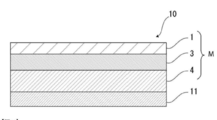
- the exterior material 10 for all-solid-state battery of the present disclosure has at least a base material layer 1, a barrier layer 3, and a thermosetting resin layer, as shown in FIGS. 6 to 9, for example. It is composed of a laminate M including 4 in this order, and an insulating layer 11 provided on the side of the thermosetting resin layer 4 opposite to the base material layer 1 side.
- the base material layer 1 is on the outer layer side and the insulating layer 11 is on the inner layer side.
- the peripheral edge portion is heat-sealed with the heat-sealing resin layers 4 of the all-solid-state battery exterior material 10 facing each other.
- the battery element is housed in the space formed by the operation.
- the insulating layer 11 is provided on the side of the thermosetting resin layer 4 opposite to the base material layer 1 side (that is, the battery element side). However, the insulating layer 11 is not provided at least at a position where the thermosetting resin layers 4 are heat-sealed together.
- the insulating layer 11 may be laminated on the thermosetting resin layer 4 before being applied to the all-solid-state battery. Further, when the exterior material 10 for an all-solid-state battery of the present disclosure is applied to an all-solid-state battery, an insulating layer 11 is arranged between the thermosetting resin layer 4 of the laminate M and the battery element.
- the exterior material 10 for an all-solid-state battery of the present disclosure may be used.
- the exterior material 10 for an all-solid-state battery is used as necessary for the purpose of enhancing the adhesiveness between the base material layer 1 and the barrier layer 3 and the like.
- the adhesive layer 5 is required between the barrier layer 3 and the thermosetting resin layer 4 for the purpose of enhancing the adhesiveness between the layers.
- a surface coating layer 6 or the like may be provided on the outside of the base material layer 1 (the side opposite to the thermosetting resin layer 4 side), if necessary.
- the total thickness of the laminate M and the insulating layer 11 constituting the exterior material 10 for an all-solid-state battery is not particularly limited, but is preferably about 10,000 ⁇ m or less, about 8,000 ⁇ m or less, from the viewpoint of cost reduction, energy density improvement, and the like. About 5000 ⁇ m or less can be mentioned, and from the viewpoint of maintaining the function of the exterior material 10 for an all-solid-state battery of protecting the battery element, preferably about 100 ⁇ m or more, about 150 ⁇ m or more, and about 200 ⁇ m or more can be mentioned, and the preferable range is about 200 ⁇ m or more.
- about 100 to 500 ⁇ m is preferable.
- each layer constituting the exterior material 10 for an all-solid-state battery Details of each layer constituting the exterior material 10 for an all-solid-state battery will be described in detail in the item "3. Each layer forming the exterior material for an all-solid-state battery".
- the exterior material 10 for all-solid- state batteries of the present disclosure (hereinafter, may be referred to as "exterior material 10") is applied, the exterior material 10 (laminate M and insulating layer 11) is used. There is no particular limitation except that (including) is used. That is, the battery elements (electrodes, solid electrolytes, terminals, etc.) other than the exterior material 10 (including the laminate M and the insulating layer 11) are not particularly limited as long as they are applicable to the all-solid-state battery, and are known. It may be the one used in the all-solid-state battery of.
- an embodiment in which the exterior material 10 for an all-solid-state battery of the present disclosure is applied to an all-solid-state battery will be specifically described by taking the all-solid-state battery 70 of the present disclosure as an example.
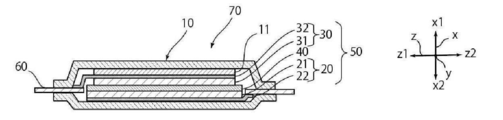
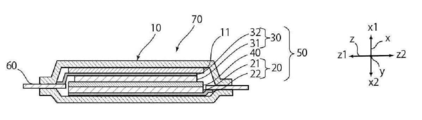
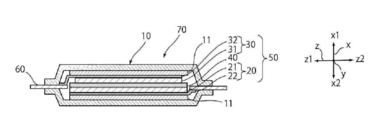
- the all-solid-state battery 70 of the present disclosure is located between the negative electrode active material layer 21, the positive electrode active material layer 31, and the negative electrode active material layer 21 and the positive electrode active material layer 31.
- a battery element including at least a cell 50 including a laminated solid-state electrolyte layer 40 is housed in a package formed of the exterior material 10 for an all-solid-state battery of the present disclosure. More specifically, the negative electrode active material layer 21 is laminated on the negative electrode current collector 22 to form the negative electrode layer 20, and the positive electrode active material layer 31 is laminated on the positive electrode current collector 32 to form the positive electrode. It constitutes layer 30.
- the negative electrode current collector 22 and the positive electrode current collector 32 are respectively joined to the externally exposed terminals 60 and electrically connected to the external environment.
- a solid electrolyte layer 40 is laminated between the negative electrode layer 20 and the positive electrode layer 30, and the negative electrode layer 20, the positive electrode layer 30, and the solid electrolyte layer 40 constitute the cell 50.
- the battery element of the all-solid-state battery 70 may include only one cell cell 50, or may include a plurality of cell cells 50.
- FIGS. 1, 3 and 4 show an all-solid-state battery 50 including one cell 50 as a battery element
- FIG. 2 shows an all-solid-state battery in which two cell 50s are laminated to form a battery element. The battery 50 is illustrated.
- a flange portion (a region where the heat-sealing resin layers come into contact with each other) is provided on the peripheral edge of the battery element. ) Is formed, the battery element is coated, and the heat-sealing resin layers of the flange portion are heat-sealed and sealed to obtain an all-solid-state battery using the exterior material for the all-solid-state battery.
- thermosetting resin portion of the exterior material for the all-solid-state battery of the present disclosure is inside (the surface in contact with the battery element). ) To form the package.
- the insulating layer 11 of the exterior material 10 is arranged inside the laminate M constituting the exterior material 10, and is all-solid.
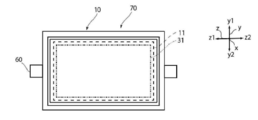
- the battery 70 is viewed in a plan view, it is provided so as to cover the entire surface of the positive electrode active material layer of the all-solid-state battery.
- the all-solid-state battery is restrained from the outside of the exterior material under high pressure in order to suppress the separation between the solid electrolyte and the negative electrode active material layer or the positive electrode active material layer. It is hoped that they will continue to do so.
- the restraint of the all-solid-state battery under high pressure is applied to the all-solid-state battery when the all-solid-state battery 70 is viewed in a plan view. High pressure is applied so as to cover the entire surface or a part of the negative electrode active material layer.
- the heat-sealing resin layer of the exterior material ( The thickness of the inner layer) becomes thin, and a short circuit may occur between the barrier layer (metal) laminated on the exterior material and the positive electrode or the negative electrode.
- the insulating layer 11 is provided so as to cover the entire surface of the positive electrode active material layer of the all-solid-state battery when the all-solid-state battery 70 is viewed in a plan view.
- the insulating layer 11 between the thermosetting resin layer 4 and the positive electrode active material layer 31 acts as a cushion to heat-melt the exterior material 10.
- the thinning of the thickness of the adhesive resin layer 4 is suppressed, and the occurrence of a short circuit between the barrier layer 3 laminated on the exterior material 10 and the positive electrode is effectively suppressed.
- the exterior material 10 of the present disclosure can effectively suppress a short circuit of the all-solid-state battery.
- the insulating layer 11 of the exterior material 10 may cover the entire surface of the positive electrode active material layer when the all-solid-state battery is viewed in a plan view, and the area of the insulating layer 11 is the positive electrode when the all-solid-state battery is viewed in a plan view. It may be the same as the area of the active material layer 31, or may be larger than the area of the positive electrode active material layer 31 as shown in the schematic views of FIGS. 3 to 5. Further, when the all-solid-state battery is viewed in a plan view, the area of the insulating layer 11 may be the same as the area of the negative electrode active material layer 21 or may be larger than the area of the negative electrode active material layer 21.
- the area of the positive electrode active material layer 31 is the same as the area of the negative electrode active material layer 21 or larger than the area of the negative electrode active material layer 21 when the all-solid-state battery is viewed in a plan view. small. Further, the portion where the all-solid-state battery is pressed under high pressure generally corresponds to the portion where the positive electrode active material layer is present.
- the insulating layer 11 may be provided on one side of the battery element, but is preferably provided on both sides of the battery element from the viewpoint of more effectively suppressing a short circuit of the all-solid-state battery.
- 1 to 3 show a diagram in which the insulating layer 11 is provided only on one side of the battery element
- FIG. 4 shows a diagram in which the insulating layer 11 is provided on both sides of the battery element. It is shown.
- the insulating layer 11 may cover at least a part of the side surface of the battery element that is not connected to the terminal. Further, in this case, the insulating layer 11 located on the side surface of the battery element may be provided with a joint in order to avoid the influence of the high pressure press.
- the all-solid-state battery to which the exterior material 10 of the present disclosure is applied is not particularly limited as long as the specific exterior material 10 is used, and the same applies to the all-solid-state battery 70 of the present disclosure. ..
- the materials of the members constituting the battery element of the all-solid-state battery to which the exterior material 10 of the present disclosure is applied will be exemplified.
- the negative electrode layer 20 has a structure in which the negative electrode active material layer 21 is laminated on the negative electrode current collector 22.
- the positive electrode layer 30 has a structure in which the positive electrode active material layer 31 is laminated on the positive electrode current collector 32.
- the negative electrode current collector 22 and the positive electrode current collector 32 are respectively joined to the terminals 60 exposed to the outside and are electrically connected to the external environment.
- the positive electrode active material layer 31 is a layer containing at least the positive electrode active material.
- the positive electrode active material layer 31 may further contain a solid electrolyte material, a conductive material, a binder, and the like, if necessary, in addition to the positive electrode active material.
- the positive electrode active material is not particularly limited, and examples thereof include an oxide active material and a sulfide active material.
- the oxide active material used as the positive electrode active material includes, for example, LiCoO 2 , LiMnO 2 , LiNiO 2 , LiVO 2 , LiNi 1/3 Co 1/3 Mn 1.
- Rock salt layered active material such as / 3 O 2
- spinel type active material such as LiMn 2 O 4 , Li (Ni 0.5 Mn 1.5 ) O 4
- olivine type active material such as LiFePO 4 , LiMnPO 4 , Li 2 FeSiO 4
- Si-containing active materials such as Li 2 MnSiO 4
- examples of the sulfide active material used as the positive electrode active material of the all-solid-state lithium battery include copper chebrel, iron sulfide, cobalt sulfide, nickel sulfide and the like.
- the shape of the positive electrode active material is not particularly limited, and examples thereof include a particle shape.
- the average particle size (D 50 ) of the positive electrode active material is preferably, for example, about 0.1 to 50 ⁇ m.
- the content of the positive electrode active material in the positive electrode active material layer 31 is preferably about 10 to 99% by mass, more preferably about 20 to 90% by mass.
- the positive electrode active material layer 31 preferably further contains a solid electrolyte material. Thereby, the ionic conductivity in the positive electrode active material layer 31 can be improved.
- the solid electrolyte material contained in the positive electrode active material layer 31 is the same as the solid electrolyte material exemplified in the solid electrolyte layer 40 described later.
- the content of the solid electrolyte material in the positive electrode active material layer is preferably about 1 to 90% by mass, more preferably about 10 to 80% by mass.
- the positive electrode active material layer 31 may further contain a conductive material. By adding the conductive material, the electron conductivity of the positive electrode active material layer can be improved. Examples of the conductive material include acetylene black, ketjen black, carbon fiber and the like. Further, the positive electrode active material layer may further contain a binder. Examples of the binder include fluorine-containing binders such as polytetrafluoroethylene (PTFE) and polyvinylidene fluoride (PVDF).
- PTFE polytetrafluoroethylene
- PVDF polyvinylidene fluoride
- the thickness of the positive electrode active material layer 31 is appropriately set according to the size of the all-solid-state battery and the like, but is preferably about 0.1 to 1000 ⁇ m.
- Patent current collector 32 examples of the material constituting the positive electrode current collector 32 include stainless steel (SUS), aluminum, nickel, iron, titanium, carbon and the like.
- the thickness of the positive electrode current collector 32 is appropriately set according to the size of the all-solid-state battery and the like, but is preferably about 10 to 1000 ⁇ m.
- the negative electrode active material layer 21 is a layer containing at least the negative electrode active material.
- the negative electrode active material layer 21 may contain a solid electrolyte material, a conductive material, a binder, and the like, if necessary, in addition to the negative electrode active material.
- the negative electrode active material is not particularly limited, and examples thereof include a carbon active material, a metal active material, and an oxide active material.
- the carbon active material include graphite such as mesocarbon microbeads (MCMB) and highly oriented graphite (HOPG), and amorphous carbon such as hard carbon and soft carbon.
- the metal active material include In, Al, Si and Sn.
- the oxide active material include Nb 2 O 5 , Li 4 Ti 5 O 12 , SiO and the like.
- the shape of the negative electrode active material is not particularly limited, and examples thereof include a particle shape and a film shape.
- the average particle size (D 50 ) of the negative electrode active material is preferably about 0.1 to 50 ⁇ m.
- the content of the negative electrode active material in the negative electrode active material layer 21 is, for example, about 10 to 99% by mass, more preferably about 20 to 90% by mass.
- the negative electrode active material layer 21 preferably further contains a solid electrolyte material. Thereby, the ionic conductivity in the negative electrode active material layer 21 can be improved.
- the solid electrolyte material contained in the negative electrode active material layer 21 is the same as the solid electrolyte material exemplified in the solid electrolyte layer 40 described later.
- the content of the solid electrolyte material in the negative electrode active material layer 21 is preferably about 1 to 90% by mass, more preferably about 10 to 80% by mass.
- the negative electrode active material layer 21 may further contain a conductive material. Further, the negative electrode active material layer 21 may further contain a binder.
- the conductive material and the binder are the same as those exemplified for the positive electrode active material layer 31 described above.
- the thickness of the negative electrode active material layer 21 is appropriately set according to the size of the all-solid-state battery and the like, but is preferably about 0.1 to 1000 ⁇ m.
- Negative electrode current collector 22 Examples of the material constituting the negative electrode current collector 22 include stainless steel (SUS), copper, nickel, carbon and the like.
- the thickness of the negative electrode current collector 22 is appropriately set according to the size of the all-solid-state battery and the like, but is preferably about 10 to 1000 ⁇ m.
- Solid electrolyte layer 40 is a layer containing a solid electrolyte material.
- the solid electrolyte material include a sulfide solid electrolyte material and an oxide solid electrolyte material.
- sulfide solid electrolyte materials have higher ionic conductivity than the oxide solid electrolyte materials, and the oxide solid electrolyte materials have higher chemical stability than the sulfide solid electrolyte materials. Preferred in terms of points.
- the oxide solid electrolyte material include compounds having a NASICON type structure and the like.
- a compound represented by the general formula Li 1 + x Al x Ge 2-x (PO 4 ) 3 (0 ⁇ x ⁇ 2) can be mentioned.
- the above compound is preferably Li 1.5 Al 0.5 Ge 1.5 (PO 4 ) 3 .
- a compound represented by the general formula Li 1 + x AlxTi 2-x (PO 4 ) 3 (0 ⁇ x ⁇ 2) can be mentioned.
- the above compound is preferably Li 1.5 Al 0.5 Ti 1.5 (PO 4 ) 3 .
- LiLaTIO for example, Li 0.34 La 0.51 TiO 3
- LiPON for example, Li 2.9 PO 3.3 N 0.46
- LiLaZrO for example, LiLaZrO
- Li 7 La 3 Zr 2 O 12 Li 7 La 3 Zr 2 O 12
- the sulfide solid electrolyte material for example, Li 2 S-P 2 S 5, Li 2 S-P 2 S 5 -LiI, Li 2 S-P 2 S 5 -Li 2 O, Li 2 SP 2 S 5 -Li 2 O-LiI, Li 2 S-SiS 2 , Li 2 S-SiS 2- LiI, Li 2 S-SiS 2- LiBr, Li 2 S-SiS 2- LiCl, Li 2 S -SiS 2- B 2 S 3- LiI, Li 2 S-SiS 2- P 2 S 5- LiI, Li 2 SB 2 S 3 , Li 2 SP 2 S 5- ZmSn (however, m and n are positive Z is one of Ge, Zn, and Ga.), Li 2 S-GeS 2 , Li 2 S-SiS 2 -Li 3 PO 4 , Li 2 S-SiS 2 -Li x MO y (however, x and y are positive numbers.
- Li 2 SP 2 S 5 means a sulfide solid electrolyte material using a raw material composition containing Li 2 S and P 2 S 5, and the same applies to other descriptions. is there. Further, the sulfide solid electrolyte material may be sulfide glass or crystallized sulfide glass.
- the content of the solid electrolyte material in the solid electrolyte layer 40 is not particularly limited, but is preferably 60% by mass or more, more preferably 70% by mass or more, and further preferably 80% by mass or more.
- the solid electrolyte layer may contain a binder or may be composed of only the solid electrolyte material.
- the thickness of the solid electrolyte layer 40 is appropriately set according to the size of the all-solid-state battery and the like, but is preferably about 0.1 to 1000 ⁇ m, more preferably about 0.1 to 300 ⁇ m.
- the all-solid-state battery 70 of the present disclosure can be suitably used in an environment constrained from the outside under high pressure.
- the pressure for restraining the all-solid-state battery 70 from the outside is preferably about from the viewpoint of preferably suppressing the peeling between the solid electrolyte and the negative electrode active material layer (further, between the solid electrolyte and the positive electrode active material layer).
- the preferred range is about 0.1 to 100 MPa, about 0.1 to 70 MPa, about 0.1 to 30 MPa, about 0.5 to 100 MPa, about 0.5 to 70 MPa, about 0.5 to 30 MPa.
- Examples thereof include about 1 to 100 MPa, about 1 to 70 MPa, about 1 to 30 MPa, about 5 to 100 MPa, about 5 to 70 MPa, about 10 to 100 MPa, and about 1 to 30 MPa.
- the temperature when the all-solid-state battery 70 is restrained from the outside is preferably 20 ° C. or higher, more preferably 40 ° C. or higher, and preferably 200 ° C. or lower, more preferably 150 ° C. or lower.
- Examples of the preferred range include about 20 to 150 ° C. and about 40 to 150 ° C.
- the exterior material 10 of the present disclosure is composed of at least a laminate M having a base material layer 1, a barrier layer 3, and a thermosetting resin layer 4 in this order, and an insulating layer 11. It is configured.
- the insulating layer 11 is provided on the side of the thermosetting resin layer 4 opposite to the base material layer 1 side.
- the insulating layer 11 is provided so as to cover the entire surface of the positive electrode active material layer 31 of the all-solid-state battery when the all-solid-state battery is viewed in a plan view in order to effectively suppress a short circuit of the all-solid-state battery. It is a layer composed of insulating members.
- the all-solid-state battery 70 is a battery element housed in a package formed of the exterior material 10 for an all-solid-state battery. Further, the battery element includes at least a cell 50. Further, the cell 50 includes a positive electrode active material layer 31, a negative electrode active material layer 21, and a solid electrolyte layer 40 laminated between the positive electrode active material layer 31 and the negative electrode active material layer 21.
- the insulating layer 11 is arranged at a position that covers the entire surface of the positive electrode active material layer 31 of the all-solid-state battery 70.
- the area of the insulating layer 11 may be the same as the area of the positive electrode active material layer 31, or as shown in the schematic views of FIGS. 3 to 5, the positive electrode activity It may be larger than the area of the material layer 31.
- the area of the insulating layer 11 may be the same as the area of the negative electrode active material layer 21 or may be larger than the area of the negative electrode active material layer 21.
- the area of the insulating layer 11 is preferably 1.0 to 1.5 times the area of the positive electrode active material layer 31, and 1.0 to 1.2 times. Is more preferable.
- the method of arranging the insulating layer 11 in the exterior material 10 is not particularly limited as long as the insulating layer 11 is arranged at a position covering the entire surface of the positive electrode active material layer 31 of the all-solid-state battery 70.
- an accommodating portion protruding from the thermosetting resin layer side to the base material layer side
- the insulating layer 11 having a size that fits into the housing portion is placed on the housing portion, and the battery element is placed on the insulating layer 11 so that the insulating layer 11 is placed on the exterior material 10. Becomes easier.
- the insulating layer 11 may be provided on one side of the battery element, but is arranged so as to be located on both sides of the battery element from the viewpoint of more effectively suppressing a short circuit of the all-solid-state battery. Is preferable. That is, the insulating layer 11 may be arranged on at least one side of both sides of the all-solid-state battery 70 pressed from the outside by high pressure, and more preferably arranged on both sides.
- FIGS. 1 to 3 show a diagram in which the insulating layer 11 is provided only on one side of the battery element, and FIG. 4 shows that the insulating layer 11 is provided on both sides of the battery element. The figure is shown.
- the material constituting the insulating layer 11 is not particularly limited as long as it has insulating properties and can function as a cushion against a high-pressure press, and is preferably a resin film. Can be mentioned.
- the resin constituting the resin film is not particularly limited, and examples thereof include polyester, polyamide, polyolefin, polyphenylene sulfide, polyether ether ketone, epoxy resin, acrylic resin, fluororesin, silicon resin, and phenol resin.
- polyester and the like are preferable because they have high mechanical strength and excellent insulating properties.
- the polyester include the same polyesters as those exemplified in the item of [Base material layer 1] described later.
- the puncture strength of the insulating layer 11 is preferably 3N or more, more preferably about 4N or more, still more preferably about 5N or more, still more preferably 8N or more. Further, preferably about 50 N or less, more preferably about 40 N or less, and preferable ranges are about 3 to 50 N, about 3 to 40 N, about 4 to 50 N, about 4 to 40 N, and about 5 to 50 N. Examples thereof include about 5 to 40 N, about 8 to 50 N, and about 8 to 40 N. In the present disclosure, the puncture strength of the insulating layer 11 is specifically a value measured by the following method.
- ⁇ Puncture strength> The piercing strength of the insulating layer 11 is measured by a method according to JIS Z1707: 1997. Specifically, in a measurement environment of 23 ⁇ 2 ° C. and relative humidity (50 ⁇ 5)%, the test piece is fixed with a stand having a diameter of 115 mm having an opening of 15 mm in the center and a holding plate, and the diameter is 1.0 mm. , A semi-circular needle with a tip shape radius of 0.5 mm is pierced at a speed of 50 ⁇ 5 mm per minute, and the maximum stress until the needle penetrates is measured. The number of test pieces is 5, and the average value is calculated. If the number of test pieces is insufficient and 5 cannot be measured, the measurable number is measured and the average value is calculated.
- the melting point of the insulating layer 11 is preferably about 200 ° C. or higher, more preferably about 220 ° C. or higher, and more preferably about 450 ° C. or lower.
- the temperature is preferably about 400 ° C. or lower, and preferred ranges include about 200 to 450 ° C., about 220 to 450 ° C., about 200 to 400 ° C., and about 220 to 400 ° C.
- the melting point of the insulating layer 11 is a value measured by differential scanning calorimetry (DSC).
- the insulating layer 11 is not adhered to the battery element. More specifically, it is preferable that the insulating layer 11 is not adhered to the battery element by using an adhesive or the like. Further, the insulating layer 11 may not be adhered to the thermosetting resin layer 4 of the exterior material 10, or may be adhered to the thermosetting resin layer 4 by an adhesive, heat fusion, or the like. .. When the all-solid-state battery 70 is high-pressure pressed from the outside, the insulating layer 11 is not adhered to the battery element, so that the insulating layer 11 can easily move at the interface with the battery element and is high-pressure pressed. It is possible to suppress the application of a large external force to the battery element and the heat-sealing resin layer 4 in the direction perpendicular to the direction.
- the thickness of the insulating layer 11 is not particularly limited as long as it exhibits insulating properties and can function as a cushion against a high-pressure press, and is preferably about 5 ⁇ m or more, more preferably about 10 ⁇ m or more. Further, preferably about 500 ⁇ m or less, more preferably about 200 ⁇ m or less, still more preferably about 100 ⁇ m or less, and preferred ranges are about 5 to 500 ⁇ m, about 5 to 200 ⁇ m, about 5 to 100 ⁇ m, and about 10 to 500 ⁇ m. About 10 to 200 ⁇ m and about 10 to 100 ⁇ m can be mentioned.
- the base material layer 1 is a layer provided on the laminate M for the purpose of exerting a function as a base material of an exterior material for an all-solid-state battery.
- the base material layer 1 is located on the outer layer side of the exterior material for an all-solid-state battery.
- the material forming the base material layer 1 is not particularly limited as long as it has a function as a base material, that is, at least an insulating property.
- the base material layer 1 can be formed using, for example, a resin, and the resin may contain an additive described later.
- the base material layer 1 may be, for example, a resin film formed of resin or may be formed by applying a resin.
- the resin film may be an unstretched film or a stretched film.
- the stretched film include a uniaxially stretched film and a biaxially stretched film, and a biaxially stretched film is preferable.
- the stretching method for forming the biaxially stretched film include a sequential biaxial stretching method, an inflation method, and a simultaneous biaxial stretching method.
- the method for applying the resin include a roll coating method, a gravure coating method, and an extrusion coating method.
- the resin forming the base material layer 1 examples include resins such as polyester, polyamide, polyolefin, epoxy resin, acrylic resin, fluororesin, polyurethane, silicon resin, and phenol resin, and modified products of these resins. Further, the resin forming the base material layer 1 may be a copolymer of these resins, or may be a modified product of the copolymer. Further, it may be a mixture of these resins.
- the resin forming the base material layer 1 include polyester and polyamide.
- polyester examples include polyethylene terephthalate, polybutylene terephthalate, polyethylene naphthalate, polybutylene naphthalate, polyethylene isophthalate, and copolymerized polyester.
- copolymerized polyester examples include a copolymerized polyester containing ethylene terephthalate as a repeating unit.
- copolymer polyester (hereinafter abbreviated after polyethylene (terephthalate / isophthalate)), polyethylene (terephthalate / adipate), polyethylene (terephthalate / terephthalate /), which polymerizes with ethylene isophthalate using ethylene terephthalate as the main body of the repeating unit (Sodium sulfoisophthalate), polyethylene (terephthalate / sodium isophthalate), polyethylene (terephthalate / phenyl-dicarboxylate), polyethylene (terephthalate / decandicarboxylate) and the like.
- These polyesters may be used alone or in combination of two or more.
- polyamide specifically, an aliphatic polyamide such as nylon 6, nylon 66, nylon 610, nylon 12, nylon 46, a copolymer of nylon 6 and nylon 66; terephthalic acid and / or isophthalic acid.
- Hexamethylenediamine-isophthalic acid-terephthalic acid copolymerized polyamide such as nylon 6I, nylon 6T, nylon 6IT, nylon 6I6T (I represents isophthalic acid, T represents terephthalic acid), polyamide MXD6 (polymethaki Polyamide containing aromatics such as silylene adipamide); Alicyclic polyamide such as polyamide PACM6 (polybis (4-aminocyclohexyl) methaneadipamide); Further, lactam component and isocyanate component such as 4,4'-diphenylmethane-diisocyanate Examples thereof include a copolymerized polyamide, a polyesteramide copolymer or a polyether esteramide copolymer which
- the base material layer 1 preferably contains at least one of a polyester film, a polyamide film, and a polyolefin film, and preferably contains at least one of a stretched polyester film, a stretched polypropylene film, and a stretched polyolefin film. It is more preferable to contain at least one of stretched polyethylene terephthalate film, stretched polybutylene terephthalate film, stretched nylon film and stretched polypropylene film, and biaxially stretched polyethylene terephthalate film, biaxially stretched polybutylene terephthalate film, biaxially stretched nylon film. , It is more preferable to contain at least one of the biaxially stretched polypropylene films.
- the base material layer 1 may be a single layer or may be composed of two or more layers.
- the base material layer 1 may be a laminated body in which a resin film is laminated with an adhesive or the like, or the resin is co-extruded to form two or more layers. It may be a laminated body of the resin film. Further, the laminated body of the resin film obtained by co-extruding the resin into two or more layers may be used as the base material layer 1 without being stretched, or may be uniaxially stretched or biaxially stretched as the base material layer 1.
- the base material layer 1 is a single layer, it is preferable that the base material layer 1 is composed of a single layer of polyester resin.
- a laminate of two or more layers of resin film in the base material layer 1 a laminate of a polyester film and a nylon film, a laminate of two or more layers of nylon film, and a laminate of two or more layers of polyester film.
- a laminate of a stretched nylon film and a stretched polyester film, a laminate of two or more layers of stretched nylon film, and a laminate of two or more layers of stretched polyester film are preferable.
- the base material layer 1 is a laminate of two layers of resin film, a laminate of polyester resin film and polyester resin film, a laminate of polyamide resin film and polyamide resin film, or a laminate of polyester resin film and polyamide resin film.
- a laminate is preferable, and a laminate of a polyethylene terephthalate film and a polyethylene terephthalate film, a laminate of a nylon film and a nylon film, or a laminate of a polyethylene terephthalate film and a nylon film is more preferable.
- the two or more layers of resin films may be laminated via an adhesive.
- Preferred adhesives include those similar to the adhesives exemplified in the adhesive layer 2 described later.
- the method of laminating two or more layers of resin films is not particularly limited, and known methods can be adopted. Examples thereof include a dry laminating method, a sandwich laminating method, an extrusion laminating method, and a thermal laminating method, and a dry laminating method is preferable.
- the laminating method can be mentioned.
- the thickness of the adhesive is, for example, about 2 to 5 ⁇ m.
- an anchor coat layer may be formed on the resin film and laminated. Examples of the anchor coat layer include the same adhesives as those exemplified in the adhesive layer 2 described later. At this time, the thickness of the anchor coat layer is, for example, about 0.01 to 1.0 ⁇ m.
- additives such as a lubricant, a flame retardant, an antiblocking agent, an antioxidant, a light stabilizer, a tackifier, and an antistatic agent are present on at least one of the surface and the inside of the base material layer 1. Good. Only one type of additive may be used, or two or more types may be mixed and used.
- a lubricant is present on the surface of the base material layer 1.
- the lubricant is not particularly limited, but an amide-based lubricant is preferable.
- Specific examples of the amide-based lubricant include saturated fatty acid amides, unsaturated fatty acid amides, substituted amides, methylol amides, saturated fatty acid bisamides, unsaturated fatty acid bisamides, fatty acid ester amides, and aromatic bisamides.
- saturated fatty acid amide examples include lauric acid amide, palmitic acid amide, stearic acid amide, behenic acid amide, hydroxystearic acid amide and the like.
- unsaturated fatty acid amide examples include oleic acid amide and erucic acid amide.
- substituted amide examples include N-oleyl palmitic acid amide, N-stearyl stearic acid amide, N-stearyl oleic acid amide, N-oleyl stearic acid amide, N-stearyl erucate amide and the like.
- methylolamide examples include methylolstearic acid amide.
- saturated fatty acid bisamides include methylene bisstearic acid amide, ethylene biscapric acid amide, ethylene bislauric acid amide, ethylene bisstearic acid amide, ethylene bishydroxystearic acid amide, ethylene bisbechenic acid amide, and hexamethylene bisstearate.
- saturated fatty acid bisamides include acid amides, hexamethylene bisbechenic acid amides, hexamethylene hydroxystearic acid amides, N, N'-distearyl adipate amides, and N, N'-distealyl sebasic acid amides.
- unsaturated fatty acid bisamides include ethylene bisoleic acid amide, ethylene biserucic acid amide, hexamethylene bisoleic acid amide, N, N'-diorail adipate amide, and N, N'-diorail sebacic acid amide. And so on.
- Specific examples of the fatty acid ester amide include stearoamide ethyl stearate and the like.
- Specific examples of the aromatic bisamide include m-xylylene bisstearic acid amide, m-xylylene bishydroxystearic acid amide, and N, N'-distearyl isophthalic acid amide.
- One type of lubricant may be used alone, or two or more types may be used in combination.
- the amount of the lubricant is not particularly limited, but is preferably about 3 mg / m 2 or more, more preferably about 4 to 15 mg / m 2 , and further preferably 5 to 14 mg. / M 2 is mentioned.
- the lubricant existing on the surface of the base material layer 1 may be one in which the lubricant contained in the resin constituting the base material layer 1 is exuded, or one in which the lubricant is applied to the surface of the base material layer 1. You may.
- the thickness of the base material layer 1 is not particularly limited as long as it functions as a base material, and examples thereof include about 3 to 50 ⁇ m, preferably about 10 to 35 ⁇ m.
- the thickness of the resin films constituting each layer is preferably about 2 to 25 ⁇ m, respectively.
- the adhesive layer 2 is provided between the base material layer 1 and the barrier layer 3 of the laminated body M, if necessary, for the purpose of enhancing the adhesiveness. It is a layer to be.
- the adhesive layer 2 is formed by an adhesive capable of adhering the base material layer 1 and the barrier layer 3.
- the adhesive used for forming the adhesive layer 2 is not limited, but may be any of a chemical reaction type, a solvent volatilization type, a heat melting type, a hot pressure type and the like. Further, it may be a two-component curable adhesive (two-component adhesive), a one-component curable adhesive (one-component adhesive), or a resin that does not involve a curing reaction. Further, the adhesive layer 2 may be a single layer or a multilayer.
- the adhesive component contained in the adhesive include polyesters such as polyethylene terephthalate, polybutylene terephthalate, polyethylene naphthalate, polybutylene naphthalate, polyethylene isophthalate, and copolymerized polyester; polyether; polyurethane; epoxy resin; Phenolic resin; Polyolefin such as nylon 6, nylon 66, nylon 12, copolymerized polyamide; polyolefin resin such as polyolefin, cyclic polyolefin, acid-modified polyolefin, acid-modified cyclic polyolefin; Polyvinyl acetate; Cellulose; (Meta) acrylic resin; Polyethylene; Polyolefin; Amino resin such as urea resin and melamine resin; Rubber such as chloroprene rubber, nitrile rubber and styrene-butadiene rubber; Silicone resin and the like.
- polyesters such as polyethylene terephthalate, polybutylene terephthalate, poly
- adhesive components may be used alone or in combination of two or more.
- a polyurethane adhesive is preferable.
- the resin as an adhesive component can be used in combination with an appropriate curing agent to increase the adhesive strength.
- An appropriate curing agent is selected from polyisocyanate, polyfunctional epoxy resin, oxazoline group-containing polymer, polyamine resin, acid anhydride and the like, depending on the functional group of the adhesive component.
- polyurethane adhesive examples include a polyurethane adhesive containing a main agent containing a polyol compound and a curing agent containing an isocyanate compound.
- a polyurethane adhesive containing a main agent containing a polyol compound examples include two-component curable polyurethane adhesives containing a polyol such as a polyester polyol, a polyether polyol, and an acrylic polyol as a main component and an aromatic or aliphatic polyisocyanate as a curing agent.
- a polyol compound it is preferable to use a polyester polyol having a hydroxyl group in the side chain in addition to the hydroxyl group at the end of the repeating unit.
- the adhesive layer 2 may contain a colorant, a thermoplastic elastomer, a tackifier, a filler, etc., as long as the adhesiveness is not hindered, the addition of other components is permitted. Since the adhesive layer 2 contains a colorant, the exterior material for an all-solid-state battery can be colored. As the colorant, known pigments, dyes and the like can be used. Further, only one type of colorant may be used, or two or more types may be mixed and used.
- the type of pigment is not particularly limited as long as it does not impair the adhesiveness of the adhesive layer 2.
- organic pigments include azo-based, phthalocyanine-based, quinacridone-based, anthracinone-based, dioxazine-based, indigothioindigo-based, perinone-perylene-based, isowearnine-based, and benzimidazolone-based pigments, which are inorganic.
- the pigment include carbon black-based, titanium oxide-based, cadmium-based, lead-based, chromium oxide-based, and iron-based pigments, and other examples include fine powder of mica (mica) and fish scale foil.
- carbon black is preferable in order to make the appearance of the exterior material for all-solid-state batteries black, for example.
- the average particle size of the pigment is not particularly limited, and examples thereof include about 0.05 to 5 ⁇ m, preferably about 0.08 to 2 ⁇ m.
- the average particle size of the pigment is the median size measured by a laser diffraction / scattering type particle size distribution measuring device.
- the content of the pigment in the adhesive layer 2 is not particularly limited as long as the exterior material for an all-solid-state battery is colored, and examples thereof include about 5 to 60% by mass, preferably 10 to 40% by mass.
- the thickness of the adhesive layer 2 is not particularly limited as long as the base material layer 1 and the barrier layer 3 can be adhered to each other, and examples thereof include about 1 ⁇ m or more and about 2 ⁇ m or more, and about 10 ⁇ m or less and about 5 ⁇ m or less.
- the preferred range is about 1 to 10 ⁇ m, about 1 to 5 ⁇ m, about 2 to 10 ⁇ m, and about 2 to 5 ⁇ m.
- the colored layer is a layer provided between the base material layer 1 and the barrier layer 3 as needed (not shown).
- a colored layer may be provided between the base material layer 1 and the adhesive layer 2 and between the adhesive layer 2 and the barrier layer 3. Further, a colored layer may be provided on the outside of the base material layer 1. By providing the coloring layer, the exterior material for an all-solid-state battery can be colored.
- the colored layer can be formed, for example, by applying an ink containing a colorant to the surface of the base material layer 1, the surface of the adhesive layer 2, or the surface of the barrier layer 3.
- a colorant known pigments, dyes and the like can be used. Further, only one type of colorant may be used, or two or more types may be mixed and used.
- colorant contained in the colored layer include the same as those exemplified in the column of [Adhesive layer 2].
- the barrier layer 3 of the laminated body M is at least a layer that suppresses the infiltration of water.
- the barrier layer 3 examples include a metal foil having a barrier property, a thin-film deposition film, a resin layer, and the like.
- the vapor deposition film examples include a metal vapor deposition film, an inorganic oxide vapor deposition film, a carbon-containing inorganic oxide vapor deposition film, and the like
- the resin layer includes polymers and tetras mainly composed of polyvinylidene chloride and chlorotrifluoroethylene (CTFE).
- CTFE chlorotrifluoroethylene
- TFE fluoroethylene
- TFE fluoroethylene
- TFE fluoroalkyl group
- fluorine-containing resins such as polymers containing a fluoroalkyl unit as a main component
- ethylene vinyl alcohol copolymers examples include ethylene vinyl alcohol copolymers.
- examples of the barrier layer 3 include a resin film provided with at least one of these vapor-deposited films and a resin layer.
- a plurality of barrier layers 3 may be provided.
- the barrier layer 3 preferably includes a layer made of a metal material.
- Specific examples of the metal material constituting the barrier layer 3 include an aluminum alloy, stainless steel, titanium steel, and a steel plate.
- the metal material includes at least one of an aluminum alloy foil and a stainless steel foil. Is preferable.
- the aluminum alloy foil is more preferably a soft aluminum alloy foil composed of, for example, an annealed aluminum alloy, and further improves the moldability.
- an aluminum alloy foil containing iron is preferable.
- the iron content is preferably 0.1 to 9.0% by mass, more preferably 0.5 to 2.0% by mass.
- the iron content is 0.1% by mass or more, an exterior material for an all-solid-state battery having more excellent moldability can be obtained.
- the iron content is 9.0% by mass or less, a more flexible exterior material for an all-solid-state battery can be obtained.
- the soft aluminum alloy foil for example, an aluminum alloy having a composition specified by JIS H4160: 1994 A8021HO, JIS H4160: 1994 A8079HO, JIS H4000: 2014 A8021PO, or JIS H4000: 2014 A8079P-O. Foil can be mentioned. Further, if necessary, silicon, magnesium, copper, manganese and the like may be added. Further, softening can be performed by annealing or the like.
- stainless steel foils examples include austenite-based, ferrite-based, austenite-ferritic-based, martensitic-based, and precipitation-hardened stainless steel foils. Further, from the viewpoint of providing an exterior material for an all-solid-state battery having excellent moldability, the stainless steel foil is preferably made of austenitic stainless steel.
- austenitic stainless steel constituting the stainless steel foil include SUS304, SUS301, and SUS316L, and among these, SUS304 is particularly preferable.
- the thickness of the barrier layer 3 may at least exhibit a function as a barrier layer that suppresses the infiltration of water, and is, for example, about 9 to 200 ⁇ m.
- the thickness of the barrier layer 3 is, for example, preferably about 85 ⁇ m or less, more preferably about 50 ⁇ m or less, further preferably about 40 ⁇ m or less, particularly preferably about 35 ⁇ m or less, and preferably about 10 ⁇ m or more, further preferably.
- about 20 ⁇ m or more, more preferably about 25 ⁇ m or more, and preferable ranges of the thickness are about 10 to 85 ⁇ m, about 10 to 50 ⁇ m, about 10 to 40 ⁇ m, about 10 to 35 ⁇ m, about 20 to 85 ⁇ m, and about 20 to 50 ⁇ m.
- the barrier layer 3 is made of an aluminum alloy foil, the above range is particularly preferable, and about 25 to 85 ⁇ m and about 25 to 50 ⁇ m are particularly preferable.
- the thickness of the stainless steel foil is preferably about 60 ⁇ m or less, more preferably about 50 ⁇ m or less, still more preferably about 40 ⁇ m or less, still more preferably about.
- the preferred thickness range is about 10 to 60 ⁇ m, about 10 to 50 ⁇ m, 10 to Examples thereof include about 40 ⁇ m, about 10 to 30 ⁇ m, about 10 to 25 ⁇ m, about 15 to 60 ⁇ m, about 15 to 50 ⁇ m, about 15 to 40 ⁇ m, about 15 to 30 ⁇ m, and about 15 to 25 ⁇ m.
- the barrier layer 3 is a metal foil
- a corrosion-resistant film is provided on at least the surface opposite to the base material layer in order to prevent dissolution and corrosion by corrosive gas generated from the solid electrolyte.
- the barrier layer 3 may be provided with a corrosion-resistant film on both sides.
- the corrosion-resistant film means, for example, a hot water transformation treatment such as boehmite treatment, a chemical conversion treatment, an anodic oxidation treatment, a plating treatment such as nickel or chromium, and a corrosion prevention treatment for applying a coating agent on the surface of the barrier layer. This is a thin film that makes the barrier layer corrosive.
- the treatment for forming the corrosion-resistant film one type may be performed, or two or more types may be combined. Moreover, not only one layer but also multiple layers can be used. Further, among these treatments, the hydrothermal modification treatment and the anodizing treatment are treatments in which the surface of the metal foil is dissolved by the treatment agent to form a metal compound having excellent corrosion resistance. In addition, these processes may be included in the definition of chemical conversion process.
- the barrier layer 3 has a corrosion-resistant film, the barrier layer 3 includes the corrosion-resistant film.
- the corrosion-resistant film prevents delamination between the barrier layer (for example, aluminum alloy foil) and the base material layer during molding of the exterior material for all-solid-state batteries, and the surface of the barrier layer due to the corrosive gas generated from the solid electrolyte. Melting and corrosion, especially when the barrier layer is an aluminum alloy foil, it prevents the aluminum oxide existing on the surface of the barrier layer from melting and corroding, and improves the adhesiveness (wetability) of the surface of the barrier layer. It shows the effect of preventing the corrosion between the base material layer and the barrier layer during heat sealing and the effect of preventing the corrosion between the base material layer and the barrier layer during molding.
- the barrier layer for example, aluminum alloy foil
- Various corrosion-resistant films formed by chemical conversion treatment are known, and mainly, at least one of phosphate, chromate, fluoride, triazinethiol compound, and rare earth oxide. Examples include a corrosion-resistant film containing.
- Examples of the chemical conversion treatment using a phosphate or a chromate include a chromate chromate treatment, a phosphoric chromate treatment, a phosphoric acid-chromate treatment, a chromate treatment, and the like, and chromium used in these treatments.
- Examples of the compound include chromium nitrate, chromium fluoride, chromium sulfate, chromium acetate, chromium oxalate, chromium dichromate, acetylacetate chromate, chromium chloride, and chromium potassium sulfate.
- examples of the phosphorus compound used in these treatments include sodium phosphate, potassium phosphate, ammonium phosphate, polyphosphoric acid and the like.
- examples of the chromate treatment include etching chromate treatment, electrolytic chromate treatment, and coating type chromate treatment, and coating type chromate treatment is preferable.
- At least the inner layer side surface of the barrier layer (for example, aluminum alloy foil) is first known as an alkali dipping method, an electrolytic cleaning method, an acid cleaning method, an electrolytic acid cleaning method, an acid activation method and the like.
- Degreasing treatment is performed by the treatment method, and then, a metal phosphate such as Cr (chromium) phosphate, Ti (titanium) phosphate, Zr (zyroxide) salt, Zn (zinc) phosphate, etc. is applied to the degreased surface.
- a treatment liquid for example, various solvents such as water, alcohol-based solvent, hydrocarbon-based solvent, ketone-based solvent, ester-based solvent, and ether-based solvent can be used, and water is preferable.
- examples of the resin component used at this time include polymers such as phenolic resin and acrylic resin, and an amination phenol polymer having a repeating unit represented by the following general formulas (1) to (4) can be used. Examples thereof include the chromate treatment used. In the aminated phenol polymer, the repeating unit represented by the following general formulas (1) to (4) may be contained alone or in any combination of two or more. May be good.
- the acrylic resin shall be a polyacrylic acid, an acrylic acid methacrylate copolymer, an acrylic acid maleic acid copolymer, an acrylic acid styrene copolymer, or a derivative of these sodium salts, ammonium salts, amine salts, etc. Is preferable.
- polyacrylic acid means a polymer of acrylic acid.
- the acrylic resin is preferably a copolymer of acrylic acid and a dicarboxylic acid or a dicarboxylic acid anhydride, and an ammonium salt, a sodium salt, or a copolymer of an acrylic acid and a dicarboxylic acid or a dicarboxylic acid anhydride.
- it is preferably an amine salt. Only one type of acrylic resin may be used, or two or more types may be mixed and used.
- X represents a hydrogen atom, a hydroxy group, an alkyl group, a hydroxyalkyl group, an allyl group or a benzyl group.
- R 1 and R 2 represent a hydroxy group, an alkyl group, or a hydroxyalkyl group, respectively, which are the same or different.
- examples of the alkyl group represented by X, R 1 and R 2 include a methyl group, an ethyl group, an n-propyl group, an isopropyl group, an n-butyl group and an isobutyl group.
- Examples thereof include a linear or branched alkyl group having 1 to 4 carbon atoms such as a tert-butyl group.
- Examples of the hydroxyalkyl groups represented by X, R 1 and R 2 include hydroxymethyl groups, 1-hydroxyethyl groups, 2-hydroxyethyl groups, 1-hydroxypropyl groups, 2-hydroxypropyl groups and 3-. Linear or branched chain with 1 to 4 carbon atoms in which one hydroxy group such as hydroxypropyl group, 1-hydroxybutyl group, 2-hydroxybutyl group, 3-hydroxybutyl group, 4-hydroxybutyl group is substituted.
- Alkyl groups can be mentioned.
- the alkyl group and the hydroxyalkyl group represented by X, R 1 and R 2 may be the same or different, respectively.
- X is preferably a hydrogen atom, a hydroxy group or a hydroxyalkyl group.
- the number average molecular weight of the aminated phenol polymer having the repeating unit represented by the general formulas (1) to (4) is, for example, preferably about 5 to 1,000,000, and preferably about 1,000 to 20,000. More preferred.
- the amination phenol polymer for example, polycondenses a phenol compound or a naphthol compound with formaldehyde to produce a polymer composed of repeating units represented by the above general formula (1) or general formula (3), and then formsaldehyde. It is produced by introducing a functional group (-CH 2 NR 1 R 2 ) into the polymer obtained above using amine (R 1 R 2 NH).
- the aminated phenol polymer is used alone or in combination of two or more.
- the corrosion resistant film it is formed by a coating type corrosion prevention treatment in which a coating agent containing at least one selected from the group consisting of rare earth element oxide sol, anionic polymer, and cationic polymer is applied.
- the thin film to be used is mentioned.
- the coating agent may further contain phosphoric acid or phosphate, a cross-linking agent for cross-linking the polymer.
- fine particles of the rare earth element oxide for example, particles having an average particle diameter of 100 nm or less
- the rare earth element oxide examples include cerium oxide, yttrium oxide, neodymium oxide, lanthanum oxide and the like, and cerium oxide is preferable from the viewpoint of further improving adhesion.
- the rare earth element oxide contained in the corrosion-resistant film may be used alone or in combination of two or more.
- various solvents such as water, alcohol solvent, hydrocarbon solvent, ketone solvent, ester solvent, ether solvent and the like can be used, and water is preferable.
- the cationic polymer examples include polyethyleneimine, an ionic polymer complex composed of polyethyleneimine and a polymer having a carboxylic acid, a primary amine graft acrylic resin obtained by graft-polymerizing a primary amine on an acrylic main skeleton, polyallylamine or a derivative thereof. , Amination phenol and the like are preferable.
- the anionic polymer is preferably a poly (meth) acrylic acid or a salt thereof, or a copolymer containing (meth) acrylic acid or a salt thereof as a main component.
- the cross-linking agent is at least one selected from the group consisting of a compound having a functional group of any of an isocyanate group, a glycidyl group, a carboxyl group and an oxazoline group and a silane coupling agent.
- the phosphoric acid or phosphate is condensed phosphoric acid or condensed phosphate.
- a film in which fine particles of metal oxides such as aluminum oxide, titanium oxide, cerium oxide, and tin oxide and barium sulfate are dispersed in phosphoric acid is applied to the surface of the barrier layer, and 150 Examples thereof include those formed by performing a baking treatment at ° C or higher.
- the corrosion-resistant film may have a laminated structure in which at least one of a cationic polymer and an anionic polymer is further laminated, if necessary.
- a cationic polymer and an anionic polymer include those described above.
- composition of the corrosion-resistant film can be analyzed by using, for example, a time-of-flight secondary ion mass spectrometry method.
- the amount of the corrosion-resistant film formed on the surface of the barrier layer 3 in the chemical conversion treatment is not particularly limited, but for example, in the case of performing a coating type chromate treatment, a chromic acid compound per 1 m 2 of the surface of the barrier layer 3 Is, for example, about 0.5 to 50 mg, preferably about 1.0 to 40 mg in terms of chromium, and the phosphorus compound is, for example, about 0.5 to 50 mg, preferably about 1.0 to 40 mg in terms of phosphorus, and an amination phenol polymer. Is preferably contained in a proportion of, for example, about 1.0 to 200 mg, preferably about 5.0 to 150 mg.
- the thickness of the corrosion-resistant film is not particularly limited, but is preferably about 1 nm to 20 ⁇ m, more preferably 1 nm to 100 nm, from the viewpoint of the cohesive force of the film and the adhesion to the barrier layer and the thermosetting resin layer. The degree, more preferably about 1 nm to 50 nm.
- the thickness of the corrosion-resistant film can be measured by observation with a transmission electron microscope or a combination of observation with a transmission electron microscope and energy dispersive X-ray spectroscopy or electron beam energy loss spectroscopy.
- the time-of-flight secondary ion mass spectrometry analysis of the composition of the corrosion resistant coating using, for example, secondary ion consisting Ce and P and O (e.g., Ce 2 PO 4 +, CePO 4 - at least 1, such as species) or, for example, secondary ion of Cr and P and O (e.g., CrPO 2 +, CrPO 4 - peak derived from at least one), such as is detected.
- secondary ion consisting Ce and P and O e.g., Ce 2 PO 4 +, CePO 4 - at least 1, such as species
- secondary ion of Cr and P and O e.g., CrPO 2 +, CrPO 4 - peak derived from at least one
- a solution containing a compound used for forming a corrosion-resistant film is applied to the surface of the barrier layer by a bar coating method, a roll coating method, a gravure coating method, a dipping method, or the like, and then the temperature of the barrier layer is applied. It is carried out by heating so that the temperature is about 70 to 200 ° C.
- the barrier layer may be subjected to a degreasing treatment by an alkali dipping method, an electrolytic cleaning method, an acid cleaning method, an electrolytic acid cleaning method or the like in advance. By performing the degreasing treatment in this way, it becomes possible to more efficiently perform the chemical conversion treatment on the surface of the barrier layer.
- an acid degreasing agent in which a fluorine-containing compound is dissolved in an inorganic acid for the degreasing treatment it is possible to form not only the degreasing effect of the metal foil but also the fluoride of the metal which is immobile. In this case, only the degreasing treatment may be performed.
- the corrosion resistant coating of the all-solid for exterior materials of the present disclosure when analyzed using time-of-flight secondary ion mass spectrometry, CrPO 4 - peak attributable to - PO 3 for from peak intensity P CrPO4
- the ratio P PO3 / Cr PO4 of the intensity P PO3 is preferably in the range of 6 to 120.
- the all-solid-state battery in order to suppress the separation between the solid electrolyte and the negative electrode active material layer and the positive electrode active material layer, the all-solid-state battery is subjected to high pressure from the outside of the exterior material even during use. It is hoped that they will continue to be restrained by the press. However, if the solid electrolyte and the negative electrode active material layer or the positive electrode active material layer are continuously restrained in a high pressure state from the outside of the exterior material of the all-solid-state battery, the heat-sealing resin layer of the exterior material is strongly pressed against the battery element.
- the thickness of the heat-sealing resin layer (inner layer) of the exterior material becomes thin, and there is a possibility that the barrier layer laminated on the exterior material comes into contact with the solid electrolyte.
- the barrier layer of the exterior material and the solid electrolyte are in contact with each other and electricity is applied between them, there is a problem that an alloy is formed on the surface of the barrier layer and the barrier layer is deteriorated.
- the all-solid-state battery is restrained in a high pressure state by providing the corrosion-resistant film on the surface of the barrier layer 3 of the exterior material 10.
- the alloy is formed on the surface of the barrier layer 3. Is difficult to generate, and the deterioration of the barrier layer 3 is effectively suppressed.
- the peak intensity ratio P PO3 / CrPO4 of the corrosion-resistant film is in the range of 6 to 120, the formation of alloy on the surface of the barrier layer 3 is more effectively suppressed, and the deterioration of the barrier layer 3 is deteriorated. Is suppressed even more effectively.
- the lower limit is mentioned preferably about 10 or higher
- the upper limit is preferably Is about 115 or less, more preferably about 110 or less, still more preferably about 50 or less.
- the preferred range of the ratio P PO3 / CrPO4 is about 6 to 120, about 6 to 115, about 6 to 110, about 6 to 50, about 10 to 120, about 10 to 115, about 10 to 110, and 10 About 50 to about 25 to 32 are mentioned, and among these, about 10 to 50 and further about 25 to 32 are particularly preferable.
- the corrosion resistant coating when analyzed using time-of-flight secondary ion mass spectrometry, CrPO 4 - PO 2 to the peak intensity P CrPO4 derived from - peak intensity derived from the P
- the ratio of PO2 , P PO2 / CrPO4 is preferably in the range of 7-70 .
- the lower limit of the ratio P PO2 / CrPO4 is preferably about 10 or more, and the upper limit is preferably about 65 or less, more preferably about 50 or less.
- the preferable range of the ratio P PO2 / CrPO4 is about 7 to 70, about 7 to 65, about 7 to 50, about 10 to 70, about 10 to 65, about 10 to 50, and further about 15 to 37. Among these, about 10 to 50, more preferably about 15 to 37.
- the peak intensity ratio P PO3 / Cr PO4 is in the above range for all of the corrosion-resistant films on both sides. Furthermore, it is preferable that P PO2 / CrPO4 is also within the above range.
- the method of analyzing the corrosion-resistant film using the time-of-flight type secondary ion mass spectrometry can be specifically carried out under the following measurement conditions using a time-of-flight type secondary ion mass spectrometer. ..
- thermosetting resin layer 4 In the exterior material for an all-solid-state battery of the present disclosure, the thermosetting resin layer 4 of the laminate M corresponds to the innermost layer, and the thermosetting resin layers are heat-sealed to each other when the all-solid-state battery is assembled. It is a layer (sealant layer) that exerts a function of sealing the element.
- the resin constituting the heat-fusing resin layer 4 is not particularly limited as long as it can be heat-fused, but a resin containing a polyolefin skeleton such as polyolefin or acid-modified polyolefin is preferable.
- a resin containing a polyolefin skeleton such as polyolefin or acid-modified polyolefin is preferable.
- the fact that the resin constituting the heat-sealing resin layer 4 contains a polyolefin skeleton can be analyzed by, for example, infrared spectroscopy, gas chromatography-mass spectrometry, or the like. Further, when the resin constituting the thermosetting resin layer 4 is analyzed by infrared spectroscopy, it is preferable that a peak derived from maleic anhydride is detected.
- thermosetting resin layer 4 is a layer composed of maleic anhydride-modified polyolefin
- a peak derived from maleic anhydride is detected when measured by infrared spectroscopy.
- the degree of acid denaturation is low, the peak may become small and may not be detected. In that case, it can be analyzed by nuclear magnetic resonance spectroscopy.
- polystyrene resin examples include polyethylenes such as low-density polyethylene, medium-density polyethylene, high-density polyethylene, and linear low-density polyethylene; ethylene- ⁇ -olefin copolymers; homopolypropylene and block copolymers of polypropylene (for example, with propylene).
- Polyolefins such as ethylene block copolymers) and polypropylene random copolymers (eg, propylene and ethylene random copolymers); propylene- ⁇ -olefin copolymers; ethylene-butene-propylene tarpolymers and the like.
- polypropylene is preferable.
- the polyolefin resin may be a block copolymer or a random copolymer. One type of these polyolefin resins may be used alone, or two or more types may be used in combination.
- the polyolefin may be a cyclic polyolefin.
- the cyclic polyolefin is a copolymer of an olefin and a cyclic monomer, and examples of the olefin which is a constituent monomer of the cyclic polyolefin include ethylene, propylene, 4-methyl-1-pentene, styrene, butadiene, and isoprene. Be done.
- cyclic monomer which is a constituent monomer of the cyclic polyolefin examples include cyclic alkenes such as norbornene; cyclic diene such as cyclopentadiene, dicyclopentadiene, cyclohexadiene, and norbornadiene. Among these, cyclic alkene is preferable, and norbornene is more preferable.
- the acid-modified polyolefin is a polymer modified by block-polymerizing or graft-polymerizing a polyolefin with an acid component.
- the acid-modified polyolefin the above-mentioned polyolefin, a copolymer obtained by copolymerizing the above-mentioned polyolefin with a polar molecule such as acrylic acid or methacrylic acid, or a polymer such as a crosslinked polyolefin can also be used.
- the acid component used for acid modification include carboxylic acids such as maleic acid, acrylic acid, itaconic acid, crotonic acid, maleic anhydride, and itaconic anhydride, or anhydrides thereof.
- the acid-modified polyolefin may be an acid-modified cyclic polyolefin.
- the acid-modified cyclic polyolefin is a polymer obtained by copolymerizing a part of the monomers constituting the cyclic polyolefin in place of the acid component, or by block-polymerizing or graft-polymerizing the acid component with the cyclic polyolefin. is there.
- the acid component used for acid denaturation is the same as the acid component used for denaturation of the polyolefin.
- Preferred acid-modified polyolefins include polyolefins modified with carboxylic acid or its anhydride, polypropylene modified with carboxylic acid or its anhydride, maleic anhydride-modified polyolefin, and maleic anhydride-modified polypropylene.
- the thermosetting resin layer 4 is formed of a polybutylene terephthalate film.
- the polybutylene terephthalate film may be a stretched polybutylene terephthalate film, an unstretched polybutylene terephthalate film, and is preferably an unstretched polybutylene terephthalate film.
- the polybutylene terephthalate film forming the heat-sealing resin layer 4 may be formed as the heat-sealing resin layer 4 by laminating a polybutylene terephthalate film prepared in advance with the barrier layer 3, the adhesive layer 5, and the like.
- the resin forming the polybutylene terephthalate film may be melt-extruded to form a film, and may be laminated with the barrier layer 3, the adhesive layer 5, and the like.
- the thermosetting resin layer 4 may be formed of one type of resin alone, or may be formed of a blended polymer in which two or more types of resins are combined. Further, the thermosetting resin layer 4 may be formed of only one layer, but may be formed of two or more layers with the same or different resins. When the heat-sealing resin layer 4 is formed of two or more layers, for example, at least one layer is formed of a polybutylene terephthalate film, and the polybutylene terephthalate film is preferably the innermost layer.
- the layer not formed of the polybutylene terephthalate film may be, for example, a polyolefin such as polypropylene or polyethylene, or an acid-modified polypropylene or acid-modified polyethylene. It may be a layer formed of acid-modified polypropylene or the like.
- the thermosetting resin layer 4 is formed of two or more layers, at least the innermost layer of the exterior material 10 for an all-solid-state battery is formed among the two or more thermosetting resin layers 4. Is preferably a polybutylene terephthalate film.
- the layer in contact with the adhesive layer 5 is preferably a polybutylene terephthalate film.
- thermosetting resin layer 4 may contain a lubricant or the like, if necessary.
- a lubricant is not particularly limited, and a known lubricant can be used.
- the lubricant may be used alone or in combination of two or more.
- the lubricant is not particularly limited, but an amide-based lubricant is preferable. Specific examples of the lubricant include those exemplified in the base material layer 1. One type of lubricant may be used alone, or two or more types may be used in combination.
- the amount of the lubricant is not particularly limited, but from the viewpoint of improving the moldability of the material for electronic packaging, it is preferably about 10 to 50 mg / m 2 . More preferably, it is about 15 to 40 mg / m 2 .
- the lubricant existing on the surface of the thermosetting resin layer 4 may be one in which the lubricant contained in the resin constituting the thermosetting resin layer 4 is exuded, or the lubricant contained in the thermosetting resin layer 4 may be exuded.
- the surface may be coated with a lubricant.
- the thickness of the thermosetting resin layer 4 is not particularly limited as long as the thermosetting resin layers have a function of heat-sealing to seal the battery element, but is, for example, about 100 ⁇ m or less, preferably about. It is 85 ⁇ m or less, more preferably about 15 to 85 ⁇ m.
- the thickness of the thermosetting resin layer 4 is preferably about 85 ⁇ m or less, more preferably about 15 to 45 ⁇ m, for example.
- the thickness of the thermosetting resin layer 4 is preferably about 20 ⁇ m or more, more preferably 35 to 85 ⁇ m. The degree can be mentioned.
- the adhesive layer 5 of the laminated body M is between the barrier layer 3 (or the corrosion-resistant film) and the thermosetting resin layer 4 in order to firmly bond them. It is a layer provided as needed.
- the adhesive layer 5 is formed of a resin capable of adhering the barrier layer 3 and the thermosetting resin layer 4 to each other.
- the resin used for forming the adhesive layer 5 for example, the same resin as the adhesive exemplified in the adhesive layer 2 can be used.
- the resin used for forming the adhesive layer 5 preferably contains a polyolefin skeleton, and examples thereof include the polyolefins exemplified in the above-mentioned thermosetting resin layer 4 and acid-modified polyolefins.
- the resin constituting the adhesive layer 5 contains a polyolefin skeleton can be analyzed by, for example, infrared spectroscopy, gas chromatography-mass spectrometry, or the like, and the analysis method is not particularly limited. Further, when the resin constituting the adhesive layer 5 is analyzed by infrared spectroscopy, it is preferable that a peak derived from maleic anhydride is detected. For example, when measuring the infrared spectroscopy at a maleic anhydride-modified polyolefin, a peak derived from maleic acid is detected in the vicinity of the wave number of 1760 cm -1 and near the wave number 1780 cm -1. However, if the degree of acid denaturation is low, the peak may become small and may not be detected. In that case, it can be analyzed by nuclear magnetic resonance spectroscopy.
- the adhesive layer 5 preferably contains an acid-modified polyolefin.
- an acid-modified polyolefin a polyolefin modified with a carboxylic acid or an anhydride thereof, a polypropylene modified with a carboxylic acid or an anhydride thereof, a maleic anhydride-modified polyolefin, and a maleic anhydride-modified polypropylene are particularly preferable.
- the adhesive layer 5 is a resin containing an acid-modified polyolefin and a curing agent. More preferably, it is a cured product of the composition.
- the acid-modified polyolefin the above-mentioned ones are preferably exemplified.
- the adhesive layer 5 is a cured product of a resin composition containing an acid-modified polyolefin and at least one selected from the group consisting of a compound having an isocyanate group, a compound having an oxazoline group, and a compound having an epoxy group. It is particularly preferable that it is a cured product of a resin composition containing an acid-modified polyolefin and at least one selected from the group consisting of a compound having an isocyanate group and a compound having an epoxy group. Further, the adhesive layer 5 preferably contains at least one selected from the group consisting of polyurethane, polyester, and epoxy resin, and more preferably contains polyurethane and epoxy resin. As the polyester, for example, an amide ester resin is preferable.
- the amide ester resin is generally produced by the reaction of a carboxyl group and an oxazoline group.
- the adhesive layer 5 is more preferably a cured product of a resin composition containing at least one of these resins and the acid-modified polyolefin.
- a curing agent such as a compound having an isocyanate group, a compound having an oxazoline group, or an epoxy resin remains in the adhesive layer 5, the presence of the unreacted substance is determined by, for example, infrared spectroscopy. It can be confirmed by a method selected from Raman spectroscopy, time-of-flight secondary ion mass spectrometry (TOF-SIMS), and the like.
- the curing agent having a heterocycle include a curing agent having an oxazoline group and a curing agent having an epoxy group.
- the curing agent having a C—C bond examples include a curing agent having an oxazoline group, a curing agent having an epoxy group, and polyurethane.
- the fact that the adhesive layer 5 is a cured product of a resin composition containing these curing agents is, for example, gas chromatograph mass spectrometry (GCMS), infrared spectroscopy (IR), time-of-flight secondary ion mass spectrometry (TOF). -SIMS), X-ray photoelectron spectroscopy (XPS) and other methods can be used for confirmation.
- GCMS gas chromatograph mass spectrometry
- IR infrared spectroscopy
- TOF time-of-flight secondary ion mass spectrometry
- -SIMS X-ray photoelectron spectroscopy
- XPS X-ray photoelectron spectroscopy
- the compound having an isocyanate group is not particularly limited, but a polyfunctional isocyanate compound is preferable from the viewpoint of effectively enhancing the adhesion between the barrier layer 3 and the adhesive layer 5.
- the polyfunctional isocyanate compound is not particularly limited as long as it is a compound having two or more isocyanate groups.
- Specific examples of the polyfunctional isocyanate-based curing agent include pentandiisocyanate (PDI), isophorone diisocyanate (IPDI), hexamethylene diisocyanate (HDI), tolylene diisocyanate (TDI), and diphenylmethane diisocyanate (MDI), which are polymerized or nurate. Examples thereof include chemical compounds, mixtures thereof, and copolymers with other polymers. Further, an adduct body, a bullet body, an isocyanurate body and the like can be mentioned.
- the content of the compound having an isocyanate group in the adhesive layer 5 is preferably in the range of 0.1 to 50% by mass, and 0.5 to 40% by mass in the resin composition constituting the adhesive layer 5. More preferably in the range. As a result, the adhesion between the barrier layer 3 and the adhesive layer 5 can be effectively enhanced.
- the compound having an oxazoline group is not particularly limited as long as it is a compound having an oxazoline skeleton.
- Specific examples of the compound having an oxazoline group include those having a polystyrene main chain and those having an acrylic main chain.
- examples of commercially available products include the Epocross series manufactured by Nippon Shokubai Co., Ltd.
- the proportion of the compound having an oxazoline group in the adhesive layer 5 is preferably in the range of 0.1 to 50% by mass, preferably in the range of 0.5 to 40% by mass in the resin composition constituting the adhesive layer 5. It is more preferable to be in. As a result, the adhesion between the barrier layer 3 and the adhesive layer 5 can be effectively enhanced.
- Examples of the compound having an epoxy group include an epoxy resin.
- the epoxy resin is not particularly limited as long as it is a resin capable of forming a crosslinked structure by an epoxy group existing in the molecule, and a known epoxy resin can be used.
- the weight average molecular weight of the epoxy resin is preferably about 50 to 2000, more preferably about 100 to 1000, and even more preferably about 200 to 800.
- the weight average molecular weight of the epoxy resin is a value measured by gel permeation chromatography (GPC) measured under the condition that polystyrene is used as a standard sample.
- epoxy resin examples include glycidyl ether derivative of trimethylolpropane, bisphenol A diglycidyl ether, modified bisphenol A diglycidyl ether, novolac glycidyl ether, glycerin polyglycidyl ether, polyglycerin polyglycidyl ether and the like.
- One type of epoxy resin may be used alone, or two or more types may be used in combination.
- the proportion of the epoxy resin in the adhesive layer 5 is preferably in the range of 0.1 to 50% by mass, and preferably in the range of 0.5 to 40% by mass in the resin composition constituting the adhesive layer 5. Is more preferable. As a result, the adhesion between the barrier layer 3 and the adhesive layer 5 can be effectively enhanced.
- the polyurethane is not particularly limited, and known polyurethane can be used.
- the adhesive layer 5 may be, for example, a cured product of a two-component curable polyurethane.
- the proportion of polyurethane in the adhesive layer 5 is preferably in the range of 0.1 to 50% by mass, and preferably in the range of 0.5 to 40% by mass in the resin composition constituting the adhesive layer 5. More preferred.
- the adhesive layer 5 is a cured product of a resin composition containing at least one selected from the group consisting of a compound having an isocyanate group, a compound having an oxazoline group, and an epoxy resin, and the acid-modified polyolefin.
- the acid-modified polyolefin functions as a main agent, and the compound having an isocyanate group, the compound having an oxazoline group, and the compound having an epoxy group each function as a curing agent.
- the thickness of the adhesive layer 5 is preferably about 50 ⁇ m or less, about 40 ⁇ m or less, about 30 ⁇ m or less, about 20 ⁇ m or less, about 5 ⁇ m or less, and preferably about 0.1 ⁇ m or more and about 0.5 ⁇ m or more.
- the thickness range is preferably about 0.1 to 50 ⁇ m, about 0.1 to 40 ⁇ m, about 0.1 to 30 ⁇ m, about 0.1 to 20 ⁇ m, about 0.1 to 5 ⁇ m, and the like. Examples thereof include about 0.5 to 50 ⁇ m, about 0.5 to 40 ⁇ m, about 0.5 to 30 ⁇ m, about 0.5 to 20 ⁇ m, and about 0.5 to 5 ⁇ m.
- the thickness is preferably about 1 to 10 ⁇ m, more preferably about 1 to 5 ⁇ m.
- the resin exemplified in the thermosetting resin layer 4 it is preferably about 2 to 50 ⁇ m, more preferably about 10 to 40 ⁇ m.
- the adhesive layer 5 is a cured product of the adhesive exemplified in the adhesive layer 2 or a resin composition containing an acid-modified polyolefin and a curing agent, for example, the resin composition is applied and cured by heating or the like. As a result, the adhesive layer 5 can be formed. Further, when the resin exemplified in the thermosetting resin layer 4 is used, it can be formed by, for example, extrusion molding of the thermosetting resin layer 4 and the adhesive layer 5.
- the exterior material of the present disclosure is provided on the base material layer 1 of the laminate M (barrier layer 3 of the base material layer 1), if necessary, for the purpose of improving at least one of designability, scratch resistance, moldability, and the like.
- the surface coating layer 6 may be provided on the opposite side).
- the surface coating layer 6 is a layer located on the outermost layer side of the exterior material when the all-solid-state battery is assembled using the exterior material.
- the surface coating layer 6 can be formed of, for example, a resin such as polyvinylidene chloride, polyester, polyurethane, acrylic resin, or epoxy resin.
- the resin forming the surface coating layer 6 is a curable resin
- the resin may be either a one-component curable type or a two-component curable type, but is preferably a two-component curable type.
- the two-component curable resin include two-component curable polyurethane, two-component curable polyester, and two-component curable epoxy resin. Of these, two-component curable polyurethane is preferable.
- Examples of the two-component curable polyurethane include polyurethane containing a main agent containing a polyol compound and a curing agent containing an isocyanate compound.
- a polyol compound it is preferable to use a polyester polyol having a hydroxyl group in the side chain in addition to the hydroxyl group at the end of the repeating unit.
- the surface coating layer 6 is provided on at least one of the surface and the inside of the surface coating layer 6 with the above-mentioned lubricant or anti, as necessary, depending on the surface coating layer 6 and the functionality to be provided on the surface thereof. It may contain additives such as a blocking agent, a matting agent, a flame retardant, an antioxidant, a tackifier, and an antistatic agent. Examples of the additive include fine particles having an average particle diameter of about 0.5 nm to 5 ⁇ m. The average particle size of the additive shall be the median diameter measured by a laser diffraction / scattering type particle size distribution measuring device.
- the additive may be either an inorganic substance or an organic substance.
- the shape of the additive is also not particularly limited, and examples thereof include spherical, fibrous, plate-like, amorphous, and scaly shapes.
- additives include talc, silica, graphite, kaolin, montmorillonite, mica, hydrotalcite, silica gel, zeolite, aluminum hydroxide, magnesium hydroxide, zinc oxide, magnesium oxide, aluminum oxide, neodium oxide, and antimony oxide.
- Titanium oxide, cerium oxide, calcium sulfate, barium sulfate, calcium carbonate, calcium silicate, lithium carbonate, calcium benzoate, calcium oxalate, magnesium stearate, alumina, carbon black, carbon nanotubes, refractory nylon, acrylate resin examples thereof include crosslinked acrylic, crosslinked styrene, crosslinked polyethylene, benzoguanamine, gold, aluminum, copper and nickel.
- the additive may be used alone or in combination of two or more.
- silica, barium sulfate, and titanium oxide are preferable from the viewpoint of dispersion stability and cost.
- the additive may be subjected to various surface treatments such as an insulation treatment and a highly dispersible treatment on the surface.
- the method for forming the surface coating layer 6 is not particularly limited, and examples thereof include a method of applying a resin for forming the surface coating layer 6.
- a resin mixed with the additive may be applied.
- the thickness of the surface coating layer 6 is not particularly limited as long as it exhibits the above-mentioned functions as the surface coating layer 6, and examples thereof include about 0.5 to 10 ⁇ m, preferably about 1 to 5 ⁇ m.
- the method for producing the exterior material for an all-solid-state battery is not particularly limited as long as a laminate obtained by laminating the layers provided in the exterior material for an all-solid-state battery of the present disclosure can be obtained, and at least the base material layer 1 and the barrier layer 3 are produced. , And a method including a step of laminating the thermosetting resin layers 4 in this order.
- laminate A a laminate in which the base material layer 1, the adhesive layer 2, and the barrier layer 3 are laminated in this order
- the laminated body A is formed by applying an adhesive used for forming the adhesive layer 2 on the base material layer 1 or, if necessary, on the barrier layer 3 whose surface has been chemically converted, by a gravure coating method. It can be carried out by a dry laminating method in which the barrier layer 3 or the base material layer 1 is laminated and the adhesive layer 2 is cured after being applied and dried by a coating method such as a roll coating method.
- thermosetting resin layer 4 is laminated on the barrier layer 3 of the laminated body A.
- the resin components constituting the thermosetting resin layer 4 are coated on the barrier layer 3 of the laminated body A by a gravure coating method or a roll coating method. It may be applied by a method such as.
- the adhesive layer 5 is provided between the barrier layer 3 and the thermosetting resin layer 4, for example, (1) the adhesive layer 5 and the thermosetting resin layer are placed on the barrier layer 3 of the laminated body A.
- thermosetting resin layer 4 which has been previously formed into a sheet shape on the adhesive layer 5 by a thermal laminating method, and (4) a barrier layer 3 of a laminated body A, which is made into a sheet shape in advance.
- the surface coating layer 6 is laminated on the surface of the base material layer 1 opposite to the barrier layer 3.
- the surface coating layer 6 can be formed, for example, by applying the above resin that forms the surface coating layer 6 to the surface of the base material layer 1.
- the order of the step of laminating the barrier layer 3 on the surface of the base material layer 1 and the step of laminating the surface coating layer 6 on the surface of the base material layer 1 is not particularly limited.
- the barrier layer 3 may be formed on the surface of the base material layer 1 opposite to the surface coating layer 6.
- the surface coating layer 6 provided as needed / the base material layer 1 / the adhesive layer 2 provided as needed / the corrosion resistant film provided as needed / the barrier layer / as needed A laminate M having a corrosion-resistant film provided in this order, an adhesive layer 5 provided as needed, and a thermosetting resin layer 4 in this order is formed, and the adhesive layer 2 provided as needed and adhesion are formed.
- a heat treatment such as a hot roll contact type, a hot air type, a near infrared type or a far infrared type. Examples of the conditions for such heat treatment include about 1 to 5 minutes at about 150 to 250 ° C.
- each layer constituting the laminated body M is improved or stabilized in terms of film-forming property, laminating process, and final product secondary processing (pouching, embossing) suitability, etc., as necessary.
- surface activation treatment such as corona treatment, blast treatment, oxidation treatment, and ozone treatment may be performed.
- a corona treatment to at least one surface of the base material layer 1, film forming property, laminating processing, aptitude for secondary processing of the final product, and the like can be improved or stabilized.
- a corona treatment to the surface of the base material layer 1 opposite to the barrier layer 3, the printability of the ink on the surface of the base material layer 1 can be improved.
- the insulating layer 11 may be laminated on the heat-sealing resin layer 4 before being applied to the all-solid-state battery, or until the exterior material 10 is applied to the all-solid-state battery.
- the insulating layer 11 may not be laminated, and the insulating layer 11 may be arranged between the exterior material 10 for an all-solid-state battery and the battery element of the present disclosure when applied to an all-solid-state battery.
- a two-component curable urethane adhesive (polyol compound and aromatic isocyanate compound) was applied to one surface of the aluminum foil to form an adhesive layer (thickness after curing: 3 ⁇ m) on the aluminum foil.
- an aging treatment was carried out to prepare a laminated body of the base material layer / adhesive layer / barrier layer.
- polypropylene anhydride-modified polypropylene (thickness 40 ⁇ m) as an adhesive layer
- polypropylene (thickness 40 ⁇ m) as a thermosetting resin layer are co-extruded.
- thermosetting resin layer was laminated on the barrier layer.
- a polyethylene terephthalate film (12 ⁇ m) / adhesive layer (3 ⁇ m) / biaxially stretched nylon film (15 ⁇ m) / adhesive layer (3 ⁇ m) / barrier layer A laminated body M1 in which 40 ⁇ m) / adhesive layer (40 ⁇ m) / heat-sealing resin layer (40 ⁇ m) was laminated in this order was obtained.
- the insulating layer is arranged inside the thermosetting resin layer when the all-solid-state battery is manufactured, and serves as an exterior material for the all-solid-state battery.
- a laminate M3 in which a stretched nylon film (15 ⁇ m) / adhesive layer (3 ⁇ m) / barrier layer (40 ⁇ m) / adhesive layer (3 ⁇ m) / heat-sealing resin layer (polybutylene terephthalate film 25 ⁇ m) is laminated in this order is obtained. It was.
- Example 1 An all-solid-state battery 70 as shown in the schematic diagram of FIG. 1 was produced. Specifically, in a dry environment with a dew point of -50 ° C or lower, a positive electrode layer in which LiCoO 2 as a positive electrode active material layer 31 (thickness 100 ⁇ m) is laminated on an aluminum alloy foil as a positive electrode current collector 32 (thickness 20 ⁇ m).
- a solid electrolyte layer (Li 2 S: P 2 ) is formed by laminating 30 and a negative electrode layer 20 in which graphite as a negative electrode active material layer 21 (thickness 120 ⁇ m) is laminated on a SUS304 foil as a negative electrode current collector 22 (thickness 10 ⁇ m).
- the positive electrode active material layer 31 is 30 mm in length ⁇ 30 mm in width
- the positive electrode current collector 32 is 40 mm in length ⁇ 35 mm in width
- the negative electrode active material layer 21 is 32 mm in length ⁇ 32 mm in width
- the negative electrode collection When the all-solid-state battery is viewed in a plan view, the positive electrode active material layer 31 is 30 mm in length ⁇ 30 mm in width, the positive electrode current collector 32 is 40 mm in length ⁇ 35 mm in width, the negative electrode active material layer 21 is 32 mm in length ⁇ 32 mm in width
- the electric body 22 has a length of 40 mm and a width of 35 mm, and the solid electrolyte layer has a length of 32 mm and a width of 32 mm.
- terminals 60 were joined to each of the positive electrode current collector 32 and the negative electrode current collector 22.
- the exterior material (laminated body M1) (length 60 mm x width 60 mm) was prepared.
- a polyethylene terephthalate film as an insulating layer 11 is formed on the surface of the positive electrode current collector 32 of the cell 50 so as to cover the entire surface of the positive electrode active material of the all-solid-state battery.
- PET thickness 12 ⁇ m, melting point 265 ° C., piercing strength shown in Table 1 was placed.
- the size of the exterior material enters the accommodating portion.
- the polyethylene terephthalate film (insulating layer 11) of No. 1 was placed on the accommodating portion, and a cell cell was placed on the accommodating portion.
- the positioning of arranging the insulating layer 11 was easy.
- the thermosetting resin layers of the two exterior materials are opposed to each other, the cell 50 is sandwiched from above and below, and the peripheral edge of the exterior material is heat-sealed, thereby performing all in a vacuum environment.
- a solid-state battery was manufactured. As shown in the schematic view of FIG. 4, the insulating layer is arranged on both sides of the all-solid-state battery.
- the corrosion resistant film was formed on both sides of the barrier layer as follows.
- a treatment liquid containing 43 parts by mass of the amination phenol polymer, 16 parts by mass of chromium fluoride, and 13 parts by mass of phosphoric acid was prepared with respect to 100 parts by mass of water, and the treatment liquid was applied to both sides of the barrier layer (after drying).
- the film thickness was 10 nm), and the surface temperature of the barrier layer was about 190 ° C., and the mixture was heated and dried for about 3 seconds.
- Example 2 In the same manner as in Example 1, except that a polyethylene terephthalate film (thickness 5 ⁇ m, melting point 265 ° C., piercing strength in Table 2) was used as the insulating layer of the exterior material (laminate M1) in Production Example 1. An all-solid-state battery was manufactured.
- Example 3 In the same manner as in Example 1, except that a polyethylene terephthalate film (thickness 25 ⁇ m, melting point 265 ° C., piercing strength in Table 2) was used as the insulating layer of the exterior material (laminate M1) in Production Example 1. An all-solid-state battery was manufactured.
- Example 4 In the same manner as in Example 1, except that a polyphenylene sulfide film (thickness 16 ⁇ m, melting point 290 ° C., piercing strength in Table 2) was used as the insulating layer of the exterior material (laminate M1) in Production Example 1. An all-solid-state battery was manufactured.
- Example 5 In Production Example 1, the same as in Example 1 except that a polyetheretherketone film (thickness 12 ⁇ m, melting point 334 ° C., piercing strength in Table 2) was used as the insulating layer of the exterior material (laminate M1). To make an all-solid-state battery.
- Example 6 In Production Example 1, the same as in Example 1 except that a polyethylene naphthalate film (thickness 25 ⁇ m, melting point 265 ° C., piercing strength in Table 2) was used as the insulating layer of the exterior material (laminate M1). , An all-solid-state battery was manufactured.
- Example 7 In Production Example 1, the same as in Example 1 except that a polybutylene terephthalate film (thickness 15 ⁇ m, melting point 260 ° C., piercing strength in Table 2) was used as the insulating layer of the exterior material (laminate M1). , An all-solid-state battery was manufactured.
- Example 8 In Production Example 1, the same as in Example 1 except that a polybutylene terephthalate film (thickness 25 ⁇ m, melting point 260 ° C., piercing strength in Table 2) was used as the insulating layer of the exterior material (laminate M1). , An all-solid-state battery was manufactured.
- Example 9 An all-solid-state battery was produced in the same manner as in Example 1 except that the exterior material (laminate M2) manufactured in Production Example 2 was used instead of the exterior material (laminate M1) manufactured in Production Example 1. did.
- Example 10 An all-solid-state battery was produced in the same manner as in Example 1 except that the exterior material (laminate M3) manufactured in Production Example 3 was used instead of the exterior material (laminate M1) manufactured in Production Example 1. did.
- the exterior material (laminated body M3) used in Example 10 uses a polybutylene terephthalate film as a thermosetting resin layer, and can exhibit excellent heat resistance even when the thickness is thin. That is, the thickness of the exterior material as a whole can be reduced to exhibit excellent heat resistance.
- the analysis of the corrosion-resistant film formed on the surface of the barrier layer was performed as follows. First, the barrier layer and the adhesive layer were peeled off. At this time, it was physically peeled off without using water, an organic solvent, an aqueous solution of an acid or an alkali, or the like. After peeling between the barrier layer and the adhesive layer, the adhesive layer remained on the surface of the barrier layer, so the remaining adhesive layer was removed by etching with Ar-GCIB. The surface of the barrier layer thus obtained was analyzed for the barrier layer protective film by using the time-of-flight type secondary ion mass spectrometry. Each, CrPO 4 -, PO 2 - , and PO 3 - peak intensity derived from the P CrPO4 is 3.8 ⁇ 10 4, P PO2 is 6.3 ⁇ 10 5, P PO3 is 1.0 ⁇ 10 6 met It was.
- Measuring device Time-of-flight secondary ion mass spectrometer TOF, manufactured by ION-TOF.
- SIMS5 Measurement condition
- Primary ion Double-charged ion of bismuth cluster (Bi 3 ++ )
- Primary ion accelerating voltage 30 kV Mass range (m / z): 0 to 1500
- Measurement range 100 ⁇ m x 100 ⁇ m
- Number of scans 16 scan / cycle Number of pixels (1 side): 256 pixel
- Ions Ar Gas Cluster Ion Beam (Ar-GCIB) Etching ion accelerating voltage: 5.0 kV
- Item 1 It is composed of at least a laminate having a base material layer, a barrier layer, and a thermosetting resin layer in this order, and an insulating layer provided on the side of the heat-sealing resin layer opposite to the base material layer side. It is an exterior material for all-solid-state batteries.
- the insulating layer is arranged at a position covering the entire surface of the positive electrode active material layer of the all-solid battery.
- Exterior material for solid-state batteries Item 2.
- Item 2. The exterior material for an all-solid-state battery according to Item 1, wherein the insulating layer has a melting point of 200 ° C. or higher.
- Item 3. The battery element including at least a single cell including a positive electrode active material layer, a negative electrode active material layer, and a solid electrolyte layer laminated between the positive electrode active material layer and the negative electrode active material layer is an exterior for an all-solid-state battery.
- An all-solid-state battery housed in a package made of wood The exterior material for an all-solid-state battery includes at least a laminate having a base material layer, a barrier layer, and a thermosetting resin layer in this order, and the heat-sealing resin layer on the side opposite to the base material layer side. It is composed of an insulating layer provided.
- An exterior for an all-solid-state battery which comprises at least a cell cell including a positive electrode active material layer, a negative electrode active material layer, and a solid electrolyte layer laminated between the positive electrode active material layer and the negative electrode active material layer. It is equipped with a storage process in which it is housed in a package made of wood.
- the exterior material for an all-solid-state battery includes at least a laminate having a base material layer, a barrier layer, and a thermosetting resin layer in this order, and the heat-sealing resin layer on the side opposite to the base material layer side. It is composed of an insulating layer provided.
- a method for manufacturing an all-solid-state battery wherein the insulating layer of the exterior material for an all-solid-state battery is arranged at a position covering the entire surface of the positive electrode active material layer of the all-solid-state battery when the all-solid-state battery is viewed in a plan view.
- the exterior material is composed of a laminate having at least a base material layer, a barrier layer, and a thermosetting resin layer in this order.
- the insulating layer is provided on the side opposite to the base material layer side of the thermosetting resin layer.
- the insulating layer is an insulating member provided so as to cover the entire surface of the positive electrode active material layer of the all-solid-state battery when the all-solid-state battery is viewed in a plan view.
- Base material layer 2 Adhesive layer 3 Barrier layer 4 Heat-sealing resin layer 5 Adhesive layer 6 Surface coating layer 10 Exterior material for all-solid-state battery 11 Insulation layer 20 Negative electrode layer 21 Negative electrode active material layer 22 Negative electrode current collector 30 Positive electrode Layer 31 Positive electrode active material layer 32 Positive electrode current collector 40 Solid electrolyte layer 50 Single cell 60 Terminal 70 All solid state battery M Laminated body
Landscapes
- Chemical & Material Sciences (AREA)
- General Chemical & Material Sciences (AREA)
- Chemical Kinetics & Catalysis (AREA)
- Electrochemistry (AREA)
- Engineering & Computer Science (AREA)
- Manufacturing & Machinery (AREA)
- Physics & Mathematics (AREA)
- Condensed Matter Physics & Semiconductors (AREA)
- General Physics & Mathematics (AREA)
- Inorganic Chemistry (AREA)
- Composite Materials (AREA)
- Organic Chemistry (AREA)
- Metallurgy (AREA)
- Mechanical Engineering (AREA)
- Materials Engineering (AREA)
- Sealing Battery Cases Or Jackets (AREA)
- Secondary Cells (AREA)
Abstract
Description
少なくとも、基材層、バリア層、熱融着性樹脂層をこの順に備える積層体と、前記熱融着性樹脂層の前記基材層側とは反対側に設けられた絶縁層と、から構成された、全固体電池用外装材であり、
正極活物質層と、負極活物質層と、前記正極活物質層及び前記負極活物質層の間に積層された固体電解質層と、を含む単電池を少なくとも含む電池素子を、前記全固体電池用外装材により形成された包装体中に収容した全固体電池を平面視した場合に、前記絶縁層は、前記全固体電池の前記正極活物質層の全面を覆う位置に配置されている、全固体電池用外装材。
本開示の全固体電池用外装材10は、例えば図6から図9に示すように、少なくとも、基材層1、バリア層3、及び熱融着性樹脂層4をこの順に備える積層体Mと、熱融着性樹脂層4の基材層1側とは反対側に設けられた絶縁層11とから構成されている。全固体電池用外装材10において、基材層1が外層側になり、絶縁層11が内層側になる。全固体電池用外装材10と電池素子を用いて全固体電池を組み立てる際に、全固体電池用外装材10の熱融着性樹脂層4同士を対向させた状態で、周縁部を熱融着させることによって形成された空間に、電池素子が収容される。全固体電池用外装材10において、熱融着性樹脂層4の基材層1側とは反対側(すなわち、電池素子側)に絶縁層11が設けられる。ただし、絶縁層11は、少なくとも、熱融着性樹脂層4同士が熱融着される位置には設けられていない。
本開示の全固体電池用外装材10(以下、「外装材10」と表記することがある)が適用される全固体電池については、外装材10(積層体Mと絶縁層11を含む)を用いることを除いて、特に制限されない。すなわち、外装材10(積層体Mと絶縁層11を含む)以外の電池素子(電極、固体電解質、端子など)等については、全固体電池に適用されるものであれば特に制限されず、公知の全固体電池に使用されているものであってもよい。以下、本開示の全固体電池70を例にして、本開示の全固体電池用外装材10を全固体電池に適用する態様を具体的に説明する。
正極活物質層31は、少なくとも正極活物質を含有する層である。正極活物質層31は、正極活物質に加えて、必要に応じて、固体電解質材料、導電化材、結着材などをさらに含んでいてもよい。
正極集電体32を構成する材料としては、例えばステンレス鋼(SUS)、アルミニウム、ニッケル、鉄、チタン、カーボンなどが挙げられる。
負極活物質層21は、少なくとも負極活物質を含有する層である。負極活物質層21は、負極活物質に加えて、必要に応じて、固体電解質材料、導電化材、結着材などを含んでいてもよい。
負極集電体22を構成する材料としては、例えばステンレス鋼(SUS)、銅、ニッケル、カーボン等が挙げられる。
固体電解質層40は、固体電解質材料を含有する層である。固体電解質材料としては、例えば、硫化物固体電解質材料および酸化物固体電解質材料が挙げられる。
本開示の外装材10は、少なくとも、基材層1、バリア層3、熱融着性樹脂層4をこの順に備える積層体Mと、絶縁層11とから構成されている。絶縁層11は、熱融着性樹脂層4の基材層1側とは反対側に設けられている。以下、本開示の外装材10の積層体Mを構成する各層と絶縁層11について、詳述する。
本開示において、絶縁層11は、全固体電池の短絡を効果的に抑制するために、全固体電池を平面視した場合に、全固体電池の正極活物質層31の全面を覆うようにして設けられ、絶縁部材によって構成される層である。前述の通り、全固体電池70は、電池素子を全固体電池用外装材10により形成された包装体中に収容したものである。また、電池素子は、単電池50を少なくとも含んでいる。さらに、単電池50は、正極活物質層31と、負極活物質層21と、正極活物質層31及び負極活物質層21の間に積層された固体電解質層40とを含んでいる。
絶縁層11の突刺し強さは、JIS Z1707:1997の規定に準拠した方法により測定する。具体的には、23±2℃、相対湿度(50±5)%の測定環境において、中央に直径15mmの開口部を有する直径115mmの台と押さえ板で試験片を固定し、直径1.0mm、先端形状半径0.5mmの半円形の針を毎分50±5mmの速度で突き刺し、針が貫通するまでの最大応力を測定する。試験片の数は5個であり、その平均値を求める。なお、試験片の数が足りず5個測定できない場合は測定可能な数を測定し、その平均値を求める。
本開示において、基材層1は、全固体電池用外装材の基材としての機能を発揮させることなどを目的として積層体Mに設けられる層である。基材層1は、全固体電池用外装材の外層側に位置する。
本開示の全固体電池用外装材において、接着剤層2は、積層体Mの基材層1とバリア層3との接着性を高めることを目的として、必要に応じて、これらの間に設けられる層である。
着色層は、基材層1とバリア層3との間に必要に応じて設けられる層である(図示を省略する)。接着剤層2を有する場合には、基材層1と接着剤層2との間、接着剤層2とバリア層3との間に着色層を設けてもよい。また、基材層1の外側に着色層を設けてもよい。着色層を設けることにより、全固体電池用外装材を着色することができる。
全固体電池用外装材において、積層体Mのバリア層3は、少なくとも水分の浸入を抑止する層である。

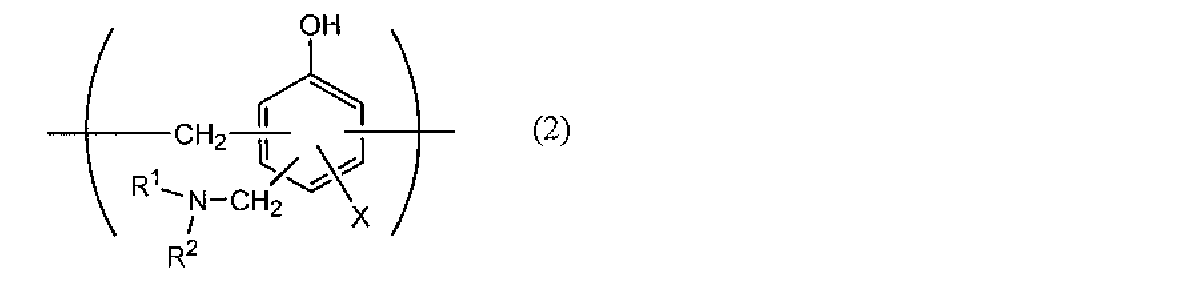

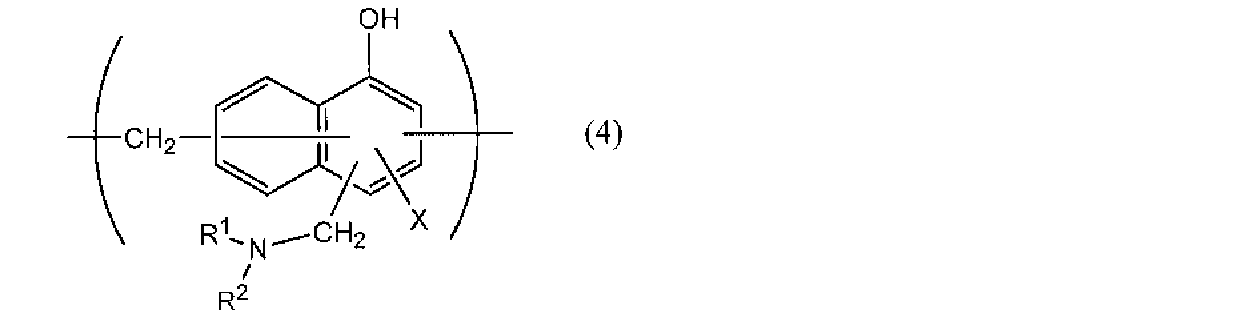
1次イオン:ビスマスクラスターのダブルチャージイオン(Bi3 ++)
1次イオン加速電圧:30 kV
質量範囲(m/z):0~1500
測定範囲:100μm×100μm
スキャン数:16 scan/cycle
ピクセル数(1辺):256 pixel
エッチングイオン:Arガスクラスターイオンビーム(Ar-GCIB)
エッチングイオン加速電圧:5.0 k
本開示の全固体電池用外装材において、積層体Mの熱融着性樹脂層4は、最内層に該当し、全固体電池の組み立て時に熱融着性樹脂層同士が熱融着して電池素子を密封する機能を発揮する層(シーラント層)である。
本開示の全固体電池用外装材において、積層体Mの接着層5は、バリア層3(又は耐腐食性皮膜)と熱融着性樹脂層4を強固に接着させるために、これらの間に必要に応じて設けられる層である。
本開示の外装材は、意匠性、耐傷性、成形性などの向上の少なくとも一つを目的として、必要に応じて、積層体Mの基材層1の上(基材層1のバリア層3とは反対側)に、表面被覆層6を備えていてもよい。表面被覆層6は、外装材を用いて全固体電池を組み立てた時に、外装材の最外層側に位置する層である。
基材層としてポリエチレンテレフタレートフィルム(12μm)/接着剤層(2液硬化型ウレタン接着剤(ポリオール化合物と芳香族イソシアネート化合物)、厚さ3μm)/二軸延伸ナイロンフィルム(厚さ15μm)が順に積層された積層フィルムを用意した。次に、基材層の二軸延伸ナイロンフィルム(厚さ15μm)の上に、アルミニウム箔(JIS H4160:1994 A8021H-O、厚さ40μm、両面にクロム酸を用いた耐腐食性皮膜が形成されている)からなるバリア層をドライラミネート法により積層させた。具体的には、アルミニウム箔の一方面に、2液硬化型ウレタン接着剤(ポリオール化合物と芳香族イソシアネート化合物)を塗布し、アルミニウム箔上に接着剤層(硬化後の厚み3μm)を形成した。次いで、アルミニウム箔上の接着剤層と二軸延伸ナイロンフィルムを積層した後、エージング処理を実施することにより、基材層/接着剤層/バリア層の積層体を作製した。次に、得られた積層体のバリア層の上に、接着層としての無水マレイン酸変性ポリプロピレン(厚さ40μm)と、熱融着性樹脂層としてのポリプロピレン(厚さ40μm)とを共押出しすることにより、バリア層上に接着層/熱融着性樹脂層を積層させた。次に、得られた積層体をエージングし、加熱することにより、ポリエチレンテレフタレートフィルム(12μm)/接着剤層(3μm)/二軸延伸ナイロンフィルム(15μm)/接着剤層(3μm)/バリア層(40μm)/接着層(40μm)/熱融着性樹脂層(40μm)がこの順に積層された積層体M1を得た。なお、絶縁層については、後述の通り、全固体電池を製造する際に、熱融着性樹脂層の内側に配置され、全固体電池用外装材となる。
基材層として、ポリエチレンテレフタレートフィルム(25μm)を用いたこと以外は、製造例1と同様にして、ポリエチレンテレフタレートフィルム(25μm)/接着剤層(3μm)/バリア層(40μm)/接着層(40μm)/熱融着性樹脂層(40μm)がこの順に積層された積層体M2を得た。
熱融着性樹脂層として、ポリブチレンテレフタレートフィルム(25μm)を用い、接着層として2液硬化型ウレタン接着剤(ポリオール化合物と芳香族イソシアネート化合物)を用いたドライラミネート法により、基材層/接着剤層/バリア層の積層体のバリア層の上に、ポリブチレンテレフタレートフィルムを積層したこと以外は、製造例1と同様にして、ポリエチレンテレフタレートフィルム(12μm)/接着剤層(3μm)/二軸延伸ナイロンフィルム(15μm)/接着剤層(3μm)/バリア層(40μm)/接着層(3μm)/熱融着性樹脂層(ポリブチレンテレフタレートフィルム 25μm)がこの順に積層された積層体M3を得た。
[実施例1]
図1の模式図に示すような全固体電池70を作製した。具体的には、露点マイナス50℃以下のドライ環境において、正極集電体32(厚み20μm)としてのアルミニウム合金箔の上に正極活物質層31(厚み100μm)としてのLiCoO2を積層した正極層30と、負極集電体22(厚み10μm)としてのSUS304箔の上に負極活物質層21(厚み120μm)としてのグラファイトを積層した負極層20とを、固体電解質層(Li2S:P2S5=75:25、厚み100μm)を介して積層して単電池50を作製した。なお、全固体電池を平面視した場合に、正極活物質層31は縦30mm×横30mm、正極集電体32は縦40mm×横35mm、負極活物質層21は縦32mm×横32mm、負極集電体22は縦40mm×横35mm、固体電解質層は縦32mm×横32mmである。次に、正極集電体32及び負極集電体22それぞれに端子60を接合した。
製造例1において、外装材(積層体M1)の絶縁層として、ポリエチレンテレフタレートフィルム(厚み5μm、融点265℃、表2の突き刺し強さ)を用いたこと以外は、実施例1と同様にして、全固体電池を作製した。
製造例1において、外装材(積層体M1)の絶縁層として、ポリエチレンテレフタレートフィルム(厚み25μm、融点265℃、表2の突き刺し強さ)を用いたこと以外は、実施例1と同様にして、全固体電池を作製した。
製造例1において、外装材(積層体M1)の絶縁層として、ポリフェニレンサルファイドフィルム(厚み16μm、融点290℃、表2の突き刺し強さ)を用いたこと以外は、実施例1と同様にして、全固体電池を作製した。
製造例1において、外装材(積層体M1)の絶縁層として、ポリエーテルエーテルケトンフィルム(厚み12μm、融点334℃、表2の突き刺し強さ)を用いたこと以外は、実施例1と同様にして、全固体電池を作製した。
製造例1において、外装材(積層体M1)の絶縁層として、ポリエチレンナフタレートフィルム(厚み25μm、融点265℃、表2の突き刺し強さ)を用いたこと以外は、実施例1と同様にして、全固体電池を作製した。
製造例1において、外装材(積層体M1)の絶縁層として、ポリブチレンテレフタレートフィルム(厚み15μm、融点260℃、表2の突き刺し強さ)を用いたこと以外は、実施例1と同様にして、全固体電池を作製した。
製造例1において、外装材(積層体M1)の絶縁層として、ポリブチレンテレフタレートフィルム(厚み25μm、融点260℃、表2の突き刺し強さ)を用いたこと以外は、実施例1と同様にして、全固体電池を作製した。
製造例1で製造した外装材(積層体M1)の代わりに、製造例2で製造した外装材(積層体M2)を用いたこと以外は、実施例1と同様にして、全固体電池を作製した。
製造例1で製造した外装材(積層体M1)の代わりに、製造例3で製造した外装材(積層体M3)を用いたこと以外は、実施例1と同様にして、全固体電池を作製した。実施例10で使用した外装材(積層体M3)は、熱融着性樹脂層としてポリブチレンテレフタレートフィルムが使用されており、厚みが薄い場合にも優れた耐熱性を発揮することができる。すなわち、外装材全体としての厚みを薄くして、優れた耐熱性を発揮することができる。
絶縁層11を用いなかったこと以外は、実施例1と同様にして、全固体電池を作製した。
絶縁層の突刺し強さは、JIS Z1707:1997の規定に準拠した方法により測定した。具体的には、23±2℃、相対湿度(50±5)%の測定環境において、中央に直径15mmの開口部を有する直径115mmの台と押さえ板で試験片を固定し、試験片の主面から、直径1.0mm、先端形状半径0.5mmの半円形の針を毎分50±5mmの速度で突き刺し、針が貫通するまでの最大応力を測定する。試験片の数は5個であり、その平均値を求めた。測定機器として、イマダ社製のZP-50N(フォースゲージ)及びイマダ社製のMX2-500N(測定スタンド)を用いた。
バリア層(アルミニウム合金箔)の表面に形成した耐腐食性皮膜の分析は、次のようにして行った。まず、バリア層と接着層との間を引き剥がした。この際、水や有機溶剤、酸やアルカリの水溶液などを利用せずに、物理的に剥離させた。バリア層と接着層との間を剥離した後には、バリア層の表面に接着層が残存していたため、残存している接着層をAr-GCIBによるエッチングで除去した。このようにして得られたバリア層の表面について、飛行時間型2次イオン質量分析法を用いて、バリア層保護膜の分析を行った。それぞれ、CrPO4 -、PO2 -、及びPO3 -に由来するピーク強度PCrPO4は3.8×10⁴、PPO2は6.3×10⁵、PPO3は1.0×10⁶であった。
測定装置:ION-TOF社製 飛行時間型2次イオン質量分析装置TOF.SIMS5
(測定条件)
1次イオン:ビスマスクラスターのダブルチャージイオン(Bi3 ++)
1次イオン加速電圧:30 kV
質量範囲(m/z):0~1500
測定範囲:100μm×100μm
スキャン数:16 scan/cycle
ピクセル数(1辺):256 pixel
エッチングイオン:Arガスクラスターイオンビーム(Ar-GCIB)
エッチングイオン加速電圧:5.0 kV
上記で得られた各全固体電池について、短絡の抑制効果を次のようにして行った。まず、正極活物質層31と同じサイズ(縦30mm×横30mm)のステンレス鋼板を2枚用意した。次に、全固体電池70を平面視した場合に、ステンレス鋼板が正極活物質層の全面を覆うようにして、全固体電池を上下から挟み込んだ。次に、120℃の環境において、上下のステンレス鋼板に100MPaの荷重を加え、この状態で24時間保持した。次に、全固体電池からステンレス鋼板を外し、正極端子と外装材のアルミニウム合金箔とをテスターに接続して導通を確認した。導通が確認されなかった場合を、短絡が抑制されていると評価(A)し、導通が確認された場合を、短絡が抑制されていないと評価(C)した。結果を表1に示す。
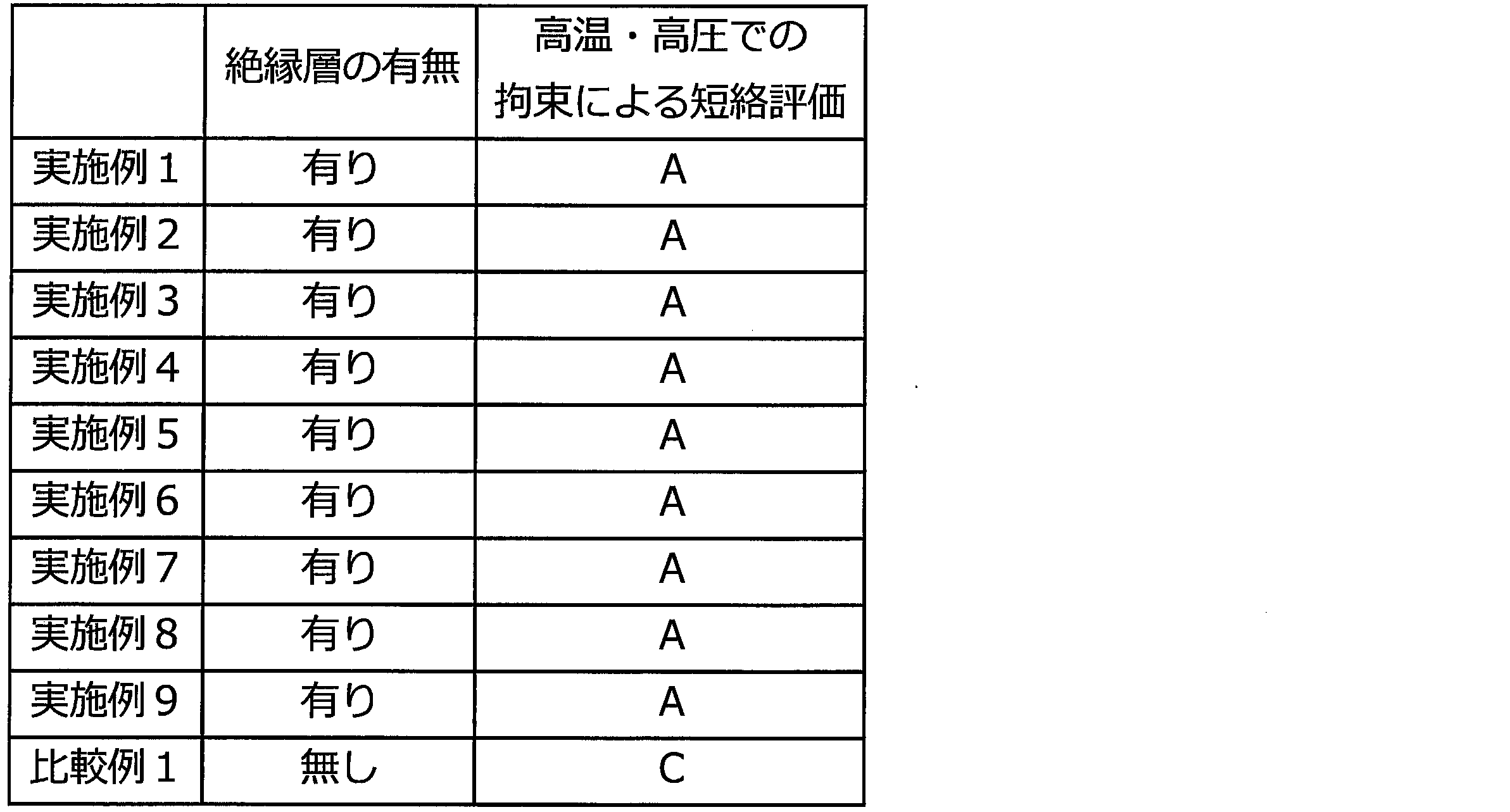
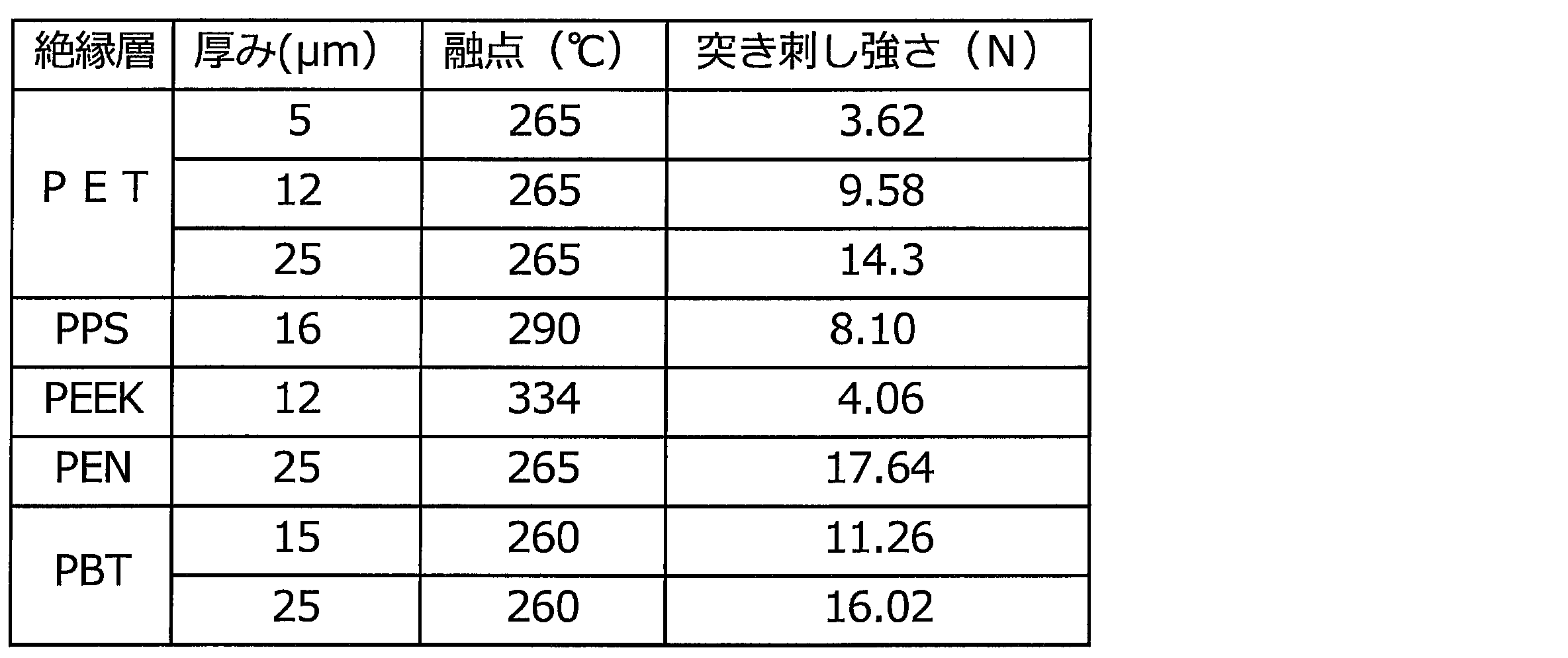
項1. 少なくとも、基材層、バリア層、熱融着性樹脂層をこの順に備える積層体と、前記熱融着性樹脂層の前記基材層側とは反対側に設けられた絶縁層と、から構成された、全固体電池用外装材であり、
正極活物質層と、負極活物質層と、前記正極活物質層及び前記負極活物質層の間に積層された固体電解質層と、を含む単電池を少なくとも含む電池素子を、前記全固体電池用外装材により形成された包装体中に収容した、全固体電池を平面視した場合に、前記絶縁層は、前記全固体電池の前記正極活物質層の全面を覆う位置に配置されている、全固体電池用外装材。
項2. 前記絶縁層の融点が200℃以上である、項1に記載の全固体電池用外装材。
項3. 正極活物質層と、負極活物質層と、前記正極活物質層及び前記負極活物質層の間に積層された固体電解質層と、を含む単電池を少なくとも含む電池素子が、全固体電池用外装材により形成された包装体中に収容された全固体電池であって、
前記全固体電池用外装材は、少なくとも、基材層、バリア層、熱融着性樹脂層をこの順に備える積層体と、前記熱融着性樹脂層の前記基材層側とは反対側に設けられた絶縁層と、から構成されており、
前記全固体電池を平面視した場合に、前記絶縁層は、前記全固体電池の正極活物質層の全面を覆う位置に配置されている、全固体電池。
項4. 正極活物質層と、負極活物質層と、前記正極活物質層及び前記負極活物質層の間に積層された固体電解質層と、を含む単電池を少なくとも含む電池素子を、全固体電池用外装材により形成された包装体中に収容する収容工程を備えており、
前記全固体電池用外装材は、少なくとも、基材層、バリア層、熱融着性樹脂層をこの順に備える積層体と、前記熱融着性樹脂層の前記基材層側とは反対側に設けられた絶縁層と、から構成されており、
前記全固体電池用外装材の前記絶縁層は、前記全固体電池を平面視した場合に、前記全固体電池の前記正極活物質層の全面を覆う位置に配置する、全固体電池の製造方法。
項5. 全固体電池の外装材に設けられる絶縁層を構成する絶縁部材であって、
前記外装材は、少なくとも、基材層、バリア層、熱融着性樹脂層をこの順に備える積層体から構成されており、
前記絶縁層は、前記熱融着性樹脂層の基材層側とは反対側に設けられ、
前記絶縁層は、前記全固体電池を平面視した場合に、前記全固体電池の正極活物質層の全面を覆うようにして設けられる、絶縁部材。
2 接着剤層
3 バリア層
4 熱融着性樹脂層
5 接着層
6 表面被覆層
10 全固体電池用外装材
11 絶縁層
20 負極層
21 負極活物質層
22 負極集電体
30 正極層
31 正極活物質層
32 正極集電体
40 固体電解質層
50 単電池
60 端子
70 全固体電池
M 積層体
Claims (7)
- 少なくとも、基材層、バリア層、熱融着性樹脂層をこの順に備える積層体と、前記熱融着性樹脂層の前記基材層側とは反対側に設けられた絶縁層と、から構成された、全固体電池用外装材であり、
正極活物質層と、負極活物質層と、前記正極活物質層及び前記負極活物質層の間に積層された固体電解質層と、を含む単電池を少なくとも含む電池素子を、前記全固体電池用外装材により形成された包装体中に収容した全固体電池を平面視した場合に、前記絶縁層は、前記全固体電池の前記正極活物質層の全面を覆う位置に配置されている、全固体電池用外装材。 - 前記絶縁層の融点が200℃以上である、請求項1に記載の全固体電池用外装材。
- 前記バリア層の表面に形成された、耐腐食性皮膜を有している、請求項1又は2に記載の全固体電池用外装材。
- 前記耐腐食性皮膜について、飛行時間型2次イオン質量分析法を用いて分析した場合に、CrPO4 -に由来するピーク強度PCrPO4に対するPO3 -に由来するピーク強度PPO3の比PPO3/CrPO4が、6以上120以下の範囲内にある、請求項1~3のいずれかに記載の全固体電池用外装材。
- 前記積層体は、前記熱融着性樹脂層側から前記基材層側に突出した形状の凹部を有しており、
前記凹部に、前記絶縁層が配置されている、請求項1~4のいずれかに記載の全固体電池用外装材。 - 正極活物質層と、負極活物質層と、前記正極活物質層及び前記負極活物質層の間に積層された固体電解質層と、を含む単電池を少なくとも含む電池素子が、全固体電池用外装材により形成された包装体中に収容された全固体電池であって、
前記全固体電池用外装材は、少なくとも、基材層、バリア層、熱融着性樹脂層をこの順に備える積層体と、前記熱融着性樹脂層の前記基材層側とは反対側に設けられた絶縁層と、から構成されており、
前記全固体電池を平面視した場合に、前記絶縁層は、前記全固体電池の正極活物質層の全面を覆う位置に配置されている、全固体電池。 - 正極活物質層と、負極活物質層と、前記正極活物質層及び前記負極活物質層の間に積層された固体電解質層と、を含む単電池を少なくとも含む電池素子を、全固体電池用外装材により形成された包装体中に収容する収容工程を備えており、
前記全固体電池用外装材は、少なくとも、基材層、バリア層、熱融着性樹脂層をこの順に備える積層体と、前記熱融着性樹脂層の前記基材層側とは反対側に設けられた絶縁層と、から構成されており、
前記全固体電池用外装材の前記絶縁層は、前記全固体電池を平面視した場合に、前記全固体電池の前記正極活物質層の全面を覆う位置に配置する、全固体電池の製造方法。
Priority Applications (5)
| Application Number | Priority Date | Filing Date | Title |
|---|---|---|---|
| CN202080020250.5A CN113574712A (zh) | 2019-03-12 | 2020-03-12 | 全固体电池用外包装材料、全固体电池及其制造方法 |
| EP20770379.4A EP3940849A4 (en) | 2019-03-12 | 2020-03-12 | SHEATH MATERIAL FOR A SOLID STATE BATTERY, SOLID STATE BATTERY AND MANUFACTURING METHOD THEREOF |
| JP2020561838A JP6844762B2 (ja) | 2019-03-12 | 2020-03-12 | 全固体電池用外装材、全固体電池及びその製造方法 |
| KR1020217023684A KR20210136977A (ko) | 2019-03-12 | 2020-03-12 | 전고체 전지용 외장재, 전고체 전지 및 그 제조 방법 |
| US17/438,847 US20220059889A1 (en) | 2019-03-12 | 2020-03-12 | Sheathing material for all solid state battery, all solid state battery, and method for manufacturing same |
Applications Claiming Priority (2)
| Application Number | Priority Date | Filing Date | Title |
|---|---|---|---|
| JP2019-044533 | 2019-03-12 | ||
| JP2019044533 | 2019-03-12 |
Publications (1)
| Publication Number | Publication Date |
|---|---|
| WO2020184692A1 true WO2020184692A1 (ja) | 2020-09-17 |
Family
ID=72426117
Family Applications (1)
| Application Number | Title | Priority Date | Filing Date |
|---|---|---|---|
| PCT/JP2020/010969 Ceased WO2020184692A1 (ja) | 2019-03-12 | 2020-03-12 | 全固体電池用外装材、全固体電池及びその製造方法 |
Country Status (6)
| Country | Link |
|---|---|
| US (1) | US20220059889A1 (ja) |
| EP (1) | EP3940849A4 (ja) |
| JP (2) | JP6844762B2 (ja) |
| KR (1) | KR20210136977A (ja) |
| CN (1) | CN113574712A (ja) |
| WO (1) | WO2020184692A1 (ja) |
Cited By (3)
| Publication number | Priority date | Publication date | Assignee | Title |
|---|---|---|---|---|
| WO2022004845A1 (ja) * | 2020-07-03 | 2022-01-06 | マクセル株式会社 | 固体二次電池 |
| EP3982468A1 (de) * | 2020-10-06 | 2022-04-13 | Volkswagen Ag | Batteriezelle mit einem zellverbund und verfahren zu deren herstellung |
| WO2023157391A1 (ja) | 2022-02-16 | 2023-08-24 | 株式会社クレハ | 全固体二次電池用外装材および全固体二次電池 |
Families Citing this family (8)
| Publication number | Priority date | Publication date | Assignee | Title |
|---|---|---|---|---|
| ES2646237B2 (es) | 2017-09-28 | 2018-07-27 | Avanzare Innovacion Tecnologica S.L. | Formulación para el mordentado de materiales poliméricos previo al recubrimiento de los mismos |
| KR20220096936A (ko) * | 2020-12-31 | 2022-07-07 | 삼성전기주식회사 | 전고체 전지 |
| US20240283060A1 (en) * | 2021-06-17 | 2024-08-22 | Vehicle Energy Japan Inc. | Solid electrolyte battery, manufacturing method for solid electrolyte battery, and transportation apparatus |
| JP7311073B1 (ja) * | 2021-09-15 | 2023-07-19 | 大日本印刷株式会社 | 蓄電デバイス用外装材、その製造方法、フィルム、及び蓄電デバイス |
| KR20230053455A (ko) | 2021-10-14 | 2023-04-21 | 주식회사 엘지에너지솔루션 | 버튼형 이차전지 |
| CN119452498A (zh) * | 2022-07-11 | 2025-02-14 | 株式会社村田制作所 | 经封装的固体电池 |
| KR20240153656A (ko) * | 2023-04-17 | 2024-10-24 | 삼성전기주식회사 | 전고체 전지 |
| KR20260010808A (ko) * | 2024-07-15 | 2026-01-22 | 삼성에스디아이 주식회사 | 기능층을 포함하는 파우치 필름, 이를 포함하는 전고체 전지, 및 이의 제조방법 |
Citations (5)
| Publication number | Priority date | Publication date | Assignee | Title |
|---|---|---|---|---|
| JP2008103245A (ja) * | 2006-10-20 | 2008-05-01 | Idemitsu Kosan Co Ltd | 硫化物系二次電池 |
| JP2008140633A (ja) * | 2006-11-30 | 2008-06-19 | Nissan Motor Co Ltd | 双極型二次電池のモジュール構造 |
| WO2011052094A1 (ja) * | 2009-11-02 | 2011-05-05 | トヨタ自動車株式会社 | 固体電解質電池の製造方法 |
| JP2012142228A (ja) | 2011-01-05 | 2012-07-26 | Toyota Motor Corp | 電極体の製造方法、及び電池の製造方法 |
| WO2019017457A1 (ja) * | 2017-07-19 | 2019-01-24 | 大日本印刷株式会社 | 電池用包装材料、電池用包装材料の製造方法、及び電池 |
Family Cites Families (9)
| Publication number | Priority date | Publication date | Assignee | Title |
|---|---|---|---|---|
| EP1102336B1 (en) * | 1999-04-08 | 2007-09-12 | Dai Nippon Printing Co., Ltd. | Lithium battery packaging laminated multilayer structure |
| JP4283598B2 (ja) * | 2003-05-29 | 2009-06-24 | Tdk株式会社 | 非水電解質溶液及びリチウムイオン2次電池 |
| JP4920957B2 (ja) * | 2005-11-21 | 2012-04-18 | Necエナジーデバイス株式会社 | 積層型リチウムイオンポリマー電池 |
| JP6032786B2 (ja) * | 2010-12-24 | 2016-11-30 | 興人フィルム&ケミカルズ株式会社 | 二軸延伸ポリブチレンテレフタレートフィルムを含む冷間成形用電池ケース包材 |
| KR101342646B1 (ko) * | 2012-03-28 | 2013-12-17 | (주)열린기술 | 래핑 전극군 및 그 제조방법 |
| US10547033B2 (en) * | 2015-03-27 | 2020-01-28 | Dai Nippon Printing Co., Ltd. | Packaging material for batteries, and battery |
| JP7244206B2 (ja) * | 2016-01-29 | 2023-03-22 | 大日本印刷株式会社 | 包装材料及び電池 |
| CN108886115B (zh) * | 2016-04-06 | 2022-02-18 | 大日本印刷株式会社 | 电池用包装材料、其制造方法和电池 |
| JP6900648B2 (ja) * | 2016-10-05 | 2021-07-07 | 大日本印刷株式会社 | 電池用包装材料、その製造方法、及び電池 |
-
2020
- 2020-03-12 EP EP20770379.4A patent/EP3940849A4/en active Pending
- 2020-03-12 KR KR1020217023684A patent/KR20210136977A/ko not_active Ceased
- 2020-03-12 JP JP2020561838A patent/JP6844762B2/ja active Active
- 2020-03-12 US US17/438,847 patent/US20220059889A1/en active Pending
- 2020-03-12 CN CN202080020250.5A patent/CN113574712A/zh active Pending
- 2020-03-12 WO PCT/JP2020/010969 patent/WO2020184692A1/ja not_active Ceased
-
2021
- 2021-02-25 JP JP2021029131A patent/JP7548058B2/ja active Active
Patent Citations (5)
| Publication number | Priority date | Publication date | Assignee | Title |
|---|---|---|---|---|
| JP2008103245A (ja) * | 2006-10-20 | 2008-05-01 | Idemitsu Kosan Co Ltd | 硫化物系二次電池 |
| JP2008140633A (ja) * | 2006-11-30 | 2008-06-19 | Nissan Motor Co Ltd | 双極型二次電池のモジュール構造 |
| WO2011052094A1 (ja) * | 2009-11-02 | 2011-05-05 | トヨタ自動車株式会社 | 固体電解質電池の製造方法 |
| JP2012142228A (ja) | 2011-01-05 | 2012-07-26 | Toyota Motor Corp | 電極体の製造方法、及び電池の製造方法 |
| WO2019017457A1 (ja) * | 2017-07-19 | 2019-01-24 | 大日本印刷株式会社 | 電池用包装材料、電池用包装材料の製造方法、及び電池 |
Non-Patent Citations (1)
| Title |
|---|
| See also references of EP3940849A4 |
Cited By (3)
| Publication number | Priority date | Publication date | Assignee | Title |
|---|---|---|---|---|
| WO2022004845A1 (ja) * | 2020-07-03 | 2022-01-06 | マクセル株式会社 | 固体二次電池 |
| EP3982468A1 (de) * | 2020-10-06 | 2022-04-13 | Volkswagen Ag | Batteriezelle mit einem zellverbund und verfahren zu deren herstellung |
| WO2023157391A1 (ja) | 2022-02-16 | 2023-08-24 | 株式会社クレハ | 全固体二次電池用外装材および全固体二次電池 |
Also Published As
| Publication number | Publication date |
|---|---|
| KR20210136977A (ko) | 2021-11-17 |
| JP7548058B2 (ja) | 2024-09-10 |
| JP2021099996A (ja) | 2021-07-01 |
| US20220059889A1 (en) | 2022-02-24 |
| EP3940849A1 (en) | 2022-01-19 |
| JP6844762B2 (ja) | 2021-03-17 |
| CN113574712A (zh) | 2021-10-29 |
| EP3940849A4 (en) | 2022-12-07 |
| JPWO2020184692A1 (ja) | 2021-03-18 |
Similar Documents
| Publication | Publication Date | Title |
|---|---|---|
| JP6844762B2 (ja) | 全固体電池用外装材、全固体電池及びその製造方法 | |
| JP6777276B1 (ja) | 全固体電池用外装材、その製造方法、及び全固体電池 | |
| JP6756421B1 (ja) | 全固体電池及びその製造方法 | |
| JP2020188020A (ja) | 全固体電池用外装材、その製造方法、及び全固体電池 | |
| JP7056810B1 (ja) | 全固体電池用外装材、その製造方法、及び全固体電池 | |
| JP7018166B1 (ja) | 全固体電池用外装材、その製造方法、及び全固体電池 | |
| US12438217B2 (en) | Outer package material for all-solid-state batteries, method for producing same and all-solid-state battery | |
| JP7020598B2 (ja) | 全固体電池用外装材、その製造方法、及び全固体電池 | |
| WO2021182624A1 (ja) | 全固体電池用外装材、その製造方法、及び全固体電池 | |
| KR102954803B1 (ko) | 전고체 전지용 외장재, 그 제조 방법, 및 전고체 전지 |
Legal Events
| Date | Code | Title | Description |
|---|---|---|---|
| 121 | Ep: the epo has been informed by wipo that ep was designated in this application |
Ref document number: 20770379 Country of ref document: EP Kind code of ref document: A1 |
|
| ENP | Entry into the national phase |
Ref document number: 2020561838 Country of ref document: JP Kind code of ref document: A |
|
| NENP | Non-entry into the national phase |
Ref country code: DE |
|
| ENP | Entry into the national phase |
Ref document number: 2020770379 Country of ref document: EP Effective date: 20211012 |
|
| WWR | Wipo information: refused in national office |
Ref document number: 1020217023684 Country of ref document: KR |