WO2020184581A1 - 車両制御装置 - Google Patents
車両制御装置 Download PDFInfo
- Publication number
- WO2020184581A1 WO2020184581A1 PCT/JP2020/010382 JP2020010382W WO2020184581A1 WO 2020184581 A1 WO2020184581 A1 WO 2020184581A1 JP 2020010382 W JP2020010382 W JP 2020010382W WO 2020184581 A1 WO2020184581 A1 WO 2020184581A1
- Authority
- WO
- WIPO (PCT)
- Prior art keywords
- driver
- vehicle
- concentration
- control device
- control unit
- Prior art date
- Legal status (The legal status is an assumption and is not a legal conclusion. Google has not performed a legal analysis and makes no representation as to the accuracy of the status listed.)
- Ceased
Links
Images

Classifications
-
- B—PERFORMING OPERATIONS; TRANSPORTING
- B60—VEHICLES IN GENERAL
- B60W—CONJOINT CONTROL OF VEHICLE SUB-UNITS OF DIFFERENT TYPE OR DIFFERENT FUNCTION; CONTROL SYSTEMS SPECIALLY ADAPTED FOR HYBRID VEHICLES; ROAD VEHICLE DRIVE CONTROL SYSTEMS FOR PURPOSES NOT RELATED TO THE CONTROL OF A PARTICULAR SUB-UNIT
- B60W40/00—Estimation or calculation of non-directly measurable driving parameters for road vehicle drive control systems not related to the control of a particular sub unit, e.g. by using mathematical models
- B60W40/08—Estimation or calculation of non-directly measurable driving parameters for road vehicle drive control systems not related to the control of a particular sub unit, e.g. by using mathematical models related to drivers or passengers
-
- G—PHYSICS
- G08—SIGNALLING
- G08G—TRAFFIC CONTROL SYSTEMS
- G08G1/00—Traffic control systems for road vehicles
- G08G1/16—Anti-collision systems
Definitions
- the present disclosure relates to a vehicle control device that urges the driver to awaken when the driver's concentration is reduced.
- DMS inattentive driving or drowsy driving
- the present disclosure provides a vehicle control device that encourages the driver to awaken when the driver's concentration is reduced.
- the control unit includes a determination unit that determines whether or not the concentration has decreased, and a control unit that opens the vehicle window when the determination unit determines that the driver's concentration has decreased. The opening of the vehicle window is adjusted based on one or more of the parameters of temperature, outside temperature, and driving history.
- the determination unit determines the degree of decrease in the driver's concentration based on the state of the driver monitored by the monitoring unit, and the control unit determines the degree of decrease in the driver's concentration determined by the determination unit.
- the opening degree of the vehicle window may be adjusted based on the degree.
- the control unit may increase the opening degree of the vehicle window as the degree of decrease in the driver's concentration increases.
- the control unit may open a plurality of vehicle windows when the determination unit determines that the driver's concentration is reduced.
- the control unit may increase the opening degree of the vehicle window as the vehicle speed becomes slower.
- the control unit may increase the opening degree of the vehicle window as the difference between the temperature inside the vehicle and the temperature outside the vehicle becomes smaller.
- the control unit estimates the driver's sleep time zone based on the driving history, and the closer the current time is to the driver's sleep time zone, the larger the opening degree of the vehicle window may be.
- FIG. 1 is a diagram illustrating a configuration of a vehicle control device according to an embodiment.
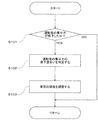
- FIG. 2 is a diagram illustrating the operation of the vehicle control device according to the embodiment.
- the vehicle control device 100 urges the driver to awaken when the driver's concentration is reduced, and is monitored by the monitoring unit 101 for monitoring the driver's condition and the monitoring unit 101.
- a determination unit 102 that determines whether or not the driver's concentration has decreased based on the driver's condition, and a vehicle window (so-called power) when the determination unit 102 determines that the driver's concentration has decreased.
- a control unit 103 for opening a window) is provided.
- the vehicle control device 100 is realized by, for example, an electronic control device.
- the monitoring unit 101 can monitor the driver's condition by, for example, monitoring the direction of the driver's line of sight, the movement of the driver's eyelids, and the behavior of the vehicle.
- the direction of the driver's line of sight and the movement of the driver's eyelids can be monitored through images taken by the camera.
- the behavior of the vehicle can be monitored through the steering angle detected by the steering angle sensor and the vehicle speed detected by the vehicle speed sensor.
- the determination unit 102 determines that the driver's concentration has decreased when, for example, the direction of the driver's line of sight is unnatural, the movement of the driver's eyelids is unnatural, or the behavior of the vehicle is unnatural. You can do it.
- the time when the direction of the driver's line of sight is unnatural is, for example, when the direction of the driver's line of sight deviates from the traveling direction of the vehicle for a predetermined time.
- the unnatural movement of the driver's eyelids is, for example, when the driver's eyelids are closed for a predetermined time. Further, when the behavior of the vehicle is unnatural, for example, the fluctuation of the steering angle and the variation of the vehicle speed are larger than a predetermined value.
- the determination unit 102 determines the degree of decrease in the driver's concentration based on the state of the driver monitored by the monitoring unit 101. For example, the longer the driver's line of sight deviates from the direction of travel of the vehicle, the longer the driver's eyelids are closed, and the greater the fluctuation of the steering angle and the greater the variation in vehicle speed, the more the driver. It can be determined that the degree of decrease in concentration is large.
- the criteria for determining that the driver's concentration has decreased and the criteria for determining the degree of decrease in the driver's concentration are experimentally and empirically determined by the determination unit 102.
- the control unit 103 increases the opening degree of the vehicle window as the degree of decrease in the driver's concentration increases. As the opening of the vehicle window is increased, the outside air and environmental noise that enter the vehicle also increase. Therefore, the larger the opening of the vehicle window, the stronger the driver's awakening can be urged.
- control unit 103 opens a plurality of vehicle windows when the determination unit 102 determines that the driver's concentration is reduced. Since it is possible to promote ventilation inside the vehicle by opening multiple vehicle windows, it is possible to strongly encourage the driver to awaken. For example, it is possible to intentionally create a path for the outside air by opening the vehicle window on the passenger side or the rear seat side in addition to the vehicle window on the driver's seat side.
- control unit 103 adjusts the opening degree of the vehicle window based on any one or more parameters of the vehicle speed, the temperature inside the vehicle, the temperature outside the vehicle, and the driving history.
- control unit 103 increases the opening degree of the vehicle window as the vehicle speed becomes slower.
- the vehicle speed is slow, it is difficult for the outside air to enter the vehicle, but by increasing the opening of the vehicle window, the outside air that enters the vehicle can be increased, so that the driver can be effectively awakened.
- control unit 103 increases the opening degree of the vehicle window as the difference between the temperature inside the vehicle and the temperature outside the vehicle becomes smaller. If the difference between the inside temperature and the outside temperature is small, it is difficult for the driver to feel the outside air, but by increasing the opening of the car window, the outside air entering the car can be increased and the driver can easily feel the outside air. , It is possible to effectively encourage the driver to awaken.
- the temperature inside the vehicle can be detected by a temperature sensor installed inside the vehicle.
- the temperature outside the vehicle can be detected by a temperature sensor installed outside the vehicle.
- the control unit 103 estimates the driver's sleep time zone based on the driving history, and the closer the current time is to the driver's sleep time zone, the larger the opening of the vehicle window. If the current time is close to the driver's sleep time, it is highly possible that the driver is very drowsy. Therefore, by increasing the opening of the vehicle window, the outside air entering the vehicle is increased and the driver is awakened. Strongly urge.
- the operation history is, for example, a record of turning on and off the engine.
- the driver's sleep time zone can be estimated, for example, by estimating the driver's life rhythm based on the driving history in which the on / off of the engine is recorded, and based on the life rhythm. In general, strong drowsiness is likely to occur at night, so the opening of the vehicle window may be increased at night than during the day.
- the determination unit 102 determines whether or not the driver's concentration has decreased based on the state of the driver monitored by the monitoring unit 101. .. Specifically, the determination unit 102 concentrates the driver when, for example, the direction of the driver's line of sight is unnatural, the movement of the driver's eyelids is unnatural, and the behavior of the vehicle is unnatural. Judge that the force has decreased.
- step S101 If the determination unit 102 does not determine that the driver's concentration has decreased, the process returns to step S101, and if it is determined that the driver's concentration has decreased, the process proceeds to step S102.
- step S102 the determination unit 102 determines the degree of decrease in the driver's concentration. Specifically, the determination unit 102 determines, for example, that the longer the driver's line of sight deviates from the traveling direction of the vehicle, the longer the driver's eyelids are closed, and the steering angle. It is determined that the greater the fluctuation in vehicle speed, the greater the degree of decrease in the driver's concentration.
- the control unit 103 opens at least one opening of the vehicle window based on the degree of decrease in the driver's concentration determined by the determination unit 102. Specifically, the control unit 103 increases the opening degree of the vehicle window as the degree of decrease in the driver's concentration increases.
- step S103 in addition to or in place of the degree of decrease in the driver's concentration determined by the determination unit 102, the vehicle window is based on any one or more parameters of vehicle speed, vehicle interior temperature, vehicle exterior temperature, and driving history. You can also adjust the opening.
- the vehicle control device 100 it is possible to urge the driver to awaken when the driver's concentration is reduced.
Landscapes
- Engineering & Computer Science (AREA)
- Physics & Mathematics (AREA)
- General Physics & Mathematics (AREA)
- Automation & Control Theory (AREA)
- Mathematical Physics (AREA)
- Transportation (AREA)
- Mechanical Engineering (AREA)
- Traffic Control Systems (AREA)
- Control Of Driving Devices And Active Controlling Of Vehicle (AREA)
- Steering Control In Accordance With Driving Conditions (AREA)
Abstract
運転者の集中力が低下した時に運転者に覚醒を促す車両制御装置であって、運転者の状態を監視する監視部と、監視部で監視された運転者の状態を基に運転者の集中力が低下したか否かを判定する判定部と、判定部で運転者の集中力が低下したと判定された時に車窓を開く制御部と、を備え、制御部は、車速、車内温度、車外温度、及び運転履歴の何れか一つ以上のパラメータを基に車窓の開度を調整する。
Description
本開示は、運転者の集中力が低下した時に運転者に覚醒を促す車両制御装置に関する。
カメラ等で運転者の状態を監視し、脇見運転や居眠り運転を検出した時に運転者に注意を促す技術(DMS;Driver Monitoring System)が有る。
運転者の集中力が低下した時(脇見運転や居眠り運転を検出した時)は、運転者に注意を促すだけでなく、運転者に覚醒を促す事が望ましい。
本開示は、運転者の集中力が低下した時に運転者に覚醒を促す車両制御装置を提供する。
運転者の集中力が低下した時に運転者に覚醒を促す車両制御装置であって、運転者の状態を監視する監視部と、前記監視部で監視された運転者の状態を基に運転者の集中力が低下したか否かを判定する判定部と、前記判定部で運転者の集中力が低下したと判定された時に車窓を開く制御部と、を備え、前記制御部は、車速、車内温度、車外温度、及び運転履歴の何れか一つ以上のパラメータを基に車窓の開度を調整する。
前記判定部は、前記監視部で監視された運転者の状態を基に運転者の集中力の低下度合いを判定し、前記制御部は、前記判定部で判定された運転者の集中力の低下度合いを基に車窓の開度を調整してもよい。
前記制御部は、運転者の集中力の低下度合いが高い程、車窓の開度を大きくしてもよい。
前記制御部は、前記判定部で運転者の集中力が低下したと判定された時に複数の車窓を開いてもよい。
前記制御部は、車速が遅い程、車窓の開度を大きくしてもよい。
前記制御部は、車内温度と車外温度との差が小さい程、車窓の開度を大きくしてもよい。
前記制御部は、運転履歴を基に運転者の睡眠時間帯を推定し、現在時刻が運転者の睡眠時間帯に近い程、車窓の開度を大きくしてもよい。
運転者の集中力が低下した時に運転者に覚醒を促す事が出来る。
以下、実施の形態を添付図面に順って説明する。
図1に示す様に、車両制御装置100は、運転者の集中力が低下した時に運転者に覚醒を促すものであって、運転者の状態を監視する監視部101と、監視部101で監視された運転者の状態を基に運転者の集中力が低下したか否かを判定する判定部102と、判定部102で運転者の集中力が低下したと判定された時に車窓(所謂、パワーウィンドウ)を開く制御部103と、を備える。また、車両制御装置100は、例えば、電子制御装置で実現される。
監視部101は、例えば、運転者の視線の向き、運転者の瞼の動き、及び車両の挙動を監視する事で運転者の状態を監視する事が出来る。運転者の視線の向きと運転者の瞼の動きは、カメラで撮影された映像を通じて監視する事が出来る。車両の挙動は、操舵角センサで検出された操舵角や車速センサで検出された車速を通じて監視する事が出来る。
判定部102は、例えば、運転者の視線の向きが不自然な時、運転者の瞼の動きが不自然な時、及び車両の挙動が不自然な時に運転者の集中力が低下したと判定する事が出来る。運転者の視線の向きが不自然な時とは、例えば、運転者の視線の向きが所定時間に亘って車両の進行方向から逸れている時である。また、運転者の瞼の動きが不自然な時とは、例えば、運転者の瞼が所定時間に亘って閉じている時である。更に、車両の挙動が不自然な時とは、例えば、操舵角のふらつきや車速のばらつきが所定値以上に大きい時である。
また、判定部102は、監視部101で監視された運転者の状態を基に運転者の集中力の低下度合いを判定する。例えば、運転者の視線の向きが車両の進行方向から逸れている時間が長い程、運転者の瞼が閉じている時間が長い程、及び操舵角のふらつきや車速のばらつきが大きい程、運転者の集中力の低下度合いが大きいと判定する事が出来る。
尚、判定部102が運転者の集中力が低下したと判定する基準や運転者の集中力の低下度合いを判定する基準は、実験的及び経験的に決定される。
制御部103は、運転者の集中力の低下度合いが高い程、車窓の開度を大きくする。車窓の開度を大きくするに従って車内に入り込む外気や環境音も増加する為、車窓の開度を大きくする程、運転者に覚醒を強く促す事が出来る。
また、制御部103は、判定部102で運転者の集中力が低下したと判定された時に複数の車窓を開く。複数の車窓を開く事で車内の換気を促進する事が出来る為、運転者に覚醒を強く促す事が出来る。例えば、運転席側の車窓に加え助手席側や後席側の車窓を開く事で外気の通り道を意図的に作り出す事が出来る。
更に、制御部103は、車速、車内温度、車外温度、及び運転履歴の何れか一つ以上のパラメータを基に車窓の開度を調整する。
例えば、制御部103は、車速が遅い程、車窓の開度を大きくする。車速が遅いと、外気が車内に入り込み難いが、車窓の開度を大きくする事で車内に入り込む外気を増加させる事が出来る為、運転者に覚醒を効果的に促す事が出来る。
また、制御部103は、車内温度と車外温度との差が小さい程、車窓の開度を大きくする。車内温度と車外温度との差が小さいと、運転者が外気を感じ取り難いが、車窓の開度を大きくする事で車内に入り込む外気を増加させる事が出来ると共に運転者が外気を感じ取り易く成る為、運転者に覚醒を効果的に促す事が出来る。車内温度は、車内に設置された温度センサで検出する事が出来る。車外温度は、車外に設置された温度センサで検出する事が出来る。
更に、制御部103は、運転履歴を基に運転者の睡眠時間帯を推定し、現在時刻が運転者の睡眠時間帯に近い程、車窓の開度を大きくする。現在時刻が運転者の睡眠時間帯に近いと、運転者が強い眠気を催している可能性が高い為、車窓の開度を大きくする事で車内に入り込む外気を増加させると共に運転者に覚醒を強く促す。運転履歴は、例えば、エンジンのオンオフが記録されたものである。運転者の睡眠時間帯は、例えば、エンジンのオンオフが記録された運転履歴を基に運転者の生活リズムを推定し、生活リズムを基に推定する事が出来る。一般的に夜は強い眠気を催し易い為、昼間よりも夜間の場合に車窓の開度を大きくしても良い。
図2に示す様に、車両制御装置100では、ステップS101で、判定部102が、監視部101で監視された運転者の状態を基に運転者の集中力が低下したか否かを判定する。具体的に言えば、判定部102は、例えば、運転者の視線の向きが不自然な時、運転者の瞼の動きが不自然な時、及び車両の挙動が不自然な時に運転者の集中力が低下したと判定する。
判定部102で運転者の集中力が低下したと判定されなかった場合は、ステップS101に戻り、運転者の集中力が低下したと判定された場合は、ステップS102に進む。
ステップS102では、判定部102が運転者の集中力の低下度合いを判定する。具体的に言えば、判定部102は、例えば、運転者の視線の向きが車両の進行方向から逸れている時間が長い程、運転者の瞼が閉じている時間が長い程、及び操舵角や車速のふらつきが大きい程、運転者の集中力の低下度合いが大きいと判定する。
次のステップS103では、制御部103が、判定部102で判定された運転者の集中力の低下度合いを基に少なくとも一つの車窓の開度を開く。具体的に言えば、制御部103は、運転者の集中力の低下度合いが高い程、車窓の開度を大きくする。
尚、ステップS103では、判定部102で判定された運転者の集中力の低下度合いに加え又は代え、車速、車内温度、車外温度、及び運転履歴の何れか一つ以上のパラメータを基に車窓の開度を調整する事も出来る。
以上に説明した様に、車両制御装置100によれば、運転者の集中力が低下した時に運転者に覚醒を促す事が出来る。
本出願は、2019年3月13日付で出願された日本国特許出願(特願2019-045921)に基づくものであり、その内容はここに参照として取り込まれる。
本開示によれば、運転者の集中力が低下した時に運転者に覚醒を促す車両制御装置を提供することができる。
100 車両制御装置
101 監視部
102 判定部
103 制御部
101 監視部
102 判定部
103 制御部
Claims (7)
- 運転者の集中力が低下した時に運転者に覚醒を促す車両制御装置であって、
運転者の状態を監視する監視部と、
前記監視部で監視された運転者の状態を基に運転者の集中力が低下したか否かを判定する判定部と、
前記判定部で運転者の集中力が低下したと判定された時に車窓を開く制御部と、
を備え、
前記制御部は、車速、車内温度、車外温度、及び運転履歴の何れか一つ以上のパラメータを基に車窓の開度を調整する
車両制御装置。 - 前記判定部は、前記監視部で監視された運転者の状態を基に運転者の集中力の低下度合いを判定し、
前記制御部は、前記判定部で判定された運転者の集中力の低下度合いを基に車窓の開度を調整する
請求項1に記載の車両制御装置。 - 前記制御部は、運転者の集中力の低下度合いが高い程、車窓の開度を大きくする
請求項2に記載の車両制御装置。 - 前記制御部は、前記判定部で運転者の集中力が低下したと判定された時に複数の車窓を開く
請求項1乃至3の何れか一項に記載の車両制御装置。 - 前記制御部は、車速が遅い程、車窓の開度を大きくする
請求項1乃至4の何れか一項に記載の車両制御装置。 - 前記制御部は、車内温度と車外温度との差が小さい程、車窓の開度を大きくする
請求項1乃至5の何れか一項に記載の車両制御装置。 - 前記制御部は、運転履歴を基に運転者の睡眠時間帯を推定し、現在時刻が運転者の睡眠時間帯に近い程、車窓の開度を大きくする
請求項1乃至6の何れか一項に記載の車両制御装置。
Applications Claiming Priority (2)
| Application Number | Priority Date | Filing Date | Title |
|---|---|---|---|
| JP2019045921A JP2020149319A (ja) | 2019-03-13 | 2019-03-13 | 車両制御装置 |
| JP2019-045921 | 2019-03-13 |
Publications (1)
| Publication Number | Publication Date |
|---|---|
| WO2020184581A1 true WO2020184581A1 (ja) | 2020-09-17 |
Family
ID=72427042
Family Applications (1)
| Application Number | Title | Priority Date | Filing Date |
|---|---|---|---|
| PCT/JP2020/010382 Ceased WO2020184581A1 (ja) | 2019-03-13 | 2020-03-10 | 車両制御装置 |
Country Status (2)
| Country | Link |
|---|---|
| JP (1) | JP2020149319A (ja) |
| WO (1) | WO2020184581A1 (ja) |
Cited By (2)
| Publication number | Priority date | Publication date | Assignee | Title |
|---|---|---|---|---|
| JP2024063481A (ja) * | 2022-10-26 | 2024-05-13 | パナソニックオートモーティブシステムズ株式会社 | 推定装置、推定方法及びプログラム |
| US12633141B2 (en) | 2022-10-26 | 2026-05-19 | Panasonic Automotive Systems Co., Ltd. | Prediction device and method for driver microsleep based on eye closure duration |
Citations (6)
| Publication number | Priority date | Publication date | Assignee | Title |
|---|---|---|---|---|
| JPH06107032A (ja) * | 1992-09-30 | 1994-04-19 | Mazda Motor Corp | 車両用制御装置 |
| JP2002114064A (ja) * | 2000-10-10 | 2002-04-16 | Johnson Controls Automotive Systems Corp | シートスライド装置 |
| JP2002213141A (ja) * | 2001-01-18 | 2002-07-31 | Mazda Motor Corp | 自動車の自動開閉窓制御装置 |
| JP2008197821A (ja) * | 2007-02-09 | 2008-08-28 | Toyota Motor Corp | 居眠り警告装置、居眠り警告装置の警告方法 |
| WO2010032491A1 (ja) * | 2008-09-19 | 2010-03-25 | パナソニック株式会社 | 注意散漫検出装置、注意散漫検出方法およびコンピュータプログラム |
| JP2013191216A (ja) * | 2007-12-28 | 2013-09-26 | Panasonic Corp | 通信装置 |
-
2019
- 2019-03-13 JP JP2019045921A patent/JP2020149319A/ja active Pending
-
2020
- 2020-03-10 WO PCT/JP2020/010382 patent/WO2020184581A1/ja not_active Ceased
Patent Citations (6)
| Publication number | Priority date | Publication date | Assignee | Title |
|---|---|---|---|---|
| JPH06107032A (ja) * | 1992-09-30 | 1994-04-19 | Mazda Motor Corp | 車両用制御装置 |
| JP2002114064A (ja) * | 2000-10-10 | 2002-04-16 | Johnson Controls Automotive Systems Corp | シートスライド装置 |
| JP2002213141A (ja) * | 2001-01-18 | 2002-07-31 | Mazda Motor Corp | 自動車の自動開閉窓制御装置 |
| JP2008197821A (ja) * | 2007-02-09 | 2008-08-28 | Toyota Motor Corp | 居眠り警告装置、居眠り警告装置の警告方法 |
| JP2013191216A (ja) * | 2007-12-28 | 2013-09-26 | Panasonic Corp | 通信装置 |
| WO2010032491A1 (ja) * | 2008-09-19 | 2010-03-25 | パナソニック株式会社 | 注意散漫検出装置、注意散漫検出方法およびコンピュータプログラム |
Cited By (2)
| Publication number | Priority date | Publication date | Assignee | Title |
|---|---|---|---|---|
| JP2024063481A (ja) * | 2022-10-26 | 2024-05-13 | パナソニックオートモーティブシステムズ株式会社 | 推定装置、推定方法及びプログラム |
| US12633141B2 (en) | 2022-10-26 | 2026-05-19 | Panasonic Automotive Systems Co., Ltd. | Prediction device and method for driver microsleep based on eye closure duration |
Also Published As
| Publication number | Publication date |
|---|---|
| JP2020149319A (ja) | 2020-09-17 |
Similar Documents
| Publication | Publication Date | Title |
|---|---|---|
| US10875536B2 (en) | Coordinated vehicle response system and method for driver behavior | |
| JP6627811B2 (ja) | 集中度判定装置、集中度判定方法及び集中度判定のためのプログラム | |
| JP6410766B2 (ja) | 運転者の挙動に応答するシステムおよび方法 | |
| US20200216095A1 (en) | Vehicle driving assistance apparatus | |
| US8983736B2 (en) | Grille shutter control device | |
| JP4973551B2 (ja) | 運転者状態判定装置 | |
| US20130194099A1 (en) | Driving assistance apparatus | |
| JPH10315800A (ja) | 車両の走行補助装置 | |
| CN110254373A (zh) | 清醒度保持装置 | |
| JP7251524B2 (ja) | 眠気兆候通知システム、眠気兆候通知方法、及び眠気兆候通知プログラム | |
| WO2014149657A1 (en) | Coordinated vehicle response system and method for driver behavior | |
| CN107209995A (zh) | 驾驶辅助装置、方法及程序 | |
| JP6730096B2 (ja) | 乗員状態監視装置 | |
| JP2008197821A (ja) | 居眠り警告装置、居眠り警告装置の警告方法 | |
| JP4967559B2 (ja) | 居眠り運転防止装置及びプログラム | |
| JP3465590B2 (ja) | 車両走行支援装置 | |
| JP2020149319A (ja) | 車両制御装置 | |
| JP2020013554A (ja) | 覚醒度判定装置 | |
| JP3473109B2 (ja) | 自動車の走行状態判定装置 | |
| JP2005186657A (ja) | 居眠り運転予防装置 | |
| KR20180126119A (ko) | 도어 개방 경고 시스템 및 그 제어방법 | |
| JP2009120013A (ja) | 車両用機器制御装置 | |
| JPH10278541A (ja) | 車両用居眠り防止装置 | |
| JP2008184047A (ja) | 飲酒運転抑止システム | |
| JP4058803B2 (ja) | 車外音情報導入支援装置 |
Legal Events
| Date | Code | Title | Description |
|---|---|---|---|
| 121 | Ep: the epo has been informed by wipo that ep was designated in this application |
Ref document number: 20770452 Country of ref document: EP Kind code of ref document: A1 |
|
| NENP | Non-entry into the national phase |
Ref country code: DE |
|
| 122 | Ep: pct application non-entry in european phase |
Ref document number: 20770452 Country of ref document: EP Kind code of ref document: A1 |