WO2020162506A1 - 抗ピリング紡績糸、その製法、及び抗ピリング紡績糸により構成される抗ピリング織編物 - Google Patents
抗ピリング紡績糸、その製法、及び抗ピリング紡績糸により構成される抗ピリング織編物 Download PDFInfo
- Publication number
- WO2020162506A1 WO2020162506A1 PCT/JP2020/004410 JP2020004410W WO2020162506A1 WO 2020162506 A1 WO2020162506 A1 WO 2020162506A1 JP 2020004410 W JP2020004410 W JP 2020004410W WO 2020162506 A1 WO2020162506 A1 WO 2020162506A1
- Authority
- WO
- WIPO (PCT)
- Prior art keywords
- pilling
- spun yarn
- woven
- yarn
- fiber
- Prior art date
- Legal status (The legal status is an assumption and is not a legal conclusion. Google has not performed a legal analysis and makes no representation as to the accuracy of the status listed.)
- Ceased
Links
Images



Classifications
-
- D—TEXTILES; PAPER
- D03—WEAVING
- D03D—WOVEN FABRICS; METHODS OF WEAVING; LOOMS
- D03D15/00—Woven fabrics characterised by the material, structure or properties of the fibres, filaments, yarns, threads or other warp or weft elements used
- D03D15/40—Woven fabrics characterised by the material, structure or properties of the fibres, filaments, yarns, threads or other warp or weft elements used characterised by the structure of the yarns or threads
- D03D15/41—Woven fabrics characterised by the material, structure or properties of the fibres, filaments, yarns, threads or other warp or weft elements used characterised by the structure of the yarns or threads with specific twist
-
- D—TEXTILES; PAPER
- D02—YARNS; MECHANICAL FINISHING OF YARNS OR ROPES; WARPING OR BEAMING
- D02J—FINISHING OR DRESSING OF FILAMENTS, YARNS, THREADS, CORDS, ROPES OR THE LIKE
- D02J13/00—Heating or cooling the yarn, thread, cord, rope, or the like, not specific to any one of the processes provided for in this subclass
-
- D—TEXTILES; PAPER
- D03—WEAVING
- D03D—WOVEN FABRICS; METHODS OF WEAVING; LOOMS
- D03D15/00—Woven fabrics characterised by the material, structure or properties of the fibres, filaments, yarns, threads or other warp or weft elements used
- D03D15/20—Woven fabrics characterised by the material, structure or properties of the fibres, filaments, yarns, threads or other warp or weft elements used characterised by the material of the fibres or filaments constituting the yarns or threads
- D03D15/283—Woven fabrics characterised by the material, structure or properties of the fibres, filaments, yarns, threads or other warp or weft elements used characterised by the material of the fibres or filaments constituting the yarns or threads synthetic polymer-based, e.g. polyamide or polyester fibres
-
- D—TEXTILES; PAPER
- D04—BRAIDING; LACE-MAKING; KNITTING; TRIMMINGS; NON-WOVEN FABRICS
- D04B—KNITTING
- D04B1/00—Weft knitting processes for the production of fabrics or articles not dependent on the use of particular machines; Fabrics or articles defined by such processes
-
- D—TEXTILES; PAPER
- D04—BRAIDING; LACE-MAKING; KNITTING; TRIMMINGS; NON-WOVEN FABRICS
- D04B—KNITTING
- D04B21/00—Warp knitting processes for the production of fabrics or articles not dependent on the use of particular machines; Fabrics or articles defined by such processes
- D04B21/06—Patterned fabrics or articles
- D04B21/08—Patterned fabrics or articles characterised by thread material
-
- D—TEXTILES; PAPER
- D06—TREATMENT OF TEXTILES OR THE LIKE; LAUNDERING; FLEXIBLE MATERIALS NOT OTHERWISE PROVIDED FOR
- D06C—FINISHING, DRESSING, TENTERING OR STRETCHING TEXTILE FABRICS
- D06C11/00—Teasing, napping or otherwise roughening or raising pile of textile fabrics
-
- D—TEXTILES; PAPER
- D06—TREATMENT OF TEXTILES OR THE LIKE; LAUNDERING; FLEXIBLE MATERIALS NOT OTHERWISE PROVIDED FOR
- D06C—FINISHING, DRESSING, TENTERING OR STRETCHING TEXTILE FABRICS
- D06C23/00—Making patterns or designs on fabrics
- D06C23/02—Making patterns or designs on fabrics by singeing, teasing, shearing, etching or brushing
Definitions
- the present invention relates to an anti-pilling spun yarn containing thermoplastic synthetic fiber short fibers, a method for producing the same, and an anti-pilling woven or knitted fabric composed of the anti-pilling spun yarn.
- Synthetic fibers are usually made into filaments through spinning. For example, many fibers such as polyester and polyamide are made by melt spinning, and acrylic fibers are made by wet spinning. In addition, regenerated cellulose fibers such as rayon and cupra, and semi-synthetic fibers such as acetate fibers are also made as filaments. Synthetic fibers are also used as short fibers (staples) by cutting what is made as filaments.
- Synthetic fibers are generally lighter and tougher (stronger and harder to cut) than natural fibers such as cotton, hemp, silk, and wool, but many natural fibers have a fluffy and unique texture. Mainly used as a raw material for clothing. In order to achieve the fluffy texture of natural fibers with synthetic fibers, it is sufficient to weave a woven or knitted fabric with synthetic fiber spun yarn (hereinafter also referred to as spun yarn). It is known that pilling is likely to occur in the manufactured woven or knitted fabric. Pilling means that the surface of the fabric is rubbed during wearing or washing, the surface of the fabric is fluffed, the fluffs are entangled with each other, and small pills can be formed. Especially, the fibers include synthetic fibers such as polyester and polyamide.
- the fibers are strongly broken and are hard to break, so that pills are likely to occur. It is only necessary for the generated pills to fall off. However, when these synthetic fibers are stretched without being broken when pulled, once the pills are generated, they do not easily fall off, impairing the appearance and promoting deterioration of the woven or knitted fabric. Therefore, when manufacturing woven and knitted products using spun yarn of synthetic fibers for applications such as clothing and repeated washing, measures to prevent pilling (that is, anti-pilling measures) are essential. ..
- anti-pilling (hereinafter, also referred to as anti-pill) of the spun yarn itself of the synthetic fiber forming the woven or knitted fabric
- anti-pill of the spun yarn itself of the synthetic fiber forming the woven or knitted fabric
- Patent Document 1 anti-pilling property and high shrinkability (bulkness) are imparted by a modified synthetic fiber obtained by blending a monomer constituting a synthetic fiber with a monomer for improving pilling resistance and copolymerizing the monomer.
- the fiber, cloth or product is heated at a temperature of 110° C. or higher in the presence of water.
- the polyester When the heat treatment is carried out, the polyester is partially hydrolyzed and the degree of polymerization of the polyester is lowered, and good pilling resistance is imparted to the fiber.
- the usable fiber material is limited to polyester, and further, there is a problem that the properties and texture originally possessed by the synthetic fiber are lost due to the modification of the fiber, and the fiber strength is lowered and the cost is increased.
- Patent Document 2 by adding a specific amount of a specific polycarbonate to a low-polymerization degree polyester as a raw material polyester, there is no generation of fluff or yarn breakage, and a sufficient anti-pill treatment is possible with a mild alkali treatment. It is described that fibers having an effect are obtained.
- Patent Document 3 describes that the polyester fiber contains a hydrazide group to impart anti-pill property.
- Patent Documents 1 to 3 reduce the fiber strength and impair the original strength and texture of the material, and thus lack versatility for obtaining various textiles. Met.
- VORTEX registered trademark
- Murata Machinery Co., Ltd. is known.
- VORTEX registered trademark
- the tip of the fiber is focused on the center of the yarn by the swirling flow of air (compressed air), and the center of the yarn is always straight and untwisted, while the rear end Is a method of forming an outer layer so that it wraps around other fibers (that is, the center of the yarn has a weak twist and the outside has a completely twisted structure), and the yarn is spun by the swirling flow of air. ..
- the yarn produced by such a method is VORTEX (registered trademark) yarn, and has a structure in which the fibers are firmly held in the inner layer of the yarn so that the fibers do not move easily, and is therefore referred to as "the spun yarn with the least fluff".
- Patent Document 4 proposes a spun yarn that is spun by a swirling airflow spinning device, using fibers having low strength on the outside (hard to cause pilling) and fibers having high strength on the inside.
- Patent Document 5 in a spun yarn spun by a swirling airflow spinning device, a fluffy short fiber of a core fiber and a short fiber wound around the outer periphery of the core fiber constituting the spun yarn having unevenness in thickness.
- the core yarn is not displaced with respect to the short fibers, and the core is not displaced, and the short fibers wound around the outside of the core fibers are less likely to fall off from the core fibers. It has been described to improve anti-pill properties (i.e., by reducing shed fibers that cause pills to occur).
- ring spun yarn produced by ring spinning and open end produced by air spinning Threads are known.
- the ring spun yarn has no untwisted portion, a certain amount of twist enters from the inside to the outside of the yarn, the width of the yarn varies, and the twist concentrates where the yarn width is narrow and twists where it is wide. It becomes sweet and tends to have long fluff.
- the bound spun yarn is a spun yarn in which a binding fiber constantly binds a non-twisted fiber bundle.
- the open-end yarn and the spun yarn have less fluff than the ring yarn.
- a special spinning machine is required for vortex yarn (registered trademark), open-end yarn, and bound spun yarn.
- Patent Document 6 a fiber cross-sectional shape is modified (that is, special It is described that the number of fluffs is reduced by using a thermoplastic synthetic fiber having a shape.
- Patent Document 7 when a thermoplastic synthetic fiber multifilament false twist crimped yarn is caused to run in contact with a rotary scraping body and the yarn is subjected to fluffing processing, it is continuously continuous after passing through the rotary scraping body. Then, a method for producing a fluff yarn is described in which the heat treatment is carried out in the melting point of the yarn or in a temperature range lower than the melting point by 5° C. and then wound.
- Patent Document 7 discloses that fluff strength on the surface of a woven or knitted product is small, and fluff is difficult to form when elongation is small, fluff is difficult to form when fluff length is short and fluff density is low, and fluff.
- Patent Document 7 the most important point of the heat treatment is that the branch portion of the fluff yarn, that is, the fluff monofilament is thermally deteriorated as much as possible without thermally deteriorating the yarn trunk of the fluff yarn. It is described that it intends to prevent pilling by significantly reducing strength, elongation, bending rigidity and the like. Further, Patent Document 7 describes that fluff single fibers are entirely melted at a temperature higher than the melting point, fluffing cannot be performed, and the feel and the texture are deteriorated. The technique described in Patent Document 7 is intended for anti-pilling, but the heat treatment target is not a spun yarn, and the heat treatment conditions are different from those of the present invention.
- the conventional technology related to the anti-pilling of the spun yarn itself of the synthetic fiber constituting the woven or knitted fabric requires a special spinning machine or a thermoplastic synthetic fiber having a special shape, and there are restrictions on the spinning method and the fiber raw material. It is required to establish an anti-pilling method by a more general and simple method.
- JP, 2016-108702 A Japanese Patent Publication No. 62-33347 JP-A-11-335969 Japanese Patent Laid-Open No. 2001-192943 JP-A-2005-120500 JP, 2008-133584, A JP-A-55-12038
- the problem to be solved by the present invention is that the occurrence of pilling is suppressed regardless of the use of a specific spinning method or a specific fiber raw material, and strength reduction and uneven dyeing It is an object of the present invention to provide a spun yarn containing a short fiber of a thermoplastic synthetic fiber for producing a woven or knitted fabric whose occurrence is suppressed, and a method for producing the spun yarn.
- the inventors of the present invention burned a spun yarn containing short fibers of thermoplastic synthetic fibers, and end or loop portions of the short fibers in the spun yarn.
- An anti-pilling spun yarn is produced by forming a molten ball on the surface, and then rubbing the formed molten ball by polishing to form a polishing mark, and using such a spun yarn, the anti-pilling property is extremely excellent.
- they have unexpectedly found that it is possible to produce a woven or knitted fabric in which reduction in strength and uneven dyeing are suppressed, and the present invention has been completed.
- the present invention is as follows. [1] An anti-pilling spun yarn containing short fibers of a thermoplastic synthetic fiber, characterized in that it has a molten ball at the tip of the fluff of the short fiber and a polishing mark of the molten ball. yarn.
- thermoplastic synthetic fibers are polyamide-based, polyvinyl alcohol-based, polyvinylidene chloride-based, polyvinyl chloride-based, polyester-based, polyacrylonitrile-based, polyolefin-based, polyethylene-based, polypropylene-based, polyvinylidene-vinylidene diameter, poly
- the anti-pilling spun yarn according to the above [1] which is at least one fiber selected from the group consisting of urea series, polystyrene series, polyurethane series, and polyfluoroethylene series.
- An anti-pilling woven or knitted fabric composed of the anti-pilling spun yarn according to the above [1] or [2].
- the anti-pilling grade according to JIS L 1076 A method (method using an ICI type tester) after 10 times of washing according to JIS L 1930 C4M method (using tumble) is 3 or more in all, [3] ] Or the anti-pilling woven or knitted fabric according to [4].
- the anti-pilling spun yarn containing the thermoplastic synthetic fiber short fibers according to the present invention is used regardless of the spinning method for dyeing (rubbing) when manufacturing a woven or knitted fabric using the same and for use by the user of the woven or knitted fabric product. -In washing and the like, it can exhibit excellent anti-pill property equivalent to Vortex (registered trademark) manufactured by Murata Machinery Co., Ltd., which is said to be "spun yarn with least fluff". Further, the method for producing an anti-pilling spun yarn according to the present invention can be applied to a general ring spun yarn regardless of the spinning method as a raw material spun yarn.
- the anti-pilling woven or knit fabric containing the short fibers of the thermoplastic synthetic fiber according to the present invention although the fluff partially remains as a molten ball produced by fluffing, most of the molten ball is rubbed and removed by polishing, Since it is present as polishing marks, it is extremely excellent in pilling resistance, and is a woven or knitted fabric in which significant reduction in strength and deterioration in texture are suppressed even during the manufacturing stage and after repeated use. Therefore, the present invention makes it possible to apply a woven or knitted fabric using a spun yarn of synthetic fiber, which has been difficult to put into practical use, to various clothes and other textile products having a desired texture and appearance.
- the type of synthetic fiber used as the raw yarn can be freely selected without any limitation as long as it is thermoplastic.
- the present invention can also be applied to a woven or knitted fabric that has been subjected to a raising treatment. Therefore, an anti-pilling woven or knit fabric containing short fibers of the thermoplastic synthetic fiber according to the present invention, for example, while having a soft texture such as natural fiber, providing a lighter and stronger clothing item than natural fiber, Enables application to various textile products such as sheets and bedding covers that are durable and resistant to repeated use.
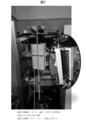
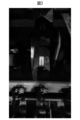
- FIG. 1 It is a schematic diagram showing an example of an apparatus for manufacturing an anti-pilling spun yarn of the present embodiment. It is a photograph replacing a drawing of a contact-type heater. It is a photograph replacing a drawing of a thread guide for rubbing a molten ball by polishing to form a polishing mark.
- 3 is photographs of a 100% polyester spun yarn before treatment (Comparative Example 1), after quilling (Comparative Example 2), and after polishing (cutting) (Example 1).
- 1 is a photograph of a knitted fabric having a plain cloth structure knitted using 100% polyester spun yarn before treatment (Comparative Example 1), after quibbing (Comparative Example 2), and after polishing (cutting) (Example 1).
- Example 5 is photographs of a 65% polyester/35% rayon mixed yarn before treatment (Comparative Example 3), after quilling (Comparative Example 4), and after polishing (cutting) (Example 3).
- One embodiment of the present invention is an anti-pilling spun yarn containing a short fiber of a thermoplastic synthetic fiber, which has a molten ball at a fluff tip portion of the short fiber and a polishing mark of the molten ball. And the anti-pilling spun yarn.
- Such an anti-pilling spun yarn has the following steps: Spun yarn containing short fibers of thermoplastic synthetic fiber as raw yarn is heated by a contact or non-contact heating heater to a temperature above the melting point of the thermoplastic synthetic fiber, and the fluff tips or loops of the short fibers are obtained.
- a step of forming a molten ball on a portion; and a step of rubbing the molten ball obtained by using a thread guide by polishing to form a polishing mark; Can be manufactured by a method including.
- thermoplastic synthetic fiber is not particularly limited as long as it is melted by heating to form a molten ball, but a chemical fiber made of a chemically synthesized polymer, for example, , Polyamide, for example, nylon, nylon 66 (Toray Promilan (registered trademark)), nylon 6 (Toray nylon, Nichirei nylon, Asahi Kasei nylon, etc.), nylon 11, nylon 610, nylon 4, nylon 7, nylon 9, nylon, nylon 12, aramid (registered trademark); polyvinyl alcohol-based, for example, vinylon (registered trademark), clarevirinone, nichibo vinylon, etc.; polyvinylidene chloride-based, for example, saran (registered trademark), klehalon (registered trademark); polyvinyl chloride-based , For example, homopolymer, NIP (registered trademark), Tebion (registered trademark), Environ (registered trademark), Nishicaron (registered
- the melting point of polyester fibers is 255 to 260° C.
- the melting point of nylon nylon fibers is 215 to 220° C.
- the melting point of polyacrylic fibers is not clear.
- the softening point is 190 to 240° C.
- the melting point of polypropylene short fibers, which is a polyolefin fiber is 165 to 173° C.
- natural fiber cotton (Apland) decomposes at 235° C., burns at 275 to 456° C.
- wool (merino) thermally decomposes at 130° C., burns at 205° C., and carbonizes at 300° C.
- thermoplastic synthetic fiber in the present embodiment is preferably a fiber selected from the group consisting of polyester-based, polyamide-based, polyacrylic-based, polyvinyl chloride-based, polyvinylidene chloride-based, polyvinyl alcohol-based, polyolefin-based, and polyurethane-based, More preferred are polyester, polyamide or polyacrylic fibers.
- short fibers refers to short fibers cut into short lengths (staples), and when they are short fibers of thermoplastic synthetic fibers, they are generally made as long fibers (filaments). It is a cut piece.
- the length of the short fibers is preferably 20 to 70 mm, more preferably 30 to 60 mm, and further preferably 38 to 51 mm.
- the fineness of the short fibers is preferably 0.01 to 10 denier, more preferably 0.8 to 5 denier, and further preferably 1.0 to 2. It is 5 denier. If the single yarn fineness is less than 0.01 denier, it easily becomes dirty and fluff is generated, and the tip is easily bundled to make pills.
- the cross-sectional shape of the short fibers may be a round cross section or a modified cross section other than the round cross section.
- spun yarn refers to a yarn in which short fibers are loosened and arranged so as to be combed, twisted and bundled.
- spun yarn a ring spun yarn by ring spinning, an open-end yarn by air spinning, a bound spun yarn by binding spinning, a spun yarn by spinning using a swirling airflow spinning machine (Vortex yarn (registered trademark) ) And the like.
- the ring spun yarn has no untwisted portion, a certain amount of twist enters from the inside to the outside of the yarn, the width of the yarn varies, and the twist concentrates where the yarn width is narrow and twists where it is wide. It becomes sweet and tends to have long fluff.
- the bound spun yarn is a spun yarn in which a binding fiber constantly binds a non-twisted fiber bundle.
- the open-end yarn and the spun yarn have less fluff than the ring yarn.
- the spun yarn from the viewpoint of easiness of forming a molten ball by heating, it is preferable to use only one kind of short fiber of thermoplastic synthetic fiber, but it is a mixed yarn of short fiber of two or more kinds of thermoplastic synthetic fiber. It doesn't matter.
- the anti-pilling woven or knitted fabric of the present embodiment is preferably a woven or knitted fabric in which all yarns constituting the woven or knitted fabric are anti-pilling spun yarns containing short fibers of thermoplastic synthetic fibers.
- the yarn count of the spun yarn is preferably 7 to 120 (760 to 44 denier). If it is less than 7th, the thickness of the woven or knitted fabric woven or knitted using it becomes large, and if it is more than 120th, the strength of the woven or knitted fabric decreases.
- the twist number of the spun yarn is preferably 60 to 1500 times/m.
- woven or knitted fabric refers to a woven fabric or knitted fabric (circular knitted fabric, warp knitted fabric, weft knitted fabric).
- a woven fabric or a knitted fabric is preferable from the viewpoint of exerting a desired effect as a clothing product.
- the woven fabric is preferably composed of 100% spun yarn, but a mixed woven fabric in which long fibers are used as warp yarns and spun yarns as weft yarns is preferable because a soft and repulsive texture can be obtained.
- the woven structure and knitted structure are not particularly limited.
- the term "fluff” means an end portion or a loop portion of short fibers that are napped from the outer surface of the spun yarn, and the end portion of the short fibers existing inside the spun yarn is not called fluff.
- molten ball refers to a fluff tip portion or a loop portion of the short fiber, which is obtained by singing by heating with a contact or non-contact type heater to a temperature higher than the melting point of the thermoplastic synthetic fiber. The fibers are melted and deformed into a substantially spherical shape.
- polishing mark refers to a polishing mark of a molten ball formed by polishing and rubbing the obtained molten ball using, for example, a thread guide.
- polishing marks on a fluff and a molten ball which is heated to a temperature equal to or higher than the melting point of the thermoplastic synthetic fiber with a contact or non-contact type heater.
- Melting balls are formed on the tips or loops of the fluff existing on the outer surface of the spun yarn by quipping by heating to a temperature above the melting point of the thermoplastic synthetic fiber with a contact or non-contact type heater. At this time, even if a molten ball is formed at the end of the short fiber buried inside the spun yarn, it does not appear on the outer surface of the spun yarn, so that the texture of the spun yarn is not deteriorated.
- Direct burning gas burning
- contact hair burning contact hair burning
- heating with a non-contact type heater is also possible, it is difficult to make adjustments to form molten balls. Since polyester and nylon have a melting point of 210 to 260° C., a molten ball can be formed even by direct calcination, but from the viewpoint of preventing excessive heating of the spun yarn, or a melting point of about 400° C.
- indirect calcination in which heat is transferred in a short time by increasing the temperature of the contact type heating roller is preferable.
- fluffing conditions There are no particular restrictions on the fluffing conditions, but it is sufficient to form a molten ball at the fluff tip (tip of the fluff) or loop portion existing on the surface of the fabric that causes pilling.
- the passing speed of the spun yarn supplied to the wicking step is preferably 20 to 120 m/min, more preferably 40 to 100 m/min.
- gas fluffing is preferable because pilling is suppressed if the fluff of the natural fibers is carbonized and burned off.
- the fluff tip or the loop portion existing on the outer surface of the spun yarn be formed with a molten ball over the entire circumference of the yarn.
- the spun yarn is brought into contact with the contact heating heater for a predetermined time while being rotated.
- the molten beads formed on the outer surface of the spun yarn at the fluff tips or loops of the monofilament by the above-mentioned scouring are polished, rubbed, and removed using, for example, the thread guide (5) shown in FIG. It is possible to form polishing marks. It is preferable to convert the molten balls formed on the outer surface of the spun yarn into polishing marks over the entire circumference of the yarn. For that purpose, it is preferable to pass the spun yarn through the thread guide at a predetermined speed while rotating the spun yarn. As shown in FIG. 1, the wicked spun yarn in which the molten balls are formed by the heater (3) is rubbed and removed by the thread guide (5) on the outer surface of the spun yarn to form polishing marks. To be done. The spun yarn on which the polishing marks are formed is wound by the winding device (7).
- the conventional anti-pilling countermeasure by polishing was to separate (fibrillize) the constituent fibers, but the polishing in the present embodiment is carried out in order to scrape off the molten beads produced by calcination.
- the molten balls cannot enter the spun yarn, so that the spun yarn is preferentially polished, abraded, and removed, and damage to the spun yarn is minimized. Therefore, due to such polishing, the molten balls, which have been the biggest problem of singing of thermoplastic synthetic fibers, remain on the outer surface of the spun yarn, so that the woven or knitted fabric to be woven or knitted using the molten balls has a rough texture.
- the problems of deterioration in texture and appearance are solved, and further reduction in strength of the woven or knitted fabric is suppressed. Further, the present inventors have found that fluff having a molten ball formed at its tip end by fluffing makes it difficult for the fluff (hair tips) to escape, so that the molten ball is rubbed by rubbing without damaging the spun yarn.
- the present invention has been completed by discovering that a spun yarn that can be polished and removed, and that has excellent anti-pilling properties, and a woven or knitted fabric that is woven or knitted using the spun yarn can be manufactured. ..
- Another embodiment of the present invention is an anti-pilling woven or knit fabric composed of the anti-pilling spun yarn.
- the anti-pilling woven or knitted fabric is woven or knitted using the anti-pilling spun yarn.
- the anti-pilling spun yarn may be woven using the warp yarn and/or the weft yarn to obtain a raw fabric, and the obtained raw fabric may be subjected to desizing and refining, and then subjected to the following finishing processing.
- a knitted fabric such as a plain weave structure can be formed by a circular knitting machine using the anti-pilling spun yarn.
- the methods such as desizing and refining and finishing step are not particularly limited, and conventional methods can be adopted.
- Heat treatment is performed to eliminate the influence of the nonuniform heat history of the synthetic fibers. It is preferable to perform heat setting in order to achieve dimensional stability and uniform dyeing of the woven or knitted fabric. In the case of polyester fiber or nylon fiber, heat treatment is generally performed at 180° C. for 30 seconds to 1 minute.
- dyeing There is no particular limitation on dyeing. Dyeing includes dip dyeing (rice dyeing) and continuous dyeing, and dipping is common. The polyester is partially dyed continuously, but the texture is hardened and the flexibility is impaired. In dip dyeing, if hair-burning is carried out before dyeing, the dyeability of the molten ball and the ground will be different, resulting in dyeing spots, but in the present embodiment, since the molten beads on the fabric surface are removed by polishing, dyeing spots occur. There is no problem of doing. Non-uniform firing causes dyeing streaks.
- wicking and polishing may be performed after dyeing the spun yarn, that is, either pre-burning dyeing or post-burning dyeing. (Finish dry) It is then dried and finished.
- the woven or knitted fabric that has been subjected to anti-pilling measures by the above manufacturing method is composed of the anti-pilling spun yarn that has undergone the wicking process and the polishing process. There is a molten ball at the tip or loop of the monofilament and a polishing mark generated by rubbing the molten ball.
- the woven or knitted fabric formed by using the anti-pilling spun yarn that has been subjected to the anti-pilling measures including the above-mentioned pilfering process and polishing process it is composed of the spun yarn that contains the thermoplastic synthetic fiber short fibers that are not subjected to the anti-pilling measures.
- the anti-pilling grade of the woven or knitted fabric is 1 to 2
- the anti-pilling grade can be set to 3 or higher, preferably 4 or higher, more preferably 4.5 or higher, and alkali hydrolysis Since it has not been subjected to treatment or the like, it is possible to obtain a woven or knitted fabric in which deterioration of the strength and deterioration of the texture are suppressed.
- the woven or knitted fabric formed by using the anti-pilling spun yarn provided with the anti-pilling countermeasure of the present embodiment, as shown in the following examples, has the anti-pilling performance that persists even after repeated washings, and thus has durability. Are better.
- the anti-pilling test was carried out for 5 hours according to JIS L 1076 A method (method using ICI type tester). The test result was an average value of the judgment results of four test pieces. Immediately after knitting, or after 10 times of washing. Washing was carried out 10 times according to JIS L 1930 C4M method (using tumble).
- For the dyeing property test prepare a test knitted fabric in which the polyester side of a knitted fabric with a knitted fabric is dyed with a disperse dye in a jet machine, and the difference in dyeing between the melted part and other parts caused by the wicking process is prepared. It was carried out by visual inspection.
- Example 1 100% polyester spun yarn (30 count, 1.6 denier, fiber length 51 mm) ring-spun by a 2-inch spinning machine is passed through a contact heater heated at 250° C. at a yarn speed of 80 m/min, and contact fried and cooled. After that, it was passed through a thread guide and subjected to polishing to remove the molten beads at the fluff tips generated by the above contact fluffing to obtain the anti-pilling spun yarn of the present embodiment.
- Example 1 The same spun yarn as in Example 1 was used, except that the wicking process and the polishing process were omitted.
- Ring bristles made of 65% polyester/35% rayon (30 count, 1.3 denier, 44 mm fiber length) ring-spun by a 2-inch spinning machine are passed through a contact heating heater heated to 250°C at a yarn speed of 80 m/min. After baking and cooling, it was passed through a thread guide and polished to remove the molten balls at the fluff tips generated by the above contact fluffing to obtain the anti-pilling spun yarn of the present embodiment.
- Example 3 The same spun yarn as in Example 2 was used except that the quilling step and the polishing step were omitted.
- Example 4 The same spun yarn as in Example 2 was used except that the polishing step was omitted.
- the anti-pilling grade was 4.5 or 4 and high anti-pilling properties similar to those in Examples 1 and 2 were recognized, but a large number of molten balls produced by calcination on the fabric surface. Due to the presence, the fabric has a poor feel to the touch, and the dyeing property of the fabric also suffers from uneven color, impairing the commercial value.
- the anti-pilling spun yarn containing the thermoplastic synthetic fiber short fibers according to the present invention is used regardless of the spinning method for dyeing (rubbing) when manufacturing a woven or knitted fabric using the same and for use by the user of the woven or knitted fabric product. -In washing and the like, it can exhibit excellent anti-pill property equivalent to Vortex (registered trademark) manufactured by Murata Machinery Co., Ltd., which is said to be "spun yarn with least fluff". Further, the method for producing an anti-pilling spun yarn according to the present invention can be applied to a general ring spun yarn as a raw material spun yarn regardless of its spinning method.
Landscapes
- Engineering & Computer Science (AREA)
- Textile Engineering (AREA)
- Woven Fabrics (AREA)
- Knitting Of Fabric (AREA)
- Yarns And Mechanical Finishing Of Yarns Or Ropes (AREA)
- Treatment Of Fiber Materials (AREA)
Abstract
熱可塑性合成繊維の短繊維を含む抗ピリング紡績糸、該抗ピリング紡績糸で構成することにより、ピリングの発生が抑制され、かつ、布地の強度低下や風合いの悪化が抑制された織編物を提供する。本発明は、熱可塑性合成繊維の短繊維を含む抗ピリング紡績糸であって、該短繊維の毛羽先端部の溶融玉と、該溶融玉の研磨痕とを有することを特徴とする前記抗ピリング紡績糸、その製法、及び該抗ピリング紡績糸から構成された抗ピリング織編物に関する。
Description
本発明は、熱可塑性合成繊維の短繊維を含む抗ピリング紡績糸、その製法、及び該抗ピリング紡績糸により構成される抗ピリング織編物に関する。
合成繊維は、通常、紡糸を経てフィラメントとして作られ、例えば、ポリエステル系やポリアミド系など多くの繊維は溶融紡糸で作られ、アクリル系繊維は湿式紡糸で作られる。また、レーヨンやキュプラなどの再生セルロース繊維、アセテート繊維などの半合成繊維も、フィラメントとして作られる。合成繊維は、フィラメントとして作られたものを切断して短繊維(ステープル)としても用いられている。
合成繊維は、綿や麻、絹、羊毛等の天然繊維と比べると一般的に軽くて丈夫(強く切れにくい)という特徴を有するものの、天然繊維はふんわりとした独特の風合いを有するものが多く、主に衣料品の原材料として好ましく使用されている。天然繊維の有するふんわりとした風合いを合成繊維で達成するためには、合成繊維の紡績糸(以下、スパン糸ともいう。)で織編物を製織すればよいのであるが、合成繊維の紡績糸から製造された織編物では、ピリングが発生しやすいことが知られている。ピリングとは、着用中や洗濯中に布地表面が摩擦され、布地表面が毛羽立ち、毛羽が絡み合い、小さな毛玉(ピル)ができることをいい、特に、繊維中にポリエステルやポリアミドなどの合成繊維が含まれていると、該繊維が強く切れにくいため毛玉が発生しやすくなる。発生した毛玉が脱落すればよいのであるが、これらの合成繊維は引っ張られると切れずに伸びるため、一旦、毛玉が発生すると脱落しにくく、外観を損なうとともに織編物の劣化を促進する。そのため、衣料品や洗濯を繰り返す製品等の用途に、合成繊維の紡績糸を使用した織編物を製造する場合にはピリングの発生を抑制するための対策(すなわち、抗ピリング対策)が不可欠となる。
織編物全般における抗ピリング対策としては、製織または編成された織編物に対して毛焼き、繊維強度の低減(アルカリ減量処理)、研磨(構成繊維の分繊化)、シャリング(剪毛加工、刈り込み)等の方法が知られているが、合成繊維の紡績糸を用いた織編物の抗ピリング対策としては、いずれも不十分であるため、衣料製品開発の検討段階において合成繊維の紡績糸を用いる選択肢は除かれる傾向にある。
織編物全般における抗ピリング対策としては、製織または編成された織編物に対して毛焼き、繊維強度の低減(アルカリ減量処理)、研磨(構成繊維の分繊化)、シャリング(剪毛加工、刈り込み)等の方法が知られているが、合成繊維の紡績糸を用いた織編物の抗ピリング対策としては、いずれも不十分であるため、衣料製品開発の検討段階において合成繊維の紡績糸を用いる選択肢は除かれる傾向にある。
また、織編物を構成する合成繊維の紡績糸自体の抗ピリング(以下、抗ピルともいう。)に関しては、以下の従来技術がある。
例えば、以下の特許文献1には、合成繊維を構成するモノマーに、ピリング耐性を向上させるモノマーを配合して共重合させた改質合成繊維により抗ピリング性及高収縮性(嵩高性)を付与することが開示されている。すなわち、得られた改質合成繊維から布帛を形成した後、さらに該布帛から縫製品などの製品を製造した後、それらの繊維、布帛又は製品を、水の存在下に110℃以上の温度で熱処理するとポリエステルの部分的な化水分解が生じてポリエステルの重合度が低下し、良好な抗ピリング性が繊維に付与される。しかしながら、使用可能な繊維素材がポリエステルに限られており、さらに繊維の改質により合成繊維が本来有する特性や風合いが失われ、繊維強度の低下やコストの上昇を伴うといった問題がある。
例えば、以下の特許文献1には、合成繊維を構成するモノマーに、ピリング耐性を向上させるモノマーを配合して共重合させた改質合成繊維により抗ピリング性及高収縮性(嵩高性)を付与することが開示されている。すなわち、得られた改質合成繊維から布帛を形成した後、さらに該布帛から縫製品などの製品を製造した後、それらの繊維、布帛又は製品を、水の存在下に110℃以上の温度で熱処理するとポリエステルの部分的な化水分解が生じてポリエステルの重合度が低下し、良好な抗ピリング性が繊維に付与される。しかしながら、使用可能な繊維素材がポリエステルに限られており、さらに繊維の改質により合成繊維が本来有する特性や風合いが失われ、繊維強度の低下やコストの上昇を伴うといった問題がある。
同様に、以下の特許文献2には、原料となるポリエステルに低重合度ポリエステルに特定のポリカーボネートを特定量添加することによって、毛羽、断糸の発生がなく、軽度なアルカリ処理で十分な抗ピル効果を有する繊維が得られることが記載されている。
同様に、以下の特許文献3には、ポリエステル繊維にヒドラジド基を含ませることにより抗ピル性を付与することが記載されている。
しかしながら、特許文献1~3に記載される技術はいずれも、繊維強度を低下させるものであり、素材本来の強度や風合いを損なうものであるために様々なテキスタイルを得るための汎用性に欠けるものであった。
そこで、最近では、繊維強度を低下させずに抗ピル効果を実現させるために、抗ピル性の改善された紡績糸の開発が試みられている。
例えば、村田機械製作所製VORTEX(登録商標)糸が知られている。VORTEX(ボルテックス)(登録商標)精紡では、エア(圧縮空気)の旋回流によって繊維の先端が糸の中心に集束され、常に糸の中心が真っすぐで無撚りの状態となる一方で、後端が他の繊維に巻き付くように外層を形成し(すなわち、糸の中心は撚りが甘く、外側は完全な撚り構造となっている)「エアの旋回流によって糸が紡がれる」という方法である。かかる方法から生み出された糸がVORTEX(登録商標)糸であり、糸の内層に繊維がしっかり保持された繊維の動きにくい構造を有するため、「もっとも毛羽の少ない紡績糸」とされる。
例えば、村田機械製作所製VORTEX(登録商標)糸が知られている。VORTEX(ボルテックス)(登録商標)精紡では、エア(圧縮空気)の旋回流によって繊維の先端が糸の中心に集束され、常に糸の中心が真っすぐで無撚りの状態となる一方で、後端が他の繊維に巻き付くように外層を形成し(すなわち、糸の中心は撚りが甘く、外側は完全な撚り構造となっている)「エアの旋回流によって糸が紡がれる」という方法である。かかる方法から生み出された糸がVORTEX(登録商標)糸であり、糸の内層に繊維がしっかり保持された繊維の動きにくい構造を有するため、「もっとも毛羽の少ない紡績糸」とされる。
以下の特許文献4には、外側に強度の低い繊維(ピリングが発生しにくい)、内側に強度の強い繊維を使用し、旋回気流式精紡装置で紡糸した紡績糸が提案されている。
以下の特許文献5には、旋回気流式精紡装置で紡糸する紡績糸において、太さむらを有する紡績糸を構成する芯繊維の毛羽状短繊維と該芯繊維の外周に巻き付けられた短繊維とを交絡させることで、芯糸が、短繊維に対してずれて、芯ずれが発生することがなく、また、芯繊維の外側に巻き付けられた短繊維の芯繊維からの脱落が減少して(すなわち、ピルの発生原因となる脱落繊維の減少により)抗ピル性を向上させることが記載されている。
前記した旋回気流式精紡機を使用した紡績による紡績糸(ボルテックス糸(登録商標))に加え、以下の非特許文献1に記載されるように、リング紡績によるリング紡績糸、空気紡績によるオープンエンド糸、結束紡績による結束紡績糸等が知られている。
リング紡績糸は、無撚の部分はなく、糸の内部から外部にわたって、一定の撚りが入り、糸幅にはバラツキがあり、糸幅が狭いところに撚りが集中し、広いところでは、撚りが甘くなり、長い毛羽がでやすい。オープンエンド糸では、中心から外側まで全ての繊維に撚りが入っており、糸の表面近くの繊維の中には、撚り方向が不揃いで、中心付近とは撚りが逆向きのものがある。結束紡績糸では、無撚り状の繊維束を結束繊維が定常的に縛り付けている紡績糸である。オープンエンド糸と結束紡績糸では、毛羽はリング糸より少ないとされる。
しかしながら、ボルテックス糸(登録商標)やオープンエンド糸、結束紡績糸では、特殊な紡績機械が必要である。
リング紡績糸は、無撚の部分はなく、糸の内部から外部にわたって、一定の撚りが入り、糸幅にはバラツキがあり、糸幅が狭いところに撚りが集中し、広いところでは、撚りが甘くなり、長い毛羽がでやすい。オープンエンド糸では、中心から外側まで全ての繊維に撚りが入っており、糸の表面近くの繊維の中には、撚り方向が不揃いで、中心付近とは撚りが逆向きのものがある。結束紡績糸では、無撚り状の繊維束を結束繊維が定常的に縛り付けている紡績糸である。オープンエンド糸と結束紡績糸では、毛羽はリング糸より少ないとされる。
しかしながら、ボルテックス糸(登録商標)やオープンエンド糸、結束紡績糸では、特殊な紡績機械が必要である。
また、以下の特許文献6には、特殊なポリエステル樹脂や特殊な紡績機械を用いず、サイロスパン方式、ラッッピング方式等の精紡交絡、リング紡績糸において、繊維断面形状を異型化(すなわち、特殊な形状の熱可塑性合成繊維)とすることにより、毛羽数を減少させることが記載されている。
さらに、以下の特許文献7には、熱可塑性合成繊維マルチフィラメント仮撚捲縮加工糸を回転擦過体に接触走行させて、該糸条に毛羽立て加工を施すに際して、回転擦過体通過後に引続き連続して該糸条の融点ないし融点より5℃低い温度範囲で熱処理を行い、しかる後に巻取る毛羽糸の製造方法が記載されている。特許文献7には、織編製品表面上での毛羽の強さ、伸びが小さいと毛玉はできにくいこと、毛羽の長さが短く、毛羽密度が小さいと毛玉はできにくいこと、および毛羽繊維の繊維長さが短いと毛玉ができにくいことが教示されている。特許文献7には、上記熱所理の最大の要点は、毛羽糸の糸条幹部はできるだけ熱劣化させることなく毛羽糸の枝部、すなわち、毛羽単繊維をできるだけ熱劣化させることで、毛羽の強さ、伸び、曲げ剛性等を著しく低下させピリング防止を図ろうとするものであると記載されている。また、特許文献7には、融点より高い温度では毛羽単繊維の全面融化が生じ、毛羽立てができず、手触り、風合いが悪くなると記載されている。特許文献7に記載された技術は、抗ピリングを目的とするものであるが、加熱処理対象が、紡績糸ではなく、また、加熱処理条件も本願発明と異なるものである。
以上、織編物を構成する合繊繊維の紡績糸自体の抗ピリングに関する従来技術は、特殊な紡績機械や特殊な形状の熱可塑性合成繊維が必要であり、紡績方法や繊維原料に制限があるため、より汎用的で簡便な方法による抗ピリング方法の確立が求められている。
浅野忠七男ら「新しい結束紡績糸」SEN-I GAKKAISHI(繊維と工業) Vol. 38, No. 5 (1992) P-211-216
前記した従来技術の問題点に鑑み、本発明が解決しようとする課題は、特定の紡績方法や特定の繊維原料の使用によらずピリングの発生が抑制され、かつ、強度低下や染着ムラの発生も抑制された織編物を製造するための熱可塑性合成繊維の短繊維を含む紡績糸及びその製造方法を提供することである。
本発明者らは、前記課題を解決すべく鋭意検討し実験を重ねた結果、熱可塑性合成繊維の短繊維を含む紡績糸を毛焼きし、当該紡績糸中の短繊維の端部又はループ部に溶融玉を形成し、しかる後、形成された溶融玉を、研磨により擦過して研磨痕を形成することにより抗ピリング紡績糸を製造し、かかる紡績糸を用いて、抗ピリング性が極めて優れ、かつ、強度低下や染着ムラの抑制された織編物を製造することができることを予想外に見出し、本発明を完成するに至ったものである。
すなわち、本発明は以下の通りのものである。
[1]熱可塑性合成繊維の短繊維を含む抗ピリング紡績糸であって、該短繊維の毛羽先端部の溶融玉と、該溶融玉の研磨痕とを有することを特徴とする前記抗ピリング紡績糸。
[2]前記熱可塑性合成繊維は、ポリアミド系、ポリビニルアルコール系、ポリ塩化ビニリデン系、ポリ塩化ビニル系、ポリエステル系、ポリアクリロニトリル系、ポリオレフィン系、ポリエチレン系、ポリプロピレン系、ポリ青化ビニリデン径、ポリ尿素系、ポリスチレン系、ポリウレタン系、及びポリフルオロエチレン系からなる群から選ばれる少なくとも1種の繊維である、前記[1]に記載の抗ピリング紡績糸。
[3]前記[1]又は[2]に記載の抗ピリング紡績糸から構成された抗ピリング織編物。
[4]前記抗ピリング織編物を構成する糸は全て、前記熱可塑性合成繊維の短繊維を含む、前記[3]に記載の抗ピリング織編物。
[5]JIS L 1930 C4M法(タンブル使用)に従う洗濯10回後の、JIS L 1076 A法(ICI形試験機を用いる方法)に従う抗ピリング等級が、いずれも3等級以上である、前記[3]又は[4]に記載の抗ピリング織編物。
[6]以下の工程:
原糸として熱可塑性合成繊維の短繊維を含む紡績糸を、接触又は非接触型加熱ヒーターで該熱可塑性合成繊維の融点以上の温度に加熱する毛焼きにより、該短繊維の毛羽先端部又はループ部に溶融玉を形成する工程;及び
スレッドガイドを用いて得られた溶融玉を研磨により擦過して研磨痕を形成する工程;
を含む、前記[1]又は[2]に記載の抗ピリング紡績糸の製造方法。
[7]前記[1]又は[2]に記載の抗ピリング紡績糸あるいは前記[6]に記載の方法により製造された抗ピリング紡績糸を用いて製織又は編成する工程;
を含む、前記[3]~[5]のいずれかに記載の抗ピリング織編物の製造方法。
[1]熱可塑性合成繊維の短繊維を含む抗ピリング紡績糸であって、該短繊維の毛羽先端部の溶融玉と、該溶融玉の研磨痕とを有することを特徴とする前記抗ピリング紡績糸。
[2]前記熱可塑性合成繊維は、ポリアミド系、ポリビニルアルコール系、ポリ塩化ビニリデン系、ポリ塩化ビニル系、ポリエステル系、ポリアクリロニトリル系、ポリオレフィン系、ポリエチレン系、ポリプロピレン系、ポリ青化ビニリデン径、ポリ尿素系、ポリスチレン系、ポリウレタン系、及びポリフルオロエチレン系からなる群から選ばれる少なくとも1種の繊維である、前記[1]に記載の抗ピリング紡績糸。
[3]前記[1]又は[2]に記載の抗ピリング紡績糸から構成された抗ピリング織編物。
[4]前記抗ピリング織編物を構成する糸は全て、前記熱可塑性合成繊維の短繊維を含む、前記[3]に記載の抗ピリング織編物。
[5]JIS L 1930 C4M法(タンブル使用)に従う洗濯10回後の、JIS L 1076 A法(ICI形試験機を用いる方法)に従う抗ピリング等級が、いずれも3等級以上である、前記[3]又は[4]に記載の抗ピリング織編物。
[6]以下の工程:
原糸として熱可塑性合成繊維の短繊維を含む紡績糸を、接触又は非接触型加熱ヒーターで該熱可塑性合成繊維の融点以上の温度に加熱する毛焼きにより、該短繊維の毛羽先端部又はループ部に溶融玉を形成する工程;及び
スレッドガイドを用いて得られた溶融玉を研磨により擦過して研磨痕を形成する工程;
を含む、前記[1]又は[2]に記載の抗ピリング紡績糸の製造方法。
[7]前記[1]又は[2]に記載の抗ピリング紡績糸あるいは前記[6]に記載の方法により製造された抗ピリング紡績糸を用いて製織又は編成する工程;
を含む、前記[3]~[5]のいずれかに記載の抗ピリング織編物の製造方法。
本発明に係る熱可塑性合成繊維の短繊維を含む抗ピリング紡績糸は、紡績方法を問わず、これを用いて織編物を製造する際の染色(もみ洗い)や該織編物製品使用者による使用・洗濯等において、「もっとも毛羽の少ない紡績糸」とされる村田機械製作所製ボルテックス(登録商標)と同等の優れた抗ピル性を発揮することができる。また、本発明に係る抗ピリング紡績糸の製造方法は、原料紡績糸としてその紡績方法を問わず、一般的なリング紡績糸にも適用可能である。
また、本発明に係る熱可塑性合成繊維の短繊維を含む抗ピリング織編物は、毛羽は毛焼きにより生じた溶融玉として一部残存するものの、溶融玉の大部分は研磨により擦過、除去され、研磨痕として存在するため、抗ピリング性が極めて優れ、かつ、製造段階や繰り返し使用後も著しい強度低下や、風合いの悪化が抑制された織編物である。そのため、本発明は、所望の風合いや外観を有する様々な衣料品やその他繊維製品への、これまで実用化が困難であった合成繊維の紡績糸を用いた織編物の適用を可能にする。原糸として使用する合成繊維の種類は熱可塑性である限り、何ら制限することなく自由に選択することが可能である。また、本発明は、起毛処理を施した織編物等にも適用可能である。それゆえ、本発明に係る熱可塑性合成繊維の短繊維を含む抗ピリング織編物、例えば、天然繊維のような柔らかな風合いを有しつつ、天然繊維よりも軽くて丈夫な衣料品の提供や、繰り返し使用しても丈夫で劣化しにくいシーツや寝具用カバー等の様々な繊維製品への適用を可能にする。
以下、本発明の実施形態を詳細に説明する。
本発明の1の実施形態は、熱可塑性合成繊維の短繊維を含む抗ピリング紡績糸であって、該短繊維の毛羽先端部の溶融玉と、該溶融玉の研磨痕とを有することを特徴とする前記抗ピリング紡績糸である。かかる抗ピリング紡績糸は、以下の工程:
原糸として熱可塑性合成繊維の短繊維を含む紡績糸を、接触又は非接触型加熱ヒーターで該熱可塑性合成繊維の融点以上の温度に加熱する毛焼きより、該短繊維の毛羽先端部又はループ部に溶融玉を形成する工程;及び
スレッドガイドを用いて得られた溶融玉を研磨により擦過して研磨痕を形成する工程;
を含む方法により製造することができる。
本発明の1の実施形態は、熱可塑性合成繊維の短繊維を含む抗ピリング紡績糸であって、該短繊維の毛羽先端部の溶融玉と、該溶融玉の研磨痕とを有することを特徴とする前記抗ピリング紡績糸である。かかる抗ピリング紡績糸は、以下の工程:
原糸として熱可塑性合成繊維の短繊維を含む紡績糸を、接触又は非接触型加熱ヒーターで該熱可塑性合成繊維の融点以上の温度に加熱する毛焼きより、該短繊維の毛羽先端部又はループ部に溶融玉を形成する工程;及び
スレッドガイドを用いて得られた溶融玉を研磨により擦過して研磨痕を形成する工程;
を含む方法により製造することができる。
本明細書中、用語「熱可塑性合成繊維」とは、加熱により溶融し溶融玉が形成されるものである限り、特に制限されないが、化学的に合成された高分子からできた化学繊維、例えば、ポリアミド系、例えば、ナイロン、ナイロン66(東レプロミラン(登録商標))、ナイロン6(東レナイロン、ニチレイナイロン、旭化成ナイロン他)、ナイロン11、ナイロン610、ナイロン4、ナイロン7、ナイロン9、ナイロン12、アラミド(登録商標);ポリビニルアルコール系、例えば、ビニロン(登録商標)、クラレビニロン、ニチボービニロン他;ポリ塩化ビニリデン系、例えば、サラン(登録商標)、クレハロン(登録商標);ポリ塩化ビニル系、例えば、単独重合物、ニップ(登録商標)、テビオン(登録商標)、エンビロン(登録商標)、ニシカロン(登録商標)、共重合物、後塩素化物;ポリエステル系、例えば、東レテトロン(登録商標)、テイジンテトロン、東洋紡エステル他、PET(ポリエチレンテレフタレート)、PBT(ポリブチレンテレフタレート)、PTT(ポリトリメチレンテレフタレート);ポリアクリロニトリル系、例えば、アクリロニトリル単独重合物、アクリロニトリル共重合物、トレロン(登録商標)、エクスラン(登録商標)、カシミロン(登録商標)、ボンネル(登録商標)他;ポリエチレン系、例えば、サンライン(登録商標)、ハイゼックス(登録商標)、カネライト(登録商標)他;ポリプロピレン系、例えば、三菱パイレン(登録商標)、日東紡ポリプロ(登録商標)他;ポリ青化ビニリデン系;ポリ尿素系;ポリスチレン系;ポリウレタン系、例えば、オペロン(登録商標)、スパンデックス(登録商標)他;ポリフルオロエチレン系、例えば、テフロン(登録商標)、トヨフロン(登録商標)等の合成繊維が挙げられる。
例えば、ポリエステル系繊維の短繊維の溶融点は255~260℃であり、ポリアミド系繊維であるナイロンの短繊維の溶融点は215℃~220℃であり、ポリアクリル系繊維の溶融点は明瞭でないが、軟化点は190~240℃であり、ポリオレフィン系繊維であるポリプロピレンの短繊維の溶融点は165~173℃である。これに反し、天然繊維である綿(アプランド)は235℃で分解し、275~456℃で燃焼し、羊毛(メリノ)は130℃で熱分解し、205℃で焦げ、300℃で炭化する。また、再生セルロース繊維である、レーヨンやキュプラは、軟化、溶融せず、160℃~300℃で着色し分解しはじめる。本実施形態における熱可塑性合成繊維は、ポリエステル系、ポリアミド系、ポリアクリル系、ポリ塩化ビニル系、ポリ塩化ビニリデン系、ポリビニルアルコール系、ポリオレフィン系、及びポリウレタン系からなる群から選ばれる繊維が好ましく、より好ましくはポリエステル系、ポリアミド系又はポリアクリル系繊維である。
例えば、ポリエステル系繊維の短繊維の溶融点は255~260℃であり、ポリアミド系繊維であるナイロンの短繊維の溶融点は215℃~220℃であり、ポリアクリル系繊維の溶融点は明瞭でないが、軟化点は190~240℃であり、ポリオレフィン系繊維であるポリプロピレンの短繊維の溶融点は165~173℃である。これに反し、天然繊維である綿(アプランド)は235℃で分解し、275~456℃で燃焼し、羊毛(メリノ)は130℃で熱分解し、205℃で焦げ、300℃で炭化する。また、再生セルロース繊維である、レーヨンやキュプラは、軟化、溶融せず、160℃~300℃で着色し分解しはじめる。本実施形態における熱可塑性合成繊維は、ポリエステル系、ポリアミド系、ポリアクリル系、ポリ塩化ビニル系、ポリ塩化ビニリデン系、ポリビニルアルコール系、ポリオレフィン系、及びポリウレタン系からなる群から選ばれる繊維が好ましく、より好ましくはポリエステル系、ポリアミド系又はポリアクリル系繊維である。
本明細書中、用語「短繊維」とは、短い長さで切れている短繊維(ステープル)をいい、熱可塑性合成繊維の短繊維である場合には、一般に長繊維(フィラメント)として作られたものを切断したものである。短繊維の長さは、紡績加工性の観点から、20~70mmが好ましく、より好ましくは30~60mm、さらに好ましくは38~51mmである。短繊維の繊度(単糸繊度)は、紡糸性及び布地の強度保持の観点から、0.01~10デニールが好ましく、より好ましくは0.8~5デニール、さらに好ましくは1.0~2.5デニールである。単糸繊度が、0.01デニール未満では、汚れ易くなり、毛羽が発生し先端が集束して毛玉を作り易くなり、他方、10デニール超では、毛羽の発生は少なくなるが、強力が増すため、いったん生じた毛玉が脱落し難くなり、風合いも悪くなる。短繊維の断面形状は、丸断面であっても丸断面以外の異形断面であってもよい。
本明細書中、用語「紡績糸(スパン糸)」とは、短繊維をほぐし、くしけずるようにして繊維を並べ、撚りをかけて束ねた糸条をいう。
前記したように、紡績糸としては、リング紡績によるリング紡績糸、空気紡績によるオープンエンド糸、結束紡績による結束紡績糸、旋回気流式精紡機を使用した紡績による紡績糸(ボルテックス糸(登録商標))等が挙げられる。リング紡績糸は、無撚の部分はなく、糸の内部から外部にわたって、一定の撚りが入り、糸幅にはバラツキがあり、糸幅が狭いところに撚りが集中し、広いところでは、撚りが甘くなり、長い毛羽がでやすい。オープンエンド糸では、中心から外側まで全ての繊維に撚りが入っており、糸の表面近くの繊維の中には、撚り方向が不揃いで、中心付近とは撚りが逆向きのものがある。結束紡績糸では、無撚り状の繊維束を結束繊維が定常的に縛り付けている紡績糸である。オープンエンド糸と結束紡績糸では、毛羽はリング糸より少ないとされる。
紡績糸としては、加熱による溶融玉の形成容易性の観点から、一種の熱可塑性合成繊維の短繊維のみからなるものが好ましいが、二種以上の熱可塑性合成繊維の短繊維の混紡糸であっても構わない。また、熱可塑性合成繊維の短繊維と他の天然繊維と混紡糸であってもよく、複合繊維糸、フィラメント糸との交撚糸、精紡合撚糸であってもよい。本実施形態の抗ピリング織編物としては、該織編物を構成する糸が全て、熱可塑性合成繊維の短繊維を含む抗ピリング紡績糸である織編物であることが好ましい。紡績糸の番手は7~120番手(760~44デニール)が好ましい。7番手未満では、これを用いて製織又は編成された織編物の厚みが大きくなり、120番手超では該織編物の強力が低下する。また、紡績糸の撚数は、60~1500回/mが好ましい。
前記したように、紡績糸としては、リング紡績によるリング紡績糸、空気紡績によるオープンエンド糸、結束紡績による結束紡績糸、旋回気流式精紡機を使用した紡績による紡績糸(ボルテックス糸(登録商標))等が挙げられる。リング紡績糸は、無撚の部分はなく、糸の内部から外部にわたって、一定の撚りが入り、糸幅にはバラツキがあり、糸幅が狭いところに撚りが集中し、広いところでは、撚りが甘くなり、長い毛羽がでやすい。オープンエンド糸では、中心から外側まで全ての繊維に撚りが入っており、糸の表面近くの繊維の中には、撚り方向が不揃いで、中心付近とは撚りが逆向きのものがある。結束紡績糸では、無撚り状の繊維束を結束繊維が定常的に縛り付けている紡績糸である。オープンエンド糸と結束紡績糸では、毛羽はリング糸より少ないとされる。
紡績糸としては、加熱による溶融玉の形成容易性の観点から、一種の熱可塑性合成繊維の短繊維のみからなるものが好ましいが、二種以上の熱可塑性合成繊維の短繊維の混紡糸であっても構わない。また、熱可塑性合成繊維の短繊維と他の天然繊維と混紡糸であってもよく、複合繊維糸、フィラメント糸との交撚糸、精紡合撚糸であってもよい。本実施形態の抗ピリング織編物としては、該織編物を構成する糸が全て、熱可塑性合成繊維の短繊維を含む抗ピリング紡績糸である織編物であることが好ましい。紡績糸の番手は7~120番手(760~44デニール)が好ましい。7番手未満では、これを用いて製織又は編成された織編物の厚みが大きくなり、120番手超では該織編物の強力が低下する。また、紡績糸の撚数は、60~1500回/mが好ましい。
本明細書中、用語「織編物」とは、織物又は編物(丸編地、経編地、緯編地)のことをいう。衣類製品として所望の効果を発揮する観点から、織物又は編物が好ましい。織物は紡績糸100%で構成されるものが好ましいが、経糸に長繊維、緯糸に紡績糸を用いた交織物もソフトで反発性のある風合いが得られるため好ましい。織物組織、編物組織は特に制限はない。
本明細書中、用語「毛羽」とは、紡績糸の外表面から立毛した短繊維の端部又はループ部をいい、紡績糸の内部に存在する短繊維の端部は毛羽とはいわない。
本明細書中、用語「溶融玉」とは、接触又は非接触型加熱ヒーターで該熱可塑性合成繊維の融点以上の温度に加熱する毛焼きより、該短繊維の毛羽先端部又はループ部の単繊維が溶融し、略球状に変形したものをいう。
本明細書中、用語「研磨痕」とは、得られた溶融玉を、例えば、スレッドガイドを用いて研磨、擦過して形成される、溶融玉の研磨痕をいう。
以下、接触又は非接触型加熱ヒーターで該熱可塑性合成繊維の融点以上の温度に加熱する毛焼き、溶融玉の研磨痕の形成について説明する。
(毛焼き)
接触又は非接触型加熱ヒーターで該熱可塑性合成繊維の融点以上の温度に加熱する毛焼きにより、該紡績糸の外側表面に存在する毛羽の先端部又はループ部に溶融玉を形成させる。このとき、紡績糸の内部に埋もれている短繊維の端部に溶融玉ができたとしても、紡績糸の外側表面には現れないため、紡績糸の風合いを悪くすることはない。ガスバーナーからの火炎による直接毛焼(ガス毛焼)を用いることもできるが、加熱温度の最適制御の観点から、図2に示す接触型ヒーター(3)との該紡績糸外側表面との接触による間接毛焼(接触毛焼)によって行うことが好ましい。尚、非接触型加熱ヒーター(図示せず。)による加熱も可能であるが、溶融玉を形成するための調整が難しい。ポリエステルとナイロンは、溶融点が210~260℃であるので、直接毛焼でも溶融玉を形成することができるが、紡績糸への過度な加熱を防止する観点から、又は融点が400℃程度のアラミド等の素材については、接触型加熱ローラーの温度をより高温にした短時間に熱が伝わる間接毛焼(接触毛焼)が好ましい。毛焼条件は特に制限はないが、ピリングの発生原因となる布地表面に存在する毛羽先(毛羽の先端)又はループ部に溶融玉を形成させられればよい。毛焼き工程に供給する紡績糸の通過速度(毛焼き加工速度)は、20~120m/分が好ましく、より好ましくは40~100m/分である。尚、紡績糸が天然繊維を含む場合には、ガス毛焼きにより天然繊維の毛羽を炭化させ焼き切れば、ピリングが抑制されるためガス毛焼きが好ましい。紡績糸の外側表面に存在する毛羽先端部又はループ部に、糸の周囲全体に亘り溶融玉を形成させることが好ましい。そのためには、紡績糸を回転させながら接触加熱ヒーターに所定時間、接触させることが好ましい。
(毛焼き)
接触又は非接触型加熱ヒーターで該熱可塑性合成繊維の融点以上の温度に加熱する毛焼きにより、該紡績糸の外側表面に存在する毛羽の先端部又はループ部に溶融玉を形成させる。このとき、紡績糸の内部に埋もれている短繊維の端部に溶融玉ができたとしても、紡績糸の外側表面には現れないため、紡績糸の風合いを悪くすることはない。ガスバーナーからの火炎による直接毛焼(ガス毛焼)を用いることもできるが、加熱温度の最適制御の観点から、図2に示す接触型ヒーター(3)との該紡績糸外側表面との接触による間接毛焼(接触毛焼)によって行うことが好ましい。尚、非接触型加熱ヒーター(図示せず。)による加熱も可能であるが、溶融玉を形成するための調整が難しい。ポリエステルとナイロンは、溶融点が210~260℃であるので、直接毛焼でも溶融玉を形成することができるが、紡績糸への過度な加熱を防止する観点から、又は融点が400℃程度のアラミド等の素材については、接触型加熱ローラーの温度をより高温にした短時間に熱が伝わる間接毛焼(接触毛焼)が好ましい。毛焼条件は特に制限はないが、ピリングの発生原因となる布地表面に存在する毛羽先(毛羽の先端)又はループ部に溶融玉を形成させられればよい。毛焼き工程に供給する紡績糸の通過速度(毛焼き加工速度)は、20~120m/分が好ましく、より好ましくは40~100m/分である。尚、紡績糸が天然繊維を含む場合には、ガス毛焼きにより天然繊維の毛羽を炭化させ焼き切れば、ピリングが抑制されるためガス毛焼きが好ましい。紡績糸の外側表面に存在する毛羽先端部又はループ部に、糸の周囲全体に亘り溶融玉を形成させることが好ましい。そのためには、紡績糸を回転させながら接触加熱ヒーターに所定時間、接触させることが好ましい。
(研磨)
上記毛焼きにより、紡績糸の外側表面の単繊維の毛羽先端部又はループ部に形成された溶融玉を、例えば、図3に示すスレッドガイド(5)を用いて研磨、擦過し、除去して、研磨痕を形成することができる。紡績糸の外側表面に形成された溶融玉を糸の周囲全体に渡り研磨痕に変換することが好ましい。そのためには、紡績糸を回転させながら、所定の速度でスレッドガイドに通すことが好ましい。図1に示すように、加熱ヒーター(3)により溶融玉が形成された毛焼き後の紡績糸は、スレッドガイド(5)により紡績糸外側表面の溶融玉が擦過、除去され、研磨痕が形成される。研磨痕が形成された紡績糸は巻取り装置(7)により巻き取られる。
上記毛焼きにより、紡績糸の外側表面の単繊維の毛羽先端部又はループ部に形成された溶融玉を、例えば、図3に示すスレッドガイド(5)を用いて研磨、擦過し、除去して、研磨痕を形成することができる。紡績糸の外側表面に形成された溶融玉を糸の周囲全体に渡り研磨痕に変換することが好ましい。そのためには、紡績糸を回転させながら、所定の速度でスレッドガイドに通すことが好ましい。図1に示すように、加熱ヒーター(3)により溶融玉が形成された毛焼き後の紡績糸は、スレッドガイド(5)により紡績糸外側表面の溶融玉が擦過、除去され、研磨痕が形成される。研磨痕が形成された紡績糸は巻取り装置(7)により巻き取られる。
従来の研磨による抗ピリング対策は、構成繊維を分繊化(フィブリル化)することであったが、本実施形態における研磨は、毛焼によって生じさせた溶融玉を削り取るために施すものである。例えば、スレッドガイドを紡績糸に接触させ、擦過すると、溶融玉は紡績糸内部に入り込むことができないため、優先的に研磨、擦過、除去され、紡績糸の損傷が最小限に抑えられる。したがって、このような研磨により、熱可塑性合成繊維の毛焼きの最大の問題であった溶融玉が紡績糸の外側表面に残存することにより、これを用いて製織、編成される織編物のがさつき、風合いや外観の悪化という問題が解消され、さらに織編物の強度低下が抑制される。また、本発明者らは、毛焼きによりその先端部に溶融玉が形成された毛羽であれば、毛羽(毛先)が逃げにくくなるため、素材紡績糸を損ねることなく、擦過により溶融玉を研磨、除去することが可能となり、抗ピリング性に極めて優れた紡績糸、これを用いて製織又は編成された織編物を製造することができることを見出し、本発明を完成するに至ったものである。
以下、本実施形態の抗ピリング織編物の製造の一例について説明する。
本発明の他の実施形態は、前記抗ピリング紡績糸から構成された抗ピリング織編物である。かかる抗ピリング織編物は、前記抗ピリング紡績糸を用いて製織又は編成する工程;
を含む方法により製造することができる。
前記抗ピリング紡績糸を経糸及び/又は緯糸として用いて製織し、生機にし、得られた生機に糊抜き精錬を施し、その後、以下の仕上げ加工を施すことができる。
また、前記抗ピリング紡績糸を用いて、丸編機により天竺組織等の編物とすることもできる。
糊抜き精錬、仕上げ工程等の方法は特に制限はなく、常法を採用することができる。
本発明の他の実施形態は、前記抗ピリング紡績糸から構成された抗ピリング織編物である。かかる抗ピリング織編物は、前記抗ピリング紡績糸を用いて製織又は編成する工程;
を含む方法により製造することができる。
前記抗ピリング紡績糸を経糸及び/又は緯糸として用いて製織し、生機にし、得られた生機に糊抜き精錬を施し、その後、以下の仕上げ加工を施すことができる。
また、前記抗ピリング紡績糸を用いて、丸編機により天竺組織等の編物とすることもできる。
糊抜き精錬、仕上げ工程等の方法は特に制限はなく、常法を採用することができる。
(熱セット)
次いで、合成繊維の不均一な熱履歴の影響を解消するために熱処理を行う。熱セットを行うことは、織編物の寸法安定性や均一な染色を達成するために好ましい。ポリエステル繊維やナイロン繊維の場合、一般に180℃で30秒~1分間程度の熱処理となる。
次いで、合成繊維の不均一な熱履歴の影響を解消するために熱処理を行う。熱セットを行うことは、織編物の寸法安定性や均一な染色を達成するために好ましい。ポリエステル繊維やナイロン繊維の場合、一般に180℃で30秒~1分間程度の熱処理となる。
(染色)
染色に特に制限はない。染色には、浸染(もみ染め)と連続染色があり、浸染が一般的である。ポリエステルについては一部連続染色が行われるが、風合いが硬化し柔軟性が損なわれる。浸染においては、染め前に毛焼を行うと溶融玉と地の染色性が異なり染班を生じるが、本実施形態においては、布地表面の溶融玉が研磨により除去されるため、染班が発生するという問題は生じない。毛焼が不均一であると染筋が発生する。どうしても毛焼による染筋を解決できない場合には、紡績糸を染色した後に、毛焼及び研磨を行ってもよい、すなわち、毛焼前染色及び毛焼後染色のいずれでもよい。
(仕上げ乾燥)
次いで、乾燥して仕上げる。
染色に特に制限はない。染色には、浸染(もみ染め)と連続染色があり、浸染が一般的である。ポリエステルについては一部連続染色が行われるが、風合いが硬化し柔軟性が損なわれる。浸染においては、染め前に毛焼を行うと溶融玉と地の染色性が異なり染班を生じるが、本実施形態においては、布地表面の溶融玉が研磨により除去されるため、染班が発生するという問題は生じない。毛焼が不均一であると染筋が発生する。どうしても毛焼による染筋を解決できない場合には、紡績糸を染色した後に、毛焼及び研磨を行ってもよい、すなわち、毛焼前染色及び毛焼後染色のいずれでもよい。
(仕上げ乾燥)
次いで、乾燥して仕上げる。
以上の製造方法によって抗ピリング対策が施された織編物は、毛焼工程と研磨工程を経ている抗ピリング紡績糸から構成されているため、顕微鏡で確認すると、紡績糸の外側表面に一部残存する単繊維の先端部又はループ部の溶融玉と、溶融玉が擦過されて生じた研磨痕とが存在する。
前記した毛焼き工程と研磨工程を含む抗ピリング対策を施した抗ピリング紡績糸を用いて構成した織編物では、抗ピリング対策を施していない熱可塑性合成繊維の短繊維を含む紡績糸で構成した織編物の抗ピリング等級が1~2級であったとしても、抗ピリング等級を3級以上、好ましくは4級以上、より好ましくは4.5級以上にすることができ、また、アルカリ加水分解処理等を経ていないため、強度の低下や風合いの悪化も抑制された織編物にすることができる。本実施形態の抗ピリング対策を施した抗ピリング紡績糸を用いて構成した織編物は、以下の実施例に示すように、洗濯を繰り返しても抗ピリング性能が持続することから、耐久性にも優れている。
前記した毛焼き工程と研磨工程を含む抗ピリング対策を施した抗ピリング紡績糸を用いて構成した織編物では、抗ピリング対策を施していない熱可塑性合成繊維の短繊維を含む紡績糸で構成した織編物の抗ピリング等級が1~2級であったとしても、抗ピリング等級を3級以上、好ましくは4級以上、より好ましくは4.5級以上にすることができ、また、アルカリ加水分解処理等を経ていないため、強度の低下や風合いの悪化も抑制された織編物にすることができる。本実施形態の抗ピリング対策を施した抗ピリング紡績糸を用いて構成した織編物は、以下の実施例に示すように、洗濯を繰り返しても抗ピリング性能が持続することから、耐久性にも優れている。
以下、本発明を、実施例、比較例により具体的に説明する。
抗ピリング試験は、JIS L 1076 A法(ICI形試験機を用いる方法)に従って5時間実施した。試験結果は試験片4枚の判定結果の平均値とした。編物編成直後、又は洗濯10回後に実施した。洗濯は、JIS L 1930 C4M法(タンブル使用)に従い10回実施した。
染着性試験は天竺組織で編成した編物のポリエステルサイドを液流機中で分散染料により染色した試験編地を用意し、毛焼工程で生じた溶融部分と他の部分との染着差を目視することにより実施した。
抗ピリング試験は、JIS L 1076 A法(ICI形試験機を用いる方法)に従って5時間実施した。試験結果は試験片4枚の判定結果の平均値とした。編物編成直後、又は洗濯10回後に実施した。洗濯は、JIS L 1930 C4M法(タンブル使用)に従い10回実施した。
染着性試験は天竺組織で編成した編物のポリエステルサイドを液流機中で分散染料により染色した試験編地を用意し、毛焼工程で生じた溶融部分と他の部分との染着差を目視することにより実施した。
[実施例1]
2インチ紡績機械でリング紡績したポリエステル100%紡績糸(30番手、1.6デニール、繊維長51mm)を250℃に加熱した接触加熱ヒーターに糸速80m/分で通過させ接触毛焼きし、冷却後にスレッドガイドに通過させて研磨を施し、先の接触毛焼で生成した毛羽先の溶融玉を除去し、本実施形態の抗ピリング紡績糸を得た。
2インチ紡績機械でリング紡績したポリエステル100%紡績糸(30番手、1.6デニール、繊維長51mm)を250℃に加熱した接触加熱ヒーターに糸速80m/分で通過させ接触毛焼きし、冷却後にスレッドガイドに通過させて研磨を施し、先の接触毛焼で生成した毛羽先の溶融玉を除去し、本実施形態の抗ピリング紡績糸を得た。
[比較例1]
毛焼き工程及び研磨工程を省略した以外は、実施例1と同様の紡績糸を用いた。
毛焼き工程及び研磨工程を省略した以外は、実施例1と同様の紡績糸を用いた。
[比較例2]
研磨工程を省略した以外は、実施例1と同様の紡績糸を用いた。
研磨工程を省略した以外は、実施例1と同様の紡績糸を用いた。
[実施例2]
2インチ紡績機械でリング紡績したポリエステル65%・レーヨン35%混紡糸(30番手、1.3デニール、繊維長44mm)を250℃に加熱した接触加熱ヒーターに糸速80m/分で通過させ接触毛焼きし、冷却後にスレッドガイドに通過させて研磨を施し、先の接触毛焼で生成した毛羽先の溶融玉を除去し、本実施形態の抗ピリング紡績糸を得た。
2インチ紡績機械でリング紡績したポリエステル65%・レーヨン35%混紡糸(30番手、1.3デニール、繊維長44mm)を250℃に加熱した接触加熱ヒーターに糸速80m/分で通過させ接触毛焼きし、冷却後にスレッドガイドに通過させて研磨を施し、先の接触毛焼で生成した毛羽先の溶融玉を除去し、本実施形態の抗ピリング紡績糸を得た。
[比較例3]
毛焼き工程及び研磨工程を省略した以外は、実施例2と同様の紡績糸を用いた。
毛焼き工程及び研磨工程を省略した以外は、実施例2と同様の紡績糸を用いた。
[比較例4]
研磨工程を省略した以外は、実施例2と同様の紡績糸を用いた。
研磨工程を省略した以外は、実施例2と同様の紡績糸を用いた。
[抗ピリング試験]
実施例1、2、比較例1~4で得た紡績糸を用いて天竺組織で編物を編成し、抗ピリング試験を実施した。
実施例1、2、比較例1~4で得た紡績糸を用いて天竺組織で編物を編成し、抗ピリング試験を実施した。
[染着性試験]
実施例1、2、比較例2、4で得た紡績糸を用いて編成した天竺組織の編物で染着性試験を実施した。以下の評価基準で、染着性を判定した:
〇:色ムラがない
×:色ムラがある。
実施例1、2、比較例2、4で得た紡績糸を用いて編成した天竺組織の編物で染着性試験を実施した。以下の評価基準で、染着性を判定した:
〇:色ムラがない
×:色ムラがある。
結果を以下の表1に示す。

表1から、実施例1、2では、毛焼き及び研磨を経た抗ピリング紡績糸であるため、これを用いて編成された編物の抗ピリング等級が、洗濯10回後でも4.5級又は4級であり、抗ピリング性が極めて優れ、風合いも良く、強度の低下もなかった。一方、毛焼き及び研磨を経ることなく製造された紡績糸で構成された比較例1、3の試験反の抗ピリング等級は洗濯10回で2級又は1級であり、多数のピリングが発生した。比較例2、4では、抗ピリング等級が4.5級又は4級となり、実施例1、2と同様の高い抗ピリング性が認められたが、毛焼によって生じた溶融玉が布地表面に多数存在することにより、布地の肌触りが悪く、布地の染着性についても色ムラが発生し商品価値を損なうものであった。
本発明に係る熱可塑性合成繊維の短繊維を含む抗ピリング紡績糸は、紡績方法を問わず、これを用いて織編物を製造する際の染色(もみ洗い)や該織編物製品使用者による使用・洗濯等において、「もっとも毛羽の少ない紡績糸」とされる村田機械製作所製ボルテックス(登録商標)と同等の優れた抗ピル性を発揮することができる。また、本発明に係る抗ピリング紡績糸の製造方法は、原料紡績糸としてその紡績方法を問わず、一般的リング紡績糸にも適用可能である。
1 巻糸体
2 フィードローラー1(FR1)
3 加熱ヒーター
4 フィードローラー2(FR2)
5 スレッドガイド
6 フィードローラー3(FR3)
7 巻取り装置
2 フィードローラー1(FR1)
3 加熱ヒーター
4 フィードローラー2(FR2)
5 スレッドガイド
6 フィードローラー3(FR3)
7 巻取り装置
Claims (7)
- 熱可塑性合成繊維の短繊維を含む抗ピリング紡績糸であって、該短繊維の毛羽先端部の溶融玉と、該溶融玉の研磨痕とを有することを特徴とする前記抗ピリング紡績糸。
- 前記熱可塑性合成繊維は、ポリアミド系、ポリビニルアルコール系、ポリ塩化ビニリデン系、ポリ塩化ビニル系、ポリエステル系、ポリアクリロニトリル系、ポリオレフィン系、ポリエチレン系、ポリプロピレン系、ポリ青化ビニリデン径、ポリ尿素系、ポリスチレン系、ポリウレタン系、及びポリフルオロエチレン系からなる群から選ばれる少なくとも1種の繊維である、請求項1に記載の抗ピリング紡績糸。
- 請求項1又は2に記載の抗ピリング紡績糸から構成された抗ピリング織編物。
- 前記抗ピリング織編物を構成する糸は全て、前記熱可塑性合成繊維の短繊維を含む、請求項3に記載の抗ピリング織編物。
- JIS L 1930 C4M法(タンブル使用)に従う洗濯10回後の、JIS L 1076 A法(ICI形試験機を用いる方法)に従う抗ピリング等級が、いずれも3等級以上である、請求項3又は4に記載の抗ピリング織編物。
- 以下の工程:
原糸として熱可塑性合成繊維の短繊維を含む紡績糸を、接触又は非接触型加熱ヒーターで該熱可塑性合成繊維の融点以上の温度に加熱する毛焼きにより、該短繊維の毛羽先端部又はループ部に溶融玉を形成する工程;及び
スレッドガイドを用いて得られた溶融玉を研磨により擦過して研磨痕を形成する工程;
を含む、請求項1又は2に記載の抗ピリング紡績糸の製造方法。 - 請求項1又は2に記載の抗ピリング紡績糸あるいは請求項6に記載の方法により製造された抗ピリング紡績糸を用いて製織又は編成する工程;
を含む、請求項3~5のいずれか1項に記載の抗ピリング織編物の製造方法。
Priority Applications (1)
| Application Number | Priority Date | Filing Date | Title |
|---|---|---|---|
| JP2020571241A JPWO2020162506A1 (ja) | 2019-02-06 | 2020-02-05 | 抗ピリング紡績糸、その製法、及び抗ピリング紡績糸により構成される抗ピリング織編物 |
Applications Claiming Priority (2)
| Application Number | Priority Date | Filing Date | Title |
|---|---|---|---|
| JP2019019643 | 2019-02-06 | ||
| JP2019-019643 | 2019-02-06 |
Publications (1)
| Publication Number | Publication Date |
|---|---|
| WO2020162506A1 true WO2020162506A1 (ja) | 2020-08-13 |
Family
ID=71948053
Family Applications (1)
| Application Number | Title | Priority Date | Filing Date |
|---|---|---|---|
| PCT/JP2020/004410 Ceased WO2020162506A1 (ja) | 2019-02-06 | 2020-02-05 | 抗ピリング紡績糸、その製法、及び抗ピリング紡績糸により構成される抗ピリング織編物 |
Country Status (3)
| Country | Link |
|---|---|
| JP (1) | JPWO2020162506A1 (ja) |
| TW (1) | TW202039947A (ja) |
| WO (1) | WO2020162506A1 (ja) |
Cited By (3)
| Publication number | Priority date | Publication date | Assignee | Title |
|---|---|---|---|---|
| CN113373566A (zh) * | 2021-05-26 | 2021-09-10 | 苏州普路通纺织科技有限公司 | 一种涡流混纺粗支纱线及其生产工艺 |
| CN115748037A (zh) * | 2022-11-24 | 2023-03-07 | 桐乡市华家那羊绒服饰有限公司 | 一种羊绒/三醋酸/桑蚕丝混纺纱线的半精纺生产工艺 |
| CN117661178A (zh) * | 2023-11-20 | 2024-03-08 | 常熟色织有限公司 | 一种抗起球珊瑚绒面料及其生产工艺 |
Citations (5)
| Publication number | Priority date | Publication date | Assignee | Title |
|---|---|---|---|---|
| JPS57210063A (en) * | 1981-06-16 | 1982-12-23 | Teijin Ltd | Production of spun like knitted fabric |
| JPH01139841A (ja) * | 1987-07-20 | 1989-06-01 | Toray Ind Inc | 抗ピル性合成繊維布帛およびその製造法 |
| US20120263911A1 (en) * | 2009-04-29 | 2012-10-18 | The Hong Kong Polytechnic University | Method and apparatus for pilling reduction |
| CN104611944A (zh) * | 2014-12-09 | 2015-05-13 | 南通市嘉宇斯纺织集团有限公司 | 天枢绒及其生产方法 |
| CN106757670A (zh) * | 2016-12-20 | 2017-05-31 | 江苏金太阳纺织科技股份有限公司 | 一种抗起球磨毛面料及其制造方法 |
-
2020
- 2020-02-05 JP JP2020571241A patent/JPWO2020162506A1/ja active Pending
- 2020-02-05 WO PCT/JP2020/004410 patent/WO2020162506A1/ja not_active Ceased
- 2020-02-05 TW TW109103574A patent/TW202039947A/zh unknown
Patent Citations (5)
| Publication number | Priority date | Publication date | Assignee | Title |
|---|---|---|---|---|
| JPS57210063A (en) * | 1981-06-16 | 1982-12-23 | Teijin Ltd | Production of spun like knitted fabric |
| JPH01139841A (ja) * | 1987-07-20 | 1989-06-01 | Toray Ind Inc | 抗ピル性合成繊維布帛およびその製造法 |
| US20120263911A1 (en) * | 2009-04-29 | 2012-10-18 | The Hong Kong Polytechnic University | Method and apparatus for pilling reduction |
| CN104611944A (zh) * | 2014-12-09 | 2015-05-13 | 南通市嘉宇斯纺织集团有限公司 | 天枢绒及其生产方法 |
| CN106757670A (zh) * | 2016-12-20 | 2017-05-31 | 江苏金太阳纺织科技股份有限公司 | 一种抗起球磨毛面料及其制造方法 |
Cited By (3)
| Publication number | Priority date | Publication date | Assignee | Title |
|---|---|---|---|---|
| CN113373566A (zh) * | 2021-05-26 | 2021-09-10 | 苏州普路通纺织科技有限公司 | 一种涡流混纺粗支纱线及其生产工艺 |
| CN115748037A (zh) * | 2022-11-24 | 2023-03-07 | 桐乡市华家那羊绒服饰有限公司 | 一种羊绒/三醋酸/桑蚕丝混纺纱线的半精纺生产工艺 |
| CN117661178A (zh) * | 2023-11-20 | 2024-03-08 | 常熟色织有限公司 | 一种抗起球珊瑚绒面料及其生产工艺 |
Also Published As
| Publication number | Publication date |
|---|---|
| TW202039947A (zh) | 2020-11-01 |
| JPWO2020162506A1 (ja) | 2021-12-02 |
Similar Documents
| Publication | Publication Date | Title |
|---|---|---|
| AU703334B2 (en) | A composite yarn and a process for producing same | |
| TWI649470B (zh) | 具有複數彈性紗的伸縮紗及織物 | |
| JP6682705B2 (ja) | 抗ピリング布地及びその製法 | |
| CN1890417A (zh) | 浆料包覆的复合纱及其制造方法 | |
| WO2020162506A1 (ja) | 抗ピリング紡績糸、その製法、及び抗ピリング紡績糸により構成される抗ピリング織編物 | |
| CN117716077A (zh) | 多层结构短纤维纱、其制造方法、坯布及衣类 | |
| JP2010111988A (ja) | 嵩高紡績糸の製造装置および製造方法 | |
| JP5599686B2 (ja) | ポリエステル潜在捲縮加工糸及びその製造方法 | |
| KR101962077B1 (ko) | 하계용 도비직물 및 그 제조방법 | |
| CN116113734B (zh) | 双层结构纺织纱线和编织品 | |
| JP7655522B2 (ja) | 二層構造紡績糸及び織編物 | |
| JP6734437B2 (ja) | 捲縮糸、極細濃染加工糸、極細濃染加工糸を含むセーム調織物、及び捲縮糸の製造方法 | |
| JPH08337937A (ja) | スパン糸のような毛羽を有するフィラメント加工糸およびその製造方法 | |
| JP3877025B2 (ja) | 立毛布帛 | |
| JP7367407B2 (ja) | 複合仮撚加工糸及びそれからなる織編物 | |
| JP2025024949A (ja) | 複合紡績糸および織編物 | |
| JP2026036522A (ja) | 精紡交撚糸及びその製造方法 | |
| JP2024122607A (ja) | 編地、及びそれを含む衣料 | |
| JP2023119590A (ja) | 二層構造紡績糸および織編物 | |
| JP2026007062A (ja) | 複合仮撚糸及びそれを含む織編物、衣類 | |
| JPH07316941A (ja) | 縫 糸 | |
| JP2021161550A (ja) | ポリエステル複合仮撚糸 | |
| JP2000256930A (ja) | 毛羽を有するフィラメント縫糸の製造方法 | |
| JPH04108128A (ja) | 潜在嵩高糸とその製造方法 | |
| JP2000017532A (ja) | 複合糸の製造方法、その複合糸、及びその織編物 |
Legal Events
| Date | Code | Title | Description |
|---|---|---|---|
| 121 | Ep: the epo has been informed by wipo that ep was designated in this application |
Ref document number: 20752567 Country of ref document: EP Kind code of ref document: A1 |
|
| ENP | Entry into the national phase |
Ref document number: 2020571241 Country of ref document: JP Kind code of ref document: A |
|
| NENP | Non-entry into the national phase |
Ref country code: DE |
|
| 122 | Ep: pct application non-entry in european phase |
Ref document number: 20752567 Country of ref document: EP Kind code of ref document: A1 |