WO2020152976A1 - オルガノポリシロキサン化合物を含有する組成物 - Google Patents
オルガノポリシロキサン化合物を含有する組成物 Download PDFInfo
- Publication number
- WO2020152976A1 WO2020152976A1 PCT/JP2019/046171 JP2019046171W WO2020152976A1 WO 2020152976 A1 WO2020152976 A1 WO 2020152976A1 JP 2019046171 W JP2019046171 W JP 2019046171W WO 2020152976 A1 WO2020152976 A1 WO 2020152976A1
- Authority
- WO
- WIPO (PCT)
- Prior art keywords
- group
- composition
- hydrogen atom
- solvent
- mass
- Prior art date
- Legal status (The legal status is an assumption and is not a legal conclusion. Google has not performed a legal analysis and makes no representation as to the accuracy of the status listed.)
- Ceased
Links
Classifications
-
- C—CHEMISTRY; METALLURGY
- C08—ORGANIC MACROMOLECULAR COMPOUNDS; THEIR PREPARATION OR CHEMICAL WORKING-UP; COMPOSITIONS BASED THEREON
- C08G—MACROMOLECULAR COMPOUNDS OBTAINED OTHERWISE THAN BY REACTIONS ONLY INVOLVING UNSATURATED CARBON-TO-CARBON BONDS
- C08G77/00—Macromolecular compounds obtained by reactions forming a linkage containing silicon with or without sulfur, nitrogen, oxygen or carbon in the main chain of the macromolecule
- C08G77/04—Polysiloxanes
- C08G77/14—Polysiloxanes containing silicon bound to oxygen-containing groups
-
- C—CHEMISTRY; METALLURGY
- C08—ORGANIC MACROMOLECULAR COMPOUNDS; THEIR PREPARATION OR CHEMICAL WORKING-UP; COMPOSITIONS BASED THEREON
- C08L—COMPOSITIONS OF MACROMOLECULAR COMPOUNDS
- C08L83/00—Compositions of macromolecular compounds obtained by reactions forming in the main chain of the macromolecule a linkage containing silicon with or without sulfur, nitrogen, oxygen or carbon only; Compositions of derivatives of such polymers
- C08L83/04—Polysiloxanes
- C08L83/06—Polysiloxanes containing silicon bound to oxygen-containing groups
-
- C—CHEMISTRY; METALLURGY
- C09—DYES; PAINTS; POLISHES; NATURAL RESINS; ADHESIVES; COMPOSITIONS NOT OTHERWISE PROVIDED FOR; APPLICATIONS OF MATERIALS NOT OTHERWISE PROVIDED FOR
- C09D—COATING COMPOSITIONS, e.g. PAINTS, VARNISHES OR LACQUERS; FILLING PASTES; CHEMICAL PAINT OR INK REMOVERS; INKS; CORRECTING FLUIDS; WOODSTAINS; PASTES OR SOLIDS FOR COLOURING OR PRINTING; USE OF MATERIALS THEREFOR
- C09D183/00—Coating compositions based on macromolecular compounds obtained by reactions forming in the main chain of the macromolecule a linkage containing silicon, with or without sulfur, nitrogen, oxygen, or carbon only; Coating compositions based on derivatives of such polymers
- C09D183/04—Polysiloxanes
-
- C—CHEMISTRY; METALLURGY
- C09—DYES; PAINTS; POLISHES; NATURAL RESINS; ADHESIVES; COMPOSITIONS NOT OTHERWISE PROVIDED FOR; APPLICATIONS OF MATERIALS NOT OTHERWISE PROVIDED FOR
- C09D—COATING COMPOSITIONS, e.g. PAINTS, VARNISHES OR LACQUERS; FILLING PASTES; CHEMICAL PAINT OR INK REMOVERS; INKS; CORRECTING FLUIDS; WOODSTAINS; PASTES OR SOLIDS FOR COLOURING OR PRINTING; USE OF MATERIALS THEREFOR
- C09D183/00—Coating compositions based on macromolecular compounds obtained by reactions forming in the main chain of the macromolecule a linkage containing silicon, with or without sulfur, nitrogen, oxygen, or carbon only; Coating compositions based on derivatives of such polymers
- C09D183/04—Polysiloxanes
- C09D183/06—Polysiloxanes containing silicon bound to oxygen-containing groups
-
- C—CHEMISTRY; METALLURGY
- C09—DYES; PAINTS; POLISHES; NATURAL RESINS; ADHESIVES; COMPOSITIONS NOT OTHERWISE PROVIDED FOR; APPLICATIONS OF MATERIALS NOT OTHERWISE PROVIDED FOR
- C09D—COATING COMPOSITIONS, e.g. PAINTS, VARNISHES OR LACQUERS; FILLING PASTES; CHEMICAL PAINT OR INK REMOVERS; INKS; CORRECTING FLUIDS; WOODSTAINS; PASTES OR SOLIDS FOR COLOURING OR PRINTING; USE OF MATERIALS THEREFOR
- C09D7/00—Features of coating compositions, not provided for in group C09D5/00; Processes for incorporating ingredients in coating compositions
- C09D7/20—Diluents or solvents
-
- C—CHEMISTRY; METALLURGY
- C09—DYES; PAINTS; POLISHES; NATURAL RESINS; ADHESIVES; COMPOSITIONS NOT OTHERWISE PROVIDED FOR; APPLICATIONS OF MATERIALS NOT OTHERWISE PROVIDED FOR
- C09D—COATING COMPOSITIONS, e.g. PAINTS, VARNISHES OR LACQUERS; FILLING PASTES; CHEMICAL PAINT OR INK REMOVERS; INKS; CORRECTING FLUIDS; WOODSTAINS; PASTES OR SOLIDS FOR COLOURING OR PRINTING; USE OF MATERIALS THEREFOR
- C09D7/00—Features of coating compositions, not provided for in group C09D5/00; Processes for incorporating ingredients in coating compositions
- C09D7/40—Additives
- C09D7/60—Additives non-macromolecular
- C09D7/63—Additives non-macromolecular organic
Definitions
- the present invention relates to a composition containing an organopolysiloxane compound.
- Environmentally friendly ethylene glycol is a TX-free solvent that has recently been used in increasing amounts because it has a low impact on people and nature and is easy to handle. Further, it has an advantage that it has a high boiling point and has little adverse effect on the human body due to exposure to solvent gas. Furthermore, since it has low volatility, it is excellent in workability, and cracks and uneven coating are unlikely to occur in the coating film, and therefore it is suitable as a solvent for paints.
- an organopolysiloxane having a polymerizable functional group an organopolysiloxane having a divalent or trivalent siloxane bond as a skeleton is often used as a main raw material of a coating material from the viewpoint of hardness and flexibility.
- a trivalent siloxane bond is essential from the viewpoint of the adhesiveness between the base and the base. Further, the state of the coating film surface after coating varies depending on the molecular weight of the organopolysiloxane.
- the ratio of the number of polymerizable functional groups is large, which causes the occurrence of cracks over time.
- the ratio of the number of polymerizable functional groups is small, which leads to deterioration in adhesion. It causes low hardness and low scratch resistance.
- Organopolysiloxanes generally have an alkoxy group at the end, and alcohol is generated when a coating film is formed. Organopolysiloxanes having a methoxy group at the end are widely used from the viewpoint of ease of production and production cost, but since highly toxic methanol is generated by polymerization of organopolysiloxane, it has an impact on the environment and the human body. There is a demand for an organopolysiloxane having an ethoxy group or a butoxy group at the terminal, in which ethanol or butanol is taken into consideration.
- Patent Document 1 discloses an example of a low-VOC aqueous latex paint using a low-polymerization ethylene glycol derivative as a solvent.
- the low-polymerization ethylene glycol is both a film-forming solvent and a thawing stabilizer. It is said that a coating film having excellent scratch resistance can be obtained.
- Patent Document 2 discloses that good adhesion and hardness are obtained in a coating film of a silicone resin composition hydrolyzed in isobutanol.
- the present invention has been made in view of the above circumstances, and is a composition containing a TX-free environment-friendly solvent and an organopolysiloxane compound, as well as excellent in coatability, crack resistance, adhesion, and smooth.
- An object of the present invention is to provide a coating agent capable of giving a cured coating, and a coated article.
- the present inventors have conducted extensive studies to achieve the above objects, and as a result of using a composition containing an organopolysiloxane having a polymerizable functional group and a glycol ether solvent, found that the above problems can be solved.
- the present invention has been completed.
- n represents an integer of 2 or more
- n represents an integer of 1 or more.
- a coating agent comprising the composition according to any one of 1 to 3, 5.
- a coated article having a substrate and a cured film of 5 formed on at least one surface of the substrate directly or through one or more other layers.
- composition of the present invention contains an organopolysiloxane having a polymerizable functional group and a glycol ether solvent, it reduces or alleviates the burden on the human body, ecology, and the global environment, and further cracks and uneven coating on the coating film. Since it is less likely to occur, it is useful as an environmentally friendly paint.
- Component (A) used in the composition of the present invention is an organopolysiloxane compound having a structure represented by the following average formula (I).
- R 1's each independently represent a hydrogen atom, or an alkyl group having 1 to 8 carbon atoms, which may be substituted with a halogen atom, an aralkyl group or an aryl group
- R 2's are , I-butyl group or n-butyl group, preferably i-butyl group
- R 3 represents a hydrogen atom, a methyl group, an ethyl group, an n-propyl group or an i-propyl group.
- the alkyl group having 1 to 8 carbon atoms in R 1 may be linear, branched or cyclic, and specific examples thereof include methyl, ethyl, n-propyl, isopropyl, n-butyl and i-butyl. , Tert-butyl, neopentyl, n-hexyl, cyclohexyl, n-heptyl, n-octyl groups, etc., but an alkyl group having 1 to 3 carbon atoms is preferable, and a methyl group and an ethyl group are more preferable.
- the aralkyl group preferably has 7 to 20 carbon atoms, and specific examples thereof include a benzyl group and a phenylethyl group.
- the aryl group preferably has 6 to 18 carbon atoms, and specific examples thereof include unsubstituted aryl groups such as phenyl and naphthyl groups; tolyl, xylyl, ethylphenyl, propylphenyl, butylphenyl, pentylphenyl, hexylphenyl, heptyl.
- alkylaryl groups having 7 to 18 carbon atoms such as phenyl, octylphenyl, nonylphenyl, decylphenyl, undecylphenyl and dodecylphenyl groups, and the phenyl group is preferred.
- some or all of the hydrogen atoms may be replaced with halogen atoms (fluorine, chlorine, bromine, iodine atoms), and specific examples thereof include chloro.
- halogen atoms fluorine, chlorine, bromine, iodine atoms
- specific examples thereof include chloro.
- Examples thereof include a methyl group, a chloropropyl group, a bromoethyl group, a trifluoropropyl group, a chlorophenyl group and a bromophenyl group.
- the above-mentioned a is a number satisfying 0 ⁇ a ⁇ 1, but from the viewpoint of the crack suppressing effect, the range of 0 ⁇ a ⁇ 0.3 is preferable.
- the above-mentioned b is a number satisfying 0 ⁇ b ⁇ 1, but from the viewpoint of scratch resistance of the obtained cured product, the range of 0.2 ⁇ b ⁇ 1 is preferable.
- the above-mentioned c is a number satisfying 0 ⁇ c ⁇ 1, but from the viewpoint of the curability of the composition and the hardness of the obtained cured product, the range of 0 ⁇ c ⁇ 0.5 is preferable.
- the above e is a number that satisfies 0 ⁇ e ⁇ 1, it satisfies 0 ⁇ e ⁇ 0.5 from the viewpoint of the storage stability of the composition and the crack resistance, water resistance and weather resistance of the obtained cured product. A number is preferred.
- the above-mentioned f is a number satisfying 0 ⁇ f ⁇ 1, but from the viewpoint of being effective in suppressing the condensation reaction due to the condensable functional group and crack resistance, water resistance and weather resistance of the obtained cured product, A number satisfying 0 ⁇ f ⁇ 0.5 is preferable.
- the (A) organopolysiloxane compound of the present invention may be a single composition or a mixture of a plurality of compounds having different compositions.
- the weight average molecular weight of the (A) organopolysiloxane compound of the present invention is not particularly limited, but is preferably 1,000 to 500,000 in terms of polystyrene equivalent weight average molecular weight by gel permeation chromatography (GPC). , 500 to 300,000 is more preferable.
- GPC gel permeation chromatography
- the weight average molecular weight is less than 1,000, the condensation does not proceed sufficiently, the storage stability of the organopolysiloxane compound may be low, and a condensation reaction may occur over time, resulting in poor crack resistance. .. If the polymer has a high molecular weight of more than 500,000, the organopolysiloxane compound becomes insoluble in the solvent, and there is a possibility that irregularities due to aggregates or uneven coating may occur.
- the organopolysiloxane compound of the present invention preferably has a nonvolatile content of 90% by mass or more excluding a solvent and the like.
- the volatile content is large, the appearance may be deteriorated due to the generation of voids when the composition is cured, and the mechanical properties may be deteriorated.
- the content of component (A) (solvent-free (A) component pure content) is 10 to 95% by mass in the composition, preferably 20 to 90% by mass, and more preferably 60 to 90% by mass. If the content of the component (A) (as non-volatile content) is less than 10% by mass, a cured product having a sufficient thickness may not be obtained after coating, and if it exceeds 95% by mass, a smooth cured product is not provided. There is a risk.
- the (A) organopolysiloxane compound of the present invention can be manufactured according to a general method for manufacturing an organopolysiloxane.
- the organopolysiloxane of the present invention can be obtained by hydrolyzing and condensing a silane compound having a hydrolyzable group.
- the raw material for producing the organopolysiloxane is not particularly limited as long as it is a silane compound having 1 to 4 hydrolyzable chlorine or alkoxy groups on a silicon atom and having an organic substituent satisfying the above conditions. It is not something that will be done. Specific examples thereof include tetrachlorosilane, tetramethoxysilane, tetraethoxysilane, tetraisopropoxysilane, tetrabutoxysilane, methyltrichlorosilane, methyltrimethoxysilane, methyltriethoxysilane, methyltriisopropoxysilane, and methyltributoxysilane.
- a hydrolysis catalyst may be used in carrying out the hydrolysis.
- the hydrolysis catalyst conventionally known catalysts can be used, but it is preferable that the aqueous solution exhibits acidity of pH 2 to 7, particularly acidic hydrogen halide, carboxylic acid, sulfonic acid, acidic or weakly acidic inorganic. Solid acids such as salts and ion exchange resins are preferred.
- Specific examples of the acidic catalyst include hydrogen fluoride, hydrochloric acid, nitric acid, sulfuric acid, methanesulfonic acid, p-toluenesulfonic acid, formic acid, acetic acid, maleic acid, benzoic acid, lactic acid, phosphoric acid, sulfonic acid or carboxylic acid group on the surface.
- a cation exchange resin having
- the amount of the hydrolysis catalyst used is not particularly limited, but in consideration of the rapid progress of the reaction and the ease of removal of the catalyst after the reaction, 0.0002 to 1 mol of the hydrolyzable silane is used. A range of 0.5 mol is preferred.
- the amount ratio of the hydrolyzable silane and the water required for the hydrolytic condensation reaction is not particularly limited, but the deactivation of the catalyst is prevented to allow the reaction to proceed sufficiently, and at the same time, to remove water after the reaction. In consideration of easiness, a ratio of water of 0.1 to 10 mol is preferable to 1 mol of hydrolyzable silane.
- the reaction temperature during the hydrolytic condensation is not particularly limited, but in consideration of improving the reaction rate and preventing the decomposition of the organic functional group of the hydrolyzable silane, -10 to 150°C is preferable. preferable.
- the solvent represented by (B) general formula (II) mentioned later may be used, and the organic solvent other than the (B) solvent may be used.
- organic solvent include methanol, ethanol, propanol, n-butanol, i-butanol, t-butanol, acetone, methyl ethyl ketone, methyl isobutyl ketone, tetrahydrofuran, toluene, xylene and the like.
- a treatment such as a stripping step and replace it with the solvent represented by the general formula (II) (B).
- an appropriate reaction condition is selected by using an alcohol solvent such as ethanol, propanol, n-butanol, i-butanol, t-butanol, etc. It can be substituted with an alkoxy group such as a group, a propoxy group, an n-butoxy group, an i-butoxy group and a t-butoxy group.
- an alcohol solvent such as ethanol, propanol, n-butanol, i-butanol, t-butanol, etc. It can be substituted with an alkoxy group such as a group, a propoxy group, an n-butoxy group, an i-butoxy group and a t-butoxy group.
- Component (B) The component (B) used in the composition of the present invention is a glycol ether solvent represented by the following general formula (II). Even if these glycol ether solvents are used alone, You may use suitably combining 2 or more types.
- R 4 , R 5 and R 6 each independently represent a hydrogen atom or a monovalent saturated hydrocarbon group having 1 to 6 carbon atoms, but R 5 and R 6 are the same. It does not become a hydrogen atom.
- n represents an integer of 2 or more
- n represents an integer of 1 or more.
- the upper limit of n is not particularly limited, but is preferably 10 or less.
- the saturated hydrocarbon group having 1 to 6 carbon atoms may be linear, branched or cyclic and may be methyl, ethyl, n-propyl, isopropyl, n-butyl, i-butyl, tert-butyl, neopentyl, n.
- -A straight-chain or branched alkyl group such as hexyl; and a cyclic alkyl group such as a cyclopropyl, cyclopentyl, and cyclohexyl group, and the like, and a straight-chain or branched alkyl group having 1 to 6 carbon atoms is preferable.
- R 4 is preferably a hydrogen atom or a methyl group.
- solvent represented by the general formula (II) include diethylene glycol monomethyl ether, triethylene glycol monomethyl ether, polyethylene glycol monomethyl ether, diethylene glycol monoisopropyl ether, diethylene glycol monobutyl ether, triethylene glycol monobutyl ether, diethylene glycol monoisobutyl.
- the content of the component (B) is 10% by mass or more in the composition, preferably 15 to 40% by mass. If the content of the component (B) is less than 10% by mass of the composition, a smooth cured product may not be obtained.
- the composition of the present invention preferably contains substantially no TX solvent.
- the TX solvent refers to an aromatic hydrocarbon solvent such as toluene or xylene.
- the term "substantially free from” means that the content of the TX solvent is 2.0% by mass or less in the composition, but it is preferably 0.5% by mass or less, and may be 0% by mass.
- an arbitrary additive can be appropriately added to the composition of the present invention as long as the effect of the present invention is not impaired.
- the additive include non-reactive silicone oil, reactive silicone oil, adhesion promoter such as silane coupling agent, antiaging agent, anticorrosive agent, colorant, surfactant, rheology modifier, and UV absorption.
- foaming agents, dispersants, antistatic agents, thixotropy imparting agents, and the like Each of these may be used alone or in combination of two or more and used in an appropriate amount.
- the viscosity of the composition of the present invention is not particularly limited, but in consideration of improving the workability of molding or coating and suppressing the generation of uneven streaks, the viscosity at 25° C. measured by a rotational viscometer is The viscosity is preferably 100,000 mPa ⁇ s or less, more preferably 20,000 mPa ⁇ s or less. The lower limit is not particularly limited, but is preferably about 10 mPa ⁇ s.
- composition of the present invention can form a film by drying under room temperature and heating conditions, but a curing catalyst such as a condensation curing catalyst is added to accelerate the curing rate or to obtain excellent coating properties. You may.
- the curing catalyst can be appropriately selected and used from known catalysts, and examples thereof include organic metal compounds such as organic tin compounds, organic titanium compounds, organic zirconium compounds and organic aluminum compounds; inorganic acids such as hydrochloric acid and sulfuric acid; p. -Toluenesulfonic acid, various organic acids such as aliphatic or aromatic carboxylic acids; ammonia; inorganic bases such as sodium hydroxide, tributylamine, 1,5-diazabicyclo[4.3.0]nonene-5 (DBN) 1,8-diazabicyclo[5.4.0]undecene-7 (DBU) and the like organic bases and the like, and these may be used alone or in combination of two or more.
- organic metal compounds such as organic tin compounds, organic titanium compounds, organic zirconium compounds and organic aluminum compounds
- inorganic acids such as hydrochloric acid and sulfuric acid
- p. -Toluenesulfonic acid various organic acids such as aliphatic or
- organotin compounds organometallic compounds selected from organotitanium compounds and organoaluminum compounds are preferable, and specifically, dibutyltin dilaurate, dibutyltin dioctate, dibutyltin diacetate, dioctyl.
- the content of the curing catalyst is preferably 0.01 to 30 parts by mass, more preferably 0.5 to 10 parts by mass with respect to 100 parts by mass of the (A) organopolysiloxane compound.
- the composition of the present invention can be produced, for example, by mixing the above-mentioned components (A) and (B) and optional components.
- the proportion of the solvent represented by the general formula (II) is preferably 10 to 100% by mass, more preferably 50 to 100% by mass, and even more preferably 100% by mass, based on the whole solvent constituting the composition. ..
- composition of the present invention described above can be suitably used as a coating agent and the like, and can be particularly suitably used as an outer wall paint, but its application is not limited to the coating agent.
- a coating agent for example, by applying the composition of the present invention to at least one surface of a substrate directly or through one or more other layers, and curing the composition to form a film.
- a coated article having a cured film of the composition of the present invention on at least one surface of the substrate can be obtained.
- the substrate is not particularly limited, and examples thereof include glass, silicon wafer, metal, plastic molded body, ceramics, and composites thereof.
- the surface of these base materials is a chemical conversion treatment, a corona discharge treatment, a plasma treatment, a base material treated with an acid or an alkaline liquid, or a decorative plywood whose surface layer is coated with a different type of paint. Can also be used.
- Examples of other layers include those obtained by polyester resin coating, polyurethane resin coating, aminoalkyd resin coating, lacquer coating, spray coating, and water-based wax coating.
- the method for applying the coating agent to the substrate may be appropriately selected from known methods, for example, flow coating, spin coating, bar coater, wire bar, brush coating, spraying, dipping, roll coating, curtain coating, knife.
- Various coating methods such as coating can be used.
- the coating amount is not particularly limited, but it is usually an amount such that the thickness of the coating film after drying is 0.1 to 1,000 ⁇ m, and preferably 1 to 100 ⁇ m.
- Examples of the method for curing the composition include room temperature curing and heat curing.
- the heating temperature is not particularly limited, but is preferably 100 to 300°C, more preferably 150 to 250°C.
- the nonvolatile content is a value measured according to JIS C2133
- the weight average molecular weight is GPC (gel permeation chromatography, HLC-8220 manufactured by Tosoh Corporation) and tetrahydrofuran (THF) is used as a developing solvent. Is the value measured as.
- the values of a to f in the average formula (I) were calculated from the results of 1 H-NMR and 29 Si-NMR measurements.
- composition A was a viscous liquid at 25° C. having a viscosity of 3,560 mPa ⁇ s, a non-volatile content of 86.4% by mass, and a weight-average molecular weight of the silicone component excluding the solvent of 22,200.
- composition B was a viscous liquid at 25° C. having a viscosity of 2,200 mPa ⁇ s, a non-volatile content of 84.7 mass% and a weight average molecular weight of the silicone component excluding the solvent of 6,850.
- composition C was a viscous liquid at 25° C. having a viscosity of 1,880 mPa ⁇ s, a non-volatile content of 83.9 mass %, and a weight average molecular weight of the silicone component excluding the solvent of 5,800.
- composition D was a viscous liquid at 25° C. having a viscosity of 7,860 mPa ⁇ s, a non-volatile content of 87.2 mass %, and a weight-average molecular weight of the silicone component excluding the solvent of 26,300.
- Example 1-5 To 100 parts by mass of the composition A prepared in Example 1-1, 5 parts by mass of a curing catalyst (DX-9740, manufactured by Shin-Etsu Chemical Co., Ltd.) was added and stirred at room temperature to obtain a composition E.
- a curing catalyst DX-9740, manufactured by Shin-Etsu Chemical Co., Ltd.
- composition F was a viscous liquid having a viscosity of 390 mPa ⁇ s, a nonvolatile content of 81.6% by mass, and a weight average molecular weight of the silicone component excluding the solvent of 21,800 at 25° C.
- composition G was a viscous liquid at 25° C. having a viscosity of 280 mPa ⁇ s, a non-volatile content of 82.2 mass %, and a weight average molecular weight of 7,700 of the silicone component excluding the solvent.
- composition H was a viscous liquid at 25° C. having a viscosity of 330 mPa ⁇ s, a non-volatile content of 81.1% by mass, and a weight-average molecular weight of the silicone component excluding the solvent of 5,600.
- composition I was a viscous liquid at 25° C. having a viscosity of 380 mPa ⁇ s, a non-volatile content of 82.2% by mass, and a weight-average molecular weight of the silicone component excluding the solvent of 23,200.
Landscapes
- Chemical & Material Sciences (AREA)
- Organic Chemistry (AREA)
- Engineering & Computer Science (AREA)
- Life Sciences & Earth Sciences (AREA)
- Materials Engineering (AREA)
- Wood Science & Technology (AREA)
- Chemical Kinetics & Catalysis (AREA)
- Health & Medical Sciences (AREA)
- Medicinal Chemistry (AREA)
- Polymers & Plastics (AREA)
- Paints Or Removers (AREA)
- Compositions Of Macromolecular Compounds (AREA)
- Silicon Polymers (AREA)
Abstract
(A)平均式(I) (R1は、独立に、水素原子、またはハロゲン原子で置換されていてもよい炭素原子数1~8のアルキル基等を表し、R2はi-ブチル基またはn-ブチル基を表し、R3は、水素原子、メチル基、エチル基、n-プロピル基またはi-プロピル基を表し、a、b、c、dは、0≦a<1、0<b≦1、0≦c<1、0≦d<1、a+b+c+d=1を満たし、e、fは、0<e≦1、0<f≦1を満たす。) で表されるオルガノポリシロキサン化合物 (B)一般式(II) (R4~R6は、独立に、水素原子または炭素原子数1~6の1価の飽和炭化水素基を表すが、R5とR6が同時に水素原子となることはない。R4が水素原子の場合、nは2以上の整数、R4が飽和炭化水素基の場合、nは1以上の整数を表す。) で表される溶剤 を含む組成物は、TXフリーの環境配慮型溶剤とオルガノポリシロキサン化合物とを含有する組成物である。
Description
本発明は、オルガノポリシロキサン化合物を含有する組成物に関する。
環境問題や人体への安全性への考慮から環境配慮型塗料への要求が高まっている。そのためには、光化学スモッグの発生などの環境への負荷が高く、シックハウス症候群などのアレルギーの原因にもなるトルエン、キシレン、ベンゼン等の特定VOC(揮発性有機化合物:Volatile Organic Compounds)を含まない塗料が求められる。
この点、一般的にオルガノシロキサンを含有する塗料は、溶解性や乾燥性、取扱いの容易さの観点からトルエンやキシレン等のTX溶剤が使われることが多い。
しかし、TX溶剤は、人体や環境への負荷が高く、引火性や帯電性による火災や爆発事故の危険性を有している。また、揮発性が高いため塗膜にクラックや塗りムラが発生しやすいという問題を有している。
この点、一般的にオルガノシロキサンを含有する塗料は、溶解性や乾燥性、取扱いの容易さの観点からトルエンやキシレン等のTX溶剤が使われることが多い。
しかし、TX溶剤は、人体や環境への負荷が高く、引火性や帯電性による火災や爆発事故の危険性を有している。また、揮発性が高いため塗膜にクラックや塗りムラが発生しやすいという問題を有している。
環境配慮型エチレングリコールは、人や自然への負荷が小さく、取扱いも容易であることから、近年使用量が増加傾向にあるTXフリー溶剤である。また、沸点が高く、溶剤ガスの曝露による人体への悪影響も少ないという利点を有する。さらに、揮発性が低いため作業性に優れ、塗膜にクラックや塗りムラが発生しにくいため、塗料用の溶剤として好適である。
一方、重合性官能基を有するオルガノポリシロキサンとして、硬度および柔軟性の観点から2価または3価のシロキサン結合を骨格にしたオルガノポリシロキサンを塗料の主原料とすることが多いが、その中でも硬度と下地との接着性の観点から3価のシロキサン結合は必須となる。
また、オルガノポリシロキサンの分子量によっても、塗布後の塗膜表面の状態が異なる。分子量が小さい場合は、重合性官能基数の比率が大きくなるため、経時でのクラック発生の原因となり、分子量が大きい場合は、重合性官能基数の比率が小さくなるため、密着性の悪化を招き、低硬度や低耐擦傷性の原因となる。
また、オルガノポリシロキサンの分子量によっても、塗布後の塗膜表面の状態が異なる。分子量が小さい場合は、重合性官能基数の比率が大きくなるため、経時でのクラック発生の原因となり、分子量が大きい場合は、重合性官能基数の比率が小さくなるため、密着性の悪化を招き、低硬度や低耐擦傷性の原因となる。
一般にオルガノポリシロキサンは、その末端にアルコキシ基を有しており、塗膜化によりアルコールが発生する。末端にメトキシ基を有するオルガノポリシロキサンは、製法の容易さや製造コストの観点から広く使用されているが、オルガノポリシロキサンの重合により毒性の高いメタノールが発生することから、環境や人体への影響を考慮したエタノールやブタノールの発生するエトキシ基やブトキシ基を末端に有するオルガノポリシロキサンが求められている。
具体的に、特許文献1には、低重合エチレングリコール誘導体を溶剤にした、低VOCの水性ラテックス塗料の例が開示され、この塗料において、低重合エチレングリコールは造膜溶剤および解凍安定剤の双方として機能しており、耐擦傷性に優れた塗膜が得られるとされている。
また、特許文献2には、イソブタノール中で加水分解したシリコーンレジン組成物の塗膜において、良好な密着性と硬度が得られることが開示されている。
また、特許文献2には、イソブタノール中で加水分解したシリコーンレジン組成物の塗膜において、良好な密着性と硬度が得られることが開示されている。
本発明は、上記事情に鑑みてなされたものであり、TXフリーの環境配慮型溶剤とオルガノポリシロキサン化合物とを含有する組成物、ならびに塗工性、耐クラック性、密着性に優れ、平滑な硬化被膜を与え得るコーティング剤、および被覆物品を提供することを目的とする。
本発明者らは、上記目的を達成するため鋭意検討を重ねた結果、重合性官能基を有するオルガノポリシロキサンとグリコールエーテル溶剤とを含む組成物を用いることで、上記課題を解決できることを見出し、本発明を完成させた。
すなわち、本発明は、
1. (A)下記平均式(I)

(式中、R1は、それぞれ独立して、水素原子、またはハロゲン原子で置換されていてもよい、炭素原子数1~8のアルキル基、アラルキル基もしくはアリール基を表し、R2は、i-ブチル基またはn-ブチル基を表し、R3は、水素原子、メチル基、エチル基、n-プロピル基またはi-プロピル基を表し、a、b、cおよびdは、それぞれ0≦a<1、0<b≦1、0≦c<1、0≦d<1、a+b+c+d=1を満たし、eおよびfは、それぞれ0<e≦1、0<f≦1を満たす数である。)
で表される構造を有するオルガノポリシロキサン化合物 100質量部、および
(B)下記一般式(II)
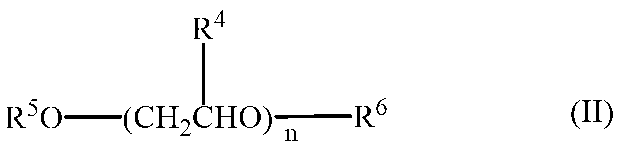
(式中、R4、R5およびR6は、それぞれ独立して、水素原子、または炭素原子数1~6の1価の飽和炭化水素基を表すが、R5とR6が同時に水素原子となることはない。R4が水素原子の場合、nは2以上の整数を表し、R4が前記飽和炭化水素基の場合、nは1以上の整数を表す。)
で表される溶剤 5~500質量部
を含むことを特徴とする組成物、
2. 前記オルガノポリシロキサン化合物の重量平均分子量が、1,000~500,000である1の組成物、
3. 硬化触媒を含有する1または2の組成物、
4. 1~3のいずれかの組成物からなるコーティング剤、
5. 1~3のいずれかの組成物の硬化膜、
6. 基材と、この基材の少なくとも一方の面に、直接または1つ以上の他の層を介して形成された5の硬化膜とを有する被覆物品
を提供する。
1. (A)下記平均式(I)
で表される構造を有するオルガノポリシロキサン化合物 100質量部、および
(B)下記一般式(II)
で表される溶剤 5~500質量部
を含むことを特徴とする組成物、
2. 前記オルガノポリシロキサン化合物の重量平均分子量が、1,000~500,000である1の組成物、
3. 硬化触媒を含有する1または2の組成物、
4. 1~3のいずれかの組成物からなるコーティング剤、
5. 1~3のいずれかの組成物の硬化膜、
6. 基材と、この基材の少なくとも一方の面に、直接または1つ以上の他の層を介して形成された5の硬化膜とを有する被覆物品
を提供する。
本発明の組成物は、重合性官能基を有するオルガノポリシロキサンおよびグリコールエーテル溶剤を含有しているため、人体や生態、地球環境への負荷低減や緩和がなされ、さらに塗膜にクラックや塗りムラが発生しにくいため、環境配慮塗料として有用である。
以下、本発明についてさらに詳しく説明する。
(1)(A)成分
本発明の組成物に用いられる(A)成分は、下記平均式(I)で表される構造を有するオルガノポリシロキサン化合物である。
(1)(A)成分
本発明の組成物に用いられる(A)成分は、下記平均式(I)で表される構造を有するオルガノポリシロキサン化合物である。

式(I)において、R1は、それぞれ独立して、水素原子、またはハロゲン原子で置換されていてもよい、炭素原子数1~8のアルキル基、アラルキル基もしくはアリール基を表し、R2は、i-ブチル基またはn-ブチル基、好ましくはi-ブチル基を表し、R3は、水素原子、メチル基、エチル基、n-プロピル基またはi-プロピル基を表す。
R1において、炭素原子数1~8のアルキル基としては、直鎖、分岐、環状のいずれでもよく、その具体例としては、メチル、エチル、n-プロピル、イソプロピル、n-ブチル、i-ブチル、tert-ブチル、ネオペンチル、n-ヘキシル、シクロヘキシル、n-ヘプチル、n-オクチル基等が挙げられるが、炭素原子数1~3のアルキル基が好ましく、メチル基、エチル基がより好ましい。
アラルキル基の炭素原子数は7~20が好ましく、その具体例としては、ベンジル基、フェニルエチル基等が挙げられる。
アリール基の炭素原子数は6~18が好ましく、その具体例としては、フェニル、ナフチル基等の非置換アリール基;トリル、キシリル、エチルフェニル、プロピルフェニル、ブチルフェニル、ペンチルフェニル、ヘキシルフェニル、ヘプチルフェニル、オクチルフェニル、ノニルフェニル、デシルフェニル、ウンデシルフェニル、ドデシルフェニル基等の炭素数7~18のアルキルアリール基などが挙げられるが、フェニル基が好ましい。
なお、上記アルキル基、アラルキル基およびアリール基は、その水素原子の一部または全部が、ハロゲン原子(フッ素、塩素、臭素、ヨウ素原子)で置換されていてもよく、その具体例としては、クロロメチル基、クロロプロピル基、ブロモエチル基、トリフルオロプロピル基、クロロフェニル基、ブロモフェニル基等が挙げられる。
アラルキル基の炭素原子数は7~20が好ましく、その具体例としては、ベンジル基、フェニルエチル基等が挙げられる。
アリール基の炭素原子数は6~18が好ましく、その具体例としては、フェニル、ナフチル基等の非置換アリール基;トリル、キシリル、エチルフェニル、プロピルフェニル、ブチルフェニル、ペンチルフェニル、ヘキシルフェニル、ヘプチルフェニル、オクチルフェニル、ノニルフェニル、デシルフェニル、ウンデシルフェニル、ドデシルフェニル基等の炭素数7~18のアルキルアリール基などが挙げられるが、フェニル基が好ましい。
なお、上記アルキル基、アラルキル基およびアリール基は、その水素原子の一部または全部が、ハロゲン原子(フッ素、塩素、臭素、ヨウ素原子)で置換されていてもよく、その具体例としては、クロロメチル基、クロロプロピル基、ブロモエチル基、トリフルオロプロピル基、クロロフェニル基、ブロモフェニル基等が挙げられる。
上記aは0≦a<1を満たす数であるが、クラック抑制効果の観点から、0≦a≦0.3の範囲が好ましい。
上記bは0<b≦1を満たす数であるが、得られる硬化物の耐擦傷性の観点から、0.2≦b≦1の範囲が好ましい。
上記cは0≦c<1を満たす数であるが、組成物の硬化性および得られる硬化物の硬度の観点から、0≦c≦0.5の範囲が好ましい。
上記dは0≦d<1を満たす数であるが、組成物の硬化性および得られる硬化物の硬度の観点から、0≦d≦0.4が好ましい。
なお、a+b+c+d=1を満たす。
上記bは0<b≦1を満たす数であるが、得られる硬化物の耐擦傷性の観点から、0.2≦b≦1の範囲が好ましい。
上記cは0≦c<1を満たす数であるが、組成物の硬化性および得られる硬化物の硬度の観点から、0≦c≦0.5の範囲が好ましい。
上記dは0≦d<1を満たす数であるが、組成物の硬化性および得られる硬化物の硬度の観点から、0≦d≦0.4が好ましい。
なお、a+b+c+d=1を満たす。
上記eは0<e≦1を満たす数であるが、組成物の保存安定性や、得られる硬化物の耐クラック性、耐水性および耐候性の観点から、0<e≦0.5を満たす数が好ましい。
上記fは0<f≦1を満たす数であるが、縮合性官能基による縮合反応の抑制に効果的であることや、得られる硬化物の耐クラック性、耐水性および耐候性の観点から、0<f≦0.5を満たす数が好ましい。
上記fは0<f≦1を満たす数であるが、縮合性官能基による縮合反応の抑制に効果的であることや、得られる硬化物の耐クラック性、耐水性および耐候性の観点から、0<f≦0.5を満たす数が好ましい。
本発明の(A)オルガノポリシロキサン化合物は、単一の組成でも、組成の異なる複数の化合物の混合物であってもよい。
本発明の(A)オルガノポリシロキサン化合物の重量平均分子量は特に限定されるものではないが、ゲルパーミエーションクロマトグラフィー(GPC)によるポリスチレン換算重量平均分子量で1,000~500,000が好ましく、1,500~300,000がより好ましい。重量平均分子量が1,000未満では縮合が十分に進んでおらず、オルガノポリシロキサン化合物の保存性が低くなるおそれがあり、また経時で縮合反応が生じ、耐クラック性に優れない可能性がある。500,000超の高分子量体では、オルガノポリシロキサン化合物が溶剤に不溶となり、凝集物による凹凸や塗りムラ等が発生するおそれがある。
また、本発明のオルガノポリシロキサン化合物は、溶剤等を除く不揮発分が90質量%以上であることが好ましい。揮発分が多くなると、組成物を硬化した際のボイド発生による外観の悪化や機械的性質の低下の原因となるおそれがある。
(A)成分の含有量(溶剤を含まない(A)成分純分)は、組成物中10~95質量%であり、20~90質量%が好ましく、60~90質量%がより好ましい。(A)成分の含有量(不揮発分として)が10質量%未満では、塗工後に十分な厚さの硬化物が得られないおそれがあり、95質量%を超えると平滑な硬化物を与えないおそれがある。
本発明の(A)オルガノポリシロキサン化合物は、一般的なオルガノポリシロキサンの製造方法に従って製造することができる。例えば、加水分解性基を有するシラン化合物を加水分解縮合させて本発明のオルガノポリシロキサンを得ることができる。
オルガノポリシロキサンを製造するための原料としては、加水分解性基であるクロルまたはアルコキシ基をケイ素原子上に1~4個有し、上記条件を満たす有機置換基を有するシラン化合物であれば特に限定されるものではない。
その具体例としては、テトラクロロシラン、テトラメトキシシラン、テトラエトキシシラン、テトライソプロポキシシラン、テトラブトキシシラン、メチルトリクロロシラン、メチルトリメトキシシラン、メチルトリエトキシシラン、メチルトリイソプロポキシシラン、メチルトリブトキシシラン、ジメチルジメトキシシラン、ジメチルジエトキシシラン、ジメチルジイソプロポキシシラン、トリメチルクロロシラン、トリメチルメトキシシラン、トリメチルエトキシシラン、トリメチルイソプロポキシシラン、エチルトリクロロシラン、エチルトリメトキシシラン、エチルトリエトキシシラン、プロピルトリクロロシラン、プロピルトリメトキシシラン、プロピルトリエトキシシラン、ブチルトリクロロシラン、ブチルトリメトキシシラン、ブチルトリエトキシシラン、ヘキシルトリクロロシラン、ヘキシルトリメトキシシラン、ヘキシルトリエトキシシラン、フェニルトリクロロシラン、フェニルトリメトキシシラン、フェニルトリエトキシシラン、シクロヘキシルトリクロロシラン、シクロヘキシルトリメトキシシラン、シクロヘキシルトリエトキシシラン、プロピルメチルジクロロシラン、プロピルメチルジメトキシシラン、プロピルメチルジエトキシシラン、ヘキシルメチルジクロロシラン、ヘキシルメチルジメトキシシラン、ヘキシルメチルジエトキシシラン、フェニルメチルジクロロシラン、フェニルメチルジメトキシシラン、フェニルメチルジエトキシシラン、ジフェニルジクロロシラン、ジフェニルジメトキシシラン、ジフェニルジエトキシシラン、ジメチルフェニルクロロシラン、ジメチルフェニルメトキシシラン、ジメチルフェニルエトキシシラン、およびこれらの部分加水分解物等が挙げられるが、操作性、副生物の留去のしやすさ、および原料の入手の容易さから、メトキシシラン、エトキシシランが好適である。
なお、上記シラン化合物は、1種単独で用いても、2種以上の組み合わせて用いてもよい。
その具体例としては、テトラクロロシラン、テトラメトキシシラン、テトラエトキシシラン、テトライソプロポキシシラン、テトラブトキシシラン、メチルトリクロロシラン、メチルトリメトキシシラン、メチルトリエトキシシラン、メチルトリイソプロポキシシラン、メチルトリブトキシシラン、ジメチルジメトキシシラン、ジメチルジエトキシシラン、ジメチルジイソプロポキシシラン、トリメチルクロロシラン、トリメチルメトキシシラン、トリメチルエトキシシラン、トリメチルイソプロポキシシラン、エチルトリクロロシラン、エチルトリメトキシシラン、エチルトリエトキシシラン、プロピルトリクロロシラン、プロピルトリメトキシシラン、プロピルトリエトキシシラン、ブチルトリクロロシラン、ブチルトリメトキシシラン、ブチルトリエトキシシラン、ヘキシルトリクロロシラン、ヘキシルトリメトキシシラン、ヘキシルトリエトキシシラン、フェニルトリクロロシラン、フェニルトリメトキシシラン、フェニルトリエトキシシラン、シクロヘキシルトリクロロシラン、シクロヘキシルトリメトキシシラン、シクロヘキシルトリエトキシシラン、プロピルメチルジクロロシラン、プロピルメチルジメトキシシラン、プロピルメチルジエトキシシラン、ヘキシルメチルジクロロシラン、ヘキシルメチルジメトキシシラン、ヘキシルメチルジエトキシシラン、フェニルメチルジクロロシラン、フェニルメチルジメトキシシラン、フェニルメチルジエトキシシラン、ジフェニルジクロロシラン、ジフェニルジメトキシシラン、ジフェニルジエトキシシラン、ジメチルフェニルクロロシラン、ジメチルフェニルメトキシシラン、ジメチルフェニルエトキシシラン、およびこれらの部分加水分解物等が挙げられるが、操作性、副生物の留去のしやすさ、および原料の入手の容易さから、メトキシシラン、エトキシシランが好適である。
なお、上記シラン化合物は、1種単独で用いても、2種以上の組み合わせて用いてもよい。
加水分解を実施するに際し、加水分解触媒を使用してもよい。
加水分解触媒は、従来公知の触媒を使用することができるが、その水溶液がpH2~7の酸性を示すものが好ましく、特に酸性のハロゲン化水素、カルボン酸、スルホン酸、酸性または弱酸性の無機塩、イオン交換樹脂等の固体酸などが好ましい。
酸性触媒の具体例としては、フッ化水素、塩酸、硝酸、硫酸、メタンスルホン酸、p-トルエンスルホン酸、ギ酸、酢酸、マレイン酸、安息香酸、乳酸、燐酸、表面にスルホン酸またはカルボン酸基を有するカチオン交換樹脂等が挙げられる。
加水分解触媒は、従来公知の触媒を使用することができるが、その水溶液がpH2~7の酸性を示すものが好ましく、特に酸性のハロゲン化水素、カルボン酸、スルホン酸、酸性または弱酸性の無機塩、イオン交換樹脂等の固体酸などが好ましい。
酸性触媒の具体例としては、フッ化水素、塩酸、硝酸、硫酸、メタンスルホン酸、p-トルエンスルホン酸、ギ酸、酢酸、マレイン酸、安息香酸、乳酸、燐酸、表面にスルホン酸またはカルボン酸基を有するカチオン交換樹脂等が挙げられる。
加水分解触媒の使用量は特に限定されるものではないが、反応を速やかに進行させるとともに、反応後の触媒の除去の容易性を考慮すると、加水分解性シラン1モルに対して0.0002~0.5モルの範囲が好ましい。
加水分解性シランと、加水分解縮合反応に要する水との量比は、特に限定されるものではないが、触媒の失活を防いで反応を十分に進行させるとともに、反応後の水の除去の容易性を考慮すると、加水分解性シラン1モルに対し、水0.1~10モルの割合が好ましい。
加水分解縮合時の反応温度は、特に限定されるものではないが、反応率を向上させるとともに、加水分解性シランが有する有機官能基の分解を防止することを考慮すると、-10~150℃が好ましい。
加水分解縮合時の反応温度は、特に限定されるものではないが、反応率を向上させるとともに、加水分解性シランが有する有機官能基の分解を防止することを考慮すると、-10~150℃が好ましい。
なお、加水分解縮合の際には、後述する(B)一般式(II)で表される溶剤を使用してもよく、(B)溶剤以外の有機溶媒を使用してもよい。このような有機溶媒の具体例としては、メタノール、エタノール、プロパノール、n-ブタノール、i-ブタノール、t-ブタノール、アセトン、メチルエチルケトン、メチルイソブチルケトン、テトラヒドロフラン、トルエン、キシレン等が挙げられる。
(B)溶剤以外の有機溶媒を使用した場合は、ストリップ工程等の処理によりこれを除去し、(B)一般式(II)で表される溶剤に置換することが好ましい。
(B)溶剤以外の有機溶媒を使用した場合は、ストリップ工程等の処理によりこれを除去し、(B)一般式(II)で表される溶剤に置換することが好ましい。
なお、加水分解縮合の際に、エタノール、プロパノール、n-ブタノール、i-ブタノール、t-ブタノール等のアルコール系溶剤を用い適切な反応条件を選択することで、オルガノポリシロキサンの末端基を、エトキシ基、プロポキシ基、n-ブトキシ基、i-ブトキシ基、t-ブトキシ基などのアルコキシ基に置換することができる。
(2)(B)成分
本発明の組成物に用いられる(B)成分は、下記一般式(II)で表されるグリコールエーテル溶剤であり、このグリコールエーテル溶剤は1種単独で用いても、2種以上を適宜組み合わせて用いてもよい。
本発明の組成物に用いられる(B)成分は、下記一般式(II)で表されるグリコールエーテル溶剤であり、このグリコールエーテル溶剤は1種単独で用いても、2種以上を適宜組み合わせて用いてもよい。
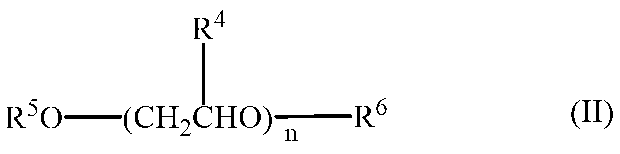
式(II)において、R4、R5およびR6は、それぞれ独立して、水素原子、または炭素原子数1~6の1価の飽和炭化水素基を表すが、R5とR6が同時に水素原子となることはない。R4が水素原子の場合、nは2以上の整数を表し、R4が飽和炭化水素基の場合、nは1以上の整数を表す。nの上限は特に限定されないが、10以下が好ましい。
炭素原子数1~6の飽和炭化水素基としては、直鎖、分岐、環状のいずれでもよく、メチル、エチル、n-プロピル、イソプロピル、n-ブチル、i-ブチル、tert-ブチル、ネオペンチル、n-ヘキシル等の直鎖または分岐のアルキル基;シクロプロピル、シクロペンチル、シクロヘキシル基等の環状アルキル基などが挙げられるが、炭素原子数1~6の直鎖または分岐のアルキル基が好ましい。
特に、R4としては、水素原子またはメチル基が好ましい。
特に、R4としては、水素原子またはメチル基が好ましい。
上記一般式(II)で表される溶剤の具体例としては、ジエチレングリコールモノメチルエーテル、トリエチレングリコールモノメチルエーテル、ポリエチレングリコールモノメチルエーテル、ジエチレングリコールモノイソプロピルエーテル、ジエチレングリコールモノブチルエーテル、トリエチレングリコールモノブチルエーテル、ジエチレングリコールモノイソブチルエーテル、ジエチレングリコールモノヘキシルエーテル、ジエチレングリコールモノ-2-エチルヘキシルエーテル、ジエチレングリコールモノフェニルエーテル、ジエチレングリコールモノベンジルエーテル、プロピレングリコールモノメチルエーテル、ジプロピレングリコールモノメチルエーテル、トリプロピレングリコールモノメチルエーテル、プロピレングリコールモノプロピルエーテル、ジプロピレングリコールモノプロピルエーテル、プロピレングリコールモノブチルエーテル、ジプロピレングリコールモノブチルエーテル、トリプロピレングリコールモノブチルエーテル、プロピレングリコールモノフェニルエーテル、ジエチレングリコールジメチルエーテル、トリエチレングリコールジメチルエーテル、ジエチレングリコールメチルエチルエーテル、ジエチレングリコールジエチルエーテル、ジエチレングリコールジブチルエーテル、ジプロピレングリコールジメチルエーテル等が挙げられる。
これらの中でも、ジエチレングリコールジエチルエーテル、ジプロピレングリコールジメチルエーテルが好ましい。
これらの中でも、ジエチレングリコールジエチルエーテル、ジプロピレングリコールジメチルエーテルが好ましい。
(B)成分の含有量は、組成物中10質量%以上であり、15~40質量%が好ましい。(B)成分の含有量が、組成物10質量%未満だと、平滑な硬化物を与えないおそれがある。
本発明の組成物は、TX溶剤を実質的に含有しないことが好ましい。なお、TX溶剤とは、トルエン、キシレン等の芳香族炭化水素系溶剤をいう。なお、実質的に含有しないとは、TX溶剤の含有量が組成物中2.0質量%以下であることをいうが、0.5質量%以下が好ましく、0質量%でもよい。
なお、本発明の組成物には、本発明の効果を阻害しない範囲で適宜に任意の添加剤を加えることができる。
添加剤の具体例としては、非反応性シリコーンオイル、反応性シリコーンオイル、シランカップリング剤等の密着付与剤、老化防止剤、防錆剤、着色剤、界面活性剤、レオロジー調整剤、紫外線吸収剤、赤外線吸収剤、蛍光剤、研磨剤、香料、充填剤、フィラー、染顔料、レベリング剤、反応性希釈剤、非反応性高分子樹脂、酸化防止剤、紫外線吸収剤、光安定剤、消泡剤、分散剤、帯電防止剤、チキソトロピー付与剤等が挙げられる。これらは、それぞれ1種単独で、または2種以上を組み合わせて、適量用いることができる。
添加剤の具体例としては、非反応性シリコーンオイル、反応性シリコーンオイル、シランカップリング剤等の密着付与剤、老化防止剤、防錆剤、着色剤、界面活性剤、レオロジー調整剤、紫外線吸収剤、赤外線吸収剤、蛍光剤、研磨剤、香料、充填剤、フィラー、染顔料、レベリング剤、反応性希釈剤、非反応性高分子樹脂、酸化防止剤、紫外線吸収剤、光安定剤、消泡剤、分散剤、帯電防止剤、チキソトロピー付与剤等が挙げられる。これらは、それぞれ1種単独で、または2種以上を組み合わせて、適量用いることができる。
本発明の組成物の粘度は、特に限定されるものではないが、成形または塗布作業性を良好にし、スジムラ等の発生を抑制することを考慮すると、回転粘度計により測定される25℃での粘度が、100,000mPa・s以下が好ましく、20,000mPa・s以下がより好ましい。下限は特に限定されないが、10mPa・s程度が好ましい。
本発明の組成物は、室温および加熱条件下で乾燥により被膜を形成することができるが、硬化速度を加速するため、または優れた被膜特性を得るために、硬化触媒、例えば縮合硬化触媒を添加してもよい。
硬化触媒としては、公知の触媒から適宜選択して用いることができ、例えば、有機スズ化合物、有機チタニウム化合物、有機ジルコニウム化合物、有機アルミニウム化合物等の有機金属化合物;塩酸、硫酸等の無機酸類;p-トルエンスルホン酸、各種脂肪族または芳香族カルボン酸等の有機酸類;アンモニア;水酸化ナトリウム等の無機塩基類、トリブチルアミン、1,5-ジアザビシクロ[4.3.0]ノネン-5(DBN)、1,8-ジアザビシクロ[5.4.0]ウンデセン-7(DBU)等の有機塩基類等が挙げられ、これらは単独で用いても、複数種を併用しても構わない。
本発明の組成物では、これらの中でも、有機スズ化合物、有機チタニウム化合物および有機アルミニウム化合物から選ばれる有機金属化合物が好ましく、具体的には、ジブチル錫ジラウレート、ジブチル錫ジオクテート、ジブチル錫ジアセテート、ジオクチル錫ジラウレート、ジオクチル錫ジオクテート、ジオクチル錫ジアセテート、ジブチル錫ビスアセチルアセテート、ジオクチル錫ビスアセチルラウレート、テトラブチルチタネート、テトラノニルチタネート、テトラキスエチレングリコールメチルエーテルチタネート、テトラキスエチレングリコールエチルエーテルチタネート、ビス(アセチルアセトニル)ジプロピルチタネート、アセチルアセトンアルミニウム、アルミニウムビス(エチルアセトアセテート)モノノルマルブチレート、アルミニウムエチルアセトアセテートジノルマルブチレート、アルミニウムトリス(エチルアセトアセテート)等が好適であり、特に、反応性、溶解性の観点から、テトラブチルチタネート、アルミニウムエチルアセトアセテートジノルマルブチレート、アルミニウムビス(エチルアセトアセテート)モノノルマルブチレートおよびこれらの加水分解物が好ましい。
硬化触媒の含有量は、(A)オルガノポリシロキサン化合物100質量部に対し、0.01~30質量部が好ましく、0.5~10質量部がより好ましい。
本発明の組成物は、例えば、上記(A)および(B)成分、ならびに任意成分を混合して製造することができる。
なお、上記一般式(II)で表される溶剤の割合は、組成物を構成する溶剤全体中に10~100質量%が好ましく、50~100質量%がより好ましく、100質量%がより一層好ましい。
なお、上記一般式(II)で表される溶剤の割合は、組成物を構成する溶剤全体中に10~100質量%が好ましく、50~100質量%がより好ましく、100質量%がより一層好ましい。
上述した本発明の組成物は、コーティング剤等として好適に利用でき、特に外壁塗料として好適に使用できるが、その適用用途は、コーティング剤に限定されるものではない。
コーティング剤として使用する場合、例えば、基材の少なくとも一方の面に、直接または1つ以上の他の層を介して、本発明の組成物を塗布し、それを硬化させて被膜を形成させることで、基材の少なくとも一方の面に、本発明の組成物の硬化膜を有する被覆物品を得ることができる。
コーティング剤として使用する場合、例えば、基材の少なくとも一方の面に、直接または1つ以上の他の層を介して、本発明の組成物を塗布し、それを硬化させて被膜を形成させることで、基材の少なくとも一方の面に、本発明の組成物の硬化膜を有する被覆物品を得ることができる。
上記基材としては、特に限定されるものではないが、ガラス、シリコンウェハー、金属、プラスチック成形体、セラミックス、およびそれらの複合物等が挙げられる。
また、これらの基材の表面が、化成処理、コロナ放電処理、プラズマ処理、酸やアルカリ液で処理されている基材や、基材本体と表層が異なる種類の塗料で被覆された化粧合板等も用いることもできる。他の層としては、ポリエステル樹脂塗装、ポリウレタン樹脂塗装、アミノアルキド樹脂塗装、ラッカー塗装、吹付塗装、水性ワックス塗装により得られたものが挙げられる。
また、これらの基材の表面が、化成処理、コロナ放電処理、プラズマ処理、酸やアルカリ液で処理されている基材や、基材本体と表層が異なる種類の塗料で被覆された化粧合板等も用いることもできる。他の層としては、ポリエステル樹脂塗装、ポリウレタン樹脂塗装、アミノアルキド樹脂塗装、ラッカー塗装、吹付塗装、水性ワックス塗装により得られたものが挙げられる。
コーティング剤の基材への塗布方法としては、公知の手法から適宜選択すればよく、例えば、フローコート、スピンコート、バーコーター、ワイヤーバー、刷毛塗り、スプレー、浸漬、ロールコート、カーテンコート、ナイフコート等の各種塗布方法を用いることができる。塗布量は特に制限されないが、通常は乾燥後の被膜の厚さが0.1~1,000μmとなる量が好ましく、1~100μmとなる量であることが好ましい。
組成物を硬化させるための方法としては、常温硬化、加熱硬化等が挙げられる。
加熱温度は特に制限されないが、100~300℃が好ましく、150~250℃がより好ましい。
加熱温度は特に制限されないが、100~300℃が好ましく、150~250℃がより好ましい。
以下、実施例および比較例を挙げて、本発明をより具体的に説明するが、本発明は下記の実施例に制限されるものではない。
なお、下記において、不揮発分はJIS C2133に準じて測定した値であり、重量平均分子量はGPC(ゲルパーミエーションクロマトグラフィー、HLC-8220 東ソー(株)製)を用いてテトラヒドロフラン(THF)を展開溶媒として測定した値である。また、平均式(I)におけるa~fの値は、1H-NMRおよび29Si-NMR測定の結果から算出した。
なお、下記において、不揮発分はJIS C2133に準じて測定した値であり、重量平均分子量はGPC(ゲルパーミエーションクロマトグラフィー、HLC-8220 東ソー(株)製)を用いてテトラヒドロフラン(THF)を展開溶媒として測定した値である。また、平均式(I)におけるa~fの値は、1H-NMRおよび29Si-NMR測定の結果から算出した。
[1]組成物の製造
[実施例1-1]
メチルトリメトキシシラン(KBM-13、信越化学工業(株)製)681.0g(5.0mol)、フェニルトリメトキシシラン(KBM-103、信越化学工業(株)製)396.6g(2.0mol)、ジメチルジメトキシシラン(KBM-22、信越化学工業(株)製)240.4g(2.0mol)、ジフェニルジメトキシシラン(KBM-202、信越化学工業(株)製)244.4g(1.0mol)、i-ブタノール564.3g、カチオン交換樹脂(レバチットK2629、(株)ランクセス製)47.0gを反応器中に配合し、均一になったところでイオン交換水291.6gを添加し、80℃で3時間撹拌した。加圧濾過後、ジプロピレングリコールジメチルエーテル(日本乳化剤(株)製)134.4gを投入した。減圧下にてメタノール等の揮発成分を留去し、加圧濾過を行い、組成物Aを得た。
得られた組成物Aは、粘度3,560mPa・s、不揮発分86.4質量%、溶剤を除くシリコーン成分の重量平均分子量22,200の25℃で粘稠な液体であった。平均式(I)におけるa~fの値は、それぞれa=0、b=0.72、c=0.28、d=0、e=0.07、f=0.06であった。
[実施例1-1]
メチルトリメトキシシラン(KBM-13、信越化学工業(株)製)681.0g(5.0mol)、フェニルトリメトキシシラン(KBM-103、信越化学工業(株)製)396.6g(2.0mol)、ジメチルジメトキシシラン(KBM-22、信越化学工業(株)製)240.4g(2.0mol)、ジフェニルジメトキシシラン(KBM-202、信越化学工業(株)製)244.4g(1.0mol)、i-ブタノール564.3g、カチオン交換樹脂(レバチットK2629、(株)ランクセス製)47.0gを反応器中に配合し、均一になったところでイオン交換水291.6gを添加し、80℃で3時間撹拌した。加圧濾過後、ジプロピレングリコールジメチルエーテル(日本乳化剤(株)製)134.4gを投入した。減圧下にてメタノール等の揮発成分を留去し、加圧濾過を行い、組成物Aを得た。
得られた組成物Aは、粘度3,560mPa・s、不揮発分86.4質量%、溶剤を除くシリコーン成分の重量平均分子量22,200の25℃で粘稠な液体であった。平均式(I)におけるa~fの値は、それぞれa=0、b=0.72、c=0.28、d=0、e=0.07、f=0.06であった。
[実施例1-2]
メチルトリメトキシシラン(KBM-13、信越化学工業(株)製)1,021.5g(7.5mol)、ジメチルジメトキシシラン(KBM-22、信越化学工業(株)製)300.6g(2.5mol)、i-ブタノール413.2g、カチオン交換樹脂(レバチットK2629、(株)ランクセス製)34.4gを反応器中に配合し、均一になったところでイオン交換水297.0gを添加し、80℃で3時間撹拌した。加圧濾過後、ジプロピレングリコールジメチルエーテル(日本乳化剤(株)製)98.4gを投入した。減圧下にてメタノール等の揮発成分を留去し、加圧濾過を行い、組成物Bを得た。
得られた組成物Bは、粘度2,200mPa・s、不揮発分84.7質量%、溶剤を除くシリコーン成分の重量平均分子量6,850の25℃で粘稠な液体であった。平均式(I)におけるa~fの値は、それぞれa=0、b=0.76、c=0.24、d=0、e=0.08、f=0.10であった。
メチルトリメトキシシラン(KBM-13、信越化学工業(株)製)1,021.5g(7.5mol)、ジメチルジメトキシシラン(KBM-22、信越化学工業(株)製)300.6g(2.5mol)、i-ブタノール413.2g、カチオン交換樹脂(レバチットK2629、(株)ランクセス製)34.4gを反応器中に配合し、均一になったところでイオン交換水297.0gを添加し、80℃で3時間撹拌した。加圧濾過後、ジプロピレングリコールジメチルエーテル(日本乳化剤(株)製)98.4gを投入した。減圧下にてメタノール等の揮発成分を留去し、加圧濾過を行い、組成物Bを得た。
得られた組成物Bは、粘度2,200mPa・s、不揮発分84.7質量%、溶剤を除くシリコーン成分の重量平均分子量6,850の25℃で粘稠な液体であった。平均式(I)におけるa~fの値は、それぞれa=0、b=0.76、c=0.24、d=0、e=0.08、f=0.10であった。
[実施例1-3]
メチルトリメトキシシラン(KBM-13、信越化学工業(株)製)817.2g(6.0mol)、ジメチルジメトキシシラン(KBM-22、信越化学工業(株)製)120.2g(1.0mol)、ジフェニルジメトキシシラン(KBM-202、信越化学工業(株)製)244.4g(1.0mol)、ヘキサメチルジシロキサン162.4g(1.0mol)、i-ブタノール502.5g、カチオン交換樹脂(レバチットK2629、(株)ランクセス製)41.9gを反応器中に配合し、均一になったところでイオン交換水237.6gを添加し、80℃で3時間撹拌した。加圧濾過後、ジプロピレングリコールジメチルエーテル(日本乳化剤(株)製)119.6gを投入した。減圧下にてメタノール等の揮発成分を留去し、加圧濾過を行い、組成物Cを得た。
得られた組成物Cは、粘度1,880mPa・s、不揮発分83.9質量%、溶剤を除くシリコーン成分の重量平均分子量5,800の25℃で粘稠な液体であった。平均式(I)におけるa~fの値は、それぞれa=0、b=0.62、c=0.22、d=0.16、e=0.09、f=0.08であった。
メチルトリメトキシシラン(KBM-13、信越化学工業(株)製)817.2g(6.0mol)、ジメチルジメトキシシラン(KBM-22、信越化学工業(株)製)120.2g(1.0mol)、ジフェニルジメトキシシラン(KBM-202、信越化学工業(株)製)244.4g(1.0mol)、ヘキサメチルジシロキサン162.4g(1.0mol)、i-ブタノール502.5g、カチオン交換樹脂(レバチットK2629、(株)ランクセス製)41.9gを反応器中に配合し、均一になったところでイオン交換水237.6gを添加し、80℃で3時間撹拌した。加圧濾過後、ジプロピレングリコールジメチルエーテル(日本乳化剤(株)製)119.6gを投入した。減圧下にてメタノール等の揮発成分を留去し、加圧濾過を行い、組成物Cを得た。
得られた組成物Cは、粘度1,880mPa・s、不揮発分83.9質量%、溶剤を除くシリコーン成分の重量平均分子量5,800の25℃で粘稠な液体であった。平均式(I)におけるa~fの値は、それぞれa=0、b=0.62、c=0.22、d=0.16、e=0.09、f=0.08であった。
[実施例1-4]
テトラエトキシシラン10.4g(0.05mol)、メチルトリメトキシシラン(KBM-13、信越化学工業(株)製)681.0g(5.0mol)、フェニルトリメトキシシラン(KBM-103、信越化学工業(株)製)29.8g(0.15mol)、ジメチルジメトキシシラン(KBM-22、信越化学工業(株)製)336.6g(2.8mol)、ジフェニルジメトキシシラン(KBM-202、信越化学工業(株)製)488.8g(2.0mol)、i-ブタノール577.29g、カチオン交換樹脂(レバチットK2629、(株)ランクセス製)48.1gを反応器中に配合し、均一になったところでイオン交換水272.7gを添加し、80℃で3時間撹拌した。加圧濾過後、ジプロピレングリコールジメチルエーテル(日本乳化剤(株)製)137.5gを投入した。減圧下にてメタノール等の揮発成分を留去し、加圧濾過を行い、組成物Dを得た。
得られた組成物Dは、粘度7,860mPa・s、不揮発分87.2質量%、溶剤を除くシリコーン成分の重量平均分子量26,300の25℃で粘稠な液体であった。平均式(I)におけるa~fの値は、それぞれa=0.01、b=0.67、c=0.32、d=0、e=0.06、f=0.08であった。
テトラエトキシシラン10.4g(0.05mol)、メチルトリメトキシシラン(KBM-13、信越化学工業(株)製)681.0g(5.0mol)、フェニルトリメトキシシラン(KBM-103、信越化学工業(株)製)29.8g(0.15mol)、ジメチルジメトキシシラン(KBM-22、信越化学工業(株)製)336.6g(2.8mol)、ジフェニルジメトキシシラン(KBM-202、信越化学工業(株)製)488.8g(2.0mol)、i-ブタノール577.29g、カチオン交換樹脂(レバチットK2629、(株)ランクセス製)48.1gを反応器中に配合し、均一になったところでイオン交換水272.7gを添加し、80℃で3時間撹拌した。加圧濾過後、ジプロピレングリコールジメチルエーテル(日本乳化剤(株)製)137.5gを投入した。減圧下にてメタノール等の揮発成分を留去し、加圧濾過を行い、組成物Dを得た。
得られた組成物Dは、粘度7,860mPa・s、不揮発分87.2質量%、溶剤を除くシリコーン成分の重量平均分子量26,300の25℃で粘稠な液体であった。平均式(I)におけるa~fの値は、それぞれa=0.01、b=0.67、c=0.32、d=0、e=0.06、f=0.08であった。
[実施例1-5]
実施例1-1で調製した組成物A100質量部に対し、硬化触媒(DX-9740、信越化学工業(株)製)5質量部を加え、室温で撹拌して組成物Eを得た。
実施例1-1で調製した組成物A100質量部に対し、硬化触媒(DX-9740、信越化学工業(株)製)5質量部を加え、室温で撹拌して組成物Eを得た。
[比較例1-1]
メチルトリメトキシシラン(KBM-13、信越化学工業(株)製)681.0g(5.0mol)、フェニルトリメトキシシラン(KBM-103、信越化学工業(株)製)396.6g(2.0mol)、ジメチルジメトキシシラン(KBM-22、信越化学工業(株)製)240.4g(2.0mol)、ジフェニルジメトキシシラン(KBM-202、信越化学工業(株)製)244.4g(1.0mol)、i-ブタノール564.3g、カチオン交換樹脂(レバチットK2629、(株)ランクセス製)47.0gを反応器中に配合し、均一になったところでイオン交換水291.6gを添加し、80℃で3時間撹拌した。加圧濾過後、減圧下にてメタノール等の揮発成分を留去した。トルエン134.4gを投入後、加圧濾過を行い、組成物Fを得た。
得られた組成物Fは、粘度390mPa・s、不揮発分81.6質量%、溶剤を除くシリコーン成分の重量平均分子量21,800の25℃で粘稠な液体であった。平均式(I)におけるa~fの値は、それぞれa=0、b=0.71、c=0.29、d=0、e=0.07、f=0.06であった。
メチルトリメトキシシラン(KBM-13、信越化学工業(株)製)681.0g(5.0mol)、フェニルトリメトキシシラン(KBM-103、信越化学工業(株)製)396.6g(2.0mol)、ジメチルジメトキシシラン(KBM-22、信越化学工業(株)製)240.4g(2.0mol)、ジフェニルジメトキシシラン(KBM-202、信越化学工業(株)製)244.4g(1.0mol)、i-ブタノール564.3g、カチオン交換樹脂(レバチットK2629、(株)ランクセス製)47.0gを反応器中に配合し、均一になったところでイオン交換水291.6gを添加し、80℃で3時間撹拌した。加圧濾過後、減圧下にてメタノール等の揮発成分を留去した。トルエン134.4gを投入後、加圧濾過を行い、組成物Fを得た。
得られた組成物Fは、粘度390mPa・s、不揮発分81.6質量%、溶剤を除くシリコーン成分の重量平均分子量21,800の25℃で粘稠な液体であった。平均式(I)におけるa~fの値は、それぞれa=0、b=0.71、c=0.29、d=0、e=0.07、f=0.06であった。
[比較例1-2]
メチルトリメトキシシラン(KBM-13、信越化学工業(株)製)1,021.5g(7.5mol)、ジメチルジメトキシシラン(KBM-22、信越化学工業(株)製)300.6g(2.5mol)、i-ブタノール413.2g、カチオン交換樹脂(レバチットK2629、(株)ランクセス製)34.4gを反応器中に配合し、均一になったところでイオン交換水297.0gを添加し、80℃で3時間撹拌した。加圧濾過後、減圧下にてメタノール等の揮発成分を留去した。トルエン98.4gを投入後、加圧濾過を行い、組成物Gを得た。
得られた組成物Gは、粘度280mPa・s、不揮発分82.2質量%、溶剤を除くシリコーン成分の重量平均分子量7,700の25℃で粘稠な液体であった。平均式(I)におけるa~fの値は、それぞれa=0、b=0.78、c=0.22、d=0、e=0.07、f=0.10であった。
メチルトリメトキシシラン(KBM-13、信越化学工業(株)製)1,021.5g(7.5mol)、ジメチルジメトキシシラン(KBM-22、信越化学工業(株)製)300.6g(2.5mol)、i-ブタノール413.2g、カチオン交換樹脂(レバチットK2629、(株)ランクセス製)34.4gを反応器中に配合し、均一になったところでイオン交換水297.0gを添加し、80℃で3時間撹拌した。加圧濾過後、減圧下にてメタノール等の揮発成分を留去した。トルエン98.4gを投入後、加圧濾過を行い、組成物Gを得た。
得られた組成物Gは、粘度280mPa・s、不揮発分82.2質量%、溶剤を除くシリコーン成分の重量平均分子量7,700の25℃で粘稠な液体であった。平均式(I)におけるa~fの値は、それぞれa=0、b=0.78、c=0.22、d=0、e=0.07、f=0.10であった。
[比較例1-3]
メチルトリメトキシシラン(KBM-13、信越化学工業(株)製)817.2g(6.0mol)、ジメチルジメトキシシラン(KBM-22、信越化学工業(株)製)120.2g(1.0mol)、ジフェニルジメトキシシラン(KBM-202、信越化学工業(株)製)244.4g(1.0mol)、ヘキサメチルジシロキサン162.4g(1.0mol)、i-ブタノール502.5g、カチオン交換樹脂(レバチットK2629、(株)ランクセス製)41.9gを反応器中に配合し、均一になったところでイオン交換水237.6gを添加し、80℃で3時間撹拌した。加圧濾過後、減圧下にてメタノール等の揮発成分を留去した。トルエン119.6gを投入後、加圧濾過を行い、組成物Hを得た。
得られた組成物Hは、粘度330mPa・s、不揮発分81.1質量%、溶剤を除くシリコーン成分の重量平均分子量5,600の25℃で粘稠な液体であった。平均式(I)におけるa~fの値は、それぞれa=0、b=0.60、c=0.21、d=0.19、e=0.10、f=0.08であった。
メチルトリメトキシシラン(KBM-13、信越化学工業(株)製)817.2g(6.0mol)、ジメチルジメトキシシラン(KBM-22、信越化学工業(株)製)120.2g(1.0mol)、ジフェニルジメトキシシラン(KBM-202、信越化学工業(株)製)244.4g(1.0mol)、ヘキサメチルジシロキサン162.4g(1.0mol)、i-ブタノール502.5g、カチオン交換樹脂(レバチットK2629、(株)ランクセス製)41.9gを反応器中に配合し、均一になったところでイオン交換水237.6gを添加し、80℃で3時間撹拌した。加圧濾過後、減圧下にてメタノール等の揮発成分を留去した。トルエン119.6gを投入後、加圧濾過を行い、組成物Hを得た。
得られた組成物Hは、粘度330mPa・s、不揮発分81.1質量%、溶剤を除くシリコーン成分の重量平均分子量5,600の25℃で粘稠な液体であった。平均式(I)におけるa~fの値は、それぞれa=0、b=0.60、c=0.21、d=0.19、e=0.10、f=0.08であった。
[比較例1-4]
テトラエトキシシラン10.4g(0.05mol)、メチルトリメトキシシラン(KBM-13、信越化学工業(株)製)681.0g(5.0mol)、フェニルトリメトキシシラン(KBM-103、信越化学工業(株)製)29.8g(0.15mol)、ジメチルジメトキシシラン(KBM-22、信越化学工業(株)製)336.6g(2.8mol)、ジフェニルジメトキシシラン(KBM-202、信越化学工業(株)製)488.8g(2.0mol)、i-ブタノール577.29g、カチオン交換樹脂(レバチットK2629、(株)ランクセス製)48.1gを反応器中に配合し、均一になったところでイオン交換水272.7gを添加し、80℃で3時間撹拌した。加圧濾過後、減圧下にてメタノール等の揮発成分を留去した。トルエン137.5gを投入後、加圧濾過を行い、組成物Iを得た。
得られた組成物Iは、粘度380mPa・s、不揮発分82.2質量%、溶剤を除くシリコーン成分の重量平均分子量23,200の25℃で粘稠な液体であった。平均式(I)におけるa~fの値は、それぞれa=0.01、b=0.65、c=0.35、d=0、e=0.08、f=0.07であった。
テトラエトキシシラン10.4g(0.05mol)、メチルトリメトキシシラン(KBM-13、信越化学工業(株)製)681.0g(5.0mol)、フェニルトリメトキシシラン(KBM-103、信越化学工業(株)製)29.8g(0.15mol)、ジメチルジメトキシシラン(KBM-22、信越化学工業(株)製)336.6g(2.8mol)、ジフェニルジメトキシシラン(KBM-202、信越化学工業(株)製)488.8g(2.0mol)、i-ブタノール577.29g、カチオン交換樹脂(レバチットK2629、(株)ランクセス製)48.1gを反応器中に配合し、均一になったところでイオン交換水272.7gを添加し、80℃で3時間撹拌した。加圧濾過後、減圧下にてメタノール等の揮発成分を留去した。トルエン137.5gを投入後、加圧濾過を行い、組成物Iを得た。
得られた組成物Iは、粘度380mPa・s、不揮発分82.2質量%、溶剤を除くシリコーン成分の重量平均分子量23,200の25℃で粘稠な液体であった。平均式(I)におけるa~fの値は、それぞれa=0.01、b=0.65、c=0.35、d=0、e=0.08、f=0.07であった。
[比較例1-5]
比較例1-1で調製した組成物F100質量部に対し、硬化触媒(DX-9740、信越化学工業(株)製)5質量部を加え、室温で撹拌して組成物Jを得た。
比較例1-1で調製した組成物F100質量部に対し、硬化触媒(DX-9740、信越化学工業(株)製)5質量部を加え、室温で撹拌して組成物Jを得た。
[2]硬化膜および被覆物品の製造
[実施例2-1~2-5,比較例2-1~2-5]
上記実施例1-1~1-5および比較例1-1~1-5で得られた各組成物A~Jをフローコートにより磨き鋼材上に塗布し、200℃の乾燥機で2時間加熱して焼付を行った。なお、実施例の各組成物中の(B)成分の含有量は10質量%以上である。
得られた被覆物品について目視での塗膜外観の評価と、密着性を測定した。結果を表1に示す。
(1)塗膜外観
目視にて、塗膜表面が均一で凝集物による凹凸やクラックが入っていないものをOK、クラックや凝集物による凹凸が発生したものをNGとした。
(2)密着性試験
JIS K5600-5-6に準じて25マスによるクロスカット試験を行い、(剥離せず残ったマスの数)/25として表した。
[実施例2-1~2-5,比較例2-1~2-5]
上記実施例1-1~1-5および比較例1-1~1-5で得られた各組成物A~Jをフローコートにより磨き鋼材上に塗布し、200℃の乾燥機で2時間加熱して焼付を行った。なお、実施例の各組成物中の(B)成分の含有量は10質量%以上である。
得られた被覆物品について目視での塗膜外観の評価と、密着性を測定した。結果を表1に示す。
(1)塗膜外観
目視にて、塗膜表面が均一で凝集物による凹凸やクラックが入っていないものをOK、クラックや凝集物による凹凸が発生したものをNGとした。
(2)密着性試験
JIS K5600-5-6に準じて25マスによるクロスカット試験を行い、(剥離せず残ったマスの数)/25として表した。
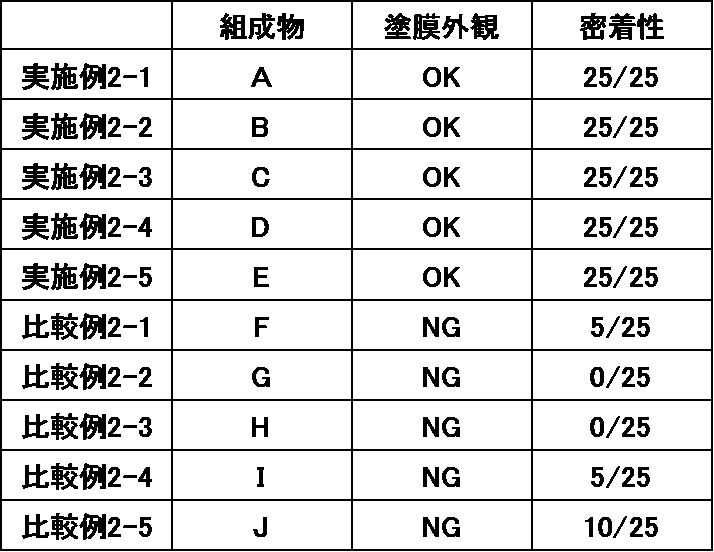
表1に示されるように、一般式(II)で表される溶剤を含有する組成物A~Eを用いた実施例2-1~2-5では、凝集物による凹凸やクラックの発生がない均一で密着性の良い硬化膜を有する被覆物品が得られており、本発明のオルガノポリシロキサン化合物の優位性を示唆している。
Claims (6)
- (A)下記平均式(I)

で表される構造を有するオルガノポリシロキサン化合物 100質量部、および
(B)下記一般式(II)
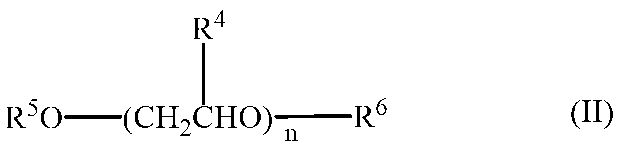
で表される溶剤 5~500質量部
を含むことを特徴とする組成物。 - 前記オルガノポリシロキサン化合物の重量平均分子量が、1,000~500,000である請求項1記載の組成物。
- 硬化触媒を含有する請求項1または2記載の組成物。
- 請求項1~3のいずれか1項記載の組成物からなるコーティング剤。
- 請求項1~3のいずれか1項記載の組成物の硬化膜。
- 基材と、この基材の少なくとも一方の面に、直接または1つ以上の他の層を介して形成された請求項5記載の硬化膜とを有する被覆物品。
Applications Claiming Priority (2)
| Application Number | Priority Date | Filing Date | Title |
|---|---|---|---|
| JP2019010121A JP7120045B2 (ja) | 2019-01-24 | 2019-01-24 | オルガノポリシロキサン化合物を含有する組成物 |
| JP2019-010121 | 2019-01-24 |
Publications (1)
| Publication Number | Publication Date |
|---|---|
| WO2020152976A1 true WO2020152976A1 (ja) | 2020-07-30 |
Family
ID=71736721
Family Applications (1)
| Application Number | Title | Priority Date | Filing Date |
|---|---|---|---|
| PCT/JP2019/046171 Ceased WO2020152976A1 (ja) | 2019-01-24 | 2019-11-26 | オルガノポリシロキサン化合物を含有する組成物 |
Country Status (3)
| Country | Link |
|---|---|
| JP (1) | JP7120045B2 (ja) |
| TW (1) | TW202037644A (ja) |
| WO (1) | WO2020152976A1 (ja) |
Families Citing this family (1)
| Publication number | Priority date | Publication date | Assignee | Title |
|---|---|---|---|---|
| WO2025134443A1 (ja) * | 2023-12-18 | 2025-06-26 | ダウ・東レ株式会社 | ポリシロキサン組成物およびその用途 |
Citations (5)
| Publication number | Priority date | Publication date | Assignee | Title |
|---|---|---|---|---|
| JP2004059738A (ja) * | 2002-07-29 | 2004-02-26 | Jsr Corp | 膜形成用組成物、膜の形成方法およびシリカ系膜 |
| JP2005298573A (ja) * | 2004-04-07 | 2005-10-27 | Shin Etsu Chem Co Ltd | 防汚性コーティング剤及び被覆物品 |
| JP2010135470A (ja) * | 2008-12-03 | 2010-06-17 | Rasa Ind Ltd | 誘電体層形成用塗布液及びその製造方法 |
| WO2013099909A1 (ja) * | 2011-12-28 | 2013-07-04 | 東亞合成株式会社 | ポリシロキサンの製造方法 |
| WO2018066515A1 (ja) * | 2016-10-04 | 2018-04-12 | 日産化学工業株式会社 | パターン反転のための被覆組成物 |
-
2019
- 2019-01-24 JP JP2019010121A patent/JP7120045B2/ja active Active
- 2019-11-26 WO PCT/JP2019/046171 patent/WO2020152976A1/ja not_active Ceased
- 2019-12-12 TW TW108145425A patent/TW202037644A/zh unknown
Patent Citations (5)
| Publication number | Priority date | Publication date | Assignee | Title |
|---|---|---|---|---|
| JP2004059738A (ja) * | 2002-07-29 | 2004-02-26 | Jsr Corp | 膜形成用組成物、膜の形成方法およびシリカ系膜 |
| JP2005298573A (ja) * | 2004-04-07 | 2005-10-27 | Shin Etsu Chem Co Ltd | 防汚性コーティング剤及び被覆物品 |
| JP2010135470A (ja) * | 2008-12-03 | 2010-06-17 | Rasa Ind Ltd | 誘電体層形成用塗布液及びその製造方法 |
| WO2013099909A1 (ja) * | 2011-12-28 | 2013-07-04 | 東亞合成株式会社 | ポリシロキサンの製造方法 |
| WO2018066515A1 (ja) * | 2016-10-04 | 2018-04-12 | 日産化学工業株式会社 | パターン反転のための被覆組成物 |
Also Published As
| Publication number | Publication date |
|---|---|
| TW202037644A (zh) | 2020-10-16 |
| JP2020117632A (ja) | 2020-08-06 |
| JP7120045B2 (ja) | 2022-08-17 |
Similar Documents
| Publication | Publication Date | Title |
|---|---|---|
| KR102776369B1 (ko) | 오가노폴리실록산 화합물을 함유하는 조성물, 그 제조 방법, 코팅제 및 피복 물품 | |
| JP2020183511A (ja) | 水性ポリオルガノシロキサンハイブリッド分散液 | |
| JP6838524B2 (ja) | 重合性官能基を有するオルガノポリシロキサン化合物およびそれを含む活性エネルギー線硬化性組成物 | |
| US20130164539A1 (en) | Plastic substrate for automotive glazing and its repairing method | |
| JP2023156401A (ja) | 硬化膜の耐溶剤性および硬度の向上方法 | |
| JP7120045B2 (ja) | オルガノポリシロキサン化合物を含有する組成物 | |
| JP2021172707A (ja) | オルガノポリシロキサン、該オルガノポリシロキサンを含有する組成物、その製造方法、コーティング剤および被覆物品 | |
| JP7845207B2 (ja) | 塗料組成物、その製造方法および被覆物品 | |
| WO2024161929A1 (ja) | 水酸基含有オルガノポリシロキサン、その製造方法、該オルガノポリシロキサンを含有する硬化性組成物、コーティング剤および被覆物品 | |
| JP4883269B2 (ja) | 硬化性ポリメチルシロキサン樹脂の製造方法 | |
| JP7548060B2 (ja) | 塗料組成物および被覆物品 | |
| JP7418411B2 (ja) | シラノール基含有ポリオルガノシロキサンの製造方法及びその組成物 | |
| JP2021143220A (ja) | オルガノポリシロキサン、コーティング組成物および被覆物品 | |
| JP7528887B2 (ja) | 塗料組成物、被覆物品および硬化膜の形成方法 | |
| WO2020036073A1 (ja) | シリコーンレジンエマルション組成物、その製造方法、コーティング剤及び被覆物品 | |
| WO2025169729A1 (ja) | 水酸基含有オルガノポリシロキサン、その製造方法、該オルガノポリシロキサンを含有する硬化性組成物、コーティング剤および被覆物品 | |
| WO2025158737A1 (ja) | オルガノポリシロキサン水性分散体、オルガノポリシロキサン水性分散体の製造方法、コーティング剤、硬化物および被覆物品 | |
| JP6973333B2 (ja) | 重合性官能基を有するオルガノポリシロキサン化合物を含む活性エネルギー線硬化性組成物 | |
| JPH06182299A (ja) | 塗装金属物品及びその製造方法 |
Legal Events
| Date | Code | Title | Description |
|---|---|---|---|
| 121 | Ep: the epo has been informed by wipo that ep was designated in this application |
Ref document number: 19911402 Country of ref document: EP Kind code of ref document: A1 |
|
| NENP | Non-entry into the national phase |
Ref country code: DE |
|
| 122 | Ep: pct application non-entry in european phase |
Ref document number: 19911402 Country of ref document: EP Kind code of ref document: A1 |