WO2020145282A1 - イソキサントフモールを含有する組成物の製造方法 - Google Patents
イソキサントフモールを含有する組成物の製造方法 Download PDFInfo
- Publication number
- WO2020145282A1 WO2020145282A1 PCT/JP2020/000241 JP2020000241W WO2020145282A1 WO 2020145282 A1 WO2020145282 A1 WO 2020145282A1 JP 2020000241 W JP2020000241 W JP 2020000241W WO 2020145282 A1 WO2020145282 A1 WO 2020145282A1
- Authority
- WO
- WIPO (PCT)
- Prior art keywords
- isoxanthohumol
- xanthohumol
- mixture
- water
- solvent
- Prior art date
- Legal status (The legal status is an assumption and is not a legal conclusion. Google has not performed a legal analysis and makes no representation as to the accuracy of the status listed.)
- Ceased
Links
Images
Classifications
-
- C—CHEMISTRY; METALLURGY
- C07—ORGANIC CHEMISTRY
- C07D—HETEROCYCLIC COMPOUNDS
- C07D311/00—Heterocyclic compounds containing six-membered rings having one oxygen atom as the only hetero atom, condensed with other rings
- C07D311/02—Heterocyclic compounds containing six-membered rings having one oxygen atom as the only hetero atom, condensed with other rings ortho- or peri-condensed with carbocyclic rings or ring systems
- C07D311/04—Benzo[b]pyrans, not hydrogenated in the carbocyclic ring
- C07D311/22—Benzo[b]pyrans, not hydrogenated in the carbocyclic ring with oxygen or sulfur atoms directly attached in position 4
- C07D311/26—Benzo[b]pyrans, not hydrogenated in the carbocyclic ring with oxygen or sulfur atoms directly attached in position 4 with aromatic rings attached in position 2 or 3
- C07D311/28—Benzo[b]pyrans, not hydrogenated in the carbocyclic ring with oxygen or sulfur atoms directly attached in position 4 with aromatic rings attached in position 2 or 3 with aromatic rings attached in position 2 only
- C07D311/32—2,3-Dihydro derivatives, e.g. flavanones
Definitions
- the present invention relates to a method for producing a composition containing isoxanthohumol.
- the invention also relates to a method of converting xanthohumol to isoxanthohumol.
- Isoxanthohumol is a kind of polyphenol and has an action of suppressing a decrease in bone density (Patent Document 1).
- Patent Document 1 describes a method of isomerizing a xanthohumol-containing hop extract to obtain an isomerized hop extract containing isoxanthohumol.
- the present invention relates to the following method for producing a composition containing isoxanthohumol and the like.
- a first mixture containing xanthohumol and a first solvent containing water and having a pH of 8.0 to 13.5 is heated to convert the xanthohumol to isoxanthohumol.
- a precipitation step of adjusting the pH of the mixture containing isoxanthohumol obtained in the above conversion step to acidic to generate a precipitate containing isoxanthohumol; and containing the above isoxanthohumol A method for producing a composition containing isoxanthohumol, which comprises a precipitation recovery step of recovering the precipitate. [2] The pH of a second mixture containing xanthohumol and a second solvent containing water is adjusted to 11.0 or higher, and the xanthohumol is converted to isoxanthohumol at 10 to 50°C.
- a precipitation step of adjusting the pH of the mixture containing isoxanthohumol obtained in the above conversion step to acidic to generate a precipitate containing isoxanthohumol; and containing the above isoxanthohumol A method for producing a composition containing isoxanthohumol, which comprises a precipitation recovery step of recovering a precipitate. [3] In the precipitation generating step, the pH of the mixture containing isoxanthohumol is adjusted to be acidic, and a salt or an aqueous solution of salt is added to generate a precipitate containing isoxanthohumol [1]. Alternatively, the production method according to [2].
- a composition containing isoxanthohumol can be efficiently obtained with a high isoxanthohumol yield.
- ADVANTAGE OF THE INVENTION According to this invention, the manufacturing method etc. with which the composition containing isoxanthohumol can be efficiently obtained with a high isoxanthohumol yield can be provided.
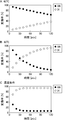
- FIGS. 1A, 1B and 1C show the conversion rate when xanthohumol is converted (isomerized) at pH 10.2, 60° C. (FIG. 1A), 80° C. (FIG. 1B) or reflux conditions (FIG. 1C). It is a graph which shows.
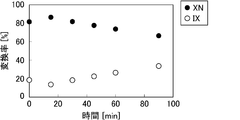
- FIG. 2 is a graph showing the conversion rate when xanthohumol is converted at pH 11.0 and 50° C.
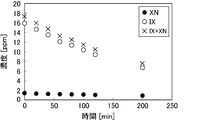
- FIG. 3 is a graph showing changes in the concentrations of xanthohumol and isoxanthohumol in the sample when xanthohumol is converted by heating under reflux at pH 13.8.
- the method for producing a composition containing isoxanthohumol of the first aspect of the present invention includes xanthohumol and a first solvent containing water.
- the method includes a precipitation generating step of adjusting the pH to be acidic to generate a precipitate containing isoxanthohumol; and a precipitation collecting step of collecting the precipitate containing isoxanthohumol.
- Xanthohumol is a kind of polyphenol contained in hops (scientific name: Humulus lupulus).
- the method for producing a composition containing isoxanthohumol according to the second aspect of the present invention is 10 to 50° C. and contains xanthohumol and water.
- a pH value is adjusted to be acidic to generate a precipitate containing isoxanthohumol; and a precipitation recovery step of recovering the precipitate containing isoxanthohumol.
- pH is pH at 25°C.
- the pH can be measured with a commercially available pH meter.
- the conversion step in the manufacturing method according to the first aspect of the present invention will be described.
- the conversion process can also be called an isomerization process.
- the first mixture used in the production method of the first aspect is a mixture containing xanthohumol and the first solvent and having a pH of 8.0 to 13.5.
- xanthohumol When xanthohumol is heated in a solvent having a pH of 8.0 to 13.5, xanthohumol can be efficiently converted (isomerized) to isoxanthohumol. Further, at the above pH, isoxanthohumol is less likely to decompose under heating, so that isoxanthohumol can be obtained in high yield.
- the first solvent is a solvent containing water, and is preferably a mixed liquid of water and a water-miscible solvent or water.
- Water-miscible solvents include, for example, monohydric alcohols having 1 to 4 carbon atoms such as methanol, ethanol, n-propanol, isopropanol, n-butanol, s-butanol, isobutanol, t-butanol; ethylene glycol, propylene glycol, A diol having 2 to 4 carbon atoms such as butylene glycol; a ketone such as acetone; a cyclic ether such as tetrahydrofuran; an amide solvent such as dimethylformamide and dimethylacetamide; an amine solvent such as dimethylamine; a sulfoxide solvent such as dimethyl sulfoxide; Examples thereof include nitrile solvents such as acetonitrile; organic acid solvents such as acetic acid.
- the water-miscible solvent may be used alone or in combination of two or more. Of these, monohydric alcohols having 1 to 4 carbon atoms and diols having 2 to 4 carbon atoms are preferable, and ethanol is more preferable. Ethanol is preferable because it can be widely used for foods and drinks.
- the mixture of water and a water-miscible solvent used as the first solvent preferably has a water-miscible solvent concentration of 30 vol% (v/v%) or less, and more preferably 10 vol% or less.
- the first solvent preferably has a high water content, and more preferably water.
- the first mixture contains xanthohumol and the first solvent, and may have a pH of 8.0 to 13.5, and may contain other components as long as the effects of the present invention are not impaired.
- the first mixture may include a hop-derived component other than xanthohumol (also referred to as a hop-derived substance).
- xanthohumol may be contained in the plant-derived raw material.
- the first mixture may be a solution or suspension of xanthohumol dissolved or suspended in a solvent.
- the first mixture may be a mixture that includes a plant-derived material that includes xanthohumol.
- plant-derived raw materials containing xanthohumol examples include hop-derived raw materials.
- hop-derived raw material containing xanthohumol for example, hop persimmon, hop residue obtained by extracting hop with supercritical carbon dioxide (also referred to as used hop), residue obtained by extracting used hop with water, hop dried fruit product , Crushed and dried hops, and the like.
- Xanthohumol can be obtained by extracting the above hop-derived raw material with a solvent.
- a solvent containing a water-miscible solvent preferably ethanol
- the hop-derived raw material is immersed in ethanol or an aqueous ethanol solution for extraction.
- the hop-derived raw material residue is removed from the extract, and the obtained extract is concentrated or dried to obtain a hop extract containing xanthohumol.
- the hop extract or a concentrate or dried product thereof if necessary, by separating or purifying using a chromatography method, supercritical carbon dioxide extraction method, etc., hops having a higher xanthohumol content.
- An extract can be obtained.
- the hop extract containing xanthohumol thus obtained can be used to prepare the first mixture.
- xanthohumol or a hop extract containing the same is commercially available, and a commercially available product can also be used.
- a commercially available hop extract for example, a hop crushed flower ground product is extracted with ethanol, and then fractionated by a supercritical carbon dioxide extraction method to obtain a hop extract having an increased xanthohumol content (eg, Xanthomohum-enriched trade name).
- Hop products (trade name), Hopsteiner), and products containing about 80% by weight of xanthohumol (trade name Xantho-pure, Hopsteiner).
- the method for preparing the first mixture is not particularly limited, and it is prepared by mixing xanthohumol or a plant-derived raw material containing xanthohumol, a solvent and a basic substance to adjust the pH to 8.0 to 13.5. be able to.
- the order of mixing these is not particularly limited.
- the solvent it is sufficient that the obtained mixture contains water, and it is preferable to use the above-mentioned water or water and a water-miscible solvent.
- An aqueous solution of a basic substance may be used for the addition of the basic substance.
- the production method of the first aspect of the present invention may include a step of preparing the first mixture.
- the basic substance is not particularly limited, and examples thereof include hydroxides of alkali metals or alkaline earth metals such as sodium hydroxide, potassium hydroxide, calcium hydroxide, magnesium hydroxide; sodium carbonate, potassium carbonate, magnesium carbonate, dolomite.
- alkali metal or alkaline earth metal carbonates and the like can be used, and sodium hydroxide is preferable.
- the basic substance may be used in an amount such that the pH of the first mixture is 8.0 to 13.5, and the amount can be set according to the type of basic substance. However, the basic substance is preferably dissolved in the mixture in consideration of solid-liquid separation after the subsequent step of forming a precipitate.
- the content of xanthohumol in the first mixture is not particularly limited, but in one embodiment, for example, the solid content is preferably 60% by weight or more, more preferably 70% by weight or more, and more preferably 80% by weight. The above is more preferable, and may be 99% by weight or less.
- the isoxanthohumol content in the solid content is not less than the xanthohumol content in the solid content of the first mixture used, preferably in the solid content of the first mixture used. It is possible to obtain a composition containing isoxanthohumol having a higher xanthohumol content. In one aspect, it is preferable to prepare the first mixture using a hop extract having a xanthohumol content of 80% by weight or more.
- the conversion step and the precipitation generation step are carried out using the first mixture having a xanthohumol content in the solid content of 80% by weight or more
- isoxanthophine in the solid content is increased.
- a composition containing isoxanthohumol having a mol content of 83% by weight or more can be obtained.
- the xanthohumol content in the solid content of the first mixture is not limited to the above, and may be 50% by weight or less in another embodiment.
- the content of xanthohumol in the first mixture is not particularly limited and may be, for example, 0.0001% by weight or more and 5% by weight or less.
- the content of the solvent in the first mixture is preferably 90% by weight or more, for example.
- the first mixture has a pH of 8.0-13.5.
- the pH of the first mixture is preferably 9.0 or higher, more preferably 10.0 or higher, and 13 0.0 or less is preferable, and 12.0 or less is more preferable.
- the upper limit and the lower limit may be in any combination.
- the pH of the first mixture is preferably 9.0 to 13.0, more preferably 10.0 to 13.0, and further preferably 10.0 to 12.0.
- the first mixture is heated to convert xanthohumol to isoxanthohumol (conversion step).
- reflux heating reflux
- the heating temperature is preferably 60°C or higher, more preferably 80°C or higher.
- the heating temperature is preferably 120° C. or lower, more preferably 100° C. or lower.
- the first mixture is heated to preferably 60-120°C, more preferably 80-120°C, even more preferably 80-100°C.
- the heating temperature is preferably the reflux temperature according to the first solvent, and more preferably the reflux temperature is in the above temperature range.
- the heating time can be set depending on the temperature and the like, but can be set to 1 minute to 5 hours, preferably 10 minutes to 3 hours, more preferably 30 minutes to 2 hours, and further preferably 30 minutes to It's an hour.
- the higher the heating temperature the faster the conversion of xanthohumol to isoxanthohumol occurs.
- the heating time is preferably 30 minutes to 2 hours, more preferably 30 minutes to 1 hour.
- the mixture may be stirred in the conversion step.
- the mixture containing isoxanthohumol usually contains water derived from the first solvent.
- extraction of xanthohumol contained in the plant-derived raw material and conversion of xanthohumol to isoxanthohumol are performed. It is possible to obtain a mixture containing isoxanthohumol.
- the conversion step is performed by heating the first mixture containing the plant-derived raw material
- known separation means such as filtration and centrifugation can be used.
- the conversion step in the manufacturing method of the second aspect of the present invention will be described.
- the pH of the second mixture containing xanthohumol and the second solvent containing water is adjusted to 11.0 or higher, and the above-mentioned xanthane is added at 10 to 50°C. Converts tofumol to isoxanthohumol.
- xanthohumol can be efficiently converted to isoxanthohumol even at a temperature of 10 to 50°C.
- isoxanthohumol is difficult to decompose even in a solvent having a high pH, and isoxanthohumol can be obtained in high yield.
- the second solvent is a solvent containing water, preferably a mixed liquid of water and a water-miscible solvent, or water, and more preferably water. Ethanol is more preferred as the water-miscible solvent.
- the mixed liquid of water and a water-miscible solvent used as the second solvent and its preferred embodiment are the same as those of the first solvent.
- the mixture of water and a water-miscible solvent preferably has a water-miscible solvent concentration of 30 vol% (v/v%) or less, more preferably 10 vol% or less. From the viewpoint of conversion efficiency from xanthohumol to isoxanthohumol, the second solvent preferably has a high water content, and more preferably water.
- the second mixture may contain components other than xanthohumol and the second solvent as long as the effects of the present invention are not impaired.
- the second mixture may contain a hop-derived component other than xanthohumol (which may also be referred to as a hop-derived substance).
- xanthohumol or a hop extract containing the same can be used for the second mixture.
- hop extract those listed above can be used.
- xanthohumol may be contained in the plant-derived raw material.
- the second mixture may be a solution or suspension in which xanthohumol is dissolved or suspended in a solvent.
- the second mixture may be a mixture that includes a plant-derived material that includes xanthohumol. Examples of the plant-derived raw material containing xanthohumol include those mentioned above.
- the method of adjusting the pH of the second mixture is not particularly limited, and the pH of the mixture containing xanthohumol and the second solvent may be 11.0 or higher.
- the pH may be adjusted after preparing a mixture containing xanthohumol and the second solvent, or the mixture may be prepared and the pH may be adjusted simultaneously.
- a method of adjusting the pH of the second mixture for example, a method of mixing xanthohumol and a solvent, and then mixing a basic substance therewith; a method of mixing xanthohumol, a basic substance and a solvent; xanthohumol A method of mixing a plant-derived raw material containing xanthohumol and a basic substance, and a method of mixing a basic substance with the plant-derived raw material containing xanthohumol, a basic substance, and a solvent.
- the solvent it is sufficient that the obtained mixture contains water, and it is preferable to use the above-mentioned water or water and a water-miscible solvent.
- An aqueous solution of a basic substance may be used for the addition of the basic substance.
- the basic substance and its preferred embodiment are the same as in the case of the production method of the first embodiment, and preferably sodium hydroxide.
- the basic substance may be used in such an amount that the pH of the second mixture becomes 11.0 or higher.
- the content of xanthohumol in the second mixture is not particularly limited, but in one embodiment, for example, the solid content is preferably 60% by weight or more, more preferably 70% by weight or more, and 99 It may be up to wt%.
- the isoxanthohumol content in the solid content is not less than the xanthohumol content in the solid content of the second mixture used, preferably in the solid content of the second mixture used.
- the xanthohumol content in the solid content is, for example, when the conversion step and the precipitation generation step are performed using the second mixture in which the xanthohumol content in the solid content is 80% by weight or more.
- a composition containing 81% by weight or more, preferably 83% by weight or more of isoxanthohumol can be obtained.
- the xanthohumol content in the solid content of the second mixture is not limited to the above, and may be 50% by weight or less in another embodiment.
- the content of xanthohumol in the second mixture is not particularly limited and may be 0.0001% by weight or more and 5% by weight or less.
- the content of the solvent in the second mixture is preferably 90% by weight or more, for example.
- the pH of the second mixture is preferably 11.5 or higher, and 12.0 or higher. Is more preferable, 12.5 or more is more preferable, and 12.8 or more is particularly preferable.
- the pH of the second mixture is 14.0 or lower, preferably 13.8 or lower. In one aspect, the pH of the second mixture is preferably 11.5-14.0, more preferably 12.0-14.0, even more preferably 12.5-13.8, particularly preferably 12. 8 to 13.8.
- the temperature in the conversion step is preferably 20° C. or higher, more preferably 25° C. or higher, further preferably 40° C. or higher, and 45° C. from the viewpoint of the yield of isoxanthohumol.
- the following are preferred.
- the temperature in the conversion step is preferably 20 to 50° C., more preferably 25 to 50° C., further preferably 40 to 50° C., and further preferably 40 to 45° C.
- the time of the conversion step is not particularly limited, but it is preferably 1 minute or more, more preferably 5 minutes or more, further preferably 10 minutes or more, and preferably 2 hours or less, more preferably 1 hour or less after pH adjustment. ..
- the rate of conversion (isomerization) to isoxanthohumol increases with increasing pH.
- the time of the conversion step is preferably 5 to 20 minutes.
- the conversion step time is preferably 30 minutes to 1 hour. The mixture may be stirred in the conversion step.
- xanthohumol is converted to isoxanthohumol, and a mixture containing isoxanthohumol is obtained.
- the mixture containing isoxanthohumol obtained in the conversion step usually contains water derived from the second solvent.
- the conversion step is performed using the second mixture containing the plant-derived raw material
- the above-mentioned known separation means can be used.
- a mixture containing isoxanthohumol is obtained by the conversion step.
- the manufacturing method of the 1st aspect of this invention and the manufacturing method of the 2nd aspect are also collectively called the manufacturing method of this invention.
- the temperature of the mixture containing isoxanthohumol is preferably 50° C. or lower, more preferably 10 to 50° C., further preferably 10 to 30° C., from the viewpoint of improving the yield of isoxanthohumol. 15-27°C is even more preferable, and 15-25°C is particularly preferable.
- the pH of the mixture containing isoxanthohumol may be adjusted to be acidic, but from the viewpoint of improving the yield of isoxanthohumol, the pH should be adjusted to 1.0 to 4.0. Is preferable, and it is more preferable to adjust to 1.5 to 2.5.
- the pH can be adjusted by adding an acid to the mixture. For the acid, a solution of the acid may be added.
- the acid examples include inorganic acids such as hydrochloric acid, phosphoric acid, sulfuric acid and nitric acid; organic acids such as citric acid, acetic acid, butyric acid, lactic acid, succinic acid, maleic acid, malic acid and oxalic acid. These may be used alone or in combination of two or more.
- An inorganic acid is preferable, and hydrochloric acid and phosphoric acid are more preferable.
- the pH of the mixture containing isoxanthohumol is adjusted to acidic, and a salt or an aqueous solution of salt is added to generate a precipitate containing isoxanthohumol.
- the addition of salt or an aqueous solution of salt further improves the yield of isoxanthohumol.
- the order of adjusting the pH and adding the salt or the aqueous solution of the salt is not particularly limited, and either may be performed first, or these may be performed simultaneously.
- a salt or an aqueous solution of a salt is added after adjusting the pH.
- an inorganic salt or an organic salt can be used.
- inorganic salts halides of alkali metals such as sodium chloride, potassium chloride, lithium chloride, sodium bromide, potassium bromide, lithium bromide, sodium iodide, potassium iodide, lithium iodide; calcium chloride, magnesium chloride, Examples thereof include alkaline earth metal halides such as calcium bromide and magnesium bromide; and sulfates such as sodium sulfate, potassium sulfate, magnesium sulfate and ammonium sulfate.
- organic salt include organic acid salts. Examples of the organic acid salt include trisodium citrate and the like.
- the salt is preferably a water-soluble salt.
- a water-soluble salt it is possible to remove the salt from the precipitate and increase the isoxanthohumol content by performing the washing step described below.
- sodium chloride and potassium chloride are more preferable, and sodium chloride is further preferable.
- the salt or the aqueous solution of the salt is preferably added in an amount such that the concentration of the salt is 1 mM to 2M. Addition of the above amount of salt improves the yield of isoxanthohumol.
- the salt or the aqueous solution of the salt is preferably added in an amount such that the salt concentration is 10 mM to 1.8 M, and more preferably 10 mM to 100 mM.
- the above salt concentration is the concentration of the added salt.
- the time for generating the precipitate after adjusting the pH to acidic is not particularly limited and can be set appropriately. In one aspect, 0.1 minutes to 24 hours is preferable, and 10 minutes to 24 hours is more preferable.
- the mixture should be kept at 15 to 25°C for a certain period of time (for example, 10 minutes to 24 hours, preferably 30 minutes to 1 hour) in order to facilitate precipitation of isoxanthohumol. Is preferred.
- the precipitate produced as described above contains isoxanthohumol.
- a precipitate containing the produced isoxanthohumol is collected (precipitation collecting step).
- the precipitation can be collected by a known method such as filtration or centrifugation.
- the recovered precipitate can be used as a composition containing isoxanthohumol.
- the solvent can be removed from the precipitate to obtain a powder containing isoxanthohumol.
- the solvent can be removed by a known method such as vacuum drying.
- the manufacturing method of the present invention may include steps other than the above steps as long as the effects of the present invention are not impaired.
- a step (washing step) of washing the recovered precipitate containing isoxanthohumol with a third solvent containing water By washing the precipitate with a solvent containing water, the isoxanthohumol content in the resulting composition containing isoxanthohumol can be increased. That is, the purity of isoxanthohumol can be increased.
- the third solvent used for washing is not particularly limited, but water or an aqueous ethanol solution is preferable, and water is more preferable.
- the amount of the third solvent used is, for example, preferably 10 times or more, more preferably 50 times or more, and preferably 500 times or less, more preferably 300 times or less by weight ratio with respect to the precipitation.
- the amount of the third solvent used is, for example, preferably 10 to 500 times, more preferably 50 to 300 times, the weight ratio of the precipitate.
- the washing may be performed by bringing the precipitate into contact with the third solvent.
- the precipitate after washing can be used as a composition containing isoxanthohumol.
- the solvent can be removed by a known method such as vacuum drying.
- the powder containing isoxanthohumol thus obtained can be used as a composition containing isoxanthohumol in the present invention.
- the composition containing isoxanthohumol obtained by the present invention preferably contains 60% by weight or more of isoxanthohumol, more preferably 70 to 99% by weight.
- the composition having a high isoxanthohumol content can be used as high-purity isoxanthohumol.
- the content of isoxanthohumol can be measured using high performance liquid chromatography (HPLC).
- HPLC high performance liquid chromatography
- the composition containing isoxanthohumol obtained by the present invention can be widely used for foods and drinks such as health foods, pharmaceuticals, production of these raw materials, and the like.
- the method for producing a composition containing isoxanthohumol of the present invention can be used as a method for producing high-purity isoxanthohumol.
- the present invention also includes the following method for converting xanthohumol to isoxanthohumol (hereinafter, also referred to as the conversion method of the present invention).
- the pH of a mixture containing xanthohumol and a solvent containing water is adjusted to 11.0 or higher, and the xanthohumol is converted to isoxanthohumol at 10 to 50°C. How to convert to a mall.
- xanthohumol can be efficiently converted to isoxanthohumol. Further, it is possible to suppress decomposition of the produced isoxanthohumol.
- the solvent containing water and its preferred embodiment are the same as the second solvent in the production method of the second embodiment.
- a preferred embodiment of the conversion method of the present invention is the same as the preferred embodiment of the conversion step in the manufacturing method of the second embodiment of the present invention described above.
- the above-described precipitation generation step and the like may be performed on the mixture containing isoxanthohumol obtained by the conversion method of the present invention.
- isoxanthohumol can be purified from a mixture containing isoxanthohumol by performing the above-described precipitation generation step and recovery step, and optionally a washing step.
- HPLC high performance liquid chromatography
- High-pressure gradient pump LC-30AD x 2 units (Shimadzu Corporation)
- Autosampler SIL-30AC (Shimadzu Corporation)
- Column oven CTO-20AC (Shimadzu Corporation)
- Photodiode array detector SPD-M20A (Shimadzu Corporation)
- HPLC measurement conditions> Column: YMC-Triart C18, 2.1 x 150 mm (YMC)
- Mobile phase Solution A: 0.1 vol% formic acid distilled water, Solution B: 0.1 vol% formic acid acetonitrile gradient conditions (solution B concentration (%) is vol%): solution B 50% retention from 0 to 6 minutes, 6 Gradient elution to 100% solution B in ⁇ 8 minutes, 100% solution B in 8 to 15 minutes, 50% solution B in 15 to 16 minutes, and equilibration in 16 to 20 minutes.
- the pH (25° C.) was measured with LAQUA (F-74BW) (product name, manufactured by HORIBA).
- Example preparation An Erlenmeyer flask was charged with 1.0 g of a hop extract (Product Name: Xantho-pure, manufactured by Hopsteiner) containing about 80% xanthohumol, and 100 mL of a 30 mM aqueous sodium hydroxide solution was added. The pH of the obtained xanthohumol solution was 10.2.
- a hop extract Product Name: Xantho-pure, manufactured by Hopsteiner
- FIGS. 1A, 1B and 1C show conversion rates when xanthohumol is converted (isomerized) at pH 10.2, 60° C., 80° C. or reflux conditions (98 to 100° C.)
- FIGS. 1A, 1B and 1C black circles ( ⁇ ) are xanthohumol and white circles ( ⁇ ) are isoxanthohumol.
- the ratio of XN and IX contained in the sample before isomerization was 100% (IX0%) of XN.
- ⁇ Reference example 2> (Sample preparation) 0.5 g of a hop extract containing about 70% xanthohumol was charged into a three-necked flask, and 50 mL of an aqueous sodium hydroxide solution having a pH of 10.2 to 13.7 was added to obtain a xanthohumol solution. More specifically, an aqueous sodium hydroxide solution having a pH of 10.2 (NaOH 30 mM), a pH of 11.7 (NaOH 50 mM), a pH of 12.9 (NaOH 100 mM), a pH of 13.4 (NaOH 250 mM), or a pH of 13.7 (NaOH 500 mM) was used.
- the ratio (conversion rate) of isoxanthohumol to the total of isoxanthohumol and xanthohumol was determined.
- the ratio (conversion rate) of isoxanthohumol in the sample after heating is 92% at pH 10.2, 93% at pH 11.7, 89% at pH 12.9, 95% at pH 13.4, and pH 13.7. Was 91%.
- Example preparation 1.0 g of a hop extract (product name: Xantho-pure, manufactured by Hopsteiner) containing about 80% xanthohumol was dissolved in 10 mL of 100 vol% ethanol aqueous solution to obtain a xanthohumol solution.
- a hop extract product name: Xantho-pure, manufactured by Hopsteiner
- FIG. 3 is a graph showing changes in the concentrations of xanthohumol and isoxanthohumol in the sample when xanthohumol is converted by heating under reflux at pH 13.8. Black circles are xanthohumol and white circles are isoxanthohumol. The total concentration of xanthohumol and isoxanthohumol is indicated by "x”. Heating at pH 13.8 during conversion reduced the amount of isoxanthohumol produced over time.
- the total concentration of xanthohumol and isoxanthohumol after heating at pH 13.8 for 200 minutes was divided by the charged xanthohumol concentration, and the decomposition rate was determined in the same manner as in Reference Example 1.
- the decomposition rate was 56%.
- xanthohumol when xanthohumol is heated at pH 9.0 to 13.5, xanthohumol can be converted (isomerized) to isoxanthohumol and decomposition of isoxanthohumol can be suppressed. I understood.
- Example preparation 1.0 g of hop extract containing about 70% xanthohumol was placed in an Erlenmeyer flask, and 100 mL of 40 mM sodium hydroxide aqueous solution was added. The pH of the obtained xanthohumol solution was 11.0. The ratio of XN and IX contained in the sample before isomerization was 100% XN (IX0%).
- FIG. 2 is a graph showing the conversion rate when xanthohumol is converted at pH 11.0 and 50° C.
- black circles are xanthohumol and white circles are isoxanthohumol.
- the decomposition rate was less than 1.0%.
- Example preparation An Erlenmeyer flask was charged with 1.0 g of hop extract containing about 70% xanthohumol, pH 9.8 (Comparative Example 2), pH 10.2 (Comparative Example 3), pH 11.7 (Example 2), pH 12.9. (Example 3), pH 13.4 (Example 4), pH 13.7 (Example 5), or pH 13.8 (Example 6) 100 mL of sodium hydroxide aqueous solution was added.
- the ratio of isoxanthohumol (conversion rate) was 71% after 30 minutes of reaction time.
- the reaction time was 10 minutes and the proportion of isoxanthohumol was 90% or more.
- the reaction time was 5 minutes, and the proportion of isoxanthohumol was 90% or more.
- the decomposition rate was less than 1.0% under all the conditions of Examples 2 to 6 (pH 11.7 to 13.8).
- xanthohumol can be converted to isoxanthohumol and the decomposition of isoxanthohumol can be suppressed even under conditions of pH of 11.0 or higher and 50° C. or lower.
- Example 7 (Sample preparation) 20.0 g of a hop extract (product name: Xantho-pure, manufactured by Hopsteiner) containing about 80% xanthohumol was dissolved in 200 mL of ethanol to obtain a xanthohumol solution.
- a hop extract product name: Xantho-pure, manufactured by Hopsteiner
- Precipitation generation The mixture after isomerization was cooled to 25° C., 60 mL of 1.0 M hydrochloric acid was added thereto, and the pH was adjusted to 2.0 to deposit a precipitate. Then, 200 g of NaCl was added to obtain a further precipitate. The added NaCl concentration was 1.7M. In order to collect the obtained precipitate, filtration was performed using a Buchner funnel, the precipitate was washed with 1 L of distilled water, and vacuum dried to obtain 18.9 g of a powder containing isoxanthohumol. ..
- the isoxanthohumol purity (isoxanthohumol content) was 81%.
- the yield of isoxanthohumol was 93%.
- the yield is a conversion value with the weight of xanthohumol contained in the hop extract used as 100%.
- Example 8 (Sample preparation) 1.0 g of a hop extract (product name: Xantho-pure, manufactured by Hopsteiner) containing about 80% xanthohumol was dissolved in 10 mL of ethanol to obtain a xanthohumol solution.
- a hop extract product name: Xantho-pure, manufactured by Hopsteiner
- Example 9 (Sample preparation) A three-neck flask was charged with 1.0 g of a hop extract (product name: Xantho-pure, manufactured by Hopsteiner) containing about 80% xanthohumol, and 100 mL of a 30 mM sodium hydroxide aqueous solution was added. The pH of the obtained xanthohumol solution was 10.2.
- a hop extract product name: Xantho-pure, manufactured by Hopsteiner
- ⁇ Comparative example 4> (Sample preparation) 1.0 g of a hop extract (product name: Xantho-pure, manufactured by Hopsteiner) containing about 80% xanthohumol was dissolved in 10 mL of ethanol to obtain a xanthohumol solution.
- a hop extract product name: Xantho-pure, manufactured by Hopsteiner
- Example 10 (Sample preparation) A two-necked flask was charged with 5.0 g of a hop extract (product name: Xantho-Flav_New manufactured by Hopsteiner) containing about 90% xanthohumol, and 500 mL of a 30 mM sodium hydroxide aqueous solution was added. The pH of the obtained xanthohumol solution was 10.2.
- a hop extract product name: Xantho-Flav_New manufactured by Hopsteiner
- Precipitation generation The mixture after isomerization was cooled to 25° C., 75 wt% phosphoric acid was added thereto, and the pH was adjusted to 2.2 to deposit a precipitate. Then, 0.3 g of NaCl was added with stirring to obtain a further precipitate. The added NaCl concentration was 10 mM. In order to collect the obtained precipitate, suction filtration was performed using a Buchner funnel, the precipitate was washed with 500 mL of distilled water, and vacuum dried to obtain 4.85 g of a powder containing isoxanthohumol.
Landscapes
- Chemical & Material Sciences (AREA)
- Organic Chemistry (AREA)
- Organic Low-Molecular-Weight Compounds And Preparation Thereof (AREA)
Abstract
本発明は、イソキサントフモールを含有する組成物を、高いイソキサントフモール収率で、かつ効率よく得ることができる製造方法等を提供することを目的とする。 本発明は、キサントフモールと、水を含む第一の溶媒とを含み、pHが8.0~13.5である第一の混合物を加熱して、上記キサントフモールをイソキサントフモールに変換する変換工程;上記変換工程で得られるイソキサントフモールを含む混合物のpHを酸性に調整して、イソキサントフモールを含有する沈殿を生成させる沈殿生成工程;及び、上記イソキサントフモールを含有する沈殿を回収する沈殿回収工程を含む、イソキサントフモールを含有する組成物の製造方法等に関する。
Description
本発明は、イソキサントフモールを含有する組成物の製造方法に関する。本発明はまた、キサントフモールをイソキサントフモールに変換する方法に関する。
イソキサントフモールは、ポリフェノールの一種であり、骨密度減少の抑制等の作用を有する(特許文献1)。特許文献1には、キサントフモール含有ホップエキスを異性化して、イソキサントフモールを含有する異性化ホップエキスを得る方法が記載されている。
特許文献1に記載の方法では、ホップエキスを含む1N水酸化ナトリウム溶液を1時間煮沸して異性化し、次いで塩酸を添加し、得られた溶液をろ過して、ろ取物を得た後、このろ取物について液液分配抽出を行い、さらに再結晶を繰り返して純度98%以上のイソキサントフモールを得ている。しかしながらこの方法は、イソキサントフモールの収率を向上させる改善の余地があった。
本発明は、イソキサントフモールを含有する組成物を、高いイソキサントフモール収率で、かつ効率よく得ることができる製造方法等を提供することを目的とする。
本発明者らは、上記課題を解決するために鋭意研究した結果、キサントフモールをイソキサントフモールに変換(異性化)する際に1N水酸化ナトリウム溶液(pH13.8)中で煮沸すると、生成したイソキサントフモールの分解が起こり収率が低下することが判明した。そして研究を重ねて、上記変換の際に、キサントフモールを含む混合物のpHを特定範囲として加熱を行うと、キサントフモールをイソキサントフモールに効率よく変換することができ、しかもイソキサントフモールの分解を抑えることができることを見出した。また、上記変換の際に、キサントフモールを含む混合物のpHを特定範囲に調整すると、10~50℃でもキサントフモールをイソキサントフモールに効率よく変換することができること、変換の際の温度を10~50℃とするとpHが高くてもイソキサントフモールの分解を抑えることができることを見出した。そして、上記のように得られるイソキサントフモールを含む混合物のpHを酸性に調整すると、混合物中のイソキサントフモールを効率よく沈殿させることができ、効率よく、かつ、高収率でイソキサントフモールを得ることができることを見出した。
すなわち、これに限定されるものではないが、本発明は以下のイソキサントフモールを含有する組成物の製造方法等に関する。
〔1〕キサントフモールと、水を含む第一の溶媒とを含み、pHが8.0~13.5である第一の混合物を加熱して、上記キサントフモールをイソキサントフモールに変換する変換工程;上記変換工程で得られるイソキサントフモールを含む混合物のpHを酸性に調整して、イソキサントフモールを含有する沈殿を生成させる沈殿生成工程;及び、上記イソキサントフモールを含有する沈殿を回収する沈殿回収工程を含む、イソキサントフモールを含有する組成物の製造方法。
〔2〕キサントフモールと、水を含む第二の溶媒とを含む第二の混合物のpHを11.0以上に調整して、10~50℃で上記キサントフモールをイソキサントフモールに変換する変換工程;上記変換工程で得られるイソキサントフモールを含む混合物のpHを酸性に調整して、イソキサントフモールを含有する沈殿を生成させる沈殿生成工程;及び、上記イソキサントフモールを含有する沈殿を回収する沈殿回収工程を含む、イソキサントフモールを含有する組成物の製造方法。
〔3〕上記沈殿生成工程において、イソキサントフモールを含む混合物のpHを酸性に調整し、かつ、塩又は塩の水溶液を添加してイソキサントフモールを含有する沈殿を生成させる上記〔1〕又は〔2〕に記載の製造方法。
〔4〕上記塩又は塩の水溶液を、上記塩の濃度が1mM~2Mとなる量添加する上記〔3〕に記載の製造方法。
〔5〕上記沈殿生成工程において、イソキサントフモールを含む混合物のpHを1.0~4.0に調整する上記〔1〕~〔4〕のいずれかに記載の製造方法。
〔6〕上記沈殿回収工程で回収したイソキサントフモールを含有する沈殿を、水を含む第三の溶媒で洗浄する洗浄工程をさらに含む、上記〔1〕~〔5〕のいずれかに記載の製造方法。
〔7〕上記第一の溶媒は、水と水混和性溶媒との混合液、又は、水である上記〔1〕に記載の製造方法。
〔8〕上記第二の溶媒は、水と水混和性溶媒との混合液、又は、水である上記〔2〕に記載の製造方法。
〔9〕上記水混和性溶媒は、エタノールである上記〔7〕又は〔8〕に記載の製造方法。
〔10〕キサントフモールと、水を含む溶媒とを含む混合物のpHを11.0以上に調整して、10~50℃で上記キサントフモールをイソキサントフモールに変換する、キサントフモールをイソキサントフモールに変換する方法。
本発明によれば、イソキサントフモールを含有する組成物を、高いイソキサントフモール収率で、かつ効率よく得ることができる。本発明によれば、イソキサントフモールを含有する組成物を、高いイソキサントフモール収率で、かつ効率よく得ることができる製造方法等を提供することができる。
本発明の第一の態様のイソキサントフモールを含有する組成物の製造方法(以下、第一の態様の製造方法ともいう)は、キサントフモールと、水を含む第一の溶媒とを含み、pHが8.0~13.5である第一の混合物を加熱して、上記キサントフモールをイソキサントフモールに変換する変換工程;上記変換工程で得られるイソキサントフモールを含む混合物のpHを酸性に調整して、イソキサントフモールを含有する沈殿を生成させる沈殿生成工程;及び、上記イソキサントフモールを含有する沈殿を回収する沈殿回収工程を含む。
キサントフモールは、ホップ(学名:Humulus lupulus)に含まれるポリフェノールの一種である。
キサントフモールは、ホップ(学名:Humulus lupulus)に含まれるポリフェノールの一種である。
本発明の第二の態様のイソキサントフモールを含有する組成物の製造方法(以下、第二の態様の製造方法ともいう)は、10~50℃で、キサントフモールと、水を含む第二の溶媒とを含む第二の混合物のpHを11.0以上に調整して、上記キサントフモールをイソキサントフモールに変換する変換工程;上記変換工程で得られるイソキサントフモールを含む混合物のpHを酸性に調整して、イソキサントフモールを含有する沈殿を生成させる沈殿生成工程;及び、上記イソキサントフモールを含有する沈殿を回収する沈殿回収工程を含む。
本明細書中、pHは、25℃におけるpHである。pHは市販のpHメーターで測定することができる。
まず、本発明の第一の態様の製造方法における変換工程について説明する。変換工程は異性化工程ということもできる。
第一の態様の製造方法で使用される第一の混合物は、キサントフモールと、第一の溶媒とを含み、pHが8.0~13.5である混合物である。
pH8.0~13.5の溶媒中でキサントフモールを加熱すると、キサントフモールをイソキサントフモールに効率よく変換(異性化)することができる。また、上記pHであると、加熱下でイソキサントフモールが分解しにくいことから、イソキサントフモールを高収率で得ることができる。
第一の態様の製造方法で使用される第一の混合物は、キサントフモールと、第一の溶媒とを含み、pHが8.0~13.5である混合物である。
pH8.0~13.5の溶媒中でキサントフモールを加熱すると、キサントフモールをイソキサントフモールに効率よく変換(異性化)することができる。また、上記pHであると、加熱下でイソキサントフモールが分解しにくいことから、イソキサントフモールを高収率で得ることができる。
第一の溶媒は、水を含む溶媒であり、水と水混和性溶媒との混合液、又は、水であることが好ましい。水混和性溶媒として、例えば、メタノール、エタノール、n-プロパノール、イソプロパノール、n-ブタノール、s-ブタノール、イソブタノール、t-ブタノール等の炭素数1~4の一価アルコール;エチレングリコール、プロピレングリコール、ブチレングリコール等の炭素数2~4のジオール;アセトン等のケトン;テトラヒドロフラン等の環状エーテル;ジメチルホルムアミド、ジメチルアセトアミド等のアミド系溶媒;ジメチルアミン等のアミン系溶媒;ジメチルスルホキシド等のスルホキシド系溶媒;アセトニトリル等のニトリル系溶媒;酢酸等の有機酸溶媒等が挙げられる。水混和性溶媒は、1種のみ使用してもよく、2種以上使用してもよい。中でも、炭素数1~4の一価アルコール、炭素数2~4のジオールが好ましく、エタノールがより好ましい。エタノールは、飲食品に広く使用可能であるため好ましい。
第一の溶媒として使用される水と水混和性溶媒との混合液は、水混和性溶媒の濃度が30vol%(v/v%)以下が好ましく、10vol%以下がより好ましい。
キサントフモールからイソキサントフモールへの変換効率の観点から、第一の溶媒は、水の含有量が多い方が好ましく、水がより好ましい。
キサントフモールからイソキサントフモールへの変換効率の観点から、第一の溶媒は、水の含有量が多い方が好ましく、水がより好ましい。
第一の混合物は、キサントフモール及び第一の溶媒を含み、pHが8.0~13.5であればよく、本発明の効果を損なわない範囲で、これら以外の成分を含んでいてもよい。例えば、第一の混合物は、キサントフモール以外のホップ由来成分(ホップ由来物質ということもできる)を含んでいてもよい。第一の混合物において、キサントフモールは、植物由来原料中に含まれていてもよい。第一の混合物は、キサントフモールが溶媒に溶解又は懸濁した溶液又は懸濁液であってよい。第一の混合物は、キサントフモールを含む植物由来原料を含む混合物であってよい。
キサントフモールを含む植物由来原料として、ホップ由来原料が挙げられる。キサントフモールを含むホップ由来原料として、例えば、ホップ毬花、ホップを超臨界二酸化炭素で抽出したホップ残渣(使用済みホップともいう)、使用済みホップを水で抽出した残渣、ホップ毬果乾燥物、ホップ粉砕乾燥物等が挙げられる。
キサントフモールは、上記のホップ由来原料から溶媒を用いて抽出することで得ることができる。抽出溶媒には、水混和性溶媒(好ましくはエタノール)を含む溶媒が好ましく使用される。例えば、ホップ由来原料を、エタノール又はエタノール水溶液に浸漬して抽出する。抽出後に、ホップ由来原料残渣を抽出液から除去し、得られた抽出液を濃縮又は乾燥することにより、キサントフモールを含むホップ抽出物を得ることができる。また、上記ホップ抽出液又はその濃縮物若しくは乾燥物を、必要に応じて、クロマトグラフィー法、超臨界二酸化炭素抽出法などを用いて分離又は精製することにより、キサントフモール含有量がより多いホップ抽出物を得ることができる。本発明においては、このように得られるキサントフモールを含むホップ抽出物を用いて第一の混合物を調製することができる。また、キサントフモール又はこれを含むホップ抽出物は、市販されており、市販品を使用することもできる。市販のホップ抽出物として、例えば、ホップ毬花粉砕物をエタノールで抽出した後、超臨界二酸化炭素抽出法により分画し、キサントフモール含有量を高めたホップ抽出物(例えば、商品名Xanthohumol-enriched hop product(商品名)、Hopsteiner社)、キサントフモールが約80重量%含まれる製品(商品名Xantho-pure、Hopsteiner社)が挙げられる。
第一の混合物の調製方法は特に限定されず、キサントフモール又はキサントフモールを含む植物由来原料、溶媒及び塩基性物質を混合してpHを8.0~13.5とすることにより調製することができる。これらを混合する順番は特に限定されない。溶媒は、得られる混合物が水を含むものになればよく、上述した水、又は、水及び水混和性溶媒を使用することが好ましい。塩基性物質の添加には、塩基性物質の水溶液を使用してもよい。本発明の第一の態様の製造方法は、第一の混合物を調製する工程を含んでもよい。
塩基性物質は特に限定されず、例えば、水酸化ナトリウム、水酸化カリウム、水酸化カルシウム、水酸化マグネシウム等のアルカリ金属又はアルカリ土類金属の水酸化物;炭酸ナトリウム、炭酸カリウム、炭酸マグネシウム、ドロマイト等のアルカリ金属又はアルカリ土類金属の炭酸塩等の1種又は2種以上を使用することができ、好ましくは水酸化ナトリウムである。塩基性物質は、第一の混合物のpHが8.0~13.5となる量を使用すればよく、塩基性物質の種類に応じて使用量を設定することができる。ただし、後の沈殿生成工程後の固液分離を考慮すると、塩基性物質は混合物中に溶解していることが好ましい。
本発明の第一の態様の製造方法においては、第一の混合物において、固形分中のキサントフモール含有量が高いほど、得られる組成物中のイソキサントフモール含有量が高くなる傾向がある。第一の混合物中のキサントフモールの含有量は特に限定されないが、一態様においては、例えば、固形分中に60重量%以上であることが好ましく、70重量%以上がより好ましく、80重量%以上がさらに好ましく、また、99重量%以下であってよい。このような第一の混合物を用いて変換工程及び沈殿生成工程を行うことによって、イソキサントフモールを高含有する組成物を製造することができる。固形分は、溶媒以外の成分を指す。
本発明の好ましい態様においては、固形分中のイソキサントフモール含有量が、使用した第一の混合物の固形分中のキサントフモール含有量以上、好ましくは使用した第一の混合物の固形分中のキサントフモール含有量よりも高い、イソキサントフモールを含有する組成物を得ることができる。一態様においては、キサントフモール含有量が80重量%以上のホップ抽出物を使用して第一の混合物を調製することが好ましい。本発明の好ましい態様においては、例えば、固形分中のキサントフモール含有量が80重量%以上である第一の混合物を用いて変換工程及び沈殿生成工程を行うと、固形分中のイソキサントフモール含有量が83重量%以上のイソキサントフモールを含有する組成物を得ることができる。
第一の混合物の固形分中のキサントフモール含有量は上記に限定されず、別の一態様において、50重量%以下であってもよい。
また、第一の混合物中のキサントフモールの含有量は特に限定されず、例えば、0.0001重量%以上であってよく、また、5重量%以下であってよい。第一の混合物中の溶媒の含有量は、例えば、90重量%以上が好ましい。
第一の混合物は、pHが8.0~13.5である。キサントフモールからイソキサントフモールへの変換効率及びイソキサントフモールの収率の観点から、第一の混合物のpHは、9.0以上が好ましく、10.0以上がより好ましく、また、13.0以下が好ましく、12.0以下がより好ましい。上限及び下限は、いずれの組み合わせによる範囲としてもよい。一態様において、第一の混合物のpHは、9.0~13.0が好ましく、10.0~13.0がより好ましく、10.0~12.0がさらに好ましい。
第一の態様の製造方法においては、上記第一の混合物を加熱して、キサントフモールをイソキサントフモールに変換する(変換工程)。第一の混合物を加熱する際には、還流(加熱還流)を行ってもよい。加熱温度は、変換効率の観点から、好ましくは60℃以上、より好ましくは80℃以上である。設備や成分分解の観点から、加熱温度は、好ましくは120℃以下、より好ましくは100℃以下である。一態様において、第一の混合物を、好ましくは60~120℃、より好ましくは80~120℃、さらに好ましくは80~100℃に加熱する。還流を行う場合は、加熱温度は、第一の溶媒に応じた還流温度であることが好ましく、還流温度が上記温度範囲であることがより好ましい。
加熱時間は、温度等に応じて設定することができるが、1分~5時間とすることができ、好ましくは10分~3時間、より好ましくは30分~2時間、さらに好ましくは30分~1時間である。一般的に加熱温度が高いほど、キサントフモールからイソキサントフモールへの変換が速やかに起こる。例えば80~120℃、好ましくは80~100℃で加熱を行う場合は、加熱時間は30分~2時間が好ましく、30分~1時間がより好ましい。変換工程においては、混合物を攪拌してもよい。
第一の混合物を加熱すると、キサントフモールがイソキサントフモールに変換され、イソキサントフモールを含む混合物が得られる。このイソキサントフモールを含む混合物には、通常、第一の溶媒に由来する水が含まれる。キサントフモールを含む植物由来原料を含む第一の混合物を用いて上記加熱を行うと、植物由来原料に含まれるキサントフモールの抽出と、キサントフモールからイソキサントフモールへの変換とを行うことができ、イソキサントフモールを含む混合物が得られる。植物由来原料を含む第一の混合物を加熱して変換工程を行った場合は、後記の沈殿生成工程の前に、イソキサントフモールを含む混合物から植物由来原料残渣を除去することが好ましい。植物由来原料残渣の除去には、ろ過、遠心分離等の公知の分離手段を用いることができる。
次に、本発明の第二の態様の製造方法における変換工程について説明する。
第二の態様の製造方法における変換工程では、キサントフモールと、水を含む第二の溶媒とを含む第二の混合物のpHを11.0以上に調整して、10~50℃で上記キサントフモールをイソキサントフモールに変換する。
pHを11.0以上とすることにより、10~50℃の温度でもキサントフモールが効率よくイソキサントフモールに変換される。また、温度を10~50℃とすることにより、pHが高い溶媒中でもイソキサントフモールが分解しにくく、イソキサントフモールを高収率で得ることができる。
第二の態様の製造方法における変換工程では、キサントフモールと、水を含む第二の溶媒とを含む第二の混合物のpHを11.0以上に調整して、10~50℃で上記キサントフモールをイソキサントフモールに変換する。
pHを11.0以上とすることにより、10~50℃の温度でもキサントフモールが効率よくイソキサントフモールに変換される。また、温度を10~50℃とすることにより、pHが高い溶媒中でもイソキサントフモールが分解しにくく、イソキサントフモールを高収率で得ることができる。
第二の溶媒は、水を含む溶媒であり、水と水混和性溶媒との混合液、又は、水であることが好ましく、水がより好ましい。水混和性溶媒として、エタノールがより好ましい。第二の溶媒として使用される水と水混和性溶媒との混合液及びその好ましい態様は、第一の溶媒の場合と同じである。水と水混和性溶媒との混合液は、水混和性溶媒の濃度が30vol%(v/v%)以下が好ましく、10vol%以下がより好ましい。キサントフモールからイソキサントフモールへの変換効率の観点から、第二の溶媒は、水の含有量が多い方が好ましく、水がより好ましい。
第二の混合物は、本発明の効果を損なわない範囲で、キサントフモール及び第二の溶媒以外の成分を含んでいてもよい。例えば、第二の混合物は、キサントフモール以外のホップ由来成分(ホップ由来物質ということもできる)を含んでいてもよい。第二の混合物には、第一の混合物と同様に、キサントフモール又はこれを含むホップ抽出物を使用することができる。ホップ抽出物は上記で挙げたものなどを使用することができる。
第二の混合物において、キサントフモールは、植物由来原料中に含まれていてもよい。第二の混合物は、キサントフモールが溶媒に溶解又は懸濁した溶液又は懸濁液であってよい。第二の混合物は、キサントフモールを含む植物由来原料を含む混合物であってよい。キサントフモールを含む植物由来原料として、上記したものが挙げられる。
第二の混合物において、キサントフモールは、植物由来原料中に含まれていてもよい。第二の混合物は、キサントフモールが溶媒に溶解又は懸濁した溶液又は懸濁液であってよい。第二の混合物は、キサントフモールを含む植物由来原料を含む混合物であってよい。キサントフモールを含む植物由来原料として、上記したものが挙げられる。
第二の態様の製造方法において、第二の混合物のpHを調整する方法は特に限定されず、キサントフモール及び第二の溶媒を含む混合物のpHが11.0以上となればよい。例えば、キサントフモール及び第二の溶媒を含む混合物を調製後、pHを調整してもよく、混合物の調製とpHの調整とを同時に行ってもよい。第二の混合物のpHを調整する方法として、例えば、キサントフモール及び溶媒を混合し、これに塩基性物質を混合する方法;キサントフモール、塩基性物質及び溶媒を混合する方法;キサントフモールを含む植物由来原料及び溶媒と混合し、これに塩基性物質を混合する方法;キサントフモールを含む植物由来原料、塩基性物質及び溶媒を混合する方法等が挙げられる。溶媒は、得られる混合物が水を含むものになればよく、上述した水、又は、水及び水混和性溶媒を使用することが好ましい。塩基性物質の添加には、塩基性物質の水溶液を使用してもよい。
塩基性物質及びその好ましい態様は、第一の態様の製造方法の場合と同じであり、好ましくは水酸化ナトリウムである。塩基性物質は、第二の混合物のpHが11.0以上となる量を使用すればよい。
塩基性物質及びその好ましい態様は、第一の態様の製造方法の場合と同じであり、好ましくは水酸化ナトリウムである。塩基性物質は、第二の混合物のpHが11.0以上となる量を使用すればよい。
本発明の第二の態様の製造方法においては、第二の混合物において、固形分中のキサントフモール含有量が高いほど、得られる組成物中のイソキサントフモール含有量が高くなる傾向がある。第二の混合物中のキサントフモールの含有量は特に限定されないが、一態様においては、例えば、固形分中に60重量%以上であることが好ましく、70重量%以上がより好ましく、また、99重量%以下であってよい。本発明の好ましい態様においては、固形分中のイソキサントフモール含有量が、使用した第二の混合物の固形分中のキサントフモール含有量以上、好ましくは使用した第二の混合物の固形分中のキサントフモール含有量よりも高い、イソキサントフモールを含有する組成物を得ることができる。好ましい態様においては、固形分中のキサントフモール含有量が80重量%以上である第二の混合物を用いて変換工程及び沈殿生成工程を行うと、固形分中のイソキサントフモール含有量が例えば81重量%以上、好ましくは83重量%以上のイソキサントフモールを含有する組成物を得ることができる。一態様においては、キサントフモール含有量が80重量%以上のホップ抽出物を使用して第二の混合物を調製することが好ましい。第二の混合物の固形分中のキサントフモール含有量は上記に限定されず、別の一態様において、50重量%以下であってもよい。
また、第二の混合物中のキサントフモールの含有量は特に限定されず、例えば、0.0001重量%以上であってよく、また、5重量%以下であってよい。第二の混合物中の溶媒の含有量は、例えば、90重量%以上が好ましい。
また、第二の混合物中のキサントフモールの含有量は特に限定されず、例えば、0.0001重量%以上であってよく、また、5重量%以下であってよい。第二の混合物中の溶媒の含有量は、例えば、90重量%以上が好ましい。
第二の態様の製造方法の変換工程においては、キサントフモールからイソキサントフモールへの変換効率の観点から、第二の混合物のpHを11.5以上とすることが好ましく、12.0以上とすることがより好ましく、12.5以上とすることがさらに好ましく、12.8以上とすることが特に好ましい。第二の混合物のpHは、14.0以下であり、好ましくは13.8以下である。一態様においては、第二の混合物のpHは、好ましくは11.5~14.0、より好ましくは12.0~14.0、さらに好ましくは12.5~13.8、特に好ましくは12.8~13.8とする。
第二の態様の製造方法において、変換工程における温度は、イソキサントフモールの収率の観点から、20℃以上が好ましく、25℃以上がより好ましく、40℃以上がさらに好ましく、また、45℃以下が好ましい。一態様においては、変換工程における温度は、20~50℃が好ましく、25~50℃がより好ましく、40~50℃がさらに好ましく、40~45℃がさらに好ましい。
変換工程の時間は特に限定されないが、pH調整後、好ましくは1分以上、より好ましくは5分以上、さらに好ましくは10分以上、また、好ましくは2時間以下、より好ましくは1時間以下である。イソキサントフモールへの変換(異性化)速度は、pHが高くなるにつれて速度が速くなる。一態様において、例えば、第二の混合物がpH12.8~13.8である場合、変換工程の時間は5~20分が好ましい。第二の混合物がpH11.5~12.5である場合、変換工程の時間は30分~1時間が好ましい。変換工程においては、混合物を攪拌してもよい。
第二の混合物のpHを11.0以上にすることによって、キサントフモールがイソキサントフモールに変換され、イソキサントフモールを含む混合物が得られる。
変換工程で得られるイソキサントフモールを含む混合物には、通常、第二の溶媒に由来する水が含まれる。キサントフモールを含む植物由来原料を含む第二の混合物を用いて変換工程を行うと、植物由来原料に含まれるキサントフモールの抽出と、キサントフモールからイソキサントフモールへの変換とを行うことができ、イソキサントフモールを含む混合物が得られる。植物由来原料を含む第二の混合物を用いて変換工程を行った場合は、後記の沈殿生成工程の前に、イソキサントフモールを含む混合物から植物由来原料残渣を除去することが好ましい。植物由来原料残渣の除去には、上記の公知の分離手段を用いることができる。
変換工程で得られるイソキサントフモールを含む混合物には、通常、第二の溶媒に由来する水が含まれる。キサントフモールを含む植物由来原料を含む第二の混合物を用いて変換工程を行うと、植物由来原料に含まれるキサントフモールの抽出と、キサントフモールからイソキサントフモールへの変換とを行うことができ、イソキサントフモールを含む混合物が得られる。植物由来原料を含む第二の混合物を用いて変換工程を行った場合は、後記の沈殿生成工程の前に、イソキサントフモールを含む混合物から植物由来原料残渣を除去することが好ましい。植物由来原料残渣の除去には、上記の公知の分離手段を用いることができる。
本発明の第一の態様の製造方法及び第二の態様の製造方法においては、上記変換工程により、イソキサントフモールを含む混合物が得られる。以下では、本発明の第一の態様の製造方法及び第二の態様の製造方法を、まとめて本発明の製造方法ともいう。
本発明の製造方法においては、変換工程で得られるキサントフモールを含む混合物のpHを酸性に調整することにより、イソキサントフモールを含有する沈殿を生成させることができる(沈殿生成工程)。沈殿生成工程において、イソキサントフモールの収率が向上する観点から、イソキサントフモールを含む混合物の温度は50℃以下が好ましく、10~50℃がより好ましく、10~30℃がさらに好ましく、15~27℃がさらにより好ましく、15~25℃が特に好ましい。
本発明の製造方法においては、変換工程で得られるキサントフモールを含む混合物のpHを酸性に調整することにより、イソキサントフモールを含有する沈殿を生成させることができる(沈殿生成工程)。沈殿生成工程において、イソキサントフモールの収率が向上する観点から、イソキサントフモールを含む混合物の温度は50℃以下が好ましく、10~50℃がより好ましく、10~30℃がさらに好ましく、15~27℃がさらにより好ましく、15~25℃が特に好ましい。
沈殿生成工程においては、イソキサントフモールを含む混合物のpHを酸性に調整すればよいが、イソキサントフモールの収率が向上する観点から、pHを1.0~4.0に調整することが好ましく、1.5~2.5に調整することがより好ましい。pHの調整は、混合物に酸を添加することにより行うことができる。酸は、酸の溶液を添加してもよい。
酸としては、塩酸、リン酸、硫酸、硝酸等の無機酸;クエン酸、酢酸、酪酸、乳酸、コハク酸、マレイン酸、リンゴ酸、シュウ酸等の有機酸等が挙げられる。これらは1種用いてもよく、2種以上を組み合わせて用いてもよい。好ましくは、無機酸であり、塩酸、リン酸がより好ましい。
一態様において、沈殿生成工程においては、イソキサントフモールを含む混合物のpHを酸性に調整し、塩又は塩の水溶液を添加してイソキサントフモールを含有する沈殿を生成させることが好ましい。塩又は塩の水溶液を添加すると、イソキサントフモールの収率がより向上する。pHの調整と、塩又は塩の水溶液の添加の順番は特に限定されず、どちらを先に行ってもよく、これらを同時に行ってもよい。好ましくは、pHを調整後に塩又は塩の水溶液を添加する。
塩としては、無機塩又は有機塩を使用することができる。無機塩として、塩化ナトリウム、塩化カリウム、塩化リチウム、臭化ナトリウム、臭化カリウム、臭化リチウム、ヨウ化ナトリウム、ヨウ化カリウム、ヨウ化リチウム等のアルカリ金属のハロゲン化物;塩化カルシウム、塩化マグネシウム、臭化カルシウム、臭化マグネシウム等のアルカリ土類金属のハロゲン化物;硫酸ナトリウム、硫酸カリウム、硫酸マグネシウム、硫酸アンモニウム等の硫酸塩等が挙げられる。有機塩としては、有機酸塩が挙げられる。有機酸塩として、クエン酸三ナトリウム等が挙げられる。塩は、1種用いてもよく、2種以上を組み合わせて用いてもよい。塩は、水溶性の塩が好ましい。水溶性の塩を使用すると、後述する洗浄工程を行うことにより、沈殿から塩を除去することができ、イソキサントフモールの含有量を高めることができる。塩として、塩化ナトリウム、塩化カリウムがより好ましく、塩化ナトリウムがさらに好ましい。
上記塩又は塩の水溶液は、上記塩の濃度が1mM~2Mとなる量添加することが好ましい。上記量の塩を添加すると、イソキサントフモールの収率が向上する。上記塩又は塩の水溶液は、塩の濃度が10mM~1.8Mとなる量添加することが好ましく、10mM~100mMとなる量添加することがより好ましい。上記の塩の濃度は、添加した塩の濃度である。
pHを酸性に調整した後、沈殿を生成させる時間は特に限定されず、適宜設定することができる。一態様において、0.1分~24時間が好ましく、10分~24時間がより好ましい。pHを酸性に調整した後は、イソキサントフモールが沈殿しやすくするために、混合物を一定時間(例えば、10分~24時間、好ましくは30分~1時間)、15~25℃とすることが好ましい。
上記のように生成した沈殿には、イソキサントフモールが含まれる。生成したイソキサントフモールを含有する沈殿を回収する(沈殿回収工程)。沈殿の回収は、ろ過、遠心分離等の公知の方法で行うことができる。回収した沈殿は、イソキサントフモールを含有する組成物として使用することができる。所望により沈殿から溶媒を除去して、イソキサントフモールを含有する粉末を得ることもできる。溶媒の除去は、真空乾燥等の公知の方法で行うことができる。
本発明の製造方法は、本発明の効果を損なわない範囲で、上記以外の工程を含んでいてもよい。本発明の製造方法においては、回収したイソキサントフモールを含む沈殿を、水を含む第三の溶媒で洗浄する工程(洗浄工程)を行うことが好ましい。水を含む溶媒で上記沈殿を洗浄することにより、得られるイソキサントフモールを含有する組成物中のイソキサントフモール含有量を高めることができる。つまりイソキサントフモールの純度を高めることができる。洗浄に用いられる第三の溶媒は特に限定されないが、水又はエタノール水溶液が好ましく、水がより好ましい。第三の溶媒の使用量は、例えば、沈殿に対して重量比で10倍以上が好ましく、50倍以上がより好ましく、また、500倍以下が好ましく、300倍以下がより好ましい。第三の溶媒の使用量は、例えば、沈殿に対して重量比で10~500倍が好ましく、50~300倍がより好ましい。
洗浄は、沈殿と第三の溶媒とを接触させればよい。洗浄後の沈殿を、イソキサントフモールを含有する組成物として使用することができる。一態様においては、洗浄後、沈殿から溶媒を除去することが好ましい。溶媒の除去は、真空乾燥等の公知の方法で行うことができる。このように得られるイソキサントフモールを含む粉末は、本発明におけるイソキサントフモールを含有する組成物として使用することができる。
本発明により得られるイソキサントフモールを含有する組成物は、イソキサントフモールを60重量%以上含有するものであることが好ましく、70~99重量%含有するものであることがより好ましい。このようにイソキサントフモール含有量が高い組成物は、高純度イソキサントフモールとして使用することができる。イソキサントフモールの含有量は、高速液体クロマトグラフィー(HPLC)を用いて測定することができる。測定条件は、実施例に記載の条件を採用することができる。
本発明により得られるイソキサントフモールを含有する組成物は、例えば、健康食品などの飲食品、医薬品、これらの原料の製造等に広く使用することができる。一態様において、本発明のイソキサントフモールを含有する組成物の製造方法は、高純度イソキサントフモールの製造方法として使用することができる。
本発明により得られるイソキサントフモールを含有する組成物は、例えば、健康食品などの飲食品、医薬品、これらの原料の製造等に広く使用することができる。一態様において、本発明のイソキサントフモールを含有する組成物の製造方法は、高純度イソキサントフモールの製造方法として使用することができる。
本発明は、以下のキサントフモールをイソキサントフモールに変換する方法(以下、本発明の変換方法ともいう)も包含する。
キサントフモールと、水を含む溶媒とを含む混合物のpHを11.0以上に調整して、10~50℃で上記キサントフモールをイソキサントフモールに変換する、キサントフモールをイソキサントフモールに変換する方法。
本発明の変換方法を用いると、キサントフモールをイソキサントフモールに効率よく変換することができる。また、生成したイソキサントフモールの分解を抑制することができる。水を含む溶媒及びその好ましい態様は、第二の態様の製造方法における第二の溶媒と同じである。本発明の変換方法の好ましい態様は、上述した本発明の第二の態様の製造方法における変換工程の好ましい態様と同じである。本発明の変換方法で得られるイソキサントフモールを含む混合物について、上記の沈殿生成工程等を行ってもよい。一態様において、上記の沈殿生成工程及び回収工程、並びに、所望により洗浄工程を行うことにより、イソキサントフモールを含む混合物からイソキサントフモールを精製することができる。
以下、本発明を実施例によりさらに詳しく説明するが、これにより本発明の範囲を限定するものではない。実施例中、%は、特に断らない場合は重量%を指す。
サンプル中のキサントフモール及びイソキサントフモールの量は、高速液体クロマトグラフィー(HPLC)により測定した。
<HPLCシステム>
高圧グラジェントポンプ:LC-30AD×2台((株)島津製作所)
オートサンプラー:SIL-30AC((株)島津製作所)
カラムオーブン:CTO-20AC((株)島津製作所)
フォトダイオードアレイ検出器:SPD-M20A((株)島津製作所)
<HPLC測定条件>
カラム:YMC-Triart C18、2.1×150mm((株)ワイエムシー)
移動相:A液:0.1vol%ギ酸蒸留水、B液:0.1vol%ギ酸アセトニトリル
グラジエント条件(B液濃度(%)は、vol%):0~6分までB液50%保持、6~8分でB液100%まで直線的にグラジエント溶出、8~15分までB液100%保持、15~16分でB液50%に戻し、16~20分で平衡化。
カラム温度:40℃
流速:0.2mL/分
注入量:2μL
検出波長:イソキサントフモールはUV286nm、キサントフモールはUV367nm
サンプルが粉末の場合は、サンプルを0.02mg/mLとなるように20vol%アセトニトリル水溶液に溶解してHPLC測定用サンプルを調製し、上記の条件で分析してイソキサントフモール及びイソキサントフモールの量を測定した。溶液のサンプルは、そのまま上記の条件で分析した。
pH(25℃)は、LAQUA(F-74BW)(製品名、HORIBA社製)で測定した。
<参考例1>
(サンプル調製)
キサントフモールを約80%含むホップ抽出物(Hopsteiner社製の製品名Xantho-pure)1.0gを三角フラスコに仕込み、30mMの水酸化ナトリウム水溶液100mLを添加した。得られたキサントフモール溶液のpHは10.2であった。
(サンプル調製)
キサントフモールを約80%含むホップ抽出物(Hopsteiner社製の製品名Xantho-pure)1.0gを三角フラスコに仕込み、30mMの水酸化ナトリウム水溶液100mLを添加した。得られたキサントフモール溶液のpHは10.2であった。
(異性化)
スターラーを添加し、60℃、80℃又は還流条件(98~100℃)にてキサントフモール溶液を2時間反応させて異性化(キサントフモールからイソキサントフモールへの変換)を行った。なお、このとき経時サンプリングを行い、サンプル中のイソキサントフモール及びキサントフモールの濃度を測定した。
スターラーを添加し、60℃、80℃又は還流条件(98~100℃)にてキサントフモール溶液を2時間反応させて異性化(キサントフモールからイソキサントフモールへの変換)を行った。なお、このとき経時サンプリングを行い、サンプル中のイソキサントフモール及びキサントフモールの濃度を測定した。
採取したサンプルに含まれるキサントフモール(XN)及びイソキサントフモール(IX)の合計量(ppm)を100%とした場合の、該サンプル中のXN(ppm)の割合(%)、IX(ppm)の割合(%)を、変換率とした。ppmは、重量ppmである。
図1A、図1B及び図1Cに、pH10.2で、60℃、80℃又は還流条件(98~100℃)でキサントフモールを変換(異性化)した場合の変換率を示す(図1Aは60℃、図1Bは80℃、図1Cは還流条件)。図1A、図1B及び図1C中、黒丸(●)はキサントフモール、白丸(○)はイソキサントフモールである。
なお、異性化前のサンプルに含まれるXN及びIXの割合は、XNが100%(IX0%)であった。加熱2時間後のサンプルに含まれるXN及びIXの割合(変換率)は、60℃の加熱では、XN63%、IX37%であり、80℃の加熱ではXN8%、IX92%となり、還流温度での加熱の場合、XN6%、IX94%であった。また、反応後のサンプル中のキサントフモール及びイソキサントフモールの合計濃度を、仕込み(異性化前のサンプル)のキサントフモール濃度で割り、下記計算式により分解率を求めた。何れの条件においても分解率は1.0%未満であった。
分解率(%)=100-100×(反応後のXN及びIX合計濃度)/(仕込みのXN濃度)
<参考例2>
(サンプル調製)
キサントフモールを約70%含むホップ抽出物0.5gを三口フラスコに仕込み、pH10.2~13.7の水酸化ナトリウム水溶液50mLを添加して、キサントフモール溶液を得た。より詳細には、pH10.2(NaOH30mM)、pH11.7(NaOH50mM)、pH12.9(NaOH100mM)、pH13.4(NaOH250mM)、又は、pH13.7(NaOH500mM)の水酸化ナトリウム水溶液を使用した。
(サンプル調製)
キサントフモールを約70%含むホップ抽出物0.5gを三口フラスコに仕込み、pH10.2~13.7の水酸化ナトリウム水溶液50mLを添加して、キサントフモール溶液を得た。より詳細には、pH10.2(NaOH30mM)、pH11.7(NaOH50mM)、pH12.9(NaOH100mM)、pH13.4(NaOH250mM)、又は、pH13.7(NaOH500mM)の水酸化ナトリウム水溶液を使用した。
(異性化)
上記キサントフモール溶液をオイルバスにて還流状態(98~100℃)にし、1.5時間加熱を行った後、サンプリングを行った。キサントフモール及びイソキサントフモールの濃度(ppm)を測定し、反応後のキサントフモール及びイソキサントフモールの合計濃度を仕込みのキサントフモール濃度で割り、参考例1と同様に分解率を求めた。結果を表1に示す。上記の加熱下では、pHが13.5を超えると著しくキサントフモールとイソキサントフモールが分解することが分かった。
上記キサントフモール溶液をオイルバスにて還流状態(98~100℃)にし、1.5時間加熱を行った後、サンプリングを行った。キサントフモール及びイソキサントフモールの濃度(ppm)を測定し、反応後のキサントフモール及びイソキサントフモールの合計濃度を仕込みのキサントフモール濃度で割り、参考例1と同様に分解率を求めた。結果を表1に示す。上記の加熱下では、pHが13.5を超えると著しくキサントフモールとイソキサントフモールが分解することが分かった。

参考例1と同様に、イソキサントフモール及びキサントフモールの合計に対するイソキサントフモールの割合(変換率)を求めた。上記加熱後のサンプル中のイソキサントフモールの割合(変換率)は、pH10.2では92%、pH11.7では93%、pH12.9では89%、pH13.4では95%、pH13.7では91%であった。
<比較例1>
(サンプル調製)
キサントフモールを約80%含むホップ抽出物(Hopsteiner社製の製品名Xantho-pure)1.0gを10mLの100vol%エタノール水溶液で溶解して、キサントフモール溶液を得た。
(サンプル調製)
キサントフモールを約80%含むホップ抽出物(Hopsteiner社製の製品名Xantho-pure)1.0gを10mLの100vol%エタノール水溶液で溶解して、キサントフモール溶液を得た。
(異性化)
1Mの水酸化ナトリウム水溶液10mLと蒸留水80mLを三口フラスコに仕込み、オイルバスにて還流状態にした。上記キサントフモール溶液を混合し(混合物のpH:13.8)、200分間還流条件で加熱を行い、異性化を行った。なお、このとき、経時サンプリングを行い、キサントフモール及びイソキサントフモールの濃度(ppm)を測定した。結果を図3に示す。
1Mの水酸化ナトリウム水溶液10mLと蒸留水80mLを三口フラスコに仕込み、オイルバスにて還流状態にした。上記キサントフモール溶液を混合し(混合物のpH:13.8)、200分間還流条件で加熱を行い、異性化を行った。なお、このとき、経時サンプリングを行い、キサントフモール及びイソキサントフモールの濃度(ppm)を測定した。結果を図3に示す。
図3は、pH13.8で加熱還流してキサントフモールを変換した場合の、サンプル中のキサントフモール及びイソキサントフモールの濃度変化を示すグラフである。黒丸はキサントフモール、白丸はイソキサントフモールである。キサントフモール及びイソキサントフモールの合計濃度を「×」で示した。変換の際にpH13.8で加熱を行うと、生成したイソキサントフモールが経時的に減少した。pH13.8で200分加熱後のキサントフモール及びイソキサントフモールの合計濃度を、仕込みのキサントフモール濃度で割り、参考例1と同様に分解率を求めた。分解率は、56%であった。
上記より、pH9.0~13.5でキサントフモールを加熱すると、キサントフモールをイソキサントフモールに変換(異性化)することができ、かつ、イソキサントフモールの分解を抑えることができることが分かった。
<実施例1>
(サンプル調製)
キサントフモールを約70%含むホップ抽出物1.0gを三角フラスコに仕込み、40mMの水酸化ナトリウム水溶液100mLを添加した。得られたキサントフモール溶液のpHは11.0であった。異性化前のサンプルに含まれるXN及びIXの割合は、XNが100%(IX0%)であった。
(サンプル調製)
キサントフモールを約70%含むホップ抽出物1.0gを三角フラスコに仕込み、40mMの水酸化ナトリウム水溶液100mLを添加した。得られたキサントフモール溶液のpHは11.0であった。異性化前のサンプルに含まれるXN及びIXの割合は、XNが100%(IX0%)であった。
(異性化)
スターラーを添加し、50℃にてキサントフモール溶液を1.5時間反応させた。なお、このとき、経時サンプリングを行い、サンプル中のイソキサントフモール及びキサントフモール濃度を測定し、参考例1と同様に変換率を求めた。
スターラーを添加し、50℃にてキサントフモール溶液を1.5時間反応させた。なお、このとき、経時サンプリングを行い、サンプル中のイソキサントフモール及びキサントフモール濃度を測定し、参考例1と同様に変換率を求めた。
結果を図2に示す。図2は、pH11.0、50℃でキサントフモールを変換した場合の変換率を示すグラフである。図2中、黒丸はキサントフモール、白丸はイソキサントフモールである。参考例1と同じ方法で分解率を求めたところ、分解率は1.0%未満であった。
<実施例2~6及び比較例2~3>
(サンプル調製)
キサントフモールを約70%含むホップ抽出物1.0gを三角フラスコに仕込み、pH9.8(比較例2)、pH10.2(比較例3)、pH11.7(実施例2)、pH12.9(実施例3)、pH13.4(実施例4)、pH13.7(実施例5)、又は、pH13.8(実施例6)の水酸化ナトリウム水溶液100mLを添加した。
(サンプル調製)
キサントフモールを約70%含むホップ抽出物1.0gを三角フラスコに仕込み、pH9.8(比較例2)、pH10.2(比較例3)、pH11.7(実施例2)、pH12.9(実施例3)、pH13.4(実施例4)、pH13.7(実施例5)、又は、pH13.8(実施例6)の水酸化ナトリウム水溶液100mLを添加した。
(異性化)
スターラーを添加し、室温(25℃)にてキサントフモール溶液を1時間反応させた。反応後のイソキサントフモール及びキサントフモール濃度を測定し、参考例1と同様にイソキサントフモール及びキサントフモールの合計に対するイソキサントフモールの割合(変換率)を求めた。この変換率(イソキサントフモールの割合)(%)を表2に示す。
pH11.7~13.8では、室温下でキサントフモールからイソキサントフモールへの変換が進行した。pH11.7では、反応時間30分でイソキサントフモールの割合(変換率)が71%となった。pH12.9では反応時間が10分でイソキサントフモールの割合が90%以上となった。pH13.4~13.8では、反応時間が5分でイソキサントフモールの割合が90%以上となった。参考例1と同じ方法で分解率を求めたところ、実施例2~6(pH11.7~13.8)のいずれの条件でも、分解率は1.0%未満であった。
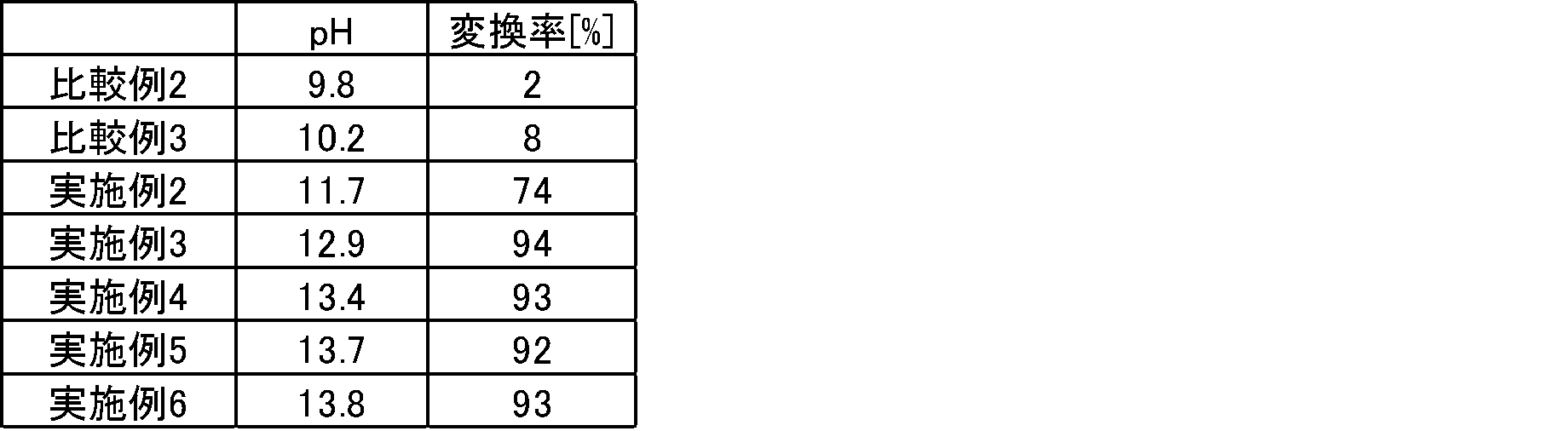
pHを11.0以上、50℃以下の条件でもキサントフモールをイソキサントフモールに変換することができ、かつイソキサントフモールの分解を抑えることができることが分かった。
<実施例7>
(サンプル調製)
キサントフモールを約80%含むホップ抽出物(Hopsteiner社製の製品名Xantho-pure)20.0gを200mLのエタノールで溶解して、キサントフモール溶液を得た。
(サンプル調製)
キサントフモールを約80%含むホップ抽出物(Hopsteiner社製の製品名Xantho-pure)20.0gを200mLのエタノールで溶解して、キサントフモール溶液を得た。
(異性化)
100mMの水酸化ナトリウム水溶液600mLと蒸留水1200mLを三口フラスコに仕込み、マントルヒーター(大科電器株式会社製)にて還流状態にした。この溶液に上記キサントフモール溶液を混合し、pH10.2で、還流条件で1時間加熱を行い、異性化(キサントフモールからイソキサントフモールへの変換)を行った。
100mMの水酸化ナトリウム水溶液600mLと蒸留水1200mLを三口フラスコに仕込み、マントルヒーター(大科電器株式会社製)にて還流状態にした。この溶液に上記キサントフモール溶液を混合し、pH10.2で、還流条件で1時間加熱を行い、異性化(キサントフモールからイソキサントフモールへの変換)を行った。
(沈殿生成)
異性化後の混合物を25℃まで冷却し、これに1.0M塩酸を60mL添加し、pHを2.0に調整して沈殿を析出させた。その後、200gのNaClを添加してさらに沈殿を得た。添加したNaCl濃度は、1.7Mであった。得られた沈殿を回収するために、ブフナー漏斗にて濾過を行った後、1Lの蒸留水で沈殿物を洗浄し、真空乾燥させて、イソキサントフモールを含有する粉末18.9gを得た。得られたイソキサントフモール含有粉末をHPLCにより分析したところ、イソキサントフモール純度(イソキサントフモール含有量)は81%であった。イソキサントフモールの収率は、93%であった。収率は、使用したホップ抽出物に含まれるキサントフモール重量を100%とした換算値である。
異性化後の混合物を25℃まで冷却し、これに1.0M塩酸を60mL添加し、pHを2.0に調整して沈殿を析出させた。その後、200gのNaClを添加してさらに沈殿を得た。添加したNaCl濃度は、1.7Mであった。得られた沈殿を回収するために、ブフナー漏斗にて濾過を行った後、1Lの蒸留水で沈殿物を洗浄し、真空乾燥させて、イソキサントフモールを含有する粉末18.9gを得た。得られたイソキサントフモール含有粉末をHPLCにより分析したところ、イソキサントフモール純度(イソキサントフモール含有量)は81%であった。イソキサントフモールの収率は、93%であった。収率は、使用したホップ抽出物に含まれるキサントフモール重量を100%とした換算値である。
<実施例8>
(サンプル調製)
キサントフモールを約80%含むホップ抽出物(Hopsteiner社製の製品名Xantho-pure)1.0gを10mLのエタノールで溶解して、キサントフモール溶液を得た。
(サンプル調製)
キサントフモールを約80%含むホップ抽出物(Hopsteiner社製の製品名Xantho-pure)1.0gを10mLのエタノールで溶解して、キサントフモール溶液を得た。
(異性化)
100mMの水酸化ナトリウム水溶液30mLと蒸留水60mLを三口フラスコに仕込み、オイルバスにて還流状態にした。この溶液に上記キサントフモール溶液を混合し(混合物のpH:10.2)、還流条件で1.5時間加熱を行い、異性化を行った。
100mMの水酸化ナトリウム水溶液30mLと蒸留水60mLを三口フラスコに仕込み、オイルバスにて還流状態にした。この溶液に上記キサントフモール溶液を混合し(混合物のpH:10.2)、還流条件で1.5時間加熱を行い、異性化を行った。
(沈殿生成)
異性化後の混合物を25℃まで冷却し、これに75%リン酸を232μL添加し、pH2.0に調整した。その後、得られた沈殿を回収するために、ブフナー漏斗にて濾過を行った後、200mLの蒸留水で沈殿物を洗浄し、真空乾燥させて、イソキサントフモールを含有する粉末0.8gを得た。得られたイソキサントフモール含有粉末をHPLCにより分析したところ、イソキサントフモール純度は90%であった。イソキサントフモールの収率は、90%であった。
異性化後の混合物を25℃まで冷却し、これに75%リン酸を232μL添加し、pH2.0に調整した。その後、得られた沈殿を回収するために、ブフナー漏斗にて濾過を行った後、200mLの蒸留水で沈殿物を洗浄し、真空乾燥させて、イソキサントフモールを含有する粉末0.8gを得た。得られたイソキサントフモール含有粉末をHPLCにより分析したところ、イソキサントフモール純度は90%であった。イソキサントフモールの収率は、90%であった。
<実施例9>
(サンプル調製)
キサントフモールを約80%含むホップ抽出物(Hopsteiner社製の製品名Xantho-pure)1.0gを三口フラスコに仕込み、30mMの水酸化ナトリウム水溶液100mLを添加した。得られたキサントフモール溶液のpHは10.2であった。
(サンプル調製)
キサントフモールを約80%含むホップ抽出物(Hopsteiner社製の製品名Xantho-pure)1.0gを三口フラスコに仕込み、30mMの水酸化ナトリウム水溶液100mLを添加した。得られたキサントフモール溶液のpHは10.2であった。
(異性化)
オイルバスにてキサントフモール溶液を還流状態(98~100℃)にして、1時間異性化を行った。
オイルバスにてキサントフモール溶液を還流状態(98~100℃)にして、1時間異性化を行った。
(沈殿生成)
異性化後の混合物を25℃まで冷却し、これに75重量%リン酸を232μL添加し、pH2.0に調整した。その後、得られた沈殿を回収するために、ブフナー漏斗にて濾過を行った後、200mLの蒸留水で沈殿物を洗浄し、真空乾燥させて、イソキサントフモールを含有する粉末0.89gを得た。得られたイソキサントフモール含有粉末をHPLCにより分析したところ、イソキサントフモール純度は83%であった。イソキサントフモールの収率は、92%であった。
異性化後の混合物を25℃まで冷却し、これに75重量%リン酸を232μL添加し、pH2.0に調整した。その後、得られた沈殿を回収するために、ブフナー漏斗にて濾過を行った後、200mLの蒸留水で沈殿物を洗浄し、真空乾燥させて、イソキサントフモールを含有する粉末0.89gを得た。得られたイソキサントフモール含有粉末をHPLCにより分析したところ、イソキサントフモール純度は83%であった。イソキサントフモールの収率は、92%であった。
<比較例4>
(サンプル調製)
キサントフモールを約80%含むホップ抽出物(Hopsteiner社製の製品名Xantho-pure)1.0gを10mLのエタノールで溶解して、キサントフモール溶液を得た。
(サンプル調製)
キサントフモールを約80%含むホップ抽出物(Hopsteiner社製の製品名Xantho-pure)1.0gを10mLのエタノールで溶解して、キサントフモール溶液を得た。
(異性化)
100mMの水酸化ナトリウム水溶液30mLと蒸留水60mLを三口フラスコに仕込み、オイルバスにて還流状態にした。上記キサントフモール溶液を混合し(混合物のpH:10.2)、1時間加熱を行い、異性化を行った。
100mMの水酸化ナトリウム水溶液30mLと蒸留水60mLを三口フラスコに仕込み、オイルバスにて還流状態にした。上記キサントフモール溶液を混合し(混合物のpH:10.2)、1時間加熱を行い、異性化を行った。
(沈殿生成)
異性化後の混合物を25℃まで冷却し、中和(酸添加)をせずにブフナー漏斗にて濾過を行った後、200mLの蒸留水で沈殿物を洗浄した。濾液と洗浄液を成分分析し、仕込んだキサントフモールがどの程度溶出しているかを検討した。その結果、仕込んだキサントフモールに対して、重量換算で75%のイソキサントフモールが濾液に溶出していることが分かった。
異性化後の混合物を25℃まで冷却し、中和(酸添加)をせずにブフナー漏斗にて濾過を行った後、200mLの蒸留水で沈殿物を洗浄した。濾液と洗浄液を成分分析し、仕込んだキサントフモールがどの程度溶出しているかを検討した。その結果、仕込んだキサントフモールに対して、重量換算で75%のイソキサントフモールが濾液に溶出していることが分かった。
実施例7~9より、キサントフモールを異性化した後、pHを酸性に調整することにより、生成したイソキサントフモールを効率よく沈殿させることができた。異性化後にpHを酸性にしなかった比較例4では、イソキサントフモールの大半が溶液中に存在していたことから、イソキサントフモールの大半を回収することができなかった。キサントフモールをイソキサントフモールに変換後、pHを酸性にすることにより、イソキサントフモールを沈殿として高収率で回収することができた。
<実施例10>
(サンプル調製)
キサントフモールを約90%含むホップ抽出物(Hopsteiner社製の製品名Xantho-Flav_New)5.0gを二口フラスコに仕込み、30mMの水酸化ナトリウム水溶液500mLを添加した。得られたキサントフモール溶液のpHは10.2であった。
(サンプル調製)
キサントフモールを約90%含むホップ抽出物(Hopsteiner社製の製品名Xantho-Flav_New)5.0gを二口フラスコに仕込み、30mMの水酸化ナトリウム水溶液500mLを添加した。得られたキサントフモール溶液のpHは10.2であった。
(異性化)
オイルバスにてキサントフモール溶液を還流状態(120℃)にして、1時間異性化を行った。
オイルバスにてキサントフモール溶液を還流状態(120℃)にして、1時間異性化を行った。
(沈殿生成)
異性化後の混合物を25℃まで冷却し、これに75重量%リン酸を添加し、pH2.2に調整して沈殿を析出させた。その後、攪拌しながら0.3gのNaClを添加してさらに沈殿を得た。添加したNaCl濃度は、10mMであった。得られた沈殿を回収するために、ブフナー漏斗にて吸引濾過を行った後、500mLの蒸留水で沈殿物を洗浄し、真空乾燥させて、イソキサントフモールを含有する粉末4.85gを得た。得られたイソキサントフモール含有粉末をHPLCにより分析したところ、イソキサントフモール純度(イソキサントフモール含有量)は87%であった。イソキサントフモールの収率は、93%であった。
異性化後の混合物を25℃まで冷却し、これに75重量%リン酸を添加し、pH2.2に調整して沈殿を析出させた。その後、攪拌しながら0.3gのNaClを添加してさらに沈殿を得た。添加したNaCl濃度は、10mMであった。得られた沈殿を回収するために、ブフナー漏斗にて吸引濾過を行った後、500mLの蒸留水で沈殿物を洗浄し、真空乾燥させて、イソキサントフモールを含有する粉末4.85gを得た。得られたイソキサントフモール含有粉末をHPLCにより分析したところ、イソキサントフモール純度(イソキサントフモール含有量)は87%であった。イソキサントフモールの収率は、93%であった。
Claims (10)
- キサントフモールと、水を含む第一の溶媒とを含み、pHが8.0~13.5である第一の混合物を加熱して、前記キサントフモールをイソキサントフモールに変換する変換工程;
前記変換工程で得られるイソキサントフモールを含む混合物のpHを酸性に調整して、イソキサントフモールを含有する沈殿を生成させる沈殿生成工程;及び、
前記イソキサントフモールを含有する沈殿を回収する沈殿回収工程を含む、イソキサントフモールを含有する組成物の製造方法。 - キサントフモールと、水を含む第二の溶媒とを含む第二の混合物のpHを11.0以上に調整して、10~50℃で前記キサントフモールをイソキサントフモールに変換する変換工程;
前記変換工程で得られるイソキサントフモールを含む混合物のpHを酸性に調整して、イソキサントフモールを含有する沈殿を生成させる沈殿生成工程;及び、
前記イソキサントフモールを含有する沈殿を回収する沈殿回収工程を含む、イソキサントフモールを含有する組成物の製造方法。 - 前記沈殿生成工程において、イソキサントフモールを含む混合物のpHを酸性に調整し、かつ、塩又は塩の水溶液を添加してイソキサントフモールを含有する沈殿を生成させる請求項1又は2に記載の製造方法。
- 前記塩又は塩の水溶液を、前記塩の濃度が1mM~2Mとなる量添加する請求項3に記載の製造方法。
- 前記沈殿生成工程において、イソキサントフモールを含む混合物のpHを1.0~4.0に調整する請求項1~4のいずれか一項に記載の製造方法。
- 前記沈殿回収工程で回収したイソキサントフモールを含有する沈殿を、水を含む第三の溶媒で洗浄する洗浄工程をさらに含む、請求項1~5のいずれか一項に記載の製造方法。
- 前記第一の溶媒は、水と水混和性溶媒との混合液、又は、水である請求項1に記載の製造方法。
- 前記第二の溶媒は、水と水混和性溶媒との混合液、又は、水である請求項2に記載の製造方法。
- 前記水混和性溶媒は、エタノールである請求項7又は8に記載の製造方法。
- キサントフモールと、水を含む溶媒とを含む混合物のpHを11.0以上に調整して、10~50℃で前記キサントフモールをイソキサントフモールに変換する、キサントフモールをイソキサントフモールに変換する方法。
Priority Applications (1)
| Application Number | Priority Date | Filing Date | Title |
|---|---|---|---|
| JP2020565163A JPWO2020145282A1 (ja) | 2019-01-11 | 2020-01-08 | イソキサントフモールを含有する組成物の製造方法 |
Applications Claiming Priority (4)
| Application Number | Priority Date | Filing Date | Title |
|---|---|---|---|
| JP2019003770 | 2019-01-11 | ||
| JP2019-003770 | 2019-01-11 | ||
| PCT/JP2019/036041 WO2020144897A1 (ja) | 2019-01-11 | 2019-09-13 | イソキサントフモールを含有する組成物の製造方法 |
| JPPCT/JP2019/036041 | 2019-09-13 |
Publications (1)
| Publication Number | Publication Date |
|---|---|
| WO2020145282A1 true WO2020145282A1 (ja) | 2020-07-16 |
Family
ID=71520500
Family Applications (1)
| Application Number | Title | Priority Date | Filing Date |
|---|---|---|---|
| PCT/JP2020/000241 Ceased WO2020145282A1 (ja) | 2019-01-11 | 2020-01-08 | イソキサントフモールを含有する組成物の製造方法 |
Country Status (1)
| Country | Link |
|---|---|
| WO (1) | WO2020145282A1 (ja) |
Citations (4)
| Publication number | Priority date | Publication date | Assignee | Title |
|---|---|---|---|---|
| WO2004089359A1 (ja) * | 2003-04-08 | 2004-10-21 | Kirin Beer Kabushiki Kaisha | 骨密度減少の抑制または予防用組成物および飲食品 |
| JP2008538208A (ja) * | 2005-03-22 | 2008-10-16 | ホプシュタイナー−ハルータウアー ホップフェンフェレドルングゴゼルシャフト エムベーハー | キサントフモールからナリンゲニン誘導体を製造する方法 |
| JP2011140477A (ja) * | 2009-03-04 | 2011-07-21 | Tohoku Univ | Cb1受容体アゴニスト |
| WO2012172090A1 (en) * | 2011-06-17 | 2012-12-20 | Ludwig Aigner | Chromane-like cyclic prenylflavonoids for the medical intervention in neurological disorders |
-
2020
- 2020-01-08 WO PCT/JP2020/000241 patent/WO2020145282A1/ja not_active Ceased
Patent Citations (4)
| Publication number | Priority date | Publication date | Assignee | Title |
|---|---|---|---|---|
| WO2004089359A1 (ja) * | 2003-04-08 | 2004-10-21 | Kirin Beer Kabushiki Kaisha | 骨密度減少の抑制または予防用組成物および飲食品 |
| JP2008538208A (ja) * | 2005-03-22 | 2008-10-16 | ホプシュタイナー−ハルータウアー ホップフェンフェレドルングゴゼルシャフト エムベーハー | キサントフモールからナリンゲニン誘導体を製造する方法 |
| JP2011140477A (ja) * | 2009-03-04 | 2011-07-21 | Tohoku Univ | Cb1受容体アゴニスト |
| WO2012172090A1 (en) * | 2011-06-17 | 2012-12-20 | Ludwig Aigner | Chromane-like cyclic prenylflavonoids for the medical intervention in neurological disorders |
Non-Patent Citations (4)
| Title |
|---|
| FU,M. ET AL.: "Production of 8-Prenylnaringenin from Isoxanthohumol through Biotransformation by Fungi Cells", JOURNAL OF AGRICULTURAL AND FOOD CHEMISTRY, vol. 59, no. 13, 2011, pages 7419 - 7426, XP055723718, DOI: 10.1021/jf2011722 * |
| STEVENS,J.F. ET AL.: "Prenylflavonoids from Humulus lupulus", PHYTOCHEMISTRY, vol. 44, no. 8, 1997, pages 1575 - 1585, XP004293022, DOI: 10.1016/S0031-9422(96)00744-3 * |
| STOMPOR,M. ET AL.: "Synthesis and biological evaluation of 4'-0- acetylisoxanthohumol and its analogues as antioxidant and antiproliferative agents", ACTA BIOCHIMICA POLONICA, vol. 64, no. 3, 2017, pages 577 - 583, XP055723719, DOI: 10.18388/abp.2017_1608 * |
| WILHELM,H. ET AL.: "An efficient synthesis of the phytoestrogen 8- prenylnaringenin from xanthohumol by a novel demethylation process", TETRAHEDRON, vol. 62, no. 29, 2006, pages 6961 - 6966, XP025002230, DOI: 10.1016/j.tet.2006.04.060 * |
Similar Documents
| Publication | Publication Date | Title |
|---|---|---|
| ES2539651B1 (es) | Nuevo procedimiento de despolimerizacion de la lignina | |
| JP5119397B2 (ja) | スダチチンおよびノビレチンの製造方法 | |
| JPS6021575B2 (ja) | グリオキシル酸のヘミアセタールエステルの製造または回収率を増大させる方法 | |
| WO2020144897A1 (ja) | イソキサントフモールを含有する組成物の製造方法 | |
| US6875891B2 (en) | Process for preparing highly water soluble double salts of hydroxycitric acid particularly alkali and alkaline earth metal double salts | |
| JP2020019826A (ja) | 3−ヒドロキシ−3−メチルブタン酸又はその塩の製造方法 | |
| JP2915465B2 (ja) | 4―ヒドロキシ―2,3,5,6―テトラフルオロ安息香酸及び2,3,5,6―テトラフルオロフェノールの製造方法 | |
| CN110590618A (zh) | 一种阿维巴坦中间体的制备方法 | |
| CN109096113B (zh) | 一种合成橡苔芳构化的方法 | |
| JP6124562B2 (ja) | 4′−[[2−n−プロピル−4−メチル−6−(1−メチルベンズイミダゾール−2−イル)−ベンズイミダゾール−1−イル]−メチル]−ビフェニル−2−カルボン酸のアンモニウム塩の結晶 | |
| KR20050108376A (ko) | 시아노-이소벤조퓨란의 제조방법 | |
| JPH05186389A (ja) | パーフルオロエーテルカルボン酸の回収法 | |
| JP4998264B2 (ja) | (−)−ヒドロキシクエン酸のアルカリ土類金属塩の製造法 | |
| CN107848958A (zh) | 一种西酞普兰二醇中间体的制备方法 | |
| US20100152488A1 (en) | High Purity (-) Hydroxycitric Acid Metal Salt Derivatives and Method of Preparation of the Same | |
| CN114671836B (zh) | 一种胺碘酮杂质c的合成方法 | |
| JP2015051933A (ja) | クロロゲン酸の製造方法及びクロロゲン酸金属錯体 | |
| WO2026033409A1 (en) | A process for the preparation of alcohol compounds | |
| EP2643337B1 (en) | Process for the preparation of (2r,3s)-2-(hydroxymethyl) -5-methoxytetrahydrofuran-3-ol free of pyranose compounds | |
| CN118851870A (zh) | 一种异绿原酸制备咖啡酸和奎宁酸的方法 | |
| CN111848583A (zh) | 一种别嘌醇杂质c及其制备方法 | |
| JP2011012053A (ja) | N−アルキルアミノフェノールの製造方法 | |
| JP2004256434A (ja) | 2,5−ジヒドロキシ安息香酸の精製方法 | |
| JP2010006752A (ja) | 4−アミノシクロヘキサン−1−カルボン酸のシス/トランス異性体混合物の分離方法 | |
| JPH02169536A (ja) | 高純度ジグリセリン製造法 |
Legal Events
| Date | Code | Title | Description |
|---|---|---|---|
| 121 | Ep: the epo has been informed by wipo that ep was designated in this application |
Ref document number: 20738218 Country of ref document: EP Kind code of ref document: A1 |
|
| ENP | Entry into the national phase |
Ref document number: 2020565163 Country of ref document: JP Kind code of ref document: A |
|
| NENP | Non-entry into the national phase |
Ref country code: DE |
|
| 122 | Ep: pct application non-entry in european phase |
Ref document number: 20738218 Country of ref document: EP Kind code of ref document: A1 |