WO2020100892A1 - センサシステム - Google Patents
センサシステム Download PDFInfo
- Publication number
- WO2020100892A1 WO2020100892A1 PCT/JP2019/044330 JP2019044330W WO2020100892A1 WO 2020100892 A1 WO2020100892 A1 WO 2020100892A1 JP 2019044330 W JP2019044330 W JP 2019044330W WO 2020100892 A1 WO2020100892 A1 WO 2020100892A1
- Authority
- WO
- WIPO (PCT)
- Prior art keywords
- cover
- vehicle
- light
- sensor system
- sensor
- Prior art date
- Legal status (The legal status is an assumption and is not a legal conclusion. Google has not performed a legal analysis and makes no representation as to the accuracy of the status listed.)
- Ceased
Links
Images










Classifications
-
- F—MECHANICAL ENGINEERING; LIGHTING; HEATING; WEAPONS; BLASTING
- F21—LIGHTING
- F21S—NON-PORTABLE LIGHTING DEVICES; SYSTEMS THEREOF; VEHICLE LIGHTING DEVICES SPECIALLY ADAPTED FOR VEHICLE EXTERIORS
- F21S41/00—Illuminating devices specially adapted for vehicle exteriors, e.g. headlamps
- F21S41/20—Illuminating devices specially adapted for vehicle exteriors, e.g. headlamps characterised by refractors, transparent cover plates, light guides or filters
- F21S41/28—Cover glass
-
- F—MECHANICAL ENGINEERING; LIGHTING; HEATING; WEAPONS; BLASTING
- F21—LIGHTING
- F21S—NON-PORTABLE LIGHTING DEVICES; SYSTEMS THEREOF; VEHICLE LIGHTING DEVICES SPECIALLY ADAPTED FOR VEHICLE EXTERIORS
- F21S41/00—Illuminating devices specially adapted for vehicle exteriors, e.g. headlamps
- F21S41/20—Illuminating devices specially adapted for vehicle exteriors, e.g. headlamps characterised by refractors, transparent cover plates, light guides or filters
- F21S41/2805—Cover glass
-
- B—PERFORMING OPERATIONS; TRANSPORTING
- B60—VEHICLES IN GENERAL
- B60Q—ARRANGEMENT OF SIGNALLING OR LIGHTING DEVICES, THE MOUNTING OR SUPPORTING THEREOF OR CIRCUITS THEREFOR, FOR VEHICLES IN GENERAL
- B60Q1/00—Arrangement of optical signalling or lighting devices, the mounting or supporting thereof or circuits therefor
- B60Q1/0017—Devices integrating an element dedicated to another function
- B60Q1/0023—Devices integrating an element dedicated to another function the element being a sensor, e.g. distance sensor, camera
-
- B—PERFORMING OPERATIONS; TRANSPORTING
- B60—VEHICLES IN GENERAL
- B60S—SERVICING, CLEANING, REPAIRING, SUPPORTING, LIFTING, OR MANOEUVRING OF VEHICLES, NOT OTHERWISE PROVIDED FOR
- B60S1/00—Cleaning of vehicles
- B60S1/02—Cleaning windscreens, windows or optical devices
- B60S1/46—Cleaning windscreens, windows or optical devices using liquid; Windscreen washers
- B60S1/48—Liquid supply therefor
- B60S1/52—Arrangement of nozzles; Liquid spreading means
-
- B—PERFORMING OPERATIONS; TRANSPORTING
- B60—VEHICLES IN GENERAL
- B60S—SERVICING, CLEANING, REPAIRING, SUPPORTING, LIFTING, OR MANOEUVRING OF VEHICLES, NOT OTHERWISE PROVIDED FOR
- B60S1/00—Cleaning of vehicles
- B60S1/62—Other vehicle fittings for cleaning
-
- B—PERFORMING OPERATIONS; TRANSPORTING
- B60—VEHICLES IN GENERAL
- B60W—CONJOINT CONTROL OF VEHICLE SUB-UNITS OF DIFFERENT TYPE OR DIFFERENT FUNCTION; CONTROL SYSTEMS SPECIALLY ADAPTED FOR HYBRID VEHICLES; ROAD VEHICLE DRIVE CONTROL SYSTEMS FOR PURPOSES NOT RELATED TO THE CONTROL OF A PARTICULAR SUB-UNIT
- B60W40/00—Estimation or calculation of non-directly measurable driving parameters for road vehicle drive control systems not related to the control of a particular sub unit, e.g. by using mathematical models
- B60W40/02—Estimation or calculation of non-directly measurable driving parameters for road vehicle drive control systems not related to the control of a particular sub unit, e.g. by using mathematical models related to ambient conditions
-
- G—PHYSICS
- G01—MEASURING; TESTING
- G01B—MEASURING LENGTH, THICKNESS OR SIMILAR LINEAR DIMENSIONS; MEASURING ANGLES; MEASURING AREAS; MEASURING IRREGULARITIES OF SURFACES OR CONTOURS
- G01B11/00—Measuring arrangements characterised by the use of optical techniques
- G01B11/02—Measuring arrangements characterised by the use of optical techniques for measuring length, width or thickness
- G01B11/06—Measuring arrangements characterised by the use of optical techniques for measuring length, width or thickness for measuring thickness ; e.g. of sheet material
-
- G—PHYSICS
- G01—MEASURING; TESTING
- G01B—MEASURING LENGTH, THICKNESS OR SIMILAR LINEAR DIMENSIONS; MEASURING ANGLES; MEASURING AREAS; MEASURING IRREGULARITIES OF SURFACES OR CONTOURS
- G01B11/00—Measuring arrangements characterised by the use of optical techniques
- G01B11/16—Measuring arrangements characterised by the use of optical techniques for measuring the deformation in a solid, e.g. optical strain gauge
- G01B11/18—Measuring arrangements characterised by the use of optical techniques for measuring the deformation in a solid, e.g. optical strain gauge using photoelastic elements
-
- G—PHYSICS
- G01—MEASURING; TESTING
- G01B—MEASURING LENGTH, THICKNESS OR SIMILAR LINEAR DIMENSIONS; MEASURING ANGLES; MEASURING AREAS; MEASURING IRREGULARITIES OF SURFACES OR CONTOURS
- G01B17/00—Measuring arrangements characterised by the use of infrasonic, sonic or ultrasonic vibrations
-
- G—PHYSICS
- G01—MEASURING; TESTING
- G01B—MEASURING LENGTH, THICKNESS OR SIMILAR LINEAR DIMENSIONS; MEASURING ANGLES; MEASURING AREAS; MEASURING IRREGULARITIES OF SURFACES OR CONTOURS
- G01B17/00—Measuring arrangements characterised by the use of infrasonic, sonic or ultrasonic vibrations
- G01B17/02—Measuring arrangements characterised by the use of infrasonic, sonic or ultrasonic vibrations for measuring thickness
-
- G—PHYSICS
- G01—MEASURING; TESTING
- G01B—MEASURING LENGTH, THICKNESS OR SIMILAR LINEAR DIMENSIONS; MEASURING ANGLES; MEASURING AREAS; MEASURING IRREGULARITIES OF SURFACES OR CONTOURS
- G01B17/00—Measuring arrangements characterised by the use of infrasonic, sonic or ultrasonic vibrations
- G01B17/04—Measuring arrangements characterised by the use of infrasonic, sonic or ultrasonic vibrations for measuring the deformation in a solid, e.g. by vibrating string
-
- G—PHYSICS
- G01—MEASURING; TESTING
- G01B—MEASURING LENGTH, THICKNESS OR SIMILAR LINEAR DIMENSIONS; MEASURING ANGLES; MEASURING AREAS; MEASURING IRREGULARITIES OF SURFACES OR CONTOURS
- G01B21/00—Measuring arrangements or details thereof, where the measuring technique is not covered by the other groups of this subclass, unspecified or not relevant
- G01B21/32—Measuring arrangements or details thereof, where the measuring technique is not covered by the other groups of this subclass, unspecified or not relevant for measuring the deformation in a solid
-
- G—PHYSICS
- G01—MEASURING; TESTING
- G01B—MEASURING LENGTH, THICKNESS OR SIMILAR LINEAR DIMENSIONS; MEASURING ANGLES; MEASURING AREAS; MEASURING IRREGULARITIES OF SURFACES OR CONTOURS
- G01B5/00—Measuring arrangements characterised by the use of mechanical techniques
- G01B5/0025—Measuring of vehicle parts
-
- G—PHYSICS
- G01—MEASURING; TESTING
- G01N—INVESTIGATING OR ANALYSING MATERIALS BY DETERMINING THEIR CHEMICAL OR PHYSICAL PROPERTIES
- G01N21/00—Investigating or analysing materials by the use of optical means, i.e. using sub-millimetre waves, infrared, visible or ultraviolet light
- G01N21/84—Systems specially adapted for particular applications
- G01N21/88—Investigating the presence of flaws or contamination
- G01N21/94—Investigating contamination, e.g. dust
-
- G—PHYSICS
- G01—MEASURING; TESTING
- G01N—INVESTIGATING OR ANALYSING MATERIALS BY DETERMINING THEIR CHEMICAL OR PHYSICAL PROPERTIES
- G01N21/00—Investigating or analysing materials by the use of optical means, i.e. using sub-millimetre waves, infrared, visible or ultraviolet light
- G01N21/84—Systems specially adapted for particular applications
- G01N21/88—Investigating the presence of flaws or contamination
- G01N21/95—Investigating the presence of flaws or contamination characterised by the material or shape of the object to be examined
- G01N21/958—Inspecting transparent materials or objects, e.g. windscreens
-
- G—PHYSICS
- G01—MEASURING; TESTING
- G01N—INVESTIGATING OR ANALYSING MATERIALS BY DETERMINING THEIR CHEMICAL OR PHYSICAL PROPERTIES
- G01N29/00—Investigating or analysing materials by the use of ultrasonic, sonic or infrasonic waves; Visualisation of the interior of objects by transmitting ultrasonic or sonic waves through the object
- G01N29/04—Analysing solids
-
- G—PHYSICS
- G01—MEASURING; TESTING
- G01N—INVESTIGATING OR ANALYSING MATERIALS BY DETERMINING THEIR CHEMICAL OR PHYSICAL PROPERTIES
- G01N29/00—Investigating or analysing materials by the use of ultrasonic, sonic or infrasonic waves; Visualisation of the interior of objects by transmitting ultrasonic or sonic waves through the object
- G01N29/04—Analysing solids
- G01N29/12—Analysing solids by measuring frequency or resonance of acoustic waves
-
- G—PHYSICS
- G01—MEASURING; TESTING
- G01N—INVESTIGATING OR ANALYSING MATERIALS BY DETERMINING THEIR CHEMICAL OR PHYSICAL PROPERTIES
- G01N29/00—Investigating or analysing materials by the use of ultrasonic, sonic or infrasonic waves; Visualisation of the interior of objects by transmitting ultrasonic or sonic waves through the object
- G01N29/14—Investigating or analysing materials by the use of ultrasonic, sonic or infrasonic waves; Visualisation of the interior of objects by transmitting ultrasonic or sonic waves through the object using acoustic emission techniques
-
- G—PHYSICS
- G01—MEASURING; TESTING
- G01N—INVESTIGATING OR ANALYSING MATERIALS BY DETERMINING THEIR CHEMICAL OR PHYSICAL PROPERTIES
- G01N29/00—Investigating or analysing materials by the use of ultrasonic, sonic or infrasonic waves; Visualisation of the interior of objects by transmitting ultrasonic or sonic waves through the object
- G01N29/22—Details, e.g. general constructional or apparatus details
- G01N29/32—Arrangements for suppressing undesired influences, e.g. temperature or pressure variations, compensating for signal noise
-
- G—PHYSICS
- G01—MEASURING; TESTING
- G01N—INVESTIGATING OR ANALYSING MATERIALS BY DETERMINING THEIR CHEMICAL OR PHYSICAL PROPERTIES
- G01N29/00—Investigating or analysing materials by the use of ultrasonic, sonic or infrasonic waves; Visualisation of the interior of objects by transmitting ultrasonic or sonic waves through the object
- G01N29/44—Processing the detected response signal, e.g. electronic circuits specially adapted therefor
- G01N29/46—Processing the detected response signal, e.g. electronic circuits specially adapted therefor by spectral analysis, e.g. Fourier analysis or wavelet analysis
-
- G—PHYSICS
- G01—MEASURING; TESTING
- G01S—RADIO DIRECTION-FINDING; RADIO NAVIGATION; DETERMINING DISTANCE OR VELOCITY BY USE OF RADIO WAVES; LOCATING OR PRESENCE-DETECTING BY USE OF THE REFLECTION OR RERADIATION OF RADIO WAVES; ANALOGOUS ARRANGEMENTS USING OTHER WAVES
- G01S17/00—Systems using the reflection or reradiation of electromagnetic waves other than radio waves, e.g. lidar systems
- G01S17/88—Lidar systems specially adapted for specific applications
- G01S17/93—Lidar systems specially adapted for specific applications for anti-collision purposes
- G01S17/931—Lidar systems specially adapted for specific applications for anti-collision purposes of land vehicles
-
- G—PHYSICS
- G01—MEASURING; TESTING
- G01S—RADIO DIRECTION-FINDING; RADIO NAVIGATION; DETERMINING DISTANCE OR VELOCITY BY USE OF RADIO WAVES; LOCATING OR PRESENCE-DETECTING BY USE OF THE REFLECTION OR RERADIATION OF RADIO WAVES; ANALOGOUS ARRANGEMENTS USING OTHER WAVES
- G01S7/00—Details of systems according to groups G01S13/00, G01S15/00, G01S17/00
- G01S7/48—Details of systems according to groups G01S13/00, G01S15/00, G01S17/00 of systems according to group G01S17/00
- G01S7/481—Constructional features, e.g. arrangements of optical elements
- G01S7/4811—Constructional features, e.g. arrangements of optical elements common to transmitter and receiver
- G01S7/4813—Housing arrangements
-
- G—PHYSICS
- G01—MEASURING; TESTING
- G01S—RADIO DIRECTION-FINDING; RADIO NAVIGATION; DETERMINING DISTANCE OR VELOCITY BY USE OF RADIO WAVES; LOCATING OR PRESENCE-DETECTING BY USE OF THE REFLECTION OR RERADIATION OF RADIO WAVES; ANALOGOUS ARRANGEMENTS USING OTHER WAVES
- G01S7/00—Details of systems according to groups G01S13/00, G01S15/00, G01S17/00
- G01S7/48—Details of systems according to groups G01S13/00, G01S15/00, G01S17/00 of systems according to group G01S17/00
- G01S7/497—Means for monitoring or calibrating
-
- G—PHYSICS
- G01—MEASURING; TESTING
- G01S—RADIO DIRECTION-FINDING; RADIO NAVIGATION; DETERMINING DISTANCE OR VELOCITY BY USE OF RADIO WAVES; LOCATING OR PRESENCE-DETECTING BY USE OF THE REFLECTION OR RERADIATION OF RADIO WAVES; ANALOGOUS ARRANGEMENTS USING OTHER WAVES
- G01S7/00—Details of systems according to groups G01S13/00, G01S15/00, G01S17/00
- G01S7/48—Details of systems according to groups G01S13/00, G01S15/00, G01S17/00 of systems according to group G01S17/00
- G01S7/497—Means for monitoring or calibrating
- G01S7/4972—Alignment of sensor
-
- B—PERFORMING OPERATIONS; TRANSPORTING
- B60—VEHICLES IN GENERAL
- B60S—SERVICING, CLEANING, REPAIRING, SUPPORTING, LIFTING, OR MANOEUVRING OF VEHICLES, NOT OTHERWISE PROVIDED FOR
- B60S1/00—Cleaning of vehicles
- B60S1/02—Cleaning windscreens, windows or optical devices
- B60S1/04—Wipers or the like, e.g. scrapers
- B60S1/06—Wipers or the like, e.g. scrapers characterised by the drive
- B60S1/08—Wipers or the like, e.g. scrapers characterised by the drive electrically driven
- B60S1/0818—Wipers or the like, e.g. scrapers characterised by the drive electrically driven including control systems responsive to external conditions, e.g. by detection of moisture, dirt or the like
- B60S1/0822—Wipers or the like, e.g. scrapers characterised by the drive electrically driven including control systems responsive to external conditions, e.g. by detection of moisture, dirt or the like characterized by the arrangement or type of detection means
- B60S1/0859—Other types of detection of rain, e.g. by measuring friction or rain drop impact
-
- B—PERFORMING OPERATIONS; TRANSPORTING
- B60—VEHICLES IN GENERAL
- B60S—SERVICING, CLEANING, REPAIRING, SUPPORTING, LIFTING, OR MANOEUVRING OF VEHICLES, NOT OTHERWISE PROVIDED FOR
- B60S1/00—Cleaning of vehicles
- B60S1/02—Cleaning windscreens, windows or optical devices
- B60S1/46—Cleaning windscreens, windows or optical devices using liquid; Windscreen washers
- B60S1/48—Liquid supply therefor
- B60S1/52—Arrangement of nozzles; Liquid spreading means
- B60S1/522—Arrangement of nozzles; Liquid spreading means moving liquid spreading means, e.g. arranged in wiper arms
-
- B—PERFORMING OPERATIONS; TRANSPORTING
- B60—VEHICLES IN GENERAL
- B60S—SERVICING, CLEANING, REPAIRING, SUPPORTING, LIFTING, OR MANOEUVRING OF VEHICLES, NOT OTHERWISE PROVIDED FOR
- B60S1/00—Cleaning of vehicles
- B60S1/02—Cleaning windscreens, windows or optical devices
- B60S1/56—Cleaning windscreens, windows or optical devices specially adapted for cleaning other parts or devices than front windows or windscreens
-
- B—PERFORMING OPERATIONS; TRANSPORTING
- B60—VEHICLES IN GENERAL
- B60W—CONJOINT CONTROL OF VEHICLE SUB-UNITS OF DIFFERENT TYPE OR DIFFERENT FUNCTION; CONTROL SYSTEMS SPECIALLY ADAPTED FOR HYBRID VEHICLES; ROAD VEHICLE DRIVE CONTROL SYSTEMS FOR PURPOSES NOT RELATED TO THE CONTROL OF A PARTICULAR SUB-UNIT
- B60W2420/00—Indexing codes relating to the type of sensors based on the principle of their operation
- B60W2420/40—Photo, light or radio wave sensitive means, e.g. infrared sensors
- B60W2420/408—Radar; Laser, e.g. lidar
-
- G—PHYSICS
- G01—MEASURING; TESTING
- G01N—INVESTIGATING OR ANALYSING MATERIALS BY DETERMINING THEIR CHEMICAL OR PHYSICAL PROPERTIES
- G01N21/00—Investigating or analysing materials by the use of optical means, i.e. using sub-millimetre waves, infrared, visible or ultraviolet light
- G01N21/84—Systems specially adapted for particular applications
- G01N21/88—Investigating the presence of flaws or contamination
- G01N21/94—Investigating contamination, e.g. dust
- G01N2021/945—Liquid or solid deposits of macroscopic size on surfaces, e.g. drops, films, or clustered contaminants
-
- G—PHYSICS
- G01—MEASURING; TESTING
- G01N—INVESTIGATING OR ANALYSING MATERIALS BY DETERMINING THEIR CHEMICAL OR PHYSICAL PROPERTIES
- G01N2291/00—Indexing codes associated with group G01N29/00
- G01N2291/02—Indexing codes associated with the analysed material
- G01N2291/025—Change of phase or condition
- G01N2291/0256—Adsorption, desorption, surface mass change, e.g. on biosensors
-
- G—PHYSICS
- G01—MEASURING; TESTING
- G01S—RADIO DIRECTION-FINDING; RADIO NAVIGATION; DETERMINING DISTANCE OR VELOCITY BY USE OF RADIO WAVES; LOCATING OR PRESENCE-DETECTING BY USE OF THE REFLECTION OR RERADIATION OF RADIO WAVES; ANALOGOUS ARRANGEMENTS USING OTHER WAVES
- G01S7/00—Details of systems according to groups G01S13/00, G01S15/00, G01S17/00
- G01S7/48—Details of systems according to groups G01S13/00, G01S15/00, G01S17/00 of systems according to group G01S17/00
- G01S7/497—Means for monitoring or calibrating
- G01S2007/4975—Means for monitoring or calibrating of sensor obstruction by, e.g. dirt- or ice-coating, e.g. by reflection measurement on front-screen
- G01S2007/4977—Means for monitoring or calibrating of sensor obstruction by, e.g. dirt- or ice-coating, e.g. by reflection measurement on front-screen including means to prevent or remove the obstruction
Definitions
- the present disclosure relates to a sensor system mounted on a vehicle.
- Patent Document 1 discloses a radar as such a sensor unit.
- the radar is arranged in a lamp chamber of a lamp device that illuminates the outside of the vehicle. That is, the radar is covered with a cover that partitions the lamp chamber and allows passage of illumination light.
- the cover forms part of the outer surface of the vehicle and also allows passage of detection light for the radar to detect external information.
- driving support used in the present specification means a control process for at least partially performing at least one of driving operation (steering wheel operation, acceleration, deceleration, etc.), monitoring of a driving environment, and backup of driving operation. To do. That is, it is meant to include partial driving support such as a collision damage reduction braking function and a lane keep assist function to fully automatic driving operation.
- a first aspect for meeting the above requirements is a sensor system mounted on a vehicle, A sensor unit that detects information outside the vehicle using light, A part of the outer surface of the vehicle is formed so as to cover the sensor unit, and a cover that allows passage of the light, A displacement sensor that is arranged on the cover and outputs a signal corresponding to the displacement generated in the cover; A processor that detects foreign matter attached to the cover based on the change in the signal, Is equipped with.
- the strain distribution generated in the cover is not uniform, the strain modes detected at the same location show the same displacement tendency. Therefore, the detection results repeatedly obtained by the same displacement sensor show the same tendency.
- the foreign matter attached to the cover causes a change in the strain distribution of the cover. Therefore, the detection result by the same displacement sensor also changes. That is, the foreign matter attached to the cover can be detected by monitoring the change in the detection result of the displacement sensor.
- the displacement sensor for example, at least one of a strain gauge, an acceleration sensor, and an optical fiber sensor can be used.
- the optical fiber when used as the above displacement sensor, the optical fiber is lightweight and flexible, and therefore has a high degree of freedom in arrangement with respect to the cover. Further, since it is extremely thin, it has little influence on the appearance and design even if it is arranged on the surface of the cover. Furthermore, a plurality of strain detection points can be set in one optical fiber. Therefore, it is possible to increase the degree of freedom in designing the sensor system for suppressing the decrease in the information detection capability of the sensor unit.
- the sensor system may include an actuator that vibrates the cover.
- the sensor system according to the first aspect can be configured as follows. At least a part of the displacement sensor is arranged at a peripheral portion of the cover.
- the rigidity or flexibility of the cover is likely to change significantly. Strain is likely to occur at such a portion. Therefore, by disposing the displacement sensor in the peripheral portion of the cover, the strain detection sensitivity can be improved. Therefore, the effect of suppressing a decrease in information detection capability of the sensor unit covered by the cover forming a part of the outer surface of the vehicle is further enhanced.
- the sensor system according to the first aspect can be configured as follows. At least a part of the displacement sensor is arranged in a portion where the thickness of the cover changes.
- the rigidity or flexibility of the cover is likely to change significantly. Strain is likely to occur at such a portion. Therefore, the strain detection sensitivity can be improved by disposing the displacement sensor in the portion. Therefore, the effect of suppressing a decrease in information detection capability of the sensor unit covered by the cover forming a part of the outer surface of the vehicle is further enhanced.
- the sensor system according to the first aspect can be configured as follows. Equipped with a nozzle that can eject liquid, When the foreign matter is detected, the processor causes the nozzle to eject the liquid toward the cover.
- the sensor system according to the first aspect can be configured as follows. Equipped with a nozzle that can eject liquid, The processor specifies a position of the detected foreign matter on the cover, and causes the nozzle to eject the liquid toward the position.
- a second aspect for meeting the above requirements is a sensor system mounted on a vehicle, A sensor unit that detects information outside the vehicle using light, A part of the outer surface of the vehicle is formed so as to cover the sensor unit, and a cover that allows passage of the light, An actuator that is arranged on the cover and vibrates the cover; Is equipped with.
- the sensor system according to the second aspect can be configured as follows.
- a nozzle capable of ejecting liquid toward the cover is provided.
- the sensor system according to each of the first aspect and the second aspect can be configured as follows.
- the vehicle is provided with a lamp unit for emitting illumination light to the outside,
- the cover allows the illumination light to pass therethrough.
- the lamp unit is generally placed in a place with few shields in the vehicle because of the function of supplying illumination light to the outside of the vehicle. By disposing the sensor unit in such a place as well, information outside the vehicle can be efficiently acquired.
- a third aspect for meeting the above requirements is a sensor system mounted on a vehicle, A sensor unit that detects information outside the vehicle using light, A part of the outer surface of the vehicle is formed so as to cover the sensor unit, and a cover that allows passage of the light, A camera that outputs a signal corresponding to an image of an area of the cover through which the light passes; A processor that detects foreign matter attached to the light passage region based on the signal, Is equipped with At least a part of the focal plane of the camera overlaps the light passage area.
- a fourth aspect for meeting the above requirements is a sensor system mounted on a vehicle, A sensor unit that detects information outside the vehicle using light, A part of the outer surface of the vehicle is formed so as to cover the sensor unit, and a cover that allows passage of the light, A camera that outputs a signal corresponding to an image of an area of the cover through which the light passes; A processor that detects foreign matter attached to the light passage region based on the signal, Is equipped with The optical axis of the camera extends in a direction different from the detection reference direction of the sensor unit.
- a fifth aspect for meeting the above demand is a sensor system mounted on a vehicle, A LiDAR (Light Detection and Ranging) sensor unit that detects information outside the vehicle using detection light; A cover that forms a part of the outer surface of the vehicle so as to cover the LiDAR sensor unit, and allows the detection light to pass therethrough; A camera that outputs a signal corresponding to an image of an area of the cover where the detection light passes, A processor that detects foreign matter attached to the light passage region based on the signal, Is equipped with.
- a LiDAR Light Detection and Ranging
- the camera according to each of the third to fifth aspects is not a device for acquiring an image of the outside of the vehicle (strictly, an image outside the outer surface of the cover), but a light used for information detection by the sensor unit.
- a light used for information detection by the sensor unit Is an apparatus for acquiring an image of a light passage region of a cover located on the traveling path of the. Therefore, at least a part of the focal plane of the camera overlaps the light passage area. Further, since the arrangement of the camera in which at least a part of the focal plane overlaps the light passage region is given priority, the optical axis of the camera may extend in a direction different from the detection reference direction of the sensor unit.
- the sensor system according to each of the third aspect to the fifth aspect can be configured as follows. Equipped with a nozzle that can eject liquid, When the foreign matter is detected, the processor causes the nozzle to eject the liquid toward the light passage region.
- the sensor system according to each of the third to fifth aspects can be configured as follows. Equipped with a nozzle that can eject liquid, The processor identifies the position of the detected foreign matter and causes the nozzle to eject the liquid toward the position.
- the sensor system according to each of the third to fifth aspects can be configured as follows.
- the camera is An image sensor, A resin lens for forming an image on the image sensor, A circuit board supporting the image pickup device and the resin lens; Is equipped with.
- the space occupied by the camera can be greatly reduced, and the degree of freedom in arranging the camera for acquiring an image of the light passage region is increased. Therefore, it becomes easy to suppress a decrease in information detection capability of the sensor unit covered by the cover forming a part of the outer surface of the vehicle.
- the sensor system according to each of the third to fifth aspects can be configured as follows.
- the vehicle is provided with a lamp unit for emitting illumination light to the outside,
- the cover allows the illumination light to pass therethrough.
- the lamp unit is generally placed in a place with few shields in the vehicle because of the function of supplying illumination light to the outside of the vehicle. By disposing the sensor unit in such a place as well, information outside the vehicle can be efficiently acquired.
- light used in this specification means not only visible light but also electromagnetic waves having an arbitrary wavelength such as ultraviolet light, infrared light, microwaves and millimeter waves.
- sensor unit used in the present specification means a constituent unit of a component that has a desired information detection function and can be distributed by itself.
- lamp unit used in the present specification means a constituent unit of a component that has a desired lighting function and is distributable by itself.
- FIG. 1 illustrates the configuration of a sensor system according to a first embodiment.
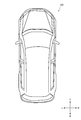
- 2 illustrates an external appearance of a vehicle equipped with the sensor system of FIG. 1.
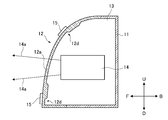
- 2 shows an example of arrangement of strain gauges in the sensor system of FIG. 1.
- 3 shows another example of the arrangement of strain gauges in the sensor system of FIG. 2 shows an example of the operation of the processor in the sensor system of FIG. 2 shows an example of the operation of the processor in the sensor system of FIG. 9 shows another example of the operation of the processor in the sensor system of FIG.
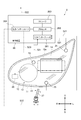
- the structure of the sensor system which concerns on 2nd embodiment is illustrated.
- 7 shows an example of the operation of the processor in the sensor system of FIG. 7 shows another example of the operation of the processor in the sensor system of FIG. 7 shows another example of the operation of the processor in the sensor system of FIG.
- FIG. 7 shows an example of the arrangement of acceleration sensors in the sensor system of FIG. 7 shows another example of arrangement of acceleration sensors in the sensor system of FIG. 3 illustrates the configuration of a sensor system according to a third embodiment.
- 10 shows an example of the operation of the processor in the sensor system of FIG. 10 shows another example of the operation of the processor in the sensor system of FIG. 10 shows another example of the operation of the processor in the sensor system of FIG. 10 shows an example of an arrangement of optical fibers in the sensor system of FIG. 10 shows another example of the arrangement of optical fibers in the sensor system of FIG. It illustrates the configuration of a sensor system according to a fourth embodiment. It shows an example of a configuration of a sensor system according to a fifth embodiment. 14 illustrates an operation of a processor in the sensor system of FIG. 14 illustrates an operation of a processor in the sensor system of FIG. 9 shows another example of the configuration of the sensor system according to the fifth embodiment.
- the arrow F indicates the forward direction of the illustrated structure.
- Arrow B indicates the rearward direction of the illustrated structure.
- the arrow U indicates the upward direction of the illustrated structure.
- the arrow D indicates the downward direction of the illustrated structure.
- the arrow L indicates the left direction of the illustrated structure.
- the arrow R indicates the right direction of the illustrated structure. “Left” and “right” used in the following description indicate the left and right directions as viewed from the driver's seat.
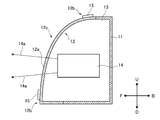
- FIG. 1 schematically shows the configuration of the sensor system 1 according to the first embodiment.
- the sensor system 1 is mounted on the vehicle 100 illustrated in FIG.
- the shape of the vehicle body of the vehicle 100 is merely an example.
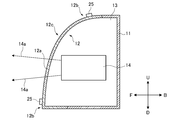
- the sensor system 1 includes a housing 11 and a cover 12.
- the housing 11 defines a storage chamber 13 together with the cover 12.
- the sensor system 1 includes a LiDAR sensor unit 14.
- the LiDAR sensor unit 14 is arranged in the accommodation chamber 13.
- the cover 12 forms a part of the outer surface of the vehicle 100 so as to cover the LiDAR sensor unit 14.
- the LiDAR sensor unit 14 emits the detection light 14a toward the detection area outside the vehicle 100, and the result of the detection light 14a being reflected by an object existing in the detection area. It has a configuration for detecting return light (not shown). Infrared light having a wavelength of 905 nm can be used as the detection light 14a.
- the LiDAR sensor unit 14 can acquire the distance to the object associated with the return light, for example, based on the time from when the detection light 14a is emitted in a certain direction to when the return light is detected. Further, by accumulating such distance data in association with the detection position, it is possible to acquire information relating to the shape of the object associated with the return light. In addition to or instead of this, it is possible to acquire information related to attributes such as the material of the object associated with the return light based on the difference in the waveforms of the emitted light and the return light. That is, the LiDAR sensor unit 14 is a device that detects information outside the vehicle 100 using light.
- the detection light 14a and the return light pass through the light passage area 12a in the cover 12.
- the cover 12 is formed of a material that allows at least the detection light 14a and the return light to pass through.
- the sensor system 1 includes a strain gauge 15.
- the strain gauge 15 is arranged on the cover 12. More specifically, the strain gauge 15 is arranged at a position avoiding the light passage region 12a of the cover 12.
- the strain gauge 15 is a device that detects the strain of the cover 12 at the position where it is arranged.
- the strain gauge 15 is an example of a displacement sensor. As shown in FIG. 1, the strain gauge 15 is configured to output a strain signal S11 corresponding to the detected strain.
- the detection of the strained state is performed, for example, every 100 seconds for a period of 100 milliseconds.
- the sensor system 1 may include a plurality of strain gauges 15. In the example shown in FIG. 1, three strain gauges 15 are installed. By installing more strain gauges 15, it is possible to detect the distribution of strain generated in the cover 12 with higher resolution.
- the sensor system 1 includes a control device 16.
- the control device 16 includes an input interface 161 and a processor 162.
- the control device 16 may be disposed inside the accommodation chamber 13 or may be supported by the housing 11 outside the accommodation chamber 13. Alternatively, the control device 16 may be arranged at an appropriate position in the vehicle 100 apart from the housing 11.
- the input interface 161 receives the strain signal S11 output from the strain gauge 15.
- the processor 162 is configured to detect a foreign substance attached to the cover 12 based on the strain signal S11. Examples of the foreign matter include raindrops, snowflakes, sludge, dead bodies of insects, and the like.
- the input interface 161 may include a signal processing circuit that converts the distortion signal S11 into a form suitable for the processing performed by the processor 162, if necessary.
- FIG. 4 shows an example of the flow of processing performed by the processor 162.
- the processor 162 generates the data set D11 shown as an example in FIG. 5A based on the distortion signal S11 (STEP1).
- the data set D11 shows a temporal change of the strain magnitude ⁇ within one detection period. That is, the data set D11 is composed of n data pairs represented by ( ⁇ 1, t1) to ( ⁇ n, tn) (n is an integer of 2 or more). t1 to tn represent times included in the detection period. The interval between time tn-1 and time tn corresponds to the sampling cycle.
- the control device 16 includes a storage 163.
- the storage 163 can be realized by an appropriate rewritable semiconductor memory.
- the processor 162 determines whether the data set D11 generated in the past based on the above method is stored in the storage 163 (STEP 2).
- the processor 162 stores the data set D11 generated in STEP1 in the storage 163 (STEP3). The process returns to STEP1.
- the processor 162 compares the data set D11 generated in STEP1 with the data set D11 stored in the storage 163 ( STEP 4).
- the processor 162 sets each of the plurality of data pairs ( ⁇ 1, t1) to ( ⁇ n, tn) in the data set D11 generated in STEP1 to the plurality of data pairs (in the data set D11 stored in the storage 163). Compare with the corresponding one of ( ⁇ 1, t1) to ( ⁇ n, tn).
- the distribution of strain generated on the cover 12 is not uniform, but the temporal changes in strain detected at the same location show the same tendency. Therefore, the detection results obtained repeatedly by the same strain gauge 15 show the same tendency.
- the foreign matter attached to the cover 12 causes a change in the strain distribution of the cover 12. Therefore, although based on the strain signal S11 output from the same strain gauge 15, at least one of the plurality of values ⁇ 1 to ⁇ n related to the magnitude of strain included in the data set D11 changes.
- FIG. 5A the data set D11 when a foreign substance is attached is shown by a broken line.
- the processor 162 determines whether or not foreign matter is attached to the cover 12 based on the comparison result of the data sets D11 (STEP 5).
- the processor 162 determines that no foreign matter is attached to the cover 12 (N in STEP 5). In this case, the data set D11 generated in STEP1 is newly stored in the storage 163 (STEP3). Then, the process returns to STEP1. The data set D11 stored in the storage 163 is used for comparison with the data set D11 generated next.
- the processor 162 determines that a foreign matter is attached to the cover 12 (Y in STEP 5). In this case, the processor 162 generates the detection signal S12 indicating the adhesion of foreign matter (STEP6).
- the processor 162 is configured to determine that a foreign substance is attached when the number of data in which a significant change in the strain magnitude is recognized exceeds a predetermined threshold value, thereby suppressing the influence of noise. Therefore, it is possible to improve the detection accuracy of the foreign matter that needs to be removed.
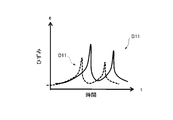
- the processor 162 may generate the data set D12 shown as an example in FIG. 5B based on the distortion signal S11.
- the data set D12 shows the frequency spectrum of the distortion signal S11 acquired in one detection period.
- the frequency spectrum is obtained by subjecting the distortion signal S11 to Fourier transform or the like. That is, the data set D12 is composed of n data pairs represented by (p1, f1) to (pn, fn) (n is an integer of 2 or more).
- p1 to pn represent spectral intensities.
- f1 to fn represent frequencies included in the spectrum.
- the interval between the frequency fn-1 and the frequency fn corresponds to the resolution of Fourier transform.
- the processor 162 determines whether the data set D12 generated in the past based on the above method is stored in the storage 163 (STEP 2).
- the processor 162 stores the data set D12 generated in STEP1 in the storage 163 (STEP3). Then, the process returns to STEP1.
- the processor 162 compares the dataset D12 generated in STEP1 with the dataset D12 stored in the storage 163 ( STEP 4).
- the processor 162 assigns each of the plurality of data pairs (p1, f1) to (pn, fn) in the data set D12 generated in STEP1 to the plurality of data pairs (in the data set D12 stored in the storage 163). p1, f1) to (pn, fn) corresponding one.
- the distribution of strain generated on the cover 12 is not uniform, but the temporal changes in strain detected at the same location show the same tendency. Therefore, the detection results obtained repeatedly by the same strain gauge 15 show the same tendency. However, the foreign matter attached to the cover 12 causes a change in the strain distribution of the cover 12. Therefore, although based on the strain signal S11 output from the same strain gauge 15, at least one of the plurality of values p1 to pn related to the spectrum intensity included in the data set D12 changes.
- the data set D12 when foreign matter is attached is shown by a broken line.
- the spectrum intensity at the frequency showing the remarkable peak changes.
- the frequency exhibiting a prominent peak may shift, and both a change in spectral intensity and a frequency shift may occur.
- the processor 162 determines whether or not foreign matter is attached to the cover 12 based on the comparison result of the data sets D12 (STEP 5).
- the processor 162 determines that no foreign matter is attached to the cover 12 (N in STEP 5). In this case, the data set D12 generated in STEP1 is newly stored in the storage 163 (STEP3). Then, the process returns to STEP1. The data set D12 stored in the storage 163 is used for comparison with the data set D12 generated next.
- the processor 162 determines that a foreign matter is attached to the cover 12 (Y in STEP 5). In this case, the processor 162 generates the detection signal S12 indicating the adhesion of foreign matter (STEP6).
- the processor 162 is configured to determine that a foreign substance is attached when the number of pieces of data in which a significant change in the spectrum intensity is recognized exceeds a predetermined threshold value, thereby suppressing the influence of noise, It is possible to improve the detection accuracy of foreign matter that needs to be removed.
- the control device 16 includes an output interface 164.
- the processor 162 causes the output interface 164 to output the detection signal S12.
- the detection signal S12 can be transmitted to another control device in the vehicle 100.
- the other control device can notify the occupant of the vehicle 100 that the foreign matter is attached to the cover 12 based on the detection signal S12.
- the notification can be performed through at least one of visual notification, auditory notification, and tactile notification.
- the sensor system 1 may include a nozzle 17 that ejects liquid toward the cover 12.
- the liquid may include water, hot water, cleaning liquid, and the like. The occupant can perform an operation of ejecting the liquid to the nozzle 17. As a result, it is possible to remove foreign matter attached to the cover 12.
- the detection signal S12 generated by the processor 162 can be used to operate the nozzle 17 described above. That is, the processor 162 can cause the nozzle 17 to eject the liquid toward the cover 12 when the foreign matter attached to the cover 12 is detected.
- the data set D11 or the data set D12 may include information related to the position of the strain gauge 15 that outputs the strain signal S11 that is the generation source. Therefore, the processor 162 can also specify the position of the foreign matter on the cover 12 based on the position information of the strain gauge 15 that has detected a significant strain.
- the nozzle 17 may include a mechanism capable of adjusting the ejection direction of the liquid. In this case, the processor 162 can configure the detection signal S12 to cause the nozzle 17 to eject the liquid toward the position of the detected foreign substance.
- the strain gauge 15 is preferably arranged on the peripheral portion 12b of the cover 12.
- the term "periphery of the cover” means that portion of the cover that undergoes a significant change in stiffness or flexibility.
- the cover 12 is joined to the housing 11 at the peripheral portion 12b. Therefore, the peripheral portion 12b of the cover 12 has higher rigidity or lower flexibility than the non-peripheral portion 12c of the cover 12.
- strain is likely to occur at a location where a significant change in rigidity or flexibility occurs. Therefore, the strain detection sensitivity can be improved by disposing the strain gauge 15 on the peripheral portion 12b. Therefore, the effect of suppressing the deterioration of the information detection capability of the LiDAR sensor unit 14 covered by the cover 12 forming a part of the outer surface of the vehicle 100 is further enhanced.
- a thickness changing portion 12d in which the thickness of the cover 12 changes can be formed.
- the strain gauge 15 is preferably arranged in the thickness changing portion 12d.
- the rigidity or the flexibility of the cover 12 changes. Strain is likely to occur at such a portion. Therefore, the strain detection sensitivity can be improved by disposing the strain gauge 15 in the thickness changing portion 12d. Therefore, the effect of suppressing the deterioration of the information detection capability of the LiDAR sensor unit 14 covered by the cover 12 forming a part of the outer surface of the vehicle 100 is further enhanced.
- the sensor system 1 may include a lamp unit 18.
- the lamp unit 18 is a device that emits illumination light to the outside of the vehicle 100. Examples of the lamp unit 18 include a headlight unit, a side-lighting unit, a turn signal lamp unit, a fog lamp unit, and a rear combination lamp unit.
- the lamp unit 18 is arranged in the accommodation chamber 13. Therefore, the lamp unit 18 is covered by the cover 12.
- the cover 12 also allows passage of the illumination light emitted from the lamp unit 18.
- the cover 12 is made of a material that is also transparent to visible light.
- the lamp unit 18 is generally arranged in a place where there are few shields in the vehicle 100 because of the function of supplying illumination light to the outside of the vehicle 100. By disposing the LiDAR sensor unit 14 in such a place as well, information outside the vehicle 100 can be efficiently acquired.
- the processor 162 capable of executing the above processing may be provided as a general-purpose microprocessor that operates in cooperation with a general-purpose memory, or may be provided as part of a dedicated integrated circuit element.
- Examples of the general-purpose microprocessor may include a CPU, MPU, GPU and the like.
- a RAM or a ROM can be exemplified as the general-purpose memory.
- a rewritable general-purpose memory may have the function of the storage 163.
- a microcontroller, ASIC, FPGA, etc. can be exemplified.
- the processor 162 and storage 163 may be provided as separate devices or may be packaged within a single device.
- FIG. 6 schematically illustrates the configuration of the sensor system 2 according to the second embodiment.
- the same reference numerals are given to the substantially same components as those of the sensor system 1 according to the first embodiment, and the repeated description will be omitted.
- the sensor system 2 is mounted on the vehicle 100 illustrated in FIG.
- the sensor system 2 includes an acceleration sensor 25.
- the acceleration sensor 25 is arranged on the cover 12. More specifically, the acceleration sensor 25 is arranged at a position avoiding the light passage region 12a of the cover 12.
- the acceleration sensor 25 is a device that detects the vibration of the cover 12 at the location where it is arranged.
- the acceleration sensor 25 is an example of a displacement sensor.
- the acceleration sensor 25 is configured to output a vibration signal S21 corresponding to the detected vibration. Vibration is detected, for example, every 100 seconds for a period of 100 milliseconds.
- the sensor system 2 may include a plurality of acceleration sensors 25. In the example shown in FIG. 6, three acceleration sensors 25 are installed. By installing a larger number of acceleration sensors 25, it is possible to detect the distribution of vibration generated in the cover 12 with higher resolution.
- the sensor system 2 includes a control device 26.
- the control device 26 includes an input interface 261 and a processor 262.
- the control device 26 may be disposed inside the accommodation chamber 13 or may be supported by the housing 11 outside the accommodation chamber 13. Alternatively, the control device 26 may be arranged at an appropriate position in the vehicle 100 apart from the housing 11.
- the input interface 261 receives the vibration signal S21 output from the acceleration sensor 25.
- the processor 262 is configured to detect a foreign substance attached to the cover 12 based on the vibration signal S21. Examples of the foreign matter include raindrops, snowflakes, sludge, dead bodies of insects, and the like.
- the input interface 261 may include a signal processing circuit that converts the vibration signal S21 into a form suitable for the processing performed by the processor 262 as necessary.
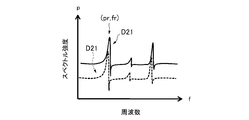
- the processor 262 generates the data set D21 shown as an example in FIG. 7A based on the vibration signal S21 (STEP1).
- the processor 262 first generates the frequency spectrum of the vibration signal S21.
- the frequency spectrum is obtained by subjecting the vibration signal S21 to Fourier transform or the like.
- the processor 262 identifies the resonance frequency fr based on the generated frequency spectrum. That is, the data set D21 includes a data pair represented by (pr, fr). pr represents the spectrum intensity at the resonance frequency fr.
- the control device 26 includes a storage 263.
- the storage 263 can be realized by an appropriate rewritable semiconductor memory.
- the processor 262 determines whether the data set D21 generated in the past based on the above method is stored in the storage 263 (STEP2).
- the processor 262 stores the data set D21 generated in STEP1 in the storage 263 (STEP3). Then, the process returns to STEP1.
- the processor 262 compares the data set D21 generated in STEP1 with the data set D21 stored in the storage 263 ( STEP 4).
- the processor 262 compares the data pair (pr, fr) in the data set D21 generated in STEP1 with the data pair (pr, fr) in the data set D21 stored in the storage 263.
- the distribution of vibrations generated on the cover 12 is not uniform, but the vibrations detected at the same location show the same tendency. Therefore, the detection results repeatedly obtained by the same acceleration sensor 25 show the same tendency. However, when the weight of the cover 12 changes due to the adhesion of foreign matter, the distribution of vibrations in the cover 12 changes. Therefore, although based on the vibration signal S21 output from the same acceleration sensor 25, at least one of the spectral intensity p and the resonance frequency fr included in the data set D21 changes.
- FIG. 7A the data set D21 when a foreign substance is attached is illustrated by a broken line.
- the resonance frequency fr changes.
- FIGS. 7B and 7C the data set D21 when a foreign substance is attached is shown by a broken line.
- the spectral intensity pr changes.
- both the spectral intensity pr and the resonance frequency fr change.
- the processor 262 determines whether a foreign matter is attached to the cover 12 based on the comparison result of the data sets D21 (STEP 5).
- the processor 262 determines that no foreign matter is attached to the cover 12 (N in STEP 5). In this case, the data set D21 generated in STEP1 is newly stored in the storage 263 (STEP3). Then, the process returns to STEP1. The data set D21 stored in the storage 263 is used for comparison with the data set D21 generated next.
- the processor 262 determines that a foreign matter is attached to the cover 12 (Y in STEP 5). In this case, the processor 262 generates the detection signal S22 indicating the adhesion of the foreign matter (STEP6).
- the processor 262 may detect the adhesion of the foreign matter to the cover 12 by using the method described with reference to FIG. 5B. That is, the data set D21 may include n data pairs represented by (p1, f1) to (pn, fn) that make up the frequency spectrum (n is an integer of 2 or more).
- the processor 262 assigns each of the plurality of data pairs (p1, f1) to (pn, fn) in the data set D21 generated in STEP1 to the plurality of data pairs in the data set D21 stored in the storage 263. Compare with the corresponding one of (p1, f1) to (pn, fn). If a significant change is found in at least one of the plurality of values p1 to pn relating to the spectral intensity, the processor 262 determines that a foreign matter is attached to the cover 12.
- the processor 262 is configured to determine that a foreign substance is attached when the number of pieces of data in which a significant change in the spectrum intensity is recognized exceeds a predetermined threshold, thereby suppressing the influence of noise, It is possible to improve the detection accuracy of foreign matter that needs to be removed.
- the control device 26 includes an output interface 264.
- the processor 262 causes the output interface 264 to output the detection signal S22.
- the detection signal S22 can be transmitted to another control device in the vehicle 100.
- the other control device can notify the occupant of the vehicle 100 that the foreign matter is attached to the cover 12 based on the detection signal S22.
- the notification can be performed through at least one of visual notification, auditory notification, and tactile notification.
- the sensor system 2 may include a nozzle 27 that ejects liquid toward the cover 12.
- the liquid may include water, hot water, cleaning liquid, and the like. The occupant can perform an operation of ejecting the liquid to the nozzle 27. As a result, it is possible to remove foreign matter attached to the cover 12.
- the detection signal S22 generated by the processor 262 can be used to operate the nozzle 27 described above. That is, the processor 262 can cause the nozzle 27 to eject the liquid toward the cover 12 when the foreign matter attached to the cover 12 is detected.
- the data set D21 can include information related to the position of the acceleration sensor 25 that outputs the vibration signal S21 that is the generation source. Therefore, the processor 262 can also specify the position of the foreign matter on the cover 12 based on the position information of the acceleration sensor 25 that has detected a significant change in natural vibration.
- the nozzle 27 may include a mechanism capable of adjusting the ejection direction of the liquid. In this case, the processor 262 may configure the detection signal S22 to cause the nozzle 27 to eject the liquid toward the position of the detected foreign substance.
- the sensor system 2 may include an actuator 28.
- the actuator 28 is a device that vibrates the cover 12.
- the actuator 28 can be realized by a piezoelectric element, a voice coil, an ultrasonic actuator, or the like.
- the processor 262 may generate the control signal S23 for controlling the operation of the actuator 28.
- the control signal S23 is input to the actuator 28 via the output interface 264.
- the actuator 28 preferably operates to excite the natural vibration of the cover 12.
- the cover 12 by vibrating the cover 12 actively, the change of the vibration mode detected by the acceleration sensor 25 can be made more remarkable. Therefore, the influence of noise is suppressed, and the detection accuracy of foreign matter that needs to be removed can be improved. Therefore, the effect of suppressing the deterioration of the information detection capability of the LiDAR sensor unit 14 covered by the cover 12 forming a part of the outer surface of the vehicle 100 is further enhanced.
- the acceleration sensor 25 is preferably arranged on the peripheral portion 12b of the cover 12.
- the cover 12 is joined to the housing 11 at the peripheral portion 12b. Therefore, the peripheral portion 12b of the cover 12 has higher rigidity or lower flexibility than the non-peripheral portion 12c of the cover 12. In such a place where the rigidity or the flexibility changes significantly, the vibration mode is likely to change. Therefore, by disposing the acceleration sensor 25 on the peripheral portion 12b, it is possible to improve the detection sensitivity of the change in the vibration mode. Therefore, the effect of suppressing the deterioration of the information detection capability of the LiDAR sensor unit 14 covered by the cover 12 forming a part of the outer surface of the vehicle 100 is further enhanced.
- a thickness changing portion 12d in which the thickness of the cover 12 changes can be formed.
- the acceleration sensor 25 is preferably arranged in the thickness changing portion 12d.
- the rigidity or the flexibility of the cover 12 changes. In such a place, the vibration mode is likely to change. Therefore, by disposing the acceleration sensor 25 in the thickness changing portion 12d, the detection sensitivity of the change in the vibration mode can be improved. Therefore, the effect of suppressing the deterioration of the information detection capability of the LiDAR sensor unit 14 covered by the cover 12 forming a part of the outer surface of the vehicle 100 is further enhanced.
- the sensor system 2 may include a lamp unit 18. Since the lamp unit 18 has a function of supplying illumination light to the outside of the vehicle 100, the lamp unit 18 is generally arranged in a place where there are few shields in the vehicle 100. By disposing the LiDAR sensor unit 14 in such a place as well, information outside the vehicle 100 can be efficiently acquired.
- the processor 262 capable of executing the above processing may be provided as a general-purpose microprocessor that operates in cooperation with a general-purpose memory, or may be provided as part of a dedicated integrated circuit element.
- Examples of the general-purpose microprocessor may include a CPU, MPU, GPU and the like.
- a RAM or a ROM can be exemplified as the general-purpose memory.
- a rewritable general-purpose memory may serve the function of the storage 263.
- a microcontroller, ASIC, FPGA, etc. can be exemplified.
- Processor 262 and storage 263 may be provided as separate devices or may be packaged within a single device.
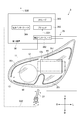
- FIG. 9 schematically illustrates the configuration of the sensor system 3 according to the third embodiment.
- the same reference numerals are given to the substantially same components as those of the sensor system 1 according to the first embodiment, and the repeated description will be omitted.
- the sensor system 3 is mounted on the vehicle 100 illustrated in FIG.
- the sensor system 3 includes an optical fiber sensor 35 and a control device 36.
- the optical fiber sensor 35 includes an optical fiber 351 and a detection interface 352.
- the optical fiber sensor 35 is a device that detects the strain of the cover 12 at the position where the optical fiber 351 is arranged.
- the optical fiber sensor 35 is an example of a displacement sensor.
- the optical fiber sensor 35 detects the reflected light by the FBG (Fiber Bragg Grating) formed in the optical fiber 351, and detects the Rayleigh scattered light or Brillouin scattered light generated by the glass particles forming the optical fiber 351.
- FBG Fiber Bragg Grating
- a method or the like may be adopted. Since the configuration itself of the optical fiber sensor according to each method is well known, detailed description will be omitted.
- the optical fiber 351 is arranged on the cover 12. More specifically, the optical fiber 351 is arranged at a position avoiding the light passage region 12a of the cover 12. The optical fiber 351 is adhered or vapor-deposited on the outer surface of the cover 12. The outer diameter of the optical fiber 351 is, for example, 125 ⁇ m to 150 ⁇ m.
- the optical fiber sensor 35 may include a plurality of optical fibers 351. In the example shown in FIG. 9, three optical fibers 351 are installed. By installing a larger number of optical fibers 351, the strain distribution generated in the cover 12 can be detected with higher resolution.
- the detection interface 352 may form a part of the control device 36.
- the control device 36 may be disposed inside the accommodation chamber 13 or may be supported by the housing 11 outside the accommodation chamber 13. Alternatively, the control device 36 may be arranged at an appropriate position in the vehicle 100 apart from the housing 11.
- the detection interface 352 includes a variable wavelength laser light source.
- the light emitted from the wavelength tunable laser light source can be made variable in the range of 1510 nm to 1570 nm, for example.
- the light emitted from the wavelength tunable laser light source enters the optical fiber 351.
- the detection interface 352 includes a photodetector.
- the light incident on the optical fiber 351 propagates in the optical fiber 351 while generating reflected light by the FBG or return light such as Rayleigh scattered light and Brillouin scattered light. This return light is detected by the photodetector.
- the photodetector outputs a detection signal S31 corresponding to the intensity and wavelength of the returning light.
- the control device 36 includes a processor 362.
- the processor 362 is configured to detect a foreign substance attached to the cover 12 based on the detection signal S31. Examples of the foreign matter include raindrops, snowflakes, sludge, dead bodies of insects, and the like.
- the detection interface 352 may include a signal processing circuit that converts the detection signal S31 into a form suitable for the processing performed by the processor 362 as necessary.
- the processor 362 generates the data set D31 shown as an example in FIG. 10A based on the detection signal S31 (STEP1).
- the processor 362 first generates the frequency spectrum of the detection signal S31.
- the frequency spectrum is obtained by subjecting the detection signal S31 to Fourier transform or the like.
- the processor 362 identifies the resonance frequency fr based on the generated frequency spectrum. That is, the data set D31 consists of a data pair represented by (pr, fr). pr represents the spectrum intensity at the resonance frequency fr.
- the control device 36 includes a storage 363.
- the storage 363 can be realized by an appropriate rewritable semiconductor memory.
- the processor 362 determines whether or not the data set D31 generated in the past based on the above method is stored in the storage 363 (STEP2).
- the processor 362 stores the data set D31 generated in STEP1 in the storage 363 (STEP3). Then, the process returns to STEP1.
- the processor 362 compares the data set D31 generated in STEP1 with the data set D31 stored in the storage 363 ( STEP 4).
- the processor 362 compares the data pair (pr, fr) in the data set D31 generated in STEP1 with the data pair (pr, fr) in the data set D31 stored in the storage 363.
- the strain distribution generated in the cover 12 is not uniform, but the strain detected at the same location shows the same tendency. Therefore, the detection results obtained repeatedly by the return light from the same optical fiber 351 show the same tendency.
- the strain distribution of the cover 12 changes, and the optical fiber 351 arranged on the surface of the cover 12 also has strain.
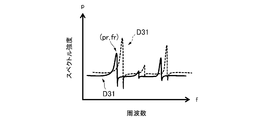
- the optical fiber 351 is distorted, at least one of the intensity and wavelength of the returning light changes. Therefore, although based on the detection signal S31 corresponding to the return light from the same optical fiber 351, at least one of the spectral intensity p and the resonance frequency fr included in the data set D31 changes.
- the data set D31 when foreign matter is attached is illustrated by a broken line.
- the resonance frequency fr changes.
- the data set D31 in the case where a foreign substance is attached is indicated by a broken line.
- the spectral intensity pr changes.
- both the spectral intensity pr and the resonance frequency fr change.
- the processor 362 determines whether or not foreign matter is attached to the cover 12 based on the comparison result between the data sets D31 (STEP 5).
- the processor 362 determines that no foreign matter is attached to the cover 12 (N in STEP 5). In this case, the data set D31 generated in STEP1 is newly stored in the storage 363 (STEP3). Then, the process returns to STEP1. The data set D31 stored in the storage 363 is used for comparison with the data set D21 generated next.
- the processor 362 determines that a foreign matter is attached to the cover 12 (Y in STEP 5). In this case, the processor 362 generates the detection signal S32 indicating the adhesion of the foreign matter (STEP6).
- the processor 362 may detect the adhesion of the foreign matter to the cover 12 using the method described with reference to FIG. 5B. That is, the data set D31 may include n data pairs represented by (p1, f1) to (pn, fn) that configure the frequency spectrum (n is an integer of 2 or more).
- the processor 362 sets each of the plurality of data pairs (p1, f1) to (pn, fn) in the data set D31 generated in STEP1 to the plurality of data pairs in the data set D31 stored in the storage 363. Compare with the corresponding one of (p1, f1) to (pn, fn). When a significant change is found in at least one of the plurality of values p1 to pn related to the spectral intensity, the processor 362 determines that a foreign matter is attached to the cover 12.
- the processor 362 is configured to determine that a foreign substance is attached when the number of data in which a significant change in the spectrum intensity is recognized exceeds a predetermined threshold value, thereby suppressing the influence of noise, It is possible to improve the detection accuracy of foreign matter that needs to be removed.
- the control device 36 includes an output interface 364.
- the processor 362 causes the output interface 364 to output the detection signal S32.
- the detection signal S32 can be transmitted to another control device in the vehicle 100.
- the other control device can notify the occupant of the vehicle 100 that the foreign matter is attached to the cover 12 based on the detection signal S32.
- the notification can be performed through at least one of visual notification, auditory notification, and tactile notification.
- the sensor system 3 may include a nozzle 37 that ejects liquid toward the cover 12.
- the liquid may include water, hot water, cleaning liquid, and the like. The occupant can perform an operation of ejecting the liquid to the nozzle 37. As a result, it is possible to remove foreign matter attached to the cover 12.
- the optical fiber 351 is lightweight and flexible, it has a high degree of freedom of arrangement with respect to the cover 12. Further, since it is very thin, even if it is arranged on the surface of the cover 12, it has little influence on the appearance and design. Furthermore, a plurality of strain detection points can be set in one optical fiber 351. Therefore, it is possible to increase the degree of freedom in designing the sensor system 3 for suppressing the decrease in the information detection capability of the LiDAR sensor unit 14.
- the detection signal S32 generated by the processor 362 can be used to operate the nozzle 37 described above. That is, the processor 362 may cause the nozzle 37 to eject the liquid toward the cover 12 when the foreign matter attached to the cover 12 is detected.
- the data set D31 may include information on the position of the optical fiber 351 that has output the return light for generating the detection signal S31.
- the data set D31 may also include information on the position of each detection point. Therefore, the processor 362 can also specify the position of the foreign matter on the cover 12 based on the position information of the optical fiber 351 that has detected a significant strain.
- the nozzle 37 may include a mechanism capable of adjusting the ejection direction of the liquid.
- the processor 362 may configure the detection signal S32 to cause the nozzle 37 to eject the liquid toward the position of the detected foreign substance.
- the optical fiber 351 is preferably arranged on the peripheral portion 12b of the cover 12.
- the optical fiber 351 is an example of a part of the displacement sensor.
- the cover 12 is joined to the housing 11 at the peripheral portion 12b. Therefore, the peripheral portion 12b of the cover 12 has higher rigidity or lower flexibility than the non-peripheral portion 12c of the cover 12.
- strain is likely to occur at a location where a significant change in rigidity or flexibility occurs. Therefore, by disposing the optical fiber 351 in the peripheral portion 12b, the strain detection sensitivity can be improved. Therefore, the effect of suppressing the deterioration of the information detection capability of the LiDAR sensor unit 14 covered by the cover 12 forming a part of the outer surface of the vehicle 100 is further enhanced.
- a thickness changing portion 12d in which the thickness of the cover 12 changes can be formed.
- the optical fiber 351 is preferably arranged in the thickness changing portion 12d.
- the rigidity or the flexibility of the cover 12 changes. Strain is likely to occur at such a portion. Therefore, by disposing the optical fiber 351 in the thickness changing portion 12d, the strain detection sensitivity can be improved. Therefore, the effect of suppressing the deterioration of the information detection capability of the LiDAR sensor unit 14 covered by the cover 12 forming a part of the outer surface of the vehicle 100 is further enhanced.
- the sensor system 3 may include a lamp unit 18. Since the lamp unit 18 has a function of supplying illumination light to the outside of the vehicle 100, the lamp unit 18 is generally arranged in a place where there are few shields in the vehicle 100. By disposing the LiDAR sensor unit 14 in such a place as well, information outside the vehicle 100 can be efficiently acquired.
- the processor 362 capable of executing the above processing may be provided as a general-purpose microprocessor that operates in cooperation with a general-purpose memory, or may be provided as part of a dedicated integrated circuit element.
- Examples of the general-purpose microprocessor may include a CPU, MPU, GPU and the like.
- a RAM or a ROM can be exemplified as the general-purpose memory.
- a rewritable general-purpose memory may have the function of the storage 363.
- a microcontroller, ASIC, FPGA, etc. can be exemplified.
- Processor 362 and storage 363 may be provided as separate devices or may be packaged within a single device.
- FIG. 12 schematically illustrates the configuration of the sensor system 4 according to the fourth embodiment.
- the same reference numerals are given to the substantially same components as those of the sensor system 1 according to the first embodiment, and the repeated description will be omitted.
- the sensor system 4 is mounted on the vehicle 100 illustrated in FIG.
- the sensor system 4 includes an ultrasonic actuator 48.
- the ultrasonic actuator 48 is a device that vibrates at a frequency in the ultrasonic band and excites natural vibration in the cover 12.
- the sensor system 4 includes a control device 46.
- the controller 46 includes a processor 462 and an output interface 464.
- the processor 462 may generate the control signal S41 for controlling the operation of the ultrasonic actuator 48.
- the control signal S41 is input to the ultrasonic actuator 48 via the output interface 464.
- the vibration of the cover 12 itself excited by the ultrasonic actuator 48 can promote the peeling and removal of the adhering foreign matter. Therefore, it is possible to suppress a decrease in information detection capability of the LiDAR sensor unit 14 covered by the cover 12 that forms a part of the outer surface of the vehicle 100.
- the sensor system 4 may include a nozzle 47 that ejects liquid toward the cover 12.
- the liquid may include water, hot water, cleaning liquid, and the like.
- the processor 462 causes the output interface 464 to output the control signal S42 for ejecting the liquid to the nozzle 47.
- the liquid may be ejected before the vibration is excited on the cover 12 by the ultrasonic actuator 48, or may be performed while the vibration is excited.
- the processor 462 capable of executing the above processing may be provided as a general-purpose microprocessor that operates in cooperation with a general-purpose memory, or may be provided as part of a dedicated integrated circuit element.
- Examples of the general-purpose microprocessor may include a CPU, MPU, GPU and the like.
- a RAM or a ROM can be exemplified as the general-purpose memory.
- As the dedicated integrated circuit element a microcontroller, ASIC, FPGA, etc. can be exemplified.
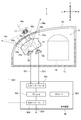
- FIG. 13 schematically shows an example of the configuration of the sensor system 5 according to the fifth embodiment.
- the same reference numerals are given to the substantially same components as those of the sensor system 1 according to the first embodiment, and the repeated description will be omitted.
- the sensor system 5 is mounted on the vehicle 100 illustrated in FIG.
- the sensor system 5 includes a camera 55.
- the camera 55 is arranged in the accommodation chamber 13. Therefore, the camera 55 is also covered by the cover 12.
- the camera 55 is a device that acquires an image of the light passage region 12a on the cover 12. That is, the camera 55 is arranged such that the light passage region 12a is located within the field of view represented by the region between the pair of alternate long and short dash lines 55a.
- the camera 55 is configured to output an image signal S51 corresponding to the acquired image.
- the image acquisition is repeatedly performed, for example, every one second.
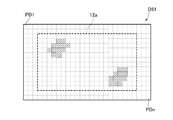
- FIG. 14A shows an example of the image I1 that can be reproduced based on the image signal S51.
- the image I1 includes a plurality of pixels P1 to Pn (n is an integer of 2 or more).
- the image I1 includes an image of the light passage region 12a in the cover 12.
- the foreign matters O1 and O2 are attached to the light passage region 12a. Examples of the foreign matter include raindrops, snowflakes, sludge, dead bodies of insects, and the like.
- the sensor system 5 includes a control device 56.
- the control device 56 includes an input interface 561 and a processor 562.
- the control device 56 may be arranged inside the accommodation chamber 13 or may be supported by the housing 11 outside the accommodation chamber 13. Alternatively, the control device 56 may be arranged at an appropriate position in the vehicle 100 apart from the housing 11.
- the input interface 561 receives the image signal S51 output from the camera 55.
- the processor 562 is configured to detect a foreign substance attached to the light passage region 12a of the cover 12 based on the image signal S51.
- the input interface 561 may include a signal processing circuit that converts the image signal S51 into a form suitable for the processing performed by the processor 562 as necessary.
- the processor 562 generates the data set D51 illustrated in FIG. 14B based on the image signal S51 (STEP1). Specifically, the processor 562 generates the data set D51 including the plurality of pixel data PD1 to PDn by applying the binarization process to each of the plurality of pixels P1 to Pn. Therefore, the plurality of pixel data PD1 to PDn have a one-to-one correspondence with the plurality of pixels P1 to Pn.
- Each of the plurality of pixels P1 to Pn includes position information and brightness information (light reception intensity information) in the image I1.
- the processor 562 When the brightness of a pixel Pm exceeds a predetermined threshold value, the processor 562 generates pixel data PDm having a brightness value of “1”. m is an integer arbitrarily selected from 1 to n.
- the processor 562 generates pixel data PDm having a brightness value of “0” when the brightness of a certain pixel Pm is equal to or lower than a predetermined threshold value. Therefore, each of the plurality of pixel data PD1 to PDn has a brightness value of "1" or "0" in addition to the position information in the image I1.
- the pixel data having the brightness value “1” is represented by a white rectangle
- the pixel data having the brightness value “0” is represented by a shaded rectangle. .. It can be seen that the pixel data at the positions corresponding to the foreign matters O1 and O2 in the image I1 have the brightness value “0”.
- the control device 56 includes a storage 563.
- the processor 562 determines whether the data set D51 generated in the past based on the above method is stored in the storage 563 (STEP 2).
- the processor 562 stores the data set D51 generated in STEP1 in the storage 563 (STEP3). The process returns to STEP1.
- the processor 562 compares the data set D51 generated in STEP1 with the data set D51 stored in the storage 563 ( STEP 4).
- the processor 562 determines whether or not a foreign matter is attached to the light passage area 12a of the cover 12 (STEP 5).
- the processor 562 determines that no foreign matter is attached to the light passage region 12a of the cover 12. (N in STEP 5). In this case, the data set D51 generated in STEP1 is newly stored in the storage 563 (STEP3). Then, the process returns to STEP1. The data set D51 stored in the storage 563 is used for comparison with the data set D51 generated next.
- the processor 562 When the brightness value has changed from “1” to “0” in at least one of the plurality of pixel data PD1 to PDn, the processor 562 has a foreign substance attached to the light passage region 12a of the cover 12. (Y in STEP 5). In this case, the processor 562 generates the detection signal S2 indicating the adhesion of foreign matter (STEP6).
- the processor 562 is configured to determine that a foreign substance is attached when the number of pixels whose brightness value has changed from “1” to “0” exceeds a predetermined threshold value. It is possible to avoid detection of a minute foreign matter that does not interfere with the detection, and it is possible to improve the detection accuracy of the foreign matter that needs to be removed.
- the control device 56 includes an output interface 564.
- the processor 562 causes the output interface 564 to output the detection signal S52.
- the detection signal S52 can be transmitted to another control device in the vehicle 100.
- the other control device can notify the occupant of the vehicle 100 that foreign matter is attached to the light passage region 12a of the cover 12 based on the detection signal S52.
- the notification can be performed through at least one of visual notification, auditory notification, and tactile notification.
- the sensor system 5 may include a nozzle 17 that ejects liquid toward the cover 12.
- the liquid may include water, hot water, cleaning liquid, and the like. The occupant can perform an operation of ejecting the liquid to the nozzle 17. As a result, it is possible to remove foreign matter attached to the light passage region 12a.
- the camera 55 is not a device for acquiring an image outside the vehicle 100 (strictly, an image outside the outer surface of the cover 12), but includes detection light 14 a of the LiDAR sensor unit 14 and return light. This is a device for acquiring an image of the light passage region 12a located on the traveling route. Therefore, at least a part of the focal plane 55b of the camera 55 overlaps the light passage area 12a. Moreover, since the arrangement of the camera 55 that overlaps at least a part of the focal plane 55b with the light passage region 12a is given priority, the optical axis 55c of the camera 55 is the detection reference of the LiDAR sensor unit 14 as illustrated in FIG. It may extend in a direction different from the direction 14b.
- the LiDAR sensor unit 14 can be replaced with an appropriate sensor unit that uses light to detect information outside the vehicle 100.
- Examples of such a sensor unit may include a camera unit that uses visible light, a TOF (Time of Flight) camera unit that uses infrared light, and a radar unit that uses millimeter waves.
- a camera unit that uses visible light
- TOF Time of Flight
- a radar unit that uses millimeter waves.
- the foreign matter detection through the image acquisition of the light passage area 12a by the camera 55 is more advantageous in combination with the LiDAR sensor unit 14. Becomes
- the detection signal S52 generated by the processor 562 can be used to operate the nozzle 17 described above. That is, the processor 562 can cause the nozzle 17 to eject the liquid toward the light passage region 12a when the foreign matter attached to the light passage region 12a of the cover 12 is detected.
- each of the plurality of pixel data PD1 to PDn included in the data set D51 has information corresponding to the position in the light passage region 12a. Therefore, the processor 562 can also specify the position of the foreign matter in the light passage region 12a based on the position information included in the pixel data whose brightness value has changed from “1” to “0”.
- the nozzle 17 may include a mechanism capable of adjusting the ejection direction of the liquid. In this case, the processor 562 may configure the detection signal S52 so as to cause the nozzle 17 to eject the liquid toward the position of the detected foreign substance.
- the camera 55 can be realized as a micro camera module including an image sensor 551, a resin lens 552, and a circuit board 553.
- a CCD image sensor or a CMOS image sensor can be exemplified as the image sensor 551.
- the resin lens 552 is a lens for forming an image on the image sensor 551. From the viewpoint of widening the field of view, it is preferable to use a wide-angle lens as the resin lens 552.
- the circuit board 553 supports the image sensor 551 and the resin lens 552.
- the signal line for outputting the image signal S51 is electrically connected to the image sensor 551 via the circuit board 553.
- the space occupied by the camera 55 in the storage chamber 13 can be significantly reduced, so that the degree of freedom in arranging the camera 55 for acquiring the image of the light passage region 12a is increased. Therefore, it becomes easy to suppress the deterioration of the information detection capability of the LiDAR sensor unit 14 covered by the cover 12 forming a part of the outer surface of the vehicle 100.
- the sensor system 5 may include a lamp unit 18. Since the lamp unit 18 has a function of supplying illumination light to the outside of the vehicle 100, the lamp unit 18 is generally arranged in a place where there are few shields in the vehicle 100. By disposing the LiDAR sensor unit 14 in such a place as well, information outside the vehicle 100 can be efficiently acquired.
- the processor 562 capable of executing the above processing may be provided by a general-purpose microprocessor that operates in cooperation with a general-purpose memory, or may be provided as part of a dedicated integrated circuit element.
- Examples of the general-purpose microprocessor may include a CPU, MPU, GPU and the like.
- a RAM or a ROM can be exemplified as the general-purpose memory.
- As the dedicated integrated circuit element a microcontroller, ASIC, FPGA, etc. can be exemplified.
- Processor 562 and storage 563 may be provided as separate elements or may be packaged within a single element.
- the image of the light passage region 12a in the cover 12 is acquired by the single camera 55.
- a configuration in which an arbitrary position in the light passage region 12a is included in any of the fields of view of the plurality of cameras 55 may be adopted.
- an appropriate sensor unit that uses light to detect information outside the vehicle 100 may be arranged in the accommodation chamber 13.
- Examples of such a sensor unit may include a camera unit that uses visible light, a TOF (Time of Flight) camera unit that uses infrared light, and a radar unit that uses millimeter waves.
- Japanese Patent Application No. 2018-213126 filed November 13, 2018, Japanese Patent Application No. 2018-213127 filed November 13, 2018, and The contents of Japanese Patent Application 2019-048514 filed on Mar. 15, 2019 are incorporated.
Landscapes
- Physics & Mathematics (AREA)
- Engineering & Computer Science (AREA)
- General Physics & Mathematics (AREA)
- Health & Medical Sciences (AREA)
- Life Sciences & Earth Sciences (AREA)
- Chemical & Material Sciences (AREA)
- Analytical Chemistry (AREA)
- Biochemistry (AREA)
- General Health & Medical Sciences (AREA)
- Immunology (AREA)
- Pathology (AREA)
- Radar, Positioning & Navigation (AREA)
- Remote Sensing (AREA)
- Computer Networks & Wireless Communication (AREA)
- Mechanical Engineering (AREA)
- Acoustics & Sound (AREA)
- Electromagnetism (AREA)
- Mathematical Physics (AREA)
- General Engineering & Computer Science (AREA)
- Signal Processing (AREA)
- Water Supply & Treatment (AREA)
- Automation & Control Theory (AREA)
- Transportation (AREA)
- Spectroscopy & Molecular Physics (AREA)
- Optical Radar Systems And Details Thereof (AREA)
- Traffic Control Systems (AREA)
- Geophysics And Detection Of Objects (AREA)
Abstract
LiDARセンサユニット(14)は、検出光(14a)を用いて車両の外部の情報を検出する。カバー(12)は、LiDARセンサユニット(14)を覆うように車両の外面の一部を形成しており、検出光(14a)の通過を許容する。ひずみゲージ(15)は、カバー(12)上に配置されており、カバー(12)に生じたひずみに対応するひずみ信号(S11)を出力する。プロセッサ(162)は、ひずみ信号(S11)に基づいて、カバー(12)に付着した異物を検出する。
Description
本開示は、車両に搭載されるセンサシステムに関する。
車両の運転支援を行なうために、当該車両の外部の情報を検出するためのセンサユニットが車体に搭載される。特許文献1は、そのようなセンサユニットとしてのレーダを開示している。レーダは、車両の外部を照明するランプ装置の灯室内に配置されている。すなわち、レーダは、灯室を区画するとともに照明光の通過を許容するカバーによって覆われている。カバーは、車両の外面の一部を形成するとともに、レーダが外部の情報を検出するための検出光の通過も許容する。
本明細書において用いられる「運転支援」という語は、運転操作(ハンドル操作、加速、減速など)、走行環境の監視、および運転操作のバックアップの少なくとも一つを少なくとも部分的に行なう制御処理を意味する。すなわち、衝突被害軽減ブレーキ機能やレーンキープアシスト機能のような部分的な運転支援から完全自動運転動作までを含む意味である。
車両の外面の一部を形成するカバーによって覆われたセンサユニットによる情報検出能力の低下を抑制することが求められている。
上記の要求に応えるための第一態様は、車両に搭載されるセンサシステムであって、
光を用いて前記車両の外部の情報を検出するセンサユニットと、
前記センサユニットを覆うように前記車両の外面の一部を形成しており、前記光の通過を許容するカバーと、
前記カバー上に配置されており、前記カバーに生じた変位に対応する信号を出力する変位センサと、
前記信号の変化に基づいて前記カバーに付着した異物を検出するプロセッサと、
を備えている。
光を用いて前記車両の外部の情報を検出するセンサユニットと、
前記センサユニットを覆うように前記車両の外面の一部を形成しており、前記光の通過を許容するカバーと、
前記カバー上に配置されており、前記カバーに生じた変位に対応する信号を出力する変位センサと、
前記信号の変化に基づいて前記カバーに付着した異物を検出するプロセッサと、
を備えている。
カバーに生じるひずみの分布は一様ではないが、同じ箇所において検出されるひずみのモードは同じ変位傾向を示す。したがって、同じ変位センサにより繰り返し得られる検出結果同士は、同じ傾向を示す。しかしながら、カバーに異物が付着することにより、カバーのひずみの分布に変化が生じる。したがって、同じ変位センサによる検出結果にも変化が生じる。すなわち、変位センサによる検出結果の変化をモニタすることによって、カバーに付着した異物を検出できる。
センサユニットが情報検出に用いる光の進行経路上に位置するカバーの一部に異物が付着すると、センサユニットによる車両の外部の情報の検出の妨げになりうる。しかしながら、上記のように構成された変位センサによってそのような異物の付着が検出されるので、検出結果に応じた適切な処理をとることができる。よって、車両の外面の一部を形成するカバーによって覆われたセンサユニットによる情報検出能力の低下を抑制できる。
上記の変位センサとしては、例えば、ひずみゲージ、加速度センサ、および光ファイバセンサの少なくとも一つが使用されうる。
特に上記の変位センサとして光ファイバセンサが使用される場合、光ファイバは、軽量かつ柔軟であるので、カバーに対する配置自由度が高い。また、非常に細いので、カバーの表面に配置しても外観や意匠に与える影響が小さい。さらに、一つの光ファイバ内に複数のひずみ検出点を設定できる。したがって、センサユニットによる情報検出能力の低下を抑制するためのセンサシステムの設計自由度を高めることができる。
特に上記の変位センサとして加速度センサが使用される場合、上記のセンサシステムは、前記カバーを振動させるアクチュエータを備えうる。
このような構成によれば、カバーを能動的に振動させることによって、加速度センサによって検出される振動モードの変化をより顕著にできる。したがって、ノイズの影響が抑制され、除去を要する異物の検出精度を高めることができる。よって、車両の外面の一部を形成するカバーによって覆われたセンサユニットによる情報検出能力の低下の抑制効果がさらに高まる。
第一態様に係るセンサシステムは、以下のように構成されうる。
前記変位センサの少なくとも一部は、前記カバーの周縁部に配置されている。
前記変位センサの少なくとも一部は、前記カバーの周縁部に配置されている。
カバーの周縁部は、カバーの剛性あるいは撓み性に有意な変化が生じやすい。このような箇所は、ひずみが生じやすい。したがって、変位センサをカバーの周縁部に配置することにより、ひずみの検出感度を向上できる。よって、車両の外面の一部を形成するカバーによって覆われたセンサユニットによる情報検出能力の低下の抑制効果がさらに高まる。
第一態様に係るセンサシステムは、以下のように構成されうる。
前記変位センサの少なくとも一部は、前記カバーの厚みが変化している部分に配置されている。
前記変位センサの少なくとも一部は、前記カバーの厚みが変化している部分に配置されている。
カバーの厚みが変化している部分は、カバーの剛性あるいは撓み性に有意な変化が生じやすい。このような箇所は、ひずみが生じやすい。したがって、変位センサを当該部分に配置することにより、ひずみの検出感度を向上できる。よって、車両の外面の一部を形成するカバーによって覆われたセンサユニットによる情報検出能力の低下の抑制効果がさらに高まる。
第一態様に係るセンサシステムは、以下のように構成されうる。
液体を噴射可能なノズルを備えており、
前記プロセッサは、前記異物が検出されると、前記ノズルに前記カバーへ向けて前記液体を噴射させる。
液体を噴射可能なノズルを備えており、
前記プロセッサは、前記異物が検出されると、前記ノズルに前記カバーへ向けて前記液体を噴射させる。
このような構成によれば、カバーに付着した異物を除去するための処理を自動化できる。したがって、車両の外面の一部を形成するカバーによって覆われたセンサユニットによる情報検出能力の低下の抑制効果が高まる。
第一態様に係るセンサシステムは、以下のように構成されうる。
液体を噴射可能なノズルを備えており、
前記プロセッサは、検出された前記異物の前記カバーにおける位置を特定し、前記ノズルに当該位置へ向けて前記液体を噴射させる。
液体を噴射可能なノズルを備えており、
前記プロセッサは、検出された前記異物の前記カバーにおける位置を特定し、前記ノズルに当該位置へ向けて前記液体を噴射させる。
このような構成によれば、光通過領域に付着した異物に対して液体がより正確に噴射されるので、異物除去の可能性を高めることができる。したがって、車両の外面の一部を形成するカバーによって覆われたセンサユニットによる情報検出能力の低下の抑制効果がさらに高まる。
上記の要求に応えるための第二態様は、車両に搭載されるセンサシステムであって、
光を用いて前記車両の外部の情報を検出するセンサユニットと、
前記センサユニットを覆うように前記車両の外面の一部を形成しており、前記光の通過を許容するカバーと、
前記カバー上に配置されており、前記カバーを振動させるアクチュエータと、
を備えている。
光を用いて前記車両の外部の情報を検出するセンサユニットと、
前記センサユニットを覆うように前記車両の外面の一部を形成しており、前記光の通過を許容するカバーと、
前記カバー上に配置されており、前記カバーを振動させるアクチュエータと、
を備えている。
センサユニットが情報検出に用いる光の進行経路上に位置するカバーの一部に異物が付着すると、センサユニットによる車両の外部の情報の検出の妨げになりうる。しかしながら、上記のような構成によれば、超音波アクチュエータによって励起されたカバー自身の振動により、付着した異物の剥離や除去を促進できる。よって、車両の外面の一部を形成するカバーによって覆われたセンサユニットによる情報検出能力の低下を抑制できる。
この場合、第二態様に係るセンサシステムは、以下のように構成されうる。
前記カバーへ向けて液体を噴射可能なノズルを備えている。
前記カバーへ向けて液体を噴射可能なノズルを備えている。
このような構成によれば、ノズルから噴射された液体によるいわゆる超音波洗浄効果が得られ、カバーに付着した異物の剥離や除去をさらに促進できる。
第一態様と第二態様の各々に係るセンサシステムは、以下のように構成されうる。
前記車両の外部へ照明光を出射するランプユニットを備えており、
前記カバーは、前記照明光の通過を許容する。
前記車両の外部へ照明光を出射するランプユニットを備えており、
前記カバーは、前記照明光の通過を許容する。
ランプユニットは、車両の外部に照明光を供給するという機能ゆえに、車両における遮蔽物の少ない場所に配置されることが一般的である。このような場所にセンサユニットも配置されることにより、車両の外部の情報を効率的に取得できる。
上記の要求に応えるための第三態様は、車両に搭載されるセンサシステムであって、
光を用いて前記車両の外部の情報を検出するセンサユニットと、
前記センサユニットを覆うように前記車両の外面の一部を形成しており、前記光の通過を許容するカバーと、
前記カバーにおける前記光が通過する領域の画像に対応する信号を出力するカメラと、
前記信号に基づいて前記光通過領域に付着した異物を検出するプロセッサと、
を備えており、
前記カメラの焦点面の少なくとも一部は、前記光通過領域と重なっている。
光を用いて前記車両の外部の情報を検出するセンサユニットと、
前記センサユニットを覆うように前記車両の外面の一部を形成しており、前記光の通過を許容するカバーと、
前記カバーにおける前記光が通過する領域の画像に対応する信号を出力するカメラと、
前記信号に基づいて前記光通過領域に付着した異物を検出するプロセッサと、
を備えており、
前記カメラの焦点面の少なくとも一部は、前記光通過領域と重なっている。
上記の要求に応えるための第四態様は、車両に搭載されるセンサシステムであって、
光を用いて前記車両の外部の情報を検出するセンサユニットと、
前記センサユニットを覆うように前記車両の外面の一部を形成しており、前記光の通過を許容するカバーと、
前記カバーにおける前記光が通過する領域の画像に対応する信号を出力するカメラと、
前記信号に基づいて前記光通過領域に付着した異物を検出するプロセッサと、
を備えており、
前記カメラの光軸は、前記センサユニットの検出基準方向と異なる方向に延びている。
光を用いて前記車両の外部の情報を検出するセンサユニットと、
前記センサユニットを覆うように前記車両の外面の一部を形成しており、前記光の通過を許容するカバーと、
前記カバーにおける前記光が通過する領域の画像に対応する信号を出力するカメラと、
前記信号に基づいて前記光通過領域に付着した異物を検出するプロセッサと、
を備えており、
前記カメラの光軸は、前記センサユニットの検出基準方向と異なる方向に延びている。
上記の要求に応えるための第五態様は、車両に搭載されるセンサシステムであって、
検出光を用いて前記車両の外部の情報を検出するLiDAR(Light Detection and Ranging)センサユニットと、
前記LiDARセンサユニットを覆うように前記車両の外面の一部を形成しており、前記検出光の通過を許容するカバーと、
前記カバーにおける前記検出光が通過する領域の画像に対応する信号を出力するカメラと、
前記信号に基づいて前記光通過領域に付着した異物を検出するプロセッサと、
を備えている。
検出光を用いて前記車両の外部の情報を検出するLiDAR(Light Detection and Ranging)センサユニットと、
前記LiDARセンサユニットを覆うように前記車両の外面の一部を形成しており、前記検出光の通過を許容するカバーと、
前記カバーにおける前記検出光が通過する領域の画像に対応する信号を出力するカメラと、
前記信号に基づいて前記光通過領域に付着した異物を検出するプロセッサと、
を備えている。
第三態様から第五態様の各々に係るカメラは、車両の外部の画像(厳密にはカバーの外面よりも外側の画像)を取得するための装置ではなく、センサユニットによる情報検出に用いられる光の進行経路上に位置するカバーの光通過領域の画像を取得するための装置である。したがって、カメラの焦点面の少なくとも一部は、光通過領域と重なっている。また、光通過領域に焦点面の少なくとも一部を重ねるカメラの配置が優先されるので、カメラの光軸は、センサユニットの検出基準方向と異なる方向に延びていてもよい。
光通過領域に異物が付着すると、センサユニットによる車両の外部の情報の検出の妨げになりうる。しかしながら、上記のように構成されたカメラによってそのような異物の付着が検出されるので、検出結果に応じた適切な処理をとることができる。よって、車両の外面の一部を形成するカバーによって覆われたセンサユニットによる情報検出能力の低下を抑制できる。
LiDARセンサユニットによる光通過領域に付着した異物の検出は比較的難しいので、カメラによる当該領域の画像の取得を通じた異物検出は、LiDARセンサユニットとの組合せにおいてより有利となる。
第三態様から第五態様の各々に係るセンサシステムは、以下のように構成されうる。
液体を噴射可能なノズルを備えており、
前記プロセッサは、前記異物が検出されると、前記ノズルに前記光通過領域へ向けて前記液体を噴射させる。
液体を噴射可能なノズルを備えており、
前記プロセッサは、前記異物が検出されると、前記ノズルに前記光通過領域へ向けて前記液体を噴射させる。
このような構成によれば、光通過領域に付着した異物を除去するための処理を自動化できる。したがって、車両の外面の一部を形成するカバーによって覆われたセンサユニットによる情報検出能力の低下の抑制効果が高まる。
第三態様から第五態様の各々に係るセンサシステムは、以下のように構成されうる。
液体を噴射可能なノズルを備えており、
前記プロセッサは、検出された前記異物の位置を特定し、前記ノズルに当該位置へ向けて前記液体を噴射させる。
液体を噴射可能なノズルを備えており、
前記プロセッサは、検出された前記異物の位置を特定し、前記ノズルに当該位置へ向けて前記液体を噴射させる。
このような構成によれば、光通過領域に付着した異物に対して液体がより正確に噴射されるので、異物除去の可能性を高めることができる。したがって、車両の外面の一部を形成するカバーによって覆われたセンサユニットによる情報検出能力の低下の抑制効果がさらに高まる。
第三態様から第五態様の各々に係るセンサシステムは、以下のように構成されうる。
前記カメラは、
撮像素子と、
前記撮像素子に結像するための樹脂レンズと、
前記撮像素子および前記樹脂レンズを支持している回路基板と、
を備えている。
前記カメラは、
撮像素子と、
前記撮像素子に結像するための樹脂レンズと、
前記撮像素子および前記樹脂レンズを支持している回路基板と、
を備えている。
このような構成によれば、カメラの占有空間を大幅に小さくできるので、光通過領域の画像を取得するためのカメラの配置自由度が高まる。したがって、車両の外面の一部を形成するカバーによって覆われたセンサユニットによる情報検出能力の低下の抑制が容易になる。
第三態様から第五態様の各々に係るセンサシステムは、以下のように構成されうる。
前記車両の外部へ照明光を出射するランプユニットを備えており、
前記カバーは、前記照明光の通過を許容する。
前記車両の外部へ照明光を出射するランプユニットを備えており、
前記カバーは、前記照明光の通過を許容する。
ランプユニットは、車両の外部に照明光を供給するという機能ゆえに、車両における遮蔽物の少ない場所に配置されることが一般的である。このような場所にセンサユニットも配置されることにより、車両の外部の情報を効率的に取得できる。
本明細書で用いられる「光」という語は、可視光のみならず、紫外光や赤外光、マイクロ波やミリ波など任意の波長を有する電磁波を意味する。
本明細書において用いられる「センサユニット」という語は、所望の情報検出機能を備えつつ、それ自身が単体で流通可能な部品の構成単位を意味する。
本明細書において用いられる「ランプユニット」という語は、所望の照明機能を備えつつ、それ自身が単体で流通可能な部品の構成単位を意味する。
添付の図面を参照しつつ、実施形態の例について以下詳細に説明する。以下の説明に用いられる各図面では、各部材を認識可能な大きさとするために縮尺を適宜変更している。
添付の図面において、矢印Fは、図示された構造の前方向を示している。矢印Bは、図示された構造の後方向を示している。矢印Uは、図示された構造の上方向を示している。矢印Dは、図示された構造の下方向を示している。矢印Lは、図示された構造の左方向を示している。矢印Rは、図示された構造の右方向を示している。以降の説明に用いる「左」および「右」は、運転席から見た左右の方向を示している。
図1は、第一実施形態に係るセンサシステム1の構成を模式的に示している。センサシステム1は、図2に例示される車両100に搭載される。車両100の車体の形状は、例示に過ぎない。
センサシステム1は、ハウジング11とカバー12を備えている。ハウジング11は、カバー12とともに収容室13を区画している。
センサシステム1は、LiDARセンサユニット14を備えている。LiDARセンサユニット14は、収容室13内に配置されている。カバー12は、LiDARセンサユニット14を覆うように車両100の外面の一部を形成している。
図3Aに例示されるように、LiDARセンサユニット14は、車両100の外部における検出領域に向けて検出光14aを出射する構成、および検出光14aが検出領域内に存在する物体に反射した結果の戻り光(不図示)を検出する構成を備えている。検出光14aとしては、例えば波長905nmの赤外光が使用されうる。
LiDARセンサユニット14は、例えば、ある方向へ検出光14aを出射したタイミングから戻り光を検出するまでの時間に基づいて、当該戻り光に関連付けられた物体までの距離を取得できる。また、そのような距離データを検出位置と関連付けて集積することにより、戻り光に関連付けられた物体の形状に係る情報を取得できる。これに加えてあるいは代えて、出射光と戻り光の波形の相違に基づいて、戻り光に関連付けられた物体の材質などの属性に係る情報を取得できる。すなわち、LiDARセンサユニット14は、光を用いて車両100の外部の情報を検出する装置である。
検出光14aと戻り光は、カバー12における光通過領域12aを通過する。換言すると、カバー12は、少なくとも検出光14aと戻り光の通過を許容する材料により形成されている。
センサシステム1は、ひずみゲージ15を備えている。ひずみゲージ15は、カバー12上に配置されている。より具体的には、ひずみゲージ15は、カバー12の光通過領域12aを避けた位置に配置されている。ひずみゲージ15は、配置された箇所におけるカバー12のひずみを検出する装置である。ひずみゲージ15は、変位センサの一例である。図1に示されるように、ひずみゲージ15は、検出されたひずみに対応するひずみ信号S11を出力するように構成されている。ひずみ状態の検出は、例えば1秒ごとに100ミリ秒の期間行なわれる。
センサシステム1は、複数のひずみゲージ15を備えうる。図1に示される例では、三つのひずみゲージ15が設置されている。より多くのひずみゲージ15が設置されることにより、カバー12に生じるひずみの分布をより高い分解能で検出できる。
センサシステム1は、制御装置16を備えている。制御装置16は、入力インターフェース161とプロセッサ162を備えている。制御装置16は、収容室13内に配置されてもよいし、収容室13外においてハウジング11に支持されてもよい。あるいは、制御装置16は、ハウジング11とは離れた車両100における適宜の位置に配置されうる。
入力インターフェース161は、ひずみゲージ15から出力されたひずみ信号S11を受け付ける。プロセッサ162は、ひずみ信号S11に基づいて、カバー12に付着した異物を検出するように構成されている。異物としては、雨滴、雪片、汚泥、虫の死骸などが例示されうる。入力インターフェース161は、必要に応じてひずみ信号S11をプロセッサ162により行なわれる処理に適した形態に変換する信号処理回路を含みうる。
図4は、プロセッサ162により行なわれる処理の流れの一例を示している。プロセッサ162は、ひずみ信号S11に基づいて、図5Aに一例として示されるデータセットD11を生成する(STEP1)。データセットD11は、一度の検出期間内におけるひずみの大きさεの経時変化を示している。すなわち、データセットD11は、(ε1,t1)~(εn,tn)で表わされるn個のデータ対からなる(nは2以上の整数)。t1~tnは、検出期間内に含まれる時刻を表している。時刻tn-1と時刻tnの間隔は、サンプリング周期に対応している。
図1に例示されるように、制御装置16は、ストレージ163を備えている。ストレージ163は、適宜の書き替え可能な半導体メモリにより実現されうる。図4に例示されるように、プロセッサ162は、上記の手法に基づいて過去に生成されたデータセットD11がストレージ163に格納されているかを判定する(STEP2)。
過去に生成されたデータセットD11がストレージ163に格納されていない場合(STEP2においてN)、プロセッサ162は、STEP1で生成されたデータセットD11をストレージ163に格納する(STEP3)。処理は、STEP1に戻る。
過去に生成されたデータセットD11がストレージ163に格納されている場合(STEP2においてY)、プロセッサ162は、STEP1で生成されたデータセットD11をストレージ163に格納されているデータセットD11と比較する(STEP4)。
例えば、プロセッサ162は、STEP1で生成されたデータセットD11における複数のデータ対(ε1,t1)~(εn,tn)の各々を、ストレージ163に格納されているデータセットD11における複数のデータ対(ε1,t1)~(εn,tn)の対応する一つと比較する。
カバー12に生じるひずみの分布は一様ではないが、同じ箇所において検出されるひずみの経時変化は同じ傾向を示す。したがって、同じひずみゲージ15により繰り返し得られる検出結果同士は、同じ傾向を示す。しかしながら、カバー12に異物が付着することにより、カバー12のひずみの分布に変化が生じる。したがって、同じひずみゲージ15から出力されたひずみ信号S11に基づいていながらも、データセットD11に含まれるひずみの大きさに係る複数の値ε1~εnの少なくとも一つに変化が生じる。図5Aにおいては、異物が付着した場合のデータセットD11を破線で示している。
ひずみの大きさに係る複数の値ε1~εnの少なくとも一つに有意な変化が認められた場合、カバー12に異物が付着している蓋然性が高い。プロセッサ162は、データセットD11同士の比較結果に基づいて、カバー12に異物が付着しているかを判断する(STEP5)。
ひずみの大きさに係る複数の値ε1~εnの少なくとも一つに有意な変化が認められない場合、プロセッサ162は、カバー12に異物が付着していないと判断する(STEP5においてN)。この場合、STEP1で生成されたデータセットD11が新たにストレージ163へ格納される(STEP3)。その後、処理はSTEP1へ戻る。ストレージ163に格納されたデータセットD11は、次に生成されるデータセットD11との比較に供される。
ひずみの大きさに係る複数の値ε1~εnの少なくとも一つに有意な変化が認められた場合、プロセッサ162は、カバー12に異物が付着していると判断する(STEP5においてY)。この場合、プロセッサ162は、異物の付着を示す検出信号S12を生成する(STEP6)。
なお、ひずみの大きさに有意な変化が認められたデータの数が所定の閾値を上回る場合に異物が付着していると判断するようにプロセッサ162が構成されることにより、ノイズの影響が抑制され、除去を要する異物の検出精度を高めることができる。
プロセッサ162は、ひずみ信号S11に基づいて、図5Bに一例として示されるデータセットD12を生成してもよい。データセットD12は、一度の検出期間に取得されたひずみ信号S11の周波数スペクトルを示している。周波数スペクトルは、ひずみ信号S11にフーリエ変換などを施すことにより得られる。すなわち、データセットD12は、(p1,f1)~(pn,fn)で表わされるn個のデータ対からなる(nは2以上の整数)。p1~pnは、スペクトル強度を示している。f1~fnは、スペクトルに含まれる周波数を表している。周波数fn-1と周波数fnの間隔は、フーリエ変換の分解能に対応している。
この場合、プロセッサ162は、上記の手法に基づいて過去に生成されたデータセットD12がストレージ163に格納されているかを判定する(STEP2)。
過去に生成されたデータセットD12がストレージ163に格納されていない場合(STEP2においてN)、プロセッサ162は、STEP1で生成されたデータセットD12をストレージ163に格納する(STEP3)。その後、処理はSTEP1に戻る。
過去に生成されたデータセットD12がストレージ163に格納されている場合(STEP2においてY)、プロセッサ162は、STEP1で生成されたデータセットD12をストレージ163に格納されているデータセットD12と比較する(STEP4)。
例えば、プロセッサ162は、STEP1で生成されたデータセットD12における複数のデータ対(p1,f1)~(pn,fn)の各々を、ストレージ163に格納されているデータセットD12における複数のデータ対(p1,f1)~(pn,fn)の対応する一つと比較する。
カバー12に生じるひずみの分布は一様ではないが、同じ箇所において検出されるひずみの経時変化は同じ傾向を示す。したがって、同じひずみゲージ15により繰り返し得られる検出結果同士は、同じ傾向を示す。しかしながら、カバー12に異物が付着することにより、カバー12のひずみの分布に変化が生じる。したがって、同じひずみゲージ15から出力されたひずみ信号S11に基づいていながらも、データセットD12に含まれるスペクトル強度に係る複数の値p1~pnの少なくとも一つに変化が生じる。
図5Bにおいては、異物が付着した場合のデータセットD12を破線で示している。本例では、顕著なピークを示す周波数におけるスペクトル強度のみが変化している。しかしながら、顕著なピークを示す周波数がシフトしてもよく、スペクトル強度の変化と周波数のシフトの双方が生じてもよい。
スペクトル強度に係る複数の値p1~pnの少なくとも一つに有意な変化が認められた場合、カバー12に異物が付着している蓋然性が高い。プロセッサ162は、データセットD12同士の比較結果に基づいて、カバー12に異物が付着しているかを判断する(STEP5)。
スペクトル強度に係る複数の値p1~pnの少なくとも一つに有意な変化が認められない場合、プロセッサ162は、カバー12に異物が付着していないと判断する(STEP5においてN)。この場合、STEP1で生成されたデータセットD12が新たにストレージ163へ格納される(STEP3)。その後、処理はSTEP1へ戻る。ストレージ163に格納されたデータセットD12は、次に生成されるデータセットD12との比較に供される。
スペクトル強度に係る複数の値p1~pnの少なくとも一つに有意な変化が認められた場合、プロセッサ162は、カバー12に異物が付着していると判断する(STEP5においてY)。この場合、プロセッサ162は、異物の付着を示す検出信号S12を生成する(STEP6)。
なお、スペクトル強度に有意な変化が認められたデータの数が所定の閾値を上回る場合に異物が付着していると判断するようにプロセッサ162が構成されることにより、ノイズの影響が抑制され、除去を要する異物の検出精度を高めることができる。
図1に例示されるように、制御装置16は、出力インターフェース164を備えている。プロセッサ162は、出力インターフェース164に検出信号S12を出力させる。検出信号S12は、車両100における他の制御装置へ送信されうる。例えば、当該他の制御装置は、検出信号S12に基づいて、カバー12に異物が付着している旨の報知を車両100の乗員に対して行ないうる。報知は、視覚的報知、聴覚的報知、触覚的報知の少なくとも一つを通じて行なわれうる。
報知を受けた乗員は、適宜の対応をとりうる。例えば、センサシステム1は、カバー12へ向けて液体を噴射するノズル17を備えうる。液体としては、水、湯、洗浄液などが例示されうる。乗員は、ノズル17に液体を噴射させる操作を行ないうる。これにより、カバー12に付着した異物の除去を図ることができる。
LiDARセンサユニット14の検出光14aおよび戻り光の進行経路上に位置する光通過領域12aに異物が付着すると、LiDARセンサユニット14による車両100の外部の情報の検出の妨げになりうる。しかしながら、上記のように構成されたひずみゲージ15によってそのような異物の付着が検出されるので、検出結果に応じた適切な処理をとることができる。よって、車両100の外面の一部を形成するカバー12によって覆われたLiDARセンサユニット14による情報検出能力の低下を抑制できる。
図1に例示されるように、プロセッサ162により生成された検出信号S12は、上記したノズル17を動作させるために使用されうる。すなわち、プロセッサ162は、カバー12に付着した異物が検出されると、ノズル17にカバー12へ向けて液体を噴射させうる。
このような構成によれば、カバー12に付着した異物を除去するための処理を自動化できる。したがって、車両100の外面の一部を形成するカバー12によって覆われたLiDARセンサユニット14による情報検出能力の低下の抑制効果が高まる。
データセットD11またはデータセットD12は、生成元であるひずみ信号S11を出力したひずみゲージ15の位置に係る情報を含みうる。したがって、プロセッサ162は、有意なひずみを検出したひずみゲージ15の位置情報に基づいて、異物のカバー12上における位置も特定しうる。他方、図1に示されるように、ノズル17は、液体の噴射方向を調節可能な機構を備えうる。この場合、プロセッサ162は、検出された異物の位置へ向けてノズル17に液体を噴射させるように、検出信号S12を構成しうる。
このような構成によれば、カバー12に付着した異物に対して液体がより正確に噴射されるので、異物除去の可能性を高めることができる。したがって、車両100の外面の一部を形成するカバー12によって覆われたLiDARセンサユニット14による情報検出能力の低下の抑制効果がさらに高まる。
図3Aに例示されるように、ひずみゲージ15は、カバー12の周縁部12bに配置されることが好ましい。本明細書において用いられる「カバーの周縁部」という語は、カバーの剛性あるいは撓み性に有意な変化が生じる部分を意味する。カバー12は、周縁部12bにおいてハウジング11と結合される。そのため、カバー12の周縁部12bは、カバー12の非周縁部12cよりも高い剛性あるいは低い撓み性を有する。このように剛性あるいは撓み性に有意な変化が生じる箇所は、ひずみが生じやすい。したがって、ひずみゲージ15を周縁部12bに配置することにより、ひずみの検出感度を向上できる。よって、車両100の外面の一部を形成するカバー12によって覆われたLiDARセンサユニット14による情報検出能力の低下の抑制効果がさらに高まる。
あるいは、図3Bに例示されるように、カバー12の厚みが変化する厚み変化部12dが形成されうる。この場合、ひずみゲージ15は、厚み変化部12dに配置されることが好ましい。厚み変化部12dにおいては、カバー12の剛性あるいは撓み性に変化が生じる。このような箇所は、ひずみが生じやすい。したがって、ひずみゲージ15を厚み変化部12dに配置することにより、ひずみの検出感度を向上できる。よって、車両100の外面の一部を形成するカバー12によって覆われたLiDARセンサユニット14による情報検出能力の低下の抑制効果がさらに高まる。
図1に例示されるように、センサシステム1は、ランプユニット18を備えうる。ランプユニット18は、車両100の外部へ照明光を出射する装置である。ランプユニット18としては、前照灯ユニット、車幅灯ユニット、方向指示灯ユニット、霧灯ユニット、リアコンビネーションランプユニットなどが例示されうる。
ランプユニット18は、収容室13内に配置される。したがって、ランプユニット18は、カバー12によって覆われる。カバー12は、ランプユニット18から出射された照明光の通過も許容する。この場合、カバー12は、可視光についても透明な材料によって形成される。
ランプユニット18は、車両100の外部に照明光を供給するという機能ゆえに、車両100における遮蔽物の少ない場所に配置されることが一般的である。このような場所にLiDARセンサユニット14も配置されることにより、車両100の外部の情報を効率的に取得できる。
上記の処理を実行可能なプロセッサ162は、汎用メモリと協働して動作する汎用マイクロプロセッサとして提供されてもよいし、専用集積回路素子の一部として提供されてもよい。汎用マイクロプロセッサとしては、CPU、MPU、GPUなどが例示されうる。汎用メモリとしては、RAMやROMが例示されうる。書き替え可能な汎用メモリがストレージ163の機能を担ってもよい。専用集積回路素子としては、マイクロコントローラ、ASIC、FPGAなどが例示されうる。プロセッサ162とストレージ163は、独立した素子として提供されてもよいし、単一の素子内にパッケージされていてもよい。
図6は、第二実施形態に係るセンサシステム2の構成を模式的に例示している。第一実施形態に係るセンサシステム1と実質的に同一の構成要素には同一の参照符号を付与し、繰り返しとなる説明は省略する。センサシステム2は、図2に例示される車両100に搭載される。
センサシステム2は、加速度センサ25を備えている。加速度センサ25は、カバー12上に配置されている。より具体的には、加速度センサ25は、カバー12の光通過領域12aを避けた位置に配置されている。加速度センサ25は、配置された箇所におけるカバー12の振動を検出する装置である。加速度センサ25は、変位センサの一例である。加速度センサ25は、検出された振動に対応する振動信号S21を出力するように構成されている。振動の検出は、例えば1秒ごとに100ミリ秒の期間行なわれる。
センサシステム2は、複数の加速度センサ25を備えうる。図6に示される例では、三つの加速度センサ25が設置されている。より多くの加速度センサ25が設置されることにより、カバー12に生じる振動の分布をより高い分解能で検出できる。
センサシステム2は、制御装置26を備えている。制御装置26は、入力インターフェース261とプロセッサ262を備えている。制御装置26は、収容室13内に配置されてもよいし、収容室13外においてハウジング11に支持されてもよい。あるいは、制御装置26は、ハウジング11とは離れた車両100における適宜の位置に配置されうる。
入力インターフェース261は、加速度センサ25から出力された振動信号S21を受け付ける。プロセッサ262は、振動信号S21に基づいて、カバー12に付着した異物を検出するように構成されている。異物としては、雨滴、雪片、汚泥、虫の死骸などが例示されうる。入力インターフェース261は、必要に応じて振動信号S21をプロセッサ262により行なわれる処理に適した形態に変換する信号処理回路を含みうる。
図4を参照して、プロセッサ262により行なわれる処理の流れを説明する。プロセッサ262は、振動信号S21に基づいて、図7Aに一例として示されるデータセットD21を生成する(STEP1)。プロセッサ262は、まず振動信号S21の周波数スペクトルを生成する。周波数スペクトルは、振動信号S21にフーリエ変換などを施すことにより得られる。続いてプロセッサ262は、生成された周波数スペクトルに基づいて、共振周波数frを特定する。すなわち、データセットD21は、(pr,fr)で表わされるデータ対からなる。prは、共振周波数frにおけるスペクトル強度を表す。
図6に例示されるように、制御装置26は、ストレージ263を備えている。ストレージ263は、適宜の書き替え可能な半導体メモリにより実現されうる。続いて、プロセッサ262は、上記の手法に基づいて過去に生成されたデータセットD21がストレージ263に格納されているかを判定する(STEP2)。
過去に生成されたデータセットD21がストレージ263に格納されていない場合(STEP2においてN)、プロセッサ262は、STEP1で生成されたデータセットD21をストレージ263に格納する(STEP3)。その後、処理はSTEP1に戻る。
過去に生成されたデータセットD21がストレージ263に格納されている場合(STEP2においてY)、プロセッサ262は、STEP1で生成されたデータセットD21をストレージ263に格納されているデータセットD21と比較する(STEP4)。
具体的には、プロセッサ262は、STEP1で生成されたデータセットD21におけるデータ対(pr,fr)を、ストレージ263に格納されているデータセットD21におけるデータ対(pr,fr)と比較する。
カバー12に生じる振動の分布は一様ではないが、同じ箇所において検出される振動は同じ傾向を示す。したがって、同じ加速度センサ25により繰り返し得られる検出結果同士は、同じ傾向を示す。しかしながら、異物が付着することによってカバー12の重量が変化すると、カバー12における振動の分布に変化が生じる。したがって、同じ加速度センサ25から出力された振動信号S21に基づいていながらも、データセットD21に含まれるスペクトル強度pと共振周波数frの少なくとも一方に変化が生じる。
図7Aにおいては、異物が付着した場合のデータセットD21を破線で例示している。本例においては、共振周波数frに変化が生じている。図7Bと図7Cにおいても、異物が付着した場合のデータセットD21を破線で示している。図7Bに示される例においては、スペクトル強度prに変化が生じている。図7Cに示される例においては、スペクトル強度prと共振周波数frの双方に変化が生じている。
スペクトル強度prと共振周波数frの少なくとも一方に有意な変化が認められた場合、カバー12に異物が付着している蓋然性が高い。プロセッサ262は、データセットD21同士の比較結果に基づいて、カバー12に異物が付着しているかを判断する(STEP5)。
スペクトル強度prと共振周波数frの少なくとも一方に有意な変化が認められない場合、プロセッサ262は、カバー12に異物が付着していないと判断する(STEP5においてN)。この場合、STEP1で生成されたデータセットD21が新たにストレージ263へ格納される(STEP3)。その後、処理はSTEP1へ戻る。ストレージ263に格納されたデータセットD21は、次に生成されるデータセットD21との比較に供される。
スペクトル強度prと共振周波数frの少なくとも一方に有意な変化が認められた場合、プロセッサ262は、カバー12に異物が付着していると判断する(STEP5においてY)。この場合、プロセッサ262は、異物の付着を示す検出信号S22を生成する(STEP6)。
異物の付着を検出するために、プロセッサ262は、図5Bを参照して説明した手法を用いてカバー12への異物の付着を検出してもよい。すなわち、データセットD21は、周波数スペクトルを構成する(p1,f1)~(pn,fn)で表わされるn個のデータ対を含みうる(nは2以上の整数)。
この場合、プロセッサ262は、STEP1で生成されたデータセットD21における複数のデータ対(p1,f1)~(pn,fn)の各々を、ストレージ263に格納されているデータセットD21における複数のデータ対(p1,f1)~(pn,fn)の対応する一つと比較する。スペクトル強度に係る複数の値p1~pnの少なくとも一つに有意な変化が認められた場合、プロセッサ262は、カバー12に異物が付着していると判断する。なお、スペクトル強度に有意な変化が認められたデータの数が所定の閾値を上回る場合に異物が付着していると判断するようにプロセッサ262が構成されることにより、ノイズの影響が抑制され、除去を要する異物の検出精度を高めることができる。
図6に例示されるように、制御装置26は、出力インターフェース264を備えている。プロセッサ262は、出力インターフェース264に検出信号S22を出力させる。検出信号S22は、車両100における他の制御装置へ送信されうる。例えば、当該他の制御装置は、検出信号S22に基づいて、カバー12に異物が付着している旨の報知を車両100の乗員に対して行ないうる。報知は、視覚的報知、聴覚的報知、触覚的報知の少なくとも一つを通じて行なわれうる。
報知を受けた乗員は、適宜の対応をとりうる。例えば、センサシステム2は、カバー12へ向けて液体を噴射するノズル27を備えうる。液体としては、水、湯、洗浄液などが例示されうる。乗員は、ノズル27に液体を噴射させる操作を行ないうる。これにより、カバー12に付着した異物の除去を図ることができる。
LiDARセンサユニット14の検出光14aおよび戻り光の進行経路上に位置する光通過領域12aに異物が付着すると、LiDARセンサユニット14による車両100の外部の情報の検出の妨げになりうる。しかしながら、上記のように構成された加速度センサ25によってそのような異物の付着が検出されるので、検出結果に応じた適切な処理をとることができる。よって、車両100の外面の一部を形成するカバー12によって覆われたLiDARセンサユニット14による情報検出能力の低下を抑制できる。
図6に例示されるように、プロセッサ262により生成された検出信号S22は、上記したノズル27を動作させるために使用されうる。すなわち、プロセッサ262は、カバー12に付着した異物が検出されると、ノズル27にカバー12へ向けて液体を噴射させうる。
このような構成によれば、カバー12に付着した異物を除去するための処理を自動化できる。したがって、車両100の外面の一部を形成するカバー12によって覆われたLiDARセンサユニット14による情報検出能力の低下の抑制効果が高まる。
データセットD21は、生成元である振動信号S21を出力した加速度センサ25の位置に係る情報を含みうる。したがって、プロセッサ262は、有意な固有振動の変化を検出した加速度センサ25の位置情報に基づいて、異物のカバー12上における位置も特定しうる。他方、図6に例示されるように、ノズル27は、液体の噴射方向を調節可能な機構を備えうる。この場合、プロセッサ262は、検出された異物の位置へ向けてノズル27に液体を噴射させるように、検出信号S22を構成しうる。
このような構成によれば、カバー12に付着した異物に対して液体がより正確に噴射されるので、異物除去の可能性を高めることができる。したがって、車両100の外面の一部を形成するカバー12によって覆われたLiDARセンサユニット14による情報検出能力の低下の抑制効果がさらに高まる。
図6に例示されるように、センサシステム2は、アクチュエータ28を備えうる。アクチュエータ28は、カバー12を振動させる装置である。アクチュエータ28は、圧電素子、ボイスコイル、超音波アクチュエータなどによって実現されうる。プロセッサ262は、アクチュエータ28の動作を制御するための制御信号S23を生成しうる。制御信号S23は、出力インターフェース264を経由してアクチュエータ28に入力される。アクチュエータ28は、カバー12に固有振動を励起するように動作することが好ましい。
このような構成によれば、カバー12を能動的に振動させることによって、加速度センサ25によって検出される振動モードの変化をより顕著にできる。したがって、ノイズの影響が抑制され、除去を要する異物の検出精度を高めることができる。よって、車両100の外面の一部を形成するカバー12によって覆われたLiDARセンサユニット14による情報検出能力の低下の抑制効果がさらに高まる。
図8Aに例示されるように、加速度センサ25は、カバー12の周縁部12bに配置されることが好ましい。カバー12は、周縁部12bにおいてハウジング11と結合される。そのため、カバー12の周縁部12bは、カバー12の非周縁部12cよりも高い剛性あるいは低い撓み性を有する。このように剛性あるいは撓み性に有意な変化が生じる箇所は、振動モードの変化が生じやすい。したがって、加速度センサ25を周縁部12bに配置することにより、振動モードの変化の検出感度を向上できる。よって、車両100の外面の一部を形成するカバー12によって覆われたLiDARセンサユニット14による情報検出能力の低下の抑制効果がさらに高まる。
あるいは、図8Bに例示されるように、カバー12の厚みが変化する厚み変化部12dが形成されうる。この場合、加速度センサ25は、厚み変化部12dに配置されることが好ましい。厚み変化部12dにおいては、カバー12の剛性あるいは撓み性に変化が生じる。このような箇所は、振動モードの変化が生じやすい。したがって、加速度センサ25を厚み変化部12dに配置することにより、振動モードの変化の検出感度を向上できる。よって、車両100の外面の一部を形成するカバー12によって覆われたLiDARセンサユニット14による情報検出能力の低下の抑制効果がさらに高まる。
図6に例示されるように、センサシステム2は、ランプユニット18を備えうる。ランプユニット18は、車両100の外部に照明光を供給するという機能ゆえに、車両100における遮蔽物の少ない場所に配置されることが一般的である。このような場所にLiDARセンサユニット14も配置されることにより、車両100の外部の情報を効率的に取得できる。
上記の処理を実行可能なプロセッサ262は、汎用メモリと協働して動作する汎用マイクロプロセッサとして提供されてもよいし、専用集積回路素子の一部として提供されてもよい。汎用マイクロプロセッサとしては、CPU、MPU、GPUなどが例示されうる。汎用メモリとしては、RAMやROMが例示されうる。書き替え可能な汎用メモリがストレージ263の機能を担ってもよい。専用集積回路素子としては、マイクロコントローラ、ASIC、FPGAなどが例示されうる。プロセッサ262とストレージ263は、独立した素子として提供されてもよいし、単一の素子内にパッケージされていてもよい。
図9は、第三実施形態に係るセンサシステム3の構成を模式的に例示している。第一実施形態に係るセンサシステム1と実質的に同一の構成要素には同一の参照符号を付与し、繰り返しとなる説明は省略する。センサシステム3は、図2に例示される車両100に搭載される。
センサシステム3は、光ファイバセンサ35と制御装置36を備えている。光ファイバセンサ35は、光ファイバ351と検出インターフェース352を備えている。
光ファイバセンサ35は、光ファイバ351が配置された箇所におけるカバー12のひずみを検出する装置である。光ファイバセンサ35は、変位センサの一例である。光ファイバセンサ35は、光ファイバ351内に形成されたFBG(Fiber Bragg Grating)による反射光を検出する方式、光ファイバ351を形成しているガラス粒子により生じるレイリー散乱光あるいはブリルアン散乱光を検出する方式などが採用されうる。各方式に係る光ファイバセンサの構成自体は周知であるので、詳細な説明を省略する。
光ファイバ351は、カバー12上に配置されている。より具体的には、光ファイバ351は、カバー12の光通過領域12aを避けた位置に配置されている。光ファイバ351は、カバー12の外面に接着あるいは蒸着される。光ファイバ351の外径は、例えば125μm~150μmである。光ファイバセンサ35は、複数の光ファイバ351を含みうる。図9に示される例では、三つの光ファイバ351が設置されている。より多くの光ファイバ351が設置されることにより、カバー12に生じるひずみの分布をより高い分解能で検出できる。
検出インターフェース352は、制御装置36の一部を構成しうる。制御装置36は、収容室13内に配置されてもよいし、収容室13外においてハウジング11に支持されてもよい。あるいは、制御装置36は、ハウジング11とは離れた車両100における適宜の位置に配置されうる。
検出インターフェース352は、波長可変レーザ光源を備えている。波長可変レーザ光源から出射される光は、例えば1510nm~1570nmの範囲で可変とされうる。波長可変レーザ光源から出射された光は、光ファイバ351に入射する。
検出インターフェース352は、光検出器を備えている。光ファイバ351に入射した光は、FBGによる反射光、あるいはレイリー散乱光およびブリルアン散乱光などの戻り光を生じながら光ファイバ351内を伝播する。この戻り光は、光検出器により検出される。光検出器は、戻り光の強度と波長に対応する検出信号S31を出力する。
制御装置36は、プロセッサ362を備えている。プロセッサ362は、検出信号S31に基づいて、カバー12に付着した異物を検出するように構成されている。異物としては、雨滴、雪片、汚泥、虫の死骸などが例示されうる。検出インターフェース352は、必要に応じて検出信号S31をプロセッサ362により行なわれる処理に適した形態に変換する信号処理回路を含みうる。
図4を参照して、プロセッサ362により行なわれる処理の流れを説明する。プロセッサ362は、検出信号S31に基づいて、図10Aに一例として示されるデータセットD31を生成する(STEP1)。プロセッサ362は、まず検出信号S31の周波数スペクトルを生成する。周波数スペクトルは、検出信号S31にフーリエ変換などを施すことにより得られる。続いてプロセッサ362は、生成された周波数スペクトルに基づいて、共振周波数frを特定する。すなわち、データセットD31は、(pr,fr)で表わされるデータ対からなる。prは、共振周波数frにおけるスペクトル強度を表す。
図9に例示されるように、制御装置36は、ストレージ363を備えている。ストレージ363は、適宜の書き替え可能な半導体メモリにより実現されうる。続いて、プロセッサ362は、上記の手法に基づいて過去に生成されたデータセットD31がストレージ363に格納されているかを判定する(STEP2)。
過去に生成されたデータセットD31がストレージ363に格納されていない場合(STEP2においてN)、プロセッサ362は、STEP1で生成されたデータセットD31をストレージ363に格納する(STEP3)。その後、処理はSTEP1に戻る。
過去に生成されたデータセットD31がストレージ363に格納されている場合(STEP2においてY)、プロセッサ362は、STEP1で生成されたデータセットD31をストレージ363に格納されているデータセットD31と比較する(STEP4)。
具体的には、プロセッサ362は、STEP1で生成されたデータセットD31におけるデータ対(pr,fr)を、ストレージ363に格納されているデータセットD31におけるデータ対(pr,fr)と比較する。
カバー12に生じるひずみの分布は一様ではないが、同じ箇所において検出されるひずみは同じ傾向を示す。したがって、同じ光ファイバ351からの戻り光により繰り返し得られる検出結果同士は、同じ傾向を示す。しかしながら、カバー12に異物が付着すると、カバー12のひずみの分布に変化が生じ、カバー12の表面に配置された光ファイバ351にもひずみが生じる。光ファイバ351にひずみが生じると、戻り光の強度と波長の少なくとも一方に変化が生じる。したがって、同じ光ファイバ351からの戻り光に対応する検出信号S31に基づいていながらも、データセットD31に含まれるスペクトル強度pと共振周波数frの少なくとも一方に変化が生じる。
図10Aにおいては、異物が付着した場合のデータセットD31を破線で例示している。本例においては、共振周波数frに変化が生じている。図10Bと図10Cに示される例においても、異物が付着した場合のデータセットD31を破線で示している。図10Bに示される例においては、スペクトル強度prに変化が生じている。図10Cに示される例においては、スペクトル強度prと共振周波数frの双方に変化が生じている。
スペクトル強度prと共振周波数frの少なくとも一方に有意な変化が認められた場合、カバー12に異物が付着している蓋然性が高い。プロセッサ362は、データセットD31同士の比較結果に基づいて、カバー12に異物が付着しているかを判断する(STEP5)。
スペクトル強度prと共振周波数frの少なくとも一方に有意な変化が認められない場合、プロセッサ362は、カバー12に異物が付着していないと判断する(STEP5においてN)。この場合、STEP1で生成されたデータセットD31が新たにストレージ363へ格納される(STEP3)。その後、処理はSTEP1へ戻る。ストレージ363に格納されたデータセットD31は、次に生成されるデータセットD21との比較に供される。
スペクトル強度prと共振周波数frの少なくとも一方に有意な変化が認められた場合、プロセッサ362は、カバー12に異物が付着していると判断する(STEP5においてY)。この場合、プロセッサ362は、異物の付着を示す検出信号S32を生成する(STEP6)。
異物の付着を検出するために、プロセッサ362は、図5Bを参照して説明した手法を用いてカバー12への異物の付着を検出してもよい。すなわち、データセットD31は、周波数スペクトルを構成する(p1,f1)~(pn,fn)で表わされるn個のデータ対を含みうる(nは2以上の整数)。
この場合、プロセッサ362は、STEP1で生成されたデータセットD31における複数のデータ対(p1,f1)~(pn,fn)の各々を、ストレージ363に格納されているデータセットD31における複数のデータ対(p1,f1)~(pn,fn)の対応する一つと比較する。スペクトル強度に係る複数の値p1~pnの少なくとも一つに有意な変化が認められた場合、プロセッサ362は、カバー12に異物が付着していると判断する。なお、スペクトル強度に有意な変化が認められたデータの数が所定の閾値を上回る場合に異物が付着していると判断するようにプロセッサ362が構成されることにより、ノイズの影響が抑制され、除去を要する異物の検出精度を高めることができる。
図9に例示されるように、制御装置36は、出力インターフェース364を備えている。プロセッサ362は、出力インターフェース364に検出信号S32を出力させる。検出信号S32は、車両100における他の制御装置へ送信されうる。例えば、当該他の制御装置は、検出信号S32に基づいて、カバー12に異物が付着している旨の報知を車両100の乗員に対して行ないうる。報知は、視覚的報知、聴覚的報知、触覚的報知の少なくとも一つを通じて行なわれうる。
報知を受けた乗員は、適宜の対応をとりうる。例えば、センサシステム3は、カバー12へ向けて液体を噴射するノズル37を備えうる。液体としては、水、湯、洗浄液などが例示されうる。乗員は、ノズル37に液体を噴射させる操作を行ないうる。これにより、カバー12に付着した異物の除去を図ることができる。
LiDARセンサユニット14の検出光14aおよび戻り光の進行経路上に位置する光通過領域12aに異物が付着すると、LiDARセンサユニット14による車両100の外部の情報の検出の妨げになりうる。しかしながら、上記のように構成された光ファイバセンサ35によってそのような異物の付着が検出されるので、検出結果に応じた適切な処理をとることができる。よって、車両100の外面の一部を形成するカバー12によって覆われたLiDARセンサユニット14による情報検出能力の低下を抑制できる。
特に光ファイバ351は、軽量かつ柔軟であるので、カバー12に対する配置自由度が高い。また、非常に細いので、カバー12の表面に配置しても外観や意匠に与える影響が小さい。さらに、一つの光ファイバ351内に複数のひずみ検出点を設定できる。したがって、LiDARセンサユニット14による情報検出能力の低下を抑制するためのセンサシステム3の設計自由度を高めることができる。
図9に例示されるように、プロセッサ362により生成された検出信号S32は、上記したノズル37を動作させるために使用されうる。すなわち、プロセッサ362は、カバー12に付着した異物が検出されると、ノズル37にカバー12へ向けて液体を噴射させうる。
このような構成によれば、カバー12に付着した異物を除去するための処理を自動化できる。したがって、車両100の外面の一部を形成するカバー12によって覆われたLiDARセンサユニット14による情報検出能力の低下の抑制効果が高まる。
データセットD31は、検出信号S31を生成するための戻り光を出力した光ファイバ351の位置に係る情報を含みうる。一つの光ファイバ351内に複数の検出点が設けられている場合、データセットD31は、各検出点の位置に係る情報も含みうる。したがって、プロセッサ362は、有意なひずみを検出した光ファイバ351の位置情報に基づいて、異物のカバー12上における位置も特定しうる。
他方、図9に例示されるように、ノズル37は、液体の噴射方向を調節可能な機構を備えうる。この場合、プロセッサ362は、検出された異物の位置へ向けてノズル37に液体を噴射させるように、検出信号S32を構成しうる。
このような構成によれば、カバー12に付着した異物に対して液体がより正確に噴射されるので、異物除去の可能性を高めることができる。したがって、車両100の外面の一部を形成するカバー12によって覆われたLiDARセンサユニット14による情報検出能力の低下の抑制効果がさらに高まる。
図11Aに例示されるように、光ファイバ351は、カバー12の周縁部12bに配置されることが好ましい。光ファイバ351は、変位センサの一部の一例である。カバー12は、周縁部12bにおいてハウジング11と結合される。そのため、カバー12の周縁部12bは、カバー12の非周縁部12cよりも高い剛性あるいは低い撓み性を有する。このように剛性あるいは撓み性に有意な変化が生じる箇所は、ひずみが生じやすい。したがって、光ファイバ351を周縁部12bに配置することにより、ひずみの検出感度を向上できる。よって、車両100の外面の一部を形成するカバー12によって覆われたLiDARセンサユニット14による情報検出能力の低下の抑制効果がさらに高まる。
あるいは、図11Bに示されるように、カバー12の厚みが変化する厚み変化部12dが形成されうる。この場合、光ファイバ351は、厚み変化部12dに配置されることが好ましい。厚み変化部12dにおいては、カバー12の剛性あるいは撓み性に変化が生じる。このような箇所は、ひずみが生じやすい。したがって、光ファイバ351を厚み変化部12dに配置することにより、ひずみの検出感度を向上できる。よって、車両100の外面の一部を形成するカバー12によって覆われたLiDARセンサユニット14による情報検出能力の低下の抑制効果がさらに高まる。
図9に例示されるように、センサシステム3は、ランプユニット18を備えうる。ランプユニット18は、車両100の外部に照明光を供給するという機能ゆえに、車両100における遮蔽物の少ない場所に配置されることが一般的である。このような場所にLiDARセンサユニット14も配置されることにより、車両100の外部の情報を効率的に取得できる。
上記の処理を実行可能なプロセッサ362は、汎用メモリと協働して動作する汎用マイクロプロセッサとして提供されてもよいし、専用集積回路素子の一部として提供されてもよい。汎用マイクロプロセッサとしては、CPU、MPU、GPUなどが例示されうる。汎用メモリとしては、RAMやROMが例示されうる。書き替え可能な汎用メモリがストレージ363の機能を担ってもよい。専用集積回路素子としては、マイクロコントローラ、ASIC、FPGAなどが例示されうる。プロセッサ362とストレージ363は、独立した素子として提供されてもよいし、単一の素子内にパッケージされていてもよい。
図12は、第四実施形態に係るセンサシステム4の構成を模式的に例示している。第一実施形態に係るセンサシステム1と実質的に同一の構成要素には同一の参照符号を付与し、繰り返しとなる説明は省略する。センサシステム4は、図2に例示される車両100に搭載される。
センサシステム4は、超音波アクチュエータ48を備えている。超音波アクチュエータ48は、超音波帯域の周波数で振動し、カバー12に固有振動を励起する装置である。
センサシステム4は、制御装置46を備えている。制御装置46は、プロセッサ462と出力インターフェース464を備えている。プロセッサ462は、超音波アクチュエータ48の動作を制御するための制御信号S41を生成しうる。制御信号S41は、出力インターフェース464を経由して超音波アクチュエータ48に入力される。
LiDARセンサユニット14の検出光14aおよび戻り光の進行経路上に位置する光通過領域12aに異物が付着すると、LiDARセンサユニット14による車両100の外部の情報の検出の妨げになりうる。異物としては、雨滴、雪片、汚泥、虫の死骸などが例示されうる。しかしながら、上記のような構成によれば、超音波アクチュエータ48によって励起されたカバー12自身の振動により、付着した異物の剥離や除去を促進できる。よって、車両100の外面の一部を形成するカバー12によって覆われたLiDARセンサユニット14による情報検出能力の低下を抑制できる。
センサシステム4は、カバー12へ向けて液体を噴射するノズル47を備えうる。液体としては、水、湯、洗浄液などが例示されうる。この場合、プロセッサ462は、ノズル47に液体を噴射させるための制御信号S42を、出力インターフェース464に出力させる。液体の噴射は、超音波アクチュエータ48によりカバー12に振動が励起される前に行なわれてもよいし、振動が励起されている間に行なわれてもよい。
このような構成によれば、ノズル47から噴射された液体によるいわゆる超音波洗浄効果が得られ、カバー12に付着した異物の剥離や除去をさらに促進できる。
上記の処理を実行可能なプロセッサ462は、汎用メモリと協働して動作する汎用マイクロプロセッサとして提供されてもよいし、専用集積回路素子の一部として提供されてもよい。汎用マイクロプロセッサとしては、CPU、MPU、GPUなどが例示されうる。汎用メモリとしては、RAMやROMが例示されうる。専用集積回路素子としては、マイクロコントローラ、ASIC、FPGAなどが例示されうる。
図13は、第五実施形態に係るセンサシステム5の構成の一例を模式的に示している。第一実施形態に係るセンサシステム1と実質的に同一の構成要素には同一の参照符号を付与し、繰り返しとなる説明は省略する。センサシステム5は、図2に例示される車両100に搭載される。
センサシステム5は、カメラ55を備えている。カメラ55は、収容室13内に配置されている。したがって、カメラ55もまた、カバー12に覆われている。
カメラ55は、カバー12における光通過領域12aの画像を取得する装置である。すなわち、カメラ55は、一対の一点鎖線55aの間の領域として表される視野内に光通過領域12aが位置するように配置されている。カメラ55は、取得された画像に対応する画像信号S51を出力するように構成されている。画像の取得は、例えば1秒ごとに繰り返し行なわれる。
図14Aは、画像信号S51に基づいて再現可能な画像I1の一例を示している。画像I1は、複数の画素P1~Pnを含んでいる(nは2以上の整数)。画像I1は、カバー12における光通過領域12aの画像を含んでいる。本例においては、光通過領域12aに異物O1、O2が付着している。異物としては、雨滴、雪片、汚泥、虫の死骸などが例示されうる。
図13に示されるように、センサシステム5は、制御装置56を備えている。制御装置56は、入力インターフェース561とプロセッサ562を備えている。制御装置56は、収容室13内に配置されてもよいし、収容室13外においてハウジング11に支持されてもよい。あるいは、制御装置56は、ハウジング11とは離れた車両100における適宜の位置に配置されうる。
入力インターフェース561は、カメラ55から出力された画像信号S51を受け付ける。プロセッサ562は、画像信号S51に基づいて、カバー12の光通過領域12aに付着した異物を検出するように構成されている。入力インターフェース561は、必要に応じて画像信号S51をプロセッサ562により行なわれる処理に適した形態に変換する信号処理回路を含みうる。
図4を参照して、プロセッサ562により行なわれる処理の流れを説明する。プロセッサ562は、画像信号S51に基づいて、図14Bに例示されるデータセットD51を生成する(STEP1)。具体的には、プロセッサ562は、複数の画素P1~Pnの各々について二値化処理を適用することによって、複数の画素データPD1~PDnを含むデータセットD51を生成する。したがって、複数の画素データPD1~PDnは、複数の画素P1~Pnと一対一に対応している。
複数の画素P1~Pnの各々は、画像I1における位置情報と明るさ情報(受光強度情報)を含んでいる。プロセッサ562は、ある画素Pmの明るさが所定の閾値を上回る場合、明るさ値として「1」を有する画素データPDmを生成する。mは、1からnより任意に選ばれた整数である。プロセッサ562は、ある画素Pmの明るさが所定の閾値以下である場合、明るさ値として「0」をもつ画素データPDmを生成する。したがって、複数の画素データPD1~PDnの各々は、画像I1における位置情報に加えて、「1」か「0」の明るさ値を有する。
図14Bに示される例においては、明るさ値「1」を有する画素データが白い矩形で表わされており、明るさ値「0」を有する画素データが斜線付きの矩形で表わされている。画像I1における異物O1、O2に対応する位置の画素データが明るさ値「0」を有していることが判る。
図13に示されるように、制御装置56は、ストレージ563を備えている。図4に例示されるように、プロセッサ562は、上記の手法に基づいて過去に生成されたデータセットD51がストレージ563に格納されているかを判定する(STEP2)。
過去に生成されたデータセットD51がストレージ563に格納されていない場合(STEP2においてN)、プロセッサ562は、STEP1で生成されたデータセットD51をストレージ563に格納する(STEP3)。処理は、STEP1に戻る。
過去に生成されたデータセットD51がストレージ563に格納されている場合(STEP2においてY)、プロセッサ562は、STEP1で生成されたデータセットD51をストレージ563に格納されているデータセットD51と比較する(STEP4)。
具体的には、複数の画素データPD1~PDnの各々について、明るさ値が「1」から「0」へ変化しているかの判断がなされる。ある画素データPDmについてそのような変化が生じた場合、当該画素データPDmに対応する位置に異物が付着している蓋然性が高い。プロセッサ562は、当該比較に基づいて、カバー12の光通過領域12aに異物が付着しているかを判断する(STEP5)。
複数の画素データPD1~PDnのいずれにおいても明るさ値が「1」から「0」へ変化していない場合、プロセッサ562は、カバー12の光通過領域12aに異物が付着していないと判断する(STEP5においてN)。この場合、STEP1で生成されたデータセットD51が新たにストレージ563へ格納される(STEP3)。その後、処理はSTEP1へ戻る。ストレージ563に格納されたデータセットD51は、次に生成されるデータセットD51との比較に供される。
複数の画素データPD1~PDnの少なくとも一つにおいて明るさ値が「1」から「0」への変化が生じている場合、プロセッサ562は、カバー12の光通過領域12aに異物が付着していると判断する(STEP5においてY)。この場合、プロセッサ562は、異物の付着を示す検出信号S2を生成する(STEP6)。
なお、明るさ値が「1」から「0」へ変化した画素の数が所定の閾値を上回る場合に異物が付着していると判断するようにプロセッサ562が構成されることにより、情報検出の妨げにならない程度の微小な異物の検出が回避されるとともに、除去を要する異物の検出精度を高めることができる。
図13に例示されるように、制御装置56は、出力インターフェース564を備えている。プロセッサ562は、出力インターフェース564に検出信号S52を出力させる。検出信号S52は、車両100における他の制御装置へ送信されうる。例えば、当該他の制御装置は、検出信号S52に基づいて、カバー12の光通過領域12aに異物が付着している旨の報知を車両100の乗員に対して行ないうる。報知は、視覚的報知、聴覚的報知、触覚的報知の少なくとも一つを通じて行なわれうる。
報知を受けた乗員は、適宜の対応をとりうる。例えば、センサシステム5は、カバー12へ向けて液体を噴射するノズル17を備えうる。液体としては、水、湯、洗浄液などが例示されうる。乗員は、ノズル17に液体を噴射させる操作を行ないうる。これにより、光通過領域12aに付着した異物の除去を図ることができる。
本実施形態に係るカメラ55は、車両100の外部の画像(厳密にはカバー12の外面よりも外側の画像)を取得するための装置ではなく、LiDARセンサユニット14の検出光14aおよび戻り光の進行経路上に位置する光通過領域12aの画像を取得するための装置である。したがって、カメラ55の焦点面55bの少なくとも一部は、光通過領域12aと重なっている。また、光通過領域12aに焦点面55bの少なくとも一部を重ねるカメラ55の配置が優先されるので、図13に例示されるように、カメラ55の光軸55cは、LiDARセンサユニット14の検出基準方向14bと異なる方向に延びていてもよい。
LiDARセンサユニット14の検出光14aおよび戻り光の進行経路上に位置する光通過領域12aに異物が付着すると、LiDARセンサユニット14による車両100の外部の情報の検出の妨げになりうる。しかしながら、上記のように構成されたカメラ55によってそのような異物の付着が検出されるので、検出結果に応じた適切な処理をとることができる。よって、車両100の外面の一部を形成するカバー12によって覆われたLiDARセンサユニット14による情報検出能力の低下を抑制できる。
LiDARセンサユニット14は、車両100の外部の情報を検出するために光を用いる適宜のセンサユニットで置き換えられうる。そのようなセンサユニットとしては、可視光を用いるカメラユニット、赤外光を用いるTOF(Time of Flight)カメラユニット、ミリ波を用いるレーダユニットなどが例示されうる。しかしながら、LiDARセンサユニット14による光通過領域12aに付着した異物の検出は比較的難しいので、カメラ55による光通過領域12aの画像の取得を通じた異物検出は、LiDARセンサユニット14との組合せにおいてより有利となる。
図13に例示されるように、プロセッサ562により生成された検出信号S52は、上記のノズル17を動作させるために使用されうる。すなわち、プロセッサ562は、カバー12の光通過領域12aに付着した異物が検出されると、ノズル17に光通過領域12aに向けて液体を噴射させうる。
このような構成によれば、光通過領域12aに付着した異物を除去するための処理を自動化できる。したがって、車両100の外面の一部を形成するカバー12によって覆われたLiDARセンサユニット14による情報検出能力の低下の抑制効果が高まる。
前述のように、データセットD51に含まれる複数の画素データPD1~PDnの各々は、光通過領域12aにおける位置に対応する情報を有している。したがって、プロセッサ562は、明るさ値が「1」から「0」へ変化した画素データが有する位置情報に基づいて、異物の光通過領域12a内における位置も特定しうる。他方、図13に例示されるように、ノズル17は、液体の噴射方向を調節可能な機構を備えうる。この場合、プロセッサ562は、検出された異物の位置へ向けてノズル17に液体を噴射させるように、検出信号S52を構成しうる。
このような構成によれば、光通過領域12aに付着した異物に対して液体がより正確に噴射されるので、異物除去の可能性を高めることができる。したがって、車両100の外面の一部を形成するカバー12によって覆われたLiDARセンサユニット14による情報検出能力の低下の抑制効果がさらに高まる。
図13に例示されるように、カメラ55は、撮像素子551、樹脂レンズ552、および回路基板553を備えたマイクロカメラモジュールとして実現されうる。撮像素子551としては、CCDイメージセンサやCMOSイメージセンサが例示されうる。樹脂レンズ552は、撮像素子551に結像するためのレンズである。視野を広げる観点からは、樹脂レンズ552として広角レンズが用いられることが好ましい。回路基板553は、撮像素子551と樹脂レンズ552を支持している。画像信号S51を出力するための信号線は、回路基板553を介して撮像素子551と電気的に接続される。
このような構成によれば、収容室13内におけるカメラ55の占有空間を大幅に小さくできるので、光通過領域12aの画像を取得するためのカメラ55の配置自由度が高まる。したがって、車両100の外面の一部を形成するカバー12によって覆われたLiDARセンサユニット14による情報検出能力の低下の抑制が容易になる。
図13に例示されるように、センサシステム5は、ランプユニット18を備えうる。ランプユニット18は、車両100の外部に照明光を供給するという機能ゆえに、車両100における遮蔽物の少ない場所に配置されることが一般的である。このような場所にLiDARセンサユニット14も配置されることにより、車両100の外部の情報を効率的に取得できる。
上記の処理を実行可能なプロセッサ562は、汎用メモリと協働して動作する汎用マイクロプロセッサにより提供されてもよいし、専用集積回路素子の一部として提供されてもよい。汎用マイクロプロセッサとしては、CPU、MPU、GPUなどが例示されうる。汎用メモリとしては、RAMやROMが例示されうる。専用集積回路素子としては、マイクロコントローラ、ASIC、FPGAなどが例示されうる。プロセッサ562とストレージ563は、独立した素子として提供されてもよいし、単一の素子内にパッケージされていてもよい。
本実施形態においては、単一のカメラ55によってカバー12における光通過領域12aの画像が取得されている。しかしながら、図15に例示されるように、光通過領域12aにおける任意の箇所が複数のカメラ55の視野のいずれかに含まれるような構成も採用されうる。
上記の各実施形態は、本開示の理解を容易にするための例示にすぎない。上記の各実施形態に係る構成は、本開示の趣旨を逸脱しなければ、適宜に変更、改良、あるいは組合せがなされうる。
上記の各実施形態に係るLiDARセンサユニット14に加えてあるいは代えて、車両100の外部の情報を検出するために光を用いる適宜のセンサユニットが、収容室13内に配置されうる。そのようなセンサユニットとしては、可視光を用いるカメラユニット、赤外光を用いるTOF(Time of Flight)カメラユニット、ミリ波を用いるレーダユニットなどが例示されうる。
本開示の一部を構成するものとして、2018年11月13日に提出された日本国特許出願2018-213126号、2018年11月13日に提出された日本国特許出願2018-213127号、および2019年3月15日に提出された日本国特許出願2019-048514号の内容が援用される。
Claims (19)
- 車両に搭載されるセンサシステムであって、
光を用いて前記車両の外部の情報を検出するセンサユニットと、
前記センサユニットを覆うように前記車両の外面の一部を形成しており、前記光の通過を許容するカバーと、
前記カバー上に配置されており、前記カバーに生じた変位に対応する信号を出力する変位センサと、
前記信号の変化に基づいて前記カバーに付着した異物を検出するプロセッサと、
を備えている、
センサシステム。 - 前記変位センサは、ひずみゲージである、
請求項1に記載のセンサシステム。 - 前記変位センサは、加速度センサである、
請求項1に記載のセンサシステム。 - 前記カバーを振動させるアクチュエータを備えている、
請求項3に記載のセンサシステム。 - 前記変位センサは、光ファイバセンサである、
請求項1に記載のセンサシステム。 - 前記変位センサの少なくとも一部は、前記カバーの周縁部に配置されている、
請求項1から5のいずれか一項に記載のセンサシステム。 - 前記変位センサの少なくとも一部は、前記カバーの厚みが変化している部分に配置されている、
請求項1から6のいずれか一項に記載のセンサシステム。 - 液体を噴射可能なノズルを備えており、
前記プロセッサは、前記異物の付着が検出されると、前記ノズルに前記カバーへ向けて前記液体を噴射させる、
請求項1から7のいずれか一項に記載のセンサシステム。 - 液体を噴射可能なノズルを備えており、
前記プロセッサは、検出された前記異物の前記カバーにおける位置を特定し、前記ノズルに当該位置へ向けて前記液体を噴射させる、
請求項1から7のいずれか一項に記載のセンサシステム。 - 車両に搭載されるセンサシステムであって、
光を用いて前記車両の外部の情報を検出するセンサユニットと、
前記センサユニットを覆うように前記車両の外面の一部を形成しており、前記光の通過を許容するカバーと、
前記カバー上に配置されており、前記カバーを振動させるアクチュエータと、
を備えている、
センサシステム。 - 前記カバーへ向けて液体を噴射可能なノズルを備えている、
請求項10に記載のセンサシステム。 - 前記車両の外部へ照明光を出射するランプユニットを備えており、
前記カバーは、前記照明光の通過を許容する、
請求項1から11のいずれか一項に記載のセンサシステム。 - 車両に搭載されるセンサシステムであって、
光を用いて前記車両の外部の情報を検出するセンサユニットと、
前記センサユニットを覆うように前記車両の外面の一部を形成しており、前記光の通過を許容するカバーと、
前記カバーにおいて前記光が通過する光通過領域の画像に対応する信号を出力するカメラと、
前記信号に基づいて前記光通過領域に付着した異物を検出するプロセッサと、
を備えており、
前記カメラの焦点面の少なくとも一部は、前記光通過領域と重なっている、
センサシステム。 - 車両に搭載されるセンサシステムであって、
光を用いて前記車両の外部の情報を検出するセンサユニットと、
前記センサユニットを覆うように前記車両の外面の一部を形成しており、前記光の通過を許容するカバーと、
前記カバーにおいて前記光が通過する光通過領域の画像に対応する信号を出力するカメラと、
前記信号に基づいて前記光通過領域に付着した異物を検出するプロセッサと、
を備えており、
前記カメラの光軸は、前記センサユニットの検出基準方向と異なる方向に延びている、
センサシステム。 - 車両に搭載されるセンサシステムであって、
検出光を用いて前記車両の外部の情報を検出するLiDARセンサユニットと、
前記LiDARセンサユニットを覆うように前記車両の外面の一部を形成しており、前記検出光の通過を許容するカバーと、
前記カバーにおいて前記検出光が通過する光通過領域の画像に対応する信号を出力するカメラと、
前記信号に基づいて前記光通過領域に付着した異物を検出するプロセッサと、
を備えている、
センサシステム。 - 液体を噴射可能なノズルを備えており、
前記プロセッサは、前記異物が検出されると、前記ノズルに前記光通過領域へ向けて前記液体を噴射させる、
請求項13から15のいずれか一項に記載のセンサシステム。 - 液体を噴射可能なノズルを備えており、
前記プロセッサは、検出された前記異物の位置を特定し、前記ノズルに当該位置へ向けて前記液体を噴射させる、
請求項13から15のいずれか一項に記載のセンサシステム。 - 前記カメラは、
撮像素子と、
前記撮像素子に結像するための樹脂レンズと、
前記撮像素子および前記樹脂レンズを支持している回路基板と、
を備えている、
請求項13から17のいずれか一項に記載のセンサシステム。 - 前記車両の外部へ照明光を出射するランプユニットを備えており、
前記カバーは、前記照明光の通過を許容する、
請求項13から18のいずれか一項に記載のセンサシステム。
Priority Applications (3)
| Application Number | Priority Date | Filing Date | Title |
|---|---|---|---|
| US17/292,889 US11994263B2 (en) | 2018-11-13 | 2019-11-12 | Sensor system adapted to be installed in a vehicle including a cover |
| EP19884423.5A EP3882658B1 (en) | 2018-11-13 | 2019-11-12 | Sensor system |
| JP2020555719A JP7402173B2 (ja) | 2018-11-13 | 2019-11-12 | センサシステム |
Applications Claiming Priority (6)
| Application Number | Priority Date | Filing Date | Title |
|---|---|---|---|
| JP2018213127 | 2018-11-13 | ||
| JP2018213126 | 2018-11-13 | ||
| JP2018-213126 | 2018-11-13 | ||
| JP2018-213127 | 2018-11-13 | ||
| JP2019-048514 | 2019-03-15 | ||
| JP2019048514 | 2019-03-15 |
Publications (1)
| Publication Number | Publication Date |
|---|---|
| WO2020100892A1 true WO2020100892A1 (ja) | 2020-05-22 |
Family
ID=70655771
Family Applications (1)
| Application Number | Title | Priority Date | Filing Date |
|---|---|---|---|
| PCT/JP2019/044330 Ceased WO2020100892A1 (ja) | 2018-11-13 | 2019-11-12 | センサシステム |
Country Status (5)
| Country | Link |
|---|---|
| US (1) | US11994263B2 (ja) |
| EP (1) | EP3882658B1 (ja) |
| JP (1) | JP7402173B2 (ja) |
| CN (1) | CN111175311B (ja) |
| WO (1) | WO2020100892A1 (ja) |
Cited By (5)
| Publication number | Priority date | Publication date | Assignee | Title |
|---|---|---|---|---|
| WO2022106271A1 (de) * | 2020-11-18 | 2022-05-27 | Mercedes-Benz Group AG | Verfahren und Vorrichtung zur Detektion von Verunreinigungen auf einem Sichtfenster eines Lidars |
| CN114643958A (zh) * | 2020-12-21 | 2022-06-21 | Zkw集团有限责任公司 | 自清洁车辆传感器系统 |
| WO2022186225A1 (ja) * | 2021-03-02 | 2022-09-09 | 京セラ株式会社 | 電磁波検出装置及び移動体 |
| JPWO2023054078A1 (ja) * | 2021-09-29 | 2023-04-06 | ||
| JP2024135083A (ja) * | 2023-03-22 | 2024-10-04 | トヨタ自動車株式会社 | 物標検出装置及び物標検出方法 |
Families Citing this family (5)
| Publication number | Priority date | Publication date | Assignee | Title |
|---|---|---|---|---|
| JP7452341B2 (ja) * | 2020-09-11 | 2024-03-19 | 株式会社デンソー | 洗浄制御装置、洗浄制御方法、洗浄制御プログラム |
| CN116235071B (zh) * | 2020-09-30 | 2025-11-04 | 株式会社小糸制作所 | 车辆用传感器装置 |
| CN115542297A (zh) * | 2021-06-30 | 2022-12-30 | 上海禾赛科技有限公司 | 用于激光雷达的光罩脏污检测方法及光罩脏污检测系统 |
| DE102022121149B4 (de) * | 2022-08-22 | 2024-07-04 | Webasto SE | Dachmodul und Kraftfahrzeug mit einem Dachmodul |
| DE102023104709A1 (de) * | 2023-02-27 | 2024-08-29 | Bayerische Motoren Werke Aktiengesellschaft | Sensorsystem für ein Fahrzeug und Reinigungsverfahren für ein Sensorsystem eines Fahrzeugs |
Citations (6)
| Publication number | Priority date | Publication date | Assignee | Title |
|---|---|---|---|---|
| JPH0328269Y2 (ja) * | 1985-06-04 | 1991-06-18 | ||
| JP2007106199A (ja) | 2005-10-12 | 2007-04-26 | Mitsuba Corp | 車両周辺監視装置 |
| US20070115357A1 (en) * | 2005-11-23 | 2007-05-24 | Mobileye Technologies Ltd. | Systems and methods for detecting obstructions in a camera field of view |
| US20150293532A1 (en) * | 2010-11-01 | 2015-10-15 | Advanced Scientific Concepts, Inc. | Flash ladar collision avoidance system |
| JP2018048896A (ja) * | 2016-09-21 | 2018-03-29 | パイオニア株式会社 | 測定装置、制御装置、およびコンピュータプログラム |
| JP2019048514A (ja) | 2017-09-08 | 2019-03-28 | 本田技研工業株式会社 | 車両制御装置、車両制御方法、およびプログラム |
Family Cites Families (12)
| Publication number | Priority date | Publication date | Assignee | Title |
|---|---|---|---|---|
| DE4435941A1 (de) | 1993-10-16 | 1995-04-20 | Volkswagen Ag | Reinigungseinrichtung für einen Scheinwerfer, insbesondere Fahrzeugscheinwerfer |
| JP5558342B2 (ja) * | 2009-02-27 | 2014-07-23 | トヨタ自動車株式会社 | 車載レーダー装置および車載レーダー装置用カバー |
| JP5056919B2 (ja) * | 2009-09-29 | 2012-10-24 | 株式会社デンソー | 車載光学センサカバー及び車載光学センサ装置 |
| JP5846485B2 (ja) * | 2011-11-30 | 2016-01-20 | 株式会社リコー | 付着物検出装置及び付着物検出方法 |
| CN104395156B (zh) * | 2012-07-03 | 2017-02-22 | 歌乐株式会社 | 车辆周围监视装置 |
| JP2014044196A (ja) * | 2012-07-30 | 2014-03-13 | Ricoh Co Ltd | 付着物検出装置、移動装置用機器制御システム及び移動装置 |
| JP6237689B2 (ja) * | 2015-04-16 | 2017-11-29 | トヨタ自動車株式会社 | 周辺情報検出センサの配設構造及び自動運転車両 |
| JP6822260B2 (ja) * | 2017-03-24 | 2021-01-27 | セイコーエプソン株式会社 | 液体吐出装置 |
| US11002853B2 (en) * | 2017-03-29 | 2021-05-11 | Luminar, Llc | Ultrasonic vibrations on a window in a lidar system |
| DE102017109138A1 (de) | 2017-04-28 | 2018-10-31 | Valeo Schalter Und Sensoren Gmbh | Optische Erfassungseinrichtung für ein Kraftfahrzeug, wobei abhängig von einem Funktionszustand des Gehäuses der Betrieb einer Lichtquelleneinheit durchgeführt wird, Verfahren sowie Kraftfahrzeug |
| KR102466555B1 (ko) * | 2018-06-14 | 2022-11-14 | 현대모비스 주식회사 | 라이다 센서 및 그 제어 방법 |
| US10962770B2 (en) * | 2018-11-02 | 2021-03-30 | Pony Ai Inc. | Method for controlling camera exposure to augment a wiper system of a sensor enclosure |
-
2019
- 2019-11-05 CN CN201911069229.XA patent/CN111175311B/zh active Active
- 2019-11-12 US US17/292,889 patent/US11994263B2/en active Active
- 2019-11-12 EP EP19884423.5A patent/EP3882658B1/en active Active
- 2019-11-12 WO PCT/JP2019/044330 patent/WO2020100892A1/ja not_active Ceased
- 2019-11-12 JP JP2020555719A patent/JP7402173B2/ja active Active
Patent Citations (6)
| Publication number | Priority date | Publication date | Assignee | Title |
|---|---|---|---|---|
| JPH0328269Y2 (ja) * | 1985-06-04 | 1991-06-18 | ||
| JP2007106199A (ja) | 2005-10-12 | 2007-04-26 | Mitsuba Corp | 車両周辺監視装置 |
| US20070115357A1 (en) * | 2005-11-23 | 2007-05-24 | Mobileye Technologies Ltd. | Systems and methods for detecting obstructions in a camera field of view |
| US20150293532A1 (en) * | 2010-11-01 | 2015-10-15 | Advanced Scientific Concepts, Inc. | Flash ladar collision avoidance system |
| JP2018048896A (ja) * | 2016-09-21 | 2018-03-29 | パイオニア株式会社 | 測定装置、制御装置、およびコンピュータプログラム |
| JP2019048514A (ja) | 2017-09-08 | 2019-03-28 | 本田技研工業株式会社 | 車両制御装置、車両制御方法、およびプログラム |
Non-Patent Citations (1)
| Title |
|---|
| See also references of EP3882658A4 |
Cited By (16)
| Publication number | Priority date | Publication date | Assignee | Title |
|---|---|---|---|---|
| WO2022106271A1 (de) * | 2020-11-18 | 2022-05-27 | Mercedes-Benz Group AG | Verfahren und Vorrichtung zur Detektion von Verunreinigungen auf einem Sichtfenster eines Lidars |
| KR102810619B1 (ko) | 2020-11-18 | 2025-05-27 | 메르세데스-벤츠 그룹 아게 | 라이다 관측창의 오염을 검출하는 방법 및 장치 |
| JP7520234B2 (ja) | 2020-11-18 | 2024-07-22 | メルセデス・ベンツ グループ アクチェンゲゼルシャフト | ライダーの視野窓上の汚染を検出するための方法及び装置 |
| JP2023550392A (ja) * | 2020-11-18 | 2023-12-01 | メルセデス・ベンツ グループ アクチェンゲゼルシャフト | ライダーの視野窓上の汚染を検出するための方法及び装置 |
| KR20230086723A (ko) * | 2020-11-18 | 2023-06-15 | 메르세데스-벤츠 그룹 아게 | 라이다 관측창의 오염을 검출하는 방법 및 장치 |
| KR102586527B1 (ko) * | 2020-12-21 | 2023-10-10 | 제트카베 그룹 게엠베하 | 자동 세척식 차량 센서 시스템 |
| CN114643958A (zh) * | 2020-12-21 | 2022-06-21 | Zkw集团有限责任公司 | 自清洁车辆传感器系统 |
| EP4015319A1 (de) * | 2020-12-21 | 2022-06-22 | ZKW Group GmbH | Selbstreinigendes fahrzeugsensorsystem |
| KR20220089643A (ko) * | 2020-12-21 | 2022-06-28 | 제트카베 그룹 게엠베하 | 자동 세척식 차량 센서 시스템 |
| WO2022186225A1 (ja) * | 2021-03-02 | 2022-09-09 | 京セラ株式会社 | 電磁波検出装置及び移動体 |
| EP4303613A4 (en) * | 2021-03-02 | 2025-01-15 | Kyocera Corporation | DEVICE FOR DETECTING ELECTROMAGNETIC WAVES AND MOVING BODIES |
| JP2022133958A (ja) * | 2021-03-02 | 2022-09-14 | 京セラ株式会社 | 電磁波検出装置及び移動体 |
| JP7723485B2 (ja) | 2021-03-02 | 2025-08-14 | 京セラ株式会社 | 電磁波検出装置及び移動体 |
| WO2023054078A1 (ja) * | 2021-09-29 | 2023-04-06 | 株式会社小糸製作所 | 車両用センサ装置 |
| JPWO2023054078A1 (ja) * | 2021-09-29 | 2023-04-06 | ||
| JP2024135083A (ja) * | 2023-03-22 | 2024-10-04 | トヨタ自動車株式会社 | 物標検出装置及び物標検出方法 |
Also Published As
| Publication number | Publication date |
|---|---|
| US20210402960A1 (en) | 2021-12-30 |
| JPWO2020100892A1 (ja) | 2021-09-27 |
| US11994263B2 (en) | 2024-05-28 |
| CN111175311A (zh) | 2020-05-19 |
| EP3882658A1 (en) | 2021-09-22 |
| JP7402173B2 (ja) | 2023-12-20 |
| EP3882658B1 (en) | 2024-12-11 |
| EP3882658A4 (en) | 2021-12-22 |
| CN111175311B (zh) | 2023-01-13 |
Similar Documents
| Publication | Publication Date | Title |
|---|---|---|
| JP7402173B2 (ja) | センサシステム | |
| JP3163889U (ja) | 運転における補助のための、及び/又は自動車に設けられたシステムを自動的に作動させるための、自動車に搭載される光センサデバイス | |
| JP6796653B2 (ja) | センサシステム | |
| US8710974B2 (en) | Sound producing apparatus for vehicle | |
| JP6519355B2 (ja) | カメラ装置及び車載システム | |
| JP2015007623A (ja) | 走行支援装置、車両 | |
| CN112612032B (zh) | 光检测设备、检测光的方法以及距离测量传感器 | |
| WO2018051909A1 (ja) | センサシステム | |
| JP2014523359A (ja) | 自動車用カメラ・システム | |
| JP6734115B2 (ja) | 着雪防止装置および信号機 | |
| JP2018137569A (ja) | 測距装置、および測距方法 | |
| US20140146557A1 (en) | Motor vehicle | |
| KR102605920B1 (ko) | 차량용 광학 장치 | |
| CN105450947A (zh) | 车辆光学传感器系统 | |
| CN211263757U (zh) | 传感器系统 | |
| FR3060485A1 (fr) | Systeme d'affichage de l'environnement d'un vehicule en fonction de la direction du regard du conducteur | |
| CN212275979U (zh) | 传感器系统 | |
| JPWO2020022206A1 (ja) | 測距装置 | |
| JP2012094255A (ja) | 車両用灯具及びその洗浄方法 | |
| CN211786115U (zh) | 传感器系统 | |
| WO2021010175A1 (ja) | 測定装置および測定方法、並びにプログラム | |
| WO2022239459A1 (ja) | 測距装置及び測距システム | |
| KR20180025375A (ko) | 감시 카메라 | |
| KR20150086901A (ko) | 야간 차량 주행중 보행자 인식 지원 시스템 및 방법 | |
| KR102571053B1 (ko) | 차량용 광학 장치 |
Legal Events
| Date | Code | Title | Description |
|---|---|---|---|
| 121 | Ep: the epo has been informed by wipo that ep was designated in this application |
Ref document number: 19884423 Country of ref document: EP Kind code of ref document: A1 |
|
| ENP | Entry into the national phase |
Ref document number: 2020555719 Country of ref document: JP Kind code of ref document: A |
|
| NENP | Non-entry into the national phase |
Ref country code: DE |
|
| ENP | Entry into the national phase |
Ref document number: 2019884423 Country of ref document: EP Effective date: 20210614 |