WO2020031765A1 - 電解酸化によるトリキノイル及び/又はその水和物の製造方法 - Google Patents
電解酸化によるトリキノイル及び/又はその水和物の製造方法 Download PDFInfo
- Publication number
- WO2020031765A1 WO2020031765A1 PCT/JP2019/029597 JP2019029597W WO2020031765A1 WO 2020031765 A1 WO2020031765 A1 WO 2020031765A1 JP 2019029597 W JP2019029597 W JP 2019029597W WO 2020031765 A1 WO2020031765 A1 WO 2020031765A1
- Authority
- WO
- WIPO (PCT)
- Prior art keywords
- triquinoyl
- tetrahydroxy
- hydrate
- benzoquinone
- electrolytic
- Prior art date
- Legal status (The legal status is an assumption and is not a legal conclusion. Google has not performed a legal analysis and makes no representation as to the accuracy of the status listed.)
- Ceased
Links
Images

Classifications
-
- C—CHEMISTRY; METALLURGY
- C25—ELECTROLYTIC OR ELECTROPHORETIC PROCESSES; APPARATUS THEREFOR
- C25B—ELECTROLYTIC OR ELECTROPHORETIC PROCESSES FOR THE PRODUCTION OF COMPOUNDS OR NON-METALS; APPARATUS THEREFOR
- C25B3/00—Electrolytic production of organic compounds
- C25B3/20—Processes
- C25B3/23—Oxidation
-
- C—CHEMISTRY; METALLURGY
- C07—ORGANIC CHEMISTRY
- C07C—ACYCLIC OR CARBOCYCLIC COMPOUNDS
- C07C49/00—Ketones; Ketenes; Dimeric ketenes; Ketonic chelates
- C07C49/385—Saturated compounds containing a keto group being part of a ring
- C07C49/403—Saturated compounds containing a keto group being part of a ring of a six-membered ring
Definitions
- the present invention relates to a method for producing triquinoyl and / or hydrate thereof by electrolytic oxidation.
- an organic EL display device using an organic EL element as a light-emitting element is becoming widespread.
- a hexaazatriphenylene derivative that is a ⁇ -conjugated organic molecule is used for an electron transport layer of an organic EL device.
- An intermediate for the production of a hexaazatriphenylene derivative includes triquinoyl (also known as cyclohexanehexone).
- a method for synthesizing triquinoyl a method of oxidizing tetrahydroxy-p-benzoquinone with fuming nitric acid is known (Non-Patent Document 1). In this reaction, a large excess of fuming nitric acid is used, resulting in a large amount of waste.
- An object of the present invention is to provide a method for producing triquinoyl and / or a hydrate thereof at a high yield with less waste under mild conditions.
- triquinoyl and / or a hydrate thereof can be obtained under mild conditions, with less waste, and with high yield.
- it is suitable for producing triquinoyl octahydrate.
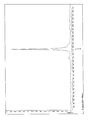
- FIG. 1 is a 13 C-NMR chart of triquinoyl octahydrate obtained in Example 1 (FIG. 1 a). A chart in which the peak around 95 ppm is partially enlarged is also shown (FIG. 1b). It turns out that it is triquinoyl octahydrate of high purity.
- the starting compound used in the present invention is at least one kind of tetrahydroxy-p-benzoquinone, a metal salt of tetrahydroxy-p-benzoquinone, and a hydrate of tetrahydroxy-p-benzoquinone. It is a p-benzoquinone compound.
- tetrahydroxy-p-benzoquinone is a compound represented by the following formula (I).
- Examples of the metal salt of tetrahydroxy-p-benzoquinone include alkali metal salts and alkaline earth metal salts, and examples thereof include disodium salts, tetrasodium salts, dipotassium salts, and tetralithium salts.
- the hydrate of tetrahydroxy-p-benzoquinone may have a specific hydration number or a non-specific hydration number, and specifically includes monohydrate, dihydrate and the like. Can be mentioned.
- triquinoyl compound The product obtained by the production method of the present invention is triquinoyl and / or a hydrate thereof (hereinafter sometimes referred to as “triquinoyl compound”).
- triquinoyl compound the number of bound water molecules is not limited, but is preferably octahydrate.
- triquinoyl is a compound represented by the following formula (II).
- triquinoyl octahydrate is a compound having a structure of dodecahydroxycyclohexane dihydrate represented by the following formula (III).
- the tetrahydroxy-p-benzoquinone compound is subjected to electrochemical oxidation, that is, electrolytic oxidation. In this case, oxidation of the tetrahydroxy-p-benzoquinone compound present at the anode occurs.
- electrochemical oxidation that is, electrolytic oxidation.
- oxidation of the tetrahydroxy-p-benzoquinone compound present at the anode occurs.
- reduction of hydrogen ions (protons) for example, formation of hydrogen, is typically performed.
- the anode and cathode are known to those skilled in the art and any electrode suitable for aqueous-based electrolysis can be used.
- the material of the electrode can be appropriately selected, for example, a noble metal such as Au, Ru, Ph, Pd, Os, Ir, or Pt; a base metal such as Ti, Cr, Fe, Ni, Cu, Zn, Sn, or Pd; Alloys such as Zn, TiO-ZrO-MnO-CrCu, misch metal-Ni-Fe, LaNi 5 , CeLi 5 , PrNi 5 , SmNi 5 , stainless steel, amalgam; base metals plated with noble metals; metals as insulating materials
- a transparent conductive glass made of semiconductor ceramics such as ITO, TO, and FTO; carbons such as graphite (graphite), glassy carbon, and carbon paste; TiO 2 , SnO 2 , In 2 O 3 , ZnO, and Fe 2 O 3, PdO 2, n-type semiconductor oxides such as MnO 2, WO 3; boron doped diamond Command; and the like.
- the shape of the anode and the cathode is not particularly limited, and may be, for example, a flat plate, a linear shape, a spherical shape, a foil, a mesh, a porous shape, a ring disk, a split disk, a fine comb shape, and the arrangement thereof is not particularly limited. .
- Electrolytic tank In the production method of the present invention, an electrolytic cell in which an anode cell and a cathode cell are separated ("separable electrolytic cell" may be used, or a non-separable electrolytic cell may be used). . It may be a batch type electrolytic cell or a flow type electrolytic cell.
- a batch-type electrolytic cell is one in which at least a pair of electrodes (anode and cathode) is inserted into a reaction vessel filled with an electrolytic solution, and a voltage is applied to the electrodes to perform an electrochemical reaction on the electrode surface. is there.
- the flow-type electrolytic cell is one in which an electrolytic solution is circulated through a flow path provided with at least a pair of electrodes, and a voltage is applied to the electrodes to continuously perform an electrochemical reaction.
- Separation type electrolysis tank The use of a separation type electrolysis tank is advantageous because the electrolytic reduction of the generated triquinoyl compound can be easily suppressed.
- a structural feature of this separation type electrolytic cell is that the anode cell and the cathode cell are in contact with each other via a membrane such as an ion exchange membrane and a solid electrolytic membrane. This diaphragm allows protons to pass therethrough so that the electrolyte in the anode cell and the electrolyte in the cathode cell can be electrically connected, while the triquinoyl compound formed in the anode cell does not pass, so that the triquinoyl compound does not pass through. Compound reduction can be suppressed.
- the solid electrolytic membrane is not particularly limited as long as it can pass protons in the electrolytic solution.
- a proton conductive solid polymer membrane, porous glass, PTFE-bound ceramics, baked nickel, etc. Can be mentioned.
- a method of connecting the anode cell and the cathode cell with a salt bridge instead of the ion exchange membrane may be employed.
- the electrolyte used in the production method of the present invention is a suspension or solution containing a tetrahydroxy-p-benzoquinone compound.
- a polar solvent such as water is used as the solvent.
- the suspension or solution containing the tetrahydroxy-p-benzoquinone compound is generally from 0.5 to 30% by weight, preferably from 1 to 15% by weight, especially from 1 to 10% by weight, based on the total weight of the suspension or solution.
- tetrahydroxy-p-benzoquinone compounds In the case of the present invention, it is in principle possible to operate in a neutral or acidic pH range. Considering the stability of the resulting triquinoyl compound, it is preferable to operate under acidic conditions.
- the suspension or solution containing the tetrahydroxy-p-benzoquinone compound is preferably operated in a pH range of pH 0 to pH 7, preferably pH 1 to pH 5, particularly pH 1 to pH 3.
- a water-soluble inorganic acid such as hydrochloric acid, sulfuric acid or nitric acid; an organic acid such as p-toluenesulfonic acid; or a mixture of various acids.
- the electrolytic solution on the anode cell side is an electrolytic solution containing a tetrahydroxy-p-benzoquinone compound.
- the composition of the electrolytic solution on the cathode cell side can be appropriately selected as long as it does not affect the electrolytic oxidation, except that it does not contain the tetrahydroxy-p-benzoquinone compound.
- the electrolyte on the cathode cell side may have the same composition as the electrolyte on the anode cell side except that it does not contain a tetrahydroxy-p-benzoquinone compound.
- a conductive salt can be added to improve the conductivity of the electrolyte.
- the conductive salt can be appropriately selected, and examples of the cation part of the conductive salt include Ag + , Al 3+ , Ba 2+ , Be 2+ , Ca 2+ , Cd 2+ , Ce 3+ , Co 2+ , and [Co (NH 3).
- anion portion of the conductive salt examples include [Au (CN) 2 ] ⁇ , [Au (CN) 4 ] ⁇ , B (Ph) 4 ⁇ , Br ⁇ , BrO 3 ⁇ , Cl ⁇ , ClO 2 ⁇ , ClO 3 ⁇ , ClO 4 ⁇ , CN ⁇ , CO 3 2 ⁇ , [CO (CN) 6 ] 3 ⁇ , CrO 4 2 ⁇ , F ⁇ , [Fe (CN) 6 ] 4 ⁇ , [Fe (CN) 6 3- , HCO 3 ⁇ , HF 2 ⁇ , HPO 4 2 ⁇ , H 2 PO 4 ⁇ , H 2 PO 2 ⁇ , HS ⁇ , HSO 4 ⁇ , I ⁇ , IO 3 ⁇ , IO 4 ⁇ , N (CN ) 2 ⁇ , NO 2 ⁇ , NO 3 ⁇ , N 3 ⁇ , OCN ⁇ , OH ⁇ , OH
- a mediator can also be added.
- Metallic mediators include redox mediators such as Ru (IV) / Ru (II) and Co (III) / Co (II), and non-metallic mediators include Cl ⁇ , Br ⁇ , I ⁇ and the like.
- Mediators such as halide ions, NO 3 ⁇ , and active species generated by electrolytic oxidation of sulfides.
- the electrolysis reaction is performed by applying an electrolysis voltage to the anode and the cathode.
- the total time of the electrolytic reaction is, of course, determined by the electrolytic cell, the electrodes used and the current density. The optimum time is determined by one skilled in the art by routine experimentation, for example by sampling during electrolysis.
- the electrolytic reaction is performed at a temperature in the range of 0 to 100 ° C, preferably room temperature to 50 ° C.
- any mechanical stirrer known to the person skilled in the art can be used.
- the use of other mixing methods such as ultrasonics or jet nozzles is likewise preferred.
- the black color derived from the tetrahydroxy-p-benzoquinone compound as a raw material gradually disappears in the electrolytic solution on the anode cell side as the reaction proceeds, and the color changes from yellow to white derived from the triquinoyl compound. It can be observed that it changes.
- the target triquinoyl compound is precipitated in a crystalline state from the electrolytic solution.
- the reaction is carried out in a separate electrolytic cell, it is deposited from the electrolytic solution on the anode cell side.
- the desired triquinoyl compound can be easily isolated by filtering the precipitated crystals and washing with water.
- Example 1 A 50 mL beaker equipped with a stirrer was charged with 2N hydrochloric acid (10 mL) and tetrahydroxy-p-benzoquinone (865 mg, 5.0 mmol), and a mesh-shaped platinum electrode was placed. A glass tube provided with a glass filter having a pore size of 10 ⁇ m on the bottom was placed in a beaker, and 2N hydrochloric acid was added to the glass tube in accordance with the liquid level in the beaker. A coiled platinum electrode was placed in a glass tube.
- a potentiostat / galvanostat was connected to each electrode, and a current of 80 mA was applied for 402 minutes so that the mesh-shaped platinum electrode in the beaker became an anode.
- the obtained white crystals were filtered by suction and washed with water, and then dried under reduced pressure to obtain the target triquinoyl octahydrate (938 mg, 3.0 mmol) in a yield of 60%.
- the potentiostat / galvanostat "Potentiostat / galvanostat HA-151B" manufactured by Hokuto Denko KK was used.
- Example 2 A 50 mL glassy carbon crucible equipped with a stirrer was charged with 2N hydrochloric acid (20 mL) and tetrahydroxy-p-benzoquinone (1.72 g, 10.0 mmol). A glass tube provided with a glass filter having a pore size of 10 ⁇ m on the bottom was placed in a glassy carbon crucible, and 2N hydrochloric acid was added to the glass tube in accordance with the liquid level in the crucible. A coiled platinum electrode was placed in a glass tube.
- a potentiostat / galvanostat was connected so that the glassy carbon crucible became the anode and the platinum electrode became the cathode, and a current of 120 mA was supplied for 510 minutes.
- the obtained white crystals were collected by suction filtration and washed with water, and then dried under reduced pressure to obtain the target triquinoyl octahydrate (2.0 g, 6.4 mmol) in a yield of 64%.
- Example 3 A stirrer was placed in a 50-mL cylindrical reaction vessel equipped with a boron-doped diamond electrode on the bottom, and 2N hydrochloric acid (10 mL) and tetrahydroxy-p-benzoquinone (866 mg, 5.0 mmol) were charged.
- a glass tube provided with a glass filter having a pore size of 10 ⁇ m on the bottom was placed in a cylindrical reaction vessel, and 2N hydrochloric acid was added to the glass tube in accordance with the liquid level in the vessel.
- a coiled platinum electrode was placed in a glass tube.
- a potentiostat / galvanostat was connected to each electrode, and a current of 100 mA was applied for 300 minutes so that the boron-doped diamond electrode became an anode.
- the obtained white crystals were filtered by suction and washed with water, and then dried under reduced pressure to obtain the target triquinoyl octahydrate (910 mg, 2.9 mmol) in a yield of 58%.
- Example 4 In a 50 mL beaker equipped with a stirrer, 2N hydrochloric acid (10 mL) and tetrahydroxy-p-benzoquinone (862 mg, 5.0 mmol) were placed, and a mesh-shaped platinum electrode was placed. A glass tube provided with a proton-conductive solid polymer membrane on the bottom was placed in a beaker, and 2N hydrochloric acid was added to the glass tube so as to match the liquid level in the beaker. A coiled platinum electrode was placed in a glass tube.
- a potentiostat / galvanostat was connected to each electrode, and a current of 100 mA was applied for 320 minutes so that the mesh-shaped platinum electrode in the beaker became an anode.
- the obtained white crystals were filtered by suction and washed with water, and then dried under reduced pressure to obtain the target triquinoyl octahydrate (987 mg, 3.2 mmol) in a yield of 63%.
- Aquivion (registered trademark) E87-05S was used as the proton conductive solid polymer membrane.
- the present invention can be used for the production of triquinoyl compounds at the factory level, can be performed under mild conditions, and is useful because it has a small amount of waste and a high yield.
Landscapes
- Chemical & Material Sciences (AREA)
- Organic Chemistry (AREA)
- Engineering & Computer Science (AREA)
- Chemical Kinetics & Catalysis (AREA)
- Electrochemistry (AREA)
- Materials Engineering (AREA)
- Metallurgy (AREA)
- Electrolytic Production Of Non-Metals, Compounds, Apparatuses Therefor (AREA)
- Organic Low-Molecular-Weight Compounds And Preparation Thereof (AREA)
Abstract
穏和な条件で、廃棄物が少なく、高収率でトリキノイル及び/又は水和物を製造する方法を提供する。 テトラヒドロキシ-p-ベンゾキノン、その金属塩及び/又はその水和物を、電解酸化を行い、トリキノイル及び/又は水和物を製造する。分離型の電解槽を用いて電解酸化を行うこと、また、中性又は酸性条件下で電解酸化を行うことが好ましい。
Description
本発明は、電解酸化によるトリキノイル及び/又はその水和物の製造方法に関する。
本願は、2018年8月9日に出願された日本国特許出願第2018-150575号に対し優先権を主張し、その内容をここに援用する。
本願は、2018年8月9日に出願された日本国特許出願第2018-150575号に対し優先権を主張し、その内容をここに援用する。
近年、発光素子に有機EL素子を用いた有機EL表示装置が普及しつつある。有機ELを構成する有機材料としては、π共役有機分子であるヘキサアザトリフェニレン誘導体が、有機EL素子の電子輸送層などに利用されている。
ヘキサアザトリフェニレン誘導体の製造中間体としては、トリキノイル(別名:シクロヘキサンヘキサオン)が挙げられる。
トリキノイルの合成方法としては、テトラヒドキシ-p-ベンゾキノンを発煙硝酸で酸化する方法が知られている(非特許文献1)。この反応では、発煙硝酸を大過剰量用いるため、大量の廃棄物がでることになる。
ヘキサアザトリフェニレン誘導体の製造中間体としては、トリキノイル(別名:シクロヘキサンヘキサオン)が挙げられる。
トリキノイルの合成方法としては、テトラヒドキシ-p-ベンゾキノンを発煙硝酸で酸化する方法が知られている(非特許文献1)。この反応では、発煙硝酸を大過剰量用いるため、大量の廃棄物がでることになる。
JOURNAL OF RESEARCH of the National Bureau of Standards-A.Physics and Chemistry Vol.67A,No.2,March-April 1963,153
穏和な条件でさらに廃棄物が少なく、高収率でトリキノイル及び/又はその水和物を製造する方法の提供をすることである。
上記の目的を達成するために検討した結果、以下の形態を包含する本発明を完成するに至った。
〔1〕テトラヒドロキシ-p-ベンゾキノン、テトラヒドロキシ-p-ベンゾキノンの金属塩及びテトラヒドロキシ-p-ベンゾキノンの水和物から選ばれる少なくとも1種のテトラヒドロキシ-p-ベンゾキノン化合物を、電解酸化を行い、トリキノイル及び/又はその水和物を製造する方法。
〔2〕分離型の電解槽を用いて電解酸化を行う、上記の〔1〕に記載の方法。
〔3〕製造されるトリキノイルの水和物が、トリキノイル八水和物である、上記の〔1〕又は〔2〕に記載の方法。
〔4〕電解酸化が、中性又は酸性条件下で行う電解酸化である、上記の〔1〕~〔3〕のいずれかに記載の方法。
〔2〕分離型の電解槽を用いて電解酸化を行う、上記の〔1〕に記載の方法。
〔3〕製造されるトリキノイルの水和物が、トリキノイル八水和物である、上記の〔1〕又は〔2〕に記載の方法。
〔4〕電解酸化が、中性又は酸性条件下で行う電解酸化である、上記の〔1〕~〔3〕のいずれかに記載の方法。
本発明の製造方法によれば、穏和な条件で行え、さらに、廃棄物が少なく、高収率でトリキノイル及び/又はその水和物を得ることができる。特に、トリキノイル八水和物の製造に好適である。
(1)原料化合物
本発明で用いる原料化合物は、テトラヒドロキシ-p-ベンゾキノン、テトラヒドロキシ-p-ベンゾキノンの金属塩及びテトラヒドロキシ-p-ベンゾキノンの水和物から選ばれる少なくとも1種のテトラヒドロキシ-p-ベンゾキノン化合物である。
本発明で用いる原料化合物は、テトラヒドロキシ-p-ベンゾキノン、テトラヒドロキシ-p-ベンゾキノンの金属塩及びテトラヒドロキシ-p-ベンゾキノンの水和物から選ばれる少なくとも1種のテトラヒドロキシ-p-ベンゾキノン化合物である。
ここで、テトラヒドキシ-p-ベンゾキノンとは以下の式(I)で表される化合物である。

テトラヒドロキシ-p-ベンゾキノンの金属塩としては、アルカリ金属塩、アルカリ土類金属塩があり、二ナトリウム塩、四ナトリウム塩、二カリウム塩、四リチウム塩などを挙げることができる。
テトラヒドロキシ-p-ベンゾキノンの水和物としては、水和数が特定のものであっても、非特定のものであってもよく、具体的には、一水和物、二水和物などを挙げることができる。
テトラヒドロキシ-p-ベンゾキノンの水和物としては、水和数が特定のものであっても、非特定のものであってもよく、具体的には、一水和物、二水和物などを挙げることができる。
(2)生成物
本発明の製造方法により得られる生成物は、トリキノイル及び/又はその水和物(以下、「トリキノイル化合物」ということがある。)である。トリキノイルの水和物において、結合する水分子数に制限はないが、好ましくは八水和物である。
本発明の製造方法により得られる生成物は、トリキノイル及び/又はその水和物(以下、「トリキノイル化合物」ということがある。)である。トリキノイルの水和物において、結合する水分子数に制限はないが、好ましくは八水和物である。
ここで、トリキノイルとは以下の式(II)で表される化合物である。
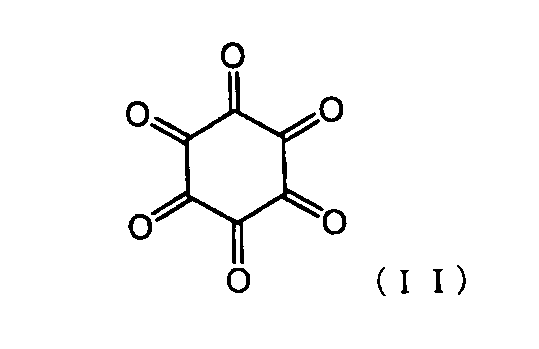
なお、トリキノイル八水和物は、X線結晶構造解析によると、以下の式(III)に示すドデカヒドロキシシクロヘキサン二水和物の構造を有する化合物である。

(3)アノード、カソード
本発明の製造方法において、テトラヒドロキシ-p-ベンゾキノン化合物は、電気化学的酸化、即ち、電解酸化にかけられる。この場合、アノードにおいては存在するテトラヒドロキシ-p-ベンゾキノン化合物の酸化が起こる。カソードにおいては、典型的には、水素イオン(プロトン)の還元、例えば水素の形成が行われる。
アノードおよびカソードは、当業者には知られているものであって、水溶液系の電解に適している任意の電極を使用することができる。電極の材料は適宜選択可能であり、例えば、Au、Ru、Ph、Pd、Os、Ir、Ptなどの貴金属; Ti、Cr、Fe、Ni、Cu、Zn、Sn、Pdなどの卑金属; Cu-Zn、TiO-ZrO-MnO-CrCu、ミッシュメタル-Ni-Fe、LaNi5、CeLi5、PrNi5、SmNi5、ステンレス、アマルガムなどの合金類; 卑金属に貴金属をめっき処理したもの、金属を絶縁材料にめっき処理したもの; ITO、TO、FTOなどの半導体セラミックスからなる透明導電ガラス; グラファイト(黒鉛)、グラッシーカーボン、カーボンペーストなどの炭素類; TiO2、SnO2、In2O3、ZnO、Fe2O3、PdO2、MnO2、WO3などのn型半導体酸化物; ホウ素ドープダイヤモンド;などを挙げることができる。
アノードおよびカソードの形状は、特に制限はなく、例えば、平板、線状、球状、ホイル、メッシュ、多孔質、リングディスク、スプリットディスク、微小くし型などの形状でよく、その配置も特に制限はない。
本発明の製造方法において、テトラヒドロキシ-p-ベンゾキノン化合物は、電気化学的酸化、即ち、電解酸化にかけられる。この場合、アノードにおいては存在するテトラヒドロキシ-p-ベンゾキノン化合物の酸化が起こる。カソードにおいては、典型的には、水素イオン(プロトン)の還元、例えば水素の形成が行われる。
アノードおよびカソードは、当業者には知られているものであって、水溶液系の電解に適している任意の電極を使用することができる。電極の材料は適宜選択可能であり、例えば、Au、Ru、Ph、Pd、Os、Ir、Ptなどの貴金属; Ti、Cr、Fe、Ni、Cu、Zn、Sn、Pdなどの卑金属; Cu-Zn、TiO-ZrO-MnO-CrCu、ミッシュメタル-Ni-Fe、LaNi5、CeLi5、PrNi5、SmNi5、ステンレス、アマルガムなどの合金類; 卑金属に貴金属をめっき処理したもの、金属を絶縁材料にめっき処理したもの; ITO、TO、FTOなどの半導体セラミックスからなる透明導電ガラス; グラファイト(黒鉛)、グラッシーカーボン、カーボンペーストなどの炭素類; TiO2、SnO2、In2O3、ZnO、Fe2O3、PdO2、MnO2、WO3などのn型半導体酸化物; ホウ素ドープダイヤモンド;などを挙げることができる。
アノードおよびカソードの形状は、特に制限はなく、例えば、平板、線状、球状、ホイル、メッシュ、多孔質、リングディスク、スプリットディスク、微小くし型などの形状でよく、その配置も特に制限はない。
(4)電解槽
本発明の製造方法においては、アノード槽とカソード槽とが分離した電解槽(「分離型の電解槽」を用いてもよいし、非分離型の電解槽を用いてもよい。
バッチ式の電解槽であってよいし、流通式の電解槽であってよい。ここで、バッチ式の電解槽とは、電解液を満たした反応容器に少なくとも一対の電極(アノードおよびカソード)を差し込み、電極に電圧を印加することにより、電極表面で電気化学反応を行なうものである。流動式の電解槽とは、少なくとも一対の電極を設けた流路に電解液を流通させ、電極に電圧を印加し連続的に電気化学反応を行なうものである。
本発明の製造方法においては、アノード槽とカソード槽とが分離した電解槽(「分離型の電解槽」を用いてもよいし、非分離型の電解槽を用いてもよい。
バッチ式の電解槽であってよいし、流通式の電解槽であってよい。ここで、バッチ式の電解槽とは、電解液を満たした反応容器に少なくとも一対の電極(アノードおよびカソード)を差し込み、電極に電圧を印加することにより、電極表面で電気化学反応を行なうものである。流動式の電解槽とは、少なくとも一対の電極を設けた流路に電解液を流通させ、電極に電圧を印加し連続的に電気化学反応を行なうものである。
(5)分離型の電解槽
分離型の電解槽を用いることで、生成したトリキノイル化合物の電解還元を簡便に抑制することが可能となるため、優位である。
この分離型の電解槽の構造上の特徴としては、イオン交換膜、固体電解膜などの隔膜を介してアノード槽とカソード槽が接していることである。この隔膜は、プロトンは通過できるためアノード槽内の電解液とカソード槽内の電解液とを電気的に接続することを可能とする一方で、アノード槽内で生成したトリキノイル化合物は通過しないためトリキノイル化合物の還元を抑制することができる。
固体電解膜としては、電解液内のプロトンを通過しうるものであれば、特に制限はなく、例えば、プロトン伝導性の固体高分子膜、多孔質ガラス、PTFE結着セラミックス、焼付結ニッケルなどを挙げることができる。
本発明の場合、イオン交換膜に代えて塩橋でアノード槽とカソード槽を接続する方法もとりうる。
分離型の電解槽を用いることで、生成したトリキノイル化合物の電解還元を簡便に抑制することが可能となるため、優位である。
この分離型の電解槽の構造上の特徴としては、イオン交換膜、固体電解膜などの隔膜を介してアノード槽とカソード槽が接していることである。この隔膜は、プロトンは通過できるためアノード槽内の電解液とカソード槽内の電解液とを電気的に接続することを可能とする一方で、アノード槽内で生成したトリキノイル化合物は通過しないためトリキノイル化合物の還元を抑制することができる。
固体電解膜としては、電解液内のプロトンを通過しうるものであれば、特に制限はなく、例えば、プロトン伝導性の固体高分子膜、多孔質ガラス、PTFE結着セラミックス、焼付結ニッケルなどを挙げることができる。
本発明の場合、イオン交換膜に代えて塩橋でアノード槽とカソード槽を接続する方法もとりうる。
(6)電解液
本発明の製造方法に用いる電解液は、テトラヒドロキシ-p-ベンゾキノン化合物を含有する懸濁液または溶液である。溶媒には水などの極性溶媒を用いる。
テトラヒドロキシ-p-ベンゾキノン化合物含有懸濁液又は溶液は、懸濁液又は溶液の総重量に対して、一般に0.5~30重量%、好ましくは1~15重量%、特に1~10重量%のテトラヒドロキシ-p-ベンゾキノン化合物を含む。
本発明の場合、原則的には、中性または酸性のpH範囲で操作することが可能である。生成するトリキノイル化合物の安定性を考慮すれば、酸性の条件下で操作することが好ましい。そのため、テトラヒドロキシ-p-ベンゾキノン化合物含有懸濁液または溶液は、pH0~pH7、好ましくはpH1~pH5、特にpH1~pH3のpH範囲で操作することが好ましい。
pHを調整するために、易水溶性の塩酸、硫酸、硝酸などの無機酸;p-トルエンスルホン酸などの有機酸;または様々な酸の混合物を用いることが好ましい。
本発明の製造方法に用いる電解液は、テトラヒドロキシ-p-ベンゾキノン化合物を含有する懸濁液または溶液である。溶媒には水などの極性溶媒を用いる。
テトラヒドロキシ-p-ベンゾキノン化合物含有懸濁液又は溶液は、懸濁液又は溶液の総重量に対して、一般に0.5~30重量%、好ましくは1~15重量%、特に1~10重量%のテトラヒドロキシ-p-ベンゾキノン化合物を含む。
本発明の場合、原則的には、中性または酸性のpH範囲で操作することが可能である。生成するトリキノイル化合物の安定性を考慮すれば、酸性の条件下で操作することが好ましい。そのため、テトラヒドロキシ-p-ベンゾキノン化合物含有懸濁液または溶液は、pH0~pH7、好ましくはpH1~pH5、特にpH1~pH3のpH範囲で操作することが好ましい。
pHを調整するために、易水溶性の塩酸、硫酸、硝酸などの無機酸;p-トルエンスルホン酸などの有機酸;または様々な酸の混合物を用いることが好ましい。
分離型の電解槽で反応を行う場合、アノード槽側の電解液が、テトラヒドロキシ-p-ベンゾキノン化合物を含有する電解液となる。カソード槽側の電解液の組成は、テトラヒドロキシ-p-ベンゾキノン化合物を含有しない以外は、電解酸化に影響しない範囲であれば適宜選択可能である。カソード槽側の電解液は、テトラヒドロキシ-p-ベンゾキノン化合物を含有しない以外は、アノード槽側の電解液と同一の組成であってもよい。
電解液の導電率を改良するために導電性塩を添加することができる。導電性塩は適宜選択可能であり、導電性塩のカチオン部としては、例えば、Ag+、Al3+、Ba2+、Be2+、Ca2+、Cd2+、Ce3+、Co2+、[Co(NH3)6]3+、[Co(en)3+]、Cr3+、Cs+、Cu2+、Fe2+、Fe3+、Hg2
2+、Hg2+、K+、Li+、Mg2+、Mn2+、NH4
+、N2H5
+、Na+、Ni2+、Pd2+、Zn2+などの無機イオン; MeNH3
+、EtNH3
+、Me2NH2
+、Et2NH2
+、Me3NH+、Et3NH+、Me4N+、Et4N+、nBu4N+などのアンモニウムイオン; Me3S+、Et3S+などのその他のオニウムイオン;などが挙げられる。
導電性塩のアニオン部としては、例えば、[Au(CN)2]-、[Au(CN)4]-、B(Ph)4 -、Br-、BrO3 -、Cl-、ClO2 -、ClO3 -、ClO4 -、CN-、CO3 2-、[CO(CN)6]3-、CrO4 2-、F-、[Fe(CN)6]4-、[Fe(CN)6]3-、HCO3 -、HF2 -、HPO4 2-、H2PO4 -、H2PO2 -、HS-、HSO4 -、I-、IO3 -、IO4 -、N(CN)2 -、NO2 -、NO3 -、N3 -、OCN-、OH-、PF6 -、PO4 3-、P2O7 4-、SCN-、SeO4 2-、SO3 2-、SO4 2-、S2O3 2-、S2O4 2-、S2O6 2-、S2O8 2-、WO4 2-などの無機イオン; ギ酸イオン、酢酸イオン、MeSO3 -、HCO4 -、C2O4 2-、マロン酸イオン、酒石酸イオン、クエン酸イオン、C6H5 -、ピクリン酸イオン、アルキルスルホン酸イオン、アリールスルホン酸イオン、アルキルホスホン酸イオンなどの有機イオン;などが挙げられる。
導電性塩のアニオン部としては、例えば、[Au(CN)2]-、[Au(CN)4]-、B(Ph)4 -、Br-、BrO3 -、Cl-、ClO2 -、ClO3 -、ClO4 -、CN-、CO3 2-、[CO(CN)6]3-、CrO4 2-、F-、[Fe(CN)6]4-、[Fe(CN)6]3-、HCO3 -、HF2 -、HPO4 2-、H2PO4 -、H2PO2 -、HS-、HSO4 -、I-、IO3 -、IO4 -、N(CN)2 -、NO2 -、NO3 -、N3 -、OCN-、OH-、PF6 -、PO4 3-、P2O7 4-、SCN-、SeO4 2-、SO3 2-、SO4 2-、S2O3 2-、S2O4 2-、S2O6 2-、S2O8 2-、WO4 2-などの無機イオン; ギ酸イオン、酢酸イオン、MeSO3 -、HCO4 -、C2O4 2-、マロン酸イオン、酒石酸イオン、クエン酸イオン、C6H5 -、ピクリン酸イオン、アルキルスルホン酸イオン、アリールスルホン酸イオン、アルキルホスホン酸イオンなどの有機イオン;などが挙げられる。
メディエーターも、添加することができる。金属系のメディエーターとしては、Ru(IV)/Ru(II)、Co(III)/Co(II)などのレドックス系メディエーターが挙げられ、非金属系としては、Cl-、Br-、I-などのハロゲン化物イオン、NO3
-、スルフィド類の電解酸化により生成する活性種などのメディエーターを挙げることができる。
(7)反応
電解反応は、アノードとカソードに電解電圧を印加することによって行う。
電解反応の総時間は、当然、電解槽、使用される電極および電流密度により決まる。最適時間は、当業者により常套手段の実験、例えば電解の間にサンプリングすることによって決定される。
本発明の製造方法においては、電解反応は、0~100℃、好ましくは室温~50℃の範囲の温度で実施される。
本発明の場合、電解槽中で電解液を混合することが好ましい。この場合、当業者には知られている任意の機械的撹拌機を使用することができる。超音波または噴出ノズルなどの他の混合方法の使用も同様に好ましい。
分離型の電解槽で反応を行う場合、反応の進行とともにアノード槽側の電解液で、原料のテトラヒドロキシ-p-ベンゾキノン化合物由来の黒色が徐々に消失するし、トリキノイル化合物由来の黄色~白色へ変化することが観測できる。
電解反応は、アノードとカソードに電解電圧を印加することによって行う。
電解反応の総時間は、当然、電解槽、使用される電極および電流密度により決まる。最適時間は、当業者により常套手段の実験、例えば電解の間にサンプリングすることによって決定される。
本発明の製造方法においては、電解反応は、0~100℃、好ましくは室温~50℃の範囲の温度で実施される。
本発明の場合、電解槽中で電解液を混合することが好ましい。この場合、当業者には知られている任意の機械的撹拌機を使用することができる。超音波または噴出ノズルなどの他の混合方法の使用も同様に好ましい。
分離型の電解槽で反応を行う場合、反応の進行とともにアノード槽側の電解液で、原料のテトラヒドロキシ-p-ベンゾキノン化合物由来の黒色が徐々に消失するし、トリキノイル化合物由来の黄色~白色へ変化することが観測できる。
(8)単離・精製
本発明の製造方法においては、目的とするトリキノイル化合物は、電解液中から結晶状態で析出する。分離型の電解槽で反応を行う場合、アノード槽側の電解液中から析出することになる。
析出した結晶を濾別し、水で洗浄することで容易に目的とするトリキノイル化合物を単離することができる。
本発明の製造方法においては、目的とするトリキノイル化合物は、電解液中から結晶状態で析出する。分離型の電解槽で反応を行う場合、アノード槽側の電解液中から析出することになる。
析出した結晶を濾別し、水で洗浄することで容易に目的とするトリキノイル化合物を単離することができる。
以下の実施例は、本発明をさらに説明することが意図されており、本発明を限定するものと理解されるものではない。
〔実施例1〕
撹拌子を備えた50mLのビーカーに2Nの塩酸(10mL)およびテトラヒドロキシ-p-ベンゾキノン(865mg、5.0mmol)を入れ、メッシュ状の白金電極を設置した。底面に10μm細孔のガラスフィルターを備えたガラス管をビーカーに入れ、ビーカー内の液面に合わせてガラス管内に2Nの塩酸を加えた。ガラス管内にコイル状の白金電極を設置した。
ポテンショスタット/ガルバノスタットと各電極を接続し、ビーカー内のメッシュ状白金電極がアノードとなるように、80mAの電流を402分間通電した。得られた白色結晶を吸引濾過および水で洗浄した後、減圧乾燥して目的のトリキノイル八水和物(938mg、3.0mmol)を60%の収率で得た。
なお、ポテンショスタット/ガルバノスタットには、北斗電工株式会社製の「ポテンショスタット/ガルバノスタット HA-151B」を用いた。
撹拌子を備えた50mLのビーカーに2Nの塩酸(10mL)およびテトラヒドロキシ-p-ベンゾキノン(865mg、5.0mmol)を入れ、メッシュ状の白金電極を設置した。底面に10μm細孔のガラスフィルターを備えたガラス管をビーカーに入れ、ビーカー内の液面に合わせてガラス管内に2Nの塩酸を加えた。ガラス管内にコイル状の白金電極を設置した。
ポテンショスタット/ガルバノスタットと各電極を接続し、ビーカー内のメッシュ状白金電極がアノードとなるように、80mAの電流を402分間通電した。得られた白色結晶を吸引濾過および水で洗浄した後、減圧乾燥して目的のトリキノイル八水和物(938mg、3.0mmol)を60%の収率で得た。
なお、ポテンショスタット/ガルバノスタットには、北斗電工株式会社製の「ポテンショスタット/ガルバノスタット HA-151B」を用いた。
〔実施例2〕
撹拌子を備えた50mLのグラッシーカーボンるつぼに2Nの塩酸(20mL)およびテトラヒドロキシ-p-ベンゾキノン(1.72g, 10.0mmol)を入れた。底面に10μm細孔のガラスフィルターを備えたガラス管をグラッシーカーボンるつぼに入れ、るつぼ内の液面に合わせてガラス管内に2Nの塩酸を加えた。ガラス管内にコイル状の白金電極を設置した。
グラッシーカーボンるつぼがアノードとなり、白金電極がカソードとなるように、ポテンショスタット/ガルバノスタットを接続し、120mAの電流を510分間通電した。得られた白色結晶を吸引濾過および水で洗浄した後、減圧乾燥して目的のトリキノイル八水和物(2.0g, 6.4mmol)を64%の収率で得た。
撹拌子を備えた50mLのグラッシーカーボンるつぼに2Nの塩酸(20mL)およびテトラヒドロキシ-p-ベンゾキノン(1.72g, 10.0mmol)を入れた。底面に10μm細孔のガラスフィルターを備えたガラス管をグラッシーカーボンるつぼに入れ、るつぼ内の液面に合わせてガラス管内に2Nの塩酸を加えた。ガラス管内にコイル状の白金電極を設置した。
グラッシーカーボンるつぼがアノードとなり、白金電極がカソードとなるように、ポテンショスタット/ガルバノスタットを接続し、120mAの電流を510分間通電した。得られた白色結晶を吸引濾過および水で洗浄した後、減圧乾燥して目的のトリキノイル八水和物(2.0g, 6.4mmol)を64%の収率で得た。
〔実施例3〕
底面にボロンドープダイヤモンド電極を備えた50mL筒状反応容器に撹拌子を入れ、2Nの塩酸(10mL)およびテトラヒドロキシ-p-ベンゾキノン(866mg, 5.0mmol)を入れた。底面に10μm細孔のガラスフィルターを備えたガラス管を筒状反応容器に入れ、容器内の液面に合わせてガラス管内に2Nの塩酸を加えた。ガラス管内にコイル状の白金電極を設置した。
ポテンショスタット/ガルバノスタットと各電極を接続し、ボロンドープダイヤモンド電極がアノードとなるように、100mAの電流を300分間通電した。得られた白色結晶を吸引濾過および水で洗浄した後、減圧乾燥して目的のトリキノイル八水和物(910mg, 2.9mmol)を58%の収率で得た。
底面にボロンドープダイヤモンド電極を備えた50mL筒状反応容器に撹拌子を入れ、2Nの塩酸(10mL)およびテトラヒドロキシ-p-ベンゾキノン(866mg, 5.0mmol)を入れた。底面に10μm細孔のガラスフィルターを備えたガラス管を筒状反応容器に入れ、容器内の液面に合わせてガラス管内に2Nの塩酸を加えた。ガラス管内にコイル状の白金電極を設置した。
ポテンショスタット/ガルバノスタットと各電極を接続し、ボロンドープダイヤモンド電極がアノードとなるように、100mAの電流を300分間通電した。得られた白色結晶を吸引濾過および水で洗浄した後、減圧乾燥して目的のトリキノイル八水和物(910mg, 2.9mmol)を58%の収率で得た。
〔実施例4〕
撹拌子を備えた50mLのビーカーに2Nの塩酸(10mL)およびテトラヒドロキシ-p-ベンゾキノン(862mg、5.0mmol)を入れ、メッシュ状の白金電極を設置した。底面にプロトン伝導性の固体高分子膜を備えたガラス管をビーカーに入れ、ビーカー内の液面に合わせてガラス管内に2Nの塩酸を加えた。ガラス管内にコイル状の白金電極を設置した。
ポテンショスタット/ガルバノスタットと各電極を接続し、ビーカー内のメッシュ状白金電極がアノードとなるように、100mAの電流を320分間通電した。得られた白色結晶を吸引濾過および水で洗浄した後、減圧乾燥して目的のトリキノイル八水和物(987mg、3.2mmol)を63%の収率で得た。
なお、プロトン伝導性の固体高分子膜としては、アクイヴィオン(登録商標)E87-05Sを用いた。
撹拌子を備えた50mLのビーカーに2Nの塩酸(10mL)およびテトラヒドロキシ-p-ベンゾキノン(862mg、5.0mmol)を入れ、メッシュ状の白金電極を設置した。底面にプロトン伝導性の固体高分子膜を備えたガラス管をビーカーに入れ、ビーカー内の液面に合わせてガラス管内に2Nの塩酸を加えた。ガラス管内にコイル状の白金電極を設置した。
ポテンショスタット/ガルバノスタットと各電極を接続し、ビーカー内のメッシュ状白金電極がアノードとなるように、100mAの電流を320分間通電した。得られた白色結晶を吸引濾過および水で洗浄した後、減圧乾燥して目的のトリキノイル八水和物(987mg、3.2mmol)を63%の収率で得た。
なお、プロトン伝導性の固体高分子膜としては、アクイヴィオン(登録商標)E87-05Sを用いた。
本発明は、工場レベルでのトリキノイル化合物の製造に利用可能であり、また穏和な条件で行え、さらに、廃棄物が少なく、高収率な製造方法であるため有用である。
Claims (4)
- テトラヒドロキシ-p-ベンゾキノン、テトラヒドロキシ-p-ベンゾキノンの金属塩及びテトラヒドロキシ-p-ベンゾキノンの水和物から選ばれる少なくとも1種のテトラヒドロキシ-p-ベンゾキノン化合物を、電解酸化を行い、トリキノイル及び/又はその水和物を製造する方法。
- 分離型の電解槽を用いて電解酸化を行う、請求項1に記載の方法。
- 製造されるトリキノイルの水和物が、トリキノイル八水和物である、請求項1又は2に記載の方法。
- 電解酸化が、中性又は酸性条件下で行う電解酸化である、請求項1~3のいずれかに記載の方法。
Priority Applications (1)
| Application Number | Priority Date | Filing Date | Title |
|---|---|---|---|
| JP2020536475A JP6936994B2 (ja) | 2018-08-09 | 2019-07-29 | 電解酸化によるトリキノイル及び/又はその水和物の製造方法 |
Applications Claiming Priority (2)
| Application Number | Priority Date | Filing Date | Title |
|---|---|---|---|
| JP2018-150575 | 2018-08-09 | ||
| JP2018150575 | 2018-08-09 |
Publications (1)
| Publication Number | Publication Date |
|---|---|
| WO2020031765A1 true WO2020031765A1 (ja) | 2020-02-13 |
Family
ID=69414180
Family Applications (1)
| Application Number | Title | Priority Date | Filing Date |
|---|---|---|---|
| PCT/JP2019/029597 Ceased WO2020031765A1 (ja) | 2018-08-09 | 2019-07-29 | 電解酸化によるトリキノイル及び/又はその水和物の製造方法 |
Country Status (3)
| Country | Link |
|---|---|
| JP (1) | JP6936994B2 (ja) |
| TW (1) | TWI717799B (ja) |
| WO (1) | WO2020031765A1 (ja) |
Citations (2)
| Publication number | Priority date | Publication date | Assignee | Title |
|---|---|---|---|---|
| GB2051795A (en) * | 1979-05-31 | 1981-01-21 | Reinstorff D | Process for the preparation of a solution of trichinoyl, its radicals, polymers and chain fragments, also as radicals, with novel therapeutic properties |
| US5391273A (en) * | 1993-04-16 | 1995-02-21 | Reinstorff; Dieter | Process for the preparation of a solution containing semitrichinoyl |
Family Cites Families (2)
| Publication number | Priority date | Publication date | Assignee | Title |
|---|---|---|---|---|
| JP2011506547A (ja) * | 2007-12-20 | 2011-03-03 | ディーエスエム アイピー アセッツ ビー.ブイ. | 修正された後蒸留を伴うシクロヘキサノン生産プロセス |
| US10233140B2 (en) * | 2014-09-30 | 2019-03-19 | Exxonmobil Chemical Patents Inc. | Process for making cyclohexanone |
-
2019
- 2019-07-29 JP JP2020536475A patent/JP6936994B2/ja active Active
- 2019-07-29 WO PCT/JP2019/029597 patent/WO2020031765A1/ja not_active Ceased
- 2019-08-07 TW TW108128099A patent/TWI717799B/zh not_active IP Right Cessation
Patent Citations (2)
| Publication number | Priority date | Publication date | Assignee | Title |
|---|---|---|---|---|
| GB2051795A (en) * | 1979-05-31 | 1981-01-21 | Reinstorff D | Process for the preparation of a solution of trichinoyl, its radicals, polymers and chain fragments, also as radicals, with novel therapeutic properties |
| US5391273A (en) * | 1993-04-16 | 1995-02-21 | Reinstorff; Dieter | Process for the preparation of a solution containing semitrichinoyl |
Non-Patent Citations (2)
| Title |
|---|
| FATIADI, A. J. ET AL.: "HEXAHYDROXYBENZENE", ORGANIC SYNTHESES, vol. 42, 1962, pages 66, XP055686129 * |
| HETTEGGER, H. ET AL.: "Chemistry of the Redox Series from Hexahydroxybenzene to Cyclohexanehexaone", CURRENT ORGANIC SYNTHESIS, vol. 13, no. 1, 2016, pages 86 - 100, XP055686127 * |
Also Published As
| Publication number | Publication date |
|---|---|
| TW202012704A (zh) | 2020-04-01 |
| JPWO2020031765A1 (ja) | 2021-08-02 |
| TWI717799B (zh) | 2021-02-01 |
| JP6936994B2 (ja) | 2021-09-22 |
Similar Documents
| Publication | Publication Date | Title |
|---|---|---|
| RU2561565C1 (ru) | Анод для выделения хлора | |
| US9199867B2 (en) | Removal of metals from water | |
| JP2023522183A (ja) | 電気触媒用電極の製造方法 | |
| JP2013539499A (ja) | 水および炭化水素の酸化のためのスピネル型触媒 | |
| EP2036955A1 (en) | Dyestuff, dye-sensitized solar cell, and method for manufacturing same | |
| Liu et al. | Energy-saving H 2 production from a hybrid acid/alkali electrolyzer assisted by anodic glycerol oxidation | |
| JP5220771B2 (ja) | 酸素の電気化学的還元用の触媒 | |
| CN108842169A (zh) | 一种负载金属氧化物的钒酸铋复合材料及其制备和应用 | |
| US20150197866A1 (en) | Method for generating oxygen and water electrolysis device | |
| JP7066172B2 (ja) | コバルト複合γ型二酸化マンガン及びその製造方法 | |
| CN115716657A (zh) | 一种IrW氧化物纳米片电催化剂及电沉积结合快速升降温制备方法和应用 | |
| KR840001661B1 (ko) | 고활성은 음극 | |
| CZ20011317A3 (cs) | Způsob výroby peroxodisíranu sodného a draselného a peroxodisíranu amonného | |
| TWI660779B (zh) | 生產可用於水氧化作用中的電催化劑之製程 | |
| JP6936994B2 (ja) | 電解酸化によるトリキノイル及び/又はその水和物の製造方法 | |
| JP2012050913A (ja) | 可視光水分解用触媒および光電極の製造方法 | |
| KR102924363B1 (ko) | 삼원계 금속 기반 촉매, 이의 제조방법 및 이를 포함하는 수전해 시스템 | |
| JP2019127646A (ja) | 電解システムおよび人工光合成システム | |
| CN111118566A (zh) | 一种CuFeO2光电极的电化学制备方法 | |
| CN103014754B (zh) | 耗氧电极及其制备工艺 | |
| CN115003860A (zh) | 高碘酸盐的制备方法 | |
| CN119350400A (zh) | 二甲胺修饰的四核杂金属簇化合物、及其制备方法和应用 | |
| JP7748080B2 (ja) | 光触媒及びこれを用いた光電極並びにこれらの製造方法 | |
| KR20210085486A (ko) | 이산화탄소 환원 장치를 위한 집전체, 이를 포함하는 이산화탄소 환원 장치 및 이를 이용하여 이산화탄소를 환원하는 방법 | |
| JP2023165668A (ja) | 多孔性非晶質金属酸化物基盤の酸素発生反応用触媒及びこれを用いた水分解システム |
Legal Events
| Date | Code | Title | Description |
|---|---|---|---|
| 121 | Ep: the epo has been informed by wipo that ep was designated in this application |
Ref document number: 19845979 Country of ref document: EP Kind code of ref document: A1 |
|
| ENP | Entry into the national phase |
Ref document number: 2020536475 Country of ref document: JP Kind code of ref document: A |
|
| NENP | Non-entry into the national phase |
Ref country code: DE |
|
| 122 | Ep: pct application non-entry in european phase |
Ref document number: 19845979 Country of ref document: EP Kind code of ref document: A1 |