WO2020013315A1 - γδT細胞の製造方法 - Google Patents
γδT細胞の製造方法 Download PDFInfo
- Publication number
- WO2020013315A1 WO2020013315A1 PCT/JP2019/027697 JP2019027697W WO2020013315A1 WO 2020013315 A1 WO2020013315 A1 WO 2020013315A1 JP 2019027697 W JP2019027697 W JP 2019027697W WO 2020013315 A1 WO2020013315 A1 WO 2020013315A1
- Authority
- WO
- WIPO (PCT)
- Prior art keywords
- cells
- cell
- tcr
- medium
- nucleic acid
- Prior art date
- Legal status (The legal status is an assumption and is not a legal conclusion. Google has not performed a legal analysis and makes no representation as to the accuracy of the status listed.)
- Ceased
Links
Images




Classifications
-
- C—CHEMISTRY; METALLURGY
- C12—BIOCHEMISTRY; BEER; SPIRITS; WINE; VINEGAR; MICROBIOLOGY; ENZYMOLOGY; MUTATION OR GENETIC ENGINEERING
- C12N—MICROORGANISMS OR ENZYMES; COMPOSITIONS THEREOF; PROPAGATING, PRESERVING, OR MAINTAINING MICROORGANISMS; MUTATION OR GENETIC ENGINEERING; CULTURE MEDIA
- C12N5/00—Undifferentiated human, animal or plant cells, e.g. cell lines; Tissues; Cultivation or maintenance thereof; Culture media therefor
- C12N5/10—Cells modified by introduction of foreign genetic material
-
- C—CHEMISTRY; METALLURGY
- C07—ORGANIC CHEMISTRY
- C07K—PEPTIDES
- C07K14/00—Peptides having more than 20 amino acids; Gastrins; Somatostatins; Melanotropins; Derivatives thereof
- C07K14/435—Peptides having more than 20 amino acids; Gastrins; Somatostatins; Melanotropins; Derivatives thereof from animals; from humans
- C07K14/705—Receptors; Cell surface antigens; Cell surface determinants
- C07K14/70503—Immunoglobulin superfamily
- C07K14/7051—T-cell receptor (TcR)-CD3 complex
-
- C—CHEMISTRY; METALLURGY
- C12—BIOCHEMISTRY; BEER; SPIRITS; WINE; VINEGAR; MICROBIOLOGY; ENZYMOLOGY; MUTATION OR GENETIC ENGINEERING
- C12N—MICROORGANISMS OR ENZYMES; COMPOSITIONS THEREOF; PROPAGATING, PRESERVING, OR MAINTAINING MICROORGANISMS; MUTATION OR GENETIC ENGINEERING; CULTURE MEDIA
- C12N5/00—Undifferentiated human, animal or plant cells, e.g. cell lines; Tissues; Cultivation or maintenance thereof; Culture media therefor
- C12N5/06—Animal cells or tissues; Human cells or tissues
- C12N5/0602—Vertebrate cells
- C12N5/0634—Cells from the blood or the immune system
- C12N5/0636—T lymphocytes
-
- A—HUMAN NECESSITIES
- A61—MEDICAL OR VETERINARY SCIENCE; HYGIENE
- A61K—PREPARATIONS FOR MEDICAL, DENTAL OR TOILETRY PURPOSES
- A61K40/00—Cellular immunotherapy
- A61K40/10—Cellular immunotherapy characterised by the cell type used
- A61K40/11—T-cells, e.g. tumour infiltrating lymphocytes [TIL] or regulatory T [Treg] cells; Lymphokine-activated killer [LAK] cells
-
- A—HUMAN NECESSITIES
- A61—MEDICAL OR VETERINARY SCIENCE; HYGIENE
- A61K—PREPARATIONS FOR MEDICAL, DENTAL OR TOILETRY PURPOSES
- A61K40/00—Cellular immunotherapy
- A61K40/30—Cellular immunotherapy characterised by the recombinant expression of specific molecules in the cells of the immune system
- A61K40/31—Chimeric antigen receptors [CAR]
-
- A—HUMAN NECESSITIES
- A61—MEDICAL OR VETERINARY SCIENCE; HYGIENE
- A61K—PREPARATIONS FOR MEDICAL, DENTAL OR TOILETRY PURPOSES
- A61K40/00—Cellular immunotherapy
- A61K40/30—Cellular immunotherapy characterised by the recombinant expression of specific molecules in the cells of the immune system
- A61K40/32—T-cell receptors [TCR]
-
- A—HUMAN NECESSITIES
- A61—MEDICAL OR VETERINARY SCIENCE; HYGIENE
- A61K—PREPARATIONS FOR MEDICAL, DENTAL OR TOILETRY PURPOSES
- A61K40/00—Cellular immunotherapy
- A61K40/30—Cellular immunotherapy characterised by the recombinant expression of specific molecules in the cells of the immune system
- A61K40/35—Cytokines
-
- A—HUMAN NECESSITIES
- A61—MEDICAL OR VETERINARY SCIENCE; HYGIENE
- A61K—PREPARATIONS FOR MEDICAL, DENTAL OR TOILETRY PURPOSES
- A61K40/00—Cellular immunotherapy
- A61K40/40—Cellular immunotherapy characterised by antigens that are targeted or presented by cells of the immune system
- A61K40/41—Vertebrate antigens
- A61K40/42—Cancer antigens
-
- A—HUMAN NECESSITIES
- A61—MEDICAL OR VETERINARY SCIENCE; HYGIENE
- A61K—PREPARATIONS FOR MEDICAL, DENTAL OR TOILETRY PURPOSES
- A61K40/00—Cellular immunotherapy
- A61K40/40—Cellular immunotherapy characterised by antigens that are targeted or presented by cells of the immune system
- A61K40/41—Vertebrate antigens
- A61K40/42—Cancer antigens
- A61K40/4202—Receptors, cell surface antigens or cell surface determinants
- A61K40/421—Immunoglobulin superfamily
- A61K40/4211—CD19 or B4
-
- A—HUMAN NECESSITIES
- A61—MEDICAL OR VETERINARY SCIENCE; HYGIENE
- A61K—PREPARATIONS FOR MEDICAL, DENTAL OR TOILETRY PURPOSES
- A61K48/00—Medicinal preparations containing genetic material which is inserted into cells of the living body to treat genetic diseases; Gene therapy
- A61K48/005—Medicinal preparations containing genetic material which is inserted into cells of the living body to treat genetic diseases; Gene therapy characterised by an aspect of the 'active' part of the composition delivered, i.e. the nucleic acid delivered
-
- A—HUMAN NECESSITIES
- A61—MEDICAL OR VETERINARY SCIENCE; HYGIENE
- A61P—SPECIFIC THERAPEUTIC ACTIVITY OF CHEMICAL COMPOUNDS OR MEDICINAL PREPARATIONS
- A61P35/00—Antineoplastic agents
-
- C—CHEMISTRY; METALLURGY
- C07—ORGANIC CHEMISTRY
- C07K—PEPTIDES
- C07K14/00—Peptides having more than 20 amino acids; Gastrins; Somatostatins; Melanotropins; Derivatives thereof
- C07K14/435—Peptides having more than 20 amino acids; Gastrins; Somatostatins; Melanotropins; Derivatives thereof from animals; from humans
- C07K14/52—Cytokines; Lymphokines; Interferons
- C07K14/54—Interleukins [IL]
- C07K14/5443—IL-15
-
- C—CHEMISTRY; METALLURGY
- C07—ORGANIC CHEMISTRY
- C07K—PEPTIDES
- C07K16/00—Immunoglobulins [IG], e.g. monoclonal or polyclonal antibodies
- C07K16/18—Immunoglobulins [IG], e.g. monoclonal or polyclonal antibodies against material from animals or humans
- C07K16/28—Immunoglobulins [IG], e.g. monoclonal or polyclonal antibodies against material from animals or humans against receptors, cell surface antigens or cell surface determinants
- C07K16/2803—Immunoglobulins [IG], e.g. monoclonal or polyclonal antibodies against material from animals or humans against receptors, cell surface antigens or cell surface determinants against the immunoglobulin superfamily
-
- A—HUMAN NECESSITIES
- A61—MEDICAL OR VETERINARY SCIENCE; HYGIENE
- A61K—PREPARATIONS FOR MEDICAL, DENTAL OR TOILETRY PURPOSES
- A61K39/00—Medicinal preparations containing antigens or antibodies
- A61K2039/555—Medicinal preparations containing antigens or antibodies characterised by a specific combination antigen/adjuvant
- A61K2039/55511—Organic adjuvants
- A61K2039/55522—Cytokines; Lymphokines; Interferons
- A61K2039/55527—Interleukins
-
- A—HUMAN NECESSITIES
- A61—MEDICAL OR VETERINARY SCIENCE; HYGIENE
- A61K—PREPARATIONS FOR MEDICAL, DENTAL OR TOILETRY PURPOSES
- A61K39/00—Medicinal preparations containing antigens or antibodies
- A61K2039/57—Medicinal preparations containing antigens or antibodies characterised by the type of response, e.g. Th1, Th2
- A61K2039/572—Medicinal preparations containing antigens or antibodies characterised by the type of response, e.g. Th1, Th2 cytotoxic response
-
- A—HUMAN NECESSITIES
- A61—MEDICAL OR VETERINARY SCIENCE; HYGIENE
- A61K—PREPARATIONS FOR MEDICAL, DENTAL OR TOILETRY PURPOSES
- A61K2239/00—Indexing codes associated with cellular immunotherapy of group A61K40/00
- A61K2239/46—Indexing codes associated with cellular immunotherapy of group A61K40/00 characterised by the cancer treated
- A61K2239/48—Blood cells, e.g. leukemia or lymphoma
-
- C—CHEMISTRY; METALLURGY
- C07—ORGANIC CHEMISTRY
- C07K—PEPTIDES
- C07K2317/00—Immunoglobulins specific features
- C07K2317/60—Immunoglobulins specific features characterized by non-natural combinations of immunoglobulin fragments
- C07K2317/62—Immunoglobulins specific features characterized by non-natural combinations of immunoglobulin fragments comprising only variable region components
- C07K2317/622—Single chain antibody (scFv)
-
- C—CHEMISTRY; METALLURGY
- C07—ORGANIC CHEMISTRY
- C07K—PEPTIDES
- C07K2319/00—Fusion polypeptide
-
- C—CHEMISTRY; METALLURGY
- C07—ORGANIC CHEMISTRY
- C07K—PEPTIDES
- C07K2319/00—Fusion polypeptide
- C07K2319/01—Fusion polypeptide containing a localisation/targetting motif
- C07K2319/03—Fusion polypeptide containing a localisation/targetting motif containing a transmembrane segment
-
- C—CHEMISTRY; METALLURGY
- C12—BIOCHEMISTRY; BEER; SPIRITS; WINE; VINEGAR; MICROBIOLOGY; ENZYMOLOGY; MUTATION OR GENETIC ENGINEERING
- C12N—MICROORGANISMS OR ENZYMES; COMPOSITIONS THEREOF; PROPAGATING, PRESERVING, OR MAINTAINING MICROORGANISMS; MUTATION OR GENETIC ENGINEERING; CULTURE MEDIA
- C12N2500/00—Specific components of cell culture medium
- C12N2500/05—Inorganic components
- C12N2500/10—Metals; Metal chelators
- C12N2500/20—Transition metals
- C12N2500/24—Iron; Fe chelators; Transferrin
- C12N2500/25—Insulin-transferrin; Insulin-transferrin-selenium
-
- C—CHEMISTRY; METALLURGY
- C12—BIOCHEMISTRY; BEER; SPIRITS; WINE; VINEGAR; MICROBIOLOGY; ENZYMOLOGY; MUTATION OR GENETIC ENGINEERING
- C12N—MICROORGANISMS OR ENZYMES; COMPOSITIONS THEREOF; PROPAGATING, PRESERVING, OR MAINTAINING MICROORGANISMS; MUTATION OR GENETIC ENGINEERING; CULTURE MEDIA
- C12N2500/00—Specific components of cell culture medium
- C12N2500/30—Organic components
- C12N2500/38—Vitamins
-
- C—CHEMISTRY; METALLURGY
- C12—BIOCHEMISTRY; BEER; SPIRITS; WINE; VINEGAR; MICROBIOLOGY; ENZYMOLOGY; MUTATION OR GENETIC ENGINEERING
- C12N—MICROORGANISMS OR ENZYMES; COMPOSITIONS THEREOF; PROPAGATING, PRESERVING, OR MAINTAINING MICROORGANISMS; MUTATION OR GENETIC ENGINEERING; CULTURE MEDIA
- C12N2501/00—Active agents used in cell culture processes, e.g. differentation
- C12N2501/10—Growth factors
- C12N2501/125—Stem cell factor [SCF], c-kit ligand [KL]
-
- C—CHEMISTRY; METALLURGY
- C12—BIOCHEMISTRY; BEER; SPIRITS; WINE; VINEGAR; MICROBIOLOGY; ENZYMOLOGY; MUTATION OR GENETIC ENGINEERING
- C12N—MICROORGANISMS OR ENZYMES; COMPOSITIONS THEREOF; PROPAGATING, PRESERVING, OR MAINTAINING MICROORGANISMS; MUTATION OR GENETIC ENGINEERING; CULTURE MEDIA
- C12N2501/00—Active agents used in cell culture processes, e.g. differentation
- C12N2501/10—Growth factors
- C12N2501/145—Thrombopoietin [TPO]
-
- C—CHEMISTRY; METALLURGY
- C12—BIOCHEMISTRY; BEER; SPIRITS; WINE; VINEGAR; MICROBIOLOGY; ENZYMOLOGY; MUTATION OR GENETIC ENGINEERING
- C12N—MICROORGANISMS OR ENZYMES; COMPOSITIONS THEREOF; PROPAGATING, PRESERVING, OR MAINTAINING MICROORGANISMS; MUTATION OR GENETIC ENGINEERING; CULTURE MEDIA
- C12N2501/00—Active agents used in cell culture processes, e.g. differentation
- C12N2501/20—Cytokines; Chemokines
- C12N2501/21—Chemokines, e.g. MIP-1, MIP-2, RANTES, MCP, PF-4
-
- C—CHEMISTRY; METALLURGY
- C12—BIOCHEMISTRY; BEER; SPIRITS; WINE; VINEGAR; MICROBIOLOGY; ENZYMOLOGY; MUTATION OR GENETIC ENGINEERING
- C12N—MICROORGANISMS OR ENZYMES; COMPOSITIONS THEREOF; PROPAGATING, PRESERVING, OR MAINTAINING MICROORGANISMS; MUTATION OR GENETIC ENGINEERING; CULTURE MEDIA
- C12N2501/00—Active agents used in cell culture processes, e.g. differentation
- C12N2501/20—Cytokines; Chemokines
- C12N2501/23—Interleukins [IL]
- C12N2501/2302—Interleukin-2 (IL-2)
-
- C—CHEMISTRY; METALLURGY
- C12—BIOCHEMISTRY; BEER; SPIRITS; WINE; VINEGAR; MICROBIOLOGY; ENZYMOLOGY; MUTATION OR GENETIC ENGINEERING
- C12N—MICROORGANISMS OR ENZYMES; COMPOSITIONS THEREOF; PROPAGATING, PRESERVING, OR MAINTAINING MICROORGANISMS; MUTATION OR GENETIC ENGINEERING; CULTURE MEDIA
- C12N2501/00—Active agents used in cell culture processes, e.g. differentation
- C12N2501/20—Cytokines; Chemokines
- C12N2501/23—Interleukins [IL]
- C12N2501/2315—Interleukin-15 (IL-15)
-
- C—CHEMISTRY; METALLURGY
- C12—BIOCHEMISTRY; BEER; SPIRITS; WINE; VINEGAR; MICROBIOLOGY; ENZYMOLOGY; MUTATION OR GENETIC ENGINEERING
- C12N—MICROORGANISMS OR ENZYMES; COMPOSITIONS THEREOF; PROPAGATING, PRESERVING, OR MAINTAINING MICROORGANISMS; MUTATION OR GENETIC ENGINEERING; CULTURE MEDIA
- C12N2501/00—Active agents used in cell culture processes, e.g. differentation
- C12N2501/20—Cytokines; Chemokines
- C12N2501/23—Interleukins [IL]
- C12N2501/2321—Interleukin-21 (IL-21)
-
- C—CHEMISTRY; METALLURGY
- C12—BIOCHEMISTRY; BEER; SPIRITS; WINE; VINEGAR; MICROBIOLOGY; ENZYMOLOGY; MUTATION OR GENETIC ENGINEERING
- C12N—MICROORGANISMS OR ENZYMES; COMPOSITIONS THEREOF; PROPAGATING, PRESERVING, OR MAINTAINING MICROORGANISMS; MUTATION OR GENETIC ENGINEERING; CULTURE MEDIA
- C12N2501/00—Active agents used in cell culture processes, e.g. differentation
- C12N2501/20—Cytokines; Chemokines
- C12N2501/26—Flt-3 ligand (CD135L, flk-2 ligand)
-
- C—CHEMISTRY; METALLURGY
- C12—BIOCHEMISTRY; BEER; SPIRITS; WINE; VINEGAR; MICROBIOLOGY; ENZYMOLOGY; MUTATION OR GENETIC ENGINEERING
- C12N—MICROORGANISMS OR ENZYMES; COMPOSITIONS THEREOF; PROPAGATING, PRESERVING, OR MAINTAINING MICROORGANISMS; MUTATION OR GENETIC ENGINEERING; CULTURE MEDIA
- C12N2501/00—Active agents used in cell culture processes, e.g. differentation
- C12N2501/40—Regulators of development
- C12N2501/48—Regulators of apoptosis
-
- C—CHEMISTRY; METALLURGY
- C12—BIOCHEMISTRY; BEER; SPIRITS; WINE; VINEGAR; MICROBIOLOGY; ENZYMOLOGY; MUTATION OR GENETIC ENGINEERING
- C12N—MICROORGANISMS OR ENZYMES; COMPOSITIONS THEREOF; PROPAGATING, PRESERVING, OR MAINTAINING MICROORGANISMS; MUTATION OR GENETIC ENGINEERING; CULTURE MEDIA
- C12N2501/00—Active agents used in cell culture processes, e.g. differentation
- C12N2501/50—Cell markers; Cell surface determinants
- C12N2501/599—Cell markers; Cell surface determinants with CD designations not provided for elsewhere
-
- C—CHEMISTRY; METALLURGY
- C12—BIOCHEMISTRY; BEER; SPIRITS; WINE; VINEGAR; MICROBIOLOGY; ENZYMOLOGY; MUTATION OR GENETIC ENGINEERING
- C12N—MICROORGANISMS OR ENZYMES; COMPOSITIONS THEREOF; PROPAGATING, PRESERVING, OR MAINTAINING MICROORGANISMS; MUTATION OR GENETIC ENGINEERING; CULTURE MEDIA
- C12N2501/00—Active agents used in cell culture processes, e.g. differentation
- C12N2501/70—Enzymes
- C12N2501/72—Transferases [EC 2.]
- C12N2501/727—Kinases (EC 2.7.)
-
- C—CHEMISTRY; METALLURGY
- C12—BIOCHEMISTRY; BEER; SPIRITS; WINE; VINEGAR; MICROBIOLOGY; ENZYMOLOGY; MUTATION OR GENETIC ENGINEERING
- C12N—MICROORGANISMS OR ENZYMES; COMPOSITIONS THEREOF; PROPAGATING, PRESERVING, OR MAINTAINING MICROORGANISMS; MUTATION OR GENETIC ENGINEERING; CULTURE MEDIA
- C12N2506/00—Differentiation of animal cells from one lineage to another; Differentiation of pluripotent cells
- C12N2506/45—Differentiation of animal cells from one lineage to another; Differentiation of pluripotent cells from artificially induced pluripotent stem cells
-
- C—CHEMISTRY; METALLURGY
- C12—BIOCHEMISTRY; BEER; SPIRITS; WINE; VINEGAR; MICROBIOLOGY; ENZYMOLOGY; MUTATION OR GENETIC ENGINEERING
- C12N—MICROORGANISMS OR ENZYMES; COMPOSITIONS THEREOF; PROPAGATING, PRESERVING, OR MAINTAINING MICROORGANISMS; MUTATION OR GENETIC ENGINEERING; CULTURE MEDIA
- C12N2510/00—Genetically modified cells
Definitions
- the present invention relates to a method for producing ⁇ T cells from induced pluripotent stem cells, ⁇ T cells differentiated from induced pluripotent stem cells, a cell population containing the cells, and the like.
- the immune cell therapy is a therapy in which immune cells grown and activated outside the patient are administered to the patient, and the immune cells attack cancer cells.
- Immune cell therapy has the advantage that it has almost no side effects compared to the three major therapies of conventional surgery, radiation therapy and chemotherapy.
- ⁇ T cell therapy in order to realize the cell therapy, it is desired to develop a manufacturing method for efficiently producing and stably supplying the cells.
- a technique of selecting only ⁇ T cells in a patient's blood blood cell Is known in a culture medium containing zoledronic acid and IL-2 (Patent Document 1)
- a technique for producing ⁇ T cells from stem cells has not been reported.
- An object of the present invention is to provide a method for producing ⁇ T cells from stem cells. Another object of the present invention is to provide ⁇ T cells differentiated from stem cells and a cell population containing the cells.
- the present inventors have conducted intensive studies to solve the above problems, and as a result, induced artificial pluripotent stem cells from cells other than ⁇ T cells, and further induced the cells into T cells, thereby improving the efficiency of ⁇ T cells. We found that we could get good. Further, by introducing a chimeric antigen receptor (CAR) gene into the thus obtained ⁇ T cells, ⁇ T cells expressing the CAR were produced. The ⁇ T cells were recognized by the ⁇ T cells before the introduction. It also showed high cytotoxicity against cancer cells that were difficult to damage. The present inventors have conducted further studies based on these findings, and have completed the present invention.
- CAR chimeric antigen receptor
- the present invention provides the following.
- [1] A method for producing ⁇ T cells from induced pluripotent stem cells, wherein the induced pluripotent stem cells are derived from cells other than ⁇ T cells.
- the method according to [1], comprising the following steps. (1) Step of establishing induced pluripotent stem cells from cells other than ⁇ T cells (2) Step of differentiating the induced pluripotent stem cells established in step (1) into T cells [3] Cells other than the ⁇ T cells Is a mononuclear cell other than ⁇ T cells, [1] or [2]. [4] The method according to any one of [1] to [3], wherein the cells other than the ⁇ T cells are monocytes.
- [7] a step of introducing a nucleic acid encoding a fusion protein containing IL-15 and IL-15R ⁇ into a cell obtained during any of the steps (1) and (2), [1] to [ 6].
- [8] ⁇ T cells derived from induced pluripotent stem cells, wherein the induced pluripotent stem cells are derived from cells other than ⁇ T cells.
- ⁇ T cells produced by the method according to any one of [1] to [7].
- [10] The cell according to [8] or [9], wherein the cells other than ⁇ T cells are mononuclear cells other than ⁇ T cells.
- [11] The cell according to any one of [8] to [10], wherein the cell other than the ⁇ T cell is a monocyte.
- [12] The cell according to any one of [8] to [11], wherein the ⁇ T cell expresses V ⁇ 9 TCR and V ⁇ 2 TCR. [13] The cell according to any one of [8] to [12], wherein the ⁇ T cell expresses CAR. [14] The cell according to any one of [8] to [13], wherein the ⁇ T cell expresses a fusion protein containing IL-15 and IL-15R ⁇ . [15] A cell population in which at least 90% or more of all cells are ⁇ T cells, wherein the ⁇ T cells are cells differentiated from induced pluripotent stem cells derived from cells other than ⁇ T cells.
- a medicament comprising the cell according to any one of [8] to [14] or the cell population according to [15].
- the medicament according to [16] which is used for prevention or treatment of a tumor.
- a cell killing agent comprising the cell according to any one of [8] to [14] or the cell population according to [15].
- the cell according to any one of [8] to [14] or the cell population according to [15] for use in prevention or treatment of a tumor.
- a method for preventing or treating a tumor comprising administering the cell according to any one of [8] to [14] or the cell population according to [15].
- a method for producing ⁇ T cells from induced pluripotent stem cells, ⁇ T cells differentiated from induced pluripotent stem cells, a cell population containing the cells, and the like can be provided. Furthermore, among the ⁇ T cells produced by the above method, cells expressing a chimeric antigen receptor (CAR) can exhibit an antigen-specific high cytotoxicity recognized by CAR in vitro and in vivo.
- CAR chimeric antigen receptor
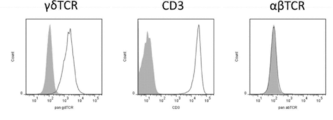
- FIG. 1 shows the results of staining the cells obtained using the antibody sets (V ⁇ 1 Myltenyi FITC, V ⁇ 2 Myltenyi APC, ⁇ TCR BD BV510, CD3 BioLegend APC / Cy7 and ⁇ TCR eBioscience FITC). Filled peaks indicate the results of the unstained group, and blank peaks indicate the results of staining using antibodies specific to each antigen.
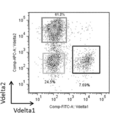
- FIG. 2 shows the results of flow cytometry in which cells obtained were stained using antibody sets (V ⁇ 1 Myltenyi FITC, V ⁇ 2 Myltenyi APC, ⁇ TCR BD BV510, CD3 BioLegend APC / Cy7 and ⁇ TCR eBioscience FITC).
- FIG. 1 shows the results of staining the cells obtained using the antibody sets (V ⁇ 1 Myltenyi FITC, V ⁇ 2 Myltenyi APC, ⁇ TCR BD BV510, CD3 BioLegend APC / Cy7
- FIG. 3 shows the results of measuring the cytotoxic activity of the obtained ⁇ T cells.
- the vertical axis indicates cytotoxic activity (%), and the horizontal axis indicates the ratio of the number of mixed ⁇ T cells to the number of target cells.
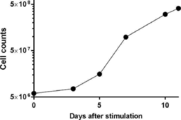
- FIG. 4 shows the results of measuring cell proliferation of iPS cell-derived ⁇ T cells (i ⁇ T cells).
- the vertical axis indicates the cell proliferation rate, and the horizontal axis indicates the number of days elapsed from the start of the stimulation with the anti-CD3 antibody (UCHT1) and anti-CD30 antibody.
- FIG. 5 shows the expression of CD3 and ⁇ TCR molecules on the cell membrane surface of ⁇ T cells (i ⁇ 9 ⁇ 2T cells) differentiated by introducing the V ⁇ 9V ⁇ 2TCR gene into iPS cells.
- FIG. 6 shows the expression of CD3 and ⁇ TCR molecules on the cell membrane surface of ⁇ T cells (iH ⁇ 9 ⁇ 2 T cells) obtained by introducing the V ⁇ 9V ⁇ 2 TCR gene into hematopoietic progenitor cells (HPC) derived from iPS cells.
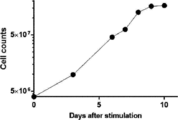
- FIG. 7 shows the results of measuring the cell proliferation of i ⁇ T cells (iCD19CAR / IL-15 ⁇ T cells) expressing the anti-CD19-CAR gene.
- the vertical axis indicates the number of cells, and the horizontal axis indicates the number of days elapsed from the start of the stimulation with the anti-CD3 antibody (UCHT1) and the anti-CD30 antibody.
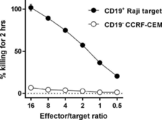
- FIG. 10 shows the results of measuring the cytotoxic activity of iH ⁇ 9 ⁇ 2T cells (iHCD19CAR / IL-15 ⁇ 9 ⁇ 2T cells) expressing the anti-CD19-CAR gene.
- the vertical axis shows the target cytotoxicity rate (%), and the horizontal axis shows the ratio of the number of mixed iHCD19CAR / IL-15 ⁇ 9 ⁇ 2T cells to the number of target cells.
- FIG. 11 shows the effect of in vivo administration of i ⁇ T cells (iCD19CAR / IL-15 ⁇ T cells) expressing the anti-CD19-CAR gene on the survival days of human CD19-positive tumor-bearing mice.
- FIG. 12 shows the antitumor effect of iH ⁇ 9 ⁇ 2T cells (iHCD19CAR / IL-15 ⁇ 9 ⁇ 2T) expressing an anti-CD19-CAR gene in vivo on luciferase-expressing human tumor-transplanted mice.
- expression of a gene means that mRNA is synthesized from a specific nucleotide sequence of the gene (also referred to as transcription or expression of mRNA) and that a protein is synthesized based on information of the mRNA ( (Also referred to as translation or protein expression), unless otherwise specified, “gene expression” or simply “expression” shall mean protein expression.
- a protein or mRNA is expressed in a detectable amount by a technique known in the art.
- the protein can be detected by using an immunological assay using an antibody, for example, ELISA, immunostaining, or flow cytometry.
- a target protein is expressed by expressing a reporter protein together with the protein and detecting the reporter protein.
- Detection of mRNA can be performed using a nucleic acid amplification method and / or a nucleic acid detection method such as RT-PCR, microarray, biochip, and RNAseq.
- negative means that the expression level of the protein or mRNA is less than the lower limit of detection by all or any of the known methods as described above.
- the lower limit of detection of protein or mRNA expression may vary depending on each technique.
- a positive expression is also referred to as “there is expression of protein or mRNA”, and a negative expression is also referred to as “no expression of protein or mRNA”. Therefore, the adjustment of “presence / absence of expression” means that cells are expressed in any one of a state where the expression level of the protein or mRNA to be detected is equal to or more than the lower detection limit (positive) and a state where the expression level is less than the lower detection limit (negative). Means to do.
- culturing refers to maintaining, growing (growing), and / or differentiating cells in an in vitro environment.
- “Cultivating” refers to maintaining, growing (growing), and / or differentiating cells outside a tissue or body, for example, in a cell culture plate, dish, or flask.
- ⁇ enriched '' refers to increasing the proportion of a particular component in a composition, such as a composition of cells
- ⁇ enriched '' refers to a composition of cells, e.g., When used to describe a cell population, it refers to a cell population in which the amount of a particular component has been increased relative to the proportion of such component in the cell population before being enriched.
- a composition such as a cell population can be enriched for a target cell type, such that the percentage of target cell types is increased relative to the percentage of target cells present in the cell population before being enriched.
- Cell populations can also be enriched for target cell types by cell selection and sorting methods known in the art.
- the cell population can also be enriched by a particular culture method, selection or selection process described herein.
- the method of enriching a target cell population results in the cell population being at least 10%, 20%, 30%, 40%, 50%, 60%, 70%, 80%, 85%, 90%, 95%, 97%, 98% or 99% concentrated.
- expansion culture means culturing for the purpose of expanding a desired cell population and increasing the number of cells.
- the increase in the number of cells may be achieved as long as the increase due to proliferation of the cells exceeds the decrease due to death, and it is not necessary that all cells in the cell population proliferate.
- the increase in the number of cells is 1.1 times, 1.2 times, 1.5 times, 2 times, 3 times, 4 times, 5 times, 6 times, 7 times, 8 times compared to before the start of the expansion culture. , 9 times, 10 times, 15 times, 20 times, 30 times, 40 times, 50 times, 100 times, 300 times, 500 times, 1000 times, 3000 times, 5000 times, 10,000 times, 100000 times, 1,000,000 times or more It is possible.
- stimulation means that a certain substance binds to various receptors and activates a downstream signal pathway.
- the “cell population” means two or more cells of the same type or different types. “Cell population” also means a mass of cells of the same or different types.
- the present invention provides a method for producing ⁇ T cells from induced pluripotent stem cells, and a method for producing ⁇ T cells and a cell population containing the ⁇ T cells from induced pluripotent stem cells (hereinafter abbreviated as “the production method of the present invention”). provide.
- the production method of the present invention includes a step of differentiating induced pluripotent stem cells into T cells.
- the induced pluripotent stem cells used in the production method of the present invention may be cells already established and stocked, or may be induced pluripotent stem cells established from cells other than ⁇ T cells.
- the production method of the present invention comprises: (1) a step of establishing an induced pluripotent stem cell from cells other than ⁇ T cells; and (2) an induced pluripotent stem cell established in step (1). A step of differentiating the sex stem cells into T cells.
- the “T cell receptor (TCR)” is composed of a dimer of TCR chains ( ⁇ chain, ⁇ chain, ⁇ chain, ⁇ chain).
- the “ ⁇ T cell” means a cell that expresses CD3 and expresses a TCR composed of a TCR ⁇ chain ( ⁇ TCR) and a TCR ⁇ chain ( ⁇ TCR) (hereinafter may be referred to as “ ⁇ TCR”).
- the “ ⁇ T cell” means a cell that expresses CD3 and expresses a TCR composed of a TCR ⁇ chain ( ⁇ TCR) and a TCR ⁇ chain ( ⁇ TCR) (hereinafter, may be referred to as “ ⁇ TCR”).
- ⁇ T cells recognize the antigen peptide- ⁇ MHC (major histocompatibility complex, HLA: human leukocyte antigen) complex in humans by ⁇ TCR (this is called MHC-restricted).
- HLA human leukocyte antigen
- ⁇ T cells recognize various molecules expressed by cells by ⁇ TCR independently of MHC molecules.
- Each TCR chain is composed of a variable region and a constant region, and the variable region has three complementarity determining regions (CDR1, CDR2, CDR3).
- the TCR gene is composed of many V (variable), D (diversity), J (joining) and C ⁇ ⁇ ⁇ (constant) gene fragments on the genome.
- RNA splicing occurs in the C region, which is a region common to the VDJ region, and is expressed as a functional TCR gene.
- ⁇ TCR for example, V ⁇ 1TCR, V ⁇ 2TCR, V ⁇ 3TCR, V ⁇ 4TCR, V ⁇ 5TCR, V ⁇ 6TCR, V ⁇ 7TCR, V ⁇ 8TCR, V ⁇ 9TCR, and as ⁇ TCR, V ⁇ 1TCR, V ⁇ 2TCR, ⁇ TCR, Can be Further, specific combinations of ⁇ TCR and ⁇ TCR are not limited, and include, for example, V ⁇ 3V ⁇ 1TCR, V ⁇ 4V ⁇ 1TCR, V ⁇ 9V ⁇ 1TCR, V ⁇ 9V ⁇ 2TCR.
- inducible pluripotent stem cells are established by introducing a reprogramming factor into somatic cells.
- Cells are included.
- the induced pluripotent stem cells are preferably derived from a mammal (eg, mouse, rat, hamster, guinea pig, dog, monkey, orangutan, chimpanzee, human), more preferably human.
- reprogramming factor is, for example, Oct3 / 4, Sox2, Sox1, Sox3, Sox15, Sox17, Klf4, Klf2, c-Myc, N-Myc, L-Myc, Nanog, Lin28, Fbx15, ERas, ECAT15 -2, Tcl1, beta-catenin, Lin28b, Sall1, Sall4, Esrrb, Nr5a2, Tbx3 or a gene product such as Glis1 are exemplified, and these reprogramming factors may be used alone or in combination.
- Examples of combinations of reprogramming factors include WO2007 / 069666, WO2008 / 118820, WO2009 / 007852, WO2009 / 032194, WO2009 / 058413, WO2009 / 057831, WO2009 / 075119, WO2009 / 079007, WO2009 / 091659, WO2009 / 101084, WO2009 / 101407, WO2009 / 102983, WO2009 / 114949, WO2009 / 117439, WO2009 / 126250, WO2009 / 126251, WO2009 / 126655, WO2009 / 157593, WO2010 / 009015, WO2010 / 033906, WO2010 / 033920, WO2010 / 042800, WO2010 / 050626, WO2010 / 056831, WO2010 / 068955, WO2010 / 098419,
- Somatic cells include, but are not limited to, fetal (pup) somatic cells, neonatal (pup) somatic cells, and mature somatic cells, and also include primary cultured cells, passaged cells, Any cell line is included. Furthermore, the above-mentioned cells may be healthy cells or diseased cells.
- somatic cells include, for example, (1) tissue stem cells (somatic stem cells) such as neural stem cells, hematopoietic progenitor cells, mesenchymal stem cells, dental pulp stem cells, (2) tissue progenitor cells, (3) blood cells ( Examples: peripheral blood cells, cord blood cells, etc.), mononuclear cells (eg, lymphocytes (T cells other than NK cells, B cells, ⁇ T cells (eg, ⁇ T cells, etc.), monocytes, dendritic cells, etc.)), granules Spheres (eg, eosinophils, neutrophils, basophils), megakaryocytes), epithelial cells, endothelial cells, muscle cells, fibroblasts (eg, skin cells), hair cells, hepatocytes, gastric mucosal cells And differentiated cells such as enterocytes, splenocytes, pancreatic cells (eg, exocrine pancreatic cells), brain cells, lung cells, kidney cells, and
- the reprogramming factor when the reprogramming factor is introduced into somatic cells, when the reprogramming factor is in the form of DNA, for example, the reprogramming factor can be performed by a calcium phosphate coprecipitation method, a PEG method, an electroporation method, a microinjection method, a lipofection method, or the like.
- a calcium phosphate coprecipitation method for example, Cell Engineering Separate Volume 8, New Cell Engineering Experiment Protocol, 263-267 (1995) (published by Shujunsha), Virology, 52, 456 (1973), Nihon Pharmaceutical Magazine (Folia Pharmacol., Jpn.), The method described in Vol. 119 (No. 6), ⁇ 345-351 ⁇ (2002) and the like can be used.
- the nucleic acid is introduced into an appropriate packaging cell (eg, Plat-E cell) or a complementary cell line (eg, 293 cell) to recover the viral vector produced in the culture supernatant.
- the cells can be introduced into cells by infecting the cells with an appropriate method according to each viral vector.
- an appropriate packaging cell eg, Plat-E cell
- a complementary cell line eg, 293 cell
- the cells can be introduced into cells by infecting the cells with an appropriate method according to each viral vector.
- specific means using a retrovirus vector as a vector are disclosed in International Publication No. 2007/69666, Cell, ⁇ 126, ⁇ 663-676 ⁇ (2006) ⁇ , and ⁇ Cell, ⁇ 131, ⁇ 861-872 ⁇ (2007).
- highly efficient gene transfer into various cells can be achieved by using a recombinant fibronectin fragment, CH-296 (manufactured by Takara Bio Inc.).
- the reprogramming factor may be directly introduced into a cell in the form of RNA, and the reprogramming factor may be expressed in the cell.
- a method for introducing RNA a known method can be used. For example, a lipofection method or an electroporation method can be suitably used.
- the reprogramming factor is in the form of a protein, the reprogramming factor can be introduced into cells by, for example, lipofection, fusion with a cell membrane-permeable peptide (eg, TAT and polyarginine derived from HIV), microinjection, and the like.
- a cell membrane-permeable peptide eg, TAT and polyarginine derived from HIV
- basal medium examples include Dulbecco's medium (eg, IMDM), Eagle's medium (eg, DMEM, EMEM, BME, MEM, ⁇ MEM), ham medium (eg, F10 medium, F12 medium), RPMI medium (eg, RPMI- 1640 medium, RPMI-1630 medium), MCDB medium (eg, MCDB104, 107, 131, 151, 153 medium), Fisher medium, 199 medium, medium for primate ES cells (culture medium for primate ES / iPS cells, reprocell) Corporation), a medium for mouse ES cells (TX-WES culture solution, Thrombo X), a serum-free medium (mTeSR, a member of Stemcell II Technology), ReproFF, StemSpan® SFEM, StemSpan® H3000, StemlineII, ESF -B medium, ESF-C medium, CSTI-7 medium, Neurobasal medium (Life Technology Co., Ltd.), StemPro-
- the basal medium contains 10% to 20% serum (fetal bovine serum (FBS), human serum, horse serum) or serum substitutes (such as KSR), insulin, various vitamins, L-glutamine, non-essential amino acids, etc. Amino acids, 2-mercaptoethanol, various cytokines (interleukins (IL-2, IL-7, IL-15, etc.), stem cell factor (SCF (Stem cell factor)), activin, etc.), various hormones, various growth factors ( Leukemia inhibitory factor (LIF), basic fibroblast growth factor (bFGF), TGF- ⁇ , etc.), various extracellular matrices, various cell adhesion molecules, antibiotics such as penicillin / streptomycin, puromycin, pH of phenol red etc. An indicator or the like can be appropriately added.
- serum substitutes such as KSR
- insulin various vitamins, L-glutamine, non-essential amino acids, etc.
- Amino acids 2-mercaptoethanol
- various cytokines interleukins (IL-2, IL
- the cultivation is performed in an atmosphere of, for example, 1% to 10%, preferably 2% to 5% CO 2 , for example, at about 37 ° C. to 42 ° C., preferably about 37 ° C. to 39 ° C. for about 25 to 50 days. Is preferred.
- the mammal from which the somatic cells are collected is not particularly limited, but is preferably a human.
- autologous cells, allogeneic cells having the same or substantially the same HLA type, allogeneic cells in which the presence or absence and / or expression level of HLA is adjusted, and the like are preferable.
- the presence or absence and / or the expression level of at least some of the subunits included in class I and / or class II are adjusted as HLA.
- the step of differentiating the induced pluripotent stem cells into T cells is not particularly limited as long as the induced pluripotent stem cells can be differentiated into ⁇ T cells.
- the step of differentiating the induced pluripotent stem cells into T cells comprises: (2-1) differentiating the induced pluripotent stem cells into hematopoietic progenitor cells, and (2-2) converting the hematopoietic progenitor cells into CD3.
- the method may include a step of differentiating into positive T cells.
- hematopoietic progenitor cells means CD34-positive cells, preferably , CD34 / CD43 positive (DP) cells.
- hematopoietic progenitor cells and hematopoietic stem cells are not distinguished, and unless otherwise specified, represent the same cells.
- the method of differentiating hematopoietic progenitor cells from induced pluripotent stem cells is not particularly limited as long as it can be differentiated into hematopoietic progenitor cells.
- WO 2013/075222, WO 2016/076415 and Liu S. et al., ⁇ Cytotherapy, ⁇ 17 ⁇ (2015); 344-358, etc. and a method of culturing pluripotent stem cells in an induction medium for hematopoietic progenitor cells.
- the medium for inducing hematopoietic progenitor cells is not particularly limited, but a medium used for culturing animal cells can be prepared as a basal medium.
- a basal medium those similar to those used in the above step (1) can be mentioned.
- the medium may contain serum or may be used without serum.
- the basal medium may contain, for example, vitamin Cs (eg, ascorbic acid), albumin, insulin, transferrin, selenium compounds (eg, sodium selenite), fatty acids, trace elements, 2-mercaptoethanol, thiol Glycerol (eg, ⁇ -monothioglycerol (MTG)), lipid, amino acid, L-glutamine, L-alanyl-L-glutamine (eg, Glutamax®), non-essential amino acids, vitamins, growth factors, small molecules Compounds, antibiotics (eg, penicillin, streptomycin), antioxidants, pyruvate, buffers, inorganic salts, cytokines, etc. may be included.
- vitamin Cs eg, ascorbic acid
- albumin e.g, ascorbic acid
- insulin transferrin
- selenium compounds eg, sodium selenite
- fatty acids trace elements
- 2-mercaptoethanol thiol Glycerol (eg, ⁇
- Vitamin Cs in the present invention mean L-ascorbic acid and its derivatives, and L-ascorbic acid derivatives mean those which become vitamin C by an enzymatic reaction in a living body.
- Ascorbic acid derivatives used in the present invention include vitamin C phosphate (eg, Ascorbic acid 2-phosphate), ascorbic acid glucoside, ascorbyl ethyl, vitamin C ester, ascobyl tetrahexyldecanoate, ascobyl stearate, and ascorbic acid-2-phosphate -6 palmitic acid.
- vitamin C phosphate eg, Ascorbic acid 2-phosphate
- phosphate-L-ascorbate such as sodium phosphate-L-ascorbate or Mg phosphate-L-ascorbate.
- phosphate-L-ascorbate such as sodium phosphate-L-ascorbate or Mg phosphate-L-ascorbate.
- the vitamin Cs are present in the culture in an amount corresponding to 5 ng / ml to 500 ng / ml (eg, 5 ng / ml, 10 ng / ml, 25 ng / ml, 50 ng / ml). , 100 ng / ml, 200 ng / ml, 300 ng / ml, 400 ng / ml, 500 ng / ml).
- the vitamin Cs are present in the culture solution in an amount corresponding to 5 ⁇ g / ml to 500 ⁇ g / ml (eg, 5 ⁇ g / ml, 10 ⁇ g / ml, 25 ⁇ g / ml, 50 ⁇ g / ml). ml, 100 ⁇ g / ml, 200 ⁇ g / ml, 300 ⁇ g / ml, 400 ⁇ g / ml, 500 ⁇ g / ml).
- the medium used in the step (2-1) includes BMP4 (Bone morphogenetic protein 4), VEGF (vascular endothelial growth factor), SCF (Stem cell factor), TPO (thrombopoietin), FLT-3L (Flt3 Ligand), bFGF (basic At least one cytokine selected from the group consisting of fibroblast (growth factor) may be further added. More preferably, it is a culture to which BMP4, VEGF, and bFGF are added, and still more preferably, a culture to which BMP4, VEGF, SCF, and bFGF are added.
- the concentration in the medium is, for example, 5 ng / ml to 500 ng / ml for BMP4, 5 ng / ml to 500 ng / ml for VEGF, and 5 ng / ml to 100 ng for SCF.
- ng / ml TPO is 1 ng / ml to 100 ng / ml
- FLT-3L is 1 ng / ml to 100 ng / ml
- bFGF can be 5 ng / ml to 500 ng / ml .
- TGF ⁇ inhibitors are small molecule inhibitors that interfere with TGF ⁇ family signaling, such as SB431542, SB202190 (or more, RK Lindemann et al, Mol.Cancer 2:20 (2003)), SB505124 (GlaxoSmithKline), NPC30345, SD093, SD908, SD208 (Scios), LY2109761, LY364947, LY580276 (Lilly Research Laboratories) and the like.
- the concentration in the medium is preferably 0.5 ⁇ M to 100 ⁇ M.
- the culture of induced pluripotent stem cells may be adhesion culture or suspension culture.
- the culture may be performed using a culture vessel coated with an extracellular matrix component, or may be co-cultured with feeder cells.
- the feeder cells are not particularly limited, and include, for example, fibroblasts (mouse fetal fibroblasts (MEF), mouse fibroblasts (STO) and the like).
- the feeder cells are preferably inactivated by a method known per se, for example, irradiation with radiation (such as gamma rays) or treatment with an anticancer agent (such as mitomycin C).
- Extracellular matrix components include Matrigel (Niwa A, et al.
- fibrous proteins such as gelatin, collagen and elastin, and glucosaminoglycans such as hyaluronic acid and chondroitin sulfate.
- cell adhesion proteins such as proteoglycan, fibronectin, vitronectin, laminin and the like.
- Suspension culture refers to culturing cells in a non-adhered state to a culture vessel, and is not particularly limited, but is artificially treated for the purpose of improving adhesion to cells (for example, coating with extracellular matrix or the like).
- Treatment or a treatment that artificially suppresses adhesion (for example, coating treatment with polyhydroxyethyl methacrylic acid (poly-HEMA) or a nonionic surfactant polyol (PluroniclurF-127, etc.))
- This can be performed using a culture vessel prepared.
- EB embryoid body
- hematopoietic progenitor cells can also be prepared from a net-like structure (also referred to as ES-sac or iPS-sac) obtained by culturing pluripotent stem cells.
- a net-like structure also referred to as ES-sac or iPS-sac
- the “net-like structure” is a three-dimensional sac-like (with internal space) structure derived from pluripotent stem cells, formed of a population of endothelial cells, and contains hematopoietic progenitor cells therein. It is a structure.
- the conditions of the culture temperature are not particularly limited, but are preferably, for example, about 37 ° C to 42 ° C, and about 37 ° C to 39 ° C.
- those skilled in the art can appropriately determine the culture period while monitoring the number of hematopoietic progenitor cells and the like.
- the number of days is not particularly limited, for example, at least 6 days or more, 7 days or more, 8 days or more, 9 days or more, 10 days or more, 11 days or more, 12 days or more, 13 days or more, It is 14 days or more, preferably 14 days.
- a long culture period is not usually a problem in the production of hematopoietic progenitor cells, but is preferably, for example, 35 days or less, more preferably 21 days or less.
- the cells may be cultured under low oxygen conditions.
- the low oxygen conditions are exemplified by an oxygen concentration of 15%, 10%, 9%, 8%, 7%, 6%, 5% or less. You.
- (2-2) step of differentiating hematopoietic progenitor cells into CD3-positive T cells The method of differentiating hematopoietic progenitor cells into CD3-positive T cells is not particularly limited as long as hematopoietic progenitor cells can be differentiated into CD3-positive T cells.
- a method of culturing hematopoietic progenitor cells under the same culture conditions as inducing T cells from hematopoietic progenitor cells No.
- the medium for inducing differentiation into CD3-positive T cells is not particularly limited, and a medium used for culturing animal cells can be prepared as a basal medium.
- a basal medium those similar to those used in the above step (1) can be mentioned.
- the medium may contain serum or may be used without serum.
- the basal medium may contain, for example, vitamin Cs (eg, ascorbic acid), albumin, insulin, transferrin, selenium compounds (eg, sodium selenite), fatty acids, trace elements, 2-mercaptoethanol, thiol Glycerol (eg, ⁇ -monothioglycerol (MTG)), lipid, amino acid, L-glutamine, L-alanyl-L-glutamine (eg, Glutamax®) non-essential amino acids, vitamins, growth factors, low molecular compounds , Antibiotics (eg, penicillin, streptomycin), antioxidants, pyruvic acid, buffers, inorganic salts, cytokines, and the like.
- vitamin Cs eg, ascorbic acid
- albumin e.g, insulin, transferrin, selenium compounds (eg, sodium selenite)
- fatty acids e.g, trace elements
- 2-mercaptoethanol thiol Glycerol (eg, ⁇
- the concentration of vitamin Cs in the medium or culture is preferably between 5 ⁇ g / ml and 200 ⁇ g / ml.
- the vitamin Cs are present in the culture solution in an amount corresponding to 5 ⁇ g / ml to 500 ⁇ g / ml (eg, 5 ⁇ g / ml, 10 ⁇ g / ml, 25 ⁇ g / ml, 50 ⁇ g / ml).
- p38 inhibitor means a substance that inhibits the function of p38 protein (p38 MAP kinase), such as a chemical inhibitor of p38, a dominant negative mutant of p38 or a nucleic acid encoding the same. But not limited thereto.
- SB203580 (4- (4-fluorophenyl) -2- (4-methylsulfonylphenyl) -5- (4-pyridyl) -1H-imidazole), and derivatives thereof , SB202190 (4- (4-fluorophenyl) -2- (4-hydroxyphenyl) -5- (4-pyridyl) -1H-imidazole) and its derivatives, SB239063 (trans-4- [4- (4-fluorophenyl) Phenyl) -5- (2-methoxy-4-pyrimidinyl) -1H-imidazol-1-yl] cyclohexanol) and its derivatives, SB220025 and its derivatives, PD169316, RPR200765A, AMG-548, BIRB-796, SCIO-469 , SCIO-323, VX-702, and FR167653, but are not limited thereto.
- SB203580 (4- (4-fluorophenyl) -2- (4-methylsulfonylphenyl) -5- (4-pyridyl) -1H-imidazole) and its derivatives are preferred.
- the dominant negative mutant of p38 used in the present invention was p38T180A in which the threonine at position 180 located in the DNA binding region of p38 was mutated to alanine, and the tyrosine at position 182 of p38 in humans and mice was mutated to phenylalanine.
- p38Y182F and the like The p38 inhibitor is contained in the medium in a range from about 1 ⁇ M to about 50 ⁇ M.
- SB203580 is used as a P38 inhibitor, it can be contained in the medium in the range of 1 ⁇ M to 50 ⁇ M, 5 ⁇ M to 30 ⁇ M, and 10 ⁇ M to 20 ⁇ M.
- the SDF-1 used in the present invention is not only SDF-1 ⁇ or a mature form thereof, but also an isoform such as SDF-1 ⁇ , SDF-1 ⁇ , SDF-1 ⁇ , SDF-1 ⁇ or SDF-1 ⁇ or a mature form thereof. Or a mixture of these in any proportion.
- SDF-1 ⁇ is used.
- SDF-1 may be referred to as CXCL-12 or PBSF.
- one or several amino acids may be substituted, deleted, added and / or inserted in the amino acid sequence of SDF-1 as long as it has an activity as a chemokine (such amino acids SDF-1 in which the substitution, deletion, addition and / or insertion of is performed is also referred to as “SDF-1 mutant”).
- SDF-1 mutant such amino acids SDF-1 in which the substitution, deletion, addition and / or insertion of is performed is also referred to as “SDF-1 mutant”.
- SDF-1 mutant a sugar chain may be substituted, deleted and / or added.
- the SDF-1 mutant include at least four cysteine residues (Cys30, Cys32, Cys55, and Cys71 in the case of human SDF-1 ⁇ ), and 90 to the amino acid sequence of the natural form. %, But are not limited to this amino acid mutation.
- SDF-1 may be from a mammal, for example, a human, or a non-human mammal, such as a monkey, sheep, cow, horse, pig, dog, cat, rabbit, rat, mouse, and the like.
- a protein registered under GenBank accession number: NP_954637 can be used as human SDF-1 ⁇
- a protein registered under GenBank accession number: NP_000600 can be used as SDF-1 ⁇ .
- ⁇ SDF-1 may be a commercially available product, a purified product from nature, or a product produced by peptide synthesis or genetic engineering techniques.
- SDF-1 is contained in the medium in the range of, for example, about 10 ng / ml to about 100 ng / ml.
- an SDF-1 substitute having SDF-1 like activity can be used. Examples of such SDF-1 substitutes include CXCR4 agonists, and low molecular weight compounds having CXCR4 agonist activity may be added to the medium instead of SDF-1.
- cytokines selected from the group consisting of SCF, TPO (thrombopoietin), FLT-3L and IL-7 are further added to the culture solution. Is also good. These concentrations are, for example, SCF is 10 ng / ml to 100 ng / ml, TPO is 10 ng / ml to 200 ng / ml, and IL-7 is 1 ng / ml to 100 ng / ml. , FLT-3L is 1 ng / ml to 100 ng / ml.
- hematopoietic progenitor cells may be adhered or suspended.
- a culture vessel may be coated and used, or may be co-cultured with feeder cells or the like.
- feeder cells to be co-cultured include bone marrow stromal cell line OP9 cells (available from RIKEN BioResource Center).
- the OP9 cells are preferably OP9-DL4 cells or OP9-DL1 cells that constitutively express DLL4 or DLL1 (for example, Holmes R1 and Zuniga-Pflucker JC. Cold Spring Harb Protoc. 2009 (2)).
- OP9 cells when used as feeder cells, it may be performed by appropriately adding DLL4 or DLL1 prepared separately or a fusion protein of DLL4 or DLL1 and Fc or the like to the medium.
- the culture is performed by appropriately replacing the feeder cells.
- Exchange of the feeder cells can be performed by transferring the target cell in culture onto the feeder cells seeded in advance. The exchange may occur every 5 days, every 4 days, every 3 days, or every 2 days.
- the embryoid body is subjected to suspension culture to obtain hematopoietic progenitor cells, it is preferable to dissociate the cells into single cells before performing adhesion culture.
- the cells may be co-cultured with the feeder cells, the culture is preferably performed without using the feeder cells.
- adhesion culture as a coating agent for coating a culture vessel, for example, Matrigel (Niwa A, et al.
- PLos One, 6 (7): e22261, 2011) collagen, gelatin, laminin, Heparan sulfate proteoglycan, Retronectin (registered trademark), DLL4 or DLL1, or a fusion protein (eg, DLL4 / Fc chimera) of DLL4 or DLL1 with an antibody Fc region (hereinafter may be referred to as Fc), entactin, and And / or combinations thereof, and a combination of a fusion protein of Retronectin and DLL4 with Fc or the like is preferable.
- Fc a fusion protein of Retronectin and DLL4 with Fc or the like
- the culture temperature condition is not particularly limited, but for example, is preferably about 37 ° C. to about 42 ° C., and about 37 ° C. to about 39 ° C.
- those skilled in the art can appropriately determine the culture period while monitoring the number of ⁇ T cells and the like.
- the number of days is not particularly limited, for example, typically at least 10 days or more, 12 days or more, 14 days or more, 16 days or more, 18 days or more, or 20 days or more, preferably 21 days. Further, it is preferably 90 days or less, more preferably 42 days or less.
- step (2) may further include the following step (2-3).
- Step of enriching CD3-positive T cells is not particularly limited as long as ⁇ T cells are enriched, for example, WO 2016/076415 and WO 2017 / 221975 and the like, and a method of culturing CD3-positive T cells under the same culture conditions as those for inducing CD8-positive T cells from both CD4CD8 positive T cells.
- the medium used for enrichment of CD3-positive T cells is not particularly limited, but a medium used for culturing animal cells can be prepared as a basal medium.
- a basal medium those similar to those used in the above step (1) can be mentioned.
- the medium may contain serum or may be used without serum.
- the basal medium may contain, for example, vitamin Cs (eg, ascorbic acid), albumin, insulin, transferrin, selenium compounds (eg, sodium selenite), fatty acids, trace elements, 2-mercaptoethanol, thiol Glycerol (eg, ⁇ -monothioglycerol (MTG)), lipid, amino acid, L-glutamine, L-alanyl-L-glutamine (eg, Glutamax®) non-essential amino acids, vitamins, growth factors, low molecular compounds , Antibiotics (eg, penicillin, streptomycin), antioxidants, pyruvate, buffers, inorganic salts, cytokines, hormones and the like.
- vitamin Cs such as ascorbic acid, insulin, transferrin, selenium compounds (eg, sodium selenite), and cytokines such as IL-7 may be contained.
- the concentration of vitamin Cs in the medium or culture is preferably between 5 ⁇ g / ml and 200 ⁇ g / ml.
- the vitamin Cs are present in the culture solution in an amount corresponding to 5 ⁇ g / ml to 500 ⁇ g / ml (eg, 5 ⁇ g / ml, 10 ⁇ g / ml, 25 ⁇ g / ml, 50 ⁇ g / ml).
- the hormone includes an adrenocortical hormone.
- the corticosteroid is a glucocorticoid or a derivative thereof, and examples thereof include cortisone acetate, hydrocortisone, fludrocortisone acetate, prednisolone, triamcinolone, methylprednisolone, dexamethasone, betamethasone, and beclomethasone propionate.
- it is dexamethasone.
- its concentration in the medium is between 1 nM and 100 nM.
- the medium contains a CD3 / TCR complex agonist.
- the CD3 / TCR complex agonist is not particularly limited as long as it is a molecule capable of transmitting a signal from the CD3 / TCR complex into a CD3-positive cell by specifically binding to the CD3 / TCR complex.
- CD3 / TCR complex agonists include, for example, CD3 agonists and / or TCR agonists.
- an anti-CD3 agonist antibody also simply referred to as “anti-CD3 antibody” or a binding fragment thereof
- a TCR agonist an anti-TCR agonist antibody (also simply referred to as “anti-TCR antibody”) or a binding fragment thereof, MHC / antigen peptide And at least one selected from the group consisting of a complex or a multimer thereof and an MHC / superantigen complex or a multimer thereof.
- the anti-CD3 antibody includes both a polyclonal antibody and a monoclonal antibody, but is preferably a monoclonal antibody.
- the antibody may belong to any of the immunoglobulin classes of IgG, IgA, IgM, IgD and IgE, but is preferably IgG.
- the anti-CD3 antibody include an antibody (OKT3) produced from the 0KT3 clone and an antibody (UCHT1) produced from the UCHT1 clone, and preferably UCHT1.
- the concentration of the anti-CD3 antibody in the medium is, for example, 10 ng / ml to 1000 ng / ml, preferably 50 ng / ml to 800 ng / ml, and more preferably 250 ng / ml to 600 ng / ml. It is.
- the CD3 / TCR complex agonist may be a commercially available one, may be a purified one from nature, or may be produced by peptide synthesis, genetic engineering or chemical synthesis. May be used.
- OKT3 and UCHT1 can be purchased from ThermoFisher or GeneTex.
- examples of the cytokine include IL-2 and IL-7.
- the concentration in the medium is 10 U / ml to 1000 U / mL
- the concentration in the medium is 1 ng / ml to 1000 ng. / mL.
- the culture temperature condition is not particularly limited, but for example, is preferably about 37 ° C. to about 42 ° C., and about 37 ° C. to about 39 ° C.
- the number of days is not particularly limited as long as ⁇ T cells are obtained, but is, for example, at least 1 day, 2 days or more, 3 days or more, 4 days or more, 5 days or more, and preferably 6 days. Further, it is preferably 28 days or less, more preferably 14 days or less.
- CD3-positive T cell population obtained by the above steps contains ⁇ T cells and can be further enriched, but step (2) may further include the following step (2-4).
- the step of expanding CD3-positive T cells containing ⁇ T cells is not particularly limited as long as ⁇ T cells proliferate. As described in 2016/076415 and WO 2018/135646, etc., under the same culture conditions as the step of expanding CD8 ⁇ + ⁇ + cytotoxic T cells, CD3-positive T cells containing ⁇ T cells Is cultivated.
- the medium used for expanding CD3-positive T cells including ⁇ T cells for expansion culture is not particularly limited, and a medium used for culturing animal cells can be prepared as a basal medium.
- a basal medium those similar to those used in the above step (2-3) can be mentioned.
- the medium may contain serum or may be used without serum.
- the basal medium may contain, for example, vitamin Cs (eg, ascorbic acid), albumin, insulin, transferrin, selenium compounds (eg, sodium selenite), fatty acids, trace elements, 2-mercaptoethanol, thiol Glycerol (eg, ⁇ -monothioglycerol (MTG)), lipid, amino acid, L-glutamine, L-alanyl-L-glutamine (eg, Glutamax®) non-essential amino acids, vitamins, growth factors, low molecular compounds , Antibiotics (eg, penicillin, streptomycin), antioxidants, pyruvate, buffers, inorganic salts, cytokines, hormones and the like.
- vitamin Cs such as ascorbic acid, insulin, transferrin, selenium compounds (eg, sodium selenite), and cytokines such as IL-7 may be contained.
- the concentration of vitamin Cs in the medium or culture is preferably between 5 ⁇ g / ml and 200 ⁇ g / ml.
- the vitamin Cs are present in the culture solution in an amount corresponding to 5 ⁇ g / ml to 500 ⁇ g / ml (eg, 5 ⁇ g / ml, 10 ⁇ g / ml, 25 ⁇ g / ml, 50 ⁇ g / ml).
- the medium contains a CD3 / TCR complex agonist.
- the CD3 / TCR complex agonist is not particularly limited as long as it is a molecule capable of transmitting a signal from the CD3 / TCR complex into a CD3-positive cell by specifically binding to the CD3 / TCR complex.
- CD3 / TCR complex agonists include, for example, CD3 agonists and / or TCR agonists.
- an anti-CD3 agonist antibody also simply referred to as “anti-CD3 antibody” or a binding fragment thereof
- a TCR agonist an anti-TCR agonist antibody (also simply referred to as “anti-TCR antibody”) or a binding fragment thereof, MHC / antigen peptide And at least one selected from the group consisting of a complex or a multimer thereof and an MHC / superantigen complex or a multimer thereof.
- the anti-CD3 antibody includes both a polyclonal antibody and a monoclonal antibody, but is preferably a monoclonal antibody.
- the antibody may belong to any of the immunoglobulin classes of IgG, IgA, IgM, IgD and IgE, but is preferably IgG.
- the anti-CD3 antibody include an antibody (OKT3) produced from the 0KT3 clone and an antibody (UCHT1) produced from the UCHT1 clone, and preferably UCHT1.
- the concentration of the anti-CD3 antibody in the medium is, for example, from 0.3 ng / ml to 10,000 ng / mL, preferably from 50 ng / ml to 5,000 ng / ml, more preferably from 200 ng / ml to 4000 ng / ml. It is.
- the CD3 / TCR complex agonist may be a commercially available one, may be a purified one from nature, or may be produced by peptide synthesis, genetic engineering or chemical synthesis. May be used.
- OKT3 and UCHT1 can be purchased from ThermoFisher or GeneTex.
- fibronectin or a variant thereof is preferably present in the medium.
- Such fibronectin is not particularly limited as long as it can bind to CD3-positive cells.
- the variant of fibronectin is not particularly limited as long as it is a molecule that can bind to VLA-5 and VLA-4 on the surface of CD3-positive cells, and includes, for example, retronectin.
- Fibronectin or a variant thereof does not matter in its mode of presence in the medium. For example, it may be contained in the medium during culturing, or may be immobilized in the culture vessel, but is preferably immobilized in the culture vessel.
- the medium When fibronectin or a variant thereof is contained in the medium, the medium may be the same as the medium containing the CD3 / TCR complex agonist. The presence or absence of serum, additives, etc. may be the same as in the medium containing the CD3 / TCR complex agonist.
- the concentration of fibronectin or a variant thereof is, as a lower limit, 10 ng / ml or more, preferably 100 ng / ml or more, and as an upper limit, 10,000 ⁇ g / ml. Or less, preferably 1000 ⁇ g / ml or less.
- a CD30 agonist is present in the medium.
- a CD30 agonist is not particularly limited as long as it is a molecule capable of transmitting a signal from CD30 into a cell by specifically binding to CD30.
- the CD30 agonist include, for example, at least one selected from the group consisting of an anti-CD30 agonist antibody (also simply referred to as “anti-CD30 antibody”) or a binding fragment thereof, and a CD30 ligand or a binding fragment thereof.
- the CD30 agonist used in the step (2-4) is not limited as long as it can be brought into contact with CD30 during culturing, similarly to the CD3 / TCR complex agonist.
- it may be contained in the medium at the time of culturing, or may be immobilized in a culture vessel, but is preferably contained in the medium.
- the medium When the CD30 agonist is contained in the medium, the medium may be the same as the medium containing the CD3 / TCR complex agonist. The presence or absence of serum, additives, etc. may be the same as in the medium containing the CD3 / TCR complex agonist.
- the concentration of the CD30 agonist in the medium may be appropriately determined by those skilled in the art according to the CD30 agonist.
- the concentration of the anti-CD30 agonist antibody or the binding fragment thereof in the medium is usually 1 ng / ml to 10000 ng / ml, preferably 30 ng / ml. / ml to 300 ng / ml.
- the culture vessel When the CD30 agonist is immobilized on the culture vessel, the culture vessel may be the same as the culture vessel on which the CD3 / TCR complex agonist is immobilized.
- the method for immobilizing a CD30 agonist on a culture vessel may be the same as the method for immobilizing a CD3 / TCR complex agonist.
- the concentration of the CD30 agonist solution when the CD30 agonist is immobilized to the culture vessel is, as a lower limit, 0.1 ng / ml or more, preferably 1 ng / ml or more, and as an upper limit, 10000 ng / ml or less, Preferably it can be 1000 ng / ml or less.
- examples of the cytokine include IL-2, IL-7, IL-12, IL-15, IL-18, IL-21, and the like. They may be used, or a plurality (preferably all) may be used. If the cytokine is IL-2, its concentration in the medium may be from 10 U / ml to 1000 U / ml; if it is IL-7, its concentration in the medium may be 1 ng / ml. It may be up to 1000 ng / ml.
- the concentration of IL-12 in the medium may be 5 ⁇ ⁇ ng / ml to 500 ng / ml, and the concentration of IL-15 in the medium may be 1 ng / ml to 100 ng / ml.
- the concentration of IL-18 in the culture medium may be 5 ng / ml to 500 ng / ml, and the concentration of IL-21 in the culture medium may be 2 ng / ml to 200 ng / ml. Good.
- the medium may further contain a TNF family cytokine as a cytokine.
- TNF family cytokines include TNF- ⁇ , TNF- ⁇ , lymphotoxin ⁇ , Fas ligand, TRAIL, TWEAK, TL1A, RANK ligand, OX40 ligand, APRIL, AITRL, BAFF, 4-1BBL, and CD40 ligand.
- TL1A is preferred.
- the concentration in the medium may be 5 ng / ml to 500 ng / ml, preferably 10 ng / ml to 300 ng / ml, more preferably 20 ng / ml to 200 ng / ml. .
- an apoptosis inhibitor may be further contained in the medium.
- Apoptosis inhibitors include protease inhibitors, for example, caspase inhibitors.
- caspase inhibitors Pan
- Z-VAD N-benzyloxycarbonyl-Val-Ala-Asp (O-Me)
- Z-VAD-FMK The concentration in the medium may be 1 ⁇ M to 1000 ⁇ M, preferably 1 ⁇ M to 500 ⁇ M, more preferably 1 ⁇ M to 200 ⁇ M, and particularly preferably 1 ⁇ M to 50 ⁇ M.
- the obtained ⁇ T cells may be used after isolation, or may be used as it is (that is, as a cell population that can contain other cell types).
- isolation it can be isolated using at least one molecule selected from the group consisting of ⁇ TCR, ⁇ TCR and CD3 as an indicator, and the isolation can be performed by a method well known to those skilled in the art. it can.
- ⁇ TCR, ⁇ TCR, and CD3 to which magnetic beads or the like are bound as necessary
- affinity to which a desired antigen is immobilized examples include purification using a column or the like, but are not limited thereto.
- the ratio of ⁇ T cells to the cell population may be increased using a method well known to those skilled in the art.
- Methods for increasing the proportion of ⁇ T cells in the cell population include, but are not limited to, methods such as Front. Immunol., 5: 636 (2014), JP-T-2017-537625, and JP-T-2003-529363.
- the cells used in the production method of the present invention may have a nucleic acid encoding an exogenous TCR and / or a chimeric antigen receptor (CAR) that recognizes and binds to the antigen or the antigen-HLA complex.
- CAR chimeric antigen receptor
- a step of establishing an induced pluripotent stem cell from cells other than ⁇ T cells and (2) a step of converting the induced pluripotent stem cell established in step (1) into a T cell
- Nucleic acids encoding the TCRs ie, (i) ⁇ TCR and ⁇ TCR, (ii) ⁇ TCR and ⁇ TCR) are added to cells obtained at any time during the differentiation step (eg, pluripotent stem cells, hematopoietic progenitor cells, etc.) And / or (iii) introducing a nucleic acid encoding the CAR.
- nucleic acids encoding ⁇ TCR and ⁇ TCR are introduced into ⁇ T cells obtained during any of the steps of differentiating induced pluripotent stem cells into T cells.
- a nucleic acid encoding a TCR means a nucleic acid containing a nucleotide sequence encoding one strand forming the TCR and a nucleotide sequence encoding the other strand.
- the nucleic acid encoding the TCR also means a combination of a nucleic acid including a base sequence encoding one strand forming the TCR and a nucleic acid including a base sequence encoding the other strand.
- nucleic acid encoding a TCR ((i) ⁇ TCR and ⁇ TCR) is introduced into a cell
- one nucleic acid containing both a base sequence encoding ⁇ TCR and a base sequence encoding ⁇ TCR may be introduced.
- the nucleic acid containing the nucleotide sequence encoding and the nucleotide sequence encoding ⁇ TCR may be introduced separately. When introduced separately, these nucleic acids may be introduced simultaneously or sequentially.
- ⁇ TCR and ⁇ TCR The same applies to ⁇ TCR and ⁇ TCR.
- TCRs used in the present invention include those in which the ⁇ and ⁇ chains of the TCR form a heterodimer (ie, ⁇ TCR) or those in which the ⁇ and ⁇ chains of the TCR form a heterodimer (ie, ⁇ TCR) Not only that, but also those constituting a homodimer are included. Furthermore, those in which part or all of the constant region has been deleted, or those in which the amino acid sequence has been recombined may be used. Among them, ⁇ TCR is preferable, and V ⁇ 9V ⁇ 2TCR is particularly preferable.
- the constant region of the TCR chain may be modified in the constant region of the TCR chain of the cytotoxic T cell (CTL) clone derived therefrom.
- CTL cytotoxic T cell
- this modification include, for example, substituting a specific amino acid residue in the constant region of the TCR of the CTL clone with a cysteine residue to enhance the dimer expression efficiency due to disulfide bonds between TCR chains. It is not limited to these.
- the tumor antigen may be a tumor-specific antigen (TSA) or a tumor-associated antigen (TAA).
- TSA tumor-specific antigen
- TAA tumor-associated antigen
- Specific examples of such tumor antigens include differentiation antigens such as MART-1 / MelanA (MART-I), gp100 (Pmel 17), tyrosinase, TRP-1, TRP-2, WT1, Glypican-3, and MAGE- 1, tumor-specific multi-lineage antigens such as MAGE-3, BAGE, GAGE-1, GAGE-2, p15, fetal antigens such as CEA, p53, Ras, overexpressed oncogenes such as HER-2 / neu, or Mutated tumor suppressor genes, unique tumor antigens resulting from chromosomal translocations such as BCR-ABL, E2A-PRL, H4-RET, IGH-IGK, MYL-RAR, and Epstein-Barr virus antigen
- tumor antigens include TSP-180, MAGE-4, MAGE-5, MAGE-6, RAGE, NY-ESO, p185erbB2, p180erbB-3, c-met, nm-23H1, PSA, TAG-72, CA 19-9, CA 72-4, CAM 17.1, NuMa, K-ras, ⁇ -catenin, CDK4, Mum-1, p 15, p 16, 43-9F, 5T4, 791Tgp72, ⁇ -fetoprotein, ⁇ -HCG, BCA225, BTAA, CA 125, CA 15-3 ⁇ CA ⁇ 27.29 ⁇ BCAA, CA 195, CA 242, CA-50, CAM43, CD68 ⁇ P1, CO-029, FGF-5, G250, Ga733 ⁇ EpCAM, HTgp-175 , M344, MA-50, MG7-Ag, MOV18, NB / 70K, NY-CO-1, RCAS1, SDCCAG16, TA-90 ⁇ Mac-2 binding protein ⁇ C
- the ⁇ T cells obtained by the production method of the present invention are specific for cells expressing a CAR target antigen.
- Cytotoxic activity and antitumor activity also referred to herein simply as "cytotoxic activity"). Therefore, from the viewpoint of antigen-specific cytotoxic activity, the ⁇ T cells obtained by the production method of the present invention preferably express CAR. Confirmation that the cell has the cytotoxic activity can be evaluated by a known method, and a preferable method is, for example, a method of measuring the cytotoxic activity on the cell expressing the CAR target antigen by a chromium release assay or the like. No.
- the “chimeric antigen receptor (CAR)” means a fusion protein containing an antigen-binding domain, a transmembrane domain, and an intracellular signaling domain.
- the antigen-binding domain of CAR binds the light chain (VL) and heavy chain (VH) of the antibody variable region to a linker (eg, a linker composed of G and S (GS linker) (eg, GGGS, GGGGS or a combination thereof).
- scFv short-chain antibodies
- a spacer such as a linker (eg, SEQ ID NO: 4 or 5 etc.)
- CAR-expressed ⁇ T cells recognize antigen in the scFV region It transduces its recognition signal into T cells through an intracellular signaling domain, and by introducing CAR into ⁇ T cells, it becomes possible to impart specificity to the antigen of interest.
- the antigen molecule can be directly recognized without depending on class II, it is possible to cause a high immune response even to cells in which the expression of HLA class I or class II gene is reduced.
- Target antigen Is to the TCR can be mentioned the same antigen as the above antigen targeting.
- transmembrane domain of CAR for example, TCR ⁇ chain, ⁇ chain or ⁇ chain, CD28, CD3 ⁇ chain, CD45, CD4, CD5, CD8, CD9, CD16, CD22, CD33, CD37, CD64, CD80, CD86
- Examples include, but are not limited to, transmembrane domains derived from one or more proteins selected from the group consisting of CD134, 4-1BB (CD137) and CD154.
- the transmembrane domain of the molecule from which the first intracellular signaling domain linked to the antigen binding domain may be used, for example, the molecule from which the first intracellular signaling domain linked to the antigen binding domain is derived If it is CD28, the transmembrane domain may also be derived from CD28. Alternatively, an artificially designed transmembrane domain may be used.
- the intracellular signaling domain of CAR is selected from, for example, the group consisting of CD3 ⁇ chain (TCR ⁇ chain), FcR ⁇ chain, FcR ⁇ chain, CD3 ⁇ chain, CD3 ⁇ chain, CD3 ⁇ chain, CD5, CD22, CD79a, CD79b and CD66d.
- Examples include, but are not limited to, intracellular domains from one or more proteins. Among these, an intracellular signaling domain derived from the CD3CD chain is preferred.
- the intracellular signaling domain may further include an intracellular domain of a costimulatory molecule, such as CD27, CD28, 4-1BB (CD137), OX40, CD30, Intracellular domain of one or more proteins selected from the group consisting of CD40, PD-1, ICOS, lymphocyte function-related antigen-1 (LFA-1), CD2, CD7, LIGHT, NKG2C, B7-H3 and CD83 Is mentioned.
- a costimulatory molecule such as CD27, CD28, 4-1BB (CD137), OX40, CD30
- a spacer may be incorporated between the antigen-binding domain of CAR and the transmembrane domain, or between the intracellular signaling domain of CAR and the transmembrane domain, and the spacer is generally 300 amino acids or less, preferably 10 amino acids. Peptides consisting of 100100 amino acids, most preferably 25-50 amino acids can be used. Specific examples include, but are not limited to, an IgG1-derived hinge region and a peptide containing a part of the CH2CH3 region and CD3 of an immunoglobulin.
- a first-generation CAR in which scFV and a CD3 ⁇ chain are bound via a spacer, the activation between T cells and the first generation CAR is enhanced.
- a second-generation CAR in which a transmembrane domain and an intracellular domain derived from CD28 are integrated, and a costimulation different from CD28 between the intracellular domain of CD28 and the CD3 ⁇ chain of the second-generation CAR
- a third generation CAR that incorporates the intracellular domain of the molecule (4-1BB or OX40) includes, but is not limited to.
- the order of the respective intracellular domains contained in the intracellular signaling domain is not particularly limited, for example, an intracellular domain derived from CD28, an intracellular domain derived from CD30 or an intracellular domain derived from 4-1BB, It is included in the order of the intracellular domain derived from the CD3 ⁇ chain.
- the chimeric antigen receptor of the present invention comprises, for example, one or more (preferably, an amino acid sequence represented by SEQ ID NO: 1 or 2 or an amino acid represented by SEQ ID NO: 1 or 2) , About 1 to 100, preferably about 1 to 50, more preferably about 1 to 10, and particularly preferably 1 to a few (2, 3, 4, or 5) amino acids substituted, deleted, or added And / or consist of the inserted amino acid sequence.
- the intracellular domain derived from CD30 for example, in the amino acid represented by SEQ ID NO: 3, one or more (preferably about 1 to 100, preferably about 1 to 50, more preferably about 1 to 50)
- the position of the substitution, deletion, addition and / or insertion is not particularly limited as long as the function of the intracellular domain of CD30 is maintained. Not done.
- TCR TCR
- CAR CAR
- a dextramer assay or an ELISPOT assay may be mentioned.
- T cells expressing the TCR or the like on the cell surface recognize the target antigen from the TCR or the like and that the signal is transmitted into the cell.
- the present inventors express only CAR in cells expressing a fusion protein containing IL-15 and IL-15R ⁇ together with the above CAR (hereinafter sometimes abbreviated as “IL-15 / IL-15R ⁇ ”). It has been found that the cytotoxic activity is increased as compared with the cells that do. Accordingly, from the viewpoint of cytotoxic activity, the ⁇ T cells obtained by the production method of the present invention preferably express IL-15 / IL-15R ⁇ , and more preferably express the CAR. . Therefore, in order to obtain ⁇ T cells expressing IL-15 / IL-15R ⁇ , the production method of the present invention comprises the above-mentioned 1.
- CD3-positive T cells obtained by the step (2-2) CD3-positive T cells enriched by the step (2-3) (A cell or the like) into which a nucleic acid encoding IL-15 / IL-15R ⁇ is introduced.
- IL-15R ⁇ normally expressed on antigen presenting cells binds to IL-15 and consists of IL-15R ⁇ on CD8-positive CD4-negative cells and a common ⁇ chain ( ⁇ c)
- ⁇ c common ⁇ chain
- a CD3-positive cell expressing IL-15 / IL-15R ⁇ can transmit an IL-15 signal into other CD8-positive CD4-negative cells via the IL-15 receptor.
- IL-15 / IL-15R ⁇ can maintain the cytotoxic activity of CD8-positive CD4-negative cells, a continuous cytotoxic effect on CAR target cells can be expected.
- IL-15 / IL-15R ⁇ may be a transmembrane protein or a secretory protein.
- IL-15R ⁇ is known to have a IL-15 binding domain of 1-65 amino acids from the N-terminus of the mature protein as a responsible region for binding to IL-15 (Wei X. et al., J. Immunol., 167: 277-282, 2001). Therefore, the transmembrane protein may be any protein that retains the IL-15 binding domain and the IL-15R ⁇ transmembrane domain.
- secreted proteins include proteins that retain the IL-15 binding domain and lack the IL-15R ⁇ transmembrane domain (eg, 1-65 amino acid residues, 1-85 amino acid residues of IL-15R ⁇ ). Or a protein consisting of 1-182 amino acid residues or a peptide having an amino acid sequence that is 85% or more identical to the amino acid sequence).
- IL-15 / IL-15R ⁇ may incorporate a spacer between IL-15 and IL-15R ⁇ .
- the spacer is generally 300 amino acids or less, preferably 10-100 amino acids, and most preferably 20-50 amino acids. Peptides consisting of amino acids can be used. Specific examples include, but are not limited to, the GS linker described above.
- IL-15 / IL-15R ⁇ is not particularly limited as long as it is a protein obtained by fusing IL-15 and IL-15R ⁇ , and specific examples include a peptide consisting of SEQ ID NO: 6.
- the IL-15 / IL-15R ⁇ is not limited as long as it binds to the IL-15 receptor and can transmit an IL-15 signal into cells.
- homology refers to an optimal alignment (preferably, the algorithm has an optimal alignment) when two amino acid sequences are aligned using a mathematical algorithm known in the art.
- the same and similar amino acid residues for all overlapping amino acid residues in the case of identity, identical amino acid residues. Means (%).
- Similar amino acids means amino acids similar in physicochemical properties, for example, aromatic amino acids (Phe, Trp, Tyr), aliphatic amino acids (Ala, Leu, Ile, Val), polar amino acids (Gln, Asn ), Basic amino acids (Lys, Arg, His), acidic amino acids (Glu, Asp), amino acids with hydroxyl groups (Ser, Thr), and amino acids with small side chains (Gly, Ala, Ser, Thr, Met) Amino acids classified into groups are included. It is expected that substitutions with such similar amino acids will not change the phenotype of the protein (ie, are conservative amino acid substitutions).
- the term "capable of binding” means “having an ability to bind” and is non-covalent with one or more other molecules. Refers to the ability to form a binding complex.
- Binding is usually binding with high affinity, and the affinity measured by the KD value is preferably less than 1 ⁇ M, more preferably less than 100 nM, even more preferably less than 10 nM, even more preferably 1 ⁇ M. It is less than nM, even more preferably less than 100 pM, even more preferably less than 10 pM, even more preferably less than 1 pM.
- KD or "KD value” relates to the equilibrium dissociation constant known in the art.
- the above TCR and the like are introduced into cells in the form of a nucleic acid encoding the TCR and the like.
- a fusion protein containing IL-15 and IL-15R ⁇ is also introduced into a cell in the form of a nucleic acid encoding the fusion protein.
- the nucleic acid may be DNA or RNA, or may be a DNA / RNA chimera, but is preferably DNA. Further, the nucleic acid may be double-stranded or single-stranded. In the case of double-stranded, it may be double-stranded DNA, double-stranded RNA or DNA: RNA hybrid. When the nucleic acid is RNA, T is read as U for the sequence of RNA.
- the nucleic acid may also include natural nucleotides, modified nucleotides, nucleotide analogs, or mixtures thereof, as long as the polypeptide can be expressed in vitro or in a cell.
- the above nucleic acid can be constructed by a method known per se. For example, based on the amino acid sequence or nucleic acid sequence of a known TCR or CAR, chemically synthesize a DNA chain, or synthesize a partially overlapping oligo DNA short chain using PCR or Gibson Assembly method. By connecting, it is possible to construct a DNA encoding the full length or part of the TCR or CAR. Nucleic acids encoding fusion proteins containing IL-15 and IL-15R ⁇ can be constructed in a similar manner.
- the above nucleic acid can be incorporated into an expression vector.
- the vector may or may not be integrated into the genome of the target cell.
- vectors that do not integrate into the genome can replicate outside the genome of the target cell.
- the vector may be present in multiple copies outside the genome of the target cell.
- the vector is integrated into the genome of the target cell.
- the vector is integrated at a predetermined location in the genome of the target cell.
- Examples of the promoter used in the above vector include EF1 ⁇ promoter, CAG promoter, SR ⁇ promoter, SV40 promoter, LTR promoter, CMV (cytomegalovirus) promoter, RSV (Rous sarcoma virus) promoter, MoMuLV (Moloney murine leukemia virus) ) LTR, HSV-TK (herpes simplex virus thymidine kinase) promoter, TCR V ⁇ gene promoter, TCR V ⁇ gene promoter and the like are used.
- EF1 ⁇ promoter, CAG promoter, MoMuLV LTR, CMV promoter, SR ⁇ promoter and the like are preferable.
- the above-mentioned vector may contain, in addition to the above-mentioned promoter, if necessary, a transcription and translation control sequence, a ribosome binding site, an enhancer, an origin of replication, a polyA addition signal, a selection marker gene, and the like.
- the selectable marker gene include a dihydrofolate reductase gene, a neomycin resistance gene, a puromycin resistance gene, and the like.
- an expression vector containing a nucleic acid encoding a TCR ⁇ chain and a nucleic acid encoding a ⁇ chain is introduced into target cells, and the TCR ⁇ chain and ⁇ Chain heterodimers can be constructed.
- the nucleic acid encoding the ⁇ chain of the TCR and the nucleic acid encoding the ⁇ chain may be incorporated into separate expression vectors, or may be incorporated into one expression vector.
- these two nucleic acids are preferably incorporated via a sequence that enables polycistronic expression.
- sequences that enable polycistronic expression include 2A sequences (eg, 2A sequence (F2A) derived from foot-and-mouth disease virus (FMDV), 2A sequence (E2A) derived from equine rhinitis A virus (ERAV), Porcine teschovirus ( 2A sequence (P2A) from PTV-1), 2A sequence (T2A sequence) from Thosea asigna virus (TaV) (PLoS ONE 3, e2532, 2008, Stem Cells 25, 1707, 2007), internal ribosome entry site (IRES) ) (US Patent No.
- 2A sequences eg, 2A sequence (F2A) derived from foot-and-mouth disease virus (FMDV), 2A sequence (E2A) derived from equine rhinitis A virus (ERAV), Porcine teschovirus ( 2A sequence (P2A) from PTV-1), 2A sequence (T2A sequence) from Thosea asigna virus (TaV) (PLo
- P2A and T2A sequences are preferable, including expression including a nucleic acid encoding a ⁇ chain and a nucleic acid encoding a ⁇ chain of TCR. The same applies when a vector is used.
- the above-mentioned expression vector is not particularly limited as long as it can express TCR or the like for a sufficient period of time for preventing or treating a disease when introduced into a cell, and examples include a viral vector and a plasmid vector.
- the virus vector include a retrovirus vector (including a lentivirus vector and a pseudotype vector), an adenovirus vector, an adeno-associated virus vector, a herpes virus vector, a Sendai virus, an episomal vector, and the like.
- a transposon expression system may be used.
- the plasmid vector include animal cell expression plasmids (eg, pa1-11, pXT1, pRc / CMV, pRc / RSV, pcDNAI / Neo).
- nucleic acid or vector into cells there is no particular limitation on the method for introducing the above-described nucleic acid or vector into cells, and a known method can be used.
- a nucleic acid or a plasmid vector the above-mentioned 1.
- the same method as the method described in the step (1) can be used.
- the above nucleic acid may be introduced into the genome of a cell by genome editing (eg, CRISPR system, TALEN, ZFN, etc.).
- the above nucleic acid may also be directly introduced into cells in the form of RNA and used to express TCR and the like in cells.
- a method for introducing RNA a known method can be used. For example, a lipofection method or an electroporation method can be suitably used.
- the timing of introducing the nucleic acid is not particularly limited as long as the TCR or the like introduced in the ⁇ T cell can be expressed.
- iPS cells HPC (CD34 + / CD43 + ), ProT cells (CD4 ⁇ / CD8 ⁇ ), CD3 + / CD4 + / CD8 + T cells, CD3 + / CD4 ⁇ / CD8 + T cells, or other cells (eg, CD3 ⁇ / CD4 + / CD8 + cells).
- the expression of the endogenous TCR chain originally expressed by the cell is increased from the viewpoint of increasing the expression of the introduced TCR, suppressing the appearance of mispaired TCR, or suppressing non-self-reactivity. Is preferably suppressed by siRNA.
- the nucleotide sequence of the nucleic acid encoding the TCR corresponds to the RNA on which the siRNA that suppresses expression of the endogenous TCR chain acts. It is preferable that the sequence be different from the base sequence (codon conversion type sequence).
- the base sequence can be prepared by introducing a silent mutation into a nucleic acid encoding TCR obtained from nature or chemically synthesizing an artificially designed nucleic acid.
- part or all of the constant region of the introduced nucleic acid encoding the TCR may be replaced with a constant region derived from a non-human animal such as a mouse.
- ⁇ T cells or a cell population containing the ⁇ T cells The present invention also relates to ⁇ T cells or a cell population containing the ⁇ T cells, wherein the ⁇ T cells are differentiated from induced pluripotent stem cells derived from cells other than ⁇ T cells.
- a cell or population of cells is provided.
- the ratio of ⁇ T cells contained in the cell population (the number of ⁇ T cells contained in the cell population / the total number of cells contained in the cell population) is 90% or more (eg, 90% or more, 95% or more, 96%). Or more, 97% or more, 98% or more, 99% or more or 100%).
- Such a cell population can be obtained, for example, by the production method of the present invention.
- the present invention provides ⁇ T cells produced by the method of the present invention and / or a cell population containing the ⁇ T cells.
- the ⁇ T cell is used in the above 1.
- a nucleic acid encoding a CAR and / or a nucleic acid encoding a fusion protein comprising IL-15 and IL-15R ⁇ may be abbreviated as “the cells of the present invention” hereinafter.
- the present invention provides a pharmaceutical containing the cells and the like of the present invention as an active ingredient (hereinafter sometimes referred to as “the pharmaceutical of the present invention”). Since the cells and the like of the present invention can exhibit cytotoxic activity against, for example, cancer cells, cancer stem cells, tumor cells, and the like, a medicament containing the cells and the like of the present invention can be used to prevent or treat tumors such as cancer. For example, it can be administered to mammals (eg, mouse, rat, hamster, rabbit, cat, dog, cow, sheep, monkey, human), preferably human. Therefore, in one aspect of the present invention, there is provided a cell or the like of the present invention for use in the prevention or treatment of a tumor. Further, there is provided a method for preventing or treating a tumor, which comprises administering the cell or the like of the present invention, preferably in the form of a medicament containing the cell or the like.
- Tumors such as cancers which are prevented or treated by the medicament of the present invention or the cells of the present invention are described, for example, in “Daniel Baumhoer et al., Am J. Clin Pathol, 2008, 129, 899-906".
- Tumors include benign tumors, malignant tumors (also referred to as “cancers”), and tumors that can be diagnosed or determined as benign or malignant.
- tumors include liver cancer (eg, hepatocellular carcinoma), ovarian cancer (eg, ovarian clear cell adenocarcinoma), childhood cancer, lung cancer (eg, squamous cell carcinoma, small cell lung cancer), testicular cancer (Eg, nonseminoma germ cell tumors), soft tissue tumors (eg, liposarcoma, malignant fibrous histiocytoma), uterine cancer (eg, cervical intraepithelial neoplasia, cervical squamous cell carcinoma), melanoma, adrenal tumor ( Examples: adrenal adenomas), neurological tumors (eg, Schwannoma), gastric cancer (eg, gastric adenocarcinoma), kidney cancer (eg, Gravitz tumor), breast cancer (eg, invasive lobular carcinoma, mucinous carcinoma) ), Thyroid cancer (eg, medullary carcinoma), laryngeal cancer (eg, squamous cell carcinoma), bladder cancer (e
- Cells included in the medicament of the present invention may be cultured and / or stimulated using an appropriate medium and / or stimulatory molecule before administration to a subject.
- Stimulatory molecules include, but are not limited to, cytokines, suitable proteins, other components, and the like.
- the cytokines include, for example, IL-2, IL-7, IL-12, IL-15, IFN- ⁇ , and the like.
- IL-2 can be used.
- the concentration of IL-2 in the medium is not particularly limited. For example, it is preferably 0.01 U / ml to 1 ⁇ 10 5 U / ml, more preferably 1 U / ml to 1 ⁇ 10 4 U / ml. ml.
- Suitable proteins include, for example, CD3 ligand, CD28 ligand, and anti-IL-4 antibody.
- a lymphocyte stimulating factor such as lectin can be added.
- serum or plasma may be added to the medium. The amount added to these media is not particularly limited, but is, for example, 0% by volume to 20% by volume, and the amount of serum or plasma used can be changed depending on the culture stage. For example, the serum or plasma concentration can be reduced stepwise.
- the origin of serum or plasma may be either self or non-self, but from the viewpoint of safety, self-derived is preferred.
- the medicament of the present invention is preferably administered parenterally to a subject.
- Parenteral administration methods include intravenous, intraarterial, intramuscular, intraperitoneal, and subcutaneous administration.
- the dose is appropriately selected depending on the condition, body weight, age, etc. of the subject, but is usually 1 ⁇ 10 6 to 1 ⁇ 10 10 cells / time for a subject weighing 60 kg.
- the dose is preferably administered so as to be 1 ⁇ 10 7 to 1 ⁇ 10 9 , more preferably 5 ⁇ 10 7 to 5 ⁇ 10 8 .
- administration may be performed once or multiple times.
- the medicament of the present invention can be in a known form suitable for parenteral administration, for example, injection or infusion.
- the medicament of the present invention may optionally contain a pharmacologically acceptable excipient.
- the medicament of the present invention may contain physiological saline, phosphate buffered saline (PBS), a medium, and the like in order to stably maintain cells.
- the medium include, but are not limited to, RPMI, AIM-V, and X-VIVO10.
- a pharmaceutically acceptable carrier eg, human serum albumin
- a preservative e.g, and the like may be added to the medicament for the purpose of stabilization.
- the cells and the like of the present invention can kill cells expressing a target antigen such as the above-described tumor antigen, and thus kill cells expressing the antigen (eg, cancer cells, cancer stem cells, tumor cells, etc.). It can be used as an agent.
- a killing agent can be prepared and used in the same manner as the above-mentioned medicine.
- the present invention also includes an embodiment of the use of the cells and the like of the present invention in the production of a prophylactic or therapeutic agent for tumors according to the medicament containing the cells and the like of the present invention.
- the preventive or therapeutic agent for tumors can be produced by a method known per se. For example, similarly to the above-mentioned method for preparing the medicament of the present invention, it can be produced in a known form suitable for parenteral administration, for example, injection or infusion.
- Example 1 Examination of production method of cells expressing ⁇ TCR As a cell population containing hematopoietic progenitor cells, iPS cells (Ff-I01s04 strain: derived from healthy human peripheral blood mononuclear cells) provided by Kyoto University ) was used according to a known method (for example, a method described in Cell Reports 2 (2012) 1722-1735 or WO 2017/221975).
- the Ff-I01s04 strain was seeded at 3 ⁇ 10 5 cells / well in a 6-well plate treated with ultra-low adhesion (Day 0), and EB medium (10 ⁇ g / ml human insulin, 5.5 ⁇ g / ml in StemPro34) Human transferrin, 5 ng / ml sodium selenite, 2 mM L-glutamine, 45 mM ⁇ -monothioglycerol, and 50 ⁇ g / ml Ascorbic acid 2-phosphate) to 10 ng / ml BMP4, 50 ng / ml bFGF, 15 ng / ml VEGF, and 2 ⁇ M SB431542 were added, and the cells were cultured under hypoxic conditions (5% O 2 ) for 5 days (Day 5).
- EB medium 10 ⁇ g / ml human insulin, 5.5 ⁇ g / ml in StemPro34
- Human transferrin 5 ng /
- the cell population subjected to the staining was subjected to sorting by FACSAria.
- the obtained cell fraction is differentiated into lymphoid cells according to a known method (for example, the method described in Journal of Leukocyte Biology 96 (2016) 1165-1175 or WO 2017/221975).
- a hematopoietic progenitor cell population was seeded at 2,000 cells / well in a 48-well-plate coated with Recombinant h-DLL4 / Fc chimera (SinoBiological) and Retronectin (Takara Bio) at 2,000 cells / well.
- the cells were cultured under the conditions of 5% CO 2 and 37 ° C. During the culture period, the medium was replaced every two or three days.
- the medium contained 15% FBS and 2 mM L-glutamine, 100 U / ml penicillin, 100 ng / ml streptomycin, 55 ⁇ 2-mercaptoethanol, 50 ⁇ g / ml Ascorbic acid 2-phosphate, 10 ⁇ g / ml human Insulin, 5.5 ⁇ g / ml human transferrin, 5 ng / ml sodium selenite, 50 ng / ml SCF, 50 ng / ml IL-7, 50 ng / ml FLT-3L, 100 ng / ml TPO, 15 ⁇ M SB203580, 30 An ⁇ MEM medium supplemented with ng / ml SDF-1 ⁇ was used.
- the cells were subcultured to 48-well-plates coated in the same manner.
- the 21st day of culture Day 35
- all cells were collected, and the presence of CD45 (+) and CD3 (+) fractions was confirmed using a flow cytometer (BD FACSAria TM Fusion, manufactured by BD Biosciences).
- the obtained cells were seeded on a 24-well-plate, and cultured under 5% CO 2 and 37 ° C conditions.
- the medium used was 15% FBS and 2 ml L-glutamine, 100 U / ml penicillin, 100 ng / ml streptomycin, 50 ⁇ g / ml Ascorbic acid 2-phosphate, 10 ⁇ g / ml human insulin, 5.5 ⁇ g / ml human transferrin , 5 ng / mL sodium selenite, 500 ng / mL anti-CD3 antibody (0KT3), 10 n ⁇ dexamethasone (Fuji Pharma Co., Ltd .: 10171-H02H), 100 U / ml IL-2, 10 ng / mL An ⁇ medium containing IL-7 was used. On the 27th day from the start of the culture (Day 41), all cells were collected, the number of cells was counted using a blood cell plate, and then stained using the following antibody set.
- ⁇ TCR-positive cells can be prepared from hematopoietic progenitor cells derived from iPS cells (Ff-I01s04 strain) (FIG. 1).
- the ⁇ TCR-positive cells include V ⁇ 1-positive ⁇ T cells and V ⁇ 2-positive ⁇ T cells, indicating that V ⁇ 1-type and V ⁇ 2-type ⁇ T cells can be prepared (FIG. 2).
- Example 2 Examination of cytotoxic activity of ⁇ T cells The cytotoxic activity of ⁇ T cells derived from the iPS cells (Ff-I01s04 strain) obtained in [Example 1] was evaluated. DELFIA BATDA Reagent (Perkin Elmer) was reacted at 37 ° C. for 30 minutes using mesothelioma cell line NCI-H226 as target cells.
- a cell population of iPS cells (Ff-I01s04 strain) -derived ⁇ T cells containing V ⁇ 1 positive ⁇ T cells and V ⁇ 2 positive ⁇ T cells was added to target cells by 0.5, 1, 2, 4, 8, 16 The mixture was mixed at twice the ratio, and the cytotoxic activity of ⁇ T cells derived from iPS cells (Ff-I01s04 strain) was evaluated based on the target cell death after 2 hours.
- Example 3 Production of i ⁇ T cells ⁇ T cells (i ⁇ T cells) derived from iPS cells (Ff-I01s04 strain) were produced in the same manner as in Example 1 except that UCHT1 (GeneTex) was used as an anti-CD3 antibody. ) Manufactured.
- Example 4 Expansion culture of i ⁇ T cells
- the i ⁇ T cells obtained in [Example 3] were cultured at 2,000,000 cells / mL in an ⁇ -MEM medium containing 15% FBS and an additive containing cytokines shown in Table 3 added. suspended, it was seeded in anti-CD3 antibody (UCHT1) and plates RetroNectin is immobilized, and incubated under 5% CO 2/37 °C 3 days. On the third day of the culture, the cells are collected from the plate, the number of cells is counted using NucleoCounter (registered trademark) NC-200 (ChemoMetec), and the cytokines shown in Table 4 are added to ⁇ -MEM medium containing 15% FBS.
- NucleoCounter registered trademark
- NC-200 ChemoMetec
- the anti-CD3 antibody and retronectin were immobilized on a culture plate by the following method.
- Anti-CD3 antibody (UCHT1, final concentration 3000 ng / mL) and retronectin (final concentration 150 ⁇ g / mL) dissolved in PBS at the required concentrations were added to the plate, and the plate was allowed to stand at 4 ° C. overnight. After washing with PBS, they were used for the test.
- Example 5 Production of iPS cell-derived V ⁇ 9V ⁇ 2 T cells Preparation of iPS cells As in [Example 1], the Ff-I01s04 strain donated by Kyoto University iPS Cell Research Institute (CiRA) was used as iPS cells. The iPS cell culture was performed in accordance with the protocol “Culture of human iPS cells without feeder” distributed by CiRA.
- V ⁇ 9V ⁇ 2 Gene A V ⁇ 9V ⁇ 2 T cell receptor (V ⁇ 9V ⁇ 2TCR G115) derived from a G115 ⁇ T cell clone was used.
- a nucleic acid containing a gene encoding V ⁇ 9V ⁇ 2TCR G115 an oligo DNA encoding a polypeptide (SEQ ID NO: 7) designed to be arranged in the order of Table 5 from the N-terminus was artificially synthesized.
- retrovirus vector carrying V ⁇ 9V ⁇ 2 gene For the lentivirus vector, use pLVSIN-Ub in which the sequence encoding the neomycin resistance gene was removed from pLVSIN-CMV Neo (Clontech) and the CMV promoter was replaced with a human ubiquitin promoter.
- pLVSIN-Ub The artificial oligo DNA synthesized in (1) was incorporated into a multicloning site of a pLVSIN-Ub retrovirus vector.
- a lentivirus vector was prepared using this plasmid and Clontech's Lenti-X TM 293T cell line and Lenti-X TM Packaging Single Shots (VSV-G).
- iPS cell-derived V ⁇ 9V ⁇ 2 T cells Production of iPS cell-derived V ⁇ 9V ⁇ 2 T cells [Example 5] 4. The retroviral vector carrying the V ⁇ 9V ⁇ 2 gene prepared in [5] was used in [Example 5]. 1. iPS cells prepared in [1] and Example [Example 5] The iPS cell-derived hematopoietic progenitor cells (HPC) prepared in the above were infected. These cells were differentiated into T cells according to a known method (WO2017 / 221975) in the same manner as in [Example 1] to prepare iPS cell-derived V ⁇ 9V ⁇ 2T cells. As an anti-CD3 antibody used in the differentiation step, 500 ng / mL UCHT1 (GeneTex) was used.
- HPC hematopoietic progenitor cells
- iPS cell-derived V ⁇ 9V ⁇ 2T cells prepared from iPS cells may be referred to as “i ⁇ 9 ⁇ 2T cells”, and iPS cell-derived V ⁇ 9V ⁇ 2T cells prepared from iPS cell-derived HPC may be referred to as “iH ⁇ 9 ⁇ 2T cells.”
- i ⁇ 9 ⁇ 2T cells iPS cell-derived V ⁇ 9V ⁇ 2T cells prepared from iPS cell-derived HPC
- iH ⁇ 9 ⁇ 2T cells iPS cell-derived V ⁇ 9V ⁇ 2T cells prepared from iPS cell-derived HPC
- iH ⁇ 9 ⁇ 2T cells iH ⁇ 9 ⁇ 2 T cells
- the expression of CD3, ⁇ TCR, V ⁇ 9 and V ⁇ 2 on the cell membrane surface was measured with a flow cytometer (BD FACSAria TM Fusion, manufactured by BD Biosciences) (FIGS. 5 and 6).
- Example 6 Production of iPS cell-derived anti-CD19-CAR / IL-15 ⁇ T cells
- Anti-CD19-CAR Gene As a nucleic acid containing the anti-CD19-CAR gene, an oligo DNA encoding a polypeptide (SEQ ID NO: 2) designed to be arranged in the order of Table 6 from the N-terminus was artificially synthesized.
- retroviral vector carrying anti-CD19-CAR gene [Example 6]
- the artificial oligo DNA synthesized in (1) was incorporated into a multicloning site of a pMY retrovirus vector.
- a virus vector was prepared using FRY-RD18 cells for producing a retrovirus vector.
- IL-15R ⁇ / IL-15 Gene As a nucleic acid containing the IL-15R ⁇ / IL-15 gene, an oligo DNA encoding a polypeptide (SEQ ID NO: 6) designed to be arranged in the order of Table 7 from the N-terminus was artificially synthesized. .
- retroviral vector carrying IL-15R ⁇ / IL-15 gene (Example 6]
- the artificial oligo DNA synthesized in (1) was incorporated into a multicloning site of a pMY retrovirus vector.
- a virus vector was prepared using FRY-RD18 cells for producing a retrovirus vector.
- iPS cell-derived anti-CD19-CAR / IL-15 ⁇ T cells prepared from i ⁇ T cells are referred to as ⁇ iCD19CAR / IL-15 ⁇ T cells, '' and iPS cell-derived anti-CD19-CAR / IL-15 ⁇ T cells prepared from iH ⁇ 9 ⁇ 2T cells. It may be referred to as “iHCD19CAR / IL-15 ⁇ 9 ⁇ 2 T cell”.
- Example 7 Expansion culture of anti-CD19-CAR / IL-15 ⁇ T cells derived from iPS cells Expansion culture of iCD19CAR / IL-15 ⁇ T cells The iCD19CAR / IL-15 ⁇ T cells obtained in [Example 6] were expanded and cultured in the same manner as in [Example 4]. However, instead of the additive containing the cytokine of Table 3, an additive containing the cytokine of Table 8 was used, and instead of the additive containing the cytokine of Table 4, a medium to which an additive containing the cytokine of Table 9 was added was used. .
- ⁇ ⁇ Proliferation of iCD19CAR / IL-15 ⁇ T cells was observed by stimulation with anti-CD3 antibody (UCHT1) and anti-CD30 antibody (FIG. 7).
- Example 8 Examination of cytotoxic activity of iPS cell-derived anti-CD19-CAR / IL-15 ⁇ T cells The cytotoxic activity of iCD19CAR / IL-15 ⁇ T cells and iHCD19CAR / IL-15 ⁇ 9 ⁇ 2T cells obtained in [Example 7] was examined. evaluated.
- iCD19CAR / IL-15 ⁇ T cells or iHCD19CAR / IL-15 ⁇ 9 ⁇ 2T cells were evaluated based on the percentage of target cell death after 2 hours.
- Example 9 Prolongation of survival days by iCD19CAR / IL-15 ⁇ T cells 5 ⁇ 10 5 cells (cells) of NOD / Shi-scid, IL-2R ⁇ KO (NOG) mice (Central Laboratory Animal, female, 7-8 weeks old) Nalm6 cells (ATCC) were transplanted into the tail vein to produce a Nalm6 xenograft mouse.
- iCD19CAR / IL-15 ⁇ T cells 5 ⁇ 10 6 cells prepared in [Example 6] were suspended in 0.1 mL of HBSS-buffer or an equivalent volume of HBSS- After tail vein administration of the buffer (control), the number of days alive was confirmed.
- mice that received CD19-positive Nalm6 cancer cells via tail vein transplantation all the animals died within 3 weeks in the control group, whereas in the iCD19CAR / IL-15 ⁇ T cell group, all mice died within at least 6 weeks. Alive. (FIG. 11).
- Example 10 In vivo antitumor effect of iHCD19CAR / IL-15 ⁇ 9 ⁇ 2 T cells 5 ⁇ 10 5 NOD / Shi-scid, IL-2R ⁇ KO (NOG) mice (Central Laboratory Animal, female, 7-8 weeks old) ( luciferase-expressing Nalm6 cells (ATCC) were transplanted into the tail vein to prepare luciferase-expressing Nalm6 xenograft mice.
- NOG NOG mice
- ATCC luciferase-expressing Nalm6 cells
- iHCD19CAR / IL-15 ⁇ 9 ⁇ 2T cells (5 ⁇ 10 6 cells) prepared in [Example 6] were suspended in 0.1 mL of HBSS-buffer or an equivalent amount of HBSS- Buffer (control) was administered via tail vein.
- luciferin was administered to the tail vein, and the activity of luciferase expressed by Nalm6 cells was measured using an IVIS Imaging System (IVIS LUMINA II, manufactured by CaliperLS).
- IVIS LUMINA II manufactured by CaliperLS
- ⁇ T cells can be efficiently obtained, and the cells thus obtained are useful for preventing or treating diseases such as tumors.
Landscapes
- Health & Medical Sciences (AREA)
- Life Sciences & Earth Sciences (AREA)
- Chemical & Material Sciences (AREA)
- General Health & Medical Sciences (AREA)
- Organic Chemistry (AREA)
- Immunology (AREA)
- Engineering & Computer Science (AREA)
- Genetics & Genomics (AREA)
- Veterinary Medicine (AREA)
- Public Health (AREA)
- Animal Behavior & Ethology (AREA)
- Zoology (AREA)
- Epidemiology (AREA)
- Biomedical Technology (AREA)
- Biochemistry (AREA)
- Biotechnology (AREA)
- Medicinal Chemistry (AREA)
- Bioinformatics & Cheminformatics (AREA)
- Wood Science & Technology (AREA)
- Cell Biology (AREA)
- Molecular Biology (AREA)
- Proteomics, Peptides & Aminoacids (AREA)
- Biophysics (AREA)
- Gastroenterology & Hepatology (AREA)
- Toxicology (AREA)
- General Engineering & Computer Science (AREA)
- Microbiology (AREA)
- Pharmacology & Pharmacy (AREA)
- Hematology (AREA)
- Chemical Kinetics & Catalysis (AREA)
- General Chemical & Material Sciences (AREA)
- Nuclear Medicine, Radiotherapy & Molecular Imaging (AREA)
- Micro-Organisms Or Cultivation Processes Thereof (AREA)
- Medicines Containing Material From Animals Or Micro-Organisms (AREA)
- Medicinal Preparation (AREA)
- Medicines Containing Antibodies Or Antigens For Use As Internal Diagnostic Agents (AREA)
Priority Applications (16)
| Application Number | Priority Date | Filing Date | Title |
|---|---|---|---|
| CA3106089A CA3106089A1 (en) | 2018-07-13 | 2019-07-12 | Method for producing .gamma..delta.t cells |
| MX2021000459A MX2021000459A (es) | 2018-07-13 | 2019-07-12 | Metodo para producir celulas t gamma y delta. |
| AU2019302207A AU2019302207B2 (en) | 2018-07-13 | 2019-07-12 | Method for producing γδ T cells |
| EA202190265A EA202190265A1 (ru) | 2019-06-25 | 2019-07-12 | Способ получения t-клеток |
| SG11202100260QA SG11202100260QA (en) | 2018-07-13 | 2019-07-12 | METHOD FOR PRODUCING γδ T CELLS |
| CN201980050138.3A CN112513256A (zh) | 2018-07-13 | 2019-07-12 | γδT细胞的制造方法 |
| KR1020217002142A KR20210030373A (ko) | 2018-07-13 | 2019-07-12 | γδT 세포를 제조하는 방법 |
| EP19833471.6A EP3822342A4 (en) | 2018-07-13 | 2019-07-12 | Method for producing gamma delta t cells |
| US17/259,736 US12391739B2 (en) | 2018-07-13 | 2019-07-12 | Method for producing gamma delta T cells |
| BR112021000437-8A BR112021000437A2 (pt) | 2018-07-13 | 2019-07-12 | Métodos para produzir uma célula t gama delta e para prevenir ou tratar tumor, célula t gama delta, população de célula, medicamento, agente de extermínio para uma célula, e, uso da célula |
| JP2020530276A JP7479635B2 (ja) | 2018-07-13 | 2019-07-12 | γδT細胞の製造方法 |
| IL280041A IL280041A (en) | 2018-07-13 | 2021-01-10 | Method for producing γδ t cells |
| CONC2021/0001064A CO2021001064A2 (es) | 2018-07-13 | 2021-01-29 | Método para la producción de las células t gamma delta |
| JP2024065962A JP7817708B2 (ja) | 2018-07-13 | 2024-04-16 | γδT細胞の製造方法 |
| US19/266,956 US20250333470A1 (en) | 2018-07-13 | 2025-07-11 | Method for producing gamma delta t cells |
| JP2025182692A JP2026021431A (ja) | 2018-07-13 | 2025-10-29 | γδT細胞の製造方法 |
Applications Claiming Priority (4)
| Application Number | Priority Date | Filing Date | Title |
|---|---|---|---|
| JP2018-133727 | 2018-07-13 | ||
| JP2018133727 | 2018-07-13 | ||
| JP2019-117891 | 2019-06-25 | ||
| JP2019117891 | 2019-06-25 |
Related Child Applications (2)
| Application Number | Title | Priority Date | Filing Date |
|---|---|---|---|
| US17/259,736 A-371-Of-International US12391739B2 (en) | 2018-07-13 | 2019-07-12 | Method for producing gamma delta T cells |
| US19/266,956 Division US20250333470A1 (en) | 2018-07-13 | 2025-07-11 | Method for producing gamma delta t cells |
Publications (1)
| Publication Number | Publication Date |
|---|---|
| WO2020013315A1 true WO2020013315A1 (ja) | 2020-01-16 |
Family
ID=69143058
Family Applications (1)
| Application Number | Title | Priority Date | Filing Date |
|---|---|---|---|
| PCT/JP2019/027697 Ceased WO2020013315A1 (ja) | 2018-07-13 | 2019-07-12 | γδT細胞の製造方法 |
Country Status (14)
| Country | Link |
|---|---|
| US (2) | US12391739B2 (https=) |
| EP (1) | EP3822342A4 (https=) |
| JP (3) | JP7479635B2 (https=) |
| KR (1) | KR20210030373A (https=) |
| CN (1) | CN112513256A (https=) |
| AU (1) | AU2019302207B2 (https=) |
| BR (1) | BR112021000437A2 (https=) |
| CA (1) | CA3106089A1 (https=) |
| CO (1) | CO2021001064A2 (https=) |
| IL (1) | IL280041A (https=) |
| MX (1) | MX2021000459A (https=) |
| SG (1) | SG11202100260QA (https=) |
| TW (1) | TW202020145A (https=) |
| WO (1) | WO2020013315A1 (https=) |
Cited By (8)
| Publication number | Priority date | Publication date | Assignee | Title |
|---|---|---|---|---|
| WO2021256522A1 (ja) | 2020-06-17 | 2021-12-23 | 国立大学法人京都大学 | キメラ抗原受容体発現免疫担当細胞 |
| WO2022168959A1 (ja) * | 2021-02-05 | 2022-08-11 | 国立大学法人神戸大学 | 人工多能性幹細胞由来γδT細胞及びその作製方法 |
| WO2022216514A1 (en) * | 2021-04-07 | 2022-10-13 | Century Therapeutics, Inc. | Compositions and methods for generating gamma-delta t cells from induced pluripotent stem cells |
| JP2023505206A (ja) * | 2019-12-06 | 2023-02-08 | フェイト セラピューティクス,インコーポレイテッド | 小化合物を使用するiPSC由来エフェクター免疫細胞の増強 |
| WO2023149555A1 (ja) | 2022-02-04 | 2023-08-10 | 国立大学法人京都大学 | T細胞の製造方法 |
| JP2024096899A (ja) * | 2018-07-13 | 2024-07-17 | 国立大学法人京都大学 | γδT細胞の製造方法 |
| EP4416271A4 (en) * | 2021-10-14 | 2025-09-03 | Appia Bio Inc | ENGINEERING T-CELL STEM CELLS WITH MULTIPLE T-CELL RECEPTORS |
| EP4508193A4 (en) * | 2022-04-11 | 2026-04-29 | In8Bio Inc | IPSC-BASED GAMMA-DELTA T LYMPHOCYTES: COMPOSITIONS AND METHODS OF USE |
Families Citing this family (9)
| Publication number | Priority date | Publication date | Assignee | Title |
|---|---|---|---|---|
| US11629340B2 (en) | 2017-03-03 | 2023-04-18 | Obsidian Therapeutics, Inc. | DHFR tunable protein regulation |
| CN109337870B (zh) * | 2018-12-24 | 2020-07-03 | 广东暨德康民生物科技有限责任公司 | 人Vγ9Vδ2T细胞扩增方法与培养基 |
| WO2022059780A1 (ja) * | 2020-09-18 | 2022-03-24 | サイアス株式会社 | iPS細胞を介する再生T細胞の製造方法 |
| CN113583955A (zh) * | 2021-08-24 | 2021-11-02 | 羽铂精制生物技术(成都)有限公司 | 一种因子法扩增t细胞的培养基及培养方法 |
| CA3238172A1 (en) * | 2021-11-12 | 2023-05-19 | Janssen Biotech, Inc. | Materials and methods for improved expansion and uses of immune cells |
| EP4504247A1 (en) * | 2022-04-04 | 2025-02-12 | Gammadelta Therapeutics Ltd | Novel gene armoring |
| CN119110845A (zh) * | 2022-04-04 | 2024-12-10 | 伽马三角洲疗法有限公司 | 表达抗间皮素car的细胞 |
| CN118931834B (zh) * | 2024-03-07 | 2025-09-16 | 珠海善行免疫微生态产业研究院有限公司 | 一种人Vγ9Vδ2T细胞扩增培养基及其扩增培养方法 |
| CN119530215A (zh) * | 2024-11-27 | 2025-02-28 | 珠海医米诺赛医学检验有限公司 | 一种血液处理液及利用该处理液进行染色体核型分析的方法 |
Citations (48)
| Publication number | Priority date | Publication date | Assignee | Title |
|---|---|---|---|---|
| US4937190A (en) | 1987-10-15 | 1990-06-26 | Wisconsin Alumni Research Foundation | Translation enhancer |
| JP2003529363A (ja) | 2000-04-03 | 2003-10-07 | ヘモソル インコーポレーテッド | TcRガンマデルタT細胞の産生 |
| WO2006006720A1 (ja) | 2004-07-13 | 2006-01-19 | Medinet., Co.Ltd | γδT細胞の培養方法、γδT細胞及び治療・予防剤 |
| WO2007069666A1 (ja) | 2005-12-13 | 2007-06-21 | Kyoto University | 核初期化因子 |
| WO2008118820A2 (en) | 2007-03-23 | 2008-10-02 | Wisconsin Alumni Research Foundation | Somatic cell reprogramming |
| WO2008153029A1 (ja) | 2007-06-11 | 2008-12-18 | Takara Bio Inc. | 特異的遺伝子発現方法 |
| WO2009007852A2 (en) | 2007-06-15 | 2009-01-15 | Izumi Bio, Inc | Multipotent/pluripotent cells and methods |
| WO2009032194A1 (en) | 2007-08-31 | 2009-03-12 | Whitehead Institute For Biomedical Research | Wnt pathway stimulation in reprogramming somatic cells |
| WO2009057831A1 (ja) | 2007-10-31 | 2009-05-07 | Kyoto University | 核初期化方法 |
| WO2009058413A1 (en) | 2007-10-29 | 2009-05-07 | Shi-Lung Lin | Generation of human embryonic stem-like cells using intronic rna |
| WO2009075119A1 (ja) | 2007-12-10 | 2009-06-18 | Kyoto University | 効率的な核初期化方法 |
| WO2009079007A1 (en) | 2007-12-17 | 2009-06-25 | Gliamed, Inc. | Stem-like cells and method for reprogramming adult mammalian somatic cells |
| WO2009091659A2 (en) | 2008-01-16 | 2009-07-23 | Shi-Lung Lin | Generation of tumor-free embryonic stem-like pluripotent cells using inducible recombinant rna agents |
| WO2009101084A1 (en) | 2008-02-13 | 2009-08-20 | Fondazione Telethon | Method for reprogramming differentiated cells |
| WO2009102983A2 (en) | 2008-02-15 | 2009-08-20 | President And Fellows Of Harvard College | Efficient induction of pluripotent stem cells using small molecule compounds |
| WO2009101407A2 (en) | 2008-02-11 | 2009-08-20 | Cambridge Enterprise Limited | Improved reprogramming of mammalian cells, and the cells obtained |
| WO2009117439A2 (en) | 2008-03-17 | 2009-09-24 | The Scripps Research Institute | Combined chemical and genetic approaches for generation of induced pluripotent stem cells |
| WO2009114949A1 (en) | 2008-03-20 | 2009-09-24 | UNIVERSITé LAVAL | Methods for deprogramming somatic cells and uses thereof |
| WO2009126250A2 (en) | 2008-04-07 | 2009-10-15 | Nupotential, Inc. | Reprogramming a cell by inducing a pluripotent gene through rna interference |
| WO2009157593A1 (en) | 2008-06-27 | 2009-12-30 | Kyoto University | Method of efficiently establishing induced pluripotent stem cells |
| WO2010009015A2 (en) | 2008-07-14 | 2010-01-21 | Oklahoma Medical Research Foundation | Production of pluripotent cells through inhibition of bright/arid3a function |
| JP2010017134A (ja) * | 2008-07-10 | 2010-01-28 | Hyogo College Of Medicine | Vγ9Vδ2T細胞の増殖剤、活性化Vγ9Vδ2T細胞の製造方法およびこれらの利用 |
| WO2010033906A2 (en) | 2008-09-19 | 2010-03-25 | President And Fellows Of Harvard College | Efficient induction of pluripotent stem cells using small molecule compounds |
| WO2010033920A2 (en) | 2008-09-19 | 2010-03-25 | Whitehead Institute For Biomedical Research | Compositions and methods for enhancing cell reprogramming |
| WO2010042800A1 (en) | 2008-10-10 | 2010-04-15 | Nevada Cancer Institute | Methods of reprogramming somatic cells and methods of use for such cells |
| WO2010050626A1 (en) | 2008-10-30 | 2010-05-06 | Kyoto University | Method for producing induced pluripotent stem cells |
| WO2010056831A2 (en) | 2008-11-12 | 2010-05-20 | Nupotential, Inc. | Reprogramming a cell by inducing a pluripotent gene through use of an hdac modulator |
| WO2010068955A2 (en) | 2008-12-13 | 2010-06-17 | Dna Microarray | MICROENVIRONMENT NICHE ASSAY FOR CiPS SCREENING |
| WO2010098419A1 (en) | 2009-02-27 | 2010-09-02 | Kyoto University | Novel nuclear reprogramming substance |
| WO2010102267A2 (en) | 2009-03-06 | 2010-09-10 | Ipierian, Inc. | Tgf-beta pathway inhibitors for enhancement of cellular reprogramming of human cells |
| WO2010111409A2 (en) | 2009-03-25 | 2010-09-30 | The Salk Institute For Biological Studies | Pluripotent stem cells |
| WO2010111422A2 (en) | 2009-03-25 | 2010-09-30 | The Salk Institute For Biological Studies | Induced pluripotent stem cell generation using two factors and p53 inactivation |
| WO2010115050A2 (en) | 2009-04-01 | 2010-10-07 | The Regents Of The University Of California | Embryonic stem cell specific micrornas promote induced pluripotency |
| WO2010124290A2 (en) | 2009-04-24 | 2010-10-28 | Whitehead Institute For Biomedical Research | Compositions and methods for deriving or culturing pluripotent cells |
| WO2010147395A2 (en) | 2009-06-16 | 2010-12-23 | Korea Research Institute Of Bioscience And Biotechnology | Medium composition comprising neuropeptide y for the generation, maintenance, prologned undifferentiated growth of pluripotent stem cells and method of culturing pluripotent stem cell using the same |
| WO2010147612A1 (en) | 2009-06-18 | 2010-12-23 | Lixte Biotechnology, Inc. | Methods of modulating cell regulation by inhibiting p53 |
| WO2013075222A1 (en) | 2011-11-21 | 2013-05-30 | University Health Network | Populations of hematopoietic progenitors and methods of enriching stem cells therefor |
| WO2014165707A2 (en) * | 2013-04-03 | 2014-10-09 | Memorial Sloan-Kettering Cancer Center | Effective generation of tumor-targeted t-cells derived from pluripotent stem cells |
| WO2016076415A1 (ja) | 2014-11-13 | 2016-05-19 | 国立大学法人京都大学 | 多能性幹細胞からt細胞への誘導方法 |
| WO2017075389A1 (en) * | 2015-10-30 | 2017-05-04 | The Regents Of The Universtiy Of California | Methods of generating t-cells from stem cells and immunotherapeutic methods using the t-cells |
| JP2017535284A (ja) * | 2014-11-05 | 2017-11-30 | ボード・オブ・リージエンツ,ザ・ユニバーシテイ・オブ・テキサス・システム | 免疫エフェクター細胞の拡大のための遺伝子改変免疫エフェクター細胞及び遺伝子操作細胞 |
| JP2017537625A (ja) | 2014-12-05 | 2017-12-21 | キングス カレッジ ロンドンKings College London | ガンマデルタt細胞増殖手順 |
| WO2017221975A1 (ja) | 2016-06-23 | 2017-12-28 | 国立大学法人京都大学 | Cd4cd8両陽性t細胞の製造方法 |
| WO2018135646A1 (ja) | 2017-01-20 | 2018-07-26 | 国立大学法人京都大学 | CD8α+β+細胞傷害性T細胞の製造方法 |
| WO2018143243A1 (ja) * | 2017-02-03 | 2018-08-09 | 国立大学法人神戸大学 | 人工多能性幹細胞の作製方法 |
| WO2018147801A1 (en) * | 2017-02-07 | 2018-08-16 | Agency For Science, Technology And Research | Methods and kits for generating mimetic innate immune cells from pluripotent stem cells |
| JP2018133727A (ja) | 2017-02-16 | 2018-08-23 | 富士通株式会社 | 無線通信システム、無線通信装置、及びビームパターン決定方法 |
| JP2019117891A (ja) | 2017-12-27 | 2019-07-18 | 株式会社ディスコ | 分割装置 |
Family Cites Families (15)
| Publication number | Priority date | Publication date | Assignee | Title |
|---|---|---|---|---|
| WO2010141801A2 (en) | 2009-06-05 | 2010-12-09 | Cellular Dynamics International, Inc. | Reprogramming t cells and hematophietic cells |
| US9206394B2 (en) * | 2010-02-03 | 2015-12-08 | The University Of Tokyo | Method for reconstructing immune function using pluripotent stem cells |
| AU2015290561A1 (en) | 2014-07-18 | 2017-03-09 | Hiroshi Kawamoto | Method for generating pluripotent stem cells bearing antigen specific T cell receptor genes |
| JP6715482B2 (ja) * | 2014-07-18 | 2020-07-01 | 国立大学法人京都大学 | 多能性幹細胞から免疫細胞療法用t細胞を誘導する方法 |
| ES2965437T3 (es) | 2015-09-03 | 2024-04-15 | Uab Res Found | Células T modificadas genéticamente resistentes a fármacos y procedimientos de utilización de las mismas |
| WO2017065288A1 (ja) * | 2015-10-15 | 2017-04-20 | 国立大学法人京都大学 | 多能性幹細胞からcd4陽性t細胞を製造する方法 |
| LT3444334T (lt) * | 2016-04-15 | 2021-12-10 | Kyoto University | Antigenui specifinių cd8 teigiamų t ląstelių indikavimo būdas |
| JP7171055B2 (ja) * | 2017-03-14 | 2022-11-15 | 国立大学法人京都大学 | 多能性幹細胞からヘルパーt細胞を製造する方法 |
| TW202020145A (zh) * | 2018-07-13 | 2020-06-01 | 國立大學法人京都大學 | γδT細胞的製造方法 |
| EP3831936A4 (en) * | 2018-07-31 | 2022-04-13 | Thyas Co. Ltd. | METHOD FOR PRODUCING A REGENERATED T LYMPHOCYTE POPULATION USING IPS CELLS |
| EP4053267A4 (en) * | 2019-11-01 | 2024-03-20 | Kyoto University | Method for producing t cell |
| CA3162755A1 (en) * | 2019-11-25 | 2021-06-03 | Kyoto University | T-cell master cell bank |
| WO2022059780A1 (ja) * | 2020-09-18 | 2022-03-24 | サイアス株式会社 | iPS細胞を介する再生T細胞の製造方法 |
| EP4219707A4 (en) * | 2020-09-24 | 2024-11-13 | Kyoto University | METHOD FOR PRODUCING AN EFFECTOR CELL WITH DESIRED SPECIFICITY |
| US20240052309A1 (en) * | 2021-01-04 | 2024-02-15 | Thyas Co. Ltd. | Method for producing regenerated t cell via ips cell |
-
2019
- 2019-07-12 TW TW108124699A patent/TW202020145A/zh unknown
- 2019-07-12 CN CN201980050138.3A patent/CN112513256A/zh active Pending
- 2019-07-12 EP EP19833471.6A patent/EP3822342A4/en active Pending
- 2019-07-12 US US17/259,736 patent/US12391739B2/en active Active
- 2019-07-12 MX MX2021000459A patent/MX2021000459A/es unknown
- 2019-07-12 BR BR112021000437-8A patent/BR112021000437A2/pt unknown
- 2019-07-12 CA CA3106089A patent/CA3106089A1/en active Pending
- 2019-07-12 WO PCT/JP2019/027697 patent/WO2020013315A1/ja not_active Ceased
- 2019-07-12 AU AU2019302207A patent/AU2019302207B2/en active Active
- 2019-07-12 KR KR1020217002142A patent/KR20210030373A/ko active Pending
- 2019-07-12 SG SG11202100260QA patent/SG11202100260QA/en unknown
- 2019-07-12 JP JP2020530276A patent/JP7479635B2/ja active Active
-
2021
- 2021-01-10 IL IL280041A patent/IL280041A/en unknown
- 2021-01-29 CO CONC2021/0001064A patent/CO2021001064A2/es unknown
-
2024
- 2024-04-16 JP JP2024065962A patent/JP7817708B2/ja active Active
-
2025
- 2025-07-11 US US19/266,956 patent/US20250333470A1/en active Pending
- 2025-10-29 JP JP2025182692A patent/JP2026021431A/ja active Pending
Patent Citations (50)
| Publication number | Priority date | Publication date | Assignee | Title |
|---|---|---|---|---|
| US4937190A (en) | 1987-10-15 | 1990-06-26 | Wisconsin Alumni Research Foundation | Translation enhancer |
| JP2003529363A (ja) | 2000-04-03 | 2003-10-07 | ヘモソル インコーポレーテッド | TcRガンマデルタT細胞の産生 |
| WO2006006720A1 (ja) | 2004-07-13 | 2006-01-19 | Medinet., Co.Ltd | γδT細胞の培養方法、γδT細胞及び治療・予防剤 |
| WO2007069666A1 (ja) | 2005-12-13 | 2007-06-21 | Kyoto University | 核初期化因子 |
| WO2008118820A2 (en) | 2007-03-23 | 2008-10-02 | Wisconsin Alumni Research Foundation | Somatic cell reprogramming |
| WO2008153029A1 (ja) | 2007-06-11 | 2008-12-18 | Takara Bio Inc. | 特異的遺伝子発現方法 |
| WO2009007852A2 (en) | 2007-06-15 | 2009-01-15 | Izumi Bio, Inc | Multipotent/pluripotent cells and methods |
| WO2009032194A1 (en) | 2007-08-31 | 2009-03-12 | Whitehead Institute For Biomedical Research | Wnt pathway stimulation in reprogramming somatic cells |
| WO2009058413A1 (en) | 2007-10-29 | 2009-05-07 | Shi-Lung Lin | Generation of human embryonic stem-like cells using intronic rna |
| WO2009057831A1 (ja) | 2007-10-31 | 2009-05-07 | Kyoto University | 核初期化方法 |
| WO2009075119A1 (ja) | 2007-12-10 | 2009-06-18 | Kyoto University | 効率的な核初期化方法 |
| WO2009079007A1 (en) | 2007-12-17 | 2009-06-25 | Gliamed, Inc. | Stem-like cells and method for reprogramming adult mammalian somatic cells |
| WO2009091659A2 (en) | 2008-01-16 | 2009-07-23 | Shi-Lung Lin | Generation of tumor-free embryonic stem-like pluripotent cells using inducible recombinant rna agents |
| WO2009101407A2 (en) | 2008-02-11 | 2009-08-20 | Cambridge Enterprise Limited | Improved reprogramming of mammalian cells, and the cells obtained |
| WO2009101084A1 (en) | 2008-02-13 | 2009-08-20 | Fondazione Telethon | Method for reprogramming differentiated cells |
| WO2009102983A2 (en) | 2008-02-15 | 2009-08-20 | President And Fellows Of Harvard College | Efficient induction of pluripotent stem cells using small molecule compounds |
| WO2009117439A2 (en) | 2008-03-17 | 2009-09-24 | The Scripps Research Institute | Combined chemical and genetic approaches for generation of induced pluripotent stem cells |
| WO2009114949A1 (en) | 2008-03-20 | 2009-09-24 | UNIVERSITé LAVAL | Methods for deprogramming somatic cells and uses thereof |
| WO2009126250A2 (en) | 2008-04-07 | 2009-10-15 | Nupotential, Inc. | Reprogramming a cell by inducing a pluripotent gene through rna interference |
| WO2009126655A2 (en) | 2008-04-07 | 2009-10-15 | Nupotential, Inc. | Reprogramming a cell by inducing a pluripotent gene through use of a small molecule modulator |
| WO2009126251A2 (en) | 2008-04-07 | 2009-10-15 | Nupotential, Inc. | Reprogramming a cell by inducing a pluripotent gene through use of an hdac modulator |
| WO2009157593A1 (en) | 2008-06-27 | 2009-12-30 | Kyoto University | Method of efficiently establishing induced pluripotent stem cells |
| JP2010017134A (ja) * | 2008-07-10 | 2010-01-28 | Hyogo College Of Medicine | Vγ9Vδ2T細胞の増殖剤、活性化Vγ9Vδ2T細胞の製造方法およびこれらの利用 |
| WO2010009015A2 (en) | 2008-07-14 | 2010-01-21 | Oklahoma Medical Research Foundation | Production of pluripotent cells through inhibition of bright/arid3a function |
| WO2010033906A2 (en) | 2008-09-19 | 2010-03-25 | President And Fellows Of Harvard College | Efficient induction of pluripotent stem cells using small molecule compounds |
| WO2010033920A2 (en) | 2008-09-19 | 2010-03-25 | Whitehead Institute For Biomedical Research | Compositions and methods for enhancing cell reprogramming |
| WO2010042800A1 (en) | 2008-10-10 | 2010-04-15 | Nevada Cancer Institute | Methods of reprogramming somatic cells and methods of use for such cells |
| WO2010050626A1 (en) | 2008-10-30 | 2010-05-06 | Kyoto University | Method for producing induced pluripotent stem cells |
| WO2010056831A2 (en) | 2008-11-12 | 2010-05-20 | Nupotential, Inc. | Reprogramming a cell by inducing a pluripotent gene through use of an hdac modulator |
| WO2010068955A2 (en) | 2008-12-13 | 2010-06-17 | Dna Microarray | MICROENVIRONMENT NICHE ASSAY FOR CiPS SCREENING |
| WO2010098419A1 (en) | 2009-02-27 | 2010-09-02 | Kyoto University | Novel nuclear reprogramming substance |
| WO2010102267A2 (en) | 2009-03-06 | 2010-09-10 | Ipierian, Inc. | Tgf-beta pathway inhibitors for enhancement of cellular reprogramming of human cells |
| WO2010111409A2 (en) | 2009-03-25 | 2010-09-30 | The Salk Institute For Biological Studies | Pluripotent stem cells |
| WO2010111422A2 (en) | 2009-03-25 | 2010-09-30 | The Salk Institute For Biological Studies | Induced pluripotent stem cell generation using two factors and p53 inactivation |
| WO2010115050A2 (en) | 2009-04-01 | 2010-10-07 | The Regents Of The University Of California | Embryonic stem cell specific micrornas promote induced pluripotency |
| WO2010124290A2 (en) | 2009-04-24 | 2010-10-28 | Whitehead Institute For Biomedical Research | Compositions and methods for deriving or culturing pluripotent cells |
| WO2010147395A2 (en) | 2009-06-16 | 2010-12-23 | Korea Research Institute Of Bioscience And Biotechnology | Medium composition comprising neuropeptide y for the generation, maintenance, prologned undifferentiated growth of pluripotent stem cells and method of culturing pluripotent stem cell using the same |
| WO2010147612A1 (en) | 2009-06-18 | 2010-12-23 | Lixte Biotechnology, Inc. | Methods of modulating cell regulation by inhibiting p53 |
| WO2013075222A1 (en) | 2011-11-21 | 2013-05-30 | University Health Network | Populations of hematopoietic progenitors and methods of enriching stem cells therefor |
| WO2014165707A2 (en) * | 2013-04-03 | 2014-10-09 | Memorial Sloan-Kettering Cancer Center | Effective generation of tumor-targeted t-cells derived from pluripotent stem cells |
| JP2017535284A (ja) * | 2014-11-05 | 2017-11-30 | ボード・オブ・リージエンツ,ザ・ユニバーシテイ・オブ・テキサス・システム | 免疫エフェクター細胞の拡大のための遺伝子改変免疫エフェクター細胞及び遺伝子操作細胞 |
| WO2016076415A1 (ja) | 2014-11-13 | 2016-05-19 | 国立大学法人京都大学 | 多能性幹細胞からt細胞への誘導方法 |
| JP2017537625A (ja) | 2014-12-05 | 2017-12-21 | キングス カレッジ ロンドンKings College London | ガンマデルタt細胞増殖手順 |
| WO2017075389A1 (en) * | 2015-10-30 | 2017-05-04 | The Regents Of The Universtiy Of California | Methods of generating t-cells from stem cells and immunotherapeutic methods using the t-cells |
| WO2017221975A1 (ja) | 2016-06-23 | 2017-12-28 | 国立大学法人京都大学 | Cd4cd8両陽性t細胞の製造方法 |
| WO2018135646A1 (ja) | 2017-01-20 | 2018-07-26 | 国立大学法人京都大学 | CD8α+β+細胞傷害性T細胞の製造方法 |
| WO2018143243A1 (ja) * | 2017-02-03 | 2018-08-09 | 国立大学法人神戸大学 | 人工多能性幹細胞の作製方法 |
| WO2018147801A1 (en) * | 2017-02-07 | 2018-08-16 | Agency For Science, Technology And Research | Methods and kits for generating mimetic innate immune cells from pluripotent stem cells |
| JP2018133727A (ja) | 2017-02-16 | 2018-08-23 | 富士通株式会社 | 無線通信システム、無線通信装置、及びビームパターン決定方法 |
| JP2019117891A (ja) | 2017-12-27 | 2019-07-18 | 株式会社ディスコ | 分割装置 |
Non-Patent Citations (34)
| Title |
|---|
| "GenBank", Database accession no. NP_000600 |
| "New Cell Engineering experiment protocol", vol. 8, 1995, SHUJUNSHA, article "Cell Engineering", pages: 263 - 267 |
| AOI TAKAYUKI: "Cancerimmunotherapy using allogenic iPS cell-derived y 5T cells", JOURNAL OF CLINICAL AND EXPERIMENTALMEDICINE, vol. 263, no. 11, 30 November 2017 (2017-11-30), pages 915 - 919, XP009525368, ISSN: 0039-2359 * |
| BOWIE ET AL., SCIENCE, vol. 247, 1990, pages 1306 - 1310 |
| CELL REPORTS, vol. 2, 2012, pages 1722 - 1735 |
| CELL, vol. 126, 2006, pages 663 - 676 |
| CELL, vol. 131, 2007, pages 861 - 872 |
| DAISUKE WATANABE , MICHIYO KOYANAGI-AOI , MARIKO TANIGUCHI-IKEDA , YUKIKO YOSHIDA , TAKESHI AZUMA , TAKASHI AOI: "The Generation of Human y 8 T Cell -Derived Induced Pluripotent Stem Cells from Whole Peripheral Blood Mononuclear Cell Culture", STEM CELLS TRANSLATIONAL MEDICINE, vol. 7, 21 November 2017 (2017-11-21), pages 34 - 44, XP055534974, ISSN: 2157-6564, DOI: 10.1002/sctm.17-0021 * |
| DAISUKE WATANABE; KEN HIGASHI, TAKAYUKI AOI: "P-413 Development of a new gastrointestinal cancer treatment method using iPS cell-derived Vγ9Vδ2T cells", JAPAN DIGESTIVE DISEASE WEEK, KOBE (JAPAN); NOVEMBER 3-6, 2016, vol. 24, 2016, pages P-413, XP009526135 * |
| DANIEL BAUMHOER ET AL., AM J. CLIN PATHOL, vol. 129, 2008, pages 899 - 906 |
| EMINLI S ET AL., STEM CELLS, vol. 26, 2008, pages 2467 - 2474 |
| FENG B ET AL., CELL BIOL, vol. 11, 2009, pages 197 - 203 |
| FOLIA PHARMACOL. JPN., vol. 119, no. 6, 2002, pages 345 - 351 |
| FRONT. IMMUNOL., vol. 5, 2014, pages 636 |
| HAN J ET AL., NATURE, vol. 463, 2010, pages 1096 - 100 |
| HENG JC ET AL., CELL STEM CELL, vol. 6, 2010, pages 167 - 74 |
| HUANGFU D ET AL., NAT. BIOTECHNOL., vol. 26, 2008, pages 1269 - 1275 |
| ICHIDA JK ET AL., CELL STEM CELL, vol. 5, 2009, pages 491 - 503 |
| JOURNAL OF LEUKOCYTE BIOLOGY, vol. 96, 2016, pages 1165 - 1175 |
| KIM JB ET AL., NATURE, vol. 461, 2009, pages 649 - 643 |
| LIU S. ET AL., CYTOTHERAPY, vol. 17, 2015, pages 344 - 358 |
| LYSSIOTIS CA ET AL., PROC NATL ACAD SCI U S A., vol. 106, 2009, pages 8912 - 8917 |
| MAEKAWA M ET AL., NATURE, vol. 474, 2011, pages 225 - 9 |
| MALI P ET AL., STEM CELLS, vol. 28, 2010, pages 713 - 720 |
| MARIA THEMELI; CHRISTOPHER C KLOSS; GIOVANNI CIRIELLO; VICTOR D FEDOROV; FABIANA PERNA; MITHAT GONEN; MICHEL SADELAIN: "Generation of tumor-targeted human T lymphocytes from induced pluripotent stem cells for cancer therapy", NATURE BIOTECHNOLOGY, vol. 31, no. 10, 1 October 2013 (2013-10-01), pages 928 - 933, XP055485171, ISSN: 1087-0156, DOI: 10.1038/nbt.2678 * |
| MICHELLE J. SMITH, BEAU R. WEBBER, MAHMOOD MOHTASHAMI, HEATHER E. STEFANSKI, JUAN CARLOS ZUNIGA-PFLUCKER, BRUCE R. BLAZAR: "In Vitro T- Cell Generation From Adult, Embryonic, and Induced Pluripotent Stem Cells: Many Roads to One Destination", STEM CELLS, vol. 33, 1 November 2015 (2015-11-01), pages 3174 - 3180, XP055429390, ISSN: 1066-5099, DOI: 10.1002/stem.2115 * |
| MOL THER, vol. 17, 2009, pages 1453 - 1464 |
| NIWA A ET AL., PLOS ONE, vol. 6, no. 7, 2011, pages e22261 |
| R.K. LINDEMANN ET AL., MOL. CANCER, vol. 2, 2003, pages 20 |
| R.L. JUDSON ET AL., NAT. BIOTECHNOL., vol. 27, 2009, pages 459 - 461 |
| VIROLOGY, vol. 52, 1973, pages 456 |
| WATANABE DAISUKE; AZUMA TAKESHI; AOI TAKASHI: "Development of ipsc-based y 8 T- cell immunotherapy for digestive cancer", GASTROENTEROLOGY, 22 April 2017 (2017-04-22), pages S-641, XP085104166, ISSN: 0016-5085 * |
| WEI X. ET AL., J. IMMUNOL., vol. 167, 2001, pages 277 - 282 |
| ZHAO Y ET AL., CELL STEM CELL, vol. 3, 2008, pages 132 - 135 |
Cited By (13)
| Publication number | Priority date | Publication date | Assignee | Title |
|---|---|---|---|---|
| JP2024096899A (ja) * | 2018-07-13 | 2024-07-17 | 国立大学法人京都大学 | γδT細胞の製造方法 |
| JP7817708B2 (ja) | 2018-07-13 | 2026-02-19 | 国立大学法人京都大学 | γδT細胞の製造方法 |
| JP2023505206A (ja) * | 2019-12-06 | 2023-02-08 | フェイト セラピューティクス,インコーポレイテッド | 小化合物を使用するiPSC由来エフェクター免疫細胞の増強 |
| EP4069827A4 (en) * | 2019-12-06 | 2024-05-29 | Fate Therapeutics, Inc. | Enhancement of ipsc-derived effector immune cell using small compounds |
| WO2021256522A1 (ja) | 2020-06-17 | 2021-12-23 | 国立大学法人京都大学 | キメラ抗原受容体発現免疫担当細胞 |
| WO2022168959A1 (ja) * | 2021-02-05 | 2022-08-11 | 国立大学法人神戸大学 | 人工多能性幹細胞由来γδT細胞及びその作製方法 |
| JPWO2022168959A1 (https=) * | 2021-02-05 | 2022-08-11 | ||
| JP7793209B2 (ja) | 2021-02-05 | 2026-01-05 | 国立大学法人神戸大学 | 人工多能性幹細胞由来γδT細胞及びその作製方法 |
| JP2024519515A (ja) * | 2021-04-07 | 2024-05-15 | センチュリー セラピューティクス,インコーポレイテッド | 人工多能性幹細胞からガンマ-デルタt細胞を生成するための組成物および方法 |
| WO2022216514A1 (en) * | 2021-04-07 | 2022-10-13 | Century Therapeutics, Inc. | Compositions and methods for generating gamma-delta t cells from induced pluripotent stem cells |
| EP4416271A4 (en) * | 2021-10-14 | 2025-09-03 | Appia Bio Inc | ENGINEERING T-CELL STEM CELLS WITH MULTIPLE T-CELL RECEPTORS |
| WO2023149555A1 (ja) | 2022-02-04 | 2023-08-10 | 国立大学法人京都大学 | T細胞の製造方法 |
| EP4508193A4 (en) * | 2022-04-11 | 2026-04-29 | In8Bio Inc | IPSC-BASED GAMMA-DELTA T LYMPHOCYTES: COMPOSITIONS AND METHODS OF USE |
Also Published As
| Publication number | Publication date |
|---|---|
| KR20210030373A (ko) | 2021-03-17 |
| JP7479635B2 (ja) | 2024-05-09 |
| EP3822342A1 (en) | 2021-05-19 |
| JPWO2020013315A1 (ja) | 2021-08-02 |
| JP7817708B2 (ja) | 2026-02-19 |
| AU2019302207A1 (en) | 2021-03-04 |
| CA3106089A1 (en) | 2020-01-16 |
| EP3822342A4 (en) | 2022-08-03 |
| JP2024096899A (ja) | 2024-07-17 |
| CN112513256A (zh) | 2021-03-16 |
| CO2021001064A2 (es) | 2021-02-08 |
| SG11202100260QA (en) | 2021-02-25 |
| AU2019302207B2 (en) | 2025-11-20 |
| IL280041A (en) | 2021-03-01 |
| BR112021000437A2 (pt) | 2021-04-06 |
| US20210130777A1 (en) | 2021-05-06 |
| US20250333470A1 (en) | 2025-10-30 |
| JP2026021431A (ja) | 2026-02-10 |
| MX2021000459A (es) | 2021-06-23 |
| US12391739B2 (en) | 2025-08-19 |
| TW202020145A (zh) | 2020-06-01 |
Similar Documents
| Publication | Publication Date | Title |
|---|---|---|
| JP7817708B2 (ja) | γδT細胞の製造方法 | |
| JP7678508B2 (ja) | Cd3陽性細胞の製造方法 | |
| US20230000915A1 (en) | T-cell master cell bank | |
| HK40046047A (en) | Method for producing gamma delta t cells | |
| TW202609051A (zh) | γδT細胞的製造方法 | |
| EA046950B1 (ru) | СПОСОБ ПОЛУЧЕНИЯ γδT-КЛЕТОК | |
| TWI922431B (zh) | Cd3陽性細胞的製造方法 | |
| TWI922935B (zh) | Cd3陽性細胞的製造方法 | |
| HK40113605A (en) | Method for producing cd3-positive cell | |
| HK40048467A (en) | Method for producing cd3-positive cell | |
| HK40048467B (en) | Method for producing cd3-positive cell | |
| EA052927B1 (ru) | Способ продуцирования cd3-позитивных клеток |
Legal Events
| Date | Code | Title | Description |
|---|---|---|---|
| 121 | Ep: the epo has been informed by wipo that ep was designated in this application |
Ref document number: 19833471 Country of ref document: EP Kind code of ref document: A1 |
|
| ENP | Entry into the national phase |
Ref document number: 2020530276 Country of ref document: JP Kind code of ref document: A |
|
| ENP | Entry into the national phase |
Ref document number: 3106089 Country of ref document: CA |
|
| NENP | Non-entry into the national phase |
Ref country code: DE |
|
| REG | Reference to national code |
Ref country code: BR Ref legal event code: B01A Ref document number: 112021000437 Country of ref document: BR |
|
| ENP | Entry into the national phase |
Ref document number: 20217002142 Country of ref document: KR Kind code of ref document: A |
|
| WWE | Wipo information: entry into national phase |
Ref document number: DZP2021000038 Country of ref document: DZ |
|
| WWE | Wipo information: entry into national phase |
Ref document number: NC2021/0001064 Country of ref document: CO |
|
| WWP | Wipo information: published in national office |
Ref document number: NC2021/0001064 Country of ref document: CO |
|
| ENP | Entry into the national phase |
Ref document number: 2019833471 Country of ref document: EP Effective date: 20210215 |
|
| ENP | Entry into the national phase |
Ref document number: 2019302207 Country of ref document: AU Date of ref document: 20190712 Kind code of ref document: A |
|
| ENP | Entry into the national phase |
Ref document number: 112021000437 Country of ref document: BR Kind code of ref document: A2 Effective date: 20210111 |
|
| WWG | Wipo information: grant in national office |
Ref document number: NC2021/0001064 Country of ref document: CO |
|
| WWG | Wipo information: grant in national office |
Ref document number: 17259736 Country of ref document: US |