WO2019230951A1 - ポリカーボネート系樹脂及びその製造方法、並びにポリカーボネート系樹脂組成物 - Google Patents
ポリカーボネート系樹脂及びその製造方法、並びにポリカーボネート系樹脂組成物 Download PDFInfo
- Publication number
- WO2019230951A1 WO2019230951A1 PCT/JP2019/021727 JP2019021727W WO2019230951A1 WO 2019230951 A1 WO2019230951 A1 WO 2019230951A1 JP 2019021727 W JP2019021727 W JP 2019021727W WO 2019230951 A1 WO2019230951 A1 WO 2019230951A1
- Authority
- WO
- WIPO (PCT)
- Prior art keywords
- polycarbonate
- polycarbonate resin
- group
- carbon atoms
- mol
- Prior art date
- Legal status (The legal status is an assumption and is not a legal conclusion. Google has not performed a legal analysis and makes no representation as to the accuracy of the status listed.)
- Ceased
Links
Classifications
-
- C—CHEMISTRY; METALLURGY
- C08—ORGANIC MACROMOLECULAR COMPOUNDS; THEIR PREPARATION OR CHEMICAL WORKING-UP; COMPOSITIONS BASED THEREON
- C08G—MACROMOLECULAR COMPOUNDS OBTAINED OTHERWISE THAN BY REACTIONS ONLY INVOLVING UNSATURATED CARBON-TO-CARBON BONDS
- C08G64/00—Macromolecular compounds obtained by reactions forming a carbonic ester link in the main chain of the macromolecule
- C08G64/04—Aromatic polycarbonates
- C08G64/06—Aromatic polycarbonates not containing aliphatic unsaturation
- C08G64/08—Aromatic polycarbonates not containing aliphatic unsaturation containing atoms other than carbon, hydrogen or oxygen
- C08G64/12—Aromatic polycarbonates not containing aliphatic unsaturation containing atoms other than carbon, hydrogen or oxygen containing nitrogen
-
- C—CHEMISTRY; METALLURGY
- C08—ORGANIC MACROMOLECULAR COMPOUNDS; THEIR PREPARATION OR CHEMICAL WORKING-UP; COMPOSITIONS BASED THEREON
- C08G—MACROMOLECULAR COMPOUNDS OBTAINED OTHERWISE THAN BY REACTIONS ONLY INVOLVING UNSATURATED CARBON-TO-CARBON BONDS
- C08G64/00—Macromolecular compounds obtained by reactions forming a carbonic ester link in the main chain of the macromolecule
- C08G64/04—Aromatic polycarbonates
-
- C—CHEMISTRY; METALLURGY
- C08—ORGANIC MACROMOLECULAR COMPOUNDS; THEIR PREPARATION OR CHEMICAL WORKING-UP; COMPOSITIONS BASED THEREON
- C08G—MACROMOLECULAR COMPOUNDS OBTAINED OTHERWISE THAN BY REACTIONS ONLY INVOLVING UNSATURATED CARBON-TO-CARBON BONDS
- C08G64/00—Macromolecular compounds obtained by reactions forming a carbonic ester link in the main chain of the macromolecule
- C08G64/04—Aromatic polycarbonates
- C08G64/045—Aromatic polycarbonates containing aliphatic unsaturation
-
- C—CHEMISTRY; METALLURGY
- C08—ORGANIC MACROMOLECULAR COMPOUNDS; THEIR PREPARATION OR CHEMICAL WORKING-UP; COMPOSITIONS BASED THEREON
- C08G—MACROMOLECULAR COMPOUNDS OBTAINED OTHERWISE THAN BY REACTIONS ONLY INVOLVING UNSATURATED CARBON-TO-CARBON BONDS
- C08G64/00—Macromolecular compounds obtained by reactions forming a carbonic ester link in the main chain of the macromolecule
- C08G64/04—Aromatic polycarbonates
- C08G64/06—Aromatic polycarbonates not containing aliphatic unsaturation
- C08G64/08—Aromatic polycarbonates not containing aliphatic unsaturation containing atoms other than carbon, hydrogen or oxygen
- C08G64/081—Aromatic polycarbonates not containing aliphatic unsaturation containing atoms other than carbon, hydrogen or oxygen containing sulfur
-
- C—CHEMISTRY; METALLURGY
- C08—ORGANIC MACROMOLECULAR COMPOUNDS; THEIR PREPARATION OR CHEMICAL WORKING-UP; COMPOSITIONS BASED THEREON
- C08G—MACROMOLECULAR COMPOUNDS OBTAINED OTHERWISE THAN BY REACTIONS ONLY INVOLVING UNSATURATED CARBON-TO-CARBON BONDS
- C08G64/00—Macromolecular compounds obtained by reactions forming a carbonic ester link in the main chain of the macromolecule
- C08G64/04—Aromatic polycarbonates
- C08G64/06—Aromatic polycarbonates not containing aliphatic unsaturation
- C08G64/08—Aromatic polycarbonates not containing aliphatic unsaturation containing atoms other than carbon, hydrogen or oxygen
- C08G64/10—Aromatic polycarbonates not containing aliphatic unsaturation containing atoms other than carbon, hydrogen or oxygen containing halogens
-
- C—CHEMISTRY; METALLURGY
- C08—ORGANIC MACROMOLECULAR COMPOUNDS; THEIR PREPARATION OR CHEMICAL WORKING-UP; COMPOSITIONS BASED THEREON
- C08G—MACROMOLECULAR COMPOUNDS OBTAINED OTHERWISE THAN BY REACTIONS ONLY INVOLVING UNSATURATED CARBON-TO-CARBON BONDS
- C08G64/00—Macromolecular compounds obtained by reactions forming a carbonic ester link in the main chain of the macromolecule
- C08G64/04—Aromatic polycarbonates
- C08G64/06—Aromatic polycarbonates not containing aliphatic unsaturation
- C08G64/14—Aromatic polycarbonates not containing aliphatic unsaturation containing a chain-terminating or -crosslinking agent
-
- C—CHEMISTRY; METALLURGY
- C08—ORGANIC MACROMOLECULAR COMPOUNDS; THEIR PREPARATION OR CHEMICAL WORKING-UP; COMPOSITIONS BASED THEREON
- C08G—MACROMOLECULAR COMPOUNDS OBTAINED OTHERWISE THAN BY REACTIONS ONLY INVOLVING UNSATURATED CARBON-TO-CARBON BONDS
- C08G64/00—Macromolecular compounds obtained by reactions forming a carbonic ester link in the main chain of the macromolecule
- C08G64/20—General preparatory processes
-
- C—CHEMISTRY; METALLURGY
- C08—ORGANIC MACROMOLECULAR COMPOUNDS; THEIR PREPARATION OR CHEMICAL WORKING-UP; COMPOSITIONS BASED THEREON
- C08G—MACROMOLECULAR COMPOUNDS OBTAINED OTHERWISE THAN BY REACTIONS ONLY INVOLVING UNSATURATED CARBON-TO-CARBON BONDS
- C08G64/00—Macromolecular compounds obtained by reactions forming a carbonic ester link in the main chain of the macromolecule
- C08G64/20—General preparatory processes
- C08G64/22—General preparatory processes using carbonyl halides
- C08G64/24—General preparatory processes using carbonyl halides and phenols
-
- C—CHEMISTRY; METALLURGY
- C08—ORGANIC MACROMOLECULAR COMPOUNDS; THEIR PREPARATION OR CHEMICAL WORKING-UP; COMPOSITIONS BASED THEREON
- C08K—Use of inorganic or non-macromolecular organic substances as compounding ingredients
- C08K5/00—Use of organic ingredients
- C08K5/16—Nitrogen-containing compounds
- C08K5/17—Amines; Quaternary ammonium compounds
-
- C—CHEMISTRY; METALLURGY
- C08—ORGANIC MACROMOLECULAR COMPOUNDS; THEIR PREPARATION OR CHEMICAL WORKING-UP; COMPOSITIONS BASED THEREON
- C08L—COMPOSITIONS OF MACROMOLECULAR COMPOUNDS
- C08L27/00—Compositions of homopolymers or copolymers of compounds having one or more unsaturated aliphatic radicals, each having only one carbon-to-carbon double bond, and at least one being terminated by a halogen; Compositions of derivatives of such polymers
- C08L27/02—Compositions of homopolymers or copolymers of compounds having one or more unsaturated aliphatic radicals, each having only one carbon-to-carbon double bond, and at least one being terminated by a halogen; Compositions of derivatives of such polymers not modified by chemical after-treatment
- C08L27/12—Compositions of homopolymers or copolymers of compounds having one or more unsaturated aliphatic radicals, each having only one carbon-to-carbon double bond, and at least one being terminated by a halogen; Compositions of derivatives of such polymers not modified by chemical after-treatment containing fluorine atoms
- C08L27/18—Homopolymers or copolymers or tetrafluoroethene
-
- C—CHEMISTRY; METALLURGY
- C08—ORGANIC MACROMOLECULAR COMPOUNDS; THEIR PREPARATION OR CHEMICAL WORKING-UP; COMPOSITIONS BASED THEREON
- C08L—COMPOSITIONS OF MACROMOLECULAR COMPOUNDS
- C08L69/00—Compositions of polycarbonates; Compositions of derivatives of polycarbonates
-
- C—CHEMISTRY; METALLURGY
- C08—ORGANIC MACROMOLECULAR COMPOUNDS; THEIR PREPARATION OR CHEMICAL WORKING-UP; COMPOSITIONS BASED THEREON
- C08L—COMPOSITIONS OF MACROMOLECULAR COMPOUNDS
- C08L83/00—Compositions of macromolecular compounds obtained by reactions forming in the main chain of the macromolecule a linkage containing silicon with or without sulfur, nitrogen, oxygen or carbon only; Compositions of derivatives of such polymers
- C08L83/04—Polysiloxanes
-
- C—CHEMISTRY; METALLURGY
- C08—ORGANIC MACROMOLECULAR COMPOUNDS; THEIR PREPARATION OR CHEMICAL WORKING-UP; COMPOSITIONS BASED THEREON
- C08G—MACROMOLECULAR COMPOUNDS OBTAINED OTHERWISE THAN BY REACTIONS ONLY INVOLVING UNSATURATED CARBON-TO-CARBON BONDS
- C08G2261/00—Macromolecular compounds obtained by reactions forming a carbon-to-carbon link in the main chain of the macromolecule
- C08G2261/10—Definition of the polymer structure
- C08G2261/14—Side-groups
- C08G2261/148—Side-chains having aromatic units
-
- C—CHEMISTRY; METALLURGY
- C08—ORGANIC MACROMOLECULAR COMPOUNDS; THEIR PREPARATION OR CHEMICAL WORKING-UP; COMPOSITIONS BASED THEREON
- C08G—MACROMOLECULAR COMPOUNDS OBTAINED OTHERWISE THAN BY REACTIONS ONLY INVOLVING UNSATURATED CARBON-TO-CARBON BONDS
- C08G77/00—Macromolecular compounds obtained by reactions forming a linkage containing silicon with or without sulfur, nitrogen, oxygen or carbon in the main chain of the macromolecule
- C08G77/04—Polysiloxanes
- C08G77/14—Polysiloxanes containing silicon bound to oxygen-containing groups
- C08G77/18—Polysiloxanes containing silicon bound to oxygen-containing groups to alkoxy or aryloxy groups
-
- C—CHEMISTRY; METALLURGY
- C08—ORGANIC MACROMOLECULAR COMPOUNDS; THEIR PREPARATION OR CHEMICAL WORKING-UP; COMPOSITIONS BASED THEREON
- C08L—COMPOSITIONS OF MACROMOLECULAR COMPOUNDS
- C08L2201/00—Properties
- C08L2201/02—Flame or fire retardant/resistant
-
- C—CHEMISTRY; METALLURGY
- C08—ORGANIC MACROMOLECULAR COMPOUNDS; THEIR PREPARATION OR CHEMICAL WORKING-UP; COMPOSITIONS BASED THEREON
- C08L—COMPOSITIONS OF MACROMOLECULAR COMPOUNDS
- C08L2201/00—Properties
- C08L2201/08—Stabilised against heat, light or radiation or oxydation
-
- C—CHEMISTRY; METALLURGY
- C08—ORGANIC MACROMOLECULAR COMPOUNDS; THEIR PREPARATION OR CHEMICAL WORKING-UP; COMPOSITIONS BASED THEREON
- C08L—COMPOSITIONS OF MACROMOLECULAR COMPOUNDS
- C08L2201/00—Properties
- C08L2201/10—Transparent films; Clear coatings; Transparent materials
-
- C—CHEMISTRY; METALLURGY
- C08—ORGANIC MACROMOLECULAR COMPOUNDS; THEIR PREPARATION OR CHEMICAL WORKING-UP; COMPOSITIONS BASED THEREON
- C08L—COMPOSITIONS OF MACROMOLECULAR COMPOUNDS
- C08L2205/00—Polymer mixtures characterised by other features
- C08L2205/02—Polymer mixtures characterised by other features containing two or more polymers of the same C08L -group
Definitions
- the present invention relates to a polycarbonate resin, a method for producing the same, and a polycarbonate resin composition.
- Polycarbonate resins are excellent in physical properties such as heat resistance, impact resistance and transparency, and are widely used as engineering plastics in various fields such as OA equipment field, electrical / electronic field, machine part and automobile field.
- the flame retardant polycarbonate resin is suitably used as a part of OA / information equipment such as a computer, a notebook or tablet personal computer, various portable terminals, a printer and a copying machine.
- UL standard (U.S. Underwriters Laboratory Standard) 94 is used as the level of flame retardancy of polycarbonate resin.
- Polycarbonate resins have excellent flame retardant properties compared to those of transparent resins such as acrylic resins and styrene resins, but in order to obtain the high flame retardant properties defined by UL standards, It is necessary to prevent dripping of the resin at the time (Patent Document 1).
- an organic metal salt represented by an organic alkali metal salt compound and an organic alkaline earth metal salt compound in which polytetrafluoroethylene as a drip inhibitor is added to the polycarbonate resin. Attempts have been made to add flame retardants in which compounds are useful and / or to give polycarbonate resins a branched structure (Patent Documents 2 and 3).
- an object of the present invention is to provide a polycarbonate resin having further improved flame retardancy.
- the present inventors have found that a polycarbonate resin having a specific amount of amine terminal has more excellent flame retardancy. That is, the present invention relates to the following [1] to [16].
- a polycarbonate resin in which the ratio of amine ends to all end groups is 1.0 mol% or more.
- X is a single bond, an alkylene group having 1 to 8 carbon atoms, an alkylidene group having 2 to 8 carbon atoms, a cycloalkylene group having 5 to 15 carbon atoms, a cycloalkylidene group having 5 to 15 carbon atoms, -S-, -SO- , -SO 2- , -O- or -CO-.
- a and b each independently represents an integer of 0 to 4.
- the polycarbonate resin is 10 to 100 parts by mass of the branched polycarbonate resin (A-1) and the aromatic polycarbonate resin (A-2) 90 other than the branched polycarbonate resin (A-1).
- the branched polycarbonate resin (A-1) has a branched structure represented by the following general formula (I), and the branching ratio is 0.3 mol% or more and 3.0 mol% or less.
- R represents a hydrogen atom or an alkyl group having 1 to 5 carbon atoms
- R 21 to R 26 each independently represents a hydrogen atom, an alkyl group having 1 to 5 carbon atoms, or a halogen atom.
- PC represents a polycarbonate part
- f, g, and h represent integers.
- Method for production of resin [9] The method for producing a polycarbonate resin according to [8], wherein a branching agent is added to the step (1) and / or the step (2). [10] The method for producing a polycarbonate resin according to [9], wherein the branching agent has a structure represented by the following general formula (III).
- R represents a hydrogen atom or an alkyl group having 1 to 5 carbon atoms
- R 21 to R 26 each independently represents a hydrogen atom, an alkyl group having 1 to 5 carbon atoms, or a halogen atom.
- the branching agent represented by the general formula (III) is 0 with respect to the total number of moles of the dihydric phenol, branching agent, and terminal terminator added in the steps (1) and (2).
- the polycarbonate resin (A) according to any one of [1] to [7], a flame retardant (B), a polyorganosiloxane (C), a polytetrafluoroethylene (D), and an antioxidant.
- a polycarbonate-based resin composition comprising at least one selected from the group consisting of (E).
- a polycarbonate resin having excellent flame retardancy can be obtained.
- a polycarbonate resin As a first embodiment of the present invention, a polycarbonate resin will be described in detail.
- the polycarbonate-type resin of this invention requires that the ratio of the amine terminal with respect to all the terminal groups is 1.0 mol% or more.
- the polycarbonate resin may be either an aromatic polycarbonate resin and / or an aliphatic polycarbonate resin, but from the viewpoint of impact resistance, heat resistance, flame retardancy, etc. It is preferable that it is a resin.
- the aromatic polycarbonate resin an aromatic polycarbonate resin produced by a reaction between a dihydric phenol and a carbonate precursor can be usually used.
- the polycarbonate-based resin preferably has a repeating unit represented by the following general formula (II).
- R 1 and R 2 each independently represents a halogen atom, an alkyl group having 1 to 6 carbon atoms, or an alkoxy group having 1 to 6 carbon atoms.
- X is a single bond, an alkylene group having 1 to 8 carbon atoms, an alkylidene group having 2 to 8 carbon atoms, a cycloalkylene group having 5 to 15 carbon atoms, a cycloalkylidene group having 5 to 15 carbon atoms, -S-, -SO- , -SO 2- , -O- or -CO-.
- a and b each independently represent an integer of 0 to 4.
- examples of the halogen atom independently represented by R 1 and R 2 include a fluorine atom, a chlorine atom, a bromine atom, and an iodine atom.
- examples of the alkyl group independently represented by R 1 and R 2 include a methyl group, an ethyl group, an n-propyl group, an isopropyl group, and various butyl groups (“various” means linear and all branched ones). Hereinafter, the same applies to the specification.), Various pentyl groups, and various hexyl groups.
- Examples of the alkoxy group independently represented by R 1 and R 2 include those having the alkyl group as an alkyl group moiety.
- Examples of the alkylene group represented by X include a methylene group, an ethylene group, a trimethylene group, a tetramethylene group, a hexamethylene group, and the like, and an alkylene group having 1 to 5 carbon atoms is preferable.
- Examples of the alkylidene group represented by X include an ethylidene group and an isopropylidene group.
- Examples of the cycloalkylene group represented by X include a cyclopentanediyl group, a cyclohexanediyl group, and a cyclooctanediyl group, and a cycloalkylene group having 5 to 10 carbon atoms is preferable.
- Examples of the cycloalkylidene group represented by X include a cyclohexylidene group, a 3,5,5-trimethylcyclohexylidene group, a 2-adamantylidene group and the like, and a cycloalkylidene group having 5 to 10 carbon atoms is preferable. A cycloalkylidene group having 5 to 8 carbon atoms is more preferred.
- a and b each independently represent an integer of 0 to 4, preferably 0 to 2, more preferably 0 or 1.
- a and b are 0 and X is a single bond or an alkylene group having 1 to 8 carbon atoms, or a and b are 0 and X is an alkylene group having 3 carbon atoms, particularly an isopropylidene group.
- the phrase “having an amine terminal” in the polycarbonate resin of the present invention means having an amine structure as a terminal of a part of the polycarbonate structure. To give a specific example, this means having the following structure.
- the polycarbonate-based resin has a structure of the formula (i) derived from, for example, a terminal terminator described later, but “having an amine terminal” means having an amine terminal structure represented by the formula (ii) as a partial terminal. means.
- the presence and amount of the amine terminal can be confirmed and calculated by nuclear magnetic resonance (NMR) measurement. More details are given in the examples.
- NMR nuclear magnetic resonance
- R 11 and R 12 are each independently a substituted or unsubstituted alkyl group having 1 to 6 carbon atoms, a substituted or unsubstituted cycloalkyl group having 5 to 8 carbon atoms, or a substituted or unsubstituted group.
- An aryl group having 6 to 12 carbon atoms is shown.
- Examples of the alkyl group having 1 to 6 carbon atoms represented by R 11 and R 12 include a methyl group, an ethyl group, a butyl group, and a propyl group, and the cycloalkyl group having 5 to 8 carbon atoms includes a cyclohexyl group as a carbon atom.
- Examples of the aryl group of formulas 6 to 12 include a phenyl group. Among them, an amine terminal in which R 11 and R 12 are both ethyl groups is particularly preferable.
- the polycarbonate resin of the present invention needs to contain 1.0 mol% or more of the amine terminal with respect to all terminal groups. If the amine terminal amount is less than 1.0 mol%, the flame retardancy is poor.
- the amine terminal amount in the polycarbonate-based resin of the present invention is preferably 2.0 mol% or more, more preferably 3.0 mol% or more, still more preferably 4.0 mol% or more, Preferably it is 20.0 mol% or less, More preferably, it is 10.0 mol% or less, More preferably, it is 7.0 mol% or less, Most preferably, it is 5.0 mol% or less. If the amount range of the amine terminal is 20.0 mol% or less, good flame retardancy can be obtained.
- the polycarbonate resin of the present invention preferably has a viscosity average molecular weight (Mv) of 17,000 or more and 28,000 or less.
- the viscosity average molecular weight can be adjusted by using a molecular weight regulator (terminal terminator) or the like, or by reaction conditions. By making a viscosity average molecular weight into the said range, it can be set as the polycarbonate-type resin which is more excellent in a flame retardance.
- the viscosity average molecular weight (Mv) is more preferably 19,000 or more, and further preferably 20,000 or more.
- the upper limit is more preferably 27,500 or less, further preferably 26,000 or less, still more preferably 25,500 or less, and particularly preferably 22,500 or less from the viewpoint of moldability.
- the viscosity average molecular weight (Mv) is a value calculated from the following Schnell equation by measuring the intrinsic viscosity [ ⁇ ] of a methylene chloride solution at 20 ° C.
- the polycarbonate resin of the present invention comprises 10 to 100 parts by mass of the branched polycarbonate resin (A-1) and an aromatic polycarbonate resin (A-1) other than the branched polycarbonate resin (A-1). -2) More preferably 90 to 0 parts by mass.
- the branched polycarbonate resin (A-1) is more preferably 30 to 100 parts by mass, still more preferably 40 to 100 parts by mass
- the aromatic polycarbonate resin (A-2) is more preferably 70 to 0 parts by mass. More preferably, it is 60 to 0 parts by mass.
- the branched polycarbonate-based resin (A-1) is not particularly limited as long as it is a branched polycarbonate-based resin.
- the branched polycarbonate-based resin (A-1) has a repeating unit represented by the general formula (II) described above and has the following general formula ( Examples thereof include those having a branched structure represented by I).
- R represents a hydrogen atom or an alkyl group having 1 to 5 carbon atoms
- R 21 to R 26 each independently represents a hydrogen atom, an alkyl group having 1 to 5 carbon atoms, or a halogen atom.
- PC represents a polycarbonate part, and f, g, and h represent integers.
- the polycarbonate part represented by PC in the formula (I) has a repeating unit represented by the above general formula (II), and specific examples thereof include bisphenol A represented by the following formula (IV).
- the repeating unit derived from is shown.
- the branching agent and raw material dihydric phenol used in obtaining the branched polycarbonate resin (A-1) will be described later.
- the branched polycarbonate-based resin (A-1) has a branched structure represented by the above general formula (I) and preferably has a branching rate of 0.3 mol% or more and 3.0 mol% or less.
- branching rate of the branched polycarbonate resin (A-1) is within the above range, the flame retardancy of the polycarbonate resin of the present invention can be further increased.
- “branch rate” means derived from the dihydric phenol-derived structural unit used for the production of the branched polycarbonate resin (A-1), the branching agent-derived structural unit and the total number of moles of terminal units.
- the number of moles of the structural unit (the number of moles of the structural unit derived from the branching agent / (the total number of moles of the structural unit derived from the dihydric phenol + the structural unit derived from the branching agent + the terminal unit) ⁇ 100 (expressed in mol%)) means.
- the branching rate can be measured by 1 H-NMR measurement.
- the amount of the branching agent described later is 0.3 mol% or more with respect to the total number of moles of the dihydric phenol, the branching agent and the terminal terminator which are the raw materials of the branched polycarbonate-based resin (A-1). By adding 3.0 mol% or less, a branched polycarbonate resin having a branching ratio in the above range can be obtained.
- the branching rate of the branched polycarbonate resin (A-1) is more preferably 0.5 mol% or more, further preferably 1.0 mol% or more, and still more preferably. It is 1.2 mol% or more, more preferably 1.4 mol% or more, and particularly preferably 1.5 mol% or more. From the viewpoint of obtaining better physical properties, the branching rate of the branched polycarbonate resin (A-1) is more preferably 2.5 mol% or less, still more preferably 2.3 mol% or less, and still more preferably 2. 0 mol% or less.
- the branched nucleus structure may be derived from a single branching agent or from two or more branching agents. Among them, it is more preferable that the branched structure represented by the general formula (I) has a branched structure derived from 1,1,1-tris (4-hydroxyphenyl) ethane.
- the aromatic polycarbonate-based resin (A-2) is a non-branched polycarbonate-based resin other than the branched polycarbonate-based resin (A-1).
- the aromatic polycarbonate-based resin (A-2) is preferably represented by the general formula (II). Has units. [Wherein R 1 , R 2 , X, a and b are as described above. ]
- the aromatic polycarbonate resin (A-2) may contain a plurality of types of polycarbonate blocks.
- the aromatic polycarbonate resin (A-2) includes a plurality of types of polycarbonate blocks, those in which a and b are 0 and X is an isopropylidene group are preferably 90% by mass or more, more preferably 90%. It is preferable from a viewpoint of transparency that it is 0.9 mass% or more, More preferably, it is 93.3 mass% or more, Most preferably, it is 95 mass% or more, Most preferably, it is 100 mass%.
- the polycarbonate resin of the present invention comprises a step (1) of producing a polycarbonate oligomer by reacting a dihydric phenol and phosgene in an organic solvent, and reacting the polycarbonate oligomer, the dihydric phenol and a terminal terminator. And a step (2) of producing a base resin, and an amine catalyst as a polymerization catalyst in a molar ratio of 0.002 or more and 0.00 with respect to the chloroformate group of the polycarbonate oligomer obtained in the step (1). Used at 030 or lower.
- organic solvent examples include a solvent that can dissolve the polycarbonate resin.
- halogenated hydrocarbon solvents such as dichloromethane (methylene chloride), dichloroethane, trichloroethane, tetrachloroethane, pentachloroethane, hexachloroethane, dichloroethylene, chlorobenzene, and dichlorobenzene, with methylene chloride being particularly preferred.
- a polycarbonate oligomer having a chloroformate group is produced by reacting dihydric phenol and phosgene in an organic solvent.
- dihydric phenol it is preferable to use a compound represented by the following general formula (iii).
- R 1 , R 2 , a, b and X are as described above.
- Examples of the dihydric phenol represented by the general formula (iii) include 2,2-bis (4-hydroxyphenyl) propane [bisphenol A], bis (4-hydroxyphenyl) methane, 1,1-bis ( Bis (hydroxyphenyl) alkanes such as 4-hydroxyphenyl) ethane and 2,2-bis (4-hydroxy-3,5-dimethylphenyl) propane, 4,4′-dihydroxydiphenyl, bis (4-hydroxyphenyl) And cycloalkane, bis (4-hydroxyphenyl) oxide, bis (4-hydroxyphenyl) sulfide, bis (4-hydroxyphenyl) sulfone, bis (4-hydroxyphenyl) sulfoxide, and bis (4-hydroxyphenyl) ketone. It is done.
- dihydric phenols may be used individually by 1 type, and 2 or more types may be mixed and used for them. Among these, bis (hydroxyphenyl) alkane dihydric phenol is preferable, and bisphenol A is more preferable.
- dihydric phenols other than bisphenol A include bis (hydroxyaryl) alkanes, bis (hydroxyaryl) cycloalkanes, dihydroxyaryl ethers, dihydroxydiaryl sulfides, dihydroxydiaryl sulfoxides, dihydroxydiaryl sulfones, and dihydroxy. Examples include diphenyls, dihydroxydiarylfluorenes, dihydroxydiaryladamantanes and the like. These dihydric phenols may be used individually by 1 type, and 2 or more types may be mixed and used for them.
- bis (hydroxyaryl) alkanes examples include bis (4-hydroxyphenyl) methane, 1,1-bis (4-hydroxyphenyl) ethane, 2,2-bis (4-hydroxyphenyl) butane, 2,2- Bis (4-hydroxyphenyl) octane, bis (4-hydroxyphenyl) phenylmethane, bis (4-hydroxyphenyl) diphenylmethane, 2,2-bis (4-hydroxy-3-methylphenyl) propane, bis (4-hydroxy Phenyl) naphthylmethane, 1,1-bis (4-hydroxy-3-tert-butylphenyl) propane, 2,2-bis (4-hydroxy-3-bromophenyl) propane, 2,2-bis (4-hydroxy) -3,5-dimethylphenyl) propane, 2,2-bis (4-hydroxy-3-chlorofe) Nyl) propane, 2,2-bis (4-hydroxy-3,5-dichlorophenyl) propane, 2,2-bis (4-hydroxy-3,5-dibromophenyl) propane and
- Examples of bis (hydroxyaryl) cycloalkanes include 1,1-bis (4-hydroxyphenyl) cyclopentane, 1,1-bis (4-hydroxyphenyl) cyclohexane, 1,1-bis (4-hydroxyphenyl) -3,5,5-trimethylcyclohexane, 2,2-bis (4-hydroxyphenyl) norbornane, 1,1-bis (4-hydroxyphenyl) cyclododecane and the like.
- Examples of dihydroxyaryl ethers include 4,4'-dihydroxydiphenyl ether and 4,4'-dihydroxy-3,3'-dimethylphenyl ether.
- dihydroxydiaryl sulfides examples include 4,4'-dihydroxydiphenyl sulfide, 4,4'-dihydroxy-3,3'-dimethyldiphenyl sulfide, and the like.
- dihydroxydiaryl sulfoxides examples include 4,4'-dihydroxydiphenyl sulfoxide, 4,4'-dihydroxy-3,3'-dimethyldiphenyl sulfoxide, and the like.
- dihydroxydiaryl sulfones examples include 4,4'-dihydroxydiphenyl sulfone and 4,4'-dihydroxy-3,3'-dimethyldiphenyl sulfone.
- dihydroxydiphenyls examples include 4,4'-dihydroxydiphenyl.
- dihydroxydiarylfluorenes include 9,9-bis (4-hydroxyphenyl) fluorene and 9,9-bis (4-hydroxy-3-methylphenyl) fluorene.
- dihydroxydiaryladamantanes examples include 1,3-bis (4-hydroxyphenyl) adamantane, 2,2-bis (4-hydroxyphenyl) adamantane, 1,3-bis (4-hydroxyphenyl) -5,7- Examples thereof include dimethyladamantane.
- dihydric phenols for example, 4,4 ′-[1,3-phenylenebis (1-methylethylidene)] bisphenol, 10,10-bis (4-hydroxyphenyl) -9-anthrone, 1,5 -Bis (4-hydroxyphenylthio) -2,3-dioxapentane and the like.
- Phosgene is usually a compound obtained by reacting chlorine and carbon monoxide with activated carbon as a catalyst in a ratio of 1.01 to 1.3 mol of carbon monoxide with respect to 1 mol of chlorine.
- phosgene gas when used as phosgene gas, phosgene gas containing about 1 to 30% by volume of unreacted carbon monoxide can be used. Also, phosgene in a liquefied state can be used.
- an alkaline aqueous solution of dihydric phenol, phosgene, and an organic solvent are introduced into a reactor and reacted.
- the amount of the organic solvent used is desirably selected so that the volume ratio of the organic solvent phase to the aqueous phase is 5/1 to 1/7, preferably 2/1 to 1/4.
- heat is generated due to a reaction in which the terminal group of the dihydric phenol is chloroformated with phosgene or a reaction in which phosgene is decomposed with alkali, and the temperature of the reaction product increases.
- the reaction product is preferably cooled so that the temperature of the reaction product is 0 to 50 ° C., preferably 5 to 40 ° C.
- the amount of phosgene used is preferably 1.1 to 1.5 moles per mole of dihydric phenol, so that phosgene is excessive.
- the reaction solution obtained after the reaction is separated into an aqueous phase and an organic phase to obtain an organic phase containing a polycarbonate oligomer.
- the weight average molecular weight of the obtained polycarbonate oligomer is usually 5,000 or less, and the degree of polymerization is usually 20 mer or less, preferably 2 to 10 mer.
- an amine-based polymerization catalyst used in the subsequent step (2) can be used to promote the reaction.
- a terminal terminator used as a molecular weight regulator for polycarbonate may be used.
- the compound used for the terminal terminator include phenol, p-cresol, p-tert-butylphenol, p-tert-octylphenol, p-cumylphenol, 3-pentadecylphenol, bromophenol, tribromophenol, and nonylphenol. And other monohydric phenols. Of these, p-tert-butylphenol, p-cumylphenol and phenol are preferred from the viewpoints of economy, availability, and the like. Moreover, the fluidity of the polycarbonate obtained by using 3-pentadecylphenol can be greatly improved.
- the reactor used when producing the polycarbonate oligomer is preferably a static mixer, that is, a static mixer.
- the static mixer is preferably a tubular reactor having therein an element having an action of dividing, converting, or inverting the fluid.
- step (1) a reaction mixture containing a polycarbonate oligomer having a chloroformate group is obtained.
- the reaction mixture is separated into an organic phase containing a polycarbonate oligomer and an aqueous phase by using a separation means such as stationary separation, and the organic phase containing a polycarbonate oligomer is used in step (2) described later.
- Step (2) the polycarbonate oligomer obtained in the step (1), the dihydric phenol, and a terminal stopper are reacted to produce a polycarbonate resin.
- a polycarbonate oligomer and a dihydric phenol are subjected to a polycondensation reaction to adjust the molecular weight to a target molecular weight range. The polycondensation reaction is performed until the viscosity average molecular weight of the obtained polycarbonate resin is within the above-described range.
- an organic solvent phase containing the polycarbonate oligomer separated in the step (1) a terminal stopper used as required, a polymerization catalyst used as desired, an organic solvent, an alkaline aqueous solution, and a dihydric phenol.
- a aqueous alkali solution Is mixed with an aqueous alkali solution and subjected to interfacial polycondensation usually at a temperature in the range of 0 to 50 ° C., preferably 20 to 40 ° C.
- Examples of the alkali, the organic solvent, and the terminal terminator in the aqueous alkali solution used in this step include the same as those described in the above step (1).
- the amount of the organic solvent used in step (2) is usually selected so that the volume ratio of the organic phase to the aqueous phase is preferably 7/1 to 1/1, more preferably 5/1 to 2/1.
- the reactor used in step (2) can complete the reaction with only one reactor depending on the throughput of the reactor, but if necessary, the subsequent second reactor, A plurality of reactors such as a third reactor can be used.
- a stirring tank, a multi-stage tower type stirring tank, a non-stirring tank, a static mixer, a line mixer, an orifice mixer, and / or a pipe can be used.
- the obtained reaction solution has an organic solvent phase containing a polycarbonate resin and an aqueous phase containing unreacted dihydric phenol
- oil-water separation is performed.
- the separation apparatus include a stationary separation tank and a centrifuge.
- the organic solvent phase containing the separated polycarbonate resin is subjected to alkali washing, acid washing and pure water washing in this order to obtain an organic solvent phase containing the purified polycarbonate resin.
- the organic solvent phase containing the purified polycarbonate resin is concentrated as necessary, and then a kneader treatment, hot water granulation, or the like is performed to obtain a polycarbonate resin powder.
- a polycarbonate resin powder from which the organic solvent has been removed can be obtained by performing a drying treatment such as a heat treatment.
- the obtained polycarbonate resin powder can be pelletized using a pelletizer or the like to form various molded bodies.
- a branched polycarbonate resin (A-1) can be produced by adding an arbitrary branching agent. By adding no branching agent, the aromatic polycarbonate resin (A-2) can be produced.
- the branching agent can be added to any of the above steps (1) and / or (2).
- the branching agent represented by the general formula (III) described later can be dissolved in an alkaline aqueous solution, so that it is preferably introduced after being dissolved in an alkaline aqueous solution.
- Branching agent can be added to either step (1) or step (2), or both steps (1) and (2).
- a branching agent may be further added in step (2).
- the amount of branching agent added is the total amount of branching agents added in step (1) and step (2), and is finally 0 with respect to the total number of moles of dihydric phenol, branching agent and terminal terminator as raw materials. It is preferable to add 3 mol% or more and 3.0 mol% or less. By setting the amount to be added, the branched polycarbonate resin (A-1) having the above-mentioned preferable branching rate can be obtained.
- the amount of the branching agent to be added relative to the total number of moles of the dihydric phenol, branching agent and terminal terminator is more preferably 0.5 mol% or more, more preferably 1.0, from the viewpoint of obtaining more excellent flame retardancy.
- a branching agent represented by the following general formula (III) is used.
- R represents a hydrogen atom or an alkyl group having 1 to 5 carbon atoms
- R 21 to R 26 each independently represents a hydrogen atom, an alkyl group having 1 to 5 carbon atoms, or a halogen atom.
- the branching agent represented by the general formula (III) will be described in more detail.
- the alkyl group having 1 to 5 carbon atoms represented by R is, for example, a methyl group, an ethyl group, an n-propyl group, an n-butyl group, or an n-pentyl group.
- Examples of the alkyl group having 1 to 5 carbon atoms represented by R 21 to R 26 include a methyl group, an ethyl group, an n-propyl group, an n-butyl group, and an n-pentyl group.
- a chlorine atom, a bromine atom, a fluorine atom, etc. can be mentioned.
- the branching agent represented by the general formula (III) includes 1,1,1-tris (4-hydroxyphenyl) methane; 1,1,1-tris (4-hydroxyphenyl) ethane; 1,1,1-tris (4-hydroxyphenyl) propane; 1,1,1-tris (2-methyl-4-hydroxyphenyl) methane; 1,1,1-tris (2-methyl-4-hydroxyphenyl) 1,1,1-tris (3-methyl-4-hydroxyphenyl) methane; 1,1,1-tris (3-methyl-4-hydroxyphenyl) ethane; 1,1,1-tris (3 5-dimethyl-4-hydroxyphenyl) methane; 1,1,1-tris (3,5-dimethyl-4-hydroxyphenyl) ethane; 1,1,1-tris (3-chloro-4-hydroxyphenyl) methane 1,1,1-tris (3-chloro-4-hydroxyphenyl) ethane; 1,1,1-tris (3,5-dichloro-4-hydroxyphenyl)
- the polymerization catalyst can be used in any of the above steps (1) and (2), and an amine catalyst is used in the present invention.
- an amine catalyst is used in the present invention.
- a tertiary amine or a salt thereof, or a quaternary ammonium salt can be used as the amine catalyst.
- the tertiary amine include triethylamine, tributylamine, N, N-dimethylcyclohexylamine, pyridine, dimethylaniline, and the tertiary amine salt includes hydrochlorides and bromates of these tertiary amines. Etc.
- Examples of the quaternary ammonium salt include trimethylbenzylammonium chloride, triethylbenzylammonium chloride, tributylbenzylammonium chloride, trioctylmethylammonium chloride, tetrabutylammonium chloride, and tetrabutylammonium bromide.
- the amine catalyst a tertiary amine is preferable, and triethylamine is particularly preferable. These catalysts can be introduced as they are in a liquid state or dissolved in an organic solvent or water. Moreover, a solid-state thing can be dissolved and introduce
- the molar ratio is 0.002 or more and 0.030 or less with respect to the chloroformate group of the polycarbonate oligomer obtained in step (1).
- the amount of the polymerization catalyst added in the step (2) is within the above range, the flame retardancy of the obtained polycarbonate resin can be enhanced.
- the above addition amount is much higher than the usual catalyst addition amount, the present inventors set the polymerization catalyst amount in the step (2) within the above range to provide flame retardancy of the obtained polycarbonate resin. It was found that can be improved.
- the amount of the polymerization catalyst added in the step (2) is more preferably 0.004 or more, still more preferably 0.006 or more, and still more preferably 0.010, in molar ratio to the chloroformate group of the polycarbonate oligomer. As mentioned above, More preferably, it is 0.015 or more, More preferably, it is 0.025 or less, More preferably, it is 0.020 or less.
- Polycarbonate resin composition from the group consisting of polycarbonate resin (A), flame retardant (B), polyorganosiloxane (C), polytetrafluoroethylene (D) and antioxidant (E).
- a polycarbonate resin composition containing at least one selected from the above can be obtained.
- the polycarbonate resin (A) the polycarbonate resin described in detail in the first aspect and the second aspect of the present invention is used.
- a flame retardant can be blended in the polycarbonate resin composition of the present invention in order to further improve the flame retardancy.
- a flame retardant is not specifically limited, A well-known thing can be used, Specifically, an organic alkali metal salt and an organic alkaline-earth metal salt can be mentioned. These can be used alone or in combination of two or more.
- the flame retardant (B) is preferably any one of an organic alkali metal salt and an organic alkaline earth metal salt.
- Examples of the organic sulfonate of the alkali metal or alkaline earth metal include perfluoroalkanesulfonic acid and alkali metal or alkaline earth. Examples thereof include metal salts of fluorine-substituted alkyl sulfonic acids such as metal salts with metals, and metal salts of aromatic sulfonic acids with alkali metals or alkaline earth metals.
- Alkali metals include lithium, sodium, potassium, rubidium and cesium.
- Alkaline earth metals include beryllium, magnesium, calcium, strontium and barium. More preferred is an alkali metal.
- potassium and sodium are preferable from the viewpoints of flame retardancy and thermal stability, and potassium is particularly preferable.
- a potassium salt and a sulfonic acid alkali metal salt composed of another alkali metal can also be used in combination.
- alkali metal perfluoroalkanesulfonate examples include potassium perfluorobutanesulfonate, potassium trifluoromethanesulfonate, potassium perfluorohexanesulfonate, potassium perfluorooctanesulfonate, sodium pentafluoroethanesulfonate, Sodium perfluorobutanesulfonate, sodium perfluorooctanesulfonate, lithium trifluoromethanesulfonate, lithium perfluorobutanesulfonate, lithium perfluoroheptanesulfonate, cesium trifluoromethanesulfonate, cesium perfluorobutanesulfonate, perfluorooctane Cesium sulfonate, cesium perfluorohexane sulfonate, rubidium perfluorobutane sulfonate and Perfluorohexane sulfonate
- the perfluoroalkyl group preferably has 1 to 18 carbon atoms, more preferably 1 to 10 carbon atoms, and still more preferably 1 to 8 carbon atoms. Of these, potassium perfluorobutane sulfonate is particularly preferred.
- aromatic (earth) metal salt of an aromatic sulfonate include, for example, diphenyl sulfide-4,4′-disulfonate, dipotassium diphenylsulfide-4,4′-disulfonate, potassium 5-sulfoisophthalate , Sodium 5-sulfoisophthalate, polysodium polyethylene terephthalate polysulfonate, calcium 1-methoxynaphthalene-4-sulfonate, disodium 4-dodecylphenyl ether disulfonate, poly (2,6-dimethylphenylene oxide) polysulfonate poly Sodium, poly (1,3-phenylene oxide) polysulfonic acid polysodium, poly (1,4-phenylene oxide) polysulfonic acid polysodium, poly (2,6-diphenylphenylene oxide) polysulfonic acid poly Lithium, poly (2-fluoro-6-butylphenylene
- the content of the flame retardant (B) in the polycarbonate resin composition of the present invention is preferably 0.001 to 1 part by mass, more preferably 0.01 to 100 parts by mass of the polycarbonate resin (A).
- the amount is from 0.1 to 0.1 parts by mass, more preferably from 0.02 to 0.08 parts by mass. If it is 0.001 part by mass or more, sufficient flame retardancy is obtained, and if it is 1 part by mass or less, contamination of the mold can be suppressed.
- the polycarbonate resin composition of the present invention may contain polyorganosiloxane (C).
- Polyorganosiloxane (C) is preferred in that it maintains the mechanical strength, stability, heat resistance and other properties of the molded product.
- polyorganosiloxane (C) For example, an alkyl hydrogen silicone, an alkoxy silicone, etc. can be mentioned. Examples of the alkyl hydrogen silicone include methyl hydrogen silicone and ethyl hydrogen silicone, and examples of the alkoxy silicone include methoxy silicone and ethoxy silicone.
- alkoxysilicone can be used as the polyorganosiloxane (C).
- the alkoxysilicone is a silicone compound containing an alkoxysilyl group in which an alkoxy group is bonded to a silicon atom directly or via a divalent hydrocarbon group.
- linear polyorganosiloxane having linear, cyclic, network, and partially branched is exemplified, and linear polyorganosiloxane is particularly preferable.
- polyorganosiloxane having a molecular structure in which an alkoxy group is bonded to the silicone main chain via a methylene chain is preferable.
- Examples of the polyorganosiloxane (C) include SH1107, SR2402, BY16-160, BY16-161, BY16-160E, BY16-161E manufactured by Toray Dow Corning Co., Ltd., and KR511 manufactured by Shin-Etsu Chemical Co., Ltd. Etc. can be used suitably.
- the content of the polyorganosiloxane (C) in the polycarbonate resin composition of the present invention is preferably 0.05 to 0.30 parts by mass, more preferably 100 parts by mass of the polycarbonate resin (A). 0.05 to 0.20 parts by mass, more preferably 0.07 to 0.15 parts by mass. If it is 0.05 parts by mass or more, the polycarbonate-based resin is hardly deteriorated and a decrease in the molecular weight of the resin can be suppressed, and if it is 0.30 parts by mass or less, the economic balance is good, and the molded product Silver or the like is not generated on the surface, and the appearance of the molded product can be kept good.
- polytetrafluoroethylene (D) can be blended with the polycarbonate resin composition of the present invention.
- the polytetrafluoroethylene (D) is not particularly limited, and known ones can be used, but water-dispersed polytetrafluoroethylene and acrylic-coated polytetrafluoroethylene are preferred.
- water-dispersed or acrylic-coated polytetrafluoroethylene By using water-dispersed or acrylic-coated polytetrafluoroethylene, poor appearance can be suppressed. For example, if a certain amount of powdered polytetrafluoroethylene is used, aggregation may occur and aggregates may be produced, which may impair the appearance of the molded product.
- the content of polytetrafluoroethylene (D) in the polycarbonate resin composition of the present invention is preferably 0 parts by mass or more and 0.5 parts by mass or less, with respect to 100 parts by mass of the polycarbonate resin (A) component. Preferably they are 0 mass part or more and 0.3 mass part or less. If it is in the said range, the production
- the polycarbonate-type resin composition of this invention may contain antioxidant as needed.
- a well-known thing can be used as an antioxidant, Preferably a phenolic antioxidant and a phosphorus antioxidant can be used.
- An antioxidant may be used individually by 1 type and may be used in combination of 2 or more type.
- phenolic antioxidants include triethylene glycol-bis [3- (3-tert-butyl-5-methyl-4-hydroxyphenyl) propionate], 1,6-hexanediol-bis [3- (3 , 5-di-tert-butyl-4-hydroxyphenyl) propionate], pentaerythritol-tetrakis [3- (3,5-di-tert-butyl-4-hydroxyphenyl) propionate], octadecyl-3- (3 5-di-tert-butyl-4-hydroxyphenyl) propionate, 1,3,5-trimethyl-2,4,6-tris (3,5-di-tert-butyl-4-hydroxybenzyl) benzene, N, N-hexamethylene bis (3,5-di-tert-butyl-4-hydroxy-hydrocinnamide), 3,5-di-tert-butyl-4- Hydroxy-benzylphosphonate diethyl ester, tri
- Irganox® 1010 (trademark, manufactured by BASF), Irganox® 1076 (trademark, manufactured by BASF), Irganox® 1330 (trademark, manufactured by BASF), Irganox® 3114 (manufactured by BASF, Trademark), Irganox® 3125 (trademark manufactured by BASF), BHT (trademark manufactured by Takeda Pharmaceutical Co., Ltd.), Cyanox® 1790 (trademark manufactured by Cyanamid Co., Ltd.) and Sumilizer® GA-80 (trademark manufactured by Sumitomo Chemical Co., Ltd.) And other commercial products.
- phosphorus antioxidants include triphenyl phosphite, trisnonylphenyl phosphite, tris (2,4-di-tert-butylphenyl) phosphite, tridecyl phosphite, trioctyl phosphite, trioctadecyl phosphite.
- Irgafos 168 (trademark, manufactured by BASF), Irgafos 12 (trademark, manufactured by BASF), Irgafos 38 (trademark, manufactured by BASF), ADKSTAB 329K (manufactured by ADEKA Corporation) as phosphorus antioxidants ), ADKSTAB PEP-36 (trade name, manufactured by ADEKA Corporation), ADKSTAB PEP-8 (trade name, manufactured by ADEKA Corporation), Irgafos P-EPQ (trade name, manufactured by Clariant), Weston 618 (manufactured by GE Corporation) , Trademark), Weston® 619G (trade name, manufactured by GE) and Weston® 624 (trade name, manufactured by GE).
- the content of the antioxidant (E) in the polycarbonate resin composition is preferably 0.01 to 0.5 parts by mass, more preferably 0.01 to 0 parts per 100 parts by mass of the polycarbonate resin (A). .2 parts by mass.
- the content is in the above range, the thermal stability in the molding process and the long-term thermal stability of the molded product can be maintained, and it is difficult to cause a decrease in molecular weight.
- the polycarbonate resin composition of the present invention preferably has a viscosity average molecular weight (Mv) of 17,000 or more and 28,000 or less.
- the viscosity average molecular weight can be adjusted according to the blending conditions of each component. By setting the viscosity average molecular weight within the above range, a polycarbonate resin having excellent moldability and flame retardancy can be obtained.
- the viscosity average molecular weight (Mv) is more preferably 19,000 or more, and further preferably 20,000 or more.
- the upper limit is more preferably 27,500 or less, further preferably 26,000 or less, still more preferably 25,500 or less, and particularly preferably 22,500 or less from the viewpoint of moldability.
- the viscosity average molecular weight (Mv) is a value calculated from the Schnell equation by measuring the intrinsic viscosity [ ⁇ ] of a methylene chloride solution at 20 ° C. as described above.
- the “viscosity average molecular weight of the composition” can be measured by carrying out a normal treatment (dissolution of the composition in a treatment solution, removal of insoluble matter, etc.) in measuring the viscosity.
- a molded product comprising the polycarbonate resin composition of the present invention can be obtained by molding and kneading the above-mentioned components.
- the kneading method is not particularly limited, and examples thereof include a method using a ribbon blender, a Henschel mixer, a Banbury mixer, a drum tumbler, a single screw extruder, a twin screw extruder, a kneader, a multi screw extruder, and the like.
- the heating temperature at the time of kneading is usually selected in the range of 240 to 330 ° C., preferably 250 to 320 ° C.
- molding method conventionally known various molding methods can be used, for example, injection molding method, injection compression molding method, extrusion molding method, blow molding method, press molding method, vacuum molding method and foam molding method. It is done.
- Components other than the polycarbonate-based resin can be added in advance as a master batch with melt-kneading with the polycarbonate-based resin or other thermoplastic resin.
- Special molding methods such as general injection molding method or injection compression molding method and gas assist molding method can be used.
- the molded body of the present invention is used as an appearance member, it is preferable to use a molding technique that improves the appearance of a heat cycle molding method, a high temperature mold, a heat insulation mold, or the like.
- injection compression molding or high pressure or ultra high pressure injection molding In order to obtain a large thin injection molded product, it is preferable to use injection compression molding or high pressure or ultra high pressure injection molding, and partial compression molding or the like is used for molding a molded product having a partial thin portion. You can also.
- Viscosity average molecular weight was determined by measuring the viscosity of a methylene chloride solution at 20 ° C. using an Ubbelohde viscometer, obtaining the intrinsic viscosity [ ⁇ ] from this, and calculating the viscosity by the following formula (Schnell formula).
- uranin solution prepared by dissolving 0.1 g of uranin (manufactured by Kanto Chemical Co., Ltd.) in 20 mL of ethanol
- ⁇ Quantification method of amine terminal amount Quantitative determination method of amine terminal fraction in all terminals of p-tert-butylphenol (PTBP) terminal polycarbonate copolymerized with 1,1,1-tris (4-hydroxyphenyl) ethane (THPE) NMR apparatus: JEOL Co., Ltd.
- PTBP p-tert-butylphenol
- THPE 1,1,1-tris (4-hydroxyphenyl) ethane
- Production Example 1 Polycarbonate oligomer synthesis step 2,000 mass ppm of sodium dithionite is added to 5.6 mass% aqueous sodium hydroxide solution with respect to bisphenol A (hereinafter sometimes abbreviated as BPA) which is dissolved later. Then, bisphenol A was dissolved so that the bisphenol A concentration was 13.5% by mass to prepare a sodium hydroxide aqueous solution of bisphenol A.
- a sodium hydroxide aqueous solution of bisphenol A 40 L / hr, dichloromethane 20 L / hr, and phosgene 4.0 kg / hr were continuously passed through a tubular reactor having an inner diameter of 6 mm and a tube length of 30 m.
- the tubular reactor had a jacket portion, and the temperature of the reaction solution was kept at 40 ° C. or lower by passing cooling water through the jacket.
- the reaction solution exiting the tubular reactor was continuously introduced into a 40-liter baffled tank reactor equipped with receding blades, and further bisphenol A sodium hydroxide aqueous solution 1.4 L / hr, 25 mass.
- the reaction was performed by adding 0.32 L / hr of a 0.03 L / hr aqueous sodium hydroxide solution, 8 L / hr water, and a 1 mass% triethylamine (hereinafter sometimes abbreviated as TEA) aqueous solution.
- TEA triethylamine
- the reaction solution overflowing from the tank reactor was continuously extracted and allowed to stand to separate and remove the aqueous phase, and the dichloromethane phase was collected.
- the polycarbonate oligomer obtained had a concentration of 236 g / L and a chloroformate group concentration of 0.72 mol / L.
- the dichloromethane phase did not contain TEA.
- the obtained dichloromethane solution of polycarbonate resin was sequentially washed with 15% by volume of 0.03 mol / L / sodium hydroxide aqueous solution and 0.2 mol / L hydrochloric acid, and then the electricity in the aqueous phase after washing was washed. Washing was repeated with pure water until the conductivity was 0.05 ⁇ S / m or less.
- the dichloromethane solution of polycarbonate resin obtained by washing was concentrated and pulverized, and the obtained flakes were dried at 100 ° C. under reduced pressure to obtain polycarbonate resin PC1.
- Production Example 2 In Step (2) of Production Example 1, except that the TEA amount was changed to 12.0 mL (0.006 mol / mol with respect to the amount of chloroformate group), the THPE amount was changed to 127.9 g, and the PTBP amount was changed to 205.7 g. Obtained polycarbonate-type resin PC2 similarly to manufacture example 1.
- Production Example 3 Same as Production Example 1 except that in Step (2) of Production Example 1, the TEA amount was changed to 40.0 mL (0.020 mol / mol with respect to the amount of chloroformate group) and the PTBP amount was changed to 195.8 g. A polycarbonate resin PC3 was obtained.
- Production Example 4 A polycarbonate resin PC4 was obtained in the same manner as in Production Example 1 except that the THPE amount was changed to 165.4 g and the PTBP amount was changed to 228.3 g in the step (2) of Production Example 1.
- Production Example 5 In Step (2) of Production Example 1, except that the TEA amount was changed to 20.0 mL (0.010 mol / mol with respect to the amount of chloroformate group), the THPE amount was changed to 166.0 g, and the PTBP amount was changed to 253.6 g. Obtained polycarbonate resin PC5 in the same manner as in Production Example 1.
- Production Example 6 In Step (2) of Production Example 1, except that the TEA amount was changed to 40.0 mL (0.020 mol / mol with respect to the amount of chloroformate group), the THPE amount was changed to 166.0 g, and the PTBP amount was changed to 247.6 g. Obtained polycarbonate-type resin PC6 similarly to manufacture example 1.
- Tables 1 and 2 summarize the polycarbonate resins PC1 to PC6 obtained in the respective production examples. Viscosity average molecular weight (Mv) was measured for PC1 to PC6. The viscosity average molecular weight is shown in Tables 1 and 2.
- ⁇ Flame retardant (B)> Nonafluorobutanesulfonic acid potassium salt [Mitsubishi Materials Corporation, trade name “F-top KFBS”] ⁇ Polyorganosiloxane (C)> Reactive silicone compound [manufactured by Shin-Etsu Chemical Co., Ltd., trade name “KR511”: phenyl group, methoxy group and vinyl group contained, refractive index 1.518] ⁇ Antioxidant (E)> Antioxidant: “IRGAFOS 168 (trade name)” [Tris (2,4-di-t-butylphenyl) phosphite, manufactured by BASF Japan Ltd.]
- Examples 1-4 and Comparative Examples 1-2 The polycarbonate resin (A) of any of PC1 to PC6 obtained in the above production process, and other components are mixed in the blending ratios shown in Tables 3 and 4, and a vent type twin screw extruder (Tanabe Plastics Machine) (PS Co., Ltd., VS40-28) and melt kneaded at a screw rotation speed of 100 rpm, a discharge rate of 10 kg / hr, and a set temperature of 280 ° C. to obtain a pellet sample for evaluation.
- a vent type twin screw extruder Teanabe Plastics Machine
- test piece Using this test piece, a vertical combustion test was performed in accordance with the Underwriters Laboratory Subject 94 (UL94) combustion test, and the test pieces were classified into V-0, V-1 and V-2 for evaluation. Those classified as V-0 indicate excellent flame retardancy.
- UL94 Underwriters Laboratory Subject 94
- a polycarbonate resin having improved drip resistance of the resin itself can be obtained without impairing the excellent physical properties of the polycarbonate resin.
Landscapes
- Chemical & Material Sciences (AREA)
- Health & Medical Sciences (AREA)
- Chemical Kinetics & Catalysis (AREA)
- Medicinal Chemistry (AREA)
- Polymers & Plastics (AREA)
- Organic Chemistry (AREA)
- Polyesters Or Polycarbonates (AREA)
- Compositions Of Macromolecular Compounds (AREA)
Abstract
全末端基に対するアミン末端の比率が1.0モル%以上である、ポリカーボネート系樹脂。
Description
本発明は、ポリカーボネート系樹脂及びその製造方法、並びにポリカーボネート系樹脂組成物に関する。
ポリカーボネート系樹脂は耐熱性、耐衝撃性及び透明性等の物性に優れ、エンジニアリングプラスチックとして、OA機器分野、電気・電子分野、機械部品及び自動車分野等の様々な分野で広く利用されている。特に、難燃化されたポリカーボネート系樹脂は、コンピューター、ノートブック型若しくはタブレット型パソコン、各種携帯端末、プリンター及び複写機等のOA・情報機器等の部品として好適に用いられる。
ポリカーボネート系樹脂の難燃性のレベルとしては、UL規格(米国アンダーライターズラボラトリー規格)94が用いられる。ポリカーボネート系樹脂はアクリル樹脂、スチレン樹脂等の透明性を有する樹脂の難燃性に比べて優れた難燃特性を有しているが、UL規格で定められる高い難燃特性を得るためには燃焼時の樹脂の滴下(ドリップ)を防止する必要がある(特許文献1)。
ポリカーボネート系樹脂の難燃性を高めるためには、ポリカーボネート系樹脂にドリップ抑制剤であるポリテトラフルオロエチレンを添加する、有機アルカリ金属塩化合物及び有機アルカリ土類金属塩化合物に代表される有機金属塩化合物が有用な難燃剤を添加する、及び/又はポリカーボネート系樹脂に分岐構造を持たせる等の試みがなされている(特許文献2及び3)。
ポリカーボネート系樹脂の難燃性を高めるためには、ポリカーボネート系樹脂にドリップ抑制剤であるポリテトラフルオロエチレンを添加する、有機アルカリ金属塩化合物及び有機アルカリ土類金属塩化合物に代表される有機金属塩化合物が有用な難燃剤を添加する、及び/又はポリカーボネート系樹脂に分岐構造を持たせる等の試みがなされている(特許文献2及び3)。
ドリップを防止する観点ではポリテトラフルオロエチレンを添加する手段は有効であるが、今日においては難燃性の要求レベルは更に高まっており、難燃性を付与するための更なる手段が求められていた。従って、本発明は、難燃性が更に改良されたポリカーボネート系樹脂を提供することを目的とする。
本発明者等は、特定量のアミン末端を有するポリカーボネート系樹脂が、より優れた難燃性を有することを見出した。すなわち、本発明は下記[1]~[16]に関する。
[1]全末端基に対するアミン末端の比率が1.0モル%以上である、ポリカーボネート系樹脂。
[2]全末端基に対する前記アミン末端の比率が20.0モル%以下である、[1]に記載のポリカーボネート系樹脂。
[3]下記一般式(II)で表される繰り返し単位を有する、[1]又は[2]に記載のポリカーボネート系樹脂。

[式中、R1及びR2はそれぞれ独立に、ハロゲン原子、炭素数1~6のアルキル基又は炭素数1~6のアルコキシ基を示す。Xは単結合、炭素数1~8のアルキレン基、炭素数2~8のアルキリデン基、炭素数5~15のシクロアルキレン基、炭素数5~15のシクロアルキリデン基、-S-、-SO-、-SO2-、-O-又は-CO-を示す。a及びbはそれぞれ独立に、0~4の整数を示す。]
[4]前記ポリカーボネート系樹脂が、分岐状ポリカーボネート系樹脂(A-1)10~100質量部、及び前記分岐状ポリカーボネート系樹脂(A-1)以外の芳香族ポリカーボネート系樹脂(A-2)90~0質量部からなる、[1]~[3]のいずれか1つに記載のポリカーボネート系樹脂。
[5]前記分岐状ポリカーボネート系樹脂(A-1)が、下記一般式(I)で表される分岐構造を有し、分岐率が0.3モル%以上3.0モル%以下である、[4]に記載のポリカーボネート系樹脂。
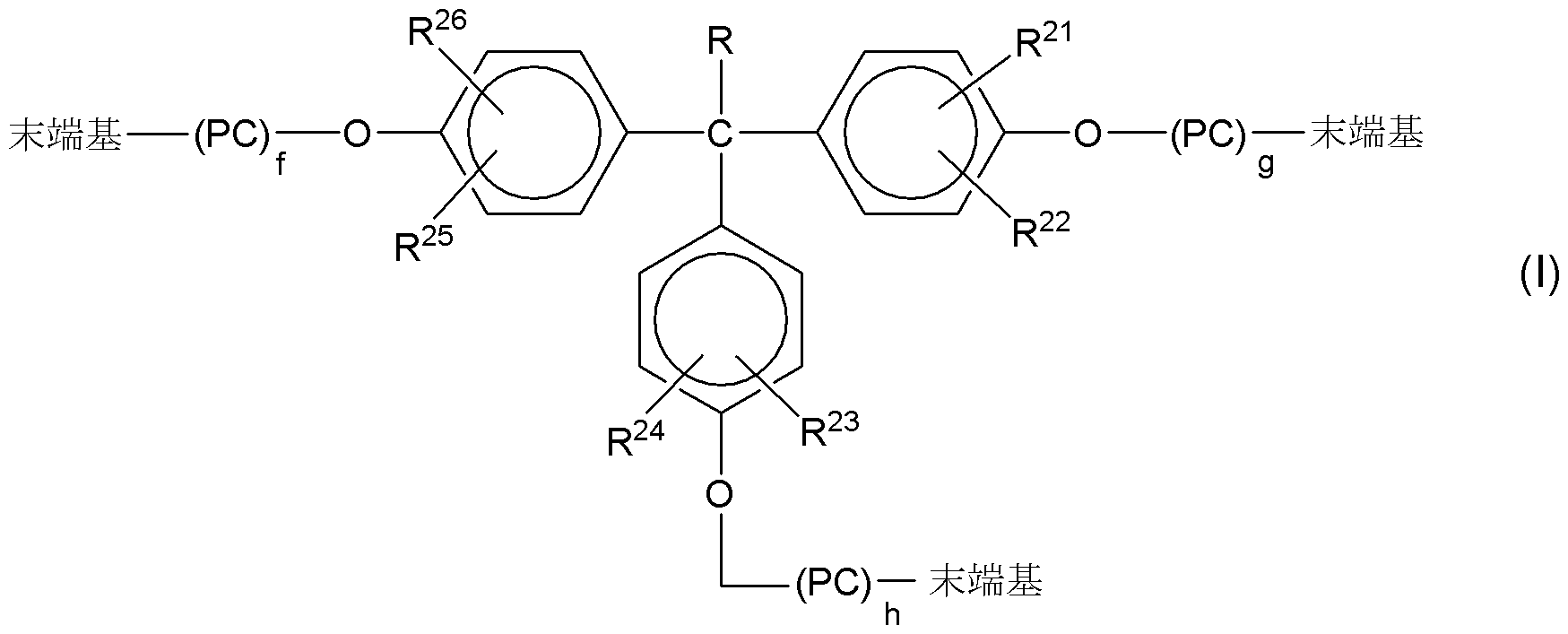
[式中、Rは水素原子又は炭素数1~5のアルキル基を示し、R21~R26はそれぞれ独立に、水素原子、炭素数1~5のアルキル基又はハロゲン原子を示す。PCはポリカーボネート部分を示し、f、g及びhは整数を表す。]
[6]前記一般式(I)で表される分岐構造は、1,1,1-トリス(4-ヒドロキシフェニル)エタンに由来する構造である、[5]に記載のポリカーボネート系樹脂。
[7]粘度平均分子量が17,000以上28,000以下である、[1]~[6]のいずれか1つに記載のポリカーボネート系樹脂。
[8]有機溶媒中、二価フェノールとホスゲンとを反応させてポリカーボネートオリゴマーを製造する工程(1)と、前記ポリカーボネートオリゴマーと二価フェノールと末端停止剤とを反応させてポリカーボネート系樹脂を製造する工程(2)とを有し、重合触媒としてアミン系触媒を、工程(1)で得られるポリカーボネートオリゴマーのクロロホーメート基に対して、モル比で、0.002以上0.030以下用いる、ポリカーボネート系樹脂の製造方法。
[9]前記工程(1)及び/又は工程(2)に分岐剤を加える、[8]に記載のポリカーボネート系樹脂の製造方法。
[10]前記分岐剤が下記一般式(III)の構造を有する、[9]に記載のポリカーボネート系樹脂の製造方法。
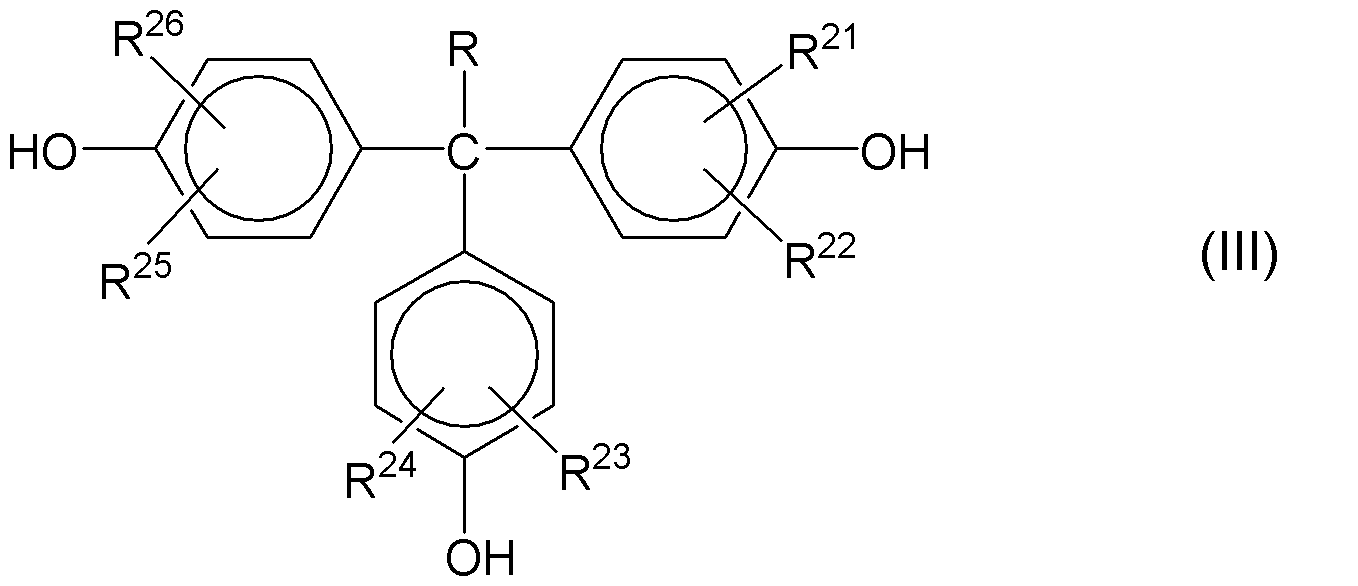
[式中、Rは水素原子又は炭素数1~5のアルキル基を示し、R21~R26はそれぞれ独立に、水素原子、炭素数1~5のアルキル基又はハロゲン原子を示す。]
[11]前記分岐剤を前記工程(2)において更に加える、[9]又は[10]に記載のポリカーボネート系樹脂の製造方法。
[12]前記一般式(III)で表される前記分岐剤を、前記工程(1)及び工程(2)で加えられる二価フェノール、分岐剤及び末端停止剤の総モル数に対して、0.3モル%以上3.0モル%以下加える、[10]又は[11]に記載のポリカーボネート系樹脂の製造方法。
[13]前記一般式(III)で表される分岐剤が1,1,1-トリス(4-ヒドロキシフェニル)エタンである、[10]~[12]のいずれか1つに記載のポリカーボネート系樹脂の製造方法。
[14]前記アミン系触媒が第三級アミン又はその塩である、[8]~[13]のいずれか1つに記載のポリカーボネート系樹脂の製造方法。
[15]前記アミン系触媒がトリエチルアミンである、[8]~[14]のいずれか1つに記載のポリカーボネート系樹脂の製造方法。
[16][1]~[7]のいずれか1つに記載のポリカーボネート系樹脂(A)と、難燃剤(B)、ポリオルガノシロキサン(C)、ポリテトラフルオロエチレン(D)及び酸化防止剤(E)からなる群から選択される少なくとも1種とを含む、ポリカーボネート系樹脂組成物。
[2]全末端基に対する前記アミン末端の比率が20.0モル%以下である、[1]に記載のポリカーボネート系樹脂。
[3]下記一般式(II)で表される繰り返し単位を有する、[1]又は[2]に記載のポリカーボネート系樹脂。
[式中、R1及びR2はそれぞれ独立に、ハロゲン原子、炭素数1~6のアルキル基又は炭素数1~6のアルコキシ基を示す。Xは単結合、炭素数1~8のアルキレン基、炭素数2~8のアルキリデン基、炭素数5~15のシクロアルキレン基、炭素数5~15のシクロアルキリデン基、-S-、-SO-、-SO2-、-O-又は-CO-を示す。a及びbはそれぞれ独立に、0~4の整数を示す。]
[4]前記ポリカーボネート系樹脂が、分岐状ポリカーボネート系樹脂(A-1)10~100質量部、及び前記分岐状ポリカーボネート系樹脂(A-1)以外の芳香族ポリカーボネート系樹脂(A-2)90~0質量部からなる、[1]~[3]のいずれか1つに記載のポリカーボネート系樹脂。
[5]前記分岐状ポリカーボネート系樹脂(A-1)が、下記一般式(I)で表される分岐構造を有し、分岐率が0.3モル%以上3.0モル%以下である、[4]に記載のポリカーボネート系樹脂。
[式中、Rは水素原子又は炭素数1~5のアルキル基を示し、R21~R26はそれぞれ独立に、水素原子、炭素数1~5のアルキル基又はハロゲン原子を示す。PCはポリカーボネート部分を示し、f、g及びhは整数を表す。]
[6]前記一般式(I)で表される分岐構造は、1,1,1-トリス(4-ヒドロキシフェニル)エタンに由来する構造である、[5]に記載のポリカーボネート系樹脂。
[7]粘度平均分子量が17,000以上28,000以下である、[1]~[6]のいずれか1つに記載のポリカーボネート系樹脂。
[8]有機溶媒中、二価フェノールとホスゲンとを反応させてポリカーボネートオリゴマーを製造する工程(1)と、前記ポリカーボネートオリゴマーと二価フェノールと末端停止剤とを反応させてポリカーボネート系樹脂を製造する工程(2)とを有し、重合触媒としてアミン系触媒を、工程(1)で得られるポリカーボネートオリゴマーのクロロホーメート基に対して、モル比で、0.002以上0.030以下用いる、ポリカーボネート系樹脂の製造方法。
[9]前記工程(1)及び/又は工程(2)に分岐剤を加える、[8]に記載のポリカーボネート系樹脂の製造方法。
[10]前記分岐剤が下記一般式(III)の構造を有する、[9]に記載のポリカーボネート系樹脂の製造方法。
[式中、Rは水素原子又は炭素数1~5のアルキル基を示し、R21~R26はそれぞれ独立に、水素原子、炭素数1~5のアルキル基又はハロゲン原子を示す。]
[11]前記分岐剤を前記工程(2)において更に加える、[9]又は[10]に記載のポリカーボネート系樹脂の製造方法。
[12]前記一般式(III)で表される前記分岐剤を、前記工程(1)及び工程(2)で加えられる二価フェノール、分岐剤及び末端停止剤の総モル数に対して、0.3モル%以上3.0モル%以下加える、[10]又は[11]に記載のポリカーボネート系樹脂の製造方法。
[13]前記一般式(III)で表される分岐剤が1,1,1-トリス(4-ヒドロキシフェニル)エタンである、[10]~[12]のいずれか1つに記載のポリカーボネート系樹脂の製造方法。
[14]前記アミン系触媒が第三級アミン又はその塩である、[8]~[13]のいずれか1つに記載のポリカーボネート系樹脂の製造方法。
[15]前記アミン系触媒がトリエチルアミンである、[8]~[14]のいずれか1つに記載のポリカーボネート系樹脂の製造方法。
[16][1]~[7]のいずれか1つに記載のポリカーボネート系樹脂(A)と、難燃剤(B)、ポリオルガノシロキサン(C)、ポリテトラフルオロエチレン(D)及び酸化防止剤(E)からなる群から選択される少なくとも1種とを含む、ポリカーボネート系樹脂組成物。
本発明によれば、優れた難燃性を有するポリカーボネート系樹脂を得ることができる。
以下、本発明のポリカーボネート系樹脂及びその製造方法、ポリカーボネート系樹脂組成物それぞれについて詳細に説明する。本明細書において、好ましいとされている規定は任意に採用することができ、好ましいもの同士の組み合わせはより好ましいといえる。本明細書において、「XX~YY」の記載は、「XX以上YY以下」を意味する。
<ポリカーボネート系樹脂>
本発明の第一の態様として、ポリカーボネート系樹脂について詳述する。
本発明のポリカーボネート系樹脂は、全末端基に対するアミン末端の比率が1.0モル%以上であることを要する。当該要件を満たす限り、ポリカーボネート系樹脂は、芳香族ポリカーボネート系樹脂及び/又は脂肪族ポリカーボネート系樹脂のいずれであってもよいが、耐衝撃性、耐熱性及び難燃性等の観点から芳香族ポリカーボネート系樹脂であることが好ましい。芳香族ポリカーボネート系樹脂としては、通常、二価フェノールとカーボネート前駆体との反応により製造される芳香族ポリカーボネート系樹脂を用いることができる。
本発明の第一の態様として、ポリカーボネート系樹脂について詳述する。
本発明のポリカーボネート系樹脂は、全末端基に対するアミン末端の比率が1.0モル%以上であることを要する。当該要件を満たす限り、ポリカーボネート系樹脂は、芳香族ポリカーボネート系樹脂及び/又は脂肪族ポリカーボネート系樹脂のいずれであってもよいが、耐衝撃性、耐熱性及び難燃性等の観点から芳香族ポリカーボネート系樹脂であることが好ましい。芳香族ポリカーボネート系樹脂としては、通常、二価フェノールとカーボネート前駆体との反応により製造される芳香族ポリカーボネート系樹脂を用いることができる。
ポリカーボネート系樹脂は、好ましくは下記一般式(II)で表される繰り返し単位を有する。

[式中、R1及びR2はそれぞれ独立に、ハロゲン原子、炭素数1~6のアルキル基又は炭素数1~6のアルコキシ基を示す。Xは単結合、炭素数1~8のアルキレン基、炭素数2~8のアルキリデン基、炭素数5~15のシクロアルキレン基、炭素数5~15のシクロアルキリデン基、-S-、-SO-、-SO2-、-O-又は-CO-を示す。a及びbはそれぞれ独立に、0~4の整数を示す。]
[式中、R1及びR2はそれぞれ独立に、ハロゲン原子、炭素数1~6のアルキル基又は炭素数1~6のアルコキシ基を示す。Xは単結合、炭素数1~8のアルキレン基、炭素数2~8のアルキリデン基、炭素数5~15のシクロアルキレン基、炭素数5~15のシクロアルキリデン基、-S-、-SO-、-SO2-、-O-又は-CO-を示す。a及びbはそれぞれ独立に、0~4の整数を示す。]
上記一般式(II)中、R1及びR2がそれぞれ独立して示すハロゲン原子としては、フッ素原子、塩素原子、臭素原子、及びヨウ素原子が挙げられる。
R1及びR2がそれぞれ独立して示すアルキル基としては、メチル基、エチル基、n-プロピル基、イソプロピル基、各種ブチル基(「各種」とは、直鎖状及びあらゆる分岐鎖状のものを含むことを示す。以下、明細書中同様である。)、各種ペンチル基、及び各種ヘキシル基が挙げられる。R1及びR2がそれぞれ独立して示すアルコキシ基としては、アルキル基部位として前記アルキル基を有するものが挙げられる。
R1及びR2がそれぞれ独立して示すアルキル基としては、メチル基、エチル基、n-プロピル基、イソプロピル基、各種ブチル基(「各種」とは、直鎖状及びあらゆる分岐鎖状のものを含むことを示す。以下、明細書中同様である。)、各種ペンチル基、及び各種ヘキシル基が挙げられる。R1及びR2がそれぞれ独立して示すアルコキシ基としては、アルキル基部位として前記アルキル基を有するものが挙げられる。
Xが表すアルキレン基としては、例えば、メチレン基、エチレン基、トリメチレン基、テトラメチレン基、ヘキサメチレン基等が挙げられ、炭素数1~5のアルキレン基が好ましい。Xが表すアルキリデン基としては、エチリデン基、イソプロピリデン基等が挙げられる。Xが表すシクロアルキレン基としては、シクロペンタンジイル基やシクロヘキサンジイル基、シクロオクタンジイル基等が挙げられ、炭素数5~10のシクロアルキレン基が好ましい。Xが表すシクロアルキリデン基としては、例えば、シクロヘキシリデン基、3,5,5-トリメチルシクロヘキシリデン基、2-アダマンチリデン基等が挙げられ、炭素数5~10のシクロアルキリデン基が好ましく、炭素数5~8のシクロアルキリデン基がより好ましい。
a及びbは、それぞれ独立に0~4の整数を示し、好ましくは0~2、より好ましくは0又は1である。
中でも、a及びbが0であり、Xが単結合又は炭素数1~8のアルキレン基であるもの、又はa及びbが0であり、Xが炭素数3のアルキレン基、特にイソプロピリデン基であるものが好適である。
中でも、a及びbが0であり、Xが単結合又は炭素数1~8のアルキレン基であるもの、又はa及びbが0であり、Xが炭素数3のアルキレン基、特にイソプロピリデン基であるものが好適である。
本発明のポリカーボネート系樹脂が「アミン末端を有する」とは、ポリカーボネート構造の一部の末端としてアミン構造を有することを意味する。具体的に一例を挙げると、以下の構造を有することを意味する。ポリカーボネート系樹脂は、例えば後述する末端停止剤由来の式(i)の構造を有するが、「アミン末端を有する」とは、一部末端として、式(ii)で示すアミン末端構造を有することを意味する。アミン末端の存在及びその量は、核磁気共鳴(NMR)測定により確認及び算出できる。より詳細については、実施例に記載する。

[式中、R11及びR12はそれぞれ独立して、置換もしくは無置換の炭素数1~6のアルキル基、置換もしくは無置換の炭素数5~8のシクロアルキル基、又は置換もしくは無置換の炭素数6~12のアリール基を示す。]
[式中、R11及びR12はそれぞれ独立して、置換もしくは無置換の炭素数1~6のアルキル基、置換もしくは無置換の炭素数5~8のシクロアルキル基、又は置換もしくは無置換の炭素数6~12のアリール基を示す。]
R11及びR12が示す炭素数1~6のアルキル基としては、例えば、メチル基、エチル基、ブチル基、プロピル基等を、炭素数5~8のシクロアルキル基としてはシクロヘキシル基を、炭素数6~12のアリール基としてはフェニル基を挙げることができる。中でも、特にR11及びR12が双方ともエチル基であるアミン末端が特に好ましい。
上述した通り、本発明のポリカーボネート系樹脂は、全末端基に対して、上記アミン末端を1.0モル%以上含むことを要する。アミン末端量が1.0モル%未満であると難燃性に劣る。
本発明のポリカーボネート系樹脂における全末端基に対するアミン末端量は、好ましくは2.0モル%以上、より好ましくは3.0モル%以上、更に好ましくは4.0モル%以上であり、
好ましくは20.0モル%以下、より好ましくは10.0モル%以下、より更に好ましくは7.0モル%以下、特に好ましくは5.0モル%以下である。アミン末端の量範囲が20.0モル%以下であれば、良好な難燃性が得られる。
本発明のポリカーボネート系樹脂における全末端基に対するアミン末端量は、好ましくは2.0モル%以上、より好ましくは3.0モル%以上、更に好ましくは4.0モル%以上であり、
好ましくは20.0モル%以下、より好ましくは10.0モル%以下、より更に好ましくは7.0モル%以下、特に好ましくは5.0モル%以下である。アミン末端の量範囲が20.0モル%以下であれば、良好な難燃性が得られる。
本発明のポリカーボネート系樹脂は、好ましくは17,000以上28,000以下の粘度平均分子量(Mv)を有する。上記粘度平均分子量は、分子量調節剤(末端停止剤)等を用いることや、反応条件により調整することができる。粘度平均分子量を上記範囲とすることにより、より難燃性に優れるポリカーボネート系樹脂とすることができる。
粘度平均分子量(Mv)は、より好ましくは19,000以上、更に好ましくは20,000以上である。その上限値は、成形性の観点から、より好ましくは27,500以下、更に好ましくは26,000以下、より更に好ましくは25,500以下、特に好ましくは22,500以下である。
粘度平均分子量(Mv)は、より好ましくは19,000以上、更に好ましくは20,000以上である。その上限値は、成形性の観点から、より好ましくは27,500以下、更に好ましくは26,000以下、より更に好ましくは25,500以下、特に好ましくは22,500以下である。
上記粘度平均分子量(Mv)は、20℃における塩化メチレン溶液の極限粘度〔η〕を測定し、下記Schnellの式から算出した値である。

更に具体的には、本発明のポリカーボネート系樹脂は、分岐状ポリカーボネート系樹脂(A-1)10~100質量部及び前記分岐状ポリカーボネート系樹脂(A-1)以外の芳香族ポリカーボネート系樹脂(A-2)90~0質量部からなることがより好ましい。分岐状ポリカーボネート系樹脂(A-1)はより好ましくは30~100質量部、更に好ましくは40~100質量部であり、芳香族ポリカーボネート系樹脂(A-2)はより好ましくは70~0質量部であり、更に好ましくは60~0質量部である。分岐状ポリカーボネート系樹脂(A-1)を上記範囲の量で含むことにより、ポリカーボネート系樹脂の難燃性をより一層高めることができる。
<分岐状ポリカーボネート系樹脂(A-1)>
分岐状ポリカーボネート系樹脂(A-1)は、分岐状のポリカーボネート系樹脂であれば特に限定されないが、例えば、上述した一般式(II)で表される繰り返し単位を有し、かつ下記一般式(I)で表される分岐構造を有するものを挙げることができる。
分岐状ポリカーボネート系樹脂(A-1)は、分岐状のポリカーボネート系樹脂であれば特に限定されないが、例えば、上述した一般式(II)で表される繰り返し単位を有し、かつ下記一般式(I)で表される分岐構造を有するものを挙げることができる。

[式中、Rは水素原子又は炭素数1~5のアルキル基を示し、R21~R26はそれぞれ独立に、水素原子、炭素数1~5のアルキル基又はハロゲン原子を示す。PCはポリカーボネート部分を示し、f、g及びhは整数を表す。]
式(I)においてPCで表されるポリカーボネート部分は、上述した一般式(II)で表される繰り返し単位を有し、具体的な例としては、下記の式(IV)で表されるビスフェノールA由来の繰り返し単位を示す。分岐状ポリカーボネート系樹脂(A-1)を得る際に使用される分岐剤や原料二価フェノールに関しては後述する。

分岐状ポリカーボネート系樹脂(A-1)は、上記一般式(I)で表される分岐構造を有し、分岐率が0.3モル%以上3.0モル%以下であることが好ましい。分岐状ポリカーボネート系樹脂(A-1)の分岐率が上記範囲となることにより、本発明のポリカーボネート系樹脂の難燃性をより高めることができる。本明細書において「分岐率」とは、分岐ポリカーボネート系樹脂(A-1)の製造に用いた二価フェノール由来の構造単位、分岐剤由来の構造単位及び末端単位の総モル数に対する分岐剤由来の構造単位のモル数(分岐剤由来の構造単位のモル数/(二価フェノール由来の構造単位+分岐剤由来の構造単位+末端単位)の総モル数×100(mol%で表す))を意味する。分岐率は1H-NMR測定により実測することができる。
ポリカーボネート系樹脂の製造時に、分岐状ポリカーボネート系樹脂(A-1)の原料である二価フェノール、分岐剤及び末端停止剤の総モル数に対して、後述する分岐剤を0.3モル%以上3.0モル%以下加えることにより、上記範囲の分岐率を有する分岐状ポリカーボネート系樹脂を得ることができる。
ポリカーボネート系樹脂の製造時に、分岐状ポリカーボネート系樹脂(A-1)の原料である二価フェノール、分岐剤及び末端停止剤の総モル数に対して、後述する分岐剤を0.3モル%以上3.0モル%以下加えることにより、上記範囲の分岐率を有する分岐状ポリカーボネート系樹脂を得ることができる。
より優れた難燃性を得る観点から、分岐状ポリカーボネート系樹脂(A-1)の分岐率は、より好ましくは0.5モル%以上、更に好ましくは1.0モル%以上、より更に好ましくは1.2モル%以上、より更に好ましくは1.4モル%以上、特に好ましくは1.5モル%以上である。より良好な物性を得る観点から、分岐状ポリカーボネート系樹脂(A-1)の分岐率は、より好ましくは2.5モル%以下、更に好ましくは2.3モル%以下、より更に好ましくは2.0モル%以下である。分岐核構造は、単独の分岐剤に由来してもよいし、2種以上の分岐剤に由来してもよい。中でも、前記一般式(I)で表される分岐構造が、1,1,1-トリス(4-ヒドロキシフェニル)エタンに由来する構造である分岐構造を有することが更に好ましい。
<芳香族ポリカーボネート系樹脂(A-2)>
芳香族ポリカーボネート系樹脂(A-2)は、上記分岐状ポリカーボネート系樹脂(A-1)以外の非分岐状ポリカーボネート系樹脂であり、上述した通り、好ましくは一般式(II)で表される繰り返し単位を有する。
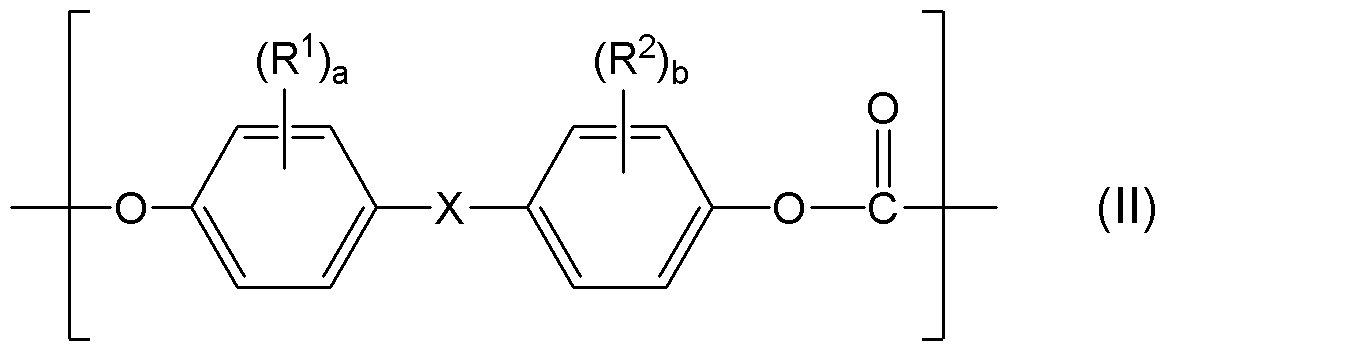
[式中、R1、R2、X、a及びbは上述した通り。]
芳香族ポリカーボネート系樹脂(A-2)は、上記分岐状ポリカーボネート系樹脂(A-1)以外の非分岐状ポリカーボネート系樹脂であり、上述した通り、好ましくは一般式(II)で表される繰り返し単位を有する。
[式中、R1、R2、X、a及びbは上述した通り。]
中でも、a及びbが0であり、Xが単結合又は炭素数1~8のアルキレン基であるもの、又はa及びbが0であり、Xがアルキリデン基、特にイソプロピリデン基であるものが好適である。なお、芳香族ポリカーボネート系樹脂(A-2)として、複数種のポリカーボネートブロックを含んでいてもよい。
芳香族ポリカーボネート系樹脂(A-2)として複数種のポリカーボネートブロックを含む場合には、a及びbが0であり、Xがイソプロピリデン基であるものが好ましくは90質量%以上、より好ましくは90.9質量%以上、更に好ましくは93.3質量%以上、特に好ましくは95質量%以上、最も好ましくは100質量%であることが透明性の観点から好ましい。
芳香族ポリカーボネート系樹脂(A-2)として複数種のポリカーボネートブロックを含む場合には、a及びbが0であり、Xがイソプロピリデン基であるものが好ましくは90質量%以上、より好ましくは90.9質量%以上、更に好ましくは93.3質量%以上、特に好ましくは95質量%以上、最も好ましくは100質量%であることが透明性の観点から好ましい。
<ポリカーボネート系樹脂の製造方法>
次に、本発明の第二の態様として、ポリカーボネート系樹脂の製造方法について詳述する。
本発明のポリカーボネート系樹脂は、有機溶媒中、二価フェノールとホスゲンとを反応させてポリカーボネートオリゴマーを製造する工程(1)と、前記ポリカーボネートオリゴマーと二価フェノールと末端停止剤とを反応させてポリカーボネート系樹脂を製造する工程(2)とを有し、重合触媒としてアミン系触媒を、工程(1)で得られるポリカーボネートオリゴマーのクロロホーメート基に対して、モル比で、0.002以上0.030以下で用いる。
次に、本発明の第二の態様として、ポリカーボネート系樹脂の製造方法について詳述する。
本発明のポリカーボネート系樹脂は、有機溶媒中、二価フェノールとホスゲンとを反応させてポリカーボネートオリゴマーを製造する工程(1)と、前記ポリカーボネートオリゴマーと二価フェノールと末端停止剤とを反応させてポリカーボネート系樹脂を製造する工程(2)とを有し、重合触媒としてアミン系触媒を、工程(1)で得られるポリカーボネートオリゴマーのクロロホーメート基に対して、モル比で、0.002以上0.030以下で用いる。
有機溶媒としては、ポリカーボネート系樹脂を溶解できる溶媒が挙げられる。具体的にはジクロロメタン(塩化メチレン)、ジクロロエタン、トリクロロエタン、テトラクロロエタン、ペンタクロロエタン、ヘキサクロロエタン、ジクロロエチレン、クロロベンゼン、ジクロロベンゼン等のハロゲン化炭化水素溶媒が挙げられ、特に塩化メチレンが好ましい。
<工程(1)>
本工程においては、有機溶媒中、二価フェノールとホスゲンとを反応させて、クロロホーメート基を有するポリカーボネートオリゴマーを製造する。
二価フェノールとしては、下記一般式(iii)で表される化合物を用いることが好ましい。

式中、R1、R2、a、b及びXは上述した通りである。
本工程においては、有機溶媒中、二価フェノールとホスゲンとを反応させて、クロロホーメート基を有するポリカーボネートオリゴマーを製造する。
二価フェノールとしては、下記一般式(iii)で表される化合物を用いることが好ましい。
式中、R1、R2、a、b及びXは上述した通りである。
上記一般式(iii)で表される二価フェノールとしては、例えば、2,2-ビス(4-ヒドロキシフェニル)プロパン〔ビスフェノールA〕、ビス(4-ヒドロキシフェニル)メタン、1,1-ビス(4-ヒドロキシフェニル)エタン、2,2-ビス(4-ヒドロキシ-3,5-ジメチルフェニル)プロパン等のビス(ヒドロキシフェニル)アルカン系、4,4’-ジヒドロキシジフェニル、ビス(4-ヒドロキシフェニル)シクロアルカン、ビス(4-ヒドロキシフェニル)オキシド、ビス(4-ヒドロキシフェニル)スルフィド、ビス(4-ヒドロキシフェニル)スルホン、ビス(4-ヒドロキシフェニル)スルホキシド、ビス(4-ヒドロキシフェニル)ケトン等が挙げられる。これらの二価フェノールは、1種を単独で使用してもよいし、2種以上を混合して用いてもよい。
これらの中でも、ビス(ヒドロキシフェニル)アルカン系二価フェノールが好ましく、ビスフェノールAがより好ましい。二価フェノールとしてビスフェノールAを用いた場合、上記一般式(II)において、Xがイソプロピリデン基であり、且つa=b=0のポリカーボネート系樹脂となる。
これらの中でも、ビス(ヒドロキシフェニル)アルカン系二価フェノールが好ましく、ビスフェノールAがより好ましい。二価フェノールとしてビスフェノールAを用いた場合、上記一般式(II)において、Xがイソプロピリデン基であり、且つa=b=0のポリカーボネート系樹脂となる。
ビスフェノールA以外の二価フェノールとしては、例えば、ビス(ヒドロキシアリール)アルカン類、ビス(ヒドロキシアリール)シクロアルカン類、ジヒドロキシアリールエーテル類、ジヒドロキシジアリールスルフィド類、ジヒドロキシジアリールスルホキシド類、ジヒドロキシジアリールスルホン類、ジヒドロキシジフェニル類、ジヒドロキシジアリールフルオレン類、ジヒドロキシジアリールアダマンタン類等が挙げられる。これらの二価フェノールは、1種を単独で使用してもよいし、2種以上を混合して用いてもよい。
ビス(ヒドロキシアリール)アルカン類としては、例えばビス(4-ヒドロキシフェニル)メタン、1,1-ビス(4-ヒドロキシフェニル)エタン、2,2-ビス(4-ヒドロキシフェニル)ブタン、2,2-ビス(4-ヒドロキシフェニル)オクタン、ビス(4-ヒドロキシフェニル)フェニルメタン、ビス(4-ヒドロキシフェニル)ジフェニルメタン、2,2-ビス(4-ヒドロキシ-3-メチルフェニル)プロパン、ビス(4-ヒドロキシフェニル)ナフチルメタン、1,1-ビス(4-ヒドロキシ-3-tert-ブチルフェニル)プロパン、2,2-ビス(4-ヒドロキシ-3-ブロモフェニル)プロパン、2,2-ビス(4-ヒドロキシ-3,5-ジメチルフェニル)プロパン、2,2-ビス(4-ヒドロキシ-3-クロロフェニル)プロパン、2,2-ビス(4-ヒドロキシ-3,5-ジクロロフェニル)プロパン、2,2-ビス(4-ヒドロキシ-3,5-ジブロモフェニル)プロパン等が挙げられる。
ビス(ヒドロキシアリール)シクロアルカン類としては、例えば1,1-ビス(4-ヒドロキシフェニル)シクロペンタン、1,1-ビス(4-ヒドロキシフェニル)シクロヘキサン、1,1-ビス(4-ヒドロキシフェニル)-3,5,5-トリメチルシクロヘキサン、2,2-ビス(4-ヒドロキシフェニル)ノルボルナン、1,1-ビス(4-ヒドロキシフェニル)シクロドデカン等が挙げられる。ジヒドロキシアリールエーテル類としては、例えば4,4’-ジヒドロキシジフェニルエーテル、4,4’-ジヒドロキシ-3,3’-ジメチルフェニルエーテル等が挙げられる。
ジヒドロキシジアリールスルフィド類としては、例えば4,4’-ジヒドロキシジフェニルスルフィド、4,4’-ジヒドロキシ-3,3’-ジメチルジフェニルスルフィド等が挙げられる。ジヒドロキシジアリールスルホキシド類としては、例えば4,4’-ジヒドロキシジフェニルスルホキシド、4,4’-ジヒドロキシ-3,3’-ジメチルジフェニルスルホキシド等が挙げられる。ジヒドロキシジアリールスルホン類としては、例えば4,4’-ジヒドロキシジフェニルスルホン、4,4’-ジヒドロキシ-3,3’-ジメチルジフェニルスルホン等が挙げられる。
ジヒドロキシジフェニル類としては、例えば4,4’-ジヒドロキシジフェニル等が挙げられる。ジヒドロキシジアリールフルオレン類としては、例えば9,9-ビス(4-ヒドロキシフェニル)フルオレン、9,9-ビス(4-ヒドロキシ-3-メチルフェニル)フルオレン等が挙げられる。ジヒドロキシジアリールアダマンタン類としては、例えば1,3-ビス(4-ヒドロキシフェニル)アダマンタン、2,2-ビス(4-ヒドロキシフェニル)アダマンタン、1,3-ビス(4-ヒドロキシフェニル)-5,7-ジメチルアダマンタン等が挙げられる。
上記以外の二価フェノールとしては、例えば4,4’-[1,3-フェニレンビス(1-メチルエチリデン)]ビスフェノール、10,10-ビス(4-ヒドロキシフェニル)-9-アントロン、1,5-ビス(4-ヒドロキシフェニルチオ)-2,3-ジオキサペンタン等が挙げられる。
ホスゲンは、通常、塩素及び一酸化炭素を、塩素1モルに対し一酸化炭素1.01~1.3モルの割合で触媒として活性炭を使用して反応させて得られる化合物である。使用するホスゲン中には、ホスゲンガスとして使用する場合、未反応の一酸化炭素を1~30容量%程度含んだホスゲンガスを使用することができる。また、液化状態のホスゲンも使用することができる。
工程(1)においてポリカーボネートオリゴマーを製造するには、二価フェノールのアルカリ水溶液、ホスゲン、有機溶媒を反応器内に導入して反応させる。有機溶媒の使用量は、有機溶媒相と水相の容量比が5/1~1/7、好ましくは2/1~1/4となるように選定するのが望ましい。反応器内では、二価フェノールの末端基をホスゲンによりクロロホーメート化させる反応や、ホスゲンがアルカリにより分解される反応により発熱が起こり、反応生成物の温度が高くなる。従って、反応生成物の温度が0~50℃、好ましくは5~40℃となるように冷却することが好ましい。ホスゲンの使用量は、二価フェノール1モルに対して、1.1~1.5モルとホスゲンを過剰となるように使用することが好ましい。反応後得られた反応液は、水相と有機相とに分離し、ポリカーボネートオリゴマーを含む有機相を得る。得られたポリカーボネートオリゴマーの重量平均分子量は、通常5,000以下であり、重合度は、通常20量体以下、好ましくは2~10量体である。
上記ポリカーボネートオリゴマーの製造時には、反応を促進するために、続く工程(2)において用いられるアミン系重合触媒を用いることもできる。ポリカーボネートの分子量調節剤として用いられる末端停止剤を用いてもよい。末端停止剤に用いられる化合物としては、例えば、フェノール,p-クレゾール,p-tert-ブチルフェノール,p-tert-オクチルフェノール,p-クミルフェノール,3-ペンタデシルフェノール,ブロモフェノール,トリブロモフェノール,ノニルフェノール等の一価フェノールを挙げることができる。これらの中で、経済性、入手の容易さ等の点から、p-tert-ブチルフェノール、p-クミルフェノール及びフェノールが好ましい。また、3-ペンタデシルフェノールを用いることにより得られるポリカーボネートの流動性を大きく向上させることができる。
ポリカーボネートオリゴマーを製造する際に使用される反応器は、静止型混合器、即ちスタティックミキサーであることが好ましい。静止型混合器は、流体を分割、転換、反転させる作用を有するエレメントを内部に有した管状の反応器であることが好ましい。静止型混合器の後に撹拌機を有する槽型の撹拌槽を更に用いることにより、オリゴマー化を促進することができるので、このような反応器を組合せて用いることが好ましい。
工程(1)によりクロロホーメート基を有するポリカーボネートオリゴマーを含む反応混合液が得られる。反応混合液は、静置分離等の分離手段を用いることにより、ポリカーボネートオリゴマーを含む有機相と水相とに分離され、ポリカーボネートオリゴマーを含む有機相は、後述する工程(2)に使用される。
<工程(2)>
工程(2)においては、工程(1)で得られたポリカーボネートオリゴマー、及び二価フェノールと末端停止剤とを反応させてポリカーボネート系樹脂を製造する。
工程(2)では、ポリカーボネートオリゴマーと二価フェノールとを重縮合反応させて、分子量を目的の分子量範囲に調整する。得られるポリカーボネート系樹脂の粘度平均分子量が上述した範囲内となるまで、重縮合反応を行う。
具体的には、工程(1)で分離されたポリカーボネートオリゴマーを含む有機溶媒相と、所望により用いられる末端停止剤と、所望により用いられる重合触媒と、有機溶媒と、アルカリ水溶液と、二価フェノールのアルカリ水溶液とを混合し、通常0~50℃、好ましくは20~40℃の範囲の温度において界面重縮合させる。
工程(2)においては、工程(1)で得られたポリカーボネートオリゴマー、及び二価フェノールと末端停止剤とを反応させてポリカーボネート系樹脂を製造する。
工程(2)では、ポリカーボネートオリゴマーと二価フェノールとを重縮合反応させて、分子量を目的の分子量範囲に調整する。得られるポリカーボネート系樹脂の粘度平均分子量が上述した範囲内となるまで、重縮合反応を行う。
具体的には、工程(1)で分離されたポリカーボネートオリゴマーを含む有機溶媒相と、所望により用いられる末端停止剤と、所望により用いられる重合触媒と、有機溶媒と、アルカリ水溶液と、二価フェノールのアルカリ水溶液とを混合し、通常0~50℃、好ましくは20~40℃の範囲の温度において界面重縮合させる。
本工程で使用するアルカリ水溶液のアルカリ、有機溶媒、末端停止剤としては、上記工程(1)で説明したものと同じものを挙げることができる。工程(2)における有機溶媒の使用量は、通常、有機相と水相との容量比が、好ましくは7/1~1/1、より好ましくは5/1~2/1となるように選択する。
工程(2)で使用される反応器は、反応器の処理能力次第では1基の反応器のみで反応を完結することができるが、必要に応じて、後続する2基目の反応器、更には3基目の反応器等の複数の反応器を使用することができる。これらの反応器としては、撹拌槽、多段塔型撹拌槽、無撹拌槽、スタティックミキサー、ラインミキサー、オリフィスミキサー、及び/又は配管等を用いることができる。
工程(2)で使用される反応器は、反応器の処理能力次第では1基の反応器のみで反応を完結することができるが、必要に応じて、後続する2基目の反応器、更には3基目の反応器等の複数の反応器を使用することができる。これらの反応器としては、撹拌槽、多段塔型撹拌槽、無撹拌槽、スタティックミキサー、ラインミキサー、オリフィスミキサー、及び/又は配管等を用いることができる。
得られた反応液は、ポリカーボネート系樹脂を含む有機溶媒相と未反応の二価フェノールを含む水相とを有するため、油水分離を行う。分離装置としては、静置分離槽や遠心分離機を挙げることができる。分離されたポリカーボネート系樹脂を含む有機溶媒相についてアルカリ洗浄、酸洗浄及び純水洗浄を順に行い、精製されたポリカーボネート系樹脂を含む有機溶媒相を得る。精製されたポリカーボネート系樹脂を含む有機溶媒相は、必要に応じて濃縮され、続いてニーダー処理や温水造粒等を行うことにより、ポリカーボネート系樹脂の粉体を得ることができる。得られたポリカーボネート系樹脂の粉体中には有機溶媒が残留しているので、加熱処理等の乾燥処理を行うことにより、有機溶媒を除去したポリカーボネート系樹脂粉体を得ることができる。得られたポリカーボネート系樹脂粉体は、ペレタイザー等を使用してペレット化して、各種の成形体とすることができる。
<分岐剤>
任意の分岐剤を加えることにより、分岐ポリカーボネート系樹脂(A-1)を製造することができる。分岐剤を加えないことにより、芳香族ポリカーボネート系樹脂(A-2)を製造することができる。分岐剤は上記工程(1)及び/又は(2)のいずれにも加えることができる。工程(1)で加える際は、二価フェノール及びホスゲンと共に加えて反応させる。使用する分岐剤により相違するが、後述する一般式(III)で表わされる分岐剤は、アルカリ水溶液に溶解させることができるので、アルカリ水溶液に溶解させて導入することが望ましい。また、アルカリ水溶液に溶解させることが困難な分岐剤は、塩化メチレン等の有機溶媒に溶解させて導入することが望ましい。
任意の分岐剤を加えることにより、分岐ポリカーボネート系樹脂(A-1)を製造することができる。分岐剤を加えないことにより、芳香族ポリカーボネート系樹脂(A-2)を製造することができる。分岐剤は上記工程(1)及び/又は(2)のいずれにも加えることができる。工程(1)で加える際は、二価フェノール及びホスゲンと共に加えて反応させる。使用する分岐剤により相違するが、後述する一般式(III)で表わされる分岐剤は、アルカリ水溶液に溶解させることができるので、アルカリ水溶液に溶解させて導入することが望ましい。また、アルカリ水溶液に溶解させることが困難な分岐剤は、塩化メチレン等の有機溶媒に溶解させて導入することが望ましい。
分岐剤は工程(1)若しくは工程(2)のいずれか、又は工程(1)及び(2)の双方に加えることができる。分岐剤を工程(2)において更に加えることもできる。分岐剤の添加量は、工程(1)及び工程(2)で加える分岐剤の合計量で、原料である二価フェノール、分岐剤及び末端停止剤の総モル数に対して、最終的に0.3モル%以上3.0モル%以下加えることが好ましい。上記添加量とすることで、上述した好ましい分岐率を有する分岐ポリカーボネート系樹脂(A-1)を得ることができる。二価フェノール、分岐剤及び末端停止剤の総モル数に対する上記分岐剤の添加量は、より優れた難燃性を得る観点から、より好ましくは0.5モル%以上、更に好ましくは1.0モル%以上、より更に好ましくは1.2モル%以上、より更に好ましくは1.4モル%以上、特に好ましくは1.5モル%以上であり、より良好な物性を得る観点から、より好ましくは2.5モル%以下、更に好ましくは2.3モル%以下、より更に好ましくは2.0モル%以下である。分岐剤の添加量を上記範囲内とすることで、より優れた難燃性を得ることが出来る。
具体的には上記一般式(I)で表される分岐ポリカーボネート系樹脂を製造する際には、下記一般式(III)で表される分岐剤を用いる。

[式中、Rは水素原子又は炭素数1~5のアルキル基を示し、R21~R26はそれぞれ独立に、水素原子、炭素数1~5のアルキル基又はハロゲン原子を示す。]
[式中、Rは水素原子又は炭素数1~5のアルキル基を示し、R21~R26はそれぞれ独立に、水素原子、炭素数1~5のアルキル基又はハロゲン原子を示す。]
上記一般式(III)で表される分岐剤についてより詳述する。
Rが示す炭素数1~5のアルキル基とは、例えばメチル基、エチル基、n-プロピル基、n-ブチル基若しくはn-ペンチル基等である。R21~R26が示す炭素数1~5のアルキル基としては、例えばメチル基、エチル基、n-プロピル基、n-ブチル基、n-ペンチル基等を挙げることができ、ハロゲン原子としては、例えば塩素原子、臭素原子、フッ素原子等を挙げることができる。
Rが示す炭素数1~5のアルキル基とは、例えばメチル基、エチル基、n-プロピル基、n-ブチル基若しくはn-ペンチル基等である。R21~R26が示す炭素数1~5のアルキル基としては、例えばメチル基、エチル基、n-プロピル基、n-ブチル基、n-ペンチル基等を挙げることができ、ハロゲン原子としては、例えば塩素原子、臭素原子、フッ素原子等を挙げることができる。
一般式(III)で表される分岐剤は、更に具体的には、1,1,1-トリス(4-ヒドロキシフェニル)メタン;1,1,1-トリス(4-ヒドロキシフェニル)エタン;1,1,1-トリス(4-ヒドロキシフェニル)プロパン;1,1,1-トリス(2-メチル-4-ヒドロキシフェニル)メタン;1,1,1-トリス(2-メチル-4-ヒドロキシフェニル)エタン;1,1,1-トリス(3-メチル-4-ヒドロキシフェニル)メタン;1,1,1-トリス(3-メチル-4-ヒドロキシフェニル)エタン;1,1,1-トリス(3,5-ジメチル-4-ヒドロキシフェニル)メタン;1,1,1-トリス(3,5-ジメチル-4-ヒドロキシフェニル)エタン;1,1,1-トリス(3-クロロ-4-ヒドロキシフェニル)メタン;1,1,1-トリス(3-クロロ-4-ヒドロキシフェニル)エタン;1,1,1-トリス(3,5-ジクロロ-4-ヒドロキシフェニル)メタン;1,1,1-トリス(3,5-ジクロロ-4-ヒドロキシフェニル)エタン;1,1,1-トリス(3-ブロモ-4-ヒドロキシフェニル)メタン;1,1,1-トリス(3-ブロモ-4-ヒドロキシフェニル)エタン;1,1,1-トリス(3,5-ジブロモ-4-ヒドロキシフェニル)メタン;1,1,1-トリス(3,5-ジブロモ-4-ヒドロキシフェニル)エタン、4,4’-[1-[4-[1-(4-ヒドロキシフェニル)-1-メチルエチル]フェニル]エチリデン]ビスフェノール;α,α’,α”-トリス(4-ヒドロキシフェニル)-1,3,5-トリイソプロピルベンゼン;1-[α-メチル-α-(4’-ヒドロキシフェニル)エチル]-4-[α’,α’-ビス(4”-ヒドロキシフェニル)エチル]ベンゼン;フロログルシン、トリメリット酸、イサチンビス(o-クレゾール)等の官能基を3つ以上有する化合物等である。上記のうち、1,1,1-トリス(4-ヒドロキシフェニル)エタン(以下、THPEと略記することもある)を用いることが入手性、反応性及び経済性の観点から好ましい。
<重合触媒>
重合触媒は、上記工程(1)及び工程(2)のいずれにおいても用いることができ、本発明においてはアミン系触媒が用いられる。
アミン系触媒としては第三級アミン若しくはその塩、又は第四級アンモニウム塩を用いることができる。第三級アミンとしては、例えばトリエチルアミン、トリブチルアミン、N,N-ジメチルシクロヘキシルアミン、ピリジン、ジメチルアニリン等が挙げられ、また三級アミン塩としては、これらの三級アミンの塩酸塩、臭素酸塩等が挙げられる。第四級アンモニウム塩としては、例えばトリメチルベンジルアンモニウムクロリド、トリエチルベンジルアンモニウムクロリド、トリブチルベンジルアンモニウムクロリド、トリオクチルメチルアンモニウムクロリド、テトラブチルアンモニウムクロリド、テトラブチルアンモニウムブロミド等を挙げることができる。アミン系触媒としては、第三級アミンが好ましく、特にトリエチルアミンが好適である。これらの触媒は、液体状態ものであればそのまま、又は有機溶媒や水に溶解させて導入することができる。また固体状態ものは、有機溶媒や水に溶解させて導入することができる。
重合触媒は、上記工程(1)及び工程(2)のいずれにおいても用いることができ、本発明においてはアミン系触媒が用いられる。
アミン系触媒としては第三級アミン若しくはその塩、又は第四級アンモニウム塩を用いることができる。第三級アミンとしては、例えばトリエチルアミン、トリブチルアミン、N,N-ジメチルシクロヘキシルアミン、ピリジン、ジメチルアニリン等が挙げられ、また三級アミン塩としては、これらの三級アミンの塩酸塩、臭素酸塩等が挙げられる。第四級アンモニウム塩としては、例えばトリメチルベンジルアンモニウムクロリド、トリエチルベンジルアンモニウムクロリド、トリブチルベンジルアンモニウムクロリド、トリオクチルメチルアンモニウムクロリド、テトラブチルアンモニウムクロリド、テトラブチルアンモニウムブロミド等を挙げることができる。アミン系触媒としては、第三級アミンが好ましく、特にトリエチルアミンが好適である。これらの触媒は、液体状態ものであればそのまま、又は有機溶媒や水に溶解させて導入することができる。また固体状態ものは、有機溶媒や水に溶解させて導入することができる。
工程(2)において重合触媒を用いる場合には、工程(1)で得られるポリカーボネートオリゴマーのクロロホーメート基に対して、モル比で、0.002以上0.030以下である。工程(2)において加える重合触媒の量が上記範囲内にあると、得られるポリカーボネート系樹脂の難燃性を高めることができる。上記添加量は通常の触媒添加量よりも遥かに高い量であるが、本発明者等は、工程(2)における重合触媒量を上記範囲とすることにより、得られるポリカーボネート系樹脂の難燃性を向上できることを見出した。
工程(2)において加える重合触媒の量は、ポリカーボネートオリゴマーのクロロホーメート基に対して、モル比で、より好ましくは0.004以上、更に好ましくは0.006以上、より更に好ましくは0.010以上、より更に好ましくは0.015以上であり、より好ましくは0.025以下、更に好ましくは0.020以下である。
<ポリカーボネート系樹脂組成物>
本発明の第三の態様によれば、ポリカーボネート系樹脂(A)と、難燃剤(B)、ポリオルガノシロキサン(C)、ポリテトラフルオロエチレン(D)及び酸化防止剤(E)からなる群から選択される少なくとも1種とを含むポリカーボネート系樹脂組成物を得ることができる。
ポリカーボネート系樹脂(A)としては、本発明の第一の態様及び第二の態様において詳述したポリカーボネート系樹脂を用いる。
本発明の第三の態様によれば、ポリカーボネート系樹脂(A)と、難燃剤(B)、ポリオルガノシロキサン(C)、ポリテトラフルオロエチレン(D)及び酸化防止剤(E)からなる群から選択される少なくとも1種とを含むポリカーボネート系樹脂組成物を得ることができる。
ポリカーボネート系樹脂(A)としては、本発明の第一の態様及び第二の態様において詳述したポリカーボネート系樹脂を用いる。
<難燃剤(B)>
本発明のポリカーボネート系樹脂組成物には、難燃性を更に向上させるために難燃剤を配合することができる。
難燃剤は特に限定されず、公知のものを使用することができ、具体的には有機アルカリ金属塩及び有機アルカリ土類金属塩が挙げることができる。これらは、1種を単独でも又は2種以上を組み合わせて用いることができる。難燃剤(B)としては、有機アルカリ金属塩及び有機アルカリ土類金属塩のいずれか1種であることが好ましい。
上記アルカリ金属又はアルカリ土類金属(以下、両者を合わせて「アルカリ(土類)金属」と記載することがある)の有機スルホン酸塩としては、パーフルオロアルカンスルホン酸とアルカリ金属又はアルカリ土類金属との金属塩のようなフッ素置換アルキルスルホン酸の金属塩、並びに芳香族スルホン酸とアルカリ金属又はアルカリ土類金属との金属塩等が挙げられる。
本発明のポリカーボネート系樹脂組成物には、難燃性を更に向上させるために難燃剤を配合することができる。
難燃剤は特に限定されず、公知のものを使用することができ、具体的には有機アルカリ金属塩及び有機アルカリ土類金属塩が挙げることができる。これらは、1種を単独でも又は2種以上を組み合わせて用いることができる。難燃剤(B)としては、有機アルカリ金属塩及び有機アルカリ土類金属塩のいずれか1種であることが好ましい。
上記アルカリ金属又はアルカリ土類金属(以下、両者を合わせて「アルカリ(土類)金属」と記載することがある)の有機スルホン酸塩としては、パーフルオロアルカンスルホン酸とアルカリ金属又はアルカリ土類金属との金属塩のようなフッ素置換アルキルスルホン酸の金属塩、並びに芳香族スルホン酸とアルカリ金属又はアルカリ土類金属との金属塩等が挙げられる。
アルカリ金属としてはリチウム、ナトリウム、カリウム、ルビジウム及びセシウムが挙げられる。アルカリ土類金属としては、ベリリウム、マグネシウム、カルシウム、ストロンチウム及びバリウムが挙げられる。より好ましくはアルカリ金属である。
これらのアルカリ金属の中でも、難燃性と熱安定性の観点からカリウム及びナトリウムが好ましく、特にカリウムが好ましい。カリウム塩と他のアルカリ金属からなるスルホン酸アルカリ金属塩とを併用することもできる。
これらのアルカリ金属の中でも、難燃性と熱安定性の観点からカリウム及びナトリウムが好ましく、特にカリウムが好ましい。カリウム塩と他のアルカリ金属からなるスルホン酸アルカリ金属塩とを併用することもできる。
パーフルオロアルカンスルホン酸アルカリ金属塩の具体例としては、例えば、パーフルオロブタンスルホン酸カリウム、トリフルオロメタンスルホン酸カリウム、パーフルオロヘキサンスルホン酸カリウム、パーフルオロオクタンスルホン酸カリウム、ペンタフルオロエタンスルホン酸ナトリウム、パーフルオロブタンスルホン酸ナトリウム、パーフルオロオクタンスルホン酸ナトリウム、トリフルオロメタンスルホン酸リチウム、パーフルオロブタンスルホン酸リチウム、パーフルオロヘプタンスルホン酸リチウム、トリフルオロメタンスルホン酸セシウム、パーフルオロブタンスルホン酸セシウム、パーフルオロオクタンスルホン酸セシウム、パーフルオロヘキサンスルホン酸セシウム、パーフルオロブタンスルホン酸ルビジウム及びパーフルオロヘキサンスルホン酸ルビジウム等が挙げられ、これらは1種若しくは2種以上を併用して使用することができる。
パーフルオロアルキル基の炭素数は、1~18が好ましく、1~10がより好ましく、更に好ましくは1~8である。
これらの中で、特にパーフルオロブタンスルホン酸カリウムが好ましい。
パーフルオロアルキル基の炭素数は、1~18が好ましく、1~10がより好ましく、更に好ましくは1~8である。
これらの中で、特にパーフルオロブタンスルホン酸カリウムが好ましい。
芳香族スルホン酸アルカリ(土類)金属塩の具体例としては、例えば、ジフェニルサルファイド-4,4’-ジスルホン酸ジナトリウム、ジフェニルサルファイド-4,4’-ジスルホン酸ジカリウム、5-スルホイソフタル酸カリウム、5-スルホイソフタル酸ナトリウム、ポリエチレンテレフタル酸ポリスルホン酸ポリナトリウム、1-メトキシナフタレン-4-スルホン酸カルシウム、4-ドデシルフェニルエーテルジスルホン酸ジナトリウム、ポリ(2,6-ジメチルフェニレンオキシド)ポリスルホン酸ポリナトリウム、ポリ(1,3-フェニレンオキシド)ポリスルホン酸ポリナトリウム、ポリ(1,4-フェニレンオキシド)ポリスルホン酸ポリナトリウム、ポリ(2,6-ジフェニルフェニレンオキシド)ポリスルホン酸ポリカリウム、ポリ(2-フルオロ-6-ブチルフェニレンオキシド)ポリスルホン酸リチウム、ベンゼンスルホン酸カリウム、ベンゼンスルホン酸ナトリウム、p-トルエンスルホン酸ナトリウム、ベンゼンスルホン酸ストロンチウム、ベンゼンスルホン酸マグネシウム、p-ベンゼンジスルホン酸ジカリウム、ナフタレン-2,6-ジスルホン酸ジカリウム、ビフェニル-3,3’-ジスルホン酸カルシウム、ジフェニルスルホン-3-スルホン酸ナトリウム、ジフェニルスルホン-3-スルホン酸カリウム、ジフェニルスルホン-3,3’-ジスルホン酸ジカリウム、ジフェニルスルホン-3,4’-ジスルホン酸ジカリウム、α,α,α-トリフルオロアセトフェノン-4-スルホン酸ナトリウム、ベンゾフェノン-3,3’-ジスルホン酸ジカリウム、チオフェン-2,5-ジスルホン酸ジナトリウム、チオフェン-2,5-ジスルホン酸ジカリウム、チオフェン-2,5-ジスルホン酸カルシウム、ベンゾチオフェンスルホン酸ナトリウム、ジフェニルスルホキサイド-4-スルホン酸カリウム、ナフタレンスルホン酸ナトリウムのホルマリン縮合物、及びアントラセンスルホン酸ナトリウムのホルマリン縮合物等が挙げられる。
これら芳香族スルホン酸アルカリ(土類)金属塩では、特にナトリウム塩及びカリウム塩が好適である。
これら芳香族スルホン酸アルカリ(土類)金属塩では、特にナトリウム塩及びカリウム塩が好適である。
本発明のポリカーボネート系樹脂組成物中での難燃剤(B)の含有量は、ポリカーボネート系樹脂(A)100質量部に対して、好ましくは0.001~1質量部、より好ましくは0.01~0.1質量部、更に好ましくは0.02~0.08質量部である。0.001質量部以上であれば十分な難燃性が得られ、1質量部以下であれば金型の汚染を抑制できる。
<ポリオルガノシロキサン(C)>
本発明のポリカーボネート系樹脂組成物は、ポリオルガノシロキサン(C)を含有してもよい。ポリオルガノシロキサン(C)は、成形品の機械的強度や安定性、耐熱性等の特性を維持する点で好ましい。
ポリオルガノシロキサン(C)としては特に限定されないが、例えば、アルキル水素シリコーン、アルコキシシリコーン等を挙げることができる。アルキル水素シリコーンとしては、例えば、メチル水素シリコーン、エチル水素シリコーン等を、アルコキシシリコーンとしては、例えば、メトキシシリコーン、エトキシシリコーン等を挙げることができる。
本発明のポリカーボネート系樹脂組成物は、ポリオルガノシロキサン(C)を含有してもよい。ポリオルガノシロキサン(C)は、成形品の機械的強度や安定性、耐熱性等の特性を維持する点で好ましい。
ポリオルガノシロキサン(C)としては特に限定されないが、例えば、アルキル水素シリコーン、アルコキシシリコーン等を挙げることができる。アルキル水素シリコーンとしては、例えば、メチル水素シリコーン、エチル水素シリコーン等を、アルコキシシリコーンとしては、例えば、メトキシシリコーン、エトキシシリコーン等を挙げることができる。
中でも、特に好ましくはアルコキシシリコーンをポリオルガノシロキサン(C)として用いることができる。アルコキシシリコーンとは、具体的には、アルコキシ基が直接又は二価炭化水素基を介してケイ素原子に結合したアルコキシシリル基を含むシリコーン化合物である。例えば、直鎖状、環状、網状及び一部分岐を有する直鎖状のポリオルガノシロキサンが挙げられ、特に直鎖状のポリオルガノシロキサンが好ましい。より具体的には、シリコーン主鎖に対してメチレン鎖を介してアルコキシ基と結合する分子構造を有するポリオルガノシロキサンが好ましい。
ポリオルガノシロキサン(C)として、例えば、市販の東レ・ダウコーニング(株)製のSH1107、SR2402、BY16-160、BY16-161、BY16-160E、BY16-161E、信越化学工業(株)製のKR511等を好適に使用することができる。
ポリオルガノシロキサン(C)として、例えば、市販の東レ・ダウコーニング(株)製のSH1107、SR2402、BY16-160、BY16-161、BY16-160E、BY16-161E、信越化学工業(株)製のKR511等を好適に使用することができる。
本発明のポリカーボネート系樹脂組成物中でのポリオルガノシロキサン(C)の含有量は、ポリカーボネート系樹脂(A)100質量部に対して、好ましくは0.05~0.30質量部、より好ましくは0.05~0.20質量部、更に好ましくは0.07~0.15質量部である。0.05質量部以上であれば、ポリカーボネート系樹脂の劣化が起こりにくく、樹脂の分子量の低下を抑制でき、0.30質量部以下であれば、経済性のバランスが良好である上、成形体表面にシルバー等が発生することがなく、成形品の外観を良好に保つことができる。
<ポリテトラフルオロエチレン(D)>
アンチドリッピング効果や難燃性を向上させるために、本発明のポリカーボネート系樹脂組成物にポリテトラフルオロエチレン(D)を配合することができる。
ポリテトラフルオロエチレン(D)としては特に限定されず、公知のものを使用することができるが、水性分散型のポリテトラフルオロエチレン、アクリル被覆されたポリテトラフルオロエチレンが好ましい。水性分散型又はアクリル被覆されたポリテトラフルオロエチレンを用いることにより、外観不良を抑制することができる。例えば粉体のポリテトラフルオロエチレンを一定量用いると、凝集を起こして凝集体を生成し、成形品の外観を損なうおそれがある。
アンチドリッピング効果や難燃性を向上させるために、本発明のポリカーボネート系樹脂組成物にポリテトラフルオロエチレン(D)を配合することができる。
ポリテトラフルオロエチレン(D)としては特に限定されず、公知のものを使用することができるが、水性分散型のポリテトラフルオロエチレン、アクリル被覆されたポリテトラフルオロエチレンが好ましい。水性分散型又はアクリル被覆されたポリテトラフルオロエチレンを用いることにより、外観不良を抑制することができる。例えば粉体のポリテトラフルオロエチレンを一定量用いると、凝集を起こして凝集体を生成し、成形品の外観を損なうおそれがある。
本発明のポリカーボネート系樹脂組成物中でのポリテトラフルオロエチレン(D)の含有量は、ポリカーボネート系樹脂(A)成分100質量部に対し、好ましくは0質量部以上0.5質量部以下、より好ましくは0質量部以上0.3質量部以下である。上記範囲内であればポリテトラフルオロエチレンの凝集体の生成をより抑制することができる。
<酸化防止剤(E)>
本発明のポリカーボネート系樹脂組成物は、必要に応じて酸化防止剤を含んでいてもよい。酸化防止剤としては公知のものを用いることができ、好ましくはフェノール系酸化防止剤及びリン系酸化防止剤を用いることができる。酸化防止剤は、1種を単独で用いてもよく、2種以上を組み合わせて用いてもよい。
本発明のポリカーボネート系樹脂組成物は、必要に応じて酸化防止剤を含んでいてもよい。酸化防止剤としては公知のものを用いることができ、好ましくはフェノール系酸化防止剤及びリン系酸化防止剤を用いることができる。酸化防止剤は、1種を単独で用いてもよく、2種以上を組み合わせて用いてもよい。
フェノール系酸化防止剤としては、例えば、トリエチレングリコール-ビス[3-(3-tert-ブチル-5-メチル-4-ヒドロキシフェニル)プロピオネート]、1,6-ヘキサンジオール-ビス[3-(3,5-ジ-tert-ブチル-4-ヒドロキシフェニル)プロピオネート]、ペンタエリスリトール-テトラキス[3-(3,5-ジ-tert-ブチル-4-ヒドロキシフェニル)プロピオネート]、オクタデシル-3-(3,5-ジ-tert-ブチル-4-ヒドロキシフェニル)プロピオネート、1,3,5-トリメチル-2,4,6-トリス(3,5-ジ-tert-ブチル-4-ヒドロキシベンジル)ベンゼン、N,N-ヘキサメチレンビス(3,5-ジ-tert-ブチル-4-ヒドロキシ-ヒドロシンナマイド)、3,5-ジ-tert-ブチル-4-ヒドロキシ-ベンジルホスホネートジエチルエステル、トリス(3,5-ジ-tert-ブチル-4-ヒドロキシベンジル)イソシアヌレート、3,9-ビス[1,1-ジメチル-2-[β-(3-tert-ブチル-4-ヒドロキシ-5-メチルフェニル)プロピオニルオキシ]エチル]-2,4,8,10-テトラオキサスピロ(5,5)ウンデカン等が挙げられる。
具体的には、フェノール系酸化防止剤としては、Irganox 1010(BASF社製、商標)、Irganox 1076(BASF社製、商標)、Irganox 1330(BASF社製、商標)、Irganox 3114(BASF社製、商標)、Irganox 3125(BASF社製、商標)、BHT(武田薬品工業(株)製、商標)、Cyanox 1790(サイアナミド社製、商標)及びSumilizer GA-80(住友化学(株)製、商標)等の市販品を挙げることができる。
リン系酸化防止剤としては、例えば、トリフェニルホスファイト、トリスノニルフェニルホスファイト、トリス(2,4-ジ-tert-ブチルフェニル)ホスファイト、トリデシルホスファイト、トリオクチルホスファイト、トリオクタデシルホスファイト、ジデシルモノフェニルホスファイト、ジオクチルモノフェニルホスファイト、ジイソプロピルモノフェニルホスファイト、モノブチルジフェニルホスファイト、モノデシルジフェニルホスファイト、モノオクチルジフェニルホスファイト、ビス(2,6-ジ-tert-ブチル-4-メチルフェニル)ペンタエリスリトールジホスファイト、2,2-メチレンビス(4,6-ジ-tert-ブチルフェニル)オクチルホスファイト、ビス(ノニルフェニル)ペンタエリスリトールジホスファイト、ビス(2,4-ジ-tert-ブチルフェニル)ペンタエリスリトールジホスファイト、ジステアリルペンタエリスリトールジホスファイト等が挙げられる。
具体的には、リン系酸化防止剤として、Irgafos 168(BASF社製、商標)、Irgafos 12(BASF社製、商標)、Irgafos 38(BASF社製、商標)、ADKSTAB 329K((株)ADEKA製、商標)、ADKSTAB PEP-36((株)ADEKA製、商標)、ADKSTAB PEP-8((株)ADEKA製、商標)、Irgafos P-EPQ(クラリアント社製、商標)、Weston 618(GE社製、商標)、Weston 619G(GE社製、商標)及びWeston 624(GE社製、商標)等の市販品を挙げることができる。
ポリカーボネート系樹脂組成物における酸化防止剤(E)の含有量は、ポリカーボネート系樹脂(A)100質量部に対して、好ましくは0.01~0.5質量部、より好ましくは0.01~0.2質量部である。含有量が上記範囲にあると、成形工程等での熱安定性、成形品の長期熱安定性を維持でき、分子量低下を引き起こしにくいため好ましい。
本発明のポリカーボネート系樹脂組成物は、好ましくは17,000以上28,000以下の粘度平均分子量(Mv)を有する。上記粘度平均分子量は、各成分の配合条件により調整することができる。粘度平均分子量を上記範囲とすることにより、成形性に優れ、かつより難燃性に優れるポリカーボネート系樹脂とすることができる。
粘度平均分子量(Mv)は、より好ましくは19,000以上、更に好ましくは20,000以上である。その上限値は、成形性の観点から、より好ましくは27,500以下、更に好ましくは26,000以下、より更に好ましくは25,500以下、特に好ましくは22,500以下である。
粘度平均分子量(Mv)は、より好ましくは19,000以上、更に好ましくは20,000以上である。その上限値は、成形性の観点から、より好ましくは27,500以下、更に好ましくは26,000以下、より更に好ましくは25,500以下、特に好ましくは22,500以下である。
上記粘度平均分子量(Mv)は、上述した通り、20℃における塩化メチレン溶液の極限粘度〔η〕を測定し、Schnellの式から算出した値である。「組成物の粘度平均分子量」は粘度測定に際して通常の処理(組成物の処理溶液への溶解及び不溶物の除去等)を行うことにより測定することができる。
<成形品>
本発明のポリカーボネート系樹脂組成物からなる成形品は、上記した各成分を配合し、混練したものを成形して得ることができる。
混練方法としては、特に制限されず、例えば、リボンブレンダー、ヘンシェルミキサー、バンバリーミキサー、ドラムタンブラー、単軸スクリュー押出機、二軸スクリュー押出機、コニーダ、多軸スクリュー押出機等を用いる方法が挙げられる。また、混練に際の加熱温度は、通常240~330℃、好ましくは250~320℃の範囲で選択される。
本発明のポリカーボネート系樹脂組成物からなる成形品は、上記した各成分を配合し、混練したものを成形して得ることができる。
混練方法としては、特に制限されず、例えば、リボンブレンダー、ヘンシェルミキサー、バンバリーミキサー、ドラムタンブラー、単軸スクリュー押出機、二軸スクリュー押出機、コニーダ、多軸スクリュー押出機等を用いる方法が挙げられる。また、混練に際の加熱温度は、通常240~330℃、好ましくは250~320℃の範囲で選択される。
成形方法としては、従来公知の各種成形方法を用いることができ、例えば、射出成形法、射出圧縮成形法、押出成形法、ブロー成形法、プレス成形法、真空成形法及び発泡成形法等が挙げられる。
ポリカーボネート系樹脂以外の含有成分は、あらかじめ、ポリカーボネート系樹脂又は他の熱可塑性樹脂と溶融混練、即ち、マスターバッチとして添加することもできる。
あるいは、ポリカーボネート系樹脂組成物をペレット化させ、射出成形することが好ましく、一般的な射出成形法又は射出圧縮成形法、そしてガスアシスト成形法等の特殊成形法を用いることができ、各種成形品を製造することができる。
本発明の成形体を外観部材として使用する場合には、ヒートサイクル成形法、高温金型、断熱金型等の外観を向上させる成形技術を用いることが好ましい。
あるいは、ポリカーボネート系樹脂組成物をペレット化させ、射出成形することが好ましく、一般的な射出成形法又は射出圧縮成形法、そしてガスアシスト成形法等の特殊成形法を用いることができ、各種成形品を製造することができる。
本発明の成形体を外観部材として使用する場合には、ヒートサイクル成形法、高温金型、断熱金型等の外観を向上させる成形技術を用いることが好ましい。
大型薄肉の射出成形品を得るためには、射出圧縮成形や高圧又は超高圧の射出成形を用いることが好ましく、部分的な薄肉部を有する成形品の成形には、部分圧縮成形等を用いることもできる。
本発明を実施例により更に具体的に説明するが、これら実施例により本発明は何ら限定されない。各例における特性値、評価結果は、以下に従って求めた。
<粘度平均分子量>
粘度平均分子量(Mv)は、ウベローデ型粘度計を用いて、20℃における塩化メチレン溶液の粘度を測定し、これより極限粘度[η]を求め、次式(Schnell式)にて算出した。

粘度平均分子量(Mv)は、ウベローデ型粘度計を用いて、20℃における塩化メチレン溶液の粘度を測定し、これより極限粘度[η]を求め、次式(Schnell式)にて算出した。
<クロロホーメート基濃度(CF値)の測定>
塩素イオン濃度基準で、JIS K 8203-1994を参考とし、酸化・還元滴定、硝酸銀滴定を用いて測定した。
ポリカーボネートオリゴマー溶液10mLを、ホールピペットを用いて200mL三角フラスコに採取した。ホールピペットの中を、塩化メチレン20mLを使って洗浄し、この洗浄液も上述の三角フラスコに加えた。この三角フラスコにNaOH-MeOH溶液(純水39mLに水酸化ナトリウム36gを溶解させて48質量%NaOH水溶液を調製し、この水溶液を500mLのメタノールに入れて溶解させたもの)を約10mL加えて3分間撹拌し、クロロホーメート基の加水分解を行った。更に脱イオン水10mLを加え、三角フラスコの中に析出物がない状態であることを確認した。
三角フラスコの内容物を撹拌しながら、1mol/L硝酸水溶液(純正化学株式会社製、容量分析用規定液)を徐々に加え、ユニバーサルpH試験紙を使ってpHの確認をしながらpHを6~7に中和調整した。三角フラスコへウラニン溶液(ウラニン(関東化学株式会社製)0.1gをエタノール20mLに溶解して調製した)を3滴加えて黄色の発色を確認した後、三角フラスコの内容物を撹拌しながら1mol/L硝酸銀水溶液(容量分析用、和光純薬工業株式会社製、f=1.001)をビュレットにより滴下し、三角フラスコの内容物が黄色からピンク色に変化した時の滴下量を記録とした。以下の計算式により、クロロホーメート基濃度(CF)を求めた。
CF=1mol/L硝酸銀滴下量(mL)×f×1/10
(上記式中、f=1.001(硝酸銀水溶液のファクター)である。)
塩素イオン濃度基準で、JIS K 8203-1994を参考とし、酸化・還元滴定、硝酸銀滴定を用いて測定した。
ポリカーボネートオリゴマー溶液10mLを、ホールピペットを用いて200mL三角フラスコに採取した。ホールピペットの中を、塩化メチレン20mLを使って洗浄し、この洗浄液も上述の三角フラスコに加えた。この三角フラスコにNaOH-MeOH溶液(純水39mLに水酸化ナトリウム36gを溶解させて48質量%NaOH水溶液を調製し、この水溶液を500mLのメタノールに入れて溶解させたもの)を約10mL加えて3分間撹拌し、クロロホーメート基の加水分解を行った。更に脱イオン水10mLを加え、三角フラスコの中に析出物がない状態であることを確認した。
三角フラスコの内容物を撹拌しながら、1mol/L硝酸水溶液(純正化学株式会社製、容量分析用規定液)を徐々に加え、ユニバーサルpH試験紙を使ってpHの確認をしながらpHを6~7に中和調整した。三角フラスコへウラニン溶液(ウラニン(関東化学株式会社製)0.1gをエタノール20mLに溶解して調製した)を3滴加えて黄色の発色を確認した後、三角フラスコの内容物を撹拌しながら1mol/L硝酸銀水溶液(容量分析用、和光純薬工業株式会社製、f=1.001)をビュレットにより滴下し、三角フラスコの内容物が黄色からピンク色に変化した時の滴下量を記録とした。以下の計算式により、クロロホーメート基濃度(CF)を求めた。
CF=1mol/L硝酸銀滴下量(mL)×f×1/10
(上記式中、f=1.001(硝酸銀水溶液のファクター)である。)
<アミン末端量の定量方法>
1,1,1-トリス(4-ヒドロキシフェニル)エタン(THPE)を共重合したp-tert-ブチルフェノール(PTBP)末端ポリカーボネートの全末端中のアミン末端分率の定量方法
NMR装置:(株)JEOL RESONANCE製 ECA-500
プローブ:TH5 5φNMR試料管対応
観測範囲:-5~15ppm
観測中心:5ppm
パルス繰り返し時間:9秒
パルス幅:45°
積算回数:256回
NMR試料管:5φ
サンプル量:30~40mg
溶媒:重クロロホルム
測定温度:室温
A:δ6.6~6.8付近に観測されるBPA-OH末端部のOH基オルト位水素の積分値
B:δ3.3~3.5付近に観測されるアミン末端部のメチレン基の積分値
C:δ1.2~1.4付近に観測されるp-tert-ブチルフェニル部のブチル基の積分値
a=A/2
b=B/4
c=C/9
T=a+b+c
アミン末端分率(mol%)=b/T×100
1,1,1-トリス(4-ヒドロキシフェニル)エタン(THPE)を共重合したp-tert-ブチルフェノール(PTBP)末端ポリカーボネートの全末端中のアミン末端分率の定量方法
NMR装置:(株)JEOL RESONANCE製 ECA-500
プローブ:TH5 5φNMR試料管対応
観測範囲:-5~15ppm
観測中心:5ppm
パルス繰り返し時間:9秒
パルス幅:45°
積算回数:256回
NMR試料管:5φ
サンプル量:30~40mg
溶媒:重クロロホルム
測定温度:室温
A:δ6.6~6.8付近に観測されるBPA-OH末端部のOH基オルト位水素の積分値
B:δ3.3~3.5付近に観測されるアミン末端部のメチレン基の積分値
C:δ1.2~1.4付近に観測されるp-tert-ブチルフェニル部のブチル基の積分値
a=A/2
b=B/4
c=C/9
T=a+b+c
アミン末端分率(mol%)=b/T×100
製造例1
(1)ポリカーボネートオリゴマー合成工程
5.6質量%水酸化ナトリウム水溶液に、後に溶解するビスフェノールA(以下、BPAと略記することがある)に対して2,000質量ppmの亜二チオン酸ナトリウムを加え、これにビスフェノールA濃度が13.5質量%になるようにビスフェノールAを溶解し、ビスフェノールAの水酸化ナトリウム水溶液を調製した。
ビスフェノールAの水酸化ナトリウム水溶液40L/hrとジクロロメタン20L/hr及びホスゲン4.0kg/hrを、内径6mm、管長30mの管型反応器に連続的に通した。管型反応器はジャケット部分を有しており、ジャケットに冷却水を通して反応液の温度を40℃以下に保った。
管型反応器を出た反応液は後退翼を備えた内容積40Lのバッフル付き槽型反応器へ連続的に導入し、これに更にビスフェノールAの水酸化ナトリウム水溶液1.4L/hr、25質量%水酸化ナトリウム水溶液0.03L/hr、水8L/hr及び1質量%トリエチルアミン(以下、TEAと略記することがある)水溶液を0.32L/hrを添加して反応を行なった。
槽型反応器から溢れる反応液を連続的に抜出し、静置することで水相を分離除去し、ジクロロメタン相を採取した。得られたポリカーボネートオリゴマーは濃度236g/L、クロロホーメート基濃度は0.72mol/Lであった。なお、前記ジクロロメタン相にTEAは含まれていなかった。
(1)ポリカーボネートオリゴマー合成工程
5.6質量%水酸化ナトリウム水溶液に、後に溶解するビスフェノールA(以下、BPAと略記することがある)に対して2,000質量ppmの亜二チオン酸ナトリウムを加え、これにビスフェノールA濃度が13.5質量%になるようにビスフェノールAを溶解し、ビスフェノールAの水酸化ナトリウム水溶液を調製した。
ビスフェノールAの水酸化ナトリウム水溶液40L/hrとジクロロメタン20L/hr及びホスゲン4.0kg/hrを、内径6mm、管長30mの管型反応器に連続的に通した。管型反応器はジャケット部分を有しており、ジャケットに冷却水を通して反応液の温度を40℃以下に保った。
管型反応器を出た反応液は後退翼を備えた内容積40Lのバッフル付き槽型反応器へ連続的に導入し、これに更にビスフェノールAの水酸化ナトリウム水溶液1.4L/hr、25質量%水酸化ナトリウム水溶液0.03L/hr、水8L/hr及び1質量%トリエチルアミン(以下、TEAと略記することがある)水溶液を0.32L/hrを添加して反応を行なった。
槽型反応器から溢れる反応液を連続的に抜出し、静置することで水相を分離除去し、ジクロロメタン相を採取した。得られたポリカーボネートオリゴマーは濃度236g/L、クロロホーメート基濃度は0.72mol/Lであった。なお、前記ジクロロメタン相にTEAは含まれていなかった。
(2)ポリカーボネートの重合工程
邪魔板、パドル型撹拌翼を備えた50L槽型反応器に、オリゴマー溶液20.0L、ジクロロメタン3.6L、TEA 4.0mL(クロロホーメート基量に対して0.002mol/mol)を投入した。ここに、分岐剤としてTHPEの水酸化ナトリウム水溶液(水酸化ナトリウム115gを水1.7Lに溶解した水溶液に、THPE 110.2gを溶解した)を添加し、20分間重合反応を実施した。
続けて、ジクロロメタン1.0Lにp-tert-ブチルフェノール(PTBP)168.6gを溶解した溶液とBPAの水酸化ナトリウム水溶液(水酸化ナトリウム749gを水11.0Lに溶解し、亜二チオン酸ナトリウム2.9g、BPA 1445gを溶解させたもの)を添加し40分間重合反応を実施した。
希釈のためジクロロメタン12Lを加えた後、ポリカーボネート系樹脂を含む有機相と過剰のBPA及び水酸化ナトリウムを含む水相に分離し、有機相を単離した。得られたポリカーボネート系樹脂のジクロロメタン溶液を、その溶液に対し順次15容量%の0.03mol/L・水酸化ナトリウム水溶液及び0.2mol/L塩酸で洗浄し、次いで洗浄後の水相中の電気伝導度が0.05μS/m以下になるまで純水で洗浄を繰り返した。洗浄により得られたポリカーボネート系樹脂のジクロロメタン溶液を濃縮・粉砕し、得られたフレークを減圧下、100℃で乾燥し、ポリカーボネート系樹脂PC1を得た。
邪魔板、パドル型撹拌翼を備えた50L槽型反応器に、オリゴマー溶液20.0L、ジクロロメタン3.6L、TEA 4.0mL(クロロホーメート基量に対して0.002mol/mol)を投入した。ここに、分岐剤としてTHPEの水酸化ナトリウム水溶液(水酸化ナトリウム115gを水1.7Lに溶解した水溶液に、THPE 110.2gを溶解した)を添加し、20分間重合反応を実施した。
続けて、ジクロロメタン1.0Lにp-tert-ブチルフェノール(PTBP)168.6gを溶解した溶液とBPAの水酸化ナトリウム水溶液(水酸化ナトリウム749gを水11.0Lに溶解し、亜二チオン酸ナトリウム2.9g、BPA 1445gを溶解させたもの)を添加し40分間重合反応を実施した。
希釈のためジクロロメタン12Lを加えた後、ポリカーボネート系樹脂を含む有機相と過剰のBPA及び水酸化ナトリウムを含む水相に分離し、有機相を単離した。得られたポリカーボネート系樹脂のジクロロメタン溶液を、その溶液に対し順次15容量%の0.03mol/L・水酸化ナトリウム水溶液及び0.2mol/L塩酸で洗浄し、次いで洗浄後の水相中の電気伝導度が0.05μS/m以下になるまで純水で洗浄を繰り返した。洗浄により得られたポリカーボネート系樹脂のジクロロメタン溶液を濃縮・粉砕し、得られたフレークを減圧下、100℃で乾燥し、ポリカーボネート系樹脂PC1を得た。
製造例2
製造例1の工程(2)において、TEA量を12.0mL(クロロホーメート基量に対して0.006mol/mol)、THPE量を127.9g、PTBP量を205.7gに変更したこと以外は、製造例1と同様にポリカーボネート系樹脂PC2を得た。
製造例3
製造例1の工程(2)において、TEA量を40.0mL(クロロホーメート基量に対して0.020mol/mol)、PTBP量を195.8gに変更したこと以外は、製造例1と同様にポリカーボネート系樹脂PC3を得た。
製造例4
製造例1の工程(2)において、THPE量を165.4g、PTBP量を228.3gに変更したこと以外は、製造例1と同様にポリカーボネート系樹脂PC4を得た。
製造例1の工程(2)において、TEA量を12.0mL(クロロホーメート基量に対して0.006mol/mol)、THPE量を127.9g、PTBP量を205.7gに変更したこと以外は、製造例1と同様にポリカーボネート系樹脂PC2を得た。
製造例3
製造例1の工程(2)において、TEA量を40.0mL(クロロホーメート基量に対して0.020mol/mol)、PTBP量を195.8gに変更したこと以外は、製造例1と同様にポリカーボネート系樹脂PC3を得た。
製造例4
製造例1の工程(2)において、THPE量を165.4g、PTBP量を228.3gに変更したこと以外は、製造例1と同様にポリカーボネート系樹脂PC4を得た。
製造例5
製造例1の工程(2)において、TEA量を20.0mL(クロロホーメート基量に対して0.010mol/mol)、THPE量を166.0g、PTBP量を253.6gに変更したこと以外は、製造例1と同様にポリカーボネート系樹脂PC5を得た。
製造例6
製造例1の工程(2)において、TEA量を40.0mL(クロロホーメート基量に対して0.020mol/mol)、THPE量を166.0g、PTBP量を247.6gに変更したこと以外は、製造例1と同様にポリカーボネート系樹脂PC6を得た。
製造例1の工程(2)において、TEA量を20.0mL(クロロホーメート基量に対して0.010mol/mol)、THPE量を166.0g、PTBP量を253.6gに変更したこと以外は、製造例1と同様にポリカーボネート系樹脂PC5を得た。
製造例6
製造例1の工程(2)において、TEA量を40.0mL(クロロホーメート基量に対して0.020mol/mol)、THPE量を166.0g、PTBP量を247.6gに変更したこと以外は、製造例1と同様にポリカーボネート系樹脂PC6を得た。
各製造例で得られたポリカーボネート系樹脂PC1~PC6について表1及び表2にまとめる。PC1~PC6について粘度平均分子量(Mv)を測定した。粘度平均分子量を表1及び表2にあわせて記載する。


<難燃剤(B)>
ノナフルオロブタンスルホン酸カリウム塩[三菱マテリアル(株)製、商品名「エフトップKFBS」]
<ポリオルガノシロキサン(C)>
反応性シリコーン化合物[信越化学工業(株)製、商品名「KR511」:フェニル基、メトキシ基及びビニル基含有、屈折率=1.518]
<酸化防止剤(E)>
酸化防止剤:「IRGAFOS 168(商品名)」[トリス(2,4-ジ-t-ブチルフェニル)ホスファイト、BASFジャパン株式会社製]
ノナフルオロブタンスルホン酸カリウム塩[三菱マテリアル(株)製、商品名「エフトップKFBS」]
<ポリオルガノシロキサン(C)>
反応性シリコーン化合物[信越化学工業(株)製、商品名「KR511」:フェニル基、メトキシ基及びビニル基含有、屈折率=1.518]
<酸化防止剤(E)>
酸化防止剤:「IRGAFOS 168(商品名)」[トリス(2,4-ジ-t-ブチルフェニル)ホスファイト、BASFジャパン株式会社製]
実施例1~4,比較例1~2
上記製造工程で得られたPC1~PC6いずれかのポリカーボネート系樹脂(A)、並びにその他の各成分を表3及び表4に示す配合割合で混合し、ベント式二軸押出機(田辺プラスチックス機械(株)製、VS40-28)に供給し、スクリュー回転数100rpm、吐出量10kg/hr、設定温度280℃にて溶融混練し、評価用ペレットサンプルを得た。
上記製造工程で得られたPC1~PC6いずれかのポリカーボネート系樹脂(A)、並びにその他の各成分を表3及び表4に示す配合割合で混合し、ベント式二軸押出機(田辺プラスチックス機械(株)製、VS40-28)に供給し、スクリュー回転数100rpm、吐出量10kg/hr、設定温度280℃にて溶融混練し、評価用ペレットサンプルを得た。
[評価試験]
上記得られたペレットを120℃で8時間乾燥させた後、射出成形機(東芝機械(株)製、EC75PNII、スクリュー径36mmφ)を用いて、シリンダ温度290℃、金型温度90℃にて、射出成形して、厚み0.8mmの試験片(長さ125mm、幅13mm)を得た。この試験片の作製にあたり、樹脂は金型の長軸方向における対向する両端(試験片の幅に相当)から充填した。この試験片を用いて、アンダーライターズラボラトリー・サブジェクト94(UL94)燃焼試験に準拠して垂直燃焼試験を行い、V-0、V-1及びV-2に分類して評価した。V-0に分類されるものが難燃性に優れることを示す。
上記得られたペレットを120℃で8時間乾燥させた後、射出成形機(東芝機械(株)製、EC75PNII、スクリュー径36mmφ)を用いて、シリンダ温度290℃、金型温度90℃にて、射出成形して、厚み0.8mmの試験片(長さ125mm、幅13mm)を得た。この試験片の作製にあたり、樹脂は金型の長軸方向における対向する両端(試験片の幅に相当)から充填した。この試験片を用いて、アンダーライターズラボラトリー・サブジェクト94(UL94)燃焼試験に準拠して垂直燃焼試験を行い、V-0、V-1及びV-2に分類して評価した。V-0に分類されるものが難燃性に優れることを示す。

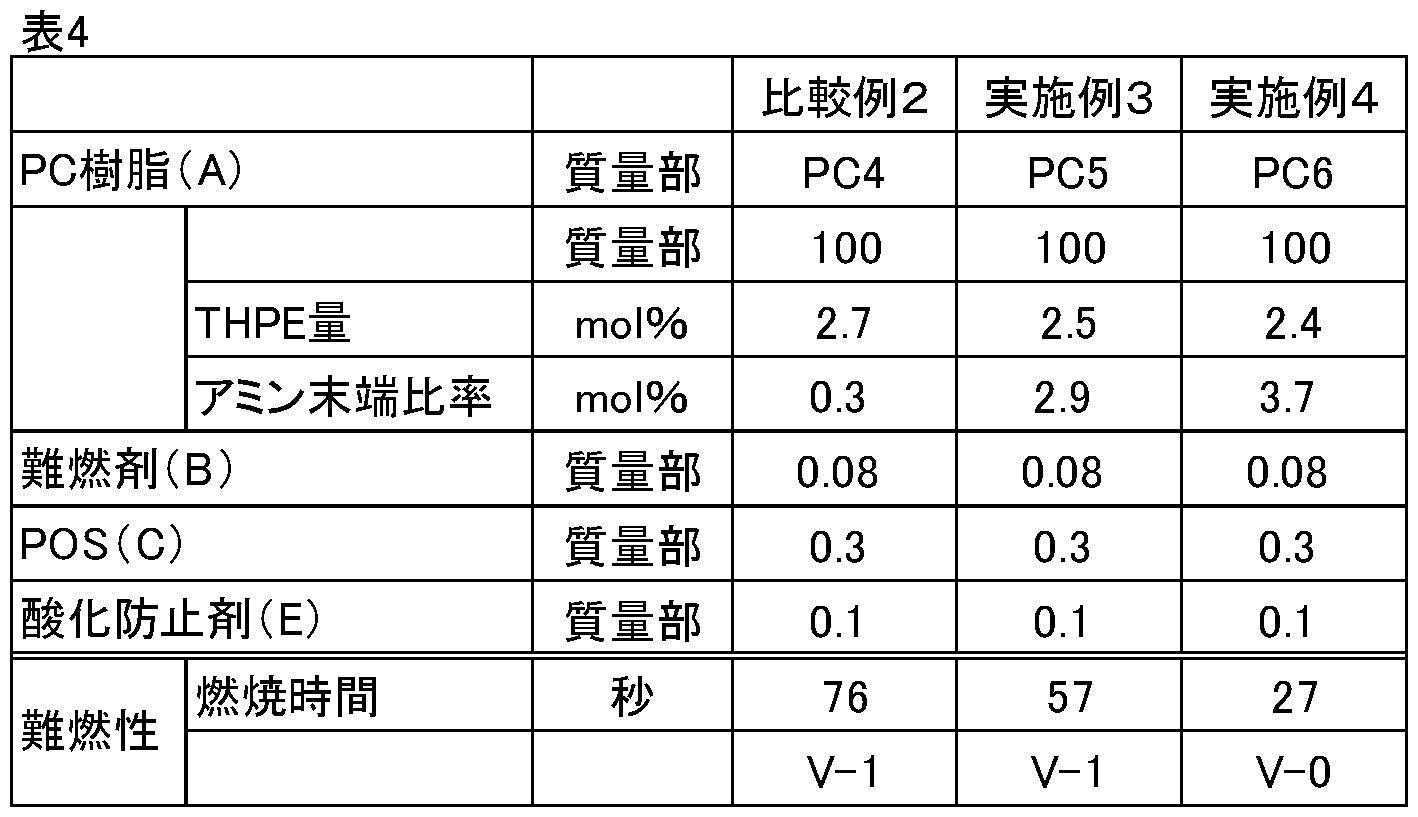
本発明によれば、ポリカーボネート系樹脂の有する優れた物性を損なうことなく、樹脂自体の耐ドリップ性が改良されたポリカーボネート系樹脂を得ることができる。
Claims (16)
- 全末端基に対するアミン末端の比率が1.0モル%以上である、ポリカーボネート系樹脂。
- 全末端基に対する前記アミン末端の比率が20.0モル%以下である、請求項1に記載のポリカーボネート系樹脂。
- 下記一般式(II)で表される繰り返し単位を有する、請求項1又は2に記載のポリカーボネート系樹脂。

[式中、R1及びR2はそれぞれ独立に、ハロゲン原子、炭素数1~6のアルキル基又は炭素数1~6のアルコキシ基を示す。Xは単結合、炭素数1~8のアルキレン基、炭素数2~8のアルキリデン基、炭素数5~15のシクロアルキレン基、炭素数5~15のシクロアルキリデン基、-S-、-SO-、-SO2-、-O-又は-CO-を示す。a及びbはそれぞれ独立に、0~4の整数を示す。] - 前記ポリカーボネート系樹脂が、分岐状ポリカーボネート系樹脂(A-1)10~100質量部、及び前記分岐状ポリカーボネート系樹脂(A-1)以外の芳香族ポリカーボネート系樹脂(A-2)90~0質量部からなる、請求項1~3のいずれか一項に記載のポリカーボネート系樹脂。
- 前記分岐状ポリカーボネート系樹脂(A-1)が、下記一般式(I)で表される分岐構造を有し、分岐率が0.3モル%以上3.0モル%以下である、請求項4に記載のポリカーボネート系樹脂。

[式中、Rは水素原子又は炭素数1~5のアルキル基を示し、R21~R26はそれぞれ独立に、水素原子、炭素数1~5のアルキル基又はハロゲン原子を示す。PCはポリカーボネート部分を示し、f、g及びhは整数を表す。] - 前記一般式(I)で表される分岐構造は、1,1,1-トリス(4-ヒドロキシフェニル)エタンに由来する構造である、請求項5に記載のポリカーボネート系樹脂。
- 粘度平均分子量が17,000以上28,000以下である、請求項1~6のいずれか一項に記載のポリカーボネート系樹脂。
- 有機溶媒中、二価フェノールとホスゲンとを反応させてポリカーボネートオリゴマーを製造する工程(1)と、前記ポリカーボネートオリゴマーと二価フェノールと末端停止剤とを反応させてポリカーボネート系樹脂を製造する工程(2)とを有し、重合触媒としてアミン系触媒を、工程(1)で得られるポリカーボネートオリゴマーのクロロホーメート基に対して、モル比で、0.002以上0.030以下用いる、ポリカーボネート系樹脂の製造方法。
- 前記工程(1)及び/又は工程(2)に分岐剤を加える、請求項8に記載のポリカーボネート系樹脂の製造方法。
- 前記分岐剤が下記一般式(III)の構造を有する、請求項9に記載のポリカーボネート系樹脂の製造方法。
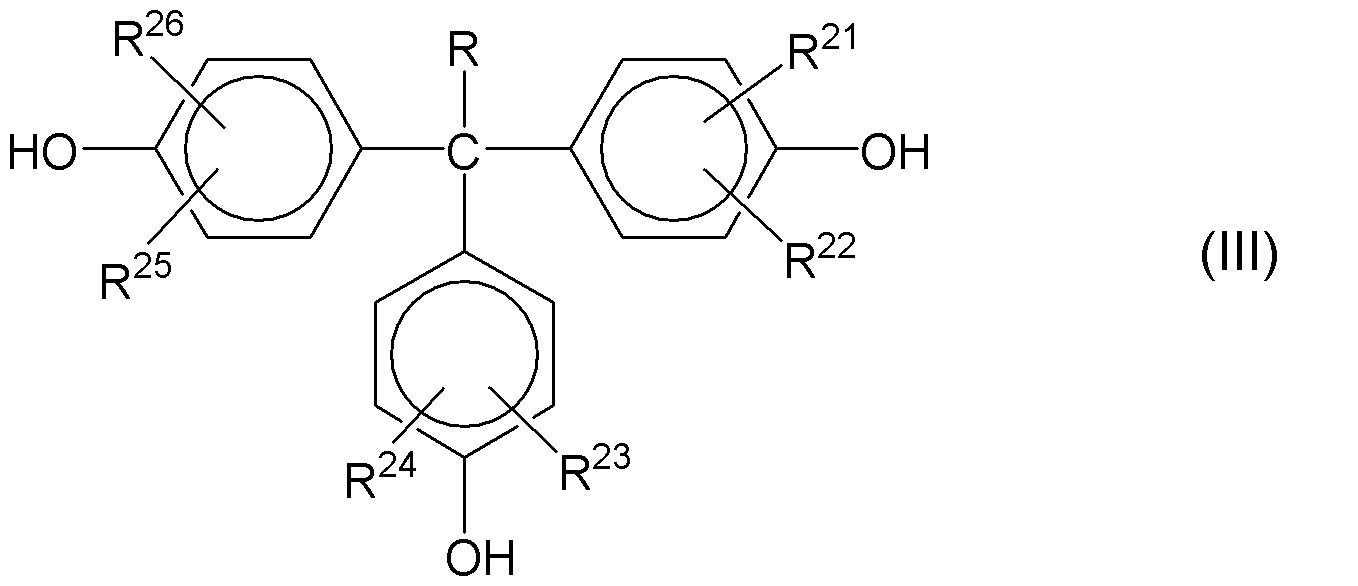
[式中、Rは水素原子又は炭素数1~5のアルキル基を示し、R21~R26はそれぞれ独立に、水素原子、炭素数1~5のアルキル基又はハロゲン原子を示す。] - 前記分岐剤を前記工程(2)において更に加える、請求項9又は10に記載のポリカーボネート系樹脂の製造方法。
- 前記一般式(III)で表される前記分岐剤を、前記工程(1)及び工程(2)で加えられる二価フェノール、分岐剤及び末端停止剤の総モル数に対して、0.3モル%以上3.0モル%以下加える、請求項10又は11に記載のポリカーボネート系樹脂の製造方法。
- 前記一般式(III)で表される分岐剤が1,1,1-トリス(4-ヒドロキシフェニル)エタンである、請求項10~12のいずれか一項に記載のポリカーボネート系樹脂の製造方法。
- 前記アミン系触媒が第三級アミン又はその塩である、請求項8~13のいずれか一項に記載のポリカーボネート系樹脂の製造方法。
- 前記アミン系触媒がトリエチルアミンである、請求項8~14のいずれか一項に記載のポリカーボネート系樹脂の製造方法。
- 請求項1~7のいずれか一項に記載のポリカーボネート系樹脂(A)と、難燃剤(B)、ポリオルガノシロキサン(C)、ポリテトラフルオロエチレン(D)及び酸化防止剤(E)からなる群から選択される少なくとも1種とを含む、ポリカーボネート系樹脂組成物。
Priority Applications (4)
| Application Number | Priority Date | Filing Date | Title |
|---|---|---|---|
| US17/059,926 US12024629B2 (en) | 2018-06-01 | 2019-05-31 | Polycarbonate-based resin, production method therefor, and polycarbonate-based resin composition |
| KR1020207034061A KR102739409B1 (ko) | 2018-06-01 | 2019-05-31 | 폴리카보네이트계 수지 및 그의 제조 방법, 및 폴리카보네이트계 수지 조성물 |
| CN201980036586.8A CN112204072B (zh) | 2018-06-01 | 2019-05-31 | 聚碳酸酯系树脂及其制造方法、以及聚碳酸酯系树脂组合物 |
| DE112019002794.8T DE112019002794T5 (de) | 2018-06-01 | 2019-05-31 | Polycarbonat-basiertes Harz, Produktionsverfahren hierfür und Polycarbonat-basierte Harzzusammensetzung |
Applications Claiming Priority (2)
| Application Number | Priority Date | Filing Date | Title |
|---|---|---|---|
| JP2018-106277 | 2018-06-01 | ||
| JP2018106277A JP7181006B2 (ja) | 2018-06-01 | 2018-06-01 | ポリカーボネート系樹脂及びその製造方法、並びにポリカーボネート系樹脂組成物 |
Publications (1)
| Publication Number | Publication Date |
|---|---|
| WO2019230951A1 true WO2019230951A1 (ja) | 2019-12-05 |
Family
ID=68697553
Family Applications (1)
| Application Number | Title | Priority Date | Filing Date |
|---|---|---|---|
| PCT/JP2019/021727 Ceased WO2019230951A1 (ja) | 2018-06-01 | 2019-05-31 | ポリカーボネート系樹脂及びその製造方法、並びにポリカーボネート系樹脂組成物 |
Country Status (7)
| Country | Link |
|---|---|
| US (1) | US12024629B2 (ja) |
| JP (1) | JP7181006B2 (ja) |
| KR (1) | KR102739409B1 (ja) |
| CN (1) | CN112204072B (ja) |
| DE (1) | DE112019002794T5 (ja) |
| TW (1) | TWI841567B (ja) |
| WO (1) | WO2019230951A1 (ja) |
Citations (6)
| Publication number | Priority date | Publication date | Assignee | Title |
|---|---|---|---|---|
| JPS63186732A (ja) * | 1987-01-29 | 1988-08-02 | Idemitsu Petrochem Co Ltd | ポリカ−ボネ−トの製造方法 |
| JPH04268328A (ja) * | 1991-02-22 | 1992-09-24 | Idemitsu Petrochem Co Ltd | 分岐ポリカーボネート |
| JPH0656981A (ja) * | 1992-08-13 | 1994-03-01 | Mitsubishi Gas Chem Co Inc | 二級アミン末端ポリカーボネート樹脂またはそのオリ ゴマーおよびその製法 |
| US20120123034A1 (en) * | 2010-11-14 | 2012-05-17 | Sabic Innovative Plastics Ip B.V | Compositions and articles of manufacture containing branched polycarbonate |
| WO2014084327A1 (ja) * | 2012-11-30 | 2014-06-05 | 出光興産株式会社 | ポリカーボネート樹脂、ポリカーボネート樹脂組成物及び成形品 |
| JP2015108157A (ja) * | 2010-05-27 | 2015-06-11 | 出光興産株式会社 | ポリカーボネート樹脂組成物及びポリカーボネート樹脂成形体 |
Family Cites Families (17)
| Publication number | Priority date | Publication date | Assignee | Title |
|---|---|---|---|---|
| US4111910A (en) * | 1976-07-12 | 1978-09-05 | The Dow Chemical Company | Polycarbonates having carbamate terminal groups |
| JP2681682B2 (ja) * | 1989-03-14 | 1997-11-26 | 出光石油化学株式会社 | 分岐状ポリカーボネートの製造方法 |
| US4973664A (en) * | 1989-07-20 | 1990-11-27 | General Electric Company | Method for preparing polycarbonates of controlled molecular weight from bischloroformates |
| JP2628562B2 (ja) * | 1989-08-03 | 1997-07-09 | 出光石油化学株式会社 | 分岐状ポリカーボネート及びその製造方法 |
| US5367044A (en) * | 1990-10-12 | 1994-11-22 | General Electric Company | Blow molded article molded from a composition comprising a randomly branched aromatic polymer |
| JPH05214236A (ja) * | 1992-02-04 | 1993-08-24 | Idemitsu Petrochem Co Ltd | ポリカーボネート系樹脂組成物 |
| JP3129374B2 (ja) | 1994-03-18 | 2001-01-29 | 出光石油化学株式会社 | 難燃性ポリカーボネート樹脂組成物 |
| JP2000169696A (ja) | 1998-12-10 | 2000-06-20 | Sumitomo Dow Ltd | 熱安定性に優れた難燃性ポリカ―ボネ―ト樹脂組成物 |
| JP3995945B2 (ja) * | 2002-02-04 | 2007-10-24 | 出光興産株式会社 | 直鎖状ポリカーボネートの製造方法 |
| CN1281655C (zh) * | 2001-09-27 | 2006-10-25 | 出光兴产株式会社 | 聚碳酸酯树脂及其制造方法 |
| US6437083B1 (en) * | 2001-12-06 | 2002-08-20 | General Electric Company | Process for preparing branched aromatic polycarbonates |
| DE10300598A1 (de) | 2003-01-10 | 2004-07-22 | Bayer Ag | Verfahren zur Herstellung von Polycarbonaten |
| JP5279164B2 (ja) | 2004-11-24 | 2013-09-04 | 旭化成イーマテリアルズ株式会社 | 芳香族ポリカ−ボネ−ト樹脂組成物および成形体 |
| DE102004061715A1 (de) | 2004-12-22 | 2006-07-06 | Bayer Materialscience Ag | Verfahren zur Herstellung von Polycarbonaten |
| TWM299983U (en) | 2006-03-24 | 2006-10-21 | Lite On Technology Corp | Scanning apparatus |
| JP5897789B2 (ja) * | 2009-06-26 | 2016-03-30 | 中央化成品株式会社 | ビスクロロホーメート化合物の製造方法 |
| US8541537B2 (en) * | 2009-10-07 | 2013-09-24 | Teijin Chemicals, Ltd. | Branched polycarbonate resin and process for producing the same |
-
2018
- 2018-06-01 JP JP2018106277A patent/JP7181006B2/ja active Active
-
2019
- 2019-05-31 DE DE112019002794.8T patent/DE112019002794T5/de active Pending
- 2019-05-31 CN CN201980036586.8A patent/CN112204072B/zh active Active
- 2019-05-31 TW TW108119083A patent/TWI841567B/zh active
- 2019-05-31 KR KR1020207034061A patent/KR102739409B1/ko active Active
- 2019-05-31 US US17/059,926 patent/US12024629B2/en active Active
- 2019-05-31 WO PCT/JP2019/021727 patent/WO2019230951A1/ja not_active Ceased
Patent Citations (6)
| Publication number | Priority date | Publication date | Assignee | Title |
|---|---|---|---|---|
| JPS63186732A (ja) * | 1987-01-29 | 1988-08-02 | Idemitsu Petrochem Co Ltd | ポリカ−ボネ−トの製造方法 |
| JPH04268328A (ja) * | 1991-02-22 | 1992-09-24 | Idemitsu Petrochem Co Ltd | 分岐ポリカーボネート |
| JPH0656981A (ja) * | 1992-08-13 | 1994-03-01 | Mitsubishi Gas Chem Co Inc | 二級アミン末端ポリカーボネート樹脂またはそのオリ ゴマーおよびその製法 |
| JP2015108157A (ja) * | 2010-05-27 | 2015-06-11 | 出光興産株式会社 | ポリカーボネート樹脂組成物及びポリカーボネート樹脂成形体 |
| US20120123034A1 (en) * | 2010-11-14 | 2012-05-17 | Sabic Innovative Plastics Ip B.V | Compositions and articles of manufacture containing branched polycarbonate |
| WO2014084327A1 (ja) * | 2012-11-30 | 2014-06-05 | 出光興産株式会社 | ポリカーボネート樹脂、ポリカーボネート樹脂組成物及び成形品 |
Also Published As
| Publication number | Publication date |
|---|---|
| US12024629B2 (en) | 2024-07-02 |
| JP2019210350A (ja) | 2019-12-12 |
| TW202003630A (zh) | 2020-01-16 |
| TWI841567B (zh) | 2024-05-11 |
| KR20210018242A (ko) | 2021-02-17 |
| CN112204072A (zh) | 2021-01-08 |
| KR102739409B1 (ko) | 2024-12-05 |
| JP7181006B2 (ja) | 2022-11-30 |
| CN112204072B (zh) | 2023-03-07 |
| DE112019002794T5 (de) | 2021-03-04 |
| US20210206967A1 (en) | 2021-07-08 |
Similar Documents
| Publication | Publication Date | Title |
|---|---|---|
| TWI572637B (zh) | Polycarbonate-polyorganosiloxane copolymer, a process for producing the same, and a polycarbonate resin containing the copolymer | |
| TWI592444B (zh) | Polycarbonate resin composition and polycarbonate resin molded article | |
| KR101739675B1 (ko) | 폴리카보네이트 수지 조성물 및 성형체 | |
| EP3312241B1 (en) | Polycarbonate resin composition and molded product thereof | |
| ES2613230T3 (es) | Resina de copolicarbonato y producto que comprende la misma | |
| WO2020054742A1 (ja) | ポリカーボネート系樹脂組成物 | |
| US20170306088A1 (en) | Polycarbonate resin composition including recycled material, and molded article of same | |
| WO2019049916A1 (ja) | ポリカーボネート系樹脂組成物及びその成形品 | |
| WO2020054741A1 (ja) | ポリカーボネート系樹脂組成物 | |
| JP5619386B2 (ja) | ポリカーボネート樹脂組成物 | |
| WO2018066561A1 (ja) | ポリカーボネート系樹脂組成物及び成形体 | |
| JP7181006B2 (ja) | ポリカーボネート系樹脂及びその製造方法、並びにポリカーボネート系樹脂組成物 | |
| WO2022215657A1 (ja) | ポリカーボネート系樹脂組成物及び成形品 | |
| EP3808790B1 (en) | Polycarbonate and preparation method thereof | |
| KR102395333B1 (ko) | 분기 폴리카보네이트 수지 및 그 제조 방법 | |
| TW201542619A (zh) | 聚碳酸酯樹脂之製造方法 | |
| JP6163297B2 (ja) | ポリカーボネート樹脂、ポリカーボネート樹脂組成物及び成形品 | |
| TW201630969A (zh) | 聚碳酸酯之製造方法 | |
| US20170313824A1 (en) | Method for preparing polycarbonate-polyorganosiloxane copolymer | |
| WO2024225400A1 (ja) | ポリカーボネート系樹脂組成物及びその成形品 | |
| JP5638876B2 (ja) | 高難燃性芳香族ポリカーボネート共重合体及び芳香族ポリカーボネート樹脂組成物 | |
| JP2016089102A (ja) | 分岐ポリカーボネートの製造方法 |
Legal Events
| Date | Code | Title | Description |
|---|---|---|---|
| 121 | Ep: the epo has been informed by wipo that ep was designated in this application |
Ref document number: 19811320 Country of ref document: EP Kind code of ref document: A1 |
|
| ENP | Entry into the national phase |
Ref document number: 20207034061 Country of ref document: KR Kind code of ref document: A |
|
| 122 | Ep: pct application non-entry in european phase |
Ref document number: 19811320 Country of ref document: EP Kind code of ref document: A1 |