WO2018079823A1 - 清掃用ウェットシートおよび清掃用ウェットシートの製造方法 - Google Patents
清掃用ウェットシートおよび清掃用ウェットシートの製造方法 Download PDFInfo
- Publication number
- WO2018079823A1 WO2018079823A1 PCT/JP2017/039300 JP2017039300W WO2018079823A1 WO 2018079823 A1 WO2018079823 A1 WO 2018079823A1 JP 2017039300 W JP2017039300 W JP 2017039300W WO 2018079823 A1 WO2018079823 A1 WO 2018079823A1
- Authority
- WO
- WIPO (PCT)
- Prior art keywords
- cleaning
- wet sheet
- entangled
- resistance value
- layer
- Prior art date
- Legal status (The legal status is an assumption and is not a legal conclusion. Google has not performed a legal analysis and makes no representation as to the accuracy of the status listed.)
- Ceased
Links
Images

Classifications
-
- A—HUMAN NECESSITIES
- A47—FURNITURE; DOMESTIC ARTICLES OR APPLIANCES; COFFEE MILLS; SPICE MILLS; SUCTION CLEANERS IN GENERAL
- A47L—DOMESTIC WASHING OR CLEANING; SUCTION CLEANERS IN GENERAL
- A47L13/00—Implements for cleaning floors, carpets, furniture, walls, or wall coverings
- A47L13/10—Scrubbing; Scouring; Cleaning; Polishing
- A47L13/16—Cloths; Pads; Sponges
- A47L13/17—Cloths; Pads; Sponges containing cleaning agents
-
- B—PERFORMING OPERATIONS; TRANSPORTING
- B32—LAYERED PRODUCTS
- B32B—LAYERED PRODUCTS, i.e. PRODUCTS BUILT-UP OF STRATA OF FLAT OR NON-FLAT, e.g. CELLULAR OR HONEYCOMB, FORM
- B32B5/00—Layered products characterised by the non- homogeneity or physical structure, i.e. comprising a fibrous, filamentary, particulate or foam layer; Layered products characterised by having a layer differing constitutionally or physically in different parts
- B32B5/22—Layered products characterised by the non- homogeneity or physical structure, i.e. comprising a fibrous, filamentary, particulate or foam layer; Layered products characterised by having a layer differing constitutionally or physically in different parts characterised by the presence of two or more layers which are next to each other and are fibrous, filamentary, formed of particles or foamed
- B32B5/24—Layered products characterised by the non- homogeneity or physical structure, i.e. comprising a fibrous, filamentary, particulate or foam layer; Layered products characterised by having a layer differing constitutionally or physically in different parts characterised by the presence of two or more layers which are next to each other and are fibrous, filamentary, formed of particles or foamed one layer being a fibrous or filamentary layer
- B32B5/26—Layered products characterised by the non- homogeneity or physical structure, i.e. comprising a fibrous, filamentary, particulate or foam layer; Layered products characterised by having a layer differing constitutionally or physically in different parts characterised by the presence of two or more layers which are next to each other and are fibrous, filamentary, formed of particles or foamed one layer being a fibrous or filamentary layer another layer next to it also being fibrous or filamentary
Definitions
- the present invention relates to a cleaning wet sheet and a method for manufacturing a cleaning wet sheet.
- a wet sheet for cleaning in which a sheet material is impregnated with a chemical is known.
- Some of these wet sheets for cleaning are formed of a plurality of layers.
- the inner layer is provided with hydrophilic fibers such as rayon
- the outer layer is provided with hydrophobic fibers such as polypropylene
- the inner layer hydrophilic fibers are treated with a chemical solution.
- An object of the present invention is to provide a cleaning wet sheet and a cleaning wet sheet manufacturing method capable of suppressing excessive release of the chemical even when a low viscosity chemical is used.
- the invention described in claim 1 is a cleaning wet sheet composed of a plurality of layers and impregnated with a chemical solution, and a hydrophobic fiber layer provided on each of the front surface and the back surface, and these A hydrophilic fiber layer provided in an intermediate layer sandwiched between the hydrophobic fiber layers, an entangled portion where the hydrophobic fiber layer and the hydrophilic fiber layer are entangled, the hydrophobic fiber layer and the hydrophilic fiber A non-entangled portion that is not entangled with the layer, the hydrophilic fiber layer is impregnated with a chemical solution, the basis weight of the hydrophilic fiber layer is 10-50 g / m 2 , and the cleaning
- the wet friction sheet has a mass of 10-60%, and the static friction resistance value in the wiping direction on the cleaning surface of the cleaning wet sheet is smaller than the dynamic friction resistance value measured according to the horizontal method of JIS-P8147. It is characterized by.
- the hydrophilic fiber layer has a basis weight of 10-50 g / m 2 , so that the chemical solution is suitably held by the hydrophilic fiber layer and is used for cleaning.
- JIS -The static frictional resistance value in the wiping direction on the cleaning surface of the cleaning wet sheet, measured according to the horizontal method of P8127 can be made smaller than the dynamic frictional resistance value. Accordingly, even when a low-viscosity chemical solution is used, it is not necessary to apply a large load to the initial movement when wiping with a cleaning wet sheet, and excessive release of the chemical solution can be suppressed.
- the entangled portion is formed with an area ratio of 23 to 80% with respect to a surface area in a plan view of the front surface or the rear surface. It is characterized by that.
- the entangled portion is formed with an area ratio of 23-80% with respect to the surface area in plan view. Therefore, the frictional resistance value of the cleaning wet sheet can be set to a better value. For this reason, it can wipe with more moderate load and can discharge
- the entangled portion extends in a direction substantially perpendicular to the wiping direction of the cleaning wet sheet.
- the third aspect of the invention it is of course possible to obtain the same effect as that of the first or second aspect of the invention, and in particular, since the entangled portion extends perpendicularly to the wiping direction. Further, the surface of the cleaning wet sheet that is spaced from the surface to be cleaned can be formed so as to extend perpendicularly to the wiping direction, and excessive release of the chemical solution can be suppressed.
- the entangled portions and the non-entangled portions are alternately and continuously formed along the wiping direction.
- the entangled part and the non-entangled part are alternately continuously arranged along the wiping direction. Since it forms, a several entangled part and a non-entangled part can be made to contact a to-be-cleaned surface alternately continuously, and the excessive discharge
- medical solution can be suppressed more favorably.
- the invention according to claim 5 is the wet sheet for cleaning according to any one of claims 1 to 4, wherein the static friction resistance value in the wiping direction on the cleaning surface of the wet sheet for cleaning is 500 cN or less, and The frictional resistance ratio between the dynamic frictional resistance value and the static frictional resistance value (static frictional resistance value / dynamic frictional resistance value) is 0.7 or less.
- the fifth aspect of the present invention it is of course possible to obtain the same effect as that of any one of the first to fourth aspects of the present invention, particularly in the wiping direction on the cleaning surface of the cleaning wet sheet. Since the frictional resistance ratio (static frictional resistance value / dynamic frictional resistance value) is 0.7 or less, the load applied to the cleaning wet sheet at the start of sliding at the start of wiping can be reduced. For this reason, the chemical solution is not excessively discharged to the surface to be cleaned, and there is no fear that the chemical solution is insufficient and cannot be sufficiently cleaned.
- the invention according to claim 6 is the wet sheet for cleaning according to any one of claims 1 to 5, wherein the hydrophobic fiber layer contains hydrophobic fibers in a weight ratio of 50 to 100%. It is characterized by being.
- the weight of the hydrophobic fiber layer is 50-100%. Since the hydrophobic fibers are contained in a ratio, it is possible to suitably realize the holding of the chemical solution impregnated in the hydrophilic fiber layer and the adjustment of the discharge amount.
- the invention according to claim 7 is the wet sheet for cleaning according to any one of claims 1 to 6, wherein the hydrophobic fiber layer has a blending ratio of polyethylene terephthalate fibers of 80% or more, and the polyethylene terephthalate The fiber diameter is 3.3 dtex or more.
- the fibers of polyethylene terephthalate fibers constituting the hydrophobic fiber layer Since the diameter is 3.3 dtex or more, the rigidity (cushioning property) of the fiber is improved, and it can be operated even with a light force. Further, the polyethylene terephthalate fiber having a thick fiber diameter of 3.3 dtex or more secures a gap between fibers, hardly causes a capillary phenomenon, and can prevent the chemical solution from flowing from the inner layer to the outer layer.
- Invention of Claim 8 is a manufacturing method of the wet sheet for cleaning which manufactures the wet sheet for cleaning as described in any one of Claims 1-7, Comprising: Forming the said entanglement part by hydroentanglement Features.
- the entangled portion is entangled by hydroentanglement
- the hydrophilic fiber layer and the hydrophobic fiber layer can be entangled without using an adhesive or the like, and the structure is simplified.
- the cleaning wet sheet and the manufacturing method of the cleaning wet sheet can suppress the excessive release of the chemical liquid even when using the low viscosity chemical liquid, and can increase the area that can be wiped while discharging the chemical liquid. .
- a cleaning wet sheet according to an embodiment of the present invention will be described with reference to FIGS.
- the cleaning wet sheet 1 includes an inner layer 2 as a hydrophilic fiber layer and an outer layer 3 as a hydrophobic fiber layer.
- the inner layer 2 is an intermediate layer sandwiched between outer layers 3 described later, and is mainly formed of hydrophilic fibers, and the hydrophilic fibers are impregnated with a chemical solution.
- the inner layer 2 is formed so as to have a basis weight of 10-50 g / m 2 and occupies a weight ratio of 10-60% with respect to the total weight with the outer layer 3 described later.
- the basis weight is 10-50 g / m 2 and the mass is 10-60% of the total amount of the wet sheet for cleaning.
- the hydrophilic fiber natural fibers such as pulp, cotton and hemp, and cellulosic chemical fibers such as rayon and acetate are applied, but it is preferable to apply pulp from the viewpoint of maintaining water retention. .
- the hydrophobic fiber may contain suitably.
- the chemical solution is used as a cleaning detergent for the cleaning wet sheet 1 and is released from the front surface or the back surface through the outer layer 3 described later.
- the chemical solution is prepared so that the viscosity is 1-15 mPa ⁇ s at 25 ° C.
- the viscosity is measured using a Brookfield (B type) rotational viscometer (model number: LVDV-I +), and the rotor used and the number of rotations are appropriately changed according to the viscosity of the aqueous detergent.
- the measurement conditions are 25 ° C., the rotation speed is 60 rpm, and the method is carried out according to JIS K 7117-1: 1999.
- medical solution what dissolved lower alcohol, such as ethanol, surfactant and disinfectants, such as benzalkonium chloride, and propylene glycol monomethyl ether (PGME) is mentioned as an example.
- the outer layer 3 is a layer that forms the surface layer and the back surface layer of the cleaning wet sheet 1, and is mainly formed of hydrophobic fibers. Specifically, the hydrophobic fibers are contained in a weight ratio of 50-100% with respect to the total weight of the outer layer 3.
- a chemical fiber mainly composed of polyethylene terephthalate, polypropylene, polyethylene or the like is applied as the hydrophobic fiber.
- the blending ratio of the polyethylene terephthalate fiber is preferably 80% or more, and the fiber diameter is preferably 3.3 dtex or more. By setting the fiber diameter to 3.3 dtex or more, the rigidity (cushioning property) of the fiber is improved and the operation can be performed with a light force.
- the polyethylene terephthalate fiber having a thick fiber diameter of 3.3 dtex or more secures an inter-fiber gap, prevents a capillary phenomenon from occurring, and prevents the chemical solution from flowing from the inner layer 2 to the outer layer 3.
- the outer layer 3 includes an entangled portion 31 and a non-entangled portion 32.
- the entangled portion 31 is a place where the inner layer 2 and the outer layer 3 are integrated by tangling the respective fibers.
- a method of entanglement of the entanglement part 31 for example, water entanglement is adopted.
- the inner layer 2 and the outer layer 3 are integrated by applying pre-entanglement with water at a weak water pressure of less than 20 kPa over the entire surface, and then the water flows at a location where the entangled portion 31 is formed at a water pressure of 60-80 kPa.
- the water entanglement is performed by applying water from both sides to the same portion of the front surface layer and the back surface layer of the cleaning wet sheet 1.
- the entangled portion 31 is formed in such a manner that the uneven patterning is performed in the same place in the front surface layer and the back surface layer. Since the interlaced portion 31 is subjected to hydroentanglement, the fibers of the inner layer 2 and the outer layer 3 are intertwined, and the fiber density is higher than the non-entangled portion 32 described later. For this reason, the hydrophobic fiber forming the entangled portion 31 does not have a spatial degree of freedom as compared with the non-entangled portion 32, and each fiber is compared with the non-entangled portion 32 during the wiping operation. It is designed not to move freely.
- the entangled portion 31 has a concave shape with respect to the non-entangled portion 32 because the fiber density is higher than that of the non-entangled portion 32.
- the entangled portion 31 includes a bottom portion 311 that is the bottom of the recess, and an inclined portion 312 that is an inclined surface that connects the non-entangled portion 32 and the bottom portion 311 described later.
- the entangled portion 31 extends along a direction (MD direction) perpendicular to the direction of the wiping direction (CD direction) on the cleaning surface of the cleaning wet sheet.
- the wiping direction on the cleaning surface of the cleaning wet sheet is a direction perpendicular to the longitudinal direction of the jig body when the cleaning wet sheet is mounted on a predetermined jig, and is in the moving direction during cleaning. It is the direction along.
- the entangled portions 31 are formed in a plurality of rows separated by a predetermined interval. These entangled portions 31 are formed so as to have an area ratio of 23 to 80% in a plan view with respect to the area of the front or back surface of the cleaning wet sheet 1.
- the non-entangled portion 32 is a place where the inner layer 2 and the outer layer 3 are subjected only to pre-entanglement and are not subjected to hydroentanglement.
- the non-entangled portion 32 is not subjected to hydroentanglement, so the fiber density is lower than that of the entangled portion 31, and the fibers in this place are compared with the fibers of the entangled portion 31 during the wiping operation. It can move freely.
- the entangled portions 31 and the non-entangled portions 32 are alternately provided along the wiping direction, and only the non-entangled portion 32 is initially in contact with the surface to be cleaned. Note that the pre-entanglement is not included in the hydroentanglement process.
- the non-entangled part 32 to which only pre-entanglement is applied is treated as a part that is not entangled for convenience, although it is slightly fiber-entangled by pre-entanglement.
- the cleaning wet sheet 1 is measured according to the horizontal method (described later) of JIS-P8147, compared with the case where the entangled portion 31 is not provided, and the static friction resistance value and the dynamic friction of the cleaning surface of the cleaning wet sheet are measured. The resistance value is reduced.
- the static friction resistance value is smaller than the dynamic friction resistance value. That is, the entangled portion 31 has a shape in which the fiber density is higher than that of the non-entangled portion 32 and is recessed with respect to the non-entangled portion 32. Therefore, at the initial stage of wiping the surface to be cleaned, The contact area of the cleaning wet sheet to the surface is reduced.
- the inner layer 2 is composed of hydrophilic fibers, the chemical solution can be suitably held.
- the frictional resistance value when wiping the surface to be cleaned with the cleaning wet sheet 1 is small, a light wiping comfort can be obtained, and further, the static frictional resistance value in the wiping direction of the cleaning wet sheet 1 Is less than 500 cN and the static friction resistance value is smaller than the dynamic friction resistance value (specifically, the friction resistance ratio ((static friction resistance value / dynamic friction resistance value) is 0.7 or less).
- the friction resistance ratio ((static friction resistance value / dynamic friction resistance value) is 0.7 or less).
- the load at the beginning of wiping is small.
- a frictional resistance value differs in MD direction and CD direction of the wet sheet
- the hydrophilic fiber layer 2 has a basis weight of 10-50 g / m 2 and a mass of 10-60% of the total amount of the cleaning wet sheet 1.
- the chemical solution is suitably held by the hydrophilic fiber layer, and is formed by the entangled portion 31 and the non-entangled portion 32, the separation surface and the contact surface of the cleaning wet sheet, and the hydrophilic fiber layer 2.
- the static friction resistance value in the wiping direction on the cleaning surface of the cleaning wet sheet 1 can be made smaller than the dynamic friction resistance value due to the retention effect of the chemical solution by the hydrophilic fiber. Accordingly, even when a low-viscosity chemical solution is used, it is not necessary to apply a large load to the initial movement when wiping with a cleaning wet sheet, and excessive release of the chemical solution can be suppressed.
- the entangled portion 31 is formed with an area ratio of 23-80% with respect to the surface area in plan view of the front and back surfaces, so that the friction in the wiping direction on the cleaning surface of the cleaning wet sheet 1 is achieved.
- the resistance value can be set to a better value. That is, when the entangled portion 31 is less than 20% with respect to the surface area in plan view of the front and back surfaces, the contact surface at the time of initial movement increases and the static frictional resistance value increases. On the other hand, if it exceeds 50%, the ratio of the entangled portion 31 having a high fiber density contacting the cleaning surface at the time of cleaning increases, so that the dynamic friction resistance value increases. For this reason, by setting the area ratio of the entangled portion 31 within the above range, it can be wiped with an appropriate load, and the chemical solution can be released appropriately.
- the entanglement part 31 is extended perpendicularly to the wiping direction, the contact surface to the surface to be cleaned and the separation surface of the cleaning wet sheet 1 are alternately cleaned. And excessive release of the chemical solution can be suppressed.
- the entangled part 31 and the non-entangled part 32 are formed alternately and continuously along the wiping direction, the plurality of entangled parts 31 and the non-entangled part 32 are alternately continued. Can be brought into contact with the surface to be cleaned, and excessive release of the chemical solution can be more effectively suppressed.
- the frictional resistance ratio (static frictional resistance value / dynamic frictional resistance value) in the wiping direction on the cleaning surface of the cleaning wet sheet 1 is 0.7 or less, sliding starts at the start of wiping. Sometimes, the load applied to the cleaning wet sheet 1 can be reduced. For this reason, the chemical solution is not excessively discharged to the surface to be cleaned, and there is no fear that the chemical solution is insufficient and cannot be sufficiently cleaned.
- the hydrophobic fiber is contained in the hydrophobic fiber layer 3 in a weight ratio of 50-100%, the retention and release amount of the chemical solution impregnated in the hydrophilic fiber layer 2 is adjusted. Can be suitably realized.
- the entanglement part 31 is entangled by hydroentanglement, the hydrophilic fiber layer 2 and the hydrophobic fiber layer 3 can be entangled without using an adhesive, etc. In addition, it is possible to avoid uneven wiping and the like due to the adhesive blocking the discharge surface of the chemical solution.
- the fiber diameter of the polyethylene terephthalate fiber which comprises a hydrophobic fiber layer is 3.3 dtex or more, the rigidity (cushion property) of a fiber improves and it can operate with a light force. Further, the polyethylene terephthalate fiber having a thick fiber diameter of 3.3 dtex or more secures a gap between fibers, hardly causes a capillary phenomenon, and can prevent the chemical solution from flowing from the inner layer to the outer layer.
- the cleaning wet sheet 1 may have both the front surface and the back surface as cleaning surfaces, or only one surface as a cleaning surface.
- the CD direction is the wiping direction
- the MD direction may be the wiping direction.
- Example 1 In Example 1, the following was used as the cleaning wet sheet 1.
- a non-woven fabric mainly composed of polyethylene terephthalate was used as the hydrophobic fiber, and a fiber mainly composed of a pulp raw material was used as the hydrophilic fiber.
- the hydrophobic fiber a chemical fiber mainly composed of polyethylene terephthalate, polypropylene, polyethylene, or the like is used.
- the outer layer (hydrophobic fiber layer) 3 is composed of 100% hydrophobic fiber, 90% polyethylene terephthalate is contained as the hydrophobic fiber, and core and sheath fibers of polypropylene and polyethylene are used as the binder fiber. Contains 10%.
- polyethylene terephthalate fibers having a fineness of 3.3 dtex and binder fibers having a fineness of 1.7 dtex were used.
- water is used as a solvent
- surfactants anionic surfactants, nonionic surfactants, cationic surfactants and amphoteric surfactants
- water-soluble solvents monohydric alcohols or polyhydric alcohols
- 1% pristol as a nonionic surfactant 0.5% lauryl dimethylamine oxide as an amphoteric surfactant, 3.4% ethanol as an alcohol, 1-methoxy-2-propanol 1.
- the inner layer (hydrophilic fiber layer) 2 is impregnated with a chemical solution so that the impregnation rate is 300%, the basis weight is 30 g / m 2 , and the ratio between the inner layer 2 and the cleaning wet sheet 1 is 45%. Using. Moreover, the stripe type thing which formed the area ratio of the entangled part 31 of the outer layer 3 to 23% was used.
- Example 2 In Example 2, the inner layer 2 having a basis weight of 10 g / m 2 and a ratio of the inner layer 2 to the cleaning wet sheet 1 of 10% was used. Moreover, the area ratio of the entangled part 31 of the outer layer 3 was formed to 50%. Other configurations are the same as those of the first embodiment.
- Example 3 In Example 3, the inner layer 2 having a basis weight of 50 g / m 2 and a ratio of the inner layer 2 to the cleaning wet sheet 1 of 60% was used. Moreover, the area ratio of the entangled part 31 of the outer layer 3 was formed to 80%. Other configurations are the same as those of the first embodiment.
- Comparative Example 1 In Comparative Example 1, the inner layer 2 having a basis weight of 10 g / m 2 and the ratio of the inner layer 2 to the cleaning wet sheet 1 being 9.2% was used. Further, the area ratio of the entangled portion 31 of the outer layer 3 was 0%, that is, a plane type in which the entangled portion 31 was not formed. Other configurations are the same as those of the first embodiment.
- Comparative Example 2 In Comparative Example 2, the inner layer 2 had a basis weight of 0 g / m 2 and the ratio of the inner layer 2 to the cleaning wet sheet 1 was 0%, that is, the inner layer 2 was not provided. Further, the area ratio of the entangled portion 31 of the outer layer 3 was set to 50%. Other configurations are the same as those of the first embodiment. Comparative Example 3 is an existing cleaning wet sheet, which is a so-called conventional product.
- Comparative Example 3 In Comparative Example 3, the inner layer 2 having a basis weight of 60 g / m 2 and a ratio of the inner layer 2 to the cleaning wet sheet 1 of 65.7% was used. Further, the area ratio of the entangled portion 31 of the outer layer 3 was set to 15%. Other configurations are the same as those of the first embodiment.
- Comparative Example 4 In Comparative Example 4, the inner layer 2 having a basis weight of 20 g / m 2 and a ratio of the inner layer 2 to the cleaning wet sheet 1 of 28.6% was used. Further, the area ratio of the entangled portion 31 of the outer layer 3 was set to 85%. Other configurations are the same as those of the first embodiment.
- the friction resistance value measurement and the wiping frequency test using the cleaning wet sheet 1 of Example 1-3 and Comparative Example 1-4 were performed.
- the frictional resistance value is measured according to the horizontal method of JIS-P8147: 2010.
- a sandpaper (# 1200, manufactured by 3M) is attached to the four sides of a 400 g weight with a bottom shape of 10 cm x 10 cm with a double-sided tape, and placed on a cleaning wet sheet 1 with four corners attached to a horizontal table with tape. Then, the resistance value when moved horizontally at a speed of 500 mm / min was measured.
- AUTOGRAPH AGS-500B manufactured by Shimadzu Corporation was used as a tensile testing machine that pulls the weight in the horizontal direction.
- the method for testing the number of times of wiping is to install the cleaning wet sheet 1 on the jig for mounting the cleaning wet sheet 1 (quick wiper / made by Kao Co., Ltd. 2015) without sag, and the floor surface formed with an acrylic plate in one direction. Wipe on.
- the width of the jig is 25 cm and the wiping operation of 90 cm from the end to the end of the acrylic plate floor is measured once along the longitudinal direction of the acrylic plate floor (90 cm long, 130 cm wide). 1.
- the angle between the floor surface and the mounting jig axis is 60 degrees, and the head axis is fixed with a commercially available bond so that the angle does not fluctuate. 2.
- a 530 g weight (diameter: 100 mm, length: 200 mm) of a cylindrical cylinder is passed through the shaft of the head, and a sheet is mounted. 3.
- the measurement uses a commercially available acrylic plate with a width of 1300 mm and a depth of 900 mm on the floor, the jig axis is on the front side so that the angle between the floor surface and the mounting jig axis is 60 degrees, and the front to the back is 300 mm / s. Clean at a speed of. 4). Clean sequentially in the width direction of the acrylic board floor so that it does not overlap with the cleaned surface. 5). Before the next measurement, remove the remaining wet liquid for cleaning with a dry cloth.
- the state where the chemical liquid is no longer released from the entire width of the cleaning wet sheet 1 is set as the end point, and the number of times of wiping until the end point is reached (the number of effective wiping) is measured. 6).
- the end point is the time when the portion where the chemical solution is not clearly released to the floor surface is generated as a wiping line, and the state in which the chemical solution is not released due to the halfway is generated in the full width. 7).
- the number of times judged to be the end point was not included in the number of measurements.
- said test is implemented 5 times and let the average value of the frequency
- Table 1 shows the results of the measurement of the frictional resistance value and the results of the wiping frequency test.
- Example 1-3 and Comparative Example 1-4 are compared, the entangled portion 31 is formed in a range of 23-80%, the basis weight of the inner layer 2 is 10-50 g / m 2 , and It was confirmed that the mass ratio of 10-60% of the total amount of the wet sheet was 100% in both the MD and CD directions (static / dynamic).
- Example 1-3 the number of wipes was 45 or more, and in Comparative Example 1-4, the number of wipes was 28 or less. From this, it was confirmed that the number of wiping operations increased when the (static / dynamic) friction resistance ratio was less than 100%.
- the present invention can be used for a cleaning wet sheet and a manufacturing method thereof.
Landscapes
- Cleaning Implements For Floors, Carpets, Furniture, Walls, And The Like (AREA)
- Laminated Bodies (AREA)
- Nonwoven Fabrics (AREA)
Abstract
本発明の清掃用ウェットシート(1)は、表面層と裏面層とにそれぞれ設けられる疎水性繊維層(3)と、これらの前記疎水性繊維層(3)に挟まれる中間層に設けられる親水性繊維層(2)と、前記疎水性繊維層(3)と前記親水性繊維層(2)とが交絡されている交絡部(31)と、前記疎水性繊維層(3)と前記親水性繊維層(2)とが交絡されていない非交絡部(32)と、を備え、前記親水性繊維層(2)には、薬液が含浸され、前記親水性繊維層(2)は、目付が10-50g/m2であり、かつ、前記清掃用ウェットシート(1)全量の10-60%の質量であり、JIS-P8147の水平法に準じて測定した、当該清掃用ウェットシート1の清掃面における拭き方向の動摩擦抵抗値が静止摩擦抵抗値よりも大きい。
Description
本発明は、清掃用ウェットシートおよび清掃用ウェットシートの製造方法に関する。
従来、シート材に薬液を含浸させた清掃用ウェットシートが知られている。このような清掃用ウェットシートには、複数の層から形成されたものがあり、内層にレーヨンなどの親水性繊維を設け、外層にポリプロピレンなどの疎水性繊維を設け、内層の親水性繊維に薬液を含浸させたものがある(例えば、特許文献1)。
しかしながら、特許文献1に記載の清掃用ウェットシートでは、表面が濡れているため、例えば、床を清掃する際、床面との摩擦抵抗が大きく、床面を摺動させるために大きな負荷を必要とする。このため、清掃用ウェットシートに負荷が掛かるとともに、含浸されている薬液が過剰に放出されてしまい、床面がベタ付くという問題がある。
また、使用開始直後は、特に、過剰に薬液が放出されてしまうため、清掃用ウェットシートが薬液不足に陥るのが早まり、十分に床面を清掃できないという問題がある。
また、薬液の過剰放出を回避するために、薬液として高粘度のものを用いたものもあるが、高粘度の薬液を用いることで、床面が高粘性の薬液でベタ付いてしまったり、逆に薬液の放出安定性が低下してしまったりするという問題が生じる。
また、使用開始直後は、特に、過剰に薬液が放出されてしまうため、清掃用ウェットシートが薬液不足に陥るのが早まり、十分に床面を清掃できないという問題がある。
また、薬液の過剰放出を回避するために、薬液として高粘度のものを用いたものもあるが、高粘度の薬液を用いることで、床面が高粘性の薬液でベタ付いてしまったり、逆に薬液の放出安定性が低下してしまったりするという問題が生じる。
本発明の課題は、低粘度の薬液を用いても、薬液の過剰放出が抑制できる清掃用ウェットシートおよび清掃用ウェットシートの製造方法を提供することである。
前記課題を解決するために、請求項1記載の発明は、複数層からなり、薬液が含浸された清掃用ウェットシートであって、表面と裏面とにそれぞれ設けられる疎水性繊維層と、これらの前記疎水性繊維層に挟まれる中間層に設けられる親水性繊維層と、前記疎水性繊維層と前記親水性繊維層とが交絡されている交絡部と、前記疎水性繊維層と前記親水性繊維層とが交絡されていない非交絡部と、を備え、前記親水性繊維層には、薬液が含浸され、前記親水性繊維層は、目付が10-50g/m2であり、かつ、前記清掃用ウェットシート全量の10-60%の質量であり、JIS-P8147の水平法に準じて測定した、当該清掃用ウェットシートの清掃面における拭き方向の静止摩擦抵抗値が動摩擦抵抗値よりも小さいことを特徴とする。
請求項1記載の発明によれば、清掃用ウェットシートにおいて、親水性繊維層は、目付が10-50g/m2であるので、親水性繊維層により薬液が好適に保持され、かつ、清掃用ウェットシート全量の10-60%の質量であり、交絡部と非交絡部とにより形成された、清掃用ウェットシートの被清掃面への離間面と接触面との比率を調整することで、JIS-P8127の水平法に準じて測定した、当該清掃用ウェットシートの清掃面における拭き方向の静止摩擦抵抗値が動摩擦抵抗値よりも小さくすることができる。
これによって、低粘度の薬液を用いても、清掃用ウェットシートで拭く際、初動に大きな負荷を掛ける必要がなく、薬液の過剰放出が抑制できる。
これによって、低粘度の薬液を用いても、清掃用ウェットシートで拭く際、初動に大きな負荷を掛ける必要がなく、薬液の過剰放出が抑制できる。
請求項2記載の発明は、請求項1に記載の清掃用ウェットシートにおいて、前記交絡部は、前記表面ないし前記裏面の平面視における表面積に対して23-80%の面積率で形成されていることを特徴とする。
請求項2記載の発明によれば、請求項1に記載の発明と同様の効果を有することは無論のこと、特に、交絡部が平面視における表面積に対して23-80%の面積率で形成されているので、清掃用ウェットシートの摩擦抵抗値をより良好な値に設定することができる。このため、より適度な負荷で拭くことができ、薬液を適度に放出させることができる。
請求項3記載の発明は、請求項1または2に記載の清掃用ウェットシートにおいて、前記交絡部は、前記清掃用ウェットシートの拭き方向に対して略垂直方向に延設されていることを特徴とする。
請求項3記載の発明によれば、請求項1または2に記載の発明と同様の効果が得られることは無論のこと、特に、拭き方向に対して垂直に交絡部が延設されているので、清掃用ウェットシートの被清掃面への離間面を拭き方向に対して垂直に延設して形成させることができ、薬液の過剰放出を抑制することができる。
請求項4記載の発明は、請求項3に記載の清掃用ウェットシートにおいて、前記交絡部と前記非交絡部とが前記拭き方向に沿って交互に連続して形成されることを特徴とする。
請求項4記載の発明によれば、請求項3に記載の発明と同様の効果が得られることは無論のこと、特に、交絡部と非交絡部とが拭き方向に沿って交互に連続して形成されるので、複数の交絡部と非交絡部とを交互に連続して被清掃面に接触させることができ、薬液の過剰放出をより良好に抑制することができる。
請求項5記載の発明は、請求項1から4のいずれか一項に記載の清掃用ウェットシートにおいて、清掃用ウェットシートの清掃面における拭き方向の前記静止摩擦抵抗値が500cN以下でかつ、前記動摩擦抵抗値と前記静止摩擦抵抗値との摩擦抵抗比(静止摩擦抵抗値/動摩擦抵抗値)が、0.7以下であることを特徴とする。
請求項5記載の発明によれば、請求項1から4のいずれか一項に記載の発明と同様の効果が得られることは無論のこと、特に、清掃用ウェットシートの清掃面における拭き方向の摩擦抵抗比(静止摩擦抵抗値/動摩擦抵抗値)が、0.7以下であるので、拭き始めの摺動開始時において、清掃用ウェットシートに掛ける負荷を小さくすることができる。
このため、被清掃面へと過剰に薬液が放出されることがなく、薬液が不足して十分に清掃ができないなどのおそれがない。
このため、被清掃面へと過剰に薬液が放出されることがなく、薬液が不足して十分に清掃ができないなどのおそれがない。
請求項6記載の発明は、請求項1から5のいずれか一項に記載の清掃用ウェットシートにおいて、前記疎水性繊維層には、50-100%の重量比率で疎水性繊維が含有されていることを特徴とする。
請求項6記載の発明によれば、請求項1から5のいずれか一項に記載の発明と同様の効果が得られることは無論のこと、特に、疎水性繊維層に50-100%の重量比率で疎水性繊維が含有されているので、親水性繊維層に含浸された薬液の保持および放出量の調整を好適に実現することができる。
請求項7記載の発明は、請求項1から6のいずれか一項に記載の清掃用ウェットシートにおいて、前記疎水性繊維層は、ポリエチレンテレフタレート繊維の配合率が80%以上であり、前記ポリエチレンテレフタレート繊維の繊維径は、3.3dtex以上であることを特徴とする。
請求項7記載の発明によれば、請求項1から6のいずれか一項に記載の発明と同様の効果を有することは無論のこと、特に、疎水性繊維層を構成するポリエチレンテレフタレート繊維の繊維径が3.3dtex以上なので、繊維の剛性(クッション性)が向上し、軽い力でも操作できるようになる。また、3.3dtex以上の太い繊維径のポリエチレンテレフタレート繊維により、繊維間空隙が確保され、毛細管現象が起きにくく、内層から外層に薬液が出てしまうことを防止することができる。
請求項8記載の発明は、請求項1から7のいずれか一項に記載の清掃用ウェットシートを製造する清掃用ウェットシートの製造方法であって、前記交絡部を水流交絡により形成することを特徴とする。
請求項8記載の発明によれば、交絡部を水流交絡により交絡するので、親水性繊維層と疎水性繊維層とを接着剤等を用いずに交絡することができ、簡易な構成とすることができるとともに、薬液の放出面を接着剤が閉塞してしまうことによる拭きムラ等を回避することができる。
本発明によれば、清掃用ウェットシートおよび清掃用ウェットシートの製造方法は、低粘度の薬液を用いても、薬液の過剰放出が抑制でき、薬液を放出させながら拭ける面積を拡大させることができる。
以下、図面を参照しつつ、本発明の実施形態である清掃用ウェットシートを詳細に説明する。ただし、発明の範囲は、図示例に限定されない。
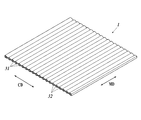
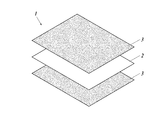
本発明の実施形態に係る清掃用ウェットシートについて、図1から4に基づいて説明する。
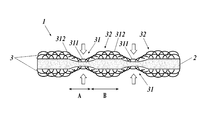
図1から4に示すように、清掃用ウェットシート1は、親水性繊維層としての内層2と、疎水性繊維層としての外層3と、を備えている。
内層2は、後述する外層3に挟まれた中間層であり、主として親水性繊維により形成されており、この親水性繊維に薬液が含浸されている。
また、内層2は、目付が10-50g/m2になるように形成され、後述する外層3との総重量に対して10-60%の重量比率を占めている。
目付が10-50g/m2であり、かつ、前記清掃用ウェットシート全量の10-60%の質量としたのは、目付が上記条件よりも小さいと、薬液の保持性が担保されないためであり、一方、目付が上記条件よりも大きいと、薬液量・シート重量が重くなり、拭取りの使用感、ハンドリングも重くなるためである。
なお、親水性繊維としては、パルプ、綿、麻などの天然繊維、および、レーヨン、アセテートなどのセルロース系化学繊維などが適用されるが、保水性を維持する観点からパルプを適用することが好ましい。
また、内層2は、親水性繊維のみで構成することが好ましいが、疎水性繊維が適宜含有されていてもよい。
内層2は、後述する外層3に挟まれた中間層であり、主として親水性繊維により形成されており、この親水性繊維に薬液が含浸されている。
また、内層2は、目付が10-50g/m2になるように形成され、後述する外層3との総重量に対して10-60%の重量比率を占めている。
目付が10-50g/m2であり、かつ、前記清掃用ウェットシート全量の10-60%の質量としたのは、目付が上記条件よりも小さいと、薬液の保持性が担保されないためであり、一方、目付が上記条件よりも大きいと、薬液量・シート重量が重くなり、拭取りの使用感、ハンドリングも重くなるためである。
なお、親水性繊維としては、パルプ、綿、麻などの天然繊維、および、レーヨン、アセテートなどのセルロース系化学繊維などが適用されるが、保水性を維持する観点からパルプを適用することが好ましい。
また、内層2は、親水性繊維のみで構成することが好ましいが、疎水性繊維が適宜含有されていてもよい。
薬液は、清掃用ウェットシート1の清掃洗剤として用いられ、後述する外層3を介して表面ないし裏面から放出されるようになっている。また、薬液は、粘度が25℃において1-15mPa・sになるように調製されている。粘度はブルックフィールド(B型)回転粘度計(型番:LVDV-I+)を用いて測定され、使用ローターおよび回転数は、水性洗浄剤の粘度に応じて適宜変更する。測定条件は25℃、回転数は60rpmとし、方法についてはJIS K 7117-1:1999に準じて実施する。
なお、薬液としては、エタノールなどの低級アルコールと、塩化ベンザルコニウムなどの界面活性剤や殺菌剤と、プロピレングリコールモノメチルエーテル(PGME)と、を水に溶かしたものが例として挙げられる。
なお、薬液としては、エタノールなどの低級アルコールと、塩化ベンザルコニウムなどの界面活性剤や殺菌剤と、プロピレングリコールモノメチルエーテル(PGME)と、を水に溶かしたものが例として挙げられる。
外層3は、清掃用ウェットシート1の表面層と裏面層とを形成する層であり、主に疎水性繊維により層形成されている。具体的には、疎水性繊維は、外層3の総重量に対して50-100%の重量比率で含有されている。疎水性繊維としては、ポリエチレンテレフタレート、ポリプロピレン、ポリエチレンなどを主成分とする化学繊維が適用される。なお、ポリエチレンテレフタレート繊維の配合率は80%以上であることが好ましく、その繊維径は、3.3dtex以上であることが好ましい。
繊維径を3.3dtex以上とすることで、繊維の剛性(クッション性)が向上し、軽い力でも操作できるようになる。また、3.3dtex以上の太い繊維径のポリエチレンテレフタレート繊維により、繊維間空隙が確保され、毛細管現象が起きにくく、内層2から外層3に薬液が出てしまうことを防止することができる。
また、外層3は、交絡部31と、非交絡部32とを備えている。
繊維径を3.3dtex以上とすることで、繊維の剛性(クッション性)が向上し、軽い力でも操作できるようになる。また、3.3dtex以上の太い繊維径のポリエチレンテレフタレート繊維により、繊維間空隙が確保され、毛細管現象が起きにくく、内層2から外層3に薬液が出てしまうことを防止することができる。
また、外層3は、交絡部31と、非交絡部32とを備えている。
交絡部31は、内層2と外層3とが、それぞれの繊維を交絡させることにより一体となっている箇所である。また、交絡部31を交絡させる手法として、例えば、水流交絡が採用されている。具体的には、全面に20kPa未満の微弱な水圧で水を掛けてプレ交絡を施して内層2と外層3とが一体にされ、その後、交絡部31となる箇所に60-80kPaの水圧で水流交絡を施すことで、凹凸のパターニングを有する形状が形成されている。
また、水流交絡は、清掃用ウェットシート1の表面層および裏面層の同一箇所に両側から水を当てて行う。すなわち、交絡部31は、凹凸のパターニングが表面層と裏面層とにおいて、同一箇所に対応して形成されている。
交絡部31は、水流交絡が施されるため内層2および外層3の繊維が絡まり合っており、後述する非交絡部32よりも繊維密度が高くなっている。このため、交絡部31を形成する疎水性繊維は、それぞれの繊維が空間的な自由度を非交絡部32に比べて持たず、拭き動作の際、それぞれの繊維が非交絡部32に比べて自由に動くことがないようになっている。
また、交絡部31は、繊維密度が非交絡部32よりも高い分、非交絡部32に対して凹状に窪んだ形状とされている。すなわち、交絡部31は、窪みの底である底部311と、後述する非交絡部32と底部311とを接続する傾斜面である傾斜部312と、を備えている。
また、水流交絡は、清掃用ウェットシート1の表面層および裏面層の同一箇所に両側から水を当てて行う。すなわち、交絡部31は、凹凸のパターニングが表面層と裏面層とにおいて、同一箇所に対応して形成されている。
交絡部31は、水流交絡が施されるため内層2および外層3の繊維が絡まり合っており、後述する非交絡部32よりも繊維密度が高くなっている。このため、交絡部31を形成する疎水性繊維は、それぞれの繊維が空間的な自由度を非交絡部32に比べて持たず、拭き動作の際、それぞれの繊維が非交絡部32に比べて自由に動くことがないようになっている。
また、交絡部31は、繊維密度が非交絡部32よりも高い分、非交絡部32に対して凹状に窪んだ形状とされている。すなわち、交絡部31は、窪みの底である底部311と、後述する非交絡部32と底部311とを接続する傾斜面である傾斜部312と、を備えている。
交絡部31は、清掃用ウェットシート1が使用される際、清掃用ウェットシートの清掃面における拭き方向(CD方向)となる向きに対して直角な方向(MD方向)に沿って延設されている。
ここで、清掃用ウェットシートの清掃面における拭き方向とは、当該清掃用ウェットシートを所定の治具に装着した際、治具本体の長手方向に直交する方向であり、清掃時の移動方向に沿う方向である。
また、交絡部31は、所定の間隔に離間して複数列に形成されている。また、これらの交絡部31は、清掃用ウェットシート1の表面ないし裏面の面積に対して、平面視において23-80%の面積率となるように形成されている。ここで、面積率とは、交絡部31の平面視における表面積となる交絡表面Aと、非交絡部32の平面視における表面積となる非交絡表面Bとの割合を示しており、面積率は、以下の式により算出されている。
面積率(%)=A/(A+B)×100・・・(式1)
ここで、清掃用ウェットシートの清掃面における拭き方向とは、当該清掃用ウェットシートを所定の治具に装着した際、治具本体の長手方向に直交する方向であり、清掃時の移動方向に沿う方向である。
また、交絡部31は、所定の間隔に離間して複数列に形成されている。また、これらの交絡部31は、清掃用ウェットシート1の表面ないし裏面の面積に対して、平面視において23-80%の面積率となるように形成されている。ここで、面積率とは、交絡部31の平面視における表面積となる交絡表面Aと、非交絡部32の平面視における表面積となる非交絡表面Bとの割合を示しており、面積率は、以下の式により算出されている。
面積率(%)=A/(A+B)×100・・・(式1)
非交絡部32は、内層2と外層3とがプレ交絡のみ施され、水流交絡を施されていない箇所である。
また、非交絡部32は、水流交絡が施されないため交絡部31と比較して繊維密度が低くなっており、この箇所の繊維は、拭き動作の際、繊維が交絡部31の繊維に比べて自由に動くことができるようになっている。
交絡部31と非交絡部32は、拭き方向に沿って交互に設けられており、被清掃面には、最初、非交絡部32のみが接触するようになっている。
なお、プレ交絡は水流交絡処理には含めずに説明している。すなわち、プレ交絡後に高水圧で水を当てて繊維交絡を行う処理のみを水流交絡としている。このため、プレ交絡のみが施される非交絡部32は、厳密にはプレ交絡により僅かに繊維交絡されているが、便宜上交絡されていない箇所として扱う。
また、非交絡部32は、水流交絡が施されないため交絡部31と比較して繊維密度が低くなっており、この箇所の繊維は、拭き動作の際、繊維が交絡部31の繊維に比べて自由に動くことができるようになっている。
交絡部31と非交絡部32は、拭き方向に沿って交互に設けられており、被清掃面には、最初、非交絡部32のみが接触するようになっている。
なお、プレ交絡は水流交絡処理には含めずに説明している。すなわち、プレ交絡後に高水圧で水を当てて繊維交絡を行う処理のみを水流交絡としている。このため、プレ交絡のみが施される非交絡部32は、厳密にはプレ交絡により僅かに繊維交絡されているが、便宜上交絡されていない箇所として扱う。
清掃用ウェットシート1は、交絡部31が設けられていない場合に比べて、JIS-P8147の水平法(後述)に準じて測定した、当該清掃用ウェットシートの清掃面の静止摩擦抵抗値および動摩擦抵抗値が低減されている。また、静止摩擦抵抗値の方が動摩擦抵抗値よりも小さくなっている。
すなわち、交絡部31は、繊維密度が非交絡部32よりも高い分、非交絡部32に対して凹状に窪んだ形状とされているため、被清掃面を拭く際の初期段階では、被清掃面に対する清掃用ウェットシートの接触面積が小さくなる。加えて、内層2が親水性繊維により構成されているので、薬液を好適に保持することができる。よって、清掃用ウェットシート1で被清掃面を拭く際の摩擦抵抗値が小さいため、軽やかな拭き心地が得られるようになっており、さらに、清掃用ウェットシート1の拭き方向の静止摩擦抵抗値が500cN以下で、かつ、静止摩擦抵抗値の方が動摩擦抵抗値よりも小さい(具体的には、摩擦抵抗比((静止摩擦抵抗値/動摩擦抵抗値)が、0.7以下である)ので、拭き始めの負荷が小さくなっている。
なお、摩擦抵抗値は、清掃用ウェットシート1のMD方向、CD方向で異なるため、静止摩擦抵抗値および動摩擦抵抗値の比較は、同一方向での比較となる。
すなわち、交絡部31は、繊維密度が非交絡部32よりも高い分、非交絡部32に対して凹状に窪んだ形状とされているため、被清掃面を拭く際の初期段階では、被清掃面に対する清掃用ウェットシートの接触面積が小さくなる。加えて、内層2が親水性繊維により構成されているので、薬液を好適に保持することができる。よって、清掃用ウェットシート1で被清掃面を拭く際の摩擦抵抗値が小さいため、軽やかな拭き心地が得られるようになっており、さらに、清掃用ウェットシート1の拭き方向の静止摩擦抵抗値が500cN以下で、かつ、静止摩擦抵抗値の方が動摩擦抵抗値よりも小さい(具体的には、摩擦抵抗比((静止摩擦抵抗値/動摩擦抵抗値)が、0.7以下である)ので、拭き始めの負荷が小さくなっている。
なお、摩擦抵抗値は、清掃用ウェットシート1のMD方向、CD方向で異なるため、静止摩擦抵抗値および動摩擦抵抗値の比較は、同一方向での比較となる。
本実施形態によれば、清掃用ウェットシート1において、親水性繊維層2は、目付が10-50g/m2であり、かつ、清掃用ウェットシート1全量の10-60%の質量であるので、親水性繊維層により薬液が好適に保持され、交絡部31と非交絡部32とにより形成された、清掃用ウェットシートの被清掃面への離間面と接触面と、親水性繊維層2の親水性繊維による薬液の保持効果により、清掃用ウェットシート1の清掃面における拭き方向の静止摩擦抵抗値を動摩擦抵抗値よりも小さくすることができる。
これによって、低粘度の薬液を用いても、清掃用ウェットシートで拭く際、初動に大きな負荷を掛ける必要がなく、薬液の過剰放出が抑制できる。
これによって、低粘度の薬液を用いても、清掃用ウェットシートで拭く際、初動に大きな負荷を掛ける必要がなく、薬液の過剰放出が抑制できる。
また、本実施形態によれば、交絡部31が表裏面の平面視における表面積に対して23-80%の面積率で形成されているので、清掃用ウェットシート1の清掃面における拭き方向の摩擦抵抗値をより良好な値に設定することができる。
即ち、交絡部31が表裏面の平面視における表面積に対して20%より下回ると、初動時における接触面が増えて静止摩擦抵抗値が上昇してしまう。一方、50%を上回ると、清掃時に高繊維密度の交絡部31が清掃面に接触する比率が増えるため、動摩擦抵抗値が上昇してしまう。このため、交絡部31の面積率を上記範囲に設定することにより適度な負荷で拭くことができ、薬液を適度に放出させることができる。
即ち、交絡部31が表裏面の平面視における表面積に対して20%より下回ると、初動時における接触面が増えて静止摩擦抵抗値が上昇してしまう。一方、50%を上回ると、清掃時に高繊維密度の交絡部31が清掃面に接触する比率が増えるため、動摩擦抵抗値が上昇してしまう。このため、交絡部31の面積率を上記範囲に設定することにより適度な負荷で拭くことができ、薬液を適度に放出させることができる。
また、本実施形態によれば、拭き方向に対して垂直に交絡部31が延設されているので、清掃用ウェットシート1の被清掃面への接触面と離間面とを交互に被清掃面に接触させることができ、薬液の過剰放出を抑制することができる。
また、本実施形態によれば、交絡部31と非交絡部32とが拭き方向に沿って交互に連続して形成されるので、複数の交絡部31と非交絡部32とを交互に連続して被清掃面に接触させることができ、薬液の過剰放出をより良好に抑制することができる。
また、本実施形態によれば、清掃用ウェットシート1の清掃面における拭き方向の摩擦抵抗比(静止摩擦抵抗値/動摩擦抵抗値)が、0.7以下であるので、拭き始めの摺動開始時において、清掃用ウェットシート1に掛ける負荷を小さくすることができる。
このため、被清掃面へと過剰に薬液が放出されることがなく、薬液が不足して十分に清掃ができないなどのおそれがない。
このため、被清掃面へと過剰に薬液が放出されることがなく、薬液が不足して十分に清掃ができないなどのおそれがない。
また、本実施形態によれば、疎水性繊維層3に50-100%の重量比率で疎水性繊維が含有されているので、親水性繊維層2に含浸された薬液の保持および放出量の調整を好適に実現することができる。
また、本実施形態によれば、交絡部31を水流交絡により交絡するので、親水性繊維層2と疎水性繊維層3とを接着剤等を用いずに交絡することができ、簡易な構成とすることができるとともに、薬液の放出面を接着剤が閉塞してしまうことによる拭きムラ等を回避することができる。
また、本実施形態によれば、疎水性繊維層を構成するポリエチレンテレフタレート繊維の繊維径が3.3dtex以上なので、繊維の剛性(クッション性)が向上し、軽い力でも操作できるようになる。また、3.3dtex以上の太い繊維径のポリエチレンテレフタレート繊維により、繊維間空隙が確保され、毛細管現象が起きにくく、内層から外層に薬液が出てしまうことを防止することができる。
また、本実施形態によれば、疎水性繊維層を構成するポリエチレンテレフタレート繊維の繊維径が3.3dtex以上なので、繊維の剛性(クッション性)が向上し、軽い力でも操作できるようになる。また、3.3dtex以上の太い繊維径のポリエチレンテレフタレート繊維により、繊維間空隙が確保され、毛細管現象が起きにくく、内層から外層に薬液が出てしまうことを防止することができる。
なお、本発明は、上記実施形態および変形例に限定されるものではなく、具体的な構造について適宜変更可能であるのは勿論である。
清掃用ウェットシート1は、表面および裏面の両面を清掃面としてもよいし、片面のみを清掃面としてもよい。
また、CD方向を拭き方向としたが、MD方向を拭き方向としてもよい。
清掃用ウェットシート1は、表面および裏面の両面を清掃面としてもよいし、片面のみを清掃面としてもよい。
また、CD方向を拭き方向としたが、MD方向を拭き方向としてもよい。
〔実施例1〕
実施例1では、清掃用ウェットシート1として以下のものを用いた。
疎水性繊維にはポリエチレンテレフタレートを主成分とする不織布を用い、親水性繊維にはパルプ原料を主成分とする繊維を用いた。
また、疎水性繊維としては、ポリエチレンテレフタレート、ポリプロピレン、ポリエチレンなどを主成分とする化学繊維が適用される。
具体的には、外層(疎水性繊維層)3は、疎水性繊維が100%で構成されており、疎水性繊維としてポリエチレンテレフタレートが90%含有され、バインダー繊維としてポリプロピレンとポリエチレンの芯鞘繊維が10%含有されている。また、ポリエチレンテレフタレート繊維は、繊度が3.3dtex、バインダー繊維は、繊度1.7dtexのものを用いた。
薬液には、水を溶媒とし、界面活性剤(陰イオン界面活性剤、非イオン界面活性剤、陽イオン界面活性剤および両性界面活性剤)、水溶性溶剤(1価アルコールあるいは多価アルコール)を用いるが、本実施例では、非イオン界面活性剤としてプリストール1%、両性界面活性剤としてラウリルジメチルアミンオキシド0.5%、アルコール類としてエタノール3.4%、1-メトキシー2-プロパノール1.4%、第4級アンモニウム塩として塩化ベンザルコニウム0.05%を各々用いた。
内層(親水性繊維層)2には、薬液を含浸率300%になるように含浸させ、目付が30g/m2であり、内層2と清掃用ウェットシート1の比率が45%となるものを用いた。
また、外層3の交絡部31の面積率を23%に形成したストライプタイプものを用いた。
実施例1では、清掃用ウェットシート1として以下のものを用いた。
疎水性繊維にはポリエチレンテレフタレートを主成分とする不織布を用い、親水性繊維にはパルプ原料を主成分とする繊維を用いた。
また、疎水性繊維としては、ポリエチレンテレフタレート、ポリプロピレン、ポリエチレンなどを主成分とする化学繊維が適用される。
具体的には、外層(疎水性繊維層)3は、疎水性繊維が100%で構成されており、疎水性繊維としてポリエチレンテレフタレートが90%含有され、バインダー繊維としてポリプロピレンとポリエチレンの芯鞘繊維が10%含有されている。また、ポリエチレンテレフタレート繊維は、繊度が3.3dtex、バインダー繊維は、繊度1.7dtexのものを用いた。
薬液には、水を溶媒とし、界面活性剤(陰イオン界面活性剤、非イオン界面活性剤、陽イオン界面活性剤および両性界面活性剤)、水溶性溶剤(1価アルコールあるいは多価アルコール)を用いるが、本実施例では、非イオン界面活性剤としてプリストール1%、両性界面活性剤としてラウリルジメチルアミンオキシド0.5%、アルコール類としてエタノール3.4%、1-メトキシー2-プロパノール1.4%、第4級アンモニウム塩として塩化ベンザルコニウム0.05%を各々用いた。
内層(親水性繊維層)2には、薬液を含浸率300%になるように含浸させ、目付が30g/m2であり、内層2と清掃用ウェットシート1の比率が45%となるものを用いた。
また、外層3の交絡部31の面積率を23%に形成したストライプタイプものを用いた。
〔実施例2〕
実施例2では、内層2に、目付が10g/m2であり、内層2と清掃用ウェットシート1の比率が10%となるものを用いた。
また、外層3の交絡部31の面積率を50%に形成した。
その他の構成は、実施例1と同様である。
実施例2では、内層2に、目付が10g/m2であり、内層2と清掃用ウェットシート1の比率が10%となるものを用いた。
また、外層3の交絡部31の面積率を50%に形成した。
その他の構成は、実施例1と同様である。
〔実施例3〕
実施例3では、内層2に、目付が50g/m2であり、内層2と清掃用ウェットシート1の比率が60%となるものを用いた。
また、外層3の交絡部31の面積率を80%に形成した。
その他の構成は、実施例1と同様である。
実施例3では、内層2に、目付が50g/m2であり、内層2と清掃用ウェットシート1の比率が60%となるものを用いた。
また、外層3の交絡部31の面積率を80%に形成した。
その他の構成は、実施例1と同様である。
〔比較例1〕
比較例1では、内層2に目付が10g/m2であり、内層2と清掃用ウェットシート1の比率が9.2%となるものを用いた。
また、外層3の交絡部31の面積率を0%、すなわち、交絡部31を形成しないプレーンタイプのものとした。
その他の構成は、実施例1と同様である。
比較例1では、内層2に目付が10g/m2であり、内層2と清掃用ウェットシート1の比率が9.2%となるものを用いた。
また、外層3の交絡部31の面積率を0%、すなわち、交絡部31を形成しないプレーンタイプのものとした。
その他の構成は、実施例1と同様である。
〔比較例2〕
比較例2では、内層2に目付が0g/m2であり、内層2と清掃用ウェットシート1の比率が0%、すなわち内層2を設けないものを用いた。
また、外層3の交絡部31の面積率を50%とした。
その他の構成は、実施例1と同様である。
なお、比較例3は、既存の清掃用ウェットシートであり、いわゆる従来品である。
比較例2では、内層2に目付が0g/m2であり、内層2と清掃用ウェットシート1の比率が0%、すなわち内層2を設けないものを用いた。
また、外層3の交絡部31の面積率を50%とした。
その他の構成は、実施例1と同様である。
なお、比較例3は、既存の清掃用ウェットシートであり、いわゆる従来品である。
〔比較例3〕
比較例3では、内層2に目付が60g/m2であり、内層2と清掃用ウェットシート1の比率が65.7%となるものを用いた。
また、外層3の交絡部31の面積率を15%とした。
その他の構成は、実施例1と同様である。
比較例3では、内層2に目付が60g/m2であり、内層2と清掃用ウェットシート1の比率が65.7%となるものを用いた。
また、外層3の交絡部31の面積率を15%とした。
その他の構成は、実施例1と同様である。
〔比較例4〕
比較例4では、内層2に目付が20g/m2であり、内層2と清掃用ウェットシート1の比率が28.6%となるものを用いた。
また、外層3の交絡部31の面積率を85%とした。
その他の構成は、実施例1と同様である。
比較例4では、内層2に目付が20g/m2であり、内層2と清掃用ウェットシート1の比率が28.6%となるものを用いた。
また、外層3の交絡部31の面積率を85%とした。
その他の構成は、実施例1と同様である。
以上の実施例1-3および比較例1-4の清掃用ウェットシート1を用いた摩擦抵抗値測定および拭き取り回数試験を行った。
摩擦抵抗値測定は、JIS-P8147:2010の水平法に準ずる。底面形状が、10cm×10cmの400gの錘の四辺に両面テープでサンドペーパー(♯1200、3M社製)を貼り付け、水平台に四隅をテープで貼付けた清掃用ウェットシート1の上に載置し、500mm/分の速度で水平に移動させた際の抵抗値を測定した。錘を水平方向に引っ張る引っ張り試験機にはAUTOGRAPH AGS-500B(島津製作所製)を用いた。
静摩擦は初動のピーク抵抗値、動摩擦は滑り始めてから40~60mmの平均抵抗値を測定した。また、それぞれの条件において、MD方向(製造時の流れ方向、交絡ストライプ方向)とCD方向(MDと向かって垂直方向)との2方向からそれぞれN=5で測定し、平均値をとった。
摩擦抵抗値測定は、JIS-P8147:2010の水平法に準ずる。底面形状が、10cm×10cmの400gの錘の四辺に両面テープでサンドペーパー(♯1200、3M社製)を貼り付け、水平台に四隅をテープで貼付けた清掃用ウェットシート1の上に載置し、500mm/分の速度で水平に移動させた際の抵抗値を測定した。錘を水平方向に引っ張る引っ張り試験機にはAUTOGRAPH AGS-500B(島津製作所製)を用いた。
静摩擦は初動のピーク抵抗値、動摩擦は滑り始めてから40~60mmの平均抵抗値を測定した。また、それぞれの条件において、MD方向(製造時の流れ方向、交絡ストライプ方向)とCD方向(MDと向かって垂直方向)との2方向からそれぞれN=5で測定し、平均値をとった。
拭き取り回数試験方法は、清掃用ウェットシート1の取付用治具(クイックルワイパー/花王(株)2015年製)に清掃用ウェットシート1をたるみなく取り付け、アクリル板で形成した床面を一方向に拭く。冶具の横幅25cmでアクリル板床面(縦90cm、横130cm)の縦方向に沿ってアクリル板床面の端から端までの90cmの拭き取り作業を1回として測定する。
1.床面と取付用治具軸の角度は、60度とし、角度変動しないようヘッドの軸元を市販ボンドで固定する。
2.ヘッドの軸に、筒状円柱の530gの錘(直径100mm長さ200mm)を通し、シートを装着する。
3.測定は幅1300mm×奥行900mmの市販アクリル板を床面に用い、冶具の軸を床面と取付用治具軸の角度が、60度となるように手前側にし、手前から奥へ300mm/sの速度で清掃する。
4.清掃後の面と重ならないようアクリル板床面の幅方向に順次清掃を実施する。
5.次測定の前に清掃用ウェットシート残液を乾いた布でくまなく除去する。
前述の条件により、清掃用ウェットシート1の全幅から薬液が放出されなくなった状態を終点とし、終点に達するまでの拭いた回数(有効拭き回数)を測定する。
6.言い換えれば、床面への薬液放出が明らかに認められない部分が拭き筋として発生し、途中で薬液がかすれて放出されていない状態が全幅で発生した時点が終点となる。
7.終点と判断した回は、回数に含まず測定した。
また、上記の試験を5回実施し、有効拭き回数の平均値を測定値とする。
1.床面と取付用治具軸の角度は、60度とし、角度変動しないようヘッドの軸元を市販ボンドで固定する。
2.ヘッドの軸に、筒状円柱の530gの錘(直径100mm長さ200mm)を通し、シートを装着する。
3.測定は幅1300mm×奥行900mmの市販アクリル板を床面に用い、冶具の軸を床面と取付用治具軸の角度が、60度となるように手前側にし、手前から奥へ300mm/sの速度で清掃する。
4.清掃後の面と重ならないようアクリル板床面の幅方向に順次清掃を実施する。
5.次測定の前に清掃用ウェットシート残液を乾いた布でくまなく除去する。
前述の条件により、清掃用ウェットシート1の全幅から薬液が放出されなくなった状態を終点とし、終点に達するまでの拭いた回数(有効拭き回数)を測定する。
6.言い換えれば、床面への薬液放出が明らかに認められない部分が拭き筋として発生し、途中で薬液がかすれて放出されていない状態が全幅で発生した時点が終点となる。
7.終点と判断した回は、回数に含まず測定した。
また、上記の試験を5回実施し、有効拭き回数の平均値を測定値とする。
摩擦抵抗値測定の結果および拭き取り回数試験結果を表1に示した。

表1の結果について以下に述べる。
実施例1-3と比較例1-4とを比較すると、交絡部31が23-80%の範囲で形成されてかつ、内層2の目付が10-50g/m2であり、かつ、清掃用ウェットシート全量の10-60%の質量比率であるものは、MD,CD両方向において(静/動)摩擦抵抗比が100%を切っていることが確認できた。
実施例1-3と比較例1-4とを比較すると、交絡部31が23-80%の範囲で形成されてかつ、内層2の目付が10-50g/m2であり、かつ、清掃用ウェットシート全量の10-60%の質量比率であるものは、MD,CD両方向において(静/動)摩擦抵抗比が100%を切っていることが確認できた。
実施例1-3は、拭き取り回数が45回以上であり、比較例1-4は、拭き取り回数が28回以下であった。これより、(静/動)摩擦抵抗比が100%を切っているものは、拭き取り回数が多くなることが確認できた。
本発明は、清掃用ウェットシートおよびその製造方法に利用することができる。
1 清掃用ウェットシート
2 内層(親水性繊維層、中間層)
3 外層(疎水性繊維層)
31 交絡部
32 非交絡部
311 底部
312 傾斜部
A 交絡表面
B 非交絡表面
2 内層(親水性繊維層、中間層)
3 外層(疎水性繊維層)
31 交絡部
32 非交絡部
311 底部
312 傾斜部
A 交絡表面
B 非交絡表面
Claims (8)
- 複数層からなり、薬液が含浸された清掃用ウェットシートであって、
表面層と裏面層とにそれぞれ設けられる疎水性繊維層と、
これらの前記疎水性繊維層に挟まれる中間層に設けられる親水性繊維層と、
前記疎水性繊維層と前記親水性繊維層とが交絡されている交絡部と、
前記疎水性繊維層と前記親水性繊維層とが交絡されていない非交絡部と、を備え、
前記親水性繊維層には、薬液が含浸され、
前記親水性繊維層は、目付が10-50g/m2であり、かつ、前記清掃用ウェットシート全量の10-60%の質量であり、
JIS-P8147の水平法に準じて測定した、当該清掃用ウェットシートの清掃面における拭き方向の静止摩擦抵抗値が動摩擦抵抗値よりも小さいことを特徴とする清掃用ウェットシート。 - 前記交絡部は、前記表面層ないし前記裏面層の平面視における表面積に対して23-80%の面積率で形成されていることを特徴とする請求項1に記載の清掃用ウェットシート。
- 前記交絡部は、前記清掃用ウェットシートの拭き方向に対して略垂直方向に延設されていることを特徴とする請求項1または2に記載の清掃用ウェットシート。
- 前記交絡部と前記非交絡部とが前記拭き方向に沿って交互に連続して形成されることを特徴とする請求項3に記載の清掃用ウェットシート。
- 拭き方向の前記静止摩擦抵抗値が500cN以下でかつ、前記動摩擦抵抗値と前記静止摩擦抵抗値との摩擦抵抗比(静止摩擦抵抗値/動摩擦抵抗値)が、0.7以下であることを特徴とする請求項1から4のいずれか一項に記載の清掃用ウェットシート。
- 前記疎水性繊維層には、50-100%の重量比率で疎水性繊維が含有されていることを特徴とする請求項1から5のいずれか一項に記載の清掃用ウェットシート。
- 前記疎水性繊維層は、ポリエチレンテレフタレート繊維の配合率が80%以上であり、前記ポリエチレンテレフタレート繊維の繊維径は、3.3dtex以上であることを特徴とする請求項1から6のいずれか一項に記載の清掃用ウェットシート。
- 請求項1から7のいずれか一項に記載の清掃用ウェットシートを製造する清掃用ウェットシートの製造方法であって、
前記交絡部を水流交絡により形成することを特徴とする清掃用ウェットシートの製造方法。
Priority Applications (1)
| Application Number | Priority Date | Filing Date | Title |
|---|---|---|---|
| JP2018521692A JP6400253B2 (ja) | 2016-10-31 | 2017-10-31 | 清掃用ウェットシートおよび清掃用ウェットシートの製造方法 |
Applications Claiming Priority (2)
| Application Number | Priority Date | Filing Date | Title |
|---|---|---|---|
| JP2016213855 | 2016-10-31 | ||
| JP2016-213855 | 2016-10-31 |
Publications (1)
| Publication Number | Publication Date |
|---|---|
| WO2018079823A1 true WO2018079823A1 (ja) | 2018-05-03 |
Family
ID=62023572
Family Applications (1)
| Application Number | Title | Priority Date | Filing Date |
|---|---|---|---|
| PCT/JP2017/039300 Ceased WO2018079823A1 (ja) | 2016-10-31 | 2017-10-31 | 清掃用ウェットシートおよび清掃用ウェットシートの製造方法 |
Country Status (2)
| Country | Link |
|---|---|
| JP (1) | JP6400253B2 (ja) |
| WO (1) | WO2018079823A1 (ja) |
Cited By (1)
| Publication number | Priority date | Publication date | Assignee | Title |
|---|---|---|---|---|
| CN117901512A (zh) * | 2023-12-29 | 2024-04-19 | 杭州诺邦无纺股份有限公司 | 一种无孔基材表面养护布及其生产装置 |
Citations (8)
| Publication number | Priority date | Publication date | Assignee | Title |
|---|---|---|---|---|
| JP2004033239A (ja) * | 2002-06-28 | 2004-02-05 | Kao Corp | 清掃用ウエットシート |
| JP2004106809A (ja) * | 2002-09-20 | 2004-04-08 | Fukashi Uragami | 負圧などの吸着手段により表面に吸着する移動台車 |
| JP2004187476A (ja) * | 2002-12-06 | 2004-07-02 | Tochigi Fuji Ind Co Ltd | 電磁式アクチュエータ及びこれを用いたデファレンシャル装置 |
| JP2006249620A (ja) * | 2005-03-11 | 2006-09-21 | Kao Corp | 繊維集合体及び清掃具 |
| JP2007154359A (ja) * | 2005-12-05 | 2007-06-21 | Kao Corp | 嵩高シート |
| JP2014113409A (ja) * | 2012-12-12 | 2014-06-26 | Soft99 Corporation | ウェットシート |
| JP2014129632A (ja) * | 2012-12-29 | 2014-07-10 | Uni Charm Corp | 清掃部材を製造する方法及び装置 |
| US20140366294A1 (en) * | 2013-06-18 | 2014-12-18 | The Procter & Gamble Company | Bonded laminate cleaning implement |
Family Cites Families (1)
| Publication number | Priority date | Publication date | Assignee | Title |
|---|---|---|---|---|
| GB0319425D0 (en) * | 2003-08-19 | 2003-09-17 | Ball Burnishing Mach Tools | Thermo formed plastic wipes |
-
2017
- 2017-10-31 JP JP2018521692A patent/JP6400253B2/ja active Active
- 2017-10-31 WO PCT/JP2017/039300 patent/WO2018079823A1/ja not_active Ceased
Patent Citations (8)
| Publication number | Priority date | Publication date | Assignee | Title |
|---|---|---|---|---|
| JP2004033239A (ja) * | 2002-06-28 | 2004-02-05 | Kao Corp | 清掃用ウエットシート |
| JP2004106809A (ja) * | 2002-09-20 | 2004-04-08 | Fukashi Uragami | 負圧などの吸着手段により表面に吸着する移動台車 |
| JP2004187476A (ja) * | 2002-12-06 | 2004-07-02 | Tochigi Fuji Ind Co Ltd | 電磁式アクチュエータ及びこれを用いたデファレンシャル装置 |
| JP2006249620A (ja) * | 2005-03-11 | 2006-09-21 | Kao Corp | 繊維集合体及び清掃具 |
| JP2007154359A (ja) * | 2005-12-05 | 2007-06-21 | Kao Corp | 嵩高シート |
| JP2014113409A (ja) * | 2012-12-12 | 2014-06-26 | Soft99 Corporation | ウェットシート |
| JP2014129632A (ja) * | 2012-12-29 | 2014-07-10 | Uni Charm Corp | 清掃部材を製造する方法及び装置 |
| US20140366294A1 (en) * | 2013-06-18 | 2014-12-18 | The Procter & Gamble Company | Bonded laminate cleaning implement |
Cited By (1)
| Publication number | Priority date | Publication date | Assignee | Title |
|---|---|---|---|---|
| CN117901512A (zh) * | 2023-12-29 | 2024-04-19 | 杭州诺邦无纺股份有限公司 | 一种无孔基材表面养护布及其生产装置 |
Also Published As
| Publication number | Publication date |
|---|---|
| JP6400253B2 (ja) | 2018-10-03 |
| JPWO2018079823A1 (ja) | 2018-10-25 |
Similar Documents
| Publication | Publication Date | Title |
|---|---|---|
| CN1240820C (zh) | 地板清洁片 | |
| EP2278054A1 (en) | Bulky sheet | |
| JP6431647B2 (ja) | 清掃用ウェットシートおよび清掃用ウェットシートの製造方法 | |
| JP2009195648A (ja) | ドライタイプの曇り止めクロス | |
| JP6412675B2 (ja) | 清掃用ウェットシート | |
| DE60131017T2 (de) | Verbessertes Reinigungsgerät mit abnehmbarem Erhöhungselement | |
| JP3664981B2 (ja) | 床用清掃シート | |
| JP6400253B2 (ja) | 清掃用ウェットシートおよび清掃用ウェットシートの製造方法 | |
| JP2006223454A (ja) | ウエットシート用シート基材 | |
| JP3578956B2 (ja) | 床用清掃シート | |
| JP6462955B2 (ja) | 清掃用ウェットシートおよび清掃用ウェットシートの製造方法 | |
| JP5281824B2 (ja) | つや出し剤及び硬質表面用清掃シート | |
| JP2001198065A (ja) | 床用清掃シート | |
| JP4804118B2 (ja) | 積層シートおよびその製造方法 | |
| JP2016069762A (ja) | 不織布 | |
| JP2003164407A (ja) | 清掃用シート | |
| TWI839394B (zh) | 擦拭片材 | |
| JP3810660B2 (ja) | 硬質表面用艶出し洗浄シート | |
| JP2009013544A (ja) | 嵩高不織布およびその製造方法 | |
| JP2004236732A (ja) | 清掃シート | |
| JP2011006811A (ja) | 極細繊維不織布およびその製造方法 | |
| JP4881578B2 (ja) | ワイピングシート | |
| JP7055009B2 (ja) | ワイピングシート及び清掃具 | |
| JP2007284838A (ja) | 水流交絡不織布およびワイパー | |
| JP2021049097A (ja) | 清掃用シート |
Legal Events
| Date | Code | Title | Description |
|---|---|---|---|
| WWE | Wipo information: entry into national phase |
Ref document number: 2018521692 Country of ref document: JP |
|
| 121 | Ep: the epo has been informed by wipo that ep was designated in this application |
Ref document number: 17865001 Country of ref document: EP Kind code of ref document: A1 |
|
| NENP | Non-entry into the national phase |
Ref country code: DE |
|
| 122 | Ep: pct application non-entry in european phase |
Ref document number: 17865001 Country of ref document: EP Kind code of ref document: A1 |