WO2017191743A1 - 作業時間分析システム、作業時間分析プログラム、及び作業時間分析方法 - Google Patents
作業時間分析システム、作業時間分析プログラム、及び作業時間分析方法 Download PDFInfo
- Publication number
- WO2017191743A1 WO2017191743A1 PCT/JP2017/015099 JP2017015099W WO2017191743A1 WO 2017191743 A1 WO2017191743 A1 WO 2017191743A1 JP 2017015099 W JP2017015099 W JP 2017015099W WO 2017191743 A1 WO2017191743 A1 WO 2017191743A1
- Authority
- WO
- WIPO (PCT)
- Prior art keywords
- work
- time
- work item
- date
- identifier
- Prior art date
- Legal status (The legal status is an assumption and is not a legal conclusion. Google has not performed a legal analysis and makes no representation as to the accuracy of the status listed.)
- Ceased
Links
Images





Classifications
-
- G—PHYSICS
- G05—CONTROLLING; REGULATING
- G05B—CONTROL OR REGULATING SYSTEMS IN GENERAL; FUNCTIONAL ELEMENTS OF SUCH SYSTEMS; MONITORING OR TESTING ARRANGEMENTS FOR SUCH SYSTEMS OR ELEMENTS
- G05B19/00—Program-control systems
- G05B19/02—Program-control systems electric
- G05B19/418—Total factory control, i.e. centrally controlling a plurality of machines, e.g. direct or distributed numerical control [DNC], flexible manufacturing systems [FMS], integrated manufacturing systems [IMS] or computer integrated manufacturing [CIM]
-
- G—PHYSICS
- G06—COMPUTING OR CALCULATING; COUNTING
- G06Q—INFORMATION AND COMMUNICATION TECHNOLOGY [ICT] SPECIALLY ADAPTED FOR ADMINISTRATIVE, COMMERCIAL, FINANCIAL, MANAGERIAL OR SUPERVISORY PURPOSES; SYSTEMS OR METHODS SPECIALLY ADAPTED FOR ADMINISTRATIVE, COMMERCIAL, FINANCIAL, MANAGERIAL OR SUPERVISORY PURPOSES, NOT OTHERWISE PROVIDED FOR
- G06Q10/00—Administration; Management
- G06Q10/06—Resources, workflows, human or project management; Enterprise or organisation planning; Enterprise or organisation modelling
-
- Y—GENERAL TAGGING OF NEW TECHNOLOGICAL DEVELOPMENTS; GENERAL TAGGING OF CROSS-SECTIONAL TECHNOLOGIES SPANNING OVER SEVERAL SECTIONS OF THE IPC; TECHNICAL SUBJECTS COVERED BY FORMER USPC CROSS-REFERENCE ART COLLECTIONS [XRACs] AND DIGESTS
- Y02—TECHNOLOGIES OR APPLICATIONS FOR MITIGATION OR ADAPTATION AGAINST CLIMATE CHANGE
- Y02P—CLIMATE CHANGE MITIGATION TECHNOLOGIES IN THE PRODUCTION OR PROCESSING OF GOODS
- Y02P90/00—Enabling technologies with a potential contribution to greenhouse gas [GHG] emissions mitigation
- Y02P90/02—Total factory control, e.g. smart factories, flexible manufacturing systems [FMS] or integrated manufacturing systems [IMS]
Definitions
- the present invention relates to a work time analysis system, a work time analysis program, and a work time analysis method.
- IE Industry Standard Engineering
- an observer visually observes the state of a worker, and measures the time taken for each work with a stopwatch.
- VTR video camera
- a video camera compared to using a stopwatch, the risk of measurement errors can be avoided, and the psychological burden on the worker is relatively reduced, so that more natural work conditions can be measured.
- Non-Patent Document 3 software has been developed that can automatically analyze the time taken for each operation based on the captured video, although it is simple (see, for example, Non-Patent Document 3).
- Patent Document 1 describes a technique for determining whether work is being performed reliably using an acceleration sensor or the like worn by an operator.
- Patent Document 2 in order to analyze the flow line of a monitoring target person, a mobile terminal carried by the monitoring target person calculates the position of the mobile terminal based on the radio wave transmitted from the radio beacon, The technology to notify is described.
- the purpose is to facilitate the measurement of the work time required for each of the plurality of work performed by the worker.
- the working time analysis system of the present invention has an information terminal and a server device, and is a working time analysis system that analyzes the working time of a worker.
- a receiving unit that receives an identifier from the short-range wireless device, and the server device includes an acquiring unit that acquires the identifier or a work item corresponding to the identifier from the information terminal, and the information terminal or the
- the server device includes: a determination unit that determines a work item corresponding to each identifier received from the plurality of short-range wireless devices by the reception unit; a date and time when each identifier is received by the reception unit; and the determination unit
- a storage unit that stores the work items determined in association with each other, and the date and time associated with the first work item included in each work item, the start date and time of the first work item And, wherein the end time of the second work the first work item date associated with the item included in each work item comprises an analysis unit for analyzing the operation time for each work item.
- the work time analysis program of the present invention includes a step of receiving an identifier from a short-range wireless device when the information terminal enters a communication range of the short-range wireless device, and a step of receiving each identifier received from a plurality of short-range wireless devices.
- a step of determining a corresponding work item, a date and time when each identifier is received a step of storing the determined work item in association with each other, and a first work item included in each of the work items
- the given date and time is the start date and time of the first work item, and the date and time associated with the second work item included in each work item is the end date and time of the first work item. And analyzing the working time for.
- the identifier is received from the short-range wireless device, and each identifier received from the plurality of short-range wireless devices is Corresponding to a step of determining a corresponding work item, a date and time when each identifier is received, a step of storing the determined work item in association with each other, and a first work item included in each of the work items
- the given date and time is the start date and time of the first work item
- the date and time associated with the second work item included in each work item is the end date and time of the first work item. Analyzing the working time for.
- FIG. 1 is a diagram illustrating a configuration example of a work time analysis system according to the embodiment.
- a working time analysis system 1 includes a plurality of information terminals 10a, 10b,... (Hereinafter collectively referred to as “information terminals 10” as appropriate), a server device 20, and a plurality of short-range wireless devices 30a. 30b, ... (hereinafter collectively referred to as "short-range wireless device 30" as appropriate).
- the information terminal 10 and the server device 20 are communicably connected via a communication line such as a LAN (Local Area Network), a wireless LAN, or the Internet.
- a communication line such as a LAN (Local Area Network), a wireless LAN, or the Internet.
- data of the information terminal 10 may be input to the server device 20 via a recording medium such as an SD memory card.
- the information terminal 10 is a terminal such as a smart watch, a wearable device, a smartphone, or a tablet.
- the information terminal 10 when the information terminal 10 is carried by an operator, is brought close to the short-range wireless device 30, and enters the communication range of the short-range wireless device 30, the ID set in the short-range wireless device 30 from the short-range wireless device 30. Receive.
- the information terminal 10 detects the ID from the short-range wireless device 30 at a data reception interval of 0.5 seconds or less, for example.
- the worker carrying the information terminal 10 can receive the ID in a state close to the conventional work without having to wait for the reception of the ID after bringing the information terminal 10 close to the short-range wireless device 30. .
- the shorter the data reception interval the faster the battery of the information terminal 10 is consumed.
- the information terminal 10 records the date and time when the ID is received in association with the received ID.
- data such as work content, production type, work area, and the like are set in association with each ID notified from the short-range wireless device 30.
- the information terminal 10 includes various sensors such as an acceleration sensor, an angular acceleration sensor, an illuminance sensor, and an orientation center, and records the data acquired by the various sensors in association with the date and time when the data is acquired. May be.
- the information terminal 10 may have a microphone, and may record audio data acquired by the microphone and the date and time when the audio data is acquired in association with each other.
- the information terminal 10 notifies the server device 20 of the work content, production type, work area, and the like corresponding to each ID notified from the short-range wireless device 30 and the time when each ID is received.
- the information terminal 10 stores the work content, production type, work area, and the like corresponding to each ID notified from the short-range wireless device 30 and the time at which each ID is received in the auxiliary storage device of the information terminal 10 itself.
- the information terminal 10 approaches the server device 20 or when the information terminal 10 communicates with the server device 20 via a LAN, a wireless LAN, or the like, the stored data is notified to the server device 20.
- the server device 20 is a device such as a PC (Personal Computer) or a tablet terminal. Based on the data notified from each information terminal 10, the server device 20 analyzes who, when, where and what work. For example, the server device 20 analyzes the time taken for each work of the worker carrying each information terminal 10.
- PC Personal Computer
- the short-range wireless device 30 is, for example, a beacon or a tag, and is set in advance by short-range wireless communication such as BLE (Bluetooth (registered trademark) Low Energy), NFC (Near Field Communication), RFID (Radio Frequency IDentification), and infrared rays.
- BLE Bluetooth (registered trademark) Low Energy
- NFC Near Field Communication
- RFID Radio Frequency IDentification
- infrared rays notified to the information terminal 10.
- the near field wireless device 30 is set with an ID for identifying one or more of work contents, production type, work area, work standard time, etc. at the time of factory shipment or when installed in the system.
- a transmission output (dBm) having a radio field intensity is set such that the communicable range (communication range) is about 15 cm in radius, for example.
- the transmission output of the radio wave intensity can be adjusted so that the communicable range is 10 cm to 3 m depending on the work content and the production type.
- a transmission output (dBm) having a radio wave intensity such that the communicable range is, for example, a radius of 20 m to 30 m is set.
- the transmission output of the radio wave intensity can be adjusted so that the communicable range is 3 m to 30 m depending on the work area.
- the information terminal 10 enters the communication range when the worker performs a conventional work, for example, near the button of the production facility in the factory. It is installed in such a position.
- FIG. 2 is a diagram illustrating a hardware configuration example of the information terminal 10 in the embodiment.
- the information terminal 10 in FIG. 2 includes a drive device 100, an auxiliary storage device 102, a memory device 103, a CPU 104, an interface device 105, a display device 106, an input device 107, and the like that are mutually connected by a bus B.
- the work time analysis program for realizing the processing in the information terminal 10 is provided by a recording medium 101 such as an SD memory card.
- a recording medium 101 such as an SD memory card.
- the working time analysis program is installed from the recording medium 101 to the auxiliary storage device 102 via the drive device 100.
- the installation of the work time analysis program is not necessarily performed from the recording medium 101, and may be downloaded from another computer via a network.
- the auxiliary storage device 102 stores the installed work time analysis program and stores necessary files and data.
- the memory device 103 reads the program from the auxiliary storage device 102 and stores it when there is an instruction to start the program.
- the CPU 104 realizes functions related to the information terminal 10 in accordance with a program stored in the memory device 103.
- the interface device 105 is used as an interface for connecting to a network.
- the display device 106 displays a GUI (Graphical User Interface) or the like by a program.
- the input device 107 includes a touch panel and buttons, or a keyboard and mouse, and is used to input various operation instructions.
- An example of the recording medium 101 is a portable recording medium such as an SD memory card, a CD-ROM, a DVD disk, or a USB memory.
- a portable recording medium such as an SD memory card, a CD-ROM, a DVD disk, or a USB memory.
- an HDD Hard Disk Disk Drive
- a flash memory or the like can be given. Both the recording medium 101 and the auxiliary storage device 102 correspond to computer-readable recording media.
- the hardware configuration of the server device 20 and the short-range wireless device 30 may be the same as the hardware configuration example of the information terminal 10 illustrated in FIG.
- FIG. 3 is a functional block diagram of the work time analysis system 1.
- the information terminal 10 includes a reception unit 12, a determination unit 13, a control unit 14, and a communication unit 15. Each of these units is realized by processing that one or more programs installed in the information terminal 10 cause the CPU 104 of the information terminal 10 to execute.
- the information terminal 10 includes a storage unit 11.
- the storage unit 11 is realized using, for example, the auxiliary storage device 102 or the like.
- the storage unit 11 stores work content data 111, production type data 112, work area data 113, work management data 114, work end determination data 115, immediately preceding required work content data 116, and standard work time data 117. Other data may be stored as necessary.
- the receiving unit 12 receives an ID (identifier) from each short-range wireless device 30 when entering the communication range of each short-range wireless device 30 among the plurality of short-range wireless devices 30.
- the determination unit 13 determines a work item corresponding to each ID received from the plurality of short-range wireless devices 30.
- the work item includes work content information indicating the work content. Further, the work item may include, in addition to work content information, production type indicating the type produced by the work, information on the work area indicating the area where the work is performed, and the like.
- control unit 14 may control to notify that the ID is received by vibration, light emission, screen display, or the like.
- control unit 14 may control the predetermined notification based on the start date and time of the first work item determined by the determination unit 13 and the standard work time associated with the first work item. Good.
- the communication unit 15 communicates with the server device 20.
- the information terminal 10 is not limited to a terminal such as the above-described smart watch, wearable device, smartphone, or tablet, and may be a device having an apparatus having the above function.
- the server device 20 includes an analysis unit 22 and a communication unit 23. Each of these units is realized by processing that one or more programs installed in the server device 20 cause the CPU 104 of the server device 20 to execute.
- the server device 20 has a storage unit 21.
- the storage unit 21 is realized using, for example, the auxiliary storage device 102 or the like.
- the storage unit 21 stores all work management data 211, work end determination data 115, standard work time data 117, and work analysis data 118 notified to each information terminal 10.
- the total work management data 211 stores work management data 114 of each information terminal 10 in association with the worker ID notified to each information terminal 10.
- the work end determination data 115 and the standard work time data 117 are the same as those stored in each information terminal 10.
- the analysis unit 22 analyzes the work time and the like for each work item based on the ID received by the information terminal 10 and the date and time when the ID is received.
- the analysis unit 22 calculates, for example, the total work time for each work item of a plurality of workers, the ratio of each work time, the work content for each time, and stores the work content in the work analysis data 118.
- the communication unit 23 communicates with the information terminal 10.
- the short-range wireless device 30 includes a setting unit 31 and a transmission unit 32.
- the setting unit 31 accepts settings such as radio field intensity, transmission interval, and ID.
- the transmission unit 32 transmits the ID set in the setting unit 31 with the radio wave intensity and transmission interval set in the setting unit 31.
- FIG. 4 is a diagram illustrating an example of a processing sequence of the work time analysis system 1.
- step S ⁇ b> 101 when the information terminal 10 enters the communication range of the short-range wireless device 30, the information terminal 10 receives an ID set in the short-range wireless device 30 from the short-range wireless device 30.
- the information terminal 10 stores data related to the work item corresponding to the received ID in association with the date and time when the ID is received (step S102).
- the information terminal 10 performs a work determination process based on the stored work items, and notifies the worker (step S103). Details of the work determination process will be described later.
- the information terminal 10 When the information terminal 10 enters the communication range of the server device 20, the information terminal 10 notifies the server device 20 of the stored date and time, work item data, and worker ID (step S104). Note that the worker ID is specified by the user of the information terminal 10 when the information terminal 10 is activated.
- the server device 20 sums up the work time for the work item of each worker carrying the information terminal 10, the ratio of the work time, and the work content for each time. Etc., and the analysis result is stored in the work analysis data 118 (step S105).
- the server device 20 notifies the information terminal 10 of the analysis result (step S106).
- the information terminal 10 stores the notified analysis result (step S107).
- step S104 the notification from the information terminal 10 to the server device 20 in step S104 is performed every time an ID is received from the short-range wireless device 30 when the information terminal 10 and the server device 20 are always connected by a wireless LAN or the like. May be.
- step S106 and step S107 need not be performed.
- FIG. 5 is a flowchart illustrating an example of the work determination process.
- step S201 the determination unit 13 refers to the work content data 111, the production type data 112, and the work area data 113, and acquires the work content, production type, or work area associated with the acquired ID.
- FIG. 6 is a diagram illustrating an example of the work content data 111.
- work content is set in association with the ID.
- the ID is information indicating one or more of work contents, production types, and work areas.
- the work content is information indicating the content of work to be performed or completed by the worker.
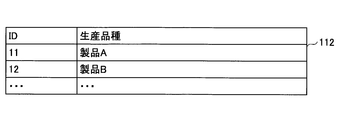
- FIG. 7 is a diagram showing an example of the production type data 112.
- the production type is set in association with the ID.
- the production type is information indicating the type of product or the like to be produced in the work to be performed or completed by the worker.
- FIG. 8 is a diagram illustrating an example of the work area data 113.
- a work area is set in association with the ID.
- the work area is information indicating an area where the worker is currently located.
- the determination unit 13 determines whether there is information on the work content associated with the ID acquired this time (step S202).
- the determination unit 13 associates the ID with the date and time when the ID is acquired, and the production type or work associated with the ID.
- the area information is recorded in the work management data 114 (step S203), and the process ends.
- the determination unit 13 When there is information on the work content associated with the ID acquired this time (YES in step S202), the determination unit 13 refers to the work management data 114, and the most recently acquired production type and the most recently acquired work area. Is acquired (step S204). If the ID acquired this time includes an ID associated with the production type or work area, the determination unit 13 selects the production type or work area most recently acquired according to the ID acquired this time. Let it be an area. If the ID acquired this time does not include the ID associated with the production type or work area, the determination unit 13 records each of the production type and work area recorded in the work management data 114. Among the (row data), the latest date and time is set as the latest acquired production type and work area.
- the determination unit 13 may determine that there is no work type and no work area when the ID acquired this time does not include an ID associated with a production type or work area.
- the determination unit 13 records the work content, the most recently acquired production type, and the most recently acquired work area information in the work management data 114 in association with the date and time when the ID is acquired (step S205). .
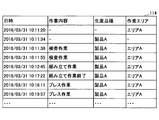
- FIG. 9 is a diagram illustrating an example of the work management data 114.
- the work management data 114 stores work content, production type, and work area information in association with the date and time.
- the ID “01” is associated with the date and time.
- the work content “inspection work”, the latest (most recently) acquired production type “product A”, and the latest acquired work area “area A” are stored.
- the determination unit 13 determines whether or not the current record stored in the work management data 114 in step S205 is information indicating the start of work related to the work item (step S206).
- the determination unit 13 for example, in the work management data 114, the work content, production type, and work area of the current record stored in the work management data 114 in step S 205, and the record recorded immediately before the current record It is determined whether or not the work content, production type, and work area match. If they do not match, it is determined that the work has started.
- the work end determination data 115 is referred to, and it is determined whether or not the record recorded immediately before the current record indicates the work end, and the record recorded immediately before the current record Indicates the end of work, it is determined that the current record is the start of work.
- FIG. 10 is a diagram illustrating an example of the work end determination data 115.
- the work end determination condition is information that specifies a work content condition associated with an ID acquired from the short-range wireless device 30.
- the work being executed is information for designating the condition of the work performed by the worker immediately before the ID is acquired from the short-range wireless device 30.
- step S205 If the current record (row) recorded in the work management data 114 in step S205 is “press work”, “product A”, “area A”, the record immediately before recorded in the work management data 114 However, other than the date and time, it is also assumed that “press work”, “product A”, and “area A” are the same.
- step S205 when the current record (line) recorded in the work management data 114 in step S205 is “press work”, “product A”, and “area A”, immediately before being recorded in the work management data 114. Are “inspection work”, “product A”, and “area A”.
- the example shown in FIG. 10 indicates the end of the “inspection work” being executed in “area A” and “product A” and the start of the work of “press work” which is another work content. It is determined that there is.
- the short-range wireless device 30 to which the “inspection work end” ID is set is separately provided. You can avoid installing it.
- step S206 If the current record is not information indicating the start of work (NO in step S206), the process is terminated.
- the determination unit 13 refers to the immediately preceding required work content data 116, and before starting the work related to the current record, the required work It is determined whether the item is performed (step S207). Note that the processing may be terminated instead of performing the processing in step S207.
- FIG. 11 is a diagram illustrating an example of the immediately-preceding essential work content data 116.
- the work content that needs to be executed before starting a certain work is set in the immediately preceding required work content data 116.
- the area, production type, work content, and immediately preceding required work content are set in association with each other.
- the immediately preceding required work content is information indicating the work content that needs to be performed before the work related to the area, production type, and work content associated with the immediately previous required work content is started.
- the current record (row) recorded in the work management data 114 in step S205 is “transportation work”, “product A”, “area A”, the record immediately before recorded in the work management data 114 Are “inspection work”, “product A”, and “area A”.
- the previous record is “Area A”, “Product A”, and “Press work” with respect to the current record “Area A”, “Product A”, and “Transportation work”. Therefore, it is determined that the essential work content has not been performed.
- step S207 If the essential work content has been performed before starting the work related to the current record (YES in step S207), the process proceeds to step S209 described later. Note that the process may be terminated instead of proceeding to the process of step S209.
- step S207 If the required work content has not been performed before starting the work related to the current record (NO in step S207), the control unit 14 indicates that the required work content has not been performed, Control to notify by vibration is performed (step S208).
- control unit 14 starts a timer (step S209), and the determination unit 13 refers to the standard work time data 117 and acquires the standard work time associated with the work item related to the current record ( Step S210). Note that the processing may be terminated without performing the processing in steps S209 to S211.
- FIG. 12 is a diagram showing an example of the standard work time data 117.
- the standard work time data 117 stores areas, production types, work contents, and standard work times in association with each other.
- the standard work time is a work time predetermined according to each work item in the work time analysis.
- control unit 14 may perform notification based on the standard work time and the timer (step S211). For example, if the standard work time is 1 minute, the control unit 14 may be, for example, 5 seconds before the start of work related to the current record, for example, 5 seconds before or 2 minutes after the start of work. However, when the work is not finished, control is performed to notify by display or vibration.
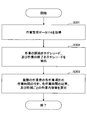
- FIG. 13 is a flowchart illustrating an example of work time analysis processing by the analysis unit.
- step S301 the analysis unit 22 acquires the work management data 114 from the information terminal 10.
- the analysis unit 22 extracts a record indicating the start of work and a record indicating the end of work from the work management data 114 (step S302).
- the record indicating the start of work is extracted by performing the same process as the process of determining whether or not the record is information indicating the start of work in step S206 by the determination unit 13 for each record.
- the record indicating the end of work is extracted by performing the same process as the work end determination process using the work end determination data 115 of FIG.
- the analysis unit 22 calculates the total work time of each work item of each of the plurality of workers carrying the plurality of information terminals 10, the ratio of each work time, the work content for each time, and the like (step S303). .
- the calculated data is stored in the work analysis data 118 by the analysis unit 22.
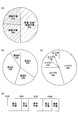
- FIG. 14 is a diagram illustrating a display example based on the analysis result by the analysis unit 22.
- FIG. 14 (A) the work time ratio of each worker is shown in a graph.
- a factory manager can carry out work items that have been worked on by three workers in the past by two workers. You can consider whether you can. Alternatively, it is possible to examine whether the operating speed of the production facility can be increased by 1.5 times and the productivity can be increased by 1.5 times. Alternatively, when the worker A is performing a certain task and the worker B is waiting, the worker B can be instructed to help the task.
- FIG. 14 (B) the ratio of work time by product is shown in a graph.
- FIG. 14C the ratio of work time by work area is shown in a graph.
- FIG. 14D the work content for each time zone is shown in a graph.
- the determination unit 13 When the determination unit 13 detects the end of the predetermined work item, the determination unit 13 causes the control unit 14 to display the preset next work item on the screen of the information terminal 10 and instruct the worker to start the next work item. May be. Alternatively, when the end of a predetermined work item is detected, for example, information on the production facility that is stopped may be displayed on the screen, and the worker may be instructed to go to the state of the production facility.
- the determination unit 13 calculates a score based on the current work time of the predetermined work item and the standard work time for the predetermined work item, and performs control.
- the score may be displayed on the screen of the information terminal 10 by the unit 14. For example, if the current work time is 1 minute and the standard work time is 1 minute, 80 points are displayed.
- an information terminal 10 is installed in an arm of a production facility, and the data recorded by various sensors such as an acceleration sensor, an angular acceleration sensor, and an illuminance sensor included in the information terminal 10 and a microphone are notified to the server device 20. Good.
- the server apparatus 20 can grasp
- the manager of the factory can examine whether the operation rate of the equipment can be improved by changing the work method.
- the worker may carry the short-range wireless device 30 and notify the server device 20 of the worker's ID via the information terminal 10.
- Each functional unit of the information terminal 10 and the server device 20 may be realized by cloud computing including, for example, one or more computers.
- Each functional unit of the information terminal 10 or the server device 20 may be configured to be included in any device.
- the determination unit 13 may be configured in the server device 20, and the analysis unit 22 may be configured in the information terminal 10.
- you may comprise the information terminal 10 and the server apparatus 20 as an integrated apparatus.
- the functions of the units of the information terminal 10, the server device 20, and the short-range wireless device 30 described above are performed by the CPU 104 executing a program stored in the auxiliary storage device 102, the memory device 103, the recording medium 101, or the like. Can be realized.
- the present invention is not limited to this, and at least a part of the functions of each unit of the information terminal 10, the server device 20, and the short-range wireless device 30 may be realized by a dedicated hardware circuit (for example, a semiconductor integrated circuit).
- the determination unit 13 and the analysis unit 22 may be realized by using a semiconductor integrated circuit such as an FPGA (Field Programmable Gate Array) or an ASIC (Application Specific Integrated Circuit).
Landscapes
- Engineering & Computer Science (AREA)
- Business, Economics & Management (AREA)
- General Physics & Mathematics (AREA)
- Quality & Reliability (AREA)
- Physics & Mathematics (AREA)
- Entrepreneurship & Innovation (AREA)
- Economics (AREA)
- Human Resources & Organizations (AREA)
- Strategic Management (AREA)
- Development Economics (AREA)
- Operations Research (AREA)
- Game Theory and Decision Science (AREA)
- Tourism & Hospitality (AREA)
- Educational Administration (AREA)
- General Business, Economics & Management (AREA)
- Marketing (AREA)
- Theoretical Computer Science (AREA)
- General Engineering & Computer Science (AREA)
- Manufacturing & Machinery (AREA)
- Automation & Control Theory (AREA)
- General Factory Administration (AREA)
- Management, Administration, Business Operations System, And Electronic Commerce (AREA)
Abstract
情報端末は、近距離無線装置の通信圏内に入ると、近距離無線装置から識別子を受信する受信部を備え、サーバ装置は、情報端末から、識別子、または識別子に応じた作業項目を取得する取得部を備え、情報端末またはサーバ装置は、受信部により複数の近距離無線装置から受信された各識別子に対応する作業項目を判定する判定部と、受信部により各識別子が受信された日時と、判定部により判定された各作業項目を対応づけて記憶する記憶部と、各作業項目に含まれる第1の作業項目に対応付けられた日時を第1の作業項目の開始日時とし、各作業項目に含まれる第2の作業項目に対応付けられた日時を第1の作業項目の終了日時として、各作業項目に対する作業時間を分析する分析部を備える。
Description
本発明は、作業時間分析システム、作業時間分析プログラム、及び作業時間分析方法に関する。
従来、製造業等における作業の効率化を図るため、人、モノ、設備等の動きを細かく分析し、作業の無駄等を分析する手法が知られている。この手法は、IE(Industrial Engineering)と呼ばれている。このIEにおいて、従来、観察者が作業員の様子を目視で観察し、ストップウォッチにて各作業に掛かった時間を測定していた。
また、従来、ビデオカメラ(VTR)を作業現場に設置して作業の様子を撮影することにより、作業手順や、各作業に掛かった時間を分析することも行われている。ビデオカメラを用いる場合は、ストップウォッチを用いる場合と比較して、測定ミスのリスクを回避できるとともに、作業者への心理負担が比較的低減するため、より自然な作業状態を測定することができる(例えば、非特許文献1、2参照)。
また、近年、撮影された動画に基づき、各作業に掛かった時間を簡易的にではあるが自動で分析できるソフトも開発されている(例えば、非特許文献3参照)。
特許文献1には、作業者に装着させた加速度センサー等を用いて、作業が確実に行われているかを判定する技術が記載されている。
特許文献2には、監視対象者の動線を分析するために、監視対象者が携行する移動体端末が、電波ビーコンから送信される電波に基づいて移動体端末の位置を計算し、モニタリングサーバに通知する技術が記載されている。
佃律志、「日本のモノづくり トヨタ生産方式の基本としくみ」、日本能率協会マネジメントセンター、2012年7月30日、p.154-157
岡田好史、他6名、「わかりやすい経営工学-初心者のビジネス技法36-」、理工図書株式会社、2009年4月10日、p.11-15
公益社団法人日本経営工学会、「ものづくりに役立つ 経営工学の事典-180の知識-」、株式会社朝倉書店、2014年1月20日、p.242,243
従来技術では、各作業員が行う複数の作業にそれぞれかかった時間を測定する場合、ストップウォッチを用いて測定する手法でも、ビデオカメラを用いて測定する手法でも、各作業に掛かった時間の分析に手間がかかるという問題がある。動画に基づいて分析するソフトを用いる場合でも、各作業員がそれぞれ異なる場所で複数の作業を行う場合は、一のビデオカメラにて撮影できない場合があるという問題がある。
特許文献1、2記載の発明では、各作業項目に係る作業にかかった作業時間を分析することは考慮されていない。
そこで、作業員が行う複数の作業にそれぞれかかった作業時間の測定を容易にすることを目的とする。
本発明の作業時間分析システムは、情報端末、及びサーバ装置を有し、作業員の作業時間を分析する作業時間分析システムであって、前記情報端末は、近距離無線装置の通信圏内に入ると、前記近距離無線装置から識別子を受信する受信部を備え、前記サーバ装置は、前記情報端末から、前記識別子、または前記識別子に応じた作業項目を取得する取得部を備え、前記情報端末または前記サーバ装置は、前記受信部により複数の前記近距離無線装置から受信された各識別子に対応する作業項目を判定する判定部と、前記受信部により前記各識別子が受信された日時と、前記判定部により判定された各作業項目を対応づけて記憶する記憶部と、前記各作業項目に含まれる第1の作業項目に対応付けられた日時を前記第1の作業項目の開始日時とし、前記各作業項目に含まれる第2の作業項目に対応付けられた日時を前記第1の作業項目の終了日時として、前記各作業項目に対する作業時間を分析する分析部を備える。
本発明の作業時間分析プログラムは、情報端末に、近距離無線装置の通信圏内に入ると、当該近距離無線装置から識別子を受信するステップと、複数の近距離無線装置から受信された各識別子に対応する作業項目を判定するステップと、前記各識別子が受信された日時と、前記判定された各作業項目を対応づけて記憶するステップと、前記各作業項目に含まれる第1の作業項目に対応付けられた日時を前記第1の作業項目の開始日時とし、前記各作業項目に含まれる第2の作業項目に対応付けられた日時を前記第1の作業項目の終了日時として、前記各作業項目に対する作業時間を分析するステップと、を実行させる。
本発明の作業時間分析方法は、情報端末が、近距離無線装置の通信圏内に入ると、当該近距離無線装置から識別子を受信するステップと、複数の近距離無線装置から受信された各識別子に対応する作業項目を判定するステップと、前記各識別子が受信された日時と、前記判定された各作業項目を対応づけて記憶するステップと、前記各作業項目に含まれる第1の作業項目に対応付けられた日時を前記第1の作業項目の開始日時とし、前記各作業項目に含まれる第2の作業項目に対応付けられた日時を前記第1の作業項目の終了日時として、前記各作業項目に対する作業時間を分析するステップと、を実行する。
本発明によれば、作業員が行う複数の作業にそれぞれかかった作業時間の測定を容易にすることが可能となる。
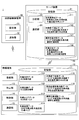
以下、図面に基づいて本発明の実施形態を説明する。図1は、実施形態における作業時間分析システムの構成例を示す図である。図1において、作業時間分析システム1は、複数の情報端末10a、10b、・・・(以下で適宜「情報端末10」と総称する。)、サーバ装置20、及び複数の近距離無線装置30a、30b、・・・(以下で適宜「近距離無線装置30」と総称する。)を含む。
情報端末10とサーバ装置20とは、LAN(Local Area Network)、無線LAN、またはインターネット等の通信回線によって通信可能に接続される。あるいは、情報端末10のデータをSDメモリカード等の記録媒体を介してサーバ装置20に入力してもよい。
情報端末10は、例えばスマートウォッチ、ウェアラブルデバイス、スマートフォン、タブレット等の端末である。
情報端末10は、例えば作業者が携行し、近距離無線装置30に近づけられ、近距離無線装置30の通信圏内に入ると、近距離無線装置30から、近距離無線装置30に設定されたIDを受信する。情報端末10は、例えば0.5秒以下のデータ受信間隔にて、近距離無線装置30からのIDを検知する。これにより、情報端末10を携行する作業者は、近距離無線装置30に情報端末10を近づけたのち、IDの受信を待つ動作が必要なくなり、従来の作業のままに近い状態でIDを受信できる。なお、データ受信間隔が短い程、情報端末10のバッテリーの消耗が速くなる。
情報端末10は、受信したIDに対応付けて、当該IDを受信した日時を記録する。
情報端末10には、近距離無線装置30から通知される各IDに対応付けて、作業内容、生産品種、作業エリア等のデータが設定されている。
また、情報端末10は、加速度センサー、角加速度センサー、照度センサー、方位センター等の各種のセンサーを有し、当該各種センサーにて取得したデータと、当該データを取得した日時とを対応付けて記録してもよい。また、情報端末10は、マイクを有し、当該マイクにて取得した音声データと、当該音声データを取得した日時とを対応付けて記録してもよい。
情報端末10は、近距離無線装置30から通知された各IDに対応する作業内容、生産品種、作業エリア等と、当該各IDを受信した時刻をサーバ装置20に通知する。または、情報端末10は、近距離無線装置30から通知された各IDに対応する作業内容、生産品種、作業エリア等と、当該各IDを受信した時刻を情報端末10自身の補助記憶装置に格納しておき、情報端末10がサーバ装置20に近づいたときや、LAN、無線LAN等で情報端末10とサーバ装置20が通信したときに、その格納したデータをサーバ装置20に通知する。
サーバ装置20は、例えば、PC(Personal Computer)、タブレット型端末等の装置である。サーバ装置20は、各情報端末10から通知されたデータに基づいて、誰が、いつ、どこで、何の作業をしていたのかを分析する。例えば、サーバ装置20は、各情報端末10を携行する作業員の各作業に掛かった時間を分析する。
近距離無線装置30は、例えばビーコンやタグであり、BLE(Bluetooth(登録商標) Low Energy)、NFC(Near Field Communication)、RFID(Radio Frequency IDentification)、赤外線等の近距離無線通信により、予め設定されているIDを情報端末10に通知する。
近距離無線装置30には、工場出荷時、またはシステムに設置される際に、作業内容、生産品種、作業エリア、作業標準時間等のうちの1以上を識別するIDが設定される。
作業内容や生産品種を識別するIDが設定された近距離無線装置30には、通信可能範囲(通信圏内)が例えば半径15cm程度になるような電波強度の送信出力(dBm)が設定される。なお、電波強度の送信出力は、作業内容や生産品種に応じて、通信可能範囲が10cm~3mになるように調整することができる。
作業エリアを識別するID等が設定された近距離無線装置30には、通信可能範囲が例えば半径20m~30mになるような電波強度の送信出力(dBm)が設定される。なお、電波強度の送信出力は、作業エリアに応じて、通信可能範囲が3m~30mになるように調整することができる。それにより、情報端末10は、作業エリアのIDは比較的広い範囲で受信できるとともに、作業内容や生産品種のIDは、意図しない近距離無線装置30から受信することを防ぐことができる。
作業内容や生産品種を識別するIDが設定された近距離無線装置30は、例えば工場の生産設備のボタン付近等、作業者が従来通りの作業を行う際に、情報端末10が通信圏内に入るような位置に設置される。
図2は、実施形態における情報端末10のハードウェア構成例を示す図である。図2の情報端末10は、それぞれバスBで相互に接続されているドライブ装置100、補助記憶装置102、メモリ装置103、CPU104、インタフェース装置105、表示装置106、及び入力装置107等を有する。
情報端末10での処理を実現する作業時間分析プログラムは、SDメモリカード等の記録媒体101によって提供される。作業時間分析プログラムを記録した記録媒体101がドライブ装置100にセットされると、作業時間分析プログラムが記録媒体101からドライブ装置100を介して補助記憶装置102にインストールされる。但し、作業時間分析プログラムのインストールは必ずしも記録媒体101より行う必要はなく、ネットワークを介して他のコンピュータよりダウンロードするようにしてもよい。補助記憶装置102は、インストールされた作業時間分析プログラムを格納すると共に、必要なファイルやデータ等を格納する。
メモリ装置103は、プログラムの起動指示があった場合に、補助記憶装置102からプログラムを読み出して格納する。CPU104は、メモリ装置103に格納されたプログラムに従って情報端末10に係る機能を実現する。インタフェース装置105は、ネットワークに接続するためのインタフェースとして用いられる。表示装置106はプログラムによるGUI(Graphical User Interface)等を表示する。入力装置107はタッチパネル及びボタン等、またはキーボード及びマウス等で構成され、様々な操作指示を入力させるために用いられる。
なお、記録媒体101の一例としては、SDメモリカード、CD-ROM、DVDディスク、又はUSBメモリ等の可搬型の記録媒体が挙げられる。また、補助記憶装置102の一例としては、HDD(Hard Disk Drive)又はフラッシュメモリ等が挙げられる。記録媒体101及び補助記憶装置102のいずれについても、コンピュータ読み取り可能な記録媒体に相当する。
サーバ装置20、近距離無線装置30のハードウェア構成は、図2に示す情報端末10のハードウェア構成例と同様でもよい。
次に、図3を参照し、作業時間分析システム1の機能構成について説明する。図3は、作業時間分析システム1の機能ブロック図である。
(情報端末10の機能構成)
情報端末10は、受信部12、判定部13、制御部14、及び通信部15を有する。これら各部は、情報端末10にインストールされた1以上のプログラムが、情報端末10のCPU104に実行させる処理により実現される。
情報端末10は、受信部12、判定部13、制御部14、及び通信部15を有する。これら各部は、情報端末10にインストールされた1以上のプログラムが、情報端末10のCPU104に実行させる処理により実現される。
また、情報端末10は、記憶部11を有する。記憶部11は、例えば、補助記憶装置102等を用いて実現される。
記憶部11には、作業内容データ111、生産品種データ112、作業エリアデータ113、作業管理データ114、作業終了判定データ115、直前必須作業内容データ116、標準作業時間データ117が記憶される。必要に応じて、その他のデータについても記憶してもよい。
受信部12は、複数の近距離無線装置30のうちの各近距離無線装置30の通信圏内に入ると、各近距離無線装置30からID(識別子)を受信する。
判定部13は、複数の近距離無線装置30から受信された各IDに対応する作業項目を判定する。なお、作業項目には、作業の内容を示す作業内容の情報が含まれる。また、作業項目には、作業内容の情報に加えて、作業により生産される品種を示す生産品種や作業が行われるエリアを示す作業エリアの情報等が含まれてもよい。
制御部14は、受信部12によりIDが受信されると、振動、発光、画面表示等により、IDが受信された旨を報知するよう制御してもよい。
また、制御部14は、判定部13により判定された、第1の作業項目の開始日時と、第1の作業項目に対応付けられた標準作業時間とに基づいて所定の報知を制御してもよい。
通信部15は、サーバ装置20との通信を行う。
なお、情報端末10は、前記したスマートウォッチ、ウェアラブルデバイス、スマートフォン、タブレット等の端末に限定されず、上記の機能を有する装置を有するデバイスであればよい。
(サーバ装置20の機能構成)
サーバ装置20は、分析部22、及び通信部23を有する。これら各部は、サーバ装置20にインストールされた1以上のプログラムが、サーバ装置20のCPU104に実行させる処理により実現される。
サーバ装置20は、分析部22、及び通信部23を有する。これら各部は、サーバ装置20にインストールされた1以上のプログラムが、サーバ装置20のCPU104に実行させる処理により実現される。
また、サーバ装置20は、記憶部21を有する。記憶部21は、例えば、補助記憶装置102等を用いて実現される。
記憶部21には、各情報端末10に通知された全作業管理データ211、作業終了判定データ115、標準作業時間データ117、及び作業分析データ118が記憶される。
全作業管理データ211には、各情報端末10に通知された作業員のIDに対応付けて、各情報端末10の作業管理データ114が格納される。
作業終了判定データ115、標準作業時間データ117は、各情報端末10に格納されるものと同様である。
分析部22は、情報端末10が受信したID及びIDを受信した日時に基づいて、各作業項目に対する作業時間等を分析する。分析部22は、例えば、複数の作業員の各作業項目に対する作業時間の合計、各作業時間の比率、時間ごとの作業内容等を算出し、作業分析データ118に記憶する。
通信部23は、情報端末10との通信を行う。
(近距離無線装置30の機能構成)
近距離無線装置30は、設定部31、及び送信部32を有する。
近距離無線装置30は、設定部31、及び送信部32を有する。
設定部31は、電波強度、送信間隔、ID等の設定を受け付ける。
送信部32は、設定部31に設定されている電波強度及び送信間隔で、設定部31に設定されているIDを送信する。
<システムの処理>
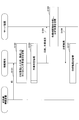
次に、図4を参照して、作業時間分析システム1の処理について説明する。図4は、作業時間分析システム1の処理のシーケンス一例を示す図である。
次に、図4を参照して、作業時間分析システム1の処理について説明する。図4は、作業時間分析システム1の処理のシーケンス一例を示す図である。
ステップS101において、情報端末10は、近距離無線装置30の通信圏内に入ると、近距離無線装置30から、近距離無線装置30に設定されているIDを受信する。
続いて、情報端末10は、IDを受信した日時に対応付けて、受信したIDに応じた作業項目に関するデータを記憶する(ステップS102)。
続いて、情報端末10は、記憶している作業項目に基づいて作業判定処理を行い、作業員への報知等を行う(ステップS103)。なお、作業判定処理の詳細は後述する。
情報端末10がサーバ装置20の通信圏内に入ると、情報端末10は、記憶している日時及び作業項目のデータと、作業員のIDをサーバ装置20に通知する(ステップS104)。なお、作業員のIDは、情報端末10の起動時等に、情報端末10のユーザから指定される。
続いて、サーバ装置20は、通知された日時及び作業項目のデータに基づいて、情報端末10を携行する各作業者の作業項目に対する作業時間の合計、各作業時間の比率、時間ごとの作業内容等を分析し、分析結果を作業分析データ118に記憶する(ステップS105)。
続いて、サーバ装置20は、分析結果を情報端末10に通知する(ステップS106)。
続いて、情報端末10は、通知された分析結果を記憶する(ステップS107)。
なお、ステップS104の情報端末10からサーバ装置20への通知は、情報端末10とサーバ装置20が無線LAN等により常時接続されている場合は、近距離無線装置30からIDを受信する度に行ってもよい。
なお、ステップS106やステップS107の処理は行わなくともよい。
<<作業判定処理>>
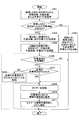
次に、図5を参照して、ステップS103の、判定部13における作業判定処理について説明する。図5は、作業判定処理の一例を示すフローチャートである。
次に、図5を参照して、ステップS103の、判定部13における作業判定処理について説明する。図5は、作業判定処理の一例を示すフローチャートである。
ステップS201において、判定部13は、作業内容データ111、生産品種データ112、作業エリアデータ113を参照し、取得したIDに対応付けられた作業内容、生産品種、または作業エリアを取得する。
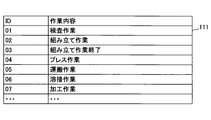
図6は、作業内容データ111の一例を示す図である。作業内容データ111には、IDに対応付けて、作業内容が設定されている。IDは、作業内容、生産品種、または作業エリアのいずれか一つ以上を示す情報である。作業内容は、作業員がこれから行う、または終了する作業の内容を示す情報である。
図7は、生産品種データ112の一例を示す図である。生産品種データ112には、IDに対応付けて、生産品種が設定されている。生産品種は、作業員がこれから行う、または終了する作業にて生産する製品等の種別を示す情報である。
図8は、作業エリアデータ113の一例を示す図である。作業エリアデータ113には、IDに対応付けて、作業エリアが設定されている。作業エリアは、作業員が現在位置するエリアを示す情報である。
図6乃至図8に示す例では、例えば近距離無線装置30から取得したIDが複数あり、例えば「01」、「11」の場合、作業内容として「検査作業」、生産品種として「製品A」が取得される。
続いて、判定部13は、今回取得したIDに対応付けられた作業内容の情報があるか判定する(ステップS202)。
今回取得したIDに対応付けられた作業内容の情報がない場合(ステップS202でNO)、判定部13は、当該IDを取得した日時に対応付けて、当該IDに対応付けられた生産品種や作業エリアの情報を作業管理データ114に記録し(ステップS203)、処理を終了する。
今回取得したIDに対応付けられた作業内容の情報がある場合(ステップS202でYES)、判定部13は、作業管理データ114を参照し、最も新しく取得した生産品種、及び最も新しく取得した作業エリアの情報を取得する(ステップS204)。判定部13は、今回取得したIDに、生産品種や作業エリアに対応付けられたIDが含まれる場合は、今回取得したIDに応じた生産品種や作業エリアを、最も新しく取得した生産品種や作業エリアとする。判定部13は、今回取得したIDに、生産品種や作業エリアに対応付けられたIDが含まれない場合は、作業管理データ114に記録されている生産品種や作業エリアが記録されている各レコード(行データ)のうち、最も日時が新しいものを、最も新しく取得した生産品種や作業エリアとする。これにより、作業内容のIDを設定された近距離無線装置30と、生産品種や作業エリアのIDを設定された近距離無線装置30とが別体の場合にも、作業内容、生産品種、及び作業エリアの情報を含む作業項目を識別できる。なお、判定部13は、今回取得したIDに、生産品種や作業エリアに対応付けられたIDが含まれない場合は、作業品種なし、作業エリアなしと判断してもよい。
続いて、判定部13は、当該IDを取得した日時に対応付けて、作業内容、最も新しく取得した生産品種、及び最も新しく取得した作業エリアの情報を作業管理データ114に記録する(ステップS205)。
図9は、作業管理データ114の一例を示す図である。作業管理データ114には、日時に対応付けて、作業内容、生産品種、作業エリアの情報が記憶される。
図6、図9の例では、日時「2016/03/31 10:11:38」にID「01」が受信された場合に、当該日時に対応付けて、ID「01」に対応付けられた作業内容「検査作業」と、最も新しく(最近)取得された生産品種「製品A」、及び最も新しく取得された作業エリア「エリアA」の情報が記憶される。
続いて、判定部13は、ステップS205にて作業管理データ114に記憶した今回のレコードが、作業項目に係る作業の開始を示す情報であるか否かを判定する(ステップS206)。判定部13は、例えば、作業管理データ114において、ステップS205にて作業管理データ114に記憶した今回のレコードの作業内容、生産品種、及び作業エリアと、今回のレコードの直前に記録されているレコードの作業内容、生産品種、及び作業エリアが一致するか否か判定する。そして、一致しない場合は、作業の開始と判定する。一致する場合は、作業終了判定データ115を参照し、今回のレコードの直前に記録されているレコードが作業終了を示すものであるか否か判定し、今回のレコードの直前に記録されているレコードが作業終了を示すものである場合は、今回のレコードを作業の開始と判定する。
図10は、作業終了判定データ115の一例を示す図である。作業終了判定データ115には、作業の終了と判定する条件である、エリア、生産品種、作業終了判定条件、実行中の作業が予め設定されている。作業終了判定条件は、近距離無線装置30から取得したIDに対応付けられた作業内容の条件を指定する情報である。実行中の作業は、近距離無線装置30からIDを取得した際に、その直前に作業員が実行していた作業の条件を指定する情報である。
ステップS205にて作業管理データ114に記録された今回のレコード(行)が「プレス作業」、「製品A」、「エリアA」である場合に、作業管理データ114に記録されている直前のレコードが、日時以外は同じく「プレス作業」、「製品A」、「エリアA」であるとする。
この場合、図10に示す例では、「エリアA」、「製品A」にて実行中の「プレス作業」の作業終了を示すものであると判定される。これにより、「プレス作業」のIDを設定された近距離無線装置30が、プレス用設備の電源ボタン等の近傍に設置されている場合に、ボタンの「ON」操作及び「OFF」操作に基づき、「プレス作業」の開始及び終了をそれぞれ判定できる。
また、ステップS205にて作業管理データ114に記録された今回のレコード(行)が「プレス作業」、「製品A」、「エリアA」である場合に、作業管理データ114に記録されている直前のレコードが、「検査作業」、「製品A」、「エリアA」であるとする。
この場合、図10に示す例では、「エリアA」、「製品A」にて実行中の「検査作業」の作業終了、及び他の作業内容である「プレス作業」の作業開始を示すものであると判定される。これにより、「検査作業」を終了したのち、すぐに「プレス作業」が開始される作業工程が規定されている場合に、「検査作業終了」のIDを設定された近距離無線装置30を別途設置しなくて済むようにできる。
今回のレコードが作業の開始を示す情報でない場合(ステップS206でNO)、処理を終了する。
今回のレコードが作業の開始を示す情報である場合(ステップS206でYES)、判定部13は、直前必須作業内容データ116を参照し、今回のレコードに係る作業を開始する前に、必須の作業項目が行われているか判定する(ステップS207)。なお、ステップS207の処理を行なう代わりに、処理を終了してもよい。
図11は、直前必須作業内容データ116の一例を示す図である。直前必須作業内容データ116には、ある作業を開始するよりも前に、実施する必要がある作業内容が設定されている。
図11に示す例では、エリア、生産品種、作業内容、直前必須作業内容が対応付けて設定される。直前必須作業内容は、当該直前必須作業内容に対応付けられたエリア、生産品種、作業内容に係る作業を開始するよりも前に、実施する必要がある作業内容を示す情報である。
ステップS205にて作業管理データ114に記録された今回のレコード(行)が「運搬作業」、「製品A」、「エリアA」である場合に、作業管理データ114に記録されている直前のレコードが、「検査作業」、「製品A」、「エリアA」であるとする。この場合、図11に示す例では、「エリアA」、「製品A」、「運搬作業」である今回のレコードに対し、直前のレコードが「エリアA」、「製品A」、「プレス作業」でないため、必須の作業内容が行われていないと判定される。
今回のレコードに係る作業を開始する前に、必須の作業内容が行われている場合(ステップS207でYES)、後述するステップS209の処理に進む。なお、ステップS209の処理に進む代わりに、処理を終了してもよい。
今回のレコードに係る作業を開始する前に、必須の作業内容が行われていない場合(ステップS207でNO)、制御部14は、必須の作業内容が行われていない旨を、所定の表示や振動にて報知する制御を行なう(ステップS208)。
続いて、制御部14は、タイマーを起動し(ステップS209)、判定部13は、標準作業時間データ117を参照し、今回のレコードに係る作業項目に対応付けられた標準作業時間を取得する(ステップS210)。なお、ステップS209乃至ステップS211の処理は行わずに、処理を終了してもよい。
図12は、標準作業時間データ117の一例を示す図である。標準作業時間データ117には、エリア、生産品種、作業内容、標準作業時間がそれぞれ対応付けて記憶される。標準作業時間は、作業時間分析にあたって、各作業項目に応じて予め決められた作業時間である。
続いて、制御部14は、当該標準作業時間とタイマーに基づいた報知を行ってもよい(ステップS211)。制御部14は、例えば、標準作業時間が1分である場合、今回のレコードに係る作業を開始してから1分を経過する例えば5秒前や、作業を開始してから例えば2分経過しても作業を終了していない場合に、表示や振動にて報知する制御を行なう。
<<作業時間分析処理>>
次に、図13を参照して、図4のステップS105の、サーバ装置20の分析部22の作業時間分析処理について説明する。図13は、分析部による作業時間分析処理の一例を示すフローチャートである。
次に、図13を参照して、図4のステップS105の、サーバ装置20の分析部22の作業時間分析処理について説明する。図13は、分析部による作業時間分析処理の一例を示すフローチャートである。
ステップS301において、分析部22は、情報端末10から、作業管理データ114を取得する。
続いて、分析部22は、作業管理データ114から、作業の開始を示すレコード、及び作業の終了を示すレコードを抽出する(ステップS302)。なお、作業の開始を示すレコードの抽出は、各レコードについて、判定部13によるステップS206の作業の開始を示す情報であるか否かを判定する処理と同様の処理を行うことにより抽出される。作業の終了を示すレコードの抽出は、同じくステップS206について説明した図10の作業終了判定データ115を用いた作業終了判定処理と同様の処理を行うことにより抽出される。
続いて、分析部22は、複数の情報端末10をそれぞれ携行する複数の作業者の各作業項目の作業時間の合計、各作業時間の比率、時間ごとの作業内容等を算出する(ステップS303)。そして、算出されたデータが、分析部22により作業分析データ118に記憶される。
次に、図14を参照して、分析部22による分析結果(作業分析データ118)に基づく表示例を説明する。図14は、分析部22による分析結果に基づく表示例を示す図である。
図14(A)では、各作業者の作業時間比率がグラフに表されている。このように、各作業者の各作業項目に対する作業時間を分析することにより、例えば、工場の管理者は、従来3人の作業員で作業している作業項目を、2人の作業員で実施できないか検討することができる。または、生産設備の動作速度を1.5倍にし、生産性を1.5倍にできないか検討することができる。あるいは、作業員Aがある作業を実施している際に、作業員Bに手待ちが発生している場合に、作業員Bにも当該作業を手伝うよう指示することができる。
図14(B)では、製品別の作業時間の比率がグラフに表されている。図14(C)では作業エリア別作業時間の比率がグラフに表されている。図14(D)では時間帯別の作業内容がグラフに表されている。これらの分析結果は、サーバ装置に情報端末の情報が格納された後、すぐに得られる。
<変形例>
判定部13は、所定の作業項目の終了を検知すると、制御部14に、予め設定されている次の作業項目を情報端末10の画面に表示させ、作業員へ次の作業項目の開始を指示してもよい。または、所定の作業項目の終了を検知すると、例えば停止している生産設備の情報を画面に表示し、当該生産設備の様子を見に行くように作業員へ指示してもよい。
判定部13は、所定の作業項目の終了を検知すると、制御部14に、予め設定されている次の作業項目を情報端末10の画面に表示させ、作業員へ次の作業項目の開始を指示してもよい。または、所定の作業項目の終了を検知すると、例えば停止している生産設備の情報を画面に表示し、当該生産設備の様子を見に行くように作業員へ指示してもよい。
判定部13は、所定の作業項目の終了を検知すると、制御部14に、当該所定の作業項目の今回の作業時間、及び当該所定の作業項目に対する標準作業時間に基づいてスコアを算出し、制御部14により、情報端末10の画面にスコアを表示させてもよい。例えば、今回の作業時間が1分、標準作業時間も1分であれば80点と表示する。
生産設備のアーム等にも情報端末10を設置し、当該情報端末10が有する加速度センサー、角加速度センサー、照度センサー等の各種のセンサーやマイクにて記録したデータをサーバ装置20に通知してもよい。これによりサーバ装置20は、各作業員の各作業項目の作業時間に加えて、設備の稼働状況を把握できる。これにより、例えば、工場の管理者は、作業中に設備が停止していた場合、作業のやり方を変えることにより設備の稼働率を向上させることができないか検討することができる。なお、この場合、作業者に近距離無線装置30を携行させ、作業者のIDを、当該情報端末10を介してサーバ装置20に通知してもよい。
以上、本発明の実施例について詳述したが、本発明は斯かる特定の実施形態に限定されるものではなく、特許請求の範囲に記載された本発明の要旨の範囲内において、種々の変形・変更が可能である。
情報端末10やサーバ装置20の各機能部は、例えば1以上のコンピュータにより構成されるクラウドコンピューティングにより実現されていてもよい。情報端末10やサーバ装置20の各機能部は、いずれの装置が備えた構成としてもよい。例えば、判定部13をサーバ装置20が備えた構成としてもよいし、分析部22を情報端末10が備えた構成としてもよい。また、情報端末10とサーバ装置20とを一体の装置として構成してもよい。
以上に説明した情報端末10、サーバ装置20及び近距離無線装置30の各部の機能は、CPU104が、例えば補助記憶装置102、メモリ装置103、記録媒体101等に格納されたプログラムを実行することにより実現され得る。しかし、これに限らず、情報端末10、サーバ装置20及び近距離無線装置30の各部の機能のうちの少なくとも一部を、専用のハードウェア回路(例えば半導体集積回路等)で実現してもよい。例えば、判定部13や分析部22を、FPGA(Field Programmable Gate Array)や、ASIC(Application Specific Integrated Circuit)等の半導体集積回路を用いて実現してもよい。
本願は、日本特許庁に2016年5月2日に出願された基礎出願2016―092559号の優先権を主張するものであり、その全内容を参照によりここに援用する。
1 作業時間分析システム
10 情報端末
11 記憶部
111 作業内容データ
112 生産品種データ
113 作業エリアデータ
114 作業管理データ
115 作業終了判定データ
116 直前必須作業内容データ
117 標準作業時間データ
118 作業分析データ
12 受信部
13 判定部
14 制御部
15 通信部
20 サーバ装置
21 記憶部
211 全作業管理データ
22 分析部
23 通信部(「取得部」の一例)
30 近距離無線装置
31 設定部
32 送信部
10 情報端末
11 記憶部
111 作業内容データ
112 生産品種データ
113 作業エリアデータ
114 作業管理データ
115 作業終了判定データ
116 直前必須作業内容データ
117 標準作業時間データ
118 作業分析データ
12 受信部
13 判定部
14 制御部
15 通信部
20 サーバ装置
21 記憶部
211 全作業管理データ
22 分析部
23 通信部(「取得部」の一例)
30 近距離無線装置
31 設定部
32 送信部
Claims (6)
- 情報端末、及びサーバ装置を有し、作業員の作業時間を分析する作業時間分析システムであって、
前記情報端末は、
近距離無線装置の通信圏内に入ると、前記近距離無線装置から識別子を受信する受信部を備え、
前記サーバ装置は、
前記情報端末から、前記識別子、または前記識別子に応じた作業項目を取得する取得部を備え、
前記情報端末または前記サーバ装置は、
前記受信部により複数の前記近距離無線装置から受信された各識別子に対応する作業項目を判定する判定部と、
前記受信部により前記各識別子が受信された日時と、前記判定部により判定された各作業項目を対応づけて記憶する記憶部と、
前記各作業項目に含まれる第1の作業項目に対応付けられた日時を前記第1の作業項目の開始日時とし、前記各作業項目に含まれる第2の作業項目に対応付けられた日時を前記第1の作業項目の終了日時として、前記各作業項目に対する作業時間を分析する分析部を備える作業時間分析システム。 - 前記分析部は、前記第1の作業項目に応じて、前記各作業項目から前記第2の作業項目を選択する、
請求項1記載の作業時間分析システム。 - 前記作業項目は、作業の内容を示す作業内容と、作業により生産される品種を示す生産品種及び作業が行われるエリアを示す作業エリアのうちの少なくとも一つとを含む、
請求項1または2記載の作業時間分析システム。 - 前記判定部は、前記受信部により受信された識別子に応じた生産品種または作業エリアが登録されていない場合、前記受信部により当該識別子が受信された日時に対応付けて、当該識別子に応じた作業内容と、最も新しく判定した生産品種または作業エリアを前記記憶部に記憶させる、
請求項3記載の作業時間分析システム。 - 情報端末に、
近距離無線装置の通信圏内に入ると、当該近距離無線装置から識別子を受信するステップと、
複数の近距離無線装置から受信された各識別子に対応する作業項目を判定するステップと、
前記各識別子が受信された日時と、前記判定された各作業項目を対応づけて記憶するステップと、
前記各作業項目に含まれる第1の作業項目に対応付けられた日時を前記第1の作業項目の開始日時とし、前記各作業項目に含まれる第2の作業項目に対応付けられた日時を前記第1の作業項目の終了日時として、前記各作業項目に対する作業時間を分析するステップと、
を実行させる作業時間分析プログラム。 - 情報端末が、
近距離無線装置の通信圏内に入ると、当該近距離無線装置から識別子を受信するステップと、
複数の近距離無線装置から受信された各識別子に対応する作業項目を判定するステップと、
前記各識別子が受信された日時と、前記判定された各作業項目を対応づけて記憶するステップと、
前記各作業項目に含まれる第1の作業項目に対応付けられた日時を前記第1の作業項目の開始日時とし、前記各作業項目に含まれる第2の作業項目に対応付けられた日時を前記第1の作業項目の終了日時として、前記各作業項目に対する作業時間を分析するステップと、
を実行する作業時間分析方法。
Priority Applications (1)
| Application Number | Priority Date | Filing Date | Title |
|---|---|---|---|
| JP2018515414A JP6806148B2 (ja) | 2016-05-02 | 2017-04-13 | 作業時間分析システム、作業時間分析プログラム、及び作業時間分析方法 |
Applications Claiming Priority (2)
| Application Number | Priority Date | Filing Date | Title |
|---|---|---|---|
| JP2016-092559 | 2016-05-02 | ||
| JP2016092559 | 2016-05-02 |
Publications (1)
| Publication Number | Publication Date |
|---|---|
| WO2017191743A1 true WO2017191743A1 (ja) | 2017-11-09 |
Family
ID=60202884
Family Applications (1)
| Application Number | Title | Priority Date | Filing Date |
|---|---|---|---|
| PCT/JP2017/015099 Ceased WO2017191743A1 (ja) | 2016-05-02 | 2017-04-13 | 作業時間分析システム、作業時間分析プログラム、及び作業時間分析方法 |
Country Status (2)
| Country | Link |
|---|---|
| JP (1) | JP6806148B2 (ja) |
| WO (1) | WO2017191743A1 (ja) |
Cited By (4)
| Publication number | Priority date | Publication date | Assignee | Title |
|---|---|---|---|---|
| WO2020017160A1 (ja) * | 2018-07-18 | 2020-01-23 | パナソニックIpマネジメント株式会社 | 作業系列識別装置、作業系列識別システム、作業系列識別方法、及びプログラム |
| JP2020194261A (ja) * | 2019-05-27 | 2020-12-03 | 大日本印刷株式会社 | 作業実績収集システム,スマートウォッチおよびアプリケーションプログラム |
| JP2022524776A (ja) * | 2019-03-29 | 2022-05-10 | ユニフレックス-ハイドロウリック ゲゼルシャフト ミット ベシュレンクテル ハフツング | 複数の複合構造体の製造方法 |
| JP2023118969A (ja) * | 2021-07-28 | 2023-08-25 | 明豊ファシリティワークス株式会社 | マンアワーシステム |
Citations (4)
| Publication number | Priority date | Publication date | Assignee | Title |
|---|---|---|---|---|
| JP2008299555A (ja) * | 2007-05-31 | 2008-12-11 | Hitachi Ltd | 作業管理システムおよび作業管理方法 |
| JP2010097490A (ja) * | 2008-10-17 | 2010-04-30 | Ihi Corp | 技能管理システム、技能管理装置および技能管理プログラム |
| JP2011081682A (ja) * | 2009-10-08 | 2011-04-21 | Ricoh Co Ltd | 作業時間分析支援システム、ならびに、プログラム |
| WO2015098577A1 (ja) * | 2013-12-27 | 2015-07-02 | 日本郵船株式会社 | 作業管理システム |
Family Cites Families (1)
| Publication number | Priority date | Publication date | Assignee | Title |
|---|---|---|---|---|
| JP2014056410A (ja) * | 2012-09-12 | 2014-03-27 | Ricoh Co Ltd | 情報処理装置、行動管理システム及び行動管理方法 |
-
2017
- 2017-04-13 WO PCT/JP2017/015099 patent/WO2017191743A1/ja not_active Ceased
- 2017-04-13 JP JP2018515414A patent/JP6806148B2/ja active Active
Patent Citations (4)
| Publication number | Priority date | Publication date | Assignee | Title |
|---|---|---|---|---|
| JP2008299555A (ja) * | 2007-05-31 | 2008-12-11 | Hitachi Ltd | 作業管理システムおよび作業管理方法 |
| JP2010097490A (ja) * | 2008-10-17 | 2010-04-30 | Ihi Corp | 技能管理システム、技能管理装置および技能管理プログラム |
| JP2011081682A (ja) * | 2009-10-08 | 2011-04-21 | Ricoh Co Ltd | 作業時間分析支援システム、ならびに、プログラム |
| WO2015098577A1 (ja) * | 2013-12-27 | 2015-07-02 | 日本郵船株式会社 | 作業管理システム |
Cited By (11)
| Publication number | Priority date | Publication date | Assignee | Title |
|---|---|---|---|---|
| WO2020017160A1 (ja) * | 2018-07-18 | 2020-01-23 | パナソニックIpマネジメント株式会社 | 作業系列識別装置、作業系列識別システム、作業系列識別方法、及びプログラム |
| JPWO2020017160A1 (ja) * | 2018-07-18 | 2021-08-02 | パナソニックIpマネジメント株式会社 | 作業系列識別装置、作業系列識別システム、作業系列識別方法、及びプログラム |
| JP7493155B2 (ja) | 2018-07-18 | 2024-05-31 | パナソニックIpマネジメント株式会社 | 作業系列識別装置、作業系列識別システム、作業系列識別方法、及びプログラム |
| JP2024100803A (ja) * | 2018-07-18 | 2024-07-26 | パナソニックIpマネジメント株式会社 | 分析装置、及びプログラム |
| JP7850928B2 (ja) | 2018-07-18 | 2026-04-24 | パナソニックIpマネジメント株式会社 | 分析装置、及びプログラム |
| JP2022524776A (ja) * | 2019-03-29 | 2022-05-10 | ユニフレックス-ハイドロウリック ゲゼルシャフト ミット ベシュレンクテル ハフツング | 複数の複合構造体の製造方法 |
| JP7545403B2 (ja) | 2019-03-29 | 2024-09-04 | ユニフレックス-ハイドロウリック ゲゼルシャフト ミット ベシュレンクテル ハフツング | 複数の複合構造体の製造方法 |
| JP2020194261A (ja) * | 2019-05-27 | 2020-12-03 | 大日本印刷株式会社 | 作業実績収集システム,スマートウォッチおよびアプリケーションプログラム |
| JP7354587B2 (ja) | 2019-05-27 | 2023-10-03 | 大日本印刷株式会社 | 作業実績収集システム,スマートウォッチおよびアプリケーションプログラム |
| JP2023118969A (ja) * | 2021-07-28 | 2023-08-25 | 明豊ファシリティワークス株式会社 | マンアワーシステム |
| JP7796084B2 (ja) | 2021-07-28 | 2026-01-08 | 明豊ファシリティワークス株式会社 | マンアワーシステム |
Also Published As
| Publication number | Publication date |
|---|---|
| JP6806148B2 (ja) | 2021-01-06 |
| JPWO2017191743A1 (ja) | 2019-03-28 |
Similar Documents
| Publication | Publication Date | Title |
|---|---|---|
| CN106688206B (zh) | 照明传感器网络的应用环境 | |
| US10271200B2 (en) | Provisioning wireless device profiles | |
| EP2998822A2 (en) | Mobile communication device using a plurality of wearable devices in parallel | |
| JP6806148B2 (ja) | 作業時間分析システム、作業時間分析プログラム、及び作業時間分析方法 | |
| KR102327779B1 (ko) | 이미지 처리 방법 및 장치 | |
| US20170221011A1 (en) | System, method, and machine-readable medium for managing network-connected industrial assets | |
| WO2017069166A1 (ja) | 不審者検出システム、不審者検出方法 | |
| CN112419693A (zh) | 设备控制方法、装置、显示设备及计算机可读存储介质 | |
| US20160285516A1 (en) | Control method for battery storage apparatus, battery storage apparatus, and control method for information terminal | |
| EP3737102A1 (en) | Electronic apparatus, user terminal, and method of controlling the electronic apparatus and the user terminal | |
| US20160026890A1 (en) | Defining region for motion detection | |
| EP3160110A1 (en) | File transmission method and apparatus, terminal, wearable device and storage medium | |
| CN110084298B (zh) | 用于检测图像相似度的方法及装置 | |
| WO2019019837A1 (zh) | 生物识别方法及相关产品 | |
| WO2018026110A1 (en) | Electronic device and method for outputting thumbnail corresponding to user input | |
| JP5956035B1 (ja) | 待ち時間推定システムおよび待ち時間推定方法 | |
| US20170131960A1 (en) | Remote terminal, method of remote instruction | |
| US10162898B2 (en) | Method and apparatus for searching | |
| EP3280149A1 (en) | Method for providing additional contents at terminal, and terminal using same | |
| CN111310351A (zh) | 车间设备的状态监测方法、装置、终端设备及存储介质 | |
| KR20170091321A (ko) | 무인 경비 로봇 | |
| JP2018013853A (ja) | 検知装置および検知方法 | |
| CN106296758B (zh) | 用于实施实时图像矢量化的系统和方法 | |
| CN110417931B (zh) | 域名解析记录获取方法、装置、计算机设备及存储介质 | |
| TW201347727A (zh) | 自動上傳非連接式醫療檢測裝置之量測資料的方法與電腦裝置 |
Legal Events
| Date | Code | Title | Description |
|---|---|---|---|
| ENP | Entry into the national phase |
Ref document number: 2018515414 Country of ref document: JP Kind code of ref document: A |
|
| NENP | Non-entry into the national phase |
Ref country code: DE |
|
| 121 | Ep: the epo has been informed by wipo that ep was designated in this application |
Ref document number: 17792676 Country of ref document: EP Kind code of ref document: A1 |
|
| 122 | Ep: pct application non-entry in european phase |
Ref document number: 17792676 Country of ref document: EP Kind code of ref document: A1 |