WO2017110133A1 - 電子レンジ用の吸収シート - Google Patents
電子レンジ用の吸収シート Download PDFInfo
- Publication number
- WO2017110133A1 WO2017110133A1 PCT/JP2016/073904 JP2016073904W WO2017110133A1 WO 2017110133 A1 WO2017110133 A1 WO 2017110133A1 JP 2016073904 W JP2016073904 W JP 2016073904W WO 2017110133 A1 WO2017110133 A1 WO 2017110133A1
- Authority
- WO
- WIPO (PCT)
- Prior art keywords
- fiber
- absorbent sheet
- core
- sheath
- pet
- Prior art date
- Legal status (The legal status is an assumption and is not a legal conclusion. Google has not performed a legal analysis and makes no representation as to the accuracy of the status listed.)
- Ceased
Links
Images
Classifications
-
- A—HUMAN NECESSITIES
- A47—FURNITURE; DOMESTIC ARTICLES OR APPLIANCES; COFFEE MILLS; SPICE MILLS; SUCTION CLEANERS IN GENERAL
- A47J—KITCHEN EQUIPMENT; COFFEE MILLS; SPICE MILLS; APPARATUS FOR MAKING BEVERAGES
- A47J27/00—Cooking-vessels
-
- D—TEXTILES; PAPER
- D04—BRAIDING; LACE-MAKING; KNITTING; TRIMMINGS; NON-WOVEN FABRICS
- D04H—MAKING TEXTILE FABRICS, e.g. FROM FIBRES OR FILAMENTARY MATERIAL; FABRICS MADE BY SUCH PROCESSES OR APPARATUS, e.g. FELTS, NON-WOVEN FABRICS; COTTON-WOOL; WADDING ; NON-WOVEN FABRICS FROM STAPLE FIBRES, FILAMENTS OR YARNS, BONDED WITH AT LEAST ONE WEB-LIKE MATERIAL DURING THEIR CONSOLIDATION
- D04H1/00—Non-woven fabrics formed wholly or mainly of staple fibres or like relatively short fibres
- D04H1/40—Non-woven fabrics formed wholly or mainly of staple fibres or like relatively short fibres from fleeces or layers composed of fibres without existing or potential cohesive properties
- D04H1/54—Non-woven fabrics formed wholly or mainly of staple fibres or like relatively short fibres from fleeces or layers composed of fibres without existing or potential cohesive properties by welding together the fibres, e.g. by partially melting or dissolving
- D04H1/541—Composite fibres, e.g. sheath-core, sea-island or side-by-side; Mixed fibres
- D04H1/5412—Composite fibres, e.g. sheath-core, sea-island or side-by-side; Mixed fibres sheath-core
-
- B—PERFORMING OPERATIONS; TRANSPORTING
- B65—CONVEYING; PACKING; STORING; HANDLING THIN OR FILAMENTARY MATERIAL
- B65D—CONTAINERS FOR STORAGE OR TRANSPORT OF ARTICLES OR MATERIALS, e.g. BAGS, BARRELS, BOTTLES, BOXES, CANS, CARTONS, CRATES, DRUMS, JARS, TANKS, HOPPERS, FORWARDING CONTAINERS; ACCESSORIES, CLOSURES, OR FITTINGS THEREFOR; PACKAGING ELEMENTS; PACKAGES
- B65D81/00—Containers, packaging elements, or packages, for contents presenting particular transport or storage problems, or adapted to be used for non-packaging purposes after removal of contents
- B65D81/24—Adaptations for preventing deterioration or decay of contents; Applications to the container or packaging material of food preservatives, fungicides, pesticides or animal repellants
- B65D81/26—Adaptations for preventing deterioration or decay of contents; Applications to the container or packaging material of food preservatives, fungicides, pesticides or animal repellants with provision for draining away, or absorbing, or removing by ventilation, fluids, e.g. exuded by contents; Applications of corrosion inhibitors or desiccators
-
- D—TEXTILES; PAPER
- D04—BRAIDING; LACE-MAKING; KNITTING; TRIMMINGS; NON-WOVEN FABRICS
- D04H—MAKING TEXTILE FABRICS, e.g. FROM FIBRES OR FILAMENTARY MATERIAL; FABRICS MADE BY SUCH PROCESSES OR APPARATUS, e.g. FELTS, NON-WOVEN FABRICS; COTTON-WOOL; WADDING ; NON-WOVEN FABRICS FROM STAPLE FIBRES, FILAMENTS OR YARNS, BONDED WITH AT LEAST ONE WEB-LIKE MATERIAL DURING THEIR CONSOLIDATION
- D04H1/00—Non-woven fabrics formed wholly or mainly of staple fibres or like relatively short fibres
- D04H1/40—Non-woven fabrics formed wholly or mainly of staple fibres or like relatively short fibres from fleeces or layers composed of fibres without existing or potential cohesive properties
- D04H1/42—Non-woven fabrics formed wholly or mainly of staple fibres or like relatively short fibres from fleeces or layers composed of fibres without existing or potential cohesive properties characterised by the use of certain kinds of fibres insofar as this use has no preponderant influence on the consolidation of the fleece
- D04H1/425—Cellulose series
-
- D—TEXTILES; PAPER
- D04—BRAIDING; LACE-MAKING; KNITTING; TRIMMINGS; NON-WOVEN FABRICS
- D04H—MAKING TEXTILE FABRICS, e.g. FROM FIBRES OR FILAMENTARY MATERIAL; FABRICS MADE BY SUCH PROCESSES OR APPARATUS, e.g. FELTS, NON-WOVEN FABRICS; COTTON-WOOL; WADDING ; NON-WOVEN FABRICS FROM STAPLE FIBRES, FILAMENTS OR YARNS, BONDED WITH AT LEAST ONE WEB-LIKE MATERIAL DURING THEIR CONSOLIDATION
- D04H1/00—Non-woven fabrics formed wholly or mainly of staple fibres or like relatively short fibres
- D04H1/40—Non-woven fabrics formed wholly or mainly of staple fibres or like relatively short fibres from fleeces or layers composed of fibres without existing or potential cohesive properties
- D04H1/42—Non-woven fabrics formed wholly or mainly of staple fibres or like relatively short fibres from fleeces or layers composed of fibres without existing or potential cohesive properties characterised by the use of certain kinds of fibres insofar as this use has no preponderant influence on the consolidation of the fleece
- D04H1/4326—Condensation or reaction polymers
- D04H1/435—Polyesters
-
- D—TEXTILES; PAPER
- D04—BRAIDING; LACE-MAKING; KNITTING; TRIMMINGS; NON-WOVEN FABRICS
- D04H—MAKING TEXTILE FABRICS, e.g. FROM FIBRES OR FILAMENTARY MATERIAL; FABRICS MADE BY SUCH PROCESSES OR APPARATUS, e.g. FELTS, NON-WOVEN FABRICS; COTTON-WOOL; WADDING ; NON-WOVEN FABRICS FROM STAPLE FIBRES, FILAMENTS OR YARNS, BONDED WITH AT LEAST ONE WEB-LIKE MATERIAL DURING THEIR CONSOLIDATION
- D04H1/00—Non-woven fabrics formed wholly or mainly of staple fibres or like relatively short fibres
- D04H1/40—Non-woven fabrics formed wholly or mainly of staple fibres or like relatively short fibres from fleeces or layers composed of fibres without existing or potential cohesive properties
- D04H1/54—Non-woven fabrics formed wholly or mainly of staple fibres or like relatively short fibres from fleeces or layers composed of fibres without existing or potential cohesive properties by welding together the fibres, e.g. by partially melting or dissolving
- D04H1/541—Composite fibres, e.g. sheath-core, sea-island or side-by-side; Mixed fibres
- D04H1/5418—Mixed fibres, e.g. at least two chemically different fibres or fibre blends
-
- F—MECHANICAL ENGINEERING; LIGHTING; HEATING; WEAPONS; BLASTING
- F24—HEATING; RANGES; VENTILATING
- F24C—DOMESTIC STOVES OR RANGES ; DETAILS OF DOMESTIC STOVES OR RANGES, OF GENERAL APPLICATION
- F24C7/00—Stoves or ranges heated by electric energy
- F24C7/02—Stoves or ranges heated by electric energy using microwaves
Definitions
- This disclosure relates to an absorbent sheet used in a microwave oven.
- Patent Document 1 discloses an absorbent sheet made of a fiber nonwoven fabric including core-sheath type composite fibers made of two polyester resins having different melting points.
- the sheet strength is improved by applying a heat and pressure treatment with a hot roll in the manufacturing process of the sheet, but a part of the sheet is formed into a film by heating and pressing.
- the flexibility may be impaired, and the absorbability may be reduced.
- adhesiveness is improved by melting the sheath portion of the composite fiber by hot-pressure treatment, while the composite sheet is deformed and crimped, so that the entire sheet is contracted and the set outer dimensions are obtained. It may be difficult to mold.
- the present invention is formed by blending a heat-fusible conjugate fiber composed of two polyester resins having different melting points and at least one of a polyester fiber and a cellulosic fiber.
- the present invention relates to an absorbent sheet for a microwave oven in which the difference between the melting points of two polyester resins is 35 to 55 degrees and the density is 0.035 to 0.1 g / cm 3 .
- the absorption amount of the absorbent sheet is at least 400 g / m 2 and the absorption rate based on the Bayrec method of JIS L1096 is 10 mm or less, so that oil exuded from food heated in a microwave oven can be appropriately absorbed and food The oil will not be quickly absorbed from the contact surface and dried.
- the air-through fiber nonwoven fabric has an absorbent sheet mass of 30 to 50 g / m 2 and a thickness dimension of 0.5 to 1.0 mm, as compared with the case where the sheet is molded through an adhesive (binder), It has a relatively high flexibility.
- the polyester resin having a low melting point melts without using an adhesive and exhibits the required adhesiveness. Be improved.
- the composite fiber of the absorbent sheet is a core-sheath type composite fiber and the melting point of the PET resin constituting the core part is 250 degrees or more, the core part does not melt even when hot air is blown in the air-through manufacturing method. In addition, it is possible to give the absorbent sheet a “koshi”.
- the compounding ratio of the composite fiber in the absorbent sheet is higher than the mixing ratio of other fibers, the required strength is exhibited and the sheet strength is improved.
- the compounding ratio of the composite fiber is 50 to 70% by mass, it is possible to achieve an appropriate balance between sheet strength and shrinkage suppression during molding.
- the polyester fiber content is higher than the cellulosic fiber content, so when antistatic treatment is applied to the polyester fiber, suppress the generation of static electricity during production Can do.
- the melting point difference between the two polyester resins of the composite fiber is 35 to 55 degrees, and the density is 0.03 to 0.1 g / cm 3 .
- the required adhesive strength during sheet production and the prevention of sheet shrinkage can be adjusted in a well-balanced manner, and the required absorptivity and heat resistance that prevents deformation and discoloration when heated in a microwave oven.
- the drawings illustrate specific embodiments of the invention and include selective and preferred embodiments as well as the essential features of the invention.
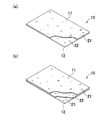
- A The partially broken perspective view of the absorption sheet in an example of a modification.
- B The partially broken perspective view of the absorption sheet in an example of another modification.
- the following embodiment relates to the microwave oven absorbent sheet 10 shown in FIGS. 1 and 2 and includes not only an indispensable structure of the invention but also a selective and preferable structure.
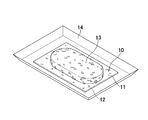
- an absorption sheet 10 for a microwave oven has a thickness direction, an upper surface 11 and a lower surface 12, and a tray (heat-resistant dish) with food 13 placed on the upper surface 11. ) Is located at the bottom of 14.
- the food 13 placed on the absorbent sheet 10 is a processed food such as tempura or fried food.
- the absorbent sheet 10 is formed from a fiber nonwoven fabric including a first fiber that is a composite fiber containing a synthetic resin and a second fiber that is at least one of a hydrophobic synthetic fiber and a cellulosic fiber. .
- the first fiber is formed of two synthetic resins having different melting points, such as polyethylene (PE) and polypropylene (PP), polyethylene (PE) and polyester (PES), polypropylene and polyester, polyethylene terephthalate (PET) and polyethylene.
- PE polyethylene
- PP polypropylene
- PES polyethylene
- PET polyethylene terephthalate
- a combination of these synthetic resins bonded by various known methods such as a core-sheath type, a side-by-side type, a split type, and a sea-island type can be used.
- the core part and the sheath part are formed from a polyester-based resin, specifically, the core-sheath type in which the core part and the sheath part are formed from PET resins having different melting points.
- the composite fiber is used.
- the first fiber has a fineness of 1 to 6 dtex and a fiber length of 30 to 70 mm.
- Synthetic fibers include nylon fibers, acrylic fibers, and polyester fibers.
- PET fibers are preferably used.
- cellulosic fibers include regenerated fibers such as rayon.
- rayon fibers are preferably used.
- the core-sheath type is used as the composite fiber in consideration of the flowability, it is considered that the technical effect of the present invention can be obtained even in the side-by-side type.
- the absorbent sheet 10 can be formed from a known fiber nonwoven fabric such as an air-through fiber nonwoven fabric, a spunlace fiber nonwoven fabric, or a spunbond fiber nonwoven fabric, and is preferably formed from an air-through fiber nonwoven fabric.
- the air-through fiber nonwoven fabric is a fiber nonwoven fabric manufactured by a known air-through method. In the air-through method, a fiber web such as a card web is supported by a net, and hot air is blown from above to partially intersect the constituent fibers. It is the method of making it into a sheet form by heat-sealing.
- the air-through fiber nonwoven fabric formed by such a method has a spray surface on which fibers are relatively sparse and a net support surface on which fibers are relatively dense.
- the absorbency can be improved as compared with the case where the spraying surface is the upper surface 11 by using the upper surface 11 as the net support surface where the fibers are relatively dense and smooth.
- the sheet strength is expressed by melting the thermoplastic fiber with hot air, the bulk of the sheet is higher than the thermal bond method in which the thermoplastic fiber is bonded by heating and pressing with a hot roll. Excellent in properties.
- the food and the absorbent sheet on which the food is placed are heated to 180 degrees or more on average.
- it is preferably formed of a single fiber such as PET fiber, nylon fiber, polybutylene terephthalate (PBT) fiber, In such a case, the adhesiveness becomes low and the required sheet strength cannot be obtained.
- the first fibers are composite fibers formed from polyester resins having different melting points, and the melting point of the sheath is higher than the temperature (180 degrees) heated in the microwave oven.
- the temperature of the hot air blown in the air-through method heat treatment temperature
- the absorption sheet 10 does not deform
- the melting point of the PET resin forming the core of the first fiber is 250 to 275 degrees, which is higher than the temperature of hot air in the air-through manufacturing method. Therefore, the first fibers are not completely thermally contracted during the manufacturing process, and the shrinkage of the sheet can be suppressed, so that a sheet having the same size as the designed outer dimension can be formed. Further, the core of the first fiber is not shrunk so that the absorbent sheet 10 can be firm. Considering the allowable range of the heat treatment temperature during production, it is preferable that the melting point of the PET resin forming the core of the first fiber is 250 degrees or more. The difference in melting point between the core portion and the sheath portion of the first fiber is preferably 35 to 55 degrees.
- the difference between the melting points is less than 35 degrees, the allowable range of the heat treatment temperature at the time of manufacture is narrowed.
- the difference exceeds 55 degrees the melting point of the core is relatively high, and the absorbent sheet There is a risk that the disposal or reprocessing of 10 may be difficult.
- the absorbent sheet 10 may have a non-flexible texture.
- the second fibers made of cellulose-based hydrophilic fibers, it is possible to suppress shrinkage during molding and to impart softness as a food sheet.
- the blending ratio of the first fibers and the second fibers in the absorbent sheet 10 it is preferable that the blending ratio of the first fibers is 50 to 70 mass% and the blending ratio of the second fibers is 30 to 50 mass%.
- the blending ratio of the second fibers is less than 30% by mass, shrinkage due to the first fibers can be suppressed, while the absorbent sheet 10 itself may be too hard.
- the blending ratio of the second fibers is If it exceeds 50% by mass, the absorbent sheet 10 becomes too soft and there is no stiffness, and there is a possibility that a part will be torn during use.
- the absorbent sheet 10 has a mass of 30 to 50 g / m 2 and a density of 0.035 to 1.0 g / cm 3 .
- the density is less than 0.035 g / cm 3 , the required absorption amount cannot be obtained and the liquid cannot be sufficiently retained inside.
- the density exceeds 1.0 g / cm 3 , the fiber gap becomes relatively small, the liquid absorbency and the absorption rate are increased by capillary action, and the oil and moisture of the food are absorbed, and the food There is a risk of drying the contact surface.
- the absorbent sheet 10 is formed by blending the first fiber and the second fiber, and the difference in the melting point and density between the sheath and the core of the first fiber are within a predetermined range.
- the fiber nonwoven fabric is bulky and excellent in heat resistance, and after being heated in a microwave oven, oil is not absorbed excessively from the contact surface of the food and the whole food and dried.
- the thickness of the absorbent sheet 10 is preferably 0.5 to 1.0 mm.
- the thickness dimension is less than 0.5 mm, the sheet strength and cushioning properties may be reduced and the food may be sagged when the food is placed on the upper surface 11.
- the thickness dimension exceeds 1.0 mm Therefore, when a continuous sheet before being divided into individual absorbent sheets 10 is wound and accommodated in a roll shape, it is bulky and requires an accommodation space.
- the absorption sheet 10 has an absorption amount of 400 g / m 2 or more, and an absorption rate based on the JISL1096 birec method is 10 mm or less. Since the absorption amount of the absorbent sheet 10 is 400 g / m 2 or more, it is possible to reliably absorb and retain oil oozed from food heated in a microwave oven, and the absorption speed is 10 mm or less. Compared with a sheet that contains a lot of fiber and absorbs the drain of fresh food, the absorption rate is relatively slow, and it immediately absorbs oil from heated food and dries part of the contact surface. Absent.
- the absorbent sheet 10 may be configured by blending a composite fiber (first fiber), a polyester fiber (second fiber), and a hydrophilic fiber (third fiber).
- the compounding ratio is preferably the highest for the composite fiber
- the polyester fiber is preferably higher than the hydrophilic fiber.
- static electricity is likely to be generated by blowing dry hot air onto the fiber web.
- production of static electricity can be effectively suppressed by making the mixture ratio of the polyester fiber which gave the process higher than a hydrophilic fiber.
- Tables 1 and 2 evaluate the configurations and characteristics of the absorbent sheets in Examples 1-6 and Comparative Examples 1-9 of the absorbent sheet 10 according to the present embodiment.
- the examples specifically illustrate the configuration of the invention according to the present embodiment and the technical effects thereof, but are not limited to the numerical values shown in Table 1.
- the characteristics in the table were measured by the following methods.
- ⁇ Thickness dimension> Based on the JISL 1096.6.5 standard, the thickness is measured using a desk thickness meter (manufactured by MITUTOYO, measurement surface ⁇ 50.5 mm, measurement pressure 3 g / cm 2 ). First, a 100 mm ⁇ 100 mm sample was cut out from each absorbent sheet, and the center of the sample was gently sandwiched between the upper and lower disks, and the thickness gauge value at that time was determined.
- the ratio (%) of the shrinkage dimension of the dimension L2 in the machine direction of the fiber web after the heat treatment when the dimension L1 in the machine direction of the fiber web in the stage before the heat treatment is 100%.
- two marks separated in the machine direction are attached to the fiber web before heat treatment with a marker and its dimension L1 is measured.
- the dimension between the two marks after heat treatment is measured, and the dimension L1 is When 100 m and dimension L2 is 95 mm, the shrinkage rate is 5%.
- ⁇ Tensile strength> The tensile strength was measured using an autograph tensile tester manufactured by Shimadzu Corporation. Each sheet is cut as a sample, and the cut width (mm) is measured. One side edge of the sample was sandwiched between one chuck and the other side edge was sandwiched between the other chuck, and the measurement was performed at a tensile speed of 100 mm / min. The tensile strength (N / 25 mm) per 25 mm width was calculated from the width (mm) of the sample and used as the tensile strength of each sheet.
- ⁇ Absorption (oil)> A 140 mm ⁇ 60 mm sample was cut from each drip sheet, and the mass (Ag) of each sample was measured. After measuring the weight, the sample was placed on a 10-mesh wire net, and the entire sample was immersed in a test solution (edible oil) placed in a tray. After soaking in the test solution for 3 minutes, the sample was taken out of the tray together with the wire mesh, drained lightly, and allowed to stand for 5 minutes. Then, the sample was placed on the sample table, and a weight of 420 g was placed on the sample and left for 3 minutes. The mass of the sample after 3 minutes was measured (Bg).
- a test solution edible oil
- the absorption amount was calculated
- required by said measuring method. The measurement was performed three times, and the average value was taken as the amount of absorption of each sheet. Absorption amount (g / m 2 ) (BA) /0.06/0.14
- ⁇ Heat resistance evaluation> First, prepare three samples cut to a size of 100 mm ⁇ 100 mm from each sheet, and prepare a semi-solid dressing, for example, mayonnaise, containing about 5 g of cooking oil, vinegar, egg, etc. in the center of each sample. I put it. Next, sample 1 was heated in a 1000 W microwave for 1 minute, sample 2 was heated for 2 minutes, and sample 3 was heated for 3 minutes, and the temperature of each sheet of samples 1 to 3 was measured with a handy thermometer. After heating, the remaining dressing was removed, and the mounting surface of the sample was visually confirmed. Samples 1 to 3 were lightly washed with a neutral detergent and then dried, and the mounting surface was photographed with a digital camera and observed.
- a semi-solid dressing for example, mayonnaise, containing about 5 g of cooking oil, vinegar, egg, etc. in the center of each sample. I put it.
- sample 1 was heated in a 1000 W microwave for 1 minute
- sample 2 was heated for 2 minutes
- sample 3 was heated for 3 minutes
- core-sheath PET fibers having melting points different from each other in the core and the sheath as the first fibers PET / PET
- an air-through fiber nonwoven fabric (AT) using PET fibers or hydrophilic fibers as the second fibers Comparative Example 6 used a wet fiber nonwoven fabric using core-sheath PET fibers.
- the core-sheath PET fiber used for the air through fiber nonwoven fabric has a fineness of 2.2 dtex and a fiber length of 51 mm.
- Example 1 40 g / m 2 in mass, 0.95 mm in thickness, 0.042 g / cm 3 in density, 70% core-sheath PET fiber, 30% PET fiber, heat treatment temperature 210 ° C, shrinkage after heat treatment However, 5% air-through fiber nonwoven fabric was used.
- the melting point of the core (PET) of the core-sheath PET fiber was 255 ° C., and the melting point of the sheath was 200 ° C.
- Example 2 Mass 40 g / m 2 , thickness 0.98 mm, density 0.041 g / cm 3 , fiber compounding ratio: core-sheath PET fiber 70%, PET fiber 30%, heat treatment temperature 230 ° C, shrinkage after heat treatment However, 5% air-through fiber nonwoven fabric was used. The melting point of the core part (PET) of the core-sheath PET fiber was 255 ° C., and the melting point of the sheath part was 220 ° C.
- PET core part
- Example 3 Mass 40 g / m 2 , thickness 0.96 mm, density 0.042 g / cm 3 , fiber compounding ratio: core-sheath PET fiber 70%, rayon fiber 30%, heat treatment temperature 210 ° C, shrinkage after heat treatment Used 4% air-through fiber nonwoven fabric.
- the melting point of the core (PET) of the core-sheath PET fiber was 255 ° C., and the melting point of the sheath was 200 ° C.
- Example 4 Mass 40 g / m 2 , thickness 0.99 mm, density 0.040 g / cm 3 , fiber compounding ratio 70% core-sheath PET fiber, 30% rayon fiber, heat treatment temperature 230 ° C, shrinkage after heat treatment Used 4% air-through fiber nonwoven fabric.
- the melting point of the core part (PET) of the core-sheath PET fiber was 255 ° C., and the melting point of the sheath part was 220 ° C.
- Example 5 Mass 40 g / m 2 , thickness 0.97 mm, density 0.041 g / cm 3 , fiber compounding ratio: core-sheath PET fiber 50%, PET fiber 50%, heat treatment temperature 210 ° C., shrinkage after heat treatment However, 5% air-through fiber nonwoven fabric was used. The melting point of the core (PET) of the core-sheath PET fiber was 255 ° C., and the melting point of the sheath was 200 ° C.
- PET core
- Example 6 Mass 40 g / m 2 , thickness 1.03 mm, density 0.039 g / cm 3 , fiber blending ratio core-sheath PET fiber 50%, PET fiber 50%, heat treatment temperature 210 ° C, shrinkage after heat treatment An air-through fiber nonwoven fabric with a rate of 4% was used.
- the melting point of the core (PET) of the core-sheath PET fiber was 255 ° C., and the melting point of the sheath was 200 ° C.
- the melting point of the core part (PET) of the core-sheath PET fiber was 255 ° C.
- the melting point of the sheath part was 110 ° C.
- the melting point of the core (PET) of the core-sheath PET fiber was 255 ° C, and the melting point of the sheath was 130 ° C.
- Air-through fiber having a mass of 40 g / m 2 , a thickness of 0.80 mm, a density of 0.050 g / cm 3 , a fiber sheathing ratio of 100% core-sheath PET fiber, a heat treatment temperature of 210 ° C., and a shrinkage ratio after heat treatment of 22% Nonwoven fabric was used.
- the melting point of the core (PET) of the core-sheath PET fiber was 255 ° C., and the melting point of the sheath was 200 ° C.
- the blending ratio of the core-sheath PET fiber as the first fiber is 50 to 70 mass%
- the blending ratio of the PET fiber or the rayon fiber as the second fiber is 30 to 50 mass%. Since the melting point of the sheath part of the core-sheathed PET fiber is 200 to 220 degrees, the heat resistance evaluation is “ ⁇ (good)”, the tensile strength is 38.0 to 45.0, and the absorption amount is 547 to 658 g, the absorption rate was 5.0 to 9.5.
- Comparative Example 7 since the density was 0.033 g / cm 3 or less, the absorption performance was low, and the absorption amount was 400 g or less.
- Comparative Example 8 since the blending ratio of the core-sheath PET fiber was less than 50% by mass, the adhesiveness was lowered and the tensile strength was 30 or less.
- Comparative Example 9 since the blending ratio of the core-sheath PET fiber is less than 50% by mass, the adhesiveness is lowered, the tensile strength is 30 or less, and the blending ratio of the rayon fiber is 50% by mass.
- the absorption rate was 14.5.
- ⁇ Modification> 2A is a partially broken perspective view of the absorbent sheet 10 in an example of a modified example
- FIG. 2B is a partially broken perspective view of the absorbent sheet 10 in an example of another modified example.
- the absorbent sheet 10 has a multi-layer structure composed of an upper layer 21 that forms the upper surface 11 and a lower layer 22 that forms the lower surface 12.
- the upper and lower layers 21 and 22 may be bonded to each other via an adhesive (binder) applied to at least one of the opposing surfaces of both layers, or may be mechanically entangled and bonded.
- the mixing ratio of the constituent fibers of the upper and lower layers 21 and 22 may be the same, but the mixing ratio of the composite fibers in the upper layer 21 is preferably lower than that of the lower layer 22, for example
- the mixing ratio of the first fiber (composite fiber) in the upper layer 21 is 50% by mass
- the mixing ratio of the second fiber (PET fiber) is 50% by mass
- the mixing ratio of the first fiber in the lower layer 22 is 90% by mass
- the compounding ratio of the fiber is 10% by mass.
- the shrinkage ratio of the upper layer 21 located on the upper surface 11 side is lower than that of the lower layer 22, the shape on the upper surface 11 side is relatively stable and the flexibility is improved.
- the absorbent sheet 10 has a multilayer structure comprising an upper layer 21 that forms the upper surface 11, a lower layer 22 that forms the lower surface 12, and an intermediate layer 23 positioned between the upper and lower layers 21 and 22.
- Each of the layers 21 to 23 may be bonded via an adhesive applied to at least one of the opposing surfaces, or may be bonded by mechanically interlacing fibers.
- the mixing ratio of the constituent fibers in each of the layers 21 to 23 may be the same, but the mixing ratio of the first fibers in the upper layer 21 and the lower layer 22 is preferably lower than that of the intermediate layer 23.
- the upper and lower layers 21 , 22 is 60% by mass of the first fiber, 40% by mass of the second fiber, 90% by mass of the first fiber in the intermediate layer 23, and 10% by mass of the second fiber. It is. In such a case, the shapes of the upper and lower layers 21 and 22 forming the upper and lower surfaces 11 and 12 are relatively stable and excellent in flexibility.
- the intermediate layer 23 is higher in rigidity than the upper and lower layers 21 and 23, the absorbent sheet 10 is firm as a whole and has high sheet strength, and does not sag even when heated.
Landscapes
- Engineering & Computer Science (AREA)
- Textile Engineering (AREA)
- Chemical & Material Sciences (AREA)
- Mechanical Engineering (AREA)
- Food Science & Technology (AREA)
- Combustion & Propulsion (AREA)
- General Engineering & Computer Science (AREA)
- Chemical Kinetics & Catalysis (AREA)
- Nonwoven Fabrics (AREA)
- Packages (AREA)
Abstract
製造時の縮みを抑制するとともに、耐熱性、所要の柔軟性及び吸収性を備えた電子レンジ用の吸収シートの提供。 電子レンジ用の吸収シート(10)は、融点の異なる2つのポリエステル樹脂から構成された熱融着性の複合繊維と、ポリエステル繊維及びセルロース系繊維のうちの少なくとも一方の繊維とを配合して形成され、複合繊維の2つのポリエステル樹脂の融点の差が35~55度であって、密度が0.035~0.1g/cm3である。
Description
本開示は、電子レンジで使用する吸収シートに関する。
従来、食品から滲出される水分や油分を吸収する吸収シートは公知である。例えば、特許文献1には、融点の異なる2つのポリエステル樹脂から成る芯鞘型の複合繊維を含む繊維不織布製の吸収シートが開示されている。
特許文献1に開示の吸収シートでは、シートの製造過程において、熱ロールによって熱圧処理を施すことによってシート強度を向上させているが、加熱と加圧とによってシートの一部がフィルム化してしまい、柔軟性が損なわれて、吸収性が低下するおそれがある。また、シート製造時において、熱圧処理によって複合繊維の鞘部が溶融することによって接着性が向上する一方、複合繊維が変形、捲縮することによってシート全体が縮んでしまい、設定した外形寸法に成形することが困難になるおそれがある。
本発明では、製造時の縮みを抑制するとともに、耐熱性、所要の柔軟性及び吸収性を備えた電子レンジ用の吸収シートの提供を課題にしている。
本発明は、融点の異なる2つのポリエステル樹脂から構成された熱融着性の複合繊維と、ポリエステル繊維及びセルロース系繊維のうちの少なくとも一方の繊維とを配合して形成され、前記複合繊維の2つのポリエステル樹脂の融点の差が35~55度であって、密度が0.035~0.1g/cm3である電子レンジ用の吸収シートに関する。
吸収シートの吸収量が少なくとも400g/m2であって、JISL1096のバイレック法に基づく吸収速度が10mm以下であることによって、電子レンジで加熱した食品から滲出された油分を適度に吸収するとともに、食品の接触面から速やかに油分を吸収して乾燥させてしまうことはない。
吸収シートの質量が30~50g/m2、厚さ寸法が0.5~1.0mmのエアスルー繊維不織布であることから、接着剤(バインダー)を介してシートを成形する場合に比して、比較的に高い柔軟性を有する。
吸収シートの前記複合繊維が芯鞘型複合繊維又はサイドバイサイド型複合繊維であることから、接着剤を使用しなくても融点の低いポリエステル樹脂が溶融して所要の接着性を発揮し、シート強度が向上される。
吸収シートの複合繊維が芯鞘型複合繊維であって、芯部を構成するPET樹脂の融点が、250度以上であることから、エアスルー製法において熱風を吹き付けても芯部が溶融することがなく、吸収シートに「コシ」をもたせることができる。
吸収シートにおける複合繊維の配合率が他の繊維の配合率よりも高いことから、所要の接着性を発揮してシート強度が向上される。
複合繊維の配合率が50~70質量%であることから、シート強度と成形時の縮み抑制との適度なバランスを図ることができる。
ポリエステル繊維とセルロース系繊維とを含み、ポリエステル繊維の配合率が、セルロース系繊維の配合率よりも高いことから、ポリエステル繊維に帯電防止処理を施した場合、製造時における静電気の発生を抑制することができる。
この発明に係る電子レンジ用の吸収シートによれば、複合繊維の2つのポリエステル樹脂の融点差が35~55度であって、密度が0.03~0.1g/cm3であることから、シート製造時における所要の接着力とシートの縮み防止とをバランスよく調整することができるとともに、所要の吸収性と電子レンジで加熱したときに変形、変色しない程度の耐熱性とを有する。
図面は、本発明の特定の実施の形態を示し、発明の不可欠な構成ばかりでなく、選択的及び好ましい実施の形態を含む。
本発明に係る電子レンジ用の吸収シートの使用状態における斜視図。
(a)変形例の一例における吸収シートの一部破断斜視図。(b)他の変形例の一例における吸収シートの一部破断斜視図。
下記の実施の形態は、図1及び図2に示す電子レンジ用の吸収シート10に関し、発明の不可欠な構成ばかりではなく、選択的及び好ましい構成を含む。
図1を参照すると、本発明に係る電子レンジ用の吸収シート10は、厚さ方向と、上面11及び下面12とを有し、上面11に食品13が載置された状態でトレイ(耐熱皿)14の底に配置されている。吸収シート10に載置された食品13は、天ぷらや揚げ物等の加工食品であって、電子レンジで加熱することによって油分が滲出し、滲出した油分が吸収シート10に速やかに吸収される。吸収シート10は、合成樹脂を含む複合繊維である第1繊維と、疎水性の合成繊維及びセルロース系繊維とのうちの少なくとも一方の繊維である第2繊維とを含む繊維不織布から形成されている。第1繊維には、融点の異なる2つの合成樹脂から形成されており、ポリエチレン(PE)とポリプロピレン(PP)、ポリエチレン(PE)とポリエステル(PES)、ポリプロピレンとポリエステル、ポリエチレンテレフタレート(PET)とポリエチレンの組み合わせ等であって、それらの合成樹脂が芯鞘型、サイドバイサイド型、分割型、海島型等の各種公知の方法によって貼り合せたものを使用することができる。
本実施形態においては、第1繊維として、芯部と鞘部とがポリエステル系樹脂から形成された、具体的には、芯部と鞘部とが融点の異なるPET樹脂から形成された芯鞘型の複合繊維が使用されている。第1繊維は、繊度1~6dtex、繊維長30~70mmである。合成繊維としては、ナイロン繊維、アクリル繊維、ポリエステル繊維等があるが、本実施形態においては、PET繊維が好適に使用される。また、セルロース系繊維としては、コットン、パルプ繊維等の天然繊維のほかに、レーヨン等の再生繊維があるが、本実施形態においては、レーヨン繊維が好適に使用される。なお、複合繊維として、流通性を考慮して芯鞘型が使用されているが、サイドバイサイド型であっても、本発明の技術的効果を奏することができると考える。
吸収シート10は、エアスルー繊維不織布、スパンレース繊維不織布やスパンボンド繊維不織布等の公知の繊維不織布から形成することができ、好ましくは、エアスルー繊維不織布から形成される。エアスルー繊維不織布は、公知のエアスルー法によって製造された繊維不織布であって、エアスルー法は、カードウエブなどの繊維ウエブをネットで支持して、上方から熱風を吹き付けることで構成繊維の交点を部分的に熱融着させることによってシート状にする方法である。かかる方法によって形成されたエアスルー繊維不織布には、繊維が比較的に疎である吹き付け面と、繊維が比較的に密であるネット支持面とを有する。本発明においては、吸収シート10の上面11がネット支持面、下面12が吹き付け面となるように配置される。このように、繊維が比較的に密であって、かつ、平滑なネット支持面を上面11とすることによって、吹き付け面を上面11にする場合に比べて、吸収性を向上させることができる。エアスルー法においては、熱風によって熱可塑性繊維を溶融することによってシート強度を発現するものであるから、熱ロールによって加熱加圧することによって熱可塑性繊維を接着させるサーマルボンド法等に比べて、シートの嵩高性に優れる。
通常、電子レンジで食品全体に熱が伝わるまで加熱したときに、食品及びそれを載置した吸収シートは平均的に180度以上に加熱されている。かかる加熱によっても、吸収シートが変形、変色を生じない程度の耐熱性を付与するために、PET繊維、ナイロン繊維、ポリブチレンテレフタレート(PBT)繊維等の単一繊維で形成することが好ましいが、かかる場合には、接着性が低くなり、所要のシート強度を有することができない。
本実施形態に係る吸収シート10においては、第1繊維が融点の異なるポリエステル樹脂から形成された複合繊維であって、鞘部の融点が、電子レンジで加熱される温度(180度)よりも高く、製造時の熱風の温度よりも低く設定されることによって、所要の接着性と耐熱性との両方を実現している。具体的には、また、エアスルー法においてブローされる熱風の温度(熱処理温度)は約210~230度であって、複合繊維の鞘部のPET樹脂の融点(200~220度)よりも高いことから、鞘部が溶融してそれに接するセルロース系親水性繊維に熱溶着される。一方、電子レンジで加熱される温度よりも高いことから、加熱後に吸収シート10が変形、変色することはない。
一方、第1繊維の芯部を形成するPET樹脂の融点は、250~275度であて、エアスルー製法における熱風の温度よりも高くなっている。そのために、製造工程中に第1繊維が完全に熱収縮されることはなく、シートの縮みを抑制することができるので、設計した外形寸法とほぼ同じ大きさのシートを成形することができる。また、第1繊維の芯部が収縮されないことによって、吸収シート10にコシを持たせることができる。製造時における熱処理温度の許容範囲を考慮すれば、第1繊維の芯部を形成するPET樹脂の融点は、250度以上であることが好ましい。また、第1繊維の芯部と鞘部との融点の差は、35~55度であることが好ましい。かかる融点の差が35度未満の場合には、製造時の熱処理温度の許容範囲が狭くなる一方、その差が55度を超える場合には、芯部の融点が比較的に高くなり、吸収シート10の廃棄処理や再処理がし難くなるおそれがある。
第1繊維は、製造時において鞘部が溶融して収縮するので、吸収シート10の配合率が100%の場合には、吸収シート10が柔軟性のない風合いとなるおそれがあるが、ポリエステル繊維やセルロース系親水性繊維からなる第2繊維を配合することによって、成形時の縮みを抑制するとともに、食品用のシートとしての柔らかさを付与することができる。吸収シート10における第1繊維と第2繊維との配合率についていえば、第1繊維の配合率が50~70質量%、第2繊維の配合率が30~50質量%であることが好ましい。第2繊維の配合率が30質量%未満の場合には、第1繊維による縮みを抑制することができる一方、吸収シート10自体が硬くなりすぎるおそれがあり、一方、第2繊維の配合率が50質量%を超える場合には、吸収シート10が柔らかくなりすぎてコシがなく、使用中に一部が破れてしまうおそれがある。
また、本実施形態においては、吸収シート10の質量は、30~50g/m2であって、密度は、0.035~1.0g/cm3である。密度が0.035g/cm3未満の場合には、所要の吸収量を有することができずに十分に液体を内部に保持することができなくなるおそれがある。一方、密度が1.0g/cm3を超える場合には、繊維間隙が比較的に小さくなって毛管現象によって液体の吸収性及び吸収速度が高くなり、食品の油分や水分を吸収して、食品の接触面を乾燥させてしまうおそれがある。
このように、吸収シート10は、第1繊維と第2繊維とを配合して形成され、第1繊維における鞘部と芯部における融点の差及び密度が所定の範囲内にあることから、比較的に嵩高の耐熱性に優れた繊維不織布となり、電子レンジで加熱した後に、食品の接触面及び食品全体から油分を吸い取り過ぎて乾燥させてしまうことはない。
吸収シート10の厚さ寸法は、0.5~1.0mmであることが好ましい。厚さ寸法が0.5mm未満の場合には、シート強度とクッション性とが低下して上面11に食品を載置したときにへたってしまうおそれがあり、厚さ寸法が1.0mmを超える場合には、個々の吸収シート10に分割する前の連続したシートをロール状に巻いて収容するときに嵩張って、収容スペースを要することになる。
吸収シート10は、吸収量が400g/m2以上であって、JISL1096のバイレック法に基づく吸収速度が10mm以下である。吸収シート10の吸収量が400g/m2以上であることから、電子レンジで加熱した食品から滲出された油分を確実に吸収保持することができるとともに、吸収速度が10mm以下であるから、親水性繊維を多く含んだ、生鮮食品のドレインを吸収するシート等と比べて、吸収速度が比較的に遅く、加熱された食品から直ちに油脂を吸収して接触面の一部を乾燥させてしまうことはない。
吸収シート10は、複合繊維(第1繊維)と、ポリエステル繊維(第2繊維)と親水性繊維(第3繊維)とを配合して構成されていてもよい。かかる構成からなる場合には、配合率は、複合繊維が最も高く、ポリエステル繊維が親水性繊維よりも高いことが好ましい。エアスルー製法における熱処理においては、乾燥した熱風を繊維ウエブに吹き付けることによって静電気が発生しやすいので、静電気の除去が製造上の問題となるが、帯電防止機能を有する油剤を塗布するなどして帯電防止加工を施したポリエステル繊維の配合率を親水性繊維よりも高くすることによって、静電気の発生を効果的に抑制することができる。


表1及び表2は、本実施形態に係る吸収シート10の実施例1-6と、比較例1-9における吸収シートの構成、特性を評価したものである。ただし、実施例は、本実施形態に係る発明の構成及びそれによる技術的な効果を具体的にするものであるが、表1に示した、各数値に限定されるものではない。表中の特性は、以下の方法によって測定した。
<厚さ寸法>
JISL1096.6.5規格に準拠して、卓上厚み計(MITUTOYO社製、測定面φ50.5mm、測定圧3g/cm2)を用いて測定する。まず、各吸収シートから100mm×100mmのサンプルを切り取り、サンプルの中心を上下に位置する円盤で静かに挟み込み、そのときの厚み計の値を求めた。
JISL1096.6.5規格に準拠して、卓上厚み計(MITUTOYO社製、測定面φ50.5mm、測定圧3g/cm2)を用いて測定する。まず、各吸収シートから100mm×100mmのサンプルを切り取り、サンプルの中心を上下に位置する円盤で静かに挟み込み、そのときの厚み計の値を求めた。
<質量>
各吸収シートから100mm×100mmのサンプルを3枚切り出して、各サンプルの質量を測定器で測定し、その平均値から算出した単位面積当たりの質量(g/m2)を求めた。
各吸収シートから100mm×100mmのサンプルを3枚切り出して、各サンプルの質量を測定器で測定し、その平均値から算出した単位面積当たりの質量(g/m2)を求めた。
<密度>
各吸収シートの質量を、その厚さ寸法で除することにより算出(cm3)した。
各吸収シートの質量を、その厚さ寸法で除することにより算出(cm3)した。
<熱処理温度>
各シートのエアスルー製法(比較例6は除く)における、機械方向へ搬送されたウエブに吹き付けられる熱風の温度である。比較例6においては、湿式不織布を乾燥させるときの熱風の温度を意味する。
各シートのエアスルー製法(比較例6は除く)における、機械方向へ搬送されたウエブに吹き付けられる熱風の温度である。比較例6においては、湿式不織布を乾燥させるときの熱風の温度を意味する。
<収縮率>
各シートの製造工程において、熱処理加工前の段階の繊維ウエブの機械方向における寸法L1を100%とした場合の熱処理加工後における繊維ウエブの機械方向における寸法L2の縮み寸法の比率(%)を意味する。すなわち、例えば、熱処理加工前の繊維ウエブに機械方向において離間する2つの印をマーカーで付してその寸法L1を測定し、熱処理加工後における2つの印間の寸法を測定して、寸法L1が100m、寸法L2が95mmの場合、収縮率は、5%となる。
各シートの製造工程において、熱処理加工前の段階の繊維ウエブの機械方向における寸法L1を100%とした場合の熱処理加工後における繊維ウエブの機械方向における寸法L2の縮み寸法の比率(%)を意味する。すなわち、例えば、熱処理加工前の繊維ウエブに機械方向において離間する2つの印をマーカーで付してその寸法L1を測定し、熱処理加工後における2つの印間の寸法を測定して、寸法L1が100m、寸法L2が95mmの場合、収縮率は、5%となる。
<引張強度>
引張強度は、株式会社島津製作所製 オートグラフ引張試験機を用いて測定した。サンプルとして、各シートをそれぞれカットし、そのカット幅(mm)を測定する。サンプルの一方の側縁を一方のチャックに挟持し、他方の側縁を他方のチャックに挟持し、引張速度100mm/minに設定して測定した。サンプルの幅(mm)から、幅25mm当たりの引張強度(N/25mm)を算出して、各シートの引張強度とした。
引張強度は、株式会社島津製作所製 オートグラフ引張試験機を用いて測定した。サンプルとして、各シートをそれぞれカットし、そのカット幅(mm)を測定する。サンプルの一方の側縁を一方のチャックに挟持し、他方の側縁を他方のチャックに挟持し、引張速度100mm/minに設定して測定した。サンプルの幅(mm)から、幅25mm当たりの引張強度(N/25mm)を算出して、各シートの引張強度とした。
<吸収量(油)>
各ドリップシートから140mm×60mmのサンプルを切り取り、各サンプルの質量(Ag)を測定した。重量を測定した後、サンプルを10メッシュの金網の上に置き、サンプル全体をトレイに入れた試験液(食用油)に浸けた。3分間試験液に浸したのち、サンプルを金網ごとトレイから取り出し、軽く水切りをして、5分間静置した。そして、サンプルをサンプル台の上に置き、420gの重りをサンプルにのせて、3分間そのまま放置した。3分後における、サンプルの質量を測定(Bg)した。上記の測定方法によって求めた値(A,B)を用いて、下記の計算方法により、吸収量を求めた。測定は3回行い、その平均値を各シートの吸収量とした。
吸収量(g/m2)=(B-A)/0.06/0.14
各ドリップシートから140mm×60mmのサンプルを切り取り、各サンプルの質量(Ag)を測定した。重量を測定した後、サンプルを10メッシュの金網の上に置き、サンプル全体をトレイに入れた試験液(食用油)に浸けた。3分間試験液に浸したのち、サンプルを金網ごとトレイから取り出し、軽く水切りをして、5分間静置した。そして、サンプルをサンプル台の上に置き、420gの重りをサンプルにのせて、3分間そのまま放置した。3分後における、サンプルの質量を測定(Bg)した。上記の測定方法によって求めた値(A,B)を用いて、下記の計算方法により、吸収量を求めた。測定は3回行い、その平均値を各シートの吸収量とした。
吸収量(g/m2)=(B-A)/0.06/0.14
<吸収速度(油)>
JIS-L1096「繊維製品の吸水性試験方法」(バイレック法)に基づいて各シートの油分の吸収速度を測定した。まず、各シートについて幅寸法25mm×長手寸法に150mmの大きさに切り出した帯状のサンプルを3枚用意し、食用油及び着色剤を入れたシャーレに各サンプルを長手方向において10mm含浸させて、長手方向に上昇した液体の高さをH1として測定した。なお、測定は、60秒までは10秒毎、その後、300秒までは30秒毎に行った。
JIS-L1096「繊維製品の吸水性試験方法」(バイレック法)に基づいて各シートの油分の吸収速度を測定した。まず、各シートについて幅寸法25mm×長手寸法に150mmの大きさに切り出した帯状のサンプルを3枚用意し、食用油及び着色剤を入れたシャーレに各サンプルを長手方向において10mm含浸させて、長手方向に上昇した液体の高さをH1として測定した。なお、測定は、60秒までは10秒毎、その後、300秒までは30秒毎に行った。
<耐熱性評価>
まず、各シートから100mm×100mmの大きさに切り出したサンプルを3枚用意し、各サンプルの中心部分に約5gの食用油や酢、卵等を配合した半固形状のドレッシング、例えば、マヨネーズを載せた。次に、1000Wの電子レンジでサンプル1を1分、サンプル2を2分、サンプル3を3分と加熱し、サンプル1~3の各シートの温度をハンディ温度計で測定した。加熱後、残ったドレッシングを除去し、サンプルの載置面を目視で確認した。サンプル1~3を中性洗剤で軽く洗った後に、乾燥させ、載置面をデジタルカメラで撮影して観察した。なお、表面の凹凸等によって入り込んだ僅かな残量物を確認するときには、マイクロスコープによる撮影を行った。撮影した写真を基に、シートの載置面に変形や変色等の変化がある場合には、耐熱温度以上になったと判断した。概ね、この方法によって、3分間の加熱によっても載置面に変化がなければ、シートとしての耐熱性がある「○(良)」と評価し、1~3分間の加熱によって載置面に変化があれば耐熱性なし「×(不良)」と判断した。
まず、各シートから100mm×100mmの大きさに切り出したサンプルを3枚用意し、各サンプルの中心部分に約5gの食用油や酢、卵等を配合した半固形状のドレッシング、例えば、マヨネーズを載せた。次に、1000Wの電子レンジでサンプル1を1分、サンプル2を2分、サンプル3を3分と加熱し、サンプル1~3の各シートの温度をハンディ温度計で測定した。加熱後、残ったドレッシングを除去し、サンプルの載置面を目視で確認した。サンプル1~3を中性洗剤で軽く洗った後に、乾燥させ、載置面をデジタルカメラで撮影して観察した。なお、表面の凹凸等によって入り込んだ僅かな残量物を確認するときには、マイクロスコープによる撮影を行った。撮影した写真を基に、シートの載置面に変形や変色等の変化がある場合には、耐熱温度以上になったと判断した。概ね、この方法によって、3分間の加熱によっても載置面に変化がなければ、シートとしての耐熱性がある「○(良)」と評価し、1~3分間の加熱によって載置面に変化があれば耐熱性なし「×(不良)」と判断した。
表1及び表2を参照すると、実施例1~6及び比較例1~9(比較例6を除く)においては、第1繊維として芯部と鞘部とで互いに異なる融点を有する芯鞘PET繊維(PET/PET)、第2繊維としてPET繊維又は親水性繊維を使用したエアスルー繊維不織布(AT)であって、比較例6は、芯鞘PET繊維を使用した湿式繊維不織布を用いた。また、エアスルー繊維不織布に使用した芯鞘PET繊維は、繊度が2.2dtex、繊維長が51mmである。
<実施例1>
質量40g/m2、厚さ0.95mm、密度0.042g/cm3、繊維の配合率が芯鞘PET繊維70%、PET繊維が30%、熱処理温度が210°C、熱処理後の収縮率が5%のエアスルー繊維不織布を使用した。芯鞘PET繊維の芯部(PET)の融点が255°C、鞘部の融点が200°Cであった。
質量40g/m2、厚さ0.95mm、密度0.042g/cm3、繊維の配合率が芯鞘PET繊維70%、PET繊維が30%、熱処理温度が210°C、熱処理後の収縮率が5%のエアスルー繊維不織布を使用した。芯鞘PET繊維の芯部(PET)の融点が255°C、鞘部の融点が200°Cであった。
<実施例2>
質量40g/m2、厚さ0.98mm、密度0.041g/cm3、繊維の配合率が芯鞘PET繊維70%、PET繊維が30%、熱処理温度が230°C、熱処理後の収縮率が5%のエアスルー繊維不織布を使用した。芯鞘PET繊維の芯部(PET)の融点が255°C、鞘部の融点が220°Cであった。
質量40g/m2、厚さ0.98mm、密度0.041g/cm3、繊維の配合率が芯鞘PET繊維70%、PET繊維が30%、熱処理温度が230°C、熱処理後の収縮率が5%のエアスルー繊維不織布を使用した。芯鞘PET繊維の芯部(PET)の融点が255°C、鞘部の融点が220°Cであった。
<実施例3>
質量40g/m2、厚さ0.96mm、密度0.042g/cm3、繊維の配合率が芯鞘PET繊維70%、レーヨン繊維が30%、熱処理温度が210°C、熱処理後の収縮率が4%のエアスルー繊維不織布を使用した。芯鞘PET繊維の芯部(PET)の融点が255°C、鞘部の融点が200°Cであった。
質量40g/m2、厚さ0.96mm、密度0.042g/cm3、繊維の配合率が芯鞘PET繊維70%、レーヨン繊維が30%、熱処理温度が210°C、熱処理後の収縮率が4%のエアスルー繊維不織布を使用した。芯鞘PET繊維の芯部(PET)の融点が255°C、鞘部の融点が200°Cであった。
<実施例4>
質量40g/m2、厚さ0.99mm、密度0.040g/cm3、繊維の配合率が芯鞘PET繊維70%、レーヨン繊維が30%、熱処理温度が230°C、熱処理後の収縮率が4%のエアスルー繊維不織布を使用した。芯鞘PET繊維の芯部(PET)の融点が255°C、鞘部の融点が220°Cであった。
質量40g/m2、厚さ0.99mm、密度0.040g/cm3、繊維の配合率が芯鞘PET繊維70%、レーヨン繊維が30%、熱処理温度が230°C、熱処理後の収縮率が4%のエアスルー繊維不織布を使用した。芯鞘PET繊維の芯部(PET)の融点が255°C、鞘部の融点が220°Cであった。
<実施例5>
質量40g/m2、厚さ0.97mm、密度0.041g/cm3、繊維の配合率が芯鞘PET繊維50%、PET繊維が50%、熱処理温度が210°C、熱処理後の収縮率が5%のエアスルー繊維不織布を使用した。芯鞘PET繊維の芯部(PET)の融点が255°C、鞘部の融点が200°Cであった。
質量40g/m2、厚さ0.97mm、密度0.041g/cm3、繊維の配合率が芯鞘PET繊維50%、PET繊維が50%、熱処理温度が210°C、熱処理後の収縮率が5%のエアスルー繊維不織布を使用した。芯鞘PET繊維の芯部(PET)の融点が255°C、鞘部の融点が200°Cであった。
<実施例6>
質量40g/m2、厚さ1.03mm、密度が0.039g/cm3、繊維の配合率が芯鞘PET繊維50%、PET繊維が50%、熱処理温度が210°C、熱処理後の収縮率が4%のエアスルー繊維不織布を使用した。芯鞘PET繊維の芯部(PET)の融点が255°C、鞘部の融点が200°Cであった。
質量40g/m2、厚さ1.03mm、密度が0.039g/cm3、繊維の配合率が芯鞘PET繊維50%、PET繊維が50%、熱処理温度が210°C、熱処理後の収縮率が4%のエアスルー繊維不織布を使用した。芯鞘PET繊維の芯部(PET)の融点が255°C、鞘部の融点が200°Cであった。
<比較例1>
質量40g/m2、厚さ0.95mm、密度が0.042g/cm3、繊維の配合率が芯鞘PET繊維70%、PET繊維が30%、熱処理温度が120°C、熱処理後の収縮率が5%のエアスルー繊維不織布を使用した。芯鞘PET繊維の芯部(PET)の融点が255°C、鞘部の融点が110°Cであった。
質量40g/m2、厚さ0.95mm、密度が0.042g/cm3、繊維の配合率が芯鞘PET繊維70%、PET繊維が30%、熱処理温度が120°C、熱処理後の収縮率が5%のエアスルー繊維不織布を使用した。芯鞘PET繊維の芯部(PET)の融点が255°C、鞘部の融点が110°Cであった。
<比較例2>
質量40g/m2、厚さ0.95mm、密度が0.042g/cm3、繊維の配合率が芯鞘PET繊維70%、PET繊維30%、熱処理温度が140°C、熱処理後の収縮率が5%のエアスルー繊維不織布を使用した。芯鞘PET繊維の芯部(PET)の融点が255°C、鞘部の融点が130°Cであった。
質量40g/m2、厚さ0.95mm、密度が0.042g/cm3、繊維の配合率が芯鞘PET繊維70%、PET繊維30%、熱処理温度が140°C、熱処理後の収縮率が5%のエアスルー繊維不織布を使用した。芯鞘PET繊維の芯部(PET)の融点が255°C、鞘部の融点が130°Cであった。
<比較例3>
質量40g/m2、厚さ0.95mm、密度0.042g/cm3、繊維の配合率が芯鞘PET繊維70%、PET繊維30%、熱処理温度が170°C、熱処理後の収縮率が5%のエアスルー繊維不織布を使用した。芯鞘PET繊維の芯部(PET)の融点が255°C、鞘部の融点が160°Cであった。
質量40g/m2、厚さ0.95mm、密度0.042g/cm3、繊維の配合率が芯鞘PET繊維70%、PET繊維30%、熱処理温度が170°C、熱処理後の収縮率が5%のエアスルー繊維不織布を使用した。芯鞘PET繊維の芯部(PET)の融点が255°C、鞘部の融点が160°Cであった。
<比較例4>
質量40g/m2、厚さ0.95mm、密度0.042g/cm3、繊維の配合率が芯鞘PET繊維70%、PET繊維が30%、熱処理温度が190°C、熱処理後の収縮率が5%のエアスルー繊維不織布を使用した。芯鞘PET繊維の芯部(PET)の融点が255°C、鞘部の融点が180°Cであった。
質量40g/m2、厚さ0.95mm、密度0.042g/cm3、繊維の配合率が芯鞘PET繊維70%、PET繊維が30%、熱処理温度が190°C、熱処理後の収縮率が5%のエアスルー繊維不織布を使用した。芯鞘PET繊維の芯部(PET)の融点が255°C、鞘部の融点が180°Cであった。
<比較例5>
質量40g/m2、厚さ0.80mm、密度0.050g/cm3、繊維の配合率が芯鞘PET繊維100%、熱処理温度が210°C、熱処理後の収縮率が22%のエアスルー繊維不織布を使用した。芯鞘PET繊維の芯部(PET)の融点が255°C、鞘部の融点が200°Cであった。
質量40g/m2、厚さ0.80mm、密度0.050g/cm3、繊維の配合率が芯鞘PET繊維100%、熱処理温度が210°C、熱処理後の収縮率が22%のエアスルー繊維不織布を使用した。芯鞘PET繊維の芯部(PET)の融点が255°C、鞘部の融点が200°Cであった。
<比較例6>
質量48g/m2、厚さ0.11mm、密度0.457g/cm3、繊維の配合率がPET繊維100%、熱処理温度が260°C、熱処理後の収縮率が2%の湿式繊維不織布を使用した。
質量48g/m2、厚さ0.11mm、密度0.457g/cm3、繊維の配合率がPET繊維100%、熱処理温度が260°C、熱処理後の収縮率が2%の湿式繊維不織布を使用した。
<比較例7>
質量40g/m2、厚さ1.20mm、密度0.033g/cm3、繊維の配合率が芯鞘PET繊維70%、PET繊維が30%、熱処理温度が210°C、熱処理後の収縮率が5%のエアスルー繊維不織布を使用した。芯鞘PET繊維の芯部(PET)の融点が255°C、鞘部の融点が200°Cであった。
質量40g/m2、厚さ1.20mm、密度0.033g/cm3、繊維の配合率が芯鞘PET繊維70%、PET繊維が30%、熱処理温度が210°C、熱処理後の収縮率が5%のエアスルー繊維不織布を使用した。芯鞘PET繊維の芯部(PET)の融点が255°C、鞘部の融点が200°Cであった。
<比較例8>
質量40g/m2、厚さ1.05mm、密度0.038g/cm3、繊維の配合率が芯鞘PET繊維40%、PET繊維が60%、熱処理温度が210°C、熱処理後の収縮率が3%のエアスルー繊維不織布を使用した。芯鞘PET繊維の芯部(PET)の融点が255°C、鞘部の融点が200°Cであった。
質量40g/m2、厚さ1.05mm、密度0.038g/cm3、繊維の配合率が芯鞘PET繊維40%、PET繊維が60%、熱処理温度が210°C、熱処理後の収縮率が3%のエアスルー繊維不織布を使用した。芯鞘PET繊維の芯部(PET)の融点が255°C、鞘部の融点が200°Cであった。
<比較例9>
質量40g/m2、厚さ1.07mm、密度が0.037g/cm3、繊維の配合率が芯鞘PET繊維40%、レーヨン繊維が60%、熱処理温度が210°C、熱処理後の収縮率が3%のエアスルー繊維不織布を使用した。芯鞘PET繊維の芯部(PET)の融点が255°C、鞘部の融点が200°Cであった。
質量40g/m2、厚さ1.07mm、密度が0.037g/cm3、繊維の配合率が芯鞘PET繊維40%、レーヨン繊維が60%、熱処理温度が210°C、熱処理後の収縮率が3%のエアスルー繊維不織布を使用した。芯鞘PET繊維の芯部(PET)の融点が255°C、鞘部の融点が200°Cであった。
<測定結果>
各実施例1~6においては、第1繊維としての芯鞘PET繊維の配合率が50~70質量%、第2繊維としてのPET繊維又はレーヨン繊維の配合率が30~50質量%であって、芯鞘PET繊維の鞘部の融点が200~220度であることから、耐熱性評価は「○(良)」であって、引張強度は38.0~45.0、吸収量は547~658g、吸収速度は5.0~9.5であった。
各実施例1~6においては、第1繊維としての芯鞘PET繊維の配合率が50~70質量%、第2繊維としてのPET繊維又はレーヨン繊維の配合率が30~50質量%であって、芯鞘PET繊維の鞘部の融点が200~220度であることから、耐熱性評価は「○(良)」であって、引張強度は38.0~45.0、吸収量は547~658g、吸収速度は5.0~9.5であった。
一方、比較例1~4においては、熱処理温度が芯鞘PET繊維の鞘部の融点よりも高いことから、耐熱性が「×(不良)」、「△(ふつう)」であった。比較例5においては、芯鞘PET繊維の配合率が100質量%であったことから、成形時のシートの縮み寸法が大きく、22%であった。比較例6においては、吸収シートがPET繊維のみから形成された湿式不織布であるから、水分を保持することができず、吸収量が50g以下であって、吸収速度が12.0であった。比較例7においては、密度が0.033g/cm3以下であることから、吸収性能が低く、吸収量が400g以下であった。比較例8においては、芯鞘PET繊維の配合率が50質量%未満であることから、接着性が低くなって、引張強度が30以下となった。また、比較例9においては、芯鞘PET繊維の配合率が50質量%未満であることから、接着性が低くなって、引張強度が30以下になるとともに、レーヨン繊維の配合率が50質量%を超えることから、吸収速度が14.5となった。
<変形例>
図2(a)は、変形例の一例における、吸収シート10の一部破断斜視図、図2(b)は、他の変形例の一例における、吸収シート10の一部破断斜視図である。
図2(a)は、変形例の一例における、吸収シート10の一部破断斜視図、図2(b)は、他の変形例の一例における、吸収シート10の一部破断斜視図である。
図2(a)を参照すると、吸収シート10は、上面11を形成する上層21と、下面12を形成する下層22とから構成された複層構造を有する。上下層21,22は、両層の対向面のうちの少なくとも一方に塗布された接着剤(バインダー)を介して互いに接合、又は、機械的に繊維が交絡して接合されていてもよい。かかる複層構造を有する吸収シート10において、上下層21,22の構成繊維の配合率は同じであってもよいが、上層21における複合繊維の配合率が下層22よりも低いことが好ましく、例えば、上層21における第1繊維(複合繊維)の配合率が50質量%、第2繊維(PET繊維)の配合率が50質量%、下層22における第1繊維の配合率が90質量%、第2繊維の配合率が10質量%である。かかる場合には、上面11側に位置する上層21の縮み率が下層22のそれよりも低いことから、上面11側の形態が比較的に安定するとともに、柔軟性を良くなる。
図2(b)を参照すると、吸収シート10は、上面11を形成する上層21と、下面12を形成する下層22と、上下層21,22間に位置する中間層23とからなる複層構造を有する。各層21~23は、対向面のうちの少なくとも一方に塗布された接着剤を介して接合、又は、機械的に繊維を交絡して接合されていてもよい。各層21~23の構成繊維の配合率は同じであってもよいが、上層21及び下層22における第1繊維の配合率が、中間層23のそれよりも低いことが好ましく、例えば、上下層21,22における第1繊維の配合率が60質量%、第2繊維の配合率が40質量%、中間層23における第1繊維の配合率が90質量%、第2繊維の配合率が10質量%である。かかる場合には、上下面11,12を形成する上下層21,22の形状が比較的に安定するとともに、柔軟性に優れる。一方、中間層23は、上下層21,23に比べて剛性が高いので、吸収シート10は、全体としてコシがあってシート強度が高くなり、加熱されてもへたることはない。
10 吸収シート
11 上面
12 下面
11 上面
12 下面
Claims (8)
- 融点の異なる2つのポリエステル樹脂から構成された熱融着性の複合繊維と、ポリエステル繊維及びセルロース系繊維のうちの少なくとも一方の繊維とを配合して形成され、前記複合繊維の2つの前記ポリエステル樹脂の融点の差が35~55度であって、密度が0.035~0.1g/cm3である電子レンジ用の吸収シート。
- 吸収量が少なくとも400g/m2であって、JISL1096のバイレック法に基づく吸収速度が10mm以下である請求項1に記載の吸収シート。
- 質量が30~50g/m2、厚さ寸法が0.5~1.0mmのエアスルー繊維不織布である請求項1又は2に記載の吸収シート。
- 前記複合繊維が芯鞘型複合繊維又はサイドバイサイド型複合繊維である請求項1~3のいずれかに記載の吸収シート。
- 前記複合繊維が芯鞘型複合繊維であって、芯部を構成するPET樹脂の融点が、250度以上である請求項4に記載の吸収シート。
- 前記複合繊維の配合率が他の繊維の配合率よりも高い請求項1~3のいずれかに記載の吸収シート。
- 前記複合繊維の配合率が50~70質量%である請求項6に記載の吸収シート。
- 前記ポリエステル繊維と前記セルロース系繊維とを含み、前記ポリエステル繊維の配合率が、前記セルロース系繊維の配合率よりも高い請求項1~7のいずれかに記載の吸収シート。
Applications Claiming Priority (2)
| Application Number | Priority Date | Filing Date | Title |
|---|---|---|---|
| JP2015252538A JP6556618B2 (ja) | 2015-12-24 | 2015-12-24 | 電子レンジ用の吸収シート |
| JP2015-252538 | 2015-12-24 |
Publications (1)
| Publication Number | Publication Date |
|---|---|
| WO2017110133A1 true WO2017110133A1 (ja) | 2017-06-29 |
Family
ID=59089946
Family Applications (1)
| Application Number | Title | Priority Date | Filing Date |
|---|---|---|---|
| PCT/JP2016/073904 Ceased WO2017110133A1 (ja) | 2015-12-24 | 2016-08-16 | 電子レンジ用の吸収シート |
Country Status (3)
| Country | Link |
|---|---|
| JP (1) | JP6556618B2 (ja) |
| TW (1) | TW201738419A (ja) |
| WO (1) | WO2017110133A1 (ja) |
Citations (4)
| Publication number | Priority date | Publication date | Assignee | Title |
|---|---|---|---|---|
| JPH10152178A (ja) * | 1996-11-21 | 1998-06-09 | Ishihara Chem Co Ltd | 食品加熱調理用包材 |
| JP2000007046A (ja) * | 1998-06-25 | 2000-01-11 | Mamakurin Home Care Kk | 食材用液体吸収具 |
| JP2000083811A (ja) * | 1998-09-16 | 2000-03-28 | Lion Corp | 電子レンジ用再加熱シートおよびその包装体 |
| JP2000255645A (ja) * | 1999-03-08 | 2000-09-19 | Asahi Chem Ind Co Ltd | 食品搬送用シートおよびその製造方法 |
Family Cites Families (4)
| Publication number | Priority date | Publication date | Assignee | Title |
|---|---|---|---|---|
| JP4343096B2 (ja) * | 2004-12-01 | 2009-10-14 | 花王株式会社 | ドリップ吸収シート |
| JP2010209500A (ja) * | 2009-03-12 | 2010-09-24 | Nippon Ester Co Ltd | ショートカットポリエステル複合繊維 |
| JP5586408B2 (ja) * | 2010-10-08 | 2014-09-10 | 倉敷繊維加工株式会社 | フィルタ用不織布濾材、その製造方法およびエアフィルタ |
| JP5840555B2 (ja) * | 2012-03-30 | 2016-01-06 | ユニ・チャーム株式会社 | ドリップシート |
-
2015
- 2015-12-24 JP JP2015252538A patent/JP6556618B2/ja active Active
-
2016
- 2016-08-16 WO PCT/JP2016/073904 patent/WO2017110133A1/ja not_active Ceased
- 2016-08-24 TW TW105127079A patent/TW201738419A/zh unknown
Patent Citations (4)
| Publication number | Priority date | Publication date | Assignee | Title |
|---|---|---|---|---|
| JPH10152178A (ja) * | 1996-11-21 | 1998-06-09 | Ishihara Chem Co Ltd | 食品加熱調理用包材 |
| JP2000007046A (ja) * | 1998-06-25 | 2000-01-11 | Mamakurin Home Care Kk | 食材用液体吸収具 |
| JP2000083811A (ja) * | 1998-09-16 | 2000-03-28 | Lion Corp | 電子レンジ用再加熱シートおよびその包装体 |
| JP2000255645A (ja) * | 1999-03-08 | 2000-09-19 | Asahi Chem Ind Co Ltd | 食品搬送用シートおよびその製造方法 |
Also Published As
| Publication number | Publication date |
|---|---|
| JP2017115267A (ja) | 2017-06-29 |
| TW201738419A (zh) | 2017-11-01 |
| JP6556618B2 (ja) | 2019-08-07 |
Similar Documents
| Publication | Publication Date | Title |
|---|---|---|
| US9315931B2 (en) | Production process of a nonwoven fabric sheet | |
| JP6080246B2 (ja) | 吸収性物品 | |
| JP5933637B2 (ja) | 体液吸収性物品用吸収体 | |
| JP6816351B2 (ja) | エアレイド不織布および吸収性物品 | |
| BRPI0819934B1 (pt) | Fibra conjugada, pano não-tecido, e, artigo conformado. | |
| JP7174391B2 (ja) | 吸収性物品の表面シートの製造方法 | |
| JP6173276B2 (ja) | 吸収体、及び当該吸収体を含む吸収性物品 | |
| CZ2016612A3 (cs) | Spunbondová netkaná textilie pro akvizičně distribuční vrstvu a absorpční výrobek | |
| JP6556618B2 (ja) | 電子レンジ用の吸収シート | |
| CN109414140A (zh) | 身体擦拭片 | |
| JP7102812B2 (ja) | 吸水性シート | |
| JP4431457B2 (ja) | 吸水性シート及びその製造方法 | |
| EP0181300A2 (en) | Liquid absorbing disposable article | |
| JP4511290B2 (ja) | 食品から滲み出るドリップを吸収保持する液吸収シートおよびその製造方法 | |
| JP6173275B2 (ja) | 吸収体、及び当該吸収体を含む吸収性物品 | |
| JP5840555B2 (ja) | ドリップシート | |
| JP2002285464A (ja) | 親水性不織布 | |
| JP2000168791A (ja) | 食品包装用シートおよび袋状物 | |
| JP2015193954A (ja) | 薬液含浸基材 | |
| JP4368775B2 (ja) | 厨房用紙製品 | |
| KR102164082B1 (ko) | 압밀화부를 갖는 셀룰로오스 부직포 | |
| JP7588633B2 (ja) | 吸収性物品用不織布及びこれを備える吸収性物品 | |
| JP6608860B2 (ja) | フェイスマスク用不織布及びその製造方法 | |
| WO2025248849A1 (ja) | 不織布およびその製造方法 | |
| JP4343096B2 (ja) | ドリップ吸収シート |
Legal Events
| Date | Code | Title | Description |
|---|---|---|---|
| 121 | Ep: the epo has been informed by wipo that ep was designated in this application |
Ref document number: 16878036 Country of ref document: EP Kind code of ref document: A1 |
|
| NENP | Non-entry into the national phase |
Ref country code: DE |
|
| 122 | Ep: pct application non-entry in european phase |
Ref document number: 16878036 Country of ref document: EP Kind code of ref document: A1 |