WO2017057020A1 - 重合性組成物及びそれを用いた光学異方体 - Google Patents
重合性組成物及びそれを用いた光学異方体 Download PDFInfo
- Publication number
- WO2017057020A1 WO2017057020A1 PCT/JP2016/077247 JP2016077247W WO2017057020A1 WO 2017057020 A1 WO2017057020 A1 WO 2017057020A1 JP 2016077247 W JP2016077247 W JP 2016077247W WO 2017057020 A1 WO2017057020 A1 WO 2017057020A1
- Authority
- WO
- WIPO (PCT)
- Prior art keywords
- group
- oco
- coo
- formula
- polymerizable
- Prior art date
- Legal status (The legal status is an assumption and is not a legal conclusion. Google has not performed a legal analysis and makes no representation as to the accuracy of the status listed.)
- Ceased
Links
- 0 **1c2ccccc2Cc2c1cccc2 Chemical compound **1c2ccccc2Cc2c1cccc2 0.000 description 17
- WPDAVTSOEQEGMS-UHFFFAOYSA-N C1c2ccccc2Cc2ccccc12 Chemical compound C1c2ccccc2Cc2ccccc12 WPDAVTSOEQEGMS-UHFFFAOYSA-N 0.000 description 1
- HJCUTNIGJHJGCF-UHFFFAOYSA-N C1c2ccccc2Nc2c1cccc2 Chemical compound C1c2ccccc2Nc2c1cccc2 HJCUTNIGJHJGCF-UHFFFAOYSA-N 0.000 description 1
- GJCOSYZMQJWQCA-UHFFFAOYSA-N C1c2ccccc2Oc2c1cccc2 Chemical compound C1c2ccccc2Oc2c1cccc2 GJCOSYZMQJWQCA-UHFFFAOYSA-N 0.000 description 1
- KBONSFJEQCVRKA-MUEODZSNSA-N CC(C)(C)Oc(cc1)ccc1C(OCCc(cc1)cc(/C=N/Nc2nc(cccc3)c3[s]2)c1OC(c(cc1)ccc1OCCCCC(COC(C=C)=O)OC(C)(C=C)O)=O)=O Chemical compound CC(C)(C)Oc(cc1)ccc1C(OCCc(cc1)cc(/C=N/Nc2nc(cccc3)c3[s]2)c1OC(c(cc1)ccc1OCCCCC(COC(C=C)=O)OC(C)(C=C)O)=O)=O KBONSFJEQCVRKA-MUEODZSNSA-N 0.000 description 1
- KEYULSQIJAPRMD-JKFXLZRDSA-N CC(C)(CC(C)(C)Oc(cc1)ccc1C(OCCc(cc1)cc(/C=N/Nc2nc3ccccc3[s]2)c1OC(C(C=C1)=CCC1OCC(COC(C=C)=O)OC(C=C)=O)=O)=O)OC(C=C)=O Chemical compound CC(C)(CC(C)(C)Oc(cc1)ccc1C(OCCc(cc1)cc(/C=N/Nc2nc3ccccc3[s]2)c1OC(C(C=C1)=CCC1OCC(COC(C=C)=O)OC(C=C)=O)=O)=O)OC(C=C)=O KEYULSQIJAPRMD-JKFXLZRDSA-N 0.000 description 1
- LIEMBBNVDUKFKP-MKUQEBRBSA-N CC(C)(CC(C)(C)Oc(cc1)ccc1C(OCCc(cc1)cc(/C=N/Nc2nc3ccccc3[s]2)c1OC(c(cc1)ccc1OCC(COC(C=C)=O)OC(CCOC(C=C)=O)=O)=O)=O)OC(C=C)=O Chemical compound CC(C)(CC(C)(C)Oc(cc1)ccc1C(OCCc(cc1)cc(/C=N/Nc2nc3ccccc3[s]2)c1OC(c(cc1)ccc1OCC(COC(C=C)=O)OC(CCOC(C=C)=O)=O)=O)=O)OC(C=C)=O LIEMBBNVDUKFKP-MKUQEBRBSA-N 0.000 description 1
- FKKHIEKYWSTOKK-VBWPQJJQSA-N CC(C)(CC(C)(C)Oc(cc1)ccc1C(OCCc(cc1)cc(/C=N/Nc2nc3ccccc3[s]2)c1OC(c(cc1)ccc1OCC(COCCCCOC(C=C)=O)OC(CCOC(C=C)=O)=O)=O)=O)OC(C=C)=O Chemical compound CC(C)(CC(C)(C)Oc(cc1)ccc1C(OCCc(cc1)cc(/C=N/Nc2nc3ccccc3[s]2)c1OC(c(cc1)ccc1OCC(COCCCCOC(C=C)=O)OC(CCOC(C=C)=O)=O)=O)=O)OC(C=C)=O FKKHIEKYWSTOKK-VBWPQJJQSA-N 0.000 description 1
- CNGVJXPMQRVLNM-UHFFFAOYSA-N CC(C)(NC)OC(C=C)=O Chemical compound CC(C)(NC)OC(C=C)=O CNGVJXPMQRVLNM-UHFFFAOYSA-N 0.000 description 1
- FOASRMUVFFRREG-UHFFFAOYSA-N CCC(OC(C)(C)N)=O Chemical compound CCC(OC(C)(C)N)=O FOASRMUVFFRREG-UHFFFAOYSA-N 0.000 description 1
- GQCPFUYDIFEZDL-ZSTTVQMRSA-N CCCc(cc1)ccc1-c(cc1)c(/C=N/Nc2nc3ccccc3[s]2)cc1NC(c(cc1)ccc1NCCCCCCNC(C=C)=N)=N Chemical compound CCCc(cc1)ccc1-c(cc1)c(/C=N/Nc2nc3ccccc3[s]2)cc1NC(c(cc1)ccc1NCCCCCCNC(C=C)=N)=N GQCPFUYDIFEZDL-ZSTTVQMRSA-N 0.000 description 1
- NRVPULDFMAZJRZ-MUTCNYEQSA-N CCCc(cc1)ccc1-c(cc1)cc(/C=N/Nc2nc(cccc3)c3[s]2)c1NC(c(cc1)ccc1NCCCCCCNC(C=C)=O)=N Chemical compound CCCc(cc1)ccc1-c(cc1)cc(/C=N/Nc2nc(cccc3)c3[s]2)c1NC(c(cc1)ccc1NCCCCCCNC(C=C)=O)=N NRVPULDFMAZJRZ-MUTCNYEQSA-N 0.000 description 1
- CXEYRJPAGPIYHG-ZXTCRCEHSA-N CCCc(cc1)ccc1-c(cc1)cc(/C=N/Nc2nc(cccc3)c3[s]2)c1OC(c(cc1)ccc1OCC(COC(C=C)=O)OC(C=C)=O)=O Chemical compound CCCc(cc1)ccc1-c(cc1)cc(/C=N/Nc2nc(cccc3)c3[s]2)c1OC(c(cc1)ccc1OCC(COC(C=C)=O)OC(C=C)=O)=O CXEYRJPAGPIYHG-ZXTCRCEHSA-N 0.000 description 1
- KKIWFMSCWANSCN-ZBHTWFRXSA-N CCCc(cc1)ccc1C(OCCc(cc1)cc(/C=N/N=C2c(cccc3)c3-c3c2cccc3)c1OC(c(cc1)ccc1OCC(COCCCCOC(C=C)=O)OC(C=C)=O)=O)=O Chemical compound CCCc(cc1)ccc1C(OCCc(cc1)cc(/C=N/N=C2c(cccc3)c3-c3c2cccc3)c1OC(c(cc1)ccc1OCC(COCCCCOC(C=C)=O)OC(C=C)=O)=O)=O KKIWFMSCWANSCN-ZBHTWFRXSA-N 0.000 description 1
- YKWMVPKUDXKTGS-DQGBOVQUSA-N Cc(cc(cc1)OC)c1OC(c(cc1)cc(/C=N/Nc2nc(cccc3)c3[s]2)c1OC(c(cc1)ccc1OCC(COCCCCOC(C=C)=O)OC(CCOC(C=C)=O)=O)=O)=O Chemical compound Cc(cc(cc1)OC)c1OC(c(cc1)cc(/C=N/Nc2nc(cccc3)c3[s]2)c1OC(c(cc1)ccc1OCC(COCCCCOC(C=C)=O)OC(CCOC(C=C)=O)=O)=O)=O YKWMVPKUDXKTGS-DQGBOVQUSA-N 0.000 description 1
- UVPFYYHKXALPSM-CHUAQYSMSA-N Cc(cc1)cc(C)c1OC(c(cc1)cc(cc2/C=N/Nc3nc(cccc4)c4[s]3)c1cc2OC(c(cc1)ccc1OCC(COCCCCOC(C=C)=O)OC(CCOC(C=C)=O)=O)=O)=O Chemical compound Cc(cc1)cc(C)c1OC(c(cc1)cc(cc2/C=N/Nc3nc(cccc4)c4[s]3)c1cc2OC(c(cc1)ccc1OCC(COCCCCOC(C=C)=O)OC(CCOC(C=C)=O)=O)=O)=O UVPFYYHKXALPSM-CHUAQYSMSA-N 0.000 description 1
Classifications
-
- C—CHEMISTRY; METALLURGY
- C08—ORGANIC MACROMOLECULAR COMPOUNDS; THEIR PREPARATION OR CHEMICAL WORKING-UP; COMPOSITIONS BASED THEREON
- C08F—MACROMOLECULAR COMPOUNDS OBTAINED BY REACTIONS ONLY INVOLVING CARBON-TO-CARBON UNSATURATED BONDS
- C08F222/00—Copolymers of compounds having one or more unsaturated aliphatic radicals, each having only one carbon-to-carbon double bond, and at least one being terminated by a carboxyl radical and containing at least one other carboxyl radical in the molecule; Salts, anhydrides, esters, amides, imides, or nitriles thereof
- C08F222/10—Esters
- C08F222/1006—Esters of polyhydric alcohols or polyhydric phenols
- C08F222/106—Esters of polycondensation macromers
-
- B—PERFORMING OPERATIONS; TRANSPORTING
- B29—WORKING OF PLASTICS; WORKING OF SUBSTANCES IN A PLASTIC STATE IN GENERAL
- B29D—PRODUCING PARTICULAR ARTICLES FROM PLASTICS OR FROM SUBSTANCES IN A PLASTIC STATE
- B29D11/00—Producing optical elements, e.g. lenses or prisms
- B29D11/00634—Production of filters
- B29D11/00644—Production of filters polarizing
-
- C—CHEMISTRY; METALLURGY
- C08—ORGANIC MACROMOLECULAR COMPOUNDS; THEIR PREPARATION OR CHEMICAL WORKING-UP; COMPOSITIONS BASED THEREON
- C08F—MACROMOLECULAR COMPOUNDS OBTAINED BY REACTIONS ONLY INVOLVING CARBON-TO-CARBON UNSATURATED BONDS
- C08F16/00—Homopolymers and copolymers of compounds having one or more unsaturated aliphatic radicals, each having only one carbon-to-carbon double bond, and at least one being terminated by an alcohol, ether, aldehydo, ketonic, acetal or ketal radical
- C08F16/02—Homopolymers and copolymers of compounds having one or more unsaturated aliphatic radicals, each having only one carbon-to-carbon double bond, and at least one being terminated by an alcohol, ether, aldehydo, ketonic, acetal or ketal radical by an alcohol radical
- C08F16/04—Acyclic compounds
-
- C—CHEMISTRY; METALLURGY
- C08—ORGANIC MACROMOLECULAR COMPOUNDS; THEIR PREPARATION OR CHEMICAL WORKING-UP; COMPOSITIONS BASED THEREON
- C08F—MACROMOLECULAR COMPOUNDS OBTAINED BY REACTIONS ONLY INVOLVING CARBON-TO-CARBON UNSATURATED BONDS
- C08F2/00—Processes of polymerisation
- C08F2/44—Polymerisation in the presence of compounding ingredients, e.g. plasticisers, dyestuffs, fillers
-
- C—CHEMISTRY; METALLURGY
- C08—ORGANIC MACROMOLECULAR COMPOUNDS; THEIR PREPARATION OR CHEMICAL WORKING-UP; COMPOSITIONS BASED THEREON
- C08L—COMPOSITIONS OF MACROMOLECULAR COMPOUNDS
- C08L57/00—Compositions of unspecified polymers obtained by reactions only involving carbon-to-carbon unsaturated bonds
-
- C—CHEMISTRY; METALLURGY
- C08—ORGANIC MACROMOLECULAR COMPOUNDS; THEIR PREPARATION OR CHEMICAL WORKING-UP; COMPOSITIONS BASED THEREON
- C08L—COMPOSITIONS OF MACROMOLECULAR COMPOUNDS
- C08L87/00—Compositions of unspecified macromolecular compounds, obtained otherwise than by polymerisation reactions only involving unsaturated carbon-to-carbon bonds
-
- G—PHYSICS
- G02—OPTICS
- G02B—OPTICAL ELEMENTS, SYSTEMS OR APPARATUS
- G02B1/00—Optical elements characterised by the material of which they are made; Optical coatings for optical elements
- G02B1/10—Optical coatings produced by application to, or surface treatment of, optical elements
- G02B1/11—Anti-reflection coatings
- G02B1/111—Anti-reflection coatings using layers comprising organic materials
-
- G—PHYSICS
- G02—OPTICS
- G02B—OPTICAL ELEMENTS, SYSTEMS OR APPARATUS
- G02B1/00—Optical elements characterised by the material of which they are made; Optical coatings for optical elements
- G02B1/10—Optical coatings produced by application to, or surface treatment of, optical elements
- G02B1/16—Optical coatings produced by application to, or surface treatment of, optical elements having an anti-static effect, e.g. electrically conducting coatings
-
- G—PHYSICS
- G02—OPTICS
- G02B—OPTICAL ELEMENTS, SYSTEMS OR APPARATUS
- G02B3/00—Simple or compound lenses
-
- G—PHYSICS
- G02—OPTICS
- G02B—OPTICAL ELEMENTS, SYSTEMS OR APPARATUS
- G02B5/00—Optical elements other than lenses
- G02B5/30—Polarising elements
-
- G—PHYSICS
- G02—OPTICS
- G02B—OPTICAL ELEMENTS, SYSTEMS OR APPARATUS
- G02B5/00—Optical elements other than lenses
- G02B5/30—Polarising elements
- G02B5/3016—Polarising elements involving passive liquid crystal elements
-
- G—PHYSICS
- G02—OPTICS
- G02B—OPTICAL ELEMENTS, SYSTEMS OR APPARATUS
- G02B5/00—Optical elements other than lenses
- G02B5/30—Polarising elements
- G02B5/3083—Birefringent or phase retarding elements
-
- G—PHYSICS
- G02—OPTICS
- G02F—OPTICAL DEVICES OR ARRANGEMENTS FOR THE CONTROL OF LIGHT BY MODIFICATION OF THE OPTICAL PROPERTIES OF THE MEDIA OF THE ELEMENTS INVOLVED THEREIN; NON-LINEAR OPTICS; FREQUENCY-CHANGING OF LIGHT; OPTICAL LOGIC ELEMENTS; OPTICAL ANALOGUE/DIGITAL CONVERTERS
- G02F1/00—Devices or arrangements for the control of the intensity, colour, phase, polarisation or direction of light arriving from an independent light source, e.g. switching, gating or modulating; Non-linear optics
- G02F1/01—Devices or arrangements for the control of the intensity, colour, phase, polarisation or direction of light arriving from an independent light source, e.g. switching, gating or modulating; Non-linear optics for the control of the intensity, phase, polarisation or colour
- G02F1/13—Devices or arrangements for the control of the intensity, colour, phase, polarisation or direction of light arriving from an independent light source, e.g. switching, gating or modulating; Non-linear optics for the control of the intensity, phase, polarisation or colour based on liquid crystals, e.g. single liquid crystal display cells
- G02F1/133—Constructional arrangements; Operation of liquid crystal cells; Circuit arrangements
- G02F1/1333—Constructional arrangements; Manufacturing methods
- G02F1/1335—Structural association of cells with optical devices, e.g. polarisers or reflectors
- G02F1/133528—Polarisers
-
- G—PHYSICS
- G02—OPTICS
- G02F—OPTICAL DEVICES OR ARRANGEMENTS FOR THE CONTROL OF LIGHT BY MODIFICATION OF THE OPTICAL PROPERTIES OF THE MEDIA OF THE ELEMENTS INVOLVED THEREIN; NON-LINEAR OPTICS; FREQUENCY-CHANGING OF LIGHT; OPTICAL LOGIC ELEMENTS; OPTICAL ANALOGUE/DIGITAL CONVERTERS
- G02F1/00—Devices or arrangements for the control of the intensity, colour, phase, polarisation or direction of light arriving from an independent light source, e.g. switching, gating or modulating; Non-linear optics
- G02F1/01—Devices or arrangements for the control of the intensity, colour, phase, polarisation or direction of light arriving from an independent light source, e.g. switching, gating or modulating; Non-linear optics for the control of the intensity, phase, polarisation or colour
- G02F1/13—Devices or arrangements for the control of the intensity, colour, phase, polarisation or direction of light arriving from an independent light source, e.g. switching, gating or modulating; Non-linear optics for the control of the intensity, phase, polarisation or colour based on liquid crystals, e.g. single liquid crystal display cells
- G02F1/133—Constructional arrangements; Operation of liquid crystal cells; Circuit arrangements
- G02F1/1333—Constructional arrangements; Manufacturing methods
- G02F1/1335—Structural association of cells with optical devices, e.g. polarisers or reflectors
- G02F1/13363—Birefringent elements, e.g. for optical compensation
-
- G—PHYSICS
- G02—OPTICS
- G02F—OPTICAL DEVICES OR ARRANGEMENTS FOR THE CONTROL OF LIGHT BY MODIFICATION OF THE OPTICAL PROPERTIES OF THE MEDIA OF THE ELEMENTS INVOLVED THEREIN; NON-LINEAR OPTICS; FREQUENCY-CHANGING OF LIGHT; OPTICAL LOGIC ELEMENTS; OPTICAL ANALOGUE/DIGITAL CONVERTERS
- G02F1/00—Devices or arrangements for the control of the intensity, colour, phase, polarisation or direction of light arriving from an independent light source, e.g. switching, gating or modulating; Non-linear optics
- G02F1/01—Devices or arrangements for the control of the intensity, colour, phase, polarisation or direction of light arriving from an independent light source, e.g. switching, gating or modulating; Non-linear optics for the control of the intensity, phase, polarisation or colour
- G02F1/13—Devices or arrangements for the control of the intensity, colour, phase, polarisation or direction of light arriving from an independent light source, e.g. switching, gating or modulating; Non-linear optics for the control of the intensity, phase, polarisation or colour based on liquid crystals, e.g. single liquid crystal display cells
- G02F1/133—Constructional arrangements; Operation of liquid crystal cells; Circuit arrangements
- G02F1/1333—Constructional arrangements; Manufacturing methods
- G02F1/1337—Surface-induced orientation of the liquid crystal molecules, e.g. by alignment layers
-
- G—PHYSICS
- G02—OPTICS
- G02F—OPTICAL DEVICES OR ARRANGEMENTS FOR THE CONTROL OF LIGHT BY MODIFICATION OF THE OPTICAL PROPERTIES OF THE MEDIA OF THE ELEMENTS INVOLVED THEREIN; NON-LINEAR OPTICS; FREQUENCY-CHANGING OF LIGHT; OPTICAL LOGIC ELEMENTS; OPTICAL ANALOGUE/DIGITAL CONVERTERS
- G02F1/00—Devices or arrangements for the control of the intensity, colour, phase, polarisation or direction of light arriving from an independent light source, e.g. switching, gating or modulating; Non-linear optics
- G02F1/01—Devices or arrangements for the control of the intensity, colour, phase, polarisation or direction of light arriving from an independent light source, e.g. switching, gating or modulating; Non-linear optics for the control of the intensity, phase, polarisation or colour
- G02F1/13—Devices or arrangements for the control of the intensity, colour, phase, polarisation or direction of light arriving from an independent light source, e.g. switching, gating or modulating; Non-linear optics for the control of the intensity, phase, polarisation or colour based on liquid crystals, e.g. single liquid crystal display cells
- G02F1/137—Devices or arrangements for the control of the intensity, colour, phase, polarisation or direction of light arriving from an independent light source, e.g. switching, gating or modulating; Non-linear optics for the control of the intensity, phase, polarisation or colour based on liquid crystals, e.g. single liquid crystal display cells characterised by the electro-optical or magneto-optical effect, e.g. field-induced phase transition, orientation effect, guest-host interaction or dynamic scattering
-
- H—ELECTRICITY
- H05—ELECTRIC TECHNIQUES NOT OTHERWISE PROVIDED FOR
- H05B—ELECTRIC HEATING; ELECTRIC LIGHT SOURCES NOT OTHERWISE PROVIDED FOR; CIRCUIT ARRANGEMENTS FOR ELECTRIC LIGHT SOURCES, IN GENERAL
- H05B33/00—Electroluminescent light sources
- H05B33/02—Details
-
- H—ELECTRICITY
- H10—SEMICONDUCTOR DEVICES; ELECTRIC SOLID-STATE DEVICES NOT OTHERWISE PROVIDED FOR
- H10K—ORGANIC ELECTRIC SOLID-STATE DEVICES
- H10K50/00—Organic light-emitting devices
-
- C—CHEMISTRY; METALLURGY
- C08—ORGANIC MACROMOLECULAR COMPOUNDS; THEIR PREPARATION OR CHEMICAL WORKING-UP; COMPOSITIONS BASED THEREON
- C08F—MACROMOLECULAR COMPOUNDS OBTAINED BY REACTIONS ONLY INVOLVING CARBON-TO-CARBON UNSATURATED BONDS
- C08F20/00—Homopolymers and copolymers of compounds having one or more unsaturated aliphatic radicals, each having only one carbon-to-carbon double bond, and only one being terminated by only one carboxyl radical or a salt, anhydride, ester, amide, imide or nitrile thereof
- C08F20/02—Monocarboxylic acids having less than ten carbon atoms, Derivatives thereof
- C08F20/10—Esters
-
- C—CHEMISTRY; METALLURGY
- C08—ORGANIC MACROMOLECULAR COMPOUNDS; THEIR PREPARATION OR CHEMICAL WORKING-UP; COMPOSITIONS BASED THEREON
- C08F—MACROMOLECULAR COMPOUNDS OBTAINED BY REACTIONS ONLY INVOLVING CARBON-TO-CARBON UNSATURATED BONDS
- C08F222/00—Copolymers of compounds having one or more unsaturated aliphatic radicals, each having only one carbon-to-carbon double bond, and at least one being terminated by a carboxyl radical and containing at least one other carboxyl radical in the molecule; Salts, anhydrides, esters, amides, imides, or nitriles thereof
- C08F222/10—Esters
- C08F222/1006—Esters of polyhydric alcohols or polyhydric phenols
- C08F222/102—Esters of polyhydric alcohols or polyhydric phenols of dialcohols, e.g. ethylene glycol di(meth)acrylate or 1,4-butanediol dimethacrylate
- C08F222/1025—Esters of polyhydric alcohols or polyhydric phenols of dialcohols, e.g. ethylene glycol di(meth)acrylate or 1,4-butanediol dimethacrylate of aromatic dialcohols
-
- C—CHEMISTRY; METALLURGY
- C08—ORGANIC MACROMOLECULAR COMPOUNDS; THEIR PREPARATION OR CHEMICAL WORKING-UP; COMPOSITIONS BASED THEREON
- C08L—COMPOSITIONS OF MACROMOLECULAR COMPOUNDS
- C08L2203/00—Applications
- C08L2203/20—Applications use in electrical or conductive gadgets
-
- G—PHYSICS
- G02—OPTICS
- G02F—OPTICAL DEVICES OR ARRANGEMENTS FOR THE CONTROL OF LIGHT BY MODIFICATION OF THE OPTICAL PROPERTIES OF THE MEDIA OF THE ELEMENTS INVOLVED THEREIN; NON-LINEAR OPTICS; FREQUENCY-CHANGING OF LIGHT; OPTICAL LOGIC ELEMENTS; OPTICAL ANALOGUE/DIGITAL CONVERTERS
- G02F1/00—Devices or arrangements for the control of the intensity, colour, phase, polarisation or direction of light arriving from an independent light source, e.g. switching, gating or modulating; Non-linear optics
- G02F1/01—Devices or arrangements for the control of the intensity, colour, phase, polarisation or direction of light arriving from an independent light source, e.g. switching, gating or modulating; Non-linear optics for the control of the intensity, phase, polarisation or colour
- G02F1/13—Devices or arrangements for the control of the intensity, colour, phase, polarisation or direction of light arriving from an independent light source, e.g. switching, gating or modulating; Non-linear optics for the control of the intensity, phase, polarisation or colour based on liquid crystals, e.g. single liquid crystal display cells
- G02F1/133—Constructional arrangements; Operation of liquid crystal cells; Circuit arrangements
- G02F1/1333—Constructional arrangements; Manufacturing methods
- G02F1/1335—Structural association of cells with optical devices, e.g. polarisers or reflectors
- G02F1/13363—Birefringent elements, e.g. for optical compensation
- G02F1/133638—Waveplates, i.e. plates with a retardation value of lambda/n
-
- G—PHYSICS
- G02—OPTICS
- G02F—OPTICAL DEVICES OR ARRANGEMENTS FOR THE CONTROL OF LIGHT BY MODIFICATION OF THE OPTICAL PROPERTIES OF THE MEDIA OF THE ELEMENTS INVOLVED THEREIN; NON-LINEAR OPTICS; FREQUENCY-CHANGING OF LIGHT; OPTICAL LOGIC ELEMENTS; OPTICAL ANALOGUE/DIGITAL CONVERTERS
- G02F1/00—Devices or arrangements for the control of the intensity, colour, phase, polarisation or direction of light arriving from an independent light source, e.g. switching, gating or modulating; Non-linear optics
- G02F1/01—Devices or arrangements for the control of the intensity, colour, phase, polarisation or direction of light arriving from an independent light source, e.g. switching, gating or modulating; Non-linear optics for the control of the intensity, phase, polarisation or colour
- G02F1/13—Devices or arrangements for the control of the intensity, colour, phase, polarisation or direction of light arriving from an independent light source, e.g. switching, gating or modulating; Non-linear optics for the control of the intensity, phase, polarisation or colour based on liquid crystals, e.g. single liquid crystal display cells
- G02F1/133—Constructional arrangements; Operation of liquid crystal cells; Circuit arrangements
- G02F1/1333—Constructional arrangements; Manufacturing methods
- G02F1/1337—Surface-induced orientation of the liquid crystal molecules, e.g. by alignment layers
- G02F1/133738—Surface-induced orientation of the liquid crystal molecules, e.g. by alignment layers for homogeneous alignment
-
- G—PHYSICS
- G02—OPTICS
- G02F—OPTICAL DEVICES OR ARRANGEMENTS FOR THE CONTROL OF LIGHT BY MODIFICATION OF THE OPTICAL PROPERTIES OF THE MEDIA OF THE ELEMENTS INVOLVED THEREIN; NON-LINEAR OPTICS; FREQUENCY-CHANGING OF LIGHT; OPTICAL LOGIC ELEMENTS; OPTICAL ANALOGUE/DIGITAL CONVERTERS
- G02F2202/00—Materials and properties
- G02F2202/02—Materials and properties organic material
- G02F2202/022—Materials and properties organic material polymeric
Definitions
- the present invention relates to a polymer having optical anisotropy that requires various optical properties, a polymerizable composition useful as a component of a film, an optical anisotropic body comprising the polymerizable composition, a retardation film, and optical compensation.
- a compound having a polymerizable group is used in various optical materials.
- a polymer having a uniform orientation by aligning a polymerizable composition containing a polymerizable compound in a liquid crystal state and then polymerizing it.
- Such a polymer can be used for polarizing plates, retardation plates and the like necessary for displays.
- two or more types of polymerization are used to satisfy the required optical properties, polymerization rate, solubility, melting point, glass transition temperature, polymer transparency, mechanical strength, surface hardness, heat resistance and light resistance.
- a polymerizable composition containing a functional compound is used. In that case, the polymerizable compound to be used is required to bring good physical properties to the polymerizable composition without adversely affecting other properties.
- JP 2008-107767 A Japanese translation of PCT publication No. 2010-52892 Special table 2013-509458 gazette WO12 / 147904 Publication JP 2009-062508 A
- the problem to be solved by the present invention is to provide a polymerizable composition having excellent storage stability and high storage stability that does not cause crystal precipitation, and is obtained by polymerizing the composition. It is an object of the present invention to provide a polymerizable composition which is less likely to cause unevenness when producing a surface and hardly causes poor appearance due to a set-off of a surfactant. Furthermore, it is to provide a polymer, an optical anisotropic body, a display element, a light emitting element and the like using the polymerizable composition.
- the present invention provides a polymerizable composition using a polymerizable compound having a specific structure having one or two or more polymerizable groups and a surfactant having a specific weight average molecular weight.
- the present invention a) having one polymerizable group or two or more polymerizable groups, and having the formula (I) Re (450 nm) / Re (550 nm) ⁇ 1.0 (I)
- Re (450 nm) is a surface at a wavelength of 450 nm when the polymerizable compound having one polymerizable group is aligned on the substrate so that the major axis direction of the molecule is substantially horizontally aligned with the substrate.
- the internal retardation, Re (550 nm) is a surface at a wavelength of 550 nm when the polymerizable compound having one polymerizable group is aligned on the substrate so that the major axis direction of the molecule is substantially horizontal to the substrate.
- One or two or more polymerizable compounds satisfying the internal retardation), and b) a surfactant having a weight average molecular weight of 5000 or more, A polymerizable composition is provided.
- a polymer, an optical anisotropic body, a display element, a light emitting element and the like using the polymerizable composition are also provided.
- the polymerizable composition of the present invention has one polymerizable group or two or more polymerizable groups, and has a specific structure, a polymerizable compound having reverse wavelength dispersion, and the specific weight average molecular weight.
- a polymerizable composition excellent in solubility and storage stability can be obtained, and the coating film surface leveling property is excellent, and the back-off property from the liquid crystal coating film surface is low.
- a polymer, an optical anisotropic body, a retardation film, etc. excellent in productivity can be obtained.
- the “liquid crystalline compound” refers to a compound having a mesogenic skeleton that is a rigid skeleton that exhibits liquid crystallinity. It is intended that the compound alone may not exhibit liquid crystallinity.
- the polymerizable composition can be polymerized (formed into a film) by performing a polymerization treatment by irradiation with light such as ultraviolet rays or heating.
- the liquid crystalline compound having one or two or more polymerizable groups of the present invention has a feature that the birefringence of the compound is larger on the long wavelength side than on the short wavelength side in the visible light region.
- Re (450 nm) is a surface at a wavelength of 450 nm when the polymerizable compound having one polymerizable group is aligned on the substrate so that the major axis direction of the molecule is substantially horizontally aligned with the substrate.
- the internal retardation, Re (550 nm) is a surface at a wavelength of 550 nm when the polymerizable compound having one polymerizable group is aligned on the substrate so that the major axis direction of the molecule is substantially horizontal to the substrate.
- the birefringence need not be greater on the long wavelength side than on the short wavelength side in the ultraviolet region or infrared region.
- the compound is preferably a liquid crystal compound. In particular, it is preferable to contain at least one liquid crystal compound selected from the group of liquid crystal compounds of general formulas (1) to (7).
- S 11 to S 72 represent a spacer group or a single bond, and when a plurality of S 11 to S 72 are present, they may be the same or different, X 11 to X 72 are —O—, —S—, —OCH 2 —, —CH 2 O—, —CO—, —COO—, —OCO—, —CO—S—, —S—CO—, — O—CO—O—, —CO—NH—, —NH—CO—, —SCH 2 —, —CH 2 S—, —CF 2 O—, —OCF 2 —, —CF 2 S—, —SCF 2 —, —CH ⁇ CH—COO—, —CH ⁇ CH—OCO—, —COO—CH ⁇ CH—, —OCO—CH ⁇ CH—, —COO—CH 2 CH 2 —, —OCO—CH 2 CH 2 —, —, —OCO—CH 2 CH 2 —, —,
- a 11 and A 12 are each independently 1,4-phenylene group, 1,4-cyclohexylene group, pyridine-2,5-diyl group, pyrimidine-2,5-diyl group, naphthalene-2.
- these groups may be unsubstituted or substituted with one or more L 1 groups, and when a plurality of A 11 and / or A 12 appear, they may be the same or different from each other, Z 11 and Z 12 are each independently —O—, —S—, —OCH 2 —, —CH 2 O—, —CH 2 CH 2 —, —CO—, —COO—, —OCO—, —CO.
- G is the following formula (G-1) to formula (G-6)
- R 3 represents a hydrogen atom or an alkyl group having 1 to 20 carbon atoms, and the alkyl group may be linear or branched, and any of the alkyl groups the hydrogen atoms may be substituted by a fluorine atom, one -CH 2 in the alkyl group - or nonadjacent two or more -CH 2 - are each independently -O -, - S- , —CO—, —COO—, —OCO—, —CO—S—, —S—CO—, —O—CO—O—, —CO—NH—, —NH—CO— or —C ⁇ C—.
- W 81 represents a group having 5 to 30 carbon atoms having at least one aromatic group, and the group may be unsubstituted or substituted by one or more L 1
- W 83 and W 84 each independently has 5 to 30 carbon atoms having a halogen atom, a cyano group, a hydroxy group, a nitro group, a carboxyl group, a carbamoyloxy group, an amino group, a sulfamoyl group, or at least one aromatic group.
- the above —CH 2 — is independently —O—, —S—, —CO—, —COO—, —OCO—, —CO—S—, —S—CO—, —O—CO—O—.
- G represents Formula (G-6);
- L 1 is fluorine atom, chlorine atom, bromine atom, iodine atom, pentafluorosulfuranyl group, nitro group, isocyano group, amino group, hydroxyl group, mercapto group, methylamino group, dimethylamino group, diethylamino group, diisopropylamino.
- R 11 and R 31 are hydrogen atom, fluorine atom, chlorine atom, bromine atom, iodine atom, pentafluorosulfuranyl group, cyano group, nitro group, isocyano group, thioisocyano group, or carbon number of 1 to 20
- the alkyl group may be linear or branched, and any hydrogen atom in the alkyl group may be substituted with a fluorine atom.
- One —CH 2 — or two or more non-adjacent —CH 2 — are each independently —O—, —S—, —CO—, —COO—, —OCO—, —CO—S—.
- m11 represents an integer of 0 to 8; ⁇ M7, n2 ⁇ n7, l4 ⁇ 16, k6 are each independently 0 5 of an integer.
- the polymerizable groups P 11 to P 74 are represented by the following formulas (P-1) to (P-20).
- these polymerizable groups are polymerized by radical polymerization, radical addition polymerization, cationic polymerization and anionic polymerization.
- the formula (P-1), formula (P-2), formula (P-3), formula (P-4), formula (P-5), formula (P ⁇ 7), formula (P-11), formula (P-13), formula (P-15) or formula (P-18) are preferred, and formula (P-1), formula (P-2), formula (P-18) P-7), formula (P-11) or formula (P-13) is more preferred, formula (P-1), formula (P-2) or formula (P-3) is more preferred, and formula (P- Particular preference is given to 1) or formula (P-2).
- S 11 to S 72 represent a spacer group or a single bond. When a plurality of S 11 to S 72 are present, they may be the same or different. good.
- the spacer group one —CH 2 — or two or more non-adjacent —CH 2 — are each independently —O—, —COO—, —OCO—, —OCO—O—, —CO—NH—, —NH—CO—, —CH ⁇ CH—, —C ⁇ C— or the following formula (S-1)
- It preferably represents an alkylene group having 1 to 20 carbon atoms which may be replaced by
- a plurality of S may be the same or different, and each independently represents one —CH 2 — or not adjacent 2
- two or more —CH 2 — each independently represents an alkylene group having 1 to 10 carbon atoms or a single bond that may be independently replaced by —O—, —COO—, or —OCO—, each independently
- an alkylene group having 1 to 10 carbon atoms or a single bond and when there are a plurality of alkylene groups, they may be the same or different and each independently an alkylene group having 1 to 8 carbon atoms. Is particularly preferred.
- X 11 to X 72 are —O—, —S—, —OCH 2 —, —CH 2 O—, —CO—, —COO—, —OCO—, —CO—S—, —S—CO—, —O—CO—O—, —CO—NH—, —NH—CO—, —SCH 2 —, —CH 2 S—, —CF 2 O—, — OCF 2 —, —CF 2 S—, —SCF 2 —, —CH ⁇ CH—COO—, —CH ⁇ CH—OCO—, —COO—CH ⁇ CH—, —OCO—CH ⁇ CH—, —COO— CH 2 CH 2 —, —OCO—CH 2 CH 2 —, —CH 2 CH 2 —COO—, —CH 2 CH 2 —OCO—, —COO—CH 2 CH 2 —, —OCO—CH 2 CH 2 —, —CH 2 CH 2 —COO—
- a 11 and A 12 are each independently 1,4-phenylene group, 1,4-cyclohexylene group, pyridine-2,5-diyl group, pyrimidine-2. , 5-diyl group, naphthalene-2,6-diyl group, naphthalene-1,4-diyl group, tetrahydronaphthalene-2,6-diyl group, decahydronaphthalene-2,6-diyl group or 1,3-dioxane -2,5-diyl groups, these groups may be unsubstituted or substituted by one or more L, but when multiple occurrences of A 11 and / or A 12 appear, they are the same.
- a 11 and A 12 are each independently an unsubstituted or 1,4-phenylene group that may be substituted with one or more L 1 , 1,4-cyclohexane from the viewpoint of availability of raw materials and ease of synthesis.
- each group independently represents a group selected from formula (A-1) to formula (A-8), and each independently represents a group selected from formula (A-1). It is particularly preferable to represent a group selected from the formula (A-4).
- Z 11 and Z 12 are each independently —O—, —S—, —OCH 2 —, —CH 2 O—, —CH 2 CH 2 —, — CO—, —COO—, —OCO—, —CO—S—, —S—CO—, —O—CO—O—, —CO—NH—, —NH—CO—, —OCO—NH—, — NH—COO—, —NH—CO—NH—, —NH—O—, —O—NH—, —SCH 2 —, —CH 2 S—, —CF 2 O—, —OCF 2 —, —CF 2 S—, —SCF 2 —, —CH ⁇ CH—COO—, —CH ⁇ CH—OCO—, —COO—CH ⁇ CH—, —OCO—CH ⁇ CH—, —COO—CH 2 CH 2 —, — OCO—CH 2 CH 2 —, —,
- Z 11 and Z 12 are each independently a single bond, —OCH 2 —, —CH 2 O—, —COO—, —OCO— from the viewpoint of liquid crystallinity of the compound, availability of raw materials, and ease of synthesis.
- M is each independently unsubstituted or substituted by one or more L 1 from the viewpoints of availability of raw materials and ease of synthesis, and the formula (M-1) or the formula (M-2) Alternatively, it preferably represents a group selected from unsubstituted formula (M-3) to (M-6), and may be unsubstituted or substituted by one or more L 1 . It is more preferable to represent a group selected from (M-2), and it is particularly preferable to represent a group selected from unsubstituted formula (M-1) or (M-2).
- R 11 and R 31 are hydrogen atom, fluorine atom, chlorine atom, bromine atom, iodine atom, pentafluorosulfuranyl group, cyano group, nitro group, isocyano group, A thioisocyano group, or one —CH 2 — or two or more non-adjacent —CH 2 — are each independently —O—, —S—, —CO—, —COO—, —OCO—, 1 to 20 carbon atoms which may be substituted by —CO—S—, —S—CO—, —O—CO—O—, —CO—NH—, —NH—CO— or —C ⁇ C—.
- a linear or branched alkyl group is represented, and any hydrogen atom in the alkyl group may be substituted with a fluorine atom.
- R 1 is a hydrogen atom in view of easiness of the liquid crystal and synthetic, fluorine atom, chlorine atom, cyano group, or one -CH 2 - or nonadjacent two or more -CH 2 - are each independently It preferably represents a linear or branched alkyl group having 1 to 12 carbon atoms which may be substituted by —O—, —COO—, —OCO—, —O—CO—O—, a hydrogen atom, fluorine It is more preferable to represent an atom, a chlorine atom, a cyano group, or a linear alkyl group or linear alkoxy group having 1 to 12 carbon atoms, and a linear alkyl group or linear alkoxy group having 1 to 12 carbon atoms. It is particularly preferred to represent.
- G represents
- R 3 represents a hydrogen atom or an alkyl group having 1 to 20 carbon atoms, and the alkyl group may be linear or branched.
- hydrogen atom may be substituted by a fluorine atom, one -CH 2 in the alkyl group - or nonadjacent two or more -CH 2 - are each independently -O -, - S-, By —CO—, —COO—, —OCO—, —CO—S—, —S—CO—, —O—CO—O—, —CO—NH—, —NH—CO— or —C ⁇ C—.
- W 81 represents a group having 5 to 30 carbon atoms having at least one aromatic group, and the group may be unsubstituted or substituted by one or more L 1
- W 82 represents a hydrogen atom or an alkyl group having 1 to 20 carbon atoms, and the alkyl group may be linear or branched, and any hydrogen atom in the alkyl group may be substituted by a fluorine atom and / or -OH, 1 single -CH 2 in the alkyl group - or nonadjacent two or more -CH 2 - are each independently -O -, - S—, —CO—, —COO—, —OCO—, —CO—S—, —S—CO—, —O—CO—O—, —CO—NH—, —NH—CO—, —CH ⁇ Substituted by CH—COO—, —CH ⁇ CH—OCO—, —COO—CH ⁇ CH—, —OCO—
- W 82 may represent the same meaning as the W 81, also, W 81 and W 82 one May form a ring structure become, or W 82 is P 8 - (S 8 -X 8 ) j - may represent a group represented by, P 8 represents a polymerizable group, S 8 Represents a spacer group or a single bond, and when a plurality of S 8 are present, they may be the same or different, and X 8 represents —O—, —S—, —OCH 2 —, —CH 2 O.
- the aromatic group contained in W 81 may be an aromatic hydrocarbon group or aromatic heterocyclic group may contain both. These aromatic groups may be bonded via a single bond or a linking group (—OCO—, —COO—, —CO—, —O—), and may form a condensed ring. W 81 may contain an acyclic structure and / or a cyclic structure other than the aromatic group in addition to the aromatic group. From the viewpoint of availability of raw materials and ease of synthesis, the aromatic group contained in W 81 is unsubstituted or may be substituted with one or more L 1 from the following formula (W-1) Formula (W-19)
- Q 1 Represents —O—, —S—, —NR 4 — (wherein R 4 represents a hydrogen atom or an alkyl group having 1 to 8 carbon atoms) or —CO—.
- Each —CH ⁇ may be independently replaced by —N ⁇ , and each —CH 2 — independently represents —O—, —S—, —NR 4 — (wherein R 4 represents a hydrogen atom or carbon Represents an alkyl group having 1 to 8 atoms.) Or may be replaced by —CO—, but does not include an —O—O— bond, and the group represented by the formula (W-1) is unsubstituted. Or the following formula (W-1-1) to formula (W-1-8) which may be substituted by one or more L 1
- these groups may have a bond at an arbitrary position), preferably a group selected from the group represented by the formula (W-7) is unsubstituted. Or the following formula (W-7-1) to formula (W-7-7) which may be substituted by one or more L 1
- these groups may have a bond at an arbitrary position), preferably a group selected from the group represented by formula (W-10) is unsubstituted. Or one or more of L 1 may be substituted by the following formulas (W-10-1) to (W-10-8)
- these groups may have a bond at an arbitrary position, and R 6 represents a hydrogen atom or an alkyl group having 1 to 8 carbon atoms).
- R 6 represents a hydrogen atom or an alkyl group having 1 to 8 carbon atoms.
- these groups may have a bond at an arbitrary position, and R 6 represents a hydrogen atom or an alkyl group having 1 to 8 carbon atoms).
- R 6 represents a hydrogen atom or an alkyl group having 1 to 8 carbon atoms.
- Examples of the group represented by the formula (W-12) include the following formula (W-12-1) to formula (W-12-19) which may be unsubstituted or substituted with one or more L 1 groups. )
- R 6 represents a hydrogen atom or an alkyl group having 1 to 8 carbon atoms, each identical if R 6 there are a plurality of It is preferable that the group represented by the formula (W-13) is unsubstituted or substituted by one or more L 1 groups.
- R 6 represents a hydrogen atom or an alkyl group having 1 to 8 carbon atoms, each identical if R 6 there are a plurality of It is preferable that the group represented by the formula (W-14) is unsubstituted or substituted by one or more L 1 groups.
- these groups may have a bond at an arbitrary position, and R 6 represents a hydrogen atom or an alkyl group having 1 to 8 carbon atoms).
- the group represented by the formula (W-15) may be unsubstituted or substituted with one or more L 1 from the following formulas (W-15-1) to (W-15-18) )
- these groups may have a bond at an arbitrary position, and R 6 represents a hydrogen atom or an alkyl group having 1 to 8 carbon atoms).
- R 6 represents a hydrogen atom or an alkyl group having 1 to 8 carbon atoms.
- these groups may have a bond at an arbitrary position, and R 6 represents a hydrogen atom or an alkyl group having 1 to 8 carbon atoms).
- R 6 represents a hydrogen atom or an alkyl group having 1 to 8 carbon atoms.
- these groups may have a bond at an arbitrary position, and R 6 represents a hydrogen atom or an alkyl group having 1 to 8 carbon atoms).
- R 6 represents a hydrogen atom or an alkyl group having 1 to 8 carbon atoms.
- Examples of the group represented by the formula (W-18) include the following formulas (W-18-1) to (W-18-6) which may be unsubstituted or substituted with one or more L 1 groups.
- R 6 represents a hydrogen atom or an alkyl group having 1 to 8 carbon atoms, each identical if R 6 there are a plurality of It is preferable that the group represented by the formula (W-19) is unsubstituted or substituted with one or more L 1 groups.
- R 6 represents a hydrogen atom or an alkyl group having 1 to 8 carbon atoms, each identical if R 6 there are a plurality of Or may be different. It is preferable to represent a group selected from:
- the aromatic group contained in W 81 is unsubstituted or may be substituted by one or more L 1.
- r represents an integer of 0 to 5
- s represents an integer of 0 to 4
- t represents an integer of 0 to 3.
- W 82 represents a hydrogen atom, or one -CH 2 - or nonadjacent two or more -CH 2 - are each independently -O -, - S -, - CO -, - COO -, - OCO—, —CO—S—, —S—CO—, —O—CO—O—, —CO—NH—, —NH—CO—, —CH ⁇ CH—COO—, —CH ⁇ CH—OCO—.
- —COO—CH ⁇ CH—, —OCO—CH ⁇ CH—, —CH ⁇ CH—, —CF ⁇ CF— or —C ⁇ C— which may be substituted by a straight chain having 1 to 20 carbon atoms or it represents a branched alkyl group, any hydrogen atom in the alkyl group may be substituted by a fluorine atom, or, W 82 may represent the same meaning as the W 81, also, W 81 and W 82 may be taken together to form a ring structure.
- W 82 may be a hydrogen atom, or any hydrogen atom in the group may be substituted with a fluorine atom and / or —OH, and one —CH 2 Or two or more non-adjacent —CH 2 — are each independently —O—, —CO—, —COO—, —OCO—, —O—CO—O—, —CH ⁇ CH—COO— , —CH ⁇ CH—OCO—, —COO—CH ⁇ CH—, —OCO—CH ⁇ CH—, —CH ⁇ CH—, —CF ⁇ CF—, or carbon atom optionally substituted by —C ⁇ C— More preferably, it represents a linear or branched alkyl group of 1 to 20 or a group represented by P 8 — (S 8 —X 8 ) j —, and W 82 represents a hydrogen atom or a group Any hydrogen atom may be replaced by a fluorine atom, one
- Each of —CH 2 — is independently a linear alkyl group having 1 to 12 carbon atoms which may be substituted with —O—, or represented by P 8 — (S 8 —X 8 ) j — It is even more preferred that W 82 represents a hydrogen atom or one —CH 2 — or two or more non-adjacent —CH 2 —, each independently substituted by —O—.
- W 82 represents a group having 2 to 30 carbon atoms having at least one aromatic group
- W 82 represents a group selected from the above formulas (W-1) to (W-18) Is preferred. In that case, the more preferable structure is the same as described above.
- W 82 represents a group represented by P 8 — (S 8 —X 8 ) j —
- preferred structures of the groups represented by P 8 , S 8 , X 8 are the above-mentioned P 11 To P 74 , S 11 to S 72 , and the preferred structures of the groups represented by X 11 to X 72 are the same.
- j is preferably an integer of 0 to 3, more preferably 0 or 1.
- the terminal groups of the W 82 may be in the OH groups.
- the cyclic group represented by —NW 81 W 82 may be unsubstituted or substituted with one or more L 1 Formula (Wb-1) to Formula (Wb-42)
- R 6 represents a hydrogen atom or an alkyl group having 1 to 8 carbon atoms
- R 6 represents a hydrogen atom or an alkyl group having 1 to 8 carbon atoms
- R 6 represents a hydrogen atom or an alkyl group having 1 to 8 carbon atoms, and when there are a plurality of R 6 s , they may be the same or different from each other).
- R 6 represents a hydrogen atom or an alkyl group having 1 to 8 carbon atoms, and when there are a plurality of R 6 s , they may be the same or different from each other.
- Formula (Wc-11), Formula (Wc-12), which may be unsubstituted or substituted by one or more L, Formula (Wc-13), Formula (Wc-14), Formula (Wc-53), Formula (Wc-54), Formula (Wc-55), Formula (Wc -56), a group selected from formula (Wc-57) or formula (Wc-78) is particularly preferred.
- the total number of ⁇ electrons contained in W 81 and W 82 is preferably 4 to 24 from the viewpoint of wavelength dispersion characteristics, storage stability, liquid crystallinity, and ease of synthesis.
- W 83 and W 84 each independently has 5 to 30 carbon atoms having a halogen atom, a cyano group, a hydroxy group, a nitro group, a carboxyl group, a carbamoyloxy group, an amino group, a sulfamoyl group, or at least one aromatic group.
- alkyl groups having 1 to 20 carbon atoms alkyl groups having 1 to 20 carbon atoms, cycloalkyl groups having 3 to 20 carbon atoms, alkenyl groups having 2 to 20 carbon atoms, cycloalkenyl groups having 3 to 20 carbon atoms, and 1 to 20 carbon atoms.
- a cyano group, a carboxyl group, one —CH 2 — or two or more non-adjacent —C H 2 — is each independently substituted by —CO—, —COO—, —OCO—, —O—CO—O—, —CO—NH—, —NH—CO— or —C ⁇ C—
- W84 is a cyano group, a nitro group, a carboxyl group, one —CH 2 — or adjacent group.
- Two or more —CH 2 — that are not present are each independently —O—, —S—, —CO—, —COO—, —OCO—, —CO—S—, —S—CO—, —O.
- L 1 is a fluorine atom, chlorine atom, bromine atom, iodine atom, pentafluorosulfuranyl group, nitro group, isocyano group, amino group, hydroxyl group, mercapto group, methylamino group, dimethylamino group, diethylamino group, diisopropylamino.
- L 1 represents a fluorine atom, a chlorine atom, a pentafluorosulfuranyl group, a nitro group, a methylamino group, a dimethylamino group, a diethylamino group, a diisopropylamino group, or an arbitrary hydrogen.
- the atom may be substituted with a fluorine atom, and one —CH 2 — or two or more non-adjacent —CH 2 — are each independently —O—, —S—, —CO—, —COO.
- each substituent bonded to MG 11 to MG 71 is bonded to A 11 and / or A 12 of the general formula (a).
- m11 represents an integer of 0 to 8, and preferably represents an integer of 0 to 4 from the viewpoint of liquid crystallinity, availability of raw materials and ease of synthesis, and an integer of 0 to 2 Is more preferable, 0 or 1 is more preferable, and 1 is particularly preferable.
- m2 to m7, n2 to n7, l4 to l6, and k6 each independently represent an integer of 0 to 5, but liquid crystallinity, availability of raw materials, and synthesis From the viewpoint of ease, it is preferable to represent an integer of 0 to 4, more preferably an integer of 0 to 2, more preferably 0 or 1, and particularly preferably 1.
- j11 and j12 each independently represent an integer of 1 to 5, but j11 + j12 represents an integer of 2 to 5. From the viewpoints of liquid crystallinity, ease of synthesis, and storage stability, j11 and j12 each independently preferably represent an integer of 1 to 4, more preferably an integer of 1 to 3, more preferably 1 or 2. It is particularly preferred to represent. j11 + j12 preferably represents an integer of 2 to 4.
- the compound represented by the general formula (1) is preferably a compound represented by the following formula (1-a-1) to formula (1-a-93).
- liquid crystalline compounds can be used alone or in combination of two or more.
- compounds represented by the following formulas (2-a-1) to (2-a-69) are preferable as the compounds represented by the general formula (2).
- n represents an integer of 1 to 10.
- These liquid crystalline compounds can be used alone or in combination of two or more.
- compounds represented by the following formulas (3-a-1) to (3-a-17) are preferable.
- liquid crystalline compounds can be used alone or in combination of two or more.
- compounds represented by the general formula (4) compounds represented by the following formulas (4-a-1) to (4-a-26) are preferable.
- liquid crystalline compounds can be used alone or in combination of two or more.
- the compound represented by the general formula (5) is preferably a compound represented by the following formula (5-a-1) to formula (5-a-29).
- n 1 to 10 carbon atoms.
- These liquid crystalline compounds can be used alone or in combination of two or more.
- compounds represented by the following formulas (6-a-1) to (6-a-25) are preferable.
- liquid crystalline compounds can be used alone or in combination of two or more. You can also.
- compounds represented by the following formula (7-a-1) to (7-a-26) are preferable as the compound represented by the general formula (7).
- liquid crystalline compounds can be used alone or in combination of two or more.
- the total content of the polymerizable compounds having one or more polymerizable groups is preferably 60 to 100% by mass based on the total amount of the polymerizable compounds used in the polymerizable composition. Is preferably 65% by mass or more, more preferably 70% by mass or more, and the lower limit is preferably 95% by mass or less, more preferably 90% by mass or less.
- the polymerizable composition of the present invention contains a surfactant having a weight average molecular weight of 5,000 or more.
- the surfactant is segregated on the surface of the polymerizable composition to control the alignment state at the air interface of the liquid crystal compounds represented by the general formulas (1) to (7) and to improve the leveling property of the interface.
- the surfactant which is a non-liquid crystalline compound is preferably separated from the liquid crystal composition and segregated on the surface, and preferably has a higher degree of segregation.
- the weight average molecular weight is large and the liquid crystal composition has poor compatibility.
- the weight average molecular weight is 5,000 or more, preferably 8,000 or more, and more preferably 10,000 or more. Further, if the weight average molecular weight is too large, it becomes difficult to move to the surface, preferably 10,000,000 or less, more preferably 1,000,000 or less, still more preferably 100,000 or less, and even more preferably 30 1,000 or less is most preferable. On the other hand, if the surfactant is segregated too much, it causes repelling. In order to avoid this, it is preferable that the viscosity of the liquid crystal composition is high, the viscosity at 80 ° C.
- the viscosity at 80 ° C. is more preferably 100 Pa ⁇ s or more
- the viscosity at 80 ° C. is still more preferably 500 Pa ⁇ s or higher
- the viscosity at 80 ° C. is still more preferably 1,000 Pa ⁇ s or higher.
- it is preferably 10,000,000 Pa ⁇ s or less, more preferably 1,000,000 Pa ⁇ s or less, and further 100,000 Pa ⁇ s or less. Is more preferable.
- the viscosity was measured using a rheometer Physica MCR101 (manufactured by Anton Paar) and a cone plate CP50-1 at a temperature of 80 ° C. and a rotation speed of 1 rpm. Those that could not be measured at 80 ° C. were calculated by applying the values of multiple points measured at other temperatures to the Andrade viscosity equation.
- a silicone or acrylic surfactant is preferable.
- the silicone type is preferable when the surface leveling property is to be increased because the surface tension is reduced, and the acrylic type is preferable when the adhesiveness with other films is increased because the surface tension is not decreased.
- a silicone type surfactant what is represented by general formula (B) is preferable.
- Z 101 to Z 104 each independently represents a single bond, an oxygen atom, an alkylene group, a polyether group, a polyester group, another organic modifying group, or a combination thereof
- R 101 , R 102 , R 103 , R 105 , R 106 , R 107 , R 109 , and R 110 each independently represents an alkyl group having 1 to 14 carbon atoms, an aryl group, or an aralkyl group
- R 104 , R 108 , R 111 And R 112 each independently represents a hydrogen atom, an alkyl group, an aryl group, an aralkyl group, an amine group, an epoxy group, an OH group, a mercapto group, a carboxyl group, a phenol group, an acrylic group, a methacryl group, a fluoroalkyl group, and Represents another organic modifying group, s represents an integer of 0 to 50, t represents an integer of 2 to 500, and
- R 120 each independently represents a hydrogen atom or a methyl group
- Z 120 are each independently a single bond, represents an alkylene group, polyether group, a polyester group, and combinations thereof
- R 121 is Each independently represents a hydrogen atom, an alkyl group, an aryl group, an aralkyl group, an amine group, an epoxy group, an OH group, a mercapto group, a carboxyl group, a phenol group, a fluoroalkyl group, and other organic modifying groups
- q is 10.
- BYK-320, BYK-322, BYK-323, BYK-325, BYK-315, BYK-331, BYK-354, BYK-375 (manufactured by BYK Japan Japan), TEGO-Glide420, TEGO Glide B1484 , TEGO Glide TZG400, TEGO Glide A115, TEGO RAD 2600, TEGO RAD 2650, TEGO RAD 2700, TEGO FLOW ZFS460 (manufactured by Evonik), EFKA-3030, EFKA-3236 (manufactured by BASF 65 Co., Ltd.) And KP-326 (manufactured by Shin-Etsu Chemical Co., Ltd.).
- the weight average molecular weight (Mw) is a value converted to polystyrene based on GPC (gel permeation chromatography) measurement.
- the measurement conditions for GPC are as follows. [GPC measurement conditions] Measuring device: “HLC-8220 GPC” manufactured by Tosoh Corporation, column: guard column “HHR-H” (6.0 mm ID ⁇ 4 cm) manufactured by Tosoh Corporation + “TSK-GEL GMHHR-N” manufactured by Tosoh Corporation (7.8 mm ID ⁇ 30 cm) + “TSK-GEL GMHHR-N” (7.8 mm ID ⁇ 30 cm) manufactured by Tosoh Corporation + “TSK-GEL GMHHR-N” (7.8 mmI) manufactured by Tosoh Corporation D.
- One or more surfactants can be contained.
- the addition amount of the surfactant is preferably 0.005 to 5% by mass, more preferably 0.01 to 3% by mass, and more preferably 0.03 to 1.% by mass with respect to the total amount of the polymerizable compounds. More preferably, it is 0% by mass.
- the polymerizable composition used in the present invention can contain an initiator as necessary.
- the polymerization initiator used in the polymerizable composition of the present invention is used for polymerizing the polymerizable composition of the present invention.
- the photopolymerization initiator used when the polymerization is carried out by light irradiation is not particularly limited, and known and conventional ones can be used as long as they do not inhibit the orientation state of the polymerizable compound in the polymerizable composition of the present invention.
- a photoacid generator can be used as the photocationic initiator.
- the photoacid generator include diazodisulfone compounds, triphenylsulfonium compounds, phenylsulfone compounds, sulfonylpyridine compounds, triazine compounds, and diphenyliodonium compounds.
- the content of the photopolymerization initiator is preferably from 0.1 to 10% by mass, particularly preferably from 1 to 6% by mass, based on the total amount of the polymerizable compounds contained in the polymerizable composition. These can be used alone or in combination of two or more.
- the thermal polymerization initiator used in the thermal polymerization known ones can be used.
- methyl acetoacetate peroxide cumene hydroperoxide, benzoyl peroxide, bis (4-t-butylcyclohexyl) Peroxydicarbonate, t-butylperoxybenzoate, methyl ethyl ketone peroxide, 1,1-bis (t-hexylperoxy) 3,3,5-trimethylcyclohexane, p-pentahydroperoxide, t-butylhydro Organic peroxides such as peroxide, dicumyl peroxide, isobutyl peroxide, di (3-methyl-3-methoxybutyl) peroxydicarbonate, 1,1-bis (t-butylperoxy) cyclohexane, 2'-azobisisobutyronitrile, Azonitrile compounds such as 2,2′-azobis (2,4-dimethylvaleronitrile), azoamidin compounds such as 2,2′-azobis (2-methyl-N-phenyl
- the polymerizable composition used in the present invention can contain an organic solvent as necessary.
- an organic solvent to be used the organic solvent in which the said polymeric compound shows favorable solubility is preferable, and it is preferable that it is an organic solvent which can be dried at the temperature of 100 degrees C or less.
- organic solvents include aromatic hydrocarbons such as toluene, xylene, cumene, and mesitylene, methyl acetate, ethyl acetate, propyl acetate, butyl acetate, cyclohexyl acetate, 3-butoxymethyl acetate, and ethyl lactate.
- Ester solvents such as methyl ethyl ketone, methyl isobutyl ketone, cyclohexanone, cyclopentanone, ether solvents such as tetrahydrofuran, 1,2-dimethoxyethane, anisole, N, N-dimethylformamide, N-methyl-2- Amido solvents such as pyrrolidone, ethylene glycol monomethyl ether acetate, propylene glycol monomethyl ether acetate, propylene glycol monomethyl ether, propylene glycol diacetate, propylene glycol monomethyl Propyl ether, diethylene glycol monomethyl ether acetate, .gamma.-butyrolactone and chlorobenzene, and the like.
- ketone solvents such as methyl ethyl ketone, methyl isobutyl ketone, cyclohexanone, cyclopentanone
- ether solvents such as tetrahydrofuran,
- the ratio of the organic solvent to be used is not particularly limited as long as the applied state is not significantly impaired since the polymerizable composition used in the present invention is usually applied, but the total of the polymerizable compounds in the polymerizable composition
- the content ratio of the amount is preferably from 0.1 to 99% by mass, more preferably from 5 to 60% by mass, and particularly preferably from 10 to 50% by mass.
- the polymerizable compound when it is dissolved in the organic solvent, it is preferably heated and stirred in order to uniformly dissolve the polymerizable compound.
- the heating temperature at the time of heating and stirring may be appropriately adjusted in consideration of the solubility of the polymerizable liquid crystal compound to be used in the organic solvent, but is preferably 15 ° C. to 130 ° C., more preferably 30 ° C. to 110 ° C. from the viewpoint of productivity. 50 ° C. to 100 ° C. is particularly preferable.
- additives can be used according to each purpose.
- a polymerization inhibitor an antioxidant, an ultraviolet absorber, an alignment controller, a chain transfer agent, an infrared absorber, a thixotropic agent, an antistatic agent, a dye, a filler, a chiral compound, a non-liquid crystalline compound having a polymerizable group
- additives such as liquid crystal compounds and alignment materials can be added to such an extent that the alignment of the liquid crystal is not significantly reduced.
- the polymerizable composition used in the present invention can contain a polymerization inhibitor as necessary.
- a polymerization inhibitor to be used, A well-known usual thing can be used.
- p-methoxyphenol, cresol, t-butylcatechol, 3.5-di-t-butyl-4-hydroxytoluene 2.2'-methylenebis (4-methyl-6-t-butylphenol), 2.2 '-Methylenebis (4-ethyl-6-tert-butylphenol), 4.4'-thiobis (3-methyl-6-tert-butylphenol), 4-methoxy-1-naphthol, 4,4'-dialkoxy-2 Phenol compounds such as 2,2'-bi-1-naphthol, hydroquinone, methylhydroquinone, tert-butylhydroquinone, p-benzoquinone, methyl-p-benzoquinone, tert-
- N'-diphenyl-p-phenylenediamine Ni-propyl-N'-phenyl-p-phenylenediamine, N- (1.3-dimethylbutyl) -N'-phenyl-p-phenylenediamine, N.I.
- Amine compounds such as N′-di-2-naphthyl-p-phenylenediamine, diphenylamine, N-phenyl- ⁇ -naphthylamine, 4.4′-dicumyl-diphenylamine, 4.4′-dioctyl-diphenylamine, phenothiazine, Thioether compounds such as distearyl thiodipropionate, N-nitrosodiphenylamine, N-nitrosophenylnaphthylamine, N-nitrosodinaphthylamine, p-nitrosophenol, nitrosobenzene, p-nitrosodiphenylamine, ⁇ -nitroso- ⁇ -naphthol N, N-dimethyl p-nitrosoaniline, p-nitrosodiphenylamine, p-nitronedimethylamine, p-nitrone-N, N-diethylamine, N
- the polymerizable composition used in the present invention can contain an antioxidant and the like as necessary.
- antioxidants include hydroquinone derivatives, nitrosamine polymerization inhibitors, hindered phenol antioxidants, and more specifically, tert-butyl hydroquinone, “Q-1300” manufactured by Wako Pure Chemical Industries, Ltd.
- the polymerizable composition used in the present invention can contain an ultraviolet absorber and a light stabilizer as necessary.
- the ultraviolet absorber and light stabilizer to be used are not particularly limited, those which improve light resistance such as an optical anisotropic body and an optical film are preferable.
- UV absorber examples include 2- (2-hydroxy-5-t-butylphenyl) -2H-benzotriazole “Tinuvin PS”, “Tinuvin 99-2”, “Tinuvin 109”, “TINUVIN 213”, “TINUVIN 234”, “TINUVIN 326”, “TINUVIN 328”, “TINUVIN 329”, “TINUVIN 384-2”, “TINUVIN 571”, 2- (2H-benzotriazol-2-yl) -4,6-bis (1-Methyl-1-phenylethyl) phenol “TINUVIN 900”, 2- (2H-benzotriazol-2-yl) -6- (1-methyl-1-phenylethyl) -4- (1,1,3 , 3-Tetramethylbutyl) phenol "TINUVIN 928", "TINUVIN 1 130 ”,“ TINUVIN 400 ”,“ TINUVIN 405 ”, 2,4-bis [2-hydroxy-4-butoxyphenyl] -6- (2,4-dibutoxy
- Examples of the light stabilizer include “TINUVIN 111FDL”, “TINUVIN 123”, “TINUVIN 144”, “TINUVIN 152”, “TINUVIN 292”, “TINUVIN 622”, “TINUVIN 770”, “TINUVIN 765”, and “TINUVIN 765”.
- the polymerizable composition used in the present invention can contain an alignment controller in order to control the alignment state of the liquid crystal compound.
- the alignment control agent to be used include those in which the liquid crystalline compound is substantially horizontally aligned, substantially vertically aligned, or substantially hybridly aligned with respect to the substrate.
- a chiral compound when added, those which are substantially planarly oriented can be mentioned.
- horizontal alignment and planar alignment may be induced by the surfactant, but there is no particular limitation as long as each alignment state is induced, and a known and conventional one should be used. Can do.
- a weight average molecular weight having a repeating unit represented by the following general formula (8) having an effect of effectively reducing the tilt angle of the air interface when an optical anisotropic body is used Is a compound having a molecular weight of 100 or more and 1000000 or less.
- R 11 , R 12 , R 13 and R 14 each independently represents a hydrogen atom, a halogen atom or a hydrocarbon group having 1 to 20 carbon atoms, and one hydrocarbon atom in the hydrocarbon group
- R 11 , R 12 , R 13 and R 14 each independently represents a hydrogen atom, a halogen atom or a hydrocarbon group having 1 to 20 carbon atoms, and one hydrocarbon atom in the hydrocarbon group
- R 11 , R 12 , R 13 and R 14 each independently represents a hydrogen atom, a halogen atom or a hydrocarbon group having 1 to 20 carbon atoms, and one hydrocarbon atom in the hydrocarbon group
- It may be substituted with the above halogen atoms.
- a rod-like liquid crystal compound modified with a fluoroalkyl group, a discotic liquid crystal compound, a polymerizable compound containing a long-chain aliphatic alkyl group which may have a branched structure, and the like are also included
- Cellulose nitrate, cellulose acetate, cellulose propionate, cellulose butyrate, and heteroaromatic ring salt modified rod-like liquid crystal examples thereof include a compound, a rod-like liquid crystal compound modified with a cyano group, and a cyanoalkyl group.
- Chain transfer agent The polymerizable composition used in the present invention can contain a chain transfer agent in order to further improve the adhesion between the polymer or optical anisotropic body and the substrate.
- Chain transfer agents include aromatic hydrocarbons, halogenated hydrocarbons such as chloroform, carbon tetrachloride, carbon tetrabromide, bromotrichloromethane, Mercaptan compounds such as octyl mercaptan, n-butyl mercaptan, n-pentyl mercaptan, n-hexadecyl mercaptan, n-tetradecyl merc, n-dodecyl mercaptan, t-tetradecyl mercaptan, t-dodecyl mercaptan, hexanedithiol, decandithiol 1,4-butanediol bisthiopropionate, 1,4-butane
- R 95 represents an alkyl group having 2 to 18 carbon atoms, and the alkyl group may be linear or branched, and one or more methylene groups in the alkyl group are oxygen atoms.
- a sulfur atom that is not directly bonded to each other may be substituted with an oxygen atom, a sulfur atom, —CO—, —OCO—, —COO—, or —CH ⁇ CH—
- R 96 is a carbon atom Represents an alkylene group of 2 to 18, and one or more methylene groups in the alkylene group are oxygen atoms, sulfur atoms, —CO—, —OCO—, wherein oxygen atoms and sulfur atoms are not directly bonded to each other.
- —COO—, or —CH ⁇ CH— may be substituted.
- the chain transfer agent is preferably added in a step of preparing a polymerizable solution by mixing a polymerizable compound in an organic solvent and heating and stirring, but it is added in a step of mixing a polymerization initiator in the subsequent polymerizable solution. It may be added in both steps.
- the addition amount of the chain transfer agent is preferably 0.5 to 10% by mass, and preferably 1.0 to 5.0% by mass, based on the total amount of polymerizable compounds contained in the polymerizable composition. More preferred.
- liquid crystal compounds that are not polymerizable can be added as necessary to adjust the physical properties.
- a polymerizable compound having no liquid crystallinity is preferably added in the step of preparing a polymerizable solution by mixing the polymerizable compound with an organic solvent and stirring under heating. You may add in the process of mixing a polymerization initiator with a solution, and may add in both processes.
- the amount of these compounds added is preferably 20% by mass or less, more preferably 10% by mass or less, and still more preferably 5% by mass or less, based on the polymerizable composition.
- the polymerizable composition used in the present invention can contain an infrared absorber as necessary.
- the infrared absorber to be used is not particularly limited, and any known and conventional one can be contained within a range not disturbing the orientation.
- Examples of the infrared absorber include cyanine compounds, phthalocyanine compounds, naphthoquinone compounds, dithiol compounds, diimmonium compounds, azo compounds, and aluminum salts.
- diimmonium salt type “NIR-IM1”, aluminum salt type “NIR-AM1” manufactured by Nagase Chemtech Co., Ltd.
- Karenz IR-T aluminum salt type
- Karenz IR-13F Showa Denko Co., Ltd.
- YKR-2200 "YKR-2100”
- IRA908 "IRA931”
- IRA955" "IRA1034"
- INDECO Corporation INDECO Corporation
- the polymerizable composition used in the present invention can contain an antistatic agent as necessary.
- the antistatic agent to be used is not particularly limited, and a known and commonly used antistatic agent can be contained as long as the orientation is not disturbed.
- examples of such an antistatic agent include a polymer compound having at least one sulfonate group or phosphate group in the molecule, a compound having a quaternary ammonium salt, a surfactant having a polymerizable group, and the like.
- surfactants having a polymerizable group are preferred.
- anionic surfactants such as “Antox SAD” and “Antox MS-2N” Made by company), “AQUALON KH-05”, “AQUALON KH-10”, “AQUALON KH-20”, “AQUALON KH-0530”, “AQUALON KH-1025” (above, manufactured by Daiichi Kogyo Seiyaku Co., Ltd.), Alkyl ethers such as “ADEKA rear soap SR-10N”, “ADEKA rear soap SR-20N” (manufactured by ADEKA Corporation), “Latemul PD-104” (manufactured by Kao Corporation), etc., “Latemuru S-120” “Latemul S-120A”, “Latemul S-180P”, “Latemul S-180A” (manufactured by Kao Corporation), “Eleminor” S-2 "(manufactureured by Kao Corporation), “Eleminor” S-2 "(
- nonionic surfactants having a polymerizable group include, for example, “Antox LMA-20”, “Antox LMA-27”, “Antox EMH-20”, “Antox LMH— 20, “Antox SMH-20” (manufactured by Nippon Emulsifier Co., Ltd.), “Adekalia Soap ER-10”, “Adekalia Soap ER-20”, “Adekalia Soap ER-30”, “Adekalia Soap” ER-40 "(above, manufactured by ADEKA Corporation),” Latemul PD-420 “,” Latemuru PD-430 “,” Latemuru PD-450 “(above, manufactured by Kao Corporation), etc.
- RN-10 Aqualon RN-20, Aqualon RN-30, Aqualon RN-50, Aqualon RN-2025 ( (Daiichi Kogyo Seiyaku Co., Ltd.), “Adekalia Soap NE-10”, “Adekalia Soap NE-20”, “Adekalia Soap NE-30”, “Adekalia Soap NE-40” (Meth) acrylate sulfuric acid such as alkylphenyl ether type or alkylphenyl ester type such as “RMA-564”, “RMA-568”, “RMA-1114” (above, manufactured by Nippon Emulsifier Co., Ltd.) An ester type is mentioned.
- antistatic agents examples include polyethylene glycol (meth) acrylate, methoxypolyethylene glycol (meth) acrylate, ethoxypolyethylene glycol (meth) acrylate, propoxypolyethylene glycol (meth) acrylate, and n-butoxypolyethylene glycol (meth) acrylate.
- the antistatic agent can be used alone or in combination of two or more.
- the amount of the antistatic agent added is preferably 0.001 to 10% by weight, more preferably 0.01 to 5% by weight, based on the total amount of the polymerizable compounds contained in the polymerizable composition.
- the polymerizable composition used in the present invention can contain a dye as necessary.
- the dye to be used is not particularly limited, and may include known and commonly used dyes as long as the orientation is not disturbed.
- Examples of the dye include a dichroic dye and a fluorescent dye.
- Examples of such dyes include polyazo dyes, anthraquinone dyes, cyanine dyes, phthalocyanine dyes, perylene dyes, perinone dyes, squarylium dyes and the like. From the viewpoint of addition, the dye is preferably a liquid crystal dye. .
- dichroic dye examples include the following formulas (d-1) to (d-8)
- the addition amount of the dichroic dye or the like is preferably 0.001 to 10% by weight, more preferably 0.01 to 5% by weight, based on the total amount of the polymerizable compounds contained in the polymerizable composition. preferable.
- the polymerizable composition used in the present invention can contain a filler as necessary.
- the filler to be used is not particularly limited, and may contain known and commonly used fillers as long as the thermal conductivity of the obtained polymer is not lowered.
- Examples of the filler include inorganic fillers such as alumina, titanium white, aluminum hydroxide, talc, clay, mica, barium titanate, zinc oxide, and glass fiber, metal powder such as silver powder and copper powder, aluminum nitride, and nitride.
- Thermally conductive fillers such as boron, silicon nitride, gallium nitride, silicon carbide, magnesia (aluminum oxide), alumina (aluminum oxide), crystalline silica (silicon oxide), fused silica (silicon oxide), silver nanoparticles, etc. Can be mentioned.
- the polymerizable composition of the present invention may contain a chiral compound for the purpose of obtaining a chiral nematic phase.
- the chiral compound itself does not need to exhibit liquid crystallinity, and may or may not have a polymerizable group.
- the direction of the spiral of the chiral compound can be appropriately selected depending on the intended use of the polymer.
- the chiral compound having a polymerizable group is not particularly limited, and known and conventional ones can be used, but a chiral compound having a large helical twisting power (HTP) is preferable.
- the polymerizable group is preferably a vinyl group, a vinyloxy group, an allyl group, an allyloxy group, an acryloyloxy group, a methacryloyloxy group, a glycidyl group, or an oxetanyl group, and particularly preferably an acryloyloxy group, a glycidyl group, or an oxetanyl group.
- the compounding amount of the chiral compound needs to be appropriately adjusted depending on the helical induction force of the compound, but it should be contained in an amount of 0.5 to 80% by mass based on the total amount of the liquid crystalline compound having a polymerizable group and the chiral compound.
- the content is preferably 3 to 50% by mass, more preferably 5 to 30% by mass.
- Specific examples of the chiral compound include compounds represented by the following general formulas (10-1) to (10-4), but are not limited to the following general formulas.
- Sp 5a and Sp 5b each independently represent an alkylene group having 0 to 18 carbon atoms, and the alkylene group is a carbon atom having one or more halogen atoms, CN groups, or polymerizable functional groups.
- A5 and A6 are each independently 1,4-phenylene group, 1,4-cyclohexylene group, 1,4-cyclohexenyl group, tetrahydropyran-2,5-diyl group, 1,3-dioxane-2,5-diyl group, tetrahydrothiopyran-2,5-diyl group, 1,4-bicyclo (2,2,2) octylene group, decahydronaphthalene-2,6-diyl
- R 5a and R 5b represent a hydrogen atom, a halogen atom, a cyano group, or an alkyl group having 1 to 18 carbon atoms, and the alkyl group may be substituted with one or more halogen atoms or CN.
- R 5a and R 5b are represented by the general formula (10-a)
- P 5a represents a polymerizable functional group
- Sp 5a represents the same meaning as Sp 1
- P 5a represents a substituent selected from the polymerizable groups represented by the following formulas (P-1) to (P-20).
- chiral compound examples include compounds represented by the following general formulas (10-5) to (10-35).
- n and n each independently represents an integer of 1 to 10
- R represents a hydrogen atom, an alkyl group having 1 to 10 carbon atoms, or a fluorine atom. These may be the same or different.
- chiral compound having no polymerizable group examples include, for example, pelargonic acid cholesterol having a cholesteryl group as a chiral group, cholesterol stearate, and a product of BDH having a 2-methylbutyl group as a chiral group.
- the value obtained by dividing the thickness (d) of the polymer obtained by the helical pitch (P) in the polymer (d / P) is preferably added in an amount in the range of 0.1 to 100, and more preferably in an amount in the range of 0.1 to 20.
- Non-liquid crystalline compound having a polymerizable group In the polymerizable composition of the present invention, a compound having a polymerizable group but not a liquid crystal compound can also be added. Such a compound can be used without particular limitation as long as it is generally recognized as a polymerizable monomer or polymerizable oligomer in this technical field. When adding, it is preferable that it is 15 mass% or less with respect to the total amount of the polymeric compound used for the polymeric composition of this invention, and 10 mass% or less is still more preferable.
- the polymerizable composition used in the present invention can contain a liquid crystalline compound having one or more polymerizable groups in addition to the liquid crystalline compounds of the general formulas (1) to (7). However, if the addition amount is too large, the retardation ratio may be increased when used as a retardation plate. When added, the addition amount is 30 mass relative to the total amount of the polymerizable compounds in the polymerizable composition of the present invention. % Or less, preferably 10% by mass or less, more preferably 5% by mass or less. Examples of such liquid crystal compounds include liquid crystal compounds of general formula (1-b) to general formula (7-b).
- X 11 to X 72 may be different from each other, and X 11 to X 72 are —O—, —S—, —OCH 2 —, —CH 2 O—, —CO—, —COO—, —OCO—, —CO—S—, — S—CO—, —O—CO—O—, —CO—NH—, —NH—CO—, —SCH 2 —, —CH 2 S—, —CF 2 O—, —OCF 2 —, —CF 2 S—, —SCF 2 —, —CH ⁇ CH—COO—, —CH ⁇ CH—OCO—, —COO—CH ⁇ CH—, —OCO—CH ⁇ CH—, —COO—CH 2 CH 2 —,
- MG 11 to MG 71 each independently represents the formula (b);
- a 83 and A 84 are each independently 1,4-phenylene group, 1,4-cyclohexylene group, pyridine-2,5-diyl group, pyrimidine-2,5-diyl group, naphthalene-2.
- Z 83 and Z 84 are each independently —O—, —S—, —OCH 2 —, —CH 2 O—, —CH 2 CH 2 —, —CO—, —COO—, —OCO—, —CO.
- L 2 is fluorine atom, chlorine atom, bromine atom, iodine atom, pentafluorosulfuranyl group, nitro group, isocyano group, amino group, hydroxyl group, mercapto group, methylamino group, dimethylamino group, diethylamino group, diisopropylamino.
- L 2 when a plurality of L 2 are present in the compound, they may be the same or different, m represents an integer of 0 to 8, and j83 and j84 each independently represents an integer of 0 to 5. J83 + j84 represents an integer of 1 to 5.
- R 11 and R 31 are hydrogen atom, fluorine atom, chlorine atom, bromine atom, iodine atom, pentafluorosulfuranyl group, cyano group, nitro group, isocyano group, thioisocyano group, or carbon number of 1 to 20
- the alkyl group may be linear or branched, and any hydrogen atom in the alkyl group may be substituted with a fluorine atom.
- One —CH 2 — or two or more non-adjacent —CH 2 — are each independently —O—, —S—, —CO—, —COO—, —OCO—, —CO—S—.
- m11 represents an integer of 0 to 8; ⁇ M7, n2 ⁇ n7, l4 ⁇ 16, k6 are each independently 0 5 of an integer.
- general formula (7) is excluded from general formula (1).
- Specific examples of the compound represented by the general formula (1-b) include compounds represented by the following formulas (1-b-1) to (1-b-39).
- R 111 and R 112 each independently represents a hydrogen atom, an alkyl group having 1 to 10 carbon atoms, or a fluorine atom.
- R 113 is a hydrogen atom, fluorine atom, chlorine atom, bromine atom, iodine atom, pentafluorosulfuranyl group, cyano group, nitro group, isocyano group, thioisocyano group, or one —CH 2 — or adjacent Two or more —CH 2 — are each independently —O—, —S—, —CO—, —COO—, —OCO—, —CO—S—, —S—CO—, —O—.
- These liquid crystalline compounds can be used alone or in combination of two or more.
- Specific examples of the compound represented by the general formula (2-b) include compounds represented by the following formulas (2-b-1) to (2-b-33).
- m and n each independently represents an integer of 1 to 18, and R represents a hydrogen atom, a halogen atom, an alkyl group having 1 to 6 carbon atoms, an alkoxy group having 1 to 6 carbon atoms, or a cyano group.
- R represents a hydrogen atom, a halogen atom, an alkyl group having 1 to 6 carbon atoms, an alkoxy group having 1 to 6 carbon atoms, or a cyano group.
- these groups are alkyl groups having 1 to 6 carbon atoms or alkoxy groups having 1 to 6 carbon atoms, they may be all unsubstituted or substituted with one or more halogen atoms.
- These liquid crystal compounds can be used alone or in combination of two or more.
- Specific examples of the compound represented by the general formula (3-b) include compounds represented by the following formulas (3-b-1) to (3-b-16).
- liquid crystalline compounds can be used alone or in combination of two or more.
- Specific examples of the compound represented by the general formula (4-b) include compounds represented by the following formulas (4-b-1) to (4-b-29).
- R represents a hydrogen atom, a halogen atom, an alkyl group having 1 to 6 carbon atoms, an alkoxy group having 1 to 6 carbon atoms, or a cyano group.
- these groups are alkyl groups having 1 to 6 carbon atoms or alkoxy groups having 1 to 6 carbon atoms, they may be all unsubstituted or substituted with one or more halogen atoms.
- These liquid crystalline compounds can be used alone or in combination of two or more.
- Specific examples of the compound represented by the general formula (5-b) include compounds represented by the following formulas (5-b-1) to (5-b-26).
- each n independently represents an integer of 1 to 10.
- R represents a hydrogen atom, a halogen atom, an alkyl group having 1 to 6 carbon atoms, an alkoxy group having 1 to 6 carbon atoms, or a cyano group.
- the group is an alkyl group having 1 to 6 carbon atoms or an alkoxy group having 1 to 6 carbon atoms, all of them may be unsubstituted or may be substituted with one or more halogen atoms.
- These liquid crystalline compounds can be used alone or in combination of two or more.
- Specific examples of the compound represented by the general formula (6-b) include compounds represented by the following formulas (6-b-1) to (6-b-23).
- R represents a hydrogen atom, a halogen atom, an alkyl group having 1 to 6 carbon atoms, an alkoxy group having 1 to 6 carbon atoms, In the case where these groups are alkyl groups having 1 to 6 carbon atoms or alkoxy groups having 1 to 6 carbon atoms, they are all unsubstituted or substituted by one or more halogen atoms.
- These liquid crystalline compounds can be used alone or in combination of two or more.
- Specific examples of the compound represented by the general formula (7-b) include compounds represented by the following formulas (7-b-1) to (7-b-25).
- R represents a hydrogen atom, a halogen atom, an alkyl group having 1 to 6 carbon atoms, an alkoxy group having 1 to 6 carbon atoms, or a cyano group. These groups are alkyl groups having 1 to 6 carbon atoms, or carbon atoms. In the case of the alkoxy groups of 1 to 6, all may be unsubstituted, or may be substituted by one or more halogen atoms.) These liquid crystalline compounds may be used alone. It can also be used in combination of two or more.
- the polymerizable composition of the present invention may contain an alignment material that improves the orientation in order to improve the orientation.
- the alignment material to be used may be a known and usual one as long as it is soluble in a solvent capable of dissolving the liquid crystalline compound having a polymerizable group used in the polymerizable composition of the present invention. It can be added as long as the orientation is not significantly deteriorated. Specifically, it is preferably 0.05 to 30% by weight, more preferably 0.5 to 15% by weight, particularly preferably 1 to 10% by weight based on the total amount of the polymerizable compounds contained in the polymerizable composition.
- the alignment material is polyimide, polyamide, BCB (Penzocyclobutene Polymer), polyvinyl alcohol, polycarbonate, polystyrene, polyphenylene ether, polyarylate, polyethylene terephthalate, polyether sulfone, epoxy resin, epoxy acrylate resin, acrylic Resin, coumarin compound, chalcone compound, cinnamate compound, fulgide compound, anthraquinone compound, azo compound, arylethene compound, and other compounds that can be photoisomerized or photodimerized, but materials that are oriented by UV irradiation or visible light irradiation (Photo-alignment material) is preferable.
- photo-alignment material examples include polyimide having a cyclic cycloalkane, wholly aromatic polyarylate, polyvinyl cinnamate as disclosed in JP-A-5-232473, polyvinyl ester of paramethoxycinnamic acid, and JP-A-6-6. 287453, cinnamate derivatives as shown in JP-A-6-289374, maleimide derivatives as shown in JP-A-2002-265541, and the like. Specifically, compounds represented by the following formulas (12-1) to (12-7) are preferable.
- R represents a hydrogen atom, a halogen atom, an alkyl group having 1 to 3 carbon atoms, an alkoxy group, a nitro group
- R ′ represents a hydrogen atom or an alkyl group having 1 to 10 carbon atoms. May be linear or branched, and any hydrogen atom in the alkyl group may be substituted with a fluorine atom, and one —CH 2 — or adjacent group in the alkyl group may be substituted.
- two or more —CH 2 — groups independently represent —O—, —S—, —CO—, —COO—, —OCO—, —CO—S—, —S—CO—, —O—.
- the polymer of the present invention is obtained by polymerizing the polymerizable composition of the present invention in a state containing an initiator.
- the polymer of the present invention is used for optical anisotropic bodies, retardation films, lenses, colorants, printed materials and the like.
- optical anisotropic body manufacturing method (Optical anisotropic)
- the polymerizable composition of the present invention is coated on a substrate or a substrate having an alignment function, and the liquid crystal molecules in the polymerizable composition of the present invention are uniformly distributed while maintaining a nematic phase or a smectic phase. By aligning and polymerizing, the optical anisotropic body of the present invention is obtained.
- the base material used for the optical anisotropic body of the present invention is a base material usually used for liquid crystal display elements, organic light emitting display elements, other display elements, optical components, colorants, markings, printed matter and optical films, If it is the material which has heat resistance which can endure the heating at the time of drying after application
- base materials include glass base materials, metal base materials, ceramic base materials, plastic base materials, and organic materials such as paper.
- the substrate when the substrate is an organic material, examples thereof include cellulose derivatives, polyolefins, polyesters, polyolefins, polycarbonates, polyacrylates, polyarylates, polyether sulfones, polyimides, polyphenylene sulfides, polyphenylene ethers, nylons, and polystyrenes.
- plastic substrates such as polyester, polystyrene, polyolefin, cellulose derivatives, polyarylate, and polycarbonate are preferable.
- a shape of a base material you may have a curved surface other than a flat plate. These base materials may have an electrode layer, an antireflection function, and a reflection function as needed.
- surface treatment of these substrates may be performed.
- the surface treatment include ozone treatment, plasma treatment, corona treatment, silane coupling treatment, and the like.
- an organic thin film, an inorganic oxide thin film, a metal thin film, etc. are provided on the surface of the substrate by a method such as vapor deposition, or in order to add optical added value.
- the material may be a pickup lens, a rod lens, an optical disk, a retardation film, a light diffusion film, a color filter, or the like. Among these, a pickup lens, a retardation film, a light diffusion film, and a color filter that have higher added value are preferable.
- the base material may be subjected to a normal orientation treatment or may be provided with an orientation film so that the polymerizable composition is oriented when the polymerizable composition of the present invention is applied and dried.
- the alignment treatment include stretching treatment, rubbing treatment, polarized ultraviolet visible light irradiation treatment, ion beam treatment, oblique deposition treatment of SiO 2 on the substrate, and the like.
- the alignment film is used, a known and conventional alignment film is used.
- Such alignment films include polyimide, polysiloxane, polyamide, polyvinyl alcohol, polycarbonate, polystyrene, polyphenylene ether, polyarylate, polyethylene terephthalate, polyethersulfone, epoxy resin, epoxy acrylate resin, acrylic resin, azo compound, coumarin.
- Examples thereof include compounds such as compounds, chalcone compounds, cinnamate compounds, fulgide compounds, anthraquinone compounds, azo compounds and arylethene compounds, and polymers and copolymers of the above compounds.
- the compound subjected to the alignment treatment by rubbing is preferably an alignment treatment or a compound in which crystallization of the material is promoted by inserting a heating step after the alignment treatment.
- liquid crystal molecules are aligned in the direction in which the substrate is aligned in the vicinity of the substrate. Whether the liquid crystal molecules are aligned horizontally with respect to the substrate or inclined or perpendicular to the substrate is greatly influenced by the alignment treatment method for the substrate. For example, when an alignment film having a very small pretilt angle as used in an in-plane switching (IPS) type liquid crystal display element is provided on a substrate, a polymerizable liquid crystal layer aligned substantially horizontally can be obtained.
- IPS in-plane switching
- an alignment film used for a TN type liquid crystal display element is provided on the substrate, a polymerizable liquid crystal layer having a slightly inclined alignment is obtained, and the alignment film used for an STN type liquid crystal display element is obtained.
- a polymerizable liquid crystal layer having a large alignment gradient can be obtained.
- Application methods for obtaining the optical anisotropic body of the present invention include applicator method, bar coating method, spin coating method, roll coating method, direct gravure coating method, reverse gravure coating method, flexo coating method, ink jet method, and die coating. Methods, cap coating methods, dip coating methods, slit coating methods, spray coating methods, and the like can be used. After applying the polymerizable composition, it is dried. After coating, the liquid crystal molecules in the polymerizable composition of the present invention are preferably uniformly aligned while maintaining the smectic phase or nematic phase.
- One of the methods is a heat treatment method.
- the N (nematic phase) -I (isotropic liquid phase) transition temperature (hereinafter abbreviated as the NI transition temperature) of the liquid crystal composition By heating to the above, the liquid crystal composition is brought into an isotropic liquid state. From there, it is gradually cooled as necessary to develop a nematic phase. At this time, it is desirable to maintain the temperature at which the liquid crystal phase is once exhibited, and to sufficiently grow the liquid crystal phase domain into a mono domain.
- a heat treatment may be performed such that the temperature is maintained for a certain time within a temperature range in which the nematic phase of the polymerizable composition of the present invention is expressed. If the viscosity of the liquid crystalline composition is too high and monodomains are difficult to form, increasing the temperature of this heat treatment can greatly reduce the viscosity of the liquid crystalline composition and form monodomains. It can be made easier.
- the heating temperature is too high, the polymerizable liquid crystal compound may deteriorate due to an undesirable polymerization reaction. Moreover, when it cools too much, a polymeric composition raise
- By performing such a heat treatment it is possible to produce a homogeneous optical anisotropic body with few alignment defects as compared with a coating method in which coating is simply performed.
- the liquid crystal phase is cooled to a minimum temperature at which phase separation does not occur, that is, is supercooled, and polymerization is performed in a state where the liquid crystal phase is aligned at the temperature.
- a minimum temperature at which phase separation does not occur that is, is supercooled
- polymerization is performed in a state where the liquid crystal phase is aligned at the temperature.
- the polymerization treatment of the dried polymerizable composition is generally performed by light irradiation such as visible ultraviolet rays or heating in a uniformly oriented state.
- light irradiation such as visible ultraviolet rays or heating in a uniformly oriented state.
- the polymerizable composition causes decomposition or the like due to visible ultraviolet light of 420 nm or less, it may be preferable to perform polymerization treatment with visible ultraviolet light of 420 nm or more.
- Examples of the method for polymerizing the polymerizable composition of the present invention include a method of irradiating active energy rays and a thermal polymerization method. However, the reaction proceeds at room temperature without requiring heating, and the active energy rays are irradiated. Among them, a method of irradiating light such as ultraviolet rays is preferable because the operation is simple.
- the temperature at the time of irradiation is preferably set to 30 ° C. or less as much as possible in order to avoid the induction of thermal polymerization of the polymerizable composition by setting the temperature at which the polymerizable composition of the present invention can maintain the liquid crystal phase.
- the polymerizable composition usually has a liquid crystal composition within a range from the C (solid phase) -N (nematic) transition temperature (hereinafter abbreviated as the CN transition temperature) to the NI transition temperature in the temperature rising process. Indicates phase.
- the CN transition temperature N (nematic) transition temperature
- the temperature lowering process since the thermodynamically non-equilibrium state is obtained, there is a case where the liquid crystal state is not solidified even at a temperature below the CN transition temperature. This state is called a supercooled state.
- the liquid crystal composition in a supercooled state is also included in the state in which the liquid crystal phase is retained.
- irradiation with ultraviolet light of 390 nm or less is preferable, and irradiation with light having a wavelength of 250 to 370 nm is most preferable.
- the polymerizable composition causes decomposition or the like due to ultraviolet light of 390 nm or less
- This light is preferably diffused light and unpolarized light.
- Ultraviolet irradiation intensity in the range of 0.05kW / m 2 ⁇ 10kW / m 2 is preferred.
- the range of 0.2 kW / m 2 to 2 kW / m 2 is preferable.
- UV intensity is less than 0.05 kW / m 2, it takes much time to complete the polymerization.
- the strength exceeds 2 kW / m 2 , the liquid crystal molecules in the polymerizable composition tend to be photodegraded, or a large amount of polymerization heat is generated to increase the temperature during the polymerization. May change, and the retardation of the film after polymerization may be distorted.
- the orientation state of the unpolymerized part is changed by applying an electric field, a magnetic field or temperature, and then the unpolymerized part is polymerized.
- An optical anisotropic body having a plurality of regions having orientation directions can also be obtained.
- the orientation is regulated in advance by applying an electric field, magnetic field or temperature to the polymerizable composition in an unpolymerized state, and the state is maintained.
- An optical anisotropic body having a plurality of regions having different orientation directions can also be obtained by irradiating light from above the mask for polymerization.
- optical anisotropic body obtained by polymerizing the polymerizable composition of the present invention can be peeled off from the substrate and used alone as an optical anisotropic body, or can be used as an optical anisotropic body as it is without peeling from the substrate. You can also. In particular, since it is difficult to contaminate other members, it is useful when used as a laminated substrate or by being attached to another substrate.
- the retardation film of the present invention contains the optical anisotropic body, and the liquid crystalline compound forms a uniform continuous alignment state with respect to the substrate, and is in-plane with respect to the substrate. It is only necessary to have biaxiality outside, in-plane and out-of-plane or in-plane.
- an adhesive, an adhesive layer, an adhesive, an adhesive layer, a protective film, a polarizing film, or the like may be laminated.
- a retardation film for example, a positive A plate in which a rod-like liquid crystalline compound is substantially horizontally aligned with respect to a base material, and a negative A plate in which a disk-like liquid crystalline compound is vertically uniaxially oriented with respect to a base material
- a positive C plate in which rod-like liquid crystalline compounds are aligned substantially vertically with respect to the substrate, a rod-like liquid crystalline compound is cholesteric aligned with respect to the substrate, or a negative C in which disc-like liquid crystalline compounds are horizontally aligned uniaxially.
- orientation mode of a plate, a biaxial plate, a positive O plate in which a rod-like liquid crystalline compound is hybrid-aligned with respect to a substrate, and a negative O plate in which a disc-like liquid crystalline compound is hybrid-aligned with respect to a substrate can be applied.
- various orientation modes can be applied without particular limitation as long as the viewing angle dependency is improved.
- orientation modes of positive A plate, negative A plate, positive C plate, negative C plate, biaxial plate, positive O plate, and negative O plate can be applied.
- the positive A plate means an optical anisotropic body in which the polymerizable composition is homogeneously oriented.
- a negative C plate means the optically anisotropic body which made the polymerizable composition the cholesteric orientation.
- a positive A plate as the first retardation layer in order to compensate the viewing angle dependence of polarization axis orthogonality and widen the viewing angle.
- the positive A plate has a refractive index in the in-plane slow axis direction of the film as nx, a refractive index in the in-plane fast axis direction of the film as ny, and a refractive index in the thickness direction of the film as nz,
- the positive A plate preferably has an in-plane retardation value in the range of 30 to 500 nm at a wavelength of 550 nm.
- the thickness direction retardation value is not particularly limited.
- the Nz coefficient is preferably in the range of 0.9 to 1.1.
- a so-called negative C plate having negative refractive index anisotropy is preferably used as the second retardation layer.
- a negative C plate may be laminated on a positive A plate.
- the negative C plate has a refractive index nx in the in-plane slow axis direction of the retardation layer, ny in the in-plane fast axis direction of the retardation layer, and a refractive index in the thickness direction of the retardation layer.
- the thickness direction retardation value of the negative C plate is preferably in the range of 20 to 400 nm.
- the refractive index anisotropy in the thickness direction is represented by a thickness direction retardation value Rth defined by the following formula (2).
- a thickness direction retardation value Rth an in-plane retardation value R 0 , a retardation value R 50 measured with a slow axis as an inclination axis and an inclination of 50 °, a film thickness d, and an average refractive index n 0 of the film are used.
- nx, ny, and nz can be obtained by numerical calculation from the equation (1) and the following equations (4) to (7), and these can be substituted into the equation (2).
- R 0 (nx ⁇ ny) ⁇ d (1)
- Rth [(nx + ny) / 2 ⁇ nz] ⁇ d (2)
- Nz coefficient (nx ⁇ nz) / (nx ⁇ ny) (3)
- R 50 (nx ⁇ ny ′) ⁇ d / cos ( ⁇ ) (4)
- ny ′ ny ⁇ nz / [ny 2 ⁇ sin 2 ( ⁇ ) + nz 2 ⁇ cos 2 ( ⁇ )] 1/2 (7)
- the numerical calculation shown here is automatically performed in the device, and the in-plane retardation value R0 , the thickness direction retardation value Rth, etc. are automatically displayed. There are many.
- An example of such a measuring apparatus is RETS-100 (manufactured by Ots, etc
- the polymerizable composition of the present invention is coated on a base material or a base material having an orientation function, or injected into a lens-shaped mold, and uniformly oriented while maintaining a nematic phase or a smectic phase. By polymerizing, it can be used for the lens of the present invention.
- the shape of the lens include a simple cell type, a prism type, and a lenticular type.
- the polymerizable composition of the present invention is coated on a substrate or a substrate having an alignment function, and is uniformly aligned and polymerized while maintaining a nematic phase or a smectic phase. It can be used for an element. Examples of usage forms include optical compensation films, patterned retardation films for liquid crystal stereoscopic display elements, retardation correction layers for color filters, overcoat layers, alignment films for liquid crystal media, and the like.
- the liquid crystal display element has a liquid crystal medium layer, a TFT drive circuit, a black matrix layer, a color filter layer, a spacer, and a liquid crystal medium layer at least sandwiched by corresponding electrode circuits on at least two base materials.
- the layer, the polarizing plate layer, and the touch panel layer are arranged outside the two substrates, but in some cases, the optical compensation layer, the overcoat layer, the polarizing plate layer, and the electrode layer for the touch panel are narrowed in the two substrates. May be held.
- Alignment modes of liquid crystal display elements include TN mode, VA mode, IPS mode, FFS mode, OCB mode, etc.
- a phase difference corresponding to the orientation mode is used.
- the liquid crystalline compound in the polymerizable composition may be substantially horizontally aligned with the substrate.
- a liquid crystalline compound having more polymerizable groups in one molecule may be thermally polymerized.
- the organic light emitting display of the present invention can be used for an element.
- it can be used as an antireflection film of an organic light emitting display element by combining the retardation film obtained by the polymerization and a polarizing plate.
- the angle formed by the polarizing axis of the polarizing plate and the slow axis of the retardation film is preferably about 45 °.
- the polarizing plate and the retardation film may be bonded together with an adhesive or a pressure-sensitive adhesive. Moreover, you may laminate
- the polarizing plate used at this time may be in the form of a film doped with a pigment or in the form of a metal such as a wire grid.
- a polymer obtained by polymerizing the polymerizable composition of the present invention in a nematic phase, a smectic phase, or in a state of being oriented on a substrate having an orientation function should be used as a heat dissipation material for an illumination element, particularly a light emitting diode element. You can also.
- the form of the heat dissipation material is preferably a prepreg, a polymer sheet, an adhesive, a sheet with metal foil, or the like.
- the polymerizable composition of the present invention can be used as the optical component of the present invention by polymerizing the polymerizable composition while maintaining a nematic phase or a smectic phase, or in combination with an alignment material.
- the polymerizable composition of the present invention can be used as a colorant by adding a colorant such as a dye or an organic pigment.
- the polymerizable composition of the present invention can be combined with or added to a dichroic dye, a lyotropic liquid crystal, a chromonic liquid crystal, or the like to be used as a polarizing film.
- MEHQ p-methoxyphenol
- Examples 2 to 67, 140 to 147, Comparative Examples 1 to 16 The polymerizable compositions of Examples 2 to 67 and 140 to 147 are the same as the preparation of the polymerizable composition (1) of Example 1 except that the respective compounds shown in the following table are changed to the ratios shown in the following table. Polymerizable compositions (101) to (116) of (2) to (75) and Comparative Examples 1 to 16 were obtained.
- the following table shows specific compositions of the polymerizable compositions (1) to (75) and comparative polymerizable compositions (101) to (116) of the present invention, and their physical properties.
- the table below shows the types of surfactants and the weight average molecular weight.
- CMF 1,1,2-trichloroethane
- NMP N-methylpyrrolidone
- Formula (1-a-92), Formula (1-a-93), Formula (2-a-47), Formula (2-a-48), Formula (2-a-49), Formula (2-a -52), the formula (2-a-53) and the compound represented by the formula (2-a-69) have Re (450 nm) / Re (550 nm) of 0.83, 0.85,. 80, 0.82, 0.81, 0.75, 0.82, and 0.79.
- solubility evaluation The solubilities of Examples 1 to 66 and Comparative Examples 1 to 16 were evaluated as follows. ⁇ : After adjustment, a transparent and uniform state can be visually confirmed. ⁇ : A transparent and uniform state can be visually confirmed when heated and expanded, but precipitation of the compound is confirmed when the temperature is returned to room temperature. X: Even if it heats and stirs, a compound cannot melt
- Example 68 The polyimide solution for alignment film was applied to a glass substrate having a thickness of 0.7 mm using a spin coating method, dried at 100 ° C. for 5 minutes, and then baked at 200 ° C. for 60 minutes to obtain a coating film. The obtained coating film was rubbed. The rubbing treatment was performed using a commercially available rubbing apparatus.
- the polymerizable composition (1) of the present invention was applied to a rubbed substrate by a spin coating method and dried at 80 ° C. or 100 ° C. for 2 minutes.
- the obtained coating film was cooled to room temperature, and then irradiated with ultraviolet rays at an intensity of 30 mW / cm 2 for 30 seconds using a high-pressure mercury lamp to obtain an optical anisotropic body.
- the obtained optical anisotropic body was evaluated for orientation, retardation ratio, leveling evaluation, and reverse setting according to the following criteria.
- Orientation evaluation Double-circle: There is no defect visually and there is no defect also by polarization microscope observation.
- ⁇ There are no defects visually, but a non-oriented portion exists in part by observation with a polarizing microscope.
- ⁇ There are no defects visually, but there are non-oriented portions as a whole by observation with a polarizing microscope.
- X Some defects are visually observed, and non-oriented portions are present as a whole by observation with a polarizing microscope.
- Phase difference ratio Retardation (retardation) of an optical anisotropic body prepared as a sample for evaluation was measured with a retardation film / optical material inspection apparatus RETS-100 (manufactured by Otsuka Electronics Co., Ltd.).
- an in-plane retardation (Re ( 550)) was 130 nm.
- the ratio Re (450) / Re (550) of the in-plane retardation (Re (450)) to Re (550) at a wavelength of 450 nm was 0.854, and a retardation film with good uniformity was obtained.
- the TAC film (B) is overlaid on the polymerizable composition surface (A) of the optically anisotropic body prepared as an evaluation sample, held at a load of 40 g / cm 2 at 80 ° C. for 30 minutes, and then overlaid to room temperature. Allow to cool. Thereafter, the film (B) was peeled off, and it was visually observed whether or not the surfactant in the polymerizable composition was offset to the film (B). In addition, when surfactant transfers to a film (B), the part which turned over is observed as it became cloudy. A: Not observed at all. ⁇ : Slightly observed. ⁇ : Slightly observed. X: Observed as a whole.
- Examples 69 to 134, Comparative Examples 17 to 32 The same conditions as in Example 68 were used except that the polymerizable compositions used were changed to the polymerizable compositions (1) to (67) and comparative polymerizable compositions (101) to (116) of the present invention, respectively.
- the optical anisotropic bodies of Examples 69 to 134 and Comparative Examples 17 to 32 were obtained. The results obtained are shown in the table below.
- Example 135 A photo-alignment film PAM-0021 (manufactured by DIC) was applied on an unstretched cycloolefin polymer film “ZEONOR” (manufactured by Nippon Zeon Co., Ltd.) having a thickness of 40 ⁇ m by the bar coating method, and dried at 80 ° C. for 2 minutes. Irradiated with 300 mJ / cm 2 of polarized UV light. On this photo-alignment film, the polymerizable composition (57) of the present invention was applied by a bar coating method and dried at 80 ° C. or 100 ° C. for 2 minutes.
- the obtained coating film was cooled to room temperature, and then irradiated with ultraviolet rays at a conveyor speed of 6 m / min using a UV conveyor device (manufactured by GS Yuasa Co., Ltd.) to obtain an optical anisotropic body of Example 133.
- the orientation evaluation, retardation ratio, leveling evaluation and set-off evaluation of the obtained optical anisotropic body were carried out in the same manner as in Example 68.
- Examples 136 to 139, Comparative Examples 33 to 35 The polymerizable compositions used are the polymerizable compositions (58), (59), (60), and (67) of the present invention, and the comparative polymerizable compositions (102), (104), and (115), respectively.
- the optical anisotropic bodies of Examples 134 to 137 and Comparative Examples 33 to 35 were obtained under the same conditions as in Example 135, except for changing to.
- the orientation evaluation, retardation ratio, leveling evaluation and set-off evaluation of the obtained optical anisotropic body were carried out in the same manner as in Example 68.
- the polymerizable compositions (Examples 1 to 67) containing a surfactant having a weight average molecular weight of 5,000 or more are excellent in solubility and storage stability. From the polymerizable compositions of (1) to (67) It can be said that the formed optical anisotropic bodies (Examples 68 to 139) have excellent orientation evaluation, leveling evaluation, and set-off evaluation results, and are excellent in productivity.
Landscapes
- Physics & Mathematics (AREA)
- Chemical & Material Sciences (AREA)
- Optics & Photonics (AREA)
- General Physics & Mathematics (AREA)
- Nonlinear Science (AREA)
- Health & Medical Sciences (AREA)
- Organic Chemistry (AREA)
- Polymers & Plastics (AREA)
- Medicinal Chemistry (AREA)
- Chemical Kinetics & Catalysis (AREA)
- Crystallography & Structural Chemistry (AREA)
- Mathematical Physics (AREA)
- Engineering & Computer Science (AREA)
- Mechanical Engineering (AREA)
- Manufacturing & Machinery (AREA)
- Ophthalmology & Optometry (AREA)
- Spectroscopy & Molecular Physics (AREA)
- Polarising Elements (AREA)
- Electroluminescent Light Sources (AREA)
- Addition Polymer Or Copolymer, Post-Treatments, Or Chemical Modifications (AREA)
- Polymerisation Methods In General (AREA)
- Devices For Indicating Variable Information By Combining Individual Elements (AREA)
Abstract
Description
即ち本発明は、
a)1つの重合性基又は2つ以上の重合性基を有し、式(I)
Re(450nm)/Re(550nm)<1.0 (I)
(式中、Re(450nm)は、前記1つの重合性基を有する重合性化合物を基板上に分子の長軸方向が実質的に基板に対して水平に配向させたときの450nmの波長における面内位相差、Re(550nm)は、前記1つの重合性基を有する重合性化合物を基板上に分子の長軸方向が実質的に基板に対して水平に配向させたときの550nmの波長における面内位相差を表す。)を満たす1種又は2種以上の重合性化合物、及び、
b)重量平均分子量が5000以上の界面活性剤、
を含有する重合性組成物を提供する。
また、併せて、当該重合性組成物を用いた重合体、光学異方体、表示素子、発光素子等を提供する。
本発明の1つ又は2つ以上の重合性基を有する液晶性化合物は、前記化合物の複屈折性が可視光領域において、短波長側より長波長側で大きい特徴を有する。具体的には、式(I)
Re(450nm)/Re(550nm)<1.0 (I)
(式中、Re(450nm)は、前記1つの重合性基を有する重合性化合物を基板上に分子の長軸方向が実質的に基板に対して水平に配向させたときの450nmの波長における面内位相差、Re(550nm)は、前記1つの重合性基を有する重合性化合物を基板上に分子の長軸方向が実質的に基板に対して水平に配向させたときの550nmの波長における面内位相差、を表す。)
を満たしていればよく、紫外線領域や赤外線領域では複屈折性が短波長側より長波長側で大きい必要はない。
前記化合物としては液晶性化合物が好ましい。なかでも、一般式(1)~(7)のいずれかの液晶性化合物群から選ばれる液晶性化合物を少なくとも1つ以上含有することが好ましい。
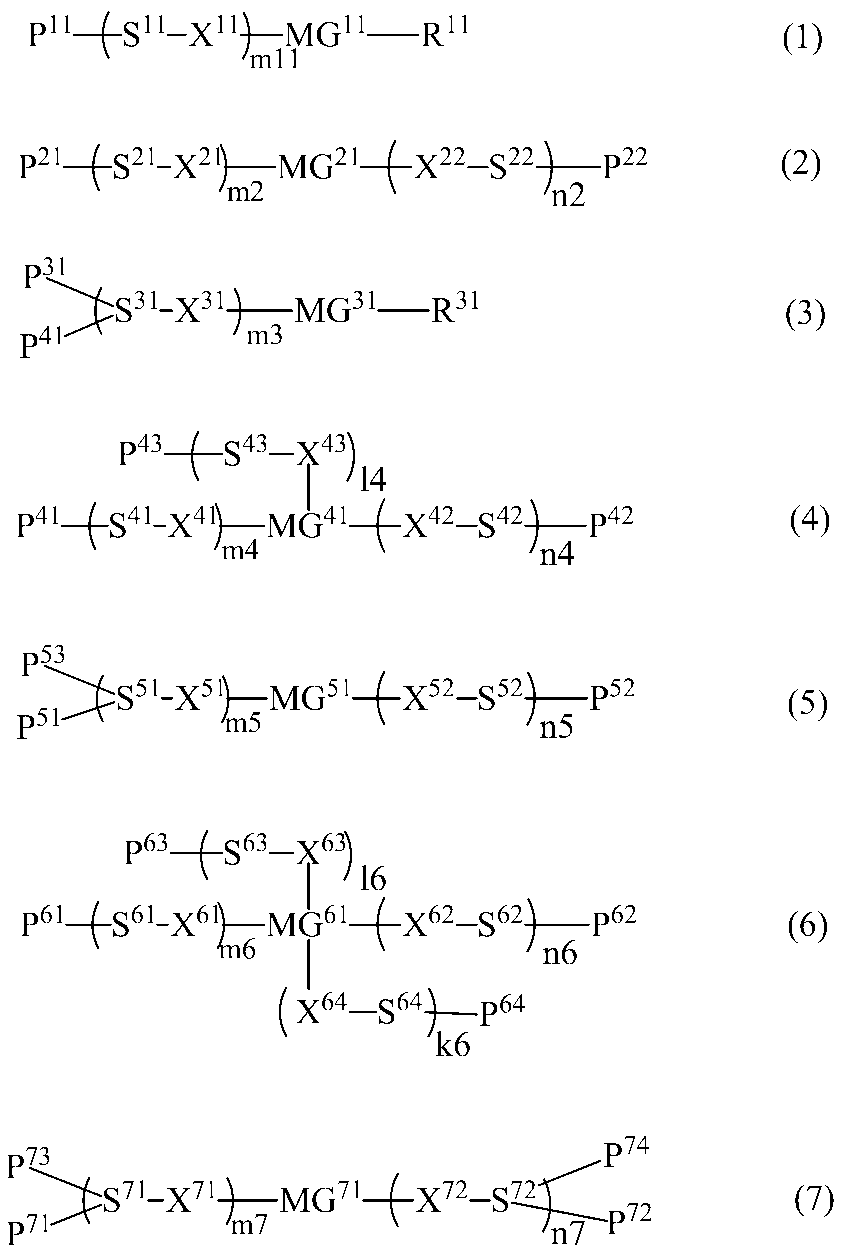
S11~S72はスペーサー基を又は単結合を表すが、S11~S72が複数存在する場合それらは各々同一であっても異なっていても良く、
X11~X72は-O-、-S-、-OCH2-、-CH2O-、-CO-、-COO-、-OCO-、-CO-S-、-S-CO-、-O-CO-O-、-CO-NH-、-NH-CO-、-SCH2-、-CH2S-、-CF2O-、-OCF2-、-CF2S-、-SCF2-、-CH=CH-COO-、-CH=CH-OCO-、-COO-CH=CH-、-OCO-CH=CH-、-COO-CH2CH2-、-OCO-CH2CH2-、-CH2CH2-COO-、-CH2CH2-OCO-、-COO-CH2-、-OCO-CH2-、-CH2-COO-、-CH2-OCO-、-CH=CH-、-N=N-、-CH=N-N=CH-、-CF=CF-、-C≡C-又は単結合を表すが、X11~X72が複数存在する場合それらは各々同一であっても異なっていても良く(ただし、各P-(S-X)-結合には-O-O-を含まない。)、
MG11~MG71は各々独立して式(a)を表し、

Z11及びZ12は各々独立して-O-、-S-、-OCH2-、-CH2O-、-CH2CH2-、-CO-、-COO-、-OCO-、-CO-S-、-S-CO-、-O-CO-O-、-CO-NH-、-NH-CO-、-SCH2-、-CH2S-、-CF2O-、-OCF2-、-CF2S-、-SCF2-、-CH=CH-COO-、-CH=CH-OCO-、-COO-CH=CH-、-OCO-CH=CH-、-COO-CH2CH2-、-OCO-CH2CH2-、-CH2CH2-COO-、-CH2CH2-OCO-、-COO-CH2-、-OCO-CH2-、-CH2-COO-、-CH2-OCO-、-CH=CH-、-N=N-、-CH=N-、-N=CH-、-CH=N-N=CH-、-CF=CF-、-C≡C-又は単結合を表すが、Z11及び/又はZ12が複数現れる場合は各々同一であっても異なっていても良く、
Mは下記の式(M-1)から式(M-11)

Gは下記の式(G-1)~式(G-6)
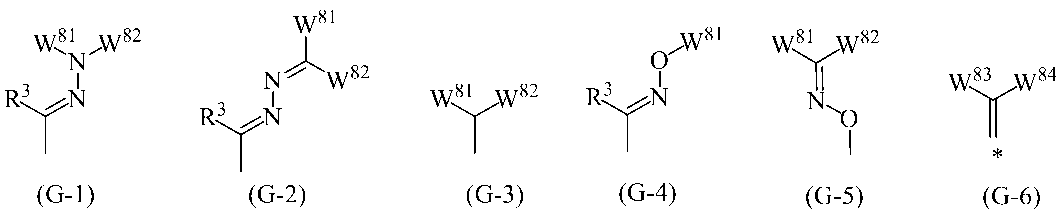
W81は少なくとも1つの芳香族基を有する、炭素原子数5から30の基を表すが、当該基は無置換又は1つ以上のL1によって置換されても良く、
W82は水素原子、又は、炭素原子数1から20のアルキル基を表すが、当該アルキル基は直鎖状であっても分岐状であっても良く、当該アルキル基中の任意の水素原子はフッ素原子及び/又は-OHに置換されても良く、当該アルキル基中の1個の-CH2-又は隣接していない2個以上の-CH2-は各々独立して-O-、-S-、-CO-、-COO-、-OCO-、-CO-S-、-S-CO-、-O-CO-O-、-CO-NH-、-NH-CO-、-CH=CH-COO-、-CH=CH-OCO-、-COO-CH=CH-、-OCO-CH=CH-、-CH=CH-、-CF=CF-又は-C≡C-によって置換されても良く、若しくは、W82はW81と同様の意味を表しても良く、また、W81及びW82は互いに連結し同一の環構造を形成しても良く、若しくはW82はP8-(S8-X8)j-で表される基を表しても良く、P8は重合性基を表し、S8はスペーサー基又は単結合を表すが、S8が複数存在する場合それらは同一であっても異なっていても良く、X8は-O-、-S-、-OCH2-、-CH2O-、-CO-、-COO-、-OCO-、-CO-S-、-S-CO-、-O-CO-O-、-CO-NH-、-NH-CO-、-SCH2-、-CH2S-、-CF2O-、-OCF2-、-CF2S-、-SCF2-、-CH=CH-COO-、-CH=CH-OCO-、-COO-CH=CH-、-OCO-CH=CH-、-COO-CH2CH2-、-OCO-CH2CH2-、-CH2CH2-COO-、-CH2CH2-OCO-、-COO-CH2-、-OCO-CH2-、-CH2-COO-、-CH2-OCO-、-CH=CH-、-N=N-、-CH=N-N=CH-、-CF=CF-、-C≡C-又は単結合を表すが、X8が複数存在する場合それらは同一であっても異なっていても良く(ただし、P8-(S8-X8)j-には-O-O-結合を含まない。)、jは0から10の整数を表し、
W83及びW84はそれぞれ独立してハロゲン原子、シアノ基、ヒドロキシ基、ニトロ基、カルボキシル基、カルバモイルオキシ基、アミノ基、スルファモイル基、少なくとも1つの芳香族基を有する炭素原子数5から30の基、炭素原子数1から20のアルキル基、炭素原子数3から20のシクロアルキル基、炭素原子数2から20のアルケニル基、炭素原子数3から20のシクロアルケニル基、炭素原子数1から20のアルコキシ基、炭素原子数2から20のアシルオキシ基、炭素原子数2から20の又は、アルキルカルボニルオキシ基を表すが、前記アルキル基、シクロアルキル基、アルケニル基、シクロアルケニル基、アルコキシ基、アシルオキシ基、アルキルカルボニルオキシ基中の1個の-CH2-又は隣接していない2個以上の-CH2-は各々独立して-O-、-S-、-CO-、-COO-、-OCO-、-CO-S-、-S-CO-、-O-CO-O-、-CO-NH-、-NH-CO-又は-C≡C-によって置換されても良く、但し、上記Mが式(M-1)~式(M-10)から選択される場合Gは式(G-1)~式(G-5)から選択され、Mが式(M-11)である場合Gは式(G-6)を表し、
L1はフッ素原子、塩素原子、臭素原子、ヨウ素原子、ペンタフルオロスルフラニル基、ニトロ基、イソシアノ基、アミノ基、ヒドロキシル基、メルカプト基、メチルアミノ基、ジメチルアミノ基、ジエチルアミノ基、ジイソプロピルアミノ基、トリメチルシリル基、ジメチルシリル基、チオイソシアノ基、又は、炭素原子数1から20のアルキル基を表すが、当該アルキル基は直鎖状であっても分岐状であっても良く、任意の水素原子はフッ素原子に置換されても良く、当該アルキル基中の1個の-CH2-又は隣接していない2個以上の-CH2-は各々独立して-O-、-S-、-CO-、-COO-、-OCO-、-CO-S-、-S-CO-、-O-CO-O-、-CO-NH-、-NH-CO-、-CH=CH-COO-、-CH=CH-OCO-、-COO-CH=CH-、-OCO-CH=CH-、-CH=CH-、-CF=CF-又は-C≡C-から選択される基によって置換されても良いが、化合物内にL1が複数存在する場合それらは同一であっても異なっていても良く、
j11は1から5の整数、j12は1~5の整数を表すが、j11+j12は2から5の整数を表す。)、R11及びR31は水素原子、フッ素原子、塩素原子、臭素原子、ヨウ素原子、ペンタフルオロスルフラニル基、シアノ基、ニトロ基、イソシアノ基、チオイソシアノ基、又は、炭素原子数1から20のアルキル基を表すが、当該アルキル基は直鎖状であっても分岐状であっても良く、当該アルキル基中の任意の水素原子はフッ素原子に置換されても良く、当該アルキル基中の1個の-CH2-又は隣接していない2個以上の-CH2-は各々独立して-O-、-S-、-CO-、-COO-、-OCO-、-CO-S-、-S-CO-、-O-CO-O-、-CO-NH-、-NH-CO-又は-C≡C-によって置換されても良く、m11は0~8の整数を表し、m2~m7、n2~n7、l4~l6、k6は各々独立して0から5の整数を表す。)
一般式(1)から一般式(7)において、重合性基P11~P74は下記の式(P-1)から式(P-20)

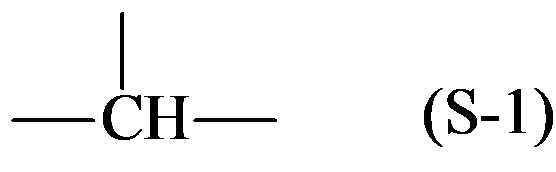

一般式(1)から一般式(7)において、Mは下記の式(M-1)から式(M-11)

一般式(1)から一般式(7)において、Gは式(G-1)から式(G-6)から選ばれる基を表す。

W81は少なくとも1つの芳香族基を有する、炭素原子数5から30の基を表すが、当該基は無置換であるか又は1つ以上のL1によって置換されても良く、
W82は、水素原子、又は、炭素原子数1から20のアルキル基を表すが、当該アルキル基は直鎖状であっても分岐状であっても良く、当該アルキル基中の任意の水素原子はフッ素原子及び/又は-OHに置換されても良く、当該アルキル基中の1個の-CH2-又は隣接していない2個以上の-CH2-は各々独立して-O-、-S-、-CO-、-COO-、-OCO-、-CO-S-、-S-CO-、-O-CO-O-、-CO-NH-、-NH-CO-、-CH=CH-COO-、-CH=CH-OCO-、-COO-CH=CH-、-OCO-CH=CH-、-CH=CH-、-CF=CF-又は-C≡C-によって置換されても良く、若しくは、W82はW81と同様の意味を表しても良く、また、W81及びW82は一緒になって環構造を形成しても良く、若しくはW82はP8-(S8-X8)j-で表される基を表しても良く、P8は重合性基を表し、S8はスペーサー基又は単結合を表すが、S8が複数存在する場合それらは同一であっても異なっていても良く、X8は-O-、-S-、-OCH2-、-CH2O-、-CO-、-COO-、-OCO-、-CO-S-、-S-CO-、-O-CO-O-、-CO-NH-、-NH-CO-、-SCH2-、-CH2S-、-CF2O-、-OCF2-、-CF2S-、-SCF2-、-CH=CH-COO-、-CH=CH-OCO-、-COO-CH=CH-、-OCO-CH=CH-、-COO-CH2CH2-、-OCO-CH2CH2-、-CH2CH2-COO-、-CH2CH2-OCO-、-COO-CH2-、-OCO-CH2-、-CH2-COO-、-CH2-OCO-、-CH=CH-、-N=N-、-CH=N-N=CH-、-CF=CF-、-C≡C-又は単結合を表すが、X8が複数存在する場合それらは同一であっても異なっていても良く(ただし、P8-(S8-X8)j-には-O-O-結合を含まない。)、jは0から10の整数を表す。

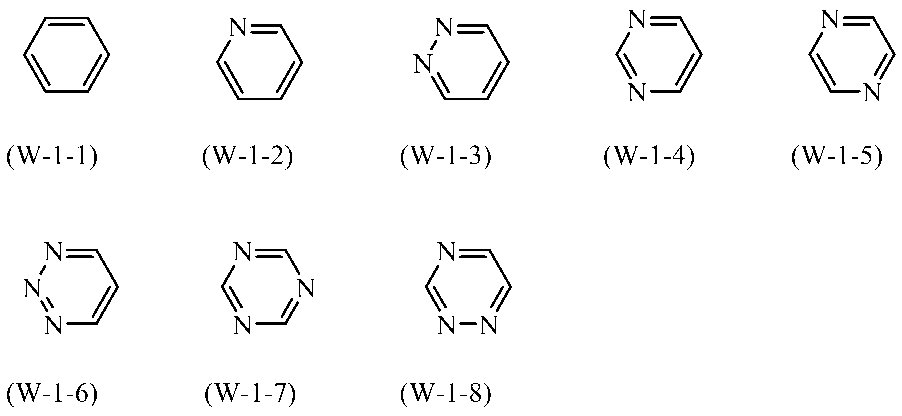

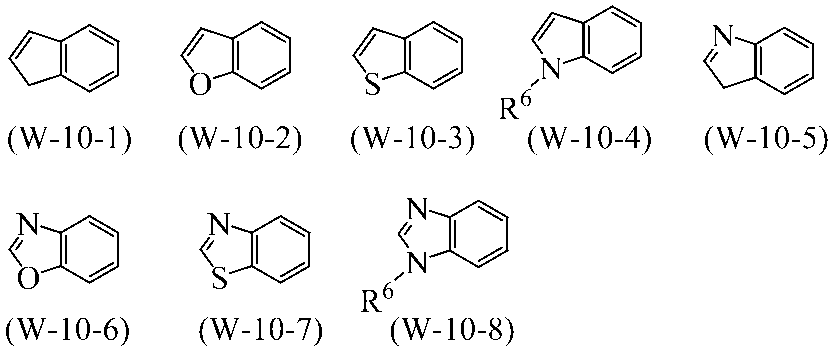
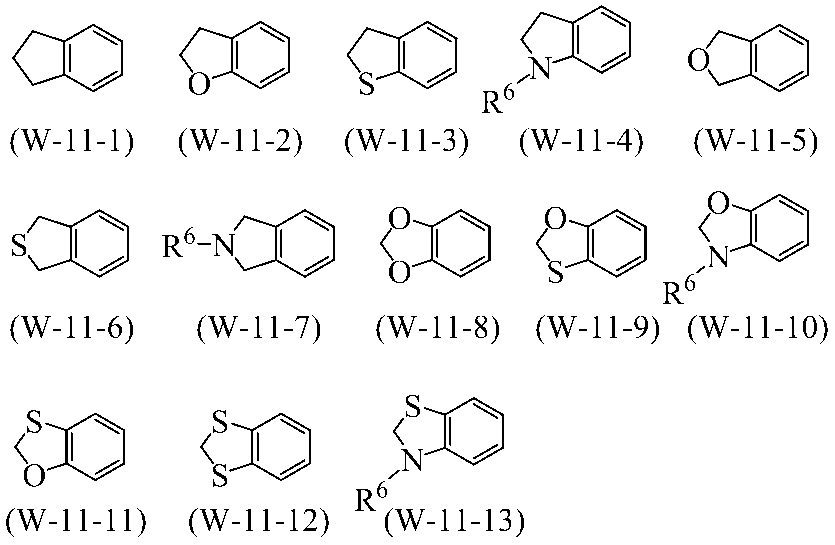

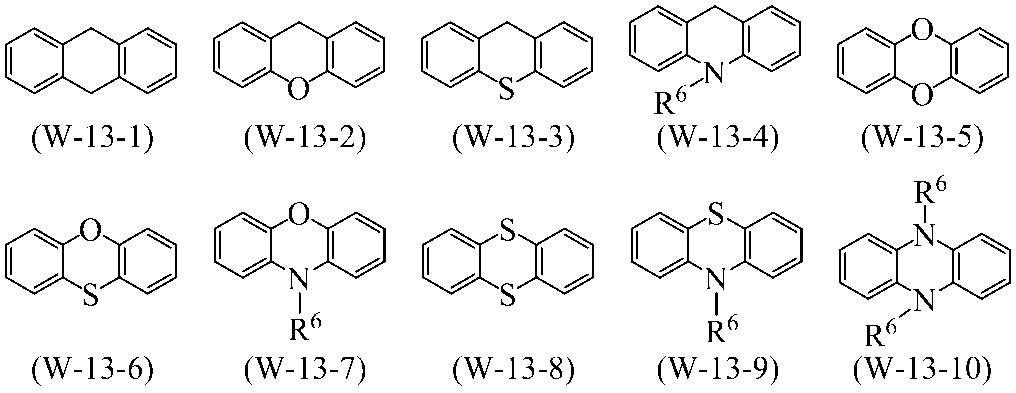
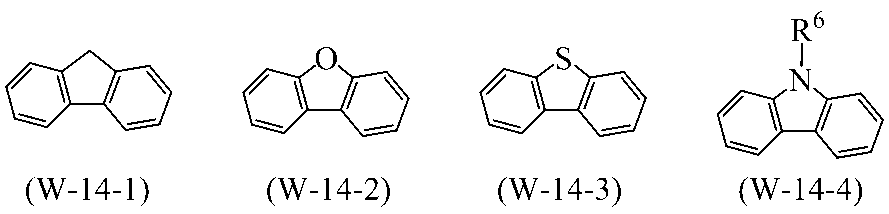
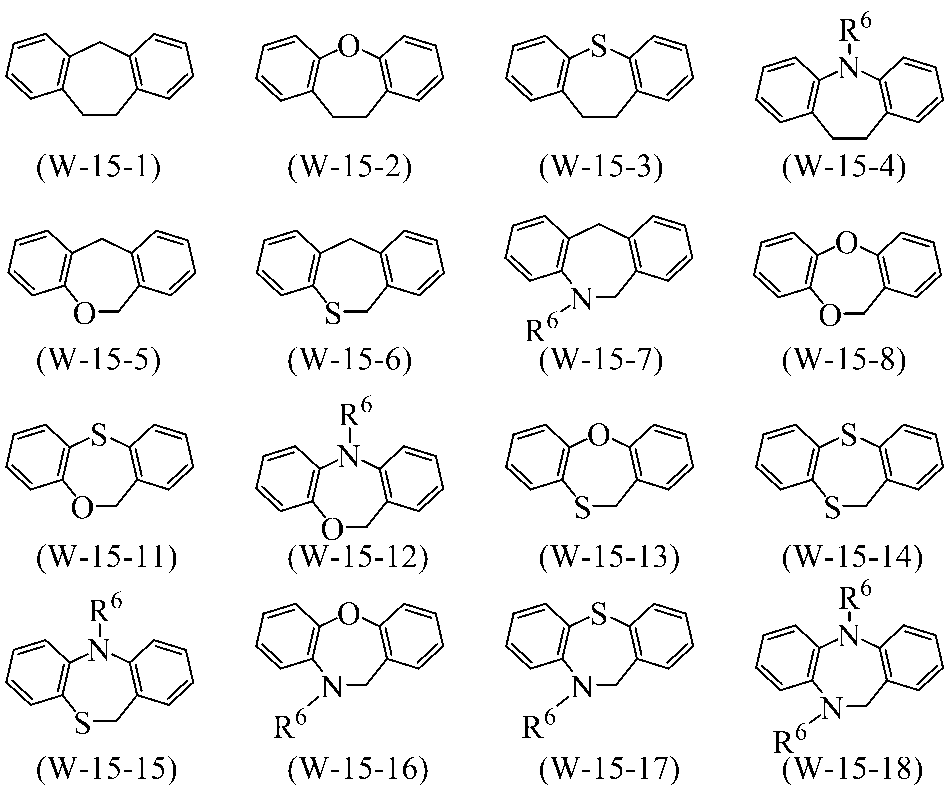
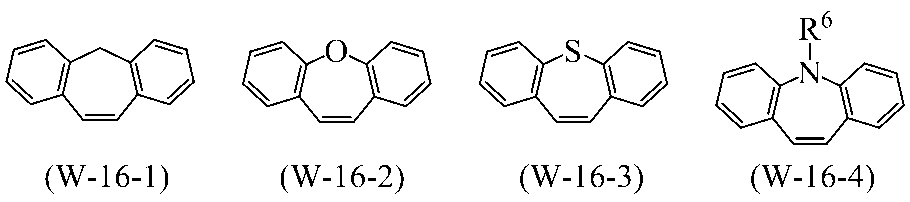
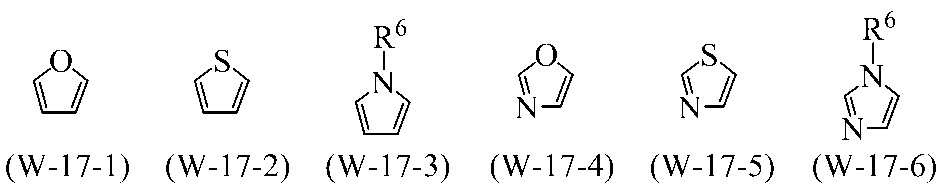


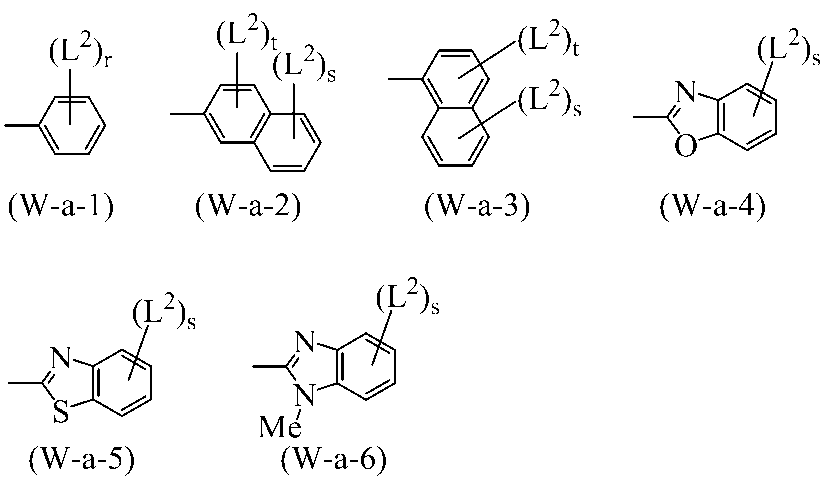
また、W82が少なくとも1つの芳香族基を有する炭素原子数2から30の基を表す場合、W82は上記の式(W-1)から式(W-18)から選ばれる基を表すことが好ましい。その場合、より好ましい構造としては上記と同様である。
また、W82がP8-(S8-X8)j-で表される基を表す場合、P8、S8、X8、で表される基の好ましい構造は、それぞれ、上記P11~P74、上記S11~S72、上記X11~X72で表される基の好ましい構造と同様である。さらに、jは、0~3の整数が好ましく、0又は1がより好ましい。
また、W82の末端基はOH基でも良い。
また、W81及びW82が一緒になって環構造を形成する場合、-NW81W82で表される環状基は無置換であるか又は1つ以上のL1によって置換されても良い下記の式(W-b-1)から式(W-b-42)


また、=CW81W82で表される環状基は無置換であるか又は1つ以上のL1によって置換されても良い下記の式(W-c-1)から式(W-c-81)
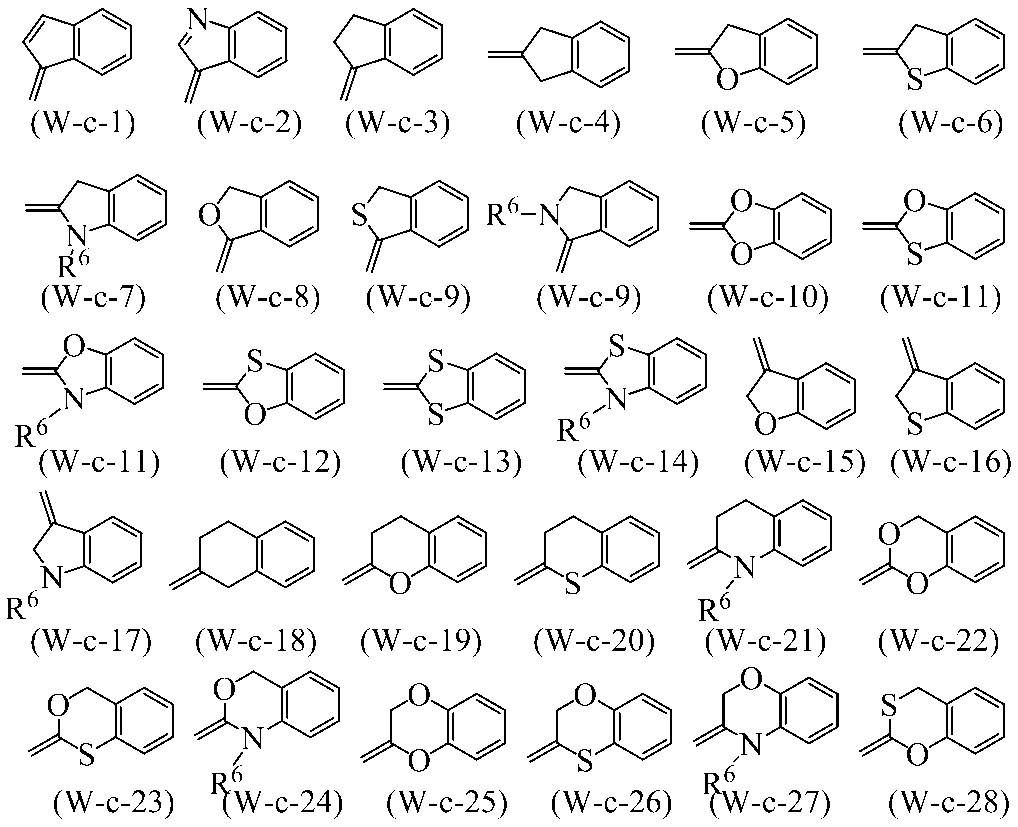

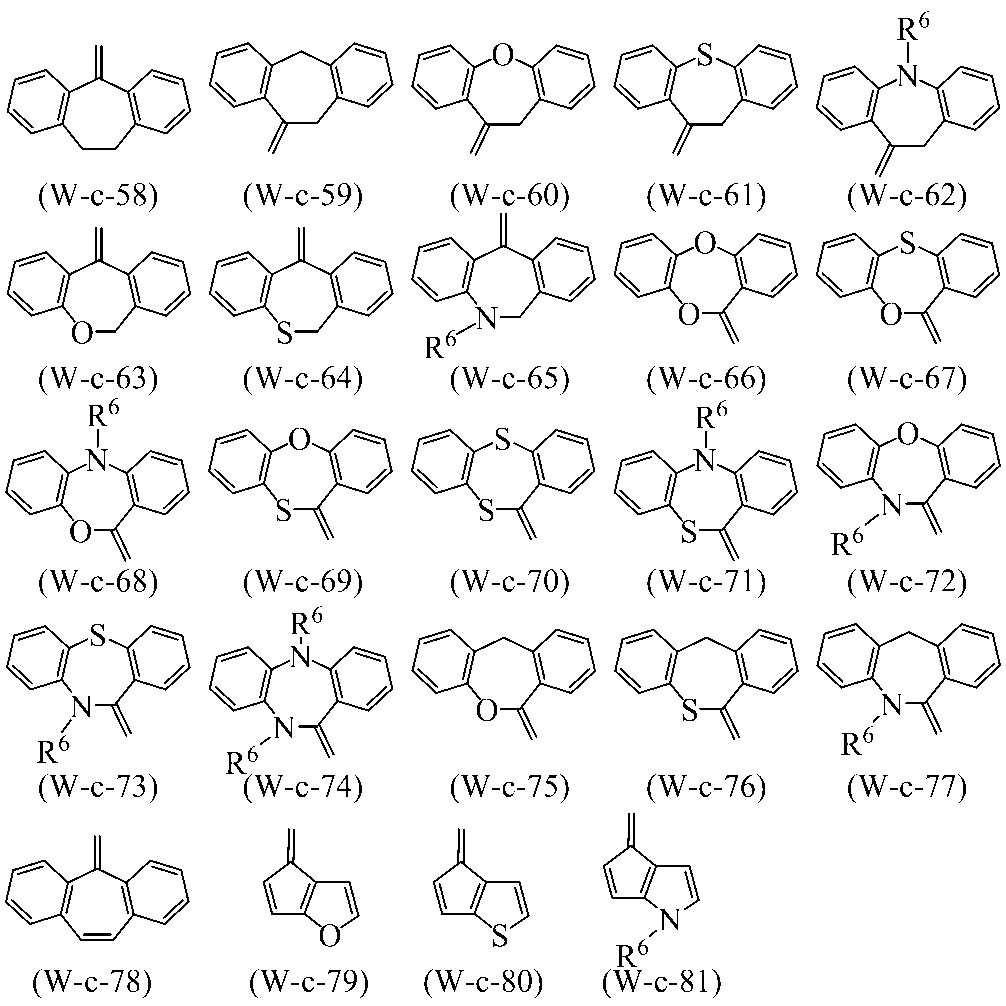
一般式(2)から一般式(7)において、m2~m7、n2~n7、l4~l6、k6は各々独立して0から5の整数を表すが、液晶性、原料の入手容易さ及び合成の容易さの観点から0から4の整数を表すことが好ましく、0から2の整数を表すことがより好ましく、0又は1を表すことがさらに好ましく、1を表すことが特に好ましい。
一般式(a)において、j11及びj12は各々独立して1から5の整数を表すが、j11+j12は2から5の整数を表す。液晶性、合成の容易さ及び保存安定性の観点から、j11及びj12は各々独立して1から4の整数を表すことが好ましく、1から3の整数を表すことがより好ましく、1又は2を表すことが特に好ましい。j11+j12は2から4の整数を表すことが好ましい。
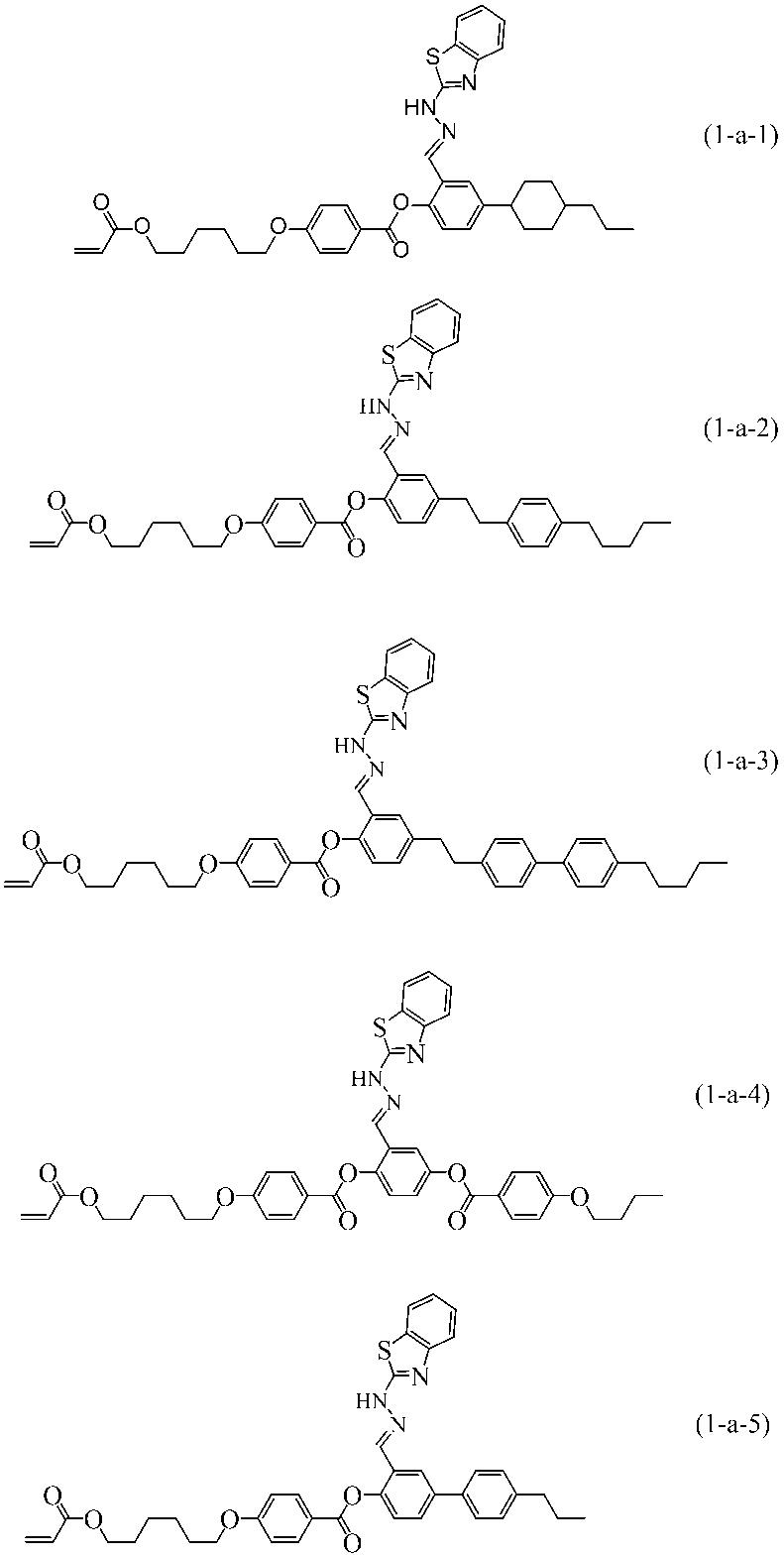
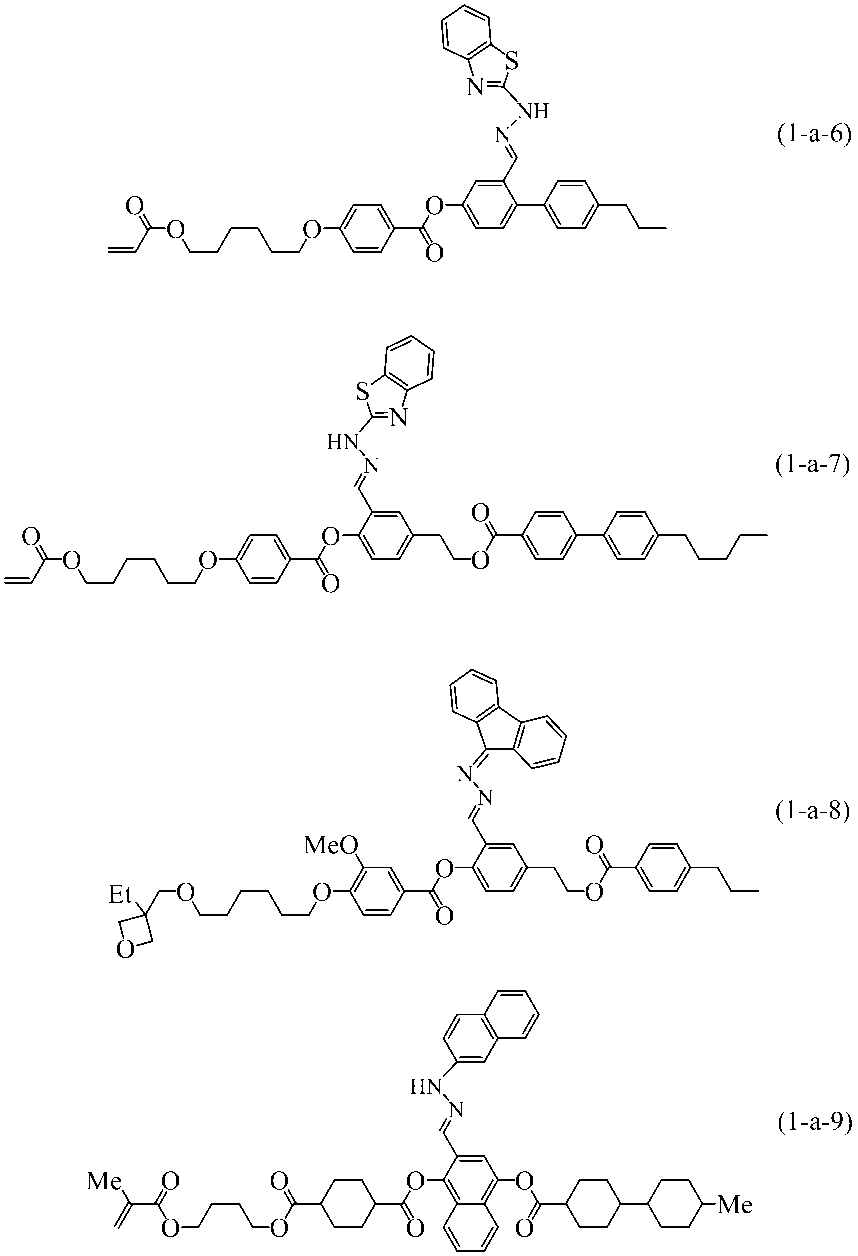

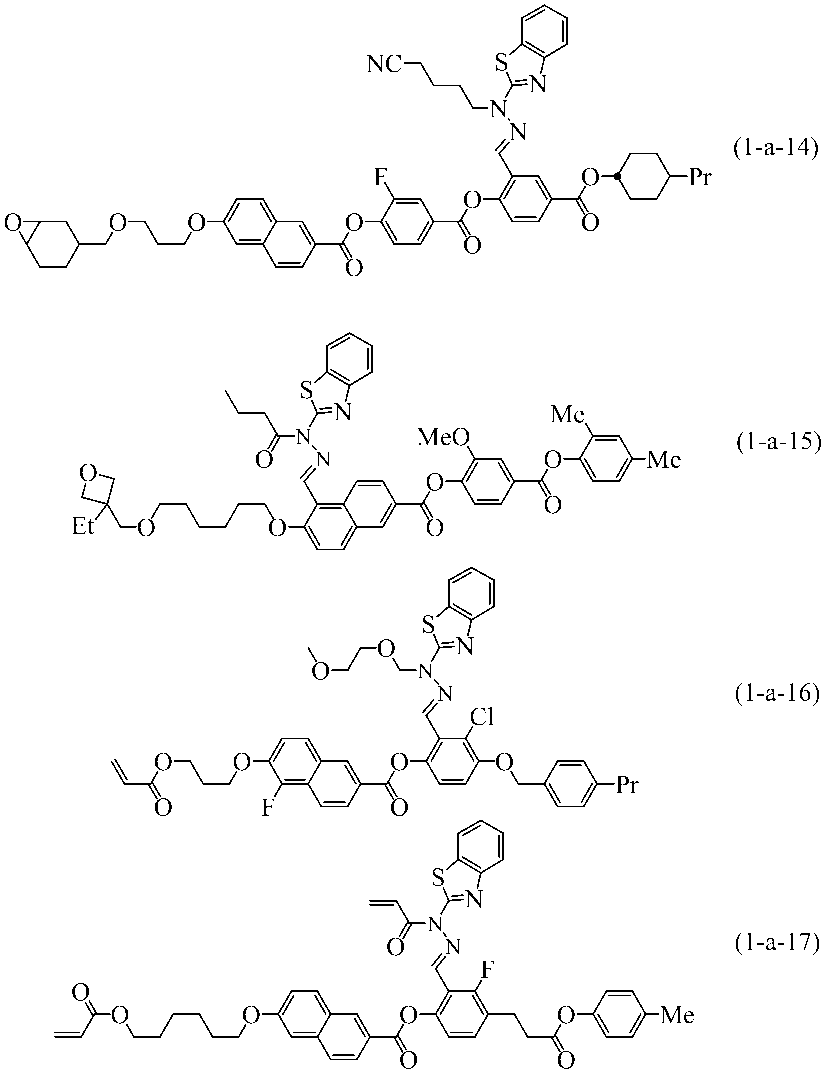
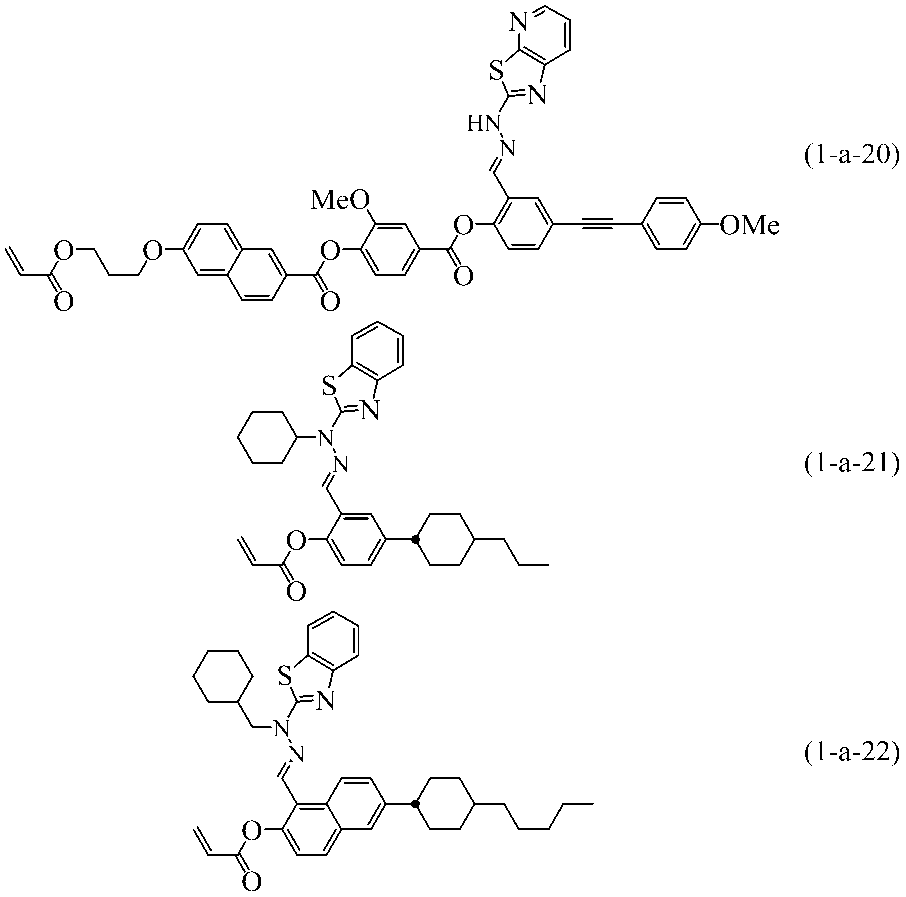

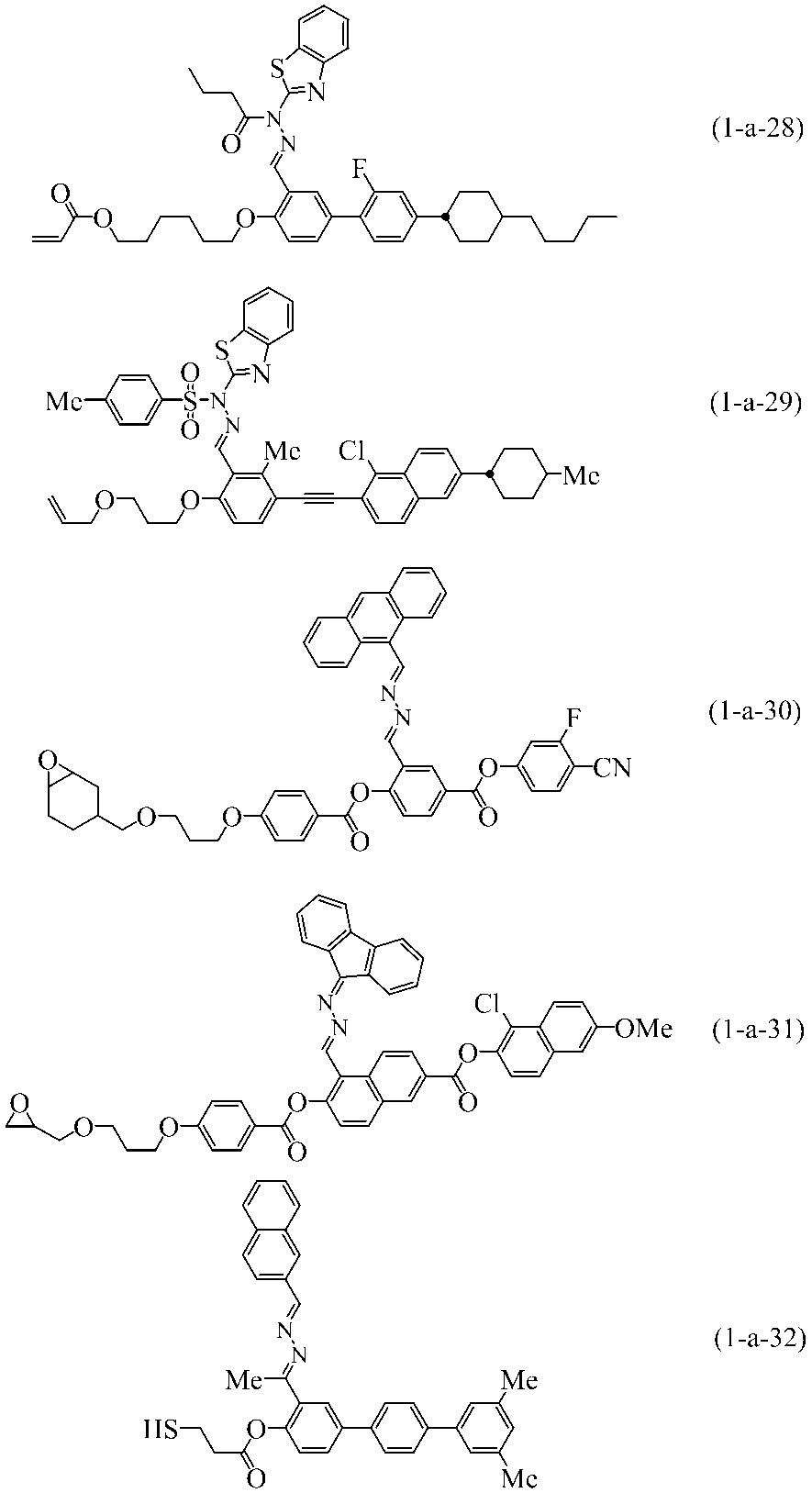
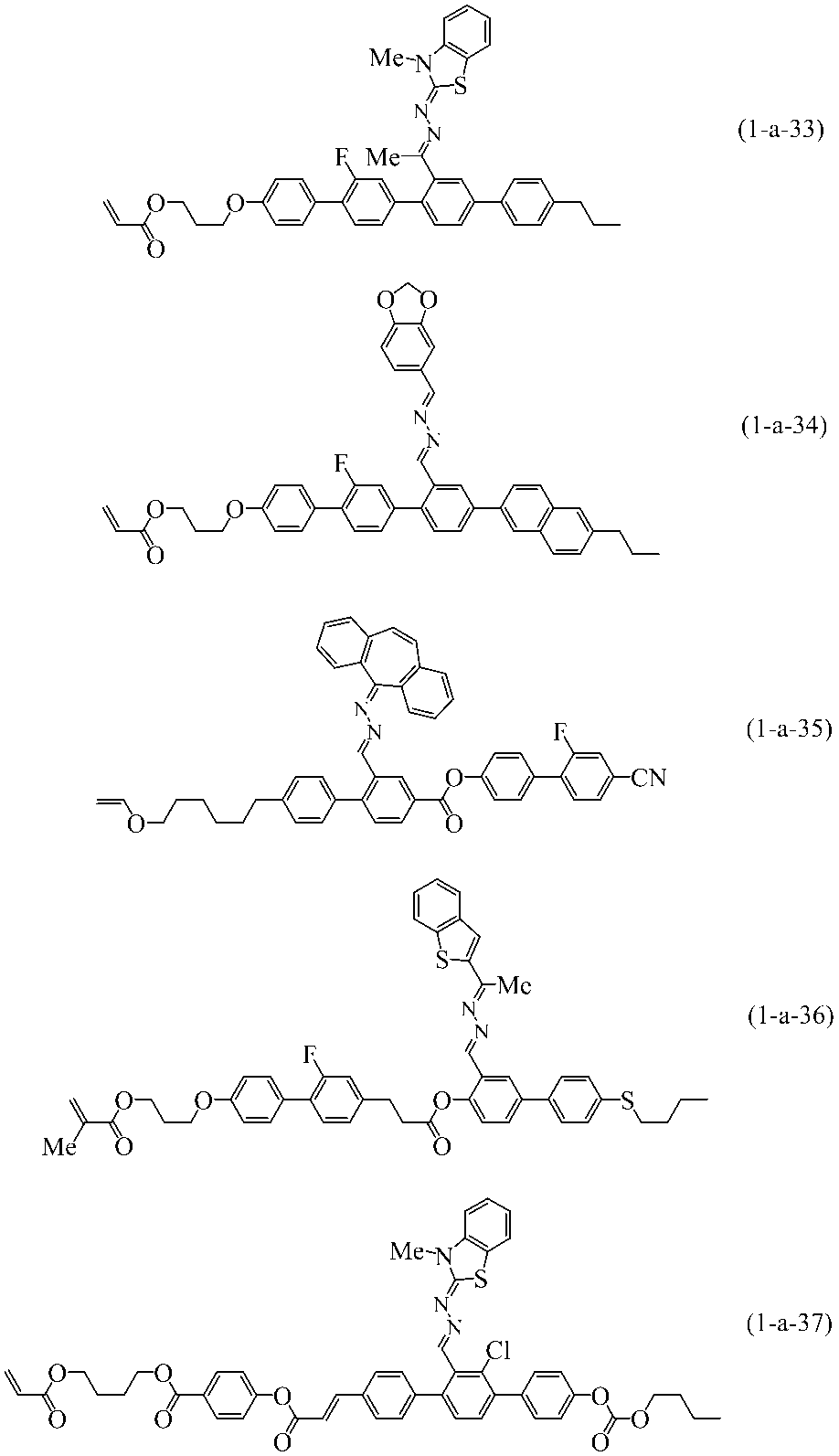
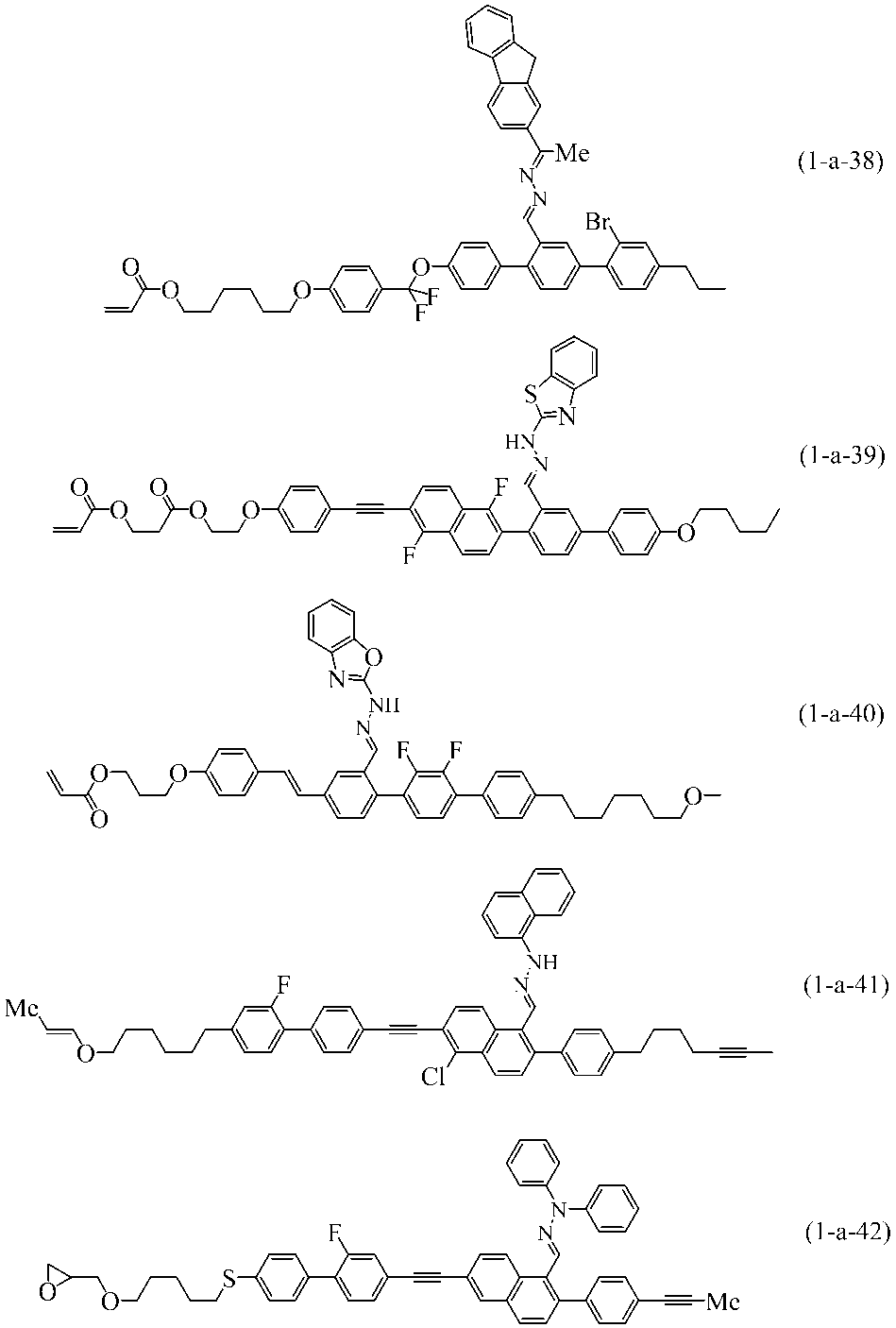


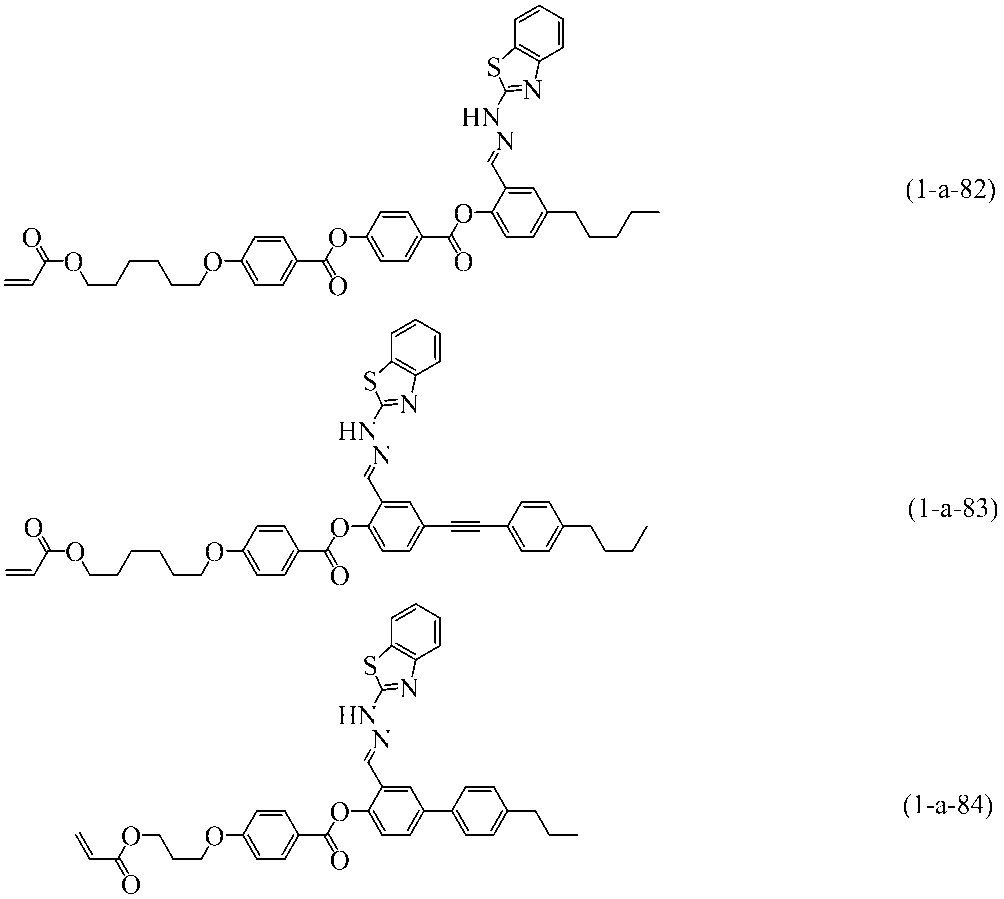
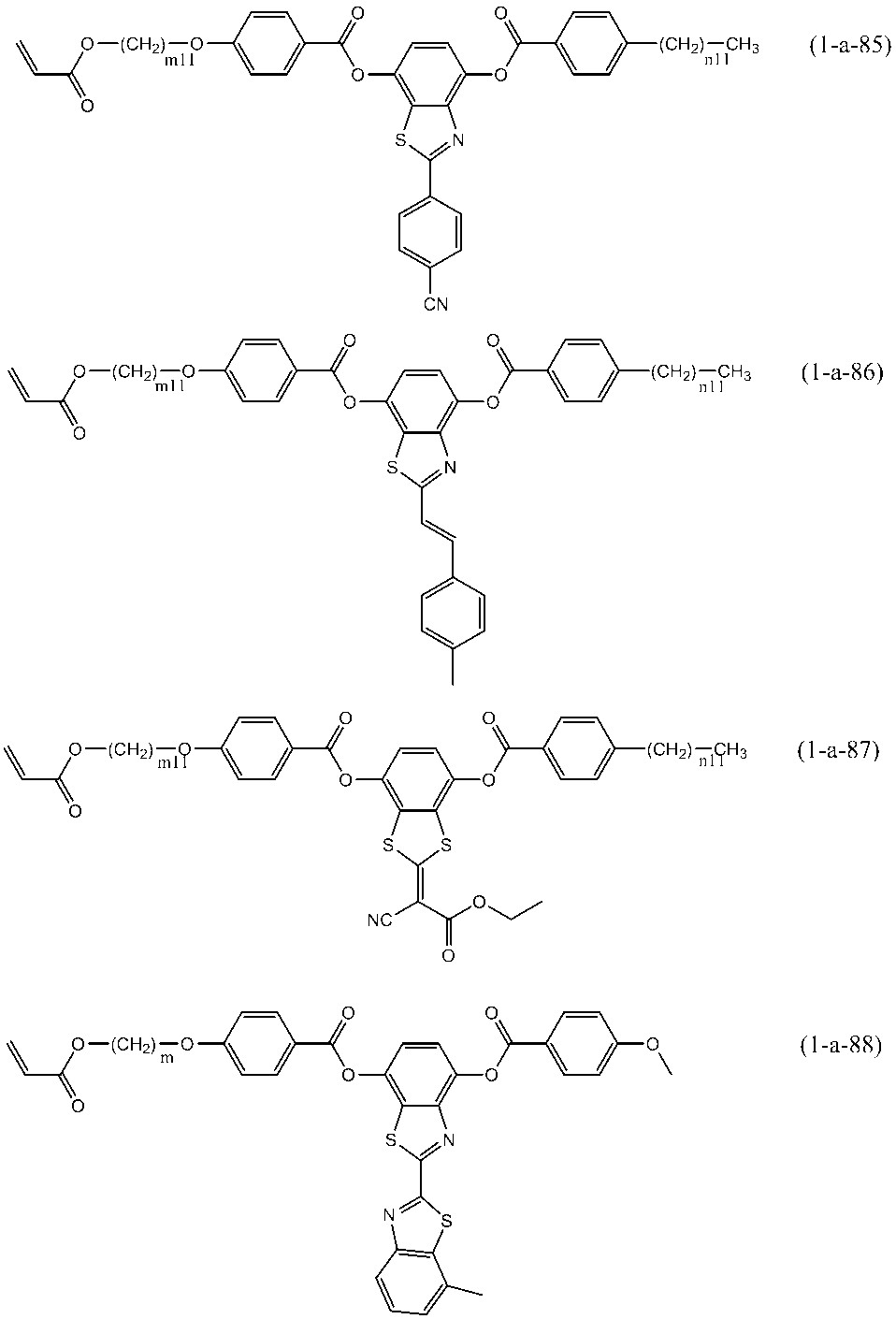


一般式(2)で表される化合物として具体的には、下記の式(2-a-1)から式(2-a-69)で表される化合物が好ましい。


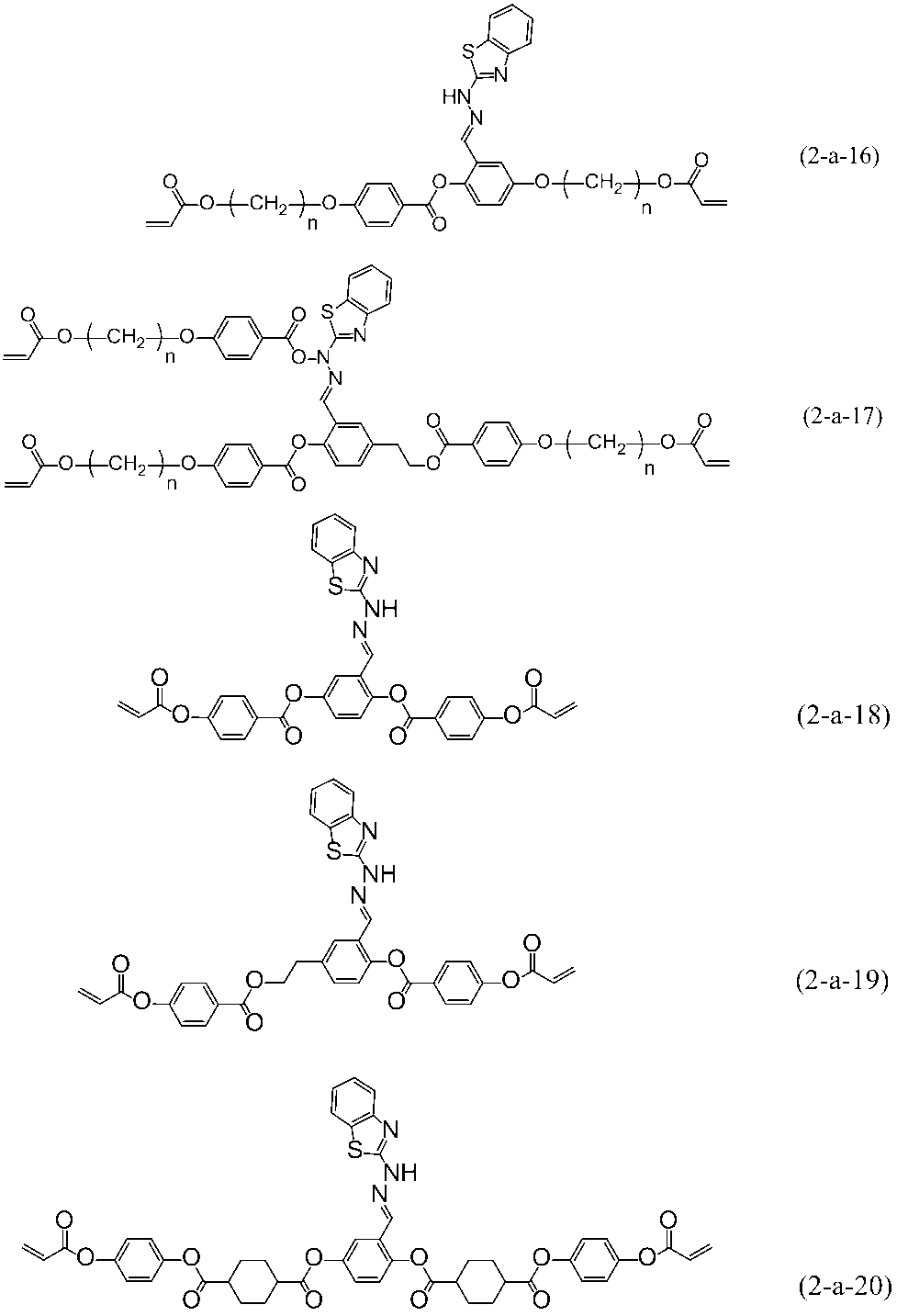

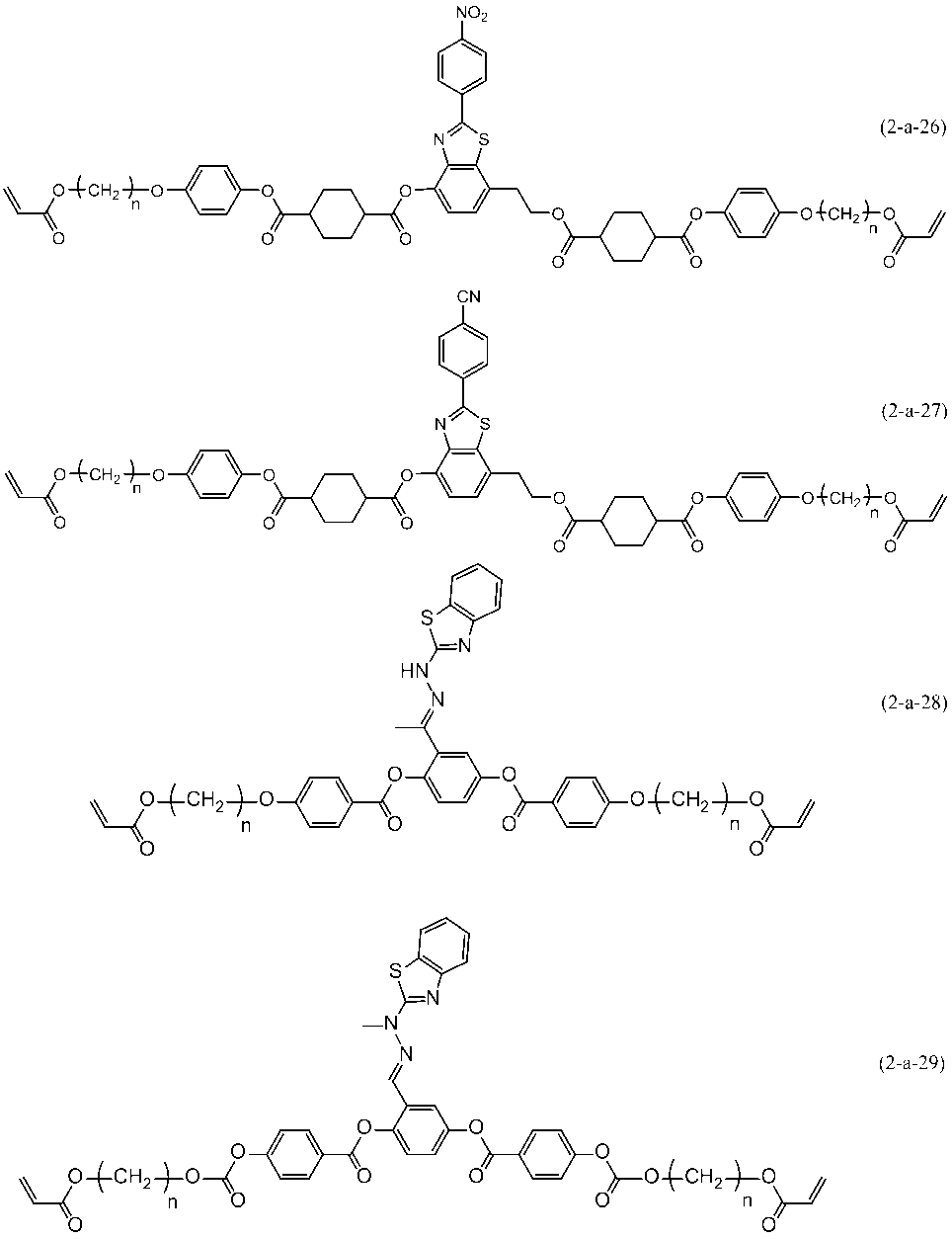

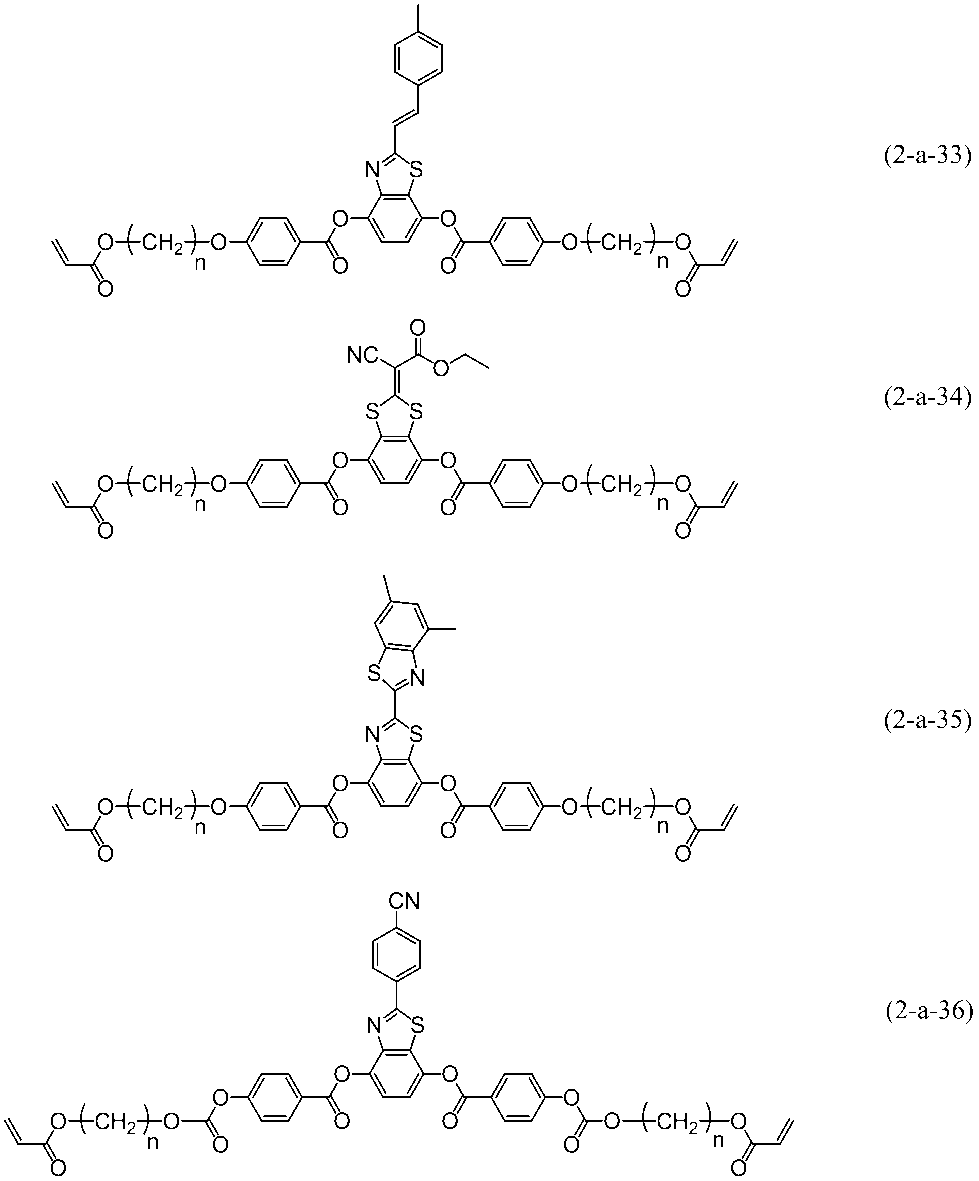
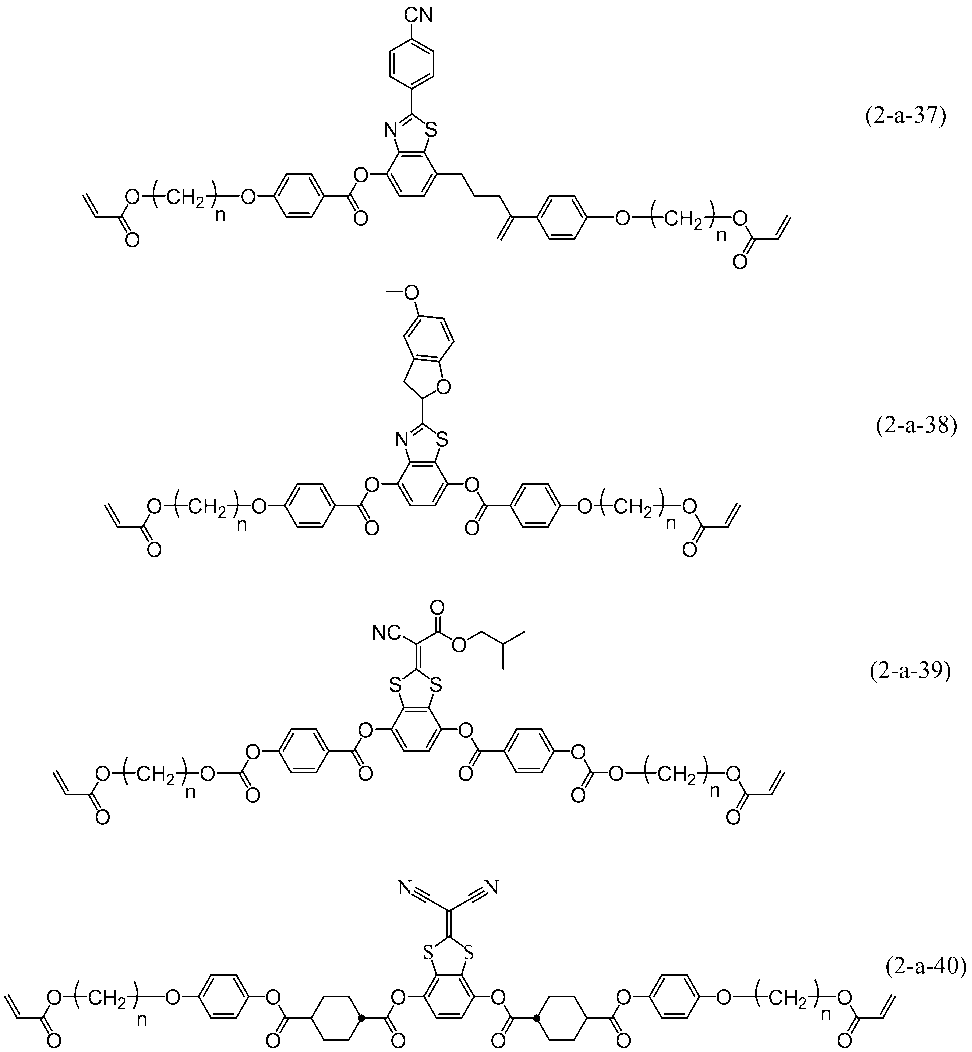


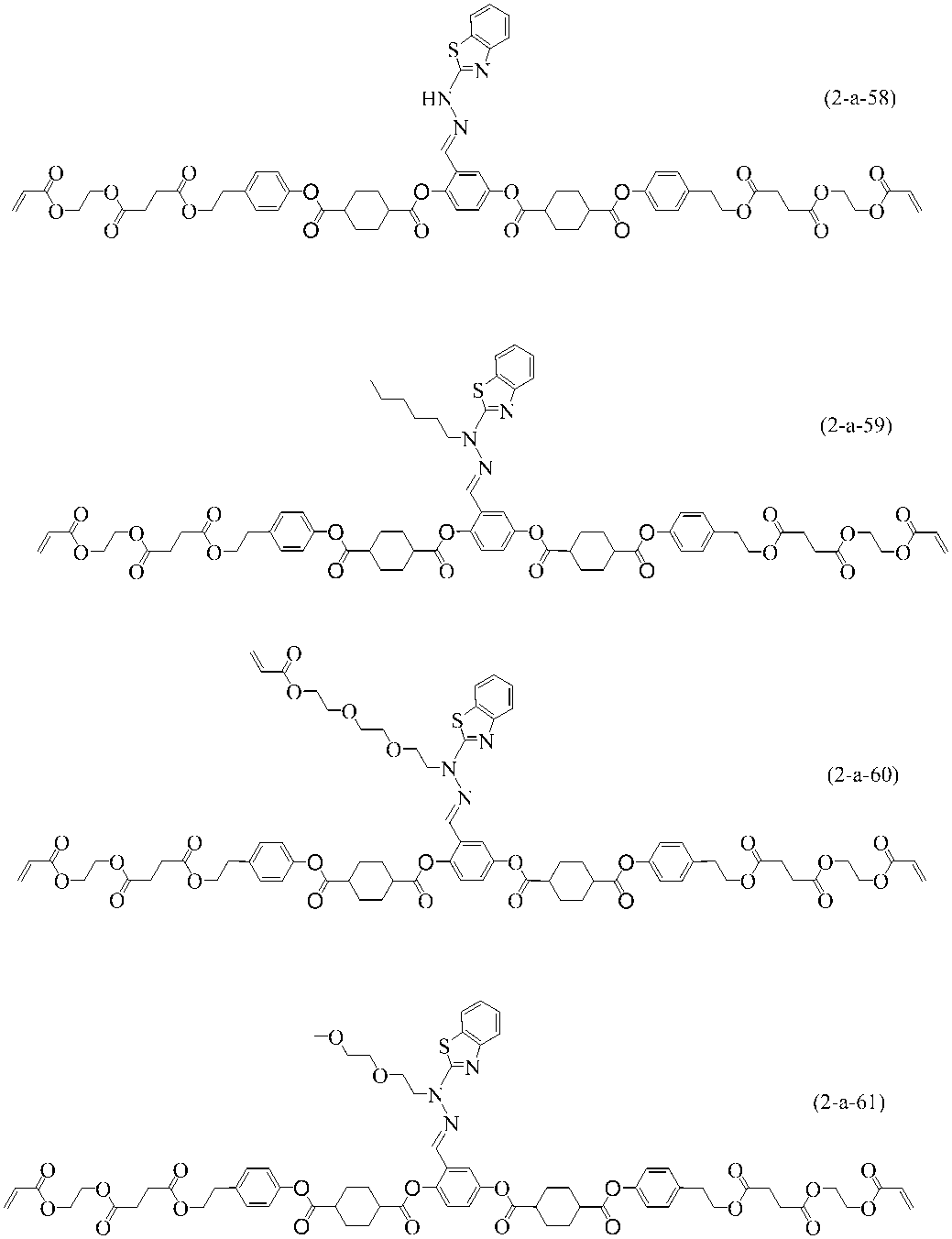


一般式(3)で表される化合物として具体的には、下記の式(3-a-1)から式(3-a-17)で表される化合物が好ましい。


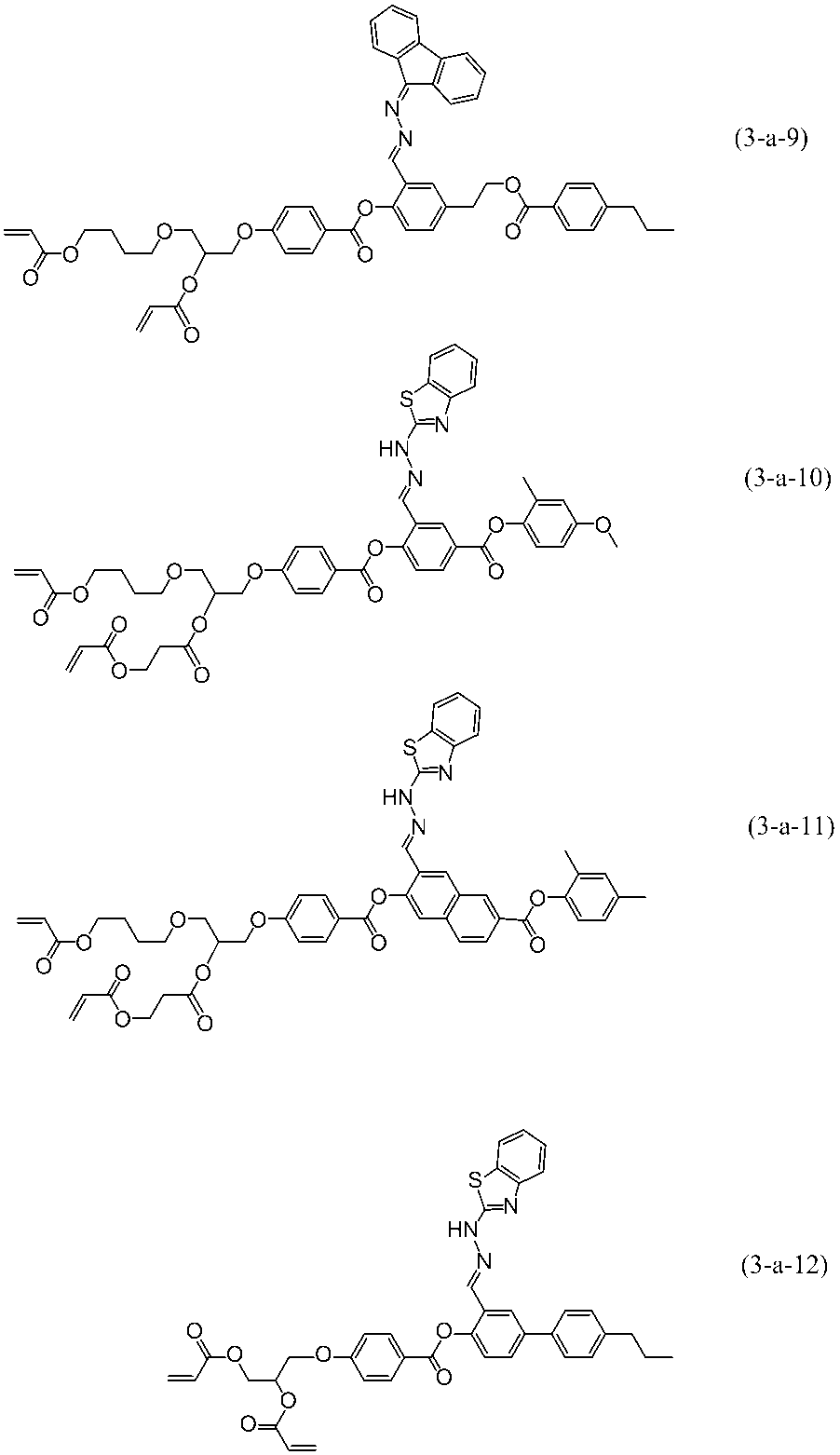
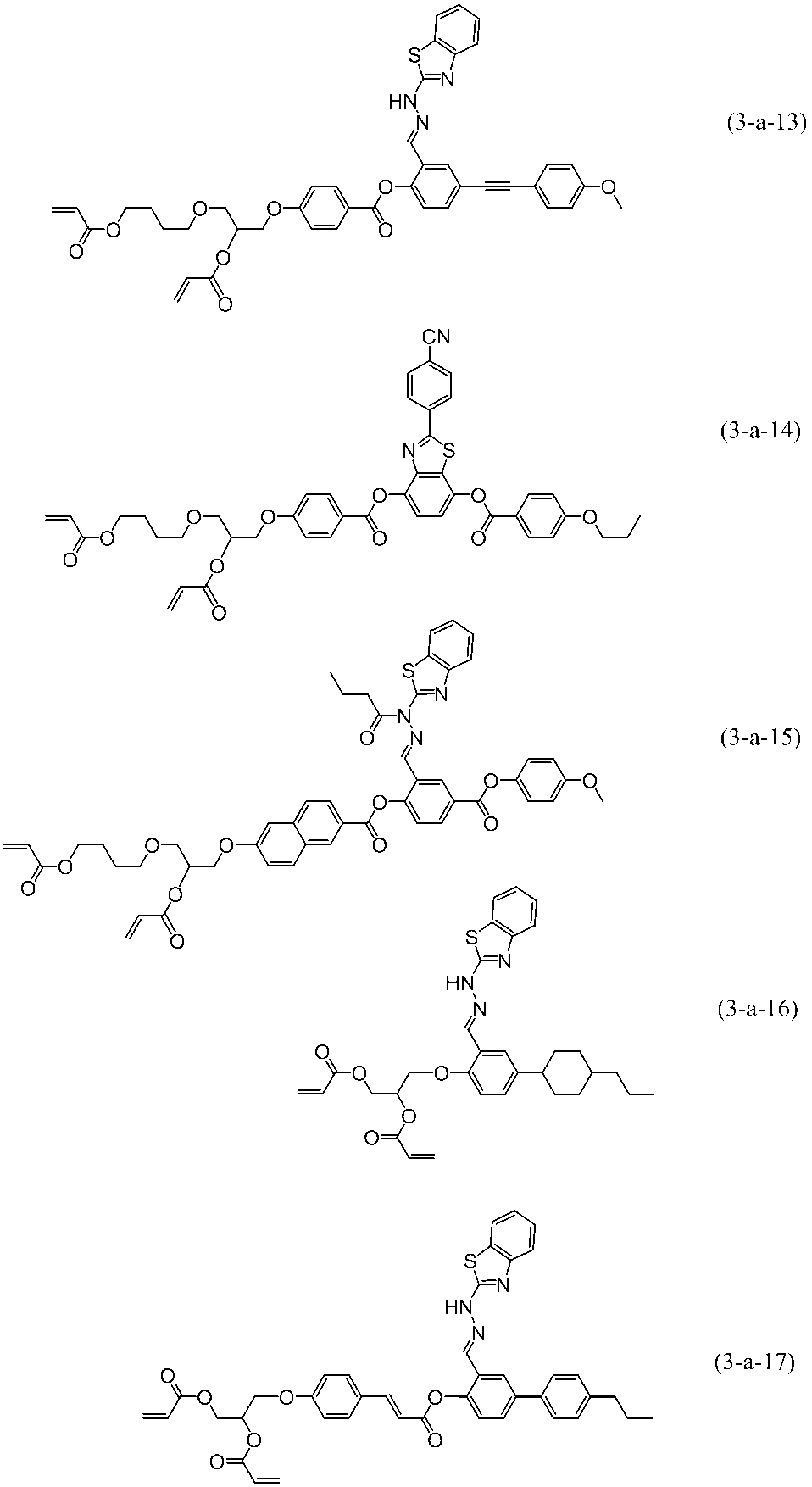
一般式(4)で表される化合物として具体的には、下記の式(4-a-1)から式(4-a-26)で表される化合物が好ましい。
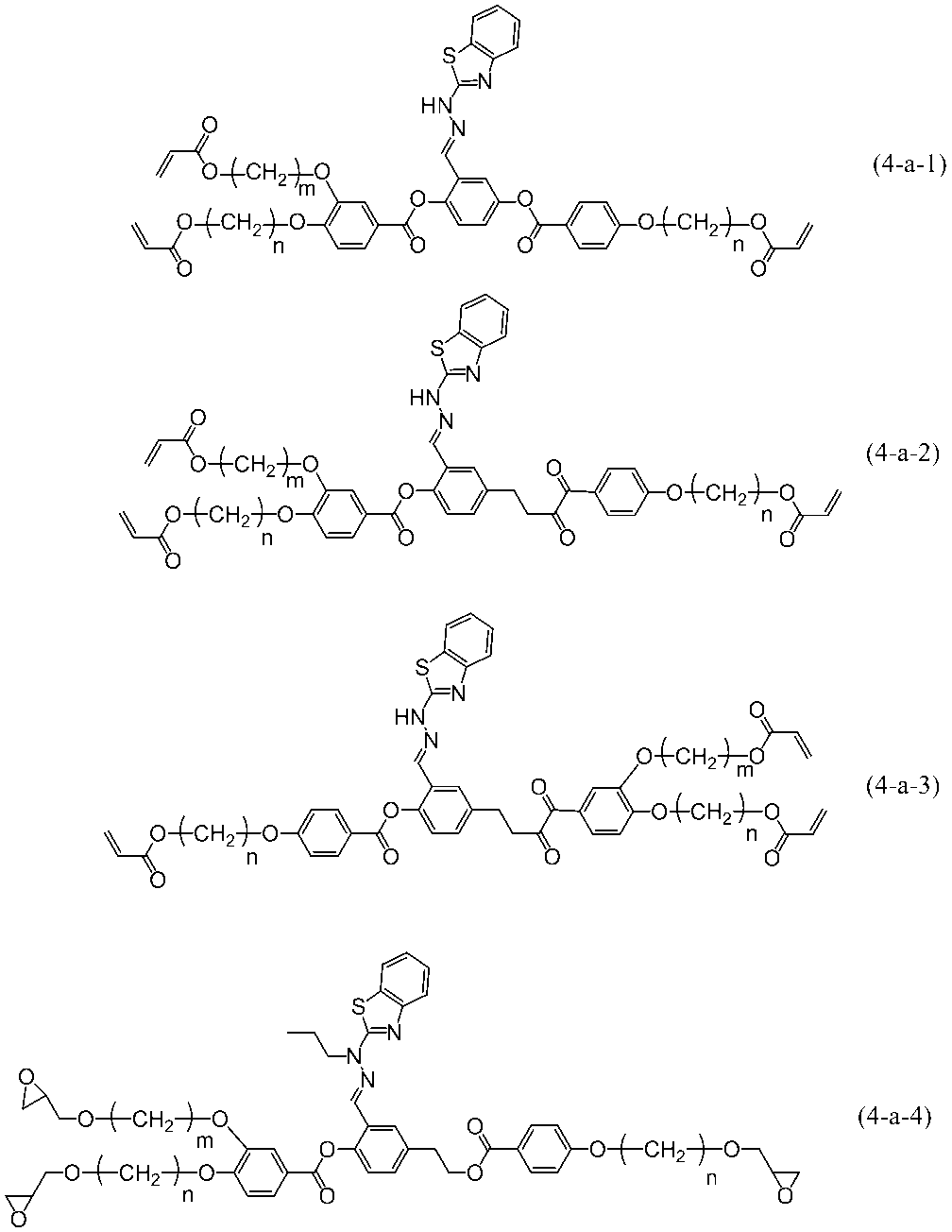

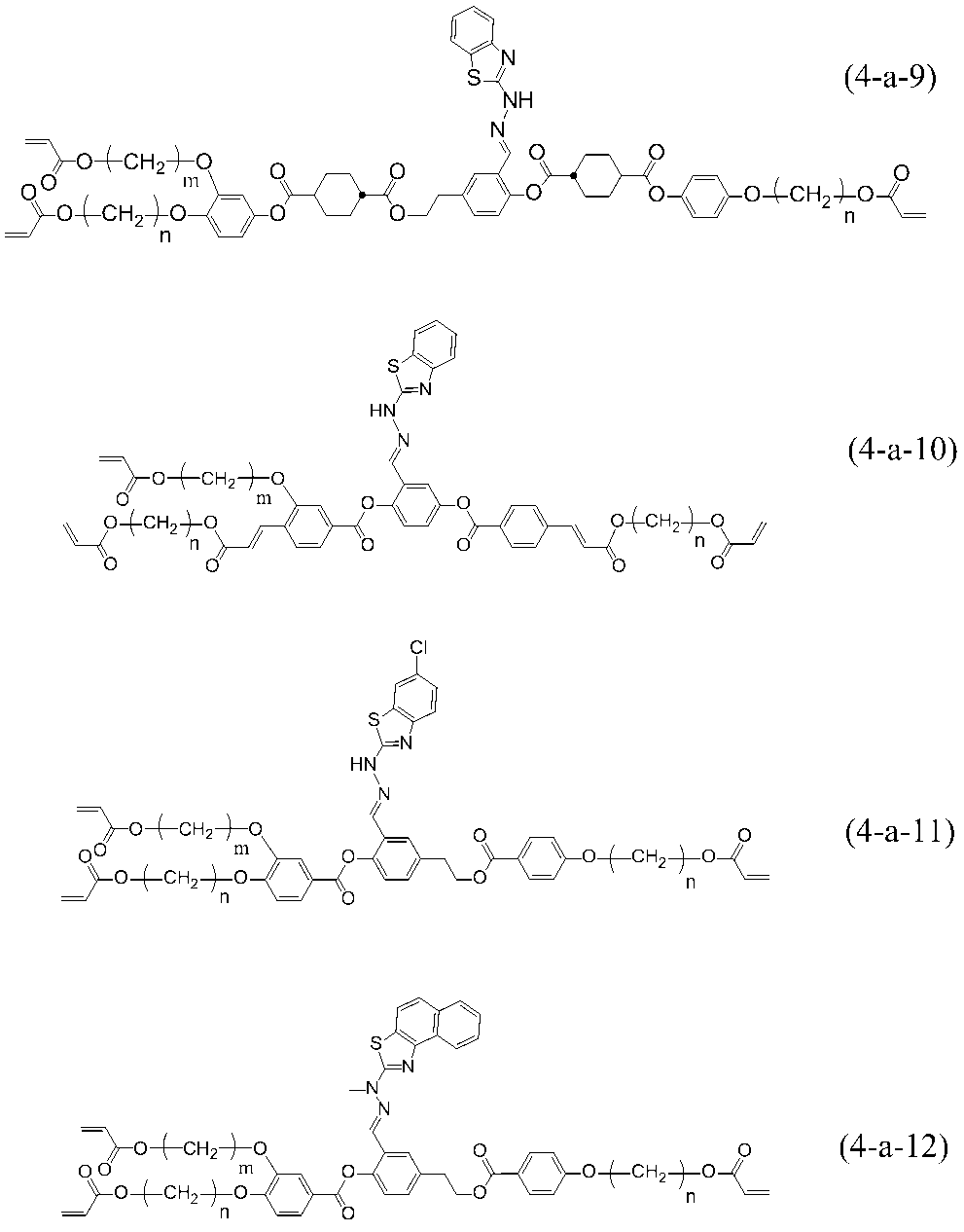

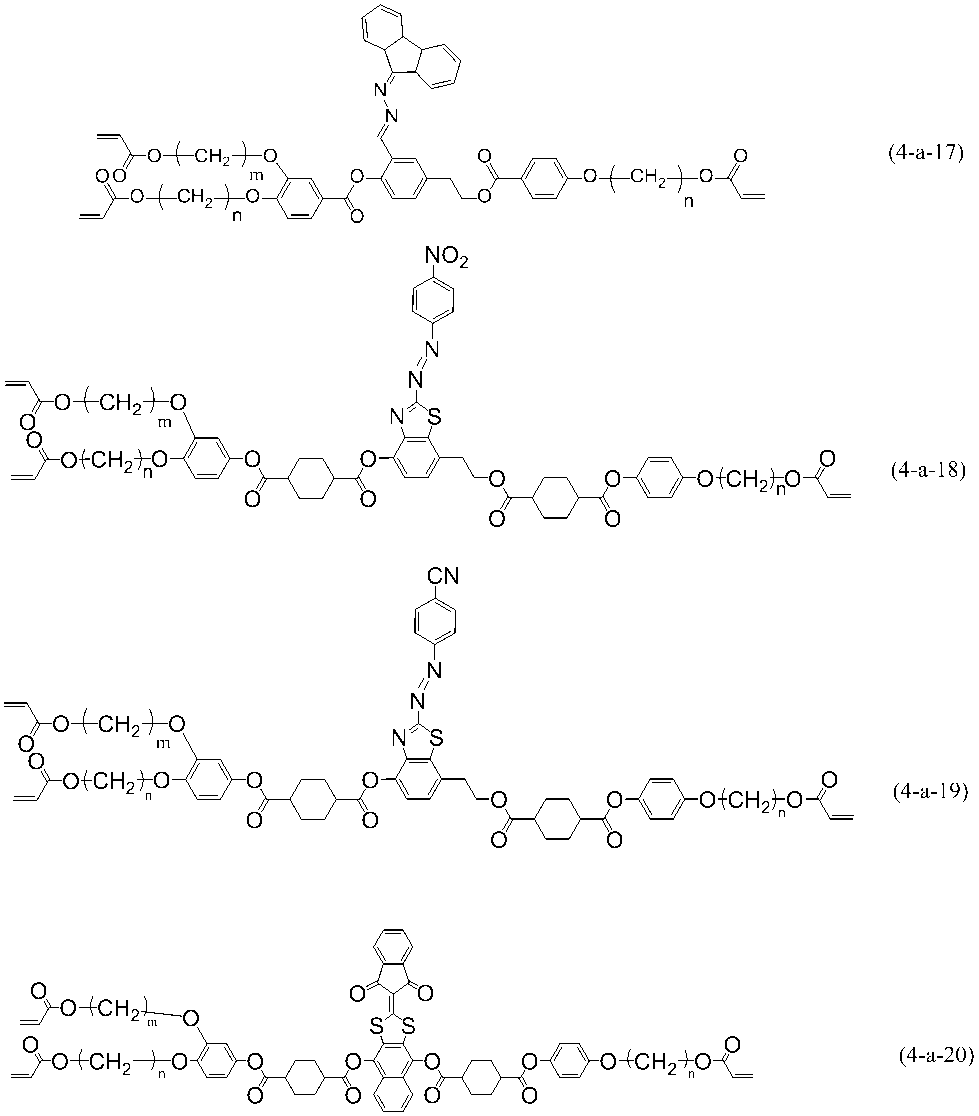

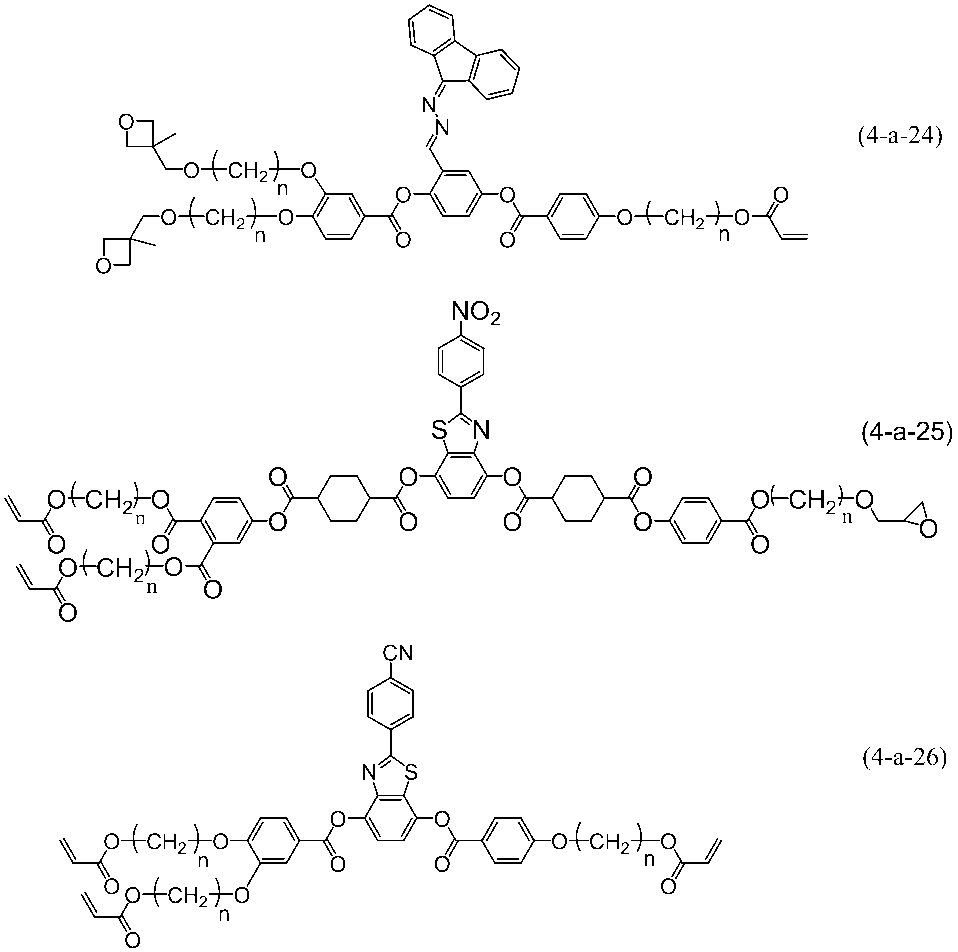


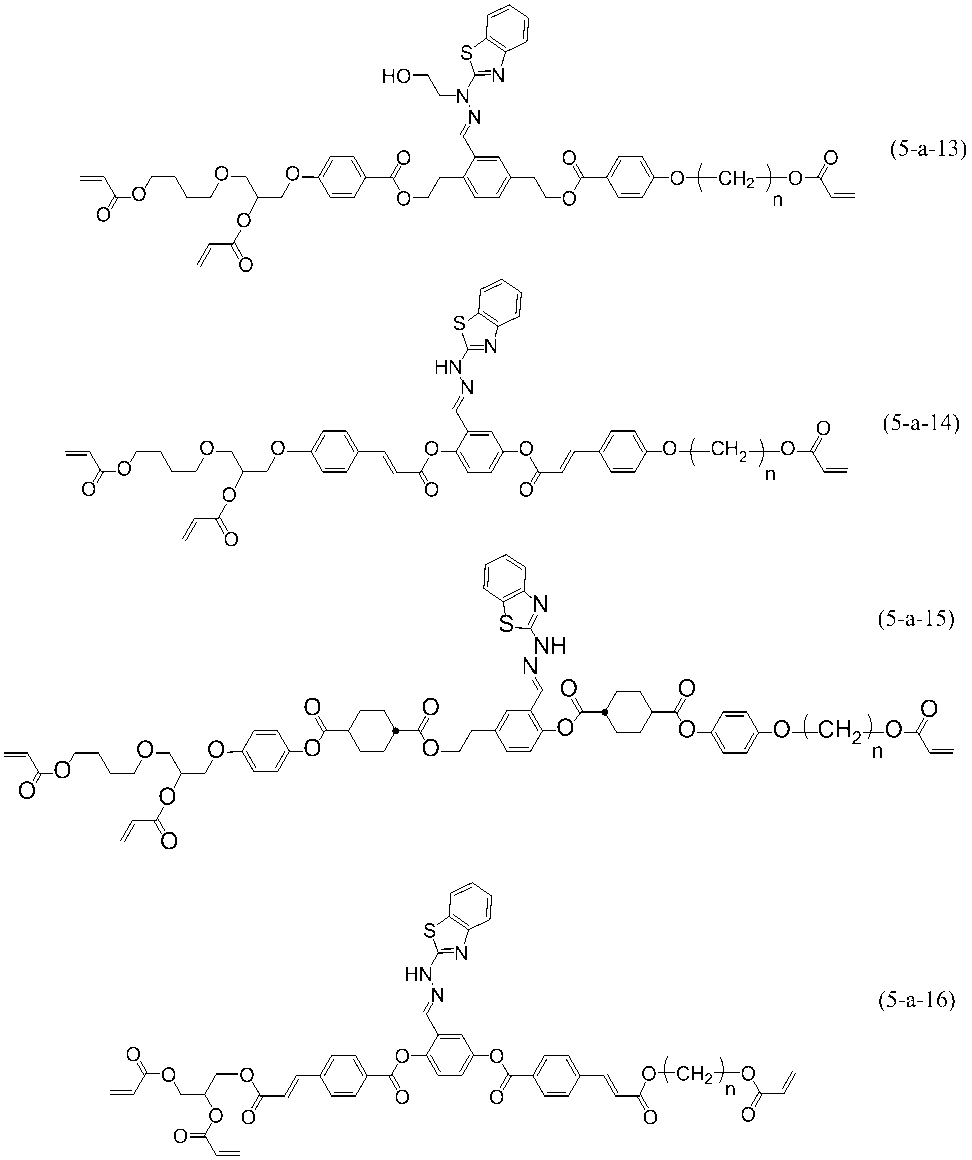


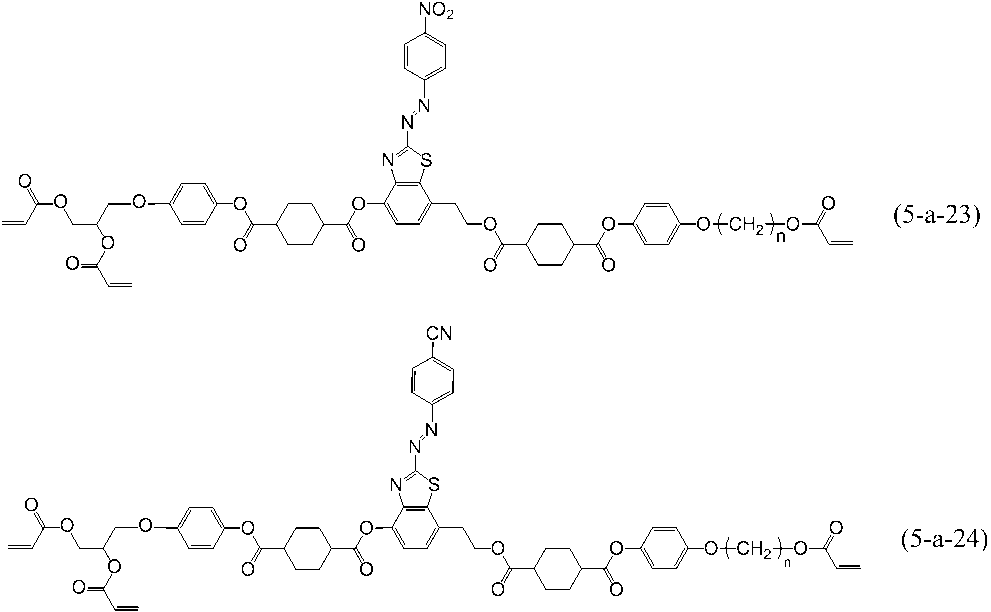


一般式(6)で表される化合物として具体的には、下記の式(6-a-1)から式(6-a-25)で表される化合物が好ましい
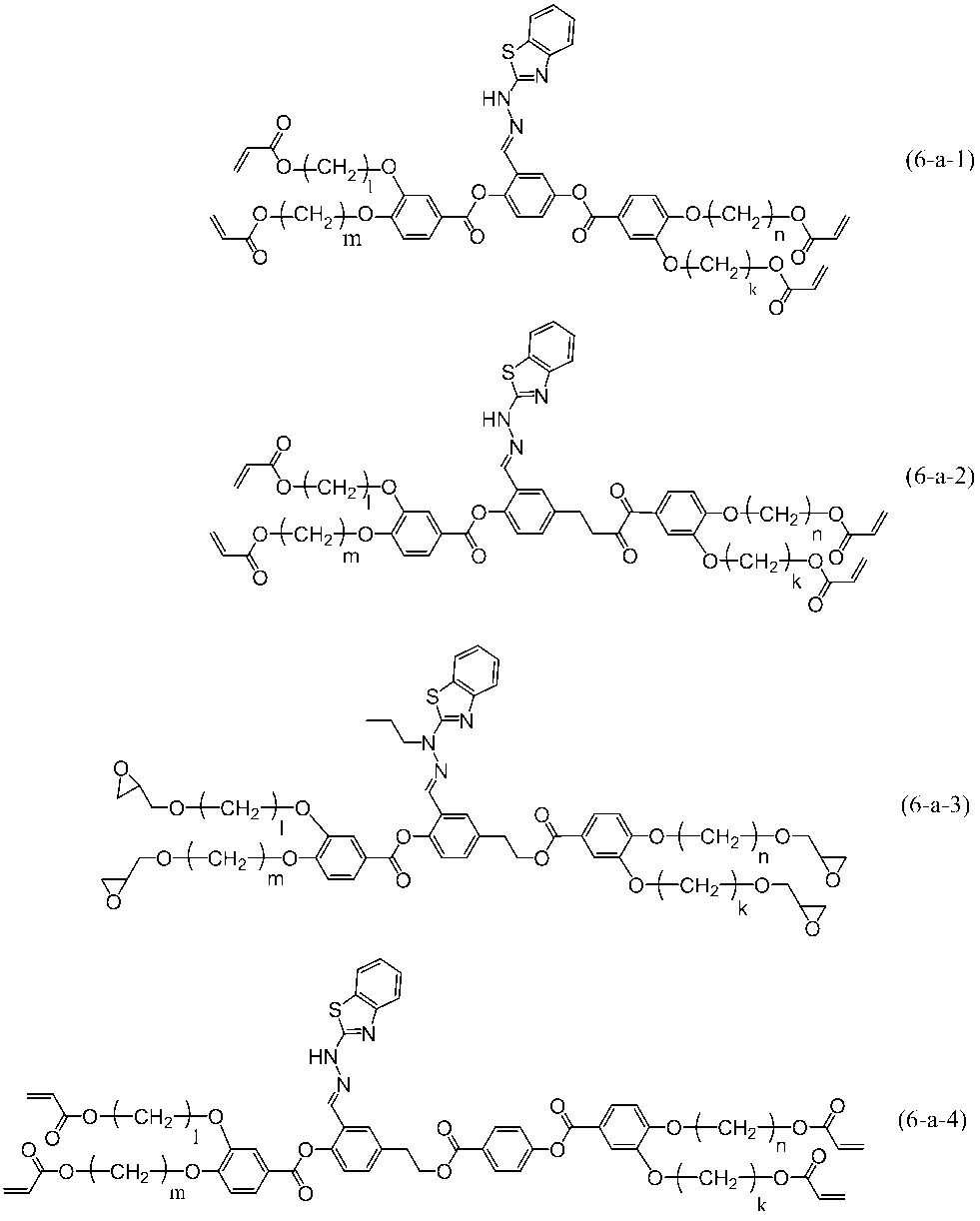
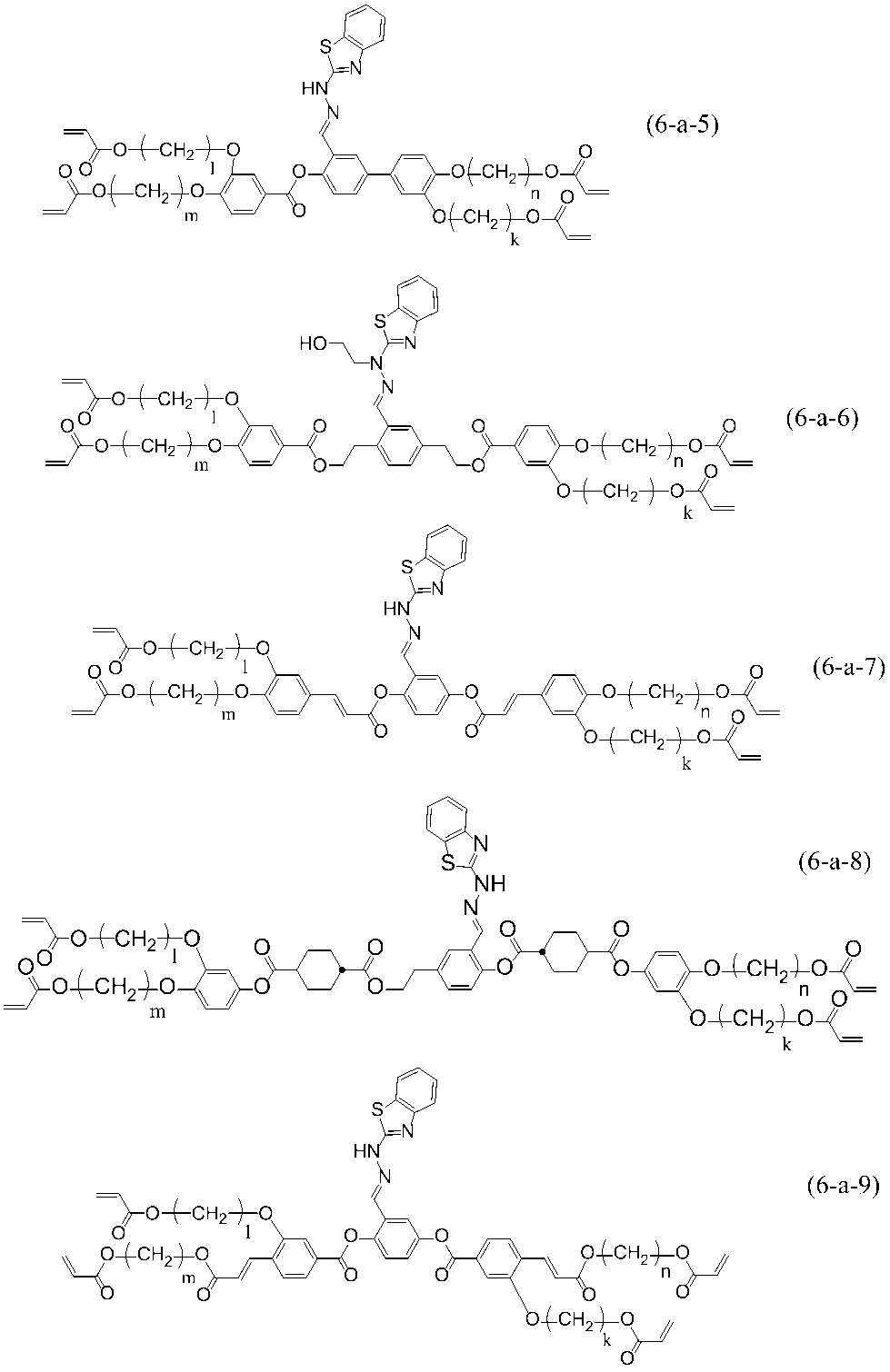
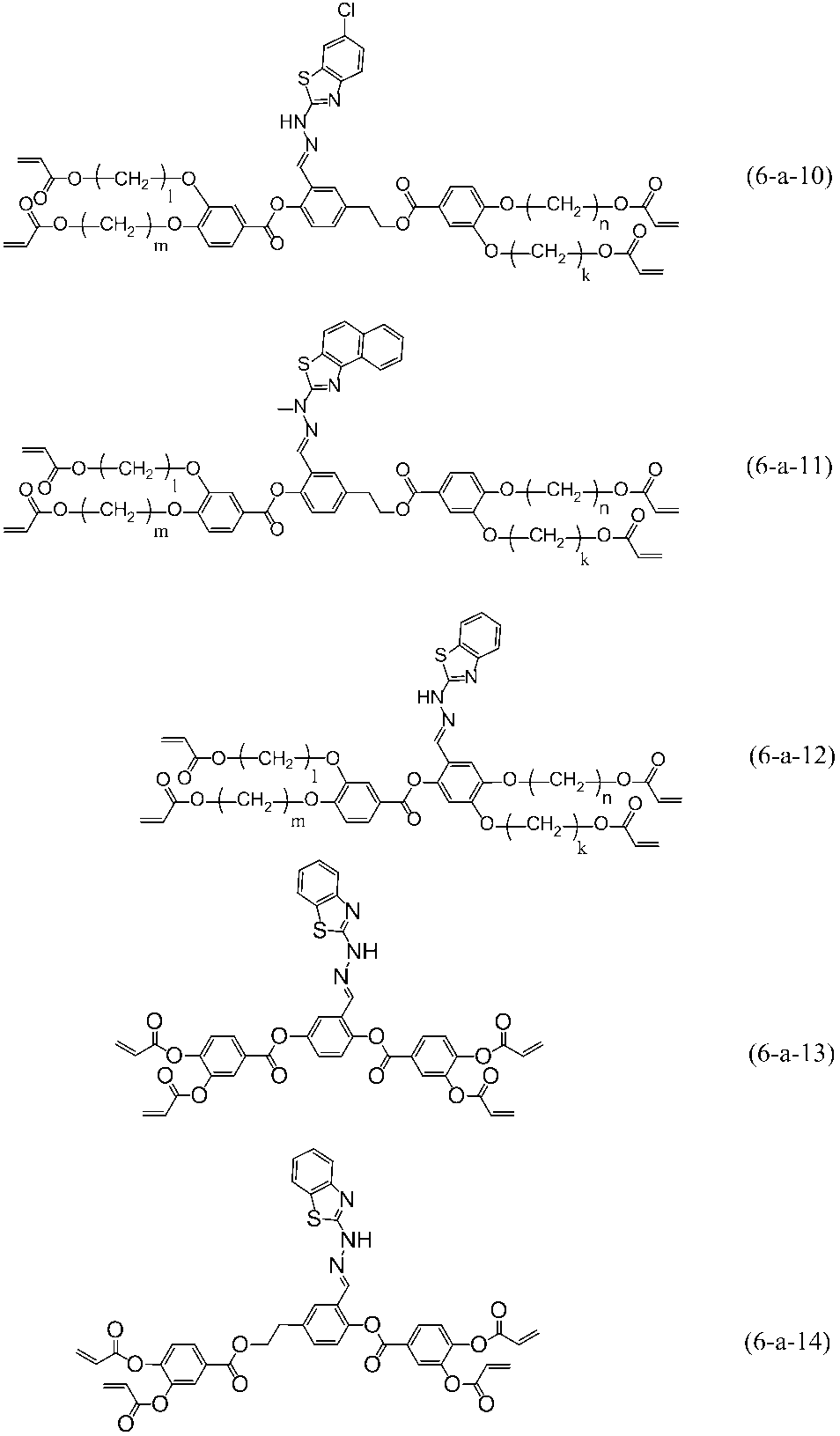

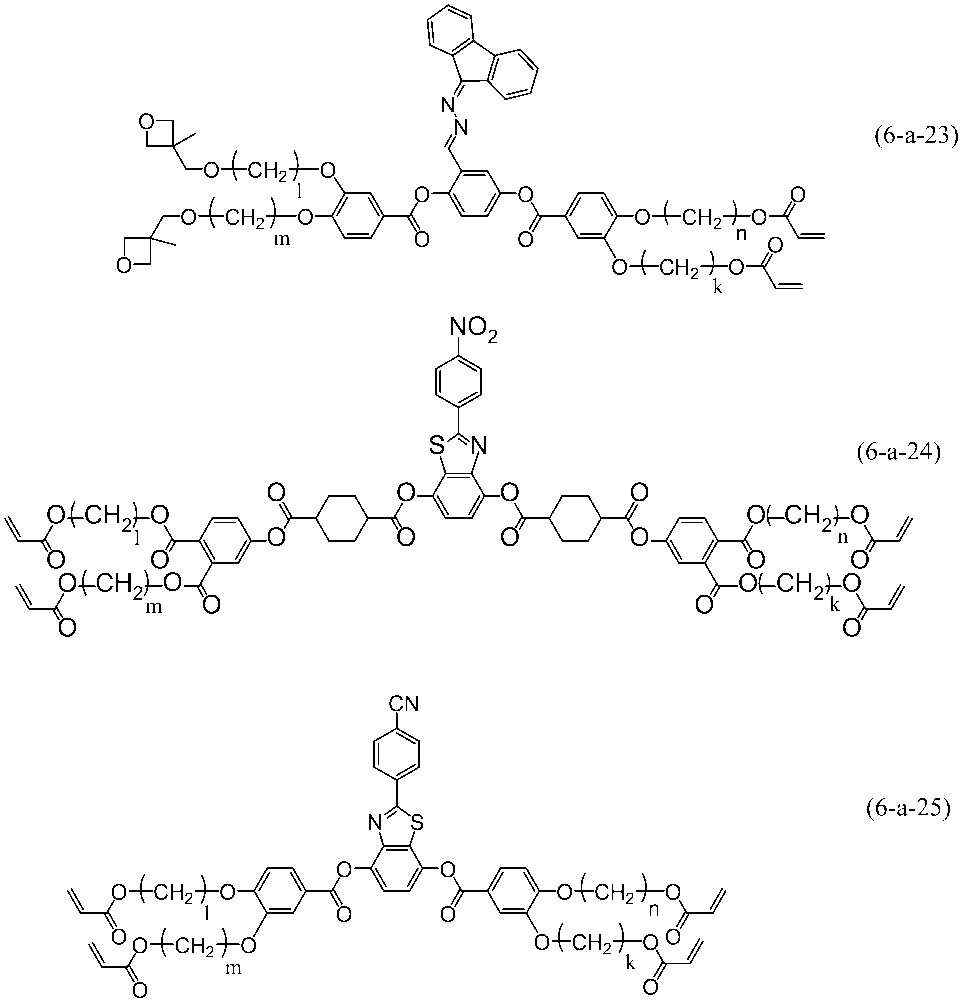
一般式(7)で表される化合物として具体的には、下記の式(7-a-1)から式(7-a-26)で表される化合物が好ましい。

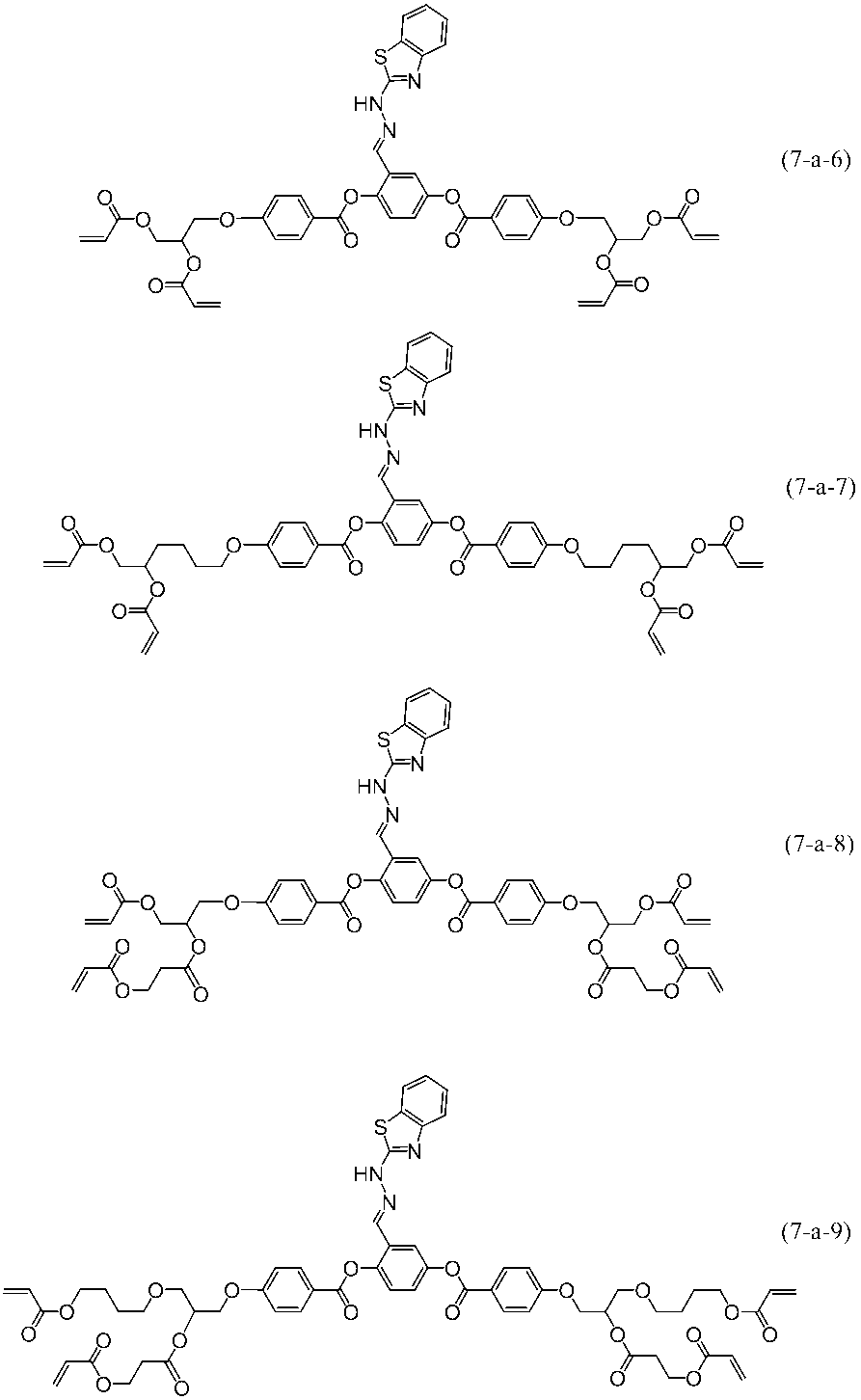
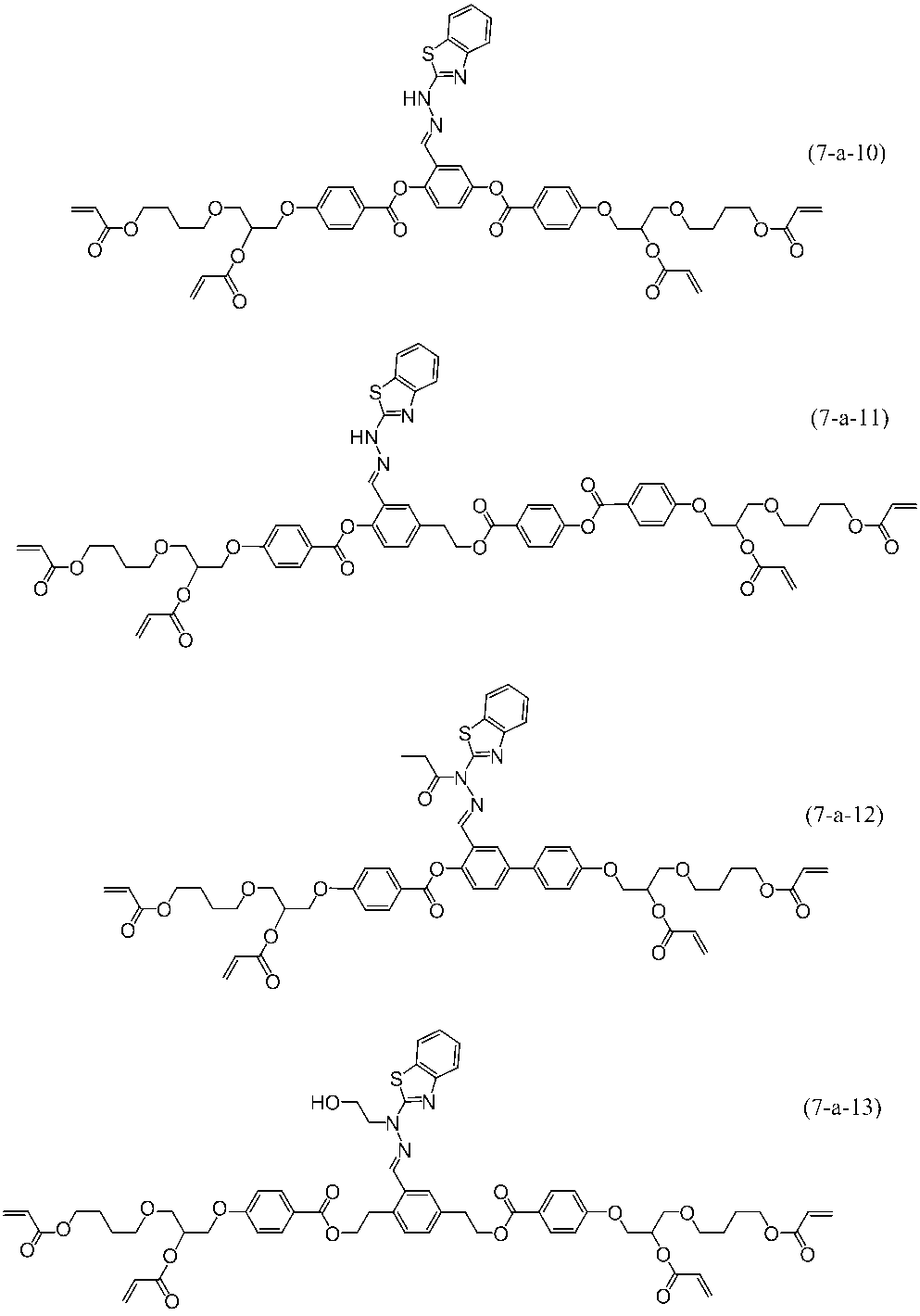
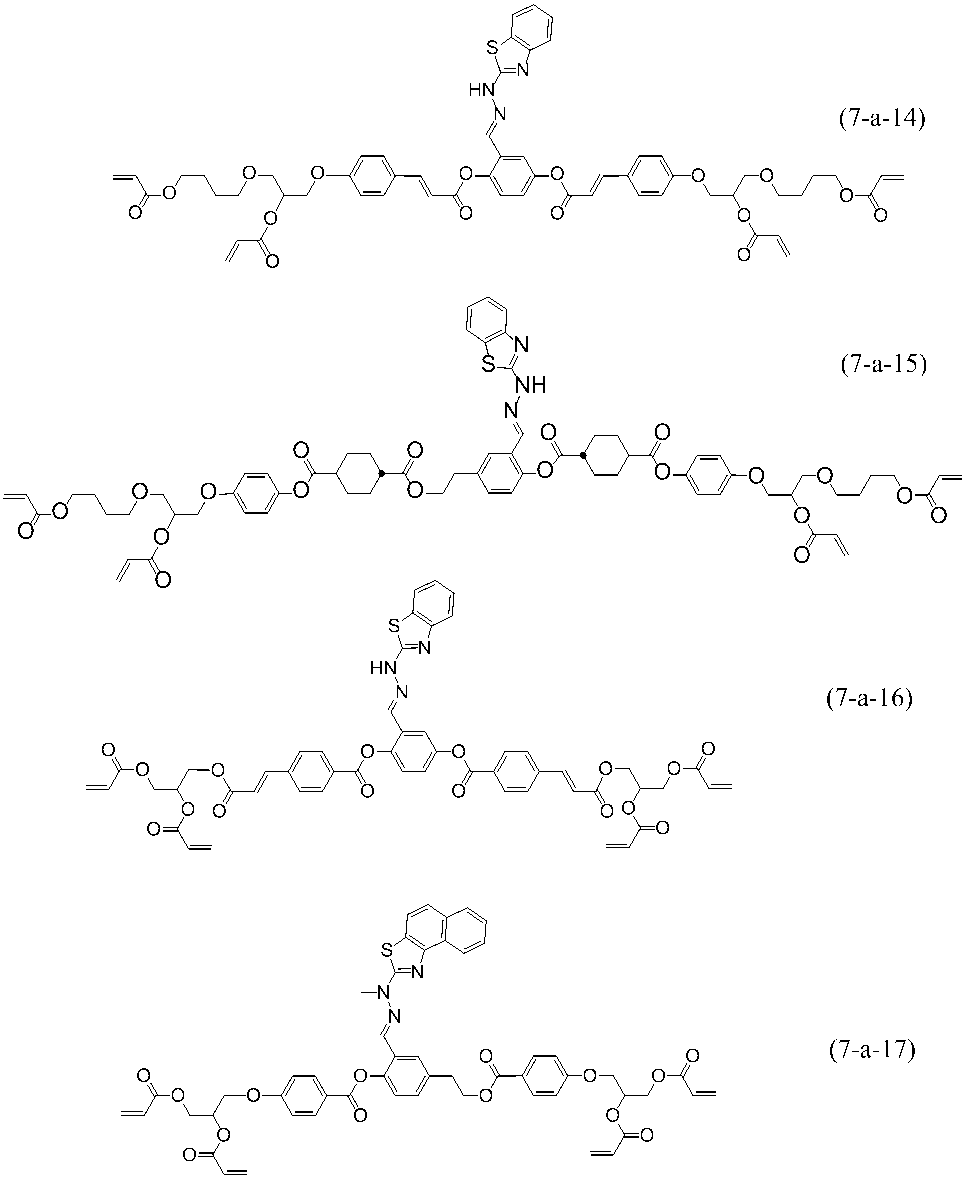
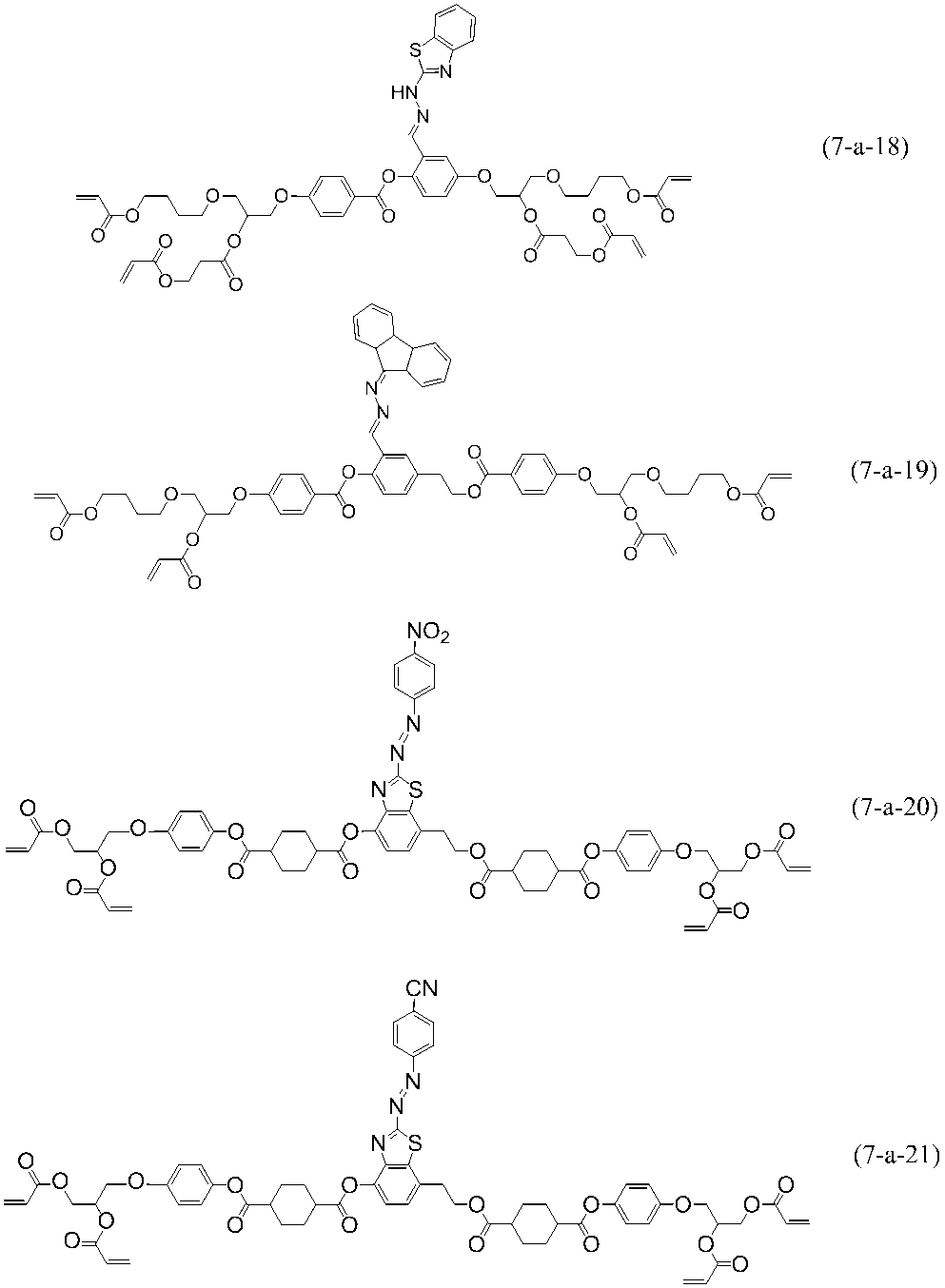
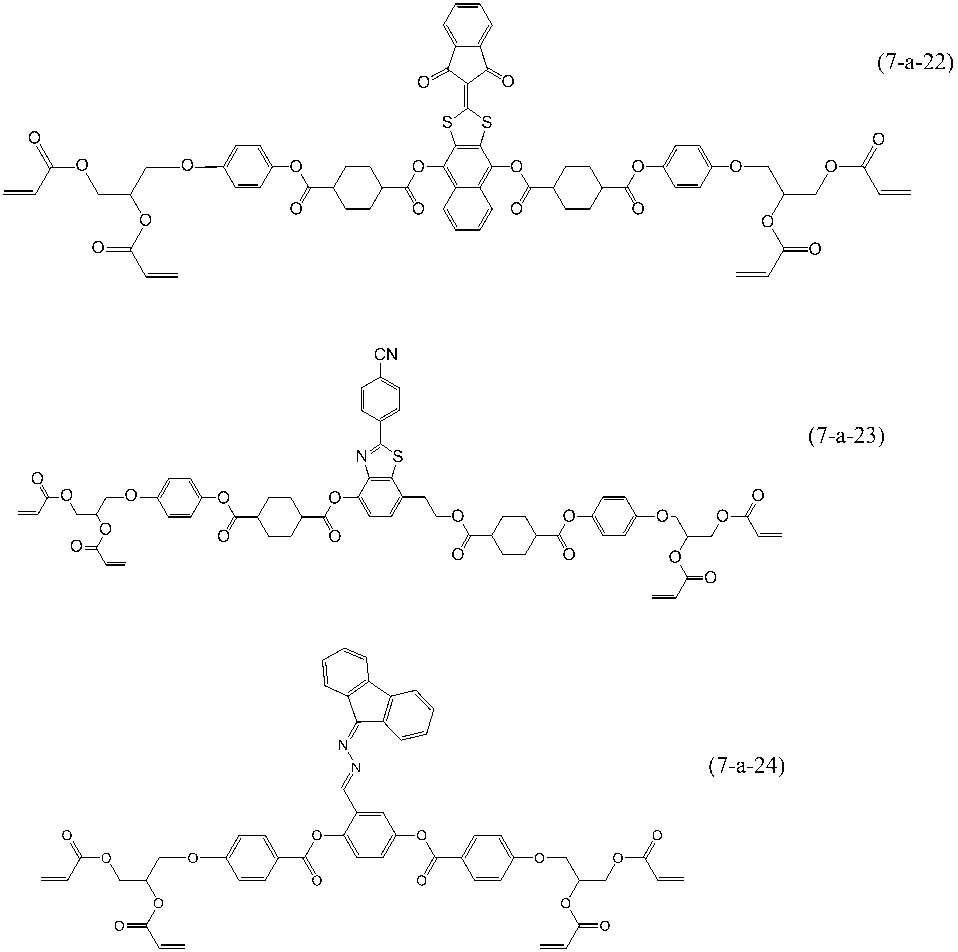
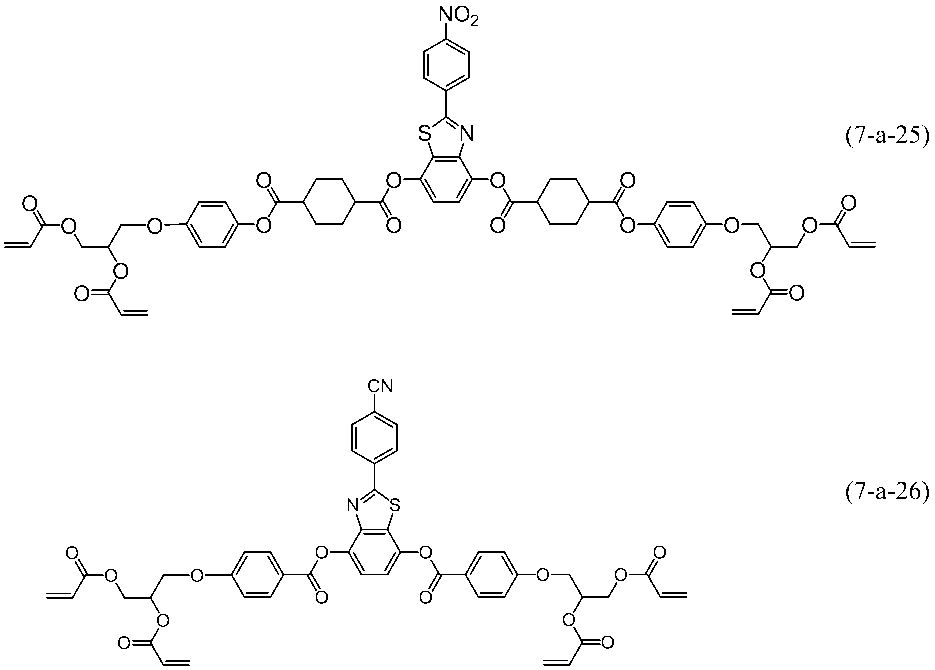
本発明の重合性組成物は、重量平均分子量が5,000以上の界面活性剤を含有する。該界面活性剤は重合性組成物の表面に偏析され、前記一般式(1)~(7)で表される液晶性化合物の空気界面での配向状態を制御すると共に、界面のレベリング性を向上させる。液晶性化合物を含有する液晶組成物の場合、非液晶性の化合物が組成物中に存在すると配向性を乱す因子となる。そのため、非液晶性化合物である界面活性剤は、液晶組成物中から分離し、表面に偏析した方が好ましく、偏析度合いが高い方が好ましい。そのためには、重量平均分子量が大きく、液晶組成物を相溶性が悪い方が好ましい。重量平均分子量は5,000以上であるが、8,000以上が好ましく、10,000以上がより好ましい。また、重量平均分子量があまりに大きすぎると、表面への移動が困難になるため、10,000,000以下が好ましく、1,000,000以下がより好ましく、100,000以下が更により好ましく、30,000以下が最も好ましい。
一方、該界面活性剤が偏析しすぎると、ハジキの原因になってしまう。これを回避するためには、液晶組成物の粘度が高い方が好ましく、80℃における粘度が10Pa・s以上であることが好ましく、80℃における粘度が100Pa・s以上であることがより好ましく、80℃における粘度が500Pa・s以上であることが更により好ましく、80℃における粘度が1,000Pa・s以上であることが更により好ましい。また、液晶組成物の粘度があまりに高すぎると配向し難くなることから、10,000,000Pa・s以下が好ましく、1,000,000Pa・s以下がより好ましく、100,000Pa・s以下が更により好ましい。
なお、粘度はレオメータ Physica MCR101(アントンパール社製)、コーンプレートCP50-1を用いて、温度80℃、回転数1rpmの条件で測定した。80℃で測定できないものは、他の温度で測定した複数点の値をアンドレードの粘度式に当てはめて算出した。
界面活性剤としては、シリコーン系又はアクリル系界面活性剤が好ましい。シリコーン系は表面張力を下げるため、表面のレベリング性を高めようとした場合に好ましく、アクリル系は表面張力を下げないため、他のフィルムとの接着性を高める場合に好ましい。
シリコーン系界面活性剤としては、一般式(B)で表されるものが好ましい。

R101、R102、R103、R105、R106、R107、R109、及びR110の中の少なくとも一つ以上は、アラルキル基であることがより好ましい。
アクリル系界面活性剤としては、一般式(C)で表されるものが好ましい。

具体的にはBYK-320、BYK-322、BYK-323、BYK-325、BYK-315、BYK-331、BYK-354、BYK-375(ビックケミージャパン社製)、TEGO-Glide420、TEGO Glide B1484、TEGO Glide TZG400、TEGO Glide A115、TEGO RAD 2600、TEGO RAD 2650、TEGO RAD 2700、TEGO FLOW ZFS460(エボニック社製)、EFKA-3030、EFKA-3236(BASF社製)、FS126556ADDITIVE(東レ・ダウコーニング社製)、KP-326(信越化学工業社製)等があげられる。
[GPC測定条件]
測定装置:東ソー株式会社製「HLC-8220 GPC」、カラム:東ソー株式会社製ガードカラム「HHR-H」(6.0mmI.D.×4cm)+東ソー株式会社製「TSK-GEL GMHHR-N」(7.8mmI.D.×30cm)+東ソー株式会社製「TSK-GEL GMHHR-N」(7.8mmI.D.×30cm)+東ソー株式会社製「TSK-GEL GMHHR-N」(7.8mmI.D.×30cm)+東ソー株式会社製「TSK-GEL GMHHR-N」(7.8mmI.D.×30cm)
測定条件:カラム温度 40℃、展開溶媒:テトラヒドロフラン(THF)、流速1.0ml/分
試料:樹脂固形分換算で1.0質量%のテトラヒドロフラン溶液をマイクロフィルターでろ過したもの(5μl)。
標準試料:前記「GPC-8020モデルIIデータ解析バージョン4.30」の測定マニュアルに準拠して、分子量が既知の下記の単分散ポリスチレンを用いた。
[分散ポリスチレン]
東ソー株式会社製「A-500」、東ソー株式会社製「A-1000」、東ソー株式会社製「A-2500」
東ソー株式会社製「A-5000」、東ソー株式会社製「F-1」、東ソー株式会社製「F-2」
東ソー株式会社製「F-4」、東ソー株式会社製「F-10」、東ソー株式会社製「F-20」
東ソー株式会社製「F-40」、東ソー株式会社製「F-80」、東ソー株式会社製「F-128」
東ソー株式会社製「F-288」、東ソー株式会社製「F-550」
界面活性剤の添加量は重合性化合物の合計量に対して、0.005~5質量%であることが好ましく、0.01~3質量%であることがより好ましく、0.03~1.0質量%であることがさらに好ましい。
本発明に用いる重合性組成物は、必要に応じて開始剤を含有することができる。本発明の重合性組成物で用いられる重合開始剤は、本発明の重合性組成物を重合させるために用いる。重合を光照射によって行う場合に使用する光重合開始剤としては、特に限定はないが、本発明の重合性組成物における重合性化合物の配向状態を阻害しない程度で公知慣用のものが使用できる。
LAMBSON社の「スピードキュアBMS」、「スピードキュアPBZ」、「ベンゾフェノン」等が挙げられる。さらに、光カチオン開始剤としては、光酸発生剤を用いることができる。光酸発生剤としてはジアゾジスルホン系化合物、トリフェニルスルホニウム系化合物、フェニルスルホン系化合物、スルフォニルピリジン系化合物、トリアジン系化合物及びジフェニルヨードニウム化合物などが挙げられる。
また、熱重合の際に使用する熱重合開始剤としては公知慣用のものが使用でき、例えば、メチルアセトアセテイトパーオキサイド、キュメンハイドロパーオキサイド、ベンゾイルパーオキサイド、ビス(4-t-ブチルシクロヘキシル)パ-オキシジカーボネイト、t-ブチルパーオキシベンゾエイト、メチルエチルケトンパーオキサイド、1,1-ビス(t-ヘキシルパ-オキシ)3,3,5-トリメチルシクロヘキサン、p-ペンタハイドロパーオキサイド、t-ブチルハイドロパーオキサイド、ジクミルパーオキサイド、イソブチルパーオキサイド、ジ(3-メチル-3-メトキシブチル)パーオキシジカーボネイト、1,1-ビス(t-ブチルパーオキシ)シクロヘキサン等の有機過酸化物、2,2’-アゾビスイソブチロニトリル、2,2’-アゾビス(2,4-ジメチルバレロニトリル)等のアゾニトリル化合物、2,2’-アゾビス(2-メチル-N-フェニルプロピオン-アミヂン)ジハイドロクロライド等のアゾアミヂン化合物、2,2’アゾビス{2-メチル-N-[1,1-ビス(ヒドロキシメチル)-2-ヒドロキシエチル]プロピオンアミド}等のアゾアミド化合物、2,2’アゾビス(2,4,4-トリメチルペンタン)等のアルキルアゾ化合物等を使用することができる。熱重合開始剤の含有利量は0.1~10質量が好ましく、1~6質量%が特に好ましい。これらは、単独で使用することもできるし、2種類以上混合して使用することもできる。
本発明に用いる重合性組成物は、必要に応じて有機溶剤を含有することができる。用いる有機溶剤としては特に限定はないが、前記重合性化合物が良好な溶解性を示す有機溶剤が好ましく、100℃以下の温度で乾燥できる有機溶剤であることが好ましい。そのような溶剤としては、例えば、トルエン、キシレン、クメン、メシチレン、等の芳香族系炭化水素、酢酸メチル、酢酸エチル、酢酸プロピル、酢酸ブチル、酢酸シクロヘキシル、酢酸3-ブトキシメチル、乳酸エチル等のエステル系溶剤、メチルエチルケトン、メチルイソブチルケトン、シクロヘキサノン、シクロペンタノン等のケトン系溶剤、テトラヒドロフラン、1,2-ジメトキシエタン、アニソール等のエーテル系溶剤、N,N-ジメチルホルムアミド、N-メチル-2-ピロリドン、等のアミド系溶剤、エチレングリコールモノメチルエーテルアセテート、プロピレングリコールモノメチルエーテルアセテート、プロピレングリコールモノメチルエーテル、プロピレングリコールジアセテート、プロピレングリコールモノメチルプロピルエーテル、ジエチレングリコールモノメチルエーテルアセテート、γ-ブチロラクトン及びクロロベンゼン等が挙げられる。これらは、単独で使用することもできるし、2種類以上混合して使用することもできるが、ケトン系溶剤、エーテル系溶剤、エステル系溶剤及び芳香族炭化水素系溶剤のうちのいずれか1種類以上を用いることが溶液安定性の点から好ましい。
また、有機溶剤に前記重合性化合物を溶解する際には、均一に溶解させるために、加熱攪拌することが好ましい。加熱攪拌時の加熱温度は、用いる重合性液晶化合物の有機溶剤に対する溶解性を考慮して適宜調節すればよいが、生産性の点から15℃~130℃が好ましく、30℃~110℃が更に好ましく、50℃~100℃が特に好ましい。
本発明に用いる重合性組成物は、各々の目的に応じて汎用の添加剤を使用することもできる。例えば、重合禁止剤、酸化防止剤、紫外線吸収剤、配向制御剤、連鎖移動剤、赤外線吸収剤、チキソ剤、帯電防止剤、色素、フィラー、キラル化合物、重合性基を有する非液晶性化合物、その他液晶化合物、配向材料等の添加剤を液晶の配向性を著しく低下させない程度添加することができる。
本発明に用いる重合性組成物は、必要に応じて重合禁止剤を含有することができる。用いる重合禁止剤としては、特に限定はなく、公知慣例のものが使用できる。
例えば、p-メトキシフェノール、クレゾール、t-ブチルカテコール、3.5-ジ-t-ブチル-4-ヒドロキシトルエン、2.2'-メチレンビス(4-メチル-6-t-ブチルフェノール)、2.2'-メチレンビス(4-エチル-6-t-ブチルフェノール)、4.4'-チオビス(3-メチル-6-t-ブチルフェノール)、4-メトキシ-1-ナフトール、4,4’-ジアルコキシ-2,2’-ビ-1-ナフトール、等のフェノール系化合物、ヒドロキノン、メチルヒドロキノン、tert-ブチルヒドロキノン、p-ベンゾキノン、メチル-p-ベンゾキノン、tert-ブチル-p-ベンゾキノン、2,5-ジフェニルベンゾキノン、2-ヒドロキシ-1,4-ナフトキノン、1,4-ナフトキノン、2,3-ジクロロ-1,4-ナフトキノン、アントラキノン、ジフェノキノン、等のキノン系化合物、p-フェニレンジアミン、4-アミノジフェニルアミン、N.N'-ジフェニル-p-フェニレンジアミン、N-i-プロピル-N'-フェニル-p-フェニレンジアミン、N-(1.3-ジメチルブチル)-N'-フェニル-p-フェニレンジアミン、N.N'-ジ-2-ナフチル-p-フェニレンジアミン、ジフェニルアミン、N-フェニル-β-ナフチルアミン、4.4'-ジクミル-ジフェニルアミン、4.4'-ジオクチル-ジフェニルアミン、等のアミン系化合物、フェノチアジン、ジステアリルチオジプロピオネート、等のチオエーテル系化合物、N-ニトロソジフェニルアミン、N-ニトロソフェニルナフチルアミン、N-ニトロソジナフチルアミン、p-ニトロソフェノール、ニトロソベンゼン、p-ニトロソジフェニルアミン、α-ニトロソ-β-ナフトール等、N、N-ジメチルp-ニトロソアニリン、p-ニトロソジフェニルアミン、p-ニトロンジメチルアミン、p-ニトロン-N、N-ジエチルアミン、N-ニトロソエタノールアミン、N-ニトロソジ-n-ブチルアミン、N-ニトロソ-N -n-ブチル-4-ブタノールアミン、N-ニトロソ-ジイソプロパノールアミン、N-ニトロソ-N-エチル-4-ブタノールアミン、5-ニトロソ-8-ヒドロキシキノリン、N-ニトロソモルホリン、N-二トロソ-N-フェニルヒドロキシルアミンアンモニウム塩、二トロソベンゼン、2,4.6-トリ-tert-ブチルニトロンベンゼン、N-ニトロソ-N-メチル-p-トルエンスルホンアミド、N-ニトロソ-N-エチルウレタン、N-ニトロソ-N-n-プロピルウレタン、1-ニトロソ-2-ナフトール、2-ニトロソ-1-ナフトール、1-ニトロソ-2-ナフトール-3,6-スルホン酸ナトリウム、2-ニトロソ-1-ナフトール-4-スルホン酸ナトリウム、2-ニトロソ-5-メチルアミノフェノール塩酸塩、2-ニトロソ-5-メチルアミノフェノール塩酸塩、等のニトロソ系化合物が挙げられる。
重合禁止剤の添加量は、重合性組成物に含まれる重合性化合物の総量に対して0.01~1.0質量%であることが好ましく、0.05~0.5質量%であることがより好ましい。
本発明に用いる重合性組成物は、必要に応じて酸化防止剤等を含有することができる。そのような化合物として、ヒドロキノン誘導体、ニトロソアミン系重合禁止剤、ヒンダードフェノール系酸化防止剤等が挙げられ、より具体的には、tert-ブチルハイドロキノン、和光純薬工業社の「Q-1300」、「Q-1301」、ペンタエリスリトールテトラキス[3-(3,5-ジ-tert-ブチル-4-ヒドロキシフェニル)プロピオネート「IRGANOX1010」、チオジエチレンビス[3-(3,5-ジ-tert-ブチル-4-ヒドロキシフェニル)プロピオネート「IRGANOX1035」、オクタデシル-3-(3,5-ジ-tert-ブチル-4-ヒドロキシフェニル)プロピオネート「IRGANOX1076」、「IRGANOX1135」、「IRGANOX1330」、4,6-ビス(オクチルチオメチル)-o-クレゾール「IRGANOX1520L」、「IRGANOX1726」、「IRGANOX245」、「IRGANOX259」、「IRGANOX3114」、「IRGANOX3790」、「IRGANOX5057」、「IRGANOX565」(以上、BASF株式会社製)、株式会社ADEKA製のアデカスタブAO-20、AO-30、AO-40、AO-50、AO-60、AO-80、住友化学株式会社のスミライザーBHT、スミライザーBBM-S、およびスミライザーGA-80等々があげられる。
酸化防止剤の添加量は、重合性組成物に含まれる重合性化合物の総量に対して0.01~2.0質量%であることが好ましく、0.05~1.0質量%であることがより好ましい。
本発明に用いる重合性組成物は、必要に応じて紫外線吸収剤や光安定剤を含有することができる。用いる紫外線吸収剤や光安定剤は特に限定はないが、光学異方体や光学フィルム等の耐光性を向上させるものが好ましい。
前記紫外線吸収剤としては、例えば、2-(2-ヒドロキシ-5-t-ブチルフェニル)-2H-ベンゾトリアゾール「チヌビン PS」、「チヌビン 99-2」、「チヌビン 109」、「TINUVIN 213」、「TINUVIN 234」、「TINUVIN 326」、「TINUVIN 328」、「TINUVIN 329」、「TINUVIN 384-2」、「TINUVIN 571」、2-(2H-ベンゾトリアゾール-2-イル)-4,6-ビス(1-メチル-1-フェニルエチル)フェノール「TINUVIN 900」、2-(2H-ベンゾトリアゾール-2-イル)-6-(1-メチル-1-フェニルエチル)-4-(1,1,3,3-テトラメチルブチル)フェノール「TINUVIN 928」、「TINUVIN 1130」、「TINUVIN 400」、「TINUVIN 405」、2,4-ビス[2-ヒドロキシ-4-ブトキシフェニル]-6-(2,4-ジブトキシフェニル)-1,3,5-トリアジン「TINUVIN 460」、「チヌビン 479」、「TINUVIN 5236」(以上、BASF株式会社製)、「アデカスタブLA-32」、「アデカスタブLA-34」、「アデカスタブLA-36」、「アデカスタブLA-31」、「アデカスタブ1413」、「アデカスタブLA-51」(以上、株式会社ADEKA製)等が挙げられる。
本発明に用いる重合性組成物は、液晶性化合物の配向状態を制御するために、配向制御剤を含有することができる。用いる配向制御剤としては、液晶性化合物が、基材に対して実質的に水平配向、実質的に垂直配向、実質的にハイブリッド配向するものが挙げられる。また、キラル化合物を添加した場合には実質的に平面配向するものが挙げられる。前述したように、界面活性剤によって、水平配向、平面配向が誘起される場合もあるが、各々の配向状態が誘起されるものであれば、特に限定はなく、公知慣用のものを使用することができる。
そのような配向制御剤としては、例えば、光学異方体とした場合の空気界面のチルト角を効果的に減じる効果を持つ、下記一般式(8)で表される繰り返し単位を有する重量平均分子量が100以上1000000以下である化合物が挙げられる。

また、フルオロアルキル基で変性された棒状液晶性化合物、円盤状液晶性化合物、分岐構造を有してもよい長鎖脂肪族アルキル基を含有した重合性化合物、等も挙げられる。
光学異方体とした場合の空気界面のチルト角を効果的に増加させる効果を持つものとしては、硝酸セルロース、酢酸セルロース、プロピオン酸セルロース、酪酸セルロース、複素芳香族環塩変性された棒状液晶性化合物、シアノ基、シアノアルキル基で変性された棒状液晶性化合物、等が挙げられる。
本発明に用いる重合性組成物は、重合体や光学異方体と基材との密着性をより向上させるため、連鎖移動剤を含有することができる。連鎖移動剤としては、芳香族炭化水素類、クロロホルム、四塩化炭素、四臭化炭素、ブロモトリクロロメタン等のハロゲン化炭化水素類、
オクチルメルカプタン、n―ブチルメルカプタン、n―ペンチルメルカプタン、n-ヘキサデシルメルカプタン、n-テトラデシルメル、n―ドデシルメルカプタン、t-テトラデシルメルカプタン、t―ドデシルメルカプタン等のメルカプタン化合物、ヘキサンジチオール、デカンジチオール、1,4-ブタンジオールビスチオプロピオネート、1,4-ブタンジオールビスチオグリコレート、エチレングリコールビスチオグリコレート、エチレングリコールビスチオプロピオネート、トリメチロールプロパントリスチオグリコレート、トリメチロールプロパントリスチオプロピオネート、トリメチロールプロパントリス(3-メルカプトブチレート)、ペンタエリスリトールテトラキスチオグリコレート、ペンタエリスリトールテトラキスチオプロピオネート、トリメルカプトプロピオン酸トリス(2-ヒドロキシエチル)イソシアヌレート、1,4-ジメチルメルカプトベンゼン、2、4、6-トリメルカプト-s-トリアジン、2-(N,N-ジブチルアミノ)-4,6-ジメルカプト-s-トリアジン等のチオール化合物、ジメチルキサントゲンジスルフィド、ジエチルキサントゲンジスルフィド、ジイソプロピルキサントゲンジスルフィド、テトラメチルチウラムジスルフィド、テトラエチルチウラムジスルフィド、テトラブチルチウラムジスルフィド等のスルフィド化合物、N,N-ジメチルアニリン、N,N-ジビニルアニリン、ペンタフェニルエタン、α-メチルスチレンダイマー、アクロレイン、アリルアルコール、ターピノーレン、α-テルピネン、γ-テルビネン、ジペンテン、等が挙げられるが、2,4-ジフェニル-4-メチル-1-ペンテン、チオール化合物がより好ましい。

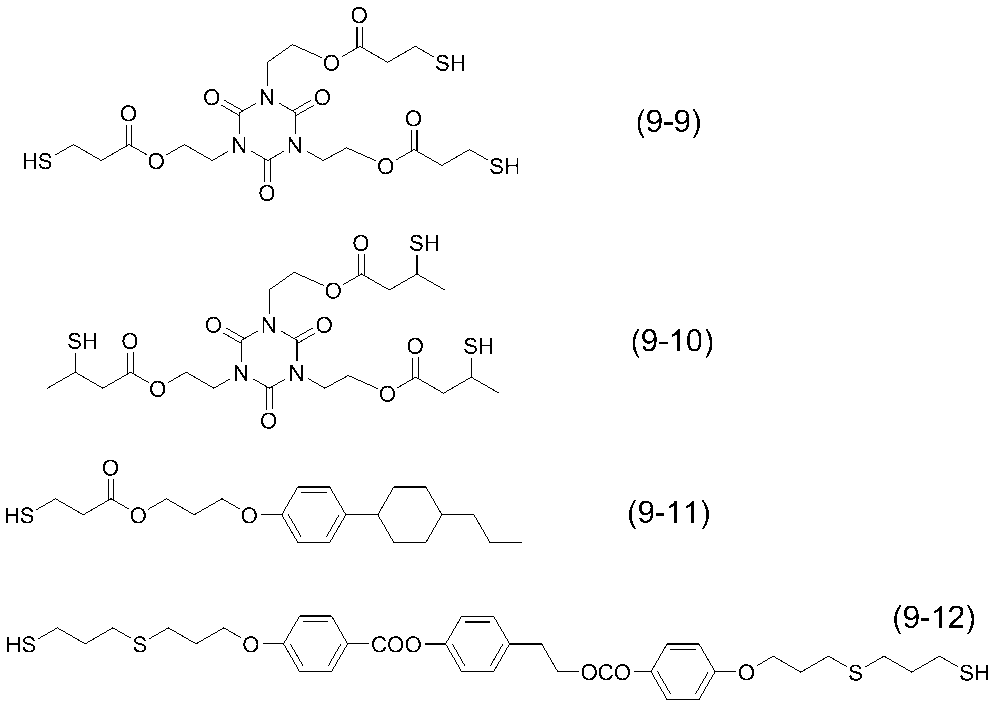
連鎖移動剤の添加量は、重合性組成物に含まれる重合性化合物の総量に対して、0.5~10質量%であることが好ましく、1.0~5.0質量%であることがより好ましい。
更に物性調整のため、重合性でない液晶化合物等も必要に応じて添加することも可能である。液晶性のない重合性化合物は、重合性化合物を有機溶剤に混合し加熱攪拌して重合性溶液を調製する工程において添加することが好ましいが、重合性でない液晶化合物等は、その後の、重合性溶液に重合開始剤を混合する工程において添加してもよいし、両方の工程において添加してもよい。これらの化合物の添加量は重合性組成物に対して、20質量%以下が好ましく、10質量%以下がより好ましく、5質量%以下が更により好ましい。
本発明に用いる重合性組成物は、必要に応じて赤外線吸収剤を含有することができる。用いる赤外線吸収剤は、特に限定はなく、配向性を乱さない範囲で公知慣用のものを含有することができる。
前記赤外線吸収剤としては、シアニン化合物、フタロシアニン化合物、ナフトキノン化合物、ジチオール化合物、ジインモニウム化合物、アゾ化合物、アルミニウム塩等が挙げられる。
具体的には、ジインモニウム塩タイプの「NIR-IM1」、アルミニウム塩タイプの「NIR-AM1」(以上、ナガセケムテック株式会社製)、「カレンズIR-T」、「カレンズIR-13F」(以上、昭和電工株式会社製)、「YKR-2200」、「YKR-2100」(以上、山本化成株式会社製)、「IRA908」、「IRA931」、「IRA955」、「IRA1034」(以上、INDECO株式会社)等が挙げられる。
本発明に用いる重合性組成物は、必要に応じて帯電防止剤を含有することができる。用いる帯電防止剤は、特に限定はなく、配向性を乱さない範囲で公知慣用のものを含有することができる。
そのような帯電防止剤としては、スルホン酸塩基またはリン酸塩基を分子内に少なくとも1種類以上有する高分子化合物、4級アンモニウム塩を有する化合物、重合性基を有する界面活性剤等が挙げられる。
前記帯電防止剤は、1種類のみで使用することも2種類以上組み合わせて使用することもできる。 前記帯電防止剤の添加量は、重合性組成物に含まれる重合性化合物の総量に対して、0.001~10重量%が好ましく、0.01~5重量%がより好ましい。
本発明に用いる重合性組成物は、必要に応じて色素を含有することができる。用いる色素は、特に限定はなく、配向性を乱さない範囲で公知慣用のものを含有することができる。
前記色素としては、例えば、2色性色素、蛍光色素等が挙げられる。そのような色素としては、例えば、ポリアゾ色素、アントラキノン色素、シアニン色素、フタロシアニン色素、ペリレン色素、ペリノン色素、スクアリリウム色素等が挙げられるが、添加する観点から、前記色素は液晶性を示す色素が好ましい。
CRC Press、1994年、および「機能性色素市場の新展開」、第一章、1頁、1994年、CMC株式会社発光、等に記載の色素を使用することができる。
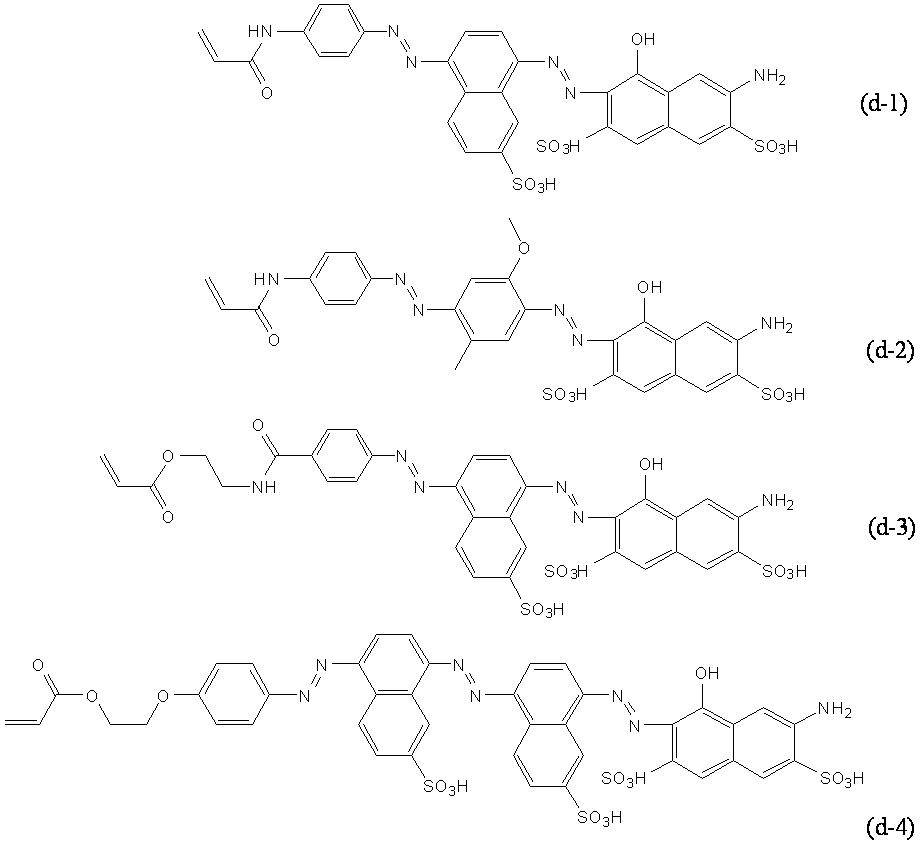

本発明に用いる重合性組成物は、必要に応じてフィラーを含有することができる。用いるフィラーは、特に限定はなく、得られた重合物の熱伝導性が低下しない範囲で公知慣用のものを含有することができる。
前記フィラーとしては、例えば、アルミナ、チタンホワイト、水酸化アルミニウム、タルク、クレイ、マイカ、チタン酸バリウム、酸化亜鉛、ガラス繊維等の無機質充填材、銀粉、銅粉などの金属粉末や窒化アルミニウム、窒化ホウ素、窒化ケイ素、窒化ガリウム、炭化ケイ素、マグネシア(酸化アルミニウム)、アルミナ(酸化アルミニウム)、結晶性シリカ(酸化ケイ素)、溶融シリカ(酸化ケイ素)等などの熱伝導性フィラー、銀ナノ粒子等が挙げられる。
本発明の重合性組成物には、キラルネマチック相を得ることを目的としてキラル化合物を含有してもよい。前記キラル化合物は、それ自体が液晶性を示す必要はなく、また、重合性基を有していても、有していなくてもよい。また、キラル化合物の螺旋の向きは、重合体の使用用途によって適宜選択することができる。
重合性基を有しているキラル化合物としては、特に限定はなく、公知慣用のものが使用できるが、らせんねじれ力(HTP)の大きなキラル化合物が好ましい。また、重合性基は、ビニル基、ビニルオキシ基、アリル基、アリルオキシ基、アクリロイルオキシ基、メタクリロイルオキシ基、グリシジル基、オキセタニル基が好ましく、アクリロイルオキシ基、グリシジル基、オキセタニル基が特に好ましい。
キラル化合物の具体例として、下記一般式(10-1)~式(10-4)で表される化合物を挙げることができるが、下記の一般式に限定されるわけではない。
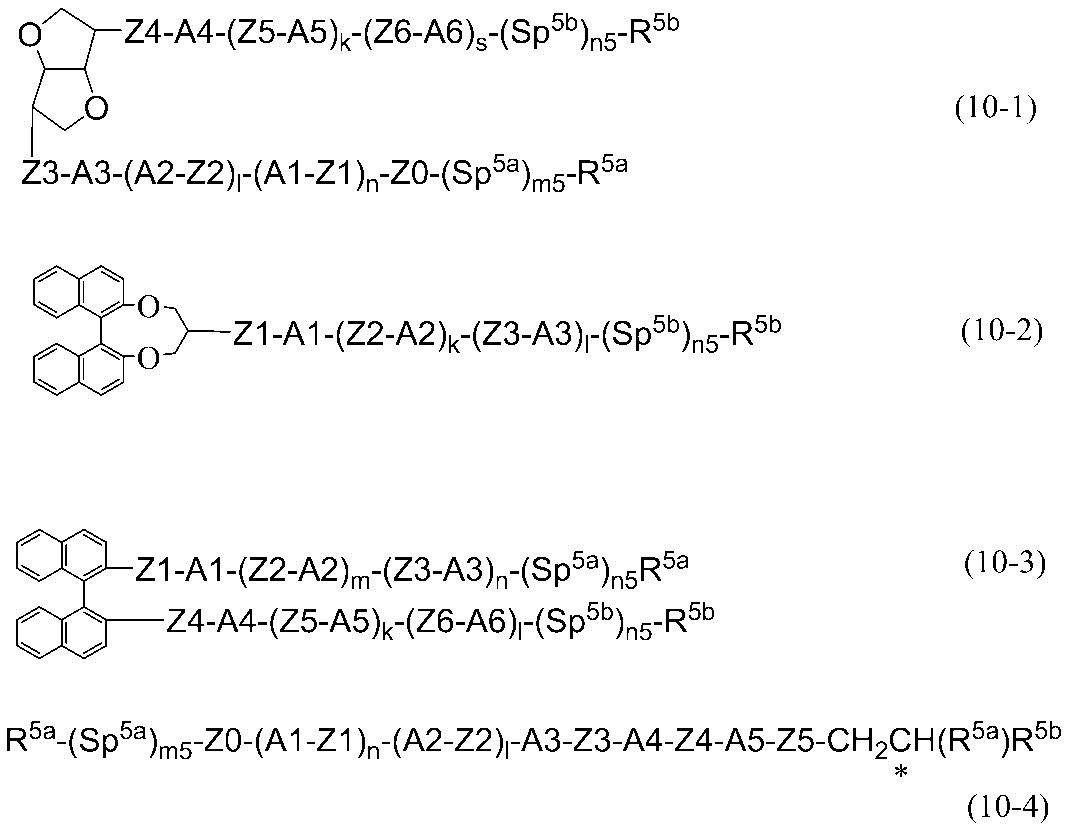
A1、A2、A3、A4、A5及びA6はそれぞれ独立して、1,4-フェニレン基、1,4-シクロヘキシレン基、1,4-シクロヘキセニル基、テトラヒドロピラン-2,5-ジイル基、1,3-ジオキサン-2,5-ジイル基、テトラヒドロチオピラン-2,5-ジイル基、1,4-ビシクロ(2,2,2)オクチレン基、デカヒドロナフタレン-2,6-ジイル基、ピリジン-2,5-ジイル基、ピリミジン-2,5-ジイル基、ピラジン-2,5-ジイル基、チオフェン-2,5-ジイル基-、1,2,3,4-テトラヒドロナフタレン-2,6-ジイル基、2,6-ナフチレン基、フェナントレン-2,7-ジイル基、9,10-ジヒドロフェナントレン-2,7-ジイル基、1,2,3,4,4a,9,10a-オクタヒドロフェナントレン-2,7-ジイル基、1,4-ナフチレン基、ベンゾ[1,2-b:4,5-b‘]ジチオフェン-2,6-ジイル基、ベンゾ[1,2-b:4,5-b‘]ジセレノフェン-2,6-ジイル基、[1]ベンゾチエノ[3,2-b]チオフェン-2,7-ジイル基、[1]ベンゾセレノフェノ[3,2-b]セレノフェン-2,7-ジイル基、又はフルオレン-2,7-ジイル基を表し、n、l及びkはそれぞれ独立して、0又は1を表し、0≦n+l+k≦3となり、
m5は0又は1を表し、
Z0、Z1、Z2、Z3、Z4、Z5及びZ6はそれぞれ独立して、-COO-、-OCO-、-CH2 CH2-、-OCH2-、-CH2O-、-CH=CH-、-C≡C-、-CH=CHCOO-、-OCOCH=CH-、-CH2CH2COO-、-CH2CH2OCO-、-COOCH2CH2-、-OCOCH2CH2-、-CONH-、-NHCO-、炭素数2~10のハロゲン原子を有してもよいアルキル基又は単結合を表し、
R5a及びR5bは、水素原子、ハロゲン原子、シアノ基又は炭素原子数1~18のアルキル基を表すが、該アルキル基は1つ以上のハロゲン原子又はCNにより置換されていても良く、この基中に存在する1つのCH2基又は隣接していない2つ以上のCH2基はそれぞれ相互に独立して、酸素原子が相互に直接結合しない形で、-O-、-S-、-NH-、-N(CH3)-、-CO-、-COO-、-OCO-、-OCOO-、-SCO-、-COS-又は-C≡C-により置き換えられていても良く、あるいはR5a及びR5bは一般式(10-a)

P5aは、下記の式(P-1)から式(P-20)で表される重合性基から選ばれる置換基を表す。


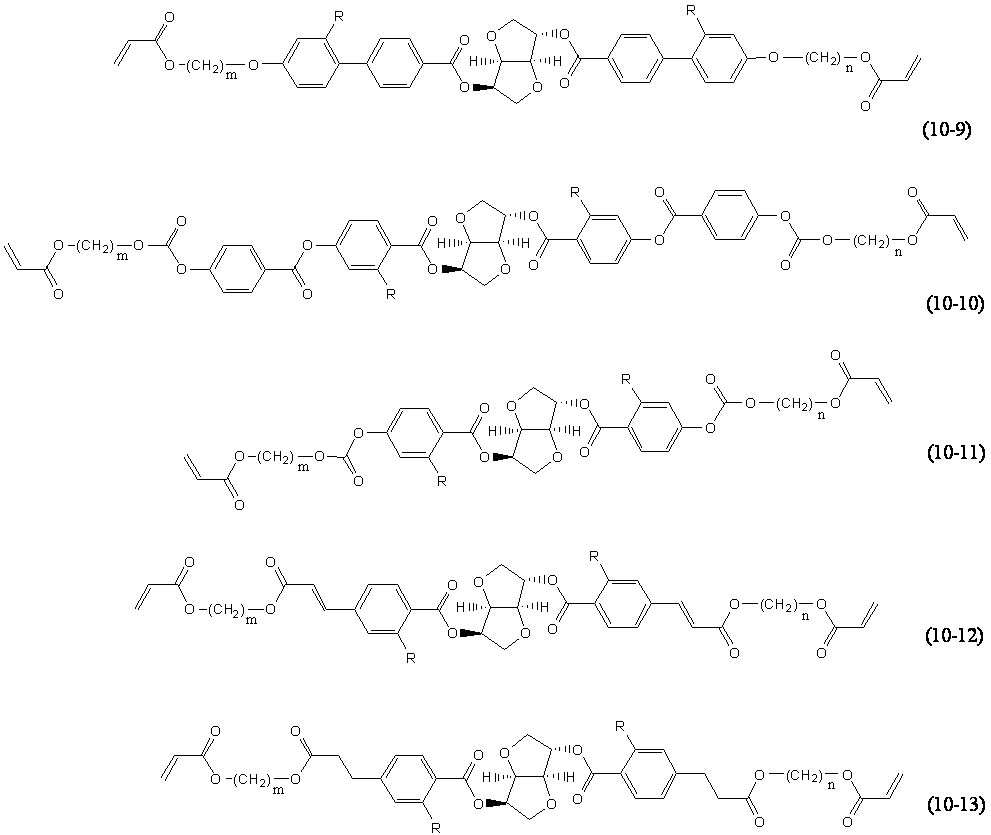

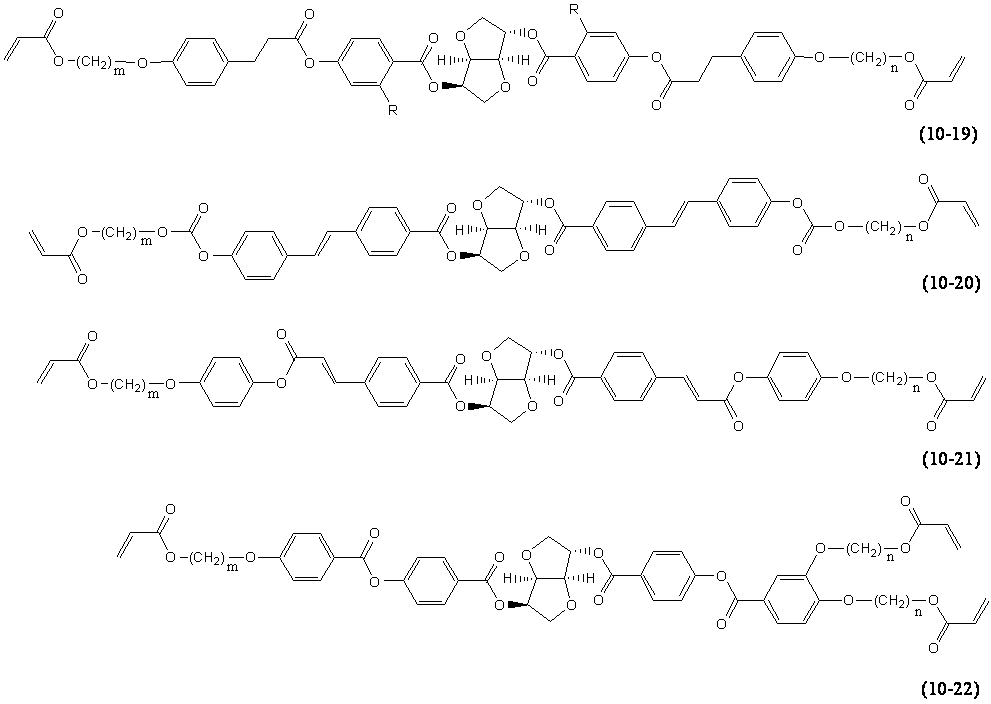
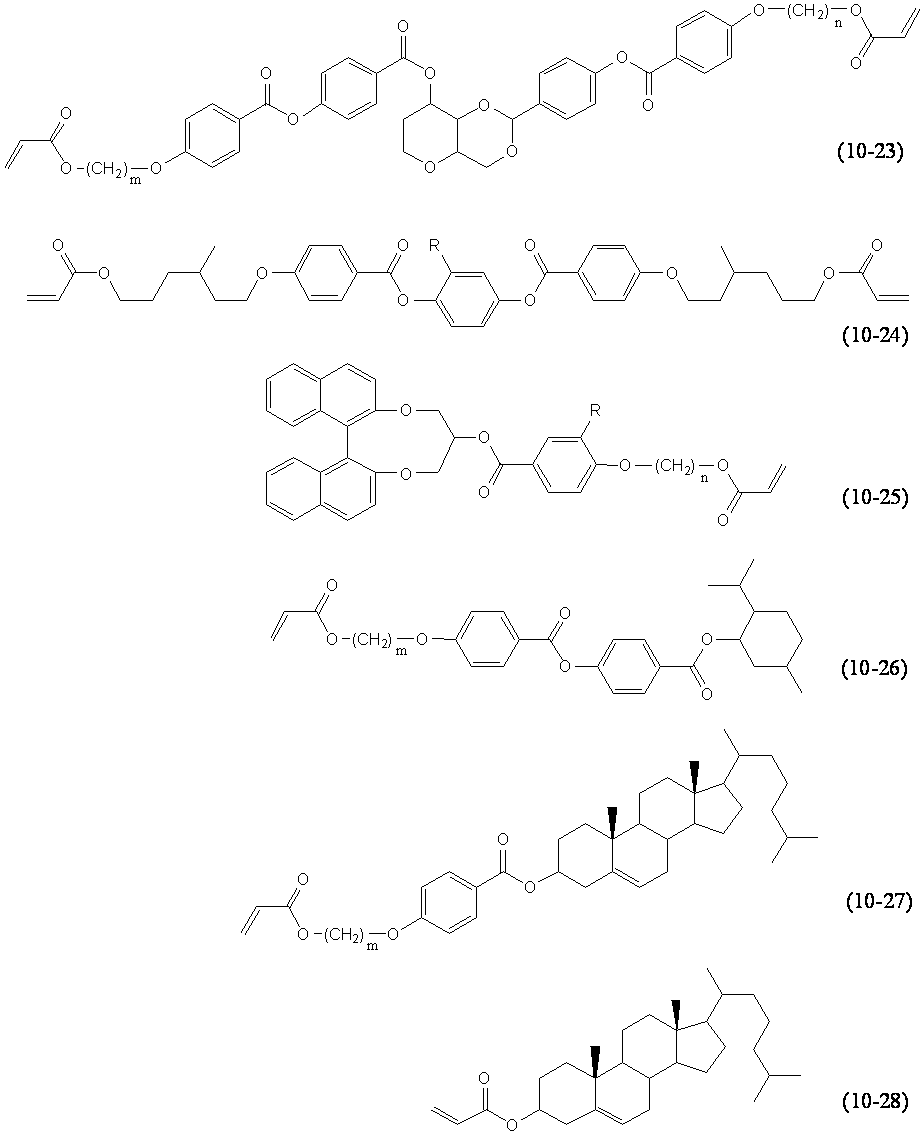
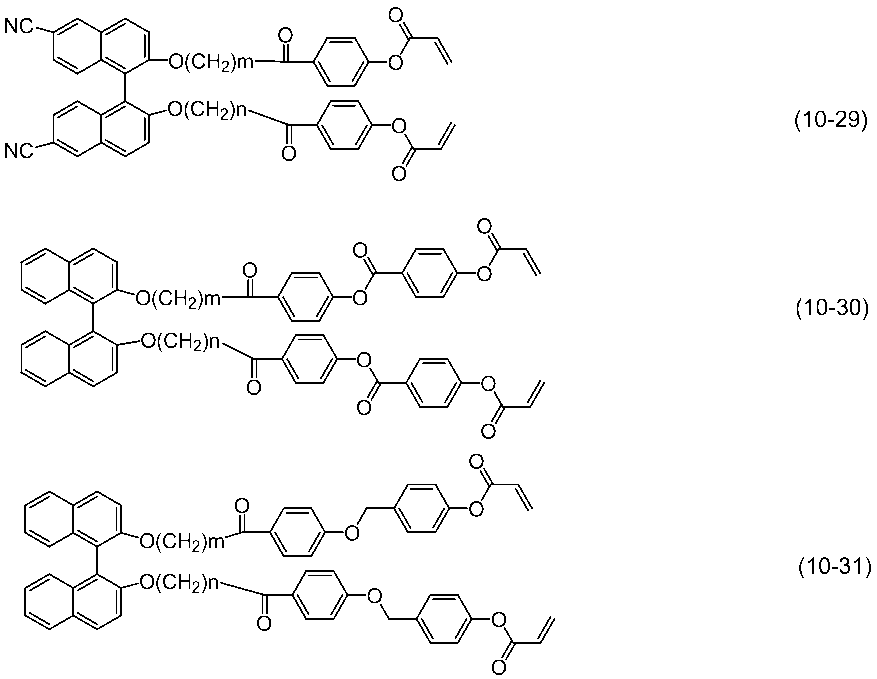

キラル化合物を添加する場合は、本発明の重合性組成物の重合体の用途によるが、得られる重合体の厚み(d)を重合体中での螺旋ピッチ(P)で除した値(d/P)が0.1~100の範囲となる量を添加することが好ましく、0.1~20の範囲となる量がさらに好ましい。
本発明の重合性組成物は、重合性基を有するが液晶性化合物ではない化合物を添加することもできる。このような化合物としては、通常、この技術分野で重合性モノマーあるいは重合性オリゴマーとして認識されるものであれば特に制限なく使用することができる。添加する場合は、本発明の重合性組成物に用いる重合性化合物の合計量に対して、15質量%以下であることが好ましく、10質量%以下が更に好ましい。
本発明に用いる重合性組成物は、一般式(1)から一般式(7)の液晶性化合物以外にも、重合性基を1つ以上有する液晶性化合物を含有することができる。しかし、添加量が多すぎると、位相差板として用いた場合に位相差比が大きくなる恐れがあり、添加する場合は、本発明の重合性組成物における重合性化合物の総量に対して30質量%以下とすることが好ましく、10質量%以下がさらに好ましく、5質量%以下が特に好ましい。
そのような液晶性化合物として、一般式(1-b)から一般式(7-b)の液晶性化合物が挙げられる。


Z83及びZ84は各々独立して-O-、-S-、-OCH2-、-CH2O-、-CH2CH2-、-CO-、-COO-、-OCO-、-CO-S-、-S-CO-、-O-CO-O-、-CO-NH-、-NH-CO-、-SCH2-、-CH2S-、-CF2O-、-OCF2-、-CF2S-、-SCF2-、-CH=CH-COO-、-CH=CH-OCO-、-COO-CH=CH-、-OCO-CH=CH-、-COO-CH2CH2-、-OCO-CH2CH2-、-CH2CH2-COO-、-CH2CH2-OCO-、-COO-CH2-、-OCO-CH2-、-CH2-COO-、-CH2-OCO-、-CH=CH-、-N=N-、-CH=N-、-N=CH-、-CH=N-N=CH-、-CF=CF-、-C≡C-又は単結合を表すが、Z83及び/又はZ84が複数現れる場合は各々同一であっても異なっていても良く、
M81は1,4-フェニレン基、1,4-シクロヘキシレン基、1,4-シクロヘキセニル基、テトラヒドロピラン-2,5-ジイル基、1,3-ジオキサン-2,5-ジイル基、テトラヒドロチオピラン-2,5-ジイル基、1,4-ビシクロ(2,2,2)オクチレン基、デカヒドロナフタレン-2,6-ジイル基、ピリジン-2,5-ジイル基、ピリミジン-2,5-ジイル基、ピラジン-2,5-ジイル基、チオフェン-2,5-ジイル基-、1,2,3,4-テトラヒドロナフタレン-2,6-ジイル基、ナフチレン-1,4-ジイル基、ナフチレン-1,5-ジイル基、ナフチレン-1,6-ジイル基、ナフチレン-2,6-ジイル基、フェナントレン-2,7-ジイル基、9,10-ジヒドロフェナントレン-2,7-ジイル基、1,2,3,4,4a,9,10a-オクタヒドロフェナントレン-2,7-ジイル基、ベンゾ[1,2-b:4,5-b‘]ジチオフェン-2,6-ジイル基、ベンゾ[1,2-b:4,5-b‘]ジセレノフェン-2,6-ジイル基、[1]ベンゾチエノ[3,2-b]チオフェン-2,7-ジイル基、[1]ベンゾセレノフェノ[3,2-b]セレノフェン-2,7-ジイル基、又はフルオレン-2,7-ジイル基から選ばれる基を表すが、これらの基は無置換又は1つ以上のL2によって置換されても良く、
L2はフッ素原子、塩素原子、臭素原子、ヨウ素原子、ペンタフルオロスルフラニル基、ニトロ基、イソシアノ基、アミノ基、ヒドロキシル基、メルカプト基、メチルアミノ基、ジメチルアミノ基、ジエチルアミノ基、ジイソプロピルアミノ基、トリメチルシリル基、ジメチルシリル基、チオイソシアノ基、又は、炭素原子数1から20のアルキル基を表すが、当該アルキル基は直鎖状であっても分岐状であっても良く、任意の水素原子はフッ素原子に置換されても良く、当該アルキル基中の1個の-CH2-又は隣接していない2個以上の-CH2-は各々独立して-O-、-S-、-CO-、-COO-、-OCO-、-CO-S-、-S-CO-、-O-CO-O-、-CO-NH-、-NH-CO-、-CH=CH-COO-、-CH=CH-OCO-、-COO-CH=CH-、-OCO-CH=CH-、-CH=CH-、-CF=CF-又は-C≡C-から選択される基によって置換されても良いが、化合物内にL2が複数存在する場合それらは同一であっても異なっていても良く、mは0から8の整数を表し、j83及びj84は各々独立して0から5の整数を表すが、j83+j84は1から5の整数を表す。)、R11及びR31は水素原子、フッ素原子、塩素原子、臭素原子、ヨウ素原子、ペンタフルオロスルフラニル基、シアノ基、ニトロ基、イソシアノ基、チオイソシアノ基、又は、炭素原子数1から20のアルキル基を表すが、当該アルキル基は直鎖状であっても分岐状であっても良く、当該アルキル基中の任意の水素原子はフッ素原子に置換されても良く、当該アルキル基中の1個の-CH2-又は隣接していない2個以上の-CH2-は各々独立して-O-、-S-、-CO-、-COO-、-OCO-、-CO-S-、-S-CO-、-O-CO-O-、-CO-NH-、-NH-CO-又は-C≡C-によって置換されても良く、m11は0~8の整数を表し、m2~m7、n2~n7、l4~l6、k6は各々独立して0から5の整数を表す。但し、一般式(1)から一般式(7)を除く。)
一般式(1-b)で表される化合物として具体的には、下記の式(1-b-1)から式(1-b-39)で表される化合物が挙げられる。


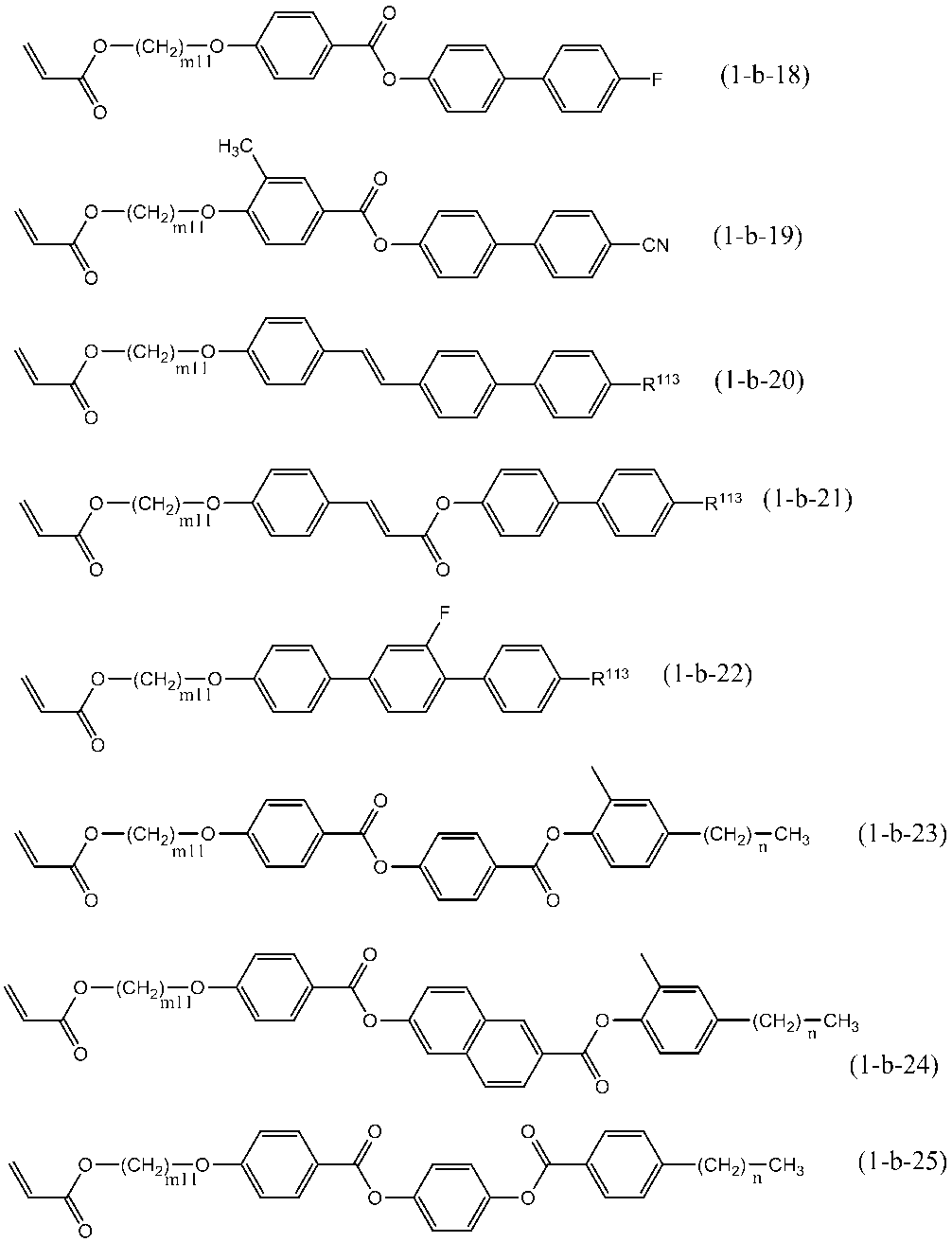
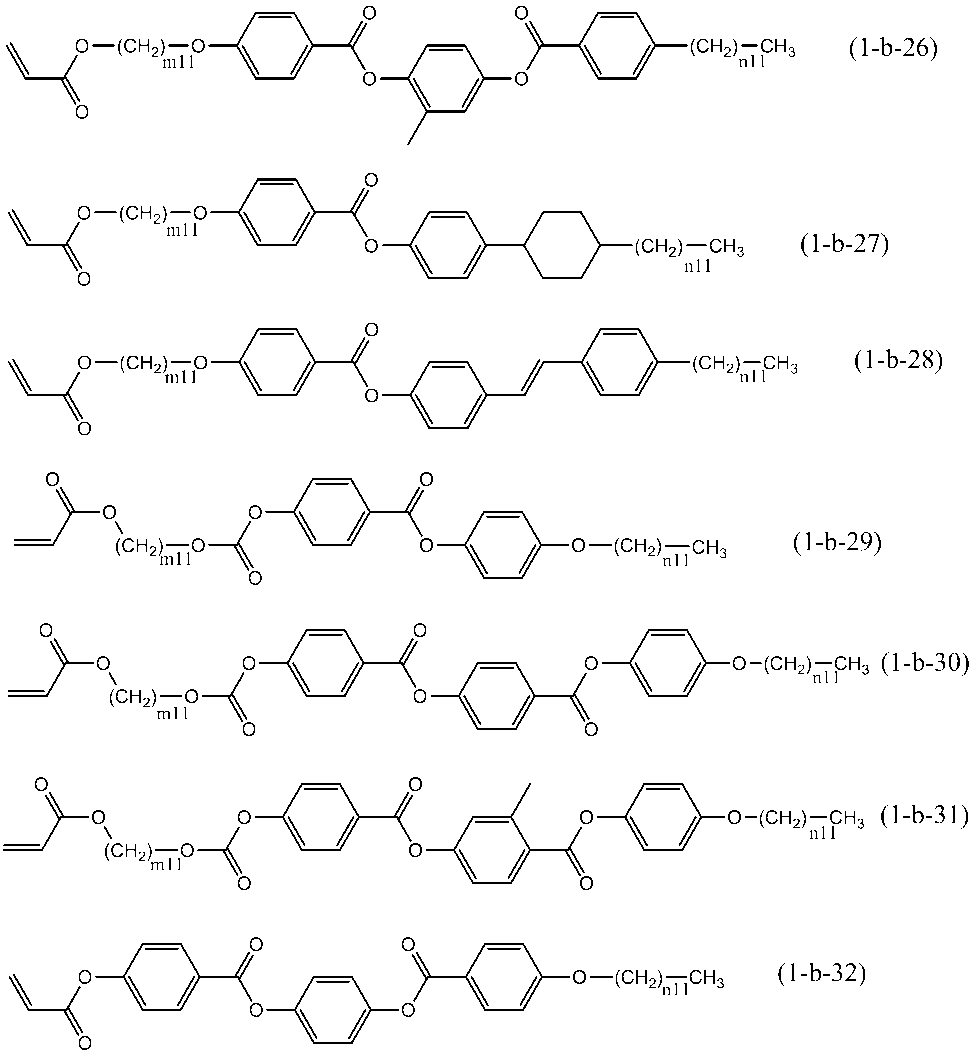

一般式(2-b)で表される化合物として具体的には、下記の式(2-b-1)から式(2-b-33)で表される化合物が挙げられる。


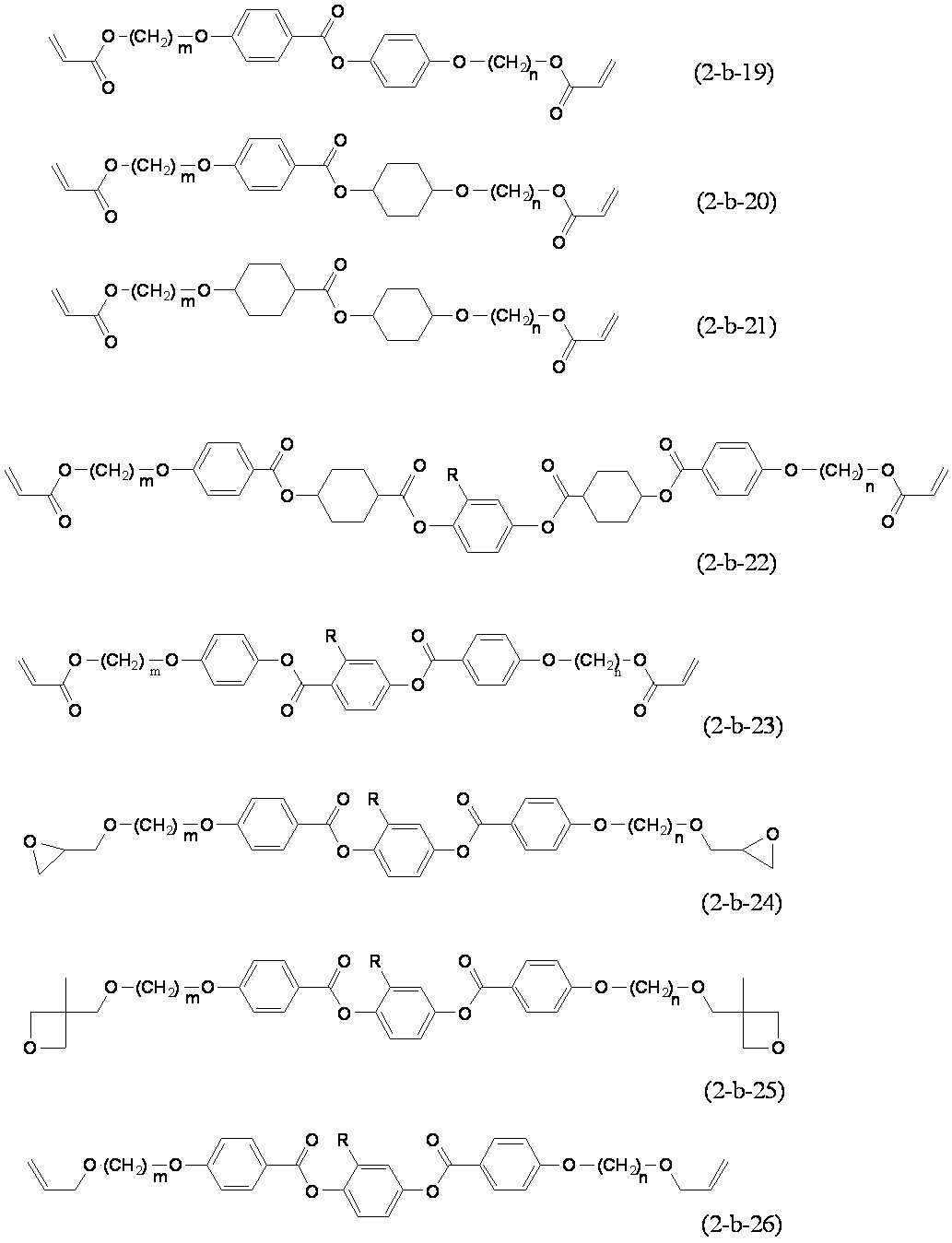
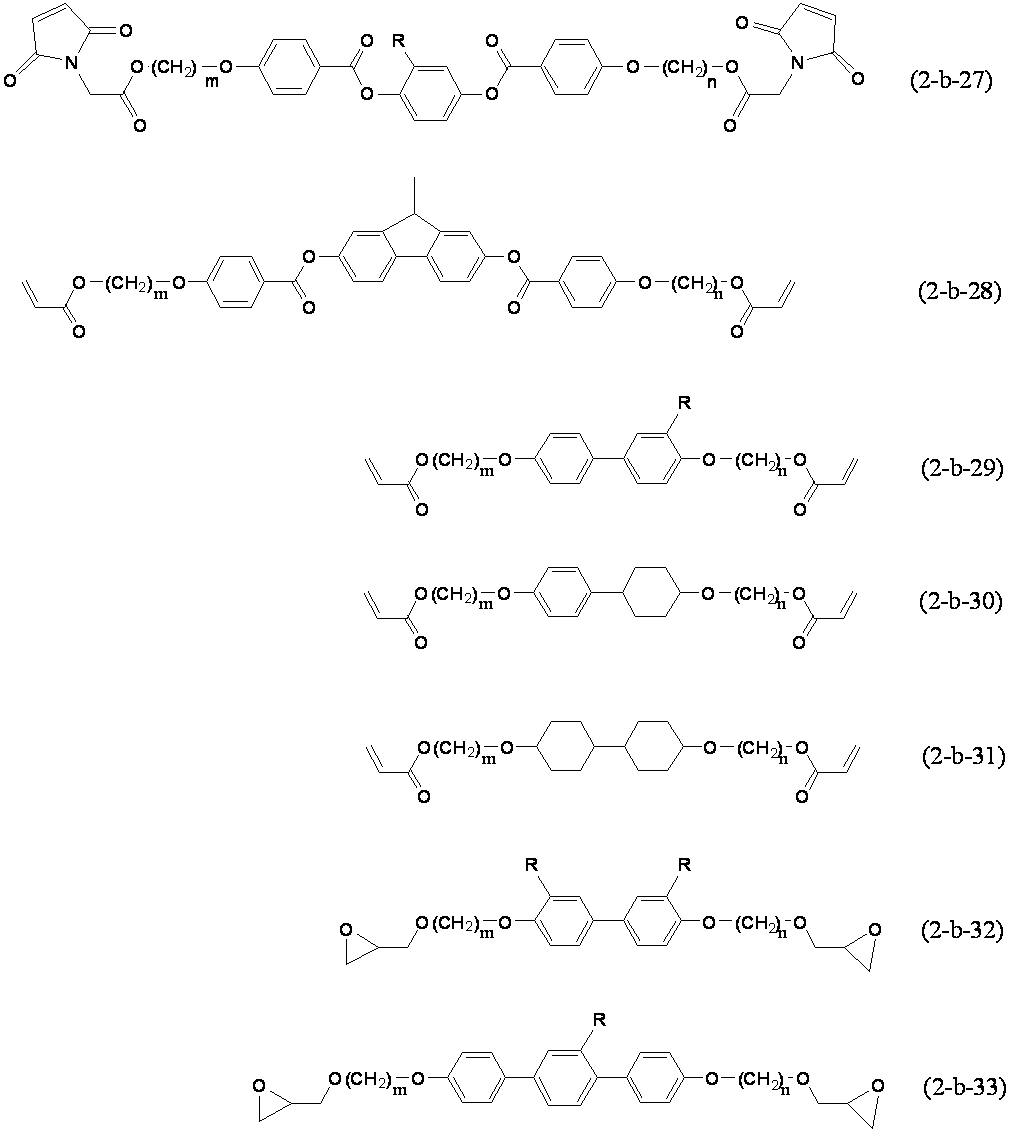
一般式(3-b)で表される化合物として具体的には、下記の式(3-b-1)から式(3-b-16)で表される化合物が挙げられる。

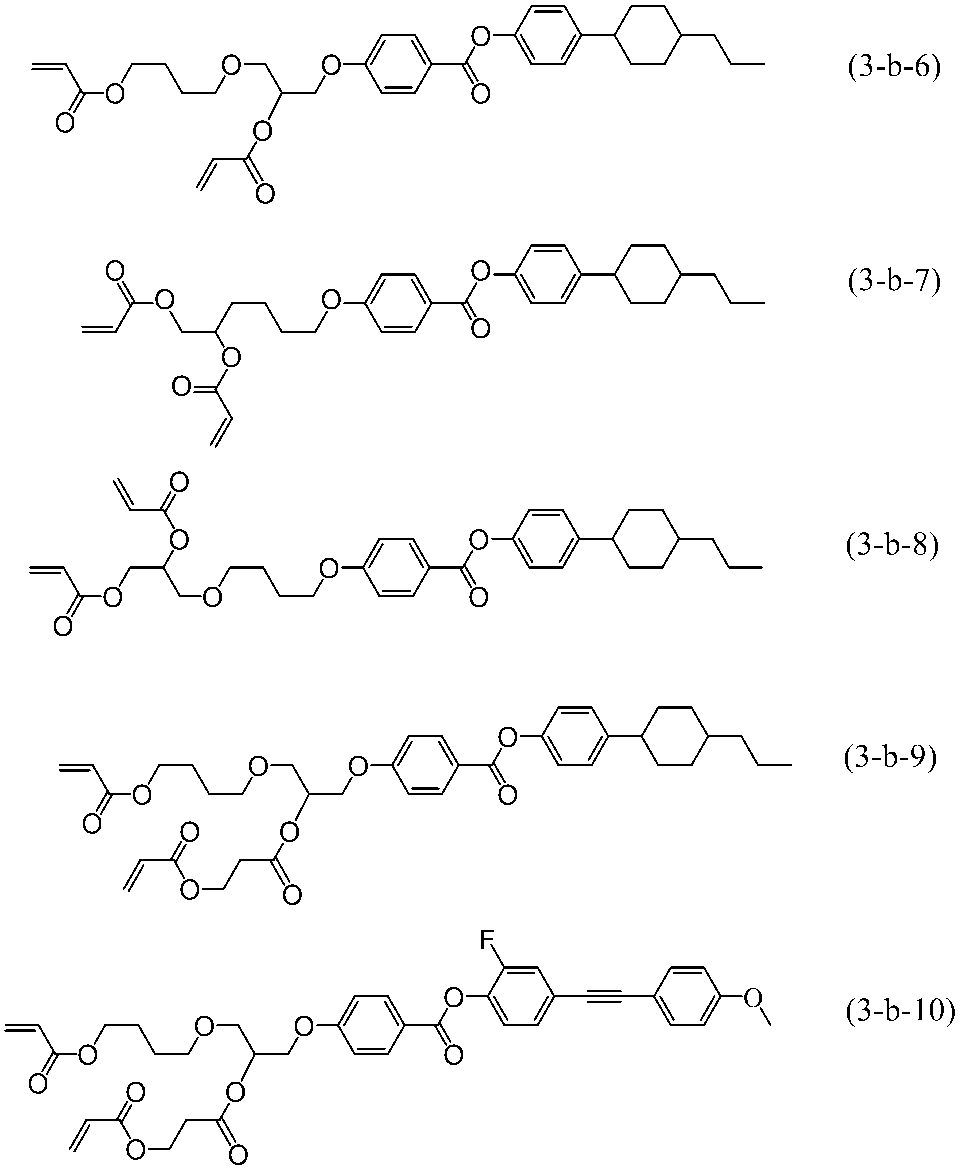
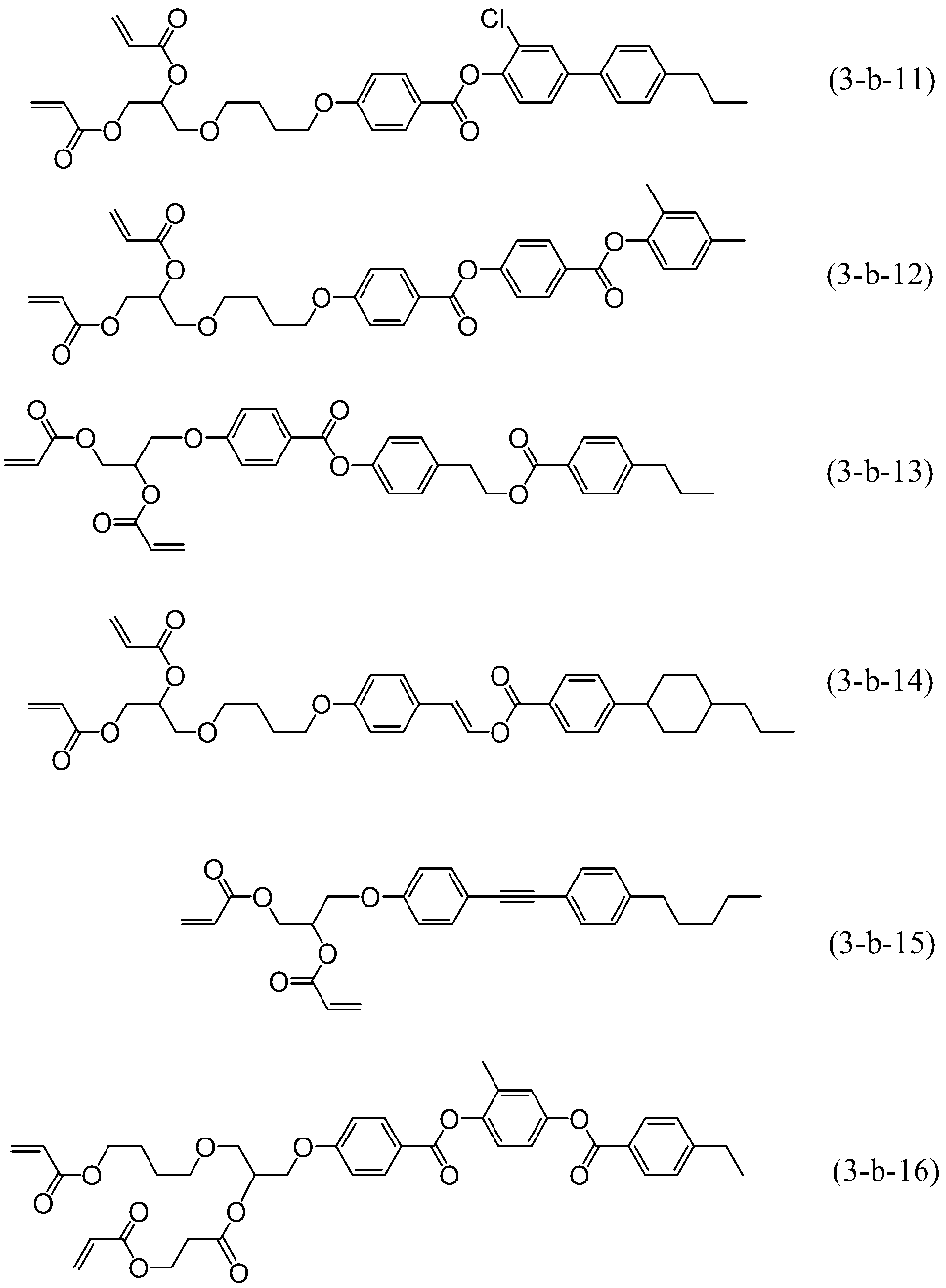
一般式(4-b)で表される化合物として具体的には、下記の式(4-b-1)から式(4-b-29)で表される化合物が挙げられる。
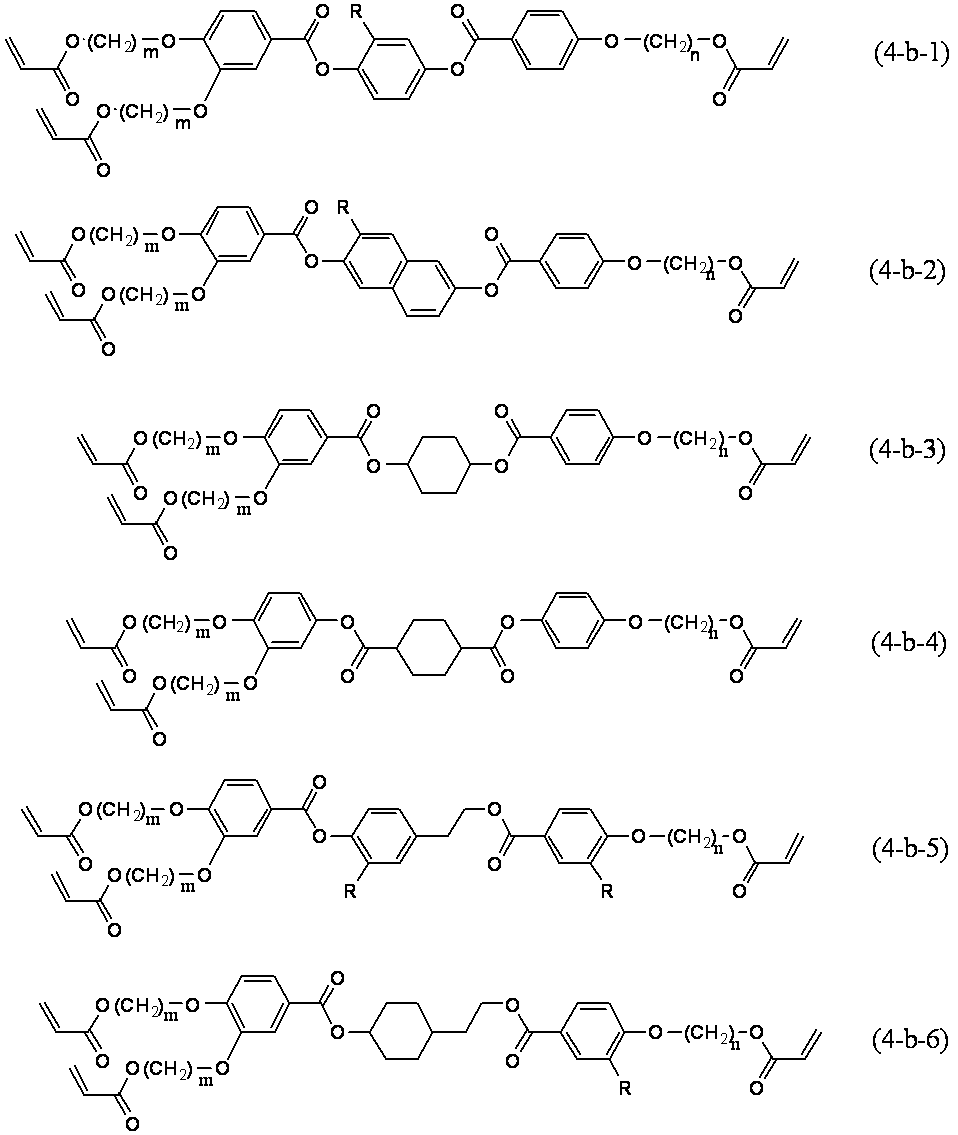

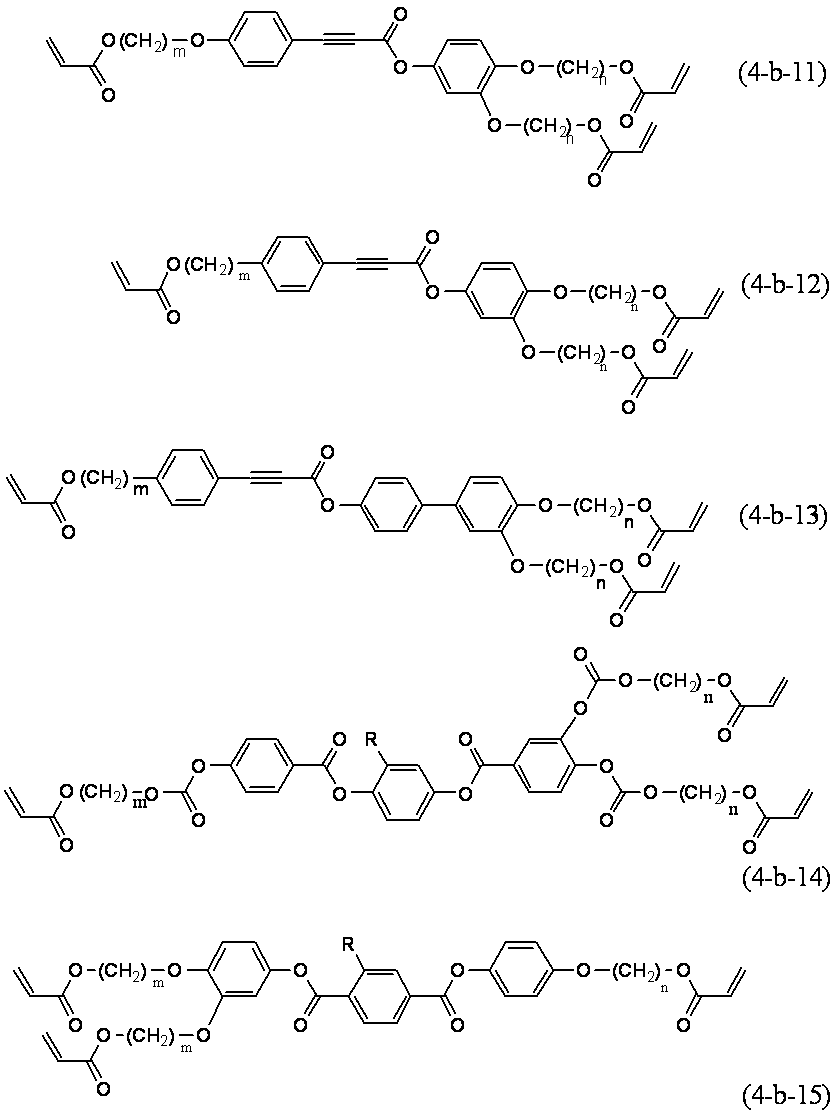


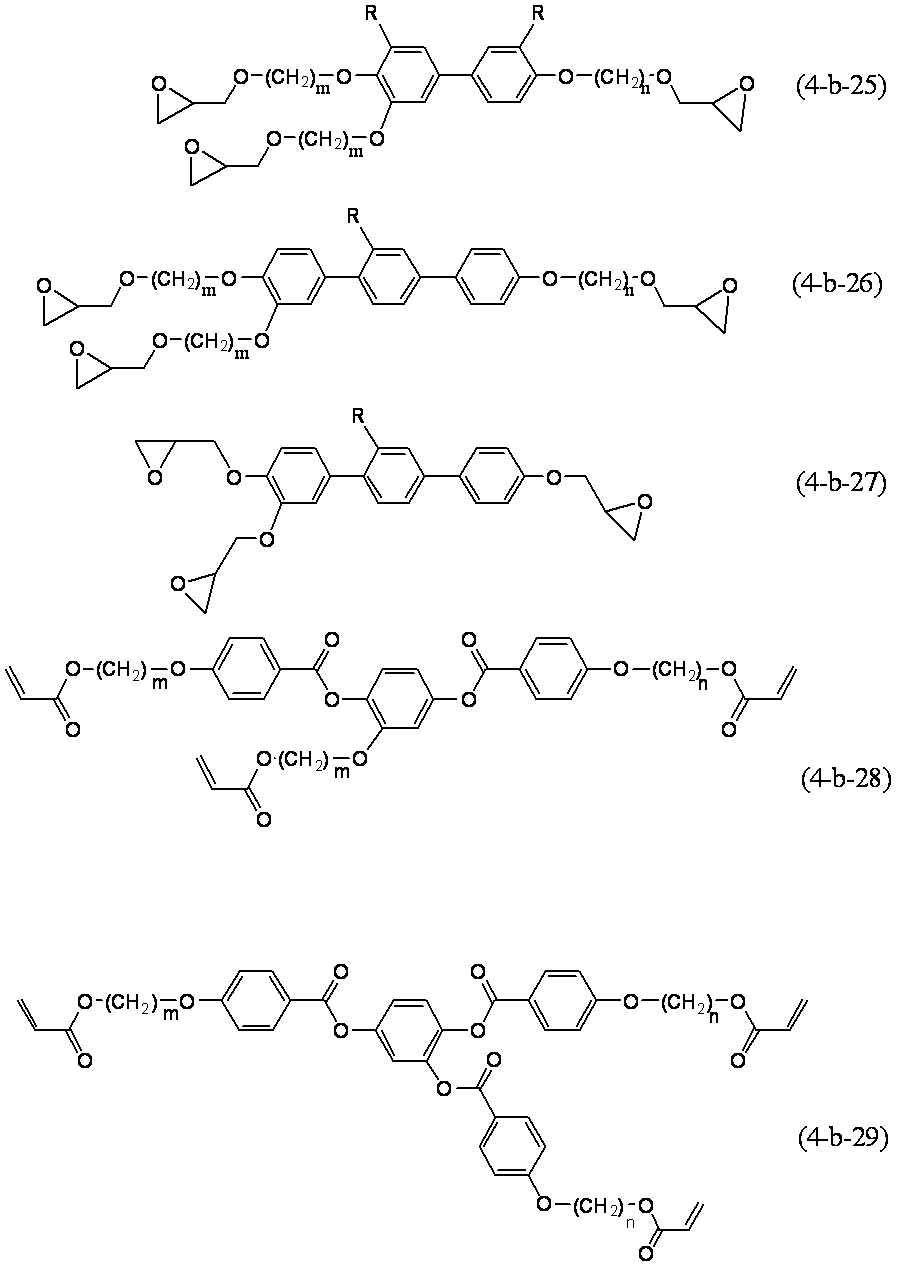
一般式(5-b)で表される化合物として具体的には、下記の式(5-b-1)から式(5-b-26)で表される化合物が挙げられる。
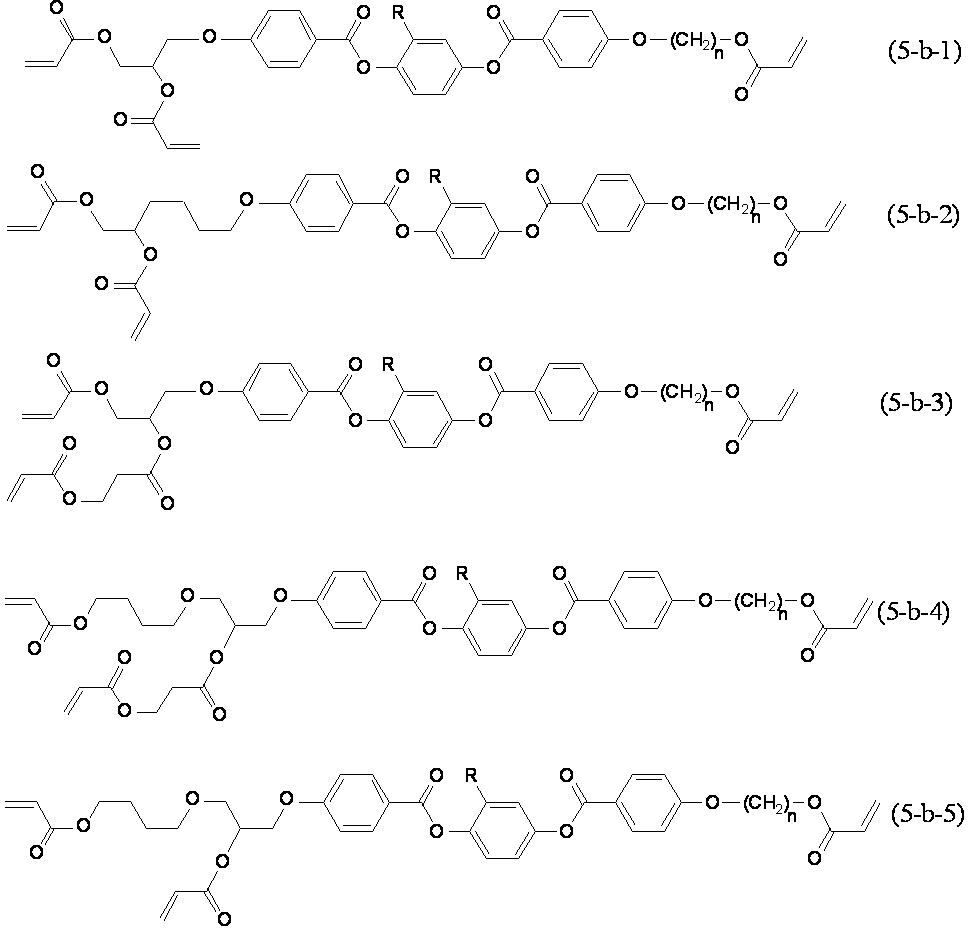


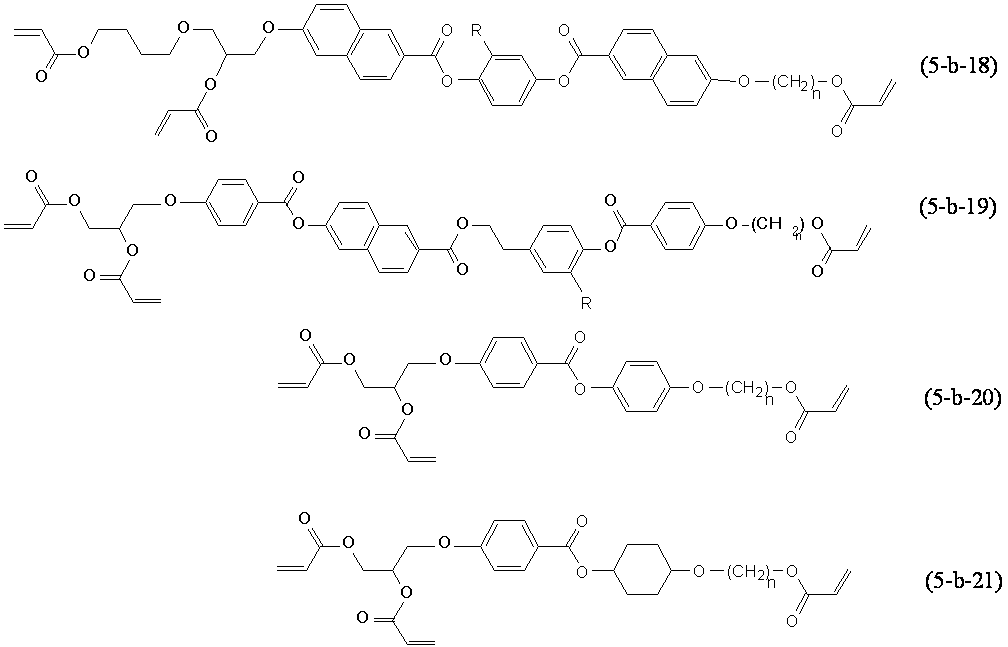
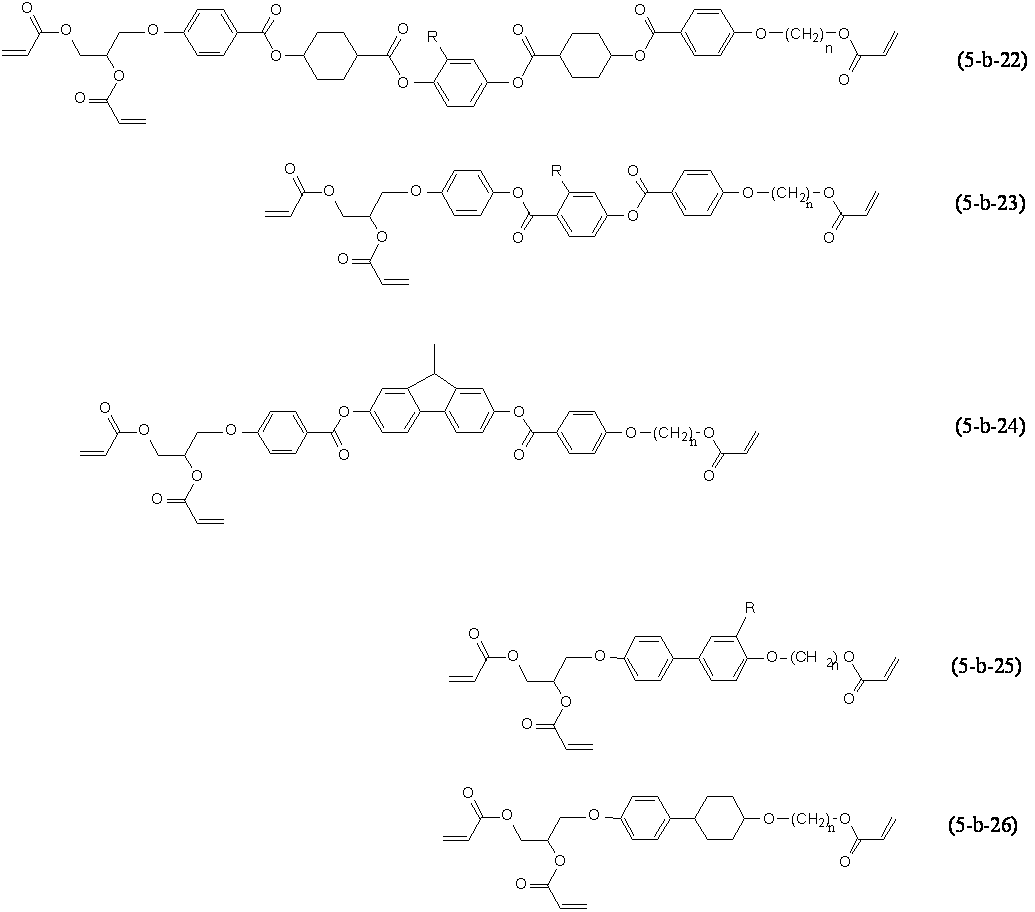
一般式(6-b)で表される化合物として具体的には、下記の式(6-b-1)から式(6-b-23)で表される化合物が挙げられる。

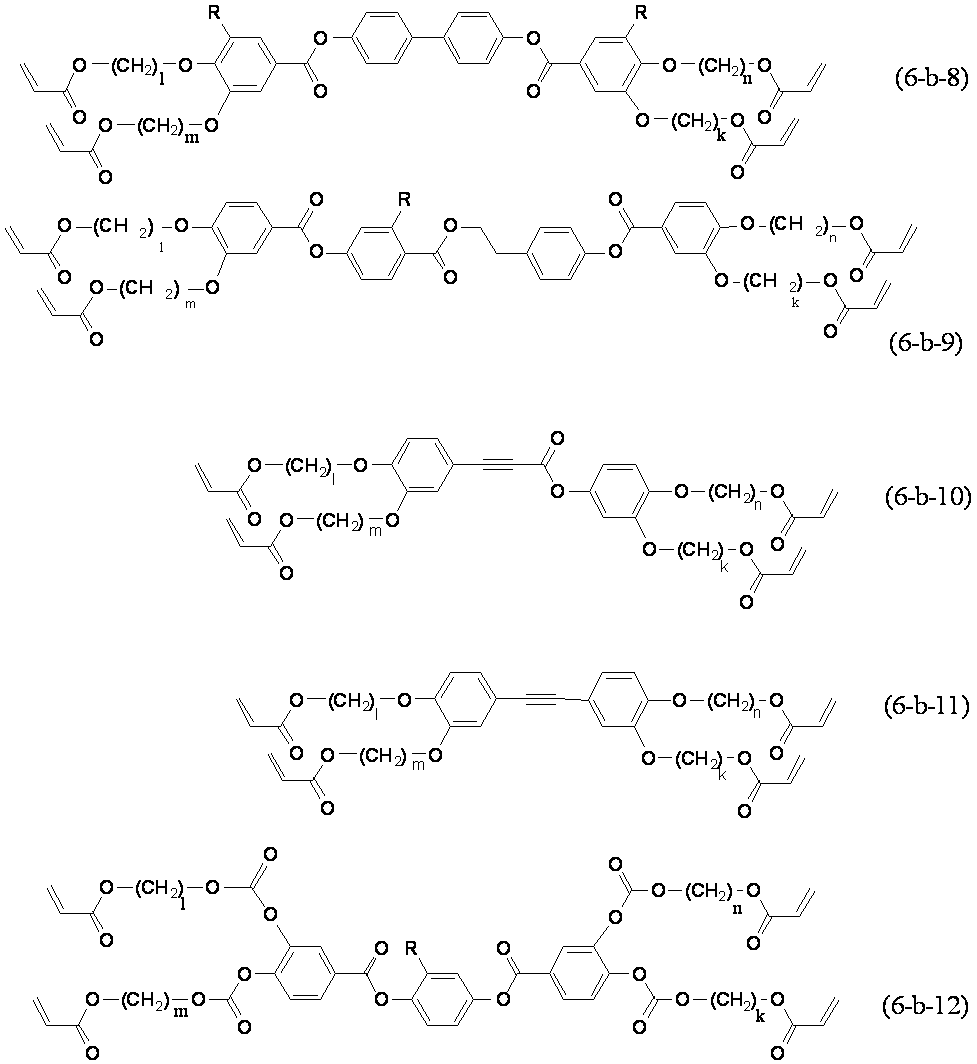

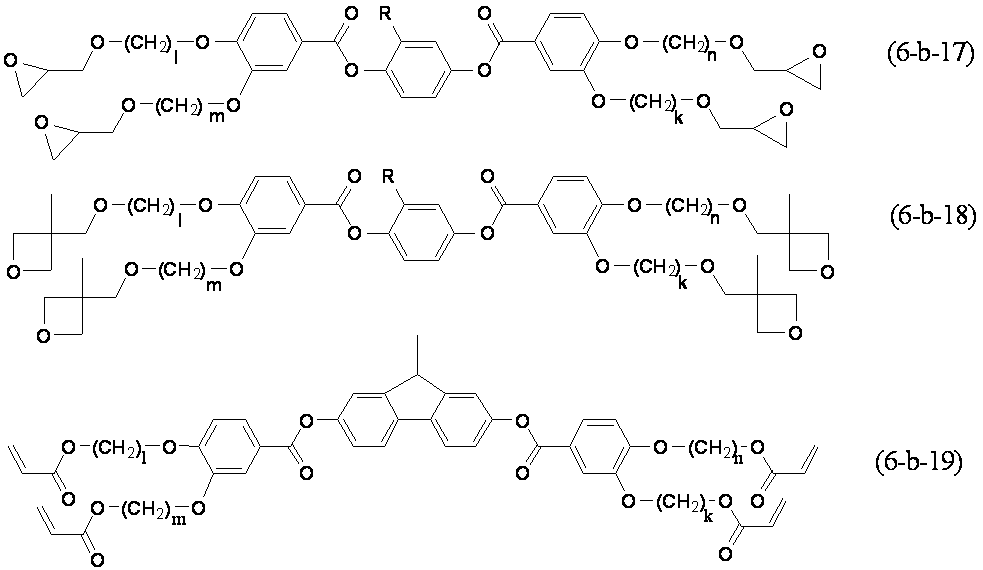

一般式(7-b)で表される化合物として具体的には、下記の式(7-b-1)から式(7-b-25)で表される化合物が挙げられる。
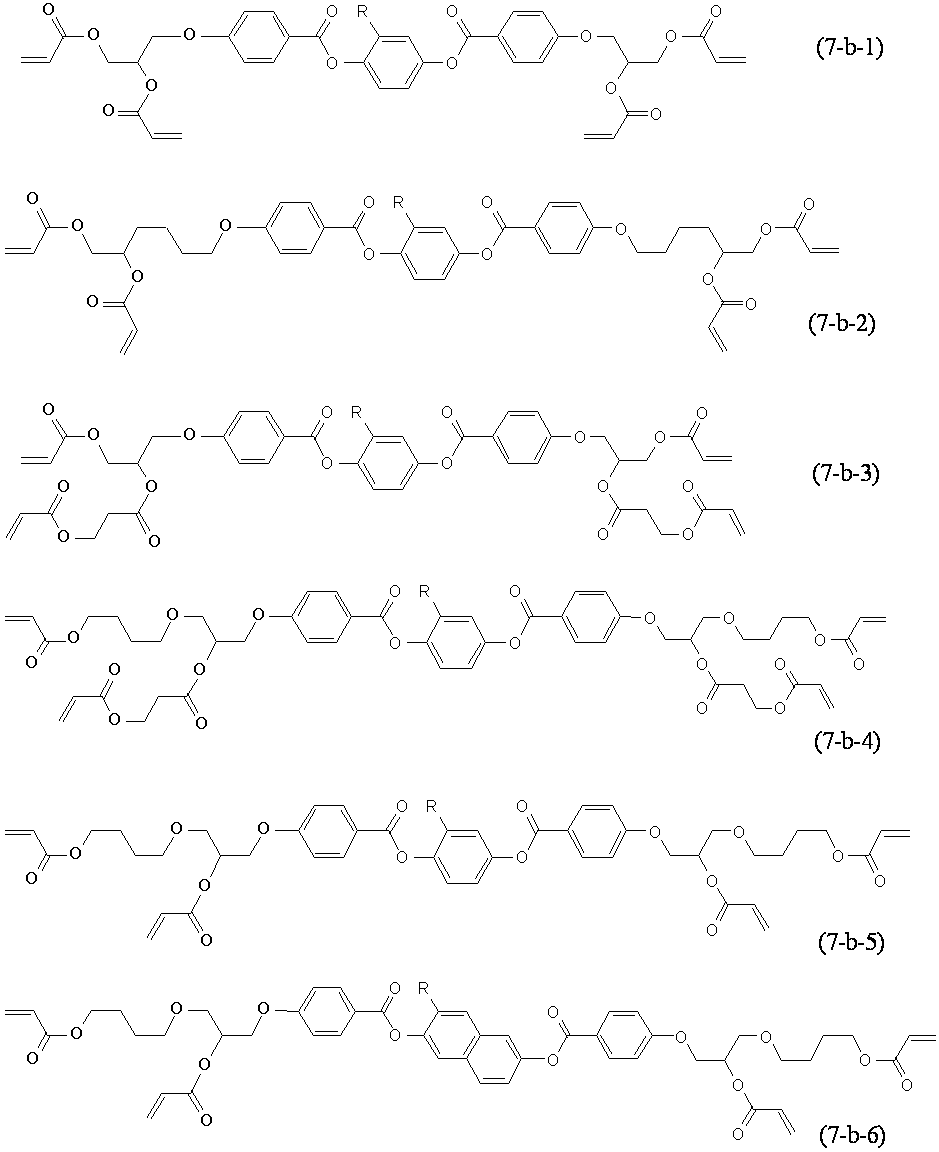
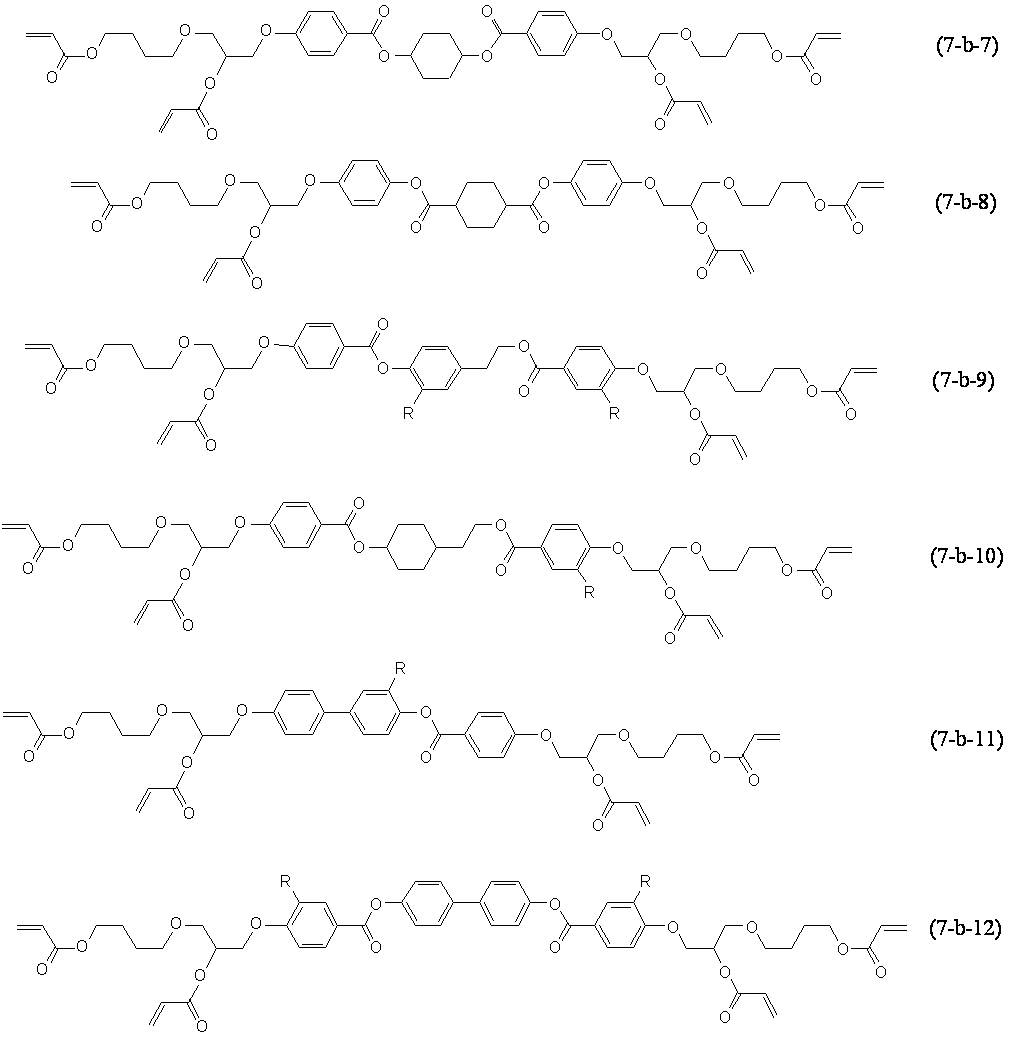
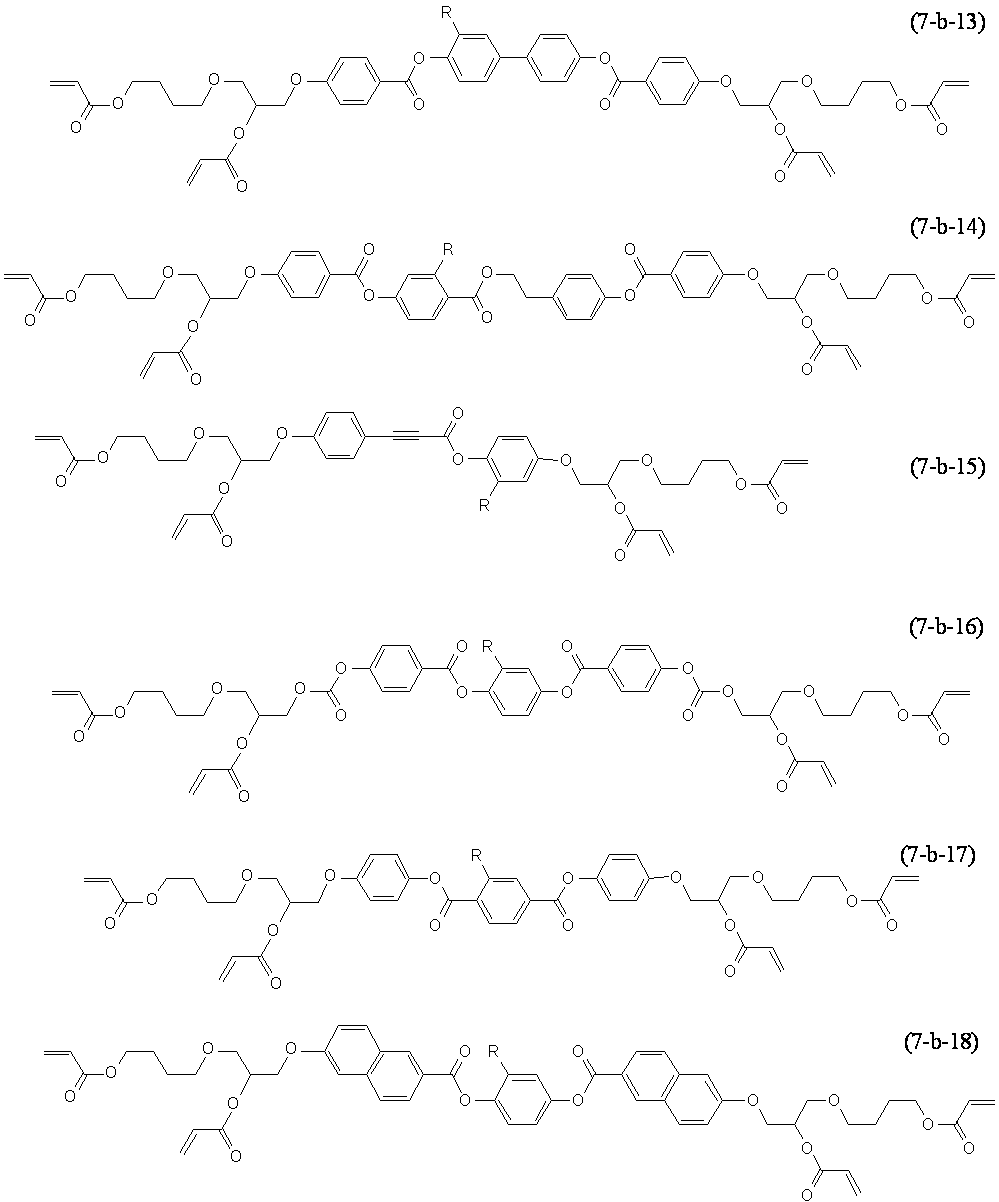
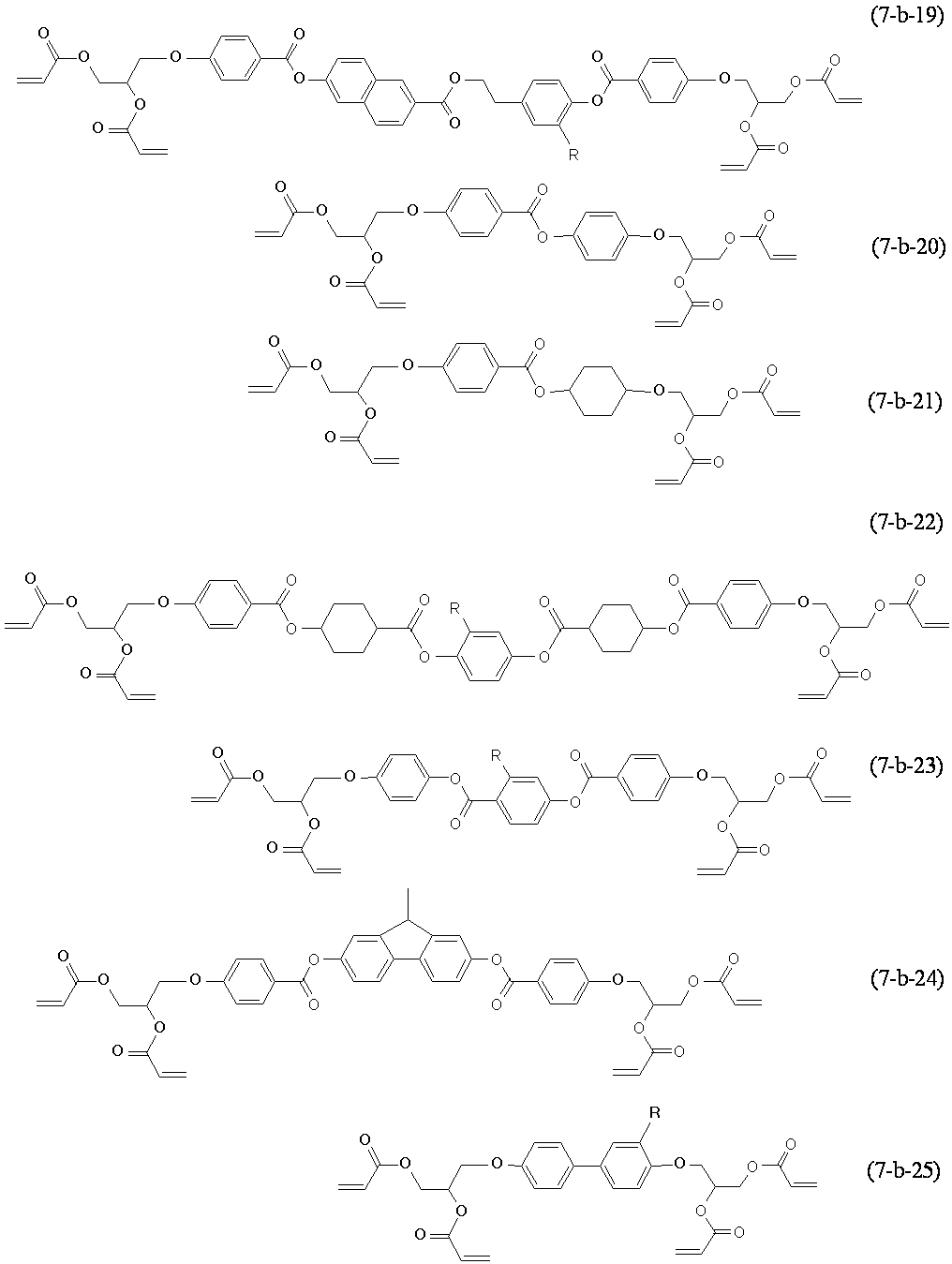
本発明の重合性組成物は、配向性を向上させるために配向性が向上する配向材料を含有することができる。用いる配向材料は、本発明の重合性組成物に用いられる、重合性基を有する液晶性化合物を溶解させることができる溶剤に可溶であれば、公知慣用のものでよいが、添加することにより配向性を著しく劣化させない範囲で添加することができる。具体的には、重合性組成物に含まれる重合性化合物の総量に対して0.05~30重量%が好ましく、0.5~15重量%がさらに好ましく、1~10重量%が特に好ましい。
配向材料は具体的には、ポリイミド、ポリアミド、BCB(ペンゾシクロブテンポリマー)、ポリビニルアルコール、ポリカーボネート、ポリスチレン、ポリフェニレンエーテル、ポリアリレート、ポリエチレンテレフタレート、ポリエーテルサルフォン、エポキシ樹脂、エポキシアクリレート樹脂、アクリル樹脂、クマリン化合物、カルコン化合物、シンナメート化合物、フルギド化合物、アントラキノン化合物、アゾ化合物、アリールエテン化合物等、光異性化、もしくは、光二量化する化合物が挙げられるが、紫外線照射、可視光照射により配向する材料(光配向材料)が好ましい。
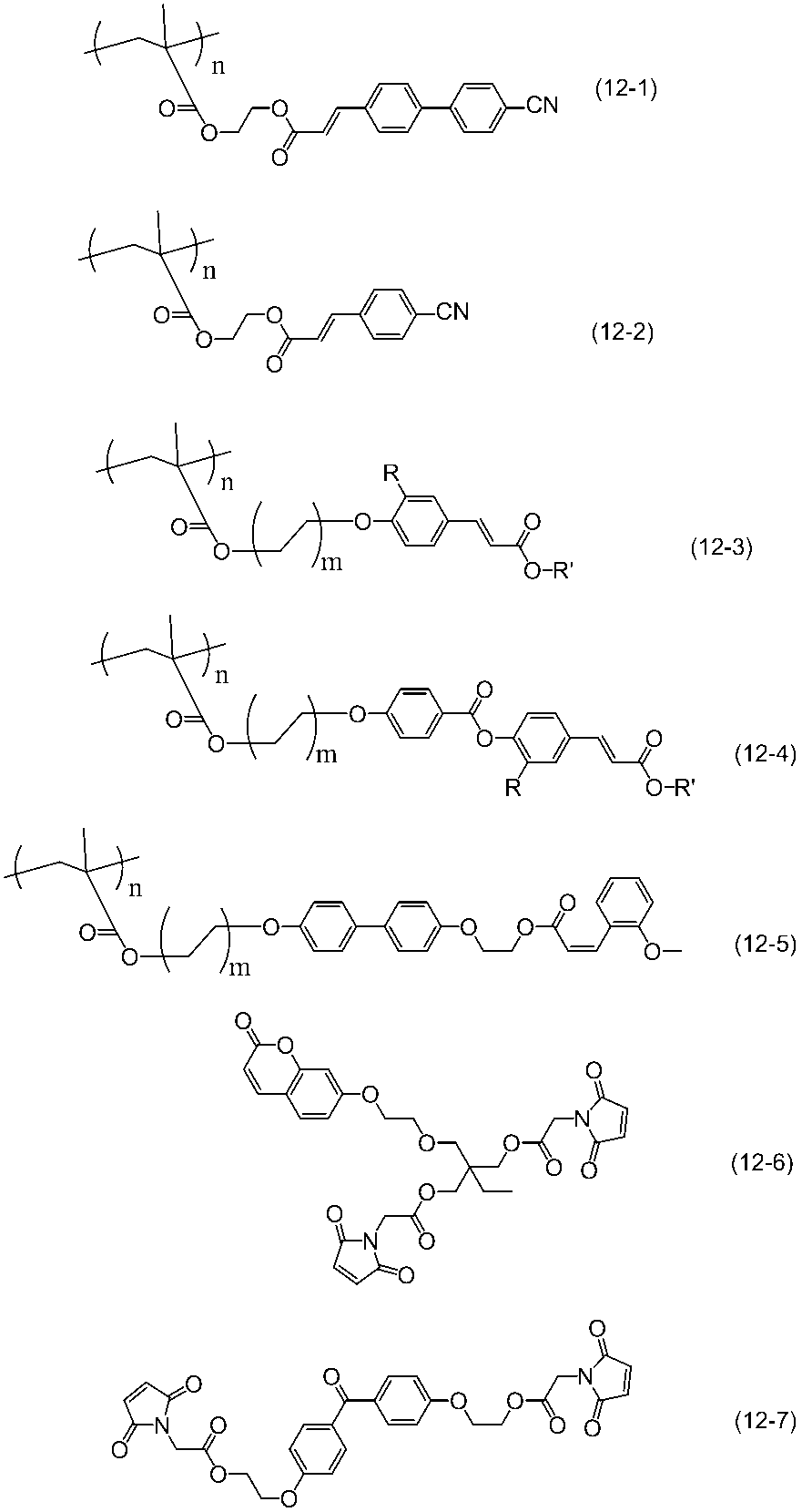
本発明の重合性組成物に開始剤を含有した状態で重合させることにより、本発明の重合体が得られる。本発明の重合体は、光学異方体、位相差フィルム、レンズ、着色剤、印刷物等に利用される。
(光学異方体)
本発明の重合性組成物を、基材、あるいは、配向機能を有する基材上に塗布し、本発明の重合性組成物中の液晶分子を、ネマチック相やスメクチック相を保持した状態で均一に配向させ、重合させることによって、本発明の光学異方体が得られる。
本発明の光学異方体に用いられる基材は、液晶表示素子、有機発光表示素子、その他表示素子、光学部品、着色剤、マーキング、印刷物や光学フィルムに通常使用する基材であって、本発明の重合性組成物溶液の塗布後の乾燥時における加熱に耐えうる耐熱性を有する材料であれば、特に制限はない。そのような基材としては、ガラス基材、金属基材、セラミックス基材、プラスチック基材や紙等の有機材料が挙げられる。特に基材が有機材料の場合、セルロース誘導体、ポリオレフィン、ポリエステル、ポリオレフィン、ポリカーボネート、ポリアクリレート、ポリアリレート、ポリエーテルサルホン、ポリイミド、ポリフェニレンスルフィド、ポリフェニレンエーテル、ナイロン又はポリスチレン等が挙げられる。中でもポリエステル、ポリスチレン、ポリオレフィン、セルロース誘導体、ポリアリレート、ポリカーボネート等のプラスチック基材が好ましい。基材の形状としては、平板の他、曲面を有するものであっても良い。これらの基材は、必要に応じて、電極層、反射防止機能、反射機能を有していてもよい。
また、上記基材には、本発明の重合性組成物を塗布乾燥した際に重合性組成物が配向するように、通常配向処理が施されている、あるいは配向膜が設けられていても良い。配向処理としては、延伸処理、ラビング処理、偏光紫外可視光照射処理、イオンビーム処理、基材へのSiO2の斜方蒸着処理、等が挙げられる。配向膜を用いる場合、配向膜は公知慣用のものが用いられる。そのような配向膜としては、ポリイミド、ポリシロキサン、ポリアミド、ポリビニルアルコール、ポリカーボネート、ポリスチレン、ポリフェニレンエーテル、ポリアリレート、ポリエチレンテレフタレート、ポリエーテルサルホン、エポキシ樹脂、エポキシアクリレート樹脂、アクリル樹脂、アゾ化合物、クマリン化合物、カルコン化合物、シンナメート化合物、フルギド化合物、アントラキノン化合物、アゾ化合物、アリールエテン化合物等の化合物、もしくは、前記化合物の重合体や共重合体が挙げられる。ラビングにより配向処理する化合物は、配向処理、もしくは配向処理の後に加熱工程を入れることで材料の結晶化が促進されるものが好ましい。ラビング以外の配向処理を行う化合物の中では光配向材料を用いることが好ましい。
また、TN型液晶表示素子に使用するような配向膜を基板上に設けた場合は、少しだけ配向が傾斜した重合性液晶層が得られ、STN方式の液晶表示素子に使用するような配向膜を使うと、大きく配向が傾斜した重合性液晶層が得られる。
本発明の光学異方体を得るための塗布法としては、アプリケーター法、バーコーティング法、スピンコーティング法、ロールコーティング法、ダイレクトグラビアコーティング法、リバースグラビアコーティング法、フレキソコーティング法、インクジェット法、ダイコーティング法、キャップコーティング法、ディップコーティング法、スリットコーティング法、スプレーコーティング法等、公知慣用の方法を行うことができる。重合性組成物を塗布後、乾燥させる。
塗布後、本発明の重合性組成物中の液晶分子をスメクチック相、あるいはネマチック相を保持した状態で均一に配向させることが好ましい。その方法の1つとして熱処理法が挙げられる。具体的には、本発明の重合性組成物を基板上に塗布後、該液晶組成物のN(ネマチック相)-I(等方性液体相)転移温度(以下、N-I転移温度と略す)以上に加熱して、該液晶組成物を等方相液体状態にする。そこから、必要に応じ徐冷してネマチック相を発現させる。このとき、一旦液晶相を呈する温度に保ち、液晶相ドメインを充分に成長させてモノドメインとすることが望ましい。あるいは、本発明の重合性組成物を基板上に塗布後、本発明の重合性組成物のネマチック相が発現する温度範囲内で温度を一定時間保つような加熱処理を施しても良い。液晶性組成物の粘度が高すぎてモノドメインが形成し難い場合は、この熱処理の温度を高めにすることで、液晶性組成物の粘度を大幅に低下させることができ、モノドメインを形成しやすくすることができる。
このような熱処理をすることで、単に塗布するだけの塗工方法と比べて、配向欠陥の少ない均質な光学異方体を作製することができる。
また、このようにして均質な配向処理を行った後、液晶相が相分離を起こさない最低の温度、即ち過冷却状態となるまで冷却し、該温度において液晶相を配向させた状態で重合すると、より配向秩序が高く、透明性に優れる光学異方体を得ることができる。
乾燥した重合性組成物の重合処理は、一様に配向した状態で一般に可視紫外線等の光照射、あるいは加熱によって行われる。重合を光照射で行う場合は、具体的には420nm以下の可視紫外光を照射することが好ましく、250~370nmの波長の紫外光を照射することが最も好ましい。但し、420nm以下の可視紫外光により重合性組成物が分解などを引き起こす場合は、420nm以上の可視紫外光で重合処理を行ったほうが好ましい場合もある。
本発明の重合性組成物を重合させる方法としては、活性エネルギー線を照射する方法や熱重合法等が挙げられるが、加熱を必要とせず、室温で反応が進行することから活性エネルギー線を照射する方法が好ましく、中でも、操作が簡便なことから、紫外線等の光を照射する方法が好ましい。照射時の温度は、本発明の重合性組成物が液晶相を保持できる温度とし、重合性組成物の熱重合の誘起を避けるため、可能な限り30℃以下とすることが好ましい。尚、重合性組成物は、通常、昇温過程において、C(固相)-N(ネマチック)転移温度(以下、C-N転移温度と略す。)から、N-I転移温度範囲内で液晶相を示す。一方、降温過程においては、熱力学的に非平衡状態を取るため、C-N転移温度以下でも凝固せず液晶状態を保つ場合がある。この状態を過冷却状態という。本発明においては、過冷却状態にある液晶組成物も液晶相を保持している状態に含めるものとする。具体的には390nm以下の紫外光を照射することが好ましく、250~370nmの波長の光を照射することが最も好ましい。但し、390nm以下の紫外光により重合性組成物が分解などを引き起こす場合は、390nm以上の紫外光で重合処理を行ったほうが好ましい場合もある。この光は、拡散光で、かつ偏光していない光であることが好ましい。紫外線照射強度は、0.05kW/m2~10kW/m2の範囲が好ましい。特に、0.2kW/m2~2kW/m2の範囲が好ましい。紫外線強度が0.05kW/m2未満の場合、重合を完了させるのに多大な時間がかかる。一方、2kW/m2を超える強度では、重合性組成物中の液晶分子が光分解する傾向にあることや、重合熱が多く発生して重合中の温度が上昇し、重合性液晶のオーダーパラメーターが変化して、重合後のフィルムのリタデーションに狂いが生じる可能性がある。
また、マスクを使用して特定の部分のみを紫外線照射で重合させる際に、予め未重合状態の重合性組成物に電場、磁場又は温度等をかけて配向を規制し、その状態を保ったままマスク上から光を照射して重合させることによっても、異なる配向方向をもった複数の領域を有する光学異方体を得ることができる。
本発明の重合性組成物を重合させて得られる光学異方体は、基板から剥離して単体で光学異方体として使用することも、基板から剥離せずにそのまま光学異方体として使用することもできる。特に、他の部材を汚染し難いので、被積層基板として使用したり、他の基板に貼り合わせて使用したりするときに有用である。
本発明の位相差フィルムは、前記光学異方体を含有しており、液晶性化合物が基材に対して一様に連続的な配向状態を形成して、基材に対して面内、面外、面内と面外の両方、あるいは面内において2軸性を有していればよい。また、接着剤や接着層、粘着剤や粘着層、保護フィルムや偏光フィルム等が積層されていてもよい。
例えば、ポジティブAプレート、ネガティブAプレート、ポジティブCプレート、ネガティブCプレート、二軸性プレート、ポジティブOプレート、ネガティブOプレートの配向モードを適用できる。その中でも、ポジティブAプレート及びネガティブCプレートを使用することが好ましい。更に、ポジティブAプレート及びネガティブCプレートを積層することがより好ましい。
位相差フィルムを利用した液晶セルでは、偏光軸直交性の視野角依存を補償して視野角を広げるため、第1の位相差層として、ポジティブAプレートを使用することが好ましい。ここで、ポジティブAプレートは、フィルムの面内遅相軸方向の屈折率をnx、フィルムの面内進相軸方向の屈折率をny、フィルムの厚み方向の屈折率をnzとしたときに、「nx>ny=nz」の関係となる。ポジティブAプレートとしては、波長550nmにおける面内位相差値が30~500nmの範囲にあるものが好ましい。また、厚み方向位相差値は特に限定されない。Nz係数は、0.9~1.1の範囲が好ましい。
ここで、ネガティブCプレートは、位相差層の面内遅相軸方向の屈折率をnx、位相差層の面内進相軸方向の屈折率をny、位相差層の厚み方向の屈折率をnzとしたときに、「nx=ny>nz」の関係となる位相差層である。ネガティブCプレートの厚み方向位相差値は20~400nmの範囲が好ましい。
なお、厚み方向の屈折率異方性は、下記式(2)により定義される厚み方向位相差値Rthで表される。厚み方向位相差値Rthは、面内位相差値R0、遅相軸を傾斜軸として50°傾斜して測定した位相差値R50、フィルムの厚みd、フィルムの平均屈折率n0を用いて、式(1)と次式(4)~(7)から数値計算によりnx、ny、nzを求め、これらを式(2)に代入して算出することができる。また、Nz係数=は、式(3)から算出することができる。以下、本明細書の他の記載において同様である。
Rth=[(nx+ny)/2-nz]×d (2)
Nz係数=(nx-nz)/(nx-ny) (3)
R50=(nx-ny’)×d/cos(φ) (4)
(nx+ny+nz)/3=n0 (5)
ここで、
φ=sin-1[sin(50°)/n0] (6)
ny’=ny×nz/[ny2×sin2(φ)+nz2×cos2(φ)]1/2 (7)
市販の位相差測定装置では、ここに示した数値計算を装置内で自動的に行い、面内位相差値R0や厚み方向位相差値Rthなどを自動的に表示するようになっているものが多い。このような測定装置としては、例えば、RETS-100(大塚化学(株)製)を挙げることができる。
本発明の重合性組成物を、基材、あるいは、配向機能を有する基材上に塗布し、もしくは、レンズ形状の金型に注入し、ネマチック相やスメクチック相を保持した状態で均一に配向させ、重合させることによって、本発明のレンズに使用することができる。レンズの形状は単純セル型、プリズム型、レンチキュラー型、等が挙げられる。
本発明の重合性組成物を、基材、あるいは、配向機能を有する基材上に塗布し、ネマチック相やスメクチック相を保持した状態で均一に配向させ、重合させることにより、本発明の液晶表示素子に使用することができる。使用形態としては、光学補償フィルム、液晶立体表示素子のパターン化された位相差フィルム、カラーフィルターの位相差補正層、オーバーコート層、液晶媒体用の配向膜、等が挙げられる。液晶表示素子は、少なくとも二つの基材に液晶媒体層、TFT駆動回路、ブラックマトリックス層、カラーフィルター層、スペーサー、液晶媒体層に相応の電極回路が最低限狭持されており、通常、光学補償層、偏光板層、タッチパネル層は二つの基材の外側に配置されるが、場合によっては、光学補償層、オーバーコート層、偏光板層、タッチパネル用の電極層が二つの基材内に狭持されてもよい。
本発明の重合性組成物を、基材、あるいは、配向機能を有する基材に塗布し、ネマチック相やスメクチック相を保持した状態で均一に配向させ、重合させることにより、本発明の有機発光表示素子に使用することができる。使用形態としては、前記重合により得られた位相差フィルムと偏光板と組み合わせることにより、有機発光表示素子の反射防止フィルムとして使用することができる。反射防止フィルムとして使用する場合、偏光板の偏光軸と位相差フィルムの遅相軸のなす角度は45°程度が好ましい。偏光板と前記位相差フィルムは、接着剤や粘着剤等で貼り合わせてもよい。また、偏光板上にラビング処理や光配向膜を積層した配向処理等により、直接積層してもよい。このとき使用する偏光板は、色素をドープしたフィルム形態のものでも、ワイヤーグリッドのような金属状のものでもよい。
本発明の重合性組成物を、ネマチック相やスメクチック相、あるいは、配向機能を有する基材上に配向させた状態で重合させた重合体は照明素子、特に発光ダイオード素子の放熱材料として使用することもできる。放熱材料の形態としては、プリプレグ、重合体シート、接着剤、金属箔付きシート、等が好ましい。
本発明の重合性組成物を、ネマチック相やスメクチック相を保持した状態、あるいは、配向材料と組み合わせた状態で重合させることにより、本発明の光学部品として使用することができる。
本発明の重合性組成物は、染料や有機顔料等の着色剤を添加して、着色剤として使用することもできる。
本発明の重合性組成物は、2色性色素、リオトロピック液晶やクロモニック液晶等と組み合わせる、あるいは添加して、偏光フィルムとして使用することもできる。
式(1-a-5)で表される化合物24部、式(1-a-6)で表される化合物56部、式(2-a-1)で表され、n=6である化合物10部、式(2-a-1)で表され、n=3である化合物10部、及びp-メトキシフェノール(MEHQ)0.1部をシクロペンタノン(CPN)400部に加えた後、80℃に加温、撹拌して溶解させ、溶解が確認された後、室温に戻し、イルガキュア907(BASFジャパン株式会社製)3部、及びシリコーン系界面活性剤であるBYK-322を0.075部を加えて、さらに撹拌を行い溶液を得た。溶液は透明で均一であった。得られた溶液を0.20μmのメンブランフィルターでろ過し、実施例1の重合性組成物(1)を得た。
下記表に示す各化合物をそれぞれ下記表に示す割合に変更した以外は実施例1の重合性組成物(1)の調整と同一条件で、実施例2~67、140~147の重合性組成物(2)~(75)及び比較例1~16の重合性組成物(101)~(116)を得た。
下記表に、本発明の重合性組成物(1)~(75)、比較用重合性組成物(101)~(116)の具体的な組成、及びそれらの物性値を示す。また、下記表に、界面活性剤の種類と重量平均分子量を示す。
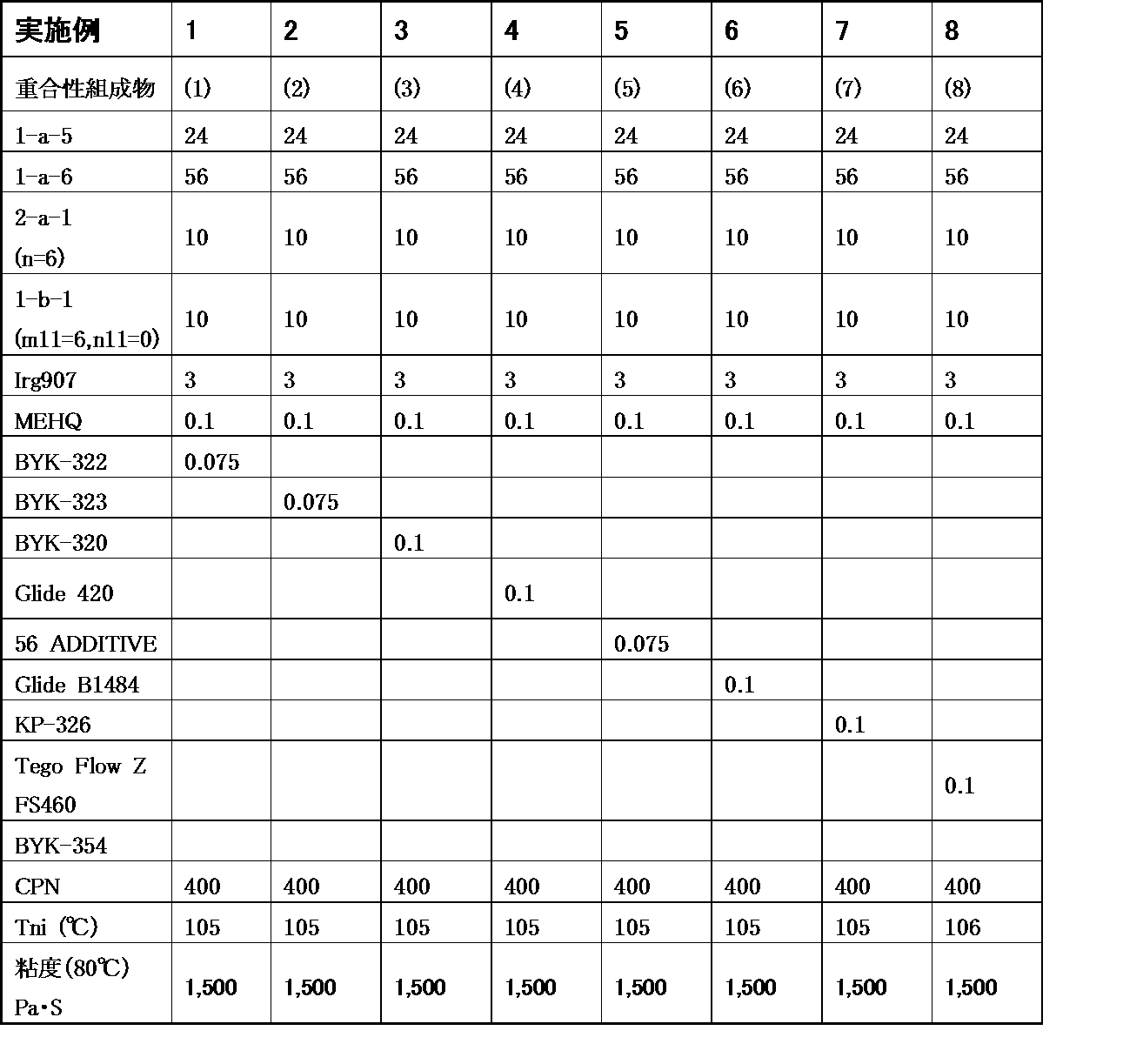


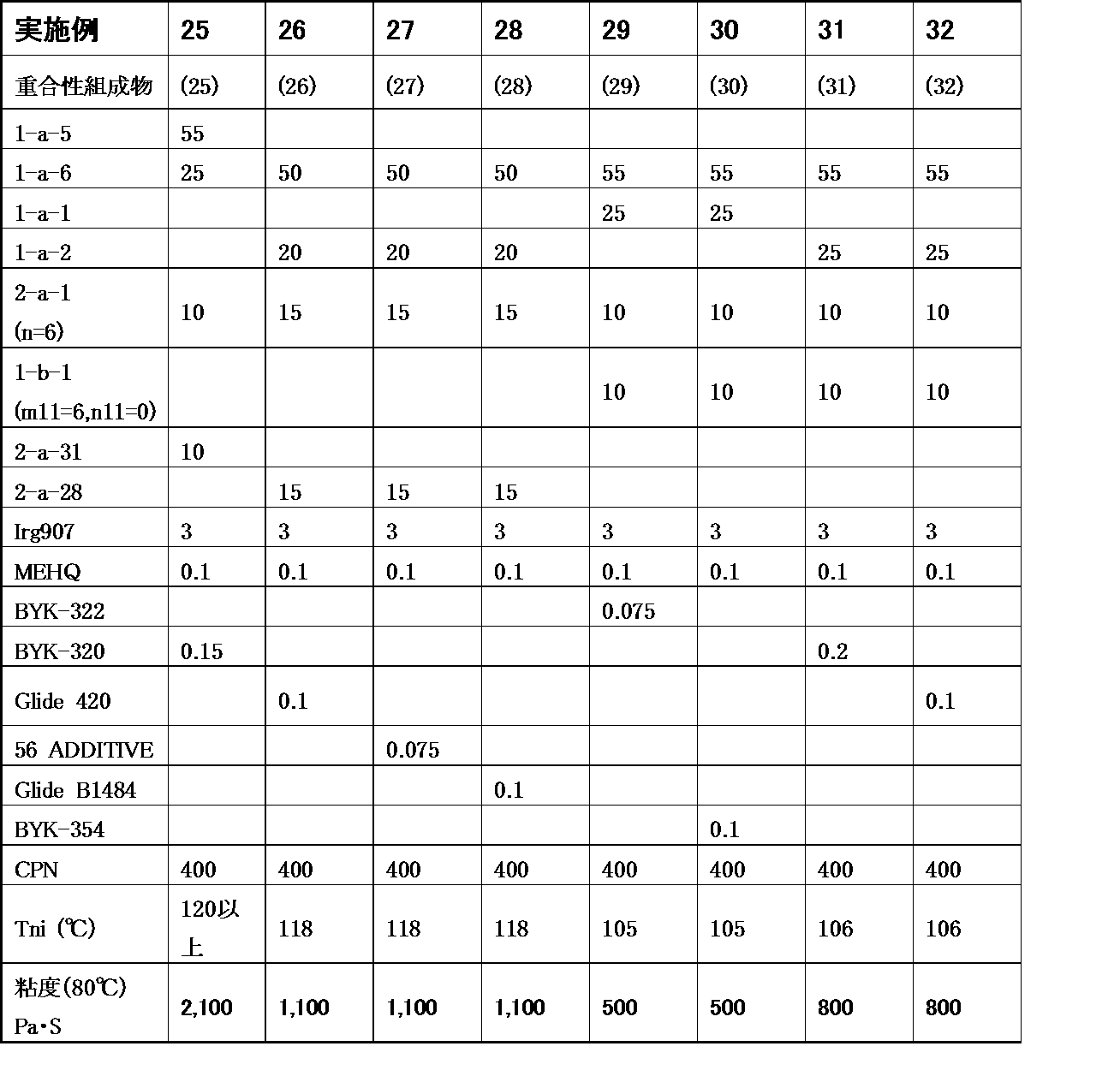
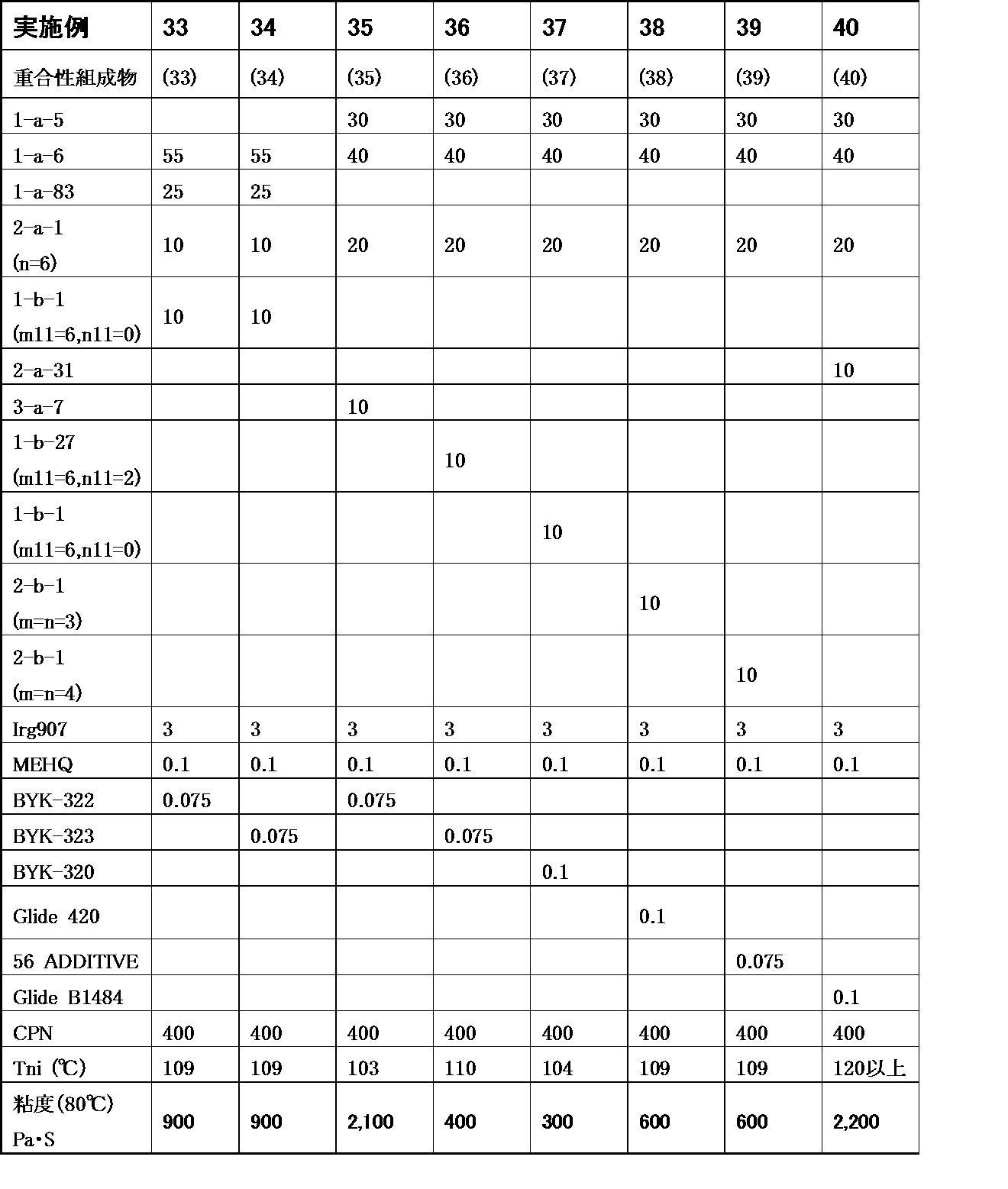


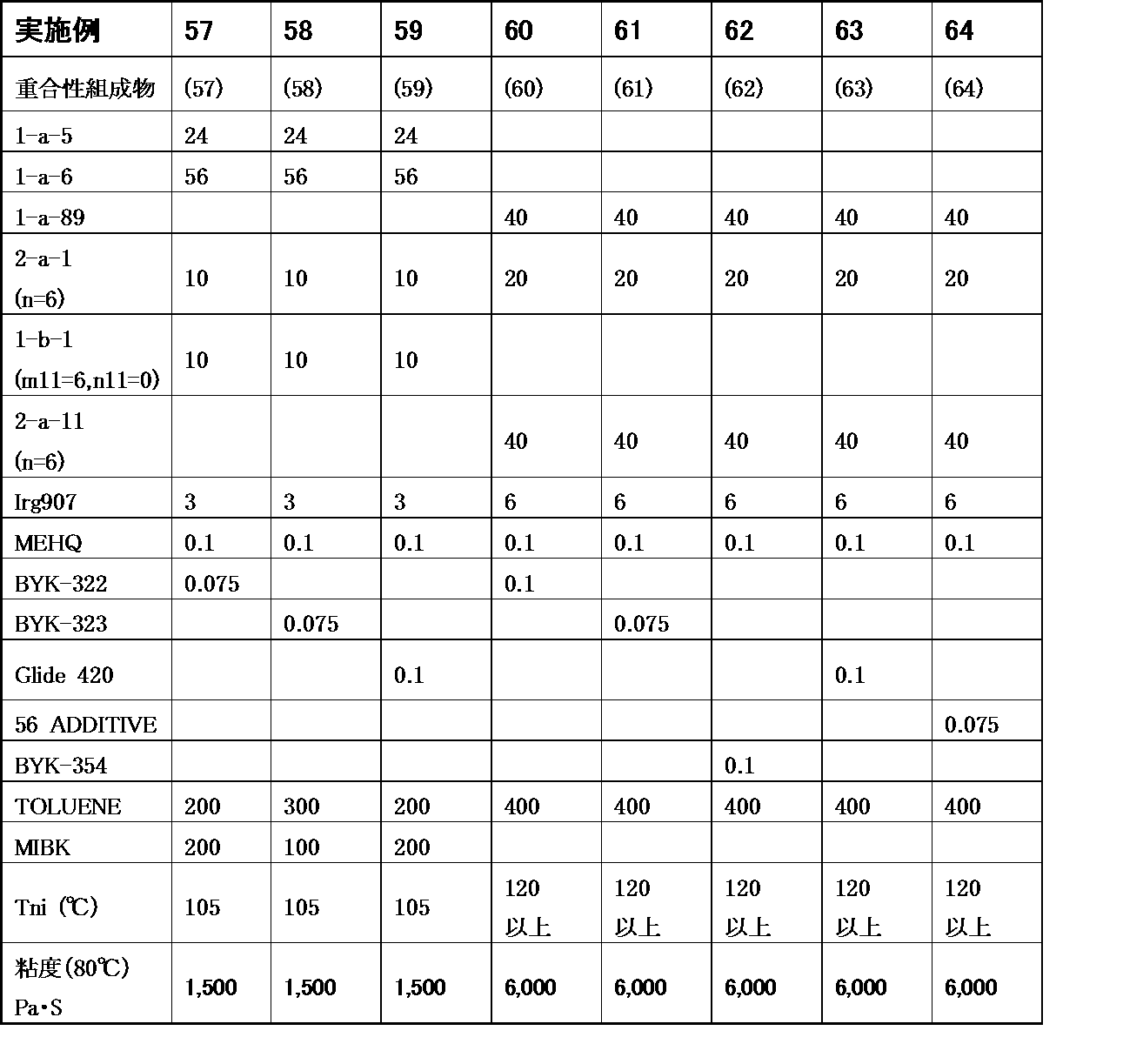


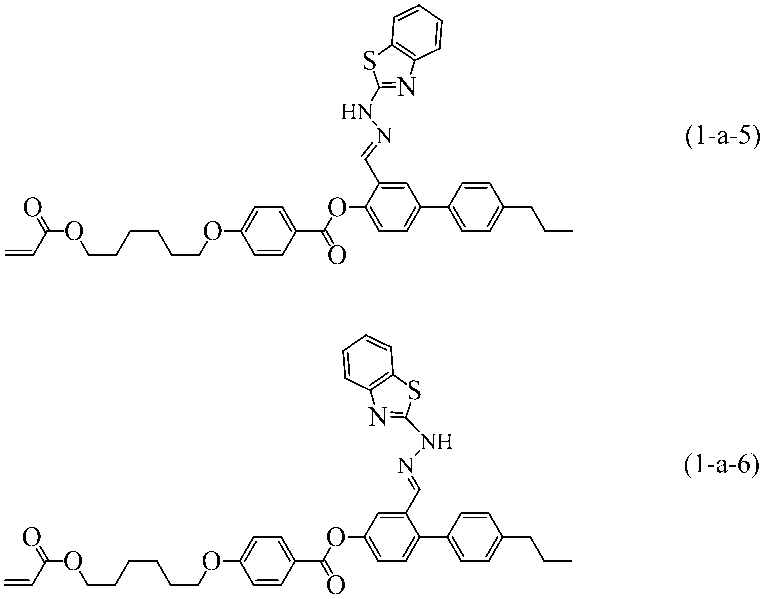

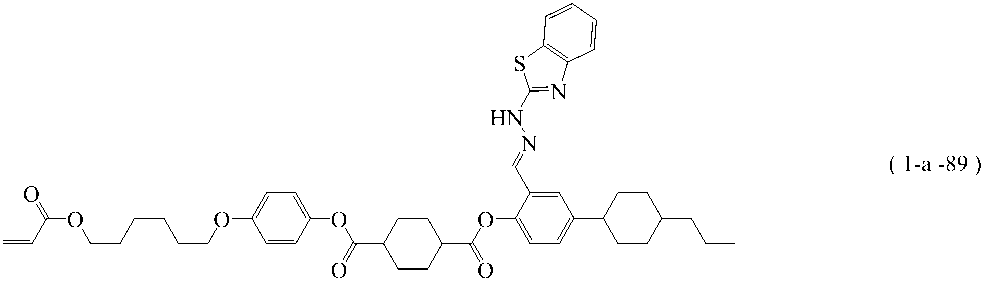
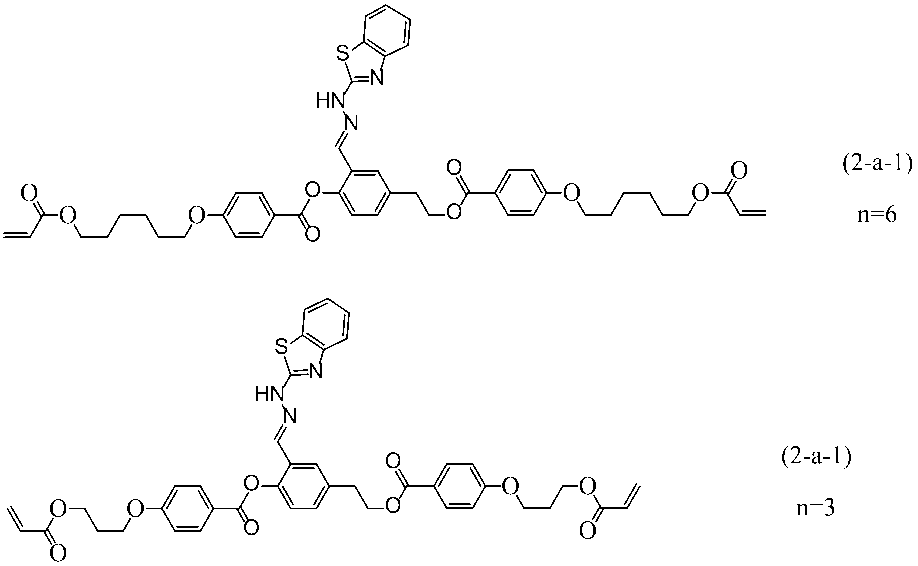


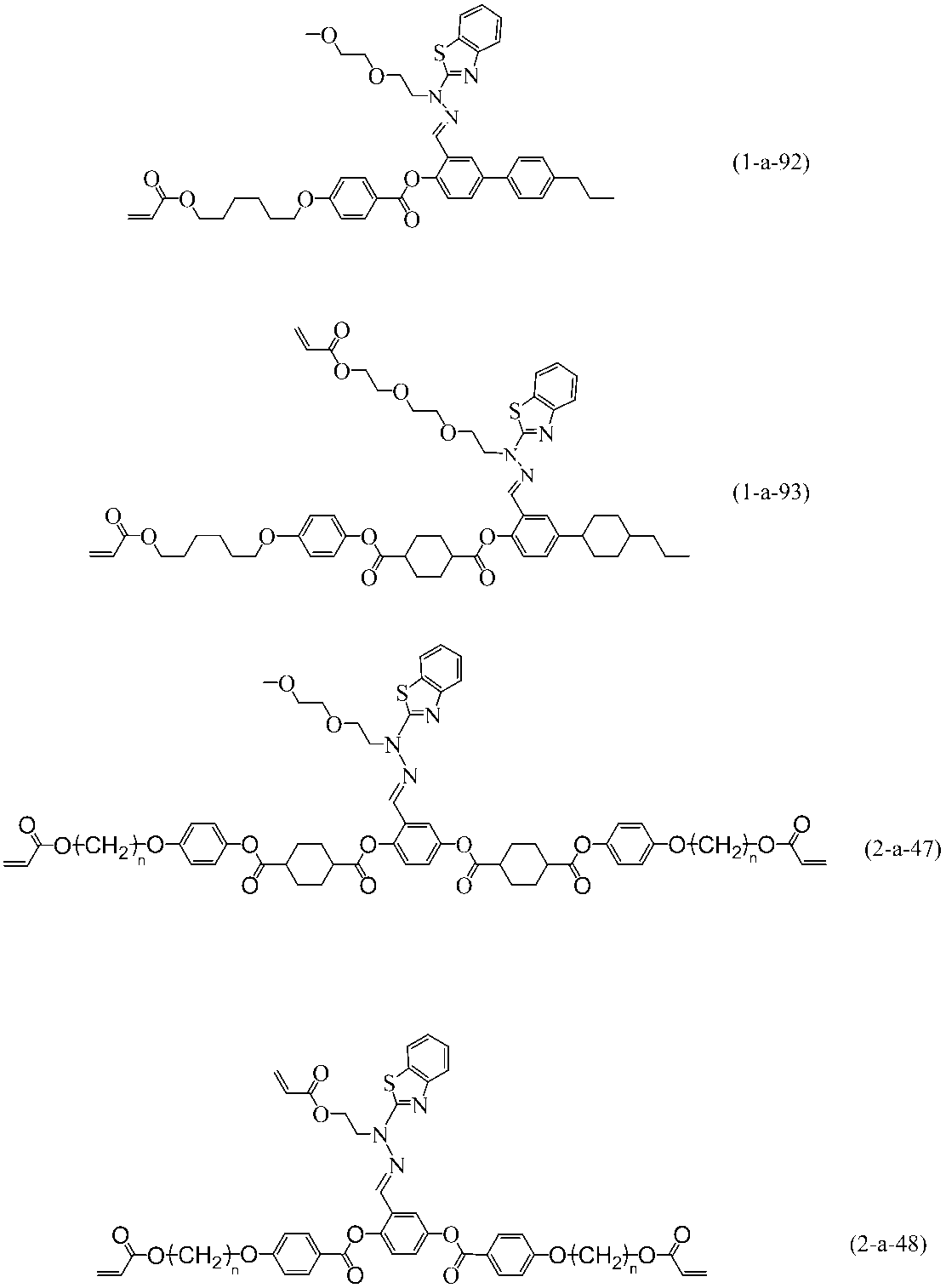


1,1,2-トリクロロエタン(TCE)
N-メチルピロリドン(NMP)
シクロペンタノン(CPN)
メチルエチルケトン(MEK)
メチルイソブチルケトン(MIBK)
上記式(1-a―5)、式(1-a―6)、式(1-a-1)、式(1-a-2)、式(1-a-83)、式(1-a-89)、式(2-a-1)でn=6、式(2-a-1)でn=3、式(2-a-31)、式(2-a-40)、式(2-a-28)、式(2-a-11)、式(3-a-7)で表される化合物のRe(450nm)/Re(550nm)は、それぞれ、0.881、0.784、0.716、0.773、0.967、0.664、0.988、0.802、0.900、0.832、0.845、0.806、0.850である。また、上記式(1-b-27)でm11=6、n11=2、式(2-b-1)でm11=n11=3、式(2-b-2)でm11=n11=4で表される化合物のRe(450nm)/Re(550nm)は、それぞれ1.089、1.104、1.106である。
式(1-a-92)、式(1-a-93)、式(2-a-47)、式(2-a-48)、式(2-a-49)、式(2-a-52)、式(2-a-53)、式(2-a-69)で表される化合物のRe(450nm)/Re(550nm)は、それぞれ、0.83,0.85、0.80、0.82、0.81、0.75、0.82、0.79である。
実施例1~66、比較例1~16の溶解性は以下のようにして評価した。
○:調整後、透明で均一な状態が目視で確認できる。
△:加温、拡販したときには透明で均一な状態が目視で確認できるが、室温に戻したときに化合物の析出が確認される。
×:加温、撹拌しても化合物が均一溶解できない。
実施例1~50、比較例1~5を室温で1週間放置した後の状態を目視で観察した。なお、保存安定性は以下のようにして評価した。
◎:室温で5日放置後も透明で均一な状態が保持される。
○:室温で2日放置後も透明で均一な状態が保持される。
×:室温で1時間放置後に化合物の析出が確認される。
得られた結果を下表に示す。


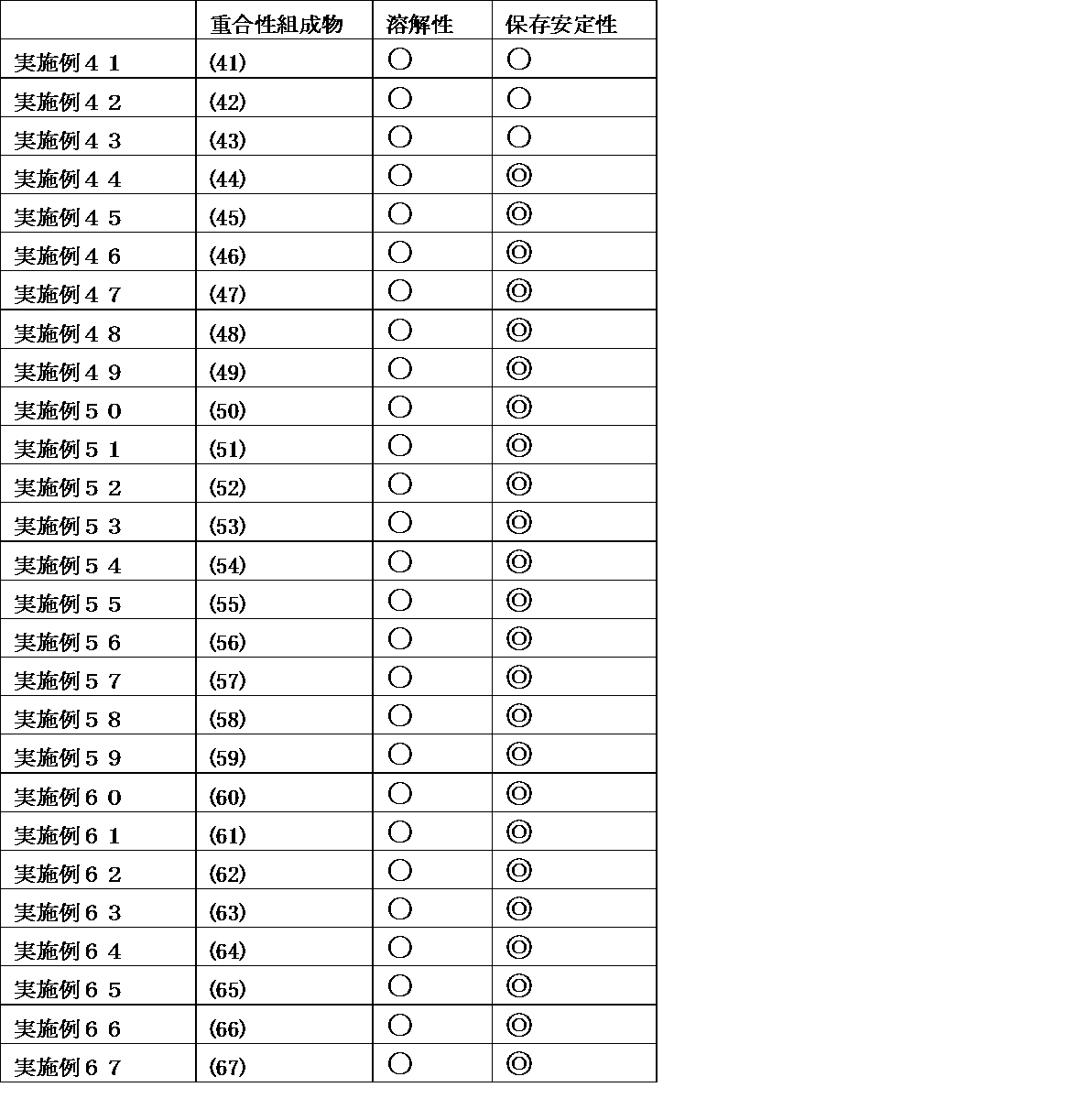
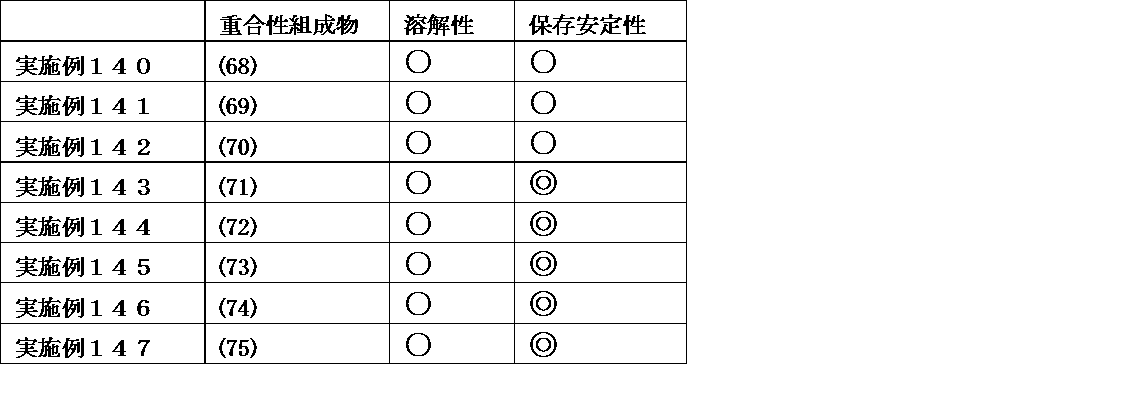

配向膜用ポリイミド溶液を厚さ0.7mmのガラス基材にスピンコート法を用いて塗布し、100℃で5分乾燥した後、200℃で60分焼成することにより塗膜を得た。得られた塗膜をラビング処理した。ラビング処理は、市販のラビング装置を用いて行った。
ラビングした基材に本発明の重合性組成物(1)をスピンコート法で塗布し、80℃、又は100℃で2分乾燥した。得られた塗布膜を室温まで冷却した後、高圧水銀ランプを用いて、30mW/cm2の強度で30秒間紫外線を照射して光学異方体を得た。得られた光学異方体の配向性評価、位相差比、レベリング性評価、裏移り性評価を以下の基準に従って行った。
◎:目視で欠陥が全くなく、偏光顕微鏡観察でも欠陥が全くない。
○:目視では欠陥がないが、偏光顕微鏡観察で一部に無配向部分が存在している。
△:目視では欠陥がないが、偏光顕微鏡観察で全体的に無配向部分が存在している。
×:目視で一部欠陥が生じており、偏光顕微鏡観察でも全体的に無配向部分が存在している。
評価用サンプルとして作成した光学異方体のリタデーション(位相差)を位相差フィルム・光学材料検査装置RETS-100(大塚電子株式会社製)で測定したところ、波長550nmにおける面内位相差(Re(550))は130nmであった。また、波長450nmにおける面内位相差(Re(450))とRe(550)の比Re(450)/Re(550)は0.854であり、均一性良好な位相差フィルムが得られた。
評価用サンプルとして作成した光学異方体のハジキ具合をクロスニコル下で目視にて観察した。
◎:塗膜表面にハジキ欠陥が全く観察されない。
○:塗膜表面にハジキ欠陥が極僅かに観察される。
△:塗膜表面にハジキ欠陥が少し観察される。
×:塗膜表面にハジキ欠陥が多数観察される。
評価用サンプルとして作成した光学異方体の重合性組成物面(A)にTACフィルム(B)を重ね合わせ、荷重40g/cm2、80℃で30分間保持したのち、重ね合わせたまま室温まで冷却させた。その後、フィルム(B)を剥離し、フィルム(B)に重合性組成物中の界面活性剤が裏移りしているかどうかを目視にて観察した。なお、界面活性剤がフィルム(B)に移行した場合、裏移りした部分が白濁したように観察される。
◎:全く観察されない。
○:極僅かに観察される。
△:少し観察される。
×:全体的に観察される。
用いる重合性組成物をそれぞれ、本発明の重合性組成物(1)~(67)、比較用重合性組成物(101)~(116)に変更した以外は、実施例68と同一条件にて、実施例69~134、及び比較例17~32の光学異方体を得た。得られた結果を下記表に示す。

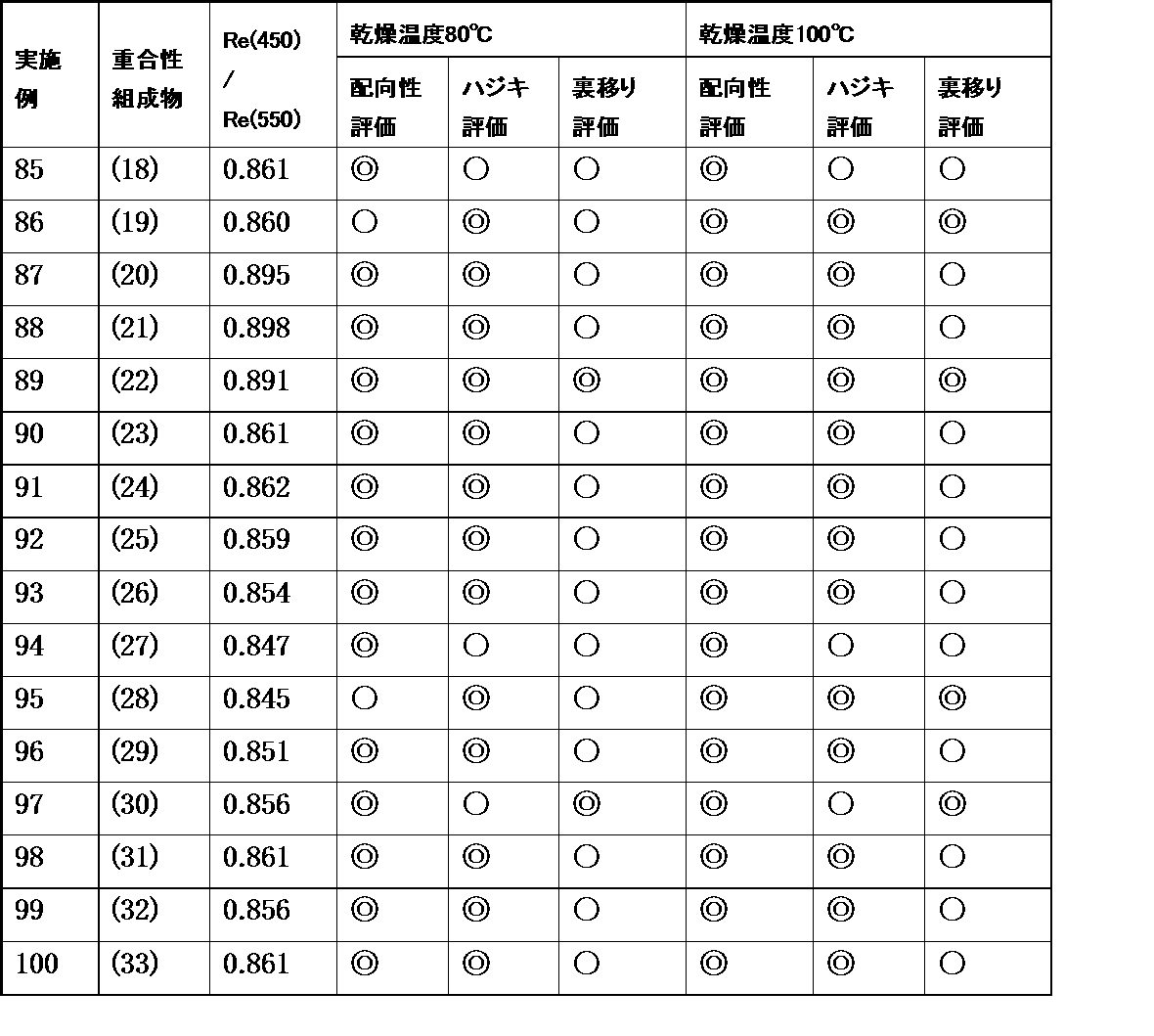

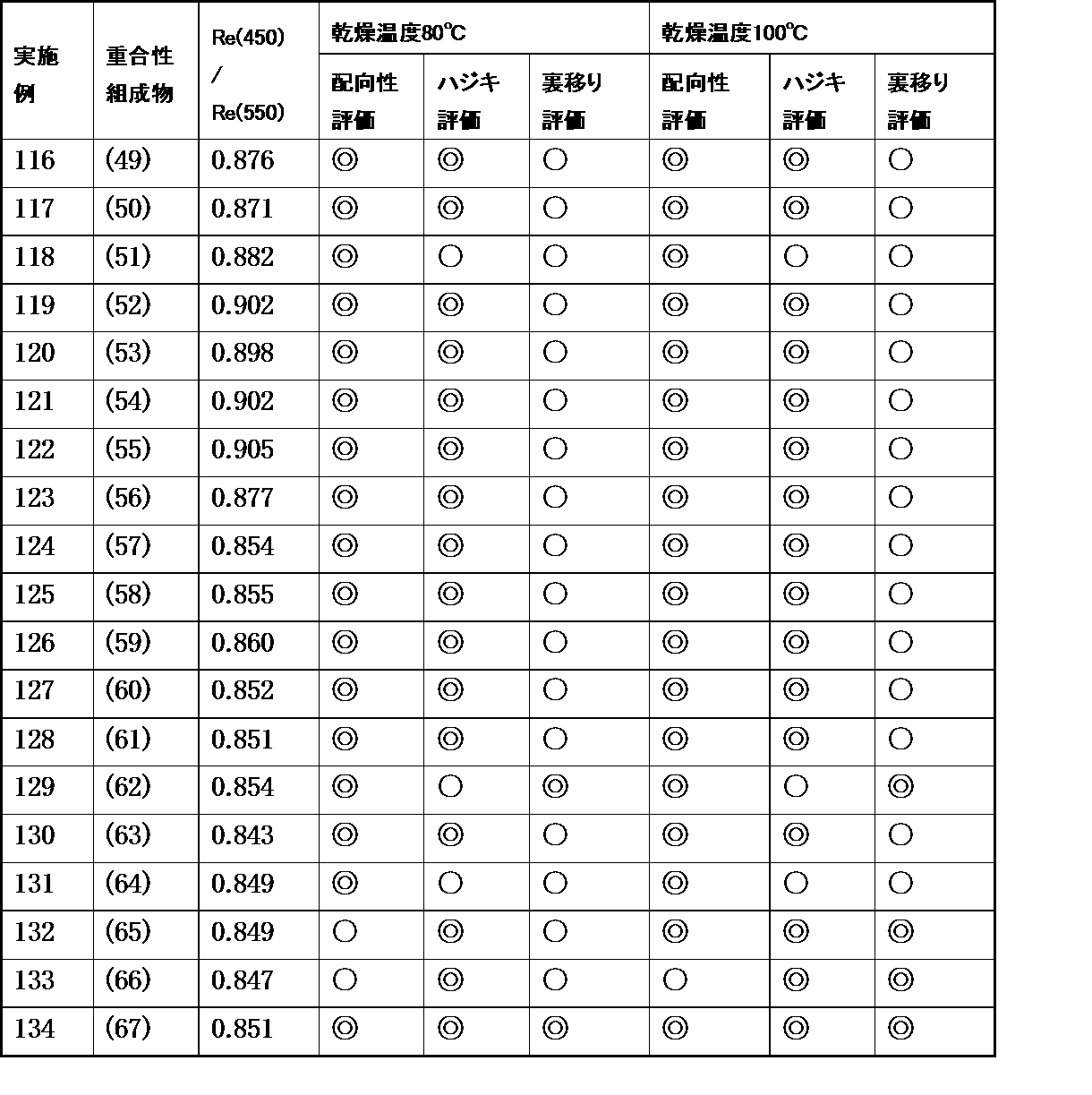

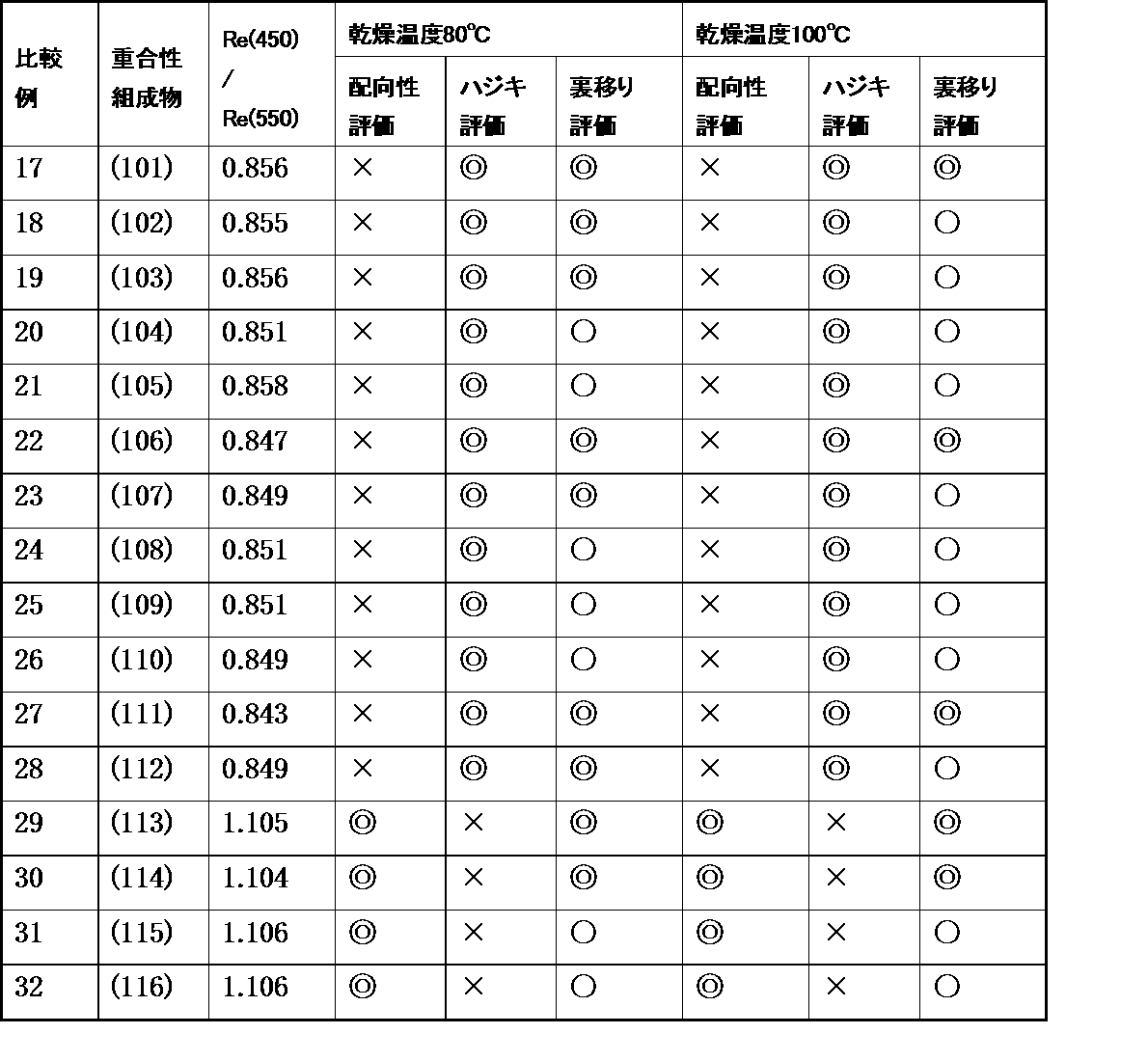
厚さ40μmの無延伸シクロオレフィンポリマーフィルム「ゼオノア」(日本ゼオン株式会社製)上に光配向膜PAM-0021(DIC社製)をバーコート法で塗布し、80℃で2分乾燥した後、300mJ/cm2の偏光UV光を照射した。この光配向膜上に本発明の重合性組成物(57)をバーコート法で塗布し、80℃、又は100℃で2分乾燥した。得られた塗布膜を室温まで冷却した後、UVコンベア装置(GSユアサ株式会社製)を用いてコンベア速度6m/minで紫外線を照射して、実施例133の光学異方体を得た。得られた光学異方体の配向性評価、位相差比、レベリング性評価及び裏移り性評価を、実施例68と同様に行った。
用いる重合性組成物をそれぞれ、本発明の重合性組成物(58)、(59)、(60)、及び(67)、比較用重合性組成物(102)、(104)、及び(115)に変更した以外は、実施例135と同一条件にて、実施例134~137、及び比較例33~35の光学異方体を得た。得られた光学異方体の配向性評価、位相差比、レベリング性評価及び裏移り評価を、実施例68と同様に行った。
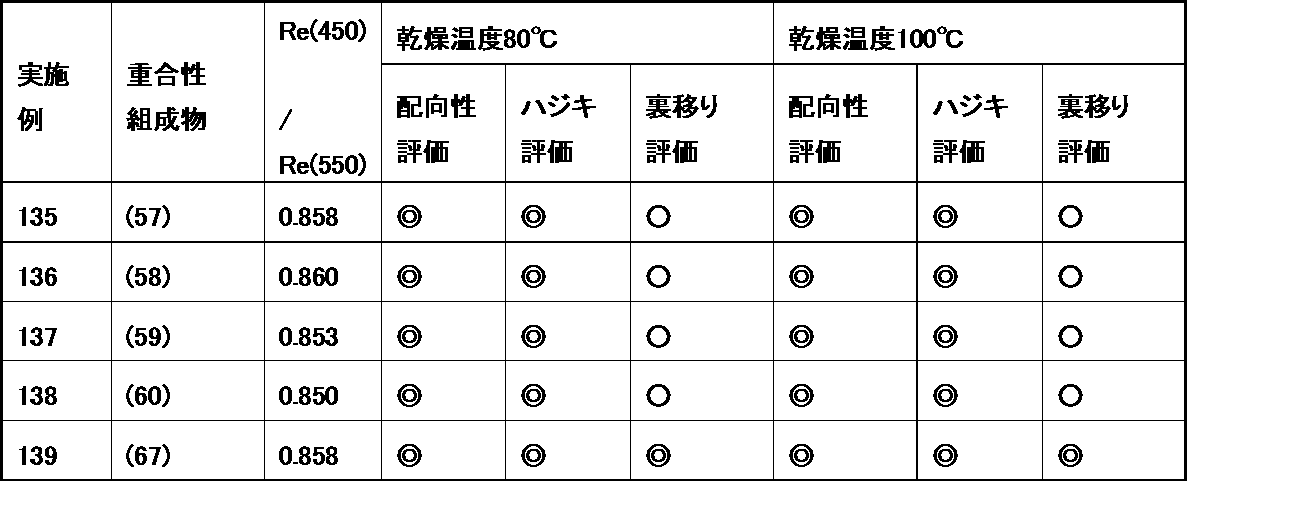

Claims (9)
- a)1つの重合性基又は2つ以上の重合性基を有し、式(I)
Re(450nm)/Re(550nm)<1.0 (I)
(式中、Re(450nm)は、前記1つの重合性基を有する化合物を基板上に分子の長軸方向が実質的に基板に対して水平に配向させたときの450nmの波長における面内位相差、Re(550nm)は、前記1つの重合性基を有する化合物を基板上に分子の長軸方向が実質的に基板に対して水平に配向させたときの550nmの波長における面内位相差、を表す。)を満たす1種又は2種以上の重合性化合物、及び
b)重量平均分子量が5,000以上の界面活性剤、
を含有する重合性組成物。 - 80℃における粘度が10Pa・s以上である請求項1記載の重合性組成物。
- 前記1つの重合性基又は2つ以上の重合性基を有し、かつ、式(I)を満たす重合性化合物として、一般式(1)~(7)のいずれかの液晶性化合物群から選ばれる1種又は2種以上の液晶性化合物を少なくとも1つ含有する請求項1又は2に記載の重合性組成物。
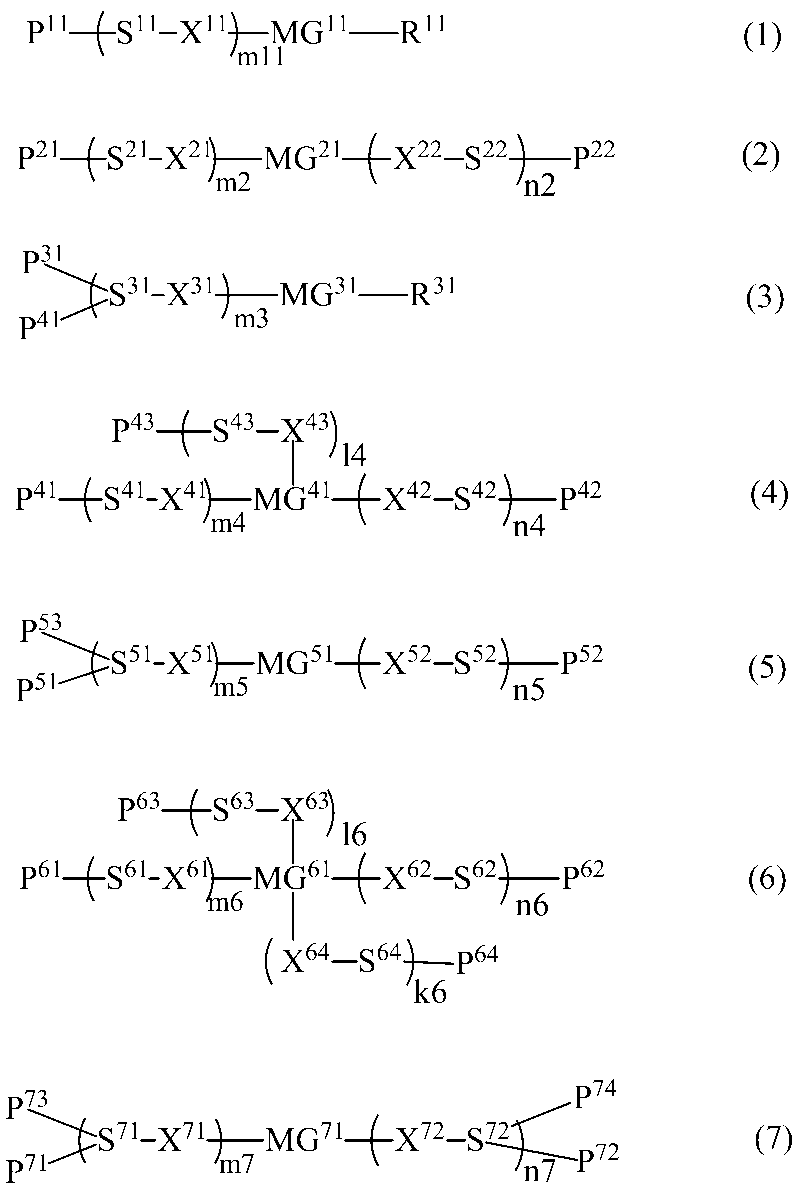
S11~S72はスペーサー基を又は単結合を表すが、S11~S72が複数存在する場合それらは各々同一であっても異なっていても良く、
X11~X72は-O-、-S-、-OCH2-、-CH2O-、-CO-、-COO-、-OCO-、-CO-S-、-S-CO-、-O-CO-O-、-CO-NH-、-NH-CO-、-SCH2-、-CH2S-、-CF2O-、-OCF2-、-CF2S-、-SCF2-、-CH=CH-COO-、-CH=CH-OCO-、-COO-CH=CH-、-OCO-CH=CH-、-COO-CH2CH2-、-OCO-CH2CH2-、-CH2CH2-COO-、-CH2CH2-OCO-、-COO-CH2-、-OCO-CH2-、-CH2-COO-、-CH2-OCO-、-CH=CH-、-N=N-、-CH=N-N=CH-、-CF=CF-、-C≡C-又は単結合を表すが、X11~X72が複数存在する場合それらは各々同一であっても異なっていても良く(ただし、各P-(S-X)-結合には-O-O-を含まない。)、
MG11~MG71は各々独立して式(a)を表し、

A11、A12は各々独立して1,4-フェニレン基、1,4-シクロヘキシレン基、ピリジン-2,5-ジイル基、ピリミジン-2,5-ジイル基、ナフタレン-2,6-ジイル基、ナフタレン-1,4-ジイル基、テトラヒドロナフタレン-2,6-ジイル基、デカヒドロナフタレン-2,6-ジイル基又は1,3-ジオキサン-2,5-ジイル基を表すが、これらの基は無置換又は1つ以上のL1によって置換されても良いが、A11及び/又はA12が複数現れる場合は各々同一であっても異なっていても良く、
Z11及びZ12は各々独立して-O-、-S-、-OCH2-、-CH2O-、-CH2CH2-、-CO-、-COO-、-OCO-、-CO-S-、-S-CO-、-O-CO-O-、-CO-NH-、-NH-CO-、-SCH2-、-CH2S-、-CF2O-、-OCF2-、-CF2S-、-SCF2-、-CH=CH-COO-、-CH=CH-OCO-、-COO-CH=CH-、-OCO-CH=CH-、-COO-CH2CH2-、-OCO-CH2CH2-、-CH2CH2-COO-、-CH2CH2-OCO-、-COO-CH2-、-OCO-CH2-、-CH2-COO-、-CH2-OCO-、-CH=CH-、-N=N-、-CH=N-、-N=CH-、-CH=N-N=CH-、-CF=CF-、-C≡C-又は単結合を表すが、Z11及び/又はZ12が複数現れる場合は各々同一であっても異なっていても良く、
Mは下記の式(M-1)から式(M-11)
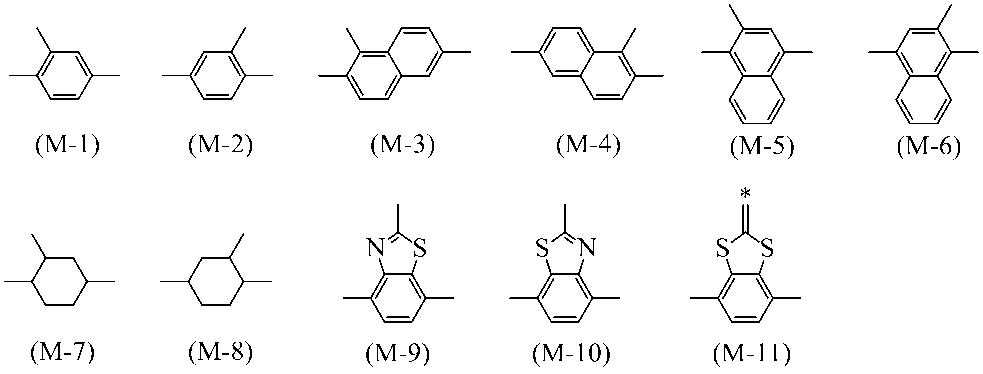
Gは下記の式(G-1)~式(G-6)
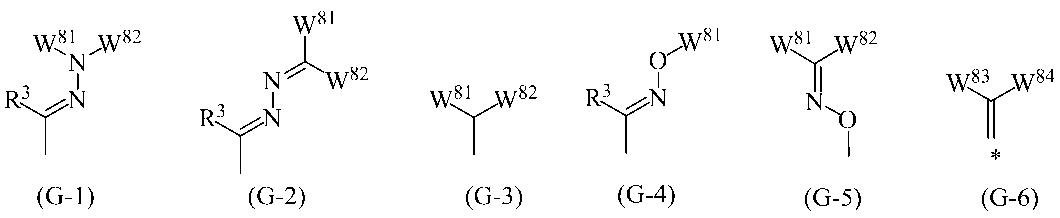
W81は少なくとも1つの芳香族基を有する、炭素原子数5から30の基を表すが、当該基は無置換又は1つ以上のL1によって置換されても良く、
W82は水素原子、又は、炭素原子数1から20のアルキル基を表すが、当該アルキル基は直鎖状であっても分岐状であっても良く、当該アルキル基中の任意の水素原子はフッ素原子及び/又は-OHに置換されても良く、当該アルキル基中の1個の-CH2-又は隣接していない2個以上の-CH2-は各々独立して-O-、-S-、-CO-、-COO-、-OCO-、-CO-S-、-S-CO-、-O-CO-O-、-CO-NH-、-NH-CO-、-CH=CH-COO-、-CH=CH-OCO-、-COO-CH=CH-、-OCO-CH=CH-、-CH=CH-、-CF=CF-又は-C≡C-によって置換されても良く、若しくは、W82はW81と同様の意味を表しても良く、また、W81及びW82は互いに連結し同一の環構造を形成しても良く、若しくはW82はP8-(S8-X8)j-で表される基を表しても良く、P8は重合性基を表し、S8はスペーサー基又は単結合を表すが、S8が複数存在する場合それらは同一であっても異なっていても良く、X8は-O-、-S-、-OCH2-、-CH2O-、-CO-、-COO-、-OCO-、-CO-S-、-S-CO-、-O-CO-O-、-CO-NH-、-NH-CO-、-SCH2-、-CH2S-、-CF2O-、-OCF2-、-CF2S-、-SCF2-、-CH=CH-COO-、-CH=CH-OCO-、-COO-CH=CH-、-OCO-CH=CH-、-COO-CH2CH2-、-OCO-CH2CH2-、-CH2CH2-COO-、-CH2CH2-OCO-、-COO-CH2-、-OCO-CH2-、-CH2-COO-、-CH2-OCO-、-CH=CH-、-N=N-、-CH=N-N=CH-、-CF=CF-、-C≡C-又は単結合を表すが、X8が複数存在する場合それらは同一であっても異なっていても良く(ただし、P8-(S8-X8)j-には-O-O-結合を含まない。)、jは0から10の整数を表し、W83及びW84はそれぞれ独立してハロゲン原子、シアノ基、ヒドロキシ基、ニトロ基、カルボキシル基、カルバモイルオキシ基、アミノ基、スルファモイル基、少なくとも1つの芳香族基を有する炭素原子数5から30の基、炭素原子数1から20のアルキル基、炭素原子数3から20のシクロアルキル基、炭素原子数2から20のアルケニル基、炭素原子数3から20のシクロアルケニル基、炭素原子数1から20のアルコキシ基、炭素原子数2から20のアシルオキシ基、炭素原子数2から20の又は、アルキルカルボニルオキシ基を表すが、前記アルキル基、シクロアルキル基、アルケニル基、シクロアルケニル基、アルコキシ基、アシルオキシ基、アルキルカルボニルオキシ基中の1個の-CH2-又は隣接していない2個以上の-CH2-は各々独立して-O-、-S-、-CO-、-COO-、-OCO-、-CO-S-、-S-CO-、-O-CO-O-、-CO-NH-、-NH-CO-又は-C≡C-によって置換されても良く、但し、上記Mが式(M-1)~式(M-10)から選択される場合Gは式(G-1)~式(G-5)から選択され、Mが式(M-11)である場合Gは式(G-6)を表し、
L1はフッ素原子、塩素原子、臭素原子、ヨウ素原子、ペンタフルオロスルフラニル基、ニトロ基、イソシアノ基、アミノ基、ヒドロキシル基、メルカプト基、メチルアミノ基、ジメチルアミノ基、ジエチルアミノ基、ジイソプロピルアミノ基、トリメチルシリル基、ジメチルシリル基、チオイソシアノ基、又は、炭素原子数1から20のアルキル基を表すが、当該アルキル基は直鎖状であっても分岐状であっても良く、任意の水素原子はフッ素原子に置換されても良く、当該アルキル基中の1個の-CH2-又は隣接していない2個以上の-CH2-は各々独立して-O-、-S-、-CO-、-COO-、-OCO-、-CO-S-、-S-CO-、-O-CO-O-、-CO-NH-、-NH-CO-、-CH=CH-COO-、-CH=CH-OCO-、-COO-CH=CH-、-OCO-CH=CH-、-CH=CH-、-CF=CF-又は-C≡C-から選択される基によって置換されても良いが、化合物内にL1が複数存在する場合それらは同一であっても異なっていても良く、
j11は1から5の整数、j12は1~5の整数を表すが、j11+j12は2から5の整数を表す。)、R11及びR31は水素原子、フッ素原子、塩素原子、臭素原子、ヨウ素原子、ペンタフルオロスルフラニル基、シアノ基、ニトロ基、イソシアノ基、チオイソシアノ基、又は、炭素原子数1から20のアルキル基を表すが、当該アルキル基は直鎖状であっても分岐状であっても良く、当該アルキル基中の任意の水素原子はフッ素原子に置換されても良く、当該アルキル基中の1個の-CH2-又は隣接していない2個以上の-CH2-は各々独立して-O-、-S-、-CO-、-COO-、-OCO-、-CO-S-、-S-CO-、-O-CO-O-、-CO-NH-、-NH-CO-又は-C≡C-によって置換されても良く、m11は0~8の整数を表し、m2~m7、n2~n7、l4~l6、k6は各々独立して0から5の整数を表す。) - 前記重合性基P11~P74が一般式(P-1)から(P-20)のいずれかで表される、請求項3に記載の重合性組成物。
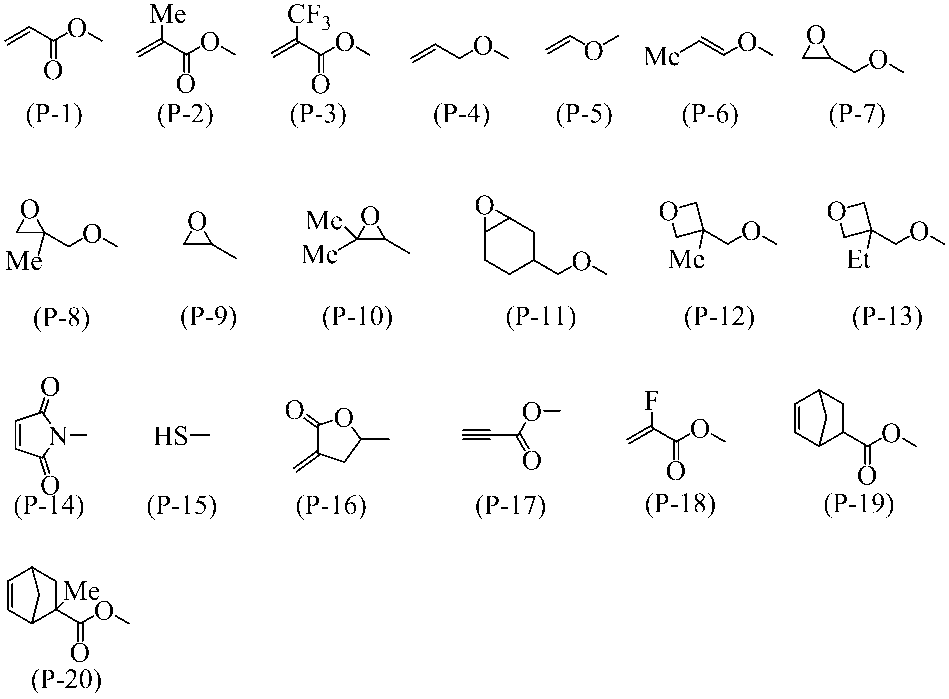
- 請求項1~4のいずれかに記載の重合性組成物の重合体。
- 請求項5に記載の重合体を用いた光学異方体。
- 請求項5に記載の重合体、又は請求項6に記載の光学異方体を含有する表示素子。
- 請求項5に記載の重合体、又は請求項6に記載の光学異方体を含有する発光素子。
- 請求項5に記載の重合体、又は請求項6に記載の光学異方体を含有する有機発光表示素子。
Priority Applications (3)
| Application Number | Priority Date | Filing Date | Title |
|---|---|---|---|
| JP2017543122A JP6292355B2 (ja) | 2015-09-30 | 2016-09-15 | 重合性組成物及びそれを用いた光学異方体 |
| KR1020187010490A KR102082201B1 (ko) | 2015-09-30 | 2016-09-15 | 중합성 조성물 및 그것을 사용한 광학 이방체 |
| US15/764,755 US20180277780A1 (en) | 2015-09-30 | 2016-09-15 | Polymerizable composition and optically anistropic body using same |
Applications Claiming Priority (2)
| Application Number | Priority Date | Filing Date | Title |
|---|---|---|---|
| JP2015-193558 | 2015-09-30 | ||
| JP2015193558 | 2015-09-30 |
Publications (1)
| Publication Number | Publication Date |
|---|---|
| WO2017057020A1 true WO2017057020A1 (ja) | 2017-04-06 |
Family
ID=58423603
Family Applications (1)
| Application Number | Title | Priority Date | Filing Date |
|---|---|---|---|
| PCT/JP2016/077247 Ceased WO2017057020A1 (ja) | 2015-09-30 | 2016-09-15 | 重合性組成物及びそれを用いた光学異方体 |
Country Status (4)
| Country | Link |
|---|---|
| US (1) | US20180277780A1 (ja) |
| JP (1) | JP6292355B2 (ja) |
| KR (1) | KR102082201B1 (ja) |
| WO (1) | WO2017057020A1 (ja) |
Cited By (11)
| Publication number | Priority date | Publication date | Assignee | Title |
|---|---|---|---|---|
| JP2017088591A (ja) * | 2015-11-09 | 2017-05-25 | Dic株式会社 | 重合性化合物及び光学異方体 |
| WO2019017445A1 (ja) * | 2017-07-19 | 2019-01-24 | 富士フイルム株式会社 | 重合性液晶化合物、重合性液晶組成物、光学異方性膜、光学フィルム、偏光板および画像表示装置 |
| WO2019124090A1 (ja) * | 2017-12-21 | 2019-06-27 | Dic株式会社 | 位相差フィルム、楕円偏光板及びそれを用いた表示装置 |
| WO2019124154A1 (ja) * | 2017-12-22 | 2019-06-27 | Dic株式会社 | 重合性液晶組成物、光学異方体及びその製造方法 |
| JP2021001270A (ja) * | 2019-06-21 | 2021-01-07 | Dic株式会社 | 重合性組成物、それを用いた光学異方体 |
| US11186669B2 (en) | 2015-01-16 | 2021-11-30 | Dic Corporation | Polymerizable composition and optically anisotropic body using same |
| US11261378B2 (en) | 2014-12-25 | 2022-03-01 | Dic Corporation | Polymerizable compound and optically anisotropic object |
| TWI756338B (zh) * | 2018-01-12 | 2022-03-01 | 日商迪愛生股份有限公司 | 聚合性組成物及使用其之光學異向體 |
| US11697695B2 (en) | 2015-01-16 | 2023-07-11 | Dic Corporation | Polymerizable composition and optically anisotropic body using same |
| WO2024242041A1 (ja) * | 2023-05-19 | 2024-11-28 | 富士フイルム株式会社 | 液晶組成物、光学異方性層、光学フィルム、偏光板および画像表示装置 |
| WO2024247628A1 (ja) * | 2023-05-31 | 2024-12-05 | 富士フイルム株式会社 | 組成物、転写フィルム、積層体の製造方法、積層体、半導体パッケージ |
Families Citing this family (4)
| Publication number | Priority date | Publication date | Assignee | Title |
|---|---|---|---|---|
| JP2020024357A (ja) * | 2018-08-02 | 2020-02-13 | 住友化学株式会社 | 光学フィルム |
| WO2020149205A1 (ja) * | 2019-01-17 | 2020-07-23 | 住友化学株式会社 | 重合性液晶組成物、位相差板、楕円偏光板および有機el表示装置 |
| JP7384600B2 (ja) * | 2019-01-17 | 2023-11-21 | 住友化学株式会社 | 重合性液晶組成物、位相差板、楕円偏光板および有機el表示装置 |
| KR102797542B1 (ko) | 2019-02-13 | 2025-04-21 | 삼성디스플레이 주식회사 | 유기 발광 소자 |
Citations (6)
| Publication number | Priority date | Publication date | Assignee | Title |
|---|---|---|---|---|
| JP2005232215A (ja) * | 2004-02-17 | 2005-09-02 | Dainippon Ink & Chem Inc | 高分子分散型液晶表示素子用組成物及び高分子分散型液晶表示素子 |
| JP2007009070A (ja) * | 2005-06-30 | 2007-01-18 | Dainippon Ink & Chem Inc | 高分子分散型液晶表示素子用組成物及び高分子分散型液晶表示素子 |
| WO2010001725A1 (ja) * | 2008-06-30 | 2010-01-07 | 日本ゼオン株式会社 | 重合性液晶化合物、重合性液晶組成物、液晶性高分子及び光学異方体 |
| WO2010095680A1 (ja) * | 2009-02-20 | 2010-08-26 | Dic株式会社 | 重合性液晶組成物 |
| JP2012077200A (ja) * | 2010-10-01 | 2012-04-19 | Dic Corp | 重合性化合物を含有する液晶組成物及びそれを使用した液晶表示素子 |
| WO2016043087A1 (ja) * | 2014-09-19 | 2016-03-24 | Dic株式会社 | 重合性組成物、及び、それを用いたフィルム |
Family Cites Families (6)
| Publication number | Priority date | Publication date | Assignee | Title |
|---|---|---|---|---|
| JP5084293B2 (ja) | 2006-02-07 | 2012-11-28 | 富士フイルム株式会社 | 光学フィルムおよび位相差板、並びに液晶化合物 |
| KR101531722B1 (ko) | 2007-03-30 | 2015-06-25 | 메르크 파텐트 게엠베하 | 음성 광학 분산도를 갖는 복굴절층 |
| JP2009062508A (ja) | 2007-08-14 | 2009-03-26 | Fujifilm Corp | 液晶組成物、及び光学異方性膜 |
| JP5826759B2 (ja) | 2009-10-30 | 2015-12-02 | メルク パテント ゲゼルシャフト ミット ベシュレンクテル ハフツングMerck Patent Gesellschaft mit beschraenkter Haftung | 重合性lc材料および負の光学的分散を有するポリマーフィルム |
| KR102093947B1 (ko) | 2011-04-27 | 2020-03-26 | 제온 코포레이션 | 중합성 화합물, 중합성 조성물, 고분자, 및 광학 이방체 |
| KR20150113886A (ko) * | 2014-03-31 | 2015-10-08 | 후지필름 가부시키가이샤 | 광학 필름, 편광판, 및 광학 필름의 제조 방법 |
-
2016
- 2016-09-15 KR KR1020187010490A patent/KR102082201B1/ko not_active Expired - Fee Related
- 2016-09-15 WO PCT/JP2016/077247 patent/WO2017057020A1/ja not_active Ceased
- 2016-09-15 JP JP2017543122A patent/JP6292355B2/ja not_active Expired - Fee Related
- 2016-09-15 US US15/764,755 patent/US20180277780A1/en not_active Abandoned
Patent Citations (6)
| Publication number | Priority date | Publication date | Assignee | Title |
|---|---|---|---|---|
| JP2005232215A (ja) * | 2004-02-17 | 2005-09-02 | Dainippon Ink & Chem Inc | 高分子分散型液晶表示素子用組成物及び高分子分散型液晶表示素子 |
| JP2007009070A (ja) * | 2005-06-30 | 2007-01-18 | Dainippon Ink & Chem Inc | 高分子分散型液晶表示素子用組成物及び高分子分散型液晶表示素子 |
| WO2010001725A1 (ja) * | 2008-06-30 | 2010-01-07 | 日本ゼオン株式会社 | 重合性液晶化合物、重合性液晶組成物、液晶性高分子及び光学異方体 |
| WO2010095680A1 (ja) * | 2009-02-20 | 2010-08-26 | Dic株式会社 | 重合性液晶組成物 |
| JP2012077200A (ja) * | 2010-10-01 | 2012-04-19 | Dic Corp | 重合性化合物を含有する液晶組成物及びそれを使用した液晶表示素子 |
| WO2016043087A1 (ja) * | 2014-09-19 | 2016-03-24 | Dic株式会社 | 重合性組成物、及び、それを用いたフィルム |
Cited By (15)
| Publication number | Priority date | Publication date | Assignee | Title |
|---|---|---|---|---|
| US11261378B2 (en) | 2014-12-25 | 2022-03-01 | Dic Corporation | Polymerizable compound and optically anisotropic object |
| US11186669B2 (en) | 2015-01-16 | 2021-11-30 | Dic Corporation | Polymerizable composition and optically anisotropic body using same |
| US11697695B2 (en) | 2015-01-16 | 2023-07-11 | Dic Corporation | Polymerizable composition and optically anisotropic body using same |
| JP2017088591A (ja) * | 2015-11-09 | 2017-05-25 | Dic株式会社 | 重合性化合物及び光学異方体 |
| US10919870B2 (en) | 2015-11-09 | 2021-02-16 | Dic Corporation | Polymerizable compound and optically anisotropic body |
| WO2019017445A1 (ja) * | 2017-07-19 | 2019-01-24 | 富士フイルム株式会社 | 重合性液晶化合物、重合性液晶組成物、光学異方性膜、光学フィルム、偏光板および画像表示装置 |
| JPWO2019017445A1 (ja) * | 2017-07-19 | 2020-04-16 | 富士フイルム株式会社 | 重合性液晶化合物、重合性液晶組成物、光学異方性膜、光学フィルム、偏光板および画像表示装置 |
| WO2019124090A1 (ja) * | 2017-12-21 | 2019-06-27 | Dic株式会社 | 位相差フィルム、楕円偏光板及びそれを用いた表示装置 |
| JPWO2019124090A1 (ja) * | 2017-12-21 | 2021-01-14 | Dic株式会社 | 位相差フィルム、楕円偏光板及びそれを用いた表示装置 |
| WO2019124154A1 (ja) * | 2017-12-22 | 2019-06-27 | Dic株式会社 | 重合性液晶組成物、光学異方体及びその製造方法 |
| JPWO2019124154A1 (ja) * | 2017-12-22 | 2020-05-28 | Dic株式会社 | 重合性液晶組成物、光学異方体及びその製造方法 |
| TWI756338B (zh) * | 2018-01-12 | 2022-03-01 | 日商迪愛生股份有限公司 | 聚合性組成物及使用其之光學異向體 |
| JP2021001270A (ja) * | 2019-06-21 | 2021-01-07 | Dic株式会社 | 重合性組成物、それを用いた光学異方体 |
| WO2024242041A1 (ja) * | 2023-05-19 | 2024-11-28 | 富士フイルム株式会社 | 液晶組成物、光学異方性層、光学フィルム、偏光板および画像表示装置 |
| WO2024247628A1 (ja) * | 2023-05-31 | 2024-12-05 | 富士フイルム株式会社 | 組成物、転写フィルム、積層体の製造方法、積層体、半導体パッケージ |
Also Published As
| Publication number | Publication date |
|---|---|
| JP6292355B2 (ja) | 2018-03-14 |
| JPWO2017057020A1 (ja) | 2018-02-01 |
| US20180277780A1 (en) | 2018-09-27 |
| KR102082201B1 (ko) | 2020-02-27 |
| KR20180053366A (ko) | 2018-05-21 |
Similar Documents
| Publication | Publication Date | Title |
|---|---|---|
| JP6292355B2 (ja) | 重合性組成物及びそれを用いた光学異方体 | |
| JP6172556B2 (ja) | 重合性組成物及びそれを用いた光学異方体 | |
| JP6255632B2 (ja) | 重合性組成物及びそれを用いた光学異方体 | |
| JP6213797B2 (ja) | 重合性組成物及びそれを用いた光学異方体 | |
| JP6237934B2 (ja) | 重合性組成物及びそれを用いた光学異方体 | |
| JP6172557B2 (ja) | 重合性組成物及びそれを用いた光学異方体 | |
| JP6260841B2 (ja) | 重合性組成物及び光学異方体 | |
| JP6452012B2 (ja) | 重合性組成物及びそれを用いた光学異方体 | |
| WO2018012390A1 (ja) | 位相差フィルム、楕円偏光板及びそれを用いた表示装置 | |
| WO2018012579A1 (ja) | 重合性組成物、及び、それを用いた光学異方体 | |
| JPWO2019102922A1 (ja) | 重合性液晶組成物、その重合体、光学異方体、及び表示素子 | |
| WO2018101122A1 (ja) | 重合性組成物及びそれを用いた光学異方体 | |
| WO2018016567A1 (ja) | 重合性組成物及びそれを用いた光学異方体 | |
| WO2018088384A1 (ja) | 位相差フィルム、楕円偏光板及びそれを用いた表示装置 | |
| TW201930281A (zh) | 聚合性組成物及使用其之光學異向體 |
Legal Events
| Date | Code | Title | Description |
|---|---|---|---|
| 121 | Ep: the epo has been informed by wipo that ep was designated in this application |
Ref document number: 16851194 Country of ref document: EP Kind code of ref document: A1 |
|
| ENP | Entry into the national phase |
Ref document number: 2017543122 Country of ref document: JP Kind code of ref document: A |
|
| WWE | Wipo information: entry into national phase |
Ref document number: 15764755 Country of ref document: US |
|
| NENP | Non-entry into the national phase |
Ref country code: DE |
|
| ENP | Entry into the national phase |
Ref document number: 20187010490 Country of ref document: KR Kind code of ref document: A |
|
| 122 | Ep: pct application non-entry in european phase |
Ref document number: 16851194 Country of ref document: EP Kind code of ref document: A1 |