WO2017029802A1 - タンパク質を高濃度で含む発酵乳の製造方法 - Google Patents
タンパク質を高濃度で含む発酵乳の製造方法 Download PDFInfo
- Publication number
- WO2017029802A1 WO2017029802A1 PCT/JP2016/003718 JP2016003718W WO2017029802A1 WO 2017029802 A1 WO2017029802 A1 WO 2017029802A1 JP 2016003718 W JP2016003718 W JP 2016003718W WO 2017029802 A1 WO2017029802 A1 WO 2017029802A1
- Authority
- WO
- WIPO (PCT)
- Prior art keywords
- milk
- protein concentrate
- protein
- fermented milk
- whey protein
- Prior art date
- Legal status (The legal status is an assumption and is not a legal conclusion. Google has not performed a legal analysis and makes no representation as to the accuracy of the status listed.)
- Ceased
Links
Images





Classifications
-
- A—HUMAN NECESSITIES
- A23—FOODS OR FOODSTUFFS; TREATMENT THEREOF, NOT COVERED BY OTHER CLASSES
- A23C—DAIRY PRODUCTS, e.g. MILK, BUTTER OR CHEESE; MILK OR CHEESE SUBSTITUTES; PREPARATION THEREOF
- A23C9/00—Milk preparations; Milk powder or milk powder preparations
- A23C9/12—Fermented milk preparations; Treatment using microorganisms or enzymes
Definitions
- the present invention relates to a method for producing fermented milk containing protein at a high concentration.
- fermented milk containing a high concentration of protein those with names such as quark, fresh cheese and Greek yogurt are known.
- These high protein-containing fermented milks are generally produced through a concentration step in which whey is removed by subjecting fermented milk produced by a normal production method to membrane separation or centrifugation.
- Patent Document 1 discloses that fermented milk having high shape retention, low brittleness, and smooth texture by adding whey protein and milk peptide to fermented milk raw material liquid (high It is described that protein-containing fermented milk can be produced.
- patent document 1 describes improving the physical property of fermented milk by mix
- the conditions necessary for the production of fermented milk containing high protein obtained by fermentation after that and the physical properties of fermented milk containing high protein have not been studied at all.
- an object of the present invention is to provide a method for producing fermented milk, which can produce fermented milk having a high concentration and excellent texture and texture at low cost.
- the present invention relates to a method for producing fermented milk containing protein at a high concentration.
- skim milk powder whey protein concentrate (WPC; Whey) Ingredients including Protein Concentrate) and / or Whey Protein Isolate (WPI) (hereinafter sometimes simply referred to as “whey protein concentrate”) and Milk Protein Concentrate (MPC)
- WPC Whey protein concentrate
- MPC Milk Protein Concentrate
- FIG. 1 is a flowchart showing a process for producing fermented milk according to the embodiment.
- FIG. 2 is a diagram showing the thermal coagulation time of an aqueous solution containing skim milk powder, whey protein concentrate, and milk protein concentrate.
- FIG. 3 is a diagram showing the thermal coagulation time of an aqueous solution containing skim milk powder, whey protein concentrate, and milk protein concentrate.
- FIG. 4 is a diagram showing the relationship between the pH of an aqueous solution containing skim milk powder, whey protein concentrate, and milk protein concentrate and the thermal coagulation time.
- FIG. 5 is a diagram showing the relationship between the pH of an aqueous solution containing skim milk powder, whey protein concentrate, and milk protein concentrate and the thermal coagulation time.
- FIG. 6 is a diagram showing the fermentation time of fermented milk for each type of whey protein concentrate.
- FIG. 7 is a diagram showing the hardness of the curd of fermented milk for each type of whey protein concentrate.
- FIG. 8 is a graph plotting the content of ⁇ -Lg and the hardness of fermented milk.
- FIG. 9 is a diagram showing the fermentation time of fermented milk for each type of milk protein concentrate.
- FIG. 10 is a diagram showing the hardness of a card of fermented milk for each type of milk protein concentrate.
- fermented milk (fermented milk containing high protein) containing protein at a high concentration (5 to 10% by mass) is produced by fermenting raw milk mixed with a high protein raw material.
- FIG. 1 is a flowchart showing a process for producing fermented milk according to the embodiment.
- the raw material of fermented milk is dissolved or dispersed in warm water to prepare raw milk (an aqueous solution of protein raw material) (step S1).
- the raw milk is an aqueous solution containing at least a component of skim milk, a component of whey protein concentrate, and a component of milk protein concentrate.
- skim milk normal skim milk, skim milk (desalted skim milk) with reduced salts (minerals such as sodium and potassium), reduced solution of skim milk powder (reduced skim milk), dilution of skim concentrated milk It may be used to include any form such as liquid. And skim milk may be used as the meaning including forms, such as skim milk powder and skim concentrated milk.
- Milk protein concentrate improves the thermal stability of raw milk.
- sodium, potassium, chlorine, etc. are sufficiently reduced (desalted) during the production process. Therefore, in high-concentration fermented milk produced by blending milk protein concentrates, Compared with fermented milk produced by concentration treatment later, saltiness can be easily reduced. That is, by reducing this salty taste, it is possible to adjust the flavor of the actually obtained fermented milk in a mellow manner.
- the milk protein concentrate has a higher calcium content than the whey protein concentrate, so if the blending ratio of the milk protein concentrate exceeds the above range, bitterness caused by calcium occurs. It becomes easy. Moreover, if the blending ratio of the milk protein concentrate exceeds the above range and becomes too high, a bad odor due to the protein tends to be generated.
- Whey protein concentrate improves the hardness of the curd of fermented milk.
- ⁇ -lactoglobulin ( ⁇ -Lg) and ⁇ -lactalbumin ( ⁇ -La) contained in the raw milk increases, the hardness of the curd of fermented milk increases.
- the whey protein concentrate has a higher ⁇ -Lg content and ⁇ -La content than skim milk and milk protein concentrate, so by adding the whey protein concentrate at a high concentration, The hardness of fermented milk can be improved.
- the mixing ratio of the whey protein concentrate exceeds the above range and becomes too high, the hardness of the fermented milk becomes too high and the texture becomes worse, and the heat stability of the raw milk tends to decrease.
- whey protein concentrate has lower sodium content and calcium content than milk protein concentrate, so when whey protein concentrate is blended to produce high-concentration fermented milk, it is attributed to sodium and calcium. Salty taste and bitterness can be reduced. However, if the blending ratio of the whey protein concentrate is below the above range, these salty tastes and bitterness cannot be reduced.
- the blending ratio of skim milk powder, whey protein concentrate, and milk protein concentrate is 100% by mass of the total of protein contained in skim milk powder, protein contained in whey protein concentrate, and protein contained in milk protein concentrate.
- the protein contained in skim milk powder is 20 to 60% by mass
- the protein contained in the whey protein concentrate is 20 to 30% by mass
- the protein contained in the milk protein concentrate is 20 to 60% by mass.
- the protein contained in skim milk powder is 25 to 50% by mass
- the protein contained in the whey protein concentrate is 22 to 28% by mass
- the protein contained in the milk protein concentrate is 25 to 50% by mass.
- the protein contained in the skim milk powder is 35 to 40% by mass
- the protein contained in the whey protein concentrate is 24 to 26% by mass
- the protein contained in the milk protein concentrate is 35 to 40% by mass. More preferably.
- the content (concentration) of the protein contained in the raw milk is exemplified by 5 to 10% by mass, preferably 6 to 10% by mass, and more preferably 7 to 10% by mass. Further, the content of the saccharide contained in the raw milk is exemplified by 4 to 8% by mass, preferably 4 to 7% by mass, and more preferably 4 to 6% by mass.
- a flavor and food texture can further be improved by making the compounding quantity of a whey protein concentrate into a preferable range.
- flavor and texture can be further improved by adding (compounding) fresh cream to raw milk (protein raw material aqueous solution) as necessary.
- step S2 the raw material milk is stirred and homogenized using a homomixer or the like. Since some milk protein concentrates have low solubility, this step is provided for homogenization. Moreover, in order to atomize and disperse the milk fat of the fresh cream, this process is provided and homogenized. However, this step may be omitted when a highly soluble protein concentrate is used as a raw material.
- the raw material milk is heated and sterilized at a predetermined sterilization temperature and a predetermined sterilization time (step S4). After that, the raw material milk is cooled to the fermentation temperature (step S5).
- the pH of the raw milk to 6.6 to 6.8, more preferably 6.7, protein denaturation is suppressed when the raw milk is heated and sterilized, and the heat stability of the raw milk Can be improved.
- step S6 After adding a starter to the cooled raw milk (step S6), the container is filled with raw milk (step S7) and fermented at a predetermined fermentation temperature (and a predetermined fermentation time) (Ste S8). And after fermenting raw material milk, fermented milk is cooled with a refrigerator (step S9).
- raw milk in which high-protein raw material is blended with skim milk is fermented. Therefore, as in the conventional method for producing high-concentration fermented milk, ordinary fermented milk is subjected to membrane separation treatment or centrifugation. There is no need to treat and remove whey. By eliminating the concentration step for removing whey, there are the following advantages. (1) Manufacturing equipment such as a membrane separation treatment device and a centrifugal separation treatment device and a concentration step for removing whey are not necessary, so that the production cost of fermented milk can be reduced.
- the mass of fermented milk is reduced by the amount of whey that is actually removed, but by omitting (making unnecessary) the concentration step of removing whey, the loss of fermented milk is reduced. This can be reduced and the product yield is improved.
- the concentration step of removing whey no by-product (whey) that becomes waste is generated, so the burden on the environment can be reduced.
- a sterilization operation such as a concentration treatment apparatus is required. However, the sterilization operation is also unnecessary because the concentration step is not necessary.
- the heat stability (heat resistance) of raw milk is improved by blending milk protein concentrate with raw milk. Therefore, in the fermented milk manufacturing method according to the present embodiment, the sterilization apparatus can be continuously operated for a long time in the raw milk sterilization step, and the raw milk can be sterilized efficiently.
- fermented milk excellent in flavor can be produced at low cost.
- fermented milk which contains nutritionally good protein in high concentration can be provided. Since the fermented milk obtained here has a weak acidity, it can be used as a cooking material for various dishes and cooking. Moreover, since the fermented milk obtained here has a low water content at the stage of completion of fermentation and has an appropriate hardness, it can be used for various dishes and cooking without draining.
- the pH of fermented milk is 4.2 to 4.7, more preferably 4.3 to 4.7, still more preferably 4.3 to 4.6, and still more preferably.
- the fermented milk is adjusted by adjusting the hardness of the fermented milk to 40 to 100, more preferably 40 to 90, still more preferably 40 to 80, and even more preferably 40 to 70. Not only immediately after production, but also after storing the fermented milk refrigerated (10 ° C., 1 week), it is possible to maintain an appropriate hardness and maintain a particularly good texture.
- the content of ⁇ -lactoglobulin ( ⁇ -Lg) contained in the whey protein concentrate (WPC) and the whey protein isolate (WPI) and the hardness of the fermented milk A positive correlation (proportional relationship, relation that can be approximated by a linear expression) is recognized between them, and the hardness of the fermented milk can be adjusted using this positive correlation.
- Table 1 shows the evaluation results of the compositions of the raw materials A to L, the pH of the aqueous solution, and the thermal stability.
- skim milk powder has higher heat stability than skim milk powder
- milk protein concentrate has higher heat stability
- whey protein concentrate has lower heat stability. It was confirmed to have.
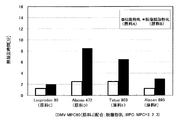
- FIG. 2 shows the thermal coagulation time of an aqueous solution containing skim milk, whey protein concentrate, and milk protein concentrate.
- FIG. 2 shows a comparison result between the case where skim milk is used and the case where desalted skim milk is used as skim milk.
- skim milk the raw material A (skimmed milk powder) or the raw material B (desalted skim milk powder) shown in Table 1 was used.
- any of the raw materials C to F shown in Table 1 was used as the whey protein concentrate.
- the raw material J shown in Table 1 was used as a milk protein concentrate.
- the aqueous solution using demineralized skim milk powder showed higher thermal stability than the aqueous solution using skim milk powder (raw material A).
- the concentration of salts (monovalent ions such as sodium, potassium and chlorine) was lower than in skimmed milk powder (raw material A). From this, it is possible that the content of salts (monovalent ions such as sodium, potassium and chlorine) contained in the aqueous solution is involved in the thermal stability, that is, the lower the concentration of the salt contained in the aqueous solution, The possibility of improved thermal stability was considered.
- FIG. 3 shows the heat coagulation time of an aqueous solution containing skim milk, whey protein concentrate, and milk protein concentrate.
- FIG. 3 shows the thermal coagulation time of the aqueous solution for each type of whey protein concentrate and milk protein concentrate.
- skim milk the raw material A (skim milk powder) shown in Table 1 was used.
- any of the raw materials C to F shown in Table 1 was used as the whey protein concentrate.
- any of the raw materials HL shown in Table 1 was used as the milk protein concentrate.
- the aqueous solution using the raw material D or E shown in Table 1 as the whey protein concentrate showed relatively high thermal stability.
- the aqueous solution using the raw material C shown in Table 1 showed low thermal stability.
- the raw material F of whey protein concentrate showed high thermal stability when prepared with a single aqueous solution, but when prepared with a mixed aqueous solution combining skim milk and milk protein concentrate, the raw material K Except in the case of combination with, it showed low thermal stability.
- the aqueous stability using the raw material C shown in Table 1 as the whey protein concentrate is relatively low in thermal stability as compared with aqueous solutions using the other raw materials D to F.
- the pH of the aqueous solution of the raw material C was lowered as compared with the other raw materials D to F. Therefore, it was considered that the pH also affected the thermal stability of the high protein-containing aqueous solution.
- the blending ratio and pH of the protein raw material are the heat of raw milk.
- the effect on stability was investigated. Specifically, the mixing ratio of the whey protein concentrate is constant, and the desalted skim milk powder, the whey protein concentrate, and the milk protein concentrate are in a mass ratio of 2: 2: 4 in each protein.
- An aqueous solution having a ratio of 3: 2: 3 and 4: 2: 2 was prepared, and the thermal coagulation time was measured by the method described in [1-1] above.
- the protein concentration in the aqueous solution was 8% by mass.
- FIGS. 4 and 5 show the relationship (thermal stability curve) between the pH of the aqueous solution containing skim milk, whey protein concentrate, and milk protein concentrate and the thermal coagulation time. More specifically, in FIG. 4, the raw material B shown in Table 1 is used as skim milk, the raw material C shown in Table 1 is used as the whey protein concentrate, and the milk protein concentrate is shown in Table 1. The thermal stability curve at the time of using the shown raw material J is shown. Moreover, in FIG. 5, the raw material B shown in Table 1 is used as skim milk, the raw material E shown in Table 1 is used as a whey protein concentrate, and the raw material shown in Table 1 is used as a milk protein concentrate. The thermal stability curve at the time of using J is shown.
- the aqueous solution showed the maximum thermal stability in the range of 6.7 to 6.8. .
- the thermal stability can be improved by adjusting the pH of the aqueous solution to the range of 6.7 to 6.8. It was.
- the raw materials C and E are compared, as shown in Table 1, the raw material E has a higher calcium content than the raw material C, and as shown in Table 2, the raw material E alone is not the raw material C. Compared to the case alone, the thermal stability (degree of thermal metamorphosis) was high. Therefore, from the comparison of raw materials C and E, it was considered that the thermal stability of the whey protein concentrate itself and the calcium concentration influence the thermal stability of the aqueous solution containing protein raw materials.
- the thermal stability of the raw material milk is lowered.
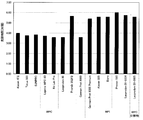
- FIG. 6 shows the fermentation time of fermented milk for each type of whey protein raw material.
- curd of fermented milk for every kind of whey protein raw material is shown in FIG.
- the hardness of the curd of fermented milk was measured using a rheometer (NRM-2010J-CW manufactured by Fudo Kogyo Co., Ltd.). Specifically, a flat plunger having a diameter of 10 mm is pressed against fermented milk taken out from the refrigerator (about 5 ° C.) at a speed of 6 cm / min, and the load until the fermented milk card breaks is measured. The actual load value was used as an index of hardness.
- the fermented milk blended with a whey protein isolate or whey protein concentrate degradation product has a longer fermentation time than fermented milk blended with whey protein concentrate. There was a tendency to become longer.
- the fermented milk blended with the whey protein isolate is compared with the fermented milk blended with the whey protein concentrate except for “Provon 190” (manufactured by Granbia Nutritionals). There was a tendency to harden the curd of fermented milk.
- the hardness of the curd of the fermented milk was lower than that of the fermented milk containing the whey protein concentrate. That is, there was a tendency to soften the curd of fermented milk by blending a degradation product of whey protein concentrate.
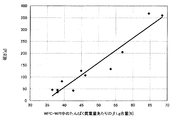
- FIG. 8 shows a plot of the content of ⁇ -Lg and the hardness of fermented milk.
- Fermented milk powder, whey protein raw material, and milk protein concentrate were fermented according to the production method shown in FIG. 1 using raw milk prepared by adjusting the mixing ratio of the protein contained therein to 2: 3: 3. Milk was produced, and the relationship between the type of milk protein concentrate and the hardness (breaking strength) of the fermentation time and the curd of the actually obtained fermented milk was examined.
- the raw material A shown in Table 1 was used as skim milk powder, and the raw material C shown in Table 1 was used as a whey protein concentrate.
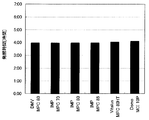
- FIG. 9 shows the fermentation time of fermented milk for each type of milk protein concentrate. Moreover, the hardness of the card
- the fermentation time was about 4 hours, and there was no significant difference in the fermentation time depending on the type of milk protein concentrate.
- the fermented milk has a hardness of about 50 to 60 g regardless of which milk protein concentrate is used, and the hardness of the fermented milk varies greatly depending on the type of milk protein concentrate. I could't.
- the protein contained in skim milk powder is 20 to 60% by mass
- the protein contained in the whey protein concentrate is 20 to 30% by mass
- the milk protein concentrate It was confirmed that a high-concentration fermented milk excellent in flavor and texture can be produced without performing a concentration step by blending the protein raw material so that the protein contained in is 20 to 60% by mass.
- the present invention can provide fermented milk containing a high concentration of nutritionally good protein.
Landscapes
- Life Sciences & Earth Sciences (AREA)
- Microbiology (AREA)
- Chemical & Material Sciences (AREA)
- Engineering & Computer Science (AREA)
- Food Science & Technology (AREA)
- Polymers & Plastics (AREA)
- Dairy Products (AREA)
Abstract
風味および食感に優れた高濃度の発酵乳を安価に製造できる、発酵乳の製造方法を提供する。タンパク質を高濃度で含む発酵乳の製造方法であって、脱脂粉乳と、ホエイタンパク質濃縮物と、乳タンパク質濃縮物とを含む原料乳を用いて、脱脂粉乳に含まれるタンパク質と、ホエイタンパク質濃縮物に含まれるタンパク質と、乳タンパク質濃縮物に含まれるタンパク質の合計を100質量%としたときに、脱脂粉乳に含まれるタンパク質が20~60質量%、ホエイタンパク質濃縮物に含まれるタンパク質が20~30質量%、乳タンパク質濃縮物に含まれるタンパク質が20~60質量%となるように、脱脂粉乳と、ホエイタンパク質濃縮物と、乳タンパク質濃縮物とを配合する。
Description
本発明は、タンパク質を高濃度で含む発酵乳の製造方法に関する。
タンパク質を高濃度で含む発酵乳(高タンパク質含有の発酵乳)として、クワルク、フレッシュチーズ、ギリシャヨーグルト等の名称を付したものが知られている。これらの高タンパク質含有の発酵乳は、通常の製造方法で製造した発酵乳に膜分離処理や遠心分離処理を行い、ホエイを除去する濃縮工程を経て製造されることが一般的である。
また、特許文献1には、発酵乳原料液にホエイタンパク質と乳ペプチドとを添加することによって、優れた保形性を有するとともに脆さが少なく、かつ滑らかな食感を有した発酵乳(高タンパク質含有の発酵乳)を製造できることが記載されている。
上記の従来の高タンパク質含有の発酵乳の製造方法では、膜分離処理装置(精密濾過膜、限外濾過膜等)や遠心分離処理装置等の製造設備が必要となり、製造工程も多くなることから、製造費が高くなり、発酵乳そのものの価格も一般に高価となってしまう。また、高タンパク質含有にするために、発酵乳原料液(原料乳)のタンパク質濃度を単に高くしても、固いだけで、舌触り等の風味や食感が悪くなるという問題がある。
また、特許文献1には、発酵乳原料液の1質量%程度のタンパク質を配合することによって、発酵乳の物性を改善することが記載されているものの、例えば、原料乳のタンパク質濃度を高くしてから発酵して得られる、高タンパク質含有の発酵乳の製造に必要な条件や、高タンパク質含有の発酵乳の物性等については何ら検討されていない。
それ故に、本発明は、風味と食感に優れた高濃度の発酵乳を安価に製造できる、発酵乳の製造方法を提供することを目的とする。
本発明は、タンパク質を高濃度で含む発酵乳の製造方法に関するものである。本発明に係る発酵乳の製造方法では、脱脂粉乳と、ホエイタンパク質濃縮物(WPC; Whey
Protein Concentrate)および/またはホエイタンパク質単離物(WPI; Whey Protein Isolate)(以下、単に「ホエイタンパク質濃縮物」ということがある)と、乳タンパク質濃縮物(MPC; Milk Protein Concentrate)とを含む原料乳を用い、脱脂粉乳に含まれるタンパク質と、ホエイタンパク質濃縮物に含まれるタンパク質と、乳タンパク質濃縮物に含まれるタンパク質の合計を100質量%としたときに、脱脂粉乳に含まれるタンパク質が20~60質量%、ホエイタンパク質濃縮物に含まれるタンパク質が20~30質量%、乳タンパク質濃縮物に含まれるタンパク質が20~60質量%となるように、脱脂粉乳と、ホエイタンパク質濃縮物と、乳タンパク質濃縮物とを配合する。
Protein Concentrate)および/またはホエイタンパク質単離物(WPI; Whey Protein Isolate)(以下、単に「ホエイタンパク質濃縮物」ということがある)と、乳タンパク質濃縮物(MPC; Milk Protein Concentrate)とを含む原料乳を用い、脱脂粉乳に含まれるタンパク質と、ホエイタンパク質濃縮物に含まれるタンパク質と、乳タンパク質濃縮物に含まれるタンパク質の合計を100質量%としたときに、脱脂粉乳に含まれるタンパク質が20~60質量%、ホエイタンパク質濃縮物に含まれるタンパク質が20~30質量%、乳タンパク質濃縮物に含まれるタンパク質が20~60質量%となるように、脱脂粉乳と、ホエイタンパク質濃縮物と、乳タンパク質濃縮物とを配合する。
本発明に係る製造方法によれば、風味と食感に優れた高濃度の発酵乳を安価に製造することが可能となる。
本発明の実施形態では、高タンパク質原料を配合した原料乳を発酵させることにより、タンパク質を高濃度(5~10質量%)で含む発酵乳(高タンパク質含有の発酵乳)を製造する。
図1は、実施形態に係る発酵乳の製造工程を示す流れ図である。
まず、加温した水に、発酵乳の原料を溶解または分散させて、原料乳(タンパク質原料の水溶液)を調製する(ステップS1)。原料乳は少なくとも、脱脂乳の成分、ホエイタンパク質濃縮物の成分、乳タンパク質濃縮物の成分を含む水溶液である。
脱脂乳の成分とは、通常の脱脂乳、塩類(ナトリウムやカリウム等のミネラル類)を低減した脱脂乳(脱塩脱脂乳)、脱脂粉乳の還元液(還元脱脂乳)、脱脂濃縮乳の希釈液等のいずれの形態も包含する意味として用いられることがある。そして、脱脂乳とは、脱脂粉乳、脱脂濃縮乳等の形態を包含する意味として用いられることがある。
乳タンパク質濃縮物は、原料乳の熱安定性を向上させる。また、乳タンパク質濃縮物では、その製造過程において、ナトリウム、カリウム、塩素等が十分に低減(脱塩)されているので、乳タンパク質濃縮物を配合して製造した高濃度の発酵乳では、発酵後に濃縮処理して製造した発酵乳と比べて、塩味を容易に低減することができる。つまり、この塩味の低減によって、実際に得られる発酵乳の風味を、まろやかに調整することが可能となる。ただし、乳タンパク質濃縮物では、ホエイタンパク質濃縮物と比べて、カルシウム含有量が高いため、乳タンパク質濃縮物の配合割合が上記の範囲を超えて高くなりすぎると、カルシウムに起因する苦味が発生しやすくなる。また、乳タンパク質濃縮物の配合割合が上記の範囲を超えて高くなりすぎると、タンパク質に起因する異臭が発生しやすくなる。
ホエイタンパク質濃縮物は、発酵乳のカードの硬度を向上させる。原料乳に含まれるβ-ラクトグロブリン(β-Lg)やα-ラクトアルブミン(α-La)の含有量が高くなるにつれて、発酵乳のカードの硬度が高くなる。このとき、ホエイタンパク質濃縮物では、脱脂乳や乳タンパク質濃縮物と比べて、β-Lgの含有量やα-Laの含有量が高いため、ホエイタンパク質濃縮物を高濃度で配合することによって、発酵乳の硬度を向上させ
ることができる。ただし、ホエイタンパク質濃縮物の配合割合が上記の範囲を超えて高くなりすぎると、発酵乳の硬度が高くなりすぎて、食感が悪化したり、原料乳の熱安定性が低下しやすくなったり、発酵乳の粒子の粗さが顕著となって、カードの組織が低下しやすくなって脆くなったりする。また、ホエイタンパク質濃縮物では、乳タンパク質濃縮物と比べて、ナトリウム含有量やカルシウム含有量が低いため、ホエイタンパク質濃縮物を配合して、高濃度の発酵乳を製造すると、ナトリウムやカルシウムに起因する塩味や苦味を低減することができる。ただし、ホエイタンパク質濃縮物の配合割合が上記の範囲を下回ると、これらの塩味や苦みを低減することができなくなる。
ることができる。ただし、ホエイタンパク質濃縮物の配合割合が上記の範囲を超えて高くなりすぎると、発酵乳の硬度が高くなりすぎて、食感が悪化したり、原料乳の熱安定性が低下しやすくなったり、発酵乳の粒子の粗さが顕著となって、カードの組織が低下しやすくなって脆くなったりする。また、ホエイタンパク質濃縮物では、乳タンパク質濃縮物と比べて、ナトリウム含有量やカルシウム含有量が低いため、ホエイタンパク質濃縮物を配合して、高濃度の発酵乳を製造すると、ナトリウムやカルシウムに起因する塩味や苦味を低減することができる。ただし、ホエイタンパク質濃縮物の配合割合が上記の範囲を下回ると、これらの塩味や苦みを低減することができなくなる。
脱脂粉乳とホエイタンパク質濃縮物と乳タンパク質濃縮物との配合割合は、脱脂粉乳に含まれるタンパク質と、ホエイタンパク質濃縮物に含まれるタンパク質と、乳タンパク質濃縮物に含まれるタンパク質の合計を100質量%としたときに、脱脂粉乳に含まれるタンパク質を20~60質量%、ホエイタンパク質濃縮物に含まれるタンパク質を20~30質量%、乳タンパク質濃縮物に含まれるタンパク質を20~60質量%とする。このとき、乳タンパク質濃縮物とホエイタンパク質濃縮物との配合割合を上記の範囲とすることによって、原料乳の熱安定性や発酵乳のカードの硬度を向上させつつ、風味や食感を改善することができる。
上述した配合割合の範囲内でも、脱脂粉乳に含まれるタンパク質を25~50質量%、ホエイタンパク質濃縮物に含まれるタンパク質を22~28質量%、乳タンパク質濃縮物に含まれるタンパク質を25~50質量%とすることが好ましく、脱脂粉乳に含まれるタンパク質を30~45質量%、ホエイタンパク質濃縮物に含まれるタンパク質を23~27質量%、乳タンパク質濃縮物に含まれるタンパク質を30~45質量%とすることがより好ましく、脱脂粉乳に含まれるタンパク質を35~40質量%、ホエイタンパク質濃縮物に含まれるタンパク質を24~26質量%、乳タンパク質濃縮物に含まれるタンパク質を35~40質量%とすることがさらに好ましい。尚、原料乳に含まれるタンパク質の含有量(濃度)には、5~10質量%が例示され、6~10質量%が好ましく、7~10質量%がより好ましい。また、原料乳に含まれる糖質の含有量には、4~8質量%が例示され、4~7質量%が好ましく、4~6質量%がより好ましい。尚、ホエイタンパク質濃縮物の配合量を好ましい範囲とすることによって、風味と食感とをさらに向上させることができる。また、必要に応じて、原料乳(タンパク質原料の水溶液)に、生クリームを添加(配合)することによって、風味と食感とをさらに向上させることができる。
次に、ホモミキサー等を用いて、原料乳を攪拌して均質化させる(ステップS2)。乳タンパク質濃縮物には、溶解性が低いものがあるため、この工程を設けて均質化処理する。また、生クリームの乳脂肪を微粒化や分散するため、この工程を設けて均質化処理する。ただし、溶解性の高いタンパク質濃縮物を原料として用いる場合には、この工程を省略してもよい。
次に、必要に応じて、均質化処理した後の原料乳のpHを調整してから(ステップS3)、原料乳を加熱して所定の殺菌温度と所定の殺菌時間で殺菌処理した(ステップS4)後、原料乳を発酵温度まで冷却する(ステップS5)。原料乳のpHを6.6~6.8、より好ましくは6.7に調整することによって、原料乳を加熱して殺菌処理するときのタンパク質の変性を抑制して、原料乳の熱安定性を向上させることができる。
次に、冷却した原料乳にスターターを添加(して攪拌)した(ステップS6)後、容器に原料乳を充填し(ステップS7)、所定の発酵温度(と所定の発酵時間)で発酵させる(ステップS8)。そして、原料乳の発酵を終了した後、発酵乳を冷蔵庫で冷却する(ステップS9)。
本実施形態に係る製造方法では、脱脂乳に高タンパク質原料を配合した原料乳を発酵させるため、従来の高濃度の発酵乳の製造方法のように、通常の発酵乳を膜分離処理や遠心分離処理を施して、ホエイを除去する必要がない。ホエイを除去する濃縮工程が不要となることによって、以下のような利点がある。
(1)膜分離処理装置や遠心分離処理装置等の製造設備やホエイを除去する濃縮工程が不要となるため、発酵乳の製造費を低減することができる。
(2)ホエイを除去する製造方法では、実際に除去したホエイの分だけ発酵乳の質量が少なくなるが、ホエイを除去する濃縮工程を省略する(不要にする)ことによって、発酵乳の損失を削減でき、製品の歩留まりが向上する。
(3)ホエイを除去する濃縮工程を省略することによって、廃棄物となる副産物(ホエイ)が発生しないので、環境への負荷を軽減できる。
(4)発酵工程後に、濃縮工程を行う場合には、濃縮処理装置等の無菌化操作が必要であるが、濃縮工程が不要となることによって、無菌化操作も不要となる。また、発酵工程後に、発酵乳に何の機械的な処理も行わないので、微生物による汚染のリスクを回避できる。
(5)ホエイを除去する濃縮工程を省略することによって、発酵工程後に、カードの攪拌や破砕などが不要となる。したがって、高濃度のソフトタイプ(糊状)の発酵乳だけでなく、高濃度のセットタイプ(固形状)の発酵乳の製造も可能となる。
(1)膜分離処理装置や遠心分離処理装置等の製造設備やホエイを除去する濃縮工程が不要となるため、発酵乳の製造費を低減することができる。
(2)ホエイを除去する製造方法では、実際に除去したホエイの分だけ発酵乳の質量が少なくなるが、ホエイを除去する濃縮工程を省略する(不要にする)ことによって、発酵乳の損失を削減でき、製品の歩留まりが向上する。
(3)ホエイを除去する濃縮工程を省略することによって、廃棄物となる副産物(ホエイ)が発生しないので、環境への負荷を軽減できる。
(4)発酵工程後に、濃縮工程を行う場合には、濃縮処理装置等の無菌化操作が必要であるが、濃縮工程が不要となることによって、無菌化操作も不要となる。また、発酵工程後に、発酵乳に何の機械的な処理も行わないので、微生物による汚染のリスクを回避できる。
(5)ホエイを除去する濃縮工程を省略することによって、発酵工程後に、カードの攪拌や破砕などが不要となる。したがって、高濃度のソフトタイプ(糊状)の発酵乳だけでなく、高濃度のセットタイプ(固形状)の発酵乳の製造も可能となる。
また、原料乳に乳タンパク質濃縮物を配合することによって、原料乳の熱安定性(耐熱性)が向上する。したがって、本実施形態に係る発酵乳の製造方法では、原料乳の殺菌工程において、殺菌処理装置を長時間で連続運転することが可能となり、原料乳を効率的に殺菌処理することができる。
また、原料乳にホエイタンパク質濃縮物を配合することによって、濃縮工程を行うことなく、発酵乳のカードを硬くすることが可能となり、発酵乳の塩味や苦味を低減して、食味を向上することができる。
したがって、本実施形態に係る発酵乳の製造方法によれば、風味に優れた高濃度の発酵乳を安価に製造することができる。また、本実施形態に係る製造方法によれば、栄養的に良質なタンパク質を高濃度で含む発酵乳を提供することができる。ここで得られる発酵乳では、酸味が弱いため、調理素材として、様々な料理や調理に使用することができる。また、ここで得られる発酵乳では、発酵完了の段階で水分の含有量が低く、適度な硬度を有しているため、水切りを行うことなく、様々な料理や調理に使用することができる。
本実施形態に係る発酵乳の製造方法では、発酵乳のpHを4.2~4.7、より好ましくは4.3~4.7、さらに好ましくは4.3~4.6、さらに好ましくは4.4~4.6に調整することによって、発酵乳を製造した直後だけでなく、発酵乳を冷蔵(10℃、1週間)保存した後にも、適度な酸味を維持することができて、風味を特に良好に維持することができる。
本実施形態に係る発酵乳の製造方法では、発酵乳の硬度を40~100、より好ましくは40~90、さらに好ましくは40~80、さらに好ましくは40~70に調整することによって、発酵乳を製造した直後だけでなく、発酵乳を冷蔵(10℃、1週間)保存した後にも、適度な硬度を維持することができて、食感を特に良好に維持することができる。
本実施形態に係る発酵乳の製造方法では、ホエイタンパク質濃縮物(WPC)およびホエイタンパク質単離物(WPI)に含まれるβ-ラクトグロブリン(β-Lg)の含有率と発酵乳の硬度との間には、正の相関関係(比例関係、一次式で近似できる関係)が認め
られ、この正の相関関係を利用して、発酵乳の硬度を調整することができる。
られ、この正の相関関係を利用して、発酵乳の硬度を調整することができる。
以下、本発明を具体的に実施した実施例を説明する。
[1.原料と熱安定性との関係]
[1-1.各原料を含む水溶液の熱安定性]
まず、原料乳の熱安定性に寄与する要素を検証するため、原料乳に配合するタンパク質含有の原料自体の熱安定性を検討した。表1に示す原料A~Lのそれぞれを、タンパク質(原料Gの場合は、ペプチド)濃度が8質量%となるように水に溶解させた水溶液を調製した。この水溶液の3mlをガラス製の透明容器に充填して密栓し、130℃のオイルバスに浸漬させて加熱した。そして、加熱の開始から水溶液に凝固物が発生するまでの時間を熱凝固時間として測定し、この測定した熱凝固時間に基づいて熱安定性を評価した。尚、水溶液中の凝固物の発生は目視により確認した。表1に、原料A~Lの組成、水溶液のpHおよび熱安定性の評価結果を示す。
[1-1.各原料を含む水溶液の熱安定性]
まず、原料乳の熱安定性に寄与する要素を検証するため、原料乳に配合するタンパク質含有の原料自体の熱安定性を検討した。表1に示す原料A~Lのそれぞれを、タンパク質(原料Gの場合は、ペプチド)濃度が8質量%となるように水に溶解させた水溶液を調製した。この水溶液の3mlをガラス製の透明容器に充填して密栓し、130℃のオイルバスに浸漬させて加熱した。そして、加熱の開始から水溶液に凝固物が発生するまでの時間を熱凝固時間として測定し、この測定した熱凝固時間に基づいて熱安定性を評価した。尚、水溶液中の凝固物の発生は目視により確認した。表1に、原料A~Lの組成、水溶液のpHおよび熱安定性の評価結果を示す。

<脱脂乳>
原料AおよびBを含む水溶液の評価結果より、脱塩脱脂粉乳を含む水溶液では、脱脂粉乳を含む水溶液に比べて、高い熱安定性を示した。
原料AおよびBを含む水溶液の評価結果より、脱塩脱脂粉乳を含む水溶液では、脱脂粉乳を含む水溶液に比べて、高い熱安定性を示した。
<ホエイタンパク質濃縮物>
原料C~Eを含む水溶液の評価結果より、ホエイタンパク質濃縮物を含む水溶液では、加熱開始から2分以内に、凝固物が発生した。つまり、ホエイタンパク質濃縮物では、低い熱安定性を示した。
原料C~Eを含む水溶液の評価結果より、ホエイタンパク質濃縮物を含む水溶液では、加熱開始から2分以内に、凝固物が発生した。つまり、ホエイタンパク質濃縮物では、低い熱安定性を示した。
<ホエイタンパク質単離物、ホエイタンパク質濃縮物の分解物>
原料FおよびGを含む水溶液の評価結果より、ホエイタンパク質単離物またはホエイタンパク質濃縮の分解物を含む水溶液では、加熱開始から30分以上で、凝固物が発生しなかった。つまり、ホエイタンパク質単離物およびホエイタンパク質濃縮物分解物では、高い熱安定性を示した。
原料FおよびGを含む水溶液の評価結果より、ホエイタンパク質単離物またはホエイタンパク質濃縮の分解物を含む水溶液では、加熱開始から30分以上で、凝固物が発生しなかった。つまり、ホエイタンパク質単離物およびホエイタンパク質濃縮物分解物では、高い熱安定性を示した。
<乳タンパク質濃縮物>
原料H~Lを含む水溶液の評価結果より、乳タンパク質濃縮物を含む水溶液では、脱脂乳やホエイタンパク質濃縮物を含む水溶液に比べて、高い熱安定性を示した。特に、カルシウムの一部をイオン交換によりナトリウムに置換して得られた原料Kを含む水溶液では、加熱の開始から30分以上で、凝固物が発生しなかった。
原料H~Lを含む水溶液の評価結果より、乳タンパク質濃縮物を含む水溶液では、脱脂乳やホエイタンパク質濃縮物を含む水溶液に比べて、高い熱安定性を示した。特に、カルシウムの一部をイオン交換によりナトリウムに置換して得られた原料Kを含む水溶液では、加熱の開始から30分以上で、凝固物が発生しなかった。
以上の結果より、脱塩脱脂粉乳では、脱脂粉乳と比べて、高い熱安定性を有し、乳タンパク質濃縮物では、高い熱安定性を有し、ホエイタンパク質濃縮物では、低い熱安定性を有することが確認された。
[1-2.高タンパク質含有水溶液の熱安定性]
次に、脱脂乳と、ホエイタンパク質濃縮物と、乳タンパク質濃縮物を配合した水溶液の熱安定性を調べた。脱脂乳とホエイタンパク質濃縮物と乳タンパク質濃縮物の配合割合が、それぞれに含まれるタンパク質の質量比で、3:2:3となるように調製した水溶液を用いて、上記の[1-1]と同じ方法により、熱凝固時間を測定した。水溶液のタンパク質濃度は、8質量%とした。
次に、脱脂乳と、ホエイタンパク質濃縮物と、乳タンパク質濃縮物を配合した水溶液の熱安定性を調べた。脱脂乳とホエイタンパク質濃縮物と乳タンパク質濃縮物の配合割合が、それぞれに含まれるタンパク質の質量比で、3:2:3となるように調製した水溶液を用いて、上記の[1-1]と同じ方法により、熱凝固時間を測定した。水溶液のタンパク質濃度は、8質量%とした。
図2に、脱脂乳と、ホエイタンパク質濃縮物と、乳タンパク質濃縮物を含む水溶液の熱凝固時間を示す。図2には、脱脂乳として、脱脂粉乳を使用した場合と、脱塩脱脂粉乳を使用した場合との比較結果が示されている。脱脂乳として、表1に示した原料A(脱脂粉乳)または原料B(脱塩脱脂粉乳)を使用した。また、ホエイタンパク質濃縮物として、表1に示した原料C~Fのいずれかを使用した。また、乳タンパク質濃縮物として、表1に示した原料Jを使用した。
図2に示すように、脱塩脱脂粉乳(原料B)を使用した水溶液では、脱脂粉乳(原料A)を使用した水溶液と比べて、高い熱安定性を示した。表1に示したように、脱塩脱脂乳(原料B)では、脱脂粉乳(原料A)に比べて、塩類(ナトリウム、カリウム、塩素等の一価イオン)の濃度が低かった。このことから、水溶液に含まれる塩類(ナトリウム、カリウム、塩素等の一価イオン)の含有量が熱安定性に関与している可能性、つまり、水溶液に含まれる塩類濃度が低いほど、水溶液の熱安定性が向上する可能性が考えられた。
図3に、脱脂乳と、ホエイタンパク質濃縮物と、乳タンパク質濃縮物を含む水溶液の熱凝固時間を示す。図3には、ホエイタンパク質濃縮物および乳タンパク質濃縮物の種類毎の水溶液の熱凝固時間が示されている。脱脂乳として、表1に示した原料A(脱脂粉乳)を使用した。また、ホエイタンパク質濃縮物として、表1に示した原料C~Fのいずれかを使用した。また、乳タンパク質濃縮物として、表1に示した原料H~Lのいずれかを使用した。
図3に示すように、ホエイタンパク質濃縮物として、表1に示した原料DまたはEを用
いた水溶液では、相対的に高い熱安定性を示した。一方、表1に示した原料Cを用いた水溶液では、低い熱安定性を示した。また、ホエイタンパク質濃縮物の原料Fでは、単独水溶液で調製した場合には、高い熱安定性を示したが、脱脂乳および乳タンパク質濃縮物を組み合わせた混合水溶液で調製した場合には、原料Kと組み合わせた場合を除いて、低い熱安定性を示した。
いた水溶液では、相対的に高い熱安定性を示した。一方、表1に示した原料Cを用いた水溶液では、低い熱安定性を示した。また、ホエイタンパク質濃縮物の原料Fでは、単独水溶液で調製した場合には、高い熱安定性を示したが、脱脂乳および乳タンパク質濃縮物を組み合わせた混合水溶液で調製した場合には、原料Kと組み合わせた場合を除いて、低い熱安定性を示した。
また、乳タンパク質濃縮物の原料H~Lの中では、原料Kをホエイタンパク質濃縮物と組み合わせた場合に、最も高い熱安定性を示した。
尚、ホエイタンパク質濃縮物として、表1に示した原料Cを使用した水溶液において、他の原料D~Fを使用した水溶液に比べて、熱安定性が相対的に低いのは、表2に示すように、原料Cの水溶液において、他の原料D~Fと比べて、pHを低下させるためと考えられた。したがって、高タンパク質含有水溶液の熱安定性には、pHも影響していると考えられた。
[1-3.脱脂乳、ホエイタンパク質濃縮物、乳タンパク質濃縮物の配合割合およびpHと熱安定性との関係]
次に、図3において相対的に低い熱安定性を示した原料Cと、相対的に高い熱安定性を示した原料Eとを用いて、タンパク質原料の配合割合とpHとが原料乳の熱安定性に及ぼす影響を調べた。具体的には、ホエイタンパク質濃縮物の配合割合を一定とし、脱塩脱脂粉乳と、ホエイタンパク質濃縮物と、乳タンパク質濃縮物とを、それぞれに含まれるタンパク質の質量比で、2:2:4、3:2:3、4:2:2とした水溶液を調製し、上記の[1-1]で説明した方法により、熱凝固時間を測定した。水溶液中のタンパク質濃度は、8質量%とした。
図4および5に、脱脂乳とホエイタンパク質濃縮物と乳タンパク質濃縮物とを含む水溶液のpHと熱凝固時間との関係(熱安定性曲線)を示す。より詳細には、図4では、脱脂乳として、表1に示した原料Bを使用し、ホエイタンパク質濃縮物として、表1に示した原料Cを使用し、乳タンパク質濃縮物として、表1に示した原料Jを使用した場合の熱安定性曲線を示す。また、図5では、脱脂乳として、表1に示した原料Bを使用し、ホエイタンパク質濃縮物として、表1に示した原料Eを使用し、乳タンパク質濃縮物として、表1に示した原料Jを使用した場合の熱安定性曲線を示す。
図4および5に示すように、ホエイタンパク質濃縮物として、原料CおよびEのいずれを使用した場合でも、水溶液のpHが6.7~6.8の範囲で、最大の熱安定性を示した。また、図4に示すように、ホエイタンパク質濃縮物として、原料Cを使用した場合でも、水溶液のpHを6.7~6.8の範囲に調整することによって、熱安定性を改善できることがわかった。ここで、原料CおよびEを比較すると、表1に示すように、原料Eでは、原料Cに比べて、カルシウム含有率が高く、表2に示すように、原料Eの単独では、原料Cの単独に比べて、熱安定性(熱変成度)が高かった。したがって、原料CおよびEの比較から、ホエイタンパク質濃縮物自体の熱安定性と、カルシウム濃度とが、タンパク質原料含有水溶液の熱安定性に影響していると考えられた。
また、タンパク質原料の配合割合について検討すると、脱塩脱脂粉乳の配合割合を高くし、乳タンパク質濃縮物の配合割合を低くすると、熱安定性が低下する傾向が見られた。脱塩脱脂粉乳および乳タンパク質濃縮物では、ホエイ含有量は同程度であるが、表1に示すように、乳タンパク質濃縮物では、脱塩脱脂粉乳に比べて、塩類(ミネラル)の含有量が少ない。したがって、原料乳に含まれる塩類(ミネラル)の含有量が多くなると、原料乳の熱安定性を低下させると考えられた。
[2.発酵乳の製造特性および物性]
まず、発酵乳の発酵時間や発酵乳のカードの硬度に対して、ホエイタンパク質原料(ホエイタンパク質濃縮物、ホエイタンパク質単離物、ホエイタンパク質濃縮物の分解物)の種類が及ぼす影響を調べた。脱脂粉乳とホエイタンパク質原料と乳タンパク質濃縮物との配合割合を、それぞれに含まれるタンパク質の質量比で2:3:3に調整した原料乳を用いて、図1に示した製造方法によって、発酵乳を製造し、ホエイタンパク質原料の種類と、発酵時間や実際に得られた発酵乳のカードの硬度(破断強度)との関係を調べた。このとき、脱脂粉乳として、表1に示す原料Aを使用し、乳タンパク質濃縮物として、表1に示す原料Jを使用した。
まず、発酵乳の発酵時間や発酵乳のカードの硬度に対して、ホエイタンパク質原料(ホエイタンパク質濃縮物、ホエイタンパク質単離物、ホエイタンパク質濃縮物の分解物)の種類が及ぼす影響を調べた。脱脂粉乳とホエイタンパク質原料と乳タンパク質濃縮物との配合割合を、それぞれに含まれるタンパク質の質量比で2:3:3に調整した原料乳を用いて、図1に示した製造方法によって、発酵乳を製造し、ホエイタンパク質原料の種類と、発酵時間や実際に得られた発酵乳のカードの硬度(破断強度)との関係を調べた。このとき、脱脂粉乳として、表1に示す原料Aを使用し、乳タンパク質濃縮物として、表1に示す原料Jを使用した。
図6に、ホエイタンパク質原料の種類毎の発酵乳の発酵時間を示す。また、図7に、ホエイタンパク質原料の種類毎の発酵乳のカードの硬度を示す。ここで、レオメータ(不動工業株式会社製 NRM-2010J-CW)を用いて、発酵乳のカードの硬度を測定した。具体的には、冷蔵庫から取り出した発酵乳(約5℃)に、直径10mmの平型プランジャーを6cm/minの速度で押し当てて、発酵乳のカードが破断するまでの荷重を測定し、実際に得られた荷重の数値を硬度の指標とした。
図6に示すように、ホエイタンパク質単離物またはホエイタンパク質濃縮物の分解物(タンパク質の加水分解物)を配合した発酵乳では、ホエイタンパク質濃縮物を配合した発酵乳と比べて、発酵時間が長くなる傾向が見られた。また、図7に示すように、ホエイタンパク質単離物を配合した発酵乳では、「Provon 190」(Glanbia Nutritionals社製)を用いたものを除いて、ホエイタンパク質濃縮物を配合した発酵乳と比べて、発酵乳のカードを硬くする傾向が見られた。また、ホエイタンパク質濃縮物の分解物を配合した発酵乳では、ホエイタンパク質濃縮物を配合した発酵乳に比べて、発酵乳のカードの硬度が低くなった。つまり、ホエイタンパク質濃縮物の分解物を配合することによって、発酵乳のカードを柔らかくする傾向が見られた。
ここで、図6および7に示したホエイタンパク質濃縮物およびホエイタンパク質単離物に含まれるβ-ラクトグロブリン(β-Lg)の含有率と、発酵乳の硬度との関係を調べた。図8に、β-Lgの含有率と発酵乳の硬度とをプロットした図を示す。
図8から明らかなように、ホエイタンパク質濃縮物およびホエイタンパク質単離物に含まれるβ-Lgの含有率と発酵乳の硬度との間には、正の相関関係(比例関係、一次式で近似できる関係)が認められた。したがって、発酵乳の硬度には、原料乳のβ-Lgの含有量が影響することがわかった。
次に、発酵乳の発酵時間や発酵乳のカードの硬度に対して、乳タンパク質濃縮物の種類が及ぼす影響を調べた。脱脂粉乳とホエイタンパク質原料と乳タンパク質濃縮物との配合割合を、それぞれに含まれるタンパク質の質量比で2:3:3に調整した原料乳を用いて、図1に示した製造方法によって、発酵乳を製造し、乳タンパク質濃縮物の種類と、発酵時間や実際に得られた発酵乳のカードの硬度(破断強度)との関係を調べた。脱脂粉乳として、表1に示す原料Aを使用し、ホエイタンパク質濃縮物として、表1に示す原料Cを使用した。
図9に、乳タンパク質濃縮物の種類毎の発酵乳の発酵時間を示す。また、図10に、乳タンパク質濃縮物の種類毎の発酵乳のカードの硬度を示す。
図9に示すように、いずれの乳タンパク質濃縮物を用いた場合でも、発酵時間は4時間程度であり、乳タンパク質濃縮物の種類によって、発酵時間に大差は見られなかった。また、図10に示すように、いずれの乳タンパク質濃縮物を用いた場合でも、発酵乳の硬度は50~60g程度であり、乳タンパク質濃縮物の種類によって、発酵乳の硬度にも大差は見られなかった。
以上の結果より、発酵乳の発酵時間および発酵乳のカードの硬度には、乳タンパク質濃縮物に含まれているカゼインの状態等と比べて、ホエイタンパク質濃縮物やホエイタンパク質分離物に含まれているホエイタンパク質の状態等が大きく影響することがわかった。
[3.製造例]
上記の知見に基づき、脱脂乳とホエイタンパク質濃縮物と乳タンパク質濃縮物とを配合した原料乳を発酵させて、図1に示した方法により、実施例1~15に係る発酵乳を製造した。実施例1~15に係る発酵乳の製造に用いたタンパク質原料、配合割合、組成、実際に得られた発酵乳の特性を表2に示す。尚、表2に示す熱安定性および硬度の評価値として、上述した測定方法により求めた熱凝固時間および荷重を用いた。また、表2に示す風味の評価値として、専門パネルの18人が5段階(1~5、5が最も風味が良い)で官能評価し、専門パネルの全員の官能評価の結果の平均値を用いた。
上記の知見に基づき、脱脂乳とホエイタンパク質濃縮物と乳タンパク質濃縮物とを配合した原料乳を発酵させて、図1に示した方法により、実施例1~15に係る発酵乳を製造した。実施例1~15に係る発酵乳の製造に用いたタンパク質原料、配合割合、組成、実際に得られた発酵乳の特性を表2に示す。尚、表2に示す熱安定性および硬度の評価値として、上述した測定方法により求めた熱凝固時間および荷重を用いた。また、表2に示す風味の評価値として、専門パネルの18人が5段階(1~5、5が最も風味が良い)で官能評価し、専門パネルの全員の官能評価の結果の平均値を用いた。
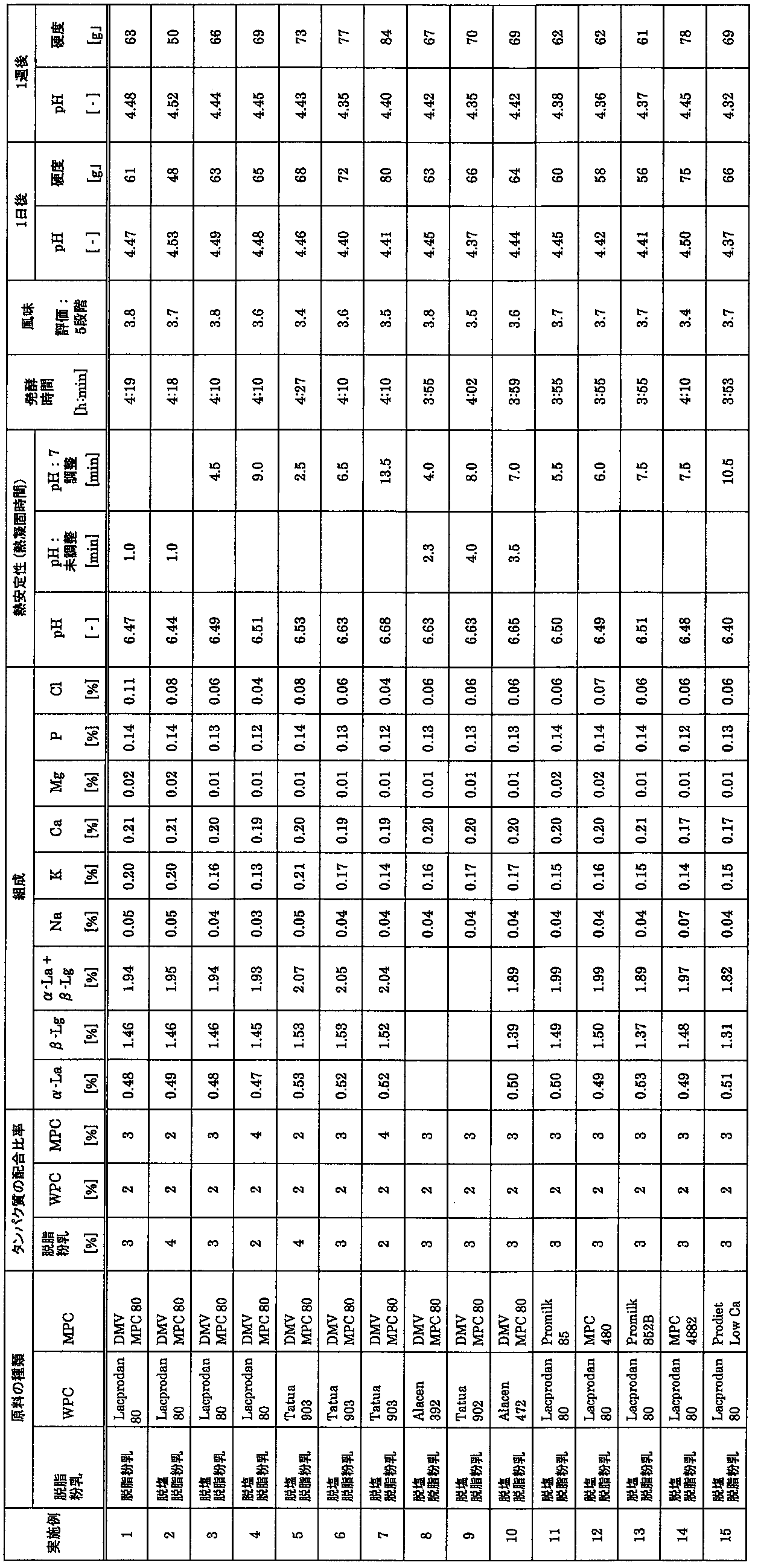
表2に示す結果より、実施例1~15に係る発酵乳では、脱脂粉乳に含まれるタンパク質が20~60質量%、ホエイタンパク質濃縮物に含まれるタンパク質が20~30質量
%、乳タンパク質濃縮物に含まれるタンパク質が20~60質量%となるようにタンパク質原料を配合することによって、濃縮工程を行うことなく、風味および食感に優れた高濃度の発酵乳を製造できることが確認された。
%、乳タンパク質濃縮物に含まれるタンパク質が20~60質量%となるようにタンパク質原料を配合することによって、濃縮工程を行うことなく、風味および食感に優れた高濃度の発酵乳を製造できることが確認された。
また、表3に示す配合割合でタンパク質原料を配合し、実施例1~15と同じ方法により、比較例1~5に係る発酵乳を製造した。比較例1~5に係る発酵乳のタンパク質原料、配合割合、組成、実際に得られた発酵乳の特性を表3に示す。尚、表3に示す熱安定性および硬度の評価値として、上述した測定方法により求めた熱凝固時間および荷重を用いた。

表3に示す結果より、比較例1~5に係る発酵乳では、ホエイタンパク質濃縮物に含まれるタンパク質が全タンパク質の30質量%を超えるように、ホエイタンパク質濃縮物を
配合したが、硬度が高くなり過ぎて、食感が良好とは言えない発酵乳が製造された。
配合したが、硬度が高くなり過ぎて、食感が良好とは言えない発酵乳が製造された。
本発明は、栄養的に良質なタンパク質を高濃度で含む発酵乳を提供することができる。
Claims (2)
- タンパク質を高濃度で含む発酵乳の製造方法であって、
脱脂粉乳と、ホエイタンパク質濃縮物と、乳タンパク質濃縮物とを含む原料乳を発酵させ、
前記脱脂粉乳に含まれるタンパク質と、前記ホエイタンパク質濃縮物に含まれるタンパク質と、前記乳タンパク質濃縮物に含まれるタンパク質の合計を100質量%としたときに、
前記脱脂粉乳に含まれるタンパク質が20~60質量%、
前記ホエイタンパク質濃縮物に含まれるタンパク質が20~30質量%、
前記乳タンパク質濃縮物に含まれるタンパク質が20~60質量%
となるように、前記脱脂粉乳と、前記ホエイタンパク質濃縮物と、前記乳タンパク質濃縮物を配合することを特徴とする、発酵乳の製造方法。 - 前記発酵乳の全質量に占めるタンパク質の割合が5~10質量%であることを特徴とする、請求項1に記載の発酵乳の製造方法。
Priority Applications (1)
| Application Number | Priority Date | Filing Date | Title |
|---|---|---|---|
| JP2017535236A JPWO2017029802A1 (ja) | 2015-08-14 | 2016-08-12 | タンパク質を高濃度で含む発酵乳の製造方法 |
Applications Claiming Priority (2)
| Application Number | Priority Date | Filing Date | Title |
|---|---|---|---|
| JP2015160057 | 2015-08-14 | ||
| JP2015-160057 | 2015-08-14 |
Publications (1)
| Publication Number | Publication Date |
|---|---|
| WO2017029802A1 true WO2017029802A1 (ja) | 2017-02-23 |
Family
ID=58051286
Family Applications (1)
| Application Number | Title | Priority Date | Filing Date |
|---|---|---|---|
| PCT/JP2016/003718 Ceased WO2017029802A1 (ja) | 2015-08-14 | 2016-08-12 | タンパク質を高濃度で含む発酵乳の製造方法 |
Country Status (2)
| Country | Link |
|---|---|
| JP (1) | JPWO2017029802A1 (ja) |
| WO (1) | WO2017029802A1 (ja) |
Cited By (5)
| Publication number | Priority date | Publication date | Assignee | Title |
|---|---|---|---|---|
| JP2020162489A (ja) * | 2019-03-29 | 2020-10-08 | 株式会社ヤクルト本社 | 乳飲食品及びその苦味低減方法 |
| JP2022041686A (ja) * | 2020-09-01 | 2022-03-11 | チチヤス株式会社 | 発酵乳及び発酵乳の製造方法 |
| CN115720931A (zh) * | 2021-08-25 | 2023-03-03 | 内蒙古伊利实业集团股份有限公司 | 一种高蛋白且质构细腻稳定的乳制品及其制备方法 |
| JP2023128244A (ja) * | 2022-03-03 | 2023-09-14 | 森永乳業株式会社 | 便性改善用の発酵組成物 |
| WO2024058230A1 (ja) * | 2022-09-14 | 2024-03-21 | 株式会社明治 | 殺菌発酵乳及びその製造方法 |
Citations (3)
| Publication number | Priority date | Publication date | Assignee | Title |
|---|---|---|---|---|
| JPH07104A (ja) * | 1993-06-14 | 1995-01-06 | Morinaga Milk Ind Co Ltd | 発酵乳及びその製造方法 |
| JPH1128056A (ja) * | 1997-05-13 | 1999-02-02 | Snow Brand Milk Prod Co Ltd | 発酵乳及びその製造法 |
| JP2004283047A (ja) * | 2003-03-20 | 2004-10-14 | Yakult Honsha Co Ltd | 発酵乳およびその製造方法 |
-
2016
- 2016-08-12 JP JP2017535236A patent/JPWO2017029802A1/ja active Pending
- 2016-08-12 WO PCT/JP2016/003718 patent/WO2017029802A1/ja not_active Ceased
Patent Citations (3)
| Publication number | Priority date | Publication date | Assignee | Title |
|---|---|---|---|---|
| JPH07104A (ja) * | 1993-06-14 | 1995-01-06 | Morinaga Milk Ind Co Ltd | 発酵乳及びその製造方法 |
| JPH1128056A (ja) * | 1997-05-13 | 1999-02-02 | Snow Brand Milk Prod Co Ltd | 発酵乳及びその製造法 |
| JP2004283047A (ja) * | 2003-03-20 | 2004-10-14 | Yakult Honsha Co Ltd | 発酵乳およびその製造方法 |
Cited By (7)
| Publication number | Priority date | Publication date | Assignee | Title |
|---|---|---|---|---|
| JP2020162489A (ja) * | 2019-03-29 | 2020-10-08 | 株式会社ヤクルト本社 | 乳飲食品及びその苦味低減方法 |
| JP7398202B2 (ja) | 2019-03-29 | 2023-12-14 | 株式会社ヤクルト本社 | 乳飲食品及びその苦味低減方法 |
| JP2022041686A (ja) * | 2020-09-01 | 2022-03-11 | チチヤス株式会社 | 発酵乳及び発酵乳の製造方法 |
| JP7590135B2 (ja) | 2020-09-01 | 2024-11-26 | チチヤス株式会社 | 発酵乳及び発酵乳の製造方法 |
| CN115720931A (zh) * | 2021-08-25 | 2023-03-03 | 内蒙古伊利实业集团股份有限公司 | 一种高蛋白且质构细腻稳定的乳制品及其制备方法 |
| JP2023128244A (ja) * | 2022-03-03 | 2023-09-14 | 森永乳業株式会社 | 便性改善用の発酵組成物 |
| WO2024058230A1 (ja) * | 2022-09-14 | 2024-03-21 | 株式会社明治 | 殺菌発酵乳及びその製造方法 |
Also Published As
| Publication number | Publication date |
|---|---|
| JPWO2017029802A1 (ja) | 2018-05-31 |
Similar Documents
| Publication | Publication Date | Title |
|---|---|---|
| US7192619B2 (en) | Modified milk protein concentrates and their use in making gels and dairy products | |
| JP5054176B2 (ja) | 濃縮乳タンパク質成分及びそれからプロセスチーズを調製するための方法 | |
| JP7417483B2 (ja) | 乳清タンパク質濃縮物、当該濃縮物を含む酸性化乳製品およびそれらの製造方法 | |
| KR101390464B1 (ko) | 프레쉬 치즈 및 그 제조방법 | |
| WO2017029802A1 (ja) | タンパク質を高濃度で含む発酵乳の製造方法 | |
| JP2018074915A (ja) | 乳タンパク質濃縮物を主原料とした発酵乳およびその製造方法 | |
| CN105454442A (zh) | 一种uht稀奶油及制备方法 | |
| JP2007501609A (ja) | 乳ストリームからの蛋白質組成物の製造、及びチーズの製造における成分としての使用 | |
| JP6749916B2 (ja) | タンパク質を高濃度で含む発酵乳の製造方法 | |
| EP2074887A1 (en) | Increasing the firmness of process cheese by utilizing ingredient synergism | |
| JP2016129500A (ja) | 乳成分入りコーヒー飲料の製造方法 | |
| CA2622691C (en) | Method for improving texture of fermented milk | |
| JP6749774B2 (ja) | 液状発酵乳の製造方法 | |
| WO2014068187A1 (en) | Processed cheese and method of preparation | |
| CN105101807A (zh) | 干酪粉的制备方法以及通过再制的干酪产品制备方法 | |
| JP2018074911A (ja) | 濃厚な発酵乳およびその製造方法 | |
| WO2010084541A1 (ja) | カルシウムイオンにより乳風味が改善された水中油型乳化物 | |
| EP4611546A1 (en) | Cheese preparation | |
| EP3349590B1 (en) | Stabiliser-free cottage cheese, a thickened dairy liquid suitable for its production, and related methods | |
| JP5081883B2 (ja) | カルシウム強化ホエイ含有組成物の製造方法 | |
| JP4101720B2 (ja) | 弱酸性乳加工品の製造方法および弱酸性乳加工品 | |
| JP3894912B2 (ja) | 溶融塩無添加チーズ及びその製造法 | |
| JP2014221033A (ja) | コーヒークリーマーの製造方法 | |
| JP2010029154A (ja) | プロセスチーズ | |
| CN119423164A (zh) | 一种膜浓缩工艺制备的厚乳及其制备方法 |
Legal Events
| Date | Code | Title | Description |
|---|---|---|---|
| 121 | Ep: the epo has been informed by wipo that ep was designated in this application |
Ref document number: 16836796 Country of ref document: EP Kind code of ref document: A1 |
|
| ENP | Entry into the national phase |
Ref document number: 2017535236 Country of ref document: JP Kind code of ref document: A |
|
| NENP | Non-entry into the national phase |
Ref country code: DE |
|
| 122 | Ep: pct application non-entry in european phase |
Ref document number: 16836796 Country of ref document: EP Kind code of ref document: A1 |