WO2017002880A1 - 表面修飾パーライトの製造方法、ろ過助剤、ろ過方法、及び表面修飾パーライト - Google Patents
表面修飾パーライトの製造方法、ろ過助剤、ろ過方法、及び表面修飾パーライト Download PDFInfo
- Publication number
- WO2017002880A1 WO2017002880A1 PCT/JP2016/069338 JP2016069338W WO2017002880A1 WO 2017002880 A1 WO2017002880 A1 WO 2017002880A1 JP 2016069338 W JP2016069338 W JP 2016069338W WO 2017002880 A1 WO2017002880 A1 WO 2017002880A1
- Authority
- WO
- WIPO (PCT)
- Prior art keywords
- pearlite
- modified
- producing
- zeolite
- filtration
- Prior art date
- Legal status (The legal status is an assumption and is not a legal conclusion. Google has not performed a legal analysis and makes no representation as to the accuracy of the status listed.)
- Ceased
Links
Images









Classifications
-
- B—PERFORMING OPERATIONS; TRANSPORTING
- B01—PHYSICAL OR CHEMICAL PROCESSES OR APPARATUS IN GENERAL
- B01D—SEPARATION
- B01D37/00—Processes of filtration
- B01D37/02—Precoating the filter medium; Addition of filter aids to the liquid being filtered
-
- B—PERFORMING OPERATIONS; TRANSPORTING
- B01—PHYSICAL OR CHEMICAL PROCESSES OR APPARATUS IN GENERAL
- B01J—CHEMICAL OR PHYSICAL PROCESSES, e.g. CATALYSIS OR COLLOID CHEMISTRY; THEIR RELEVANT APPARATUS
- B01J20/00—Solid sorbent compositions or filter aid compositions; Sorbents for chromatography; Processes for preparing, regenerating or reactivating thereof
- B01J20/02—Solid sorbent compositions or filter aid compositions; Sorbents for chromatography; Processes for preparing, regenerating or reactivating thereof comprising inorganic material
- B01J20/10—Solid sorbent compositions or filter aid compositions; Sorbents for chromatography; Processes for preparing, regenerating or reactivating thereof comprising inorganic material comprising silica or silicate
- B01J20/16—Alumino-silicates
- B01J20/18—Synthetic zeolitic molecular sieves
-
- B—PERFORMING OPERATIONS; TRANSPORTING
- B01—PHYSICAL OR CHEMICAL PROCESSES OR APPARATUS IN GENERAL
- B01J—CHEMICAL OR PHYSICAL PROCESSES, e.g. CATALYSIS OR COLLOID CHEMISTRY; THEIR RELEVANT APPARATUS
- B01J20/00—Solid sorbent compositions or filter aid compositions; Sorbents for chromatography; Processes for preparing, regenerating or reactivating thereof
- B01J20/30—Processes for preparing, regenerating, or reactivating
-
- C—CHEMISTRY; METALLURGY
- C01—INORGANIC CHEMISTRY
- C01B—NON-METALLIC ELEMENTS; COMPOUNDS THEREOF; METALLOIDS OR COMPOUNDS THEREOF NOT COVERED BY SUBCLASS C01C
- C01B39/00—Compounds having molecular sieve and base-exchange properties, e.g. crystalline zeolites; Their preparation; After-treatment, e.g. ion-exchange or dealumination
- C01B39/02—Crystalline aluminosilicate zeolites; Isomorphous compounds thereof; Direct preparation thereof; Preparation thereof starting from a reaction mixture containing a crystalline zeolite of another type, or from preformed reactants; After-treatment thereof
- C01B39/46—Other types characterised by their X-ray diffraction pattern and their defined composition
-
- C—CHEMISTRY; METALLURGY
- C02—TREATMENT OF WATER, WASTE WATER, SEWAGE, OR SLUDGE
- C02F—TREATMENT OF WATER, WASTE WATER, SEWAGE, OR SLUDGE
- C02F1/00—Treatment of water, waste water, or sewage
- C02F1/28—Treatment of water, waste water, or sewage by sorption
Definitions
- the present invention relates to a method for producing surface-modified pearlite, a filter aid, a filtration method, and surface-modified pearlite.
- Pearlite is a powder obtained by using pearlite as a raw material and foaming by crushing and heat treatment.
- This pearlite contains aluminum silicate as a main component, and is used, for example, as a filter aid.
- Patent Document 1 discloses a method of filtering using perlite as a filter aid.
- This Patent Document 1 discloses that powders such as activated carbon, zeolite, and calcium salt are mixed and used as a filter aid in addition to pearlite.
- Patent Document 2 discloses an artificial zeolite (surface-modified pearlite) in which a part of pearlite is zeoliteized. It is disclosed that this artificial zeolite is produced by heating a mixture containing pearlite and an alkali metal hydroxide in the presence of water.
- zeolite has chemical characteristics such as ion exchange characteristics and adsorption characteristics, and is required to have both the filtration function of perlite and the chemical characteristics of zeolite.
- Patent Document 1 when zeolite is mixed in addition to pearlite and used as a filter aid, the filtration function of pearlite may be greatly reduced due to inclusion of zeolite.
- the artificial zeolite (surface-modified pearlite) described in Patent Document 2 may have a sufficient filtration function when part of the pearlite is zeoliticized. Therefore, there is a problem in that the production cost increases.
- the present invention has been made in view of the above, and an object of the present invention is to provide a method for producing a surface-modified pearlite capable of producing a surface-modified pearlite at a low temperature and suppressing the production cost. Moreover, it aims at providing the filter aid using the manufacturing method of this surface modification perlite, the filtration method using this filter aid, and the surface modification perlite which can be manufactured at low temperature.
- a method for producing a surface-modified pearlite includes a preparation step of adding pearlite and an aluminum salt to an aqueous solution of an alkali metal hydroxide, A heating step of heating the solution obtained in the preparation step.
- the aluminum salt is sodium aluminate
- the alkali metal hydroxide is sodium hydroxide
- the method for producing surface-modified pearlite according to one embodiment of the present invention is characterized in that, in the heating step, the temperature of the solution is heated to 100 ° C. or lower.
- the method for producing surface-modified pearlite according to one embodiment of the present invention is characterized in that, in the heating step, the temperature of the solution is heated to less than 80 ° C.
- the method for producing a surface-modified pearlite according to one embodiment of the present invention is characterized in that the preparation step and the heating step are performed at normal pressure.
- the amount of the pearlite and the aluminum salt is such that the Si / Al molar ratio Si / Al is less than 2.5. Is set.
- the filter aid according to one embodiment of the present invention is characterized by comprising surface-modified pearlite produced by the above-described method for producing surface-modified pearlite.
- the filtration method according to one embodiment of the present invention is characterized in that the above-mentioned filter aid is mixed with the water to be filtered, and the water to be filtered is filtered through the filter medium.
- the surface-modified pearlite according to one embodiment of the present invention has a structure in which zeolite is formed on the surface of pearlite, and a molar ratio Si / Al of Si / Al is 4.3 or less.
- the surface-modified pearlite can be produced at a low temperature, and the production cost can be suppressed.
- FIG. 1 is a flowchart of a method for producing a surface-modified pearlite according to an embodiment of the present invention.
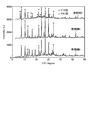
- FIG. 2 is a diagram showing experimental results of the XRD measurement of Example 1.
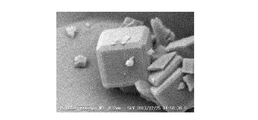
- FIG. 3A is a diagram showing an example of an SEM image of the specimen of Invention Example 2.
- FIG. 3B is a diagram showing an example of an SEM image of the specimen of Invention Example 3.
- FIG. 3C is a diagram showing an example of an SEM image of the specimen of Invention Example 3.
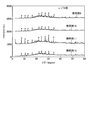
- FIG. 4 is a diagram showing experimental results of XRD measurement in Example 2.
- FIG. 5 is a diagram showing experimental results of XRD measurement of Example 3.
- FIG. 6 is a diagram showing experimental results of XRD measurement of Example 4.
- FIG. 5 is a diagram showing experimental results of XRD measurement of Example 3.
- FIG. 7 is a diagram showing experimental results of XRD measurement of Example 5.
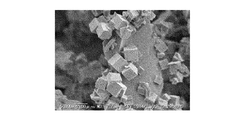
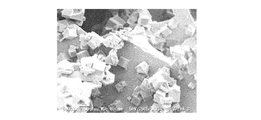
- FIG. 8 is an SEM image showing a state before the experiment in the surface-modified pearlite used in Example 6.
- FIG. 9 is an SEM image showing the state of the surface-modified pearlite after the experiment in Example 6.
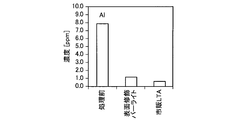
- FIG. 10A is a diagram showing experimental results for Al of Example 6.
- FIG. 10B is a diagram showing experimental results for Cr in Example 6.
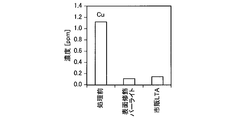
- FIG. 10C is a diagram showing experimental results for Cu in Example 6.
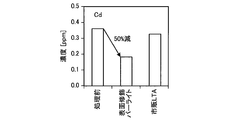
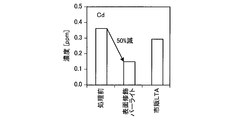
- FIG. 10D is a diagram showing experimental results for Cd of Example 6.
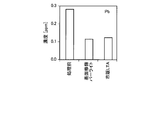
- FIG. 10E is a diagram showing experimental results for Pb of Example 6.
- FIG. 11A is a diagram showing experimental results for Al of Example 6.
- FIG. 11B is a diagram showing experimental results for Cr of Example 6.
- FIG. 11C is a diagram showing experimental results for Cu in Example 6.
- FIG. 11D is a diagram showing experimental results for Cd of Example 6.
- FIG. 11E is a diagram showing experimental results
- the surface-modified pearlite according to the embodiment of the present invention has a structure in which zeolite is formed on the surface of pearlite.
- This surface-modified pearlite contains, for example, Si, Al, K, Na, Fe, Ca, O and the like as constituent elements.
- the Si / Al molar ratio Si / Al is set to 4.3 or less.
- the molar ratio Si / Al between Si and Al is preferably 1.79 or more and 3.75 or less.
- This molar ratio Si / Al can be obtained by conducting a semi-quantitative analysis on the surface-modified pearlite using a fluorescent X-ray analyzer and calculating the molar ratio of Al and Si from the measured weight.
- Pearlite is a powder foamed by crushing and heat treatment using pearlite as a raw material, and its chemical composition has an amorphous structure mainly composed of aluminum silicate.
- This pearlite is porous and lightweight, and has excellent heat insulation, fire resistance, and chemical resistance.
- the particle size of pearlite is, for example, 5 ⁇ m or more and 5000 ⁇ m or less.
- the average particle size of pearlite is preferably 100 ⁇ m or less.
- Zeolite is an aluminosilicate and has ion exchange characteristics and adsorption characteristics.
- Examples of the zeolite include LTA type zeolite and FAU type zeolite.
- This method for producing surface-modified pearlite includes, for example, a preparation step S1, a stirring step S2, an aging step S3, a heating step S4, a suction filtration step S5, and a drying / pulverizing step S6.
- preparation process S1 is performed.
- pearlite and an aluminum salt are prepared and added to an aqueous solution of an alkali metal hydroxide.
- the pearlite is, for example, mass%, SiO 2 : 75.0%, Al 2 O 3 : 14.0%, Fe 2 O 3 : 0.9%, CaO: 0.1%, K 2 O: 4.2. %, Na 2 O: 3.5%, and those having a component composition consisting of the balance are used.
- the aluminum salt is, for example, sodium aluminate, potassium aluminate, aluminum sulfate or the like, and sodium aluminate is used as the aluminum salt in this embodiment.
- the alkali metal hydroxide include sodium hydroxide and potassium hydroxide.
- sodium hydroxide is used as the alkali metal hydroxide.
- perlite and sodium aluminate are added to a 1M (mol / L) aqueous sodium hydroxide solution in the preparation step S1.
- pearlite and sodium aluminate are set such that, for example, the molar ratio Si / Al between Si and Al is less than 2.5.
- the range of preferable Si / Al is 0.5 or more and 2.0 or less, More preferably, it is 0.5 or more and 1.5 or less.
- Si / Al is the ratio of the molar amount of Si in pearlite to the sum of the molar amount of Al in pearlite and the molar amount of Al in sodium aluminate.
- a stirring step S2 a solution obtained by adding pearlite and an aluminum salt to an aqueous alkali metal hydroxide solution is stirred.
- the stirred solution is held for 24 hours.
- heating is performed in the heating step S4.
- it is heated to 100 ° C. or lower at normal pressure without applying pressure. That is, in this embodiment, surface-modified pearlite is produced without using an autoclave.
- zeolite is formed on the surface of the pearlite.
- the heating temperature is preferably 80 ° C. or lower.
- the lower limit of the heating temperature is not particularly limited, but is, for example, 30 ° C. or higher.
- a more preferable heating temperature range is 45 ° C. or higher and 75 ° C. or lower.
- suction filtration process S5 suction filtration is performed with respect to the solution after performing heating process S4. Thereby, the solution is filtered, and the solid and the liquid in the solution are separated.
- the drying / pulverization step S6 the solid separated in the suction filtration step S5 is dried and then pulverized. In this way, the surface-modified pearlite according to this embodiment is manufactured.
- zeolite can be formed on the surface of pearlite to modify the surface of pearlite.
- This surface-modified perlite is formed by substituting the surface of perlite with zeolite, and has both the characteristics of perlite as a filtration function and the characteristics of zeolite as adsorption and cation exchange characteristics. This characteristic can be controlled by adjusting the particle size of pearlite and the amount of zeolite formed.
- zeolite can be synthesized at a lower temperature in the heating step. That is, in the method for producing surface-modified pearlite according to the present embodiment, by adding pearlite to an aqueous solution of an alkali metal hydroxide without adding an aluminum salt, by heating at a lower temperature than in the case of hydrothermal synthesis. Zeolite can be synthesized. Therefore, it is possible to reduce the manufacturing cost by lowering the heating during manufacturing.
- sodium aluminate is used as the aluminum salt and sodium hydroxide is used as the alkali metal hydroxide, so that zeolite can be synthesized efficiently and the heating temperature in the heating process can be lowered. Is possible.
- zeolite in the method for producing a surface-modified pearlite according to the present embodiment, since it is configured as described above, zeolite can be synthesized on the surface of pearlite by heating the temperature of the solution to 100 ° C. or lower in the heating step. .
- zeolite in the method for producing surface-modified pearlite according to the present embodiment, can be synthesized on the surface of pearlite at normal pressure without the need for an apparatus such as an autoclave.
- the above-mentioned surface modification pearlite can be manufactured even by heating at a low temperature of less than 80 ° C.
- the surface-modified pearlite produced by the method for producing a surface-modified pearlite according to the present embodiment can be suitably used as a filter aid, for example.
- This filter aid has both a filtration function and a function of adsorption and cation exchange characteristics. For example, it can be filtered while adsorbing cations of water to be filtered.
- the above-mentioned filter aid is mixed with the water to be filtered, and the water to be filtered is filtered through the filter medium.
- Example 1 Next, examples of the present invention will be described. First, Example 1 will be described. Perlite (LocaHelp 439: Mitsui Metal Mining Co., Ltd.) and sodium aluminate having the masses shown in Table 1 were added to 15 ml of 1M aqueous sodium hydroxide solution and stirred. In addition, Si / Al in a table
- Example 2 Next, a second embodiment of the present invention will be described.
- specimens of Invention Examples 5 to 8 were produced in the same manner as described in Example 1 except that the conditions of Si / Al and heating temperature were changed to the conditions shown in Table 2 ( (See Table 2). Specifically, the heating temperature was set to 75 ° C.
- the crystal structure analysis by XRD and the structure observation by SEM were performed in the same manner as in Example 1. The result of the crystal structure analysis by XRD is shown in FIG. In FIG. 4, the description of the experimental results of Invention Example 7 is omitted.
- Example 3 Embodiment 3 of the present invention will be described.
- specimens of Invention Examples 9 to 12 were produced in the same manner as described in Example 1 except that the heating temperature condition was changed to 45 ° C. (see Table 3).
- the crystal structure analysis by XRD and the structure observation by SEM were performed. The results of crystal structure analysis by XRD are shown in FIG.
- Si / Al is 0.5 or more and 1.5 or less from the balance of the amount of zeolite produced and the ratio of pearlite and zeolite. It is preferable to set the range.
- Example 4 Next, a fourth embodiment of the present invention will be described.
- Example 4 it was investigated whether or not an autoclave was necessary when producing surface-modified pearlite.
- Inventive Example 13 was a surface modified perlite specimen using the autoclave container so that the Si / Al shown in Table 4 was obtained, and the others were the same as the method described in Example 1.
- Inventive Example 14 does not use an autoclave container, but puts the solution in a ceramic container so that the Si / Al shown in Table 4 is obtained. Others are similar to the method described in Example 1, except that the surface-modified pearlite is used.
- a specimen was prepared.
- Example 15 was conducted in the same manner as in Example 1 except that LokaHelp 439 and sodium aluminate shown in Table 4 were added to sodium hydroxide so that a 700 ml solution was obtained in a 1 L resin container. A specimen of modified perlite was prepared.
- Example 5 Next, a fifth embodiment of the present invention will be described.
- Example 5 the relationship between the conversion rate of pearlite to zeolite and time was examined.
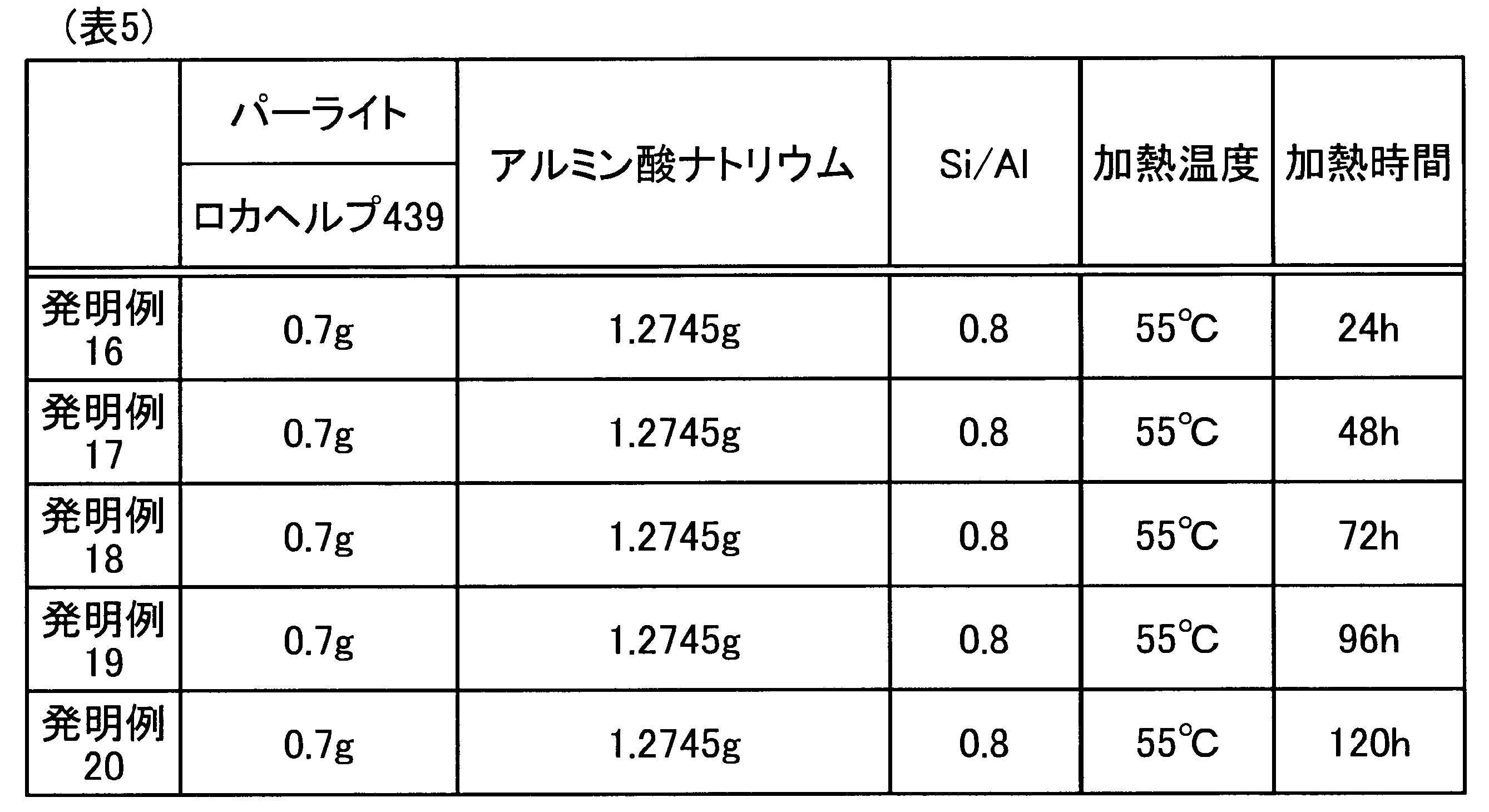
- Samples of Invention Examples 16 to 20 were produced under the conditions shown in Table 5. The heating time was set in the range of 24 h to 120 h.
- the prepared specimen was subjected to crystal structure analysis and structural observation by SEM. Moreover, the ratio of mass% of SiO 2 and Al 2 O 3 in the surface-modified pearlite was determined by fluorescent X-ray analysis, and the molar ratio Si / Al of Si / Al was calculated. The evaluation results are shown in Table 6.
- Example 6 Next, a sixth embodiment of the present invention will be described.
- an ion adsorption test of the surface-modified pearlite was performed.
- a standard solution of Cd, Cu, Pb, Zn (20 ml, 10 ppm) was prepared, and 1 wt% of the adsorbent shown in Tables 7 to 10 was added to the solution and immersed for 1 to 12 hours. I let you. Then, it filtered, collect
- ICP Inductively Coupled Plasma
- Example 6 shows an SEM image of the surface-modified pearlite before the adsorption test.
- Table 7 shows the Cd ion measurement results
- Table 8 shows the Cu ion measurement results
- Table 9 shows the Pb ion measurement results
- Table 10 shows the Zn ion measurement results.
- SEM observation result of the surface modification pearlite after an adsorption test is shown in FIG.
- Example 6 an adsorption test was further performed using mine drainage containing various ions (Al, Cr, Cu, Cd, Pb). The experiment was conducted with the adsorption time being 10 minutes and 30 minutes, and the ratio of the adsorbent to the mine drainage was 10 mg: 10 ml.
- 10A to 10E show the experimental results when the adsorption time is 10 minutes
- FIGS. 11A to 11E show the experimental results when the adsorption time is 30 minutes.
- 10A to 10E and FIGS. 11A to 11E correspond to adsorption tests for various ions (Al, Cr, Cu, Cd, Pb), respectively.
- Example 7 a seventh embodiment of the present invention will be described.
- the cake specific resistance of the surface-modified pearlite was measured.
- a method for measuring cake specific resistance will be described below.
- the beaker is set in the filter.
- the filter paper (No. 2) is fixed to the filter with a clip.
- the two-way cock is closed and the vacuum pump is started, and the negative pressure is adjusted to 200 mmHg.
- a 2 g sample is then weighed into a 300 ml beaker. Add 100 ml of distilled water heated to 30 ° C., stir and pour into the filter.
- the sample adhering to the beaker is poured into the washing bottle.
- the two-way cock is not dropped, and at this time, the negative pressure is set to 200 mmHg.
- the difference between the liquid surface in the filter and the formed cake surface is about 5 mm
- the sample adhering to the inside of the filter is washed away with a washing bottle.
- 250 ml of distilled water (warmed to 30 ° C.) is gently poured into the filter so as not to roughen the cake surface.
- Example 7 an experiment was conducted to measure the cake specific resistance (average specific resistance) a by the above-described method using the specimen prepared in Example 5 as the surface-modified pearlite. Here, experimental data was obtained by varying the negative pressure (pressure). For comparison, an experiment was also conducted to measure the cake specific resistance of RocaHelp 439 that was not surface-modified. The results of this experiment are shown in FIG.
- the surface-modified pearlite produced in this example had a filtration function. Moreover, although the formation amount of the zeolite increased with heating time, it turned out that a big difference is not seen by the filtration function.
- the filtration characteristics can be controlled by controlling the particle size of the initial pearlite, and the adsorption characteristics can be controlled by controlling the synthesis amount of zeolite.
- the method for producing surface-modified pearlite, the filter aid, the filtration method, and the surface-modified pearlite according to the present invention are useful for liquid filtration technology.
Landscapes
- Chemical & Material Sciences (AREA)
- Organic Chemistry (AREA)
- Chemical Kinetics & Catalysis (AREA)
- Life Sciences & Earth Sciences (AREA)
- Engineering & Computer Science (AREA)
- Analytical Chemistry (AREA)
- General Life Sciences & Earth Sciences (AREA)
- Geology (AREA)
- Inorganic Chemistry (AREA)
- Materials Engineering (AREA)
- Hydrology & Water Resources (AREA)
- Environmental & Geological Engineering (AREA)
- Water Supply & Treatment (AREA)
- Silicates, Zeolites, And Molecular Sieves (AREA)
- Solid-Sorbent Or Filter-Aiding Compositions (AREA)
- Filtration Of Liquid (AREA)
- Water Treatment By Sorption (AREA)
Abstract
表面修飾パーライトを低温で製造することができ、製造コストを抑制可能な表面修飾パーライトの製造方法を提供する。また、この表面修飾パーライトの製造方法を用いたろ過助剤、このろ過助剤を用いたろ過方法、及び低温で製造することができる表面修飾パーライトを提供する。パーライトとアルミニウム塩とを、アルカリ金属水酸化物の水溶液に加える調製工程と、該調製工程で得られた溶液を加熱する加熱工程と、を備えることを特徴とする。
Description
本発明は、表面修飾パーライトの製造方法、ろ過助剤、ろ過方法、及び表面修飾パーライトに関する。
パーライトは、真珠岩を原料として、粉砕,加熱処理により発泡させることで得られる粉体である。このパーライトはケイ酸アルミニウムを主成分としており、例えばろ過助剤として使用されている。例えば特許文献1には、パーライトをろ過助剤として用いて、ろ過する方法が開示されている。この特許文献1には、パーライトの他に、活性炭,ゼオライト,カルシウム塩などの粉体を混合してろ過助剤として使用することも開示されている。
また、特許文献2には、パーライトの一部をゼオライト化した人工ゼオライト(表面修飾パーライト)が開示されている。この人工ゼオライトは、パーライトとアルカリ金属水酸化物とを含む混合物を、水の共存下に加熱することによって製造することが開示されている。
ところで、ゼオライトは、イオン交換特性や吸着特性をはじめとする化学特性を有しており、パーライトのろ過機能とゼオライトの化学特性とを両立したものが求められている。しかしながら、特許文献1に記載のように、パーライトの他にゼオライトを混ぜて、ろ過助剤として使用した場合、ゼオライトが含まれることによりパーライトのろ過機能が大きく低下してしまうことがあった。
一方、特許文献2に記載の人工ゼオライト(表面修飾パーライト)は、パーライトの一部をゼオライト化したときに十分なろ過機能が得られる場合があるが、製造時においてパーライトとアルカリ金属水酸化物とを含む混合物を高温に加熱する必要があり、製造コストが増加する問題があった。
本発明は、上記に鑑みてなされたものであって、表面修飾パーライトを低温で製造することができ、製造コストを抑制可能な表面修飾パーライトの製造方法を提供することを目的とする。また、この表面修飾パーライトの製造方法を用いたろ過助剤、このろ過助剤を用いたろ過方法、及び低温で製造することができる表面修飾パーライトを提供することを目的とする。
上述した課題を解決し、目的を達成するために、本発明の一態様に係る表面修飾パーライトの製造方法は、パーライトとアルミニウム塩とを、アルカリ金属水酸化物の水溶液に加える調製工程と、該調製工程で得られた溶液を加熱する加熱工程と、を備えることを特徴とする。
また、本発明の一態様に係る表面修飾パーライトの製造方法において、前記アルミニウム塩はアルミン酸ナトリウムであり、前記アルカリ金属水酸化物は水酸化ナトリウムであることを特徴とする。
また、本発明の一態様に係る表面修飾パーライトの製造方法は、前記加熱工程において、前記溶液の温度を100℃以下に加熱することを特徴とする。
また、本発明の一態様に係る表面修飾パーライトの製造方法は、前記加熱工程において、前記溶液の温度を80℃未満に加熱することを特徴とする。
また、本発明の一態様に係る表面修飾パーライトの製造方法は、前記調製工程及び前記加熱工程を常圧で行うことを特徴とする。
また、本発明の一態様に係る表面修飾パーライトの製造方法は、前記調製工程において、SiとAlのモル比Si/Alが、2.5未満となるように前記パーライトと前記アルミニウム塩との量を設定することを特徴とする。
また、本発明の一態様に係るろ過助剤は、前述の表面修飾パーライトの製造方法により製造された表面修飾パーライトからなることを特徴とする。
また、本発明の一態様に係るろ過方法は、前述のろ過助剤を被ろ過水に混合し、ろ材を通じて該被ろ過水をろ過することを特徴とする。
また、本発明の一態様に係る表面修飾パーライトは、パーライトの表面にゼオライトが形成された構造を有し、SiとAlのモル比Si/Alが4.3以下であることを特徴とする。
本発明によれば、表面修飾パーライトを低温で製造することができ、製造コストを抑制可能である。
以下に、本発明に係る表面修飾パーライトの製造方法、ろ過助剤、ろ過方法、及び表面修飾パーライトの実施形態について説明する。なお、この実施形態によりこの発明が限定されるものではない。また、各図面において、同一又は対応する要素には適宜同一の符号を付し、重複した説明を適宜省略する。
本発明の実施形態に係る表面修飾パーライトは、パーライトの表面にゼオライトが形成された構造を有している。この表面修飾パーライトは、例えば、構成元素の成分として、Si,Al,K,Na,Fe,Ca,Oなどを含んでいる。ここで、本実施形態に係る表面修飾パーライトにおいて、SiとAlのモル比Si/Alが4.3以下とされている。SiとAlのモル比Si/Alは、好ましくは、1.79以上3.75以下である。このモル比Si/Alは、蛍光X線分析装置を用いて表面修飾パーライトに対して半定量分析を行い、測定された重量からAlとSiとのモル比を算出することによって求めることができる。
パーライトは、真珠岩を原料として、粉砕,加熱処理によって発泡させた粉体であり、その化学組成はケイ酸アルミニウムが主成分の非晶質な構造を有する。このパーライトは、多孔質で軽量であり、断熱性・耐火性・耐薬品性に優れている。例えば、表面修飾パーライトにおいて、パーライトの粒径は、例えば5μm以上5000μm以下とされている。表面修飾パーライトをろ過助剤として用いる場合は、パーライトの平均粒径が、100μm以下であることが好ましい。
ゼオライトは、アルミノケイ酸塩であり、イオン交換特性や吸着特性などを有する。このゼオライトは、例えば、LTA型のゼオライトやFAU型のゼオライトがある。
次に、本実施形態に係る表面修飾パーライトの製造方法について図1を参照して説明する。この表面修飾パーライトの製造方法は、例えば、調製工程S1と、撹拌工程S2と、熟成工程S3と、加熱工程S4と、吸引ろ過工程S5と、乾燥・粉砕工程S6と、を備えている。
まず、調製工程S1が行われる。調製工程S1では、パーライトと、アルミニウム塩とを準備し、これらをアルカリ金属水酸化物の水溶液に加える。パーライトは例えば、質量%で、SiO2:75.0%、Al2O3:14.0%、Fe2O3:0.9%、CaO:0.1%、K2O:4.2%、Na2O:3.5%、及び残部からなる成分組成を有するものを使用する。
アルミニウム塩は、例えば、アルミン酸ナトリウム、アルミン酸カリウム、硫酸アルミニウムなどであり、本実施形態ではアルミニウム塩として、アルミン酸ナトリウムを用いる。アルカリ金属水酸化物は、例えば、水酸化ナトリウム、水酸化カリウムなどである。本実施形態では、アルカリ金属水酸化物として、水酸化ナトリウムを用いる。
本実施形態では、調製工程S1において、1M(mol/L)の水酸化ナトリウム水溶液に、パーライト及びアルミン酸ナトリウムを加える。ここで、パーライトと、アルミン酸ナトリウムとを、例えばSiとAlとのモル比Si/Alが2.5未満となるように設定する。好ましいSi/Alの範囲は、0.5以上2.0以下であり、より好ましくは、0.5以上1.5以下である。なお、Si/Alは、パーライト中のSiのモル量と、パーライト中のAlのモル量及びアルミン酸ナトリウム中のAlのモル量を足し合わせたものと、の比を算出したものである。
次いで、撹拌工程S2において、アルカリ金属水酸化物水溶液にパーライトとアルミニウム塩とを加えた溶液を撹拌する。
次いで、熟成工程S3において、撹拌後の溶液を24時間保持する。
次いで、熟成工程S3において、撹拌後の溶液を24時間保持する。
次いで、加熱工程S4において、加熱する。ここで、必要に応じて加圧しても良い。本実施形態では、加圧せずに、常圧において100℃以下に加熱している。すなわち、本実施形態では、オートクレーブを使用せずに表面修飾パーライトの製造を行う。この加熱工程S4において、パーライトの表面にゼオライトが形成される。加熱温度について好ましくは、80℃以下である。加熱温度の下限は特にないが、例えば30℃以上である。より好ましい加熱温度の範囲は、45℃以上75℃以下である。
次いで、吸引ろ過工程S5において、加熱工程S4を行った後の溶液に対して、吸引ろ過を行う。これにより溶液をろ過し、溶液中の固体と液体とを分離する。
次いで、乾燥・粉砕工程S6において、吸引ろ過工程S5で分離された固体を乾燥させた後に、粉砕を行う。このようにして、本実施形態に係る表面修飾パーライトが製造される。
次いで、乾燥・粉砕工程S6において、吸引ろ過工程S5で分離された固体を乾燥させた後に、粉砕を行う。このようにして、本実施形態に係る表面修飾パーライトが製造される。
以上のような構成とされた本実施形態に係る表面修飾パーライトの製造方法においては、パーライトとアルミニウム塩とを、アルカリ金属水酸化物の水溶液に加える調製工程と、調製工程で得られた溶液を加熱する加熱工程とを備えており、この加熱工程においてパーライトの表面にゼオライトを形成し、パーライトの表面を修飾することができる。この表面修飾パーライトは、パーライトの表面がゼオライトに置換されることにより形成されており、ろ過機能としてのパーライトの特性と、吸着や陽イオン交換特性としてのゼオライトの特性とを併せ持つ。また、この特性は、パーライトの粒径及びゼオライトの形成量を調整することで、制御することができる。
また、パーライトとアルミニウム塩とをアルカリ金属水酸化物の水溶液に加える構成とされているので、加熱工程においてより低温でゼオライトを合成することができる。すなわち、本実施形態に係る表面修飾パーライトの製造方法においては、アルミニウム塩を加えずに、パーライトをアルカリ金属水酸化物の水溶液に加え、水熱合成する場合と比較して、より低温の加熱によってゼオライトを合成することができる。したがって、製造時の加熱を低温化することによって製造コストを低減することが可能となる。
また、本実施形態では、アルミニウム塩としてアルミン酸ナトリウムを用い、アルカリ金属水酸化物として水酸化ナトリウムを用いているので、ゼオライトを効率良く合成できるとともに、加熱工程における加熱温度もより低温化することが可能である。
例えば、本実施形態に係る表面修飾パーライトの製造方法においては、上述のような構成とされているため、加熱工程において溶液の温度を100℃以下に加熱することでパーライトの表面にゼオライトを合成できる。また、本実施形態に係る表面修飾パーライトの製造方法においては、オートクレーブのような装置を必要とせず、常圧でパーライトの表面にゼオライトを合成できる。また、本実施形態の表面修飾パーライトの製造方法においては、80℃未満のような低温の加熱でも上述の表面修飾パーライトを製造可能である。
ここで、本実施形態に係る表面修飾パーライトの製造方法により製造される表面修飾パーライトは、例えばろ過助剤として好適に使用することができる。このろ過助剤は、ろ過機能と、吸着や陽イオン交換特性の機能とを併せ持っており、例えば、被ろ過水の陽イオンを吸着しながらろ過することが可能である。ろ過方法は、例えば前述のろ過助剤を被ろ過水に混合し、ろ材を通じて該被ろ過水をろ過するものである。
なお、上記の実施形態により本発明が限定されるものではない。上述した各構成要素を適宜組み合わせて構成したものも本発明に含まれる。また、さらなる効果や変形例は、当業者によって容易に導き出すことができる。よって、本発明のより広範な態様は、上記の実施形態に限定されるものではなく、様々な変更が可能である。
(実施例1)
次に、本発明の実施例について説明する。まず、実施例1について説明する。表1に示す質量のパーライト(ロカヘルプ439:三井金属鉱業(株)社製)及びアルミン酸ナトリウムを、1Mの水酸化ナトリウム水溶液15mlに加え、撹拌した。なお、表中のSi/Alは、実施形態で説明したSi/Alと同じ意味を有する。次いで、撹拌後の溶液を24時間熟成させた後に、55℃に加熱して72時間保持した。次に、この溶液を吸引ろ過により、液体と固体とを分離する。そして、得られた固体を乾燥、粉砕し、発明例1~4の供試体を作製した。
次に、本発明の実施例について説明する。まず、実施例1について説明する。表1に示す質量のパーライト(ロカヘルプ439:三井金属鉱業(株)社製)及びアルミン酸ナトリウムを、1Mの水酸化ナトリウム水溶液15mlに加え、撹拌した。なお、表中のSi/Alは、実施形態で説明したSi/Alと同じ意味を有する。次いで、撹拌後の溶液を24時間熟成させた後に、55℃に加熱して72時間保持した。次に、この溶液を吸引ろ過により、液体と固体とを分離する。そして、得られた固体を乾燥、粉砕し、発明例1~4の供試体を作製した。

上述のようにして得た発明例1~4の供試体に対して、XRD(X-ray Diffraction)による結晶構造解析と、SEM(Scanning Electron Microscope)を用いて組織観察を行った。XRDによる結晶構造解析の結果を図2に示す。また、SEMによる組織観察の結果の例を図3A~Cに示す。
図2に示すように、発明例1~4の供試体では、LTA型のゼオライトが形成されていることが確認された。また、発明例1(Si/Alが2.0のLTA型ゼオライト)では、X線の回折強度が低く、発明例2~4に比べてゼオライトの合成量が低いことが確認された。なお、発明例1のX線回折結果では、非晶質によるブロードなピークの影響が大きくなっている。
また、SEM観察の結果から、発明例1~4の供試体では、パーライトの表面に微細なゼオライトが形成されていることが確認された。図3Aは、発明例2の供試体の2000倍のSEM画像、図3Bは、発明例3の供試体の2000倍のSEM画像、図3Cは、発明例3の供試体の15000倍のSEM画像である。また、SEM観察結果からも、発明例1の供試体は、発明例2~4の供試体と比較して、ゼオライトの合成量が少ないことも確認された。以上のことから、Si/Alが2.0以下ではゼオライトを確実に合成することができ、Si/Alが1.5以下では、よりゼオライトを効率的に合成することができることが確認された。なお、SEMによる組織観察において、EDX(Enerfy Dispersive X-ray spectrometry)装置を用いて組成分析を行うことで、パーライトとゼオライトとを見分けることもできる。
(実施例2)
次に、本発明の実施例2について説明する。実施例2では、Si/Al及び加熱温度の条件を表2に示す条件に変えたこと以外は、実施例1で説明した方法と同様にして、発明例5~8の供試体を作製した(表2参照)。具体的には、加熱温度を75℃に設定した。このようにして作製した発明例5~8の供試体に対して、実施例1と同様に、XRDによる結晶構造解析と、SEMによる組織観察を行った。XRDによる結晶構造解析の結果を図4に示す。なお、図4では、発明例7の実験結果の記載を省略している。
次に、本発明の実施例2について説明する。実施例2では、Si/Al及び加熱温度の条件を表2に示す条件に変えたこと以外は、実施例1で説明した方法と同様にして、発明例5~8の供試体を作製した(表2参照)。具体的には、加熱温度を75℃に設定した。このようにして作製した発明例5~8の供試体に対して、実施例1と同様に、XRDによる結晶構造解析と、SEMによる組織観察を行った。XRDによる結晶構造解析の結果を図4に示す。なお、図4では、発明例7の実験結果の記載を省略している。
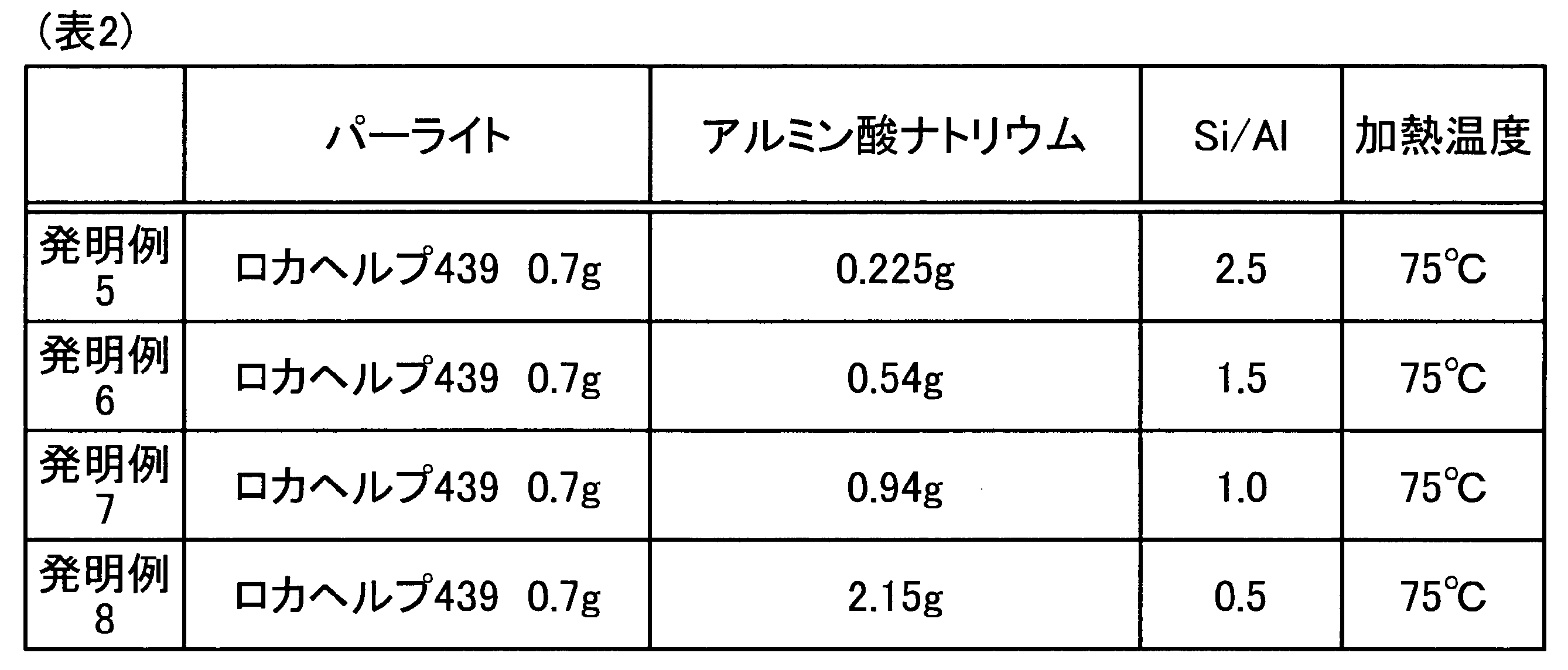
XRDによる結晶構造解析の結果から発明例5~8の供試体は、ゼオライトが形成されていることが確認された。また、55℃で合成した場合よりもX線の回折強度が高く、ゼオライトの結晶性が高くなることも確認された。また、発明例5の供試体では、LTA型及びFAU型のゼオライトが確認された。一方、発明例6~8の供試体では、LTA型のゼオライトが確認された。また、SEM観察の結果から、55℃で作製した場合と比較して、パーライトが少なくなり、ゼオライトが増加することが確認された。Si/Alが2.5の条件で作製された発明例5の供試体では、パーライトの量が特に少ないことが確認された。
(実施例3)
次に、本発明の実施例3について説明する。実施例3では、加熱温度の条件を45℃に変えたこと以外は、実施例1で説明した方法と同様にして、発明例9~12の供試体を作製した(表3参照)。これら発明例9~12の供試体に対して、実施例1と同様に、XRDによる結晶構造解析と、SEMによる組織観察を行った。XRDによる結晶構造解析の結果を図5に示す。
次に、本発明の実施例3について説明する。実施例3では、加熱温度の条件を45℃に変えたこと以外は、実施例1で説明した方法と同様にして、発明例9~12の供試体を作製した(表3参照)。これら発明例9~12の供試体に対して、実施例1と同様に、XRDによる結晶構造解析と、SEMによる組織観察を行った。XRDによる結晶構造解析の結果を図5に示す。
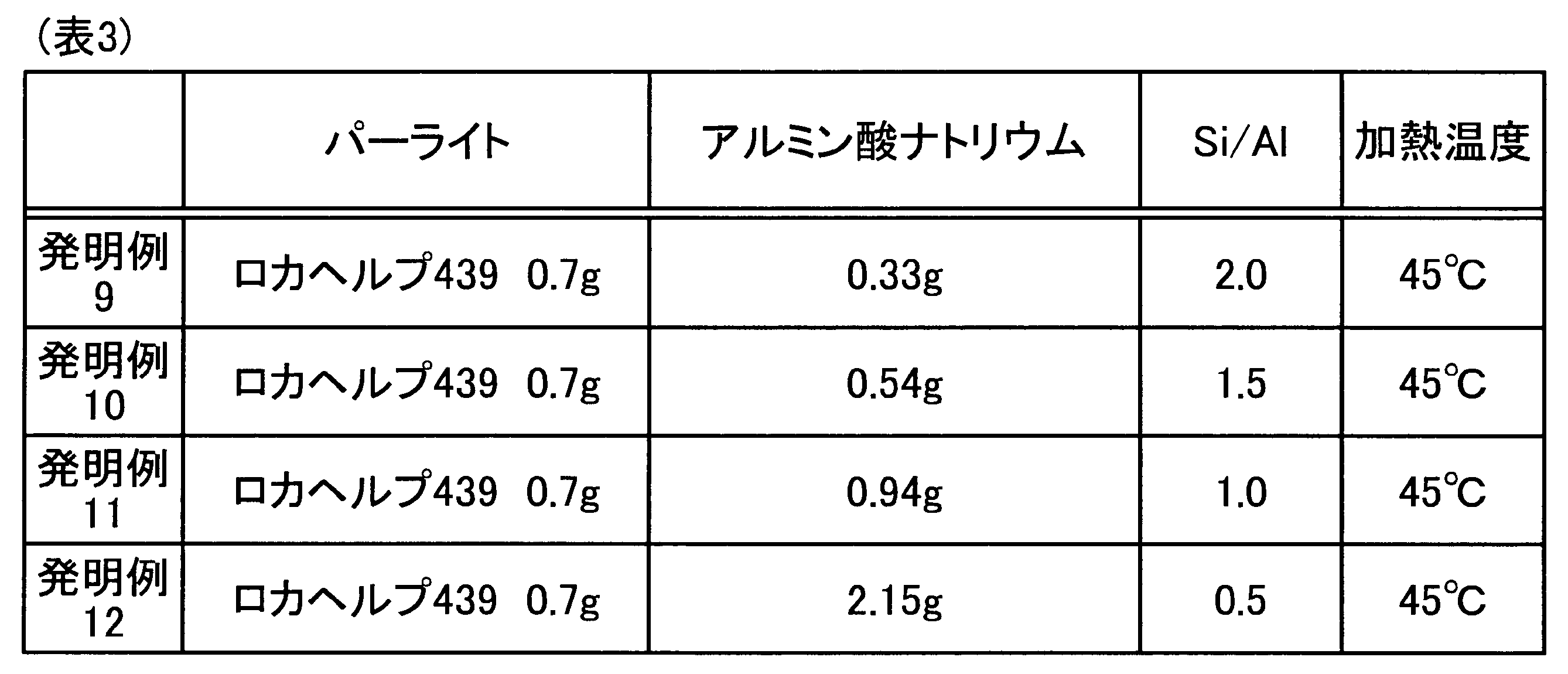
図5に示すように、XRDによる結晶構造解析の結果から、発明例9~12の供試体では、LTA型のゼオライトが形成されていることが確認された。なお、45℃の合成条件では、FAU型のゼオライトは確認されなかった。また、SEM観察の結果からも、パーライトの表面に微細なゼオライトが合成されていることが確認された。
以上の実施例1~3の結果から、加熱温度45℃~75℃の範囲では、ゼオライトの生成量及び、パーライトとゼオライトの割合のバランスから、Si/Alが0.5以上1.5以下の範囲に設定することが好ましい。
(実施例4)
次に、本発明の実施例4について説明する。実施例4では、表面修飾パーライトを作製する際においてオートクレーブが必要か否かについて調べた。発明例13は、オートクレーブ容器を用いて、表4に示すSi/Alとなるようにし、その他は実施例1で説明した方法と同様にして表面修飾パーライトの供試体を作製した。発明例14は、オートクレープ容器を使用せず、セラミックス容器に溶液を入れて、表4に示すSi/Alとなるようにし、その他は実施例1で説明した方法と同様にして表面修飾パーライトの供試体を作製した。発明例15は、1Lの樹脂容器に700mlの溶液となるように、表4に示すロカヘルプ439とアルミン酸ナトリウムとを水酸化ナトリウムに加え、その他は実施例1で説明した方法と同様にして表面修飾パーライトの供試体を作製した。
次に、本発明の実施例4について説明する。実施例4では、表面修飾パーライトを作製する際においてオートクレーブが必要か否かについて調べた。発明例13は、オートクレーブ容器を用いて、表4に示すSi/Alとなるようにし、その他は実施例1で説明した方法と同様にして表面修飾パーライトの供試体を作製した。発明例14は、オートクレープ容器を使用せず、セラミックス容器に溶液を入れて、表4に示すSi/Alとなるようにし、その他は実施例1で説明した方法と同様にして表面修飾パーライトの供試体を作製した。発明例15は、1Lの樹脂容器に700mlの溶液となるように、表4に示すロカヘルプ439とアルミン酸ナトリウムとを水酸化ナトリウムに加え、その他は実施例1で説明した方法と同様にして表面修飾パーライトの供試体を作製した。

これら発明例13~15の供試体に対して、実施例1と同様に、XRDによる結晶構造解析と、SEMによる組織観察を行った。XRDによる結晶構造解析の結果を図6に示す。図6に示すように、発明例13~15の供試体において、LTA型のゼオライトが形成されていることが確認された。また、SEM観察結果からも、パーライトの表面にゼオライトが形成されていることを確認した。この結果から、オートクレーブを使用しなくても、本発明例の表面修飾パーライトを製造できることが確認された。
(実施例5)
次に、本発明の実施例5について説明する。実施例5で、パーライトからゼオライトへの転化率と時間との関係を調べた。表5に示す条件で、発明例16~20の供試体を作製した。加熱時間は、24h~120hの範囲に設定した。
次に、本発明の実施例5について説明する。実施例5で、パーライトからゼオライトへの転化率と時間との関係を調べた。表5に示す条件で、発明例16~20の供試体を作製した。加熱時間は、24h~120hの範囲に設定した。
作製した供試体について、結晶構造解析と、SEMによる組織観察を行った。また、蛍光X線分析により、表面修飾パーライト中におけるSiO2とAl2O3のmass%の割合を求め、さらにSiとAlのモル比Si/Alを算出した。この評価結果を、表6に示す。
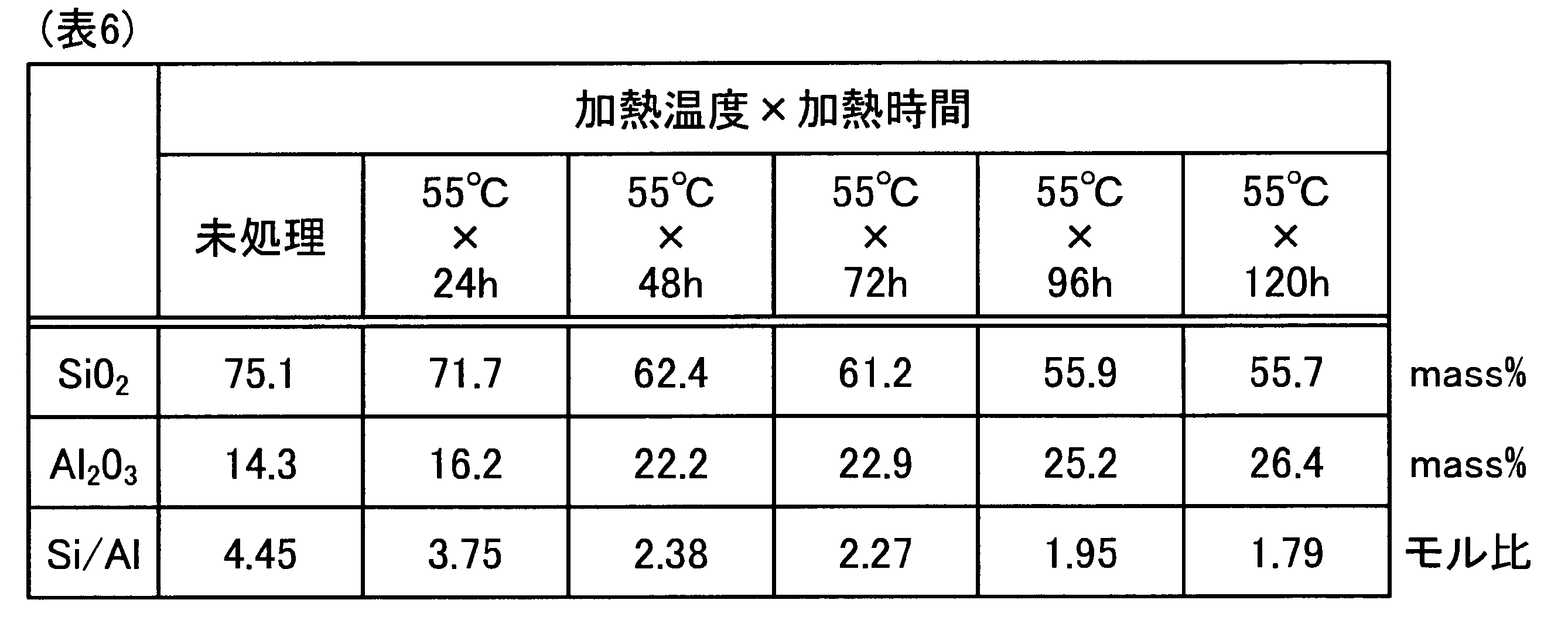
図7に示すように、加熱時間の増加とともに、LTA型のゼオライトのピークが高くなることが確認された。また、蛍光X線分析により得られたSi/Alの結果より、Si/Alが4.45以下1.79以上の範囲で組成が変化することを確認できた。
(実施例6)
次に、本発明の実施例6について説明する。実施例6では、表面修飾パーライトのイオン吸着試験を行った。イオン吸着試験は、Cd、Cu、Pb、Znの標準溶液(20ml、10ppm)の溶液を用意し、吸着剤として表7~10に示すものを溶液に対して1wt%加え、1~12時間浸漬させた。その後、ろ過を行い、ろ液を回収し、ICP(Inductively Coupled Plasma)測定を行った。
次に、本発明の実施例6について説明する。実施例6では、表面修飾パーライトのイオン吸着試験を行った。イオン吸着試験は、Cd、Cu、Pb、Znの標準溶液(20ml、10ppm)の溶液を用意し、吸着剤として表7~10に示すものを溶液に対して1wt%加え、1~12時間浸漬させた。その後、ろ過を行い、ろ液を回収し、ICP(Inductively Coupled Plasma)測定を行った。
なお、吸着剤として、具体的には以下のものを使用した。
試薬LTA型ゼオライト:ゼオラムA-4、粉末(東ソー株式会社製、市販品)
試薬FAU型ゼオライト:HSZ-300(320NAA)(東ソー株式会社製、市販品)
表面修飾パーライト(LTA型)として、実施例6では、発明例4で作製したものを使用した。また、図8に吸着試験前の表面修飾パーライトのSEM画像を示す。
試薬LTA型ゼオライト:ゼオラムA-4、粉末(東ソー株式会社製、市販品)
試薬FAU型ゼオライト:HSZ-300(320NAA)(東ソー株式会社製、市販品)
表面修飾パーライト(LTA型)として、実施例6では、発明例4で作製したものを使用した。また、図8に吸着試験前の表面修飾パーライトのSEM画像を示す。
測定結果を表7~10に示す。なお、表7はCdイオンの測定結果、表8はCuイオンの測定結果、表9はPbイオンの測定結果、表10はZnイオンの測定結果を示している。また、図9に吸着試験後の表面修飾パーライトのSEM観察結果を示す。

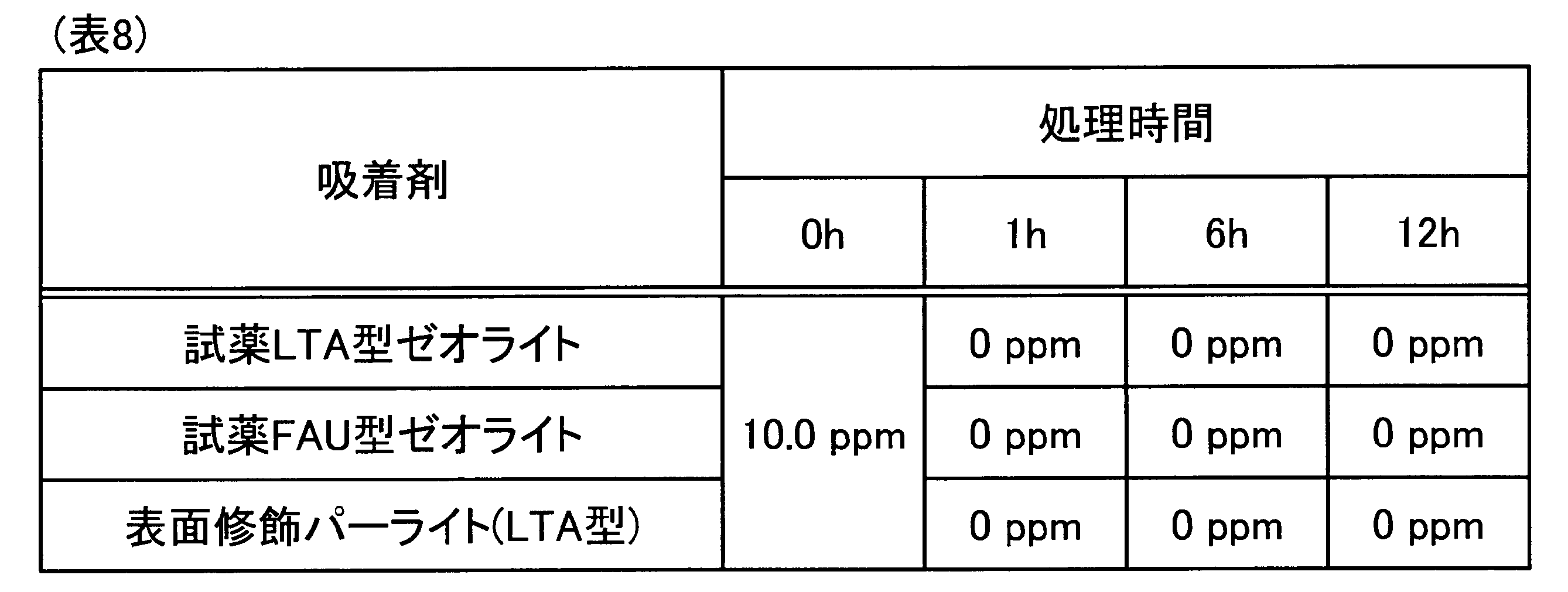


表7~10に示すように、Cd、Cu、Pb、Znのイオンに対して、吸着特性が良好であることが確認された。また、本発明の表面修飾パーライトは、市販品のものと同様に吸着特性を有することが確認された。また、図8及び図9に示す吸着試験前後のSEM画像から、吸着前後で表面修飾パーライトに変化がないことが確認された。
実施例6では、さらに、各種イオン(Al、Cr、Cu、Cd、Pb)を含有した鉱山排水を使用して、吸着試験を行った。吸着時間を10分と30分の2条件で行い、吸着剤と鉱山排水との割合が、10mg:10mlとなるようにして実験を行った。図10A~10Eに、吸着時間10分の時の実験結果、図11A~11Eに、吸着時間30分の時の実験結果を示す。なお、図10A~10E及び図11A~11Eは、それぞれ各種イオン(Al、Cr、Cu、Cd、Pb)に対する吸着試験に対応している。
図10A~10E及び図11A~11Eに示す鉱山排水を使用した実験結果より、本発明に係る表面修飾パーライトが、各種元素を吸着できることを確認した。また、処理時間10分と30分では大きな差がなく、10分でも十分に吸着できることを確認した。
(実施例7)
次に、本発明の実施例7について説明する。実施例7では、表面修飾パーライトのケーキ比抵抗を測定した。まずケーキ比抵抗の測定方法について以下に説明する。
まず、洗ビンに蒸留水を採り、温水器で予め30℃に加温しておく。次に、ビーカーをろ過器内にセットする。次いで、ろ紙(No.2)をろ過器にクリップで固定する。二方コックを閉じて真空ポンプを起動し、負圧を200mmHgに調整する。次いで、サンプル2gを300mlビーカーに量る。30℃に加温した蒸留水100mlを加え撹拌し、ろ過器内に流し込む。このとき、ビーカー内に付着したサンプルは洗ビンで流し込む。次に、二方コックを不落、この時負圧を200mmHgになるようにする。ろ過器内の液面と形成されたケーキ面の差が5mm程度になったらろ過器内側に付着したサンプルを洗ビンにて洗い落とす。この操作を2回行った後、再び液面とケーキ面の差が5mm程度になったら、静かにケーキ面を荒らさないように蒸留水(30℃に加温)250mlをろ過器内に流し込む。ろ過器内にセットした300mlビーカーに溜まったろ過液が200mlより300ml間を通過する100mlのろ過時間θを測定する。ろ過終了後、二方コックを閉じ、ろ過器からケーキを取り出し、ケーキの厚さhcmを測定する。そして、以下の式により、ケーキ比抵抗aを算出する。
k(ろ過速度)=(√(100/θ/1.56))2×1.128
a(ケーキ比抵抗)=1/(k×γ)
ここで、γ(ケーキ嵩密度)は、ろ過前の助剤(表面修飾パーライト)の嵩密度である。
次に、本発明の実施例7について説明する。実施例7では、表面修飾パーライトのケーキ比抵抗を測定した。まずケーキ比抵抗の測定方法について以下に説明する。
まず、洗ビンに蒸留水を採り、温水器で予め30℃に加温しておく。次に、ビーカーをろ過器内にセットする。次いで、ろ紙(No.2)をろ過器にクリップで固定する。二方コックを閉じて真空ポンプを起動し、負圧を200mmHgに調整する。次いで、サンプル2gを300mlビーカーに量る。30℃に加温した蒸留水100mlを加え撹拌し、ろ過器内に流し込む。このとき、ビーカー内に付着したサンプルは洗ビンで流し込む。次に、二方コックを不落、この時負圧を200mmHgになるようにする。ろ過器内の液面と形成されたケーキ面の差が5mm程度になったらろ過器内側に付着したサンプルを洗ビンにて洗い落とす。この操作を2回行った後、再び液面とケーキ面の差が5mm程度になったら、静かにケーキ面を荒らさないように蒸留水(30℃に加温)250mlをろ過器内に流し込む。ろ過器内にセットした300mlビーカーに溜まったろ過液が200mlより300ml間を通過する100mlのろ過時間θを測定する。ろ過終了後、二方コックを閉じ、ろ過器からケーキを取り出し、ケーキの厚さhcmを測定する。そして、以下の式により、ケーキ比抵抗aを算出する。
k(ろ過速度)=(√(100/θ/1.56))2×1.128
a(ケーキ比抵抗)=1/(k×γ)
ここで、γ(ケーキ嵩密度)は、ろ過前の助剤(表面修飾パーライト)の嵩密度である。
実施例7では、表面修飾パーライトとして、実施例5で作製した供試体を使用して、上記した方法によりケーキ比抵抗(平均比抵抗)aを測定する実験を行った。なお、ここでは、負圧(圧力)を変動させて実験データを取得した。また、比較のため、表面修飾をしていないロカヘルプ439のケーキ比抵抗を測定する実験も行った。この実験の結果を図12に示す。
図12に示すように、本実施例で作製した表面修飾パーライトは、ろ過機能を有していることが確認された。また、加熱時間によってゼオライトの形成量は増加しているが、ろ過機能には大きな差は見られないことが分かった。初期のパーライトの粒径を制御することでろ過特性を制御し、ゼオライトの合成量を制御することで吸着特性を制御することができる。
以上のように、本発明に係る表面修飾パーライトの製造方法、ろ過助剤、ろ過方法、及び表面修飾パーライトは、液体のろ過技術に有用である。
Claims (9)
- パーライトとアルミニウム塩とを、アルカリ金属水酸化物の水溶液に加える調製工程と、
該調製工程で得られた溶液を加熱する加熱工程と、を備えることを特徴とする表面修飾パーライトの製造方法。 - 前記アルミニウム塩はアルミン酸ナトリウムであり、前記アルカリ金属水酸化物は水酸化ナトリウムであることを特徴とする表面修飾パーライトの製造方法。
- 前記加熱工程において、前記溶液の温度を100℃以下に加熱することを特徴とする請求項1又は2に記載の表面修飾パーライトの製造方法。
- 前記加熱工程において、前記溶液の温度を80℃未満に加熱することを特徴とする請求項1から3のいずれか一項に記載の表面修飾パーライトの製造方法。
- 前記調製工程及び前記加熱工程を常圧で行うことを特徴とする請求項1から4のいずれか一項に記載の表面修飾パーライトの製造方法。
- 前記調製工程において、SiとAlのモル比Si/Alが、2.5未満となるように前記パーライトと前記アルミニウム塩との量を設定することを特徴とする請求項1から5のいずれか一項に記載の表面修飾パーライトの製造方法。
- 請求項1から6のいずれか一項に記載の表面修飾パーライトの製造方法により製造された表面修飾パーライトからなることを特徴とするろ過助剤。
- 請求項7に記載のろ過助剤を被ろ過水に混合し、ろ材を通じて該被ろ過水をろ過することを特徴とするろ過方法。
- パーライトの表面にゼオライトが形成された構造を有し、SiとAlのモル比Si/Alが4.3以下であることを特徴とする表面修飾パーライト。
Priority Applications (1)
| Application Number | Priority Date | Filing Date | Title |
|---|---|---|---|
| CN201680037330.5A CN107709238A (zh) | 2015-06-29 | 2016-06-29 | 表面修饰珠光体的制造方法、助滤剂、过滤方法、以及表面修饰珠光体 |
Applications Claiming Priority (2)
| Application Number | Priority Date | Filing Date | Title |
|---|---|---|---|
| JP2015130441A JP6467301B2 (ja) | 2015-06-29 | 2015-06-29 | 表面修飾パーライトの製造方法、ろ過助剤、ろ過助剤の製造方法、ろ過方法、及び表面修飾パーライト |
| JP2015-130441 | 2015-06-29 |
Publications (1)
| Publication Number | Publication Date |
|---|---|
| WO2017002880A1 true WO2017002880A1 (ja) | 2017-01-05 |
Family
ID=57608562
Family Applications (1)
| Application Number | Title | Priority Date | Filing Date |
|---|---|---|---|
| PCT/JP2016/069338 Ceased WO2017002880A1 (ja) | 2015-06-29 | 2016-06-29 | 表面修飾パーライトの製造方法、ろ過助剤、ろ過方法、及び表面修飾パーライト |
Country Status (3)
| Country | Link |
|---|---|
| JP (1) | JP6467301B2 (ja) |
| CN (1) | CN107709238A (ja) |
| WO (1) | WO2017002880A1 (ja) |
Cited By (1)
| Publication number | Priority date | Publication date | Assignee | Title |
|---|---|---|---|---|
| CN113185017A (zh) * | 2021-05-20 | 2021-07-30 | 河南农业大学 | 一种便携式发酵尾液原位固定化装置 |
Citations (5)
| Publication number | Priority date | Publication date | Assignee | Title |
|---|---|---|---|---|
| JPS54146300A (en) * | 1978-05-01 | 1979-11-15 | Gen Refractories Co | Manufacture of crystalline analcite zeolite material |
| JPH07144913A (ja) * | 1993-06-15 | 1995-06-06 | Ube Ind Ltd | 高強度、高耐水性を有するゼオライト粒状物の製造 方法 |
| JP2006021982A (ja) * | 2004-07-07 | 2006-01-26 | Okayama Ceramics Gijutsu Shinko Zaidan | 多孔質材料の製造法 |
| JP2014237552A (ja) * | 2013-06-06 | 2014-12-18 | 長崎工業株式会社 | ゼオライト構造物の製造方法 |
| JP2015011012A (ja) * | 2013-07-02 | 2015-01-19 | 株式会社マキノ | 汚染土壌の除染方法 |
Family Cites Families (8)
| Publication number | Priority date | Publication date | Assignee | Title |
|---|---|---|---|---|
| JP2001278620A (ja) * | 2000-03-31 | 2001-10-10 | Taiheiyo Cement Corp | 人工ゼオライトの製造方法 |
| US20040187740A1 (en) * | 2003-03-27 | 2004-09-30 | Research Incubator, Ltd. | Cementitious composition |
| CN100389067C (zh) * | 2005-12-30 | 2008-05-21 | 中国石油大学(北京) | Zsm-5型分子筛的制备方法 |
| KR101334921B1 (ko) * | 2010-12-23 | 2013-12-02 | 한국건설기술연구원 | 양이온 및 음이온 동시 흡착의 기능성 퍼얼라이트 혼합체의 제조방법 및 그로 인해 제조되는 기능성 퍼얼라이트 혼합체 |
| CN103693657B (zh) * | 2012-09-27 | 2016-02-03 | 中国石油大学(北京) | 一种NaY复合物及其制备方法 |
| CN103864092A (zh) * | 2012-12-10 | 2014-06-18 | 国际壳牌研究有限公司 | 复合孔沸石β的合成与应用 |
| CN103204519B (zh) * | 2013-04-15 | 2015-06-03 | 珠海市吉昌稀土有限公司 | 稀土硅铝分子筛的合成方法 |
| CN104276586B (zh) * | 2013-07-03 | 2016-10-05 | 中国石油大学(北京) | 一种丝光沸石的制备方法 |
-
2015
- 2015-06-29 JP JP2015130441A patent/JP6467301B2/ja active Active
-
2016
- 2016-06-29 CN CN201680037330.5A patent/CN107709238A/zh active Pending
- 2016-06-29 WO PCT/JP2016/069338 patent/WO2017002880A1/ja not_active Ceased
Patent Citations (5)
| Publication number | Priority date | Publication date | Assignee | Title |
|---|---|---|---|---|
| JPS54146300A (en) * | 1978-05-01 | 1979-11-15 | Gen Refractories Co | Manufacture of crystalline analcite zeolite material |
| JPH07144913A (ja) * | 1993-06-15 | 1995-06-06 | Ube Ind Ltd | 高強度、高耐水性を有するゼオライト粒状物の製造 方法 |
| JP2006021982A (ja) * | 2004-07-07 | 2006-01-26 | Okayama Ceramics Gijutsu Shinko Zaidan | 多孔質材料の製造法 |
| JP2014237552A (ja) * | 2013-06-06 | 2014-12-18 | 長崎工業株式会社 | ゼオライト構造物の製造方法 |
| JP2015011012A (ja) * | 2013-07-02 | 2015-01-19 | 株式会社マキノ | 汚染土壌の除染方法 |
Cited By (1)
| Publication number | Priority date | Publication date | Assignee | Title |
|---|---|---|---|---|
| CN113185017A (zh) * | 2021-05-20 | 2021-07-30 | 河南农业大学 | 一种便携式发酵尾液原位固定化装置 |
Also Published As
| Publication number | Publication date |
|---|---|
| JP2017014038A (ja) | 2017-01-19 |
| CN107709238A (zh) | 2018-02-16 |
| JP6467301B2 (ja) | 2019-02-13 |
Similar Documents
| Publication | Publication Date | Title |
|---|---|---|
| Ediz et al. | Improvement in filtration characteristics of diatomite by calcination | |
| Alves et al. | Green synthesis and characterization of biosilica produced from sugarcane waste ash | |
| KR102449633B1 (ko) | 낮은 바인더 함량과 낮은 외부 표면적을 갖는 x 제올라이트로 만들어진 제올라이트 흡착제, 상기 흡착제의 제조 방법 및 그것의 용도 | |
| US10532342B2 (en) | Zeolite adsorbent based on mesoporous zeolite | |
| TW201427768A (zh) | 沸石吸附劑,其製法及用途 | |
| JP2022513266A (ja) | ゼオライトおよびその製造方法 | |
| KR102449639B1 (ko) | 제어된 외부 표면적을 갖는 lsx 제올라이트로 만들어진 제올라이트 흡착제, 상기 흡착제의 제조 방법 및 그것의 용도 | |
| JP6380999B2 (ja) | イオン吸着材 | |
| JP6577571B2 (ja) | ゼオライトナノ結晶凝集体 | |
| KR102436077B1 (ko) | 낮은 바인더 함량과 큰 외부 표면적을 갖는 제올라이트 흡착제들, 상기 흡착제들의 제조 방법 및 용도 | |
| Seliem et al. | Synthesis of Na-A zeolites from natural and thermally activated Egyptian kaolinite: characterization and competitive adsorption of copper ions from aqueous solutions | |
| JP2022509255A (ja) | 鉱物組成物 | |
| JP6467301B2 (ja) | 表面修飾パーライトの製造方法、ろ過助剤、ろ過助剤の製造方法、ろ過方法、及び表面修飾パーライト | |
| JP6426213B2 (ja) | 非晶質アルミニウムケイ酸塩及びその製造方法 | |
| Trabelsi et al. | Physico-chemical characterisation of the Douiret sand (Southern Tunisia): Valorisation for the production of Silica Gel | |
| EL-Mekkawi et al. | Stability and thermal transformation studies of Zn2+-and Fe2+-loaded zeolite Y prepared from Egyptian kaolin | |
| JPH119990A (ja) | 窒素吸着剤およびその使用方法 | |
| WO2018124018A1 (ja) | パーライトおよびその製造方法、ならびに水処理方法および水処理材 | |
| CN108499554A (zh) | 一种硅铝材料、制备方法及其应用 | |
| CN108862305A (zh) | 一种利用煤系高岭土合成耐酸性off型分子筛吸附剂的方法 | |
| CN110668462B (zh) | 一种快速合成纳米Fe3O4@NaY磁性复合材料的方法 | |
| WO2024042564A1 (ja) | 重金属吸着剤、浄水材及び重金属吸着剤の製造方法 | |
| Kasai et al. | Synthesis and evaluation of zeolite surface-modified perlite | |
| JP7137860B2 (ja) | トバモライト型ケイ酸カルシウム粒子およびその製造方法、ならびにそれを用いた油脂濾過剤 | |
| González et al. | Trivalent chromium ion removal from aqueous solutions using low-cost zeolitic materials obtained from exhausted FCC catalysts |
Legal Events
| Date | Code | Title | Description |
|---|---|---|---|
| 121 | Ep: the epo has been informed by wipo that ep was designated in this application |
Ref document number: 16817988 Country of ref document: EP Kind code of ref document: A1 |
|
| NENP | Non-entry into the national phase |
Ref country code: DE |
|
| 122 | Ep: pct application non-entry in european phase |
Ref document number: 16817988 Country of ref document: EP Kind code of ref document: A1 |