WO2016199904A1 - ワクチン用アジュバント、ワクチン、及び免疫誘導方法 - Google Patents
ワクチン用アジュバント、ワクチン、及び免疫誘導方法 Download PDFInfo
- Publication number
- WO2016199904A1 WO2016199904A1 PCT/JP2016/067403 JP2016067403W WO2016199904A1 WO 2016199904 A1 WO2016199904 A1 WO 2016199904A1 JP 2016067403 W JP2016067403 W JP 2016067403W WO 2016199904 A1 WO2016199904 A1 WO 2016199904A1
- Authority
- WO
- WIPO (PCT)
- Prior art keywords
- vaccine
- antigen
- administration
- adjuvant
- administering
- Prior art date
- Legal status (The legal status is an assumption and is not a legal conclusion. Google has not performed a legal analysis and makes no representation as to the accuracy of the status listed.)
- Ceased
Links
Images








Classifications
-
- A—HUMAN NECESSITIES
- A61—MEDICAL OR VETERINARY SCIENCE; HYGIENE
- A61K—PREPARATIONS FOR MEDICAL, DENTAL OR TOILETRY PURPOSES
- A61K39/00—Medicinal preparations containing antigens or antibodies
- A61K39/39—Medicinal preparations containing antigens or antibodies characterised by the immunostimulating additives, e.g. chemical adjuvants
-
- A—HUMAN NECESSITIES
- A61—MEDICAL OR VETERINARY SCIENCE; HYGIENE
- A61K—PREPARATIONS FOR MEDICAL, DENTAL OR TOILETRY PURPOSES
- A61K31/00—Medicinal preparations containing organic active ingredients
- A61K31/70—Carbohydrates; Sugars; Derivatives thereof
- A61K31/7088—Compounds having three or more nucleosides or nucleotides
- A61K31/711—Natural deoxyribonucleic acids, i.e. containing only 2'-deoxyriboses attached to adenine, guanine, cytosine or thymine and having 3'-5' phosphodiester links
-
- A—HUMAN NECESSITIES
- A61—MEDICAL OR VETERINARY SCIENCE; HYGIENE
- A61K—PREPARATIONS FOR MEDICAL, DENTAL OR TOILETRY PURPOSES
- A61K31/00—Medicinal preparations containing organic active ingredients
- A61K31/70—Carbohydrates; Sugars; Derivatives thereof
- A61K31/715—Polysaccharides, i.e. having more than five saccharide radicals attached to each other by glycosidic linkages; Derivatives thereof, e.g. ethers, esters
- A61K31/716—Glucans
-
- A—HUMAN NECESSITIES
- A61—MEDICAL OR VETERINARY SCIENCE; HYGIENE
- A61K—PREPARATIONS FOR MEDICAL, DENTAL OR TOILETRY PURPOSES
- A61K38/00—Medicinal preparations containing peptides
- A61K38/16—Peptides having more than 20 amino acids; Gastrins; Somatostatins; Melanotropins; Derivatives thereof
- A61K38/17—Peptides having more than 20 amino acids; Gastrins; Somatostatins; Melanotropins; Derivatives thereof from animals; from humans
- A61K38/19—Cytokines; Lymphokines; Interferons
- A61K38/193—Colony stimulating factors [CSF]
-
- A—HUMAN NECESSITIES
- A61—MEDICAL OR VETERINARY SCIENCE; HYGIENE
- A61K—PREPARATIONS FOR MEDICAL, DENTAL OR TOILETRY PURPOSES
- A61K38/00—Medicinal preparations containing peptides
- A61K38/16—Peptides having more than 20 amino acids; Gastrins; Somatostatins; Melanotropins; Derivatives thereof
- A61K38/17—Peptides having more than 20 amino acids; Gastrins; Somatostatins; Melanotropins; Derivatives thereof from animals; from humans
- A61K38/22—Hormones
-
- A—HUMAN NECESSITIES
- A61—MEDICAL OR VETERINARY SCIENCE; HYGIENE
- A61K—PREPARATIONS FOR MEDICAL, DENTAL OR TOILETRY PURPOSES
- A61K39/00—Medicinal preparations containing antigens or antibodies
- A61K39/0005—Vertebrate antigens
-
- A—HUMAN NECESSITIES
- A61—MEDICAL OR VETERINARY SCIENCE; HYGIENE
- A61K—PREPARATIONS FOR MEDICAL, DENTAL OR TOILETRY PURPOSES
- A61K45/00—Medicinal preparations containing active ingredients not provided for in groups A61K31/00 - A61K41/00
- A61K45/06—Mixtures of active ingredients without chemical characterisation, e.g. antiphlogistics and cardiaca
-
- A—HUMAN NECESSITIES
- A61—MEDICAL OR VETERINARY SCIENCE; HYGIENE
- A61P—SPECIFIC THERAPEUTIC ACTIVITY OF CHEMICAL COMPOUNDS OR MEDICINAL PREPARATIONS
- A61P37/00—Drugs for immunological or allergic disorders
- A61P37/02—Immunomodulators
- A61P37/04—Immunostimulants
-
- A—HUMAN NECESSITIES
- A61—MEDICAL OR VETERINARY SCIENCE; HYGIENE
- A61K—PREPARATIONS FOR MEDICAL, DENTAL OR TOILETRY PURPOSES
- A61K39/00—Medicinal preparations containing antigens or antibodies
- A61K2039/54—Medicinal preparations containing antigens or antibodies characterised by the route of administration
-
- A—HUMAN NECESSITIES
- A61—MEDICAL OR VETERINARY SCIENCE; HYGIENE
- A61K—PREPARATIONS FOR MEDICAL, DENTAL OR TOILETRY PURPOSES
- A61K39/00—Medicinal preparations containing antigens or antibodies
- A61K2039/545—Medicinal preparations containing antigens or antibodies characterised by the dose, timing or administration schedule
-
- A—HUMAN NECESSITIES
- A61—MEDICAL OR VETERINARY SCIENCE; HYGIENE
- A61K—PREPARATIONS FOR MEDICAL, DENTAL OR TOILETRY PURPOSES
- A61K39/00—Medicinal preparations containing antigens or antibodies
- A61K2039/555—Medicinal preparations containing antigens or antibodies characterised by a specific combination antigen/adjuvant
- A61K2039/55511—Organic adjuvants
- A61K2039/55522—Cytokines; Lymphokines; Interferons
-
- A—HUMAN NECESSITIES
- A61—MEDICAL OR VETERINARY SCIENCE; HYGIENE
- A61K—PREPARATIONS FOR MEDICAL, DENTAL OR TOILETRY PURPOSES
- A61K39/00—Medicinal preparations containing antigens or antibodies
- A61K2039/555—Medicinal preparations containing antigens or antibodies characterised by a specific combination antigen/adjuvant
- A61K2039/55511—Organic adjuvants
- A61K2039/55561—CpG containing adjuvants; Oligonucleotide containing adjuvants
-
- A—HUMAN NECESSITIES
- A61—MEDICAL OR VETERINARY SCIENCE; HYGIENE
- A61K—PREPARATIONS FOR MEDICAL, DENTAL OR TOILETRY PURPOSES
- A61K39/00—Medicinal preparations containing antigens or antibodies
- A61K2039/555—Medicinal preparations containing antigens or antibodies characterised by a specific combination antigen/adjuvant
- A61K2039/55511—Organic adjuvants
- A61K2039/55566—Emulsions, e.g. Freund's adjuvant, MF59
-
- A—HUMAN NECESSITIES
- A61—MEDICAL OR VETERINARY SCIENCE; HYGIENE
- A61K—PREPARATIONS FOR MEDICAL, DENTAL OR TOILETRY PURPOSES
- A61K39/00—Medicinal preparations containing antigens or antibodies
- A61K2039/555—Medicinal preparations containing antigens or antibodies characterised by a specific combination antigen/adjuvant
- A61K2039/55511—Organic adjuvants
- A61K2039/55583—Polysaccharides
Definitions
- the present invention relates to a vaccine adjuvant capable of efficiently inducing antigen-specific IgA production in the mucosa, a vaccine containing the same, and the like.
- Patent Document 1 As one method for effectively inducing both mucosal and systemic immune responses via the mucosal surface, the use of various adjuvants for enhancing the immune response has been studied.
- a vaccine for mucosal administration it has been proposed to combine an inactivated antigen of a pathogen with an adjuvant containing double-stranded RNA and glucans (Patent Document 1). It has also been proposed to use a culture of microorganisms belonging to the genus Aureobasidium sp. As an immune adjuvant to be administered intranasally (Patent Document 2). This culture of microorganisms contains ⁇ -1,3-1,6-glucan, and Patent Document 2 proposes to combine the culture with Poly (I: C).
- vaccines administered to local mucous membranes such as the nasal cavity have low efficiency of penetrating the antigen, and it is difficult to appropriately reach the antigen to dendritic cells present in the mucosa.
- an effect is expected only around the administration site, and there is also a problem that induction of a systemic immune response is weak.
- the nasal immune response has a problem that the mucosal immune response cannot be induced in other mucosal tissues such as the digestive tract.
- the present invention provides a vaccine adjuvant capable of simultaneously inducing antigen-specific IgA antibody and Th17 response and antigen-specific IgG antibody and Th1 response as a completely new immunization method, and such an adjuvant. It is an object to provide a vaccine including the same.
- Non-Patent Document 1 shows that the intestinal tract is different from the dendritic cells present in the spleen and bone marrow, and the antigen It is disclosed that specific dendritic cells that can induce specific IgA antibodies and Th17 cells exist. And this special intestinal dendritic cell expresses retinoic acid synthase Raldh2, can synthesize retinoic acid, and this retinoic acid synthesizing ability is essential for the induction of IgA antibody. It is disclosed in Document 1. In addition, Yokota A. et al. Int Immunol. 2009 Apr; 21 (4): 361-377.
- Non-patent Document 2 shows that intestinal dendritic cells are composed of mononuclear cells in the blood in the intestinal mucosa lamina basement. It is disclosed that it is produced by differentiation under the influence of GM-CSF and IL-4 in the intestine.
- the present inventors first treated dendritic cells present in the spleen with GM-CSF, the dendritic cells expressed Raldh2, and antigen-specific IgA antibodies were detected. I found out that I could be guided. Furthermore, it was found that glucans such as ⁇ -1,3-glucan induce Raldh2 expression in dendritic cells, and as a result, dendritic cells acquire the ability to induce antigen-specific IgA antibodies.
- an antigen-specific IgG antibody is induced in the blood, and in the stool It was found that antigen-specific IgA antibodies were induced. In this method, the induction of antigen-specific IgG antibody production lasted for a long time, but IgA antibody production transiently increased and then disappeared. However, when booster immunization was performed by administering only the antigen to the mucosal surface, it was found that a large amount of antigen-specific IgA antibody was induced and IgA production persisted for more than 3 months.
- ⁇ -1,3-glucan used by the present inventors has been reported to activate innate immune receptors other than Dectin-1, but ⁇ -1,3-glucan and CpG oligodeoxynucleotides have also been reported. Since the induction of antigen-specific IgA antibody disappeared in Dectin-1 knockout (KO) mice administered with an adjuvant in combination with an antigen, ⁇ -1,3-glucan was the target of action to induce IgA antibody production It was found that the receptor is Dectin-1. This suggests that a substance that stimulates Dectin-1 has the same effect as that of ⁇ -1,3-glucan.
- the present invention provides [1] Dectin-1 ligand, An adjuvant for a vaccine comprising a TLR agonist; [2] The adjuvant for vaccine according to [1], wherein the Dectin-1 ligand is a Raldh2 gene expression inducer. [3] The adjuvant for vaccines according to [2], wherein the Raldh2 gene expression inducer is granulocyte monocyte colony stimulating factor (GM-CSF) or glucan. [4] Furthermore, the adjuvant for vaccines in any one of [1] to [3] containing incomplete Freund's adjuvant. [5] The adjuvant for vaccine according to any one of [1] to [4], which is administered together with at least one antigen.
- GM-CSF granulocyte monocyte colony stimulating factor
- At least one antigen A vaccine comprising the vaccine adjuvant according to any one of [1] to [5].
- the at least one antigen is a virus, or a part thereof, or a component thereof inactivated or attenuated, a bacterium, a part thereof, or a component thereof inactivated or attenuated, or an allergen.
- [6] or [7] vaccine [9] The vaccine according to any one of [6] to [8], which induces antigen-specific IgA production.
- Administration of the vaccine is performed by administering the vaccine by a method selected from the group consisting of transdermal administration, subcutaneous administration, intradermal administration, and intramuscular administration, according to any one of [6] to [11] The vaccine described.
- the vaccine according to any one of [6] to [12] which is used in an immunization induction method in which booster immunization is performed at least once after a certain period of time has elapsed after administration of the vaccine.
- the booster is performed by administering an antigen by a method selected from the group consisting of oral administration, nasal administration, transmucosal administration, vaginal administration, ophthalmic administration, and intrarectal administration, [13] The vaccine described. [15] The vaccine according to [13] or [14], wherein the booster immunization is performed by administering an antigen without using an adjuvant. [16] At least one antigen; A method of inducing immunity comprising the step of administering a vaccine comprising a vaccine adjuvant comprising a Dectin-1 ligand and a TLR agonist.
- systemic immunity represented by Th1 response and antigen-specific IgG antibody production against a desired antigen by a simple method using a combination of a Dectin-1 ligand and a TLR agonist as an adjuvant. It is possible to effectively induce both the response and the mucosal immune response typified by Th17 response and antigen-specific IgA antibody production, so that both invasion of pathogens and suppression of disease progression can be realized. .
- the immune response is induced using the above adjuvant, the induction of the systemic immune response persists for a long time, while the induction of the mucosal immune response disappears in a relatively short period of time.
- Induction of mucosal immune response can be sustained for a long period of time by boosting by administering to the above. During booster immunization, it is possible to induce a mucosal immune response in a desired site such as the intestinal tract or the respiratory tract by appropriately selecting the administration route of the antigen.
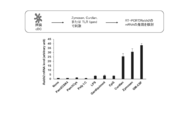
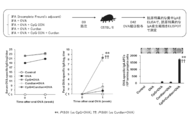
- FIG. 1 shows that spleen-derived dendritic cells stimulated with antigen (OVA), CpG ODN, and GM-CSF were intraperitoneally administered to mice, then antigen was orally administered, and antigen-specific serum total IgG and fecal IgA The result of having measured is shown.
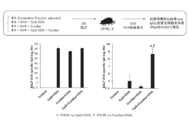
- FIG. 2 shows the results of stimulation of spleen-derived dendritic cells with glucans (zymozan or curdlan) or various TLR agonists and measuring the expression of Raldh2.
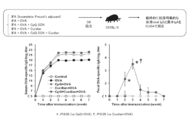
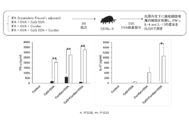
- FIG. 3 shows that an IFA emulsion containing an antigen (OVA) and an adjuvant (CpG ODN and / or curdlan) was intramuscularly administered to mice, and antigen-specific serum total IgG and fecal IgA were measured over time. Results are shown.
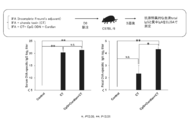
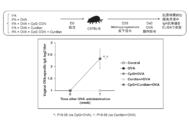
- Fig. 4 shows the results of intramuscular administration of an IFA emulsion containing an antigen (cholera toxin) and an adjuvant (CpG ⁇ ⁇ ⁇ ODN and curdlan) to mice and antigen-specific serum total IgG and fecal IgA measured 3 weeks later. Show.
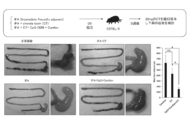
- FIG. 5 shows the results of confirming the symptoms of diarrhea after oral administration of cholera toxin to mice after the experiment of FIG.
- FIG. 5 shows the results of confirming the symptoms of diarrhea after oral administration of cholera toxin to mice after the experiment of FIG.
- FIG. 6 shows that an IFA emulsion containing an antigen (OVA) and an adjuvant (CpG ODN and / or curdlan) was intramuscularly administered to mice, boosted with the antigen after 42 days, and antigen-specific on that day and 1 week later The results of measurement of typical serum total IgG and fecal IgA are shown.
- FIG. 7 shows that IFA emulsion containing an antigen (OVA) and an adjuvant (CpG ODN and / or curdlan) was intramuscularly administered to mice and boosted with the antigen after 42 days. The result of measuring serum total IgG and fecal IgA is shown. After the first boost, a second boost was given at 13 weeks.
- FIG. 8 shows that an IFA emulsion containing an antigen (OVA) and an adjuvant (CpG ODN and / or curdlan) was intramuscularly administered to mice, boosted after 42 days, and spleen and intestinal mucosa from mice 7 days later The results show that the lamina intestinal cells were excised and cultured in the presence of antigen, and the production of IFN- ⁇ , IL-4 and IL-17 was measured after 4 days.
- FIG. 9 shows that an IFA emulsion containing an antigen (OVA) and an adjuvant (CpG ODN and / or curdlan) was intramuscularly administered to mice, and 35 days later, the antigens were administered intranasally for booster immunization.
- FIG. 10 shows that an IFA emulsion containing an antigen (OVA) and an adjuvant (CpG ODN and / or curdlan) was intramuscularly administered to mice, and 35 days later, the antigen was administered intranasally to perform booster immunization. One day later, lamina intestinal cells were extracted from the mouse and cultured in the presence of antigen, and IFN- ⁇ and IL-17 production were measured by ELISA after 4 days.
- OVA antigen
- CpG ODN and / or curdlan an adjuvant
- FIG. 11 shows that an IFA emulsion containing an antigen (OVA) and an adjuvant (CpG ODN and / or curdlan) is intramuscularly administered to mice, Medroxyprogesterone is administered 35 days later, and the antigen is administered intravaginally 42 days later.
- 7 shows the result of measuring antigen-specific IgA in the vaginal lavage fluid 7 days after booster immunization.
- FIG. 12 shows the results of measurement of expression of spleen-derived dendritic cells of dectin-1, which is a receptor for ⁇ -1,3-glucan, with or without stimulation with CpG ODN.
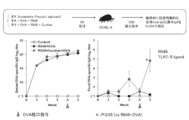
- FIG. 13 shows that an IFA emulsion containing an antigen (OVA) and an adjuvant (R-848 alone, or R-848 and curdlan) was intramuscularly administered to mice, and the antigen was orally administered on day 28 for booster immunization.
- 3 shows the results of measuring antigen-specific serum total IgG and stool IgA over time. A second boost was given 4 weeks after the first boost.
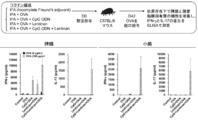
- FIG. 14 shows the results of intramuscular administration of an IFA emulsion containing an antigen (OVA) and an adjuvant (CpG ODN and / or lentinan) to mice, and measuring antigen-specific serum total IgG and fecal IgA over time. Indicates.
- FIG. 1 shows that an IFA emulsion containing an antigen (OVA) and an adjuvant (R-848 alone, or R-848 and curdlan) was intramuscularly administered to mice, and the antigen was orally administered on day 28 for booster immunization.
- FIG. 15 shows that an IFA emulsion containing an antigen (OVA) and an adjuvant (CpG ODN and / or lentinan) was intramuscularly administered to mice, boosted with the antigen 42 days later, and antigen-specific on that day and 1 week later 1 shows the results of measuring serum total IgG and fecal IgA.
- FIG. 16 shows that an IFA emulsion containing an antigen (OVA) and an adjuvant (CpG ODN and / or lentinan) was intramuscularly administered to mice and boosted after 42 days. The results show that the cells in the layer were excised and cultured in the presence of the antigen, and the production of IFN- ⁇ and IL-17 was measured after 4 days.
- FIG. 17 shows that IFA emulsion containing an antigen (OVA) and an adjuvant (CpGNODN and curdlan) was intramuscularly administered to a Dectin-1-deficient mouse, and antigen-specific serum total IgG and fecal IgA were measured 21 days later. The results are shown.
- FIG. 18 shows that an IFA emulsion containing an antigen (OVA) and an adjuvant (CpG ODN and lentinan) was intramuscularly administered to a Dectin-1-deficient mouse, boosted with the antigen 42 days later, and antigens on that day and 1 week later The result of measuring specific serum total IgG and fecal IgA is shown.
- FIG. 18 shows that an IFA emulsion containing an antigen (OVA) and an adjuvant (CpG ODN and lentinan) was intramuscularly administered to a Dectin-1-deficient mouse, boosted with the antigen 42 days later, and antigen
- the adjuvant for vaccines according to the present invention includes a Dectin-1 ligand and a TLR agonist.
- the term “vaccine” is a pharmaceutical product used for the purpose of preventing infectious diseases, and includes inactivated or attenuated antigens.
- an immune response is induced, and thereafter, infections (including allergic reactions) caused by antigens contained in the vaccine can be prevented from becoming ill or severe.
- infections including allergic reactions
- the adjuvant for vaccine according to the present invention has the effect of the present invention will be described mainly through the effect of the vaccine of the prior art (or the adjuvant for vaccine) and the physiological function of animals.
- vaccines administered to mucous membranes such as nasal or oral induce mucosal immune response and systemic immune response
- vaccines administered by conventional intramuscular injection do not induce mucosal immune response
- Only a systemic immune response is induced.
- dendritic cells are present throughout the tissue, and when an antigen that has entered the body is recognized, it moves to nearby lymph nodes, induces an antigen-specific response including antibody production, and propagates throughout the body.
- dendritic cells in mucosal tissues and lymph nodes attached thereto have a function of inducing IgA antibody production, unlike dendritic cells in non-mucosal tissues.
- the induced IgA antibody-producing cells are promoted to migrate to the accompanying mucosal tissue under the influence of such dendritic cells and exert strong local protection. It is speculated that this difference in the characteristics of the dendritic cells greatly affects the difference in effect between when the vaccine is administered to the mucosa and when the vaccine is administered intramuscularly. Therefore, in conventional vaccines, even when administered intramuscularly, there are no dendritic cells that can induce IgA, so mucosal immune responses cannot be induced, and mucosal membranes must be immunized without immunization through the mucosal surface. Immune response is not induced.
- the efficiency of inducing an immune response is lower in a mucosal tissue than when a vaccine is administered to a mucosa and a vaccine is administered to a non-mucosal tissue.
- One of the factors is that it is difficult to efficiently pass the antigen through the mucosa to reach the dendritic cells inside.
- the epithelial layer is a physical barrier on the surface of the mucous membrane (for example, the epithelial cells are tightly bonded to form a small gap layer), and the fluid mucus Examples include diffusion of the antigen and degradation of the antigen by digestive enzymes.
- nasal immunization is often performed because the nasal mucosa is relatively thinner than other mucous membranes, but the immunity induction efficiency is still insufficient.
- a bacterial toxin that destroys the epithelial layer can be used as an adjuvant, but in the case of the nasal cavity, the nerve is damaged and the olfactory disturbance (because the olfactory bulb is close) or the face May cause paralysis.
- Another factor is the development of a mechanism that causes an immune response (immune tolerance) to antigens in mucosal tissues.
- the mucous membranes such as the nasal cavity and intestinal tract are exposed to a wide variety of foreign antigens on a regular basis, and usually maintain a negative response to them.
- the digestive tract has a system called oral tolerance, and has a mechanism for strongly suppressing immunity to food. For this reason, an oral vaccine does not activate immunity but conversely suppresses it.
- the defense response is induced when the pathogen invades because the body component of the pathogen activates the innate immune receptor to induce inflammation and release the negative response. Therefore, in order to increase the induction efficiency of the immune response, the combined use of conventional adjuvants that activate innate immune receptors is attempted, but there is also a problem with the above-mentioned permeability, compared to intramuscular immunization that directly injects the antigen into the body. The effect is not enough.
- adjuvants are sometimes used in combination with the purpose of activating dendritic cells to increase the efficiency of induction of immune responses, which mainly enhances the Th1 response effective to combat infected pathogens. It is aimed.
- non-mucosal tissue dendritic cells usually have no IgA-inducing function, and the idea of combining adjuvants with the purpose of adding IgA-inducing function to such dendritic cells is known. Absent.
- antigen administration to the mucosal surface in addition to intramuscular immunization.
- Systemic immune response including strong antigen-specific Th1 response, and antigen-specificity in combination with Dectin-1 ligand that transforms dendritic cells into mucosal type and TLR agonists that activate dendritic cells IgA-producing memory cells and antigen-specific Th17 cells can be induced and transferred to the mucosa throughout the body.
- a larger amount of antigen-specific IgA can be induced by loading at least the antigen on the mucosal surface where IgA induction is desired.
- the vaccine adjuvant and immunity induction method according to the present invention have the characteristics of dendritic cells present in the mucous membranes and, if memory IgA is present, IgA-producing cells proliferate rapidly due to antigen loading, and a large amount of It is an epoch-making thing that was devised after knowing the details of the mucosal immune response that induces IgA, and can acquire all the advantages of conventional intramuscular immunization and mucosal immunity.
- the term “adjuvant” means a substance that, when administered together with an antigen, enhances its antigenicity and facilitates an immune response.
- Dectin-1 ligand and TLR agonist described in detail below are used as an adjuvant.
- the vaccine adjuvant may be a composition containing a Dectin-1 ligand and a TLR agonist, but from the viewpoint of storage stability of the adjuvant, the Dectin-1 ligand and the TLR agonist may be separate.
- the term “Dectin-1” is a receptor in dendritic cells, and is a receptor specific for a substance having a glucan skeleton represented by ⁇ -1,3-glucan.
- the “Raldh2 gene” is known as an enzyme whose translation product catalyzes the synthesis of retinoic acid from retinal.
- the “Raldh2 gene” may be a gene in any organism, but is known as ALDH1A2 in humans.
- Human Raldh2 mRNA is indicated by Genbank accession number: NM_001206897
- human Raldh2 protein is indicated by Genbank accession number: NP_001193826
- mouse Raldh2 mRNA is indicated by Genbank accession number: NM_009022
- mouse Raldh2 protein is Genbank accession number. : NP_033048
- Dectin-1 ligand means a substance that specifically binds to Dectin-1 and includes agonists that bind to Dectin-1. Further, since it is presumed that the Dectin-1 ligand exerts the action of the present invention through the induction of Raldh2 expression, it is preferably a Raldh2 expression inducer.
- Raldh2 expression inducer means a substance that significantly increases the expression of Raldh2 in at least dendritic cells by administration, or a composition containing the substance.
- expression includes both the concept of transcription in which mRNA is synthesized based on the sequence of DNA and translation in which protein is synthesized based on the sequence of mRNA. Used.
- the Raldh2 expression inducer is not particularly limited as long as it significantly increases Raldh2 expression (transcription or translation) in dendritic cells.
- Raldh2 expression transcription or translation
- GM-CSF granulocyte monocyte colony stimulating factor
- glucan is not particularly limited as long as it is a substance having a glucan skeleton generally called glucan and can obtain the effects of the present invention, for example, ⁇ -1,3-glucan Is mentioned.
- ⁇ -1,3-glucan may have a structure in which the main chain is a structure in which glucose is connected by ⁇ -1,3 bonds, and the side chain may have a structure in which glucose is connected by ⁇ 1-6 bonds or the like. Good.
- Specific examples of ⁇ -1,3-glucan include curdlan, carboxymethylated curdlan, schizophyllan, zymosan, and lentinan.
- ⁇ -1,3-glucan is preferable from the viewpoint of acting more reliably as a Dectin-1 ligand.
- TLR agonist refers to a molecule that, when bound to TLR, provides the same stimulation as when a natural ligand is bound to TLR.
- TLR agonists also include natural ligands.
- the TLR agonist may be an agonist for any TLR.
- a known or commercially available TLR agonist can be used.
- Examples of TLR agonists include TLR1-9 agonists. These TLR agonists exhibit a common action because, for example, TLR1 to 9 have homology between human and mouse.
- TLR1 agonists include various triacyl lipopeptides, functional fragments or analogs thereof, Pam3Cys-Ser- (Lys) 4, and the like.
- TLR2 agonists include various lipopeptides, peptidoglycans, heat shock proteins, functional fragments or analogs thereof, Pam3Cys-Ser- (Lys) 4, MALP-2, FSL-1, and Hib-OMPC.
- TLR3 agonist include double-stranded RNA analogs such as double-stranded RNA and polyinosine polycytidic acid (Poly (I: C)).
- TLR4 agonists include various lipopolysaccharides, heat shock proteins, fibrinogen, heparin sulfate, hyaluronic acid, and functional fragments or analogs thereof, aminoalkyl glucosaminide phosphate (AGP), monophosphoryl lipid A (MPLA), RC- 529 etc. are mentioned.
- AGP aminoalkyl glucosaminide phosphate
- MPLA monophosphoryl lipid A
- RC- 529 etc. are mentioned.
- TLR5 is specifically expressed in CD11c-positive cells in the lamina limbal of the small intestine, and is known to recognize the pathogen bacterial flagellin and induce an immune response.
- TLR5 agonists include recombinant flagellin and CBLB502.
- TLR6 agonists include various diacyl lipopeptides, functional fragments or analogs thereof, FSL-1, Pam2Cys, and the like.
- TLR7 recognizes virus-derived single-stranded RNA and activates the innate immune system.
- TLR7 agonists include Imiquimod and its derivatives R-848, Loxoribine, Bropirimine, and Gardiquimod. Imiquimod, Loxoribine, Gardiquimod, and R-848 are also known as human TLR8 agonists.
- TLR9 recognizes bacterial and viral CpG oligodeoxynucleotides (CpG ODN) and activates the innate immune system.
- CpG ODN refers to a short synthetic oligodeoxynucleotide containing a CpG motif.
- CpG ODN can also be used as the TLR9 agonist used in the vaccine adjuvant according to the present invention, but is not limited thereto.
- a person skilled in the art can appropriately design CpG ODN to be a TLR9 agonist, and a commercially available one can also be used.
- CpG ODN may be a salt thereof, for example, a sodium salt.
- CpG ODN may be unmethylated CpG ODN.
- CpG-ODN 1668, 2006, 1826, 2395 and the like can be mentioned.
- TLR7 agonists TLR2 agonists, TLR4 agonists, TLR5 agonists, TLR7 agonists, and TLR9 agonists that can exhibit a similar response in cells are preferable from the viewpoint of reliably achieving the effects of the present invention, TLR7 agonists, and More preferred are TLR9 agonists.
- the TLR7 agonist may be a TLR8 agonist.
- One embodiment of the vaccine adjuvant according to the present invention includes incomplete Freund's adjuvant in addition to the Dectin-1 ligand and the TLR agonist.
- “Freund's adjuvant” is an adjuvant that forms a water-in-oil emulsion.
- incomplete Freund's adjuvant an agent that does not contain heat-killed Mycobacterium tuberculosis is called incomplete Freund's adjuvant. Call.
- the vaccine adjuvant according to the present invention may contain an additional adjuvant substance other than the Dectin-1 ligand and the TLR agonist as long as the effects of the present invention are obtained.
- additional adjuvant substances include aluminum hydroxide, sodium hydroxide, aluminum phosphate, calcium phosphate, alum, carboxyvinyl polymer and other precipitating adjuvants, Freund's complete adjuvant, liquid paraffin, lanolin, montanaide ISA763AV, montanaide ISA51 Etc.
- the adjuvant for vaccines according to the present invention is preferably an adjuvant for administration together with at least one antigen in order to achieve the effects of the present invention more reliably.
- the antigen used here is the same as the antigen used in the vaccine below.
- the vaccine according to the present invention comprises at least one antigen in addition to the vaccine adjuvant according to the present invention.
- the vaccine may be a vaccine composition containing the vaccine adjuvant and the antigen.
- the vaccine adjuvant and the antigen may be separate from the viewpoint of storage stability of the vaccine.
- antigen is a generic term for foreign substances that enter the living body from the outside or a part thereof and that cause an immune reaction in the living body.
- Antigens include foreign pathogens such as bacteria and viruses that cause various infectious diseases, and allergens that cause allergic reactions among pollen and food.
- Non-limiting examples of viral antigens include influenza virus, norovirus, rotavirus, human papilloma virus, varicella virus, measles virus, mumps virus, poliovirus, adenovirus, herpes virus, human coronavirus, rubella virus, HIV, smallpox Examples include at least one virus selected from the group consisting of virus, Ebola virus, hepatitis virus, Japanese encephalitis virus, parvovirus, cowpox virus, or a part thereof, or a component thereof inactivated or attenuated.
- Non-limiting examples of bacterial antigens include the group consisting of E. coli such as H.
- influenzae pneumococci, pertussis, tetanus, diphtheria, tuberculosis, enterohemorrhagic E. coli, cholera, salmonella, and methicillin-resistant Staphylococcus aureus
- allergens include pollen (cedar pollen, grass pollen, asteraceae pollen, etc.), fungi, insects, food (soybeans, eggs, milk, etc.), and drugs (penicillin etc.).
- the vaccine according to the present invention induces a mucosal immune response typified by antigen-specific IgA antibody production and Th17 response in addition to systemic immune response typified by antigen-specific IgG antibody production and Th1 response.
- a mucosal immune response typified by antigen-specific IgA antibody production and Th17 response in addition to systemic immune response typified by antigen-specific IgG antibody production and Th1 response.
- Whether or not a mucosal immune response has been induced can be confirmed by a known in-vitro or in-vivo method. For example, in the case of in vivo, the amount of antigen-specific IgA antibody in serum or stool is measured by ELISA or the like, and if the amount of antibody increases, it can be determined that a mucosal immune response has been induced.
- IgA antibody-producing cells such as Peyer's patch cells are cultured, and the amount of antigen-specific IgA antibody contained in the culture supernatant is measured by ELISA or the like, and if the amount of the antibody increases It can be determined that a mucosal immune response was induced.
- Whether or not a systemic immune response has been induced can also be confirmed by a known in-vitro or in-vivo method.
- the amount of antigen-specific IgG antibody in serum is measured by ELISA or the like, and if the amount of antibody increases, it can be determined that a systemic immune response has been induced.
- the vaccine according to the present invention may be administered by any method as long as it can induce a systemic immune response and a mucosal immune response, and includes, for example, transdermal administration, subcutaneous administration, intradermal administration, and intramuscular administration. It can be administered by a method selected from the group.
- transdermal administration by a method selected from the group consisting of transdermal administration, subcutaneous administration, intradermal administration, and intramuscular administration
- systemic Th1 response and IgG antibody production are more efficiently induced.
- intramuscular administration is a concept including terms such as intramuscular injection, intramuscular injection, intramuscular administration, and intramuscular immunity.
- the production of antigen-specific IgG antibody lasts for a long period (at least 10 weeks), and the production of antigen-specific IgA antibody peaks at 2-3 weeks after administration. It will last to the extent that the present inventors can maintain a very high titer of antigen-specific IgA antibody production for about 3 months by performing additional immunization in which only the antigen is administered to the mucosal surface after a certain period of time has elapsed since the vaccine administration, Further, it was found that antigen-specific IgA antibody production can be repeatedly recovered and maintained by repeating booster immunization in which at least an antigen is administered to various mucosal surfaces. It was also found that a strong antigen-specific Th17 response can be induced on the mucosal surface by administration of antigen in booster immunization.
- booster immunization with administration of antigen may be performed by any method as long as IgA antibody production can be recovered and maintained, such as oral administration, nasal administration, transmucosal administration, Examples include administration methods applied directly to the mucosa, such as vaginal administration, ophthalmic administration, or rectal administration.
- administration methods applied directly to the mucosa such as vaginal administration, ophthalmic administration, or rectal administration.
- the antigen may be administered without using an adjuvant, or the antigen may be administered together with an adjuvant.
- antigen-specific IgA production in the lung can be induced by boosting nasally, and antigen-specific IgA production in the digestive tract can be induced by oral administration. It has been confirmed to induce.
- it is a vaccine against human papillomavirus that causes cervical cancer, it may be possible to prevent infection by administering vaginal administration.
- booster immunization may be performed when it is desired to induce a mucosal immune response.
- a vaccine containing several kinds of antigens is administered in advance, and if a booster immunization is performed with an antigen that is expected to be prevalent in that year prior to the season when influenza is prevalent every year, Mucosal immunity can suppress influenza virus infection itself.
- the present invention also includes an immunity induction method including a step of administering the vaccine according to the present invention.
- an immunity induction method further comprising a step of administering an antigen and performing booster at least once after a certain period of time after the step of administering the vaccine.
- the present invention relates to a viral or bacterial infection comprising the step of administering a vaccine comprising an antigen derived from at least one virus or bacterium, a Dectin-1 ligand, and an adjuvant for a vaccine comprising a TLR agonist. Also includes prevention methods. Moreover, the method of preventing the infection of the virus or bacteria further including the process which administers an antigen and performs additional immunization after progress for a fixed period after the process of administering the said vaccine is also included. “Prevention method” means a method of preventing an infection or allergic reaction caused by an antigen before it develops.
- the term “vaccine” is a pharmaceutical product used for the purpose of preventing infectious diseases, and includes inactivated or attenuated antigens. When a vaccine is administered to an animal such as a human, it induces an immune response, and thereafter can prevent the disease from becoming serious or serious due to an antigen contained in the vaccine.
- the present invention also provides a method for treating a viral infection or bacterial infection, comprising a step of administering an immunity-inducing agent comprising a Dectin-1 ligand and a TLR agonist to a subject infected with a viral or bacterial infection.
- an immunity-inducing agent comprising a Dectin-1 ligand and a TLR agonist
- the treatment method of the viral infection or the bacterial infection which further includes the process of administering an antigen and performing additional immunization after progress for a fixed period after the process of administering the said immunity inducer is included.
- “Therapeutic method” means a method of treating an infection or allergic reaction caused by an antigen after it has developed.
- the step of administering the vaccine may be performed by any method as long as it can induce a systemic immune response and a mucosal immune response. It can be administered by a method selected from the group consisting of administration, subcutaneous administration, intradermal administration, and intramuscular administration.
- the vaccine By administering the vaccine by a method selected from the group consisting of transdermal administration, subcutaneous administration, intradermal administration, and intramuscular administration, the vaccine consists of transdermal administration, subcutaneous administration, intradermal administration, and intramuscular administration.
- Administration by a method selected from the group induces a systemic Th1 response and IgG antibody production more efficiently. Among them, it is preferable to administer the vaccine for intramuscular administration.
- “after a certain period of time” may be any time after the disappearance of IgA antibody production induction by the first vaccine administration. For example, it can be 3 weeks, 2 to 3 months, 1 year, or several years after administration of the vaccine, and boosting may be performed when it is desired to induce a mucosal immune response.
- the antigen may be administered by any method as long as the step of boosting at least once by administering the antigen can recover and maintain IgA antibody production.
- examples include oral administration, nasal administration, transmucosal administration, vaginal administration, ophthalmic administration, and rectal administration.
- the administration method applied directly to the mucous membrane Th17 response and IgA antibody production is more efficiently induced in the desired mucosa such as intestinal tract and airway, and more easily by oral administration Can be administered.
- the antigen may be administered, or the antigen may be administered together with an adjuvant.
- IgA-induced splenic cDC from spleen-derived classical dendritic cells (“spleen cDC”) stimulated with GM-CSF were treated with ovalbumin (OVA; 100 ⁇ g / ml) as an antigen and CpG ODN 1668 (1 ⁇ g / ml) as an adjuvant. ) Stimulated for 24 hours using alone or a combination of CpG ODN and GM-CSF (10 ng / ml).
- R2 dendritic cells were stimulated with OVA (100 ⁇ g / ml) and CpG ODN 1668 (1 ⁇ g / ml).
- Spleen cDCs were stimulated with and without OVA (100 ⁇ g / ml) and CpG ODN 1668 (1 ⁇ g / ml) plus GM-CSF (10 ng / ml).
- dendritic cells (5 ⁇ 10 4 cells each) incorporating antigen (or PBS) were injected into the abdominal cavity of CD57BL / 6 mice. From day 21 to day 25, OVA was orally administered daily at 1 mg / mouse.
- antigen-specific serum total IgG and fecal IgA were measured by ELISA.
- splenic cDC SPDC in the figure
- OVA and CpG ODN alone induced little IgA production, but when GM-CSF, which is known to induce Raldh2 expression, was added (in the figure) IgA production was induced more than SPDC + GM-CSF) and R2 dendritic cells (LPDC in the figure).
- Figure 2 shows the outline of the experiment and the results. Curdlan and zymozan induced Raldh2 expression in splenic cDCs, similar to GM-CSF.
- Fig. 3 shows the outline of the experiment and the results.
- Antigen-specific IgG was induced with any adjuvant except the control without OVA, and the condition persisted for at least 7 weeks.
- IgA was induced only when it contained both CpGNODN and curdlan.
- CT cholera toxin
- Figure 4 shows the outline and results of the experiment.
- IgG was equally induced in both cases of IFA and CT alone and when CpG ODN and curdlan were also added.
- IgA was remarkably induced when CpG ODN and curdlan were added compared to IFA and CT alone.
- Figure 8 shows the outline of the experiment and the results.
- IFN- ⁇ production and IL-17 production are induced, and by booster by oral administration of OVA, Th1 in the gastrointestinal tract It was confirmed that responses and Th17 responses were induced.
- IL-4 was not induced, and it was considered that the Th2 response was not induced.
- IFA, IFA + OVA + CpG ODN, IFA + OVA + curdlan, IFA + OVA + CpG ODN + curdlan were administered intramuscularly to mice, and 35 days later, OVA was administered intranasally at 1 ⁇ g / mouse, and 7 days later, antigen specific Serum total IgG and IgA in bronchoalveolar lavage fluid were measured by ELISA.
- Fig. 9 shows the outline and results of the experiment.
- CpG and curdlan were included in the adjuvant, it was confirmed that antigen-specific IgA production in the lung could be induced by booster immunization with nasal administration of OVA.
- Figure 10 shows the outline and results of the experiment. It was confirmed that if at least one of CpGNODN and curdlan was included in the adjuvant, IFN- ⁇ production was induced and a Th1 response was induced in the lung. On the other hand, IL-17 production was significantly increased when both CpGpODN and curdlan were included in the adjuvant, and it was confirmed that the Th17 response was strongly induced when this adjuvant was used. On the other hand, IL-4 was not induced, and it was considered that the Th2 response was not induced (not shown).
- Antigen-specific IgG was induced with any adjuvant except the control without OVA, and the condition persisted for at least 5 weeks.
- IgA was induced only when it contained both CpGNODN and lentinan, and this induction rapidly disappeared after peaking at 3 weeks.
- booster immunization with antigen only after immunization (intramuscular injection) with CpG ODN + lentinan
- booster immunization was performed by single oral administration of OVA at 1 mg / mouse on day 42
- antigen-specific fecal IgA was measured by ELISA
- antigen-specific IgA-producing cells were measured by ELISpot.
- IgG production was induced in all mice, and the effect was maintained before and after the boost.
- IgA was hardly detected on the day of oral administration of OVA in any mouse, but antigen-specific IgA production was induced significantly higher in Dectin-1 hetero-deficient mice one week after the booster immunization.
- the induction of IgA production was markedly reduced in Dectin-1 homo-deficient mice.
- IFN- ⁇ production and IL-17 production were induced in intestinal mucosal lamina intestinal cells of Dectin-1 hetero-deficient mice, and Th1 and Th17 responses were induced in the digestive tract by booster immunization by oral administration of OVA. It was confirmed to be induced. However, IFN- ⁇ production and IL-17 production were markedly decreased in Dectin-1 homozygous mice. In all tissues, IL-4 was not induced, and it was considered that the Th2 response was not induced.
- the vaccine adjuvant according to the present invention is industrially useful as an adjuvant for vaccines used for various infectious diseases caused by foreign pathogens such as bacteria and viruses, as well as allergic reactions caused by pollen and food as allergens. is there.
Landscapes
- Health & Medical Sciences (AREA)
- Life Sciences & Earth Sciences (AREA)
- Chemical & Material Sciences (AREA)
- Public Health (AREA)
- Medicinal Chemistry (AREA)
- Veterinary Medicine (AREA)
- General Health & Medical Sciences (AREA)
- Pharmacology & Pharmacy (AREA)
- Animal Behavior & Ethology (AREA)
- Immunology (AREA)
- Epidemiology (AREA)
- Bioinformatics & Cheminformatics (AREA)
- Engineering & Computer Science (AREA)
- General Chemical & Material Sciences (AREA)
- Chemical Kinetics & Catalysis (AREA)
- Molecular Biology (AREA)
- Zoology (AREA)
- Gastroenterology & Hepatology (AREA)
- Proteomics, Peptides & Aminoacids (AREA)
- Microbiology (AREA)
- Mycology (AREA)
- Organic Chemistry (AREA)
- Nuclear Medicine, Radiotherapy & Molecular Imaging (AREA)
- Biochemistry (AREA)
- Endocrinology (AREA)
- Medicines Containing Antibodies Or Antigens For Use As Internal Diagnostic Agents (AREA)
Abstract
Description
そこで、本発明者らは、粘膜免疫応答の誘導に必要な機能を樹状細胞に与えることを基準としてアジュバントを選択することにより、全身性免疫応答に加えて粘膜免疫応答をも効率よく誘導できる全く新しい免疫法が開発できるのではないかと考え、検討を行った。
また、Yokota A. et al. Int Immunol. 2009 Apr;21(4):361-377.(非特許文献2)には、腸管樹状細胞は、血中の単核球が腸管粘膜固有層に入り、腸内でGM-CSFとIL-4の影響を受けて分化することによって産生されることが開示されている。
さらに、β-1,3-グルカンと、TLR9アゴニストであるCpGオリゴデオキシヌクレオチドとを組み合わせたアジュバントを使用して抗原と共に投与すると、血中に抗原特異的なIgG抗体が誘導されるとともに、糞便中に抗原特異的なIgA抗体が誘導されることを見出した。この方法では、抗原特異的なIgG抗体産生の誘導は長期間持続したが、IgA抗体産生は一過性に上昇した後、消退した。しかしながら、抗原のみ粘膜面に投与することによって追加免疫を行ったところ、大量の抗原特異的IgA抗体が誘導され、IgA産生も3か月以上持続することを見出した。
〔1〕Dectin-1リガンドと、
TLRアゴニストと
を含むワクチン用アジュバント;
〔2〕
前記Dectin-1リガンドが、Raldh2遺伝子の発現誘導剤である、〔1〕に記載のワクチン用アジュバント。
〔3〕
前記Raldh2遺伝子の発現誘導剤が、顆粒球単球コロニー刺激因子(GM-CSF)又はグルカン類である、〔2〕に記載のワクチン用アジュバント。
〔4〕
さらに、不完全フロイントアジュバントを含む、〔1〕から〔3〕のいずれかに記載のワクチン用アジュバント。
〔5〕
少なくとも1つの抗原と共に投与するための、〔1〕から〔4〕のいずれかに記載のワクチン用アジュバント。
〔6〕
少なくとも1つの抗原と、
〔1〕から〔5〕のいずれかに記載のワクチン用アジュバントとを備えるワクチン。
〔7〕
前記ワクチンは、前記抗原と、前記ワクチン用アジュバントとを含むワクチン組成物である、〔6〕に記載のワクチン。
〔8〕
前記少なくとも1つの抗原は、ウイルス、若しくはその一部、若しくはその成分を不活化若しくは弱毒化したもの、細菌、若しくはその一部、若しくはその成分を不活化又は弱毒化したもの、又はアレルゲンである、〔6〕又は〔7〕に記載のワクチン。
〔9〕
抗原特異的IgA産生を誘導する、〔6〕から〔8〕のいずれかに記載のワクチン。
〔10〕
抗原特異的IgA産生及び抗原特異的IgG産生を誘導する、〔6〕から〔9〕のいずれかに記載のワクチン。
〔11〕
粘膜免疫応答を誘導する、〔6〕から〔10〕のいずれかに記載のワクチン。
〔12〕
前記ワクチンの投与は、ワクチンを経皮投与、皮下投与、皮中投与、及び筋肉内投与からなる群より選択される方法で投与することによって行われる、〔6〕~〔11〕のいずれかに記載のワクチン。
〔13〕
前記ワクチンの投与後、一定期間経過後に、抗原を投与する追加免疫を少なくとも1回行う免疫誘導方法に用いられる、〔6〕から〔12〕のいずれかに記載のワクチン。
〔14〕
前記追加免疫は、経口投与、経鼻投与、経粘膜投与、経膣投与、経眼投与、及び直腸内投与からなる群より選択される方法で抗原を投与することによって行われる、〔13〕に記載のワクチン。
〔15〕
前記追加免疫は、アジュバントを使用せずに抗原を投与することによって行われる、〔13〕又は〔14〕に記載のワクチン。
〔16〕
少なくとも1つの抗原と、
Dectin-1リガンドと、TLRアゴニストとを含むワクチン用アジュバントとを備えるワクチンを投与する工程
を含む免疫誘導方法。
〔17〕
前記ワクチンを投与する工程は、ワクチンを経皮投与、皮下投与、皮中投与、及び筋肉内投与からなる群より選択される方法で投与することによって行われる、〔16〕に記載の免疫誘導方法。
〔18〕
前記ワクチンを投与する工程後、一定期間経過後に、抗原を投与して追加免疫を行う工程
をさらに含む、〔16〕又は〔17〕に記載の免疫誘導方法。
〔19〕
前記追加免疫を行う工程は、経口投与、経鼻投与、経粘膜投与、経膣投与、経眼投与、及び直腸内投与からなる群より選択される方法で抗原を投与することによって行われる、〔18〕に記載の免疫誘導方法。
〔20〕
前記追加免疫を行う工程は、アジュバントを使用せずに抗原を投与することによって行われる、〔18〕又は〔19〕に記載の免疫誘導方法。
〔21〕
少なくとも1つのウイルス、細菌又はアレルゲンに由来する抗原と、
Dectin-1リガンドと、TLRアゴニストとを含むワクチン用アジュバントと、
を備えるワクチンを投与する工程
を含む、ウイルス感染症、細菌感染症又はアレルギーの予防方法。
また、上記アジュバントを使用して免疫応答の誘導を行うと全身性免疫応答の誘導は長期間持続する一方、粘膜免疫応答の誘導は比較的短期間で消失するが、さらに、抗原のみを粘膜面に投与して追加免疫を行うことにより、粘膜免疫応答の誘導も長期間持続させることができる。追加免疫の際、抗原の投与ルートを適宜選択することにより、腸管や気道など所望の部位に粘膜免疫応答を誘導することも可能である。
本発明に係るワクチン用アジュバントは、Dectin-1リガンドと、TLRアゴニストを含む。
本明細書において用語「ワクチン」は、感染症の予防を目的として用いられる医薬品であり、失活又は弱毒化した抗原を含む。ワクチンは、ヒトなどの動物に投与されると、免疫応答を誘導し、以後、そのワクチンに含まれる抗原による感染症(アレルギー反応を含む)の罹患や重症化を防ぐことができる。以下に、本発明に係るワクチン用アジュバントが、本発明に係る作用効果を奏する理由等を、主として従来技術のワクチン(又はワクチン用アジュバント)の作用効果や動物の生理作用を介して説明する。
TLRアゴニストとしては、例えば、TLR1~9アゴニストが挙げられる。これらのTLRアゴニストは、例えばヒトとマウスとで、TLR1~9が相同性を有していることから、共通した作用を示す。
TLR2アゴニストとしては、各種リポペプチド、ペプチドグリカン、熱ショックタンパク質、それらの機能的フラグメント又はアナログ、Pam3Cys-Ser-(Lys)4、MALP-2、FSL-1、Hib-OMPC等が挙げられる。
TLR3アゴニストとしては、二本鎖RNA、ポリイノシンポリシチジン酸(Poly(I:C))等の二本鎖RNAアナログが挙げられる。
TLR4アゴニストとしては、各種リポ多糖、熱ショックタンパク質、フィブリノーゲン、ヘパリン硫酸、ヒアルロン酸、及びこれらの機能的フラグメント又はアナログ、アミノアルキルグルコサミニドホスフェート(AGP)、モノホスホリルリピドA(MPLA)、RC-529等が挙げられる。
TLR5は小腸粘膜固有層のCD11c陽性細胞に特異的に発現し、病原細菌のフラジェリンを認識して免疫応答を誘導することが知られている。TLR5アゴニストとしては、例えばリコンビナントフラジェリン、CBLB502等が挙げられる。
TLR6アゴニストとしては、各種ジアシルリポペプチド、その機能的フラグメント又はアナログ、FSL-1、Pam2Cys等が挙げられる。
TLR7は、ウイルス由来の一本鎖RNAを認識し、自然免疫系を活性化する。TLR7アゴニストとしては、例えば、Imiquimod、その誘導体であるR-848、Loxoribine、Bropirimine、Gardiquimodが挙げられる。Imiquimod、Loxoribine、Gardiquimod、及びR-848はヒトTLR8アゴニストとしても知られる。
TLR9は、生体内では、細菌やウイルス由来のCpGオリゴデオキシヌクレオチド(CpG ODN)を認識し、自然免疫系を活性化する。CpG ODNとは、CpGモチーフが含まれた短い合成オリゴデオキシヌクレオチドをいう。本発明に係るワクチン用アジュバントに用いられるTLR9アゴニストとしても、CpG ODNを用いることができるが、これに限定されない。TLR9アゴニストとなるCpG ODNは、当業者が適宜設計することができ、市販のものを用いることもできる。本発明に用いる場合、CpG ODNはその塩であってもよく、例えばナトリウム塩とすることができる。CpG ODNは、非メチル化CpG ODNとしてもよい。例えば、CpG-ODN 1668、2006、1826、2395等が挙げられる。
本発明に係るワクチンは、本発明に係るワクチン用アジュバントに加えて、少なくとも1つの抗原を備える。ワクチンは、上記ワクチン用アジュバントと、上記抗原とを含むワクチン組成物であってもよいが、ワクチンの保存安定性の観点から、上記ワクチン用アジュバントと上記抗原とが別体であってもよい。
細菌抗原の非限定的な例として、インフルエンザ菌、肺炎球菌、百日咳菌、破傷風菌、ジフテリア菌、結核菌、腸管出血性大腸菌等の大腸菌、コレラ菌、サルモネラ菌、及びメチシリン耐性黄色ブドウ球菌からなる群より選択される少なくとも1つの細菌、又はその一部、又はその成分を、不活化若しくは弱毒化したものが挙げられる。
アレルゲンの非限定的な例として、花粉(スギ花粉、イネ科花粉、キク科花粉等)、真菌、昆虫、食物(大豆、卵、牛乳等)、及び薬剤(ペニシリン等)が挙げられる。
抗原を投与する追加免疫では、アジュバントを使用せずに抗原を投与してもよく、抗原をアジュバントと共に投与してもよい。
例えば、抗原としてインフルエンザウイルスを用いる場合、予め数種の抗原を含むワクチンを投与しておき、毎年インフルエンザが流行する季節に先立って、その年に流行すると予想される抗原で追加免疫を行えば、粘膜免疫によってインフルエンザウイルスの感染自体を抑制することが可能となる。
本発明は、本発明に係るワクチンを投与する工程を含む免疫誘導方法も包含する。また、上記ワクチンを投与する工程後、一定期間経過後に、抗原を投与して追加免疫を少なくとも1回行う工程をさらに含む免疫誘導方法も包含する。
本発明は、少なくとも1つのウイルス又は細菌に由来する抗原と、Dectin-1リガンドと、TLRアゴニストとを含むワクチン用アジュバントと、を備えるワクチンを投与する工程を含む、ウイルス感染症又は細菌感染症の予防方法も包含する。また、上記ワクチンを投与する工程後、一定期間経過後に、抗原を投与して追加免疫を行う工程をさらに含むウイルス又は細菌の感染症の予防方法も包含する。
「予防方法」とは、抗原により引き起こされる感染症又はアレルギー反応を、発現する前に予防する方法を意味する。
本明細書において用語「ワクチン」は、感染症の予防を目的として用いられる医薬品であり、失活又は弱毒化した抗原を含む。ワクチンは、ヒトなどの動物に投与されると、免疫応答を誘導し、以後、そのワクチンに含まれる抗原による感染症の罹患や重症化を防ぐことができる。
「治療方法」とは、抗原により引き起こされる感染症又はアレルギー反応を、発現した後に治療する方法を意味する。
抗原を投与して追加免疫を少なくとも1回行う工程では、抗原を投与してもよく、抗原をアジュバントと共に投与してもよい。
脾臓cDCを、抗原としてオボアルブミン(OVA; 100 μg/ml)と、アジュバントとしてCpG ODN 1668(1 μg/ml)単独、又はCpG ODNとGM-CSF(10 ng/ml)の組み合わせとを用いて、24時間刺激した。
ここで、マウス小腸粘膜固有層細胞を、樹状細胞マーカーのCD11cとマクロファージマーカーのCD11bで分画すると、R1(樹状細胞)(CD11chighCD11blow)、R2(樹状細胞)(CD11chighCD11bhigh)、R3(マクロファージ)(CD11cintCD11bint)、R4(好酸球)(CD11cintCD11bhigh)の4群に分かれる。このR2樹状細胞が特異的にRaldh2を発現し、Th17応答及びIgA産生を誘導する(非特許文献1)。そこで、陽性コントロールとして、R2樹状細胞をOVA(100 μg/ml)及びCpG ODN 1668(1 μg/ml)で刺激した。脾臓cDCを、OVA(100 μg/ml)及びCpG ODN 1668(1 μg/ml)さらにGM-CSF (10 ng/ml)ありなしで刺激した。
刺激後0日目と14日目に、抗原を取り込んだ樹状細胞(それぞれ5×10⁴個)(またはPBS)を、CD57BL/6マウスの腹腔内に注射投与した。21日目から25日目に経口でOVAを1 mg/mouseで毎日投与し、32日目に抗原特異的な血清total IgGと、糞便中IgAをELISAで測定した。
次に、グルカン類としてザイモザン(Zymosan:Saccharomyces cerevisiae由来の酵母細胞壁由来の成分; 25 ng/ml)及びカードラン(Curdlan:Agrobacterium spp., Alcaligenes spp.由来のβ-1,3-グルカン; 25 ng/ml)を用い、これらの物質で脾臓cDCを24時間刺激し、RNAを回収後、Raldh2のmRNAの発現をRT-PCRで測定した。
不完全フロイントアジュバント(IFA)に、抗原としてOVA(500 μg/ml)、アジュバントとしてCpG ODN 1668(5 μg/ml)及び/又はカードラン(5 mg /ml)を加えたIFAエマルジョンを、200 μl/mouseで筋注により投与した。その後、経時的(一週間に一回)に血清と糞便を採取し、抗原(OVA)特異的な血清total IgGと糞便中IgAをELISAで測定した。
次に、3.と同様の実験を、抗原としてCT(1 μg/mouse)を用いて行った。筋注による免疫後、3週間経過時に、抗原特異的な血清total IgGと糞便中IgAをELISAで測定した。
4.の実験の後、マウスに20 μgのCTを経口投与し、下痢の症状を検討した。実験の概要と結果を図5に示す。正常な腸管では、固形の便が見られ、盲腸も小さい。一方、IFAのみ、又はIFAとCTのみ投与した場合には、便が水状となり、盲腸が肥大しているのが観察された。これに対し、IFA、CT、CpG ODN及びカードランを投与したマウスでは、固形の便が見られ、盲腸の肥大も見られなかった。
IFAにOVAと、CpG ODN及び/又はカードランを加えて、又はいずれも加えずに、筋注によりマウスを免疫した後、42日目にOVAを1 mg/mouseで単回経口投与して追加免疫を行い、経口投与した日、及びその1週間後に、抗原特異的な糞便中IgAをELISAで、抗原特異的なIgA産生細胞をELISpotで測定した。
6.と同様の実験を行った後、さらに長期間にわたって、抗原特異的な血清total IgGと糞便中IgAを経時的に測定した。実験の概要と結果を図7に示す。抗原特異的IgG量は追加免疫からその後13週間ほとんど低下せず、13週目に2度目の追加免疫を行うことによりわずかに上昇して当初の値まで回復した。一方、糞便中の抗原特異的IgA量は、徐々に低下して13週目にほとんどゼロとなったが、13週目にOVAを1 mg/mouseで単回経口投与して2度目の追加免疫を行うことにより著しく回復した。
6.と同様の実験を行い、OVA経口投与による追加免疫後、7日目に、マウスから脾臓と腸管粘膜固有層の細胞を摘出して抗原存在下(OVA 100 μg/ml)で培養し、4日後にIFN-γ、IL-4及びIL-17の産生をELISAで測定した。
IFA、IFA+OVA+CpG ODN、IFA+OVA+カードラン、IFA+OVA+CpG ODN+カードランのそれぞれをマウスに筋注投与し、35日後にOVAを1 μg/mouseで経鼻投与して追加免疫を行い、7日後に、抗原特異的な血清total IgGと気管支肺胞洗浄液中IgAをELISAで測定した。
9.の実験において、OVAの経鼻投与から7日後に、マウスから肺粘膜固有層細胞を摘出し、抗原存在下(OVA 100 μg/ml)で培養して、4日後にIFN-γ、IL-4、及びIL-17産生をELISAで測定した。
IFAに、OVAのみ、OVAとCpG ODN、OVAとカードラン、又は、OVAとCpG ODNとカードランを加え、それぞれマウスに筋注投与し(0日目)、35日目にMedroxyprogesteroneをマウス1匹あたり2 mg皮下投与し、42日目にOVAをマウス1匹当たり100 μg膣内投与して、その1週間後に抗原特異的な膣洗浄液中IgAをELISAで測定した。
次に、β-1,3-グルカンを認識する受容体であるDectin-1の樹状細胞における発現を測定した。実験の概要と結果を図12に示す。図中左に示されるとおり、脾臓由来樹状細胞では、Dectin-1の発現は多くないが、CpG ODNで刺激することによりDectin-1の発現が3倍以上上昇することが確認された。Dectin-1はTh17応答を誘導することが知られる。これらのことは、CpG ODNとβ-1,3-グルカンの双方をアジュバントに加えることにより、樹状細胞がβ-1,3-グルカンによる刺激を受けやすくなり、Th17応答が誘導されるという本発明のメカニズムを示す。
IFA、IFA+OVA+R-848(100 μg/mouse)、又はIFA+OVA+R-848+カードランをマウスに筋注して免疫し、28日後にOVAを1 mg/mouseで単回経口投与して追加免疫し、経時的に、抗原特異的な血清total IgGと糞便中IgAをELISAで測定した。R-848は、TLR7/8アゴニストである。
IFAに、抗原としてOVA(500 μg/ml)、アジュバントとしてCpG ODN 1668(5 μg/ml)及び/又はレンチナン(5 mg /ml)を加えたIFAエマルジョンを、200 μl/mouseで筋注により投与した。その後、経時的に血清と糞便を採取し、抗原特異的な血清total IgGと糞便中IgAをELISAで測定した。
IFAにOVAと、CpG ODN及び/又はレンチナンを加えて、又はいずれも加えずに、筋注によりマウスを免疫した後、42日目にOVAを1 mg/mouseで単回経口投与して追加免疫を行い、経口投与した日、及びその1週間後に、抗原特異的な糞便中IgAをELISAで、抗原特異的なIgA産生細胞をELISpotで測定した。
15.と同様の実験を行い、OVA経口投与による追加免疫後、7日目に、マウスから脾臓と腸管粘膜固有層の細胞を摘出して抗原存在下(OVA 100 μg/ml)で培養し、4日後にIFN-γ、IL-4及びIL-17の産生をELISAで測定した。
IFAに、抗原としてOVA(500 μg/ml)、アジュバントとしてCpG ODN 1668(5 μg/ml)及びカードラン(5 mg /ml)を加えたIFAエマルジョンを、200 μl/mouseでDectin-1ヘテロ欠損マウス(Clec7a+/-)とDectin-1ホモ欠損マウス(Clec7a-/-)に筋注により投与した。その3週後に血清と糞便を採取し、抗原特異的な血清total IgGと糞便中IgAをELISAで測定した。
IFAにOVAと、CpG ODN及びカードランを加えて、筋注によりDectin-1ヘテロ欠損マウスとDectin-1ホモ欠損マウスを免疫した後、42日目にOVAを1 mg/mouseで単回経口投与して追加免疫を行い、経口投与した日、及びその1週間後に、抗原特異的な糞便中IgAをELISAで測定した。
18.と同様の実験を行い、OVA経口投与による追加免疫後、7日目に、マウスから脾臓と腸管粘膜固有層の細胞を摘出して抗原存在下(OVA 100 μg/ml)で培養し、4日後にIFN-γ、IL-4及びIL-17の産生をELISAで測定した。
Claims (21)
- Dectin-1リガンドと、
TLRアゴニストと
を含むワクチン用アジュバント。 - 前記Dectin-1リガンドが、Raldh2遺伝子の発現誘導剤である、請求項1に記載のワクチン用アジュバント。
- 前記Raldh2遺伝子の発現誘導剤が、顆粒球単球コロニー刺激因子(GM-CSF)又はグルカン類である、請求項2に記載のワクチン用アジュバント。
- さらに、不完全フロイントアジュバントを含む、請求項1から3のいずれか1項に記載のワクチン用アジュバント。
- 少なくとも1つの抗原と共に投与するための、請求項1から4のいずれか1項に記載のワクチン用アジュバント。
- 少なくとも1つの抗原と、
請求項1から5のいずれか1項に記載のワクチン用アジュバントとを備えるワクチン。 - 前記ワクチンは、前記抗原と、前記ワクチン用アジュバントとを含むワクチン組成物である、請求項6に記載のワクチン。
- 前記少なくとも1つの抗原は、ウイルス、若しくはその一部、若しくはその成分を不活化若しくは弱毒化したもの、細菌、若しくはその一部、若しくはその成分を不活化又は弱毒化したもの、又はアレルゲンである、請求項6又は7に記載のワクチン。
- 抗原特異的IgA産生を誘導する、請求項6から8のいずれか1項に記載のワクチン。
- 抗原特異的IgA産生及び抗原特異的IgG産生を誘導する、請求項6から9のいずれか1項に記載のワクチン。
- 粘膜免疫応答を誘導する、請求項6から10のいずれか1項に記載のワクチン。
- 前記ワクチンの投与は、ワクチンを経皮投与、皮下投与、皮中投与、及び筋肉内投与からなる群より選択される方法で投与することによって行われる、請求項6~11のいずれか1項に記載のワクチン。
- 前記ワクチンの投与後、一定期間経過後に、抗原を投与する追加免疫を少なくとも1回行う免疫誘導方法に用いられる、請求項6から12のいずれか1項に記載のワクチン。
- 前記追加免疫は、経口投与、経鼻投与、経粘膜投与、経膣投与、経眼投与、及び直腸内投与からなる群より選択される方法で抗原を投与することによって行われる、請求項13に記載のワクチン。
- 前記追加免疫は、アジュバントを使用せずに抗原を投与することによって行われる、請求項13又は14に記載のワクチン。
- 少なくとも1つの抗原と、
Dectin-1リガンドと、TLRアゴニストとを含むワクチン用アジュバントとを備えるワクチンを投与する工程
を含む免疫誘導方法。 - 前記ワクチンを投与する工程は、ワクチンを経皮投与、皮下投与、皮中投与、及び筋肉内投与からなる群より選択される方法で投与することによって行われる、請求項16に記載の免疫誘導方法。
- 前記ワクチンを投与する工程後、一定期間経過後に、抗原を投与して追加免疫を行う工程
をさらに含む、請求項16又は17に記載の免疫誘導方法。 - 前記追加免疫を行う工程は、経口投与、経鼻投与、経粘膜投与、経膣投与、経眼投与、及び直腸内投与からなる群より選択される方法で抗原を投与することによって行われる、請求項18に記載の免疫誘導方法。
- 前記追加免疫を行う工程は、アジュバントを使用せずに抗原を投与することによって行われる、請求項18又は19に記載の免疫誘導方法。
- 少なくとも1つのウイルス又は細菌に由来する抗原と、
Dectin-1リガンドと、TLRアゴニストとを含むワクチン用アジュバントと、
を備えるワクチンを投与する工程
を含む、ウイルス感染症又は細菌感染症の予防方法。
Priority Applications (4)
| Application Number | Priority Date | Filing Date | Title |
|---|---|---|---|
| US15/580,009 US10857228B2 (en) | 2015-06-10 | 2016-06-10 | Adjuvant for vaccines, vaccine, and immunity induction method |
| ES16807609T ES2893584T3 (es) | 2015-06-10 | 2016-06-10 | Adyuvante para vacunas, vacuna y procedimiento de inducción de inmunidad |
| EP16807609.9A EP3308800B1 (en) | 2015-06-10 | 2016-06-10 | Adjuvant for vaccines, vaccine, and immunity induction method |
| JP2017523721A JP6534146B2 (ja) | 2015-06-10 | 2016-06-10 | ワクチン用アジュバント、ワクチン、及び免疫誘導方法 |
Applications Claiming Priority (2)
| Application Number | Priority Date | Filing Date | Title |
|---|---|---|---|
| JP2015-117871 | 2015-06-10 | ||
| JP2015117871 | 2015-06-10 |
Publications (1)
| Publication Number | Publication Date |
|---|---|
| WO2016199904A1 true WO2016199904A1 (ja) | 2016-12-15 |
Family
ID=57503238
Family Applications (1)
| Application Number | Title | Priority Date | Filing Date |
|---|---|---|---|
| PCT/JP2016/067403 Ceased WO2016199904A1 (ja) | 2015-06-10 | 2016-06-10 | ワクチン用アジュバント、ワクチン、及び免疫誘導方法 |
Country Status (5)
| Country | Link |
|---|---|
| US (1) | US10857228B2 (ja) |
| EP (1) | EP3308800B1 (ja) |
| JP (1) | JP6534146B2 (ja) |
| ES (1) | ES2893584T3 (ja) |
| WO (1) | WO2016199904A1 (ja) |
Cited By (4)
| Publication number | Priority date | Publication date | Assignee | Title |
|---|---|---|---|---|
| US20180177867A1 (en) * | 2015-06-10 | 2018-06-28 | The University Of Tokyo | Adjuvant for Vaccines, Vaccine, and Immunity Induction Method |
| JP2020526482A (ja) * | 2017-06-28 | 2020-08-31 | ザ ボード オブ トラスティーズ オブ ザ レランド スタンフォード ジュニア ユニバーシティー | デクチン−2刺激及び癌免疫療法のための方法及び組成物 |
| WO2023032892A1 (ja) | 2021-08-30 | 2023-03-09 | 東レ株式会社 | 免疫原性増強用組成物 |
| WO2023042872A1 (ja) * | 2021-09-16 | 2023-03-23 | 東レ株式会社 | 癌の治療及び/又は予防のための医薬品 |
Families Citing this family (6)
| Publication number | Priority date | Publication date | Assignee | Title |
|---|---|---|---|---|
| AU2019356940A1 (en) * | 2018-10-10 | 2021-05-13 | President And Fellows Of Harvard College | Uses of modified RNA encoding retinaldehyde dehydrogenase |
| US20230338395A1 (en) * | 2020-04-19 | 2023-10-26 | Ludwig Englmeier | Prophylaxis and treatment of coronavirus infection |
| CN113616783B (zh) * | 2020-05-08 | 2025-08-08 | 昱厚生技股份有限公司 | 使用免疫调节剂和包含所述免疫调节剂的疫苗组合物预防或治疗冠状病毒感染的方法 |
| WO2022256740A1 (en) | 2021-06-04 | 2022-12-08 | Curia Ip Holdings, Llc | Polymeric fusion proteins and compositions for inducing an immune response against infection |
| CN113499433B (zh) * | 2021-06-21 | 2022-03-18 | 复旦大学 | 一种具有抗肿瘤活性的GalNAc/CpG脂质体疫苗、制备方法及应用 |
| CN119185529B (zh) * | 2024-11-27 | 2025-02-28 | 成都康华生物制品股份有限公司 | 一种CpG佐剂及其应用 |
Citations (5)
| Publication number | Priority date | Publication date | Assignee | Title |
|---|---|---|---|---|
| JP2007505827A (ja) * | 2003-09-15 | 2007-03-15 | グラクソ グループ リミテッド | ワクチン接種の改良 |
| JP2008127277A (ja) * | 2006-11-16 | 2008-06-05 | Osaka Prefectural Hospital Organization | 免疫賦活化促進剤 |
| US20140314804A1 (en) * | 2011-09-09 | 2014-10-23 | Biothera, Inc. | Compositions including beta-glucans and methods of use |
| JP2015007044A (ja) * | 2007-02-23 | 2015-01-15 | ベイラー リサーチ インスティテュートBaylor Research Institute | デクチン−1を介したヒト抗原提示細胞の活性化の治療への応用 |
| WO2015041318A1 (ja) * | 2013-09-20 | 2015-03-26 | 独立行政法人医薬基盤研究所 | 免疫賦活活性を有するオリゴヌクレオチド含有複合体及びその用途 |
Family Cites Families (15)
| Publication number | Priority date | Publication date | Assignee | Title |
|---|---|---|---|---|
| GB9419979D0 (en) * | 1994-10-04 | 1994-11-16 | Medeva Holdings Bv | Vaccine compositions |
| SK782002A3 (en) * | 1999-07-21 | 2003-08-05 | Lexigen Pharm Corp | FC fusion proteins for enhancing the immunogenicity of protein and peptide antigens |
| JP5190628B2 (ja) | 2008-03-31 | 2013-04-24 | 一般財団法人阪大微生物病研究会 | 混合免疫賦活剤を含む新規ワクチン |
| JP4849698B2 (ja) * | 2009-05-29 | 2012-01-11 | 国立大学法人 東京大学 | タンパク質間相互作用の高感度検出方法 |
| JP2011057605A (ja) * | 2009-09-09 | 2011-03-24 | Masami Moriyama | 粘膜投与型ワクチン |
| US8911722B2 (en) * | 2009-09-14 | 2014-12-16 | The Regents Of The University Of Colorado, A Body Corporate | Modulation of yeast-based immunotherapy products and responses |
| WO2012014978A1 (ja) | 2010-07-29 | 2012-02-02 | 国立大学法人北海道大学 | 免疫アジュバント |
| US20120244155A1 (en) * | 2011-03-22 | 2012-09-27 | Baylor Research Institute | Dendritic Cells (DCs) Targeting for Tuberculosis (TB) Vaccine |
| US20120301465A1 (en) * | 2011-03-25 | 2012-11-29 | Institut National De La Sante Et De La Recherche Medicale (Inserm) | Compositions and methods to immunize against hepatitis c virus |
| EP2548571A1 (en) | 2011-07-22 | 2013-01-23 | Institut Curie | Compositions having means for targeting at least one antigen to dendritic cells |
| US10093701B2 (en) * | 2012-09-07 | 2018-10-09 | University Of Miami | Fusion proteins for promoting an immune response, nucleic acids encoding same, and methods of making and use thereof |
| CN103961697A (zh) | 2013-02-05 | 2014-08-06 | 日东电工株式会社 | 粘膜给予用疫苗组合物 |
| JP6494233B2 (ja) * | 2013-10-03 | 2019-04-03 | 日東電工株式会社 | 粘膜ワクチン組成物 |
| US10881729B2 (en) * | 2014-04-18 | 2021-01-05 | Children's Medical Center Corporation | Vaccine adjuvant compositions |
| ES2893584T3 (es) * | 2015-06-10 | 2022-02-09 | Univ Tokyo | Adyuvante para vacunas, vacuna y procedimiento de inducción de inmunidad |
-
2016
- 2016-06-10 ES ES16807609T patent/ES2893584T3/es active Active
- 2016-06-10 US US15/580,009 patent/US10857228B2/en active Active
- 2016-06-10 WO PCT/JP2016/067403 patent/WO2016199904A1/ja not_active Ceased
- 2016-06-10 EP EP16807609.9A patent/EP3308800B1/en active Active
- 2016-06-10 JP JP2017523721A patent/JP6534146B2/ja active Active
Patent Citations (5)
| Publication number | Priority date | Publication date | Assignee | Title |
|---|---|---|---|---|
| JP2007505827A (ja) * | 2003-09-15 | 2007-03-15 | グラクソ グループ リミテッド | ワクチン接種の改良 |
| JP2008127277A (ja) * | 2006-11-16 | 2008-06-05 | Osaka Prefectural Hospital Organization | 免疫賦活化促進剤 |
| JP2015007044A (ja) * | 2007-02-23 | 2015-01-15 | ベイラー リサーチ インスティテュートBaylor Research Institute | デクチン−1を介したヒト抗原提示細胞の活性化の治療への応用 |
| US20140314804A1 (en) * | 2011-09-09 | 2014-10-23 | Biothera, Inc. | Compositions including beta-glucans and methods of use |
| WO2015041318A1 (ja) * | 2013-09-20 | 2015-03-26 | 独立行政法人医薬基盤研究所 | 免疫賦活活性を有するオリゴヌクレオチド含有複合体及びその用途 |
Non-Patent Citations (1)
| Title |
|---|
| KOBIYAMA K. ET AL.: "A Dectin-1-assisted APC- targeting TLR9-agonist as an adjuvant.", PROCEEDINGS OF THE JAPANESE SOCIETY FOR IMMUNOLOGY, vol. 41, 2012, pages 106, XP055334193 * |
Cited By (5)
| Publication number | Priority date | Publication date | Assignee | Title |
|---|---|---|---|---|
| US20180177867A1 (en) * | 2015-06-10 | 2018-06-28 | The University Of Tokyo | Adjuvant for Vaccines, Vaccine, and Immunity Induction Method |
| US10857228B2 (en) | 2015-06-10 | 2020-12-08 | The University Of Tokyo | Adjuvant for vaccines, vaccine, and immunity induction method |
| JP2020526482A (ja) * | 2017-06-28 | 2020-08-31 | ザ ボード オブ トラスティーズ オブ ザ レランド スタンフォード ジュニア ユニバーシティー | デクチン−2刺激及び癌免疫療法のための方法及び組成物 |
| WO2023032892A1 (ja) | 2021-08-30 | 2023-03-09 | 東レ株式会社 | 免疫原性増強用組成物 |
| WO2023042872A1 (ja) * | 2021-09-16 | 2023-03-23 | 東レ株式会社 | 癌の治療及び/又は予防のための医薬品 |
Also Published As
| Publication number | Publication date |
|---|---|
| US20180177867A1 (en) | 2018-06-28 |
| JPWO2016199904A1 (ja) | 2018-03-29 |
| EP3308800A1 (en) | 2018-04-18 |
| ES2893584T3 (es) | 2022-02-09 |
| EP3308800B1 (en) | 2021-08-25 |
| US10857228B2 (en) | 2020-12-08 |
| JP6534146B2 (ja) | 2019-06-26 |
| EP3308800A4 (en) | 2018-11-14 |
Similar Documents
| Publication | Publication Date | Title |
|---|---|---|
| JP6534146B2 (ja) | ワクチン用アジュバント、ワクチン、及び免疫誘導方法 | |
| Kayraklioglu et al. | CpG oligonucleotides as vaccine adjuvants | |
| Gebril et al. | Optimizing efficacy of mucosal vaccines | |
| CA2719614C (en) | Enhancement of an immune response by administration of a cationic lipid-dna complex (cldc) | |
| Keijzer et al. | Inactivated influenza vaccine adjuvanted with bacterium-like particles induce systemic and mucosal influenza A virus specific T-cell and B-cell responses after nasal administration in a TLR2 dependent fashion | |
| JP2011026328A (ja) | オリゴヌクレオチド組成物および免疫応答の調節のためのそれらの使用 | |
| ES2369550T3 (es) | Formulación de adyuvante para administración en mucosas. | |
| Akache et al. | Adjuvants: engineering protective immune responses in human and veterinary vaccines | |
| Henderson et al. | Mucosal immunization with liposome-nucleic acid adjuvants generates effective humoral and cellular immunity | |
| RU2570394C2 (ru) | Мукозальная вакцина | |
| US20110256214A1 (en) | Single-time vaccines | |
| US20140234377A1 (en) | Vaccine composition for mucosal administration | |
| Hoover et al. | N-dihydrogalactochitosan serves as an effective mucosal adjuvant for intranasal vaccine in combination with recombinant viral proteins against respiratory infection | |
| US11534486B2 (en) | Burkholderia pseudomallei complex outer membrane vesicles as adjuvants | |
| JP5676452B2 (ja) | ワクチンアジュバント | |
| KR20070117551A (ko) | 점막 백신의 전달용 펩티드 | |
| US20240148864A1 (en) | Polysaccharide adjuvants for virus vaccines | |
| Gursel et al. | Use of CpG oligonucleotides as mucosal adjuvants | |
| US20180078635A1 (en) | Vaccine formulation, preparation method therefor and use thereof | |
| WO2023211281A1 (en) | Antiviral vaccine composition | |
| CN114504641A (zh) | 一种疫苗佐剂及其用途 | |
| Peter et al. | Development and use of mucosal vaccines: Potential and limitations | |
| Milligan | Adjuvants: making vaccines immunogenic | |
| Immunotherapy et al. | Mechanisms of | |
| Soares | β-Glucan-Based Adjuvants for Hepatitis b Vaccination: Particulate Design for Prophylactic and Therapeutic Needs |
Legal Events
| Date | Code | Title | Description |
|---|---|---|---|
| 121 | Ep: the epo has been informed by wipo that ep was designated in this application |
Ref document number: 16807609 Country of ref document: EP Kind code of ref document: A1 |
|
| ENP | Entry into the national phase |
Ref document number: 2017523721 Country of ref document: JP Kind code of ref document: A |
|
| NENP | Non-entry into the national phase |
Ref country code: DE |
|
| WWE | Wipo information: entry into national phase |
Ref document number: 2016807609 Country of ref document: EP |
|
| WWE | Wipo information: entry into national phase |
Ref document number: 15580009 Country of ref document: US |