WO2016192585A1 - 用户推荐方法及装置 - Google Patents
用户推荐方法及装置 Download PDFInfo
- Publication number
- WO2016192585A1 WO2016192585A1 PCT/CN2016/083593 CN2016083593W WO2016192585A1 WO 2016192585 A1 WO2016192585 A1 WO 2016192585A1 CN 2016083593 W CN2016083593 W CN 2016083593W WO 2016192585 A1 WO2016192585 A1 WO 2016192585A1
- Authority
- WO
- WIPO (PCT)
- Prior art keywords
- user
- provider
- communicable state
- initiator
- interaction
- Prior art date
- Legal status (The legal status is an assumption and is not a legal conclusion. Google has not performed a legal analysis and makes no representation as to the accuracy of the status listed.)
- Ceased
Links
Images



Classifications
-
- G—PHYSICS
- G06—COMPUTING OR CALCULATING; COUNTING
- G06Q—INFORMATION AND COMMUNICATION TECHNOLOGY [ICT] SPECIALLY ADAPTED FOR ADMINISTRATIVE, COMMERCIAL, FINANCIAL, MANAGERIAL OR SUPERVISORY PURPOSES; SYSTEMS OR METHODS SPECIALLY ADAPTED FOR ADMINISTRATIVE, COMMERCIAL, FINANCIAL, MANAGERIAL OR SUPERVISORY PURPOSES, NOT OTHERWISE PROVIDED FOR
- G06Q30/00—Commerce
- G06Q30/06—Buying, selling or leasing transactions
- G06Q30/0601—Electronic shopping [e-shopping]
- G06Q30/0613—Electronic shopping [e-shopping] using intermediate agents
-
- G—PHYSICS
- G06—COMPUTING OR CALCULATING; COUNTING
- G06Q—INFORMATION AND COMMUNICATION TECHNOLOGY [ICT] SPECIALLY ADAPTED FOR ADMINISTRATIVE, COMMERCIAL, FINANCIAL, MANAGERIAL OR SUPERVISORY PURPOSES; SYSTEMS OR METHODS SPECIALLY ADAPTED FOR ADMINISTRATIVE, COMMERCIAL, FINANCIAL, MANAGERIAL OR SUPERVISORY PURPOSES, NOT OTHERWISE PROVIDED FOR
- G06Q30/00—Commerce
- G06Q30/06—Buying, selling or leasing transactions
- G06Q30/0601—Electronic shopping [e-shopping]
- G06Q30/0631—Recommending goods or services
-
- H—ELECTRICITY
- H04—ELECTRIC COMMUNICATION TECHNIQUE
- H04L—TRANSMISSION OF DIGITAL INFORMATION, e.g. TELEGRAPHIC COMMUNICATION
- H04L51/00—User-to-user messaging in packet-switching networks, transmitted according to store-and-forward or real-time protocols, e.g. e-mail
- H04L51/04—Real-time or near real-time messaging, e.g. instant messaging [IM]
- H04L51/046—Interoperability with other network applications or services
-
- H—ELECTRICITY
- H04—ELECTRIC COMMUNICATION TECHNIQUE
- H04L—TRANSMISSION OF DIGITAL INFORMATION, e.g. TELEGRAPHIC COMMUNICATION
- H04L67/00—Network arrangements or protocols for supporting network services or applications
- H04L67/01—Protocols
- H04L67/02—Protocols based on web technology, e.g. hypertext transfer protocol [HTTP]
-
- H—ELECTRICITY
- H04—ELECTRIC COMMUNICATION TECHNIQUE
- H04L—TRANSMISSION OF DIGITAL INFORMATION, e.g. TELEGRAPHIC COMMUNICATION
- H04L67/00—Network arrangements or protocols for supporting network services or applications
- H04L67/14—Session management
- H04L67/141—Setup of application sessions
Definitions
- the present application relates to the field of Internet technologies, and in particular, to a user recommendation method and apparatus.
- an interactive platform for a user, and any user can perform corresponding object interaction through the interactive platform. Since the interactive object can only be browsed online on the interactive platform, the user may perform online communication with the interactive object to further confirm the situation of the interactive object.
- the present application provides a user recommendation method and device, which can achieve matching between interactive users, and helps improve interaction efficiency.
- a user recommendation method including:
- a browsing event for any interactive object is detected
- the provider user's information is recommended to the originator user of the browsing event to cause the originating user to initiate a communication event for the any of the interactive objects to the provider user.
- a user recommendation apparatus comprising:
- a detecting unit that detects a browsing event for any interactive object
- a recommendation unit recommending information of the provider user to an initiator user of the browsing event, so that the initiator user initiates a communication event for the any interaction object to the provider user.
- the present application can obtain the corresponding provider user by detecting the interaction object currently browsed by the initiator user, and recommend the provider user in the communicable state to the initiator user, thereby ensuring that the initiator user can
- the provider user communicates online to fully understand the information of the interactive object, which helps to improve the interaction efficiency of the interactive object.
- FIG. 1 is a flowchart of a user recommendation method according to an exemplary embodiment of the present application
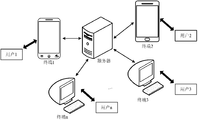
- FIG. 2 is a schematic diagram of an application scenario according to an exemplary embodiment of the present application.
- FIG. 3 is a flowchart of another user recommendation method according to an exemplary embodiment of the present application.
- FIG. 4 is a flowchart of still another user recommendation method according to an exemplary embodiment of the present application.
- FIG. 5 is a flowchart of still another user recommendation method according to an exemplary embodiment of the present application.
- FIG. 6 is a flowchart of still another user recommendation method according to an exemplary embodiment of the present application.
- FIG. 7 is a schematic structural diagram of an electronic device according to an exemplary embodiment of the present disclosure.
- FIG. 8 is a block diagram of a user recommendation apparatus according to an exemplary embodiment of the present application.
- the interactive platform in the related art does not provide status information of each user, that is, any user cannot know whether another user is in a communicable state, and the user is likely to browse after a certain time. It is found that the provider user is not in a communicable state; in another case, the state information of each user is provided in the interaction platform in the related art, but the user first pays attention to the interaction object itself in the browsing process, and thus It takes a lot of time to look at the description of the interactive object provided in the interactive platform, and then it may be necessary to communicate with the provider user, but the provider user is likely to be in a non-communicable state.
- FIG. 1 is a flowchart of a user recommendation method according to an exemplary embodiment of the present application. As shown in FIG. 1 , the method is applied to a server of an interaction platform, and may include the following steps:
- step 102 a browsing event for any interactive object is detected.
- the initiator user of the browsing event performs page browsing through the terminal device.
- the initiator user may be considered to initiate any interactive object in the browsed page.
- Browse events are
- the interaction platform can be used for the interaction of any type of interaction object, which is not limited in this application.
- the interaction platform may be a network transaction platform
- the interaction object may be a transaction item in the network transaction platform
- the initiator user is a buyer user of the transaction goods
- the provider user is a seller user of the transaction product.
- Step 104 Acquire a provider user of the any interactive object in a communicable state.
- the same interactive object on the interactive platform may have many provider users, and the provider user in the communicable state can be obtained by detecting the status of each provider user. For example, if the account of the provider user on the interactive platform is in the login state, or the provider user has an operation for the interactive platform within the preset time, the provider user may be considered to be in a communicable state; or, because there may be Global interaction across time zones, you can get the time zone where the provider user is located. When the time zone is available (that is, the local time is working time, such as between 8 am and 12 pm), it is determined that the provider user is in Communicable state.
- the time zone that is, the local time is working time, such as between 8 am and 12 pm
- Step 106 Recommend information of the provider user to an initiator user of the browsing event, so that the initiator user initiates a communication event for the any interaction object to the provider user.
- the initiator user and the provider user can establish a communication event in any manner; for example, the communication event can be implemented by using Instant Messaging (IM), but the application does not limit this.
- IM Instant Messaging
- the interaction platform may be pre-associated with the communication system, so that the communication platform is directly evoked by the interaction platform, and the communication event between the initiator user and the provider user is established, which helps to improve communication efficiency and simplify users.
- a provider user communication request regarding the originator user and the communicable state may be sent by the interaction platform to the communication system to be in a communicable state by the communication system at the initiator user and the The communication event is established between the provider users.
- the present application can obtain the corresponding provider user by detecting the interaction object currently browsed by the initiator user, and recommend the provider user in the communicable state to the initiator user, thereby ensuring that the initiator user can
- the provider user communicates online to fully understand the information of the interactive object, which helps to improve the interaction efficiency of the interactive object.
- FIG. 2 is a schematic diagram of an application scenario according to an exemplary embodiment of the present application.
- the server carries the operation of the interactive platform and various processing functions, and after the user connects to the server through the terminal, the user can access the interaction.
- the terminal can be a mobile device (such as terminal 1, terminal 2 is a smart phone) or a non-mobile device (such as terminal 3 is a personal meter) Computer), this application does not limit this.
- the user needs to perform object interaction or communication, the user needs to log in to the pre-registered account on the terminal, so that the interactive platform and other users can understand their identity information.
- the interactive platform is referred to as a “network transaction platform” as an example, and the interactive platform and the technical solution of the present application are described in detail in conjunction with FIG. 3-6.
- FIG. 3 is a flowchart of another user recommendation method according to an exemplary embodiment of the present application. As shown in FIG. 3, the method may include the following steps:
- step 302 the server detects that the buyer user initiates a browsing event for the transaction item.
- the transaction goods are interaction objects in the platform, and the transaction goods may be physical items or virtual items.
- the browsing event is detected for all the transaction items in the current browsing page; for example, the current browsing page may be a search result display page, a detailed display page, a product recommendation page, and the like.
- the current browsing page may be a search result display page, a detailed display page, a product recommendation page, and the like.
- Step 304 Determine whether the seller user to which the interaction object belongs is in a communicable state, and if it is in a communicable state, return to step 302, otherwise proceed to step 306.
- the real-time status of the seller user can be determined in various ways. For example, when the seller user logs in his own registered account on the online trading platform, or detects any operation of the seller user within a preset time period (such as within 3 minutes), the seller user is likely to be next to the terminal, and determine The seller user is in a communicable state, otherwise the seller user is determined to be in a non-communicable state.
- a preset time period such as within 3 minutes
- Step 306 Obtain a seller user in a communicable state from among all seller users who can provide the browsed transaction goods.
- the user of any interactive object ie, the browsed transaction item
- the belonging user is in a non-communicable state
- acquiring any of the interactive objects is in communication.
- the provider user of the status ie the seller user).
- the buyer user can communicate with the seller users in real time to know any situation of the traded goods being browsed in time; at the same time, avoid the buyer user's long transaction goods of a seller user.
- After browsing the time it was discovered that the seller user was in a non-communicable state, and had to re-find other seller users, which helped to improve browsing and transaction efficiency.
- Step 308 recommending all seller users to the buyer user who initiated the browsing event.
- the recommended seller user can be displayed at any position on the terminal screen; for example, in the associated area (for example, four weeks) of the viewed transaction goods, thereby facilitating the buyer user to browse the transaction goods and recommended Establish an effective visual association between seller users.
- Step 310 Select at least one seller user according to a selection instruction of the buyer user.
- the buyer user selects the seller user by himself, thereby helping to directly reflect the interests and needs of the buyer user.
- step 312 a communication event is established between the buyer user and the selected seller user.
- the server recommends all the provider users in the communicable state to the initiator user; according to the selection instruction input by the initiator user, select the corresponding offer among all the recommended provider users. a party user; establishing a communication event for the any of the interaction objects between the initiator user and the selected provider user.
- a communication link of "buyer user-server-seller user” can be established, so that the communication message between the buyer user and the seller user is forwarded by the server to ensure communication security and stability.
- the server may also perform sensitive word filtering, virus protection, etc. on the communication message; or, the server may notify the other party of the communication attribute of the buyer user and the seller user, thereby establishing a communication of "buyer user-seller user".
- the link is such that the communication message is directly transmitted between the buyer user and the seller user to reduce the running load of the server.
- FIG. 4 is a flowchart of still another user recommendation method according to an exemplary embodiment of the present application. As shown in FIG. 4, the method may include the following steps:
- Steps 402-406 are the same as steps 302-306 shown in FIG. 3, and are not described herein again.
- step 408 the server initiates an interactive notification to the seller user.
- the server may obtain whether the seller user is in a communicable state, the seller user may not actually be in a communicable state, or the seller user in a communicable state may not wish to execute the transaction (such as being browsed).
- the transaction goods are currently out of stock, etc., and thus the actual situation and willingness of the corresponding seller user can be determined by initiating an interactive notification.
- the interactive notification may include the information of the transaction goods being browsed, the information of the buyer user, and the like; of course, the information of the buyer user may only be information such as “location”, and does not include information such as name, contact information, etc., Avoid harassing buyer users.
- step 410 the server receives a response message from the seller user.
- the response message when the response message is received, it indicates that the seller user has the corresponding transaction intention, and the buyer The user can communicate with the seller user to help the buyer user further understand the transactional item being viewed.
- Step 412 Determine the most suitable seller user according to the receiving condition of the response message.
- step 414 the most suitable seller user is recommended to the buyer user.
- an interaction notification about the browsing event is sent to each provider user in a communicable state, respectively; according to the response of the provider user in the communicable state to the interaction notification, A suitable provider user is recommended to the originator user.
- the most suitable seller user may be the seller user who first responds to the response message.
- Step 416 establishing a communication event between the buyer user and the seller user. This step is the same as step 312 shown in FIG. 3, and details are not described herein again.
- the user recommendation process can be optimized according to the actual situation of the buyer user, thereby obtaining the following third embodiment and fourth embodiment.
- FIG. 5 is a flowchart of still another user recommendation method according to an exemplary embodiment of the present application. As shown in FIG. 5, the method may further include:
- Step 40A Obtain feature description information of the buyer user.
- the feature description information may include at least one of the following: identity information of the buyer user (ie, the initiator user) (such as name, age, gender, home address, etc.), behavior information of the buyer user (such as real-time) Browse content, etc.), historical interaction information of the buyer user (such as historically purchased transaction goods, etc.), historical browsing information of the buyer user (such as historically viewed transactional goods, etc.); of course, any can show the purchase
- identity information of the buyer user ie, the initiator user
- behavior information of the buyer user such as real-time) Browse content, etc.
- historical interaction information of the buyer user such as historically purchased transaction goods, etc.
- historical browsing information of the buyer user such as historically viewed transactional goods, etc.
- any can show the purchase
- the information of the characteristics of the home user can be applied to the technical solution of the present application, and the present application does not limit this.
- step 412 the server responds to the interaction notification according to each provider user in a communicable state, and between each provider user in the communicable state and the feature description information.
- the most suitable provider user is recommended to the originating user.
- the most suitable provider user is: a provider user that completes the response to the interaction notification and matches the feature description information.
- the seller user can meet the needs of both parties at the same time, thereby helping to enhance the experience of both users and making the transaction more successful.
- FIG. 6 is a flowchart of still another user recommendation method according to an exemplary embodiment of the present application. As shown in FIG. 6, the method may include the following steps:
- step 40B the feature description information of the buyer user is obtained; the step is the same as step 40A shown in FIG. 5, and details are not described herein again.
- step 408 the server separately transmits the interaction notification to each provider user in a communicable state that matches the feature description information.
- the most suitable provider user is: the provider user who first responds to the interaction notification.
- the seller users who receive the interaction notification meet the actual needs of the buyer user, and avoid sending the interaction notification to the unmatched seller user, thereby avoiding Interference with these seller users (interactive notifications are meaningless to these seller users, in fact harassing these seller users), and can prevent seller users from being recommended to unsuitable seller users, making the user recommendation operation more targeted Sex.
- FIG. 7 shows a schematic structural diagram of an electronic device according to an exemplary embodiment of the present application.
- the electronic device includes a processor, an internal bus, a network interface, a memory, and a non-volatile memory, and may of course include hardware required for other services.
- the processor reads the corresponding computer program from the non-volatile memory into memory and then runs to form a user recommendation device on a logical level.
- the present application does not exclude other implementation manners, such as a logic device or a combination of software and hardware, etc., that is, the execution body of the following processing flow is not limited to each logical unit, and may be Hardware or logic device.
- the user recommendation device may include a detection unit, an acquisition unit, and a recommendation unit. among them:
- a detecting unit that detects a browsing event for any interactive object
- a recommendation unit recommending information of the provider user to an initiator user of the browsing event, so that the initiator user initiates a communication event for the any interaction object to the provider user.
- the obtaining unit is specifically configured to:
- the provider user of the any interactive object in the communicable state is acquired.
- it also includes:
- An establishing unit establishes a communication event for the any of the interactive objects between the originating user and the selected provider user.
- it also includes:
- a notification unit respectively, sending an interaction notification about the browsing event to each provider user in a communicable state
- the recommendation unit recommends the most suitable provider user to the initiator user according to the response situation of the provider user in the communicable state to the interaction notification.
- it also includes:
- An information acquiring unit acquiring feature description information of the initiator user
- the recommendation unit according to the response situation of the provider user in the communicable state, and the matching between the provider user in the communicable state and the feature description information, The most suitable provider user recommends to the originator user.
- the most suitable provider user is: a provider user that completes the response to the interaction notification and matches the feature description information.
- the notification unit is specifically configured to:
- the interaction notification is separately transmitted to each provider user in a communicable state that matches the feature description information.
- the most suitable provider user is: a provider user that first responds to the interaction notification.
- the feature description information includes at least one of the following: identity information of the initiator user, behavior information of the initiator user, historical interaction information of the initiator user, and history of the initiator user. Browse the information.
- any of the interaction objects is any commodity
- the provider user is a seller user
- the initiator user is a buyer user.
- the communication event is implemented by using instant messaging IM.
- it also includes:
- a requesting unit transmitting, to the communication system, a request for communication between the originating user and the provider in a communicable state, by the communication system at the originating user and the provider user in a communicable state
- the communication event is established between.
- a computing device includes one or more processors (CPUs), input/output interfaces, network interfaces, and memory.
- processors CPUs
- input/output interfaces network interfaces
- memory volatile and non-volatile memory
- the memory may include non-persistent memory, random access memory (RAM), and/or non-volatile memory in a computer readable medium, such as read only memory (ROM) or flash memory.
- RAM random access memory
- ROM read only memory
- Memory is an example of a computer readable medium.
- Computer readable media includes both permanent and non-persistent, removable and non-removable media.
- Information storage can be implemented by any method or technology.
- the information can be computer readable instructions, data structures, modules of programs, or other data.
- Examples of computer storage media include, but are not limited to, phase change memory (PRAM), static random access memory (SRAM), dynamic random access memory (DRAM), other types of random access memory (RAM), read only memory. (ROM), electrically erasable programmable read only memory (EEPROM), flash memory or other memory technology, compact disk read only memory (CD-ROM), digital versatile disk (DVD) or other optical storage, Magnetic tape cartridges, magnetic tape storage or other magnetic storage devices or any other non-transportable media can be used to store information that can be accessed by a computing device.
- computer readable media does not include temporary storage of computer readable media, such as modulated data signals and carrier waves.
Landscapes
- Business, Economics & Management (AREA)
- Engineering & Computer Science (AREA)
- Accounting & Taxation (AREA)
- Finance (AREA)
- Signal Processing (AREA)
- Computer Networks & Wireless Communication (AREA)
- Economics (AREA)
- Physics & Mathematics (AREA)
- General Business, Economics & Management (AREA)
- General Physics & Mathematics (AREA)
- Strategic Management (AREA)
- Theoretical Computer Science (AREA)
- Marketing (AREA)
- Development Economics (AREA)
- Management, Administration, Business Operations System, And Electronic Commerce (AREA)
- Information Retrieval, Db Structures And Fs Structures Therefor (AREA)
- Information Transfer Between Computers (AREA)
Abstract
一种用户推荐方法及装置,该方法可以包括:检测到针对任一交互对象的浏览事件(102);获取所述任一交互对象的处于可通信状态的提供方用户(104);将所述提供方用户的信息推荐至所述浏览事件的发起方用户,以使所述发起方用户向所述提供方用户发起针对所述任一交互对象的通信事件(106)。上述方法及装置可以实现交互用户之间的匹配,有助于提升交互效率。
Description
本申请要求2015年06月04日递交的申请号为201510303049.9、发明名称为“用户推荐方法及装置”的中国专利申请的优先权,其全部内容通过引用结合在本申请中。
本申请涉及互联网技术领域,尤其涉及用户推荐方法及装置。
在相关技术中,为用户提供了交互平台,则任意用户之间均可以通过该交互平台执行相应的对象交互。由于只能够在交互平台上对交互对象进行在线浏览,因而用户之间可能针对交互对象进行在线通信,以进一步确认交互对象的情况。
发明内容
有鉴于此,本申请提供一种用户推荐方法及装置,可以实现交互用户之间的匹配,有助于提升交互效率。
为实现上述目的,本申请提供技术方案如下:
根据本申请的第一方面,提出了一种用户推荐方法,包括:
检测到针对任一交互对象的浏览事件;
获取所述任一交互对象的处于可通信状态的提供方用户;
将所述提供方用户的信息推荐至所述浏览事件的发起方用户,以使所述发起方用户向所述提供方用户发起针对所述任一交互对象的通信事件。
根据本申请的第二方面,提出了一种用户推荐装置,包括:
检测单元,检测到针对任一交互对象的浏览事件;
获取单元,获取所述任一交互对象的处于可通信状态的提供方用户;
推荐单元,将所述提供方用户的信息推荐至所述浏览事件的发起方用户,以使所述发起方用户向所述提供方用户发起针对所述任一交互对象的通信事件。
由以上技术方案可见,本申请通过检测发起方用户当前浏览的交互对象,可以获取相应的提供方用户,并且向发起方用户推荐处于可通信状态的提供方用户,从而确保发起方用户可以与相应的提供方用户进行在线通信,以充分了解交互对象的信息,有助于提升针对交互对象的交互效率。
图1是根据本申请一示例性实施例提供的一种用户推荐方法的流程图;
图2是根据本申请一示例性实施例提供的一种应用场景的示意图;
图3是根据本申请一示例性实施例提供的另一种用户推荐方法的流程图;
图4是根据本申请一示例性实施例提供的又一种用户推荐方法的流程图;
图5是根据本申请一示例性实施例提供的又一种用户推荐方法的流程图;
图6是根据本申请一示例性实施例提供的又一种用户推荐方法的流程图;
图7是根据本申请一示例性实施例提供的一种电子设备的结构示意图;
图8是根据本申请一示例性实施例提供的一种用户推荐装置的框图。
基于交互平台,用户之间可以实现在线的对象交互;而当用户需要进一步了解交互对象的情况时,显然需要确保双方用户均处于可通信状态,才能够保证一方用户可以向另一方用户在线查询关于交互对象的情况。
然而,在一种情况下,相关技术中的交互平台并不提供每个用户的状态信息,即任一用户无法了解到另一用户是否处于可通信状态,则用户很可能在一番浏览之后,发现提供方用户并不处于可通信状态;在另一种情况下,相关技术中的交互平台中提供了每个用户的状态信息,但用户在浏览过程中首先关注的往往是交互对象本身,因而花费大量时间来查看交互平台中提供的对交互对象的描述信息,然后才可能需要与提供方用户进行通信交流,但提供方用户很可能处于非可通信状态。
可见,在相关技术中的技术方案中,用户往往会浪费大量时间,仍然无法有效了解交互对象的情况,造成对象交互的效率很低。
因此,本申请通过对提供方用户的智能推荐,可以避免相关技术中存在的上述不足。为对本申请进行进一步说明,提供下列实施例:
图1是根据本申请一示例性实施例提供的一种用户推荐方法的流程图,如图1所示,该方法应用于交互平台的服务器中,可以包括以下步骤:
步骤102,检测到针对任一交互对象的浏览事件。
在本实施例中,浏览事件的发起方用户通过终端设备进行页面浏览,当被浏览页面中包含交互对象时,可以认为发起方用户发起了针对该被浏览页面中的任一交互对象的
浏览事件。
在本实施例中,交互平台可以用于任一类型的交互对象的交互操作,本申请并不对此进行限制。举例而言,该交互平台可以为网络交易平台,则交互对象可以为该网络交易平台中的交易货品,而发起方用户为交易货品的买方用户、提供方用户为该交易货品的卖方用户。
步骤104,获取所述任一交互对象的处于可通信状态的提供方用户。
在本实施例中,交互平台上的同一交互对象可能存在很多提供方用户,则通过对每个提供方用户的状态检测,即可获取处于可通信状态的提供方用户。比如在提供方用户在交互平台上的账号处于登录状态,或者提供方用户在预设时间内存在针对交互平台的操作等情况下,可以认为该提供方用户处于可通信状态;或者,由于可能存在跨时区的全球交互,则可以获取提供方用户所处的时区,当该时区处于可用状态(即当地时间为工作时间,比如早上8点至晚上12点之间)时,判定该提供方用户处于可通信状态。
步骤106,将所述提供方用户的信息推荐至所述浏览事件的发起方用户,以使所述发起方用户向所述提供方用户发起针对所述任一交互对象的通信事件。
在本实施例中,发起方用户与提供方用户可以通过任意方式建立通信事件;举例而言,通信事件可以采用即时通信IM(Instant Messaging)实现,但本申请并不对此进行限制。
在本实施例中,交互平台可以与通信系统之间存在预关联,从而由交互平台直接唤起通信系统,帮助发起方用户与提供方用户之间建立通信事件,有助于提升通信效率、简化用户操作。具体地,可以由交互平台向通信系统发送关于所述发起方用户和所述处于可通信状态的提供方用户通信请求,以由所述通信系统在所述发起方用户和所述处于可通信状态的提供方用户之间建立所述通信事件。
由以上技术方案可见,本申请通过检测发起方用户当前浏览的交互对象,可以获取相应的提供方用户,并且向发起方用户推荐处于可通信状态的提供方用户,从而确保发起方用户可以与相应的提供方用户进行在线通信,以充分了解交互对象的信息,有助于提升针对交互对象的交互效率。
图2是根据本申请一示例性实施例提供的一种应用场景的示意图,如图2所示,由服务器承载交互平台的运行和各个处理功能,而用户通过终端连接至服务器后,可以访问交互平台,从而在交互平台上提供交互对象或浏览其他用户提供的交互对象。终端可以为移动设备(比如终端1、终端2为智能手机)或非移动设备(比如终端3为个人计
算机),本申请并不对此进行限制。当用户之间需要进行对象交互或通信时,需要在终端上登录预先注册的账号,以使交互平台和其他用户了解自己的身份信息等。
为便于说明,下面以交互平台为“网络交易平台”为例,结合图3-6对交互平台以及本申请的技术方案进行详细描述。
实施例一
图3是根据本申请一示例性实施例提供的另一种用户推荐方法的流程图,如图3所示,该方法可以包括以下步骤:
步骤302,服务器检测到买家用户发起对交易货品的浏览事件。
在本实施例中,当交互平台为网络交易平台时,交易货品为该平台中的交互对象,该交易货品可以为实体物品或虚拟物品。当买家用户通过终端浏览网络交易平台时,浏览事件针对当前浏览页面内的所有交易货品而被检测;比如,当前浏览页面可以为搜索结果展示页面、详情展示页面、货品推荐页面等。其中,可以通过预先设定,仅针对特定类型的页面或交易货品进行浏览事件的检测,比如仅对详情展示页面进行检测、仅对未购买过的交易货品(即未交互过的交互对象)进行检测等。
步骤304,判断交互对象所属的卖家用户是否处于可通信状态,若处于可通信状态则返回步骤302,否则转入步骤306。
在本实施例中,可以通过多种方式判断卖家用户的实时状态。比如当卖家用户在网络交易平台上登录了自己的注册账号时,或者检测到卖家用户在预设时间段内(比如3分钟内)的任意操作时,说明卖家用户很可能处于终端旁边,并判定卖家用户处于可通信状态,否则判定卖家用户处于非可通信状态。
步骤306,从可提供被浏览的交易货品的所有卖家用户中,获取处于可通信状态的卖家用户。
在本实施例中,确定浏览事件针对的任一交互对象(即被浏览的交易货品)的所属用户;当所述所属用户处于非可通信状态时,获取所述任一交互对象的处于可通信状态的提供方用户(即卖家用户)。
通过选取处于可通信状态的卖家用户,使得买家用户可以与这些卖家用户进行实时通信,及时了解被浏览的交易货品的任意情况;同时,避免买家用户对某个卖家用户的交易货品进行长时间浏览后,才发现该卖家用户处于非可通信状态,而不得不重新寻找其他卖家用户,有助于提升浏览和交易效率。
步骤308,向发起浏览事件的买家用户推荐所有的卖家用户。
在本实施例中,可以在终端屏幕上的任意位置展示推荐的卖家用户;比如在被浏览的交易货品的关联区域(例如四周)内,从而便于买家用户在被浏览的交易货品与推荐的卖家用户之间建立有效的视觉关联。
步骤310,根据买家用户的选择指令,选取至少一个卖家用户。
在本实施例中,由买家用户自行选取卖家用户,从而有助于直接体现出买家用户的兴趣和需求。
步骤312,在买家用户与被选中的卖家用户之间建立通信事件。
在步骤308-312中,服务器将所有处于可通信状态的提供方用户均推荐至所述发起方用户;根据所述发起方用户输入的选择指令,在推荐的所有提供方用户中选择对应的提供方用户;在所述发起方用户与被选中的提供方用户之间建立针对所述任一交互对象的通信事件。
在本实施例中,可以建立“买家用户——服务器——卖家用户”的通信链接,从而由服务器对买家用户和卖家用户之间的通信消息进行转发,以确保通信安全性和稳定性,还可以由服务器对通信消息进行敏感词过滤、病毒防护等处理;或者,可以由服务器将买家用户和卖家用户的通信属性告知对方,从而建立起“买家用户——卖家用户”的通信链接,从而由买家用户与卖家用户之间直接传送通信消息,以降低服务器的运行负担。
实施例二
图4是根据本申请一示例性实施例提供的又一种用户推荐方法的流程图。如图4所示,该方法可以包括以下步骤:
步骤402-406与图3所示的步骤302-306相同,此处不再赘述。
步骤408,服务器向卖家用户发起交互通知。
在本实施例中,虽然服务器可以获取卖家用户是否处于可通信状态,但卖家用户实际上有可能并不处于可通信状态,或者处于可通信状态的卖家用户可能并不希望执行交易(比如被浏览的交易货品当前无货等),因而可以通过发起交互通知的方式,确定相应的卖家用户的实际情况和意愿。
其中,交互通知中可以包含被浏览的交易货品、买家用户的信息等;当然,买家用户的信息可以仅为诸如“所在地”等信息,而并不包含如姓名、联系方式等信息,以避免买家用户受到骚扰。
步骤410,服务器接收卖家用户的响应消息。
在本实施例中,当接收到响应消息时,表明卖家用户存在相应的交易意图,且买家
用户可以与该卖家用户之间进行通信,以帮助买家用户进一步了解被浏览的交易货品。
步骤412,根据响应消息的接收情况,确定最适合的卖家用户。
步骤414,将最适合的卖家用户推荐至买家用户。
在本实施例中,分别向每个处于可通信状态的提供方用户发送关于所述浏览事件的交互通知;根据每个处于可通信状态的提供方用户对所述交互通知的响应情况,将最适合的提供方用户推荐至所述发起方用户。通过智能选取最适合的卖家用户,可以简化买家用户操作、避免买家用户的自主选择,有助于提升处理效率。
其中,作为一示例性实施方式,最适合的卖家用户可以为最先回复响应消息的卖家用户。
步骤416,在买家用户与卖家用户之间建立通信事件。该步骤与图3所示的步骤312相同,此处不再赘述。
在图4所示的实施例二的基础上,还可以结合买家用户的实际情况,对用户推荐过程进行优化,从而得到下述的实施例三和实施例四。
实施例三
图5是根据本申请一示例性实施例提供的又一种用户推荐方法的流程图。如图5所示,该方法在图4所示实施例的基础上,还可以包括:
步骤40A,获取买家用户的特征描述信息。
在本实施例中,特征描述信息可以包括以下至少之一:买家用户(即发起方用户)的身份信息(譬如姓名、年龄、性别、家庭住址等)、买家用户的行为信息(譬如实时浏览内容等)、买家用户的历史交互信息(譬如历史上购买过的交易货品等)、买家用户的历史浏览信息(譬如历史上浏览过的交易货品等);当然,任意能够表现出买家用户的特征的信息均可以应用于本申请的技术方案中,本申请并不对此进行限制。
基于步骤40A,则步骤412中,服务器根据每个处于可通信状态的提供方用户对所述交互通知的响应情况,以及每个处于可通信状态的提供方用户与所述特征描述信息之间的匹配情况,将最适合的提供方用户推荐至所述发起方用户。其中,作为一示例性实施方式,最适合的提供方用户为:完成对所述交互通知的响应且匹配于所述特征描述信息的提供方用户。
通过基于响应情况和匹配情况来选取最适合的卖家用户,使得到的卖家用户同时符合交易双方的需求,从而有助于提升双方用户的使用体验,并使交易更容易成功。
实施例四
图6是根据本申请一示例性实施例提供的又一种用户推荐方法的流程图。如图6所示,该方法可以包括以下步骤:
步骤40B,获取买家用户的特征描述信息;该步骤与图5所示的步骤40A相同,此处不再赘述。
基于步骤40B,则在步骤408中,服务器向与特征描述信息相匹配的每个处于可通信状态的提供方用户分别发送所述交互通知。其中,最适合的提供方用户为:最先响应所述交互通知的提供方用户。
在该实施例中,通过对卖家用户执行基于匹配情况的筛选,使得接收到交互通知的卖家用户均符合买家用户的实际需求,而避免向不匹配的卖家用户发送交互通知,则既能够避免对这些卖家用户的干扰(交互通知对这些卖家用户而言没有意义,实际上是对这些卖家用户的骚扰),又能够防止向买家用户推荐不适合的卖家用户,使得用户推荐操作更具有针对性。
图7示出了根据本申请的一示例性实施例的电子设备的示意结构图。请参考图7,在硬件层面,该电子设备包括处理器、内部总线、网络接口、内存以及非易失性存储器,当然还可能包括其他业务所需要的硬件。处理器从非易失性存储器中读取对应的计算机程序到内存中然后运行,在逻辑层面上形成用户推荐装置。当然,除了软件实现方式之外,本申请并不排除其他实现方式,比如逻辑器件抑或软硬件结合的方式等等,也就是说以下处理流程的执行主体并不限定于各个逻辑单元,也可以是硬件或逻辑器件。
请参考图8,在软件实施方式中,该用户推荐装置可以包括检测单元、获取单元和推荐单元。其中:
检测单元,检测到针对任一交互对象的浏览事件;
获取单元,获取所述任一交互对象的处于可通信状态的提供方用户;
推荐单元,将所述提供方用户的信息推荐至所述浏览事件的发起方用户,以使所述发起方用户向所述提供方用户发起针对所述任一交互对象的通信事件。
可选的,所述获取单元具体用于:
确定所述浏览事件针对的所述任一交互对象的所属用户;
当所述所属用户处于非可通信状态时,获取所述任一交互对象的处于可通信状态的提供方用户。
可选的,还包括:
选择单元,在所述推荐单元将所有处于可通信状态的提供方用户推荐至所述发起方
用户时,根据所述发起方用户输入的选择指令,在推荐的所有提供方用户中选择对应的提供方用户;
建立单元,在所述发起方用户与被选中的提供方用户之间建立针对所述任一交互对象的通信事件。
可选的,还包括:
通知单元,分别向每个处于可通信状态的提供方用户发送关于所述浏览事件的交互通知;
其中,所述推荐单元根据每个处于可通信状态的提供方用户对所述交互通知的响应情况,将最适合的提供方用户推荐至所述发起方用户。
可选的,还包括:
信息获取单元,获取所述发起方用户的特征描述信息;
其中,所述推荐单元根据每个处于可通信状态的提供方用户对所述交互通知的响应情况,以及每个处于可通信状态的提供方用户与所述特征描述信息之间的匹配情况,将最适合的提供方用户推荐至所述发起方用户。
可选的,所述最适合的提供方用户为:完成对所述交互通知的响应且匹配于所述特征描述信息的提供方用户。
可选的,所述通知单元具体用于:
获取所述发起方用户的特征描述信息;
向与所述特征描述信息相匹配的每个处于可通信状态的提供方用户分别发送所述交互通知。
可选的,所述最适合的提供方用户为:最先响应所述交互通知的提供方用户。
可选的,所述特征描述信息包括以下至少之一:所述发起方用户的身份信息、所述发起方用户的行为信息、所述发起方用户的历史交互信息、所述发起方用户的历史浏览信息。
可选的,所述任一交互对象为任一商品,所述提供方用户为卖家用户、所述发起方用户为买家用户。
可选的,所述通信事件采用即时通信IM实现。
可选的,还包括:
请求单元,向通信系统发送关于所述发起方用户和所述处于可通信状态的提供方用户通信请求,以由所述通信系统在所述发起方用户和所述处于可通信状态的提供方用户
之间建立所述通信事件。
在一个典型的配置中,计算设备包括一个或多个处理器(CPU)、输入/输出接口、网络接口和内存。
内存可能包括计算机可读介质中的非永久性存储器,随机存取存储器(RAM)和/或非易失性内存等形式,如只读存储器(ROM)或闪存(flash RAM)。内存是计算机可读介质的示例。
计算机可读介质包括永久性和非永久性、可移动和非可移动媒体可以由任何方法或技术来实现信息存储。信息可以是计算机可读指令、数据结构、程序的模块或其他数据。计算机的存储介质的例子包括,但不限于相变内存(PRAM)、静态随机存取存储器(SRAM)、动态随机存取存储器(DRAM)、其他类型的随机存取存储器(RAM)、只读存储器(ROM)、电可擦除可编程只读存储器(EEPROM)、快闪记忆体或其他内存技术、只读光盘只读存储器(CD-ROM)、数字多功能光盘(DVD)或其他光学存储、磁盒式磁带,磁带磁磁盘存储或其他磁性存储设备或任何其他非传输介质,可用于存储可以被计算设备访问的信息。按照本文中的界定,计算机可读介质不包括暂存电脑可读媒体(transitory media),如调制的数据信号和载波。
还需要说明的是,术语“包括”、“包含”或者其任何其他变体意在涵盖非排他性的包含,从而使得包括一系列要素的过程、方法、商品或者设备不仅包括那些要素,而且还包括没有明确列出的其他要素,或者是还包括为这种过程、方法、商品或者设备所固有的要素。在没有更多限制的情况下,由语句“包括一个……”限定的要素,并不排除在包括所述要素的过程、方法、商品或者设备中还存在另外的相同要素。
以上所述仅为本申请的较佳实施例而已,并不用以限制本申请,凡在本申请的精神和原则之内,所做的任何修改、等同替换、改进等,均应包含在本申请保护的范围之内。
Claims (24)
- 一种用户推荐方法,其特征在于,包括:检测到针对任一交互对象的浏览事件;获取所述任一交互对象的处于可通信状态的提供方用户;将所述提供方用户的信息推荐至所述浏览事件的发起方用户,以使所述发起方用户向所述提供方用户发起针对所述任一交互对象的通信事件。
- 根据权利要求1所述的方法,其特征在于,所述获取所述任一交互对象的处于可通信状态的提供方用户,包括:确定所述浏览事件针对的所述任一交互对象的所属用户;当所述所属用户处于非可通信状态时,获取所述任一交互对象的处于可通信状态的提供方用户。
- 根据权利要求1所述的方法,其特征在于,还包括:将所有处于可通信状态的提供方用户推荐至所述发起方用户;根据所述发起方用户输入的选择指令,在推荐的所有提供方用户中选择对应的提供方用户;在所述发起方用户与被选中的提供方用户之间建立针对所述任一交互对象的通信事件。
- 根据权利要求1所述的方法,其特征在于,还包括:分别向每个处于可通信状态的提供方用户发送关于所述浏览事件的交互通知;根据每个处于可通信状态的提供方用户对所述交互通知的响应情况,将最适合的提供方用户推荐至所述发起方用户。
- 根据权利要求4所述的方法,其特征在于,还包括:获取所述发起方用户的特征描述信息;根据每个处于可通信状态的提供方用户对所述交互通知的响应情况,以及每个处于可通信状态的提供方用户与所述特征描述信息之间的匹配情况,将最适合的提供方用户推荐至所述发起方用户。
- 根据权利要求5所述的方法,其特征在于,所述最适合的提供方用户为:完成对所述交互通知的响应且匹配于所述特征描述信息的提供方用户。
- 根据权利要求4所述的方法,其特征在于,所述分别向每个处于可通信状态的提供方用户发送关于所述浏览事件的交互通知,包括:获取所述发起方用户的特征描述信息;向与所述特征描述信息相匹配的每个处于可通信状态的提供方用户分别发送所述交互通知。
- 根据权利要求4或7所述的方法,其特征在于,所述最适合的提供方用户为:最先响应所述交互通知的提供方用户。
- 根据权利要求5-7中任一项所述的方法,其特征在于,所述特征描述信息包括以下至少之一:所述发起方用户的身份信息、所述发起方用户的行为信息、所述发起方用户的历史交互信息、所述发起方用户的历史浏览信息。
- 根据权利要求1所述的方法,其特征在于,所述任一交互对象为任一商品,所述提供方用户为卖家用户、所述发起方用户为买家用户。
- 根据权利要求1所述的方法,其特征在于,所述通信事件采用即时通信IM实现。
- 根据权利要求1所述的方法,其特征在于,还包括:向通信系统发送关于所述发起方用户和所述处于可通信状态的提供方用户通信请求,以由所述通信系统在所述发起方用户和所述处于可通信状态的提供方用户之间建立所述通信事件。
- 一种用户推荐装置,其特征在于,包括:检测单元,检测到针对任一交互对象的浏览事件;获取单元,获取所述任一交互对象的处于可通信状态的提供方用户;推荐单元,将所述提供方用户的信息推荐至所述浏览事件的发起方用户,以使所述发起方用户向所述提供方用户发起针对所述任一交互对象的通信事件。
- 根据权利要求13所述的装置,其特征在于,所述获取单元具体用于:确定所述浏览事件针对的所述任一交互对象的所属用户;当所述所属用户处于非可通信状态时,获取所述任一交互对象的处于可通信状态的提供方用户。
- 根据权利要求13所述的装置,其特征在于,还包括:选择单元,在所述推荐单元将所有处于可通信状态的提供方用户推荐至所述发起方用户时,根据所述发起方用户输入的选择指令,在推荐的所有提供方用户中选择对应的提供方用户;建立单元,在所述发起方用户与被选中的提供方用户之间建立针对所述任一交互对 象的通信事件。
- 根据权利要求13所述的装置,其特征在于,还包括:通知单元,分别向每个处于可通信状态的提供方用户发送关于所述浏览事件的交互通知;其中,所述推荐单元根据每个处于可通信状态的提供方用户对所述交互通知的响应情况,将最适合的提供方用户推荐至所述发起方用户。
- 根据权利要求16所述的装置,其特征在于,还包括:信息获取单元,获取所述发起方用户的特征描述信息;其中,所述推荐单元根据每个处于可通信状态的提供方用户对所述交互通知的响应情况,以及每个处于可通信状态的提供方用户与所述特征描述信息之间的匹配情况,将最适合的提供方用户推荐至所述发起方用户。
- 根据权利要求17所述的装置,其特征在于,所述最适合的提供方用户为:完成对所述交互通知的响应且匹配于所述特征描述信息的提供方用户。
- 根据权利要求16所述的装置,其特征在于,所述通知单元具体用于:获取所述发起方用户的特征描述信息;向与所述特征描述信息相匹配的每个处于可通信状态的提供方用户分别发送所述交互通知。
- 根据权利要求16或19所述的装置,其特征在于,所述最适合的提供方用户为:最先响应所述交互通知的提供方用户。
- 根据权利要求17-19中任一项所述的装置,其特征在于,所述特征描述信息包括以下至少之一:所述发起方用户的身份信息、所述发起方用户的行为信息、所述发起方用户的历史交互信息、所述发起方用户的历史浏览信息。
- 根据权利要求13所述的装置,其特征在于,所述任一交互对象为任一商品,所述提供方用户为卖家用户、所述发起方用户为买家用户。
- 根据权利要求13所述的装置,其特征在于,所述通信事件采用即时通信IM实现。
- 根据权利要求13所述的装置,其特征在于,还包括:请求单元,向通信系统发送关于所述发起方用户和所述处于可通信状态的提供方用户通信请求,以由所述通信系统在所述发起方用户和所述处于可通信状态的提供方用户之间建立所述通信事件。
Priority Applications (2)
| Application Number | Priority Date | Filing Date | Title |
|---|---|---|---|
| JP2017562738A JP6712283B2 (ja) | 2015-06-04 | 2016-05-27 | ユーザ推奨の方法及び装置 |
| US15/813,984 US10963935B2 (en) | 2015-06-04 | 2017-11-15 | User recommendation method and device |
Applications Claiming Priority (2)
| Application Number | Priority Date | Filing Date | Title |
|---|---|---|---|
| CN201510303049.9A CN106296252B (zh) | 2015-06-04 | 2015-06-04 | 用户推荐方法及装置 |
| CN201510303049.9 | 2015-06-04 |
Related Child Applications (1)
| Application Number | Title | Priority Date | Filing Date |
|---|---|---|---|
| US15/813,984 Continuation US10963935B2 (en) | 2015-06-04 | 2017-11-15 | User recommendation method and device |
Publications (1)
| Publication Number | Publication Date |
|---|---|
| WO2016192585A1 true WO2016192585A1 (zh) | 2016-12-08 |
Family
ID=57440069
Family Applications (1)
| Application Number | Title | Priority Date | Filing Date |
|---|---|---|---|
| PCT/CN2016/083593 Ceased WO2016192585A1 (zh) | 2015-06-04 | 2016-05-27 | 用户推荐方法及装置 |
Country Status (4)
| Country | Link |
|---|---|
| US (1) | US10963935B2 (zh) |
| JP (2) | JP6712283B2 (zh) |
| CN (1) | CN106296252B (zh) |
| WO (1) | WO2016192585A1 (zh) |
Families Citing this family (7)
| Publication number | Priority date | Publication date | Assignee | Title |
|---|---|---|---|---|
| CN108429776B (zh) * | 2017-02-13 | 2021-09-14 | 阿里巴巴集团控股有限公司 | 网络对象的推送方法、装置、客户端、交互设备以及系统 |
| CN108733685B (zh) * | 2017-04-17 | 2023-12-26 | 阿里巴巴集团控股有限公司 | 对象交互、浏览、搜索和配置方法及装置 |
| CN107194723B (zh) * | 2017-05-17 | 2021-04-23 | 中国科学技术大学 | 网络小额贷款中借款项目与出借人的双向匹配推荐方法 |
| CN107562870A (zh) * | 2017-08-30 | 2018-01-09 | 国信优易数据有限公司 | 一种用户推荐方法和装置 |
| CN107730318B (zh) * | 2017-10-30 | 2021-08-20 | 厦门二五八网络科技集团股份有限公司 | 智能客户推荐平台及其推荐方法 |
| CN108513008A (zh) * | 2018-03-28 | 2018-09-07 | 努比亚技术有限公司 | 控制权转移方法、移动终端及计算机可读存储介质 |
| CN115544234A (zh) * | 2022-10-20 | 2022-12-30 | 深圳康佳电子科技有限公司 | 用户交互方法、装置、电子设备及存储介质 |
Citations (6)
| Publication number | Priority date | Publication date | Assignee | Title |
|---|---|---|---|---|
| CN101790740A (zh) * | 2007-05-31 | 2010-07-28 | 亚马逊科技公司 | 用于提供履行服务的方法和系统 |
| CN102819804A (zh) * | 2011-06-07 | 2012-12-12 | 阿里巴巴集团控股有限公司 | 一种商品信息的推送方法及设备 |
| CN103426096A (zh) * | 2012-05-14 | 2013-12-04 | 阿里巴巴集团控股有限公司 | 一种推荐用户的方法及装置 |
| CN103593794A (zh) * | 2012-08-14 | 2014-02-19 | 腾讯科技(深圳)有限公司 | 信息交互的实现方法和装置 |
| US8914399B1 (en) * | 2011-03-09 | 2014-12-16 | Amazon Technologies, Inc. | Personalized recommendations based on item usage |
| US20150112840A1 (en) * | 2013-10-23 | 2015-04-23 | Toshiba Tec Kabushiki Kaisha | Shopping support device and shopping support method |
Family Cites Families (32)
| Publication number | Priority date | Publication date | Assignee | Title |
|---|---|---|---|---|
| JP2002007459A (ja) | 2000-06-21 | 2002-01-11 | Nec Corp | ネットワークナビエージェントシステム、ナビゲーション方法、および仲介サービス提供方法 |
| US7225220B2 (en) * | 2000-07-21 | 2007-05-29 | Hewlett-Packard Development Company, Lp | On-line selection of service providers in distributed provision of services on demand |
| US20020198882A1 (en) | 2001-03-29 | 2002-12-26 | Linden Gregory D. | Content personalization based on actions performed during a current browsing session |
| US6904336B2 (en) | 2001-12-28 | 2005-06-07 | Fannie Mae | System and method for residential emissions trading |
| JP2003331188A (ja) * | 2002-05-16 | 2003-11-21 | Mitsubishi Electric Corp | 通信システム及びサーバ装置及び情報提供方法 |
| US20030236710A1 (en) * | 2002-06-24 | 2003-12-25 | Vincent Tong | Method and system for providing online shopping assistance |
| US20040088179A1 (en) | 2002-11-06 | 2004-05-06 | Cogen Jack D. | Emissions reduction portfolio |
| US7983929B2 (en) | 2003-02-10 | 2011-07-19 | South Dakota School Of Mines And Technology | Technique for determining and reporting reduction in emissions of greenhouse gases at a site |
| JP2005063164A (ja) | 2003-08-13 | 2005-03-10 | Nippon Telegr & Teleph Corp <Ntt> | 履歴収集方法、分析結果送信方法およびそのシステム、ならびにそのプログラムと記録媒体 |
| US10339538B2 (en) | 2004-02-26 | 2019-07-02 | Oath Inc. | Method and system for generating recommendations |
| US20060015424A1 (en) | 2004-07-15 | 2006-01-19 | Augusta Systems, Inc. | Management method, system and product for enterprise environmental programs |
| JP4861713B2 (ja) | 2005-02-01 | 2012-01-25 | イーベイ コリア カンパニーリミテッド | 知能型顧客応対システム、知能型顧客応対方法 |
| US7769764B2 (en) | 2005-09-14 | 2010-08-03 | Jumptap, Inc. | Mobile advertisement syndication |
| US8302030B2 (en) | 2005-09-14 | 2012-10-30 | Jumptap, Inc. | Management of multiple advertising inventories using a monetization platform |
| US7660581B2 (en) | 2005-09-14 | 2010-02-09 | Jumptap, Inc. | Managing sponsored content based on usage history |
| US7970642B2 (en) | 2005-12-27 | 2011-06-28 | Alex Anas | Computer based system to generate data for implementing regional and metropolitan economic, land use and transportation planning |
| CN101083581B (zh) * | 2006-05-30 | 2010-05-26 | 明基电通(上海)有限公司 | 自组织对等网络中控制多播的方法及其装置 |
| US20140046792A1 (en) * | 2007-12-21 | 2014-02-13 | Venkat Ganesan | Method for coordinating messaging between motivated buyers and listed sellers |
| EP2452308A4 (en) | 2009-07-08 | 2013-01-16 | Trada Inc | CREATE, MANAGE AND OPTIMIZE AN ONLINE ADVERTISEMENT |
| US20110010208A1 (en) | 2009-07-09 | 2011-01-13 | Barak Yekutiely | Method for integrated climate change mitigation & adaptation |
| KR100975724B1 (ko) * | 2010-01-12 | 2010-08-12 | 나종민 | 실시간 마케팅 서비스를 제공하는 서버 |
| KR101106220B1 (ko) | 2011-01-17 | 2012-01-19 | 롯데건설 주식회사 | 목적지향형 건축물 전생애 환경부하 평가시스템 |
| US20130204738A1 (en) | 2011-01-26 | 2013-08-08 | Agilone Inc. | Systems and methods for recommending entities to online customers |
| WO2012154267A1 (en) | 2011-02-22 | 2012-11-15 | Enviance, Inc. | Environmental impact assessment system and method |
| US20120265561A1 (en) * | 2011-04-13 | 2012-10-18 | Jatin Patro | Online marketplace methods facilitating local commerce |
| US20130035973A1 (en) | 2011-08-01 | 2013-02-07 | Infosys Limited | Assessing green it maturity and providing green it recommendations |
| CN102956009B (zh) * | 2011-08-16 | 2017-03-01 | 阿里巴巴集团控股有限公司 | 一种基于用户行为的电子商务信息推荐方法与装置 |
| US8694456B2 (en) * | 2011-08-19 | 2014-04-08 | Bank Of America Corporation | Predicting future travel based on a user's historical financial institution transaction data and providing offers based on the predicted future travel |
| US20130060576A1 (en) * | 2011-08-29 | 2013-03-07 | Kevin Hamm | Systems and Methods For Enabling Telemedicine Consultations and Patient Referrals |
| KR101943986B1 (ko) * | 2012-03-21 | 2019-01-31 | 삼성전자주식회사 | 애플리케이션 또는 컨텐트를 추천하는 이동 통신 단말 및 추천 방법 |
| CN104038909B (zh) * | 2014-06-16 | 2017-08-29 | 浙江翼信科技有限公司 | 一种信息交互方法和设备 |
| US10552431B2 (en) * | 2017-09-29 | 2020-02-04 | Microsoft Technology Licensing, Llc | Personalizing search and/or recommendation results based on member activity models |
-
2015
- 2015-06-04 CN CN201510303049.9A patent/CN106296252B/zh active Active
-
2016
- 2016-05-27 WO PCT/CN2016/083593 patent/WO2016192585A1/zh not_active Ceased
- 2016-05-27 JP JP2017562738A patent/JP6712283B2/ja active Active
-
2017
- 2017-11-15 US US15/813,984 patent/US10963935B2/en active Active
-
2020
- 2020-05-29 JP JP2020093957A patent/JP7021292B2/ja active Active
Patent Citations (6)
| Publication number | Priority date | Publication date | Assignee | Title |
|---|---|---|---|---|
| CN101790740A (zh) * | 2007-05-31 | 2010-07-28 | 亚马逊科技公司 | 用于提供履行服务的方法和系统 |
| US8914399B1 (en) * | 2011-03-09 | 2014-12-16 | Amazon Technologies, Inc. | Personalized recommendations based on item usage |
| CN102819804A (zh) * | 2011-06-07 | 2012-12-12 | 阿里巴巴集团控股有限公司 | 一种商品信息的推送方法及设备 |
| CN103426096A (zh) * | 2012-05-14 | 2013-12-04 | 阿里巴巴集团控股有限公司 | 一种推荐用户的方法及装置 |
| CN103593794A (zh) * | 2012-08-14 | 2014-02-19 | 腾讯科技(深圳)有限公司 | 信息交互的实现方法和装置 |
| US20150112840A1 (en) * | 2013-10-23 | 2015-04-23 | Toshiba Tec Kabushiki Kaisha | Shopping support device and shopping support method |
Also Published As
| Publication number | Publication date |
|---|---|
| JP2018517983A (ja) | 2018-07-05 |
| JP2020140731A (ja) | 2020-09-03 |
| US10963935B2 (en) | 2021-03-30 |
| JP7021292B2 (ja) | 2022-02-16 |
| US20180075504A1 (en) | 2018-03-15 |
| CN106296252B (zh) | 2021-12-21 |
| CN106296252A (zh) | 2017-01-04 |
| JP6712283B2 (ja) | 2020-06-17 |
Similar Documents
| Publication | Publication Date | Title |
|---|---|---|
| WO2016192585A1 (zh) | 用户推荐方法及装置 | |
| US20190124075A1 (en) | Delivering Personalized Content to Authenticated User Devices | |
| US20150379460A1 (en) | Recognizing neglected items | |
| TW201743256A (zh) | 資料處理的方法及系統 | |
| KR101926943B1 (ko) | 추적 데이터를 이용하는 데이터 프레젠테이션 리플로우 | |
| US12340403B2 (en) | Social network-based inventory management | |
| AU2014354827A1 (en) | Generating and provisioning a personalized geo-fence | |
| US20200211080A1 (en) | Code sharing in e-commerce | |
| JP6760974B2 (ja) | トランザクション処理方法及びシステム | |
| US11170405B2 (en) | Cross-domain tracking for context aware mobile services | |
| US20200334308A1 (en) | Enhancing search results with social networking data | |
| US20150278920A1 (en) | Network Nodes and Methods for Providing Recommendations on Gifts | |
| CN108874836A (zh) | 转移电子券的方法和装置 | |
| CN111767467A (zh) | 社交关系的挖掘方法、装置及设备 | |
| WO2020005627A1 (en) | Generating smart replies involving image files | |
| US11416949B2 (en) | Method and system for payment delegation using personalized multimedia mechanism | |
| CN107077454A (zh) | 在链接的机器上提供补充内容 | |
| US12586120B2 (en) | Location-based system for charitable donation | |
| US20170287002A1 (en) | Targeting content for users of external websites | |
| US20130317925A1 (en) | Transaction Auto Synchronization | |
| CN106663265A (zh) | 用于经由同步双向电子通信会话来出售和购买产品的技术 | |
| US11443366B2 (en) | Systems and methods for real time online to offline (O2O) shopping in and messaging to physical retail stores | |
| TWI681347B (zh) | 關鍵字示警系統之方法 | |
| CN107104928B (zh) | 业务实现方法及装置 | |
| CN106779822A (zh) | 一种基于微信的商户管理方法及系统 |
Legal Events
| Date | Code | Title | Description |
|---|---|---|---|
| 121 | Ep: the epo has been informed by wipo that ep was designated in this application |
Ref document number: 16802508 Country of ref document: EP Kind code of ref document: A1 |
|
| ENP | Entry into the national phase |
Ref document number: 2017562738 Country of ref document: JP Kind code of ref document: A |
|
| NENP | Non-entry into the national phase |
Ref country code: DE |
|
| 122 | Ep: pct application non-entry in european phase |
Ref document number: 16802508 Country of ref document: EP Kind code of ref document: A1 |