WO2016158364A1 - ドア開放装置及びドア開放システム - Google Patents
ドア開放装置及びドア開放システム Download PDFInfo
- Publication number
- WO2016158364A1 WO2016158364A1 PCT/JP2016/058053 JP2016058053W WO2016158364A1 WO 2016158364 A1 WO2016158364 A1 WO 2016158364A1 JP 2016058053 W JP2016058053 W JP 2016058053W WO 2016158364 A1 WO2016158364 A1 WO 2016158364A1
- Authority
- WO
- WIPO (PCT)
- Prior art keywords
- door
- vehicle
- door opening
- unit
- impact
- Prior art date
- Legal status (The legal status is an assumption and is not a legal conclusion. Google has not performed a legal analysis and makes no representation as to the accuracy of the status listed.)
- Ceased
Links
Images



Classifications
-
- B—PERFORMING OPERATIONS; TRANSPORTING
- B60—VEHICLES IN GENERAL
- B60R—VEHICLES, VEHICLE FITTINGS, OR VEHICLE PARTS, NOT OTHERWISE PROVIDED FOR
- B60R25/00—Fittings or systems for preventing or indicating unauthorised use or theft of vehicles
- B60R25/20—Means to switch the anti-theft system on or off
- B60R25/24—Means to switch the anti-theft system on or off using electronic identifiers containing a code not memorised by the user
-
- E—FIXED CONSTRUCTIONS
- E05—LOCKS; KEYS; WINDOW OR DOOR FITTINGS; SAFES
- E05B—LOCKS; ACCESSORIES THEREFOR; HANDCUFFS
- E05B49/00—Electric permutation locks; Circuits therefor ; Mechanical aspects of electronic locks; Mechanical keys therefor
-
- E—FIXED CONSTRUCTIONS
- E05—LOCKS; KEYS; WINDOW OR DOOR FITTINGS; SAFES
- E05F—DEVICES FOR MOVING WINGS INTO OPEN OR CLOSED POSITION; CHECKS FOR WINGS; WING FITTINGS NOT OTHERWISE PROVIDED FOR, CONCERNED WITH THE FUNCTIONING OF THE WING
- E05F15/00—Power-operated mechanisms for wings
- E05F15/60—Power-operated mechanisms for wings using electrical actuators
- E05F15/603—Power-operated mechanisms for wings using electrical actuators using rotary electromotors
- E05F15/632—Power-operated mechanisms for wings using electrical actuators using rotary electromotors for horizontally-sliding wings
- E05F15/655—Power-operated mechanisms for wings using electrical actuators using rotary electromotors for horizontally-sliding wings specially adapted for vehicle wings
-
- E—FIXED CONSTRUCTIONS
- E05—LOCKS; KEYS; WINDOW OR DOOR FITTINGS; SAFES
- E05F—DEVICES FOR MOVING WINGS INTO OPEN OR CLOSED POSITION; CHECKS FOR WINGS; WING FITTINGS NOT OTHERWISE PROVIDED FOR, CONCERNED WITH THE FUNCTIONING OF THE WING
- E05F15/00—Power-operated mechanisms for wings
- E05F15/70—Power-operated mechanisms for wings with automatic actuation
- E05F15/73—Power-operated mechanisms for wings with automatic actuation responsive to movement or presence of persons or objects
- E05F15/75—Power-operated mechanisms for wings with automatic actuation responsive to movement or presence of persons or objects responsive to the weight or other physical contact of a person or object
-
- E—FIXED CONSTRUCTIONS
- E05—LOCKS; KEYS; WINDOW OR DOOR FITTINGS; SAFES
- E05F—DEVICES FOR MOVING WINGS INTO OPEN OR CLOSED POSITION; CHECKS FOR WINGS; WING FITTINGS NOT OTHERWISE PROVIDED FOR, CONCERNED WITH THE FUNCTIONING OF THE WING
- E05F15/00—Power-operated mechanisms for wings
- E05F15/70—Power-operated mechanisms for wings with automatic actuation
- E05F15/79—Power-operated mechanisms for wings with automatic actuation using time control
Definitions
- the present invention relates to a door opening device and a door opening system for opening a vehicle door.
- the present invention has been made in view of such circumstances, and an object of the present invention is to provide a door opening device that can prevent a user having an entry key (wireless device) from opening the door unintentionally, and It is to provide a door opening system.
- a door opening device includes a transmitter that transmits a signal in a door opening device that controls a door opening and closing device that opens and closes a door provided in a vehicle and performs the door opening operation.
- An acquisition unit that acquires the reception intensity of the signal transmitted by the receiving device, a determination unit that determines whether the reception intensity acquired by the acquisition unit is equal to or greater than a predetermined value, and an impact applied to the vehicle
- a determination unit that determines whether or not the impact strength detected by the impact sensor that detects the strength of the sensor is greater than or equal to a predetermined value; and the determination unit determines that the received strength is greater than or equal to the predetermined value; and
- a door control unit that causes the door opening / closing device to open the door when the determination unit determines that the impact strength is greater than or equal to the predetermined value.
- the door opening device opens the door when an impact with a strength higher than a predetermined value is applied to the vehicle in a situation where the received strength of the transmitted signal at the receiving device is higher than the predetermined value.
- the predetermined value to be compared with the reception intensity is a reception intensity when a signal transmitted by the door opening device is received by a device within a predetermined range from the door opening device (for example, within a range of about 80 cm to 1 m from the vehicle). be able to.
- the predetermined value to be compared with the impact strength can be the strength of impact received by the vehicle (strength detected by the impact sensor) when a user such as a driver pushes (shakes) the side of the vehicle, for example. .
- the door can be opened by applying an impact of a predetermined strength or more to the vehicle only when the receiving device is within a predetermined range from the vehicle. Therefore, it is possible to prevent the door from being opened in a situation not intended by the user, such as when the vehicle is impacted by a person other than the user who owns the receiving device. In addition, since the user who has the receiving device can open the door by giving an impact to the vehicle, the door can be easily opened even when the user has a baggage in both hands.
- the door opening device is characterized in that the acquisition unit acquires a reception intensity at the reception-side device outside the vehicle.
- the door is opened when an impact is applied to the vehicle in a situation where the receiving device is within a predetermined range outside the vehicle. That is, in a situation where the receiving device is in the vehicle, the door cannot be opened even when an impact is applied to the vehicle. Therefore, it is possible to prevent the user having the receiving device from being accidentally opened in a state where the user gets in the vehicle.
- the door control unit does not cause the door opening / closing device to open the door until a predetermined time elapses after the door opening / closing device performs the door closing operation. It is characterized by that.
- the door opening and closing device performs the door closing operation, even when an impact is applied to the vehicle in a situation where the receiving device is within the predetermined range from the vehicle,
- the door opening / closing device does not open the door.
- the vehicle is impacted (applied) by the door closing operation, or after the driver gets off the vehicle and closes the door, the vehicle is accidentally impacted. Even if this happens, the door will not open. Therefore, unnecessary opening operation of the door can be avoided.
- An unlock control unit that controls an unlock device that unlocks the door to unlock the door, and the door control unit opens and closes the door after the door is unlocked by the unlock device.
- the apparatus is characterized in that the door is opened.
- the door when an impact of a predetermined strength or more is applied to the vehicle in a situation where the reception intensity at the receiving device is equal to or higher than a predetermined value, the door is unlocked and then the door is opened. Therefore, since the door is unlocked and opened when an impact is applied to the vehicle when the receiving device is within the predetermined range from the vehicle, the door is unlocked and opened in a situation that the user does not intend. Can be prevented. Further, even when the user has luggage in both hands, the door can be easily unlocked and opened, so that the operability is good.
- the acquisition unit acquires authentication information associated with the vehicle together with the reception intensity, and an authentication unit that determines whether the authentication information acquired by the acquisition unit is appropriate.
- the door control unit is configured to cause the door opening / closing device to open the door after the authentication unit determines that the authentication information is appropriate.
- the door opening device acquires the authentication information associated with the vehicle together with the reception strength, and determines whether the acquired authentication information is appropriate.
- the door opening device opens the vehicle door when it is determined that the authentication information is appropriate. Therefore, by performing an authentication process with the receiving device, the door can be opened only when an impact of a predetermined strength or higher is applied to the vehicle when the appropriate receiving device is within the predetermined range from the vehicle. It becomes possible.
- the door opening device detects the intensity of impact applied to the vehicle in the door opening device that opens and closes the door by controlling the door opening and closing device that opens and closes the door provided in the vehicle.
- a determination unit that determines whether or not the impact strength detected by the impact sensor is greater than or equal to a predetermined value; and when the determination unit determines that the impact strength is greater than or equal to the predetermined value, the door opening and closing device
- a door control unit that opens the door, and the door control unit includes a door control unit that opens the door opening / closing device until a predetermined time elapses after the door opening / closing device performs the door closing operation. It is characterized by not making the opening operation.
- the door control unit that causes the door opening / closing device to open the door when an impact of a predetermined strength or more is applied to the vehicle, the door opening / closing device performs the door closing operation for a predetermined time. Even if an impact is applied to the vehicle, the door opening / closing device is not allowed to open. As a result, for example, when the vehicle is impacted (applied) by the door closing operation, or after the driver gets off the vehicle and closes the door, the vehicle is accidentally impacted. Even if it is, the door is not opened. Therefore, unnecessary opening operation of the door can be avoided. Further, since a user such as a driver can open the door by giving an impact to the vehicle, the door can be easily opened even when the user has a load on both hands.
- a door opening system includes any one of the door opening devices described above and a wireless device associated with the vehicle, and the wireless device transmits a signal transmitted by the transmission unit of the door opening device. It has a receiving part which receives, a detecting part which detects receiving intensity of a signal which the receiving part received, and a transmitting part which transmits a signal containing receiving intensity which this detecting part detected.
- the door can be opened by applying an impact of a predetermined strength or more to the vehicle only when the radio device associated with the vehicle is within a predetermined range from the vehicle. Therefore, it is possible to prevent the door from being opened in a situation not intended by the user who owns the wireless device, and it is possible to easily open the door even when the user has a baggage in both hands.
- the vehicle door it is possible to prevent the vehicle door from being opened in a situation not intended by the user who owns the wireless device. Further, even when the user has luggage in both hands, the vehicle door can be easily opened.
- FIG. It is a block diagram which shows the structure of the door lock system which concerns on Embodiment 1.
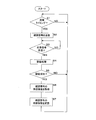
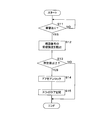
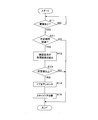
- FIG. It is a flowchart which shows the procedure of the communication apparatus detection process which a door control apparatus performs. It is a flowchart which shows the procedure of the opening operation process of a sliding door which a door control apparatus performs. It is a flowchart which shows the procedure of the process which a communication apparatus performs. It is a flowchart which shows the procedure of the time measuring process which a door control apparatus performs. It is a flowchart which shows the procedure of the opening operation process of the sliding door which the door control apparatus of Embodiment 2 performs.
- FIG. 1 is a block diagram illustrating a configuration of a door lock system according to the first embodiment.
- the door lock system according to the first embodiment includes, for example, a hinge door that opens and closes on the front seat (driver's seat and front passenger seat) side by swinging outward from the vehicle with a predetermined position as a fulcrum.
- Side is mounted on a vehicle C provided with a sliding door that opens and closes along the vehicle body.
- the door lock system includes various vehicle-mounted devices such as a door control device (door opening device) 1 that controls operations of a door lock device 14 and a slide door opening / closing device 15 mounted on a vehicle C, and a communication device 2.
- a door control device door opening device 1 that controls operations of a door lock device 14 and a slide door opening / closing device 15 mounted on a vehicle C
- a communication device 2 a communication device 2.
- the vehicle C is equipped with a shock sensor 12, a wireless communication unit 13, a door lock device 14, a slide door opening / closing device 15, and the like, and these components are connected to the door control device 1.
- the door control device 1 includes a control unit 10 such as a CPU (Central Processing Unit) or an MPU (Micro Processor Unit), a storage unit 11 such as an EEPROM (Electrically Erasable Programmable Read Only Memory) or a flash memory, and the like.
- the storage unit 11 stores a control program executed by the control unit 10, various data such as authentication information 11a, data generated when the control unit 10 executes the control program, and the like.
- the door control device 1 reads out and executes the control program stored in the storage unit 11 by the control unit 10 to control the operation of the device as described above.
- the authentication information 11 a is unique identification information associated with the vehicle C and is stored in advance in the storage unit 11.
- the shock sensor (impact sensor) 12 is an impact detection sensor that detects the intensity of impact received by the vehicle C from the outside, and is provided at an appropriate location of the vehicle C.
- the shock sensor 12 may be constituted by an acceleration sensor, for example.
- the shock sensor 12 detects an impact, the shock sensor 12 sends a signal indicating the detected impact strength (impact force) to the door control device 1.
- the shock sensor 12 may use, for example, a shock sensor used to determine whether or not to operate an airbag provided in the vehicle C.
- the door control device 1 determines whether or not an impact having a predetermined strength or more has been applied to the vehicle C based on the signal acquired from the shock sensor 12.
- the door control device 1 determines whether or not the impact force detected by the shock sensor 12 is greater than or equal to a predetermined value. It is determined that
- the predetermined value is, for example, the intensity of impact received by the vehicle C when a user such as a driver pushes (shakes) the side surface of the vehicle C (the shock sensor 12 detects). Strength) and is stored in the storage unit 11 of the door control device 1 in advance.
- a transmitting antenna (not shown) provided at an appropriate location of the vehicle C is connected to the wireless communication unit 13.
- the wireless communication unit 13 transmits radio waves having a preset frequency (for example, an LF band of 125 kHz). Used to transmit a signal via a transmitting antenna.
- the wireless communication unit 13 transmits a signal given from the door control device 1 in accordance with an instruction from the door control device 1.
- the signal transmitted from the wireless communication unit 13 is received by an external device (for example, the communication device 2) within a communicable range.
- the wireless communication unit 13 is connected to a receiving antenna (not shown) provided at an appropriate location of the vehicle C.
- the wireless communication unit 13 is configured to transmit a radio wave having a preset frequency (for example, a 315 MHz UHF band). The signal transmitted using is received via the receiving antenna.
- the wireless communication unit 13 receives a signal transmitted from an external device (for example, the communication device 2) within a communicable range, the wireless communication unit 13 sends the received signal to the door control device 1.
- the wireless communication unit 13 is connected to the door control device 1, but the function of the wireless communication unit 13 may be built in the door control device 1.
- the door lock device (unlock device) 14 is a mechanism for locking and unlocking the door of the vehicle C, a power source such as a motor or an actuator for operating the mechanism, and a drive circuit for driving the power source. Etc.
- the door lock device 14 locks (locks) and unlocks (unlocks) each door of the vehicle C by operating a drive circuit in accordance with an instruction from the door control device 1.
- the sliding door opening / closing device (door opening / closing device) 15 is a mechanism for opening and closing the sliding door of the vehicle C, a power source such as a motor or an actuator for operating the mechanism, and driving the power source. Drive circuit and the like.
- the sliding door opening / closing device 15 performs an opening operation and a closing operation of the sliding door of the vehicle C by operating the drive circuit in accordance with an instruction from the door control device 1.
- the sliding door opening / closing device 15 is provided in each of two sliding doors, for example, and performs an opening operation and a closing operation of each sliding door.
- the communication device 2 is a portable wireless communication device (wireless device) configured in a card type or a key holder type.
- the communication device 2 includes a control unit 20, a storage unit 21, an operation unit 22, a wireless communication unit 23, and the like, which are connected to each other.
- the control unit 20 is, for example, a CPU or MPU.
- the control unit 20 performs the operation as the communication device 2 by reading and executing the control program stored in the storage unit 21.
- the storage unit 21 is, for example, an EEPROM or a flash memory.
- the storage unit 21 stores a control program executed by the control unit 20, various data such as authentication information 21a, data generated when the control unit 20 executes the control program, and the like.
- the authentication information 21 a is unique identification information associated with the vehicle C that can be operated by the own communication device 2, and is stored in the storage unit 21 in advance.
- the operation unit 22 includes a plurality of operation buttons for receiving operations related to various devices mounted on the vehicle C. When any one of the operation buttons is operated, the operation unit 22 outputs a signal corresponding to the operated operation button to the control unit 20. Based on the signal acquired from the operation unit 22, the control unit 20 can determine which operation button has been operated.
- the operation buttons provided on the operation unit 22 are, for example, a lock button for instructing locking of the door of the vehicle C and an unlock button for instructing unlocking.
- Transmitting antennas (not shown) provided at appropriate locations of the communication device 2 are connected to the wireless communication unit 23, and the wireless communication unit 23 is configured to transmit radio waves having a preset frequency (for example, a 315 MHz UHF band). Is used to transmit a signal via a transmission antenna.
- the wireless communication unit 23 transmits a signal given from the control unit 20 in accordance with an instruction from the control unit 20.
- the signal transmitted from the wireless communication unit 23 is received by an external device (for example, the wireless communication unit 13) within a communicable range.
- the wireless communication unit 23 is connected to a receiving antenna (not shown) provided at an appropriate location of the communication device 2, and the wireless communication unit 23 transmits a radio wave having a preset frequency (for example, an LF band of 125 kHz).
- the wireless communication unit 23 When receiving a signal transmitted from an external device (for example, the wireless communication unit 13) within a communicable range, the wireless communication unit 23 sends the received signal to the control unit 20.
- the wireless communication unit (detection unit) 23 has a function of detecting the signal level (reception strength) of the received signal when the signal is received, and the detected reception strength is transmitted to the control unit 20 together with the received signal. Send it out.
- FIG. 2 is a flowchart showing a procedure of communication device detection processing performed by the door control device 1. Note that the door control device 1 performs the following process when the door of the vehicle C is in a locked state (for example, when the vehicle C is in a parked state).
- the door control device 1 transmits a confirmation signal including the authentication information 11a stored in the storage unit 11 through the wireless communication unit 13 at a predetermined timing (periodically). Therefore, the door control device 1 determines whether or not the transmission timing of the confirmation signal has arrived based on the timer that times the predetermined time (S1). When it is determined that the transmission timing has not arrived (S1: NO), the door control device 1 stands by until the transmission timing arrives. When it is determined that the transmission timing has arrived (S1: YES), the door control device 1 transmits a confirmation signal including the authentication information 11a stored in the storage unit 11 by the wireless communication unit (transmission unit) 13 ( S2).
- the door control device 1 determines whether or not the response signal transmitted from the communication device 2 has been received by the wireless communication unit 13 (S3), and determines that it has not been received. If so (S3: NO), it waits until it is received.
- the door control device (authentication unit) 1 associates the received response signal with the appropriate communication device 2 (vehicle C).
- An authentication process is performed to determine whether the signal is transmitted from the communication device 2) (S4).
- the response signal transmitted from the communication device 2 includes authentication information 21a stored in the storage unit 21 of the communication device 2, and the door control device 1 uses the authentication information 21a included in the response signal.
- the authentication information 11a stored in the storage unit 11 are compared.
- the door control device 1 is a signal from the communication device 2 in which the authentication information 21a included in the response signal is appropriate and the response signal is appropriate. It is determined that there is (authentication success).
- the door control device 1 determines whether or not the authentication process is successful (S5). If it is determined that the authentication process is not successful (S5: NO), the door control device 1 returns to the process of step S1. If authentication fails, the authentication information included in the received response signal is not appropriate, the response signal is not received, or the authentication information is not included in the received response signal. included. When it is determined that the authentication process is successful (S5: YES), the door control device (acquisition unit) 1 acquires the reception strength of the confirmation signal included in the response signal received in step S3 (S6).
- the response signal transmitted from the communication device 2 includes the reception intensity when the communication device 2 receives the confirmation signal transmitted by the door control device 1 in step S2, and the door control device 1
- the reception intensity of the confirmation signal by the communication device 2 is extracted from the received response signal.
- the door control device 1 stores the received intensity of the confirmation signal in the storage unit 11 (S7), and returns to the process of step S1.
- the door control device 1 determines whether or not the communication device 2 exists within a range in which the communication device 2 can communicate with the wireless communication unit 13 by performing the above-described processing every time a predetermined transmission timing arrives (periodically). To do. Moreover, the door control apparatus 1 has grasped
- FIG. 3 is a flowchart showing the procedure of the sliding door opening operation process performed by the door control device 1.
- the door control device 1 performs the following process when the door of the vehicle C is in a locked state (for example, when the vehicle C is in a parked state).
- the door control device (determination unit) 1 determines whether or not an impact having a predetermined strength or more is applied to the vehicle C (S11). Specifically, the door control device 1 determines whether or not the impact force detected by the shock sensor 12 is greater than or equal to a predetermined value (predetermined strength) stored in the storage unit 11.
- a predetermined value predetermined strength
- the door control device 1 stands by while performing other processes.
- the door control device 1 stores the reception strength of the confirmation signal received by the communication device 2 stored in the storage unit 11 at this time. 11 (S12). Specifically, the door control device 1 reads the reception intensity stored in the storage unit 11 in step S7 in FIG.
- the door control device (determination unit) 1 determines whether or not the read reception intensity is a predetermined value or more (S13).
- the predetermined value to be compared is, for example, the reception intensity (signal level) when the communication device 2 located about 80 cm away from the vehicle C receives the confirmation signal transmitted from the wireless communication unit 13.
- the strength is less than the predetermined value, it can be seen that the communication device 2 does not exist within the predetermined range from the vehicle C (wireless communication unit 13).
- the door control device (unlock control unit) 1 When it is determined that the read reception intensity is greater than or equal to a predetermined value (S13: YES), that is, when the communication device 2 is within a predetermined range from the vehicle C, the door control device (unlock control unit) 1 The device 14 is controlled to unlock the door of the vehicle C (S14). Furthermore, the door control device (door control unit) 1 controls the slide door opening / closing device 15 to open the slide door of the vehicle C (S15), and the process is terminated. When it is determined that the read reception intensity is not greater than or equal to the predetermined value (S13: NO), that is, when the communication device 2 is not within the predetermined range from the vehicle C, the door control device 1 skips the processes of steps S14 and S15. To finish the process. Note that when the door of the vehicle C is unlocked, the door control device 1 may be configured not to unlock the door of the vehicle C but only to open the slide door.
- FIG. 4 is a flowchart showing a procedure of processing performed by the communication device 2.
- the control unit 20 of the communication device 2 determines whether or not the wireless communication unit (reception unit) 23 has received the confirmation signal transmitted from the external device (specifically, the door control device 1) (S21). ), When it is determined that it has not been received (S21: NO), it waits until it is received. Specifically, the control unit 20 determines whether or not the confirmation signal transmitted by the door control device 1 in step S2 in FIG. 2 has been received.
- the control unit 20 of the communication device 2 determines whether or not the received confirmation signal is a signal transmitted from the appropriate door control device 1. An authentication process is performed to determine whether (S22). Specifically, the control unit 20 determines whether the received confirmation signal is a signal transmitted from the door control device 1 (wireless communication unit 13) mounted on the vehicle C with which the communication device 2 is associated. Determine whether or not.
- the confirmation signal transmitted from the door control device 1 includes the authentication information 11a stored in the storage unit 11 of the door control device 1, and the control unit 20 of the communication device 2 includes the confirmation signal.
- the authentication information 11a included is compared with the authentication information 21a stored in the storage unit 21. Then, when the authentication information 11a included in the confirmation signal matches the authentication information 21a, the control unit 20 of the communication device 2 determines that the authentication information 11a included in the confirmation signal is appropriate and the confirmation signal is from the appropriate door control device 1. (Authentication success).
- the control unit 20 of the communication device 2 determines whether or not the authentication process is successful (S23). When it is determined that the authentication process is not successful (S23: NO), the process ends. In addition, when authentication fails, in addition to the case where the authentication information included in the received confirmation signal is not appropriate, the case where the authentication information is not included in the received confirmation signal is also included.
- the control unit 20 detects the reception strength of the confirmation signal received in step S21 by the wireless communication unit 23 (S24). In addition, the control unit 20 transmits a response signal including the authentication information 21a stored in the storage unit 21 and the received strength of the detected confirmation signal by the wireless communication unit (transmission unit) 23 (S25). Exit.
- the response signal transmitted in step S25 is received by the door control device 1 in step S3 in FIG.
- the door control device 1 unlocks the door of the vehicle C when the impact of the predetermined strength or more is applied to the vehicle C and the communication device 2 is within the predetermined range from the vehicle C, and the sliding door Open. Therefore, only when the communication device 2 is within the predetermined range from the vehicle C (in the vicinity of the vehicle C), the vehicle C unlocks the door of the vehicle C when an impact with a predetermined strength or more is applied. Can open the sliding door. Accordingly, it is possible to prevent the door of the vehicle C from being unlocked and the sliding door opened in an unintended situation, such as when a person other than the user who owns the communication device 2 applies an impact to the vehicle C. it can.
- the door control device 1 is configured such that when the sliding door is in an open state and the communication device 2 is within a predetermined range from the vehicle C and an impact of a predetermined strength or more is applied to the vehicle C, the sliding door of the vehicle C A configuration may be further provided in which the door is closed and then the door is locked.
- the door control device 1 is configured to perform the processing illustrated in FIG. 2 and the processing illustrated in FIG. 3 in parallel, but is not limited to this configuration.
- the door control device 1 may be configured to perform the processes in steps S2 to S7 in FIG. 2 when it is determined in step S11 in FIG. In this case, it is possible to accurately grasp the distance between the communication device 2 and the wireless communication unit 13 when an impact of a predetermined strength or more is applied to the vehicle C.
- the wireless communication unit 13 mounted on the vehicle C periodically transmits a confirmation signal, and the communication device 2 transmits (replies) a response signal when receiving the confirmation signal. It is a configuration. That is, since the communication device 2 transmits the response signal only when the confirmation signal is received, the power consumption in the communication device 2 can be suppressed as compared with the configuration in which the communication device 2 periodically transmits the response signal. The battery consumption of the communication device 2 can be delayed.
- the wireless communication unit 13 is configured to transmit a confirmation signal via a transmission antenna provided at an appropriate location of the vehicle C, and a predetermined range based on the transmission antenna is a communicable range. Therefore, even when the communication device 2 is in the vehicle C, that is, when the user who owns the communication device 2 gets into the vehicle C, the sliding door opening operation is performed when the vehicle C is shocked. Is done. On the other hand, when the communication device 2 is in the vehicle C, the sliding door may not be opened even when an impact is applied to the vehicle C.
- the radio communication unit 13 may be configured to transmit a confirmation signal to the communication device 2 within a predetermined range (within a communicable range) outside the vehicle C via a transmission antenna. In this case, since the communication device 2 in the vehicle C cannot receive the confirmation signal from the wireless communication unit 13, it cannot return a response signal. As a result, the door control device 1 unlocks and slides the door of the vehicle C. Do not open the door.
- the door control device 1 transmits / receives authentication information to / from the communication device 2 to perform authentication processing, and whether there is an appropriate communication device 2 within a predetermined range from the vehicle C. Determine.
- the sliding door can be opened only when an impact is applied to the vehicle C in a situation where the appropriate communication device 2 is within a predetermined range from the vehicle C. Further, the door can be unlocked and locked as necessary. Therefore, even if a person or the like who does not have the communication device 2 applies an impact to the vehicle C, the sliding door is not opened.
- the sliding door of the vehicle C is opened when an impact is applied to the vehicle C when the communication device 2 is within a predetermined range from the vehicle C.
- the shock sensor 12 can separately detect the impact applied to the left side of the vehicle C and the impact applied to the right side of the vehicle C, when the impact is applied to the left side of the vehicle C, the left side of the vehicle C
- the sliding door may be opened, and when an impact is applied to the right side of the vehicle C, the right sliding door may be opened.
- the opening operation of the sliding door at the blind spot of the user who applied the impact to the vehicle C is not performed, so that the user can visually recognize the sliding door where the opening operation is performed and secure safety.
- the hinge door of the vehicle C may be opened when an impact is applied to the vehicle C when the communication device 2 is within a predetermined range from the vehicle C.
- Embodiment 2 The door lock system according to the second embodiment will be described below. Since the door lock system of the second embodiment has the same configuration as the door lock system of the first embodiment described above, description of the configuration is omitted. Further, in the door lock system of the second embodiment, the communication device 2 performs the process shown in FIG. 4 as in the first embodiment, and thus the description of the processing performed by the communication device 2 is omitted.
- the door control device 1 performs the process shown in FIG. 2 as in the first embodiment. Further, the door control device 1 of the second embodiment performs the process shown in FIG. 3 as in the first embodiment, but the sliding door opening / closing device 15 performs the closing operation of the sliding door of the vehicle C. In the subsequent predetermined time, the sliding door of the vehicle C is not opened even when an impact is applied to the vehicle C when the communication device 2 is within the predetermined range from the vehicle C. Yes. Therefore, when the sliding door closing operation is performed by the sliding door opening / closing device 15, the door control device 1 according to the second embodiment performs a time measurement process for a predetermined time, and then performs the predetermined processing after the sliding door closing operation is performed. Whether or not time has passed is detected.
- FIG. 5 is a flowchart showing the procedure of the time measuring process performed by the door control device 1.
- the door control device 1 determines whether the sliding door closing operation by the sliding door opening / closing device 15 has been performed based on the state of each part of the sliding door opening / closing device 15 (S31). For example, the door control device 1 can determine whether or not the sliding door has been closed based on a detection state of a courtesy switch (not shown) that detects opening and closing of the door of the vehicle C. When it is determined that the sliding door is not closed (S31: NO), the door control device 1 stands by while performing other processes.
- the door control device 1 When it is determined that the sliding door has been closed (S31: YES), the door control device 1 starts measuring a predetermined time (for example, about several seconds to 10 seconds) (S31). The door control device 1 uses a timer that measures a predetermined time (for example, about several seconds to 10 seconds).
- the door control device 1 determines whether or not a predetermined time has elapsed based on the timer (S33). When it is determined that the predetermined time has not elapsed (S33: NO), the door control device 1 stores information (not yet elapsed) indicating that the predetermined time has not elapsed since the sliding door closing operation was performed. It memorize
- the door control device 1 performs the above-described process every time the sliding door closing operation is performed by the sliding door opening / closing device 15, and whether or not a predetermined time has elapsed since the sliding door closing operation was performed. It is grasped sequentially.
- FIG. 6 is a flowchart illustrating a procedure of a sliding door opening operation process performed by the door control device 1 according to the second embodiment.
- the door control device 1 according to the second embodiment performs the same process as the process shown in FIG. 3, and therefore, in FIG. 6, the same processes as those in FIG. Description is omitted.
- the door control device 1 determines whether or not an impact of a predetermined strength or more has been applied to the vehicle C based on the signal acquired from the shock sensor 12 (S11).
- the door control device 1 determines that a predetermined time has elapsed since the closing operation of the slide door performed immediately before (most recently). It is determined whether or not (S41). Specifically, the door control device 1 determines whether or not a predetermined time has elapsed since the sliding door was closed based on the information stored in the storage unit 11 in step S34 or S35 in FIG. Judging.
- the door control device 1 When it is determined that a predetermined time has elapsed since the sliding door closing operation was performed (S41: YES), the door control device 1 performs the same processing as steps S12 to S15 in FIG. finish. If it is determined that the predetermined time has not elapsed since the sliding door was closed (S41: NO), the door control device 1 ends the process without performing anything. With the above-described processing, the door control device 1 according to the second embodiment has passed a predetermined time since the sliding door closing operation was performed even when an impact of a predetermined strength or higher was applied to the vehicle C. If not, the door is not unlocked and the sliding door is not opened.
- the communication device 2 is within a predetermined range from the vehicle C and the vehicle C has a predetermined strength or more after a predetermined time has elapsed since the sliding door closing operation was performed.
- the door of the vehicle C can be unlocked and the sliding door can be opened. Therefore, it is possible to prevent the unlocking of the door of the vehicle C and the opening operation of the sliding door from being performed in a situation not intended by the user.
- a user such as a driver can unlock the door of the vehicle C and open the sliding door by applying an impact to the vehicle C, even if the user has a load on both hands. Easy to operate and good operability.
- the door lock system when a predetermined time has elapsed from the closing operation of the slide door and the communication device 2 is within a predetermined range from the vehicle C, an impact of a predetermined strength or more is applied to the vehicle C. In addition, the door of the vehicle C is unlocked and the sliding door is opened. In addition, regardless of whether or not the communication device 2 is within a predetermined range from the vehicle C, an impact of a predetermined strength or more is applied to the vehicle C after a predetermined time has elapsed since the closing operation of the slide door. In such a case, the door of the vehicle C may be unlocked and the sliding door may be opened.
- Door control device door opening device, acquisition unit, determination unit, determination unit, door control unit, unlock control unit, authentication unit
- Communication equipment radio equipment
- Shock sensor Shock sensor
- Wireless communication unit transmission unit
- Door lock device Unlock device
- Sliding door opening and closing device door opening and closing device
- 21 storage unit wireless communication unit (reception unit, detection unit, transmission unit) 21a Authentication information
Landscapes
- Engineering & Computer Science (AREA)
- Mechanical Engineering (AREA)
- Lock And Its Accessories (AREA)
- Power-Operated Mechanisms For Wings (AREA)
Abstract
ユーザが意図せずにドアが開けられることを防止でき、ユーザが両手に荷物を持っているような場合であって、ドアの開動作に係る操作が容易であるドア開放装置及びドア開放システムを提供する。車輌に所定強度以上の衝撃が加えられた場合に、この時点で車輌内の無線通信部が送信した信号を通信機が受信した際の受信強度が所定値以上であれば、ドア制御装置は、ドアロック装置にてドアのアンロックを行い、その後、スライドドア開閉装置にてスライドドアの開動作を行う。
Description
本発明は、車輌のドアの開動作を行うドア開放装置及びドア開放システムに関する。
車輌に対応付けられたエントリーキーが定期的にIDコード信号を発信し、車輌に搭載された受信部がIDコード信号を受信し、且つ車輌の所定部位に衝撃が加えられた場合に、車輌のドアを開けるシステムが提案されている(特許文献1参照)。
特許文献1に開示されたシステムでは、車輌に搭載された受信部がエントリーキーからのIDコード信号を受信できる状況であれば、エントリーキーを所持するユーザ以外の人によって車輌に衝撃が加えられた場合であっても、ドアが開けられるという問題がある。
本発明は、斯かる事情に鑑みてなされたものであり、その目的とするところは、エントリーキー(無線機)を所持するユーザが意図せずにドアが開けられることを防止できるドア開放装置及びドア開放システムを提供することにある。
本発明に係るドア開放装置は、車輌に設けられたドアの開閉動作を行うドア開閉装置を制御して前記ドアの開動作を行うドア開放装置において、信号を送信する送信部と、該送信部が送信した信号の受信側機器での受信強度を取得する取得部と、該取得部が取得した受信強度が所定値以上であるか否かを判定する判定部と、前記車輌に加えられた衝撃の強度を検知する衝撃センサによって検知された衝撃強度が所定値以上であるか否かを判断する判断部と、前記判定部によって前記受信強度が前記所定値以上であると判定され、且つ、前記判断部によって前記衝撃強度が前記所定値以上であると判断された場合、前記ドア開閉装置に前記ドアを開動作させるドア制御部とを備えることを特徴とする。
本発明によれば、ドア開放装置は、送信した信号の受信側機器での受信強度が所定値以上である状況で車輌に所定値以上の強度の衝撃が加えられた場合にドアを開ける。受信強度と比較する所定値とは、ドア開放装置が送信した信号を、ドア開放装置から所定範囲内(例えば車輌から80cm~1m程度の範囲内)にある機器が受信した場合の受信強度とすることができる。また、衝撃強度と比較する所定値とは、運転者等のユーザが例えば車輌の側面を押す(揺さ振る)ことにより車輌が受ける衝撃の強度(衝撃センサが検知する強度)とすることができる。従って、受信側機器が車輌から所定範囲内にある場合に限り、車輌に所定強度以上の衝撃を加えることによってドアを開けることが可能となる。よって、受信側機器を所持するユーザ以外の人によって車輌に衝撃が加えられた場合のように、ユーザが意図しない状況でドアが開けられることを防止できる。また、受信側機器を所持するユーザは車輌に衝撃を与えることによってドアを開けることができるので、ユーザが両手に荷物を持っているような場合であっても容易にドアを開けることができる。
本発明に係るドア開放装置は、前記取得部は、前記車輌の外側にある前記受信側機器での受信強度を取得するようにしてあることを特徴とする。
本発明によれば、受信側機器が車輌の外側の所定範囲内にある状況で車輌に衝撃が加えられた場合にドアが開けられる。即ち、受信側機器が車輌の中にある状況では車輌に衝撃が加えられた場合であってもドアが開けられない。よって、受信側機器を所持するユーザが車輌内に乗り込んだ状態で誤ってドアが開けられることを防止できる。
本発明に係るドア開放装置は、前記ドア制御部は、前記ドア開閉装置が前記ドアの閉動作を行ってから所定時間が経過するまでの間、前記ドア開閉装置に前記ドアを開動作させないようにしてあることを特徴とする。
本発明によれば、ドア開閉装置がドアの閉動作を行ってから所定時間の間は、受信側機器が車輌から所定範囲内にある状況で車輌に衝撃が加えられた場合であっても、ドア開閉装置によるドアの開動作は行われない。これにより、例えば、ドアの閉動作が行われることによって車輌に衝撃が生じた(加えられた)場合、又は、運転者等が車輌から下車してドアを閉めた後に誤って車輌に衝撃を与えた場合であってもドアの開動作が行われない。よって、不要なドアの開動作を回避できる。
本発明に係るドア開放装置は、前記判定部によって前記受信強度が前記所定値以上であると判定され、且つ、前記判断部によって前記衝撃強度が前記所定値以上であると判断された場合、前記ドアのアンロックを行うアンロック装置を制御して前記ドアをアンロックするアンロック制御部を備え、前記ドア制御部は、前記アンロック装置にて前記ドアがアンロックされた後に、前記ドア開閉装置に前記ドアを開動作させるようにしてあることを特徴とする。
本発明によれば、受信側機器での受信強度が所定値以上である状況で車輌に所定強度以上の衝撃が加えられた場合、ドアがアンロックされ、その後、ドアが開けられる。よって、受信側機器が車輌から所定範囲内にある状況で車輌に衝撃が加えられることにより、ドアがアンロックされて開けられるので、ユーザが意図しない状況でドアがアンロックされて開けられることを防止できる。また、ユーザが両手に荷物を持っているような場合であっても、容易にドアをアンロックして開けることができるので、操作性がよい。
本発明に係るドア開放装置は、前記取得部は、前記車輌に対応付けられた認証情報を前記受信強度と共に取得するようにしてあり、前記取得部が取得した認証情報の適否を判定する認証部を備え、前記ドア制御部は、前記認証部によって前記認証情報が適切であると判定された後に、前記ドア開閉装置に前記ドアを開動作させるようにしてあることを特徴とする。
本発明によれば、ドア開放装置は、車輌に対応付けられた認証情報を受信強度と共に取得し、取得した認証情報の適否を判定する。そして、ドア開放装置は、認証情報が適切である判定した場合に、車輌のドアを開ける。よって、受信側機器との間で認証処理を行うことにより、適切な受信側機器が車輌から所定範囲内にある状況で車輌に所定強度以上の衝撃が加えられた場合にのみドアの開動作が可能となる。
本発明に係るドア開放装置は、車輌に設けられたドアの開閉動作を行うドア開閉装置を制御して前記ドアの開動作を行うドア開放装置において、前記車輌に加えられた衝撃の強度を検知する衝撃センサによって検知された衝撃強度が所定値以上であるか否かを判断する判断部と、該判断部によって前記衝撃強度が前記所定値以上であると判断された場合に、前記ドア開閉装置に前記ドアを開動作させるドア制御部とを備え、該ドア制御部は、前記ドア開閉装置が前記ドアの閉動作を行ってから所定時間が経過するまでの間、前記ドア開閉装置に前記ドアを開動作させないようにしてあることを特徴とする。
本発明によれば、車輌に所定強度以上の衝撃が加えられた場合にドア開閉装置にドアを開動作させるドア制御部が、ドア開閉装置がドアの閉動作を行ってから所定時間の間は、車輌に衝撃が加えられた場合であってもドア開閉装置にドアの開動作を行わせない。これにより、例えば、ドアの閉動作が行われることによって車輌に衝撃が生じた(加えられた)場合、又は、運転者等が車輌から下車してドアを閉めた後に誤って車輌に衝撃を与えた場合であっても、ドアの開動作が行われない。よって、不要なドアの開動作を回避できる。また、運転者等のユーザは車輌に衝撃を与えることによってドアを開けることができるので、ユーザが両手に荷物を持っているような場合であっても容易にドアを開けることができる。
本発明に係るドア開放システムは、上述のいずれかのドア開放装置と、前記車輌に対応付けられた無線機とを備え、前記無線機は、前記ドア開放装置の前記送信部が送信した信号を受信する受信部と、該受信部が受信した信号の受信強度を検出する検出部と、該検出部が検出した受信強度を含む信号を送信する送信部とを有することを特徴とする。
本発明によれば、車輌に対応付けられた無線機が車輌から所定範囲内にある場合に限り、車輌に所定強度以上の衝撃を加えることによってドアを開けることが可能となる。よって、無線機を所持するユーザが意図しない状況でドアが開けられることを防止でき、また、ユーザが両手に荷物を持っているような場合であっても容易にドアを開けることができる。
本発明では、無線機を所持するユーザが意図しない状況で車輌のドアが開けられることを防止できる。また、ユーザが両手に荷物を持っているような場合であっても容易に車輌のドアを開けることができる。
以下に、本発明に係るドア開放装置及びドア開放システムについて、ドアロックシステムに適用した実施形態を示す図面に基づいて詳述する。
(実施形態1)
以下に、本発明の実施形態1に係るドアロックシステムについて説明する。図1は、実施形態1に係るドアロックシステムの構成を示すブロック図である。本実施形態1のドアロックシステムは、例えば、前席(運転席及び助手席)側に、所定箇所を支点として車輌の外側へスイングして開閉されるヒンジドアが設けてあり、後席(後部座席)側に、車輌の車体に沿って開閉されるスライドドアが設けてある車輌Cに搭載される。本実施形態1のドアロックシステムは、車輌Cに搭載されたドアロック装置14及びスライドドア開閉装置15の動作を制御するドア制御装置(ドア開放装置)1等の各種車載装置と、通信機2とを備える。
以下に、本発明の実施形態1に係るドアロックシステムについて説明する。図1は、実施形態1に係るドアロックシステムの構成を示すブロック図である。本実施形態1のドアロックシステムは、例えば、前席(運転席及び助手席)側に、所定箇所を支点として車輌の外側へスイングして開閉されるヒンジドアが設けてあり、後席(後部座席)側に、車輌の車体に沿って開閉されるスライドドアが設けてある車輌Cに搭載される。本実施形態1のドアロックシステムは、車輌Cに搭載されたドアロック装置14及びスライドドア開閉装置15の動作を制御するドア制御装置(ドア開放装置)1等の各種車載装置と、通信機2とを備える。
車輌Cには、ショックセンサ12、無線通信部13、ドアロック装置14、スライドドア開閉装置15等が搭載されており、これらの各部はドア制御装置1に接続されている。
ドア制御装置1は、CPU(Central Processing Unit)又はMPU(Micro Processor Unit)等の制御部10、EEPROM(Electrically Erasable Programmable Read Only Memory)又はフラッシュメモリ等の記憶部11等を有する。記憶部11は、制御部10にて実行される制御プログラム、認証情報11a等の各種データ、制御部10による制御プログラムの実行時に発生するデータ等を記憶する。ドア制御装置1は、記憶部11に記憶されている制御プログラムを制御部10にて読み出して実行することにより、上述したような機器の動作を制御する。認証情報11aは、車輌Cに対応付けられた固有の識別情報であり、記憶部11に予め記憶されている。
ドア制御装置1は、CPU(Central Processing Unit)又はMPU(Micro Processor Unit)等の制御部10、EEPROM(Electrically Erasable Programmable Read Only Memory)又はフラッシュメモリ等の記憶部11等を有する。記憶部11は、制御部10にて実行される制御プログラム、認証情報11a等の各種データ、制御部10による制御プログラムの実行時に発生するデータ等を記憶する。ドア制御装置1は、記憶部11に記憶されている制御プログラムを制御部10にて読み出して実行することにより、上述したような機器の動作を制御する。認証情報11aは、車輌Cに対応付けられた固有の識別情報であり、記憶部11に予め記憶されている。
ショックセンサ(衝撃センサ)12は、車輌Cが外部から受けた衝撃の強度を感知する衝撃感知センサであり、車輌Cの適宜箇所に設けられている。ショックセンサ12は例えば加速度センサによって構成されていてもよい。ショックセンサ12は、衝撃を感知した場合に、感知した衝撃の強さ(衝撃力)を示す信号をドア制御装置1へ送出する。ショックセンサ12は、例えば、車輌Cに設けられたエアバッグを作動させるか否かを判断するために用いられるショックセンサを利用してもよい。
本実施形態1では、ドア制御装置1は、ショックセンサ12から取得した信号に基づいて、車輌Cに所定強度以上の衝撃が加えられたか否かを判断する。具体的には、ドア制御装置1は、ショックセンサ12が感知した衝撃力が所定値以上であるか否かを判断し、所定値以上であった場合、車輌Cに所定強度以上の衝撃が加えられたと判断する。なお、ここでの所定値(所定強度)は、例えば、運転者等のユーザが車輌Cの側面を押した(揺さ振った)場合に車輌Cが受ける衝撃の強度(ショックセンサ12が検知する強度)であり、予めドア制御装置1の記憶部11に記憶されている。
本実施形態1では、ドア制御装置1は、ショックセンサ12から取得した信号に基づいて、車輌Cに所定強度以上の衝撃が加えられたか否かを判断する。具体的には、ドア制御装置1は、ショックセンサ12が感知した衝撃力が所定値以上であるか否かを判断し、所定値以上であった場合、車輌Cに所定強度以上の衝撃が加えられたと判断する。なお、ここでの所定値(所定強度)は、例えば、運転者等のユーザが車輌Cの側面を押した(揺さ振った)場合に車輌Cが受ける衝撃の強度(ショックセンサ12が検知する強度)であり、予めドア制御装置1の記憶部11に記憶されている。
無線通信部13には、車輌Cの適宜箇所に設けられた送信アンテナ(図示せず)が接続されており、無線通信部13は、予め設定された周波数の電波(例えば125kHzのLF帯)を用いて送信アンテナを介して信号を送信する。無線通信部13は、ドア制御装置1からの指示に従って、ドア制御装置1から与えられた信号を送信する。無線通信部13から送信された信号は、通信可能な範囲内にある外部機器(例えば通信機2)によって受信される。
また無線通信部13には、車輌Cの適宜箇所に設けられた受信アンテナ(図示せず)が接続されており、無線通信部13は、予め設定された周波数の電波(例えば315MHzのUHF帯)を用いて送信されてきた信号を受信アンテナを介して受信する。無線通信部13は、通信可能な範囲内にある外部機器(例えば通信機2)から送信された信号を受信した場合、受信した信号をドア制御装置1へ送出する。
本実施形態1では、無線通信部13がドア制御装置1に接続されている構成であるが、無線通信部13の機能がドア制御装置1に内蔵されていてもよい。
本実施形態1では、無線通信部13がドア制御装置1に接続されている構成であるが、無線通信部13の機能がドア制御装置1に内蔵されていてもよい。
ドアロック装置(アンロック装置)14は、車輌Cのドアのロック及びアンロックを行うための機構、この機構を動作させるためのモータ又はアクチュエータ等の動力源、及びこの動力源を駆動する駆動回路等を含む。ドアロック装置14は、ドア制御装置1からの指示に従って駆動回路を動作させることにより、車輌Cの各ドアのロック(施錠)及びアンロック(解錠)を行う。
スライドドア開閉装置(ドア開閉装置)15は、車輌Cのスライドドアの開動作及び閉動作を行うための機構、この機構を動作させるためのモータ又はアクチュエータ等の動力源、及びこの動力源を駆動する駆動回路等を含む。スライドドア開閉装置15は、ドア制御装置1からの指示に従って駆動回路を動作させることにより、車輌Cのスライドドアの開動作及び閉動作を行う。スライドドア開閉装置15は、例えば2つのスライドドアのそれぞれに設けられており、各スライドドアの開動作及び閉動作をそれぞれ行う。
通信機2は、カード型又はキーホルダ型に構成された可搬型の無線通信装置(無線機)である。通信機2は、制御部20、記憶部21、操作部22、無線通信部23等を備え、それぞれは相互に接続されている。
制御部20は、例えばCPU又はMPUである。制御部20は、記憶部21に記憶されている制御プログラムを読み出して実行することにより、通信機2としての動作を行う。記憶部21は、例えばEEPROM又はフラッシュメモリ等である。記憶部21は、制御部20にて実行される制御プログラム、認証情報21a等の各種データ、制御部20による制御プログラムの実行時に発生するデータ等を記憶する。認証情報21aは、自身の通信機2にて操作可能である車輌Cに対応付けられた固有の識別情報であり、記憶部21に予め記憶されている。
制御部20は、例えばCPU又はMPUである。制御部20は、記憶部21に記憶されている制御プログラムを読み出して実行することにより、通信機2としての動作を行う。記憶部21は、例えばEEPROM又はフラッシュメモリ等である。記憶部21は、制御部20にて実行される制御プログラム、認証情報21a等の各種データ、制御部20による制御プログラムの実行時に発生するデータ等を記憶する。認証情報21aは、自身の通信機2にて操作可能である車輌Cに対応付けられた固有の識別情報であり、記憶部21に予め記憶されている。
操作部22は、車輌Cに搭載された各種の機器に係る操作を受け付けるための操作ボタンを複数備える。操作部22は、いずれかの操作ボタンが操作された場合、操作された操作ボタンに対応した信号を制御部20へ出力する。制御部20は、操作部22から取得した信号に基づいて、いずれの操作ボタンに対して操作が行われたかを判断できる。操作部22に設けられる操作ボタンは、例えば、車輌Cのドアのロックを指示するためのロックボタン、アンロックを指示するためのアンロックボタンである。
無線通信部23には、通信機2の適宜箇所に設けられた送信アンテナ(図示せず)が接続されており、無線通信部23は、予め設定された周波数の電波(例えば315MHzのUHF帯)を用いて送信アンテナを介して信号を送信する。無線通信部23は、制御部20からの指示に従って、制御部20から与えられた信号を送信する。無線通信部23から送信された信号は、通信可能な範囲内にある外部機器(例えば無線通信部13)によって受信される。
また無線通信部23には、通信機2の適宜箇所に設けられた受信アンテナ(図示せず)が接続されており、無線通信部23は、予め設定された周波数の電波(例えば125kHzのLF帯)を用いて送信されてきた信号を受信アンテナを介して受信する。無線通信部23は、通信可能な範囲内にある外部機器(例えば無線通信部13)から送信された信号を受信した場合、受信した信号を制御部20へ送出する。無線通信部(検出部)23は、信号を受信した場合、受信した信号の信号レベル(受信強度)を検出する機能を有しており、受信した信号と共に、検出した受信強度を制御部20へ送出する。
また無線通信部23には、通信機2の適宜箇所に設けられた受信アンテナ(図示せず)が接続されており、無線通信部23は、予め設定された周波数の電波(例えば125kHzのLF帯)を用いて送信されてきた信号を受信アンテナを介して受信する。無線通信部23は、通信可能な範囲内にある外部機器(例えば無線通信部13)から送信された信号を受信した場合、受信した信号を制御部20へ送出する。無線通信部(検出部)23は、信号を受信した場合、受信した信号の信号レベル(受信強度)を検出する機能を有しており、受信した信号と共に、検出した受信強度を制御部20へ送出する。
本実施形態1のドアロックシステムでは、車輌Cに所定強度以上の衝撃が加えられた場合、その時点で通信機2が車輌Cから所定範囲内にあれば、車輌Cのスライドドアが開けられる。なお、車輌Cのドアがロック状態であれば、ドアのアンロックが行われた後に、スライドドアが開けられる。よって、ドア制御装置1は、車輌Cから所定範囲内における通信機2の有無の検出処理を定期的に行っている。以下に、ドア制御装置1が行う通信機検出処理について説明する。図2は、ドア制御装置1が行う通信機検出処理の手順を示すフローチャートである。なお、ドア制御装置1は、車輌Cのドアがロック状態である場合に(例えば、車輌Cが駐車状態である場合に)、以下の処理を行う。
ドア制御装置1は、所定のタイミングで(定期的に)、記憶部11に記憶してある認証情報11aを含む確認信号を無線通信部13にて送信する。よって、ドア制御装置1は、所定時間を計時するタイマに基づいて、確認信号の送信タイミングが到来したか否かを判断している(S1)。送信タイミングが到来していないと判断した場合(S1:NO)、ドア制御装置1は、送信タイミングが到来するまで待機する。送信タイミングが到来したと判断した場合(S1:YES)、ドア制御装置1は、記憶部11に記憶してある認証情報11aを含む確認信号を無線通信部(送信部)13にて送信する(S2)。確認信号の送信終了後、ドア制御装置1は、通信機2から送信されてくる応答信号を無線通信部13にて受信したか否かを判断しており(S3)、受信していないと判断した場合(S3:NO)、受信するまで待機する。
無線通信部13にて応答信号を受信したと判断した場合(S3:YES)、ドア制御装置(認証部)1は、受信した応答信号が適切な通信機2(車輌Cに対応付けられている通信機2)から送信された信号であるか否かを判定する認証処理を行う(S4)。なお、通信機2から送信されてくる応答信号には、通信機2の記憶部21に記憶してある認証情報21aが含まれており、ドア制御装置1は、応答信号に含まれる認証情報21aと、記憶部11に記憶してある認証情報11aとを比較する。そして、応答信号に含まれる認証情報21aが認証情報11aに一致する場合、ドア制御装置1は、応答信号に含まれる認証情報21aが適切であり、応答信号が適切な通信機2からの信号である(認証成功)と判定する。
ドア制御装置1は、認証処理に成功したか否かを判断し(S5)、成功していないと判断した場合(S5:NO)、ステップS1の処理に戻る。なお、認証に失敗した場合には、受信した応答信号に含まれる認証情報が適切でない場合のほかに、応答信号を受信しなかった場合、受信した応答信号に認証情報が含まれない場合等も含まれる。
認証処理に成功したと判断した場合(S5:YES)、ドア制御装置(取得部)1は、ステップS3で受信した応答信号に含まれる確認信号の受信強度を取得する(S6)。なお、通信機2から送信されてくる応答信号には、ステップS2でドア制御装置1が送信した確認信号を通信機2が受信した際の受信強度が含まれており、ドア制御装置1は、受信した応答信号から、通信機2による確認信号の受信強度を抽出する。ドア制御装置1は、取得した確認信号の受信強度を記憶部11に記憶し(S7)、ステップS1の処理に戻る。
認証処理に成功したと判断した場合(S5:YES)、ドア制御装置(取得部)1は、ステップS3で受信した応答信号に含まれる確認信号の受信強度を取得する(S6)。なお、通信機2から送信されてくる応答信号には、ステップS2でドア制御装置1が送信した確認信号を通信機2が受信した際の受信強度が含まれており、ドア制御装置1は、受信した応答信号から、通信機2による確認信号の受信強度を抽出する。ドア制御装置1は、取得した確認信号の受信強度を記憶部11に記憶し(S7)、ステップS1の処理に戻る。
ドア制御装置1は、所定の送信タイミングが到来する都度(定期的に)、上述した処理を行うことにより、通信機2が無線通信部13と通信可能な範囲内に存在するか否かを判断する。また、ドア制御装置1は、送信した確認信号の通信機2での受信強度を逐次把握している。通信機2での確認信号の受信強度は、通信機2が車輌C(無線通信部13)に近いほど強くなるので、確認信号の受信強度は、通信機2と車輌Cとの間の距離に応じた値となる。
次に、車輌Cがユーザによって衝撃を加えられた場合にドア制御装置1がスライドドア開閉装置15を制御してスライドドアを開ける処理について説明する。図3は、ドア制御装置1が行うスライドドアの開動作処理の手順を示すフローチャートである。なお、ドア制御装置1は、車輌Cのドアがロック状態である場合に(例えば、車輌Cが駐車状態である場合に)、以下の処理を行う。
ドア制御装置(判断部)1は、ショックセンサ12から取得した信号に基づいて、車輌Cに所定強度以上の衝撃が加えられたか否かを判断する(S11)。具体的には、ドア制御装置1は、ショックセンサ12にて検知された衝撃力が、記憶部11に記憶してある所定値(所定強度)以上であるか否かを判断する。
ドア制御装置(判断部)1は、ショックセンサ12から取得した信号に基づいて、車輌Cに所定強度以上の衝撃が加えられたか否かを判断する(S11)。具体的には、ドア制御装置1は、ショックセンサ12にて検知された衝撃力が、記憶部11に記憶してある所定値(所定強度)以上であるか否かを判断する。
車輌Cに所定強度以上の衝撃が加えられていないと判断した場合(S11:NO)、ドア制御装置1は、他の処理を行いつつ待機する。車輌Cに所定強度以上の衝撃が加えられたと判断した場合(S11:YES)、ドア制御装置1は、この時点で記憶部11に記憶してある通信機2による確認信号の受信強度を記憶部11から読み出す(S12)。具体的には、ドア制御装置1は、図2中のステップS7で記憶部11に記憶した受信強度を読み出す。
ドア制御装置(判定部)1は、読み出した受信強度が所定値以上であるか否かを判定する(S13)。なお、比較対象の所定値は、例えば、車輌Cから80cm程度離れた位置にある通信機2が、無線通信部13から送信された確認信号を受信した場合の受信強度(信号レベル)であり、予めドア制御装置1の記憶部11に記憶されている。即ち、確認信号の受信強度が所定値以上である場合、確認信号を受信した通信機2は車輌C(無線通信部13)から所定範囲内(例えば、80cm以内)に存在し、確認信号の受信強度が所定値未満である場合、通信機2は車輌C(無線通信部13)から所定範囲内に存在しないことが分かる。
読み出した受信強度が所定値以上であると判定した場合(S13:YES)、即ち、通信機2が車輌Cから所定範囲内にある場合、ドア制御装置(アンロック制御部)1は、ドアロック装置14を制御して車輌Cのドアをアンロックする(S14)。更にドア制御装置(ドア制御部)1は、スライドドア開閉装置15を制御して、車輌Cのスライドドアの開動作を行い(S15)、処理を終了する。読み出した受信強度が所定値以上でないと判定した場合(S13:NO)、即ち、通信機2が車輌Cから所定範囲内にない場合、ドア制御装置1は、ステップS14,S15の処理をスキップして処理を終了する。なお、車輌Cのドアがアンロック状態である場合には、車輌Cのドアのアンロックを行わず、スライドドアの開動作のみを行うようにドア制御装置1を構成してもよい。
次に通信機2が行う処理について説明する。図4は、通信機2が行う処理の手順を示すフローチャートである。通信機2の制御部20は、外部装置(具体的にはドア制御装置1)から送信された確認信号を無線通信部(受信部)23にて受信したか否かを判断しており(S21)、受信していないと判断した場合(S21:NO)、受信するまで待機する。具体的には、制御部20は、図2中のステップS2でドア制御装置1が送信した確認信号を受信したか否かを判断している。
無線通信部23にて確認信号を受信したと判断した場合(S21:YES)、通信機2の制御部20は、受信した確認信号が適切なドア制御装置1から送信された信号であるか否かを判定する認証処理を行う(S22)。具体的には、制御部20は、受信した確認信号が、通信機2が対応付けられている車輌Cに搭載されているドア制御装置1(無線通信部13)から送信された信号であるか否かを判定する。なお、ドア制御装置1から送信されてくる確認信号には、ドア制御装置1の記憶部11に記憶してある認証情報11aが含まれており、通信機2の制御部20は、確認信号に含まれる認証情報11aと、記憶部21に記憶してある認証情報21aとを比較する。そして通信機2の制御部20は、確認信号に含まれる認証情報11aが認証情報21aに一致する場合、確認信号に含まれる認証情報11aが適切であり、確認信号が適切なドア制御装置1からの信号である(認証成功)と判定する。
通信機2の制御部20は、認証処理に成功したか否かを判断し(S23)、成功していないと判断した場合(S23:NO)、処理を終了する。なお、認証に失敗した場合には、受信した確認信号に含まれる認証情報が適切でない場合のほかに、受信した確認信号に認証情報が含まれない場合等も含まれる。
認証処理に成功したと判断した場合(S23:YES)、制御部20は、ステップS21で受信した確認信号の受信強度を無線通信部23にて検出する(S24)。また、制御部20は、記憶部21に記憶してある認証情報21aと、検出した確認信号の受信強度とを含む応答信号を無線通信部(送信部)23にて送信し(S25)、処理を終了する。なお、ステップS25で送信された応答信号は、図2中のステップS3でドア制御装置1にて受信される。
認証処理に成功したと判断した場合(S23:YES)、制御部20は、ステップS21で受信した確認信号の受信強度を無線通信部23にて検出する(S24)。また、制御部20は、記憶部21に記憶してある認証情報21aと、検出した確認信号の受信強度とを含む応答信号を無線通信部(送信部)23にて送信し(S25)、処理を終了する。なお、ステップS25で送信された応答信号は、図2中のステップS3でドア制御装置1にて受信される。
上述した処理により、ドア制御装置1は、車輌Cに所定強度以上の衝撃が加えられた場合、通信機2が車輌Cから所定範囲内にあれば、車輌Cのドアをアンロックし、スライドドアを開ける。よって、通信機2が車輌Cから所定範囲内にある場合(車輌Cの近傍にある場合)に限り、車輌Cに所定強度以上の衝撃が加えられた場合に、車輌Cのドアをアンロックしてスライドドアを開けることができる。従って、通信機2を所持するユーザ以外の人が車輌Cに衝撃を加えた場合のように、ユーザが意図しない状況で車輌Cのドアのアンロック及びスライドドアの開動作が行われることを防止できる。また、運転者等のユーザは車輌Cに衝撃を加えることにより車輌Cのドアのアンロック及びスライドドアの開動作を行うことができるので、ユーザが両手に荷物を持っている状況であっても、操作し易く、操作性がよい。なお、ドア制御装置1は、スライドドアが開状態で、通信機2が車輌Cから所定範囲内にある状況で、車輌Cに所定強度以上の衝撃が加えられた場合に、車輌Cのスライドドアを閉動作させ、その後にドアをロックする構成を更に備えてもよい。
本実施形態1では、ドア制御装置1は、図2に示す処理と、図3に示す処理とを並列に行う構成であるが、この構成に限らない。例えばドア制御装置1は、図3中のステップS11で、車輌Cに所定強度以上の衝撃が加えられたと判断した場合に、図2中のステップS2~S7の処理を行う構成でもよい。この場合、車輌Cに所定強度以上の衝撃が加えられた時点での通信機2と無線通信部13との距離を正確に把握できる。
本実施形態1のドアロックシステムでは、車輌Cに搭載された無線通信部13が定期的に確認信号を送信し、通信機2は、確認信号を受信した場合に応答信号を送信(返信)する構成である。即ち、通信機2は、確認信号を受信した場合にのみ応答信号を送信するので、通信機2が定期的に応答信号を送信する構成と比較して、通信機2における消費電力を抑制でき、通信機2の電池の消耗を遅らせることができる。
本実施形態1では、無線通信部13は、車輌Cの適宜箇所に設けられた送信アンテナを介して確認信号を送信する構成であり、送信アンテナを基準とした所定範囲が通信可能範囲である。よって、通信機2が車輌C内にある場合、即ち、通信機2を所持するユーザが車輌Cに乗り込んでいる場合であっても、車輌Cに衝撃が加えられた場合にスライドドアの開動作が行われる。これに対して、通信機2が車輌C内にある場合には、車輌Cに衝撃が加えられた場合であってもスライドドアの開動作が行われないように構成してもよい。例えば、無線通信部13を、送信アンテナを介して車輌Cの外部の所定範囲内(通信可能範囲内)にある通信機2へ確認信号を送信する構成としてもよい。この場合、車輌Cの中にある通信機2は無線通信部13からの確認信号を受信できないので、応答信号を返信できず、その結果、ドア制御装置1は車輌Cのドアのアンロック及びスライドドアの開動作を行わない。
本実施形態1のドアロックシステムでは、ドア制御装置1が通信機2との間で認証情報を送受信して認証処理を行い、車輌Cから所定範囲内に適切な通信機2があるか否かを判定する。このような認証処理を行うことにより、適切な通信機2が車輌Cから所定範囲内にある状況で車輌Cに衝撃が加えられた場合にのみスライドドアの開動作を行うことができる。また、必要に応じてドアのアンロックロックを行うことができる。従って、通信機2を所持しない人等が車輌Cに衝撃を加えた場合であってもスライドドアの開動作は行われない。
本実施形態1では、通信機2が車輌Cから所定範囲内にある状況で車輌Cに衝撃が加えられた場合に車輌Cのスライドドアの開動作が行われる構成であった。このほかに、ショックセンサ12が車輌Cの左側に加えられた衝撃と車輌Cの右側に加えられた衝撃とを各別に検知できる場合、車輌Cの左側に衝撃が加えられた場合には左側のスライドドアの開動作を行い、車輌Cの右側に衝撃が加えられた場合には右側のスライドドアの開動作を行う構成としてもよい。この場合、車輌Cに衝撃を加えたユーザの死角にあるスライドドアの開動作が行われないので、ユーザは開動作が行われるスライドドアを視認でき、安全性を確保できる。
また、通信機2が車輌Cから所定範囲内にある状況で車輌Cに衝撃が加えられた場合に、車輌Cのヒンジドアの開動作が行われる構成としてもよい。
また、通信機2が車輌Cから所定範囲内にある状況で車輌Cに衝撃が加えられた場合に、車輌Cのヒンジドアの開動作が行われる構成としてもよい。
(実施形態2)
以下に、実施形態2に係るドアロックシステムについて説明する。本実施形態2のドアロックシステムは、上述した実施形態1のドアロックシステムと同様の構成を有するので、構成についての説明を省略する。また、本実施形態2のドアロックシステムにおいて、通信機2は、上述の実施形態1と同様に図4に示す処理を行うので、通信機2が行う処理についての説明を省略する。
以下に、実施形態2に係るドアロックシステムについて説明する。本実施形態2のドアロックシステムは、上述した実施形態1のドアロックシステムと同様の構成を有するので、構成についての説明を省略する。また、本実施形態2のドアロックシステムにおいて、通信機2は、上述の実施形態1と同様に図4に示す処理を行うので、通信機2が行う処理についての説明を省略する。
本実施形態2のドアロックシステムにおいて、ドア制御装置1は、上述の実施形態1と同様に図2に示す処理を行う。また、本実施形態2のドア制御装置1は、上述の実施形態1と同様に図3に示す処理を行うが、スライドドア開閉装置15にて車輌Cのスライドドアの閉動作が行われた場合、その後の所定時間は、通信機2が車輌Cから所定範囲内にある状況で車輌Cに衝撃が加えられた場合であっても車輌Cのスライドドアの開動作を行わないように構成されている。よって、本実施形態2のドア制御装置1は、スライドドア開閉装置15にてスライドドアの閉動作が行われた場合、所定時間の計時処理を行い、スライドドアの閉動作が行われてから所定時間が経過したか否かを検知している。
図5は、ドア制御装置1が行う計時処理の手順を示すフローチャートである。ドア制御装置1は、スライドドア開閉装置15の各部の状態に基づいて、スライドドア開閉装置15によるスライドドアの閉動作が行われたか否かを判断する(S31)。例えば、ドア制御装置1は、車輌Cのドアの開閉を検知するカーテシスイッチ(図示せず)の検知状態に基づいて、スライドドアの閉動作が行われたか否かを判断できる。スライドドアの閉動作が行われていないと判断した場合(S31:NO)、ドア制御装置1は、他の処理を行いつつ待機する。スライドドアの閉動作が行われたと判断した場合(S31:YES)、ドア制御装置1は、所定時間(例えば数秒~10秒程度)の計時を開始する(S31)。なお、ドア制御装置1は、所定時間(例えば数秒~10秒程度)を計時するタイマを用いて計時する。
ドア制御装置1は、タイマに基づいて、所定時間が経過したか否かを判断する(S33)。所定時間が経過していないと判断した場合(S33:NO)、ドア制御装置1は、スライドドアの閉動作が行われてから所定時間が経過していないことを示す情報(未経過)を記憶部11に記憶し(S34)、ステップS33の処理に戻る。所定時間が経過したと判断した場合(S33:YES)、ドア制御装置1は、スライドドアの閉動作が行われてから所定時間が経過したことを示す情報(所定時間経過)を記憶部11に記憶し(S35)、処理を終了する。
本実施形態2のドア制御装置1は、スライドドア開閉装置15によるスライドドアの閉動作が行われる都度、上述した処理を行い、スライドドアの閉動作が行われてから所定時間が経過したか否かを逐次把握している。
本実施形態2のドア制御装置1は、スライドドア開閉装置15によるスライドドアの閉動作が行われる都度、上述した処理を行い、スライドドアの閉動作が行われてから所定時間が経過したか否かを逐次把握している。
次に、本実施形態2のドアロックシステムにおいて、車輌Cがユーザによって衝撃を加えられた場合にドア制御装置1がスライドドア開閉装置15を制御してスライドドアを開ける処理について説明する。図6は、実施形態2のドア制御装置1が行うスライドドアの開動作処理の手順を示すフローチャートである。なお、本実施形態2のドア制御装置1は、図3に示す処理と同様の処理を行うので、図6において、図3中の各処理と同様の処理については同一のステップ番号を付して説明を省略する。
本実施形態2のドア制御装置1は、実施形態1と同様に、ショックセンサ12から取得した信号に基づいて、車輌Cに所定強度以上の衝撃が加えられたか否かを判断する(S11)。そして、車輌Cに所定強度以上の衝撃が加えられたと判断した場合(S11:YES)、ドア制御装置1は、現時点が、直前(直近)に行われたスライドドアの閉動作から所定時間が経過しているか否かを判断する(S41)。具体的には、ドア制御装置1は、図5中のステップS34又はS35で記憶部11に記憶した情報に基づいて、スライドドアの閉動作が行われてから所定時間が経過しているか否かを判断する。
スライドドアの閉動作が行われてから所定時間が経過していると判断した場合(S41:YES)、ドア制御装置1は、図3中のステップS12~S15と同様の処理を行い、処理を終了する。スライドドアの閉動作が行われてから所定時間が経過していないと判断した場合(S41:NO)、ドア制御装置1は、何も行わずに処理を終了する。上述した処理により、本実施形態2のドア制御装置1は、車輌Cに所定強度以上の衝撃が加えられた場合であっても、スライドドアの閉動作が行われてから所定時間が経過していない場合には、ドアのアンロック及びスライドドアの開動作を行わない。これにより、例えば、スライドドアの閉動作が行われることによって車輌Cに生じる(加えられる)衝撃によってスライドドアの開動作が行われることを防止できる。また、運転者等が車輌Cから下車してドアを閉めた直後に誤って車輌Cに衝撃を加えることによってスライドドアの開動作が行われることを防止できる。
本実施形態2のドアロックシステムにおいても、スライドドアの閉動作が行われてから所定時間が経過した後であれば、通信機2が車輌Cから所定範囲内にあり、車輌Cに所定強度以上の衝撃が加えられた場合に、車輌Cのドアをアンロックしてスライドドアを開けることができる。従って、ユーザが意図しない状況で車輌Cのドアのアンロック及びスライドドアの開動作が行われることを防止できる。また、運転者等のユーザは車輌Cに衝撃を加えることにより車輌Cのドアのアンロック及びスライドドアの開動作を行うことができるので、ユーザが両手に荷物を持っている状況であっても、操作し易く、操作性がよい。
本実施形態2のドアロックシステムでは、スライドドアの閉動作から所定時間が経過し、通信機2が車輌Cから所定範囲内にある状況で、車輌Cに所定強度以上の衝撃が加えられた場合に、車輌Cのドアのアンロック及びスライドドアの開動作が行われる構成である。このほかに、通信機2が車輌Cから所定範囲内にあるか否かにかかわらず、スライドドアの閉動作から所定時間が経過した後であれば、車輌Cに所定強度以上の衝撃が加えられた場合に、車輌Cのドアのアンロック及びスライドドアの開動作が行われる構成としてもよい。この場合にも、例えば、スライドドアの閉動作が行われることによって車輌Cに生じる(加えられる)衝撃によってスライドドアの開動作が行われることを防止できる。また、運転者等が車輌Cから下車してドアを閉めた直後に誤って車輌Cに衝撃を加えることによってスライドドアの開動作が行われることを防止できる。
今回開示された実施形態はすべての点で例示であって、制限的なものではないと考えられるべきである。本発明の範囲は、上記した意味ではなく、請求の範囲によって示され、請求の範囲と均等の意味及び範囲内でのすべての変更が含まれることが意図される。
1 ドア制御装置(ドア開放装置、取得部、判定部、判断部、ドア制御部、アンロック制御部、認証部)
2 通信機(無線機)
12 ショックセンサ(衝撃センサ)
13 無線通信部(送信部)
14 ドアロック装置(アンロック装置)
15 スライドドア開閉装置(ドア開閉装置)
21 記憶部
23 無線通信部(受信部、検出部、送信部)
21a 認証情報
C 車輌
2 通信機(無線機)
12 ショックセンサ(衝撃センサ)
13 無線通信部(送信部)
14 ドアロック装置(アンロック装置)
15 スライドドア開閉装置(ドア開閉装置)
21 記憶部
23 無線通信部(受信部、検出部、送信部)
21a 認証情報
C 車輌
Claims (7)
- 車輌に設けられたドアの開閉動作を行うドア開閉装置を制御して前記ドアの開動作を行うドア開放装置において、
信号を送信する送信部と、
該送信部が送信した信号の受信側機器での受信強度を取得する取得部と、
該取得部が取得した受信強度が所定値以上であるか否かを判定する判定部と、
前記車輌に加えられた衝撃の強度を検知する衝撃センサによって検知された衝撃強度が所定値以上であるか否かを判断する判断部と、
前記判定部によって前記受信強度が前記所定値以上であると判定され、且つ、前記判断部によって前記衝撃強度が前記所定値以上であると判断された場合、前記ドア開閉装置に前記ドアを開動作させるドア制御部と
を備えることを特徴とするドア開放装置。 - 前記取得部は、前記車輌の外側にある前記受信側機器での受信強度を取得するようにしてあることを特徴とする請求項1に記載のドア開放装置。
- 前記ドア制御部は、前記ドア開閉装置が前記ドアの閉動作を行ってから所定時間が経過するまでの間、前記ドア開閉装置に前記ドアを開動作させないようにしてある
ことを特徴とする請求項1又は2に記載のドア開放装置。 - 前記判定部によって前記受信強度が前記所定値以上であると判定され、且つ、前記判断部によって前記衝撃強度が前記所定値以上であると判断された場合、前記ドアのアンロックを行うアンロック装置を制御して前記ドアをアンロックするアンロック制御部を備え、
前記ドア制御部は、前記アンロック装置にて前記ドアがアンロックされた後に、前記ドア開閉装置に前記ドアを開動作させるようにしてある
ことを特徴とする請求項1から3までのいずれかひとつに記載のドア開放装置。 - 前記取得部は、前記車輌に対応付けられた認証情報を前記受信強度と共に取得するようにしてあり、
前記取得部が取得した認証情報の適否を判定する認証部を備え、
前記ドア制御部は、前記認証部によって前記認証情報が適切であると判定された後に、前記ドア開閉装置に前記ドアを開動作させるようにしてある
ことを特徴とする請求項1から4までのいずれかひとつに記載のドア開放装置。 - 車輌に設けられたドアの開閉動作を行うドア開閉装置を制御して前記ドアの開動作を行うドア開放装置において、
前記車輌に加えられた衝撃の強度を検知する衝撃センサによって検知された衝撃強度が所定値以上であるか否かを判断する判断部と、
該判断部によって前記衝撃強度が前記所定値以上であると判断された場合に、前記ドア開閉装置に前記ドアを開動作させるドア制御部とを備え、
該ドア制御部は、前記ドア開閉装置が前記ドアの閉動作を行ってから所定時間が経過するまでの間、前記ドア開閉装置に前記ドアを開動作させないようにしてある
ことを特徴とするドア開放装置。 - 請求項1から5までのいずれかひとつに記載のドア開放装置と、
前記車輌に対応付けられた無線機とを備え、
前記無線機は、前記ドア開放装置の前記送信部が送信した信号を受信する受信部と、
該受信部が受信した信号の受信強度を検出する検出部と、
該検出部が検出した受信強度を含む信号を送信する送信部とを有する
ことを特徴とするドア開放システム。
Applications Claiming Priority (2)
| Application Number | Priority Date | Filing Date | Title |
|---|---|---|---|
| JP2015066855A JP2016186187A (ja) | 2015-03-27 | 2015-03-27 | ドア開放装置及びドア開放システム |
| JP2015-066855 | 2015-03-27 |
Publications (1)
| Publication Number | Publication Date |
|---|---|
| WO2016158364A1 true WO2016158364A1 (ja) | 2016-10-06 |
Family
ID=57005053
Family Applications (1)
| Application Number | Title | Priority Date | Filing Date |
|---|---|---|---|
| PCT/JP2016/058053 Ceased WO2016158364A1 (ja) | 2015-03-27 | 2016-03-15 | ドア開放装置及びドア開放システム |
Country Status (2)
| Country | Link |
|---|---|
| JP (1) | JP2016186187A (ja) |
| WO (1) | WO2016158364A1 (ja) |
Cited By (2)
| Publication number | Priority date | Publication date | Assignee | Title |
|---|---|---|---|---|
| US10407970B2 (en) | 2017-07-31 | 2019-09-10 | Ford Global Technologies, Llc | Initiation of vehicle liftgate actuation |
| EP4379181A4 (en) * | 2021-11-30 | 2024-12-18 | BYD Company Limited | CONTROL METHOD AND CONTROL DEVICE FOR OPENING A VEHICLE DOOR AND VEHICLE CONTROL UNIT |
Citations (3)
| Publication number | Priority date | Publication date | Assignee | Title |
|---|---|---|---|---|
| JP2008248582A (ja) * | 2007-03-30 | 2008-10-16 | Aisin Seiki Co Ltd | ドア開閉制御装置 |
| JP4905219B2 (ja) * | 2007-03-29 | 2012-03-28 | アイシン精機株式会社 | 車両用開閉体開閉装置 |
| JP2014034787A (ja) * | 2012-08-08 | 2014-02-24 | Omron Automotive Electronics Co Ltd | 携帯機の位置判定システム、携帯機の位置判定方法、携帯機の位置判定装置 |
-
2015
- 2015-03-27 JP JP2015066855A patent/JP2016186187A/ja active Pending
-
2016
- 2016-03-15 WO PCT/JP2016/058053 patent/WO2016158364A1/ja not_active Ceased
Patent Citations (3)
| Publication number | Priority date | Publication date | Assignee | Title |
|---|---|---|---|---|
| JP4905219B2 (ja) * | 2007-03-29 | 2012-03-28 | アイシン精機株式会社 | 車両用開閉体開閉装置 |
| JP2008248582A (ja) * | 2007-03-30 | 2008-10-16 | Aisin Seiki Co Ltd | ドア開閉制御装置 |
| JP2014034787A (ja) * | 2012-08-08 | 2014-02-24 | Omron Automotive Electronics Co Ltd | 携帯機の位置判定システム、携帯機の位置判定方法、携帯機の位置判定装置 |
Cited By (2)
| Publication number | Priority date | Publication date | Assignee | Title |
|---|---|---|---|---|
| US10407970B2 (en) | 2017-07-31 | 2019-09-10 | Ford Global Technologies, Llc | Initiation of vehicle liftgate actuation |
| EP4379181A4 (en) * | 2021-11-30 | 2024-12-18 | BYD Company Limited | CONTROL METHOD AND CONTROL DEVICE FOR OPENING A VEHICLE DOOR AND VEHICLE CONTROL UNIT |
Also Published As
| Publication number | Publication date |
|---|---|
| JP2016186187A (ja) | 2016-10-27 |
Similar Documents
| Publication | Publication Date | Title |
|---|---|---|
| US10633894B2 (en) | Smart entry system | |
| US9805532B2 (en) | Vehicle wireless communication system, vehicle control device, and portable machine | |
| US10471931B2 (en) | Vehicle door unlocking system and on-board control device | |
| JP6100181B2 (ja) | ドアロックシステム | |
| CN105184921A (zh) | 用于自动解锁机动车的可打开面板的设备 | |
| EP1394751A2 (en) | Wireless communication system for vehicle | |
| EP1695880A1 (en) | Vehicle remote-operation apparatus | |
| JP2010274682A (ja) | 電子キーシステム | |
| JP2016125339A (ja) | スマートエントリシステム | |
| JP2016089335A (ja) | 車載機 | |
| JP2003269023A (ja) | ドアロック制御装置 | |
| JP5436587B2 (ja) | 電子キー装置および電子キー装置に用いられる親機 | |
| KR20190094406A (ko) | 차량용의 접근 및/또는 시동 장치 | |
| JP2009215793A (ja) | 車両用電子キーシステム | |
| EP3971373A1 (en) | Smart key accommodation case for vehicle | |
| JP6880765B2 (ja) | 車両用ドア制御装置 | |
| WO2016158364A1 (ja) | ドア開放装置及びドア開放システム | |
| JP5629596B2 (ja) | 車両の無線通信システム | |
| JP5451128B2 (ja) | 車両のキーレスエントリー装置 | |
| JP2018003271A (ja) | 車両ドア制御システム及び車載機 | |
| US9821764B2 (en) | Smart entry system | |
| JP2009024339A (ja) | 車載無線通信装置 | |
| JP2017174338A (ja) | 通過報知システム、通信装置及び携帯機 | |
| JP2018107607A (ja) | 制御システム及び車載機 | |
| WO2017138336A1 (ja) | 車両用通信システム及び携帯機 |
Legal Events
| Date | Code | Title | Description |
|---|---|---|---|
| 121 | Ep: the epo has been informed by wipo that ep was designated in this application |
Ref document number: 16772247 Country of ref document: EP Kind code of ref document: A1 |
|
| NENP | Non-entry into the national phase |
Ref country code: DE |
|
| 122 | Ep: pct application non-entry in european phase |
Ref document number: 16772247 Country of ref document: EP Kind code of ref document: A1 |