WO2016147853A1 - ナトリウムイオン二次電池用正極活物質粉末 - Google Patents
ナトリウムイオン二次電池用正極活物質粉末 Download PDFInfo
- Publication number
- WO2016147853A1 WO2016147853A1 PCT/JP2016/056270 JP2016056270W WO2016147853A1 WO 2016147853 A1 WO2016147853 A1 WO 2016147853A1 JP 2016056270 W JP2016056270 W JP 2016056270W WO 2016147853 A1 WO2016147853 A1 WO 2016147853A1
- Authority
- WO
- WIPO (PCT)
- Prior art keywords
- positive electrode
- active material
- electrode active
- ion secondary
- sodium ion
- Prior art date
- Legal status (The legal status is an assumption and is not a legal conclusion. Google has not performed a legal analysis and makes no representation as to the accuracy of the status listed.)
- Ceased
Links
Images
Classifications
-
- C—CHEMISTRY; METALLURGY
- C01—INORGANIC CHEMISTRY
- C01B—NON-METALLIC ELEMENTS; COMPOUNDS THEREOF; METALLOIDS OR COMPOUNDS THEREOF NOT COVERED BY SUBCLASS C01C
- C01B25/00—Phosphorus; Compounds thereof
- C01B25/16—Oxyacids of phosphorus; Salts thereof
- C01B25/26—Phosphates
- C01B25/45—Phosphates containing plural metal, or metal and ammonium
-
- C—CHEMISTRY; METALLURGY
- C01—INORGANIC CHEMISTRY
- C01B—NON-METALLIC ELEMENTS; COMPOUNDS THEREOF; METALLOIDS OR COMPOUNDS THEREOF NOT COVERED BY SUBCLASS C01C
- C01B32/00—Carbon; Compounds thereof
- C01B32/05—Preparation or purification of carbon not covered by groups C01B32/15, C01B32/20, C01B32/25, C01B32/30
-
- C—CHEMISTRY; METALLURGY
- C03—GLASS; MINERAL OR SLAG WOOL
- C03C—CHEMICAL COMPOSITION OF GLASSES, GLAZES OR VITREOUS ENAMELS; SURFACE TREATMENT OF GLASS; SURFACE TREATMENT OF FIBRES OR FILAMENTS MADE FROM GLASS, MINERALS OR SLAGS; JOINING GLASS TO GLASS OR OTHER MATERIALS
- C03C3/00—Glass compositions
- C03C3/12—Silica-free oxide glass compositions
- C03C3/16—Silica-free oxide glass compositions containing phosphorus
-
- H—ELECTRICITY
- H01—ELECTRIC ELEMENTS
- H01M—PROCESSES OR MEANS, e.g. BATTERIES, FOR THE DIRECT CONVERSION OF CHEMICAL ENERGY INTO ELECTRICAL ENERGY
- H01M4/00—Electrodes
- H01M4/02—Electrodes composed of, or comprising, active material
- H01M4/36—Selection of substances as active materials, active masses, active liquids
-
- H—ELECTRICITY
- H01—ELECTRIC ELEMENTS
- H01M—PROCESSES OR MEANS, e.g. BATTERIES, FOR THE DIRECT CONVERSION OF CHEMICAL ENERGY INTO ELECTRICAL ENERGY
- H01M4/00—Electrodes
- H01M4/02—Electrodes composed of, or comprising, active material
- H01M4/36—Selection of substances as active materials, active masses, active liquids
- H01M4/58—Selection of substances as active materials, active masses, active liquids of inorganic compounds other than oxides or hydroxides, e.g. sulfides, selenides, tellurides, halogenides or LiCoFy; of polyanionic structures, e.g. phosphates, silicates or borates
-
- H—ELECTRICITY
- H01—ELECTRIC ELEMENTS
- H01M—PROCESSES OR MEANS, e.g. BATTERIES, FOR THE DIRECT CONVERSION OF CHEMICAL ENERGY INTO ELECTRICAL ENERGY
- H01M10/00—Secondary cells; Manufacture thereof
- H01M10/05—Accumulators with non-aqueous electrolyte
- H01M10/054—Accumulators with insertion or intercalation of metals other than lithium, e.g. with magnesium or aluminium
-
- Y—GENERAL TAGGING OF NEW TECHNOLOGICAL DEVELOPMENTS; GENERAL TAGGING OF CROSS-SECTIONAL TECHNOLOGIES SPANNING OVER SEVERAL SECTIONS OF THE IPC; TECHNICAL SUBJECTS COVERED BY FORMER USPC CROSS-REFERENCE ART COLLECTIONS [XRACs] AND DIGESTS
- Y02—TECHNOLOGIES OR APPLICATIONS FOR MITIGATION OR ADAPTATION AGAINST CLIMATE CHANGE
- Y02E—REDUCTION OF GREENHOUSE GAS [GHG] EMISSIONS, RELATED TO ENERGY GENERATION, TRANSMISSION OR DISTRIBUTION
- Y02E60/00—Enabling technologies; Technologies with a potential or indirect contribution to GHG emissions mitigation
- Y02E60/10—Energy storage using batteries
Definitions
- the present invention relates to a positive electrode active material powder used for a sodium ion secondary battery.
- lithium ion secondary batteries have established themselves as high-capacity and lightweight power supplies that are indispensable for portable electronic terminals and electric vehicles.
- lithium used in lithium ion secondary batteries has a global rise in raw materials. Therefore, research on sodium ion secondary batteries using sodium as an alternative to lithium is being conducted.
- Patent Document 1 as a positive electrode active material, a general formula Na x M y P 2 O 7 (M is at least one selected from Cr, Fe, Mn, Co and Ni, 1.20 ⁇ x ⁇ 2.10). 0.95 ⁇ y ⁇ 1.60) Active materials containing crystals are disclosed. In addition, it is described that the surface of the positive electrode active material is coated with conductive carbon, thereby increasing the electron conductivity and improving the battery characteristics.
- the positive electrode active material described in Patent Document 1 has a problem that it is inferior in battery characteristics, particularly rapid charge / discharge characteristics.
- an object of the present invention is to provide a positive electrode active material powder coated with carbon for a sodium ion secondary battery and excellent in rapid charge / discharge characteristics.
- the positive electrode active material powder for sodium ion secondary battery of the present invention is an inorganic powder containing at least one transition metal element selected from the group consisting of Cr, Fe, Mn, Co and Ni, Na, P and O.
- the surface is coated with carbon, and the carbon coating amount on the surface of the inorganic powder is 0.1 to 1.8 mg / m 2 .
- the inorganic powder as the inorganic powder, at least one transition selected from the general formula Na x M y P 2 O z (M is selected from Cr, Fe, Mn, Co and Ni)
- M is selected from Cr, Fe, Mn, Co and Ni
- a metal element containing a crystal represented by 1.2 ⁇ x ⁇ 2.8, 0.95 ⁇ y ⁇ 1.6, 6.5 ⁇ z ⁇ 8) can be used as the positive electrode active material powder for a sodium ion secondary batteries.
- the specific surface area is a value measured by the BET single point method using nitrogen as an adsorbate.
- the positive electrode active material powder for sodium ion secondary battery of the present invention is an inorganic powder containing at least one transition metal element selected from the group consisting of Cr, Fe, Mn, Co and Ni, Na, P and O.
- the surface is coated with carbon.
- Na becomes a supply source of sodium ions during charging and discharging.
- At least one transition metal element selected from the group consisting of Cr, Fe, Mn, Co, and Ni changes in valence during charge / discharge (that is, causes a redox reaction), and sodium ions become a positive electrode active material. It is a component that acts as a driving force for desorption from the cathode or occlusion in the positive electrode active material.
- P and O are components that form a PO 4 tetrahedral unit and stabilize the crystal structure of the positive electrode active material.
- a general formula Na x M y P 2 O z (M is at least one transition metal element selected from Cr, Fe, Mn, Co and Ni, 1.2 ⁇ x ⁇ 2.8, 0 .95 ⁇ y ⁇ 1.6, 6.5 ⁇ z ⁇ 8).
- x is 1.2 to 2.8, preferably 1.3 to 2.3, particularly preferably 1.5 to 2.2.
- sodium ions involved in occlusion and release decrease, and the charge / discharge capacity tends to decrease.
- x is too large, different crystals such as Na 3 PO 4 which are not involved in charging / discharging tend to precipitate, and the charge / discharge capacity tends to decrease.
- y is 0.95 to 1.6, preferably 0.95 to 1.4, particularly preferably 0.95 to 1.25. If y is too small, the number of transition metal elements that cause a redox reaction is reduced, so that sodium ions involved in occlusion and release are reduced, and thus the charge / discharge capacity tends to decrease. On the other hand, if y is too large, different crystals such as NaFePO 4 that are not involved in charging / discharging tend to precipitate, and the charge / discharge capacity tends to decrease.
- P 2 O z forms a three-dimensional network structure and has an effect of stabilizing the structure of the positive electrode active material.
- z is 6.5 to 8, preferably 7 to 7.8, 7 to 7.5, and particularly preferably 7 to 7.3.
- the valence of M becomes smaller than divalent, and the metal is likely to precipitate with charge / discharge.
- the deposited metal is eluted in the electrolyte and deposited as a metal dendrite on the negative electrode side, which may cause an internal short circuit.
- z when z is too large, the valence of M becomes larger than 2 and the redox reaction accompanying charging / discharging of the battery hardly occurs. As a result, since sodium ions are occluded and released, the charge / discharge capacity tends to decrease.
- a crystal composed of the general formula Na x M y P 2 O z has a general formula Na x (Fe 1-a M ′ a ) y P 2 O z (M ′ is a group consisting of Cr, Mn, Co and Ni).
- M ′ is a group consisting of Cr, Mn, Co and Ni.
- the cycle characteristics are further improved, which is preferable.
- a is 0 to 1 (not including 1), preferably 0 to 0.9, 0 to 0.5, particularly preferably 0 to 0.3. As a is smaller, the cycle characteristics are more easily stabilized.
- a 0.
- a triclinic crystal represented by Na 1.56 Fe 1.22 P 2 O 7 PDF card number 83-0225
- PDF card number 83-0225 has a theoretical charge / discharge capacity of 96.4 mAh / g and a theoretical discharge voltage of 2.9 V. Excellent properties.
- the inorganic powder preferably contains an amorphous phase.
- an amorphous phase By containing an amorphous phase, the sodium ion conductivity of the positive electrode active material (particularly, the sodium ion conductivity at the interface between the positive electrode active material and the electrolyte) is improved, so that quick charge / discharge characteristics are easily improved.
- the inorganic powder is preferably made of crystallized glass.
- crystallized glass both the Na x M y P 2 O z crystal and the amorphous phase can be easily combined, so that both charge / discharge capacity and rapid charge / discharge characteristics can be achieved.
- the content of Na x M y P 2 O z crystal in the inorganic powder is 70 mass% or more, 80 wt% or more, and especially preferably 90 mass% or more.
- the crystallinity of the Na x M y P 2 O z crystal is too low, the charge and discharge capacity tends to decrease.
- it does not specifically limit about an upper limit In reality, it is 99 mass% or less.
- the content of the Na x M y P 2 O z crystal is a crystalline diffraction line and an amorphous halo in a diffraction line profile of 10-60 ° with a 2 ⁇ value obtained by powder X-ray diffraction measurement using CuK ⁇ ray. It is determined by peak separation.
- the integrated intensity obtained by peak-separating a broad diffraction line (amorphous halo) at 10 to 45 ° from the total scattering curve obtained by subtracting the background from the diffraction line profile is Ia
- 10 Ic the sum of the detected Na x M y P 2 O z crystals integrated intensity of crystalline diffraction lines was determined by peak separation from the ⁇ 60 °
- the sum of integrated intensity obtained from other crystalline diffraction lines If the io, content Xc of Na x M y P 2 O z crystal is determined from the following equation.
- the crystallite size of the Na x M y P 2 O z crystal is small, a reduction in the average particle diameter of the inorganic powder is facilitated.
- the crystallite size of the Na x M y P 2 O z crystal is 100nm or less, and particularly preferably 80nm or less.
- the lower limit is not particularly limited, but is actually 1 nm or more, and further 10 nm or more.
- the crystallite size is determined according to Scherrer's equation from the analysis result of powder X-ray diffraction.
- the precursor glass contains 25% to 55% Na 2 O, 20% to 60% CrO + FeO + MnO + CoO + NiO, and 25% to 55% P 2 O 5 in terms of the following oxide equivalents. It is preferable. The reason for limiting the composition as described above will be described below.
- Na 2 O is a component constituting the Na x M y P 2 O z crystals.
- the content of Na 2 O is preferably 25 to 55%, particularly 30 to 50%. When the content of Na 2 O is too small or too large, Na x M y P 2 O z crystals are difficult to precipitate.
- CrO, FeO, MnO, CoO, and NiO are also components constituting the Na x M y P 2 O z crystal.
- the total content of CrO, FeO, MnO, CoO and NiO is preferably 20 to 60%, particularly preferably 30 to 50%. If the content of these components is too small, Na x M y P 2 O z crystals are difficult to precipitate, and if it is too much, Na x M y P 2 O z crystals are difficult to precipitate, and undesirable CrO, FeO, Crystals such as MnO, CoO, and NiO tend to precipitate. In particular, in order to improve cycle characteristics and rapid charge / discharge characteristics, it is preferable to contain FeO actively.
- P 2 O 5 is also a component constituting the Na x M y P 2 O z crystals.
- the content of P 2 O 5 is preferably 25 to 55%, particularly 30 to 50%.
- P 2 content of O 5 is too small, or too large, Na x M y P 2 O z crystals hardly precipitate.
- the precursor glass may contain Nb 2 O 5 , MgO, Al 2 O 3 , TiO 2 , ZrO 2, or Sc 2 O 3 .
- the total content of the above components is preferably 0 to 25%, particularly preferably 0.2 to 10%. When the content of the component is too large, resulting heterogeneous crystal, the precipitation amount of Na x M y P 2 O z crystal tends to decrease.
- the precursor glass may contain SiO 2, B 2 O 3, GeO 2, Ga 2 O 3, Sb 2 O 3 or Bi 2 O 3. Since these components enhance the glass forming ability, a homogeneous amorphous body is easily obtained.
- the total content of the above components is preferably 0 to 25%, particularly preferably 0.2 to 10%. When the content of the component is too large, the precipitation amount of Na x M y P 2 O z crystal tends to decrease.
- the specific surface area of the inorganic powder is preferably 3 to 50 m 2 / g, 5 to 40 m 2 / g, particularly 6 to 30 m 2 / g. If the specific surface area of the inorganic powder is too small, sodium ions are difficult to occlude and desorb, and the internal resistance tends to increase. As a result, the rapid charge / discharge capacity tends to decrease. On the other hand, if the specific surface area of the inorganic powder is too large, it tends to agglomerate, and a large amount of dispersion medium is required for pasting. As a result, the electrode density decreases and the charge / discharge capacity per unit volume of the electrode tends to decrease. In addition, the inorganic powder component is eluted in the electrolyte, which may shorten the battery life.
- the average particle size of the inorganic powder is preferably 0.1 to 4 ⁇ m, 0.2 to 2 ⁇ m, and particularly preferably 0.3 to 1 ⁇ m. If the average particle size of the inorganic powder is too small, the cohesive force between the inorganic powders becomes strong and it becomes difficult to disperse when the paste is made. As a result, the internal resistance of the battery tends to increase. In addition, the electrode density decreases, and the charge / discharge capacity per unit volume of the battery tends to decrease. On the other hand, if the average particle diameter of the inorganic powder is too large, the specific surface area tends to be small, sodium ions are difficult to occlude and desorb, and the internal resistance tends to increase. As a result, the rapid charge / discharge capacity tends to decrease. Moreover, there exists a tendency to be inferior to the surface smoothness of an electrode.
- the average particle diameter means D50 (50% volume cumulative diameter), and refers to a value measured by a laser diffraction scattering method.
- the carbon coating amount on the surface of the inorganic powder is 0.1 to 1.8 mg / m 2 or less, and 0.5 to 1 .6mg / m 2 or less, and particularly preferably 0.8 ⁇ 1.5mg / m 2 or less.
- the carbon coating amount is too small, the electron conductivity on the surface of the inorganic powder tends to be lowered and the battery characteristics tend to be inferior.
- the carbon coating amount is too large, the content of the inorganic powder in the positive electrode active material powder becomes relatively small in addition to inhibiting the ion diffusivity, so that the rapid charge / discharge capacity tends to be lowered.
- the positive electrode active material of the present invention can be used for a sodium ion secondary battery using an electrolytic solution such as an aqueous solvent, a non-aqueous solvent, or an ionic liquid. It can also be used for an all-solid sodium ion secondary battery using a solid electrolyte.
- Tables 1 and 2 show examples (Nos. 2 to 9) and comparative examples (Nos. 1 and 10 to 12) of the present invention.
- the amount of carbon added per 1 m 2 of the inorganic powder was calculated by dividing the added carbon amount by the specific surface area of the inorganic powder.
- Tables 1 and 2 Incidentally, when the positive electrode active material powder obtained was confirmed by a powder X-ray diffraction pattern, any diffraction line from Na 2 FeP 2 O 7 crystals was confirmed.
- the electrode sheet was obtained by pressing at 1 t / cm 2 .
- the electrode sheet was punched to a diameter of 11 mm with an electrode punching machine and dried at 160 ° C. for 6 hours to obtain a circular working electrode.
- a test battery was manufactured by laminating a separator made of a dried polypropylene porous membrane having a diameter of 16 mm (Celguard # 2400 manufactured by Hoechst Celanese) and metallic sodium as a counter electrode.
- the test battery was assembled in an environment with a dew point temperature of ⁇ 70 ° C. or lower.
- discharge capacity maintenance ratio the ratio of the discharge capacity at the 5C rate to the discharge capacity at the 0.1C rate was shown as “discharge capacity maintenance ratio”. It can be said that the higher the discharge capacity retention rate, the better the rapid charge / discharge characteristics.
- the carbon coating amount on the surface of the inorganic powder was 0.51 to 1.68 mg / m 2 , and the discharge capacity retention rate was excellent at 42.5 to 82.1%.
- No. which is a comparative example. 1 the carbon coating amount on the surface of the inorganic powder was as small as 0.08 mg / m 2, and the discharge capacity retention rate was remarkably inferior at 12.4%.
- No. which is a comparative example. In 10 to 12, the carbon coating amount on the surface of the inorganic powder was as large as 1.92 to 2.4 mg / m 2, and the discharge capacity retention rate was extremely inferior to 8.9 to 16.7%.
- the positive electrode active material for sodium ion secondary batteries of the present invention is suitable as a constituent material for electric vehicles, electric tools, backup emergency power supplies, and the like.
Landscapes
- Chemical & Material Sciences (AREA)
- Organic Chemistry (AREA)
- Inorganic Chemistry (AREA)
- Chemical Kinetics & Catalysis (AREA)
- General Chemical & Material Sciences (AREA)
- Electrochemistry (AREA)
- Life Sciences & Earth Sciences (AREA)
- Engineering & Computer Science (AREA)
- Geochemistry & Mineralogy (AREA)
- Materials Engineering (AREA)
- Battery Electrode And Active Subsutance (AREA)
- Glass Compositions (AREA)
- Carbon And Carbon Compounds (AREA)
- Secondary Cells (AREA)
Abstract
炭素で被覆されたナトリウムイオン二次電池用正極活物質粉末であって、急速充放電容量に優れた正極活物質粉末を提供する。 Cr、Fe、Mn、Co及びNiからなる群より選ばれた少なくとも1種の遷移金属元素、Na、P及びOを含有する無機粉末の表面に炭素が被覆されてなるナトリウムイオン二次電池用正極活物質粉末であって、無機粉末の表面における炭素被覆量が0.1~1.8mg/m2であることを特徴とするナトリウムイオン二次電池用正極活物質粉末。
Description
この発明は、ナトリウムイオン二次電池に用いられる正極活物質粉末に関する。
近年、リチウムイオン二次電池は、携帯電子端末や電気自動車等に不可欠な、高容量で軽量な電源としての地位を確立している。しかしながら、リチウムイオン二次電池に使用されているリチウムは世界的な原材料の高騰などの問題が懸念されている。そのため、リチウムの代替としてナトリウムを使用したナトリウムイオン二次電池の研究が行われている。
特許文献1には、正極活物質として、一般式NaxMyP2O7(MはCr、Fe、Mn、Co及びNiから選択される少なくとも1種、1.20≦x≦2.10、0.95≦y≦1.60である。)結晶を含む活物質が開示されている。また、正極活物質の表面に導電性炭素を被覆することにより、電子伝導性を高めて電池特性を向上させることが記載されている。
特許文献1に記載されている正極活物質は、電池特性、特に急速充放電特性に劣るという問題がある。
以上に鑑み、本発明は、炭素で被覆されたナトリウムイオン二次電池用正極活物質粉末であって、急速充放電特性に優れた正極活物質粉末を提供することを目的とする。
本発明のナトリウムイオン二次電池用正極活物質粉末は、Cr、Fe、Mn、Co及びNiからなる群より選ばれた少なくとも1種の遷移金属元素、Na、P及びOを含有する無機粉末の表面に炭素が被覆されてなるものであって、無機粉末の表面における炭素被覆量が0.1~1.8mg/m2であることを特徴とする。
本発明者らが鋭意検討した結果、正極活物質として機能する無機粉末の表面に、導電層として炭素を被覆するに際し、炭素被覆量を上記の通り規制することで、急速充放電特性を顕著に向上できることを見出した。
本発明のナトリウムイオン二次電池用正極活物質粉末において、無機粉末として、一般式NaxMyP2Oz(MはCr、Fe、Mn、Co及びNiから選択される少なくとも1種の遷移金属元素、1.2≦x≦2.8、0.95≦y≦1.6、6.5≦z≦8)で表される結晶を含有するものを用いることができる。上記一般式で表される結晶は、ナトリウムイオン二次電池用正極活物質として使用した場合、充放電容量、急速充放電特性、サイクル特性等の電池特性に優れるため好ましい。
無機粉末の比表面積が3~50m2/gであることを特徴とする請求項1または2に記載のナトリウムイオン二次電池用正極活物質粉末。
このようにすれば、充放電特性に優れた正極活物質粉末が得られやすくなる。なお本発明において、比表面積は吸着質として窒素を使用したBET一点法により測定した値をいう。
本発明によれば、炭素で被覆されたナトリウムイオン二次電池用正極活物質粉末であって、電池特性に優れた正極活物質粉末を提供することができる。
本発明のナトリウムイオン二次電池用正極活物質粉末は、Cr、Fe、Mn、Co及びNiからなる群より選ばれた少なくとも1種の遷移金属元素、Na、P及びOを含有する無機粉末の表面に炭素が被覆されてなるものである。
無機粉末において、Naは充放電の際にナトリウムイオンの供給源となる。Cr、Fe、Mn、Co及びNiからなる群より選ばれた少なくとも1種の遷移金属元素は、充放電の際に価数変化して(すなわちレドックス反応を起こして)、ナトリウムイオンが正極活物質から脱離したり、正極活物質に吸蔵する駆動力として作用する成分である。P及びOはPO4四面体ユニットを形成して正極活物質の結晶構造を安定化させる成分である。
無機粉末としては、一般式NaxMyP2Oz(MはCr、Fe、Mn、Co及びNiから選択される少なくとも1種の遷移金属元素、1.2≦x≦2.8、0.95≦y≦1.6、6.5≦z≦8)で表される結晶を含有するものが挙げられる。
上記一般式において、xは1.2~2.8であり、1.3~2.3、特に1.5~2.2であることが好ましい。xが小さすぎると、吸蔵及び放出に関与するナトリウムイオンが少なくなるため、充放電容量が低下する傾向にある。一方、xが大きすぎると、Na3PO4等の充放電に関与しない異種結晶が析出しやすくなるため、充放電容量が低下する傾向にある。
上記一般式において、yは0.95~1.6であり、0.95~1.4、特に0.95~1.25であることが好ましい。yが小さすぎると、レドックス反応を起こす遷移金属元素が少なくなることにより、吸蔵及び放出に関与するナトリウムイオンが少なくなるため、充放電容量が低下する傾向にある。一方、yが大きすぎると、NaFePO4等の充放電に関与しない異種結晶が析出しやすくなるため、充放電容量が低下する傾向にある。
P2Ozは3次元網目構造を形成し、正極活物質の構造を安定化する効果を有する。zは6.5~8であり、7~7.8、7~7.5、特に7~7.3であることが好ましい。zが小さすぎると、Mの価数が2価より小さくなって、充放電に伴い金属が析出しやすくなる。析出した金属は電解質中に溶出し、負極側で金属デンドライトとして析出するため、内部短絡の原因となるおそれがある。一方、zが大きすぎると、Mの価数が2価より大きくなって、電池の充放電に伴うレドックス反応が起こりにくくなる。その結果、吸蔵及び放出されるナトリウムイオンが少なくなるため、充放電容量が低下する傾向にある。
特に、一般式NaxMyP2Ozからなる結晶が、一般式Nax(Fe1-aM´a)yP2Oz(M´はCr、Mn、Co及びNiからなる群より選ばれた少なくとも1種の遷移金属元素、1.2≦x≦2.8、0.95≦y≦1.6、6.5≦z≦8、0≦a<1)からなる結晶であれば、サイクル特性がさらに良好となるため好ましい。ここで、aは0~1(1を含まない)であり、0~0.9、0~0.5、特に0~0.3であることが好ましい。aが小さいほど、サイクル特性が安定化しやすくなる。特にa=0であることが好ましい。例えば、Na1.56Fe1.22P2O7(PDFカード番号83-0225)で表される三斜晶系結晶は、理論充放電容量96.4mAh/g及び理論放電電圧2.9Vと優れた特性を示す。
無機粉末は非晶質相を含むことが好ましい。非晶質相を含有することにより、正極活物質のナトリウムイオン伝導性(特に、正極活物質と電解質の界面におけるナトリウムイオン伝導性)が向上するため、急速充放電特性が向上しやすくなる。
無機粉末は結晶化ガラスからなることが好ましい。結晶化ガラスであれば、NaxMyP2Oz結晶と非晶質相の両方を容易に複合化することができるため、充放電容量と急速充放電特性の両立が可能となる。
無機粉末におけるNaxMyP2Oz結晶の含有量は70質量%以上、80質量%以上、特に90質量%以上であることが好ましい。NaxMyP2Oz結晶の結晶化度が低すぎると、充放電容量が低下する傾向がある。なお、上限については特に限定されないが、現実的には99質量%以下である。
NaxMyP2Oz結晶の含有量は、CuKα線を用いた粉末X線回折測定によって得られる2θ値で10~60°の回折線プロファイルにおいて、結晶性回折線と非晶質ハローにピーク分離することで求められる。具体的には、回折線プロファイルからバックグラウンドを差し引いて得られた全散乱曲線から、10~45°におけるブロードな回折線(非晶質ハロー)をピーク分離して求めた積分強度をIa、10~60°において検出されるNaxMyP2Oz結晶由来の結晶性回折線をピーク分離して求めた積分強度の総和をIc、その他の結晶性回折線から求めた積分強度の総和をIoとした場合、NaxMyP2Oz結晶の含有量Xcは次式から求められる。
Xc=[Ic/(Ic+Ia+Io)]×100(%)
NaxMyP2Oz結晶の結晶子サイズが小さいほど、無機粉末の平均粒子径の低減が容易になる。具体的には、NaxMyP2Oz結晶の結晶子サイズは100nm以下であることが好ましく、80nm以下であることが特に好ましい。下限については特に限定されないが、現実的には1nm以上、さらには10nm以上である。結晶子サイズは、粉末X線回折の解析結果からシェラーの式に従って求められる。
無機粉末が結晶化ガラスからなる場合、その前駆体ガラスは、下記酸化物換算のモル%で、Na2O 25~55%、CrO+FeO+MnO+CoO+NiO 20~60%、P2O5 25~55%を含有することが好ましい。組成を上記のように限定した理由を以下に説明する。
Na2OはNaxMyP2Oz結晶を構成する成分である。Na2Oの含有量は25~55%、特に30~50%であることが好ましい。Na2Oの含有量が少なすぎる、あるいは、多すぎると、NaxMyP2Oz結晶が析出しにくくなる。
CrO、FeO、MnO、CoO及びNiOも、NaxMyP2Oz結晶を構成する成分である。CrO、FeO、MnO、CoO及びNiOの含有量は、合量で20~60%、特に30~50%であることが好ましい。これらの成分の含有量が少なすぎるとNaxMyP2Oz結晶が析出しにくくなり、多すぎるとNaxMyP2Oz結晶が析出しにくくなるとともに、望まないCrO、FeO、MnO、CoO、NiO等の結晶が析出しやすくなる。特に、サイクル特性や急速充放電特性を向上させるためには、FeOを積極的に含有させることが好ましい。
P2O5もNaxMyP2Oz結晶を構成する成分である。P2O5の含有量は25~55%、特に30~50%であることが好ましい。P2O5の含有量が少なすぎる、あるいは、多すぎると、NaxMyP2Oz結晶が析出しにくくなる。
前駆体ガラスは上記成分以外にも、Nb2O5、MgO、Al2O3、TiO2、ZrO2またはSc2O3を含有していてもよい。これらの成分はNaxMyP2Oz結晶に取り込まれ、電子伝導度を高めるため、急速充放電特性が向上しやすくなる。上記成分の含有量は、合量で0~25%、特に0.2~10%であることが好ましい。上記成分の含有量が多すぎると、異種結晶が生じ、NaxMyP2Oz結晶の析出量が低下しやすくなる。
また、前駆体ガラスはSiO2、B2O3、GeO2、Ga2O3、Sb2O3またはBi2O3を含有していてもよい。これらの成分はガラス形成能を高めるため、均質な非晶質体が得られやすくなる。上記成分の含有量は、合量で0~25%、特に0.2~10%であることが好ましい。上記成分の含有量が多すぎると、NaxMyP2Oz結晶の析出量が低下しやすくなる。
無機粉末の比表面積は3~50m2/g、5~40m2/g、特に6~30m2/gであることが好ましい。無機粉末の比表面積が小さすぎると、ナトリウムイオンが吸蔵及び脱離しにくくなるとともに、内部抵抗が大きくなる傾向がある。結果として、急速充放電容量が低下しやすくなる。一方、無機粉末の比表面積が大きすぎると、凝集しやすくなるため、ペースト化に多量の分散媒が必要となる。その結果、電極密度が低下して、電極の単位体積あたりの充放電容量が低下する傾向がある。また、電解質中に無機粉末成分が溶出し、電池の寿命が短くなるおそれがある。
無機粉末の平均粒子径は0.1~4μm、0.2~2μm、特に0.3~1μmであることが好ましい。無機粉末の平均粒子径が小さすぎると、無機粉末同士の凝集力が強くなり、ペースト化した際に分散しにくくなる。その結果、電池の内部抵抗が高くなる傾向がある。また、電極密度が低下して、電池の単位体積あたりの充放電容量が低下する傾向がある。一方、無機粉末の平均粒子径が大きすぎると、比表面積が小さくなりやすく、ナトリウムイオンが吸蔵及び脱離しにくくなるとともに、内部抵抗が大きくなる傾向がある。結果として、急速充放電容量が低下しやすくなる。また、電極の表面平滑性に劣る傾向がある。
なお、本発明において、平均粒子径はD50(50%体積累積径)を意味し、レーザー回折散乱法により測定された値を指すものとする。
本発明の正極活物質粉末において、無機粉末の表面における炭素被覆量(無機粉末の表面1m2当たりの炭素被覆量)は0.1~1.8mg/m2以下であり、0.5~1.6mg/m2以下、特に0.8~1.5mg/m2以下であることが好ましい。炭素被覆量が少なすぎると、無機粉末表面における電子伝導性が低下して電池特性に劣る傾向がある。一方、炭素被覆量が多すぎると、イオン拡散性を阻害することに加え、正極活物質粉末における無機粉末の含有量が相対的に小さくなるため、急速充放電容量が低下しやすくなる。
本発明の正極活物質は、水系溶媒、非水系溶媒、イオン液体等の電解液を用いたナトリウムイオン二次電池に使用可能である。また、固体電解質を用いた全固体ナトリウムイオン二次電池にも使用可能である。
以下、実施例に基づいて、本発明を詳細に説明する。なお、本発明は以下の実施例に何ら限定されるものではない。
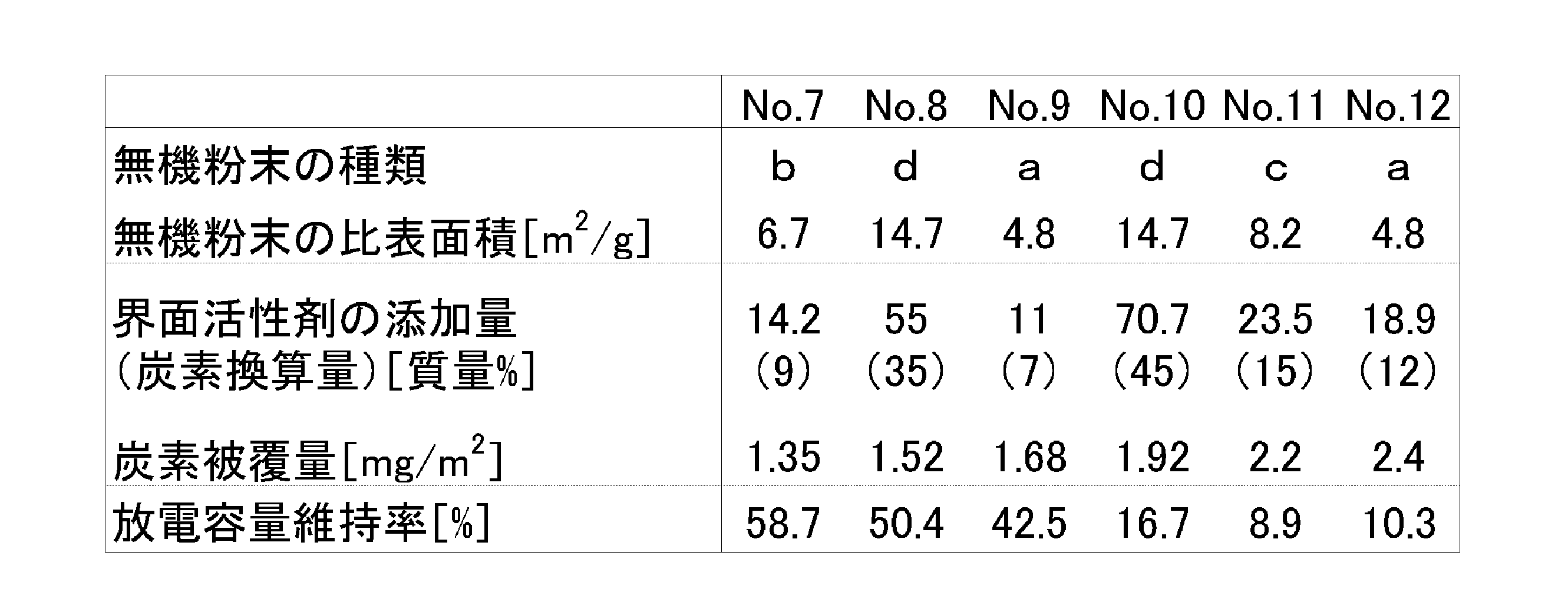
表1及び2は、本願発明の実施例(No.2~9)及び比較例(No.1、10~12)を示す。

(1)無機粉末の作製
メタリン酸ソーダ(NaPO3)、酸化第二鉄(Fe2O3)を原料とし、モル%で、Na2O 40%、Fe2O3 20%、P2O5 40%の組成となるように原料粉末を調合し、1200℃で45分間、大気雰囲気中にて溶融を行った。その後、溶融ガラスをカーボン型に流し込み、冷却することでインゴット状の前駆体ガラスを得た。得られた前駆体ガラスを、大気雰囲気中にて620℃、3時間熱処理し、結晶化ガラスを得た。結晶化ガラスに対し、下記の粉砕を施すことにより無機粉末a~dを得た。
メタリン酸ソーダ(NaPO3)、酸化第二鉄(Fe2O3)を原料とし、モル%で、Na2O 40%、Fe2O3 20%、P2O5 40%の組成となるように原料粉末を調合し、1200℃で45分間、大気雰囲気中にて溶融を行った。その後、溶融ガラスをカーボン型に流し込み、冷却することでインゴット状の前駆体ガラスを得た。得られた前駆体ガラスを、大気雰囲気中にて620℃、3時間熱処理し、結晶化ガラスを得た。結晶化ガラスに対し、下記の粉砕を施すことにより無機粉末a~dを得た。
結晶化ガラスに対し、エタノール中でφ5mmのZrO2玉石、φ3mmのZrO2玉石、φ1mmのZrO2玉石を混合して使用したボールミル粉砕を30時間行うことにより、比表面積が4.8m2/gの無機粉末aを得た。
結晶化ガラスに対し、エタノール中でφ5mmのZrO2玉石、φ3mmのZrO2玉石、φ1mmのZrO2玉石を混合して使用したボールミル粉砕を50時間行うことにより、比表面積が6.7m2/gの無機粉末bを得た
結晶化ガラスに対し、エタノール中でφ5mmのZrO2玉石、φ3mmのZrO2玉石、φ1mmのZrO2玉石を混合して使用したボールミル粉砕を60時間行うことにより、比表面積が8.2m2/gの無機粉末cを得た。
結晶化ガラスに対し、エタノール中でφ20mmのZrO2玉石を使用したボールミル粉砕を10時間、さらにエタノール中でφ5mmのZrO2玉石、φ3mmのZrO2玉石、φ1mmのZrO2玉石を混合して使用したボールミル粉砕を80時間行うことにより、比表面積が14.7m2/gの無機粉末dを得た。
(2)正極活物質粉末の作製
上記で得られた無機粉末100質量部に対して、炭素源として非イオン性界面活性剤であるポリエチレンオキシドノニルフェニルエーテル(HLB値:13.3、質量平均分子量:660)を表1及び2に示す割合で添加し、さらに純水を60質量部十分に混合した後、100℃で約1時間乾燥させた。その後、窒素雰囲気下で620℃、30分間焼成を行い、無機粉末の表面に炭素が被覆された正極活物質粉末を得た。得られた正極活物質粉末において、添加した炭素量を無機粉末の比表面積で除することにより、無機粉末1m2当たりの炭素被覆量を算出した。結果を表1及び2に示す。なお、得られた正極活物質粉末について粉末X線回折パターンを確認したところ、いずれもNa2FeP2O7結晶由来の回折線が確認された。
上記で得られた無機粉末100質量部に対して、炭素源として非イオン性界面活性剤であるポリエチレンオキシドノニルフェニルエーテル(HLB値:13.3、質量平均分子量:660)を表1及び2に示す割合で添加し、さらに純水を60質量部十分に混合した後、100℃で約1時間乾燥させた。その後、窒素雰囲気下で620℃、30分間焼成を行い、無機粉末の表面に炭素が被覆された正極活物質粉末を得た。得られた正極活物質粉末において、添加した炭素量を無機粉末の比表面積で除することにより、無機粉末1m2当たりの炭素被覆量を算出した。結果を表1及び2に示す。なお、得られた正極活物質粉末について粉末X線回折パターンを確認したところ、いずれもNa2FeP2O7結晶由来の回折線が確認された。
(3)ナトリウムイオン二次電池の作製
上記で得られた正極活物質粉末に対し、バインダーとしてのフッ化ポリビニリデン、導電性物質としての導電性カーボンブラックを、正極活物質粉末:バインダー:導電性物質=90:5:5(質量比)となるように秤量し、これらをN-メチルピロリドン中に分散した後、自転・公転ミキサーで十分に撹拌してスラリー化した。次に、隙間75μmのドクターブレードを用いて、正極集電体である厚さ20μmのアルミ箔上に、得られたスラリーをコートし、乾燥機にて70℃で乾燥後、一対の回転ローラー間に通し、1t/cm2でプレスすることにより電極シートを得た。電極シートを電極打ち抜き機で直径11mmに打ち抜き、160℃で6時間乾燥させ、円形の作用極を得た。
上記で得られた正極活物質粉末に対し、バインダーとしてのフッ化ポリビニリデン、導電性物質としての導電性カーボンブラックを、正極活物質粉末:バインダー:導電性物質=90:5:5(質量比)となるように秤量し、これらをN-メチルピロリドン中に分散した後、自転・公転ミキサーで十分に撹拌してスラリー化した。次に、隙間75μmのドクターブレードを用いて、正極集電体である厚さ20μmのアルミ箔上に、得られたスラリーをコートし、乾燥機にて70℃で乾燥後、一対の回転ローラー間に通し、1t/cm2でプレスすることにより電極シートを得た。電極シートを電極打ち抜き機で直径11mmに打ち抜き、160℃で6時間乾燥させ、円形の作用極を得た。
次に、得られた作用極を、コインセルの下蓋の上に、アルミ箔面を下に向けて載置し、その上に200℃で8時間乾燥させたガラスフィルター、60℃で8時間減圧乾燥した直径16mmのポリプロピレン多孔質膜(ヘキストセラニーズ社製 セルガード#2400)からなるセパレータ、及び、対極である金属ナトリウムを積層し、試験電池を作製した。電解液としては、1M NaPF6溶液/EC:DEC=1:1(EC=エチレンカーボネート DEC=ジエチルカーボネート)を用いた。なお試験電池の組み立ては露点温度-70℃以下の環境で行った。
(4)充放電試験
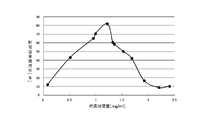
上記で得られた試験電池に対し、30℃で開回路電圧(OCV)から3.8VまでCC(定電流)充電(正極活物質粉末からのナトリウムイオン放出)を行い、正極活物質粉末の単位質量中に充電された電気量(充電容量)を求めた。次に、3.8Vから2VまでCC放電(正極活物質粉末へのナトリウムイオン吸蔵)させ、正極活物質粉末の単位質量中から放電された電気量(放電容量)を求めた。以降は、2Vと3.8Vの間で繰り返しCC充放電させて充放電容量を求めた。なお、Cレートは0.1Cから5Cまで段階的に変化させた。充電とその直後の放電のCレートは同一とした。結果を表1及び2、図1に示した。データは、0.1Cレートにおける放電容量に対する、5Cレートにおける放電容量の割合を「放電容量維持率」として示した。放電容量維持率が高いほど、急速充放電特性に優れていると言える。
上記で得られた試験電池に対し、30℃で開回路電圧(OCV)から3.8VまでCC(定電流)充電(正極活物質粉末からのナトリウムイオン放出)を行い、正極活物質粉末の単位質量中に充電された電気量(充電容量)を求めた。次に、3.8Vから2VまでCC放電(正極活物質粉末へのナトリウムイオン吸蔵)させ、正極活物質粉末の単位質量中から放電された電気量(放電容量)を求めた。以降は、2Vと3.8Vの間で繰り返しCC充放電させて充放電容量を求めた。なお、Cレートは0.1Cから5Cまで段階的に変化させた。充電とその直後の放電のCレートは同一とした。結果を表1及び2、図1に示した。データは、0.1Cレートにおける放電容量に対する、5Cレートにおける放電容量の割合を「放電容量維持率」として示した。放電容量維持率が高いほど、急速充放電特性に優れていると言える。
表1及び2、図1に示すように、実施例であるNo.2~9では、無機粉末の表面における炭素被覆量が0.51~1.68mg/m2であり、放電容量維持率が42.5~82.1%と優れていた。一方、比較例であるNo.1では、無機粉末の表面における炭素被覆量が0.08mg/m2と少なく、放電容量維持率が12.4%と著しく劣っていた。また、比較例であるNo.10~12では、無機粉末の表面における炭素被覆量が1.92~2.4mg/m2と多く、放電容量維持率が8.9~16.7%と著しく劣っていた。
本発明のナトリウムイオン二次電池用正極活物質は、電気自動車、電気工具、バックアップ用非常電源等の構成材料として好適である。
Claims (5)
- Cr、Fe、Mn、Co及びNiからなる群より選ばれた少なくとも1種の遷移金属元素、Na、P及びOを含有する無機粉末の表面に炭素が被覆されてなるナトリウムイオン二次電池用正極活物質粉末であって、無機粉末の表面における炭素被覆量が0.1~1.8mg/m2であることを特徴とするナトリウムイオン二次電池用正極活物質粉末。
- 無機粉末が、一般式NaxMyP2Oz(MはCr、Fe、Mn、Co及びNiから選択される少なくとも1種の遷移金属元素、1.2≦x≦2.8、0.95≦y≦1.6、6.5≦z≦8)で表される結晶を含有することを特徴とする請求項1に記載のナトリウムイオン二次電池用正極活物質粉末。
- 無機粉末の比表面積が3~50m2/gであることを特徴とする請求項1または2に記載のナトリウムイオン二次電池用正極活物質粉末。
- 無機粉末が非晶質を含有することを特徴とする請求項1~3のいずれか一項に記載のナトリウムイオン二次電池用正極活物質粉末。
- 無機粉末が結晶化ガラスからなることを特徴とする請求項5に記載のナトリウムイオン二次電池用正極活物質粉末。
Applications Claiming Priority (2)
| Application Number | Priority Date | Filing Date | Title |
|---|---|---|---|
| JP2015-054273 | 2015-03-18 | ||
| JP2015054273A JP2016173962A (ja) | 2015-03-18 | 2015-03-18 | ナトリウムイオン二次電池用正極活物質粉末 |
Publications (1)
| Publication Number | Publication Date |
|---|---|
| WO2016147853A1 true WO2016147853A1 (ja) | 2016-09-22 |
Family
ID=56918817
Family Applications (1)
| Application Number | Title | Priority Date | Filing Date |
|---|---|---|---|
| PCT/JP2016/056270 Ceased WO2016147853A1 (ja) | 2015-03-18 | 2016-03-01 | ナトリウムイオン二次電池用正極活物質粉末 |
Country Status (2)
| Country | Link |
|---|---|
| JP (1) | JP2016173962A (ja) |
| WO (1) | WO2016147853A1 (ja) |
Cited By (3)
| Publication number | Priority date | Publication date | Assignee | Title |
|---|---|---|---|---|
| CN110299528A (zh) * | 2019-07-02 | 2019-10-01 | 中南大学 | 氟化磷酸焦磷酸铁钠@c@rgo复合材料及其制备和在钠离子电池中的应用 |
| WO2022070777A1 (ja) * | 2020-09-30 | 2022-04-07 | 国立研究開発法人産業技術総合研究所 | 全固体ナトリウム蓄電池に用いられる電極合材、およびこれを用いた蓄電池 |
| WO2023123049A1 (zh) * | 2021-12-29 | 2023-07-06 | 宁德时代新能源科技股份有限公司 | 层状氧化物正极活性材料、以及包含其的正极极片、钠离子电池及用电装置 |
Families Citing this family (2)
| Publication number | Priority date | Publication date | Assignee | Title |
|---|---|---|---|---|
| WO2018198617A1 (ja) * | 2017-04-27 | 2018-11-01 | 日本電気硝子株式会社 | ナトリウムイオン二次電池用正極活物質 |
| EP4439765A4 (en) * | 2021-11-26 | 2026-04-01 | Nippon Electric Glass Co | SODIUM-ION SECONDARY BATTERY |
Citations (5)
| Publication number | Priority date | Publication date | Assignee | Title |
|---|---|---|---|---|
| WO2013035572A1 (ja) * | 2011-09-05 | 2013-03-14 | 国立大学法人 東京大学 | リチウムもしくはナトリウム含有酸素酸塩化合物の製造方法 |
| WO2013133369A1 (ja) * | 2012-03-09 | 2013-09-12 | 国立大学法人長岡技術科学大学 | ナトリウム二次電池用正極活物質およびナトリウム二次電池用正極活物質の製造方法 |
| JP2014207157A (ja) * | 2013-04-15 | 2014-10-30 | 日本電気硝子株式会社 | 蓄電デバイス用正極材料、およびその製造方法 |
| WO2014185494A1 (ja) * | 2013-05-16 | 2014-11-20 | 住友大阪セメント株式会社 | 炭素被覆活物質複合体及びリチウムイオン電池 |
| JP2015041455A (ja) * | 2013-08-21 | 2015-03-02 | 日本電気硝子株式会社 | ナトリウムイオン二次電池用負極活物質、ならびに、それを用いたナトリウムイオン二次電池用負極及びナトリウムイオン二次電池 |
-
2015
- 2015-03-18 JP JP2015054273A patent/JP2016173962A/ja active Pending
-
2016
- 2016-03-01 WO PCT/JP2016/056270 patent/WO2016147853A1/ja not_active Ceased
Patent Citations (5)
| Publication number | Priority date | Publication date | Assignee | Title |
|---|---|---|---|---|
| WO2013035572A1 (ja) * | 2011-09-05 | 2013-03-14 | 国立大学法人 東京大学 | リチウムもしくはナトリウム含有酸素酸塩化合物の製造方法 |
| WO2013133369A1 (ja) * | 2012-03-09 | 2013-09-12 | 国立大学法人長岡技術科学大学 | ナトリウム二次電池用正極活物質およびナトリウム二次電池用正極活物質の製造方法 |
| JP2014207157A (ja) * | 2013-04-15 | 2014-10-30 | 日本電気硝子株式会社 | 蓄電デバイス用正極材料、およびその製造方法 |
| WO2014185494A1 (ja) * | 2013-05-16 | 2014-11-20 | 住友大阪セメント株式会社 | 炭素被覆活物質複合体及びリチウムイオン電池 |
| JP2015041455A (ja) * | 2013-08-21 | 2015-03-02 | 日本電気硝子株式会社 | ナトリウムイオン二次電池用負極活物質、ならびに、それを用いたナトリウムイオン二次電池用負極及びナトリウムイオン二次電池 |
Cited By (5)
| Publication number | Priority date | Publication date | Assignee | Title |
|---|---|---|---|---|
| CN110299528A (zh) * | 2019-07-02 | 2019-10-01 | 中南大学 | 氟化磷酸焦磷酸铁钠@c@rgo复合材料及其制备和在钠离子电池中的应用 |
| CN110299528B (zh) * | 2019-07-02 | 2020-12-25 | 中南大学 | 氟化磷酸焦磷酸铁钠@c@rgo复合材料及其制备和在钠离子电池中的应用 |
| WO2022070777A1 (ja) * | 2020-09-30 | 2022-04-07 | 国立研究開発法人産業技術総合研究所 | 全固体ナトリウム蓄電池に用いられる電極合材、およびこれを用いた蓄電池 |
| WO2023123049A1 (zh) * | 2021-12-29 | 2023-07-06 | 宁德时代新能源科技股份有限公司 | 层状氧化物正极活性材料、以及包含其的正极极片、钠离子电池及用电装置 |
| US12438141B2 (en) | 2021-12-29 | 2025-10-07 | Contemporary Amperex Technology (Hong Kong) Limited | Layered-oxide positive electrode active material and positive electrode plate, sodium-ion battery, and electric apparatus containing same |
Also Published As
| Publication number | Publication date |
|---|---|
| JP2016173962A (ja) | 2016-09-29 |
Similar Documents
| Publication | Publication Date | Title |
|---|---|---|
| US12278333B2 (en) | Solid electrolyte, electrochemical battery including the solid electrolyte, and method of preparing the solid electrolyte | |
| JP6384661B2 (ja) | ナトリウムイオン二次電池用正極活物質及びその製造方法 | |
| JP7573370B2 (ja) | 全固体二次電池、その製造方法、その使用方法及びその充電方法 | |
| TWI692141B (zh) | 蓄電裝置用正極材料及其製造方法 | |
| JP7606448B2 (ja) | 電極合材並びにそれを用いた電極層及び固体電池 | |
| CN111755741A (zh) | 全固态锂二次电池、其制造方法、其使用方法、和其充电方法 | |
| CN116404140A (zh) | 多元素微量共掺杂磷酸铁锂/碳复合正极材料及其制备方法与应用 | |
| CN107004868A (zh) | 用于钠离子蓄电池的阳极材料及其制备方法 | |
| WO2016147853A1 (ja) | ナトリウムイオン二次電池用正極活物質粉末 | |
| JP2010056027A (ja) | 水系リチウム二次電池および水系リチウム二次電池の電極 | |
| TWI699926B (zh) | 鹼離子二次電池用正極活性物質 | |
| JP6411959B2 (ja) | 正極合材および全固体リチウム電池 | |
| JP6758191B2 (ja) | 蓄電デバイス用正極活物質、及び、電極シートの製造方法 | |
| CN120390988A (zh) | 锂二次电池正极活性材料及包含它的锂二次电池 | |
| JP6754534B2 (ja) | 蓄電デバイス用正極活物質及びその製造方法 | |
| WO2016136555A1 (ja) | アルカリイオン二次電池用正極活物質 | |
| JP2014146431A (ja) | 蓄電デバイス用正極材料 | |
| KR102683637B1 (ko) | 리튬 이차 전지용 양극 활물질 및 이를 포함하는 리튬 이차 전지 | |
| JP2025180102A (ja) | 析出型固体二次電池用負極合材、析出型固体二次電池用負極層、析出型固体二次電池およびその充電方法 |
Legal Events
| Date | Code | Title | Description |
|---|---|---|---|
| 121 | Ep: the epo has been informed by wipo that ep was designated in this application |
Ref document number: 16764683 Country of ref document: EP Kind code of ref document: A1 |
|
| NENP | Non-entry into the national phase |
Ref country code: DE |
|
| 122 | Ep: pct application non-entry in european phase |
Ref document number: 16764683 Country of ref document: EP Kind code of ref document: A1 |