WO2016140348A1 - α-スルホ脂肪酸アルキルエステル塩含有液 - Google Patents
α-スルホ脂肪酸アルキルエステル塩含有液 Download PDFInfo
- Publication number
- WO2016140348A1 WO2016140348A1 PCT/JP2016/056841 JP2016056841W WO2016140348A1 WO 2016140348 A1 WO2016140348 A1 WO 2016140348A1 JP 2016056841 W JP2016056841 W JP 2016056841W WO 2016140348 A1 WO2016140348 A1 WO 2016140348A1
- Authority
- WO
- WIPO (PCT)
- Prior art keywords
- fatty acid
- salt
- mass
- alkyl ester
- acid alkyl
- Prior art date
- Legal status (The legal status is an assumption and is not a legal conclusion. Google has not performed a legal analysis and makes no representation as to the accuracy of the status listed.)
- Ceased
Links
Classifications
-
- C—CHEMISTRY; METALLURGY
- C11—ANIMAL OR VEGETABLE OILS, FATS, FATTY SUBSTANCES OR WAXES; FATTY ACIDS THEREFROM; DETERGENTS; CANDLES
- C11D—DETERGENT COMPOSITIONS; USE OF SINGLE SUBSTANCES AS DETERGENTS; SOAP OR SOAP-MAKING; RESIN SOAPS; RECOVERY OF GLYCEROL
- C11D1/00—Detergent compositions based essentially on surface-active compounds; Use of these compounds as a detergent
- C11D1/02—Anionic compounds
- C11D1/12—Sulfonic acids or sulfuric acid esters; Salts thereof
- C11D1/28—Sulfonation products derived from fatty acids or their derivatives, e.g. esters, amides
Definitions
- the present invention relates to an ⁇ -sulfo fatty acid alkyl ester salt-containing liquid.
- This application claims priority based on Japanese Patent Application No. 2015-043462 for which it applied to Japan on March 5, 2015, and uses the content here.
- An aqueous solution of ⁇ -sulfo fatty acid alkyl ester salt is used as a raw material for powder detergents and liquid detergents.
- the ⁇ -sulfo fatty acid alkyl ester salt aqueous solution is preferably used or stored at a high concentration in terms of efficiency, but generally, as the concentration increases, the viscosity increases, and when the concentration reaches about 30% by mass or more, ⁇ -The sulfo fatty acid alkyl ester salt forms a hexagonal structure, resulting in a gel state that loses fluidity.
- Patent Document 1 As a method for improving the fluidity of a high-concentration ⁇ -sulfo fatty acid alkyl ester salt aqueous solution, examples of Patent Document 1 include ⁇ -sulfo fatty acid methyl sodium salt powder having a fatty acid composition of 6 to 14 carbon atoms, carbon A method for preparing an ⁇ -sulfo fatty acid alkyl ester salt aqueous solution by dissolving ⁇ -sulfo fatty acid methyl sodium salt powder having a fatty acid composition of several 16 to 24 in water at a predetermined ratio is described.
- the aqueous ⁇ -sulfo fatty acid alkyl ester salt solution prepared by the above-described method described in Patent Document 1 may undergo separation or precipitation when stored at rest.
- the aqueous ⁇ -sulfo fatty acid alkyl ester salt solution in which precipitation occurs has a non-uniform fatty acid composition in the liquid.
- An object of the present invention is to provide an ⁇ -sulfo fatty acid alkyl ester salt-containing liquid that maintains good liquid uniformity even when stored at rest, and that hardly causes separation or precipitation.
- the present invention has the following aspects. ⁇ 1> An ⁇ -sulfo fatty acid alkyl ester salt (A) containing at least one ⁇ -sulfo fatty acid alkyl ester salt having 12 to 18 carbon atoms in the fatty acid residue and water; Does not contain or contains The content of the ⁇ -sulfo fatty acid alkyl ester salt (AI) represented by the sum of the mass of the ⁇ -sulfo fatty acid alkyl ester salt (A) and the mass of the ⁇ -sulfo fatty acid di salt is More than 30% by mass and 37% by mass or less based on the total mass of the ester salt-containing liquid, An ⁇ -sulfo fatty acid alkyl ester salt-containing liquid, wherein (c168) / (c124) representing a mass ratio of the following (c168) to the following (c124) is 2.0 or more and 6.5 or less.
- ⁇ -sulfo fatty acid alkyl ester salt (A) containing at least one ⁇ -sulfo fatty acid alkyl ester salt having 12 to 18 carbon atoms in the fatty acid residue, and one selected from the group consisting of propylene glycol and polyethylene glycol Contains the above solvent (S1) and water and does not contain or contain ⁇ -sulfo fatty acid di-salt;
- the content of the ⁇ -sulfo fatty acid alkyl ester salt (AI) represented by the sum of the mass of the ⁇ -sulfo fatty acid alkyl ester salt (A) and the mass of the ⁇ -sulfo fatty acid di salt is It is more than 30% by mass and 40% by mass or less with respect to the total mass of the ester salt-containing liquid,
- the content of the solvent (S1) is 5 to 25% by mass with respect to the mass of the ⁇ -sulfo fatty acid alkyl ester salt (AI), An ⁇ -sulfo
- the content of the ⁇ -sulfo fatty acid alkyl ester salt (AI) represented by the sum of the mass of the ⁇ -sulfo fatty acid alkyl ester salt (A) and the mass of the ⁇ -sulfo fatty acid di salt is More than 30% by mass and 43% by mass or less with respect to the total mass of the ester salt-containing liquid,
- the content of the solvent (S2) is 5 to 25% by mass with respect to the mass of the ⁇ -sulfo fatty acid alkyl ester salt (AI), An
- ⁇ 4> The ⁇ -sulfo fatty acid alkyl ester according to any one of ⁇ 1> to ⁇ 3>, wherein the water content is 45% by mass or more and less than 70% by mass with respect to the total mass of the ⁇ -sulfo fatty acid alkyl ester salt-containing liquid. Salt-containing liquid.
- ⁇ 5> Any one of ⁇ 1> to ⁇ 3>, wherein (c124) includes one or both of the following (a) and (b), and (c168) includes one or both of the following (c) and (d): ⁇ -sulfo fatty acid alkyl ester salt-containing liquid.
- ⁇ 6> (C124) includes both (a) and (b), the mass ratio of (a) :( b) is 25:75 to 95: 5, and (c168) is the above (c),
- an ⁇ -sulfo fatty acid alkyl ester salt-containing liquid is obtained in which the uniformity of the liquid is maintained well even when stored at rest, and separation and precipitation are unlikely to occur.
- the ⁇ -sulfo fatty acid alkyl ester salt-containing liquid of the present invention is a state in which an ⁇ -sulfo fatty acid alkyl ester salt (hereinafter sometimes referred to as ⁇ -SF salt) (A) is dissolved or dispersed in water or a solvent containing water.
- ⁇ -SF salt (A) is a compound in which a sulfo group is bonded to a carbon atom at the ⁇ -position of a fatty acid alkyl ester, and the sulfo group forms a salt (not including ⁇ -sulfo fatty acid di-salt described later).
- the ⁇ -SF salt (A) is preferably a compound represented by the following formula (I).
- R 1 is a hydrocarbon group having 8 to 18 carbon atoms
- R 2 is a hydrocarbon group having 1 to 6 carbon atoms
- M is a counter ion.
- the number of carbon atoms of the fatty acid residue is the number of carbon atoms derived from the fatty acid. In the case of the compound represented by the formula (I), the number of carbon atoms of R 1 is +2.
- the hydrocarbon group of R 1 may be linear or branched, or may contain a cyclic structure.
- the hydrocarbon group for R 1 is preferably an aliphatic hydrocarbon group, more preferably a linear or branched alkyl group, or a linear or branched alkenyl group, and a linear chain And more preferably a linear alkyl group and a linear alkenyl group.
- the carbon number of R 1 is 8 or more, the surface activity is enhanced, and the cleaning power is easily improved as a cleaning component.
- the carbon number of R 1 is 18 or less, the appearance stability of the ⁇ -SF salt-containing liquid is improved, and in particular, precipitation during gelation or storage over time is likely to be suppressed.
- the hydrocarbon group represented by R 2 may be linear or branched, or may contain a cyclic structure.
- the hydrocarbon group for R 2 is preferably an aliphatic hydrocarbon group, more preferably a linear or branched alkyl group, or a linear or branched alkenyl group, and a linear chain. And more preferably a branched alkyl group and a branched alkyl group.
- R 2 has 1 to 6 carbon atoms, preferably 1 to 3 carbon atoms.
- Examples of the hydrocarbon group for R 2 include a methyl group, an ethyl group, an n-propyl group, and an isopropyl group. Since the detergency is further improved as a cleaning component, the methyl group, ethyl group, and n-propyl group are A methyl group is preferable, and a methyl group is particularly preferable.
- M is a counter ion and may be any one that can form a water-soluble salt with R 1 CH (COOR 2 ) SO 3 — .
- the counter ion include alkali metal ions, protonated amines, ammonium and the like.
- Examples of the alkali metal that can be the counter ion include sodium.
- the amine that can be the counter ion may be any of primary to tertiary amines, and preferably has 1 to 6 carbon atoms in total.
- the amine may have a hydroxy group, and it preferably has a hydroxy group because the solubility of the ⁇ -SF salt-containing liquid in water increases under low temperature conditions.
- Examples of such amines include alkanolamines, and the alkanol group preferably has 1 to 3 carbon atoms.
- Specific examples of the alkanolamine include monoethanolamine, diethanolamine, triethanolamine and the like.
- monoethanolamine is preferable.
- M is preferably an alkali metal ion and particularly preferably a sodium ion because it is easily available and exhibits the effect of improving the fluidity of the ⁇ -SF salt-containing liquid.
- the ⁇ -SF salt-containing solution of the present invention contains, as an essential component, one or more ⁇ -sulfo fatty acid alkyl ester salts having a fatty acid residue of 12 to 18 carbon atoms in the ⁇ -SF salt (A).
- (c124) means an ⁇ -sulfo fatty acid alkyl ester salt having a fatty acid residue having 12 to 14 carbon atoms
- (c168) means an ⁇ having a fatty acid residue having 16 to 18 carbon atoms.
- the ⁇ -SF salt-containing liquid preferably contains at least (c124), and preferably contains both (c124) and (c168).
- the ⁇ -SF salt (A) it is preferable to use a mixture in which fatty acid residues having different carbon numbers are mixed, from the viewpoint of increasing the detergency as a cleaning component and increasing the solubility in water.
- (C124) preferably includes one or both of the following (a) and (b), and more preferably includes both.
- (C168) preferably includes one or both of the following (c) and (d), and more preferably includes both.
- (A) is preferably an ⁇ -SF salt in which R 1 in the formula (I) is a hydrocarbon group having 10 carbon atoms and R 2 is an alkyl group having 1 to 3 carbon atoms.
- (A) is particularly preferably the following (a1).
- (B) is preferably an ⁇ -SF salt in which R 1 in the formula (I) is a hydrocarbon group having 12 carbon atoms and R 2 is an alkyl group having 1 to 3 carbon atoms.
- (B) is particularly preferably the following (b1).
- (C) is preferably an ⁇ -SF salt in which R 1 in the formula (I) is a hydrocarbon group having 14 carbon atoms and R 2 is an alkyl group having 1 to 3 carbon atoms.
- (C) is particularly preferably the following (c1).
- (D) is preferably an ⁇ -SF salt in which R 1 in the formula (I) is a hydrocarbon group having 16 carbon atoms and R 2 is an alkyl group having 1 to 3 carbon atoms. (D) is particularly preferably the following (d1).
- the counter ion (M) in the formula (I) is preferably an alkali metal ion, and particularly preferably a sodium ion.
- the ⁇ -SF salt (A) may contain one or more ⁇ -SF salts other than the above (c124) and (c168).
- Other ⁇ -SF salts are, for example, an ⁇ -sulfo fatty acid alkyl ester salt in which the fatty acid residue has 10 carbon atoms, an ⁇ -sulfo fatty acid alkyl ester salt in which the fatty acid residue has 20 carbon atoms, and the like.
- the total mass of the above (c124) and (c168) is preferably 80 to 100% by mass and more preferably 90 to 100% by mass with respect to the total mass of the ⁇ -SF salt (A).
- the ⁇ -SF salt (A) is obtained by a known production method, for example, a raw material fatty acid ester is sulfonated by contacting with a sulfonated gas (such as sulfuric anhydride), and preferably esterified with a lower alcohol. Those obtained by neutralization with sodium hydroxide or the like can be used. In addition, what was bleached with hydrogen peroxide etc. before and after neutralization may be used.
- a sulfonated gas such as sulfuric anhydride
- the ⁇ -SF salt-containing liquid of the present invention includes a sulfate (such as sodium sulfate), an alkyl sulfate (such as sodium methyl sulfate), and an ⁇ -sulfo fatty acid di-salt (hereinafter sometimes simply referred to as a di-salt. Disodium salt, etc.). These are inevitable by-products in the production of the ⁇ -SF salt (A).
- the ⁇ -sulfo fatty acid di-salt has a function as a surfactant.
- the total of ⁇ -sulfo fatty acid alkyl ester salt (A) and ⁇ -sulfo fatty acid di-salt is also referred to as AI (active ingredient of surfactant).
- AI active ingredient of surfactant
- the content of ⁇ -sulfo fatty acid alkyl ester salt means the content of AI, and is described as “content of ⁇ -sulfo fatty acid alkyl ester salt (AI)”.
- the content of this ⁇ -sulfo fatty acid alkyl ester salt (AI) is the AI content (mass%) measured by the following “AI measurement method”.
- ⁇ AI measurement method> A 0.2 g sample is accurately weighed into a 200 mL volumetric flask, ion-exchanged water is added up to the marked line, and the sample is dissolved in ion-exchanged water. After dissolution, it is cooled to about 25 ° C., 5 mL of this sample aqueous solution is taken into a titration bottle with a whole pipette, 25 mL of methylene blue indicator and 15 mL of chloroform are added, and further 5 mL of 0.004 mol / L benzethonium chloride solution is added, Titrate with 0.002 mol / L sodium alkylbenzenesulfonate solution.
- the titration bottle In each titration, the titration bottle is capped and shaken vigorously, and then allowed to stand, and the end point is the point where both layers separated against a white plate have the same color tone. Similarly, a blank test (the same test as described above except that no sample is used) is performed, and the content of AI in the sample is calculated from the following formula from the difference in titration of the sodium alkylbenzenesulfonate solution.
- the content of AI is preferably more than 0% by mass and 12% by mass or less, and more preferably 2-9% by mass.
- the total mass of these is preferably 2 to 10% by mass with respect to AI.
- sodium sulfate is contained as a by-product in the ⁇ -SF salt-containing liquid, the amount is usually about 0.1 to 4% by mass with respect to AI.
- the ⁇ -SF salt-containing solution contains sodium methyl sulfate as a by-product, the amount is usually about 2 to 6% by mass with respect to AI.
- the water content with respect to the ⁇ -SF salt-containing liquid is not particularly limited.
- it is preferably 45% by mass or more and less than 70% by mass, more preferably 50 to 68% by mass, and further preferably 50 to 60% by mass. It is preferable from the point of appearance stability that it is more than the lower limit of the said range, and it is preferable at the point of productivity that it is below an upper limit.
- ⁇ Other ingredients> In the ⁇ -SF salt-containing liquid of the present invention, other components other than those described above may be blended as necessary within a range not impairing the effects of the present invention.
- examples of such other components include solvents other than water (preferably alcohol solvents), pH buffering agents, preservatives, chelating agents and the like.
- the alcohol solvent include monohydric alcohols such as methanol, ethanol, n-propanol, and isopropanol; polyhydric alcohols such as ethylene glycol, propylene glycol, and polyethylene glycol.
- pH buffering agents include carbonates; sulfates; fatty acid salts; phosphates; organic acid salts; inorganic acids such as phosphoric acid and sulfuric acid; organic acids such as citric acid and fatty acids; alkanolamines and the like. These may be used alone or in combination of two or more.
- benzoic acid compounds such as sodium benzoate, isobutyl paraoxybenzoate, and isopropyl paraoxybenzoate
- sorbic acid compounds such as sorbic acid and potassium sorbate
- dehydroacetic acids propionic acids
- isopropylmethylphenol orthophenyl Phenols such as phenol and triclosan
- thiabenzol isothiazoline compounds and the like.
- hydroxycarboxylates such as sodium malate and sodium citrate
- aminoacetates such as sodium nitrilotriacetate and sodium ethylenediaminetetraacetate
- condensed phosphates such as potassium pyrophosphate and sodium tripolyphosphate
- polyacrylic acid examples thereof include polymer chelating agents such as polymaleic acid, copolymers of polyacrylic acid and maleic acid, and salts thereof. These may be used alone or in combination of two or more.
- the total mass is more than 0% by mass and 4% by mass or less, and more preferably 1 to 3% by mass with respect to AI.
- the first aspect of the ⁇ -SF salt-containing liquid contains the ⁇ -SF salt (A) and water, and is the mass ratio of the content of (c168) to the content of (c124) (c168) /
- the value of (c124) is 2.0 or more and 6.5 or less, and the content of ⁇ -SF salt (AI) exceeds 30% by mass with respect to the total mass of the ⁇ -SF salt-containing liquid and is 37% by mass. % Or less.
- the solvent other than water is preferably 15% by mass or less, more preferably 8% by mass or less, and may be zero with respect to AI.
- the value of (c168) / (c124) is 2.0 or more, the detergency increases, and when it is 6.5 or less, the solubility in water increases and the appearance stability is improved. In particular, 3.0 or more is preferable and 3.5 or more is more preferable in terms of cleaning power. Moreover, 6.0 or less is preferable at the point of the solubility (appearance stability) in water, 5.5 or less is more preferable, and 5.0 or less is further more preferable.
- the value of (c168) / (c124) is preferably 2.0 or more and 5.5 or less, more preferably 2.0 or more and 5.0 or less, and further preferably 2.5 or more and 4.5 or less.
- the ⁇ -SF salt (A) includes the above (a), (b), (c), and (d), and (c) with respect to the total content of (a) and (b) And the mass ratio of the total content of (d) is preferably the value of (c168) / (c124).
- the ⁇ -SF salt (A) contains (a1), (b1), (c1), and (d1), and (c1) and (c1) with respect to the total content of (a1) and (b1) It is particularly preferable that the mass ratio of the total content of (d1) is the value of (c168) / (c124).
- the content of the ⁇ -SF salt (AI) when the content of the ⁇ -SF salt (AI) is at least the lower limit value, the effects of the present invention are remarkably exhibited. On the other hand, if the content of the ⁇ -SF salt (AI) is less than or equal to the upper limit value, the uniformity of the liquid is easily maintained and separation and precipitation are unlikely to occur.
- the content of the ⁇ -SF salt (AI) is preferably 33% by mass or more and more preferably 35% by mass or more from the viewpoint of productivity. Specifically, the content is preferably 33 to 37% by mass, and more preferably 35 to 37% by mass.
- a second aspect of the ⁇ -SF salt-containing liquid contains the ⁇ -SF salt (A), water, and one or more solvents (S1) selected from the group consisting of propylene glycol and polyethylene glycol, (c168 ) / (C124) mass ratio is 2.0 or more and 6.5 or less, and the content of ⁇ -SF salt (AI) is 30% by mass with respect to the total mass of the ⁇ -SF salt-containing liquid. More than 40% by mass.
- the solvent (S1) is 5 to 25% by mass with respect to AI, preferably 5 to 20% by mass, and more preferably 7 to 15% by mass.
- the solvent other than water and the solvent (S1) is preferably 15% by mass or less, more preferably 8% by mass or less, and may be zero with respect to AI.
- the value of (c168) / (c124) is 2.0 or more, the detergency increases, and when it is 6.5 or less, the solubility in water increases and the appearance stability is improved. In particular, 3.0 or more is preferable in terms of cleaning power. Moreover, 6.0 or less is preferable at the point of the solubility (appearance stability) in water, 5.5 or less is more preferable, and 5.0 or less is further more preferable.
- the value of (c168) / (c124) is preferably 2.0 or more and 5.5 or less, more preferably 2.0 or more and 5.0 or less, and further preferably 2.5 or more and 4.5 or less.
- the ⁇ -SF salt (A) includes the above (a), (b), (c), and (d), and (c) with respect to the total content of (a) and (b)
- the mass ratio of the total content of (d) and (d) is particularly preferably the value of (c168) / (c124).
- the ⁇ -SF salt (A) contains (a1), (b1), (c1), and (d1), and (c1) and (c1) with respect to the total content of (a1) and (b1)
- the mass ratio of the total content of (d1) is preferably the value of (c168) / (c124).
- the content of the ⁇ -SF salt (AI) when the content of the ⁇ -SF salt (AI) is at least the lower limit value, the effects of the present invention are remarkably exhibited. On the other hand, if the content of the ⁇ -SF salt (AI) is less than or equal to the upper limit value, the uniformity of the liquid is easily maintained and separation and precipitation are unlikely to occur.
- the content of the ⁇ -SF salt (AI) is preferably 33% by mass or more and more preferably 35% by mass or more from the viewpoint of productivity. Specifically, 33 to 40% by mass is preferable, and 35 to 40% by mass is more preferable.
- the third aspect of the ⁇ -SF salt-containing liquid contains the ⁇ -SF salt (A), water, and one or more solvents (S2) selected from the group consisting of ethanol, ethylene glycol, and propylene glycol,
- the mass ratio of (c168) / (c124) is 0 or more and less than 2.0
- the content of ⁇ -SF salt (AI) is 30% by mass with respect to the total mass of the ⁇ -SF salt-containing liquid. It is more than 43 mass%.
- the solvent (S2) is 5 to 25% by mass, preferably 5 to 20% by mass, and more preferably 7 to 15% by mass with respect to AI.
- the solvent other than water and the solvent (S2) is preferably 15% by mass or less, more preferably 8% by mass or less, and may be zero with respect to AI.
- (c168) / (c124) When (c168) / (c124) is less than 2.0, the solubility in water is enhanced, and the appearance stability is improved.
- (C168) / (c124) may be zero. That is, (c168) may not be included. From the viewpoint of detergency, (c168) / (c124) is preferably more than 0, more preferably 0.2 or more. Moreover, 1 or less is preferable at the point of the solubility (appearance stability) in water, and 0.5 or less is more preferable.
- the value of (c168) / (c124) is preferably 0 or more and 1 or less, more preferably 0 or more and 0.5 or less, and further preferably 0.2 or more and 0.5 or less.
- the ⁇ -SF salt (A) includes the above (a), (b), (c), and (d), and (c) with respect to the total content of (a) and (b) And the mass ratio of the total content of (d) is preferably the value of (c168) / (c124).
- the ⁇ -SF salt (A) contains (a1), (b1), (c1), and (d1), and (c1) and (c1) with respect to the total content of (a1) and (b1) It is particularly preferable that the mass ratio of the total content of (d1) is the value of (c168) / (c124).
- the content of the ⁇ -SF salt (AI) when the content of the ⁇ -SF salt (AI) is at least the lower limit value, the effects of the present invention are remarkably exhibited. On the other hand, if the content of the ⁇ -SF salt (AI) is less than or equal to the upper limit value, the uniformity of the liquid is easily maintained and separation and precipitation are unlikely to occur.
- the content of the ⁇ -SF salt (AI) is preferably 33% by mass or more and more preferably 35% by mass or more from the viewpoint of productivity. Specifically, 33 to 43% by mass is preferable, and 35 to 43% by mass is more preferable.
- the ⁇ -SF salt-containing liquid of the present invention obtains an ⁇ -SF salt-containing composition by a method for producing an ⁇ -SF salt (A) using a fatty acid ester as a raw material, and the ⁇ -SF salt-containing composition and water or It can be prepared by mixing with a solvent containing water.
- the ⁇ -SF salt (A) is produced by the same method as the known ⁇ -sulfo fatty acid alkyl ester salt except that the mass ratio of (c168) / (c124) is adjusted to a desired value. it can.
- the distribution of the carbon number of the fatty acid residue in the fatty acid ester as the raw material is maintained in the ⁇ -SF salt (A) obtained from the raw material. Therefore, for example, by using a raw material in which fatty acid esters having fatty acid residues of 12, 14, 16, and 18 are mixed to have a desired mass ratio of (c168) / (c124), ⁇ - The SF salt (A) is produced to obtain an ⁇ -SF salt-containing composition. Alternatively, it contains an ⁇ -SF salt obtained by producing an ⁇ -SF salt (A) from a mixture containing a fatty acid ester having 12 fatty acid residues and a fatty acid ester having 14 in a predetermined ratio.
- An ⁇ -SF salt (A) is produced using as a raw material a mixture containing a composition (c124 composition), a fatty acid ester having 16 fatty acid residues, and a fatty acid ester having 18 in a predetermined ratio.
- the obtained ⁇ -SF salt-containing composition (c168 composition) is mixed so as to have a desired mass ratio of (c168) / (c124) to obtain an ⁇ -SF salt-containing composition, which is mixed with water or
- An ⁇ -SF salt-containing liquid can be produced by mixing with a solvent containing water.
- the viscosity at 30 ° C. of the ⁇ -SF salt-containing liquid is preferably from 0.1 to 20 Pa ⁇ s, more preferably from 0.5 to 15 Pa ⁇ s, still more preferably from 0.5 to 12 Pa ⁇ s.
- the viscosity of the ⁇ -SF salt-containing liquid can be adjusted by the content of water.
- the viscosity of the ⁇ -SF salt-containing liquid in the present invention is a value measured 30 seconds after the sample is adjusted to 30 ° C., the B-type viscometer is used, the rotor is rotated at 30 rpm, and the rotation is started. It is.
- the rotor used for measurement is rotor No. 1 or 2 (when the viscosity is 0.1 Pa ⁇ s or less), rotor No. 3 (when the viscosity is more than 0.1 and less than 5 Pa ⁇ s), or rotor no. 4 (when the viscosity is 5 Pa ⁇ s or more).
- the pH at 30 ° C. of the ⁇ -SF salt-containing liquid is preferably 5.0 to 9.0, more preferably 5.5 to 8.0. If the pH of the ⁇ -SF salt-containing liquid is within the above preferred range, hydrolysis of the ⁇ -SF salt (A) in the ⁇ -SF salt-containing liquid is suppressed, and the liquid can be stabilized.
- the pH of the ⁇ -SF salt-containing solution can be adjusted by the amount of pH buffer added.
- the ⁇ -SF salt-containing liquid of the present invention is excellent in stability even if it contains ⁇ -SF salt at a high concentration of 30% by mass or more, and the uniformity of the liquid is maintained well even during storage at rest. And precipitation is unlikely to occur.
- a liquid detergent can be produced by a method in which such ⁇ -SF salt-containing liquid is mixed with other components. Since the ⁇ -SF salt-containing liquid does not need to be dissolved or dispersed in a solvent in advance, the mixing operation with other components is easy.
- a powder detergent is obtained by spray drying a slurry containing an ⁇ -SF salt-containing liquid and a powder detergent raw material, or by granulating a powder detergent raw material using the ⁇ -SF salt-containing liquid as a binder. Can be manufactured.
- AI measurement method The total content (AI) of ⁇ -sulfo fatty acid alkyl ester salt ( ⁇ -SF-Na) and ⁇ -sulfo fatty acid di-salt (di-Na salt) was measured by the above-described AI measurement method.
- ⁇ Method for measuring content of ⁇ -sulfo fatty acid di-salt The content of ⁇ -sulfo fatty acid di-salt in the ⁇ -SF salt solid was measured as follows. Standard ⁇ -sulfo fatty acid di-salts (0.02 g, 0.05 g, 0.1 g) were accurately weighed into 200 mL volumetric flasks, respectively, and dissolved by adding about 50 mL of water and about 50 mL of ethanol. After dissolution, the mixture was cooled to about 25 ° C., and methanol was accurately added up to the marked line to obtain a standard solution.
- ⁇ Injection volume 100 ⁇ L
- 1.5 g of ⁇ -SF salt solid as a pure AI was accurately weighed into a 200 mL volumetric flask and dissolved by adding about 50 mL of water and about 50 mL of ethanol. After dissolution, the mixture was cooled to about 25 ° C., and methanol was accurately added up to the marked line to make a test solution.
- About 2 mL of the test solution was filtered using a 0.45 ⁇ m chromatographic disk and then analyzed by high performance liquid chromatography under the same measurement conditions as described above. The concentration of ⁇ -sulfo fatty acid di-salt in the sample solution was analyzed using the calibration curve. Asked.
- a sample having an amount of about 0.16 g as a pure AI is accurately weighed in a 200 mL volumetric flask, ion-exchanged water (distilled water) is added up to the marked line, and dissolved using ultrasonic waves. After dissolution, the solution was cooled to about 25 ° C. and used as a test solution. About 2 mL of the test solution was filtered using a 0.45 ⁇ m chromatographic disk, and then analyzed by an ion chromatograph under the same measurement conditions as described above. Using the calibration curve prepared above, the sodium methylsulfate concentration and the test solution were analyzed.
- the sodium sulfate concentration was determined, and the content of sodium methylsulfate and the content (% by mass) of sodium sulfate in the sample were calculated.
- impurities inevitable in production other than sodium sulfate, sodium methyl sulfate and di-salts are referred to as “other impurities”.
- the other impurities being “a trace amount” means that the content is 2% by mass or less based on AI.
- SO 3 gas sulfonated gas
- nitrogen gas 1.2 times mol with respect to the fatty acid methyl ester mixture
- 0.25 parts by mass of anhydrous sodium sulfate was added to 100 parts by mass of the fatty acid methyl ester mixture, and aging was performed for 30 minutes while maintaining the temperature at 80 ° C.
- 13.5 kg of methanol was supplied as a lower alcohol, and esterification was performed at a temperature condition of 80 ° C. and an aging time of 75 minutes.
- the esterified product extracted from the reaction apparatus was continuously neutralized by adding an equivalent amount of aqueous sodium hydroxide solution using a line mixer.
- this neutralized product was poured into a bleaching agent mixing line, and 35% by volume of hydrogen peroxide solution was supplied in terms of pure content at 1% by mass with respect to the AI content, mixed, and bleached while maintaining at 80 ° C.
- (c168) composition (1) was obtained.
- the molecular weight of the ⁇ -SF-Na salt contained in the obtained (c168) composition (1) was calculated from the carbon chain length ratio (mass ratio) of the raw materials to be 377.
- C168 About composition (1), content of each component shown in Table 1 was calculated
- composition (2) The molecular weight of the ⁇ -SF-Na salt contained in the obtained (c168) composition (2) was calculated from the carbon chain length ratio (mass ratio) of the raw materials to be 384. (C168) About composition (2), content of each component shown in Table 1 was calculated
- the bleached product extracted from the reactor was continuously neutralized by adding an equivalent amount of aqueous sodium hydroxide solution using a line mixer.
- methanol was removed using a vacuum thin film evaporator to obtain a paste-like (c124) composition (3).
- the molecular weight of the ⁇ -SF-Na salt contained in the obtained (c124) composition (3) was calculated from the carbon chain length ratio (mass ratio) of the raw materials to be 323.
- C124 About composition (3), content of each component shown in Table 1 was calculated
- the esterified product extracted from the reaction apparatus was continuously neutralized by adding an equivalent amount of aqueous sodium hydroxide solution using a line mixer.
- this neutralized product was poured into a bleaching agent mixing line, and 35% by volume of hydrogen peroxide solution was supplied in terms of pure content at 1% by mass with respect to the AI content, mixed, and bleached while maintaining at 80 ° C. Went.
- methanol was removed using a vacuum thin film evaporator to obtain a paste-like (c12468) composition (4).
- the molecular weight of the ⁇ -SF-Na salt contained in the obtained (c12468) composition (4) was calculated from the carbon chain length ratio (mass ratio) of the raw materials to be 361. (C12468) About composition (4), content of each component shown in Table 1 was calculated
- an ⁇ -SF salt-containing solution was prepared by a method of mixing the ⁇ -SF salt-containing composition produced in Production Examples 1 to 3 and water.
- Examples 1 to 6, Examples 9 and 10 are examples, and Examples 7, 8 and 11 to 13 are comparative examples.
- (C168) Composition (1) or (c168) Composition (2) obtained in the above Production Example and (c124) Composition (3) are represented by the mass ratio of (c168) / (c124) in Table 2.
- the mixture was mixed so that the indicated value was obtained, and water was added so that the ⁇ -SF salt (AI) content was as shown in Table 1.
- the mixture was stirred at 70 ° C. until uniform and transparent, and then allowed to cool.
- An ⁇ -SF salt-containing solution was prepared.
- the obtained ⁇ -SF salt-containing liquid was evaluated for appearance and measured for viscosity at 30 ° C. by the following method. The results are shown in Table 2.
- the pH (30 ° C.) of the obtained ⁇ -SF salt-containing liquid was in the range of 5.5 to 7.5 in all examples.
- ⁇ Appearance evaluation method> In preparing the ⁇ -SF salt-containing solution, the mixture was stirred at 70 ° C. until uniform and transparent, and then allowed to stand in an atmosphere at 30 ° C. for 1 day, and then visually observed. Evaluation was made according to the following criteria. In addition, as a state where the two-layer separation has occurred, when the upper and lower layers are separated into two layers in a transparent liquid state (a boundary line is visible), or a layer having a high viscosity is formed on the liquid surface and a thick film is stretched It may be visible. A: Uniform and transparent. B: Two-layer separation occurred. C: Precipitation occurred.
- ⁇ Measurement method of viscosity> The sample was adjusted to 30 ° C. and measured using a B-type viscometer (manufactured by TOKIMEC). The measurement conditions are shown below. In addition, when the appearance evaluation result was C, the viscosity was not measured (“ ⁇ ” was shown in the table that the viscosity was not measured). Measurement conditions: Measure the viscosity after 30 seconds at 30 rpm. When the viscosity is more than 0.1 and less than 5 Pa ⁇ s, the rotor No. 3 is used. When the viscosity is 0.1 Pa ⁇ s or less, the rotor No. Use 1 or 2. When the viscosity is 5 Pa ⁇ s or more, the rotor No. 4 is used.
- Example 12 and Example 13 had a large mass ratio of (c168) / (c124), they were deposited when stored at 30 ° C.
- Example 5 and Example 7 and Example 6 and Example 8 were respectively compared, the mass ratio of (c168) / (c124) was the same, and the content of ⁇ -SF salt (AI) was increased by only 1% by mass.
- the evaluation of the appearance was lowered from A to B. Comparing Examples 1 to 4, when the ⁇ -SF salt (AI) content was the same, the smaller the mass ratio of (c168) / (c124), the lower the viscosity.
- an ⁇ -SF salt-containing liquid was prepared by mixing the ⁇ -SF salt-containing composition produced in Production Example 4 and water.
- Examples 14 and 15 are examples, and example 16 is a comparative example.
- Water was added to the (c12468) composition (4) obtained in Production Example 4 so that the content of ⁇ -SF salt (AI) was the value shown in Table 3, and the mixture was stirred at 70 ° C. until uniform and transparent. Thereafter, the mixture was allowed to cool to prepare an ⁇ -SF salt-containing liquid.
- the resulting ⁇ -SF salt-containing liquid was evaluated for appearance and measured for viscosity at 30 ° C. in the same manner as in Table 2. The results are shown in Table 3.
- the pH (30 ° C.) of the obtained ⁇ -SF salt-containing liquid was in the range of 5.5 to 7.5 in all examples.
- Example 16 As shown in the results of Table 3, in Example 16 in which the content of ⁇ -SF salt (AI) exceeded 37 mass%, precipitation occurred when stored at rest.
- an ⁇ -SF salt-containing liquid was prepared by a method in which the ⁇ -SF salt-containing composition obtained in Production Examples 1 and 3 was mixed with water and an alcohol solvent.
- alcohol solvents propylene glycol, polyethylene glycol, and ethanol were used.
- Examples 17 to 19 are examples, and example 20 is a comparative example.
- (C168) Composition (1) and (c124) Composition (3) obtained in the above production example were mixed so that the mass ratio of (c168) / (c124) was a value shown in Table 4, and Water and an alcohol solvent shown in Table 4 were added so that the content of ⁇ -SF salt (AI) was the value shown in Table 4, and the mixture was stirred at 70 ° C.
- an ⁇ -SF salt-containing liquid was prepared by a method in which the composition (4) obtained in Production Example 4 (c12468), water, and an alcohol solvent were mixed.
- alcohol solvents propylene glycol, polyethylene glycol, and ethanol were used.
- Examples 21 and 22 are examples, and example 23 is a comparative example.
- To the composition (4) obtained in Preparation Example 4 (c124168), water and an alcohol solvent shown in Table 4 were added so that the content of ⁇ -SF salt (AI) would be the value shown in Table 4. After stirring at 70 ° C. until uniform and transparent, the mixture was allowed to cool to prepare an ⁇ -SF salt-containing liquid.
- the resulting ⁇ -SF salt-containing liquid was evaluated for appearance and measured for viscosity at 30 ° C. in the same manner as in Table 2. The results are shown in Table 4.
- the pH (30 ° C.) of the obtained ⁇ -SF salt-containing liquid was in the range of 5.5 to 7.5 in all examples.
- Example 24 to 29 an ⁇ -SF salt-containing liquid was prepared by a method in which the ⁇ -SF salt-containing composition obtained in Examples 1 and 3 was mixed with water and an alcohol solvent.
- alcohol solvents ethanol, ethylene glycol, propylene glycol, glycerin and polyethylene glycol were used, respectively.
- Examples 25 to 27 are examples, and examples 24, 28, and 29 are comparative examples.
- (C168) Composition (1) and (c124) Composition (3) obtained in the above production example were mixed so that the mass ratio of (c168) / (c124) was a value shown in Table 5, and Water and an alcohol solvent shown in Table 5 were added so that the content of ⁇ -SF salt (AI) would be the value shown in Table 5, and the mixture was stirred at 70 ° C. until uniform and transparent, and then allowed to cool.
- An ⁇ -SF salt-containing solution was prepared.
- the resulting ⁇ -SF salt-containing liquid was evaluated for appearance and measured for viscosity at 30 ° C. in the same manner as in Table 2. The results are shown in Table 5.
- the pH (30 ° C.) of the obtained ⁇ -SF salt-containing liquid was in the range of 5.5 to 7.5 in all examples.
- the ⁇ -SF salt-containing liquid of the present invention is suitable as a raw material for a detergent composition such as a powdery detergent or a liquid detergent.
Landscapes
- Chemical & Material Sciences (AREA)
- Life Sciences & Earth Sciences (AREA)
- Engineering & Computer Science (AREA)
- Chemical Kinetics & Catalysis (AREA)
- Oil, Petroleum & Natural Gas (AREA)
- Wood Science & Technology (AREA)
- Organic Chemistry (AREA)
- Detergent Compositions (AREA)
- Organic Low-Molecular-Weight Compounds And Preparation Thereof (AREA)
Abstract
脂肪酸残基の炭素数が12~18であるα-スルホ脂肪酸アルキルエステル塩の1種以上を含むα-スルホ脂肪酸アルキルエステル塩(A)と、水とを含有し、α-スルホ脂肪酸ジ塩を含まないか、または含んでおり、前記α-スルホ脂肪酸アルキルエステル塩(A)の質量と前記α-スルホ脂肪酸ジ塩の質量との合計で表されるα-スルホ脂肪酸アルキルエステル塩(AI)の含有量が、α-スルホ脂肪酸アルキルエステル塩含有液の総質量に対して30質量%を超え37質量%以下であり、脂肪酸残基の炭素数が12~14であるα-スルホ脂肪酸アルキルエステル塩(c124)に対する脂肪酸残基の炭素数が16~18であるα-スルホ脂肪酸アルキルエステル塩(c168)の質量比が2.0以上、6.5以下であることを特徴とするα-スルホ脂肪酸アルキルエステル塩含有液。
Description
本発明はα-スルホ脂肪酸アルキルエステル塩含有液に関する。
本願は、2015年3月5日に日本に出願された特願2015-043462号に基づき優先権を主張し、その内容をここに援用する。
本願は、2015年3月5日に日本に出願された特願2015-043462号に基づき優先権を主張し、その内容をここに援用する。
α-スルホ脂肪酸アルキルエステル塩の水溶液は、粉状洗浄剤や液体洗浄剤の原料として使用される。
α-スルホ脂肪酸アルキルエステル塩水溶液は、高濃度で使用または保存できることが効率の点で好ましいが、一般に、濃度が高くなるのに伴い粘度が増加し、濃度が約30質量%以上になると、α-スルホ脂肪酸アルキルエステル塩がヘキサゴナル構造を形成し、流動性を失ったゲル状態となる。
α-スルホ脂肪酸アルキルエステル塩水溶液は、高濃度で使用または保存できることが効率の点で好ましいが、一般に、濃度が高くなるのに伴い粘度が増加し、濃度が約30質量%以上になると、α-スルホ脂肪酸アルキルエステル塩がヘキサゴナル構造を形成し、流動性を失ったゲル状態となる。
高濃度α-スルホ脂肪酸アルキルエステル塩水溶液の流動性を向上させる方法として、特許文献1の実施例には、炭素数6~14の脂肪酸組成を有するα-スルホ脂肪酸メチルナトリウム塩の粉末と、炭素数16~24の脂肪酸組成を有するα-スルホ脂肪酸メチルナトリウム塩の粉末を、所定の比率で水に溶解させてα-スルホ脂肪酸アルキルエステル塩水溶液を調製する方法が記載されている。
本発明者等の知見によれば、特許文献1に記載されている前記方法で調製したα-スルホ脂肪酸アルキルエステル塩水溶液は、静置保存したときに分離や析出が生じる場合があり、かかる分離や析出が生じた状態のα-スルホ脂肪酸アルキルエステル塩水溶液は、液中における脂肪酸組成が不均一である。
本発明は、静置保存しても液の均一性が良好に保たれ、分離や析出が生じ難いα-スルホ脂肪酸アルキルエステル塩含有液を提供することを目的とする。
本発明は、静置保存しても液の均一性が良好に保たれ、分離や析出が生じ難いα-スルホ脂肪酸アルキルエステル塩含有液を提供することを目的とする。
本発明は以下の態様を有する。
<1>
脂肪酸残基の炭素数が12~18であるα-スルホ脂肪酸アルキルエステル塩の1種以上を含むα-スルホ脂肪酸アルキルエステル塩(A)と、水とを含有し、α-スルホ脂肪酸ジ塩を含まないか、または含んでおり、
前記α-スルホ脂肪酸アルキルエステル塩(A)の質量と前記α-スルホ脂肪酸ジ塩の質量との合計で表されるα-スルホ脂肪酸アルキルエステル塩(AI)の含有量が、α-スルホ脂肪酸アルキルエステル塩含有液の総質量に対して30質量%を超え37質量%以下であり、
下記(c124)に対する下記(c168)の質量比を表す(c168)/(c124)が2.0以上、6.5以下であることを特徴とするα-スルホ脂肪酸アルキルエステル塩含有液。
(c124):脂肪酸残基の炭素数が12~14であるα-スルホ脂肪酸アルキルエステル塩。
(c168):脂肪酸残基の炭素数が16~18であるα-スルホ脂肪酸アルキルエステル塩。
<2>
脂肪酸残基の炭素数が12~18であるα-スルホ脂肪酸アルキルエステル塩の1種以上を含むα-スルホ脂肪酸アルキルエステル塩(A)と、プロピレングリコールおよびポリエチレングリコールからなる群から選ばれる1種以上の溶媒(S1)と、水とを含有し、α-スルホ脂肪酸ジ塩を含まないか、または含んでおり、
前記α-スルホ脂肪酸アルキルエステル塩(A)の質量と前記α-スルホ脂肪酸ジ塩の質量との合計で表されるα-スルホ脂肪酸アルキルエステル塩(AI)の含有量が、α-スルホ脂肪酸アルキルエステル塩含有液の総質量に対して30質量%を超え40質量%以下であり、
前記溶媒(S1)の含有量が、前記α-スルホ脂肪酸アルキルエステル塩(AI)の質量に対して5~25質量%であり、
前記(c124)に対する前記(c168)の質量比を表す(c168)/(c124)が2.0以上、6.5以下である、α-スルホ脂肪酸アルキルエステル塩含有液。
<3>
脂肪酸残基の炭素数が12~18であるα-スルホ脂肪酸アルキルエステル塩の1種以上を含むα-スルホ脂肪酸アルキルエステル塩(A)と、エタノール、エチレングリコールおよびプロピレングリコールからなる群から選ばれる1種以上の溶媒(S2)と、水とを含有し、α-スルホ脂肪酸ジ塩を含まないか、または含んでおり、
前記α-スルホ脂肪酸アルキルエステル塩(A)の質量と前記α-スルホ脂肪酸ジ塩の質量との合計で表されるα-スルホ脂肪酸アルキルエステル塩(AI)の含有量が、α-スルホ脂肪酸アルキルエステル塩含有液の総質量に対して30質量%を超え43質量%以下であり、
前記溶媒(S2)の含有量が、前記α-スルホ脂肪酸アルキルエステル塩(AI)の質量に対して5~25質量%であり、
前記(c124)に対する前記(c168)の質量比を表す(c168)/(c124)が0以上、2.0未満である、α-スルホ脂肪酸アルキルエステル塩含有液。
<1>
脂肪酸残基の炭素数が12~18であるα-スルホ脂肪酸アルキルエステル塩の1種以上を含むα-スルホ脂肪酸アルキルエステル塩(A)と、水とを含有し、α-スルホ脂肪酸ジ塩を含まないか、または含んでおり、
前記α-スルホ脂肪酸アルキルエステル塩(A)の質量と前記α-スルホ脂肪酸ジ塩の質量との合計で表されるα-スルホ脂肪酸アルキルエステル塩(AI)の含有量が、α-スルホ脂肪酸アルキルエステル塩含有液の総質量に対して30質量%を超え37質量%以下であり、
下記(c124)に対する下記(c168)の質量比を表す(c168)/(c124)が2.0以上、6.5以下であることを特徴とするα-スルホ脂肪酸アルキルエステル塩含有液。
(c124):脂肪酸残基の炭素数が12~14であるα-スルホ脂肪酸アルキルエステル塩。
(c168):脂肪酸残基の炭素数が16~18であるα-スルホ脂肪酸アルキルエステル塩。
<2>
脂肪酸残基の炭素数が12~18であるα-スルホ脂肪酸アルキルエステル塩の1種以上を含むα-スルホ脂肪酸アルキルエステル塩(A)と、プロピレングリコールおよびポリエチレングリコールからなる群から選ばれる1種以上の溶媒(S1)と、水とを含有し、α-スルホ脂肪酸ジ塩を含まないか、または含んでおり、
前記α-スルホ脂肪酸アルキルエステル塩(A)の質量と前記α-スルホ脂肪酸ジ塩の質量との合計で表されるα-スルホ脂肪酸アルキルエステル塩(AI)の含有量が、α-スルホ脂肪酸アルキルエステル塩含有液の総質量に対して30質量%を超え40質量%以下であり、
前記溶媒(S1)の含有量が、前記α-スルホ脂肪酸アルキルエステル塩(AI)の質量に対して5~25質量%であり、
前記(c124)に対する前記(c168)の質量比を表す(c168)/(c124)が2.0以上、6.5以下である、α-スルホ脂肪酸アルキルエステル塩含有液。
<3>
脂肪酸残基の炭素数が12~18であるα-スルホ脂肪酸アルキルエステル塩の1種以上を含むα-スルホ脂肪酸アルキルエステル塩(A)と、エタノール、エチレングリコールおよびプロピレングリコールからなる群から選ばれる1種以上の溶媒(S2)と、水とを含有し、α-スルホ脂肪酸ジ塩を含まないか、または含んでおり、
前記α-スルホ脂肪酸アルキルエステル塩(A)の質量と前記α-スルホ脂肪酸ジ塩の質量との合計で表されるα-スルホ脂肪酸アルキルエステル塩(AI)の含有量が、α-スルホ脂肪酸アルキルエステル塩含有液の総質量に対して30質量%を超え43質量%以下であり、
前記溶媒(S2)の含有量が、前記α-スルホ脂肪酸アルキルエステル塩(AI)の質量に対して5~25質量%であり、
前記(c124)に対する前記(c168)の質量比を表す(c168)/(c124)が0以上、2.0未満である、α-スルホ脂肪酸アルキルエステル塩含有液。
<4>
水の含有量が、α-スルホ脂肪酸アルキルエステル塩含有液の総質量に対して45質量%以上、70質量%未満である、<1>~<3>のいずれかのα-スルホ脂肪酸アルキルエステル塩含有液。
<5>
前記(c124)が下記(a)、(b)の一方または両方を含み、前記(c168)が下記(c)、(d)の一方または両方を含む、<1>~<3>のいずれかのα-スルホ脂肪酸アルキルエステル塩含有液。
(a):脂肪酸残基の炭素数が12であるα-スルホ脂肪酸アルキルエステル塩。
(b):脂肪酸残基の炭素数が14であるα-スルホ脂肪酸アルキルエステル塩。
(c):脂肪酸残基の炭素数が16であるα-スルホ脂肪酸アルキルエステル塩。
(d):脂肪酸残基の炭素数が18であるα-スルホ脂肪酸アルキルエステル塩。
<6>
前記(c124)が前記(a)、(b)の両方を含み、(a):(b)の質量比が25:75~95:5であり、かつ
前記(c168)が前記(c)、(d)の両方を含み、(c):(d)の質量比が45:55~95:5である、<5>のα-スルホ脂肪酸アルキルエステル塩含有液。
水の含有量が、α-スルホ脂肪酸アルキルエステル塩含有液の総質量に対して45質量%以上、70質量%未満である、<1>~<3>のいずれかのα-スルホ脂肪酸アルキルエステル塩含有液。
<5>
前記(c124)が下記(a)、(b)の一方または両方を含み、前記(c168)が下記(c)、(d)の一方または両方を含む、<1>~<3>のいずれかのα-スルホ脂肪酸アルキルエステル塩含有液。
(a):脂肪酸残基の炭素数が12であるα-スルホ脂肪酸アルキルエステル塩。
(b):脂肪酸残基の炭素数が14であるα-スルホ脂肪酸アルキルエステル塩。
(c):脂肪酸残基の炭素数が16であるα-スルホ脂肪酸アルキルエステル塩。
(d):脂肪酸残基の炭素数が18であるα-スルホ脂肪酸アルキルエステル塩。
<6>
前記(c124)が前記(a)、(b)の両方を含み、(a):(b)の質量比が25:75~95:5であり、かつ
前記(c168)が前記(c)、(d)の両方を含み、(c):(d)の質量比が45:55~95:5である、<5>のα-スルホ脂肪酸アルキルエステル塩含有液。
本発明によれば、静置保存しても液の均一性が良好に保たれ、分離や析出が生じ難いα-スルホ脂肪酸アルキルエステル塩含有液が得られる。
<α-スルホ脂肪酸アルキルエステル塩(A)>
本発明のα-スルホ脂肪酸アルキルエステル塩含有液は、α-スルホ脂肪酸アルキルエステル塩(以下、α-SF塩ということもある)(A)が水または水を含む溶媒に、溶解または分散した状態で含まれる。
α-SF塩(A)は脂肪酸アルキルエステルのα位の炭素原子に、スルホ基が結合し、前記スルホ基が塩を形成している化合物(後述のα-スルホ脂肪酸ジ塩は含まない)を意味する。
α-SF塩(A)としては、下式(I)で表される化合物が好ましい。
本発明のα-スルホ脂肪酸アルキルエステル塩含有液は、α-スルホ脂肪酸アルキルエステル塩(以下、α-SF塩ということもある)(A)が水または水を含む溶媒に、溶解または分散した状態で含まれる。
α-SF塩(A)は脂肪酸アルキルエステルのα位の炭素原子に、スルホ基が結合し、前記スルホ基が塩を形成している化合物(後述のα-スルホ脂肪酸ジ塩は含まない)を意味する。
α-SF塩(A)としては、下式(I)で表される化合物が好ましい。

式(I)において、R1は炭素数8~18の炭化水素基であり、R2は炭素数1~6の炭化水素基であり、Mは対イオンである。
脂肪酸残基の炭素数は脂肪酸に由来する部分の炭素数であり、式(I)で表される化合物の場合、R1の炭素数+2である。
脂肪酸残基の炭素数は脂肪酸に由来する部分の炭素数であり、式(I)で表される化合物の場合、R1の炭素数+2である。
式(I)中、R1の炭化水素基は、直鎖状であっても分岐鎖状であってもよく、又は環状の構造を含んでいてもよい。なかでも、R1の炭化水素基は、脂肪族炭化水素基であることが好ましく、直鎖状若しくは分岐鎖状のアルキル基、又は直鎖状若しくは分岐鎖状のアルケニル基がより好ましく、直鎖状のアルキル基、直鎖状のアルケニル基がさらに好ましい。
R1の炭素数が8以上であると、表面活性が強まり、洗浄成分として洗浄力が向上しやすい。一方、R1の炭素数が18以下であると、α-SF塩含有液の外観安定性が向上し、特にゲル化又は経時保存時の析出が抑制されやすい。
R1の炭素数が8以上であると、表面活性が強まり、洗浄成分として洗浄力が向上しやすい。一方、R1の炭素数が18以下であると、α-SF塩含有液の外観安定性が向上し、特にゲル化又は経時保存時の析出が抑制されやすい。
前記式(I)中、R2の炭化水素基は、直鎖状であっても分岐鎖状であってもよく、又は環状の構造を含んでいてもよい。なかでも、R2の炭化水素基は、脂肪族炭化水素基であることが好ましく、直鎖状若しくは分岐鎖状のアルキル基、又は直鎖状若しくは分岐鎖状のアルケニル基がより好ましく、直鎖状のアルキル基、分岐鎖状のアルキル基がさらに好ましい。R2の炭素数は1~6であり、1~3が好ましい。R2の炭化水素基としては、メチル基、エチル基、n-プロピル基、イソプロピル基等が挙げられ、洗浄成分として洗浄力がより向上することから、メチル基、エチル基、n-プロピル基が好ましく、メチル基が特に好ましい。
前記式(I)中、Mは対イオンであり、R1CH(COOR2)SO3
-とともに水溶性の塩を形成し得るものであればよい。前記対イオンとしては、アルカリ金属イオン、プロトン化したアミン、アンモニウム等が挙げられる。前記対イオンとなり得るアルカリ金属としては、ナトリウム等が挙げられる。
前記対イオンとなり得るアミンは、第1~3級アミンのいずれであってもよく、総炭素数が1~6であることが好ましい。前記アミンは、ヒドロキシ基を有していてもよく、低温条件下でのα-SF塩含有液の水に対する溶解性が高まることから、ヒドロキシ基を有していることが好ましい。このようなアミンとしては、アルカノールアミンが挙げられ、前記アルカノール基の炭素数は1~3が好ましい。アルカノールアミンの具体例としては、モノエタノールアミン、ジエタノールアミン、トリエタノールアミン等が挙げられる。アルカノールアミンとしては、モノエタノールアミンが好ましい。
Mとしては、入手しやすいこと、α-SF塩含有液の流動性改善効果がより発揮されることから、アルカリ金属イオンが好ましく、ナトリウムイオンが特に好ましい。
前記対イオンとなり得るアミンは、第1~3級アミンのいずれであってもよく、総炭素数が1~6であることが好ましい。前記アミンは、ヒドロキシ基を有していてもよく、低温条件下でのα-SF塩含有液の水に対する溶解性が高まることから、ヒドロキシ基を有していることが好ましい。このようなアミンとしては、アルカノールアミンが挙げられ、前記アルカノール基の炭素数は1~3が好ましい。アルカノールアミンの具体例としては、モノエタノールアミン、ジエタノールアミン、トリエタノールアミン等が挙げられる。アルカノールアミンとしては、モノエタノールアミンが好ましい。
Mとしては、入手しやすいこと、α-SF塩含有液の流動性改善効果がより発揮されることから、アルカリ金属イオンが好ましく、ナトリウムイオンが特に好ましい。
[脂肪酸残基の炭素数が12~18であるα-スルホ脂肪酸アルキルエステル塩]
本発明のα-SF塩含有液は、α-SF塩(A)のうち、脂肪酸残基の炭素数が12~18であるα-スルホ脂肪酸アルキルエステル塩の1種以上を必須成分として含む。
本明細書において(c124)は、脂肪酸残基の炭素数が12~14であるα-スルホ脂肪酸アルキルエステル塩を意味し、(c168)は、脂肪酸残基の炭素数が16~18であるα-スルホ脂肪酸アルキルエステル塩を意味する。
α-SF塩含有液は、少なくとも(c124)を含むことが好ましく、(c124)と(c168)の両方を含むことが好ましい。
α-SF塩(A)として、脂肪酸残基の炭素数が異なるものが混合した混合物を用いると、洗浄成分として洗浄力が高まるとともに、水への溶解性が高まる点で好ましい。
本発明のα-SF塩含有液は、α-SF塩(A)のうち、脂肪酸残基の炭素数が12~18であるα-スルホ脂肪酸アルキルエステル塩の1種以上を必須成分として含む。
本明細書において(c124)は、脂肪酸残基の炭素数が12~14であるα-スルホ脂肪酸アルキルエステル塩を意味し、(c168)は、脂肪酸残基の炭素数が16~18であるα-スルホ脂肪酸アルキルエステル塩を意味する。
α-SF塩含有液は、少なくとも(c124)を含むことが好ましく、(c124)と(c168)の両方を含むことが好ましい。
α-SF塩(A)として、脂肪酸残基の炭素数が異なるものが混合した混合物を用いると、洗浄成分として洗浄力が高まるとともに、水への溶解性が高まる点で好ましい。
(c124)は下記(a)、(b)の一方または両方を含むことが好ましく、両方を含むことがより好ましい。
(c168)は下記(c)、(d)の一方または両方を含むことが好ましく、両方を含むことがより好ましい。
(a):脂肪酸残基の炭素数が12であるα-スルホ脂肪酸アルキルエステル塩。
(b):脂肪酸残基の炭素数が14であるα-スルホ脂肪酸アルキルエステル塩。
(c):脂肪酸残基の炭素数が16であるα-スルホ脂肪酸アルキルエステル塩。
(d):脂肪酸残基の炭素数が18であるα-スルホ脂肪酸アルキルエステル塩。
(c168)は下記(c)、(d)の一方または両方を含むことが好ましく、両方を含むことがより好ましい。
(a):脂肪酸残基の炭素数が12であるα-スルホ脂肪酸アルキルエステル塩。
(b):脂肪酸残基の炭素数が14であるα-スルホ脂肪酸アルキルエステル塩。
(c):脂肪酸残基の炭素数が16であるα-スルホ脂肪酸アルキルエステル塩。
(d):脂肪酸残基の炭素数が18であるα-スルホ脂肪酸アルキルエステル塩。
(c124)が(a)、(b)の両方を含む場合、(a)と(b)の混合比率(質量比)は、(a):(b)=25:75~95:5が好ましく、60:40~80:20がより好ましい。
(c168)が(c)、(d)の両方を含む場合、(c)と(d)の混合比率(質量比)は、(c):(d)=45:55~95:5が好ましく、60:40~90:10がより好ましい。
(c168)が(c)、(d)の両方を含む場合、(c)と(d)の混合比率(質量比)は、(c):(d)=45:55~95:5が好ましく、60:40~90:10がより好ましい。
(a)は前記式(I)におけるR1が炭素数10の炭化水素基であり、R2が炭素数1~3のアルキル基であるα-SF塩が好ましい。(a)は、特に下記(a1)が好ましい。
(b)は、前記式(I)におけるR1が炭素数12の炭化水素基であり、R2が炭素数1~3のアルキル基であるα-SF塩が好ましい。(b)は、特に下記(b1)が好ましい。
(c)は、前記式(I)におけるR1が炭素数14の炭化水素基であり、R2が炭素数1~3のアルキル基であるα-SF塩が好ましい。(c)は、特に下記(c1)が好ましい。
(d)は、前記式(I)におけるR1が炭素数16の炭化水素基であり、R2が炭素数1~3のアルキル基であるα-SF塩が好ましい。(d)は、特に下記(d1)が好ましい。
(a)~(d)のそれぞれにおいて、前記式(I)における対イオン(M)はアルカリ金属イオンが好ましく、ナトリウムイオンが特に好ましい。
(b)は、前記式(I)におけるR1が炭素数12の炭化水素基であり、R2が炭素数1~3のアルキル基であるα-SF塩が好ましい。(b)は、特に下記(b1)が好ましい。
(c)は、前記式(I)におけるR1が炭素数14の炭化水素基であり、R2が炭素数1~3のアルキル基であるα-SF塩が好ましい。(c)は、特に下記(c1)が好ましい。
(d)は、前記式(I)におけるR1が炭素数16の炭化水素基であり、R2が炭素数1~3のアルキル基であるα-SF塩が好ましい。(d)は、特に下記(d1)が好ましい。
(a)~(d)のそれぞれにおいて、前記式(I)における対イオン(M)はアルカリ金属イオンが好ましく、ナトリウムイオンが特に好ましい。
(a1):前記式(I)におけるR1が炭素数10の炭化水素基であり、R2がメチル基であるα-SF塩(脂肪酸残基の炭素数が12)。
(b1):前記式(I)におけるR1が炭素数12の炭化水素基であり、R2がメチル基であるα-SF塩(脂肪酸残基の炭素数が14)。
(c1):前記式(I)におけるR1が炭素数14の炭化水素基であり、R2がメチル基であるα-SF塩(脂肪酸残基の炭素数が16)。
(d1):前記式(I)におけるR1が炭素数16の炭化水素基であり、R2がメチル基であるα-SF塩(脂肪酸残基の炭素数が18)。
(b1):前記式(I)におけるR1が炭素数12の炭化水素基であり、R2がメチル基であるα-SF塩(脂肪酸残基の炭素数が14)。
(c1):前記式(I)におけるR1が炭素数14の炭化水素基であり、R2がメチル基であるα-SF塩(脂肪酸残基の炭素数が16)。
(d1):前記式(I)におけるR1が炭素数16の炭化水素基であり、R2がメチル基であるα-SF塩(脂肪酸残基の炭素数が18)。
α-SF塩(A)は、前記(c124)および(c168)以外の他のα-SF塩を1種以上含有してもよい。
他のα-SF塩は、例えば脂肪酸残基の炭素数が10であるα-スルホ脂肪酸アルキルエステル塩、脂肪酸残基の炭素数が20であるα-スルホ脂肪酸アルキルエステル塩等である。
α-SF塩(A)の合計の質量に対して、前記(c124)および(c168)の合計の質量は80~100質量%が好ましく、90~100質量%がより好ましい。
他のα-SF塩は、例えば脂肪酸残基の炭素数が10であるα-スルホ脂肪酸アルキルエステル塩、脂肪酸残基の炭素数が20であるα-スルホ脂肪酸アルキルエステル塩等である。
α-SF塩(A)の合計の質量に対して、前記(c124)および(c168)の合計の質量は80~100質量%が好ましく、90~100質量%がより好ましい。
α-SF塩(A)は、公知の製造方法により得られるもの、例えば、原料の脂肪酸エステルを、スルホン化ガス(無水硫酸等)に接触させてスルホン化し、好ましくは低級アルコールによってエステル化した後、水酸化ナトリウム等で中和することにより得られるもの、を用いることができる。なお、中和の前後に、過酸化水素等で漂白を行ったものでもよい。
本発明のα-SF塩含有液は、硫酸塩(硫酸ナトリウム等)、アルキル硫酸塩(メチル硫酸ナトリウム等)、α-スルホ脂肪酸ジ塩(以下、単にジ塩ということもある。α-スルホ脂肪酸ジナトリウム塩等)を含んでもよい。これらはα-SF塩(A)の製造上不可避の副生物である。
α-スルホ脂肪酸ジ塩は界面活性剤としての機能を有する。
本発明において、α-スルホ脂肪酸アルキルエステル塩(A)とα-スルホ脂肪酸ジ塩の合計を、AI(界面活性剤の有効成分)ともいう。本明細書において、α-スルホ脂肪酸アルキルエステル塩の含有量は前記AIの含有量を意味し、「α-スルホ脂肪酸アルキルエステル塩(AI)の含有量」と記載する。なお、このα-スルホ脂肪酸アルキルエステル塩(AI)の含有量は、以下の「AIの測定方法」によって測定されるAI含有量(質量%)である。
<AIの測定方法>
0.2gの試料を、容量200mLメスフラスコに正確に量り取り、イオン交換水を標線まで加え、試料をイオン交換水に溶解させる。溶解後、約25℃まで冷却し、この試料水溶液中から5mLをホールピペットで滴定瓶に取り、メチレンブルー指示薬25mLとクロロホルム15mLとを加え、さらに0.004mol/L塩化ベンゼトニウム溶液5mLを加えた後、0.002mol/Lアルキルベンゼンスルホン酸ナトリウム溶液で滴定する。滴定は、その都度、滴定瓶に栓をして激しく振とうした後、静置し、白色板を背景として分離した両層が同一色調になった点を終点とする。
同様に、空試験(試料を使用しない以外は前記と同じ試験)を行い、前記アルキルベンゼンスルホン酸ナトリウム溶液の滴定量の差から、試料中のAIの含有量を下式より算出する。
AI含有量(質量%)=(空試験での滴定量(mL)-滴定量(mL))×0.002(mol/L)×α-スルホ脂肪酸アルキルエステル塩の分子量/(試料採取量(g)×5(mL)/200(mL))/10
α-スルホ脂肪酸ジ塩は界面活性剤としての機能を有する。
本発明において、α-スルホ脂肪酸アルキルエステル塩(A)とα-スルホ脂肪酸ジ塩の合計を、AI(界面活性剤の有効成分)ともいう。本明細書において、α-スルホ脂肪酸アルキルエステル塩の含有量は前記AIの含有量を意味し、「α-スルホ脂肪酸アルキルエステル塩(AI)の含有量」と記載する。なお、このα-スルホ脂肪酸アルキルエステル塩(AI)の含有量は、以下の「AIの測定方法」によって測定されるAI含有量(質量%)である。
<AIの測定方法>
0.2gの試料を、容量200mLメスフラスコに正確に量り取り、イオン交換水を標線まで加え、試料をイオン交換水に溶解させる。溶解後、約25℃まで冷却し、この試料水溶液中から5mLをホールピペットで滴定瓶に取り、メチレンブルー指示薬25mLとクロロホルム15mLとを加え、さらに0.004mol/L塩化ベンゼトニウム溶液5mLを加えた後、0.002mol/Lアルキルベンゼンスルホン酸ナトリウム溶液で滴定する。滴定は、その都度、滴定瓶に栓をして激しく振とうした後、静置し、白色板を背景として分離した両層が同一色調になった点を終点とする。
同様に、空試験(試料を使用しない以外は前記と同じ試験)を行い、前記アルキルベンゼンスルホン酸ナトリウム溶液の滴定量の差から、試料中のAIの含有量を下式より算出する。
AI含有量(質量%)=(空試験での滴定量(mL)-滴定量(mL))×0.002(mol/L)×α-スルホ脂肪酸アルキルエステル塩の分子量/(試料採取量(g)×5(mL)/200(mL))/10
α-SF塩含有液に、副生物としてジ塩が含まれる場合、その含有量はAIのうち、0質量%超、12質量%以下が好ましく、2~9質量%がより好ましい。
α-SF塩含有液に、硫酸塩およびアルキル硫酸塩の一方または両方が含まれる場合、これらの合計の質量はAIに対して2~10質量%が好ましい。
α-SF塩含有液に、副生物として硫酸ナトリウムが含まれる場合、その量は通常、AIに対して0.1~4質量%程度である。
α-SF塩含有液に、副生物としてメチル硫酸ナトリウムが含まれる場合、その量は通常、AIに対して2~6質量%程度である。
α-SF塩含有液に、硫酸塩およびアルキル硫酸塩の一方または両方が含まれる場合、これらの合計の質量はAIに対して2~10質量%が好ましい。
α-SF塩含有液に、副生物として硫酸ナトリウムが含まれる場合、その量は通常、AIに対して0.1~4質量%程度である。
α-SF塩含有液に、副生物としてメチル硫酸ナトリウムが含まれる場合、その量は通常、AIに対して2~6質量%程度である。
本態様において、α-SF塩含有液に対する水の含有量は、特に限定されない。例えば45質量%以上、70質量%未満が好ましく、50~68質量%がより好ましく、50~60質量%がさらに好ましい。前記範囲の下限値以上であると外観安定性の点で好ましく、上限値以下であると生産性の点で好ましい。
<他成分>
本発明のα-SF塩含有液には、本発明の効果を損なわない範囲で必要に応じて、前記以外の他成分を配合してもよい。
かかる他成分としては、水以外の溶媒(好ましくはアルコール系溶剤)、pH緩衝剤、防腐剤、キレート剤等が挙げられる。
α-SF塩含有液にアルコール系溶剤の1種以上を含有させることにより、流動性がさらに向上する。
アルコール系溶剤としては、メタノール、エタノール、n-プロパノール、イソプロパノール等の1価アルコール;エチレングリコール、プロピレングリコール、ポリエチレングリコール等の多価アルコールが挙げられる。
本発明のα-SF塩含有液には、本発明の効果を損なわない範囲で必要に応じて、前記以外の他成分を配合してもよい。
かかる他成分としては、水以外の溶媒(好ましくはアルコール系溶剤)、pH緩衝剤、防腐剤、キレート剤等が挙げられる。
α-SF塩含有液にアルコール系溶剤の1種以上を含有させることにより、流動性がさらに向上する。
アルコール系溶剤としては、メタノール、エタノール、n-プロパノール、イソプロパノール等の1価アルコール;エチレングリコール、プロピレングリコール、ポリエチレングリコール等の多価アルコールが挙げられる。
pH緩衝剤としては炭酸塩;硫酸塩;脂肪酸塩;リン酸塩;有機酸塩;リン酸、硫酸等の無機酸;クエン酸、脂肪酸等の有機酸;アルカノールアミン等が挙げられる。これらは1種でもよく2種以上を用いてもよい。
防腐剤としては安息香酸ナトリウム、パラオキシ安息香酸イソブチル、パラオキシ安息香酸イソプロピル等の安息香酸系化合物;ソルビン酸、ソルビン酸カリウム等のソルビン酸系化合物;デヒドロ酢酸類;プロピオン酸類;イソプロピルメチルフェノール、オルトフェニルフェノール、トリクロサン等のフェノール類;チアベンゾール;イソチアゾリン系化合物等が挙げられる。これらは1種でもよく2種以上を用いてもよい。
キレート剤としてはリンゴ酸ナトリウム、クエン酸ナトリウムなどのヒドロキシカルボン酸塩;ニトリロトリ酢酸ナトリウム、エチレンジアミンテトラ酢酸ナトリウムなどのアミノ酢酸塩;ピロリン酸カリウム、トリポリリン酸ナトリウムなどの縮合リン酸塩;ポリアクリル酸、ポリマレイン酸、ポリアクリル酸とマレイン酸との共重合体又はこれらの塩などの高分子キレート剤等が挙げられる。これらは1種でもよく2種以上を用いてもよい。
防腐剤としては安息香酸ナトリウム、パラオキシ安息香酸イソブチル、パラオキシ安息香酸イソプロピル等の安息香酸系化合物;ソルビン酸、ソルビン酸カリウム等のソルビン酸系化合物;デヒドロ酢酸類;プロピオン酸類;イソプロピルメチルフェノール、オルトフェニルフェノール、トリクロサン等のフェノール類;チアベンゾール;イソチアゾリン系化合物等が挙げられる。これらは1種でもよく2種以上を用いてもよい。
キレート剤としてはリンゴ酸ナトリウム、クエン酸ナトリウムなどのヒドロキシカルボン酸塩;ニトリロトリ酢酸ナトリウム、エチレンジアミンテトラ酢酸ナトリウムなどのアミノ酢酸塩;ピロリン酸カリウム、トリポリリン酸ナトリウムなどの縮合リン酸塩;ポリアクリル酸、ポリマレイン酸、ポリアクリル酸とマレイン酸との共重合体又はこれらの塩などの高分子キレート剤等が挙げられる。これらは1種でもよく2種以上を用いてもよい。
α-SF塩含有液に前記他成分が含まれる場合、その合計の質量はAIに対して0質量%超、4質量%以下が好ましく、1~3質量%がより好ましい。
<(c168)/(c124)の質量比およびAIの含有量>
[第1の態様]
α-SF塩含有液の第1の態様は、α-SF塩(A)と水とを含有し、(c124)の含有量に対する、(c168)の含有量の質量比である(c168)/(c124)の値が2.0以上、6.5以下であり、かつα-SF塩(AI)の含有量が、α-SF塩含有液の総質量に対して30質量%を超え37質量%以下である。
本態様において、水以外の溶媒は、AIに対して15質量%以下が好ましく、8質量%以下がより好ましく、ゼロでもよい。
[第1の態様]
α-SF塩含有液の第1の態様は、α-SF塩(A)と水とを含有し、(c124)の含有量に対する、(c168)の含有量の質量比である(c168)/(c124)の値が2.0以上、6.5以下であり、かつα-SF塩(AI)の含有量が、α-SF塩含有液の総質量に対して30質量%を超え37質量%以下である。
本態様において、水以外の溶媒は、AIに対して15質量%以下が好ましく、8質量%以下がより好ましく、ゼロでもよい。
(c168)/(c124)の値が2.0以上であると洗浄力が高まり、6.5以下であると水への溶解性が高まり、外観安定性が向上する。特に洗浄力の点で3.0以上が好ましく、3.5以上がより好ましい。また水への溶解性(外観安定性)の点で6.0以下が好ましく、5.5以下がより好ましく、5.0以下がさらに好ましい。
(c168)/(c124)の値は、2.0以上、5.5以下が好ましく、2.0以上、5.0以下がより好ましく、2.5以上、4.5以下がさらに好ましい。
本態様において、α-SF塩(A)が、前記(a)、(b)、(c)、および(d)を含み、(a)と(b)の合計の含有量に対する、(c)と(d)の合計の含有量の質量比が、前記(c168)/(c124)の値であることが好ましい。
本態様において、α-SF塩(A)が前記(a1)、(b1)、(c1)、および(d1)を含み、(a1)と(b1)の合計の含有量に対する、(c1)と(d1)の合計の含有量の質量比が前記(c168)/(c124)の値であることが特に好ましい。
(c168)/(c124)の値は、2.0以上、5.5以下が好ましく、2.0以上、5.0以下がより好ましく、2.5以上、4.5以下がさらに好ましい。
本態様において、α-SF塩(A)が、前記(a)、(b)、(c)、および(d)を含み、(a)と(b)の合計の含有量に対する、(c)と(d)の合計の含有量の質量比が、前記(c168)/(c124)の値であることが好ましい。
本態様において、α-SF塩(A)が前記(a1)、(b1)、(c1)、および(d1)を含み、(a1)と(b1)の合計の含有量に対する、(c1)と(d1)の合計の含有量の質量比が前記(c168)/(c124)の値であることが特に好ましい。
本態様において、α-SF塩(AI)の含有量が下限値以上であれば、本発明の効果が顕著に発揮される。一方、α-SF塩(AI)の含有量が上限値以下であれば、液の均一性が良好に保たれやすく、分離や析出が生じ難い。
α-SF塩(AI)の含有量は、生産性の点では33質量以上が好ましく、35質量%以上がより好ましい。
具体的に、33~37質量%が好ましく、35~37質量%がより好ましい。
α-SF塩(AI)の含有量は、生産性の点では33質量以上が好ましく、35質量%以上がより好ましい。
具体的に、33~37質量%が好ましく、35~37質量%がより好ましい。
[第2の態様]
α-SF塩含有液の第2の態様は、α-SF塩(A)と水と、プロピレングリコールおよびポリエチレングリコールからなる群から選ばれる1種以上の溶媒(S1)とを含有し、(c168)/(c124)の質量比が2.0以上、6.5以下であり、かつα-SF塩(AI)の含有量が、α-SF塩含有液の総質量に対して30質量%を超え40質量%以下である。
本態様において、溶媒(S1)は、AIに対して5~25質量%であり、5~20質量%が好ましく、7~15質量%がより好ましい。
本態様において、水および溶媒(S1)以外の溶媒は、AIに対して15質量%以下が好ましく、8質量%以下がより好ましく、ゼロでもよい。
α-SF塩含有液の第2の態様は、α-SF塩(A)と水と、プロピレングリコールおよびポリエチレングリコールからなる群から選ばれる1種以上の溶媒(S1)とを含有し、(c168)/(c124)の質量比が2.0以上、6.5以下であり、かつα-SF塩(AI)の含有量が、α-SF塩含有液の総質量に対して30質量%を超え40質量%以下である。
本態様において、溶媒(S1)は、AIに対して5~25質量%であり、5~20質量%が好ましく、7~15質量%がより好ましい。
本態様において、水および溶媒(S1)以外の溶媒は、AIに対して15質量%以下が好ましく、8質量%以下がより好ましく、ゼロでもよい。
(c168)/(c124)の値が2.0以上であると洗浄力が高まり、6.5以下であると水への溶解性が高まり、外観安定性が向上する。特に洗浄力の点で3.0以上が好ましい。また水への溶解性(外観安定性)の点で6.0以下が好ましく、5.5以下がより好ましく、5.0以下がさらに好ましい。
(c168)/(c124)の値は、2.0以上、5.5以下が好ましく、2.0以上、5.0以下がより好ましく、2.5以上、4.5以下がさらに好ましい。
本態様において、α-SF塩(A)が、前記(a)、(b)、(c)、および(d)を含み、(a)と(b)の合計の含有量に対する、(c)と(d)の合計の含有量の質量比が、前記(c168)/(c124)の値であることが特に好ましい。
本態様において、α-SF塩(A)が前記(a1)、(b1)、(c1)、および(d1)を含み、(a1)と(b1)の合計の含有量に対する、(c1)と(d1)の合計の含有量の質量比が前記(c168)/(c124)の値であることが好ましい。
(c168)/(c124)の値は、2.0以上、5.5以下が好ましく、2.0以上、5.0以下がより好ましく、2.5以上、4.5以下がさらに好ましい。
本態様において、α-SF塩(A)が、前記(a)、(b)、(c)、および(d)を含み、(a)と(b)の合計の含有量に対する、(c)と(d)の合計の含有量の質量比が、前記(c168)/(c124)の値であることが特に好ましい。
本態様において、α-SF塩(A)が前記(a1)、(b1)、(c1)、および(d1)を含み、(a1)と(b1)の合計の含有量に対する、(c1)と(d1)の合計の含有量の質量比が前記(c168)/(c124)の値であることが好ましい。
本態様において、α-SF塩(AI)の含有量が下限値以上であれば、本発明の効果が顕著に発揮される。一方、α-SF塩(AI)の含有量が上限値以下であれば、液の均一性が良好に保たれやすく、分離や析出が生じ難い。
α-SF塩(AI)の含有量は、生産性の点では33質量以上が好ましく、35質量%以上がより好ましい。
具体的に、33~40質量%が好ましく、35~40質量%がより好ましい。
α-SF塩(AI)の含有量は、生産性の点では33質量以上が好ましく、35質量%以上がより好ましい。
具体的に、33~40質量%が好ましく、35~40質量%がより好ましい。
[第3の態様]
α-SF塩含有液の第3の態様は、α-SF塩(A)と水と、エタノール、エチレングリコールおよびプロピレングリコールからなる群から選ばれる1種以上の溶媒(S2)とを含有し、(c168)/(c124)の質量比が0以上、2.0未満であり、かつα-SF塩(AI)の含有量が、α-SF塩含有液の総質量に対して30質量%を超え43質量%以下である。
本態様において、溶媒(S2)は、AIに対して5~25質量%であり、5~20質量%が好ましく、7~15質量%がより好ましい。
本態様において、水および溶媒(S2)以外の溶媒は、AIに対して15質量%以下が好ましく、8質量%以下がより好ましく、ゼロでもよい。
α-SF塩含有液の第3の態様は、α-SF塩(A)と水と、エタノール、エチレングリコールおよびプロピレングリコールからなる群から選ばれる1種以上の溶媒(S2)とを含有し、(c168)/(c124)の質量比が0以上、2.0未満であり、かつα-SF塩(AI)の含有量が、α-SF塩含有液の総質量に対して30質量%を超え43質量%以下である。
本態様において、溶媒(S2)は、AIに対して5~25質量%であり、5~20質量%が好ましく、7~15質量%がより好ましい。
本態様において、水および溶媒(S2)以外の溶媒は、AIに対して15質量%以下が好ましく、8質量%以下がより好ましく、ゼロでもよい。
(c168)/(c124)が2.0未満であると水への溶解性が高まり、外観安定性が向上する。(c168)/(c124)はゼロでもよい。すなわち(c168)を含んでいなくてもよい。洗浄力の点からは(c168)/(c124)が0超が好ましく、0.2以上がより好ましい。また水への溶解性(外観安定性)の点で1以下が好ましく、0.5以下がより好ましい。
(c168)/(c124)の値は、0以上、1以下が好ましく、0超、0.5以下がより好ましく、0.2以上、0.5以下がさらに好ましい。
本態様において、α-SF塩(A)が、前記(a)、(b)、(c)、および(d)を含み、(a)と(b)の合計の含有量に対する、(c)と(d)の合計の含有量の質量比が、前記(c168)/(c124)の値であることが好ましい。
本態様において、α-SF塩(A)が前記(a1)、(b1)、(c1)、および(d1)を含み、(a1)と(b1)の合計の含有量に対する、(c1)と(d1)の合計の含有量の質量比が前記(c168)/(c124)の値であることが特に好ましい。
(c168)/(c124)の値は、0以上、1以下が好ましく、0超、0.5以下がより好ましく、0.2以上、0.5以下がさらに好ましい。
本態様において、α-SF塩(A)が、前記(a)、(b)、(c)、および(d)を含み、(a)と(b)の合計の含有量に対する、(c)と(d)の合計の含有量の質量比が、前記(c168)/(c124)の値であることが好ましい。
本態様において、α-SF塩(A)が前記(a1)、(b1)、(c1)、および(d1)を含み、(a1)と(b1)の合計の含有量に対する、(c1)と(d1)の合計の含有量の質量比が前記(c168)/(c124)の値であることが特に好ましい。
本態様において、α-SF塩(AI)の含有量が下限値以上であれば、本発明の効果が顕著に発揮される。一方、α-SF塩(AI)の含有量が上限値以下であれば、液の均一性が良好に保たれやすく、分離や析出が生じ難い。
α-SF塩(AI)の含有量は、生産性の点では33質量以上が好ましく、35質量%以上がより好ましい。
具体的に、33~43質量%が好ましく、35~43質量%がより好ましい。
α-SF塩(AI)の含有量は、生産性の点では33質量以上が好ましく、35質量%以上がより好ましい。
具体的に、33~43質量%が好ましく、35~43質量%がより好ましい。
<α-SF塩含有液の製造方法>
本発明のα-SF塩含有液は、脂肪酸エステルを原料としてα-SF塩(A)を製造する方法でα-SF塩含有組成物を得、該α-SF塩含有組成物と、水または水を含む溶媒とを混合することにより調製できる。
α-SF塩(A)は、(c168)/(c124)の質量比が所望の値となるように調整する以外は、公知のα-スルホ脂肪酸アルキルエステル塩の製造方法と同様の方法で製造できる。
例えば、原料である脂肪酸エステルにおける脂肪酸残基の炭素数の分布は、前記原料から得られるα-SF塩(A)においても維持される。
したがって、例えば脂肪酸残基の炭素数がそれぞれ12、14、16、18である脂肪酸エステルを、所望の(c168)/(c124)の質量比となるように混合した原料を用いる方法で、α-SF塩(A)を製造してα-SF塩含有組成物を得る。
または、脂肪酸残基の炭素数が12である脂肪酸エステルと、14である脂肪酸エステルとを所定の比率で含む混合物を原料としてα-SF塩(A)を製造して得られるα-SF塩含有組成物(c124組成物)と、脂肪酸残基の炭素数が16である脂肪酸エステルと、18である脂肪酸エステルとを所定の比率で含む混合物を原料としてα-SF塩(A)を製造して得られるα-SF塩含有組成物(c168組成物)とを、所望の(c168)/(c124)の質量比となるように混合してα-SF塩含有組成物を得、これと水または水を含む溶媒とを混合してα-SF塩含有液を製造できる。
本発明のα-SF塩含有液は、脂肪酸エステルを原料としてα-SF塩(A)を製造する方法でα-SF塩含有組成物を得、該α-SF塩含有組成物と、水または水を含む溶媒とを混合することにより調製できる。
α-SF塩(A)は、(c168)/(c124)の質量比が所望の値となるように調整する以外は、公知のα-スルホ脂肪酸アルキルエステル塩の製造方法と同様の方法で製造できる。
例えば、原料である脂肪酸エステルにおける脂肪酸残基の炭素数の分布は、前記原料から得られるα-SF塩(A)においても維持される。
したがって、例えば脂肪酸残基の炭素数がそれぞれ12、14、16、18である脂肪酸エステルを、所望の(c168)/(c124)の質量比となるように混合した原料を用いる方法で、α-SF塩(A)を製造してα-SF塩含有組成物を得る。
または、脂肪酸残基の炭素数が12である脂肪酸エステルと、14である脂肪酸エステルとを所定の比率で含む混合物を原料としてα-SF塩(A)を製造して得られるα-SF塩含有組成物(c124組成物)と、脂肪酸残基の炭素数が16である脂肪酸エステルと、18である脂肪酸エステルとを所定の比率で含む混合物を原料としてα-SF塩(A)を製造して得られるα-SF塩含有組成物(c168組成物)とを、所望の(c168)/(c124)の質量比となるように混合してα-SF塩含有組成物を得、これと水または水を含む溶媒とを混合してα-SF塩含有液を製造できる。
α-SF塩含有液の、30℃における粘度は、0.1~20Pa・sが好ましく、0.5~15Pa・sがより好ましく、0.5~12Pa・sがさらに好ましい。前記範囲の下限値以上であると洗浄剤組成へ配合したときの組成物の粘度が適度に保たれ、上限値以下であると組成物を配合する際のハンドリング性が向上する。
α-SF塩含有液の粘度は、水の含有量によって調整できる。
本発明におけるα-SF塩含有液の粘度は、試料を30℃に調整し、B型粘度計を用い、ロータを30rpmの条件で回転させ、回転を開始してから30秒後に測定される値である。測定に使用するロータは、ロータNo.1又は2(粘度が0.1Pa・s以下の場合)、ロータNo.3(粘度が0.1超、5Pa・s未満の場合)、またはロータNo.4(粘度が5Pa・s以上の場合)である。
α-SF塩含有液の粘度は、水の含有量によって調整できる。
本発明におけるα-SF塩含有液の粘度は、試料を30℃に調整し、B型粘度計を用い、ロータを30rpmの条件で回転させ、回転を開始してから30秒後に測定される値である。測定に使用するロータは、ロータNo.1又は2(粘度が0.1Pa・s以下の場合)、ロータNo.3(粘度が0.1超、5Pa・s未満の場合)、またはロータNo.4(粘度が5Pa・s以上の場合)である。
α-SF塩含有液の、30℃におけるpHは5.0~9.0が好ましく、5.5~8.0がより好ましい。α-SF塩含有液のpHが前記の好ましい範囲内であれば、α-SF塩含有液中におけるα-SF塩(A)の加水分解が抑制され、液安定化が図れる。
α-SF塩含有液のpHは、pH緩衝剤の添加量によって調整できる。
α-SF塩含有液のpHは、pH緩衝剤の添加量によって調整できる。
本発明のα-SF塩含有液は、α-SF塩を30質量%以上という高濃度で含有していても、安定性に優れ、静置保存中でも液の均一性が良好に保たれ、分離や析出が生じ難い。
かかるα-SF塩含有液を、他の成分と混合する方法で液体洗浄剤を製造できる。α-SF塩含有液は、予め溶媒に溶解又は分散する必要がないため、他の成分との混合操作が容易である。
また、例えばα-SF塩含有液と粉体の洗剤原料を含むスラリーを噴霧乾燥する方法、またはα-SF塩含有液をバインダーとして粉体の洗剤原料を造粒する方法で、粉状洗浄剤を製造できる。
かかるα-SF塩含有液を、他の成分と混合する方法で液体洗浄剤を製造できる。α-SF塩含有液は、予め溶媒に溶解又は分散する必要がないため、他の成分との混合操作が容易である。
また、例えばα-SF塩含有液と粉体の洗剤原料を含むスラリーを噴霧乾燥する方法、またはα-SF塩含有液をバインダーとして粉体の洗剤原料を造粒する方法で、粉状洗浄剤を製造できる。
以下に実施例を用いて本発明をさらに詳しく説明するが、本発明はこれら実施例に限定されるものではない。
以下の測定方法を用いた。
<AIの測定方法>
α-スルホ脂肪酸アルキルエステル塩(α-SF-Na)とα-スルホ脂肪酸ジ塩(di-Na塩)の合計(AI)の含有量は、前述のAIの測定方法により測定した。
以下の測定方法を用いた。
<AIの測定方法>
α-スルホ脂肪酸アルキルエステル塩(α-SF-Na)とα-スルホ脂肪酸ジ塩(di-Na塩)の合計(AI)の含有量は、前述のAIの測定方法により測定した。
<α-スルホ脂肪酸ジ塩の含有量の測定方法>
α-SF塩固形物中のα-スルホ脂肪酸ジ塩の含有量を以下のようにして測定した。
α-スルホ脂肪酸ジ塩の標準品0.02g、0.05g、0.1gをそれぞれ容量200mLメスフラスコに正確に量り取り、水約50mLとエタノール約50mLとを加えて溶解させた。溶解後、約25℃まで冷却し、メタノールを標線まで正確に加え、これを標準液とした。この標準液約2mLを、0.45μmのクロマトディスクを用いて濾過後、下記測定条件の高速液体クロマトグラフィーによる分析を行い、そのピーク面積から検量線を作成した。
[高速液体クロマトグラフィー分析の測定条件]
・装置:LC-6A(島津製作所製)
・カラム:Nucleosil 5SB(ジーエルサイエンス社製)
・カラム温度:40℃
・検出器:示差屈折率検出器RID-6A(島津製作所製)
・移動相:0.7%過塩素酸ナトリウムのH2O/CH3OH=1/4(体積比)溶液
・流量:1.0mL/min.
・注入量:100μL
次に、AI純分として1.5gのα-SF塩固形物を、容量200mLメスフラスコに正確に量り取り、水約50mLとエタノール約50mLとを加えて溶解させた。溶解後、約25℃まで冷却し、メタノールを標線まで正確に加え、これを試験溶液とした。試験溶液約2mLを、0.45μmのクロマトディスクを用いて濾過後、前記と同じ測定条件の高速液体クロマトグラフィーで分析し、前記検量線を用いて試料溶液中のα-スルホ脂肪酸ジ塩の濃度を求めた。
α-SF塩固形物中のα-スルホ脂肪酸ジ塩の含有量を以下のようにして測定した。
α-スルホ脂肪酸ジ塩の標準品0.02g、0.05g、0.1gをそれぞれ容量200mLメスフラスコに正確に量り取り、水約50mLとエタノール約50mLとを加えて溶解させた。溶解後、約25℃まで冷却し、メタノールを標線まで正確に加え、これを標準液とした。この標準液約2mLを、0.45μmのクロマトディスクを用いて濾過後、下記測定条件の高速液体クロマトグラフィーによる分析を行い、そのピーク面積から検量線を作成した。
[高速液体クロマトグラフィー分析の測定条件]
・装置:LC-6A(島津製作所製)
・カラム:Nucleosil 5SB(ジーエルサイエンス社製)
・カラム温度:40℃
・検出器:示差屈折率検出器RID-6A(島津製作所製)
・移動相:0.7%過塩素酸ナトリウムのH2O/CH3OH=1/4(体積比)溶液
・流量:1.0mL/min.
・注入量:100μL
次に、AI純分として1.5gのα-SF塩固形物を、容量200mLメスフラスコに正確に量り取り、水約50mLとエタノール約50mLとを加えて溶解させた。溶解後、約25℃まで冷却し、メタノールを標線まで正確に加え、これを試験溶液とした。試験溶液約2mLを、0.45μmのクロマトディスクを用いて濾過後、前記と同じ測定条件の高速液体クロマトグラフィーで分析し、前記検量線を用いて試料溶液中のα-スルホ脂肪酸ジ塩の濃度を求めた。
<硫酸ナトリウム濃度及びメチル硫酸ナトリウム濃度の測定>
硫酸ナトリウム及びメチル硫酸ナトリウムの標準品をそれぞれ0.02,0.04,0.1,0.2gずつ、2000mLメスフラスコに正確に量りとり、イオン交換水(蒸留水)を標線まで加え、超音波を用いて溶解させた。溶解後、約25℃まで冷却し、これを標準液とした。この標準液約2mLを、0.45μmのクロマトディスクを用いて濾過後、下記測定条件のイオンクロマトグラフ分析を行い、メチル硫酸ナトリウム及び硫酸ナトリウム標準液のピーク面積から検量線を作成した。
硫酸ナトリウム及びメチル硫酸ナトリウムの標準品をそれぞれ0.02,0.04,0.1,0.2gずつ、2000mLメスフラスコに正確に量りとり、イオン交換水(蒸留水)を標線まで加え、超音波を用いて溶解させた。溶解後、約25℃まで冷却し、これを標準液とした。この標準液約2mLを、0.45μmのクロマトディスクを用いて濾過後、下記測定条件のイオンクロマトグラフ分析を行い、メチル硫酸ナトリウム及び硫酸ナトリウム標準液のピーク面積から検量線を作成した。
[イオンクロマトグラフ分析測定条件]
・装置:DX-500(日本ダイオネクス株式会社製)
・検出器:電気伝導度検出器CD-20(日本ダイオネクス株式会社製)
・ポンプ:IP-25(日本ダイオネクス株式会社製)
・オーブン:LC-25(日本ダイオネクス株式会社製)
・インテグレータ:C-R6A(株式会社島津製作所製)
・分離カラム:AS-12A(日本ダイオネクス株式会社製)
・ガードカラム:AG-12A(日本ダイオネクス株式会社製)
・溶離液:2.5mMのNa2CO3/2.5mMのNaOH/5%(体積)アセトニトリル水溶液
・溶離液流量:1.3mL/min
・再生液:純水
・カラム温度:30℃
・ループ容量:25μL
・装置:DX-500(日本ダイオネクス株式会社製)
・検出器:電気伝導度検出器CD-20(日本ダイオネクス株式会社製)
・ポンプ:IP-25(日本ダイオネクス株式会社製)
・オーブン:LC-25(日本ダイオネクス株式会社製)
・インテグレータ:C-R6A(株式会社島津製作所製)
・分離カラム:AS-12A(日本ダイオネクス株式会社製)
・ガードカラム:AG-12A(日本ダイオネクス株式会社製)
・溶離液:2.5mMのNa2CO3/2.5mMのNaOH/5%(体積)アセトニトリル水溶液
・溶離液流量:1.3mL/min
・再生液:純水
・カラム温度:30℃
・ループ容量:25μL
次に、AI純分として約0.16gとなる量の試料を、200mLメスフラスコに正確に量り、イオン交換水(蒸留水)を標線まで加え、超音波を用いて溶解させる。溶解後、約25℃まで冷却し、これを試験溶液とした。試験溶液約2mLを、0.45μmのクロマトディスクを用いて濾過後、前記と同じ測定条件のイオンクロマトグラフで分析し、前記で作成した検量線を用いて、試験溶液中のメチル硫酸ナトリウム濃度及び硫酸ナトリウム濃度を求め、試料中のメチル硫酸ナトリウムの含有量及び硫酸ナトリウムの含有量(質量%)を算出した。
以下の例において、硫酸ナトリウム、メチル硫酸ナトリウムおよびジ塩以外の製造上不可避の不純物を「その他の不純物」という。その他の不純物が「微量」であるとは、含有量がAIに対して2質量%以下であることを意味する。
以下の例において、硫酸ナトリウム、メチル硫酸ナトリウムおよびジ塩以外の製造上不可避の不純物を「その他の不純物」という。その他の不純物が「微量」であるとは、含有量がAIに対して2質量%以下であることを意味する。
(製造例1)α-SF塩含有組成物((c168)組成物(1))の製造
本例では、原料である脂肪酸エステルとして、パルミチン酸メチル(ライオン株式会社製の商品名パステルM-16)と、ステアリン酸メチル(ライオン株式会社製の商品名パステルM-180)とを、85:15の質量比となるように予め混合した脂肪酸メチルエステル混合物を用いた。
撹拌機付きの容量1kLの反応装置に、脂肪酸メチルエステル混合物330kgを注入し、撹拌しながら、反応温度を80℃に保ち、窒素ガスで8容量%に希釈したSO3ガス(スルホン化ガス)115.6kg(前記脂肪酸メチルエステル混合物に対して1.2倍モル)をバブリングしながら4時間かけて等速で吹き込んだ。その後、無水硫酸ナトリウムを、前記脂肪酸メチルエステル混合物100質量部に対して0.25質量部投入し、80℃に保ちながら30分間熟成を行った。その後、低級アルコールとしてメタノール13.5kgを供給し、温度条件80℃、熟成時間75分間でエステル化を行った。ついで、反応装置から抜き出したエステル化物を、ラインミキサーを用いて、当量の水酸化ナトリウム水溶液を添加することにより連続的に中和した。
ついで、この中和物を漂白剤混合ラインに注入し、35容量%過酸化水素水を純分換算で、AI含有量に対して1質量%を供給して混合し、80℃に保ちながら漂白を行い、(c168)組成物(1)を得た。
なお、得られた(c168)組成物(1)に含まれるα-SF-Na塩の分子量は、仕込み原料の炭素鎖長比率(質量比率)より算出し、377とした。
(c168)組成物(1)について、前記の方法により表1に示す各成分の含有量を求めた。残部は水とその他の不純物(微量)である。
本例では、原料である脂肪酸エステルとして、パルミチン酸メチル(ライオン株式会社製の商品名パステルM-16)と、ステアリン酸メチル(ライオン株式会社製の商品名パステルM-180)とを、85:15の質量比となるように予め混合した脂肪酸メチルエステル混合物を用いた。
撹拌機付きの容量1kLの反応装置に、脂肪酸メチルエステル混合物330kgを注入し、撹拌しながら、反応温度を80℃に保ち、窒素ガスで8容量%に希釈したSO3ガス(スルホン化ガス)115.6kg(前記脂肪酸メチルエステル混合物に対して1.2倍モル)をバブリングしながら4時間かけて等速で吹き込んだ。その後、無水硫酸ナトリウムを、前記脂肪酸メチルエステル混合物100質量部に対して0.25質量部投入し、80℃に保ちながら30分間熟成を行った。その後、低級アルコールとしてメタノール13.5kgを供給し、温度条件80℃、熟成時間75分間でエステル化を行った。ついで、反応装置から抜き出したエステル化物を、ラインミキサーを用いて、当量の水酸化ナトリウム水溶液を添加することにより連続的に中和した。
ついで、この中和物を漂白剤混合ラインに注入し、35容量%過酸化水素水を純分換算で、AI含有量に対して1質量%を供給して混合し、80℃に保ちながら漂白を行い、(c168)組成物(1)を得た。
なお、得られた(c168)組成物(1)に含まれるα-SF-Na塩の分子量は、仕込み原料の炭素鎖長比率(質量比率)より算出し、377とした。
(c168)組成物(1)について、前記の方法により表1に示す各成分の含有量を求めた。残部は水とその他の不純物(微量)である。
(製造例2)α-SF塩含有組成物((c168)組成物(2))の製造
本例では、原料である脂肪酸エステルとして、パルミチン酸メチル(製造例1と同じ)と、ステアリン酸メチル(製造例1と同じ)とを、6:4の質量比となるように予め混合した脂肪酸メチルエステル混合物を用いた。
撹拌機付きの容量1kLの反応装置に脂肪酸メチルエステル混合物330kgを注入し、撹拌しながら、反応温度80℃で、窒素ガスで8容量%に希釈したSO3ガス(スルホン化ガス)112.8kg(前記脂肪酸メチルエステル混合物に対して1.2倍モル)をバブリングしながら4時間かけて等速で吹き込んだ。その後、無水硫酸ナトリウムを、前記脂肪酸メチルエステル混合物100質量部に対して0.25質量部投入し、80℃に保ちながら30分間熟成を行った。
その後、前記(c168)組成物(1)の製造と同様にして、(c168)組成物(2)を得た。
なお、得られた(c168)組成物(2)に含まれるα-SF-Na塩の分子量は、仕込み原料の炭素鎖長比率(質量比率)より算出し、384とした。
(c168)組成物(2)について、前記の方法により表1に示す各成分の含有量を求めた。残部は水とその他の不純物(微量)である。
本例では、原料である脂肪酸エステルとして、パルミチン酸メチル(製造例1と同じ)と、ステアリン酸メチル(製造例1と同じ)とを、6:4の質量比となるように予め混合した脂肪酸メチルエステル混合物を用いた。
撹拌機付きの容量1kLの反応装置に脂肪酸メチルエステル混合物330kgを注入し、撹拌しながら、反応温度80℃で、窒素ガスで8容量%に希釈したSO3ガス(スルホン化ガス)112.8kg(前記脂肪酸メチルエステル混合物に対して1.2倍モル)をバブリングしながら4時間かけて等速で吹き込んだ。その後、無水硫酸ナトリウムを、前記脂肪酸メチルエステル混合物100質量部に対して0.25質量部投入し、80℃に保ちながら30分間熟成を行った。
その後、前記(c168)組成物(1)の製造と同様にして、(c168)組成物(2)を得た。
なお、得られた(c168)組成物(2)に含まれるα-SF-Na塩の分子量は、仕込み原料の炭素鎖長比率(質量比率)より算出し、384とした。
(c168)組成物(2)について、前記の方法により表1に示す各成分の含有量を求めた。残部は水とその他の不純物(微量)である。
(製造例3)α-SF塩含有組成物((c124)組成物(3))の製造
本例では、原料である脂肪酸エステルとして、ラウリン酸メチル(ライオン株式会社製の商品名パステルM-12)と、ミリスチン酸メチル(ライオン株式会社製の商品名パステルM-14)とを、75:25の質量比となるように予め混合した脂肪酸メチルエステル混合物を用いた。
撹拌機付きの容量1kLの反応装置に脂肪酸メチルエステル混合物330kgを注入し、撹拌しながら、反応温度80℃に保ち、窒素ガスで8容量%に希釈したSO3ガス(スルホン化ガス)143.3kg(前記脂肪酸メチルエステル混合物に対して1.2倍モル)をバブリングしながら4時間かけて等速で吹き込んだ。その後、80℃に保ちながら30分間熟成を行った。その後、低級アルコールとしてメタノール104.1kgを注入し、ついで、漂白剤として35容量%過酸化水素水を純分換算で、AI含有量に対して1質量%を注入して混合し、80℃に保ちながら90分間漂白を行い、エステル化と同時に漂白を行った。ついで、反応装置から抜き出した漂白物を、ラインミキサーを用いて、当量の水酸化ナトリウム水溶液を添加することにより連続的に中和した。ついで、真空薄膜蒸発機を用いて、メタノールを除去し、ペースト状の(c124)組成物(3)を得た。
なお、得られた(c124)組成物(3)に含まれるα-SF-Na塩の分子量は、仕込み原料の炭素鎖長比率(質量比率)より算出し、323とした。
(c124)組成物(3)について、前記の方法により表1に示す各成分の含有量を求めた。残部は水とその他の不純物(微量)である。
本例では、原料である脂肪酸エステルとして、ラウリン酸メチル(ライオン株式会社製の商品名パステルM-12)と、ミリスチン酸メチル(ライオン株式会社製の商品名パステルM-14)とを、75:25の質量比となるように予め混合した脂肪酸メチルエステル混合物を用いた。
撹拌機付きの容量1kLの反応装置に脂肪酸メチルエステル混合物330kgを注入し、撹拌しながら、反応温度80℃に保ち、窒素ガスで8容量%に希釈したSO3ガス(スルホン化ガス)143.3kg(前記脂肪酸メチルエステル混合物に対して1.2倍モル)をバブリングしながら4時間かけて等速で吹き込んだ。その後、80℃に保ちながら30分間熟成を行った。その後、低級アルコールとしてメタノール104.1kgを注入し、ついで、漂白剤として35容量%過酸化水素水を純分換算で、AI含有量に対して1質量%を注入して混合し、80℃に保ちながら90分間漂白を行い、エステル化と同時に漂白を行った。ついで、反応装置から抜き出した漂白物を、ラインミキサーを用いて、当量の水酸化ナトリウム水溶液を添加することにより連続的に中和した。ついで、真空薄膜蒸発機を用いて、メタノールを除去し、ペースト状の(c124)組成物(3)を得た。
なお、得られた(c124)組成物(3)に含まれるα-SF-Na塩の分子量は、仕込み原料の炭素鎖長比率(質量比率)より算出し、323とした。
(c124)組成物(3)について、前記の方法により表1に示す各成分の含有量を求めた。残部は水とその他の不純物(微量)である。
(製造例4)α-SF塩含有組成物((c12468)組成物(4))の製造
本例では、脂肪酸エステルを所望の比率で混合した混合物をスルホン化する方法でα-SF塩含有液を調製した。
まず原料である脂肪酸エステルとして、ラウリン酸メチル(前記M-12)と、ミリスチン酸メチル(前記M-14)とを、75:25の質量比となるように混合して混合物(以下、c124MEという)を調製した。
パルミチン酸メチル(前記M-16)と、ステアリン酸メチル(前記M-180)とを、85:15の質量比となるように混合して混合物(以下、c168MEという)を調製した。
c124MEとc168MEを、c124ME/c168MEの質量比が1/3となるように混合して脂肪酸メチルエステル混合物を調製した。
本例では、脂肪酸エステルを所望の比率で混合した混合物をスルホン化する方法でα-SF塩含有液を調製した。
まず原料である脂肪酸エステルとして、ラウリン酸メチル(前記M-12)と、ミリスチン酸メチル(前記M-14)とを、75:25の質量比となるように混合して混合物(以下、c124MEという)を調製した。
パルミチン酸メチル(前記M-16)と、ステアリン酸メチル(前記M-180)とを、85:15の質量比となるように混合して混合物(以下、c168MEという)を調製した。
c124MEとc168MEを、c124ME/c168MEの質量比が1/3となるように混合して脂肪酸メチルエステル混合物を調製した。
撹拌機付きの容量1kLの反応装置に脂肪酸メチルエステル混合物330kgを注入し、撹拌しながら、反応温度を80℃に保ち、窒素ガスで8容量%に希釈したSO3ガス(スルホン化ガス)115.6kg(前記脂肪酸メチルエステル混合物に対して1.15倍モル)をバブリングしながら4時間かけて等速で吹き込んだ。その後、無水硫酸ナトリウムを、前記脂肪酸メチルエステル混合物100質量部に対して0.25質量部投入し、80℃に保ちながら30分間熟成を行った。その後、低級アルコールとしてメタノール13.5kgを供給し、温度条件80℃、熟成時間60分間でエステル化を行った。ついで、反応装置から抜き出したエステル化物を、ラインミキサーを用いて、当量の水酸化ナトリウム水溶液を添加することにより連続的に中和した。
ついで、この中和物を漂白剤混合ラインに注入し、35容量%過酸化水素水を純分換算で、AI含有量に対して1質量%を供給して混合し、80℃に保ちながら漂白を行った。
ついで、真空薄膜蒸発機を用いて、メタノールを除去し、ペースト状の(c12468)組成物(4)を得た。
ついで、この中和物を漂白剤混合ラインに注入し、35容量%過酸化水素水を純分換算で、AI含有量に対して1質量%を供給して混合し、80℃に保ちながら漂白を行った。
ついで、真空薄膜蒸発機を用いて、メタノールを除去し、ペースト状の(c12468)組成物(4)を得た。
得られた(c12468)組成物(4)に含まれるα-SF-Na塩の分子量は、仕込み原料の炭素鎖長比率(質量比率)より算出し、361とした。
(c12468)組成物(4)について、前記の方法により表1に示す各成分の含有量を求めた。残部は水とその他の不純物(微量)である。
(c12468)組成物(4)について、前記の方法により表1に示す各成分の含有量を求めた。残部は水とその他の不純物(微量)である。
(例1~13)
本例では、製造例1~3で製造したα-SF塩含有組成物と水を混合する方法でα-SF塩含有液を調製した。
例1~6、例9、10は実施例、例7、8、11~13は比較例である。
前記製造例で得た(c168)組成物(1)または(c168)組成物(2)と、(c124)組成物(3)とを、(c168)/(c124)の質量比が表2に示す値となるように混合し、かつα-SF塩(AI)の含有量が表1に示す値となるように水を加え、70℃で均一透明になるまで攪拌した後、放冷して、α-SF塩含有液を調製した。
得られたα-SF塩含有液について、下記の方法で外観の評価および30℃における粘度の測定を行った。結果を表2に示す。
得られたα-SF塩含有液のpH(30℃)は、いずれの例も5.5~7.5の範囲内であった。
本例では、製造例1~3で製造したα-SF塩含有組成物と水を混合する方法でα-SF塩含有液を調製した。
例1~6、例9、10は実施例、例7、8、11~13は比較例である。
前記製造例で得た(c168)組成物(1)または(c168)組成物(2)と、(c124)組成物(3)とを、(c168)/(c124)の質量比が表2に示す値となるように混合し、かつα-SF塩(AI)の含有量が表1に示す値となるように水を加え、70℃で均一透明になるまで攪拌した後、放冷して、α-SF塩含有液を調製した。
得られたα-SF塩含有液について、下記の方法で外観の評価および30℃における粘度の測定を行った。結果を表2に示す。
得られたα-SF塩含有液のpH(30℃)は、いずれの例も5.5~7.5の範囲内であった。
<外観の評価方法>
α-SF塩含有液を調製する際に、70℃で均一透明になるまで攪拌した後、30℃の雰囲気中に1日間静置した後に目視で観察した。下記の基準で評価した。なお、2層分離が生じた状態として、透明な液体状態で上下層に2層に分離する(境界線が見える)場合、または液面に粘度が高い層が生じて厚い被膜が張ったように見える場合等がある。
A:均一で透明であった。
B:2層分離が生じた。
C:析出が生じた。
α-SF塩含有液を調製する際に、70℃で均一透明になるまで攪拌した後、30℃の雰囲気中に1日間静置した後に目視で観察した。下記の基準で評価した。なお、2層分離が生じた状態として、透明な液体状態で上下層に2層に分離する(境界線が見える)場合、または液面に粘度が高い層が生じて厚い被膜が張ったように見える場合等がある。
A:均一で透明であった。
B:2層分離が生じた。
C:析出が生じた。
<粘度の測定方法>
試料を30℃に調整し、B型粘度計(TOKIMEC社製)を用いて測定した。測定条件を以下に示す。なお、外観の評価結果がCであるものは粘度を測定しなかった(粘度を測定していないことを表中に「-」と示した)。
測定条件:回転数30rpm、30秒後の粘度を測定。
粘度が0.1超、5Pa・s未満のとき、ロータNo.3を使用。
粘度が0.1Pa・s以下のとき、ロータNo.1又は2を使用。
粘度が5Pa・s以上のとき、ロータNo.4を使用。
試料を30℃に調整し、B型粘度計(TOKIMEC社製)を用いて測定した。測定条件を以下に示す。なお、外観の評価結果がCであるものは粘度を測定しなかった(粘度を測定していないことを表中に「-」と示した)。
測定条件:回転数30rpm、30秒後の粘度を測定。
粘度が0.1超、5Pa・s未満のとき、ロータNo.3を使用。
粘度が0.1Pa・s以下のとき、ロータNo.1又は2を使用。
粘度が5Pa・s以上のとき、ロータNo.4を使用。
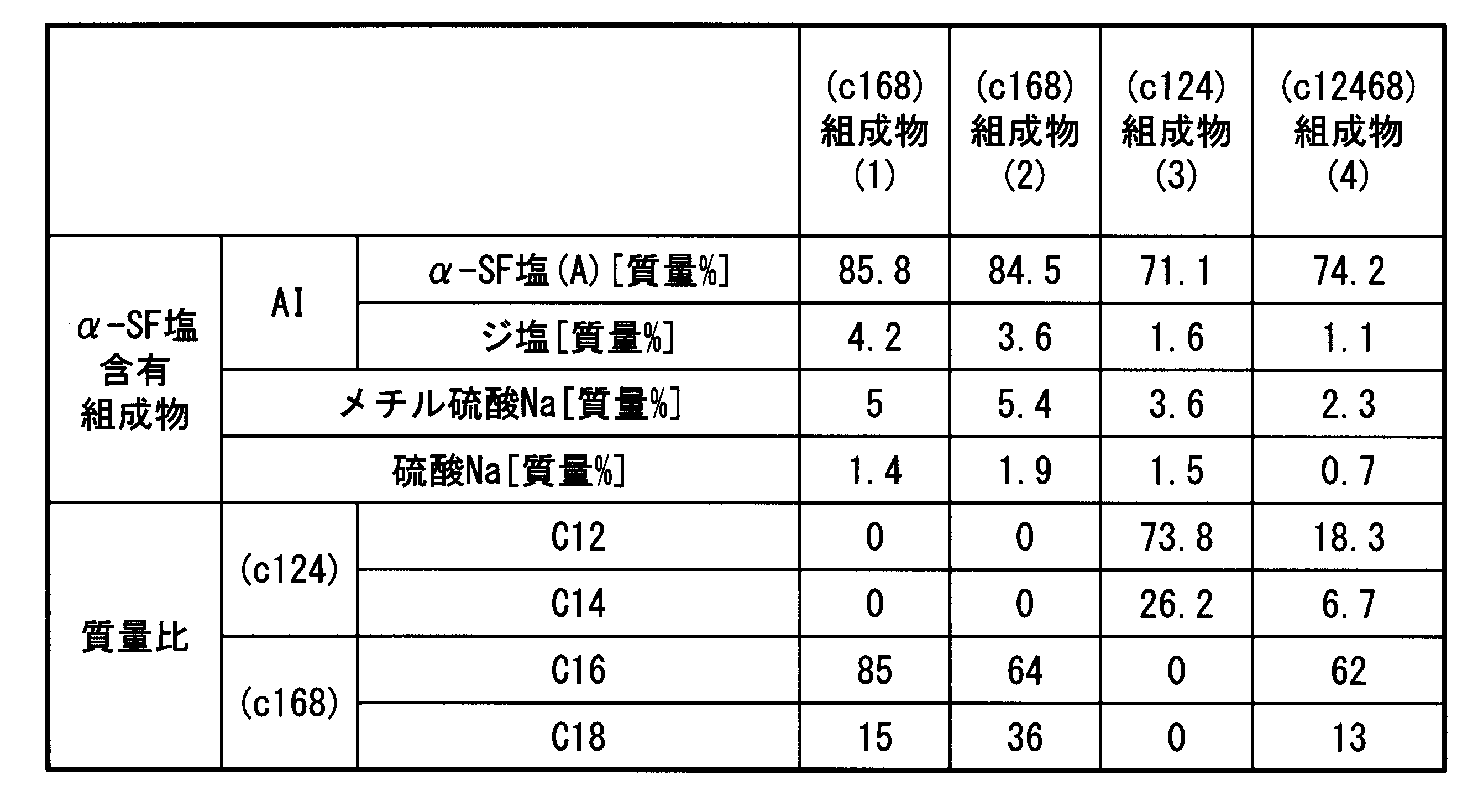
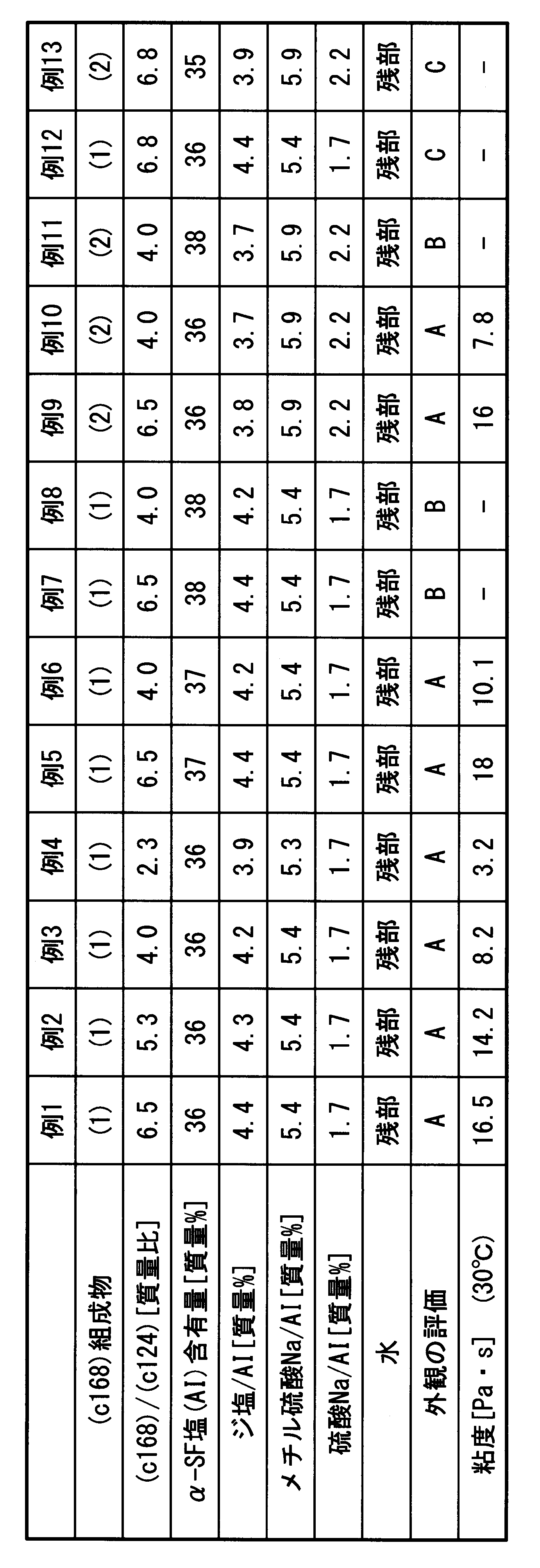
表1、2の結果に示されるように、α-SF塩(AI)の含有量が37質量%を超える例7、8、11は、静置保存したときに分離が生じた。
また、例12と例13は(c168)/(c124)の質量比が大きいため、30℃で静置保存したときに析出した。
特に例5と例7、例6と例8をそれぞれ比べると、(c168)/(c124)の質量比は同じであり、α-SF塩(AI)の含有量がわずか1質量%増えただけで、外観の評価がAからBへ低下した。
例1~4を比べると、α-SF塩(AI)の含有量が同じであるとき、(c168)/(c124)の質量比が小さいほど、粘度が低くなった。
また、例12と例13は(c168)/(c124)の質量比が大きいため、30℃で静置保存したときに析出した。
特に例5と例7、例6と例8をそれぞれ比べると、(c168)/(c124)の質量比は同じであり、α-SF塩(AI)の含有量がわずか1質量%増えただけで、外観の評価がAからBへ低下した。
例1~4を比べると、α-SF塩(AI)の含有量が同じであるとき、(c168)/(c124)の質量比が小さいほど、粘度が低くなった。
(例14~16)
本例は製造例4で製造したα-SF塩含有組成物と水を混合する方法でα-SF塩含有液を調製した。
例14、15は実施例、例16は比較例である。
前記製造例4で得た(c12468)組成物(4)に、α-SF塩(AI)の含有量が表3に示す値となるように水を加え、70℃で均一透明になるまで攪拌した後、放冷して、α-SF塩含有液を調製した。
得られたα-SF塩含有液について、表2の例と同様にして外観の評価および30℃における粘度の測定を行った。結果を表3に示す。
得られたα-SF塩含有液のpH(30℃)は、いずれの例も5.5~7.5の範囲内であった。
本例は製造例4で製造したα-SF塩含有組成物と水を混合する方法でα-SF塩含有液を調製した。
例14、15は実施例、例16は比較例である。
前記製造例4で得た(c12468)組成物(4)に、α-SF塩(AI)の含有量が表3に示す値となるように水を加え、70℃で均一透明になるまで攪拌した後、放冷して、α-SF塩含有液を調製した。
得られたα-SF塩含有液について、表2の例と同様にして外観の評価および30℃における粘度の測定を行った。結果を表3に示す。
得られたα-SF塩含有液のpH(30℃)は、いずれの例も5.5~7.5の範囲内であった。
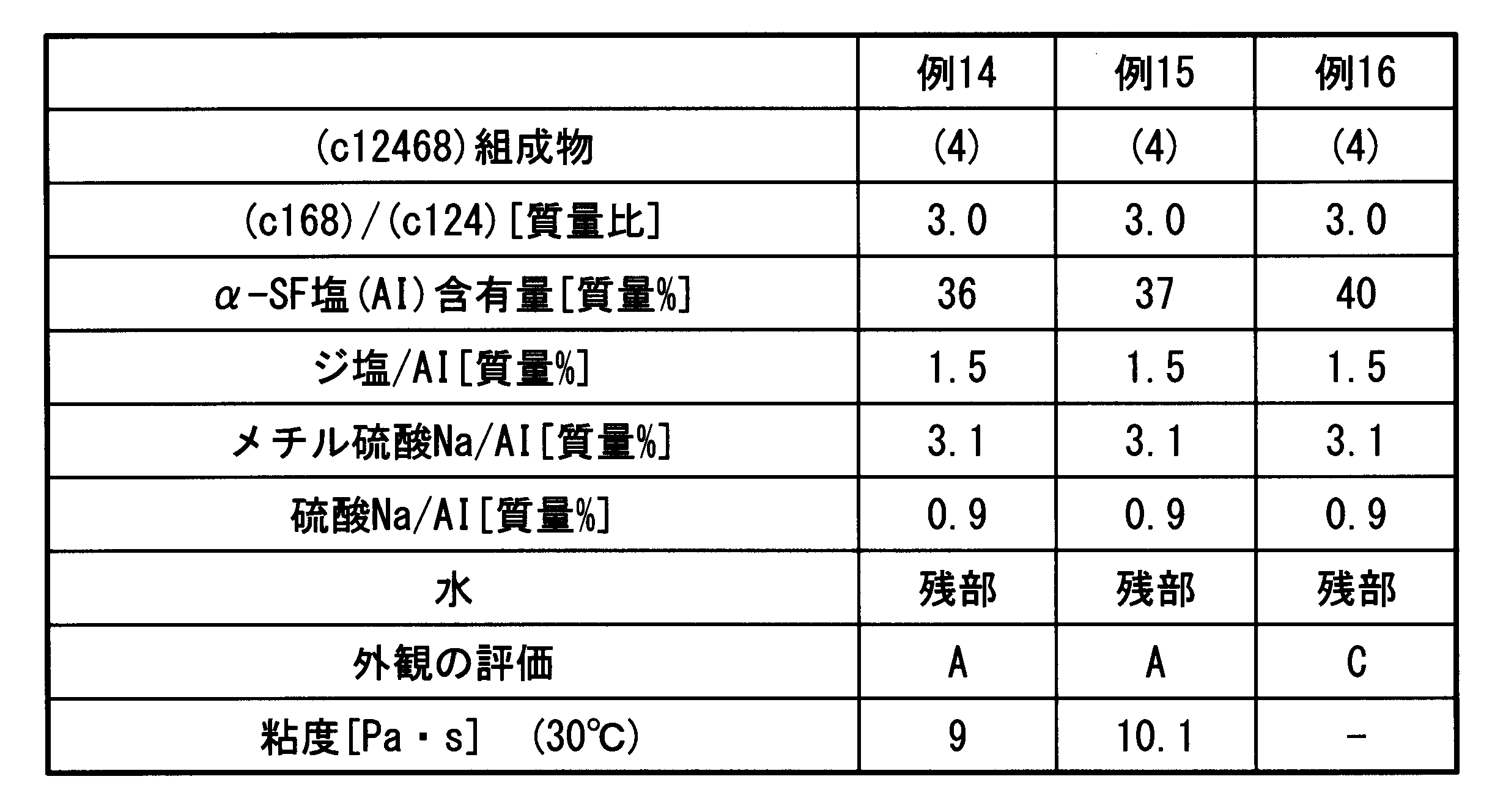
表3の結果に示されるように、α-SF塩(AI)の含有量が37質量%を超える例16は、静置保存したときに析出が生じた。
(例17~20)
本例では、製造例1、3で得られたα-SF塩含有組成物と水とアルコール系溶媒とを混合する方法でα-SF塩含有液を調製した。アルコール系溶媒としてはプロピレングリコール、ポリエチレングリコール、エタノールをそれぞれ用いた。
例17~19は実施例、例20は比較例である。
前記製造例で得た(c168)組成物(1)と(c124)組成物(3)とを、(c168)/(c124)の質量比が表4に示す値となるように混合し、かつα-SF塩(AI)の含有量が表4に示す値となるように、水および表4に示すアルコール系溶媒を加え、70℃で均一透明になるまで攪拌した後、放冷して、α-SF塩含有液を調製した。
得られたα-SF塩含有液について、表2の例と同様にして外観の評価および30℃における粘度の測定を行った。結果を表4に示す。
得られたα-SF塩含有液のpH(30℃)は、いずれの例も5.5~7.5の範囲内であった。
本例では、製造例1、3で得られたα-SF塩含有組成物と水とアルコール系溶媒とを混合する方法でα-SF塩含有液を調製した。アルコール系溶媒としてはプロピレングリコール、ポリエチレングリコール、エタノールをそれぞれ用いた。
例17~19は実施例、例20は比較例である。
前記製造例で得た(c168)組成物(1)と(c124)組成物(3)とを、(c168)/(c124)の質量比が表4に示す値となるように混合し、かつα-SF塩(AI)の含有量が表4に示す値となるように、水および表4に示すアルコール系溶媒を加え、70℃で均一透明になるまで攪拌した後、放冷して、α-SF塩含有液を調製した。
得られたα-SF塩含有液について、表2の例と同様にして外観の評価および30℃における粘度の測定を行った。結果を表4に示す。
得られたα-SF塩含有液のpH(30℃)は、いずれの例も5.5~7.5の範囲内であった。
(例21~23)
本例では、製造例4で得られた(c12468)組成物(4)と水とアルコール系溶媒とを混合する方法でα-SF塩含有液を調製した。アルコール系溶媒としてはプロピレングリコール、ポリエチレングリコール、エタノールをそれぞれ用いた。
例21、22は実施例、例23は比較例である。
前記製造例4で得た(c124168)組成物(4)に、α-SF塩(AI)の含有量が表4に示す値となるように、水および表4に示すアルコール系溶媒を加え、70℃で均一透明になるまで攪拌した後、放冷して、α-SF塩含有液を調製した。
得られたα-SF塩含有液について、表2の例と同様にして外観の評価および30℃における粘度の測定を行った。結果を表4に示す。
得られたα-SF塩含有液のpH(30℃)は、いずれの例も5.5~7.5の範囲内であった。
本例では、製造例4で得られた(c12468)組成物(4)と水とアルコール系溶媒とを混合する方法でα-SF塩含有液を調製した。アルコール系溶媒としてはプロピレングリコール、ポリエチレングリコール、エタノールをそれぞれ用いた。
例21、22は実施例、例23は比較例である。
前記製造例4で得た(c124168)組成物(4)に、α-SF塩(AI)の含有量が表4に示す値となるように、水および表4に示すアルコール系溶媒を加え、70℃で均一透明になるまで攪拌した後、放冷して、α-SF塩含有液を調製した。
得られたα-SF塩含有液について、表2の例と同様にして外観の評価および30℃における粘度の測定を行った。結果を表4に示す。
得られたα-SF塩含有液のpH(30℃)は、いずれの例も5.5~7.5の範囲内であった。
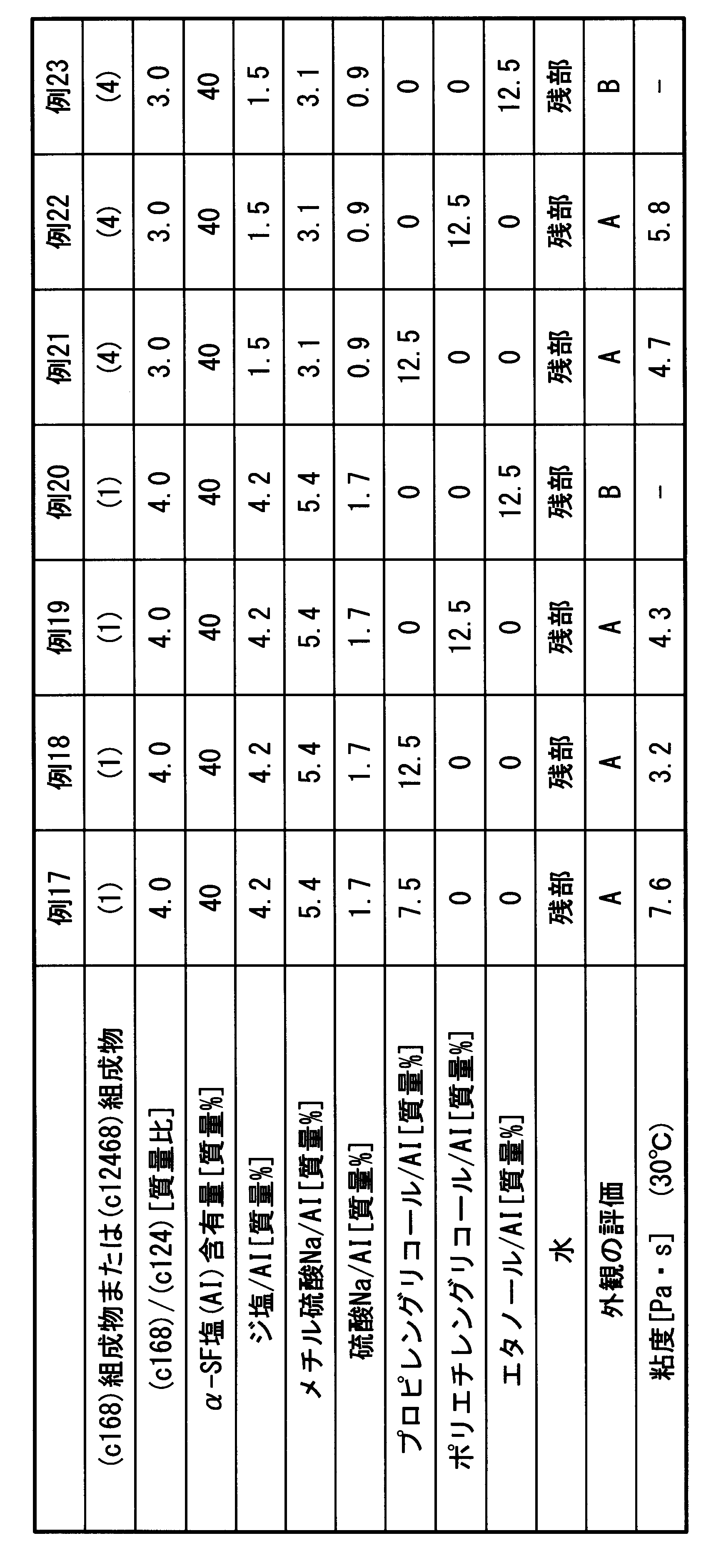
表4の結果に示されるように、α-SF塩含有液にプロピレングリコールまたはポリエチレングリコールを含有させると、α-SF塩(AI)の含有量が40質量%でも分離が生じなかった。
(例24~29)
本例では、例1、3で得られたα-SF塩含有組成物と水とアルコール系溶媒とを混合する方法でα-SF塩含有液を調製した。アルコール系溶媒としてはエタノール、エチレングリコール、プロピレングリコール、グリセリン、ポリエチレングリコールをそれぞれ用いた。
例25~27は実施例、例24、28、29は比較例である。
前記製造例で得た(c168)組成物(1)と(c124)組成物(3)とを、(c168)/(c124)の質量比が表5に示す値となるように混合し、かつα-SF塩(AI)の含有量が表5に示す値となるように、水および表5に示すアルコール系溶媒を加え、70℃で均一透明になるまで攪拌した後、放冷して、α-SF塩含有液を調製した。
得られたα-SF塩含有液について、表2の例と同様にして外観の評価および30℃における粘度の測定を行った。結果を表5に示す。
得られたα-SF塩含有液のpH(30℃)は、いずれの例も5.5~7.5の範囲内であった。
本例では、例1、3で得られたα-SF塩含有組成物と水とアルコール系溶媒とを混合する方法でα-SF塩含有液を調製した。アルコール系溶媒としてはエタノール、エチレングリコール、プロピレングリコール、グリセリン、ポリエチレングリコールをそれぞれ用いた。
例25~27は実施例、例24、28、29は比較例である。
前記製造例で得た(c168)組成物(1)と(c124)組成物(3)とを、(c168)/(c124)の質量比が表5に示す値となるように混合し、かつα-SF塩(AI)の含有量が表5に示す値となるように、水および表5に示すアルコール系溶媒を加え、70℃で均一透明になるまで攪拌した後、放冷して、α-SF塩含有液を調製した。
得られたα-SF塩含有液について、表2の例と同様にして外観の評価および30℃における粘度の測定を行った。結果を表5に示す。
得られたα-SF塩含有液のpH(30℃)は、いずれの例も5.5~7.5の範囲内であった。
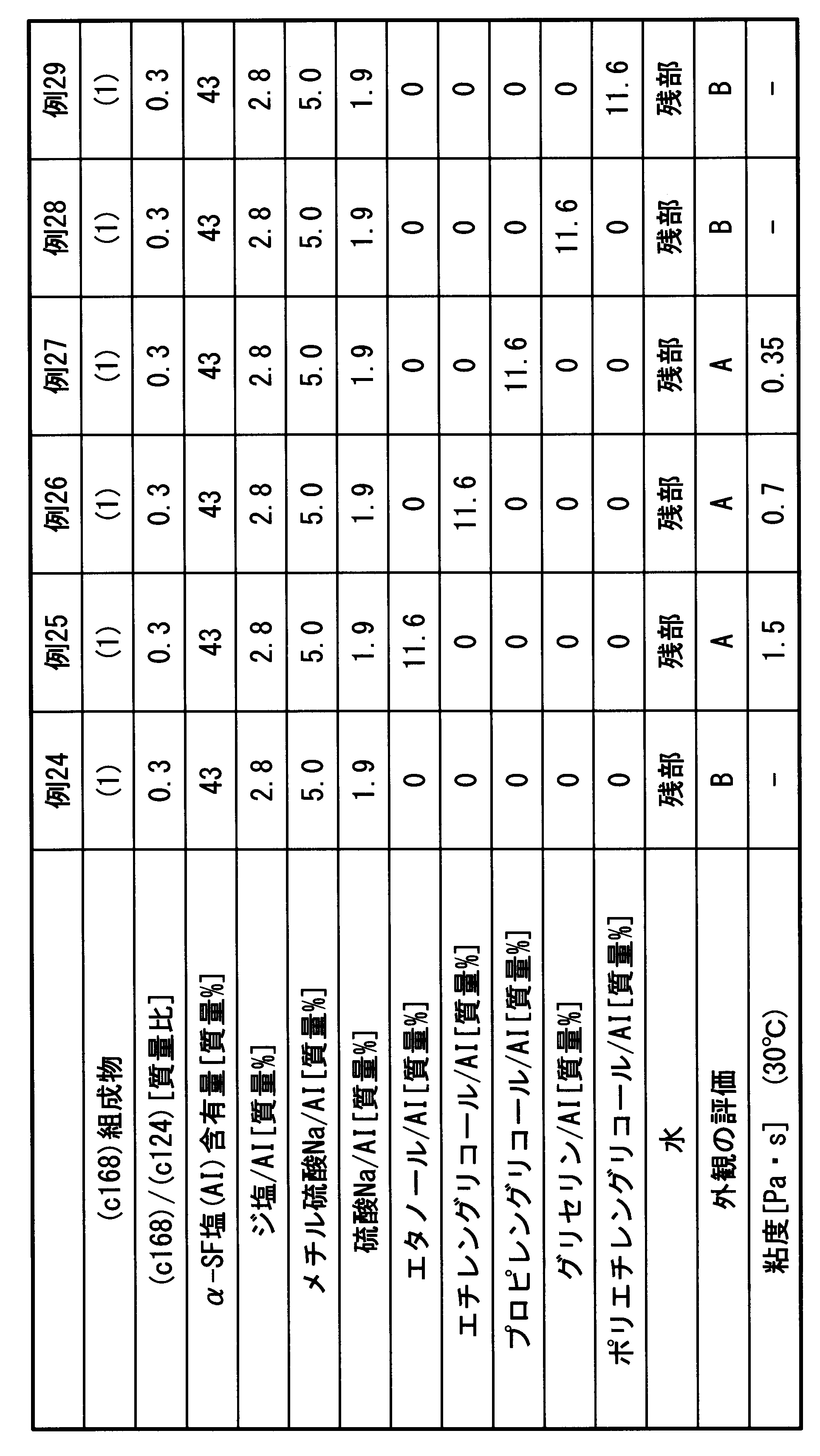
表5の結果に示されるように、(c168)/(c124)が2.0未満であるとき、α-SF塩含有液にエタノール、エチレングリコールまたはプロピレングリコールを含有させると、α-SF塩(AI)の含有量が43質量%でも分離が生じなかった。
本発明のα-SF塩含有液は、粉状洗浄剤や液体洗浄剤等の洗浄剤組成物の原料として好適である。
Claims (6)
- 脂肪酸残基の炭素数が12~18であるα-スルホ脂肪酸アルキルエステル塩の1種以上を含むα-スルホ脂肪酸アルキルエステル塩(A)と、水とを含有し、α-スルホ脂肪酸ジ塩を含まないか、または含んでおり、
前記α-スルホ脂肪酸アルキルエステル塩(A)の質量と前記α-スルホ脂肪酸ジ塩の質量との合計で表されるα-スルホ脂肪酸アルキルエステル塩(AI)の含有量が、α-スルホ脂肪酸アルキルエステル塩含有液の総質量に対して30質量%を超え37質量%以下であり、
下記(c124)に対する下記(c168)の質量比を表す(c168)/(c124)が2.0以上、6.5以下であることを特徴とするα-スルホ脂肪酸アルキルエステル塩含有液。
(c124):脂肪酸残基の炭素数が12~14であるα-スルホ脂肪酸アルキルエステル塩。
(c168):脂肪酸残基の炭素数が16~18であるα-スルホ脂肪酸アルキルエステル塩。 - 脂肪酸残基の炭素数が12~18であるα-スルホ脂肪酸アルキルエステル塩の1種以上を含むα-スルホ脂肪酸アルキルエステル塩(A)と、プロピレングリコールおよびポリエチレングリコールからなる群から選ばれる1種以上の溶媒(S1)と、水とを含有し、α-スルホ脂肪酸ジ塩を含まないか、または含んでおり、
前記α-スルホ脂肪酸アルキルエステル塩(A)の質量と前記α-スルホ脂肪酸ジ塩の質量との合計で表されるα-スルホ脂肪酸アルキルエステル塩(AI)の含有量が、α-スルホ脂肪酸アルキルエステル塩含有液の総質量に対して30質量%を超え40質量%以下であり、
前記溶媒(S1)の含有量が、前記α-スルホ脂肪酸アルキルエステル塩(AI)の質量に対して5~25質量%であり、
下記(c124)に対する下記(c168)の質量比を表す(c168)/(c124)が2.0以上、6.5以下である、α-スルホ脂肪酸アルキルエステル塩含有液。
(c124):脂肪酸残基の炭素数が12~14であるα-スルホ脂肪酸アルキルエステル塩。
(c168):脂肪酸残基の炭素数が16~18であるα-スルホ脂肪酸アルキルエステル塩。 - 脂肪酸残基の炭素数が12~18であるα-スルホ脂肪酸アルキルエステル塩の1種以上を含むα-スルホ脂肪酸アルキルエステル塩(A)と、エタノール、エチレングリコールおよびプロピレングリコールからなる群から選ばれる1種以上の溶媒(S2)と、水とを含有し、α-スルホ脂肪酸ジ塩を含まないか、または含んでおり、
前記α-スルホ脂肪酸アルキルエステル塩(A)の質量と前記α-スルホ脂肪酸ジ塩の質量との合計で表されるα-スルホ脂肪酸アルキルエステル塩(AI)の含有量が、α-スルホ脂肪酸アルキルエステル塩含有液の総質量に対して30質量%を超え43質量%以下であり、
前記溶媒(S2)の含有量が、前記α-スルホ脂肪酸アルキルエステル塩(AI)の質量に対して5~25質量%であり、
下記(c124)に対する下記(c168)の質量比を表す(c168)/(c124)が0以上、2.0未満である、α-スルホ脂肪酸アルキルエステル塩含有液。
(c124):脂肪酸残基の炭素数が12~14であるα-スルホ脂肪酸アルキルエステル塩。
(c168):脂肪酸残基の炭素数が16~18であるα-スルホ脂肪酸アルキルエステル塩。 - 水の含有量が、α-スルホ脂肪酸アルキルエステル塩含有液の総質量に対して45質量%以上、70質量%未満である、請求項1~3のいずれか一項に記載のα-スルホ脂肪酸アルキルエステル塩含有液。
- 前記(c124)が下記(a)、(b)の一方または両方を含み、前記(c168)が下記(c)、(d)の一方または両方を含む、請求項1~3のいずれか一項に記載のα-スルホ脂肪酸アルキルエステル塩含有液。
(a):脂肪酸残基の炭素数が12であるα-スルホ脂肪酸アルキルエステル塩。
(b):脂肪酸残基の炭素数が14であるα-スルホ脂肪酸アルキルエステル塩。
(c):脂肪酸残基の炭素数が16であるα-スルホ脂肪酸アルキルエステル塩。
(d):脂肪酸残基の炭素数が18であるα-スルホ脂肪酸アルキルエステル塩。 - 前記(c124)が前記(a)、(b)の両方を含み、(a):(b)の質量比が25:75~95:5であり、かつ
前記(c168)が前記(c)、(d)の両方を含み、(c):(d)の質量比が45:55~95:5である、請求項5記載のα-スルホ脂肪酸アルキルエステル塩含有液。
Priority Applications (2)
| Application Number | Priority Date | Filing Date | Title |
|---|---|---|---|
| CN201680013700.1A CN107406806A (zh) | 2015-03-05 | 2016-03-04 | 含α‑磺基脂肪酸烷基酯盐溶液 |
| JP2017503731A JP6676615B2 (ja) | 2015-03-05 | 2016-03-04 | α−スルホ脂肪酸アルキルエステル塩含有液 |
Applications Claiming Priority (2)
| Application Number | Priority Date | Filing Date | Title |
|---|---|---|---|
| JP2015-043462 | 2015-03-05 | ||
| JP2015043462 | 2015-03-05 |
Publications (1)
| Publication Number | Publication Date |
|---|---|
| WO2016140348A1 true WO2016140348A1 (ja) | 2016-09-09 |
Family
ID=56848208
Family Applications (1)
| Application Number | Title | Priority Date | Filing Date |
|---|---|---|---|
| PCT/JP2016/056841 Ceased WO2016140348A1 (ja) | 2015-03-05 | 2016-03-04 | α-スルホ脂肪酸アルキルエステル塩含有液 |
Country Status (4)
| Country | Link |
|---|---|
| JP (1) | JP6676615B2 (ja) |
| CN (1) | CN107406806A (ja) |
| MY (1) | MY179163A (ja) |
| WO (1) | WO2016140348A1 (ja) |
Cited By (1)
| Publication number | Priority date | Publication date | Assignee | Title |
|---|---|---|---|---|
| WO2019017764A1 (en) | 2017-07-19 | 2019-01-24 | Kl-Kepong Oleomas Sdn Bhd | SURFACE SYSTEM |
Families Citing this family (1)
| Publication number | Priority date | Publication date | Assignee | Title |
|---|---|---|---|---|
| US9024016B2 (en) | 2012-06-08 | 2015-05-05 | Nutrinova Nutrition Specialists & Food Ingredients GmbH | Process for producing acesulfame potassium |
Citations (4)
| Publication number | Priority date | Publication date | Assignee | Title |
|---|---|---|---|---|
| JPS61276895A (ja) * | 1985-05-31 | 1986-12-06 | 花王株式会社 | α−スルホ脂肪酸エステル塩高濃度水溶液 |
| JPH06184592A (ja) * | 1992-12-18 | 1994-07-05 | Lion Corp | 高濃度界面活性剤ペーストの製造方法 |
| JP2008094942A (ja) * | 2006-10-11 | 2008-04-24 | Lion Corp | 界面活性剤組成物 |
| WO2015064746A1 (ja) * | 2013-10-31 | 2015-05-07 | ライオン株式会社 | 界面活性剤含有液 |
-
2016
- 2016-03-04 JP JP2017503731A patent/JP6676615B2/ja not_active Expired - Fee Related
- 2016-03-04 CN CN201680013700.1A patent/CN107406806A/zh active Pending
- 2016-03-04 WO PCT/JP2016/056841 patent/WO2016140348A1/ja not_active Ceased
- 2016-03-04 MY MYPI2017703196A patent/MY179163A/en unknown
Patent Citations (4)
| Publication number | Priority date | Publication date | Assignee | Title |
|---|---|---|---|---|
| JPS61276895A (ja) * | 1985-05-31 | 1986-12-06 | 花王株式会社 | α−スルホ脂肪酸エステル塩高濃度水溶液 |
| JPH06184592A (ja) * | 1992-12-18 | 1994-07-05 | Lion Corp | 高濃度界面活性剤ペーストの製造方法 |
| JP2008094942A (ja) * | 2006-10-11 | 2008-04-24 | Lion Corp | 界面活性剤組成物 |
| WO2015064746A1 (ja) * | 2013-10-31 | 2015-05-07 | ライオン株式会社 | 界面活性剤含有液 |
Cited By (2)
| Publication number | Priority date | Publication date | Assignee | Title |
|---|---|---|---|---|
| WO2019017764A1 (en) | 2017-07-19 | 2019-01-24 | Kl-Kepong Oleomas Sdn Bhd | SURFACE SYSTEM |
| EP3655514A4 (en) * | 2017-07-19 | 2021-04-21 | KL-Kepong Oleomas Sdn Bhd | TENSIL SYSTEM |
Also Published As
| Publication number | Publication date |
|---|---|
| CN107406806A (zh) | 2017-11-28 |
| JPWO2016140348A1 (ja) | 2017-12-14 |
| JP6676615B2 (ja) | 2020-04-08 |
| MY179163A (en) | 2020-10-30 |
Similar Documents
| Publication | Publication Date | Title |
|---|---|---|
| KR102473780B1 (ko) | 농축된 저점도 람노리피드 조성물 | |
| US8865638B2 (en) | Unit dose laundry compositions | |
| US8338483B2 (en) | Method for producing acylglycinates | |
| WO2020241771A1 (ja) | 化合物、及び組成物 | |
| JP6676615B2 (ja) | α−スルホ脂肪酸アルキルエステル塩含有液 | |
| US20150267153A1 (en) | Process for producing low-in-water to water-free detergent or cleaning agents | |
| US9662287B2 (en) | Process for preparing acylglycinates and compositions comprising such compounds | |
| AU2017275178A1 (en) | Surfactant composition | |
| BR102014025172A2 (pt) | método para fabricar éster de ácido graxo de metilsulfato de tris-(2-hidroxietil)-metilamônio | |
| CN105683348B (zh) | 含表面活性剂的液体 | |
| US10351800B2 (en) | Amine salts of alkylbenzene sulfonic acids and their use in detergent formulations | |
| JP5090666B2 (ja) | 界面活性剤組成物 | |
| JP2781870B2 (ja) | α―スルホ脂肪酸エステル塩の水性高濃度組成物 | |
| WO2016204277A1 (ja) | α-スルホ脂肪酸エステル塩含有液 | |
| US11396640B2 (en) | Surfactant system | |
| JP6607715B2 (ja) | 液体洗浄剤 | |
| JP2858138B2 (ja) | 高濃度α―スルホ脂肪酸エステル塩水性スラリー | |
| KR101087354B1 (ko) | 구조화된 액체 세제 조성물 | |
| US10358620B2 (en) | Aminoalcohol salts of alkylbenzene sulfonic acids and their use in detergent formulations | |
| JPH08505900A (ja) | 濃縮された界面活性剤組成物 | |
| JP2012172051A (ja) | 液体洗浄剤 | |
| IE55226B1 (en) | Amine oxide formulations | |
| JP2008094942A (ja) | 界面活性剤組成物 | |
| TW201716563A (zh) | 液體洗淨劑 | |
| JP6657541B2 (ja) | 界面活性剤組成物 |
Legal Events
| Date | Code | Title | Description |
|---|---|---|---|
| 121 | Ep: the epo has been informed by wipo that ep was designated in this application |
Ref document number: 16759040 Country of ref document: EP Kind code of ref document: A1 |
|
| ENP | Entry into the national phase |
Ref document number: 2017503731 Country of ref document: JP Kind code of ref document: A |
|
| NENP | Non-entry into the national phase |
Ref country code: DE |
|
| 122 | Ep: pct application non-entry in european phase |
Ref document number: 16759040 Country of ref document: EP Kind code of ref document: A1 |