WO2016111151A1 - 非水電解液およびそれを用いた蓄電デバイス - Google Patents
非水電解液およびそれを用いた蓄電デバイス Download PDFInfo
- Publication number
- WO2016111151A1 WO2016111151A1 PCT/JP2015/085636 JP2015085636W WO2016111151A1 WO 2016111151 A1 WO2016111151 A1 WO 2016111151A1 JP 2015085636 W JP2015085636 W JP 2015085636W WO 2016111151 A1 WO2016111151 A1 WO 2016111151A1
- Authority
- WO
- WIPO (PCT)
- Prior art keywords
- cation
- lithium
- mol
- electrolytic solution
- anion
- Prior art date
- Legal status (The legal status is an assumption and is not a legal conclusion. Google has not performed a legal analysis and makes no representation as to the accuracy of the status listed.)
- Ceased
Links
Images


Classifications
-
- H—ELECTRICITY
- H01—ELECTRIC ELEMENTS
- H01G—CAPACITORS; CAPACITORS, RECTIFIERS, DETECTORS, SWITCHING DEVICES, LIGHT-SENSITIVE OR TEMPERATURE-SENSITIVE DEVICES OF THE ELECTROLYTIC TYPE
- H01G11/00—Hybrid capacitors, i.e. capacitors having different positive and negative electrodes; Electric double-layer [EDL] capacitors; Processes for the manufacture thereof or of parts thereof
- H01G11/54—Electrolytes
- H01G11/58—Liquid electrolytes
- H01G11/62—Liquid electrolytes characterised by the solute, e.g. salts, anions or cations therein
-
- H—ELECTRICITY
- H01—ELECTRIC ELEMENTS
- H01M—PROCESSES OR MEANS, e.g. BATTERIES, FOR THE DIRECT CONVERSION OF CHEMICAL ENERGY INTO ELECTRICAL ENERGY
- H01M10/00—Secondary cells; Manufacture thereof
- H01M10/05—Accumulators with non-aqueous electrolyte
- H01M10/056—Accumulators with non-aqueous electrolyte characterised by the materials used as electrolytes, e.g. mixed inorganic/organic electrolytes
- H01M10/0564—Accumulators with non-aqueous electrolyte characterised by the materials used as electrolytes, e.g. mixed inorganic/organic electrolytes the electrolyte being constituted of organic materials only
- H01M10/0566—Liquid materials
- H01M10/0568—Liquid materials characterised by the solutes
-
- H—ELECTRICITY
- H01—ELECTRIC ELEMENTS
- H01M—PROCESSES OR MEANS, e.g. BATTERIES, FOR THE DIRECT CONVERSION OF CHEMICAL ENERGY INTO ELECTRICAL ENERGY
- H01M10/00—Secondary cells; Manufacture thereof
- H01M10/05—Accumulators with non-aqueous electrolyte
- H01M10/056—Accumulators with non-aqueous electrolyte characterised by the materials used as electrolytes, e.g. mixed inorganic/organic electrolytes
- H01M10/0564—Accumulators with non-aqueous electrolyte characterised by the materials used as electrolytes, e.g. mixed inorganic/organic electrolytes the electrolyte being constituted of organic materials only
- H01M10/0566—Liquid materials
- H01M10/0569—Liquid materials characterised by the solvents
-
- H—ELECTRICITY
- H01—ELECTRIC ELEMENTS
- H01G—CAPACITORS; CAPACITORS, RECTIFIERS, DETECTORS, SWITCHING DEVICES, LIGHT-SENSITIVE OR TEMPERATURE-SENSITIVE DEVICES OF THE ELECTROLYTIC TYPE
- H01G11/00—Hybrid capacitors, i.e. capacitors having different positive and negative electrodes; Electric double-layer [EDL] capacitors; Processes for the manufacture thereof or of parts thereof
- H01G11/54—Electrolytes
- H01G11/58—Liquid electrolytes
- H01G11/60—Liquid electrolytes characterised by the solvent
-
- Y—GENERAL TAGGING OF NEW TECHNOLOGICAL DEVELOPMENTS; GENERAL TAGGING OF CROSS-SECTIONAL TECHNOLOGIES SPANNING OVER SEVERAL SECTIONS OF THE IPC; TECHNICAL SUBJECTS COVERED BY FORMER USPC CROSS-REFERENCE ART COLLECTIONS [XRACs] AND DIGESTS
- Y02—TECHNOLOGIES OR APPLICATIONS FOR MITIGATION OR ADAPTATION AGAINST CLIMATE CHANGE
- Y02E—REDUCTION OF GREENHOUSE GAS [GHG] EMISSIONS, RELATED TO ENERGY GENERATION, TRANSMISSION OR DISTRIBUTION
- Y02E60/00—Enabling technologies; Technologies with a potential or indirect contribution to GHG emissions mitigation
- Y02E60/10—Energy storage using batteries
Definitions
- the present invention relates to a non-aqueous electrolyte and an electricity storage device such as a lithium battery, a lithium ion battery, and a lithium ion capacitor using the nonaqueous electrolyte.
- an electrolytic solution in which a lithium salt is dissolved in a nonaqueous solvent is used as an electrolytic solution used in an electricity storage device such as a secondary battery.
- a non-aqueous solvent for example, a mixed solvent such as ethylene carbonate, propylene carbonate, and diethyl carbonate is generally used. LiPF 6 , LiBF 4 or the like is used as the lithium salt.
- a negative electrode active material of a lithium ion secondary battery a carbonaceous material capable of inserting and extracting lithium ions, and a metal or alloy-based material using silicon or tin etc. aiming at high capacity, etc.
- carbonaceous materials such as natural graphite, artificial graphite, and amorphous carbon are mainly used.
- a transition metal composite oxide capable of inserting and extracting lithium ions is used. Typical examples of transition metals are cobalt, nickel, manganese, iron and the like.
- Patent Documents 1 and 2 describe electrolytes containing cyanoborate anions. However, any of these electrolyte solutions is a mixture of a non-aqueous organic solvent.
- Patent Document 3 describes an electrolyte composition using an ionic liquid containing a cyanoborate anion.
- the electrolyte composition is mainly used for photosensitized solar cells and is not shown for lithium ion battery applications.
- ionic liquids ionic substances
- ionic liquids are composed of organic cations and anions
- ionic liquids have attracted attention and are being developed as electrolytic solutions for lithium ion batteries and the like.
- ionic liquids have higher viscosities than organic solvents and the like, and the temperature range used for battery electrolytes is assumed to be ⁇ 30 to 50 ° C., whereas many become solid at around 0 ° C. .
- the salt when a metal salt is dissolved as a battery electrolyte, the salt often precipitates at a low temperature.
- the lithium ion conductivity is lowered at a low temperature and current cannot flow, and there are many problems in the insertion / extraction of lithium ions into / from the electrode, and it has not been put into practical use.
- Patent Document 4 and Non-Patent Document 1 an ionic substance using (FSO 2 ) 2 N ⁇ (fluorosulfonylimide ion; hereinafter sometimes referred to as “FSI”) as an anion is a lithium secondary battery. It can be used as an electrolyte solution.
- FSI fluorosulfonylimide ion
- Patent Document 4 and Non-Patent Document 1 do not disclose an ionic substance that can be used as an electrolyte for a battery other than the ionic substance containing FSI.
- an electrolytic solution using an ionic substance has a low conductivity at a low temperature and a charging capacity lower than that of a general nonaqueous electrolytic solution (for example, Non-Patent Document 2).
- a general nonaqueous electrolytic solution for example, Non-Patent Document 2.
- EMI-FSI 1-ethyl-3-methylimidazolium fluorosulfonylimide
- the charge / discharge capacity at a low temperature has not been studied, and a method capable of improving the battery performance deterioration at a low temperature is not known.
- ionic liquids are expected to be highly safe electrolytes for lithium-ion batteries because of their non-volatility and flame retardancy, but currently they can be charged and discharged and used as non-aqueous electrolytes. Only EMI-FSI can be performed (Non-Patent Document 3), and the appearance of other ionic substances has been demanded.
- JP2015-103288A Special table 2013-517229 gazette International Publication No. 2012/099259 JP 2009-070636 A
- the present invention does not contain a volatile organic solvent, is highly safe, is electrochemically stable, and can maintain high electrical conductivity even at low temperatures, a lithium battery using the same, and the like It is an object to provide an electricity storage device.
- the present inventor has conducted extensive research to solve the above-mentioned problems, and uses a specific cyanofluoroborate organic cation salt as a non-aqueous electrolyte in a non-aqueous electrolyte in which an electrolyte salt is dissolved in a non-aqueous solvent.
- a specific cyanofluoroborate organic cation salt as a non-aqueous electrolyte in a non-aqueous electrolyte in which an electrolyte salt is dissolved in a non-aqueous solvent.
- the present invention includes, for example, the following [1] to [8].
- a nonaqueous electrolytic solution made of an ionic substance The cation of the ionic substance is composed of 1 to 60 mol% of a lithium cation and an organic onium cation (however, the total of the lithium cation and the organic onium cation is 100 mol%), In 100 mol% of anions contained in the ionic substance, 30 mol% or more of the anions are represented by the following formula (I) BF a (CN) 4-a - (I) (In the formula (I), a is an integer of 1 to 3)
- An electricity storage device comprising a positive electrode, a negative electrode, and the nonaqueous electrolytic solution according to any one of [1] to [4].
- the electricity storage device which is a lithium battery, a lithium ion battery, or a lithium ion capacitor.
- a non-aqueous electrolyte that does not contain a volatile organic solvent, has high safety, is electrochemically stable, and can maintain high electrical conductivity even at low temperatures, and lithium using the same
- An electricity storage device such as a battery
- the electrolyte since the vapor pressure is extremely low, there is no risk of ignition, and since the viscosity is low, the electrolyte has sufficient electrical conductivity and can maintain high conductivity even at a low temperature.
- a power storage device that operates even in a low temperature environment can be obtained.
- the nonaqueous electrolytic solution of the present invention is a nonaqueous electrolytic solution made of an ionic substance, wherein the cation of the ionic substance is composed of 1 to 60 mol% of a lithium cation and an organic onium cation, and the anion is Of 100 mol% of anions contained in the ionic substance, 30 mol% or more is represented by the following formula (I) BF a (CN) 4-a - (I) (In the formula (I), a is an integer of 1 to 3) It consists of the cyanofluoroborate anion shown by these.
- the total of the lithium cation and the organic onium cation is 100 mol%.
- the proportion of the lithium cation in the total of 100 mol% of the lithium cation and the organic onium cation is 1 to 60 mol%.
- the proportion of the lithium cation is usually 1 mol% or more, preferably 3 mol% or more, more preferably 5 mol% or more, and usually 60 mol% or less, preferably 40 mol% or less, more preferably 30 mol% or less. is there. If it is in the said range, the ratio of the lithium cation which is a medium of an electric current is not too small, the range of the viscosity of electrolyte solution is suitable, and appropriate electrical conductivity can be obtained.
- the proportion of the lithium cation is preferably 1 to 40 mol%, more preferably 3 to 40 mol%, still more preferably 5 to 30 mol%.
- the nonaqueous electrolytic solution of the present invention has high lithium salt solubility. Therefore, even when the proportion of the lithium cation is relatively high, precipitation of the lithium salt can be suppressed.
- the lithium cation mobility estimated value is a value obtained by multiplying the electrical conductivity of the non-aqueous electrolyte by the molar ratio of the lithium cation to the total ions in the non-aqueous electrolyte.
- the lithium cation mobility estimated value is 0.02 S / m or more at room temperature (23 ° C.), although it depends on the combination of the organic onium cation and the cyanofluoroborate anion. If it is more prepared, it can be 0.07 S / m or more, and if it is further optimized, it can be 0.1 S / m or more.
- the concentration of the lithium cation is preferably 0.03 to 3 mol / L, more preferably 0.05 to 3 mol / L, still more preferably 0.05 to 2 mol / L, particularly preferably. 0.1 to 2 mol / L.
- concentration of the lithium cation is within the above range, the viscosity of the nonaqueous electrolytic solution is likely to be within an appropriate range, and the electrical conductivity can be increased.
- organic onium cation known organic onium cations can be used without particular limitation, and examples thereof include organic ammonium cations and aromatic heterocyclic compound cations.
- organic ammonium cation examples include trimethylpropylammonium cation, trimethylisopropylammonium cation, butyltrimethylammonium cation, hexyltrimethylammonium cation, octyltrimethylammonium cation, dodecyltrimethylammonium cation, dimethyldipropylammonium cation, tetraethylammonium cation, N- Examples include methyl-N-propylpyrrolidinium cation, N, N-tetramethylenepyrrolidinium cation, 5-azonia- [4,4] spirononane cation, and 5-azonia- [4,5] spirodecane cation.
- a trimethylpropylammonium cation, a tetraethylammonium cation, a diethylmethylmethoxyethylammonium cation, and the like are preferable because of high electrochemical stability, relatively low viscosity, and easy synthesis.
- aromatic heterocyclic compound cations include imidazolium cations, pyridinium cations, pyridazinium cations, pyrimidinium cations, pyrazinium cations, pyrazolium cations, thiazonium cations Oxozolium cations, triazonium cations, pyrrolidinium cations.
- Imidazolium cations such as 1-tert-butyl-3-isopropylimidazolium cation; pyridinium cations such as N-ethylpyridinium cation and N-butylpyridinium cation are preferable.
- organic onium cations may be used alone or in combination of two or more.
- 1-ethyl-3-ethyl cation is particularly suitable as a particularly suitable organic onium cation used in a nonaqueous electrolytic solution for an electricity storage device.
- examples thereof include a methyl imidazolium cation and a diethylmethylmethoxyethylammonium cation.
- an anion is represented by the following formula (I) in 100 mol% of the anion contained in the ionic substance.
- BF a (CN) 4-a - (I) (In the formula (I), a is an integer of 1 to 3) It consists of the cyanofluoroborate anion shown by these.
- the proportion of the cyanofluoroborate anion is 30 mol% or more, preferably 60 mol% or more, particularly preferably 90 mol% or more, and most preferably 100 mol% in 100 mol% of anions contained in the ionic substance. is there.
- the electrolytic solution containing the cyanofluoroborate anion has the advantages of high electrochemical stability and high conductivity. Further, by including the cyanofluoroborate anion, the ionic substance can have a low viscosity and a low melting point.
- the nonaqueous electrolytic solution of the present invention contains at least one selected from the group consisting of BF (CN) 3 ⁇ , BF 2 (CN) 2 ⁇ and BF 3 (CN) ⁇ as the cyanofluoroborate anion.
- cyanofluoroborate anions may be used alone or in combination of two or more.
- tricyanofluoroborate anion BF (CN) 3 ⁇
- dicyanodifluoroborate anion BF 2 (CN) 2 ⁇
- All the anions contained in the non-aqueous electrolyte of the present invention may be the cyanofluoroborate anion, but other anions may be contained.
- an existing anion can be used without particular limitation.
- other anions for example, CF 3 SO 3 ⁇ , N (FSO 2 ) 2 ⁇ , N (FSO 2 ) (CF 3 SO 2 ) ⁇ , N (CF 3 SO 2 ) 2 ⁇ , N (C 2 F 5 SO 2 ) 2 ⁇ , cyclic 1,2-perfluoroethanedisulfonylimide anion, cyclic 1,3-perfluoropropane disulfonylimide anion, C (FSO 2 ) 3 ⁇ , C (CF 3 SO 2 ) 3 ⁇ , C (C 2 F 5 SO 2 ) 3 ⁇ , bisoxalatoborate anion, difluorooxalatoborate anion, tetrafluorooxala
- BF 4 ⁇ , PF 6 ⁇ , (CF 3 SO 2 ) 2 N ⁇ , (FSO 2 ) 2 N ⁇ and the like are particularly preferably used because an electrolytic solution having high electrochemical stability and high conductivity can be obtained. I can do things.
- the method for producing the ionic substance constituting the nonaqueous electrolytic solution of the present invention is not particularly limited.
- the lithium cation is 1 to 60 mol% in 100 mol% of all cations.
- the organic onium cation A + in the above formula (II) is an organic onium cation constituting the cation of the ionic substance described above, and is not particularly limited, but is an organic ammonium cation, an aromatic heterocyclic compound cation. Is preferred.
- the cyanofluoroborate salt represented by the above formula (II) is represented by the following formula (IV) M + ⁇ BF a (CN) 4-a - (IV) (In the formula (IV), a is an integer of 1 to 3, and M + is a metal ion.)
- a is an integer of 1 to 3
- M + is a metal ion.
- the salt exchange method is preferably used because of the ease of reaction.
- the metal (M in the formula (IV)) preferably used is an alkali metal such as lithium, sodium or potassium; an alkaline earth such as magnesium or calcium A metal etc. can be mentioned.
- alkali metals such as lithium, sodium and potassium are preferably used because of easy ion exchange.
- potassium is particularly preferably used because of the low hygroscopicity of the metal salt as a raw material.
- the non-aqueous electrolyte of the present invention is used for a lithium ion battery (such as a lithium battery, a lithium ion battery, or a lithium ion capacitor), lithium is preferable in that contamination of other alkali metals can be reduced. Used for.
- a lithium ion battery such as a lithium battery, a lithium ion battery, or a lithium ion capacitor
- lithium salt represented by the formula (III) a known lithium salt can be used, and an industrial grade or reagent grade one can be used.
- the non-aqueous electrolyte preferably has 100 mol% of the anion represented by the formula (I) in 100 mol% of the anion contained in the ionic substance, and X ⁇ represented by the formula (III) is cyano.
- a fluoroborate anion is preferred.
- a lithium salt in which X ⁇ is a cyanofluoroborate anion can be synthesized by a known method.
- lithium metal cyanide is dissolved in an organic solvent such as acetonitrile and acetone.
- the above BF 3 gas is blown into a solution obtained by dissolving an alkali metal or alkaline earth metal cyanide other than lithium, such as potassium, sodium, magnesium, calcium, etc. in an organic solvent
- a BF 3 addition compound such as boron trifluoride ether BF 3 ⁇ OEt 2 is allowed to act in the presence of an aprotic solvent to synthesize a corresponding alkali metal or alkaline earth metal salt of cyanofluoroborate
- the nonaqueous electrolytic solution of the present invention when used as an electrolyte for an electricity storage device, it is preferable to sufficiently remove impurities. It is preferable that the water concentration in the non-aqueous electrolyte is 1000 ppm or less, and the metal concentration other than Li is 20 ppm or less for Na, 10 ppm or less for K, 10 ppm or less for Ca, 3 ppm or less for Fe, and 10 ppm or less for Pb. Non-aqueous electrolyte is 100% by mass).
- the nonaqueous electrolytic solution of the present invention preferably contains an ionic substance as a main component and does not substantially contain an organic solvent.
- the organic solvent content of the nonaqueous electrolytic solution of the present invention is usually 10% by mass or less, preferably 5% by mass or less, and more preferably 1% by mass or less.
- the non-aqueous electrolyte of the present invention By applying the non-aqueous electrolyte of the present invention to an electricity storage device, a battery that is not flammable and operates even at low temperatures can be provided.
- nonaqueous electrolytic solution of the present invention has a low melting point and high conductivity is not necessarily clear, but is considered as follows.
- the nonaqueous electrolytic solution of the present invention contains cyanofluoroborate anion in an amount of 30 mol% or more, preferably 60 mol% or more in the total anion contained in the ionic substance.
- the cyanofluoroborate anion is relatively smaller in anion diameter and molecular weight than known anions (for example, (CF 3 SO 2 ) N ⁇ , (FSO 2 ) 2 N ⁇ ), and has a small polarity and interaction between compounds. Is small, the viscosity is low and ions easily move. For this reason, it is thought that the non-aqueous electrolyte of the present invention containing a cyanofluoroborate anion has high conductivity.
- hexafluorophosphate anion, tetrafluoroborate anion and tetracyanoborate anion have high symmetry and are easy to aggregate and crystallize, whereas cyanofluoroborate anion is more symmetric than these anions. Is low, it is difficult to crystallize, and the melting point of the nonaqueous electrolytic solution of the present invention is considered to be low.
- the non-aqueous electrolyte of the present invention may contain additives used for existing batteries or electric double layer capacitors.
- the nonaqueous electrolytic solution of the present invention can be used for power storage devices such as lithium batteries (lithium primary batteries), lithium ion batteries (lithium secondary batteries), and lithium ion capacitors. Among these, it is preferable to use for a lithium battery and a lithium ion battery, and it is more preferable to use for a lithium ion battery. Further, the non-aqueous electrolyte may be used in a gel form as well as a liquid form. Furthermore, the non-aqueous electrolyte of the present invention can be used for a solid polymer electrolyte. The non-aqueous electrolyte of the present invention is suitably used for an electricity storage device because it has an extremely low vapor pressure, has no danger of ignition, is electrochemically stable, and can maintain high electrical conductivity even at low temperatures. be able to.
- the lithium battery includes a negative electrode, a positive electrode, a separator disposed between the positive electrode and the negative electrode, and the nonaqueous electrolytic solution of the present invention.
- the lithium battery has the same configuration as the known lithium battery except for the non-aqueous electrolyte.
- the positive electrode and the negative electrode are laminated through a porous film impregnated with the non-aqueous electrolyte, and these are the cases. It has the form stored in. Therefore, the shape of the lithium battery is not particularly limited, and may be any of a cylindrical shape, a square shape, a laminate shape, a coin shape, a large size, and the like.
- At least one selected from the group consisting of lithium and lithium alloys is used as an active material.
- the positive electrode contains a positive electrode active material, and preferably further contains a conductive material and a binder.
- a positive electrode active material materials commonly used in the field of lithium batteries can be used as they are, and among them, metal oxides such as manganese dioxide, graphite fluoride, thionyl chloride and the like can be preferably used.
- Manganese dioxide is particularly preferable because of its good discharge characteristics.
- the non-aqueous electrolyte lithium ion battery of the present invention comprises a negative electrode and a positive electrode that can occlude and release lithium ions, and the non-aqueous electrolyte of the present invention.
- the configuration of the lithium ion battery is the same as that of a known lithium ion battery except for the non-aqueous electrolyte.
- the positive electrode and the negative electrode are laminated through the porous film impregnated with the non-aqueous electrolyte of the present invention. These have a form housed in a case. Therefore, the shape of the lithium ion battery is not particularly limited, and may be any of a cylindrical shape, a square shape, a laminate shape, a coin shape, a large size, and the like.
- the negative electrode used in the lithium ion battery preferably has a negative electrode active material layer on the current collector.
- the negative electrode active material is not particularly limited as long as it can electrochemically occlude and release lithium ions. Specific examples thereof include carbonaceous materials, alloy-based materials, lithium-containing metal composite oxide materials, and the like. These may be used individually by 1 type and may be used in combination of 2 or more type.
- the positive electrode active material is preferably a material containing lithium and at least one transition metal. Specific examples include lithium transition metal composite oxides and lithium-containing transition metal phosphate compounds. These positive electrode active materials may be used individually by 1 type, and may be used in combination of 2 or more type.
- the lithium secondary battery has excellent electrochemical characteristics at high temperatures even when the end-of-charge voltage is 4.2 V or higher, particularly 4.3 V or higher.
- the lithium battery in the present invention can be charged / discharged at ⁇ 40 to 100 ° C.
- a lithium ion capacitor is a power storage device that uses a carbon material such as graphite as a negative electrode and stores energy using lithium ion intercalation thereto.
- the positive electrode include those using an electric double layer between an activated carbon electrode and an electrolytic solution, those using a ⁇ -conjugated polymer electrode doping / dedoping reaction, and the like.
- the present invention since it does not contain a volatile organic solvent, it is highly safe, electrochemically stable, and can maintain electric conductivity even at low temperatures, such as a non-aqueous electrolyte and a lithium battery using the same.
- An electricity storage device can be provided.
- the above electrolytic solution can be obtained by using an electrolytic solution in which a cyanofluoroborate lithium salt is dissolved in a cyanofluoroborate / organic cation salt.
- the electrolytic solution of the present invention is used as a non-aqueous electrolytic solution for a vehicle-mounted power storage device or a large battery for storing natural energy, a power storage device that operates even in a low temperature environment can be obtained.
- Electrochemical measurement Place an appropriate amount of sample solution (2 ml or less) into a cell for VC-4 voltammetry manufactured by BAS, and measure cyclic voltammetry with a potentiostat manufactured by Autolab using a glassy carbon electrode, a platinum electrode, and an Ag / Ag + type reference electrode. And electrochemical stability (potential window) was evaluated.
- Electrolyte Resistance Component The electrolyte resistance component measured at room temperature (23 ° C.) and 0 ° C. was measured with VersaSTAT4 manufactured by Toyo Technica.
- Table 1 shows that the ionic substance containing cyanofluoroborate anion has a lower viscosity than other ionic substances. For this reason, it has the advantage that handling is easy. In addition, an ionic substance containing a cyanofluoroborate anion has an equivalent or superior potential window as compared with other ionic substances.
- Example 1 19.6 g of EMIM bromide and 10.8 g of dicyanodifluoroborate lithium salt were dissolved in 10 ml of ion-exchanged water, respectively.
- the EMIM bromide aqueous solution prepared above was placed in a flask, and a dicyanodifluoroborate lithium aqueous solution was added dropwise. After the addition, the solution separated into two layers. 20 ml of methylene chloride was added thereto, and the methylene chloride layer was separated.
- the ratio of organic cation to lithium cation in the whole solution was 0.9 (90 mol%): 0.1 (10 mol%) (concentration of lithium cation) 0.63 g of dicyanodifluoroborate lithium salt and 11.15 g of EMIM dicyanodifluoroborate were dissolved so as to be 0.55 mol / L).
- the electrical conductivity at 10 ° C. of the solution (non-aqueous electrolyte; hereinafter sometimes referred to as “EMIM 0.9 Li 0.1 dicyanodifluoroborate”) was measured and found to be 0.80 S / m.
- the measurement result of the cyclic voltammogram is shown in FIG.
- the electrochemical stability was -2.5 to 2.4 (V vs Ag / Ag +).
- the electrical conductivity of the non-aqueous electrolyte solution of EMIM 0.9 Li 0.1 dicyanodifluoroborate prepared above was measured at ⁇ 10, ⁇ 20, and ⁇ 30 ° C.
- Table 2 shows the results of the composition ratio, electrical conductivity, and electrochemical stability of the nonaqueous electrolytic solution.
- Table 2 shows values that the lithium cation contributes to electric conduction (“estimated value of lithium cation mobility”).
- Example 2 An organic cation and lithium were used in the same manner as in Example 1 except that the commercially available EMIM ⁇ BF 4 was used instead of the EMIM dicyanodifluoroborate of Example 1 and LiBF 4 was used instead of the dicyanodifluoroborate lithium salt.
- a non-aqueous electrolyte having a cation ratio of 0.9 (90 mol%): 0.1 (10 mol%) was prepared, and the electrical conductivity and electrochemical stability were measured, and the lithium cation mobility estimated value was obtained. It was.
- Table 2 shows the composition, electrical conductivity, electrochemical stability, and estimated lithium cation mobility of the non-aqueous electrolyte.
- Example 3 Except that Example of commercially available butyl methylpyrrolidin instead of 1 of EMIM dicyano-difluoro borate pyridinium ⁇ (FSO 2) using 2 N, were also used in place of the dicyano-difluoro borate lithium salt (FSO 2) 2, As in Example 1, a non-aqueous electrolyte having an organic cation / lithium cation ratio of 0.9 (90 mol%): 0.1 (10 mol%) was prepared, and the electrical conductivity and electrochemical stability were measured. In addition, an estimated value of lithium cation mobility was obtained. Table 2 shows the composition, electrical conductivity, electrochemical stability, and estimated lithium cation mobility of the non-aqueous electrolyte.
- FSO 2 dicyano-difluoro borate lithium salt
- the non-aqueous electrolyte of the present invention has a higher electrical conductivity than known ionic liquids, and is particularly suitable for use at low temperatures.
- it has a wide electrochemical stability and is suitable as an electrolytic solution for power storage devices such as lithium batteries, lithium ion batteries, and lithium ion capacitors.
- Examples 6 to 9, Comparative Examples 6 and 7 The same procedure as in Example 2 was performed, except that 8.04 g of EMIM chloride was changed to 19.4 g, and 12.5 g of tricyanofluoroborate lithium salt was used instead of 11.4 g of dicyanodifluoroborate lithium salt, and 23.7 g Of EMIM tricyanofluoroborate (liquid) (yield 87.3%).
- Comparative Example 8 (ratio of lithium cation 0.00 mol%), Comparative Example 9 (ratio of lithium cation 0.79 mol%), Example 10 (ratio of lithium cation 2.88 mol%), Example 11 (lithium) Cation ratio 13.23 mol%), Example 12 (lithium cation ratio 24.52 mol%), Example 13 (lithium cation ratio 33.64 mol%), room temperature (23 ° C) electrical conductivity
- the lithium cation mobility estimated value was calculated
- Examples 14 to 18, Comparative Examples 10 and 11 22.5 g of diethylmethylmethoxyethylammonium bromide (hereinafter sometimes referred to as “DEME”) bromide is used instead of 8.04 g of EMIM chloride, and tricyanofluoroborate is used instead of 11.4 g of dicyanodifluoroborate lithium salt.
- DEME diethylmethylmethoxyethylammonium bromide
- Example 19 15 ml of dried EMIM tricyanofluoroborate produced in Example 6 and the like was collected, and 1.84 g of tricyanofluoroborate lithium salt was dissolved therein. In addition, EMIM tricyanofluoroborate was added so that the total amount was 20 ml, and a non-aqueous electrolyte with a lithium cation ratio of 14.5 mol% and a dicyanofluoroborate anion ratio of 100 mol% in the anion was prepared. did.
- the negative electrode was produced in the same process as the positive electrode, using 82 parts by mass of LTO (Li 4 Ti 5 O 12 ) as an active material, 8 parts by mass of acetylene black as a conductive material, and 10 parts by mass of polyvinylidene fluoride as a binder.
- LTO Li 4 Ti 5 O 12
- the separator used was a polyethylene microporous membrane (thickness 20 ⁇ m, porosity 40%).
- the positive electrode and negative electrode prepared above were punched out to 14 ⁇ 20 mm 2 and dried at 170 ° C. for 10 hours, respectively, faced through a separator and inserted into an aluminum laminate, and the electrolyte was poured and impregnated under reduced pressure. Thereafter, vacuum sealing was performed to produce a single-layer laminate cell (battery) for battery performance evaluation.
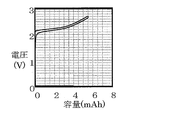
- the measurement results of the charge / discharge characteristics measured by the methods described in (3) Charge capacity and discharge capacity and (4) Electrolytic solution resistance component are shown in FIG.
- the room temperature is 23 ° C.
- Example 19 battery grade EMIM. (FSO 2 ) 2 N was used instead of EMIM dicyanodifluoroborate, and 2.99 g Li. (FSO 2) instead of 1.72 g dicyanodifluoroborate lithium salt. )
- a non-aqueous electrolyte in which the ratio of lithium cation in the cation was 14.5 mol% and the ratio of (FSO 2 ) 2 N anion in the anion was 100 mol% was prepared in the same manner except that 2 N salt was used.
- a cell (battery) was produced in the same manner as in Example 19 except for the above.
- Example 19 the measurement results of the charge / discharge characteristics are shown in FIG.
- the lithium ion battery using the non-aqueous electrolyte of the present invention has substantially the same charge / discharge capacity as that of the battery prepared in Reference Example 1, which is a known electrolyte, and the resistance of the electrolyte is room temperature and 0. Both the temperatures were low, and lithium ions could be conducted more. Further, in the lithium ion battery using the non-aqueous electrolyte of the present invention, the decrease rate of the discharge capacity at 0 ° C. from the discharge capacity at room temperature is 14%, which is the decrease rate of the battery manufactured in Reference Example 1. It can be seen that 73% can be greatly suppressed, and the discharge characteristics at a lower temperature are excellent.
Landscapes
- Chemical & Material Sciences (AREA)
- Engineering & Computer Science (AREA)
- Electrochemistry (AREA)
- Chemical Kinetics & Catalysis (AREA)
- Manufacturing & Machinery (AREA)
- Inorganic Chemistry (AREA)
- Physics & Mathematics (AREA)
- General Physics & Mathematics (AREA)
- Condensed Matter Physics & Semiconductors (AREA)
- General Chemical & Material Sciences (AREA)
- Power Engineering (AREA)
- Microelectronics & Electronic Packaging (AREA)
- Secondary Cells (AREA)
- Electric Double-Layer Capacitors Or The Like (AREA)
Abstract
[課題] 揮発性の有機溶媒を含まないため安全性が高く、電気化学的に安定で、かつ、低温でも電気伝導度を保つことができる非水電解液およびそれを用いたリチウム電池等の蓄電デバイスを提供する。 [解決手段] イオン性物質からなる非水電解液であって、前記イオン性物質のカチオンが、リチウムカチオン1~60モル%と、有機オニウムカチオンとからなり(ただし、リチウムカチオンと有機オニウムカチオンとの合計は100モル%である)、アニオンが、前記イオン性物質に含まれるアニオン100モル%中、30モル%以上が下記式(I) BFa(CN)4-a
- (I) (式(I)中、aは1~3の整数である)で示されるシアノフルオロボレートアニオンからなる非水電解液。
Description
本発明は、非水電解液およびそれを用いたリチウム電池、リチウムイオン電池、リチウムイオンキャパシタ等の蓄電デバイスに関する。
近年、携帯用電子機器、携帯電話およびビデオカメラなどが急激に普及し、それらに用いられる軽量で高性能の二次電池の需要が大幅に増大した。また、近年、二次電池は、車載用途または自然エネルギーの貯蔵用途などに向けての開発が進められている。二次電池の使用環境温度は、車載用途では-30℃から60℃が想定されており、従来使用されている温度領域より厳しい使用環境が想定され、高温側では電池に含まれる電解液の耐久性が求められ、低温側では従来以上のイオン伝導率が求められている。特に高温環境については、セルが大型化されるため、使用環境のみならず、自己発熱によって定常的に比較的高い温度にさらされることになり、電解液の高温耐久性の向上は重要な開発課題になっている。
また、車載用途または自然エネルギー貯蔵用途の電池の場合、使用条件として-30℃での作動が想定され、低温でのイオン伝導性が要求される。低温でのイオン伝導度低下を避けるために通常は低粘度の有機溶媒(エチレンカーボネートなど)が用いられているが、ほとんどの低粘度の有機溶媒は蒸気圧が高く、デンドライト析出などにより電池にショートが発生した場合、容易に火災が発生するなど安全性が低下する問題点がある。
二次電池等の蓄電デバイスに用いられている電解液として、多くの場合、非水溶媒にリチウム塩を溶解した電解液が使用されている。非水溶媒としては、例えば、エチレンカーボネート、プロピレンカーボネート、ジエチルカーボネート等の混合溶媒が一般的に使用されている。リチウム塩としてはLiPF6、LiBF4などが用いられている。
また、リチウムイオン二次電池の負極活物質としては、リチウムイオンを吸蔵および放出することができる炭素質材料、ならびに、高容量化を目指してシリコンまたはスズ等を用いた金属または合金系の材料などが知られ、現在は炭素質材料である天然黒鉛、人造黒鉛、非晶質炭素等が主に用いられている。正極活物質としてはリチウムイオンを吸蔵および放出することができる遷移金属複合酸化物が用いられている。遷移金属の代表例は、コバルト、ニッケル、マンガン、鉄等である。
このようなリチウムイオン二次電池は、活性の高い正極と負極とを使用しているため、電極と電解液との副反応により、充放電容量が低下することが知られており、電池特性を改良するために、電解液の構成要素である非水溶媒および電解質について種々の検討がなされている。
特許文献1および2には、シアノボレート系アニオンを含む電解液が記載されている。しかしながら、これらの電解液は、何れも非水系の有機溶媒を配合するものである。
特許文献3には、シアノボレート系アニオンを含むイオン液体を使用した電解質配合物が記載されている。しかしながら、上記電解質配合物は、主に光増感型太陽電池に使用するものであり、リチウムイオン電池用途については示されていない。
リチウムイオン電池はその開発以降、発火事故がしばしば報告されている。イオン液体(イオン性物質)は、多くの場合有機カチオンとアニオンとから構成され、常温で液体であり、蒸気圧が極めて小さいため引火しなく、難燃性であるなど、ほかには無い特徴を有している。そのため、イオン液体は、リチウムイオン電池等の電解液として注目され、開発が進められている。しかしながら、イオン液体は有機溶媒などに比べて粘度が高く、また、電池用電解液として用いられる温度範囲として-30~50℃が想定されるのに対し、0℃付近で固体になるものが多い。また、電池用電解質として金属塩を溶解させた場合、低温では塩が析出する場合が多い。特に低温においてリチウムイオン伝導度が低下し電流が流せないことや、電極へのリチウムイオンの挿入・脱離などに問題が多い場合が多く実用化にはいたっていない。
例えば、特許文献4および非特許文献1には、アニオンとして(FSO2)2N-(フルオロスルフォニルイミドイオン;以下「FSI」とする場合もある)を使用したイオン性物質は、リチウム二次電池の電解液に使用できることが記載されている。しかしながら、特許文献4および非特許文献1には、上記FSIを含むイオン性物質以外に電池用の電解液として使用できるイオン性物質は開示されてない。
また、イオン性物質を用いた電解液は、一般的な非水電解液に比べて低温で伝導度が低く、充電容量が低下することが知られている(例えば、非特許文献2)。現在、充放電が可能で非水電解液に使用できるイオン性物質として、1-エチル-3-メチルイミダゾリウム・フルオロスルフォニルイミド(以下「EMI-FSI」とする場合もある)が知られているだけである。しかしながら、EMI-FSIは、低温での充放電容量については検討されておらず、低温での電池性能低下を改善できる方法は知られていない。
すなわち、イオン液体(イオン性物質)は、その不揮発性と難燃性から安全性の高いリチウムイオン電池用電解液としての期待が高いが、現状、充放電が可能で非水電解液として用いることのできるのは、EMI-FSIのみであり(非特許文献3)、他のイオン性物質の出現が求められていた。
表面 第 28巻 第6号 (2007) page. 327-332
GS YUASA Technical Report vol3 1 page.26-31
財団法人 企業活力研究所、"国産リチウム資源創生に関する調査研究"、[online]、平成23年3月、[平成27年12月4日検索]、インターネット〈URL:http://www.bpfj.jp/act/download#file/78638529/46885167.pdf〉
本発明は、揮発性の有機溶媒を含まないため安全性が高く、電気化学的に安定で、かつ、低温でも高い電気伝導度を保つことができる非水電解液およびそれを用いたリチウム電池等の蓄電デバイスを提供することを課題とする。
本発明者は、上記課題を解決するために鋭意研究を重ね、非水溶媒に電解質塩が溶解されている非水電解液において、非水電解液として特定のシアノフルオロボレート有機カチオン塩を用いることにより、低粘度のイオン性物質が得られること、リチウム塩を溶解した場合でも広い範囲で電気化学的に安定であること、および伝導度が高く特に低温での電気伝導度の特性も向上していることを見出し、本発明を完成した。
すなわち、本発明は、例えば以下の[1]~[8]である。
[1]イオン性物質からなる非水電解液であって、
前記イオン性物質のカチオンが、リチウムカチオン1~60モル%と、有機オニウムカチオンとからなり
(ただし、リチウムカチオンと有機オニウムカチオンとの合計は100モル%である)、
アニオンが、前記イオン性物質に含まれるアニオン100モル%中、30モル%以上が下記式(I)
BFa(CN)4-a - (I)
(式(I)中、aは1~3の整数である)
で示されるシアノフルオロボレートアニオンからなる非水電解液。
前記イオン性物質のカチオンが、リチウムカチオン1~60モル%と、有機オニウムカチオンとからなり
(ただし、リチウムカチオンと有機オニウムカチオンとの合計は100モル%である)、
アニオンが、前記イオン性物質に含まれるアニオン100モル%中、30モル%以上が下記式(I)
BFa(CN)4-a - (I)
(式(I)中、aは1~3の整数である)
で示されるシアノフルオロボレートアニオンからなる非水電解液。
[2]前記有機オニウムカチオンが、有機アンモニウムカチオンおよび芳香族ヘテロ環化合物カチオンから選ばれる1種以上のカチオンである[1]に記載の非水電解液。
[3]前記有機オニウムカチオンが、1-エチル-3-メチルイミダゾリウムカチオンおよびジエチルメチルメトキシエチルアンモニウムカチオンから選ばれる1種以上のカチオンである[1]または[2]に記載の非水電解液。
[4]前記イオン性物質に含まれるアニオンの100モル%が前記式(I)で示されるシアノフルオロボレートアニオンである[1]~[3]のいずれかに記載の非水電解液。
[5] 蓄電デバイスに用いられることを特徴とする[1]~[4]のいずれかに記載の非水電解液。
[6]リチウム電池、リチウムイオン電池またはリチウムイオンキャパシタに用いられることを特徴とする[1]~[4]のいずれかに記載の非水電解液。
[7] 正極、負極および[1]~[4]のいずれかに記載の非水電解液を有することを特徴とする蓄電デバイス。
[8] リチウム電池、リチウムイオン電池またはリチウムイオンキャパシタであることを特徴とする[7]に記載の蓄電デバイス。
本発明によれば、揮発性の有機溶媒を含まないため安全性が高く、電気化学的に安定で、かつ、低温でも高い電気伝導度を保つことができる非水電解液及びそれを用いたリチウム電池等の蓄電デバイスを提供することができる。具体的には、蒸気圧が極めて小さいため引火する危険性がなく、低粘度であるために十分な電気伝導度を有し、低温でも高い伝導度を保つことができる電解液が得られる。特に車載用蓄電デバイス用の非水電解液や自然エネルギー貯蔵用の大型電池として使用される場合、低温環境でも動作する蓄電デバイスを得ることができる。
〔非水電解液〕
本発明の非水電解液は、イオン性物質からなる非水電解液であって、前記イオン性物質のカチオンが、リチウムカチオン1~60モル%と、有機オニウムカチオンとからなり、アニオンが、前記イオン性物質に含まれるアニオン100モル%中、30モル%以上が下記式(I)
BFa(CN)4-a - (I)
(式(I)中、aは1~3の整数である)
で示されるシアノフルオロボレートアニオンからなる。
本発明の非水電解液は、イオン性物質からなる非水電解液であって、前記イオン性物質のカチオンが、リチウムカチオン1~60モル%と、有機オニウムカチオンとからなり、アニオンが、前記イオン性物質に含まれるアニオン100モル%中、30モル%以上が下記式(I)
BFa(CN)4-a - (I)
(式(I)中、aは1~3の整数である)
で示されるシアノフルオロボレートアニオンからなる。
ただし、リチウムカチオンと有機オニウムカチオンとの合計は100モル%である。
本発明のイオン性物質からなる非水電解液において、リチウムカチオンと有機オニウムカチオンとの合計100モル%中、リチウムカチオンの割合は、1~60モル%である。リチウムカチオンの割合は、通常1モル%以上、好ましくは3モル%以上、より好ましくは5モル%以上であり、通常60モル%以下、好ましくは40モル%以下、より好ましくは30モル%以下である。上記範囲内であれば、電流の媒体であるリチウムカチオンの割合が少なすぎず、電解液の粘度の範囲が適切であり、適切な電気伝導度を得ることができる。この範囲よりリチウムカチオンの割合が低い場合は電流が流れにくくなり、高い場合は非水電解液の粘度が高くなったり、リチウム塩が析出し易くなったりと、どちらの場合でも必要な電気伝導度を得られなくなる。そのため、好ましい電気伝導度を得る観点から、リチウムカチオンの割合は、好ましくは1~40モル%、より好ましくは3~40モル%、さらに好ましくは5~30モル%である。本発明の非水電解液は、リチウム塩の溶解度が高い。そのため、比較的高いリチウムカチオンの割合であっても、リチウム塩の析出を抑制できる。
なお、本発明の非水電解液は、リチウムカチオンが伝導することによって機能を発揮するため、リチウムカチオンが電気伝導に寄与する値(以下「リチウムカチオン移動度推算値」とする場合もある)が重要になる。リチウムカチオン移動度推算値は、非水電解液の電気伝導度に、非水電解液中の全イオンに対するリチウムカチオンのモル割合を掛けた値である。本発明の非水電解液によれば、有機オニウムカチオン、シアノフルオロボレートアニオンとの組み合わせにもよるが、リチウムカチオン移動度推算値は、室温(23℃)で0.02S/m以上とすることができ、より調製すれば0.07S/m以上とすることができ、さらに最適化すれば0.1S/m以上とすることもできる。
本発明の非水電解液において、リチウムカチオンの濃度は、好ましくは0.03~3mol/L、より好ましくは0.05~3mol/L、さらに好ましくは0.05~2mol/L、特に好ましくは0.1~2mol/Lである。リチウムカチオンの濃度が前記範囲内であることにより、非水電解液の粘度が適切な範囲内になり易く、電気伝導度を高くすることができる。
上記有機オニウムカチオンとしては、公知の有機オニウムカチオンを特に制限無く用いることができ、例えば、有機アンモニウムカチオン、芳香族ヘテロ環化合物カチオンが挙げられる。
有機アンモニウムカチオンとしては、例えば、トリメチルプロピルアンモニウムカチオン、トリメチルイソプロピルアンモニウムカチオン、ブチルトリメチルアンモニウムカチオン、ヘキシルトリメチルアンモニウムカチオン、オクチルトリメチルアンモニウムカチオン、ドデシルトリメチルアンモニウムカチオン、ジメチルジプロピルアンモニウムカチオン、テトラエチルアンモニウムカチオン、N-メチル-N-プロピルピロリジニウムカチオン、N,N-テトラメチレンピロリジニウムカチオン、5-アゾニア-[4,4]スピロノナンカチオン、5-アゾニア-[4,5]スピロデカンカチオンが挙げられる。この中でも、電気化学安定性が高く、比較的低粘度であり、合成が容易であることなどから、トリメチルプロピルアンモニウムカチオン、テトラエチルアンモニウムカチオン、ジエチルメチルメトキシエチルアンモニウムカチオンなどが好適である。
芳香族ヘテロ環化合物カチオンとしては、例えば、イミダゾリウムカチオン類、ピリジニウムカチオン類、ピリダジニウムカチオン類、ピリミジニウムカチオン類、ピラジニウムカチオン類、ピラゾリウムカチオン類、チアゾニウムカチオン類、オキソゾリウムカチオン類、トリアゾニウムカチオン類、ピロリジニウムカチオン類が挙げられる。その中でも、融点が低いこと、合成が容易であることなどから、1-エチル-3-メチルイミダゾリウムカチオン、1-メチル-3-プロピルイミダゾリウムカチオン、1-イソプロピル-3-プロピルイミダゾリウムカチオン、1-tert-ブチル-3-イソプロピルイミダゾリウムカチオン等のイミダゾリウムカチオン類;N-エチルピリジニウムカチオン、N-ブチルピリジニウムカチオン等のピリジニウムカチオン類等が好ましい。
これらの有機オニウムカチオンは、1種単独で用いてもよく、2種以上を用いてもよい。
電気化学的安定性および電気伝導度に優れた電解液が得られ、更に融点が低いことから、蓄電デバイス用の非水電解液に用いられる特に好適な有機オニウムカチオンとして、1-エチル-3-メチルイミダゾリウムカチオン、ジエチルメチルメトキシエチルアンモニウムカチオンが挙げられる。
本発明のイオン性物質からなる非水電解液は、アニオンが、前記イオン性物質に含まれるアニオン100モル%中、30モル%以上が下記式(I)
BFa(CN)4-a - (I)
(式(I)中、aは1~3の整数である)
で示されるシアノフルオロボレートアニオンからなる。
BFa(CN)4-a - (I)
(式(I)中、aは1~3の整数である)
で示されるシアノフルオロボレートアニオンからなる。
当該シアノフルオロボレートアニオンの割合は、イオン性物質に含まれるアニオン100モル%中、30モル%以上であり、好ましくは60モル%以上、特に好ましくは90モル%以上、最も好ましくは100モル%である。当該シアノフルオロボレートアニオンを含む電解液は電気化学安定性が高く、かつ、伝導度も高いという利点を有する。さらに当該シアノフルオロボレートアニオンを含むことによりイオン性物質は粘度を低くでき、融点を降下させることができる。
上記式(I)においてaは1~3の整数である。従って、本発明の非水電解液は、シアノフルオロボレートアニオンとして、BF(CN)3
-、BF2(CN)2
-およびBF3(CN)-よりなる群から選ばれる少なくとも1種を含む。
これらのシアノフルオロボレートアニオンは、1種単独で用いてもよく、2種以上を用いてもよい。中でも、トリシアノフルオロボレートアニオン(BF(CN)3
-)およびジシアノジフルオロボレートアニオン(BF2(CN)2
-)を、単独または混合物として使用することが好ましい。混合物とする場合には、アニオン100モル%中、トリシアノフルオロボレートアニオン1~99モル%、ジシアノジフルオロボレートアニオン1~99モル%とすることが好ましい。
本発明の非水電解液に含まれるアニオンは全てが上記シアノフルオロボレートアニオンでも良いが、他のアニオンが含まれていてもよい。当該他のアニオンとしては、既存のアニオンを特に制限無く用いることができる。他のアニオンとしては、例えば、CF3SO3
-、N(FSO2)2
-、N(FSO2)(CF3SO2)-、N(CF3SO2)2
-、N(C2F5SO2)2
-、環状1,2-パーフルオロエタンジスルホニルイミドアニオン、環状1,3-パーフルオロプロパンジスルホニルイミドアニオン、C(FSO2)3
-、C(CF3SO2)3
-、C(C2F5SO2)3
-、ビスオキサラトボレートアニオン、ジフルオロオキサラトボレートアニオン、テトラフルオロオキサラトホスフェートアニオン、ジフルオロビスオキサラトフォスフェートアニオン、BF3CF3
-、BF3C2F5
-、PF3(CF3)3
-、B(CN)4
-、PF3(C2F5)3
-等の有機リチウム塩を構成するアニオン;PF6
-、BF4
-、ClO4
-などの無機リチウム塩を構成するアニオンなどが挙げられる。その中でも特にBF4
-、PF6
-、(CF3SO2)2N-、(FSO2)2N-等は電気化学安定性が高く伝導度も高い電解液が得られるため、好適に用いる事ができる。
本発明の非水電解液を構成するイオン性物質を製造する方法は特に限定されないが、例えば、下記式(II)
A+・BFa(CN)4-a - (II)
(式(II)中、A+は有機オニウムカチオンを示し、aは1~3の整数である)
で示されるシアノフルオロボレート塩に、全カチオン100モル%中、リチウムカチオンが1~60モル%となる範囲で下記式(III)、
Li+・X- (III)
(式(III)中、X-はアニオンを示す)
で示されるリチウム塩を溶解することにより得ることができる。
A+・BFa(CN)4-a - (II)
(式(II)中、A+は有機オニウムカチオンを示し、aは1~3の整数である)
で示されるシアノフルオロボレート塩に、全カチオン100モル%中、リチウムカチオンが1~60モル%となる範囲で下記式(III)、
Li+・X- (III)
(式(III)中、X-はアニオンを示す)
で示されるリチウム塩を溶解することにより得ることができる。
上記式(II)中の有機オニウムカチオンA+は、前述したイオン性物質のカチオンを構成する有機オニウムカチオンであって、特に限定されるものではないが、有機アンモニウムカチオン、芳香族ヘテロ環化合物カチオンが好ましい。
上記式(II)で表されるシアノフルオロボレート塩は、下記式(IV)
M+・BFa(CN)4-a - (IV)
(式(IV)中、aは1~3の整数であり、M+は金属イオンである。)
に示されるシアノフルオロボレートアニオンの金属塩と有機オニウムカチオンのハロゲン塩とを混合する塩交換法、有機オニウムカチオン前駆体と非対称アニオン前駆体とを反応させる直接4級化法等で得ることができる。中でも、塩交換法は、反応の容易さから好適に用いられる。
M+・BFa(CN)4-a - (IV)
(式(IV)中、aは1~3の整数であり、M+は金属イオンである。)
に示されるシアノフルオロボレートアニオンの金属塩と有機オニウムカチオンのハロゲン塩とを混合する塩交換法、有機オニウムカチオン前駆体と非対称アニオン前駆体とを反応させる直接4級化法等で得ることができる。中でも、塩交換法は、反応の容易さから好適に用いられる。
塩交換法に用いられるシアノフルオロボレートアニオンの金属塩において、好適に用いられる金属(前記式(IV)におけるM)としては、リチウム、ナトリウム、カリウム等のアルカリ金属;マグネシウム、カルシウム等のアルカリ土類金属等を挙げることができる。中でも、イオン交換の容易さから、リチウム、ナトリウム、カリウム等のアルカリ金属が好適に用いられる。さらには、原料となる金属塩の吸湿性の低さより、カリウムが特に好適に用いられる。また、本発明の非水電解液をリチウムイオン電池用(リチウム電池、リチウムイオン電池またはリチウムイオンキャパシタ等)に使用する場合には、他のアルカリ金属の混入を低減できるという点で、リチウムが好適に用いられる。
式(III)で示されるリチウム塩としては公知のリチウム塩を使用でき、工業グレードまたは試薬グレードのものを用いることができる。
本発明において非水電解液は、イオン性物質に含まれるアニオン100モル%中、式(I)で示されるアニオンが100モル%であるものが好ましく、式(III)で示されるX-はシアノフルオロボレートアニオンであることが好ましい。
また、式(III)中、X-がシアノフルオロボレートアニオンであるリチウム塩は公知の方法で合成することが可能であり、例えば、アセトニトリルおよびアセトンなどの有機溶媒にリチウム金属のシアン化物を溶解させBF3ガスを吹き込む方法、または、リチウム金属のシアン化物を、アセトニトリル、ジエチルエーテル、テトラヒドロフランおよびジメトキシエタン等の非プロトン性溶媒の存在下で、三フッ化ホウ素エーテルBF3・OEt2等のBF3付加化合物と反応させる方法で合成することができる。
また、上記方法の他に、カリウム、ナトリウム、マグネシウム、カルシウム等のリチウム以外のアルカリ金属またはアルカリ土類金属のシアン化物を、有機溶媒に溶解させ得られた溶液に上述のBF3ガスの吹き込み、または、非プロトン性溶媒の存在下で三フッ化ホウ素エーテルBF3・OEt2等のBF3付加化合物を作用させ、シアノフルオロボレートの対応するアルカリ金属またはアルカリ土類金属塩を合成し、これに、水酸化リチウム、炭酸リチウム、ハロゲン化リチウムなどの無機リチウム塩を作用させることで塩交換を行い、式(III)中、X-がシアノフルオロボレートアニオンであるリチウム塩を合成する方法などがある。
また、本発明の非水電解液を蓄電デバイス用電解質として用いる際には、不純物を十分除去するのが好ましい。非水電解液中の水分濃度は1000ppm以下、Li以外の金属濃度はNaが20ppm以下、Kが10ppm以下、Caが10ppm以下、Feが3ppm以下、Pbが10ppm以下とすることが好ましい(いずれも非水電解液を100質量%とする)。
本発明に係るイオン性物質は、液状またはゲル状であることから、溶媒を含有することなく非水電解液として用いることができる。本発明の非水電解液は、イオン性物質を主成分とし、実質的に有機溶媒を含まないことが好ましい。本発明の非水電解液の有機溶媒含有量は、通常10質量%以下、好ましくは5質量%以下、さらに好ましくは1質量%以下である。
本発明の非水電解質を蓄電デバイスに適用することで、引火性がなく、低温でも作動する電池を提供することができる。
本発明の非水電解液が、融点が低く、また、伝導度が高い理由は必ずしも明確ではないが、以下のように考えられる。
本発明の非水電解液は、シアノフルオロボレートアニオンをイオン性物質に含まれる全アニオン中の30モル%以上、好ましくは60モル%以上含むものである。シアノフルオロボレートアニオンは、イオン径および分子量が公知のアニオン(例えば、(CF3SO2)N-、(FSO2)2N-)よりも比較的小さく、また、極性が小さく化合物間の相互作用が小さいため、粘度が低くイオンが移動しやすい。このため、シアノフルオロボレートアニオンを含む本発明の非水電解液は、伝導度が高くなるものと考えられる。また、六フッ化フォスフェートアニオン、テトラフルオロボレートアニオンおよびテトラシアノボレートアニオンなどは、対称性が高く、凝集して結晶化しやすいのに対して、シアノフルオロボレートアニオンは、これらのアニオンよりも対称性が低いため、結晶化しにくく、本発明の非水電解液の融点が低くなるものと考えられる。
本発明の非水電解液は、既存の電池用または電気二重層キャパシターに用いられる添加物を含んでいても良い。
〔蓄電デバイス〕
本発明の非水電解液は、リチウム電池(リチウム一次電池)、リチウムイオン電池(リチウム二次電池)およびリチウムイオンキャパシタ等の蓄電デバイスに使用することができる。その中でも、リチウム電池およびリチウムイオン電池に用いることが好ましく、リチウムイオン電池に用いることがより好ましい。また、非水電解質は、液体状のものだけでなくゲル化して使用してもよい。更に本発明の非水電解液は固体高分子電解質用としても使用できる。本発明の非水電解液は、蒸気圧が極めて小さいため引火する危険性が無く、電気化学的に安定で、かつ、低温でも高い電気伝導度を保つことができるため、蓄電デバイスに好適に用いることができる。
本発明の非水電解液は、リチウム電池(リチウム一次電池)、リチウムイオン電池(リチウム二次電池)およびリチウムイオンキャパシタ等の蓄電デバイスに使用することができる。その中でも、リチウム電池およびリチウムイオン電池に用いることが好ましく、リチウムイオン電池に用いることがより好ましい。また、非水電解質は、液体状のものだけでなくゲル化して使用してもよい。更に本発明の非水電解液は固体高分子電解質用としても使用できる。本発明の非水電解液は、蒸気圧が極めて小さいため引火する危険性が無く、電気化学的に安定で、かつ、低温でも高い電気伝導度を保つことができるため、蓄電デバイスに好適に用いることができる。
<リチウム電池>
リチウム電池は、負極と、正極と、正極と負極との間に配されたセパレータと、前記の本発明の非水電解液とを備えるものである。
リチウム電池は、負極と、正極と、正極と負極との間に配されたセパレータと、前記の本発明の非水電解液とを備えるものである。
リチウム電池は、非水電解液以外の構成については公知のリチウム電池と同様であり、通常は、前記非水電解液が含浸されている多孔膜を介し正極と負極とが積層され、これらがケースに収納された形態を有する。従って、リチウム電池の形状は特に制限されるものではなく、円筒型、角形、ラミネート型、コイン型、大型等の何れであってもよい。
負極には、活物質として、リチウムおよびリチウム合金からなる群より選ばれる少なくとも1種が用いられる。
正極は、正極活物質を含有し、好ましくは、さらに導電材および結着剤を含む。正極活物質としては、リチウム電池の分野で常用される材料をそのまま使用でき、その中でも、二酸化マンガンなどの金属酸化物、フッ化黒鉛、塩化チオニルなどが好適に使用できる。二酸化マンガンは、放電特性が良好であり、特に好ましい。
<リチウムイオン電池>
本発明の非水電解液リチウムイオン電池は、リチウムイオンを吸蔵および放出し得る、負極および正極と、前記の本発明の非水電解液とを備えるものである。
本発明の非水電解液リチウムイオン電池は、リチウムイオンを吸蔵および放出し得る、負極および正極と、前記の本発明の非水電解液とを備えるものである。
リチウムイオン電池は、非水電解液以外の構成については、公知のリチウムイオン電池と同様であり、通常は、本発明の非水電解液が含浸されている多孔膜を介し正極と負極とが積層され、これらがケースに収納された形態を有する。従って、リチウムイオン電池の形状は特に制限されるものではなく、円筒型、角形、ラミネート型、コイン型、大型等の何れであってもよい。
リチウムイオン電池に使用する負極は、集電体上に負極活物質層を有することが好ましい。負極活物質としては、電気化学的にリチウムイオンを吸蔵および放出可能なものであれば、特に制限はない。その具体例としては、炭素質材料、合金系材料、リチウム含有金属複合酸化物材料等が挙げられる。これらは1種を単独で用いてもよく、また2種以上を組み合わせて用いてもよい。
正極活物質としては、電気化学的にリチウムイオンを吸蔵および放出可能なものであれば特に制限されず用いることができる。正極活物質としてはリチウムと少なくとも1種の遷移金属を含有する物質が好ましい。具体例としては、リチウム遷移金属複合酸化物、リチウム含有遷移金属リン酸化合物が挙げられる。これらの正極活物質は、1種を単独で用いてもよく、また2種以上を組み合わせて用いてもよい。
リチウム二次電池は、充電終止電圧が4.2V以上、特に4.3V以上の場合にも高温での電気化学特性に優れている。また、本発明におけるリチウム電池は、-40~100℃で充放電することができる。
<リチウムイオンキャパシタ>
リチウムイオンキャパシタ(LIC)とは、負極にグラファイト等の炭素材料を用い、それへのリチウムイオンのインターカレーションを利用してエネルギーを貯蔵する蓄電デバイスである。正極は、例えば活性炭電極と電解液との間の電気二重層を利用したもの、π共役高分子電極のドープ/脱ドープ反応を利用したもの等が挙げられる。
リチウムイオンキャパシタ(LIC)とは、負極にグラファイト等の炭素材料を用い、それへのリチウムイオンのインターカレーションを利用してエネルギーを貯蔵する蓄電デバイスである。正極は、例えば活性炭電極と電解液との間の電気二重層を利用したもの、π共役高分子電極のドープ/脱ドープ反応を利用したもの等が挙げられる。
本発明では、揮発性の有機溶媒を含まないため安全性が高く、電気化学的に安定で、かつ、低温でも電気伝導度を保つことができる非水電解液及びそれを用いたリチウム電池等の蓄電デバイスを提供することができる。具体的には、例えば、シアノフルオロボレート・有機カチオン塩にシアノフルオロボレートリチウム塩を溶解させた電解液を用いることで上記電解液が得られる。本発明の電解液を、特に車載用蓄電デバイス用の非水電解液や自然エネルギー貯蔵用の大型電池として使用する場合、低温環境でも動作する蓄電デバイスを得ることができる。
以下、実施例を挙げて本発明を更に詳細に説明するが、本発明はこれらに限定されるものではない。
(1)電気伝導度
試料溶液10mlをフッ素樹脂(PFA)製の小型ビーカーに取り、TDK社製電気伝導度測定メーターにより測定した。伝導度のキャリブレーションはキシダ化学株式会社より購入した1mol/L LiPF6の炭酸エチレン-炭酸ジエチルの混合溶液(1:1)の伝導度0.7(S/m)と1mol/L LiBF4の炭酸エチレン-炭酸ジエチルの混合溶液(1:1)の伝導度0.39(S/m)により校正した。
試料溶液10mlをフッ素樹脂(PFA)製の小型ビーカーに取り、TDK社製電気伝導度測定メーターにより測定した。伝導度のキャリブレーションはキシダ化学株式会社より購入した1mol/L LiPF6の炭酸エチレン-炭酸ジエチルの混合溶液(1:1)の伝導度0.7(S/m)と1mol/L LiBF4の炭酸エチレン-炭酸ジエチルの混合溶液(1:1)の伝導度0.39(S/m)により校正した。
(2)電気化学測定(電位窓の測定)
試料溶液適量(2ml以下)をBAS社製 VC-4 ボルタンメトリー用セルにいれ、グラッシーカーボン電極、白金電極およびAg/Ag+型参照電極を用いAutolab社製ポテンシオスタットでサイクリックボルタンメトリ測定を行い、電気化学安定性(電位窓)を評価した。
試料溶液適量(2ml以下)をBAS社製 VC-4 ボルタンメトリー用セルにいれ、グラッシーカーボン電極、白金電極およびAg/Ag+型参照電極を用いAutolab社製ポテンシオスタットでサイクリックボルタンメトリ測定を行い、電気化学安定性(電位窓)を評価した。
(3)充電容量および放電容量
充電容量および放電容量は、充放電試験装置(北斗電工製HJ0501SD8)で測定した。測定条件は、
充電;0.1C、2.7V定電流定電圧(0.05C電流減衰)
放電;0.1C、1.5V定電流
で行った。
そして、この条件にて23℃で繰り返し充放電を行い、3回目の結果を室温(23℃)における充電容量および放電容量とした。その後冷却し、0℃で充放電を行った結果を0℃における充電容量および放電容量とした。
充電容量および放電容量は、充放電試験装置(北斗電工製HJ0501SD8)で測定した。測定条件は、
充電;0.1C、2.7V定電流定電圧(0.05C電流減衰)
放電;0.1C、1.5V定電流
で行った。
そして、この条件にて23℃で繰り返し充放電を行い、3回目の結果を室温(23℃)における充電容量および放電容量とした。その後冷却し、0℃で充放電を行った結果を0℃における充電容量および放電容量とした。
(4)電解液抵抗成分
室温(23℃)および0℃で測定した電解液抵抗成分は、東陽テクニカ製VersaSTAT4で測定した。
室温(23℃)および0℃で測定した電解液抵抗成分は、東陽テクニカ製VersaSTAT4で測定した。
〔1.イオン性物質の物性比較〕
[製造例1、2および比較製造例1~5]
カチオンとして、1-エチル-3-メチルイミダゾリウム(以下「EMIM」ともいう。)を使用し、アニオンとして、表1に記載のアニオンを使用し、イオン性物質を作成した。各イオン性物質の、室温(23℃)での電気伝導度、粘度および電位窓を測定した。結果を表1に示す。なお、粘度は、国際公開番号;WO2011/085964(製造例1,2)、非特許文献;J. Phys. Chem. Ref. Data, Vol. 35, No. 4, 2006 page1503(比較製造例1~4)、特開2009-070636号公報(比較製造例5)記載の値を用いた。
[製造例1、2および比較製造例1~5]
カチオンとして、1-エチル-3-メチルイミダゾリウム(以下「EMIM」ともいう。)を使用し、アニオンとして、表1に記載のアニオンを使用し、イオン性物質を作成した。各イオン性物質の、室温(23℃)での電気伝導度、粘度および電位窓を測定した。結果を表1に示す。なお、粘度は、国際公開番号;WO2011/085964(製造例1,2)、非特許文献;J. Phys. Chem. Ref. Data, Vol. 35, No. 4, 2006 page1503(比較製造例1~4)、特開2009-070636号公報(比較製造例5)記載の値を用いた。

表1より、シアノフルオロボレートアニオンを含むイオン性物質は、他のイオン性物質と比較して、粘度が低いことが分かる。このため、取り扱いが容易であるという利点を有する。また、シアノフルオロボレートアニオンを含むイオン性物質は、他のイオン性物質と比較して、同等、または、優れた電位窓を有する。
〔2.電解液の作成および電気伝導度〕
[実施例1]
EMIM臭化物19.6gとジシアノジフルオロボレートリチウム塩10.8gとをそれぞれイオン交換水10mlに溶解した。上記で作製したEMIM臭化物水溶液をフラスコに入れ、ジシアノジフルオロボレートリチウム水溶液を滴下した。滴下後、溶液は二層に分離した。この中に塩化メチレン20mlを添加し、塩化メチレン層を分離した。分離した塩化メチレン層にイオン交換水20mlを加えよく攪拌した後に静置し塩化メチレン層を分離した。この操作を水層に濁りが出なくなるまで5回繰り返した。その後に塩化メチレン層を減圧乾燥し、12.3gのEMIMジシアノジフルオロボレート(液体)を得た。
[実施例1]
EMIM臭化物19.6gとジシアノジフルオロボレートリチウム塩10.8gとをそれぞれイオン交換水10mlに溶解した。上記で作製したEMIM臭化物水溶液をフラスコに入れ、ジシアノジフルオロボレートリチウム水溶液を滴下した。滴下後、溶液は二層に分離した。この中に塩化メチレン20mlを添加し、塩化メチレン層を分離した。分離した塩化メチレン層にイオン交換水20mlを加えよく攪拌した後に静置し塩化メチレン層を分離した。この操作を水層に濁りが出なくなるまで5回繰り返した。その後に塩化メチレン層を減圧乾燥し、12.3gのEMIMジシアノジフルオロボレート(液体)を得た。
この液体を140℃で24時間真空乾燥を行った後に、溶液全体での有機カチオンとリチウムカチオンとの割合が0.9(90モル%):0.1(10モル%)(リチウムカチオンの濃度0.55mol/L)になるようにジシアノジフルオロボレートリチウム塩0.63gとEMIMジシアノジフルオロボレート11.15gを溶解させた。その溶液(非水電解液;以下「EMIM0.9Li0.1ジシアノジフルオロボレート」とする場合もある)の10℃での電気伝導度を測定したところ0.80S/mだった。そのサイクリックボルタモグラムの測定結果を図1に示す。電気化学安定性は-2.5~2.4(V vs Ag/Ag+)であった。
上記で作製したEMIM0.9Li0.1ジシアノジフルオロボレートの非水電解液の電気伝導度を-10、-20、-30℃で測定した。非水電解液の組成割合、電気伝導度、電気化学安定性の結果を表2に示した。また、リチウムカチオンが電気伝導に寄与する値(「リチウムカチオン移動度推算値」)を表2に示した。
[比較例1]
実施例1のEMIMジシアノジフルオロボレートの代わりに市販のEMIM・(CF3SO2)2Nを使用し、また、ジシアノジフルオロボレートリチウム塩の代わりにLi・(CF3SO2)2Nを用いた以外は、実施例1と同様に、有機カチオンとリチウムカチオンとの割合が0.9(90mol%):0.1(10mol%)の非水電解液を作製し、電気伝導度、電気化学安定性を測定し、またリチウムカチオン移動度推算値を求めた。非水電解液の組成、電気伝導度、電気化学安定性、リチウムカチオン移動度推算値を表2に示した。
実施例1のEMIMジシアノジフルオロボレートの代わりに市販のEMIM・(CF3SO2)2Nを使用し、また、ジシアノジフルオロボレートリチウム塩の代わりにLi・(CF3SO2)2Nを用いた以外は、実施例1と同様に、有機カチオンとリチウムカチオンとの割合が0.9(90mol%):0.1(10mol%)の非水電解液を作製し、電気伝導度、電気化学安定性を測定し、またリチウムカチオン移動度推算値を求めた。非水電解液の組成、電気伝導度、電気化学安定性、リチウムカチオン移動度推算値を表2に示した。
[比較例2]
実施例1のEMIMジシアノジフルオロボレートの代わりに市販のEMIM・BF4を使用し、また、ジシアノジフルオロボレートリチウム塩の代わりにLiBF4を用いた以外は、実施例1と同様に、有機カチオンとリチウムカチオンとの割合が0.9(90mol%):0.1(10mol%)の非水電解液を作製し、電気伝導度、電気化学安定性を測定し、またリチウムカチオン移動度推算値を求めた。非水電解液の組成、電気伝導度、電気化学安定性、リチウムカチオン移動度推算値を表2に示した。
実施例1のEMIMジシアノジフルオロボレートの代わりに市販のEMIM・BF4を使用し、また、ジシアノジフルオロボレートリチウム塩の代わりにLiBF4を用いた以外は、実施例1と同様に、有機カチオンとリチウムカチオンとの割合が0.9(90mol%):0.1(10mol%)の非水電解液を作製し、電気伝導度、電気化学安定性を測定し、またリチウムカチオン移動度推算値を求めた。非水電解液の組成、電気伝導度、電気化学安定性、リチウムカチオン移動度推算値を表2に示した。
[比較例3]
実施例1のEMIMジシアノジフルオロボレートの代わりに市販のブチルメチルピロリジニウム・(FSO2)2Nを使用し、また、ジシアノジフルオロボレートリチウム塩の代わりに(FSO2)2を用いた以外は、実施例1と同様に、有機カチオンとリチウムカチオンとの割合が0.9(90mol%):0.1(10mol%)の非水電解液を作製し、電気伝導度、電気化学安定性を測定し、またリチウムカチオン移動度推算値を求めた。非水電解液の組成、電気伝導度、電気化学安定性、リチウムカチオン移動度推算値を表2に示した。
実施例1のEMIMジシアノジフルオロボレートの代わりに市販のブチルメチルピロリジニウム・(FSO2)2Nを使用し、また、ジシアノジフルオロボレートリチウム塩の代わりに(FSO2)2を用いた以外は、実施例1と同様に、有機カチオンとリチウムカチオンとの割合が0.9(90mol%):0.1(10mol%)の非水電解液を作製し、電気伝導度、電気化学安定性を測定し、またリチウムカチオン移動度推算値を求めた。非水電解液の組成、電気伝導度、電気化学安定性、リチウムカチオン移動度推算値を表2に示した。
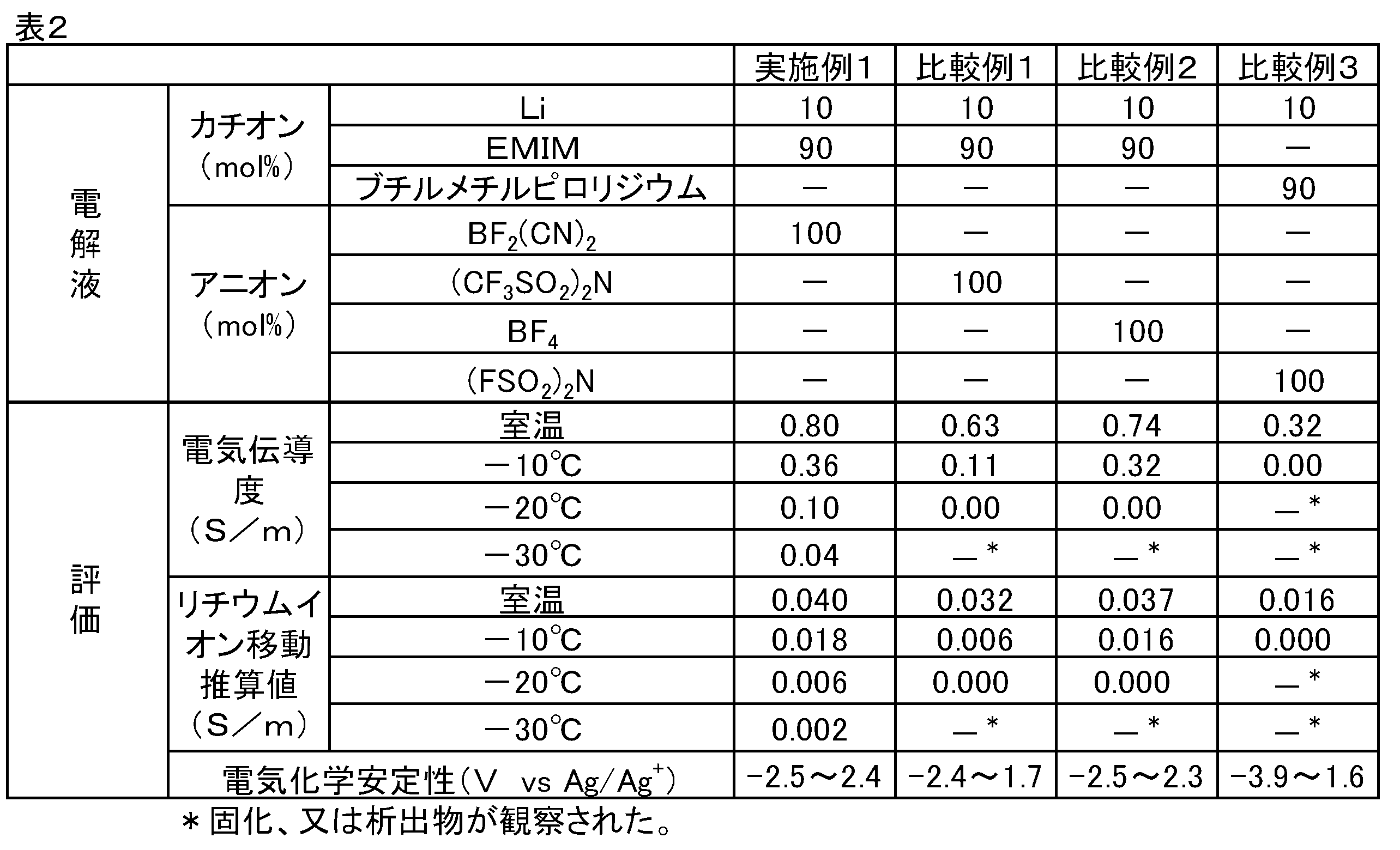
表2から分かるとおり、本発明の非水電解液は既知のイオン液体よりも電気伝導度が高く、特に低温での使用に好適である。また電気化学安定性も広く、リチウム電池、リチウムイオン電池およびリチウムイオンキャパシタ等の蓄電デバイス用の電解液として好適である。
[実施例2~5、比較例4および5]
EMIM塩化物8.04gとジシアノジフルオロボレートリチウム塩11.4gとをそれぞれイオン交換水15mlに溶解した。上記で作製したEMIM塩化物水溶液をフラスコに入れ、ジシアノジフルオロボレートリチウム水溶液を滴下した。滴下後、溶液は二層に分離した。この中に塩化メチレン7mlを加え、塩化メチレン層を分離した。この操作を三回行い、分離した塩化メチレン層にイオン交換水20mlを加えよく攪拌した後に静置し塩化メチレン層を分離した。この操作を水層に濁りが出なくなるまで最大5回繰り返した。その後、塩化メチレン層を減圧乾燥し、13.2gのEMIMジシアノジフルオロボレート(液体)(収率83.4%)を得た。
EMIM塩化物8.04gとジシアノジフルオロボレートリチウム塩11.4gとをそれぞれイオン交換水15mlに溶解した。上記で作製したEMIM塩化物水溶液をフラスコに入れ、ジシアノジフルオロボレートリチウム水溶液を滴下した。滴下後、溶液は二層に分離した。この中に塩化メチレン7mlを加え、塩化メチレン層を分離した。この操作を三回行い、分離した塩化メチレン層にイオン交換水20mlを加えよく攪拌した後に静置し塩化メチレン層を分離した。この操作を水層に濁りが出なくなるまで最大5回繰り返した。その後、塩化メチレン層を減圧乾燥し、13.2gのEMIMジシアノジフルオロボレート(液体)(収率83.4%)を得た。
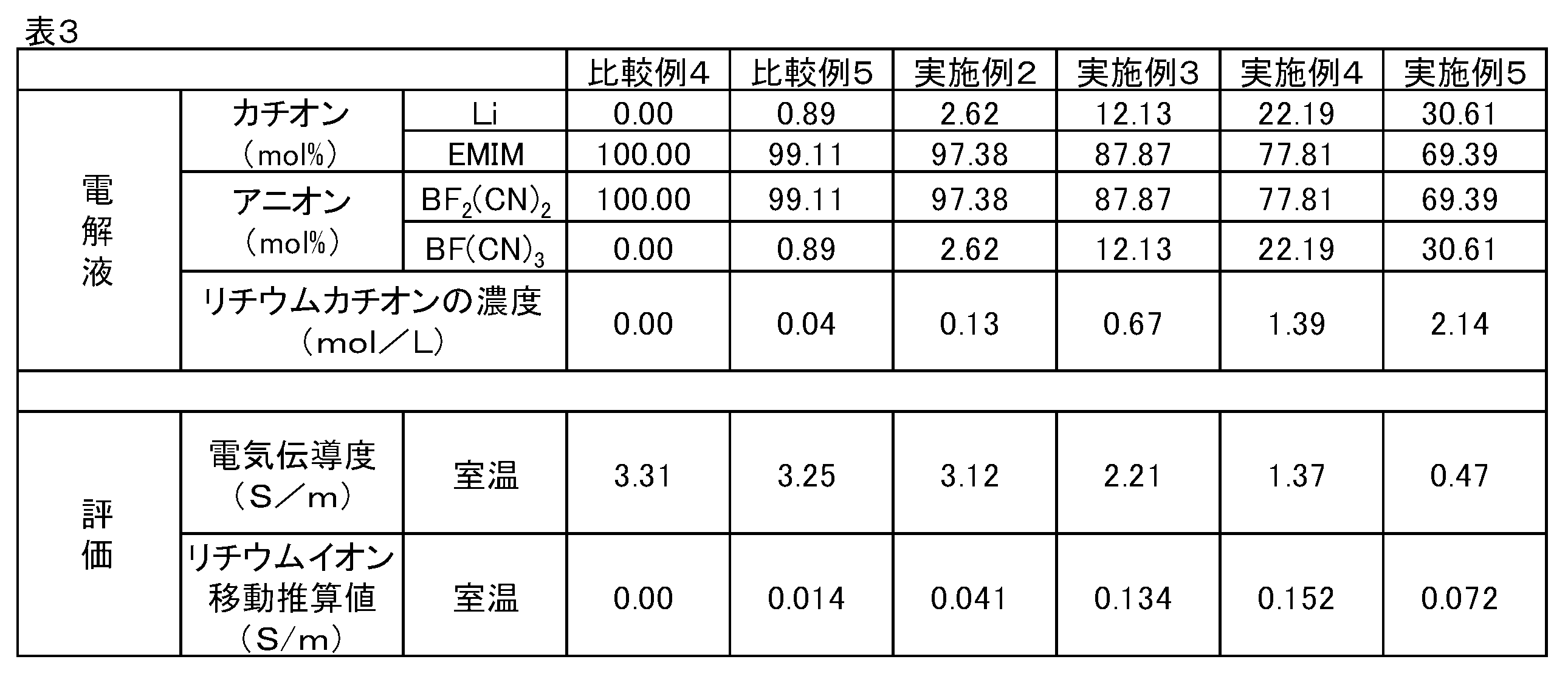
この液体を80℃で、24時間真空乾燥した後、10ml採取して、トリシアノフルオロボレートリチウム塩をリチウムカチオンの割合が変化するように加え溶解させた。比較例4(リチウムカチオンの割合0.00モル%)、比較例5(リチウムカチオンの割合0.79モル%)、実施例2(リチウムカチオンの割合2.88モル%)、実施例3(リチウムカチオンの割合13.23モル%)、実施例4(リチウムカチオンの割合24.51モル%)、実施例5(リチウムカチオンの割合33.64モル%)として、室温(23℃)の電気伝導度を測定し、リチウムカチオン移動度推算値を求めた。結果を表3に示した。
[実施例6~9、比較例6および7]
EMIM塩化物8.04gを19.4gとし、ジシアノジフルオロボレートリチウム塩11.4gの代わりにトリシアノフルオロボレートリチウム塩12.5gとした以外は、実施例2と同様の操作を行い、23.7gのEMIMトリシアノフルオロボレート(液体)(収率87.3%)を得た。
EMIM塩化物8.04gを19.4gとし、ジシアノジフルオロボレートリチウム塩11.4gの代わりにトリシアノフルオロボレートリチウム塩12.5gとした以外は、実施例2と同様の操作を行い、23.7gのEMIMトリシアノフルオロボレート(液体)(収率87.3%)を得た。
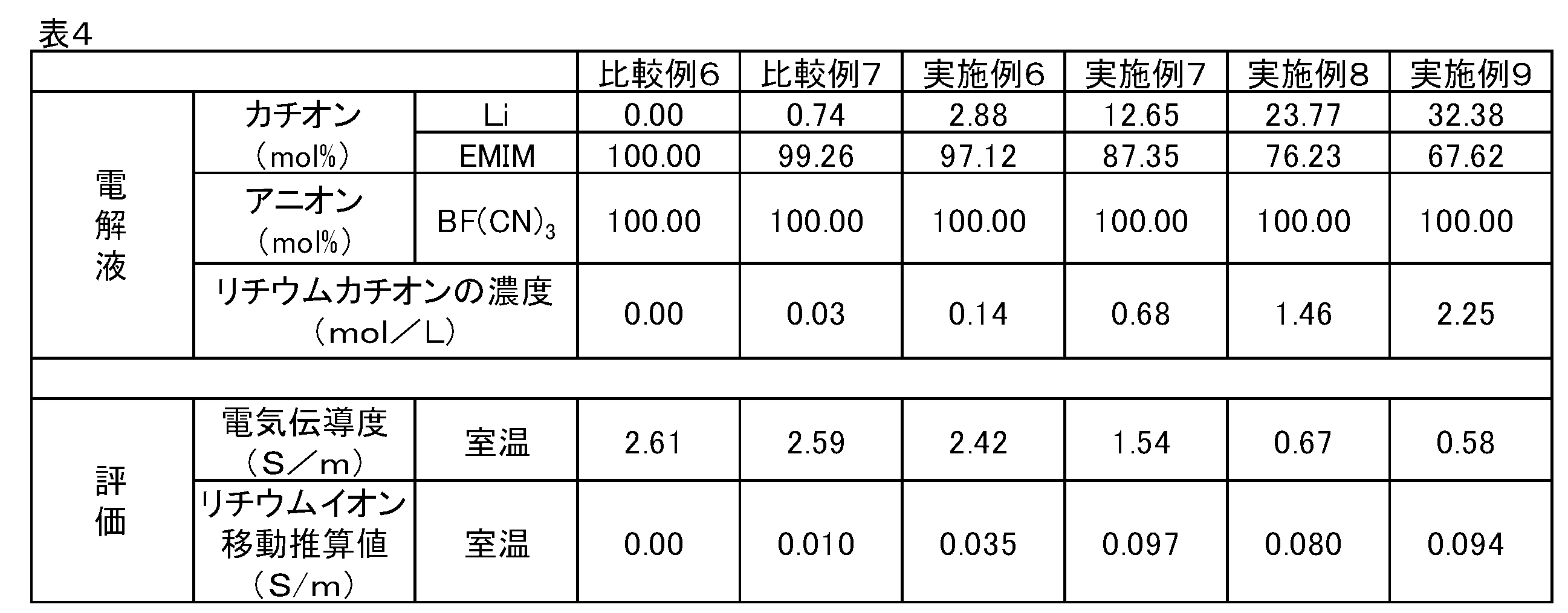
この液体を140℃で、24時間真空乾燥した後、10ml採取して、トリシアノフルオロボレートリチウム塩をリチウムカチオンの割合が変化するように加え溶解させた。比較例6(リチウムカチオンの割合0.00モル%)、比較例7(リチウムカチオンの割合0.74モル%)、実施例6(リチウムカチオンの割合2.88モル%)、実施例7(リチウムカチオンの割合12.65モル%)、実施例8(リチウムカチオンの割合23.77モル%)、実施例9(リチウムカチオンの割合32.38モル%)として、室温(23℃)の電気伝導度を測定し、リチウムカチオン移動度推算値を求めた。結果を表4に示した。
[実施例10~実施例13、比較例8および9]
実施例6等で製造したEMIMトリシアノフルオロボレートを10ml採取して、ジシアノジフルオロボレートリチウム塩をリチウムカチオンの割合が変化するように加え溶解させた。比較例8(リチウムカチオンの割合0.00モル%)、比較例9(リチウムカチオンの割合0.79モル%)、実施例10(リチウムカチオンの割合2.88モル%)、実施例11(リチウムカチオンの割合13.23モル%)、実施例12(リチウムカチオンの割合24.52モル%)、実施例13(リチウムカチオンの割合33.64モル%)として、室温(23℃)の電気伝導度を測定し、リチウムカチオン移動度推算値を求めた。結果を表5に示した。
実施例6等で製造したEMIMトリシアノフルオロボレートを10ml採取して、ジシアノジフルオロボレートリチウム塩をリチウムカチオンの割合が変化するように加え溶解させた。比較例8(リチウムカチオンの割合0.00モル%)、比較例9(リチウムカチオンの割合0.79モル%)、実施例10(リチウムカチオンの割合2.88モル%)、実施例11(リチウムカチオンの割合13.23モル%)、実施例12(リチウムカチオンの割合24.52モル%)、実施例13(リチウムカチオンの割合33.64モル%)として、室温(23℃)の電気伝導度を測定し、リチウムカチオン移動度推算値を求めた。結果を表5に示した。

[実施例14~18、比較例10および11]
EMIM塩化物8.04gの代わりにジエチルメチルメトキシエチルアンモニウム(以下「DEME」とする場合もある)臭化物22.5gを使用し、また、ジシアノジフルオロボレートリチウム塩11.4gの代わりにトリシアノフルオロボレートリチウム塩11.98gを使用した以外は、実施例3等と同様の操作を行い、23.9gのDEME・トリシアノフルオロボレート(液体)(収率95.2%)を得た。
EMIM塩化物8.04gの代わりにジエチルメチルメトキシエチルアンモニウム(以下「DEME」とする場合もある)臭化物22.5gを使用し、また、ジシアノジフルオロボレートリチウム塩11.4gの代わりにトリシアノフルオロボレートリチウム塩11.98gを使用した以外は、実施例3等と同様の操作を行い、23.9gのDEME・トリシアノフルオロボレート(液体)(収率95.2%)を得た。
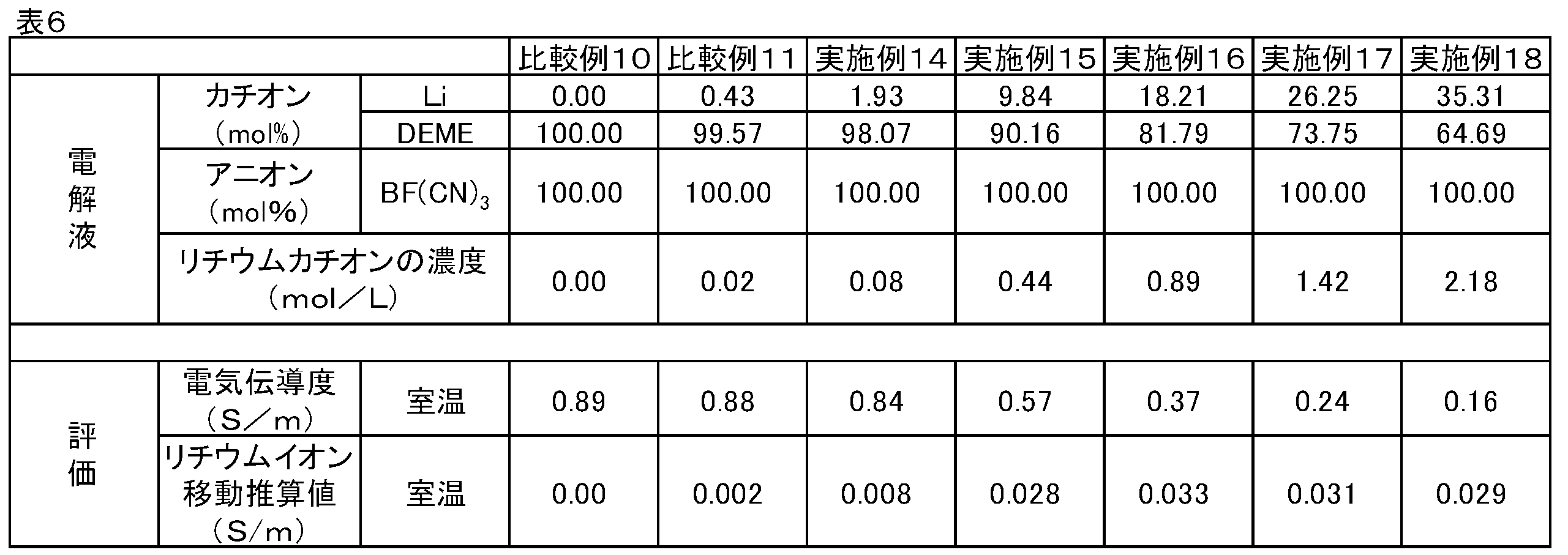
この液体を80℃で、24時間真空乾燥した後、10ml採取して、トリシアノフルオロボレートリチウム塩をリチウムカチオンの割合が変化するように加え溶解させた。比較例10(リチウムカチオンの割合0.00モル%)、比較例11(リチウムカチオンの割合0.43モル%)、実施例14(リチウムカチオンの割合1.93モル%)、実施例15(リチウムカチオンの割合9.84モル%)、実施例16(リチウムカチオンの割合18.21モル%)、実施例17(リチウムカチオンの割合26.25モル%、実施例18(リチウムカチオンの割合35.31モル%))として、室温(23℃)の電気伝導度を測定し、リチウムカチオン移動度推算値を求めた。結果を表6に示した。
〔3.電池性能評価〕
[実施例19]
実施例6等で製造した乾燥後のEMIMトリシアノフルオロボレートを15ml採取し、その中に1.84gのトリシアノフルオロボレートリチウム塩を溶解した。さらに全体で20mlとなるようにEMIMトリシアノフルオロボレートを加え、カチオン中のリチウムカチオンの割合が14.5モル%、アニオン中のジシアノフルオロボレートアニオンの割合が100モル%の非水電解液を調整した。
[実施例19]
実施例6等で製造した乾燥後のEMIMトリシアノフルオロボレートを15ml採取し、その中に1.84gのトリシアノフルオロボレートリチウム塩を溶解した。さらに全体で20mlとなるようにEMIMトリシアノフルオロボレートを加え、カチオン中のリチウムカチオンの割合が14.5モル%、アニオン中のジシアノフルオロボレートアニオンの割合が100モル%の非水電解液を調整した。
正極は、活物質としてLiNi1/3Co1/3Mn1/3O2 93質量部、導電材としてアセチレンブラック4質量部、および、バインダーとしてポリビニリデンフルオライド3質量部をスラリー状にし、集電箔にアプリケーターで塗工し、120℃で10分乾燥後プレスして作製した。
負極は、活物質としてLTO(Li4Ti5O12)82質量部、導電材としてアセチレンブラック8質量部、および、バインダーとしてポリビニリデンフルオライド10質量部を用い、正極と同じ工程で作製した。
セパレータは、ポリエチレン製微多孔膜(厚さ20μm、気孔率40%)を用いた。
上記で作製した正極と負極とを14×20mm2に打ち抜き、170℃にて10時間それぞれ乾燥した後、セパレータを介して対向させアルミニウム製のラミネート内に挿入し前記電解液を注液、減圧含浸後、真空シールして電池性能評価用単層ラミネートセル(電池)を作製した。
前記(3)充電容量および放電容量および(4)電解液抵抗成分に記載した方法により測定した充放電特性の測定結果を図2および表7に示した。なお、室温は23℃である。
[参考例1]
実施例19において、EMIMジシアノジフルオロボレートの代わりに電池用グレードのEMIM・(FSO2)2Nを用い、また、1.72gのジシアノジフルオロボレートリチウム塩の代わりに2.99gのLi・(FSO2)2N塩を用いた以外同様にして、カチオン中のリチウムカチオンの割合が14.5モル%、アニオン中の(FSO2)2Nアニオンの割合が100モル%の非水電解液を調整した以外は、実施例19と同様の方法でセル(電池)を作製した。
実施例19において、EMIMジシアノジフルオロボレートの代わりに電池用グレードのEMIM・(FSO2)2Nを用い、また、1.72gのジシアノジフルオロボレートリチウム塩の代わりに2.99gのLi・(FSO2)2N塩を用いた以外同様にして、カチオン中のリチウムカチオンの割合が14.5モル%、アニオン中の(FSO2)2Nアニオンの割合が100モル%の非水電解液を調整した以外は、実施例19と同様の方法でセル(電池)を作製した。
実施例19と同様に充放電特性の測定結果を図3および表7に示した。
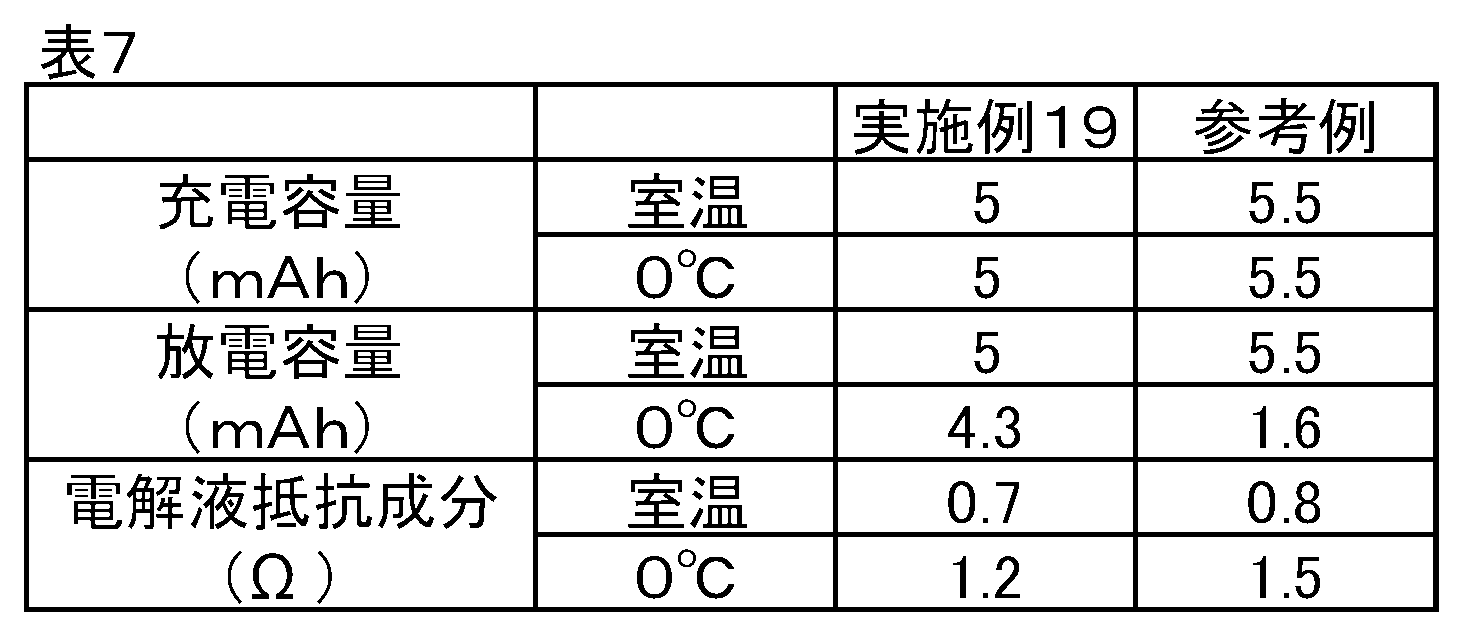
本発明の非水電解液を用いたリチウムイオン電池は、公知の電解液である参考例1で作製した電池と比較して、充放電容量はほぼ同等であり、電解液の抵抗が室温および0℃ともに低く、よりリチウムイオンを伝導できた。また、本発明の非水電解液を用いたリチウムイオン電池は、室温での放電容量からの0℃での放電容量の低下率は14%であり、参考例1で作製した電池の低下率である73%を大きく抑えることができ、より低温での放電特性に優れていることが分かる。
Claims (8)
- イオン性物質からなる非水電解液であって、
前記イオン性物質のカチオンが、リチウムカチオン1~60モル%と、有機オニウムカチオンとからなり
(ただし、リチウムカチオンと有機オニウムカチオンとの合計は100モル%である)、
アニオンが、前記イオン性物質に含まれるアニオン100モル%中、30モル%以上が下記式(I)
BFa(CN)4-a - (I)
(式(I)中、aは1~3の整数である)
で示されるシアノフルオロボレートアニオンからなる非水電解液。 - 前記有機オニウムカチオンが、有機アンモニウムカチオンおよび芳香族ヘテロ環化合物カチオンから選ばれる1種以上のカチオンである請求項1に記載の非水電解液。
- 前記有機オニウムカチオンが、1-エチル-3-メチルイミダゾリウムカチオンおよびジエチルメチルメトキシエチルアンモニウムカチオンから選ばれる1種以上のカチオンである請求項1または2に記載の非水電解液。
- 前記イオン性物質に含まれるアニオンの100モル%が前記式(I)で示されるシアノフルオロボレートアニオンである請求項1~3のいずれか1項に記載の非水電解液。
- 蓄電デバイスに用いられることを特徴とする請求項1~4のいずれか1項に記載の非水電解液。
- リチウム電池、リチウムイオン電池またはリチウムイオンキャパシタに用いられることを特徴とする請求項1~4のいずれか1項に記載の非水電解液。
- 正極、負極および請求項1~4のいずれか1項に記載の非水電解液を有することを特徴とする蓄電デバイス。
- リチウム電池、リチウムイオン電池またはリチウムイオンキャパシタであることを特徴とする請求項7に記載の蓄電デバイス。
Applications Claiming Priority (2)
| Application Number | Priority Date | Filing Date | Title |
|---|---|---|---|
| JP2015-000815 | 2015-01-06 | ||
| JP2015000815A JP2018028966A (ja) | 2015-01-06 | 2015-01-06 | 非水系電解液およびそれを用いた蓄電デバイス |
Publications (1)
| Publication Number | Publication Date |
|---|---|
| WO2016111151A1 true WO2016111151A1 (ja) | 2016-07-14 |
Family
ID=56355851
Family Applications (1)
| Application Number | Title | Priority Date | Filing Date |
|---|---|---|---|
| PCT/JP2015/085636 Ceased WO2016111151A1 (ja) | 2015-01-06 | 2015-12-21 | 非水電解液およびそれを用いた蓄電デバイス |
Country Status (3)
| Country | Link |
|---|---|
| JP (1) | JP2018028966A (ja) |
| TW (1) | TW201631833A (ja) |
| WO (1) | WO2016111151A1 (ja) |
Cited By (2)
| Publication number | Priority date | Publication date | Assignee | Title |
|---|---|---|---|---|
| JPWO2018020669A1 (ja) * | 2016-07-29 | 2019-02-28 | 株式会社東芝 | 非水電解質電池及び電池パック |
| WO2021176920A1 (ja) * | 2020-03-02 | 2021-09-10 | 日清紡ホールディングス株式会社 | 蓄電デバイス用電解液およびイオン液体 |
Families Citing this family (4)
| Publication number | Priority date | Publication date | Assignee | Title |
|---|---|---|---|---|
| JP7750231B2 (ja) * | 2020-03-09 | 2025-10-07 | 日本ケミコン株式会社 | 固体電解質、蓄電デバイス及び固体電解質の製造方法 |
| US20250140936A1 (en) * | 2022-03-31 | 2025-05-01 | Vehicle Energy Japan Inc. | Lithium-Ion Secondary Battery |
| CN116470144B (zh) * | 2023-03-29 | 2024-05-14 | 中国科学院青岛生物能源与过程研究所 | 一种碱金属电池使用的电解质及其制备和应用 |
| WO2026163607A1 (ja) * | 2025-01-29 | 2026-08-06 | パナソニックIpマネジメント株式会社 | 蓄電装置および電極活物質 |
Citations (5)
| Publication number | Priority date | Publication date | Assignee | Title |
|---|---|---|---|---|
| JP2004175667A (ja) * | 2002-11-22 | 2004-06-24 | Tokuyama Corp | オニウム塩 |
| JP2009170431A (ja) * | 2009-04-28 | 2009-07-30 | Gs Yuasa Corporation | 非水電解質電池 |
| JP2012028311A (ja) * | 2010-06-22 | 2012-02-09 | Nippon Synthetic Chem Ind Co Ltd:The | 電解質材料、リチウム二次電池用電解質、及び、それを用いたリチウム二次電池、並びに新規なリチウム塩 |
| JP2014529895A (ja) * | 2011-08-25 | 2014-11-13 | メルク パテント ゲゼルシャフト ミット ベシュレンクテル ハフツングMerck Patent Gesellschaft mit beschraenkter Haftung | 色素増感太陽電池のための添加剤 |
| JP2015118745A (ja) * | 2013-12-16 | 2015-06-25 | 株式会社日本触媒 | 非水電解液及びこれを含むリチウムイオン二次電池 |
-
2015
- 2015-01-06 JP JP2015000815A patent/JP2018028966A/ja active Pending
- 2015-12-21 WO PCT/JP2015/085636 patent/WO2016111151A1/ja not_active Ceased
- 2015-12-29 TW TW104144186A patent/TW201631833A/zh unknown
Patent Citations (5)
| Publication number | Priority date | Publication date | Assignee | Title |
|---|---|---|---|---|
| JP2004175667A (ja) * | 2002-11-22 | 2004-06-24 | Tokuyama Corp | オニウム塩 |
| JP2009170431A (ja) * | 2009-04-28 | 2009-07-30 | Gs Yuasa Corporation | 非水電解質電池 |
| JP2012028311A (ja) * | 2010-06-22 | 2012-02-09 | Nippon Synthetic Chem Ind Co Ltd:The | 電解質材料、リチウム二次電池用電解質、及び、それを用いたリチウム二次電池、並びに新規なリチウム塩 |
| JP2014529895A (ja) * | 2011-08-25 | 2014-11-13 | メルク パテント ゲゼルシャフト ミット ベシュレンクテル ハフツングMerck Patent Gesellschaft mit beschraenkter Haftung | 色素増感太陽電池のための添加剤 |
| JP2015118745A (ja) * | 2013-12-16 | 2015-06-25 | 株式会社日本触媒 | 非水電解液及びこれを含むリチウムイオン二次電池 |
Cited By (3)
| Publication number | Priority date | Publication date | Assignee | Title |
|---|---|---|---|---|
| JPWO2018020669A1 (ja) * | 2016-07-29 | 2019-02-28 | 株式会社東芝 | 非水電解質電池及び電池パック |
| WO2021176920A1 (ja) * | 2020-03-02 | 2021-09-10 | 日清紡ホールディングス株式会社 | 蓄電デバイス用電解液およびイオン液体 |
| JP2021141101A (ja) * | 2020-03-02 | 2021-09-16 | 日清紡ホールディングス株式会社 | 蓄電デバイス用電解液およびイオン液体 |
Also Published As
| Publication number | Publication date |
|---|---|
| TW201631833A (zh) | 2016-09-01 |
| JP2018028966A (ja) | 2018-02-22 |
Similar Documents
| Publication | Publication Date | Title |
|---|---|---|
| Yang et al. | An aqueous zinc‐ion battery working at− 50° C enabled by low‐concentration perchlorate‐based chaotropic salt electrolyte | |
| Chagas et al. | Ionic liquid-based electrolytes for sodium-ion batteries: tuning properties to enhance the electrochemical performance of manganese-based layered oxide cathode | |
| Balo et al. | Flexible gel polymer electrolyte based on ionic liquid EMIMTFSI for rechargeable battery application | |
| Li et al. | Synthesis, crystal structure, and electrochemical properties of a simple magnesium electrolyte for magnesium/sulfur batteries | |
| Guerfi et al. | Improved electrolytes for Li-ion batteries: Mixtures of ionic liquid and organic electrolyte with enhanced safety and electrochemical performance | |
| Morales-Ugarte et al. | EIS and XPS investigation on SEI layer formation during first discharge on graphite electrode with a vinylene carbonate doped imidazolium based ionic liquid electrolyte | |
| CA2422106C (en) | Additive for non-aqueous liquid electrolyte, non-aqueous liquid electrolyte secondary cell and non-aqueous liquid electrolyte electric double layer capacitor | |
| Appetecchi et al. | Ionic liquid-based electrolytes for high energy, safer lithium batteries | |
| Fan et al. | Hexafluorophosphate anion intercalation into graphite electrode from methyl propionate | |
| JP5001508B2 (ja) | 非水電解液二次電池、及び非水電解液電気二重層キャパシタ | |
| JP7639861B2 (ja) | リチウムイオンキャパシタ | |
| JP5001507B2 (ja) | 非水電解液添加剤、非水電解液二次電池及び非水電解液電気二重層キャパシタ | |
| Safa et al. | Capacity fading mechanism in lithium-sulfur battery using poly (ionic liquid) gel electrolyte | |
| CN107565158A (zh) | 钠离子电池用电解液、制备方法及包含该钠离子电池用电解液的钠离子电池 | |
| JP6818723B2 (ja) | 電気化学デバイス用電解液および電気化学デバイス | |
| CN107925055A (zh) | 电化电池 | |
| JP4728647B2 (ja) | 非水電解液を含む電気二重層コンデンサもしくは二次電池 | |
| KR20170057397A (ko) | 비수전해질 마그네슘계 이차 전지 | |
| TW201631833A (zh) | 非水電解液及使用該非水電解液的蓄電裝置 | |
| CN107452511B (zh) | 锂离子电容器 | |
| Yu et al. | Advances in Low‐Temperature Dual‐Ion Batteries | |
| JP2017004638A (ja) | 電解質塩、該電解質塩を含む非水電解液、及びそれを用いた蓄電デバイス | |
| CN106887636A (zh) | 基于导电聚合物正极的铝离子电池及其制备方法 | |
| WO2023155553A1 (zh) | 镁电池电解液,其制备方法及镁电池 | |
| CN105027348A (zh) | 钠熔融盐电池用正极活性材料、钠熔融盐电池用正极和钠熔融盐电池 |
Legal Events
| Date | Code | Title | Description |
|---|---|---|---|
| 121 | Ep: the epo has been informed by wipo that ep was designated in this application |
Ref document number: 15877024 Country of ref document: EP Kind code of ref document: A1 |
|
| NENP | Non-entry into the national phase |
Ref country code: DE |
|
| NENP | Non-entry into the national phase |
Ref country code: JP |
|
| 122 | Ep: pct application non-entry in european phase |
Ref document number: 15877024 Country of ref document: EP Kind code of ref document: A1 |