WO2015146128A1 - 近距離無線通信装置及び登録管理プログラム - Google Patents
近距離無線通信装置及び登録管理プログラム Download PDFInfo
- Publication number
- WO2015146128A1 WO2015146128A1 PCT/JP2015/001619 JP2015001619W WO2015146128A1 WO 2015146128 A1 WO2015146128 A1 WO 2015146128A1 JP 2015001619 W JP2015001619 W JP 2015001619W WO 2015146128 A1 WO2015146128 A1 WO 2015146128A1
- Authority
- WO
- WIPO (PCT)
- Prior art keywords
- range wireless
- wireless communication
- short
- portable terminal
- unit
- Prior art date
- Legal status (The legal status is an assumption and is not a legal conclusion. Google has not performed a legal analysis and makes no representation as to the accuracy of the status listed.)
- Ceased
Links
Images



Classifications
-
- H—ELECTRICITY
- H04—ELECTRIC COMMUNICATION TECHNIQUE
- H04W—WIRELESS COMMUNICATION NETWORKS
- H04W4/00—Services specially adapted for wireless communication networks; Facilities therefor
- H04W4/80—Services using short range communication, e.g. near-field communication [NFC], radio-frequency identification [RFID] or low energy communication
-
- H—ELECTRICITY
- H04—ELECTRIC COMMUNICATION TECHNIQUE
- H04W—WIRELESS COMMUNICATION NETWORKS
- H04W4/00—Services specially adapted for wireless communication networks; Facilities therefor
- H04W4/30—Services specially adapted for particular environments, situations or purposes
-
- H—ELECTRICITY
- H04—ELECTRIC COMMUNICATION TECHNIQUE
- H04W—WIRELESS COMMUNICATION NETWORKS
- H04W4/00—Services specially adapted for wireless communication networks; Facilities therefor
- H04W4/30—Services specially adapted for particular environments, situations or purposes
- H04W4/40—Services specially adapted for particular environments, situations or purposes for vehicles, e.g. vehicle-to-pedestrians [V2P]
- H04W4/48—Services specially adapted for particular environments, situations or purposes for vehicles, e.g. vehicle-to-pedestrians [V2P] for in-vehicle communication
-
- H—ELECTRICITY
- H04—ELECTRIC COMMUNICATION TECHNIQUE
- H04W—WIRELESS COMMUNICATION NETWORKS
- H04W76/00—Connection management
- H04W76/10—Connection setup
- H04W76/19—Connection re-establishment
-
- H—ELECTRICITY
- H04—ELECTRIC COMMUNICATION TECHNIQUE
- H04W—WIRELESS COMMUNICATION NETWORKS
- H04W76/00—Connection management
- H04W76/30—Connection release
-
- H—ELECTRICITY
- H04—ELECTRIC COMMUNICATION TECHNIQUE
- H04W—WIRELESS COMMUNICATION NETWORKS
- H04W88/00—Devices specially adapted for wireless communication networks, e.g. terminals, base stations or access point devices
- H04W88/02—Terminal devices
- H04W88/06—Terminal devices adapted for operation in multiple networks or having at least two operational modes, e.g. multi-mode terminals
-
- H—ELECTRICITY
- H04—ELECTRIC COMMUNICATION TECHNIQUE
- H04W—WIRELESS COMMUNICATION NETWORKS
- H04W4/00—Services specially adapted for wireless communication networks; Facilities therefor
- H04W4/30—Services specially adapted for particular environments, situations or purposes
- H04W4/40—Services specially adapted for particular environments, situations or purposes for vehicles, e.g. vehicle-to-pedestrians [V2P]
-
- H—ELECTRICITY
- H04—ELECTRIC COMMUNICATION TECHNIQUE
- H04W—WIRELESS COMMUNICATION NETWORKS
- H04W8/00—Network data management
- H04W8/005—Discovery of network devices, e.g. terminals
-
- H—ELECTRICITY
- H04—ELECTRIC COMMUNICATION TECHNIQUE
- H04W—WIRELESS COMMUNICATION NETWORKS
- H04W84/00—Network topologies
- H04W84/18—Self-organising networks, e.g. ad-hoc networks or sensor networks
Definitions
- This disclosure relates to a short-range wireless communication device and a registration management program that perform short-range wireless communication while performing non-contact communication with a mobile terminal.
- NFC Near Field Communication
- Bluetooth registered trademark, hereinafter referred to as BT
- BT Bluetooth
- BT Near Field Communication
- a configuration using the NFC BT handover function a configuration is disclosed in which a portable terminal having an NFC communication unit is transferred to a short-range wireless communication device (opposite device, communication device) such as a navigation device having an NFC communication unit. Yes.
- the portable terminal can be registered in the short-range wireless communication device (permit connection of BT communication) by placing the portable terminal on the short-range wireless communication device and establishing NFC communication (see, for example, Patent Document 1).
- a daily user of the short-range wireless communication device is referred to as a host
- a temporary user of the short-range wireless communication device is referred to as a guest. If the guest portable terminal is continuously registered in the short-range wireless communication device, the number of portable terminals registered in the short-range wireless communication device increases. As a result, when a list of registered mobile terminals is displayed, for example, in addition to the guest mobile terminals that currently use the short-range wireless communication device, a guest mobile terminal that does not use the short-range wireless communication device is also displayed. It will be.
- the present disclosure has been made in view of the above-described circumstances, and the purpose thereof is to require troublesome operations by a guest who is a temporary user of a short-range wireless communication device or a host who is a daily user. It is an object of the present invention to provide a short-range wireless communication apparatus and a registration management program that can easily share data stored in a portable terminal and can improve convenience.
- the short-range wireless communication device of an example of the present disclosure includes a non-contact communication unit, a short-range wireless communication unit, a power supply detection unit, and a control unit.
- the non-contact communication unit performs non-contact communication with the mobile terminal.
- the short-range wireless communication unit performs short-range wireless communication with the mobile terminal.
- the power source detection unit detects on / off of the power source.
- the short-range wireless communication unit searches for a registered mobile terminal. If the search fails, the registration of the mobile terminal that failed the search is canceled.
- the registered mobile terminal is searched by the short-range wireless communication unit, and if the search fails, The registration of mobile devices that failed to search was canceled. Accordingly, an increase in the number of registered mobile terminals can be suppressed, and when the registered mobile terminals are displayed as a list, for example, guests who do not use the short-range wireless communication device now (of the short-range wireless communication device) A temporary user's) portable terminal is not displayed in vain. As a result, the guest who is now using the short-range wireless communication device can easily select his / her portable terminal. In addition, it is possible to eliminate the need for the host (a daily user of the short-range wireless communication device) to cancel registration of the portable terminal of the guest who does not use the short-range wireless communication device now.
- connection of short-range wireless communication between the short-range wireless communication unit and the portable terminal is permitted until it is determined that the short-range wireless communication is not connectable. I did it.
- a registration management program includes a non-contact communication unit that performs non-contact communication with a mobile terminal, a short-range wireless communication unit that performs short-range wireless communication with the mobile terminal, and power on / off
- a control unit having a microcomputer, the first procedure, the second procedure, the third procedure, and the fourth procedure.
- This is a registration management program for executing.
- the first procedure when it is determined that non-contact communication is established between the mobile terminal and the non-contact communication unit, the mobile terminal for which the non-contact communication is established is registered.
- the second procedure connection of short-range wireless communication between the short-range wireless communication unit and the portable terminal is permitted until it is determined that the short-range wireless communication cannot be connected.
- the short-range wireless communication unit searches for a registered mobile terminal. Let me do it.
- the search by the third procedure fails, the registration of the mobile terminal that has failed in the search is canceled.
- the registration management program may be stored in a non-temporary storage medium.
- the short-range wireless communication device of another example of the present disclosure includes a non-contact communication unit, a short-range wireless communication unit, a power supply detection unit, and a control unit.
- the non-contact communication unit performs non-contact communication with the mobile terminal.
- the short-range wireless communication unit performs short-range wireless communication with the mobile terminal.
- the power source detection unit detects on / off of the power source.
- the control unit determines that the non-contact communication is established between the portable terminal and the non-contact communication unit, the control unit registers the portable terminal for which the non-contact communication is established, and between the short-range wireless communication unit and the portable terminal. Is permitted until it is determined that the short-range wireless communication cannot be connected.
- the power detection unit detects that the power is switched from power on to power off, the control unit cancels registration of the registered mobile terminal.
- the registration of the registered mobile terminal was canceled when the power was switched from on to off.
- an increase in the number of registered mobile terminals can be suppressed, and when displaying a list of registered mobile terminals, for example, guest mobile terminals that do not use the short-range wireless communication device are displayed wastefully. There is no longer to do.
- the guest who is now using the short-range wireless communication device can easily select his / her portable terminal.
- connection of short-range wireless communication between the short-range wireless communication unit and the portable terminal is permitted until it is determined that the short-range wireless communication is not connectable. I did it.
- a registration management program includes a non-contact communication unit that performs non-contact communication with a mobile terminal, a short-range wireless communication unit that performs short-range wireless communication with the mobile terminal, A control unit having a microcomputer, which is provided in a short-range wireless communication device having an on / off detection power supply unit, executes a first procedure, a second procedure, and a third procedure.
- Registration management program In the first procedure, when it is determined that non-contact communication is established between the mobile terminal and the non-contact communication unit, the mobile terminal for which the non-contact communication is established is registered. In the second procedure, connection of short-range wireless communication between the short-range wireless communication unit and the portable terminal is permitted until it is determined that the short-range wireless communication cannot be connected. In the third procedure, when the power detection unit detects that the power has been switched from on to off, the registration of the registered mobile terminal is cancelled.
- the registration management program may be stored in a non-temporary storage medium.
- FIG. 1 is a functional block diagram showing the first embodiment.
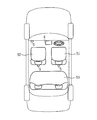
- FIG. 2 is a diagram illustrating an arrangement mode of the central device and the peripheral devices.
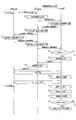
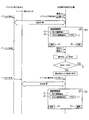
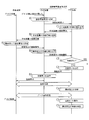
- FIG. 3 is a first sequence diagram.
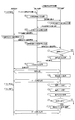
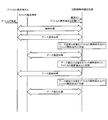
- FIG. 4 is a second sequence diagram.
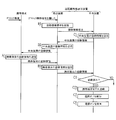
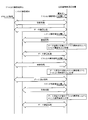
- FIG. 5 is a third sequence diagram.
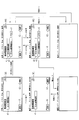
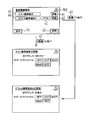
- FIG. 6 is a diagram illustrating an example of transition of a screen for managing registration information.
- FIG. 7 is a sequence diagram showing a comparison with the comparative example.
- FIG. 8 is a sequence diagram of the first comparative example.
- FIG. 9 is another example of a sequence diagram showing a comparison with the comparative example.
- FIG. 10 is a sequence diagram of the second comparative example.
- FIG. 11A is a diagram illustrating an example of profile connection.
- FIG. 11B is a diagram illustrating another example of profile connection.
- FIG. 12 is a diagram illustrating another example of transition of a screen for managing registration information. It is a sequence diagram which shows 2nd Embodiment.
- the short-range wireless communication system 1 for a vehicle includes a portable terminal 2 that can be brought into a passenger compartment by a user and a short-range wireless communication device 3 mounted on the vehicle.
- the short-range wireless communication device 3 includes a central device 4 (first device) and a peripheral device 5 (second device).
- FIG. 1 shows a mode in which one peripheral device 5 is connected to one central device 4, a plurality of (two or more) peripheral devices 5 are connected to one central device 4. An aspect may be sufficient.
- the central device 4 also has a function for specifying the current position of the vehicle, a function for map-matching the current position of the vehicle to road data, a function for setting a destination, and a function for searching for a route from the current position of the vehicle to the destination.
- the navigation device may have a known navigation processing function.
- the portable terminal 2 is a multifunctional portable information terminal such as a smart phone.
- the portable terminal 2 includes a control unit 2a, a short-range wireless communication unit 2b, a non-contact communication unit 2c, a wide-area communication unit 2d, a display unit 2e, an operation reception unit 2f, an audio processing unit 2g, and a storage unit 2h etc.
- the control unit 2a is mainly configured by a microcomputer having a CPU (Central Processing Unit), a ROM (Read Only Memory), a RAM (Random Access Memory), and the like.
- the control unit 2a controls the overall operation of the mobile terminal 2, such as short-range wireless communication, non-contact communication, and registration information storage, by the CPU executing a control program stored in the ROM.
- the near field communication unit 2b performs near field communication with the near field communication unit 4b of the central device 4 described later.
- the near field communication unit 2b performs Bluetooth (registered trademark, hereinafter referred to as BT) communication as the near field communication.
- the non-contact communication unit 2 c performs non-contact communication with a non-contact communication unit 4 c of the central device 4 described later and a non-contact communication unit 5 b of the peripheral device 5.
- the non-contact communication unit 2c performs NFC (Near field communication) communication as non-contact communication.
- the wide area communication unit 2d performs wide area communication with the base station via the mobile phone network.
- the operation reception unit 2f includes a mechanical button (home button or the like) disposed on the housing and a touch button formed on the display unit 2e.
- the voice processing unit 2g transmits a voice input by a microphone (not shown) as a transmission voice, or receives a voice output from a speaker (not shown) as a reception voice.
- the storage unit 2h has a storage area capable of storing registration information of the portable terminal 2, registration information of the central device 4, and the like.
- the registration information of the mobile terminal 2 is the BT address and security information (public key, random number) of the mobile terminal 2.
- the registration information of the central device 4 is the BT address and security information (public key, random number) of the central device 4.
- the storage unit 2h has a storage area capable of storing various data such as music data.
- the central device 4 is installed in the vicinity of the driver's seat (indicated by S1 in FIG. 2) (for example, next to the instrument panel). That is, the central device 4 is installed at a site where the portable terminal 2 can be easily held by the central device 4 while sitting in the driver's seat when the driver gets on.
- the case which shows the communication area vicinity of non-contact communication is attached
- FIG. The driver can successfully perform non-contact communication between the portable terminal 2 and the central apparatus 4 by placing the portable terminal 2 on the central apparatus 4 with the mark as a target.
- the central device 4 includes a control unit 4a (control unit), a short-range wireless communication unit 4b (short-range wireless communication unit), a non-contact communication unit 4c (non-contact communication unit), a display unit 4d, and an operation reception unit. 4e (first operation reception unit, second operation reception unit), storage unit 4f, power supply detection unit 4g (power supply detection unit), communication unit 4h, and the like.
- the control unit 4a is configured mainly with a microcomputer having a CPU, a ROM, a RAM, and the like.
- the control unit 4a performs overall operations such as short-range wireless communication, non-contact communication, registration information storage, and the like of the central device 4 by the CPU executing a control program (including a registration management program) stored in the ROM. Control.
- the near field communication unit 4 b performs near field communication with the near field communication unit 2 b of the mobile terminal 2.
- the non-contact communication unit 4 c performs non-contact communication with the non-contact communication unit 2 c of the mobile terminal 2 when the mobile terminal 2 is trapped by the central device 4 and exists in the communication area for non-contact communication.
- the display unit 4d displays various screens such as a home screen and a menu screen in accordance with the input display command.
- the operation reception unit 4e includes a mechanical button (power source or the like) disposed on the housing and a touch button formed on the display unit 4d. When the user presses the button, the user presses the button.
- the operation notification shown is output to the control unit 4a.
- the storage unit 4f has a storage area capable of storing registration information of the central device 4, registration information of the mobile terminal 2, and the like.
- the power detection unit 4g inputs an ACC signal indicating ON / OFF of an ACC (accessory) switch of the vehicle.
- the central unit 4 is switched from the power-off (stop state) to the power-on (start-up state). Switch (start central device 4).
- the control unit 4a detects the switching of the ACC switch from on to off by the ACC signal input from the ACC switch to the power detection unit 4g, the control unit 4a switches the central device 4 from power on to power off (the central device 4 is switched off). Stop).
- the power off is a state in which, for example, short-range wireless communication is not established or an operation from a user is not accepted, and is a state in which operation is performed with lower operating power (low power consumption) than usual.
- the power on is, for example, a state in which short-range wireless communication is established or an operation from a user is accepted, and is a state in which operation is performed with normal operating power.
- the communication unit 4h performs data communication with a communication unit 5c of the peripheral device 5 described later. In this case, the communication unit 4h may perform data communication with the communication unit 5c by either wired communication or wireless communication.
- the peripheral device 5 is located in the vicinity of the passenger seat (S2 in FIG. 2) (for example, near the passenger seat door side of the dashboard) or in the vicinity of the rear seat (S3 in FIG. 2). (For example, the back of the driver's seat or passenger seat).
- the peripheral device 5 is installed at a site where the portable terminal 2 can be easily held by the peripheral device 5 while sitting as it is when the passenger gets on and sits in the passenger seat or the rear seat. ing.
- the mark which shows the communication area vicinity of non-contact communication is also attached
- the peripheral device 5 includes a control unit 5a, a non-contact communication unit 5b (non-contact communication means), a communication unit 5c, and the like.
- the control unit 5a is mainly configured by a microcomputer having a CPU, a ROM, a RAM, and the like.
- the control unit 5a controls the overall operation of the peripheral device 5, such as non-contact communication, by the CPU executing a control program stored in the ROM.
- the non-contact communication unit 5b performs non-contact communication with the non-contact communication unit 2c of the portable terminal 2 when the portable terminal 2 is trapped by the peripheral device 5 and exists in the non-contact communication area.
- the communication unit 5 c performs data communication with the communication unit 4 h of the central device 4.
- the driver owned vehicle
- the driver is called a host who is a daily user of the short-range wireless communication device 3 (particularly the central device 4), and the passenger is a temporary user of the short-range wireless communication device 3.
- guest if there are multiple guests, guest A, guest B,.
- the host gets on and sits in the driver's seat, he / she puts his portable terminal 2 on the central device 4.
- the guest A gets on the passenger seat and wants to share the data stored in his / her mobile terminal 2
- the guest A 2 is placed in the peripheral device 5 close to the passenger seat. I will be ashamed.
- the peripheral device 5 close to the back seat is used for the mobile terminal 2. I will be deceived.
- the control unit 4a determines that the registration information request has been received by the communication unit 4h in the central device 4, the registration information (the BT address and security information of the central device 4) stored in the storage unit 4f is stored. Read. Then, the control unit 4a transmits the read registration information of the central device 4 from the communication unit 4h to the peripheral device 5 (C1). In the peripheral device 5, when the control unit 5a determines that the registration information of the central device 4 is received by the communication unit 5c, the mobile terminal 2 receives the received registration information of the central device 4 from the non-contact communication unit 5b by non-contact communication. (B2).
- the control unit 2a determines that the registration information of the central device 4 is received by the non-contact communication unit 2c, the registration information of the portable terminal 2 stored in the storage unit 2h (the BT address of the portable terminal 2) And security information). And the control part 2a transmits the registration information of the read portable terminal 2 to the peripheral device 5 by non-contact communication from the non-contact communication part 2c (A1).
- the control unit 5a transmits the received registration information of the portable terminal 2 from the communication unit 5c to the central device 4 ( B3).
- the control unit 4a determines whether or not the received registration information of the mobile terminal 2 has already been stored in the storage unit 4f. It is determined, and it is determined whether or not the portable terminal 2 has already been registered (C2).
- the control unit 4a determines that the received registration information of the mobile terminal 2 has not been stored in the storage unit 4f and determines that the mobile terminal 2 has not been registered (C2: NO)
- the control unit 4a sends a registration request from the communication unit 4h.
- the data is transmitted to the peripheral device 5 (C3).
- the control unit 5a transmits the received registration request from the non-contact communication unit 5b to the mobile terminal 2 by non-contact communication (B4).
- the control unit 2a determines that the registration request is received by the non-contact communication unit 2c, the control unit 2a performs a registration process with the control unit 4a of the central device 4. At this time, when the control unit 2a normally ends the registration process, the control unit 2a stores the registration information of the central device 4 in the storage unit 2h. In the central device 4, when the registration process is normally completed, the control unit 4a registers the portable terminal 2 by storing the registration information of the portable terminal 2 in the storage unit 4f. BT communication connection is permitted (C4, first procedure). That is, at this point, the control unit 4a stores the registration information of the mobile terminal 2 in the storage unit 4f.
- the control unit 4a displays the terminal information of the host portable terminal 2 in addition to the terminal information of the guest portable terminal 2 registered by the registration process this time. It will be.
- the control unit 4a When the control unit 4a permits the connection of the BT communication with the portable terminal 2 in this manner, the control unit 4a connects the BT line between the short-range wireless communication unit 4b and the short-range wireless communication unit 2b. Then, when the BT line is connected, the control unit 4a connects a predetermined profile on the BT line and performs data communication processing using the predetermined profile. That is, in the mobile terminal 2, when the control unit 2a connects, for example, AVP (Audio / Video Profile, A2DP (Advanced Audio Distribution Profile) and AVRCP (Audio / Video Remote Control Profile)) on the BT line, the control unit 2a is connected to the storage unit 2h.
- AVP Ad Audio Distribution Profile
- A2DP Advanced Audio Distribution Profile
- AVRCP AdVRCP
- the stored music data is read, and the read music data is transferred from the short-range wireless communication unit 2b to the central device 4.
- the control unit 4 a outputs the transferred music data from a speaker (not shown) attached to the central device 4.
- the control unit 4 a In the central device 4, when the control unit 4 a receives an operation instruction for a command such as a reproduction command or a stop command by the operation reception unit 4 e, the control unit 4 a transfers the received command from the short-range wireless communication unit 4 b to the portable terminal 2. .
- the control unit 2 a controls reproduction or stop of music data according to the transferred command.
- the guest gets on and puts the portable terminal 2 on the peripheral device 5
- the guest portable terminal 2 is registered in the central device 4 and the BT communication connection between the portable terminal 2 and the central device 4 is performed. Is allowed.
- the music data stored in the portable terminal 2 is transferred to the central device 4, and the music data is output as audio from a speaker attached to the central device 4. Thereby, the music data preserve
- the control unit 4a when the guest gets off his / her mobile terminal 2 and gets off the mobile terminal 2 is out of the BT communication range of the central device 4 (when the BT communication cannot be connected),
- the BT line connected between the distance wireless communication unit 4b and the short-range wireless communication unit 2b is disconnected. Further, the control unit 4a switches the ACC switch from on to off in order for the host to get off, so that the power detection unit 4g detects the switch from power on to power off (when BT communication cannot be connected).
- C5 In this case as well, the BT line connected between the short-range wireless communication unit 4b and the short-range wireless communication unit 2b is disconnected. That is, the control unit 4a permits connection of BT communication until it is determined that the BT communication cannot be connected (second procedure).
- the control unit 4a is registered at that time.
- a search for the mobile terminal 2 is performed by the short-range wireless communication unit 4b (C7, third procedure). In this case, if the previous guest (when switching from the previous power-on to the power-off immediately before) the guest is carrying the mobile terminal 2 and riding on the mobile terminal 2 of the previous guest. The search will be successful.
- the previous guest has not carried the mobile terminal 2 with his / her own mobile terminal 2 (the previous guest has not boarded or the previous guest has boarded, but his / her mobile terminal 2 has been carried)
- the search for the mobile terminal 2 of the previous guest fails.
- control unit 4a determines that the search for the mobile terminal 2 has failed (not succeeded) (C8: NO)
- the control information of the previous guest mobile terminal 2 stored in the storage unit 4f at that time is stored.
- the control unit 4a cancels the registration of the previous guest mobile terminal 2 so that the terminal of the previous guest mobile terminal 2 is displayed. No information is displayed. That is, if the host portable terminal 2 is registered, the control unit 4a displays only the terminal information of the host portable terminal 2.
- control unit 4a determines that the search for the mobile terminal 2 is successful (C8: YES)
- the control unit 4a continues without canceling the registration of the previous guest mobile terminal 2 (C11).
- the control unit 4a continues without canceling the registration of the previous guest mobile terminal 2, so that the previous guest mobile The terminal 2 is displayed. That is, if the host portable terminal 2 is registered, the control unit 4a displays the terminal information of the previous guest portable terminal 2 in addition to the terminal information of the host portable terminal 2.
- control unit 4a connects the BT line between the short-range wireless communication unit 4b and the short-range wireless communication unit 2b because the registration of the guest mobile terminal 2 is continued.
- a predetermined profile is connected on the line, and data communication processing using the predetermined profile is performed.
- the control unit 4a performs the above-described processing to change the screen for managing the registration information as shown in FIG. That is, for example, when only the host mobile terminal 2 is registered and the guest A mobile terminal 2 (mobile terminal A) is not registered (unregistered), the control unit 4a is configured as the host mobile terminal 2.
- a screen M1 indicating that only is registered is displayed.
- terminal information a1, an add button b1, and a delete button b2 of the host mobile terminal 2 are displayed.
- the control unit 4a switches from the screen M1 to the screen M2, and the host portable terminal 2 and the guest A screen M2 indicating that the mobile terminal 2 of A is registered is displayed.
- the terminal information a1 of the host portable terminal 2 is also displayed, and an icon C1 indicating the guest portable terminal 2 is also displayed.
- an add button b1 and a delete button b2 are displayed.
- the controller 4a continues to display the screen M2 if the power remains on even when the guest A repeatedly gets on and off the vehicle from this state.
- the control unit 4a erases the screen M2 when the guest A is switched from the power-on to the power-off while the passenger A is on the vehicle, and then the screen M2 is displayed when the guest A is switched from the power-off to the power-on while the vehicle is on the vehicle. Redisplay.
- the control unit 4a deletes the screen M2 when the guest A gets his / her portable terminal 2 and gets off and is switched from power-on to power-off. Thereafter, when the control unit 4a is switched from the power-off to the power-on, the guest A is not on board at that time, or the guest A has boarded but does not carry his / her mobile terminal 2 as described above. Thus, it is determined that the search for the portable terminal 2 of the guest A has failed. Then, the control unit 4a displays the screen M1 without displaying the screen M2 by deleting the registration information of the portable terminal 2 of the guest A and canceling the registration of the portable terminal 2 of the guest A. Thereby, the portable terminal 2 of the guest who does not use the short-range wireless communication device 3 now is not displayed.
- the control unit 4 a has the guest A carrying the user's own portable terminal 2 while the host portable terminal 2 is already registered. 2 is registered, the terminal information a1 of the host portable terminal 2 and the terminal information a2 of the guest A portable terminal 2 are displayed on the screen M1 for managing registration information. Thereafter, the control unit 4a switches from power-on to power-off, and further switches from power-off to power-on, so that the guest B, not the guest A, carries his / her portable terminal 2 and gets on the passenger A. If the search for the terminal 2 fails, the registration of the portable terminal 2 of the guest A so far is cancelled.
- the terminal information a3 of the portable terminal 2 of the guest B will be replaced with the terminal information a2 of the portable terminal 2 of the guest A. indicate.
- the mobile terminal 2 of the guest A is not searched as in the present embodiment, and the registration of the mobile terminal 2 of the guest A that has failed in the search is not canceled.
- terminal information terminal information a1, a2,..., A26, a27 in FIG. 8
- a scroll bar d1 of all the mobile terminals 2 registered so far are displayed.
- the guest B manages the registration information. The user can easily select his / her mobile terminal 2 on the screen M3.
- control unit 4a registers the portable terminal 2 of the guest A in the state where the portable terminal 2 of the host has already been registered, as long as the power-on continues,
- the portable terminal 2 to be subjected to data communication is switched without performing the registration process, and the data communication process with the portable terminal 2 of the guest A and the data communication process with the portable terminal 2 of the host are performed. Switch.
- the registration process is performed thereafter.
- the data communication processing is switched. That is, data communication with the portable terminal 2 of the guest A is performed on condition that the host deceives his / her portable terminal 2 as the central device 4 or the guest A deceives his / her portable terminal 2 as the peripheral device 5.
- the processing and data communication processing between the portable terminal 2 of the host are switched.
- the host can easily switch the portable terminal 2 that is the target of data communication. That is, the guest A or the host simply performs, for example, the operation of switching the music data transfer source on the central device 4, and the audio output of the music data stored in the portable terminal 2 of the guest A and the portable terminal 2 of the host A The audio output of the music data being recorded can be switched.
- control unit 4a determines that the registration information of the mobile terminal 2 has been received by the communication unit 4h, and determines that the mobile terminal 2 has already been registered (C2: YES), the registration process has already ended. Since the portable terminal 2 has already been registered, the portable terminal 2 is permanently registered (C21). Thereafter, the control unit 4a detects the switching from the power-on to the power-off by the power detection unit 4g (C5), and further detects the switching from the power-off to the power-on by the power detection unit 4g (C6). ), The short-range wireless communication unit 4b does not search for the portable terminal 2 permanently registered at that time. That is, the control unit 4a excludes the mobile terminal 2 that has been permanently registered from the search target and excludes it from the target to be deregistered.
- the central device 4 registers the mobile terminal 2 when the guest tricks the mobile terminal 2 on the peripheral device 5 only once and non-contact communication is established only once.
- the portable terminal 2 is permanently registered. That is, the guest can select temporary registration or permanent registration by selecting the number of times the portable terminal 2 is held by the peripheral device 5. For example, when the guest selects the portable terminal 2 and then presses the add button b1 (accepts the first operation of the user), the portable terminal 2 selected by the guest may be permanently registered. Further, for example, when the guest selects the portable terminal 2 and then presses the delete button b2 (accepts the user's second operation), the permanent registration of the portable terminal 2 selected by the guest may be canceled. .
- the central apparatus 4 permanently registers the mobile terminal 2 when the host defeats the mobile terminal 2 of the host apparatus 1 only once and the non-contact communication is established only once. That is, the central device 4 permanently registers the guest portable terminal 2 that is deceived by the peripheral device 5 on the condition that it is defeated by the peripheral device 5 twice in succession, and the host deceived by the central device 4. Is permanently registered on the condition that the mobile device 2 is deceived only once by the central device 4. The central device 4 determines whether the device on which the mobile terminal 2 is tricked in this way is the central device 4 or the peripheral device 5, so that the mobile terminal 2 is temporarily held by the establishment of non-contact communication once. Distinction is made between permanent and permanent registration.
- the above description is based on the premise that the guest puts his / her mobile terminal 2 on the peripheral device 5, but when the guest puts his / her mobile terminal 2 on the central device 4, the guest's mobile terminal 2 May also be registered permanently on condition that it is defeated only once by the central device 4.
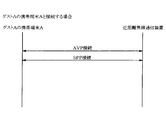
- connection profile may be differentiated between the host mobile terminal 2 and the guest A mobile terminal 2 (depending on the type of the registered mobile terminal 2). Data that permits reception from the portable terminal 2 may be selected). That is, it is assumed that, in addition to AVP, for example, HFP (Hands Free Profile), MAP (Message Access Profile), PBAP (Phone Book Access Profile), and SPP (Serial Port Profile) are used as connection candidates.
- HFP Heands Free Profile
- MAP Message Access Profile
- PBAP Phone Book Access Profile
- SPP Serial Port Profile
- the control unit 4a when connecting the BT line to the host mobile terminal 2, the control unit 4a connects all of these profiles as shown in FIG. 11A.
- the control unit 4a when connecting the BT line to the portable terminal 2 of the guest A, the control unit 4a, as shown in FIG. 11B, handles HFP, MAP, and PBAP that handles data including personal information among these profiles. Only AVP and SPP that do not handle data including personal information are connected. That is, the control unit 4a permits the host portable terminal 2 to receive all data from the host portable terminal 2, but the guest A portable terminal 2 allows the guest A portable terminal 2 to receive all data. The reception of data including personal information from 2 is prohibited and only the reception of data not including personal information is permitted.
- the control unit 4a displays the detail buttons e1 and e2 on the screen M2 indicating that the host portable terminal 2 and the guest A portable terminal 2 are registered, and the user
- the detail button e1 is pressed, a list of profiles that can be used (supported) in the host portable terminal 2 is displayed. That is, the control unit 4a notifies that the usable profiles are HFP, AVP, MAP, PBAP, and SPP if the connected portable terminal 2 is the host portable terminal 2.
- the control unit 4a displays a list of profiles that can be used on the portable terminal 2 of the guest A.
- the control unit 4a notifies that the usable profiles are only AVP and SPP if the connection-destination portable terminal 2 is the portable terminal 2 of the guest A.
- any mode may be used for informing whether or not the profile is usable.
- usable profile names and unusable profile names may be displayed in different colors and shades (in FIG. 12, the difference between colors and shades is indicated by solid lines and broken lines). Only usable profile names may be displayed.
- the control unit 4a notifies the BT address if the connection-destination mobile terminal 2 is the host mobile terminal 2, and notifies the BT address if the connection-destination mobile terminal 2 is the guest A mobile terminal 2. You may make it do (it does not display).
- the registered mobile terminal 2 is searched, If the search fails, the registration of the portable terminal 2 that failed in the search is canceled. Thereby, the increase in the number of the registered mobile terminals 3 can be suppressed, and when displaying the registered mobile terminals 3 as a list, the guest mobile terminals 2 that do not use the central device 4 now are displayed wastefully. There is no longer to do. As a result, the guest who is currently using the central device 4 can easily select his / her mobile terminal 2. In addition, it is possible to eliminate the need for the host to cancel the registration of the portable terminal 2 of the guest who does not use the central device 4 now.
- the connection of the BT communication is permitted until it is determined that the BT communication cannot be connected. Therefore, it is possible to eliminate the trouble of establishing contactless communication each time the portable terminal 2 that permits connection of BT communication is to be switched. Therefore, it is not necessary for the guest or host to perform troublesome operations, music data stored in the portable terminal 2 can be easily shared, and convenience can be improved.
- the mobile terminal 2 for which the permanent registration condition is satisfied is permanently registered, and BT communication is permitted until the permanent registration cancellation condition is satisfied.
- the portable terminal 2 of the passenger who frequently uses the central device 4 in this case as well, every time the passenger carries his / her portable terminal 2 and gets on the peripheral device 5, It is possible to eliminate the trouble of hesitation and further enhance convenience.
- the mobile terminal 2 when the guest puts his / her mobile terminal 2 on the peripheral device 5 only once and non-contact communication is established only once, the mobile terminal 2 is registered, and the guest continuously connects the mobile terminal 2 to the peripheral device 5 twice. Then, if non-contact communication is established twice continuously, the portable terminal 2 is permanently registered. Accordingly, by selecting the number of times the guest places his / her mobile terminal 2 on the peripheral device 5, it is possible to easily select temporary registration or permanent registration. It can be further increased.
- the guest When the guest selects the portable terminal 2 and presses the add button b1, the guest registers the portable terminal 2 selected by the guest permanently, and the guest selects the portable terminal 2 and then presses the delete button b2. In such a case, the permanent registration of the portable terminal 2 selected by the guest is canceled. Thereby, the guest can easily select temporary registration or permanent registration by a simple operation of pressing the add button b1 or the delete button b2, further enhancing convenience. Can do.
- the short-range wireless communication device 3 is divided into a central device 4 and a peripheral device 5, and the peripheral device 5 has a non-contact communication unit 5b.
- the passenger can register the passenger's mobile terminal 2 in the central device 4 by placing the mobile terminal 2 on the peripheral device 5 instead of the mobile device 2 on the central device 4. It can be further increased.
- the first embodiment is configured to immediately cancel the registration of the mobile terminal 2 of the previous guest when the ACC switch is switched from on to off in order for the host to get off.
- control unit 4a switches the ACC switch from on to off in order for the host to get off, and when the power supply detection unit 4g detects the switch from power on to power off (when BT communication cannot be connected).
- C5 The short-range wireless communication unit 4b and the short-range wireless communication unit without detecting the switching from the power-off to the power-on as described in the first embodiment and causing the mobile terminal 2 to search.
- the BT line connected to 2b is disconnected.
- the control unit 4a deletes (deletes) the previous guest mobile terminal 2 registration information stored in the storage unit 4f at that time, and cancels the previous guest mobile terminal 2 registration (C9). , 5th procedure or 3rd procedure).
- the registration of the registered mobile terminal 2 is canceled.
- an increase in the number of registered mobile terminals 3 can be suppressed, and the central device 4 is now displayed when displaying a list of registered mobile terminals 3.
- a guest portable terminal 2 that is not used is not displayed wastefully.
- the guest who is currently using the central device 4 can easily select his / her mobile terminal 2.
- BT communication is exemplified as short-range wireless communication, it may be applied to WiFi (registered trademark) communication.
- the central device 4 may have a configuration without the non-contact communication unit. In that case, the driver also puts his portable terminal 2 on the peripheral device 5 in the same manner as the passenger. Moreover, although the configuration having the central device 4 and the peripheral device 5 is illustrated, the configuration of only the central device 4 may be used. In that case, the passenger also puts his portable terminal 2 on the central device 4 in the same manner as the driver.
- the configuration in which the registered mobile terminal 2 is searched for at the timing of switching from power-on to power-off and then from power-off to power-on has been described, but a predetermined time (for example, 24 hours) from the last connection of BT communication. You may search at the timing when () passed. If comprised in this way, even when a passenger changes (replaces) with a power supply on, the increase in the number of the portable terminals 3 registered can be suppressed.
- the profile connected between the mobile terminal 2 and the central device 4 may be other than AVP, HFP, MAP, PBAP, and SPP.
- a plurality of profiles may be connected in any order.
Landscapes
- Engineering & Computer Science (AREA)
- Computer Networks & Wireless Communication (AREA)
- Signal Processing (AREA)
- Telephone Function (AREA)
- Mobile Radio Communication Systems (AREA)
- Telephonic Communication Services (AREA)
Priority Applications (1)
| Application Number | Priority Date | Filing Date | Title |
|---|---|---|---|
| US15/125,236 US10045182B2 (en) | 2014-03-25 | 2015-03-23 | Short-range wireless communication apparatus and registration management program |
Applications Claiming Priority (4)
| Application Number | Priority Date | Filing Date | Title |
|---|---|---|---|
| JP2014-062012 | 2014-03-25 | ||
| JP2014062012 | 2014-03-25 | ||
| JP2014-249858 | 2014-12-10 | ||
| JP2014249858A JP6375917B2 (ja) | 2014-03-25 | 2014-12-10 | 近距離無線通信装置及び登録管理プログラム |
Publications (1)
| Publication Number | Publication Date |
|---|---|
| WO2015146128A1 true WO2015146128A1 (ja) | 2015-10-01 |
Family
ID=54194678
Family Applications (1)
| Application Number | Title | Priority Date | Filing Date |
|---|---|---|---|
| PCT/JP2015/001619 Ceased WO2015146128A1 (ja) | 2014-03-25 | 2015-03-23 | 近距離無線通信装置及び登録管理プログラム |
Country Status (3)
| Country | Link |
|---|---|
| US (1) | US10045182B2 (https=) |
| JP (1) | JP6375917B2 (https=) |
| WO (1) | WO2015146128A1 (https=) |
Families Citing this family (4)
| Publication number | Priority date | Publication date | Assignee | Title |
|---|---|---|---|---|
| JP2018014545A (ja) * | 2016-07-19 | 2018-01-25 | セイコーエプソン株式会社 | 無線通信装置、無線通信方法、無線通信端末及びプログラム |
| KR102383428B1 (ko) * | 2017-06-02 | 2022-04-07 | 현대자동차주식회사 | 차량의 블루투스 장치, 차량의 통신 연결 관리 장치 및 방법 |
| JP6933228B2 (ja) * | 2019-03-25 | 2021-09-08 | カシオ計算機株式会社 | 携帯通信端末制御システム、携帯通信端末及びプログラム |
| JP7426583B2 (ja) * | 2021-11-29 | 2024-02-02 | パナソニックIpマネジメント株式会社 | 車載機器、制御方法、およびプログラム |
Citations (4)
| Publication number | Priority date | Publication date | Assignee | Title |
|---|---|---|---|---|
| JP2003087268A (ja) * | 2001-09-11 | 2003-03-20 | Sony Corp | 送受信システム、送受信方法および通信装置 |
| JP2005286827A (ja) * | 2004-03-30 | 2005-10-13 | Denso Corp | ハンズフリー装置 |
| JP2006352799A (ja) * | 2005-06-20 | 2006-12-28 | Nissan Motor Co Ltd | 無線通信装置とその方法、及び携帯型情報処理装置 |
| JP2011147004A (ja) * | 2010-01-15 | 2011-07-28 | Fujitsu Toshiba Mobile Communications Ltd | 無線通信装置 |
Family Cites Families (4)
| Publication number | Priority date | Publication date | Assignee | Title |
|---|---|---|---|---|
| KR20000007758A (ko) * | 1998-07-07 | 2000-02-07 | 윤종용 | 셀룰러 단말기의 의사잡음부호 탐색방법 |
| US20110177780A1 (en) | 2010-01-15 | 2011-07-21 | Kabushiki Kaisha Toshiba | Wireless communication apparatus |
| JP5741172B2 (ja) * | 2011-04-19 | 2015-07-01 | ソニー株式会社 | 情報処理装置、通信システムおよび情報処理方法 |
| EP3054649B1 (en) * | 2012-02-14 | 2020-03-25 | Intel Corporation | Peer to peer networking and sharing systems and methods |
-
2014
- 2014-12-10 JP JP2014249858A patent/JP6375917B2/ja not_active Expired - Fee Related
-
2015
- 2015-03-23 WO PCT/JP2015/001619 patent/WO2015146128A1/ja not_active Ceased
- 2015-03-23 US US15/125,236 patent/US10045182B2/en active Active
Patent Citations (4)
| Publication number | Priority date | Publication date | Assignee | Title |
|---|---|---|---|---|
| JP2003087268A (ja) * | 2001-09-11 | 2003-03-20 | Sony Corp | 送受信システム、送受信方法および通信装置 |
| JP2005286827A (ja) * | 2004-03-30 | 2005-10-13 | Denso Corp | ハンズフリー装置 |
| JP2006352799A (ja) * | 2005-06-20 | 2006-12-28 | Nissan Motor Co Ltd | 無線通信装置とその方法、及び携帯型情報処理装置 |
| JP2011147004A (ja) * | 2010-01-15 | 2011-07-28 | Fujitsu Toshiba Mobile Communications Ltd | 無線通信装置 |
Also Published As
| Publication number | Publication date |
|---|---|
| US10045182B2 (en) | 2018-08-07 |
| US20170078835A1 (en) | 2017-03-16 |
| JP6375917B2 (ja) | 2018-08-22 |
| JP2015195565A (ja) | 2015-11-05 |
Similar Documents
| Publication | Publication Date | Title |
|---|---|---|
| JP6481993B2 (ja) | システムおよびプログラム | |
| JP4508077B2 (ja) | 車載マルチカーソルシステム | |
| JP5585545B2 (ja) | 近距離通信システム、車両用機器および携帯通信端末 | |
| JP2010263556A (ja) | 近距離無線通信機能付き電話帳データ記憶装置 | |
| KR102401383B1 (ko) | 차량에서의 무결절성 멀티 전자 기기 연결 방법 및 장치 | |
| US20150208194A1 (en) | Short range radio communication system and short range radio communication terminal | |
| JP6244176B2 (ja) | 車載通信システム | |
| JP6375917B2 (ja) | 近距離無線通信装置及び登録管理プログラム | |
| WO2013168383A1 (ja) | 施設検索システム、施設検索プログラムプロダクト、車両用装置 | |
| US8265592B2 (en) | Telephone apparatus having calling card support function and in-vehicle handsfree apparatus | |
| JP6737992B2 (ja) | システムおよびプログラム | |
| JP5811935B2 (ja) | 車両用通信システム、車両用通信装置及び携帯通信端末 | |
| JP2012039282A (ja) | 電子機器、その情報表示プログラム及びその情報表示方法 | |
| JPWO2014002325A1 (ja) | 携帯端末、無線通信システム、及び無線通信方法 | |
| JP2008085787A (ja) | モバイル機器システムおよびモバイル機器 | |
| JP2007116254A (ja) | Bluetooth通信機能付き車載装置 | |
| JP2017026543A (ja) | 車両用装置と携帯端末との連携システム、プログラムおよび携帯端末 | |
| JP4188862B2 (ja) | ハンズフリー通話装置、その制御方法、制御プログラム及び記録媒体 | |
| JP2015186163A (ja) | 情報処理装置、探索システム及びコンピュータプログラム | |
| JP2013197685A (ja) | 端末装置 | |
| JP6262559B2 (ja) | 車載通信システム | |
| JP2007235841A (ja) | 無線通信システム | |
| JP2006246113A (ja) | 操作システムおよび被操作端末 | |
| JP6160439B2 (ja) | 携帯端末装置、及び通信制御方法 | |
| US8442597B2 (en) | Telephone apparatus having calling card support function and handsfree apparatus |
Legal Events
| Date | Code | Title | Description |
|---|---|---|---|
| 121 | Ep: the epo has been informed by wipo that ep was designated in this application |
Ref document number: 15769111 Country of ref document: EP Kind code of ref document: A1 |
|
| WWE | Wipo information: entry into national phase |
Ref document number: 15125236 Country of ref document: US |
|
| NENP | Non-entry into the national phase |
Ref country code: DE |
|
| 122 | Ep: pct application non-entry in european phase |
Ref document number: 15769111 Country of ref document: EP Kind code of ref document: A1 |