WO2015137465A1 - ポリヌクレオチド固定化体 - Google Patents
ポリヌクレオチド固定化体 Download PDFInfo
- Publication number
- WO2015137465A1 WO2015137465A1 PCT/JP2015/057371 JP2015057371W WO2015137465A1 WO 2015137465 A1 WO2015137465 A1 WO 2015137465A1 JP 2015057371 W JP2015057371 W JP 2015057371W WO 2015137465 A1 WO2015137465 A1 WO 2015137465A1
- Authority
- WO
- WIPO (PCT)
- Prior art keywords
- polynucleotide
- region
- functional
- polypyrimidine
- hybridization
- Prior art date
- Legal status (The legal status is an assumption and is not a legal conclusion. Google has not performed a legal analysis and makes no representation as to the accuracy of the status listed.)
- Ceased
Links
Images




Classifications
-
- C—CHEMISTRY; METALLURGY
- C12—BIOCHEMISTRY; BEER; SPIRITS; WINE; VINEGAR; MICROBIOLOGY; ENZYMOLOGY; MUTATION OR GENETIC ENGINEERING
- C12N—MICROORGANISMS OR ENZYMES; COMPOSITIONS THEREOF; PROPAGATING, PRESERVING, OR MAINTAINING MICROORGANISMS; MUTATION OR GENETIC ENGINEERING; CULTURE MEDIA
- C12N15/00—Mutation or genetic engineering; DNA or RNA concerning genetic engineering, vectors, e.g. plasmids, or their isolation, preparation or purification; Use of hosts therefor
- C12N15/09—Recombinant DNA-technology
- C12N15/10—Processes for the isolation, preparation or purification of DNA or RNA
- C12N15/1003—Extracting or separating nucleic acids from biological samples, e.g. pure separation or isolation methods; Conditions, buffers or apparatuses therefor
- C12N15/1006—Extracting or separating nucleic acids from biological samples, e.g. pure separation or isolation methods; Conditions, buffers or apparatuses therefor by means of a solid support carrier, e.g. particles, polymers
-
- C—CHEMISTRY; METALLURGY
- C12—BIOCHEMISTRY; BEER; SPIRITS; WINE; VINEGAR; MICROBIOLOGY; ENZYMOLOGY; MUTATION OR GENETIC ENGINEERING
- C12Q—MEASURING OR TESTING PROCESSES INVOLVING ENZYMES, NUCLEIC ACIDS OR MICROORGANISMS; COMPOSITIONS OR TEST PAPERS THEREFOR; PROCESSES OF PREPARING SUCH COMPOSITIONS; CONDITION-RESPONSIVE CONTROL IN MICROBIOLOGICAL OR ENZYMOLOGICAL PROCESSES
- C12Q1/00—Measuring or testing processes involving enzymes, nucleic acids or microorganisms; Compositions therefor; Processes of preparing such compositions
- C12Q1/68—Measuring or testing processes involving enzymes, nucleic acids or microorganisms; Compositions therefor; Processes of preparing such compositions involving nucleic acids
- C12Q1/6813—Hybridisation assays
- C12Q1/6832—Enhancement of hybridisation reaction
-
- C—CHEMISTRY; METALLURGY
- C12—BIOCHEMISTRY; BEER; SPIRITS; WINE; VINEGAR; MICROBIOLOGY; ENZYMOLOGY; MUTATION OR GENETIC ENGINEERING
- C12Q—MEASURING OR TESTING PROCESSES INVOLVING ENZYMES, NUCLEIC ACIDS OR MICROORGANISMS; COMPOSITIONS OR TEST PAPERS THEREFOR; PROCESSES OF PREPARING SUCH COMPOSITIONS; CONDITION-RESPONSIVE CONTROL IN MICROBIOLOGICAL OR ENZYMOLOGICAL PROCESSES
- C12Q1/00—Measuring or testing processes involving enzymes, nucleic acids or microorganisms; Compositions therefor; Processes of preparing such compositions
- C12Q1/68—Measuring or testing processes involving enzymes, nucleic acids or microorganisms; Compositions therefor; Processes of preparing such compositions involving nucleic acids
- C12Q1/6813—Hybridisation assays
- C12Q1/6834—Enzymatic or biochemical coupling of nucleic acids to a solid phase
- C12Q1/6837—Enzymatic or biochemical coupling of nucleic acids to a solid phase using probe arrays or probe chips
Definitions
- a technique for detecting and detecting a target nucleic acid obtained from a biological sample by PCR reaction or the like, using a probe that specifically hybridizes a genomic site or mutation site that characterizes a specific organism a so-called probe
- probe hybridization a polynucleotide-immobilized product in which a probe, which is a polynucleotide, is immobilized on a solid phase carrier is used.
- a polynucleotide-immobilized product is variously selected depending on the form of hybridization.
- poly-T is used as such a probe immobilization method (Patent Documents 1 and 2).
- the probe can be fixed to the solid phase carrier by giving it to the end of the probe, supplying it to a specific position of the solid phase carrier, and irradiating with UV.
- This immobilization method has an advantage that the polynucleotide can be immobilized on the solid phase carrier simply and efficiently.
- the polypyrimidine region in the probe reacts with higher specificity than other regions with respect to UV irradiation, and contributes to the immobilization of the polynucleotide probe on the solid phase carrier.
- the disclosure of this specification is intended to immobilize a polynucleotide in which non-specific hybridization is suppressed while maintaining excellent immobilization ability by a polypyrimidine region for immobilizing a polynucleotide.
- the disclosure of the present specification also provides use of such a polynucleotide-immobilized product, a method for producing a polynucleotide-immobilized product, a polynucleotide probe, and the like.
- a solid phase carrier A polynucleotide comprising a polypyrimidine region composed of a base sequence of two or more pyrimidine bases and a functional region composed of a functional base sequence, which is immobilized on the solid phase carrier via the polypyrimidine region.
- Functional polynucleotides With A polynucleotide-immobilized product in which the hybridization ability of the polypyrimidine region is suppressed.
- the polynucleotide immobilized body according to (1) comprising a masking agent that is a polynucleotide having a polypurine region capable of hybridizing to at least a part of the polypyrimidine region.
- the solid phase carrier is a development hybridization carrier.
- a polynucleotide set for immobilization on a solid phase carrier A functional polynucleotide comprising a polypyrimidine region composed of a base sequence of two or more pyrimidine bases, and a functional region composed of a functional base sequence;
- a masking agent which is a polynucleotide having a polypurine region capable of hybridizing to at least a part of the polypyrimidine region;
- a polynucleotide for immobilization to a solid phase carrier A functional polynucleotide comprising a polypyrimidine region comprising a base sequence of two or more pyrimidine bases, comprising a polypyrimidine region comprising a non-natural pyrimidine base, and a functional region comprising a functional base sequence .
- a polynucleotide for immobilization on a solid phase carrier A polypyrimidine region comprising a base sequence of two or more pyrimidine bases; a masking agent region having a polypurine region hybridizable to at least a part of the polypyrimidine region; and a functional region comprising a functional base sequence;
- a functional polynucleotide comprising (13) A method for producing a polynucleotide-immobilized product, comprising: A functional polynucleotide comprising a polypyrimidine region composed of a base sequence composed of two or more pyrimidine bases and a functional region composed of a functional base sequence is fixed to a solid phase carrier via the polypyrimidine region.
- the process of The manufacturing method which suppresses the hybridization ability of the polypyrimidine region in the immobilization step or after the immobilization step.
- the immobilization step is a step of causing the polypurimidine region to interact with the polypurine region of a masking agent that is a polynucleotide having a polypurine region capable of hybridizing to at least a part of the polypyrimidine region.
- the polypyrimidine region interacts with the polypurine region of the masking agent which is a polynucleotide having a polypurine region capable of hybridizing to at least a part of the polypyrimidine region.
- a method for producing a hybridized product comprising: (1) A hybridization step of contacting the functional region of the immobilized polynucleotide according to any one of (9) with a test polynucleotide capable of hybridizing; A production method comprising: (17) A method for detecting a hybridized product, comprising: A hybridization step of contacting the functional region of the immobilized polynucleotide according to any one of (1) to (9) with a test polynucleotide capable of hybridizing; Detecting a hybridization product of the functional polynucleotide and the test polynucleotide; A detection method comprising:
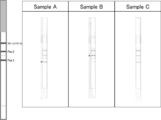
- FIG. 6 is a diagram showing a hybridization result of Comparative Example 1.
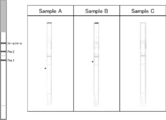
- FIG. 6 is a diagram showing a hybridization result of Comparative Example 2.
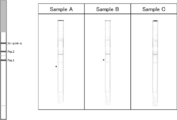
- FIG. 6 is a diagram showing a hybridization result of Comparative Example 3.
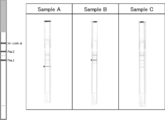
- FIG. 6 is a diagram showing the hybridization result of Comparative Example 4.
- FIG. 10 is a view showing a hybridization result of Comparative Example 5.
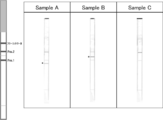
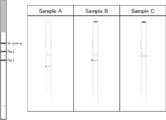
- FIG. 4 is a diagram showing the hybridization result of Example 1.
- FIG. 4 is a diagram showing the hybridization result of Example 2.
- FIG. 6 is a diagram showing the hybridization result of Example 3. It is a figure which shows the hybridization result of Example 4.
- the present disclosure discloses a polynucleotide comprising a solid phase carrier, a polypyrimidine region composed of a base sequence of two or more pyrimidine bases, and a functional region composed of a functional base sequence, And a functional polynucleotide immobilized on the solid phase carrier via a region, wherein the hybridization ability of the polypyrimidine region is suppressed.
- the polypyrimidine region is maintained while maintaining the good immobilization ability of such a polypyrimidine region.
- the specific hybridization ability inherent to the polynucleotide can be exhibited by suppressing the hybridization ability.
- FIG. 1 An example of the immobilized body of the present disclosure is shown in FIG.
- a polynucleotide probe is immobilized on a solid phase carrier via a polypyrimidine region.
- the hybridization ability that this polypyrimidine region may exhibit can be suppressed by various methods as shown in FIG.
- the polypurine (A, G) region of the masking agent separate from the functional polynucleotide is replaced with at least one of the polypyrimidine regions. It can be hybridized to the part.
- the polypurine region is hybridized with the first polypyrimidine polypurine region in the hybridization step. Make it soy.
- the polypyrimidine region may include a non-natural type, that is, an L-type pyrimidine.
- a masking agent having a polypurine region capable of hybridizing to the polypyrimidine region may be simultaneously present. Thereby, the hybridization ability of the polypyrimidine region is suppressed.
- a polynucleotide-immobilized carrier of the present disclosure includes a solid phase carrier, a functional polynucleotide comprising a polypyrimidine region composed of a base sequence in which two or more pyrimidine bases are continuous, and a functional region composed of a functional base sequence I have.
- the solid phase carrier is not particularly limited as long as the polynucleotide can be immobilized and the solid phase can be maintained in hybridization in the presence of a liquid.
- the material of the solid phase carrier is not particularly limited, and examples thereof include polymer materials such as various plastics, ceramics including glass, and metals.
- the solid support may be dense or porous.
- a porous solid phase carrier is suitable as a carrier for chromatography (for development hybridization) based on affinity between polynucleotides.
- a conventionally known carrier capable of moving a liquid by a capillary phenomenon can be adopted.
- Examples thereof include materials mainly composed of polymers such as polyethersulfone, nitrocellulose, nylon, polyvinylidene fluoride, and polytetrafluoroethylene. Cellulose-based materials such as cellulose acetate and filter paper can also be preferably used. Further, the solid phase carrier does not necessarily need to be composed of a single solid phase material. As long as the hybridization medium can be moved by capillary action as a whole, it may be connected by a plurality of solid phase carriers.
- the shape of the solid phase carrier is not particularly limited, and various forms can be adopted. For example, in addition to particles such as a spherical shape and an indefinite shape, and rod-shaped bodies, a plate shape such as a sheet shape and a film shape. If the functional polynucleotide is immobilized at a specific position or sequence when it is rod-shaped or flat, the positional information of the immobilized position is used to confirm the functional expression of the functional polynucleotide such as detection of the target nucleic acid. it can. Further, the shape of the solid phase carrier can be appropriately set according to the form of hybridization. That is, the solid phase carrier may be an immersion type hybridization carrier described later or a development type hybridization carrier.
- the solid phase carrier is provided with various surface treatments and thin films so as to suppress the nonspecific adsorption to the solid phase carrier of the target to be captured by the functional polynucleotide and the target polynucleotide to be captured by the functional polynucleotide. It may be.
- the solid phase carrier may be in a form in which a masking agent described later is held in advance at least in part.
- the masking agent can be present in the hybridization medium in the hybridization step of contacting with the test polynucleotide.
- the form in which the masking agent is held on the solid phase carrier is not particularly limited.
- the solid support When the solid support is dense, it may be attached to a part or the whole of the surface. If the solid support is porous, it may be impregnated.
- the polynucleotide in the present disclosure means a polymer of nucleotides such as deoxyribonucleotides and ribonucleotides or their equivalents as nucleotides.
- a polynucleotide generally has a backbone in which ribose or deoxyribose is linked by a phosphate ester bond.
- the equivalent may be a PNA having a backbone in which N- (2-aminoethyl) glycine is bonded by an amide bond and capable of holding a base that can be held by DNA or the like, or an alkylene with a phosphate ester bond. It may also be an artificial nucleic acid that has a backbone bound in (1) and can similarly hold a base.
- the backbone in a functional polynucleotide is typically mainly composed of a phosphate ester skeleton of deoxyribose.
- the base that can be held by the functional polynucleotide can also hold an artificial base that is appropriately modified as necessary, in addition to natural bases such as adenine, thymine, cytosine, guanine, and uracil.
- an artificial base that is appropriately modified as necessary, in addition to natural bases such as adenine, thymine, cytosine, guanine, and uracil.
- Those skilled in the art can appropriately select such artificial bases from various known modified bases whose functions are modified with respect to fluorescence, stability, base pairing, and the like.
- the functional polynucleotide is not particularly limited in the number of polymerizations, but can be several to about 300. Typically, the number is about 10 to 200.
- the polynucleotide can have a functional region consisting of a functional base sequence.
- the functional region may be a functional base sequence that causes a desired hybridization by base pairing. Therefore, the functional base sequence is not particularly limited, and may be a naturally derived base sequence or an artificial base sequence. Examples of naturally occurring base sequences include base sequences that can hybridize with DNA or RNA related to a specific gene. Examples of the artificial base sequence include probe sequences suitable for artificially determined hybridization. Examples of the artificial sequence include probe sequences (SEQ ID NOs: 1 to 100) capable of specific hybridization.
- the functional region is typically configured to be able to capture DNA extracted from a sample or the like or amplified by PCR, a substance having a DNA tag chain, or the like by hybridization.
- the functional region has D-form ribose or deoxyribose in the backbone of the main chain.
- a main chain structure capable of exhibiting the same hybridization ability as that of the main chain of such D-form sugar chain is provided.
- the functional polynucleotide can include a polypyrimidine region having a base sequence in which two or more pyrimidine bases are continuous.
- a polypyrimidine region having a base sequence in which two or more pyrimidine bases are continuous.
- the ability to bind to a solid phase carrier is exhibited by irradiation with electromagnetic waves such as ultraviolet rays.
- electromagnetic waves such as ultraviolet rays.
- the expression of such binding ability is not necessarily theoretically clear, but may be related to the formation of pyrimidine dimers.
- Examples of pyrimidine bases include thymine, cytosine, uracil, and 5-methylcytosine. Thymine is preferred.
- two or more pyrimidine bases may be continuous, and the continuous pyrimidine bases may be the same or different.
- the polypyrimidine region preferably comprises 4 or more, more preferably 5 or more, and still more preferably 10 or more continuous pyrimidine bases. This is because the number of consecutive pyrimidine bases greatly contributes to the immobilization ability.
- an upper limit is not specifically limited, It is preferable that it is 30 or less, More preferably, it is 20 or less.
- the functional polynucleotide may have two or more polypyrimidine regions. When two or more polypyrimidine regions are composed of different pyrimidine bases, these regions may be continuous, or one or more other nucleotides may be interposed. Two or more polypyrimidine regions may each be composed of the same pyrimidine base with one or more other nucleotides interposed therebetween.
- the polypyrimidine region can generally have a main chain skeleton having a D-form structure, similarly to the functional region.
- the hybridization ability of the polypyrimidine region can be suppressed by including the L-form.
- the functional polynucleotide is immobilized on a solid support.
- the functional polynucleotide is immobilized on a solid phase carrier in an appropriately patterned form.
- the immobilization of the polynucleotide will be described in detail later, it is immobilized by irradiating the polynucleotide supplied on the solid phase carrier with electromagnetic waves. Such immobilization is thought to be due to the interaction between the dimer formed by electromagnetic wave irradiation on the polypyrimidine region and the surface of the solid support. Therefore, it can be said that the polynucleotide is immobilized on the solid phase carrier via the polypyrimidine region.
- the pattern of immobilization of the polynucleotide to the solid phase carrier is not particularly limited and can take various forms. Depending on the form of the solid support, when immobilizing on a flat solid support, the position information of the position where the polynucleotide is immobilized is fixed in a pattern suitable for acquisition, such as an array or stripe. It is preferable that
- the hybridization ability of the polypyrimidine region is suppressed.
- Examples of the suppression mode of the hybridization ability of the polypyrimidine region include the following various modes.
- a masking agent can be used to suppress the hybridization ability of the polypyrimidine region.
- the masking agent can hybridize the polypurine region to the polypyrimidine region, various forms of polymer structures that can be adopted by the functional polynucleotide already described can be appropriately employed.
- the masking agent can have a polypurine region capable of hybridizing to at least a part of the polypyrimidine region.
- the polypurine region can suppress the hybridization ability of the polypyrimidine region by hybridizing to at least a part of the polypyrimidine region.
- the polypurine region is configured to be hybridizable to at least a part of the polypyrimidine region.
- the polypurine region is preferably configured to be capable of hybridizing to the polypyrimidine region with one or more consecutive adenines.
- the polypurine region only needs to be able to hybridize with at least a part of the polypyrimidine region, but is preferably 50% or more, more preferably 70% or more, still more preferably 80% or more, more preferably 90% of the polypyrimidine region. As described above, the number of bases that hybridize to 100% is most preferable.
- the polypurine region is preferably capable of hybridizing with higher specificity to the polypyrimidine region, more preferably completely complementary to the polypyrimidine region.
- the masking agent can comprise a polypurine purine region for one or more of the polypyrimidine regions.
- One or more masking agents can be used for a plurality of polypyrimidine regions.
- the masking agent can be a polynucleotide that is independent of the functional polynucleotide.
- a polynucleotide separate from the functional nucleotide immobilized on the solid phase carrier, the procedure for synthesizing the functional polynucleotide can be simplified.
- the masking agent can comprise poly A as the polypurine region.
- the masking nucleotide may include two or more polypurine regions that hybridize to the two or more polypyrimidine regions.
- an appropriate linker may be provided between the two polypurine regions, or a base capable of pairing with a base interposed between the polypyrimidine regions may be provided.
- Two or more masking agents may be provided for two or more polypyrimidine regions.
- the two or more masking agents may include two masking agents each having a polypurine region that hybridizes to at least a part of each polypyrimidine region.
- one kind of polypurine region can hybridize to two or more polypyrimidine regions.
- one masking agent having a common polypurine region can be used.
- the timing for supplying the masking agent to the functional nucleotide is particularly limited if the hybridization ability of the polypyrimidine region can be suppressed in the hybridization step. It is not limited. Therefore, the functional nucleotide may be immobilized on the solid phase carrier, after immobilization, before hybridization, or at the time of hybridization. The supply of the masking agent to the functional polynucleotide will be described in detail later.
- a masking agent can also be provided in a part of functional polynucleotide. That is, the polypurine region can be made a part of the functional polynucleotide in advance. By doing so, it is possible to reliably suppress the hybridization ability of the polypyrimidine region and to omit the operation of supplying a masking agent to the functional oligonucleotide.
- the polypurine region is provided so that the polypurine region can hybridize with the polypyrimidine region in a single-stranded polynucleotide.
- the polypyrimidine region and the polypurine region are at least partly formed by pairing of the polypyrimidine region and the polypurine region on the 5 ′ end side or 3 ′ end side of the functional polynucleotide that is a single chain. It is provided to form a stem.
- a polypyrimidine region is provided at the 5 ′ end or 3 ′ end of the functional polynucleotide chain, and the polypurine region is further on the 5 ′ end side or 3 ′ end side (that is, on the more end side) of the polypyrimidine region.
- a polypyrimidine region is provided at the 5 ′ end or 3 ′ end of the functional polynucleotide chain, and a polypurine region is provided from the center, that is, at the 3 ′ end side or the 5 ′ end side, respectively. can do.
- the polypyrimidine region and the polypurine region may be provided via a linker that may be an appropriate nucleotide or an analog thereof, or may be directly linked.
- the polypurine region also includes at least one of these, preferably a polypurine region that hybridizes to all the polypyrimidine regions.
- a functional polynucleotide comprising a non-natural nucleotide in or near the polypyrimidine region
- the hybridization ability of the polypyrimidine region can be suppressed.
- the functional region is generally composed of D-form, it exhibits a specific function, in particular, the ability to hybridize with naturally-derived DNA or the like. Therefore, in order to suppress the hybridization ability of the polypyrimidine region so as not to inhibit the hybridization ability by the D form, it is preferable to introduce the L form in the polypyrimidine region or in the vicinity thereof.
- the L-form in the polypyrimidine region can be an L-form nucleotide that retains the pyrimidine base with the L-form ribose or deoxyribose phosphate ester as the main chain skeleton. Moreover, as already explained, the pyrimidine base may be retained with the L-form structure that exhibits the same characteristics as the L-form sugar chain of the nucleotide as the main chain skeleton.
- L-form nucleotides and L-form structures that exhibit similar properties are referred to as L-form-like structures.
- the L-form-like structure in the polypyrimidine region may be singular, but it is preferable that two or more L-form pyrimidine bases are continuous in view of immobilization ability. More preferably, it is preferable that two or more consecutive pyrimidine bases are L-forms.
- an L-like structure may be provided near or adjacent to the polypyrimidine region.
- the L-form-like structure can include a purine base, an artificial base, and the like, in addition to a pyrimidine base different from the adjacent first polypyrimidine base. Moreover, the base may not be provided.
- an L-like structure may be interposed between these polypyrimidine regions.
- the functional polynucleotide is fixed to the solid phase carrier by the polypyrimidine region, and the hybridization ability of the polypyrimidine region is suppressed.
- non-specific hybridization based on this hybridization ability can be suppressed, and hybridization based on the functional region of the functional polynucleotide can be carried out with excellent accuracy and sensitivity.
- the cost of synthesizing a functional oligonucleotide can be reduced by using a masking agent as a polynucleotide separate from the functional polynucleotide.
- a masking agent as a polynucleotide separate from the functional polynucleotide.
- the masking agent by making the masking agent a part of the functional polynucleotide, the hybridization ability of the polypyrimidine region can be reliably suppressed, and the operation of supplying the masking agent to the functional polynucleotide can be omitted.
- a production method suitable for the production of the immobilized polynucleotide of the present disclosure comprises a step of immobilizing a functional polynucleotide to a solid phase carrier via a polypyrimidine region. Furthermore, the present manufacturing method can suppress the hybridization ability of the polypyrimidine region in the immobilization step or after the immobilization step.
- a functional polynucleotide can be immobilized on a solid phase carrier easily and firmly, and a functional polynucleotide can obtain a polynucleotide-immobilized product capable of capturing a target with high accuracy and sensitivity.
- the immobilized body is sufficient if the hybridization ability by the polypyrimidine region is suppressed in the hybridization step. Therefore, the hybridization ability is suppressed in various aspects prior to the hybridization step.
- the immobilization step in this production method utilizes the polypyrimidine region of the functional polynucleotide.
- the functional polynucleotide is supplied to the solid phase carrier generally in a solution state.
- the droplet containing the functional polynucleotide on the solid phase carrier is dried as necessary, and then the functional polynucleotide is fixed to the solid phase carrier by irradiation with electromagnetic waves.
- Irradiation condition of electromagnetic waves is not particularly limited, it is preferable that wavelength is ultraviolet 220 nm ⁇ 380 nm, the amount of irradiation is preferably 10 ⁇ 5000mJ / cm 2, more preferably 100 ⁇ 2000mJ / cm 2.
- the immobilization step in order to suppress the hybridization ability of the polypyrimidine region, the functional polynucleotide and the masking agent are allowed to interact in the immobilization step.
- the immobilization step according to the following embodiment can be mentioned.
- 2A to 2C illustrate suppression of the hybridization ability of the first polypyrimidine in the immobilization step.
- the hybridization ability of the polypyrimidine region can be suppressed by immobilizing a functional polynucleotide on a solid phase carrier in a state where a masking agent separate from the polynucleotide is present.
- a mixed solution of a functional polynucleotide and a masking agent is supplied to a solid phase carrier and immobilized (such as electromagnetic wave irradiation).
- immobilized such as electromagnetic wave irradiation
- the functional polynucleotide and the masking agent do not necessarily have to be supplied onto the solid phase carrier at the same time.
- the masking agent may be supplied to a functional polynucleotide supply site (or a site to be supplied) after or before supply of the functional polynucleotide on the solid phase carrier.
- the polypyrimidine region and the polypurine region can interact on the solid phase carrier.
- a functional polynucleotide having a masking agent in part may be used for immobilization.
- the masking agent suppresses the hybridization ability of the polypyrimidine region.
- a functional polynucleotide having an L-form-like structure in or near the polypurine region.
- the functional polynucleotide since the hybridization ability of the polypyrimidine region is inherently suppressed due to the presence of the L-like structure, the exertion of the hybridization ability in the hybridization step of the polypyrimidine region is suppressed.
- the functional polynucleotide and the masking agent may be allowed to interact after the immobilization step according to the following embodiment. That is, a post-processing step after the immobilization step may be provided.
- FIG. 3 illustrates such post-processing steps.
- the step of hybridizing the solid phase carrier on which the functional polynucleotide is immobilized and the masking agent can be performed as a post-treatment step.
- the polypyrimidine region and the polypurine region can be allowed to interact, and the hybridization ability of the polypyrimidine region can be suppressed.
- hybridization with a functional polynucleotide on a solid phase carrier is performed using a hybridization medium containing a masking agent.
- the hybridization step as a post-treatment step may be an immersion type hybridization step in which a solid phase carrier is immersed in a hybridization medium, or a hybridization medium (such as a chromatography medium) may be added to a part of the solid phase carrier. It may be a chromatography type (development type) hybridization step in which a solid phase carrier is moved by capillary action. It is preferably carried out in the same form as the hybridization step with the target originally carried out.
- the post-treatment process can be performed according to a conventional method. That is, it is carried out using a commonly used hybridization medium and similarly at a commonly used temperature condition and time.
- a reaction time of about 1 hour to 2 hours can be set at a specific set temperature of 20 ° C. to 60 ° C.
- the post-treatment step it is preferable to remove excess masking agent by washing in the case of immersion type hybridization. In the case of development type hybridization, washing may be performed as necessary.
- the post-treatment step does not necessarily have to be in the form of immersion type hybridization or development type hybridization as long as the polypyrimidine region and the polypurine region can interact after immobilization. Therefore, it is also possible to supply a masking agent solution to the immobilization site of the functional polynucleotide on the solid phase carrier.
- the functional polynucleotide is provided with the polypyrimidine region, so that the functional polynucleotide can be easily and firmly immobilized on the solid phase carrier. Furthermore, according to this production method, the hybridization ability of the polypyrimidine region can also be easily suppressed, and as a result, an immobilized polynucleotide can be produced that can capture the target with excellent accuracy and sensitivity.
- the fixed body provided with only one of these aspects is manufactured. It may be a thing and may manufacture the fixed body provided with the 2 or more suppression aspect which can be combined simultaneously.
- the immobilization body may have an aspect in which a functional polynucleotide, a separate masking agent, and a masking agent provided in a part of the functional polynucleotide are used in combination.
- this manufacturing method may implement the some suppression method.
- a masking agent can be used in the functional polynucleotide immobilization step, and a post-treatment step can be performed with the masking agent after the immobilization step.
- hybridized product production method 1 The method for producing a hybridized product of the present disclosure can comprise a hybridization step in which a functional region of the immobilized polynucleotide of the present disclosure is brought into contact with a test polynucleotide capable of hybridizing. According to this production method, hybridization between the test polynucleotide and the functional region of the functional polynucleotide is not inhibited by the hybridization ability of the polypyrimidine region, and the test polynucleotide is highly accurate and has a low concentration. Even so, a hybridized product of the test polynucleotide and the functional polynucleotide can be generated.
- test polynucleotide used in various embodiments is not particularly limited, as long as it has a region capable of hybridizing with a functional region, in addition to DNA single-stranded or double-stranded, RNA Single-stranded or double-stranded, DNA / RNA hybrid, DNA / RNA chimera, partial double-stranded DNA and the like can be mentioned.
- a protein such as an antibody having a hybridizing region as a DNA tag or the like is also included.
- test polynucleotide may be natural or artificially synthesized.
- the test polynucleotide may be obtained from a biological sample or the like by an amplification reaction by PCR.
- the test polynucleotide may include a labeling substance or a substance capable of binding the labeling substance so that the hybridized product can be detected.
- the labeling substance is not particularly limited, but typically, a labeling substance using fluorescence, radioactivity, enzyme (for example, peroxidase, alkaline phosphatase, etc.), phosphorescence, chemiluminescence, coloring and the like can be mentioned.
- the labeling substance is preferably a luminescent substance or a coloring substance that presents luminescence or coloring that can be detected visually (with the naked eye).
- This kind of labeling substance typically includes various dyes, various pigments, luminol, isoluminol, acridinium compounds, olefins, enol ethers, enamines, aryl vinyl ethers, dioxene, aryl imidazoles, lucigenin, luciferin and eclion.
- a chemiluminescent substance is mentioned.
- particles such as latex particles labeled with such a labeling substance are also included.
- colloids or sols including gold colloids or sols or silver colloids or sols can be mentioned.
- a metal particle, an inorganic particle, etc. are mentioned.
- the labeling substance binding substance for example, protein-protein interaction, low molecular weight compound-protein interaction and the like can be used.
- antibodies in antigen-antibody reaction biotin in avidin (streptavidin) -biotin system, digoxigenin in anti-digoxigenin (DIG) -digoxigenin (DIG) system, or haptens represented by FITC in anti-FITC-FITC system, etc.
- the labeling substance finally used for detection is the other molecule or substance that interacts with the labeling substance binding substance (for example, an antigen, ie, streptavidin, anti-FITC, etc.) and the labeling substance binding substance. It is modified so as to be provided as a site for binding.
- the hybridization step may be immersion type hybridization or development type hybridization.
- Each of these hybridization conditions is well known to those skilled in the art, and can be carried out by those skilled in the art with reference to known techniques as necessary.
- a hybrid product detection step can be provided after the hybridization step. Thereby, the hybridized product can be detected.
- the detection step is a step of detecting the hybridized product based on the labeling substance held by the hybridized product.
- a signal based on the presence or absence of the labeling substance depending on the presence or absence of the hybridized product or the amount captured can be detected by a detection method according to the type of the labeling substance. Based on these signals, the presence or amount of the test polynucleotide can be evaluated.
- Hybridized product production method 2 Another method for producing and detecting a hybridized product is also provided. That is, a production method or the like using an immobilization carrier on which a functional polynucleotide is immobilized and in which the hybridization ability of the polypyrimidine region is not yet suppressed is also provided.
- an immobilized body in which a functional polynucleotide that does not have the suppression state of the hybridization ability of any of the polypyrimidine regions described above is immobilized on a solid phase carrier is used. That is, in this production method or the like, prior to the hybridization step or the hybridization step, an immobilized body in which a functional polynucleotide having neither an L-like structure nor a masking agent is immobilized. The polypyrimidine region and polypurine are allowed to interact with each other.
- a step of contacting the functional polynucleotide on the solid phase carrier with the masking agent is performed as a pretreatment step before the hybridization step. To do. By this step, both interact, and as a result, the hybridization ability of the polypyrimidine region is suppressed.
- This pretreatment step can be carried out in the same manner as the posttreatment step in the aforementioned method for producing a polynucleotide-immobilized product.
- a masking agent may be present together with the test polynucleotide in the hybridization medium. By doing so, the hybridization ability of the polypyrimidine region can be suppressed exactly in the hybridization step.
- a masking agent can be included in the hybridization medium.
- a solid phase carrier in which a masking agent is held in advance may be used. By doing so, the masking agent is present in the hybridization medium by moving the masking agent into the hybridization medium in the hybridization step.
- the solid phase carrier is a porous body, it is easy to hold it.
- a part of a polynucleotide-immobilized product for example, a site that comes into contact with a hybridization medium or a site through which a hybridization medium passes during development and from a site where a functional polynucleotide is immobilized.
- the masking agent may be adsorbed and held at the front site.
- the hybrid product can be produced and detected with high accuracy and detectability by providing the pretreatment step and the hybridization step in this mode.
- such a pretreatment step and / or hybridization step can be applied even when the hybridization step is carried out using an immobilized body in which the hybridization ability of the polypyrimidine region is suppressed. That is, by carrying out such a process, even if the suppression state of the hybridization ability of the polypyrimidine region decreases with time and at least part of the hybridization ability is restored, the influence of the hybridization ability is affected. A good hybridization step can be carried out with inhibition.
- polynucleotide or set thereof According to the present disclosure, polynucleotides (probes) and sets thereof are provided. All of these polynucleotides and their sets are useful as probes for capturing a test polynucleotide by interaction with a functional region.
- the set of the present disclosure is a set of polynucleotides to be immobilized on a solid support.
- This set comprises a functional polynucleotide of the present disclosure and a masking agent. According to this set, hybridization with good accuracy and detection sensitivity can be realized.
- the polynucleotide of the present disclosure is a polynucleotide for immobilization on a solid phase carrier.
- This polynucleotide is a functional polynucleotide of the present disclosure, and is a polynucleotide comprising an L-form-like structure in the polypyrimidine region or in the vicinity thereof.
- the polynucleotide of the present disclosure is the functional polynucleotide of the present disclosure, and includes a masking agent having a polypurine region capable of hybridizing to at least a part of the polypyrimidine region.
- kits of an immobilized body in which a functional polynucleotide is immobilized on a solid phase carrier and a masking agent is also provided.
- This kit is useful as a probe for capturing a test polynucleotide by interaction with a functional region.
- the functional polynucleotide is preferably the functional polynucleotide of the first and second aspects.
- the functional polynucleotide of the first aspect is preferable.
- the kit can include a masking agent capable of hybridizing to at least a part of the polypyrimidine region of the functional polynucleotide. By providing such a masking agent, the hybridization ability of the polypyrimidine region can be reliably suppressed prior to or in the hybridization step.
- the masking agent may be included in the kit as an independent reagent, but may be held on the solid support of the immobilization support and released from the solid support in the hybridization step.
- oligonucleotides having various forms of polypyrimidine regions and the like in addition to the same functional regions were synthesized, and hybridized by development chromatography using them as probes.
- oligonucleotide comprising a functional region and polyT (consisting of 20 consecutive thymidine deoxyribonucleotides (hereinafter referred to as polyT (20)) is immobilized on a solid support as a probe.
- polyT consisting of 20 consecutive thymidine deoxyribonucleotides
- a UV irradiation apparatus (XL-1500 UV Crosslinker) manufactured by Spectroline was used, and immobilization was performed by irradiation with ultraviolet light of about 300 mJ / cm 2 at a wavelength including a component of 280 nm.
- the latex stock solution used is a polystyrene latex bead containing a blue colorant coated with avidin (streptavidin) and prepared with a chromatographic developing solution to an arbitrary concentration. did. Further, Phosphate buffered saline was used as the chromatographic developing solution.
- Hybridization and color reaction 42 ⁇ l of each of the above prepared samples was added to a 0.2 ml tube and developed chromatography was inserted to start the reaction. The sample solution was all sucked up in about 20 minutes, and the reaction was completed. After completion of the reaction, the chromatography, which is a development hybridization carrier, was air-dried, and the reaction site was visually confirmed and an image was taken.
- Comparative Example 2 The same operation as in Comparative Example 1 was performed except that the oligonucleotide shown below was used. The results are shown in FIG. As shown in FIG. 5, similar to Comparative Example 1, it was considered that the result indicates that poly A in sample A may be hybridized to the polyT sequence portion of the capture probe.
- Comparative Example 3 The same operation as in Comparative Example 1 was performed except that the oligonucleotide shown below was used. The results are shown in FIG. As shown in FIG. 6, as in Comparative Example 1, it was considered that the result indicates that poly A in sample A may be hybridized to the polyT sequence portion of the capture probe.
- Comparative Example 4 The same operation as in Comparative Example 1 was performed except that the oligonucleotide shown below was used. The results are shown in FIG. As shown in FIG. 7, color development could not be confirmed in any case. This was considered to be a result of the probe not being sufficiently immobilized on the solid support.
- Comparative Example 5 The same operation as in Comparative Example 1 was performed except that the oligonucleotide shown below was used. In addition, SpecerC3 (GrenResearch Amidite reagent) was used for X in the Probe 9 and 10 sequences. The results are shown in FIG. As shown in FIG. 8, as in Comparative Example 1, it was considered that the result indicates that poly A in sample A may be hybridized to the polyT sequence portion of the capture probe.
- Example 1 The same operation as in Comparative Example 1 was performed except that the oligonucleotide shown below was used as a probe.
- the underlined sequences in the Probe11 and 12 sequences were synthesized using L-form amidites. The results are shown in FIG.
- Example 2 Prior to the hybridization step, the same operation as in Comparative Example 1 was performed except that the pretreatment step shown below was performed and the hybridization step was performed for the chromatograph after the pretreatment.
- the pretreatment step 4 ⁇ l of poly A (20) (10 ⁇ M) and 16 ⁇ l of TE buffer added to 20 ⁇ l of hybridization medium and 40 ⁇ l of pretreatment reagent were added to a tube of 0.2 ml, and chromatography was started. The development was finished with and air-dried. The results are shown in FIG.
- Example 3 The same operation as in Comparative Example 1 was performed except that 10 equivalents of a DNA probe solution having a polyA (20) sequence was mixed in advance with the oligonucleotide solution. The results are shown in FIG.
- Example 4 The same operation as in Comparative Example 1 was performed except that the oligonucleotide shown below was used as a probe. The results are shown in FIG.
Landscapes
- Chemical & Material Sciences (AREA)
- Life Sciences & Earth Sciences (AREA)
- Organic Chemistry (AREA)
- Health & Medical Sciences (AREA)
- Engineering & Computer Science (AREA)
- Zoology (AREA)
- Wood Science & Technology (AREA)
- Genetics & Genomics (AREA)
- Biotechnology (AREA)
- General Engineering & Computer Science (AREA)
- Bioinformatics & Cheminformatics (AREA)
- Proteomics, Peptides & Aminoacids (AREA)
- Molecular Biology (AREA)
- Biophysics (AREA)
- General Health & Medical Sciences (AREA)
- Biochemistry (AREA)
- Microbiology (AREA)
- Biomedical Technology (AREA)
- Physics & Mathematics (AREA)
- Analytical Chemistry (AREA)
- Immunology (AREA)
- Chemical Kinetics & Catalysis (AREA)
- Crystallography & Structural Chemistry (AREA)
- Plant Pathology (AREA)
- Apparatus Associated With Microorganisms And Enzymes (AREA)
- Measuring Or Testing Involving Enzymes Or Micro-Organisms (AREA)
Abstract
ポリヌクレオチドの固定化のためのポリピリミジン領域による優れた固定化能を維持しつつ非特異的ハイブリダイゼーションが抑制されたポリヌクレオチド固定化体を提供する。本明細書は、固相担体と、2以上のピリミジン塩基が連続する塩基配列からなるポリピリミジン領域と機能的な塩基配列からなる機能性領域とを備えるポリヌクレオチドであって、前記ポリピリミジン領域を介して前記固相担体に固定化された機能性ポリヌクレオチドと、を備え、前記ポリピリミジン領域のハイブリダイゼーション能を抑制するようにする。
Description
(関連出願の相互参照)
本出願は、2014年3月12日付けで出願された日本国特許出願2014-048352に対する優先権を主張するものであり、その全内容は、引用により、本明細書に組み込まれるものとする。
本明細書は、ポリヌクレオチド固定化体、その製造方法、その利用に関する。
本出願は、2014年3月12日付けで出願された日本国特許出願2014-048352に対する優先権を主張するものであり、その全内容は、引用により、本明細書に組み込まれるものとする。
本明細書は、ポリヌクレオチド固定化体、その製造方法、その利用に関する。
例えば、特定の生物を特徴付けるゲノム上の部位や変異部位などを生物試料からPCR反応等によって取得する標的核酸を、特異的にハイブリダイズするプローブを用いて検出して検出する技術、いわゆる、所謂プローブハイブリダイゼーション技術がある。プローブハイブリダイゼーションには、ポリヌクレオチドであるプローブを固相担体に固定化したポリヌクレオチド固定化体が用いられている。かかるポリヌクレオチド固定化体は、ハイブリダイゼーションの形態に応じて種々に選択される。
こうしたプローブの固定化方法として、ポリTを用いることが開示されている(特許文献1、2)。この方法は、プローブ末端に付与しておき、固相担体の特定位置に供給してUV照射等することで、固相担体にプローブを固定できるというものである。この固定化方法は、簡易にかつ効率的にポリヌクレオチドを固相担体に固定化できるというメリットがある。
プローブにおけるポリピリミジン領域は、UV照射に対して他の領域よりも高い特異性で反応し、ポリヌクレオチドプローブの固相担体への固定化に寄与していると考えられる。
しかしながら、こうした固定化のためのUV照射等の後においても、ポリピリミジン領域が依然として、そのピリミジン塩基の対合によるハイブリダイゼーション能を維持していることを見出した。また、当該ハイブリダイゼーション能により、非特異的なハイブリダイズ産物を形成していることを見出した。
本明細書の開示は、かかる従来の課題を解決するため、ポリヌクレオチドの固定化のためのポリピリミジン領域による優れた固定化能を維持しつつ非特異的ハイブリダイゼーションが抑制されたポリヌクレオチド固定化体を提供する。また、本明細書の開示は、こうしたポリヌクレオチド固定化体の利用、ポリヌクレオチド固定化体の製造方法、ポリヌクレオチドプローブ等も提供する。
(1) 固相担体と、
2以上のピリミジン塩基が連続する塩基配列からなるポリピリミジン領域と機能的な塩基配列からなる機能性領域とを備えるポリヌクレオチドであって、前記ポリピリミジン領域を介して前記固相担体に固定化された機能性ポリヌクレオチドと、
を備え、
前記ポリピリミジン領域のハイブリダイゼーション能が抑制されている、ポリヌクレオチド固定化体。
(2) 前記ポリピリミジン領域の少なくとも一部にハイブリダイズ可能なポリプリン領域を有するポリヌクレオチドであるマスキング剤を備える、(1)に記載のポリヌクレオチド固定化体。
(3) 前記マスキング剤は、前記機能性ポリヌクレオチドとは独立したポリヌクレオチドである、(2)に記載のポリヌクレオチド固定化体。
(4) 前記マスキング剤は、前記機能性ポリヌクレオチドの一部である、(2)に記載のポリヌクレオチド固定化体。
(5) 前記ポリピリミジン領域は非天然型のピリミジン塩基を含む、(1)に記載のポリヌクレオチド固定化体。
(6) 前記ポリピリミジン領域は、ピリミジン塩基が10以上20以下連続する塩基配列からなる、(1)~(5)のいずれかに記載のポリヌクレオチド固定化体。
(7) 前記機能性領域は、配列番号1~100で表される塩基配列又はその相補配列からなる、(1)~(6)のいずれかに記載のポリヌクレオチド固定化体。
(8) 前記固相担体は、展開型ハイブリダイゼーション用担体である、(1)~(7)のいずれかに記載のポリヌクレオチド固定化体。
(9) 前記固相担体は、浸漬型ハイブリダイゼーション用担体である、(1)~(7)のいずれかに記載のポリヌクレオチド固定化体。
(10) 固相担体へ固定化するためのポリヌクレオチドセットであって、
2以上のピリミジン塩基が連続する塩基配列からなるポリピリミジン領域と、機能的な塩基配列からなる機能性領域と、を備える機能性ポリヌクレオチドと、
前記ポリピリミジン領域の少なくとも一部にハイブリダイズ可能なポリプリン領域を有するポリヌクレオチドであるマスキング剤と、
を備える、セット。
(11) 固相担体へ固定化するためのポリヌクレオチドであって、
2以上のピリミジン塩基が連続する塩基配列からなるポリピリミジン領域であって、非天然型のピリミジン塩基を含むポリピリミジン領域と、機能的な塩基配列からなる機能性領域と、を備える機能性ポリヌクレオチド。
(12) 固相担体へ固定化するためのポリヌクレオチドであって、
2以上のピリミジン塩基が連続する塩基配列からなるポリピリミジン領域と、前記ポリピリミジン領域の少なくとも一部にハイブリダイズ可能なポリプリン領域を有するマスキング剤領域と、機能的な塩基配列からなる機能性領域と、を備える機能性ポリヌクレオチド。
(13) ポリヌクレオチド固定化体の製造方法であって、
2以上のピリミジン塩基が連続する塩基配列からなるポリピリミジン領域と機能的な塩基配列からなる機能性領域とを備える機能性ポリヌクレオチドを、固相担体に対して、前記ポリピリミジン領域を介して固定化する工程と、
前記固定化工程において、あるいは前記固定化工程の後に、前記ポリピリミジン領域のハイブリダイゼーション能を抑制する、製造方法。
(14) 前記固定化工程は、前記ポリピリミジン領域と前記ポリピリミジン領域の少なくとも一部にハイブリダイズ可能なポリプリン領域を有するポリヌクレオチドであるマスキング剤の前記ポリプリン領域とを相互作用させる工程である、(13)に記載の製造方法。
(15) 前記固定化工程後に、前記ポリピリミジン領域と前記ポリピリミジン領域の少なくとも一部にハイブリダイズ可能なポリプリン領域を有するポリヌクレオチドであるマスキング剤の前記ポリプリン領域とを相互作用させる工程である、(13)に記載の製造方法。
(16) ハイブリダイズ産物の生産方法であって、
(1)~(9)のいずれかに記載のポリヌクレオチド固定化体の前記機能性領域とハイブリダイズ可能な被験ポリヌクレオチドとを接触させるハイブリダイゼーション工程、
を備える、生産方法。
(17) ハイブリダイズ産物の検出方法であって、
(1)~(9)のいずれかに記載のポリヌクレオチド固定化体の前記機能性領域とハイブリダイズ可能な被験ポリヌクレオチドとを接触させるハイブリダイゼーション工程と、
前記機能性ポリヌクレオチドと前記被験ポリヌクレオチドとのハイブリダイズ産物を検出する工程と、
を備える、検出方法。
本明細書の開示は、固相担体と、2以上のピリミジン塩基が連続する塩基配列からなるポリピリミジン領域と機能的な塩基配列からなる機能性領域とを備えるポリヌクレオチドであって、前記ポリピリミジン領域を介して前記固相担体に固定化された機能性ポリヌクレオチドと、を備え、前記ポリピリミジン領域のハイブリダイゼーション能が抑制されている、ポリヌクレオチド固定化体等に関する。
本開示の固定化体によれば、ポリTなどのポリピリミジン領域を用いたポリヌクレオチドの固相担体の固定化に関し、こうしたポリピリミジン領域の良好な固定化能を維持しつつ、ポリピリミジン領域が有するハイブリダイゼーション能を抑制して、ポリヌクレオチド固有の特異的ハイブリダイゼーション能を発揮させることができる。
本開示の固定化体の一例を図1に示す。図1に示すように、ポリピリミジン領域を介してポリヌクレオチドプローブが固相担体に固定化されている。本開示によれば、このポリピリミジン領域が発揮する可能性のあるハイブリダイゼーション能を、図1に示すような各種方法で抑制することができる。
例えば、図1(a)に示すように、ハイブリダイゼーション工程に先立って、あるいはハイブリダイゼーション工程において、機能性ポリヌクレオチドとは別個のマスキング剤のポリプリン(A,G)領域をポリピリミジン領域の少なくとも一部にハイブリダイズさせることができる。また、図1(b)に示すように、機能性ポリヌクレオチドの一部としてポリプリン領域を有するマスキング剤を用いることで、ハイブリダイゼーション工程において、当該ポリプリン領域を第1のポリピリミジンポリプリン領域をハイブリダイズさせるようにする。
また、図1(c)に示すように、ポリピリミジン領域を非天然型、すなわち、L体のピリミジンを含むようにすることが挙げられる。また、図1(b),(c)に示すように、ハイブリダイゼーション系において、ポリピリミジン領域にハイブリダイズ可能なポリプリン領域を有するマスキング剤を同時に存在させるようにすることが挙げられる。これにより、ポリピリミジン領域のハイブリダイゼーション能が抑制されることになる。
以下では、本発明の代表的かつ非限定的な具体例について、適宜図面を参照して詳細に説明する。この詳細な説明は、本発明の好ましい例を実施するための詳細を当業者に示すことを単純に意図しており、本発明の範囲を限定することを意図したものではない。また、以下に開示される追加的な特徴ならびに発明は、さらに改善されたポリヌクレオチド固定化体を提供するために、他の特徴や発明とは別に、又は共に用いることができる。
また、以下の詳細な説明で開示される特徴や工程の組み合わせは、最も広い意味において本明細書の開示を実施する際に必須のものではなく、特に本明細書の開示の代表的な具体例を説明するためにのみ記載されるものである。さらに、上記及び下記の代表的な具体例の様々な特徴、ならびに、独立及び従属クレームに記載されるものの様々な特徴は、本明細書の開示の追加的かつ有用な実施形態を提供するにあたって、ここに記載される具体例のとおりに、あるいは列挙された順番のとおりに組合せなければならないものではない。
本明細書及び/又はクレームに記載された全ての特徴は、実施例及び/又はクレームに記載された特徴の構成とは別に、出願当初の開示ならびにクレームされた特定事項に対する限定として、個別に、かつ互いに独立して開示されることを意図するものである。さらに、全ての数値範囲及びグループ又は集団に関する記載は、出願当初の開示ならびにクレームされた特定事項に対する限定として、それらの中間の構成を開示する意図を持ってなされている。
以下、本開示について適宜図面を参照しながら詳細に説明する。
(ポリヌクレオチド固定化体)
本開示のポリヌクレオチド固定化担体は、固相担体と、2以上のピリミジン塩基が連続する塩基配列からなるポリピリミジン領域と機能的な塩基配列からなる機能性領域とを備える機能性ポリヌクレオチドとを備えている。
本開示のポリヌクレオチド固定化担体は、固相担体と、2以上のピリミジン塩基が連続する塩基配列からなるポリピリミジン領域と機能的な塩基配列からなる機能性領域とを備える機能性ポリヌクレオチドとを備えている。
(固相担体)
固相担体は、ポリヌクレオチドを固定化でき、液体存在下でのハイブリダイゼーションにおいて固相を維持できるものであれば特に限定されない。固相担体の材料は特に限定されないが、各種プラスチックなどの高分子材料、ガラスを含むセラミックス、金属等が挙げられる。また、固相担体は緻密質であってもよいが、多孔質であってもよい。特に、多孔質の固相担体は、ポリヌクレオチド間のアフィニティーに基づくクロマトグラフィー用(展開型ハイブリダイゼーション用)の担体として好適である。多孔質担体は、キャピラリー現象により液体を移動させることが可能な従来公知のものを採用できる。例えば、ポリエーテルスルホン、ニトロセルロース、ナイロン、ポリフッ化ビニリデン、ポリテトラフルオロエチレンなどのポリマーを主体とした材料が挙げられる。また、セルロースアセテート、ろ紙などのセルロース系材料も好ましく用いることができる。また、固相担体は、単一の固相材料で構成されている必要は必ずしもない。全体としてキャピラリー現象によりハイブリダイゼーション媒体が移動可能であれば、複数の固相担体で連結されていてもよい。
固相担体は、ポリヌクレオチドを固定化でき、液体存在下でのハイブリダイゼーションにおいて固相を維持できるものであれば特に限定されない。固相担体の材料は特に限定されないが、各種プラスチックなどの高分子材料、ガラスを含むセラミックス、金属等が挙げられる。また、固相担体は緻密質であってもよいが、多孔質であってもよい。特に、多孔質の固相担体は、ポリヌクレオチド間のアフィニティーに基づくクロマトグラフィー用(展開型ハイブリダイゼーション用)の担体として好適である。多孔質担体は、キャピラリー現象により液体を移動させることが可能な従来公知のものを採用できる。例えば、ポリエーテルスルホン、ニトロセルロース、ナイロン、ポリフッ化ビニリデン、ポリテトラフルオロエチレンなどのポリマーを主体とした材料が挙げられる。また、セルロースアセテート、ろ紙などのセルロース系材料も好ましく用いることができる。また、固相担体は、単一の固相材料で構成されている必要は必ずしもない。全体としてキャピラリー現象によりハイブリダイゼーション媒体が移動可能であれば、複数の固相担体で連結されていてもよい。
固相担体の形状は、特に限定されないで、各種形態を採ることができる。例えば、球状、不定形状などの粒子状、棒状体のほか、シート状、フィルム状等の平板状である。棒状ないし平板状であると、機能性ポリヌクレオチドを特定位置ないし配列で固定化することにより、当該固定化位置の位置情報を、標的核酸などの検出など機能性ポリヌクレオチドの機能発現の確認に利用できる。また、固相担体の形状は、ハイブリダイゼーションの形態に応じて適宜設定できる。すなわち、固相担体は、後述する浸漬型のハイブリダイゼーション用担体であってもよいし、展開型ハイブリダイゼーション用担体であってもよい。
また、固相担体は、機能性ポリヌクレオチドの固定化能や、機能性ポリヌクレオチドによって捕捉しようとするターゲットの固相担体へ非特異的吸着を抑制できるように種々の表面処理や薄膜が付与されていてもよい。
また、固相担体は、後述するマスキング剤が予めその少なくとも一部に保持された形態であってもよい。こうすることで、被験ポリヌクレオチドと接触させるハイブリダイゼーション工程において、ハイブリダイゼーション媒体にマスキング剤を存在させることができる。マスキング剤を固相担体に保持させる形態は特に限定されない。固相担体が緻密質の場合には、その表面の一部又は全体に付着させてもよい。また、固相担体が多孔質の場合には、含浸保持させてもよい。
(機能性ポリヌクレオチド)
本開示におけるポリヌクレオチドは、ヌクレオチドとしてデオキシリボヌクレオチドやリボヌクレオチドなどのヌクレオチドあるいはその均等物の重合体を意味する。ポリヌクレオチドは、一般に、リボースないしデオキシリボースがリン酸エステル結合で連結されたバックボーンを有している。均等物としては、N-(2-アミノエチル)グリシンがアミド結合で結合したバックボーンを有し、DNA等が保持しうる塩基を保持可能なPNAであってもよいし、アルキレンをリン酸エステル結合で結合したバックボーンを備えて同様に塩基を保持可能な人工核酸であってもよい。
本開示におけるポリヌクレオチドは、ヌクレオチドとしてデオキシリボヌクレオチドやリボヌクレオチドなどのヌクレオチドあるいはその均等物の重合体を意味する。ポリヌクレオチドは、一般に、リボースないしデオキシリボースがリン酸エステル結合で連結されたバックボーンを有している。均等物としては、N-(2-アミノエチル)グリシンがアミド結合で結合したバックボーンを有し、DNA等が保持しうる塩基を保持可能なPNAであってもよいし、アルキレンをリン酸エステル結合で結合したバックボーンを備えて同様に塩基を保持可能な人工核酸であってもよい。
機能性ポリヌクレオチドにおけるバックボーンは、典型的には、デオキシリボースのリン酸エステル骨格を主体としている。
また、機能性ポリヌクレオチドが保持しうる塩基も、アデニン、チミン、シトシン、グアニン、ウラシルなどの天然塩基の他に、必要に応じて適宜修飾がなされた人工塩基を保持することができる。当業者は、こうした人工塩基は、蛍光性、安定性、塩基対合性等に関し、機能が改変されたものを公知の各種の修飾塩基から適宜選択することができる。
機能性ポリヌクレオチドは、特にその重合数を限定するものではないが、数個~300個程度とすることができる。典型的には、10個程度~200個以下程度である。
(機能性領域)
ポリヌクレオチドは、機能的な塩基配列からなる機能性領域を備えることができる。機能性領域は、塩基の対合による所望のハイブリダイゼーションを生じさせる機能的な塩基配列であればよい。したがって、機能的な塩基配列は特に限定しないで、天然由来の塩基配列であってもよいし、人工的な塩基配列であってもよい。天然由来の塩基配列としては、特定の遺伝子に関連したDNAやRNAとハイブリダイズ可能な塩基配列が挙げられる。また、人工的な塩基配列としては、人工的に決定されたハイブリダイゼーションに適したプローブ配列等が挙げられる。人工配列としては、たとえば、特異的なハイブリダイゼーションが可能なプローブ配列(配列番号1から100)が挙げられる。機能性領域は、典型的には、試料等から抽出されたあるいはPCRにより増幅されたDNAや、DNAタグ鎖を備える物質等をハイブリダイゼーションにより捕捉可能に構成されている。
ポリヌクレオチドは、機能的な塩基配列からなる機能性領域を備えることができる。機能性領域は、塩基の対合による所望のハイブリダイゼーションを生じさせる機能的な塩基配列であればよい。したがって、機能的な塩基配列は特に限定しないで、天然由来の塩基配列であってもよいし、人工的な塩基配列であってもよい。天然由来の塩基配列としては、特定の遺伝子に関連したDNAやRNAとハイブリダイズ可能な塩基配列が挙げられる。また、人工的な塩基配列としては、人工的に決定されたハイブリダイゼーションに適したプローブ配列等が挙げられる。人工配列としては、たとえば、特異的なハイブリダイゼーションが可能なプローブ配列(配列番号1から100)が挙げられる。機能性領域は、典型的には、試料等から抽出されたあるいはPCRにより増幅されたDNAや、DNAタグ鎖を備える物質等をハイブリダイゼーションにより捕捉可能に構成されている。
概して、機能性領域は、D体のリボースないしデオキシリボースを主鎖の骨格に有している。リボースあるいはデオキシリボースを主鎖骨格に有しない場合、例えばPNA等の場合にも、このようなD体糖鎖の主鎖と同様のハイブリダイゼーション能を発揮できるような主鎖構造が備えられる。
(ポリピリミジン領域)
機能性ポリヌクレオチドは、2以上のピリミジン塩基が連続する塩基配列からなるポリピリミジン領域を備えることができる。2以上のピリミジン塩基が連続することで紫外線などの電磁波照射により、固相担体への結合能が発揮される。こうした結合能の発揮は、理論的には必ずしも明らかではないが、ピリミジン二量体の形成に関連していることが考えられる。ピリミジン塩基としては、チミンのほか、シトシン、ウラシル、5-メチルシトシンが挙げられる。好ましくはチミンである。
機能性ポリヌクレオチドは、2以上のピリミジン塩基が連続する塩基配列からなるポリピリミジン領域を備えることができる。2以上のピリミジン塩基が連続することで紫外線などの電磁波照射により、固相担体への結合能が発揮される。こうした結合能の発揮は、理論的には必ずしも明らかではないが、ピリミジン二量体の形成に関連していることが考えられる。ピリミジン塩基としては、チミンのほか、シトシン、ウラシル、5-メチルシトシンが挙げられる。好ましくはチミンである。
ポリピリミジン領域は、2以上のピリミジン塩基が連続していればよく、連続するピリミジン塩基は、同一であっても異種であってもよい。固定化能やコスト等を考慮すると2以上の同一のピリミジン塩基が連続することが好ましく、同一ピリミジン塩基が2以上連続する領域を有していれば、さらに、別個に他の種類であってかつ互いに同一のピリミジン塩基の連続領域を有していてもよい。
ポリピリミジン領域は、好ましくは4以上、より好ましくは5以上、さらに好ましくは10以上連続するピリミジン塩基を備えていることが好ましい。ピリミジン塩基の連続数は、固定化能に大きく寄与しているからである。上限は、特に限定しないが、30個以下であることが好ましく、より好ましくは20個以下である。
機能性ポリヌクレオチドは、2以上のポリピリミジン領域を備えていてもよい。2以上のポリピリミジン領域が、それぞれ異なるピリミジン塩基からなる場合、これらの領域は連続していてもよいし、1以上の他のヌクレオチド等が介在されていてもよい。2以上のポリピリミジン領域は、1以上の他のヌクレオチド等が介在されて、それぞれ同一のピリミジン塩基から構成されていてもよい。
ポリピリミジン領域は、機能性領域と同様に、概して、D体構造の主鎖骨格を備えることができる。なお、後述するように、L体を含めることで、ポリピリミジン領域のハイブリダイゼーション能を抑制することができる。
機能性ポリヌクレオチドは、固相担体に固定化されている。機能性ポリヌクレオチドは、適宜パターン化された形態で、固相担体の固定化される。ポリヌクレオチドの固定化は、後段で詳述するが、固相担体上に供給したポリヌクレオチドに対して電磁波照射することによって固定化されている。こうした固定化は、ポリピリミジン領域に対する電磁波照射によって形成した二量体と固相担体表面との相互作用によるものと考えられている。したがって、ポリヌクレオチドは、ポリピリミジン領域を介して固相担体に固定化されているといえる。
なお、固相担体に対するポリヌクレオチドの固定化のパターンは特に限定されないで各種形態を採ることができる。固相担体の形態によっても異なるが、平板状の固相担体に固定化する場合には、アレイ状、ストライプ状等、ポリヌクレオチドが固定化された位置の位置情報を取得に適したパターンで固定化されていることが好ましい。
(ポリピリミジン領域のハイブリダイゼーション能の抑制)
本開示のポリヌクレオチド固定化体では、ポリピリミジン領域のハイブリダイゼーション能が抑制されている。ポリピリミジン領域のハイブリダイゼーション能の抑制態様として、例えば、以下の各種態様が挙げられる
本開示のポリヌクレオチド固定化体では、ポリピリミジン領域のハイブリダイゼーション能が抑制されている。ポリピリミジン領域のハイブリダイゼーション能の抑制態様として、例えば、以下の各種態様が挙げられる
(第1の態様:機能性ポリヌクレオチドとポリプリン領域を有するマスキング剤との組合せ)
ポリピリミジン領域のハイブリダイゼーション能を抑制するには、マスキング剤を用いることができる。マスキング剤は、ポリピリミジン領域に対してそのポリプリン領域をハイブリダイズさせることができるものである限り、既に記載した機能性ポリヌクレオチドが採りうる各種形態の重合体構造等適宜採りうることができる。
ポリピリミジン領域のハイブリダイゼーション能を抑制するには、マスキング剤を用いることができる。マスキング剤は、ポリピリミジン領域に対してそのポリプリン領域をハイブリダイズさせることができるものである限り、既に記載した機能性ポリヌクレオチドが採りうる各種形態の重合体構造等適宜採りうることができる。
マスキング剤は、ポリピリミジン領域の少なくとも一部にハイブリダイズ可能なポリプリン領域を備えることができる。ポリプリン領域は、ポリピリミジン領域の少なくとも一部にハイブリダイズすることで、ポリピリミジン領域のハイブリダイゼーション能を抑制することができる。
ポリプリン領域は、ポリピリミジン領域の少なくとも一部にハイブリダイズ可能に構成されている。例えば、ポリピリミジン領域がチミン塩基を2以上連続する場合には、ポリプリン領域は、アデニンを1以上連続してポリピリミジン領域に対してハイブリダイズ可能に構成されていることが好ましい。ポリプリン領域は、ポリピリミジン領域の少なくとも一部とハイブリダイズ可能であればよいが、好ましくはポリピリミジン領域の50%以上、より好ましくは70%以上、さらに好ましくは80%以上、一層好ましくは90%以上、最も好ましくは100%に対してハイブリダイズする塩基数で構成されている。
ポリプリン領域は、ポリピリミジン領域に対してより高い特異性でハイブリダイズ可能であることが好ましく、より好ましくはポリピリミジン領域に対して完全に相補的である。
機能性ポリヌクレオチドがポリピリミジン領域を複数個備える場合には、マスキング剤は、これらのうち1又は2以上のポリピリミジン領域に対するポリプリンプリン領域を備えることができる。また、複数個のポリピリミジン領域に対して1又は2以上のマスキング剤を用いることができる。
マスキング剤は、機能性ポリヌクレオチドとは独立したポリヌクレオチドとすることができる。固相担体に固定化される機能性ヌクレオチドとは別個のポリヌクレオチドとすることで、機能性ポリヌクレオチドの合成手順を簡素化できる。例えば、ポリピリミジン領域がポリTの場合には、マスキング剤は、ポリプリン領域としてポリAを備えることができる。機能性ポリヌクレオチドが、2以上のポリピリミジン領域を備えるとき、マスキング用ヌクレオチドは、これら2以上のポリピリミジン領域にハイブリダイズする2以上のポリプリン領域を備えていてもよい。この場合、2つのポリプリン領域間には、適当なリンカーを備えていてもよいし、ポリピリミジン領域間に介在される塩基に対合可能な塩基を備えていてもよい。
また、2以上のポリピリミジン領域に対して、2以上のマスキング剤を備えていてもよい。2以上のマスキング剤としては、各ポリピリミジン領域の少なくとも一部にハイブリダイズするポリプリン領域をそれぞれ備える2つのマスキング剤を備えていてもよい。なお、2以上のポリピリミジン領域に対して、1種類のポリプリン領域がハイブリダイズ可能である場合がある。この場合には、共通のポリプリン領域を備える1つのマスキング剤を用いることができる。
また、2以上のポリピリミジン領域に対して、2以上のマスキング剤を備えていてもよい。2以上のマスキング剤としては、各ポリピリミジン領域の少なくとも一部にハイブリダイズするポリプリン領域をそれぞれ備える2つのマスキング剤を備えていてもよい。なお、2以上のポリピリミジン領域に対して、1種類のポリプリン領域がハイブリダイズ可能である場合がある。この場合には、共通のポリプリン領域を備える1つのマスキング剤を用いることができる。
マスキング剤を機能性ポリヌクレオチドとは独立したポリヌクレオチドとするとき、機能性ヌクレオチドに対してマスキング剤を供給するタイミングは、ハイブリダイゼーション工程において、ポリピリミジン領域のハイブリダイゼーション能を抑制できるのであれば特に限定されない。したがって、機能性ヌクレオチドの固相担体への固定化時、固定化後であってハイブリダイゼーション前、ハイブリダイゼーション時のいずれであってもよい。機能性ポリヌクレオチドへのマスキング剤の供給については後段で詳述する。
(第2の態様:ポリヌクレオチドの一部にポリプリン領域を有するマスキング剤を有する機能性ポリヌクレオチド)
また、マスキング剤は、機能性ポリヌクレオチドの一部に備えることもできる。すなわち、ポリプリン領域を、予め、機能性ポリヌクレオチドの一部とすることができる。こうすることで、確実にポリピリミジン領域のハイブリダイゼーション能を抑制できるとともに、機能性オリゴヌクレオチドに対してマスキング剤を供給する操作が省略できる。
また、マスキング剤は、機能性ポリヌクレオチドの一部に備えることもできる。すなわち、ポリプリン領域を、予め、機能性ポリヌクレオチドの一部とすることができる。こうすることで、確実にポリピリミジン領域のハイブリダイゼーション能を抑制できるとともに、機能性オリゴヌクレオチドに対してマスキング剤を供給する操作が省略できる。
マスキング剤を機能性ポリヌクレオチドの一部とするとき、ポリプリン領域は、ポリピリミジン領域に対してポリプリン領域が単鎖のポリヌクレオチド内においてハイブリダイズできるように備えられる。典型的には、ポリピリミジン領域とポリプリン領域とは、単鎖である機能性ポリヌクレオチドの5’末端側又は3’末端側において、ポリピリミジン領域とポリプリン領域とが対合して少なくとも部分的にステムを形成するように備えられる。
例えば、機能性ポリヌクレオチド鎖の5’末端又は3’末端にポリピリミジン領域を備えるとともに、ポリプリン領域を、前記ポリピリミジン領域のさらに5’末端側又は3’末端側(すなわち、より末端側)に備えるようにすることができる。また、例えば、機能性ポリヌクレオチド鎖の5’末端又は3’末端にポリピリミジン領域を備えるとともに、それよりも中央より、すなわち、それぞれ3’末端側又は5’末端側にポリプリン領域を備えるようにすることができる。
ポリピリミジン領域とポリプリン領域とは、適当なヌクレオチドあるいはその類似体であってもよいリンカーを介して備えられていてもよいし、直接連結されていてもよい。
また、機能性ポリヌクレオチドが2以上のポリピリミジン領域を備えるときには、ポリプリン領域もこれらのうち少なくとも1つ、好ましくは全てのポリピリミジン領域にハイブリダイズするポリプリン領域を備えるようにする。
(第3の態様:ポリピリミジン領域あるいはその近傍に非天然型ヌクレオチドを備える機能性ポリヌクレオチド)
ポリピリミジン領域あるいはその近傍へ非天然型のヌクレオチド等を備えさせることで、ポリピリミジン領域のハイブリダイゼーション能を抑制できる。機能性領域は、概してD体で構成されていることにより、特定機能、特に、天然由来のDNA等とのハイブリダイゼーション能を発揮する。したがって、ポリピリミジン領域が、D体によるハイブリダイゼーション能を阻害しないようにそれ自体のハイブリダイゼーション能を抑制するには、ポリピリミジン領域あるいはその近傍にL体を導入することが好ましい。
ポリピリミジン領域あるいはその近傍へ非天然型のヌクレオチド等を備えさせることで、ポリピリミジン領域のハイブリダイゼーション能を抑制できる。機能性領域は、概してD体で構成されていることにより、特定機能、特に、天然由来のDNA等とのハイブリダイゼーション能を発揮する。したがって、ポリピリミジン領域が、D体によるハイブリダイゼーション能を阻害しないようにそれ自体のハイブリダイゼーション能を抑制するには、ポリピリミジン領域あるいはその近傍にL体を導入することが好ましい。
ポリピリミジン領域におけるL体は、L体のリボースないしデオキシリボースのリン酸エステルを主鎖骨格としピリミジン塩基を保持するL体ヌクレオチドとすることができる。また、既に説明したように、ヌクレオチドのL体糖鎖と同様の特性を発揮するL体構造を主鎖骨格としてピリミジン塩基を保持していてもよい。以下、L体ヌクレオチド及び同様の特性を発揮するL体構造体をL体様構造体という。ポリピリミジン領域におけるL体様構造体は、単独であってもよいが、固定化能を考慮すると、L体のピリミジン塩基が2以上連続することが好ましい。より好ましくは連続する2以上ピリミジン塩基がL体であることが好ましい。
また、ポリピリミジン領域の近傍又は隣接してL体様構造体を備えるようにしてもよい。L体様構造体は、隣接する第1のポリピリミジン塩基とは異なるピリミジン塩基を備える場合のほか、プリン塩基、人工塩基などを備えることができる。また、塩基を備えていなくてもよい。こうしたL体様構造体をポリピリミジン領域の近傍等に備えることで、D体からなるポリピリミジン領域におけるハイブリダイゼーション能を抑制できる。
複数のポリピリミジン領域を備える場合、これらポリピリミジン領域の間にL体様構造体を介在させてもよい。
以上説明した、本開示のポリヌクレオチド固定化体によれば、ポリピリミジン領域によって機能性ポリヌクレオチドが固相担体に固定されているとともに、そのポリピリミジン領域のハイブリダイゼーション能が抑制されているために、このハイブリダイゼーション能に基づく非特異的なハイブリダイゼーションを抑制して、機能性ポリヌクレオチドの機能性領域に基づくハイブリダイゼーションを優れた精度及び感度で実施できる。
マスキング剤を機能性ポリヌクレオチドと別個のポリヌクレオチド等とすることで、機能性オリゴヌクレオチドの合成コストを低下させることができる。また、マスキング剤を機能性ポリヌクレオチドの一部とすることで、確実にポリピリミジン領域のハイブリダイゼーション能を抑制でき、また、機能性ポリヌクレオチドに対してマスキング剤を供給する操作も省略できる。
なお、本開示の固定化体に関し、機能性ポリヌクレオチドにおけるポリピリミジン領域のハイブリダイゼーション能の複数の抑制態様をそれぞれ説明したが、固定化体は、これらの態様のうちの1つのみを備える固定化体を製造するものであってもよいし、組合せ可能な2以上抑制態様を同時に備えていてもよい。
(ポリヌクレオチド固定化体の製造方法)
本開示によれば、本開示のポリヌクレオチド固定化体の製造に適した製造方法も提供される。本製造方法は、機能性ポリヌクレオチドを、固相担体に対して、ポリピリミジン領域を介して固定化する工程と、を備えている。さらに、本製造医方法は、固定化工程において、あるいは固定化工程の後に、前記ポリピリミジン領域のハイブリダイゼーション能を抑制することができる。
本開示によれば、本開示のポリヌクレオチド固定化体の製造に適した製造方法も提供される。本製造方法は、機能性ポリヌクレオチドを、固相担体に対して、ポリピリミジン領域を介して固定化する工程と、を備えている。さらに、本製造医方法は、固定化工程において、あるいは固定化工程の後に、前記ポリピリミジン領域のハイブリダイゼーション能を抑制することができる。
本製造方法によれば、機能性ポリヌクレオチドを簡易にかつ強固に固相担体に固定化できるとともに、機能性ポリヌクレオチドは高い精度及び感度でターゲットを捕捉できるポリヌクレオチド固定化体を得ることができる。固定化体は、ハイブリダイゼーション工程においてポリピリミジン領域によるハイブリダイゼーション能が抑制されていれば足りる。したがって、ハイブリダイゼーション工程に先立って各種態様でそのハイブリダイゼーション能が抑制される。
本製造方法における固定化工程は、機能性ポリヌクレオチドのポリピリミジン領域を利用する。固定化工程では、機能性ポリヌクレオチドを概して溶液の状態で固相担体に対して供給する。固相担体上の機能性ポリヌクレオチドを含む液滴を、必要に応じて乾燥し、その後、電磁波を照射することで機能性ポリヌクレオチドを固相担体に固定する。電磁波の照射条件は、特に限定しないが、波長が220nm~380nmの紫外線であることが好ましく、照射量は10~5000mJ/cm2が好ましく、100~2000mJ/cm2がさらに好ましい。
その他、機能性ポリヌクレオチドの固相担体への供給方法等は、当業者において周知である。したがって、当業者であれば公知のDNAアレイやDNAビーズの製造方法に従い、機能性ポリヌクレオチドを固相担体に固定化した固定化体を製造することができる。
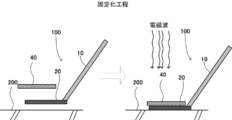
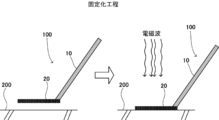
固定化工程において、ポリピリミジン領域のハイブリダイゼーション能を抑制するには、固定化工程において、機能性ポリヌクレオチドとマスキング剤とを相互作用させるようにする。例えば、以下の実施態様による固定化工程が挙げられる。図2A~2Cには、固定化工程における第1のポリピリミジンのハイブリダイゼーション能の抑制を例示する。
図2Aに示すように、機能性ポリヌクレオチドを、当該ポリヌクレオチドとは別個のマスキング剤を併存させた状態で、固相担体に固定化することで、ポリピリミジン領域のハイブリダイゼーション能を抑制できる。具体的には、例えば、機能性ポリヌクレオチドとマスキング剤との混合溶液を、固相担体に対して供給し、固定化(電磁波照射等)することが挙げられる。マスキング剤は、混合溶液中においてあるいは固相担体上において、ポリプリン領域とポリピリミジン領域とが相互作用した結果、ポリピリミジン領域のハイブリダイゼーション能が抑制される。
なお、機能性ポリヌクレオチドとマスキング剤とは必ずしも同時に固相担体上に供給されなくもよい。機能性ポリヌクレオチドを固相担体上の供給後あるいは供給前に、マスキング剤を機能性ポリヌクレオチドの供給部位(あるいは供給予定部位)に供給してもよい。これらの態様によれば、固相担体上において、ポリピリミジン領域とポリプリン領域とが相互作用することができる。
さらに、図2Bに示すように、一部にマスキング剤を備える機能性ポリヌクレオチドを固定化に用いることが挙げられる。マスキング剤は、機能性ポリヌクレオチドの溶液中においてあるいは固相担体上において、ポリプリン領域とポリピリミジン領域が相互作用した結果、ポリピリミジン領域のハイブリダイゼーション能が抑制される。
図2Cに示すように、ポリプリン領域又はその近傍にL体様構造体を備える機能性ポリヌクレオチドを用いることが挙げられる。当該機能性ポリヌクレオチドでは、L体様構造体の存在によって本来的にポリピリミジン領域のハイブリダイゼーション能が抑制されているため、ポリピリミジン領域のハイブリダイゼーション工程におけるハイブリダイゼーション能の発揮は抑制される。
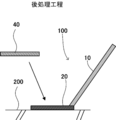
また、例えば、以下の実施態様による固定化工程後において、機能性ポリヌクレオチドとマスキング剤とを相互作用させるようにしてもよい。すなわち、固定化工程後の後処理工程を備えていてもよい。図3には、かかる後処理工程を例示する。
図3に示すように、機能性ポリヌクレオチドを固相担体に固定化する工程後に、機能性ポリヌクレオチドが固定化された固相担体とマスキング剤とをハイブリダイゼーションする工程を後処理工程として実施できる。こうすることで、ポリピリミジン領域とポリプリン領域とを相互作用させることができ、ポリピリミジン領域のハイブリダイゼーション能を抑制できる。
こうした後処理工程は、マスキング剤を含むハイブリダイゼーション媒体を用いて固相担体上の機能性ポリヌクレオチドとハイブリダイゼーションを実施する。
後処理工程としてのハイブリダイゼーション工程は、固相担体をハイブリダイゼーション媒体に浸漬して行う浸漬型のハイブリダイゼーション工程であってもよいし、固相担体の一部にハイブリダイゼーション媒体(クロマトグラフィー媒体でもある)を供給して毛細管現象により固相担体を移動させるクロマトグラフィー型(展開型)のハイブリダイゼーション工程であってもよい。本来的に実施するターゲットとのハイブリダイゼーション工程と同一形態で実施することが好ましい。
後処理工程は、常法に従い実施できる。すなわち、汎用されるハイブリダイゼーション媒体を用い、同様に汎用される温度条件、時間で実施される。典型的には、浸漬型ハイブリダイゼーションの場合には、20℃~60℃のある特定の設定された温度で1時間~2時間程度の反応時間とすることができ、展開型ハイブリダイゼーションの場合には、20℃~40℃の間の環境温度で数分~30分程度の反応時間とすることができる。
後処理工程後は、浸漬型ハイブリダイゼーションの場合には、過剰なマスキング剤を洗浄により除去することが好ましい。展開型ハイブリダイゼーションの場合には、必要に応じて洗浄してもよい。
なお、後処理工程は、必ずしも浸漬型ハイブリダイゼーションや展開型ハイブリダイゼーションの態様でなくてもよく、固定化後に、ポリピリミジン領域とポリプリン領域とが相互作用できるものであればよい。したがって、固相担体上の機能性ポリヌクレオチドの固定化部位に対してマスキング剤溶液を供給してすることによっても、可能である。
以上説明したように、本製造方法によれば、機能性ポリヌクレオチドがポリピリミジン領域を備えることで、機能性ポリヌクレオチドを簡易にかつ強固に固相担体に固定化できる。さらに、本製造方法によれば、ポリピリミジン領域のハイブリダイゼーション能もまた簡易に抑制できて、結果として、優れた確度及び感度でターゲットを捕捉できるポリヌクレオチドの固定化体を製造できる。
なお、本製造方法においては、機能性ポリヌクレオチドにおけるポリピリミジン領域のハイブリダイゼーション能の複数の抑制態様や方法をそれぞれ説明したが、これらの態様のうちの1つのみを備える固定化体を製造するものであってもよいし、組合せ可能な2以上抑制態様を同時に備える固定化体を製造するものであってもよい。例えば、固定化体は、機能性ポリヌクレオチドと別体のマスキング剤と機能性ポリヌクレオチドの一部に備えられるマスキング剤とを併用する態様を備えていてもよい。また、本製造方法は、複数の抑制方法を実施するものであってもよい。例えば、機能性ポリヌクレオチドの固定化工程においてマスキング剤を用いるとともに、固定化工程後にもマスキング剤で後処理工程を実施することができる。
(ハイブリダイズ産物の生産方法等1)
本開示のハイブリダイズ産物の生産方法は、本開示のポリヌクレオチド固定化体の機能性領域とハイブリダイズ可能な被験ポリヌクレオチドとを接触させるハイブリダイゼーション工程、を備えることができる。本生産方法によれば、被験ポリヌクレオチドと機能性ポリヌクレオチドの機能性領域とのハイブリダイゼーションを、ポリピリミジン領域によるハイブリダイゼーション能により阻害されることなく、高い確度かつ被験ポリヌクレオチドが低濃度であっても、被験ポリヌクレオチドと機能性ポリヌクレオチドとのハイブリダイズ産物を生成させることができる。
本開示のハイブリダイズ産物の生産方法は、本開示のポリヌクレオチド固定化体の機能性領域とハイブリダイズ可能な被験ポリヌクレオチドとを接触させるハイブリダイゼーション工程、を備えることができる。本生産方法によれば、被験ポリヌクレオチドと機能性ポリヌクレオチドの機能性領域とのハイブリダイゼーションを、ポリピリミジン領域によるハイブリダイゼーション能により阻害されることなく、高い確度かつ被験ポリヌクレオチドが低濃度であっても、被験ポリヌクレオチドと機能性ポリヌクレオチドとのハイブリダイズ産物を生成させることができる。
被験ポリヌクレオチドとしては、特に限定しないで各種態様ものが使用される被験ポリヌクレオチドとしては、機能性領域とハイブリダイズ可能な領域を持っていればよく、DNA1本鎖若しくは二本鎖のほか、RNA一本鎖若しくは二本鎖、さらには、DNA/RNAハイブリッド、DNA/RNAキメラ、部分二本鎖DNA等が挙げられる。また、ハイブリダイズ領域をDNAタグ等として有する抗体などのタンパク質等も挙げられる。
こうした被験ポリヌクレオチドは、天然のあるいは人工的に合成されたものであってもよい。被験ポリヌクレオチドは、生体試料等からPCRによる増幅反応によって取得されるものであってもよい。
被験ポリヌクレオチドは、ハイブリダイズ産物を検出可能に標識物質又は標識物質を結合可能な物質を備えていてもよい。標識物質は、特に限定しないが、典型的には、蛍光、放射能、酵素(例えば、ペルオキシダーゼ、アルカリフォスファターゼ等)、燐光、化学発光、着色などを利用した標識物質が挙げられる。標識物質は、目視(肉眼で)で検出可能な発光又は発色を提示する発光物質又は発色物質であることが好ましい。この種の標識物質としては、典型的には、各種染料、各種顔料、ルミノール、イソルミノール、アクリジニウム化合物、オレフィン、エノールエーテル、エナミン、アリールビニルエーテル、ジオキセン、アリールイミダゾール、ルシゲニン、ルシフェリン及びエクリオンを包含する化学発光物質が挙げられる。また、こうした標識物質でラベルされているラテックス粒子などの粒子も挙げられる。さらに、金コロイド若しくはゾル又は銀コロイド若しくはゾルを包含するコロイド若しくはゾル等が挙げられる。さらにまた、金属粒子、無機粒子等が挙げられる。
標識物質結合物質は、例えば、タンパク質-タンパク質相互作用、低分子化合物-タンパク質相互作用等を利用できる。例えば、抗原抗体反応における抗体や、アビジン(ストレプトアビジン)-ビオチンシステムにおけるビオチン、抗ジゴキシゲニン(DIG)-ジゴキシゲニン(DIG)システムにおけるジゴキシゲニン、又は抗FITC-FITCシステムにおけるFITC等に代表されるハプテン類などが挙げられる。この場合、最終的に検出のために用いられる標識物質は、標識物質結合物質と相互作用する他方の分子又は物質(例えば、抗原、すなわち、ストレプトアビジン、抗FITCなど)を、標識物質結合物質との結合のための部位として備えるように修飾される。
ハイブリダイゼーション工程は、既に説明したように、浸漬型ハイブリダイゼーションであってもよいし、展開型ハイブリダイゼーションであってもよい。これらのハイブリダイゼーション条件はそれぞれ当業者において周知であり、当業者であれば必要に応じて公知技術を参照して実施することができる。
本ハイブリダイズ産物の生産方法における、ハイブリダイゼーション工程後に、ハイブリダイズ産物の検出工程を備えることができる。これによりハイブリダイズ産物を検出することができる。検出工程は、ハイブリダイズ産物が保持する標識物質に基づいてハイブリダイズ産物を検出する工程である。ハイブリダイズ産物の有無あるいは捕捉量に依存する標識物質の有無あるいはその量に基づくシグナルは、標識物質の種類等に応じた検出方法で検出することができる。こうしたシグナルに基づき、被験ポリヌクレオチドの存在やその量等を評価することができる。
(ハイブリダイズ産物の生産方法等2)
本開示によれば、また、別態様のハイブリダイズ産物の生産方法及び検出方法が提供される。すなわち、機能性ポリヌクレオチドを固定化した固定化担体であって、ポリピリミジン領域のハイブリダイゼーション能が未だ抑制されていない状態の固定化担体を用いた生産方法等も提供される。
本開示によれば、また、別態様のハイブリダイズ産物の生産方法及び検出方法が提供される。すなわち、機能性ポリヌクレオチドを固定化した固定化担体であって、ポリピリミジン領域のハイブリダイゼーション能が未だ抑制されていない状態の固定化担体を用いた生産方法等も提供される。
本生産方法等では、既に説明したいずれの態様のポリピリミジン領域のハイブリダイゼーション能の抑制状態を備えていない機能性ポリヌクレオチドを固相担体に固定化した固定化体を用いる。すなわち、本生産方法等では、L体様構造体もマスキング剤もその一部に有していない機能性ポリヌクレオチドを固定化した固定化体に対して、ハイブリダイゼーション工程に先立ってあるいはハイブリダイゼーション工程において、ポリピリミジン領域とポリプリンとを相互作用させるようにする。
ハイブリダイゼーション工程に先立って、ポリピリミジン領域とポリプリン領域とを相互作用させるには、ハイブリダイゼーション工程前に前処理工程として、固相担体上の機能性ポリヌクレオチドとマスキング剤とを接触させる工程を実施する。当該工程により、両者は相互作用し、その結果、ポリピリミジン領域のハイブリダイゼーション能が抑制される。この前処理工程は、既述のポリヌクレオチド固定化体の製造方法における後処理工程と同様にして実施することができる。
また、ハイブリダイゼーション工程において、ポリピリミジン領域とポリプリン領域とを相互作用させるには、ハイブリダイゼーション媒体において被験ポリヌクレオチドとともにマスキング剤を存在させるようにすればよい。こうすることで、まさにハイブリダイゼーション工程においてポリピリミジン領域のハイブリダイゼーション能を抑制できる。
例えば、ハイブリダイゼーション媒体にマスキング剤を含めておくことができる。また、マスキング剤を予め保持させた固相担体を用いてもよい。こうすることで、ハイブリダイゼーション工程においてハイブリダイゼーション媒体内にマスキング剤が移動することで、ハイブリダイゼーション媒体にマスキング剤が存在することになる。特に、展開型ハイブリダイゼーションの場合には、固相担体が多孔質体であるために保持させやすい。例えば、展開型ハイブリダイゼーションにおいては、ポリヌクレオチド固定化体の一部(例えば、ハイブリダイゼーション媒体と接触する部位やハイブリダイゼーション媒体が展開に伴い通過する部位であって機能性ポリヌクレオチドの固定化部位よりも手前の部位にマスキング剤を吸着保持させておくようにしてもよい。
この態様の前処理工程やハイブリダイゼーション工程を備えることでも、高い確度と検出能でハイブリダイズ産物を生産し検出できる。
さらに、ポリピリミジン領域のハイブリダイゼーション能が抑制された固定化体を用いてハイブリダイゼーション工程を実施する場合においても、こうした前処理工程及び/又はハイブリダイゼーション工程を適用できる。すなわち、こうした工程を実施することで、ポリピリミジン領域のハイブリダイゼーション能の抑制状態が経時的に低下し、ハイブリダイゼーション能の少なくとも一部が復活した場合であっても、かかるハイブリダイゼーション能の影響を抑制して良好なハイブリダイゼーション工程を実施することができる。
(ポリヌクレオチド又はそのセット)
本開示によれば、ポリヌクレオチド(プローブ)やそのセットが提供される。これらのポリヌクレオチドやそのセットは、いずれも機能性領域との相互作用で被験ポリヌクレオチドを捕捉するプローブとして有用である。
本開示によれば、ポリヌクレオチド(プローブ)やそのセットが提供される。これらのポリヌクレオチドやそのセットは、いずれも機能性領域との相互作用で被験ポリヌクレオチドを捕捉するプローブとして有用である。
本開示のセットは、固相担体に固定化するためのポリヌクレオチドのセットである。このセットは、本開示の機能性ポリヌクレオチドと、マスキング剤とを備えている。このセットによれば、確度及び検出感度が良好なハイブリダイゼーションを実現できる。
本開示のポリヌクレオチドは、固相担体へ固定化するためのポリヌクレオチドである。このポリヌクレオチドは、本開示の機能性ポリヌクレオチドであってポリピリミジン領域又はその近傍にL体様構造体を備えるポリヌクレオチドである。
また、本開示のポリヌクレオチドは、本開示の機能性ポリヌクレオチドであって、ポリピリミジン領域の少なくとも一部にハイブリダイズ可能なポリプリン領域を有するマスキング剤をその一部に備えている。
(固定化体を含むキット)
本開示によれば、機能性ポリヌクレオチドが固相担体に固定化された固定化体とマスキング剤とのキットも提供される。このキットは、機能性領域との相互作用で被験ポリヌクレオチドを捕捉するプローブとして有用である。このキットにおいて、機能性ポリヌクレオチドは、第1及び第2の態様の機能性ポリヌクレオチドであることが好ましい。特に、第1の態様の機能性ポリヌクレオチドであることが好ましい。このキットは、機能性ポリヌクレオチドのポリピリミジン領域の少なくとも一部にハイブリダイズ可能なマスキング剤を備えることができる。こうしたマスキング剤を備えることで、ハイブリダイゼーション工程に先立って又はハイブリダイゼーション工程において、ポリピリミジン領域のハイブリダイゼーション能を確実に抑制できる。
本開示によれば、機能性ポリヌクレオチドが固相担体に固定化された固定化体とマスキング剤とのキットも提供される。このキットは、機能性領域との相互作用で被験ポリヌクレオチドを捕捉するプローブとして有用である。このキットにおいて、機能性ポリヌクレオチドは、第1及び第2の態様の機能性ポリヌクレオチドであることが好ましい。特に、第1の態様の機能性ポリヌクレオチドであることが好ましい。このキットは、機能性ポリヌクレオチドのポリピリミジン領域の少なくとも一部にハイブリダイズ可能なマスキング剤を備えることができる。こうしたマスキング剤を備えることで、ハイブリダイゼーション工程に先立って又はハイブリダイゼーション工程において、ポリピリミジン領域のハイブリダイゼーション能を確実に抑制できる。
マスキング剤は、独立した試薬としてキットに含まれていてもよいが、固定化担体の固相担体に保持されて、ハイブリダイゼーション工程において固相担体から解放されるようになっていてもよい。
以下、本開示を具現化した実施例について説明するが、以下の実施例は本開示を限定するものではない。
以下の実験においては、同一の機能性領域に加えて各種形態のポリピリミジン領域等を備えるオリゴヌクレオチド(DNA)を合成し、プローブとして使用して展開型クロマトグラフィーによりハイブリダイゼーションを実施した。
(比較例1)
本比較例では、機能性領域とpolyT(20個の連続したチミジンデオキシリボヌクレオチドからなる(以下、polyT(20)と標記する)とを備えるオリゴヌクレオチド(DNA)をプローブとして固相担体に固定化して得られた固定化体を用いた。
本比較例では、機能性領域とpolyT(20個の連続したチミジンデオキシリボヌクレオチドからなる(以下、polyT(20)と標記する)とを備えるオリゴヌクレオチド(DNA)をプローブとして固相担体に固定化して得られた固定化体を用いた。
(1)展開型クロマトグラフィーの作製
メルクミリポア製Hi-Flow Plus メンブレンシート(60mm x 600mm)に表1に示す塩基配列からなるオリゴヌクレオチドをプローブとするプローブ溶液を、特開2003-75305号公報に記載されている吐出ユニット(インクジェット法)を用いた日本ガイシ株式会社GENESHOT(登録商標)スポッターを用いて、スポットした。本比較例以下の比較例及び実施例を含む全ての実験例においてフローコントロールとして5’-TTTTTTTTTTTTTTTTTTTT-biotin-3’を使用した。
メルクミリポア製Hi-Flow Plus メンブレンシート(60mm x 600mm)に表1に示す塩基配列からなるオリゴヌクレオチドをプローブとするプローブ溶液を、特開2003-75305号公報に記載されている吐出ユニット(インクジェット法)を用いた日本ガイシ株式会社GENESHOT(登録商標)スポッターを用いて、スポットした。本比較例以下の比較例及び実施例を含む全ての実験例においてフローコントロールとして5’-TTTTTTTTTTTTTTTTTTTT-biotin-3’を使用した。

スポットの後の処置としてSpectroline社のUV照射装置(XL-1500UV Crosslinker)を用いて、280nmの成分を含む波長にて300mJ/cm2程度の紫外線光の照射を行って固定化を実施した。
(2)サンプルの反応
サンプルには(株)日本遺伝子研究所にて合成されたオリゴDNAを使用した。
サンプルには(株)日本遺伝子研究所にて合成されたオリゴDNAを使用した。

サンプルを用いての展開型クロマトグラフィーへの反応及びその検出手順は以下の通りとした。
サンプル組成
展開液* 20.0 μl
ラテックス液* 2.0 μl
サンプル(10nM) 4.2 μl
TE buffer 15.8 μl
Subtotal 42.0 μl
サンプル組成
展開液* 20.0 μl
ラテックス液* 2.0 μl
サンプル(10nM) 4.2 μl
TE buffer 15.8 μl
Subtotal 42.0 μl
なお、使用したラテックス保存液には青色系の着色剤を含有するポリスチレン系のラテックスビーズにアビジン(ストレプトアビジン)を被覆させたものを任意の濃度となるようにクロマト展開液で調製を行って使用した。また、クロマト展開液には、Phosphate buffered salineを使用した。
(ハイブリダイズおよび発色反応)
上記調製サンプル各42μlを0.2mlチューブに加えて、展開型クロマトグラフィーを差込んで反応を開始した。サンプル液は約20分間ですべて吸い上がり反応は完了した。反応終了後、展開型ハイブリダイゼーション用担体であるクロマトグラフィーを風乾させた後、目視による反応箇所の確認及び画像を撮影した。
上記調製サンプル各42μlを0.2mlチューブに加えて、展開型クロマトグラフィーを差込んで反応を開始した。サンプル液は約20分間ですべて吸い上がり反応は完了した。反応終了後、展開型ハイブリダイゼーション用担体であるクロマトグラフィーを風乾させた後、目視による反応箇所の確認及び画像を撮影した。
(検出判定)
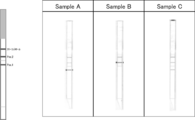
各サンプルの反応および乾燥後の発色の有無を目視で確認した。結果を図4に示す。図4に示すように、サンプルAを反応させた場合、Position1への反応に加え、Position2のキャプチャープローブへの非特異的に反応する結果を確認した。サンプルCを反応させた場合はPosition1および2に対し反応する結果を確認した。これは、キャプチャープローブのpolyT配列部分に対しサンプル中のポリAがハイブリダイズしている可能性があることを示す結果であると考えられた。
各サンプルの反応および乾燥後の発色の有無を目視で確認した。結果を図4に示す。図4に示すように、サンプルAを反応させた場合、Position1への反応に加え、Position2のキャプチャープローブへの非特異的に反応する結果を確認した。サンプルCを反応させた場合はPosition1および2に対し反応する結果を確認した。これは、キャプチャープローブのpolyT配列部分に対しサンプル中のポリAがハイブリダイズしている可能性があることを示す結果であると考えられた。
(比較例2)
以下に示すオリゴヌクレオチドを用いる以外は、比較例1と同様に操作した。結果を図5に示す。図5に示すように、比較例1と同様に、サンプルA中のポリAがキャプチャープローブのpolyT配列部分に対しハイブリダイズしている可能性があることを示す結果であると考えられた。
以下に示すオリゴヌクレオチドを用いる以外は、比較例1と同様に操作した。結果を図5に示す。図5に示すように、比較例1と同様に、サンプルA中のポリAがキャプチャープローブのpolyT配列部分に対しハイブリダイズしている可能性があることを示す結果であると考えられた。

(比較例3)
以下に示すオリゴヌクレオチドを用いる以外は、比較例1と同様に操作した。結果を図6に示す。図6に示すように、比較例1と同様に、サンプルA中のポリAがキャプチャープローブのpolyT配列部分に対しハイブリダイズしている可能性があることを示す結果であると考えられた。
以下に示すオリゴヌクレオチドを用いる以外は、比較例1と同様に操作した。結果を図6に示す。図6に示すように、比較例1と同様に、サンプルA中のポリAがキャプチャープローブのpolyT配列部分に対しハイブリダイズしている可能性があることを示す結果であると考えられた。

(比較例4)
以下に示すオリゴヌクレオチドを用いる以外は、比較例1と同様に操作した。結果を図7に示す。図7に示すように、いずれにおいても発色を確認できなかった。これはプローブが固相担体に十分に固定されなかった結果であると考えられた。
以下に示すオリゴヌクレオチドを用いる以外は、比較例1と同様に操作した。結果を図7に示す。図7に示すように、いずれにおいても発色を確認できなかった。これはプローブが固相担体に十分に固定されなかった結果であると考えられた。

(比較例5)
以下に示すオリゴヌクレオチドを用いる以外は、比較例1と同様に操作した。なお、Probe9および10配列中のXにはSpecerC3(GrenResearch社アミダイト試薬)を使用した。結果を図8に示す。図8に示すように、比較例1と同様に、サンプルA中のポリAがキャプチャープローブのpolyT配列部分に対しハイブリダイズしている可能性があることを示す結果であると考えられた。
以下に示すオリゴヌクレオチドを用いる以外は、比較例1と同様に操作した。なお、Probe9および10配列中のXにはSpecerC3(GrenResearch社アミダイト試薬)を使用した。結果を図8に示す。図8に示すように、比較例1と同様に、サンプルA中のポリAがキャプチャープローブのpolyT配列部分に対しハイブリダイズしている可能性があることを示す結果であると考えられた。

(実施例1)
以下に示すオリゴヌクレオチドをプローブとして用いる以外は、比較例1と同様に操作した。なお、Probe11および12配列中の下線を引いた配列にはL体のアミダイトを用いて合成した。結果を図9に示す。
以下に示すオリゴヌクレオチドをプローブとして用いる以外は、比較例1と同様に操作した。なお、Probe11および12配列中の下線を引いた配列にはL体のアミダイトを用いて合成した。結果を図9に示す。

図9に示すように、サンプルAまたはBそれぞれを反応させた場合、それぞれ狙いとするラインのみ発色を確認できた。一方で、サンプルCを反応させた場合には、いずれのラインにおいても発色は確認できず、各サンプル配列がキャプチャープローブのpolyT配列部分に対しハイブリダイズする可能性が排除されている結果を本改良により示されたと考えられた。
(実施例2)
ハイブリダイゼーション工程に先立って、以下に示す前処理工程を行い前処理後のクロマトグラフィーにつきハイブリダイゼーション工程を行った以外は、比較例1と同様に操作した。前処理工程は、ハイブリダイゼーション媒体20μlにポリA(20)(10μM)4μl及びTEbuffer16μlを加えた前処理試薬40μlを0.2mlにチューブに加えてクロマトグラフィーを差し込んで展開を開始し、20分後で展開を終了させ、風乾した。結果を図10に示す。
ハイブリダイゼーション工程に先立って、以下に示す前処理工程を行い前処理後のクロマトグラフィーにつきハイブリダイゼーション工程を行った以外は、比較例1と同様に操作した。前処理工程は、ハイブリダイゼーション媒体20μlにポリA(20)(10μM)4μl及びTEbuffer16μlを加えた前処理試薬40μlを0.2mlにチューブに加えてクロマトグラフィーを差し込んで展開を開始し、20分後で展開を終了させ、風乾した。結果を図10に示す。
図10に示すように、サンプルAまたはBそれぞれを反応させた場合、それぞれ狙いとするラインのみ発色を確認できた。一方で、サンプルCを反応させた場合には、いずれのラインにおいても発色は確認できず、polyTとpolyAとが相互作用してハイブリダイゼーションすることにより、各サンプル配列がキャプチャープローブのpolyT配列部分に対しハイブリダイズする可能性が排除されている結果を本改良により示されたと考えられた。
(実施例3)
オリゴヌクレオチド溶液に、予めpolyA(20)配列のDNAプローブ溶液を10等量混合して用いる以外は、比較例1と同様に操作した。結果を図11に示す。
オリゴヌクレオチド溶液に、予めpolyA(20)配列のDNAプローブ溶液を10等量混合して用いる以外は、比較例1と同様に操作した。結果を図11に示す。
図11に示すように、サンプルAまたはBそれぞれを反応させた場合、それぞれ狙いとするラインのみ発色を確認できた。一方で、サンプルCを反応させた場合には、いずれのラインにおいても発色は確認できなかった。このことは、実施例2と同様に、polyTとpolyAとが相互作用してハイブリダイゼーションすることにより、各サンプル配列がキャプチャープローブのpolyT配列部分に対しハイブリダイズする可能性が排除されている結果を本改良により示されたと考えられた。
(実施例4)
以下に示すオリゴヌクレオチドをプローブとして用いる以外は、比較例1と同様に操作した。結果を図12に示す。
以下に示すオリゴヌクレオチドをプローブとして用いる以外は、比較例1と同様に操作した。結果を図12に示す。
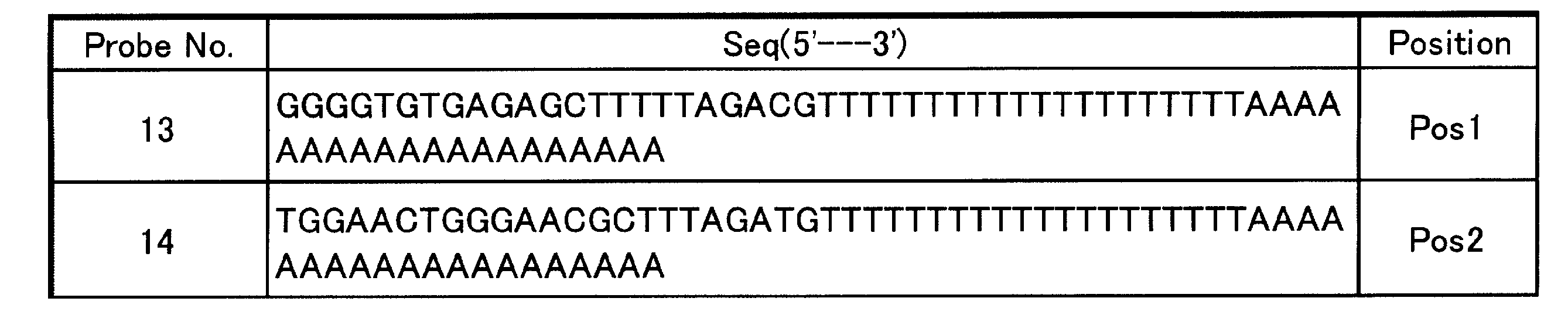
図12に示すように、サンプルAまたはBそれぞれを反応させた場合、それぞれ狙いとするラインのみ発色を確認できた。一方で、サンプルCを反応させた場合には、いずれのラインにおいても発色は確認できなかった。このことは、実施例2、3と同様に、polyTとpolyAとが相互作用してハイブリダイゼーションすることにより、各サンプル配列がキャプチャープローブのpolyT配列部分に対しハイブリダイズする可能性が排除されている結果を本改良により示されたと考えられた。
配列番号1~102、106~117:プローブ
配列番号103~105:合成オリゴヌクレオチド
配列番号103~105:合成オリゴヌクレオチド
Claims (17)
- 固相担体と、
2以上のピリミジン塩基が連続する塩基配列からなるポリピリミジン領域と機能的な塩基配列からなる機能性領域とを備えるポリヌクレオチドであって、前記ポリピリミジン領域を介して前記固相担体に固定化された機能性ポリヌクレオチドと、
を備え、
前記ポリピリミジン領域のハイブリダイゼーション能が抑制されている、ポリヌクレオチド固定化体。 - 前記ポリピリミジン領域の少なくとも一部にハイブリダイズ可能なポリプリン領域を有するポリヌクレオチドであるマスキング剤を備える、請求項1に記載のポリヌクレオチド固定化体。
- 前記マスキング剤は、前記機能性ポリヌクレオチドとは独立したポリヌクレオチドである、請求項2に記載のポリヌクレオチド固定化体。
- 前記マスキング剤は、前記機能性ポリヌクレオチドの一部である、請求項2に記載のポリヌクレオチド固定化体。
- 前記ポリピリミジン領域は非天然型のピリミジン塩基を含む、請求項1に記載のポリヌクレオチド固定化体。
- 前記ポリピリミジン領域は、ピリミジン塩基が10以上20以下連続する塩基配列からなる、請求項1~5のいずれかに記載のポリヌクレオチド固定化体。
- 前記機能性領域は、配列番号1~100で表される塩基配列又はその相補配列からなる、請求項1~6のいずれかに記載のポリヌクレオチド固定化体。
- 前記固相担体は、展開型ハイブリダイゼーション用担体である、請求項1~7のいずれかに記載のポリヌクレオチド固定化体。
- 前記固相担体は、浸漬型ハイブリダイゼーション用担体である、請求項1~7のいずれかに記載のポリヌクレオチド固定化体。
- 固相担体へ固定化するためのポリヌクレオチドセットであって、
2以上のピリミジン塩基が連続する塩基配列からなるポリピリミジン領域と、機能的な塩基配列からなる機能性領域と、を備える機能性ポリヌクレオチドと、
前記ポリピリミジン領域の少なくとも一部にハイブリダイズ可能なポリプリン領域を有するポリヌクレオチドであるマスキング剤と、
を備える、セット。 - 固相担体へ固定化するためのポリヌクレオチドであって、
2以上のピリミジン塩基が連続する塩基配列からなるポリピリミジン領域であって、非天然型のピリミジン塩基を含むポリピリミジン領域と、機能的な塩基配列からなる機能性領域と、を備える機能性ポリヌクレオチド。 - 固相担体へ固定化するためのポリヌクレオチドであって、
2以上のピリミジン塩基が連続する塩基配列からなるポリピリミジン領域と、前記ポリピリミジン領域の少なくとも一部にハイブリダイズ可能なポリプリン領域を有するマスキング剤領域と、機能的な塩基配列からなる機能性領域と、を備える機能性ポリヌクレオチド。 - ポリヌクレオチド固定化体の製造方法であって、
2以上のピリミジン塩基が連続する塩基配列からなるポリピリミジン領域と機能的な塩基配列からなる機能性領域とを備える機能性ポリヌクレオチドを、固相担体に対して、前記ポリピリミジン領域を介して固定化する工程と、
前記固定化工程において、あるいは前記固定化工程の後に、前記ポリピリミジン領域のハイブリダイゼーション能を抑制する、製造方法。 - 前記固定化工程は、前記ポリピリミジン領域と前記ポリピリミジン領域の少なくとも一部にハイブリダイズ可能なポリプリン領域を有するポリヌクレオチドであるマスキング剤の前記ポリプリン領域とを相互作用させる工程である、請求項13に記載の製造方法。
- 前記固定化工程後に、前記ポリピリミジン領域と前記ポリピリミジン領域の少なくとも一部にハイブリダイズ可能なポリプリン領域を有するポリヌクレオチドであるマスキング剤の前記ポリプリン領域とを相互作用させる工程である、請求項13に記載の製造方法。
- ハイブリダイズ産物の生産方法であって、
請求項1~9のいずれかに記載のポリヌクレオチド固定化体の前記機能性領域とハイブリダイズ可能な被験ポリヌクレオチドとを接触させるハイブリダイゼーション工程、
を備える、生産方法。 - ハイブリダイズ産物の検出方法であって、
請求項1~9のいずれかに記載のポリヌクレオチド固定化体の前記機能性領域とハイブリダイズ可能な被験ポリヌクレオチドとを接触させるハイブリダイゼーション工程と、
前記機能性ポリヌクレオチドと前記被験ポリヌクレオチドとのハイブリダイズ産物を検出する工程と、
を備える、検出方法。
Priority Applications (1)
| Application Number | Priority Date | Filing Date | Title |
|---|---|---|---|
| JP2015549889A JP6032721B2 (ja) | 2014-03-12 | 2015-03-12 | ポリヌクレオチド固定化体 |
Applications Claiming Priority (2)
| Application Number | Priority Date | Filing Date | Title |
|---|---|---|---|
| JP2014-048352 | 2014-03-12 | ||
| JP2014048352 | 2014-03-12 |
Publications (1)
| Publication Number | Publication Date |
|---|---|
| WO2015137465A1 true WO2015137465A1 (ja) | 2015-09-17 |
Family
ID=54071902
Family Applications (1)
| Application Number | Title | Priority Date | Filing Date |
|---|---|---|---|
| PCT/JP2015/057371 Ceased WO2015137465A1 (ja) | 2014-03-12 | 2015-03-12 | ポリヌクレオチド固定化体 |
Country Status (2)
| Country | Link |
|---|---|
| JP (1) | JP6032721B2 (ja) |
| WO (1) | WO2015137465A1 (ja) |
Citations (2)
| Publication number | Priority date | Publication date | Assignee | Title |
|---|---|---|---|---|
| JP2000232883A (ja) * | 1999-02-02 | 2000-08-29 | Vysis Inc | 核酸ミクロアレイを用いる遺伝子発現およびゲノム異常の同時測定 |
| JP2001281246A (ja) * | 2000-01-26 | 2001-10-10 | Nisshinbo Ind Inc | 固定化核酸及び核酸の検出法 |
Family Cites Families (2)
| Publication number | Priority date | Publication date | Assignee | Title |
|---|---|---|---|---|
| US20070016974A1 (en) * | 1999-09-30 | 2007-01-18 | Byrum Joseph R | Nucleic acid molecules and other molecules associated with plants |
| US8088976B2 (en) * | 2005-02-24 | 2012-01-03 | Monsanto Technology Llc | Methods for genetic control of plant pest infestation and compositions thereof |
-
2015
- 2015-03-12 WO PCT/JP2015/057371 patent/WO2015137465A1/ja not_active Ceased
- 2015-03-12 JP JP2015549889A patent/JP6032721B2/ja not_active Expired - Fee Related
Patent Citations (2)
| Publication number | Priority date | Publication date | Assignee | Title |
|---|---|---|---|---|
| JP2000232883A (ja) * | 1999-02-02 | 2000-08-29 | Vysis Inc | 核酸ミクロアレイを用いる遺伝子発現およびゲノム異常の同時測定 |
| JP2001281246A (ja) * | 2000-01-26 | 2001-10-10 | Nisshinbo Ind Inc | 固定化核酸及び核酸の検出法 |
Also Published As
| Publication number | Publication date |
|---|---|
| JP6032721B2 (ja) | 2016-11-30 |
| JPWO2015137465A1 (ja) | 2017-04-06 |
Similar Documents
| Publication | Publication Date | Title |
|---|---|---|
| CN103797119B (zh) | 靶核酸的检测方法 | |
| JP7372927B6 (ja) | 遺伝子およびタンパク質の発現を検出する生体分子プローブおよびその検出方法 | |
| US20210123911A1 (en) | Multipart reagents having increased avidity for polymerase binding | |
| CN116194592A (zh) | 流动池系统和装置 | |
| CN115461469A (zh) | 空间条形码化 | |
| JP6182300B2 (ja) | 標的核酸の検出方法 | |
| KR102843262B1 (ko) | 자가-발광을 기초로 하는 단일-채널 시퀀싱 방법 | |
| JP6691380B2 (ja) | 短鎖rnaの検出方法 | |
| JP6095645B2 (ja) | 標的核酸分子の検出方法 | |
| EP1479783A2 (en) | PCR amplification method, pcr primer set, pcr amplification product, and method for detection of nucleic acid using the amplification method | |
| CN102171368B (zh) | 在载体上固定化核酸的方法 | |
| JP6032721B2 (ja) | ポリヌクレオチド固定化体 | |
| JPWO2006095550A1 (ja) | Pcrプライマー、それを利用したpcr法及びpcr増幅産物、並びにpcr増幅産物を利用するデバイス及びdna−タンパク複合体 | |
| US9267171B2 (en) | DNA photolithography with cinnamate crosslinkers | |
| JP2014057565A (ja) | 標的核酸の検出方法 | |
| WO2014156513A1 (ja) | 変異の検出方法 | |
| WO2015012363A1 (ja) | 標的核酸の検出方法 | |
| JP5427408B2 (ja) | 目的の生体分子、特に核酸を含む生体試料を標識又は処理する方法 | |
| JP6076500B2 (ja) | 標的物質の検出方法 | |
| WO2012156718A1 (en) | Method of immobilising rna onto a surface | |
| WO2009104926A1 (ko) | Hpv 지노타이핑용 칩 | |
| WO2026007629A1 (zh) | 适配体在可寻址性检测中应用 | |
| KR101429817B1 (ko) | 앱타머 칩을 이용한 표적 세포의 검출 및 정량 방법 | |
| HK40055932B (en) | Single-channel sequencing method based on self-luminescence | |
| CN1954085A (zh) | Rna的微阵列检测 |
Legal Events
| Date | Code | Title | Description |
|---|---|---|---|
| ENP | Entry into the national phase |
Ref document number: 2015549889 Country of ref document: JP Kind code of ref document: A |
|
| 121 | Ep: the epo has been informed by wipo that ep was designated in this application |
Ref document number: 15760781 Country of ref document: EP Kind code of ref document: A1 |
|
| NENP | Non-entry into the national phase |
Ref country code: DE |
|
| 122 | Ep: pct application non-entry in european phase |
Ref document number: 15760781 Country of ref document: EP Kind code of ref document: A1 |