WO2015115227A1 - 積層フィルム - Google Patents
積層フィルム Download PDFInfo
- Publication number
- WO2015115227A1 WO2015115227A1 PCT/JP2015/051209 JP2015051209W WO2015115227A1 WO 2015115227 A1 WO2015115227 A1 WO 2015115227A1 JP 2015051209 W JP2015051209 W JP 2015051209W WO 2015115227 A1 WO2015115227 A1 WO 2015115227A1
- Authority
- WO
- WIPO (PCT)
- Prior art keywords
- surface layer
- mass
- segment
- condition
- laminated film
- Prior art date
- Legal status (The legal status is an assumption and is not a legal conclusion. Google has not performed a legal analysis and makes no representation as to the accuracy of the status listed.)
- Ceased
Links
Images

Classifications
-
- B—PERFORMING OPERATIONS; TRANSPORTING
- B32—LAYERED PRODUCTS
- B32B—LAYERED PRODUCTS, i.e. PRODUCTS BUILT-UP OF STRATA OF FLAT OR NON-FLAT, e.g. CELLULAR OR HONEYCOMB, FORM
- B32B27/00—Layered products comprising a layer of synthetic resin
- B32B27/06—Layered products comprising a layer of synthetic resin as the main or only constituent of a layer, which is next to another layer of the same or of a different material
- B32B27/08—Layered products comprising a layer of synthetic resin as the main or only constituent of a layer, which is next to another layer of the same or of a different material of synthetic resin
-
- B—PERFORMING OPERATIONS; TRANSPORTING
- B32—LAYERED PRODUCTS
- B32B—LAYERED PRODUCTS, i.e. PRODUCTS BUILT-UP OF STRATA OF FLAT OR NON-FLAT, e.g. CELLULAR OR HONEYCOMB, FORM
- B32B27/00—Layered products comprising a layer of synthetic resin
-
- C—CHEMISTRY; METALLURGY
- C09—DYES; PAINTS; POLISHES; NATURAL RESINS; ADHESIVES; COMPOSITIONS NOT OTHERWISE PROVIDED FOR; APPLICATIONS OF MATERIALS NOT OTHERWISE PROVIDED FOR
- C09D—COATING COMPOSITIONS, e.g. PAINTS, VARNISHES OR LACQUERS; FILLING PASTES; CHEMICAL PAINT OR INK REMOVERS; INKS; CORRECTING FLUIDS; WOODSTAINS; PASTES OR SOLIDS FOR COLOURING OR PRINTING; USE OF MATERIALS THEREFOR
- C09D183/00—Coating compositions based on macromolecular compounds obtained by reactions forming in the main chain of the macromolecule a linkage containing silicon, with or without sulfur, nitrogen, oxygen, or carbon only; Coating compositions based on derivatives of such polymers
- C09D183/04—Polysiloxanes
-
- B—PERFORMING OPERATIONS; TRANSPORTING
- B32—LAYERED PRODUCTS
- B32B—LAYERED PRODUCTS, i.e. PRODUCTS BUILT-UP OF STRATA OF FLAT OR NON-FLAT, e.g. CELLULAR OR HONEYCOMB, FORM
- B32B27/00—Layered products comprising a layer of synthetic resin
- B32B27/36—Layered products comprising a layer of synthetic resin comprising polyesters
-
- B—PERFORMING OPERATIONS; TRANSPORTING
- B32—LAYERED PRODUCTS
- B32B—LAYERED PRODUCTS, i.e. PRODUCTS BUILT-UP OF STRATA OF FLAT OR NON-FLAT, e.g. CELLULAR OR HONEYCOMB, FORM
- B32B27/00—Layered products comprising a layer of synthetic resin
- B32B27/40—Layered products comprising a layer of synthetic resin comprising polyurethanes
-
- B—PERFORMING OPERATIONS; TRANSPORTING
- B32—LAYERED PRODUCTS
- B32B—LAYERED PRODUCTS, i.e. PRODUCTS BUILT-UP OF STRATA OF FLAT OR NON-FLAT, e.g. CELLULAR OR HONEYCOMB, FORM
- B32B7/00—Layered products characterised by the relation between layers; Layered products characterised by the relative orientation of features between layers, or by the relative values of a measurable parameter between layers, i.e. products comprising layers having different physical, chemical or physicochemical properties; Layered products characterised by the interconnection of layers
- B32B7/02—Physical, chemical or physicochemical properties
-
- C—CHEMISTRY; METALLURGY
- C08—ORGANIC MACROMOLECULAR COMPOUNDS; THEIR PREPARATION OR CHEMICAL WORKING-UP; COMPOSITIONS BASED THEREON
- C08G—MACROMOLECULAR COMPOUNDS OBTAINED OTHERWISE THAN BY REACTIONS ONLY INVOLVING UNSATURATED CARBON-TO-CARBON BONDS
- C08G18/00—Polymeric products of isocyanates or isothiocyanates
- C08G18/06—Polymeric products of isocyanates or isothiocyanates with compounds having active hydrogen
- C08G18/28—Polymeric products of isocyanates or isothiocyanates with compounds having active hydrogen characterised by the compounds used containing active hydrogen
- C08G18/40—High-molecular-weight compounds
- C08G18/42—Polycondensates having carboxylic or carbonic ester groups in the main chain
- C08G18/44—Polycarbonates
-
- C—CHEMISTRY; METALLURGY
- C08—ORGANIC MACROMOLECULAR COMPOUNDS; THEIR PREPARATION OR CHEMICAL WORKING-UP; COMPOSITIONS BASED THEREON
- C08G—MACROMOLECULAR COMPOUNDS OBTAINED OTHERWISE THAN BY REACTIONS ONLY INVOLVING UNSATURATED CARBON-TO-CARBON BONDS
- C08G18/00—Polymeric products of isocyanates or isothiocyanates
- C08G18/06—Polymeric products of isocyanates or isothiocyanates with compounds having active hydrogen
- C08G18/28—Polymeric products of isocyanates or isothiocyanates with compounds having active hydrogen characterised by the compounds used containing active hydrogen
- C08G18/67—Unsaturated compounds having active hydrogen
- C08G18/671—Unsaturated compounds having only one group containing active hydrogen
- C08G18/672—Esters of acrylic or alkyl acrylic acid having only one group containing active hydrogen
-
- B—PERFORMING OPERATIONS; TRANSPORTING
- B32—LAYERED PRODUCTS
- B32B—LAYERED PRODUCTS, i.e. PRODUCTS BUILT-UP OF STRATA OF FLAT OR NON-FLAT, e.g. CELLULAR OR HONEYCOMB, FORM
- B32B2250/00—Layers arrangement
- B32B2250/24—All layers being polymeric
-
- C—CHEMISTRY; METALLURGY
- C09—DYES; PAINTS; POLISHES; NATURAL RESINS; ADHESIVES; COMPOSITIONS NOT OTHERWISE PROVIDED FOR; APPLICATIONS OF MATERIALS NOT OTHERWISE PROVIDED FOR
- C09D—COATING COMPOSITIONS, e.g. PAINTS, VARNISHES OR LACQUERS; FILLING PASTES; CHEMICAL PAINT OR INK REMOVERS; INKS; CORRECTING FLUIDS; WOODSTAINS; PASTES OR SOLIDS FOR COLOURING OR PRINTING; USE OF MATERIALS THEREFOR
- C09D175/00—Coating compositions based on polyureas or polyurethanes; Coating compositions based on derivatives of such polymers
- C09D175/04—Polyurethanes
Definitions
- the present invention relates to a laminated film having excellent adhesion durability and antifouling properties in addition to the compatibility between moldability and scratch resistance required for molding materials.
- a surface hardened layer is provided to prevent scratches during molding and to prevent scratches in the process of using the article after molding.
- the surface hardened layer lacks the elongation to follow the molding, so cracks occur at the time of molding, and in extreme cases, the film breaks or the surface hardened layer peels off.
- a method of forming a surface hardness layer after molding, or molding in a semi-cured state and then completely curing by heating or actinic radiation is applied.
- the molded article is processed three-dimensionally, it is very difficult to provide a surface hardened layer by post-processing, and when molding in a semi-cured state, depending on the molding conditions, May induce dirt.
- Patent Documents 1 and 2 have been proposed. ing.
- Patent Document 1 and Patent Document 2 proposed as the above-mentioned self-healing materials
- the present inventors have confirmed that, while moldability and self-healing properties are recognized, adhesion durability and antifouling properties are It was significantly inferior to the hard coat material.
- Patent Document 3 As a result of confirmation by the inventors of the technique of Patent Document 3 described above, although the effect of adhesion durability was recognized to some extent, it did not show moldability or self-repairability. Further, it cannot be combined with the techniques of Patent Documents 1 and 2 described above, and is not compatible with self-repairability.
- Patent Document 5 Although the method described in Patent Document 5 described above was effective with respect to dye transfer resistance, it does not exhibit moldability or self-healing property, and can be combined with the techniques of Patent Documents 1 to 4 described above. It was impossible and found to be incompatible with self-healing.
- the problem to be solved by the present invention is to provide a laminated film satisfying adhesion durability and antifouling property in addition to compatibility of moldability required for molding material and scratch resistance due to self-repairability. is there.
- the present invention is as follows. ⁇ 1> A laminated film having a surface layer on at least one of the supporting substrates, wherein the following conditions 1 and 2 are satisfied.
- the resin contained in the surface layer includes the following (1) to (4).
- the adhesion index of the surface layer in the stretch-boiling adhesion test method is 3 or more.
- the storage elastic modulus at 25 ° C. of the surface layer in the dynamic viscoelastic method is 10 MPa or more and 1,000 MPa or less.
- Condition 7 The loss tangent of the surface layer at 25 ° C. in the dynamic viscoelastic method is 0.15 or more.
- ⁇ 5> The laminated film according to any one of ⁇ 1> to ⁇ 4>, wherein the laminated film satisfies the following condition 8.
- Condition 8 The crack elongation at 23 ° C. of the surface layer in the tensile test method is 20% or more.
- ⁇ 6> The laminated film according to any one of ⁇ 1> to ⁇ 5>, wherein the support base material forming the surface layer satisfies the following condition 9 in the laminated film.
- the swelling index of the supporting substrate is 0.01 or more.
- the resin contained in the surface layer includes the following (5).
- Fluorine compound segment ⁇ 8> The laminated film according to any one of ⁇ 1> to ⁇ 7>, wherein the laminated film satisfies the following condition 11.
- the resin contained in the surface layer includes the following (6).
- a laminated film satisfying moldability, self-repairability, adhesion durability, and antifouling property can be obtained.
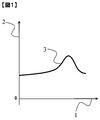
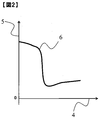
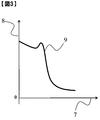
- logarithmic decay rate data obtained by the rigid pendulum test method It is an example of the storage elastic modulus data obtained by the dynamic viscoelasticity method. It is an example of the loss elastic modulus data obtained by the dynamic viscoelasticity method. It is an example of the loss tangent data obtained by the dynamic viscoelasticity method.
- Patent Documents 3 to 5 show excellent adhesion durability and dye transfer resistance while increasing the crosslink density of the material surface and preventing moisture penetration or dye penetration in the air. It does not show sexiness or self-healing properties. Furthermore, even if the materials of Patent Documents 3 and 4 are combined with the materials of Patent Documents 1 and 2, self-repairability, moldability, adhesion durability, and antifouling properties are in a trade-off relationship, and thus cannot be compatible. Furthermore, since the technique of Patent Document 4 is inferior in material strength, the scratch resistance required for the molding material is insufficient.
- the inventors of the present invention have studied the moldability required for the molding material and the scratch resistance due to the self-repairing property, and as a mechanical property of the surface layer, viscoelastic properties, that is, storage elastic modulus indicating elastic properties and We paid attention to the loss tangent obtained by dividing the loss elastic modulus indicating the viscous property and the loss elastic modulus by the storage elastic modulus. We also focused on the logarithmic decay rate, which has the same meaning as loss tangent.
- the storage elastic modulus within a certain range, the above-mentioned loss tangent effect is further enhanced. Therefore, when the storage elastic modulus and loss tangent of the surface layer are within a specific range, the moldability and self-formability of the surface layer are increased. The repairability is improved, which is preferable.
- the logarithmic decay rate of the surface layer in the rigid pendulum test method may be in a specific range, and / or the storage modulus and loss tangent of the surface layer in the dynamic viscoelasticity method may be in a specific range. preferable.
- the reason for focusing on the temperature dependence of the viscoelastic behavior of the surface layer versus the self-healing property of the surface layer of the laminated film is that the self-healing material has a higher storage elastic modulus at a higher temperature than the storage elastic modulus at a certain temperature. Based on the discovery that self-healing improves as the storage modulus of the surface layer increases due to heating.
- the laminated film of the present invention is suitably used as a molding material for smartphones, etc., so that heat generated by various electronic devices such as smartphones is radiated from the housing surface.
- the surface temperature rises, the temperature of the self-healing material also rises and the scratches generated at room temperature are repaired, so that self-repairability is expected to be improved.
- the relative storage elastic modulus at 100 ° C. of the surface layer in the rigid pendulum test method is higher than the relative storage elastic modulus at 25 ° C.
- the storage elastic modulus at 100 ° C. of the surface layer in the dynamic viscoelastic method is higher than the storage elastic modulus at 25 ° C.
- the present inventors paid attention to moisture in the air that penetrates into the surface layer in analyzing the adhesion durability. It was found that the surface layer peels off from the supporting substrate due to the invaded water reaching the interface between the surface layer and the supporting substrate and destroying the interface, especially under long-term use conditions. In particular, in the self-healing material, since the cross-linking density of the surface layer is lowered, it seems that a large amount of moisture penetrates the surface layer.
- the resin contained in the surface layer contains a hydrophobic segment
- the moisture in the air that enters the surface layer decreases. Further, when attention is paid to the intruded moisture, the amount of moisture reaching the interface is further reduced because the hydrophobic segment is repeatedly contacted from the surface layer surface until reaching the surface layer-supporting substrate interface. Therefore, it is possible to suppress the breakage of the interface between the surface layer and the supporting substrate due to the intruded moisture, and as a result, it is possible to improve the adhesion durability.
- the introduction of a hydrophobic segment derived from an alicyclic structure is particularly effective. Since the alicyclic structure has a three-dimensional structure, it has relatively lower mobility than a segment derived from a chain structure. Therefore, even when the surface layer is deformed at the time of molding or due to an external load, it is possible to suppress the occurrence of roughness in the distribution of hydrophobic segments in the surface layer, thus preventing a decrease in adhesion durability. It becomes possible. In addition, since this effect does not change the crosslinked structure density of the surface layer, the moldability and the self-healing property are hardly lowered by the alicyclic structure.
- the resin contained in the surface layer contains a tricyclodecyl segment.
- the present inventors paid attention to the dye transfer process in analyzing the dye transfer property. Then, regarding the dye transferability to the surface layer, it has been found that the process of dye penetration and the process of dye fixation are important.
- the dye infiltration process since water is a medium in the infiltration of the dye, it is possible to suppress the infiltration of the dye by preventing the infiltration of water into the surface layer. By suppressing the penetration of the dye, it is possible to reduce the chance of fixing of the dye described later, and as a result, the dye transfer resistance can be improved. As such a method, it is effective to introduce a hydrophobic segment, particularly a hydrophobic segment derived from an alicyclic structure, into the resin contained in the surface layer.
- the resin contained in the surface layer contains a tricyclodecyl segment for dye penetration.
- the affinity between the resin contained in the surface layer and the dye is high, the probability of fixing the dye increases. Therefore, by reducing the affinity between the resin and the dye contained in the surface layer, it becomes possible to suppress the fixing of the dye, and as a result, the dye transfer resistance can be improved. As such a method, it is effective to introduce a segment having a low affinity with a dye into the resin contained in the surface layer.
- the resin contained in the surface layer includes a tricyclodecyl segment, a polycaprolactone segment, and a polycarbonate segment.
- the present inventors paid attention to the load generated at the interface between the surface layer and the supporting substrate, such as the load during molding and long-term use conditions.
- a mechanical load that is, stress or deformation
- local adhesion failure may occur at the interface between the surface layer and the supporting substrate. It was found that this is the cause of the decrease.
- moisture in the air penetrates into the surface layer and destroys the interface between the surface layer and the supporting substrate, causing the surface layer to peel from the supporting substrate, which reduces the adhesion durability. I found out.
- a method for preventing adhesion failure at the interface between the surface layer and the supporting substrate was examined, and it was found that selection of a supporting substrate having a surface having a certain affinity with the solvent is effective.
- the support substrate surface and the solvent have a high affinity, when the surface layer is formed on the support substrate, the components of the surface layer penetrate into the support substrate. Can be improved. This is effective in suppressing local adhesion failure at the interface between the surface layer and the supporting substrate and suppressing surface layer peeling from the substrate, so that moldability and adhesion durability can be improved.
- the swelling index of the supporting substrate is in a specific range.
- the laminated film of the present invention is a laminated film having a surface layer on at least one of the supporting substrates, and It is preferable that the conditions 1 to 3 are satisfied.
- the resin contained in the surface layer includes the following (1) to (4).
- resin refers to a substance containing a polymer compound.
- the laminated film of the present invention preferably has a logarithmic decay rate of 0.1 or more at 25 ° C. of the surface layer in the rigid pendulum test method, more preferably 0. .2 or more, particularly preferably 0.4 or more.
- the logarithmic decay rate represents responsiveness when subjected to a mechanical load, and by making the logarithmic decay rate a specific value, the moldability and self-repairability can be enhanced.
- the logarithmic decay rate When the logarithmic decay rate is large, the effect of releasing the aforementioned external load as heat energy is enhanced, so that the moldability and self-repairability are improved, which is preferable. This effect increases as the logarithmic decay rate increases.
- the self-healing material has a limit because it has a crosslinked network, and the upper limit is considered to be about 1.0.
- the logarithmic decay rate is smaller than 0.1, the surface layer may be destroyed by an external load, and the moldability and self-repairability may be reduced.
- the resin contained in the surface layer satisfies the above-mentioned condition 2.
- the (1) polycaprolactone segment refers to the segment represented by Chemical Formula 1
- (2) the urethane bond refers to the bond represented by Chemical Formula 2
- (3) the polysiloxane segment refers to the segment represented by Chemical Formula 3
- the siloxane segment refers to the segment represented by Formula 4
- the (4) tricyclodecyl segment refers to the segment represented by Formula 5. Details of these will be described later.
- N is an integer from 1 to 35
- R 1 and R 2 are either OH or an alkyl group having 1 to 8 carbon atoms, each having at least one in the formula, and n is an integer of 100 to 300.
- the resin contained in the surface layer has (1) a polycaprolactone segment because the self-healing property of the obtained surface layer can be improved.
- the resin contained in the surface layer has (2) a urethane bond
- the resin contained in the surface layer has (3) polysiloxane segment and / or polydimethylsiloxane segment, the heat resistance and weather resistance of the resulting surface layer are improved, and the scratch resistance due to the lubricity of the surface layer is improved. This is preferable.
- the resin contained in the surface layer contains (4) a tricyclodecyl segment, it is preferable because the moldability, adhesion durability, dye transfer resistance, and toughness of the coating film of the surface layer obtained can be improved.
- the laminated film preferably satisfies the following condition 3.
- the adhesion index of the surface layer in the stretch-boiling adhesion test method is 3 or more.
- the adhesion index of the surface layer is preferably 3 or more, more preferably 4 or more, and particularly preferably 5.
- the adhesion index represents the adhesion between the surface layer and the support layer, and the height of the adhesion index represents the height of adhesion and adhesion durability.
- the adhesion index is high because the surface layer peeling from the supporting substrate can be suppressed even under long-term use conditions, and the adhesion durability is improved.
- the adhesion index is smaller than 3, the surface layer may be peeled off from the support substrate, particularly under long-term use conditions, and the adhesion durability may be lowered.
- the resin contained in the surface layer satisfies the above-mentioned condition 2.
- the following condition 4 is satisfied in the laminated film from the viewpoints of self-repairability and moldability.
- the relative storage elastic modulus at 100 ° C. of the surface layer in the rigid pendulum test method is higher than the relative storage elastic modulus at 25 ° C.
- the relative storage elastic modulus indicates how much the material can recover when a load is applied, and an increase in the relative storage elastic modulus indicates that self-healing properties are improved.
- the resin contained in the surface layer can satisfy the condition 2.
- the storage elastic modulus at 25 ° C. of the surface layer in the dynamic viscoelastic method is 10 MPa or more and 1,000 MPa or less.
- Condition 7 Loss tangent at 25 ° C. of the surface layer in the dynamic viscoelasticity method is 0.15 or more.
- the storage elastic modulus at 25 ° C. of the surface layer is preferably 10 MPa or more and 1,000 MPa or less, more preferably 10 MPa or more and 800 MPa or less, more preferably 150 MPa. Above 500 MPa is particularly preferable.
- the storage elastic modulus represents the elastic response when subjected to a mechanical load, and the moldability and self-repairability can be improved by setting the storage elastic modulus to a specific value.
- the storage elastic modulus When the storage elastic modulus is small to some extent, the above-described loss tangent effect is enhanced, and the effect of escaping an external load as heat energy is enhanced, which is preferable because moldability and self-repairability are improved.
- the toughness of the surface layer is lowered, so the lower limit is considered to be about 10 MPa.
- the storage elastic modulus is greater than 1,000 MPa, the surface layer may be destroyed by an external load, and moldability and self-repairability may be reduced.
- the resin contained in the surface layer can satisfy the condition 2 described above. .
- the storage elastic modulus at 100 ° C. of the surface layer in the dynamic viscoelastic method is preferably higher than the storage elastic modulus at 25 ° C.
- the storage elastic modulus indicates how much the material can be recovered when a load is applied, and an increase in the storage elastic modulus indicates that self-healing properties are improved.
- the self-repairing property is improved due to the above-described effects.
- the resin contained in the surface layer satisfies the condition 2 described above.
- the laminated film of the present invention preferably has a loss tangent at 25 ° C. of the surface layer of 0.15 or more in the dynamic viscoelasticity method, and is 0.20 or more. More preferred is 0.30 or more.
- the loss tangent represents the responsiveness when subjected to a mechanical load, and the moldability and self-repairability can be improved by setting the loss tangent to a specific value.
- the loss tangent When the loss tangent is large, the effect of escaping the external load as heat energy is increased, which is preferable because the moldability and self-repairability are improved. This effect is greater as the loss tangent is larger.
- the self-healing material has a limit because it has a crosslinked network, and the upper limit is considered to be about 1.00.
- the loss tangent is smaller than 0.15, the surface layer may be destroyed by an external load, and the moldability and self-repairability may deteriorate.
- the resin contained in the surface layer can satisfy the condition 2 described above.
- the laminated film preferably satisfies the following condition 8.
- the crack elongation at 23 ° C. of the surface layer in the tensile test method is preferably 20% or more, more preferably 30%, and even more preferably 40% or more.
- the crack elongation represents the followability at the time of molding, and the magnitude of the crack elongation represents the high moldability.
- the laminated film can follow the shape of the article to be molded, so that the moldability is improved.
- the upper limit value is considered to be about 500%.
- the crack elongation at 25 ° C. is smaller than 20%, the surface layer is cracked during molding processing, resulting in poor molding, and moldability may be reduced.
- the resin contained in the surface layer can satisfy the above-mentioned condition 2.
- the laminated film preferably satisfies the following condition 9.
- Condition 9 The swelling index of the supporting substrate is 0.01 or more.
- the swelling index of the supporting substrate is preferably 0.01 or more, more preferably 0.05 or more, and further preferably 0.10 or more.
- the swelling index represents the affinity with the solvent and the coating composition, and the magnitude of the swelling index indicates the high adhesion between the support substrate and the surface layer, that is, the moldability and adhesion durability.
- the swelling index of the supporting substrate When the swelling index of the supporting substrate is large, the adhesion between the surface layer and the supporting substrate is improved, so that the moldability and adhesion durability are improved. A larger swelling index is more preferable, but if it is too large, the support base material is destroyed when the surface layer is formed, so the upper limit is considered to be about 10. On the other hand, if the swelling index is smaller than 0.01, the interface between the surface layer and the supporting substrate is destroyed during deformation during molding or deterioration over time due to long-term use, and moldability and adhesion durability deteriorate. There is a case.
- the laminated film preferably satisfies the following condition 10.
- the resin contained in the surface layer includes the following (5).
- the resin refers to a substance containing a polymer compound, and the range includes a range from a polymer to an oligomer.
- the fluorine compound segment described in (5) above refers to a segment containing at least one selected from the group consisting of a fluoroalkyl group, a fluorooxyalkyl group, a fluoroalkenyl group, a fluoroalkanediyl group, and a fluorooxyalkanediyl group, More preferably, the fluorine compound segment is a fluoropolyether segment.
- the fluoropolyether segment is a segment composed of a fluoroalkyl group, an oxyfluoroalkyl group, an oxyfluoroalkanediyl group, etc., and has a structure represented by chemical formula (6) and chemical formula (7).
- n1 is an integer of 1 to 3, n2 to n5 are integers of 1 or 2, k, m, p and s are integers of 0 or more and p + s is 1 or more.
- n1 is 2 or more.
- N2 to n5 are integers of 1 or 2, more preferably n1 is 3, n2 and n4 are 2, and n3 and n5 are integers of 1 or 2.
- the chain length of the fluoropolyether segment has a preferable range, and the carbon number is preferably 4 or more and 12 or less, more preferably 4 or more and 10 or less, and particularly preferably 6 or more and 8 or less.
- the number of carbon atoms is 3 or less, the surface energy is not sufficiently reduced, and thus the oil repellency may be lowered.
- the number is 13 or more, the solubility in a solvent is lowered, and the quality of the surface layer may be lowered.
- the resin contained in the surface layer contains (5) a fluorine compound segment because the adhesion durability and dye transfer resistance of the surface layer obtained can be improved.
- the following condition 11 is satisfied in the laminated film from the viewpoints of self-repairability and moldability.
- the resin contained in the surface layer includes the following (6).
- the resin refers to a substance containing a polymer compound, and the range includes a range from a polymer to an oligomer.
- the polycarbonate segment refers to a segment represented by Chemical Formula 8. Details of these will be described later.
- N is an integer of 2 to 16.
- R 3 represents an alkylene group or cycloalkylene group having 1 to 8 carbon atoms.
- the laminated film of the present invention has a surface layer exhibiting specific characteristics and may be flat (film, sheet, plate).
- the surface layer exhibiting specific characteristics means a surface layer satisfying the above-described condition 1 and condition 2.
- the surface layer has glossiness, fingerprint resistance, design properties, antireflection, antistatic properties, electrical conductivity, and heat ray reflection. It may have other functions such as near infrared absorption, electromagnetic wave shielding, and easy adhesion.
- the thickness of the surface layer is not particularly limited, but is preferably 5 ⁇ m or more and 200 ⁇ m or less, more preferably 10 ⁇ m or more and 100 ⁇ m or less, and the thickness can be selected according to the other functions described above.
- the resin constituting the supporting substrate used in the laminated film of the present invention may be either a thermoplastic resin or a thermosetting resin, may be a homo resin, may be a copolymer or a blend of two or more types. Good. More preferably, the resin constituting the support substrate is preferably a thermoplastic resin because of good moldability.
- thermoplastic resins examples include polyolefin resins such as polyethylene, polypropylene, polystyrene, and polymethylpentene, alicyclic polyolefin resins, polyamide resins such as nylon 6 and nylon 66, aramid resins, polyester resins, polycarbonate resins, and polyarylate resins.
- Fluorine resins such as polyacetal resin, polyphenylene sulfide resin, tetrafluoroethylene resin, trifluoroethylene resin, trifluoroethylene chloride resin, tetrafluoroethylene-6 fluoropropylene copolymer, vinylidene fluoride resin, acrylic Resins, methacrylic resins, polyacetal resins, polyglycolic acid resins, polylactic acid resins, and the like can be used.
- the thermoplastic resin is preferably a resin having sufficient stretchability and followability.
- the thermoplastic resin is more preferably a polyester resin, a polycarbonate resin, an acrylic resin, or a methacrylic resin from the viewpoint of strength, heat resistance, and transparency.
- the polyester resin in the present invention is a general term for polymers having an ester bond as a main bond chain, and is obtained by polycondensation of an acid component and its ester with a diol component.
- Specific examples include polyethylene terephthalate, polypropylene terephthalate, polyethylene-2,6-naphthalate, polybutylene terephthalate, and the like. These may be copolymerized with other dicarboxylic acids and their esters or diol components as acid components or diol components.
- polyethylene terephthalate and polyethylene-2,6-naphthalate are particularly preferable in terms of transparency, dimensional stability, heat resistance and the like.
- the support substrate may be either a single layer configuration or a laminated configuration.
- the surface of the support substrate can be subjected to various surface treatments before forming the surface layer.
- the surface treatment include chemical treatment, mechanical treatment, corona discharge treatment, flame treatment, ultraviolet irradiation treatment, high frequency treatment, glow discharge treatment, active plasma treatment, laser treatment, mixed acid treatment and ozone oxidation treatment.
- glow discharge treatment, ultraviolet irradiation treatment, corona discharge treatment and flame treatment are preferred, and glow discharge treatment and ultraviolet treatment are more preferred.
- support substrate A a support substrate having a swelling index of 0.01 or more as the support substrate used in the laminated film of the present invention.
- the use of the supporting substrate A is preferable because the adhesion between the surface layer and the supporting substrate is improved as described above, and as a result, the moldability and adhesion durability are improved.
- the supporting base material A used in the present invention products such as “Cosmo Shine” (registered trademark) A4300, A4100 (Toyobo Co., Ltd.), “Panlite” (registered trademark) PC-2151 (Teijin Kasei Co., Ltd.) It can illustrate suitably.
- the laminated film of the present invention is a step of applying a coating composition to at least one of the above-mentioned supporting substrates, a step of drying or a step of curing as necessary.
- This coating composition comprises (1) a polycaprolactone segment, (2) a urethane bond, (3) a polysiloxane segment and / or a polydimethylsiloxane segment, (4) a resin containing a tricyclodecyl segment, or a coating process. It is preferable to include a material capable of forming them (hereinafter referred to as a precursor), and the resin contained in the surface layer has these segments and bonds by using the coating composition in the manufacturing method described later. be able to.
- a precursor a material capable of forming them
- the coating composition contains (5) a resin or precursor containing a fluorine compound segment.
- a resin or precursor containing a fluorine compound segment instead of a resin or precursor containing a fluorine compound segment, (6) a resin or precursor containing a polycarbonate segment may be included, or (5) a resin or precursor containing a fluorine compound segment and (6) Both resins or precursors containing polycarbonate segments may be included.
- the coating composition may contain a solvent and other components described later.
- the resin contained in the surface layer preferably contains (1) a polycaprolactone segment.
- the polycaprolactone segment refers to the segment represented by Chemical Formula 1 described above. It is preferable that the resin contained in the surface layer includes (1) a polycaprolactone segment because the self-repairability and moldability of the surface layer can be improved.
- the coating composition used for forming the surface layer contains a resin or precursor containing a polycaprolactone segment
- the resin contained in the surface layer can have a polycaprolactone segment
- the resin containing a polycaprolactone segment preferably has at least one hydroxyl group (hydroxyl group).
- the hydroxyl group is preferably at the end of the resin containing the polycaprolactone segment.
- polycaprolactone having 2 to 3 functional hydroxyl groups is particularly preferable.
- Specific examples of the polycaprolactone having 2 to 3 functional hydroxyl groups include polycaprolactone diol represented by Chemical Formula 9, polycaprolactone triol represented by Chemical Formula 10, or polycaprolactone-modified hydroxyethyl (meth) acrylate represented by Chemical Formula 11. It is done.
- the polycaprolactone diol represented by the chemical formula 9 and the polycaprolactone triol represented by the chemical formula 10 are generally called polycaprolactone polyols.
- the polycaprolactone diol represented by Chemical Formula 9 is represented by the following.
- n + n is an integer of 4 to 35
- R 4 is either C 2 H 4 , C 2 H 4 OC 2 H 4 , C (CH 3 ) 3 or (CH 2 ) 2
- the polycaprolactone triol represented by the chemical formula 10 is represented by the following.
- l + m + n is an integer of 3 to 30, and R 5 is either CH 2 CHCH 2 , CH 3 C (CH 2 ) 3, or CH 3 CH 2 C (CH 2 ) 3 .
- the polycaprolactone-modified hydroxyethyl (meth) acrylate is represented by the following.
- n is an integer of 1 to 25, and R 6 is either H or CH 3 .
- R 6 is either H or CH 3 , these are called active energy ray polymerizable caprolactone.
- (meth) acrylate shows a methacrylate or an acrylate.
- active energy ray polymerizability is a property in which crosslinking proceeds by active energy rays such as ultraviolet rays (UV rays) and electron rays (EB rays).
- active energy rays such as ultraviolet rays (UV rays) and electron rays (EB rays).
- a compound having a functional group such as a (meth) acrylate group Applicable.
- active energy ray polymerizable caprolactones include polycaprolactone-modified hydroxypropyl (meth) acrylate, polycaprolactone-modified hydroxybutyl (meth) acrylate, and the like.
- the resin containing the polycaprolactone segment may contain (or copolymerize) other segments and monomers in addition to the polycaprolactone segment.
- a compound containing a tricyclodecyl segment, a polydimethylsiloxane segment, a polysiloxane segment, a polycarbonate segment, or an isocyanate compound described later may be contained (or copolymerized).
- the weight average molecular weight of the polycaprolactone segment in the resin containing the polycaprolactone segment is preferably 500 to 2,500, and more preferably 1,000 to 1,500. It is preferable that the polycaprolactone segment has a weight average molecular weight of 500 to 2,500 because a self-healing effect is further exhibited and scratch resistance is further improved.
- the content of the polycaprolactone segment is 100% by mass in the total solid content of the coating composition used to form the surface layer. 5 to 50% by mass is preferable from the viewpoints of self-repairability, design properties, and moldability.
- the resin contained in the surface layer preferably contains (2) a urethane bond.
- the urethane bond refers to the segment represented by Chemical Formula 2 described above.
- the resin contained in the surface layer contains (2) a urethane bond, it is preferable because the toughness of the surface layer can be improved and the self-repairing property can be improved.
- the resin contained in the surface layer can have a urethane bond.
- a coating composition containing a compound containing an isocyanate group and a compound containing a hydroxyl group as a precursor when forming the surface layer a urethane bond is generated in the coating step, and the surface layer is formed.
- a urethane bond can also be contained.
- the resin contained in the surface layer preferably has a urethane bond by reacting an isocyanate group with a hydroxyl group to form a urethane bond.
- the toughness of the surface layer can be improved and the self-repairing property can be improved.
- the compound containing an isocyanate group means a resin containing an isocyanate group, or a monomer or oligomer containing an isocyanate group.
- the compound containing an isocyanate group include methylene bis-4-cyclohexyl isocyanate, trimethylolpropane adduct of tolylene diisocyanate, trimethylolpropane adduct of hexamethylene diisocyanate, trimethylolpropane adduct of isophorone diisocyanate, and tolylene diisocyanate.
- Polyisocyanates such as isocyanurate bodies, isocyanurate bodies of hexamethylene diisocyanate, burette bodies of hexamethylene isocyanate, and block bodies of the above isocyanates can be mentioned.
- aliphatic isocyanates are preferred because of their high self-healing properties compared to alicyclic and aromatic isocyanates.
- the compound containing an isocyanate group is more preferably hexamethylene diisocyanate.
- the isocyanate group-containing compound is particularly preferably an isocyanate having an isocyanurate ring from the viewpoint of heat resistance, and most preferably an isocyanurate of hexamethylene diisocyanate. Isocyanates having an isocyanurate ring form a surface layer having both self-healing properties and heat resistance.
- the resin contained in the surface layer preferably contains (3) a polysiloxane segment and / or a polydimethylsiloxane segment.
- the polysiloxane segment refers to the segment represented by the above chemical formula 3
- the polydimethylsiloxane segment refers to the segment represented by the above chemical formula 4.
- the coating composition used for forming the surface layer contains a resin or precursor containing a polysiloxane segment and / or a polydimethylsiloxane segment
- the resin contained in the surface layer can be a polysiloxane segment and / or a polydimethyl segment. It is possible to have siloxane segments.
- the resin containing a polysiloxane segment and / or a polydimethylsiloxane segment, or a precursor contains a reactive site.
- This reactive site refers to a site that reacts with other components by external energy such as heat or light. Examples of such reactive sites include alkoxysilyl groups and silanol groups in which alkoxysilyl groups are hydrolyzed from the viewpoint of reactivity, carboxyl groups, hydroxyl groups, epoxy groups, vinyl groups, allyl groups, acryloyl groups, methacryloyl groups, and the like. Can be mentioned.
- polysiloxane segment refers to a segment represented by Formula 3 above.
- a partially hydrolyzed product of a silane compound containing a hydrolyzable silyl group, an organosilica sol, or a composition obtained by adding a hydrolyzable silane compound having a radical polymer to the organosilica sol has a polysiloxane segment. It can be used as a compound.
- Compounds having polysiloxane segments are tetraalkoxysilane, methyltrialkoxysilane, dimethyldialkoxysilane, ⁇ -glycidoxypropyltrialkoxysilane, ⁇ -glycidoxypropylalkyldialkoxysilane, ⁇ -methacryloxypropyltrialkoxy.
- the resin containing a polysiloxane segment may contain (copolymerize) other segments in addition to the polysiloxane segment.
- a monomer component having a polycaprolactone segment, a tricyclodecyl segment, a polycarbonate segment, or a polydimethylsiloxane segment may be contained (copolymerized).
- a monomer having a hydroxyl group that reacts with an isocyanate group is copolymerized as a resin containing a polysiloxane segment.
- a resin having a hydroxyl group that reacts with an isocyanate group is copolymerized with a resin containing a polysiloxane segment, the toughness of the surface layer is improved.
- the surface layer is formed using a coating composition comprising a resin containing a hydroxyl group-containing polysiloxane segment (copolymer) and a compound containing an isocyanate group.
- a coating composition comprising a resin containing a hydroxyl group-containing polysiloxane segment (copolymer) and a compound containing an isocyanate group.
- polydimethylsiloxane segment refers to a segment represented by the aforementioned chemical formula 4.
- the compound having a polydimethylsiloxane segment is preferably a copolymer obtained by copolymerizing a vinyl monomer with a polydimethylsiloxane segment.
- the compound having a polydimethylsiloxane segment is a copolymer with a vinyl monomer, it may be a block copolymer, a graft copolymer, or a random copolymer.
- the compound having a polydimethylsiloxane segment is a copolymer with a vinyl monomer, this is referred to as a polydimethylsiloxane copolymer.
- a polydimethylsiloxane block copolymer as a compound having a polydimethylsiloxane segment (polydimethylsiloxane copolymer), it is produced by a living polymerization method, a polymer initiator method, a polymer chain transfer method, or the like. However, in consideration of productivity, it is preferable to use a polymer initiator method or a polymer chain transfer method.
- the compound having a polydimethylsiloxane segment is a polymer azo radical polymerization initiator represented by Chemical Formula 12.
- a two-stage polymerization is carried out by synthesizing a prepolymer in which a peroxide group is introduced into the side chain by copolymerizing a peroxy monomer and polydimethylsiloxane having an unsaturated group at a low temperature, and then copolymerizing the prepolymer with a vinyl monomer. Can also be done.
- the compound having a polydimethylsiloxane segment is, for example, a silicone oil represented by Chemical Formula 13
- HS—CH 2 COOH, HS—CH 2 CH 2 COOH, etc. are added to form a compound having an SH group, and then the silicone compound and a vinyl monomer are copolymerized using chain transfer of the SH group. Can be obtained at
- polydimethylsiloxane-based graft copolymer as a compound having a polydimethylsiloxane segment (polydimethylsiloxane-based copolymer), for example, a compound represented by chemical formula 14
- M is an integer from 10 to 300. That is, it can be easily obtained by copolymerizing a methacrylic ester of polydimethylsiloxane and a vinyl monomer.
- Examples of the vinyl monomer used in the copolymer with the compound having a polydimethylsiloxane segment include methyl acrylate, ethyl acrylate, n-butyl acrylate, isobutyl acrylate, octyl acrylate, cyclohexyl acrylate, tetrahydrofurfuryl acrylate, methyl methacrylate, Ethyl methacrylate, n-butyl methacrylate, isobutyl methacrylate, 2-ethylhexyl methacrylate, stearyl methacrylate, lauryl methacrylate, methyl vinyl ether, ethyl vinyl ether, n-propyl vinyl ether, styrene, ⁇ -methyl styrene, acrylonitrile, methacrylonitrile, vinyl acetate, chloride Vinyl, vinylidene chloride, vinyl fluoride, vinylidene fluoride Glycid
- Polydimethylsiloxane copolymers include aromatic hydrocarbon solvents such as toluene and xylene, ketone solvents such as methyl ethyl ketone and methyl isobutyl ketone, ester solvents such as ethyl acetate and butyl acetate, ethanol, isopropyl alcohol, etc. It is preferable that the alcoholic solvent is produced by a solution polymerization method alone or in a mixed solvent. Moreover, it is preferable to use together polymerization initiators, such as benzoyl peroxide and azobisisobutyl nitrile, as needed. The polymerization reaction is preferably carried out at 50 to 150 ° C. for 3 to 12 hours.
- the amount of the polydimethylsiloxane segment in the polydimethylsiloxane copolymer in the present invention is 1 to 30 in 100% by mass of all the components of the polydimethylsiloxane copolymer from the viewpoint of lubricity and stain resistance of the surface layer. It is preferable that it is mass%.
- the weight average molecular weight of the polydimethylsiloxane segment is preferably 1,000 to 30,000.
- the polydimethylsiloxane segment is copolymerized or added separately, 1 to 20 dimethylsiloxane segments are present in 100% by mass of all the components of the coating composition used to form the surface layer.
- the content is% by mass, it is preferable in terms of self-repairing property, contamination resistance, weather resistance, and heat resistance.
- the solvent which does not participate in the reaction is not included in 100% by mass of all components of the coating composition.
- the monomer component involved in the reaction is included.
- a resin containing a polydimethylsiloxane segment when used as the coating composition used for forming the surface layer, other segments are contained (copolymerized) in addition to the polydimethylsiloxane segment. May be.
- a polycaprolactone segment, a tricyclodecyl segment, a polycarbonate segment, or a polysiloxane segment may be contained (copolymerized).
- the coating composition used to form the surface layer includes a copolymer of a polycaprolactone segment and a polydimethylsiloxane segment, a copolymer of a polycaprolactone segment and a polysiloxane segment, a polycaprolactone segment, a polydimethylsiloxane segment, and a polymer.
- a copolymer with a siloxane segment can be used.
- the surface layer obtained using such a coating composition can have a polycaprolactone segment and a polydimethylsiloxane segment and / or a polysiloxane segment.
- the reaction of polydimethylsiloxane copolymer, polycaprolactone, and polysiloxane in a coating composition used to form a surface layer having a polycaprolactone segment, a polysiloxane segment, and a polydimethylsiloxane segment is a polydimethylsiloxane
- a polycaprolactone segment and a polysiloxane segment can be appropriately added and copolymerized.
- the resin contained in the surface layer preferably contains (4) a tricyclodecyl segment.
- the tricyclodecyl segment refers to a segment represented by Chemical Formula 5 described above.
- the resin contained in the surface layer contains (4) a tricyclodecyl segment, the antifouling property and adhesion durability of the surface layer can be improved.
- the coating composition used for forming the surface layer contains a resin or precursor containing a tricyclodecyl segment, the resin contained in the surface layer can have a tricyclodecyl segment.
- the structure of the tricyclodecyl segment is as described in the above chemical formula 5.
- the resin or precursor containing the tricyclodecyl segment preferable for the above coating composition is a compound represented by the chemical formula 15.
- R 7 is an alkanediyl group, alkanetriyl group, oxyalkanediyl group, oxyalkanetoluyl group, and any of an ester structure, urethane structure, ether structure, or triazine structure derived therefrom, and D 1 is a reactive site. Indicates.
- This reactive site refers to a site that reacts with other components by external energy such as heat or light.
- reactive sites include alkoxysilyl groups and silanol groups in which alkoxysilyl groups are hydrolyzed from the viewpoint of reactivity, carboxyl groups, hydroxyl groups, epoxy groups, vinyl groups, allyl groups, acryloyl groups, methacryloyl groups, and the like. Can be mentioned. Of these, vinyl groups, allyl groups, alkoxysilyl groups, silyl ether groups, silanol groups, epoxy groups, and acryloyl (methacryloyl) groups are preferred from the viewpoints of reactivity and handling properties.
- R 7 is an alkanediyl group, a urethane structure or an ester structure
- D 1 is an acryloyl (methacryloyl) group or a hydroxyl group.
- Resins including preferred tricyclodecyl segment aforementioned coating compositions or as precursors are commercially available (meth) acrylate having the D 1 in the chemical formula 15 described previously acryloyl (methacryloyl) groups, i.e. a tricyclodecyl segment
- materials include IRR214-K (Daicel Ornex Co., Ltd.), SR833S (Sartomer), FA-513AS, FA-513M (Hitachi Chemical Co., Ltd.), A-DCP, DCP (Shin Nakamura Chemical Co., Ltd.), Light acrylate.
- DCP-A Keloeisha Chemical Co., Ltd.
- the resin contained in the surface layer preferably contains (5) a fluorine compound segment. It is preferable that the resin contained in the surface layer contains (5) a fluorine compound segment because the antifouling property and fingerprint resistance of the surface layer can be improved.
- the coating composition used for forming the surface layer contains a resin or precursor containing a fluorine compound segment
- the resin contained in the surface layer can have a fluorine compound segment
- the fluorine compound segment refers to a segment containing at least one selected from the group consisting of a fluoroalkyl group, a fluorooxyalkyl group, a fluoroalkenyl group, a fluoroalkanediyl group, and a fluorooxyalkanediyl group.
- a fluoroalkyl group, a fluorooxyalkyl group, a fluoroalkenyl group, a fluoroalkanediyl group, and a fluorooxyalkanediyl group are alkyl groups, oxyalkyl groups, alkenyl groups, alkanediyl groups, and oxyalkanediyl groups.
- a part or all of the substituents are replaced by fluorine, both of which are mainly composed of fluorine atoms and carbon atoms, and there may be branching in the structure.
- a plurality of linked dimers, trimers, oligomers, and polymer structures may be formed.
- the fluorine compound segment is preferably a fluoropolyether segment, which is a site comprising a fluoroalkyl group, an oxyfluoroalkyl group, an oxyfluoroalkanediyl group or the like, more preferably a chemical formula (6) or a chemical formula (7). As described above, it is a fluoropolyether segment represented by
- the coating composition described above preferably contains the following fluorine compound.
- This fluorine compound is a compound represented by Chemical Formula 16.
- R f1 represents a fluorine compound segment
- R 8 represents an alkanediyl group, alkanetriyl group, and an ester structure, urethane structure, ether structure, and triazine structure derived therefrom
- D 1 represents a reactive site.
- This reactive site refers to a site that reacts with other components by external energy such as heat or light.
- reactive sites include alkoxysilyl groups and silanol groups in which alkoxysilyl groups are hydrolyzed from the viewpoint of reactivity, carboxyl groups, hydroxyl groups, epoxy groups, vinyl groups, allyl groups, acryloyl groups, methacryloyl groups, and the like. Can be mentioned. Of these, vinyl groups, allyl groups, alkoxysilyl groups, silyl ether groups, silanol groups, epoxy groups, and acryloyl (methacryloyl) groups are preferred from the viewpoints of reactivity and handling properties.
- fluorine compound is a compound shown below. 3,3-trifluoropropyltrimethoxysilane, 3,3,3-trifluoropropyltriethoxysilane, 3,3,3-trifluoropropyltriisopropoxysilane, 3,3,3-trifluoropropyltrichlorosilane, 3,3,3-trifluoropropyltriisocyanate silane, 2-perfluorooctyltrimethoxysilane, 2-perfluorooctylethyltriethoxysilane, 2-perfluorooctylethyltriisopropoxysilane, 2-perfluorooctylethyltri Chlorosilane, 2-perfluorooctyl isocyanate silane, 2,2,2-trifluoroethyl acrylate, 2,2,3,3,3-pentafluoropropyl acrylate, 2-perfluorobutylethyl
- the fluorine compound may have a plurality of fluoropolyether moieties per molecule.
- fluorine compounds include RS-75 (DIC Corporation), OPTOOL DAC-HP (Daikin Industries Co., Ltd.), C10GACRY, C8HGOL (Oil Products Co., Ltd.), etc. The product can be used.
- the resin contained in the surface layer preferably contains (6) a polycarbonate segment.
- the polycarbonate segment refers to the segment represented by Chemical Formula 8 described above.
- the resin contained in the surface layer contains (6) a polycarbonate segment, it is preferable because the toughness and self-healing property of the surface layer can be improved.
- the coating composition used to form the surface layer contains a resin or precursor containing a polycarbonate segment
- the resin contained in the surface layer can have a polycarbonate segment
- the resin containing a polycarbonate segment preferably has at least one hydroxyl group (hydroxyl group).
- the hydroxyl group is preferably at the end of the resin containing the polycarbonate segment.
- a polycarbonate diol having a bifunctional hydroxyl group is particularly preferable. Specifically, it is a polycarbonate diol represented by the chemical formula (17).
- the polycarbonate diol may have any number of repeating carbonate units, but if the number of repeating carbonate units is too large, the strength of the urethane (meth) acrylate cured product is lowered, so the number of repeating n is 10 or less. It is preferable.
- the polycarbonate diol may be a mixture of two or more types of polycarbonate diols having different repeating numbers of carbonate units.
- the polycarbonate diol preferably has a number average molecular weight of 500 to 10,000, more preferably 1,000 to 5,000. When the number average molecular weight is less than 500, suitable flexibility may be difficult to obtain, and when the number average molecular weight exceeds 10,000, the heat resistance and solvent resistance may be deteriorated. It is.
- the polycarbonate diol used in the present invention includes UH-CARB, UD-CARB, UC-CARB (Ube Industries, Ltd.), PLACEL CD-PL, PLACEL CD-H (Daicel Chemical Industries, Ltd.), and Kuraray Polyol C.
- a product such as a series (Kuraray Co., Ltd.) or a duranol series (Asahi Kasei Chemicals Co., Ltd.) can be suitably exemplified.
- These polycarbonate diols can be used alone or in combination of two or more.
- the resin or precursor containing a polycarbonate segment may contain (or copolymerize) other segments and monomers in addition to the polycarbonate segment.
- the aforementioned polycaprolactone segment, tricyclodecyl segment, polydimethylsiloxane segment, polysiloxane segment, or a compound containing an isocyanate compound may be contained (or copolymerized).
- the surface layer is preferably (6) polycarbonate segment and (2) by reacting the above-mentioned compound containing an isocyanate group with the hydroxyl group of polycarbonate diol and using it as a urethane (meth) acrylate in the coating composition. It can have a urethane bond, and as a result, the toughness of the surface layer can be improved and the self-repairing property can be improved, which is preferable.
- the coating composition may contain a solvent.
- the number of solvent types is preferably 1 or more and 20 or less, more preferably 1 or more and 10 or less, still more preferably 1 or more and 6 or less, and particularly preferably 1 or more and 4 or less.
- solvent refers to a substance that is liquid at room temperature and normal pressure, which can evaporate almost the entire amount in the drying step after application.
- the type of solvent is determined by the molecular structure constituting the solvent. That is, the same elemental composition and the same type and number of functional groups have different bond relationships (structural isomers), which are not structural isomers, but what conformations are in three-dimensional space Those that do not overlap exactly even if they are removed (stereoisomers) are treated as different types of solvents. For example, 2-propanol and n-propanol are handled as different solvents.
- it when it contains a solvent, it is preferably a solvent that exhibits the following characteristics.
- the relative evaporation rate based on the solvent n-butyl acetate is an evaporation rate measured according to ASTM D3539-87 (2004). Specifically, it is a value defined as a relative value of the evaporation rate based on the time required for 90% by mass of n-butyl acetate to evaporate under dry air.
- the relative evaporation rate of the solvent is larger than 0.4, the time required for the alignment of the polysiloxane segment and / or the polydimethylsiloxane segment and the fluorine compound segment to the outermost surface in the surface layer is shortened. Therefore, the self-restoring property and antifouling property of the obtained laminated film may be reduced. Further, the lower limit of the relative evaporation rate of the solvent B is not a problem as long as it is a solvent that can be evaporated and removed from the coating film in the drying process, and may be 0.005 or more in a general coating process.
- isobutyl ketone (relative evaporation rate: 0.2), isophorone (relative evaporation rate: 0.026), diethylene glycol monobutyl ether (relative evaporation rate: 0.004), diacetone alcohol (relative evaporation) Rate: 0.15), oleyl alcohol (relative evaporation rate: 0.003), ethylene glycol monoethyl ether acetate (relative evaporation rate: 0.2), nonylphenoxyethanol (relative evaporation rate: 0.25), propylene glycol mono Examples include ethyl ether (relative evaporation rate: 0.1) and cyclohexanone (relative evaporation rate: 0.32).
- the said coating composition contains a polymerization initiator, a hardening
- a polymerization initiator and a catalyst are used to accelerate the curing of the surface layer.
- the polymerization initiator those capable of initiating or accelerating polymerization, condensation or crosslinking reaction by anion, cation, radical polymerization reaction or the like of components contained in the coating composition are preferable.
- polymerization initiators curing agents and catalysts
- the polymerization initiator, the curing agent, and the catalyst may be used alone, or a plurality of polymerization initiators, curing agents, and catalysts may be used simultaneously.
- an acidic catalyst or a thermal polymerization initiator may be used in combination.
- acidic catalysts include aqueous hydrochloric acid, formic acid, acetic acid and the like.
- the thermal polymerization initiator include peroxides and azo compounds.
- the photopolymerization initiator include alkylphenone compounds, sulfur-containing compounds, acylphosphine oxide compounds, amine compounds, and the like.
- the crosslinking catalyst for promoting the urethane bond forming reaction include dibutyltin dilaurate and dibutyltin diethylhexoate.
- the coating composition may include other crosslinking agents such as melamine crosslinking agents such as alkoxymethylol melamine, acid anhydride crosslinking agents such as 3-methyl-hexahydrophthalic anhydride, and amine crosslinking agents such as diethylaminopropylamine. It can also be included.
- crosslinking agents such as melamine crosslinking agents such as alkoxymethylol melamine, acid anhydride crosslinking agents such as 3-methyl-hexahydrophthalic anhydride, and amine crosslinking agents such as diethylaminopropylamine. It can also be included.
- an alkylphenone compound is preferable from the viewpoint of curability.
- the alkylphenone compounds include 1-hydroxy-cyclohexyl-phenyl-ketone, 2,2-dimethoxy-1,2-diphenylethane-1-one, 2-methyl-1- (4-methylthiophenyl)- 2-morpholinopropan-1-one, 2-benzyl-2-dimethylamino-1- (4-phenyl) -1-butane, 2- (dimethylamino) -2-[(4-methylphenyl) methyl]- 1- (4-phenyl) -1-butane, 2-benzyl-2-dimethylamino-1- (4-morpholinophenyl) -1-butane, 2- (dimethylamino) -2-[(4-methylphenyl ) Methyl] -1- [4- (4-morpholinyl) phenyl] -1-butane, 1-cyclohexyl-phenone
- a leveling agent, an ultraviolet absorber, a lubricant, an antistatic agent, and the like may be added to the coating composition used for forming the surface layer as long as the effect of the present invention is not impaired.
- the surface layer can contain a leveling agent, an ultraviolet absorber, a lubricant, an antistatic agent, and the like.
- the leveling agent include acrylic copolymers, silicone-based and fluorine-based leveling agents.
- Specific examples of the ultraviolet absorber include benzophenone-based, benzotriazole-based, oxalic acid anilide-based, triazine-based and hindered amine-based ultraviolet absorbers.
- the antistatic agent include metal salts such as lithium salt, sodium salt, potassium salt, rubidium salt, cesium salt, magnesium salt and calcium salt.
- the surface layer formed on the surface of the laminated film of the present invention preferably uses a production method in which the above-mentioned coating composition is formed by applying-drying-curing on the above-mentioned supporting substrate.
- the application process is described as an application process
- the drying process is described as a drying process
- the curing process is described as a curing process.
- the method of coating the coating composition is not particularly limited, but the coating composition is dip coating, roller coating, wire bar coating, gravure coating, die coating (US Pat. No. 2,681,294), etc. It is preferable to form a surface layer by applying to a support substrate. Further, among these coating methods, the gravure coating method or the die coating method is more preferable as the coating method.
- the liquid film coated on the support substrate is dried by a drying process. From the viewpoint of completely removing the solvent from the obtained laminated film, it is preferable that the drying process is accompanied by heating of the liquid film.
- drying method in the drying step examples include heat transfer drying (adherence to a high-temperature object), convection heat transfer (hot air), radiant heat transfer (infrared rays), and others (microwave, induction heating).
- heat transfer drying adherence to a high-temperature object
- convection heat transfer hot air
- radiant heat transfer infrared rays
- microwave, induction heating microwave, induction heating
- the drying process in the drying process is generally divided into (A) constant rate drying period and (B) reduced rate drying period.
- the drying speed is constant in this section, the drying speed is governed by the partial pressure of the evaporated solvent in the atmosphere, the wind speed, and the temperature, and the film surface temperature is determined by the hot air temperature and the partial pressure of the evaporated solvent in the atmosphere. The value becomes constant.
- the drying rate since the diffusion of the solvent in the liquid film is rate-limiting, the drying rate does not show a constant value in this section and continues to decrease, and is governed by the diffusion coefficient of the solvent in the liquid film, and the film surface temperature is To rise.
- the drying rate represents the amount of solvent evaporation per unit time and unit area, and has a dimension of g ⁇ m ⁇ 2 ⁇ s ⁇ 1 .
- the drying rate has a preferable range, and is preferably 0.1 g ⁇ m ⁇ 2 ⁇ s ⁇ 1 or more and 10 g ⁇ m ⁇ 2 ⁇ s ⁇ 1 or less, preferably 0.1 g ⁇ m ⁇ 2 ⁇ s ⁇ 1. More preferably, it is 5 g ⁇ m ⁇ 2 ⁇ s ⁇ 1 or less.
- the wind speed and temperature are not particularly limited.
- the polysiloxane segment and / or the polydimethylsiloxane segment and the fluorine compound segment are aligned with the evaporation of the remaining solvent during the decreasing rate drying period.
- the film surface temperature increase rate during the decreasing drying period preferably 5 ° C./second or less, preferably 1 ° C./second or less. More preferably.
- a further curing operation (curing step) by irradiating heat or energy rays may be performed.
- the oxygen concentration is preferably as low as possible because oxygen inhibition can be prevented, and curing in a nitrogen atmosphere (nitrogen purge) is more preferable.
- the oxygen concentration is high, the hardening of the outermost surface is inhibited, the hardening of the surface is insufficient, and the self-repairing property and the adhesion durability may be insufficient.
- the ultraviolet lamp used when irradiating ultraviolet rays include a discharge lamp method, a flash method, a laser method, and an electrodeless lamp method.
- the illuminance of UV is 100 to 3,000 mW / cm 2 , preferably 200 to 2,000 mW / cm 2 , more preferably 300 to 1,500 mW / cm 2. It is preferable to perform ultraviolet irradiation under the following conditions: the condition that the cumulative amount of ultraviolet light is 100 to 3,000 mJ / cm 2 , preferably 200 to 2,000 mJ / cm 2 , more preferably 300 to 1,500 mJ / cm 2. It is preferable to carry out ultraviolet irradiation.
- the illuminance of ultraviolet rays is the irradiation intensity received per unit area, and varies depending on the lamp output, the emission spectrum efficiency, the diameter of the light emitting bulb, the design of the reflecting mirror, and the light source distance to the irradiated object.
- the illuminance does not change depending on the conveyance speed.
- the UV integrated light amount is irradiation energy received per unit area, and is the total amount of photons reaching the surface.
- the integrated light quantity is inversely proportional to the irradiation speed passing under the light source, and is proportional to the number of irradiations and the number of lamps.
- the laminated film of the present invention utilizes the advantages such as moldability, self-repairability, adhesion durability and antifouling property, and is particularly required to have high scratch resistance in applications where it is molded into various molded products by molding. It can be suitably used for applications where it is difficult to stand out.
- glasses, sunglasses, cosmetic boxes, plastic molded products such as food containers, smartphone housings, touch panels, keyboards, home appliances such as TVs and air conditioners, buildings, dashboards, car navigation systems, touch panels, rooms It can be suitably used for vehicle interior parts such as mirrors, and the surfaces of various printed materials.
- urethane (meth) acrylate C1 having a solid content concentration of 50% by mass.
- siloxane compound 1 As the siloxane compound 1, a silicon diacrylate compound (EBECRYL350 manufactured by Daicel-Cytec Co., Ltd., solid content concentration: 100% by mass) was used.
- EBECRYL350 manufactured by Daicel-Cytec Co., Ltd., solid content concentration: 100% by mass
- siloxane compound 2 As the siloxane compound 2, a silicon hexaacrylate compound (EBECRYL1360 manufactured by Daicel-Cytec Co., Ltd., solid content concentration of 100% by mass) was used.
- EBECRYL1360 manufactured by Daicel-Cytec Co., Ltd., solid content concentration of 100% by mass
- Polydimethylsiloxane block copolymer (a) Using an apparatus similar to the synthesis of polysiloxane (a), 50 parts by mass of toluene and 50 parts by mass of methyl isobutyl ketone, 20 parts by mass of a polydimethylsiloxane polymer initiator (VPS-0501, manufactured by Wako Pure Chemical Industries, Ltd.) Parts, methyl methacrylate 30 parts by mass, butyl methacrylate 26 parts by mass, 2-hydroxyethyl methacrylate 23 parts by mass, methacrylic acid 1 part by mass and 1-thioglycerin 0.5 part by mass were reacted at 80 ° C. for 8 hours. Thus, a polydimethylsiloxane block copolymer (a) was obtained. The ratio of the block copolymer (a) in the obtained solution was 50% by mass in 100% by mass of the solution.
- Polydimethylsiloxane graft copolymer (b) Using the apparatus used for the synthesis of polysiloxane (a), 50 parts by mass of toluene and 50 parts by mass of isobutyl acetate were charged, and the temperature was raised to 110 ° C.
- methyl methacrylate 20 parts by mass of butyl methacrylate, 32 parts by mass of caprolactone methacrylic ester (“Placcel” (registered trademark) FM-5 manufactured by Daicel Chemical Industries, Ltd.), 23 parts by mass of 2-hydroxyethyl methacrylate, 10 parts by weight of polysiloxane (a), 20 parts by weight of methacryl-modified polydimethylsiloxane having a single terminal (manufactured by Toagosei Co., Ltd., X-22-174DX), 1 part by weight of methacrylic acid, 1,1-azobiscyclohexane 2 parts by mass of -1-carbonitrile was mixed.
- This mixed monomer was added dropwise to the above mixed solution of toluene and butyl acetate over 2 hours. Then, it was made to react at 110 degreeC for 8 hours, and the polydimethylsiloxane type graft copolymer (b) which has a hydroxyl group with a solid content concentration of 50 mass% was obtained.
- the ratio of the graft copolymer (b) in the obtained solution was 50% by mass in 100% by mass of the solution.
- Tricyclodecyl compound [Tricyclodecyl Compound 1] As the tricyclodecyl compound 1, an acrylate compound containing a tricyclodecyl segment (IRR214-K, manufactured by Daicel Ornex Co., Ltd., solid content concentration: 100% by mass) was used.
- Tricyclodecyl Compound 2 As the tricyclodecyl compound 2, an acrylate compound containing a tricyclodecyl segment (FA-513AS, manufactured by Hitachi Chemical Co., Ltd., solid content concentration: 100% by mass) was used.
- Tricyclodecyl Compound 3 As the tricyclodecyl compound 3, an acrylate compound containing a tricyclodecyl segment (SR833S manufactured by Sartomer Co., Ltd., solid content concentration: 100% by mass) was used.
- Fluorine compound 1 As the fluorine compound 1, an acrylate compound containing a fluoropolyether segment (“Megafac” (registered trademark) RS-75 manufactured by DIC Corporation, solid content concentration: 40% by mass, solvent (toluene and methyl ethyl ketone): 60% by mass) was used.
- Mofac registered trademark
- RS-75 solid content concentration: 40% by mass
- solvent toluene and methyl ethyl ketone
- fluorine compound 2 As the fluorine compound 2, a siloxane compound containing a fluoropolyether segment (KY-108, Shin-Etsu Chemical Co., Ltd., solid content concentration 20% by mass, solvent (methanol and isopropyl alcohol) 80% by mass) was used.
- Photoradical polymerization initiator 1 As the photoradical polymerization initiator 1, “Irgacure” (registered trademark) 184 (manufactured by BASF Japan Ltd., solid content concentration: 100% by mass) was used.
- coating composition A1 [Coating composition A1] The following materials were mixed and diluted with methyl ethyl ketone to obtain a coating composition A1 having a solid concentration of 30% by mass. -Urethane (meth) acrylate A1 solution (solid content concentration 50 mass%) 95 mass parts-Tricyclodecyl compound 1 2.5 mass parts-Siloxane compound 1 3 mass parts-Fluorine compound 1 solution (solid content concentration 40 mass%) 3.8 parts by mass. Photoradical polymerization initiator 1 1.5 parts by mass. Ethylene glycol monobutyl ether 10 parts by mass.
- Coating composition A2 The following materials were mixed and diluted with methyl ethyl ketone to obtain a coating composition A2 having a solid content concentration of 30% by mass. -90 parts by mass of urethane (meth) acrylate A1 solution (solid content concentration 50% by mass)-5 parts by mass of tricyclodecyl compound 1-3 parts by mass of siloxane compound 1-1 solution of fluorine compound (solid content concentration 40% by mass) 8 parts by mass-Radical radical polymerization initiator 1 1.5 parts by mass-Ethylene glycol monobutyl ether 10 parts by mass.
- Coating composition A3 The following materials were mixed and diluted with methyl ethyl ketone to obtain a coating composition A3 having a solid concentration of 30% by mass. ⁇ 85 parts by mass of urethane (meth) acrylate A1 solution (solid content concentration: 50 mass%) ⁇ 7.5 mass parts of tricyclodecyl compound 1 ⁇ 3 mass parts of siloxane compound 1 ⁇ 1 solution of fluorine compound (solid content concentration: 40 mass%) 3.8 parts by mass. Photoradical polymerization initiator 1 1.5 parts by mass. Ethylene glycol monobutyl ether 10 parts by mass.
- Coating composition A4 The following materials were mixed and diluted with methyl ethyl ketone to obtain a coating composition A4 having a solid content of 30% by mass.
- -Urethane (meth) acrylate A1 solution solid content concentration 50 mass%) 80 mass parts-Tricyclodecyl compound 1 10 mass parts-Siloxane compound 1 3 mass parts-Fluorine compound 1 solution (solid content concentration 40 mass%) 8 parts by mass-Radical radical polymerization initiator 1 1.5 parts by mass-Ethylene glycol monobutyl ether 10 parts by mass.
- Coating composition A5 The following materials were mixed and diluted with methyl ethyl ketone to obtain a coating composition A5 having a solid content concentration of 30% by mass. -90 parts by mass of urethane (meth) acrylate A1 solution (solid content concentration 50% by mass). -Tricyclodecyl compound 2 5 parts by mass-Siloxane compound 1 3 parts by mass-Fluorine compound 1 solution (solid content concentration 40% by mass) 3.8 parts by mass-Photoradical polymerization initiator 1 1.5 parts by mass-Ethylene glycol mono 10 parts by weight of butyl ether.
- Coating composition A6 The following materials were mixed and diluted with methyl ethyl ketone to obtain a coating composition A6 having a solid content concentration of 30% by mass. ⁇ 90 parts by mass of urethane (meth) acrylate A1 solution (solid content concentration: 50 mass%) ⁇ 5 mass parts of tricyclodecyl compound 3 ⁇ 3 mass parts of siloxane compound 1 ⁇ 1 solution of fluorine compound (solid content concentration: 40 mass%) 8 parts by mass-Radical radical polymerization initiator 1 1.5 parts by mass-Ethylene glycol monobutyl ether 10 parts by mass.
- Coating composition A7 The following materials were mixed and diluted with methyl ethyl ketone to obtain a coating composition A7 having a solid concentration of 30% by mass. -90 parts by mass of urethane (meth) acrylate A1 solution (solid content concentration: 50% by mass)-5 parts by mass of tricyclodecyl compound 1-3 parts by mass of siloxane compound 2-1 solution of fluorine compound (solid content concentration: 40% by mass) 8 parts by mass-Radical radical polymerization initiator 1 1.5 parts by mass-Ethylene glycol monobutyl ether 10 parts by mass.
- Coating composition A8 The following materials were mixed and diluted with methyl ethyl ketone to obtain a coating composition A8 having a solid content concentration of 30% by mass.
- Urethane (meth) acrylate A1 solution solid content concentration: 50 mass%) 90 mass parts
- Tricyclodecyl compound 1 5 mass parts
- Siloxane compound 1 3 mass parts
- Fluorine compound 2 solution solid content concentration 20 mass%) 5 parts by mass-photoradical polymerization initiator 1 1.5 parts by mass-ethylene glycol monobutyl ether 10 parts by mass.
- Coating composition A9 The following materials were mixed and diluted with methyl ethyl ketone to obtain a coating composition A9 having a solid content concentration of 30% by mass.
- Urethane (meth) acrylate A1 solution (solid content concentration: 50 mass%) 90 mass parts
- Coating composition A10 The following materials were mixed and diluted with methyl ethyl ketone to obtain a coating composition A10 having a solid concentration of 30% by mass.
- Urethane (meth) acrylate A1 solution solid content concentration: 50 mass%) 90 mass parts
- Tricyclodecyl compound 1 5 mass parts
- Siloxane compound 1 3 mass parts
- Fluorine compound 1 solution solid content concentration 40 mass%) 3 parts by mass
- Coating composition A11 The following materials were mixed and diluted with methyl ethyl ketone to obtain a coating composition A11 having a solid concentration of 30% by mass. -90 parts by mass of urethane (meth) acrylate A2 solution (solid content concentration 50% by mass)-5 parts by mass of tricyclodecyl compound 1-3 parts by mass of siloxane compound 1-1 solution of fluorine compound (solid content concentration 40% by mass) 8 parts by mass-Radical radical polymerization initiator 1 1.5 parts by mass-Ethylene glycol monobutyl ether 10 parts by mass.
- Coating composition A12 The following materials were mixed and diluted with methyl ethyl ketone to obtain a coating composition A12 having a solid concentration of 30% by mass. -90 parts by mass of urethane (meth) acrylate A3 solution (solid content concentration 50% by mass)-5 parts by mass of tricyclodecyl compound 1-3 parts by mass of siloxane compound 1-1 solution of fluorine compound (solid content concentration 40% by mass) 8 parts by mass-Radical radical polymerization initiator 1 1.5 parts by mass-Ethylene glycol monobutyl ether 10 parts by mass.
- Coating composition A13 The following materials were mixed and diluted with methyl ethyl ketone to obtain a coating composition A13 having a solid content concentration of 30% by mass. ⁇ 45 parts by mass of urethane (meth) acrylate A1 solution (solid content concentration 50 mass%) ⁇ 45 mass parts of urethane (meth) acrylate B1 solution (solid content concentration 50 mass%) ⁇ 5 mass parts of tricyclodecyl compound 1 ⁇ siloxane compound 1 3 parts by mass-Fluorine compound 1 solution (solid content concentration: 40% by mass) 3.8 parts by mass-Photoradical polymerization initiator 1 1.5 parts by mass-Ethylene glycol monobutyl ether 10 parts by mass.
- Coating composition A14 The following materials were mixed and diluted with methyl ethyl ketone to obtain a coating composition A14 having a solid content concentration of 30% by mass. ⁇ 45 parts by mass of urethane (meth) acrylate A1 solution (solid content concentration: 50 mass%) ⁇ 45 mass parts of urethane (meth) acrylate B2 solution (solid content concentration: 50 mass%) ⁇ 5 mass parts of tricyclodecyl compound 1 ⁇ siloxane compound 1 3 parts by mass-Fluorine compound 1 solution (solid content concentration: 40% by mass) 3.8 parts by mass-Photoradical polymerization initiator 1 1.5 parts by mass-Ethylene glycol monobutyl ether 10 parts by mass.
- coating composition B1 The following materials were mixed and diluted with methyl ethyl ketone to obtain a coating composition B1 having a solid concentration of 40% by mass.
- -Polycaprolactone triol 15 parts by mass (“Placcel” (registered trademark) 308 Daicel Chemical Industries, Ltd.)
- -Hexamethylene diisocyanate 15 parts by mass (“Takenate” (registered trademark) D-170, manufactured by Mitsui Chemicals, Inc.) ⁇ 75 parts by mass of polydimethylsiloxane block copolymer (a) solution (solid content concentration: 50% by mass) -Polysiloxane (a) 10 mass parts.
- Coating composition B2 The following materials were mixed and diluted with methyl ethyl ketone to obtain a coating composition B2 having a solid concentration of 40% by mass. ⁇ 100 parts by mass of polydimethylsiloxane-based graft copolymer (b) solution (solid content: 50% by mass) -Hexamethylene diisocyanate 12 parts by mass ("Bernock” (registered trademark) DN-950, manufactured by DIC Corporation).
- Coating composition C1 The following materials were mixed and diluted with methyl ethyl ketone to obtain a coating composition C1 having a solid concentration of 30% by mass. -Urethane (meth) acrylate A1 solution (solid content concentration 50 mass%) 100 mass parts-Photoradical polymerization initiator 1 1.5 mass parts.
- Coating composition C2 The following materials were mixed and diluted with methyl ethyl ketone to obtain a coating composition C2 having a solid concentration of 30% by mass.
- -Urethane (meth) acrylate A1 solution solid content concentration 50 mass%) 100 mass parts-Siloxane compound 1 3 mass parts-Radical radical polymerization initiator 1 1.5 mass parts.
- Coating composition C3 The following materials were mixed and diluted with methyl ethyl ketone to obtain a coating composition C3 having a solid concentration of 30% by mass.
- -Urethane (meth) acrylate C1 solution solid content concentration 50 mass%) 100 mass parts
- -Radical radical polymerization initiator 1 1.5 mass parts.
- Coating composition C4 The following materials were mixed and diluted with methyl ethyl ketone to obtain a coating composition C4 having a solid concentration of 30% by mass. ⁇ Urethane (meth) acrylate A1 solution (solid content concentration 50 mass%) 50 mass parts ⁇ Urethane (meth) acrylate C1 solution (solid content concentration 50 mass%) 50 mass parts ⁇ Radical radical polymerization initiator 1 1.5 mass parts .
- Coating composition C5 The following materials were mixed and diluted with methyl ethyl ketone to obtain a coating composition C5 having a solid concentration of 30% by mass.
- -Urethane (meth) acrylate C1 solution solid content concentration 50 mass%) 90 mass parts-Tricyclodecyl compound 1 5 mass parts-Siloxane compound 1 3 mass parts-Photoradical polymerization initiator 1 1.5 mass parts.
- coating composition D1 [Coating composition D1] The following materials were mixed and diluted with methyl ethyl ketone to obtain a coating composition D1 having a solid content of 40% by mass. -Urethane (meth) acrylate B1 solution (solid content concentration 50 mass%) 100 mass parts-Siloxane compound 1 1 mass part-Photoradical polymerization initiator 1 1.5 mass parts.
- Coating composition D2 The following materials were mixed and diluted with methyl ethyl ketone to obtain a coating composition D2 having a solid content of 40% by mass.
- -Urethane (meth) acrylate B2 solution solid content concentration 50 mass%) 100 mass parts-Siloxane compound 1 1 mass part-Photoradical polymerization initiator 1 1.5 mass parts.
- Coating composition D3 The following materials were mixed and diluted with methyl ethyl ketone to obtain a coating composition D3 having a solid content concentration of 30% by mass. -90 parts by mass of urethane (meth) acrylate B1 solution (solid content concentration 50% by mass)-5 parts by mass of tricyclodecyl compound 1-1 part by mass of siloxane compound 1-1.5 parts by mass of radical photopolymerization initiator 1
- Coating composition D4 The following materials were mixed and diluted with methyl ethyl ketone to obtain a coating composition D4 having a solid concentration of 30% by mass.
- -Urethane (meth) acrylate B1 solution solid content concentration 50 mass%) 90 mass parts-Tricyclodecyl compound 2 5 mass parts-Siloxane compound 1 1 mass part-Photoradical polymerization initiator 1 1.5 mass parts.
- [Supporting substrate] [Support base material A1] “Cosmo Shine” (registered trademark) A4300 (thickness 125 ⁇ m, manufactured by Toyobo Co., Ltd.) was used as the supporting base material A1.
- the swelling index of the supporting substrate was calculated from the following method. First, to measure the haze value h 1 of the supporting substrate. Next, methyl ethyl ketone was applied onto the supporting substrate using a bar coater (# 10) and left at a temperature of 40 ° C. for 1 minute to dry the methyl ethyl ketone. Thereafter, the haze value h 2 (%) of the support substrate after drying was measured. Using these two values, the swelling index was calculated from the following equation.
- [Production method of laminated film] [Production of laminated film 1]
- the coating composition A (A1 to A14), the coating composition C (C1 to C5), and the coating composition D (D1 to D4) are dried on a supporting substrate using a slot die coater. Coating was performed by adjusting the discharge flow rate from the slot so that the thickness of the surface layer was the specified thickness.
- the conditions of the drying wind that hits the liquid film from application to drying and curing are as follows.
- Ventilation temperature and humidity Temperature: 80 ° C., Relative humidity: 1% or less
- Wind speed Application surface side: 5 m / sec
- Anti-application surface side 5 m / sec
- Air direction Application surface side: Parallel to the substrate surface
- anti-application Surface side perpendicular to the surface of the substrate
- Residence time 2 minutes
- Irradiation output 400 W / cm 2
- Integrated light quantity 120 mJ / cm 2
- Oxygen concentration 0.1% by volume.
- the coating composition B (B1 to B2) is adjusted on the support substrate, and the discharge flow rate from the slot is adjusted so that the thickness of the surface layer after drying becomes the specified film thickness. And applied.
- the conditions of the drying wind that hits the liquid film from application to drying and curing are as follows.
- Ventilation temperature and humidity Temperature: 80 ° C., Relative humidity: 1% or less
- Wind speed Application surface side: 5 m / sec, Anti-application surface side: 5 m / sec
- Air direction Application surface side: Parallel to the substrate surface, anti-application Surface side: perpendicular to the surface of the substrate Residence time: 1 minute
- Ventilation temperature and humidity Temperature: 160 ° C., Relative humidity: 1% or less
- Wind direction Application surface side: perpendicular to substrate surface, anti-application Surface side: perpendicular to the surface of the base material Residence time: 2 minutes
- the said wind speed and temperature / humidity used the measured value by a hot-wire type
- formula anemometer Nippon Kanomax Co., Ltd. Anemo master anemometer and air volume meter MODEL6034).
- the laminated films of Examples 1 to 16 and Comparative Examples 1 to 11 were prepared by the above method.
- the production methods of the laminated film corresponding to each example and comparative example, and the film thickness of each layer are shown in Tables 2 and 3 described later.
- Adhesion index of surface layer (stretching-boiling adhesion test method)
- Test conditions and number of tests The test conditions were 23 ° C. and relative humidity 65%. The number of tests was 1. Curing of test plate: Curing conditions were a temperature of 23 ° C., a relative humidity of 65%, and a curing time of 1 hour. Number of cuts: The number of cuts was 11. Cut interval: The cut interval was 1 mm. Cutting and removal of laminated film by manual procedure: Brushing using brush was not performed.
- the tape was affixed by using a hand roller (HP 515, manufactured by Audio Technica Co., Ltd.) by reciprocating it at a load of 19.6 N / m at a roller moving speed of 5 cm / sec.
- the tape was peeled off at a speed of 10 cm / second in a direction of 90 ° with respect to the surface direction of the surface layer, and a five-step evaluation was performed based on the remaining number of lattices provided on the surface layer.
- Adhesion index 5 The number of remaining surface layers is 100.
- Adhesion index 4 The number of remaining surface layers is 90 or more and less than 100.
- Adhesion index 3 The number of remaining surface layers is 80 or more and less than 90.
- Adhesion index 2 The number of remaining surface layers is 50 or more and less than 80.
- Adhesion index 1 The number of remaining surface layers is less than 50.
- Grade 2 is gray scale No. 2 for stain (significantly dirty)
- 3 The grade is for gray scale No. 3 for contamination (slightly remains)
- the grade 4 is for gray scale No. 4 for contamination (almost no dirt is left)
- the grade 5 is for gray stain for contamination Judgment was made with a scale of No. 5 (no dirt remained).
- “1-2” is indicated when it is between each class, for example, between the first and second classes.
- the laminated film was immersed in ethanol and left standing at 25 ° C. for 10 minutes. Thereafter, the surface layer of the laminated film was peeled from the support substrate, and a sample was collected.
- Rate of temperature increase 5 ° C./min
- the storage elastic modulus at the measurement temperature of 25 ° C. is G ′ 25
- the storage elastic modulus at the measurement temperature of 100 ° C. is G ′ 100 .
- the magnitude of each value was compared, and Y was set when G ′ 25 ⁇ G ′ 100 was satisfied, and N was set when G ′ 25 ⁇ G ′ 100 was not satisfied.
- tan ⁇ 25 G ′′ 25 / G ′ 25 .
- the moldability of the surface layer was determined according to the following criteria for the crack elongation of the surface layer. 10 points: The crack elongation of the surface layer is 40% or more. 7 points: Crack elongation of the surface layer is 30% or more and less than 40%. 4 points: The crack elongation of the surface layer is 20% or more and less than 30%. 1 point: The crack elongation of the surface layer is less than 20%.
- the adhesion durability of the surface layer was determined according to the following criteria for the adhesion index of the surface layer. 10 points: The adhesion index of the surface layer is 5. 9 points: The adhesion index of the surface layer is 4. 7 points: The adhesion index of the surface layer is 3. 4 points: The adhesion index of the surface layer is 2. 1 point: The adhesion index of the surface layer is 1.
- the antifouling property of the surface layer was determined according to the following criteria for the dye transfer resistance of the surface layer. 10 points: Dye transfer resistance of the surface layer is grade 5. 7 points: Dye transfer resistance of the surface layer is 4th or more and less than 5th. 4 points: Dye transfer resistance of the surface layer is 3rd or more and less than 4th. 1 point: Dye transfer resistance of the surface layer is less than tertiary.
- Table 3 summarizes the evaluation results of the finally obtained laminated film.
- the laminated film of the present invention makes use of advantages such as moldability, self-repairability, antifouling property, and adhesion durability, and is molded plastic products such as glasses / sunglasses, cosmetic boxes, food containers, smartphone housings, touch panels, keyboards. It can be suitably used for home appliances such as remote controllers for televisions and air conditioners, buildings, dashboards, car navigation / touch panels, vehicle interiors such as room mirrors, and the surfaces of various printed materials.
Landscapes
- Chemical & Material Sciences (AREA)
- Organic Chemistry (AREA)
- Chemical Kinetics & Catalysis (AREA)
- Health & Medical Sciences (AREA)
- Medicinal Chemistry (AREA)
- Polymers & Plastics (AREA)
- Life Sciences & Earth Sciences (AREA)
- Engineering & Computer Science (AREA)
- Materials Engineering (AREA)
- Wood Science & Technology (AREA)
- Laminated Bodies (AREA)
- Coating Of Shaped Articles Made Of Macromolecular Substances (AREA)
Abstract
Description
<1> 支持基材の少なくとも一方に、表面層を有する積層フィルムであって、以下の条件1および条件2を満たすことを特徴とする、積層フィルム。
(2)ウレタン結合
(3)ポリシロキサンセグメントおよび/またはポリジメチルシロキサンセグメント
(4)トリシクロデシルセグメント
<2> 前記積層フィルムにおいて、以下の条件3を満たすことを特徴とする、前記<1>に記載の積層フィルム。
<3> 前記積層フィルムにおいて、以下の条件4を満たすことを特徴とする、前記<1>または<2>に記載の積層フィルム。
<4> 前記積層フィルムにおいて、以下の条件5から条件7を満たすことを特徴とする、前記<1>から<3>のいずれかに記載の積層フィルム。
<5> 前記積層フィルムにおいて、以下の条件8を満たすことを特徴とする、前記<1>から<4>のいずれかに記載の積層フィルム。
<6> 前記積層フィルムにおいて、表面層を形成する支持基材が以下の条件9を満たすことを特徴とする、前記<1>から<5>のいずれかに記載の積層フィルム。
<7> 前記積層フィルムにおいて、以下の条件10を満たすことを特徴とする、前記<1>から<6>のいずれかに記載の積層フィルム。
<8> 前記積層フィルムにおいて、以下の条件11を満たすことを特徴とする、前記<1>から<7>のいずれかに記載の積層フィルム。
(2)ウレタン結合
(3)ポリシロキサンセグメントおよび/またはポリジメチルシロキサンセグメント
(4)トリシクロデシルセグメント
なお、剛体振り子試験法については後述する。

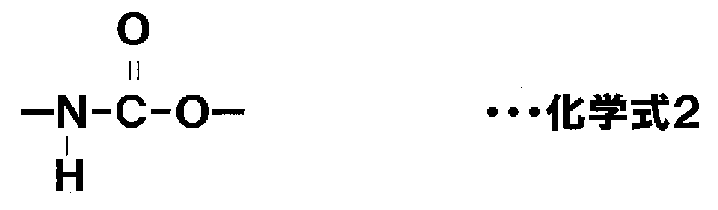

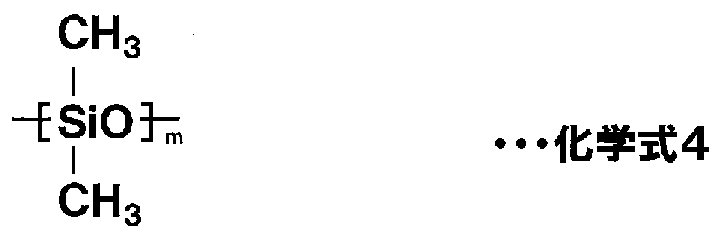
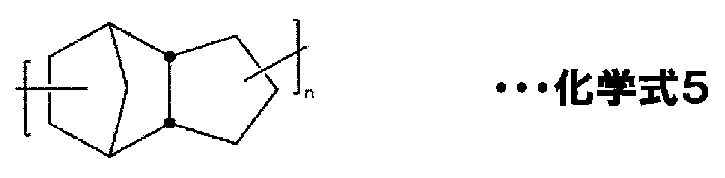
前記表面層に含まれる樹脂が(1)ポリカプロラクトンセグメントを有すると、得られる表面層の自己修復性を向上することができ好ましい。
前記表面層の100℃での相対貯蔵弾性率を、25℃での相対貯蔵弾性率より高くするためには、表面層に含まれる樹脂が条件2を満たすことで可能となる。
25℃でのクラック伸度を20%以上とするためには、前記表面層に含まれる樹脂が前述の条件2を満たすことで可能となる。
ここで樹脂とは高分子化合物を含む物質を指し、その範囲はポリマーからオリゴマーまでの範囲を含む。


前記フルオロポリエーテルセグメントの詳細については後述するが、表面層を構成する樹脂がこれらを含むことにより最表面に低表面エネルギーを示す分子を高密度に存在させることができる。
ここで樹脂とは高分子化合物を含む物質を指し、その範囲はポリマーからオリゴマーまでの範囲を含む。

前記表面層に含まれる樹脂が(6)ポリカーボネートセグメントを有すると、得られる表面層の自己修復性および成型性が向上することができ好ましい。
以下、本発明の実施の形態を詳細に説明する。
本発明の積層フィルムは、特定の特性を示す表面層を有し、平面状(フィルム、シート、プレート)であればよい。ここで、特定の特性を示す表面層とは、前述の条件1および条件2を満たす表面層を意味する。
本発明の積層フィルムに用いられる支持基材を構成する樹脂は、熱可塑性樹脂、熱硬化性樹脂のいずれでもよく、ホモ樹脂であってもよく、共重合または2種類以上のブレンドであってもよい。より好ましくは、支持基材を構成する樹脂は、成型性が良好であるため、熱可塑性樹脂が好ましい。
本発明の積層フィルムの製造方法は特に限定されないが、本発明の積層フィルムは、前述の支持基材の少なくとも一方に、塗料組成物を塗布する工程、必要に応じて乾燥する工程や硬化する工程を経て、得ることができる。この塗料組成物は、前述の(1)ポリカプロラクトンセグメント、(2)ウレタン結合、(3)ポリシロキサンセグメントおよび/またはポリジメチルシロキサンセグメント、(4)トリシクロデシルセグメントを含む樹脂、もしくは塗布プロセス内でそれらを形成可能な材料(以降これを前駆体と呼ぶ)を含むことが好ましく、後述する製造方法に当該塗料組成物を用いることで、表面層に含まれる樹脂がこれらのセグメントおよび結合を有することができる。
また、塗料組成物中には、後述の溶媒やその他の成分を含んでもよい。
本発明の積層フィルムにおいて、表面層に含まれる樹脂が(1)ポリカプロラクトンセグメントを含むことが好ましい。ここでポリカプロラクトンセグメントとは前述の化学式1で示されるセグメントを指す。表面層に含まれる樹脂が(1)ポリカプロラクトンセグメントを含むと、表面層の自己修復性および成型性を向上することができるため好ましい。

また、化学式10で示されるポリカプロラクトントリオールは以下で表される。

さらに、ポリカプロラクトン変性ヒドロキシエチル(メタ)アクリレートは以下で表される。

本発明の積層フィルムにおいて、表面層に含まれる樹脂が(2)ウレタン結合を含むことが好ましい。ここでウレタン結合とは前述の化学式2で示されるセグメントを指す。表面層に含まれる樹脂が(2)ウレタン結合を含むと、表面層の強靭性を向上させると共に自己修復性を向上することができ好ましい。
本発明の積層フィルムにおいて、表面層に含まれる樹脂が(3)ポリシロキサンセグメントおよび/またはポリジメチルシロキサンセグメントを含むことが好ましい。ここでポリシロキサンセグメントは前述の化学式3で示されるセグメントを指し、ポリジメチルシロキサンセグメントとは前述の化学式4で示されるセグメントを指す。表面層に含まれる樹脂が(3)ポリシロキサンセグメントおよび/またはポリジメチルシロキサンセグメントを含むと、ポリジメチルシロキサンセグメントが表面層中の最表面側に配位することにより、表面層の潤滑性が向上するため負荷を逃がす効果があり、表面層に発生する修復不可能な擦傷発生を抑制するため、表面層の自己修復性を向上させることができ好ましい。
以下、ポリシロキサンセグメントとポリジメチルシロキサンセグメントの詳細を順に記述する。
本発明において、ポリシロキサンセグメントとは、前述の化学式3で示されるセグメントを指す。
本発明において、ポリジメチルシロキサンセグメントとは、前述の化学式4で示されるセグメントを指す。
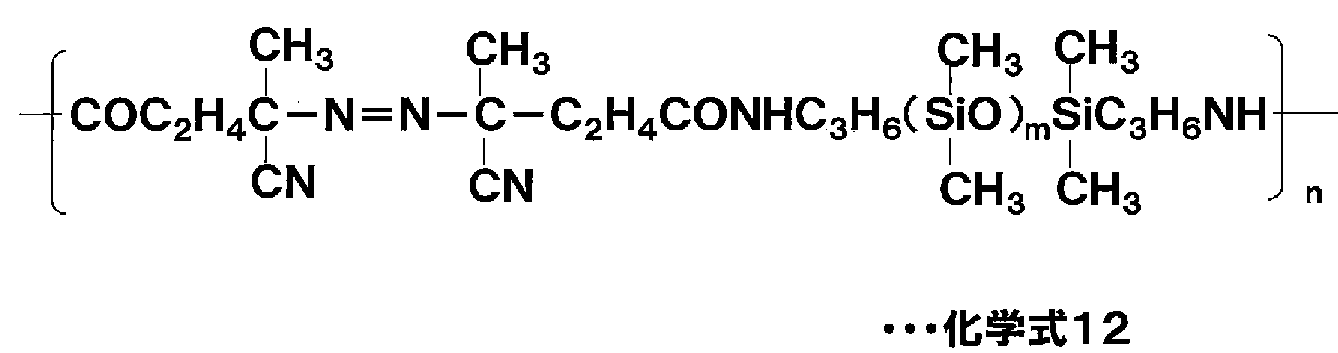
を用いて他のビニルモノマーと共重合させることで得ることができる。

に、HS-CH2COOHやHS-CH2CH2COOH等を付加してSH基を有する化合物とした後、SH基の連鎖移動を利用して該シリコーン化合物とビニルモノマーとを共重合させることで得ることができる。
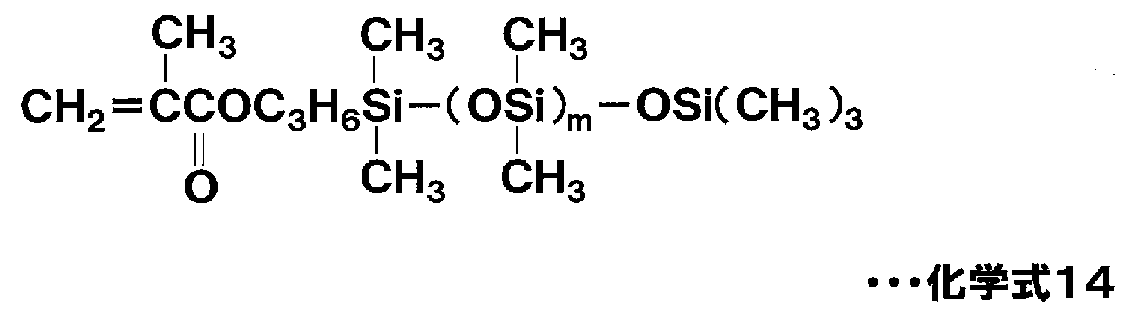
すなわちポリジメチルシロキサンのメタクリルエステルなどとビニルモノマーを共重合させることにより、容易に得ることができる。
本発明の積層フィルムにおいて、表面層に含まれる樹脂が(4)トリシクロデシルセグメントを含むことが好ましい。ここでトリシクロデシルセグメントとは前述の化学式5で示されるセグメントを指す。表面層に含まれる樹脂が(4)トリシクロデシルセグメントを含むと、表面層の防汚性および密着耐久性を向上することができ好ましい。
表面層を形成するために用いる塗料組成物が、トリシクロデシルセグメントを含む樹脂、もしくは前駆体を含むことにより、表面層に含まれる樹脂はトリシクロデシルセグメントを有することが可能となる。

本発明の積層フィルムにおいて、表面層に含まれる樹脂が(5)フッ素化合物セグメントを含むことが好ましい。表面層に含まれる樹脂が(5)フッ素化合物セグメントを含むと、表面層の防汚性および耐指紋性を向上することができ好ましい。

上記フッ素化合物の市販されている例としては、RS-75(DIC株式会社)、オプツールDAC-HP(ダイキン工業株式会社)、C10GACRY、C8HGOL(油脂製品株式会社)などを挙げることができ、これらの製品を利用することができる。
本発明の積層フィルムにおいて、表面層に含まれる樹脂が(6)ポリカーボネートセグメントを含むことが好ましい。ここでポリカーボネートセグメントとは前述の化学式8で示されるセグメントを指す。表面層に含まれる樹脂が(6)ポリカーボネートセグメントを含有すると、表面層の強靭性および自己修復性を向上することができ好ましい。

ポリカーボネートジオールは、カーボネート単位の繰り返し数がいくつであってもよいが、カーボネート単位の繰り返し数が大きすぎるとウレタン(メタ)アクリレートの硬化物の強度が低下するため、繰り返し数nは10以下であることが好ましい。なお、ポリカーボネートジオールは、カーボネート単位の繰り返し数が異なる2種以上のポリカーボネートジオールの混合物であってもよい。
前記塗料組成物は溶媒を含んでもよい。溶媒の種類数としては1種類以上20種類以下が好ましく、より好ましくは1種類以上10種類以下、さらに好ましくは1種類以上6種類以下、特に好ましくは1種類以上4種類以下である。
また、前記塗料組成物は、重合開始剤や硬化剤や触媒を含むことが好ましい。重合開始剤および触媒は、表面層の硬化を促進するために用いられる。重合開始剤としては、塗料組成物に含まれる成分をアニオン、カチオン、ラジカル重合反応等による重合、縮合または架橋反応を開始あるいは促進できるものが好ましい。
本発明の積層フィルムの表面に形成される表面層は、前述の塗料組成物を前述の支持基材上に塗布-乾燥-硬化することにより形成する製造方法を用いることが好ましい。以下、塗布する工程を塗布工程、乾燥する工程を乾燥工程、硬化する工程を硬化工程と記述する。
本発明の積層フィルムは、成型性、自己修復性、密着耐久性および防汚性といった利点を活かし、成型により様々な成型体に成型される用途において、特に高い耐擦傷性が求められ、傷を目立ちにくくしたい用途に好適に用いることができる。
〔ウレタン(メタ)アクリレートA1の合成〕
トルエン50質量部、ヘキサメチレンジイソシアネートのイソシアヌレート変性タイプ(三井化学株式会社製“タケネート”(登録商標)D-170N)50質量部、ポリカプロラクトン変性ヒドロキシエチルアクリレート(ダイセル化学工業株式会社製 “プラクセル”(登録商標)FA5)76質量部、ジブチル錫ラウレート0.02質量部、およびハイドロキノンモノメチルエーテル0.02質量部を混合し、70℃で5時間保持した。その後、トルエン79質量部を加えて固形分濃度50質量%のウレタン(メタ)アクリレートA1のトルエン溶液を得た。
トルエン50質量部、H6XDIヌレート(三井化学株式会社製 D-127N、NCO含有量13.5質量%)67質量部、ポリカプロラクトン変性ヒドロキシエチルアクリレート(ダイセル化学工業株式会社製 “プラクセル”(登録商標)FA5)76質量部、ジブチル錫ラウレート0.02質量部、およびハイドロキノンモノメチルエーテル0.02質量部を混合し、70℃で5時間保持した。その後、トルエン79質量部を加えて固形分濃度50質量%のウレタン(メタ)アクリレートA2のトルエン溶液を得た。
トルエン50質量部、ヘキサメチレンジイソシアネートのビウレット変性タイプ(旭化成ケミカルズ株式会社製 “デュラネート”(登録商標)24A-90CX、不揮発分:90質量%、イソシアネート含有量:21.2質量%)50質量部、ポリカプロラクトン変性ヒドロキシエチルアクリレート(ダイセル化学工業株式会社製 “プラクセル”(登録商標)FA2D)92質量部、ジブチル錫ラウレート0.02質量部、及びハイドロキノンモノメチルエーテル0.02質量部を混合し、70℃で5時間保持した。その後、トルエン82質量部を加えて固形分濃度50質量%のウレタン(メタ)アクリレートA3のトルエン溶液を得た。
〔ウレタン(メタ)アクリレートB1の合成〕
トルエン100質量部、メチル-2,6-ジイソシアネートヘキサノエート(協和発酵キリン株式会社製 LDI)50質量部およびポリカーボネートジオール(ダイセル化学工業株式会社製 “プラクセル”(登録商標)CD-210HL)119質量部を混合し、40℃にまで昇温して8時間保持した。それから、2-ヒドロキシエチルアクリレート(共栄社化学株式会社製 ライトエステルHOA)28質量部、ジペンタエリストールヘキサアクリレート(東亞合成株式会社製 M-400)5質量部、ハイドロキノンモノメチルエーテル0.02質量部を加えて70℃で30分間保持した後、ジブチル錫ラウレート0.02質量部を加えて80℃で6時間保持した。そして、最後にトルエン97質量部を加えて固形分濃度50質量%のウレタン(メタ)アクリレートB1のトルエン溶液を得た。
トルエン100質量部、メチル-2,6-ジイソシアネートヘキサノエート(協和発酵キリン株式会社製 LDI)50質量部およびポリカーボネートジオール(ダイセル化学工業株式会社製 “プラクセル”(登録商標)CD-220)150質量部を混合し、40℃にまで昇温して8時間保持した。それから、2-ヒドロキシエチルアクリレート(共栄社化学株式会社製 ライトエステルHOA)28質量部、ジペンタエリストールヘキサアクリレート(東亞合成株式会社製 M-400)5質量部、ハイドロキノンモノメチルエーテル0.02質量部を加えて70℃で30分間保持した後、ジブチル錫ラウレート0.02質量部を加えて80℃で6時間保持した。そして、最後にトルエン97質量部を加えて固形分濃度50質量%のウレタン(メタ)アクリレートB2のトルエン溶液を得た。
〔ウレタン(メタ)アクリレートC1の合成〕
ヘキサメチレンジイソシアネートのイソシアヌレート変性体(三井化学株式会社製 “タケネート”(登録商標)D-170N、イソシアネート基含有量:20.9質量%)50質量部、ポリエチレングリコールモノアクリレート(日油株式会社製 “ブレンマー”(登録商標)AE-150、水酸基価:264(mgKOH/g))53質量部、ジブチル錫ラウレート0.02質量部およびハイドロキノンモノメチルエーテル0.02質量部を仕込んだ。そして、70℃で5時間保持して反応を行った。反応終了後、反応液にメチルエチルケトン(以下MEKという)102質量部を加え、固形分濃度50質量%のウレタン(メタ)アクリレートC1を得た。
〔シロキサン化合物1〕
シロキサン化合物1として、シリコンジアクリレート化合物(EBECRYL350 ダイセル・サイテック株式会社製 固形分濃度100質量%)を使用した。
シロキサン化合物2として、シリコンヘキサアクリレート化合物(EBECRYL1360 ダイセル・サイテック株式会社製 固形分濃度100質量%)を使用した。
攪拌機、温度計、コンデンサおよび窒素ガス導入管を備えた500ml容量のフラスコにエタノール106質量部、テトラエトキシシラン320質量部、脱イオン水21質量部、および1質量%塩酸1質量部を仕込み、85℃で2時間保持した後、昇温しながらエタノールを回収し、180℃で3時間保持した。その後、冷却し、粘調なポリシロキサン(a)を得た。
ポリシロキサン(a)の合成と同様の装置を用い、トルエン50質量部、およびメチルイソブチルケトン50質量部、ポリジメチルシロキサン系高分子重合開始剤(和光純薬株式会社製、VPS-0501)20質量部、メタクリル酸メチル30質量部、メタクリル酸ブチル26質量部、2-ヒドロキシエチルメタクリレート23質量部、メタクリル酸1質量部および1-チオグリセリン0.5質量部を仕込み、80℃で8時間反応させてポリジメチルシロキサン系ブロック共重合体(a)を得た。得られた溶液中のブロック共重合体(a)の割合は、溶液100質量%中に50質量%であった。
ポリシロキサン(a)の合成に用いた装置を用い、トルエン50質量部、酢酸イソブチル50質量部を仕込み、110℃まで昇温した。別にメタクリル酸メチル20質量部、メタクリル酸ブチル20質量部、カプロラクトンメタクリルエステル(ダイセル化学工業(株)製 “プラクセル”(登録商標)FM-5)32質量部、2-ヒドロキシエチルメタクリレート23質量部、ポリシロキサン(a)10質量部、片末端メタクリル変性ポリジメチルシロキサン(東亞合成化学工業(株)製、X-22-174DX)20質量部、およびメタクリル酸1質量部、1,1-アゾビスシクロヘキサン-1-カルボニトリル2質量部を混合した。この混合モノマーを上記のトルエン、酢酸ブチルの混合液に2時間かけて滴下した。その後、110℃で8時間反応させ、固形分濃度50質量%の水酸基を有するポリジメチルシロキサン系グラフト共重合体(b)を得た。得られた溶液中のグラフト共重合体(b)の割合は、溶液100質量%中に50質量%であった。
〔トリシクロデシル化合物1〕
トリシクロデシル化合物1としてトリシクロデシルセグメントを含むアクリレート化合物(IRR214-K ダイセル・オルネクス株式会社製 固形分濃度100質量%)を使用した。
トリシクロデシル化合物2としてトリシクロデシルセグメントを含むアクリレート化合物(FA-513AS 日立化成株式会社製 固形分濃度100質量%)を使用した。
トリシクロデシル化合物3としてトリシクロデシルセグメントを含むアクリレート化合物(SR833S サートマー株式会社製 固形分濃度100質量%)を使用した。
〔フッ素化合物1〕
フッ素化合物1としてフルオロポリエーテルセグメントを含むアクリレート化合物(“メガファック”(登録商標) RS-75 DIC株式会社製 固形分濃度40質量% 溶媒(トルエンおよびメチルエチルケトン)60質量%)を使用した。
フッ素化合物2としてフルオロポリエーテルセグメントを含むシロキサン化合物(KY-108 信越化学工業株式会社製 固形分濃度20質量% 溶媒(メタノールおよびイソプロピルアルコール)80質量%)を使用した。
〔光ラジカル重合開始剤1〕
光ラジカル重合開始剤1として“イルガキュア”(登録商標)184(BASFジャパン株式会社製 固形分濃度100質量%)を使用した。
〔塗料組成物A1〕
以下の材料を混合し、メチルエチルケトンを用いて希釈し固形分濃度30質量%の塗料組成物A1を得た。
・ウレタン(メタ)アクリレートA1溶液(固形分濃度50質量%) 95質量部
・トリシクロデシル化合物1 2.5質量部
・シロキサン化合物1 3質量部
・フッ素化合物1溶液(固形分濃度40質量%) 3.8質量部
・光ラジカル重合開始剤1 1.5質量部
・エチレングリコールモノブチルエーテル 10質量部。
以下の材料を混合し、メチルエチルケトンを用いて希釈し固形分濃度30質量%の塗料組成物A2を得た。
・ウレタン(メタ)アクリレートA1溶液(固形分濃度50質量%) 90質量部
・トリシクロデシル化合物1 5質量部
・シロキサン化合物1 3質量部
・フッ素化合物1溶液(固形分濃度40質量%) 3.8質量部
・光ラジカル重合開始剤1 1.5質量部
・エチレングリコールモノブチルエーテル 10質量部。
以下の材料を混合し、メチルエチルケトンを用いて希釈し固形分濃度30質量%の塗料組成物A3を得た。
・ウレタン(メタ)アクリレートA1溶液(固形分濃度50質量%) 85質量部
・トリシクロデシル化合物1 7.5質量部
・シロキサン化合物1 3質量部
・フッ素化合物1溶液(固形分濃度40質量%) 3.8質量部
・光ラジカル重合開始剤1 1.5質量部
・エチレングリコールモノブチルエーテル 10質量部。
以下の材料を混合し、メチルエチルケトンを用いて希釈し固形分濃度30質量%の塗料組成物A4を得た。
・ウレタン(メタ)アクリレートA1溶液(固形分濃度50質量%) 80質量部
・トリシクロデシル化合物1 10質量部
・シロキサン化合物1 3質量部
・フッ素化合物1溶液(固形分濃度40質量%) 3.8質量部
・光ラジカル重合開始剤1 1.5質量部
・エチレングリコールモノブチルエーテル 10質量部。
以下の材料を混合し、メチルエチルケトンを用いて希釈し固形分濃度30質量%の塗料組成物A5を得た。
・ウレタン(メタ)アクリレートA1溶液(固形分濃度50質量%) 90質量部。
・トリシクロデシル化合物2 5質量部
・シロキサン化合物1 3質量部
・フッ素化合物1溶液(固形分濃度40質量%) 3.8質量部
・光ラジカル重合開始剤1 1.5質量部
・エチレングリコールモノブチルエーテル 10質量部。
以下の材料を混合し、メチルエチルケトンを用いて希釈し固形分濃度30質量%の塗料組成物A6を得た。
・ウレタン(メタ)アクリレートA1溶液(固形分濃度50質量%) 90質量部
・トリシクロデシル化合物3 5質量部
・シロキサン化合物1 3質量部
・フッ素化合物1溶液(固形分濃度40質量%) 3.8質量部
・光ラジカル重合開始剤1 1.5質量部
・エチレングリコールモノブチルエーテル 10質量部。
以下の材料を混合し、メチルエチルケトンを用いて希釈し固形分濃度30質量%の塗料組成物A7を得た。
・ウレタン(メタ)アクリレートA1溶液(固形分濃度50質量%) 90質量部
・トリシクロデシル化合物1 5質量部
・シロキサン化合物2 3質量部
・フッ素化合物1溶液(固形分濃度40質量%) 3.8質量部
・光ラジカル重合開始剤1 1.5質量部
・エチレングリコールモノブチルエーテル 10質量部。
以下の材料を混合し、メチルエチルケトンを用いて希釈し固形分濃度30質量%の塗料組成物A8を得た。
・ウレタン(メタ)アクリレートA1溶液(固形分濃度50質量%) 90質量部
・トリシクロデシル化合物1 5質量部
・シロキサン化合物1 3質量部
・フッ素化合物2溶液(固形分濃度20質量%) 7.5質量部
・光ラジカル重合開始剤1 1.5質量部
・エチレングリコールモノブチルエーテル 10質量部。
以下の材料を混合し、メチルエチルケトンを用いて希釈し固形分濃度30質量%の塗料組成物A9を得た。
・ウレタン(メタ)アクリレートA1溶液(固形分濃度50質量%) 90質量部
・トリシクロデシル化合物1 5質量部
・シロキサン化合物1 3質量部
・光ラジカル重合開始剤1 1.5質量部
・エチレングリコールモノブチルエーテル 10質量部。
以下の材料を混合し、メチルエチルケトンを用いて希釈し固形分濃度30質量%の塗料組成物A10を得た。
・ウレタン(メタ)アクリレートA1溶液(固形分濃度50質量%) 90質量部
・トリシクロデシル化合物1 5質量部
・シロキサン化合物1 3質量部
・フッ素化合物1溶液(固形分濃度40質量%) 6.3質量部
・光ラジカル重合開始剤1 1.5質量部
・エチレングリコールモノブチルエーテル 10質量部。
以下の材料を混合し、メチルエチルケトンを用いて希釈し固形分濃度30質量%の塗料組成物A11を得た。
・ウレタン(メタ)アクリレートA2溶液(固形分濃度50質量%) 90質量部
・トリシクロデシル化合物1 5質量部
・シロキサン化合物1 3質量部
・フッ素化合物1溶液(固形分濃度40質量%) 3.8質量部
・光ラジカル重合開始剤1 1.5質量部
・エチレングリコールモノブチルエーテル 10質量部。
以下の材料を混合し、メチルエチルケトンを用いて希釈し固形分濃度30質量%の塗料組成物A12を得た。
・ウレタン(メタ)アクリレートA3溶液(固形分濃度50質量%) 90質量部
・トリシクロデシル化合物1 5質量部
・シロキサン化合物1 3質量部
・フッ素化合物1溶液(固形分濃度40質量%) 3.8質量部
・光ラジカル重合開始剤1 1.5質量部
・エチレングリコールモノブチルエーテル 10質量部。
以下の材料を混合し、メチルエチルケトンを用いて希釈し固形分濃度30質量%の塗料組成物A13を得た。
・ウレタン(メタ)アクリレートA1溶液(固形分濃度50質量%) 45質量部
・ウレタン(メタ)アクリレートB1溶液(固形分濃度50質量%) 45質量部
・トリシクロデシル化合物1 5質量部
・シロキサン化合物1 3質量部
・フッ素化合物1溶液(固形分濃度40質量%) 3.8質量部
・光ラジカル重合開始剤1 1.5質量部
・エチレングリコールモノブチルエーテル 10質量部。
以下の材料を混合し、メチルエチルケトンを用いて希釈し固形分濃度30質量%の塗料組成物A14を得た。
・ウレタン(メタ)アクリレートA1溶液(固形分濃度50質量%) 45質量部
・ウレタン(メタ)アクリレートB2溶液(固形分濃度50質量%) 45質量部
・トリシクロデシル化合物1 5質量部
・シロキサン化合物1 3質量部
・フッ素化合物1溶液(固形分濃度40質量%) 3.8質量部
・光ラジカル重合開始剤1 1.5質量部
・エチレングリコールモノブチルエーテル 10質量部。
〔塗料組成物B1〕
以下の材料を混合し、メチルエチルケトンを用いて希釈し固形分濃度40質量%の塗料組成物B1を得た。
・ポリカプロラクトントリオール 15質量部
(“プラクセル”(登録商標)308 ダイセル化学工業株式会社)
・ヘキサメチレンジイソシアネート 15質量部
(“タケネート”(登録商標)D-170 三井化学株式会社製)
・ポリジメチルシロキサン系ブロック共重合体(a)溶液 75質量部
(固形分濃度50質量%)
・ポリシロキサン(a) 10質量部。
以下の材料を混合し、メチルエチルケトンを用いて希釈し固形分濃度40質量%の塗料組成物B2を得た。
・ポリジメチルシロキサン系グラフト共重合体(b)溶液 100質量部
(固形分濃度50質量%)
・ヘキサメチレンジイソシアネート 12質量部
(“バーノック”(登録商標)DN-950、DIC株式会社製)。
〔塗料組成物C1〕
以下の材料を混合し、メチルエチルケトンを用いて希釈し固形分濃度30質量%の塗料組成物C1を得た。
・ウレタン(メタ)アクリレートA1溶液(固形分濃度50質量%) 100質量部
・光ラジカル重合開始剤1 1.5質量部。
以下の材料を混合し、メチルエチルケトンを用いて希釈し固形分濃度30質量%の塗料組成物C2を得た。
・ウレタン(メタ)アクリレートA1溶液(固形分濃度50質量%) 100質量部
・シロキサン化合物1 3質量部
・光ラジカル重合開始剤1 1.5質量部。
以下の材料を混合し、メチルエチルケトンを用いて希釈し固形分濃度30質量%の塗料組成物C3を得た。
・ウレタン(メタ)アクリレートC1溶液(固形分濃度50質量%) 100質量部
・光ラジカル重合開始剤1 1.5質量部。
以下の材料を混合し、メチルエチルケトンを用いて希釈し固形分濃度30質量%の塗料組成物C4を得た。
・ウレタン(メタ)アクリレートA1溶液(固形分濃度50質量%) 50質量部
・ウレタン(メタ)アクリレートC1溶液(固形分濃度50質量%) 50質量部
・光ラジカル重合開始剤1 1.5質量部。
以下の材料を混合し、メチルエチルケトンを用いて希釈し固形分濃度30質量%の塗料組成物C5を得た。
・ウレタン(メタ)アクリレートC1溶液(固形分濃度50質量%) 90質量部
・トリシクロデシル化合物1 5質量部
・シロキサン化合物1 3質量部
・光ラジカル重合開始剤1 1.5質量部。
〔塗料組成物D1〕
以下の材料を混合し、メチルエチルケトンを用いて希釈し固形分濃度40質量%の塗料組成物D1を得た。
・ウレタン(メタ)アクリレートB1溶液(固形分濃度50質量%) 100質量部
・シロキサン化合物1 1質量部
・光ラジカル重合開始剤1 1.5質量部。
以下の材料を混合し、メチルエチルケトンを用いて希釈し固形分濃度40質量%の塗料組成物D2を得た。
・ウレタン(メタ)アクリレートB2溶液(固形分濃度50質量%) 100質量部
・シロキサン化合物1 1質量部
・光ラジカル重合開始剤1 1.5質量部。
以下の材料を混合し、メチルエチルケトンを用いて希釈し固形分濃度30質量%の塗料組成物D3を得た。
・ウレタン(メタ)アクリレートB1溶液(固形分濃度50質量%) 90質量部
・トリシクロデシル化合物1 5質量部
・シロキサン化合物1 1質量部
・光ラジカル重合開始剤1 1.5質量部。
以下の材料を混合し、メチルエチルケトンを用いて希釈し固形分濃度30質量%の塗料組成物D4を得た。
・ウレタン(メタ)アクリレートB1溶液(固形分濃度50質量%) 90質量部
・トリシクロデシル化合物2 5質量部
・シロキサン化合物1 1質量部
・光ラジカル重合開始剤1 1.5質量部。
〔支持基材A1〕
支持基材A1として、“コスモシャイン”(登録商標)A4300(厚み125μm、東洋紡株式会社製)を使用した。
支持基材A2として、“パンライト”(登録商標)PC-2151(厚み125μm、帝人化成株式会社製)を使用した。
支持基材1として、“ルミラー”(登録商標)U48(厚み125μm、東レ株式会社製)を使用した。
支持基材について、次に示す性能評価を実施し、得られた結果を表1に示す。特に断らない場合を除き、測定は各サンプルについて場所を変えて3回測定を行い、その平均値を用いた。
支持基材の膨潤度指数は以下の方法から算出した。まず、支持基材のヘイズ値h1を測定した。次に、支持基材上に、メチルエチルケトンをバーコーター(#10)を用いて塗布し、温度40℃にて1分間放置し、メチルエチルケトンを乾燥させた。その後、乾燥後の支持基材のヘイズ値h2(%)を測定した。この2つの値を用いて、以下の式から膨潤度指数を算出した。
膨潤度指数:h=|h2-h1|
なおヘイズ測定は、JIS K 7136(2000)に基づき、日本電色工業株式会社製ヘイズメーターを用いて、支持基材のメチルエチルケトンを塗布した側から光を透過するよう、装置に置いて測定した。
表1に得られた支持基材の評価結果をまとめた。

〔積層フィルムの作製1〕
支持基材上に、前記塗料組成物A(A1~A14)、塗料組成物C(C1~C5)、塗料組成物D(D1~D4)をスロットダイコーターによる連続塗布装置を用い、乾燥後の表面層の厚みが指定の膜厚になるようにスロットからの吐出流量を調整して塗布した。塗布から乾燥、硬化までの間に液膜にあたる乾燥風の条件は以下の通りである。
送風温湿度 : 温度:80℃、相対湿度:1%以下
風速 : 塗布面側:5m/秒、反塗布面側:5m/秒
風向 : 塗布面側:基材の面に対して平行、反塗布面側:基材の面に対して垂直
滞留時間 : 2分間
〔硬化工程〕
照射出力 : 400W/cm2
積算光量 : 120mJ/cm2
酸素濃度 : 0.1体積%。
支持基材上に、前記塗料組成物B(B1~B2)をスロットダイコーターによる連続塗布装置を用い、乾燥後の表面層の厚みが指定の膜厚になるようにスロットからの吐出流量を調整して塗布した。塗布から乾燥、硬化までの間に液膜にあたる乾燥風の条件は以下の通りである。
送風温湿度 : 温度:80℃、相対湿度:1%以下
風速 : 塗布面側:5m/秒、反塗布面側:5m/秒
風向 : 塗布面側:基材の面に対して平行、反塗布面側:基材の面に対して垂直
滞留時間 : 1分間
〔硬化工程〕
送風温湿度 : 温度:160℃、相対湿度:1%以下
風速 : 塗布面側:10m/秒、反塗布面側:10m/秒
風向 : 塗布面側:基材の面に対して垂直、反塗布面側:基材の面に対して垂直
滞留時間 : 2分間
なお、前記風速、温湿度は熱線式風速計(日本カノマックス株式会社製 アネモマスター風速・風量計 MODEL6034)による測定値を使用した。
作製した積層フィルムについて、次に示す性能評価を実施し、得られた結果を表2、3に示す。特に断らない場合を除き、測定は各実施例・比較例において1つのサンプルについて場所を変えて3回測定を行い、その平均値を用いた。
剛体振り子の自由減衰振動法に基づき(これを剛体振り子試験法とする)、株式会社エーアンドディ社製剛体振り子型物性試験機RPT-3000を用いて、表面層の対数減衰率と相対貯蔵弾性率を測定した。試験機は予め15℃に温調しておき、サンプルおよび振り子をセットした後、10℃/分の速度で150℃まで昇温しながら測定を行った。測定は5回ずつ行い、その平均値で評価した。なお、振り子は、以下のものを使用した。
使用エッジ:丸棒型シリンダーエッジ(株式会社エーアンドディ社製 RBP-040)ナイフ形状エッジ(株式会社エーアンドディ社製RBE-160)
振り子質量/慣性能率:15g/640g・cm(株式会社エーアンドディ社製FRB-100)
なお、測定温度25℃での相対貯蔵弾性率をGr’25、測定温度100℃での相対貯蔵弾性率をGr’100とした。各値の大小を比較し、Gr’25<Gr’100が成立する場合をY、成立しない場合をNとした。
表面層の密着指数の評価については、下記に示すように、延伸処理、煮沸処理、密着試験の3段階により行われる。なお、この一連の流れを延伸-煮沸密着試験法とする。
積層フィルムを20mm幅×200mm長に切り出し、長辺方向へ延伸されるようにチャックで把持し、インストロン型引っ張り試験機(インストロン社製超精密材料試験機MODEL5848)にて引っ張り速度100mm/分で伸張した。この時の測定雰囲気は23℃である。ひずみ量が20%まで延伸処理を行い、試験片を採取した。
ひずみ量:x=((a-50)/50)×100。
次に、延伸処理を行った試験片について、純水からなる沸騰した湯(100℃)の中へ試験片を6時間浸漬した。その後、試験片を取り出し乾燥させた。
さらに、煮沸処理後の試験片の表面層に、1mm2のクロスカットを100個入れた。作業は下記の一部を除き、JIS K5600-5-6(1999)の7項の手順に沿って行った。
試験条件及び試験数:試験条件は23℃、相対湿度65%とした。また、試験数は1とした。
試験板の養生:養生条件は、温度23℃、相対湿度65%とし、養生時間は1時間とした。
カット数:カット数は11とした。
カットの間隔:カットの間隔は1mmとした。
手動手順による積層膜の切込み及び除去:はけを用いたブラッシングは行わないものとした。また、JIS K5600-5-6(1999)の7.2.6項は第2段落の規定(「テープの中心を、図3に示すように角カットの一組に平行な方向で格子の上に置き、格子の部分にかかった箇所と最低20mmを超える長さで、指でテープを平らになるようにする」)のみ準用し、他の規定は準用しないものとした。なお、テープはセロハンテープ(ニチバン(株)製 “セロテープ”(登録商標)CT405AP)を用いた。
密着指数5: 表面層の残存個数が100。
密着指数4: 表面層の残存個数が90以上100未満。
密着指数3: 表面層の残存個数が80以上90未満。
密着指数2: 表面層の残存個数が50以上80未満。
密着指数1: 表面層の残存個数が50未満。
9cm×6cmの大きさに切り出した積層フィルムの表面層に、6cm×6cmの水で濡らしたジーンズ(染料含有)を密着させ、6cm×6cmのガラス板で挟み込んだ。水分が蒸発しないようにポリエチレンフィルムで包み込み、ガラス板の上に3kgの重りを載せ、70℃のオーブンに入れ放置した。24時間後取り出し、積層フィルムを後述する汚染用グレースケールの白色部と同等の白紙上に置き、表面層の表面の汚染度合を汚染用グレースケール(JIS L0805(2005))にて、1~5級の等級(1級は汚れが汚染用グレースケール1号またはその程度を越えるもの(汚れが濃く残る)、2級は汚れが汚染用グレースケール2号程度のもの(かなり汚れが残る)、3級は汚れが汚染用グレースケール3号程度のもの(やや汚れが残る)、4級は汚れが汚染用グレースケール4号程度のもの(殆ど汚れが残らない)、5級は汚れが汚染用グレースケール5号程度のもの(汚れが残らない))で判定した。なおJIS L0805(2005)の表記に従い、各級の間、例えば1級と2級の間である場合には、「1-2」と表記している。
積層フィルムを10mm幅×200mm長に切り出し、長手方向にチャックで把持してインストロン型引っ張り試験機(インストロン社製超精密材料試験機MODEL5848)にて引っ張り速度100mm/分で延伸した。測定温度は23℃で行った。延伸する際に、延伸中のサンプルを観察しておき、目視でクラック(亀裂)が生じたら停止した(停止するときのひずみ量は5の整数となるように調整した)。次から測定するサンプルは、停止時のひずみ量より、5%単位でひずみ量を低くしていったサンプルを順次採取し、最終的に目視にてクラックが入らなくなるひずみ量まで行った。
ひずみ量:x=((a-50)/50)×100。
動的粘弾性法の前処理として、以下の方法により、積層フィルムから表面層のみを剥離し、試験サンプルとした。
JIS K7244(1998)の引張振動-非共振法に基づき(これを動的粘弾性法とする)、セイコーインスツルメンツ株式会社製の動的粘弾性測定装置“DMS6100”を用いて表面層の貯蔵弾性率と損失弾性率を求めた。
測定モード:引張
チャック間距離:20mm
試験片の幅:10mm
周波数:1Hz
歪振幅:10μm
力振幅初期値:400mN
測定温度:-150℃から250℃まで
昇温速度:5℃/分
なお、測定温度25℃での貯蔵弾性率をG’25、測定温度100℃での貯蔵弾性率をG’100とした。各値の大小を比較し、G’25<G’100が成立する場合をY、成立しない場合をNとした。
tanδ25=G”25/G’25。
温度20℃で12時間放置した後、同環境にて表面層表面を、真鍮ブラシ(TRUSCO製)に下記の荷重をかけて、水平に5回引っ掻いたのち、5分間放置後の傷の回復状態を、下記の基準に則り目視で判定を行い、4点以上を合格とした。
10点:荷重9.8N(1kg重)で傷が残らない
7点: 荷重9.8N(1kg重)では傷が残るが、6.9N(700g重)では傷が残らない
4点: 荷重6.9N(700g重)では傷が残るが、4.9N(500g重)では傷が残らない
1点: 荷重4.9N(500g重)で傷が残る。
表面層の成型性は前記表面層のクラック伸度について、以下の基準に則り判定を行った。
10点:表面層のクラック伸度が40%以上。
7点: 表面層のクラック伸度が30%以上40%未満。
4点: 表面層のクラック伸度が20%以上30%未満。
1点: 表面層のクラック伸度が20%未満。
表面層の密着耐久性は前記表面層の密着指数について、以下の基準に則り判定を行った。
10点:表面層の密着指数が5。
9点: 表面層の密着指数が4。
7点: 表面層の密着指数が3。
4点: 表面層の密着指数が2。
1点: 表面層の密着指数が1。
表面層の防汚性は前記表面層の耐染料移行性について、以下の基準に則り判定を行った。
10点:表面層の耐染料移行性が5級。
7点: 表面層の耐染料移行性が4級以上5級未満。
4点: 表面層の耐染料移行性が3級以上4級未満。
1点: 表面層の耐染料移行性が3級未満。
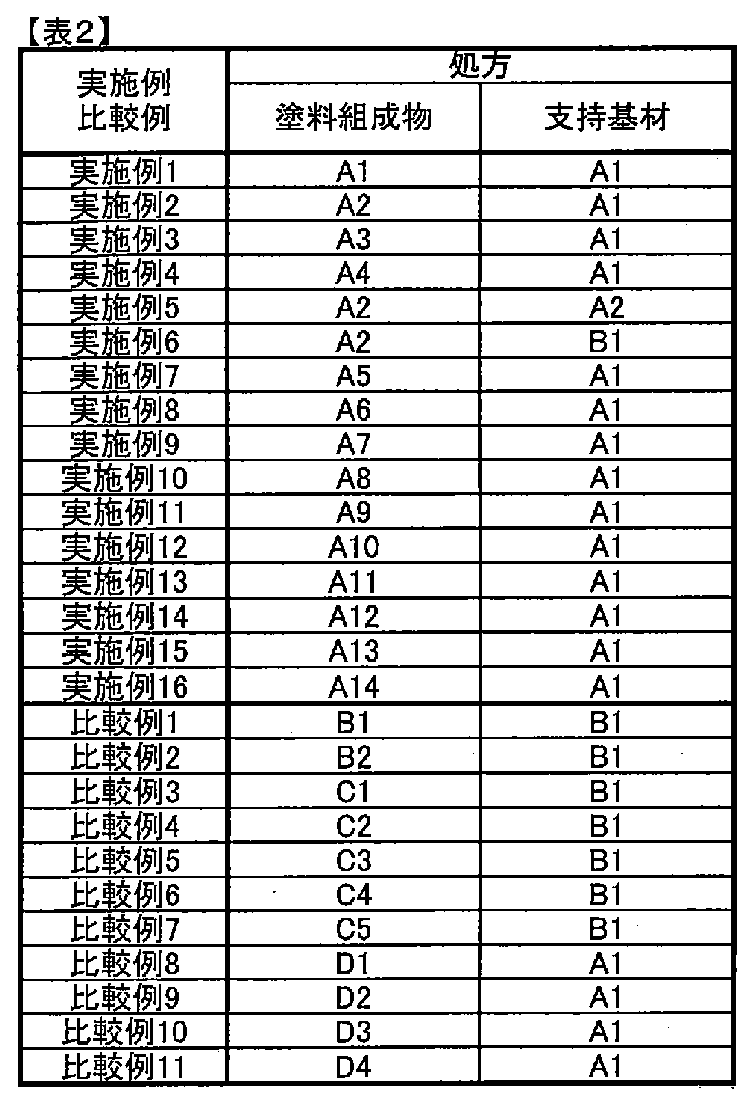
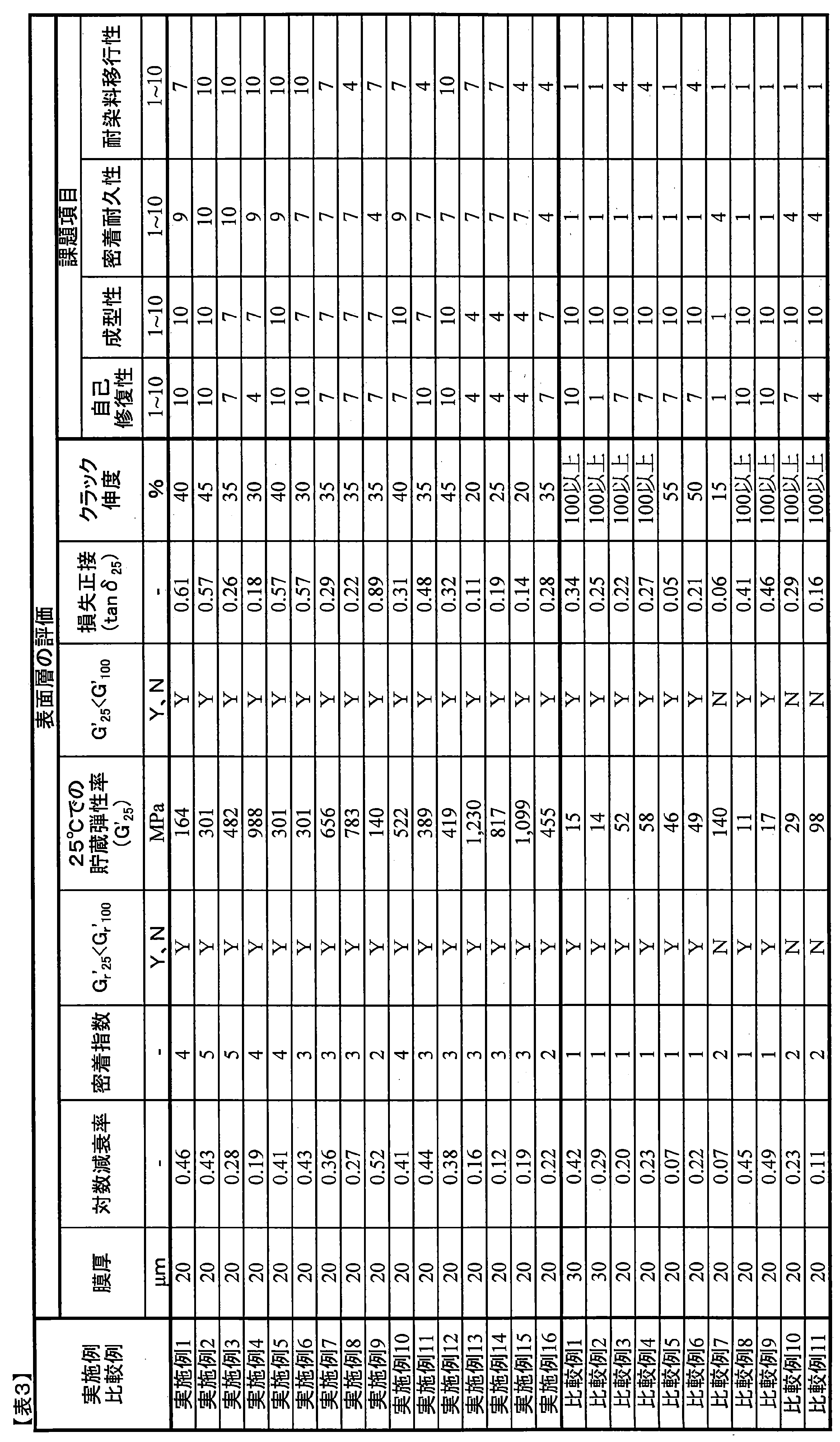
2 対数減衰率
3 対数減衰率の温度依存性グラフ
4 温度(℃)
5 貯蔵弾性率(MPa)
6 貯蔵弾性率の温度依存性グラフ
7 温度(℃)
8 損失弾性率(MPa)
9 損失弾性率の温度依存性グラフ
10 温度(℃)
11 損失正接
12 損失正接の温度依存性グラフ
Claims (8)
- 支持基材の少なくとも一方に、表面層を有する積層フィルムであって、以下の条件1および条件2を満たすことを特徴とする、積層フィルム。
条件1:剛体振り子試験法における、前記表面層の25℃での対数減衰率が0.1以上。
条件2:前記表面層に含まれる樹脂が以下の(1)から(4)を含む。
(1)ポリカプロラクトンセグメント
(2)ウレタン結合
(3)ポリシロキサンセグメントおよび/またはポリジメチルシロキサンセグメント
(4)トリシクロデシルセグメント - 前記積層フィルムにおいて、以下の条件3を満たすことを特徴とする、請求項1に記載の積層フィルム。
条件3:延伸-煮沸密着試験法における、前記表面層の密着指数が3以上。 - 前記積層フィルムにおいて、以下の条件4を満たすことを特徴とする、請求項1または請求項2に記載の積層フィルム。
条件4:剛体振り子試験法における、前記表面層の100℃での相対貯蔵弾性率が、25℃での相対貯蔵弾性率より高い。 - 前記積層フィルムにおいて、以下の条件5から条件7を満たすことを特徴とする、請求項1から請求項3のいずれかに記載の積層フィルム。
条件5:動的粘弾性法における、前記表面層の25℃での貯蔵弾性率が10MPa以上1,000MPa以下。
条件6:動的粘弾性法における、前記表面層の100℃での貯蔵弾性率が、25℃での貯蔵弾性率より高い。
条件7:動的粘弾性法における、前記表面層の25℃での損失正接が0.15以上。 - 前記積層フィルムにおいて、以下の条件8を満たすことを特徴とする、請求項1から請求項4のいずれかに記載の積層フィルム。
条件8:引張試験法における、前記表面層の23℃でのクラック伸度が20%以上。 - 前記積層フィルムにおいて、表面層を形成する支持基材が以下の条件9を満たすことを特徴とする、請求項1から請求項5のいずれかに記載の積層フィルム。
条件9:支持基材の膨潤度指数が0.01以上。 - 前記積層フィルムにおいて、以下の条件10を満たすことを特徴とする、請求項1から請求項6のいずれかに記載の積層フィルム。
条件10:前記表面層に含まれる樹脂が以下の(5)を含む。
(5)フッ素化合物セグメント - 前記積層フィルムにおいて、以下の条件11を満たすことを特徴とする、請求項1から請求項7のいずれかに記載の積層フィルム。
条件11:前記表面層に含まれる樹脂が以下の(6)を含む。
(6)ポリカーボネートセグメント
Priority Applications (3)
| Application Number | Priority Date | Filing Date | Title |
|---|---|---|---|
| KR1020167014384A KR102314335B1 (ko) | 2014-01-31 | 2015-01-19 | 적층 필름 |
| CN201580005374.5A CN105934339B (zh) | 2014-01-31 | 2015-01-19 | 叠层膜 |
| JP2015511527A JP6481607B2 (ja) | 2014-01-31 | 2015-01-19 | 積層フィルム |
Applications Claiming Priority (2)
| Application Number | Priority Date | Filing Date | Title |
|---|---|---|---|
| JP2014-016969 | 2014-01-31 | ||
| JP2014016969 | 2014-01-31 |
Publications (1)
| Publication Number | Publication Date |
|---|---|
| WO2015115227A1 true WO2015115227A1 (ja) | 2015-08-06 |
Family
ID=53756804
Family Applications (1)
| Application Number | Title | Priority Date | Filing Date |
|---|---|---|---|
| PCT/JP2015/051209 Ceased WO2015115227A1 (ja) | 2014-01-31 | 2015-01-19 | 積層フィルム |
Country Status (5)
| Country | Link |
|---|---|
| JP (1) | JP6481607B2 (ja) |
| KR (1) | KR102314335B1 (ja) |
| CN (1) | CN105934339B (ja) |
| TW (1) | TWI643743B (ja) |
| WO (1) | WO2015115227A1 (ja) |
Cited By (3)
| Publication number | Priority date | Publication date | Assignee | Title |
|---|---|---|---|---|
| CN109844847A (zh) * | 2016-09-01 | 2019-06-04 | 大日本印刷株式会社 | 光学膜和图像显示装置 |
| US11338545B2 (en) * | 2017-04-21 | 2022-05-24 | National Institute Of Advanced Industrial Science And Technology | Laminate and method of producing same |
| JP2022155498A (ja) * | 2021-03-30 | 2022-10-13 | キヤノン化成株式会社 | 反射防止塗料および反射防止塗膜 |
Families Citing this family (5)
| Publication number | Priority date | Publication date | Assignee | Title |
|---|---|---|---|---|
| TWI757400B (zh) * | 2017-01-06 | 2022-03-11 | 日商大日本印刷股份有限公司 | 光學膜及影像顯示裝置 |
| JP7401854B2 (ja) * | 2018-07-05 | 2023-12-20 | 日産化学株式会社 | 耐擦傷性ハードコートフィルムの製造方法 |
| KR102660944B1 (ko) * | 2019-09-06 | 2024-04-24 | 주식회사 엘지화학 | 광학 적층체 및 이를 포함하는 플렉서블 디스플레이 장치 |
| KR102314838B1 (ko) | 2021-04-01 | 2021-10-19 | 송관권 | 터널 비개착공법 |
| KR102364887B1 (ko) | 2021-06-14 | 2022-02-18 | 송관권 | 터널 비개착 일체식 압입공법 및 그에 적용되는 일체식 가설구조물 |
Citations (3)
| Publication number | Priority date | Publication date | Assignee | Title |
|---|---|---|---|---|
| WO2011136042A1 (ja) * | 2010-04-27 | 2011-11-03 | 東レ株式会社 | 積層フィルムおよび成型体 |
| JP2012139951A (ja) * | 2011-01-05 | 2012-07-26 | Toray Ind Inc | 積層フィルムおよび成型体 |
| WO2015041175A1 (ja) * | 2013-09-20 | 2015-03-26 | 東レ株式会社 | 積層フィルム |
Family Cites Families (9)
| Publication number | Priority date | Publication date | Assignee | Title |
|---|---|---|---|---|
| US4843136A (en) * | 1986-09-26 | 1989-06-27 | Bayer Aktiengesellschaft | (Meth)-acrylates of siloxanes containing tricyclodecane groups |
| JP3926461B2 (ja) | 1998-02-13 | 2007-06-06 | ナトコ株式会社 | 塗料組成物 |
| JP2008062408A (ja) | 2006-09-05 | 2008-03-21 | Nankai Tekunaato:Kk | 染料移行防止シート |
| JP5894741B2 (ja) * | 2011-03-22 | 2016-03-30 | リケンテクノス株式会社 | 傷付き防止フィルム |
| JP5747640B2 (ja) | 2011-04-28 | 2015-07-15 | 大日本印刷株式会社 | 太陽電池モジュール用封止材組成物及びそれを用いた封止材 |
| US9080053B2 (en) * | 2011-05-16 | 2015-07-14 | Toray Industries, Inc. | Laminated film and molded body |
| JP2013119553A (ja) * | 2011-12-06 | 2013-06-17 | Mitsubishi Chemicals Corp | ハードコート層の下地として使用する下層形成用塗料、及び該下層形成用塗料を塗布して形成した積層体 |
| US9469789B2 (en) * | 2011-12-21 | 2016-10-18 | Toray Industries, Inc. | Laminated film |
| JP6127363B2 (ja) | 2012-02-16 | 2017-05-17 | 三菱化学株式会社 | 活性エネルギー線硬化性樹脂組成物およびそれを用いた積層体 |
-
2015
- 2015-01-19 WO PCT/JP2015/051209 patent/WO2015115227A1/ja not_active Ceased
- 2015-01-19 CN CN201580005374.5A patent/CN105934339B/zh active Active
- 2015-01-19 JP JP2015511527A patent/JP6481607B2/ja active Active
- 2015-01-19 KR KR1020167014384A patent/KR102314335B1/ko active Active
- 2015-01-26 TW TW104102454A patent/TWI643743B/zh active
Patent Citations (3)
| Publication number | Priority date | Publication date | Assignee | Title |
|---|---|---|---|---|
| WO2011136042A1 (ja) * | 2010-04-27 | 2011-11-03 | 東レ株式会社 | 積層フィルムおよび成型体 |
| JP2012139951A (ja) * | 2011-01-05 | 2012-07-26 | Toray Ind Inc | 積層フィルムおよび成型体 |
| WO2015041175A1 (ja) * | 2013-09-20 | 2015-03-26 | 東レ株式会社 | 積層フィルム |
Cited By (4)
| Publication number | Priority date | Publication date | Assignee | Title |
|---|---|---|---|---|
| CN109844847A (zh) * | 2016-09-01 | 2019-06-04 | 大日本印刷株式会社 | 光学膜和图像显示装置 |
| US11338545B2 (en) * | 2017-04-21 | 2022-05-24 | National Institute Of Advanced Industrial Science And Technology | Laminate and method of producing same |
| JP2022155498A (ja) * | 2021-03-30 | 2022-10-13 | キヤノン化成株式会社 | 反射防止塗料および反射防止塗膜 |
| JP7845877B2 (ja) | 2021-03-30 | 2026-04-14 | キヤノン化成株式会社 | 反射防止塗料および反射防止塗膜 |
Also Published As
| Publication number | Publication date |
|---|---|
| KR20160118211A (ko) | 2016-10-11 |
| JPWO2015115227A1 (ja) | 2017-03-23 |
| JP6481607B2 (ja) | 2019-03-13 |
| CN105934339B (zh) | 2018-01-23 |
| CN105934339A (zh) | 2016-09-07 |
| TW201545869A (zh) | 2015-12-16 |
| TWI643743B (zh) | 2018-12-11 |
| KR102314335B1 (ko) | 2021-10-19 |
Similar Documents
| Publication | Publication Date | Title |
|---|---|---|
| JP6481607B2 (ja) | 積層フィルム | |
| JP6375946B2 (ja) | 積層フィルム | |
| JP7200562B2 (ja) | 積層体 | |
| JP7790460B2 (ja) | 積層体、積層体の製造方法、樹脂フィルムの製造方法、プラスチック成形品、ディスプレイ、センサー、および製造工程用材料 | |
| JP6528681B2 (ja) | 積層フィルム、および積層フィルムの製造方法 | |
| KR102230472B1 (ko) | 적층 필름 | |
| US9469789B2 (en) | Laminated film | |
| JP2014184610A (ja) | 積層フィルム及びその製造方法 | |
| JP6531531B2 (ja) | 積層フィルム、および積層フィルムの製造方法 | |
| JP2017170671A (ja) | 積層フィルム | |
| JP6582862B2 (ja) | 積層フィルム | |
| JP6531392B2 (ja) | 積層フィルム | |
| JP7631716B2 (ja) | 積層体 | |
| JP2019151815A (ja) | 積層体および樹脂フィルム | |
| JP6911648B2 (ja) | 積層フィルム | |
| JP2017064968A (ja) | 積層フィルム |
Legal Events
| Date | Code | Title | Description |
|---|---|---|---|
| ENP | Entry into the national phase |
Ref document number: 2015511527 Country of ref document: JP Kind code of ref document: A |
|
| 121 | Ep: the epo has been informed by wipo that ep was designated in this application |
Ref document number: 15743784 Country of ref document: EP Kind code of ref document: A1 |
|
| ENP | Entry into the national phase |
Ref document number: 20167014384 Country of ref document: KR Kind code of ref document: A |
|
| NENP | Non-entry into the national phase |
Ref country code: DE |
|
| 122 | Ep: pct application non-entry in european phase |
Ref document number: 15743784 Country of ref document: EP Kind code of ref document: A1 |