WO2015087612A1 - 医療システム - Google Patents
医療システム Download PDFInfo
- Publication number
- WO2015087612A1 WO2015087612A1 PCT/JP2014/077511 JP2014077511W WO2015087612A1 WO 2015087612 A1 WO2015087612 A1 WO 2015087612A1 JP 2014077511 W JP2014077511 W JP 2014077511W WO 2015087612 A1 WO2015087612 A1 WO 2015087612A1
- Authority
- WO
- WIPO (PCT)
- Prior art keywords
- unit
- priority
- information
- setting
- support
- Prior art date
- Legal status (The legal status is an assumption and is not a legal conclusion. Google has not performed a legal analysis and makes no representation as to the accuracy of the status listed.)
- Ceased
Links
Images













Classifications
-
- G—PHYSICS
- G16—INFORMATION AND COMMUNICATION TECHNOLOGY [ICT] SPECIALLY ADAPTED FOR SPECIFIC APPLICATION FIELDS
- G16H—HEALTHCARE INFORMATICS, i.e. INFORMATION AND COMMUNICATION TECHNOLOGY [ICT] SPECIALLY ADAPTED FOR THE HANDLING OR PROCESSING OF MEDICAL OR HEALTHCARE DATA
- G16H30/00—ICT specially adapted for the handling or processing of medical images
- G16H30/20—ICT specially adapted for the handling or processing of medical images for handling medical images, e.g. DICOM, HL7 or PACS
-
- A—HUMAN NECESSITIES
- A61—MEDICAL OR VETERINARY SCIENCE; HYGIENE
- A61B—DIAGNOSIS; SURGERY; IDENTIFICATION
- A61B1/00—Instruments for performing medical examinations of the interior of cavities or tubes of the body by visual or photographical inspection, e.g. endoscopes; Illuminating arrangements therefor
- A61B1/00002—Operational features of endoscopes
- A61B1/00004—Operational features of endoscopes characterised by electronic signal processing
- A61B1/00009—Operational features of endoscopes characterised by electronic signal processing of image signals during a use of endoscope
-
- A—HUMAN NECESSITIES
- A61—MEDICAL OR VETERINARY SCIENCE; HYGIENE
- A61B—DIAGNOSIS; SURGERY; IDENTIFICATION
- A61B1/00—Instruments for performing medical examinations of the interior of cavities or tubes of the body by visual or photographical inspection, e.g. endoscopes; Illuminating arrangements therefor
- A61B1/00002—Operational features of endoscopes
- A61B1/00011—Operational features of endoscopes characterised by signal transmission
-
- A—HUMAN NECESSITIES
- A61—MEDICAL OR VETERINARY SCIENCE; HYGIENE
- A61B—DIAGNOSIS; SURGERY; IDENTIFICATION
- A61B1/00—Instruments for performing medical examinations of the interior of cavities or tubes of the body by visual or photographical inspection, e.g. endoscopes; Illuminating arrangements therefor
- A61B1/06—Instruments for performing medical examinations of the interior of cavities or tubes of the body by visual or photographical inspection, e.g. endoscopes; Illuminating arrangements therefor with illuminating arrangements
- A61B1/0661—Endoscope light sources
-
- A—HUMAN NECESSITIES
- A61—MEDICAL OR VETERINARY SCIENCE; HYGIENE
- A61B—DIAGNOSIS; SURGERY; IDENTIFICATION
- A61B1/00—Instruments for performing medical examinations of the interior of cavities or tubes of the body by visual or photographical inspection, e.g. endoscopes; Illuminating arrangements therefor
- A61B1/32—Devices for opening or enlarging the visual field, e.g. of a tube of the body
-
- A—HUMAN NECESSITIES
- A61—MEDICAL OR VETERINARY SCIENCE; HYGIENE
- A61B—DIAGNOSIS; SURGERY; IDENTIFICATION
- A61B34/00—Computer-aided surgery; Manipulators or robots specially adapted for use in surgery
- A61B34/25—User interfaces for surgical systems
-
- A—HUMAN NECESSITIES
- A61—MEDICAL OR VETERINARY SCIENCE; HYGIENE
- A61M—DEVICES FOR INTRODUCING MEDIA INTO, OR ONTO, THE BODY; DEVICES FOR TRANSDUCING BODY MEDIA OR FOR TAKING MEDIA FROM THE BODY; DEVICES FOR PRODUCING OR ENDING SLEEP OR STUPOR
- A61M13/00—Insufflators for therapeutic or disinfectant purposes, i.e. devices for blowing a gas, powder or vapour into the body
- A61M13/003—Blowing gases other than for carrying powders, e.g. for inflating, dilating or rinsing
-
- G—PHYSICS
- G16—INFORMATION AND COMMUNICATION TECHNOLOGY [ICT] SPECIALLY ADAPTED FOR SPECIFIC APPLICATION FIELDS
- G16H—HEALTHCARE INFORMATICS, i.e. INFORMATION AND COMMUNICATION TECHNOLOGY [ICT] SPECIALLY ADAPTED FOR THE HANDLING OR PROCESSING OF MEDICAL OR HEALTHCARE DATA
- G16H40/00—ICT specially adapted for the management or administration of healthcare resources or facilities; ICT specially adapted for the management or operation of medical equipment or devices
- G16H40/20—ICT specially adapted for the management or administration of healthcare resources or facilities; ICT specially adapted for the management or operation of medical equipment or devices for the management or administration of healthcare resources or facilities, e.g. managing hospital staff or surgery rooms
-
- G—PHYSICS
- G16—INFORMATION AND COMMUNICATION TECHNOLOGY [ICT] SPECIALLY ADAPTED FOR SPECIFIC APPLICATION FIELDS
- G16H—HEALTHCARE INFORMATICS, i.e. INFORMATION AND COMMUNICATION TECHNOLOGY [ICT] SPECIALLY ADAPTED FOR THE HANDLING OR PROCESSING OF MEDICAL OR HEALTHCARE DATA
- G16H40/00—ICT specially adapted for the management or administration of healthcare resources or facilities; ICT specially adapted for the management or operation of medical equipment or devices
- G16H40/60—ICT specially adapted for the management or administration of healthcare resources or facilities; ICT specially adapted for the management or operation of medical equipment or devices for the operation of medical equipment or devices
-
- A—HUMAN NECESSITIES
- A61—MEDICAL OR VETERINARY SCIENCE; HYGIENE
- A61B—DIAGNOSIS; SURGERY; IDENTIFICATION
- A61B1/00—Instruments for performing medical examinations of the interior of cavities or tubes of the body by visual or photographical inspection, e.g. endoscopes; Illuminating arrangements therefor
- A61B1/00002—Operational features of endoscopes
- A61B1/00043—Operational features of endoscopes provided with output arrangements
- A61B1/00045—Display arrangement
-
- A—HUMAN NECESSITIES
- A61—MEDICAL OR VETERINARY SCIENCE; HYGIENE
- A61B—DIAGNOSIS; SURGERY; IDENTIFICATION
- A61B1/00—Instruments for performing medical examinations of the interior of cavities or tubes of the body by visual or photographical inspection, e.g. endoscopes; Illuminating arrangements therefor
- A61B1/04—Instruments for performing medical examinations of the interior of cavities or tubes of the body by visual or photographical inspection, e.g. endoscopes; Illuminating arrangements therefor combined with photographic or television appliances
-
- A—HUMAN NECESSITIES
- A61—MEDICAL OR VETERINARY SCIENCE; HYGIENE
- A61B—DIAGNOSIS; SURGERY; IDENTIFICATION
- A61B18/00—Surgical instruments, devices or methods for transferring non-mechanical forms of energy to or from the body
- A61B18/04—Surgical instruments, devices or methods for transferring non-mechanical forms of energy to or from the body by heating
- A61B18/12—Surgical instruments, devices or methods for transferring non-mechanical forms of energy to or from the body by heating by passing a current through the tissue to be heated, e.g. high-frequency current
- A61B18/14—Probes or electrodes therefor
- A61B18/1402—Probes for open surgery
-
- A—HUMAN NECESSITIES
- A61—MEDICAL OR VETERINARY SCIENCE; HYGIENE
- A61B—DIAGNOSIS; SURGERY; IDENTIFICATION
- A61B17/00—Surgical instruments, devices or methods
- A61B2017/00017—Electrical control of surgical instruments
- A61B2017/00203—Electrical control of surgical instruments with speech control or speech recognition
-
- A—HUMAN NECESSITIES
- A61—MEDICAL OR VETERINARY SCIENCE; HYGIENE
- A61B—DIAGNOSIS; SURGERY; IDENTIFICATION
- A61B34/00—Computer-aided surgery; Manipulators or robots specially adapted for use in surgery
- A61B34/25—User interfaces for surgical systems
- A61B2034/254—User interfaces for surgical systems being adapted depending on the stage of the surgical procedure
-
- A—HUMAN NECESSITIES
- A61—MEDICAL OR VETERINARY SCIENCE; HYGIENE
- A61B—DIAGNOSIS; SURGERY; IDENTIFICATION
- A61B2560/00—Constructional details of operational features of apparatus; Accessories for medical measuring apparatus
- A61B2560/04—Constructional details of apparatus
- A61B2560/0487—Special user inputs or interfaces
- A61B2560/0493—Special user inputs or interfaces controlled by voice
-
- A—HUMAN NECESSITIES
- A61—MEDICAL OR VETERINARY SCIENCE; HYGIENE
- A61B—DIAGNOSIS; SURGERY; IDENTIFICATION
- A61B90/00—Instruments, implements or accessories specially adapted for surgery or diagnosis and not covered by any of the groups A61B1/00 - A61B50/00, e.g. for luxation treatment or for protecting wound edges
- A61B90/30—Devices for illuminating a surgical field, the devices having an interrelation with other surgical devices or with a surgical procedure
-
- A—HUMAN NECESSITIES
- A61—MEDICAL OR VETERINARY SCIENCE; HYGIENE
- A61M—DEVICES FOR INTRODUCING MEDIA INTO, OR ONTO, THE BODY; DEVICES FOR TRANSDUCING BODY MEDIA OR FOR TAKING MEDIA FROM THE BODY; DEVICES FOR PRODUCING OR ENDING SLEEP OR STUPOR
- A61M2202/00—Special media to be introduced, removed or treated
- A61M2202/02—Gases
-
- A—HUMAN NECESSITIES
- A61—MEDICAL OR VETERINARY SCIENCE; HYGIENE
- A61M—DEVICES FOR INTRODUCING MEDIA INTO, OR ONTO, THE BODY; DEVICES FOR TRANSDUCING BODY MEDIA OR FOR TAKING MEDIA FROM THE BODY; DEVICES FOR PRODUCING OR ENDING SLEEP OR STUPOR
- A61M2205/00—General characteristics of the apparatus
- A61M2205/33—Controlling, regulating or measuring
- A61M2205/3331—Pressure; Flow
- A61M2205/3344—Measuring or controlling pressure at the body treatment site
-
- A—HUMAN NECESSITIES
- A61—MEDICAL OR VETERINARY SCIENCE; HYGIENE
- A61M—DEVICES FOR INTRODUCING MEDIA INTO, OR ONTO, THE BODY; DEVICES FOR TRANSDUCING BODY MEDIA OR FOR TAKING MEDIA FROM THE BODY; DEVICES FOR PRODUCING OR ENDING SLEEP OR STUPOR
- A61M2205/00—General characteristics of the apparatus
- A61M2205/33—Controlling, regulating or measuring
- A61M2205/3375—Acoustical, e.g. ultrasonic, measuring means
-
- A—HUMAN NECESSITIES
- A61—MEDICAL OR VETERINARY SCIENCE; HYGIENE
- A61M—DEVICES FOR INTRODUCING MEDIA INTO, OR ONTO, THE BODY; DEVICES FOR TRANSDUCING BODY MEDIA OR FOR TAKING MEDIA FROM THE BODY; DEVICES FOR PRODUCING OR ENDING SLEEP OR STUPOR
- A61M2205/00—General characteristics of the apparatus
- A61M2205/35—Communication
- A61M2205/3546—Range
- A61M2205/3561—Range local, e.g. within room or hospital
-
- A—HUMAN NECESSITIES
- A61—MEDICAL OR VETERINARY SCIENCE; HYGIENE
- A61M—DEVICES FOR INTRODUCING MEDIA INTO, OR ONTO, THE BODY; DEVICES FOR TRANSDUCING BODY MEDIA OR FOR TAKING MEDIA FROM THE BODY; DEVICES FOR PRODUCING OR ENDING SLEEP OR STUPOR
- A61M2205/00—General characteristics of the apparatus
- A61M2205/35—Communication
- A61M2205/3576—Communication with non implanted data transmission devices, e.g. using external transmitter or receiver
- A61M2205/3584—Communication with non implanted data transmission devices, e.g. using external transmitter or receiver using modem, internet or Bluetooth®
-
- A—HUMAN NECESSITIES
- A61—MEDICAL OR VETERINARY SCIENCE; HYGIENE
- A61M—DEVICES FOR INTRODUCING MEDIA INTO, OR ONTO, THE BODY; DEVICES FOR TRANSDUCING BODY MEDIA OR FOR TAKING MEDIA FROM THE BODY; DEVICES FOR PRODUCING OR ENDING SLEEP OR STUPOR
- A61M2205/00—General characteristics of the apparatus
- A61M2205/35—Communication
- A61M2205/3576—Communication with non implanted data transmission devices, e.g. using external transmitter or receiver
- A61M2205/3592—Communication with non implanted data transmission devices, e.g. using external transmitter or receiver using telemetric means, e.g. radio or optical transmission
-
- A—HUMAN NECESSITIES
- A61—MEDICAL OR VETERINARY SCIENCE; HYGIENE
- A61M—DEVICES FOR INTRODUCING MEDIA INTO, OR ONTO, THE BODY; DEVICES FOR TRANSDUCING BODY MEDIA OR FOR TAKING MEDIA FROM THE BODY; DEVICES FOR PRODUCING OR ENDING SLEEP OR STUPOR
- A61M2205/00—General characteristics of the apparatus
- A61M2205/50—General characteristics of the apparatus with microprocessors or computers
- A61M2205/502—User interfaces, e.g. screens or keyboards
- A61M2205/505—Touch-screens; Virtual keyboard or keypads; Virtual buttons; Soft keys; Mouse touches
Definitions
- the present invention relates to a medical system that performs an operation using an endoscope.
- endoscopes have been widely used in surgery and the like. Endoscopic surgery, in which surgery is performed under the observation of an endoscope, has a smaller incision and quicker recovery after surgery than open surgery. Dissemination continues.
- an operator In the above-described endoscopic surgical operation, an operator, a plurality of assistants, an equipment take-out nurse, and an outer circumference nurse are arranged.
- at least one outpatient nurse has been assigned to a single operating room.
- the first and second conventional examples described above are only for notification of the progress of the operating room, and whether or not there are enough nurses in the operating room, in other words, in the operating room.
- Progress information that does not include information on whether the support priority that the nurse should support for surgery is high or the support priority that the nurse does not need to support is low .
- the progress information does not include the support priority information of the nurse in the operating room. Therefore, the (external) nurse refers to the progress information.
- the information disclosed in the first or second conventional example described above is there is a drawback that the vacant nurse may turn to an operating room that is about to start cleaning up to become an operating room with low support priority.
- the present invention has been made in view of the above problems, and a medical system that displays information on support priority that allows a nurse having a terminal device to easily determine which operation should be preferentially directed to support. The purpose is to provide.
- a medical system includes a plurality of medical devices used in an operation using an endoscope, a device communication unit configured to communicate with the plurality of medical devices, and the procedure of the surgery And setting the settings of the plurality of medical devices together using the operation setting values stored in the storage unit and storing the operation setting values for operating the plurality of medical devices along A batch setting unit configured as described above, a replacement unit configured to replace the operation setting values of the plurality of medical devices collectively set by the batch setting unit with information on a progress status indicating a progress of surgery, A priority setting unit configured to set the support priority for adding support priority information for smoothly proceeding with the operation to the progress information, and transmits the progress information Like A transmission unit, a control unit having the device communication unit, the storage unit, the replacement unit, the priority setting unit, and the transmission unit, and the progress information transmitted from the transmission unit.
- a terminal unit having a receiving unit configured and a display unit configured to display information on the progress received by the receiving unit, wherein the priority setting unit is a batch by the batch setting unit
- the support priority is set at an execution timing for causing the plurality of set medical devices to be executed with the operation setting value, and the support priority information is converted into the progress status information according to the support priority setting result.
- the display unit of the terminal device displays the support priority information together with the progress information received by the reception unit.
- FIG. 1 is a configuration diagram showing the entire medical system according to the first embodiment of the present invention.
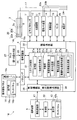
- 2 is a diagram showing an internal configuration of a control device and the like in the medical system of FIG.
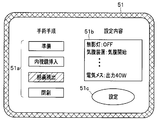
- FIG. 3 is a diagram illustrating an example of a collective setting operation screen on a centralized operation panel for collectively setting operation settings of a plurality of medical devices.
- FIG. 4A is a diagram showing an example of a surgical procedure.
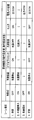
- FIG. 4B is a diagram showing, in a tabular form, scene items along the surgical procedure and states of operation setting values of a plurality of medical devices in each scene item.
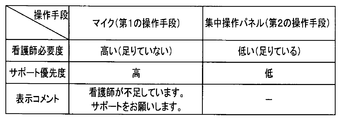
- FIG. 5 is a diagram showing determination results such as support priority set according to the first and second operation means.
- FIG. 6 is a diagram illustrating an example of data used for generating a display image.
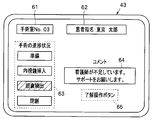
- FIG. 7 is a diagram illustrating an example of a display screen displayed on the terminal device.
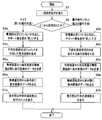
- FIG. 8A is a flowchart showing the operation contents in the first embodiment.
- FIG. 8B is a flowchart showing the operation content when a reply process is performed on the operation content of FIG. 8A.
- FIG. 9 is a diagram showing a configuration of a medical system according to the second embodiment of the present invention.
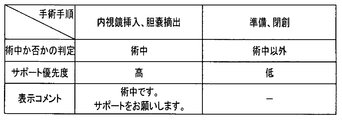
- FIG. 10 is a table showing support priorities and the like corresponding to the determination results of the intraoperative determination unit.
- FIG. 11 is a diagram illustrating an example of a display screen displayed on the display unit of the terminal device.
- FIG. 12 is a flowchart showing the operation contents in the second embodiment.
- FIG. 13 is a diagram showing an overall configuration of a medical system different from the first and second medical systems.
- FIG. 14 is a diagram illustrating a configuration of a controller.
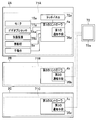
- FIG. 15 is a diagram illustrating a configuration of a terminal device.
- FIG. 16 is a flowchart illustrating processing in which the controller notifies the terminal device of information by operating the touch panel.
- FIG. 17 is a flowchart showing processing when information is notified from the controller.
- FIG. 18 is a diagram showing an example of a display screen of a terminal device corresponding to the processing of FIG.
- FIG. 21 is a flowchart showing the processing of the controller corresponding to the operation on the operation screen of FIG.
- FIG. 22 is a diagram illustrating an example of an operation screen of a touch panel in the second modification of the medical system in FIG. 13.
- FIG. 23 is a flowchart showing the processing of the controller corresponding to the operation on the operation screen of FIG. 24 is a diagram showing a display example of a display screen of the terminal device in the process of FIG.
- FIG. 25 is a flowchart showing processing in which the controller detects a change in the operating state of the pneumoperitoneum in the third modification of the medical system in FIG. 13 and notifies the terminal device.
- FIG. 26 is a flowchart showing a process for receiving and displaying the notification information notified by the terminal device.
- FIG. 27 is a diagram showing a display example of the display screen of the terminal device.
- a medical system 1 As shown in FIG. 1, a medical system 1 according to the first embodiment of the present invention includes an endoscope 3 disposed in an operating room 2, a control device 4, and a plurality of medical devices controlled by the control device 4.
- An outside nurse hereinafter simply referred to as nursing
- Rn the non-sterile area
- a terminal device 6 carried by N.
- FIG. 1 Only one operating room 2 is shown in FIG. 1, it can also be applied to a plurality of operating rooms 2A, 2B, 2C (as shown in FIG. 13).
- a medical system similar to the configuration shown in FIG. 1 is arranged and an operation is performed.
- the single terminal device 6 and the nurse N are shown in FIG. 1, it can be applied to a plurality of cases.
- An operating table 8 on which a patient 7 is placed is disposed in the operating room 2, and an electrosurgical electrode (hereinafter referred to as an electrosurgical electrode) as a treatment tool is observed near the operating table 8 under the observation of the endoscope 3.
- An operator D who performs an operation using simply the electrode 9 is arranged.
- a sterilization region Rc as a clean region subjected to sterilization is formed in the peripheral region of the operating table 8.
- a movable trolley 10 is arranged in a non-sterile area Rn as an area that is not sterilized and separated from the sterilization area Rc.
- the trolley 10 is controlled by the control apparatus 4 together with the control apparatus 4.
- a video processor 11, a light source device 12, an electric scalpel device 13, a pneumoperitoneum device 14, and a monitor 15 are mounted as a plurality of medical devices as controlled devices.
- the control device 4 also controls the operation (ON / OFF) of a surgical light 29 described later as one of a plurality of medical devices.
- a central operation panel 16 capable of performing a central operation is attached to the side surface of the trolley 10.
- the central operation panel 16 includes a display unit (or display device) 16a (see FIG. 2) configured by, for example, a liquid crystal display, and a touch panel 16b provided integrally on the display unit 16a.
- a display unit (or display device) 16a see FIG. 2
- a touch panel 16b provided integrally on the display unit 16a.
- a centralized operation device that allows a nurse N (in FIG. 1 to be absent in the operating room 2) to touch the touch panel 16b and perform operation settings for a plurality of medical devices in the non-sterile area Rn. It has become.
- the surgeon D can observe the operation screen displayed on the display unit 16a of the centralized operation panel 16, and can operate the centralized operation panel 16 by voice input as described later.
- the light source device 12 includes a light source such as a lamp, and transmits (or supplies) illumination light generated by the light source to the endoscope 3 via the light guide cable 17.
- the illumination light transmitted by the light guide cable 17 is emitted from the illumination window 19a (see FIG. 2) at the distal end portion of the insertion portion 3a of the endoscope 3 through the light guide 18 inside the endoscope 3.
- the insertion portion 3a of the endoscope 3 is inserted into the abdomen 7a of the patient 7 via a trocar (not shown).
- An observation window 19b is provided adjacent to the illumination window 19a at the distal end of the insertion section 3a, and an imaging section (or imaging device) 20 (see FIG. 2) that captures an object such as an affected area illuminated with illumination light. It is provided.
- the imaging unit 20 includes an objective lens 20a that forms an optical image of a subject, and an imaging element 20b such as a charge imaging element disposed at the imaging position of the objective lens 20a.
- the imaging unit 20 is connected to a video processor 11 forming a signal processing device via a cable in the endoscope 3 and a video cable 21 extending from the endoscope 3.
- the video processor 11 performs signal processing on the image sensor 20b, generates a video signal (image signal), and outputs it to the monitor 15 as a display device. And the monitor 15 displays the image imaged by the imaging part 20 on the display surface as an endoscopic image.
- the electric scalpel device 13 that forms the electric energy supply device is inserted into the abdomen 7a via the electric scalpel cable 22a, and a high-frequency current that forms high-frequency electric energy on the electrode 9 as a treatment instrument for treatment. Supply. Further, the counter electrode or patient plate 23 disposed so as to come into contact with the outer surface of the patient 7 over a wide area returns the high-frequency current that has flowed to the patient 7 via the return cable 22b to the electric knife device 13.
- a bipolar electrode cable is connected to the electric knife device 13.
- the pneumoperitoneum 14 is connected to a trocar 25 inserted into the abdomen 7a via the pneumoperitoneum tube 24.
- the pneumoperitoneum 14 is connected to the trocar 25 via the pneumoperitoneal tube 24.
- the control device 4 forms a first operation means (or first operation unit) that operates from the sterilization region Rc and is attached to the head of the operator D who is in the sterilization region Rc via the microphone cable 26. It is connected to a headset type microphone (simply abbreviated as a microphone) 27 as an audio input device.
- the microphone 27 may be configured to include an earphone.
- the surgeon D in the sterilization zone Rc uses voice input from the microphone 27 to use operation setting values for operating a plurality of medical devices arranged in the non-sterilization zone Rn, for example, using the display on the display unit 16a of the centralized operation panel 16 To be able to do that.
- the centralized operation panel 16 disposed in the non-sterile area Rn is a first operation in which the nurse N in the non-sterile area Rn operates a plurality of medical devices from the non-sterile area Rn (specifically, a touch operation).
- Two operation means (or a second operation unit) are formed.
- the surgeon D or the nurse N performs setting of operation setting values for operating a plurality of medical devices for each of a plurality of procedure items (also referred to as scene items) along the procedure of the operation.
- the operation setting value (which causes the medical device to operate) is stored (stored) in a storage unit 31a (see FIG. 2) configured by a storage device inside the control device 4. Accordingly, the storage unit 31a forms an operation setting value storage unit or an operation setting value storage device that stores operation setting values of a plurality of medical devices.
- the operation of the plurality of medical devices is set by setting the operation setting values of the plurality of medical devices stored in the storage unit 31a in the corresponding plurality of medical devices.
- the system control unit 31 sets the operation setting values of the plurality of medical devices stored in the storage unit 31 a to the corresponding plurality of medical devices via the device communication unit 32.
- system control unit 31 performs a control operation for collectively setting operation setting values of a plurality of medical devices by an instruction operation for collectively setting from the centralized operation panel 16 (touch operation unit) or the microphone 27.
- the central operation panel 16 (touch operation unit) and the microphone 27 constitute a collective setting unit (or collective setting device) as a collective setting unit for collectively setting the settings of a plurality of medical devices.
- a device including the device communication unit 32 forms a batch setting unit.
- the control device 4 includes an operation unit specifying unit (or an operation unit specifying circuit) that specifies from which operation means (or operation unit) of the centralized operation panel 16 and the microphone the batch setting operation has been performed. ) The function of 31d is provided.
- a surgical light 29 is arranged on the ceiling of the operating room 2 near the upper position of the operating table 8 to illuminate the vicinity of the abdomen 7a of the patient 7 so that the operator D can easily perform an operation or the like.
- the control device 4 controls ON / OFF of the lighting operation of the surgical light 29.
- FIG. 2 shows an internal configuration of the control device 4 and the like in the medical system 1 of FIG. As shown in FIG. 2, the control device 4 communicates with a plurality of medical devices, for example, a system control unit (or system control circuit) 31 configured by, for example, a central processing unit (abbreviated as CPU) that controls a plurality of medical devices and the like.
- a system control unit or system control circuit
- CPU central processing unit
- a device communication unit (or device communication circuit) 32 forming a device communication means for performing a sound, a panel interface (panel I / F 33) as an interface to the centralized operation panel 16, and a voice recognition for performing voice recognition for a voice input of the microphone 27 Unit (or voice recognition circuit) 34 and a terminal wireless communication unit (or terminal wireless communication circuit, simply abbreviated as wireless communication unit) 35 that performs wireless communication with the terminal device 6.
- the system control unit 31 includes a video processor 11 as a plurality of medical devices, a light source device 12, a communication device 32 having a communication interface such as a wired RS-232C interface and a wireless communication interface. It communicates with the electric scalpel device 13, the pneumoperitoneum device 14, the monitor 15, and the surgical light 29 in a wired or wireless manner to control operation setting values (or operation setting contents) including ON / OFF of the operation of each medical device. .
- a wireless communication unit 35 including a wireless communication interface transmits a display image (also referred to as a display image) including information on the progress of surgery to the display unit (or display device) 43 of the display terminal 6.
- (Or display image transmission circuit) 36 has a function.
- the display image transmission unit 36 has a function of a transmission unit (or a transmission circuit) that transmits information on the progress of surgery.
- the system control unit 31 stores operation setting values for operating a plurality of medical devices (including OFF setting values that are not operated) in accordance with a procedure for surgery performed under observation by the endoscope 3 using the endoscope 3.
- Batch setting determination for determining the execution by confirming the batch setting of a plurality of medical devices using the operation setting value read from the storage unit 31a and the storage unit 31a, for example, a flash memory or the like
- the operation setting values of a plurality of medical devices by the unit (or collective setting determining circuit) 31b and the collective setting determining unit 31b or the collective setting unit are replaced with information on the progress (or progress stage) representing the progress of the operation (processing) And a replacement unit (or replacement circuit) 31c as a replacement means.
- the operation setting values for operating the plurality of medical devices set by the operator D or the nurse N as described above are associated with the plurality of scene items having different operation setting values for the plurality of medical devices in accordance with the procedure of the operation.
- it is stored in the storage unit 31a in the form of a lookup table (abbreviated as LUT).
- LUT lookup table
- the storage unit 31a associates a plurality of scene items along the surgical procedure with operation setting values for operating a plurality of medical devices and stores them in an LUT format, for example.
- a plurality of scene items along the surgical procedure sequentially form information on the progress of the surgery in terms of time.
- the collective setting determination unit 31b responds to a collective setting operation performed by the collective setting unit configured by the microphone 27, and sets a plurality of medical devices whose operation setting values are collectively set by the collective setting unit. It is determined (confirmed) to be executed (or operated). Therefore, the collective setting determination unit 31b confirms the collective setting operation of the collective setting unit, and after confirmation, the system control unit 31 operates a plurality of medical devices with respective operation setting values via the device communication unit 32. To control.
- the control device 4 is configured to include the collective setting determining unit 31b.
- the centralized operation panel 16 may be configured to have the function of the collective setting determining unit 31b.
- the replacement unit 31c is an operation unit configured by a determination circuit or the like that specifies (or determines) from which operation unit (operation unit) in the centralized operation panel 16 and the microphone 27 the settings of a plurality of medical devices are performed. Based on the identification part (or operation part identification circuit) 31d and the identification result by the operation part identification part 31d, support priority (or support level) is set as support information to support (support) so that surgery can be performed smoothly.
- a priority setting unit (or priority setting circuit) 31e configured by a comparison circuit or the like (or determination) and an image generation circuit that generates a display image to be displayed on the display unit 43 on the terminal device 6 side.
- Display image generation unit (or display image generation circuit) 31f When generating a display image to be displayed on the display unit 43 of the terminal device 6, the display image generation unit 31 f generates only a part of the display image, and the control unit 42 of the terminal device 6 generates a remaining part of the display image. Alternatively, the display image generation unit 31f may generate only data that is the basis of the display image.
- the replacement unit 31 c is illustrated as including the operation unit specifying unit 31 d, the priority setting unit 31 e, and the display image generation unit 31 f, but the operation unit is provided outside the replacement unit 31 c.
- One, two, or three of the specifying unit 31d, the priority setting unit 31e, and the display image generation unit 31f may be provided.
- the replacement unit 31c may include the storage unit 31a.
- the replacement unit 31c refers to the LUT in the storage unit 31a, and sets the operation setting values of a plurality of medical devices collectively corresponding to the scene.
- the replacement unit 31c can be configured by a read circuit that reads the corresponding other information from one information in the LUT and outputs the read information.
- the priority setting unit 31e has, as a support priority, a nurse necessity determination unit (or a nurse necessity determination circuit) 31g configured by a comparison circuit for determining the (support) necessity of a nurse to support. It has the function of.
- the centralized operation panel 16 includes a communication interface (communication I / F) 16c that communicates with the panel interface 33, and the display unit 16a and the touch panel 16b described above.
- the terminal device 6 communicates with the control device 4, a wireless communication unit (or wireless communication circuit) 41 that performs wireless communication with the wireless communication unit 35, a control unit (or control circuit) 42 that controls the operation of the terminal device 6 as a whole. And a display unit (or display device) 43 that displays the display image generated by the display image generation unit 31f of the control device 4.
- the wireless communication unit 41 has a function of a reception unit (or reception circuit) that receives at least progress information transmitted from the wireless communication unit 35 side by performing wireless communication with the wireless communication unit 35.
- the wireless communication unit 41 receives information with the support priority added to the progress information from the wireless communication unit 35 side, the wireless communication unit 41 receives the progress information and the support priority information.
- the display unit 43 is formed by a liquid crystal display, for example, and a touch panel 43a is integrally provided on the display unit 43.
- the control unit 42 receives display image data (also simply referred to as a display image) including at least progress status information transmitted from the control device 4 side as will be described later on the display unit 43 on which the touch panel 43a is formed. And an operation screen for accepting a touch operation on the touch panel 43a is displayed. Then, the nurse N carrying the terminal device 6 touches the touch panel 43a and sends a reply signal indicating that the transmitted display image has been confirmed from the wireless communication unit 41 to the wireless communication unit 35 of the control device 4. It can also be sent.
- display image data also simply referred to as a display image
- FIG. 3 shows a collective setting operation screen 51 for collectively setting operation setting values of a plurality of medical devices when performing surgery using the display unit 16a of the centralized operation panel 16.
- a collective setting operation item area 51a for displaying procedure items (scene items) classified according to the surgical procedure, and a setting content display area for displaying the setting contents of the operation setting values of each medical device.
- 51b and a setting button 51c for performing setting for confirming the batch setting operation are displayed.
- a nurse N as a user who performs a touch operation in the non-sterile region Rn, or an operator D as a user by voice input in the sterilization region Rc confirms the operation setting values of a plurality of medical devices.
- a setting content confirmation area function is provided.
- the plurality of scene items classified along the surgical procedure in the collective setting operation item area 51a are associated with different combinations of operation setting values of the plurality of medical devices as shown in FIG. 4B in the storage unit 31a. For example, it is stored in the LUT format, and the centralized operation panel 16 reads it from the storage unit 31a and displays it on the batch setting operation screen 51.
- the scene item corresponding to the selection is determined.
- each scene item classified into a plurality (for example, four in the case of FIG. 3) along the surgical procedure corresponds to information on the progress of the surgery.
- the surgery progresses sequentially in time according to the surgical procedure along the plurality of scene items in the collective setting operation item area 51a in FIG. 3, and one scene item serving as progress status information along this progress. It changes sequentially.
- the replacement unit 31c can be considered to receive the signal from the touch panel 16b and replace the operation setting values of a plurality of medical devices with information on the progress of the operation.
- the replacement unit 31c receives a signal when the touch panel 16b is touched and a signal when the touch panel 16b is operated by voice.
- the operation unit specifying unit 31d Identify (or determine) whether it exists.
- Preparation is a scene item for performing anesthesia or the like for performing an operation using the endoscope 3.
- Endoscope insertion is an endoscope 3 for observing a surgical site by the endoscope 3.
- the “gallbladder removal” is a scene item for removing the gallbladder using a treatment tool under the observation of the endoscope 3, and the “closed wound” is a scene item that is sutured to finish the operation. It is.
- a plurality of medical devices have operation setting values (operations) corresponding to the respective scene items as shown in FIG. 4B. Setting status).
- the operating light 29 is turned off, the insufflation device 14 is inhaled, the video processor 11 is turned on (power is on), the light source device 12 is turned off, the monitor 15 is turned on, and electricity is turned on.
- the female device 13 is set to output 0W.
- a downward arrow indicates that the content is the same as above the arrow (the state is unchanged from the previous scene item).
- the storage unit 31a stores information on operation setting values of a plurality of medical devices in association with each scene item illustrated in FIG. 4B.
- the storage unit 31a stores information such as the number of the operating room in which the above operation is performed and the name of the patient 7 to be operated.
- the nurse N touches one scene item in the batch setting operation item area 51a on the centralized operation panel 16 in accordance with the progress of the operation in the non-sterile region Rn. Select (set to do), and perform an operation to execute the operation of the scene item.
- the touch panel 16b determines this touch operation and sends it to the replacement unit 31c.
- the replacement unit 31c replaces the scene item that has been touched with information on the progress of the operation.
- the operation in which the operation setting values of the plurality of medical devices are actually performed from the plurality of scene items set so that the operation setting values of the plurality of medical devices are different from each other.
- the selected scene item becomes information on the progress of the operation.
- a scene item selected from a plurality of scene items by a touch operation is indicated by oblique lines, and a scene item for cholecystectomy is selected, and the scene item for cholecystectomy becomes information on progress.
- the operation setting value in which the surgical light 29 is OFF, the pneumoperitoneum device 14 is started, and the electrosurgical device 13 is set to output 40 W is displayed. ing.
- the operation signal is sent to the system control unit 31a, and the batch setting determination unit 31b of the system control unit 31a operates the setting button 51c.
- the collective setting determination unit 31b confirms (or executes) the collective setting operation.
- the plurality of medical devices are in a state of being executed with the respective operation setting values.
- it may be configured to require an operation (for confirmation) to further execute a plurality of medical devices with respective operation setting values.
- the voice recognition unit 34 of the control device 4 recognizes an operation signal by voice input and sends the recognition result to the system control unit 31.
- the system control unit 31 performs a touch operation on the centralized operation panel 16 according to the recognition result. Control is performed so as to perform the same operation as in the above case.
- the surgeon D performs voice input to operate the setting button 51c
- the batch setting determination unit 31b of the system control unit 31a performs the batch setting operation in the same manner as when the nurse N touches the setting button 51c. Determine.
- the replacement unit 31c replaces the operation setting values of the plurality of medical devices set in a batch with the progress status information indicating the progress of the operation.
- the replacement unit 31c stores information stored in the storage unit 31a (for example, information associating each scene item illustrated in FIG. 4B with operation setting values of a plurality of medical devices in the LUT format, and first data illustrated in FIG. 6 described later. By referring to the group 56), information on the progress is generated. Therefore, the replacement unit 31c can also be said to be a progress status information generation unit (or progress status information generation circuit) that generates progress status information from operation setting values of a plurality of medical devices.
- the display image generation unit (or display image generation circuit) 31f in the replacement unit 31c displays a display image for displaying information on the progress status in the terminal device 6 held by the nurse N outside the operating room 2 or the like. It generates and transmits the generated display image via the wireless communication unit 35.
- the nurse N can grasp the progress of the operation in the operating room 2 by viewing the display image displayed on the display unit 43 in the terminal device 6.
- the necessity of whether or not the nurse N needs assistance ie, the necessity of the nurse
- the support priority information as information is also added to the progress status information and transmitted to the terminal device 6. Therefore, the nurse N can easily grasp whether or not it is better to go to the operating room 2 and refer to the support priority information.
- the operation unit specifying unit 31 d is configured such that the operation of the setting button 51 c in the batch setting operation is the first operation as illustrated in FIG. 5. It is specified (determined) whether the operation is performed from the microphone 27 as a means or a touch operation on the centralized operation panel 16 as a second operation means. Then, the operation unit specifying unit 31d sends the specification (determination) result to the priority setting unit 31e. For example, the operation unit specifying unit 31d sends a specific signal (determination signal) of an H level when it is from the microphone 27 and an L level when it is from the centralized operation panel 16, to the priority setting unit 31e.
- the setting unit 31e (the nurse necessity determination unit 31g) uses a comparison circuit in which a threshold level is set between the L level and the H level, and a signal that determines the support priority from the specific signal that becomes the input signal. Is generated.
- FIG. 5 shows the determination result of the support priority and the like by the priority setting unit 31e in a table format.
- the priority setting unit 31e determines the necessity of the nurse as the support priority according to the determination result (comparison result) using a comparison circuit or the like. Specifically, when the operation of the setting button 51c in the collective setting operation is performed by the microphone 27 from the operator D in the sterilization region Rc, the nurse necessity determination unit 31g determines the necessity of the nurse N in the operation. Is determined to be high. In other words, the nurse necessity determination unit 31g determines that there are not enough nurses or the support priority is high, and further, a comment or display saying “Nurse is insufficient. Please support.” Add a comment. For this reason, the priority setting unit 31e (the nurse necessity level determination unit 31g) further generates character information for comment that forms support priority information corresponding to the support priority determination result. (Or a character information generation circuit).
- This display comment is registered in advance in the storage unit 31a or the priority setting unit 31e so that it can be added at least when the support priority is high, but is added using the centralized operation panel 16. You may be able to do that.
- the nurse necessity determination unit 31g performs the operation of the nurse in the operation. It is determined that the necessity is low, in other words, the nurse is sufficient, and the support priority is low. In this case, for example, a display comment is not added.
- the support priority information may be defined as “high” and “low” which are information corresponding to the determination result of the support priority, but the information of the display comment (corresponding to the determination result information) May be defined as support priority information.
- the terminal device 6 displays only “high” and “low” corresponding to the support priority (the determination result) as the support priority information
- the nurse watching the terminal device 6 N can roughly grasp its meaning.
- the support priority is displayed as “high” or “high”
- the display comment “Nurse is insufficient. Please support.”
- the nurse N can easily grasp the meaning and easily start the support action.
- the priority setting unit 31e sends support priority information to the display image generation unit 31f according to the determination result of the support priority.
- the display image generation unit 31f generates a display image by adding support priority information to progress status information.
- FIG. 6 shows an example of data used for display image generation.
- FIG. 6 shows data used for display image generation when the support priority is high when operated by the microphone 27 in FIG.
- the data items used for display image generation include operating room No. (as number information that characterizes the operating room). And a first data group (or first data item group) 56 for displaying patient information, and a second data group (or second data item group) 57 for displaying the progress of surgery. And a third data group (or third data item group) 58 for displaying the support priority and the display comment. From these data groups 56 to 58, the display image generation unit 31f generates a display image and transmits the display image to the terminal device 6 from the wireless communication unit 35. In addition to the support priority information, the operating room No where the support priority information is generated, patient information, and the like are added to the progress information information (in FIG.
- the operating room No. and patient information are input to the control device 4 from the centralized operation panel 16 or the like when starting an operation in each operating room, and the storage unit 31a stores the input information.
- the wireless communication unit 41 of the terminal device 6 displays the received display image on the display unit 43.
- the priority setting unit 31e may wirelessly communicate (wirelessly transmit) the display image to which the priority information and the like are added to the terminal device 6 via the wireless communication unit 35.
- FIG. 7 shows an example of a display screen displayed on the display unit 43 of the terminal device 6 in the case of the data of FIG.
- the display screen of the display unit 43 of the terminal device 6 is classified according to the surgical procedure, the first display area 61 for displaying the operating room 2 number, the second display area 62 for displaying the patient name, and so on.
- the display image generation unit 31 f Based on the information shown in FIG. 6, the display image generation unit 31 f generates display image data for the terminal device, and the generated display image data for the terminal device passes through the wireless communication unit 35 and the wireless communication unit 41. Is sent to the terminal device 6 and displayed on the display unit 43 of the terminal device 6 as shown in FIG.
- the medical system 1 includes a plurality of, for example, a video processor 11, a light source device 12, an electric scalpel device 13, a pneumoperitoneum device 14, a monitor 15, a surgical light 29, etc.
- a medical device a device communication unit 32 configured to communicate with the plurality of medical devices, and a memory configured to store operation setting values for operating the plurality of medical devices in accordance with the surgical procedure
- a microphone 27 serving as a first operation unit that constitutes a batch setting unit configured to batch-set settings of the plurality of medical devices using the operation setting values stored in the storage unit 31a.
- a priority setting configured to set the support priority for adding support priority information for smoothly proceeding with the operation to the progress status information;
- the control device 4 having the transmission unit, the wireless communication unit 41 forming the reception unit configured to receive the progress status information transmitted from the transmission unit, and the progress status received by the reception unit
- a display unit 43 configured to display information
- the priority setting unit 31e includes the plurality of medical devices that are collectively set by the batch setting unit.
- the transmission unit is configured to set the support priority at an execution timing to be executed with the operation setting value, and to add the support priority information to the progress status information according to the support priority setting result.
- the display unit 43 of the terminal device 6 displays the support priority information together with the progress information received by the wireless communication unit 41 forming the reception unit. It is characterized by that.
- the batch setting unit may further be defined as including the device communication unit 32 that sets a plurality of operation setting values by communication with a plurality of medical devices.
- the microphone 27 as the first operation means and the centralized operation panel 16 as the second operation means can be regarded as an instruction operation unit (or instruction operation device) that performs an instruction operation for batch setting. it can.
- FIG. 8A is a flowchart showing a typical example of the operation when a batch setting operation is performed in the present embodiment.
- the operator D or the nurse N prepares, inserts an endoscope, removes the gallbladder, and closes the wound so that, for example, a cholecystectomy can be performed on the patient 7 as shown in FIG.
- the operation setting values of a plurality of medical devices are set so as to conform to the respective scene items.
- the operator D in the sterilization zone Rc operates the centralized operation panel 16 using the voice input from the microphone 27 for the operation setting values of a plurality of medical devices.
- step S1 in FIG. 8A the operator D or the nurse N determines the collective setting of the operation setting values for a plurality of medical devices and executes the collective setting (with the respective operation setting values).
- the operation is performed by operating the setting button 51c (by voice input or touch operation).
- the operation unit specifying unit 31d includes the microphone 27 as the first operation unit in the sterilization region Rc and the second operation unit in the non-sterilization region Rn. It is specified (determined) from which the centralized operation panel 16 (touch operation by) is performed. Then, the specified (determined) result is sent to the priority setting unit 31e.
- the nurse necessity determination unit 31g of the priority setting unit 31e determines that there are not enough nurses in the operation, and sets the support priority. Set to “High”.
- the corresponding progress status information is generated by the replacement unit 31c.
- the display image generation unit 31f generates a display image in which comments indicating the support priority information more specifically are added to the information on the progress of the operation.
- the control device 4 wirelessly transmits the display image data generated by the display image generation unit 31f to the wireless communication unit 41 of the terminal device 6 using the wireless communication unit 35.
- the wireless communication unit 41 sends the received display image data to the display unit 43.
- the display unit 43 displays the progress of the operation and comments.
- the nurse N carrying the terminal device 6 recognizes that he / she needs support by looking at the progress of the operation and comments displayed on the display unit 43, and goes to the operating room 2 who needs support. Thus, the operation in the operation room can be quickly supported, and the operation can be smoothly advanced.
- the nurse necessity determination unit of the priority setting unit 31e. 31g determines that there are enough nurses in the operation, and sets the support priority to “low”.
- the display image generation unit 31f generates a display image that displays only the progress of the operation.
- the control device 4 wirelessly transmits the display image data generated by the display image generation unit 31f to the wireless communication unit 41 of the terminal device 6 using the wireless communication unit 35. To do.
- the wireless communication unit 41 sends the received display image data to the display unit 43.
- the display unit 43 displays the progress of the operation.
- the nurse N who carries the terminal device 6 can grasp the progress of the operation by looking at the progress of the operation displayed on the display unit 43. It can also be recognized that no support is required. According to this embodiment which operates in this way, information on support priority that can easily determine which operating room surgery should be preferentially supported is displayed on the terminal device 6 carried by the nurse N. can do. Therefore, the operation in the operating room requiring the support of the nurse is smoothly supported by the nurse N carrying the terminal device 6, and the operation can be performed efficiently.
- FIG. 8A it has been explained that the nurse N having the terminal device 6 can confirm by displaying the progress status information and the support priority information (comment) on the display unit 43 of the terminal device 6. However, the processing shown in FIG. 8B may be further performed.
- step S7a of FIG. 8A After the processing of displaying the operation progress status and support priority information (comments) in step S7a of FIG. 8A on the display unit 43 of the terminal device 6, as shown in the next step S8a, the control unit 42 of the terminal device 6 Then, it waits for an operation (reply operation) to be performed in response to the display from the nurse N (hereinafter referred to as support approval) from the touch panel 43a.
- support approval an operation (reply operation) to be performed in response to the display from the nurse N (hereinafter referred to as support approval) from the touch panel 43a.
- support approval an operation (reply operation) to be performed in response to the display from the nurse N (hereinafter referred to as support approval) from the touch panel 43a.
- support approval an operation (reply operation) to be performed in response to the display from the nurse N (hereinafter referred to as support approval) from the touch panel 43a.
- the approval operation button 65 is returned at least when it is more preferable to reply (specifically, when information with a high support priority is displayed).
- An operation button for returning a signal to, for example, the priority setting unit 31e of the control device 4 is formed.
- the touch panel 43a When the consent operation button 65 is pressed as shown in the next step S9a, the touch panel 43a sends a support consent signal (data) to the control unit. In addition, even when an operation other than the support approval is performed, the touch panel 43a can send a signal corresponding to the operation to the control unit 42.
- the control unit 42 of the terminal device 6 transmits (replies) support acknowledgment reply data from the wireless communication unit 41 to the control device 4 when the acknowledgment operation button 65 is operated. Even when an operation other than the OK operation button 65 is operated, a signal corresponding to the operation is transmitted (returned) from the wireless communication unit 41 of the terminal device 6 to the control device 4 as return data.
- the system control unit 31 (for example, the priority setting unit 31e) in the control device 4 determines the returned data. Then, in the next step S12a, the priority setting unit 31e determines whether or not the returned data is a support approval for canceling the support priority. If the determination result does not cancel the support priority, the process returns to step S11a.
- step S13a the priority setting unit 31e determines that the support priority has been canceled and changes the support priority from “high” to “low”. Change to In this case, on the display unit 16a of the centralized operation panel 16, "Nurse has supported a reply” or "Nurse has supported a reply, so a nurse will be supported soon.” May be displayed.
- steps S4b to S7b denoted as step S14a in FIG. 8B
- FIG. 8B ends. If it does in this way, while having the effect of FIG. 8A, it becomes possible to perform surgery more efficiently.
- FIG. 9 shows a medical system 1B according to the second embodiment of the present invention.
- This embodiment is different in the configuration of the replacement unit 31c in the medical system 1 of FIG.
- the replacement unit 31c in the present embodiment includes a surgical procedure analysis unit (or a surgical procedure analysis circuit) 31h that analyzes a surgical procedure, instead of the operation unit specifying unit 31d in FIG.
- the surgical procedure analysis unit 31h confirms the operation for batch setting, and at the execution timing at which a plurality of medical devices automatically execute or at the execution timing at which the operation to be performed is performed, ) Includes an intraoperative determination unit (intraoperative determination) or an operation phase determination unit (surgical phase determination circuit) 31i that determines whether the phase (or state) is an intraoperative phase (or state).
- the nurse necessity determination unit 31g of the priority setting unit 31e determines the support priority of the nurse according to the determination result of the intraoperative determination unit 31i.
- the storage unit 31a is an in-situ scene item for which an operation is substantially performed in advance for a plurality of scene items respectively associated with operation setting values of a plurality of medical devices, or other than during an operation that does not substantially perform an operation It is stored separately as information on whether or not it is a scene item. More specifically, as will be described below, the storage unit 31a stores endoscopic insertion and cholecystectomy scene items as information corresponding to non-operative and preparation / closure scene items.
- the storage unit 31a may further store the progress status information.
- the storage unit 31a may store the information related to the progress status together with the associated information.
- FIG. 10 shows the determination result of the intraoperative determination unit 31i and the corresponding support priority in the case of this embodiment.
- the intraoperative determination unit 31i determines whether the surgical procedure during the collective setting operation is an endoscopic insertion, cholecystectomy, preparation other than intraoperative, or closed phase. Whether at least one of the operation setting values (see FIG. 4B) of the electric scalpel device 13 forming the light source device 12, the pneumoperitoneum device 14, and the electric energy supply device in a plurality of medical devices is operated. If the state is set, it may be determined that the operation is in progress, and if all of these are in the operation stop state corresponding to OFF or OFF, it may be determined that the operation is not in progress. In FIG.
- the light source device 12 and the pneumoperitoneum device 14 are set in the operating state in the endoscope insertion scene item, and the light source device 12, the pneumoperitoneum device 14 and the electric knife device in the cholecystectomy scene item. 13 is set in the operating state.
- the operation state (operation setting value) is set to a state corresponding to OFF.
- the nurse necessity determination unit 31g of the priority setting unit 31e determines that the support priority is “high” in the case of endoscopic insertion or cholecystectomy during operation, and “in operation. Add a comment. During the operation, compared to cases other than during the operation, the values of the operation setting values of a plurality of medical devices are often changed, so the nurse necessity determination unit 31g determines as described above. The nurse necessity determination unit 31g of the priority setting unit 31e determines that the support priority is “low” and does not add a comment in the case of preparation or closing other than during the operation. Further, the display unit 43 of the terminal device 6 has a display screen as shown in FIG. FIG. 11 shows an example of a display screen when it is determined that the support priority is high. Other configurations are the same as those of the first embodiment.
- the operation of this embodiment is as shown in FIG.
- the process shown in FIG. 12 has the contents obtained by changing steps S2, S3a, and S3b in the process shown in FIG. 8A to perform steps S16, S17a, and S17b, respectively.
- the same processes as those in FIG. When the batch setting operation is executed in step S1, the surgical procedure analyzing unit 31h determines in which next surgical procedure the surgical procedure in which the batch setting operation is executed corresponds in step S16. In other words, it is determined which surgical procedure has been selected as the surgical procedure in which the batch setting operation is executed.
- the surgical procedure analysis unit 31h sends the determined surgical procedure to the intraoperative determination unit 31i.
- the intraoperative determination unit 31i determines in step S17a that the surgical procedure is an intraoperative surgical procedure, and the priority setting unit 31e , Set the support priority to “high”.
- step S17a the processing of steps S4a to S7a is performed.
- the display content of the comment displayed on the display unit 43 is as shown in FIG.
- information on the progress status during the operation is indicated by a scene item of cholecystectomy.
- the other contents are the same for the endoscope insertion scene item as well as the gallbladder extraction scene item.
- the content of FIG. 11 is slightly different from the case of FIG. 7, but the content requiring support by the nurse N is the same. Therefore, the nurse N grasps the necessity of the support corresponding to the displayed comment and can easily perform the support.
- the surgical procedure analysis unit 31h determines in step S16 that the procedure is a preparation or closure procedure, as shown in step S17b, the intraoperative determination unit 31i determines that the procedure is a procedure other than the procedure, and the priority The setting unit 31e sets the support priority to “low”.
- step S17b the processes of steps S4b to S7b are performed.
- the nurse N can grasp the progress status.
- the present embodiment has substantially the same effect as the first embodiment. That is, according to the present embodiment, the nurse N who carries the terminal device 6 displays information on support priority that can easily determine which operating room surgery should be preferentially directed to support. Therefore, the operation in the operating room requiring the support of the nurse is smoothly supported by the nurse N carrying the terminal device 6, and the operation can be performed efficiently.
- the process of steps S8a to S14a may be performed after the process of step S7a as shown in FIG. 8B.
- the priority setting unit 31e performs support priority determination in each of the first embodiment and the second embodiment, and when both support priorities are “high” and “high”, the support priority Is determined to be the highest, the support priority is determined to be the second highest when “high”, “low” or “low” “high”, and the support priority is the lowest when “low” “low” May be determined.
- FIG. 13 shows the overall configuration of the medical system 1C.
- a first endoscopic operation system 71A is installed in the first operating room 2A.
- Second and third endoscopic surgery systems 71B and 71C are installed in the second and third operating rooms 2B and 2C, respectively.
- the first endoscopic operation system 71A includes a medical device such as a video processor 11a, a monitor 15a, a pneumoperitoneum device 14a, a surgical light 29a, an operating table 8a, and a touch panel 72a for operating the medical device.
- the first controller 4a is configured to communicate with the device in a wired or wireless manner.
- the first controller 4a includes a first notification unit (or first notification circuit) 35a capable of notifying information to the outside.
- the first notification unit 35a may be configured as another device including an interface that can communicate with the first controller 4a by wire or wirelessly.
- the second and third endoscopic surgery systems 71B and 71C are respectively the second controller 4b, the third controller 4c, and the second notification means (or the second notification means).
- the terminal device 76 is installed in or outside the first to third operating rooms 2A to 2C, receives information notified from the first to third notification means 35a to 35c, and displays according to the information.
- a display unit 76a is provided.
- FIG. 14 shows an internal configuration of the first controller 4a.
- the second and third controllers 4b and 4c have the same configuration as the first controller 4a.
- the first controller 4a includes a communication I / F 74a that communicates with a medical device, a touch panel I / F 75a that is connected to the touch panel 72a, a first notification unit 35a that notifies information to the outside, and a memory 76a that stores various types of information. And is controlled by the CPU 77a.
- the memory 76a includes identification information unique to the first controller, setting information for controlling each device individually (or simultaneously) by communication, notification information notified to the outside via the first notification means 35a, and the like. It is stored as data.
- FIG. 15 shows an internal configuration of the terminal device 73.
- the terminal device 73 stores receiving means (or receiving circuit) 81 for receiving information notified from the first to third notification means 35a to 35c, a graphic controller 82 for controlling display on the display unit 73a, and various information.
- the memory 83 is provided, and is controlled by the CPU 84. In the memory 83, information for displaying in association with identification information unique to the terminal device 73, display information for performing display corresponding to the notification information, and the like are stored as data.
- FIG. 16 illustrates processing until notification information is notified to the terminal device 73 via the first notification means 35a when the air supply stop of the insufflation apparatus 14a and the lighting of the surgical light 29a are sequentially operated. A processing flow is shown.
- the first controller 4a detects that “stop feeding” of the pneumoperitoneum device 14a is operated on the touch panel 72a.
- step S ⁇ b> 22 the first controller 4 a notifies the terminal device 73 of notification information and identification information related to “stop air supply” via the first notification unit 35 a.
- step S23 the first controller 4a detects that the “lighting” of the surgical light 29a has been operated on the touch panel 72a.
- step S24 the first controller 4a notifies the terminal device 73 of notification information and identification information related to “lighting” via the first notification unit 35a.
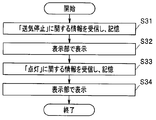
- FIG. 17 shows a second processing flow from when the terminal display receives notification information related to “stop air supply” and notification information related to “lighting” in order until a predetermined display is made.
- step S ⁇ b> 31 the terminal device 73 receives notification information and identification information related to “stop air supply” via the receiving unit 81 and stores them in the memory 83.
- step S32 the terminal device 73 analyzes the stored notification information and identification information, reads predetermined display information from the memory 83, and displays it on the display unit 73a (see FIG. 18).
- step S ⁇ b> 33 the terminal device 73 receives notification information and identification information regarding “lighting” via the receiving unit 81 and stores them in the memory 83.
- step S34 the terminal device 73 analyzes the stored notification information and identification information, reads predetermined information from the memory 83, and displays it on the display unit (see FIG. 19).
- FIG. 18 is a diagram illustrating a display example of the terminal device 73 in step S32. For example, when the first to third operating rooms 2A to 2C are in a display state indicating that endoscopic surgery is being performed, as a result of analyzing the notification information and the identification information, the first operating room 2A installed in the first operating room 2A is analyzed.
- FIG. 19 is a diagram showing a display example of the terminal device 73 in step S34.
- the display shown in FIG. 19 is a diagram showing a display example of the terminal device 73 in step S34.
- FIG. 20 is a diagram illustrating a first example of a touch panel operation screen that shows an example of an operation screen displayed on the first touch panel 72a.
- the first controller 4a displays the “transition to open surgery” button 91 on the touch panel 72a.
- the first controller 4a stores, in the memory 76a, setting information for collectively setting medical devices necessary for shifting to a laparotomy.
- FIG. 21 is a third processing flow for explaining processing until notification information is notified to the terminal device 73 when the “transition to abdominal surgery” button 91 shown in FIG. 20 is pressed.
- the first controller 4 a detects pressing of the “transition to open surgery” button 91.
- the first controller 4a notifies the terminal device 73 of the notification information and the identification information related to “transition to open surgery” via the first notification means 35a.
- the terminal device 73 receives the notification information and the identification information related to “transition for abdominal surgery” via the receiving unit 81, reads predetermined display information from the memory 83, and displays it.
- the result of analyzing the notification information and the identification information is that the first operating room 2A installed in the first operating room 2A 19 is displayed, the display shown in FIG. 19 is displayed.
- the endoscopic operation is completed (eg, the insufflation of the insufflation apparatus is stopped) in conjunction with the collective setting operation related to the transition to the laparotomy.
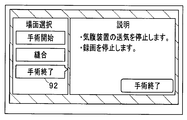
- FIG. 22 shows a second display example of the touch panel operation screen, which shows an example of the operation screen displayed on the first touch panel.
- the first controller 4a displays an “end of surgery” button 92 on the first touch panel 72a.
- the first controller 4a stores in the memory 76a setting information that can collectively perform medical device operations performed at the end of the operation.
- the “transition to open surgery” button 91 displayed on the operation screen of the first touch panel 72a is pressed, the insufflation apparatus 14a is controlled by communication to stop air supply, and a recording device (not shown) is controlled by communication to record. Stop.
- FIG. 23 shows a processing flow for explaining processing until notification information is notified to the terminal device 73 when the “end of surgery” button 92 shown in FIG. 22 is pressed.
- step S ⁇ b> 51 the first controller 4 a detects pressing of the “end of surgery” button 92.
- step S52 the first controller 4a notifies the terminal device 73 of the notification information and the identification information related to “end of surgery” via the first notification means 35a.
- step S53 the terminal device 73 receives the notification information and identification information related to “end of surgery” via the receiving means 81, and reads and displays predetermined display information from the memory 83 (see FIG. 24 as a display example).
- FIG. 24 shows a display example of the terminal device 73 in step S53.
- the placement of gauze or instruments in the body Displays information on equipment to be prepared, such as a C-arm for checking if there are any, and a stretcher for transporting the patient outside the operating room.
- the first controller 4a detects a change in the operating state of the pneumoperitoneum 14a and notifies the terminal device 73 of the notification information. The process flow explaining the process until is shown is shown.
- the first controller 4a receives data indicating the operating state from the pneumoperitoneum 14a via the communication I / F 74a and stores the data in the memory 76a.
- step S62 the CPU 77a in the first controller 4a analyzes the obtained data, compares it with the previously stored determination information for determining whether notification is necessary, and if it is determined that notification is not necessary, the process proceeds to step S61.
- step S63 the actual measurement value of the abdominal pressure constantly changes depending on the pressure applied to the abdomen by instruments used by the surgeon and the respiration of the patient. On the other hand, it is determined that notification is not required, and on the other hand, it is determined that notification is necessary for a start / stop state change of air supply.
- step S63 the CPU 77a inside the first controller 4a reads out the notification information corresponding to the determined result and the identification information unique to the first controller 4a from the memory 76a, and sends it to the terminal device 73 via the first notification means 35a. Send it out.
- FIG. 26 shows a processing flow for explaining processing from when the terminal device 73 receives notification information until it is displayed.
- the terminal device 73 receives the notification information and the identification information notified from the first notification unit 35a of the first controller 4a via the reception unit 81 and stores them in the memory 83.
- the CPU 84 in the terminal device 73 reads predetermined display information from the memory 83 and displays it on the display unit 73a (see FIG. 27 for a display example).
- FIG. 27 shows a display example of the terminal device 73.
- the terminal device 73 displays the insufflation status of the insufflation apparatuses in the first to third operating rooms 2A to 2C, and the insufflation apparatuses in the second operating room 2B and the third operating room 2C are in the process of supplying air.
- the ON display is highlighted (indicated by a thick frame in FIG. 27), and the OFF display is highlighted when the air supply of the pneumoconitomy device 14a in the first operating room 2A is stopped.
- the operating status can be monitored outside the operating room in conjunction with the operation of the pneumothorax device, so that the status of the operation can be easily grasped without entering the operating room. Can do. Note that embodiments configured by partially combining the above-described embodiments and the like also belong to the present invention.
Landscapes
- Health & Medical Sciences (AREA)
- Engineering & Computer Science (AREA)
- Life Sciences & Earth Sciences (AREA)
- General Health & Medical Sciences (AREA)
- Public Health (AREA)
- Biomedical Technology (AREA)
- Surgery (AREA)
- Medical Informatics (AREA)
- Veterinary Medicine (AREA)
- Heart & Thoracic Surgery (AREA)
- Animal Behavior & Ethology (AREA)
- Nuclear Medicine, Radiotherapy & Molecular Imaging (AREA)
- Molecular Biology (AREA)
- Radiology & Medical Imaging (AREA)
- General Business, Economics & Management (AREA)
- Business, Economics & Management (AREA)
- Primary Health Care (AREA)
- Epidemiology (AREA)
- Physics & Mathematics (AREA)
- Biophysics (AREA)
- Optics & Photonics (AREA)
- Pathology (AREA)
- Anesthesiology (AREA)
- Hematology (AREA)
- Human Computer Interaction (AREA)
- Robotics (AREA)
- Signal Processing (AREA)
- Endoscopes (AREA)
Abstract
医療システムは、内視鏡を用いた手術で使用される複数の医療機器と、複数の医療機器と通信を行う機器通信部と、手術の手順に沿って複数の医療機器を動作させる動作設定値を記憶する記憶部と、動作設定値を用いて複数の医療機器の設定を一括設定する一括設定部と、一括設定された複数の医療機器の動作設定値を手術の進捗を表す進捗状況の情報に置換する置換部と、進捗状況の情報に対して手術を円滑に進めるためのサポート優先度を設定する優先度設定部と、進捗状況の情報を送信する送信部と、機器通信部等を有する制御装置と、送信部から送信される進捗状況の情報を受信する受信部、及び受信した進捗状況の情報を表示する表示部、を有する端末装置と、を備える。
Description
本発明は、内視鏡を用いて手術を行う医療システムに関する。
近年、内視鏡は、手術等において広く用いられるようになっている。内視鏡の観察のもとで手術を行う内視鏡下外科手術は、開腹手術に比べて切開部分が小さく術後の回復も早いため、患者に負担の少ない手術方法として特に1990年代以降に普及が続いている。
上述した内視鏡下外科手術では、術者並びに複数の補助者、機材出し看護師、外回り看護師が配置される。
従来は、ひとつの手術室に少なくとも1人の外回り看護師が配置されていたが、手術件数の増加に伴い、複数の外回り看護師が複数の手術室を掛け持ちで担当するケースが増えてきた。一般に、どの手術室にサポートに入るかは、外回り看護師が手術室に直接足を運び、手術の進捗状況を確認することで決定していた。
上述した内視鏡下外科手術では、術者並びに複数の補助者、機材出し看護師、外回り看護師が配置される。
従来は、ひとつの手術室に少なくとも1人の外回り看護師が配置されていたが、手術件数の増加に伴い、複数の外回り看護師が複数の手術室を掛け持ちで担当するケースが増えてきた。一般に、どの手術室にサポートに入るかは、外回り看護師が手術室に直接足を運び、手術の進捗状況を確認することで決定していた。
しかし、上述のような方法では効率が悪いため、手術室に直接足を運ばなくても手術室の進捗状況を確認できるシステムの構築が課題となっていた。
このような課題を解決するために開発された技術として、例えば、第1の従来例としての日本国特開2011-50653号公報においては、手術の進捗を電気的に検出する検出手段と、検出された進捗を手術室外に告知する告知手段を備えた告知装置を開示している。
また、第2の従来例としての日本国特開2012-053750号公報においては、手術室における消費電力量を検出し、検出された消費電力に基づいて手術の進捗状況を手術室外に配信する告知装置を開示している。
このような課題を解決するために開発された技術として、例えば、第1の従来例としての日本国特開2011-50653号公報においては、手術の進捗を電気的に検出する検出手段と、検出された進捗を手術室外に告知する告知手段を備えた告知装置を開示している。
また、第2の従来例としての日本国特開2012-053750号公報においては、手術室における消費電力量を検出し、検出された消費電力に基づいて手術の進捗状況を手術室外に配信する告知装置を開示している。
しかしながら、上述した第1及び第2の従来例は、手術室の進捗状況を告知するためのものでしかなく、手術室内の看護師が足りているか、足りていないか、換言すると、手術室内の手術を(外回り)看護師がサポートすべきサポート優先度が高い状態か、看護師がサポートすることを必要としないサポート優先度が低い状態であるかの情報を含まない進捗状況の情報であった。
このように上記第1及び第2の従来例においては、手術室における看護師のサポート優先度の情報を含まない進捗状況の情報であったために、(外回り)看護師は、進捗情報を参照しても、どの手術室の手術を優先的にサポートすべきか判断できないという問題があった。
そのため、例えば、片付けを開始しようとしている手術室と、看護師のサポートを必要とする手術室とがあった場合、上述した第1又は第2の従来例に開示されている情報では、手が空いた看護師は、サポート優先度が低い手術室となる片付けを開始しようとしている手術室に向ってしまうような場合が発生する欠点がある。
本発明は上述の問題点に鑑みて為されたもので、端末装置を持つ看護師がどの手術を優先的にサポートに向かうべきかを、容易に判断できるサポート優先度の情報を表示する医療システムを提供することを目的とする。
このように上記第1及び第2の従来例においては、手術室における看護師のサポート優先度の情報を含まない進捗状況の情報であったために、(外回り)看護師は、進捗情報を参照しても、どの手術室の手術を優先的にサポートすべきか判断できないという問題があった。
そのため、例えば、片付けを開始しようとしている手術室と、看護師のサポートを必要とする手術室とがあった場合、上述した第1又は第2の従来例に開示されている情報では、手が空いた看護師は、サポート優先度が低い手術室となる片付けを開始しようとしている手術室に向ってしまうような場合が発生する欠点がある。
本発明は上述の問題点に鑑みて為されたもので、端末装置を持つ看護師がどの手術を優先的にサポートに向かうべきかを、容易に判断できるサポート優先度の情報を表示する医療システムを提供することを目的とする。
本発明の一態様に係る医療システムは、内視鏡を用いた手術で使用される複数の医療機器と、前記複数の医療機器と通信を行うよう構成された機器通信部と、前記手術の手順に沿って前記複数の医療機器を動作させる動作設定値を記憶するよう構成された記憶部と、前記記憶部に記憶された前記動作設定値を用いて前記複数の医療機器の設定を一括設定するよう構成された一括設定部と、前記一括設定部により一括設定された前記複数の医療機器の前記動作設定値を手術の進捗を表す進捗状況の情報に置換するよう構成された置換部と、前記進捗状況の情報に対して前記手術を円滑に進めるためのサポート優先度の情報を付加するための前記サポート優先度を設定するよう構成された優先度設定部と、前記進捗状況の情報を送信するよう構成された送信部と、前記機器通信部、前記記憶部、前記置換部、前記優先度設定部及び前記送信部を有する制御装置と、前記送信部から送信される前記進捗状況の情報を受信するよう構成された受信部、及び前記受信部により受信した前記進捗状況の情報を表示するよう構成された表示部、を有する端末装置と、を備え、前記優先度設定部は、前記一括設定部による一括設定された前記複数の医療機器を前記動作設定値で実行させる実行タイミングにおいて前記サポート優先度の設定を行い、前記サポート優先度の設定結果に応じて前記サポート優先度の情報を前記進捗状況の情報に付加するように前記送信部に送り、前記端末装置の前記表示部は、前記受信部が受信した前記進捗状況の情報と共に、前記サポート優先度の情報を表示する。
以下、図面を参照して本発明の実施形態を説明する。
(第1の実施形態)
図1に示すように本発明の第1の実施形態の医療システム1は、手術室2に配置される内視鏡3と、制御装置4及びこの制御装置4により制御される複数の医療機器と、手術室2の外部となる領域5を含む非滅菌域Rn内を移動可能に配置され、手術室2(及び他の手術室)の手術を支援(サポート)する外回り看護師(以下、単に看護師と略記)Nが携帯する端末装置6とを備える。なお、図1では1つの手術室2のみを示しているが、(図13に示すように)複数の手術室2A,2B,2Cの場合にも適用できる。他の手術室にも、図1に示した構成と類似した医療システムが配置され、手術が行われる。また、図1では単数の端末装置6及び看護師Nを示しているが、複数の場合にも適用できる。
手術室2内には、患者7が載置された手術台8が配置され、この手術台8の近くには、内視鏡3の観察下で、処置具としての例えば電気メス用電極(以下単に電極)9を用いて手術を行う術者Dが配置される。
(第1の実施形態)
図1に示すように本発明の第1の実施形態の医療システム1は、手術室2に配置される内視鏡3と、制御装置4及びこの制御装置4により制御される複数の医療機器と、手術室2の外部となる領域5を含む非滅菌域Rn内を移動可能に配置され、手術室2(及び他の手術室)の手術を支援(サポート)する外回り看護師(以下、単に看護師と略記)Nが携帯する端末装置6とを備える。なお、図1では1つの手術室2のみを示しているが、(図13に示すように)複数の手術室2A,2B,2Cの場合にも適用できる。他の手術室にも、図1に示した構成と類似した医療システムが配置され、手術が行われる。また、図1では単数の端末装置6及び看護師Nを示しているが、複数の場合にも適用できる。
手術室2内には、患者7が載置された手術台8が配置され、この手術台8の近くには、内視鏡3の観察下で、処置具としての例えば電気メス用電極(以下単に電極)9を用いて手術を行う術者Dが配置される。
なお、図1に示すように手術台8の周辺領域は、滅菌処理された清浄な領域としての滅菌域Rcが形成される。滅菌域Rcに離間して、滅菌処理されていない領域としての非滅菌域Rnには、移動自在のトロリー10が配置され、このトロリー10には、上記制御装置4と共に、制御装置4により制御される被制御装置としての複数の医療機器としての、ビデオプロセッサ11、光源装置12、電気メス装置13、気腹装置14、モニタ15とが搭載されている。制御装置4は、複数の医療機器の1つとしての、後述する無影灯29の動作(ON/OFF)も制御する。
また、トロリー10の側面には、集中操作を行うことができる集中操作パネル16が取り付けられている。この集中操作パネル16は、例えば液晶ディスプレイ等により構成される表示部(又は表示デバイス)16a(図2参照)と、この表示部16a上に一体的に設けられた例えばタッチパネル16bを備えて構成され、非滅菌域Rnにいる看護師N(図1では手術室2内には不在の状態)がタッチパネル16bをタッチして複数の医療機器の動作の設定の操作をすることができる集中操作装置になっている。また、術者Dは、集中操作パネル16の表示部16aに表示されている操作画面を観察でき、後述するように音声入力により集中操作パネル16を操作することができる。
また、トロリー10の側面には、集中操作を行うことができる集中操作パネル16が取り付けられている。この集中操作パネル16は、例えば液晶ディスプレイ等により構成される表示部(又は表示デバイス)16a(図2参照)と、この表示部16a上に一体的に設けられた例えばタッチパネル16bを備えて構成され、非滅菌域Rnにいる看護師N(図1では手術室2内には不在の状態)がタッチパネル16bをタッチして複数の医療機器の動作の設定の操作をすることができる集中操作装置になっている。また、術者Dは、集中操作パネル16の表示部16aに表示されている操作画面を観察でき、後述するように音声入力により集中操作パネル16を操作することができる。
なお、表示部16aの表示画面を見ながら、滅菌域Rcの術者Dが後述するマイク27からの音声によっても操作をすることができるようにしている。
光源装置12は、ランプ等の光源を内蔵し、光源で発生した照明光をライトガイドケーブル17を介して内視鏡3に伝送(又は供給)する。ライトガイドケーブル17により伝送した照明光は内視鏡3内部のライトガイド18を介して、内視鏡3の挿入部3aの先端部の照明窓19a(図2参照)から出射する。なお、内視鏡3の挿入部3aは、図示しないトラカールを介して患者7の腹部7a内に刺入される。
挿入部3aの先端部には、照明窓19aに隣接して観察窓19bが設けられ、照明光で照明された患部等の被写体を撮像する撮像部(又は撮像デバイス)20(図2参照)が設けてある。撮像部20は、被写体の光学像を結像する対物レンズ20aと、対物レンズ20aの結像位置に配置された電荷結像素子等の撮像素子20bにより構成される。撮像部20は、内視鏡3内のケーブル及び内視鏡3から延出されたビデオケーブル21を介して信号処理装置を形成するビデオプロセッサ11に接続される。
光源装置12は、ランプ等の光源を内蔵し、光源で発生した照明光をライトガイドケーブル17を介して内視鏡3に伝送(又は供給)する。ライトガイドケーブル17により伝送した照明光は内視鏡3内部のライトガイド18を介して、内視鏡3の挿入部3aの先端部の照明窓19a(図2参照)から出射する。なお、内視鏡3の挿入部3aは、図示しないトラカールを介して患者7の腹部7a内に刺入される。
挿入部3aの先端部には、照明窓19aに隣接して観察窓19bが設けられ、照明光で照明された患部等の被写体を撮像する撮像部(又は撮像デバイス)20(図2参照)が設けてある。撮像部20は、被写体の光学像を結像する対物レンズ20aと、対物レンズ20aの結像位置に配置された電荷結像素子等の撮像素子20bにより構成される。撮像部20は、内視鏡3内のケーブル及び内視鏡3から延出されたビデオケーブル21を介して信号処理装置を形成するビデオプロセッサ11に接続される。
ビデオプロセッサ11は、撮像素子20bに対する信号処理を行い、映像信号(画像信号)を生成して、表示装置としてのモニタ15に出力する。そして、モニタ15は、表示面において撮像部20により撮像した画像を内視鏡画像として表示する。
電気エネルギー供給装置を形成する電気メス装置13は、電気メス用ケーブル22aを介して、腹部7a内に刺入され、治療を行う処置具としての電極9に、高周波の電気エネルギーを形成する高周波電流を供給する。また、患者7の外表面に広い面積で接触するように配置される対極電極又は患者プレート23はリターンケーブル22bを介して患者7に流れた高周波電流を電気メス装置13に戻す。
なお、バイポーラ電極を用いた場合には、バイポーラ電極用ケーブルが電気メス装置13に接続される。
気腹装置14は、気腹用チューブ24を介して腹部7aに刺入されるトラカール25と接続され、気腹装置14は、気腹用チューブ24を介してトラカール25側に気腹用のガスを供給し、腹部7a内部を膨らませるように気腹し、内視鏡3による観察視野を確保すると共に、電極9により処置する空間を生成する。
電気エネルギー供給装置を形成する電気メス装置13は、電気メス用ケーブル22aを介して、腹部7a内に刺入され、治療を行う処置具としての電極9に、高周波の電気エネルギーを形成する高周波電流を供給する。また、患者7の外表面に広い面積で接触するように配置される対極電極又は患者プレート23はリターンケーブル22bを介して患者7に流れた高周波電流を電気メス装置13に戻す。
なお、バイポーラ電極を用いた場合には、バイポーラ電極用ケーブルが電気メス装置13に接続される。
気腹装置14は、気腹用チューブ24を介して腹部7aに刺入されるトラカール25と接続され、気腹装置14は、気腹用チューブ24を介してトラカール25側に気腹用のガスを供給し、腹部7a内部を膨らませるように気腹し、内視鏡3による観察視野を確保すると共に、電極9により処置する空間を生成する。
制御装置4は、マイクケーブル26を介して、滅菌域Rcにいる術者Dの頭部に装着される、滅菌域Rcから操作する第1の操作手段(又は第1の操作部)を形成する音声入力デバイスとしてのヘッドセット型マイクロフォン(単にマイクと略記)27と接続される。なお、マイク27は、イヤフォンも備える構成でも良い。滅菌域Rcの術者Dは、マイク27から音声入力することにより非滅菌域Rnに配置された複数の医療機器の動作させる動作設定値を、例えば集中操作パネル16の表示部16aの表示を利用して行うことができるようにしている。
これに対して、非滅菌域Rnに配置された上記集中操作パネル16は、非滅菌域Rnの看護師Nが複数の医療機器を非滅菌域Rnから操作(具体的にはタッチ操作)する第2の操作手段(又は第2の操作部)を形成する。なお、術者D又は看護師Nは、複数の医療機器を動作させる動作設定値の設定を、手術の手順に沿った複数の手順項目(シーン項目とも言う)毎に行い、設定された複数の(医療機器の動作させる)動作設定値は、制御装置4内部の記憶デバイスにより構成される記憶部31a(図2参照)に記憶(格納)される。従って、記憶部31aは、複数の医療機器の動作設定値を記憶する動作設定値記憶部又は動作設定値記憶デバイスを形成する。
これに対して、非滅菌域Rnに配置された上記集中操作パネル16は、非滅菌域Rnの看護師Nが複数の医療機器を非滅菌域Rnから操作(具体的にはタッチ操作)する第2の操作手段(又は第2の操作部)を形成する。なお、術者D又は看護師Nは、複数の医療機器を動作させる動作設定値の設定を、手術の手順に沿った複数の手順項目(シーン項目とも言う)毎に行い、設定された複数の(医療機器の動作させる)動作設定値は、制御装置4内部の記憶デバイスにより構成される記憶部31a(図2参照)に記憶(格納)される。従って、記憶部31aは、複数の医療機器の動作設定値を記憶する動作設定値記憶部又は動作設定値記憶デバイスを形成する。
記憶部31aに記憶された複数の医療機器の動作設定値それぞれを、対応する複数の医療機器それぞれに設定することにより、複数の医療機器の動作が設定される。この場合、システム制御部31は、記憶部31aに記憶された複数の医療機器の動作設定値それぞれを、機器通信部32を介して対応する複数の医療機器それぞれに設定する。
また、システム制御部31は、集中操作パネル16(のタッチ操作部)又はマイク27からの一括設定する指示操作により、複数の医療機器の動作設定値を一括設定する制御動作を行う。
このため、集中操作パネル16(のタッチ操作部)とマイク27とは、複数の医療機器の設定を一括設定する一括設定手段としての一括設定部(又は一括設定デバイス)を構成する。なお、集中操作パネル16(のタッチ操作部)又はマイク27の他に、機器通信部32を含むものが一括設定部を形成すると定義することもできる。
また、後述するように制御装置4は、集中操作パネル16とマイクとのいずれの操作手段(又は操作部)から一括設定の操作が行われたかを特定する操作部特定部(又は操作部特定回路)31dの機能を備える。
手術台8の上方位置付近の手術室2の天井には無影灯29が配置され、患者7の腹部7a付近を明るく照らす照明を行い、術者Dが手術等を行い易くする。制御装置4は、この無影灯29の点灯動作のON/OFFを制御する。
図2は、図1の医療システム1における制御装置4等の内部構成を示す。図2に示すように制御装置4は、複数の医療機器等を制御する例えば中央処理装置(CPUと略記)により構成されるシステム制御部(又はシステム制御回路)31と、複数の医療機器と通信を行う機器通信手段を形成する機器通信部(又は機器通信回路)32と、集中操作パネル16に対するインタフェースとしてのパネルインタフェース(パネルI/F33)と、マイク27の音声入力に対する音声認識を行う音声認識部(又は音声認識回路)34と、端末装置6と無線による通信を行う端末用無線通信部(又は端末用無線通信回路、単に無線通信部と略記)35とを有する。
また、後述するように制御装置4は、集中操作パネル16とマイクとのいずれの操作手段(又は操作部)から一括設定の操作が行われたかを特定する操作部特定部(又は操作部特定回路)31dの機能を備える。
手術台8の上方位置付近の手術室2の天井には無影灯29が配置され、患者7の腹部7a付近を明るく照らす照明を行い、術者Dが手術等を行い易くする。制御装置4は、この無影灯29の点灯動作のON/OFFを制御する。
図2は、図1の医療システム1における制御装置4等の内部構成を示す。図2に示すように制御装置4は、複数の医療機器等を制御する例えば中央処理装置(CPUと略記)により構成されるシステム制御部(又はシステム制御回路)31と、複数の医療機器と通信を行う機器通信手段を形成する機器通信部(又は機器通信回路)32と、集中操作パネル16に対するインタフェースとしてのパネルインタフェース(パネルI/F33)と、マイク27の音声入力に対する音声認識を行う音声認識部(又は音声認識回路)34と、端末装置6と無線による通信を行う端末用無線通信部(又は端末用無線通信回路、単に無線通信部と略記)35とを有する。
図2に示すようにシステム制御部31は、有線のRS-232Cインタフェース、無線通信インタフェース等の通信インタフェースを備えた機器通信部32を介して複数の医療機器としてのビデオプロセッサ11、光源装置12,電気メス装置13,気腹装置14,モニタ15、無影灯29と有線又は無線で通信を行い、各医療機器の動作のON/OFFを含む動作設定値(ないしは動作の設定内容)を制御する。
無線通信インタフェースを備えた無線通信部35は、表示端末6の表示部(又は表示デバイス)43に、手術の進捗状況の情報を含む表示用画像(表示画像とも言う)を送信する表示画像送信部(又は表示画像送信回路)36の機能を有する。従って、この表示画像送信部36は、手術の進捗状況の情報を送信する送信部(又は送信回路)の機能を有する。
システム制御部31は、内視鏡3を用いた内視鏡3による観察下で行う手術の手順に沿って複数の医療機器を動作させる動作設定値(動作させないOFFの設定値も含む)を記憶する例えばフラッシュメモリ等の記憶デバイスから構成される記憶部31aと、記憶部31aから読み出された動作設定値を用いて複数の医療機器の一括設定を確定して実行の決定を行う一括設定決定部(又は一括設定決定回路)31bと、一括設定決定部31b又は上記一括設定部による複数の医療機器の動作設定値を手術の進捗を表す進捗状況(又は進捗ステージ)の情報に置換する(処理を行う)置換手段としての置換部(又は置換回路)31cと、を有する。
無線通信インタフェースを備えた無線通信部35は、表示端末6の表示部(又は表示デバイス)43に、手術の進捗状況の情報を含む表示用画像(表示画像とも言う)を送信する表示画像送信部(又は表示画像送信回路)36の機能を有する。従って、この表示画像送信部36は、手術の進捗状況の情報を送信する送信部(又は送信回路)の機能を有する。
システム制御部31は、内視鏡3を用いた内視鏡3による観察下で行う手術の手順に沿って複数の医療機器を動作させる動作設定値(動作させないOFFの設定値も含む)を記憶する例えばフラッシュメモリ等の記憶デバイスから構成される記憶部31aと、記憶部31aから読み出された動作設定値を用いて複数の医療機器の一括設定を確定して実行の決定を行う一括設定決定部(又は一括設定決定回路)31bと、一括設定決定部31b又は上記一括設定部による複数の医療機器の動作設定値を手術の進捗を表す進捗状況(又は進捗ステージ)の情報に置換する(処理を行う)置換手段としての置換部(又は置換回路)31cと、を有する。
上記のように術者D又は看護師Nにより設定された複数の医療機器を動作させる動作設定値は、手術の手順に沿って複数の医療機器の動作設定値が異なる複数のシーン項目と対応付けて、例えばルックアップテーブル(LUTと略記)の形式で記憶部31aに記憶される。記憶部31aは、例えば図4Bに示すように手術手順に沿った複数のシーン項目に対して、複数の医療機器を動作させる動作設定値とを対応付けて、例えばLUT形式で記憶する。後述するように手術手順に沿った複数のシーン項目は、手術の進捗状況の情報を時間的に順次形成する。
上記一括設定決定部31bは、上記マイク27により構成される一括設定部による一括設定の操作に対して、該一括設定部により動作設定値がそれぞれ一括設定された複数の医療機器を当該動作設定値で実行(又は動作)させるように決定(確認)するものである。このため、一括設定決定部31bは、上記一括設定部の一括設定の操作を確認し、確認後にシステム制御部31は、機器通信部32を経て複数の医療機器をそれぞれの動作設定値で動作させるように制御する。
上記一括設定決定部31bは、上記マイク27により構成される一括設定部による一括設定の操作に対して、該一括設定部により動作設定値がそれぞれ一括設定された複数の医療機器を当該動作設定値で実行(又は動作)させるように決定(確認)するものである。このため、一括設定決定部31bは、上記一括設定部の一括設定の操作を確認し、確認後にシステム制御部31は、機器通信部32を経て複数の医療機器をそれぞれの動作設定値で動作させるように制御する。
なお、図2に示す例では、制御装置4が一括設定決定部31bを備えた構成にしているが、集中操作パネル16が一括設定決定部31bの機能を持つ構成にしても良い。
また、置換部31cは、複数の医療機器の設定が集中操作パネル16及びマイク27におけるいずれの操作部(操作手段)から行われたかを特定(又は判別)する判別回路等により構成される操作部特定部(又は操作部特定回路)31dと、操作部特定部31dによる特定結果に基づいて、手術を円滑に行えるようにサポート(支援)する支援情報としてのサポート優先度(又はサポートレベル)を設定(又は判定)する比較回路等により構成される優先度設定部(又は優先度設定回路)31eと、端末装置6側の表示部43で表示するための表示画像を生成する画像生成回路等により構成される表示画像生成部(又は表示画像生成回路)31fとを有する。
表示画像生成部31fは、端末装置6の表示部43で表示する表示画像を生成する場合、当該表示画像の一部のみを生成し、端末装置6の制御部42が一部の残り部分を生成するようにしても良いし、表示画像生成部31fが、表示画像の基になるデータのみを生成するようにしても良い。
また、置換部31cは、複数の医療機器の設定が集中操作パネル16及びマイク27におけるいずれの操作部(操作手段)から行われたかを特定(又は判別)する判別回路等により構成される操作部特定部(又は操作部特定回路)31dと、操作部特定部31dによる特定結果に基づいて、手術を円滑に行えるようにサポート(支援)する支援情報としてのサポート優先度(又はサポートレベル)を設定(又は判定)する比較回路等により構成される優先度設定部(又は優先度設定回路)31eと、端末装置6側の表示部43で表示するための表示画像を生成する画像生成回路等により構成される表示画像生成部(又は表示画像生成回路)31fとを有する。
表示画像生成部31fは、端末装置6の表示部43で表示する表示画像を生成する場合、当該表示画像の一部のみを生成し、端末装置6の制御部42が一部の残り部分を生成するようにしても良いし、表示画像生成部31fが、表示画像の基になるデータのみを生成するようにしても良い。
なお、図2に示す構成例では、置換部31cが、操作部特定部31d、優先度設定部31e及び表示画像生成部31fを備えた構成で示しているが、置換部31cの外部に操作部特定部31d、優先度設定部31e及び表示画像生成部31fにおける1つ又は2つ又は3つを設けた構成にしても良い。
また、置換部31cが記憶部31aを含む構成にしても良い。一括設定決定部31bが一括設定部による一括設定の操作を確認した場合、置換部31cは、記憶部31aにおけるLUTを参照して一括設定された複数の医療機器の動作設定値を、対応するシーン項目として特定することにより、一括設定された複数の医療機器の動作設定値を、対応する手術の進捗状況の情報に置換する。このように置換部31cは、LUTにおける一方の情報から対応する他方の情報を読み出し、読み出した情報を出力する読み出し回路により構成することができる。
また、置換部31cが記憶部31aを含む構成にしても良い。一括設定決定部31bが一括設定部による一括設定の操作を確認した場合、置換部31cは、記憶部31aにおけるLUTを参照して一括設定された複数の医療機器の動作設定値を、対応するシーン項目として特定することにより、一括設定された複数の医療機器の動作設定値を、対応する手術の進捗状況の情報に置換する。このように置換部31cは、LUTにおける一方の情報から対応する他方の情報を読み出し、読み出した情報を出力する読み出し回路により構成することができる。
上記優先度設定部31eは、サポート優先度として、サポートする看護師の(サポート)必要度の判定を行う比較回路等により構成される看護師必要度判定部(又は看護師必要度判定回路)31gの機能を有する。
集中操作パネル16は、パネルインタフェース33と通信を行う通信インタフェース(通信I/F)16cと、上述した表示部16a及びタッチパネル16bとを備える。
端末装置6は、無線通信部35と無線通信を行う無線通信部(又は無線通信回路)41と、端末装置6全体の動作を制御する制御部(又は制御回路)42と、制御装置4と通信を行うことにより制御装置4の表示画像生成部31fにより生成された表示画像を表示する表示部(又は表示デバイス)43とを有する。
無線通信部41は、無線通信部35と無線通信を行うことにより、無線通信部35側から送信される少なくとも進捗状況の情報を受信する受信部(又は受信回路)の機能を有する。
集中操作パネル16は、パネルインタフェース33と通信を行う通信インタフェース(通信I/F)16cと、上述した表示部16a及びタッチパネル16bとを備える。
端末装置6は、無線通信部35と無線通信を行う無線通信部(又は無線通信回路)41と、端末装置6全体の動作を制御する制御部(又は制御回路)42と、制御装置4と通信を行うことにより制御装置4の表示画像生成部31fにより生成された表示画像を表示する表示部(又は表示デバイス)43とを有する。
無線通信部41は、無線通信部35と無線通信を行うことにより、無線通信部35側から送信される少なくとも進捗状況の情報を受信する受信部(又は受信回路)の機能を有する。
また、無線通信部41は、無線通信部35側から進捗状況の情報にサポート優先度の情報が付加された情報が送信された場合には、進捗状況の情報とサポート優先度の情報とを受信する受信部(又は受信回路)の機能を有する。
表示部43は、例えば液晶ディスプレイ等により形成され、この表示部43上に一体的にタッチパネル43aが設けられている。
制御部42は、タッチパネル43aが形成された表示部43において後述するように制御装置4側から送信された少なくとも進捗状況の情報を含む表示画像データ(単に表示画像とも言う)を受信して図7のように表示すると共に、タッチパネル43a上でのタッチ操作を受け付ける操作画面を表示する。
そして、端末装置6を携帯する看護師Nは、タッチパネル43aをタッチ操作して、送信された表示画像を確認した旨の返信信号等を、無線通信部41から制御装置4の無線通信部35に送信することもできる。
表示部43は、例えば液晶ディスプレイ等により形成され、この表示部43上に一体的にタッチパネル43aが設けられている。
制御部42は、タッチパネル43aが形成された表示部43において後述するように制御装置4側から送信された少なくとも進捗状況の情報を含む表示画像データ(単に表示画像とも言う)を受信して図7のように表示すると共に、タッチパネル43a上でのタッチ操作を受け付ける操作画面を表示する。
そして、端末装置6を携帯する看護師Nは、タッチパネル43aをタッチ操作して、送信された表示画像を確認した旨の返信信号等を、無線通信部41から制御装置4の無線通信部35に送信することもできる。
また、端末装置6は、返信する場合に、コメント等の文字情報を追加して送信することもできる。なお、制御装置4は、端末装置6側から返信信号が返信された場合、返信信号を受ける前に送信したサポート優先度を変更すべき内容であるか否かを判定し、判定結果に応じてサポート優先度を変更するようにしても良い(図8Bにて後述)。
図3は集中操作パネル16の表示部16aを用いて手術する際の複数の医療機器の動作設定値を一括設定する場合の一括設定操作画面51を示す。
一括設定操作画面51には、手術手順に沿って分類された手順項目(シーン項目)を表示する一括設定操作項目エリア51aと、各医療機器の動作設定値の設定内容を表示する設定内容表示エリア51bと、一括設定操作を確定するための設定を行う設定ボタン51cと、が表示される構成にしている。
図3は集中操作パネル16の表示部16aを用いて手術する際の複数の医療機器の動作設定値を一括設定する場合の一括設定操作画面51を示す。
一括設定操作画面51には、手術手順に沿って分類された手順項目(シーン項目)を表示する一括設定操作項目エリア51aと、各医療機器の動作設定値の設定内容を表示する設定内容表示エリア51bと、一括設定操作を確定するための設定を行う設定ボタン51cと、が表示される構成にしている。
上記設定内容表示エリア51bは、非滅菌域Rnにおいてタッチ操作を行うユーザとしての看護師N、又は滅菌域Rcにおいて音声入力によるユーザとしての術者Dが、複数の医療機器の動作設定値を確認する設定内容確認エリアの機能を有する。
一括設定操作項目エリア51aにおける手術手順に沿って分類された複数のシーン項目は、図4Bに示すように複数の医療機器の動作設定値がそれぞれ異なる組み合わせのものと対応付けられて記憶部31aに例えばLUT形式で記憶されており、集中操作パネル16は、記憶部31aから読み出して一括設定操作画面51に表示する。そして、複数の医療機器の動作設定値が選択されると、選択に対応するシーン項目が決定するし、逆にシーン項目が選択されると、対応する複数の医療機器の動作設定値が決定する。
また、手術手順に沿って複数(図3の場合には例えば4つ)に分類されている各シーン項目は、手術の進捗状況の情報に対応したものとなる。つまり、手術は、図3の一括設定操作項目エリア51aの複数のシーン項目に沿った手術手順で、時間的に順次、進行し、この進行に沿って進捗状況の情報となる1つのシーン項目が順次、変化する。
一括設定操作項目エリア51aにおける手術手順に沿って分類された複数のシーン項目は、図4Bに示すように複数の医療機器の動作設定値がそれぞれ異なる組み合わせのものと対応付けられて記憶部31aに例えばLUT形式で記憶されており、集中操作パネル16は、記憶部31aから読み出して一括設定操作画面51に表示する。そして、複数の医療機器の動作設定値が選択されると、選択に対応するシーン項目が決定するし、逆にシーン項目が選択されると、対応する複数の医療機器の動作設定値が決定する。
また、手術手順に沿って複数(図3の場合には例えば4つ)に分類されている各シーン項目は、手術の進捗状況の情報に対応したものとなる。つまり、手術は、図3の一括設定操作項目エリア51aの複数のシーン項目に沿った手術手順で、時間的に順次、進行し、この進行に沿って進捗状況の情報となる1つのシーン項目が順次、変化する。
図3の一括設定操作画面51において、複数の医療機器の動作設定値の選択(一括設定)、又はシーン項目の選択をタッチパネル16bを介して行うことにより、複数の医療機器の動作設定値から、対応する手術の進捗状況の情報(となるシーン項目)が決定する。換言すると、置換部31cは、タッチパネル16bによる信号を受けて、複数の医療機器の動作設定値を、手術の進捗状況の情報に置換すると見なすことができる。なお、置換部31c(の操作部特定部31d)には、タッチパネル16bをタッチ操作した場合の信号と、音声によりタッチパネル16bを操作した場合の信号とが入力され、操作部特定部31dはいずれであるかを特定(又は判定)する。
本実施形態においては、例えば胆嚢を摘出する手術の場合において説明するが、胆嚢摘出以外の手術にも適用できる。
胆嚢を摘出する手術の場合には、手術手順に沿ったシーン項目は、図3に示すように「準備」、「内視鏡挿入」「胆嚢摘出」「閉創」となり、その順序を含めて図4Aに示すように1.準備、2.内視鏡挿入、3.胆嚢摘出、4.閉創の順番で行われる。
本実施形態においては、例えば胆嚢を摘出する手術の場合において説明するが、胆嚢摘出以外の手術にも適用できる。
胆嚢を摘出する手術の場合には、手術手順に沿ったシーン項目は、図3に示すように「準備」、「内視鏡挿入」「胆嚢摘出」「閉創」となり、その順序を含めて図4Aに示すように1.準備、2.内視鏡挿入、3.胆嚢摘出、4.閉創の順番で行われる。
「準備」は、内視鏡3を用いた手術を行うための麻酔等を行うシーン項目であり、「内視鏡挿入」は、内視鏡3による手術部位を観察するために内視鏡3を挿入するシーン項目であり、「胆嚢摘出」は、内視鏡3の観察下で処置具を用いて胆嚢を摘出するシーン項目であり、「閉創」は手術を終了するために縫合するシーン項目である。
また、「準備」、「内視鏡挿入」「胆嚢摘出」「閉創」の各シーン項目においては、複数の医療機器は、図4Bに示すようにそれぞれのシーン項目に対応した動作設定値(動作設定状態)に設定される。例えば「準備」のシーン項目においては、無影灯29を点灯OFF,気腹装置14を気腹停止、ビデオプロセッサ11をON(電源ON)、光源装置12を光源OFF、モニタ15をON、電気メス装置13を出力0Wに設定される。なお、図4Bにおいて、下向きの矢印は、矢印の上と同じ内容である(前のシーン項目から変化しない状態である)ことを示している。
また、「準備」、「内視鏡挿入」「胆嚢摘出」「閉創」の各シーン項目においては、複数の医療機器は、図4Bに示すようにそれぞれのシーン項目に対応した動作設定値(動作設定状態)に設定される。例えば「準備」のシーン項目においては、無影灯29を点灯OFF,気腹装置14を気腹停止、ビデオプロセッサ11をON(電源ON)、光源装置12を光源OFF、モニタ15をON、電気メス装置13を出力0Wに設定される。なお、図4Bにおいて、下向きの矢印は、矢印の上と同じ内容である(前のシーン項目から変化しない状態である)ことを示している。
また、記憶部31aは、図4Bに示す各シーン項目に対応付けて複数の医療機器の動作設定値の情報を格納する。また、記憶部31aは、この他に、上記手術が行われる手術室の番号、手術される患者7の氏名等の情報を格納する。
手術室2内に看護師Nがいる場合には、看護師Nは、非滅菌域Rnにおいて手術の進捗に合わせ、集中操作パネル16における一括設定操作項目エリア51aにおける1つのシーン項目をタッチ操作で選択(する設定を)し、当該シーン項目の手術を実行させるための操作を行う。
タッチパネル16bは、このタッチ操作を判定し、置換部31cに送り、置換部31cはタッチ操作されたシーン項目を、手術の進捗状況の情報に置換する。より具体的には、手術の手順に沿って、複数の医療機器の動作設定値がそれぞれ異なるように設定された複数のシーン項目から、複数の医療機器の動作設定値が実際に行おうとする手術内容のものに対応するシーン項目を選択することにより、選択されたシーン項目が手術の進捗状況の情報となる。
手術室2内に看護師Nがいる場合には、看護師Nは、非滅菌域Rnにおいて手術の進捗に合わせ、集中操作パネル16における一括設定操作項目エリア51aにおける1つのシーン項目をタッチ操作で選択(する設定を)し、当該シーン項目の手術を実行させるための操作を行う。
タッチパネル16bは、このタッチ操作を判定し、置換部31cに送り、置換部31cはタッチ操作されたシーン項目を、手術の進捗状況の情報に置換する。より具体的には、手術の手順に沿って、複数の医療機器の動作設定値がそれぞれ異なるように設定された複数のシーン項目から、複数の医療機器の動作設定値が実際に行おうとする手術内容のものに対応するシーン項目を選択することにより、選択されたシーン項目が手術の進捗状況の情報となる。
図3の例では、複数のシーン項目からタッチ操作で選択されたシーン項目を斜線で示し、胆嚢摘出のシーン項目が選択され、胆嚢摘出のシーン項目が進捗状況の情報となることを示している。
図3においては、胆嚢摘出のシーン項目に対応して、無影灯29がOFF、気腹装置14が気腹開始、…、電気メス装置13が出力40Wに設定される動作設定値が表示されている。
看護師Nはその内容を確認した後、画面上にある設定ボタン51cをタッチすると、その操作信号がシステム制御部31aに送られ、システム制御部31aの一括設定決定部31bにより設定ボタン51cの操作が判定され、一括設定決定部31bは一括設定操作を確定(又は実行)する。一括設定操作の確定(又は実行)により、複数の医療機器は、それぞれの動作設定値で実行する状態となる。なお、一括設定操作の確定(又は実行)後に、更に複数の医療機器を、それぞれの動作設定値で実行させる操作を(確認のために)必要とする構成にしても良い。
図3においては、胆嚢摘出のシーン項目に対応して、無影灯29がOFF、気腹装置14が気腹開始、…、電気メス装置13が出力40Wに設定される動作設定値が表示されている。
看護師Nはその内容を確認した後、画面上にある設定ボタン51cをタッチすると、その操作信号がシステム制御部31aに送られ、システム制御部31aの一括設定決定部31bにより設定ボタン51cの操作が判定され、一括設定決定部31bは一括設定操作を確定(又は実行)する。一括設定操作の確定(又は実行)により、複数の医療機器は、それぞれの動作設定値で実行する状態となる。なお、一括設定操作の確定(又は実行)後に、更に複数の医療機器を、それぞれの動作設定値で実行させる操作を(確認のために)必要とする構成にしても良い。
また、上記のように看護師Nが行う代わりに、滅菌域Rcにいる術者D等が第1の操作手段としてのマイク27を用いて一括設定操作を行う場合も、この画面に従って音声入力により操作を行う。
この場合には、音声入力による操作信号を制御装置4の音声認識部34が認識し、認識結果をシステム制御部31に送り、システム制御部31は、認識結果に従って、集中操作パネル16をタッチ操作した場合と同様の操作を行うように制御する。
そして、術者Dは、設定ボタン51cを操作する音声入力を行うことにより、看護師Nが設定ボタン51cをタッチ操作した場合と同様にシステム制御部31aの一括設定決定部31bは一括設定操作を確定する。
一括設定操作が確定すると、置換部31cは、一括設定された複数の医療機器の動作設定値を手術の進捗を表す進捗状況の情報に置換する。
置換部31cは、記憶部31aに格納された情報(例えば図4Bに示す各シーン項目と複数の各医療機器の動作設定値とをLUT形式で関連付ける情報、及び後述する図6の第1のデータ群56)を参照することにより、進捗状況の情報を生成する。このため、置換部31cは、複数の医療機器の動作設定値から進捗状況の情報を生成する進捗状況情報生成部(又は進捗状況情報生成回路)と言うこともできる。
そして、術者Dは、設定ボタン51cを操作する音声入力を行うことにより、看護師Nが設定ボタン51cをタッチ操作した場合と同様にシステム制御部31aの一括設定決定部31bは一括設定操作を確定する。
一括設定操作が確定すると、置換部31cは、一括設定された複数の医療機器の動作設定値を手術の進捗を表す進捗状況の情報に置換する。
置換部31cは、記憶部31aに格納された情報(例えば図4Bに示す各シーン項目と複数の各医療機器の動作設定値とをLUT形式で関連付ける情報、及び後述する図6の第1のデータ群56)を参照することにより、進捗状況の情報を生成する。このため、置換部31cは、複数の医療機器の動作設定値から進捗状況の情報を生成する進捗状況情報生成部(又は進捗状況情報生成回路)と言うこともできる。
また、置換部31c内の表示画像生成部(又は表示画像生成回路)31fは、手術室2の外部等にいる看護師Nが持つ端末装置6において進捗状況の情報を表示するための表示画像を生成し、(生成した表示画像を)無線通信部35を介して送信する。看護師Nは、端末装置6における表示部43において表示される表示画像を見ることにより、手術室2における手術の進捗状況を把握することができる。
本実施形態においては、進捗状況の情報を表示画像として表示する他に、看護師Nに対して、該看護師Nによる支援を必要とするか否かの必要度(つまり看護師必要度)の情報としてのサポート優先度の情報も進捗状況の情報に付加して端末装置6に送信する構成にしている。従って、看護師Nは、サポート優先度の情報を参照することにより、手術室2に行って支援を行う方が良いか否かを容易に把握することができるようにしている。
本実施形態においては、進捗状況の情報を表示画像として表示する他に、看護師Nに対して、該看護師Nによる支援を必要とするか否かの必要度(つまり看護師必要度)の情報としてのサポート優先度の情報も進捗状況の情報に付加して端末装置6に送信する構成にしている。従って、看護師Nは、サポート優先度の情報を参照することにより、手術室2に行って支援を行う方が良いか否かを容易に把握することができるようにしている。
このようにサポート優先度の情報を端末装置6に送信することができるようにするため、操作部特定部31dは、図5に示すように一括設定操作における設定ボタン51cの操作が第1の操作手段としてのマイク27から行われたか、第2の操作手段としての集中操作パネル16のタッチ操作で行われたか否かを特定(判定)する。そして、操作部特定部31dは、特定(判定)結果を優先度設定部31eに送る。操作部特定部31dは、例えばマイク27からの場合にはHレベル、集中操作パネル16からの場合にはLレベルの特定結果の特定信号(判定信号)を優先度設定部31eに送り、優先度設定部31e(の看護師必要度判定部31g)は、LレベルとHレベルとの間に閾値レベルが設定された比較回路を用いて、入力信号となる特定信号からサポート優先度を判定した信号を生成する。
なお、図5は優先度設定部31eによるサポート優先度等の判定結果等を表形式で示す。
なお、図5は優先度設定部31eによるサポート優先度等の判定結果等を表形式で示す。
優先度設定部31e(の看護師必要度判定部31g)は、比較回路等を用いて判定結果(比較結果)に応じて、看護師の必要度をサポート優先度として判定する。
具体的には、一括設定操作における設定ボタン51cの操作が滅菌域Rcの術者Dからマイク27により行われた場合には、看護師必要度判定部31gは、手術において看護師Nの必要度が高いと判定する。換言すると看護師必要度判定部31gは、看護師が足りていない又は、サポート優先度が高いと判定し、更に「看護師が不足しています。サポートをお願いします。」と言うコメント又は表示コメントも追加する。このため、優先度設定部31e(の看護師必要度判定部31g)は、更にサポート優先度の判定結果に対応したサポート優先度の情報を形成するコメント用の文字情報を生成する文字情報生成部(又は文字情報生成回路)の機能を有する。
具体的には、一括設定操作における設定ボタン51cの操作が滅菌域Rcの術者Dからマイク27により行われた場合には、看護師必要度判定部31gは、手術において看護師Nの必要度が高いと判定する。換言すると看護師必要度判定部31gは、看護師が足りていない又は、サポート優先度が高いと判定し、更に「看護師が不足しています。サポートをお願いします。」と言うコメント又は表示コメントも追加する。このため、優先度設定部31e(の看護師必要度判定部31g)は、更にサポート優先度の判定結果に対応したサポート優先度の情報を形成するコメント用の文字情報を生成する文字情報生成部(又は文字情報生成回路)の機能を有する。
なお、この表示コメントは、少なくともサポート優先度が高い場合に対して、追加することができるように予め記憶部31a又は優先度設定部31eに登録されているが、集中操作パネル16を用いて追加することができるようにしても良い。
一方、一括設定操作における設定ボタン51cの操作が非滅菌域Rnの看護師Nから集中操作パネル16のタッチ操作により行われた場合には、看護師必要度判定部31gは、手術において看護師の必要度が低い、換言すると看護師が足りていると判定し、サポート優先度が低いと判定する。この場合には、例えば、表示コメントを追加しない。
なお、サポート優先度の情報を、該サポート優先度の判定結果に相当する情報となる「高」、「低」と定義しても良いが、(判定結果の情報に対応する)表示コメントの情報をサポート優先度の情報と定義しても良い。補足説明すると、端末装置6において、サポート優先度の情報として、サポート優先度(の判定結果)に相当する「高」、「低」のみを表示するようにした場合、端末装置6を見る看護師Nは、その意味を大体把握できる。しかし、サポート優先度が「高」又は「高い」と表示した場合、更に「看護師が不足しています。サポートをお願いします。」と言う表示コメントを追加して表示した場合の方が、看護師Nは、その意味を把握し易く、かつサポートを行う行動を開始し易い。
一方、一括設定操作における設定ボタン51cの操作が非滅菌域Rnの看護師Nから集中操作パネル16のタッチ操作により行われた場合には、看護師必要度判定部31gは、手術において看護師の必要度が低い、換言すると看護師が足りていると判定し、サポート優先度が低いと判定する。この場合には、例えば、表示コメントを追加しない。
なお、サポート優先度の情報を、該サポート優先度の判定結果に相当する情報となる「高」、「低」と定義しても良いが、(判定結果の情報に対応する)表示コメントの情報をサポート優先度の情報と定義しても良い。補足説明すると、端末装置6において、サポート優先度の情報として、サポート優先度(の判定結果)に相当する「高」、「低」のみを表示するようにした場合、端末装置6を見る看護師Nは、その意味を大体把握できる。しかし、サポート優先度が「高」又は「高い」と表示した場合、更に「看護師が不足しています。サポートをお願いします。」と言う表示コメントを追加して表示した場合の方が、看護師Nは、その意味を把握し易く、かつサポートを行う行動を開始し易い。
また、サポート優先度が「低」又は「低い」場合には、サポート優先度の情報を表示しないようにすると、看護師Nは、該看護師Nを必要としていないことを把握し易い。この場合、コメントとして「看護師は足りています」と表示して、サポートを必要しないことをより明確化するようにしても良い。このようにサポート優先度が高い場合には、サポート優先度の情報を送信して表示し、サポート優先度が低い場合には、サポート優先度の情報を送信して表示しても良いし、送信しないようにして(表示しないようにして)も良い。
優先度設定部31eは、サポート優先度の判定結果に応じてサポート優先度の情報を表示画像生成部31fに送る。表示画像生成部31fは、進捗状況の情報に、サポート優先度の情報を付加して表示画像を生成する。図6は、表示画像生成に用いられるデータの一例を示す。図6は、図5におけるマイク27により操作された場合におけるサポート優先度が高い状態における表示画像生成に用いられるデータを示す。
優先度設定部31eは、サポート優先度の判定結果に応じてサポート優先度の情報を表示画像生成部31fに送る。表示画像生成部31fは、進捗状況の情報に、サポート優先度の情報を付加して表示画像を生成する。図6は、表示画像生成に用いられるデータの一例を示す。図6は、図5におけるマイク27により操作された場合におけるサポート優先度が高い状態における表示画像生成に用いられるデータを示す。
表示画像生成に用いられるデータ項目としては、(手術室を特性する番号情報としての)手術室No.及び患者情報を表示するための第1のデータ群(又は第1のデータ項目群)56と、手術の進捗状況を表示するための第2のデータ群(又は第2のデータ項目群)57と、サポート優先度及び表示コメントを表示するための第3のデータ群(又は第3のデータ項目群)58とを有する。これらのデータ群56~58から、表示画像生成部31fは、表示画像を生成し、無線通信部35から端末装置6に送信する。サポート優先度の情報の他に、該サポート優先度の情報が生成される手術室No、患者情報等が進捗情報の情報(図6では胆嚢摘出の情報)に付加されて無線通信部35から端末装置6に送信される。なお、手術室No、患者情報は、各手術室内において手術を開始する場合に、集中操作パネル16等から制御装置4に入力され、記憶部31aは入力された情報を記憶する。
端末装置6の無線通信部41は、受信した表示画像を表示部43に表示する。なお、優先度の情報等を付加した表示画像を優先度設定部31eが、無線通信部35を介して端末装置6に無線通信(無線送信)するようにしても良い。
図7は、図6のデータの場合における端末装置6の表示部43に表示される表示画面の一例を示す。
端末装置6の表示部43の表示画面には、手術室2のNo.を表示する第1の表示エリア61と、患者氏名を表示する第2の表示エリア62と、手術手順に沿って分類された複数のシーン項目において実際に実行されている(図7中では斜線で示す)シーン項目を表示することにより手術の進捗状況の情報を表示する第3の表示エリア63と、サポート優先度の情報、又はサポート優先度の情報をより具体化した情報としてのコメント(又は表示コメント)を表示する第4の表示エリア64と、を備える。
図7は、図6のデータの場合における端末装置6の表示部43に表示される表示画面の一例を示す。
端末装置6の表示部43の表示画面には、手術室2のNo.を表示する第1の表示エリア61と、患者氏名を表示する第2の表示エリア62と、手術手順に沿って分類された複数のシーン項目において実際に実行されている(図7中では斜線で示す)シーン項目を表示することにより手術の進捗状況の情報を表示する第3の表示エリア63と、サポート優先度の情報、又はサポート優先度の情報をより具体化した情報としてのコメント(又は表示コメント)を表示する第4の表示エリア64と、を備える。
また、表示される手術の進捗状況の情報としては、実行されている当該シーン項目を実行されていない他のシーン項目の表示色とは異なる表示色に変えることで示す(図7では該当シーン項目を斜線で示している)が、他の表示方法を採用しても良い。例えば、該当シーン項目の表示文字を他のシーン項目と識別し易いように太字にして示すようにしても良い。
図6に示した情報を基に表示画像生成部31fは、端末装置用の表示画像データを生成し、生成された端末装置用の表示画像データは、無線通信部35と無線通信部41を経由して端末装置6に送られ、図7に示すように端末装置6の表示部43で表示される。
図6に示した情報を基に表示画像生成部31fは、端末装置用の表示画像データを生成し、生成された端末装置用の表示画像データは、無線通信部35と無線通信部41を経由して端末装置6に送られ、図7に示すように端末装置6の表示部43で表示される。
本実施形態の医療システム1は、内視鏡3を用いた手術で使用される例えばビデオプロセッサ11,光源装置12,電気メス装置13,気腹装置14,モニタ15,無影灯29等の複数の医療機器と、前記複数の医療機器と通信を行うよう構成された機器通信部32と、前記手術の手順に沿って前記複数の医療機器を動作させる動作設定値を記憶するよう構成された記憶部31aと、前記記憶部31aに記憶された前記動作設定値を用いて前記複数の医療機器の設定を一括設定するよう構成された一括設定部を構成する第1の操作手段としてのマイク27と第2の操作手段としての集中操作パネル16と、前記一括設定部による一括設定により一括設定された前記複数の医療機器の前記動作設定値を手術の進捗を表す進捗状況の情報に置換するよう構成された置換部31cと、前記進捗状況の情報に対して前記手術を円滑に進めるためのサポート優先度の情報を付加するための前記サポート優先度を設定するよう構成された優先度設定部31eと、前記進捗状況の情報を送信するよう構成された送信部を形成する無線通信部35と、前記機器通信部32、前記記憶部31a、前記置換部31c、前記優先度設定部31e及び前記送信部を有する制御装置4と、前記送信部から送信される前記進捗状況の情報を受信するよう構成された受信部を形成する無線通信部41、及び前記受信部により受信した前記進捗状況の情報を表示するよう構成された表示部43、を有する端末装置6と、を備え、前記優先度設定部31eは、前記一括設定部による一括設定された前記複数の医療機器を前記動作設定値で実行させる実行タイミングにおいて前記サポート優先度の設定を行い、前記サポート優先度の設定結果に応じて前記サポート優先度の情報を前記進捗状況の情報に付加するように前記送信部を形成する前記無線通信部35に送り、前記端末装置6の前記表示部43は、前記受信部を形成する無線通信部41が受信した前記進捗状況の情報と共に、前記サポート優先度の情報を表示することを特徴とする。なお、上記のように一括設定部は、更に複数の医療機器に対して通信により複数の動作設定値を設定する機器通信部32を含むものであると定義しても良い。この定義の場合には、第1の操作手段としてのマイク27と第2の操作手段としての集中操作パネル16は、一括設定の指示操作を行う指示操作部(又は指示操作デバイス)と見なすことができる。
次に本実施形態の動作を説明する。図8Aは、本実施形態において一括設定操作がされた場合における動作の代表例をフローチャートで示す。
術者D又は看護師Nは、図1に示すように患者7に対して例えば胆嚢摘出の手術を行うことができるように、図4Bに示すように準備、内視鏡挿入、胆嚢摘出、閉創の各シーン項目に適合するように複数の医療機器の動作設定値をそれぞれ設定する。
胆嚢摘出の手術を行う場合、看護師が足りている場合には、複数の医療機器の動作設定値を非滅菌域Rnの看護師Nが集中操作パネル16に対してタッチ操作により行うのが普通である。看護師が足りていない場合には、複数の医療機器の動作設定値を滅菌域Rcの術者Dがマイク27による音声入力を利用して集中操作パネル16に対して操作を行う。
術者D又は看護師Nは、図1に示すように患者7に対して例えば胆嚢摘出の手術を行うことができるように、図4Bに示すように準備、内視鏡挿入、胆嚢摘出、閉創の各シーン項目に適合するように複数の医療機器の動作設定値をそれぞれ設定する。
胆嚢摘出の手術を行う場合、看護師が足りている場合には、複数の医療機器の動作設定値を非滅菌域Rnの看護師Nが集中操作パネル16に対してタッチ操作により行うのが普通である。看護師が足りていない場合には、複数の医療機器の動作設定値を滅菌域Rcの術者Dがマイク27による音声入力を利用して集中操作パネル16に対して操作を行う。
このようにして図8AにおけるステップS1に示すように術者D又は看護師Nは、複数の医療機器に対する動作設定値の一括設定を確定して、(それぞれの動作設定値で)実行させる一括設定操作を(音声入力又はタッチ操作で)設定ボタン51cに対する操作で行う。
一括設定操作を実行させる操作が行われると、ステップS2に示すように操作部特定部31dは、滅菌域Rcの第1の操作手段としてのマイク27と、非滅菌域Rnの第2の操作手段としての集中操作パネル16(によるタッチ操作)とのいずれから上記の一括設定操作が行われたかを特定(判定)する。そして、特定(判定)した結果を優先度設定部31eに送る。
滅菌域Rcのマイク27から行われた場合には、ステップS3aに示すように優先度設定部31eの看護師必要度判定部31gは、手術において看護師が足りないと判定し、サポート優先度を「高」にする。また、複数の医療機器に対する動作設定値の一括設定が確定すると、置換部31cにより対応する進捗状況の情報が生成される。
一括設定操作を実行させる操作が行われると、ステップS2に示すように操作部特定部31dは、滅菌域Rcの第1の操作手段としてのマイク27と、非滅菌域Rnの第2の操作手段としての集中操作パネル16(によるタッチ操作)とのいずれから上記の一括設定操作が行われたかを特定(判定)する。そして、特定(判定)した結果を優先度設定部31eに送る。
滅菌域Rcのマイク27から行われた場合には、ステップS3aに示すように優先度設定部31eの看護師必要度判定部31gは、手術において看護師が足りないと判定し、サポート優先度を「高」にする。また、複数の医療機器に対する動作設定値の一括設定が確定すると、置換部31cにより対応する進捗状況の情報が生成される。
次のステップS4aに示すように表示画像生成部31fは、手術の進捗状況の情報に対して、サポート優先度の情報をより具体的に表すコメントを付加した表示画像を生成する。
次のステップS5aに示すように制御装置4は、表示画像生成部31fが生成した表示画像のデータを無線通信部35を用いて端末装置6の無線通信部41に表示画像のデータを無線で送信する。
次のステップS6aに示すように無線通信部41は、受信した表示画像のデータを表示部43に送る。
次のステップS7aに示すように表示部43は、手術の進捗状況及びコメントを表示する。端末装置6を携帯する看護師Nは、表示部43に表示される手術の進捗状況及びコメントを見ることにより、サポートを必要としていることを認識し、サポートを必要としている手術室2に行くことにより、その手術室内の手術を迅速にサポートすることができ、手術を円滑に進めることができる。
次のステップS5aに示すように制御装置4は、表示画像生成部31fが生成した表示画像のデータを無線通信部35を用いて端末装置6の無線通信部41に表示画像のデータを無線で送信する。
次のステップS6aに示すように無線通信部41は、受信した表示画像のデータを表示部43に送る。
次のステップS7aに示すように表示部43は、手術の進捗状況及びコメントを表示する。端末装置6を携帯する看護師Nは、表示部43に表示される手術の進捗状況及びコメントを見ることにより、サポートを必要としていることを認識し、サポートを必要としている手術室2に行くことにより、その手術室内の手術を迅速にサポートすることができ、手術を円滑に進めることができる。
一方、ステップS2において非滅菌域Rnの第2の操作手段としての集中操作パネル16からのタッチ操作がされた場合には、ステップS3bに示すように優先度設定部31eの看護師必要度判定部31gは、手術において看護師が足りていると判定し、サポート優先度を「低」にする。次のステップS4bに示すように表示画像生成部31fは、手術の進捗状況のみを表示する表示画像を生成する。
次のステップS5bに示すように制御装置4は、表示画像生成部31fが生成した表示画像のデータを無線通信部35を用いて端末装置6の無線通信部41に表示画像のデータを無線で送信する。
次のステップS6bに示すように無線通信部41は、受信した表示画像のデータを表示部43に送る。
次のステップS5bに示すように制御装置4は、表示画像生成部31fが生成した表示画像のデータを無線通信部35を用いて端末装置6の無線通信部41に表示画像のデータを無線で送信する。
次のステップS6bに示すように無線通信部41は、受信した表示画像のデータを表示部43に送る。
次のステップS7bに示すように表示部43は、手術の進捗状況を表示する。端末装置6を携帯する看護師Nは、表示部43に表示される手術の進捗状況を見ることにより、手術の進捗状況を把握できる。また、サポートを必要としていないことを認識することができる。
このように動作する本実施形態によれば、看護師Nが携帯する端末装置6に、どの手術室の手術を優先的にサポートに向かうべきかを、容易に判断できるサポート優先度の情報を表示することができる。従って、看護師のサポートを必要とする手術室の手術を、端末装置6を携帯する看護師Nによりサポートすることが円滑に行われ、効率良く手術を行うことが可能となる。
なお、図8Aにおいては、進捗状況の情報と、サポート優先度の情報(コメント)を端末装置6の表示部43に表示して端末装置6を持つ看護師Nが確認することができることを説明したが、更に図8Bに示す処理を行うようにしても良い。
このように動作する本実施形態によれば、看護師Nが携帯する端末装置6に、どの手術室の手術を優先的にサポートに向かうべきかを、容易に判断できるサポート優先度の情報を表示することができる。従って、看護師のサポートを必要とする手術室の手術を、端末装置6を携帯する看護師Nによりサポートすることが円滑に行われ、効率良く手術を行うことが可能となる。
なお、図8Aにおいては、進捗状況の情報と、サポート優先度の情報(コメント)を端末装置6の表示部43に表示して端末装置6を持つ看護師Nが確認することができることを説明したが、更に図8Bに示す処理を行うようにしても良い。
図8AのステップS7aにおいての手術の進捗状況及びサポート優先度の情報(コメント)を端末装置6の表示部43で表示した処理後、次のステップS8aに示すように端末装置6の制御部42は、看護師Nからその表示に対応してサポートする旨(以下、サポート了解と表記)の操作(返信操作)がタッチパネル43aから行われるのを待つ。なお、サポート了解の操作の有無をより明確にするために、図7において点線で示すように端末装置6の表示部43においてコメントを表示する第4の表示エリア64の付近(図7では下側)にサポートを了解(して返信)する操作を行うための了解操作ボタン65を表示するようにしても良い。
この了解操作ボタン65は、表示部43においてサポート優先度の情報を表示した場合、少なくとも返信した方がより好ましい場合(具体的にはサポート優先度が高い情報を表示したような場合)において、返信信号を制御装置4の例えば優先度設定部31eに返信するための操作ボタンを形成する。
この了解操作ボタン65は、表示部43においてサポート優先度の情報を表示した場合、少なくとも返信した方がより好ましい場合(具体的にはサポート優先度が高い情報を表示したような場合)において、返信信号を制御装置4の例えば優先度設定部31eに返信するための操作ボタンを形成する。
次のステップS9aに示すようにこの了解操作ボタン65が押下されると、タッチパネル43aは、サポート了解の信号(データ)を制御部42に送る。なお、サポート了解以外の操作がされた場合にも、タッチパネル43aはその操作に対応する信号を制御部42に送ることができる。
次のステップS10aにおいて端末装置6の制御部42は、了解操作ボタン65が操作された場合にはサポート了解の返信データを無線通信部41から制御装置4に送信(返信)する。了解操作ボタン65以外の操作された場合にも、その操作に対応する信号が返信データとして端末装置6の無線通信部41から制御装置4に送信(返信)する。
次のステップS11aにおいて制御装置4内のシステム制御部31の(例えば優先度設定部31e)は返信されたデータの判定を行う。そして、次のステップS12aにおいて優先度設定部31eは、返信されたデータが、サポート優先度を解消するサポート了解であるか否かを判定する。サポート優先度を解消しない判定結果の場合には、ステップS11aの処理に戻る。
次のステップS10aにおいて端末装置6の制御部42は、了解操作ボタン65が操作された場合にはサポート了解の返信データを無線通信部41から制御装置4に送信(返信)する。了解操作ボタン65以外の操作された場合にも、その操作に対応する信号が返信データとして端末装置6の無線通信部41から制御装置4に送信(返信)する。
次のステップS11aにおいて制御装置4内のシステム制御部31の(例えば優先度設定部31e)は返信されたデータの判定を行う。そして、次のステップS12aにおいて優先度設定部31eは、返信されたデータが、サポート優先度を解消するサポート了解であるか否かを判定する。サポート優先度を解消しない判定結果の場合には、ステップS11aの処理に戻る。
一方、サポート優先度を解消する判定結果の場合には、ステップS13aの処理に進み、優先度設定部31eは、サポート優先度が解消されたと判定して、サポート優先度を「高」から「低」に変更する。
この場合、集中操作パネル16の表示部16aにおいて、「看護師がサポートする返信がありました。」とか、「看護師がサポートする返信がありましたので、まもなくサポートする看護師が来ます。」等の表示を行うようにしても良い。
ステップS13aの処理の後は、図8Aに示したステップS4b~S7bの処理(図8BではステップS14aと表記)を行い、図8Bの処理を終了する。
このようにすると、図8Aの効果を有すると共に、更に効率良く、手術を行うことが可能となる。つまり、ある手術室の手術の進捗状況において看護師Nによるサポートを必要とする場合、サポート用の看護師Nが持つ端末装置6において進捗状況の情報と共に、サポート優先度が高いコメントを表示した場合には、速やかにサポートすることが望まれる。そのために、看護師N側から、サポートする旨の返信を行うことにより、その手術室の手術は、看護師が不足する状態が解消され、更に別の看護師Nが重複してサポートを行うことを速やかに解消できる。従って、複数の手術室で手術を行うような場合、効率良く手術を行うことが可能になる。
この場合、集中操作パネル16の表示部16aにおいて、「看護師がサポートする返信がありました。」とか、「看護師がサポートする返信がありましたので、まもなくサポートする看護師が来ます。」等の表示を行うようにしても良い。
ステップS13aの処理の後は、図8Aに示したステップS4b~S7bの処理(図8BではステップS14aと表記)を行い、図8Bの処理を終了する。
このようにすると、図8Aの効果を有すると共に、更に効率良く、手術を行うことが可能となる。つまり、ある手術室の手術の進捗状況において看護師Nによるサポートを必要とする場合、サポート用の看護師Nが持つ端末装置6において進捗状況の情報と共に、サポート優先度が高いコメントを表示した場合には、速やかにサポートすることが望まれる。そのために、看護師N側から、サポートする旨の返信を行うことにより、その手術室の手術は、看護師が不足する状態が解消され、更に別の看護師Nが重複してサポートを行うことを速やかに解消できる。従って、複数の手術室で手術を行うような場合、効率良く手術を行うことが可能になる。
なお、看護師Nが手術室2に行くまでの時間も考慮すべきような環境においては、集中操作パネル16の表示部16aに「サポートする返信がありました。」「サポートする看護師は、手術室に到着した場合には、集中操作パネルを操作してサポート優先度を変更する操作を行って下さい。」のような表示を行い、手術室に到着した場合に、その看護師が集中操作パネル16を操作して、サポート優先度を「高」から「低」に変更するようにしても良い。このようにサポート優先度を「高」から「低」に変更すると、変更されたサポート優先度に対応してサポート優先度の情報も(上述のように)変更する。
また、図8Aに示す処理を行う場合にも、看護師がサポート優先度が高い手術室に到着した場合、集中操作パネル16を操作して、サポート優先度を「高」から「低」に変更するようにしても良い。なお、以下の第2の実施形態においても後述するように第1の実施形態と第2の実施形態とを組み合わせた構成にしても良い。
また、図8Aに示す処理を行う場合にも、看護師がサポート優先度が高い手術室に到着した場合、集中操作パネル16を操作して、サポート優先度を「高」から「低」に変更するようにしても良い。なお、以下の第2の実施形態においても後述するように第1の実施形態と第2の実施形態とを組み合わせた構成にしても良い。
(第2の実施形態)
次に本発明の第2の実施形態を説明する。図9は、本発明の第2の実施形態の医療システム1Bを示す。本実施形態は、図2の医療システム1において、置換部31cの構成が異なる。
本実施形態における置換部31cは、図2の操作部特定部31dの代わりに、手術手順を解析する手術手順解析部(又は手術手順解析回路)31hを有する。また、この手術手順解析部31hは、一括設定の操作を確定し、複数の医療機器が自動的に実行する実行タイミングにおいて、又は実行させる操作が行われた実行タイミングにおいて、手術手順(のシーン項目)が術中のフェーズ(又は状態)であるか術中以外のフェーズ(又は状態)であるかを判定する術中判定部(術中判定)又は手術フェーズ判定部(手術フェーズ判定回路)31iを有する。
優先度設定部31eの看護師必要度判定部31gは、術中判定部31iの判定結果に応じて、看護師のサポート優先度を判定する。記憶部31aは、複数の医療機器の動作設定値にそれぞれ対応付けた複数のシーン項目に対して、予め実質的に手術を行う術中のシーン項目であるか、実質的に手術を行わない術中以外のシーン項目であるかの情報とに分けて記憶する。より、具体的には、記憶部31aは、以下に説明するように 内視鏡挿入、胆嚢摘出のシーン項目を術中、準備、閉創のシーン項目を術中以外に該当する情報として記憶する。
次に本発明の第2の実施形態を説明する。図9は、本発明の第2の実施形態の医療システム1Bを示す。本実施形態は、図2の医療システム1において、置換部31cの構成が異なる。
本実施形態における置換部31cは、図2の操作部特定部31dの代わりに、手術手順を解析する手術手順解析部(又は手術手順解析回路)31hを有する。また、この手術手順解析部31hは、一括設定の操作を確定し、複数の医療機器が自動的に実行する実行タイミングにおいて、又は実行させる操作が行われた実行タイミングにおいて、手術手順(のシーン項目)が術中のフェーズ(又は状態)であるか術中以外のフェーズ(又は状態)であるかを判定する術中判定部(術中判定)又は手術フェーズ判定部(手術フェーズ判定回路)31iを有する。
優先度設定部31eの看護師必要度判定部31gは、術中判定部31iの判定結果に応じて、看護師のサポート優先度を判定する。記憶部31aは、複数の医療機器の動作設定値にそれぞれ対応付けた複数のシーン項目に対して、予め実質的に手術を行う術中のシーン項目であるか、実質的に手術を行わない術中以外のシーン項目であるかの情報とに分けて記憶する。より、具体的には、記憶部31aは、以下に説明するように 内視鏡挿入、胆嚢摘出のシーン項目を術中、準備、閉創のシーン項目を術中以外に該当する情報として記憶する。
なお、記憶部31aが一括設定部により一括設定された場合の動作設定値と、上記術中か否かの情報とを関連付けた情報として記憶しても良い。また、一括設定部により一括設定された場合の動作設定値は、置換部31cにより進捗状況の情報に置換されるため、記憶部31aが更に進捗状況の情報も記憶するようにしても良いし、進捗状況の情報に上記関連付けた情報を含めて記憶部31aが記憶するようにしても良い。
図10は本実施形態の場合における術中判定部31iの判定結果と、対応するサポート優先度などを示す。
術中判定部31iは、一括設定操作の際の手術手順が術中となる内視鏡挿入、胆嚢摘出か、術中以外の準備、閉創かのいずれのフェーズであるかの判定を行う。
なお、術中であるか否かを、複数の医療機器における光源装置12、気腹装置14、及び電気エネルギー供給装置を形成する電気メス装置13の動作設定値(図4B参照)における少なくとも1つが動作状態に設定されている場合には術中と判定し、これらが全てOFFまたはOFFに該当する動作停止状態の場合には術中でないと判定するようにしても良い。図4Bにおいては、内視鏡挿入のシーン項目においては、光源装置12、気腹装置14は、動作状態に設定され、胆嚢摘出のシーン項目においては光源装置12、気腹装置14及び電気メス装置13が動作状態に設定されている。これに対して、準備、閉創のシーン項目においては、動作状態(動作設定値)がそれぞれOFFに相当する状態に設定される。
なお、術中であるか否かを、複数の医療機器における光源装置12、気腹装置14、及び電気エネルギー供給装置を形成する電気メス装置13の動作設定値(図4B参照)における少なくとも1つが動作状態に設定されている場合には術中と判定し、これらが全てOFFまたはOFFに該当する動作停止状態の場合には術中でないと判定するようにしても良い。図4Bにおいては、内視鏡挿入のシーン項目においては、光源装置12、気腹装置14は、動作状態に設定され、胆嚢摘出のシーン項目においては光源装置12、気腹装置14及び電気メス装置13が動作状態に設定されている。これに対して、準備、閉創のシーン項目においては、動作状態(動作設定値)がそれぞれOFFに相当する状態に設定される。
優先度設定部31eの看護師必要度判定部31gは、術中となる内視鏡挿入、胆嚢摘出の場合には、サポート優先度が「高」と判定し、また、「術中です。サポートをお願いします。」のコメントを追加する。術中においては、術中以外の場合と比較して、複数の医療機器の動作設定値の値などを変更する場合が多いため、看護師必要度判定部31gは、上記のように判定する。
優先度設定部31eの看護師必要度判定部31gは、術中以外となる準備、閉創の場合には、サポート優先度が「低」と判定し、コメントを追加しない。
また、端末装置6の表示部43には、図11に示すような表示画面となる。なお、図11は、サポート優先度が高いと判定された場合の表示画面の例を示す。その他の構成は、第1の実施形態と同様である。
優先度設定部31eの看護師必要度判定部31gは、術中以外となる準備、閉創の場合には、サポート優先度が「低」と判定し、コメントを追加しない。
また、端末装置6の表示部43には、図11に示すような表示画面となる。なお、図11は、サポート優先度が高いと判定された場合の表示画面の例を示す。その他の構成は、第1の実施形態と同様である。
本実施形態の動作は、図12のようになる。図12に示す処理は、図8Aに示す処理においてのステップS2,S3a,S3bをそれぞれステップS16,S17a,S17bを行うように変更した内容となる。このため、図8Aと同じ処理に対しては同じ符号を付け、その説明を省略する。
ステップS1において一括設定操作が実行されると、次のステップS16において手術手順解析部31hは、一括設定操作が実行される手術手順がどの手術手順に相当するかを判定する。換言すると、一括設定の操作が実行される手術手順としていずれの手術手順が選択されたかを判定する。手術手順解析部31hは、判定した手術手順を術中判定部31iに送る。
手術手順解析部31hが内視鏡挿入又は胆嚢摘出の手術手順であると判定した場合には、ステップS17aにおいて術中判定部31iは、術中の手術手順であると判定し、優先度設定部31eは、サポート優先度を「高」にする。
ステップS1において一括設定操作が実行されると、次のステップS16において手術手順解析部31hは、一括設定操作が実行される手術手順がどの手術手順に相当するかを判定する。換言すると、一括設定の操作が実行される手術手順としていずれの手術手順が選択されたかを判定する。手術手順解析部31hは、判定した手術手順を術中判定部31iに送る。
手術手順解析部31hが内視鏡挿入又は胆嚢摘出の手術手順であると判定した場合には、ステップS17aにおいて術中判定部31iは、術中の手術手順であると判定し、優先度設定部31eは、サポート優先度を「高」にする。
このステップS17aの後に、ステップS4a~S7aの処理を行う。この場合に表示部43に表示されるコメントの表示内容は、図11に示すようになる。なお、図11では、術中の進捗状況の情報としては胆嚢摘出のシーン項目で示している。図11において胆嚢摘出のシーン項目でなく内視鏡挿入のシーン項目でも、他の内容は同じとなる。
図11の内容は、図7の場合と若干異なるが、看護師Nによるサポートを必要とする内容は同じである。そのため、看護師Nは、表示されるコメントに対応するサポートの必要性を把握し、サポートを行い易い。
一方、ステップS16において手術手順解析部31hが準備又は閉創の手術手順であると判定した場合にはステップS17bに示すように術中判定部31iは、術中以外の手術手順であると判定し、優先度設定部31eは、サポート優先度を「低」にする。
図11の内容は、図7の場合と若干異なるが、看護師Nによるサポートを必要とする内容は同じである。そのため、看護師Nは、表示されるコメントに対応するサポートの必要性を把握し、サポートを行い易い。
一方、ステップS16において手術手順解析部31hが準備又は閉創の手術手順であると判定した場合にはステップS17bに示すように術中判定部31iは、術中以外の手術手順であると判定し、優先度設定部31eは、サポート優先度を「低」にする。
このステップS17bの後に、ステップS4b~S7bの処理を行う。この場合には、図8AにおけるステップS7bの場合と同様に、看護師Nは、進捗状況を把握することができる。
本実施形態は、第1の実施形態とほぼ同様の効果を有する。つまり、本実施形態によれば、端末装置6を携帯する看護師Nは、どの手術室の手術を優先的にサポートに向かうべきかを、容易に判断できるサポート優先度の情報を表示する。従って、看護師のサポートを必要とする手術室の手術を、端末装置6を携帯する看護師Nによりサポートすることが円滑に行われ、効率良く手術を行うことが可能となる。
なお、図12の処理を行う場合、ステップS7aの処理の後に図8Bに示したようにステップS8a-S14aの処理を行うようにしても良い。
また、第1の実施形態と第2の実施形態とを組み合わせた構成にしても良い。また、優先度設定部31eは、第1の実施形態と第2の実施形態とでそれぞれサポート優先度の判定を行い、両方のサポート優先度が「高」、[高]の場合をサポート優先度が最も高いと判定し、「高」「低」又は「低」「高」の場合をサポート優先度が2番目に高いと判定し、「低」「低」の場合をサポート優先度が最も低いと判定するようにしても良い。
本実施形態は、第1の実施形態とほぼ同様の効果を有する。つまり、本実施形態によれば、端末装置6を携帯する看護師Nは、どの手術室の手術を優先的にサポートに向かうべきかを、容易に判断できるサポート優先度の情報を表示する。従って、看護師のサポートを必要とする手術室の手術を、端末装置6を携帯する看護師Nによりサポートすることが円滑に行われ、効率良く手術を行うことが可能となる。
なお、図12の処理を行う場合、ステップS7aの処理の後に図8Bに示したようにステップS8a-S14aの処理を行うようにしても良い。
また、第1の実施形態と第2の実施形態とを組み合わせた構成にしても良い。また、優先度設定部31eは、第1の実施形態と第2の実施形態とでそれぞれサポート優先度の判定を行い、両方のサポート優先度が「高」、[高]の場合をサポート優先度が最も高いと判定し、「高」「低」又は「低」「高」の場合をサポート優先度が2番目に高いと判定し、「低」「低」の場合をサポート優先度が最も低いと判定するようにしても良い。
ところで、医療システムとして図13のような構成にしても良い。図13は、医療システム1Cの全体の構成を示す。第1の手術室2Aには第1の内視鏡手術システム71Aが設置されている。第2、第3の手術室2B,2Cには、それぞれ第2、第3の内視鏡手術システム71B,71Cが設置されている。
第1の内視鏡手術システム71Aは、ビデオプロセッサ11a、モニタ15a、気腹装置14a、無影灯29a、手術台8aなどの医療機器と、医療機器を操作するためのタッチパネル72a、それぞれの医療機器と有線または無線で通信する第1のコントローラ4aとにより構成され、第1のコントローラ4aの内部には外部に情報を通知できる第1の通知手段(又は第1の通知回路)35aを備える。なお、第1の通知手段35aは、第1のコントローラ4aと有線または無線で通信できるインターフェースを備えた別の機器として構成してもよい。
第1の内視鏡手術システム71Aは、ビデオプロセッサ11a、モニタ15a、気腹装置14a、無影灯29a、手術台8aなどの医療機器と、医療機器を操作するためのタッチパネル72a、それぞれの医療機器と有線または無線で通信する第1のコントローラ4aとにより構成され、第1のコントローラ4aの内部には外部に情報を通知できる第1の通知手段(又は第1の通知回路)35aを備える。なお、第1の通知手段35aは、第1のコントローラ4aと有線または無線で通信できるインターフェースを備えた別の機器として構成してもよい。
第2、第3の内視鏡手術システム71B,71Cも、第1の内視鏡手術システム71Aと同様に、それぞれ第2のコントローラ4b、第3のコントローラ4c、第2の通知手段(又は第2の通知回路)35b、第3の通知手段(又は第3の通知回路)35cを備えている。
端末装置76は、第1~第3の手術室2A~2Cの中または外に設置され、第1~第3の通知手段35a~35cから通知される情報を受信して、情報に応じた表示をする表示部76aを備える。
図14は、第1のコントローラ4aの内部の構成を示す。なお、第2,第3のコントローラ4b、4cは、第1のコントローラ4aと同じ構成である。第1のコントローラ4aは、医療機器と通信する通信I/F74a、タッチパネル72aと接続するタッチパネルI/F75a、外部に情報を通知する第1の通知手段35a、各種情報を記憶するためのメモリ76aを備え、CPU77aにより制御されている。
端末装置76は、第1~第3の手術室2A~2Cの中または外に設置され、第1~第3の通知手段35a~35cから通知される情報を受信して、情報に応じた表示をする表示部76aを備える。
図14は、第1のコントローラ4aの内部の構成を示す。なお、第2,第3のコントローラ4b、4cは、第1のコントローラ4aと同じ構成である。第1のコントローラ4aは、医療機器と通信する通信I/F74a、タッチパネル72aと接続するタッチパネルI/F75a、外部に情報を通知する第1の通知手段35a、各種情報を記憶するためのメモリ76aを備え、CPU77aにより制御されている。
メモリ76aには、第1のコントローラ固有の識別情報や、各機器を個別に(または同時に)通信で制御するための設定情報、第1の通知手段35aを介して外部に通知する通知情報などがデータとして記憶されている。
図15は、端末装置73の内部の構成を示す。端末装置73は、第1~第3の通知手段35a~35cから通知される情報を受信する受信手段(又は受信回路)81、表示部73aの表示を制御するグラフィックコントローラ82、各種情報を記憶するためのメモリ83を備え、CPU84により制御されている。
メモリ83には、端末装置73固有の識別情報と関連付けて表示するための情報や、通知情報に対応した表示を行うための表示情報などが、データとして記憶されている。
図15は、端末装置73の内部の構成を示す。端末装置73は、第1~第3の通知手段35a~35cから通知される情報を受信する受信手段(又は受信回路)81、表示部73aの表示を制御するグラフィックコントローラ82、各種情報を記憶するためのメモリ83を備え、CPU84により制御されている。
メモリ83には、端末装置73固有の識別情報と関連付けて表示するための情報や、通知情報に対応した表示を行うための表示情報などが、データとして記憶されている。
次に図13の医療システム1Cの作用を説明する。
例えば複数の医療機器を明示している第1の手術室2A内の第1の内視鏡手術システム71Aにおいて、内視鏡手術に関連する機器でタッチパネル72aから操作される所定の操作を「気腹装置の送気停止」、開腹手術に関連する機器でタッチパネル72aから操作される所定の操作を「無影灯の点灯」とした場合を例として、その作用を説明する。
図16は、気腹装置14aの送気停止と、無影灯29aの点灯を順に操作したとき、第1の通知手段35aを介して端末装置73に通知情報を通知するまでの処理を説明する処理フローを示す。
ステップS21において第1のコントローラ4aは、気腹装置14aの「送気停止」がタッチパネル72aで操作されたことを検知する。
例えば複数の医療機器を明示している第1の手術室2A内の第1の内視鏡手術システム71Aにおいて、内視鏡手術に関連する機器でタッチパネル72aから操作される所定の操作を「気腹装置の送気停止」、開腹手術に関連する機器でタッチパネル72aから操作される所定の操作を「無影灯の点灯」とした場合を例として、その作用を説明する。
図16は、気腹装置14aの送気停止と、無影灯29aの点灯を順に操作したとき、第1の通知手段35aを介して端末装置73に通知情報を通知するまでの処理を説明する処理フローを示す。
ステップS21において第1のコントローラ4aは、気腹装置14aの「送気停止」がタッチパネル72aで操作されたことを検知する。
ステップS22において第1のコントローラ4aは、第1の通知手段35aを介して「送気停止」に関わる通知情報と識別情報を端末装置73に通知する。
ステップS23において第1のコントローラ4aは、無影灯29aの「点灯」がタッチパネル72aで操作されたことを検知する。
ステップS24において第1のコントローラ4aは、第1の通知手段35aを介して「点灯」に関わる通知情報と識別情報を端末装置73に通知する。
図17は、端末表示が「送気停止」に関わる通知情報と、「点灯」に関わる通知情報を順に受信して、所定の表示をするまでの第2の処理フローを示す。
ステップS31において端末装置73は、受信手段81を介して「送気停止」に関する通知情報と識別情報を受信し、メモリ83に記憶する。
ステップS32において端末装置73は、記憶した通知情報と識別情報を解析して、所定の表示情報をメモリ83から読み出して表示部73aで表示する(図18参照)。
ステップS23において第1のコントローラ4aは、無影灯29aの「点灯」がタッチパネル72aで操作されたことを検知する。
ステップS24において第1のコントローラ4aは、第1の通知手段35aを介して「点灯」に関わる通知情報と識別情報を端末装置73に通知する。
図17は、端末表示が「送気停止」に関わる通知情報と、「点灯」に関わる通知情報を順に受信して、所定の表示をするまでの第2の処理フローを示す。
ステップS31において端末装置73は、受信手段81を介して「送気停止」に関する通知情報と識別情報を受信し、メモリ83に記憶する。
ステップS32において端末装置73は、記憶した通知情報と識別情報を解析して、所定の表示情報をメモリ83から読み出して表示部73aで表示する(図18参照)。
ステップS33において端末装置73は、受信手段81を介して「点灯」に関する通知情報と識別情報を受信し、メモリ83に記憶する。
ステップS34において端末装置73は、記憶した通知情報と識別情報を解析して、所定の情報をメモリ83から読み出して表示部で表示する(図19参照)。
図18は、ステップS32における端末装置73の表示例を示す図である。例えば、第1~第3の手術室2A~2Cが内視鏡手術中という表示状態であったとき、通知情報と識別情報を解析した結果、第1の手術室2Aに設置された第1のコントローラ4aから通知された「送気停止」であった場合は、図18に示す表示となる。
図19はステップS34における端末装置73の表示例を示す図である。例えば、内視鏡による外科的手術が難しいと判断した場合には開腹手術に移行するケースがあり、開腹手術で使用する無影灯の点灯を受信した場合には図19に示す表示となる。
ステップS34において端末装置73は、記憶した通知情報と識別情報を解析して、所定の情報をメモリ83から読み出して表示部で表示する(図19参照)。
図18は、ステップS32における端末装置73の表示例を示す図である。例えば、第1~第3の手術室2A~2Cが内視鏡手術中という表示状態であったとき、通知情報と識別情報を解析した結果、第1の手術室2Aに設置された第1のコントローラ4aから通知された「送気停止」であった場合は、図18に示す表示となる。
図19はステップS34における端末装置73の表示例を示す図である。例えば、内視鏡による外科的手術が難しいと判断した場合には開腹手術に移行するケースがあり、開腹手術で使用する無影灯の点灯を受信した場合には図19に示す表示となる。
図13に示す医療システム1Cは、タッチパネルで機器を操作するだけで自動的に操作情報が通知され、手術の進捗状況が表示されるため、手術室の中に入らなくても、手術の進捗状況を把握する事ができる効果がある。
次に図13の医療システム1Cの第1変形例を説明する。本変形例の構成は、図13と同様の構成である。
次に本変形例の作用を第1の手術室2Aの場合で説明する。
図20は、第1のタッチパネル72aに表示する操作画面の一例を示す、タッチパネル操作画面の第1の例を示す図である。
本操作画面例では、第1のコントローラ4aがタッチパネル72aに、「開腹手術移行」ボタン91を表示する。第1のコントローラ4aは、開腹手術に移行する際に必要な医療機器を一括して設定する設定情報をメモリ76aに記憶している。
次に図13の医療システム1Cの第1変形例を説明する。本変形例の構成は、図13と同様の構成である。
次に本変形例の作用を第1の手術室2Aの場合で説明する。
図20は、第1のタッチパネル72aに表示する操作画面の一例を示す、タッチパネル操作画面の第1の例を示す図である。
本操作画面例では、第1のコントローラ4aがタッチパネル72aに、「開腹手術移行」ボタン91を表示する。第1のコントローラ4aは、開腹手術に移行する際に必要な医療機器を一括して設定する設定情報をメモリ76aに記憶している。
タッチパネル72aの操作画面に表示する「開腹手術移行」ボタン91が押されると、気腹装置14aを通信で制御して送気を停止し、無影灯29aを通信で制御して点灯する。
図21は、図20に示す「開腹手術移行」ボタン91が押下れたときに、端末装置73に通知情報を通知するまでの処理を説明する第3の処理フローである。
ステップS41において第1のコントローラ4aは、「開腹手術移行」ボタン91の押下を検知する。
ステップS42において第1のコントローラ4aは、第1の通知手段35aを介して「開腹手術移行」に関する通知情報と識別情報を端末装置73に通知する。
ステップS43において端末装置73は、受信手段81を介して「開腹手術移行」に関する通知情報と識別情報を受信し、所定の表示情報をメモリ83から読み出して表示する。
図21は、図20に示す「開腹手術移行」ボタン91が押下れたときに、端末装置73に通知情報を通知するまでの処理を説明する第3の処理フローである。
ステップS41において第1のコントローラ4aは、「開腹手術移行」ボタン91の押下を検知する。
ステップS42において第1のコントローラ4aは、第1の通知手段35aを介して「開腹手術移行」に関する通知情報と識別情報を端末装置73に通知する。
ステップS43において端末装置73は、受信手段81を介して「開腹手術移行」に関する通知情報と識別情報を受信し、所定の表示情報をメモリ83から読み出して表示する。
例えば、第1~第3の手術室2A~2Cのすべての気腹装置が送気中であったとき、通知情報と識別情報を解析した結果、第1の手術室2Aに設置された第1のコントローラ4aから通知された「開腹手術移行」であった場合、図19に示す表示をする。
本変形例によれば、図13の医療システム1Cの効果に加えて、開腹手術移行と関連した一括設定操作と連動することで、内視鏡手術の終了(例:気腹装置の送気停止)と開腹手術への移行(例:無影灯の点灯)が時間差なく把握できるため、間もなく手術が終わるのか、あるいは開腹手術に移行して時間が掛かるのかをタイムラグ(時間遅延)なく把握する事ができる。
次に図13の医療システム1Cの第2変形例を説明する。本変形例の構成は、図13と同様の構成である。
本変形例によれば、図13の医療システム1Cの効果に加えて、開腹手術移行と関連した一括設定操作と連動することで、内視鏡手術の終了(例:気腹装置の送気停止)と開腹手術への移行(例:無影灯の点灯)が時間差なく把握できるため、間もなく手術が終わるのか、あるいは開腹手術に移行して時間が掛かるのかをタイムラグ(時間遅延)なく把握する事ができる。
次に図13の医療システム1Cの第2変形例を説明する。本変形例の構成は、図13と同様の構成である。
次に本変形例の作用を第1の手術室2Aの場合で説明する。
図22は、第1のタッチパネルに表示する操作画面の一例を示す、タッチパネル操作画面の第2の表示例を示す。
本操作画面の表示例では、第1のコントローラ4aが第1のタッチパネル72aに「手術終了」ボタン92を表示する。第1のコントローラ4aは、手術終了時に実施する医療機器操作を一括して行える設定情報を、メモリ76aに記憶している。第1のタッチパネル72aの操作画面に表示する「開腹手術移行」ボタン91が押されると、気腹装置14aを通信で制御して送気を停止し、図示しない記録機器を通信で制御して録画停止にする。
図23は、図22に示す「手術終了」ボタン92が押下されたときに、端末装置73に通知情報を通知するまでの処理を説明する処理フローを示す。
図22は、第1のタッチパネルに表示する操作画面の一例を示す、タッチパネル操作画面の第2の表示例を示す。
本操作画面の表示例では、第1のコントローラ4aが第1のタッチパネル72aに「手術終了」ボタン92を表示する。第1のコントローラ4aは、手術終了時に実施する医療機器操作を一括して行える設定情報を、メモリ76aに記憶している。第1のタッチパネル72aの操作画面に表示する「開腹手術移行」ボタン91が押されると、気腹装置14aを通信で制御して送気を停止し、図示しない記録機器を通信で制御して録画停止にする。
図23は、図22に示す「手術終了」ボタン92が押下されたときに、端末装置73に通知情報を通知するまでの処理を説明する処理フローを示す。
ステップS51において第1のコントローラ4aは、「手術終了」ボタン92の押下を検知する。
ステップS52において第1のコントローラ4aは、第1の通知手段35aを介して「手術終了」に関する通知情報と識別情報を端末装置73に通知する。
ステップS53において端末装置73は、受信手段81を介して「手術終了」に関する通知情報と識別情報を受信し、所定の表示情報をメモリ83から読み出して表示する(表示例としての図24参照)。
図24は、ステップS53における端末装置73の表示例を示す。例えば、通知情報と識別情報を解析した結果、第1の手術室2Aに設置された第1のコントローラ4aから通知された「手術終了」であった場合には、体内にガーゼや器具の留置が無いかを確認するためのCアームや、患者を手術室の外へ搬送するためのストレッチャーなどの、準備すべき機材の情報を表示する。
ステップS52において第1のコントローラ4aは、第1の通知手段35aを介して「手術終了」に関する通知情報と識別情報を端末装置73に通知する。
ステップS53において端末装置73は、受信手段81を介して「手術終了」に関する通知情報と識別情報を受信し、所定の表示情報をメモリ83から読み出して表示する(表示例としての図24参照)。
図24は、ステップS53における端末装置73の表示例を示す。例えば、通知情報と識別情報を解析した結果、第1の手術室2Aに設置された第1のコントローラ4aから通知された「手術終了」であった場合には、体内にガーゼや器具の留置が無いかを確認するためのCアームや、患者を手術室の外へ搬送するためのストレッチャーなどの、準備すべき機材の情報を表示する。
本変形例によれば、図13の医療システム1Cの効果に加えて、手術終了フェーズで準備すべき機材の情報を把握する事ができる(効率良く準備できる)。
次に図13の医療システム1Cの第3変形例を説明する。本変形例は、図13の医療システム1Cと同じ構成である。
次に本変形例の作用を説明する。
図25は、例えば第1の手術室2Aの第1の内視鏡手術システム71aにおいて気腹装置14aの動作状態の変化を第1のコントローラ4aが検知して、端末装置73に通知情報を通知するまでの処理を説明する処理フローを示す。
ステップS61において第1のコントローラ4aは、気腹装置14aから動作状態が分かるデータを通信I/F74aを介して受信し、メモリ76aに記憶する。
次に図13の医療システム1Cの第3変形例を説明する。本変形例は、図13の医療システム1Cと同じ構成である。
次に本変形例の作用を説明する。
図25は、例えば第1の手術室2Aの第1の内視鏡手術システム71aにおいて気腹装置14aの動作状態の変化を第1のコントローラ4aが検知して、端末装置73に通知情報を通知するまでの処理を説明する処理フローを示す。
ステップS61において第1のコントローラ4aは、気腹装置14aから動作状態が分かるデータを通信I/F74aを介して受信し、メモリ76aに記憶する。
ステップS62において第1のコントローラ4a内部のCPU77aは、入手したデータを解析し、予め記憶してある通知要否を判断するための判断情報と照らし合わせ、通知不要と判断した場合にはステップS61の処理に戻り、通知要と判断した場合にはステップS63へ進む。
例えば、腹腔圧の実測値は、術者が手術に使用している器具等が腹部に与える圧力の影響や、患者の呼吸の影響などで絶えず変化するため送気状態自体は変化なしと見なして通知不要と判定し、一方、送気の開始/停止の状態変化は通知要と判定する。
ステップS63において第1のコントローラ4a内部のCPU77aは、判定した結果に応じた通知情報と第1のコントローラ4a固有の識別情報をメモリ76aから読み出し、第1の通知手段35aを介して端末装置73に送出する。
例えば、腹腔圧の実測値は、術者が手術に使用している器具等が腹部に与える圧力の影響や、患者の呼吸の影響などで絶えず変化するため送気状態自体は変化なしと見なして通知不要と判定し、一方、送気の開始/停止の状態変化は通知要と判定する。
ステップS63において第1のコントローラ4a内部のCPU77aは、判定した結果に応じた通知情報と第1のコントローラ4a固有の識別情報をメモリ76aから読み出し、第1の通知手段35aを介して端末装置73に送出する。
図26は、端末装置73が通知情報を受信して、表示するまでの処理を説明する処理フローを示す。
ステップS71において端末装置73は、第1のコントローラ4aの第1の通知手段35aから通知された通知情報と識別情報を、受信手段81を介して受信し、メモリ83に記憶する。
ステップS72において端末装置73内部のCPU84は、所定の表示情報をメモリ83から読み出して表示部73aに表示する(表示例は図27を参照)。
図27は、端末装置73の表示例を示す。
端末装置73は、第1~第3の手術室2A~2Cの気腹装置の送気状態を表示し、第2の手術室2Bおよび第3の手術室2Cの気腹装置が送気中であるときはONの表示をハイライト(図27では太枠で表示)し、第1の手術室2Aの気腹装置14aの送気が停止している場合はOFFの表示をハイライトする。
本変形例によれば、気腹装置の操作に連動して、稼働状況を手術室外でモニタリング可能とすることで、手術室の中に入らなくても、簡易的に手術の状況を把握する事ができる。
なお、上述した実施形態等を部分的に組み合わせて構成される実施形態等も本発明に属する。
ステップS71において端末装置73は、第1のコントローラ4aの第1の通知手段35aから通知された通知情報と識別情報を、受信手段81を介して受信し、メモリ83に記憶する。
ステップS72において端末装置73内部のCPU84は、所定の表示情報をメモリ83から読み出して表示部73aに表示する(表示例は図27を参照)。
図27は、端末装置73の表示例を示す。
端末装置73は、第1~第3の手術室2A~2Cの気腹装置の送気状態を表示し、第2の手術室2Bおよび第3の手術室2Cの気腹装置が送気中であるときはONの表示をハイライト(図27では太枠で表示)し、第1の手術室2Aの気腹装置14aの送気が停止している場合はOFFの表示をハイライトする。
本変形例によれば、気腹装置の操作に連動して、稼働状況を手術室外でモニタリング可能とすることで、手術室の中に入らなくても、簡易的に手術の状況を把握する事ができる。
なお、上述した実施形態等を部分的に組み合わせて構成される実施形態等も本発明に属する。
本出願は、2013年12月11日に日本国に出願された特願2013-256209号を優先権主張の基礎として出願するものであり、上記の開示内容は、本願明細書、請求の範囲に引用されるものとする。
Claims (13)
- 内視鏡を用いた手術で使用される複数の医療機器と、
前記複数の医療機器と通信を行うよう構成された機器通信部と、
前記手術の手順に沿って前記複数の医療機器を動作させる動作設定値を記憶するよう構成された記憶部と、
前記記憶部に記憶された前記動作設定値を用いて前記複数の医療機器の設定を一括設定するよう構成された一括設定部と、
前記一括設定部により一括設定された前記複数の医療機器の前記動作設定値を手術の進捗を表す進捗状況の情報に置換するよう構成された置換部と、
前記進捗状況の情報に対して前記手術を円滑に進めるためのサポート優先度の情報を付加するための前記サポート優先度を設定するよう構成された優先度設定部と、
前記進捗状況の情報を送信するよう構成された送信部と、
前記機器通信部、前記記憶部、前記置換部、前記優先度設定部及び前記送信部を有する制御装置と、
前記送信部から送信される前記進捗状況の情報を受信するよう構成された受信部、及び
前記受信部により受信した前記進捗状況の情報を表示するよう構成された表示部、
を有する端末装置と、
を備え、前記優先度設定部は、前記一括設定部による一括設定された前記複数の医療機器を前記動作設定値で実行させる実行タイミングにおいて前記サポート優先度の設定を行い、前記サポート優先度の設定結果に応じて前記サポート優先度の情報を前記進捗状況の情報に付加するように前記送信部に送り、前記端末装置の前記表示部は、前記受信部が受信した前記進捗状況の情報と共に、前記サポート優先度の情報を表示することを特徴とする医療システム。 - 前記一括設定部は、
滅菌域から操作可能に構成された第1の操作設定部と、
前記複数の医療機器が配置された非滅菌域から操作可能に構成された第2の操作設定部と、
を有し、
前記優先度設定部は、前記一括設定が前記第1の操作設定部から操作されたときの方が前記第2の操作設定部から操作されたときに比較して、前記サポート優先度が高いと判定するよう構成された判定部を有し、
前記判定部によって高いと判定された場合に対応する前記サポート優先度の情報を前記送信部に送ることを特徴とする請求項1記載の医療システム。 - 前記記憶部は、前記動作設定値と前記手術が術中か否かの情報とを関連付けた情報を前記進捗状況の情報として記憶し、
前記優先度設定部は、前記一括設定操作の実行タイミングにおいて、前記記憶部から読み出した前記進捗状況の情報において、実行タイミングの手術が術中か否かに応じて前記サポート優先度を判定するよう構成された術中判定部を有し、
前記術中判定部が術中と判定した場合には、前記手術をサポートする看護師の必要度が高い情報を前記サポート優先度の情報として前記送信部に送ることを特徴とする請求項1記載の医療システム。 - 前記第1の操作設定部は、前記複数の医療機器の設定を音声入力により行うマイクロフォンを備えた音声入力デバイスにより構成され、
前記第2の操作設定部は、前記複数の医療機器に対する操作を集中して行うことが可能な集中操作パネルにより構成されることを特徴とする請求項1記載の医療システム。 - 前記送信部及び前記受信部は、それぞれ情報を双方向に送受信するよう構成された第1通信部及び第2通信部により構成され、
前記端末装置は、更に返信用の操作ボタンを有し、前記表示部において前記サポート優先度の情報として少なくともサポート優先度が高い場合の情報を表示した場合に、前記操作ボタンが操作された場合、前記第2通信部から前記操作ボタンの返信信号を、前記第1通信部を介して前記優先度設定部に送り、
前記優先度設定部は、前記返信信号に応じて、前記返信信号前の前記サポート優先度の設定内容を変更することを特徴とする請求項1記載の医療システム。 - 前記複数の医療機器は、前記内視鏡に照明光を供給する光源装置と、前記内視鏡に搭載された撮像デバイスに対する信号処理を行う信号処理装置と、前記内視鏡が挿入される体内を気体で気腹する気腹装置と、前記信号処理装置により生成された画像信号を内視鏡画像として表示する表示装置と、治療を行う処置具に対して処置を行うための電気エネルギーを供給する電気エネルギー供給装置とを含むことを特徴とする請求項1記載の医療システム。
- 前記医療システムは、第1及び第2の手術室内にそれぞれ配置された前記複数の医療機器、前記一括設定部及び前記制御装置を備え、
前記第1及び第2の手術室における一方の手術室内における前記優先度設定部は、前記一方の手術室内における前記一括設定部による一括設定に基づいて設定する前記サポート優先度の情報と共に、前記一方の手術室を特定する番号情報を前記進捗状況の情報に付加するように前記送信部に送り、前記端末装置の前記表示部は、前記受信部が受信した前記進捗状況の情報と前記番号情報と共に、前記サポート優先度の情報を表示することを特徴とする請求項1記載の医療システム。 - 前記送信部及び前記受信部は、それぞれ情報を双方向に無線で送受信するよう構成された第1無線通信部及び第2無線通信部により構成されることを特徴とする請求項1記載の医療システム。
- 前記記憶部は、前記手術の手順に沿って、前記複数の医療機器の動作設定値がそれぞれ異なるように設定された複数のシーン項目における各シーン項目と、前記複数の医療機器の動作設定値とを対応付けて記憶するルックアップテーブルを備え、
前記置換部は、前記ルックアップテーブルを参照し、前記一括設定部により一括設定された前記複数の医療機器の前記動作設定値に対応するシーン項目を前記進捗状況の情報とすることを特徴とする請求項1記載の医療システム。 - 前記優先度設定部は、前記一括設定部による一括設定する操作が、滅菌域からの操作か非滅菌域からの操作であるかに応じて、前記サポート優先度を設定する第1の優先度設定部と、
前記一括設定部による一括設定された前記複数の医療機器の動作設定値の状態が実質的に手術を行う手術を行う術中か否かの判定結果に応じて前記サポート優先度を設定する第2の優先度設定部と、
の少なくとも一方の優先度設定部を備えることを特徴とする請求項1記載の医療システム。 - 前記優先度設定部は、前記一括設定部による一括設定する操作が、滅菌域からの操作か非滅菌域からの操作であるかに応じて、前記サポート優先度としての第1のサポート優先度を設定する第1の優先度設定部と、
前記一括設定部による一括設定された前記複数の医療機器の動作設定値の状態が実質的に手術を行う手術を行う術中か否かの判定結果に応じて前記サポート優先度としての第2のサポート優先度を設定する第2の優先度設定部と、を備え、
前記優先度設定部は、前記第1のサポート優先度と前記第2のサポート優先度との2つのサポート優先度を組み合わせて前記優先度設定部による前記サポート優先度を設定することを特徴とする請求項1記載の医療システム。 - 前記優先度設定部は、前記一括設定部による一括設定する操作が、滅菌域からの操作か非滅菌域からの操作であるかに応じて、前記サポート優先度としての第1のサポート優先度を設定する第1の優先度設定部と、
前記一括設定部による一括設定された前記複数の医療機器の動作設定値の状態が実質的に手術を行う手術を行う術中か否かの判定結果に応じて前記サポート優先度としての第2のサポート優先度を設定する第2の優先度設定部と、を備え、
前記優先度設定部は、前記第1のサポート優先度と前記第2のサポート優先度との2つのサポート優先度を組み合わせて前記優先度設定部による前記サポート優先度を設定することを特徴とする請求項6記載の医療システム。 - 前記第2の優先度設定部は、前記複数の医療機器における前記光源装置、前記気腹装置、及び前記電気エネルギー供給装置の3つの医療機器における少なくとも1つが動作状態に設定されている場合には術中と判定し、前記3つの医療機器が実質的に動作停止状態に設定されている場合には術中でないと判定することを特徴とする請求項12記載の医療システム。
Priority Applications (2)
| Application Number | Priority Date | Filing Date | Title |
|---|---|---|---|
| JP2015531389A JP5911646B2 (ja) | 2013-12-11 | 2014-10-16 | 医療システム |
| US15/171,889 US10042978B2 (en) | 2013-12-11 | 2016-06-02 | Medical system |
Applications Claiming Priority (2)
| Application Number | Priority Date | Filing Date | Title |
|---|---|---|---|
| JP2013-256209 | 2013-12-11 | ||
| JP2013256209 | 2013-12-11 |
Related Child Applications (1)
| Application Number | Title | Priority Date | Filing Date |
|---|---|---|---|
| US15/171,889 Continuation US10042978B2 (en) | 2013-12-11 | 2016-06-02 | Medical system |
Publications (1)
| Publication Number | Publication Date |
|---|---|
| WO2015087612A1 true WO2015087612A1 (ja) | 2015-06-18 |
Family
ID=53370930
Family Applications (1)
| Application Number | Title | Priority Date | Filing Date |
|---|---|---|---|
| PCT/JP2014/077511 Ceased WO2015087612A1 (ja) | 2013-12-11 | 2014-10-16 | 医療システム |
Country Status (3)
| Country | Link |
|---|---|
| US (1) | US10042978B2 (ja) |
| JP (1) | JP5911646B2 (ja) |
| WO (1) | WO2015087612A1 (ja) |
Cited By (7)
| Publication number | Priority date | Publication date | Assignee | Title |
|---|---|---|---|---|
| WO2017094363A1 (ja) * | 2015-11-30 | 2017-06-08 | オリンパス株式会社 | 集中制御装置 |
| JP2017192043A (ja) * | 2016-04-13 | 2017-10-19 | キヤノン株式会社 | 医療用画像管理システム、表示システム、表示装置 |
| JP2018047025A (ja) * | 2016-09-21 | 2018-03-29 | オリンパス株式会社 | 集中制御装置 |
| WO2019111482A1 (ja) * | 2017-12-06 | 2019-06-13 | ソニー・オリンパスメディカルソリューションズ株式会社 | 医療用制御装置、および制御方法 |
| WO2019116628A1 (ja) * | 2017-12-11 | 2019-06-20 | オリンパス株式会社 | 集中制御装置 |
| WO2020174538A1 (ja) * | 2019-02-25 | 2020-09-03 | オリンパス株式会社 | 集中制御装置 |
| JP2021509242A (ja) * | 2017-12-28 | 2021-03-18 | エシコン エルエルシーEthicon LLC | システム又は装置のニーズに基づく通信、相互作用、又は処理の優先順位付けに関する外科用ネットワークの決定 |
Families Citing this family (3)
| Publication number | Priority date | Publication date | Assignee | Title |
|---|---|---|---|---|
| US12131824B2 (en) * | 2018-12-14 | 2024-10-29 | Shanghai United Imaging Healthcare Co., Ltd. | Method and system for controlling medical device for switching display of a terminal to a preset target mode |
| CN115343968A (zh) * | 2021-05-13 | 2022-11-15 | 南京迈瑞生物医疗电子有限公司 | 一种手术室设备的控制装置和控制方法 |
| DE102021210397A1 (de) | 2021-09-20 | 2023-03-23 | Carl Zeiss Meditec Ag | System und Verfahren zum Konfigurieren von zumindest einem medizinischen Gerät |
Citations (2)
| Publication number | Priority date | Publication date | Assignee | Title |
|---|---|---|---|---|
| JP2003164464A (ja) * | 2001-11-30 | 2003-06-10 | Olympus Optical Co Ltd | 医療用システム制御装置 |
| JP2011050653A (ja) * | 2009-09-03 | 2011-03-17 | Hogi Medical:Kk | 手術進捗告知装置及び手術進捗告知用プログラム |
Family Cites Families (2)
| Publication number | Priority date | Publication date | Assignee | Title |
|---|---|---|---|---|
| US20030093503A1 (en) | 2001-09-05 | 2003-05-15 | Olympus Optical Co., Ltd. | System for controling medical instruments |
| JP5683176B2 (ja) | 2010-09-02 | 2015-03-11 | 株式会社ホギメディカル | 告知装置及び告知用プログラム |
-
2014
- 2014-10-16 JP JP2015531389A patent/JP5911646B2/ja active Active
- 2014-10-16 WO PCT/JP2014/077511 patent/WO2015087612A1/ja not_active Ceased
-
2016
- 2016-06-02 US US15/171,889 patent/US10042978B2/en active Active
Patent Citations (2)
| Publication number | Priority date | Publication date | Assignee | Title |
|---|---|---|---|---|
| JP2003164464A (ja) * | 2001-11-30 | 2003-06-10 | Olympus Optical Co Ltd | 医療用システム制御装置 |
| JP2011050653A (ja) * | 2009-09-03 | 2011-03-17 | Hogi Medical:Kk | 手術進捗告知装置及び手術進捗告知用プログラム |
Cited By (15)
| Publication number | Priority date | Publication date | Assignee | Title |
|---|---|---|---|---|
| JPWO2017094363A1 (ja) * | 2015-11-30 | 2018-08-30 | オリンパス株式会社 | 集中制御装置 |
| WO2017094363A1 (ja) * | 2015-11-30 | 2017-06-08 | オリンパス株式会社 | 集中制御装置 |
| US10973593B2 (en) | 2015-11-30 | 2021-04-13 | Olympus Corporation | Centralized control apparatus |
| JP2017192043A (ja) * | 2016-04-13 | 2017-10-19 | キヤノン株式会社 | 医療用画像管理システム、表示システム、表示装置 |
| JP2018047025A (ja) * | 2016-09-21 | 2018-03-29 | オリンパス株式会社 | 集中制御装置 |
| WO2019111482A1 (ja) * | 2017-12-06 | 2019-06-13 | ソニー・オリンパスメディカルソリューションズ株式会社 | 医療用制御装置、および制御方法 |
| US11219491B2 (en) | 2017-12-11 | 2022-01-11 | Olympus Corporation | Centralized control apparatus and method of controlling one or more controlled apparatuses including medical device |
| WO2019116628A1 (ja) * | 2017-12-11 | 2019-06-20 | オリンパス株式会社 | 集中制御装置 |
| JP2021509242A (ja) * | 2017-12-28 | 2021-03-18 | エシコン エルエルシーEthicon LLC | システム又は装置のニーズに基づく通信、相互作用、又は処理の優先順位付けに関する外科用ネットワークの決定 |
| JP7326291B2 (ja) | 2017-12-28 | 2023-08-15 | エシコン エルエルシー | システム又は装置のニーズに基づく通信、相互作用、又は処理の優先順位付けに関する外科用ネットワークの決定 |
| WO2020174538A1 (ja) * | 2019-02-25 | 2020-09-03 | オリンパス株式会社 | 集中制御装置 |
| JPWO2020174538A1 (ja) * | 2019-02-25 | 2021-11-11 | オリンパス株式会社 | 集中制御装置、設定方法および集中制御システム |
| JP7200353B2 (ja) | 2019-02-25 | 2023-01-06 | オリンパス株式会社 | 集中制御装置、設定方法および集中制御システム |
| CN113453639A (zh) * | 2019-02-25 | 2021-09-28 | 奥林巴斯株式会社 | 集中控制装置 |
| CN113453639B (zh) * | 2019-02-25 | 2023-11-03 | 奥林巴斯株式会社 | 集中控制装置 |
Also Published As
| Publication number | Publication date |
|---|---|
| JP5911646B2 (ja) | 2016-04-27 |
| US10042978B2 (en) | 2018-08-07 |
| JPWO2015087612A1 (ja) | 2017-03-16 |
| US20160275246A1 (en) | 2016-09-22 |
Similar Documents
| Publication | Publication Date | Title |
|---|---|---|
| JP5911646B2 (ja) | 医療システム | |
| US9517109B2 (en) | Medical system | |
| JP5033394B2 (ja) | 内視鏡システム、内視鏡システムの作動方法、内視鏡プロセッサ、および内視鏡プロセッサ制御装置 | |
| JP4643510B2 (ja) | 手術システム制御装置及び手術機器のタイムアウト値設定方法 | |
| JP4472723B2 (ja) | 医療システム及び医療機器制御装置 | |
| JP5945644B1 (ja) | 医療システム | |
| JP4813349B2 (ja) | 内視鏡システム | |
| JP2008000282A (ja) | 手技画像記録制御システム及び手術システム | |
| JP2006000538A (ja) | 手術室制御システム | |
| JP6901590B2 (ja) | 集中制御装置及び医療機器を含む1又は2以上の被制御装置を制御する集中制御装置の作動方法 | |
| WO2019123874A1 (ja) | 医療用観察システム、医療用信号処理装置、及び医療用信号処理装置の駆動方法 | |
| JP4776937B2 (ja) | 手術システム | |
| WO2018216283A1 (ja) | 集中制御装置及び機器操作方法 | |
| JP2004113805A (ja) | 手術システムの制御方法 | |
| US9782060B2 (en) | Medical system | |
| US11127500B2 (en) | Centralized control apparatus and display control method of operation panel | |
| JP4127769B2 (ja) | 医療制御システム | |
| JP2001293005A (ja) | エネルギー処置具装置 | |
| JP2001128992A (ja) | 医療システム | |
| JP2001344354A (ja) | 医療用システム | |
| JP2008220845A (ja) | 手術システム制御装置 | |
| JP2002125983A (ja) | 医療用制御システム | |
| JP2000296137A (ja) | 医療制御システム |
Legal Events
| Date | Code | Title | Description |
|---|---|---|---|
| ENP | Entry into the national phase |
Ref document number: 2015531389 Country of ref document: JP Kind code of ref document: A |
|
| 121 | Ep: the epo has been informed by wipo that ep was designated in this application |
Ref document number: 14869619 Country of ref document: EP Kind code of ref document: A1 |
|
| NENP | Non-entry into the national phase |
Ref country code: DE |
|
| 122 | Ep: pct application non-entry in european phase |
Ref document number: 14869619 Country of ref document: EP Kind code of ref document: A1 |