WO2015076156A1 - ギ酸の脱水素化に用いる触媒、ギ酸の脱水素化方法、水素製造方法 - Google Patents
ギ酸の脱水素化に用いる触媒、ギ酸の脱水素化方法、水素製造方法 Download PDFInfo
- Publication number
- WO2015076156A1 WO2015076156A1 PCT/JP2014/079860 JP2014079860W WO2015076156A1 WO 2015076156 A1 WO2015076156 A1 WO 2015076156A1 JP 2014079860 W JP2014079860 W JP 2014079860W WO 2015076156 A1 WO2015076156 A1 WO 2015076156A1
- Authority
- WO
- WIPO (PCT)
- Prior art keywords
- formic acid
- ion
- catalyst
- dehydrogenation
- hydrogen
- Prior art date
- Legal status (The legal status is an assumption and is not a legal conclusion. Google has not performed a legal analysis and makes no representation as to the accuracy of the status listed.)
- Ceased
Links
Images


Classifications
-
- C—CHEMISTRY; METALLURGY
- C07—ORGANIC CHEMISTRY
- C07F—ACYCLIC, CARBOCYCLIC OR HETEROCYCLIC COMPOUNDS CONTAINING ELEMENTS OTHER THAN CARBON, HYDROGEN, HALOGEN, OXYGEN, NITROGEN, SULFUR, SELENIUM OR TELLURIUM
- C07F17/00—Metallocenes
- C07F17/02—Metallocenes of metals of Groups 8, 9 or 10 of the Periodic Table
-
- B—PERFORMING OPERATIONS; TRANSPORTING
- B01—PHYSICAL OR CHEMICAL PROCESSES OR APPARATUS IN GENERAL
- B01J—CHEMICAL OR PHYSICAL PROCESSES, e.g. CATALYSIS OR COLLOID CHEMISTRY; THEIR RELEVANT APPARATUS
- B01J31/00—Catalysts comprising hydrides, coordination complexes or organic compounds
- B01J31/16—Catalysts comprising hydrides, coordination complexes or organic compounds containing coordination complexes
- B01J31/18—Catalysts comprising hydrides, coordination complexes or organic compounds containing coordination complexes containing nitrogen, phosphorus, arsenic or antimony as complexing atoms, e.g. in pyridine ligands, or in resonance therewith, e.g. in isocyanide ligands C=N-R or as complexed central atoms
- B01J31/1805—Catalysts comprising hydrides, coordination complexes or organic compounds containing coordination complexes containing nitrogen, phosphorus, arsenic or antimony as complexing atoms, e.g. in pyridine ligands, or in resonance therewith, e.g. in isocyanide ligands C=N-R or as complexed central atoms the ligands containing nitrogen
- B01J31/181—Cyclic ligands, including e.g. non-condensed polycyclic ligands, comprising at least one complexing nitrogen atom as ring member, e.g. pyridine
- B01J31/1815—Cyclic ligands, including e.g. non-condensed polycyclic ligands, comprising at least one complexing nitrogen atom as ring member, e.g. pyridine with more than one complexing nitrogen atom, e.g. bipyridyl, 2-aminopyridine
-
- B—PERFORMING OPERATIONS; TRANSPORTING
- B01—PHYSICAL OR CHEMICAL PROCESSES OR APPARATUS IN GENERAL
- B01J—CHEMICAL OR PHYSICAL PROCESSES, e.g. CATALYSIS OR COLLOID CHEMISTRY; THEIR RELEVANT APPARATUS
- B01J31/00—Catalysts comprising hydrides, coordination complexes or organic compounds
- B01J31/16—Catalysts comprising hydrides, coordination complexes or organic compounds containing coordination complexes
- B01J31/22—Organic complexes
- B01J31/2282—Unsaturated compounds used as ligands
- B01J31/2295—Cyclic compounds, e.g. cyclopentadienyls
-
- C—CHEMISTRY; METALLURGY
- C01—INORGANIC CHEMISTRY
- C01B—NON-METALLIC ELEMENTS; COMPOUNDS THEREOF; METALLOIDS OR COMPOUNDS THEREOF NOT COVERED BY SUBCLASS C01C
- C01B3/00—Hydrogen; Gaseous mixtures containing hydrogen; Separation of hydrogen from mixtures containing it; Purification of hydrogen; Reversible storage of hydrogen
- C01B3/02—Production of hydrogen; Production of gaseous mixtures containing hydrogen
- C01B3/22—Production of hydrogen; Production of gaseous mixtures containing hydrogen by decomposition of gaseous or liquid organic compounds
-
- B—PERFORMING OPERATIONS; TRANSPORTING
- B01—PHYSICAL OR CHEMICAL PROCESSES OR APPARATUS IN GENERAL
- B01J—CHEMICAL OR PHYSICAL PROCESSES, e.g. CATALYSIS OR COLLOID CHEMISTRY; THEIR RELEVANT APPARATUS
- B01J2231/00—Catalytic reactions performed with catalysts classified in B01J31/00
- B01J2231/70—Oxidation reactions, e.g. epoxidation, (di)hydroxylation, dehydrogenation and analogues
- B01J2231/76—Dehydrogenation
- B01J2231/763—Dehydrogenation of -CH-XH (X= O, NH/N, S) to -C=X or -CX triple bond species
-
- B—PERFORMING OPERATIONS; TRANSPORTING
- B01—PHYSICAL OR CHEMICAL PROCESSES OR APPARATUS IN GENERAL
- B01J—CHEMICAL OR PHYSICAL PROCESSES, e.g. CATALYSIS OR COLLOID CHEMISTRY; THEIR RELEVANT APPARATUS
- B01J2531/00—Additional information regarding catalytic systems classified in B01J31/00
- B01J2531/80—Complexes comprising metals of Group VIII as the central metal
- B01J2531/82—Metals of the platinum group
- B01J2531/827—Iridium
-
- B—PERFORMING OPERATIONS; TRANSPORTING
- B01—PHYSICAL OR CHEMICAL PROCESSES OR APPARATUS IN GENERAL
- B01J—CHEMICAL OR PHYSICAL PROCESSES, e.g. CATALYSIS OR COLLOID CHEMISTRY; THEIR RELEVANT APPARATUS
- B01J2540/00—Compositional aspects of coordination complexes or ligands in catalyst systems
- B01J2540/10—Non-coordinating groups comprising only oxygen beside carbon or hydrogen
-
- C—CHEMISTRY; METALLURGY
- C01—INORGANIC CHEMISTRY
- C01B—NON-METALLIC ELEMENTS; COMPOUNDS THEREOF; METALLOIDS OR COMPOUNDS THEREOF NOT COVERED BY SUBCLASS C01C
- C01B2203/00—Integrated processes for the production of hydrogen or synthesis gas
- C01B2203/02—Processes for making hydrogen or synthesis gas
- C01B2203/0266—Processes for making hydrogen or synthesis gas containing a decomposition step
- C01B2203/0277—Processes for making hydrogen or synthesis gas containing a decomposition step containing a catalytic decomposition step
-
- C—CHEMISTRY; METALLURGY
- C01—INORGANIC CHEMISTRY
- C01B—NON-METALLIC ELEMENTS; COMPOUNDS THEREOF; METALLOIDS OR COMPOUNDS THEREOF NOT COVERED BY SUBCLASS C01C
- C01B2203/00—Integrated processes for the production of hydrogen or synthesis gas
- C01B2203/10—Catalysts for performing the hydrogen forming reactions
- C01B2203/1041—Composition of the catalyst
-
- C—CHEMISTRY; METALLURGY
- C01—INORGANIC CHEMISTRY
- C01B—NON-METALLIC ELEMENTS; COMPOUNDS THEREOF; METALLOIDS OR COMPOUNDS THEREOF NOT COVERED BY SUBCLASS C01C
- C01B2203/00—Integrated processes for the production of hydrogen or synthesis gas
- C01B2203/10—Catalysts for performing the hydrogen forming reactions
- C01B2203/1041—Composition of the catalyst
- C01B2203/1047—Group VIII metal catalysts
- C01B2203/1064—Platinum group metal catalysts
-
- C—CHEMISTRY; METALLURGY
- C01—INORGANIC CHEMISTRY
- C01B—NON-METALLIC ELEMENTS; COMPOUNDS THEREOF; METALLOIDS OR COMPOUNDS THEREOF NOT COVERED BY SUBCLASS C01C
- C01B2203/00—Integrated processes for the production of hydrogen or synthesis gas
- C01B2203/12—Feeding the process for making hydrogen or synthesis gas
- C01B2203/1205—Composition of the feed
- C01B2203/1211—Organic compounds or organic mixtures used in the process for making hydrogen or synthesis gas
Definitions
- the present invention relates to a catalyst used for dehydrogenation of formic acid, a method for dehydrogenating formic acid using the catalyst, a method for producing atmospheric pressure and high pressure hydrogen, and hydrogen production from an aqueous solution.
- Hydrogen (H 2 ) is produced about 500 billion Nm 3 worldwide, and is used for various purposes such as petroleum refining and ammonia production, and attracts attention as a future clean energy.
- a fuel cell can efficiently supply power by supplying hydrogen from the outside.
- hydrogen is a highly reactive gas, it is difficult to transport and store, and a safe and low-cost transport and storage technique is required for its stable supply.
- poisoning by-products on the surface of the electrode catalyst due to carbon monoxide is a problem, so it is generally required to supply high-purity hydrogen whose carbon monoxide is 10 ppm or less. .
- a method for storing hydrogen As a method for storing hydrogen, a method of storing in a cylinder or the like as a high-pressure gas is generally used. However, this method has problems such as safety during high-pressure gas transportation and hydrogen embrittlement of the container. In addition, there is a method of storing hydrogen gas in the form of liquid hydrogen at a very low temperature. However, there are problems in that a large amount of energy is consumed in the liquefaction process and liquid hydrogen is lost due to vaporization of 3 to 6% per day.
- Patent Documents 1 and 2 In recent years, many dehydrogenation reactions of formic acid using metal complex catalysts have been reported (Patent Documents 1 and 2, Non-Patent Documents 1 to 8). These hardly generate carbon monoxide as a by-product when hydrogen is generated by dehydrogenation of formic acid. However, most of these required organic solvents and amine additives. On the other hand, in a reaction example in water without using an organic additive, low catalyst activity and durability were problems (Patent Documents 3 to 7, Non-Patent Documents 9 to 12). Apart from these reports, the catalyst for dehydrogenation of formic acid in water free from organic additives found by the present inventors shows high catalytic performance, while the durability of the catalyst in high-concentration formic acid solution and high-temperature reaction conditions is high. There was a problem with sex. (Patent Documents 12 to 14, Non-Patent Documents 13 to 22).
- Hull, Jonathan F .; Himeda, Yuichiro Wang, Wan-Hui; Hashiguchi, Brian; Periana, Roy; Szalda, David J .; Muckerman, James T .; Fujita, Etsuko, Nature Chemistry 2012, 4, 383-388.
- the present invention provides a catalyst that can produce atmospheric or high-pressure hydrogen by dehydrogenation of formic acid in a solution such as water with high efficiency, high energy efficiency, high selectivity, and high durability. Is an issue.
- the present invention also provides a method for producing hydrogen by dehydrogenation of formic acid in a solution such as water that can be carried out with high efficiency, simple operation, and low cost using the catalyst, and hydrogen consumption of a fuel cell or the like. It is an object of the present invention to provide a method for producing pressurized hydrogen such as high-pressure hydrogen that does not contain carbon monoxide so that the amount of hydrogen necessary for the apparatus can be stably and continuously supplied.
- Patent Documents 8 to 11 and Non-Patent Documents 13 to 16 and 22 describe metal complexes including those represented by the following formula (1).
- the metal complexes include carbon dioxide and hydrogen. It is only described as a catalyst for producing formic acid and the like from it, and is not described at all as a catalyst for dehydrogenation of formic acid. This is because metal complexes including those represented by the following formula (1) are generally known to be extremely poorly soluble in acidic aqueous solutions (Non-patent Document 22).
- a catalyst for use in a dehydrogenation reaction of formic acid containing a mononuclear complex represented by the formula (1), an isomer or a salt thereof as an active ingredient.
- X is any ligand or absent
- n is a positive integer, 0, or a negative integer.
- X is a water molecule, hydrogen atom, alkoxide ion, hydroxide ion, halide ion, carbonate ion, trifluoromethanesulfonate ion, sulfate ion, nitrate ion, formate ion, or acetate ion, or
- [4] A method for dehydrogenating formic acid by reacting with a solution containing formic acid in the presence of the catalyst according to any one of [1] to [3].
- [5] A method for producing hydrogen by dehydrogenating formic acid by reacting with a solution containing formic acid in the presence of the catalyst according to any one of [1] to [3].
- [6] A method for producing high-pressure hydrogen by dehydrogenating formic acid by reacting with a solution containing formic acid in a closed reaction vessel in the presence of the catalyst according to any one of [1] to [3].
- the present invention can include the following aspects.
- [7] The method according to any one of [4] to [6], wherein the reaction is performed at a formic acid concentration of 2 M or more.
- the mononuclear complex of the present invention its isomer or salt is used as a catalyst, it is highly efficient, high energy efficient, at a constant speed even under high temperature reaction conditions and in high-concentration formic acid solution.
- High-pressure hydrogen gas not containing carbon monoxide by dehydrogenation of formic acid in solution can be provided for a long time. Further, by using the dehydrogenation method of the present invention, it is possible to easily regenerate hydrogen from formic acid, which is a liquid fuel suitable for transportation and storage.
- the mononuclear catalyst of the present invention has extremely high durability compared to the complex catalysts described in Patent Documents 12 to 14, and can maintain high catalytic performance that is stable for a long period of time in a high concentration formic acid solution under high temperature reaction conditions. Excellent catalyst performance.
- Fig. 1 depends on the formic acid concentration of the dehydrogenation reaction of formic acid with various concentrations of formic acid aqueous solution (20 mL) using a mononuclear complex (2) sulfate (2 ⁇ mol) as a catalyst at a reaction temperature of 60 ° C.
- 5 is a graph showing TOF (catalyst rotation efficiency (h ⁇ 1 ) and gas generation amount.
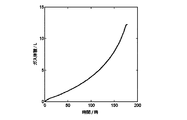
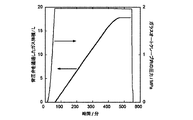
- Figure 2 shows the time course of the amount of gas generated by the dehydrogenation reaction of formic acid at a reaction temperature of 60 ° C and an 80% aqueous formic acid solution (20 mL) using the mononuclear complex (2) sulfate (2 ⁇ mol) as a catalyst. It is the graph which showed.
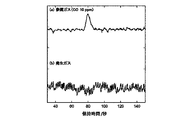
- Figure 3 shows the gas chromatographic analysis of carbon monoxide in the gas generated from the dehydrogenation reaction of formic acid at a reaction temperature of 60 ° C using the mononuclear complex (2) sulfate (2 ⁇ mol) as a catalyst. It is a graph.
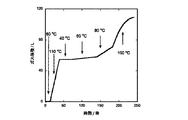
- FIG. 4 is a graph showing the time course of the amount of gas generated from a 50% (12.9 M) aqueous solution of formic acid (200 mL) using a mononuclear complex (2) sulfate (1 ⁇ mol) as a catalyst.
- FIG. 5 shows the amount of gas generated in the dehydrogenation reaction of formic acid depending on pH in a 1M formic acid solution (20 mL) to which sulfuric acid or a base was added using sulfate (2 ⁇ mol) of mononuclear complex (2) as a catalyst. It is the graph which showed progress of time.
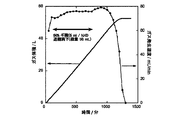
- Figure 6 shows the gas evolution when 50% formic acid solution was added dropwise at 5ml / h to 8M formic acid solution (50mL) at 80 ° C using sulfate (5 ⁇ mol) of mononuclear complex (2) as a catalyst. It is the graph which showed the time passage (solid line) of quantity, and the change (dotted line) of the gas generation rate per minute.
- FIG. 7 shows a reaction pressure of 80 ° C in a closed glass autoclave equipped with a back pressure valve, generated from an 8M formic acid aqueous solution (50mL) containing sulfate (5 ⁇ mol) of the mononuclear complex (2) and set to a pressure of 2MPa.
- 6 is a graph showing the time course of the amount of gas passing through the back pressure valve (solid line) and the pressure in the glass autoclave (dotted line).
- FIG 8 shows a reaction in a closed glass autoclave fitted with a back pressure valve, generated from an 8M aqueous formic acid solution (50mL) containing sulfate (5 ⁇ mol) of mononuclear complex (2) at a reaction temperature of 80 ° C, and set to a pressure of 2MPa 5 is a graph showing the time passage of the ratio of carbon dioxide and hydrogen gas that has passed through the back pressure valve.
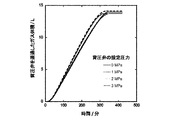
- Figure 9 shows various pressures generated from 6M aqueous formic acid solution (50mL) containing sulfate (5 ⁇ mol) of mononuclear complex (2) at a reaction temperature of 80 ° C in a closed glass autoclave equipped with a back pressure valve. It is the graph which showed the time passage of the gas amount which passed the made back pressure valve.
- hydrogen and carbon dioxide are efficiently generated by the dehydrogenation reaction of formic acid represented by the following formula.
- carbon monoxide and water may be by-produced by the decarbonylation reaction of formic acid.
- the formic acid dehydrogenation catalyst of the present invention is highly reactive in a solution such as water under mild reaction conditions. Only the dehydrogenation reaction of formic acid proceeds with selection and high efficiency, and only hydrogen gas containing no carbon monoxide can be produced.
- the ligand represented by X includes a water molecule, a hydrogen atom, an alkoxide ion, a hydroxide ion, a halide ion, a carbonate ion, a trifluoromethanesulfonate ion, It may or may not be a ligand of sulfate ion, nitrate ion, formate ion, or acetate ion.
- the alkoxide ion is not particularly limited.
- alkoxide ions derived from methanol, ethanol, n-propyl alcohol, isopropyl alcohol, n-butyl alcohol, sec-butyl alcohol, isobutyl alcohol, tert-butyl alcohol, or the like can be used.
- X is preferably a water molecule in order to be easily dissolved in water at the start of the reaction. Further, once dissolved in water, X is not limited as shown below.
- the ligand X becomes a water molecule (—OH 2 ) in an acidic aqueous solution and becomes —OH in an alkaline aqueous solution. Also, it easily becomes a hydrogen atom in the presence of hydrogen gas or formic acid molecules. In an alcohol solvent, it becomes an alkoxide ion and may be desorbed by light or heat.
- this description is only an example of a possible mechanism and does not limit the present invention.
- n is a positive integer, 0, or a negative integer.
- the counter ion is not particularly limited, but examples of the anion include hexafluorophosphate ion (PF 6 ⁇ ) and tetrafluoroborate ion. (BF 4 -), hydroxide ions (OH -), acetate ion, carbonate ion, phosphate ion, sulfate ion, nitrate ion, halide ion (e.g.
- hypohalous acid ion e.g. hypofluorite ion, hypochlorite ion, hypobromous acid ion, hypoiodous acid ion, etc.
- Halogen acid ions for example, fluorite ion, chlorite ion, bromate ion, iodate ion, etc.
- halogen acid ions for example, fluorine acid ion, chlorate ion, bromate ion, iodate ion) Etc.
- perhalogenate ions (For example, perfluoric acid ion, perchloric acid ion, perbromate ion, periodate ion, etc.), trifluoromethanesulfonic acid ion (OSO 2 CF 3 ⁇ ), tetrakispentafluorophenylborate ion [B (C 6 F 5 ) 4 -], and the like.
- the cation is not particularly limited, but various metal ions such as lithium ion, magnesium ion, sodium ion, potassium ion, calcium ion, barium ion, strontium ion, yttrium ion, scandium ion, lanthanoid ion, hydrogen ion, etc. Can be mentioned. These counter ions may be one type, but two or more types may coexist. However, this description is only an example of a possible mechanism and does not limit the present invention.
- the catalyst of the present invention contains, as an active ingredient, a mononuclear complex represented by any one of the general formulas (1) to (2), a tautomer or stereoisomer thereof, or a salt thereof, It is a catalyst used for the hydrogenation method (or hydrogen production method) and the hydrogen production method.
- the active component of the catalyst is at least one selected from the group consisting of mononuclear complexes represented by any one of the general formulas (1) to (2), tautomers, stereoisomers, and salts thereof. It consists of the compound.
- one or a plurality of compounds of the active ingredient may be used as they are as the mononuclear catalyst of the present invention, or a mixture of these isomers may be used.
- other components may be added as appropriate (preferably, less than 10 wt%).
- the formic acid dehydrogenation method of the present invention is a solution comprising a mononuclear complex of the present invention, a tautomer or stereoisomer thereof, or a salt thereof as an active ingredient and formic acid. And at least one step selected from the group consisting of a step of heating the solution. That is, for example, the mononuclear catalyst of the present invention may be added to a solution containing formic acid and stirred as it is or heated as necessary. In the case of heating, the temperature is not particularly limited, but is, for example, 0 to 300 ° C, preferably 20 to 120 ° C, more preferably 60 to 100 ° C.
- the method for collecting the generated hydrogen is not particularly limited, and a known method such as water replacement or upward replacement can be appropriately used.
- formic acid can be dehydrogenated under pressure using a sealable reaction vessel.
- the gas pressure in the reaction vessel is not particularly limited, but is, for example, 0 to 100 MPa, preferably 1 to 10 MPa.
- high-pressure hydrogen gas can be supplied spontaneously without being pressurized by external energy.
- the concentration of the mononuclear catalyst has no particular upper and lower limits, but depends on the reaction rate, the solubility of the complex in the reaction solution, and the economic efficiency. .
- Suitable catalyst concentrations are 1x10 -9 to 1x10 -1 M, preferably 1x10 -7 to 1x10 -4 M.
- the formic acid concentration has no particular upper and lower limits.
- a feature of the present invention is that, even with a high concentration formic acid aqueous solution (8 M or more), formic acid can be dehydrogenated without deterioration of the catalyst. Under normal pressure conditions, it is possible to completely convert formic acid into hydrogen and carbon dioxide.
- a suitable formic acid concentration is 0.1 to 20M, preferably 2 to 8M.
- the substance amount ratio (number ratio) of the complex molecule and formic acid molecule is not particularly limited.
- the formic acid molecule: complex molecule is 100. : 1 to 1: 100000000, but is not limited to this.
- continuous hydrogen production is possible by adding additional formic acid molecules during the reaction or continuously dropping them.
- formate may be contained, but it is generally preferred that the pH be 0 to 3, particularly preferably 0.5 to 2 during the reaction. It is particularly preferable to use an aqueous formic acid solution that does not require pH adjustment.
- formic acid may be dehydrogenated outside this range by adding an acid or a base.
- the cation includes lithium ion, magnesium ion, sodium ion, potassium ion, calcium ion, barium ion, strontium ion, yttrium ion, scandium ion, or lanthanoid ion.
- examples include various metal ions or ammonium ions, tetramethylammonium, tetraethylammonium and the like. These counter ions may be one kind, but may be two or more kinds.
- the mononuclear complex of the present invention, its tautomer or stereoisomer, or a salt thereof can be used as a formic acid dehydrogenation catalyst, for example, in a formic acid fuel cell.
- the formic acid dehydrogenation catalyst of the present invention may be contained inside the cell, and a mechanism for dehydrogenating formic acid by the above method to generate hydrogen may be included.
- the specific structure is not particularly limited, and for example, a known fuel cell structure or the like can be appropriately applied.
- the use of the formic acid dehydrogenation catalyst of the present invention is not limited to the above, and can be used in, for example, any technical field that requires supply of hydrogen (H 2 ).
- the reaction solvent used in the formic acid dehydrogenation method of the present invention is not particularly limited.
- water or an organic solvent may be used, or only one kind may be used or two or more kinds may be used in combination.
- the mononuclear catalyst of the present invention is soluble in water, it is preferable to use water because it is simple.
- the organic solvent is not particularly limited, but is preferably a highly polar solvent from the viewpoint of the solubility of the complex, etc., nitriles such as acetonitrile, propionitrile, butyronitrile, benzonitrile, methanol, ethanol, n-propyl alcohol, n-butyl alcohol Primary alcohols such as isopropyl alcohol, secondary alcohols such as s-butyl alcohol, tertiary alcohols such as t-butyl alcohol, polyhydric alcohols such as ethylene glycol and propylene glycol, tetrahydrofuran, dioxane, dimethoxyethane, Examples include ethers such as diethyl ether, amides such as dimethylformamide and dimethylacetamide, sulfoxides such as dimethyl sulfoxide, and esters such as ethyl acetate.
- the raw material formic acid may be in the form of, for example, a solution or a salt.
- the mononuclear complex represented by the general formula (1) or (2) of the present invention is compared with the complex represented by the general formula (3) composed of a bipyridine ligand having a hydroxyl group shown in Non-Patent Document 18.
- the reaction efficiency and durability of the formic acid dehydrogenation reaction in water are significantly improved.
- the mononuclear catalyst represented by the general formula (3) exhibits only about 70% of the reaction rate and about 100,000 catalyst rotation speeds of the mononuclear catalyst represented by the general formula (2).
- phenanthroline-based ligands have extremely low water solubility under acidic conditions suitable for formic acid dehydrogenation reaction compared to bipyridine-based ligands (Non-patent Document 16).
- Example 2 Dehydrogenation reaction of formic acid A catalyst solution in which a mononuclear complex sulfate represented by the general formula (2) was dissolved in water was degassed. Aqueous formic acid solutions (20 mL or 40 mL) with various concentrations were degassed, the catalyst solution prepared above was added, and the mixture was heated and stirred. The amount of gas generated was measured with a gas meter (Shinagawa W-NK-05).
- the TOF here is measured for 30 minutes after the start of the reaction. Calculated) and the amount of gas generated.
- the sulfate of the mononuclear complex represented by the general formula (2) has the highest reaction rate in the 3M aqueous formic acid solution, but exhibits a high reaction rate in the concentration range of 1M to 8M. Further, formic acid can be completely decomposed even with an aqueous formic acid solution of 12.9M (50%) or 20.3M (80%). At this time, the reaction rate is low when the formic acid concentration at the initial stage of the reaction is high, but the reaction rate increases when the formic acid concentration decreases to the optimum condition.
- the time course of gas generation with 20.3M (80%) formic acid aqueous solution is shown in FIG.
- Example 3 The sulfate (1 ⁇ mol) of the mononuclear complex represented by the general formula (2) was dissolved in an aqueous solution (200 mL) of 50% (12.9M) formic acid and vacuum degassed. The reaction solution was heated and stirred in an oil bath at 40 to 110 ° C., and the time course of gas generation is shown in FIG. Since the catalytic reaction proceeded for 200 hours or more and the formic acid was completely decomposed after the reaction, the rotational speed of the catalyst exceeded 2.5 million. If the formic acid concentration is above a certain level, the gas generation rate corresponding to the reaction temperature is indicated. After 200 hours, the gas generation rate decreased due to a decrease in formic acid concentration in the reaction solution.
- Example 4 (Effect of adding other acid or base) A catalyst solution in which a sulfate of a mononuclear complex represented by the general formula (2) was dissolved in water was degassed. Degas the 1M formic acid aqueous solution (pH 1.6) or 1M formic acid / sodium formate aqueous solution (pH1.7, 2.0, 3.5) (20mL) with sulfuric acid, and add the catalyst solution (2 ⁇ mol) prepared earlier. And stirred at 60 ° C. The time course of the gas generation amount depending on pH is shown in FIG. As a result, it was found that 1M aqueous formic acid solution (pH 1.7) had the fastest reaction rate (gas generation amount per unit time) and completely decomposed formic acid.
- the formic acid / formate solution (pH 2.0, 3.5) containing formate increases in pH with the progress of the reaction, and the mononuclear catalyst (2) precipitates, so that the reaction rate decreases rapidly. Moreover, even if it was made acidic (pH 1.6) by adding sulfuric acid, the reaction rate was not improved.
- Example 5 An 8 M aqueous formic acid solution (50 mL) containing a mononuclear complex sulfate (5 ⁇ mol) represented by the general formula (2) was degassed and stirred at 80 ° C. After 1 hour, a degassed 50% formic acid solution was added dropwise at 5 mL / h for 10 hours.
- Example 6 An 8 M aqueous formic acid solution (50 mL) containing a mononuclear complex sulfate (5 ⁇ mol) represented by the general formula (2) was degassed, placed in a glass autoclave equipped with a back pressure valve, and stirred at 80 ° C.
- FIG. 7 shows the time passage of the amount of gas passing through the back pressure valve set to 2 MPa and the pressure in the glass autoclave
- FIG. 8 shows the passage of time of the ratio of hydrogen and carbon dioxide in the gas passing through the back pressure valve.
- Example 7 A 6M aqueous formic acid solution (50 mL) containing a mononuclear complex sulfate (5 ⁇ mol) represented by the general formula (2) is degassed and placed in a glass autoclave surrounded by a safety polycarbonate container and equipped with a back pressure valve. A gas of carbon dioxide: hydrogen (1: 1) was charged to a predetermined pressure and stirred at 80 ° C. in a water bath. The amount of gas that passed through the back pressure valve set to a predetermined pressure was measured (FIG. 9). Table 2 shows a summary of TOF (h -1 ) from 1 hour to 4 hours after the start of the reaction and the residual formic acid concentration in the reaction solution after the reaction for 7 hours. As a result, it was found that TOF and residual formic acid concentration were not significantly affected by the pressure in the reaction vessel. In particular, at pressures up to 3 MPa, it was found that formic acid was converted to gas by 99.8% or more.
- Example 2 in the dehydrogenation reaction of formic acid using the similar mononuclear catalysts represented by the general formulas (3) and (4), the TOFs were 2060 and 1360, respectively.
- the catalyst represented by the general formula (1) or (2) composed of a ligand in which a hydroxyl group is substituted on phenanthroline is effective in improving the reaction efficiency of formic acid dehydrogenation in water. Is shown.
- the metal complex represented by the general formula (1) or (2) has an extremely high catalytic activity even in high-temperature reaction conditions and a high-concentration formic acid aqueous solution in hydrogen production by dehydrogenation of formic acid in water. Shows durability. Therefore, if the metal complex of the present invention is used, hydrogen can be easily produced from formic acid that is easy to store and transport.
- the selective formic acid dehydrogenation reaction can generate high-pressure hydrogen without carbon monoxide by-product, so that hydrogen can be supplied as fuel for a fuel cell without using a gas reformer. .
Landscapes
- Chemical & Material Sciences (AREA)
- Organic Chemistry (AREA)
- Engineering & Computer Science (AREA)
- Inorganic Chemistry (AREA)
- Materials Engineering (AREA)
- Chemical Kinetics & Catalysis (AREA)
- Health & Medical Sciences (AREA)
- General Health & Medical Sciences (AREA)
- Combustion & Propulsion (AREA)
- Hydrogen, Water And Hydrids (AREA)
- Catalysts (AREA)
Abstract
水中等の溶液中でのギ酸の脱水素化による常圧あるいは高圧の水素の製造を高効率・高エネルギー効率・高選択的・高耐久性で行うことのできる触媒の提供を課題とするものであり、その触媒は、式(1)で表される単核錯体、その異性体、または塩を有効成分として含むことを特徴とする。 式(1)において、 Xは、水分子、水素原子、アルコキシドイオン、水酸化物イオン、ハロゲン化物イオン、炭酸イオン、トリフルオロメタンスルホン酸イオン、硫酸イオン、硝酸イオン、ギ酸イオン、もしくは酢酸イオン等の任意の配位子であるか、または存在せず、 nは、正の整数、0、または負の整数である。
Description
本発明は、ギ酸の脱水素化に用いる触媒、該触媒を用いるギ酸の脱水素化方法、常圧および高圧水素の製造方法、水溶液から水素製造に関するものである。
水素(H2)は、全世界で約5000億Nm3製造され、石油の精製、アンモニアの製造等、多様な用途に用いられるとともに、将来のクリーンエネルギーとして注目を集めている。例えば、燃料電池は、外部から水素を供給することで効率良く電力を供給することができる。しかしながら、水素は、反応性の高い気体であるため、輸送・貯蔵が困難であり、その安定的供給のために、安全かつ低コストの輸送・貯蔵技術が求められている。また、燃料電池では、一酸化炭素による電極触媒表面での被毒物質の副生が問題となるため、一般的に一酸化炭素が10ppm以下の高純度な水素を供給することが求められている。
水素の貯蔵方法としては、現在、高圧ガスとしてボンベ等に貯蔵する方法が一般的である。しかし、この方法は、高圧ガス輸送時の安全性、容器の水素脆性等の問題がある。また、水素ガスを極低温下、液体水素の形で貯蔵する方法があるが、液化プロセスにおける大量のエネルギー消費や、1日当たり3~6%の気化による液体水素の損失が問題である。
水素の輸送・貯蔵技術の問題を解決するため、二酸化炭素を水素化して得られるメタノール、ギ酸等の液体燃料として貯蔵する方法が考えられている。例えば、常温で液体であり、また比較的毒性の低いギ酸(HCOOH)は、水素(H2)/二酸化炭素(CO2)と相互変換が可能なため、水素貯蔵材料として最近注目されている。しかし、従来知られている触媒等を用いた方法では、ギ酸の脱水素化反応は、一般に200℃以上の高温が必要であり、かつ一酸化炭素が副生するという問題があった。従って、温和な条件でギ酸から高品質の水素が生成可能な触媒の開発が望まれていた。
近年、金属錯体触媒によるギ酸の脱水素化反応が数多く報告されるようになった(特許文献1~2、非特許文献1~8)。これらは、ギ酸の脱水素化による水素の発生の際、一酸化炭素をほとんど副生しない。しかし、これらの大部分は、有機溶媒やアミン添加物が必要であった。一方で、有機添加物を用いない水中での反応例では、低い触媒活性と耐久性が問題であった(特許文献3~7、非特許文献9~12)。これらの報告とは別に、本発明者らが見出した有機添加物フリーの水中でのギ酸の脱水素化触媒は高い触媒性能を示す一方で、高濃度ギ酸溶液や高温反応条件での触媒の耐久性に課題が残されていた。(特許文献12~14、非特許文献13~22)。
Schaub,T.;Paciello,R. A. Angew. Chem.-Int. Edit. 2011,50,7278.
Boddien,A.;Gartner,F.;Federsel,C.;Sponholz,P.;Mellmann,D.;Jackstell,R.;Junge,H.;Beller,M. Angew. Chem.-Int. Edit. 2011,50,6411.
Tanaka,R.;Ymashita,M.;Chung,L. W.;Morokuma,K.;Nozaki,K. Organometallics 2011,30,6742.
Boddien,A.;Mellmann,D.;Gaertner,F.;Jackstell,R.;Junge,H.;Dyson,P. J.;Laurenczy,G.;Ludwig,R.;Beller,M. Science 2011,333,1733.
Loges,B.;Boddien,A.;Junge,H.;Beller,M. Angew. Chem.-Int. Edit. 2008,47,3962.
Zell,T.;Butschke,B.;Ben-David,Y.;Milstein,D. Chem.-Eur. J. 2013,19,8068.
Barnard,J. H.;Wang,C.;Berry,N. G.;Xiao,J. Chem. Science 2013,4,1234
Sponholz,P.;Mellmann,D.;Junge,H.;Beller,M. ChemSusChem 2013,6,1172.
Fellay,C.;Dyson,P. J.;Laurenczy,G. Angew. Chem.-Int. Edit. 2008,47,3966.
Papp,G.;Csorba,J.;Laurenczy,G.;Joo,F. Angew. Chem.-Int. Edit. 2011,50,10433.
Fukuzumi,S.;Kobayashi,T.;Suenobu,T. J. Am. Chem. Soc. 2010,132,1496.
Maenaka,Y.;Suenobu,T.;Fukuzumi,S. Energy Environ. Sci. 2012,5,7360.
Himeda,Y.;Onozawa-Komatsuzaki,N.;Sugihara,H.;Arakawa,H.;Kasuga,K. J. Mol. Catal. A-Chem. 2003,195,95
Himeda,Y.;Onozawa-Komatsuzaki,N.;Sugihara,H.;Arakawa,H.;Kasuga,K. Organometallics 2004,23,1480.
Himeda,Y. Eur. J. Inorg. Chem. 2007,3927.
Himeda,Y.;Onozawa-Komatsuzaki,N.;Sugihara,H.;Kasuga,K. Organometallics 2007,26,702.
Himeda,Y.;Miyazawa,S.;Onozawa-Komatsuzaki,N.;Hirose,T.;Kasuga,K.,Dalton Transactions,2009,(32),6286-6288.
Himeda,Y. Green Chem. 2009,11,2018.
Himeda,Y.;Miyazawa,S.;Hirose,T. ChemSusChem 2011,4,487.
Hull,Jonathan F.;Himeda,Yuichiro;Wang,Wan-Hui;Hashiguchi,Brian;Periana,Roy;Szalda,David J.;Muckerman,James T.;Fujita,Etsuko,Nature Chemistry 2012,4,383-388.
Wang,Wan-Hui;Hull,Jonathan F.;Muckerman,James T.;Fujita,Etsuko;Takuji,Hirose;Himeda,Yuichiro,Chemistry - A European Journal 2012,18,9397-9404.
Himeda,Y.;Onozawa-Komatsuzaki,N.;Sugihara,H.;Kasuga,K. Journal of the American Chemical Society 2005,127,13118-13119
本発明は、水中等の溶液中でのギ酸の脱水素化による常圧あるいは高圧の水素の製造を高効率・高エネルギー効率・高選択的・高耐久性で行うことのできる触媒を提供することを課題とする。
また、本発明は、該触媒を用い高効率・簡便な操作・安価に実施できる水中等の溶液中でのギ酸の脱水素化による水素の製造方法を提供することとともに、燃料電池等の水素消費装置に必要な水素量を安定して連続的に供給できるように、一酸化炭素をふくまない高圧水素等の昇圧水素を製造する方法の提供を課題とする。
また、本発明は、該触媒を用い高効率・簡便な操作・安価に実施できる水中等の溶液中でのギ酸の脱水素化による水素の製造方法を提供することとともに、燃料電池等の水素消費装置に必要な水素量を安定して連続的に供給できるように、一酸化炭素をふくまない高圧水素等の昇圧水素を製造する方法の提供を課題とする。
本発明者らは、前記課題を解決するために鋭意研究の結果、下記式(1)で表される金属錯体が高効率・長時間・水中等の溶液中でのギ酸の脱水素化反応に有用であることを見出した。なお、特許文献8~11および非特許文献13~16,22には、下記式(1)で表されるものを包含する金属錯体が記載されているが、該金属錯体は、二酸化炭素と水素からギ酸等を製造するための触媒として用いられるだけで、ギ酸の脱水素化触媒として用いることは全く記載されていない。なぜなら、下記式(1)で表されるものを包含する金属錯体は、一般に酸性水溶液中極めて難溶性であることが知られていたためである(非特許文献22)。従って、下記式(1)で表される金属錯体をギ酸の脱水素化触媒として用いることや、そのようなギ酸の脱水素化触媒として用いた際に高効率や高耐久性を有することは、本発明者が初めて見出したものである。
本発明は、そのような知見に基づいて完成に至ったものであり、以下の技術手段から構成される。
[1]式(1)で表される単核錯体、その異性体、または塩を有効成分として含む、ギ酸の脱水素化反応に用いる触媒。
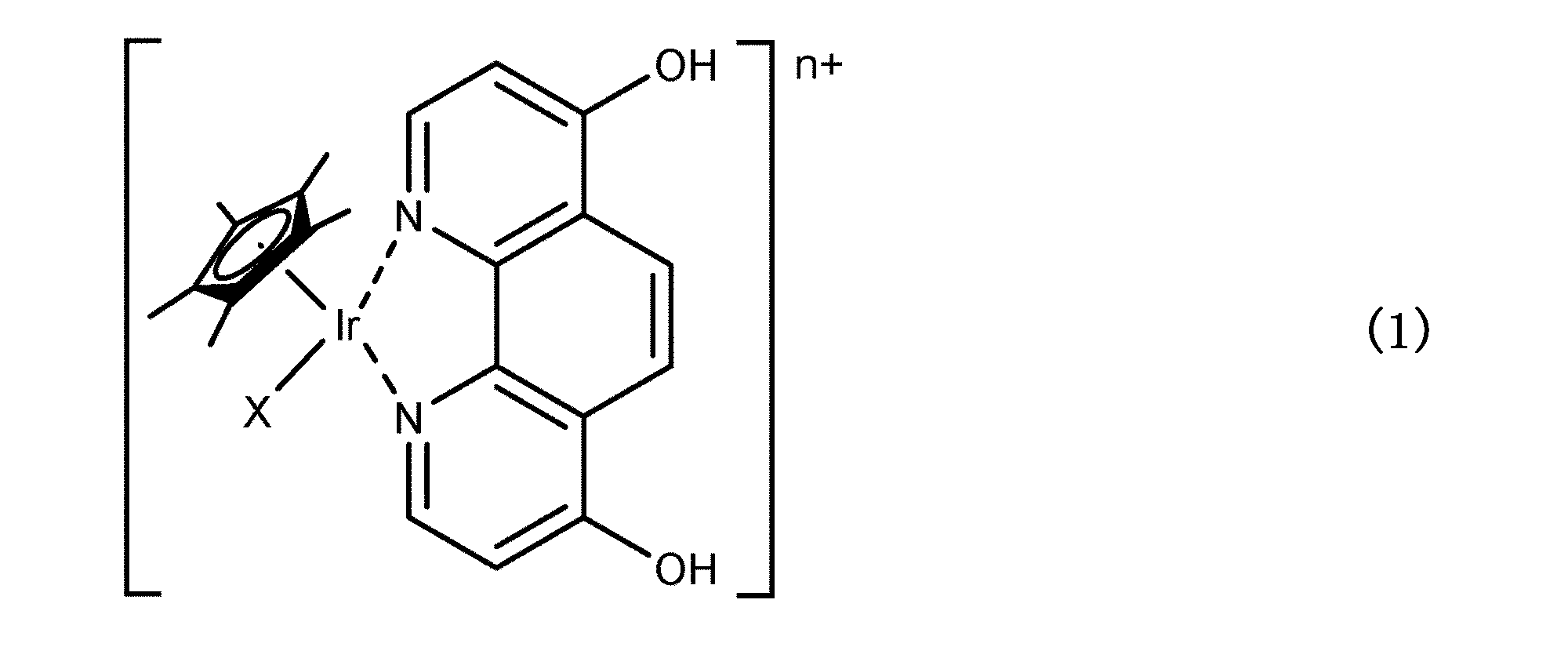
式(1)において、
Xは、任意の配位子であるか、または存在せず、
nは、正の整数、0、または負の整数である。
[2]Xが、水分子、水素原子、アルコキシドイオン、水酸化物イオン、ハロゲン化物イオン、炭酸イオン、トリフルオロメタンスルホン酸イオン、硫酸イオン、硝酸イオン、ギ酸イオン、もしくは酢酸イオンであるか、または存在しない[1]に記載のギ酸の脱水素化反応に用いる触媒。
[3]前記単核錯体が下記式(2)で表される構造を有する[1]に記載のギ酸の脱水素化反応に用いる触媒。

[4][1]~[3]のいずれか1項に記載の触媒の存在下、ギ酸を含む溶液と反応させることによってギ酸を脱水素化する方法。
[5][1]~[3]のいずれか1項に記載の触媒の存在下、ギ酸を含む溶液と反応させることによってギ酸を脱水素化し水素を製造する方法。
[6][1]~[3]のいずれか1項に記載の触媒の存在下、密閉反応容器中でギ酸を含む溶液と反応させることによってギ酸を脱水素化し高圧水素を製造する方法。
本発明は、次のような態様を含むことができる。
[7]上記反応が、ギ酸の濃度2M以上で行われる[4]~[6]のいずれか1項に記載の方法。
[8]上記反応が70℃以上の条件下で行われる[4]~[7]のいずれか1項に記載の方法。
[9]上記反応が1MPa以上の条件下で行われる[4]~[8]のいずれか1項に記載の方法。
[10]前記ギ酸を含む溶液が水溶液である[4]~[9]のいずれか1項に記載の方法。
[11]上記反応中、前記溶液または前記水溶液にギ酸が追加添加される[4]~[10]のいずれか1項に記載の方法。
[12]前記溶液または前記水溶液がギ酸塩を含むものである[4]~[11]のいずれか1項に記載の方法。
本発明は、そのような知見に基づいて完成に至ったものであり、以下の技術手段から構成される。
[1]式(1)で表される単核錯体、その異性体、または塩を有効成分として含む、ギ酸の脱水素化反応に用いる触媒。
Xは、任意の配位子であるか、または存在せず、
nは、正の整数、0、または負の整数である。
[2]Xが、水分子、水素原子、アルコキシドイオン、水酸化物イオン、ハロゲン化物イオン、炭酸イオン、トリフルオロメタンスルホン酸イオン、硫酸イオン、硝酸イオン、ギ酸イオン、もしくは酢酸イオンであるか、または存在しない[1]に記載のギ酸の脱水素化反応に用いる触媒。
[3]前記単核錯体が下記式(2)で表される構造を有する[1]に記載のギ酸の脱水素化反応に用いる触媒。
[5][1]~[3]のいずれか1項に記載の触媒の存在下、ギ酸を含む溶液と反応させることによってギ酸を脱水素化し水素を製造する方法。
[6][1]~[3]のいずれか1項に記載の触媒の存在下、密閉反応容器中でギ酸を含む溶液と反応させることによってギ酸を脱水素化し高圧水素を製造する方法。
本発明は、次のような態様を含むことができる。
[7]上記反応が、ギ酸の濃度2M以上で行われる[4]~[6]のいずれか1項に記載の方法。
[8]上記反応が70℃以上の条件下で行われる[4]~[7]のいずれか1項に記載の方法。
[9]上記反応が1MPa以上の条件下で行われる[4]~[8]のいずれか1項に記載の方法。
[10]前記ギ酸を含む溶液が水溶液である[4]~[9]のいずれか1項に記載の方法。
[11]上記反応中、前記溶液または前記水溶液にギ酸が追加添加される[4]~[10]のいずれか1項に記載の方法。
[12]前記溶液または前記水溶液がギ酸塩を含むものである[4]~[11]のいずれか1項に記載の方法。
本発明の単核錯体、その異性体または塩を触媒として用いれば、高温反応条件、高濃度ギ酸溶液中であっても高効率・高エネルギー効率・一定速度で、環境負荷が極めて小さい水中等の溶液中でギ酸の脱水素化による一酸化炭素を含まない高圧の水素ガスを長時間提供可能である。また、本発明の脱水素化方法を用いれば、輸送・貯蔵に適した液体燃料であるギ酸から容易に水素を再生することが可能である。
さらに、本発明の単核触媒は、特許文献12から14記載の錯体触媒に比べて、極めて耐久性が高く、高温反応条件下高濃度のギ酸溶液中で長期間安定した高い触媒性能を持続できる優れた触媒性能を有している。
本発明において、下記式に示されるギ酸の脱水素化反応によって、水素と二酸化炭素が効率よく発生する。この際、ギ酸の脱カルボニル化反応により、一酸化炭素と水が副生する可能性があるが、本発明のギ酸の脱水素化触媒では、温和な反応条件下、水中等の溶液中で高選択・高効率でギ酸の脱水素化反応のみが進行し、一酸化炭素を含まない水素ガスのみを製造することができる。

一般式(1)で示される単核錯体において、Xで示される配位子としては、水分子、水素原子、アルコキシドイオン、水酸化物イオン、ハロゲン化物イオン、炭酸イオン、トリフルオロメタンスルホン酸イオン、硫酸イオン、硝酸イオン、ギ酸イオン、もしくは酢酸イオンの配位子であるか、または存在しなくてもよい。アルコキシドイオンとしては、特に限定されないが、例えば、メタノール、エタノール、n-プロピルアルコール、イソプロピルアルコール、n-ブチルアルコール、sec-ブチルアルコール、イソブチルアルコール、またはtert-ブチルアルコール等から誘導されるアルコキシドイオンが挙げられる。特に、反応開始時に水中に簡便に溶解させるために、Xは水分子が好ましい。また、一旦水に溶解すれば下記に示されるようにXは限定されない。
一般式(1)で示される単核錯体において、Xで示される配位子の種類により、置換、脱離等が比較的容易な場合がある。一例として、前記配位子Xは、酸性の水溶液中では水分子(-OH2)となり、アルカリ性の水溶液中では-OHとなる。また、水素ガスまたはギ酸分子存在下、容易に水素原子となる。アルコール溶媒中ではアルコキシドイオンとなり、また、光や熱により脱離する場合があり得る。ただし、この記述は、可能な機構の例示に過ぎず、本発明を限定するものではない。
一般式(1)で示される単核触媒において、nは、正の整数、0、または負の整数である。
一般式(1)~(2)で示される単核触媒において、そのカウンターイオンは、特に限定されないが、陰イオンとしては、例えば、六フッ化リン酸イオン(PF6
-)、テトラフルオロほう酸イオン(BF4
-)、水酸化物イオン(OH-)、酢酸イオン、炭酸イオン、リン酸イオン、硫酸イオン、硝酸イオン、ハロゲン化物イオン(例えばフッ化物イオン(F-)、塩化物イオン(Cl-)、臭化物イオン(Br-)、ヨウ化物イオン(I-)等)、次亜ハロゲン酸イオン(例えば次亜フッ素酸イオン、次亜塩素酸イオン、次亜臭素酸イオン、次亜ヨウ素酸イオン等)、亜ハロゲン酸イオン(例えば亜フッ素酸イオン、亜塩素酸イオン、亜臭素酸イオン、亜ヨウ素酸イオン等)、ハロゲン酸イオン(例えばフッ素酸イオン、塩素酸イオン、臭素酸イオン、ヨウ素酸イオン等)、過ハロゲン酸イオン(例えば過フッ素酸イオン、過塩素酸イオン、過臭素酸イオン、過ヨウ素酸イオン等)、トリフルオロメタンスルホン酸イオン(OSO2CF3
-)、テトラキスペンタフルオロフェニルボレートイオン[B(C6F5)4
-]等が挙げられる。陽イオンとしては、特に限定されないが、リチウムイオン、マグネシウムイオン、ナトリウムイオン、カリウムイオン、カルシウムイオン、バリウムイオン、ストロンチウムイオン、イットリウムイオン、スカンジウムイオン、ランタノイドイオン、等の各種金属イオン、水素イオン等が挙げられる。また、これらカウンターイオンは、一種類でも良いが、二種類以上が併存していても良い。ただし、この記述は、可能な機構の例示に過ぎず、本発明を限定するものではない。
本発明の触媒は、一般式(1)~(2)のいずれかで表される単核錯体、その互変異性体もしくは立体異性体、またはそれらの塩を有効成分として含み、ギ酸の脱水素化方法(乃至水素の製造方法)、水素の製造方法に用いる触媒である。該触媒の有効成分は、一般式(1)~(2)のいずれかで表される単核錯体、その互変異性体、立体異性体、およびそれらの塩からなる群から選択される少なくとも1の化合物からなる。例えば、該有効成分の1または複数種の化合物を本発明の単核触媒としてそのまま用いても良いし、これらの異性体の混合物を用いてもよい。また、他の成分を適宜(好ましくは、10wt%未満)添加して用いても良い。
本発明のギ酸の脱水素化方法(乃至水素の製造方法)は、本発明の単核錯体、その互変異性体もしくは立体異性体、またはそれらの塩を有効成分として含む触媒とギ酸を含む溶液を撹拌する工程、および前記溶液を加熱する工程からなる群から選択される少なくとも一つの工程を含む。すなわち、例えば、ギ酸を含む溶液に本発明の単核触媒を加え、そのまま撹拌するか、必要に応じ加熱すれば良い。加熱する場合、温度は特に限定されないが、例えば0~300℃、好ましくは20~120℃、より好ましくは60~100℃である。発生した水素を捕集する方法も特に限定されず、例えば、水上置換、上方置換等、公知の方法を適宜用いることができる。
さらに、本発明のギ酸の脱水素化方法(乃至水素の製造方法)において、密封可能な反応容器を用いて、加圧下でもギ酸の脱水素化反応が可能である。反応容器内のガス圧は特に限定されないが、例えば、0~100MPa、好ましくは、1~10MPaである。また、反応容器内は自発的に昇圧されるために、外部エネルギーによって加圧することなく、自発的に高圧の水素ガスの供給が可能である。
本発明のギ酸の脱水素化方法(乃至水素の製造方法)において、単核触媒の濃度は特に上限及び下限はないが、反応速度、反応液への錯体の溶解性及び経済性などに依存する。適切な触媒濃度は1x10⁻⁹から1x10⁻¹Mで、好ましくは1x10⁻⁷から1x10⁻⁴Mである。
本発明のギ酸の脱水素化方法(乃至水素の製造方法)において、ギ酸濃度は特に上限及び下限はない。本発明の特徴は、高濃度のギ酸水溶液(8M以上)であっても、触媒が劣化することなくギ酸を脱水素化することができる。常圧条件下では、ギ酸を完全に水素および二酸化炭素に変換することが可能である。適切なギ酸濃度は0.1から20Mで、好ましくは2から8Mである。
本発明のギ酸の脱水素化方法(乃至水素の製造方法)において、錯体分子とギ酸分子の物質量比(分子数比)も特に限定されないが、例えば反応開始時、ギ酸分子:錯体分子は100:1~1:100000000であるが、これに限定されるものではない。また、反応中にギ酸分子を追加添加、あるいは、継続的に滴下することにより、連続的な水素製造も可能である。本発明において、ギ酸塩を含んでもよいが、一般に反応中pHが0~3、特に、好ましくは0.5~2の範囲で用いることが好ましい。特に好ましくは、pH調整する必要のないギ酸水溶液を用いることが望ましい。さらに酸あるいは塩基を加えて、この範囲外でギ酸の脱水素化を行ってもよい。ギ酸塩を用いる場合、特に限定しないが、例えば、陽イオンとしては、リチウムイオン、マグネシウムイオン、ナトリウムイオン、カリウムイオン、カルシウムイオン、バリウムイオン、ストロンチウムイオン、イットリウムイオン、スカンジウムイオン、またはランタノイドイオン等の各種金属イオンまたはアンモニウムイオン、テトラメチルアンモニウム、テトラエチルアンモニウム等が挙げられる。またこれらのカウンターイオンは、一種類でもよいが、二種類以上併存していても良い。
本発明の単核錯体、その互変異性体もしくは立体異性体、またはそれらの塩は、ギ酸の脱水素化触媒として、例えば、ギ酸燃料電池等に用いることができる。燃料電池の場合は、例えば、電池内部に本発明のギ酸の脱水素化触媒が含まれるとともに、上記方法によりギ酸を脱水素化して水素を発生させる機構が含まれていれば良い。具体的な構造は特に限定されず、例えば公知の燃料電池の構造等を適宜応用することができる。さらに、本発明のギ酸の脱水素化触媒の用途は上記に限定されず、例えば、水素(H2)の供給を必要とするあらゆる技術分野に用いることができる。
本発明のギ酸の脱水素化方法において使用される反応溶媒は特に限定されず、例えば水でも有機溶媒でも良いし、一種類のみ用いても二種類以上併用しても良い。本発明の単核触媒が水に可溶な場合は、水を用いることが簡便であることから好ましい。前記有機溶媒としては特に限定されないが、錯体の溶解度等の観点から高極性溶媒が好ましく、アセトニトリル、プロピオニトリル、ブチロニトリル、ベンゾニトリル等のニトリル、メタノール、エタノール、n-プロピルアルコール、n-ブチルアルコール等の第1級アルコール、イソプロピルアルコール、s-ブチルアルコール等の第2級アルコール、t-ブチルアルコール等の第3級アルコール、エチレングリコール、プロピレングリコール等の多価アルコール、テトラヒドロフラン、ジオキサン、ジメトキシエタン、ジエチルエーテル等のエーテル、ジメチルホルムアミド、ジメチルアセトアミド等のアミド、ジメチルスルホキシド等のスルホキシド、酢酸エチル等のエステル等が挙げられる。さらに、原料のギ酸は、例えば、溶液、塩等の形態であっても良い。
本発明の一般式(1)あるいは(2)で示される単核錯体は、非特許文献18で示される水酸基を持つビピリジン配位子から構成される一般式(3)で示される錯体に較べて、水中でのギ酸の脱水素化反応の反応効率および耐久性が著しく改善する。例えば、一般式(3)で示される単核触媒は、一般式(2)で示される単核触媒の7割程度の反応速度と10万回程度の触媒回転数しか示さない。一方、フェナントロリン系配位子はビピリジン系配位子に比べて、ギ酸の脱水素化反応に適している酸性条件下での水溶性が極めて低いために(非特許文献16)、これまで酸性水溶液中でのギ酸脱水素化反応への利用が困難であった。今回、この問題を解決するために発明者の鋭意研究の結果、一般式(2)で示される水分子を配位子にもつ単核触媒が水溶性を示すことが分かった。これにより、一般式(2)で示される単核触媒が、水中でのギ酸の脱水素化反応に利用可能になった。以上の結果から、ギ酸の脱水素化反応よる実用的な水素供給には、ビピリジン系配位子からフェナントロリン系配位子が極めて有効であることを見出した。

以下、本発明の実施例についてさらに具体的に説明するが、本発明は、以下の実施例のみには限定されない。
[実施例1]
[錯体合成]
(一般式(2)で示される単核錯体の硫酸塩の合成)
4,7-ジヒドロキシ-1,10-フェナントロリン(530mg,2.5mmol)を水80mLに懸濁させ、[Cp*Ir(H2O)3]SO4(1193mg,2.5mmol)を加えて、アルゴン気流下50℃で12時間撹拌した。析出した黄色固体をろ取し、水中で再結晶したのち、減圧下50℃で12時間乾燥した(980mg,収率60%)。以下、得られた単核触媒のスペクトルデータを示す。
1H NMR(500MHz,D2O):δ = 9.06(d,J = 0.8Hz,2H),8.14(s,2H),7.39(d,J = 0.8Hz,2H),1.72(s,15H);1H NMR(500MHz,KOD/D2O):δ = 8.54(d,J = 0.8Hz,2H),7.94(s,2H),6.78(d,J = 0.8Hz,2H),1.61(s,15H);IR(KBr):1583,1375,1108cm-1;ESI-MS(m/z):[M-SO4-H2O-H]+;found,538;Elemental analysis calcd. for C22H25IrN2O7S:C,40.42;H,3.85;N,4.29.Found:C,40.03;H,4.08;N,4.05.
[錯体合成]
(一般式(2)で示される単核錯体の硫酸塩の合成)
4,7-ジヒドロキシ-1,10-フェナントロリン(530mg,2.5mmol)を水80mLに懸濁させ、[Cp*Ir(H2O)3]SO4(1193mg,2.5mmol)を加えて、アルゴン気流下50℃で12時間撹拌した。析出した黄色固体をろ取し、水中で再結晶したのち、減圧下50℃で12時間乾燥した(980mg,収率60%)。以下、得られた単核触媒のスペクトルデータを示す。
1H NMR(500MHz,D2O):δ = 9.06(d,J = 0.8Hz,2H),8.14(s,2H),7.39(d,J = 0.8Hz,2H),1.72(s,15H);1H NMR(500MHz,KOD/D2O):δ = 8.54(d,J = 0.8Hz,2H),7.94(s,2H),6.78(d,J = 0.8Hz,2H),1.61(s,15H);IR(KBr):1583,1375,1108cm-1;ESI-MS(m/z):[M-SO4-H2O-H]+;found,538;Elemental analysis calcd. for C22H25IrN2O7S:C,40.42;H,3.85;N,4.29.Found:C,40.03;H,4.08;N,4.05.
[実施例2]ギ酸の脱水素化反応
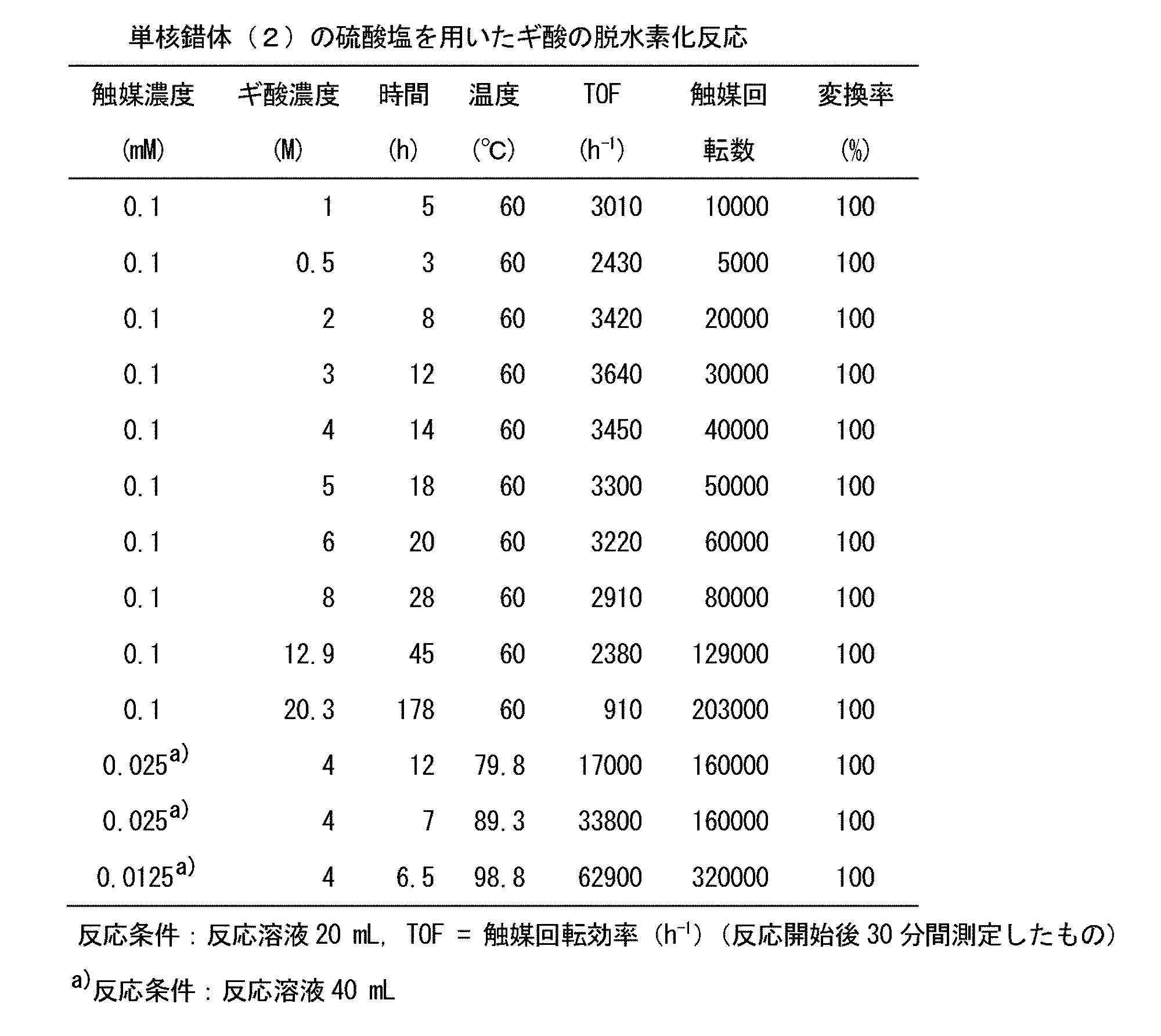
一般式(2)で示される単核錯体の硫酸塩を水に溶かした触媒溶液を脱気した。各種濃度のギ酸の水溶液(20mLまたは40mL)を脱気し、先に調整した触媒溶液を加えて、加熱撹拌した。発生するガス量をガスメーター(Shinagawa W-NK-05)で測定した。また、反応終了後反応溶液のギ酸濃度を高速液体クロマトグラフィーで調べるため、2mMのリン酸水素溶液を展開液とするカラム(TSKgel SCX(H+):TOSOH)に通し、流出する液を波長210nmで測定した結果、すべての場合でギ酸が検出できなかった。この結果は、すべてのギ酸分子が水素と二酸化炭素に変換されていることを示す。反応の結果を表1に示す。図1にギ酸濃度に依存したTOF(触媒回転効率(h-1):1時間当たり触媒1分子が作用する基質(ギ酸)分子数。ただし、ここでのTOFは、反応開始後30分間測定して算出したもの)と発生するガス量を示す。一般式(2)で示される単核錯体の硫酸塩は、3Mギ酸水溶液で最も反応速度が速いが、1Mから8Mの濃度範囲で高い反応速度を示す。また、12.9M(50%)あるいは20.3M(80%)のギ酸水溶液でも完全にギ酸を分解できる。この際、反応初期のギ酸濃度が高いときは反応速度が低いが、ギ酸濃度が最適条件に低下すると反応速度が上昇する。20.3M(80%)のギ酸水溶液でのガス発生の時間経過を図2に示す。また、4Mギ酸水溶液を用いて、98.8℃の高温条件でも高い反応効率とともに、高い耐久性を示すことが分かった。また、発生したガス成分を、ガスクロマトグラフィーGLサイエンス(GC390)で、二酸化炭素および一酸化炭素はメタナイザーおよび水素炎イオン検出器(FID)を用いて測定した結果、一酸化炭素は検出できなかった(図3参照:検出限界10ppm以下)。また、水素と二酸化炭素は1:1の割合で発生した。
一般式(2)で示される単核錯体の硫酸塩を水に溶かした触媒溶液を脱気した。各種濃度のギ酸の水溶液(20mLまたは40mL)を脱気し、先に調整した触媒溶液を加えて、加熱撹拌した。発生するガス量をガスメーター(Shinagawa W-NK-05)で測定した。また、反応終了後反応溶液のギ酸濃度を高速液体クロマトグラフィーで調べるため、2mMのリン酸水素溶液を展開液とするカラム(TSKgel SCX(H+):TOSOH)に通し、流出する液を波長210nmで測定した結果、すべての場合でギ酸が検出できなかった。この結果は、すべてのギ酸分子が水素と二酸化炭素に変換されていることを示す。反応の結果を表1に示す。図1にギ酸濃度に依存したTOF(触媒回転効率(h-1):1時間当たり触媒1分子が作用する基質(ギ酸)分子数。ただし、ここでのTOFは、反応開始後30分間測定して算出したもの)と発生するガス量を示す。一般式(2)で示される単核錯体の硫酸塩は、3Mギ酸水溶液で最も反応速度が速いが、1Mから8Mの濃度範囲で高い反応速度を示す。また、12.9M(50%)あるいは20.3M(80%)のギ酸水溶液でも完全にギ酸を分解できる。この際、反応初期のギ酸濃度が高いときは反応速度が低いが、ギ酸濃度が最適条件に低下すると反応速度が上昇する。20.3M(80%)のギ酸水溶液でのガス発生の時間経過を図2に示す。また、4Mギ酸水溶液を用いて、98.8℃の高温条件でも高い反応効率とともに、高い耐久性を示すことが分かった。また、発生したガス成分を、ガスクロマトグラフィーGLサイエンス(GC390)で、二酸化炭素および一酸化炭素はメタナイザーおよび水素炎イオン検出器(FID)を用いて測定した結果、一酸化炭素は検出できなかった(図3参照:検出限界10ppm以下)。また、水素と二酸化炭素は1:1の割合で発生した。
[実施例3]
一般式(2)で示される単核錯体の硫酸塩(1μmol)を50%(12.9M)ギ酸の水溶液(200mL)に溶解し、真空脱気した。反応溶液をオイルバスで40から110℃で加熱撹拌し、ガス発生の時間経過を図4に示す。200時間以上の触媒反応が進行し、反応後ギ酸は完全に分解されたことから、触媒回転数は250万回を上回った。ギ酸濃度が一定以上であれば、反応温度に応じたガス発生速度を示している。なお、200時間以降は反応溶液中のギ酸濃度の低下によって、ガス発生速度が低下した。
一般式(2)で示される単核錯体の硫酸塩(1μmol)を50%(12.9M)ギ酸の水溶液(200mL)に溶解し、真空脱気した。反応溶液をオイルバスで40から110℃で加熱撹拌し、ガス発生の時間経過を図4に示す。200時間以上の触媒反応が進行し、反応後ギ酸は完全に分解されたことから、触媒回転数は250万回を上回った。ギ酸濃度が一定以上であれば、反応温度に応じたガス発生速度を示している。なお、200時間以降は反応溶液中のギ酸濃度の低下によって、ガス発生速度が低下した。
[実施例4](他の酸や塩基を添加した場合の影響)
一般式(2)で示される単核錯体の硫酸塩を水に溶かした触媒溶液を脱気した。硫酸を加えた1Mのギ酸水溶液(pH1.6)あるいは1Mのギ酸/ギ酸ナトリウム水溶液(pH1.7,2.0,3.5)(20mL)を脱気して、先に調整した触媒溶液(2μmol)を加えて、60℃で撹拌した。pHに依存したガス発生量の時間経過を図5に示す。その結果、1Mギ酸水溶液(pH1.7)が最も反応速度(単位時間当たりのガス発生量)が速く、かつギ酸を完全に分解することが分かった。一方、ギ酸塩を含有したギ酸/ギ酸塩溶液(pH2.0,3.5)は反応進行に伴ってpHが上昇し、単核触媒(2)が析出するため、反応速度が急激に低下する。また、硫酸を加えてより酸性(pH1.6)にしても、反応速度の改善は見られなかった。
一般式(2)で示される単核錯体の硫酸塩を水に溶かした触媒溶液を脱気した。硫酸を加えた1Mのギ酸水溶液(pH1.6)あるいは1Mのギ酸/ギ酸ナトリウム水溶液(pH1.7,2.0,3.5)(20mL)を脱気して、先に調整した触媒溶液(2μmol)を加えて、60℃で撹拌した。pHに依存したガス発生量の時間経過を図5に示す。その結果、1Mギ酸水溶液(pH1.7)が最も反応速度(単位時間当たりのガス発生量)が速く、かつギ酸を完全に分解することが分かった。一方、ギ酸塩を含有したギ酸/ギ酸塩溶液(pH2.0,3.5)は反応進行に伴ってpHが上昇し、単核触媒(2)が析出するため、反応速度が急激に低下する。また、硫酸を加えてより酸性(pH1.6)にしても、反応速度の改善は見られなかった。
[実施例5]
一般式(2)で示される単核錯体の硫酸塩(5μmol)を含む8Mのギ酸水溶液(50mL)を脱気して、80℃で撹拌した。1時間後、脱気した50%のギ酸溶液を5mL/hで10時間滴下した。図6に、ガス発生量の時間経過(実線)およびガス発生速度(=1分あたりのガス発生量)の変化(点線)で示す。高温・高濃度のギ酸水溶液に対しさらにギ酸溶液を連続的に滴下しても、触媒が劣化することなくガスがほぼ一定速度で発生することが分かった。
一般式(2)で示される単核錯体の硫酸塩(5μmol)を含む8Mのギ酸水溶液(50mL)を脱気して、80℃で撹拌した。1時間後、脱気した50%のギ酸溶液を5mL/hで10時間滴下した。図6に、ガス発生量の時間経過(実線)およびガス発生速度(=1分あたりのガス発生量)の変化(点線)で示す。高温・高濃度のギ酸水溶液に対しさらにギ酸溶液を連続的に滴下しても、触媒が劣化することなくガスがほぼ一定速度で発生することが分かった。
[実施例6]
一般式(2)で示される単核錯体の硫酸塩(5μmol)を含む8Mのギ酸水溶液(50mL)を脱気して、背圧弁が付設されたガラスオートクレーブに入れ、80℃で撹拌した。図7に、2MPaに設定した背圧弁を通過したガス量とガラスオートクレーブ内の圧力の時間経過を、図8に、背圧弁を通過したガスにおける水素と二酸化炭素の割合の時間経過を示す。この結果、ギ酸の脱水素化反応によって、ガラスオートクレーブ内が昇圧するとともに、ガスが一定速度で発生していることが分かった。また、水素と二酸化炭素は、ほぼ1:1の割合で発生していることが分かった。
一般式(2)で示される単核錯体の硫酸塩(5μmol)を含む8Mのギ酸水溶液(50mL)を脱気して、背圧弁が付設されたガラスオートクレーブに入れ、80℃で撹拌した。図7に、2MPaに設定した背圧弁を通過したガス量とガラスオートクレーブ内の圧力の時間経過を、図8に、背圧弁を通過したガスにおける水素と二酸化炭素の割合の時間経過を示す。この結果、ギ酸の脱水素化反応によって、ガラスオートクレーブ内が昇圧するとともに、ガスが一定速度で発生していることが分かった。また、水素と二酸化炭素は、ほぼ1:1の割合で発生していることが分かった。
[実施例7]
一般式(2)で示される単核錯体の硫酸塩(5μmol)を含む6Mのギ酸水溶液(50mL)を脱気して、安全用ポリカーボネイト容器に囲まれ背圧弁が付設されたガラスオートクレーブに入れ、二酸化炭素:水素(1:1)のガスを所定の圧力に充てんし、水浴80℃で撹拌した。所定の圧力に設定した背圧弁を通過したガス量を測定した(図9)。反応開始1時間後から4時間後までのTOF(h-1)と7時間反応後反応溶液中の残留ギ酸濃度をまとめた結果を表2に示す。その結果、TOFと残留ギ酸濃度は、反応容器内の圧力にあまり影響されないことが分かった。特に、3MPaまでの圧力では、ギ酸は99.8%以上ガスへ変換されていることが分かった。
一般式(2)で示される単核錯体の硫酸塩(5μmol)を含む6Mのギ酸水溶液(50mL)を脱気して、安全用ポリカーボネイト容器に囲まれ背圧弁が付設されたガラスオートクレーブに入れ、二酸化炭素:水素(1:1)のガスを所定の圧力に充てんし、水浴80℃で撹拌した。所定の圧力に設定した背圧弁を通過したガス量を測定した(図9)。反応開始1時間後から4時間後までのTOF(h-1)と7時間反応後反応溶液中の残留ギ酸濃度をまとめた結果を表2に示す。その結果、TOFと残留ギ酸濃度は、反応容器内の圧力にあまり影響されないことが分かった。特に、3MPaまでの圧力では、ギ酸は99.8%以上ガスへ変換されていることが分かった。

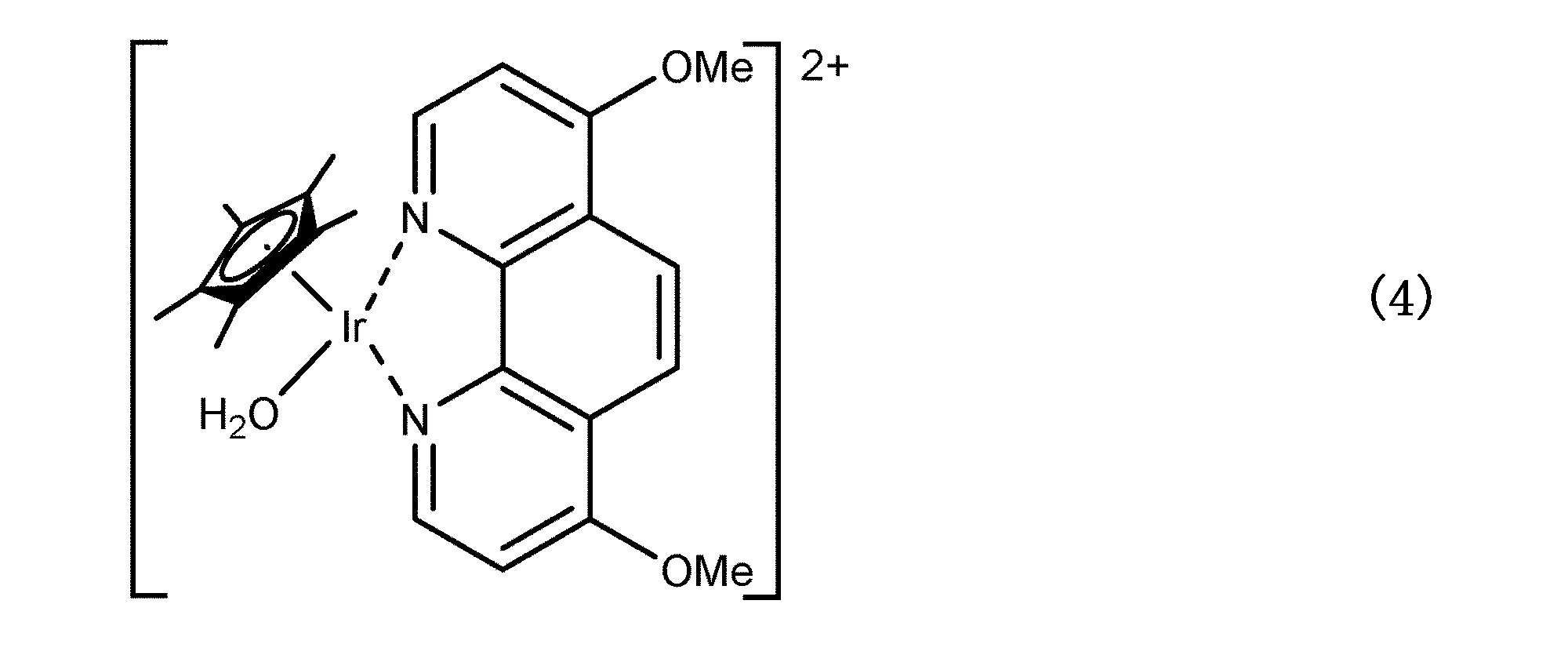
[比較例1]
(一般式(4)で示される単核錯体の硫酸塩の合成)
4,7-メトキシ-1,10-フェナントロリン(48mg,0.2mmol)を水20mLに懸濁させ、[Cp*Ir(H2O)3]SO4(94mg,0.2mmol)を加えて、アルゴン気流下室温で12時間撹拌した。析出した黄色固体を濾過し、減圧化濃縮したのち、水中で再結晶した(69mg,収率50%)。以下、得られた単核触媒のスペクトルデータを示す。
1H NMR(500MHz,D2O):δ = 9.29(d,J = 0.5Hz,2H),8.32(s,2H),7.60(d,J = 0.5Hz,2H),4.30(s,3H),1.74(s,15H);IR(KBr):1581,1303,1115cm-1;ESI-MS(m/z):[M-SO4-H2O-H]+;found,567;Elemental analysis calcd. for C24H29IrN2O7S + H2O:C,40.27;H,4.31;N,3.91.Found:C,40.64;H,4.45;N,3.63.
(一般式(4)で示される単核錯体の硫酸塩の合成)
4,7-メトキシ-1,10-フェナントロリン(48mg,0.2mmol)を水20mLに懸濁させ、[Cp*Ir(H2O)3]SO4(94mg,0.2mmol)を加えて、アルゴン気流下室温で12時間撹拌した。析出した黄色固体を濾過し、減圧化濃縮したのち、水中で再結晶した(69mg,収率50%)。以下、得られた単核触媒のスペクトルデータを示す。
1H NMR(500MHz,D2O):δ = 9.29(d,J = 0.5Hz,2H),8.32(s,2H),7.60(d,J = 0.5Hz,2H),4.30(s,3H),1.74(s,15H);IR(KBr):1581,1303,1115cm-1;ESI-MS(m/z):[M-SO4-H2O-H]+;found,567;Elemental analysis calcd. for C24H29IrN2O7S + H2O:C,40.27;H,4.31;N,3.91.Found:C,40.64;H,4.45;N,3.63.
[比較例2]
実施例2に従って、一般式(3)(4)に示される類似単核触媒を用いたギ酸の脱水素化反応では、TOFがそれぞれ2060,1360であった。この結果は、フェナントロリンに水酸基が置換した配位子から構成される一般式(1)または(2)で示される触媒が、水中でのギ酸脱水素化反応の反応効率の向上に有効であることを示している。
実施例2に従って、一般式(3)(4)に示される類似単核触媒を用いたギ酸の脱水素化反応では、TOFがそれぞれ2060,1360であった。この結果は、フェナントロリンに水酸基が置換した配位子から構成される一般式(1)または(2)で示される触媒が、水中でのギ酸脱水素化反応の反応効率の向上に有効であることを示している。
[比較例3]
一般式(3)に示される類似単核触媒を用いて、8Mギ酸水溶液、90℃以上でギ酸の脱水素化反応を行ったところ、30分程度で触媒が劣化し、ガス発生速度が著しく低下した。この結果は、一般式(1)~(2)で示される錯体触媒は、90℃以上の高温かつ8M以上の高濃度のギ酸水溶液条件でも触媒が劣化することなくギ酸の脱水素化反応が進行することが分かった。
一般式(3)に示される類似単核触媒を用いて、8Mギ酸水溶液、90℃以上でギ酸の脱水素化反応を行ったところ、30分程度で触媒が劣化し、ガス発生速度が著しく低下した。この結果は、一般式(1)~(2)で示される錯体触媒は、90℃以上の高温かつ8M以上の高濃度のギ酸水溶液条件でも触媒が劣化することなくギ酸の脱水素化反応が進行することが分かった。
[比較例4]
実施例7に従って、一般式(3)に示される類似単核触媒を用いたギ酸の脱水素化反応では、1MPaで加圧した密閉容器中のギ酸の脱水素化反応のTOFが10600h-1であった。この結果は、一般式(2)で示される触媒が、ギ酸脱水素化反応による高圧水素発生における反応効率の向上に有効であることを示している。
実施例7に従って、一般式(3)に示される類似単核触媒を用いたギ酸の脱水素化反応では、1MPaで加圧した密閉容器中のギ酸の脱水素化反応のTOFが10600h-1であった。この結果は、一般式(2)で示される触媒が、ギ酸脱水素化反応による高圧水素発生における反応効率の向上に有効であることを示している。
本発明において、一般式(1)または(2)で示される金属錯体は、水中でのギ酸の脱水素化による水素製造において、高温反応条件かつ高濃度のギ酸水溶液からでも、極めて高い触媒活性と耐久性を示した。そのため、本発明の金属錯体を用いれば、貯蔵・輸送が容易なギ酸から簡便に水素を製造することができる。特に、選択的ギ酸の脱水素化反応により、一酸化炭素の副生なしに高圧の水素を発生させることができるために、ガス改質装置を用いることなく、燃料電池の燃料として水素を供給できる。
Claims (6)
- 式(1)で表される単核錯体、その異性体、または塩を有効成分として含む、ギ酸の脱水素化反応に用いる触媒。

Xは、任意の配位子であるか、または存在せず、
nは、正の整数、0、または負の整数である。 - Xが、水分子、水素原子、アルコキシドイオン、水酸化物イオン、ハロゲン化物イオン、炭酸イオン、トリフルオロメタンスルホン酸イオン、硫酸イオン、硝酸イオン、ギ酸イオン、もしくは酢酸イオンであるか、または存在しない請求項1に記載のギ酸の脱水素化反応に用いる触媒。
- 前記単核錯体が下記式(2)で表される構造を有する請求項1に記載のギ酸の脱水素化反応に用いる触媒。

- 請求項1~3のいずれか1項に記載の触媒の存在下、ギ酸を含む溶液と反応させることによってギ酸を脱水素化する方法。
- 請求項1~3のいずれか1項に記載の触媒の存在下、ギ酸を含む溶液と反応させることによってギ酸を脱水素化し水素を製造する方法。
- 請求項1~3のいずれか1項に記載の触媒の存在下、密閉反応容器中でギ酸を含む溶液と反応させることによってギ酸を脱水素化し高圧水素を製造する方法。
Priority Applications (1)
| Application Number | Priority Date | Filing Date | Title |
|---|---|---|---|
| JP2015549088A JP6090957B2 (ja) | 2013-11-19 | 2014-11-11 | ギ酸の脱水素化に用いる触媒、ギ酸の脱水素化方法、水素製造方法 |
Applications Claiming Priority (2)
| Application Number | Priority Date | Filing Date | Title |
|---|---|---|---|
| JP2013-238936 | 2013-11-19 | ||
| JP2013238936 | 2013-11-19 |
Publications (1)
| Publication Number | Publication Date |
|---|---|
| WO2015076156A1 true WO2015076156A1 (ja) | 2015-05-28 |
Family
ID=53179423
Family Applications (1)
| Application Number | Title | Priority Date | Filing Date |
|---|---|---|---|
| PCT/JP2014/079860 Ceased WO2015076156A1 (ja) | 2013-11-19 | 2014-11-11 | ギ酸の脱水素化に用いる触媒、ギ酸の脱水素化方法、水素製造方法 |
Country Status (2)
| Country | Link |
|---|---|
| JP (1) | JP6090957B2 (ja) |
| WO (1) | WO2015076156A1 (ja) |
Cited By (5)
| Publication number | Priority date | Publication date | Assignee | Title |
|---|---|---|---|---|
| CN110228791A (zh) * | 2019-05-29 | 2019-09-13 | 安徽青木子德慧能源发展有限公司 | 一种用于去除甲酸制氢反应产物中的微量甲酸和水汽的装置 |
| JP2021016832A (ja) * | 2019-07-22 | 2021-02-15 | 国立研究開発法人産業技術総合研究所 | 脱水素化触媒 |
| WO2021117447A1 (ja) * | 2019-12-09 | 2021-06-17 | 日東電工株式会社 | 水素貯蔵方法、水素ガスの製造方法及び水素ガス製造システム |
| CN114957339A (zh) * | 2022-03-25 | 2022-08-30 | 大连理工大学 | 一类新型配合物的合成方法及其催化甲酸储放氢应用 |
| KR102962787B1 (ko) | 2019-12-09 | 2026-05-08 | 닛토덴코 가부시키가이샤 | 수소 저장 방법, 수소 가스의 제조 방법 및 수소 가스 제조 시스템 |
Citations (2)
| Publication number | Priority date | Publication date | Assignee | Title |
|---|---|---|---|---|
| JP2010208927A (ja) * | 2009-03-12 | 2010-09-24 | Osaka Univ | 重水素(d2)および重水素化水素(hd)の少なくとも一方を製造する方法、並びにこれに使用するギ酸分解用触媒 |
| WO2011108730A1 (ja) * | 2010-03-04 | 2011-09-09 | 国立大学法人大阪大学 | 単核金属錯体、水素化還元触媒、脱水素用触媒、水素化還元生成物の製造方法、水素(h2)の製造方法および脱水素反応生成物の製造方法 |
Family Cites Families (2)
| Publication number | Priority date | Publication date | Assignee | Title |
|---|---|---|---|---|
| JP4572393B2 (ja) * | 2006-11-17 | 2010-11-04 | 国立大学法人大阪大学 | ギ酸分解用触媒、ギ酸の分解方法、水素製造方法、ギ酸製造および分解用装置、水素貯蔵および発生方法 |
| JP4875576B2 (ja) * | 2007-09-25 | 2012-02-15 | 独立行政法人科学技術振興機構 | ギ酸分解用触媒、ギ酸の分解方法、水素製造方法、ギ酸製造および分解用装置、水素貯蔵および発生方法 |
-
2014
- 2014-11-11 WO PCT/JP2014/079860 patent/WO2015076156A1/ja not_active Ceased
- 2014-11-11 JP JP2015549088A patent/JP6090957B2/ja active Active
Patent Citations (2)
| Publication number | Priority date | Publication date | Assignee | Title |
|---|---|---|---|---|
| JP2010208927A (ja) * | 2009-03-12 | 2010-09-24 | Osaka Univ | 重水素(d2)および重水素化水素(hd)の少なくとも一方を製造する方法、並びにこれに使用するギ酸分解用触媒 |
| WO2011108730A1 (ja) * | 2010-03-04 | 2011-09-09 | 国立大学法人大阪大学 | 単核金属錯体、水素化還元触媒、脱水素用触媒、水素化還元生成物の製造方法、水素(h2)の製造方法および脱水素反応生成物の製造方法 |
Non-Patent Citations (1)
| Title |
|---|
| Y. HIMEDA ET AL.: "Simultaneous Tuning of Activity and Water Solubility of Complex Catalysts by Acid-Base Equilibrium of Ligands for Conversion of Carbon Dioxide", ORGANOMETALLICS, vol. 26, 2007, pages 702 - 712, XP055237674, DOI: doi:10.1021/om060899e * |
Cited By (10)
| Publication number | Priority date | Publication date | Assignee | Title |
|---|---|---|---|---|
| CN110228791A (zh) * | 2019-05-29 | 2019-09-13 | 安徽青木子德慧能源发展有限公司 | 一种用于去除甲酸制氢反应产物中的微量甲酸和水汽的装置 |
| JP2021016832A (ja) * | 2019-07-22 | 2021-02-15 | 国立研究開発法人産業技術総合研究所 | 脱水素化触媒 |
| JP7370040B2 (ja) | 2019-07-22 | 2023-10-27 | 国立研究開発法人産業技術総合研究所 | 脱水素化触媒 |
| WO2021117447A1 (ja) * | 2019-12-09 | 2021-06-17 | 日東電工株式会社 | 水素貯蔵方法、水素ガスの製造方法及び水素ガス製造システム |
| JP2021091567A (ja) * | 2019-12-09 | 2021-06-17 | 日東電工株式会社 | 水素貯蔵方法、水素ガスの製造方法及び水素ガス製造システム |
| JP7372130B2 (ja) | 2019-12-09 | 2023-10-31 | 日東電工株式会社 | 水素貯蔵方法、水素ガスの製造方法及び水素ガス製造システム |
| TWI864186B (zh) * | 2019-12-09 | 2024-12-01 | 日商日東電工股份有限公司 | 氫儲藏方法、氫氣之製造方法及氫氣製造系統 |
| KR102962787B1 (ko) | 2019-12-09 | 2026-05-08 | 닛토덴코 가부시키가이샤 | 수소 저장 방법, 수소 가스의 제조 방법 및 수소 가스 제조 시스템 |
| CN114957339A (zh) * | 2022-03-25 | 2022-08-30 | 大连理工大学 | 一类新型配合物的合成方法及其催化甲酸储放氢应用 |
| CN114957339B (zh) * | 2022-03-25 | 2023-11-24 | 大连理工大学 | 一类新型配合物的合成方法及其催化甲酸储放氢应用 |
Also Published As
| Publication number | Publication date |
|---|---|
| JPWO2015076156A1 (ja) | 2017-03-16 |
| JP6090957B2 (ja) | 2017-03-08 |
Similar Documents
| Publication | Publication Date | Title |
|---|---|---|
| JP6461396B2 (ja) | ギ酸の脱水素化に用いる触媒、ギ酸の脱水素化方法、水素製造方法 | |
| JP5812290B2 (ja) | 二酸化炭素の水素化またはギ酸の脱水素化に用いる触媒、該触媒を用いる二酸化炭素の水素化方法、ギ酸の脱水素化方法、水素の貯蔵および製造方法 | |
| JP6502091B2 (ja) | 高圧水素製造法および製造システム | |
| US9315381B2 (en) | Dehydrogenation catalyst for formic acid, method for producing hydrogen, and method for producing heavy-hydrogen gas or heavy-hydrogenated hydrogen | |
| JP4875576B2 (ja) | ギ酸分解用触媒、ギ酸の分解方法、水素製造方法、ギ酸製造および分解用装置、水素貯蔵および発生方法 | |
| Oldenhof et al. | Base-Free Production of H 2 by Dehydrogenation of Formic Acid Using An Iridium-bisMETAMORPhos Complex. | |
| Maenaka et al. | Catalytic interconversion between hydrogen and formic acid at ambient temperature and pressure | |
| US10759668B2 (en) | Supported metal material, supported metal catalyst, and ammonia synthesis method using the same | |
| Wang et al. | Highly efficient CO 2 capture by tunable alkanolamine-based ionic liquids with multidentate cation coordination | |
| Yang et al. | Coordination effect-regulated CO 2 capture with an alkali metal onium salts/crown ether system | |
| JP7370040B2 (ja) | 脱水素化触媒 | |
| JP6090957B2 (ja) | ギ酸の脱水素化に用いる触媒、ギ酸の脱水素化方法、水素製造方法 | |
| JP2010083730A (ja) | 重水素(d2)および重水素化水素(hd)の少なくとも一方を製造する方法およびこれに使用するギ酸分解用触媒 | |
| JP5397806B2 (ja) | 重水素(d2)および重水素化水素(hd)の少なくとも一方を製造する方法、並びにこれに使用するギ酸分解用触媒 | |
| JP5140184B1 (ja) | 化学蒸着原料用の有機ルテニウム化合物及び該有機ルテニウム化合物の製造方法 | |
| JP2013112660A (ja) | 多孔性金属錯体、多孔性金属錯体の製造方法及びガス吸蔵材料 | |
| JP2011241182A (ja) | 二酸化炭素と水素からメタンを合成する方法 | |
| JP6890320B2 (ja) | 二酸化炭素の水素化に用いる触媒、ギ酸製造方法、水素の貯蔵方法 | |
| EA047786B1 (ru) | Промоторы гидратообразования на основе производных касторового масла | |
| KR20240173910A (ko) | 비정형 탄산칼슘 및 이의 제조방법 | |
| WO2024158054A1 (ja) | ギ酸製造方法 | |
| WO2026052832A2 (en) | Ionic liquid mediated valorisation of carbon dioxide | |
| Weilhard et al. | Carbon dioxide hydrogenation to formic acid with an extremely efficient base-free homogeneous catalytic system | |
| Grimes | Novel phosphonium and ammonium ionic liquids for green applications |
Legal Events
| Date | Code | Title | Description |
|---|---|---|---|
| 121 | Ep: the epo has been informed by wipo that ep was designated in this application |
Ref document number: 14864367 Country of ref document: EP Kind code of ref document: A1 |
|
| ENP | Entry into the national phase |
Ref document number: 2015549088 Country of ref document: JP Kind code of ref document: A |
|
| NENP | Non-entry into the national phase |
Ref country code: DE |
|
| 122 | Ep: pct application non-entry in european phase |
Ref document number: 14864367 Country of ref document: EP Kind code of ref document: A1 |