WO2015075836A1 - 衝突回避支援装置 - Google Patents
衝突回避支援装置 Download PDFInfo
- Publication number
- WO2015075836A1 WO2015075836A1 PCT/JP2013/081635 JP2013081635W WO2015075836A1 WO 2015075836 A1 WO2015075836 A1 WO 2015075836A1 JP 2013081635 W JP2013081635 W JP 2013081635W WO 2015075836 A1 WO2015075836 A1 WO 2015075836A1
- Authority
- WO
- WIPO (PCT)
- Prior art keywords
- collision avoidance
- timing
- avoidance support
- acceleration
- collision
- Prior art date
- Legal status (The legal status is an assumption and is not a legal conclusion. Google has not performed a legal analysis and makes no representation as to the accuracy of the status listed.)
- Ceased
Links
Images



Classifications
-
- G—PHYSICS
- G08—SIGNALLING
- G08G—TRAFFIC CONTROL SYSTEMS
- G08G1/00—Traffic control systems for road vehicles
- G08G1/16—Anti-collision systems
- G08G1/166—Anti-collision systems for active traffic, e.g. moving vehicles, pedestrians, bikes
-
- B—PERFORMING OPERATIONS; TRANSPORTING
- B60—VEHICLES IN GENERAL
- B60W—CONJOINT CONTROL OF VEHICLE SUB-UNITS OF DIFFERENT TYPE OR DIFFERENT FUNCTION; CONTROL SYSTEMS SPECIALLY ADAPTED FOR HYBRID VEHICLES; ROAD VEHICLE DRIVE CONTROL SYSTEMS FOR PURPOSES NOT RELATED TO THE CONTROL OF A PARTICULAR SUB-UNIT
- B60W30/00—Purposes of road vehicle drive control systems not related to the control of a particular sub-unit, e.g. of systems using conjoint control of vehicle sub-units
- B60W30/08—Active safety systems predicting or avoiding probable or impending collision or attempting to minimise its consequences
- B60W30/09—Taking automatic action to avoid collision, e.g. braking and steering
-
- B—PERFORMING OPERATIONS; TRANSPORTING
- B60—VEHICLES IN GENERAL
- B60W—CONJOINT CONTROL OF VEHICLE SUB-UNITS OF DIFFERENT TYPE OR DIFFERENT FUNCTION; CONTROL SYSTEMS SPECIALLY ADAPTED FOR HYBRID VEHICLES; ROAD VEHICLE DRIVE CONTROL SYSTEMS FOR PURPOSES NOT RELATED TO THE CONTROL OF A PARTICULAR SUB-UNIT
- B60W10/00—Conjoint control of vehicle sub-units of different type or different function
- B60W10/18—Conjoint control of vehicle sub-units of different type or different function including control of braking systems
-
- B—PERFORMING OPERATIONS; TRANSPORTING
- B60—VEHICLES IN GENERAL
- B60W—CONJOINT CONTROL OF VEHICLE SUB-UNITS OF DIFFERENT TYPE OR DIFFERENT FUNCTION; CONTROL SYSTEMS SPECIALLY ADAPTED FOR HYBRID VEHICLES; ROAD VEHICLE DRIVE CONTROL SYSTEMS FOR PURPOSES NOT RELATED TO THE CONTROL OF A PARTICULAR SUB-UNIT
- B60W10/00—Conjoint control of vehicle sub-units of different type or different function
- B60W10/20—Conjoint control of vehicle sub-units of different type or different function including control of steering systems
Definitions
- An embodiment of the present invention relates to a collision avoidance support device that calculates the timing of the start of collision avoidance support for avoiding a collision between a host vehicle and an object.
- Patent Document 1 based on a relative speed Vr between the host vehicle and an object, a deceleration amount ⁇ V set in advance by operating the brake of the host vehicle, and a deceleration a by operating the brake of the host vehicle.
- An apparatus for calculating a time until an expected collision between the host vehicle and an object while taking into account a change in the relative speed Vr is disclosed.
- the device of Patent Document 1 calculates the time when the brake of the host vehicle is actuated when the time until the collision calculated in consideration of the change in the relative speed Vr reaches a predetermined time.
- Patent Document 1 can calculate the timing of brake operation with high accuracy. By the way, the situation of the own vehicle and the object on the actual road is various. Therefore, it is desired to calculate the start timing of collision avoidance support more appropriate for the situation.
- An embodiment of the present invention has been made in view of the above problems, and an object thereof is to calculate a start timing of collision avoidance support more appropriate for a situation.
- One embodiment of the present invention includes a timing calculation unit that calculates a start timing of collision avoidance support for avoiding a collision between the host vehicle and an object, and the timing calculation unit approaches the host vehicle and the object.
- the timing calculation unit calculates a start timing of collision avoidance support for avoiding a collision between the host vehicle and an object
- the timing calculation unit approaches the host vehicle and the object.
- the brake operation timing and the like are calculated at a timing earlier than the timing considering the decrease in the relative speed.
- the second time shorter than the first time is used for the collision using the distance, the relative speed, and the acceleration. Calculated as time. Further, the start timing of the collision avoidance support is calculated based on the second time shorter than the first time. For this reason, when the relative speed increases due to the deceleration of the preceding vehicle, the brake operation timing and the like are calculated at a timing earlier than the timing not considering the increase in the relative speed.
- the earliest brake timing is either the timing considering the relative speed change or the timing not considering the relative speed change, regardless of whether the relative speed is decreasing or increasing. Is selected. Therefore, it is possible to calculate the start timing of collision avoidance support more appropriate for the situation.
- the timing calculation unit when the ground speed of the host vehicle is increasing, performs collision avoidance assistance based on the first method regardless of the decrease and increase of the relative speed.
- the start timing can be calculated.
- the brake operation timing is calculated earlier than the timing that does not consider the increase in relative speed, the driver's intention There is a possibility that collision avoidance assistance will be started at a timing contrary to this.
- the driver's intention is to accelerate the host vehicle and the ground speed of the host vehicle increases and the relative speed increases, it is later than the timing considering the increase of the relative speed.
- the brake operation timing is calculated at the timing, and it is possible to prevent the collision avoidance support from being started at a timing contrary to the driver's intention.
- the timing calculation unit calculates the start timing of the collision avoidance support based on the first method, and then the relative speed increases with the acceleration. Is equal to or less than the positive threshold value, the start timing of the collision avoidance support is calculated based on the first method, and the start timing of the collision avoidance support is calculated based on the second method. When the acceleration is decreasing and the acceleration is greater than or equal to a negative threshold, the start timing of the collision avoidance support can be calculated based on the second method.
- the basis for calculating the start timing of collision avoidance support may be changed too frequently.
- the start timing of collision avoidance support is calculated based on the first method, even when the relative speed is increased, when the acceleration is not sufficiently large. Instead of switching to the start timing of collision avoidance support based on the second method, the start timing of collision avoidance support is calculated based on the first method.
- the collision avoidance based on the first method is performed when the acceleration is sufficiently small even when the relative speed is decreasing.
- the timing for starting the collision avoidance support is calculated based on the second method without switching to the calculation of the timing for starting the support. Accordingly, it is possible to prevent the basis for calculating the start timing of the collision avoidance support from being changed too frequently.
- the timing calculation unit has a distance D, a relative speed Vr, an acceleration Gr, a first time T1, and a second time T2.
- the start timing of the collision avoidance support is calculated based on T1 calculated by the following equation (1).
- the start timing of the collision avoidance support can be calculated based on T2 calculated by the following equation (2).
- the collision avoidance assistance device of one embodiment of the present invention it is possible to calculate the start timing of collision avoidance assistance more appropriate for the situation.
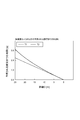
- the graph shows the brake timing BT1 calculated based on the time T1 and the brake timing BT2 calculated based on the time T2 with respect to the time until the collision. is there.
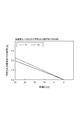
- the graph shows the brake timing BT1 calculated based on the time T1 and the brake timing BT2 calculated based on the time T2 with respect to the time until the collision. is there.
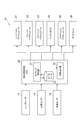
- the collision avoidance assistance device is a collision avoidance assistance system that activates a brake actuator, a steering actuator, and the like of a host vehicle at a calculated timing with respect to an object such as a preceding vehicle or a roadside structure. It is configured.
- the collision avoidance support system 10 of the first embodiment includes a laser radar 12, an image sensor 14, a vehicle speed sensor 16, a collision avoidance support ECU 20, a seat belt actuator 31, a brake actuator 32, an airbag actuator 33, An engine ECU 34, a steering actuator 35, and a display 36 are provided.
- Laser radar 12 measures the position, distance, relative speed, and relative speed acceleration of an obstacle such as a preceding vehicle that is an object ahead of the host vehicle.
- the image sensor 14 is composed of a CMOS camera or a CCD camera, images a target object ahead of the host vehicle, and detects the state of the target object.
- the laser radar 12 measures the relative speed of the host vehicle with respect to the object at predetermined intervals, and calculates the acceleration of the relative speed from the difference between the two measured relative speeds and the measurement interval. Note that the measurement means for the positional relationship and the speed relationship between the vehicle and the object may use other means such as a stereo camera in addition to the laser radar 12.
- the vehicle speed sensor 16 detects the ground speed and the acceleration of the ground speed, which are speeds with respect to the ground surface of the host vehicle, from the rotational speed of the axle of the host vehicle.
- the collision avoidance assistance ECU 20 determines the possibility of contact and the timing thereof from information such as the relative speed with the object obtained by the laser radar 12 and the image sensor 14, and the seat belt actuator 31 to the display 36. Control the operation of various devices.
- the collision avoidance support ECU 20 includes a timing calculation unit 21, a support execution unit 22, and a database 23.
- the timing calculation unit 21 calculates a time until an expected collision between the host vehicle and the object by one of two methods described later.
- the timing calculation unit 21 calculates the start timing of the collision avoidance support for avoiding the collision between the host vehicle and the target object based on the expected time until the collision between the host vehicle and the target object.
- the timing calculation unit 21 constitutes a timing calculation unit.
- the support execution unit 22 operates the various devices of the seat belt actuator 31 to the display 36 by command signals at the start timing of the collision avoidance support calculated by the timing calculation unit 21.
- the database 23 data to be referred to when the timing calculation unit 21 performs calculation and a history of calculations performed by the timing calculation unit 21 are recorded.
- the seat belt actuator 31 increases the tension of the seat belt according to a command signal from the assistance execution unit 22 of the collision avoidance assistance ECU 20.
- the brake actuator 32 operates the brake of the host vehicle to decelerate the host vehicle according to a command signal from the support execution unit 22 of the collision avoidance support ECU 20.
- the airbag actuator 33 expands the airbag in accordance with a command signal from the assistance execution unit 22 of the collision avoidance assistance ECU 20.
- the engine ECU 34 controls the output of the engine of the host vehicle according to a command signal from the assistance execution unit 22 of the collision avoidance assistance ECU 20.
- the steering actuator 35 controls the steering angle of the host vehicle according to a command signal from the assistance execution unit 22 of the collision avoidance assistance ECU 20.
- the steering actuator 35 may apply a predetermined reaction force to the steering wheel of the host vehicle in accordance with a command signal from the assistance execution unit 22 of the collision avoidance assistance ECU 20 to urge the driver to steer to avoid a collision.
- the display 36 gives information and warnings for avoiding a collision to the driver by video and audio according to a command signal from the assistance execution unit 22 of the collision avoidance assistance ECU 20.
- the distance between the host vehicle and the preceding vehicle is D
- the relative speed of the host vehicle with respect to the preceding vehicle when the direction in which the host vehicle and the preceding vehicle approach is positive is Vr
- the host vehicle and the preceding vehicle approach each other The acceleration of the relative speed Vr in the direction in which the vehicle travels is Gr
- t is the time until the expected collision between the host vehicle and the preceding vehicle.
- a method of calculating a time until an expected collision between the host vehicle and the preceding vehicle using the distance D and the relative speed Vr between the host vehicle and the object without using the acceleration Gr is a first method.
- the time until the expected collision between the host vehicle and the preceding vehicle when the acceleration Gr of the relative speed Vr is not considered is set as the first time.
- Let the first time be t T1.
- a method for calculating a time until an expected collision between the host vehicle and the preceding vehicle using the distance D, the relative speed Vr, and the acceleration Gr is a second method.
- the time until the expected collision between the host vehicle and the preceding vehicle when the acceleration Gr of the relative speed Vr is taken into consideration is set as the second time.
- the second time be t T2.
- the following equations (5) and (6) are obtained from the above equations (3) and (4).
- T2 when the acceleration Gr of the relative speed Vr is 0 is the same as T1 when the acceleration Gr of the relative speed Vr is not considered, as shown in the following equation (7).
- the time T2 until the collision considering the acceleration Gr is longer than the time T1 until the collision not considering the acceleration Gr. Therefore, when collision avoidance assistance such as brake operation is performed when the time T1 and T2 until the collision reaches a predetermined time, the collision time considering the acceleration Gr for the same relative speed Vr and distance D is set to the time T2.
- the timing of the collision avoidance support based on the timing is later than the timing of the collision avoidance support based on the time T1 until the collision without considering the acceleration Gr.
- FIG. 5 shows the time to collision on the horizontal axis.
- FIG. 5 shows on the vertical axis how many seconds before the collision the brake is activated with respect to the time until the collision.
- the brake timing BT2 considering the acceleration Gr is slower than the brake timing BT1 not considering the acceleration Gr with respect to the time until the collision. .
- the timing of the operation of the brake or the like calculated without considering the decrease in the relative speed Gr is compared.
- the timing of the operation of the brake or the like calculated in consideration of the change in the relative speed becomes later.
- a driver accustomed to the operation timing of the brake or the like calculated without considering the decrease in the relative speed Gr may feel that the operation timing of the brake or the like is late and feel uncomfortable.
- the time T2 to the collision considering the acceleration Gr is shorter than the time T1 to the collision not considering the acceleration Gr. Therefore, when collision avoidance assistance such as brake operation is performed when the time T1 and T2 until the collision reaches a predetermined time, the collision time considering the acceleration Gr for the same relative speed Vr and distance D is set to the time T2.
- the timing of the collision avoidance support based on the timing is earlier than the timing of the collision avoidance support based on the time T1 until the collision without considering the acceleration Gr.
- FIG. 6 shows the time to collision on the horizontal axis.
- FIG. 6 shows on the vertical axis how many seconds before the collision the brake is activated with respect to the time until the collision.
- the brake timing BT2 considering the acceleration Gr is earlier than the brake timing BT1 not considering the acceleration Gr with respect to the time until the collision. .
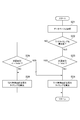
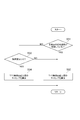
- the timing calculation unit 21 of the collision avoidance assistance ECU 20 calculates the acceleration Gr without considering the acceleration Gr by the first method.
- the start timing of the collision avoidance support is calculated based on the time T1 until the collision (S12).
- the timing calculation unit 21 and the support execution unit 22 of the collision avoidance support ECU 20 perform collision avoidance support using the seat belt actuator 31 to the display 36 at the start timing of the collision avoidance support calculated based on T1.
- the timing calculation unit 21 of the collision avoidance assistance ECU 20 uses the second method until the collision calculated in consideration of the acceleration Gr.
- the start timing of the collision avoidance support is calculated based on the time T2 (S13).
- the timing calculation unit 21 and the support execution unit 22 of the collision avoidance support ECU 20 perform collision avoidance support using the seat belt actuator 31 to the display 36 at the start timing of the collision avoidance support calculated based on T2.
- the timing calculation unit 21 of the collision avoidance assistance ECU 20 calculates the distance D and the relative speed Vr without using the acceleration Gr. By using this, a time T1 shorter than the time T2 is calculated as a time until the collision. In addition, the timing calculation unit 21 calculates the start timing of the collision avoidance support based on the time T1 shorter than the time T2. For this reason, if the relative speed Gr is decreased due to the deceleration of the own vehicle when the ground speed of the other vehicle is constant or the acceleration of the preceding vehicle when the ground speed of the own vehicle is constant, the relative speed Gr is decreased. The brake operation timing and the like are calculated at a timing earlier than the considered timing.
- the timing calculation unit 21 of the collision avoidance assistance ECU 20 uses the distance D, the relative speed Vr, and the acceleration Gr.
- the time T2 shorter than the time T1 is calculated as the time until the collision.
- the timing calculation unit 21 calculates the timing for starting the collision avoidance support based on the time T2 shorter than the time T1. For this reason, when the relative speed Vr is increased due to the deceleration of the preceding vehicle when the ground speed of the host vehicle is constant, the timing of the brake operation etc. is earlier than the timing not considering the increase of the relative speed Vr. Calculated.
- the earliest brake timing is either the timing considering the change in the relative speed Vr or the timing not considering the change in the relative speed, regardless of whether the relative speed Vr is decreasing or increasing. Selected. Therefore, it is possible to calculate the start timing of collision avoidance support more appropriate for the situation.
- a method that provides an earlier brake timing can be prevented, thereby preventing the driver from feeling uncomfortable. .
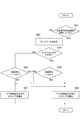
- the timing of the collision avoidance support is switched in consideration of the history of the collision avoidance support timing.
- the timing calculation unit 21 starts the timing of the collision avoidance support based on either T1 by the first method or T2 by the second method. A history of whether or not is calculated is recorded.
- the timing calculation unit 21 refers to the calculation history recorded in the database 23.
- the timing calculation unit 21 refers to the history of the database 23 to start the collision avoidance support based on either T1 by the first method or T2 by the second method when calculating the start timing of the previous collision avoidance support. It is determined whether or not the timing is calculated.
- the threshold value for switching the basis for calculating the start timing of the collision avoidance support is set as the threshold value.
- Threshold value Gp 1 m / s 2 is set.
- the timing calculation unit 21 of the support ECU 20 switches the basis for calculating the start timing of the collision avoidance support, and calculates the start timing of the collision avoidance support such as the operation of the brake based on T2 by the second method (S26). .
- Gp 1 m / s 2 which is the threshold value of the acceleration Gr can be set to another value.
- the threshold for switching the basis for calculating the start timing of the collision avoidance support is used.
- Negative threshold Gm ⁇ 1 m / s 2 is set.
- the timing calculation unit 21 of the collision avoidance support ECU 20 starts the collision avoidance support such as the operation of the brake without changing the basis for calculating the timing of the start of the collision avoidance support without changing the basis of the second method. Is calculated (S26).
- the collision The timing calculation unit 21 of the avoidance support ECU 20 switches the basis for calculating the start timing of the collision avoidance support, and calculates the start timing of the collision avoidance support such as the operation of the brake based on T1 according to the first method (S24). ).
- the timing calculation unit 21 can erase the calculation history recorded in the database 23 at an arbitrary timing. In this case, immediately after the history of calculation in the database 23 is deleted, the timing calculation unit 21 performs the calculation in the procedure of FIG. 2 of the first embodiment. The calculation history at this time is recorded in the database 23. If the start timing of the collision start support is calculated again before the calculation history of the database 23 is erased again at an arbitrary timing, the timing calculation unit 21 performs the procedure of FIG. 7 of the present embodiment. Calculations can be performed while referring to the history of the database 23.
- the timing calculation unit 21 can delete the calculation history recorded in the database 23 after a predetermined time has elapsed after calculating the start timing of the collision avoidance support.
- the timing calculation unit 23 can delete the calculation history recorded in the database 23 when the engine of the host vehicle stops after calculating the start timing of the collision avoidance support.
- the timing calculation unit 21 deletes the calculation history recorded in the database 23 when the preceding vehicle, which is the object, has left the detection range of the laser radar and when the preceding vehicle has changed to another vehicle. be able to.
- the timing for starting the collision avoidance support is calculated based on the time T1 without switching to the calculation of the timing for starting the collision avoidance support based on the time T2.
- the start timing of the collision avoidance support is calculated based on the time T2, even when the relative speed Vr is decreasing, Gr ⁇ 1 m / s 2 , that is, the deceleration is sufficient. If not, the timing for starting the collision avoidance support is calculated based on the time T2 without switching to the calculation of the timing for starting the collision avoidance support based on the time T1. Accordingly, it is possible to prevent the basis for calculating the start timing of the collision avoidance support from being changed too frequently.
- the start timing of the collision start support is calculated while taking into account whether the host vehicle is accelerating or decelerating.
- the timing calculation unit 21 of the collision avoidance assistance ECU 20 determines that the acceleration Gr of the relative speed Vr is Regardless of whether Gr> 0 or Gr ⁇ 0, the start timing of collision avoidance support such as brake operation is calculated based on T1 according to the first method that does not consider the acceleration Gr (S32).
- collision avoidance support calculates the timing of the start of collision avoidance assistance such as brake operation based on T1 according to the first method that does not consider the acceleration Gr (S32).
- the timing calculation unit 21 of the collision avoidance support ECU 20 calculates the start timing of the collision avoidance support such as the operation of the brake based on T2 by the second method considering the acceleration Gr (S34).
- the timing calculation unit 21 of the collision avoidance assistance ECU 20 When the driver intentionally accelerates the host vehicle and the ground speed of the host vehicle increases and the relative speed Vr increases, the timing calculation unit 21 of the collision avoidance assistance ECU 20 The brake operation timing and the like are calculated at a timing later than the timing considering the increase in the relative speed Vr. For this reason, it is possible to prevent the collision avoidance assistance from being performed at a timing contrary to the intention of the driver who intentionally accelerated the host vehicle.
- the start timing of the collision avoidance support is switched according to whether the relative speed Vr is decreasing or increasing, as in the first embodiment.
- the timing calculation unit 21 of the collision avoidance assistance ECU 20 determines that the acceleration Gr of the relative speed Vr is Regardless of whether Gr> 0 or Gr ⁇ 0, the start timing of collision avoidance support such as brake operation is calculated based on T1 that does not consider the acceleration Gr (S42).
- the timing calculation unit 21 refers to the calculation history recorded in the database 23 (S43). ) After the start timing of the collision avoidance support is calculated based on T1 according to the first method that does not consider the acceleration Gr (S44), and when Gr> 1 m / s 2 is not satisfied (S45), the collision avoidance support ECU 20 The timing calculation unit 21 calculates the start timing of the collision avoidance support such as the operation of the brake without changing the basis for calculating the start timing of the collision avoidance support without changing the basis of T1 according to the first method (S42).
- the timing calculation unit 21 refers to the calculation history recorded in the database 23 (S43), After the start timing of the collision avoidance support is calculated based on T1 according to the first method not considering the acceleration Gr (S44), and when Gr> 1 m / s 2 (S45), the collision avoidance support ECU 20 The timing calculation unit 21 switches the basis for calculating the start timing of the collision avoidance support, and calculates the start timing of the collision avoidance support such as the operation of the brake based on T2 by the second method (S47).
- the timing calculation unit 21 refers to the calculation history recorded in the database 23 (S43). )
- the timing calculation unit 21 of the ECU 20 calculates the start timing of the collision avoidance support such as the operation of the brake without changing the basis for calculating the start timing of the collision avoidance support without changing the basis of the second method (S47). .
- the timing calculation unit 21 refers to the calculation history recorded in the database 23 (S43), After the start timing of the collision avoidance support is calculated based on T2 by the second method considering the acceleration Gr (S44), and when Gr ⁇ 1 m / s 2 (S46), the collision avoidance support ECU 20 The timing calculation unit 21 switches the basis for calculating the start timing of the collision avoidance support, and calculates the start timing of the collision avoidance support such as the operation of the brake based on T1 according to the first method (S42).
- the ground speed of the host vehicle when the ground speed of the host vehicle is increasing, collision avoidance assistance is performed at a timing contrary to the intention of the driver who intentionally accelerated the host vehicle. It is possible to prevent the driver from feeling uncomfortable. Further, in the present embodiment, when the ground speed of the host vehicle is not increasing, the basis for calculating the timing of the start of the collision avoidance support is prevented from being changed too frequently as in the second embodiment. can do.
- the present invention is not limited to the above embodiment, and various modifications are possible.
- the aspect of operating the brake based on T1 or T2 has been described as the collision avoidance support.
- the collision avoidance assistance device ECU 20 can also operate the steering actuator 35 based on T1 or T2 to avoid the object.
- the collision avoidance assistance device ECU 20 can also operate the seat belt actuator 31 and the airbag actuator 33 based on T1 or T2 to reduce damage at the time of collision.
- the collision avoidance support ECU 20 can prompt the driver to avoid the collision by presenting information or alerting the driver with the display 36 based on T1 or T2.
- the timing calculation unit 21 has been described mainly with respect to a mode in which one of the two methods is used to calculate one of the times T1 and T2.
- a unit for calculating the time T1 and a unit for calculating the time T2 may be provided separately. These units calculate time T1 and time T2, respectively, and either time T1 or T2 may be applied depending on the situation.
- the collision avoidance assistance device of one embodiment of the present invention it is possible to prevent the driver from feeling uncomfortable.
Landscapes
- Engineering & Computer Science (AREA)
- Physics & Mathematics (AREA)
- General Physics & Mathematics (AREA)
- Automation & Control Theory (AREA)
- Transportation (AREA)
- Mechanical Engineering (AREA)
- Regulating Braking Force (AREA)
- Traffic Control Systems (AREA)
- Control Of Driving Devices And Active Controlling Of Vehicle (AREA)
- Automotive Seat Belt Assembly (AREA)
- Steering Control In Accordance With Driving Conditions (AREA)
Abstract
Description

相対速度が増加しているときは、下式(2)により算出されるT2に基づいて、衝突回避支援の開始のタイミングを算出することができる。


12 レーザレーダ
14 画像センサ
16 車速センサ
20 衝突回避支援ECU
21 タイミング算出部
22 支援実行部
23 データベース
31 シートベルトアクチュエータ
32 ブレーキアクチュエータ
33 エアバッグアクチュエータ
34 エンジンECU
35 ステアリングアクチュエータ
36 ディスプレイ
Claims (4)
- 自車両と対象物との衝突を回避するための衝突回避支援の開始のタイミングを算出するタイミング算出ユニットを備え、
前記タイミング算出ユニットは、
前記自車両と前記対象物とが接近する方向を正としたときの前記対象物に対する前記自車両の相対速度が前記相対速度の加速度により減少しているときは、前記加速度を用いずに前記自車両と前記対象物との距離及び前記相対速度を用いる第1手法により算出される前記自車両と前記対象物との予想される衝突までの第1時間に基づいて、前記衝突回避支援の開始のタイミングを算出し、
前記相対速度が前記加速度により増加しているときは、前記距離、前記相対速度及び前記加速度を用いる第2手法により算出される前記自車両と前記対象物との予想される衝突までの第2時間に基づいて、前記衝突回避支援の開始のタイミングを算出する、衝突回避支援装置。 - 前記タイミング算出ユニットは、
前記自車両の対地速度が増加しているときは、前記相対速度の減少及び増加に関わらず、前記第1手法に基づいて、前記衝突回避支援の開始のタイミングを算出する、請求項1に記載の衝突回避支援装置。 - 前記タイミング算出ユニットは、
前記第1手法に基づいて、前記衝突回避支援の開始のタイミングを算出した後に、前記相対速度が前記加速度で増加しているときであって、前記加速度が正の閾値以下であるときは、前記第1手法に基づいて、前記衝突回避支援の開始のタイミングを算出し、
前記第2手法に基づいて、前記衝突回避支援の開始のタイミングを算出した後に、前記相対速度が前記加速度で減少しているときであって、前記加速度が負の閾値以上であるときは、前記第2手法に基づいて、前記衝突回避支援の開始のタイミングを算出する、請求項1又は2に記載の衝突回避支援装置。 - 前記タイミング算出ユニットは、
前記距離がDであり、前記相対速度がVrであり、前記加速度がGrであり、前記第1時間がT1であり、前記第2時間がT2である場合に、
前記相対速度が減少しているときは、下式(1)により算出される前記T1に基づいて、前記衝突回避支援の開始のタイミングを算出し、

前記相対速度が増加しているときは、下式(2)により算出される前記T2に基づいて、前記衝突回避支援の開始のタイミングを算出する、請求項1~3のいずれか1項に記載の衝突回避支援装置。

Priority Applications (4)
| Application Number | Priority Date | Filing Date | Title |
|---|---|---|---|
| JP2015548953A JP6086160B2 (ja) | 2013-11-25 | 2013-11-25 | 衝突回避支援装置 |
| PCT/JP2013/081635 WO2015075836A1 (ja) | 2013-11-25 | 2013-11-25 | 衝突回避支援装置 |
| DE112013007632.2T DE112013007632B4 (de) | 2013-11-25 | 2013-11-25 | Kollisionsvermeidungsunterstützungsvorrichtung |
| US15/035,262 US10529237B2 (en) | 2013-11-25 | 2013-11-25 | Collision-avoidance support device |
Applications Claiming Priority (1)
| Application Number | Priority Date | Filing Date | Title |
|---|---|---|---|
| PCT/JP2013/081635 WO2015075836A1 (ja) | 2013-11-25 | 2013-11-25 | 衝突回避支援装置 |
Publications (1)
| Publication Number | Publication Date |
|---|---|
| WO2015075836A1 true WO2015075836A1 (ja) | 2015-05-28 |
Family
ID=53179138
Family Applications (1)
| Application Number | Title | Priority Date | Filing Date |
|---|---|---|---|
| PCT/JP2013/081635 Ceased WO2015075836A1 (ja) | 2013-11-25 | 2013-11-25 | 衝突回避支援装置 |
Country Status (4)
| Country | Link |
|---|---|
| US (1) | US10529237B2 (ja) |
| JP (1) | JP6086160B2 (ja) |
| DE (1) | DE112013007632B4 (ja) |
| WO (1) | WO2015075836A1 (ja) |
Cited By (3)
| Publication number | Priority date | Publication date | Assignee | Title |
|---|---|---|---|---|
| CN106627531A (zh) * | 2016-12-06 | 2017-05-10 | 智车优行科技(北京)有限公司 | 用于车辆自动紧急制动的控制方法、装置及车辆 |
| CN108622003A (zh) * | 2017-03-23 | 2018-10-09 | 百度(美国)有限责任公司 | 用于自动驾驶车辆的碰撞预测以及安全气囊预先展开系统 |
| JP2022111582A (ja) * | 2021-01-20 | 2022-08-01 | スズキ株式会社 | 車両用警報装置 |
Families Citing this family (6)
| Publication number | Priority date | Publication date | Assignee | Title |
|---|---|---|---|---|
| DE102015212250A1 (de) * | 2015-06-30 | 2017-01-05 | Conti Temic Microelectronic Gmbh | Verbesserte Berechnung der Zeit bis zur Kollision für ein Fahrzeug |
| JP2017054311A (ja) * | 2015-09-09 | 2017-03-16 | 株式会社デンソー | 物体検出装置 |
| JP6451623B2 (ja) * | 2015-12-25 | 2019-01-16 | 株式会社デンソー | 走行支援装置 |
| JP6787157B2 (ja) * | 2017-01-31 | 2020-11-18 | 株式会社デンソー | 車両制御装置 |
| CN117022255A (zh) * | 2018-03-20 | 2023-11-10 | 御眼视觉技术有限公司 | 用于主车辆的自动驾驶系统、机器可读存储介质和装置 |
| US10745007B2 (en) * | 2018-06-08 | 2020-08-18 | Denso International America, Inc. | Collision avoidance systems and methods |
Citations (4)
| Publication number | Priority date | Publication date | Assignee | Title |
|---|---|---|---|---|
| JPH01298500A (ja) * | 1988-05-27 | 1989-12-01 | Fujitsu Ten Ltd | 追い越し警報装置 |
| JP2011186600A (ja) * | 2010-03-05 | 2011-09-22 | Toyota Motor Corp | 車両制御装置 |
| JP2012008696A (ja) * | 2010-06-23 | 2012-01-12 | Toyota Motor Corp | 車両支援装置 |
| WO2012137326A1 (ja) * | 2011-04-06 | 2012-10-11 | トヨタ自動車株式会社 | ブレーキ制御装置及びブレーキ制御方法 |
Family Cites Families (6)
| Publication number | Priority date | Publication date | Assignee | Title |
|---|---|---|---|---|
| DE4418085C2 (de) * | 1993-05-21 | 1999-09-09 | Toyota Motor Co Ltd | Sicherheitseinrichtung für ein Fahrzeug |
| JP3805832B2 (ja) * | 1996-07-10 | 2006-08-09 | 富士重工業株式会社 | 車両用運転支援装置 |
| JP3859939B2 (ja) * | 2000-06-21 | 2006-12-20 | 本田技研工業株式会社 | 車両の走行安全装置 |
| JP2007196903A (ja) * | 2006-01-27 | 2007-08-09 | Hino Motors Ltd | 自動制動制御装置 |
| DE102007013685A1 (de) * | 2007-03-22 | 2008-09-25 | Robert Bosch Gmbh | Kollisionswarnvorrichtung für Kraftfahrzeuge |
| DE102011116112B4 (de) | 2011-10-15 | 2023-06-07 | Continental Autonomous Mobility Germany GmbH | Adaptiver Notbremsassistent |
-
2013
- 2013-11-25 JP JP2015548953A patent/JP6086160B2/ja active Active
- 2013-11-25 DE DE112013007632.2T patent/DE112013007632B4/de active Active
- 2013-11-25 US US15/035,262 patent/US10529237B2/en not_active Expired - Fee Related
- 2013-11-25 WO PCT/JP2013/081635 patent/WO2015075836A1/ja not_active Ceased
Patent Citations (4)
| Publication number | Priority date | Publication date | Assignee | Title |
|---|---|---|---|---|
| JPH01298500A (ja) * | 1988-05-27 | 1989-12-01 | Fujitsu Ten Ltd | 追い越し警報装置 |
| JP2011186600A (ja) * | 2010-03-05 | 2011-09-22 | Toyota Motor Corp | 車両制御装置 |
| JP2012008696A (ja) * | 2010-06-23 | 2012-01-12 | Toyota Motor Corp | 車両支援装置 |
| WO2012137326A1 (ja) * | 2011-04-06 | 2012-10-11 | トヨタ自動車株式会社 | ブレーキ制御装置及びブレーキ制御方法 |
Cited By (5)
| Publication number | Priority date | Publication date | Assignee | Title |
|---|---|---|---|---|
| CN106627531A (zh) * | 2016-12-06 | 2017-05-10 | 智车优行科技(北京)有限公司 | 用于车辆自动紧急制动的控制方法、装置及车辆 |
| CN108622003A (zh) * | 2017-03-23 | 2018-10-09 | 百度(美国)有限责任公司 | 用于自动驾驶车辆的碰撞预测以及安全气囊预先展开系统 |
| JP2018158721A (ja) * | 2017-03-23 | 2018-10-11 | バイドゥ ユーエスエイ エルエルシーBaidu USA LLC | 自動運転車両に用いられる衝突予測及びエアバッグ事前展開システム |
| JP2022111582A (ja) * | 2021-01-20 | 2022-08-01 | スズキ株式会社 | 車両用警報装置 |
| JP7653073B2 (ja) | 2021-01-20 | 2025-03-28 | スズキ株式会社 | 車両用警報装置 |
Also Published As
| Publication number | Publication date |
|---|---|
| DE112013007632T5 (de) | 2016-09-01 |
| DE112013007632B4 (de) | 2023-06-29 |
| JPWO2015075836A1 (ja) | 2017-03-16 |
| US20160293010A1 (en) | 2016-10-06 |
| JP6086160B2 (ja) | 2017-03-01 |
| US10529237B2 (en) | 2020-01-07 |
Similar Documents
| Publication | Publication Date | Title |
|---|---|---|
| JP6086160B2 (ja) | 衝突回避支援装置 | |
| JP6677822B2 (ja) | 車両制御装置 | |
| JP6176264B2 (ja) | 自動運転車両システム | |
| US10093316B2 (en) | Vehicle traveling control device | |
| JP6323572B2 (ja) | 目標車速生成装置および走行制御装置 | |
| CN109426244B (zh) | 自动驾驶装置 | |
| JP6614354B2 (ja) | 走行制御方法及び走行制御装置 | |
| JP6540465B2 (ja) | 運転支援装置 | |
| JP6827107B2 (ja) | 車両制御装置 | |
| JP2019127136A (ja) | 車両の走行制御装置 | |
| JP6614353B2 (ja) | 走行制御方法及び走行制御装置 | |
| JP2018158684A (ja) | 車両の走行制御装置 | |
| JP2019156180A (ja) | 車両制御装置、車両制御方法、およびプログラム | |
| US20180170430A1 (en) | Deviation avoidance apparatus | |
| CN110316191B (zh) | 车辆控制装置 | |
| JP2016175572A (ja) | 車両の運転支援装置 | |
| JP5510172B2 (ja) | 車両制御装置 | |
| JP5817097B2 (ja) | 車両制御装置 | |
| JP2019038363A (ja) | 車両用走行制御装置 | |
| JP5067320B2 (ja) | 車間距離制御装置 | |
| JP5333604B2 (ja) | ブレーキ制御装置及びブレーキ制御方法 | |
| JP4818762B2 (ja) | 運転支援装置 | |
| KR20230054132A (ko) | 가상차선을 이용한 차량 제어방법 및 장치 | |
| JP7742386B2 (ja) | 車両制御装置 | |
| JP4884929B2 (ja) | 車両の走行制御装置 |
Legal Events
| Date | Code | Title | Description |
|---|---|---|---|
| 121 | Ep: the epo has been informed by wipo that ep was designated in this application |
Ref document number: 13897743 Country of ref document: EP Kind code of ref document: A1 |
|
| ENP | Entry into the national phase |
Ref document number: 2015548953 Country of ref document: JP Kind code of ref document: A |
|
| WWE | Wipo information: entry into national phase |
Ref document number: 15035262 Country of ref document: US |
|
| WWE | Wipo information: entry into national phase |
Ref document number: 112013007632 Country of ref document: DE |
|
| 122 | Ep: pct application non-entry in european phase |
Ref document number: 13897743 Country of ref document: EP Kind code of ref document: A1 |