WO2015064508A1 - 酸化物粉末の製造方法 - Google Patents
酸化物粉末の製造方法 Download PDFInfo
- Publication number
- WO2015064508A1 WO2015064508A1 PCT/JP2014/078391 JP2014078391W WO2015064508A1 WO 2015064508 A1 WO2015064508 A1 WO 2015064508A1 JP 2014078391 W JP2014078391 W JP 2014078391W WO 2015064508 A1 WO2015064508 A1 WO 2015064508A1
- Authority
- WO
- WIPO (PCT)
- Prior art keywords
- oxide powder
- acid
- metal
- agent
- producing
- Prior art date
- Legal status (The legal status is an assumption and is not a legal conclusion. Google has not performed a legal analysis and makes no representation as to the accuracy of the status listed.)
- Ceased
Links
Images

Classifications
-
- C—CHEMISTRY; METALLURGY
- C01—INORGANIC CHEMISTRY
- C01G—COMPOUNDS CONTAINING METALS NOT COVERED BY SUBCLASSES C01D OR C01F
- C01G37/00—Compounds of chromium
- C01G37/14—Chromates; Bichromates
-
- C—CHEMISTRY; METALLURGY
- C01—INORGANIC CHEMISTRY
- C01B—NON-METALLIC ELEMENTS; COMPOUNDS THEREOF; METALLOIDS OR COMPOUNDS THEREOF NOT COVERED BY SUBCLASS C01C
- C01B13/00—Oxygen; Ozone; Oxides or hydroxides in general
- C01B13/14—Methods for preparing oxides or hydroxides in general
- C01B13/18—Methods for preparing oxides or hydroxides in general by thermal decomposition of compounds, e.g. of salts or hydroxides
-
- C—CHEMISTRY; METALLURGY
- C01—INORGANIC CHEMISTRY
- C01G—COMPOUNDS CONTAINING METALS NOT COVERED BY SUBCLASSES C01D OR C01F
- C01G23/00—Compounds of titanium
- C01G23/003—Titanates
- C01G23/006—Alkaline earth titanates
-
- C—CHEMISTRY; METALLURGY
- C01—INORGANIC CHEMISTRY
- C01G—COMPOUNDS CONTAINING METALS NOT COVERED BY SUBCLASSES C01D OR C01F
- C01G51/00—Compounds of cobalt
- C01G51/40—Complex oxides containing cobalt and at least one other metal element
- C01G51/70—Complex oxides containing cobalt and at least one other metal element containing rare earths, e.g. LaCoO3
-
- C—CHEMISTRY; METALLURGY
- C01—INORGANIC CHEMISTRY
- C01G—COMPOUNDS CONTAINING METALS NOT COVERED BY SUBCLASSES C01D OR C01F
- C01G53/00—Compounds of nickel
- C01G53/40—Complex oxides containing nickel and at least one other metal element
- C01G53/70—Complex oxides containing nickel and at least one other metal element containing rare earths, e.g. LaNiO3
-
- C—CHEMISTRY; METALLURGY
- C01—INORGANIC CHEMISTRY
- C01P—INDEXING SCHEME RELATING TO STRUCTURAL AND PHYSICAL ASPECTS OF SOLID INORGANIC COMPOUNDS
- C01P2002/00—Crystal-structural characteristics
- C01P2002/30—Three-dimensional structures
- C01P2002/34—Three-dimensional structures perovskite-type (ABO3)
-
- C—CHEMISTRY; METALLURGY
- C01—INORGANIC CHEMISTRY
- C01P—INDEXING SCHEME RELATING TO STRUCTURAL AND PHYSICAL ASPECTS OF SOLID INORGANIC COMPOUNDS
- C01P2002/00—Crystal-structural characteristics
- C01P2002/70—Crystal-structural characteristics defined by measured X-ray, neutron or electron diffraction data
- C01P2002/72—Crystal-structural characteristics defined by measured X-ray, neutron or electron diffraction data by d-values or two theta-values, e.g. as X-ray diagram
-
- C—CHEMISTRY; METALLURGY
- C01—INORGANIC CHEMISTRY
- C01P—INDEXING SCHEME RELATING TO STRUCTURAL AND PHYSICAL ASPECTS OF SOLID INORGANIC COMPOUNDS
- C01P2004/00—Particle morphology
- C01P2004/01—Particle morphology depicted by an image
- C01P2004/03—Particle morphology depicted by an image obtained by SEM
-
- C—CHEMISTRY; METALLURGY
- C01—INORGANIC CHEMISTRY
- C01P—INDEXING SCHEME RELATING TO STRUCTURAL AND PHYSICAL ASPECTS OF SOLID INORGANIC COMPOUNDS
- C01P2004/00—Particle morphology
- C01P2004/60—Particles characterised by their size
- C01P2004/62—Submicrometer sized, i.e. from 0.1-1 micrometer
Definitions
- the present invention relates to a method for producing oxide powder.
- an oxide powder one or more selected from carbonates, hydroxides, sulfates, carboxylates, halides, and alkoxides of metals that form composite oxides, and oxycarboxylic acids or A metal complex obtained by reacting a polyamino chelating agent with a polyol in a solution to form a complex polymer and firing the complex polymer has been proposed (for example, see Patent Document 1).
- a high-performance composite oxide consisting of a single phase can be produced by firing the complex polymer.
- an organic metal chelate complex aqueous solution is spray-dried to produce a complex powder, and this complex powder is calcined (for example, see Patent Document 2).
- a single-phase lanthanum chromite oxide can be produced at a low firing temperature by using a uniform starting material at the molecular level as a raw material.
- the oxide powder manufacturing method described in Patent Document 1 says that a single-phase composite oxide can be obtained, but the particle size of the obtained oxide has not been taken into consideration. Further, in the oxide described in Patent Document 2, it is said that a single-phase oxide can be obtained at a low temperature by using a uniform raw material at a molecular level. However, the particle size of the obtained oxide is considered. I did not.
- the present invention has been made in view of such problems, and has as its main object to provide a method for producing an oxide powder capable of reducing the particle size.
- the present inventors formed a complex polymer that is a foam using a metal complex solution and a polymerizing agent that causes foaming during the polymerization reaction. It has been found that when the polymer is fired, the primary particle size of the oxide powder can be made smaller, and the present invention has been completed.
- the method for producing the oxide powder of the present invention comprises: A forming step of forming a complex polymer by reacting a metal complex solution obtained by reacting a metal ion with a chelating agent and a polymerizing agent with foaming during the polymerization reaction; A baking step of baking the formed complex polymer; Is included.
- the method for producing an oxide powder of the present invention can further reduce the particle size of the obtained oxide powder.
- the reason is presumed as follows. For example, it is considered that fine pores (bubbles) are confined in the inside of the complex polymer due to foaming during the formation of the complex polymer, and thereby the density of the metal complex can be efficiently reduced. . As described above, if the density of the metal complex can be reduced, it tends to be a small particle upon firing, so the particle size of the oxide powder, particularly the particle size of the primary particle, for example, a nano-order particle size, etc. It is assumed that it can be made smaller.
- nano-order means that the particle is 1000 nm or less.
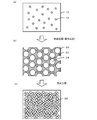
- FIG. 1 is an explanatory view of each step of the method for producing oxide powder
- FIG. 1 (a) is an explanatory view of a complex solution 10
- FIG. 1 (b) is an explanatory view of a complex polymer 20
- FIG. ) Is an explanatory view of the oxide powder.
- the manufacturing method of the oxide powder according to the present embodiment includes (1) a solution preparation step for obtaining a metal complex solution by reacting a metal ion with a chelating agent, and (2) a polymer agent that is foamed during the polymerization reaction, It is good also as a thing including the formation process which reacts and forms a complex polymer, and (3) the baking process which bakes the formed complex polymer.
- the metal complex solution may be prepared in advance and the solution preparation step may be omitted.
- (1) Solution preparation step In this step, a metal ion and a chelating agent are reacted to obtain a metal complex solution.
- One or more metal ions are appropriately selected according to the target oxide powder.
- the target oxide powder may be an oxide containing one kind of metal element or a complex oxide containing at least two kinds of metal elements.
- the oxide containing one kind of metal element include Al 2 O 3 , SiO 2 , MgO, and ZrO 2 .
- a complex oxide containing two or more metal elements for example, a perovskite complex oxide represented by the general formula ABO 3 may be used.
- the A site contains one or more selected from La, Ca, Sr, Ba, Li, Na, K, Bi, Pb and Ag
- the B site is Cr, Co, Al, Fe, Ni. , Mn, Cu, Ti, Mg, Zn, Nb, Ta and Zr may be included.
- the A site includes one or more selected from La, Ca, Sr and Ba
- the B site includes one or more selected from Cr, Co, Al, Fe, Ni, Mn, Cu and Ti. preferable.
- one or more elements that replace the main element of the A site may be included in the A site, and one or more elements that replace the main element of the B site may be included in the B site.
- a metal complex solution may be prepared using a target metal ion among the oxides. For example, when the target oxide powder contains two or more metal elements, a metal complex solution containing two or more metal elements is prepared.
- organic acid salts such as metal nitrates, sulfates, chlorides, hydroxides, and acetates can be used, and among these, organic acid salts that can be easily removed during firing are preferable.
- the organic acid salt is preferable because the density of the metal complex can be further reduced by increasing the number of decarboxylation reactions with the polymerizing agent accompanied with foaming.
- the organic acid salt include formate, acetate, oxalate, benzoate and the like, and among these, acetate is preferable.
- the chelating agent that forms the metal complex is, for example, an organic acid having at least one or more carboxyl groups and / or at least one hydroxyl group. More specifically, the chelating agent is an organic acid having two or more hydroxyl groups (including a carboxyl group) and one or more carboxyl groups.
- this chelating agent for example, one or more selected from citric acid, tartaric acid, malic acid, tartronic acid, glyceric acid, oxybutyric acid, hydroacrylic acid, lactic acid, glycolic acid and the like can be used. Lactic acid is preferred.
- the amount of the metal ion and the amount of the chelating agent may be appropriately set according to the type (valence) of the metal element used and the coordination number of the chelating agent.
- the solvent used in the metal complex solution include water and organic solvents such as alcohol and acetone. Among these, water is preferable in consideration of solubility of metal ions.
- the concentration of the metal complex contained in the metal complex solution is preferably relatively high, preferably 1 mol / L or more, and more preferably 3 mol / L or more.
- a metal ion and a chelating agent may be dissolved in a solvent to form a metal complex, and then the solvent may be volatilized to further increase the concentration of the metal complex.
- the solvent is water, side reactions such as reaction with water can be further suppressed in the formation step of performing the next polymerization reaction.
- the metal complex solution 10 obtained in this step contains a metal complex 12.
- a complex polymer is formed by reacting the metal complex solution with a polymerizing agent that foams during the polymerization reaction.
- a polymerizing agent that foams during the polymerization reaction.
- fine pores bubbles
- This polymerization agent may be an organic compound having at least two or more isocyanate groups.
- this polymerization agent for example, one or more selected from diphenylmethane diisocyanate (MDI), hexamethylene diisocyanate (HDI), toluene diisocyanate (TDI) and the like can be used. Of these, HDI is more preferred.
- the primary particle diameter of the oxide powder after baking can be controlled according to the quantity of the polymerization agent to add. For example, a larger amount of polymerizer results in smaller primary particles.
- the metal complex solution and the polymerizing agent are mixed so that L / M, which is the ratio of the addition amount L (mol) of the polymerizing agent to the total amount M (mol) of metal ions in the metal complex solution is in the range of 5 to 100.
- L / M is 5 or more, an oxide powder having nano-order primary particles is easily obtained. Moreover, when L / M is 100 or less, the addition amount of a polymerization agent can be suppressed more preferably.
- This L / M is set to a smaller value (for example, L / M is less than 35) when the size range of the obtained primary particles is relatively large in the nano-order, and the size range of the obtained primary particles is When the nano-order is relatively small, a larger value (for example, L / M is 35 or more) may be set.
- the polymerization reaction temperature may be, for example, room temperature (20 ° C. to 25 ° C.).
- the polymerization reaction time is appropriately set according to the amount of the complex polymer, and may be several minutes to several tens of minutes, for example. Since the complex polymer thus obtained is a sponge-like solid (foam), it can be easily handled and the recovery rate can be further increased. As shown in FIG. 1B, the complex polymer 20 obtained in this step is configured as a foam containing a large number of pores 24 and has a structure in which metal ions 22 are dispersed.
- the complex polymer is fired.
- the firing treatment may be performed at a temperature equal to or higher than the heat treatment temperature.
- the heat treatment temperature may be appropriately determined at a temperature at which an organic substance contained in the complex polymer is thermally decomposed, and may be, for example, in the range of 400 ° C. or higher and 700 ° C. or lower, more preferably in the range of 500 ° C. or higher and 600 ° C. or lower.
- the heat treatment time is appropriately set according to the amount of the complex polymer, and can be, for example, 1 hour to 24 hours.
- a calcination temperature suitably, for example to the temperature from which the target oxide is obtained, for example, it can be set as the range of 500 to 1200 degreeC.
- the firing temperature is preferably in the range of 850 ° C. or higher and 1100 ° C. or lower.
- the firing temperature is preferably in the range of 600 ° C. or higher and 1000 ° C. or lower.
- the firing time is appropriately set according to the amount of the complex polymer, the target particle diameter of the powder, and the crystallinity, and can be, for example, 1 hour to 24 hours.
- the mounting material (container; sheath) on which the complex polymer is placed is not particularly limited, but it is preferable to use a material in which the container and the oxide powder do not react.
- This mounting material can be a platinum foil or a platinum crucible.
- the oxide powder obtained by the above production process has an average particle size of the primary particles 30 in the nano order (1000 nm or less) (see FIG. 1C).
- the reason is considered as follows. For example, when foaming is accompanied during the formation of the complex polymer, fine pores (bubbles) are confined in the complex polymer, whereby the density of the metal complex can be efficiently reduced. If it carries out like this, it will become a small particle
- the particle size of the oxide powder can be controlled according to the addition ratio of the polymerization agent, the subsequent pulverization process and the like can be further simplified.
- nano-order primary particle oxide powder is obtained with a polymerization agent having a relatively small addition amount (for example, L / M is 100 or less) with respect to the total number of moles of metal elements. Therefore, the amount of raw material used can be reduced, and the cost and labor during mixing can be further reduced. Furthermore, the polymerization reaction of the present embodiment does not require heating and is a relatively fast reaction, so the running cost can be further reduced. In addition, since the complex polymer is a sponge-like solid (foam), it can be easily handled and the recovery rate can be further increased. Furthermore, a single-phase oxide can be obtained by an easier process of firing the complex polymer.
- a polymerization agent having a relatively small addition amount for example, L / M is 100 or less
- the particle size of the primary particles of the oxide powder is calculated by observing with a scanning electron microscope (SEM).
- SEM scanning electron microscope
- the average particle size of the primary particles is determined by obtaining the longest length of each particle included in the SEM image obtained by observing the sample in the range of 20000 to 50000 times by SEM, and adding the obtained longest length. The value obtained by dividing by the number of particles is taken as the average particle size (nm).
- Experimental examples 1 to 5 and 12 to 20 correspond to examples of the present invention, and experimental examples 6 to 11 and 21 correspond to comparative examples.
- Example 11 0.66 g of lanthanum oxide and 0.30 g of chromium oxide were weighed, mixed in an agate mortar for 1 hour using ethanol as a solvent, and dried at 80 ° C. for 5 hours to obtain a mixed powder. Then, after uniaxially press molded at a surface pressure of 10 kg / cm 2, and CIP molded at a surface pressure 3t / cm 2. The obtained molded body was fired at 1000 ° C. for 10 hours to prepare a fired body, and the fired body was pulverized in an agate mortar to be powdered. The obtained powder was designated as experimental example 11.
- Example 12 to 15 An oxide powder obtained through the same steps as in Experimental Example 1 except that tartaric acid, citric acid, or a mixture of lactic acid and citric acid in a weight ratio of 1: 1 was used as the chelating agent, and the L / M value was 30. Experimental examples 12 to 14 were used respectively. Moreover, the oxide powder obtained through the process similar to Experimental example 1 was made into Experimental example 15 except having used the diphenylmethane diisocyanate (MDI) as a polymerization agent accompanying foaming, and having set L / M value to 30.
- MDI diphenylmethane diisocyanate
- Example 16 (La 0.8 Ca 0.2 CrO 3 , LaNiO 3 , BaTiO 3 ) Example 1 except that 0.773 g of lanthanum acetate hemihydrate, 0.099 g of calcium acetate monohydrate and 0.645 g of chromium acetate were weighed and the L / M value was 30.
- the oxide powder obtained through the same steps was used as Experimental Example 16. It was obtained through the same steps as in Experimental Example 1 except that 0.858 g of lanthanum acetate hemihydrate and 0.622 g of nickel acetate tetrahydrate were weighed and the L / M value was 30.
- the obtained oxide powder was designated as Experimental Example 17.
- Experimental Example 20 was an oxide powder obtained through the same steps as Experimental Example 19 except that the cobalt raw material was 2.91 g of cobalt nitrate hexahydrate.
- the obtained powder was observed with a scanning electron microscope (SEM) to measure the average particle size of the primary particles.
- SEM scanning electron microscope
- S-4700 manufactured by Hitachi, Ltd.
- S-4700 was used, and the sample was observed in the range of 20000 times to 50000 times to obtain an SEM image. Obtained by calculating the longest length of each particle included in the obtained SEM image, assuming the calculated longest length as the particle size of the particle, adding this particle size and dividing by the number of particles. The value was defined as the average particle size (nm).
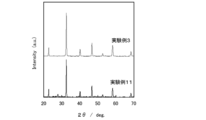
- FIG. 2 shows the XRD measurement results of Experimental Example 3 and Experimental Example 11.
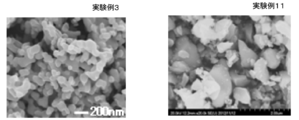
- FIG. 3 is SEM images of Experimental Example 3 and Experimental Example 11.
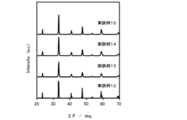
- FIG. 4 shows the XRD measurement results of Experimental Examples 12 to 15.
- FIG. 5 shows the XRD measurement results of Experimental Examples 16 to 18.
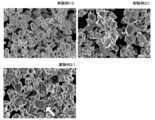
- FIG. 6 shows SEM images of Experimental Examples 19-21.
- the oxide compositions of Experimental Examples 1 to 11, the total metal ion amount M (mol), the chelating agent, the polymerization agent, the addition amount L (mol) of the polymerization agent, the L / M value, the average particle diameter of the primary particles ( nm) and yield (%) are shown together in Table 1.
- the measurement results of Experimental Examples 12 to 21 are collectively shown in Table 2. As shown in FIG.
- Example 11 produced by solid phase synthesis, many heterogeneous phases were contained, whereas in Experimental Example 3, a single-phase composite oxide was obtained.
- FIG. 3 in Example 11 produced by the solid phase method, labor is required to obtain nano-order particles such as a pulverization process, whereas in Example 3, nano-order oxide powder is formed. It turns out that it is obtained.
- Table 1 in Experimental Examples 6 to 10 using ethylene glycol, which is a polymerizing agent without foaming, when an average particle size of nano order is small, the addition amount L of ethylene glycol is increased. I found that it was necessary.
- a polymerizing agent having an L / M value of 50 or more, that is, 50 times or more of the total metal ion amount is required.
- the obtained polymer gel-like substance
- the oxide powder having a smaller average particle diameter such as sticking to the wall surface of the container has a higher yield. Declined.
- the polymerization reaction requires heating and requires a long reaction time.
- an oxide powder having an L / M value of about 10 to a nano-order average particle diameter was obtained.
- the average particle size can be reduced, so that the amount of the polymerization agent added can be further reduced. Furthermore, in Experimental Examples 1 to 5, since the complex polymer was a sponge-like solid (foam), the reduction in the yield of the composite oxide could be further suppressed.
- single-phase composite oxides can also be obtained in Experimental Examples 12 to 14 using tartaric acid, citric acid, and a mixture of citric acid and lactic acid as a chelating agent for producing a complex solution of metal ions. I understood it. Further, as shown in Table 2, it was found that also in Experimental Examples 12 to 14, oxide powders having an average particle size in the nano order were obtained in the same manner as described above. It was also found that a single-phase composite oxide was obtained also in Experimental Example 15 using diphenylmethane diisocyanate (MDI) as a polymerization agent. Also in Experimental Example 15, it was found that an oxide powder having a nano-order average particle diameter can be obtained similarly. Further, as shown in FIG.
- MDI diphenylmethane diisocyanate
- the present invention can be used in the technical field of manufacturing oxide powder.
- metal complex solution 10 metal complex solution, 12 metal complex, 20 complex polymer, 22 metal ions, 24 vacancies, 30 primary particles.
Landscapes
- Chemical & Material Sciences (AREA)
- Organic Chemistry (AREA)
- Inorganic Chemistry (AREA)
- Life Sciences & Earth Sciences (AREA)
- General Life Sciences & Earth Sciences (AREA)
- Geology (AREA)
- Inorganic Compounds Of Heavy Metals (AREA)
- Environmental & Geological Engineering (AREA)
- Oxygen, Ozone, And Oxides In General (AREA)
Abstract
本発明の酸化物粉末の製造方法は、金属イオンとキレート剤とを反応させて得た金属錯体溶液10と重合反応時に発泡を伴う重合剤とを反応させて錯体重合体20を形成する形成工程と、形成した錯体重合体を焼成する焼成工程と、を含むものである。また、重合剤は、少なくとも2以上のイソシアネート基を有する有機化合物であることが好ましい。キレート剤は、少なくとも1以上のカルボキシル基と、少なくとも1以上のヒドロキシル基とを有するものが好ましい。形成工程では、2種以上の金属元素を含む金属錯体溶液を用いることが好ましい。
Description
本発明は、酸化物粉末の製造方法に関する。
従来、酸化物粉末の製造方法としては、複合酸化物を形成する金属の炭酸塩、水酸化塩、硫酸塩、カルボン酸塩、ハロゲン化物、アルコキシドから選ばれた1種以上と、オキシカルボン酸又は、ポリアミノキレート剤とを反応させて得た金属錯体を、溶液中でポリオールと重合反応させて錯体重合体を形成し、これを焼成するものが提案されている(例えば、特許文献1参照)。この製造方法では、錯体重合体の焼成により、単一相からなる高性能な複合酸化物を製造することができるとしている。また、酸化物粉末の製造方法としては、ランタンクロマイト系酸化物を作製するにあたり、有機金属キレート錯体水溶液を噴霧乾燥して錯体粉末を作製し、この錯体粉末を焼成するものが提案されている(例えば、特許文献2参照)。この製造方法では、原料として分子レベルで均一な出発原料を使用することにより、低い焼成温度で単相のランタンクロマイト系酸化物を製造することができるとしている。
しかしながら、特許文献1に記載された酸化物粉末の製造方法では、単一相の複合酸化物を得ることができるとしているが、得られた酸化物の粒子サイズについては、考慮していなかった。また、特許文献2に記載された酸化物では、分子レベルで均一な原料により、低温度で単相の酸化物を得ることができるとしているが、得られた酸化物の粒子サイズについては、考慮していなかった。
本発明は、このような課題に鑑みなされたものであり、粒径をより小さくすることができる酸化物粉末の製造方法を提供することを主目的とする。
上述した主目的を達成するために鋭意研究したところ、本発明者らは、金属錯体溶液と、重合反応時に発泡を伴う重合剤を用いて、発泡体である錯体重合体を形成し、この錯体重合体を焼成すると、酸化物粉末の1次粒径をより小さくすることができることを見いだし、本発明を完成するに至った。
即ち、本発明の酸化物粉末の製造方法は、
金属イオンとキレート剤とを反応させて得た金属錯体溶液と重合反応時に発泡を伴う重合剤とを反応させて錯体重合体を形成する形成工程と、
前記形成した錯体重合体を焼成する焼成工程と、
を含むものである。
金属イオンとキレート剤とを反応させて得た金属錯体溶液と重合反応時に発泡を伴う重合剤とを反応させて錯体重合体を形成する形成工程と、
前記形成した錯体重合体を焼成する焼成工程と、
を含むものである。
本発明の酸化物粉末の製造方法は、得られる酸化物粉末の粒径をより小さくすることができる。この理由は、以下のように推察される。例えば、錯体重合体の形成時に発泡を伴うことにより、錯体重合体の内部に微細な気孔(泡)が閉じこめられ、これにより、効率よく金属錯体の存在密度を低下させることができるものと考えられる。このように、金属錯体の存在密度を低下することができると、焼成時に小さな粒子になりやすいことから、酸化物粉末の粒径、特に1次粒子の粒径を、例えばナノオーダーの粒径など、より小さくすることができるものと推察される。ここで、「ナノオーダー」とは、粒子が1000nm以下であることをいうものとする。
次に、本発明を実施するための形態を図面を用いて説明する。図1は、酸化物粉末の製造方法の各工程の説明図であり、図1(a)が錯体溶液10の説明図、図1(b)が錯体重合体20の説明図、図1(c)が酸化物粉体の説明図である。本実施形態の酸化物粉末の製造方法は、(1)金属イオンとキレート剤とを反応させ金属錯体溶液を得る溶液調製工程と、(2)金属錯体溶液と重合反応時に発泡を伴う重合剤とを反応させて錯体重合体を形成する形成工程と、(3)形成した錯体重合体を焼成する焼成工程とを含むものとしてもよい。なお、金属錯体溶液を事前に調製し、溶液調製工程を省略してもよい。
(1)溶液調製工程
この工程では、金属イオンとキレート剤とを反応させ金属錯体溶液を得る。金属イオンは、目的とする酸化物粉末に応じて1種以上を適宜選択するものとする。例えば、目的とする酸化物粉末としては、1種の金属元素を含む酸化物としてもよいし、少なくとも2種以上の金属元素を含む複合酸化物としてもよい。1種の金属元素を含む酸化物としては、例えば、Al2O3、SiO2、MgO、ZrO2などが挙げられる。2種以上の金属元素を含む複合酸化物としては、例えば、一般式ABO3で表されるペロブスカイト型の複合酸化物としてもよい。この複合酸化物としては、AサイトがLa、Ca、Sr、Ba、Li、Na、K、Bi、Pb及びAgから選ばれる1種以上を含み、BサイトがCr、Co、Al、Fe、Ni、Mn、Cu、Ti、Mg、Zn、Nb、Ta及びZrから選ばれる1種以上を含むものとしてもよい。このうち、AサイトがLa、Ca、Sr及びBaから選ばれる1種以上を含み、BサイトがCr、Co、Al、Fe、Ni、Mn、Cu及びTiから選ばれる1種以上を含むことが好ましい。この一般式ABO3の複合酸化物では、Aサイトの主たる元素を置換する1以上の元素をこのAサイトに含むものとしてもよいし、Bサイトの主たる元素を置換する1以上の元素をこのBサイトに含むものとしてもよい。複合酸化物としては、例えば、一般式La1-xAxCr1-yByO3(但し、Aは第2族元素から選ばれる1以上の元素、BはMg及び遷移金属元素から選ばれる1以上の元素、0≦x≦0.5、0≦y≦0.5)などが挙げられる。また、複合酸化物としては、例えば、一般式LaNiO3、BaTiO3、LaCoO3などが挙げられる。この工程では、上記酸化物のうち、目的とする金属イオンを用いて金属錯体溶液を調整すればよい。例えば、目的とする酸化物粉末が2種以上の金属元素を含む場合は、2種以上の金属元素を含む金属錯体溶液を調製する。
この工程では、金属イオンとキレート剤とを反応させ金属錯体溶液を得る。金属イオンは、目的とする酸化物粉末に応じて1種以上を適宜選択するものとする。例えば、目的とする酸化物粉末としては、1種の金属元素を含む酸化物としてもよいし、少なくとも2種以上の金属元素を含む複合酸化物としてもよい。1種の金属元素を含む酸化物としては、例えば、Al2O3、SiO2、MgO、ZrO2などが挙げられる。2種以上の金属元素を含む複合酸化物としては、例えば、一般式ABO3で表されるペロブスカイト型の複合酸化物としてもよい。この複合酸化物としては、AサイトがLa、Ca、Sr、Ba、Li、Na、K、Bi、Pb及びAgから選ばれる1種以上を含み、BサイトがCr、Co、Al、Fe、Ni、Mn、Cu、Ti、Mg、Zn、Nb、Ta及びZrから選ばれる1種以上を含むものとしてもよい。このうち、AサイトがLa、Ca、Sr及びBaから選ばれる1種以上を含み、BサイトがCr、Co、Al、Fe、Ni、Mn、Cu及びTiから選ばれる1種以上を含むことが好ましい。この一般式ABO3の複合酸化物では、Aサイトの主たる元素を置換する1以上の元素をこのAサイトに含むものとしてもよいし、Bサイトの主たる元素を置換する1以上の元素をこのBサイトに含むものとしてもよい。複合酸化物としては、例えば、一般式La1-xAxCr1-yByO3(但し、Aは第2族元素から選ばれる1以上の元素、BはMg及び遷移金属元素から選ばれる1以上の元素、0≦x≦0.5、0≦y≦0.5)などが挙げられる。また、複合酸化物としては、例えば、一般式LaNiO3、BaTiO3、LaCoO3などが挙げられる。この工程では、上記酸化物のうち、目的とする金属イオンを用いて金属錯体溶液を調整すればよい。例えば、目的とする酸化物粉末が2種以上の金属元素を含む場合は、2種以上の金属元素を含む金属錯体溶液を調製する。
金属イオンは、例えば、金属の硝酸塩、硫酸塩、塩化物、水酸化物、酢酸塩などの有機酸塩などを用いることができ、このうち焼成時に除去しやすい有機酸塩が好ましい。また、有機酸塩では、発泡を伴う重合剤との脱炭酸反応数が増えることにより金属錯体の存在密度をより低下することができ、好ましい。なお、この製造方法において、複数種の金属イオンを用いる際には、そのすべてを有機酸塩とすることが好ましい。有機酸塩としては、ギ酸塩、酢酸塩、シュウ酸塩、安息香酸塩などが挙げられ、このうち酢酸塩が好ましい。金属錯体を形成するキレート剤は、例えば、少なくとも1以上のカルボキシル基、及び/又は、少なくとも1以上のヒドロキシル基を有する有機酸である。より詳しくは、このキレート剤は、2以上のヒドロキシル基(カルボキシル基も含む)を有し、且つ1以上のカルボキシル基を有する有機酸である。このキレート剤は、例えば、クエン酸、酒石酸、リンゴ酸、タルトロン酸、グリセリン酸、オキシ酪酸、ヒドロアクリル酸、乳酸及びグリコール酸などから選ばれる1種以上を用いることができ、このうちクエン酸及び乳酸が好ましい。金属イオンの量及びキレート剤の量は、用いる金属元素の種類(価数)やキレート剤の配位数などに応じて適宜設定するものとすればよい。金属錯体溶液に用いる溶媒は、水のほか、アルコールやアセトンなどの有機溶媒などが挙げられるが、このうち金属イオンの溶解性を考慮すると、水が好ましい。金属錯体溶液に含まれる金属錯体の濃度は、比較的高い方が好ましく、1mol/L以上であることが好ましく、3mol/L以上であることがより好ましい。例えば、この工程では、金属イオンとキレート剤とを溶媒に溶解し金属錯体としたのち、この溶媒を揮発させ、より金属錯体の濃度を高めるものとしてもよい。こうすれば、溶媒を水とした場合に、次の重合反応を行う形成工程で、水との反応などの副反応をより抑制することができる。図1(a)に示すように、この工程で得られた金属錯体溶液10には、金属錯体12が含まれている。
(2)形成工程
この工程では、金属錯体溶液と重合反応時に発泡を伴う重合剤とを反応させて錯体重合体を形成する。この工程において、重合時に発泡を伴うことにより、錯体重合体内に微細な気孔(泡)が閉じこめられ、効率よく金属錯体の存在密度を低下させることができる。このように、金属錯体の存在密度を低下することができると、焼成時により小さな1次粒子となりやすい。この重合剤は、少なくとも2以上のイソシアネート基を有する有機化合物であるものとしてもよい。この重合剤は、例えば、ジフェニルメタンジイソシアネート(MDI)、ヘキサメチレンジイソシアネート(HDI)、トルエンジイソシアネート(TDI)などから選ばれる1種類以上を用いることができる。このうち、HDIがより好ましい。また、添加する重合剤の量に応じて、焼成後の酸化物粉末の1次粒径を制御することができる。例えば、重合剤の量がより多いと、より小さい1次粒子が得られる。この工程において、金属錯体溶液の金属イオンの全量M(mol)に対する重合剤の添加量L(mol)の比であるL/Mが、5以上100以下の範囲で金属錯体溶液と重合剤とを反応させるものとしてもよい。このL/Mが5以上では、ナノオーダーの1次粒子を有する酸化物粉末が得られやすい。また、L/Mが100以下では、重合剤の添加量をより抑制することができ、好ましい。このL/Mは、得られる1次粒子のサイズ範囲がナノオーダーのうち比較的大きいときにはより小さい値(例えば、L/Mが35未満)になるようにし、得られる1次粒子のサイズ範囲がナノオーダーのうち比較的小さいときには、より大きい値(例えば、L/Mが35以上)になるようにすればよい。重合反応温度は、例えば、室温(20℃~25℃)としてもよい。重合反応時間は、錯体重合体の量に応じて適宜設定するが、例えば、数分~数十分としてもよい。このようにして得られた錯体重合体は、スポンジ状の固体(発泡体)であるので、容易に取り扱うことができ、回収率をより高めることができる。図1(b)に示すように、この工程で得られた錯体重合体20は、空孔24が多数含まれた発泡体として構成され、金属イオン22が分散した構造を有する。
この工程では、金属錯体溶液と重合反応時に発泡を伴う重合剤とを反応させて錯体重合体を形成する。この工程において、重合時に発泡を伴うことにより、錯体重合体内に微細な気孔(泡)が閉じこめられ、効率よく金属錯体の存在密度を低下させることができる。このように、金属錯体の存在密度を低下することができると、焼成時により小さな1次粒子となりやすい。この重合剤は、少なくとも2以上のイソシアネート基を有する有機化合物であるものとしてもよい。この重合剤は、例えば、ジフェニルメタンジイソシアネート(MDI)、ヘキサメチレンジイソシアネート(HDI)、トルエンジイソシアネート(TDI)などから選ばれる1種類以上を用いることができる。このうち、HDIがより好ましい。また、添加する重合剤の量に応じて、焼成後の酸化物粉末の1次粒径を制御することができる。例えば、重合剤の量がより多いと、より小さい1次粒子が得られる。この工程において、金属錯体溶液の金属イオンの全量M(mol)に対する重合剤の添加量L(mol)の比であるL/Mが、5以上100以下の範囲で金属錯体溶液と重合剤とを反応させるものとしてもよい。このL/Mが5以上では、ナノオーダーの1次粒子を有する酸化物粉末が得られやすい。また、L/Mが100以下では、重合剤の添加量をより抑制することができ、好ましい。このL/Mは、得られる1次粒子のサイズ範囲がナノオーダーのうち比較的大きいときにはより小さい値(例えば、L/Mが35未満)になるようにし、得られる1次粒子のサイズ範囲がナノオーダーのうち比較的小さいときには、より大きい値(例えば、L/Mが35以上)になるようにすればよい。重合反応温度は、例えば、室温(20℃~25℃)としてもよい。重合反応時間は、錯体重合体の量に応じて適宜設定するが、例えば、数分~数十分としてもよい。このようにして得られた錯体重合体は、スポンジ状の固体(発泡体)であるので、容易に取り扱うことができ、回収率をより高めることができる。図1(b)に示すように、この工程で得られた錯体重合体20は、空孔24が多数含まれた発泡体として構成され、金属イオン22が分散した構造を有する。
(3)焼成工程
この工程では、錯体重合体を焼成する。この焼成工程では、例えば、錯体重合体に含まれる有機物を除去する熱処理を行ったのち、この熱処理温度以上の温度で焼成処理するものとしてもよい。熱処理温度は、錯体重合体に含まれる有機物が熱分解する温度で適宜行えばよく、例えば、400℃以上700℃以下の範囲、より好ましくは、500℃以上600℃以下の範囲としてもよい。熱処理時間は、錯体重合体の量に応じて適宜設定するが、例えば、1時間以上24時間以下とすることができる。焼成温度は、例えば、目的とする酸化物が得られる温度に適宜設定すればよく、例えば、500℃以上1200℃以下の範囲とすることができる。酸化物粉末が一般式LaCrO3、LaNiO3、LaCoO3などである場合は、焼成温度は、850℃以上1100℃以下の範囲が好ましい。酸化物粉末が一般式BaTiO3、SrTiO3などである場合は、焼成温度は、600℃以上1000℃以下の範囲が好ましい。焼成時間は、錯体重合体の量、粉末の狙い粒子径や結晶性に応じて適宜設定するが、例えば、1時間以上24時間以下とすることができる。熱処理及び焼成処理において、錯体重合体を載置する載置材(容器;さや)は、特に問わないが、容器と酸化物粉末とが反応しないものを用いることが好ましい。この載置材は、白金箔や白金るつぼを用いることができる。上記工程を経て、酸化物粉末を得ることができる。
この工程では、錯体重合体を焼成する。この焼成工程では、例えば、錯体重合体に含まれる有機物を除去する熱処理を行ったのち、この熱処理温度以上の温度で焼成処理するものとしてもよい。熱処理温度は、錯体重合体に含まれる有機物が熱分解する温度で適宜行えばよく、例えば、400℃以上700℃以下の範囲、より好ましくは、500℃以上600℃以下の範囲としてもよい。熱処理時間は、錯体重合体の量に応じて適宜設定するが、例えば、1時間以上24時間以下とすることができる。焼成温度は、例えば、目的とする酸化物が得られる温度に適宜設定すればよく、例えば、500℃以上1200℃以下の範囲とすることができる。酸化物粉末が一般式LaCrO3、LaNiO3、LaCoO3などである場合は、焼成温度は、850℃以上1100℃以下の範囲が好ましい。酸化物粉末が一般式BaTiO3、SrTiO3などである場合は、焼成温度は、600℃以上1000℃以下の範囲が好ましい。焼成時間は、錯体重合体の量、粉末の狙い粒子径や結晶性に応じて適宜設定するが、例えば、1時間以上24時間以下とすることができる。熱処理及び焼成処理において、錯体重合体を載置する載置材(容器;さや)は、特に問わないが、容器と酸化物粉末とが反応しないものを用いることが好ましい。この載置材は、白金箔や白金るつぼを用いることができる。上記工程を経て、酸化物粉末を得ることができる。
上記製造工程により得られた酸化物粉末は、1次粒子30の平均粒径がナノオーダー(1000nm以下)を示す(図1(c)参照)。この理由は、以下のように考えられる。例えば、錯体重合体の形成時に発泡を伴うことにより、錯体重合体の内部に微細な気孔(泡)が閉じこめられ、これにより、効率よく金属錯体の存在密度を低下させることができる。こうすれば、焼成時に小さな粒子になりやすく、酸化物粉末の1次粒子の粒径を、例えばナノオーダーの粒径など、より小さくすることができる。また、重合剤の添加比率に応じて酸化物粉末の粒子サイズを制御することができるため、その後の粉砕処理工程などをより簡便にすることができる。更に、本実施形態の製造工程では、金属元素の全モル数に対して比較的少ない添加量(例えば、L/Mが100以下)の重合剤でナノオーダーの1次粒子の酸化物粉末を得ることができるため、原料使用量が少なくて済み、コストや混合時の手間などをより低減することができる。更にまた、本実施形態の重合反応では、加熱が不要であり、且つ比較的速い反応であるため、ランニングコストをより低減することができる。そしてまた、錯体重合体は、スポンジ状の固体(発泡体)であるので、容易に取り扱うことができ、回収率をより高めることができる。そして更に、錯体重合体の焼成という、より容易な工程で単相の酸化物を得ることができる。
酸化物粉末の1次粒子の粒径は、走査型電子顕微鏡(SEM)で観察して算出するものとする。1次粒子の平均粒径は、SEMにより20000倍~50000倍の範囲で試料を観察し得られたSEM画像に含まれる各々の粒子の最長長さを求め、求めた最長長さを加算して粒子数で除算することにより、得られた値を平均粒径(nm)とする。
なお、本発明は上述した実施形態に何ら限定されることはなく、本発明の技術的範囲に属する限り種々の態様で実施し得ることはいうまでもない。
以下には、酸化物粉末を具体的に製造した例を実験例として説明する。なお、実験例1~5、12~20が本発明の実施例に相当し、実験例6~11、21が比較例に相当する。
[実験例1~5]
酢酸ランタン1.5水和物を0.686g、酢酸クロムを0.458g秤量し、純水36gとキレート剤としての乳酸10.0gとを加え90℃で1時間溶解させた。溶解後、投入水分の80%が蒸発するまで加熱し、室温まで冷却して金属錯体溶液を得た。次に、全金属イオン量M(mol)に対して10~50倍の添加量L(mol)のヘキサメチレンジイソシアネート(発泡を伴う重合剤:HDI)を投入し、発泡重合させ、スポンジ状の錯体重合体を得た(形成工程)。重合反応は約10分で完了した。次に、この錯体重合体を白金箔上、600℃で5時間熱処理したあと、1000℃で10時間焼成した(焼成工程)。全金属イオン量M(mol)に対する重合剤の添加量L(mol)の比であるL/M値が10、20、30、40、50となるように形成工程を行ったものをそれぞれ実験例1~5とした。
酢酸ランタン1.5水和物を0.686g、酢酸クロムを0.458g秤量し、純水36gとキレート剤としての乳酸10.0gとを加え90℃で1時間溶解させた。溶解後、投入水分の80%が蒸発するまで加熱し、室温まで冷却して金属錯体溶液を得た。次に、全金属イオン量M(mol)に対して10~50倍の添加量L(mol)のヘキサメチレンジイソシアネート(発泡を伴う重合剤:HDI)を投入し、発泡重合させ、スポンジ状の錯体重合体を得た(形成工程)。重合反応は約10分で完了した。次に、この錯体重合体を白金箔上、600℃で5時間熱処理したあと、1000℃で10時間焼成した(焼成工程)。全金属イオン量M(mol)に対する重合剤の添加量L(mol)の比であるL/M値が10、20、30、40、50となるように形成工程を行ったものをそれぞれ実験例1~5とした。
[実験例6~10]
酢酸ランタン1.5水和物を0.686g、酢酸クロムを0.458g秤量し、純水36gとクエン酸96gとを加え90℃で1時間溶解させた。次に、全金属イオン量M(mol)に対して10~100倍の添加量L(mol)のエチレングリコール(発泡を伴わない重合剤:EG)を投入し、21時間重合反応させ、室温まで冷却して水飴状の重合体を得た。次に、この重合体を白金るつぼ内600℃で5時間熱処理したあと、1000℃で10時間焼成した。L/M値が10、20、30、50、100となるように形成工程を行ったものをそれぞれ実験例6~10とした。
酢酸ランタン1.5水和物を0.686g、酢酸クロムを0.458g秤量し、純水36gとクエン酸96gとを加え90℃で1時間溶解させた。次に、全金属イオン量M(mol)に対して10~100倍の添加量L(mol)のエチレングリコール(発泡を伴わない重合剤:EG)を投入し、21時間重合反応させ、室温まで冷却して水飴状の重合体を得た。次に、この重合体を白金るつぼ内600℃で5時間熱処理したあと、1000℃で10時間焼成した。L/M値が10、20、30、50、100となるように形成工程を行ったものをそれぞれ実験例6~10とした。
[実験例11]
酸化ランタンを0.66g、酸化クロムを0.30g秤量し、溶媒にエタノールを用いて1時間、瑪瑙乳鉢で混合し、80℃で5時間乾燥させ混合粉を得た。次に、面圧10kg/cm2で1軸プレス成形したあと、面圧3t/cm2でCIP成形した。得られた成形体を1000℃で10時間、焼成して焼成体を作製し、この焼成体を瑪瑙乳鉢で粉砕して粉末化した。得られた粉末を実験例11とした。
酸化ランタンを0.66g、酸化クロムを0.30g秤量し、溶媒にエタノールを用いて1時間、瑪瑙乳鉢で混合し、80℃で5時間乾燥させ混合粉を得た。次に、面圧10kg/cm2で1軸プレス成形したあと、面圧3t/cm2でCIP成形した。得られた成形体を1000℃で10時間、焼成して焼成体を作製し、この焼成体を瑪瑙乳鉢で粉砕して粉末化した。得られた粉末を実験例11とした。
[実験例12~15]
キレート剤として酒石酸、クエン酸、もしくは乳酸とクエン酸の重量比1:1混合物を用い、L/M値を30とした以外は、実験例1と同様の工程を経て得られた酸化物粉末をそれぞれ実験例12~14とした。また、発泡を伴う重合剤としてジフェニルメタンジイソシアネート(MDI)を用い、L/M値を30とした以外は、実験例1と同様の工程を経て得られた酸化物粉末を実験例15とした。
キレート剤として酒石酸、クエン酸、もしくは乳酸とクエン酸の重量比1:1混合物を用い、L/M値を30とした以外は、実験例1と同様の工程を経て得られた酸化物粉末をそれぞれ実験例12~14とした。また、発泡を伴う重合剤としてジフェニルメタンジイソシアネート(MDI)を用い、L/M値を30とした以外は、実験例1と同様の工程を経て得られた酸化物粉末を実験例15とした。
[実験例16~18](La0.8Ca0.2CrO3、LaNiO3、BaTiO3)
酢酸ランタン1.5水和物を0.773g、酢酸カルシウム1水和物を0.099g、酢酸クロムを0.645g秤量して用い、L/M値を30とした以外は、実験例1と同様の工程を経て得られた酸化物粉末を実験例16とした。酢酸ランタン1.5水和物を0.858g、酢酸ニッケル4水和物を0.622g秤量して用い、L/M値を30とした以外は、実験例1と同様の工程を経て得られた酸化物粉末を実験例17とした。チタンラクテート(マツモトファインケミカルズ製)を1.502g、酢酸バリウムを0.657g秤量して用い、L/M値を30とした以外は、実験例1と同様の工程を経て得られた酸化物粉末を実験例18とした。
酢酸ランタン1.5水和物を0.773g、酢酸カルシウム1水和物を0.099g、酢酸クロムを0.645g秤量して用い、L/M値を30とした以外は、実験例1と同様の工程を経て得られた酸化物粉末を実験例16とした。酢酸ランタン1.5水和物を0.858g、酢酸ニッケル4水和物を0.622g秤量して用い、L/M値を30とした以外は、実験例1と同様の工程を経て得られた酸化物粉末を実験例17とした。チタンラクテート(マツモトファインケミカルズ製)を1.502g、酢酸バリウムを0.657g秤量して用い、L/M値を30とした以外は、実験例1と同様の工程を経て得られた酸化物粉末を実験例18とした。
[実験例19](LaCoO3)
酢酸ランタン1.5水和物を3.43g、酢酸コバルト4水和物を2.49g秤量し、純水180gとキレート剤としてのクエン酸36gとを加え90℃で1時間溶解させた。溶解後、投入水分の80%が蒸発するまで加熱し、室温まで冷却して金属錯体溶液を得た。次に、全金属イオン量M(mol)に対して20倍の添加量L(mol)のヘキサメチレンジイソシアネート(HDI)を投入し、発泡重合させ、スポンジ状の錯体重合体を得た。次に、この錯体重合体を600℃で5時間熱処理したあと、1000℃で10時間焼成した。得られた酸化物粉末を実験例19とした。
酢酸ランタン1.5水和物を3.43g、酢酸コバルト4水和物を2.49g秤量し、純水180gとキレート剤としてのクエン酸36gとを加え90℃で1時間溶解させた。溶解後、投入水分の80%が蒸発するまで加熱し、室温まで冷却して金属錯体溶液を得た。次に、全金属イオン量M(mol)に対して20倍の添加量L(mol)のヘキサメチレンジイソシアネート(HDI)を投入し、発泡重合させ、スポンジ状の錯体重合体を得た。次に、この錯体重合体を600℃で5時間熱処理したあと、1000℃で10時間焼成した。得られた酸化物粉末を実験例19とした。
[実験例20](LaCoO3)
コバルト原料を硝酸コバルト6水和物2.91gとした以外は実験例19と同様の工程を経て得られた酸化物粉末を実験例20とした。
コバルト原料を硝酸コバルト6水和物2.91gとした以外は実験例19と同様の工程を経て得られた酸化物粉末を実験例20とした。
[実験例21](LaCoO3)
酢酸ランタン1.5水和物を3.43g、硝酸コバルト6水和物2.91g秤量し、純水180gとキレート剤としてのクエン酸36gとを加え90℃で1時間溶解させた。溶解後、投入水分の80%が蒸発するまで加熱し、室温まで冷却して金属錯体溶液を得た。次に、全金属イオン量M(mol)に対して20倍の添加量L(mol)のエチレングリコール(発泡を伴わない重合剤:EG)を投入し、重合させ、水飴状の錯体重合体を得た。次に、この錯体重合体を600℃で5時間熱処理したあと、1000℃で10時間焼成した。得られた酸化物粉末を実験例21とした。
酢酸ランタン1.5水和物を3.43g、硝酸コバルト6水和物2.91g秤量し、純水180gとキレート剤としてのクエン酸36gとを加え90℃で1時間溶解させた。溶解後、投入水分の80%が蒸発するまで加熱し、室温まで冷却して金属錯体溶液を得た。次に、全金属イオン量M(mol)に対して20倍の添加量L(mol)のエチレングリコール(発泡を伴わない重合剤:EG)を投入し、重合させ、水飴状の錯体重合体を得た。次に、この錯体重合体を600℃で5時間熱処理したあと、1000℃で10時間焼成した。得られた酸化物粉末を実験例21とした。
(平均粒径)
上記得られた粉末は、走査型電子顕微鏡(SEM)で観察して1次粒子の平均粒径を測定した。測定は、走査型電子顕微鏡(日立製作所製S-4700)を用い、20000倍~50000倍の範囲で試料を観察しSEM画像を得た。得られたSEM画像に含まれる各々の粒子の最長長さを求め、求めた最長長さを粒子の粒径と仮定し、この粒径を加算して粒子数で除算することにより、得られた値を平均粒径(nm)とした。
上記得られた粉末は、走査型電子顕微鏡(SEM)で観察して1次粒子の平均粒径を測定した。測定は、走査型電子顕微鏡(日立製作所製S-4700)を用い、20000倍~50000倍の範囲で試料を観察しSEM画像を得た。得られたSEM画像に含まれる各々の粒子の最長長さを求め、求めた最長長さを粒子の粒径と仮定し、この粒径を加算して粒子数で除算することにより、得られた値を平均粒径(nm)とした。
(X線回折測定)
作製した酸化物粉末に対して、X線回折装置(理学電機製RINT2500)を用いてX線回折測定を行い、結晶相の解析を行った。X線回折測定は、CuKα線源,50kV,300mA,2θ=20~70°の条件で行った。各焼結体から得られたX線回折パターンから結晶相を同定した。
作製した酸化物粉末に対して、X線回折装置(理学電機製RINT2500)を用いてX線回折測定を行い、結晶相の解析を行った。X線回折測定は、CuKα線源,50kV,300mA,2θ=20~70°の条件で行った。各焼結体から得られたX線回折パターンから結晶相を同定した。
(結果と考察)
図2は、実験例3及び実験例11のXRD測定結果である。図3は、実験例3及び実験例11のSEM画像である。図4は、実験例12~15のXRD測定結果である。図5は、実験例16~18のXRD測定結果である。図6は、実験例19~21のSEM画像である。また、実験例1~11の酸化物組成、全金属イオン量M(mol)、キレート剤、重合剤、重合剤の添加量L(mol)、L/M値、1次粒子の平均粒径(nm)、収率(%)をまとめて表1に示す。また、実験例12~21の測定結果について、まとめて表2に示す。図2に示すように、固相合成により作製した実験例11では、異相が多く含まれているのに対し、実験例3では、単相の複合酸化物が得られることがわかった。また、図3に示すように、固相法で作製した実験例11では、粉砕工程などナノオーダーの粒子を得るのに労力を要するのに対し、実験例3では、ナノオーダーの酸化物粉末が得られることがわかった。また、表1に示すように、発泡を伴わない重合剤であるエチレングリコールを用いた実験例6~10では、ナノオーダーの小さな平均粒径にしようとすると、エチレングリコールの添加量Lをより多く要することがわかった。例えば、200nm以下の粒径にしようとすると、L/M値が50以上、即ち、全金属イオン量の50倍以上の重合剤が必要であった。また、実験例6~10では、得られる重合体(ゲル状物質)が極めて粘調な流体であり、容器壁面にこびり付くなど、より小さい平均粒径の酸化物粉末では、収率もより低下した。更に、重合反応には加熱を要し、反応時間も長く要した。これに対して、発泡を伴う重合剤を用いた実験例1~5では、L/M値が10程度からナノオーダーの平均粒径の酸化物粉末が得られた。また、実験例1~5では、平均粒径を小さくすることができるため、重合剤の添加量をより低減することができる。更に、実験例1~5では、錯体重合体がスポンジ状の固体(発泡体)であるので、複合酸化物の収率の低下もより抑制することができた。
図2は、実験例3及び実験例11のXRD測定結果である。図3は、実験例3及び実験例11のSEM画像である。図4は、実験例12~15のXRD測定結果である。図5は、実験例16~18のXRD測定結果である。図6は、実験例19~21のSEM画像である。また、実験例1~11の酸化物組成、全金属イオン量M(mol)、キレート剤、重合剤、重合剤の添加量L(mol)、L/M値、1次粒子の平均粒径(nm)、収率(%)をまとめて表1に示す。また、実験例12~21の測定結果について、まとめて表2に示す。図2に示すように、固相合成により作製した実験例11では、異相が多く含まれているのに対し、実験例3では、単相の複合酸化物が得られることがわかった。また、図3に示すように、固相法で作製した実験例11では、粉砕工程などナノオーダーの粒子を得るのに労力を要するのに対し、実験例3では、ナノオーダーの酸化物粉末が得られることがわかった。また、表1に示すように、発泡を伴わない重合剤であるエチレングリコールを用いた実験例6~10では、ナノオーダーの小さな平均粒径にしようとすると、エチレングリコールの添加量Lをより多く要することがわかった。例えば、200nm以下の粒径にしようとすると、L/M値が50以上、即ち、全金属イオン量の50倍以上の重合剤が必要であった。また、実験例6~10では、得られる重合体(ゲル状物質)が極めて粘調な流体であり、容器壁面にこびり付くなど、より小さい平均粒径の酸化物粉末では、収率もより低下した。更に、重合反応には加熱を要し、反応時間も長く要した。これに対して、発泡を伴う重合剤を用いた実験例1~5では、L/M値が10程度からナノオーダーの平均粒径の酸化物粉末が得られた。また、実験例1~5では、平均粒径を小さくすることができるため、重合剤の添加量をより低減することができる。更に、実験例1~5では、錯体重合体がスポンジ状の固体(発泡体)であるので、複合酸化物の収率の低下もより抑制することができた。

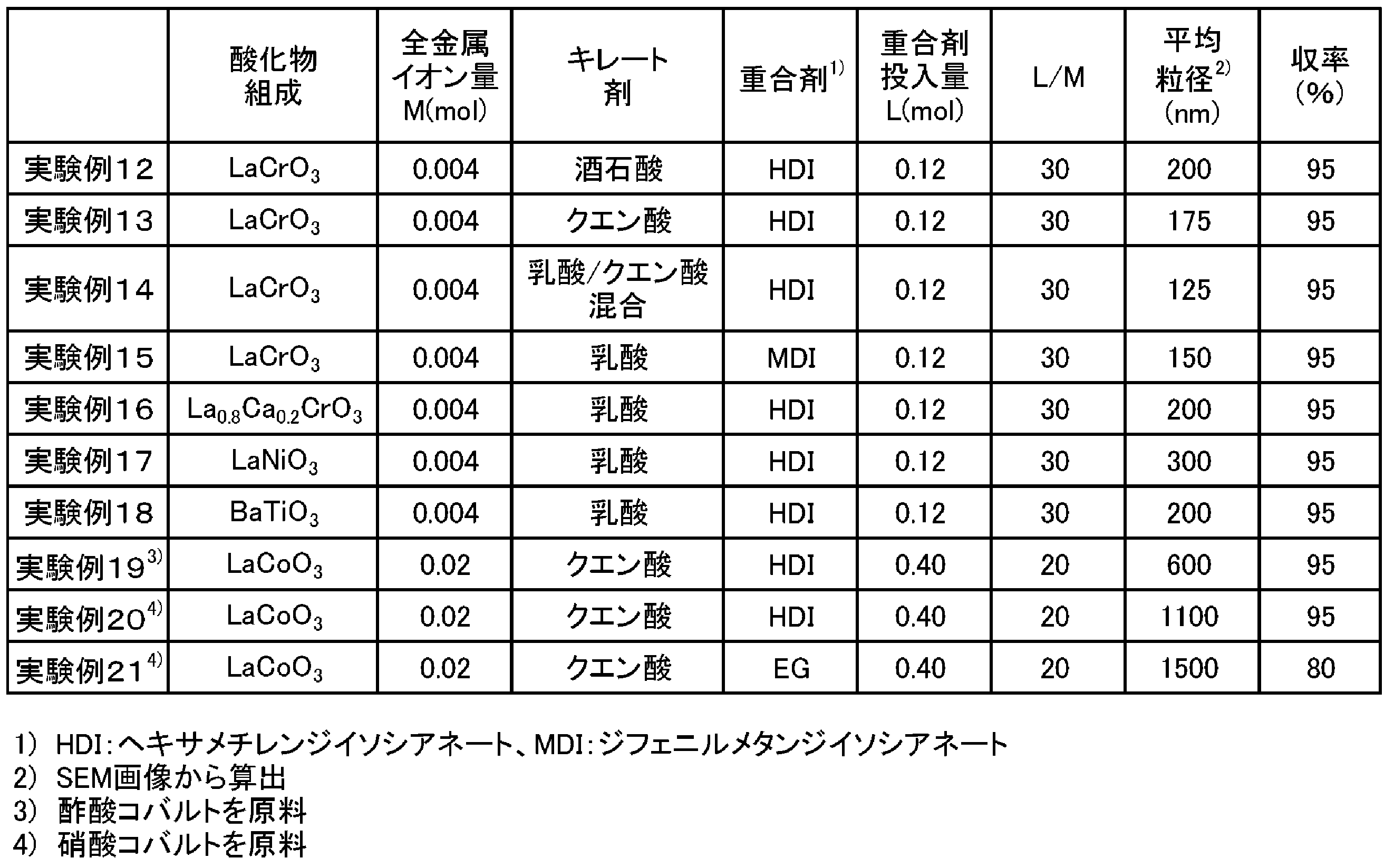
また、図4に示すように、金属イオンの錯体溶液を作製するキレート剤として酒石酸、クエン酸、クエン酸と乳酸の混合物を用いた実験例12~14でも、単相の複合酸化物が得られることがわかった。また、表2に示すように、実験例12~14でも、上記と同様にナノオーダーの平均粒径を有する酸化物粉末が得られることがわかった。また、重合剤としてジフェニルメタンジイソシアネート(MDI)を用いた実験例15でも、単相の複合酸化物が得られることがわかった。また、実験例15でも、同様にナノオーダーの平均粒径を有する酸化物粉末が得られることがわかった。また、図5に示すように、酸化物組成を変更した実験例16~18においても、単相の複合酸化物が得られることがわかった。また、表2に示すように、酸化物組成を変更しても、上記と同様に、ナノオーダーの平均粒径を有する酸化物粉末が得られることがわかった。したがって、発泡を伴う重合反応により錯体重合体を形成すると、1次粒子の平均粒径をより小さくすることができ、収率の低下をより低減することができることが明らかとなった。
また、図6及び表2に示すように、金属イオンの原料として硝酸塩を用いる実験例20に比して、酢酸塩を用いる実験例19では、1次粒子の平均粒径をより小さくすることができることがわかった。これは、例えば、酢酸塩などの有機酸塩では、重合剤との脱炭酸反応数が増えることにより、金属錯体の存在密度をより低下することができるためであると推察された。また、無機酸塩である硝酸塩を用いた場合であっても、発泡を伴わない重合剤(EG)を用いた実験例21では平均粒径が1500nmと大きな粒子になることがわかった。特に、実験例21では、図6の矢印に示すように、粒子同士が焼結し、巨大化する粒成長が見られた。一方、HDI(発泡を伴う重合剤)を用いた実験例20では実験例21に比して小さな粒子になることがわかった。即ち、金属イオンの原料として硝酸塩を用いた場合においても、酸化物を用いた場合や発泡を伴わない製造方法に比して1次粒子の平均粒径をより小さくすることが可能であった。
本出願は、2013年10月29日に出願された日本国特許出願第2013-223843号を優先権主張の基礎としており、引用によりその内容の全てが本明細書に含まれる。
本発明は、酸化物粉末を製造する技術分野に利用可能である。
10 金属錯体溶液、12 金属錯体、20 錯体重合体、22 金属イオン、24 空孔、30 1次粒子。
Claims (9)
- 金属イオンとキレート剤とを反応させて得た金属錯体溶液と重合反応時に発泡を伴う重合剤とを反応させて錯体重合体を形成する形成工程と、
前記形成した錯体重合体を焼成する焼成工程と、
を含む酸化物粉末の製造方法。 - 前記形成工程では、2種以上の金属元素を含む前記金属錯体溶液を用い、
前記酸化物粉末は、少なくとも2種以上の金属元素を含む複合酸化物である、請求項1に記載の酸化物粉末の製造方法。 - 前記重合剤は、少なくとも2以上のイソシアネート基を有する、請求項1又は2に記載の酸化物粉末の製造方法。
- 前記重合剤は、ジフェニルメタンイソシアネート、ヘキサメチレンジイソシアネート及びトルエンジイソシアネートから選ばれる1種以上である、請求項3に記載の酸化物粉末の製造方法。
- 前記キレート剤は、少なくとも1以上のカルボキシル基、及び/又は、少なくとも1以上のヒドロキシル基を有する、請求項1~4のいずれか1項に記載の酸化物粉末の製造方法。
- 前記キレート剤は、クエン酸、乳酸、酒石酸、リンゴ酸、タルトロン酸、グリセリン酸、オキシ酪酸、ヒドロアクリル酸及びグリコール酸から選ばれる1種以上である、請求項5に記載の酸化物粉末の製造方法。
- 前記形成工程では、前記金属イオンの全量M(mol)に対する前記重合剤の添加量L(mol)の比であるL/Mが5以上100以下の範囲で前記金属錯体溶液と前記重合剤とを反応させる、請求項1~6のいずれか1項に記載の酸化物粉末の製造方法。
- 前記酸化物粉末は、一般式ABO3で表される複合酸化物を主成分とし、前記AサイトがLa、Ca、Sr及びBaから選ばれる1種以上を含み、前記BサイトがCr、Co、Al、Fe、Ni、Mn、Cu及びTiから選ばれる1種以上を含む、請求項1~7のいずれか1項に記載の酸化物粉末の製造方法。
- 前記形成工程では、前記金属イオンの原料として有機酸塩を用いる、請求項1~8のいずれか1項に記載の酸化物粉末の製造方法。
Priority Applications (1)
| Application Number | Priority Date | Filing Date | Title |
|---|---|---|---|
| JP2015544975A JP6106281B2 (ja) | 2013-10-29 | 2014-10-24 | 酸化物粉末の製造方法 |
Applications Claiming Priority (2)
| Application Number | Priority Date | Filing Date | Title |
|---|---|---|---|
| JP2013223843 | 2013-10-29 | ||
| JP2013-223843 | 2013-10-29 |
Publications (1)
| Publication Number | Publication Date |
|---|---|
| WO2015064508A1 true WO2015064508A1 (ja) | 2015-05-07 |
Family
ID=53004114
Family Applications (1)
| Application Number | Title | Priority Date | Filing Date |
|---|---|---|---|
| PCT/JP2014/078391 Ceased WO2015064508A1 (ja) | 2013-10-29 | 2014-10-24 | 酸化物粉末の製造方法 |
Country Status (2)
| Country | Link |
|---|---|
| JP (1) | JP6106281B2 (ja) |
| WO (1) | WO2015064508A1 (ja) |
Citations (5)
| Publication number | Priority date | Publication date | Assignee | Title |
|---|---|---|---|---|
| JPH06115934A (ja) * | 1992-10-05 | 1994-04-26 | Masato Kakihana | 錯体重合法による複合酸化物の製造方法 |
| JPH06134294A (ja) * | 1992-01-16 | 1994-05-17 | Inst Of Gas Technol | 重合体フォーム内に組み込まれた前駆体からのサブミクロン/ナノサイズのセラミック粉体の製造法 |
| JP2001302357A (ja) * | 2000-04-21 | 2001-10-31 | Murata Mfg Co Ltd | セラミックの製造方法およびセラミック、並びにそれを用いたセンサーおよび触媒 |
| JP2010030830A (ja) * | 2008-07-29 | 2010-02-12 | National Institute For Materials Science | 複合酸化物半導体とそれを用いた黄色顔料及び光触媒。 |
| JP2012033916A (ja) * | 2010-07-07 | 2012-02-16 | Toto Ltd | 熱電変換材料およびその製造方法 |
-
2014
- 2014-10-24 WO PCT/JP2014/078391 patent/WO2015064508A1/ja not_active Ceased
- 2014-10-24 JP JP2015544975A patent/JP6106281B2/ja active Active
Patent Citations (5)
| Publication number | Priority date | Publication date | Assignee | Title |
|---|---|---|---|---|
| JPH06134294A (ja) * | 1992-01-16 | 1994-05-17 | Inst Of Gas Technol | 重合体フォーム内に組み込まれた前駆体からのサブミクロン/ナノサイズのセラミック粉体の製造法 |
| JPH06115934A (ja) * | 1992-10-05 | 1994-04-26 | Masato Kakihana | 錯体重合法による複合酸化物の製造方法 |
| JP2001302357A (ja) * | 2000-04-21 | 2001-10-31 | Murata Mfg Co Ltd | セラミックの製造方法およびセラミック、並びにそれを用いたセンサーおよび触媒 |
| JP2010030830A (ja) * | 2008-07-29 | 2010-02-12 | National Institute For Materials Science | 複合酸化物半導体とそれを用いた黄色顔料及び光触媒。 |
| JP2012033916A (ja) * | 2010-07-07 | 2012-02-16 | Toto Ltd | 熱電変換材料およびその製造方法 |
Also Published As
| Publication number | Publication date |
|---|---|
| JPWO2015064508A1 (ja) | 2017-03-09 |
| JP6106281B2 (ja) | 2017-03-29 |
Similar Documents
| Publication | Publication Date | Title |
|---|---|---|
| DK2418174T3 (en) | Process for the preparation of alkali metal niobate particles and alkali metal niobate particles | |
| JP5520210B2 (ja) | 固体酸化物型燃料電池用空気極材料粉末及びその製造方法 | |
| JP2017178744A (ja) | 強誘電体セラミックス及びその製造方法 | |
| JP6161467B2 (ja) | 固体酸化物型燃料電池用複合酸化物粉末及びその製造方法 | |
| JPWO2007094115A1 (ja) | 圧電磁器組成物 | |
| JP4057072B2 (ja) | 金属のニオブ酸塩および/またはタンタル酸塩、それらの製造およびそれらから生じさせたペロブスカイト類 | |
| CN121443556A (zh) | 烧绿石型氧化物的制造方法 | |
| JP2022081059A (ja) | シュウ酸バリウムチタニルの製造方法及びチタン酸バリウムの製造方法 | |
| JP2012062229A (ja) | 複合酸化物粉末の製造方法 | |
| JP5323537B2 (ja) | シュウ酸バリウムチタニルの製造方法及びチタン酸バリウムの製造方法 | |
| JP5119008B2 (ja) | ペロブスカイト型チタン酸バリウム粉末の製造方法 | |
| JP5658295B2 (ja) | シュウ酸バリウムチタニルの製造方法及びチタン酸バリウムの製造方法 | |
| JP7652379B2 (ja) | 金属複合酸化物及びその製造方法 | |
| JP6106281B2 (ja) | 酸化物粉末の製造方法 | |
| JP6721490B2 (ja) | ビスマス鉄酸化物の製造方法 | |
| KR20260053091A (ko) | 옥살산바륨티타닐의 제조 방법 및 티타늄산바륨의 제조 방법 | |
| JP2009209029A (ja) | ペロブスカイト型複合酸化物の製造方法 | |
| JP2013253002A (ja) | Li含有圧電セラミックス粉末材料およびその製造方法 | |
| JP2018095524A (ja) | ペロブスカイト型複合酸化物の製造方法 | |
| JP5801622B2 (ja) | 板状チタン酸化合物およびその製造方法 | |
| JP2010047428A (ja) | チタン複合塩粉末、その製造方法及びそれを用いたペロブスカイト型チタン複合酸化物粉末の製造方法 | |
| KR20180066511A (ko) | 부온도계수 서미스터용 소결체 및 이의 제조방법 | |
| JP2011073947A (ja) | 複合酸化物及びその製造方法 | |
| JP2022081058A (ja) | シュウ酸バリウムチタニルの製造方法及びチタン酸バリウムの製造方法 | |
| JP3103165B2 (ja) | 圧電体の製造方法 |
Legal Events
| Date | Code | Title | Description |
|---|---|---|---|
| 121 | Ep: the epo has been informed by wipo that ep was designated in this application |
Ref document number: 14857494 Country of ref document: EP Kind code of ref document: A1 |
|
| ENP | Entry into the national phase |
Ref document number: 2015544975 Country of ref document: JP Kind code of ref document: A |
|
| NENP | Non-entry into the national phase |
Ref country code: DE |
|
| 122 | Ep: pct application non-entry in european phase |
Ref document number: 14857494 Country of ref document: EP Kind code of ref document: A1 |