WO2014162502A1 - 携帯型誘導装置、制御方法、プログラム及び記録媒体 - Google Patents
携帯型誘導装置、制御方法、プログラム及び記録媒体 Download PDFInfo
- Publication number
- WO2014162502A1 WO2014162502A1 PCT/JP2013/060031 JP2013060031W WO2014162502A1 WO 2014162502 A1 WO2014162502 A1 WO 2014162502A1 JP 2013060031 W JP2013060031 W JP 2013060031W WO 2014162502 A1 WO2014162502 A1 WO 2014162502A1
- Authority
- WO
- WIPO (PCT)
- Prior art keywords
- route
- control
- guidance device
- vibration
- current position
- Prior art date
- Legal status (The legal status is an assumption and is not a legal conclusion. Google has not performed a legal analysis and makes no representation as to the accuracy of the status listed.)
- Ceased
Links
Images

Classifications
-
- G—PHYSICS
- G01—MEASURING; TESTING
- G01C—MEASURING DISTANCES, LEVELS OR BEARINGS; SURVEYING; NAVIGATION; GYROSCOPIC INSTRUMENTS; PHOTOGRAMMETRY OR VIDEOGRAMMETRY
- G01C21/00—Navigation; Navigational instruments not provided for in groups G01C1/00 - G01C19/00
- G01C21/20—Instruments for performing navigational calculations
-
- G—PHYSICS
- G01—MEASURING; TESTING
- G01C—MEASURING DISTANCES, LEVELS OR BEARINGS; SURVEYING; NAVIGATION; GYROSCOPIC INSTRUMENTS; PHOTOGRAMMETRY OR VIDEOGRAMMETRY
- G01C21/00—Navigation; Navigational instruments not provided for in groups G01C1/00 - G01C19/00
- G01C21/26—Navigation; Navigational instruments not provided for in groups G01C1/00 - G01C19/00 specially adapted for navigation in a road network
- G01C21/34—Route searching; Route guidance
- G01C21/36—Input/output arrangements for on-board computers
- G01C21/3626—Details of the output of route guidance instructions
- G01C21/3652—Guidance using non-audiovisual output, e.g. tactile, haptic or electric stimuli
Definitions
- the present invention relates to a technical field for performing guidance to a destination.
- Patent Document 1 proposes a technique for guiding to a destination by vibrating a vibration generating unit without using screen display or sound.
- the main object of the present invention is to appropriately deal with, for example, a portable guidance device that enables guidance to a destination without looking at a screen on which a route is displayed, when the user deviates from the route.
- the portable guidance device that guides the pedestrian according to the route to the destination includes a detection unit that detects a current position, a vibration unit that vibrates the portable guidance device, and the vibration unit.
- Control means for guiding the route by performing control to vibrate the portable guidance device, and the control means includes a case where the current position is located on the route and a case where the current position is the Control is performed to change the mode of vibration by the vibration means depending on whether it is not on the path.
- the control method executed by the portable guidance device that has vibration means for vibrating the portable guidance device and guides the pedestrian according to the route to the destination detects the current position.
- a control step of guiding the route by performing control to vibrate the portable guidance device by the vibration means, and the control step includes positioning the current position on the route. And controlling to change the mode of vibration by the vibration means depending on whether the current position is not on the route.
- the program executed by the portable guidance device that has the vibration means and the computer for vibrating the portable guidance device and guides the pedestrian according to the route to the destination is the current position.
- the computer is caused to function as a control means for guiding the route by performing a control for vibrating the portable guidance device by the detecting means for detecting and the vibrating means, and the control means has the current position on the route. Control is performed to change the mode of vibration by the vibration means depending on whether the current position is located on the path or not.
- the recording medium records the above program.
- the portable guidance device having a screen for displaying a route to the destination includes a detection means for detecting a current position, the screen based on the detected current position and the route.
- a control method executed by a portable guidance device having a screen for displaying a route to a destination includes a detection step of detecting a current position, the detected current position, and the detected position And a control step for performing control for guiding a pedestrian to the destination without looking at the screen based on a route, and the control step is performed when the control for guiding is performed. Control is performed to set a new route to the destination when it is determined that the pedestrian has seen the screen.
- the portable guidance device having an operation unit capable of a predetermined operation by a pedestrian and a screen displaying a route to the destination includes a detection unit that detects a current position, Control means for performing control for guiding a pedestrian to the destination without looking at the screen based on the detected current position and the route, and the control means is for performing the guidance.
- control for setting a new route to the destination is performed.
- the control method executed by the portable guidance device having the operation unit capable of a predetermined operation by the pedestrian and the screen displaying the route to the destination is the current position.
- a detection step for detecting, and a control step for performing control for guiding a pedestrian to the destination without looking at the screen based on the detected current position and the route, and the control step The control for setting a new route to the destination is performed when it is determined that the pedestrian has performed the predetermined operation while performing the control for guiding. .
- a portable guidance device having a screen that displays a route to a destination includes a detection unit that detects a current position, and the screen is viewed based on the detected current position and the route.
- Control means for performing control for guiding a pedestrian to the destination at least.
- control means performs control for guiding the pedestrian to the destination without looking at the screen based on the current position and route.
- the control means guides the route by performing control to vibrate the portable guidance device.
- the control means guides the route using voice. This embodiment is applied, for example, when moving a route while listening to voice guidance with an earphone while the portable guidance device is stored in a pocket or the like.
- Control means for guiding the route by performing control to vibrate the portable guidance device, and the control means includes a case where the current position is located on the route and a case where the current position is the Control is performed to change the mode of vibration by the vibration means depending on whether it is not located on the path.
- the above-described portable guidance device is preferably used for guiding a pedestrian (hereinafter referred to as “user” as appropriate) to a destination by using vibration by a vibrating means.
- the control means changes the mode of vibration by the vibration means depending on whether the current position is located on the route or the current position is not located on the route. Thereby, it can be made to recognize appropriately that the user has deviated from the route. As a result, the user can be returned to the route and can be appropriately guided to the destination.
- control means generates vibration by the vibration means when the current position is located on the path, and when the current position is not located on the path. Stops the vibration by the vibration means. Thereby, a user can be made to recognize effectively that it deviated from the course.
- control means gradually attenuates the vibration as the current position moves away from the path when stopping the vibration by the vibration means. As a result, the user can appropriately recognize that the vehicle is moving away from the route.
- control means gradually increases the vibration as the current position approaches the route. As a result, the user can appropriately recognize that the vehicle is moving in the direction of returning to the route.
- the control means always generates vibration by the vibration means when the current position is located on the route, and the distance to the guide point on the route.
- the mode of vibration by the vibration means is changed. Thereby, the user can appropriately recognize a point (including a point that has passed the previous time) at which the distance to the guide point is a predetermined distance.
- Reroute control means for performing control for setting a new route is further provided.
- the destination Reroute control means for performing control for setting up a new route up to is further provided.
- the reroute control means may perform control for setting a new route to the destination only when the pedestrian is stopped.
- the control method executed by the portable guidance device that has vibration means for vibrating the portable guidance device and guides the pedestrian according to the route to the destination is detection detecting the current position. And a control step of guiding the route by performing control to vibrate the portable guidance device by the vibration means, and the control step is performed when the current position is located on the route. And control for changing the mode of vibration by the vibration means when the current position is not on the path.
- the program executed by the portable guidance device having the vibration means and the computer for vibrating the portable guidance device and guiding the pedestrian according to the route to the destination is the current position.
- the computer is caused to function as a control means for guiding the route by performing a control for vibrating the portable guidance device by the detecting means for detecting and the vibrating means, and the control means has the current position on the route. Control is performed to change the mode of vibration by the vibration means depending on whether the current position is located on the route or not.
- the above program can be suitably handled in a state of being recorded on a recording medium.
- a portable guidance device having a screen that displays a route to a destination includes a detection unit that detects a current position, the screen based on the detected current position and the route.
- control is performed for setting a new route to the destination.
- control means performs the control to guide the pedestrian to the destination without looking at the screen, and if the pedestrian sees the screen, the control means Control for setting a new route is performed.
- a control method executed by a portable guidance device having a screen for displaying a route to a destination includes a detection step of detecting a current position, the detected current position, And a control step for performing control for guiding a pedestrian to the destination without looking at the screen based on a route, and the control step is performed when the control for guiding is performed. Control is performed to set a new route to the destination when it is determined that the pedestrian has seen the screen.
- a portable guidance device having an operation unit capable of a predetermined operation by a pedestrian and a screen displaying a route to a destination includes a detection unit that detects a current position, Control means for performing control for guiding a pedestrian to the destination without looking at the screen based on the detected current position and the route, and the control means is for performing the guidance.
- the control for setting a new route to the destination is performed.
- control means performs the control when guiding the pedestrian to the destination without looking at the screen. Control is performed to set a new route up to.
- a control method executed by a portable guidance device having an operation unit capable of a predetermined operation by a pedestrian and a screen for displaying a route to a destination includes a current position.
- a detection step for detecting, and a control step for performing control for guiding a pedestrian to the destination without looking at the screen based on the detected current position and the route, and the control step The control for setting a new route to the destination is performed when it is determined that the pedestrian has performed the predetermined operation while the control for guiding is performed.
- FIG. 1 is a block diagram illustrating a schematic configuration of a portable guidance device 1 according to the present embodiment.
- the portable guidance device 1 mainly includes a control unit 11, a storage unit 12, an input unit 13, a GPS receiver 14, a vibration unit 15, a display unit 16, and a communication unit. 17.
- the portable guidance device 1 is used to guide a user such as a pedestrian to a destination.
- the portable guidance device 1 is a mobile terminal device such as a smartphone.
- the storage unit 12 includes a ROM (Read Only Memory), a RAM (Random Access Memory), and the like (not shown).
- the storage unit 12 stores various control programs for controlling the portable guidance device 1 and the like. 11 provides a working area.
- the input unit 13 includes keys, switches, buttons, a remote controller, a voice input device, and the like for inputting various commands and data.
- the touch panel provided on the display screen of the display unit 16 also functions as the input unit 13.
- the input unit 13 corresponds to an example of an “operation unit” in the present invention, and functions to accept a predetermined operation by a user (pedestrian).
- the GPS receiver 14 receives radio waves carrying downlink data including positioning data from a plurality of GPS satellites.
- the positioning data is used to detect the absolute position (current position) of the portable guidance device 1 from latitude and longitude information.
- the GPS receiver 14 corresponds to an example of “detecting means” in the present invention.
- the vibration unit 15 is composed of, for example, a vibration motor that rotates the weight eccentrically, and generates vibration in the portable guidance device 1.
- the vibration unit 15 is configured to be able to generate various patterns of vibrations, and is configured to be able to change the intensity of the vibrations.
- the vibration unit 15 is controlled by the control unit 11.
- the vibration unit 15 corresponds to an example of “vibrating means” in the present invention.
- the display unit 16 is configured by a liquid crystal display, for example, and displays characters and images to the user.
- the display unit 16 may be configured with a touch panel or the like.
- the communication unit 17 is configured to be able to perform wireless communication with a predetermined server (not shown). For example, the communication unit 17 transmits a destination or route setting request set by the user under the control of the control unit 11 to the server, and receives the route to the destination from the server. In this case, the server searches for the route to the destination based on the stored map data and transmits the route obtained by the search to the communication unit 17.
- the control unit 11 includes a CPU (Central Processing Unit) (not shown) and the like, and controls the entire portable guidance device 1. For example, the control unit 11 guides the route to the destination (route guidance / route guidance) by controlling the vibration unit 15 to generate vibration.
- the control unit 11 corresponds to an example of “control means” and “reroute control means” in the present invention.
- the control unit 11 when the route to the destination is set, the control unit 11 performs control for causing the vibration unit 15 to generate vibration according to the distance to the guide point (for example, an intersection) or the guide type.
- the control unit 11 refers to the type of vibration generated by the vibration unit 15 (hereinafter referred to as “vibration pattern”) according to the distance to the guidance point, the guidance type, and the like. Etc. are variously combined).
- the control unit 11 constantly generates vibration during route guidance and changes the vibration pattern according to the distance to the guidance point.
- control unit 11 may be a point where the distance to the guide point is a predetermined distance (in one example, the distance to the guide point is 200 m, 100 m, or 50 m, hereinafter, “distance check point”). Each time it passes, the vibration pattern is changed. This is because if the vibration is generated only at the distance check point without generating the vibration at all times, the user may forget the distance check point that has passed the previous time and be confused.
- guidance to the destination can be appropriately performed without using screen display or sound.
- guidance to the destination can be performed with the portable guidance device 1 in a user's pocket or the like.
- the control unit 11 changes the mode of vibration by the vibration unit 15 depending on whether the current position is on the route or the current position is not on the route. That is, when the user deviates from the route (strictly speaking, it means that the position of the portable guidance device 1 deviates from the route. The same applies hereinafter), and the control unit 11 deviates from the route.
- the vibration unit 15 is controlled according to the mode. In this way, the user is notified that he / she is off the route. As a result, the user who has recognized that the user has deviated from the route can return to the route appropriately.
- control unit 11 performs reroute from the user when the user deviates from the route (in this case, the vibration unit 15 is controlled in a manner corresponding to the case where the user deviates from the route).
- control is performed to reroute. That is, the control unit 11 performs control for setting a new route to the destination.
- reroute is automatically performed when the vehicle deviates from the route.
- the user is basically guided without looking at the screen of the portable guidance device 1, so that rerouting is automatically performed when the user leaves the route. Therefore, there is a possibility that the user may be confused if the mode of guidance changes suddenly. Therefore, in this embodiment, when the user deviates from the route, the vibration unit 15 is controlled in accordance with the mode, and when the user indicates the intention to reroute, the reroute is performed. Take control. Thereby, it is possible to appropriately prevent the user from being confused by the sudden change of the guidance mode as described above. Further, even when the user deviates from the route, it is possible to appropriately guide to the destination.
- the control unit 11 stops the vibration by the vibration unit 15 when the user deviates from the route. As described above, when the user is located on the route, the control unit 11 causes the vibration unit 15 to constantly generate vibration. In the first embodiment, the control unit 11 performs control for rerouting when it is determined that the user has seen the screen of the portable guidance device 1 when the user deviates from the route. Thereby, after the user confirms the route newly set by the reroute, the guidance by vibration can be started.
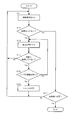
- FIG. 2 is a flowchart showing the route guidance process according to the first embodiment. This flow is executed by the control unit 11.
- step S11 the control unit 11 performs route guidance to the destination set by the user. Specifically, the control unit 11 performs control to cause the vibration unit 15 to generate a vibration having a vibration pattern according to the distance to the guide point, the guide type, and the like. In addition, the control part 11 performs such route guidance using the path
- step S12 the control unit 11 determines whether or not the user is off the route. Specifically, the control unit 11 obtains the current position from positioning data included in the radio wave received by the GPS receiver 14, for example, and determines whether or not the current position is on the route.
- step S12 If it is determined that the user has deviated from the route (step S12: Yes), the process proceeds to step S13. In this case, the control unit 11 stops the vibration by the vibration unit 15 in order to notify the user that the vehicle is off the route (step S13). Then, the process proceeds to step S14.
- step S12 determines whether the user has arrived at the destination based on the current position obtained in step S12. When it determines with having arrived at the destination (step S17: Yes), a process is complete
- step S14 the control unit 11 determines whether or not the user has returned to the route. Specifically, the control unit 11 obtains the current position again and determines whether or not the current position is not on the route. When it is determined that the user has returned to the route (step S14: No), the process returns to step S11. In this case, the control unit 11 cancels the vibration stop by the vibration unit 15 and resumes route guidance to the destination.
- step S14 when it is determined that the user has not returned to the route (step S14: Yes), the process proceeds to step S15.
- the control unit 11 determines whether or not the user has viewed the screen of the portable guidance device 1 (step S15). The determination in step S15 is performed to determine whether or not the user has indicated an intention to perform reroute.
- the control unit 11 determines whether or not the user has viewed the screen based on whether or not the brightness of the outside of the portable guidance device 1 has become a predetermined value or more. Brightness outside the portable guidance device 1 can be detected by an illuminance sensor or the like. In this example, the control unit 11 determines that the user has seen the screen when the external brightness becomes a predetermined value or more. This determination is made when the external brightness is equal to or greater than a predetermined value, and it can be determined that the portable guidance device 1 has been taken out from a pocket or the like. This is because the possibility is high. Note that instead of the brightness outside the portable guidance device 1 or in addition to the brightness outside the portable guidance device 1, the acceleration applied to the portable guidance device 1 may be used. This is because it can be determined that the portable guidance device 1 is taken out of the pocket or the like by the acceleration.
- control unit 11 performs face recognition from a captured image captured by a camera (not shown in FIG. 1) of the portable guidance device 1 and determines whether or not the user has viewed the screen based on the result. Determine.
- the control unit 11 determines that the user has seen the screen when the user's face is recognized as a result of the face recognition. This determination is made when the user's face is recognized from the captured image, so that it can be determined that the user is facing the screen, and in that case, the possibility that the user has seen the screen is quite high. Because it is considered.
- the portable guidance device 1 is a smartphone
- the face recognition function of the smartphone may be used in making the above determination.
- step S16 the control unit 11 performs control for reroute (step S16). That is, the control unit 11 performs control for newly setting a route from the current position at the current time to the destination. Specifically, the control unit 11 performs control to transmit a current position, a reroute request, and the like to the server via the communication unit 17. And the control part 11 receives the rerouted path
- step S15 if it is determined that the user is not looking at the screen (step S15: No), the process returns to step S13. In this case, the control unit 11 continues to stop the vibration by the vibration unit 15.
- the first embodiment described above it is possible to appropriately cope with the case where the user deviates from the route. Therefore, even when the user deviates from the route, it is possible to appropriately guide to the destination. In addition, it is possible to prevent the user from being confused by a sudden change in the manner of guidance when the user deviates from the route.
- the vibration by the vibration unit 15 is stopped.
- a vibration indicating that fact is given.
- the control unit 11 repeatedly causes the vibration unit 15 to generate a vibration having a vibration pattern indicating that the user has deviated from the route while the user has deviated from the route.
- the vibration unit 15 is not limited to always generating vibration when the user is located on the route.
- control is performed for rerouting when it is determined that the user has seen the screen of the portable guidance device 1, but in the second embodiment, instead, the user has a portable type.
- Control for re-routing is performed when a predetermined operation is performed on the guidance device 1.
- the control unit 11 performs control for rerouting when the user performs a tap operation or a shake operation on the portable guidance device 1.
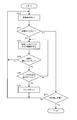
- FIG. 3 is a flowchart showing route guidance processing according to the second embodiment. This flow is executed by the control unit 11.
- steps S21, S22, S24, S26, and S27 are the same as the processes of steps S11, S12, S14, S16, and S17 shown in FIG. 2, their descriptions are omitted. Here, only the processing of steps S23 and S25 will be described. Note that the processes in steps S23 and S25 are performed instead of the processes in steps S13 and S15 shown in FIG.
- step S23 the control unit 11 performs control to cause the vibration unit 15 to generate a vibration having a vibration pattern indicating that the user has deviated from the route.
- the control unit 11 causes the vibration unit 15 to repeatedly generate vibrations of the vibration pattern while the user is off the route.
- step S25 the control unit 11 determines whether or not the user has performed a predetermined operation on the portable guidance device 1.
- the determination in step S25 is performed to determine whether or not the user has indicated an intention to reroute.
- the control unit 11 determines whether or not the user performs a tap operation with the portable guidance device 1 in a pocket or the like, or performs a shake operation while the user holds the portable guidance device 1 in his / her hand. Or not.
- vibration indicating the fact is generated by the vibration unit 15 and control is performed to reroute when it is determined that the user has seen the screen of the portable guidance device 1. May be.
- the vibration by the vibration unit 15 may be stopped, and control may be performed to reroute when the user performs a predetermined operation on the portable guidance device 1. .
- the vibration by the vibration unit 15 is stopped when the user deviates from the route.
- the vibration may be gradually reduced.
- the vibration may be gradually reduced as the user moves away from the route (that is, as the distance between the current position and the position on the route becomes longer).
- the vibration may be gradually increased as the user approaches the route (that is, as the distance between the current position and the position on the route becomes shorter).
- the user can appropriately recognize that the vehicle is moving in the direction of returning to the route.
- control is performed to reroute. It was.
- control for reroute may be performed only when the user stops (for example, when the user stops walking).
- Control for reroute can be performed. This is because it is considered that the user often confirms the rerouted route on the screen in a stopped state.
- vibration by the vibration unit 15 may be stopped. This is because when the user stops, the screen can be confirmed, so that vibration by the vibration unit 15 is not necessary.
- the server obtains a route to the destination, and the portable guidance device 1 provides guidance using the route received from the server.
- the portable guidance device 1 may obtain the route to the destination independently without communicating with the server. In that case, map data or the like may be stored in the storage unit 12 of the portable guidance device 1.
- Modification 4 In the above-described embodiment, as an example of control for guiding a pedestrian to a destination without looking at the screen, a configuration in which guidance is performed by performing control to vibrate the portable guidance device 1 is shown.
- a pedestrian can be guided to a destination without looking at the screen by performing control to output a sound corresponding to guidance instead of performing control to vibrate the portable guidance device 1.
- a usage mode in which a route is moved while listening to voice guidance with an earphone.
- a sound indicating that may be output and notified. Then, when it is determined that the user has seen the screen of the portable guidance device 1, or when the user performs a predetermined operation on the portable guidance device 1, control for reroute may be performed.
- the present invention is not limited to application to a mobile phone such as a smartphone. That is, the present invention is not limited to application to a mobile terminal device having a call function. The present invention is applicable to various portable terminal devices that do not have a call function.
Landscapes
- Engineering & Computer Science (AREA)
- Radar, Positioning & Navigation (AREA)
- Remote Sensing (AREA)
- Automation & Control Theory (AREA)
- Physics & Mathematics (AREA)
- General Physics & Mathematics (AREA)
- Human Computer Interaction (AREA)
- Multimedia (AREA)
- Navigation (AREA)
Abstract
目的地までの経路に従って歩行者を誘導する携帯型誘導装置は、現在位置を検出する検出手段と、携帯型誘導装置を振動させる振動手段と、振動手段によって携帯型誘導装置を振動させる制御を行うことで、経路を案内する制御手段と、を有する。そして、制御手段は、現在位置が経路上に位置する場合と、現在位置が経路上に位置しない場合とで、振動手段による振動の態様を変化させる制御を行う。
Description
本発明は、目的地までの誘導を行う技術分野に関する。
この種の技術が、例えば特許文献1に提案されている。特許文献1には、画面表示や音声を用いずに、振動発生ユニットを振動させることで、目的地までの誘導を行う技術が提案されている。
特許文献1に記載された技術では、経路からユーザが外れた場合の対処方法については考慮されていなかった。そのため、ユーザが経路から外れた場合に、目的地まで適切に誘導することが困難であった。
本発明が解決しようとする課題としては、上記のものが一例として挙げられる。本発明は、例えば経路が表示された画面を見なくとも目的地までの誘導を可能とする携帯型誘導装置において、ユーザが経路から外れた場合に適切に対処することを主な目的とする。
請求項に記載の発明では、目的地までの経路に従って歩行者を誘導する携帯型誘導装置は、現在位置を検出する検出手段と、前記携帯型誘導装置を振動させる振動手段と、前記振動手段によって前記携帯型誘導装置を振動させる制御を行うことで、前記経路を案内する制御手段と、を有し、前記制御手段は、前記現在位置が前記経路上に位置する場合と、前記現在位置が前記経路上に位置しない場合とで、前記振動手段による振動の態様を変化させる制御を行うことを特徴とする。
また、請求項に記載の発明では、携帯型誘導装置を振動させる振動手段を有し、目的地までの経路に従って歩行者を誘導する携帯型誘導装置によって実行される制御方法は、現在位置を検出する検出工程と、前記振動手段によって前記携帯型誘導装置を振動させる制御を行うことで、前記経路を案内する制御工程と、を有し、前記制御工程は、前記現在位置が前記経路上に位置する場合と、前記現在位置が前記経路上に位置しない場合とで、前記振動手段による振動の態様を変化させる制御を行うことを特徴とする。
また、請求項に記載の発明では、携帯型誘導装置を振動させる振動手段及びコンピュータを有し、目的地までの経路に従って歩行者を誘導する携帯型誘導装置によって実行されるプログラムは、現在位置を検出する検出手段、前記振動手段によって前記携帯型誘導装置を振動させる制御を行うことで、前記経路を案内する制御手段、として前記コンピュータを機能させ、前記制御手段は、前記現在位置が前記経路上に位置する場合と、前記現在位置が前記経路上に位置しない場合とで、前記振動手段による振動の態様を変化させる制御を行うことを特徴とする。
また、請求項に記載の発明では、記録媒体は、上記プログラムを記録したことを特徴とする。
また、請求項に記載の発明では、目的地までの経路を表示する画面を有する携帯型誘導装置は、現在位置を検出する検出手段と、前記検出された現在位置と前記経路に基づき、前記画面を見ずとも歩行者を前記目的地まで案内するための制御を行う制御手段と、を有し、前記制御手段は、前記案内するための制御を行っているときに前記画面を前記歩行者が見たと判断した場合に前記目的地までの新たな経路を設定するための制御を行うことを特徴とする。
また、請求項に記載の発明では、目的地までの経路を表示する画面を有する携帯型誘導装置によって実行される制御方法は、現在位置を検出する検出工程と、前記検出された現在位置と前記経路に基づき、前記画面を見ずとも歩行者を前記目的地まで案内するための制御を行う制御工程と、を有し、前記制御工程は、前記案内するための制御を行っているときに前記画面を前記歩行者が見たと判断した場合に前記目的地までの新たな経路を設定するための制御を行うことを特徴とする。
また、請求項に記載の発明では、歩行者による所定の操作が可能な操作部と目的地までの経路を表示する画面と、を有する携帯型誘導装置は、現在位置を検出する検出手段と、前記検出された現在位置と前記経路に基づき、前記画面を見ずとも歩行者を前記目的地まで案内するための制御を行う制御手段と、を有し、前記制御手段は、前記案内をするための制御を行っているときに前記歩行者が前記所定の操作を行ったと判断した場合に前記目的地までの新たな経路を設定するための制御を行うことを特徴とする。
また、請求項に記載の発明では、歩行者による所定の操作が可能な操作部と目的地までの経路を表示する画面と、を有する携帯型誘導装置によって実行される制御方法は、現在位置を検出する検出工程と、前記検出された現在位置と前記経路に基づき、前記画面を見ずとも歩行者を前記目的地まで案内するための制御を行う制御工程と、を有し、前記制御工程は、前記案内をするための制御を行っているときに前記歩行者が前記所定の操作を行ったと判断した場合に前記目的地までの新たな経路を設定するための制御を行うことを特徴とする。
本発明の1つの観点では、目的地までの経路を表示する画面を有する携帯型誘導装置は、現在位置を検出する検出手段と、前記検出された現在位置と前記経路に基づき、前記画面を見ずとも歩行者を前記目的地まで案内するための制御を行う制御手段と、を有する。
上記の携帯型誘導装置では、制御手段は、現在位置と経路に基づき、画面を見ずとも歩行者を目的地まで案内するための制御を行う。1つの実施形態では、制御手段は、携帯型誘導装置を振動させる制御を行うことで、経路を案内する。他の実施形態では、制御手段は、音声を用いて経路を案内する。この実施形態は、例えば、携帯型誘導装置をポケットなどに収納した状態においてイヤフォンで音声案内を聞きながら経路を移動する際に適用される。
本発明の他の観点では、目的地までの経路に従って歩行者を誘導する携帯型誘導装置は、現在位置を検出する検出手段と、前記携帯型誘導装置を振動させる振動手段と、前記振動手段によって前記携帯型誘導装置を振動させる制御を行うことで、前記経路を案内する制御手段と、を有し、前記制御手段は、前記現在位置が前記経路上に位置する場合と、前記現在位置が前記経路上に位置しない場合とで、前記振動手段による振動の態様を変化させる制御を行う。
上記の携帯型誘導装置は、振動手段による振動を用いて、歩行者(以下では適宜「ユーザ」と呼ぶ。)を目的地まで誘導するために好適に利用される。制御手段は、現在位置が経路上に位置する場合と、現在位置が経路上に位置しない場合とで、振動手段による振動の態様を変化させる。これにより、経路から外れたことをユーザに適切に認識させることができる。その結果、ユーザを経路に復帰させることができ、目的地まで適切に誘導することが可能となる。
上記の携帯型誘導装置の一態様では、前記制御手段は、前記現在位置が前記経路上に位置する場合には前記振動手段によって振動を発生させ、前記現在位置が前記経路上に位置しない場合には前記振動手段による振動を停止させる。これにより、経路から外れたことをユーザに効果的に認識させることができる。
上記の携帯型誘導装置の他の一態様では、前記制御手段は、前記振動手段による振動を停止させる際に、前記現在位置が前記経路から離れるにつれて徐々に振動を弱めていく。これにより、経路から離れていく方向に進んでいることをユーザに適切に認識させることができる。
上記の携帯型誘導装置の他の一態様では、前記制御手段は、前記現在位置が前記経路に近付くにつれて徐々に振動を強めていく。これにより、経路に戻る方向に進んでいることをユーザに適切に認識させることができる。
上記の携帯型誘導装置の他の一態様では、前記制御手段は、前記現在位置が前記経路上に位置する場合には前記振動手段によって振動を常に発生させ、前記経路上の案内地点までの距離が所定距離となる地点を前記歩行者が通過するたびに、前記振動手段による振動の態様を変化させる。これにより、案内地点までの距離が所定距離となる地点(前回に通過した地点も含む)を、ユーザに適切に認識させることができる。
上記の携帯型誘導装置の他の一態様では、前記現在位置が前記経路上に位置しない場合において、前記歩行者が前記携帯型誘導装置の画面を見たと判断される場合に、前記目的地までの新たな経路を設定するための制御を行うリルート制御手段を更に備える。これにより、ユーザが経路から外れた場合にも、目的地まで適切に誘導することができる。また、経路から外れた際に誘導の態様などが急に変わることでユーザが戸惑うことを防止することができる。
上記の携帯型誘導装置の他の一態様では、前記現在位置が前記経路上に位置しない場合において、前記歩行者が前記携帯型誘導装置に対して所定の操作を行った場合に、前記目的地までの新たな経路を設定するための制御を行うリルート制御手段を更に備える。これにより、ユーザが経路から外れた場合にも、目的地まで適切に誘導することができる。また、経路から外れた際に誘導の態様などが急に変わることでユーザが戸惑うことを防止することができる。
上記の携帯型誘導装置において好適には、前記リルート制御手段は、前記歩行者が停止している場合にのみ、前記目的地までの新たな経路を設定するための制御を行っても良い。
本発明の他の観点では、携帯型誘導装置を振動させる振動手段を有し、目的地までの経路に従って歩行者を誘導する携帯型誘導装置によって実行される制御方法は、現在位置を検出する検出工程と、前記振動手段によって前記携帯型誘導装置を振動させる制御を行うことで、前記経路を案内する制御工程と、を有し、前記制御工程は、前記現在位置が前記経路上に位置する場合と、前記現在位置が前記経路上に位置しない場合とで、前記振動手段による振動の態様を変化させる制御を行う。
また、本発明の他の観点では、携帯型誘導装置を振動させる振動手段及びコンピュータを有し、目的地までの経路に従って歩行者を誘導する携帯型誘導装置によって実行されるプログラムは、現在位置を検出する検出手段、前記振動手段によって前記携帯型誘導装置を振動させる制御を行うことで、前記経路を案内する制御手段、として前記コンピュータを機能させ、前記制御手段は、前記現在位置が前記経路上に位置する場合と、前記現在位置が前記経路上に位置しない場合とで、前記振動手段による振動の態様を変化させる制御を行う。
上記のプログラムは、記録媒体に記録した状態で好適に取り扱うことができる。
また、本発明の他の観点では、目的地までの経路を表示する画面を有する携帯型誘導装置は、現在位置を検出する検出手段と、前記検出された現在位置と前記経路に基づき、前記画面を見ずとも歩行者を前記目的地まで案内するための制御を行う制御手段と、を有し、前記制御手段は、前記案内するための制御を行っているときに前記画面を前記歩行者が見たと判断した場合に前記目的地までの新たな経路を設定するための制御を行う。
上記の携帯型誘導装置では、制御手段は、画面を見ずとも歩行者を目的地まで案内するための制御を行っている際に、画面を歩行者が見たと判断した場合に目的地までの新たな経路を設定するための制御を行う。
また、本発明の他の観点では、目的地までの経路を表示する画面を有する携帯型誘導装置によって実行される制御方法は、現在位置を検出する検出工程と、前記検出された現在位置と前記経路に基づき、前記画面を見ずとも歩行者を前記目的地まで案内するための制御を行う制御工程と、を有し、前記制御工程は、前記案内するための制御を行っているときに前記画面を前記歩行者が見たと判断した場合に前記目的地までの新たな経路を設定するための制御を行う。
また、本発明の他の観点では、歩行者による所定の操作が可能な操作部と目的地までの経路を表示する画面と、を有する携帯型誘導装置は、現在位置を検出する検出手段と、前記検出された現在位置と前記経路に基づき、前記画面を見ずとも歩行者を前記目的地まで案内するための制御を行う制御手段と、を有し、前記制御手段は、前記案内をするための制御を行っているときに前記歩行者が前記所定の操作を行ったと判断した場合に前記目的地までの新たな経路を設定するための制御を行う。
上記の携帯型誘導装置では、制御手段は、画面を見ずとも歩行者を目的地まで案内するための制御を行っている際に、歩行者が所定の操作を行ったと判断した場合に目的地までの新たな経路を設定するための制御を行う。
また、本発明の他の観点では、歩行者による所定の操作が可能な操作部と目的地までの経路を表示する画面と、を有する携帯型誘導装置によって実行される制御方法は、現在位置を検出する検出工程と、前記検出された現在位置と前記経路に基づき、前記画面を見ずとも歩行者を前記目的地まで案内するための制御を行う制御工程と、を有し、前記制御工程は、前記案内をするための制御を行っているときに前記歩行者が前記所定の操作を行ったと判断した場合に前記目的地までの新たな経路を設定するための制御を行う。
以下、図面を参照して本発明の好適な実施例について説明する。
[装置構成]
図1は、本実施例に係る携帯型誘導装置1の概略構成を示すブロック図である。図1に示すように、携帯型誘導装置1は、主に、制御部11と、記憶部12と、入力部13と、GPS受信機14と、バイブレーションユニット15と、表示部16と、通信部17と、を備える。好適な例では、携帯型誘導装置1は、歩行者などのユーザを目的地まで誘導するために利用される。例えば、携帯型誘導装置1は、スマートフォンなどの携帯端末装置である。
図1は、本実施例に係る携帯型誘導装置1の概略構成を示すブロック図である。図1に示すように、携帯型誘導装置1は、主に、制御部11と、記憶部12と、入力部13と、GPS受信機14と、バイブレーションユニット15と、表示部16と、通信部17と、を備える。好適な例では、携帯型誘導装置1は、歩行者などのユーザを目的地まで誘導するために利用される。例えば、携帯型誘導装置1は、スマートフォンなどの携帯端末装置である。
記憶部12は、図示しないROM(Read Only Memory)やRAM(Random Access Memory)などを備えて構成され、携帯型誘導装置1を制御するための種々の制御プログラムなどが格納されると共に、制御部11に対してワーキングエリアを提供する。
入力部13は、各種コマンドやデータを入力するための、キー、スイッチ、ボタン、リモコン、音声入力装置などから構成されている。表示部16がタッチパネル方式に構成されている場合には、表示部16の表示画面上に設けられたタッチパネルも入力部13として機能する。なお、入力部13は、本発明における「操作部」の一例に相当し、ユーザ(歩行者)による所定の操作を受け付けるように機能する。
GPS受信機14は、複数のGPS衛星から、測位用データを含む下り回線データを搬送する電波を受信する。測位用データは、緯度及び経度情報などから携帯型誘導装置1の絶対的な位置(現在位置)を検出するために用いられる。なお、GPS受信機14は、本発明における「検出手段」の一例に相当する。
バイブレーションユニット15は、例えば重りを偏心回転させる振動モータなどから構成され、携帯型誘導装置1において振動を発生させる。バイブレーションユニット15は、種々のパターンの振動を発生できるように構成されていると共に、振動の強弱を変化させられるように構成されている。バイブレーションユニット15は、制御部11によって制御される。なお、バイブレーションユニット15は、本発明における「振動手段」の一例に相当する。
表示部16は、例えば液晶ディスプレイなどにより構成され、ユーザに対して文字や画像などを表示する。表示部16を、タッチパネルなどにて構成しても良い。
通信部17は、図示しない所定のサーバと無線通信を行うことが可能に構成されている。例えば、通信部17は、制御部11による制御の元、ユーザによって設定された目的地や経路の設定要求などをサーバに送信し、目的地までの経路をサーバから受信する。この場合、サーバは、記憶している地図データなどに基づいて目的地までの経路を探索し、探索により得られた経路を通信部17に送信する。
制御部11は、図示しないCPU(Central Processing Unit)などを備えて構成され、携帯型誘導装置1全体の制御を行う。例えば、制御部11は、バイブレーションユニット15によって振動を発生させる制御を行うことで、目的地までの経路を案内(経路案内/ルート案内)する。なお、制御部11は、本発明における「制御手段」及び「リルート制御手段」の一例に相当する。
[制御方法]
次に、本実施例において制御部11が行う制御方法について具体的に説明する。
次に、本実施例において制御部11が行う制御方法について具体的に説明する。
本実施例では、制御部11は、目的地までの経路が設定されている場合に、案内地点(例えば交差点など)までの距離や案内種別などに応じた振動をバイブレーションユニット15によって発生させる制御を行う。つまり、制御部11は、案内地点までの距離や案内種別などに応じて、バイブレーションユニット15によって発生させる振動の種類(以下では「振動パターン」と呼ぶ。なお、振動パターンは、振動のリズムや強弱などを種々に組み合わせものである。)を変化させる制御を行う。具体的には、制御部11は、経路案内中に振動を常時発生させておき、案内地点までの距離などに応じて振動パターンを変化させる。例えば、制御部11は、案内地点までの距離が予め定めた所定距離となる地点(1つの例では案内地点までの距離が200mや100mや50mとなる地点であり、以下では「距離チェックポイント」と呼ぶ。)を通過するたびに、振動パターンを変化させる。こうするのは、振動を常時発生させずに距離チェックポイントでのみ振動を発生させると、ユーザは前回通過した距離チェックポイントのことを忘れてしまい戸惑う可能性があるからである。
このような制御部11による制御によれば、画面表示や音声を用いずに、目的地までの誘導を適切に行うことができる。例えば、携帯型誘導装置1をユーザのポケットなどに入れた状態にて、目的地までの誘導を行うことができる。
また、本実施例では、制御部11は、現在位置が経路上に位置する場合と、現在位置が経路上に位置しない場合とで、バイブレーションユニット15による振動の態様を変化させる。つまり、制御部11は、ユーザが経路から外れた場合に(厳密に言うと携帯型誘導装置1の位置が経路から外れた場合を意味する。以下同様とする。)、経路から外れた場合に応じた態様の制御をバイブレーションユニット15に対して行う。こうすることで、経路から外れたことをユーザに伝える。これにより、経路から外れたことを認識したユーザは、適切に経路に復帰することが可能となる。
更に、本実施例では、制御部11は、ユーザが経路から外れた場合において(この場合、経路から外れた場合に応じた態様の制御がバイブレーションユニット15になされている)、ユーザからリルートを行う旨の意思が示された場合に、リルートするための制御を行う。つまり、制御部11は、目的地までの新たな経路を設定するための制御を行う。
ここで、一般的な車載用のナビゲーション装置では、経路から外れた際に自動的にリルートが行われる。そのような技術を携帯型誘導装置1に適用すると、基本的にはユーザは携帯型誘導装置1の画面を見ないで誘導されているので、経路から外れた際に自動的にリルートが行われて誘導の態様などが急に変わることで、ユーザが戸惑う可能性がある。したがって、本実施例では、ユーザが経路から外れた場合に、それに応じた態様の制御をバイブレーションユニット15に対して行い、ユーザからリルートを行う旨の意思が示された場合に、リルートするための制御を行う。これにより、上記したような、誘導の態様などが急に変わることでユーザが戸惑うことを適切に防止できる。また、ユーザが経路から外れた場合にも目的地まで適切に誘導することが可能となる。
以下では、制御部11が行う制御方法の具体例(第1及び第2実施例)について説明する。
(第1実施例)
第1実施例では、制御部11は、ユーザが経路から外れた場合に、バイブレーションユニット15による振動を停止させる。なお、上記したように、ユーザが経路上に位置する場合には、制御部11は、バイブレーションユニット15によって振動を常時発生させる。また、第1実施例では、制御部11は、ユーザが経路から外れた場合において、ユーザが携帯型誘導装置1の画面を見たと判断される場合に、リルートするための制御を行う。これにより、リルートにより新たに設定された経路をユーザが確認した後に、振動による案内を開始することができる。
第1実施例では、制御部11は、ユーザが経路から外れた場合に、バイブレーションユニット15による振動を停止させる。なお、上記したように、ユーザが経路上に位置する場合には、制御部11は、バイブレーションユニット15によって振動を常時発生させる。また、第1実施例では、制御部11は、ユーザが経路から外れた場合において、ユーザが携帯型誘導装置1の画面を見たと判断される場合に、リルートするための制御を行う。これにより、リルートにより新たに設定された経路をユーザが確認した後に、振動による案内を開始することができる。
図2を参照して、第1実施例に係る経路案内処理について説明する。図2は、第1実施例に係る経路案内処理を示すフローチャートである。このフローは、制御部11によって実行される。
まず、ステップS11では、制御部11は、ユーザによって設定された目的地までの経路案内を行う。具体的には、制御部11は、案内地点までの距離や案内種別などに応じた振動パターンの振動を、バイブレーションユニット15によって発生させる制御を行う。なお、制御部11は、前述したサーバから通信部17を介して受信した経路を用いて、このような経路案内を行う。以上のステップS11の後、処理はステップS12に進む。
ステップS12では、制御部11は、ユーザが経路から外れたか否かを判定する。具体的には、制御部11は、例えばGPS受信機14が受信した電波に含まれる測位用データから現在位置を求め、当該現在位置が経路上に位置するか否かを判定する。
ユーザが経路から外れたと判定した場合(ステップS12:Yes)、処理はステップS13に進む。この場合、制御部11は、経路から外れたことをユーザに伝えるべく、バイブレーションユニット15による振動を停止させる(ステップS13)。そして、処理はステップS14に進む。
これに対して、ユーザが経路から外れていないと判定した場合(ステップS12:No)、処理はステップS17に進む。ステップS17では、制御部11は、ステップS12で求めた現在位置に基づいて、ユーザが目的地に到着したか否かを判定する。目的地に到着したと判定した場合(ステップS17:Yes)、処理は終了する。一方で、目的地に到着していないと判定した場合(ステップS17:No)、処理はステップS11に戻る。この場合には、制御部11は、目的地までの経路案内を継続する。
ステップS14では、制御部11は、ユーザが経路に復帰していないか否かを判定する。具体的には、制御部11は、現在位置を再度求めて、当該現在位置が経路上に位置しないか否かを判定する。ユーザが経路に復帰したと判定した場合(ステップS14:No)、処理はステップS11に戻る。この場合には、制御部11は、バイブレーションユニット15による振動の停止を解除し、目的地までの経路案内を再開する。
これに対して、ユーザが経路に復帰していないと判定した場合(ステップS14:Yes)、処理はステップS15に進む。この場合、制御部11は、ユーザが携帯型誘導装置1の画面を見たか否かを判定する(ステップS15)。ステップS15の判定は、ユーザからリルートを行う旨の意思が示されたか否かを判断するために行っている。
1つの例では、制御部11は、携帯型誘導装置1の外部の明るさが所定値以上となったか否かに基づいて、ユーザが画面を見たか否かを判定する。携帯型誘導装置1の外部の明るさは、照度センサなどで検出することができる。この例では、制御部11は、外部の明るさが所定値以上となった場合に、ユーザが画面を見たと判定する。このように判定するのは、外部の明るさが所定値以上となった場合には、携帯型誘導装置1がポケットなどから取り出されたものと判断でき、その場合にはユーザが画面を見た可能性が高いと考えられるからである。なお、携帯型誘導装置1の外部の明るさの代わりに、若しくは携帯型誘導装置1の外部の明るさに加えて、携帯型誘導装置1に付与された加速度を用いても良い。当該加速度によっても、携帯型誘導装置1がポケットなどから取り出されたことを判断できるからである。
他の例では、制御部11は、携帯型誘導装置1のカメラ(図1で図示せず)によって撮影された撮影画像から顔認識を行い、その結果に基づいてユーザが画面を見たか否かを判定する。この例では、制御部11は、顔認識の結果、ユーザの顔が認識された場合に、ユーザが画面を見たと判定する。このように判定するのは、撮影画像からユーザの顔が認識された場合には、ユーザが画面に顔を向けていると判断でき、その場合にはユーザが画面を見た可能性がかなり高いと考えられるからである。なお、携帯型誘導装置1がスマートフォンであれば、上記のような判定を行うに当たって、スマートフォンが有する顔認識機能を利用すれば良い。
ユーザが画面を見たと判定した場合(ステップS15:Yes)、処理はステップS16に進む。この場合には、制御部11は、リルートするための制御を行う(ステップS16)。つまり、制御部11は、現時点での現在位置から目的地までの経路を新たに設定するための制御を行う。具体的には、制御部11は、現在位置やリルートを行う要求などを、通信部17を介してサーバに送信する制御を行う。そして、制御部11は、当該現在位置などに基づいてサーバによって求められたリルートされた経路を、通信部17を介して受信する。この後、処理はステップS11に戻る。この場合には、制御部11は、バイブレーションユニット15による振動の停止を解除し、リルートされた経路に従って経路案内を行う。
これに対して、ユーザが画面を見ていないと判定した場合(ステップS15:No)、処理はステップS13に戻る。この場合には、制御部11は、バイブレーションユニット15による振動の停止を継続する。
以上説明した第1実施例によれば、ユーザが経路から外れた場合に適切に対処することができる。よって、ユーザが経路から外れた場合にも、目的地まで適切に案内することができる。また、ユーザが経路から外れた際に誘導の態様などが急に変わることでユーザが戸惑うことを防止することができる。
(第2実施例)
次に、第2実施例について説明する。第1実施例では、ユーザが経路から外れた場合にバイブレーションユニット15による振動を停止させていたが、第2実施例では、その代わりに、ユーザが経路から外れた場合にその旨を示す振動をバイブレーションユニット15によって発生させる。具体的には、第2実施例では、制御部11は、ユーザが経路から外れている間は、経路から外れたことを示す振動パターンの振動をバイブレーションユニット15によって繰り返し発生させる。なお、第2実施例では、ユーザが経路上に位置する場合にバイブレーションユニット15によって振動を常時発生させることに限定はされない。
次に、第2実施例について説明する。第1実施例では、ユーザが経路から外れた場合にバイブレーションユニット15による振動を停止させていたが、第2実施例では、その代わりに、ユーザが経路から外れた場合にその旨を示す振動をバイブレーションユニット15によって発生させる。具体的には、第2実施例では、制御部11は、ユーザが経路から外れている間は、経路から外れたことを示す振動パターンの振動をバイブレーションユニット15によって繰り返し発生させる。なお、第2実施例では、ユーザが経路上に位置する場合にバイブレーションユニット15によって振動を常時発生させることに限定はされない。
また、第1実施例では、ユーザが携帯型誘導装置1の画面を見たと判断される場合にリルートするための制御を行っていたが、第2実施例では、その代わりに、ユーザが携帯型誘導装置1に対して所定の操作を行った場合にリルートするための制御を行う。例えば、第2実施例では、制御部11は、ユーザが携帯型誘導装置1に対してタップ操作やシェイク操作などを行った場合に、リルートするための制御を行う。
図3を参照して、第2実施例に係る経路案内処理について説明する。図3は、第2実施例に係る経路案内処理を示すフローチャートである。このフローは、制御部11によって実行される。
ステップS21、S22、S24、S26、S27の処理は、それぞれ、図2に示したステップS11、S12、S14、S16、S17の処理と同様であるため、それらの説明を省略する。ここでは、ステップS23、S25の処理のみ説明する。なお、ステップS23、S25の処理は、図2に示したステップS13、S15の処理の代わりに行われるものである。
ステップS23では、制御部11は、ユーザが経路から外れたことを示す振動パターンの振動を、バイブレーションユニット15によって発生させる制御を行う。制御部11は、ユーザが経路から外れている間は、当該振動パターンの振動をバイブレーションユニット15によって繰り返し発生させる。
他方で、ステップS25では、制御部11は、ユーザが携帯型誘導装置1に対して所定の操作を行ったか否かを判定する。ステップS25の判定は、ユーザからリルートを行う旨の意思が示されたか否かを判断するために行っている。例えば、制御部11は、ユーザが携帯型誘導装置1をポケットなどに入れたままタップ操作を行ったか否かを判定したり、ユーザが携帯型誘導装置1を手に持ったままシェイク操作を行ったか否かを判定したりする。
以上説明した第2実施例によっても、第1実施例と同様に、ユーザが経路から外れた場合に適切に対処することができる。
なお、第1実施例と第2実施例とを適宜組み合わせて実施しても良い。1つの例では、ユーザが経路から外れた場合にその旨を示す振動をバイブレーションユニット15によって発生させ、ユーザが携帯型誘導装置1の画面を見たと判断される場合にリルートするための制御を行っても良い。他の例では、ユーザが経路から外れた場合にバイブレーションユニット15による振動を停止させ、ユーザが携帯型誘導装置1に対して所定の操作を行った場合にリルートするための制御を行っても良い。
[変形例]
以下では、上記した実施例に好適な変形例について説明する。なお、下記の変形例は、任意に組み合わせて上述の実施例に適用することができる。
以下では、上記した実施例に好適な変形例について説明する。なお、下記の変形例は、任意に組み合わせて上述の実施例に適用することができる。
(変形例1)
上記した第1実施例では、ユーザが経路から外れた場合にバイブレーションユニット15による振動を停止させていた。他の例では、このように振動を停止させる際に、徐々に振動を弱めても良い。例えば、ユーザが経路から離れるにつれて(つまり現在位置と経路上の位置との距離が長くなるにつれて)、振動を徐々に弱めると良い。これにより、経路から離れていく方向に進んでいることをユーザに適切に認識させることができる。また、ユーザが経路に近付くにつれて(つまり現在位置と経路上の位置との距離が短くなるにつれて)、振動を徐々に強めても良い。これにより、経路に戻る方向に進んでいることをユーザに適切に認識させることができる。
上記した第1実施例では、ユーザが経路から外れた場合にバイブレーションユニット15による振動を停止させていた。他の例では、このように振動を停止させる際に、徐々に振動を弱めても良い。例えば、ユーザが経路から離れるにつれて(つまり現在位置と経路上の位置との距離が長くなるにつれて)、振動を徐々に弱めると良い。これにより、経路から離れていく方向に進んでいることをユーザに適切に認識させることができる。また、ユーザが経路に近付くにつれて(つまり現在位置と経路上の位置との距離が短くなるにつれて)、振動を徐々に強めても良い。これにより、経路に戻る方向に進んでいることをユーザに適切に認識させることができる。
(変形例2)
上記した実施例では、ユーザが携帯型誘導装置1の画面を見たと判断される場合、又はユーザが携帯型誘導装置1に対して所定の操作を行った場合に、リルートするための制御を行っていた。他の例では、このようなリルートするための制御を、ユーザが停止した場合(例えばユーザが歩行を止めた場合)にのみ行っても良い。例えば、ユーザが携帯型誘導装置1の画面を見たと判断され、且つユーザが停止した場合、若しくは、ユーザが携帯型誘導装置1に対して所定の操作を行い、且つユーザが停止した場合に、リルートするための制御を行うことができる。こうするのは、ユーザは停止した状態でリルートされた経路を画面にて確認するケースが多いと考えられるからである。また、ユーザが停止した場合に、バイブレーションユニット15による振動を停止させても良い。こうするのは、ユーザが停止した場合には画面を確認できるので、バイブレーションユニット15による振動が無くても良いからである。
上記した実施例では、ユーザが携帯型誘導装置1の画面を見たと判断される場合、又はユーザが携帯型誘導装置1に対して所定の操作を行った場合に、リルートするための制御を行っていた。他の例では、このようなリルートするための制御を、ユーザが停止した場合(例えばユーザが歩行を止めた場合)にのみ行っても良い。例えば、ユーザが携帯型誘導装置1の画面を見たと判断され、且つユーザが停止した場合、若しくは、ユーザが携帯型誘導装置1に対して所定の操作を行い、且つユーザが停止した場合に、リルートするための制御を行うことができる。こうするのは、ユーザは停止した状態でリルートされた経路を画面にて確認するケースが多いと考えられるからである。また、ユーザが停止した場合に、バイブレーションユニット15による振動を停止させても良い。こうするのは、ユーザが停止した場合には画面を確認できるので、バイブレーションユニット15による振動が無くても良いからである。
(変形例3)
上記した実施例では、サーバが目的地までの経路を求め、携帯型誘導装置1はサーバから受信された経路を用いて案内を行っていた。他の例では、携帯型誘導装置1は、サーバと通信することなく、単独で目的地までの経路を求めても良い。その場合には、携帯型誘導装置1の記憶部12に地図データなどを記憶させておけば良い。
上記した実施例では、サーバが目的地までの経路を求め、携帯型誘導装置1はサーバから受信された経路を用いて案内を行っていた。他の例では、携帯型誘導装置1は、サーバと通信することなく、単独で目的地までの経路を求めても良い。その場合には、携帯型誘導装置1の記憶部12に地図データなどを記憶させておけば良い。
(変形例4)
上記した実施例では、画面を見ずとも歩行者を目的地まで案内するための制御の一例として、携帯型誘導装置1を振動させる制御を行うことで案内する構成を示した。他の例では、携帯型誘導装置1を振動させる制御を行う代わりに、案内に応じた音声を出力させる制御を行うことで、画面を見ずとも歩行者を目的地まで案内することができる。例えば、携帯型誘導装置1をポケットなどに収納した状態においてイヤフォンで音声案内を聞きながら経路を移動するといった利用態様が挙げられる。このような他の例では、ユーザが経路から外れた場合に、その旨を示す音声を出力して報知すれば良い。そして、ユーザが携帯型誘導装置1の画面を見たと判断される場合、又はユーザが携帯型誘導装置1に対して所定の操作を行った場合に、リルートするための制御を行えば良い。
上記した実施例では、画面を見ずとも歩行者を目的地まで案内するための制御の一例として、携帯型誘導装置1を振動させる制御を行うことで案内する構成を示した。他の例では、携帯型誘導装置1を振動させる制御を行う代わりに、案内に応じた音声を出力させる制御を行うことで、画面を見ずとも歩行者を目的地まで案内することができる。例えば、携帯型誘導装置1をポケットなどに収納した状態においてイヤフォンで音声案内を聞きながら経路を移動するといった利用態様が挙げられる。このような他の例では、ユーザが経路から外れた場合に、その旨を示す音声を出力して報知すれば良い。そして、ユーザが携帯型誘導装置1の画面を見たと判断される場合、又はユーザが携帯型誘導装置1に対して所定の操作を行った場合に、リルートするための制御を行えば良い。
(変形例5)
本発明は、スマートフォンなどの携帯電話への適用に限定はされない。つまり、本発明は、通話機能を有する携帯端末装置への適用に限定はされない。本発明は、通話機能を有しない種々の携帯端末装置に適用可能である。
本発明は、スマートフォンなどの携帯電話への適用に限定はされない。つまり、本発明は、通話機能を有する携帯端末装置への適用に限定はされない。本発明は、通話機能を有しない種々の携帯端末装置に適用可能である。
1 携帯型誘導装置
11 制御部
12 記憶部
14 GPS受信機
15 バイブレーションユニット
17 通信部
11 制御部
12 記憶部
14 GPS受信機
15 バイブレーションユニット
17 通信部
Claims (15)
- 目的地までの経路に従って歩行者を誘導する携帯型誘導装置であって、
現在位置を検出する検出手段と、
前記携帯型誘導装置を振動させる振動手段と、
前記振動手段によって前記携帯型誘導装置を振動させる制御を行うことで、前記経路を案内する制御手段と、
を有し、
前記制御手段は、前記現在位置が前記経路上に位置する場合と、前記現在位置が前記経路上に位置しない場合とで、前記振動手段による振動の態様を変化させる制御を行うことを特徴とする携帯型誘導装置。 - 前記制御手段は、前記現在位置が前記経路上に位置する場合には前記振動手段によって振動を発生させ、前記現在位置が前記経路上に位置しない場合には前記振動手段による振動を停止させることを特徴とする請求項1に記載の携帯型誘導装置。
- 前記制御手段は、前記振動手段による振動を停止させる際に、前記現在位置が前記経路から離れるにつれて徐々に振動を弱めていくことを特徴とする請求項2に記載の携帯型誘導装置。
- 前記制御手段は、前記現在位置が前記経路に近付くにつれて徐々に振動を強めていくことを特徴とする請求項3に記載の携帯型誘導装置。
- 前記制御手段は、前記現在位置が前記経路上に位置する場合には前記振動手段によって振動を常に発生させ、前記経路上の案内地点までの距離が所定距離となる地点を前記歩行者が通過するたびに、前記振動手段による振動の態様を変化させることを特徴とする請求項1に記載の携帯型誘導装置。
- 前記現在位置が前記経路上に位置しない場合において、前記歩行者が前記携帯型誘導装置の画面を見たと判断される場合に、前記目的地までの新たな経路を設定するための制御を行うリルート制御手段を更に備えることを特徴とする請求項1に記載の携帯型誘導装置。
- 前記現在位置が前記経路上に位置しない場合において、前記歩行者が前記携帯型誘導装置に対して所定の操作を行った場合に、前記目的地までの新たな経路を設定するための制御を行うリルート制御手段を更に備えることを特徴とする請求項1に記載の携帯型誘導装置。
- 前記リルート制御手段は、前記歩行者が停止している場合にのみ、前記目的地までの新たな経路を設定するための制御を行うことを特徴とする請求項6又は7に記載の携帯型誘導装置。
- 携帯型誘導装置を振動させる振動手段を有し、目的地までの経路に従って歩行者を誘導する携帯型誘導装置によって実行される制御方法であって、
現在位置を検出する検出工程と、
前記振動手段によって前記携帯型誘導装置を振動させる制御を行うことで、前記経路を案内する制御工程と、
を有し、
前記制御工程は、前記現在位置が前記経路上に位置する場合と、前記現在位置が前記経路上に位置しない場合とで、前記振動手段による振動の態様を変化させる制御を行うことを特徴とする制御方法。 - 携帯型誘導装置を振動させる振動手段及びコンピュータを有し、目的地までの経路に従って歩行者を誘導する携帯型誘導装置によって実行されるプログラムであって、
現在位置を検出する検出手段、
前記振動手段によって前記携帯型誘導装置を振動させる制御を行うことで、前記経路を案内する制御手段、
として前記コンピュータを機能させ、
前記制御手段は、前記現在位置が前記経路上に位置する場合と、前記現在位置が前記経路上に位置しない場合とで、前記振動手段による振動の態様を変化させる制御を行うことを特徴とするプログラム。 - 請求項10に記載のプログラムを記録したことを特徴とする記録媒体。
- 目的地までの経路を表示する画面を有する携帯型誘導装置であって、
現在位置を検出する検出手段と、
前記検出された現在位置と前記経路に基づき、前記画面を見ずとも歩行者を前記目的地まで案内するための制御を行う制御手段と、
を有し、
前記制御手段は、前記案内するための制御を行っているときに前記画面を前記歩行者が見たと判断した場合に前記目的地までの新たな経路を設定するための制御を行うことを特徴とする携帯型誘導装置。 - 目的地までの経路を表示する画面を有する携帯型誘導装置によって実行される制御方法であって、
現在位置を検出する検出工程と、
前記検出された現在位置と前記経路に基づき、前記画面を見ずとも歩行者を前記目的地まで案内するための制御を行う制御工程と、
を有し、
前記制御工程は、前記案内するための制御を行っているときに前記画面を前記歩行者が見たと判断した場合に前記目的地までの新たな経路を設定するための制御を行うことを特徴とする制御方法。 - 歩行者による所定の操作が可能な操作部と目的地までの経路を表示する画面と、を有する携帯型誘導装置であって、
現在位置を検出する検出手段と、
前記検出された現在位置と前記経路に基づき、前記画面を見ずとも歩行者を前記目的地まで案内するための制御を行う制御手段と、
を有し、
前記制御手段は、前記案内をするための制御を行っているときに前記歩行者が前記所定の操作を行ったと判断した場合に前記目的地までの新たな経路を設定するための制御を行うことを特徴とする携帯型誘導装置。 - 歩行者による所定の操作が可能な操作部と目的地までの経路を表示する画面と、を有する携帯型誘導装置によって実行される制御方法であって、
現在位置を検出する検出工程と、
前記検出された現在位置と前記経路に基づき、前記画面を見ずとも歩行者を前記目的地まで案内するための制御を行う制御工程と、
を有し、
前記制御工程は、前記案内をするための制御を行っているときに前記歩行者が前記所定の操作を行ったと判断した場合に前記目的地までの新たな経路を設定するための制御を行うことを特徴とする制御方法。
Priority Applications (2)
| Application Number | Priority Date | Filing Date | Title |
|---|---|---|---|
| PCT/JP2013/060031 WO2014162502A1 (ja) | 2013-04-02 | 2013-04-02 | 携帯型誘導装置、制御方法、プログラム及び記録媒体 |
| JP2015509755A JPWO2014162502A1 (ja) | 2013-04-02 | 2013-04-02 | 携帯型誘導装置、制御方法、プログラム及び記録媒体 |
Applications Claiming Priority (1)
| Application Number | Priority Date | Filing Date | Title |
|---|---|---|---|
| PCT/JP2013/060031 WO2014162502A1 (ja) | 2013-04-02 | 2013-04-02 | 携帯型誘導装置、制御方法、プログラム及び記録媒体 |
Publications (1)
| Publication Number | Publication Date |
|---|---|
| WO2014162502A1 true WO2014162502A1 (ja) | 2014-10-09 |
Family
ID=51657835
Family Applications (1)
| Application Number | Title | Priority Date | Filing Date |
|---|---|---|---|
| PCT/JP2013/060031 Ceased WO2014162502A1 (ja) | 2013-04-02 | 2013-04-02 | 携帯型誘導装置、制御方法、プログラム及び記録媒体 |
Country Status (2)
| Country | Link |
|---|---|
| JP (1) | JPWO2014162502A1 (ja) |
| WO (1) | WO2014162502A1 (ja) |
Cited By (4)
| Publication number | Priority date | Publication date | Assignee | Title |
|---|---|---|---|---|
| CN105509731A (zh) * | 2015-11-26 | 2016-04-20 | 电子科技大学 | 多目的地“近景导向”室内导引模式实现方法 |
| WO2017126552A1 (ja) * | 2016-01-19 | 2017-07-27 | 株式会社メガチップス | 測位装置および測位方法 |
| US10277494B2 (en) | 2016-08-22 | 2019-04-30 | Blackberry Limited | Device and method for antenna alignment using vibrational positioning |
| JP2022046335A (ja) * | 2020-09-10 | 2022-03-23 | 株式会社デンソーテン | 経路案内装置および経路案内方法 |
Citations (3)
| Publication number | Priority date | Publication date | Assignee | Title |
|---|---|---|---|---|
| JP2002267482A (ja) * | 2000-12-20 | 2002-09-18 | Nokia Corp | ナビゲーション・システム |
| WO2004092679A1 (ja) * | 2003-04-17 | 2004-10-28 | Navitime Japan Co., Ltd. | 歩行者ナビゲーション装置、歩行者ナビゲーションシステム、歩行者ナビゲーション方法及びプログラム |
| JP2011220849A (ja) * | 2010-04-09 | 2011-11-04 | Nec Corp | 携帯ナビゲーション方法および携帯ナビゲーション装置 |
Family Cites Families (3)
| Publication number | Priority date | Publication date | Assignee | Title |
|---|---|---|---|---|
| JP2007024700A (ja) * | 2005-07-19 | 2007-02-01 | Navitime Japan Co Ltd | 歩行者ナビゲーションシステム、経路探索サーバおよび携帯端末装置 |
| JP4986571B2 (ja) * | 2006-01-12 | 2012-07-25 | シャープ株式会社 | 携帯型ナビゲーション装置 |
| JP2013011552A (ja) * | 2011-06-30 | 2013-01-17 | Navitime Japan Co Ltd | ナビゲーションシステム、サーバ装置、端末装置、ナビゲーション装置、ナビゲーション方法、および、プログラム |
-
2013
- 2013-04-02 WO PCT/JP2013/060031 patent/WO2014162502A1/ja not_active Ceased
- 2013-04-02 JP JP2015509755A patent/JPWO2014162502A1/ja active Pending
Patent Citations (3)
| Publication number | Priority date | Publication date | Assignee | Title |
|---|---|---|---|---|
| JP2002267482A (ja) * | 2000-12-20 | 2002-09-18 | Nokia Corp | ナビゲーション・システム |
| WO2004092679A1 (ja) * | 2003-04-17 | 2004-10-28 | Navitime Japan Co., Ltd. | 歩行者ナビゲーション装置、歩行者ナビゲーションシステム、歩行者ナビゲーション方法及びプログラム |
| JP2011220849A (ja) * | 2010-04-09 | 2011-11-04 | Nec Corp | 携帯ナビゲーション方法および携帯ナビゲーション装置 |
Cited By (6)
| Publication number | Priority date | Publication date | Assignee | Title |
|---|---|---|---|---|
| CN105509731A (zh) * | 2015-11-26 | 2016-04-20 | 电子科技大学 | 多目的地“近景导向”室内导引模式实现方法 |
| CN105509731B (zh) * | 2015-11-26 | 2019-02-01 | 电子科技大学 | 多目的地“近景导向”室内导引模式实现方法 |
| WO2017126552A1 (ja) * | 2016-01-19 | 2017-07-27 | 株式会社メガチップス | 測位装置および測位方法 |
| JPWO2017126552A1 (ja) * | 2016-01-19 | 2018-11-08 | 株式会社メガチップス | 測位装置および測位方法 |
| US10277494B2 (en) | 2016-08-22 | 2019-04-30 | Blackberry Limited | Device and method for antenna alignment using vibrational positioning |
| JP2022046335A (ja) * | 2020-09-10 | 2022-03-23 | 株式会社デンソーテン | 経路案内装置および経路案内方法 |
Also Published As
| Publication number | Publication date |
|---|---|
| JPWO2014162502A1 (ja) | 2017-02-16 |
Similar Documents
| Publication | Publication Date | Title |
|---|---|---|
| JP6103620B2 (ja) | 車載情報システム、情報端末、アプリケーション実行方法、プログラム | |
| EP2581901A2 (en) | Information terminal, server device, searching system and corresponding searching method | |
| KR20100077981A (ko) | 네비게이션 장치 및 그의 네비게이팅 방법 | |
| KR20100115211A (ko) | 이동 단말기의 영상 표시 방법 및 그 장치 | |
| JP2013148419A (ja) | 誘導システム、携帯端末装置および車載装置 | |
| KR20100003619A (ko) | 차량 항법 방법 및 그 장치 | |
| KR20110032645A (ko) | 이동 단말기의 내비게이션 방법 및 그 장치 | |
| JP6076027B2 (ja) | ナビゲーションシステム | |
| JP2013101535A (ja) | 情報検索装置および情報検索方法 | |
| WO2014162502A1 (ja) | 携帯型誘導装置、制御方法、プログラム及び記録媒体 | |
| KR101746503B1 (ko) | 이동단말기 및 그 제어방법 | |
| KR20100130483A (ko) | 차량 내비게이션 방법 및 그 장치 | |
| WO2018034265A1 (ja) | ナビゲーションシステム及びコンピュータプログラム | |
| US9989930B2 (en) | Mobile electronic device, control method, and non-transitory storage medium | |
| KR20100037489A (ko) | 내비게이션 장치 및 그 방법 | |
| KR101542495B1 (ko) | 이동 단말기의 정보 표시 방법 및 그 장치 | |
| JP7216138B2 (ja) | 電子機器、制御方法、およびプログラム | |
| JP2014048076A (ja) | ナビゲーション装置 | |
| KR20110095746A (ko) | 콘텐츠 제어 장치 및 그 방법 | |
| JP2015175818A (ja) | ナビゲーション装置 | |
| KR20100100235A (ko) | 차량 내비게이션 방법 및 그 장치 | |
| KR20100079091A (ko) | 내비게이션 시스템 및 그 방법 | |
| JP5905227B2 (ja) | ナビゲーション装置および自動チェックイン方法 | |
| KR101513633B1 (ko) | 텔래매틱스 단말기의 통화 제어 방법 및 그 장치 | |
| KR20110087154A (ko) | 콘텐츠 제어 장치 및 그 방법 |
Legal Events
| Date | Code | Title | Description |
|---|---|---|---|
| 121 | Ep: the epo has been informed by wipo that ep was designated in this application |
Ref document number: 13881070 Country of ref document: EP Kind code of ref document: A1 |
|
| ENP | Entry into the national phase |
Ref document number: 2015509755 Country of ref document: JP Kind code of ref document: A |
|
| NENP | Non-entry into the national phase |
Ref country code: DE |
|
| 122 | Ep: pct application non-entry in european phase |
Ref document number: 13881070 Country of ref document: EP Kind code of ref document: A1 |