WO2014157169A1 - シリコーン汚染物を洗浄するための洗浄剤 - Google Patents
シリコーン汚染物を洗浄するための洗浄剤 Download PDFInfo
- Publication number
- WO2014157169A1 WO2014157169A1 PCT/JP2014/058228 JP2014058228W WO2014157169A1 WO 2014157169 A1 WO2014157169 A1 WO 2014157169A1 JP 2014058228 W JP2014058228 W JP 2014058228W WO 2014157169 A1 WO2014157169 A1 WO 2014157169A1
- Authority
- WO
- WIPO (PCT)
- Prior art keywords
- silicone
- cleaning
- cleaning agent
- sealant
- contaminants
- Prior art date
- Legal status (The legal status is an assumption and is not a legal conclusion. Google has not performed a legal analysis and makes no representation as to the accuracy of the status listed.)
- Ceased
Links
Images

Classifications
-
- C—CHEMISTRY; METALLURGY
- C11—ANIMAL OR VEGETABLE OILS, FATS, FATTY SUBSTANCES OR WAXES; FATTY ACIDS THEREFROM; DETERGENTS; CANDLES
- C11D—DETERGENT COMPOSITIONS; USE OF SINGLE SUBSTANCES AS DETERGENTS; SOAP OR SOAP-MAKING; RESIN SOAPS; RECOVERY OF GLYCEROL
- C11D1/00—Detergent compositions based essentially on surface-active compounds; Use of these compounds as a detergent
- C11D1/02—Anionic compounds
- C11D1/04—Carboxylic acids or salts thereof
- C11D1/10—Amino carboxylic acids; Imino carboxylic acids; Fatty acid condensates thereof
-
- B—PERFORMING OPERATIONS; TRANSPORTING
- B05—SPRAYING OR ATOMISING IN GENERAL; APPLYING FLUENT MATERIALS TO SURFACES, IN GENERAL
- B05D—PROCESSES FOR APPLYING FLUENT MATERIALS TO SURFACES, IN GENERAL
- B05D3/00—Pretreatment of surfaces to which liquids or other fluent materials are to be applied; After-treatment of applied coatings, e.g. intermediate treating of an applied coating preparatory to subsequent applications of liquids or other fluent materials
- B05D3/002—Pretreatement
-
- B—PERFORMING OPERATIONS; TRANSPORTING
- B08—CLEANING
- B08B—CLEANING IN GENERAL; PREVENTION OF FOULING IN GENERAL
- B08B3/00—Cleaning by methods involving the use or presence of liquid or steam
- B08B3/04—Cleaning involving contact with liquid
- B08B3/10—Cleaning involving contact with liquid with additional treatment of the liquid or of the object being cleaned, e.g. by heat, by electricity or by vibration
-
- C—CHEMISTRY; METALLURGY
- C07—ORGANIC CHEMISTRY
- C07K—PEPTIDES
- C07K7/00—Peptides having 5 to 20 amino acids in a fully defined sequence; Derivatives thereof
- C07K7/50—Cyclic peptides containing at least one abnormal peptide link
- C07K7/54—Cyclic peptides containing at least one abnormal peptide link with at least one abnormal peptide link in the ring
- C07K7/56—Cyclic peptides containing at least one abnormal peptide link with at least one abnormal peptide link in the ring the cyclisation not occurring through 2,4-diamino-butanoic acid
Definitions
- the present invention relates to a cleaning agent for cleaning a silicone contaminant that has a low environmental load and is particularly effective against dirt caused by a silicone sealant, a method for removing a silicone contaminant using the cleaning agent for cleaning a silicone contaminant, and The present invention relates to a method for replacing a silicone sealant.
- the silicone sealant is generally obtained by crosslinking a linear polysiloxane having the following formula with a crosslinking agent.
- each R independently represents a hydrogen atom or a C 1-6 alkyl group, and the degree of polymerization is up to about 500] More specifically, by causing a cross-linking agent to act on the above-mentioned linear polysiloxane, Si—R is converted to Si—OH, and a dehydration condensation reaction occurs in the Si—OH between the linear molecules. Bonds are formed and crosslinked. As a result, the polysiloxane is insolubilized and becomes a sealant having appropriate elasticity.
- the polysiloxane chain is cleaved by a side reaction by the crosslinking agent, and for example, the following by-product compound in which four —SiR 2 —O— are cyclically bonded is formed (the R compound has both R groups methylated). This is an example of a group).
- D4 consisting of five units
- D6 consisting of six units, and the like are also known.
- These by-product compounds are slightly water-soluble and cause problems such as rain and the like flowing out of the seal and causing soiling at the bottom of the seal.
- FIG. 1 an external appearance photograph of a building is shown in FIG. As shown in FIG. 1, it can be seen that by-product compounds ooze out from the silicone sealant between the outer wall panels, and the outer wall panels are contaminated from the periphery toward the center.
- Patent Document 1 discloses an anionic surfactant having a weight average molecular weight of 600 to 200,000, a cleaning agent for a silicon wafer production process containing a silicone surfactant and an alkali.
- Patent Document 2 discloses a cleaning composition that contains an anionic surfactant and a cationic polymer and exhibits high cleaning properties against dirt such as silicone oil.
- the above-mentioned by-product compound contained in the silicone sealant causes soiling of building materials and the like, so an effective cleaning agent for these is required, but there is no practical one at present. .
- Patent Document 1 discloses a cleaning agent for silicon wafer manufacturing process, but the cleaning agent is used to remove slurry in which abrasive grains and silicon chips are mixed and dispersed in the cutting fluid of the silicon wafer. It is not intended to remove relatively low molecular weight cyclic siloxane.
- the composition described in Patent Document 2 is for removing dirt such as silicone oil
- the silicone oil disclosed as a removal target is an oily silicone oil such as decamethylcyclopentasiloxane or dimethylpolysiloxane. Is not developed for removal of low-molecular-weight cyclic siloxane, and it is not practically usable because it is too environmentally friendly to be used for cleaning the outer walls of buildings. .
- the present invention provides a cleaning composition effective for the removal of low molecular weight and low water-soluble cyclic silicone compounds that have a low environmental impact and can be used without problems even outdoors.
- the purpose is to provide.
- the inventors of the present invention have made extensive studies to solve the above problems.
- the cyclic lipopeptide biosurfactant which is a natural surfactant, is extremely effective in removing the cyclic silicone compound to be removed, and since it is a peptide compound, it is easily decomposed in nature and recovered after use. Therefore, the present invention has been completed by finding that it can be used on a large scale even outdoors.
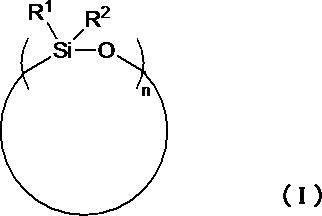
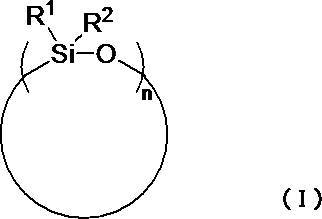
- a cleaning agent for cleaning silicone contaminants The cyclic silicone compound represented by the following formula (I) is to be removed:
- R 1 and R 2 independently represent a hydrogen atom, a C 1-6 alkyl group, a C 2-6 alkenyl group or a C 6-10 aryl group; n is an integer of 4 or more and 8 or less.
- a cleaning agent for cleaning silicone contaminants comprising a cyclic lipopeptide biosurfactant.
- the cleaning agent of the present invention it becomes possible to effectively remove low water-soluble contaminants such as D4 to D6 derived from silicone, which have not had an effective cleaning agent so far.
- the cyclic lipopeptide biosurfactant which is a main component of the cleaning agent according to the present invention, is a natural peptide surfactant, it is rapidly decomposed by microorganisms and the like even when released into the environment by use. The load on the environment is small and it can be used in large quantities outdoors.
- the adhesion with a new sealant is reduced.
- the cleaning agent of the present invention is extremely useful industrially as an effective agent for cleaning the outer wall of a building using a silicone sealant, or for replacing an existing silicone sealant with a new sealant.
- FIG. 1 is a photograph showing an example of an outer wall contaminated with a low water-soluble contaminant derived from a silicone sealant.
- the cleaning agent for cleaning silicone contaminants according to the present invention is intended to remove the following cyclic silicone compound (I) that has not had an effective cleaning agent so far.
- R 1 and R 2 independently represent a hydrogen atom, a C 1-6 alkyl group, a C 2-6 alkenyl group or a C 6-10 aryl group; n is an integer of 4 or more and 8 or less.
- the “C 1-6 alkyl group” means a linear or branched monovalent aliphatic saturated hydrocarbon group having 1 to 6 carbon atoms.
- methyl, ethyl, n-propyl, isopropyl, n-butyl, isobutyl, s-butyl, t-butyl, n-pentyl, n-hexyl and the like can be mentioned.
- C 1-4 alkyl groups are preferred, C 1-2 alkyl groups are more preferred, and methyl is particularly preferred.
- the “C 2-6 alkenyl group” refers to a linear or branched monovalent aliphatic unsaturated hydrocarbon group having 2 or more and 6 or less carbon atoms having one or more carbon-carbon double bonds. Examples include ethenyl, allyl, isopropenyl, 1-butenyl, 2-butenyl, isobutenyl, 1,3-pentadienyl, 1,3,5-hexatrienyl and the like. Of these, a C 2-4 alkenyl group is preferable, a C 2-3 alkenyl group is more preferable, and allyl is particularly preferable.
- C 6-10 aryl group refers to a monovalent aromatic hydrocarbon group having 6 to 10 carbon atoms.
- phenyl, indenyl, naphthyl and the like can be mentioned, and phenyl is preferable.
- the cleaning agent for cleaning a silicone contaminant according to the present invention contains a cyclic lipopeptide biosurfactant as an active ingredient effective for emulsification removal of the cyclic silicone compound (I).
- Cyclic lipopeptide biosurfactant is a cyclic peptide having a lipophilic group such as a long-chain alkyl group and having a surfactant activity.
- the cyclic lipopeptide biosurfactant has the advantage that the cyclic silicone compound (I) has a very excellent washing and removal effect, and since it is a peptide compound, it is highly biodegradable and has little influence on the living body and the environment. There is also.
- the cyclic lipopeptide biosurfactant is not particularly limited as long as it is a peptide compound having a bulky cyclic structure and exhibiting a surface activity, and examples thereof include surfactin, arthrofactin, iturin, serawetin, lykesin, and viscosin. be able to.
- a surfactin salt represented by the following formula (II) can be suitably used as the cyclic lipopeptide biosurfactant.
- X represents an amino acid residue selected from leucine, isoleucine and valine; R 3 represents a C 9-18 alkyl group; M + represents an alkali metal ion or a quaternary ammonium ion]
- the amino acid residue as X may be L-form or D-form, but L-form is preferred.
- C 9-18 alkyl group refers to a linear or branched monovalent saturated hydrocarbon group having 9 to 18 carbon atoms.
- the alkali metal ion is not particularly limited, and represents a lithium ion, a sodium ion, a potassium ion, or the like. Further, the two alkali metal ions may be the same as or different from each other. One of the —CO 2 ⁇ M + may be in the state of —COOH.
- Examples of the quaternary ammonium ion substituent include alkyl groups such as methyl, ethyl, n-propyl, isopropyl, n-butyl and tert-butyl; aralkyl groups such as benzyl, methylbenzyl and phenylethyl; phenyl and toluyl And organic groups such as aryl groups such as xylyl.
- Examples of quaternary ammonium ions include tetramethylammonium ions, tetraethylammonium ions, pyridinium ions, and the like.
- the surfactin salt (II) may be used alone or in combination of two or more.
- the cyclic lipopeptide biosurfactant is a natural surfactant, it can be separated from the microorganism itself producing the cyclic lipopeptide biosurfactant and its culture solution.
- surfactin salt (II) can be isolated from a culture solution by culturing a strain belonging to a microorganism such as Bacillus subtilis according to a known method. Even if the cyclic lipopeptide biosurfactant is a purified product, it can be used in an unpurified form, for example, a culture solution. Moreover, what is obtained by a chemical synthesis method can be used similarly.
- the concentration of the cyclic lipopeptide biosurfactant is preferably 0.003% by mass or more and 10% by mass or less when dissolved in an aqueous solvent. If the concentration is 0.003% by mass or more, the cyclic lipopeptide biosurfactant can sufficiently form micelles in the solution, and can more reliably incorporate and remove silicone contaminants therein. Become. On the other hand, since the effect may be saturated even if the concentration is too high, the concentration is preferably 10% by mass or less. The concentration is more preferably 7.5% by mass or less, further preferably 5% by mass or less, still more preferably 2.5% by mass or less, and particularly preferably 1% by mass or less.
- the silicone contaminant cleaning agent according to the present invention is preferably in a liquid state, but may be in a solid state or a semi-solid state having fluidity such as a gel.
- the cleaning agent for cleaning a silicone contaminant according to the present invention removes the above cyclic silicone compound (I) with a cyclic lipopeptide biosurfactant that is a surfactant, and therefore it is solid or semi-solid. Is mixed and dissolved in an aqueous solvent at least before use.
- the aqueous solvent means water alone, a water-miscible organic solvent alone, or a mixed solvent of water and a water-miscible organic solvent.
- the kind of water here is not particularly limited, and any of distilled water, pure water, ultrapure water, purified water, tap water, well water, and the like can be used.
- the water-miscible organic solvent is not particularly limited as long as it is miscible with water at room temperature and does not give an excessive load to the environment.
- alcohol solvents such as methanol, ethanol, isopropanol; tetrahydrofuran, etc.
- ether solvents such as acetone.
- a mixed solvent of water and a water-miscible organic solvent is particularly suitable.
- a cleaning agent for cleaning a silicone contaminant containing such a mixed solvent is particularly excellent in the cleaning action of the cyclic silicone compound (I).
- the ratio of the water-miscible organic solvent in the mixed solvent is preferably 5 v / v% or more and 50 v / v% or less. If the said ratio is 5 v / v% or more, the improvement effect of the washing
- the ratio is preferably 50 v / v% or less.
- the ratio is more preferably 10 v / v% or more, further preferably 15 v / v% or more, more preferably 40 v / v% or less, and further preferably 30 v / v% or less.
- components generally added to the cleaning agent may be blended.
- cyclic silicone compound (I) there are contaminants to be removed in addition to the above cyclic silicone compound (I), which may be appropriately selected according to the type thereof.
- anionic surfactant other than cyclic lipopeptide biosurfactant examples include sulfate ester surfactants such as sodium lauryl sulfate and sodium polyoxyethylene lauryl ether sulfate.
- examples of the cationic surfactant include quaternary ammonium salt surfactants such as distearyldimethylammonium chloride and benzalkonium chloride.
- examples of nonionic surfactants include sugar fatty acid ester surfactants such as sucrose fatty acid esters.
- zwitterionic surfactants include betaine acetate surfactants such as lauryldimethylaminoacetic acid betaine and coconut oil fatty acid amidopropyldimethylaminoacetic acid betaine.
- these may be selected and used alone, or two or more may be selected and used in combination.
- a cleaning aid may be added to the cleaning agent for cleaning a silicone contaminant according to the present invention.
- the cleaning aid include dicarboxylic acids such as succinic acid, glutaric acid and malonic acid and salts thereof; aminocarboxylic acids such as ethylenediaminetetraacetic acid and hydroxyethylenediamineacetic acid and salts thereof; orthophosphoric acid, trimetaphosphoric acid, pyrophosphoric acid And phosphoric acid compounds such as tripolyphosphoric acid and salts thereof.
- the salt include alkali metal salts such as sodium salt and potassium salt, and ammonium salt.
- alkali agents can be used as cleaning aids, such as hydroxides such as sodium hydroxide and potassium hydroxide; carbonates such as sodium carbonate, potassium carbonate and sodium sesquicarbonate; potassium borate, sodium borate and the like Borate salts of sodium; Hydrogen sulfate salts such as sodium hydrogen sulfate and potassium hydrogen sulfate; Inorganic alkali metal salts such as sodium silicate, sodium metasilicate, potassium silicate, potassium metasilicate, and zeolite; Sodium formate, sodium acetate, sodium oxalate And organic amines such as triethylamine.
- these alkali agents may adversely affect the environment, it is preferable not to add a strong base, and the amount thereof should be suppressed.
- the blending amount of the cleaning aid may be appropriately adjusted. For example, it may be 0.01 parts by mass or more and 5 parts by mass or less with respect to the cyclic lipopeptide biosurfactant.
- the cyclic lipopeptide biosurfactant may be deactivated.
- the above alkaline agent is effective, but there is a concern about an adverse effect on the environment. Therefore, in such a case, it is preferable to add a chelating agent for capturing polyvalent metal ions.
- the chelating agent examples include edetic acid or a salt thereof such as EDTA or a sodium salt thereof; hydroxyethylethylenediamine triacetic acid or a salt thereof such as HEDTA or a sodium salt thereof; pentetic acid or a salt thereof; phytic acid; Acids and salts thereof such as sodium salts; organic acids such as oxalic acid, citric acid, alanine, dihydroxyethylglycine, gluconic acid, ascorbic acid, succinic acid, tartaric acid; or salts thereof; polypolyamino acids such as polyaspartic acid and polyglutamic acid There can be mentioned. Among these, considering the influence on the environment, an organic acid such as sodium citrate or a salt thereof is preferable.
- the cleaning agent for cleaning silicone contaminants according to the present invention includes, for example, polyhydric alcohols such as ethylene glycol and propylene glycol; low-temperature stability such as lower alkyl sulfonates such as benzenesulfonate and toluenesulfonate.
- Antioxidants such as 2,6-di-t-butyl-p-cresol, 2,6-diphenyl-4-octadecyloxyphenol, 2,5-di-t-butylhydroquinone, DL- ⁇ -tocophenol
- An agent; a preservative such as p-hydroxybenzoate; a fragrance; a pigment and the like can be blended.
- the present invention also includes a step of cleaning the substance having the cyclic silicone compound (I) adhering to the surface with the cleaning agent for cleaning a silicone contaminant according to the present invention. It relates to a removal method. Hereinafter, the method will be described for each step.
- Examples of the substance on which the cyclic silicone compound (I) is attached to the surface include a silicone sealant, or glass and an outer wall around the silicone sealant.
- the outer wall is not particularly limited, but for example, marble board; concrete board such as fiber reinforced cement board and wood wool cement board; brick; tile; ceramic tile; metal board such as steel sheet and aluminum board; flame retardant plywood; The enamel panel.
- the plate here includes a plate having a relatively small plane area and a relatively thick plate, which can be called a block.
- the cleaning method for the above substances is not particularly limited, and conventional methods can be used.
- the silicone contaminant cleaning detergent is applied to the material on which the cyclic silicone compound (I) adheres to the surface by spraying, or the brush or waste cloth is impregnated with the silicone contaminant cleaning detergent.
- the surface of the substance may be polished, or the waste cloth may be impregnated with a cleaning agent for cleaning the silicone contaminants and attached to the surface of the substance and allowed to stand for a predetermined time. Specific washing conditions and washing time may be set so that the cyclic silicone compound (I) to be removed can be sufficiently solubilized from the surface of the substance.
- the substance surface after treating it with the cleaning agent for cleaning a silicone contaminant.
- the surface of the substance is preferably polished by impregnating a brush or waste cloth with the cleaning agent for cleaning the silicone contaminant.
- the silicone contaminant cleaning detergent is applied to the surface of the substance in this step or a waste cloth impregnated with the silicone contaminant cleaning detergent is attached to the substance surface, It is preferable to sufficiently polish the material surface with a brush or the like.
- the cyclic silicone compound (I) can be sufficiently removed even if the next removal step is performed without polishing the glass surface.
- the removal means is not particularly limited, and examples thereof include spraying an aqueous solvent such as water on the surface of the substance or using a squeegee.
- the cyclic lipopeptide biosurfactant which is an active ingredient, is biodegradable, so it can be said that the load on the environment is small.
- the present invention includes a step of physically removing the silicone sealant, a step of washing a portion from which the silicone sealant has been removed by the method for removing a silicone contaminant, and a portion from which the silicone sealant has been removed.
- the present invention relates to a method for replacing a silicone sealant, which includes a step of applying a new sealant. Hereinafter, the method will be described for each step.
- the cyclic silicone compound (I) remains, so the adhesion between the removed surface and the new sealant is poor, and a new coating is applied. There is a tendency for the sealant to peel off easily.
- the removed portion of the silicone sealant is washed by the method for removing a silicone contaminant according to the present invention, the remaining cyclic silicone compound (I) can be removed, so that the adhesion with a new sealant is improved and a new coating is applied.
- the engineered sealant is difficult to peel off.
- a coating method a conventional method can be used.
- the new sealant used may be the same as or different from the removed silicone sealant.
- Example 1 Add 100 ⁇ L (8 ⁇ 10 ⁇ 2 M) of the D4 compound, which is a cyclic silicone compound, to 4 mL of water and stir. Add surfactin sodium or SDS (sodium lauryl sulfate) at the concentrations shown in Table 1 and stir again. And the emulsification status of the D4 compound was confirmed. The confirmation of the emulsification status was performed by irradiating the mixed aqueous solution with light and measuring the absorbance of light having a wavelength of 620 nm. The higher the absorbance, the finer the D4 compound is dispersed and the more emulsified state is indicated. The obtained results are shown in Table 1.
- Example 2 A silicone sealant (manufactured by DOW CORNING (registered trademark) 791 SLICONE WEATHERPROOFING SEALANT)) was applied to a glass plate (150 mm ⁇ 70 mm) and allowed to stand for 10 days under conditions of 23 ° C. and 50% RH. Next, a silicone contaminated glass plate was obtained by repeating the cycle of applying water for 5 minutes in a shower and heating for 55 minutes in a dryer at 50 ° C. four times to generate silicone contaminants from the silicone sealant.
- DOW CORNING registered trademark 791 SLICONE WEATHERPROOFING SEALANT
- a washing solution was prepared by dissolving. Each cleaning solution was put in a commercially available spray bottle, and 3 mL was sprayed onto the center of the silicone-contaminated glass plate. After spreading the cleaning liquid over the entire surface of the glass plate with a sponge, the liquid was removed with a squeegee.
- the silicone contaminants could be washed and removed more effectively than the solvent alone or the sodium lauryl sulfate solution. Such an effect was particularly high when a mixed solvent of water and a water-miscible organic solvent was used.
- Example 3 A silicone sealant (manufactured by DOW CORNING (registered trademark) 791 SILICON WEATHERPROFING SEALANT ”) was applied to the aluminum plate, and left for 10 days under conditions of 23 ° C. and 50% RH. The silicone sealant was then excised using a scraper, leaving a thickness of about 1 mm. The remaining silicone sealant was swollen with a commercially available limonene cleaning solution and then removed, and the removed surface was wiped with a waste cloth.
- DOW CORNING registered trademark 791 SILICON WEATHERPROFING SEALANT
Landscapes
- Chemical & Material Sciences (AREA)
- Organic Chemistry (AREA)
- Life Sciences & Earth Sciences (AREA)
- Molecular Biology (AREA)
- Biochemistry (AREA)
- General Health & Medical Sciences (AREA)
- Genetics & Genomics (AREA)
- Medicinal Chemistry (AREA)
- Health & Medical Sciences (AREA)
- Proteomics, Peptides & Aminoacids (AREA)
- Biophysics (AREA)
- Engineering & Computer Science (AREA)
- Chemical Kinetics & Catalysis (AREA)
- Oil, Petroleum & Natural Gas (AREA)
- Wood Science & Technology (AREA)
- Detergent Compositions (AREA)
- Peptides Or Proteins (AREA)
- Cleaning By Liquid Or Steam (AREA)
Abstract
Description

より詳しくは、上記の直鎖状ポリシロキサンに対して架橋剤を作用させることにより、Si-RがSi-OHに変換され、直鎖状分子間のSi-OHで脱水縮合反応が起き、シロキサン結合が形成され、架橋される。その結果、ポリシロキサンは不溶化し、適度な弾力性を有するシーラントとなる。

下記式(I)で表される環状シリコーン化合物を除去対象とし:
環状リポペプチドバイオサーファクタントを含有することを特徴とするシリコーン汚染物洗浄用洗浄剤。

Xは、ロイシン、イソロイシンおよびバリンから選択されるアミノ酸残基を示し;
R3はC9-18アルキル基を示し;
M+はアルカリ金属イオンまたは第四級アンモニウムイオンを示す]
[3] 上記環状リポペプチドバイオサーファクタントが水系溶媒に溶解しており、その濃度が0.003質量%以上である上記[1]または[2]に記載のシリコーン汚染物洗浄用洗浄剤。
上記シリコーンシーラントを物理的に除去する工程、
上記[8]~[12]のいずれかに記載の方法により、上記シリコーンシーラントを除去した部分を洗浄する工程、および、
上記シリコーンシーラントを除去した部分に、新たなシーラントを塗工する工程を含むことを特徴とする方法。
本発明において「C1-6アルキル基」とは、炭素数1以上、6以下の直鎖状または分岐鎖状の一価脂肪族飽和炭化水素基をいう。例えば、メチル、エチル、n-プロピル、イソプロピル、n-ブチル、イソブチル、s-ブチル、t-ブチル、n-ペンチル、n-ヘキシルなどを挙げることができる。これらのうち、C1-4アルキル基が好ましく、C1-2アルキル基がより好ましく、メチルが特に好ましい。

Xは、ロイシン、イソロイシンおよびバリンから選択されるアミノ酸残基を示し;
R3はC9-18アルキル基を示し;
M+はアルカリ金属イオンまたは第四級アンモニウムイオンを示す]
Xとしてのアミノ酸残基は、L体でもD体でもよいが、L体が好ましい。
シリコーンシーラントなどのシリコーン化合物中に副生成物として生成する低水溶性の上記環状シリコーン化合物(I)は、経時的に僅かずつシリコーン化合物中からブリーディングしたり溶出するなどしてシリコーン化合物自体やその周辺を汚染する。本工程では、汚染の原因となった上記環状シリコーン化合物(I)を本発明に係る上記シリコーン汚染物洗浄用洗浄剤で洗浄することにより除去する。
上記洗浄工程(A)の後、上記シリコーン汚染物洗浄用洗浄剤と共に上記環状シリコーン化合物(I)を除去することが好ましい。この場合、上記環状シリコーン化合物(I)は、上記シリコーン汚染物洗浄用洗浄剤により可溶化しているので、容易に除去することができる。
シリコーンシーラントは、一般的に、経時的に劣化したり、表面にカビが発生するなどして汚れたりするので、置換する必要が生じる。そこで、本工程では、先ず、古くなったシリコーンシーラントを物理的に除去する。
本工程では、上記のシリコーン汚染物の除去方法により、シリコーンシーラントを除去した部分を洗浄する。
上記工程(D)によりシリコーンシーラントを除去した部分を洗浄した後、新たなシーラントを塗工する。塗工方法としては、常法を用いることができる。
環状シリコーン化合物であるD4化合物100μL(8×10⁻²M)を水4mLに加えて攪拌し、さらに、サーファクチンナトリウムまたはSDS(ラウリル硫酸ナトリウム)を表1に示す濃度で添加した上で再度攪拌を行い、D4化合物の乳化状況を確認した。乳化状況の確認は、混合水溶液に光線を照射し、620nmの波長の光の吸光度を測定することで行った。吸光度が高いほどD4化合物が微細に分散し、乳化状態になっていることを示す。得られた結果を表1に示す。

ガラス板(150mm×70mm)にシリコーンシーラント(DOW CORNING社製,「DOW CORNING(登録商標) 791 SILICONE WEATHERPROOFING SEALANT」)を塗工し、23℃、50%RHの条件下、10日間放置した。次いで、シャワーにより水を5分間かけ、50℃の乾燥機で55分間加熱するというサイクルを4回繰返すことで、シリコーンシーラントからシリコーン汚染物を発生させたものをシリコーン汚染ガラス板とした。
○: 洗浄後のガラス板が原料ガラス板よりやや高い撥水性を示す場合
△: 洗浄後のガラス板が洗浄前のガラス板よりやや低い撥水性を示す場合
×: 洗浄前後で撥水性が変わらない場合


アルミ板にシリコーンシーラント(DOW CORNING社製,「DOW CORNING(登録商標) 791 SILICONE WEATHERPROOFING SEALANT」)を塗工し、23℃、50%RHの条件下、10日間放置した。次いで、スクレパーを用い、約1mmの厚みを残してシリコーンシーラントを切除した。市販のリモネン洗浄液により残留したシリコーンシーラントを膨潤させた後に除去し、除去面をウエスで拭き取った。続いて、サーファクチンナトリウムを1.0wt%の濃度で溶解した20v/v%エタノール水溶液または20v/v%アセトン水溶液をウエスに含浸させ、シリコーンシーラントの除去面を30秒間磨いた後、各溶媒のみを含浸させたウエスで拭き取った。シリコーンシーラント塗工前、SF溶液による洗浄操作前、および洗浄後において水の接触角を測定した。結果を表4に示す。

Claims (13)
- シリコーン汚染物を洗浄するための洗浄剤であって、
下記式(I)で表される環状シリコーン化合物を除去対象とし:

[式中、R1とR2は、独立して、水素原子、C1-6アルキル基、C2-6アルケニル基またはC6-10アリール基を示し;nは4以上、8以下の整数を示す]
環状リポペプチドバイオサーファクタントを含有することを特徴とするシリコーン汚染物洗浄用洗浄剤。 - 上記環状リポペプチドバイオサーファクタントが下記式(II)で表されるサーファクチン塩である請求項1に記載のシリコーン汚染物洗浄用洗浄剤。

[式中、
Xは、ロイシン、イソロイシンおよびバリンから選択されるアミノ酸残基を示し;
R3はC9-18アルキル基を示し;
M+はアルカリ金属イオンまたは第四級アンモニウムイオンを示す] - 上記環状リポペプチドバイオサーファクタントが水系溶媒に溶解しており、その濃度が0.003質量%以上である請求項1または2に記載のシリコーン汚染物洗浄用洗浄剤。
- 上記環状リポペプチドバイオサーファクタントが水系溶媒に溶解しており、その濃度が10質量%以下である請求項1~3のいずれかに記載のシリコーン汚染物洗浄用洗浄剤。
- 上記水系溶媒が水混和性有機溶媒と水との混合溶媒である請求項3または4に記載のシリコーン汚染物洗浄用洗浄剤。
- R1およびR2がメチル基である請求項1~5のいずれかに記載のシリコーン汚染物洗浄用洗浄剤。
- 少なくとも一つのM+がナトリウムイオンである請求項2に記載のシリコーン汚染物洗浄用洗浄剤。
- シリコーン汚染物を除去するための方法であって、上記シリコーン汚染物が表面に付着している物質を、請求項1~7のいずれかに記載のシリコーン汚染物洗浄用洗浄剤で洗浄する工程を含むことを特徴とする方法。
- 上記シリコーン汚染物が表面に付着している物質が、ガラスまたは外壁である請求項8に記載の方法。
- 上記外壁が、大理石板、コンクリート板、レンガ、瓦、陶磁器タイル、金属板、難燃合板、窯業系サイディングまたはホウロウパネルである請求項9に記載の方法。
- 上記洗浄工程の後、さらに、上記シリコーン汚染物洗浄用洗浄剤を除去する工程を含む請求項8~10のいずれかに記載の方法。
- 上記洗浄工程において、上記物質の表面を磨く工程を含む請求項8~11のいずれかに記載の方法。
- シリコーンシーラントを置換する方法であって、
上記シリコーンシーラントを物理的に除去する工程、
請求項8~12のいずれかに記載の方法により、上記シリコーンシーラントを除去した部分を洗浄する工程、および、
上記シリコーンシーラントを除去した部分に、新たなシーラントを塗工する工程を含むことを特徴とする方法。
Priority Applications (2)
| Application Number | Priority Date | Filing Date | Title |
|---|---|---|---|
| US14/778,685 US10035974B2 (en) | 2013-03-25 | 2014-03-25 | Cleaning agent for washing out silicone stain |
| JP2015508529A JP6308593B2 (ja) | 2013-03-25 | 2014-03-25 | シリコーン汚染物を洗浄するための洗浄剤 |
Applications Claiming Priority (2)
| Application Number | Priority Date | Filing Date | Title |
|---|---|---|---|
| JP2013062835 | 2013-03-25 | ||
| JP2013-062835 | 2013-03-25 |
Publications (1)
| Publication Number | Publication Date |
|---|---|
| WO2014157169A1 true WO2014157169A1 (ja) | 2014-10-02 |
Family
ID=51624140
Family Applications (1)
| Application Number | Title | Priority Date | Filing Date |
|---|---|---|---|
| PCT/JP2014/058228 Ceased WO2014157169A1 (ja) | 2013-03-25 | 2014-03-25 | シリコーン汚染物を洗浄するための洗浄剤 |
Country Status (3)
| Country | Link |
|---|---|
| US (1) | US10035974B2 (ja) |
| JP (1) | JP6308593B2 (ja) |
| WO (1) | WO2014157169A1 (ja) |
Cited By (1)
| Publication number | Priority date | Publication date | Assignee | Title |
|---|---|---|---|---|
| WO2021203467A1 (zh) * | 2020-04-08 | 2021-10-14 | 大连百奥泰科技有限公司 | 一类脂肽化合物在抗新型冠状病毒中的应用 |
Families Citing this family (2)
| Publication number | Priority date | Publication date | Assignee | Title |
|---|---|---|---|---|
| JP6555595B2 (ja) * | 2014-03-05 | 2019-08-07 | 株式会社カネカ | 臨界ミセル濃度の低減方法 |
| CN113544247B (zh) * | 2019-03-05 | 2024-04-30 | 日产化学株式会社 | 清洗剂组合物以及清洗方法 |
Citations (3)
| Publication number | Priority date | Publication date | Assignee | Title |
|---|---|---|---|---|
| JP2003155207A (ja) * | 2001-08-10 | 2003-05-27 | Showa Denko Kk | 殺菌組成物、その製造法及びそれを用いた殺菌方法 |
| JP2004149446A (ja) * | 2002-10-30 | 2004-05-27 | Nonogawa Shoji Kk | 皮膚洗浄料 |
| WO2012096276A1 (ja) * | 2011-01-13 | 2012-07-19 | 株式会社カネカ | 経皮吸収促進剤及び皮膚外用剤 |
Family Cites Families (11)
| Publication number | Priority date | Publication date | Assignee | Title |
|---|---|---|---|---|
| JPH0616534A (ja) | 1992-07-01 | 1994-01-25 | Shiseido Co Ltd | 洗浄剤組成物 |
| US6319898B1 (en) * | 1997-10-17 | 2001-11-20 | Terragen Diversity, Inc. | Method for inhibiting eukaryotic protein kinases |
| JP2001220521A (ja) * | 2000-02-07 | 2001-08-14 | Showa Denko Kk | 水性組成物 |
| JP3894064B2 (ja) * | 2001-08-10 | 2007-03-14 | 昭和電工株式会社 | 油性増粘ゲル状組成物、該組成物を用いた乳化組成物及びその調製法 |
| WO2003013251A1 (en) | 2001-08-10 | 2003-02-20 | Showa Denko K.K. | Fungicidal and/or bactericidal composition, production process thereof and sterilization method using the composition |
| US6838426B1 (en) * | 2002-05-31 | 2005-01-04 | Magic American Products, Inc. | Compositions for water-based and solvent-based sprayable gels and methods for making same |
| JP3758613B2 (ja) * | 2002-06-28 | 2006-03-22 | 昭和電工株式会社 | 液晶パネル用洗浄剤組成物 |
| JP4152723B2 (ja) | 2002-10-30 | 2008-09-17 | 旭化成ケミカルズ株式会社 | クロロホスファゼンオリゴマーの製造方法 |
| JP4384257B1 (ja) | 2009-06-12 | 2009-12-16 | 信一 尾子 | 外皮材保持部材及び外皮材 |
| ES2386215B1 (es) | 2011-01-17 | 2013-05-08 | Universidad Del Pais Vasco-Euskal Herriko Unibertsitatea | Controlador de viento midi para instrumentos de viento de serie armónica. |
| EP2758505A1 (en) * | 2011-09-20 | 2014-07-30 | The Procter and Gamble Company | Detergent compositions comprising sustainable surfactant systems comprising isoprenoid-derived surfactants |
-
2014
- 2014-03-25 WO PCT/JP2014/058228 patent/WO2014157169A1/ja not_active Ceased
- 2014-03-25 US US14/778,685 patent/US10035974B2/en active Active
- 2014-03-25 JP JP2015508529A patent/JP6308593B2/ja not_active Expired - Fee Related
Patent Citations (3)
| Publication number | Priority date | Publication date | Assignee | Title |
|---|---|---|---|---|
| JP2003155207A (ja) * | 2001-08-10 | 2003-05-27 | Showa Denko Kk | 殺菌組成物、その製造法及びそれを用いた殺菌方法 |
| JP2004149446A (ja) * | 2002-10-30 | 2004-05-27 | Nonogawa Shoji Kk | 皮膚洗浄料 |
| WO2012096276A1 (ja) * | 2011-01-13 | 2012-07-19 | 株式会社カネカ | 経皮吸収促進剤及び皮膚外用剤 |
Non-Patent Citations (1)
| Title |
|---|
| TADASHI YONEDA ET AL., FRAGRANCE JOURNAL, vol. 29, no. 12, 2001 * |
Cited By (1)
| Publication number | Priority date | Publication date | Assignee | Title |
|---|---|---|---|---|
| WO2021203467A1 (zh) * | 2020-04-08 | 2021-10-14 | 大连百奥泰科技有限公司 | 一类脂肽化合物在抗新型冠状病毒中的应用 |
Also Published As
| Publication number | Publication date |
|---|---|
| US20160046890A1 (en) | 2016-02-18 |
| US10035974B2 (en) | 2018-07-31 |
| JPWO2014157169A1 (ja) | 2017-02-16 |
| JP6308593B2 (ja) | 2018-04-11 |
Similar Documents
| Publication | Publication Date | Title |
|---|---|---|
| AU2011200073B2 (en) | Hard surface cleaning composition | |
| US9376651B2 (en) | Soil resistant floor treatment | |
| JP5512070B2 (ja) | 硬質面を浄化するための、エステルベースの低臭マイクロエマルジョン | |
| TWI698504B (zh) | 用於塗布金屬表面之水性組成物、方法及物品 | |
| JP2013508505A (ja) | フォギング防止効果およびクリーニング効果をもたらす低揮発性有機成分含有の硬表面処理剤組成物 | |
| JP2019529632A (ja) | 硬質表面洗浄剤 | |
| JP5113423B2 (ja) | フロアーポリッシュ用剥離剤組成物およびそれを用いた剥離除去方法 | |
| JP6308593B2 (ja) | シリコーン汚染物を洗浄するための洗浄剤 | |
| WO2018164115A1 (ja) | 硬質表面用液体洗浄剤組成物 | |
| JP4944342B2 (ja) | 油性汚れ取り用洗浄剤組成物 | |
| JP6093280B2 (ja) | 硬質表面用液体洗浄剤組成物 | |
| EP0444289B1 (en) | Method of protecting hard surfaces | |
| EP2853583A1 (en) | Hard surface cleaning composition | |
| JP6310727B2 (ja) | フロアーポリッシュ用剥離剤及びフロアーポリッシュの剥離方法 | |
| CN109837147B (zh) | 一种洗衣机门封胶圈霉斑清洗剂及其制备方法 | |
| US20200299528A1 (en) | Methods and formulations for paint deposit removal | |
| JP2003105394A (ja) | ジェルクリーナー | |
| EP2814931B1 (en) | Cleaning composition | |
| WO2015054564A1 (en) | Cleaning compositions and methods of use thereof | |
| JP2002531687A (ja) | 硬質表面洗浄用組成物 | |
| WO2012080886A2 (en) | Soil resistant cleaner and surface treatment | |
| JP2005089610A (ja) | リモネンを主成分とする建築外装材用洗浄剤、および建築外装材の洗浄方法 | |
| JP2004027133A (ja) | 液晶パネル用洗浄剤組成物 | |
| CN121718885A (zh) | 一种金属清洗增粘剂及制备方法和使用方法 | |
| DE102014226909A1 (de) | Polymere für Reiniger mit Oberflächen-modifizierender Wirkung |
Legal Events
| Date | Code | Title | Description |
|---|---|---|---|
| 121 | Ep: the epo has been informed by wipo that ep was designated in this application |
Ref document number: 14776217 Country of ref document: EP Kind code of ref document: A1 |
|
| ENP | Entry into the national phase |
Ref document number: 2015508529 Country of ref document: JP Kind code of ref document: A |
|
| WWE | Wipo information: entry into national phase |
Ref document number: 14778685 Country of ref document: US |
|
| NENP | Non-entry into the national phase |
Ref country code: DE |
|
| 122 | Ep: pct application non-entry in european phase |
Ref document number: 14776217 Country of ref document: EP Kind code of ref document: A1 |