WO2014156476A1 - 遺伝子改変クロストリジウム・サッカロパーブチルアセトニカム - Google Patents
遺伝子改変クロストリジウム・サッカロパーブチルアセトニカム Download PDFInfo
- Publication number
- WO2014156476A1 WO2014156476A1 PCT/JP2014/055140 JP2014055140W WO2014156476A1 WO 2014156476 A1 WO2014156476 A1 WO 2014156476A1 JP 2014055140 W JP2014055140 W JP 2014055140W WO 2014156476 A1 WO2014156476 A1 WO 2014156476A1
- Authority
- WO
- WIPO (PCT)
- Prior art keywords
- gene
- butanol
- function
- strain
- acetone
- Prior art date
- Legal status (The legal status is an assumption and is not a legal conclusion. Google has not performed a legal analysis and makes no representation as to the accuracy of the status listed.)
- Ceased
Links
Images


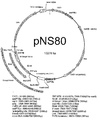

Classifications
-
- C—CHEMISTRY; METALLURGY
- C12—BIOCHEMISTRY; BEER; SPIRITS; WINE; VINEGAR; MICROBIOLOGY; ENZYMOLOGY; MUTATION OR GENETIC ENGINEERING
- C12P—FERMENTATION OR ENZYME-USING PROCESSES TO SYNTHESISE A DESIRED CHEMICAL COMPOUND OR COMPOSITION OR TO SEPARATE OPTICAL ISOMERS FROM A RACEMIC MIXTURE
- C12P7/00—Preparation of oxygen-containing organic compounds
- C12P7/02—Preparation of oxygen-containing organic compounds containing a hydroxy group
- C12P7/04—Preparation of oxygen-containing organic compounds containing a hydroxy group acyclic
- C12P7/16—Butanols
-
- C—CHEMISTRY; METALLURGY
- C12—BIOCHEMISTRY; BEER; SPIRITS; WINE; VINEGAR; MICROBIOLOGY; ENZYMOLOGY; MUTATION OR GENETIC ENGINEERING
- C12N—MICROORGANISMS OR ENZYMES; COMPOSITIONS THEREOF; PROPAGATING, PRESERVING, OR MAINTAINING MICROORGANISMS; MUTATION OR GENETIC ENGINEERING; CULTURE MEDIA
- C12N1/00—Microorganisms; Compositions thereof; Processes of propagating, maintaining or preserving microorganisms or compositions thereof; Processes of preparing or isolating a composition containing a microorganism; Culture media therefor
- C12N1/20—Bacteria; Culture media therefor
-
- C—CHEMISTRY; METALLURGY
- C12—BIOCHEMISTRY; BEER; SPIRITS; WINE; VINEGAR; MICROBIOLOGY; ENZYMOLOGY; MUTATION OR GENETIC ENGINEERING
- C12N—MICROORGANISMS OR ENZYMES; COMPOSITIONS THEREOF; PROPAGATING, PRESERVING, OR MAINTAINING MICROORGANISMS; MUTATION OR GENETIC ENGINEERING; CULTURE MEDIA
- C12N15/00—Mutation or genetic engineering; DNA or RNA concerning genetic engineering, vectors, e.g. plasmids, or their isolation, preparation or purification; Use of hosts therefor
- C12N15/09—Recombinant DNA-technology
- C12N15/11—DNA or RNA fragments; Modified forms thereof; Non-coding nucleic acids having a biological activity
- C12N15/52—Genes encoding for enzymes or proenzymes
-
- Y—GENERAL TAGGING OF NEW TECHNOLOGICAL DEVELOPMENTS; GENERAL TAGGING OF CROSS-SECTIONAL TECHNOLOGIES SPANNING OVER SEVERAL SECTIONS OF THE IPC; TECHNICAL SUBJECTS COVERED BY FORMER USPC CROSS-REFERENCE ART COLLECTIONS [XRACs] AND DIGESTS
- Y02—TECHNOLOGIES OR APPLICATIONS FOR MITIGATION OR ADAPTATION AGAINST CLIMATE CHANGE
- Y02E—REDUCTION OF GREENHOUSE GAS [GHG] EMISSIONS, RELATED TO ENERGY GENERATION, TRANSMISSION OR DISTRIBUTION
- Y02E50/00—Technologies for the production of fuel of non-fossil origin
- Y02E50/10—Biofuels, e.g. bio-diesel
Definitions
- Non-Patent Document 1 destruction of buk (butyrate kinase) and pta (phosphotransacetylase) is performed using homologous recombination.
- Non-patent Document 2 there is an example in which aad (alcohol / aldehyde dehydrogenase) is overexpressed after cloning (Non-patent Document 2), and there is also an example in which the amount of solvent generated is high.
- gene suppression and introduction are performed simultaneously.
- thl acetyl CoA dimerase
- aad are expressed while suppressing ctfB (B subunit of CoA transferase). Ethanol has increased to about 13 g / L.
- Non-Patent Document 4 discloses the simultaneous destruction of adc (acetoacetate decarboxylase) or ctfAB (CoA transferase) and pta. At this time, a significant amount of butyric acid accumulates, and the amount of butanol produced is greatly reduced.
- adc acetoacetate decarboxylase
- ctfAB CoA transferase
- Patent Document 1 it is described that gene disruption of buk or ptb (phosphotransbutylylase) was carried out in Clostridium acetobutyricum, and further adjustment of acetone, lactic acid, acetic acid, and hydrogenase was carried out on a strain that disrupted the butyric acid production pathway. However, specific figures are not shown.
- the present invention aims to suppress the production of by-products other than butanol and improve the yield of butanol in butanol fermentation.
- the present invention includes the following.
- a Clostridium saccharoper butylacetonicum species microorganism in which the function of a butyric acid synthase gene involved in a pathway for producing butyric acid from butyryl CoA is deleted.
- the microorganism of the present invention it is preferable to further lack the function of the acetic acid synthase gene. Thereby, the butanol yield in butanol fermentation can be further improved.
- the lactic acid synthase gene is a gene encoding an enzyme involved in a pathway for producing lactic acid from pyruvate.
- the lactate synthase gene includes lactate dehydrogenase.
- Lactate dehydrogenase is an enzyme that catalyzes the interconversion between lactic acid and pyruvate. At that time, mutual conversion of NADH and NAD + also occurs.
- lactate dehydrogenase There are four different species of lactate dehydrogenase. The two types are cytochrome c-dependent and each act on D-lactic acid (D-lactic acid dehydrogenase: EC 1.1.2.4) or L-lactic acid (L-lactic acid dehydrogenase: EC 1.1.2.3).
- FLP-FRT method Korean HP, J. Mol. Microbiol. Biotechnol. 5 (2): 67-77 (2003)
- Cre-loxP method Hoess et al. Nucleic Acids Res. 11; 14 (5) : 2287-300 (1986)
- FLP and Cre recognize short DNA of about 25 bases, FRT and loxP, respectively, and have a function of cutting out a region sandwiched between FRT and loxP.
- inorganic ions potassium phosphate, magnesium sulfate, iron ions, manganese ions and the like are added.
- organic micronutrients it is desirable to contain an appropriate amount of a required substance such as thiamine, p-aminobenzoic acid, vitamin B1, biotin, or yeast extract as required.
- the amount of butanol produced relative to the by-product can be further improved by adjusting the pH and carrying out the culture.
- the pH of the medium is preferably 4.6 or more, 4.7 or more, 4.8 or more, 4.9 or more, 5 or more, or 5.5 or more, preferably 8 or less, 7.5 or less, 7.0 If necessary, control is performed so that it is 6.9 or less, 6.8 or less, 6.7 or less, 6.6 or less, or 6.5 or less.
- an inorganic or organic acidic or alkaline substance such as calcium carbonate, ammonia, sodium hydroxide, potassium hydroxide, potassium phosphate and the like can be used.
- culture conditions are not particularly limited, and conventional conditions in this technical field can be employed.
- the culture time is usually 5 to 100 hours, preferably 12 to 48 hours.
- the culture time is usually 200 hours or longer, preferably 500 hours or longer, more preferably 1000 hours or longer.
- the culture temperature is usually adjusted to 20 to 55 ° C, preferably 25 to 40 ° C, for example about 30 ° C.
- Example 1 Preparation of transformed microorganism By inputting the base sequence of the target gene based on Perutka et al., J. Mol. Biol. 13; 336 (2): 421-39 (2004) The Excel macro was programmed to output the group II intron insertion into the gene and how to modify the targeting sequence. Next, the base sequences of the ptb gene, the pta gene, the ctfB gene, and the ldh1 gene that actually carry out the gene disruption were input thereto, and the modified portion of the targeting sequence was output.
- the fermentation broth was centrifuged to remove the supernatant, and 10 mL of ice-cooled 65 mM MOPS buffer (pH 6.5) was added and resuspended by pipetting. went. Washing with the MOPS buffer was repeated twice. After removing the MOPS buffer by centrifugation, the cell pellet was resuspended with 100 ⁇ L of 0.3 M sucrose that had been ice-cooled to obtain a competent cell. 50 ⁇ L of competent cells were taken in an Eppendorf tube and mixed with 1 ⁇ g of plasmid.
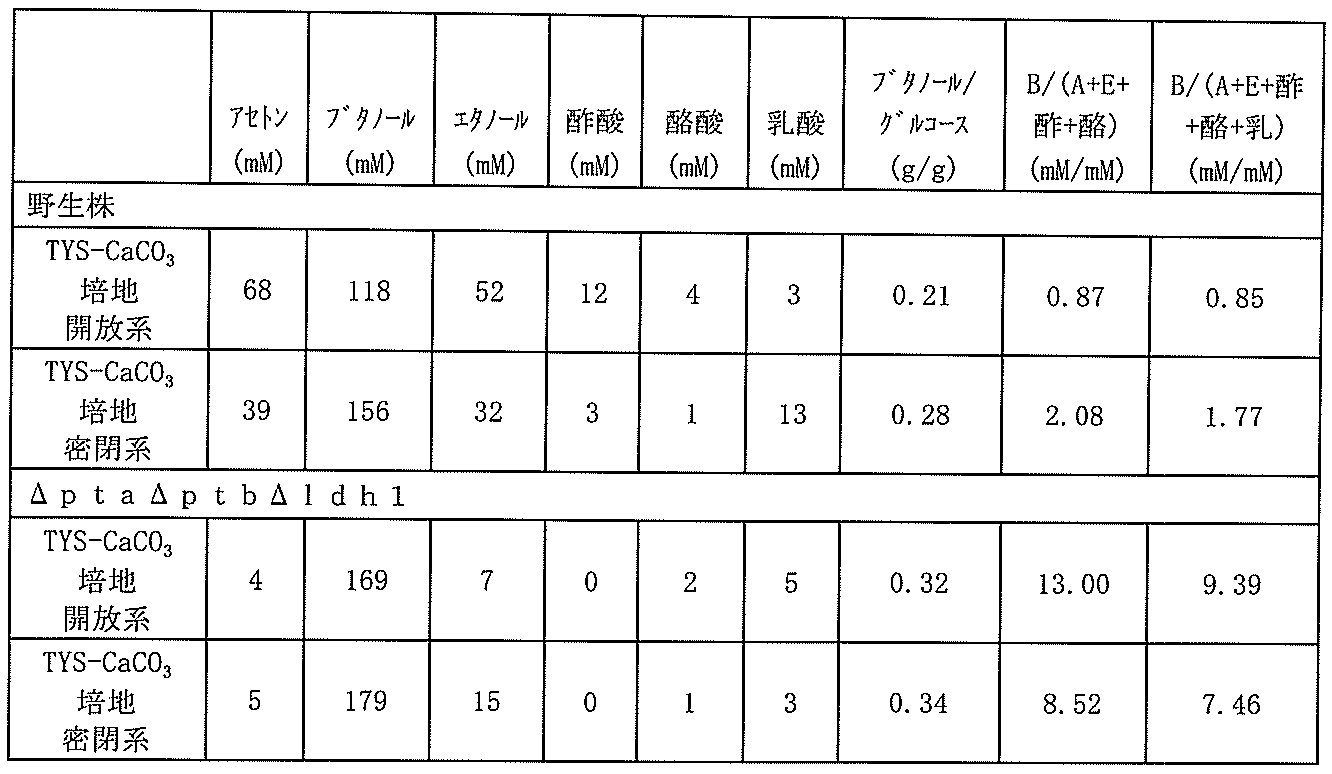
- B / (A + E + vinegar + dairy + milk) means butanol (mM), acetone (mM), ethanol (mM), acetic acid (mM), butyric acid (mM), and lactic acid (mM).
- the by-product parameter 1 and the by-product parameter 2 are collectively referred to as a by-product parameter.
- the ⁇ pta ⁇ ptb strain grew while maintaining a pH of 5 or higher when cultured in a TYA medium, and pH adjustment with CaCO 3 was unnecessary.
- Example 5 Butanol fermentation of ⁇ ctfB ⁇ pta ⁇ ptb C.I. Saccharoperbutylacetonicum transformed microorganism ( ⁇ ctfB ⁇ pta ⁇ ptb strain) was cultured and its performance was evaluated. 500 ⁇ l of the glycerol stock of the transformed microorganism was inoculated into TYS-CaCO 3 medium and cultured in a test tube at 30 ° C. for 24 hours. 50 ⁇ l of the obtained preculture was inoculated into 5 ml of fresh TYS-CaCO 3 medium and cultured at 30 ° C. in a test tube.
- B / (A + E + vinegar + dairy + milk) means butanol (mM), acetone (mM), ethanol (mM), acetic acid (mM), butyric acid (mM), and lactic acid (mM).
- the by-product parameter 1 and the by-product parameter 2 are collectively referred to as a by-product parameter.
- Example 7 Butanol fermentation in different medium conditions Saccharoperbutylacetonicum transformed microorganisms ( ⁇ pta strain, ⁇ ptb strain, ⁇ pta ⁇ ptb strain, ⁇ pta ⁇ ptb ⁇ ldh1 strain) were cultured and their performance was evaluated. 500 ⁇ l of the glycerol stock of the transformed microorganism was inoculated into 5 ml of TYS medium, and cultured in a test tube at 30 ° C. for 24 hours. 50 ⁇ l of the obtained preculture was inoculated into 5 ml of a new TYS-KH 2 PO 4 medium and cultured at 30 ° C. in a test tube. The composition of TYS-KH 2 PO 4 medium is shown below.
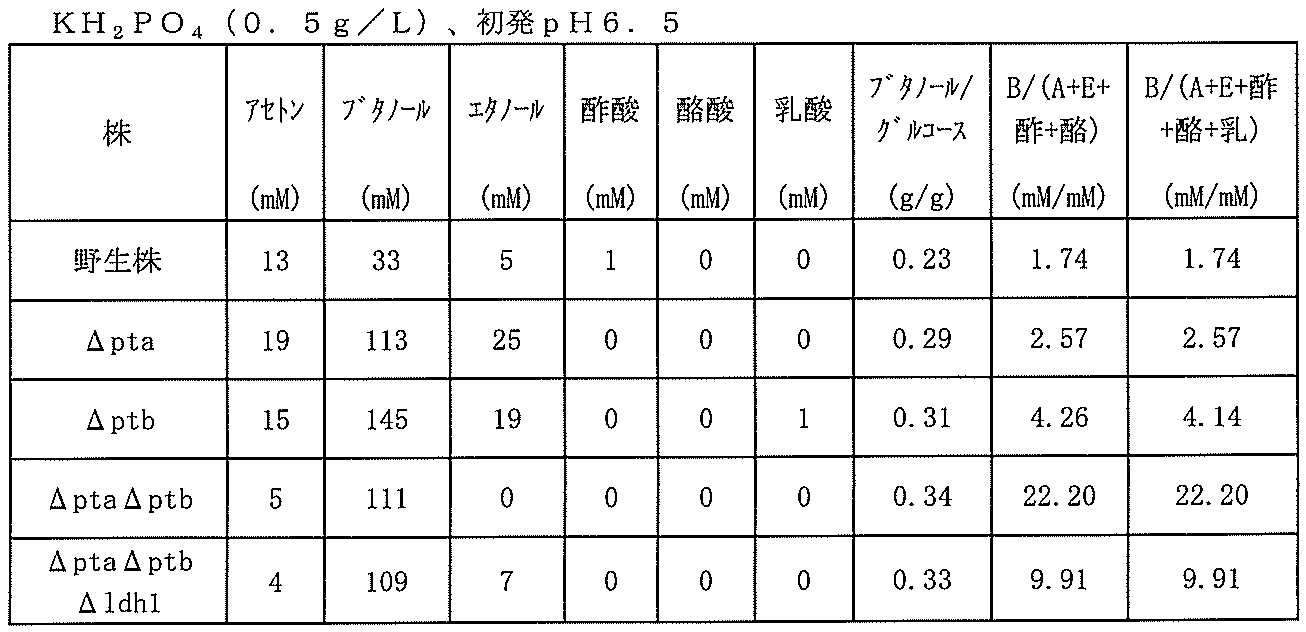
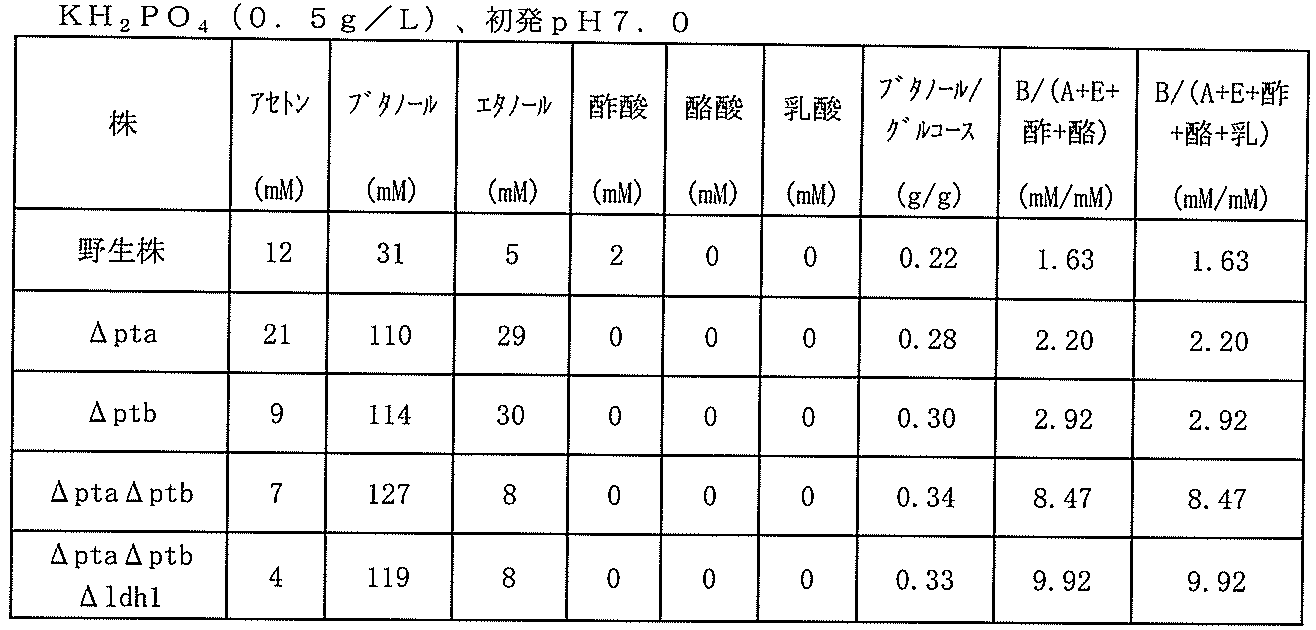
- B / (A + E + vinegar + dairy + milk) means butanol (mM), acetone (mM), ethanol (mM), acetic acid (mM), butyric acid (mM), and lactic acid (mM).
- the by-product parameter 1 and the by-product parameter 2 are collectively referred to as a by-product parameter.
Landscapes
- Engineering & Computer Science (AREA)
- Life Sciences & Earth Sciences (AREA)
- Health & Medical Sciences (AREA)
- Chemical & Material Sciences (AREA)
- Genetics & Genomics (AREA)
- Organic Chemistry (AREA)
- Wood Science & Technology (AREA)
- Zoology (AREA)
- Bioinformatics & Cheminformatics (AREA)
- Biotechnology (AREA)
- General Engineering & Computer Science (AREA)
- Biomedical Technology (AREA)
- Microbiology (AREA)
- Biochemistry (AREA)
- General Health & Medical Sciences (AREA)
- Molecular Biology (AREA)
- General Chemical & Material Sciences (AREA)
- Chemical Kinetics & Catalysis (AREA)
- Biophysics (AREA)
- Physics & Mathematics (AREA)
- Plant Pathology (AREA)
- Medicinal Chemistry (AREA)
- Tropical Medicine & Parasitology (AREA)
- Virology (AREA)
- Preparation Of Compounds By Using Micro-Organisms (AREA)
- Micro-Organisms Or Cultivation Processes Thereof (AREA)
Abstract
Description
(2)酪酸生成酵素遺伝子として、ptbおよび/またはbukの機能を欠損させた、(1)記載の微生物。
(3)さらに、アセチルCoAから酢酸が生成する経路に関与する酢酸生成酵素遺伝子の機能を欠損させた、(1)または(2)記載の微生物。
(4)酢酸生成酵素遺伝子として、ptaおよび/またはackの機能を欠損させた、(3)記載の微生物。
(5)さらに、アセトアセチルCoAからアセトンが生成する経路に関与するアセトン生成酵素遺伝子の機能を欠損させた、(1)~(4)のいずれかに記載の微生物。
(6)アセトン生成酵素遺伝子として、adcおよび/またはctfABの機能を欠損させた、(5)記載の微生物。
(7)さらに、ピルビン酸から乳酸が生成する経路に関与する乳酸生成酵素遺伝子の機能を欠損させた、(1)~(6)のいずれかに記載の微生物。
(8)乳酸生成酵素遺伝子として、ldh1の機能を欠損させた、(7)記載の微生物。
(9)(1)~(8)のいずれかに記載の微生物を、炭素源を含む培地中で培養する工程を含む、ブタノールの製造方法。
(10)培養液からブタノールを回収する工程を含む、(9)記載の方法。
本明細書は本願の優先権の基礎である日本国特許出願第2013-063347号および第2014-032953号の明細書および/または図面に記載される内容を包含する。
Perutka et al., J. Mol. Biol. 13;336(2):421-39(2004)をもとにして、標的とする遺伝子の塩基配列を入力することにより、その遺伝子へのグループIIイントロンの挿入箇所とターゲッティング配列の改変方法が出力されるようなエクセルマクロのプログラミングを行った。次に、実際に遺伝子破壊を実施するptb遺伝子、pta遺伝子、ctfB遺伝子、ldh1遺伝子の塩基配列をこれに入力し、ターゲッティング配列の改変箇所を出力させた。ptb遺伝子の塩基配列を配列番号1に、pta遺伝子の塩基配列を配列番号2に、ctfB遺伝子の塩基配列を配列番号3に、ldh1遺伝子の塩基配列を配列番号8に示す。

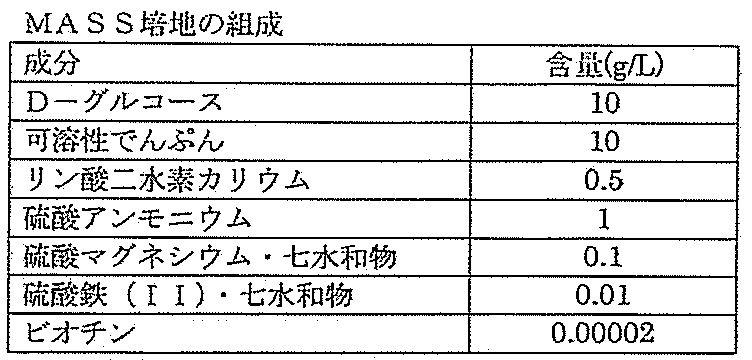

実施例1で作製したC.サッカロパーブチルアセトニカムの形質転換微生物(Δptb株)を培養しその性能の評価を行った。形質転換微生物のグリセロールストックを500μl分、TYA培地に植菌し、試験管内で30℃にて培養を24時間行った。取得した前培養液を、新たなTYS培地5mlに50μl分植菌し、試験管内で30℃にて培養を行った。培養は、24時間程度行った。培養は開放条件で実施した。

実施例1で作製したC.サッカロパーブチルアセトニカムの形質転換微生物(ΔptaΔptb株)を培養して、その性能を評価した。形質転換微生物のグリセロールストックを500μl分、TYA培地5mlに植菌し、試験管内で30℃にて培養を24時間行った。取得した前培養液を、新たなTYA、TYSまたはTYS-CaCO3培地5mlに50μl分植菌し、試験管内で30℃にて培養を行った。TYS培地の組成を以下に示す。なお、TYS-CaCO3培地とは、TYS培地にCaCO3を5g/L添加した培地のことを指す。


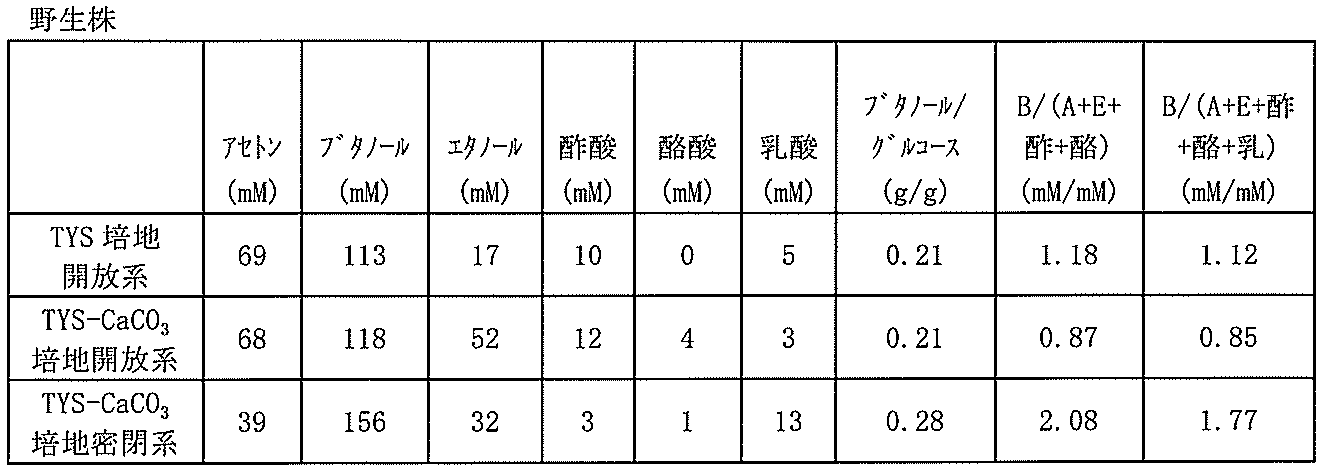
実施例1で作製したC.サッカロパーブチルアセトニカムの形質転換微生物(ΔptaΔptb株)を、種々の水素分圧下で培養した。形質転換微生物のグリセロールストックを500μl分、TYS-CaCO3培地に植菌し、試験管内で30℃にて培養を24時間行った。取得した前培養液を、新たなTYS-CaCO3培地5mlに50μl分植菌し、試験管内で30℃にて培養を行った。CaCO3を5g/L添加することにより、pHは5.0を下回らないように調整した。
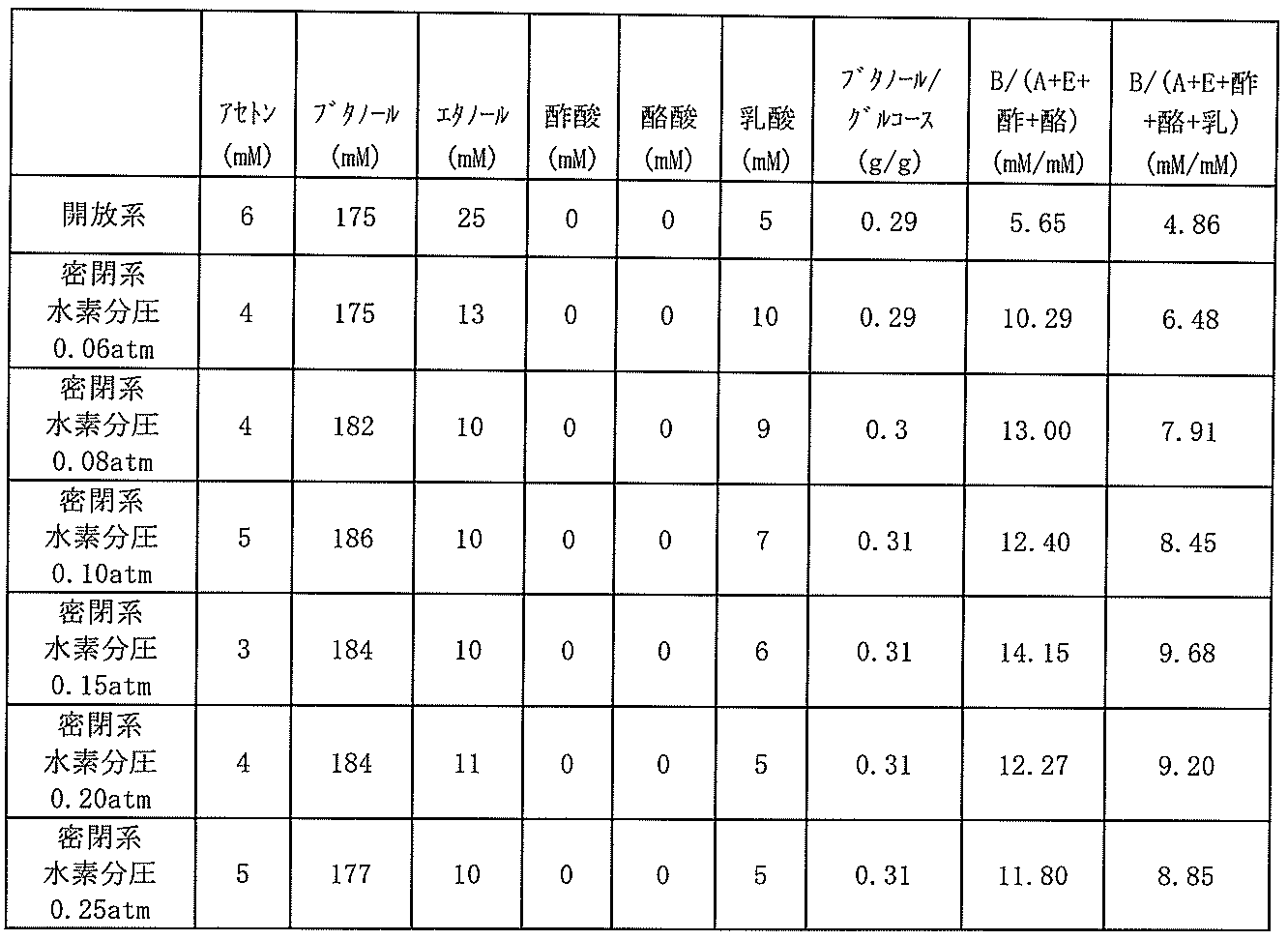
実施例1で作製したC.サッカロパーブチルアセトニカムの形質転換微生物(ΔctfBΔptaΔptb株)を培養しその性能の評価を行った。形質転換微生物のグリセロールストックを500μl分、TYS-CaCO3培地に植菌し、試験管内で30℃にて培養を24時間行った。取得した前培養液を、新たなTYS-CaCO3培地5mlに50μl分植菌し、試験管内で30℃にて培養を行った。

実施例1で作製したC.サッカロパーブチルアセトニカムの形質転換微生物(ΔptaΔptbΔldh1株)と野生株を培養しその性能の評価を行った。形質転換微生物のグリセロールストックを500μl分、TYS-CaCO3培地に植菌し、試験管内で30℃にて培養を24時間行った。取得した前培養液を、新たなTYS-CaCO3培地5mlに50μl分植菌し、試験管内で30℃にて培養を行った。
実施例1で作製したC.サッカロパーブチルアセトニカムの形質転換微生物(Δpta株、Δptb株、ΔptaΔptb株、ΔptaΔptbΔldh1株)を培養して、その性能を評価した。形質転換微生物のグリセロールストックを500μl分、TYS培地5mlに植菌し、試験管内で30℃にて培養を24時間行った。取得した前培養液を、新たなTYS-KH2PO4培地5mlに50μl分植菌し、試験管内で30℃にて培養を行った。TYS-KH2PO4培地の組成を以下に示す。



本明細書で引用した全ての刊行物、特許および特許出願をそのまま参照により本明細書にとり入れるものとする。
Claims (10)
- ブチリルCoAから酪酸が生成する経路に関与する酪酸生成酵素遺伝子の機能を欠損させたクロストリジウム・サッカロパーブチルアセトニカム種微生物。
- 酪酸生成酵素遺伝子として、ptbおよび/またはbukの機能を欠損させた、請求項1記載の微生物。
- さらに、アセチルCoAから酢酸が生成する経路に関与する酢酸生成酵素遺伝子の機能を欠損させた、請求項1または2記載の微生物。
- 酢酸生成酵素遺伝子として、ptaおよび/またはackの機能を欠損させた、請求項3記載の微生物。
- さらに、アセトアセチルCoAからアセトンが生成する経路に関与するアセトン生成酵素遺伝子の機能を欠損させた、請求項1~4のいずれか1項記載の微生物。
- アセトン生成酵素遺伝子として、adcおよび/またはctfABの機能を欠損させた、請求項5記載の微生物。
- さらに、ピルビン酸から乳酸が生成する経路に関与する乳酸生成酵素遺伝子の機能を欠損させた、請求項1~6のいずれか1項記載の微生物。
- 乳酸生成酵素遺伝子として、ldh1の機能を欠損させた、請求項7記載の微生物。
- 請求項1~8のいずれか1項記載の微生物を、炭素源を含む培地中で培養する工程を含む、ブタノールの製造方法。
- 培養液からブタノールを回収する工程を含む、請求項9記載の方法。
Priority Applications (1)
| Application Number | Priority Date | Filing Date | Title |
|---|---|---|---|
| US14/779,801 US9902978B2 (en) | 2013-03-26 | 2014-02-28 | Genetically modified Clostridium saccharoperbutylacetonicum |
Applications Claiming Priority (4)
| Application Number | Priority Date | Filing Date | Title |
|---|---|---|---|
| JP2013-063347 | 2013-03-26 | ||
| JP2013063347 | 2013-03-26 | ||
| JP2014-032953 | 2014-02-24 | ||
| JP2014032953A JP6404575B2 (ja) | 2013-03-26 | 2014-02-24 | 遺伝子改変クロストリジウム・サッカロパーブチルアセトニカム |
Publications (1)
| Publication Number | Publication Date |
|---|---|
| WO2014156476A1 true WO2014156476A1 (ja) | 2014-10-02 |
Family
ID=51623469
Family Applications (1)
| Application Number | Title | Priority Date | Filing Date |
|---|---|---|---|
| PCT/JP2014/055140 Ceased WO2014156476A1 (ja) | 2013-03-26 | 2014-02-28 | 遺伝子改変クロストリジウム・サッカロパーブチルアセトニカム |
Country Status (3)
| Country | Link |
|---|---|
| US (1) | US9902978B2 (ja) |
| JP (1) | JP6404575B2 (ja) |
| WO (1) | WO2014156476A1 (ja) |
Cited By (1)
| Publication number | Priority date | Publication date | Assignee | Title |
|---|---|---|---|---|
| WO2017094053A1 (ja) * | 2015-11-30 | 2017-06-08 | 積水化学工業株式会社 | 組換え細胞、組換え細胞の製造方法、並びに、有機化合物の生産方法 |
Families Citing this family (4)
| Publication number | Priority date | Publication date | Assignee | Title |
|---|---|---|---|---|
| JP6482832B2 (ja) * | 2014-11-20 | 2019-03-13 | 株式会社日本触媒 | ブタノール製造方法 |
| JP6940262B2 (ja) * | 2015-09-09 | 2021-09-22 | 株式会社日本触媒 | ゲノム配列が特異的に変換された遺伝子改変クロストリジウム・サッカロパーブチルアセトニカム種微生物、その製造方法およびその用途 |
| JP7126403B2 (ja) * | 2018-08-06 | 2022-08-26 | 株式会社日本触媒 | 遺伝子改変クロストリジウム・サッカロパーブチルアセトニカム種微生物 |
| US20250376704A1 (en) * | 2022-06-17 | 2025-12-11 | Nippon Shokubai Co., Ltd. | Butanol production method |
Citations (2)
| Publication number | Priority date | Publication date | Assignee | Title |
|---|---|---|---|---|
| CN101519673A (zh) * | 2008-02-27 | 2009-09-02 | 中国科学院上海生命科学研究院 | 一种提高梭菌产丁醇比例的方法 |
| WO2011099165A1 (ja) * | 2010-02-15 | 2011-08-18 | 住友商事株式会社 | ブタノールの新規な生産方法 |
Family Cites Families (2)
| Publication number | Priority date | Publication date | Assignee | Title |
|---|---|---|---|---|
| WO2008052596A1 (en) | 2006-10-31 | 2008-05-08 | Metabolic Explorer | Process for the biological production of n-butanol with high yield |
| EP2820134A1 (en) * | 2012-03-02 | 2015-01-07 | Metabolic Explorer | A process for butanol production |
-
2014
- 2014-02-24 JP JP2014032953A patent/JP6404575B2/ja active Active
- 2014-02-28 WO PCT/JP2014/055140 patent/WO2014156476A1/ja not_active Ceased
- 2014-02-28 US US14/779,801 patent/US9902978B2/en active Active
Patent Citations (2)
| Publication number | Priority date | Publication date | Assignee | Title |
|---|---|---|---|---|
| CN101519673A (zh) * | 2008-02-27 | 2009-09-02 | 中国科学院上海生命科学研究院 | 一种提高梭菌产丁醇比例的方法 |
| WO2011099165A1 (ja) * | 2010-02-15 | 2011-08-18 | 住友商事株式会社 | ブタノールの新規な生産方法 |
Non-Patent Citations (3)
| Title |
|---|
| C. M. COOKSLEY ET AL.: "Targeted mutagenesis of the Clostridium acetobutylicum acetone-butanol- ethanol fermentation pathway", METABOLIC ENGINEERING, vol. 14, 2012, pages 630 - 641 * |
| E. M. GREEN ET AL.: "Genetic manipulation of acid formation pathways by gene inactivation in Clostridium acetobutylicum ATCC 824", MICROBIOLOGY, vol. 142, 1996, pages 2079 - 2086 * |
| Y. TASHIRO ET AL.: "High Butanol Production by Clostridium saccharoperbutylacetonicum N1-4 in Fed-Batch Culture with pH-Stat Continuous Butyric Acid and Glucose Feeding Method", JOURNAL OF BIOSCIENCE AND BIOENGINEERING, vol. 98, no. 4, 2004, pages 263 - 268 * |
Cited By (1)
| Publication number | Priority date | Publication date | Assignee | Title |
|---|---|---|---|---|
| WO2017094053A1 (ja) * | 2015-11-30 | 2017-06-08 | 積水化学工業株式会社 | 組換え細胞、組換え細胞の製造方法、並びに、有機化合物の生産方法 |
Also Published As
| Publication number | Publication date |
|---|---|
| US9902978B2 (en) | 2018-02-27 |
| JP6404575B2 (ja) | 2018-10-10 |
| US20160053285A1 (en) | 2016-02-25 |
| JP2014207885A (ja) | 2014-11-06 |
Similar Documents
| Publication | Publication Date | Title |
|---|---|---|
| US9617570B2 (en) | Acid resistant yeast cell and use thereof | |
| CN101442910A (zh) | 具有从磷酸二羟丙酮到甘油的途径被破坏的酵母细胞 | |
| WO2011021629A1 (ja) | 形質転換体およびその製造方法、ならびに乳酸の製造方法 | |
| JP6404575B2 (ja) | 遺伝子改変クロストリジウム・サッカロパーブチルアセトニカム | |
| CN105492613B (zh) | 用于使用代谢工程化丙酸杆菌产生正丙醇和丙酸的方法 | |
| EP3194568B1 (en) | Clostridium acetobutylicum strains unable to produce hydrogen and useful for the continuous production of chemicals and fuels | |
| JPWO2010032698A6 (ja) | 植物由来原料から乳酸を生産する方法及び乳酸生産細菌 | |
| US12325859B2 (en) | Microbial approach for the production of long chain compounds | |
| CN107075462A (zh) | 2,3‑丁二醇的生成能力得到增强的重组微生物及利用其的2,3‑丁二醇的生产方法 | |
| US9309542B2 (en) | Recombinant Caldicellulosiruptor bescii and methods of use | |
| JP6236209B2 (ja) | ブタノールの製造方法 | |
| KR101647143B1 (ko) | 클로스트리듐 속 미생물 유전자를 불활성화시키는 방법 | |
| EP2694646B1 (en) | Production of butanol by fermentation | |
| JP7126403B2 (ja) | 遺伝子改変クロストリジウム・サッカロパーブチルアセトニカム種微生物 | |
| Bengelsdorf et al. | Host organisms: Clostridium acetobutylicum/Clostridium beijerinckii and related organisms | |
| KR101773123B1 (ko) | 2,3-부탄다이올 생산능을 갖는 유전적으로 조작된 효모 세포 및 그를 사용하여 2,3-부탄다이올을 생산하는 방법 | |
| JPWO2010095750A1 (ja) | キシロースを炭素源として使用しうる、キャンディダ・ユティリスによる物質の製造法 | |
| JP6012371B2 (ja) | 4−ヒドロキシ−2−ブタノンまたはブタノールの製造方法 | |
| KR101990104B1 (ko) | 1,3-프로판디올 생성능이 향상된 재조합 미생물 및 이를 이용한 1,3-프로판디올의 제조방법 | |
| JP2014068555A (ja) | ブタノールの製造方法 | |
| JP2017051185A (ja) | ゲノム配列が特異的に変換された遺伝子改変クロストリジウム・サッカロパーブチルアセトニカム種微生物、その製造方法およびその用途 | |
| JP2014068554A (ja) | ブタノールの製造方法 | |
| CN105802990B (zh) | 重组型酵母菌细胞及其制备方法与用途 | |
| JP5858463B2 (ja) | 乳酸生産菌 | |
| KR101476047B1 (ko) | 신규의 갈락토스 고대사균 및 이를 이용한 바이오매스 대사방법 |
Legal Events
| Date | Code | Title | Description |
|---|---|---|---|
| 121 | Ep: the epo has been informed by wipo that ep was designated in this application |
Ref document number: 14775992 Country of ref document: EP Kind code of ref document: A1 |
|
| WWE | Wipo information: entry into national phase |
Ref document number: 14779801 Country of ref document: US |
|
| WWE | Wipo information: entry into national phase |
Ref document number: IDP00201506019 Country of ref document: ID |
|
| NENP | Non-entry into the national phase |
Ref country code: DE |
|
| 122 | Ep: pct application non-entry in european phase |
Ref document number: 14775992 Country of ref document: EP Kind code of ref document: A1 |