WO2014131256A1 - 基于磁纳米粒子交流磁化强度的在体温度测量方法及系统 - Google Patents
基于磁纳米粒子交流磁化强度的在体温度测量方法及系统 Download PDFInfo
- Publication number
- WO2014131256A1 WO2014131256A1 PCT/CN2013/077917 CN2013077917W WO2014131256A1 WO 2014131256 A1 WO2014131256 A1 WO 2014131256A1 CN 2013077917 W CN2013077917 W CN 2013077917W WO 2014131256 A1 WO2014131256 A1 WO 2014131256A1
- Authority
- WO
- WIPO (PCT)
- Prior art keywords
- sin
- body temperature
- temperature
- module
- harmonic
- Prior art date
- Legal status (The legal status is an assumption and is not a legal conclusion. Google has not performed a legal analysis and makes no representation as to the accuracy of the status listed.)
- Ceased
Links
Classifications
-
- A—HUMAN NECESSITIES
- A61—MEDICAL OR VETERINARY SCIENCE; HYGIENE
- A61B—DIAGNOSIS; SURGERY; IDENTIFICATION
- A61B5/00—Measuring for diagnostic purposes; Identification of persons
- A61B5/01—Measuring temperature of body parts ; Diagnostic temperature sensing, e.g. for malignant or inflamed tissue
-
- A—HUMAN NECESSITIES
- A61—MEDICAL OR VETERINARY SCIENCE; HYGIENE
- A61B—DIAGNOSIS; SURGERY; IDENTIFICATION
- A61B5/00—Measuring for diagnostic purposes; Identification of persons
- A61B5/05—Detecting, measuring or recording for diagnosis by means of electric currents or magnetic fields; Measuring using microwaves or radio waves
- A61B5/0515—Magnetic particle imaging
-
- G—PHYSICS
- G01—MEASURING; TESTING
- G01K—MEASURING TEMPERATURE; MEASURING QUANTITY OF HEAT; THERMALLY-SENSITIVE ELEMENTS NOT OTHERWISE PROVIDED FOR
- G01K13/00—Thermometers specially adapted for specific purposes
- G01K13/20—Clinical contact thermometers for use with humans or animals
-
- G—PHYSICS
- G01—MEASURING; TESTING
- G01K—MEASURING TEMPERATURE; MEASURING QUANTITY OF HEAT; THERMALLY-SENSITIVE ELEMENTS NOT OTHERWISE PROVIDED FOR
- G01K7/00—Measuring temperature based on the use of electric or magnetic elements directly sensitive to heat ; Power supply therefor, e.g. using thermoelectric elements
- G01K7/36—Measuring temperature based on the use of electric or magnetic elements directly sensitive to heat ; Power supply therefor, e.g. using thermoelectric elements using magnetic elements, e.g. magnets, coils
-
- G—PHYSICS
- G06—COMPUTING OR CALCULATING; COUNTING
- G06F—ELECTRIC DIGITAL DATA PROCESSING
- G06F17/00—Digital computing or data processing equipment or methods, specially adapted for specific functions
- G06F17/10—Complex mathematical operations
- G06F17/16—Matrix or vector computation, e.g. matrix-matrix or matrix-vector multiplication, matrix factorization
Definitions
- the present invention relates to the field of nanometer testing technology, and in particular to a method and system for measuring body temperature based on AC magnetization of magnetic nanoparticles.
- In vivo temperature refers to the tissue temperature within a complete and surviving individual.
- the measurement of body temperature is divided into intrusive measurement and non-invasive measurement.
- the intrusive measurement method is simple, the measurement position is convenient for direct monitoring of the image, the measurement accuracy is high, and the temperature is measured in real time, but the trauma caused by it is large, the needle is easy to cause the transfer of the diseased cells, and the radiation field of the heating source directly causes the probe to act.
- the measurement accuracy is degraded, and the measured temperature data is the point temperature, not the temperature field distribution of the entire solidification zone.
- Non-invasive temperature measurement can effectively avoid wound infection or cancer cell spread, providing high-precision real-time information on body temperature and deep temperature (field) imaging map of tissue. It is because of these advantages that the method is in the field of biomedicine. More and more accepted and sought after.
- non-invasive temperature measurement mainly includes ultrasonic temperature measurement method, microwave temperature measurement method, nuclear magnetic resonance temperature measurement method and magnetic nano remote temperature measurement.
- the ultrasonic temperature measurement method adopts the form of reflected echoes due to the limitation of the volume of the living body.
- the defect is that the acoustic characteristics of various tissues and their temperature characteristics must be measured in advance, and the temperature characteristics of each tissue are largely different and unstable.
- Microwave temperature measurement is only suitable for superficial tumors, and the depth resolution is significantly reduced.
- the microwave involves the temperature distribution, the structure and the electrical properties within the measurement range. The drawback of this method is that the temperature distribution must be estimated and the structural parameters and electrical parameters of the organism must be determined.
- NMR thermometry method The drawback of the NMR thermometry method is that it is expensive, is not conducive to universal application, has limited spatial resolution and temperature resolution, and more importantly, it cannot obtain the absolute temperature of the tissue, and can only obtain the temperature change value.
- Remote non-invasive temperature measurement using magnetic nanoparticles can overcome the above shortcomings and is expected to provide a high-precision tissue depth (field) measurement technique.
- This method enables the measurement and control of body temperature from the molecular level to evaluate the tumor hyperthermia process in real time and make effective adjustments in time.
- Sub-tomography (MPI) exhibits extremely high real-time rates in remote non-invasive in vivo temperature measurements.
- MPI system structure is more convenient, lower cost and higher precision. It produces the image-like temperature by the change of the magnetization of the magnetic nanoparticles, and more importantly, the change has a high temperature sensitivity. Therefore, the MPI can theoretically complete the measurement and imaging of the body temperature.
- Temperature-related properties of magnetic nanoparticles include particle size, saturation magnetic moment, and concentration distribution of magnetic nanoparticles in the body.
- the particle size and saturation magnetic moment can be determined in advance by precise repeated tests in vitro, but the concentration distribution of magnetic nanoparticles in the body is difficult to measure, and no measurement scheme has been proposed yet.
- the concentration distribution and spatial distribution uncertainty of magnetic nanoparticles in vivo will lead to great errors in temperature measurement in vivo. Therefore, it is necessary to realize remote temperature measurement without knowing the concentration of magnetic nanoparticles to become the field of magnetic nano-tumor hyperthermia. The problem to be solved.
- an object of the present invention to provide an in-vivo temperature measurement method based on the magnetic magnetization of magnetic nanoparticles, which aims to achieve accurate measurement of body temperature without knowing the concentration of magnetic nanoparticles.
- a method for measuring body temperature includes the following steps:
- the coefficient matrix A is defined as:
- the AC magnetization is expressed by the Langevin function, and the expression of each harmonic amplitude is derived by using the Taylor series expansion of the Langevin function expression to determine
- Coefficient matrix A where is magnetic nanoparticles
- the effective magnetic moment is the Boltzmann constant, H.
- H Boltzmann constant
- v is the coefficient of the element in the Mth row and the Vth column of the coefficient matrix A
- M l, 2, -, «
- the representation of the column temperature in the body temperature is ⁇ is the body temperature of the object to be tested
- N is the magnetic nano-concentration at the object to be tested
- the step (5) is specifically: calculating a column temperature vector in the body temperature, thereby calculating the body temperature
- T P) ⁇ , 1 ⁇ 2w -1, 1 and X q are the Pth and the elements of the column temperature 7 in the body temperature;
- the step (5) is specifically: using: [ ⁇ is a variable, and the least squares fitting is performed by using the relationship between harmonics and temperature as an objective function. Determine the body temperature T.
- step (4) uses a digital phase sensitive detection method to detect each odd harmonic amplitude,
- the process is as follows:
- the magnetic nano-magnetization magnetization signal M is sampled to obtain a discrete intensity signal M(i), and the sampling points l, 2..., L, L are the total number of sampling points;
- step (e) judge whether it is equal to 1, if yes, proceed to step (g), otherwise, proceed to step (f);
- step (4) detects the amplitude of each odd harmonic by using a least squares system parameter identification method, and the process is as follows:
- harmonic number " is in the range of 2 to 4
- Taylor series expansion term m ranges from 2 to 6.
- another object of the present invention is to provide an in-vivo temperature measuring system based on the magnetic susceptibility of magnetic nanoparticles, which aims to achieve accurate measurement of body temperature without knowing the concentration of magnetic nanoparticles.
- An in vivo temperature measuring system comprising:
- a first module configured to place a magnetic nano-reagent at the object to be tested
- a second module configured to apply an alternating excitation magnetic field to a region where the magnetic nano-reagent is located
- a third module configured to collect an AC magnetization signal of the magnetic nano-reagent under the action of an alternating excitation magnetic field
- the fourth module is used for detecting the odd harmonic amplitudes of the alternating magnetization signal ⁇ , ⁇ ⁇ , the number of harmonics n ⁇ l ;
- the fifth module is configured to calculate the body temperature r according to the relationship between each odd harmonic and the body temperature, wherein the column vector is composed of each odd harmonic amplitude
- Coefficient matrix A where ⁇ ⁇ is magnetic nanoparticles
- the effective magnetic moment is the Boltzmann constant, H.
- H the Boltzmann constant
- v the coefficient of the element of the Mth row and the Vth column of the coefficient matrix A
- the representation of the column temperature in the body temperature is ⁇ is the body temperature of the object to be tested
- N is the magnetic nano-concentration at the object to be tested
- the fifth module includes:
- F and respectively are the Pth and qth elements of the column temperature vector in the body temperature
- the fourth module uses a digital phase sensitive detection method to detect each odd harmonic amplitude, including:
- the 41st sub-module for sampling the magnetic nano-AC magnetization signal M to obtain a discrete intensity signal No. M(i), sampling point; 1, 2..., L, L is the total number of sampling points;
- the 42nd submodule, used to make j l;
- the 43rd submodule, used to update / ' (2 ⁇ -1) /, / is the excitation magnetic field frequency;
- a 44th submodule configured to generate two orthogonal reference signals of frequency ', respectively sampling the two orthogonal reference signals to obtain two discrete sampling signals and K 2 (i);
- the 45th sub-module is used to judge whether it is equal to 1, if yes, then enter the 47th sub-module, otherwise, enter the 46th sub-module;
- the 46th sub-module is used for filtering the 2nd -3rd odd harmonic information in the discrete intensity signal M(i); the 47th submodule is used to mutually interact the discrete sampled signal with the discrete intensity signal M(i)
- the correlation operation is averaged to obtain the first component ⁇ -i, and the discrete sampled signal (i) and the discrete intensity signal M(i) are cross-correlated.
- the second component is obtained, and the second component is calculated ; Subharmonic amplitude ;
- the technical effects of the present invention are embodied in:
- the invention applies an alternating excitation magnetic field to the region where the magnetic nano-reagent is located, collects the alternating magnetization of the magnetic nano-reagent under the action of the alternating excitation magnetic field, and detects each odd-order harmonic component in the alternating magnetization intensity signal of the magnetic nano-particle;
- the tens of thousands of functions are used to analyze the spectral information of the magnetization model of the magnetic nanoparticles under the AC excitation magnetic field by Fourier transform.
- the matrix relationship between the odd harmonic components and the temperature and concentration of the magnetic nanoparticles is established in advance; Body temperature, during the solution process, do not need to consider the magnetic nanoparticle concentration information and its effective magnetic moment with temperature changes, to achieve accurate detection of body temperature.
- the invention can accurately and quickly detect the body temperature, and is particularly suitable for detecting the thermal motion of the biomolecule layer.
- the experiment shows that the average error after repeating the measurement 10 times under the signal-to-noise ratio of 80
- FIG. 1 is a flow chart of a method for measuring body temperature in the present invention
- FIG. 2 is a schematic diagram of digital phase sensitive detection (DPSD);
- Figure 3 is a flow chart for measuring each harmonic of the digital phase sensitive detection method
- Figure 4 is a flow chart of each harmonic of the parameter identification of the least squares system
- Figure 5 is a schematic diagram of the temperature estimation error obtained by measuring the harmonics using the DPSD and least squares system parameter identification methods when the excitation frequency is 1 kHz;
- Figure 6 is a schematic diagram of the temperature estimation error obtained by measuring the harmonics using the DPSD and the least squares system parameter identification method when the excitation frequency is 5 kHz;
- Figure 7 is a schematic diagram of the temperature estimation error obtained by measuring the harmonics using the DPSD and least squares system parameter identification methods when the excitation frequency is 10 kHz.
- the present invention provides a method for measuring body temperature, see FIG. 1, and includes the following steps:
- the magnetic nano-reagent Places the magnetic nano-reagent at the object to be tested.
- the magnetic nanoparticles are coated with a surface biomolecule modifier, which is injected to follow the blood circulation system to the object to be tested, such as various biological tissues and organs.
- the detecting coil is used as a sensor close to the object to be tested containing the magnetic nano-reagent, and the induced magnetization analog signal is pre-processed by the conditioning circuit and then sampled and transmitted by the data acquisition card to the computer for subsequent signal processing.
- / is the excitation magnetic field frequency
- ⁇ is the magnetic nanoparticle temperature, ie the in-body temperature of the object to be tested .
- Each odd harmonic is proportional to the particle concentration in a unit volume, and the harmonic ratio is independent of the concentration and is a function of temperature. It can be used as a basis for temperature approximation without knowing the particle concentration.
- this step uses digital phase sensitive detection (DPSD), least squares system parameter identification or wavelet transform to measure the odd harmonic amplitudes of the magnetic nano-AC magnetic intensity.
- DPSD digital phase sensitive detection
- the following is a detailed description of the harmonic amplitude number " 4" to illustrate the fundamental amplitude of the magnetic nano-AC magnetic intensity, the third harmonic amplitude of 3, five times using the digital phase sensitive detection (DPSD) and the least squares system parameter identification.
- Harmonic amplitude c 5 and seventh harmonic amplitude c 7 are examples of harmonic amplitude c 5 .
- L is the length of the sampled discrete sequence, and is the error function containing the higher harmonic signal.
- the digital phase sensitive detection (DPSD) algorithm can be used to extract the harmonic amplitude signals of the magnetic flux of the magnetic nanoparticles.
- Figure 4 is a flow chart of the harmonics of the least squares system parameter identification measurement.
- the specific process is as follows: First, signal sampling.
- the excitation frequency is f
- the sampling frequency is / s
- the digital angular frequency ⁇ ⁇
- L is the length of the sampling discrete sequence.
- ⁇ ⁇ 3 ⁇ 4 coefficient matrix ⁇ is defined as:
- the AC magnetization is expressed by the Langevin function, and the expression of each harmonic amplitude is derived by using the Taylor series expansion of the Langevin function expression to determine
- step (5) is specifically: calculating the column temperature vector in the body temperature, and then calculating the body temperature 2 « -1, 1 and Y picnic are the third and the elements of the column temperature vector in the body temperature respectively;
- this example uses the noise-containing simulation data to experimentally test the algorithm.
- Agent particles measured effective magnetic moment M 5 employed during the simulation test is 4xl0- 19 (Supplementary Note effective magnetic moment measurement value is determined by the type of agent parameters).
- the noise model uses the awgn function in MATLAB to directly add the noise of the preset signal-to-noise ratio directly to the sampled signal AC magnetization.
- the signal-to-noise ratio included in the temperature measurement process is set to 80dB.
- the excitation magnetic field frequency is set to low frequency point 1kHz, intermediate frequency point 5kHz, high frequency point 10kHz, and temperature test section selected from 300K to 340K according to different test purposes.
- the simulation uses the digital phase sensitive detection algorithm (DPSD) and the least squares system parameter identification algorithm to detect the temperature estimation error obtained by each harmonic of the magnetic nano-AC magnetization.
- DPSD digital phase sensitive detection algorithm
- the simulation takes the average temperature estimation error value of 10 repeated measurements.
- Figure 5 to Figure 7 illustrate the use of digital phase sensitive detection and least squares identification algorithm to detect each harmonic after the excitation magnetic field frequency is low frequency band lkHz, medium frequency band 5 kHz, high frequency band 10 kHz, sampling frequency is 100 kHz. The resulting temperature estimates the average error value.
- Figure 5 to Figure 7 show that the excitation magnetic field frequency is selected in the low frequency band 1 kHz, the middle frequency band 5 kHz, or even the high frequency band 10 kHz, using digital phase sensitive detection and least squares system identification algorithm to detect each time. Stability and repeatability are guaranteed. Since the signal-to-noise ratio of the test condition is set to 80 dB, this method of measuring temperature has a certain anti-noise capability. This provides a new way to achieve precise and fast non-invasive detection of biological temperature in more complex environments in the future.
Landscapes
- Health & Medical Sciences (AREA)
- Physics & Mathematics (AREA)
- Life Sciences & Earth Sciences (AREA)
- Engineering & Computer Science (AREA)
- General Physics & Mathematics (AREA)
- Medical Informatics (AREA)
- Biomedical Technology (AREA)
- Heart & Thoracic Surgery (AREA)
- Molecular Biology (AREA)
- Surgery (AREA)
- Animal Behavior & Ethology (AREA)
- General Health & Medical Sciences (AREA)
- Public Health (AREA)
- Veterinary Medicine (AREA)
- Pathology (AREA)
- Biophysics (AREA)
- Nuclear Medicine, Radiotherapy & Molecular Imaging (AREA)
- Mathematical Physics (AREA)
- Computational Mathematics (AREA)
- Mathematical Optimization (AREA)
- Mathematical Analysis (AREA)
- Pure & Applied Mathematics (AREA)
- Data Mining & Analysis (AREA)
- Theoretical Computer Science (AREA)
- Radiology & Medical Imaging (AREA)
- Software Systems (AREA)
- General Engineering & Computer Science (AREA)
- Databases & Information Systems (AREA)
- Computing Systems (AREA)
- Algebra (AREA)
- Investigating Or Analyzing Materials By The Use Of Magnetic Means (AREA)
- Measuring Magnetic Variables (AREA)
- Measurement And Recording Of Electrical Phenomena And Electrical Characteristics Of The Living Body (AREA)
Abstract
一种基于磁纳米粒子交流磁化强度的在体温度测量方法包括将磁纳米试剂置放于待测对象处,对磁纳米试剂所在区域施加交流激励磁场,采集交流激励磁场作用下磁纳米试剂的交流磁化强度,检测出交流磁化强度信号中各奇次谐波幅值,最后根据谐波和温度的关系式计算在体温度。该方法通过离散化朗之万函数和傅里叶变换预先建立各奇次谐波分量与在体温度关系式,通过该关系式求解在体温度,求解过程中无需考虑磁纳米粒子浓度信息及其有效磁矩随温度变化情况,便可实现在体温度的准确检测。
Description
基于磁纳米粒子交流磁化强度的在体温度测量方法及系统
【技术领域】
本发明涉及纳米测试技术领域, 具体涉及一种基于磁纳米粒子交流磁 化强度的在体温度测量方法及系统。
【背景技术】
在体 (in vivo)温度是指完整且存活个体内的组织温度。在生物医疗领域 内, 在体温度测量方式分为侵入式测量和非侵入式测量。 侵入式测量方法 简单, 测量位置便于影像直接监控, 测量精度高, 实时测温, 但它导致的 创伤性较大, 插针容易引起病变细胞的转移, 加热源的辐射场直接与探针 作用引起测量精度的下降, 测得的温度数据为点温度, 而非整个凝固区的 温度场分布。 而非侵入式温度测量能够有效避免创口感染或癌细胞扩散, 提供较高精度的在体温度实时信息及组织深处温度 (场)成像分布图,正是由 于这些优点, 该方式在生物医疗领域越来越被接受和追捧。
目前, 非侵入式温度测量主要有超声测温法、 微波测温法、 核磁共振 测温法和磁纳米远程测温等。 超声测温法由于受生物体体积的制约多采用 反射回波的形式, 缺陷在于必须预先测出各种组织的声特性及其温度特性 而各组织的温度特性存在较大差异且不稳定。微波测温法只适用于浅表瘤, 深层分辨率明显降低。 考虑到体表测定的热噪声微波涉及到测定范围内的 温度分布、 组织结构及电性能, 此法的缺陷在于必须先推定温度的分布和 测定生物体的结构参数及电性参数。核磁共振测温法的缺陷在于价格昂贵, 不利于普及应用, 其空间分辨率及温度分辨率有限, 更重要的是其无法获 得组织的绝对温度, 只能得到温度的变化值。 利用磁纳米粒子进行远程非 侵入式温度测量在克服上述缺点的同时, 有望提供一种高精度的组织深处 温度 (场)测量技术。此方法实现在体温度的测量和控制将从分子水平对肿瘤 热疗过程进行实时评定并及时做出有效调整。 此外, 基于磁纳米粒子的分
子层析成像技术(MPI)在远程非侵入式在体温度测量方面展现了极高的实 时速率。 相比于传统的非侵入式在体温度测量方法——核磁共振, MPI 的 系统构成更加便利, 成本更低, 精度也更高。 它以磁纳米粒子磁化强度的 变化来产生像原,而且更重要的是此变化存在高度的温度敏感性,因此 MPI 从理论上说也能完成在体温度的测量和成像。
磁纳米粒子与温度相关的属性包括粒径、 饱和磁矩和磁纳米粒子在体 内的浓度分布等。 粒径、 饱和磁矩可预先在体外进行精确反复测试确定, 但磁纳米粒子在体内的浓度分布却是难以测量, 目前也未提出任何测量方 案。 而磁纳米粒子在体内的浓度分布与空间分布的不确定性将会导致活体 内温度测量的极大误差, 因此探索在不知磁纳米粒子浓度情况下实现远程 温度测量成为磁纳米肿瘤热疗领域函需解决的问题。
【发明内容】
针对现有技术的缺陷, 本发明的目的在于提供一种基于磁纳米粒子交 流磁化强度的在体温度测量方法, 旨在不知磁纳米粒子浓度的情况下实现 在体温度的准确测量。
一种在体温度测量方法, 包括如下步骤:
( 1 ) 将磁纳米试剂置放于待测对象处;
(2) 对磁纳米试剂所在区域施加交流激励磁场;
(3 ) 采集交流激励磁场作用下磁纳米试剂的交流磁化强度信号;
(4) 检测交流磁化强度信号的各奇次谐波幅值 ς^,··· ^ , 谐波个数 η > 1 ;

系数矩阵 A : , 其中 , 为磁纳米粒

子有效磁矩, 为波尔兹曼常数, H。为交流激励磁场幅值, v为系数矩阵 A中第 M行第 V列元素的系数, M = l,2,-,«,V = l,2-,m,m为泰勒级数展开项数, m>n\
在体温度相关列向量 的表征式为 Γ为待测对象的在体温

度, N为待测对象处的磁纳米浓度;
进一步地, 当泰勒级数展开项数 等于谐波个数 , 所述步骤 (5) 具 体为: 计算在体温度相关列向量 , 进而计算在体温度
T P)^ , 1≤ 2w -1, 1 和 Xq分别为在体温度相关列向量 7的第 P个 和 个元素;
进一步地, 当泰勒级数展开项数 大于谐波个数《, 所述步骤 (5) 具 体为: 以 =[ ^为变量, 以谐波和温度的关系式 为目标函数进行最 小二乘法拟合确定在体温度 T。
进一步地,所述步骤(4)采用数字相敏检波方法检测各奇次谐波幅值,
其过程如下:
(a)对磁纳米交流磁化强度信号 M采样得到离散强度信号 M(i), 采 样点 l,2..., L, L为采样点总数;
(b) 令 j=l;
(c) 更新/ ' = (2j'-l)/, /为激励磁场频率;
(d)产生频率为/ '的两路正交参考信号, 分别对该两路正交参考信号 采样得到两离散采样信号 A (i)和 (i);
(e)判断 是否等于 1, 若是, 则进入步骤(g), 否则, 进入步骤(f);
(f) 滤除离散强度信号 M(i)中的第 奇次谐波信息;
(g) 将离散采样信号 (i)与离散强度信号 M(i)进行互相关运算经均 值滤波后得到第一分量 ,将离散采样信号《2(i)与离散强度信号 M(i)进行 互相关运算经均值滤波后得到第二分量 , 计算第 2 ·-1奇次谐波幅值 -l -l +。 ;
(h) 判定 j '是否小于 , 若是, 贝 ij = j' + l, 返回步骤 (c), 否则, 结 束。
进一步地, 所述步骤(4)采用最小二乘系统参数辨识方法检测各奇次 谐波幅值, 其过程如下:
对磁纳米交流磁化强度信号 M 采样得到离散强度信号 M(i),i = 1,2···, L,L为采样点总数;
— M(l)— sin (Ω) sin (3Ω) sin((2n-l)Q)―
M(2) sin (2Ω) sin (6Ω) sin (2(2η-1)Ω)
令 Z , φ=
M(L) sin (LQ) sin (3LQ) sin(L(2n-l)Q)
通过调整采样频率,寻找使得 /=[Ζ- Χ [Ζ^Χ]最小的矩阵 ^和^从而 确定由各奇次谐波幅值 组成的列向量 =^ ) , 其中, 数字角频率
Ω= ^-, /s为采样频率, 为圆周率, 上标 Γ表示转置。 进一步地,所述交流磁场的强度取值范围为 20Oe~1000Oe,所述交流 激励磁场的频率取值范围为 20Hz〜20kHz。
进一步地,所述谐波个数《的取值范围为 2〜4,泰勒级数展开项数 m的 取值范围为 2〜6。
针对现有技术的缺陷, 本发明的另一目的还在于提供一种基于磁纳米 粒子交流磁化强度的在体温度测量系统, 旨在不知磁纳米粒子浓度的情况 下实现在体温度的准确测量。
一种在体温度测量系统, 包括:
第一模块, 用于将磁纳米试剂置放于待测对象处;
第二模块, 用于对磁纳米试剂所在区域施加交流激励磁场;
第三模块, 用于采集交流激励磁场作用下磁纳米试剂的交流磁化强度 信号;
第四模块,用于检测交流磁化强度信号的各奇次谐波幅值 ς,ί^··· ^, 谐波个数n≥l;
第五模块,用于根据各奇次谐波和在体温度的关系式 ¾47计算在体温 度 r, 其中, 由各奇次谐波幅值组成列向量


系数矩阵 A : 其中 , Λ ^为磁纳米粒
MImH,

子有效磁矩, 为波尔兹曼常数, H。为交流激励磁场幅值, v为系数矩阵 A中第 M行第 V列元素的系数, M = l, 2,— ,«,V = l,2-, , 为泰勒级数展开项数, m≥n;
在体温度相关列向量 的表征式为 Γ为待测对象的在体温

度, N为待测对象处的磁纳米浓度;
进一步地, 所述第五模块包括:
第 51子模块, 用于当泰勒级数展开项数 m等于谐波个数《时, 计算在 体温度相关列向量 , 进而计算在体温度 r=2^ ^, 1≤ p<q≤2n - l,
F和 分别为在体温度相关列向量 的第 P个和 q个元素;
第 52 子模块, 用于当泰勒级数展开项数 m大于谐波个数《时, 以 B=[N,Tf为变量, 以谐波和温度的关系式 为目标函数进行最小二乘法 拟合确定在体温度 ^。
进一步地, 所述第四模块采用数字相敏检波方法检测各奇次谐波幅值, 包括:
第 41子模块,用于对磁纳米交流磁化强度信号 M采样得到离散强度信
号 M(i), 采样点 ;=1,2..., L, L为采样点总数;
第 42子模块, 用于令 j=l;
第 43子模块, 用于更新/ ' = (2 ·-1)/, /为激励磁场频率;
第 44子模块, 用于产生频率为/'的两路正交参考信号, 分别对该两路 正交参考信号采样得到两离散采样信号 和 K2(i);
第 45子模块, 用于判断 ·是否等于 1, 若是, 则进入第 47子模块, 否 则, 进入第 46子模块;
第 46子模块,用于滤除离散强度信号 M(i)中的第 2 ·-3奇次谐波信息; 第 47子模块, 用于将离散采样信号 与离散强度信号 M(i)进行互 相关运算经均值滤波后得到第一分量^— i,将离散采样信号 (i)与离散强度 信号 M(i)进行互相关运算经均值滤波后得到第二分量 , 计算第 2;·-1奇 次谐波幅值
 ;
;
第 48子模块, 用于判定 ·是否小于 w, 若是, 贝 ij = + i, 返回第 43子 模块, 否则, 结束。
进一歩地, 所述第四模块采用最小二乘系统参数辨识方法检测各奇次 谐波幅值, 具体为: 第四模块用于对磁纳米交流磁化强度信号 M采样得到 离散强度信号 M (i), = 1, 2…, L, L为采样点总数;
~M(l) sin (Ω) sin(3Q) sin((2n-l)Q)―
M(2) sin (2Ω) sin (6Ω) sin (2(2η-1)Ω)
令 Z , φ=
M(L) sin (LQ) sin (3LQ) sin(L(2n-l)n)
通过调整采样频率, 寻找使得 /=[Ζ-^Γ[Ζ- ]最小的矩阵^ ΠΖ,从而 确定由各奇次谐波幅值 组成的列向量
 , 其中, 数字角频率 Ω=^ , /s为采样频率, 7Γ为圆周率, 上标 Γ表示转置。 本发明的技术效果体现在:
本发明对磁纳米试剂所在区域施加交流激励磁场, 采集交流激励磁场 作用下磁纳米试剂的交流磁化强度, 检测出磁纳米粒子的交流磁化强度信 号中各奇次谐波分量; 通过离散化朗之万函数并且利用傅里叶变换分析磁 纳米粒子在交流激励磁场下磁化强度模型的频谱信息, 预先建立各奇次谐 波分量与磁纳米粒子温度和浓度的矩阵关系式; 依据该关系式求解在体温 度, 求解过程中, 无需考虑磁纳米粒子浓度信息及其有效磁矩随温度变化, 实现在体温度的准确检测。 本发明能够精密、 快速地检测在体温度, 特别 适用于生物分子层面热运动的探测,试验表明在信噪比保持 80dB下重复测 量 10次后的平均误差小于 0.2K。
, 其中, 数字角频率 Ω=^ , /s为采样频率, 7Γ为圆周率, 上标 Γ表示转置。 本发明的技术效果体现在:
本发明对磁纳米试剂所在区域施加交流激励磁场, 采集交流激励磁场 作用下磁纳米试剂的交流磁化强度, 检测出磁纳米粒子的交流磁化强度信 号中各奇次谐波分量; 通过离散化朗之万函数并且利用傅里叶变换分析磁 纳米粒子在交流激励磁场下磁化强度模型的频谱信息, 预先建立各奇次谐 波分量与磁纳米粒子温度和浓度的矩阵关系式; 依据该关系式求解在体温 度, 求解过程中, 无需考虑磁纳米粒子浓度信息及其有效磁矩随温度变化, 实现在体温度的准确检测。 本发明能够精密、 快速地检测在体温度, 特别 适用于生物分子层面热运动的探测,试验表明在信噪比保持 80dB下重复测 量 10次后的平均误差小于 0.2K。
【附图说明】
图 1为本发明在体温度测量方法流程图;
图 2为数字相敏检波 (DPSD ) 原理图;
图 3为数字相敏检波方法测量各次谐波流程图;
图 4为最小二乘系统参数辨识测量各次谐波流程图;
图 5为激励频率 1kHz时,分别利用 DPSD和最小二乘系统参数辨识方 法测量谐波得到的温度估计误差示意图;
图 6为激励频率 5kHz时,分别利用 DPSD及最小二乘系统参数辨识方 法测量谐波得到的温度估计误差示意图;
图 7为激励频率 10kHz时, 分别利用 DPSD及最小二乘系统参数辨识 方法测量谐波得到的温度估计误差示意图。
【具体实施方式】
为了使本发明的目的、 技术方案及优点更加清楚明白, 以下结合附图 及实施例, 对本发明进行进一步详细说明。 应当理解, 此处所描述的具体 实施例仅仅用以解释本发明, 并不用于限定本发明。
本发明提供了一种在体温度测量方法, 参见图 1, 包括如下歩骤:
( 1 ) 将磁纳米试剂置放于待测对象处。
对磁纳米粒子包裹表面生物分子修饰剂, 通过注射使其跟随血液循环 系统靶向至待测对象处, 例如各种生物组织器官。
(2) 对磁纳米试剂所在区域施加交流激励磁场。
考虑到后面的步骤利用磁化强度朗之万函数的泰勒级数展开式计算各 奇次谐波幅值是建立在激励磁场微弱的前提下, 但是激励磁场过于微弱又 会引起磁化强度信号信噪比 (SNR)低造成高次谐波信息提取困难,所以合理 的交流激励磁场强度选择至关重要, 一般选取 20~1000 Oe, 优选 100 Oe。 另外, 交流激励磁场的频率选择 20Hz〜20 kHz, 优选 lkHz。
(3 ) 采集交流激励磁场作用下磁纳米试剂的交流磁化强度。
将探测线圈作为传感器靠近含有磁纳米试剂的待测对象, 其感应磁化 强度模拟信号通过调理电路进行信号预处理后被数据采集卡采样传送至计 算机进行后续信号处理。
(4) 检测交流磁化强度的各奇次谐波幅值。
首先对交流磁化强度进行建模: 顺磁特性的磁纳米粒子交流磁化强度 服从郎之万函数, 表达式如下:
M=層, [coth(^¾-~^~]=層 L(^¾
s kT M H s kT 其中, kT 为朗之万函数, N为磁纳米试剂浓度, 激励磁场
Η=Η0 ήη (2πβ) , 为激励磁场幅值, /为激励磁场频率, 为磁纳米粒子 有效磁矩, 为波尔兹曼常数, Γ为磁纳米粒子温度即待测对象的在体温度。
将上式傅里叶分解为包含多个奇次谐波的混频信号, 即
M =^ C2 ]_x sin(2 j - ί)ωΐ , η > 1 其中 C2 为第 2 · - 1次奇次谐波的幅值, 角频率 w=2 , 为时间; "为 预定多项式展开项数, 其决定了各奇次谐波的测量个数, "若取过小, 则会
引起交流磁化强度有限项数逼近误差增大造成温度估计误差增大; "若取过 大, 则会引起高次谐波微弱幅值信号难以精确检测造成温度估计误差增大, 综合考虑, 推荐"的取值范围为 2〜4。
将 磁 化 强 度 泰 勒 展 开 式
ΝΜ' ΝΜ 2ΝΜ ΝΜ ΝΜ
M = Η- Η - -Η ' -+- -H2"1-1代入傅里叶系
3kT 45kT 4125k7T7 bmk£m—T 数计算公式 c2 1=丄厂 M 8ήι (( ·-ΐ )^ , 便可得到各次谐波幅值 ς 式, 为常数, 泰勒级数展开项数 的取值范围为 2〜6, 且^≥11。
下面给出一个谐波个数《=4, 泰勒级数展开项数 m=4的实例:
M =C1 sin (<yt)+C3 sin (3<yt)+C5 sin (5<yt)+C7 sin (Ίωί),
^ 層 2Hn 層 4Hn 3 NMbHl NM%Hl
= ~ + -
3kT 60k3T3 756k5T5 8640k7T7
c _層 Ho3 NMs 6H0 5 | NM Hl
ISOk'T3 l5i2k5T5 14400fc7r7
其中
NM6 n 5 層 8Hn 7
7560k5T5 43200)t7r7
c _ NM Hl
302400)t7r7
各奇次谐波与单位体积内粒子浓度成比例, 而谐波比值与浓度无关, 与温度成函数关系, 它能作为在不知粒子浓度的情况下作为温度近似的依 据。
基于上述模型, 本步骤采用数字相敏检波 (DPSD)、 最小二乘系统参 数辨识或小波变换等方法测量磁纳米交流磁次强度的各奇次谐波幅值。 下 面结合谐波个数《=4的实例详细说明采用数字相敏检波 (DPSD) 和最小二 乘系统参数辨识测量磁纳米交流磁次强度的基波幅值 、 三次谐波幅值 3、 五次谐波幅值 c5和七次谐波幅值 c7。
A、 利用数字相敏检波测量各奇次谐波幅值方法
图 2为数字相敏检波原理图。 根据所要提取特定频率/'信号设定两路
正交参考信号 ω=∞8(2τ/ 、 i?2(t)=sin(2^ 't), 其分别与被测信号 M(t)进行 互相关运算经均值滤波后可得两个分量, 即 5=^^!^, 0=-ο ,θ, 其中 A
2 2
为特定频率信号的幅值, S为特定频率信号的相角, 最后利用 A = 2 T^, ^ = arctan^ , 得到幅值和相角。 图 3为数字相敏检波方法测量各次谐波流程图, 具体过程如下: Al、 信号采样
磁纳米交流磁化强度信号 经数字化采样(ADC)后得到 M (i)=CL sin (Qi)+C3 sin (3Qi)+C5 sin (5Qi)+C7 sin (7Ωί)+^(ί),两路参考 信号经数字化采样 (ADC)后得到 ^(i)=C0S(Q'i)、 R2(i)=sin(n'i) , 其中激励频 率为 f , 采样频率为 /s, 数字角频率 Ω=^、 Ω' = ^, 采样点 =1,2..., L,
J J
L为采样离散序列的长度, )为包含高次谐波信号的误差函数。
A2、 谐波幅值提取
①为了得到基波幅值 ς, 令/' = /, 运用 DPSD得
^i = 7∑MW(i)="Tsin^

则基波幅值为

②在获得基波幅值 ς后,为了高精度得到三次谐波幅值 c3,令/ ' = 3/对 滤除基波信息后的磁化强度信号 M'运用 DPSD方法得到


则三次谐波幅值为

③在获得三次谐波幅值 3后,对 M'滤除三次波信息后的磁化强度 令/' = 5/运用 DPSD方法得

则五次谐波幅值为
C5=2 + 0
④在获得五次谐波幅值(^5后, 对 M 滤除三次波信息后的磁化强度 M"' 令/' = 7/运用 DPSD算法得
57 = ∑ Λί'"(ΐ)^(ΐ)=-^8Ϊη ^
Li — 丄
6>7 =丄 M'"(i)R2(i)="^cos6> 则七次谐波幅值为
C7=2^7 2+(97 2
通过以上步骤就能利用数字相敏检波 (DPSD)算法提取磁纳米粒子的交 流磁化强度中各次谐波幅值信号。
B、 利用最小二乘系统参数辨识方法检测各次谐波。
图 4为最小二乘系统参数辨识测量各次谐波流程图, 具体过程如下: 首先信号采样。 磁纳米交流磁化强度信号 M经数字化采样 (ADC)后得 到 M(i)=C sin( )+C3 sin(3 )+C5 sin(5i¾+C7 sin(7il)+s(i),其中激励频率为
f , 采样频率为/ s, 数字角频率 Ω=^~, 采样点 i=l,2...,L, 为包含高次谐 波信号的误差函数, L为采样离散序列的长度。
进一步将其转化为矩阵关系式
M(l) sin (Ω) sin(3Q) sin(5Q) sin (7Ω)
(2) sin (2Ω) sin (6Ω) sin(lOQ) sin (14Ω)
M(L) sin( ¾ sin sin(5LQ) sin(7LQ)

—M(l)- sin (Ω) sin (3Ω) sin (5Ω) sin (7Ω)―
(2) sin(2Q) sin (6Ω) sin(lOQ) sin (14Ω) 令 z = , φ=
M(L)_ sin (LXi) sin (3LQ) sin (5LQ) sin (7LQ) 1)
ε(2)
c3
X: 贝 lJZ=pX+e,误差向量 e=Z-pX
c7 最小二乘系统参数辨识方法就是在这模型中,对系统的未知参数向量 X 的估计量使误差的平方和为最小作为拟合实际测量数据的好坏标准, 即判 据 J= (i)= e。为使此判据 /=[Z^Xf[Z X]最小,通过调整采样频率找到 i:l 恰当的矩阵 和 Z, 令最优估计列向量 X = 使得^ 1 Λ=ο, 即判 χ=χ 据 /取得最小值, 这样就从此最优估计列向量量 X 中得到基波幅值 ς、 三次谐波幅值 C3、 五次谐波幅值 和七次谐波幅值 C7。
(5)依据各奇次谐波幅值 C2;_,与待测温度 T的矩阵关系求解在体温度 t
各奇次谐波幅值 C2M与待测温度 Γ满足矩阵关系 X^ 7, 其中 c3
X为由各奇次谐波幅值 C2;―,组成的列向量, X =
c,„
y为在体温度相关列向: Y=
Ν
Τ Γ ¾ 系数矩阵 Α的定义为: 将交流磁化强度采用朗之万函数表达, 利用该 朗之万函数表达式的泰勒级数展开式推导各谐波幅值的表达式, 从而确定

系数矩阵 其中 , v为系数矩阵
MImH,
M2mH
A中第 M行第 v列元素的系数, w = 1,2, V = 1,2···, , m>n。
利用上述谐波和温度的关系式 求解在体温度的具体过程包含如下 两种情形:
(a) 当泰勒级数展开项数 等于谐波个数《, 所述步骤 (5) 具体为: 计算在体温度相 关列 向 量 , 进而计算在体温度
 2« -1, 1 和 Y„分别为在体温度相关列向量 的第 Ρ个 和 个元素;
(b) 当泰勒级数展开项数 大于谐波个数《, 所述步骤 (5) 具体为:
以 B=[JV,T]T为变量, 以谐波和温度的关系式 为目标函数进行最. 'J、二乘 法拟合确定在体温度 。
下面以 m=n=4为例说明:
,― NMS 2HQ NMs"H ■ NM^Hl NM Hl
3 T 转化为矩阵关系式为

c7= 厦
2400)t7r7

令待测温度 r相关列向量

MzHt M4H MbHl 8Hn 7
3k 156k5 - 8640 t7 系数矩阵 A为

M8Hn 7
0 0
302400t
计算在体温度相关列向量 , 这样在无需知道磁纳米粒子浓度的情 况下通过 Γ 中任意两维数据 (设第 p维和第 q维)完成待测温度 Γ检 即

^和 分别为在体温度相关列向量 的第 P个和 个元素。 特说明本 发明优选 P=1 =2, 可获得精度较高的结果。
仿真实例:
1. 仿真模型与测试说明:
为了研究温度测试方案的有效性与优化设计, 本实例采用含噪声的仿 真数据对算法进行实验测试。 仿真测试过程中采用的试剂粒子有效磁矩 M5 测定为 4xl0-19 (补充说明有效磁矩的测定数值由试剂类型参数决定)。考虑到 交流磁化强度的傅里叶级数四项式逼近模型带来的误差效应, 就必须采用 微弱交流激励磁场幅值, 本实例采用交流激励磁场幅值 H。=100 Oe。 噪声模 型采用 MATLAB中的 awgn函数将预先设定信噪比的噪声直接加在采样信 号交流磁化强度上。温度测量过程中包含的信噪比设定为 80dB,依据不同测 试目的激励磁场频率设定为低频点 lkHz, 中频点 5kHz, 高频点 10kHz, 温 度测试段选为 300K至 340K。
为了验证温度测量的精确性, 本次仿真分别利用数字相敏检波算法 (DPSD)及最小二乘系统参数辨识算法检测磁纳米交流磁化强度各次谐波得 到的温度估计误差值。 同时, 为了验证温度测量的可重复性本次仿真取 10 次重复测量的平均温度估计误差值。 其中图 5至图 7说明了在激励磁场频 率分别为低频段 lkHz,中频段 5kHz,高频段 10kHz下,采样频率为 100kHz 时利用数字相敏检波及最小二乘系统辨识算法检测各次谐波后得到的温度 估计平均误差值。
2. 仿真试验结果:
图 5至图 7反映了无论激励磁场频率选择在低频段 1kHz,中频段 5kHz, 甚至高频段 10kHz, 利用数字相敏检波及最小二乘系统辨识算法检测各次
稳定性及可重复性都有所保障。 由于测试条件信噪比设为 80dB, 此种测量 温度方法具备一定的抗噪能力。 这为未来在更加复杂环境下完成精密快速 的生物体温度非侵入式探测成像提供了全新的方式。
本领域的技术人员容易理解, 以上所述仅为本发明的较佳实施例而已, 并不用以限制本发明, 凡在本发明的精神和原则之内所作的任何修改、 等 同替换和改进等, 均应包含在本发明的保护范围之内。
Claims
1、 一种在体温度测量方法, 包括如下步骤:
(1) 将磁纳米试剂置放于待测对象处;
(2) 对磁纳米试剂所在区域施加交流激励磁场;
(3) 采集交流激励磁场作用下磁纳米试剂的交流磁化强度信号;
(4) 检测交流磁化强度信号的各奇次谐波幅值 1 谐波个数 η>1;

C… 由各奇次谐波幅值组成列向量 X=
系数矩阵 A的定义为: 将交流磁化强度采用朗之万函数表达, 利用该 朗之万函数表达式的泰勒级数展开式推导各谐波幅值的表达式, 从而确定

系数矩阵 A 其中 , 为磁纳米粒
M2mHl
M2mH
a klm-1 子有效磁矩, 为波尔兹曼常数, H。为交流激励磁场幅值, v为系数矩阵 A中第 M行第 V列元素的系数, Μ = 1,2,···,«,ν = 1,2···,«ί, m为泰勒级数展开项 数, m≥n;
在体温度相关列向量 的表征式为 Γ为待测对象的在体温

度, N为待测对象处的磁纳米浓度。
2、 根据权利要求 1所述的在体温度测量方法, 其特征在于,
当泰勒级数展开项数 等于谐波个数^ 所述步骤 (5) 具体为: 计算 在 体 温 度 相 关 列 向 量 ί^Α^ , 进 而 计 算 在 体 温 度 T -p)^ g, 1≤ <ί?≤ 2w -1, 和 Xq分别为在体温度相关列向量 的第 P个 和 个元素;
当泰勒级数展开项数 大于谐波个数 M,所述步骤 (5 )具体为:以
 为变量, 以谐波和温度的关系式 ¾ 7为目标函数进行最小二乘法拟合确定 在体温度 r。
3、 根据权利要求 1或 2所述的在体温度测量方法, 其特征在于, 所述 步骤 (4)采用数字相敏检波方法检测各奇次谐波幅值, 其过程如下:
(a)对磁纳米交流磁化强度信号 M采样得到离散强度信号 M(i), 采 样点 =1,2..., L, L为采样点总数;
(b) 令 j=l;
(c) 更新/' = (2 1)/, /为激励磁场频率;
(d)产生频率为/ '的两路正交参考信号, 分别对该两路正交参考信号 采样得到两离散采样信号 (i)和 ?2(i);
(e)判断 是否等于 1, 若是, 则进入步骤(g), 否则, 进入步骤(f);
(f) 滤除离散强度信号 中的第 2 -3次奇次谐波信息;
(g) 将离散采样信号 与离散强度信号 M(i)进行互相关运算经均
值滤波后得到第一分量 ,将离散采样信号 (i)与离散强度信号 M(i)进行 互相关运算经均值滤波后得到第二分量 02 , 计算第 2 ·-1奇次谐波幅值
 ;
;
(h) 判定 ·是否小于 w, 若是, 贝 lh' = j' + l, 返回步骤 (c), 否则, 结 束。
4、 根据权利要求 1或 2所述的在体温度测量方法, 其特征在于, 所述 步骤(4)采用最小二乘系统参数辨识方法检测各奇次谐波幅值, 其过程如 下:
对磁纳米交流磁化强度信号 M 采样得到离散强度信号 M(i),i = 1,2···, L,L为采样点总数;
M(l) sin (Ω) sin (3Ω) sin((2n-l)Q)―
M(2) sin (2Ω) sin (6Ω) sin (2(2η-1)Ω)
令 Z , φ=
M(L) sin (LQ) sin (3LQ) sin(L(2n-l)Q)
通过调整采样频率,寻找使得 /=[Ζ-^ίΠΖ-^ί]最小的矩阵 和 Z,从而 确定由各奇次谐波幅值 组成的列向量 =^ ) , 其中, 数字角频率 Ω=^, /s为采样频率, 为圆周率, 上标 Γ表示转置。
5、 根据权利要求 1或 2或 3或 4所述的在体温度测量方法, 其特征在 于,所述交流磁场的强度取值范围为 20Oe~1000Oe,所述交流激励磁场的 频率取值范围为 20Hz〜20kHz。
6、 根据权利要求 1或 2或 3或 4所述的在体温度测量方法, 其特征在 于, 所述谐波个数《的取值范围为 2〜4, 泰勒级数展开项数 m的取值范围 为 2〜6。
7、 一种在体温度测量系统, 包括:
第一模块, 用于将磁纳米试剂置放于待测对象处;
第二模块, 用于对磁纳米试剂所在区域施加交流激励磁场;
第三模块, 用于采集交流激励磁场作用下磁纳米试剂的交流磁化强度 信号;
第四模块,用于检测交流磁化强度信号的各奇次谐波幅值 ς,^··· ^, 谐波个数n≥l;
第五模块,用于根据各奇次谐波和在体温度的关系式 X 计算在体温 度 ^, 其中, 由各奇次谐波幅值组成列向量 Χ=
C 系数矩阵 Α的定义为: 将交流磁化强度采用朗之万函数表达, 利用该 朗之万函数表达式的泰勒级数展开式推导各奇次谐波幅值的表达式, 从而

确定系数矩阵 A: 其中 , 为磁纳
MlmH
MImH
a k21"—1 米粒子有效磁矩, 为波尔兹曼常数, H。为交流激励磁场幅值, v为系数 矩阵 A中第 M行第 ^列元素的系数, W = l,2^,W,v = l,2〜,m, 为泰勒级数展开 项数, m≥n;
在体温度相关列向量 的表征式为 Γ为待测对象的在体温

度, N为待测对象处的磁纳米浓度。
8、 根据权利要求 7所述的在体温度测量系统, 其特征在于, 所述第五 模块包括:
第 51子模块, 用于当泰勒级数展开项数 等于谐波个数 w时, 计算在 体温度相关列向量 , 进而计算在体温度 r=2^ ^, 1≤ p<q < 2n - \,
F和 分别为在体温度相关列向量 的第 ρ个和 q个元素;
第 52 子模块, 用于当泰勒级数展开项数 m大于谐波个数 w时, 以 B=[N,T]T为变量, 以谐波和温度的关系式 为目标函数进行最小二乘法 拟合确定在体温度 7\
9、 根据权利要求 7或 8所述的在体温度测量系统, 其特征在于, 所述 第四模块采用数字相敏检波方法检测各奇次谐波幅值, 包括:
第 41子模块,用于对磁纳米交流磁化强度信号 M采样得到离散强度信 号 M (i), 采样点 z=l,2..., L, L为采样点总数;
第 42子模块, 用于令 j=l ;
第 43子模块, 用于更新/' = (2 · -1)/, /为激励磁场频率;
第 44子模块, 用于产生频率为/'的两路正交参考信号, 分别对该两路 正交参考信号采样得到两离散采样信号 A (i)和 ω;
第 45子模块, 用于判断 是否等于 1, 若是, 则进入第 47子模块, 否 则, 进入第 46子模块;
第 46子模块,用于滤除离散强度信号 M (i)中的第 2;· - 3奇次谐波信息;
第 47子模块, 用于将离散采样信号 与离散强度信号 M(i)进行互 相关运算经均值滤波后得到第一分量^— i,将离散采样信号 (i)与离散强度 信号 M(i)进行互相关运算经均值滤波后得到第二分量 , 计算第 2;·-1奇 次谐波幅值 ;

第 48子模块, 用于判定 ·是否小于《, 若是, 贝 ϋ =· + 1, 返回第 43子 模块, 否则, 结束。
10、 根据权利要求 7或 8所述的在体温度测量系统, 其特征在于, 所 述第四模块采用最小二乘系统参数辨识方法检测各奇次谐波幅值, 具体为: 第四模块用于对磁纳米交流磁化强度信号 Μ采样得到离散强度信号
M(i) = 1,2···, L,L为采样点总数;
sin (Ω) sin (3Ω) ··· sin ((2n- 1 )Ω)—
sin (2Ω) sin (6Ω) ··· sin (2(2η-1)Ω)
令 Z
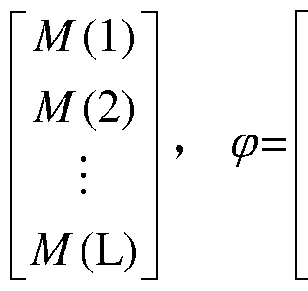 sin (LQ) sin (3LQ) ··· sin (L(2n-1)Q)
通过调整采样频率,寻找使得 /=[Z X]T[z- x]最小的矩阵 p和 z,从而 确定由各奇次谐波幅值 组成的列向量 x = )- fz, 其中, 数字角频率
Ω=^ , /s为采样频率, 为圆周率, 上标 Γ表示转置。
Priority Applications (1)
| Application Number | Priority Date | Filing Date | Title |
|---|---|---|---|
| US14/232,600 US9301693B2 (en) | 2013-03-01 | 2013-06-25 | Method and system for in-vivo temperature measurement based on AC magnetization of magnetic nanoparticle |
Applications Claiming Priority (2)
| Application Number | Priority Date | Filing Date | Title |
|---|---|---|---|
| CN201310065896.7 | 2013-03-01 | ||
| CN201310065896.7A CN103156581B (zh) | 2013-03-01 | 2013-03-01 | 基于磁纳米粒子交流磁化强度的在体温度测量方法及系统 |
Publications (1)
| Publication Number | Publication Date |
|---|---|
| WO2014131256A1 true WO2014131256A1 (zh) | 2014-09-04 |
Family
ID=48580483
Family Applications (1)
| Application Number | Title | Priority Date | Filing Date |
|---|---|---|---|
| PCT/CN2013/077917 Ceased WO2014131256A1 (zh) | 2013-03-01 | 2013-06-25 | 基于磁纳米粒子交流磁化强度的在体温度测量方法及系统 |
Country Status (3)
| Country | Link |
|---|---|
| US (1) | US9301693B2 (zh) |
| CN (1) | CN103156581B (zh) |
| WO (1) | WO2014131256A1 (zh) |
Cited By (3)
| Publication number | Priority date | Publication date | Assignee | Title |
|---|---|---|---|---|
| CN106137519A (zh) * | 2016-06-24 | 2016-11-23 | 郑州轻工业学院 | 一种基于有效弛豫时间的磁纳米温度测量方法 |
| CN110705072A (zh) * | 2019-09-24 | 2020-01-17 | 郑州轻工业学院 | 基于Fokker-Planck的高精度磁纳米温度估计方法与系统 |
| CN114166365A (zh) * | 2021-11-23 | 2022-03-11 | 华中科技大学 | 基于磁纳米粒子磁化响应的线粒体温度测量方法及系统 |
Families Citing this family (21)
| Publication number | Priority date | Publication date | Assignee | Title |
|---|---|---|---|---|
| CN103156581B (zh) | 2013-03-01 | 2014-10-29 | 华中科技大学 | 基于磁纳米粒子交流磁化强度的在体温度测量方法及系统 |
| CN104644138B (zh) * | 2013-12-04 | 2017-01-11 | 华中科技大学 | 一种三角波激励磁场下的磁纳米温度测量方法 |
| CN103892809B (zh) * | 2014-04-01 | 2016-02-24 | 华中科技大学 | 一种磁纳米温度成像方法及系统 |
| US10359678B2 (en) | 2014-04-07 | 2019-07-23 | The Regents Of The University Of California | Highly tunable magnetic liquid crystals |
| CN104132736B (zh) * | 2014-07-31 | 2017-02-15 | 华中科技大学 | 一种直流激励磁场下的非侵入式快速温度变化的测量方法 |
| CN104316213B (zh) * | 2014-10-24 | 2017-06-20 | 华中科技大学 | 一种基于磁纳米粒子交流磁化率的温度测量方法 |
| CN104865170B (zh) * | 2015-04-24 | 2017-09-29 | 华中科技大学 | 三角波激励磁场下磁性纳米粒子粒径分布测量系统及方法 |
| CN104764546B (zh) * | 2015-04-27 | 2017-07-11 | 武汉科技大学 | 基于磁纳米热图像的轮胎与路面间接触应力测试装置 |
| CN104856655B (zh) * | 2015-05-04 | 2018-02-02 | 华中科技大学 | 一种基于双频磁场磁纳米磁化强度的温度测量方法 |
| CN105054932B (zh) * | 2015-07-03 | 2017-07-18 | 华中科技大学 | 一种基于磁纳米粒子一次谐波幅值的成像方法 |
| CN105433912B (zh) * | 2015-11-09 | 2019-01-22 | 华中科技大学 | 一种磁纳米实时非侵入式温度测量方法 |
| CN105953939B (zh) * | 2016-06-07 | 2019-06-11 | 郑州轻工业学院 | 一种混频磁场激励下的磁纳米温度测量方法及系统 |
| CN106073725B (zh) * | 2016-06-24 | 2019-07-12 | 郑州轻工业学院 | 一种基于交流磁化强度奇次谐波的磁纳米温度测量方法 |
| CN106556466B (zh) * | 2016-11-22 | 2018-11-02 | 华中科技大学 | 一种基于磁纳米磁化强度-温度曲线的快速测温方法 |
| CN110420026B (zh) * | 2019-07-15 | 2020-05-19 | 中国科学院自动化研究所 | 基于ffl的磁粒子成像三维立体重建方法、系统、装置 |
| CN110720913B (zh) * | 2019-10-25 | 2023-06-16 | 辽宁工程技术大学 | 一种磁声耦合的磁性纳米粒子浓度图像重建方法 |
| CN112212996B (zh) * | 2020-10-10 | 2022-11-08 | 郑州轻工业大学 | 一种高频激励磁场中磁纳米粒子测温的谐波幅值-温度方法 |
| CN112539853B (zh) * | 2020-11-04 | 2022-03-29 | 华中科技大学 | 一种基于电子顺磁共振的磁纳米粒子温度测量方法 |
| CN113820034B (zh) * | 2020-12-11 | 2023-09-29 | 中冶长天国际工程有限责任公司 | 一种微波场中在线测温方法 |
| CN113932939B (zh) * | 2021-09-26 | 2023-07-21 | 郑州轻工业大学 | 基于扫场法的铁磁共振测温方法 |
| CN117408497B (zh) * | 2023-12-14 | 2024-04-05 | 山东锦都食品有限公司 | 一种食品加工物料管控方法及系统 |
Citations (5)
| Publication number | Priority date | Publication date | Assignee | Title |
|---|---|---|---|---|
| US4136683A (en) * | 1976-03-25 | 1979-01-30 | Gordon Robert T | Intracellular temperature measurement |
| US20060020312A1 (en) * | 2002-01-18 | 2006-01-26 | Aspara Medical Corporation | System, method and apparatus for evaluating tissue temperature |
| CN101918803A (zh) * | 2008-01-10 | 2010-12-15 | 国立大学法人秋田大学 | 使用感温磁性体的温度测量方法以及温度控制方法 |
| CN102156006A (zh) * | 2011-03-08 | 2011-08-17 | 华中科技大学 | 基于顺磁特性的磁纳米粒子远程温度测量方法 |
| CN103156581A (zh) * | 2013-03-01 | 2013-06-19 | 华中科技大学 | 基于磁纳米粒子交流磁化强度的在体温度测量方法及系统 |
Family Cites Families (5)
| Publication number | Priority date | Publication date | Assignee | Title |
|---|---|---|---|---|
| US8108030B2 (en) * | 2006-10-20 | 2012-01-31 | Board Of Regents, The University Of Texas System | Method and apparatus to identify vulnerable plaques with thermal wave imaging of heated nanoparticles |
| US8954131B2 (en) | 2007-06-19 | 2015-02-10 | The Trustees Of Dartmouth College | Magnetic particle imaging (MPI) system and method for use of iron-based nanoparticles in imaging and diagnosis |
| US8884617B2 (en) * | 2008-06-23 | 2014-11-11 | The Regents Of The University Of California | Magnetic particle imaging devices and methods |
| CN100588368C (zh) * | 2008-09-12 | 2010-02-10 | 新奥博为技术有限公司 | 一种基于三维稳态自由进动的磁共振成像测温方法 |
| JP2013535991A (ja) * | 2010-06-21 | 2013-09-19 | ユニバーシティ オブ ワシントン センター フォー コマーシャライゼーション | 生物医学向けにチューニングされた多機能性磁性ナノ粒子 |
-
2013
- 2013-03-01 CN CN201310065896.7A patent/CN103156581B/zh not_active Expired - Fee Related
- 2013-06-25 US US14/232,600 patent/US9301693B2/en not_active Expired - Fee Related
- 2013-06-25 WO PCT/CN2013/077917 patent/WO2014131256A1/zh not_active Ceased
Patent Citations (5)
| Publication number | Priority date | Publication date | Assignee | Title |
|---|---|---|---|---|
| US4136683A (en) * | 1976-03-25 | 1979-01-30 | Gordon Robert T | Intracellular temperature measurement |
| US20060020312A1 (en) * | 2002-01-18 | 2006-01-26 | Aspara Medical Corporation | System, method and apparatus for evaluating tissue temperature |
| CN101918803A (zh) * | 2008-01-10 | 2010-12-15 | 国立大学法人秋田大学 | 使用感温磁性体的温度测量方法以及温度控制方法 |
| CN102156006A (zh) * | 2011-03-08 | 2011-08-17 | 华中科技大学 | 基于顺磁特性的磁纳米粒子远程温度测量方法 |
| CN103156581A (zh) * | 2013-03-01 | 2013-06-19 | 华中科技大学 | 基于磁纳米粒子交流磁化强度的在体温度测量方法及系统 |
Cited By (5)
| Publication number | Priority date | Publication date | Assignee | Title |
|---|---|---|---|---|
| CN106137519A (zh) * | 2016-06-24 | 2016-11-23 | 郑州轻工业学院 | 一种基于有效弛豫时间的磁纳米温度测量方法 |
| CN106137519B (zh) * | 2016-06-24 | 2018-07-06 | 郑州轻工业学院 | 一种基于有效弛豫时间的磁纳米温度测量方法 |
| CN110705072A (zh) * | 2019-09-24 | 2020-01-17 | 郑州轻工业学院 | 基于Fokker-Planck的高精度磁纳米温度估计方法与系统 |
| CN110705072B (zh) * | 2019-09-24 | 2022-11-22 | 郑州轻工业学院 | 基于Fokker-Planck的高精度磁纳米温度估计方法与系统 |
| CN114166365A (zh) * | 2021-11-23 | 2022-03-11 | 华中科技大学 | 基于磁纳米粒子磁化响应的线粒体温度测量方法及系统 |
Also Published As
| Publication number | Publication date |
|---|---|
| US20150045691A1 (en) | 2015-02-12 |
| CN103156581A (zh) | 2013-06-19 |
| CN103156581B (zh) | 2014-10-29 |
| US9301693B2 (en) | 2016-04-05 |
Similar Documents
| Publication | Publication Date | Title |
|---|---|---|
| WO2014131256A1 (zh) | 基于磁纳米粒子交流磁化强度的在体温度测量方法及系统 | |
| CN103892809B (zh) | 一种磁纳米温度成像方法及系统 | |
| Widlak et al. | Hybrid tomography for conductivity imaging | |
| CN100484468C (zh) | 一种高灵敏度的开放式磁感应成像测量装置 | |
| CN105953939B (zh) | 一种混频磁场激励下的磁纳米温度测量方法及系统 | |
| CN110705072B (zh) | 基于Fokker-Planck的高精度磁纳米温度估计方法与系统 | |
| CN104316213B (zh) | 一种基于磁纳米粒子交流磁化率的温度测量方法 | |
| CN105433912B (zh) | 一种磁纳米实时非侵入式温度测量方法 | |
| CN104856655B (zh) | 一种基于双频磁场磁纳米磁化强度的温度测量方法 | |
| CN110132806A (zh) | 一种基于磁纳米粒子的快速粒径分布信息测量方法 | |
| WO2015081585A1 (zh) | 一种三角波激励磁场下的磁纳米温度测量方法 | |
| CN112212996A (zh) | 一种高频激励磁场中磁纳米粒子测温的谐波幅值-温度方法 | |
| Liang et al. | A shape-based statistical inversion method for EIT/URT dual-modality imaging | |
| Chen et al. | Technologies for magnetic induction tomography sensors and image reconstruction in medical assisted diagnosis: A review | |
| CN106442631A (zh) | 基于电学/超声双模态融合的层状界面重建方法 | |
| CN106073725B (zh) | 一种基于交流磁化强度奇次谐波的磁纳米温度测量方法 | |
| Zhang et al. | Impact localization in anisotropic composites with time difference matrix matching and edge accuracy optimization | |
| CN115769097A (zh) | 用于确定自旋标记粒子的扩散传播因子或相关扩散参数的磁共振方法、软件产品和系统 | |
| Yan et al. | Simulation research on magneto-acoustic concentration tomography of magnetic nanoparticles based on truncated singular value decomposition (TSVD) | |
| Zhang et al. | Forward solver in magnetoacoustic tomography with magnetic induction by generalized finite-element method | |
| Liang et al. | An inclusion boundary and conductivity simultaneous estimation method for ultrasound reflection guided electrical impedance tomography | |
| Chen et al. | Design of a scanning magnetic induction phase measurement system for respiratory monitoring | |
| CN117906779A (zh) | 一种布朗磁豫主导下的磁纳米粒子温度估计方法 | |
| Sarkawi et al. | Non–invasive Fetal Scalp pH Measurement Utilizing Magnetic Induction Spectroscopy Technique | |
| Chen et al. | Electromagnetic Testing System for Measurement of Low Conductivity Objects |
Legal Events
| Date | Code | Title | Description |
|---|---|---|---|
| WWE | Wipo information: entry into national phase |
Ref document number: 14232600 Country of ref document: US |
|
| 121 | Ep: the epo has been informed by wipo that ep was designated in this application |
Ref document number: 13876152 Country of ref document: EP Kind code of ref document: A1 |
|
| NENP | Non-entry into the national phase |
Ref country code: DE |
|
| 122 | Ep: pct application non-entry in european phase |
Ref document number: 13876152 Country of ref document: EP Kind code of ref document: A1 |