WO2014104486A1 - 표시장치 절연막용 감광성 수지 조성물, 및 이를 이용한 표시장치 절연막 및 표시장치 - Google Patents
표시장치 절연막용 감광성 수지 조성물, 및 이를 이용한 표시장치 절연막 및 표시장치 Download PDFInfo
- Publication number
- WO2014104486A1 WO2014104486A1 PCT/KR2013/002970 KR2013002970W WO2014104486A1 WO 2014104486 A1 WO2014104486 A1 WO 2014104486A1 KR 2013002970 W KR2013002970 W KR 2013002970W WO 2014104486 A1 WO2014104486 A1 WO 2014104486A1
- Authority
- WO
- WIPO (PCT)
- Prior art keywords
- display device
- group
- resin composition
- photosensitive resin
- insulating film
- Prior art date
- Legal status (The legal status is an assumption and is not a legal conclusion. Google has not performed a legal analysis and makes no representation as to the accuracy of the status listed.)
- Ceased
Links
Classifications
-
- G—PHYSICS
- G03—PHOTOGRAPHY; CINEMATOGRAPHY; ANALOGOUS TECHNIQUES USING WAVES OTHER THAN OPTICAL WAVES; ELECTROGRAPHY; HOLOGRAPHY
- G03F—PHOTOMECHANICAL PRODUCTION OF TEXTURED OR PATTERNED SURFACES, e.g. FOR PRINTING, FOR PROCESSING OF SEMICONDUCTOR DEVICES; MATERIALS THEREFOR; ORIGINALS THEREFOR; APPARATUS SPECIALLY ADAPTED THEREFOR
- G03F7/00—Photomechanical, e.g. photolithographic, production of textured or patterned surfaces, e.g. printing surfaces; Materials therefor, e.g. comprising photoresists; Apparatus specially adapted therefor
- G03F7/004—Photosensitive materials
- G03F7/016—Diazonium salts or compounds
-
- G—PHYSICS
- G03—PHOTOGRAPHY; CINEMATOGRAPHY; ANALOGOUS TECHNIQUES USING WAVES OTHER THAN OPTICAL WAVES; ELECTROGRAPHY; HOLOGRAPHY
- G03F—PHOTOMECHANICAL PRODUCTION OF TEXTURED OR PATTERNED SURFACES, e.g. FOR PRINTING, FOR PROCESSING OF SEMICONDUCTOR DEVICES; MATERIALS THEREFOR; ORIGINALS THEREFOR; APPARATUS SPECIALLY ADAPTED THEREFOR
- G03F7/00—Photomechanical, e.g. photolithographic, production of textured or patterned surfaces, e.g. printing surfaces; Materials therefor, e.g. comprising photoresists; Apparatus specially adapted therefor
- G03F7/004—Photosensitive materials
- G03F7/022—Quinonediazides
- G03F7/0226—Quinonediazides characterised by the non-macromolecular additives
-
- G—PHYSICS
- G02—OPTICS
- G02F—OPTICAL DEVICES OR ARRANGEMENTS FOR THE CONTROL OF LIGHT BY MODIFICATION OF THE OPTICAL PROPERTIES OF THE MEDIA OF THE ELEMENTS INVOLVED THEREIN; NON-LINEAR OPTICS; FREQUENCY-CHANGING OF LIGHT; OPTICAL LOGIC ELEMENTS; OPTICAL ANALOGUE/DIGITAL CONVERTERS
- G02F1/00—Devices or arrangements for the control of the intensity, colour, phase, polarisation or direction of light arriving from an independent light source, e.g. switching, gating or modulating; Non-linear optics
- G02F1/01—Devices or arrangements for the control of the intensity, colour, phase, polarisation or direction of light arriving from an independent light source, e.g. switching, gating or modulating; Non-linear optics for the control of the intensity, phase, polarisation or colour
- G02F1/13—Devices or arrangements for the control of the intensity, colour, phase, polarisation or direction of light arriving from an independent light source, e.g. switching, gating or modulating; Non-linear optics for the control of the intensity, phase, polarisation or colour based on liquid crystals, e.g. single liquid crystal display cells
- G02F1/1303—Apparatus specially adapted to the manufacture of LCDs
-
- G—PHYSICS
- G03—PHOTOGRAPHY; CINEMATOGRAPHY; ANALOGOUS TECHNIQUES USING WAVES OTHER THAN OPTICAL WAVES; ELECTROGRAPHY; HOLOGRAPHY
- G03F—PHOTOMECHANICAL PRODUCTION OF TEXTURED OR PATTERNED SURFACES, e.g. FOR PRINTING, FOR PROCESSING OF SEMICONDUCTOR DEVICES; MATERIALS THEREFOR; ORIGINALS THEREFOR; APPARATUS SPECIALLY ADAPTED THEREFOR
- G03F7/00—Photomechanical, e.g. photolithographic, production of textured or patterned surfaces, e.g. printing surfaces; Materials therefor, e.g. comprising photoresists; Apparatus specially adapted therefor
- G03F7/004—Photosensitive materials
-
- G—PHYSICS
- G03—PHOTOGRAPHY; CINEMATOGRAPHY; ANALOGOUS TECHNIQUES USING WAVES OTHER THAN OPTICAL WAVES; ELECTROGRAPHY; HOLOGRAPHY
- G03F—PHOTOMECHANICAL PRODUCTION OF TEXTURED OR PATTERNED SURFACES, e.g. FOR PRINTING, FOR PROCESSING OF SEMICONDUCTOR DEVICES; MATERIALS THEREFOR; ORIGINALS THEREFOR; APPARATUS SPECIALLY ADAPTED THEREFOR
- G03F7/00—Photomechanical, e.g. photolithographic, production of textured or patterned surfaces, e.g. printing surfaces; Materials therefor, e.g. comprising photoresists; Apparatus specially adapted therefor
- G03F7/004—Photosensitive materials
- G03F7/0045—Photosensitive materials with organic non-macromolecular light-sensitive compounds not otherwise provided for, e.g. dissolution inhibitors
-
- G—PHYSICS
- G03—PHOTOGRAPHY; CINEMATOGRAPHY; ANALOGOUS TECHNIQUES USING WAVES OTHER THAN OPTICAL WAVES; ELECTROGRAPHY; HOLOGRAPHY
- G03F—PHOTOMECHANICAL PRODUCTION OF TEXTURED OR PATTERNED SURFACES, e.g. FOR PRINTING, FOR PROCESSING OF SEMICONDUCTOR DEVICES; MATERIALS THEREFOR; ORIGINALS THEREFOR; APPARATUS SPECIALLY ADAPTED THEREFOR
- G03F7/00—Photomechanical, e.g. photolithographic, production of textured or patterned surfaces, e.g. printing surfaces; Materials therefor, e.g. comprising photoresists; Apparatus specially adapted therefor
- G03F7/004—Photosensitive materials
- G03F7/022—Quinonediazides
- G03F7/023—Macromolecular quinonediazides; Macromolecular additives, e.g. binders
- G03F7/0233—Macromolecular quinonediazides; Macromolecular additives, e.g. binders characterised by the polymeric binders or the macromolecular additives other than the macromolecular quinonediazides
-
- G—PHYSICS
- G03—PHOTOGRAPHY; CINEMATOGRAPHY; ANALOGOUS TECHNIQUES USING WAVES OTHER THAN OPTICAL WAVES; ELECTROGRAPHY; HOLOGRAPHY
- G03F—PHOTOMECHANICAL PRODUCTION OF TEXTURED OR PATTERNED SURFACES, e.g. FOR PRINTING, FOR PROCESSING OF SEMICONDUCTOR DEVICES; MATERIALS THEREFOR; ORIGINALS THEREFOR; APPARATUS SPECIALLY ADAPTED THEREFOR
- G03F7/00—Photomechanical, e.g. photolithographic, production of textured or patterned surfaces, e.g. printing surfaces; Materials therefor, e.g. comprising photoresists; Apparatus specially adapted therefor
- G03F7/004—Photosensitive materials
- G03F7/038—Macromolecular compounds which are rendered insoluble or differentially wettable
- G03F7/0382—Macromolecular compounds which are rendered insoluble or differentially wettable the macromolecular compound being present in a chemically amplified negative photoresist composition
-
- G—PHYSICS
- G03—PHOTOGRAPHY; CINEMATOGRAPHY; ANALOGOUS TECHNIQUES USING WAVES OTHER THAN OPTICAL WAVES; ELECTROGRAPHY; HOLOGRAPHY
- G03F—PHOTOMECHANICAL PRODUCTION OF TEXTURED OR PATTERNED SURFACES, e.g. FOR PRINTING, FOR PROCESSING OF SEMICONDUCTOR DEVICES; MATERIALS THEREFOR; ORIGINALS THEREFOR; APPARATUS SPECIALLY ADAPTED THEREFOR
- G03F7/00—Photomechanical, e.g. photolithographic, production of textured or patterned surfaces, e.g. printing surfaces; Materials therefor, e.g. comprising photoresists; Apparatus specially adapted therefor
- G03F7/004—Photosensitive materials
- G03F7/038—Macromolecular compounds which are rendered insoluble or differentially wettable
- G03F7/0387—Polyamides or polyimides
-
- G—PHYSICS
- G03—PHOTOGRAPHY; CINEMATOGRAPHY; ANALOGOUS TECHNIQUES USING WAVES OTHER THAN OPTICAL WAVES; ELECTROGRAPHY; HOLOGRAPHY
- G03F—PHOTOMECHANICAL PRODUCTION OF TEXTURED OR PATTERNED SURFACES, e.g. FOR PRINTING, FOR PROCESSING OF SEMICONDUCTOR DEVICES; MATERIALS THEREFOR; ORIGINALS THEREFOR; APPARATUS SPECIALLY ADAPTED THEREFOR
- G03F7/00—Photomechanical, e.g. photolithographic, production of textured or patterned surfaces, e.g. printing surfaces; Materials therefor, e.g. comprising photoresists; Apparatus specially adapted therefor
- G03F7/004—Photosensitive materials
- G03F7/039—Macromolecular compounds which are photodegradable, e.g. positive electron resists
- G03F7/0392—Macromolecular compounds which are photodegradable, e.g. positive electron resists the macromolecular compound being present in a chemically amplified positive photoresist composition
-
- G—PHYSICS
- G03—PHOTOGRAPHY; CINEMATOGRAPHY; ANALOGOUS TECHNIQUES USING WAVES OTHER THAN OPTICAL WAVES; ELECTROGRAPHY; HOLOGRAPHY
- G03F—PHOTOMECHANICAL PRODUCTION OF TEXTURED OR PATTERNED SURFACES, e.g. FOR PRINTING, FOR PROCESSING OF SEMICONDUCTOR DEVICES; MATERIALS THEREFOR; ORIGINALS THEREFOR; APPARATUS SPECIALLY ADAPTED THEREFOR
- G03F7/00—Photomechanical, e.g. photolithographic, production of textured or patterned surfaces, e.g. printing surfaces; Materials therefor, e.g. comprising photoresists; Apparatus specially adapted therefor
- G03F7/004—Photosensitive materials
- G03F7/09—Photosensitive materials characterised by structural details, e.g. supports, auxiliary layers
- G03F7/105—Photosensitive materials characterised by structural details, e.g. supports, auxiliary layers having substances, e.g. indicators, for forming visible images
-
- G—PHYSICS
- G03—PHOTOGRAPHY; CINEMATOGRAPHY; ANALOGOUS TECHNIQUES USING WAVES OTHER THAN OPTICAL WAVES; ELECTROGRAPHY; HOLOGRAPHY
- G03F—PHOTOMECHANICAL PRODUCTION OF TEXTURED OR PATTERNED SURFACES, e.g. FOR PRINTING, FOR PROCESSING OF SEMICONDUCTOR DEVICES; MATERIALS THEREFOR; ORIGINALS THEREFOR; APPARATUS SPECIALLY ADAPTED THEREFOR
- G03F7/00—Photomechanical, e.g. photolithographic, production of textured or patterned surfaces, e.g. printing surfaces; Materials therefor, e.g. comprising photoresists; Apparatus specially adapted therefor
- G03F7/004—Photosensitive materials
- G03F7/09—Photosensitive materials characterised by structural details, e.g. supports, auxiliary layers
- G03F7/11—Photosensitive materials characterised by structural details, e.g. supports, auxiliary layers having cover layers or intermediate layers, e.g. subbing layers
Definitions
- the present invention relates to a photosensitive resin composition for a display device insulating film, a display device insulating film and a display device using the same.
- polyimide resins having excellent heat resistance, electrical properties, mechanical properties, and the like have been used for surface protection films and interlayer insulating films of semiconductor devices.
- Such polyimide resins are recently used in the form of a photosensitive polyimide precursor composition and are easy to apply. After applying the polyimide precursor composition onto a semiconductor device, patterning by ultraviolet rays, development, thermal imidization treatment, and the like are performed. The surface protective film, the interlayer insulating film and the like can be easily formed. Therefore, compared with the conventional non-photosensitive polyimide precursor composition, it has the characteristic that the process shortening is large.
- the photosensitive polyimide precursor composition has a positive type in which the exposed part is dissolved by development and a negative type in which the exposed part is cured.
- a non-toxic aqueous alkali solution can be used as a developer.
- the positive photosensitive polyimide precursor composition includes polyamic acid as a polyimide precursor, diazonaphthoquinone as a photosensitive material, and the like.
- the positive photosensitive polyimide precursor composition has a problem in that the carboxylic acid of the polyamic acid used is too soluble in alkali to obtain a desired pattern.
- the positive photosensitive resin composition containing the said polybenzoxazole precursor can be applied as an organic insulating film or a partition material.
- high contrast ratio and high brightness performance are required.
- Various methods have been attempted for this purpose, and one of them has been attempted to install a black filter layer between color patterns. There was a disadvantage of low insulation.
- attempts were made to improve the contrast ratio and visibility while securing a high opening ratio by making the non-luminescent area black, but this requires a large amount of colorant, thereby deteriorating the intrinsic properties of the insulating layer.
- inorganic pigments such as carbon black used in the black mill base generally have excellent light shielding properties, but have a disadvantage of poor insulation resistance, and thus are not suitable for use as insulating films for organic light emitting devices.
- Organic pigments are composed of pigment mixtures that have a black color.They have better insulation resistance than inorganic pigments, but in order to exhibit the same level of light shielding properties, organic pigments impair pattern development and residues. The chances are very high.
- One embodiment of the present invention is to provide a photosensitive resin composition for a display device insulating film having excellent residual film ratio, sensitivity, and dielectric constant, low residue generation rate of an exposed portion, and high luminance and excellent color characteristics.
- Another embodiment of the present invention is to provide a display device insulating film using the photosensitive resin composition for the display device insulating film.
- Another embodiment of the present invention is to provide a display device including the display device insulating layer.
- One embodiment of the present invention (A) alkali soluble resin; (B) photosensitive diazoquinone compound; (C) the dyeing material having a maximum absorption wavelength of 400 to 550 nm; And (D) provides a photosensitive resin composition for a display device insulating film containing a solvent.
- the alkali-soluble resin (A) may be a polybenzoxazole precursor, polyamic acid, polyimide, or a combination thereof.
- the coloring material (C) may be a triarylmethane-based compound, an azapopyrine-based compound, or a combination thereof.
- the photosensitive resin composition for a display device insulating film includes (A) 5 to 100 parts by weight of (B) a photosensitive diazoquinone compound based on 100 parts by weight of an alkali-soluble resin; (C) 1 to 30 parts by weight of the coloring material; And (D) 100 to 900 parts by weight of the solvent.
- the photosensitive resin composition for the display device insulating layer may further include a silane compound.
- the photosensitive resin composition for the display device insulating layer may further include a phenol compound.
- Another embodiment of the present invention provides a display device insulating film manufactured using the photosensitive resin composition for the display device insulating film.
- a display device including the display device insulating layer is provided.
- the photosensitive resin composition for a display device insulating film according to an embodiment of the present invention can realize high sensitivity, high resolution, excellent pattern formation ability and developability, and prevent light leakage between adjacent pixels and increase color purity, thereby providing a liquid crystal display and a light emitting diode. It is suitable for application to an insulating film of a display device.
- substituted to “substituted” means that at least one hydrogen atom of the functional group of the present invention is a halogen atom (-F, -Cl, -Br or -I), hydroxy group, nitro group, cya A no group, an amino group (NH 2 , NH (R 200 ) or N (R 201 ) (R 202 ), wherein R 200 , R 201 and R 202 are the same or different from each other, and are each independently C1 to C10 alkyl groups , Amidino group, hydrazine group, hydrazone group, carboxyl group, substituted or unsubstituted alkyl group, substituted or unsubstituted alkenyl group, substituted or unsubstituted alkynyl group, substituted or unsubstituted alicyclic organic group, substituted or unsubstituted It means a substituted aryl group, and substituted
- alkyl group means a C1 to C30 alkyl group, specifically means a C1 to C15 alkyl group
- cycloalkyl group means a C3 to C30 cycloalkyl group, specifically C3 To C18 cycloalkyl group
- alkoxy group means C1 to C30 alkoxy group, specifically C1 to C18 alkoxy group
- aryl group means C6 to C30 aryl group, specifically C6 to C18 to aryl group
- alkenyl group means C2 to C30 alkenyl group, specifically C2 to C18 alkenyl group
- alkylene group means C1 to C30 alkylene group, specifically C1 To C18 alkylene group
- an "arylene group” means a C6 to C30 arylene group, specifically, a C6 to C16 arylene group.
- an "aliphatic organic group” means a C1 to C30 alkyl group, a C2 to C30 alkenyl group, a C2 to C30 alkynyl group, a C1 to C30 alkylene group, a C2 to C30 alkenylene group, or a C2 to C30 group.
- An alkynylene group and specifically, a C1 to C15 alkyl group, a C2 to C15 alkenyl group, a C2 to C15 alkynyl group, a C1 to C15 alkylene group, a C2 to C15 alkenylene group, or a C2 to C15 alkynylene group, and Alicyclic organic group "means a C3 to C30 cycloalkyl group, a C3 to C30 cycloalkenyl group, a C3 to C30 cycloalkynyl group, a C3 to C30 cycloalkylene group, a C3 to C30 cycloalkenylene group, or a C3 to C30 cycloalkynylene group Specifically, C3 to C15 cycloalkyl group, C3 to C15 cycloalkenyl group, C3 to C15 cycloalkynyl group, C3 to C15 cycloalkylene group, C3
- One embodiment of the present invention (A) alkali soluble resin; (B) photosensitive diazoquinone compound; (C) the dyeing material having a maximum absorption wavelength of 400 to 550 nm; And (D) provides a photosensitive resin composition for a display device insulating film containing a solvent.
- the photosensitive resin composition for a display device insulating film is a positive photosensitive resin composition.
- the alkali-soluble resin (A) can be used without limitation so long as it is an alkali-soluble resin generally used in the art.
- the alkali-soluble resin includes a polybenzoxazole precursor including a repeating unit represented by the following Chemical Formula 1, a polyamic acid including the repeating unit represented by the following Chemical Formula 2, and a repeating unit represented by the following Chemical Formula 3.
- At least one selected from polyimides can be used.
- X 1 is a substituted or unsubstituted C6 to C30 aromatic organic group
- Y 1 is a substituted or unsubstituted C6 to C30 aromatic organic group, a substituted or unsubstituted divalent to hexavalent C1 to C30 aliphatic group It is an organic group or a substituted or unsubstituted divalent to hexavalent C3 to C30 alicyclic organic group.
- X 1 may be a residue derived from an aromatic diamine as an aromatic organic group.
- aromatic diamine examples include 3,3'-diamino-4,4'-dihydroxybiphenyl, 4,4'-diamino-3,3'-dihydroxybiphenyl, bis (3-amino- 4-hydroxyphenyl) propane, bis (4-amino-3-hydroxyphenyl) propane, bis (3-amino-4-hydroxyphenyl) sulfone, bis (4-amino-3-hydroxyphenyl) sulfone, 2,2-bis (3-amino-4-hydroxyphenyl) -1,1,1,3,3,3-hexafluoropropane, 2,2-bis (4-amino-3-hydroxyphenyl) -1,1,1,3,3,3-hexafluoropropane, 2,2-bis (3-amino-4-hydroxy-5-trifluoromethylphenyl) hexafluoropropane, 2,2-bis (3-amino-4-hydroxy-6-trifluoromethylphenyl) hexafluoropropane,
- Y 1 is an aromatic organic group, a divalent to hexavalent aliphatic organic group, or a divalent to hexavalent alicyclic organic group, and may be a residue of a dicarboxylic acid or a residue of a dicarboxylic acid derivative. Specifically, Y 1 may be an aromatic organic group or a divalent to hexavalent alicyclic organic group.
- Examples of the dicarboxylic acid may include Y 1 (COOH) 2 , wherein Y 1 is the same as Y 1 of Chemical Formula 1.
- Examples of the di-carboxylic acid derivatives is Y 1 (COOH) 2 of the carbonyl halide derivative, or Y 1 (COOH) 2 and 1-hydroxy-1,2,3-benzotriazole-active ester derivative by reacting a sol such as the active compounds may be mentioned (wherein Y 1 is the same hereinafter as Y 1 in the formula (1)).
- dicarboxylic acid derivatives include 4,4'-oxydibenzoyl chloride, diphenyloxydicarbonyldichloride, bis (phenylcarbonyl chloride) sulfone, bis (phenylcarbonyl chloride) ether, bis (phenylcarbonyl chloride).
- the polybenzoxazole precursor may have a thermopolymerizable functional group derived from a reactive endblocking monomer at either or both of the branched chain ends.
- the reactive end-blocking monomer is preferably monoamines or monoanhydrides having a carbon-carbon double bond, or a combination thereof.
- the monoamines may include, but are not limited to, toluidine, dimethylaniline, ethylaniline, aminophenol, aminobenzyl alcohol, aminoindan, aminoacetonephenone, or a combination thereof.
- X 2 and X 3 are each independently a substituted or unsubstituted C6 to C30 aromatic organic group, a substituted or unsubstituted divalent to 6-valent C1 to C30 aliphatic organic group, a substituted or unsubstituted Or a divalent to hexavalent C3 to C30 alicyclic organic group or an organosilane group.
- X 2 and X 3 may each independently be a residue derived from an aromatic diamine, an alicyclic diamine, or a silicone diamine.
- the aromatic diamine, alicyclic diamine and silicone diamine may be used alone or in combination of one or more thereof.
- aromatic diamine examples include 3,4'-diaminodiphenyl ether, 4,4'-diaminodiphenyl ether, 3,4'-diaminodiphenylmethane, 4,4'-diaminodiphenylmethane, 4,4'-diaminodiphenylsulfone, 4,4'-diaminodiphenylsulfide, benzidine, m-phenylenediamine, p-phenylenediamine, 1,5-naphthalenediamine, 2,6-naphthalenediamine , Bis [4- (4-aminophenoxy) phenyl] sulfone, bis (3-aminophenoxyphenyl) sulfone, bis (4-aminophenoxy) biphenyl, bis [4- (4-aminophenoxy) phenyl ] Ether, 1, 4-bis (4-aminophenoxy) benzene, the compound which substituted the alkyl group
- alicyclic diamine examples include, but are not limited to, 1,2-cyclohexyl diamine, 1,3-cyclohexyl diamine, or a combination thereof.
- silicone diamine examples include bis (4-aminophenyl) dimethylsilane, bis (4-aminophenyl) tetramethylsiloxane, bis (p-aminophenyl) tetramethyldisiloxane, bis ( ⁇ -aminopropyl) tetramethyldisiloxane , 1,4-bis ( ⁇ -aminopropyldimethylsilyl) benzene, bis (4-aminobutyl) tetramethyldisiloxane, bis ( ⁇ -aminopropyl) tetraphenyldisiloxane, 1,3-bis (aminopropyl) tetra Methyldisiloxane, or a combination thereof, but is not limited thereto.
- Y 2 and Y 3 are each independently a substituted or unsubstituted C6 to C30 aromatic organic group, a substituted or unsubstituted tetravalent to hexavalent C1 to C30 aliphatic organic group, or a substituted or unsubstituted Tetravalent C6 to C30 alicyclic organic group.
- Y 2 and Y 3 may each independently be a residue derived from an aromatic acid dianhydride or an alicyclic acid dianhydride.
- the aromatic acid dianhydride and the alicyclic acid dianhydride may be used alone or in combination of one or more thereof.
- aromatic acid dianhydride examples include pyromellitic dianhydride; Benzophenone tetracarboxylic dianhydride such as benzophenone-3,3 ', 4,4'-tetracarboxylic dianhydride ; Oxydiphthalic dianhydride such as 4,4'-oxydiphthalic dianhydride; Biphthalic dianhydrides such as 3,3 ', 4,4'-biphthalic dianhydride (3,3', 4,4'-biphthalic dianhydride); (Hexafluoroisopropyledene) diphthalic dianhydride, such as 4,4 '-(hexafluoroisopropylidene) diphthalic dianhydride (4,4'-(hexafluoroisopropyledene) diphthalic dianhydride) ; Naphthalene-1,4,5,8-tetracarboxylic dianhydride; 3,4,9,10-perylenetetracarboxylic dian
- Examples of the alicyclic acid dianhydride include 1,2,3,4-cyclobutanetetracarboxylic dianhydride (1,2,3,4-cyclobutanetetracarboxylic dianhydride), 1,2,3,4-cyclopentanetetracarboxyl Acid dianhydrides (1,2,3,4-cyclopentanetetracarboxylic dianhydride), 5- (2,5-dioxotetrahydrofuryl) -3-methyl-cyclohexane-1,2-dicarboxylic dianhydride (5- (2,5-dioxotetrahydrofuryl) -3-methyl-cyclohexane-1,2-dicarboxylic anhydride), 4- (2,5-dioxotetrahydrofuran-3-yl) -tetraline-1,2-dicar Acid dianhydride (4- (2,5-dioxotetrahydrofuran-3-yl) -tetralin-1,2-dicarbox
- the alkali-soluble resin may have a weight average molecular weight (Mw) of 5,000 to 20,000 g / mol, specifically, may have a weight average molecular weight (Mw) of 6,000 to 10,000 g / mol.
- Mw weight average molecular weight
- photosensitive diazoquinone compound a compound having a 1,2-benzoquinonediazide structure or a 1,2-naphthoquinonediazide structure may be used.
- photosensitive diazoquinone compound at least one selected from compounds represented by the following Chemical Formulas 4 and 6 to 8 may be used, but is not limited thereto.
- R 60 to R 62 in Formula 4 may each independently represent a hydrogen atom or a substituted or unsubstituted C1 to C30 alkyl group, and specifically, may be a methyl group.
- R 63 to R 65 are each independently OQ, and Q is a hydrogen atom, a functional group represented by Chemical Formula 5a, or a functional group represented by Chemical Formula 5b, wherein Q may not be hydrogen at the same time.
- N 20 to n 22 in Formula 4 may be each an integer of 0 to 5.
- R 66 in Formula 6 is a hydrogen atom or a substituted or unsubstituted C1 to C30 alkyl group, R 67 to R 69 are each independently OQ, Q is the same as defined above, n 23 To n 25 may be an integer of 0 to 5, respectively.
- a 3 is CO or CR 74 R 75 , and R 74 And R 75 each independently represent a substituted or unsubstituted C1 to C30 alkyl group.
- R 70 to R 73 in Formula 7 are each independently a hydrogen atom, a substituted or unsubstituted C1 to C30 alkyl group, OQ or NHQ, wherein Q is the same as defined above.
- n 26 to n 29 are each an integer of 0 to 4, n 26 + n 27 and n 28 + n 29 are each an integer of 5 or less.
- R 70 and R 71 may be OQ
- one aromatic ring may include 1 to 3 OQs
- the other aromatic ring may include 1 to 4 OQs.
- R 74 to R 81 are each independently a hydrogen atom or a substituted or unsubstituted C1 to C30 alkyl group, n 30 and n 31 are each an integer of 1 to 5, and Q is the same as defined above.
- the photosensitive diazoquinone compound may be included in the positive photosensitive resin composition in an amount of 5 to 100 parts by weight, specifically 10 to 50 parts by weight, based on 100 parts by weight of the alkali-soluble resin.
- the pattern is well formed without the residue by exposure, there is no loss of film thickness during development, it is possible to obtain a good pattern.
- the photosensitive resin composition for a display device insulating film includes a coloring material (C), and the maximum absorption wavelength of the coloring material is 400 to 550 nm.
- the colorant having the maximum absorption wavelength range may be a blue compound.
- the coloring material may effectively prevent light leakage of the specific wavelength by absorbing light of a specific wavelength.
- the coloring material has a high color expression, insulation, and high solubility in organic solvents, so that the coloring material is present in the form of particles rather than in a dispersed phase, and thus has excellent coating properties and does not include a separate dispersant. It is excellent in developability and excellent in durability.
- the coloring material may be used without limitation as long as the maximum absorption wavelength is 400 to 550 nm.
- the colorant may be a dye and may be a direct dye, an acid dye, a basic dye, an acid dye, an oxidized dye, a reduced dye, a disperse dye, or a reactive dye.
- the dye is a sulfide dye, azo dyes, triaryl methane dyes, azapopyrine dyes, anthraquinone dyes, indigo dyes, carbonium ion dyes, phthalocyanine dyes, nitro dyes, quinoline dyes, cyanine dyes, Or polyxanthene-based dyes, and these may be used alone or in combination of two or more thereof.
- the coloring material may be, for example, a triarylmethane dye.
- the triarylmethane-based dye may specifically be a compound represented by the following Formula 10.
- R 1 to R 6 are each independently hydrogen, a halogen group, a substituted or unsubstituted C1 to C20 alkyl group, a substituted or unsubstituted C3 to C20 cycloalkyl group, a substituted or unsubstituted C6 to C30 aryl Group, a substituted or unsubstituted C6 to C30 heteroaryl group.
- the coloring material may be an azapopyrine dye.
- the azapopyrine-based dye may specifically be a compound represented by the following formula (11).
- R 11 to R 14 and R 20 to R 39 are each independently a hydrogen atom, a halogen atom, a hydroxyl group, a sulfonic acid group (-SO 3 H), a nitro group, a carboxyl group, a cyan group, a substituted or unsubstituted C1 to C20 alkyl group , Substituted or unsubstituted C3 to C20 cycloalkyl group, substituted or unsubstituted C1 to C20 heteroalkyl group, substituted or unsubstituted C3 to C20 heterocycloalkyl group, substituted or unsubstituted C6 to C30 aryl group, substituted or unsubstituted C6 to C30 heteroaryl group and combinations thereof,
- At least one of the hydrogen atoms included in R 11 to R 14 and R 20 to R 39 is unsubstituted or substituted with —SO 3 — or —SO 3 M, wherein M is a sodium atom or a potassium atom,
- Z is selected from the group consisting of two hydrogen atoms, a divalent metal atom, a divalent metal oxide, a divalent metal hydroxide and a divalent metal chloride.
- Z include VO, TiO, Zn, Mg, Si, Sn, Rh, Pt, Pd, Mo, Mn, Pb, Cu, Ni, Co, Fe, AlCl, InCl, FeCl, TiCl 2 , SnCl 2 , SiCl 2 , GeCl 2 , Si (OH) 2 , H 2, and the like, for example Z may be Cu.
- the said coloring material can be used individually by 1 type, or can mix and use 2 or more types.
- two or more kinds of coloring materials two or more kinds of compounds may be mixed in various component ratios.
- the coloring material may have a solubility of 1 to 10 with respect to the solvent.
- the coloring matter may be secured to prevent compatibility.
- the solvent is, for example, N-methyl-2-pyrrolidone, ⁇ -butyrolactone, N, N-dimethylacetamide, dimethyl sulfoxide, diethylene glycol dimethyl ether, diethylene glycol diethyl ether, diethylene glycol Dibutyl ether, propylene glycol monomethyl ether, dipropylene glycol monomethyl ether, propylene glycol monomethyl ether acetate, methyl lactate, ethyl lactate, butyl lactate, methyl-1,3-butylene glycol acetate, 1,3-butylene Glycol-3-monomethylether, methyl pyruvate, ethyl pyruvate, methyl-3-methoxy propionate, cyclohexanone, or a combination thereof.
- the coloring material may be included 1 to 30 parts by weight, specifically 5 to 20 parts by weight, 5 to 15 parts by weight based on 100 parts by weight of alkali-soluble resin. When satisfying the above range, the coloring material can effectively prevent the light leakage phenomenon.
- the photosensitive resin composition for the display device insulating film may include a solvent capable of easily dissolving each component.
- the solvent examples include N-methyl-2-pyrrolidone, ⁇ -butyrolactone, N, N-dimethylacetamide, dimethyl sulfoxide, diethylene glycol dimethyl ether, diethylene glycol diethyl ether, diethylene glycol Dibutyl ether, propylene glycol monomethyl ether, dipropylene glycol monomethyl ether, propylene glycol monomethyl ether acetate, methyl lactate, ethyl lactate, butyl lactate, methyl-1,3-butylene glycol acetate, 1,3-butylene Glycol-3-monomethyl ether, methyl pyruvate, ethyl pyruvate, methyl-3-methoxy propionate and the like.
- These solvents can be used alone or in combination of two or more thereof.
- the solvent may be included in the photosensitive resin composition for a display device insulating film in an amount of 100 to 900 parts by weight, specifically 200 to 700 parts by weight based on 100 parts by weight of the alkali-soluble resin.
- When included in the above range can be a film of a sufficient thickness, it may have excellent solubility and coating properties.
- the solvent may be used so that the solid content of the photosensitive resin composition for the display device insulating film is 3 to 50% by weight, specifically 5 to 30% by weight.
- the photosensitive resin composition for the display device insulating layer may further include a silane compound.
- the silane compound may improve the adhesion between the photosensitive resin composition for a display device insulating film and the substrate.
- silane compound examples include compounds represented by the following Chemical Formulas 12 to 14; Vinyltrimethoxysilane, vinyltriethoxysilane, vinyltrichlorosilane, vinyltris ( ⁇ -methoxyethoxy) silane; Or 2- (3,4 epoxycyclohexyl) -ethyltrimethoxysilane, 3-methacryloxypropyltrimethoxysilane, 3-acryloxypropyltrimethoxysilane, p-styryltrimethoxysilane, 3 -Methacryloxypropylmethyldimethoxysilane, 3-methacryloxypropylmethyldiethoxysilane; Carbon-carbon unsaturated bond containing silane compounds, such as trimethoxy [3- (phenylamino) propyl] silane, are mentioned, but it is not limited to these.
- Chemical Formulas 12 to 14 Vinyltrimethoxysilane, vinyltriethoxysilane, vinyltrichlorosilane, vinyltris ( ⁇
- R 140 is a vinyl group, a substituted or unsubstituted alkyl group, or a substituted or unsubstituted aryl group, and specifically 3- (meth) acryloxypropyl, p-styryl or 3- (phenylamino Profile).
- R 141 To R 143 are each independently a substituted or unsubstituted alkoxy group, a substituted or unsubstituted alkyl group, or halogen, wherein R 21 To R 23 At least one is an alkoxy group or a halogen, specifically, the alkoxy group may be a C1 to C8 alkoxy group, the alkyl group may be a C1 to C20 alkyl group.
- R 144 is -NH 2 or -CH 3 CONH
- R 145 to R 147 are each independently a substituted or unsubstituted C1 to C20 alkoxy group, specifically the alkoxy group is OCH 3 or OCH 2 CH 3 and n 34 may be an integer from 1 to 5.
- R 148 To R 151 are each independently a substituted or unsubstituted C1 to C20 alkyl group, or a substituted or unsubstituted C1 to C20 alkoxy group, and specifically, may be CH 3 or OCH 3 .
- R 152 and R 153 may each independently be a substituted or unsubstituted amino group, and specifically may be NH 2 or CH 3 CONH.
- n 35 and n 36 may be an integer of 1 to 5, respectively.
- the silane compound may be used in an amount of 0.1 to 30 parts by weight based on 100 parts by weight of the alkali-soluble resin, and specifically 0.5 to 10 parts by weight.
- the adhesion to the upper and lower membrane layers is excellent, and no residual film is left after development, and optical properties such as transmittance, as well as mechanical properties of the film such as tensile strength and elongation can be improved.
- the photosensitive resin composition for the display device insulating layer may further include a phenol compound.
- the phenolic compound may increase the dissolution rate and sensitivity of the exposed portion during development with an aqueous alkali solution to form a pattern with the photosensitive resin composition, and may serve as a high resolution pattern without developing residues during development.
- Examples of the phenolic compound include compounds represented by the following Chemical Formulas 15 to 21, but are not limited thereto.
- R 82 to R 87 are each independently hydrogen, a hydroxy group (OH), a substituted or unsubstituted alkyl group of C1 to C8, alkoxyalkyl of C1 to C8 or -OCO-R 88 , and R 88 is a substitution of C1 to C8 or An unsubstituted alkyl group, at least one of R 82 to R 87 is a hydroxy group, and not all are hydroxy groups.
- R 99 to R 101 are each independently hydrogen or a substituted or unsubstituted alkyl group of C1 to C8, and R 102 to R 106 are each independently H, OH, or a substituted or unsubstituted alkyl group of C1 to C8, Specifically, the alkyl group may be CH 3 , and n 68 is an integer of 1 to 5.
- R 107 to R 112 are each independently H, OH, or a substituted or unsubstituted alkyl group of C1 to C8,
- a 3 is CR 205 R 206 or a single bond, and R 205 and R 206 are each independently hydrogen,
- a substituted or unsubstituted alkyl group of C1 to C8, specifically the alkyl group may be CH 3 , n 69 + n 70 + n 71 and n 72 + n 73 + n 74 are each independently an integer of 5 or less to be.
- R 113 to R 115 are each independently hydrogen or a substituted or unsubstituted alkyl group of C1 to C8, n 75 , n 76 and n 79 are each independently an integer of 1 to 5, and n 77 and n 78 are each Independently, an integer of 0 to 4.
- R 116 to R 121 are each independently hydrogen, OH, or a substituted or unsubstituted alkyl group of C1 to C8, and n 80 to n 83 are each independently an integer of 1 to 4. However, n 80 + n 82 and n 81 + n 83 are each independently an integer of 5 or less.
- R 122 is a C1 to C8 substituted or unsubstituted alkyl group, specifically, may be CH 3 , R 123 to R 125 are each independently hydrogen or a C1 to C8 substituted or unsubstituted alkyl group, n 84 , n 86 and n 88 are each independently an integer of 1 to 5, and n 85 , n 87 and n 89 are each independently an integer of 0 to 4; Provided that n 84 + n 85 , n 86 + n 87, and n 88 + n 89 are each independently an integer of 5 or less.
- R 126 to R 128 are each independently a substituted or unsubstituted alkyl group of C1 to C8, specifically, may be CH 3 , and R 129 to R 132 are each independently hydrogen or a substituted or unsubstituted of C1 to C8 N 90, n 92 and n 94 are each independently an integer of 1 to 5, n 91 , n 93 and n 95 are each independently an integer of 0 to 4, n 96 is an integer of 1 to 4 to be. Provided that n 90 + n 91 , n 92 + n 93 and n 94 + n 95 each independently represent an integer of 5 or less.
- phenol compound examples include 2,6-dimethoxymethyl-4-t-butylphenol, 2,6-dimethoxymethyl-p-cresol, 2,6-diacetoxymethyl-p-cresol, and the like.
- present invention is not limited thereto.
- the amount of the phenol compound used may be 1 to 30 parts by weight based on 100 parts by weight of the alkali-soluble resin.
- the content of the phenolic compound is in the above range, it does not cause a decrease in sensitivity during development, and can appropriately increase the dissolution rate of the non-exposed part to obtain a good pattern, and also exhibit excellent storage stability because precipitation does not occur during freezing storage. have.
- the photosensitive resin composition for a display device insulating film according to an embodiment may further include other additives.
- the photosensitive resin composition for a display device insulating film may be selected from the group consisting of malonic acid in order to prevent stains and spots during coating, leveling characteristics, or generation of residues due to undevelopment; 3-amino-1,2-propanediol; Silane coupling agents having a vinyl group or a (meth) acryloxy group; And additives such as these.
- the amount of these additives to be used can be easily adjusted according to the desired physical properties.
- the photosensitive resin composition for a display device insulating film may further include an epoxy compound as an additive to improve adhesion and the like.
- an epoxy compound an epoxy novolac acrylic carboxylate resin, an ortho cresol novolac epoxy resin, a phenol novolac epoxy resin, a tetramethyl biphenyl epoxy resin, a bisphenol A type epoxy resin, an alicyclic epoxy resin or a combination thereof may be used. Can be.
- a radical polymerization initiator such as a peroxide initiator or an azobis-based initiator may be further included.
- the epoxy compound may be used in an amount of 0.01 to 5 parts by weight based on 100 parts by weight of the photosensitive resin composition for the display device insulating film.
- the epoxy compound is included in the above range it is possible to improve the adhesion and other properties in storage and economical.
- the method of manufacturing the photosensitive resin composition for the display device insulating film is not particularly limited, but specifically, the above-described dye material, acrylic binder resin, a photopolymerization initiator, a photopolymerizable monomer, a solvent, and an additive are optionally mixed to provide photosensitive for the display device insulating film.
- a resin composition can be manufactured.
- the photosensitive resin composition for the display device insulating film may include a heat latent acid generator.
- the heat latent acid generator include arylsulfonic acids such as p-toluenesulfonic acid and benzenesulfonic acid; Perfluoroalkylsulfonic acids such as trifluoromethanesulfonic acid, trifluorobutanesulfonic acid and the like; Alkyl sulfonic acids such as methanesulfonic acid, ethanesulfonic acid, butanesulfonic acid and the like; Or combinations thereof, but is not limited thereto.
- the heat latent acid generator can smoothly proceed the cyclization reaction even if the curing temperature is lowered as a catalyst for the dehydration reaction of the phenolic hydroxyl group-containing polyamide of the polybenzoxazole precursor and the cyclization reaction.
- surfactants or leveling agents may be further used as additives in order to prevent staining of the film thickness or to improve developability.
- a display device insulating film manufactured using the photosensitive resin composition for the display device insulating film is provided.
- the display device insulating film may be manufactured by the following method. After applying the prepared photosensitive resin composition to the surface of the substrate by a spray method, a roll coater method, a rotary coating method, etc., the solvent is removed by pre-baking to form a coating film. It is preferable to perform the said prebaking for 1 to 5 minutes at 70-120 degreeC. Thereafter, visible light, ultraviolet rays, far ultraviolet rays, electron beams, far-ultraviolet rays, electron beams, X-rays, and the like are irradiated to the formed coating film according to a pattern prepared in advance, and developed with a developer to remove an unnecessary portion to form a predetermined pattern.
- an aqueous alkali solution may be used as the developing solution, specifically, inorganic alkalis such as sodium hydroxide, potassium hydroxide, sodium carbonate; Primary amines such as ethylamine and n-propylamine; Secondary amines such as diethylamine and n-propylamine; Tertiary amines such as trimethylamine, methyldiethylamine, dimethylethylamine and triethylamine; Alcohol amines such as dimethylethanolamine, methyl diethanolamine and triethanolamine; Aqueous solutions of quaternary ammonium salts such as tetramethylammonium hydroxide and tetraethylammonium hydroxide; And mixtures thereof.
- inorganic alkalis such as sodium hydroxide, potassium hydroxide, sodium carbonate
- Primary amines such as ethylamine and n-propylamine
- Secondary amines such as diethylamine and n-propylamine
- concentration of the alkaline compound of the said developing solution is 0.1 to 10%.
- an appropriate amount of a water-soluble organic solvent or a surfactant such as methanol ethanol may be added together with the solvent.
- the pattern is The final pattern may be obtained by heating at 110 to 250 ° C. for 30 to 120 minutes by a heating apparatus.
- a display device including the insulating layer is provided.
- the display device may be a liquid crystal display, a light emitting diode, a plasma display, or an organic light emitting diode.
- NMP N-methyl-2-pyrrolidone
- the polybenzoxazole precursor prepared in Synthesis Example 1 was used.
- a photosensitive diazoquinone represented by the following Chemical Formula 22 was used.
- Each component was mixed with the composition of Table 1 to prepare a photosensitive resin composition for a display device insulating film.
- the alkali-soluble resin (A) was dissolved in the solvent (D), and then a photosensitive diazoquinone compound (B), a silane compound (E), and a phenol compound (F) were added thereto.
- a photosensitive diazoquinone compound (B), a silane compound (E), and a phenol compound (F) were added thereto.
- After dissolving the pigment (C) in 10% by weight in other solvents (G) and added to the mixture stirred at room temperature for 3 hours and filtered through a fluorine resin filter of 0.45 ⁇ m to prepare a photosensitive resin composition for a display device insulating film It was.
- the photosensitive resin composition for the display device insulating film prepared in Examples 1 to 6 and Comparative Example 1 was applied to ITO glass using a spin coater, and then heated at 130 ° C. for 2 minutes on a hot plate to form a coating film.
- the film obtained above was exposed to light using an exposure apparatus (I-line stepper, Nikon, NSR i10C) using a predetermined pattern mask, followed by 40 seconds and 2 puddle at 2.38% aqueous tetramethylammonium hydroxide at room temperature. After dissolving and removing the exposed portion through), it was washed with distilled water for 30 seconds. Subsequently, the obtained pattern was cured at 250 ° C. for 60 minutes at an oxygen concentration of 1000 ppm or less using an electric furnace to obtain a pattern film.
- Residual film rate, sensitivity, residue, brightness and dielectric constant were evaluated in the following manner with respect to the prepared pattern film, and the results are shown in Table 2 below.
- the prefired film was developed in a 2.38% tetramethylammonium hydroxide (TMAH) aqueous solution for 23 ° C./60 seconds, washed with ultrapure water for 60 seconds, dried, and measured for change in film thickness using Alpha Step (Tencor). And it calculated by the following formula 1.
- TMAH tetramethylammonium hydroxide
- Residual film ratio (film thickness after development / initial film thickness before development) X100
- the residue level of the pattern formed using the photosensitive resin composition prepared above was confirmed by an optical microscope and CD-SEM.
- the resin composition prepared above was applied onto ITO glass and treated at 130 ° C./2 minutes on a hot plate to form a coating film having a final thickness of 2.0 to 2.5 ⁇ m.
- a measurement sample was prepared by depositing a metal electrode (Au) having a diameter of 300 ⁇ m on the formed coating film. Capacitance values were measured using a Precision Impedance Analyzer (HP 4294A), and the dielectric constant was calculated using the measured values and Equation 2 below.
- C is the capacitance
- ⁇ 0 is the dielectric constant in the vacuum phase
- ⁇ is the dielectric constant of the coating film
- A is the electrode area
- d is the thickness of the photosensitive resin composition.
Landscapes
- Physics & Mathematics (AREA)
- General Physics & Mathematics (AREA)
- Spectroscopy & Molecular Physics (AREA)
- Engineering & Computer Science (AREA)
- Architecture (AREA)
- Structural Engineering (AREA)
- Materials For Photolithography (AREA)
- Nonlinear Science (AREA)
- Manufacturing & Machinery (AREA)
- Chemical & Material Sciences (AREA)
- Crystallography & Structural Chemistry (AREA)
- Optics & Photonics (AREA)
Abstract
(A) 알칼리 가용성 수지; (B) 감광성 디아조퀴논 화합물; (C) 최대 흡수 파장이 400 내지 550nm인 색소재; 및 (D) 용매를 포함하는 표시장치 절연막용 감광성 수지 조성물, 및 이를 이용한 절연막 및 표시장치에 관한 것이다.
Description
본 기재는 표시장치 절연막용 감광성 수지 조성물, 이를 이용한 표시장치 절연막 및 표시장치에 관한 것이다.
종래부터 반도체 장치의 표면 보호막 및 층간 절연막에는 우수한 내열성과 전기 특성, 기계 특성 등을 갖는 폴리이미드 수지가 사용되고 있다. 이러한 폴리이미드 수지는 최근 감광성 폴리이미드 전구체 조성물의 형태로 사용하여 도포가 용이하며, 상기 폴리이미드 전구체 조성물을 반도체 장치 상에 도포한 후, 자외선에 의한 패터닝, 현상, 열 이미드화 처리 등을 실시하여 표면 보호막, 층간 절연막 등을 쉽게 형성시킬 수 있다. 따라서, 종래 비감광성 폴리이미드 전구체 조성물에 비하여 대폭적인 공정 단축이 가능해진다는 특징을 갖고 있다.
감광성 폴리이미드 전구체 조성물은 노광된 부분이 현상에 의해 용해되는 포지티브형과 노광된 부분이 경화되어 남는 네가티브형이 있는데, 포지티브형의 경우 무독성인 알칼리 수용액을 현상액으로 사용할 수 있어 바람직하다. 포지티브형 감광성 폴리이미드 전구체 조성물은 폴리이미드 전구체인 폴리아미드산, 감광성 물질인 디아조나프토퀴논 등을 포함한다. 그러나 포지티브형 감광성 폴리이미드 전구체 조성물은 사용된 폴리아미드산의 카르본산이 알칼리에 대한 용해도가 너무 커서 원하는 패턴을 얻지 못하는 문제점이 있다. 이를 해결하기 위한 방법으로 폴리벤조옥사졸 전구체에 디아조나프토퀴논 화합물을 혼합한 재료(일본특허공고 소63-96162호 공보)가 최근 주목받고 있으나 폴리벤조옥사졸 전구체 조성물을 실제로 사용하는 경우 현상시의 미노광부의 막감소량이 크기 때문에 현상 후의 원하는 패턴을 얻기 어렵다.
이를 개선하기 위해 폴리벤조옥사졸 전구체의 분자량을 크게 하면 미노광부의 막감소량은 작아지나 현상시 노광부에 현상 잔여물(스컴)이 발생하여 해상도가 불량해지며 노광부의 현상 시간이 길어지는 문제가 있었다. 이런 문제를 해결하기 위하여, 폴리벤조옥사졸 전구체 조성물에 특정한 페놀 화합물을 첨가함으로써 현상시의 미노광부의 막 감소량이 억제되는 것이 보고되어 있다(일본특허공개 평9-302221호 및 일본특허공개 제2000-292913호). 그러나 이 방법으로는 미노광부의 감소량을 억제하는 효과가 불충함에 따라, 현상 잔여물(스컴)을 발생시키지 않으면서, 막 감소 억제 효과를 크게 하기 위한 연구가 계속 요구되고 있다. 또한 용해도를 조절하기 위하여 사용하는 페놀이 열경화시의 높은 온도에서 분해하거나 부반응을 일으키거나 하는 등의 문제를 일으켜 결과적으로 얻어지는 경화막의 기계적 물성에 큰 손상을 입히기 때문에 이를 대체할 수 있는 용해조절제의 연구 또한 계속 요구되고 있다.
한편 디스플레이 장치 분야에서도 상기의 폴리벤조옥사졸 전구체를 포함하는 포지티브 감광성 수지 조성물을 유기절연막 혹은 격벽재료로서 적용할 수 있다. 디스플레이 장치 장치분야에서는 고명암비, 고휘도의 성능이 반드시 요구되는데, 이를 위한 다양한 방법들이 시도되고 있으며 그 중 하나의 방법으로 색 패턴 사이에 흑색 필터층을 설치하는 시도가 이루어졌는데 고개구율 실현이 어려우며 내열성과 절연성이 낮은 단점이 있었다. 이후 비발광 영역을 흑색으로 하여 고개구율을 확보함과 동시에 명암비와 시인성을 향상시키려는 시도가 있었으나 이를 위해서는 다량의 착색제를 사용해야 하므로 절연층의 고유물성이 저하되는 문제점이 있었다.
착색제 중에서 블랙 밀베이스에 사용되는 카본블랙 등과 같은 무기안료는 일반적으로 우수한 차광성을 지니고 있지만 절연저항성이 떨어지는 단점을 지니고 있어 유기발광소자의 절연막으로서 사용이 적합하지 않다. 유기안료는 블랙 색상을 발현하는 안료 혼합물로 구성되는데 무기안료에 비해 절연저항성은 우수하나 동등수준의 차광성을 나타내기 위해서 보다 많은 양이 감광성 수지 조성물에 투입되므로 패턴현상성을 저해하게 되고 잔사발생의 가능성이 매우 높아진다.
본 발명의 일 구현예는 잔막율, 감도, 및 유전율이 우수하면서 노광부의 잔사 발생률이 낮고, 또한 휘도가 높고 색특성이 우수한 표시장치 절연막용 감광성 수지 조성물을 제공하기 위한 것이다.
본 발명의 다른 일 구현예는 상기 표시장치 절연막용 감광성 수지 조성물을 이용한 표시장치 절연막을 제공하기 위한 것이다.
본 발명의 또 다른 일 구현예는 상기 표시장치 절연막을 포함하는 표시장치를 제공하기 위한 것이다.
본 발명의 일 구현예는 (A) 알칼리 가용성 수지; (B) 감광성 디아조퀴논 화합물; (C) 최대 흡수 파장이 400 내지 550nm인 색소재; 및 (D) 용매를 포함하는 표시장치 절연막용 감광성 수지 조성물을 제공한다.
상기 알칼리 가용성 수지(A)는 폴리벤조옥사졸 전구체, 폴리아믹산, 폴리이미드 또는 이들의 조합일 수 있다.
상기 색소재(C)는 트리아릴메탄계 화합물, 아자포피린계 화합물, 또는 이들의 조합일 수 있다.
상기 표시장치 절연막용 감광성 수지 조성물은 (A) 알칼리 가용성 수지 100 중량부에 대하여 (B) 감광성 디아조퀴논 화합물 5 내지 100 중량부; (C) 색소재 1 내지 30 중량부; 및 (D) 용매 100 내지 900 중량부를 포함할 수 있다.
상기 표시장치 절연막용 감광성 수지 조성물은 실란 화합물을 더 포함할 수 있다.
상기 표시장치 절연막용 감광성 수지 조성물은 페놀 화합물을 더 포함할 수 있다.
본 발명의 다른 일 구현예에서는 상기 표시장치 절연막용 감광성 수지 조성물을 이용하여 제조된 표시장치 절연막을 제공한다.
본 발명의 또 다른 일 구현예에서는 상기 표시장치 절연막을 포함하는 표시장치를 제공한다.
본 발명의 일 구현예에 따른 표시장치 절연막용 감광성 수지 조성물은 고감도, 고해상도, 우수한 패턴 형성능 및 현상성을 구현할 수 있고, 인접 화소간 빛샘 현상을 방지하고 색순도를 높일 수 있어, 액정 디스플레이, 발광다이오드 등 표시장치의 절연막에 적용하기에 적합하다.
이하, 본 발명의 구현예를 상세히 설명하기로 한다. 다만, 이는 예시로서 제시되는 것으로, 이에 의해 본 발명이 제한되지는 않으며 본 발명은 후술할 청구항의 범주에 의해 정의될 뿐이다.
본 명세서에서 특별한 언급이 없는 한, "치환" 내지 "치환된"이란, 본 발명의 작용기 중의 하나 이상의 수소 원자가 할로겐 원자(-F, -Cl, -Br 또는 -I), 히드록시기, 니트로기, 시아노기, 아미노기(NH2, NH(R200) 또는 N(R201)(R202)이고, (여기서 R200, R201 및 R202는 동일하거나 서로 상이하며, 각각 독립적으로 C1 내지 C10 알킬기임), 아미디노기, 하이드라진기, 하이드라존기, 카르복실기, 치환 또는 비치환된 알킬기, 치환 또는 비치환된 알케닐기, 치환 또는 비치환된 알키닐기, 치환 또는 비치환된 지환족 유기기, 치환 또는 비치환된 아릴기, 및 치환 또는 비치환된 헤테로 고리기로 이루어진 군에서 선택되는 1종 이상의 치환기로 치환된 것을 의미한다.
본 명세서에서 특별한 언급이 없는 한, "알킬기"란 C1 내지 C30 알킬기를 의미하고, 구체적으로는 C1 내지 C15 알킬기를 의미하고, "사이클로알킬기"란 C3 내지 C30 사이클로알킬기를 의미하고, 구체적으로는 C3 내지 C18 사이클로알킬기를 의미하고, "알콕시기"란 C1 내지 C30 알콕시기를 의미하고, 구체적으로는 C1 내지 C18 알콕시기를 의미하고, "아릴기"란 C6 내지 C30 아릴기를 의미하고, 구체적으로는 C6 내지 C18 아릴기를 의미하고, "알케닐기"란 C2 내지 C30 알케닐기를 의미하고, 구체적으로는 C2 내지 C18 알케닐기를 의미하고, "알킬렌기"란 C1 내지 C30 알킬렌기를 의미하고, 구체적으로는 C1 내지 C18 알킬렌기를 의미하고, "아릴렌기"란 C6 내지 C30 아릴렌기를 의미하고, 구체적으로는 C6 내지 C16 아릴렌기를 의미한다.
또한 본 명세서에서 특별한 언급이 없는 한, "지방족 유기기"란 C1 내지 C30 알킬기, C2 내지 C30 알케닐기, C2 내지 C30 알키닐기, C1 내지 C30 알킬렌기, C2 내지 C30 알케닐렌기, 또는 C2 내지 C30 알키닐렌기를 의미하고, 구체적으로는 C1 내지 C15 알킬기, C2 내지 C15 알케닐기, C2 내지 C15 알키닐기, C1 내지 C15 알킬렌기, C2 내지 C15 알케닐렌기, 또는 C2 내지 C15 알키닐렌기를 의미하고, "지환족 유기기"란 C3 내지 C30 사이클로알킬기, C3 내지 C30 사이클로알케닐기, C3 내지 C30 사이클로알키닐기, C3 내지 C30 사이클로알킬렌기, C3 내지 C30 사이클로알케닐렌기, 또는 C3 내지 C30 사이클로알키닐렌기를 의미하고, 구체적으로는 C3 내지 C15 사이클로알킬기, C3 내지 C15 사이클로알케닐기, C3 내지 C15 사이클로알키닐기, C3 내지 C15 사이클로알킬렌기, C3 내지 C15 사이클로알케닐렌기, 또는 C3 내지 C15 사이클로알키닐렌기를 의미하고, "방향족 유기기"란 C6 내지 C30 아릴기 또는 C6 내지 C30 아릴렌기를 의미하고, 구체적으로는 C6 내지 C16 아릴기 또는 C6 내지 C16 아릴렌기를 의미하고, "헤테로 고리기"란 O, S, N, P, Si 및 이들의 조합으로 이루어진 군에서 선택되는 헤테로 원자를 하나의 고리 내에 1개 내지 3개 함유하는 C2 내지 C30 헤테로사이클로알킬기, C2 내지 C30 헤테로사이클로알킬렌기, C2 내지 C30 헤테로사이클로알케닐기, C2 내지 C30 헤테로사이클로알케닐렌기, C2 내지 C30 헤테로사이클로알키닐기, C2 내지 C30 헤테로사이클로알키닐렌기, C2 내지 C30 헤테로아릴기, 또는 C2 내지 C30 헤테로아릴렌기를 의미하고, 구체적으로는 O, S, N, P, Si 및 이들의 조합으로 이루어진 군에서 선택되는 헤테로 원자를 하나의 고리 내에 1개 내지 3개 함유하는 C2 내지 C15 헤테로사이클로알킬기, C2 내지 C15 헤테로사이클로알킬렌기, C2 내지 C15 헤테로사이클로알케닐기, C2 내지 C15 헤테로사이클로알케닐렌기, C2 내지 C15 헤테로사이클로알키닐기, C2 내지 C15 헤테로사이클로알키닐렌기, C2 내지 C15 헤테로아릴기, 또는 C2 내지 C15 헤테로아릴렌기를 의미한다.
본 발명의 일 구현예는 (A) 알칼리 가용성 수지; (B) 감광성 디아조퀴논 화합물; (C) 최대 흡수 파장이 400 내지 550nm인 색소재; 및 (D) 용매를 포함하는 표시장치 절연막용 감광성 수지 조성물을 제공한다.
상기 표시장치 절연막용 감광성 수지 조성물은 포지티브형 감광성 수지 조성물이다.
이하 상기 표시장치 절연막용 감광성 수지 조성물의 각 구성에 대하여 구체적으로 설명한다.
(A) 알칼리 가용성 수지
상기 알칼리 가용성 수지(A)는 본 발명이 속하는 기술분야에서 일반적으로 사용되는 알칼리 가용성 수지라면 제한 없이 사용 가능하다. 구체적으로 상기 알칼리 가용성 수지는 하기 화학식 1로 표시되는 반복단위를 포함하는 폴리벤조옥사졸 전구체, 하기 화학식 2로 표시되는 반복단위를 포함하는 폴리아믹산, 및 하기 화학식 3으로 표시되는 반복단위를 포함하는 폴리이미드로부터 선택되는 적어도 하나를 사용할 수 있다.
폴리벤조옥사졸 전구체
[화학식 1]
[규칙 제91조에 의한 정정 23.04.2013]

상기 화학식 1에서, X1은 치환 또는 비치환된 C6 내지 C30 방향족 유기기이고, Y1은 치환 또는 비치환된 C6 내지 C30 방향족 유기기, 치환 또는 비치환된 2가 내지 6가의 C1 내지 C30 지방족 유기기, 또는 치환 또는 비치환된 2가 내지 6가의 C3 내지 C30 지환족 유기기이다.
상기 화학식 1에서, X1은 방향족 유기기로서 방향족 디아민으로부터 유도되는 잔기일 수 있다.
상기 방향족 디아민의 예로는 3,3'-디아미노-4,4'-디히드록시비페닐, 4,4'-디아미노-3,3'-디히드록시비페닐, 비스(3-아미노-4-히드록시페닐)프로판, 비스(4-아미노-3-히드록시페닐)프로판, 비스(3-아미노-4-히드록시페닐)술폰, 비스(4-아미노-3-히드록시페닐)술폰, 2,2-비스(3-아미노-4-히드록시페닐)-1,1,1,3,3,3-헥사플루오로프로판, 2,2-비스(4-아미노-3-히드록시페닐)-1,1,1,3,3,3-헥사플루오로프로판, 2,2-비스(3-아미노-4-히드록시-5-트리플루오로메틸페닐)헥사플루오로프로판, 2,2-비스(3-아미노-4-히드록시-6-트리플루오로메틸페닐)헥사플루오로프로판, 2,2-비스(3-아미노-4-히드록시-2-트리플루오로메틸페닐)헥사플루오로프로판, 2,2-비스(4-아미노-3-히드록시-5-트리플루오로메틸페닐)헥사플루오로프로판, 2,2-비스(4-아미노-3-히드록시-6-트리플루오로메틸페닐)헥사플루오로프로판, 2,2-비스(4-아미노-3-히드록시-2-트리플루오로메틸페닐)헥사플루오로프로판, 2,2-비스(3-아미노-4-히드록시-5-펜타플루오로에틸페닐)헥사플루오로프로판, 2-(3-아미노-4-히드록시-5-트리플루오로메틸페닐)-2-(3-아미노-4-히드록시-5-펜타플루오로에틸페닐)헥사플루오로프로판, 2-(3-아미노-4-히드록시-5-트리플루오로메틸페닐)-2-(3-히드록시-4-아미노-5-트리플루오로메틸페닐)헥사플루오로프로판, 2-(3-아미노-4-히드록시-5-트리플루오로메틸페닐)-2-(3-히드록시-4-아미노-6-트리플루오로메틸페닐)헥사플루오로프로판, 2-(3-아미노-4-히드록시-5-트리플루오로메틸페닐)-2-(3-히드록시-4-아미노-2-트리플루오로메틸페닐)헥사플루오로프로판, 2-(3-아미노-4-히드록시-2-트리플루오로메틸페닐)-2-(3-히드록시-4-아미노-5-트리플루오로메틸페닐)헥사플루오로프로판 및 2-(3-아미노-4-히드록시-6-트리플루오로메틸페닐)-2-(3-히드록시-4-아미노-5-트리플루오로메틸페닐)헥사플루오로프로판으로부터 선택되는 적어도 하나를 사용할 수 있으나, 이에 한정되는 것은 아니다.
상기 화학식 1에서, Y1은 방향족 유기기, 2가 내지 6가의 지방족 유기기, 또는 2가 내지 6가의 지환족 유기기로서, 디카르복시산의 잔기 또는 디카르복시산 유도체의 잔기일 수 있다. 구체적으로는 Y1은 방향족 유기기, 또는 2가 내지 6가의 지환족 유기기일 수 있다.
상기 디카르복시산의 예로는 Y1(COOH)2(여기서 Y1은 상기 화학식 1의 Y1과 동일함)를 들 수 있다.
상기 디카르복시산 유도체의 예로는 Y1(COOH)2의 카르보닐 할라이드 유도체, 또는 Y1(COOH)2와 1-히드록시-1,2,3-벤조트리아졸 등을 반응시킨 활성 에스테르형 유도체인 활성 화합물(여기서 Y1은 상기 화학식 1의 Y1과 동일함)을 들 수 있다.
상기 디카르복시산 유도체의 구체적인 예로는 4,4'-옥시디벤조일클로라이드, 디페닐옥시디카르보닐디클로라이드, 비스(페닐카르보닐클로라이드)술폰, 비스(페닐카르보닐클로라이드)에테르, 비스(페닐카르보닐클로라이드)페논, 프탈로일디클로라이드, 테레프탈로일디클로라이드, 이소프탈로일디클로라이드, 디카르보닐디클로라이드, 디페닐옥시디카르복실레이트디벤조트리아졸 또는 이들의 조합을 들 수 있으나, 이에 한정되는 것은 아니다.
상기 폴리벤조옥사졸 전구체는 분지쇄 말단의 어느 한쪽 또는 양쪽에, 반응성 말단봉쇄 단량체로부터 유도된 열중합성 관능기를 가질 수 있다. 상기 반응성 말단봉쇄 단량체는 탄소-탄소 이중결합을 갖는 모노아민류 또는 모노언하이드라이드류, 또는 이들의 조합인 것이 바람직하다. 상기 모노아민류는 톨루이딘, 디메틸아닐린, 에틸아닐린, 아미노페놀, 아미노벤질알콜, 아미노인단(aminoindan), 아미노아세톤페논, 또는 이들의 조합 등을 사용할 수 있으나 이에 한정되는 것은 아니다.
폴리아믹산 및 폴리이미드
[화학식 2]
[규칙 제91조에 의한 정정 23.04.2013]

[화학식 3]
[규칙 제91조에 의한 정정 23.04.2013]

상기 화학식 2 및 3에서, X2 및 X3은 각각 독립적으로 치환 또는 비치환된 C6 내지 C30 방향족 유기기, 치환 또는 비치환된 2가 내지 6가의 C1 내지 C30 지방족 유기기, 치환 또는 비치환된 2가 내지 6가의 C3 내지 C30 지환족 유기기, 또는 유기실란기 이다.
구체적으로는 상기 화학식 2 및 3에서 상기 X2 및 X3은 각각 독립적으로 방향족 디아민, 지환족 디아민 또는 실리콘 디아민으로부터 유도되는 잔기일 수 있다. 이때, 상기 방향족 디아민, 지환족 디아민 및 실리콘 디아민은 단독으로 또는 이들을 1종 이상 혼합하여 사용할 수 있다.
상기 방향족 디아민의 예로는 3,4'-디아미노디페닐에테르, 4,4'-디아미노디페닐에테르, 3,4'-디아미노디페닐메탄, 4,4'-디아미노디페닐메탄, 4,4'-디아미노디페닐술폰, 4,4'-디아미노디페닐술피드, 벤지딘, m-페닐렌디아민, p-페닐렌디아민, 1,5-나프탈렌디아민, 2,6-나프탈렌디아민, 비스[4-(4-아미노페녹시)페닐]술폰, 비스(3-아미노페녹시페닐)술폰, 비스(4-아미노페녹시)비페닐, 비스[4-(4-아미노페녹시)페닐]에테르, 1,4-비스(4-아미노페녹시)벤젠, 이들의 방향족 고리에 알킬기나 할로겐 원자가 치환된 화합물, 또는 이들의 조합을 들 수 있으나, 이에 한정되는 것은 아니다.
상기 지환족 디아민의 예로는 1,2-시클로헥실 디아민, 1,3-시클로헥실 디아민, 또는 이들의 조합을 들 수 있으나, 이에 한정되는 것은 아니다.
상기 실리콘 디아민의 예로는 비스(4-아미노페닐)디메틸실란, 비스(4-아미노페닐)테트라메틸실록산, 비스(p-아미노페닐)테트라메틸디실록산, 비스(γ-아미노프로필)테트라메틸디실록산, 1,4-비스(γ-아미노프로필디메틸실릴)벤젠, 비스(4-아미노부틸)테트라메틸디실록산, 비스(γ-아미노프로필)테트라페닐디실록산, 1,3-비스(아미노프로필)테트라메틸디실록산, 또는 이들의 조합을 들 수 있으나, 이에 한정되는 것은 아니다.
상기 화학식 2 및 3에서, Y2 및 Y3은 각각 독립적으로 치환 또는 비치환된 C6 내지 C30 방향족 유기기, 치환 또는 비치환된 4가 내지 6가의 C1 내지 C30 지방족 유기기, 또는 치환 또는 비치환된 4가 내지 6가의 C3 내지 C30 지환족 유기기이다.
상기 Y2 및 Y3은 각각 독립적으로 방향족 산이무수물, 또는 지환족 산이무수물로부터 유도된 잔기일 수 있다. 이때, 상기 방향족 산이무수물 및 상기 지환족 산이무수물은 단독으로 또는 이들을 1종 이상 혼합하여 사용할 수 있다.
상기 방향족 산이무수물의 예로는 피로멜리트산 이무수물(pyromellitic dianhydride); 벤조페논-3,3',4,4'-테트라카르복실산 이무수물(benzophenone-3,3',4,4'-tetracarboxylic dianhydride)과 같은 벤조페논 테트라카르복실산 이무수물(benzophenone tetracarboxylic dianhydride); 4,4'-옥시디프탈산 이무수물(4,4'-oxydiphthalic dianhydride)과 같은 옥시디프탈산 이무수물(oxydiphthalic dianhydride); 3,3',4,4'-비프탈산 이무수물(3,3',4,4'-biphthalic dianhydride)과 같은 비프탈산 이무수물(biphthalic dianhydride); 4,4'-(헥사플루오로이소프로필리덴)디프탈산 이무수물(4,4'-(hexafluoroisopropyledene)diphthalic dianhydride)과 같은 (헥사플루오로이소프로필리덴)디프탈산 이무수물((hexafluoroisopropyledene)diphthalic dianhydride); 나프탈렌-1,4,5,8-테트라카르복실산 이무수물(naphthalene-1,4,5,8-tetracarboxylic dianhydride); 3,4,9,10-퍼릴렌테트라카르복실산 이무수물(3,4,9,10-perylenetetracarboxylic dianhydride) 등을 들 수 있으나, 이에 한정되는 것은 아니다.
상기 지환족 산이무수물의 예로는 1,2,3,4-사이클로부탄테트라카르복실산 이무수물(1,2,3,4-cyclobutanetetracarboxylic dianhydride), 1,2,3,4-사이클로펜탄테트라카르복실산 이무수물(1,2,3,4-cyclopentanetetracarboxylic dianhydride), 5-(2,5-디옥소테트라하이드로퓨릴)-3-메틸-사이클로헥산-1,2-디카르복실산 이무수물(5-(2,5-dioxotetrahydrofuryl)-3-methyl-cyclohexane-1,2-dicarboxylic anhydride), 4-(2,5-디옥소테트라하이드로퓨란-3-일)-테트랄린-1,2-디카르복실산 이무수물(4-(2,5-dioxotetrahydrofuran-3-yl)-tetralin-1,2-dicarboxylic anhydride), 바이사이클로옥텐-2,3,5,6-테트라카르복실산 이무수물(bicyclooctene-2,3,5,6-tetracarboxylic dianhydride), 바이사이클로옥텐-1,2,4,5-테트라카르복실산 이무수물(bicyclooctene-1,2,4,5-tetracarboxylic dianhydride)를 들 수 있으나, 이에 한정되는 것은 아니다.
상기 알칼리 가용성 수지는 5,000 내지 20,000 g/mol의 중량평균분자량(Mw)을 가질 수 있고, 구체적으로는 6,000 내지 10,000 g/mol의 중량평균분자량(Mw)을 가질 수 있다. 상기 범위의 중량평균분자량(Mw)을 가질 경우 알칼리 수용액으로 현상시 비노광부에서 충분한 잔막율을 얻을 수 있고, 효율적으로 패터닝을 할 수 있다.
(B) 감광성 디아조퀴논 화합물
상기 감광성 디아조퀴논 화합물은 1,2-벤조퀴논디아지드 구조 또는 1,2-나프토퀴논디아지드 구조를 가지는 화합물이 사용될 수 있다.
상기 감광성 디아조퀴논 화합물은 구체적으로 하기 화학식 4 및 화학식 6 내지 8로 표시되는 화합물로부터 선택되는 적어도 하나를 사용할 수 있으나, 이에 한정되는 것은 아니다.
[화학식 4]
[규칙 제91조에 의한 정정 23.04.2013]
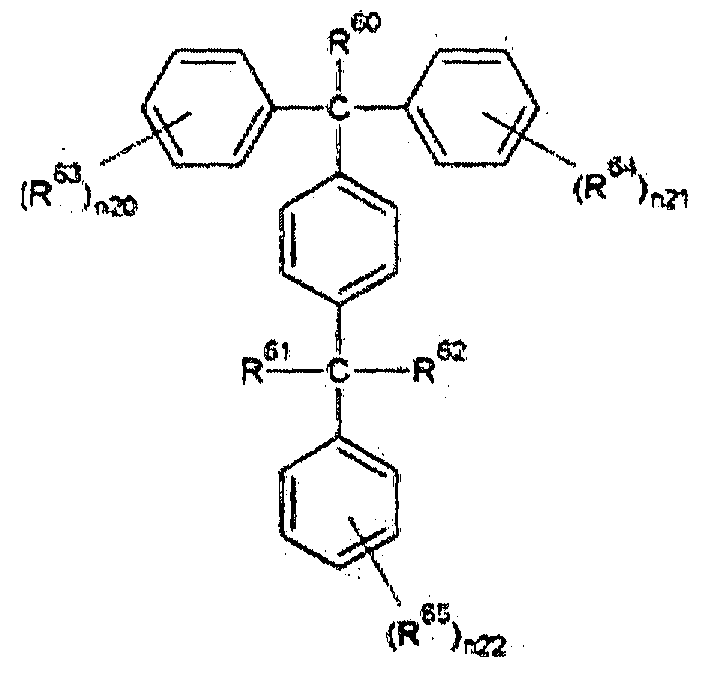
상기 화학식 4에서 R60 내지 R62는 각각 독립적으로 수소 원자, 또는 치환 또는 비치환된 C1 내지 C30 알킬기이고, 구체적으로는 메틸기일 수 있다.
상기 화학식 4에서 R63 내지 R65는 각각 독립적으로 OQ이고, 상기 Q는 수소 원자, 하기 화학식 5a로 표시되는 작용기 또는 하기 화학식 5b로 표시되는 작용기이며, 이때 Q는 동시에 수소일 수는 없다.
상기 화학식 4에서 n20 내지 n22는 각각 0 내지 5의 정수일 수 있다.
[화학식 5a]
[규칙 제91조에 의한 정정 23.04.2013]
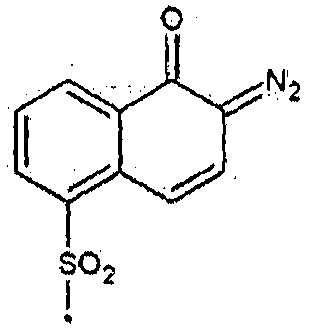
[화학식 5b]
[규칙 제91조에 의한 정정 23.04.2013]

[화학식 6]
[규칙 제91조에 의한 정정 23.04.2013]
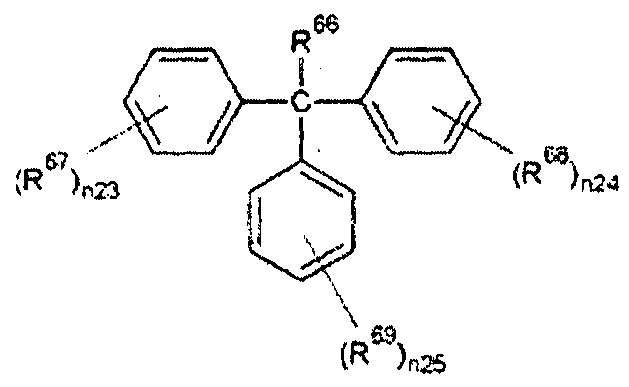
상기 화학식 6에서 R66은 수소 원자, 또는 치환 또는 비치환된 C1 내지 C30 알킬기이고, R67 내지 R69는 각각 독립적으로 OQ이고, 상기 Q는 전술한 정의와 동일하고, n23
내지 n25는 각각 0 내지 5의 정수일 수 있다.
[화학식 7]
[규칙 제91조에 의한 정정 23.04.2013]

상기 화학식 7에서 A3은 CO 또는 CR74R75이고, R74
및 R75는 각각 독립적으로 치환 또는 비치환된 C1 내지 C30 알킬기이다.
상기 화학식 7에서 R70 내지 R73은 각각 독립적으로 수소 원자, 치환 또는 비치환된 C1 내지 C30 알킬기, OQ 또는 NHQ이고, 상기 Q는 전술한 정의와 동일하다.
상기 화학식 7에서 n26 내지 n29은 각각 0 내지 4의 정수이고, n26+n27 및 n28+n29는 각각 5 이하의 정수이다.
단, 상기 R70 및 R71 중 적어도 하나는 OQ이며, 하나의 방향족 환에는 OQ가 1 내지 3개 포함될 수 있고, 다른 하나의 방향족 환에는 OQ가 1 내지 4개 포함될 수 있다.
[화학식 8]
[규칙 제91조에 의한 정정 23.04.2013]
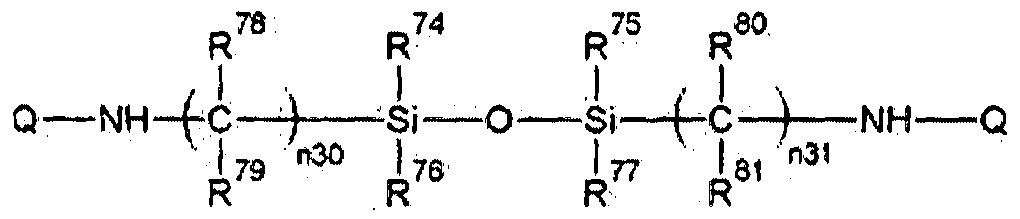
상기 화학식 8에서,
R74 내지 R81는 각각 독립적으로 수소 원자, 또는 치환 또는 비치환된 C1 내지 C30 알킬기이고, n30 및 n31은 각각 1 내지 5의 정수이고, Q는 전술한 정의와 동일하다.
상기 감광성 디아조퀴논 화합물은 상기 알칼리 가용성 수지 100 중량부에 대하여 5 내지 100 중량부로, 구체적으로는 10 내지 50 중량부로 포지티브형 감광성 수지 조성물 내에 포함될 수 있다. 상기 범위 내로 포함될 경우 노광에 의해 잔사 없이 패턴 형성이 잘되며, 현상시 막 두께 손실이 없고 양호한 패턴을 얻을 수 있다.
(C) 색소재
일 구현예에 따른 표시장치 절연막용 감광성 수지 조성물은 색소재(C)를 포함하고, 상기 색소재의 최대 흡수 파장은 400 내지 550nm이다. 상기의 최대 흡수 파장 범위를 가지는 색소재는 청색 계열의 화합물일 수 있다.
상기 색소재는 특정 파장의 빛을 흡수함으로써, 상기 특정 파장의 빛샘 현상을 효과적으로 방지할 수 있다. 뿐만 아니라 상기 색소재는 소량 사용하여도 색발현율이 높고, 절연성을 가지고 있으며, 유기 용제에 대한 용해도가 높아 분산상이 아닌 입자상으로 존재하므로 코팅성이 우수하며, 별도의 분산제를 포함하고 있지 않아 알칼리 수용액에 대한 현상성이 우수하고, 내구성이 우수하다.
상기 색소재는 최대 흡수 파장이 400 내지 550nm인 것이라면 종류에 제한 없이 사용 가능하다. 예를 들어 상기 색소재로는 대표적으로 염료가 있으며 직접염료, 산성염료, 염기성 염료, 산성매염염료, 산화염료, 환원염료, 분산염료, 반응성 염료일 수 있다. 또한 상기 염료는 황화 염료, 아조계 염료, 트리아릴메탄계 염료, 아자포피린계 염료, 안트라퀴논계 염료, 인디고이드 염료, 카보늄이온계 염료, 프탈로시아닌계 염료, 니트로 염료, 퀴놀린 염료, 시아닌 염료, 또는 폴리크산텐계 염료일 수 있으며, 이들은 1종 단독으로, 또는 2종 이상을 혼합하여 사용할 수 있다.
상기 색소재는 일 예로 트리아릴메탄계 염료일 수 있다. 상기 트리아릴메탄계 염료는 구체적으로 하기 화학식 10으로 표시되는 화합물일 수 있다.
[화학식 10]
[규칙 제91조에 의한 정정 23.04.2013]

상기 화학식 10에서, R1 내지 R6은 각각 독립적으로 수소, 할로겐기, 치환 또는 비치환된 C1 내지 C20의 알킬기, 치환 또는 비치환된 C3 내지 C20 사이클로알킬기,치환 또는 비치환된 C6 내지 C30 아릴기, 치환 또는 비치환된 C6 내지 C30 헤테로아릴기에서 선택된다.
상기 색소재는 다른 일 예로 아자포피린계 염료일 수 있다. 상기 아자포피린계 염료는 구체적으로 하기 화학식 11로 표시되는 화합물일 수 있다.
[화학식 11]
[규칙 제91조에 의한 정정 23.04.2013]
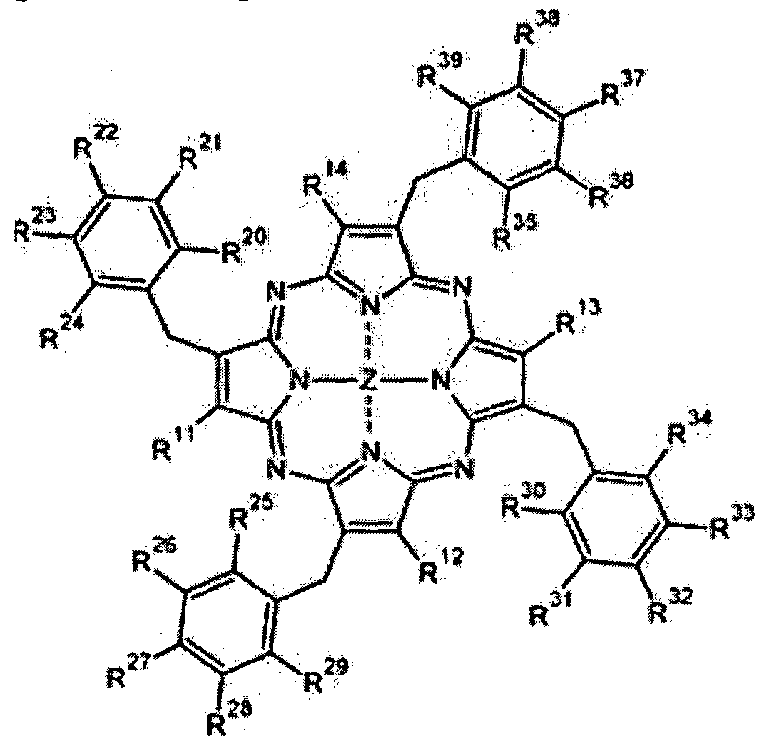
상기 화학식 11에서,
R11 내지 R14 및 R20 내지 R39는 각각 독립적으로, 수소 원자, 할로겐 원자, 히드록시기, 술폰산기(-SO3H), 니트로기, 카르복실기, 시안기, 치환 또는 비치환된 C1 내지 C20 알킬기, 치환 또는 비치환된 C3 내지 C20 사이클로알킬기, 치환 또는 비치환된 C1 내지 C20 헤테로알킬기, 치환 또는 비치환된 C3 내지 C20 헤테로사이클로알킬기, 치환 또는 비치환된 C6 내지 C30 아릴기, 치환 또는 비치환된 C6 내지 C30 헤테로아릴기 및 이들의 조합으로 이루어진 군에서 선택되고,
R11 내지 R14 및 R20 내지 R39에 포함되는 수소 원자 중 하나 이상은 -SO3
-나 -SO3M로 치환 또는 비치환되며, 상기 M은 나트륨 원자 또는 칼륨 원자이고,
Z는 2개의 수소 원자, 2가의 금속 원자, 2가의 금속 산화물, 2가의 금속 수산화물 및 2가의 금속염화물로 이루어진 군에서 선택된다. 상기 Z의 예로는, VO, TiO, Zn, Mg, Si, Sn, Rh, Pt, Pd, Mo, Mn, Pb, Cu, Ni, Co, Fe, AlCl, InCl, FeCl, TiCl2, SnCl2, SiCl2, GeCl2, Si(OH)2, H2 등이 있고, 예를 들어 Z는 Cu일 수 있다.
상기 색소재는 1종 단독으로 사용할 수 있고, 또는 2종 이상을 혼합하여 사용할 수 있다. 상기 색소재 2종 이상을 혼합하여 사용할 경우, 2종 이상의 화합물은 다양한 성분비로 혼합될 수 있다.
상기 색소재는 용매에 대하여 1 내지 10의 용해도를 가질 수 있다. 이 경우 상기 색소재는 상용성을 확보되어 석출되는 현상이 발생하지 않을 수 있다.
상기 용매는 예를 들어 N-메틸-2-피롤리돈, γ-부티로락톤, N,N-디메틸아세트아미드, 디메틸설폭사이드, 디에틸렌글리콜디메틸에테르, 디에틸렌 글리콜디에틸에테르, 디에틸렌글리콜디부틸에테르, 프로필렌글리콜모노메틸에테르, 디프로필렌글리콜모노메틸에테르, 프로필렌글리콜모노메틸에테르아세테이트, 락트산 메틸, 락트산에틸, 락트산부틸, 메틸-1,3-부틸렌글리콜아세테이트, 1,3-부틸렌글리콜-3-모노메틸에테르, 피루브산메틸, 피루브산에틸, 메틸-3-메톡시 프로피오네이트, 시클로헥사논, 또는 이들의 조합일 수 있다.
상기 색소재는 알칼리 가용성 수지 100 중량부에 대하여 1 내지 30 중량부, 구체적으로 5 내지 20 중량부, 5 내지 15 중량부 포함될 수 있다. 상기 범위를 만족할 경우, 상기 색소재는 빛샘 현상을 효과적으로 방지할 수 있다.
(D) 용매
상기 표시장치 절연막용 감광성 수지 조성물은 각 성분을 용이하게 용해시킬 수 있는 용매를 포함할 수 있다.
상기 용매의 구체적인 예로는 N-메틸-2-피롤리돈, γ-부티로락톤, N,N-디메틸아세트아미드, 디메틸설폭사이드, 디에틸렌글리콜디메틸에테르, 디에틸렌 글리콜디에틸에테르, 디에틸렌글리콜디부틸에테르, 프로필렌글리콜모노메틸에테르, 디프로필렌글리콜모노메틸에테르, 프로필렌글리콜모노메틸에테르아세테이트, 락트산 메틸, 락트산에틸, 락트산부틸, 메틸-1,3-부틸렌글리콜아세테이트, 1,3-부틸렌글리콜-3-모노메틸에테르, 피루브산메틸, 피루브산에틸, 메틸-3-메톡시 프로피오네이트 등을 들 수 있다. 이러한 용매는 단독으로 또는 2종 이상 병용하여 사용할 수 있다.
상기 용매는 상기 알칼리 가용성 수지 100 중량부에 대하여 100 내지 900 중량부로, 구체적으로는 200 내지 700 중량부로 표시장치 절연막용 감광성 수지 조성물 내에 포함될 수 있다. 상기 범위 내로 포함될 경우 충분한 두께의 막을 코팅할 수 있고, 우수한 용해도 및 코팅성을 가질 수 있다.
구체적으로 상기 용매는 상기 표시장치 절연막용 감광성 수지 조성물의 고형분 함량이 3 내지 50 중량%가 되도록, 구체적으로는 5 내지 30 중량%가 되도록 사용할 수 있다.
(E) 실란 화합물
상기 표시장치 절연막용 감광성 수지 조성물은 실란 화합물을 더 포함할 수 있다. 상기 실란 화합물은 표시장치 절연막용 감광성 수지 조성물과 기판과의 밀착력을 향상시킬 수 있다.
상기 실란 화합물의 예로는 하기 화학식 12 내지 14로 표시되는 화합물; 비닐트리메톡시실란, 비닐트리에톡시실란, 비닐트리클로로실란, 비닐트리스(β-메톡시에톡시)실란; 또는 2-(3,4 에폭시시크로헥실)-에틸트리메톡시실란, 3-메타크릴옥시프로필트리메톡시실란, 3-아크릴옥시프로필트리메톡시실란, p-스티릴트리메톡시실란, 3-메타크릴옥시프로필메틸디메톡시실란, 3-메타크릴옥시프로필메틸디에톡시실란; 트리메톡시[3-(페닐아미노)프로필]실란 등의 탄소-탄소 불포화 결합 함유 실란 화합물을 들 수 있으나, 이에 한정되는 것은 아니다.
[화학식 12]
[규칙 제91조에 의한 정정 23.04.2013]
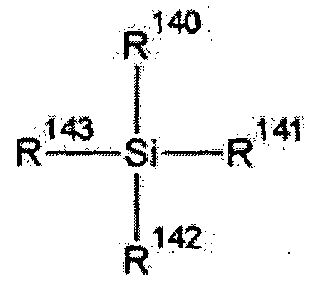
상기 화학식 12에서, R140은 비닐기, 치환 또는 비치환된 알킬기, 또는 치환 또는 비치환된 아릴기이고, 구체적으로는 3-(메타)크릴옥시프로필, p-스티릴 또는 3-(페닐아미노)프로필일 수 있다.
상기 화학식 12에서, R141
내지 R143는 각각 독립적으로 치환 또는 비치환된 알콕시기, 치환 또는 비치환된 알킬기, 또는 할로겐이고, 이때 R21
내지 R23
중 적어도 하나는 알콕시기 또는 할로겐이고, 구체적으로는 상기 알콕시기는 C1 내지 C8 알콕시기일 수 있고, 상기 알킬기는 C1 내지 C20 알킬기일 수 있다.
[화학식 13]
[규칙 제91조에 의한 정정 23.04.2013]
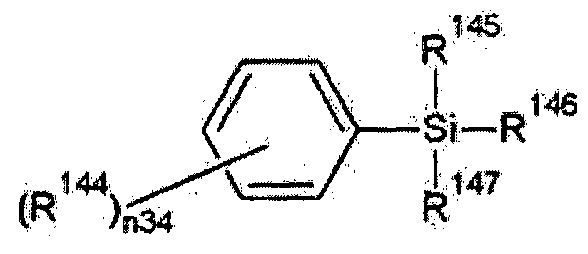
상기 화학식 13에서, R144는 -NH2 또는 -CH3CONH이고, R145 내지 R147은 각각 독립적으로 치환 또는 비치환된 C1 내지 C20 알콕시기이고, 구체적으로는 상기 알콕시기는 OCH3 또는 OCH2CH3일 수 있고, n34는 1 내지 5의 정수일 수 있다.
[화학식 14]
[규칙 제91조에 의한 정정 23.04.2013]
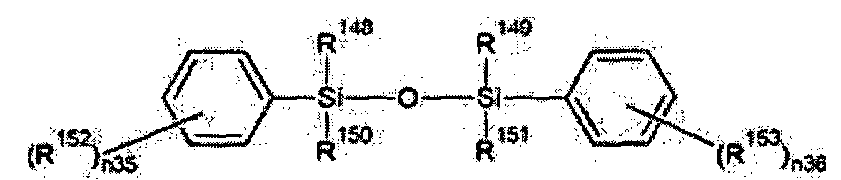
상기 화학식 14에서, R148
내지 R151은 각각 독립적으로 치환 또는 비치환된 C1 내지 C20 알킬기, 또는 치환 또는 비치환된 C1 내지 C20 알콕시기이고, 구체적으로는 CH3 또는 OCH3 일 수 있다.
상기 화학식 14에서, R152 및 R153은 각각 독립적으로 치환 또는 비치환된 아미노기일 수 있고, 구체적으로는 NH2 또는 CH3CONH일 수 있다. 또한 n35 및 n36은 각각 1 내지 5의 정수일 수 있다.
상기 실란 화합물은 상기 알칼리 가용성 수지 100 중량부에 대하여 0.1 내지 30 중량부로 사용될 수 있고, 구체적으로는 0.5 내지 10중량부로 사용될 수 있다. 상기 범위 내로 사용될 경우 상하부 막 층과의 접착력이 우수하며, 현상 후 잔막이 남지 않고, 투과율과 같은 광특성뿐 아니라 인장강도, 신율 등과 같은 막의 기계적 물성을 향상시킬 수 있다.
(F) 페놀 화합물
상기 표시장치 절연막용 감광성 수지 조성물은 페놀 화합물을 더 포함할 수 있다. 상기 페놀 화합물은 감광성 수지 조성물로 패턴을 형성하기 위해 알칼리 수용액으로 현상시 노광부의 용해 속도 및 감도를 증가시킬 수 있고, 현상 시에 현상 잔여물 없이 고해상도로 패터닝할 수 있는 역할을 한다.
상기 페놀 화합물의 예로는 하기 화학식 15 내지 화학식 21로 표시되는 화합물을 들 수 있으나, 이에 한정되는 것은 아니다.
[화학식 15]
[규칙 제91조에 의한 정정 23.04.2013]

상기 화학식 15에서,
R82 내지 R87은 각각 독립적으로 수소, 히드록시기(OH), C1 내지 C8의 치환 또는 비치환된 알킬기, C1 내지 C8의 알콕시알킬 또는 -OCO-R88이고, R88은 C1 내지 C8의 치환 또는 비치환된 알킬기이고, R82 내지 R87 중 적어도 하나는 히드록시기이며, 모두 히드록시기는 아니다.
[화학식 16]
[규칙 제91조에 의한 정정 23.04.2013]
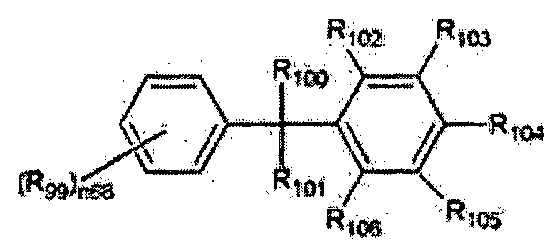
상기 화학식 16에서,
R99 내지 R101은 각각 독립적으로 수소, 또는 C1 내지 C8의 치환 또는 비치환된 알킬기이고, R102 내지 R106은 각각 독립적으로 H, OH, 또는 C1 내지 C8의 치환 또는 비치환된 알킬기이고, 구체적으로는 상기 알킬기는 CH3일 수 있고, n68은 1 내지 5의 정수이다.
[화학식 17]
[규칙 제91조에 의한 정정 23.04.2013]
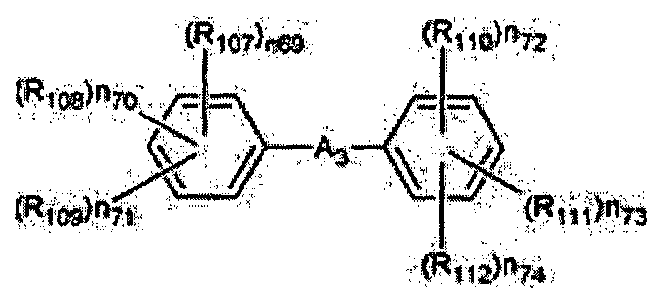
상기 화학식 17에서,
R107 내지 R112는 각각 독립적으로 H, OH, 또는 C1 내지 C8의 치환 또는 비치환된 알킬기이고, A3은 CR205R206 또는 단일결합이고, 상기 R205 및 R206은 각각 독립적으로 수소, 또는 C1 내지 C8의 치환 또는 비치환된 알킬기이고, 구체적으로는 상기 알킬기는 CH3일 수 있고, n69+n70+n71 및 n72+n73+n74는 각각 독립적으로 5 이하의 정수이다.
[화학식 18]
[규칙 제91조에 의한 정정 23.04.2013]
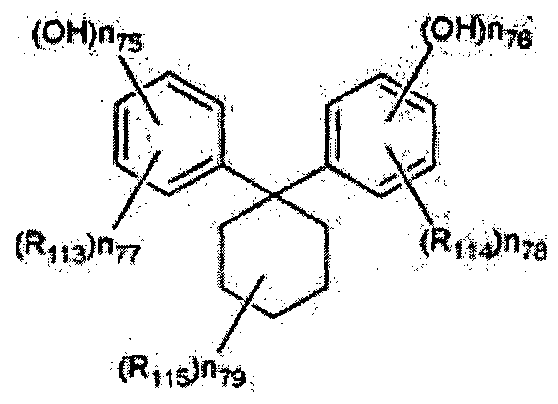
상기 화학식 18에서,
R113 내지 R115는 각각 독립적으로 수소, 또는 C1 내지 C8의 치환 또는 비치환된 알킬기이고, n75, n76 및 n79는 각각 독립적으로 1 내지 5의 정수이고, n77 및 n78은 각각 독립적으로 0 내지 4의 정수이다.
[화학식 19]
[규칙 제91조에 의한 정정 23.04.2013]
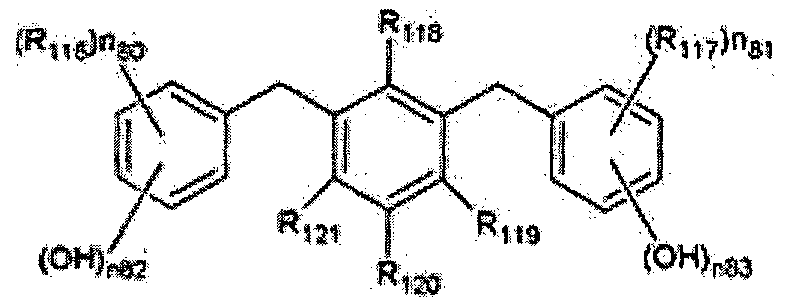
상기 화학식 19에서,
R116 내지 R121은 각각 독립적으로 수소, OH, 또는 C1 내지 C8의 치환 또는 비치환된 알킬기이고, n80 내지 n83은 각각 독립적으로 1 내지 4의 정수이다. 단, n80+n82 및 n81+n83은 각각 독립적으로 5 이하의 정수이다.
[화학식 20]
[규칙 제91조에 의한 정정 23.04.2013]
상기 화학식 20에서,
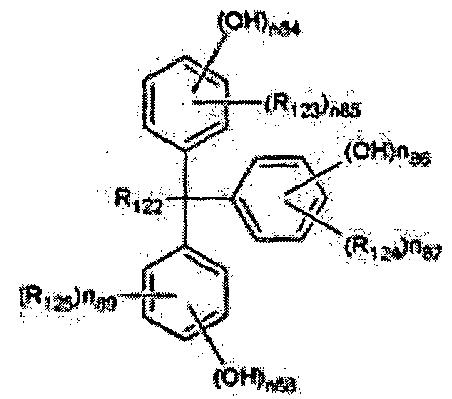
R122는 C1 내지 C8의 치환 또는 비치환된 알킬기이고, 구체적으로는 CH3일 수 있고, R123 내지 R125는 각각 독립적으로 수소, 또는 C1 내지 C8의 치환 또는 비치환된 알킬기이고, n84, n86 및 n88은 각각 독립적으로 1 내지 5의 정수이고, n85, n87 및 n89는 각각 독립적으로 0 내지 4의 정수이다. 단, n84+n85, n86+n87 및 n88+n89는 각각 독립적으로 5 이하의 정수이다.
[화학식 21]
[규칙 제91조에 의한 정정 23.04.2013]
상기 화학식 21에서,
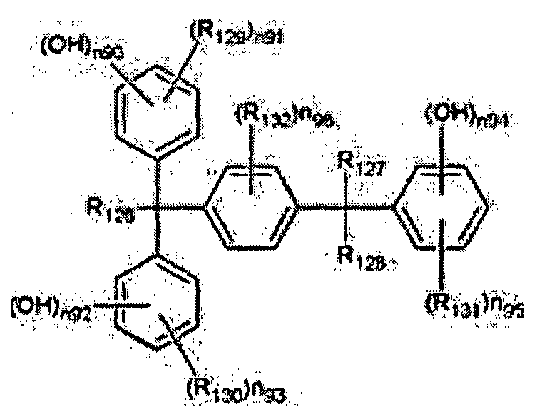
R126 내지 R128은 각각 독립적으로 C1 내지 C8의 치환 또는 비치환된 알킬기이고, 구체적으로는 CH3일 수 있고, R129 내지 R132는 각각 독립적으로 수소, 또는 C1 내지 C8의 치환 또는 비치환된 알킬기이고, n90, n92 및 n94는 각각 독립적으로 1 내지 5의 정수이고, n91, n93 및 n95는 각각 독립적으로 0 내지 4의 정수이고, n96은 1 내지 4의 정수이다. 단, n90+n91, n92+n93 및 n94+n95는 각각 독립적으로 5 이하의 정수이다.
상기 페놀 화합물의 구체적인 예로는 2,6-디메톡시메틸-4-t-부틸페놀, 2,6-디메톡시메틸-p-크레졸, 2,6-디아세톡시메틸-p-크레졸 등을 들 수 있으나, 이에 한정되는 것은 아니다.
상기 페놀 화합물의 사용량은 상기 알칼리 가용성 수지 100 중량부에 대하여 1 내지 30 중량부일 수 있다. 페놀 화합물의 함량이 상기 범위내인 경우 현상시 감도 저하를 유발하지 않고, 비노광부의 용해 속도를 적당하게 증가시켜 양호한 패턴을 얻을 수 있으며, 또한 냉동보관시 석출이 일어나지 않아 우수한 보관안정성을 나타낼 수 있다.
(G)기타 첨가제
일 구현예에 따른 표시장치 절연막용 감광성 수지 조성물은 기타 첨가제를 더 포함할 수 있다.
상기 표시장치 절연막용 감광성 수지 조성물은 코팅 시 얼룩이나 반점 방지, 레벨링 특성, 또는 미현상에 의한 잔사의 생성을 방지하기 위하여, 말론산; 3-아미노-1,2-프로판디올; 비닐기 또는 (메타)아크릴옥시기를 갖는 실란계 커플링제; 등의 첨가제를 포함할 수 있다. 이들 첨가제의 사용량은 원하는 물성에 따라 용이하게 조절될 수 있다.
또한 상기 표시장치 절연막용 감광성 수지 조성물은 밀착력 등의 향상을 위해 첨가제로서 에폭시 화합물을 더 포함할 수 있다. 상기 에폭시 화합물로는 에폭시 노볼락 아크릴 카르복실레이트 수지, 오르토 크레졸 노볼락 에폭시 수지, 페놀 노볼락 에폭시 수지, 테트라메틸 비페닐 에폭시 수지, 비스페놀 A형 에폭시 수지, 지환족 에폭시 수지 또는 이들의 조합을 사용할 수 있다.
상기 에폭시 화합물을 더 포함하는 경우 과산화물 개시제 또는 아조비스계 개시제와 같은 라디칼 중합 개시제를 더 포함할 수도 있다.
상기 에폭시 화합물은 상기 표시장치 절연막용 감광성 수지 조성물 100 중량부에 대하여 0.01 내지 5 중량부로 사용될 수 있다. 상기 에폭시 화합물이 상기 범위 내로 포함되는 경우 저장성 및 경제적으로 밀착력 및 기타 특성을 향상시킬 수 있다.
상기 표시장치 절연막용 감광성 수지 조성물의 제조 방법은 특별히 한정되지는 않으나, 구체적으로는 전술한 색소재, 아크릴계 바인더 수지, 광중합 개시제, 광중합성 단량체, 용매 및 선택적으로 첨가제를 혼합하여 표시장치 절연막용 감광성 수지 조성물을 제조할 수 있다.
또한, 상기 표시장치 절연막용 감광성 수지 조성물은 열잠재 산발생제를 포함할 수 있다. 상기 열잠재 산발생제의 예로는 p-톨루엔술폰산, 벤젠술폰산 등과 같은 아릴술폰산; 트리플루오로메탄술폰산, 트리플루오로부탄술폰산 등과 같은 퍼플루오로알킬술폰산; 메탄술폰산, 에탄술폰산, 부탄술폰산 등과 같은 알킬술폰산; 또는 이들의 조합을 들 수 있으나, 이에 한정되는 것은 아니다.
상기 열잠재 산발생제는 폴리벤조옥사졸 전구체의 페놀성 수산기 함유 폴리아미드의 탈수화 반응과, 고리화 반응을 위한 촉매로써 경화온도를 낮추어도 고리화 반응을 원활히 진행할 수 있다.
또한 막두께의 얼룩을 막거나, 현상성을 향상시키기 위해 적당한 계면활성제 또는 레벨링제를 첨가제로 더욱 사용할 수도 있다.
다른 일 구현예에 따르면, 상기 표시장치 절연막용 감광성 수지 조성물을 이용하여 제조된 표시장치 절연막을 제공한다.
상기 표시장치 절연막은 하기와 같은 방법에 의해 제조될 수 있다. 상기 제조된 감광성 수지 조성물을 스프레이법, 롤코터법, 회전도포법 등으로 기판 표면에 도포한 후, 프리 베이크(pre-bake)로 용매를 제거하여 도포막을 형성한다. 상기 프리 베이크는 70 내지 120℃에서 1 내지 5 분간 실시하는 것이 바람직하다. 이 후, 미리 준비된 패턴에 따라 가시광선, 자외선, 원자외선, 전자선, 원자외선, 전자선, 엑스선 등을 상기 형성된 도포막에 조사하고, 현상액으로 현상하여 불필요한 부분을 제거함으로써 소정의 패턴을 형성한다. 이때, 사용되는 현상액으로는 알칼리 수용액이 사용될 수 있으며, 구체적으로는 수산화 나트륨, 수산화 칼륨, 탄산 나트륨 등의 무기 알칼리류; 에틸아민, n-프로필아민 등의 1급 아민류; 디에틸아민, n-프로필아민 등의 2급 아민류; 트리메틸아민, 메틸디에틸아민, 디메틸에틸아민, 트리에틸아민 등의 3급 아민류; 디메틸에탄올아민, 메틸디에탄올아민, 트리에탄올아민 등의 알콜아민류; 테트라메틸암모늄히드록시드, 테트라에틸암모늄히드록시드 등의 4급 암모늄염의 수용액; 및 이들의 혼합물로 이루어진 군에서 선택되는 것을 사용할 수 있다. 상기 현상액의 알칼리성 화합물의 농도는 0.1 내지 10%인 것이 바람직하다. 또한, 상기 용매와 함께, 메탄올 에탄올 등과 같은 수용성 유기 용매 또는 계면 활성제를 적정량 첨가하여 사용할 수도 있다. 또한, 상기와 같은 현상액으로 현상한 후 초순수로 30 내지 140초 동안 세정하여, 불필요한 부분을 제거하고 건조하여 패턴을 형성할 수 있으며, 형성된 패턴에 자외선 등의 빛을 조사한 후, 패턴을 오븐 등의 가열장치에 의해 110 내지 250℃에서 30 내지 120분간 가열하여 최종 패턴을 얻을 수 있다.
본 발명의 또 다른 일 구현예에서는 상기 절연막을 포함하는 표시장치를 제공한다. 상기 표시장치는 구체적으로 액정 디스플레이, 발광다이오드, 플라즈마디스플레이, 또는 유기발광다이오드일 수 있다.
이하에서 본 발명을 실시예 및 비교예를 통하여 보다 상세하게 설명하고자 하나, 하기의 실시예 및 비교예는 설명의 목적을 위한 것으로 본 발명을 제한하고자 하는 것은 아니다.
합성예 1 : 폴리벤조옥사졸 전구체의 제조
교반기, 온도조절장치, 질소가스주입 장치 및 냉각기가 장착된 4구 플라스크에 질소를 통과시키면서 2,6-비스[[[5-[1-(아미노-4-히드록시페닐)-2,2,2-트리플로로-1-(트리플로메틸)에틸]-2-히드록시페닐]아미노]메틸]-4-메틸페놀 41.1g을 N-메틸-2-피롤리돈(NMP) 280g에 넣어 용해시켰다. 고체가 완전 용해되면 피리딘을 9.9g을 상기 용액에 투입하고, 온도를 0 내지 5℃로 유지하면서 4,4'-옥시디벤조닐클로라이드 13.3g을 N-메틸-2-피롤리돈(NMP) 142g에 넣어 용해시킨 용액을 30분간 천천히 적하하였다. 적하후 1시간 동안 0 내지 5℃에서 반응을 수행하고, 상온으로 온도를 올려 1시간 동안 교반하여 반응을 종료하였다.
여기에, 5-노보넨-2,3-디카르복시언하이드라이드를 1.6g을 투입하고 70℃에서 24시간 교반하여 반응을 종료하였다. 반응혼합물을 물/메탄올 = 10/1(부피비)의 용액에 투입하여 침전물을 생성하고, 침전물을 여과하여 물로 충분히 세정한 후. 온도 80℃, 진공 하에서 24시간 이상 건조하여 중량 평균 분자량이 9,500인 하기 폴리벤조옥사졸 전구체를 제조하였다.
이하, 실시예에 사용된 성분의 사양은 다음과 같다.
(A) 알칼리 가용성 수지
상기 합성예 1에서 제조된 폴리벤조옥사졸 전구체를 사용하였다.
(B) 감광성 디아조퀴논 화합물
하기 화학식 22로 표시되는 감광성 디아조퀴논을 사용하였다.
[화학식 22]
[규칙 제91조에 의한 정정 23.04.2013]
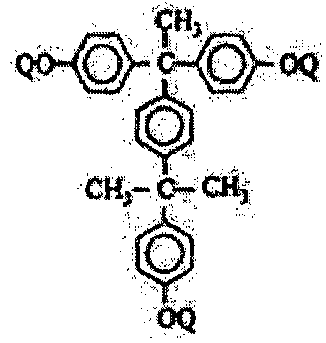
상기 화학식 22에서, Q 중 둘은 하기 화학식 23으로 치환되어 있고, 나머지 하나는 수소이다.
[화학식 23]
[규칙 제91조에 의한 정정 23.04.2013]
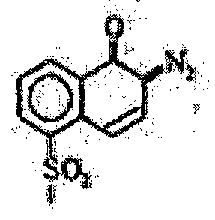
(C) 색소재
(C-1) 하기 화학식 24로 표시되는 빅토리아 블루를 사용하였다.
[화학식 24]
[규칙 제91조에 의한 정정 23.04.2013]
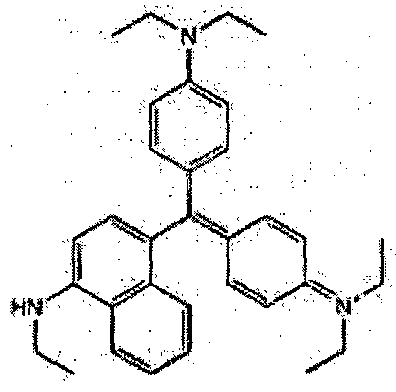
(C-2) 아조포피린계 염료(경인양행사 B90401)를 사용하였다.
(D) 용매
(D-1) γ-부티로락톤를 사용하였다.
(D-2) 프로필렌글리콜모노메틸에테르(PGME)를 사용하였다.
(E) 실란 화합물
하기 화학식 25로 표시되는 트리메톡시[3-(페닐아미노)프로필]실란을 사용하였다.
[화학식 25]
[규칙 제91조에 의한 정정 23.04.2013]
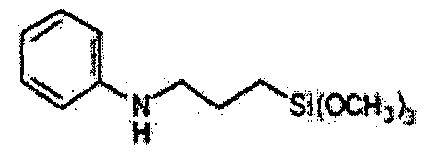
(F) 페놀 화합물
하기 화학식 26으로 표시되는 페놀 화합물
[화학식 26]
[규칙 제91조에 의한 정정 23.04.2013]
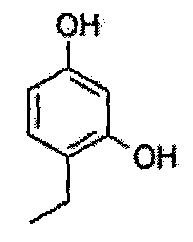
(G) 기타 용매
시클로헥사논
실시예 1 내지 6 및 비교예 1
하기 표 1의 조성으로 각 성분을 혼합하여 표시장치 절연막용 감광성 수지 조성물을 제조하였다. 구체적으로, 알칼리 가용성 수지(A)를 용매(D)에 녹인 후 감광성 디아조퀴논 화합물(B), 실란 화합물(E), 페놀 화합물(F)을 투입하였다. 이후 색소재(C)를 기타 용매(G)에 10 중량%로 녹인 후 상기 혼합물에 투입하여 3시간 동안 실온에서 교반한 후 0.45㎛의 플루오르수지 필터로 여과하여 표시장치 절연막용 감광성 수지 조성물을 제조하였다.
표 1
| 구분 | 실시예1 | 실시예2 | 실시예3 | 실시예4 | 실시예5 | 실시예6 | 비교예1 | |
| (A) 알칼리 가용성 수지 | 100 | 100 | 100 | 100 | 100 | 100 | 100 | |
| (B) 감광성 디아조퀴논 화합물 | 10 | 10 | 10 | 10 | 10 | 10 | 10 | |
| (C) 색소재 | (C-1) | 5 | 10 | 20 | - | - | - | - |
| (C-2) | - | - | - | 5 | 10 | 20 | - | |
| (D) 용매 | (D-1) | 100 | 100 | 100 | 100 | 100 | 100 | 100 |
| (D-2) | 250 | 250 | 250 | 250 | 250 | 250 | 250 | |
| (E) 실란 화합물 | 0.2 | 0.2 | 0.2 | 0.2 | 0.2 | 0.2 | 0.2 | |
| (F) 페놀 화합물 | 7.5 | 7.5 | 7.5 | 7.5 | 7.5 | 7.5 | 7.5 | |
| (G) 기타 용매 | 45 | 90 | 180 | 45 | 90 | 180 | - | |
상기 표 1에서 상기 (B) 내지 (G)의 함량 단위는 상기 (A) 100 중량부에 대해 첨가된 중량부이다.
패턴막의 제조
상기 실시예 1 내지 6, 및 비교예 1에서 제조된 표시장치 절연막용 감광성 수지 조성물을 스핀코터를 이용해 ITO 유리에 도포한 뒤, 130℃로 2분간 핫플레이트 상에서 가열하여 도막을 형성하였다. 상기에서 얻어진 막에 소정 패턴 마스크를 사용하여 노광장치(I-line stepper, 니콘사, NSR i10C)로 노광한 후, 상온에서 2.38%의 테트라메틸암모늄 하이드록사이드 수용액에 40초, 2 퍼들(puddle)을 통하여 노광부를 용해하여 제거한 후, 증류수로 30초간 세척하였다. 이어서, 얻어진 패턴을 전기로를 이용하여 산소 농도 1000ppm 이하에서 250℃, 60분 동안 경화시켜 패턴막을 얻었다.
평가예
상기 제조된 패턴막에 대하여 하기와 같은 방법으로 잔막률, 감도, 잔사, 휘도 및 유전율을 평가하고 그 결과를 하기 표2에 나타내었다.
(1) 잔막률 측정
예비소성을 한 필름을 2.38% 테트라메틸암모늄하이드록사이드(TMAH) 수용액에 23℃/60초 동안 현상하고 초순수로 60초 동안 세정 후 건조하고 알파스텝(Tencor社)을 이용하여 막두께 변화를 측정하였고, 하기의 계산식 1로 산출하였다.
[계산식 1]
잔막율 = (현상 후 막두께/현상 전 초기 막두께)X100
(○: 잔막율 90% 이상으로 우수함, △: 80~90%으로 보통 수준, X: 80% 이하로 잔막율 낮음)
(2) 감도 측정
노광 및 현상후 10㎛ L/S 패턴이 1 대 1의 선폭으로 형성되는 노광시간을 구하여 이를 최적 노광 시간으로 하였다. 해상도는 상기 최적 노광 시간에 있어서의 최소의 패턴 치수를 해상도로 하여 측정하였다.
(○: 50mJ/㎠ 이하로 감도 우수, △: 50~200mJ/㎠로 감도 보통, X: 200mJ/㎠ 이상으로 감도 낮음)
(3) 잔사 평가
상기 제조된 감광성 수지 조성물을 이용하여 형성된 패턴의 잔사 수준을 광학현미경 및 CD-SEM으로 확인하였다.
(유: 잔사 强 수준, 중: 잔사 中 수준, 무: 잔사 無 수준)
(4) (백색) 휘도 측정
상기 제조된 수지 조성물을 적용한 모듈의 백색 휘도 (white luminance)는 Minolta 휘도계(Display color analyzer CA-210)를 이용하여 측정하였고, 안정화를 위해 전원을 넣은 후 10분 뒤의 값을 측정하였다. 8비트 디지털 체계에서 R/G/B가 모두 0인 경우가 Black이고, 모두 255이면 White인데, 만약 3원색 중 어느 하나에만 신호를 주어 (255, 0, 0)인 경우 순수한 red가 되고, 같은 방식으로 (0, 255, 0)은 green, (0. 0, 255)인 경우에는 blue가 된다. 따라서 이론적으로 R, G, B 각각의 휘도를 계측한 후 이를 모두 더하면 White의 휘도와 같아야 한다. 하지만 각각의 디스플레이의 특성에 따라 (R+G+B)/3 = 255가 되지 않는 경우가 많은데 이는 각각의 채널이 완전히 독립적인 특성을 가지지 못함을 뜻하고 특정 칼라에서 빛샘이 발생하였음을 의미한다.
(○: 250 이상으로 휘도 우수함, △: 250~245으로 휘도 보통, X: 245 이하로 휘도 낮음)
(5) 유전율 측정
상기 제조된 수지 조성물을 ITO 유리 상에 도포하고 핫 플레이트(hot plate) 위에서 130℃/2분간 처리하여 최종 두께가 2.0~2.5㎛인 코팅막을 형성하였다. 형성된 코팅막위에 지름 300㎛의 금속전극(Au)을 증착하여 측정샘플을 준비하였다. 정밀 임피던스 측정기(Precision Impedance Analyzer, HP 4294A)를 이용하여 전기용량 (Capacitance) 값을 측정하고, 이 측정값과 하기 계산식 2를 이용하여 유전율을 산출하였다.
[계산식 2]
C = ε0 X ε X A/d
상기 계산식 2에서 C는 전기용량, ε0 는 진공상에서의 유전상수, ε는 도막의 비유전율, A는 전극면적, d는 감광성 수지 조성물의 두께이다.
(○: 유전율 5.5 이하, X : 유전율 5.5 초과)
표 2
| 구분 | 잔막율 | 감도 | 잔사 | 휘도 | 유전율 |
| 실시예 1 | ○ | ○ | 중 | △ | ○ |
| 실시예 2 | ○ | ○ | 무 | △ | ○ |
| 실시예 3 | ○ | ○ | 무 | ○ | ○ |
| 실시예 4 | ○ | ○ | 중 | △ | ○ |
| 실시예 5 | ○ | ○ | 무 | △ | ○ |
| 실시예 6 | ○ | ○ | 무 | ○ | ○ |
| 비교예 1 | ○ | ○ | 중 | X | ○ |
상기 표 2에 나타난 바와 같이, 비교예 1의 경우 노광부의 잔막이 발생하고 빛샘 현상이 발생하여 휘도가 낮은 반면, 실시예 1 내지 6의 경우 비노광부의 잔막율과 감도, 잔사 발생율, 유전율을 우수한 수준으로 유지하면서 휘도가 우수한 수준으로 개선되었다. 즉, 실시예 1 내지 6의 경우 효과적으로 빛샘을 방지하여 색순도와 색특성이 개선되었음을 알 수 있다.
이상을 통해 본 발명의 바람직한 실시예에 대하여 설명하였지만, 본 발명은 이에 한정되는 것이 아니고 특허청구범위와 발명의 상세한 설명의 범위 안에서 여러 가지로 변형하여 실시하는 것이 가능하고 이 또한 본 발명의 범위에 속하는 것은 당연하다.
Claims (8)
- (A) 알칼리 가용성 수지;(B) 감광성 디아조퀴논 화합물;(C) 최대 흡수 파장이 400 내지 550nm인 색소재; 및(D) 용매를 포함하는 표시장치 절연막용 감광성 수지 조성물.
- 제1항에서,상기 알칼리 가용성 수지(A)는 폴리벤조옥사졸 전구체, 폴리아믹산, 폴리이미드 또는 이들의 조합인 표시장치 절연막용 감광성 수지 조성물.
- 제1항에서,상기 색소재(C)는 트리아릴메탄계 화합물, 아자포피린계 화합물, 또는 이들의 조합인 표시장치 절연막용 감광성 수지 조성물.
- 제1항에서,상기 표시장치 절연막용 감광성 수지 조성물은상기 (A) 알칼리 가용성 수지 100 중량부에 대하여상기 (B) 감광성 디아조퀴논 화합물 5 내지 100 중량부;상기 (C) 색소재 1 내지 30 중량부; 및상기 (D) 용매 100 내지 900 중량부를 포함하는 표시장치 절연막용 감광성 수지 조성물.
- 제1항에서,상기 표시장치 절연막용 감광성 수지 조성물은 실란 화합물을 더 포함하는 표시장치 절연막용 감광성 수지 조성물.
- 제1항에서,상기 표시장치 절연막용 감광성 수지 조성물은 페놀 화합물을 더 포함하는 표시장치 절연막용 감광성 수지 조성물.
- 제1항 내지 제6항 중 어느 한 항의 표시장치 절연막용 감광성 수지 조성물을 이용하여 제조된 표시장치 절연막.
- 제7항에 따른 표시장치 절연막을 포함하는 표시장치.
Priority Applications (2)
| Application Number | Priority Date | Filing Date | Title |
|---|---|---|---|
| US14/416,204 US9465289B2 (en) | 2012-12-28 | 2013-04-09 | Photosensitive resin composition for display device insulation film, and display device insulation film and display device using same |
| CN201380048934.6A CN104641292B (zh) | 2012-12-28 | 2013-04-09 | 用于显示装置绝缘膜的光敏树脂组成物、使用其的显示装置绝缘膜、及使用其的显示装置 |
Applications Claiming Priority (2)
| Application Number | Priority Date | Filing Date | Title |
|---|---|---|---|
| KR1020120157571A KR101636861B1 (ko) | 2012-12-28 | 2012-12-28 | 표시장치 절연막용 감광성 수지 조성물, 및 이를 이용한 표시장치 절연막 및 표시장치 |
| KR10-2012-0157571 | 2012-12-28 |
Publications (1)
| Publication Number | Publication Date |
|---|---|
| WO2014104486A1 true WO2014104486A1 (ko) | 2014-07-03 |
Family
ID=51021519
Family Applications (1)
| Application Number | Title | Priority Date | Filing Date |
|---|---|---|---|
| PCT/KR2013/002970 Ceased WO2014104486A1 (ko) | 2012-12-28 | 2013-04-09 | 표시장치 절연막용 감광성 수지 조성물, 및 이를 이용한 표시장치 절연막 및 표시장치 |
Country Status (5)
| Country | Link |
|---|---|
| US (1) | US9465289B2 (ko) |
| KR (1) | KR101636861B1 (ko) |
| CN (1) | CN104641292B (ko) |
| TW (1) | TWI533087B (ko) |
| WO (1) | WO2014104486A1 (ko) |
Cited By (1)
| Publication number | Priority date | Publication date | Assignee | Title |
|---|---|---|---|---|
| US9465289B2 (en) | 2012-12-28 | 2016-10-11 | Cheil Industries Inc. | Photosensitive resin composition for display device insulation film, and display device insulation film and display device using same |
Citations (6)
| Publication number | Priority date | Publication date | Assignee | Title |
|---|---|---|---|---|
| KR20040087918A (ko) * | 2003-04-07 | 2004-10-15 | 도레이 가부시끼가이샤 | 포지티브형 감광성 수지 조성물 |
| JP2008145579A (ja) * | 2006-12-07 | 2008-06-26 | Sumitomo Bakelite Co Ltd | ポジ型感光性樹脂組成物、硬化膜、保護膜、絶縁膜およびそれを用いた半導体装置、表示体装置。 |
| KR100842168B1 (ko) * | 2005-01-21 | 2008-06-30 | 주식회사 엘지화학 | 감광성 수지 조성물 및 이를 이용한 액정 표시 장치 |
| JP2009117266A (ja) * | 2007-11-09 | 2009-05-28 | Tokyo Ohka Kogyo Co Ltd | ポジ型感光性組成物 |
| KR20100053796A (ko) * | 2008-11-13 | 2010-05-24 | 동우 화인켐 주식회사 | 포지형 감광성 폴리이미드 수지 조성물 |
| KR20120033894A (ko) * | 2010-09-30 | 2012-04-09 | 코오롱인더스트리 주식회사 | 광분해성 전사재료,이로부터 형성된 절연막 및 유기발광소자 |
Family Cites Families (16)
| Publication number | Priority date | Publication date | Assignee | Title |
|---|---|---|---|---|
| DE3773110D1 (de) | 1986-10-02 | 1991-10-24 | Hoechst Celanese Corp | Polyamide mit hexafluorisopropyliden-gruppen, diese enthaltende positiv arbeitende lichtempfindliche gemische und damit hergestellte aufzeichnungsmaterialien. |
| JP3207352B2 (ja) | 1996-05-13 | 2001-09-10 | 住友ベークライト株式会社 | ポジ型感光性樹脂組成物 |
| JP3871767B2 (ja) | 1997-05-07 | 2007-01-24 | 旭化成エレクトロニクス株式会社 | 感光性組成物 |
| JP4314335B2 (ja) | 1999-04-02 | 2009-08-12 | 旭化成イーマテリアルズ株式会社 | ポジ型感光性樹脂組成物 |
| JP2003330175A (ja) | 2002-05-14 | 2003-11-19 | Mitsubishi Chemicals Corp | 感光性組成物及び感光性平版印刷版 |
| EP2381308B1 (en) | 2003-06-23 | 2015-07-29 | Sumitomo Bakelite Co., Ltd. | Positive-working photosensitive resin composition, method for producing pattern-formed resin film, semiconductor device, display device, and method for producing the semiconductor device and the display device |
| JP4303560B2 (ja) | 2003-10-31 | 2009-07-29 | 富士フイルム株式会社 | 染料含有硬化性組成物、並びに、カラーフィルターおよびその製造方法 |
| JP5413425B2 (ja) | 2005-03-31 | 2014-02-12 | 大日本印刷株式会社 | 高透明性ポリイミド前駆体、及びポリイミド前駆体樹脂組成物 |
| JP2007241148A (ja) * | 2006-03-10 | 2007-09-20 | Fujifilm Corp | 着色硬化性組成物、カラーフィルタ及びその製造方法 |
| AU2007224400B2 (en) | 2007-10-12 | 2014-10-02 | The University Of Southern California | Organic photosenstive optoelectronic devices containing tetra-azaporphyrins |
| KR101333706B1 (ko) | 2008-12-30 | 2013-11-27 | 제일모직주식회사 | 포지티브형 감광성 수지 조성물 |
| KR101344790B1 (ko) | 2010-06-10 | 2013-12-24 | 제일모직주식회사 | 컬러필터용 청색 수지 조성물 및 이를 이용한 컬러필터 |
| KR101400186B1 (ko) | 2010-12-31 | 2014-05-27 | 제일모직 주식회사 | 포지티브형 감광성 수지 조성물, 이를 사용하여 제조된 감광성 수지막 및 상기 감광성 수지막을 포함하는 반도체 소자 |
| US8282862B1 (en) * | 2011-06-23 | 2012-10-09 | Cheil Industries, Inc. | Triphenylmethane based complex dye, photosensitive resin composition for color filter including the same and color filter prepared using the same |
| KR101354640B1 (ko) * | 2011-12-30 | 2014-01-27 | 제일모직주식회사 | 포지티브형 감광성 수지 조성물 |
| KR101636861B1 (ko) | 2012-12-28 | 2016-07-06 | 제일모직 주식회사 | 표시장치 절연막용 감광성 수지 조성물, 및 이를 이용한 표시장치 절연막 및 표시장치 |
-
2012
- 2012-12-28 KR KR1020120157571A patent/KR101636861B1/ko active Active
-
2013
- 2013-04-09 US US14/416,204 patent/US9465289B2/en active Active
- 2013-04-09 WO PCT/KR2013/002970 patent/WO2014104486A1/ko not_active Ceased
- 2013-04-09 CN CN201380048934.6A patent/CN104641292B/zh active Active
- 2013-05-16 TW TW102117357A patent/TWI533087B/zh active
Patent Citations (6)
| Publication number | Priority date | Publication date | Assignee | Title |
|---|---|---|---|---|
| KR20040087918A (ko) * | 2003-04-07 | 2004-10-15 | 도레이 가부시끼가이샤 | 포지티브형 감광성 수지 조성물 |
| KR100842168B1 (ko) * | 2005-01-21 | 2008-06-30 | 주식회사 엘지화학 | 감광성 수지 조성물 및 이를 이용한 액정 표시 장치 |
| JP2008145579A (ja) * | 2006-12-07 | 2008-06-26 | Sumitomo Bakelite Co Ltd | ポジ型感光性樹脂組成物、硬化膜、保護膜、絶縁膜およびそれを用いた半導体装置、表示体装置。 |
| JP2009117266A (ja) * | 2007-11-09 | 2009-05-28 | Tokyo Ohka Kogyo Co Ltd | ポジ型感光性組成物 |
| KR20100053796A (ko) * | 2008-11-13 | 2010-05-24 | 동우 화인켐 주식회사 | 포지형 감광성 폴리이미드 수지 조성물 |
| KR20120033894A (ko) * | 2010-09-30 | 2012-04-09 | 코오롱인더스트리 주식회사 | 광분해성 전사재료,이로부터 형성된 절연막 및 유기발광소자 |
Cited By (1)
| Publication number | Priority date | Publication date | Assignee | Title |
|---|---|---|---|---|
| US9465289B2 (en) | 2012-12-28 | 2016-10-11 | Cheil Industries Inc. | Photosensitive resin composition for display device insulation film, and display device insulation film and display device using same |
Also Published As
| Publication number | Publication date |
|---|---|
| US20150185605A1 (en) | 2015-07-02 |
| KR101636861B1 (ko) | 2016-07-06 |
| US9465289B2 (en) | 2016-10-11 |
| KR20140086731A (ko) | 2014-07-08 |
| CN104641292B (zh) | 2019-06-18 |
| TWI533087B (zh) | 2016-05-11 |
| CN104641292A (zh) | 2015-05-20 |
| TW201426176A (zh) | 2014-07-01 |
Similar Documents
| Publication | Publication Date | Title |
|---|---|---|
| KR101423177B1 (ko) | 포지티브형 감광성 수지 조성물 | |
| US20100163811A1 (en) | Organic Layer Photosensitive Resin Composition and Organic Layer Fabricated Using Same | |
| KR101400181B1 (ko) | 포지티브형 감광성 수지 조성물, 이를 사용하여 제조된 감광성 수지막 및 상기 감광성 수지막을 포함하는 디스플레이 소자 | |
| WO2013048069A1 (en) | Positive-type photosensitive resin composition, and insulating film and oled formed using the same | |
| KR101354640B1 (ko) | 포지티브형 감광성 수지 조성물 | |
| KR20130078782A (ko) | 포지티브형 감광성 수지 조성물 | |
| KR101333706B1 (ko) | 포지티브형 감광성 수지 조성물 | |
| WO2021187853A1 (ko) | 감광성 수지 조성물, 이를 이용하여 제조된 감광성 수지막 및 디스플레이 장치 | |
| KR101667787B1 (ko) | 포지티브형 감광성 수지 조성물, 및 이를 이용한 감광성 수지막 및 표시 소자 | |
| WO2012091424A2 (ko) | 광분해성 전자재료,이로부터 형성된 절연막 및 유기발광소자 | |
| CN105938208B (zh) | 包括光阻挡层的装置以及图案化所述光阻挡层的方法 | |
| WO2014104491A1 (ko) | 표시장치 절연막용 감광성 수지 조성물, 및 이를 이용한 표시장치 절연막 및 표시장치 | |
| KR20140086733A (ko) | 포지티브형 감광성 수지 조성물, 이를 이용한 절연막 및 상기 절연막을 포함하는 표시 소자 | |
| WO2015194892A1 (ko) | 광가교성 수지 조성물, 이로부터 형성된 절연막 및 유기발광소자 | |
| KR20140086724A (ko) | 표시장치 절연막용 감광성 수지 조성물, 및 이를 이용한 표시장치 절연막 및 표시장치 | |
| KR101015859B1 (ko) | 포지티브형 감광성 수지 조성물 | |
| KR101636861B1 (ko) | 표시장치 절연막용 감광성 수지 조성물, 및 이를 이용한 표시장치 절연막 및 표시장치 | |
| CN110967928B (zh) | 正感光性树脂组合物、感光性树脂层以及电子装置 | |
| KR102044944B1 (ko) | 감광성 수지 조성물, 이를 이용한 감광성 수지막 및 디스플레이 장치 | |
| KR20140086732A (ko) | 표시장치 절연막용 감광성 수지 조성물, 및 이를 이용한 표시장치 절연막 및 표시장치 | |
| WO2024237532A1 (ko) | 감광성 수지 조성물, 절연막 및 반도체 장치 | |
| WO2020067638A1 (ko) | 포지티브형 감광성 수지 조성물, 이를 이용한 감광성 수지막 및 전자 소자 | |
| WO2024025150A1 (ko) | 경화막, 이를 형성하는 감광성 수지 조성물 및 표시장치 | |
| WO2024043429A1 (ko) | 감광성 수지 조성물, 이를 이용하여 제조된 감광성 수지막 및 컬러필터 | |
| KR101574087B1 (ko) | 컬러필터용 감광성 수지 조성물 및 이를 이용한 컬러필터 |
Legal Events
| Date | Code | Title | Description |
|---|---|---|---|
| 121 | Ep: the epo has been informed by wipo that ep was designated in this application |
Ref document number: 13869545 Country of ref document: EP Kind code of ref document: A1 |
|
| WWE | Wipo information: entry into national phase |
Ref document number: 14416204 Country of ref document: US |
|
| NENP | Non-entry into the national phase |
Ref country code: DE |
|
| 122 | Ep: pct application non-entry in european phase |
Ref document number: 13869545 Country of ref document: EP Kind code of ref document: A1 |