WO2014069127A1 - 光学材料及びその製造方法並びに水性分散液 - Google Patents
光学材料及びその製造方法並びに水性分散液 Download PDFInfo
- Publication number
- WO2014069127A1 WO2014069127A1 PCT/JP2013/076010 JP2013076010W WO2014069127A1 WO 2014069127 A1 WO2014069127 A1 WO 2014069127A1 JP 2013076010 W JP2013076010 W JP 2013076010W WO 2014069127 A1 WO2014069127 A1 WO 2014069127A1
- Authority
- WO
- WIPO (PCT)
- Prior art keywords
- particles
- rare earth
- optical material
- phosphate
- aqueous dispersion
- Prior art date
- Legal status (The legal status is an assumption and is not a legal conclusion. Google has not performed a legal analysis and makes no representation as to the accuracy of the status listed.)
- Ceased
Links
Images


Classifications
-
- C—CHEMISTRY; METALLURGY
- C01—INORGANIC CHEMISTRY
- C01B—NON-METALLIC ELEMENTS; COMPOUNDS THEREOF; METALLOIDS OR COMPOUNDS THEREOF NOT COVERED BY SUBCLASS C01C
- C01B25/00—Phosphorus; Compounds thereof
- C01B25/16—Oxyacids of phosphorus; Salts thereof
- C01B25/26—Phosphates
-
- G—PHYSICS
- G02—OPTICS
- G02B—OPTICAL ELEMENTS, SYSTEMS OR APPARATUS
- G02B1/00—Optical elements characterised by the material of which they are made; Optical coatings for optical elements
- G02B1/02—Optical elements characterised by the material of which they are made; Optical coatings for optical elements made of crystals, e.g. rock-salt, semi-conductors
Definitions
- the present invention relates to an optical material having particles containing a rare earth phosphate, an aqueous dispersion containing the optical material, and a method for producing the optical material.
- an optical material having anomalous dispersion that is not found in glass or resin, which is a general optical material.
- an optical material having anomalous dispersion increases the occurrence of various aberrations (especially chromatic aberrations such as longitudinal chromatic aberration and lateral chromatic aberration) when downsizing an imaging optical system such as a digital camera or a mobile phone with a camera. It is attracting attention as a material that can solve this problem.
- an optical material having anomalous dispersion an organic inorganic material in which fine particles having negative anomalous dispersion are uniformly dispersed in a resin is known in addition to an anomalous dispersion glass.
- the partial dispersion ratio ⁇ g, F may be smaller than that of other inorganic oxides due to generation of free carriers due to tin doping.
- an organic-inorganic composite material having negative anomalous dispersibility can be obtained by dispersing ITO fine particles in a resin.
- ITO fine particles are colored in visible light, there are limitations on the use of optical materials using the ITO fine particles.
- Patent Document 2 an optical material in which anomalous dispersion is adjusted by adding a metal oxide such as tin oxide particles doped with phosphorus to a resin has been proposed (see Patent Document 2).
- a metal oxide such as tin oxide particles doped with phosphorus
- an object of the present invention is to provide an optical material that can eliminate the disadvantages of the above-described conventional technology.
- the present invention is an optical material having particles containing a rare earth phosphate,
- the Abbe number of the particles is ⁇ d and the partial dispersion ratio is ⁇ g, F , ⁇ d is 30 to 100 and ⁇ g, F defined by the following formula (1) is ⁇ 0.
- An optical material that is 10 to ⁇ 0.01 is provided.
- ⁇ g, F ⁇ g, F ⁇ ( ⁇ 1.665 ⁇ 10 ⁇ 7 ⁇ d 3 + 5.213 ⁇ 10 ⁇ 5 ⁇ d 2 ⁇ 5.656 ⁇ 10 ⁇ 3 ⁇ d +0.7278) ( 1)
- the present invention also provides an aqueous dispersion having particles containing a rare earth phosphate,
- the Abbe number of the particles is ⁇ d and the partial dispersion ratio is ⁇ g, F , ⁇ d is 30 to 100 and ⁇ g, F defined by the formula (1) is ⁇ 0.10. It provides an aqueous dispersion that is ⁇ 0.01.
- the present invention provides a suitable method for producing the optical material, An optical material manufacturing method in which an aqueous raw material liquid containing a rare earth element source and an aqueous solution containing orthophosphoric acid are mixed to form a precipitate containing a rare earth phosphate, and then the precipitate is subjected to a firing step in an air atmosphere. It is to provide.
- FIG. 1 is a graph showing the relationship between the partial dispersion ratio of rare earth phosphate particles and Abbe number obtained in Examples and Reference Examples.
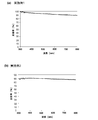
- FIGS. 2A and 2B are diagrams showing the reflectance of the rare earth phosphate particles obtained in Examples 1 and 2, respectively.
- 3 (a) to 3 (c) are diagrams showing the reflectance of the rare earth phosphate particles obtained in Reference Examples 1 to 3, respectively.
- the optical material of the present invention has particles containing rare earth phosphate (hereinafter also referred to as rare earth phosphate-containing particles).
- the rare earth phosphate is represented by LnPO 4 (Ln represents at least one kind of rare earth elements.
- Ln represents at least one kind of rare earth elements.
- Orthophosphates, hydrogen phosphates and dihydrogen phosphates are known as orthophosphates, and the rare earth phosphates used in the present invention are orthophosphates.
- the optical material of the present invention has a large negative anomalous dispersion and is useful for designing various optical systems, for example, correcting various aberrations in various optical systems. It is known that ordinary optical materials have a certain relationship between dispersion (Abbe number ⁇ d ) and partial dispersion ratio ( ⁇ g, F ). This relationship is expressed by the following formula (2). The curve shown in FIG. 1 represents this formula (2).
- ⁇ g, F ⁇ 1.665 ⁇ 10 ⁇ 7 ⁇ d 3 + 5.213 ⁇ 10 ⁇ 5 ⁇ d 2 ⁇ 5.656 ⁇ 10 ⁇ 3 ⁇ d +0.7278 (2)
- anomalous partial dispersion means that the partial dispersion ratio ( ⁇ g, F ) is lower than the standard value of ⁇ g, F obtained by the equation (2).
- ⁇ g, F which is an index indicating anomalous dispersion is obtained by subtracting the standard value from the partial dispersion ratio ( ⁇ g, F ) as shown in the following formula (1).
- ⁇ g, F is negative, and the larger the absolute value, the more the refractive index changes linearly with respect to the wavelength. It is advantageous for optical design that the refractive index changes linearly.
- ⁇ g, F ⁇ g, F ⁇ ( ⁇ 1.665 ⁇ 10 ⁇ 7 ⁇ d 3 + 5.213 ⁇ 10 ⁇ 5 ⁇ d 2 ⁇ 5.656 ⁇ 10 ⁇ 3 ⁇ d +0.7278) ( 1)
- the rare earth phosphate-containing particles used in the present invention have an Abbe number ⁇ d of 30 to 100, and a value of ⁇ g, F which is an anomalous dispersion index is ⁇ 0.10 to ⁇ 0.01. It has a unique optical property, particularly a large negative anomalous dispersion.
- the Abbe number ⁇ d of the particles is more preferably 30 to 90, and still more preferably 30 to 80.
- the value of ⁇ g, F is more preferably ⁇ 0.09 to ⁇ 0.01, and still more preferably ⁇ 0.08 to ⁇ 0. 02.
- the Abbe number ⁇ d is obtained by the following equation.
- ⁇ d (nd-1) / (nF-nC)
- the partial dispersion ratio ⁇ g, F is obtained by the following equation.
- ⁇ g, F (ng ⁇ nF) / (nF ⁇ nC)
- nd, nC, ng, and nF are the d-line (587.6 nm), C-line (656.3 nm), g-line (435.8 nm), and F-line (486) of the Fraunhofer line in the particle, respectively. .1 nm).
- the refractive indexes nd, nC, ng, and nF can be obtained by the following procedures (1) to (3).
- the optical material of the present invention is dispersed in water to obtain an aqueous dispersion (solid content concentration: 5 to 50% by mass).
- the temperature of the aqueous dispersion is set to 25 ° C., and the refractive index of the Fraunhofer line with respect to the d-line, C-line, g-line and F-line is measured.
- a precision refractometer KPR-2000 manufactured by Calnew can be used for the measurement of each refractive index.
- the rare earth phosphate-containing particles used in the present invention are colored in the wavelength region of visible light. Not. This is particularly advantageous when the optical material of the present invention is used as a raw material for an imaging optical device such as a digital camera or a camera-equipped mobile phone.
- the rare earth phosphate-containing particles preferably do not absorb in the visible light wavelength region.
- the reflectance is preferably 70% or more, particularly preferably over the visible light wavelength region of 400 to 800 nm. Is 80% or more. The reflectance of the rare earth phosphate-containing particles is measured, for example, by a measuring instrument described in the examples described later.
- the rare earth elements in the rare earth phosphate represented by LnPO 4 include Sc, Y, La, Ce, Pr, Nd, Pm, Sm, Eu, Gd, Tb, Dy, Ho, Er, Tm, Yb, and Lu. is there.
- the rare earth element contained in the rare earth phosphate-containing particles may be one type or two or more types.
- the rare earth phosphate preferably has a monoclinic crystal structure.
- the rare earth element in the rare earth phosphate is at least one selected from La, Ce, Pr, Nd, Pm, Sm, Eu, and Gd in which the phosphate has a monoclinic monazite structure. It is more preferable that at least one of Gd and La is more preferable.
- the rare earth phosphate-containing particles used in the present invention preferably have a BET specific surface area of 10 to 200 m 2 / g.
- the particles can be highly dispersed at a high concentration in the aqueous dispersion containing the particles.
- the ability to highly disperse the particles in an aqueous dispersion at a high concentration means that a thin film having a desired thickness can be formed even when the number of times of application is reduced when an optical lens is manufactured by application of the aqueous dispersion. It is advantageous in that it can be done.
- the rare earth phosphate-containing particles are fine as will be described later, it is not easy to disperse the particles at a high concentration, but use rare earth phosphate-containing particles having a BET specific surface area within this range.
- BET specific surface area of the particles is preferably 20 ⁇ 200m 2 / g, more preferably 20 ⁇ 180 m 2 / g, even more preferably from 25 to 180 m 2 / g, particularly preferably 25 to 100 m 2 / g.
- the BET specific surface area can be measured by an N 2 adsorption method using, for example, “Flowsorb 2300” manufactured by Shimadzu Corporation.
- the amount of the powder to be measured is 0.3 g, and the preliminary degassing condition is 10 minutes at 120 ° C. under atmospheric pressure.
- the rare earth phosphate-containing particles used in the present invention preferably have a maximum particle size D max of 100 nm or less, more preferably 90 nm or less, and still more preferably 85 nm or less.
- the lower limit of the maximum particle diameter Dmax is not particularly limited, and the lower the better, the better. However, when the maximum particle diameter Dmax is reduced to about 20 nm, the transparency of the aqueous dispersion becomes sufficiently high.
- the maximum particle diameter D max of the rare earth phosphate-containing particles is measured by a dynamic light scattering method using a photon correlation method. For example, it is measured using a nanotrack particle size distribution measuring device manufactured by Nikkiso Co., Ltd.
- the rare earth phosphate-containing particles used in the present invention are preferably composed of only rare earth phosphates, but may be composed of other components in addition to the rare earth phosphates.
- the other components are preferably contained in the particles at a ratio of 5% by mass or less, particularly 1% by mass or less. Examples of the other components include impurities inevitably mixed in the process of preparing the rare earth phosphate, and a surface treatment agent applied for surface modification of the rare earth phosphate-containing particles.
- the rare earth phosphate-containing particles preferably include only rare earth phosphates, but may include other components in addition to the particles.
- the other component include metal oxide particles having a high refractive index.
- metal oxides include Mg, Ca, Ti, Zn, Zr, Ta, Nb, Ga, Ge, Sn, In, Hf, Y, and lanthanoids (La, Ce, Pr, Nd, Pm, Sm, Eu, Gd, Tb, Dy, Ho, Er, Tm, Yb, Lu) and other metal oxides. These metal oxides can be used alone or in combination of two or more. These metal oxides can be used in an amount of about 0.1 to 50 parts by mass with respect to 100 parts by mass of the rare earth phosphate-containing particles.
- Still other components that can be contained in the optical material of the present invention include polymerizable monomers, oligomers and polymers containing the monomers, and the like.
- the polymer include acrylic polymers, methacrylic acid polymers, vinyl polymers, epoxy polymers, urethane polymers, urethane acrylate polymers, cycloolefin polymers, silicone polymers, and polycarbonates.
- various other polymerization initiators, ultraviolet absorbers, and antioxidants can be used as the other components.
- These other components can use 1 type (s) or 2 or more types.
- the ratio of these other components in the optical material of the present invention can be determined as appropriate according to the use of the optical material.
- the optical material of the present invention contains a resin
- the optical properties such as the refractive index and the degree of dispersion of the optical material can be adjusted by adjusting the amount of rare earth phosphate-containing particles relative to the resin.
- An aqueous dispersion useful as an optical material can be obtained by dispersing the rare earth phosphate-containing particles described above in water.
- an optical material made of a thin film can be obtained by applying this aqueous dispersion to the surface of an object to form a coating film.
- this aqueous dispersion is composed of water as a medium, one or two or more kinds of rare earth phosphate-containing particles as a medium, and optionally containing a pH adjuster. It is desirable that components other than the rare earth phosphate-containing particles are not included as much as possible. In particular, it is desirable not to include solid components other than the rare earth phosphate-containing particles.
- the aqueous dispersion preferably has a high concentration of rare earth phosphate-containing particles of 5 to 50% by mass from the viewpoint of forming a thin film having a desired thickness with a small number of coatings.
- a more preferable concentration is 5 to 40% by mass, a more preferable concentration is 5 to 30% by mass, an even more preferable concentration is 5 to 20% by mass, and a particularly preferable concentration is 7 to 15% by mass.
- the rare earth phosphate-containing particles having the BET specific surface area described above are used, it is easy to obtain such a high-concentration dispersion.
- the pH of the aqueous dispersion is preferably set to a specific range on the acidic side or a specific range on the alkaline side.
- the pH of the aqueous dispersion is preferably set to 1 or more and less than 5, more preferably 2 or more and less than 5, and still more preferably 2 or more and 4 or less.
- the pH of the aqueous dispersion is preferably set to 9.1 to 14, more preferably 9.1 to 13.5, and still more preferably 9.1 to 13.
- the pH of the aqueous dispersion on the alkaline side within this range, it becomes easy to highly disperse the rare earth phosphate-containing particles in the medium. Moreover, it can prevent effectively that the particle
- These pH values are values at temperatures during storage or use of the aqueous dispersion.
- a pH adjuster may be added to the aqueous dispersion.
- the pH adjuster used on the acidic side for example, various organic acids and inorganic acids can be used. Examples of the organic acid include acetic acid, formic acid and propionic acid. Examples of inorganic acids include hydrofluoric acid, nitric acid, hydrochloric acid, and sulfuric acid. These organic acids and inorganic acids can be used singly or in combination of two or more.
- various hydroxides, alkylamines, aqueous ammonia and the like can be used.
- hydroxide examples include tetraalkylammonium hydroxides such as tetramethylammonium hydroxide, and alkali metal hydroxides such as sodium hydroxide and potassium hydroxide.
- alkylamine any of monoalkylamine, dialkylamine and trialkylamine can be used depending on the ease of pH adjustment.
- alkyl group in the alkylamine for example, the same or different lower alkyl group having 1 to 4 carbon atoms (methyl group, ethyl group, etc.) can be used.
- These hydroxides, alkylamines, aqueous ammonia and the like can be used singly or in combination of two or more.
- the amount of the above various pH adjusting agents added to the aqueous dispersion may be an amount such that the pH of the aqueous dispersion is in the above range.
- the rare earth phosphate-containing particles are mixed with an aqueous raw material liquid containing one or more rare earth element sources and an aqueous solution containing orthophosphoric acid, and contain one or more rare earth phosphates. It is obtained by forming a precipitate and then subjecting the precipitate to a calcination step in an air atmosphere.
- orthophosphoric acid is simply referred to as phosphoric acid.
- the mixing of the aqueous raw material liquid containing the rare earth element source and the aqueous solution containing phosphoric acid includes the following aspects (a) and (b).
- aging is preferably performed after mixing. A maturing time of 5 to 300 minutes is sufficient.
- the concentration of the rare earth element in the aqueous raw material liquid is 0.01 to 1.5 mol / liter, particularly 0.01 to 1 mol / liter, especially 0.01 to 0.5 mol. / Liter is preferably used.
- the rare earth element is in a trivalent ion state or a complex ion state in which a ligand is coordinated to the trivalent ion.
- a rare earth oxide for example, Ln 2 O 3 or the like
- the aqueous solution containing phosphoric acid has a total concentration of phosphoric acid species in the aqueous solution of 0.01 to 3 mol / liter, particularly 0.01 to 1 mol / liter, and particularly 0.01 to 0.5 mol / liter. It is preferable to do.
- an alkali species can be added for pH adjustment.
- the alkali species for example, ammonia, ammonium hydrogen carbonate, ammonium carbonate, sodium hydrogen carbonate, sodium carbonate, ethylamine, propylamine, sodium hydroxide, potassium hydroxide and the like can be used.
- the aqueous raw material liquid containing the rare earth element source and the aqueous solution containing phosphoric acid can be mixed so that the molar ratio of phosphate ions / rare earth element ions is 0.5 to 10, particularly 1 to 10, especially 1 to 5. From the viewpoint of efficiently obtaining a precipitated product.
- the pH of the reaction system affects the form of the precipitated product for the reasons described later.
- the relationship between the mixing methods (a) and (b) described above and the pH of the reaction system is as follows.
- the reaction solution tends to change at a low pH. This is because the aqueous raw material liquid containing the rare earth element source is acidic with pH ⁇ 1.
- the pH of the reaction solution depends on the pH of the aqueous solution containing phosphoric acid, and when ammonia is used as the pH adjuster, the pH is adjusted within the range of 0.1 to 10. Is possible.
- the precipitation product varies depending on the temperature during mixing.
- the reaction temperature is preferably 20 to 100 ° C.
- the reaction temperature is increased, a crystalline rare earth phosphate is easily obtained and the crystallinity thereof is increased.
- the rare earth phosphate is obtained as described above, this is subjected to solid-liquid separation according to a conventional method, and then washed with water once or a plurality of times. Washing with water is preferably performed until the electrical conductivity of the liquid reaches, for example, 2000 ⁇ S / cm or less. For example, decantation can be performed for washing with water.
- the precipitated product is fired in an oxygen-containing atmosphere such as the air in order to make it crystalline.
- the firing temperature is preferably 300 to 1000 ° C., more preferably 400 to 1000 ° C. By adopting this temperature range, the rare earth phosphate-containing particles having the BET specific surface area described above can be easily obtained. If the firing temperature is excessively high, sintering proceeds and the BET specific surface area of the particles tends to decrease.
- the firing time is preferably 1 to 20 hours, more preferably 1 to 10 hours, provided that the firing temperature is within this range.
- An aqueous dispersion can be prepared using the rare earth phosphate-containing particles thus obtained.
- rare earth phosphate-containing particles and water are mixed to form a slurry, and wet pulverization is performed by a media mill such as a bead mill.
- the beads to be used include zirconia beads and alumina beads.
- the rare earth phosphate-containing particles can be easily brought close to a monodispersed state by adding various pH adjusting agents to the slurry and performing a pulverization operation.
- the pH adjuster it is preferable to use one that can adjust the pH of the liquid to preferably 1 or more and less than 5, more preferably 2 or more and less than 5, and still more preferably 2 or more and 4 or less.
- a pH adjuster for example, the organic acids and inorganic acids described above can be used.
- the above pH adjuster may be added to an aqueous dispersion obtained by wet grinding instead of adding it to the slurry during wet grinding.
- the added amount is such that the pH of the aqueous dispersion is preferably within the above-mentioned range.
- a new surface is generated in the rare earth phosphate-containing particles by wet grinding, and the pH of the liquid may fluctuate as a result of the surface reacting with an acid or an alkali. Therefore, when adding a pH adjuster at the time of wet pulverization, it is preferable to determine the addition amount of the pH adjuster in anticipation of fluctuations in pH during wet pulverization.
- the aqueous dispersion thus obtained is colorless and transparent and has a high visible light transmittance. Moreover, it is stable and does not cause precipitation even when stored for a long time.
- optical material and aqueous dispersion thus obtained can be used for various optical elements such as optical lenses and diffractive optical elements, as well as antireflection, utilizing the negative anomalous dispersion of rare earth phosphate-containing particles. It can be suitably used for forming an optical thin film such as a film.
- optical elements formed by the optical material of the present invention can be used in various optical devices such as digital cameras, video cameras, telescopes, binoculars, microscopes, projectors, copying machines, videophones, lighting equipment, mobile phones, and infrared cameras. It can be used for optical systems.
- the optical material can be directly molded into an optical element such as a lens by containing a resin as described above and dispersing rare earth phosphate-containing particles in the resin.
- the aqueous dispersion is applied to various substrates, for example, the surface of a transparent substrate or a lens to form a coating film, and the coating film is dried to form a thin film having anomalous dispersion.
- the dried thin film may be fired as necessary under an inert atmosphere, an oxidizing atmosphere such as air, or a weakly reducing atmosphere (for example, a hydrogen-containing atmosphere having an explosion limit concentration or less). This thin film is useful for giving a lens a specific optical characteristic or as a thin lens itself.
- gadolinium phosphate particles were produced. This step corresponds to (a) described above (hereinafter, the same applies to Example 2 and Reference Examples 1 to 3).
- (1) Production of gadolinium phosphate particles 1) 380 g of water was weighed into a glass container and heated to 80 ° C. 2) 15.0 g of 85% nitric acid aqueous solution (manufactured by Wako Pure Chemical Industries, Ltd.) was added to 1). 3) 7.2 g of Gd 2 O 3 (manufactured by Japan Yttrium) was added to 2), completely dissolved, and cooled to room temperature (25 ° C.).
- the maximum particle diameter D max of the gadolinium phosphate particles in the obtained aqueous dispersion was measured using a nanotrack particle size distribution measuring apparatus manufactured by Nikkiso Co., Ltd. The results are shown in Table 1. Further, when the aqueous dispersion was weighed out and dried at 200 ° C., the gadolinium phosphate particles had a solid content concentration of 5.5%, and a vitreous transparent solid content remained.
- the refractive index (d-line, C-line, F-line, g-line) of the obtained aqueous dispersion and blank was measured with a precision refractometer KPR-2000 manufactured by Kalnew in the manner described above.
- the pH of blank pure water was set to 12.4, which is the same as that of the aqueous dispersion, using an aqueous tetramethylammonium hydroxide solution.
- the refractive index (nd, nC, nF, ng) of the gadolinium phosphate particles contained in the aqueous dispersion was calculated by the method described above.
- Example 2 (1) Production of lanthanum phosphate particles 1) 380 g of water was weighed into a glass container and heated to 80 ° C. 2) 16.3 g of 85% nitric acid aqueous solution (manufactured by Wako Pure Chemical Industries, Ltd.) was added to 1). 3) 7.0 g of La 2 O 3 (Wako Pure Chemical Industries, Ltd.) was added to 2), completely dissolved, and cooled to room temperature (25 ° C.). 4) 390 g of water, 6.0 g of 25% phosphoric acid pure drug, and 10.5 g of 25% aqueous ammonia were added to another glass container. The pH of this aqueous solution was 9.6.
- Example 1 The results are shown in Table 1.
- Example 2 In the same manner as in Example 1, the maximum particle diameter D max of the lanthanum phosphate particles in the obtained aqueous dispersion was measured. The results are shown in Table 1. Further, a small amount of this aqueous dispersion was weighed out and dried at 200 ° C., the solid content concentration was 5.7%, and a glassy transparent solid content remained.
- Example 1 The solution of 4) was gradually added to the solution of 3) at 25 ° C. The pH of the reaction solution was 0.8 to 1.6. A precipitate was formed by the reaction. 6) After completion of the addition, aging was performed at 25 ° C. for 10 minutes. Thereafter, the precipitate obtained in 6) was subjected to the same steps as 7) to 10) in Example 1 to obtain a fired powder.
- a tetragonal LuPO 4 peak was confirmed.
- the BET specific surface area of the obtained fired powder was measured by the same method as in Example 1. The results are shown in Table 1. Further, the reflectance of the obtained fired powder with respect to visible light was measured in the same manner as in Example 1. As a result, it was confirmed that the reflectance was 96% or more over a wavelength range of 400 to 800 nm and there was no absorption in the visible light region. .
- the measurement result of the reflectance is shown in FIG.
- Example 2 In the same manner as in Example 1, the maximum particle diameter D max of the lutetium phosphate particles in the obtained aqueous dispersion was measured. The results are shown in Table 1. Further, it was confirmed that the solid content concentration of the lutetium phosphate particles after weighing out this aqueous dispersion and drying at 200 ° C. was 11.1%, and a glassy transparent solid content remained. .
- Example 1 The results are shown in Table 1.
- Example 2 In the same manner as in Example 1, the maximum particle diameter D max of the ytterbium phosphate particles in the obtained aqueous dispersion was measured. The results are shown in Table 1. Further, a small amount of this aqueous dispersion was weighed and dried at 200 ° C., the solid content concentration of the ytterbium phosphate particles was 11.1%, and a glassy transparent solid content remained.
- Example 2 In the same manner as in Example 1, by measuring the refractive index of the obtained aqueous dispersion, nd the ytterbium phosphate particles, nC, nF, ng, ⁇ d, ⁇ g, F and [Delta] [theta] g, each of the F Got the value.
- the blank pure water had a pH of 11.8, which was the same as that of the aqueous dispersion, using a tetramethylammonium hydroxide aqueous solution. The results are shown in Table 1 and FIG.
- Example 1 The results are shown in Table 1.
- the reflectance of the obtained fired powder with respect to visible light was measured using the same measuring apparatus as in Example 1, the reflectance was 94% or more over a wavelength range of 400 to 800 nm, and there was no absorption in the visible light region. It was confirmed.
- the measurement result of the reflectance is shown in FIG.
- Example 2 In the same manner as in Example 1, the maximum particle diameter D max of the yttrium phosphate particles in the obtained aqueous dispersion was measured. The results are shown in Table 1. Further, when this aqueous dispersion was weighed out and dried at 200 ° C., the solid content concentration of the yttrium phosphate particles was 12.7%, and a glassy transparent solid content remained.
- each of nd, nC, nF, ng, ⁇ d , ⁇ g, F and ⁇ g, F of the yttrium phosphate particles was measured. Got the value.
- the blank pure water had a pH of 12.6, which was the same as that of the aqueous dispersion, using a tetramethylammonium hydroxide aqueous solution.
- the particles obtained in each example have a large negative anomalous dispersibility
- the particles obtained in each reference example have the formula (1) It shows a value close to a curve, and it can be seen that it does not have negative anomalous dispersion.
- the optical material of the present invention has a large negative anomalous dispersion and is useful as a raw material for various optical instruments.
Landscapes
- Chemical & Material Sciences (AREA)
- Physics & Mathematics (AREA)
- Organic Chemistry (AREA)
- Crystallography & Structural Chemistry (AREA)
- General Physics & Mathematics (AREA)
- Optics & Photonics (AREA)
- Inorganic Chemistry (AREA)
- Compounds Of Alkaline-Earth Elements, Aluminum Or Rare-Earth Metals (AREA)
- Luminescent Compositions (AREA)
Abstract
本発明の光学材料は、希土類リン酸塩を含む粒子を有する。前記粒子のアッベ数をνdとし、部分分散比をθg,Fとしたとき、νdが30~100であり、かつ以下の式(1)で定義されるΔθg,Fが-0.10~-0.01である。前記希土類リン酸塩は、単斜晶の結晶構造をとることが好適である。前記希土類リン酸塩は、La、Ce、Pr、Nd、Pm、Sm、Eu及びGdから選ばれる少なくとも1種の希土類元素のリン酸塩であることも好適である。 Δθg,F=θg,F-(-1.665×10⁻⁷νd
3+5.213×10⁻⁵νd
2-5.656×10⁻³νd+0.7278)・・・(1)
Description
本発明は、希土類リン酸塩を含む粒子を有する光学材料、該光学材料を含む水性分散液及び該光学材料の製造方法に関する。
一般的な光学材料であるガラスや樹脂にはない異常分散性を有する光学材料を用いて、諸収差を補正することが知られている。特に、異常分散性を有する光学材料は、デジタルカメラ、カメラ付き携帯電話等の撮像用光学系を小型化する場合に、諸収差(特に軸上色収差及び倍率色収差などの色収差)の発生が多くなるという問題を解決することが可能な材料として注目されている。異常分散性を有する光学材料としては、異常分散ガラスのほか、樹脂中に、負の異常分散性を有する微粒子を均一に分散させた有機無機材料が知られている。例えば、特許文献1には、インジウムと酸化スズの複合酸化物であるITOに関し、スズのドーピングによるフリーキャリアの発生等によって部分分散比θg,Fが他の無機酸化物よりも小さくなることが記載されている。また、ITO微粒子を樹脂に分散させることで、負の異常分散性を有する有機無機複合材料が得られることも記載されている。しかし、ITO微粒子は、可視光において着色を有するため、これを用いた光学材料の用途には制限がある。
特許文献1の他にも、樹脂に金属酸化物、例えばリンをドープした酸化スズ粒子等を添加することで、異常分散性を調整した光学材料が提案されている(特許文献2参照)。しかし、従来の光学材料の光学特性は十分なものではなかった。
したがって本発明の課題は、前述した従来技術が有する欠点を解消し得る光学材料を提供することにある。
本発明は、希土類リン酸塩を含む粒子を有する光学材料であって、
前記粒子のアッベ数をνdとし、部分分散比をθg,Fとしたとき、νdが30~100であり、かつ以下の式(1)で定義されるΔθg,Fが-0.10~-0.01である光学材料を提供するものである。
Δθg,F=θg,F-(-1.665×10⁻⁷νd 3+5.213×10⁻⁵νd 2-5.656×10⁻³νd+0.7278)・・・(1)
前記粒子のアッベ数をνdとし、部分分散比をθg,Fとしたとき、νdが30~100であり、かつ以下の式(1)で定義されるΔθg,Fが-0.10~-0.01である光学材料を提供するものである。
Δθg,F=θg,F-(-1.665×10⁻⁷νd 3+5.213×10⁻⁵νd 2-5.656×10⁻³νd+0.7278)・・・(1)
また本発明は、希土類リン酸塩を含む粒子を有する水性分散液であって、
前記粒子のアッベ数をνdとし、部分分散比をθg,Fとしたとき、νdが30~100であり、かつ前記式(1)で定義されるΔθg,Fが-0.10~-0.01である水性分散液を提供するものである。
前記粒子のアッベ数をνdとし、部分分散比をθg,Fとしたとき、νdが30~100であり、かつ前記式(1)で定義されるΔθg,Fが-0.10~-0.01である水性分散液を提供するものである。
更に本発明は、前記の光学材料の好適な製造方法として、
希土類元素源を含む水性原料液と、オルトリン酸を含む水溶液とを混合して、希土類リン酸塩を含む沈殿を生成させ、次いで該沈殿を大気雰囲気下に焼成工程に付す光学材料の製造方法を提供するものである。
希土類元素源を含む水性原料液と、オルトリン酸を含む水溶液とを混合して、希土類リン酸塩を含む沈殿を生成させ、次いで該沈殿を大気雰囲気下に焼成工程に付す光学材料の製造方法を提供するものである。
以下本発明の光学材料を、その好ましい実施形態に基づき説明する。本発明の光学材料は、希土類リン酸塩を含む粒子(以下、希土類リン酸塩含有粒子ともいう)を有している。希土類リン酸塩はLnPO4(Lnは希土類元素のうちの少なくとも1種を表す。以下「Ln」というときには、この意味で用いられる。)で表される。オルトリン酸塩には正塩、リン酸水素塩及びリン酸二水素塩が知られているところ、本発明で用いられる希土類リン酸塩はオルトリン酸の正塩である。
本発明の光学材料は、大きな負の異常分散性を有し、各種光学系の設計、例えば各種光学系における諸収差の補正に有用である。通常の光学材料は分散(アッベ数νd)と部分分散比(θg,F)の間に一定の関係があることが知られている。この関係は、下記式(2)によって表される。図1に示す曲線は、この式(2)を表したものである。
θg,F=-1.665×10⁻⁷νd
3+5.213×10⁻⁵νd
2-5.656×10⁻³νd+0.7278・・・(2)
これに対し、負の異常分散性(異常部分分散性)を有するとは、部分分散比(θg,F)が、前記式(2)によって求められるθg,Fの標準値を下回ることをいう。異常分散性を示す指標であるΔθg,Fは、以下の式(1)に示されるとおり、部分分散比(θg,F)から、当該標準値を引くことによって求められる。Δθg,Fは、負であり、その絶対値が大きいほど、波長に対して直線的に屈折率が変化していることを意味する。直線的に屈折率が変化することは光学設計に有利である。
Δθg,F=θg,F-(-1.665×10⁻⁷νd
3+5.213×10⁻⁵νd
2-5.656×10⁻³νd+0.7278)・・・(1)
本発明で用いる希土類リン酸塩含有粒子は、アッベ数νdが30~100であり、かつ異常分散性の指標であるΔθg,Fの値が、-0.10~-0.01であるという特異な光学特性、特に大きな負の異常分散性を有する。本発明の光学材料の光学特性を一層望ましいものとする観点から、前記粒子のアッベ数νdは、更に好ましくは30~90であり、一層好ましくは30~80である。また、これらのアッベ数νdの各数値範囲において、前記Δθg,Fの値は、更に好ましくは-0.09~-0.01であり、一層好ましくは、-0.08~-0.02である。
前記アッベ数νdは、下記式によって求められる。
νd=(nd-1)/(nF-nC)
また、前記部分分散比θg,Fは、下記式によって求められる。
θg,F=(ng-nF)/(nF-nC)
式中、nd、nC、ng、nFはそれぞれ、前記粒子におけるフラウンフォーファ線のd線(587.6nm)、C線(656.3nm)、g線(435.8nm)、F線(486.1nm)に対する屈折率である。
νd=(nd-1)/(nF-nC)
また、前記部分分散比θg,Fは、下記式によって求められる。
θg,F=(ng-nF)/(nF-nC)
式中、nd、nC、ng、nFはそれぞれ、前記粒子におけるフラウンフォーファ線のd線(587.6nm)、C線(656.3nm)、g線(435.8nm)、F線(486.1nm)に対する屈折率である。
前記屈折率nd、nC、ng、nFは、以下の(1)ないし(3)の手順によって求めることができる。
(1)本発明の光学材料を水に分散させ、水性分散液(固形分濃度:5~50質量%)を得る。該水性分散液の温度を25℃に設定し、フラウンフォーファ線のd線、C線、g線、F線に対する屈折率をそれぞれ測定する。各屈折率の測定には、例えば、カルニュー社製精密屈折計KPR-2000を用いることができる。
(2)水性分散液と同pH及び同温度に調整した純水をブランクとして、(1)の屈折率の測定と同じ測定器を用い、フラウンフォーファ線のd線、C線、g線、F線に対する屈折率をそれぞれ測定する。水性分散液においてpH調整剤を使用した場合、純水のpH調整は、水性分散液と同じpH調整剤を使用する。
(3)有効媒質理論を用いて、(1)及び(2)で得られた値から、前記粒子のnd、nC、ng、nFを算出する。
(1)本発明の光学材料を水に分散させ、水性分散液(固形分濃度:5~50質量%)を得る。該水性分散液の温度を25℃に設定し、フラウンフォーファ線のd線、C線、g線、F線に対する屈折率をそれぞれ測定する。各屈折率の測定には、例えば、カルニュー社製精密屈折計KPR-2000を用いることができる。
(2)水性分散液と同pH及び同温度に調整した純水をブランクとして、(1)の屈折率の測定と同じ測定器を用い、フラウンフォーファ線のd線、C線、g線、F線に対する屈折率をそれぞれ測定する。水性分散液においてpH調整剤を使用した場合、純水のpH調整は、水性分散液と同じpH調整剤を使用する。
(3)有効媒質理論を用いて、(1)及び(2)で得られた値から、前記粒子のnd、nC、ng、nFを算出する。
先に背景技術の項で述べたITO微粒子が可視光の波長領域において着色していることとは対照的に、本発明で用いる希土類リン酸塩含有粒子は可視光の波長領域において着色を有していない。このことは、デジタルカメラやカメラ付き携帯電話等の撮像用光学機器の原料として本発明の光学材料を用いる場合に特に有利である。前記希土類リン酸塩含有粒子は、可視光の波長領域において吸収がないことが好ましく、具体的には、可視光の波長領域である400~800nmにわたって、反射率が好ましくは70%以上、特に好ましくは80%以上である。前記希土類リン酸塩含有粒子の反射率は、例えば後述する実施例記載の測定機器によって測定される。
LnPO4で表される希土類リン酸塩における希土類元素には、Sc、Y、La、Ce、Pr、Nd、Pm、Sm、Eu、Gd、Tb、Dy、Ho、Er、Tm、Yb及びLuがある。希土類リン酸塩含有粒子に含まれる希土類元素は1種であってもよく、2種以上であってもよい。
本発明の光学材料の光学特性を望ましいものとする観点、特に負の異常分散性を大きくする観点から、前記希土類リン酸塩は、単斜晶の結晶構造をとることが好ましい。同様の観点から、前記希土類リン酸塩における希土類元素は、リン酸塩が単斜晶のモナザイト構造をとるLa、Ce、Pr、Nd、Pm、Sm、Eu及びGdから選ばれる少なくとも1種であることが更に好ましく、Gd及びLaのうちの少なくとも1種であることが一層好ましい。
本発明で用いる希土類リン酸塩含有粒子は、BET比表面積が、10~200m2/gであることが好ましい。これによって、該粒子を含む水性分散液において、該粒子を高濃度で高分散させることができる。水性分散液において前記粒子を高濃度で高分散可能であることは、該水性分散液の塗布によって例えば光学レンズを製造する場合に、塗布の回数を少なくしても所望の厚みを有する薄膜を形成できる点から有利である。特に希土類リン酸塩含有粒子が後述するように微粒である場合、粒子を高濃度で高分散させることは容易ではないところ、この範囲内のBET比表面積を有する希土類リン酸塩含有粒子を用いることで、該粒子が微粒であっても該粒子を高濃度で安定的に高分散させることができる。該粒子を一層高濃度で一層安定的に高分散させる観点から、該粒子のBET比表面積は、好ましくは20~200m2/g、更に好ましくは20~180m2/g、更に一層好ましくは25~180m2/g、とりわけ好ましくは25~100m2/gである。
本発明において前記のBET比表面積は、例えば島津製作所社製の「フローソーブ2300」を用い、N2吸着法で測定することができる。測定粉末の量は0.3gとし、予備脱気条件は大気圧下、120℃で10分間とする。
本発明で用いる希土類リン酸塩含有粒子は最大粒径Dmaxが100nm以下であることが好ましく、更に好ましくは90nm以下、一層好ましくは85nm以下である。最大粒径Dmaxを100nm以下とすることにより、前記水性分散液において、可視光の散乱による水性分散液の透明性の低下を防止することができる。最大粒径Dmaxの下限値に特に制限はなく、小さければ小さいほど好ましいが、20nm程度に最大粒径Dmaxが小さくなれば、水性分散液の透明性は十分に高くなる。希土類リン酸塩含有粒子の最大粒径Dmaxは、光子相関法を利用した動的光散乱法によって測定される。例えば日機装株式会社製のナノトラック粒度分布測定装置を用いて測定される。
本発明で用いる希土類リン酸塩含有粒子は、希土類リン酸塩のみを含んで構成されていていることが好ましいが、希土類リン酸塩に加えて他の成分を含んで構成されていてもよい。他の成分は、前記粒子中に5質量%以下、特に1質量%以下の割合で含まれていることが好ましい。他の成分としては、希土類リン酸塩の調製の過程で不可避的に混入する不純物や、希土類リン酸塩含有粒子の表面改質のために施される表面処理剤などが挙げられる。
本発明の光学材料は、希土類リン酸塩含有粒子は、希土類リン酸塩のみを含んで構成されていていることが好ましいが、該粒子に加えて他の成分を含んで構成されていてもよい。他の成分としては、例えば、高屈折率を有する金属酸化物の粒子が挙げられる。そのような金属酸化物としては、例えばMg、Ca、Ti、Zn、Zr、Ta、Nb、Ga、Ge、Sn、In、Hf、Y、ランタノイド(La、Ce、Pr、Nd、Pm、Sm、Eu、Gd、Tb、Dy、Ho、Er、Tm、Yb、Lu)などの金属の酸化物が挙げられる。これらの金属酸化物は、1種又は2種以上を用いることができる。これらの金属酸化物は、希土類リン酸塩含有粒子100質量部に対して、0.1~50質量部程度用いることができる。
本発明の光学材料に含有することができる更に他の成分としては、重合性モノマー、該モノマーを含むオリゴマーやポリマー等が挙げられる。ここで、ポリマーとしては、例えば、アクリル系ポリマー、メタクリル酸系ポリマー、ビニル系ポリマー、エポキシ系ポリマー、ウレタン系ポリマー、ウレタンアクリレート系ポリマー、シクロオレフィン系ポリマー、シリコーン系ポリマー及びポリカーボネートなどが挙げられる。これらに加え、前記の他の成分として、各種の重合開始剤、紫外線吸収剤、酸化防止剤を用いることもできる。これら他の成分は、1種又は2種以上を用いることができる。本発明の光学材料におけるこれら他の成分の割合は、該光学材料の用途に応じて適宜定めることができる。また、本発明の光学材料が樹脂を含んでいる場合には、樹脂に対する希土類リン酸塩含有粒子の量を調整することで、該光学材料の屈折率や分散度等の光学特性を調整できる。
上述した希土類リン酸塩含有粒子を水に分散させることで、光学材料として有用な水性分散液を得ることができる。例えば、この水性分散液を物体の表面に塗布して塗膜を形成することで、薄膜からなる光学材料を得ることができる。この観点から、この水性分散液は、水を媒体とし、1種又は2種以上の希土類リン酸塩含有粒子を媒質とし、必要に応じてpH調整剤を含有する以外、1種又は2種以上の希土類リン酸塩含有粒子以外の成分を極力含んでいないことが望ましい。特に、希土類リン酸塩含有粒子以外の固形成分を含んでいないことが望ましい。
前記水性分散液は、少ない塗布回数によって所望の厚みを有する薄膜を形成させる観点から、希土類リン酸塩含有粒子の濃度が5~50質量%という高濃度のものであることが好ましい。更に好ましい濃度は5~40質量%であり、一層好ましい濃度は5~30質量%であり、更に一層好ましい濃度は5~20質量%であり、特に好ましい濃度は7~15質量%である。上述したBET比表面積を有する希土類リン酸塩含有粒子を用いた場合、このような高濃度の分散液が得られやすい。
前記水性分散液は、長期間保存したときの安定性を高めるために、水性分散液のpHを酸性側の特定の範囲又はアルカリ性側の特定の範囲に設定することが好ましい。酸性側については、水性分散液のpHを1以上5未満に設定することが好ましく、更に好ましくは2以上5未満、一層好ましくは2以上4以下に設定する。酸性側における水性分散液のpHをこの範囲内に設定することで、希土類リン酸塩含有粒子の溶解を効果的に防止できる。また希土類リン酸塩含有粒子を媒体中に高度に分散させることが容易となる。アルカリ性側については、水性分散液のpHを9.1以上14以下に設定することが好ましく、更に好ましくは9.1以上13.5以下、一層好ましくは9.1以上13以下に設定する。アルカリ性側における水性分散液のpHをこの範囲内に設定することで、希土類リン酸塩含有粒子を媒体中に高度に分散させることが容易となる。また、水酸化物イオンとの反応により粒子表面が変質することを効果的に防止できる。これらのpHは、水性分散液の保存中又は使用時における温度での値のことである。
水性分散液のpHを上述の範囲内に調整するためには、水性分散液にpH調整剤を添加すればよい。酸性側で用いられるpH調整剤としては、例えば各種の有機酸や無機酸を用いることができる。有機酸としては例えば酢酸、ギ酸及びプロピオン酸などが挙げられる。無機酸としては、例えばフッ酸、硝酸、塩酸及び硫酸などが挙げられる。これらの有機酸や無機酸は、1種を単独で又は2種以上を組み合わせて用いることができる。アルカリ性側で用いられるpH調整剤としては、各種の水酸化物、アルキルアミン及びアンモニア水等を用いることができる。水酸化物としては例えば水酸化テトラメチルアンモニウム等の水酸化テトラアルキルアンモニウム、水酸化ナトリウムや水酸化カリウム等のアルカリ金属の水酸化物が挙げられる。アルキルアミンとしては、pH調整のしやすさに応じてモノアルキルアミン、ジアルキルアミン及びトリアルキルアミンのいずれをも用いることができる。アルキルアミンにおけるアルキル基としては、例えば同一の又は異なる、炭素数1~4の低級アルキル基(メチル基やエチル基等)を用いることができる。これら水酸化物、アルキルアミン及びアンモニア水等は、1種を単独で又は2種以上を組み合わせて用いることができる。以上の各種のpH調整剤の水性分散液への添加量は、水性分散液のpHが上述の範囲となるような量とすればよい。
次に、本発明の光学材料における希土類リン酸塩含有粒子の好適な製造方法について説明する。この希土類リン酸塩含有粒子は、1種又は2種以上の希土類元素源を含む水性原料液と、オルトリン酸を含む水溶液とを混合して、1種又は2種以上の希土類リン酸塩を含む沈殿を生成させ、次いで該沈殿を大気雰囲気下に焼成工程に付すことによって得られる。なお、以下の説明においてはオルトリン酸のことを単にリン酸と称する。
希土類元素源を含む水性原料液と、リン酸を含む水溶液との混合には、以下の(a)及び(b)の態様がある。
(a)希土類元素源を含む水性原料液中に、リン酸を含む水溶液を添加する。
(b)リン酸を含む水溶液中に、希土類元素源を含む水性原料液を添加する。
いずれの態様であっても、混合後は、熟成を行うことが好ましい。熟成時間は5~300分とすれば十分である。
(a)希土類元素源を含む水性原料液中に、リン酸を含む水溶液を添加する。
(b)リン酸を含む水溶液中に、希土類元素源を含む水性原料液を添加する。
いずれの態様であっても、混合後は、熟成を行うことが好ましい。熟成時間は5~300分とすれば十分である。
希土類元素源を含む水性原料液としては、該水性原料液中における希土類元素の濃度が、0.01~1.5mol/リットル、特に0.01~1mol/リットル、とりわけ0.01~0.5mol/リットルのものを用いることが好ましい。この水性原料液中において希土類元素は三価のイオンの状態になっているか、又は三価のイオンに配位子が配位した錯イオンの状態になっている。希土類元素源を含む水性原料液を調製するためには、例えば硝酸水溶液に希土類酸化物(例えばLn2O3等)を添加してこれを溶解させればよい。
リン酸を含む水溶液としては、該水溶液中におけるリン酸化学種の合計の濃度を、0.01~3mol/リットル、特に0.01~1mol/リットル、とりわけ0.01~0.5mol/リットルとすることが好ましい。また、pH調整のために、アルカリ種を添加することもできる。アルカリ種としては、例えばアンモニア、炭酸水素アンモニウム、炭酸アンモニウム、炭酸水素ナトリウム、炭酸ナトリウム、エチルアミン、プロピルアミン、水酸化ナトリウム、水酸化カリウム等を用いることができる。
希土類元素源を含む水性原料液とリン酸を含む水溶液は、リン酸イオン/希土類元素イオンのモル比が0.5~10、特に1~10、とりわけ1~5となるように混合することが、効率よく沈殿生成物が得られる点から好ましい。
反応系のpHは、後述する理由によって、沈殿生成物の形態へ影響を及ぼす。上述した混合方法(a)及び(b)と、反応系のpHとの関係は以下のとおりである。(a)の態様で反応を行った場合、反応溶液は低いpHで推移しやすい。この理由は、希土類元素源を含む水性原料液がpH<1の酸性のためである。一方、(b)の態様で反応を行った場合、反応溶液のpHはリン酸を含む水溶液のpHに依存し、アンモニアをpH調整剤として用いた場合、0.1~10のpH範囲で調整が可能である。
永長久彦著「溶液を反応場とする無機合成」培風館(2000年)によると、リン酸イオンはpHによって形態が変化する。また希土類元素イオンとの反応において、リン酸イオンの形態は沈殿生成物へ影響を及ぼす。例えばアンモニアをpH調整剤として用いた場合、pH<4ではH2PO4
-の存在が支配的になる。pHが4~8では、H2PO4
-及びHPO4
2-の存在が支配的になる。pH>8ではHPO4
2-及びPO4
3-の存在が支配的になる。希土類元素イオンとリン酸イオンとの反応において、低pHで生じるH2PO4
-と希土類元素イオンとの反応ではLnHPO4が生成しやすい。一方、高pHで生じるPO4
3-と希土類元素イオンとの反応ではLnPO4が生成しやすいと記載されている。
また沈殿生成物は、混合時の温度によっても変化する。この観点から、反応温度は好ましくは20~100℃である。一般的な傾向として、反応温度が高くなると、結晶性の希土類リン酸塩が得られやすくなり、かつその結晶性が高くなる。
以上のようにして希土類リン酸塩が得られたら、これを常法に従い固液分離した後、1回又は複数回水洗する。水洗は、液の導電率が例えば2000μS/cm以下になるまで行うことが好ましい。水洗のために例えばデカンテーションを行うことができる。
沈殿生成物は、これを結晶性のものにするために大気中等の含酸素雰囲気で焼成を行う。焼成条件は、焼成温度が好ましくは300~1000℃であり、更に好ましくは400~1000℃である。この温度範囲を採用することで、上述したBET比表面積を有する希土類リン酸塩含有粒子を容易に得ることができる。焼成温度が過度に高くなると、焼結が進行して粒子のBET比表面積が低下する傾向にある。焼成時間は、焼成温度がこの範囲内であることを条件として、好ましくは1~20時間、更に好ましくは1~10時間である。
このようにして得られた希土類リン酸塩含有粒子を用いて水性分散液を調製することができる。この調製工程においては、希土類リン酸塩含有粒子と水とを混合してスラリーとなし、ビーズミル等のメディアミルによって湿式粉砕を行う。使用するビーズとしては、例えばジルコニアビーズやアルミナビーズ等が挙げられる。この場合、各種のpH調整剤をスラリーに添加して粉砕操作を行うことで、希土類リン酸塩含有粒子を単分散状態に近づけやすくなる。pH調整剤としては、液のpHを好ましくは1以上5未満、更に好ましくは2以上5未満、一層好ましくは2以上4以下に調整できるものを用いることが好ましい。そのようなpH調整剤としては、例えば、先に述べた有機酸や無機酸を用いることができる。また、液のpHを好ましくは9.1以上14以下、更に好ましくは9.1以上13.5以下、一層好ましくは9.1以上13以下に調整できるものを用いることが好ましい。そのようなpH調整剤としては、例えば、先に述べた各種の水酸化物を用いることが好ましい。
上述のpH調整剤は、これを湿式粉砕時にスラリーに添加することに代えて、湿式粉砕して得られた水性分散液に添加してもよい。pH調整剤を水性分散液に添加する場合、その添加量は、水性分散液のpHが、好ましくは上述の範囲内となるようにする。なお、湿式粉砕によって希土類リン酸塩含有粒子に新たな表面が生じ、該表面が酸又はアルカリと反応する結果、液のpHが変動することがある。したがって、湿式粉砕時にpH調整剤を添加する場合には、湿式粉砕におけるpHの変動を見越してpH調整剤の添加量を決定することが好ましい。
湿式粉砕後、液とビーズとを分離し、更にメンブランフィルターによって粗粒を除去することで、目的とする水性分散液が得られる。このようにして得られた水性分散液は無色透明であり、可視光の透過率が高いものである。また、長期間保存しても沈殿の生じない安定なものである。
このようにして得られた光学材料及び水性分散液は、希土類リン酸塩含有粒子の負の異常分散性を利用して、各種光学素子、例えば、光学レンズ、回折光学素子などのほか、反射防止膜等の光学薄膜の形成に好適に用いることができる。また、本発明の光学材料によって形成した光学素子は、例えば、デジタルカメラ、ビデオカメラ、望遠鏡、双眼鏡、顕微鏡、プロジェクター、複写機、テレビ電話、照明器具、携帯電話、赤外線カメラなどの光学機器における各種光学系に使用することができる。例えば、光学材料に対して、上述したとおり樹脂を含有させ、該樹脂中に希土類リン酸塩含有粒子を分散させることによって、そのままレンズ等の光学素子に成形することができる。また、水性分散液は、それを各種の基板、例えば透明基板やレンズ等の表面に塗布して塗膜を形成し、該塗膜を乾燥させることで、異常分散性を有する薄膜を形成することができる。乾燥後の薄膜を、必要に応じて不活性雰囲気下、大気等の酸化性雰囲気下又は弱還元性雰囲気下(例えば爆発限界濃度以下の含水素雰囲気下)に焼成してもよい。この薄膜は、レンズに特定の光学特性を持たせるために、あるいは薄型レンズそのものとして有用である。
以下、実施例により本発明を更に詳細に説明する。しかしながら本発明の範囲は、かかる実施例に制限されない。特に断らない限り、「%」は「質量%」を意味する。
〔実施例1〕
以下の1)~12)の工程に従いリン酸ガドリニウム粒子を製造した。この工程は、先に述べた(a)に相当するものである(以下、実施例2及び参考例1ないし3も同様である。)。
(1)リン酸ガドリニウム粒子の製造
1) ガラス容器に水380gを計量し、80℃に加温した。
2) 1)へ85%硝酸水溶液(和光純薬製)15.0gを添加した。
3) 2)へGd2O3(日本イットリウム製)7.2gを添加し、完全に溶解させ室温(25℃)まで冷却した。
4) 別のガラス容器に水390g、25%リン酸水溶液5.5g、25%アンモニア水9.7gを添加した。この水溶液のpHは9.3であった。
5) 3)の溶液中へ4)の溶液を25℃にて漸次添加した。反応液のpHは1.3~2.1であった。反応によって沈殿物が生成した。
6) 添加終了後25℃のまま10分間エージングを行った。
7) 沈殿物をデカンテーション洗浄により、上澄みの導電率が100μS/cm以下になるまで洗浄を行った。
8) 洗浄終了後、減圧濾過で固液分離した。
9) 8)を大気中で120℃×5時間乾燥させ、白色粉末を得た。
10) 9)を大気中800℃×5時間焼成した。
11) 10)で得られた焼成粉末のXRD測定を行ったところ、単斜晶のGdPO4のピークが確認された。
12) 10)で得られた焼成粉末のBET比表面積を上述した方法によって測定した。また、10)で得られた焼成粉末の可視光に対する反射率を測定したところ、反射率が波長400~800nmにわたって89%以上であり、可視光領域において吸収がないことを確認した。反射率の測定結果を図2(a)に示す。測定には、日立ハイテクノロジーズ社製分光光度計U-4000を用いた。
以下の1)~12)の工程に従いリン酸ガドリニウム粒子を製造した。この工程は、先に述べた(a)に相当するものである(以下、実施例2及び参考例1ないし3も同様である。)。
(1)リン酸ガドリニウム粒子の製造
1) ガラス容器に水380gを計量し、80℃に加温した。
2) 1)へ85%硝酸水溶液(和光純薬製)15.0gを添加した。
3) 2)へGd2O3(日本イットリウム製)7.2gを添加し、完全に溶解させ室温(25℃)まで冷却した。
4) 別のガラス容器に水390g、25%リン酸水溶液5.5g、25%アンモニア水9.7gを添加した。この水溶液のpHは9.3であった。
5) 3)の溶液中へ4)の溶液を25℃にて漸次添加した。反応液のpHは1.3~2.1であった。反応によって沈殿物が生成した。
6) 添加終了後25℃のまま10分間エージングを行った。
7) 沈殿物をデカンテーション洗浄により、上澄みの導電率が100μS/cm以下になるまで洗浄を行った。
8) 洗浄終了後、減圧濾過で固液分離した。
9) 8)を大気中で120℃×5時間乾燥させ、白色粉末を得た。
10) 9)を大気中800℃×5時間焼成した。
11) 10)で得られた焼成粉末のXRD測定を行ったところ、単斜晶のGdPO4のピークが確認された。
12) 10)で得られた焼成粉末のBET比表面積を上述した方法によって測定した。また、10)で得られた焼成粉末の可視光に対する反射率を測定したところ、反射率が波長400~800nmにわたって89%以上であり、可視光領域において吸収がないことを確認した。反射率の測定結果を図2(a)に示す。測定には、日立ハイテクノロジーズ社製分光光度計U-4000を用いた。
(2)水性分散液の製造
50mlの樹脂製容器に、(1)で得られた焼成粉末であるGdPO4粒子1.8gと、2%水酸化テトラメチルアンモニウム水溶液21gを添加してスラリーのpHを12.8に調整した。更に、0.1mmΦジルコニアビーズ100gを入れ、ペイントシェーカーによって湿式粉砕を行った。湿式粉砕は3時間行った。最後に液を0.2μmのメンブランフィルターに通し粗粒を除去して、目的とするリン酸ガドリニウム粒子の水性分散液(ゾル)を得た。これに赤色レーザ(波長650nm)を照射したところ、チンダル現象が観察され、リン酸ガドリニウム粒子が高度に分散していることが確認された。
50mlの樹脂製容器に、(1)で得られた焼成粉末であるGdPO4粒子1.8gと、2%水酸化テトラメチルアンモニウム水溶液21gを添加してスラリーのpHを12.8に調整した。更に、0.1mmΦジルコニアビーズ100gを入れ、ペイントシェーカーによって湿式粉砕を行った。湿式粉砕は3時間行った。最後に液を0.2μmのメンブランフィルターに通し粗粒を除去して、目的とするリン酸ガドリニウム粒子の水性分散液(ゾル)を得た。これに赤色レーザ(波長650nm)を照射したところ、チンダル現象が観察され、リン酸ガドリニウム粒子が高度に分散していることが確認された。
得られた水性分散液におけるリン酸ガドリニウム粒子の最大粒径Dmaxを、日機装株式会社製のナノトラック粒度分布測定装置を用いて測定した。その結果を表1に示す。また、この水性分散液を少量はかり取り、200℃で乾燥させたときのリン酸ガドリニウム粒子の固形分濃度は5.5%であり、ガラス質の透明な固形分が残存していた。
得られた水性分散液及びブランクの純水の屈折率(d線、C線、F線、g線)を、上述した方法で、カルニュー社製精密屈折計KPR-2000にて測定した。その際、ブランクの純水のpHは、水酸化テトラメチルアンモニウム水溶液を用いて該水性分散液と同じ12.4とした。得られた測定値に基づき、上述した方法によって、水性分散液中に含まれるリン酸ガドリニウム粒子の屈折率(nd、nC、nF、ng)を算出した。算出したnd、nC、nF及びngの各値から、上述した方法によって、リン酸ガドリニウム粒子のνd及びθg,Fの値を算出した。更に、得られたνd、θg,Fの値から上述した方法によって、Δθg,Fの値を算出した。それらの結果を表1及び図1に示す。なお図1中の曲線は、上述した式(2)である。
〔実施例2〕
(1)リン酸ランタン粒子の製造
1) ガラス容器に水380gを計量し、80℃に加温した。
2) 1)へ85%硝酸水溶液(和光純薬製)16.3gを添加した。
3) 2)へLa2O3(和光純薬製)7.0gを添加し、完全に溶解させ室温(25℃)まで冷却した。
4) 別のガラス容器に水390g、25%リン酸純薬6.0g、25%アンモニア水10.5gを添加した。この水溶液のpHは9.6であった。
5) 3)の溶液中へ4)の溶液を25℃にて漸次添加した。反応液のpHは1.2~2.1であった。反応によって沈殿物が生成した。
6) 添加終了後25℃のまま10分間エージングを行った。
この後、6)で得られた沈殿物について、実施例1における7)ないし10)と同様の工程を行い、焼成粉末を得た。得られた焼成粉末のXRD測定を行ったところ、単斜晶のLaPO4ピークが確認された。また、得られた焼成粉末のBET比表面積を実施例1と同じ方法で測定した。その結果を表1に示す。更に、得られた焼成粉末の可視光に対する反射率を、実施例1と同様に測定したところ、反射率が波長400~800nmにわたって86%以上であり、可視光領域において吸収がないことを確認した。反射率の測定結果を図2(b)に示す。
(1)リン酸ランタン粒子の製造
1) ガラス容器に水380gを計量し、80℃に加温した。
2) 1)へ85%硝酸水溶液(和光純薬製)16.3gを添加した。
3) 2)へLa2O3(和光純薬製)7.0gを添加し、完全に溶解させ室温(25℃)まで冷却した。
4) 別のガラス容器に水390g、25%リン酸純薬6.0g、25%アンモニア水10.5gを添加した。この水溶液のpHは9.6であった。
5) 3)の溶液中へ4)の溶液を25℃にて漸次添加した。反応液のpHは1.2~2.1であった。反応によって沈殿物が生成した。
6) 添加終了後25℃のまま10分間エージングを行った。
この後、6)で得られた沈殿物について、実施例1における7)ないし10)と同様の工程を行い、焼成粉末を得た。得られた焼成粉末のXRD測定を行ったところ、単斜晶のLaPO4ピークが確認された。また、得られた焼成粉末のBET比表面積を実施例1と同じ方法で測定した。その結果を表1に示す。更に、得られた焼成粉末の可視光に対する反射率を、実施例1と同様に測定したところ、反射率が波長400~800nmにわたって86%以上であり、可視光領域において吸収がないことを確認した。反射率の測定結果を図2(b)に示す。
(2)水性分散液の製造
50mlの樹脂製容器に、(1)で得られた焼成粉末であるLaPO4粒子1.8gと、2%水酸化テトラメチルアンモニウム水溶液21gを添加してスラリーのpHを12.8に調整した。実施例1と同様の方法によって、このスラリーから、目的とするリン酸ランタン粒子の水性分散液(ゾル)を得た。これに赤色レーザ(波長650nm)を照射したところ、チンダル現象が観察され、リン酸ランタン粒子が高度に分散していることが確認された。
50mlの樹脂製容器に、(1)で得られた焼成粉末であるLaPO4粒子1.8gと、2%水酸化テトラメチルアンモニウム水溶液21gを添加してスラリーのpHを12.8に調整した。実施例1と同様の方法によって、このスラリーから、目的とするリン酸ランタン粒子の水性分散液(ゾル)を得た。これに赤色レーザ(波長650nm)を照射したところ、チンダル現象が観察され、リン酸ランタン粒子が高度に分散していることが確認された。
実施例1と同様にして、得られた水性分散液におけるリン酸ランタン粒子の最大粒径Dmaxを測定した。その結果を表1に示す。また、この水性分散液を少量はかり取り、200℃で乾燥させたときの固形分濃度は5.7%であり、ガラス質の透明な固形分が残存していた。
実施例1と同様にして、得られた水性分散液の屈折率を測定することによって、リン酸ランタン粒子のnd、nC、nF、ng、νd、θg,F及びΔθg,Fの各値を得た。なおブランクの純水のpHは、水酸化テトラメチルアンモニウム水溶液を用いて該水性分散液と同じ12.8とした。その結果を表1及び図1に示す。
〔参考例1〕
(1)リン酸ルテチウム粒子の製造
1) ガラス容器に水370gを計量し、80℃に加温した。
2) 1)へ85%硝酸水溶液(和光純薬製)14.4gを添加した。
3) 2)へLu2O3(日本イットリウム製)7.4gを添加し、完全に溶解させ室温(25℃)まで冷却した。
4) 別のガラス容器に水390g、25%リン酸水溶液5.26g、25%アンモニア水9.30gを添加した。この水溶液のpHは11.1であった。
5) 3)の溶液中へ4)の溶液を25℃にて漸次添加した。反応液のpHは0.8~1.6であった。反応によって沈殿物が生成した。
6) 添加終了後、25℃で10分間エージングを行った。
この後、6)で得られた沈殿物について、実施例1における7)ないし10)と同様の工程を行い、焼成粉末を得た。得られた焼成粉末のXRD測定を行ったところ、正方晶のLuPO4ピークが確認された。また、得られた焼成粉末のBET比表面積を実施例1と同じ方法で測定した。その結果を表1に示す。更に、得られた焼成粉末の可視光に対する反射率を、実施例1と同様に測定したところ、反射率が波長400~800nmにわたって96%以上であり、可視光領域において吸収がないことを確認した。反射率の測定結果を図3(a)に示す。
(1)リン酸ルテチウム粒子の製造
1) ガラス容器に水370gを計量し、80℃に加温した。
2) 1)へ85%硝酸水溶液(和光純薬製)14.4gを添加した。
3) 2)へLu2O3(日本イットリウム製)7.4gを添加し、完全に溶解させ室温(25℃)まで冷却した。
4) 別のガラス容器に水390g、25%リン酸水溶液5.26g、25%アンモニア水9.30gを添加した。この水溶液のpHは11.1であった。
5) 3)の溶液中へ4)の溶液を25℃にて漸次添加した。反応液のpHは0.8~1.6であった。反応によって沈殿物が生成した。
6) 添加終了後、25℃で10分間エージングを行った。
この後、6)で得られた沈殿物について、実施例1における7)ないし10)と同様の工程を行い、焼成粉末を得た。得られた焼成粉末のXRD測定を行ったところ、正方晶のLuPO4ピークが確認された。また、得られた焼成粉末のBET比表面積を実施例1と同じ方法で測定した。その結果を表1に示す。更に、得られた焼成粉末の可視光に対する反射率を、実施例1と同様に測定したところ、反射率が波長400~800nmにわたって96%以上であり、可視光領域において吸収がないことを確認した。反射率の測定結果を図3(a)に示す。
(2)水性分散液の製造
50mlの樹脂製容器に、(1)で得られた焼成粉末であるLuPO4粒子3.0gと、2%水酸化テトラメチルアンモニウム水溶液21gを添加してスラリーのpHを12.8に調整した。実施例1と同様の方法によって、このスラリーから、目的とするリン酸ルテチウム粒子の水性分散液(ゾル)を得た。これに赤色レーザ(波長650nm)を照射したところ、チンダル現象が観察され、リン酸ルテチウム粒子が高度に分散していることが確認された。
50mlの樹脂製容器に、(1)で得られた焼成粉末であるLuPO4粒子3.0gと、2%水酸化テトラメチルアンモニウム水溶液21gを添加してスラリーのpHを12.8に調整した。実施例1と同様の方法によって、このスラリーから、目的とするリン酸ルテチウム粒子の水性分散液(ゾル)を得た。これに赤色レーザ(波長650nm)を照射したところ、チンダル現象が観察され、リン酸ルテチウム粒子が高度に分散していることが確認された。
実施例1と同様にして、得られた水性分散液におけるリン酸ルテチウム粒子の最大粒径Dmaxを測定した。その結果を表1に示す。また、この水性分散液を少量はかり取り、200℃で乾燥させた後のリン酸ルテチウム粒子の固形分濃度は11.1%であり、ガラス質の透明な固形分が残存することが確認された。
実施例1と同様にして、得られた水性分散液の屈折率を測定することによって、リン酸ルテチウム粒子のnd、nC、nF、ng、νd、θg,F及びΔθg,Fの各値を得た。なお、ブランクの純水のpHは、水酸化テトラメチルアンモニウム水溶液を用いて該水性分散液と同じ10.2とした。その結果を表1及び図1に示す。
〔参考例2〕
(1)リン酸イッテルビウム粒子の製造
1) ガラス容器に水380gを計量し、80℃に加温した。
2) 1)へ85%硝酸水溶液(和光純薬製)14.4gを添加した。
3) 2)へYb2O3(日本イットリウム社製)7.5gを添加し、完全に溶解させ、室温(25℃)まで冷却した。
4) 別のガラス容器に水390g、25%リン酸水溶液5.26g、25%アンモニア水9.30gを添加した。この水溶液のpHは9.6であった。
5) 3)の溶液中へ4)の溶液を25℃に漸次添加した。反応液のpHは1.2~2.3であった。反応によって沈殿物が生成した。
6) 添加終了後25℃のまま10分間エージングを行った。
この後、6)で得られた沈殿物について、実施例1における7)ないし10)と同様の工程を行い、焼成粉末を得た。得られた焼成粉末のXRD測定を行ったところ、正方晶のYbPO4ピークが確認された。また、得られた焼成粉末のBET比表面積を実施例1と同じ方法で測定した。その結果を表1に示す。更に、得られた焼成粉末の可視光に対する反射率を、実施例1と同様に測定したところ、反射率が波長400~800nmにわたって94%以上であり、可視光領域において吸収がないことを確認した。反射率の測定結果を図3(b)に示す。
(1)リン酸イッテルビウム粒子の製造
1) ガラス容器に水380gを計量し、80℃に加温した。
2) 1)へ85%硝酸水溶液(和光純薬製)14.4gを添加した。
3) 2)へYb2O3(日本イットリウム社製)7.5gを添加し、完全に溶解させ、室温(25℃)まで冷却した。
4) 別のガラス容器に水390g、25%リン酸水溶液5.26g、25%アンモニア水9.30gを添加した。この水溶液のpHは9.6であった。
5) 3)の溶液中へ4)の溶液を25℃に漸次添加した。反応液のpHは1.2~2.3であった。反応によって沈殿物が生成した。
6) 添加終了後25℃のまま10分間エージングを行った。
この後、6)で得られた沈殿物について、実施例1における7)ないし10)と同様の工程を行い、焼成粉末を得た。得られた焼成粉末のXRD測定を行ったところ、正方晶のYbPO4ピークが確認された。また、得られた焼成粉末のBET比表面積を実施例1と同じ方法で測定した。その結果を表1に示す。更に、得られた焼成粉末の可視光に対する反射率を、実施例1と同様に測定したところ、反射率が波長400~800nmにわたって94%以上であり、可視光領域において吸収がないことを確認した。反射率の測定結果を図3(b)に示す。
(2)水性分散液の製造
50mlの樹脂製容器に、(1)で得られた焼成粉末であるYbPO4粒子3.0gと、2%水酸化テトラメチルアンモニウム水溶液21gを添加してスラリーのpHを12.2に調整した。実施例1と同様の方法によって、このスラリーから、目的とするリン酸イッテルビウム粒子の水性分散液(ゾル)を得た。これに赤色レーザ(波長650nm)を照射したところ、チンダル現象が観察され、リン酸イッテルビウム粒子が高度に分散していることが確認された。
50mlの樹脂製容器に、(1)で得られた焼成粉末であるYbPO4粒子3.0gと、2%水酸化テトラメチルアンモニウム水溶液21gを添加してスラリーのpHを12.2に調整した。実施例1と同様の方法によって、このスラリーから、目的とするリン酸イッテルビウム粒子の水性分散液(ゾル)を得た。これに赤色レーザ(波長650nm)を照射したところ、チンダル現象が観察され、リン酸イッテルビウム粒子が高度に分散していることが確認された。
実施例1と同様にして、得られた水性分散液におけるリン酸イッテルビウム粒子の最大粒径Dmaxを測定した。その結果を表1に示す。また、この水性分散液を少量はかり取り、200℃で乾燥させたときのリン酸イッテルビウム粒子の固形分濃度は11.1%であり、ガラス質の透明な固形分が残存していた。
実施例1と同様にして、得られた水性分散液の屈折率を測定することによって、リン酸イッテルビウム粒子のnd、nC、nF、ng、νd、θg,F及びΔθg,Fの各値を得た。なお、ブランクの純水のpHは、水酸化テトラメチルアンモニウム水溶液を用いて該水性分散液と同じ11.8とした。その結果を表1及び図1に示す。
〔参考例3〕
(1)リン酸イットリウム粒子の製造
1) ガラス容器に水370gを計量し、80℃に加温した。
2) 1)へ85%硝酸水溶液(和光純薬製)20.4gを添加した。
3) 2)へY2O3(関東化学製)6.1gを添加し、完全に溶解させ室温(25℃)まで冷却した。
4) 別のガラス容器に水380g、25%リン酸水溶液7.5g、25%アンモニア水13.2gを添加した。この水溶液のpHは8.9であった。
5) 3)の溶液中へ4)の溶液を25℃にて漸次添加した。反応液のpHは1.5~1.9であった。反応によって沈殿物が生成した。
6) 添加終了後25℃のまま10分間エージングを行った。
この後、6)で得られた沈殿物について、実施例1における7)ないし10)と同様の工程を行い、焼成粉末を得た。得られた焼成粉末のXRD測定を行ったところ、正方晶のYPO4ピークが確認された。また、得られた焼成粉末のBET比表面積を実施例1と同じ方法で測定した。その結果を表1に示す。更に、得られた焼成粉末の可視光に対する反射率を、実施例1と同じ測定機器を用いて測定したところ、反射率が波長400~800nmにわたって94%以上であり、可視光領域において吸収がないことを確認した。反射率の測定結果を図3(c)に示す。
(1)リン酸イットリウム粒子の製造
1) ガラス容器に水370gを計量し、80℃に加温した。
2) 1)へ85%硝酸水溶液(和光純薬製)20.4gを添加した。
3) 2)へY2O3(関東化学製)6.1gを添加し、完全に溶解させ室温(25℃)まで冷却した。
4) 別のガラス容器に水380g、25%リン酸水溶液7.5g、25%アンモニア水13.2gを添加した。この水溶液のpHは8.9であった。
5) 3)の溶液中へ4)の溶液を25℃にて漸次添加した。反応液のpHは1.5~1.9であった。反応によって沈殿物が生成した。
6) 添加終了後25℃のまま10分間エージングを行った。
この後、6)で得られた沈殿物について、実施例1における7)ないし10)と同様の工程を行い、焼成粉末を得た。得られた焼成粉末のXRD測定を行ったところ、正方晶のYPO4ピークが確認された。また、得られた焼成粉末のBET比表面積を実施例1と同じ方法で測定した。その結果を表1に示す。更に、得られた焼成粉末の可視光に対する反射率を、実施例1と同じ測定機器を用いて測定したところ、反射率が波長400~800nmにわたって94%以上であり、可視光領域において吸収がないことを確認した。反射率の測定結果を図3(c)に示す。
(2)水性分散液の製造
50mlの樹脂製容器に、得られた焼成粉末であるYPO4粒子3.0gと、2%水酸化テトラメチルアンモニウム水溶液21gを添加してスラリーのpHを12.8に調整した。実施例1と同様の方法によって、このスラリーから、目的とするリン酸イットリウム粒子の水性分散液(ゾル)を得た。これに赤色レーザ(波長650nm)を照射したところ、チンダル現象が観察され、リン酸イットリウム粒子が高度に分散していることが確認された。
50mlの樹脂製容器に、得られた焼成粉末であるYPO4粒子3.0gと、2%水酸化テトラメチルアンモニウム水溶液21gを添加してスラリーのpHを12.8に調整した。実施例1と同様の方法によって、このスラリーから、目的とするリン酸イットリウム粒子の水性分散液(ゾル)を得た。これに赤色レーザ(波長650nm)を照射したところ、チンダル現象が観察され、リン酸イットリウム粒子が高度に分散していることが確認された。
実施例1と同様にして、得られた水性分散液におけるリン酸イットリウム粒子の最大粒径Dmaxを測定した。その結果を表1に示す。また、この水性分散液を少量はかり取り、200℃で乾燥させたときのリン酸イットリウム粒子の固形分濃度は12.7%であり、ガラス質の透明な固形分が残存していた。
実施例1と同様にして、得られた水性分散液の屈折率を測定することによって、リン酸イットリウム粒子のnd、nC、nF、ng、νd、θg,F及びΔθg,Fの各値を得た。なお、ブランクの純水のpHは、水酸化テトラメチルアンモニウム水溶液を用いて該水性分散液と同じ12.6とした。

表1及び図1に示す結果から明らかなとおり、各実施例で得られた粒子は、大きな負の異常分散性を有するのに対し、各参考例で得られた粒子は、式(1)の曲線に近い値を示し、負の異常分散性を有していないことが判る。
本発明の光学材料は、大きな負の異常分散性を有し、各種光学機器の原料として有用である。
Claims (8)
- 希土類リン酸塩を含む粒子を有する光学材料であって、
前記粒子のアッベ数をνdとし、部分分散比をθg,Fとしたとき、νdが30~100であり、かつ以下の式(1)で定義されるΔθg,Fが-0.10~-0.01である光学材料。
Δθg,F=θg,F-(-1.665×10⁻⁷νd 3+5.213×10⁻⁵νd 2-5.656×10⁻³νd+0.7278)・・・(1) - 前記希土類リン酸塩が、単斜晶の結晶構造をとるものである請求項1に記載の光学材料。
- 前記希土類リン酸塩が、La、Ce、Pr、Nd、Pm、Sm、Eu及びGdから選ばれる少なくとも1種の希土類元素のリン酸塩である請求項1又は2に記載の光学材料。
- 前記粒子は、波長400~800nmにわたって反射率が70%以上である請求項1ないし3のいずれか1項に記載の光学材料。
- 前記粒子のBET比表面積が10~200m2/gである請求項1ないし4のいずれか1項に記載の光学材料。
- 前記粒子の最大粒径Dmaxが100nm以下である請求項1ないし5のいずれか1項に記載の光学材料。
- 希土類リン酸塩を含む粒子を有する水性分散液であって、
前記粒子のアッベ数をνdとし、部分分散比をθg,Fとしたとき、νdが30~100であり、かつ以下の式(1)で定義されるΔθg,Fが-0.10~-0.01である水性分散液。
Δθg,F=θg,F-(-1.665×10⁻⁷νd 3+5.213×10⁻⁵νd 2-5.656×10⁻³νd+0.7278)・・・(1) - 請求項1に記載の光学材料の製造方法であって、
希土類元素源を含む水性原料液と、オルトリン酸を含む水溶液とを混合して、希土類リン酸塩を含む沈殿を生成させ、次いで該沈殿を大気雰囲気下に焼成工程に付す光学材料の製造方法。
Applications Claiming Priority (2)
| Application Number | Priority Date | Filing Date | Title |
|---|---|---|---|
| JP2012239923A JP6128799B2 (ja) | 2012-10-31 | 2012-10-31 | 光学材料及びその製造方法並びに水性分散液 |
| JP2012-239923 | 2012-10-31 |
Publications (1)
| Publication Number | Publication Date |
|---|---|
| WO2014069127A1 true WO2014069127A1 (ja) | 2014-05-08 |
Family
ID=50627043
Family Applications (1)
| Application Number | Title | Priority Date | Filing Date |
|---|---|---|---|
| PCT/JP2013/076010 Ceased WO2014069127A1 (ja) | 2012-10-31 | 2013-09-26 | 光学材料及びその製造方法並びに水性分散液 |
Country Status (2)
| Country | Link |
|---|---|
| JP (1) | JP6128799B2 (ja) |
| WO (1) | WO2014069127A1 (ja) |
Cited By (2)
| Publication number | Priority date | Publication date | Assignee | Title |
|---|---|---|---|---|
| CN111433152A (zh) * | 2017-12-21 | 2020-07-17 | 三井金属矿业株式会社 | 稀土类磷酸盐粒子、使用了其的光散射性提高方法、以及包含其的光散射构件及光学设备 |
| CN121225559A (zh) * | 2025-10-13 | 2025-12-30 | 中国科学院兰州化学物理研究所 | 一种高反射率高熵稀土磷酸盐辐射制冷颜料及其制备方法 |
Families Citing this family (1)
| Publication number | Priority date | Publication date | Assignee | Title |
|---|---|---|---|---|
| WO2025164281A1 (ja) * | 2024-01-30 | 2025-08-07 | 三井金属鉱業株式会社 | 希土類リン酸塩粉末及びその製造方法並びに光散乱部材 |
Citations (7)
| Publication number | Priority date | Publication date | Assignee | Title |
|---|---|---|---|---|
| JPH09132406A (ja) * | 1995-11-07 | 1997-05-20 | Mitsubishi Heavy Ind Ltd | 希土類リン酸塩微粒子及びその製造方法 |
| JP2004515433A (ja) * | 2000-12-08 | 2004-05-27 | ロディア エレクトロニクス アンド カタリシス | 燐酸希土類元素の水性分散体及びその製造方法 |
| JP2004525051A (ja) * | 2000-12-08 | 2004-08-19 | ロディア エレクトロニクス アンド カタリシス | 希土類燐酸塩の分散液及びその製造法 |
| JP2006281205A (ja) * | 2005-03-11 | 2006-10-19 | Oita Univ | 水素製造用触媒 |
| WO2007060816A1 (ja) * | 2005-11-25 | 2007-05-31 | Murata Manufacturing Co., Ltd. | 透光性セラミックおよびその製造方法、ならびに光学部品および光学装置 |
| JP2011063452A (ja) * | 2009-09-15 | 2011-03-31 | Shinshu Univ | 積層体及びその製造方法 |
| JP2013014497A (ja) * | 2011-04-28 | 2013-01-24 | Mitsui Mining & Smelting Co Ltd | 水性分散液及びその製造方法 |
-
2012
- 2012-10-31 JP JP2012239923A patent/JP6128799B2/ja active Active
-
2013
- 2013-09-26 WO PCT/JP2013/076010 patent/WO2014069127A1/ja not_active Ceased
Patent Citations (7)
| Publication number | Priority date | Publication date | Assignee | Title |
|---|---|---|---|---|
| JPH09132406A (ja) * | 1995-11-07 | 1997-05-20 | Mitsubishi Heavy Ind Ltd | 希土類リン酸塩微粒子及びその製造方法 |
| JP2004515433A (ja) * | 2000-12-08 | 2004-05-27 | ロディア エレクトロニクス アンド カタリシス | 燐酸希土類元素の水性分散体及びその製造方法 |
| JP2004525051A (ja) * | 2000-12-08 | 2004-08-19 | ロディア エレクトロニクス アンド カタリシス | 希土類燐酸塩の分散液及びその製造法 |
| JP2006281205A (ja) * | 2005-03-11 | 2006-10-19 | Oita Univ | 水素製造用触媒 |
| WO2007060816A1 (ja) * | 2005-11-25 | 2007-05-31 | Murata Manufacturing Co., Ltd. | 透光性セラミックおよびその製造方法、ならびに光学部品および光学装置 |
| JP2011063452A (ja) * | 2009-09-15 | 2011-03-31 | Shinshu Univ | 積層体及びその製造方法 |
| JP2013014497A (ja) * | 2011-04-28 | 2013-01-24 | Mitsui Mining & Smelting Co Ltd | 水性分散液及びその製造方法 |
Cited By (3)
| Publication number | Priority date | Publication date | Assignee | Title |
|---|---|---|---|---|
| CN111433152A (zh) * | 2017-12-21 | 2020-07-17 | 三井金属矿业株式会社 | 稀土类磷酸盐粒子、使用了其的光散射性提高方法、以及包含其的光散射构件及光学设备 |
| CN111433152B (zh) * | 2017-12-21 | 2023-09-19 | 三井金属矿业株式会社 | 稀土类磷酸盐粒子、使用了其的光散射性提高方法、以及包含其的光散射构件及光学设备 |
| CN121225559A (zh) * | 2025-10-13 | 2025-12-30 | 中国科学院兰州化学物理研究所 | 一种高反射率高熵稀土磷酸盐辐射制冷颜料及其制备方法 |
Also Published As
| Publication number | Publication date |
|---|---|
| JP2014089373A (ja) | 2014-05-15 |
| JP6128799B2 (ja) | 2017-05-17 |
Similar Documents
| Publication | Publication Date | Title |
|---|---|---|
| EP3178789A1 (en) | Organic solvent dispersion of zirconium oxide particles and method for producing same | |
| JP6128799B2 (ja) | 光学材料及びその製造方法並びに水性分散液 | |
| JP5037393B2 (ja) | 金属酸化物微粒子分散液及び成形体 | |
| JP2007108734A (ja) | 光学素子及び同光学素子から成る撮像光学素子 | |
| JP6605148B2 (ja) | 希土類リン酸塩粒子、それを用いた散乱性向上方法 | |
| KR101816655B1 (ko) | 하드 코팅액용 산화아연 졸 용액, 그의 제조방법 및 이를 포함하는 항균 하드 코팅액 | |
| US11479476B2 (en) | Zirconia sol and method for manufacturing same | |
| CN111433639B (zh) | 粒子混合体、使用了其的光散射性提高方法、以及包含其的光散射构件及光学设备 | |
| JP6207862B2 (ja) | 希土類リン酸塩粉末及びその製造方法並びに該粉末を含む分散液 | |
| JP2014237572A (ja) | 油性分散液及びその製造方法 | |
| JP2013014497A (ja) | 水性分散液及びその製造方法 | |
| JP2012041232A (ja) | 酸化イットリウム粒子を含む水性分散液 | |
| CN111433152B (zh) | 稀土类磷酸盐粒子、使用了其的光散射性提高方法、以及包含其的光散射构件及光学设备 | |
| WO2025164281A1 (ja) | 希土類リン酸塩粉末及びその製造方法並びに光散乱部材 | |
| EP3581974A1 (en) | Light scattering sheet | |
| JPWO2012066909A1 (ja) | 水性分散液及びその製造方法 | |
| JP2008239462A (ja) | 金属酸化物微粒子分散物 | |
| JP2013082852A (ja) | 水性分散液及びその製造方法 |
Legal Events
| Date | Code | Title | Description |
|---|---|---|---|
| 121 | Ep: the epo has been informed by wipo that ep was designated in this application |
Ref document number: 13851748 Country of ref document: EP Kind code of ref document: A1 |
|
| NENP | Non-entry into the national phase |
Ref country code: DE |
|
| 122 | Ep: pct application non-entry in european phase |
Ref document number: 13851748 Country of ref document: EP Kind code of ref document: A1 |