WO2014065296A1 - 電子機器 - Google Patents
電子機器 Download PDFInfo
- Publication number
- WO2014065296A1 WO2014065296A1 PCT/JP2013/078623 JP2013078623W WO2014065296A1 WO 2014065296 A1 WO2014065296 A1 WO 2014065296A1 JP 2013078623 W JP2013078623 W JP 2013078623W WO 2014065296 A1 WO2014065296 A1 WO 2014065296A1
- Authority
- WO
- WIPO (PCT)
- Prior art keywords
- television
- smartphone
- external device
- external
- control unit
- Prior art date
- Legal status (The legal status is an assumption and is not a legal conclusion. Google has not performed a legal analysis and makes no representation as to the accuracy of the status listed.)
- Ceased
Links
Images


Classifications
-
- G—PHYSICS
- G08—SIGNALLING
- G08C—TRANSMISSION SYSTEMS FOR MEASURED VALUES, CONTROL OR SIMILAR SIGNALS
- G08C17/00—Arrangements for transmitting signals characterised by the use of a wireless electrical link
- G08C17/02—Arrangements for transmitting signals characterised by the use of a wireless electrical link using a radio link
-
- H—ELECTRICITY
- H04—ELECTRIC COMMUNICATION TECHNIQUE
- H04M—TELEPHONIC COMMUNICATION
- H04M1/00—Substation equipment, e.g. for use by subscribers
- H04M1/72—Mobile telephones; Cordless telephones, i.e. devices for establishing wireless links to base stations without route selection
- H04M1/724—User interfaces specially adapted for cordless or mobile telephones
- H04M1/72403—User interfaces specially adapted for cordless or mobile telephones with means for local support of applications that increase the functionality
- H04M1/72409—User interfaces specially adapted for cordless or mobile telephones with means for local support of applications that increase the functionality by interfacing with external accessories
-
- G—PHYSICS
- G08—SIGNALLING
- G08C—TRANSMISSION SYSTEMS FOR MEASURED VALUES, CONTROL OR SIMILAR SIGNALS
- G08C2201/00—Transmission systems of control signals via wireless link
- G08C2201/20—Binding and programming of remote control devices
-
- G—PHYSICS
- G08—SIGNALLING
- G08C—TRANSMISSION SYSTEMS FOR MEASURED VALUES, CONTROL OR SIMILAR SIGNALS
- G08C2201/00—Transmission systems of control signals via wireless link
- G08C2201/90—Additional features
- G08C2201/93—Remote control using other portable devices, e.g. mobile phone, PDA, laptop
Definitions
- the present invention relates to an electronic device that can be connected to an external device.
- HDMI registered trademark
- a portable terminal or the like As an example of an electronic device and a television as an external device.
- the portable terminal or the like and the television are connected by an interface that adopts the HDMI standard, for example, content stored in the portable terminal or the like is transmitted to the television.
- the content is displayed on a television (see, for example, Patent Document 1).
- MHL registered trademark
- MHL is an interface standard for high-speed video transmission for portable terminals.
- MHL can transmit video data of 30 fps at 30 fps to a television with three terminals without being compressed, with a horizontal resolution of 1080p.
- MHL uses a USB connector having five terminals.
- the portable terminal cannot operate the television. That is, the TV cannot be operated with the buttons arranged on the mobile terminal.
- An object of the present invention is to provide an electronic device capable of operating an external device.
- the electronic device includes an operation unit, an external interface unit, and a control unit.
- the operation unit has a key.
- the external interface unit is connected to an external device.
- the control unit acquires information regarding the operation of the external device from the external device via the external interface unit.
- the control unit associates the information with keys constituting the operation unit.
- the electronic device further includes a storage unit that stores the application.
- the control unit changes a function assigned to a key constituting the operation unit according to the application to a function operated by an external device based on the information.
- the control unit When the external interface unit is connected to an external device in a state where a predetermined function for the electronic device is assigned to the key, the control unit is configured to store the key based on information acquired from the external device. Assign the predetermined function to the external device.
- control unit transmits a signal for executing the associated operation to the external device via the external interface unit.
- an electronic device capable of operating an external device can be provided.
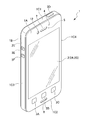
- FIG. 1 is a perspective view illustrating an appearance of a smartphone according to an embodiment.
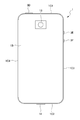
- FIG. 2 is a rear view illustrating an appearance of the smartphone according to the embodiment.
- the smartphone 1 has a housing 20.
- the housing 20 includes a front face 1A, a back face 1B, and side faces 1C1 to 1C4.
- the front face 1 ⁇ / b> A is the front of the housing 20.
- the back face 1 ⁇ / b> B is the back surface of the housing 20.
- the side faces 1C1 to 1C4 are side faces that connect the front face 1A and the back face 1B.
- the side faces 1C1 to 1C4 may be collectively referred to as the side face 1C without specifying which face.
- the smartphone 1 has a touch screen display 2, buttons 3A to 3C, an illuminance sensor 4, a proximity sensor 5, a receiver 7, a microphone 8, and a camera 12 on the front face 1A.
- the smartphone 1 has a camera 13 on the back face 1B.
- the smartphone 1 has buttons 3D to 3F and an external interface 14 on the side face 1C.
- the buttons 3A to 3F may be collectively referred to as the button 3 without specifying which button.
- the touch screen display 2 has a display 2A and a touch screen 2B.
- the display 2A includes a display device such as a liquid crystal display (Liquid Crystal Display), an organic EL panel (Organic Electro-Luminescence panel), or an inorganic EL panel (Inorganic Electro-Luminescence panel).
- the display 2A displays characters, images, symbols, graphics, and the like.
- the touch screen 2B detects contact of a finger or a stylus pen with respect to the touch screen display 2.
- the touch screen 2B can detect a position where a plurality of fingers, a stylus pen, or the like is in contact with the touch screen display 2.
- the detection method of the touch screen 2B may be any method such as a capacitance method, a resistive film method, a surface acoustic wave method (or an ultrasonic method), an infrared method, an electromagnetic induction method, and a load detection method.
- a finger that the touch screen 2B detects contact with the touch screen display 2 or a stylus pen or the like may be simply referred to as a “finger”.
- the smartphone 1 determines the type of gesture based on the contact, contact position, contact time, or number of contacts detected by the touch screen 2B.
- the gesture is an operation performed on the touch screen display 2.
- the gesture discriminated by the smartphone 1 includes touch, long touch, release, swipe, tap, double tap, long tap, drag, flick, pinch in, pinch out, and the like.
- the smartphone 1 operates according to these gestures determined via the touch screen 2B. Therefore, operability that is intuitive and easy to use for the user is realized.
- the operation performed by the smartphone 1 according to the determined gesture differs depending on the screen displayed on the touch screen display 2.
- the button 3 is operated by the user.
- the button 3 has buttons 3A to 3F.
- the controller 10 detects an operation on the button by cooperating with the button 3.
- the operation on the button is, for example, click, double click, push, and multi-push.
- buttons 3A to 3C are a home button, a back button, or a menu button.
- the button 3D is a power ON / OFF button of the smartphone 1.
- the button 3D may also serve as a sleep / sleep release button.
- the buttons 3E and 3F are volume buttons.
- the illuminance sensor 4 detects illuminance.
- the illuminance is light intensity, brightness, luminance, or the like.
- the illuminance sensor 4 is used for adjusting the luminance of the display 2A, for example.
- the proximity sensor 5 detects the presence of a nearby object without contact.
- the proximity sensor 5 detects that the touch screen display 2 is brought close to the face, for example.
- the receiver 7 outputs the audio signal transmitted from the controller 10 as audio.
- the microphone 8 converts the voice of the user or the like into a voice signal and transmits it to the controller 10.
- the smartphone 1 may further include a speaker in addition to the receiver 7.
- the smartphone 1 may further include a speaker instead of the receiver 7.
- the camera 12 is an in-camera that captures an object facing the front face 1A.
- the camera 13 is an out camera that captures an object facing the back face 1B.
- the external interface 14 is a terminal to which other devices are connected.
- the external interface 14 is a general-purpose terminal such as a USB (Universal Serial Bus), HDMI (High-Definition Multimedia Interface), MHL (Mobile High-definition Link), Light Peak (Thunderbolt), or an earphone microphone connector. Also good.
- the external interface 14 may be a dedicated terminal such as a dock connector.
- the smartphone 1 controls the operation of the external device while being connected to the external device using the external interface 14. A specific configuration will be described below.
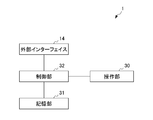
- FIG. 3 is a block diagram for explaining the configuration of the smartphone 1.
- FIG. 4 is a diagram illustrating a state in which an external device and a smartphone are connected by a cable.
- the smartphone 1 includes the external interface 14.
- the external interface 14 corresponds to an embodiment of the “external interface unit” of the present invention.
- the external interface 14 is connected to an external device.
- the external device is, for example, a television 101 (see FIG. 4), a video playback device (not shown) connected to the television 101, an audio output device (not shown) connected to the television 101, or the like.
- the television 101 will be described as an external device.
- the video playback device is, for example, a playback device such as a DVD or Blu-ray (registered trademark).
- the audio output device is a device such as an amplifier and a speaker.
- the television 101 and the smartphone 1 are connected to each other by a cable 102.
- the interface of the television 101 and the external interface 14 of the smartphone 1 conform to the same standard.
- the present invention is not limited to this.
- the smartphone 1 further includes an operation unit 30, a storage unit 31, and a control unit 32.
- the operation unit 30 has a key.
- the keys constituting the operation unit 30 are soft keys displayed on the touch screen display 2 or hard keys arranged on the housing 20.
- the hard keys are, for example, buttons 3E and 3F.
- the application is stored in the storage unit 31.
- the application is, for example, a music playback application, a video playback application, a one-segment broadcast viewing application, or the like.
- the control unit 32 acquires information regarding the operation of the television 101 from the television 101 via the external interface 14.
- the control unit 32 associates the acquired information with the keys constituting the operation unit 30. That is, when the external interface 14 and the television 101 are connected by the cable 102, the control unit 32 acquires information regarding the operation of the television 101 via the cable 102.
- the information related to the operation is information related to a signal for operating the television 101 as an example.
- the information regarding the operation is information such as what signal is used to change the channel or what signal is used to change the volume.
- the information related to the operation is information on a signal for setting the channel of the television 101 to one channel, information on a signal for increasing the volume of the television 101, or the like.
- the smartphone 1 acquires information related to the operation of the television 101 from the television 101.
- the present invention is not limited to this.
- the smartphone acquires information on the television 101, uses a 3G line to access a predetermined server having information related to the operation of the television 101, and the television Information regarding the operation 101 may be acquired.
- the control unit 32 changes the function assigned to the keys constituting the operation unit 30 according to the application to the function operated by the television 101 based on the information acquired from the television 101.
- the control unit 32 assigns a function related to the television 101 equivalent to the function assigned to the key used in the application of the smartphone 1 to the key.
- the smartphone 1 assigns a function assigned to a key when viewing the one-seg broadcast on the smartphone 1 to a function of operating the television 101 based on information regarding the operation of the television 101.
- the function assigned to a certain key is a function that increases the volume as follows.
- the smartphone 1 assigns a function for increasing the volume of the television 101 as an external device to the button 3E. That is, when the television 101 and the smartphone 1 are connected by the cable 102, the control unit 32 associates the button 3E with the signal (first signal) with a large volume of the television 101 based on the information related to the operation.
- the control unit 32 when the external interface 14 is connected to the television 101 in a state where a predetermined function for the smartphone 1 is assigned to the key, the control unit 32 performs the following control. That is, the control unit 32 assigns the predetermined function for the television 101 to the key based on the information acquired from the television 101.
- the predetermined function is a function of adjusting the volume.
- the “predetermined function” of the present invention is not limited to that example.
- the state in which a predetermined function for the smartphone 1 is assigned to the key is a state in which a function for increasing the volume of the smartphone 1 is assigned to the button 3E, or a function for reducing the volume of the smartphone 1 to the button 3F. The assigned state.
- the information acquired from the television 101 is, for example, information related to the operation of the television 101 described above.
- the control unit 32 performs the following control. That is, the control unit 32 assigns a function for increasing the volume of the television 101 to the button 3E based on the information acquired from the television 101. Based on the information acquired from the television 101, the control unit 32 assigns a function for reducing the volume of the television 101 to the button 3F.
- the control unit 32 transmits a signal for executing the associated operation to the television 101 via the external interface 14 when a key constituting the operation unit 30 associated with the operation of the television 101 is operated. For example, when the television 3 and the smartphone 1 are connected by the cable 102 and the button 3E described above is operated, the control unit 32 transmits the first signal to the television 101 via the external interface 14. When the TV 101 receives the first signal, the volume is increased.
- FIG. 5 is a flowchart for explaining the operation of the smartphone 1.
- step ST1 the control unit 32 determines whether the smartphone 1 and the television 101 are connected. That is, the control unit 32 determines whether the cable 102 connected to the television 101 has been inserted into the external interface 14. When connected to the television 101 (YES), the control unit 32 advances the process to step ST2. When not connected to the television 101 (NO), the control unit 32 performs the determination in step ST1 again.
- step ST ⁇ b> 2 the control unit 32 acquires information related to the operation of the television 101 via the external interface 14.
- step ST3 the control unit 32 associates the operation of the television 101 with the operation unit 30 of the smartphone 1 based on the acquired information. That is, the control unit 32 associates the acquired information with the keys constituting the operation unit 30.
- step ST4 the control unit 32 determines whether or not the operation unit 30 has been operated. If the operation unit 30 is operated (YES), the control unit 32 advances the process to step ST5. When the operation unit 30 is not operated (NO), the control unit 32 performs the determination in step ST4 again.
- step ST5 the control unit 32 transmits a signal to the television 101 assigned to the operated key to the television 101 via the external interface 14.
- Such a smartphone 1 has the following effects. That is, when the external interface 14 is connected to the television 101, the smartphone 1 acquires information regarding the operation of the television 101 from the television 101 via the external interface 14. The smartphone 1 associates the acquired information with the keys constituting the operation unit 30. Thereby, the smartphone 1 can operate the television 101 when a key is operated.
- the smartphone 1 changes the function assigned to the keys constituting the operation unit 30 according to the application to the function operated by the television 101 based on the information. That is, the smartphone 1 changes the key assignment table of the operation unit 30. Thereby, the smartphone 1 can operate the television 101 when a key is operated.
- the smartphone 1 When the external interface 14 is connected to the television 101 in a state where a predetermined function for the smartphone 1 is assigned to the keys constituting the operation unit 30, the smartphone 1 operates as follows. That is, the smartphone 1 assigns the predetermined function for the television 101 to the key based on the information acquired from the television 101. Thereby, the smartphone 1 can operate the television 101 when a key is operated.
- the smartphone 1 transmits a signal for executing the associated operation to the television 101 via the external interface 14 when the operation unit 30 associated with the operation of the television 101 is operated. Thereby, the smartphone 1 can operate the television 101.
- the external interface 14 has been described as a terminal to which another device is connected.
- the present invention is not limited to this.
- the external interface may be a wireless interface that conforms to a wireless communication standard such as Bluetooth or WiFi. Therefore, the electronic device of the present invention may be communicably connected to an external device by wireless communication complying with the wireless communication standard.
Landscapes
- Engineering & Computer Science (AREA)
- Computer Networks & Wireless Communication (AREA)
- Human Computer Interaction (AREA)
- Signal Processing (AREA)
- Physics & Mathematics (AREA)
- General Physics & Mathematics (AREA)
- Telephone Function (AREA)
- Selective Calling Equipment (AREA)
Abstract
外部機器を操作することが可能な電子機器を提供する。 電子機器は、操作部と、外部インターフェイス部と、制御部と、を備える。操作部は、キーを有する。外部インターフェイス部は、外部機器と接続される。制御部は、外部インターフェイス部が外部機器と接続された場合に、外部インターフェイス部を介して、外部機器の操作に関する情報をその外部機器から取得する。制御部は、取得した情報と、操作部を構成するキーとを関連付ける。
Description
本発明は、外部機器に接続可能な電子機器に関する。
電子機器の一例としての携帯端末等と、外部機器としてのテレビとを接続するためのインターフェイスとして、HDMI(登録商標)規格が存在する。
携帯端末等とテレビとがHDMI規格を採用したインターフェイスで接続されている場合には、例えば、携帯端末等に保存されているコンテンツは、テレビへ送信される。当該コンテンツは、テレビに表示される(例えば、特許文献1を参照)。
携帯端末等とテレビとがHDMI規格を採用したインターフェイスで接続されている場合には、例えば、携帯端末等に保存されているコンテンツは、テレビへ送信される。当該コンテンツは、テレビに表示される(例えば、特許文献1を参照)。
近年、HDMI規格をベースとしたMHL(登録商標)規格も存在する。
MHLは、携帯端末向けの高速映像伝送用のインターフェイス規格である。MHLは、非圧縮なまま水平解像度が1080pで、30fpsの動画データを3端子でテレビに伝送することができる。なお、実際には、MHLは、5端子を持つUSBコネクタを流用している。
MHLは、携帯端末向けの高速映像伝送用のインターフェイス規格である。MHLは、非圧縮なまま水平解像度が1080pで、30fpsの動画データを3端子でテレビに伝送することができる。なお、実際には、MHLは、5端子を持つUSBコネクタを流用している。
このようにして、MHLを採用した場合、汎用コネクタであるUSBコネクタを使用してテレビと接続することができるメリットがある。
ところで、HDMI規格のケーブル又はMHL規格のケーブルにより携帯端末とテレビとが接続されている場合でも、携帯端末は、テレビを操作することができない。すなわち、携帯端末に配されるボタンでは、テレビを操作することができない。
本発明は、外部機器を操作することが可能な電子機器を提供することを目的とする。
電子機器は、操作部と、外部インターフェイス部と、制御部と、を備える。前記操作部は、キーを有する。外部インターフェイス部は、外部機器と接続される。前記制御部は、前記外部インターフェイス部が外部機器と接続された場合に、前記外部インターフェイス部を介して外部機器の操作に関する情報を当該外部機器から取得する。前記制御部は、前記情報と前記操作部を構成するキーとを関連付ける。
電子機器は、アプリケーションが記憶される記憶部をさらに備えることが好ましい。この場合、前記制御部は、前記アプリケーションに応じて前記操作部を構成するキーに割り当てられる機能を、前記情報に基づいて外部機器の操作する機能に変更する。
前記制御部は、前記キーに、電子機器に対する所定の機能が割り当てられる状態において、前記外部インターフェイス部が外部機器と接続された場合、前記外部機器から取得した情報に基づいて、当該キーに、前記外部機器に対する当該所定の機能を割り当てる。
前記制御部は、外部機器の操作と関連付けられた前記操作部が操作された場合に、関連付けられた操作を実行させる信号を、前記外部インターフェイス部を介して外部機器に送信することが好ましい。
本発明によれば、外部機器を操作することが可能な電子機器を提供することができる。
本発明を実施するための実施形態を、図面を参照しつつ詳細に説明する。以下では、電子機器の一例として、スマートフォンについて説明する。
図1及び図2を参照しながら、一実施形態に係るスマートフォン1の外観について説明する。図1は、一実施形態に係るスマートフォンの外観を示す斜視図である。図2は、一実施形態に係るスマートフォンの外観を示す背面図である。
図1及び図2に示すように、スマートフォン1は、ハウジング20を有する。ハウジング20は、フロントフェイス1Aと、バックフェイス1Bと、サイドフェイス1C1~1C4とを有する。フロントフェイス1Aは、ハウジング20の正面である。バックフェイス1Bは、ハウジング20の背面である。サイドフェイス1C1~1C4は、フロントフェイス1Aとバックフェイス1Bとを接続する側面である。以下では、サイドフェイス1C1~1C4を、どの面であるかを特定することなく、サイドフェイス1Cと総称することがある。
図1及び図2に示すように、スマートフォン1は、ハウジング20を有する。ハウジング20は、フロントフェイス1Aと、バックフェイス1Bと、サイドフェイス1C1~1C4とを有する。フロントフェイス1Aは、ハウジング20の正面である。バックフェイス1Bは、ハウジング20の背面である。サイドフェイス1C1~1C4は、フロントフェイス1Aとバックフェイス1Bとを接続する側面である。以下では、サイドフェイス1C1~1C4を、どの面であるかを特定することなく、サイドフェイス1Cと総称することがある。
スマートフォン1は、タッチスクリーンディスプレイ2と、ボタン3A~3Cと、照度センサ4と、近接センサ5と、レシーバ7と、マイク8と、カメラ12とをフロントフェイス1Aに有する。スマートフォン1は、カメラ13をバックフェイス1Bに有する。スマートフォン1は、ボタン3D~3Fと、外部インターフェイス14とをサイドフェイス1Cに有する。以下では、ボタン3A~3Fを、どのボタンであるかを特定することなく、ボタン3と総称することがある。
タッチスクリーンディスプレイ2は、ディスプレイ2Aと、タッチスクリーン2Bとを有する。ディスプレイ2Aは、液晶ディスプレイ(Liquid Crystal Display)、有機ELパネル(Organic Electro-Luminescence panel)、又は無機ELパネル(Inorganic Electro-Luminescence panel)等の表示デバイスにより構成される。ディスプレイ2Aは、文字、画像、記号又は図形等を表示する。
タッチスクリーン2Bは、タッチスクリーンディスプレイ2に対する指、又はスタイラスペン等の接触を検出する。タッチスクリーン2Bは、複数の指、又はスタイラスペン等がタッチスクリーンディスプレイ2に接触した位置を検出することができる。
タッチスクリーン2Bの検出方式は、静電容量方式、抵抗膜方式、表面弾性波方式(又は超音波方式)、赤外線方式、電磁誘導方式、及び荷重検出方式等の任意の方式でよい。以下では、説明を簡単にするため、タッチスクリーン2Bがタッチスクリーンディスプレイ2に対する接触を検出する指、又はスタイラスペン等を単に「指」ということがある。
スマートフォン1は、タッチスクリーン2Bにより検出された接触、接触位置、接触時間又は接触回数に基づいてジェスチャの種別を判別する。ジェスチャは、タッチスクリーンディスプレイ2に対して行われる操作である。スマートフォン1によって判別されるジェスチャには、タッチ、ロングタッチ、リリース、スワイプ、タップ、ダブルタップ、ロングタップ、ドラッグ、フリック、ピンチイン、ピンチアウト等が含まれる。
スマートフォン1は、タッチスクリーン2Bを介して判別するこれらのジェスチャに従って動作を行う。したがって、利用者にとって直感的で使いやすい操作性が実現される。判別されるジェスチャに従ってスマートフォン1が行う動作は、タッチスクリーンディスプレイ2に表示されている画面に応じて異なる。
ボタン3は、利用者によって操作される。ボタン3は、ボタン3A~ボタン3Fを有する。コントローラ10はボタン3と協働することによってボタンに対する操作を検出する。ボタンに対する操作は、例えば、クリック、ダブルクリック、プッシュ、及びマルチプッシュである。
例えば、ボタン3A~3Cは、ホームボタン、バックボタン又はメニューボタンである。例えば、ボタン3Dは、スマートフォン1のパワーON/OFFボタンである。ボタン3Dは、スリープ/スリープ解除ボタンを兼ねてもよい。例えば、ボタン3E及び3Fは、音量ボタンである。
照度センサ4は、照度を検出する。例えば、照度とは、光の強さ、明るさ、輝度等である。照度センサ4は、例えば、ディスプレイ2Aの輝度の調整に用いられる。
近接センサ5は、近隣の物体の存在を非接触で検出する。近接センサ5は、例えば、タッチスクリーンディスプレイ2が顔に近付けられたことを検出する。
レシーバ7は、コントローラ10から送信される音声信号を音声として出力する。マイク8は、利用者等の音声を音声信号へ変換してコントローラ10へ送信する。スマートフォン1は、レシーバ7に加えて、スピーカをさらに有してもよい。スマートフォン1は、レシーバ7に代えて、スピーカをさらに有してもよい。
カメラ12は、フロントフェイス1Aに面している物体を撮影するインカメラである。カメラ13は、バックフェイス1Bに面している物体を撮影するアウトカメラである。
外部インターフェイス14は、他の装置が接続される端子である。外部インターフェイス14は、USB(Universal Serial Bus)、HDMI(High-Definition Multimedia Interface)、MHL(Mobile High-definition Link)、ライトピーク(サンダーボルト)、イヤホンマイクコネクタのような汎用的な端子であってもよい。外部インターフェイス14は、Dockコネクタのような専用に設計された端子でもよい。
本実施例に係るスマートフォン1は、外部インターフェイス14を利用して外部機器と接続されている状態において、外部機器を操作する制御を行う。以下に、具体的な構成について説明する。
図3は、スマートフォン1の構成について説明するためのブロック図である。図4は、外部機器とスマートフォンがケーブルで接続されている様子を示す図である。
上述したように、スマートフォン1は、外部インターフェイス14を備える。外部インターフェイス14は、本発明の「外部インターフェイス部」の一実施形態に対応する。外部インターフェイス14は、外部機器と接続される。外部機器は、例えば、テレビ101(図4参照)、そのテレビ101に接続される映像再生機器(図示せず)、又は、そのテレビ101に接続される音声出力機器(図示せず)等である。なお、以下では、外部機器としてテレビ101を挙げて説明する。映像再生機器は、例えば、DVD又はBlu-ray(登録商標)等の再生機器である。音声出力機器は、アンプ及びスピーカ等の機器である。
上述したように、スマートフォン1は、外部インターフェイス14を備える。外部インターフェイス14は、本発明の「外部インターフェイス部」の一実施形態に対応する。外部インターフェイス14は、外部機器と接続される。外部機器は、例えば、テレビ101(図4参照)、そのテレビ101に接続される映像再生機器(図示せず)、又は、そのテレビ101に接続される音声出力機器(図示せず)等である。なお、以下では、外部機器としてテレビ101を挙げて説明する。映像再生機器は、例えば、DVD又はBlu-ray(登録商標)等の再生機器である。音声出力機器は、アンプ及びスピーカ等の機器である。
本実施例では、図4に示すように、テレビ101とスマートフォン1がケーブル102で相互に接続されている形態を想定している。また、以下では、テレビ101のインターフェイスとスマートフォン1の外部インターフェイス14とは、同一の規格に準拠しているものとして説明する。しかし、本発明は、これに限られない。
スマートフォン1は、操作部30と、記憶部31と、制御部32と、をさらに備える。
操作部30は、キーを有する。操作部30を構成するキーは、タッチスクリーンディスプレイ2に表示されるソフトキー、又は、ハウジング20に配されるハードキーである。ハードキーは、一例として、ボタン3E,3F等である。
操作部30は、キーを有する。操作部30を構成するキーは、タッチスクリーンディスプレイ2に表示されるソフトキー、又は、ハウジング20に配されるハードキーである。ハードキーは、一例として、ボタン3E,3F等である。
記憶部31には、アプリケーションが記憶される。アプリケーションは、例えば、音楽再生アプリケーション、映像再生アプリケーション、又はワンセグ放送視聴アプリケーション等である。
制御部32は、外部インターフェイス14がテレビ101と接続された場合に、外部インターフェイス14を介してテレビ101の操作に関する情報をそのテレビ101から取得する。制御部32は、取得した情報と操作部30を構成するキーとを関連付ける。すなわち、外部インターフェイス14とテレビ101とがケーブル102により接続された場合、制御部32は、そのケーブル102を介してテレビ101の操作に関する情報を取得する。操作に関する情報は、一例として、テレビ101を操作するための信号に関する情報である。操作に関する情報は、例えば、外部機器がテレビ101の場合に、どのような信号によりチャンネルを変更するのか、又は、どのような信号により音量を変更するのか、というような情報である。より具体的な一例としては、操作に関する情報は、テレビ101のチャンネルを1チャンネルに設定するための信号の情報、又は、テレビ101の音量を大きくするための信号の情報等である。
本実施形態では、スマートフォン1がテレビ101の操作に関する情報をそのテレビ101から取得する例について説明した。しかし、本発明は、これに限られない。例えば、スマートフォンは、外部インターフェイス14がテレビ101と接続された場合に、テレビ101の情報を取得し、3G回線を利用して、テレビ101の操作に関する情報を有する所定のサーバにアクセスし、そのテレビ101の操作に関する情報を取得してもよい。
制御部32は、アプリケーションに応じて操作部30を構成するキーに割り当てられる機能を、テレビ101から取得した情報に基づいてテレビ101の操作する機能に変更する。制御部32は、スマートフォン1のアプリケーションで使用されるキーに割り当てられる機能と同等のテレビ101に関する機能をそのキーに割り当てる。スマートフォン1は、例えば、スマートフォン1においてワンセグ放送を視聴する場合にキーに割り当てられる機能を、テレビ101の操作に関する情報に基づいて、そのテレビ101を操作する機能に割り当てる。具体的な一例として、スマートフォン1は、スマートフォン1においてワンセグ放送を視聴する場合に、あるキー(例えば、ボタン3E)に割り当てられる機能が音量を大きくする機能であると、次にようにする。スマートフォン1は、外部機器としてのテレビ101の音量を大きくする機能をそのボタン3Eに割り当てる。すなわち、テレビ101とスマートフォン1とがケーブル102で接続された場合、制御部32は、操作に関する情報に基づいて、ボタン3Eとテレビ101の音量を大きく信号(第1信号)とを対応付ける。
また、キーに、スマートフォン1に対する所定の機能が割り当てられる状態において、外部インターフェイス14がテレビ101と接続された場合、制御部32は、次の制御を行う。すなわち、制御部32は、テレビ101から取得した情報に基づいて、そのキーに、テレビ101に対するその所定の機能を割り当てる。一例として、所定の機能は、音量を調整する機能等である。本発明の「所定の機能」は、その一例に限定されることはない。一例として、キーにスマートフォン1に対する所定の機能が割り当てられる状態とは、ボタン3Eにスマートフォン1の音量を大きくする機能が割り当てられている状態、又は、ボタン3Fにスマートフォン1の音量を小さくする機能が割り当てられている状態である。テレビ101から取得した情報とは、例えば、上述したテレビ101の操作に関する情報である。上述した一例の状態において、テレビ101に接続したケーブル102が外部インターフェイス14に挿入された場合、制御部32は、次のような制御を行う。すなわち、制御部32は、テレビ101から取得した情報に基づいて、ボタン3Eにテレビ101の音量を大きくする機能を割り当てる。制御部32は、テレビ101から取得した情報に基づいて、ボタン3Fにテレビ101の音量を小さくする機能を割り当てる。
制御部32は、テレビ101の操作と関連付けられた操作部30を構成するキーが操作された場合に、関連付けられた操作を実行させる信号を、外部インターフェイス14を介してテレビ101に送信する。例えば、テレビ101とスマートフォン1とがケーブル102で接続される場合に、上述したボタン3Eが操作されると、制御部32は、外部インターフェイス14を介して第1信号をテレビ101に送信する。テレビ101は、第1信号を受信すると、音量を大きくする。
次に、スマートフォン1の動作について説明する。図5は、スマートフォン1の動作について説明するためのフローチャートである。
ステップST1において、制御部32は、スマートフォン1とテレビ101とが接続されたか否かを判断する。すなわち、制御部32は、テレビ101に接続されたケーブル102が外部インターフェイス14に挿入されたか否かを判断する。テレビ101と接続された場合(YES)には、制御部32は、処理をステップST2に進める。テレビ101と接続されていない場合(NO)には、制御部32は、ステップST1の判断を再度行う。
ステップST2において、制御部32は、外部インターフェイス14を介してテレビ101の操作に関する情報を取得する。
ステップST3において、制御部32は、取得した情報に基づいて、テレビ101の操作とスマートフォン1の操作部30とを関連付ける。すなわち、制御部32は、取得した情報と操作部30を構成するキーとを関連付ける。
ステップST4において、制御部32は、操作部30が操作されたか否かを判断する。操作部30が操作された場合(YES)には、制御部32は、処理をステップST5に進める。操作部30が操作されていない場合(NO)には、制御部32は、ステップST4の判断を再度行う。
ステップST5において、制御部32は、操作されたキーに割り当てられたテレビ101に対する信号を、外部インターフェイス14を介して、テレビ101に送信する。
このようなスマートフォン1は、次のような効果を奏する。
すなわち、スマートフォン1は、外部インターフェイス14がテレビ101と接続された場合に、外部インターフェイス14を介してテレビ101の操作に関する情報をそのテレビ101から取得する。スマートフォン1は、取得した情報と操作部30を構成するキーとを関連付ける。これにより、スマートフォン1は、キーが操作された場合には、テレビ101を操作することが可能になる。
すなわち、スマートフォン1は、外部インターフェイス14がテレビ101と接続された場合に、外部インターフェイス14を介してテレビ101の操作に関する情報をそのテレビ101から取得する。スマートフォン1は、取得した情報と操作部30を構成するキーとを関連付ける。これにより、スマートフォン1は、キーが操作された場合には、テレビ101を操作することが可能になる。
スマートフォン1は、アプリケーションに応じて操作部30を構成するキーに割り当てられる機能を、情報に基づいてテレビ101の操作する機能に変更する。すなわち、スマートフォン1は、操作部30のキーアサインテーブルを変更する。これにより、スマートフォン1は、キーが操作された場合には、テレビ101を操作することが可能になる。
操作部30を構成するキーに、スマートフォン1に対する所定の機能が割り当てられる状態において、外部インターフェイス14がテレビ101と接続された場合、スマートフォン1は、次のように動作する。すなわち、スマートフォン1は、テレビ101から取得した情報に基づいて、そのキーに、テレビ101に対するその所定の機能を割り当てる。これにより、スマートフォン1は、キーが操作された場合には、テレビ101を操作することが可能になる。
スマートフォン1は、テレビ101の操作と関連付けられた操作部30が操作された場合に、関連付けられた操作を実行させる信号を、外部インターフェイス14を介してテレビ101に送信する。これにより、スマートフォン1は、テレビ101を操作することができる。
なお、本実施例では、外部インターフェイス14は、他の装置が接続される端子であるとして説明した。しかし、本発明はこれに限定されない。例えば、外部インターフェイスは、ブルートゥース、WiFi等の無線通信規格に準拠する無線インターフェイスであってもよい。したがって、本願発明の電子機器は、外部機器と無線通信規格に準拠する無線通信により通信可能に接続されていてもよい。
1 スマートフォン(電子機器)
14 外部インターフェイス(外部インターフェイス部)
30 操作部
31 記憶部
32 制御部
101 テレビ(外部機器)
14 外部インターフェイス(外部インターフェイス部)
30 操作部
31 記憶部
32 制御部
101 テレビ(外部機器)
Claims (4)
- キーを有する操作部と、
外部機器と接続される外部インターフェイス部と、
前記外部インターフェイス部が外部機器と接続された場合に、前記外部インターフェイス部を介して外部機器の操作に関する情報を当該外部機器から取得し、前記情報と前記操作部を構成するキーとを関連付ける制御部と、
を備える電子機器。 - アプリケーションが記憶される記憶部をさらに備え、
前記制御部は、前記アプリケーションに応じて前記操作部を構成するキーに割り当てられる機能を、前記情報に基づいて外部機器の操作する機能に変更する
請求項1に記載の電子機器。 - 前記制御部は、前記キーに、電子機器に対する所定の機能が割り当てられる状態において、前記外部インターフェイス部が外部機器と接続された場合、前記外部機器から取得した情報に基づいて、当該キーに、前記外部機器に対する当該所定の機能を割り当てる
請求項1に記載の電子機器。 - 前記制御部は、外部機器の操作と関連付けられた前記キーが操作された場合に、関連付けられた操作を実行させる信号を、前記外部インターフェイス部を介して外部機器に送信する
請求項1に記載の電子機器。
Applications Claiming Priority (2)
| Application Number | Priority Date | Filing Date | Title |
|---|---|---|---|
| JP2012237111A JP6362824B2 (ja) | 2012-10-26 | 2012-10-26 | 電子機器 |
| JP2012-237111 | 2012-10-26 |
Publications (1)
| Publication Number | Publication Date |
|---|---|
| WO2014065296A1 true WO2014065296A1 (ja) | 2014-05-01 |
Family
ID=50544674
Family Applications (1)
| Application Number | Title | Priority Date | Filing Date |
|---|---|---|---|
| PCT/JP2013/078623 Ceased WO2014065296A1 (ja) | 2012-10-26 | 2013-10-22 | 電子機器 |
Country Status (2)
| Country | Link |
|---|---|
| JP (1) | JP6362824B2 (ja) |
| WO (1) | WO2014065296A1 (ja) |
Families Citing this family (1)
| Publication number | Priority date | Publication date | Assignee | Title |
|---|---|---|---|---|
| JP6574354B2 (ja) * | 2015-07-30 | 2019-09-11 | 立川ブラインド工業株式会社 | 携帯端末装置、その制御方法及びプログラム、並びに電動遮蔽装置 |
Citations (5)
| Publication number | Priority date | Publication date | Assignee | Title |
|---|---|---|---|---|
| JP2000287278A (ja) * | 1999-03-30 | 2000-10-13 | Funai Electric Co Ltd | 遠隔操作装置 |
| JP2002141978A (ja) * | 2000-10-31 | 2002-05-17 | Kyocera Corp | 携帯端末装置及びその制御方法 |
| JP2002186029A (ja) * | 2000-12-11 | 2002-06-28 | Toshiba Corp | 移動無線端末装置 |
| JP2008311958A (ja) * | 2007-06-14 | 2008-12-25 | Nec Access Technica Ltd | 携帯電話機 |
| JP2011259259A (ja) * | 2010-06-10 | 2011-12-22 | Alpine Electronics Inc | 電子機器および操作キーの割当方法 |
Family Cites Families (3)
| Publication number | Priority date | Publication date | Assignee | Title |
|---|---|---|---|---|
| JP4033783B2 (ja) * | 2003-02-18 | 2008-01-16 | シャープ株式会社 | マルチリモコン装置 |
| JP2006333084A (ja) * | 2005-05-26 | 2006-12-07 | Toshiba Corp | 電子機器 |
| JP5026159B2 (ja) * | 2007-06-18 | 2012-09-12 | シャープ株式会社 | 操作対象機器、操作機器、遠隔操作システム、制御方法、制御プログラム、及び該プログラムを記録したコンピュータ読み取り可能な記録媒体 |
-
2012
- 2012-10-26 JP JP2012237111A patent/JP6362824B2/ja active Active
-
2013
- 2013-10-22 WO PCT/JP2013/078623 patent/WO2014065296A1/ja not_active Ceased
Patent Citations (5)
| Publication number | Priority date | Publication date | Assignee | Title |
|---|---|---|---|---|
| JP2000287278A (ja) * | 1999-03-30 | 2000-10-13 | Funai Electric Co Ltd | 遠隔操作装置 |
| JP2002141978A (ja) * | 2000-10-31 | 2002-05-17 | Kyocera Corp | 携帯端末装置及びその制御方法 |
| JP2002186029A (ja) * | 2000-12-11 | 2002-06-28 | Toshiba Corp | 移動無線端末装置 |
| JP2008311958A (ja) * | 2007-06-14 | 2008-12-25 | Nec Access Technica Ltd | 携帯電話機 |
| JP2011259259A (ja) * | 2010-06-10 | 2011-12-22 | Alpine Electronics Inc | 電子機器および操作キーの割当方法 |
Also Published As
| Publication number | Publication date |
|---|---|
| JP6362824B2 (ja) | 2018-07-25 |
| JP2014087019A (ja) | 2014-05-12 |
Similar Documents
| Publication | Publication Date | Title |
|---|---|---|
| CN103530032B (zh) | 移动终端、图像显示装置及使用其的用户接口提供方法 | |
| US20130106738A1 (en) | Remote controller and method for operating the same | |
| CN103813198B (zh) | 显示装置、影音播放系统和影音播放系统的控制方法 | |
| US20170147129A1 (en) | User terminal device and method for controlling same | |
| US10712842B2 (en) | Touch display and control module of same | |
| CN102630056A (zh) | 控制方法和装置 | |
| CN101477435A (zh) | 影像操作方法及其便携式电子装置 | |
| TWI702843B (zh) | 遠端觸控操作的電視系統 | |
| CN109976629A (zh) | 图像显示方法、终端和移动终端 | |
| CN103576752B (zh) | 扩展坞及使用该扩展坞的电子设备组件 | |
| WO2020042921A1 (zh) | 屏幕控制方法及电子设备 | |
| CN111459447A (zh) | 一种音量调节显示方法及电子设备 | |
| CN107908342B (zh) | 一种显示消息的方法及移动终端 | |
| CN103186358B (zh) | 可无线传送画面的手持式电子设备及其组成的多媒体系统 | |
| JP6362824B2 (ja) | 電子機器 | |
| JP2014089636A (ja) | 電子機器 | |
| US10073611B2 (en) | Display apparatus to display a mirroring screen and controlling method thereof | |
| CN108347642A (zh) | 一种视频播放方法及移动终端 | |
| JP6058973B2 (ja) | 電子機器及びシステム | |
| JP6292953B2 (ja) | 電子機器 | |
| JP6230679B2 (ja) | 電子機器及びシステム | |
| JP5988369B2 (ja) | 電子機器、制御方法及びプログラム | |
| TW201407466A (zh) | 擴展塢及使用該擴展塢的電子設備組件 | |
| TW201333752A (zh) | 接收裝置、主機裝置和控制方法 | |
| JP2014090265A (ja) | 電子機器、制御方法及びプログラム |
Legal Events
| Date | Code | Title | Description |
|---|---|---|---|
| 121 | Ep: the epo has been informed by wipo that ep was designated in this application |
Ref document number: 13848524 Country of ref document: EP Kind code of ref document: A1 |
|
| NENP | Non-entry into the national phase |
Ref country code: DE |
|
| 122 | Ep: pct application non-entry in european phase |
Ref document number: 13848524 Country of ref document: EP Kind code of ref document: A1 |