WO2014045517A1 - 音声出力装置 - Google Patents
音声出力装置 Download PDFInfo
- Publication number
- WO2014045517A1 WO2014045517A1 PCT/JP2013/004961 JP2013004961W WO2014045517A1 WO 2014045517 A1 WO2014045517 A1 WO 2014045517A1 JP 2013004961 W JP2013004961 W JP 2013004961W WO 2014045517 A1 WO2014045517 A1 WO 2014045517A1
- Authority
- WO
- WIPO (PCT)
- Prior art keywords
- audio
- unit
- output
- signal
- sound source
- Prior art date
- Legal status (The legal status is an assumption and is not a legal conclusion. Google has not performed a legal analysis and makes no representation as to the accuracy of the status listed.)
- Ceased
Links
Images

Classifications
-
- H—ELECTRICITY
- H04—ELECTRIC COMMUNICATION TECHNIQUE
- H04N—PICTORIAL COMMUNICATION, e.g. TELEVISION
- H04N21/00—Selective content distribution, e.g. interactive television or video on demand [VOD]
- H04N21/80—Generation or processing of content or additional data by content creator independently of the distribution process; Content per se
- H04N21/81—Monomedia components thereof
- H04N21/8106—Monomedia components thereof involving special audio data, e.g. different tracks for different languages
-
- H—ELECTRICITY
- H04—ELECTRIC COMMUNICATION TECHNIQUE
- H04N—PICTORIAL COMMUNICATION, e.g. TELEVISION
- H04N21/00—Selective content distribution, e.g. interactive television or video on demand [VOD]
- H04N21/40—Client devices specifically adapted for the reception of or interaction with content, e.g. set-top-box [STB]; Operations thereof
- H04N21/41—Structure of client; Structure of client peripherals
- H04N21/426—Internal components of the client ; Characteristics thereof
- H04N21/42646—Internal components of the client ; Characteristics thereof for reading from or writing on a non-volatile solid state storage medium, e.g. DVD, CD-ROM
-
- H—ELECTRICITY
- H04—ELECTRIC COMMUNICATION TECHNIQUE
- H04N—PICTORIAL COMMUNICATION, e.g. TELEVISION
- H04N21/00—Selective content distribution, e.g. interactive television or video on demand [VOD]
- H04N21/40—Client devices specifically adapted for the reception of or interaction with content, e.g. set-top-box [STB]; Operations thereof
- H04N21/43—Processing of content or additional data, e.g. demultiplexing additional data from a digital video stream; Elementary client operations, e.g. monitoring of home network or synchronising decoder's clock; Client middleware
- H04N21/434—Disassembling of a multiplex stream, e.g. demultiplexing audio and video streams, extraction of additional data from a video stream; Remultiplexing of multiplex streams; Extraction or processing of SI; Disassembling of packetised elementary stream
- H04N21/4341—Demultiplexing of audio and video streams
-
- H—ELECTRICITY
- H04—ELECTRIC COMMUNICATION TECHNIQUE
- H04N—PICTORIAL COMMUNICATION, e.g. TELEVISION
- H04N21/00—Selective content distribution, e.g. interactive television or video on demand [VOD]
- H04N21/40—Client devices specifically adapted for the reception of or interaction with content, e.g. set-top-box [STB]; Operations thereof
- H04N21/43—Processing of content or additional data, e.g. demultiplexing additional data from a digital video stream; Elementary client operations, e.g. monitoring of home network or synchronising decoder's clock; Client middleware
- H04N21/439—Processing of audio elementary streams
- H04N21/4394—Processing of audio elementary streams involving operations for analysing the audio stream, e.g. detecting features or characteristics in audio streams
-
- H—ELECTRICITY
- H04—ELECTRIC COMMUNICATION TECHNIQUE
- H04N—PICTORIAL COMMUNICATION, e.g. TELEVISION
- H04N21/00—Selective content distribution, e.g. interactive television or video on demand [VOD]
- H04N21/40—Client devices specifically adapted for the reception of or interaction with content, e.g. set-top-box [STB]; Operations thereof
- H04N21/45—Management operations performed by the client for facilitating the reception of or the interaction with the content or administrating data related to the end-user or to the client device itself, e.g. learning user preferences for recommending movies, resolving scheduling conflicts
- H04N21/462—Content or additional data management e.g. creating a master electronic programme guide from data received from the Internet and a Head-end or controlling the complexity of a video stream by scaling the resolution or bit-rate based on the client capabilities
- H04N21/4622—Retrieving content or additional data from different sources, e.g. from a broadcast channel and the Internet
-
- H—ELECTRICITY
- H04—ELECTRIC COMMUNICATION TECHNIQUE
- H04N—PICTORIAL COMMUNICATION, e.g. TELEVISION
- H04N5/00—Details of television systems
- H04N5/44—Receiver circuitry for the reception of television signals according to analogue transmission standards
- H04N5/60—Receiver circuitry for the reception of television signals according to analogue transmission standards for the sound signals
Definitions
- the present invention relates to an audio output device capable of switching between an internal sound source and an external sound source.
- an audio output device for example, a speaker device including an amplifier that amplifies an audio signal and a speaker that outputs audio based on the amplified audio signal output from the amplifier, a television device that outputs video as well as audio, electronic You can list musical instruments.
- Patent Document 1 enables switching between an internal sound source and an external sound source by a single operation of a timbre selection switch in order to improve operability. However, there is no change in manually switching between the internal sound source and the external sound source.
- Patent Document 2 discloses an input switching device that automatically performs input switching. However, since the input switching device disclosed in Patent Document 2 performs input switching based on the presence or absence of an input signal, When there are both an external sound source audio signal and an internal sound source audio signal, switching from the external sound source to the internal sound source cannot be performed automatically.
- an object of the present invention is to provide an audio output device that does not require time and effort to switch from an external sound source to an internal sound source.
- An audio output apparatus includes an audio output unit that outputs audio based on an audio signal, a content reproduction unit that reproduces content data that can include audio data, and the content reproduction unit that reproduces content data.
- the external input signal is selected and supplied to the audio output unit when the output signal of the content reproduction unit is selected and supplied to the audio output unit.
- a selection unit to be configured. When the selection unit selects the output signal of the content reproduction unit and supplies it to the audio output unit, a part of the output signal of the content reproduction unit (an audio signal that is a part of the video / audio signal) is selected. And you may supply to the said audio
- the audio output device automatically switches to the internal sound source when the internal sound source is output, the internal sound source is prioritized over the external sound source, and the sound output based on the output of the internal sound source is performed. Therefore, it does not take time to switch from the external sound source to the internal sound source.
- FIG. 1 is a diagram showing a schematic configuration of an audio output device according to the first embodiment of the present invention.
- the audio output device includes a tuner 1, an external input terminal 2, an optical disc recording / reproducing unit 3, a switching circuit 4, a signal processing circuit 5, an amplifier 6, a speaker 7, and a display unit 8 ,
- a television apparatus 100 including a central processing unit (CPU) 9, a memory 10, a remote control light receiving unit 11, and a main body operation unit 12.
- the antenna 200 receives broadcast radio waves and supplies a received signal to the tuner 1.
- the tuner 1 selects a channel according to a channel selection signal from the CPU 9 and outputs a video / audio signal.
- the external input terminal 2 inputs an external input signal supplied from an external device 300 such as a video camera. Note that the video / audio signal output from the tuner 1 is not a signal obtained by reproducing the content data inside the television apparatus 100 but a signal obtained from broadcast radio waves as an external sound source.
- the output audio / video signal is also an external input signal.
- the optical disc recording / reproducing unit 3 is a content reproducing unit that reproduces content data stored on the optical disc.
- the optical disc recording / reproducing unit 3 can also store the output signal of the tuner 1 or the external input terminal 2 as content data on the optical disc.
- the switching circuit 4 selects one of the video / audio signal output from the tuner 1, the external input signal from the external input terminal 2, and the output signal of the optical disc recording / reproducing unit 3, and sends it to the signal processing circuit 5. To do.
- the switching circuit 4 can also send the audio / video signal output from the tuner 1 or the external input signal from the external input terminal 2 to the optical disc recording / reproducing unit 3.
- the signal processing circuit 5 performs various kinds of signal processing on the signal output from the switching circuit 4 to generate and output a video signal and / or an audio signal.
- the audio signal output from the signal processing circuit 5 is amplified by the amplifier 6 and converted into audio by the speaker 7. Thereby, sound is emitted from the speaker 7.
- the display unit 8 displays a video corresponding to the video signal output from the signal processing circuit 5 on the display screen.
- the CPU 9 outputs an operation command output from the main body operation unit 12 that receives a key operation by the user or an operation command output from the remote control light receiving unit 11 that receives a remote control infrared signal transmitted from the remote control transmitter 400 that receives a key operation by the user. In response to this, various controls of the television device 100 are performed.
- the memory 10 stores various programs and various data necessary for the CPU 9 to perform various controls of the television device 100 in a nonvolatile manner.
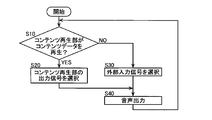
- FIG. 2 is a flowchart showing an operation example of the audio output device according to the present embodiment.
- the audio output device television, stereo, or stereo
- step S10 the CPU 9 determines whether or not the optical disc recording / reproducing unit 3 is reproducing content data.
- the switching circuit 4 selects the output signal of the optical disc recording / reproducing unit 3 and supplies it to the signal processing circuit 5 according to the control of the CPU 9 ( Step 20), and then the process proceeds to step S40.
- step S10 If the optical disc recording / reproducing unit 3 is not reproducing the content data (NO in step S10), the switching circuit 4 is controlled by the video / audio signal (external input signal) output from the tuner 1 or the external input terminal 2 according to the control of the CPU 9. The external input signal is selected and supplied to the signal processing circuit 5 (step 30), and then the process proceeds to step S40.
- step S40 the speaker 7 performs audio output based on the audio signal (amplified audio signal) supplied from the amplifier 6, and then returns to step S10.
- the switching circuit 4 selects the output signal of the optical disc recording / reproducing unit 3 Therefore, the signal is automatically switched to the internal sound source, the internal sound source is prioritized over the external sound source, and the speaker 7 performs sound output based on the output of the internal sound source. Therefore, it does not take time to switch from the external sound source to the internal sound source.
- the optical disc recording / reproducing unit 3 when the optical disc recording / reproducing unit 3 is reproducing the content data, the internal sound source is not always output.
- content data for example, still image data
- the output of the internal sound source is output even though the optical disc recording / reproducing unit 3 reproduces the content data. No state.
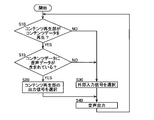
- step S15 if step S15 is provided between step 10 and step S20 and the optical disc recording / playback unit 3 plays back content data (YES in step S10), the optical disc recording / playback unit 3
- the CPU 9 determines whether or not the audio data is included in the content data being reproduced by (step S15), and if the audio data is included in the content data being reproduced by the optical disc recording / reproducing unit 3 (YES in step S15), the process proceeds to step S20. If the audio data is not included in the content data reproduced by the optical disc recording / reproducing unit 3 (NO in step S15), the process may proceed to step S30.
- the switching circuit 4 is provided with a switching circuit dedicated to the audio signal and a switching circuit dedicated to the video signal so that switching of the switching circuit dedicated to the audio signal and switching of the switching circuit dedicated to the video signal are controlled independently. You can do it.
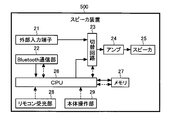
- FIG. 4 is a diagram showing a schematic configuration of an audio output device according to the second embodiment of the present invention.
- the audio output device according to the present embodiment includes an external input terminal 21, a Bluetooth (registered trademark) communication unit 22, a switching circuit 23, an amplifier 24, a speaker 25, a CPU 26, a memory 27, and a remote control light receiving unit 28. And a main body operation unit 29.
- the external input terminal 21 inputs an external input signal supplied from an external device (not shown in FIG. 4) such as a television device.
- the Bluetooth (registered trademark) communication unit 22 receives content data transmitted from a source device (not shown in FIG. 4) that performs Bluetooth (registered trademark) communication, and sends the received content data to the CPU 26.
- a source device not shown in FIG. 4
- Bluetooth (registered trademark) communication unit 22 instead of the Bluetooth (registered trademark) communication unit 22 or in addition to the Bluetooth (registered trademark) communication unit 22, another wireless communication unit such as a Wi-Fi (registered trademark) communication unit or a USB (Universal Serial Bus), for example. )
- Another wired communication unit such as a communication unit may be provided, and content data may be received from the outside by the communication unit.
- the switching circuit 23 selects one of the external input signal from the external input terminal 21 and the output signal of the CPU 26 and sends it to the amplifier 24.
- the audio signal output from the switching circuit 23 is amplified by the amplifier 24 and converted into audio by the speaker 25. Thereby, sound is emitted from the speaker 25.
- the CPU 26 receives a remote control infrared signal transmitted from a remote control transmitter (not shown in FIG. 4) that receives an operation command output from the main body operation unit 29 that receives a key operation by the user or a key operation by the user.
- Various control of the speaker device 500 is performed in accordance with the operation command output from.
- the memory 27 stores various programs and various data necessary for the CPU 26 to perform various controls of the speaker device 500 in a nonvolatile manner.
- the program stored in the memory 27 in a nonvolatile manner includes a content reproduction application program for reproducing various content data (audio data, video / audio data, image data, etc.).
- the CPU 26 When the CPU 26 executes the content reproduction application program, the CPU 26 functions as a content reproduction unit.
- the CPU 26 functioning as a content playback unit plays back the content data sent from the Bluetooth (registered trademark) communication unit 22 and outputs the content data to the switching circuit 23.
- FIG. 2 also shows an operation example of the audio output device according to the present embodiment.
- the audio output device (speaker device 500) according to the present embodiment is turned on, the flowchart operation shown in FIG. 2 is started.
- the CPU 26 first determines whether or not it is reproducing content data (step S10).
- the switching circuit 23 selects the output signal of the CPU 26 and supplies it to the amplifier 24 (step 20) according to the control of the CPU 26, and then proceeds to step S40. .
- step S10 If the CPU 26 is not reproducing the content data (NO in step S10), the switching circuit 23 selects an external input signal from the external input terminal 21 and supplies it to the amplifier 24 according to the control of the CPU 26 (step 30). Control goes to step S40.
- step S40 the speaker 25 performs audio output based on the audio signal (amplified audio signal) supplied from the amplifier 24, and then returns to step S10.
- the switching circuit 23 selects the output signal of the CPU 26 and supplies it to the amplifier 24.
- the sound source is automatically switched to the internal sound source, the internal sound source is prioritized over the external sound source, and sound output based on the output of the internal sound source is performed at the speaker 25. Therefore, it does not take time to switch from the external sound source to the internal sound source.
- step S15 is provided between step 10 and step S20 and the CPU 26 is reproducing the content data (YES in step S10), the content data reproduced by the CPU 26 is added.
- the CPU 26 determines whether or not audio data is included (step S15). If the audio data is included in the content data reproduced by the CPU 26 (YES in step S15), the process proceeds to step S20. If the audio data is not included in the content data reproduced by the CPU 26 (NO in step S15), the process may proceed to step S30.
- an external output terminal such as an HDMI (High Definition Multimedia Interface) output terminal is provided in the speaker device 500, and content data not including audio data is output from the external output terminal to the outside. Good.
- HDMI High Definition Multimedia Interface
- the audio output device described above includes an audio output unit that outputs audio based on an audio signal, a content reproduction unit that reproduces content data that can include audio data, and the content reproduction unit that is reproducing content data. Selects the output signal of the content reproduction unit and supplies it to the audio output unit, and when the content reproduction unit is not reproducing the content data, selects the external input signal and supplies it to the audio output unit And a selector.
- the selection unit selects the output signal of the content reproduction unit and supplies it to the audio output unit, a part of the output signal of the content reproduction unit (an audio signal that is a part of the video / audio signal) is selected. And you may supply to the said audio
- the content reproduction unit when the content reproduction unit is reproducing content data, that is, when it is assumed that there is an output of an internal sound source, an output signal of the content reproduction unit is selected and the audio output unit Is automatically switched to the internal sound source, the internal sound source is prioritized over the external sound source, and sound output based on the output of the internal sound source is performed. Therefore, it does not take time to switch from the external sound source to the internal sound source.
- the selection unit selects an external input signal and supplies it to the audio output unit.
- the audio output device having any one of the above configurations includes a memory for storing content data supplied to the content reproduction unit.
- the audio output device having any one of the above configurations includes an external interface that receives content data supplied to the content reproduction unit from the outside through communication.
Landscapes
- Engineering & Computer Science (AREA)
- Multimedia (AREA)
- Signal Processing (AREA)
- Databases & Information Systems (AREA)
- Circuit For Audible Band Transducer (AREA)
- Television Receiver Circuits (AREA)
- Reverberation, Karaoke And Other Acoustics (AREA)
Description
本発明は、内部音源と外部音源とを切り替えることができる音声出力装置に関する。
種々の音声出力装置は従来から開発されている。音声出力装置として、例えば、音声信号を増幅するアンプ及び当該アンプから出力される増幅音声信号に基づいて音声出力を行うスピーカを備えるスピーカ装置、音声出力のみならず映像出力も行うテレビジョン装置、電子楽器などを挙げることができる。
また、音声出力装置には、内部音源と外部音源とを切り替えることができるタイプのものがある(例えば特許文献1参照)。
特許文献1で開示されている電子楽器は、操作性の向上を図るために、音色選択スイッチの1回の操作により、内部音源と外部音源との切り替えを可能にしている。しかしながら、内部音源と外部音源との切り替えを手動で切り替えていることに変わりはない。
電子楽器の演奏において演奏者が自己の意思で内部音源と外部音源との切り替えを行う場合などには、特許文献1のような手動での切り替えが適しているが、例えば、スピーカ装置やテレビジョン装置などでは、手動での切り替えは手間がかかるので好ましくない。
例えば、音声出力装置において内部音源の出力があるときは外部音源よりも内部音源を優先して利用しようとする場合、内部音源の出力があるときに使用者が手動で内部音源に切り替える必要があり、非常に手間がかかる。
なお、特許文献2には自動で入力切り替えを行う入力切り替え装置が開示されているが、特許文献2で開示されている入力切り替え装置は入力信号の有無に基づいて入力切り替えを行っているので、外部音源の音声信号も内部音源の音声信号も存在するときには、外部音源から内部音源への切り替えを自動で行うことができない。
本発明は、上記の状況に鑑み、外部音源から内部音源への切り替えに手間がかからない音声出力装置を提供することを目的とする。
本発明に係る音声出力装置は、音声信号に基づいて音声出力を行う音声出力部と、音声データを含み得るコンテンツデータを再生するコンテンツ再生部と、前記コンテンツ再生部がコンテンツデータを再生しているときは、前記コンテンツ再生部の出力信号を選択して前記音声出力部に供給し、前記コンテンツ再生部がコンテンツデータを再生していないときは、外部入力信号を選択して前記音声出力部に供給する選択部とを備える構成とする。なお、前記選択部が前記コンテンツ再生部の出力信号を選択して前記音声出力部に供給する場合、前記コンテンツ再生部の出力信号の一部(映像音声信号の一部である音声信号)を選択して前記音声出力部に供給してもよい。
本発明に係る音声出力装置によると、内部音源の出力があるときは自動的に内部音源に切り替わり、外部音源よりも内部音源が優先され、内部音源の出力に基づく音声出力が行われる。したがって、外部音源から内部音源への切り替えに手間がかからない。
本発明の意義ないし効果は、以下に示す実施の形態の説明により更に明らかとなろう。ただし、以下の実施の形態は、あくまでも、本発明の一つの実施形態であって、本発明ないし各構成要件の用語の意義は、以下の実施の形態に記載されたものに制限されるものではない。
本発明の実施形態について図面を参照して以下に説明する。
<第1実施形態>
図1は、本発明の第1実施形態に係る音声出力装置の概略構成を示す図である。本実施形態に係る音声出力装置は、チューナ1と、外部入力端子2と、光ディスク記録再生部3と、切替回路4と、信号処理回路5と、アンプ6と、スピーカ7と、表示部8と、CPU(Central Processing Unit)9と、メモリ10と、リモコン受光部11と、本体操作部12とを備えるテレビジョン装置100である。
図1は、本発明の第1実施形態に係る音声出力装置の概略構成を示す図である。本実施形態に係る音声出力装置は、チューナ1と、外部入力端子2と、光ディスク記録再生部3と、切替回路4と、信号処理回路5と、アンプ6と、スピーカ7と、表示部8と、CPU(Central Processing Unit)9と、メモリ10と、リモコン受光部11と、本体操作部12とを備えるテレビジョン装置100である。
アンテナ200は放送電波を受信し、受信信号をチューナ1に供給する。チューナ1は、CPU9からのチャンネル選択信号に従って選局し、映像音声信号を出力する。外部入力端子2はビデオカメラ等の外部機器300から供給される外部入力信号を入力する。なお、チューナ1から出力される映像音声信号は、テレビジョン装置100の内部でコンテンツデータを再生することによって得られる信号ではなく、外部音源である放送電波から得られる信号であるので、チューナ1から出力される映像音声信号も外部入力信号である。
光ディスク記録再生部3は、光ディスクに記憶されているコンテンツデータを再生するコンテンツ再生部である。また、光ディスク記録再生部3はチューナ1又は外部入力端子2の出力信号を光ディスクにコンテンツデータとして記憶することもできる。
切替回路4は、チューナ1から出力される映像音声信号、外部入力端子2からの外部入力信号、光ディスク記録再生部3の出力信号のうちのいずれか一つを選択して信号処理回路5に送出する。また、切替回路4は、チューナ1から出力される映像音声信号又は外部入力端子2からの外部入力信号を光ディスク記録再生部3に送出することもできる。
信号処理回路5は、切替回路4から出力される信号に対して各種の信号処理を施して映像信号及び/又は音声信号を生成して出力する。信号処理回路5から出力される音声信号はアンプ6によって増幅され、スピーカ7によって音声に変換される。これにより、スピーカ7から音声が発せられる。表示部8は、信号処理回路5から出力される映像信号に応じた映像を表示画面に表示する。
CPU9は、ユーザーによるキー操作を受け付ける本体操作部12から出力される操作コマンドあるいはユーザーによるキー操作を受け付けるリモコン送信機400から送信されるリモコン赤外線信号を受光するリモコン受光部11から出力される操作コマンドに応じて、テレビジョン装置100の各種制御を行う。メモリ10は、CPU9がテレビジョン装置100の各種制御を行うために必要な各種プログラム及び各種データを不揮発的に記憶している。
図2は、本実施形態に係る音声出力装置の一動作例を示すフローチャートである。本実施形態に係る音声出力装置(テレビジョン装置100)が電源オン状態になったときに、図2に示すフローチャート動作が開始される。
図2に示すフローチャート動作が開始されると、まず始めにCPU9は、光ディスク記録再生部3がコンテンツデータを再生しているか否かを判定する(ステップS10)。
光ディスク記録再生部3がコンテンツデータを再生していれば(ステップS10のYES)、CPU9の制御に従って、切替回路4は光ディスク記録再生部3の出力信号を選択して信号処理回路5に供給し(ステップ20)、その後ステップS40に移行する。
光ディスク記録再生部3がコンテンツデータを再生していなければ(ステップS10のNO)、CPU9の制御に従って、切替回路4はチューナ1から出力される映像音声信号(外部入力信号)又は外部入力端子2からの外部入力信号を選択して信号処理回路5に供給し(ステップ30)、その後ステップS40に移行する。
ステップS40において、スピーカ7はアンプ6から供給される音声信号(増幅音声信号)に基づいて音声出力を行い、その後ステップS10に戻る。
このような構成によると、光ディスク記録再生部3がコンテンツデータを再生しているとき、すなわち内部音源の出力があると想定されるときは、切替回路4が光ディスク記録再生部3の出力信号を選択して信号処理回路5に供給するので、自動的に内部音源に切り替わり、外部音源よりも内部音源が優先され、スピーカ7において内部音源の出力に基づく音声出力が行われる。したがって、外部音源から内部音源への切り替えに手間がかからない。
ただし、光ディスク記録再生部3がコンテンツデータを再生しているときに必ず内部音源の出力があるわけではない。光ディスク記録再生部3が音声データを含まないコンテンツデータ(例えば静止画像データ)を再生している場合には、光ディスク記録再生部3がコンテンツデータを再生しているにもかかわらず内部音源の出力がない状態となる。
そこで、例えば図3に示すように、ステップ10とステップS20との間にステップS15を設け、光ディスク記録再生部3がコンテンツデータを再生していれば(ステップS10のYES)、光ディスク記録再生部3によって再生されているコンテンツデータに音声データが含まれているか否かをCPU9が判定するようにし(ステップS15)、光ディスク記録再生部3によって再生されているコンテンツデータに音声データが含まれていれば(ステップS15のYES)、ステップS20へ進み、光ディスク記録再生部3によって再生されているコンテンツデータに音声データが含まれていなければ(ステップS15のNO)、ステップS30へ進むようにすればよい。
図3に示すフローチャート動作によると、音声データが含まれていないコンテンツデータの再生と、外部音源の出力に基づく音声出力とを両立させた利用形態が可能となり、利便性が向上する。この場合、切替回路4を音声信号専用の切替回路と映像信号専用の切替回路とを設け、音声信号専用の切替回路の切り替えと映像信号専用の切替回路の切り替えとが独立して制御されるようにすればよい。
<第2実施形態>
図4は、本発明の第2実施形態に係る音声出力装置の概略構成を示す図である。本実施形態に係る音声出力装置は、外部入力端子21と、Bluetooth(登録商標)通信部22と、切替回路23と、アンプ24と、スピーカ25と、CPU26と、メモリ27と、リモコン受光部28と、本体操作部29とを備えるスピーカ装置500である。
図4は、本発明の第2実施形態に係る音声出力装置の概略構成を示す図である。本実施形態に係る音声出力装置は、外部入力端子21と、Bluetooth(登録商標)通信部22と、切替回路23と、アンプ24と、スピーカ25と、CPU26と、メモリ27と、リモコン受光部28と、本体操作部29とを備えるスピーカ装置500である。
外部入力端子21はテレビジョン装置等の外部機器(図4において不図示)から供給される外部入力信号を入力する。
Bluetooth(登録商標)通信部22は、Bluetooth(登録商標)通信を行うソース機器(図4において不図示)から送信されるコンテンツデータを受信し、受信したコンテンツデータをCPU26に送る。なお、Bluetooth(登録商標)通信部22に代えてあるいはBluetooth(登録商標)通信部22に加えて、例えばWi-Fi(登録商標)通信部などの他の無線通信部や例えばUSB(Universal Serial Bus)通信部などの他の有線通信部を設け、それらの通信部によって外部からコンテンツデータを受け取るようにしてもよい。
切替回路23は、外部入力端子21からの外部入力信号、CPU26の出力信号のうちのいずれか一つを選択してアンプ24に送出する。切替回路23から出力される音声信号はアンプ24によって増幅され、スピーカ25によって音声に変換される。これにより、スピーカ25から音声が発せられる。
CPU26は、ユーザーによるキー操作を受け付ける本体操作部29から出力される操作コマンドあるいはユーザーによるキー操作を受け付けるリモコン送信機(図4において不図示)から送信されるリモコン赤外線信号を受光するリモコン受光部28から出力される操作コマンドに応じて、スピーカ装置500の各種制御を行う。メモリ27は、CPU26がスピーカ装置500の各種制御を行うために必要な各種プログラム及び各種データを不揮発的に記憶している。メモリ27が不揮発的に記憶しているプログラムには、各種コンテンツデータ(音声データ、映像音声データ、画像データなど)を再生するためのコンテンツ再生アプリケーションプログラムが含まれている。
CPU26がコンテンツ再生アプリケーションプログラムを実行することで、CPU26はコンテンツ再生部として機能する。コンテンツ再生部として機能するCPU26は、Bluetooth(登録商標)通信部22から送られてくるコンテンツデータを再生して切替回路23に出力する。
図2は、本実施形態に係る音声出力装置の一動作例も示している。本実施形態に係る音声出力装置(スピーカ装置500)が電源オン状態になったときに、図2に示すフローチャート動作が開始される。
図2に示すフローチャート動作が開始されると、まず始めにCPU26は、自己がコンテンツデータを再生しているか否かを判定する(ステップS10)。
CPU26がコンテンツデータを再生していれば(ステップS10のYES)、CPU26の制御に従って、切替回路23はCPU26の出力信号を選択してアンプ24に供給し(ステップ20)、その後ステップS40に移行する。
CPU26がコンテンツデータを再生していなければ(ステップS10のNO)、CPU26の制御に従って、切替回路23は外部入力端子21からの外部入力信号を選択してアンプ24に供給し(ステップ30)、その後ステップS40に移行する。
ステップS40において、スピーカ25はアンプ24から供給される音声信号(増幅音声信号)に基づいて音声出力を行い、その後ステップS10に戻る。
このような構成によると、CPU26がコンテンツデータを再生しているとき、すなわち内部音源の出力があると想定されるときは、切替回路23がCPU26の出力信号を選択してアンプ24に供給するので、自動的に内部音源に切り替わり、外部音源よりも内部音源が優先され、スピーカ25において内部音源の出力に基づく音声出力が行われる。したがって、外部音源から内部音源への切り替えに手間がかからない。
ただし、CPU26がコンテンツデータを再生しているときに必ず内部音源の出力があるわけではない。CPU26が音声データを含まないコンテンツデータ(例えば静止画像データ)を再生している場合には、CPU26がコンテンツデータを再生しているにもかかわらず内部音源の出力がない状態となる。
そこで、例えば図3に示すように、ステップ10とステップS20との間にステップS15を設け、CPU26がコンテンツデータを再生していれば(ステップS10のYES)、CPU26によって再生されているコンテンツデータに音声データが含まれているか否かをCPU26が判定するようにし(ステップS15)、CPU26によって再生されているコンテンツデータに音声データが含まれていれば(ステップS15のYES)、ステップS20へ進み、CPU26によって再生されているコンテンツデータに音声データが含まれていなければ(ステップS15のNO)、ステップS30へ進むようにすればよい。
図3に示すフローチャート動作によると、音声データが含まれていないコンテンツデータの再生と、外部音源の出力に基づく音声出力とを両立させた利用形態が可能となり、利便性が向上する。この場合、HDMI(登録商標)(High Definition Multimedia Interface)出力端子などの外部出力端子をスピーカ装置500に設け、音声データが含まれていないコンテンツデータを外部出力端子から外部に出力するようにしてもよい。
以上説明した音声出力装置は、音声信号に基づいて音声出力を行う音声出力部と、音声データを含み得るコンテンツデータを再生するコンテンツ再生部と、前記コンテンツ再生部がコンテンツデータを再生しているときは、前記コンテンツ再生部の出力信号を選択して前記音声出力部に供給し、前記コンテンツ再生部がコンテンツデータを再生していないときは、外部入力信号を選択して前記音声出力部に供給する選択部とを備える構成である。なお、前記選択部が前記コンテンツ再生部の出力信号を選択して前記音声出力部に供給する場合、前記コンテンツ再生部の出力信号の一部(映像音声信号の一部である音声信号)を選択して前記音声出力部に供給してもよい。
このような構成によると、前記コンテンツ再生部がコンテンツデータを再生しているとき、すなわち内部音源の出力があると想定されるときは、前記コンテンツ再生部の出力信号を選択して前記音声出力部に供給するので、自動的に内部音源に切り替わり、外部音源よりも内部音源が優先され、内部音源の出力に基づく音声出力が行われる。したがって、外部音源から内部音源への切り替えに手間がかからない。
また、上記構成の音声出力装置において、たとえ前記コンテンツ再生部がコンテンツデータを再生しているときであっても、前記コンテンツ再生部が再生しているコンテンツデータに音声データが含まれていない場合には、前記選択部が外部入力信号を選択して前記音声出力部に供給する構成にすることが好ましい。
このような構成によると、音声データが含まれていないコンテンツデータの再生と、外部音源の出力に基づく音声出力とを両立させた利用形態が可能となり、利便性が向上する。
また、上記いずれかの構成の音声出力装置において、前記コンテンツ再生部に供給されるコンテンツデータを記憶するメモリを備える構成にすることが好ましい。
このような構成によると、前記コンテンツ再生部が再生するコンテンツデータの豊富化が容易になる。
また、上記いずれかの構成の音声出力装置において、前記コンテンツ再生部に供給されるコンテンツデータを通信により外部から受け取る外部インターフェースを備える構成にすることが好ましい。
このような構成によると、前記コンテンツ再生部が再生するコンテンツデータの豊富化が容易になる。
1 チューナ
2、21 外部入力端子
3 光ディスク記録再生部
4、23 切替回路
5 信号処理回路
6、24 アンプ
7、25 スピーカ
8 表示部
9、26 CPU
10、27 メモリ
11、28 リモコン受光部
12、29 本体操作部
22 Bluetooth通信部
100 テレビジョン装置
200 アンテナ
300 外部機器
400 リモコン送信機
500 スピーカ装置
2、21 外部入力端子
3 光ディスク記録再生部
4、23 切替回路
5 信号処理回路
6、24 アンプ
7、25 スピーカ
8 表示部
9、26 CPU
10、27 メモリ
11、28 リモコン受光部
12、29 本体操作部
22 Bluetooth通信部
100 テレビジョン装置
200 アンテナ
300 外部機器
400 リモコン送信機
500 スピーカ装置
Claims (4)
- 音声信号に基づいて音声出力を行う音声出力部と、
音声データを含み得るコンテンツデータを再生するコンテンツ再生部と、
前記コンテンツ再生部がコンテンツデータを再生しているときは、前記コンテンツ再生部の出力信号を選択して前記音声出力部に供給し、前記コンテンツ再生部がコンテンツデータを再生していないときは、外部入力信号を選択して前記音声出力部に供給する選択部とを備えることを特徴する音声出力装置。 - たとえ前記コンテンツ再生部がコンテンツデータを再生しているときであっても、前記コンテンツ再生部が再生しているコンテンツデータに音声データが含まれていない場合には、前記選択部が外部入力信号を選択して前記音声出力部に供給する請求項1に記載の音声出力装置。
- 前記コンテンツ再生部に供給されるコンテンツデータを記憶するメモリを備える請求項1または請求項2に記載の音声出力装置。
- 前記コンテンツ再生部に供給されるコンテンツデータを通信により外部から受け取る外部インターフェースを備える請求項1~3のいずれか1項に記載の音声出力装置。
Applications Claiming Priority (2)
| Application Number | Priority Date | Filing Date | Title |
|---|---|---|---|
| JP2012208729A JP2014064207A (ja) | 2012-09-21 | 2012-09-21 | 音声出力装置 |
| JP2012-208729 | 2012-09-21 |
Publications (1)
| Publication Number | Publication Date |
|---|---|
| WO2014045517A1 true WO2014045517A1 (ja) | 2014-03-27 |
Family
ID=50340859
Family Applications (1)
| Application Number | Title | Priority Date | Filing Date |
|---|---|---|---|
| PCT/JP2013/004961 Ceased WO2014045517A1 (ja) | 2012-09-21 | 2013-08-22 | 音声出力装置 |
Country Status (2)
| Country | Link |
|---|---|
| JP (1) | JP2014064207A (ja) |
| WO (1) | WO2014045517A1 (ja) |
Citations (4)
| Publication number | Priority date | Publication date | Assignee | Title |
|---|---|---|---|---|
| JP2002354389A (ja) * | 2001-05-29 | 2002-12-06 | Toshiba Corp | デジタルテレビジョン受信装置とその制御方法 |
| JP2005184858A (ja) * | 2005-02-07 | 2005-07-07 | Hitachi Ltd | 映像・音声受信装置及びテレビジョン受像機 |
| JP2006254035A (ja) * | 2005-03-10 | 2006-09-21 | Matsushita Electric Ind Co Ltd | フォトビューワー搭載テレビジョンシステム |
| JP2009088664A (ja) * | 2007-09-27 | 2009-04-23 | Funai Electric Co Ltd | 再生端末接続機能付きテレビジョン |
-
2012
- 2012-09-21 JP JP2012208729A patent/JP2014064207A/ja active Pending
-
2013
- 2013-08-22 WO PCT/JP2013/004961 patent/WO2014045517A1/ja not_active Ceased
Patent Citations (4)
| Publication number | Priority date | Publication date | Assignee | Title |
|---|---|---|---|---|
| JP2002354389A (ja) * | 2001-05-29 | 2002-12-06 | Toshiba Corp | デジタルテレビジョン受信装置とその制御方法 |
| JP2005184858A (ja) * | 2005-02-07 | 2005-07-07 | Hitachi Ltd | 映像・音声受信装置及びテレビジョン受像機 |
| JP2006254035A (ja) * | 2005-03-10 | 2006-09-21 | Matsushita Electric Ind Co Ltd | フォトビューワー搭載テレビジョンシステム |
| JP2009088664A (ja) * | 2007-09-27 | 2009-04-23 | Funai Electric Co Ltd | 再生端末接続機能付きテレビジョン |
Also Published As
| Publication number | Publication date |
|---|---|
| JP2014064207A (ja) | 2014-04-10 |
Similar Documents
| Publication | Publication Date | Title |
|---|---|---|
| JP4299822B2 (ja) | 映像音出力装置、及び外部スピーカ制御装置 | |
| JP2012248257A (ja) | 映像音声機器、及びそれを備える映像音声システム | |
| JPWO2007037208A1 (ja) | 映像音出力装置、及び外部スピーカ制御装置 | |
| JP2011217316A (ja) | 携帯情報処理装置 | |
| CN107209657B (zh) | 再现装置以及输出装置 | |
| JP2007043634A (ja) | マルチメディア再生装置及びその制御方法 | |
| JP4035154B1 (ja) | 映像音出力装置、及び外部スピーカ制御装置 | |
| CN106792370B (zh) | 一种音量控制方法和装置 | |
| JP2010278579A (ja) | ソース機器選択装置 | |
| JP2008203910A (ja) | 情報記録再生装置 | |
| JP2014064207A (ja) | 音声出力装置 | |
| JP4954327B2 (ja) | 情報再生装置 | |
| JP2009135846A (ja) | 映像表示システム | |
| JP2008271353A (ja) | 音響再生装置 | |
| JP6119514B2 (ja) | 遠隔操作被制御装置 | |
| JP2011086992A (ja) | 映像表示システム | |
| JP6590221B2 (ja) | 映像音声出力装置 | |
| JP2011061487A (ja) | 出力装置及びネットワークシステム | |
| WO2009144788A1 (ja) | 音声出力機能を備えた映像表示装置、該映像表示装置で行う音量制御方法 | |
| JP2009081757A (ja) | 電子機器 | |
| JP5029840B2 (ja) | 制御信号送信装置およびその動作方法およびそのプログラム | |
| JP2015177458A (ja) | 映像出力装置及び映像出力装置に接続された外部機器の電源制御方法 | |
| JP6733730B2 (ja) | コンテンツ再生装置、およびコンテンツ再生方法 | |
| KR20100053106A (ko) | 영상표시기기에서 오디오 데이터 출력 장치 및 방법 | |
| JP6195723B2 (ja) | テレビジョン受信機 |
Legal Events
| Date | Code | Title | Description |
|---|---|---|---|
| 121 | Ep: the epo has been informed by wipo that ep was designated in this application |
Ref document number: 13839594 Country of ref document: EP Kind code of ref document: A1 |
|
| NENP | Non-entry into the national phase |
Ref country code: DE |
|
| 122 | Ep: pct application non-entry in european phase |
Ref document number: 13839594 Country of ref document: EP Kind code of ref document: A1 |