WO2014024574A1 - リレー及びリレー用液晶性樹脂組成物 - Google Patents
リレー及びリレー用液晶性樹脂組成物 Download PDFInfo
- Publication number
- WO2014024574A1 WO2014024574A1 PCT/JP2013/066886 JP2013066886W WO2014024574A1 WO 2014024574 A1 WO2014024574 A1 WO 2014024574A1 JP 2013066886 W JP2013066886 W JP 2013066886W WO 2014024574 A1 WO2014024574 A1 WO 2014024574A1
- Authority
- WO
- WIPO (PCT)
- Prior art keywords
- relay
- liquid crystalline
- crystalline resin
- base
- resin composition
- Prior art date
- Legal status (The legal status is an assumption and is not a legal conclusion. Google has not performed a legal analysis and makes no representation as to the accuracy of the status listed.)
- Ceased
Links
Images
Classifications
-
- H—ELECTRICITY
- H01—ELECTRIC ELEMENTS
- H01H—ELECTRIC SWITCHES; RELAYS; SELECTORS; EMERGENCY PROTECTIVE DEVICES
- H01H50/00—Details of electromagnetic relays
- H01H50/02—Bases; Casings; Covers
- H01H50/04—Mounting complete relay or separate parts of relay on a base or inside a case
- H01H50/041—Details concerning assembly of relays
- H01H50/042—Different parts are assembled by insertion without extra mounting facilities like screws, in an isolated mounting part, e.g. stack mounting on a coil-support
Definitions
- the present invention relates to a relay and a liquid crystalline resin composition for the relay.
- relays The production of relays is steadily growing along with the development of the electronics industry, and there are a wide range of fields such as communication equipment, OA equipment, home appliances, and vending machines. Recently, a characteristic required for a relay is that airtightness can be maintained after a solder reflow process, and a completely hermetically sealed relay has been developed.
- thermoplastic resin is known as a raw material of components constituting the relay, and for example, a liquid crystalline resin is used (see Patent Document 1).
- the base As a part that constitutes a relay, there is a base on which the relay body is arranged on the surface.
- the base is required to be able to withstand the insertion of the terminal and to have an adhesive property to an epoxy adhesive used for joining the base and the substrate.
- the present invention has been made to solve the above-described problems, and the object thereof is to provide a liquid crystal for a relay that can withstand insertion of a terminal as a material constituting a base and has sufficient adhesion to an epoxy adhesive.
- the present invention provides a conductive resin composition and a relay produced using the resin composition.
- the present inventors of the present invention have made extensive studies to solve the above problems. As a result, the present inventors have found that the above problems can be solved by using a liquid crystalline resin composition containing a liquid crystalline resin and an elastomer having a repeating unit derived from glycidyl methacrylate, and have completed the present invention. More specifically, the present invention provides the following.
- a base having a terminal hole, a terminal inserted through the terminal hole, a relay body disposed on the surface of the base and electrically connected to the terminal, covering the relay body, A base board and a cover that forms a hollow container for accommodating the relay body, and a through hole through which the terminal is inserted, and a substrate whose surface is bonded to the back surface of the base with an epoxy adhesive.
- the base is composed of a liquid crystalline resin composition for relays containing a liquid crystalline resin and an elastomer having a repeating unit derived from glycidyl methacrylate.
- the liquid crystalline resin composition for relay includes glass fiber, the elastomer content is 4 parts by mass or more and 17 parts by mass or less, and the glass fiber content is 27 parts by mass or more and 73 parts by mass or less.
- a liquid crystalline resin composition for a relay for forming a base on which an electromagnetic relay is arranged on the surface and bonded to a substrate with an epoxy adhesive, and is a repetition derived from a liquid crystalline resin and glycidyl methacrylate
- a liquid crystalline resin composition for relays comprising an elastomer having units.
- a base is molded using the liquid crystalline resin composition for relays of the present invention, a base that can withstand insertion of a terminal and has excellent adhesiveness with an epoxy adhesive can be obtained.
- the base when the terminals are press-fitted into the base, the base does not deform, and the base itself is excellent in adhesiveness with the epoxy adhesive. Especially excellent.
- the liquid crystalline resin composition for relay of the present invention has a liquid crystalline resin and an elastomer.
- the components contained in the liquid crystalline resin composition for relay will be described.
- the liquid crystalline resin used in the present invention refers to a melt processable polymer having the property of forming an optically anisotropic molten phase.
- the property of the anisotropic molten phase can be confirmed by a conventional polarization inspection method using an orthogonal polarizer. More specifically, the anisotropic molten phase can be confirmed by using a Leitz polarizing microscope and observing a molten sample placed on a Leitz hot stage under a nitrogen atmosphere at a magnification of 40 times.
- the liquid crystalline resin applicable to the present invention is inspected between crossed polarizers, the polarized light is normally transmitted even in a molten stationary state, and optically anisotropic.
- the type of liquid crystalline resin as described above is not particularly limited, but is preferably an aromatic polyester or an aromatic polyester amide.
- the polyester which partially contains aromatic polyester or aromatic polyester amide in the same molecular chain is also in that range. They preferably have a logarithmic viscosity (IV) of at least about 2.0 dl / g, more preferably 2.0-10.0 dl / g when dissolved in pentafluorophenol at 60 ° C. at a concentration of 0.1% by weight. .) Are preferably used.
- the aromatic polyester or aromatic polyester amide is particularly preferably an aromatic polyester having at least one compound selected from the group of aromatic hydroxycarboxylic acid, aromatic hydroxyamine, and aromatic diamine as a constituent component, aromatic Polyester amide.
- a polyester amide comprising one or more of aromatic dicarboxylic acid, alicyclic dicarboxylic acid and derivatives thereof; (4) mainly (a) one or more of aromatic hydroxycarboxylic acids and derivatives thereof; (b) one or more of aromatic hydroxyamines, aromatic diamines and derivatives thereof; and (c). One or more of aromatic dicarboxylic acid, alicyclic dicarboxylic acid and derivatives thereof, and (d) at least one or more of aromatic diol, alicyclic diol, aliphatic diol and derivatives thereof, and And polyester amides composed of Furthermore, you may use a molecular weight modifier together with said structural component as needed.
- Specific examples of the specific compound constituting the liquid crystalline resin applicable to the present invention include aromatic hydroxycarboxylic acids such as p-hydroxybenzoic acid and 6-hydroxy-2-naphthoic acid, 2,6-dihydroxynaphthalene, , 4-dihydroxynaphthalene, 4,4′-dihydroxybiphenyl, hydroquinone, resorcin, aromatic diols such as compounds represented by the following general formula (I) and the following general formula (II); terephthalic acid, isophthalic acid, 4, Aromatic dicarboxylic acids such as 4'-diphenyldicarboxylic acid, 2,6-naphthalenedicarboxylic acid and compounds represented by the following general formula (III); aromatic amines such as p-aminophenol and p-phenylenediamine It is done.
- aromatic hydroxycarboxylic acids such as p-hydroxybenzoic acid and 6-hydroxy-2-naphthoic acid, 2,6-di
- X is a group selected from alkylene (C1-C4), alkylidene, —O—, —SO—, —SO 2 —, —S—, —CO—
- the liquid crystalline resin used in the present invention can be prepared by a known method using a direct polymerization method or transesterification method from the above monomer compound (or a mixture of monomers). Usually, a melt polymerization method or a slurry polymerization method is used.
- the above compounds having ester-forming ability may be used for polymerization in the form as they are, or may be modified from a precursor to a derivative having ester-forming ability in the previous stage of polymerization.
- various catalysts can be used. Typical examples include dialkyl tin oxide, diaryl tin oxide, titanium dioxide, alkoxy titanium silicates, titanium alcoholates, and alkali of carboxylic acid.
- the amount of the catalyst used is generally about 0.001 to 1% by mass, particularly about 0.01 to 0.2% by mass, based on the total weight of the monomers. If the polymers produced by these polymerization methods are further necessary, the molecular weight can be increased by solid-phase polymerization by heating in a reduced pressure or an inert gas.
- liquid crystal resin composition for relay contains an elastomer, flexibility is imparted to the liquid crystal resin composition for relay and adhesion to an epoxy adhesive is provided.
- the liquid crystalline resin composition for use is suitable for the production of a base.
- the elastomer has a repeating unit derived from glycidyl methacrylate.
- the elastomer may have a copolymer component other than glycidyl methacrylate, but the content of repeating units derived from glycidyl methacrylate is preferably 3% by mass or more and 12% by mass or less.
- the copolymerization component is not particularly limited, but ethylene, 1-propene, 1-butene, 1-pentene, 4-methyl-1-pentene, 1-hexene, 1-heptene, 1-octene, 1-nonene, Examples thereof include ⁇ -olefins such as 1-decene, unsaturated carboxylic acids or derivatives thereof.
- EGMA ethylene-glycidyl methacrylate copolymer
- EGMA may be either a random copolymer or block copolymer of ethylene and glycidyl methacrylate.
- it may contain a copolymer component other than ethylene and glycidyl methacrylate, but the proportion of the other copolymer component is preferably 30% by mass or less.
- the content of the elastomer in the liquid crystalline resin composition for relay is not particularly limited, but is preferably 4 parts by mass or more and 17 parts by mass or less. If it is 4 parts by mass or more, it is preferable because it tends to give sufficient flexibility to the liquid crystalline resin composition for relays and sufficient adhesiveness to the epoxy adhesive, and preferably 17 parts by mass or less. For example, it is preferable for improving the fluidity of the liquid crystalline resin composition for relay and improving the appearance of the obtained relay. A more preferable elastomer content is 6 parts by mass or more and 11 parts by mass or less.
- the liquid crystalline resin composition for relays of the present invention preferably contains an inorganic filler.
- an inorganic filler in the liquid crystalline resin composition for relay, the mechanical strength and the like of the liquid crystalline resin composition for relay can be increased.
- the inorganic filler may be a non-fibrous filler or a fibrous filler, but a fibrous filler is preferable, and glass fiber is particularly preferable.
- glass fiber any known glass fiber is preferably used.
- the glass fiber diameter of glass fiber, the shape of a cylinder, a bowl shape, an ellipse cross section, the length at the time of using for manufacture of chopped strand, roving, etc., and the method of glass cutting are not specifically limited.
- the type of glass is not limited, but E glass or corrosion resistant glass having a zirconium element in the composition is preferably used in terms of quality.
- glass fibers surface-treated with an organic treating agent such as an aminosilane compound or an epoxy compound are preferably used for the purpose of improving the interface properties between the glass fibers and the resin matrix.
- the content of the glass fiber in the liquid crystalline resin composition for relay is not particularly limited, but is preferably 27 parts by mass or more and 73 parts by mass or less. If it is 27 parts by mass or more, it is preferable because sufficient mechanical strength can be imparted to the liquid crystalline resin composition for relays. If it is 73 parts by mass or less, components such as liquid crystalline resin and elastomer are sufficient. It is preferable because the mechanical strength can be imparted while blended in the composition.
- the liquid crystalline resin composition for a relay of the present invention may contain an optional component other than the inorganic filler as long as the effects of the present invention are not impaired.
- optional components include nucleating agents, pigments, antioxidants, stabilizers, plasticizers, lubricants, mold release agents, and the like.
- the specific embodiment of the method for preparing the liquid crystalline resin composition for relay is not particularly limited.
- the resin composition is prepared by a known equipment and method as a method for preparing the resin composition or a molded product thereof. Can do.
- necessary components can be mixed and kneaded using a single or twin screw extruder or other melt kneader to prepare pellets for molding. A plurality of extruders or other melt kneaders may be used.
- all the components may be charged simultaneously from the hopper, or some components may be charged from the side feed port.
- the liquid crystalline resin composition for relay of the present invention can be used as a raw material for molding a base which is a component constituting a relay.
- a relay in which the liquid crystalline resin composition for relay of the present invention is used will be described.
- molded using the liquid crystalline resin composition for relays of this invention corresponds to the relay of this invention.
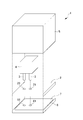
- FIG. 1 is an exploded perspective view schematically showing a general relay.
- the relay 1 includes a base 2, a terminal 3, a relay body 4, a cover 5, and a substrate 6.
- the base 2 has a terminal hole 21 through which the terminal 3 is inserted.
- the terminal 3 is press-fitted into the terminal hole 21, the terminal 3 is inserted into the terminal hole 21.
- the terminal 3 When the terminal 3 is press-fitted into the terminal hole 21, there may be a problem that the vicinity of the terminal hole 21 of the base 2 is deformed (the surface is peeled off, deformed such as rising) or scraped. If the base 2 is formed by using a liquid crystalline resin composition for relay, the surface hardness of the base 2 is reduced by blending the elastomer, and when the terminal 3 is press-fitted into the terminal hole 21, It is possible to prevent the base 2 from being scraped or deformed.
- the degree of surface hardness of the base 2 is preferably 107 or less, more preferably 90 or more and 105 or less in terms of surface Rockwell hardness (R scale).
- the flexural modulus measured according to ISO178 is preferably 12000 MPa to 15000 MPa, more preferably 13000 MPa to 14500 MPa, If the hardness is in the above preferable range, the vicinity of the terminal hole 21 of the base 2 is further less likely to be peeled off or scraped when the terminal 3 is press-fitted.
- the terminal 3 has one end in electrical contact with the relay body 4 and the other end penetrating through the terminal hole 21 so that it can be inserted into a through hole of the substrate 6 described later.
- the relay body 4 is a general relay body having a coil, an electromagnet, and the like.
- the relay body 4 is disposed on the surface of the base 4 and, as described above, the relay body 4 is electrically connected to one end of the terminal 3. It is connected to the.
- the cover 5 is installed so as to cover the relay body 4 and the side wall of the substrate 6.
- the relay body 4 is accommodated in a hollow container formed by the base 2 and the cover 5.
- the substrate 6 has a through hole 61 through which the terminal 3 is inserted and which can be electrically connected to the terminal 3.
- One surface of the substrate 6 and the back surface of the base 2 are joined by an epoxy adhesive 7.
- the base 2 is formed of a liquid crystalline resin containing an elastomer, the adhesion between the base 2 and the substrate 6 becomes very strong.
- Liquid crystalline resin Vectra (registered trademark) LCP E950i, manufactured by Polyplastics Co., Ltd.
- Elastomer 1 Bondfast 2C [ethylene-glycidyl methacrylate copolymer (containing 6% by weight of glycidyl methacrylate)] manufactured by Sumitomo Chemical Co., Ltd.
- Elastomer 2 Bondfast 7M manufactured by Sumitomo Chemical Co., Ltd. [ethylene-glycidyl methacrylate-methyl acrylate copolymer (containing 6% by mass of glycidyl methacrylate, 27% by mass of methyl acrylate)]
- Glass fiber Nippon Electric Glass Co., Ltd.
- ECS03T-786H Glass fiber, average fiber diameter 10.5 ⁇ m, average fiber length 3000 ⁇ m]
- the above materials were melt-kneaded and pelletized at a ratio shown in Table 1 using a twin screw extruder (TEX-30 ⁇ manufactured by Nippon Steel Co., Ltd.).
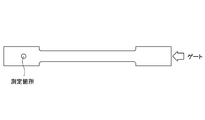
- the pellet was molded into a test piece (ISO test piece Type 1A, thickness 4 mm) shown in FIG. 2 using an injection molding machine (“SE100DU” manufactured by Sumitomo Heavy Industries, Ltd.). Thereafter, the Rockwell hardness of the circled portion was measured by a method based on ISO 2039-2. The measurement results are shown in Table 1.
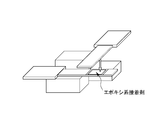
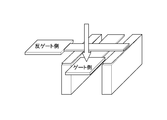
- the pellet is molded into a test piece (ISO test piece Type 1A, thickness 4 mm) using an injection molding machine (“SE100DU” manufactured by Sumitomo Heavy Industries, Ltd.). As shown in Fig. 4, the substrates were bonded with an epoxy adhesive (curing conditions: 120 ° C x 30 minutes). Then, as shown in FIG. 4, the bonded test piece was installed, the load was applied in the arrow direction using a bending tester, and the adhesive strength was evaluated from the load when peeled off. The evaluation results are shown in Table 1.
Landscapes
- Physics & Mathematics (AREA)
- Electromagnetism (AREA)
- Compositions Of Macromolecular Compounds (AREA)
- Chemical & Material Sciences (AREA)
- Laminated Bodies (AREA)
- Health & Medical Sciences (AREA)
- Chemical Kinetics & Catalysis (AREA)
- Medicinal Chemistry (AREA)
- Polymers & Plastics (AREA)
- Organic Chemistry (AREA)
Description
本発明は、リレー及びリレー用液晶性樹脂組成物に関する。
リレーは、エレクトロニクス産業の発展とともに、その生産量も順調に伸びており、通信機器、OA機器、家電機器、自販機等使用される分野も多岐にわたっている。最近、リレーに求められる特性として、半田リフロー処理後に気密性を保持できることが挙げられ、完全気密封止型のリレーが開発されている。
ところで、リレーを構成する部品の原料として、熱可塑性樹脂が知られており、例えば、液晶性樹脂が使用されている(特許文献1参照)。
リレーを構成する部品として、リレー本体が表面に配置される基台がある。基台には、端子の挿入に耐えられること、基台と基板との接合に使用されるエポキシ系接着剤に対する接着性を有することが求められる。
本発明は、上記課題を解決するためになされたものであり、その目的は、基台を構成する材料として、端子の挿入に耐えられ、エポキシ系接着剤に対する充分な接着性を備えるリレー用液晶性樹脂組成物、及びその樹脂組成物を用いて製造してなるリレーを提供することにある。
本発明者らは、上記課題を解決するために鋭意研究を重ねた。その結果、液晶性樹脂と、グリシジルメタクリレートに由来する繰り返し単位を有するエラストマーと、を含有する液晶性樹脂組成物を用いれば上記課題を解決できることを見出し、本発明を完成するに至った。より具体的には本発明は以下のものを提供する。
(1) 端子孔を有する基台と、前記端子孔に挿通される端子と、前記基台の表面に配置され、前記端子と電気的に接続されたリレー本体と、前記リレー本体を覆い、前記基台とともに、前記リレー本体が収容される中空容器状を形成するカバーと、前記端子が挿通されるスルーホールが穿設され、表面が前記基台の裏面とエポキシ系接着剤で接合される基板と、を備え、前記基台は、液晶性樹脂と、グリシジルメタクリレートに由来する繰り返し単位を有するエラストマーと、を含有するリレー用液晶性樹脂組成物から構成されるリレー。
(2) 前記エラストマーは、エチレン-グリシジルメタクリレートである(1)に記載のリレー。
(3) 前記リレー用液晶性樹脂組成物は、ガラス繊維を含み、前記エラストマーの含有量が4質量部以上17質量部以下であり、前記ガラス繊維の含有量が27質量部以上73質量部以下である(1)又は(2)に記載のリレー。
(4) 表面に電磁リレーが配置され、エポキシ系接着剤で基板と接合される基台を成形するためのリレー用液晶性樹脂組成物であって、液晶性樹脂と、グリシジルメタクリレートに由来する繰り返し単位を有するエラストマーと、を含有するリレー用液晶性樹脂組成物。
本発明のリレー用液晶性樹脂組成物を用いて基台を成形すれば、端子の挿入に耐えられ、エポキシ系接着剤との接着性に優れた基台が得られる。
本発明のリレーは、基台に端子を圧入する際に、基台に変形が生じず、且つ基台自体がエポキシ系接着剤との接着性に優れるため、基台と基板との密着性に特に優れる。
以下、本発明の実施形態について説明する。なお、本発明は以下の実施形態に限定されない。
<リレー用液晶性樹脂組成物>
本発明のリレー用液晶性樹脂組成物は、液晶性樹脂とエラストマーとを有する。以下、リレー用液晶性樹脂組成物に含まれる成分について説明する。
本発明のリレー用液晶性樹脂組成物は、液晶性樹脂とエラストマーとを有する。以下、リレー用液晶性樹脂組成物に含まれる成分について説明する。
[液晶性樹脂]
本発明で使用する液晶性樹脂は、光学異方性溶融相を形成し得る性質を有する溶融加工性ポリマーを指す。異方性溶融相の性質は、直交偏光子を利用した慣用の偏光検査法により確認することができる。より具体的には、異方性溶融相の確認は、Leitz偏光顕微鏡を使用し、Leitzホットステージに載せた溶融試料を窒素雰囲気下で40倍の倍率で観察することにより実施できる。本発明に適用できる液晶性樹脂は直交偏光子の間で検査したときに、たとえ溶融静止状態であっても偏光は通常透過し、光学的に異方性を示す。
本発明で使用する液晶性樹脂は、光学異方性溶融相を形成し得る性質を有する溶融加工性ポリマーを指す。異方性溶融相の性質は、直交偏光子を利用した慣用の偏光検査法により確認することができる。より具体的には、異方性溶融相の確認は、Leitz偏光顕微鏡を使用し、Leitzホットステージに載せた溶融試料を窒素雰囲気下で40倍の倍率で観察することにより実施できる。本発明に適用できる液晶性樹脂は直交偏光子の間で検査したときに、たとえ溶融静止状態であっても偏光は通常透過し、光学的に異方性を示す。
上記のような液晶性樹脂の種類としては特に限定されないが、芳香族ポリエステル又は芳香族ポリエステルアミドであることが好ましい。また、芳香族ポリエステル又は芳香族ポリエステルアミドを同一分子鎖中に部分的に含むポリエステルもその範囲にある。これらは60℃でペンタフルオロフェノールに濃度0.1重量%で溶解したときに、好ましくは少なくとも約2.0dl/g、さらに好ましくは2.0~10.0dl/gの対数粘度(I.V.)を有するものが好ましく使用される。
芳香族ポリエステル又は芳香族ポリエステルアミドとして特に好ましくは、芳香族ヒドロキシカルボン酸、芳香族ヒドロキシアミン、芳香族ジアミンの群から選ばれた少なくとも1種以上の化合物を構成成分として有する芳香族ポリエステル、芳香族ポリエステルアミドである。
より具体的には、
(1)主として芳香族ヒドロキシカルボン酸及びその誘導体の1種又は2種以上からなるポリエステル;
(2)主として(a)芳香族ヒドロキシカルボン酸及びその誘導体の1種又は2種以上と、(b)芳香族ジカルボン酸、脂環族ジカルボン酸及びその誘導体の1種又は2種以上と、(c)芳香族ジオール、脂環族ジオール、脂肪族ジオール及びその誘導体の少なくとも1種又は2種以上、とからなるポリエステル;
(3)主として(a)芳香族ヒドロキシカルボン酸及びその誘導体の1種又は2種以上と、(b)芳香族ヒドロキシアミン、芳香族ジアミン及びその誘導体の1種又は2種以上と、(c)芳香族ジカルボン酸、脂環族ジカルボン酸及びその誘導体の1種又は2種以上、とからなるポリエステルアミド;
(4)主として(a)芳香族ヒドロキシカルボン酸及びその誘導体の1種又は2種以上と、(b)芳香族ヒドロキシアミン、芳香族ジアミン及びその誘導体の1種又は2種以上と、(c)芳香族ジカルボン酸、脂環族ジカルボン酸及びその誘導体の1種又は2種以上と、(d)芳香族ジオール、脂環族ジオール、脂肪族ジオール及びその誘導体の少なくとも1種又は2種以上、とからなるポリエステルアミド等が挙げられる。さらに上記の構成成分に必要に応じ分子量調整剤を併用してもよい。
(1)主として芳香族ヒドロキシカルボン酸及びその誘導体の1種又は2種以上からなるポリエステル;
(2)主として(a)芳香族ヒドロキシカルボン酸及びその誘導体の1種又は2種以上と、(b)芳香族ジカルボン酸、脂環族ジカルボン酸及びその誘導体の1種又は2種以上と、(c)芳香族ジオール、脂環族ジオール、脂肪族ジオール及びその誘導体の少なくとも1種又は2種以上、とからなるポリエステル;
(3)主として(a)芳香族ヒドロキシカルボン酸及びその誘導体の1種又は2種以上と、(b)芳香族ヒドロキシアミン、芳香族ジアミン及びその誘導体の1種又は2種以上と、(c)芳香族ジカルボン酸、脂環族ジカルボン酸及びその誘導体の1種又は2種以上、とからなるポリエステルアミド;
(4)主として(a)芳香族ヒドロキシカルボン酸及びその誘導体の1種又は2種以上と、(b)芳香族ヒドロキシアミン、芳香族ジアミン及びその誘導体の1種又は2種以上と、(c)芳香族ジカルボン酸、脂環族ジカルボン酸及びその誘導体の1種又は2種以上と、(d)芳香族ジオール、脂環族ジオール、脂肪族ジオール及びその誘導体の少なくとも1種又は2種以上、とからなるポリエステルアミド等が挙げられる。さらに上記の構成成分に必要に応じ分子量調整剤を併用してもよい。
本発明に適用できる液晶性樹脂を構成する具体的化合物の好ましい例としては、p-ヒドロキシ安息香酸、6-ヒドロキシ-2-ナフトエ酸等の芳香族ヒドロキシカルボン酸、2,6-ジヒドロキシナフタレン、1,4-ジヒドロキシナフタレン、4,4’-ジヒドロキシビフェニル、ハイドロキノン、レゾルシン、下記一般式(I)及び下記一般式(II)で表される化合物等の芳香族ジオール;テレフタル酸、イソフタル酸、4,4’-ジフェニルジカルボン酸、2,6-ナフタレンジカルボン酸及び下記一般式(III)で表される化合物等の芳香族ジカルボン酸;p-アミノフェノール、p-フェニレンジアミン等の芳香族アミン類が挙げられる。

(X:アルキレン(C1~C4)、アルキリデン、-O-、-SO-、-SO2-、-S-、-CO-より選ばれる基である)


(Y:-(CH2)n-(n=1~4)、-O(CH2)nO-(n=1~4)より選ばれる基である。)
本発明に用いられる液晶性樹脂の調製は、上記のモノマー化合物(又はモノマーの混合物)から直接重合法やエステル交換法を用いて公知の方法で行うことができる。通常は溶融重合法やスラリー重合法等が用いられる。エステル形成能を有する上記化合物類はそのままの形で重合に用いてもよく、また、重合の前段階で前駆体から該エステル形成能を有する誘導体に変性されたものでもよい。これらの重合に際しては種々の触媒の使用が可能であり、代表的なものとしては、ジアルキル錫酸化物、ジアリール錫酸化物、2酸化チタン、アルコキシチタンけい酸塩類、チタンアルコラート類、カルボン酸のアルカリ及びアルカリ土類金属塩類、BF3の如きルイス酸塩等が挙げられる。触媒の使用量は一般にはモノマーの全重量に対して約0.001~1質量%、特に約0.01~0.2質量%が好ましい。これらの重合方法により製造されたポリマーはさらに必要があれば、減圧又は不活性ガス中で加熱する固相重合により分子量の増加を図ることができる。
[エラストマー]
リレー用液晶性樹脂組成物にエラストマーが含まれることで、リレー用液晶性樹脂組成物に柔軟性が付与されるとともに、エポキシ系接着剤への接着性が付与される結果、後述する通り、リレー用液晶性樹脂組成物は基台の製造に適する。
リレー用液晶性樹脂組成物にエラストマーが含まれることで、リレー用液晶性樹脂組成物に柔軟性が付与されるとともに、エポキシ系接着剤への接着性が付与される結果、後述する通り、リレー用液晶性樹脂組成物は基台の製造に適する。
エラストマーは、グリシジルメタクリレートに由来する繰り返し単位を有する。エラストマーはグリシジルメタクリレート以外の共重合成分を有するものであってもよいが、グリシジルメタクリレートに由来する繰り返し単位の含有量が3質量%以上12質量%以下であることが好ましい。
上記共重合成分としては、特に限定されないが、エチレン、1-プロペン、1-ブテン、1-ペンテン、4-メチル-1-ペンテン、1-ヘキセン、1-ヘプテン、1-オクテン、1-ノネン、1-デセン等のα-オレフィン、不飽和カルボン酸又はその誘導体等が挙げられる。
本発明においては、特に、エチレンとグリシジルメタクリレートの共重合体であるエチレン-グリシジルメタクリレート共重合体(EGMA)の使用が好ましい。EGMAは、エチレン、グリシジルメタクリレートのランダム共重合体又はブロック共重合体のいずれでもよい。
また、エチレンとグリシジルメタクリレート以外の共重合成分を含むものであってもよいが、その他の共重合成分の割合は30質量%以下であることが好ましい。
リレー用液晶性樹脂組成物中のエラストマーの含有量は特に限定されないが、4質量部以上17質量部以下であることが好ましい。4質量部以上であれば、リレー用液晶性樹脂組成物に充分な柔軟性を付与するとともに、エポキシ系接着剤への充分な接着性を付与できる傾向にあるため好ましく、17質量部以下であれば、リレー用液晶性樹脂組成物の流動性の向上及び得られるリレーの外観の向上という理由で好ましい。より好ましいエラストマーの含有量は6質量部以上11質量部以下である。
[無機充填剤]
本発明のリレー用液晶性樹脂組成物には、上記の必須成分以外に、無機充填剤が含まれることが好ましい。リレー用液晶性樹脂組成物に無機充填材が含まれることで、リレー用液晶性樹脂組成物の機械的強度等を高めることができる。エラストマーで樹脂組成物に柔軟性を付与するとともに、無機充填剤で機械的強度を付与することで、基台に端子を圧入した際の基台の変形を特に抑えやすくなる。
本発明のリレー用液晶性樹脂組成物には、上記の必須成分以外に、無機充填剤が含まれることが好ましい。リレー用液晶性樹脂組成物に無機充填材が含まれることで、リレー用液晶性樹脂組成物の機械的強度等を高めることができる。エラストマーで樹脂組成物に柔軟性を付与するとともに、無機充填剤で機械的強度を付与することで、基台に端子を圧入した際の基台の変形を特に抑えやすくなる。
無機充填剤としては、非繊維状充填剤であっても、繊維状充填剤であってもよいが、繊維状充填剤が好ましく、特にガラス繊維が好ましい。本発明で用いられるガラス繊維としては、公知のガラス繊維がいずれも好ましく用いられる。そして、ガラス繊維のガラス繊維径や、円筒、繭形、長円断面等の形状、あるいはチョップドストランドやロービング等の製造に用いる際の長さやガラスカットの方法は特に限定されない。本発明では、ガラスの種類も限定されないが、品質上、Eガラスや、組成中にジルコニウム元素を有する耐腐食ガラスが好ましく用いられる。
また、本発明では、ガラス繊維と樹脂マトリックスとの界面特性を向上させる目的で、アミノシラン化合物やエポキシ化合物等の有機処理剤で表面処理されたガラス繊維が好ましく用いられる。
リレー用液晶性樹脂組成物中のガラス繊維の含有量は、特に限定されないが27質量部以上73質量部以下であることが好ましい。27質量部以上であれば、リレー用液晶性樹脂組成物に充分な機械的強度を付与できる傾向にあるため好ましい、また、73質量部以下であれば、液晶性樹脂やエラストマー等の成分を充分に配合させつつ、機械的強度を付与できるため好ましい。
[その他の成分]
また、本発明のリレー用液晶性樹脂組成物には、本発明の効果を害さない範囲で、上記無機充填剤以外の任意成分を含んでもよい。任意成分としては、例えば、核剤、顔料、酸化防止剤、安定剤、可塑剤、滑剤、離型剤等が挙げられる。
また、本発明のリレー用液晶性樹脂組成物には、本発明の効果を害さない範囲で、上記無機充填剤以外の任意成分を含んでもよい。任意成分としては、例えば、核剤、顔料、酸化防止剤、安定剤、可塑剤、滑剤、離型剤等が挙げられる。
<リレー用液晶性樹脂組成物の製造方法>
リレー用液晶性樹脂組成物の調製法の具体的態様は、特に限定されるものではなく、一般に樹脂組成物又はその成形体の調製法として公知の設備と方法により、樹脂組成物を調製することができる。例えば、必要な成分を混合し、1軸又は2軸の押出機又はその他の溶融混練装置を使用して混練し、成形用ペレットとして調製することができる。また、押出機又はその他の溶融混練装置は複数使用してもよい。また、全ての成分をホッパから同時に投入してもよいし、一部の成分はサイドフィード口から投入してもよい。
リレー用液晶性樹脂組成物の調製法の具体的態様は、特に限定されるものではなく、一般に樹脂組成物又はその成形体の調製法として公知の設備と方法により、樹脂組成物を調製することができる。例えば、必要な成分を混合し、1軸又は2軸の押出機又はその他の溶融混練装置を使用して混練し、成形用ペレットとして調製することができる。また、押出機又はその他の溶融混練装置は複数使用してもよい。また、全ての成分をホッパから同時に投入してもよいし、一部の成分はサイドフィード口から投入してもよい。
<リレー用液晶性樹脂組成物の流動性>
基台等のリレーを構成する樹脂部品は一定の厚みを有するため、一般的に液晶性樹脂組成物に求められる非常に高い流動性が、リレー用液晶性樹脂組成物には求められない場合も多い。例えば、成形温度での溶融粘度が剪断速度1000sec-1で20Pa・s以上100Pa・s以下の範囲であっても充分成形可能である。
基台等のリレーを構成する樹脂部品は一定の厚みを有するため、一般的に液晶性樹脂組成物に求められる非常に高い流動性が、リレー用液晶性樹脂組成物には求められない場合も多い。例えば、成形温度での溶融粘度が剪断速度1000sec-1で20Pa・s以上100Pa・s以下の範囲であっても充分成形可能である。
<リレー>
本発明のリレー用液晶性樹脂組成物は、リレーを構成する部品である基台を成形するための原料として用いることができる。以下、本発明のリレー用液晶性樹脂組成物が使用されるリレーの一例について説明する。なお、基台が本発明のリレー用液晶性樹脂組成物を用いて成形されたリレーは、本発明のリレーに当たる。
本発明のリレー用液晶性樹脂組成物は、リレーを構成する部品である基台を成形するための原料として用いることができる。以下、本発明のリレー用液晶性樹脂組成物が使用されるリレーの一例について説明する。なお、基台が本発明のリレー用液晶性樹脂組成物を用いて成形されたリレーは、本発明のリレーに当たる。
図1は、一般的なリレーを模式的に表した分解斜視図である。リレー1は、基台2と、端子3と、リレー本体4と、カバー5と、基板6とを備える。
基台2は、端子3が挿通される端子孔21を有する。端子孔21に端子3が圧入されることで、端子孔21に端子3が挿通された状態となっている。
端子3が端子孔21に圧入されるときに、基台2の端子孔21付近が変形(表面が剥がれる、盛り上がる等の変形)したり、削れたりする問題が生じる場合があるが、本発明のリレー用液晶性樹脂組成物を用いて成形してなる基台2であれば、エラストマーの配合により、基台2の表面の表面硬度が低くなり、端子3を端子孔21に圧入したときに、基台2が削れたり、変形したりすることを抑えることができる。
基台2の表面硬度の程度は、表面のロックウェル硬度(Rスケール)で107以下が好ましく、より好ましくは90以上105以下である。
また、基台2の柔軟性を表す指標として、曲げ弾性率があるが、ISO178に準拠して測定される曲げ弾性率は12000MPa以上15000MPa以下が好ましく、より好ましくは13000MPa以上14500MPa以下であるとともに、硬度が上記の好ましい範囲にあれば、端子3の圧入時に基台2の端子孔21付近が、さらに剥がれたり削れたりしにくくなる。
端子3は、一端がリレー本体4と電気的に接触し、他端は端子孔21を貫通し、後述する基板6が有するスルーホールに挿通できるようになっている。
リレー本体4は、コイルや電磁石等を有する一般的なリレー本体であり、リレー本体4は、基台4の表面に配置されるとともに、上記の通り、リレー本体4は端子3の一端と電気的に接続されている。
カバー5は、リレー本体4と基板6の側壁部とを覆うように設置される。基台2とカバー5とで形成される中空容器状の内部にリレー本体4が収容される。
基板6は、端子3が挿通され、端子3と電気的に接続可能なスルーホール61を有する。基板6の一の面と、基台2の裏面とがエポキシ系接着剤7で接合される。
本発明においては、基台2がエラストマーを含む液晶性樹脂で成形されているため、基台2と基板6との間の密着力が非常に強くなる。
また、基台2の裏面には端子3の圧入時に生じる変形がほとんど無いため、基板6の一の面と基台2の裏面とを密着させやすくなる結果、基台2と基板6との間の密着力は非常に強くなる。
以下、本発明について、実施例を挙げて詳細に説明する。なお、本発明は、以下に示す実施例に何ら限定されるものではない。
<材料>
液晶性樹脂:ポリプラスチックス(株)製、ベクトラ(登録商標)LCP E950i
エラストマー1:住友化学(株)製、Bondfast 2C[エチレン-グリシジルメタクリレート共重合体(グリシジルメタクリレートを6重量%含有)]
エラストマー2:住友化学(株)製、Bondfast 7M[エチレン-グリシジルメタクリレート-アクリル酸メチル共重合体(グリシジルメタクリレートを6質量%含有、アクリル酸メチルを27質量%含有)]
ガラス繊維:日本電気硝子(株) ECS03T-786H[ガラスファイバー、平均繊維径10.5μm、平均繊維長3000μm]
液晶性樹脂:ポリプラスチックス(株)製、ベクトラ(登録商標)LCP E950i
エラストマー1:住友化学(株)製、Bondfast 2C[エチレン-グリシジルメタクリレート共重合体(グリシジルメタクリレートを6重量%含有)]
エラストマー2:住友化学(株)製、Bondfast 7M[エチレン-グリシジルメタクリレート-アクリル酸メチル共重合体(グリシジルメタクリレートを6質量%含有、アクリル酸メチルを27質量%含有)]
ガラス繊維:日本電気硝子(株) ECS03T-786H[ガラスファイバー、平均繊維径10.5μm、平均繊維長3000μm]
上記材料を二軸押出機((株)日本製鋼製TEX-30α)を用いて、表1に示す割合で溶融混練し、ペレット化した。
<評価>
溶融粘度、曲げ強度、曲げ弾性率、ロックウェル硬度、ピン圧入試験、密着力を評価した。
溶融粘度、曲げ強度、曲げ弾性率、ロックウェル硬度、ピン圧入試験、密着力を評価した。
[溶融粘度]
上記ペレットを、キャピラリー式レオメーター((株)東洋精機製作所製キャピログラフ1D:ピストン径10mm)を用いて、シリンダー温度が融点+20℃、剪断速度が1000sec-1の条件で、ISO 11443に準拠して見かけの溶融粘度を測定した。なお、測定には、内径1mm、長さ20mmのオリフィスを用いた。測定結果を表1に示した。
上記ペレットを、キャピラリー式レオメーター((株)東洋精機製作所製キャピログラフ1D:ピストン径10mm)を用いて、シリンダー温度が融点+20℃、剪断速度が1000sec-1の条件で、ISO 11443に準拠して見かけの溶融粘度を測定した。なお、測定には、内径1mm、長さ20mmのオリフィスを用いた。測定結果を表1に示した。
[曲げ試験]
上記ペレットを、射出成形機(住友重機械工業(株)製「SE100DU」)を用いて、試験片(4mm×10mm×80mm)に成形した。その後、ISO178に準拠して、試験片の曲げ強度、曲げ弾性率を測定した。測定結果を表1に示した。
上記ペレットを、射出成形機(住友重機械工業(株)製「SE100DU」)を用いて、試験片(4mm×10mm×80mm)に成形した。その後、ISO178に準拠して、試験片の曲げ強度、曲げ弾性率を測定した。測定結果を表1に示した。
[ロックウェル硬度]
上記ペレットを、射出成形機(住友重機械工業(株)製「SE100DU」)を用いて、図2に示す試験片(ISO試験片Type1A、厚み4mm)に成形した。その後、ISO2039-2に準拠した方法で丸印部分のロックウェル硬度を測定した。測定結果を表1に示した。
上記ペレットを、射出成形機(住友重機械工業(株)製「SE100DU」)を用いて、図2に示す試験片(ISO試験片Type1A、厚み4mm)に成形した。その後、ISO2039-2に準拠した方法で丸印部分のロックウェル硬度を測定した。測定結果を表1に示した。
[ピン圧入試験]
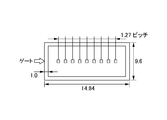
上記ペレットを、射出成形機(日精樹脂工業(株)製NEX500)を用いて、図5に示す0.37mm×0.37mm角の孔を1.27mmピッチで9個有する試験片(14.84mm×9.6mm×1.0mm)に成形した。その後、1個置きの5個の孔に、0.40mm×0.40mm角のピン5本を同時に速度20mm/minで圧入して貫通させ、貫通するまでの最大荷重を測定した。評価結果を表1に示した。
上記ペレットを、射出成形機(日精樹脂工業(株)製NEX500)を用いて、図5に示す0.37mm×0.37mm角の孔を1.27mmピッチで9個有する試験片(14.84mm×9.6mm×1.0mm)に成形した。その後、1個置きの5個の孔に、0.40mm×0.40mm角のピン5本を同時に速度20mm/minで圧入して貫通させ、貫通するまでの最大荷重を測定した。評価結果を表1に示した。
[接着強度]
上記ペレットを、射出成形機(住友重機械工業(株)製「SE100DU」)を用いて、試験片(ISO試験片Type1A、厚み4mm)に成形し、この試験片を2分割して、図3に示すように、エポキシ系接着剤で貼り合わせた(硬化条件:120℃×30分)。その後、図4に示すように、貼り合わされた試験片を設置して、曲げ試験機を用いて、矢印方向に荷重を加えて、剥がれたときの荷重から、接着強度を評価した。評価結果を表1に示した。
上記ペレットを、射出成形機(住友重機械工業(株)製「SE100DU」)を用いて、試験片(ISO試験片Type1A、厚み4mm)に成形し、この試験片を2分割して、図3に示すように、エポキシ系接着剤で貼り合わせた(硬化条件:120℃×30分)。その後、図4に示すように、貼り合わされた試験片を設置して、曲げ試験機を用いて、矢印方向に荷重を加えて、剥がれたときの荷重から、接着強度を評価した。評価結果を表1に示した。
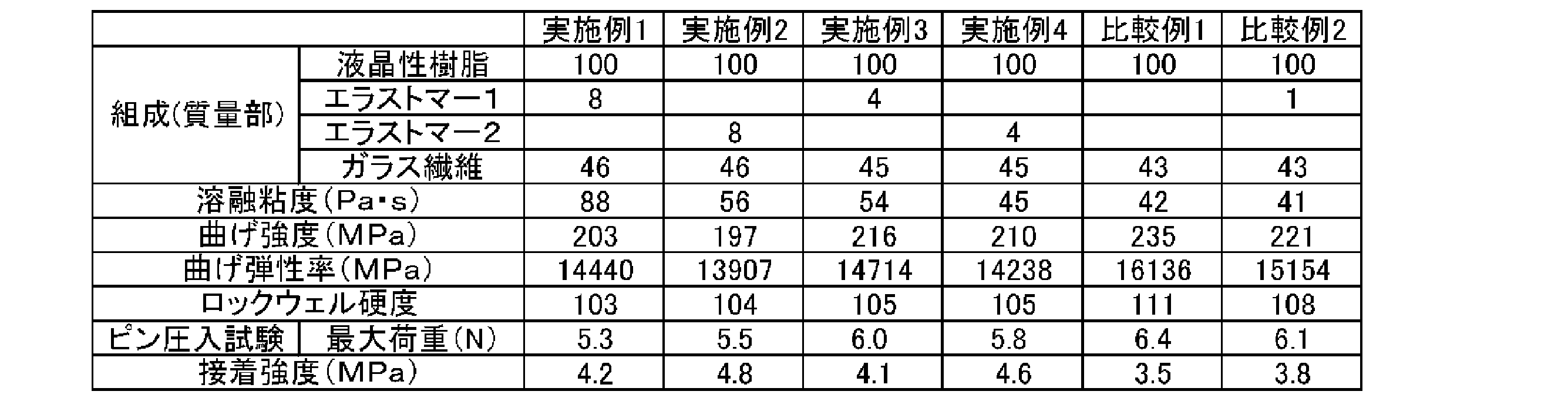
以上の通り、液晶性樹脂と特定のエラストマーとを併用することで、リレーの基台の成形に特に適する液晶性樹脂組成物になることが確認された。
1 リレー
2 基台
21 端子孔
3 端子
4 リレー本体
5 カバー
6 基板
61 スルーホール
7 エポキシ系接着剤
2 基台
21 端子孔
3 端子
4 リレー本体
5 カバー
6 基板
61 スルーホール
7 エポキシ系接着剤
Claims (4)
- 端子孔を有する基台と、
前記端子孔に挿通される端子と、
前記基台の表面に配置され、前記端子と電気的に接続されたリレー本体と、
前記リレー本体を覆い、前記基台とともに、前記リレー本体が収容される中空容器状を形成するカバーと、
前記端子が挿通されるスルーホールが穿設され、表面が前記基台の裏面とエポキシ系接着剤で接合される基板と、を備え、
前記基台は、液晶性樹脂と、グリシジルメタクリレートに由来する繰り返し単位を有するエラストマーと、を含有するリレー用液晶性樹脂組成物から構成されるリレー。 - 前記エラストマーは、エチレン-グリシジルメタクリレートである請求項1に記載のリレー。
- 前記リレー用液晶性樹脂組成物は、ガラス繊維を含み、
前記エラストマーの含有量が4質量部以上17質量部以下であり、
前記ガラス繊維の含有量が27質量部以上73質量部以下である請求項1又は2に記載のリレー。 - 表面に電磁リレーが配置され、エポキシ系接着剤で基板と接合される基台を成形するためのリレー用液晶性樹脂組成物であって、
液晶性樹脂と、
グリシジルメタクリレートに由来する繰り返し単位を有するエラストマーと、を含有するリレー用液晶性樹脂組成物。
Priority Applications (2)
| Application Number | Priority Date | Filing Date | Title |
|---|---|---|---|
| CN201380041615.2A CN104520957B (zh) | 2012-08-07 | 2013-06-19 | 继电器和继电器用液晶性树脂组合物 |
| KR1020157002292A KR101877348B1 (ko) | 2012-08-07 | 2013-06-19 | 릴레이 및 릴레이용 액정성 수지 조성물 |
Applications Claiming Priority (2)
| Application Number | Priority Date | Filing Date | Title |
|---|---|---|---|
| JP2012175437A JP6037709B2 (ja) | 2012-08-07 | 2012-08-07 | リレー及びリレー用液晶性樹脂組成物 |
| JP2012-175437 | 2012-08-07 |
Publications (1)
| Publication Number | Publication Date |
|---|---|
| WO2014024574A1 true WO2014024574A1 (ja) | 2014-02-13 |
Family
ID=50067815
Family Applications (1)
| Application Number | Title | Priority Date | Filing Date |
|---|---|---|---|
| PCT/JP2013/066886 Ceased WO2014024574A1 (ja) | 2012-08-07 | 2013-06-19 | リレー及びリレー用液晶性樹脂組成物 |
Country Status (5)
| Country | Link |
|---|---|
| JP (1) | JP6037709B2 (ja) |
| KR (1) | KR101877348B1 (ja) |
| CN (1) | CN104520957B (ja) |
| TW (1) | TWI514432B (ja) |
| WO (1) | WO2014024574A1 (ja) |
Citations (6)
| Publication number | Priority date | Publication date | Assignee | Title |
|---|---|---|---|---|
| JP2002294051A (ja) * | 2001-03-29 | 2002-10-09 | Toray Ind Inc | 難燃性樹脂組成物 |
| JP2006179503A (ja) * | 2006-03-27 | 2006-07-06 | Matsushita Electric Works Ltd | 高周波リレー |
| JP2007073470A (ja) * | 2005-09-09 | 2007-03-22 | Nec Tokin Corp | 電磁継電器 |
| JP2011020445A (ja) * | 2009-06-15 | 2011-02-03 | Sumitomo Chemical Co Ltd | 樹脂成形体及びその製造方法、並びにリレー |
| JP2011228060A (ja) * | 2010-04-16 | 2011-11-10 | Fujitsu Component Ltd | 電磁継電器 |
| JP2012142210A (ja) * | 2011-01-04 | 2012-07-26 | Fujitsu Component Ltd | 電磁継電器 |
Family Cites Families (4)
| Publication number | Priority date | Publication date | Assignee | Title |
|---|---|---|---|---|
| US6885133B2 (en) * | 2003-04-14 | 2005-04-26 | Agilent Technologies, Inc. | High frequency bending-mode latching relay |
| US20070084633A1 (en) * | 2005-09-21 | 2007-04-19 | Tyco Electronic Corporation | Electromagnetic relay with noise reducing sealant |
| WO2009116493A1 (ja) * | 2008-03-19 | 2009-09-24 | パナソニック電工株式会社 | 接点装置 |
| JP5340318B2 (ja) * | 2009-02-04 | 2013-11-13 | 信越ポリマー株式会社 | 静電容量型入力スイッチ |
-
2012
- 2012-08-07 JP JP2012175437A patent/JP6037709B2/ja active Active
-
2013
- 2013-06-19 WO PCT/JP2013/066886 patent/WO2014024574A1/ja not_active Ceased
- 2013-06-19 CN CN201380041615.2A patent/CN104520957B/zh active Active
- 2013-06-19 KR KR1020157002292A patent/KR101877348B1/ko active Active
- 2013-06-28 TW TW102123146A patent/TWI514432B/zh active
Patent Citations (6)
| Publication number | Priority date | Publication date | Assignee | Title |
|---|---|---|---|---|
| JP2002294051A (ja) * | 2001-03-29 | 2002-10-09 | Toray Ind Inc | 難燃性樹脂組成物 |
| JP2007073470A (ja) * | 2005-09-09 | 2007-03-22 | Nec Tokin Corp | 電磁継電器 |
| JP2006179503A (ja) * | 2006-03-27 | 2006-07-06 | Matsushita Electric Works Ltd | 高周波リレー |
| JP2011020445A (ja) * | 2009-06-15 | 2011-02-03 | Sumitomo Chemical Co Ltd | 樹脂成形体及びその製造方法、並びにリレー |
| JP2011228060A (ja) * | 2010-04-16 | 2011-11-10 | Fujitsu Component Ltd | 電磁継電器 |
| JP2012142210A (ja) * | 2011-01-04 | 2012-07-26 | Fujitsu Component Ltd | 電磁継電器 |
Also Published As
| Publication number | Publication date |
|---|---|
| KR20150040879A (ko) | 2015-04-15 |
| KR101877348B1 (ko) | 2018-07-11 |
| TWI514432B (zh) | 2015-12-21 |
| CN104520957B (zh) | 2017-06-06 |
| CN104520957A (zh) | 2015-04-15 |
| TW201409515A (zh) | 2014-03-01 |
| JP6037709B2 (ja) | 2016-12-07 |
| JP2014035841A (ja) | 2014-02-24 |
Similar Documents
| Publication | Publication Date | Title |
|---|---|---|
| KR102132804B1 (ko) | 내접동 마모 부재용 액정성 수지 조성물 및 이것을 이용한 내접동 마모 부재 | |
| TWI449774B (zh) | 平面狀連接器 | |
| JP6581659B2 (ja) | カメラモジュール用液晶性樹脂組成物及びそれを用いたカメラモジュール | |
| JP5826411B2 (ja) | カメラモジュール用液晶性樹脂組成物及びそれを用いたカメラモジュール | |
| CN108431138B (zh) | 液晶性树脂组合物及嵌入成型品 | |
| JPWO2019065063A1 (ja) | 耐摺動摩耗部材用液晶性樹脂組成物及びそれを用いた耐摺動摩耗部材 | |
| CN102939340B (zh) | 聚亚芳基硫醚树脂组合物 | |
| JP5312783B2 (ja) | ポリブチレンテレフタレート樹脂組成物 | |
| JP7199853B2 (ja) | 耐摺動摩耗部材用液晶性樹脂組成物及びそれを用いた耐摺動摩耗部材 | |
| EP4045262B1 (en) | Polybutylene terephthalate composition and a composite of plastic/metal hybrid | |
| JP6037709B2 (ja) | リレー及びリレー用液晶性樹脂組成物 | |
| WO2021065417A1 (ja) | 液晶性樹脂組成物、及び当該液晶性樹脂組成物の成形品を含む電子部品 | |
| CN110922724A (zh) | 一种玻纤增强pbt组合物及其制备方法 | |
| JP4498810B2 (ja) | 液晶樹脂組成物 | |
| CN109689781B (zh) | 包含聚(对苯二甲酸丁二醇酯)的聚合物组合物 | |
| JPH04189856A (ja) | ポリオレフィン系樹脂組成物成形品 | |
| JP5773999B2 (ja) | 接着力改善用樹脂組成物、樹脂成形体、接合体及び接着力改善剤 | |
| JPH0919937A (ja) | 射出成形体 | |
| KR20230116010A (ko) | 도전성 액정성 수지 조성물 | |
| JPH1154189A (ja) | ポリプロピレンテレフタレート樹脂コネクター |
Legal Events
| Date | Code | Title | Description |
|---|---|---|---|
| 121 | Ep: the epo has been informed by wipo that ep was designated in this application |
Ref document number: 13827877 Country of ref document: EP Kind code of ref document: A1 |
|
| ENP | Entry into the national phase |
Ref document number: 20157002292 Country of ref document: KR Kind code of ref document: A |
|
| NENP | Non-entry into the national phase |
Ref country code: DE |
|
| 122 | Ep: pct application non-entry in european phase |
Ref document number: 13827877 Country of ref document: EP Kind code of ref document: A1 |