WO2013051649A1 - 太陽電池モジュール用ポリマーシート及びバックシート並びに太陽電池モジュール - Google Patents
太陽電池モジュール用ポリマーシート及びバックシート並びに太陽電池モジュール Download PDFInfo
- Publication number
- WO2013051649A1 WO2013051649A1 PCT/JP2012/075801 JP2012075801W WO2013051649A1 WO 2013051649 A1 WO2013051649 A1 WO 2013051649A1 JP 2012075801 W JP2012075801 W JP 2012075801W WO 2013051649 A1 WO2013051649 A1 WO 2013051649A1
- Authority
- WO
- WIPO (PCT)
- Prior art keywords
- solar cell
- polymer layer
- polymer
- resin
- cell module
- Prior art date
- Legal status (The legal status is an assumption and is not a legal conclusion. Google has not performed a legal analysis and makes no representation as to the accuracy of the status listed.)
- Ceased
Links
Images
Classifications
-
- B—PERFORMING OPERATIONS; TRANSPORTING
- B32—LAYERED PRODUCTS
- B32B—LAYERED PRODUCTS, i.e. PRODUCTS BUILT-UP OF STRATA OF FLAT OR NON-FLAT, e.g. CELLULAR OR HONEYCOMB, FORM
- B32B27/00—Layered products comprising a layer of synthetic resin
- B32B27/18—Layered products comprising a layer of synthetic resin characterised by the use of special additives
- B32B27/20—Layered products comprising a layer of synthetic resin characterised by the use of special additives using fillers, pigments, thixotroping agents
-
- B—PERFORMING OPERATIONS; TRANSPORTING
- B32—LAYERED PRODUCTS
- B32B—LAYERED PRODUCTS, i.e. PRODUCTS BUILT-UP OF STRATA OF FLAT OR NON-FLAT, e.g. CELLULAR OR HONEYCOMB, FORM
- B32B27/00—Layered products comprising a layer of synthetic resin
- B32B27/06—Layered products comprising a layer of synthetic resin as the main or only constituent of a layer, which is next to another layer of the same or of a different material
- B32B27/08—Layered products comprising a layer of synthetic resin as the main or only constituent of a layer, which is next to another layer of the same or of a different material of synthetic resin
-
- B—PERFORMING OPERATIONS; TRANSPORTING
- B32—LAYERED PRODUCTS
- B32B—LAYERED PRODUCTS, i.e. PRODUCTS BUILT-UP OF STRATA OF FLAT OR NON-FLAT, e.g. CELLULAR OR HONEYCOMB, FORM
- B32B27/00—Layered products comprising a layer of synthetic resin
- B32B27/30—Layered products comprising a layer of synthetic resin comprising vinyl (co)polymers; comprising acrylic (co)polymers
- B32B27/308—Layered products comprising a layer of synthetic resin comprising vinyl (co)polymers; comprising acrylic (co)polymers comprising acrylic (co)polymers
-
- B—PERFORMING OPERATIONS; TRANSPORTING
- B32—LAYERED PRODUCTS
- B32B—LAYERED PRODUCTS, i.e. PRODUCTS BUILT-UP OF STRATA OF FLAT OR NON-FLAT, e.g. CELLULAR OR HONEYCOMB, FORM
- B32B27/00—Layered products comprising a layer of synthetic resin
- B32B27/36—Layered products comprising a layer of synthetic resin comprising polyesters
-
- B—PERFORMING OPERATIONS; TRANSPORTING
- B32—LAYERED PRODUCTS
- B32B—LAYERED PRODUCTS, i.e. PRODUCTS BUILT-UP OF STRATA OF FLAT OR NON-FLAT, e.g. CELLULAR OR HONEYCOMB, FORM
- B32B7/00—Layered products characterised by the relation between layers; Layered products characterised by the relative orientation of features between layers, or by the relative values of a measurable parameter between layers, i.e. products comprising layers having different physical, chemical or physicochemical properties; Layered products characterised by the interconnection of layers
- B32B7/04—Interconnection of layers
- B32B7/12—Interconnection of layers using interposed adhesives or interposed materials with bonding properties
-
- C—CHEMISTRY; METALLURGY
- C08—ORGANIC MACROMOLECULAR COMPOUNDS; THEIR PREPARATION OR CHEMICAL WORKING-UP; COMPOSITIONS BASED THEREON
- C08L—COMPOSITIONS OF MACROMOLECULAR COMPOUNDS
- C08L23/00—Compositions of homopolymers or copolymers of unsaturated aliphatic hydrocarbons having only one carbon-to-carbon double bond; Compositions of derivatives of such polymers
- C08L23/02—Compositions of homopolymers or copolymers of unsaturated aliphatic hydrocarbons having only one carbon-to-carbon double bond; Compositions of derivatives of such polymers not modified by chemical after-treatment
- C08L23/04—Homopolymers or copolymers of ethene
- C08L23/08—Copolymers of ethene
- C08L23/0846—Copolymers of ethene with unsaturated hydrocarbons containing atoms other than carbon or hydrogen
- C08L23/0869—Copolymers of ethene with unsaturated hydrocarbons containing atoms other than carbon or hydrogen with unsaturated acids, e.g. [meth]acrylic acid; with unsaturated esters, e.g. [meth]acrylic acid esters
-
- H—ELECTRICITY
- H10—SEMICONDUCTOR DEVICES; ELECTRIC SOLID-STATE DEVICES NOT OTHERWISE PROVIDED FOR
- H10F—INORGANIC SEMICONDUCTOR DEVICES SENSITIVE TO INFRARED RADIATION, LIGHT, ELECTROMAGNETIC RADIATION OF SHORTER WAVELENGTH OR CORPUSCULAR RADIATION
- H10F19/00—Integrated devices, or assemblies of multiple devices, comprising at least one photovoltaic cell covered by group H10F10/00, e.g. photovoltaic modules
- H10F19/80—Encapsulations or containers for integrated devices, or assemblies of multiple devices, having photovoltaic cells
- H10F19/85—Protective back sheets
-
- B—PERFORMING OPERATIONS; TRANSPORTING
- B32—LAYERED PRODUCTS
- B32B—LAYERED PRODUCTS, i.e. PRODUCTS BUILT-UP OF STRATA OF FLAT OR NON-FLAT, e.g. CELLULAR OR HONEYCOMB, FORM
- B32B2250/00—Layers arrangement
- B32B2250/24—All layers being polymeric
-
- B—PERFORMING OPERATIONS; TRANSPORTING
- B32—LAYERED PRODUCTS
- B32B—LAYERED PRODUCTS, i.e. PRODUCTS BUILT-UP OF STRATA OF FLAT OR NON-FLAT, e.g. CELLULAR OR HONEYCOMB, FORM
- B32B2264/00—Composition or properties of particles which form a particulate layer or are present as additives
- B32B2264/10—Inorganic particles
- B32B2264/107—Ceramic
- B32B2264/108—Carbon, e.g. graphite particles
-
- C—CHEMISTRY; METALLURGY
- C08—ORGANIC MACROMOLECULAR COMPOUNDS; THEIR PREPARATION OR CHEMICAL WORKING-UP; COMPOSITIONS BASED THEREON
- C08L—COMPOSITIONS OF MACROMOLECULAR COMPOUNDS
- C08L23/00—Compositions of homopolymers or copolymers of unsaturated aliphatic hydrocarbons having only one carbon-to-carbon double bond; Compositions of derivatives of such polymers
- C08L23/02—Compositions of homopolymers or copolymers of unsaturated aliphatic hydrocarbons having only one carbon-to-carbon double bond; Compositions of derivatives of such polymers not modified by chemical after-treatment
- C08L23/04—Homopolymers or copolymers of ethene
- C08L23/08—Copolymers of ethene
- C08L23/0846—Copolymers of ethene with unsaturated hydrocarbons containing atoms other than carbon or hydrogen
- C08L23/0853—Ethylene vinyl acetate copolymers
-
- Y—GENERAL TAGGING OF NEW TECHNOLOGICAL DEVELOPMENTS; GENERAL TAGGING OF CROSS-SECTIONAL TECHNOLOGIES SPANNING OVER SEVERAL SECTIONS OF THE IPC; TECHNICAL SUBJECTS COVERED BY FORMER USPC CROSS-REFERENCE ART COLLECTIONS [XRACs] AND DIGESTS
- Y02—TECHNOLOGIES OR APPLICATIONS FOR MITIGATION OR ADAPTATION AGAINST CLIMATE CHANGE
- Y02E—REDUCTION OF GREENHOUSE GAS [GHG] EMISSIONS, RELATED TO ENERGY GENERATION, TRANSMISSION OR DISTRIBUTION
- Y02E10/00—Energy generation through renewable energy sources
- Y02E10/50—Photovoltaic [PV] energy
Definitions
- the present invention relates to a polymer sheet for a solar cell module, a back sheet for a solar cell module, and a solar cell module.
- the solar cell module has a structure in which the solar cell is protected by two sheet-like protective members, and the solar cell is sealed with a sealing material between the protective members.
- One protective member is a surface member disposed on the light receiving surface side that receives sunlight, and the other protective member is a so-called solar cell backsheet disposed on the back side of the solar cell.
- the surface member is usually made of glass, and ethylene-vinyl acetate copolymer (EVA) is usually used as the sealing material.
- the solar cell backsheet has a function of preventing moisture from entering from the back surface of the solar cell module, and conventionally glass or the like has been used, but recently, a polymer typified by a resin has been used from the viewpoint of cost. It has come to be used. And the back sheet is not a mere polymer sheet, but is also required to have an adhesive performance to adhere firmly to the sealing material. Furthermore, the back sheet of the solar cell is usually produced by laminating a plurality of films having different functions, but the base film used as the core material is bonded to other films and sealing materials, Good adhesion is required. In addition, since the solar battery back sheet can withstand long-term use outdoors, it is required to have high weather resistance under a humid heat environment.
- the solar cell module black it is sometimes required to color the solar cell module black in order to improve the appearance when the solar cell module is installed on the roof.
- a method is generally known in which the solar battery back sheet is colored black to make the solar battery module black.
- the solar battery backsheet is usually prepared by laminating a plurality of films having different functions.
- the support (base film) used as a core is black.
- a method has been proposed in which a resin film in which carbon black fine particles are kneaded is laminated on the innermost surface where the solar battery back sheet is in direct contact with the sealing material (see Patent Document 1).
- Patent Document 1 requires a step of attaching a black polyethylene film, which causes a cost increase.
- Patent Document 2 a method of providing a black layer made of carbon black and a silane-modified ethylene resin binder on a support (base film) by coating has also been proposed (Patent Document 2). reference).
- the problem to be solved by the present invention is to provide a polymer sheet for a solar cell module which has a black layer containing carbon black and has excellent adhesion between layers after wet heat aging.
- a polyester support is used as a support, and a cross-link using a specific combination of binder resins with a black layer containing carbon black. It has been found that by providing a polymer layer having a structure, adhesion between layers after wet heat aging can be improved. That is, the inventors have found that the above-described problems can be solved by the following configuration, and have completed the present invention.
- the present invention which is a specific means for solving the above problems, is as follows.
- a polymer sheet for a solar cell module comprising 10 to 100% by mass of carbon black.
- the structure derived from the cross-linking agent in the first polymer layer is 0.5 to the total polymer resin in the first polymer layer. It is preferably contained at 80% by mass.
- the polymer sheet for a solar cell module according to [1] or [2] preferably has a shrinkage rate of 1% or less when heat-treated at 150 ° C. for 30 minutes.
- the polymer sheet for a solar cell module according to any one of [1] to [4] has a long elongation before aging after 48 hours in an atmosphere of 120 ° C. and 100% relative humidity. It is preferably 50% or more.
- the polymer sheet for a solar cell module according to any one of [1] to [5] preferably includes a filler in the first polymer layer.
- a solar cell module backsheet comprising the polymer sheet for a solar cell module according to any one of [1] to [6].
- a solar cell module comprising the back sheet for a solar cell module according to [7].
- this invention has a black layer containing carbon black and can provide the polymer sheet for solar cell modules which is excellent in the adhesiveness of the interlayer after wet heat aging.
- the polymer sheet for a solar cell module of the present invention having such a black layer, it is possible to produce a solar cell backsheet with good interlayer adhesion after wet heat aging, and the interlayer adhesion after wet heat aging It is possible to provide a black solar cell module having good design characteristics.
- a numerical range represented by using “to” means a range including numerical values described before and after “to” as a lower limit value and an upper limit value.
- the polymer sheet for a solar cell module of the present invention has a polyester support and a first polymer layer and a second polymer layer in this order on at least one surface of the polyester support, and the first polymer layer is the first polymer layer.
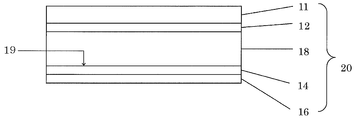
- FIG. 2 shows an example of the configuration of the polymer sheet for solar cell modules of the present invention
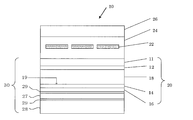
- FIG. 1 shows an example of the configuration of the solar cell module using the polymer sheet for solar cell modules of the present invention
- the polymer sheet 20 for a solar cell module in FIG. 2 is provided with a second polymer layer (black layer) 16 on one surface (black surface 19) of a polyester support 18, and the polyester support 18 and A first polymer layer 14 is provided between the two polymer layers (black layer) 16.
- black layer black layer
- FIG. 2 shows a preferred arrangement position of the polymer sheet for a solar cell module of the present invention in the solar cell module.
- the polymer sheet 20 for the solar cell module of the present invention is opposite to the black surface 19 of the polyester support 18. It is preferable to have the 4th polymer layer 11 in the side surface side.
- the fourth polymer layer 11 has a good adhesion property with the sealing material 24 for sealing the solar cell element 20 of the solar cell module 10 of the present invention shown in FIG. A layer is preferred. In this case, it is necessary to provide an adhesive layer between the fourth polymer layer 11 of the polymer sheet 20 for the solar cell module of the present invention and the sealing material 24 of the solar cell module 10 from the viewpoint of adhesion. There is no.
- the third polymer layer 12 is provided as an optional undercoat layer between the polyester support 18 and the fourth polymer layer 11 mainly composed of a polyolefin resin.
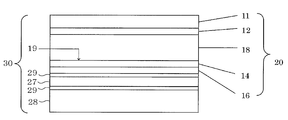
- a weathering layer such as an aluminum sheet or a weathering polyethylene terephthalate sheet is provided on the second polymer layer (black layer 16) of the polymer sheet 20 for the solar cell module of the present invention. Is also preferable.
- FIG. 3 is preferable of the solar cell backsheet of this invention. An embodiment is shown.
- FIG. 1 shows a preferred embodiment of the solar cell module of the present invention.
- the second polymer layer (black layer 16) is outside the cell (with the sealing material 24 and the polyester support 18).
- the present invention is not limited to such an arrangement. That is, the second polymer layer (black layer 16) is disposed on the side of the sealing material 24 even when the second polymer layer (black layer 16) is disposed on the outside of the cell (the side opposite to the sealing material 24) with respect to the polyester support 18. It may be.
- a transparent front substrate 26 is preferably disposed on the side of the sealing material 24 opposite to the solar cell backsheet of the present invention.
- each structural member which comprises the polymer sheet for solar cell modules of this invention.
- the polymer sheet for solar cell modules of the present invention has a polyester support.
- the polyester support 18 is preferably a sheet of heat-meltable polyester resin pellets formed by a melt film forming method or a solution film forming method.
- the kind of polyester resin used for the polyester support 18 is not particularly limited.
- the polyester support uses the second polymer layer (black layer 16) in combination with the first polymer layer described later to maintain the adhesion between the layers of the polymer sheet for solar cell modules even after wet heat aging. This is preferable because it is possible.
- the surface of the polyester support may be subjected to a surface treatment from the viewpoint of improving coating properties, and for example, it is preferable to perform a corona treatment.
- the polyester is a linear saturated polyester synthesized from a derivative having the property of forming an aromatic dibasic acid or ester (hereinafter referred to as ester forming property) and a diol or an ester forming derivative thereof.
- ester forming property a derivative having the property of forming an aromatic dibasic acid or ester
- PEN polyethylene-2,6-naphthalate
- the polyester used as the support may be a homopolymer or a copolymer of the various polyesters described above. Furthermore, a small amount of other types of polymers such as polyimide may be blended with the polyester.
- PET and PEN are particularly preferable in terms of the balance between mechanical properties and cost.
- the polyester support in the present invention is preferably a solid phase polymerized after polymerization.
- Solid-phase polymerization may be a continuous method (a method in which a tower is filled with a resin, which is slowly heated for a predetermined time and then sent out), or a batch method (a resin is charged into a container). , A method of heating for a predetermined time).
- Japanese Patent No. 2621563, Japanese Patent No. 3121876, Japanese Patent No. 3136774, Japanese Patent No. 3603585, Japanese Patent No. 3616522, Japanese Patent No. 3617340, Japanese Patent No. 3680523, Japanese Patent No. 3717392 are disclosed.
- the method described in Japanese Patent No. 4167159 can be applied.
- the temperature of the solid phase polymerization is preferably 170 ° C. or higher and 240 ° C. or lower, more preferably 180 ° C. or higher and 230 ° C. or lower, and further preferably 190 ° C. or higher and 220 ° C. or lower.
- the solid phase polymerization time is preferably 5 hours to 100 hours, more preferably 10 hours to 75 hours, and still more preferably 15 hours to 50 hours.
- the solid phase polymerization is preferably performed in a vacuum or in a nitrogen atmosphere.
- the polyester support is preferably a biaxially stretched film.
- stretching is performed so that the length after stretching is 3 to 6 times that before stretching, and in the width direction stretching step, the width after stretching is 3 to 5 times before stretching in the width direction. It is preferable that it is stretched so as to be doubled.
- the polyester support may be preliminarily heat treated at 180 to 230 ° C. for 1 to 60 seconds.
- the thickness of the polyester support 18 is preferably in the range of 25 to 300 ⁇ m, more preferably 70 to 250 ⁇ m, and particularly preferably 90 to 200 ⁇ m. This is because this range is more preferable in terms of the balance between mechanical strength and cost.
- the elongation at break after the polyester support is aged for 48 hours in an atmosphere of 120 ° C. and a relative humidity of 100% is 50% of the length of the polyester support before the aging. It is preferable that it is the polyester support body which is the above.
- the polymer sheet for the solar cell module of the present invention also has an elongation at break after aging for 48 hours in an atmosphere of 120 ° C. and 100% relative humidity of 50% or more of the length before aging. It becomes easy to do.
- Such a polyester support can be produced by, for example, performing the above-described solid phase polymerization after film formation.
- the polymer sheet for a solar cell module of the present invention has a first polymer layer on at least one surface of the polyester support, and the first polymer layer is an acrylic resin as a first binder resin, and a second binder. It contains at least one resin selected from polyolefin resins as resins and rubber-based resins, and a structure derived from a crosslinking agent.
- the first polymer layer comprises at least one resin selected from an acrylic resin as a first binder resin, a polyolefin resin as a second binder resin, and a rubber-based resin. Including.
- the first binder resin used for the first polymer layer contains at least an acrylic resin.
- the acrylic resin referred to here is a resin mainly composed of an ester of acrylic acid or methacrylic acid (the acrylic ester or methacrylic ester may be referred to as (meth) acrylic ester in this specification). .
- (meth) acrylic acid esters examples include methyl (meth) acrylate, ethyl (meth) acrylate, propyl (meth) acrylate, butyl (meth) acrylate, ethylhexyl (meth) acrylate, cyclohexyl (meth) acrylate, phenyl (meth ) Acrylate, benzyl (meth) acrylate, 2-ethylhexyl acrylate, and the like.
- the acrylic resin may be a homopolymer or a copolymer, but is preferably a copolymer.
- the acrylic resin preferably includes a structural unit having a carboxylic acid group as a copolymerization component in order that a crosslinking agent such as an oxazoline compound described later undergoes a crosslinking reaction.
- a crosslinking agent such as an oxazoline compound described later undergoes a crosslinking reaction.
- the structural unit having such a carboxylic acid group include (meth) acrylic acid and (meth) acrylic acid, itaconic acid, phthalic acid, and phthalic anhydride.
- the acrylic resin used for the first polymer layer may contain a structural unit copolymerizable with the (meth) acrylic acid ester.
- the acrylic resin used for the first polymer layer may be in the form of a latex in which polymer fine particles are dispersed in water.
- the acrylic resin used in the first polymer layer include a resin made of methyl methacrylate / ethyl acrylate / acrylic acid, a resin made of methyl methacrylate / ethyl acrylate / methacrylic acid, and methyl methacrylate / ethyl acrylate / acrylic acid / hydroxy.
- Resins composed of ethyl (meth) acrylate and resins composed of methyl methacrylate / ethyl acrylate / acrylic acid / diethylaminoethyl (meth) acrylate are particularly preferred.
- the alkyl (meth) acrylate copolymer can be produced by emulsion polymerization of the various monomers, and is also commercially available.
- Examples of commercially available products include Pemulen TR-1 and Pemulen TR-2 ( BF Goodrich), Rubimer 100P, Rubimer 30E, Rubiflex Soft (BASF Japan Ltd.), Leoir MS-200, Leoir MS-100 (Lion Corp.), Jurimar AT-210, Jurimar AT-510, Julimer ET-410 (manufactured by Nippon Pure Chemicals Co., Ltd.) can be mentioned.
- the second binder resin used in the first polymer layer contains at least one resin selected from polyolefin resins and rubber resins.
- the polymer which consists of structural units which have carboxylic acid groups such as polyethylene and acrylic acid, methacrylic acid, itaconic acid, phthalic acid, a phthalic anhydride, for example is preferable.
- the polyolefin resin used for the first polymer layer may contain other copolymerizable structural units as necessary. Examples of such structural units include (meth) acrylic acid esters such as methyl methacrylate and ethyl acrylate, and vinyl acetate.
- the polyolefin resin used for the first polymer layer is a resin made of ethylene / (meth) acrylic acid, a resin made of ethylene / (meth) acrylic acid / ethyl (meth) acrylate, a resin made of ethylene / phthalic anhydride, A resin composed of ethylene / phthalic anhydride / ethyl (meth) acrylate is particularly preferred.
- the polyolefin resin used in the first polymer layer may be in the form of a latex in which polymer fine particles are dispersed in water. Commercially available products may be used as the polyolefin resin.
- Arrow Base SE-1013N For example, Arrow Base SE-1013N, SD-1010, TC-4010, TD-4010 (both manufactured by Unitika Ltd.), Hitech S3148, S3121, S8512 (both manufactured by Toho Chemical Co., Ltd.), Chemipearl S-120, S-75N, V100, EV210H (both manufactured by Mitsui Chemicals, Inc.) and the like. Among them, it is preferable to use Arrow Base SE-1013N manufactured by Unitika Ltd. in the present invention.
- the rubber resin examples include SBR rubber resin (styrene-butadiene rubber resin), CR rubber resin (chloroprene rubber resin), NBR rubber resin (nitrile rubber resin), and IR rubber resin (isoprene rubber resin).
- BR rubber resin butadiene rubber resin
- SBR rubber resin is preferable from the viewpoint of adhesiveness.
- the copolymerization ratio (molar ratio) between the structural unit derived from the styrene monomer unit and the structural unit derived from the butadiene monomer unit in the styrene-butadiene resin is preferably from 30:70 to 85:15, and from 35:65 to 80:20 is more preferable, and 40:60 to 70:30 is particularly preferable.
- the styrene ratio exceeds 85 mol%, the first polymer layer may become too hard and the adhesion may be reduced. Conversely, if the styrene ratio is less than 30 mol%, the film strength of the first polymer layer will be low, so scratch resistance. May decrease.
- the total of the structural unit derived from the styrene monomer unit and the structural unit derived from the butadiene monomer unit is 60 to 99 mol% based on the entire copolymer. The ratio is preferably 85 to 99 mol%, more preferably 90 to 99 mol%.
- the rubber resin is preferably obtained by polymerizing monomers containing 1 to 6% by mass of acrylic acid or methacrylic acid with respect to the sum of the contents of styrene and butadiene, and more preferably acrylic acid. Alternatively, it is polymerized with 0.2 to 5% by mass of methacrylic acid. Further, the rubber-based resin is obtained by copolymerizing about 1 to 10% by mass of a copolymerizable monomer such as hydroxyethyl acrylate, methyl methacrylate, ethyl acrylate or acrylonitrile with respect to the sum of the contents of styrene and butadiene. It may be.
- the rubber-based resin used for the first polymer layer a resin made of styrene / butadiene / (meth) acrylic acid and a resin made of styrene / butadiene / (meth) acrylic acid / hydroxyethyl (meth) acrylate are particularly preferable.
- the rubber-based resin used for the first polymer layer may be in the form of latex in which polymer fine particles are dispersed in water.
- the content ratio (mass ratio) of the first binder resin and the second binder resin used in the first polymer layer is preferably 85:15 to 30:70, and 75:25 More preferably, it is ⁇ 45: 55, and particularly preferably 70:30 to 50:50.
- the ratio of the first binder resin exceeds 85% by mass, the effect of improving the adhesiveness may be insufficient, and conversely, when it is less than 30% by mass, the surface shape may be deteriorated.
- the first binder resin and the second binder resin used in the first polymer layer are preferably derived from a resin or emulsion contained in the coating liquid as a polymer latex.
- Polymer latex refers to a state in which water-insoluble hydrophobic polymer fine particles are dispersed in a solvent (preferably water) such as a coating solution.
- the total fixed coating amount of the first binder resin and the second binder resin is 0.01 to 0.10 g / m 2. Preferably, it is 0.03 to 0.15 g / m 2 . Good adhesiveness can be obtained by setting the solid content coating amount within this range.
- the thickness of the first polymer layer is preferably in the range of 2 ⁇ m or less, more preferably 0.05 ⁇ m to 2 ⁇ m, and still more preferably 0.1 ⁇ m to 1.5 ⁇ m.
- the thickness is 2 ⁇ m or less, the planar shape can be kept good. Moreover, it is easy to ensure required adhesiveness because thickness is 0.05 micrometer or more.
- the first polymer layer contains a structure derived from a crosslinking agent formed by adding a crosslinking agent for the purpose of imparting film strength.
- a crosslinking agent for the purpose of imparting film strength.
- preferable crosslinking agents include oxazoline compounds, carbodiimide compounds, compounds represented by the following general formula (I), epoxy compounds, and melamine resins.
- an oxazoline compound, a carbodiimide compound, and a compound represented by the following general formula (I) are preferable, and an oxazoline compound and a carbodiimide compound are more preferable.
- R 1 and R 2 each independently represent a hydrogen atom or a halogen atom
- M represents a hydrogen atom or a monovalent metal atom
- R 1 and R 2 are preferably each independently a halogen atom.
- a chlorine atom, a bromine atom, and an iodine atom are preferable, and a chlorine atom is more preferable.
- Both R 1 and R 2 are preferably chlorine atoms.
- Examples of the monovalent metal atom represented by M include sodium and potassium, and sodium is more preferable.
- oxazoline compound there are various commercially available products.
- Epocros K2010E, K2020E, K2030E, WS500, and WS700 can be used.
- carbodiimide compounds there are commercially available carbodiimide compounds, and carbodilite V-02, V-02-L2, V-04, and E-02 (all of which are Nisshinbo Co., Ltd.) can be used.
- the compound represented by the general formula (I) 2,4-dichloro-6-hydroxy-1,3,5-triazine sodium salt and the like can be used.
- the structure derived from the crosslinking agent in the first polymer layer is contained in an amount of 0.5 to 80% by mass with respect to the total polymer resin in the first polymer layer.
- the amount of the crosslinking agent is preferably 3 to 80% by mass. Is more preferable, and 10 to 60% by mass is particularly preferable.
- the polymer sheet for a solar cell module of the present invention preferably contains a filler in the first polymer layer from the viewpoint of film strength and adhesion.
- the filler contained in the first polymer layer is preferably 25 to 350% by mass, more preferably 50 to 300% by mass, and 100 to 200% by mass with respect to the total polymer resin in the first polymer layer.
- the filler is an inorganic filler.
- the inorganic filler include metal oxides such as tin oxide, titanium oxide, silica, alumina, zirconia, and magnesia, talc, calcium carbonate, magnesium carbonate, barium sulfate, aluminum hydroxide, kaolin, and clay. The particles are preferably mentioned.
- a dispersion stabilizer may be added to the second aqueous dispersion for polymer layer.
- various surfactants and water-soluble resins are used.
- a low-molecular water-soluble resin is preferable, and polyvinyl alcohol, cellulose, polyacrylic acid, or a derivative thereof can be used.
- the surfactant a known surfactant such as an anionic or nonionic surfactant can be used.
- the polymer sheet for a solar cell module of the present invention has a first polymer layer and a second polymer layer in this order on at least one surface of the polyester support, and the second polymer layer is formed on the binder resin and the binder resin. It is characterized by containing 10 to 100% by mass of carbon black.
- the second polymer layer 16 includes a second polymer layer aqueous dispersion (coating solution) containing carbon black and a binder in predetermined amounts, on at least one surface of the polyester support 18. It can form by apply
- the polymer sheet for a solar cell module according to the present invention is characterized in that the second polymer layer contains 10 to 100% by mass of carbon black with respect to the binder resin.
- the second polymer layer preferably contains 25 to 75% by mass of carbon black and more preferably 40 to 60% by mass of carbon black with respect to the binder resin. It is also preferable that the carbon black is contained in the above range or more from the viewpoint of imparting black color.
- the carbon black is preferably carbon black fine particles having a particle diameter of 0.1 to 0.8 ⁇ m. Furthermore, it is preferable to use the carbon black fine particles dispersed in water together with a dispersant. Carbon black that can be obtained commercially can be used, for example, MF-5630 black (manufactured by Dainichi Seika Co., Ltd. or described in paragraph [0035] of JP2009-132877A). Can be used.
- binder resin used for a said 2nd polymer layer there is no restriction
- an acrylic resin, a polyester resin, a polyurethane resin, a rubber-type resin etc. can be used.
- an acrylic resin is preferable from the viewpoint of obtaining good adhesiveness and being able to stably disperse carbon black.
- the acrylic resin includes an acrylate skeleton resin and a methacrylate skeleton resin.
- (meth) acryl means a generic name of acrylic and methacryl
- (meth) acrylate means a generic name of acrylate and methacrylate.
- the acrylic resin is contained as a so-called binder that stably disperses the carbon black, and has a great effect of suppressing the aggregation of the carbon black when the coating liquid is applied and dried.
- the binder constituting the second polymer layer it is preferable to use an acrylic resin from the viewpoint of forming a polymer sheet for a solar cell module that is excellent in dispersion stability of carbon black and excellent in interlayer adhesion after wet heat aging.
- the acrylic resin may be a homopolymer or a copolymer, but is preferably a copolymer.
- the structural unit contained in the acrylic resin is not particularly limited, and examples thereof include a structural unit having a carboxylic acid group, a structural unit having a carboxylic ester group, and a structural unit derived from a monomer having a substituted or unsubstituted amino group. be able to.
- the preferable range of the structural unit having the carboxylic acid group and the structural unit having the carboxylic acid ester group is the same as the preferable range in the acrylic resin used as the first binder resin of the first polymer layer.
- An acrylic resin having a structural unit derived from a monomer having a substituted or unsubstituted amino group is at least one of a primary amine, a secondary amine, a tertiary amine, and optionally a quaternary amine (cation).
- examples of the substituent that the amino group may have include an alkyl group and a phenyl group, and the alkyl group is preferably an alkyl group. It is more preferably 1 to 3 alkyl groups.
- acrylic resins having a substituted or unsubstituted amino group include N, N-dimethylaminoethyl (meth) acrylate, N, N-diethylaminoethyl (meth) acrylate, N-methylaminoethyl (meth) acrylate, N -(Meth) such as ethylaminoethyl (meth) acrylate, aminoethyl (meth) acrylate, aminoethyl (meth) acrylate, N, N-dimethylaminopropyl (meth) acrylate, N, N-diethylaminopropyl (meth) acrylate An acrylic resin obtained by copolymerizing an acrylate monomer is preferred.
- the acrylic resin having a substituted or unsubstituted amino group preferably has a structural unit containing a monovalent group obtained by removing hydrogen from a secondary amine or tertiary amine, and removes hydrogen from a tertiary amine. It is more preferable to have a structural unit containing a monovalent group.
- the acrylic resin having a substituted or unsubstituted amino group is preferably a carboxylic acid ester containing a substituted or unsubstituted amino group.
- the molecular weight of the acrylic resin is not particularly limited, and for example, it can be preferably used if the mass average molecular weight Mw is about several thousand to several tens of thousands.
- the acid value of the acrylic resin is preferably 10 to 200, more preferably 20 to 150, and particularly preferably 30 to 100.
- the acid value used here is defined as the number of mg of potassium hydroxide required to neutralize free fatty acids present in 1 g of resin.
- the dispersion stability of carbon black can be improved by setting the acid value of the acrylic resin to be equal to or higher than the lower limit of the above preferred range.
- the pH of the second polymer layer aqueous dispersion is not particularly limited. However, when an acrylic resin having an acid value within the above range is used, it is preferably 6.5 to 12.0, for example, 7.0 to 11 is more preferable, and 8.0 to 10 is particularly preferable.
- the acrylic resin is preferably a main binder among all the binders in the second polymer layer.
- the main binder in the second polymer layer in the present specification means 50% by mass or more based on the total of all binders contained in the second polymer layer.
- the second polymer layer may not contain the acrylic resin but may contain only other resins as a binder.
- the preferable range of the rubber-based resin used as the binder resin for the second polymer layer is the same as the preferable range of the rubber-based resin used as the binder resin for the first polymer layer.
- the second polymer layer As a component constituting the second polymer layer, other components may be included as necessary in addition to the carbon black and the acrylic resin. Structures derived from crosslinking agents (oxazoline compounds, carbodiimide compounds, epoxy compounds, melamine resins, etc.), dispersion stabilizers such as surfactants, slip agents, and other resins other than the binder resins (polyethylene resins, polypropylene resins, alicyclic) Resin, styrene butadiene resin, urethane resin, polyester resin) can also be used.
- crosslinking agents oxazoline compounds, carbodiimide compounds, epoxy compounds, melamine resins, etc.
- dispersion stabilizers such as surfactants, slip agents, and other resins other than the binder resins (polyethylene resins, polypropylene resins, alicyclic) Resin, styrene butadiene resin, urethane resin, polyester resin) can also be used.
- crosslinking agent Moreover, a crosslinking agent can be used for the second polymer layer as necessary.
- preferred crosslinking agents include oxazoline compounds, carbodiimide compounds, epoxy compounds, and melamine resins. Among these, an oxazoline compound and a carbodiimide compound are preferable.
- oxazoline compound there are various commercially available products.
- Epocros K2010E, K2020E, K2030E, WS500, and WS700 can be used.
- carbodiimide compounds there are commercially available carbodiimide compounds, and carbodilite V-02, V-02-L2, V-04, and E-02 (all of which are Nisshinbo Co., Ltd.) can be used.
- a dispersion stabilizer may be added to the second aqueous dispersion for polymer layer.
- various surfactants and water-soluble resins are used.
- a low-molecular water-soluble resin is preferable, and polyvinyl alcohol, cellulose, polyacrylic acid, or a derivative thereof can be used.
- the content of the polyvinyl alcohol derivative containing the structural unit represented by the general formula (1) in the second polymer layer aqueous dispersion is relative to the carbon black. 0.5 to 20% by mass is preferable from the viewpoint of dispersion stabilization, and 1 to 10% by mass is more preferable.
- a well-known surfactant can be used together with the polymer sheet for solar cell modules of the present invention.
- a known surfactant for example, NAROACTY CL-95 manufactured by Sanyo Chemical Industries, Ltd. can be mentioned.
- the second polymer layer preferably contains a sliding agent from the viewpoint of preventing damage to the second polymer layer.
- a sliding agent from the viewpoint of preventing damage to the second polymer layer.
- the organic lubricant is preferably contained in the second polymer layer in the range of 0.2 to 500 mg / m 2 .
- the content ratio of the organic lubricant is 0.2 mg / m 2 or more, the scratch resistance is sufficiently improved by the effect of reducing the dynamic friction coefficient by containing the organic lubricant.
- the content ratio of the organic lubricant is 500 mg / m 2 or less, application unevenness and aggregates are less likely to occur when the second polymer layer is applied and formed, and repellency failures are less likely to occur. .
- the range of 1 mg / m 2 to 300 mg / m 2 is more preferable, the range of 5 mg / m 2 to 200 mg / m 2 is particularly preferable, and 10 mg / m 2.
- a range of 2 to 150 mg / m 2 is more particularly preferred.
- the organic lubricant examples include synthetic wax compounds, natural wax compounds, surfactant compounds, inorganic compounds, organic resin compounds, and the like.
- the organic lubricant contained in the second polymer layer is a polyolefin compound, a synthetic wax compound, or a natural wax compound. It is preferably at least one selected from a compound and a surfactant-based compound.
- polyolefin compound examples include olefin waxes such as polyethylene wax and polypropylene wax.
- Examples of the synthetic wax compounds include esters such as stearic acid, oleic acid, erucic acid, lauric acid, behenic acid, palmitic acid, adipic acid, amides, bisamides, ketones, metal salts and derivatives thereof, and Fischer-Tropsch wax ( Examples include synthetic hydrocarbon waxes (other than olefin waxes), phosphate esters, hydrogenated castor oil, hydrogenated waxes of hydrogenated castor oil derivatives, and the like.
- natural wax compounds examples include plant waxes such as carnauba wax, candelilla wax and wood wax, petroleum waxes such as paraffin wax and microcrystalline wax, mineral waxes such as montan wax, animals such as beeswax and lanolin. And waxes.
- the surfactant compound examples include a cationic surfactant such as an alkylamine salt, an anionic surfactant such as an alkyl sulfate ester salt, a nonionic surfactant such as polyoxyethylene alkyl ether, and an alkylbetaine.
- a cationic surfactant such as an alkylamine salt
- an anionic surfactant such as an alkyl sulfate ester salt
- a nonionic surfactant such as polyoxyethylene alkyl ether
- an alkylbetaine examples include a cationic surfactant such as an alkylamine salt, an anionic surfactant such as an alkyl sulfate ester salt, a nonionic surfactant such as polyoxyethylene alkyl ether, and an alkylbetaine.
- Amphoteric surfactants, fluorosurfactants and the like are examples of the surfactant compound.
- the organic lubricant may be a commercially available product, specifically,
- organic lubricants for polyolefin compounds include Chemipearl series (for example, Chemipearl W700, W900, W950, etc.) manufactured by Mitsui Chemicals, and Polylon P-502 manufactured by Chukyo Yushi Co., Ltd.
- synthetic wax-based organic lubricants include Hymicron L-271 and Hydrin L-536 manufactured by Chukyo Yushi Co., Ltd.
- Examples of natural wax-based organic lubricants include Hydrin L-703-35, Cellosol 524, and Cellosol R-586 manufactured by Chukyo Yushi Co., Ltd.
- surfactant-based organic lubricants examples include NIKKOL series (for example, NIKKOL SCS, etc.) manufactured by Nikko Chemicals Co., Ltd. and Emar series (for example, EMAL 40, etc.) manufactured by Kao Corporation.
- NIKKOL series for example, NIKKOL SCS, etc.
- Emar series for example, EMAL 40, etc.
- the total fixed amount coating amount of the binder resin is preferably 0.5 to 1.5 g / m 2 , and preferably 0.6 to 1.2 g / m 2. more preferably m 2.
- the thickness of the second polymer layer is preferably 0.3 to 3 ⁇ m, more preferably 0.5 to 2.5 ⁇ m.
- the carbon black content can be sufficiently increased, and adjustment can be easily performed so that a sufficient black density can be obtained.
- the thickness of the second polymer layer 16 By setting the thickness of the second polymer layer 16 to 3 ⁇ m or less, when the second polymer layer is formed by coating as in the present invention, a uniform film is formed so that the amount of binder does not increase excessively. It becomes easy to coat thick.
- the second polymer layer of the polymer sheet for a solar cell module can be thinned by coating, and a thickness equal to or less than the upper limit is preferable from the viewpoint of reducing environmental load due to resource saving.
- the polymer sheet for a solar cell module of the present invention has an adhesion between a fourth polymer layer, which will be described later, and the polyester support, on the surface of the polyester support opposite to the surface on which the second polymer layer is provided.
- a third polymer layer may be provided.
- the third polymer layer is not particularly limited, and a known undercoat layer can be used.
- the thickness of the third polymer layer is preferably in the range of 2 ⁇ m or less, more preferably 0.05 ⁇ m to 2 ⁇ m, and still more preferably 0.1 ⁇ m to 1.5 ⁇ m. When the thickness is 2 ⁇ m or less, the planar shape can be kept good. Moreover, it is easy to ensure required adhesiveness because thickness is 0.05 micrometer or more.
- the third polymer layer preferably contains a polyolefin resin, an acrylic resin, or the like.
- a polyolefin resin for example, a polymer composed of polyethylene and acrylic acid or methacrylic acid is preferable.
- Commercially available products may be used as the polyolefin resin.
- Arrow Base SE-1013N, SD-1010, TC-4010, TD-4010 both manufactured by Unitika Ltd.
- Hitech S3148, S3121, S8512 both manufactured by Toho Chemical Co., Ltd.
- Chemipearl S-120, S-75N, V100, EV210H both manufactured by Mitsui Chemicals, Inc.
- Arrow Base SE-1013N manufactured by Unitika Ltd.
- the acrylic resin for example, a polymer containing polymethyl methacrylate, polyethyl acrylate, or the like is preferable.
- the acrylic resin a commercially available product may be used.
- AS-563A manufactured by Daicel Einchem Co., Ltd.
- These polymers may be used alone or in combination of two or more, and a combination of an acrylic resin and a polyolefin resin is preferable.
- the third polymer layer preferably contains a crosslinking agent.
- the crosslinking agent used for the third polymer layer include epoxy-based, isocyanate-based, melamine-based, carbodiimide-based, and oxazoline-based crosslinking agents.
- the preferred range of the crosslinking agent that can be used for the third polymer layer is the same as the range of the crosslinking agent that is used for the first polymer layer.
- the third polymer layer preferably contains an anionic or nonionic surfactant.
- the range of the surfactant that can be used for the third polymer layer is the same as the range of the surfactant that can be used for the first polymer layer. Of these, nonionic surfactants are preferred.
- the third polymer layer preferably contains a filler.
- the range of fillers that can be used for the third polymer layer is the same as the range of fillers that can be used for the first polymer layer.
- the polymer sheet for a solar cell module of the present invention seals a solar cell element of a solar cell module such as an ethylene vinyl acetate resin on the surface of the polyester support opposite to the surface on which the second polymer layer is provided.
- a fourth polymer layer may be provided.
- the binder used for the fourth polymer layer is preferably a binder mainly composed of a polyolefin resin. Examples of the polyolefin resin preferably used for the fourth polymer layer include the polyolefin resin used for the first polymer layer.
- binders examples include Chemipearl S-120 and S-75N (both manufactured by Mitsui Chemicals) as specific examples of polyolefins.
- the content of the binder in the fourth polymer layer is preferably in the range of 0.05 to 5 g / m 2 . In particular, the range of 0.08 to 3 g / m 2 is more preferable.
- the content of the binder, 0.05 g / m 2 or more is desired as easy adhesion obtained to that, better surface state is obtained when the is 5 g / m 2 or less.
- a cross-linking agent is preferably added to the fourth polymer layer for the purpose of imparting film strength, and an oxazoline cross-linking agent is preferred.
- a surfactant is preferably added to the fourth polymer layer from the viewpoint of improving coating properties.
- the adhesion of the fourth polymer layer to EVA used as a sealing material for the solar cell module is preferably 5 N / cm or more, preferably more than 30 N / cm, and 50 to 150 N / cm. More preferably.
- the polymer sheet for the solar cell module of the present invention preferably has a thickness of 150 to 400 ⁇ m, more preferably 200 to 350 ⁇ m, and particularly preferably 220 to 280 ⁇ m.
- the polymer sheet for a solar cell module of the present invention preferably has a shrinkage rate of 1% or less when heat-treated at 150 ° C. for 30 minutes, more preferably 0.0 to 0.7%, It is particularly preferably 0 to 0.4%.
- the thermal contraction rate of the polymer sheet for solar cell modules of this invention means the average value of the thermal contraction rate of MD direction and TD direction in this specification.
- the polymer sheet for a solar cell module of the present invention has 50% or more of the length of the polymer sheet for a solar cell module of the present invention before the lapse of time after aging for 48 hours in an atmosphere of 120 ° C. and 100% relative humidity. It is more preferable that
- the method for producing the polymer sheet 20 for the solar cell module of the present invention is not particularly limited, but it is preferably formed by applying a coating solution for each layer to the polyester support.
- a coating solution for each layer For example, at least one surface side of the polyester support is crosslinked with an acrylic resin as the first binder resin, at least one resin selected from a polyolefin resin and a rubber resin as the second binder resin, A first polymer layer coating solution containing a coating agent is applied, and a second polymer layer coating solution containing 10 to 100% by mass of carbon black based on the binder resin is laminated and applied thereon.
- the process to include is included.
- a known coating machine may be appropriately selected according to the purpose.
- coating by a spin coater, a roll coater, a bar coater, and a curtain coater is mentioned.
- heating is performed with a heater so that the temperature of each coating film is at least 100 ° C., that is, 100 ° C. or higher, more preferably 130 ° C. or higher.
- the back sheet for a solar cell module of the present invention comprises the polymer sheet for a solar cell module of the present invention.
- the back sheet for a solar cell module preferably includes weather resistance on at least one surface of the polymer sheet for solar cell module of the present invention, and includes weather resistance on the second polymer layer (black layer). Is more preferable.
- limiting in particular as said weather resistant layer A well-known weather resistant layer can be used.
- the weather-resistant layer for example, an aluminum sheet or a weather-resistant polyethylene terephthalate sheet can be preferably used.
- the weather resistant layer may have a laminated structure of two or more layers, and for example, a laminate of an aluminum sheet or a weather resistant polyethylene terephthalate sheet can be used.
- the polymer sheet for a solar cell module of the present invention is suitable for production of a solar cell module.
- a solar cell element that converts sunlight light energy into electric energy is disposed between the transparent substrate on which sunlight is incident and the solar cell backsheet of the present invention described above.
- the substrate and the backsheet are sealed with a sealing material such as ethylene-vinyl acetate copolymer.
- the members other than the solar cell module, the solar cell, and the back sheet are described in detail in, for example, “Photovoltaic power generation system constituent material” (supervised by Eiichi Sugimoto, Kogyo Kenkyukai, published in 2008).
- the solar cell module of the present invention is bonded to a solar cell element, a sealing material that seals the solar cell element, a sealing material, a surface protection member that protects the light receiving surface side, and a sealing material,
- a back surface protecting member that protects the side opposite to the light receiving surface, the sealing material includes an ethylene-vinyl acetate copolymer (EVA), and a polymer sheet for a solar cell module is used as the back surface protecting member.
- EVA ethylene-vinyl acetate copolymer
- It can be set as the structure which the 4th polymer layer of the polymer sheet for modules adhered directly with the sealing material. If it is such a solar cell module, even if the solar cell backsheet is in a wet heat environment with EVA, it can be in close contact over a long period of time, and a long-life solar cell module can be obtained.
- the transparent front substrate only needs to have a light transmission property through which sunlight can be transmitted, and can be appropriately selected from base materials that transmit light. From the viewpoint of power generation efficiency, the higher the light transmittance, the better.
- a transparent resin such as an acrylic resin, or the like can be suitably used.
- the solar cell element examples include silicon-based materials such as single crystal silicon, polycrystalline silicon, and amorphous silicon, III-V groups such as copper-indium-gallium-selenium, copper-indium-selenium, cadmium-tellurium, and gallium-arsenic.
- silicon-based materials such as single crystal silicon, polycrystalline silicon, and amorphous silicon
- III-V groups such as copper-indium-gallium-selenium, copper-indium-selenium, cadmium-tellurium, and gallium-arsenic.
- II-VI group compound semiconductor systems can be applied.
- ethylene glycol was added to the polycondensation reaction tank to which the esterification reaction product had been transferred, based on the resulting polymer.
- an ethylene glycol solution of cobalt acetate and manganese acetate was added to 30 ppm and 15 ppm, respectively, with respect to the resulting polymer.
- a 2% by mass ethylene glycol solution of a titanium alkoxide compound was added to 5 ppm with respect to the resulting polymer.
- a 10% by mass ethylene glycol solution of ethyl diethylphosphonoacetate was added so as to be 5 ppm with respect to the resulting polymer.
- the reaction system was gradually heated from 250 ° C. to 288 ° C. and the pressure was reduced to 40 Pa. The time to reach the final temperature and final pressure was both 60 minutes.
- the reaction system was purged with nitrogen, returned to normal pressure, and the polycondensation reaction was stopped. And it discharged to cold water in the shape of a strand, and it cut immediately, and produced the polymer pellet (about 3 mm in diameter, about 7 mm in length). The time from the start of decompression to the arrival of the predetermined stirring torque was 3 hours.
- Example 1 A polymer sheet 20 for a solar battery backsheet having the configuration shown in FIG. 1 was produced on both surfaces of the support 1 produced in Production Example 1 by the following method.
- First polymer layer> Preparation of first coating solution for polymer layer formation- Each component in the following composition was mixed to prepare a first coating solution for forming a polymer layer.
- Acrylic binder (Polymer 1) 14.1 parts by mass (Julimer ET-410 (manufactured by Nippon Pure Chemicals Co., Ltd., solid content 30% by mass))
- Polyolefin binder (Polymer 2) 9.1 parts by mass (Arrow Base SE1013N (manufactured by Unitika Ltd., solid content 20% by mass))
- first polymer layer-forming coating solution obtained above is applied to the corona-treated surface of the support 1 so that the solid coating amount is 0.2 g / m 2 and dried at 150 ° C. for 1 minute. A first polymer layer was formed.
- the obtained coating solution for forming the second polymer layer was applied onto the first polymer layer formed on the support 1 so that the solid content was 1.45 g / m 2 .
- the film was dried at 160 ° C. for 1 minute to form a second polymer layer (black layer).
- black surface the first polymer layer and the second polymer layer (black layer) were formed in order from the side closer to the support on one surface of the support 1 (hereinafter referred to as “black surface”).
- composition of the third polymer layer forming coating solution -Tin oxide fine particles: 62.0 parts by mass (S-2000, Mitsubishi Materials Corporation, solid content: 20% by mass)
- Polyacrylic binder 10.4 parts by mass (Cebian AS-563A (manufactured by Daicel Finetech Co., Ltd., solid content: 28% by mass))
- Polyolefin binder 10.4 parts by mass (Arrow Base SE1013N (manufactured by Unitika Ltd., solid content: 20% by mass))
- Carbodiimide compound (crosslinking agent) 4.5 parts by mass (Carbodilite V-02-L2, manufactured by Nisshinbo Co., Ltd., solid content: 40% by mass)
- -Surfactant-15.0 parts by mass Nearoacty CL95, manufactured by Sanyo Chemical
- third polymer layer The surface of the support 1 opposite to the black surface was subjected to corona treatment at a treatment strength of 730 J / m 2 .
- the third polymer layer forming coating solution obtained above was applied to the corona-treated surface opposite to the black surface of the support 1 so that the solid amount coating amount was 0.14 g / m 2 , and 150 ° C. And dried for 1 minute to form a third polymer layer.
- the above has a 1st polymer layer and a 2nd polymer layer in order from the near side from a support on one side (black surface) of support 1, and it is from a support on the surface on the opposite side of a black surface.
- a polymer sheet sample for a solar cell backsheet of Example 1 having a third polymer layer and a fourth polymer layer in order from the near side was obtained.
- the thickness of the first polymer layer is about 0.15 ⁇ m
- the thickness of the second polymer layer is about 1.2 ⁇ m
- the thickness of the third polymer layer is about 0.05 ⁇ m
- the thickness of the polymer layer was about 0.05 ⁇ m.
- Thermal contraction rate (L1-L0) / L0 ⁇ 100
- the heat shrinkage rate was measured in the longitudinal direction and the width direction of the sample, and this average value was used as the heat shrinkage rate of the sample.
- the unit of heat shrinkage is%. When the value is positive, it indicates shrinkage, and when it is negative, it indicates elongation.
- the sample A was conditioned for 24 hours in an atmosphere of 25 ° C. and a relative humidity of 60%, and then subjected to a tensile test using Tensilon (RTC-1210A manufactured by ORIENTEC).
- the length of the sample to be stretched is 10 cm, and the pulling speed is 20 mm / min.
- the elongation at break of Sample A obtained by this evaluation was defined as L0 ′.
- the sample B was wet-heated for 48 hours in an atmosphere of 120 ° C. and 100% relative humidity, and then subjected to a tensile test in the same manner as the sample A.
- the breaking elongation of Sample B at this time was L1 ′.
- the elongation at break was measured in the width direction during film formation of the sample support.
- Adhesiveness The second polymer layer, which is the outermost layer on the black surface side, of the polymer sheet sample for solar battery backsheet of Example 1 and an aluminum sheet having a thickness of about 20 ⁇ m were bonded together with the following adhesive and heat treated at 40 ° C. for 4 days. did.
- the thickness of the adhesive was about 5 ⁇ m.
- the bonded samples were conditioned for 24 hours in an atmosphere of 25 ° C. and a relative humidity of 60%, and the following measurements were performed.
- Mylar tape was attached to the surface of the aluminum sheet of the bonded sample to reinforce the aluminum sheet. Thereafter, the sample was cut into 200 mm ⁇ 20 mm. The sample was subjected to a 180-degree peel test, and the polymer sheet for solar cell backsheet of Example 1 (fourth polymer layer, third polymer layer, support 1, first polymer layer, and second polymer layer) Were peeled in this order) and the peeling force of the aluminum sheet reinforced with Mylar tape was measured. In this evaluation, delamination occurred between the second polymer layer and the adhesive. For the measurement, Tensilon (RTC-1210A manufactured by ORIENTEC) was used, and the pulling speed was 200 mm / min.
- Adhesion is measured by holding a sample (fresh) that has not been subjected to wet heat aging and an aluminum sheet for 48 hours in an atmosphere of 105 ° C. and 100% relative humidity, and then at 25 ° C. and 60% relative humidity. The following samples (after wet heat aging) were performed after conditioning for 24 hours. The freshness and adhesiveness after wet heat aging were evaluated according to the above evaluation criteria, and the results obtained are shown in Table 1.
- Example 2 A polymer sheet sample for a solar battery back sheet of Example 2 was produced in the same manner as in Example 1 except that the support 2 was used instead of the support 1. Evaluation similar to Example 1 was performed about the obtained sample. The obtained results are shown in Table 1 below.
- Examples 3, 4, and 5 Solar cells of Examples 3, 4, and 5 in the same manner as in Example 2 except that the type and ratio of the polymer resin of the first polymer layer and the binder type of the second polymer layer are changed as shown in Table 1 below.
- a polymer sheet sample for a back sheet was prepared.
- polymer 3 represents an SBR polymer (rubber-based resin: aqueous latex having a structural unit of St 58 -Bu 40 -HEA 1 -AA 1 in a molar ratio, solid content concentration of 40% by mass).
- St represents a structural unit derived from a styrene monomer
- Bu represents a structural unit derived from butadiene
- HEA represents a structural unit derived from hydroxyethyl acrylate
- AA represents a structural unit derived from acrylic acid. Evaluation similar to Example 1 was performed about the obtained sample. The obtained results are shown in Table 1 below.
- Example 6 to 11 Polymer sheet samples for solar cell back sheets of Examples 6 to 11 were prepared in the same manner as in Example 2 except that the type and addition amount of the crosslinking agent in the first polymer layer were changed as shown in Table 1 below.
- crosslinking agent C represents 2,4-dichloro-6-hydroxy-1,3,5-triazine sodium salt. Evaluation similar to Example 1 was performed about the obtained sample. The obtained results are shown in Table 1 below.
- Example 12 to 15 Polymer sheet samples for solar cell backsheets of Examples 12, 13, 14, and 15 were produced in the same manner as in Example 2 except that the amount of filler added to the first polymer layer was changed as shown in Table 1 below. Evaluation similar to Example 1 was performed about the obtained sample. The obtained results are shown in Table 1 below.
- Example 16 and 17 Polymer sheet samples for solar cell back sheets of Examples 16 and 17 were produced in the same manner as in Example 2 except that the amount of carbon black added to the second polymer layer was changed as shown in Table 1 below. Evaluation similar to Example 1 was performed about the obtained sample. The obtained results are shown in Table 1 below.
- Comparative Example 1 A polymer sheet sample for a solar cell backsheet of Comparative Example 1 was produced in the same manner as Example 2 except that the first polymer layer was not provided. Evaluation similar to Example 1 was performed about the obtained sample. The obtained results are shown in Table 1 below.
- Comparative Example 2 A polymer sheet sample for a solar cell backsheet of Comparative Example 2 was prepared in the same manner as in Example 2 except that a rubber-based resin was used alone as shown in Table 1 below as the polymer binder of the first polymer layer. . Evaluation similar to Example 1 was performed about the obtained sample. The obtained results are shown in Table 1 below.
- the polymer sheet for solar cell backsheets of this invention has the adhesiveness of the polyester support body and 1st polymer layer after wet heat time-lapse
- a solar battery backsheet 30 having the configuration shown in FIG. 1 was produced by the following method.
- a solar battery back sheet was prepared.
- the thickness of the adhesive was about 5 ⁇ m.
- the obtained sheets were used as back sheets for solar cells of Examples 101 to 117.
- the solar cell module 10 having the configuration shown in FIG. 1 was produced by the following method. 3 mm thick tempered glass, EVA sheet (SC50B manufactured by Mitsui Chemicals Fabro Co., Ltd.), crystalline solar cell, EVA sheet (SC50B manufactured by Mitsui Chemicals Fabro Co., Ltd.), and back sheet in this order
- the laminate was bonded to EVA by hot pressing using a vacuum laminator (manufactured by Nisshinbo Co., Ltd., vacuum laminating machine).
- the solar cell backsheets of Examples 101 to 114 were arranged such that the fourth polymer layer was in contact with the EVA sheet.
- the adhesion method is as follows. ⁇ Adhesion method> Using a vacuum laminator, evacuation was performed at 128 ° C. for 3 minutes, followed by pressurization for 2 minutes and temporary adhesion. Thereafter, the main adhesion treatment was performed in a dry oven at 150 ° C. for 30 minutes.
Landscapes
- Chemical & Material Sciences (AREA)
- Health & Medical Sciences (AREA)
- Chemical Kinetics & Catalysis (AREA)
- Medicinal Chemistry (AREA)
- Polymers & Plastics (AREA)
- Organic Chemistry (AREA)
- Laminated Bodies (AREA)
- Photovoltaic Devices (AREA)
Abstract
ポリエステル支持体と、前記ポリエステル支持体の少なくとも片面に第1のポリマー層と第2のポリマー層をこの順に有し、前記第1のポリマー層が第一のバインダー樹脂としてのアクリル樹脂と、第二のバインダー樹脂としてのポリオレフィン樹脂とゴム系樹脂から選ばれる少なくとも1種の樹脂と、架橋剤由来の構造とを含有し、前記第2のポリマー層がバインダー樹脂と該バインダー樹脂に対して10~100質量%のカーボンブラックを含有する太陽電池モジュール用ポリマーシートは、カーボンブラックを含有する黒色層を有し、湿熱経時後の層間の接着性に優れる。
Description
本発明は、太陽電池モジュール用ポリマーシートおよび太陽電池モジュール用バックシート、ならびに太陽電池モジュールに関する。
太陽電池モジュールは、太陽電池をシート状の2つの保護部材で保護した構造をもち、保護部材の間では太陽電池が封止材で封止されている。一方の保護部材は、太陽光を受光する受光面側に配される表面部材であり、他方の保護部材は、太陽電池の背面側に配されるいわゆる太陽電池バックシートである。表面部材は通常ガラスとされ、封止材としては通常エチレン-ビニルアセテート共重合体(EVA)が用いられる。
太陽電池バックシートは、太陽電池モジュールの裏面からの水分の浸入を防止する働きを有するもので、従来はガラス等が用いられていたが、近年では、コストの観点から樹脂に代表されるポリマーが用いられるようになってきている。そして、バックシートは、単なるポリマーシートではなく、封止材と強固に接着する接着性能を有することも求められている。さらに、太陽電池のバックシートは、通常機能の異なる複数のフィルムを貼り合わせることにより作製されるが、芯材として使用される基材フィルムは、他のフィルムや封止材と接着されるため、良好な接着性が求められる。
また、太陽電池バックシートは、屋外での長期間の使用に耐えるため、湿熱環境下での高度な耐候性を求められている。
さらに、意匠性の観点から、太陽電池モジュールを屋根の上に設置した際に外観をよくするために、太陽電池モジュールを黒色に着色することが求められることがある。これに対し、太陽電池バックシートを黒色に着色して、太陽電池モジュールを黒色にする方法が一般に知られている。
また、太陽電池バックシートは、屋外での長期間の使用に耐えるため、湿熱環境下での高度な耐候性を求められている。
さらに、意匠性の観点から、太陽電池モジュールを屋根の上に設置した際に外観をよくするために、太陽電池モジュールを黒色に着色することが求められることがある。これに対し、太陽電池バックシートを黒色に着色して、太陽電池モジュールを黒色にする方法が一般に知られている。
太陽電池バックシートは、通常機能の異なる複数のフィルムを貼り合わせることにより作製されるが、黒色の太陽電池バックシートを得るために、芯材として使用される支持体(基材フィルム)に、黒色フィルムを、接着剤を介して積層する方法がある。例えばカーボンブラック微粒子が練りこまれた樹脂フィルムを、太陽電池バックシートが封止材と直接接する最内面に積層する方法が提案されている(特許文献1参照)。しかし、特許文献1に記載の方法では黒色ポリエチレンフィルムを貼り付ける工程が必要となり、コストアップの要因になっている。
また、黒色の太陽電池バックシートを得るために、カーボンブラックとシラン変性エチレン系樹脂バインダーからなる黒色層をコーティングにより、支持体(基材フィルム)上に設ける方法も提案されている(特許文献2参照)。
また、黒色の太陽電池バックシートを得るために、カーボンブラックとシラン変性エチレン系樹脂バインダーからなる黒色層をコーティングにより、支持体(基材フィルム)上に設ける方法も提案されている(特許文献2参照)。
これらのカーボンブラックはコストと性能のバランスがとれた好ましい黒色顔料である。しかしながら、本発明者らが検討したところ、カーボンブラックを含有する塗布層は支持体との間で充分な接着性を得ることができず、特に湿熱経時後のカーボンブラック層の剥離が発生することがわかった。
例えば、本発明者らがこれらの文献に記載の太陽電池バックシートを検討したところ、特許文献1に記載の太陽電池バックシートは接着剤を介して黒色フィルムを基材フィルムに積層しているため、長期の使用において2枚のフィルムの熱収縮率の差による剥離の悪化の問題があることがわかった。
また、特許文献2に記載の方法では、均質なコーティング膜を得ることが難しく、長期の湿熱環境下での使用において、カーボンブラックを含有する黒色層の剥離等の欠陥が生じることがわかった。
例えば、本発明者らがこれらの文献に記載の太陽電池バックシートを検討したところ、特許文献1に記載の太陽電池バックシートは接着剤を介して黒色フィルムを基材フィルムに積層しているため、長期の使用において2枚のフィルムの熱収縮率の差による剥離の悪化の問題があることがわかった。
また、特許文献2に記載の方法では、均質なコーティング膜を得ることが難しく、長期の湿熱環境下での使用において、カーボンブラックを含有する黒色層の剥離等の欠陥が生じることがわかった。
本発明が解決しようとする課題は、カーボンブラックを含有する黒色層を有し、湿熱経時後の層間の接着性に優れる太陽電池モジュール用ポリマーシートを提供することにある。
上記課題を解決するために本発明者らが鋭意検討を行った結果、支持体としてポリエステル支持体を用い、カーボンブラックを含有する黒色層との間に、特定の組み合わせのバインダー樹脂を用いた架橋構造を有するポリマー層を設けることにより、湿熱経時後の層間の接着性を改善できることを見出した。すなわち、以下の構成により、上記課題を解決できることを見出し、本発明の完成に至った。
上記課題を解決するための具体的な手段である本発明は以下のとおりである。
上記課題を解決するための具体的な手段である本発明は以下のとおりである。
[1] ポリエステル支持体と、前記ポリエステル支持体の少なくとも片面に第1のポリマー層と第2のポリマー層をこの順に有し、前記第1のポリマー層が第一のバインダー樹脂としてのアクリル樹脂と、第二のバインダー樹脂としてのポリオレフィン樹脂とゴム系樹脂から選ばれる少なくとも1種の樹脂と、架橋剤由来の構造とを含有し、前記第2のポリマー層がバインダー樹脂と該バインダー樹脂に対して10~100質量%のカーボンブラックを含有することを特徴とする太陽電池モジュール用ポリマーシート。
[2] [1]に記載の太陽電池モジュール用ポリマーシートは、前記第1のポリマー層中の前記架橋剤由来の構造が、前記第1のポリマー層中の全ポリマー樹脂に対して0.5~80質量%含まれていることが好ましい。
[3] [1]または[2]に記載の太陽電池モジュール用ポリマーシートは、150℃で30分間熱処理した時の収縮率が1%以下であることが好ましい。
[4] [1]~[3]のいずれか一項に記載の太陽電池モジュール用ポリマーシートは、前記ポリエステル支持体を120℃、相対湿度100%の雰囲気下で48時間経時した後の破断伸びが、経時前の前記ポリエステル支持体の長さの50%以上であることが好ましい。
[5] [1]~[4]のいずれか一項に記載の太陽電池モジュール用ポリマーシートは、120℃、相対湿度100%の雰囲気下で48時間経時した後の破断伸びが経時前の長さの50%以上であることが好ましい。
[6] [1]~[5]のいずれか一項に記載の太陽電池モジュール用ポリマーシートは、前記第1のポリマー層にフィラーを含むことが好ましい。
[7] [1]~[6]のいずれか一項に記載の太陽電池モジュール用ポリマーシートを具備することを特徴とする太陽電池モジュール用バックシート。
[8] [7]に記載の太陽電池モジュール用バックシートを具備することを特徴とする太陽電池モジュール。
[2] [1]に記載の太陽電池モジュール用ポリマーシートは、前記第1のポリマー層中の前記架橋剤由来の構造が、前記第1のポリマー層中の全ポリマー樹脂に対して0.5~80質量%含まれていることが好ましい。
[3] [1]または[2]に記載の太陽電池モジュール用ポリマーシートは、150℃で30分間熱処理した時の収縮率が1%以下であることが好ましい。
[4] [1]~[3]のいずれか一項に記載の太陽電池モジュール用ポリマーシートは、前記ポリエステル支持体を120℃、相対湿度100%の雰囲気下で48時間経時した後の破断伸びが、経時前の前記ポリエステル支持体の長さの50%以上であることが好ましい。
[5] [1]~[4]のいずれか一項に記載の太陽電池モジュール用ポリマーシートは、120℃、相対湿度100%の雰囲気下で48時間経時した後の破断伸びが経時前の長さの50%以上であることが好ましい。
[6] [1]~[5]のいずれか一項に記載の太陽電池モジュール用ポリマーシートは、前記第1のポリマー層にフィラーを含むことが好ましい。
[7] [1]~[6]のいずれか一項に記載の太陽電池モジュール用ポリマーシートを具備することを特徴とする太陽電池モジュール用バックシート。
[8] [7]に記載の太陽電池モジュール用バックシートを具備することを特徴とする太陽電池モジュール。
本発明によれば、カーボンブラックを含有する黒色層を有し、湿熱経時後の層間の接着性に優れる太陽電池モジュール用ポリマーシートを提供することができる。
このような黒色層を有する本発明の太陽電池モジュール用ポリマーシートを用いることにより、湿熱経時後の層間の接着性が良好な太陽電池用バックシートを作製でき、湿熱経時後の層間の接着性が良好かつ意匠性が良好な黒色の太陽電池モジュールを提供することができる。
このような黒色層を有する本発明の太陽電池モジュール用ポリマーシートを用いることにより、湿熱経時後の層間の接着性が良好な太陽電池用バックシートを作製でき、湿熱経時後の層間の接着性が良好かつ意匠性が良好な黒色の太陽電池モジュールを提供することができる。
以下、本発明の太陽電池モジュール用ポリマーシートおよびその製造方法、並びに太陽電池モジュールについて詳細に説明する。
以下に記載する構成要件の説明は、本発明の代表的な実施態様に基づいてなされることがあるが、本発明はそのような実施態様に限定されるものではない。なお、本明細書において「~」を用いて表される数値範囲は、「~」の前後に記載される数値を下限値および上限値として含む範囲を意味する。
以下に記載する構成要件の説明は、本発明の代表的な実施態様に基づいてなされることがあるが、本発明はそのような実施態様に限定されるものではない。なお、本明細書において「~」を用いて表される数値範囲は、「~」の前後に記載される数値を下限値および上限値として含む範囲を意味する。
[太陽電池モジュール用ポリマーシート]
本発明の太陽電池モジュール用ポリマーシートは、ポリエステル支持体と、前記ポリエステル支持体の少なくとも片面に第1のポリマー層と第2のポリマー層をこの順に有し、前記第1のポリマー層が第一のバインダー樹脂としてのアクリル樹脂と、第二のバインダー樹脂としてのポリオレフィン樹脂とゴム系樹脂から選ばれる少なくとも1種の樹脂と、架橋剤由来の構造とを含有し、前記第2のポリマー層がバインダー樹脂と該バインダー樹脂に対して10~100質量%のカーボンブラックを含有することを特徴とする。
以下、本発明の太陽電池モジュール用ポリマーシートの構成、各構成部材などについて好ましい態様の詳細を記載する。
本発明の太陽電池モジュール用ポリマーシートは、ポリエステル支持体と、前記ポリエステル支持体の少なくとも片面に第1のポリマー層と第2のポリマー層をこの順に有し、前記第1のポリマー層が第一のバインダー樹脂としてのアクリル樹脂と、第二のバインダー樹脂としてのポリオレフィン樹脂とゴム系樹脂から選ばれる少なくとも1種の樹脂と、架橋剤由来の構造とを含有し、前記第2のポリマー層がバインダー樹脂と該バインダー樹脂に対して10~100質量%のカーボンブラックを含有することを特徴とする。
以下、本発明の太陽電池モジュール用ポリマーシートの構成、各構成部材などについて好ましい態様の詳細を記載する。
図2に本発明の太陽電池モジュール用ポリマーシートの構成の一例を、図1に本発明の太陽電池モジュール用ポリマーシートを用いた太陽電池モジュールの構成の一例を示す。図2の太陽電池モジュール用ポリマーシート20は、ポリエステル支持体18の一方の面(黒色面19)上に第2のポリマー層(黒色層)16が設けられており、前記ポリエステル支持体18と第2のポリマー層(黒色層)16の間に第1のポリマー層14が設けられている。なお、このような耐候性層なしの態様として本発明の太陽電池モジュール用ポリマーシートを用いる場合、太陽電池用バックシート部材とも呼ばれることがある。
図2には、太陽電池モジュールにおける本発明の太陽電池モジュール用ポリマーシートの好ましい配置位置を示してあり、本発明の太陽電池モジュール用ポリマーシート20は、ポリエステル支持体18の黒色面19とは反対側の面側に、第4のポリマー層11を有していることが好ましい。第4のポリマー層11は、ポリオレフィン樹脂などを主成分として、図1に記載する本発明の太陽電池モジュール10の太陽電池素子20を封止する封止材24との密着性が良好である機能層とすることが好ましい。この場合、本発明の太陽電池モジュール用ポリマーシート20の前記第4のポリマー層11と、前記太陽電池モジュール10の封止材24の間には、密着性の観点からは接着剤層を設ける必要がない。また、ポリエステル支持体18と、ポリオレフィン樹脂を主成分とする第4のポリマー層11の間にも、任意の下塗り層として第3のポリマー層12が設けられていることがより好ましい。
さらに、図3のように、本発明の太陽電池モジュール用ポリマーシート20の前記第2のポリマー層(黒色層16)の上に、アルミシートや耐候性ポリエチレンテレフタレートシートなどの耐候性層を設けることも好ましい。なお、本発明の太陽電池モジュール用ポリマーシートをこのような耐候性層を有する態様とする場合、太陽電池用バックシートとも呼ばれることがあり、図3は、本発明の太陽電池用バックシートの好ましい態様を示したものである。
図1は、本発明の太陽電池モジュールの好ましい態様を示してあり、図1では、第2のポリマー層(黒色層16)が、ポリエステル支持体18に対してセルの外側(封止材24とは反対側)となる配置を好ましい例として挙げてあるが、本発明はこのような配置に限定されない。すなわち、第2のポリマー層(黒色層16)は、ポリエステル支持体18に対してセルの外側(封止材24とは反対側)となる配置であっても、封止材24側となる配置であってもよい。本発明の太陽電池モジュール10は、前記封止材24の本発明の太陽電池用バックシートとは反対側に、透明性のフロント基板26を配置されていることが好ましい。
図2には、太陽電池モジュールにおける本発明の太陽電池モジュール用ポリマーシートの好ましい配置位置を示してあり、本発明の太陽電池モジュール用ポリマーシート20は、ポリエステル支持体18の黒色面19とは反対側の面側に、第4のポリマー層11を有していることが好ましい。第4のポリマー層11は、ポリオレフィン樹脂などを主成分として、図1に記載する本発明の太陽電池モジュール10の太陽電池素子20を封止する封止材24との密着性が良好である機能層とすることが好ましい。この場合、本発明の太陽電池モジュール用ポリマーシート20の前記第4のポリマー層11と、前記太陽電池モジュール10の封止材24の間には、密着性の観点からは接着剤層を設ける必要がない。また、ポリエステル支持体18と、ポリオレフィン樹脂を主成分とする第4のポリマー層11の間にも、任意の下塗り層として第3のポリマー層12が設けられていることがより好ましい。
さらに、図3のように、本発明の太陽電池モジュール用ポリマーシート20の前記第2のポリマー層(黒色層16)の上に、アルミシートや耐候性ポリエチレンテレフタレートシートなどの耐候性層を設けることも好ましい。なお、本発明の太陽電池モジュール用ポリマーシートをこのような耐候性層を有する態様とする場合、太陽電池用バックシートとも呼ばれることがあり、図3は、本発明の太陽電池用バックシートの好ましい態様を示したものである。
図1は、本発明の太陽電池モジュールの好ましい態様を示してあり、図1では、第2のポリマー層(黒色層16)が、ポリエステル支持体18に対してセルの外側(封止材24とは反対側)となる配置を好ましい例として挙げてあるが、本発明はこのような配置に限定されない。すなわち、第2のポリマー層(黒色層16)は、ポリエステル支持体18に対してセルの外側(封止材24とは反対側)となる配置であっても、封止材24側となる配置であってもよい。本発明の太陽電池モジュール10は、前記封止材24の本発明の太陽電池用バックシートとは反対側に、透明性のフロント基板26を配置されていることが好ましい。
以下、本発明の太陽電池モジュール用ポリマーシートを構成する各構成部材について好ましい態様を説明する。
<ポリエステル支持体>
本発明の太陽電池モジュール用ポリマーシートは、ポリエステル支持体を有する。
前記ポリエステル支持体18は、熱溶融性のポリエステル樹脂ペレットを溶融製膜方法や溶液製膜方法によりシート状にしたものであることが好ましい。ポリエステル支持体18に用いるポリエステル樹脂の種類は特に制限されない。ポリエステル支持体は、コストに加えて第2のポリマー層(黒色層16)を後述の第1のポリマー層と組み合わせて用いることで湿熱経時後でも太陽電池モジュール用ポリマーシートの層間の接着力を保持できるため、好ましい。また、前記ポリエステル支持体の表面は、塗布性の改善などの観点から表面処理したものであってもよく、例えばコロナ処理を行うことが好ましい。
本発明の太陽電池モジュール用ポリマーシートは、ポリエステル支持体を有する。
前記ポリエステル支持体18は、熱溶融性のポリエステル樹脂ペレットを溶融製膜方法や溶液製膜方法によりシート状にしたものであることが好ましい。ポリエステル支持体18に用いるポリエステル樹脂の種類は特に制限されない。ポリエステル支持体は、コストに加えて第2のポリマー層(黒色層16)を後述の第1のポリマー層と組み合わせて用いることで湿熱経時後でも太陽電池モジュール用ポリマーシートの層間の接着力を保持できるため、好ましい。また、前記ポリエステル支持体の表面は、塗布性の改善などの観点から表面処理したものであってもよく、例えばコロナ処理を行うことが好ましい。
ポリエステルは、芳香族二塩基酸またはエステルを形成する性質をもつ(以下、エステル形成性と称する)誘導体と、ジオールまたはそのエステル形成性誘導体とから合成される線状飽和ポリエステルである。このようなポリエステルの具体例としては、ポリエチレンテレフタレート(PET)、ポリエチレンイソフタレート、ポリブチレンテレフタレート(PBT)、ポリエチレン-2,6-ナフタレート(PEN)がある。
本発明の太陽電池モジュール用ポリマーシートにおいて、前記支持体として用いられるポリエステルは、上記の各種ポリエステルの単独重合体であってもよいし、共重合体であってもよい。さらに上記ポリエステルに他の種類のポリマー、たとえばポリイミド等を少量ブレンドしてもよい。
本発明では、上記のポリエステルの中でも、PETとPENとが力学的物性やコストのバランスの点で特に好ましい。
本発明におけるポリエステル支持体は、重合後に固相重合されたものが好ましい。これにより、好ましいカルボキシル基含量を達成することができる。固相重合は、連続法(タワーの中に樹脂を充満させ、これを加熱しながらゆっくり所定の時間滞流させた後、送り出す方法)でもよいし、バッチ法(容器の中に樹脂を投入し、所定の時間加熱する方法)でもよい。具体的には、固相重合には、特許第2621563号、特許第3121876号、特許第3136774号、特許第3603585号、特許第3616522号、特許第3617340号、特許第3680523号、特許第3717392号、特許第4167159号等に記載の方法を適用することができる。
固相重合の温度は、170℃以上240℃以下が好ましく、より好ましくは180℃以上230℃以下であり、さらに好ましくは190℃以上220℃以下である。また、固相重合時間は、5時間以上100時間以下が好ましく、より好ましくは10時間以上75時間以下であり、さらに好ましくは15時間以上50時間以下である。固相重合は、真空中あるいは窒素雰囲気下で行なうことが好ましい。
本発明の太陽電池モジュール用ポリマーシートにおいて、前記ポリエステル支持体は、2軸延伸フィルムであることが好ましい。長手方向延伸工程では、延伸前に対して延伸後の長さが3倍~6倍になるよう延伸し、幅方向延伸工程では幅方向での延伸前に対して延伸後の幅が3~5倍になるように延伸したものであることが好ましい。さらに、前記ポリエステル支持体は、あらかじめ180~230℃で1~60秒間の熱処理を行ったものでもよい。
前記ポリエステル支持体18の厚みは、25~300μmの範囲が好ましく、70~250μmであることがより好ましく、90~200μmであることが特に好ましい。この範囲とすることが、力学的な強度とコストとのバランスの点でより好ましいからである。
本発明の太陽電池モジュール用ポリマーシートは、前記ポリエステル支持体が、120℃、相対湿度100%の雰囲気下で48時間経時した後の破断伸びが経時前の前記ポリエステル支持体の長さの50%以上であるポリエステル支持体であることが好ましい。このようなポリエステル支持体を用いると、本発明の太陽電池モジュール用ポリマーシートについても120℃、相対湿度100%の雰囲気下で48時間経時した後の破断伸びが経時前の長さの50%以上とすることが容易となる。
なお、このようなポリエステル支持体は、前述の固相重合を製膜後に行うことなどによって製造することができる。
なお、このようなポリエステル支持体は、前述の固相重合を製膜後に行うことなどによって製造することができる。
<第1のポリマー層>
本発明の太陽電池モジュール用ポリマーシートは、前記ポリエステル支持体の少なくとも片面に第1のポリマー層を有し、前記第1のポリマー層が第一のバインダー樹脂としてのアクリル樹脂と、第二のバインダー樹脂としてのポリオレフィン樹脂とゴム系樹脂から選ばれる少なくとも1種の樹脂と、架橋剤由来の構造とを含有する。
このような前記第1のポリマー層を有する構成とすることにより、前記支持体と前記第2のポリマー層の密着を向上させることができる。
本発明の太陽電池モジュール用ポリマーシートは、前記ポリエステル支持体の少なくとも片面に第1のポリマー層を有し、前記第1のポリマー層が第一のバインダー樹脂としてのアクリル樹脂と、第二のバインダー樹脂としてのポリオレフィン樹脂とゴム系樹脂から選ばれる少なくとも1種の樹脂と、架橋剤由来の構造とを含有する。
このような前記第1のポリマー層を有する構成とすることにより、前記支持体と前記第2のポリマー層の密着を向上させることができる。
-第1のポリマー層のバインダー樹脂-
本発明の太陽電池モジュール用ポリマーシートは前記第1のポリマー層が第一のバインダー樹脂としてのアクリル樹脂と、第二のバインダー樹脂としてのポリオレフィン樹脂とゴム系樹脂から選ばれる少なくとも1種の樹脂を含む。
本発明の太陽電池モジュール用ポリマーシートは前記第1のポリマー層が第一のバインダー樹脂としてのアクリル樹脂と、第二のバインダー樹脂としてのポリオレフィン樹脂とゴム系樹脂から選ばれる少なくとも1種の樹脂を含む。
(第一のバインダー樹脂)
前記第1のポリマー層に用いられる第一のバインダー樹脂は、少なくともアクリル樹脂を含む。
ここで言うアクリル樹脂とはアクリル酸又はメタクリル酸のエステル(アクリル酸エステル又はメタクリル酸エステルのことを、本明細書中では(メタ)アクリル酸エステルという場合がある。)を主体とする樹脂である。(メタ)アクリル酸エステルの例としては、メチル(メタ)アクリレート、エチル(メタ)アクリレート、プロピル(メタ)アクリレート、ブチル(メタ)アクリレート、エチルヘキシル(メタ)アクリレート、シクロヘキシル(メタ)アクリレート、フェニル(メタ)アクリレート、ベンジル(メタ)アクリレート、2エチルヘキシルアクリレート等を挙げることができる。
前記アクリル樹脂は、単独重合体であっても、共重合体であってもよいが共重合体であることが好ましい。
前記第1のポリマー層に用いられる第一のバインダー樹脂は、少なくともアクリル樹脂を含む。
ここで言うアクリル樹脂とはアクリル酸又はメタクリル酸のエステル(アクリル酸エステル又はメタクリル酸エステルのことを、本明細書中では(メタ)アクリル酸エステルという場合がある。)を主体とする樹脂である。(メタ)アクリル酸エステルの例としては、メチル(メタ)アクリレート、エチル(メタ)アクリレート、プロピル(メタ)アクリレート、ブチル(メタ)アクリレート、エチルヘキシル(メタ)アクリレート、シクロヘキシル(メタ)アクリレート、フェニル(メタ)アクリレート、ベンジル(メタ)アクリレート、2エチルヘキシルアクリレート等を挙げることができる。
前記アクリル樹脂は、単独重合体であっても、共重合体であってもよいが共重合体であることが好ましい。
前記アクリル樹脂は、後述するオキサゾリン化合物などの架橋剤が架橋反応するために、共重合成分としてカルボン酸基を有する構造単位を含むことが好ましい。このようなカルボン酸基を有する構造単位の例としては、(メタ)アクリル酸と(メタ)アクリル酸、イタコン酸、フタル酸、無水フタル酸等を挙げることができる。更に第1のポリマー層に用いられるアクリル樹脂にはこれ以外に上記(メタ)アクリル酸エステルと共重合可能な構造単位を含ませてもよい。このような構造単位の例として、例えばエチレン、スチレン、酢酸ビニル、ヒドロキシエチル(メタ)アクリレート、ジエチルアミノエチル(メタ)アクリレート等を挙げることができる。
前記第1のポリマー層に用いられるアクリル樹脂はポリマー微粒子が水に分散したラテックスの形のものでもよい。
前記第1のポリマー層に用いられるアクリル樹脂としてはメチルメタクリレート/エチルアクリケート/アクリル酸から成る樹脂、メチルメタクリレート/エチルアクリケート/メタクリル酸から成る樹脂、メチルメタクリレート/エチルアクリケート/アクリル酸/ヒドロキシエチル(メタ)アクリレートから成る樹脂、メチルメタクリレート/エチルアクリケート/アクリル酸/ジエチルアミノエチル(メタ)アクリレートから成る樹脂が特に好ましい。
前記第1のポリマー層に用いられるアクリル樹脂はポリマー微粒子が水に分散したラテックスの形のものでもよい。
前記第1のポリマー層に用いられるアクリル樹脂としてはメチルメタクリレート/エチルアクリケート/アクリル酸から成る樹脂、メチルメタクリレート/エチルアクリケート/メタクリル酸から成る樹脂、メチルメタクリレート/エチルアクリケート/アクリル酸/ヒドロキシエチル(メタ)アクリレートから成る樹脂、メチルメタクリレート/エチルアクリケート/アクリル酸/ジエチルアミノエチル(メタ)アクリレートから成る樹脂が特に好ましい。
前記(メタ)アクリル酸アルキル共重合体は、前記各種モノマーを乳化重合することによって製造することができるが、市販もされており、市販品としては、例えばPemulen TR-1、Pemulen TR-2(BF グッドリッチ社製)、ルビマー100P、ルビマー30E、ルビフレックスソフト(BASFジャパン株式会社製)、レオアールMS-200、レオアールMS-100(ライオン株式会社製)、ジュリマーAT-210、ジュリマーAT-510、ジュリマーET-410(日本純薬株式会社製)が挙げられる。
(第二のバインダー樹脂)
前記第1のポリマー層に用いられる第二のバインダー樹脂は、ポリオレフィン樹脂とゴム系樹脂から選ばれる少なくとも1種の樹脂を含む。
前記第1のポリマー層に用いられる第二のバインダー樹脂は、ポリオレフィン樹脂とゴム系樹脂から選ばれる少なくとも1種の樹脂を含む。
前記ポリオレフィン樹脂としては、例えば、ポリエチレンとアクリル酸、メタクリル酸、イタコン酸、フタル酸、無水フタル酸などのカルボン酸基を有する構造単位からなるポリマーが好ましい。
更に第1のポリマー層に用いられるポリオレフィン樹脂は必要に応じて他の共重合可能な構造単位を含ませてもよい。このような構造単位の例として、例えばメタクリル酸メチルやアクリル酸エチル等の(メタ)アクリル酸エステル、酢酸ビニル等を挙げることができる。
前記第1のポリマー層に用いられるポリオレフィン樹脂としてはエチレン/(メタ)アクリル酸からなる樹脂、エチレン/(メタ)アクリル酸/エチル(メタ)アクリレートからなる樹脂、エチレン/無水フタル酸からなる樹脂、エチレン/無水フタル酸/エチル(メタ)アクリレートからなる樹脂が特に好ましい。
前記第1のポリマー層に用いられるポリオレフィン樹脂はポリマー微粒子が水に分散したラテックスの形のものでもよい。
前記ポリオレフィン樹脂としては上市されている市販品を用いてもよく、例えば、アローベースSE-1013N、SD-1010、TC-4010、TD-4010(ともにユニチカ(株)製)、ハイテックS3148、S3121、S8512(ともに東邦化学(株)製)、ケミパールS-120、S-75N、V100、EV210H(ともに三井化学(株)製)などを挙げることができる。その中でも、本発明ではアローベースSE-1013N、ユニチカ(株)製を用いることが好ましい。
更に第1のポリマー層に用いられるポリオレフィン樹脂は必要に応じて他の共重合可能な構造単位を含ませてもよい。このような構造単位の例として、例えばメタクリル酸メチルやアクリル酸エチル等の(メタ)アクリル酸エステル、酢酸ビニル等を挙げることができる。
前記第1のポリマー層に用いられるポリオレフィン樹脂としてはエチレン/(メタ)アクリル酸からなる樹脂、エチレン/(メタ)アクリル酸/エチル(メタ)アクリレートからなる樹脂、エチレン/無水フタル酸からなる樹脂、エチレン/無水フタル酸/エチル(メタ)アクリレートからなる樹脂が特に好ましい。
前記第1のポリマー層に用いられるポリオレフィン樹脂はポリマー微粒子が水に分散したラテックスの形のものでもよい。
前記ポリオレフィン樹脂としては上市されている市販品を用いてもよく、例えば、アローベースSE-1013N、SD-1010、TC-4010、TD-4010(ともにユニチカ(株)製)、ハイテックS3148、S3121、S8512(ともに東邦化学(株)製)、ケミパールS-120、S-75N、V100、EV210H(ともに三井化学(株)製)などを挙げることができる。その中でも、本発明ではアローベースSE-1013N、ユニチカ(株)製を用いることが好ましい。
前記ゴム系樹脂としては、例えば、SBRゴム樹脂(スチレン-ブタジエン系ゴム樹脂)、CRゴム樹脂(クロロプレン系ゴム樹脂)、NBRゴム樹脂(ニトリル系ゴム樹脂)、IRゴム樹脂(イソプレン系ゴム樹脂)、BRゴム樹脂(ブタジエン系ゴム樹脂)が挙げられるが、接着性の観点からはSBRゴム樹脂が好ましい。スチレン-ブタジエン系樹脂におけるスチレンのモノマー単位由来の構造単位とブタジエンのモノマー単位由来の構造単位との共重合比率(モル比)は30:70~85:15であることが好ましく、35:65~80:20であることがより好ましく、40:60~70:30であることが特に好ましい。スチレン比率が85モル%を超えると第1のポリマー層が固くなり過ぎて接着性が低下する場合があり、逆に30モル%未満になると第1のポリマー層の膜強度が低くなるため耐傷性が低下する場合がある。
また、3種類以上のモノマーが重合したSBR樹脂において、スチレンのモノマー単位由来の構造単位とブタジエンのモノマー単位由来の構造単位との合計が、該共重合体全体に対して、60~99モル%の割合で占めることが好ましく、85~99モル%の割合で占めることがより好ましく、90~99モル%の割合で占めることが特に好ましい。
前記ゴム系樹脂は、アクリル酸またはメタクリル酸を、スチレンとブタジエンの含有量の和に対して1~6質量%含有させたモノマー類を重合させたものであることが好ましく、より好ましくはアクリル酸またはメタクリル酸を0.2~5質量%含有させて重合させたものである。
さらに前記ゴム系樹脂は、ヒドロキシエチルアクリレート、メチルメチクリレート、エチルアクリレート、アクリロニトリルなどの共重合可能なモノマーを、スチレンとブタジエンの含有量の和に対して1~10質量%程度共重合したものであってもよい。
前記第1のポリマー層に用いられるゴム系樹脂としてはスチレン/ブタジエン/(メタ)アクリル酸からなる樹脂、スチレン/ブタジエン/(メタ)アクリル酸/ヒドロキシエチル(メタ)アクリレートからなる樹脂が特に好ましい。
前記第1のポリマー層に用いられるゴム系樹脂はポリマー微粒子が水に分散したラテックスの形のものでもよい。
また、3種類以上のモノマーが重合したSBR樹脂において、スチレンのモノマー単位由来の構造単位とブタジエンのモノマー単位由来の構造単位との合計が、該共重合体全体に対して、60~99モル%の割合で占めることが好ましく、85~99モル%の割合で占めることがより好ましく、90~99モル%の割合で占めることが特に好ましい。
前記ゴム系樹脂は、アクリル酸またはメタクリル酸を、スチレンとブタジエンの含有量の和に対して1~6質量%含有させたモノマー類を重合させたものであることが好ましく、より好ましくはアクリル酸またはメタクリル酸を0.2~5質量%含有させて重合させたものである。
さらに前記ゴム系樹脂は、ヒドロキシエチルアクリレート、メチルメチクリレート、エチルアクリレート、アクリロニトリルなどの共重合可能なモノマーを、スチレンとブタジエンの含有量の和に対して1~10質量%程度共重合したものであってもよい。
前記第1のポリマー層に用いられるゴム系樹脂としてはスチレン/ブタジエン/(メタ)アクリル酸からなる樹脂、スチレン/ブタジエン/(メタ)アクリル酸/ヒドロキシエチル(メタ)アクリレートからなる樹脂が特に好ましい。
前記第1のポリマー層に用いられるゴム系樹脂はポリマー微粒子が水に分散したラテックスの形のものでもよい。
前記第1のポリマー層に用いられる前記第一のバインダー樹脂と、前記第二のバインダー樹脂の含有量の比率(質量比)は、85:15~30:70であることが好ましく、75:25~45:55であることがより好ましく、70:30~50:50であることが特に好ましい。第一のバインダー樹脂の比率が85質量%を超えると接着性改良効果が不充分になる場合があり、逆に30質量%未満になると面状が悪化する場合がある。
前記第1のポリマー層に用いられる前記第一のバインダー樹脂および前記第二のバインダー樹脂は、ポリマーラテックスとして塗布液に含まれていた樹脂や、エマルジョン由来であることが好ましい。ポリマーラテックスとは、水不溶な疎水性ポリマーの微粒子が塗布液などの溶媒(好ましくは水)中で分散している状態のものをいう。
前記第1のポリマー層が塗布によって形成される場合、前記第一のバインダー樹脂および前記第二のバインダー樹脂の合計の固定分塗布量は、0.01~0.10g/m2であることが好ましく、0.03~0.15g/m2であることがより好ましい。固形分塗布量をこの範囲とすることで良好な接着性が得られる。
前記第1のポリマー層の厚みは、厚み2μm以下の範囲が好ましく、より好ましくは0.05μm~2μmであり、更に好ましくは0.1μm~1.5μmである。厚みが2μm以下であると、面状を良好に保つことができる。また、厚みが0.05μm以上であることにより、必要な接着性を確保しやすい。
-架橋剤-
前記第1のポリマー層には、膜強度を付与する目的で架橋剤を添加して形成されてなる架橋剤由来の構造を含有する。好ましい架橋剤の例としては、オキサゾリン化合物、カルボジイミド化合物、下記一般式(I)で表される化合物、エポキシ化合物、メラミン樹脂が挙げられる。
これらの中でも、オキサゾリン化合物、カルボジイミド化合物および下記一般式(I)で表される化合物が好ましく、オキサゾリン化合物およびカルボジイミド化合物がより好ましい。
前記第1のポリマー層には、膜強度を付与する目的で架橋剤を添加して形成されてなる架橋剤由来の構造を含有する。好ましい架橋剤の例としては、オキサゾリン化合物、カルボジイミド化合物、下記一般式(I)で表される化合物、エポキシ化合物、メラミン樹脂が挙げられる。
これらの中でも、オキサゾリン化合物、カルボジイミド化合物および下記一般式(I)で表される化合物が好ましく、オキサゾリン化合物およびカルボジイミド化合物がより好ましい。

前記一般式(I)中、R1およびR2はそれぞれ独立に水素原子またはハロゲン原子を表し、Mは水素原子または一価の金属原子を表す。
前記R1およびR2はそれぞれ独立にハロゲン原子であることが好ましい。前記ハロゲン原子としては、塩素原子、臭素原子、ヨウ素原子が好ましく、塩素原子がより好ましい。前記R1およびR2はいずれも塩素原子であることが好ましい。
前記Mが表す一価の金属原子としては、ナトリウム、カリウムを挙げることができ、ナトリウムがより好ましい。
オキサゾリン化合物としては、各種の市販品もあり、例えば、エポクロスK2010E、K2020E、K2030E、WS500、WS700(いずれも日本触媒化学工業(株)製)を利用することができる。
カルボジイミド化合物も市販品があり、カルボジライトV-02、V-02-L2、V-04、E-02(いずれも日清紡(株))を利用することができる。
前記一般式(I)で表される化合物としては、2、4-ジクロロ-6-ヒドロキシ-1、3、5-トリアジンナトリウム塩などを利用することができる。
カルボジイミド化合物も市販品があり、カルボジライトV-02、V-02-L2、V-04、E-02(いずれも日清紡(株))を利用することができる。
前記一般式(I)で表される化合物としては、2、4-ジクロロ-6-ヒドロキシ-1、3、5-トリアジンナトリウム塩などを利用することができる。
本発明の太陽電池モジュール用ポリマーシートは、前記第1のポリマー層中の前記架橋剤由来の構造が、前記第1のポリマー層中の全ポリマー樹脂に対して0.5~80質量%含まれていることが、前記架橋剤の添加量は、第1のポリマー層の湿熱経時後の接着性を保持しながら充分な架橋効果が得られる観点から好ましく、3~80質量%含まれていることがより好ましく、10~60質量%含まれていることが特に好ましい。
-フィラー-
本発明の太陽電池モジュール用ポリマーシートは、前記第1のポリマー層に、膜強度と密着性の観点から、フィラーを含むことが好ましい。前記第1のポリマー層中に含まれるフィラーは、前記第1のポリマー層中の全ポリマー樹脂に対して25~350質量%が好ましく、50~300質量%がより好ましく、100~200質量%が特に好ましい。
前記フィラーは、無機フィラーであることがより好ましい。具体的には、前記無機フィラーとして、例えば、酸化錫、酸化チタン、シリカ、アルミナ、ジルコニア、マグネシア等の金属酸化物やタルク、炭酸カルシウム、炭酸マグネシウム、硫酸バリウム、水酸化アルミニウム、カオリン、クレー等の粒子が好適に挙げられる。
本発明の太陽電池モジュール用ポリマーシートは、前記第1のポリマー層に、膜強度と密着性の観点から、フィラーを含むことが好ましい。前記第1のポリマー層中に含まれるフィラーは、前記第1のポリマー層中の全ポリマー樹脂に対して25~350質量%が好ましく、50~300質量%がより好ましく、100~200質量%が特に好ましい。
前記フィラーは、無機フィラーであることがより好ましい。具体的には、前記無機フィラーとして、例えば、酸化錫、酸化チタン、シリカ、アルミナ、ジルコニア、マグネシア等の金属酸化物やタルク、炭酸カルシウム、炭酸マグネシウム、硫酸バリウム、水酸化アルミニウム、カオリン、クレー等の粒子が好適に挙げられる。
-分散安定剤-
さらに、カーボンブラックの水中での凝集を抑制するために、前記第2のポリマー層用水分散液には分散安定剤を添加してもよい。
分散安定剤としては、各種界面活性剤、水溶性樹脂が用いられる。特に低分子の水溶性樹脂が好ましく、ポリビニルアルコール、セルロース、ポリアクリル酸あるいはその誘導体が使用できる。
前記界面活性剤としては、アニオン系やノニオン系等の公知の界面活性剤を用いることができる。
さらに、カーボンブラックの水中での凝集を抑制するために、前記第2のポリマー層用水分散液には分散安定剤を添加してもよい。
分散安定剤としては、各種界面活性剤、水溶性樹脂が用いられる。特に低分子の水溶性樹脂が好ましく、ポリビニルアルコール、セルロース、ポリアクリル酸あるいはその誘導体が使用できる。
前記界面活性剤としては、アニオン系やノニオン系等の公知の界面活性剤を用いることができる。
<第2のポリマー層(黒色層)>
本発明の太陽電池モジュール用ポリマーシートは、前記ポリエステル支持体の少なくとも片面に第1のポリマー層と第2のポリマー層をこの順に有し、前記第2のポリマー層がバインダー樹脂と該バインダー樹脂に対して10~100質量%のカーボンブラックを含有することを特徴とする。
本発明の太陽電池モジュール用ポリマーシートは、前記ポリエステル支持体の少なくとも片面に第1のポリマー層と第2のポリマー層をこの順に有し、前記第2のポリマー層がバインダー樹脂と該バインダー樹脂に対して10~100質量%のカーボンブラックを含有することを特徴とする。
前記第2のポリマー層16は、カーボンブラックとバインダーとをそれぞれ所定量で含む第2のポリマー層用水分散液(塗布液)を、前記ポリエステル支持体18の少なくとも片面に前記第1のポリマー層用水分散液(塗布液)を介して塗布して形成することができる。
-カーボンブラック-
本発明の太陽電池モジュール用ポリマーシートは、前記第2のポリマー層中、前記バインダー樹脂に対して10~100質量%のカーボンブラックを含有することを特徴とする。このような範囲のカーボンブラックの添加量とすることで、前記前記第2のポリマー層の前記ポリエステル支持体18との接着性を、湿熱経時前後を通じて改善することができる。
前記第2のポリマー層中、前記バインダー樹脂に対して、25~75質量%のカーボンブラックを含有することが好ましく、40~60質量%のカーボンブラックを含有することがより好ましい。前記カーボンブラックが上記範囲以上含まれていることが、黒色を付与できる観点からも好ましい。
本発明の太陽電池モジュール用ポリマーシートは、前記第2のポリマー層中、前記バインダー樹脂に対して10~100質量%のカーボンブラックを含有することを特徴とする。このような範囲のカーボンブラックの添加量とすることで、前記前記第2のポリマー層の前記ポリエステル支持体18との接着性を、湿熱経時前後を通じて改善することができる。
前記第2のポリマー層中、前記バインダー樹脂に対して、25~75質量%のカーボンブラックを含有することが好ましく、40~60質量%のカーボンブラックを含有することがより好ましい。前記カーボンブラックが上記範囲以上含まれていることが、黒色を付与できる観点からも好ましい。
カーボンブラックは、粒子径が0.1~0.8μmのカーボンブラック微粒子であることが好ましい。さらに、カーボンブラック微粒子を分散剤とともに水に分散して使用することが好ましい。
なお、カーボンブラックは商業的に入手することができるものを使用することができ、例えばMF-5630ブラック(大日精化(株)製や、特開2009-132887号公報の[0035]段落に記載のものなどを用いることができる。
なお、カーボンブラックは商業的に入手することができるものを使用することができ、例えばMF-5630ブラック(大日精化(株)製や、特開2009-132887号公報の[0035]段落に記載のものなどを用いることができる。
-第2のポリマー層のバインダー樹脂-
前記第2のポリマー層に用いられるバインダー樹脂としては特に制限はなく、例えば、アクリル樹脂、ポリエステル樹脂、ポリウレタン樹脂、ゴム系樹脂などを用いることができる。その中でも、良好な接着性を得られることと、カーボンブラックを安定に分散することができる観点から、アクリル樹脂であることが好ましい。また、本明細書中において、アクリル樹脂は、アクリレート骨格の樹脂とメタクリレート骨格の樹脂を含む。また、(メタ)アクリルはアクリルとメタクリルの総称を意味し、(メタ)アクリレートはアクリレートとメタアクリレートの総称を意味する。
前記第2のポリマー層に用いられるバインダー樹脂としては特に制限はなく、例えば、アクリル樹脂、ポリエステル樹脂、ポリウレタン樹脂、ゴム系樹脂などを用いることができる。その中でも、良好な接着性を得られることと、カーボンブラックを安定に分散することができる観点から、アクリル樹脂であることが好ましい。また、本明細書中において、アクリル樹脂は、アクリレート骨格の樹脂とメタクリレート骨格の樹脂を含む。また、(メタ)アクリルはアクリルとメタクリルの総称を意味し、(メタ)アクリレートはアクリレートとメタアクリレートの総称を意味する。
前記アクリル樹脂は、カーボンブラックを安定に分散するいわゆるバインダーとして含まれており、コーティング液の塗布、乾燥時において、カーボンブラックの凝集を抑止する効果が大きい。第2のポリマー層を構成するバインダーとして、アクリル樹脂を用いることが、カーボンブラックの分散安定が優れ、湿熱経時後の層間の接着性に優れた太陽電池モジュール用ポリマーシートを形成できる観点から好ましい。
前記アクリル樹脂は、単独重合体であっても、共重合体であってもよいが共重合体であることが好ましい。
前記アクリル樹脂に含まれる構造単位としては特に制限はないが、カルボン酸基を有する構造単位、カルボン酸エステル基を有する構造単位、置換または無置換のアミノ基を有するモノマー由来の構造単位などを挙げることができる。
前記カルボン酸基を有する構造単位および前記カルボン酸エステル基を有する構造単位の好ましい範囲は、前記第1のポリマー層の第一のバインダー樹脂として用いられるアクリル樹脂における好ましい範囲と同様である。
前記アクリル樹脂に含まれる構造単位としては特に制限はないが、カルボン酸基を有する構造単位、カルボン酸エステル基を有する構造単位、置換または無置換のアミノ基を有するモノマー由来の構造単位などを挙げることができる。
前記カルボン酸基を有する構造単位および前記カルボン酸エステル基を有する構造単位の好ましい範囲は、前記第1のポリマー層の第一のバインダー樹脂として用いられるアクリル樹脂における好ましい範囲と同様である。
置換または無置換のアミノ基を有するモノマー由来の構造単位を有するアクリル樹脂とは、第一級アミン、第二級アミン、第三級アミンおよび場合により第4級アミン(カチオン)の少なくとも1種から水素を除去した1価の基を含む構造単位を有するアクリル樹脂のことを言う。
前記置換または無置換のアミノ基を有するアクリル樹脂における、アミノ基が有していてもよい置換基としては、アルキル基、フェニル基などを挙げることができ、アルキル基であることが好ましく、炭素数1~3のアルキル基であることがより好ましい。
置換または無置換のアミノ基を有するアクリル樹脂の例としては、N、N-ジメチルアミノエチル(メタ)アクリレート、N、N-ジエチルアミノエチル(メタ)アクリレート、N-メチルアミノエチル(メタ)アクリレート、N-エチルアミノエチル(メタ)アクリレート、アミノエチル(メタ)アクリレート、アミノエチル(メタ)アクリレート、N、N-ジメチルアミノプロピル(メタ)アクリレート、N、N-ジエチルアミノプロピル(メタ)アクリレートなどの(メタ)アクリル酸エステルモノマーを共重合して得られるアクリル樹脂が好ましい。
前記置換または無置換のアミノ基を有するアクリル樹脂は、第二級アミンまたは第三級アミンから水素を除去した1価の基を含む構造単位を有することが好ましく、第三級アミンから水素を除去した1価の基を含む構造単位を有することがより好ましい。
前記置換または無置換のアミノ基を有するアクリル樹脂は、置換または無置換のアミノ基を含むカルボン酸エステルであることが好ましい。また、アクリル酸にアミン類を中和のために添加して得られる構造単位ではなく、共有結合性の連結基を介してアクリル樹脂主鎖と置換または無置換のアミノ基が連結している構造単位であることが好ましい。
前記置換または無置換のアミノ基を有するアクリル樹脂は、第二級アミンまたは第三級アミンから水素を除去した1価の基を含む構造単位を有することが好ましく、第三級アミンから水素を除去した1価の基を含む構造単位を有することがより好ましい。
前記置換または無置換のアミノ基を有するアクリル樹脂は、置換または無置換のアミノ基を含むカルボン酸エステルであることが好ましい。また、アクリル酸にアミン類を中和のために添加して得られる構造単位ではなく、共有結合性の連結基を介してアクリル樹脂主鎖と置換または無置換のアミノ基が連結している構造単位であることが好ましい。
前記アクリル樹脂の分子量は特に限定されず、例えば質量平均分子量Mwが数千から数万程度であれば好ましく用いることができる。
本発明の太陽電池モジュール用ポリマーシートでは、前記アクリル樹脂の酸価が10~200であることが好ましく、20~150であることがより好ましく、30~100であることが特に好ましい。ここで用いる酸価とは、樹脂1g中に存在する遊離脂肪酸を中和するのに必要な水酸化カリウムのmg数で定義される。前記アクリル樹脂の酸価を上記好ましい範囲の上限値以下とすることで、第2のポリマー層の耐久性も改善することができ、前記第2のポリマー層の封止材や接着剤との接着性を改善することができる。また、太陽電池モジュール用ポリマーシートの各種物性値も改善することができる。一方、前記アクリル樹脂の酸価を上記好ましい範囲の下限値以上とすることで、カーボンブラックの分散安定性を改善することができる。
なお、前記第2のポリマー層用水分散液のpHは特に制限はないが、前記範囲の酸価のアクリル樹脂を用いる場合、例えば6.5~12.0であることが好ましく、7.0~11であることがより好ましく、8.0~10であることが特に好ましい。
なお、前記第2のポリマー層用水分散液のpHは特に制限はないが、前記範囲の酸価のアクリル樹脂を用いる場合、例えば6.5~12.0であることが好ましく、7.0~11であることがより好ましく、8.0~10であることが特に好ましい。
前記アクリル樹脂は、前記第2のポリマー層中の全バインダーの中で主バインダーであることが好ましい。ここで、本明細書中における前記第2のポリマー層中の主バインダーとは、前記第2のポリマー層に含まれる全バインダーの合計に対して、50質量%以上であることを意味する。
一方、剥離の防止、特に湿熱経時後の剥離防止の観点から、前記第2のポリマー層のバインダー樹脂として、ゴム系樹脂を含むことも好ましい。また、前記第2のポリマー層は、前記アクリル樹脂を含まず、その他の樹脂のみをバインダーとして含んでいてもよい。
前記第2のポリマー層のバインダー樹脂として用いられるゴム系樹脂の好ましい範囲は、前記第1のポリマー層のバインダー樹脂として用いられるゴム系樹脂の好ましい範囲と同様である。
一方、剥離の防止、特に湿熱経時後の剥離防止の観点から、前記第2のポリマー層のバインダー樹脂として、ゴム系樹脂を含むことも好ましい。また、前記第2のポリマー層は、前記アクリル樹脂を含まず、その他の樹脂のみをバインダーとして含んでいてもよい。
前記第2のポリマー層のバインダー樹脂として用いられるゴム系樹脂の好ましい範囲は、前記第1のポリマー層のバインダー樹脂として用いられるゴム系樹脂の好ましい範囲と同様である。
-第2のポリマー層のその他の成分-
前記第2のポリマー層を構成する成分として、前記カーボンブラックおよび前記アクリル樹脂以外に必要に応じて、他の成分を含んでいてもよい。
架橋剤(オキサゾリン化合物、カルボジイミド化合物、エポキシ化合物、メラミン樹脂など)由来の構造、界面活性剤などの分散安定剤、すべり剤、前記バインダー樹脂以外のその他の樹脂(ポリエチレン樹脂、ポリプロピレン樹脂、脂環式樹脂、スチレンブタジエン樹脂、ウレタン樹脂、ポリエステル樹脂)も用いることができる。
前記第2のポリマー層を構成する成分として、前記カーボンブラックおよび前記アクリル樹脂以外に必要に応じて、他の成分を含んでいてもよい。
架橋剤(オキサゾリン化合物、カルボジイミド化合物、エポキシ化合物、メラミン樹脂など)由来の構造、界面活性剤などの分散安定剤、すべり剤、前記バインダー樹脂以外のその他の樹脂(ポリエチレン樹脂、ポリプロピレン樹脂、脂環式樹脂、スチレンブタジエン樹脂、ウレタン樹脂、ポリエステル樹脂)も用いることができる。
(1)架橋剤
また、前記第2のポリマー層には必要に応じて架橋剤を使用することができる。好ましい架橋剤の例としては、オキサゾリン化合物、カルボジイミド化合物、エポキシ化合物、メラミン樹脂が挙げられる。
これらの中でも、オキサゾリン化合物、カルボジイミド化合物が好ましい。
また、前記第2のポリマー層には必要に応じて架橋剤を使用することができる。好ましい架橋剤の例としては、オキサゾリン化合物、カルボジイミド化合物、エポキシ化合物、メラミン樹脂が挙げられる。
これらの中でも、オキサゾリン化合物、カルボジイミド化合物が好ましい。
オキサゾリン化合物としては、各種の市販品もあり、例えば、エポクロスK2010E、K2020E、K2030E、WS500、WS700(いずれも日本触媒化学工業(株)製)を利用することができる。
カルボジイミド化合物も市販品があり、カルボジライトV-02、V-02-L2、V-04、E-02(いずれも日清紡(株))を利用することができる。
カルボジイミド化合物も市販品があり、カルボジライトV-02、V-02-L2、V-04、E-02(いずれも日清紡(株))を利用することができる。
(2)分散安定剤
さらに、カーボンブラックの水中での凝集を抑制するために、前記第2のポリマー層用水分散液には分散安定剤を添加してもよい。
分散安定剤としては、各種界面活性剤、水溶性樹脂が用いられる。特に低分子の水溶性樹脂が好ましく、ポリビニルアルコール、セルロース、ポリアクリル酸あるいはその誘導体が使用できる。
さらに、カーボンブラックの水中での凝集を抑制するために、前記第2のポリマー層用水分散液には分散安定剤を添加してもよい。
分散安定剤としては、各種界面活性剤、水溶性樹脂が用いられる。特に低分子の水溶性樹脂が好ましく、ポリビニルアルコール、セルロース、ポリアクリル酸あるいはその誘導体が使用できる。
本発明の太陽電池モジュール用ポリマーシートでは、前記第2のポリマー層用水分散物中、前記一般式(1)で表される構造単位を含むポリビニルアルコール誘導体の含有量が、前記カーボンブラックに対して、0.5~20質量%であることが分散安定化の観点から好ましく、1~10質量%であることがより好ましい。
本発明の太陽電池モジュール用ポリマーシートには、公知の界面活性剤を併用することができる。そのような公知の界面活性剤としては、例えば、三洋化成工業(株)製 ナロアクティーCL-95などを挙げることができる。
(3)すべり剤
前記第2のポリマー層は、すべり剤を含有することが第2のポリマー層の傷つき防止の観点から好ましい。前記すべり剤としては特に制限はないが、その中でも有機系滑剤を用いることがより好ましい。
前記第2のポリマー層は、すべり剤を含有することが第2のポリマー層の傷つき防止の観点から好ましい。前記すべり剤としては特に制限はないが、その中でも有機系滑剤を用いることがより好ましい。
前記有機系滑剤は、前記第2のポリマー層中に0.2~500mg/m2の範囲で含有されることが好ましい。前記有機系滑剤の含有比率が0.2mg/m2以上であると、有機系滑剤を含有することによる動摩擦係数の低減効果による耐傷性の改善が十分となる。また、前記有機系滑剤の含有比率が500mg/m2以下であると、前記第2のポリマー層を塗布形成する際に、塗布ムラや凝集物が発生し難くなり、はじき故障が発生し難くなる。
上記範囲の中では、動摩擦係数低減効果と塗布適性の観点から、1mg/m2~300mg/m2の範囲がより好ましく、5mg/m2~200mg/m2の範囲が特に好ましく、10mg/m2~150mg/m2の範囲がより特に好ましい。
上記範囲の中では、動摩擦係数低減効果と塗布適性の観点から、1mg/m2~300mg/m2の範囲がより好ましく、5mg/m2~200mg/m2の範囲が特に好ましく、10mg/m2~150mg/m2の範囲がより特に好ましい。
前記有機系滑剤としては、例えば、合成ワックス系化合物、天然ワックス系化合物、界面活性剤系化合物、無機系化合物、有機樹脂系化合物などが挙げられる。中でも、本発明のポリマーシートでは、前記第2のポリマー層の表面強度の点で、前記第2のポリマー層に含有される前記有機系滑剤が、ポリオレフィン系化合物、合成ワックス系化合物、天然ワックス系化合物、および界面活性剤系化合物から選択される少なくとも1種であることが好ましい。
前記ポリオレフィン系化合物としては、例えば、ポリエチレンワックス、ポリプロピレンワックス等のオレフィン系ワックスなどが挙げられる。
前記合成ワックス系化合物としては、ステアリン酸、オレイン酸、エルカ酸、ラウリン酸、ベヘン酸、パルミチン酸、アジピン酸などのエステル、アミド、ビスアミド、ケトン、金属塩及びその誘導体、フィッシャートロプシュワックスなどの(オレフィン系ワックス以外の)合成炭化水素系ワックス、リン酸エステル、硬化ヒマシ油、硬化ヒマシ油誘導体の水素化ワックスなどが挙げられる。
前記天然ワックス系化合物としては、例えば、カルナバワックス、キャンデリラワックス、木蝋などの植物系ワックス、パラフィンワックス、マイクロクリスタリンワックスなどの石油系ワックス、モンタンワックスなどの鉱物系ワックス、蜜蝋、ラノリンなどの動物系ワックスなどが挙げられる。
前記界面活性剤系化合物としては、例えば、アルキルアミン塩などのカチオン系界面活性剤、アルキル硫酸エステル塩などのアニオン系界面活性剤、ポリオキシエチレンアルキルエーテルなどのノニオン系界面活性剤、アルキルベタインなどの両性系界面活性剤、フッ素系界面活性剤などが挙げられる。
前記有機系滑剤は、上市されている市販品を用いてもよく、具体的には、
ポリオレフィン系化合物の有機系滑剤として、例えば、三井化学(株)製のケミパールシリーズ(例えば、ケミパールW700、同W900,同W950等)、中京油脂(株)製のポリロンP-502などが挙げられ、
合成ワックス系の有機系滑剤として、例えば、中京油脂(株)製のハイミクロンL-271,ハイドリンL-536などが挙げられ、
天然ワックス系の有機系滑剤として、例えば、中京油脂(株)製のハイドリンL-703-35、セロゾール524、セロゾールR-586などが挙げられ、また、
界面活性剤系の有機系滑剤として、例えば、日光ケミカルズ(株)製のNIKKOLシリーズ(例えば、NIKKOL SCS等)、花王(株)製のエマールシリーズ(例えば、エマール40など)が挙げられる。
ポリオレフィン系化合物の有機系滑剤として、例えば、三井化学(株)製のケミパールシリーズ(例えば、ケミパールW700、同W900,同W950等)、中京油脂(株)製のポリロンP-502などが挙げられ、
合成ワックス系の有機系滑剤として、例えば、中京油脂(株)製のハイミクロンL-271,ハイドリンL-536などが挙げられ、
天然ワックス系の有機系滑剤として、例えば、中京油脂(株)製のハイドリンL-703-35、セロゾール524、セロゾールR-586などが挙げられ、また、
界面活性剤系の有機系滑剤として、例えば、日光ケミカルズ(株)製のNIKKOLシリーズ(例えば、NIKKOL SCS等)、花王(株)製のエマールシリーズ(例えば、エマール40など)が挙げられる。
上記した中でも、前記有機系滑剤として、天然ワックス系の有機系滑剤を添加することが、耐傷性および面状改良の観点から好ましく、その中でもセロゾール524を用いることがより好ましい。
前記第2のポリマー層が塗布によって形成される場合、前記バインダー樹脂の合計の固定分塗布量は、0.5~1.5g/m2であることが好ましく、0.6~1.2g/m2であることがより好ましい。
前記第2のポリマー層の厚みは、好ましくは0.3~3μmであり、より好ましくは0.5~2.5μmである。前記第2のポリマー層16の厚みを0.3μm以上とすることで、カーボンブラックの含有量を十分に多くでき、十分な黒色濃度が得られるように調整しやすくなる。前記第2のポリマー層16の厚みを3μm以下とすることで、本発明のように塗布により第2のポリマー層を形成している場合、バインダー量が増加し過ぎないようにして、均一な膜厚のコーティングがし易くなる。太陽電池モジュール用ポリマーシートの第2のポリマー層は塗布により形成することで薄くすることができ、前記上限値以下の厚みとすることが省資源による環境負荷低減の観点で好ましい。
<第3のポリマー層>
本発明の太陽電池モジュール用ポリマーシートは、前記ポリエステル支持体の第2のポリマー層を設けた側の表面とは反対側の表面に、後述する第4のポリマー層と前記ポリエステル支持体との密着性を高めるなどの観点から、第3のポリマー層を設けてもよい。
前記第3のポリマー層としては特に制限はなく、公知の下塗り層を用いることができる。
前記第3のポリマー層の厚みは、厚み2μm以下の範囲が好ましく、より好ましくは0.05μm~2μmであり、更に好ましくは0.1μm~1.5μmである。厚みが2μm以下であると、面状を良好に保つことができる。また、厚みが0.05μm以上であることにより、必要な接着性を確保しやすい。
本発明の太陽電池モジュール用ポリマーシートは、前記ポリエステル支持体の第2のポリマー層を設けた側の表面とは反対側の表面に、後述する第4のポリマー層と前記ポリエステル支持体との密着性を高めるなどの観点から、第3のポリマー層を設けてもよい。
前記第3のポリマー層としては特に制限はなく、公知の下塗り層を用いることができる。
前記第3のポリマー層の厚みは、厚み2μm以下の範囲が好ましく、より好ましくは0.05μm~2μmであり、更に好ましくは0.1μm~1.5μmである。厚みが2μm以下であると、面状を良好に保つことができる。また、厚みが0.05μm以上であることにより、必要な接着性を確保しやすい。
前記第3のポリマー層は、ポリオレフィン樹脂、アクリル樹脂などを含むことが好ましい。
前記ポリオレフィン樹脂としては、例えば、ポリエチレンとアクリル酸またはメタクリル酸からなるポリマー等が好ましい。前記ポリオレフィン樹脂としては上市されている市販品を用いてもよく、例えば、アローベースSE-1013N、SD-1010、TC-4010、TD-4010(ともにユニチカ(株)製)、ハイテックS3148、S3121、S8512(ともに東邦化学(株)製)、ケミパールS-120、S-75N、V100、EV210H(ともに三井化学(株)製)などを挙げることができる。その中でも、本発明ではアローベースSE-1013N、ユニチカ(株)製を用いることが好ましい。
前記アクリル樹脂としては、例えば、ホリメチルメタクリレート、ポリエチルアクリレート等を含有するポリマー等が好ましい。前記アクリル樹脂としては上市されている市販品を用いてもよく、例えば、AS-563A(ダイセルフアインケム(株)製)を好ましく用いることができる。
また、これらのポリマーは単独で用いても2種以上併用して用いてもよく、アクリル樹脂とポリオレフィン樹脂の組合せが好ましい。
前記ポリオレフィン樹脂としては、例えば、ポリエチレンとアクリル酸またはメタクリル酸からなるポリマー等が好ましい。前記ポリオレフィン樹脂としては上市されている市販品を用いてもよく、例えば、アローベースSE-1013N、SD-1010、TC-4010、TD-4010(ともにユニチカ(株)製)、ハイテックS3148、S3121、S8512(ともに東邦化学(株)製)、ケミパールS-120、S-75N、V100、EV210H(ともに三井化学(株)製)などを挙げることができる。その中でも、本発明ではアローベースSE-1013N、ユニチカ(株)製を用いることが好ましい。
前記アクリル樹脂としては、例えば、ホリメチルメタクリレート、ポリエチルアクリレート等を含有するポリマー等が好ましい。前記アクリル樹脂としては上市されている市販品を用いてもよく、例えば、AS-563A(ダイセルフアインケム(株)製)を好ましく用いることができる。
また、これらのポリマーは単独で用いても2種以上併用して用いてもよく、アクリル樹脂とポリオレフィン樹脂の組合せが好ましい。
前記第3のポリマー層は、架橋剤を含有することが好ましい。
前記第3のポリマー層に用いられる架橋剤としては、エポキシ系、イソシアネート系、メラミン系、カルボジイミド系、オキサゾリン系等の架橋剤を挙げることができる。第3のポリマー層に用いることができる架橋剤の好ましい範囲は、前記第1のポリマー層に用いられる架橋剤の範囲と同様である
前記第3のポリマー層に用いられる架橋剤としては、エポキシ系、イソシアネート系、メラミン系、カルボジイミド系、オキサゾリン系等の架橋剤を挙げることができる。第3のポリマー層に用いることができる架橋剤の好ましい範囲は、前記第1のポリマー層に用いられる架橋剤の範囲と同様である
前記第3のポリマー層は、アニオン系やノニオン系等の界面活性剤を含有することが好ましい。前記第3のポリマー層に用いることができる界面活性剤の範囲は前記第1のポリマー層に用いることができる界面活性剤の範囲と同様である。中でもノニオン系界面活性剤が好ましい。
前記第3のポリマー層は、フィラーを含有することが好ましい。前記第3のポリマー層に用いることができるフィラーの範囲は前記第1のポリマー層に用いることができるフィラーの範囲と同様である。
<第4のポリマー層>
本発明の太陽電池モジュール用ポリマーシートは、前記ポリエステル支持体の第2のポリマー層を設けた側の表面とは反対側の表面に、エチレンビニルアセテート樹脂などの太陽電池モジュールの太陽電池素子を封止する封止材との密着性を向上させる目的で、第4のポリマー層を設けてもよい。
第4のポリマー層に用いるバインダーとしては、ポリオレフィン樹脂を主成分とするバインダーが好ましい。第4のポリマー層に好ましく用いられるポリオレフィン樹脂としては、前記第1のポリマー層に用いられるポリオレフィン樹脂を挙げることができる。好ましいバインダーの例としては、ポリオレフィンの具体例としてケミパールS-120、S-75N(ともに三井化学(株)製)などを挙げることができる。
前記第4のポリマー層中における前記バインダーの含有量は、0.05~5g/m2の範囲とすることが好ましい。中でも、0.08~3g/m2の範囲がより好ましい。バインダーの含有量は、0.05g/m2以上であると所望とする接着力が得られやすく、5g/m2以下であるとより良好な面状が得られる。
前記第4のポリマー層には、膜強度を付与する目的で架橋剤を添加することが好ましく、オキサゾリン架橋剤が好ましい。
前記第4のポリマー層には、界面活性剤を添加することが、塗布性の向上の観点から好ましい。
前記第4のポリマー層の、太陽電池モジュールの封止材として用いられているEVAに対する接着性は5N/cm以上であることが好ましく、30N/cmを超えることが好ましく、50~150N/cmであることがより好ましい。
本発明の太陽電池モジュール用ポリマーシートは、前記ポリエステル支持体の第2のポリマー層を設けた側の表面とは反対側の表面に、エチレンビニルアセテート樹脂などの太陽電池モジュールの太陽電池素子を封止する封止材との密着性を向上させる目的で、第4のポリマー層を設けてもよい。
第4のポリマー層に用いるバインダーとしては、ポリオレフィン樹脂を主成分とするバインダーが好ましい。第4のポリマー層に好ましく用いられるポリオレフィン樹脂としては、前記第1のポリマー層に用いられるポリオレフィン樹脂を挙げることができる。好ましいバインダーの例としては、ポリオレフィンの具体例としてケミパールS-120、S-75N(ともに三井化学(株)製)などを挙げることができる。
前記第4のポリマー層中における前記バインダーの含有量は、0.05~5g/m2の範囲とすることが好ましい。中でも、0.08~3g/m2の範囲がより好ましい。バインダーの含有量は、0.05g/m2以上であると所望とする接着力が得られやすく、5g/m2以下であるとより良好な面状が得られる。
前記第4のポリマー層には、膜強度を付与する目的で架橋剤を添加することが好ましく、オキサゾリン架橋剤が好ましい。
前記第4のポリマー層には、界面活性剤を添加することが、塗布性の向上の観点から好ましい。
前記第4のポリマー層の、太陽電池モジュールの封止材として用いられているEVAに対する接着性は5N/cm以上であることが好ましく、30N/cmを超えることが好ましく、50~150N/cmであることがより好ましい。
<太陽電池モジュール用ポリマーシートの物性および特性>
(膜厚)
本発明の太陽電池モジュール用ポリマーシートは、膜厚が150~400μmであることが好ましく、200~350μmであることがより好ましく、220~280μmであることが特に好ましい。
(膜厚)
本発明の太陽電池モジュール用ポリマーシートは、膜厚が150~400μmであることが好ましく、200~350μmであることがより好ましく、220~280μmであることが特に好ましい。
(熱収縮率)
本発明の太陽電池モジュール用ポリマーシートは、150℃で30分間熱処理した時の収縮率が1%以下であることが好ましく、が0.0~0.7%であることがより好ましく、0.0~0.4%であることが特に好ましい。なお、本発明の太陽電池モジュール用ポリマーシートの熱収縮率は、本明細書中において、MD方向およびTD方向の熱収縮率の平均値を意味する。
本発明の太陽電池モジュール用ポリマーシートは、150℃で30分間熱処理した時の収縮率が1%以下であることが好ましく、が0.0~0.7%であることがより好ましく、0.0~0.4%であることが特に好ましい。なお、本発明の太陽電池モジュール用ポリマーシートの熱収縮率は、本明細書中において、MD方向およびTD方向の熱収縮率の平均値を意味する。
(破断伸び)
本発明の太陽電池モジュール用ポリマーシートは、120℃、相対湿度100%の雰囲気下で48時間経時した後の破断伸びが経時前の本発明の太陽電池モジュール用ポリマーシートの長さの50%以上であることがより好ましい。
本発明の太陽電池モジュール用ポリマーシートは、120℃、相対湿度100%の雰囲気下で48時間経時した後の破断伸びが経時前の本発明の太陽電池モジュール用ポリマーシートの長さの50%以上であることがより好ましい。
<太陽電池モジュール用ポリマーシートの製造方法>
本発明の太陽電池モジュール用ポリマーシート20を製造する方法は、特に制限はないが、各層用塗布液を前記ポリエステル支持体に塗布することにより形成することが好ましい。
例えば、前記ポリエステル支持体の少なくとも一方の表面側に、前記第一のバインダー樹脂としてのアクリル樹脂と、第二のバインダー樹脂としてのポリオレフィン樹脂とゴム系樹脂から選ばれる少なくとも1種の樹脂と、架橋剤とを含む第1のポリマー層用塗布液を塗布し、その上にバインダー樹脂と該バインダー樹脂に対して10~100質量%のカーボンブラックを含有する第2のポリマー層用塗布液を積層塗布する工程を含むことが好ましい。
さらに、前記塗膜を加熱して乾燥する工程を有することが好ましい。
本発明の太陽電池モジュール用ポリマーシート20を製造する方法は、特に制限はないが、各層用塗布液を前記ポリエステル支持体に塗布することにより形成することが好ましい。
例えば、前記ポリエステル支持体の少なくとも一方の表面側に、前記第一のバインダー樹脂としてのアクリル樹脂と、第二のバインダー樹脂としてのポリオレフィン樹脂とゴム系樹脂から選ばれる少なくとも1種の樹脂と、架橋剤とを含む第1のポリマー層用塗布液を塗布し、その上にバインダー樹脂と該バインダー樹脂に対して10~100質量%のカーボンブラックを含有する第2のポリマー層用塗布液を積層塗布する工程を含むことが好ましい。
さらに、前記塗膜を加熱して乾燥する工程を有することが好ましい。
塗布工程では、公知の塗布機を目的に応じて適宜選択して塗布すればよい。例えば、スピンコータ、ロールコータ、バーコータ、カーテンコータによる塗布が挙げられる。
塗布された塗布液の加熱乾燥では、各塗膜の温度が低くとも100℃すなわち100℃以上の温度となるように、より好ましくは130℃以上の温度となるように、加熱機で加熱する。
[太陽電池モジュール用バックシート]
本発明の太陽電池モジュール用バックシートは、本発明の太陽電池モジュール用ポリマーシートを具備することを特徴とする。
前記太陽電池モジュール用バックシートは、本発明の太陽電池モジュール用ポリマーシートの少なくとも一方の面に耐候性を含むことが好ましく、前記第2のポリマー層(黒色層)の上に耐候性を含むことがより好ましい。
前記耐候性層としては特に制限はなく、公知の耐候性層を用いることができる。前記耐候性層としては例えば、アルミシートや耐候性ポリエチレンテレフタレートシートなどを好ましく用いることができる。前記耐候性層は2層以上の積層構造であってもよく、例えばアルミシートや耐候性ポリエチレンテレフタレートシートの積層体などを用いることができる。
本発明の太陽電池モジュール用バックシートは、本発明の太陽電池モジュール用ポリマーシートを具備することを特徴とする。
前記太陽電池モジュール用バックシートは、本発明の太陽電池モジュール用ポリマーシートの少なくとも一方の面に耐候性を含むことが好ましく、前記第2のポリマー層(黒色層)の上に耐候性を含むことがより好ましい。
前記耐候性層としては特に制限はなく、公知の耐候性層を用いることができる。前記耐候性層としては例えば、アルミシートや耐候性ポリエチレンテレフタレートシートなどを好ましく用いることができる。前記耐候性層は2層以上の積層構造であってもよく、例えばアルミシートや耐候性ポリエチレンテレフタレートシートの積層体などを用いることができる。
[太陽電池モジュール]
本発明の太陽電池モジュール用ポリマーシートは、太陽電池モジュールの製造に好適である。
太陽電池モジュールは、例えば、太陽光の光エネルギーを電気エネルギーに変換する太陽電池素子を、太陽光が入射する透明性の基板と既述の本発明の太陽電池用バックシートとの間に配置し、該基板とバックシートとの間をエチレン-酢酸ビニル共重合体などの封止材で封止して構成される。
本発明の太陽電池モジュール用ポリマーシートは、太陽電池モジュールの製造に好適である。
太陽電池モジュールは、例えば、太陽光の光エネルギーを電気エネルギーに変換する太陽電池素子を、太陽光が入射する透明性の基板と既述の本発明の太陽電池用バックシートとの間に配置し、該基板とバックシートとの間をエチレン-酢酸ビニル共重合体などの封止材で封止して構成される。
太陽電池モジュール、太陽電池セル、バックシート以外の部材については、例えば、「太陽光発電システム構成材料」(杉本栄一監修、(株)工業調査会、2008年発行)に詳細に記載されている。
本発明の太陽電池モジュールは、太陽電池素子と、太陽電池素子を封止する封止材と、封止材と接着し、受光面側を保護する表面保護部材と、封止材と接着し、受光面とは反対側を保護する裏面保護部材とを有し、封止材がエチレン-酢酸ビニル共重合体(EVA)を含み、裏面保護部材に太陽電池モジュール用ポリマーシートを用い、該太陽電池モジュール用ポリマーシートの第4のポリマー層が封止材と直接接着した構成とすることができる。このような太陽電池モジュールであれば、太陽電池用バックシートがEVAと湿熱環境下であっても長期にわたって密着し、長寿命の太陽電池モジュールとすることができる。
本発明の太陽電池モジュールは、太陽電池素子と、太陽電池素子を封止する封止材と、封止材と接着し、受光面側を保護する表面保護部材と、封止材と接着し、受光面とは反対側を保護する裏面保護部材とを有し、封止材がエチレン-酢酸ビニル共重合体(EVA)を含み、裏面保護部材に太陽電池モジュール用ポリマーシートを用い、該太陽電池モジュール用ポリマーシートの第4のポリマー層が封止材と直接接着した構成とすることができる。このような太陽電池モジュールであれば、太陽電池用バックシートがEVAと湿熱環境下であっても長期にわたって密着し、長寿命の太陽電池モジュールとすることができる。
前記透明性のフロント基板は、太陽光が透過し得る光透過性を有していればよく、光を透過する基材から適宜選択することができる。発電効率の観点からは、光の透過率が高いものほど好ましく、このような基板として、例えば、ガラス基板、アクリル樹脂などの透明樹脂などを好適に用いることができる。
前記太陽電池素子としては、単結晶シリコン、多結晶シリコン、アモルファスシリコンなどのシリコン系、銅-インジウム-ガリウム-セレン、銅-インジウム-セレン、カドミウム-テルル、ガリウム-砒素などのIII-V族やII-VI族化合物半導体系など、各種公知の太陽電池素子を適用することができる。
以下に実施例を挙げて本発明をさらに具体的に説明する。以下の実施例に示す材料、使用量、割合、処理内容、処理手順等は、本発明の趣旨を逸脱しない限り、適宜、変更することができる。従って、本発明の範囲は以下に示す実施例に限定されるものではない。
[製造例1]
<支持体1の作製>
-ポリエステルの合成-
高純度テレフタル酸(三井化学(株)製)100kgとエチレングリコール(日本触媒(株)製)45kgのスラリーを、予めビス(ヒドロキシエチル)テレフタレート約123kgが仕込まれ、温度250℃、圧力1.2×10⁵Paに保持されたエステル化反応槽に、4時間かけて順次供給し、供給終了後もさらに1時間かけてエステル化反応を行なった。その後、得られたエステル化反応生成物123kgを重縮合反応槽に移送した。
<支持体1の作製>
-ポリエステルの合成-
高純度テレフタル酸(三井化学(株)製)100kgとエチレングリコール(日本触媒(株)製)45kgのスラリーを、予めビス(ヒドロキシエチル)テレフタレート約123kgが仕込まれ、温度250℃、圧力1.2×10⁵Paに保持されたエステル化反応槽に、4時間かけて順次供給し、供給終了後もさらに1時間かけてエステル化反応を行なった。その後、得られたエステル化反応生成物123kgを重縮合反応槽に移送した。
引き続いて、エステル化反応生成物が移送された重縮合反応槽に、エチレングリコールを、得られるポリマーに対して0.3質量%添加した。5分間撹拌した後、酢酸コバルト及び酢酸マンガンのエチレングリコール溶液を、得られるポリマーに対してそれぞれ30ppm、15ppmとなるように加えた。更に5分間撹拌した後、チタンアルコキシド化合物の2質量%エチレングリコール溶液を、得られるポリマーに対して5ppmとなるように添加した。その5分後、ジエチルホスホノ酢酸エチルの10質量%エチレングリコール溶液を、得られるポリマーに対して5ppmとなるように添加した。その後、低重合体を30rpmで攪拌しながら、反応系を250℃から288℃まで徐々に昇温するとともに、圧力を40Paまで下げた。最終温度、最終圧力到達までの時間はともに60分とした。所定の攪拌トルクとなった時点で反応系を窒素パージし、常圧に戻し、重縮合反応を停止した。そして、冷水にストランド状に吐出し、直ちにカッティングしてポリマーのペレット(直径約3mm、長さ約7mm)を作製した。なお、減圧開始から所定の撹拌トルク到達までの時間は3時間であった。
但し、前記チタンアルコキシド化合物には、特開2005-340616号公報の段落番号[0083]の実施例1で合成しているチタンアルコキシド化合物(Ti含有量=4.44質量%)を用いた。
但し、前記チタンアルコキシド化合物には、特開2005-340616号公報の段落番号[0083]の実施例1で合成しているチタンアルコキシド化合物(Ti含有量=4.44質量%)を用いた。
-ベース形成-
以上のようにして得られたペレットを、280℃で溶融して金属ドラムの上にキャストし、厚さ約2.5mmの未延伸ベースを作成した。その後、90℃で縦方向に3倍に延伸し、更に120℃で横方向に3.3倍に延伸した。その後さらに225℃で4分間熱処理を行った。こうして、厚み250μmの2軸延伸ポリエチレンテレフタレート支持体(以下、「支持体1」と称する。)を得た。
以上のようにして得られたペレットを、280℃で溶融して金属ドラムの上にキャストし、厚さ約2.5mmの未延伸ベースを作成した。その後、90℃で縦方向に3倍に延伸し、更に120℃で横方向に3.3倍に延伸した。その後さらに225℃で4分間熱処理を行った。こうして、厚み250μmの2軸延伸ポリエチレンテレフタレート支持体(以下、「支持体1」と称する。)を得た。
[製造例2]
<支持体2の作製>
-固相重合-
支持体1と同様の方法で得られたペレットを、40Paに保たれた真空容器中、220℃の温度で32時間保持して、固相重合を行なった。
<支持体2の作製>
-固相重合-
支持体1と同様の方法で得られたペレットを、40Paに保たれた真空容器中、220℃の温度で32時間保持して、固相重合を行なった。
-ベース形成-
以上のように固相重合を経た後のペレットを、280℃で溶融して金属ドラムの上にキャストし、厚さ約2.5mmの未延伸ベースを作成した。その後、90℃で縦方向に3倍に延伸し、更に120℃で横方向に3.3倍に延伸した。その後さらに205℃で4分間熱処理を行った。こうして、厚み250μmの2軸延伸ポリエチレンテレフタレート支持体(以下、「支持体2」と称する。)を得た。
以上のように固相重合を経た後のペレットを、280℃で溶融して金属ドラムの上にキャストし、厚さ約2.5mmの未延伸ベースを作成した。その後、90℃で縦方向に3倍に延伸し、更に120℃で横方向に3.3倍に延伸した。その後さらに205℃で4分間熱処理を行った。こうして、厚み250μmの2軸延伸ポリエチレンテレフタレート支持体(以下、「支持体2」と称する。)を得た。
[実施例1]
製造例1で製造した支持体1の両面に以下の方法でを形成し、図1に示す構成の太陽電池バックシート用ポリマーシート20を作製した。
製造例1で製造した支持体1の両面に以下の方法でを形成し、図1に示す構成の太陽電池バックシート用ポリマーシート20を作製した。
<第1のポリマー層>
-第1のポリマー層形成用塗布液の調製-
下記組成中の各成分を混合し、第1のポリマー層形成用塗布液を調製した。
(第1のポリマー層形成用塗布液の組成)
・アクリル系バインダー(ポリマー1) ・・・14.1質量部
(ジュリマーET-410(日本純薬(株)製、固形分30質量%))
・ポリオレフィン系バインダー(ポリマー2) ・・・9.1質量部
(アローベースSE1013N(ユニチカ(株)製、固形分20質量%))
・カルボジイミド化合物(架橋剤A) ・・・6.1質量部
(カルボジライトV-02-L2、日清紡績(株)製、固形分:40質量%)
・酸化錫微粒子(フィラーa) ・・・67.2質量部
(TDL-1、(株)ジェコム製、固形分:18質量%)
・界面活性剤 ・・10.0質量部
(ナロアクティーCL95、三洋化成工業(株)製、固形分:1質量%)
・蒸留水 ・・・893.5質量部
-第1のポリマー層形成用塗布液の調製-
下記組成中の各成分を混合し、第1のポリマー層形成用塗布液を調製した。
(第1のポリマー層形成用塗布液の組成)
・アクリル系バインダー(ポリマー1) ・・・14.1質量部
(ジュリマーET-410(日本純薬(株)製、固形分30質量%))
・ポリオレフィン系バインダー(ポリマー2) ・・・9.1質量部
(アローベースSE1013N(ユニチカ(株)製、固形分20質量%))
・カルボジイミド化合物(架橋剤A) ・・・6.1質量部
(カルボジライトV-02-L2、日清紡績(株)製、固形分:40質量%)
・酸化錫微粒子(フィラーa) ・・・67.2質量部
(TDL-1、(株)ジェコム製、固形分:18質量%)
・界面活性剤 ・・10.0質量部
(ナロアクティーCL95、三洋化成工業(株)製、固形分:1質量%)
・蒸留水 ・・・893.5質量部
-第1のポリマー層の形成-
支持体1の一方の面に730J/m2の処理強度でコロナ処理を施した。
支持体1のコロナ処理面に、上記で得られた第1のポリマー層形成用塗布液を固形量塗布量が0.2g/m2になるように塗布し、150℃で1分間乾燥させて、第1のポリマー層を形成した。
支持体1の一方の面に730J/m2の処理強度でコロナ処理を施した。
支持体1のコロナ処理面に、上記で得られた第1のポリマー層形成用塗布液を固形量塗布量が0.2g/m2になるように塗布し、150℃で1分間乾燥させて、第1のポリマー層を形成した。
<第2のポリマー層(黒色層)>
-第2のポリマー層形成用塗布液の調製-
下記組成中の各成分を混合し、第2のポリマー層形成用塗布液を調製した。
(第2のポリマー層形成用塗布液の組成)
・カーボンブラック水分散液 ・・・158.7質量部
(MF-5630ブラック(大日精化(株)製、固形分31.5質量%))
・オキサゾリン化合物(架橋剤B) ・・160.0質量部
(エポクロスWS700、(株)日本触媒製、固形分:25質量%)
・アクリル系バインダー(ポリマー1) ・・・333.3質量部
(ジュリマーET-410(日本純薬(株)製、固形分30質量%))
・カルナバワックス(すべり剤) ・・・133.3質量部
(セロゾール524、中京樹脂(株)、固形分:3質量%)
・界面活性剤 ・・50.0質量部
(ナトリウム=ビス(3,3,4,4,5,5,6,6-ノナフルオロ)=2-スルホナイトオキシスクナート、固形分:0.1質量%)
・界面活性剤 ・・・100.0質量部
(ナロアクティーCL95、三洋化成工業(株)製、固形分:1質量%)
・蒸留水 ・・・64.7質量部
-第2のポリマー層形成用塗布液の調製-
下記組成中の各成分を混合し、第2のポリマー層形成用塗布液を調製した。
(第2のポリマー層形成用塗布液の組成)
・カーボンブラック水分散液 ・・・158.7質量部
(MF-5630ブラック(大日精化(株)製、固形分31.5質量%))
・オキサゾリン化合物(架橋剤B) ・・160.0質量部
(エポクロスWS700、(株)日本触媒製、固形分:25質量%)
・アクリル系バインダー(ポリマー1) ・・・333.3質量部
(ジュリマーET-410(日本純薬(株)製、固形分30質量%))
・カルナバワックス(すべり剤) ・・・133.3質量部
(セロゾール524、中京樹脂(株)、固形分:3質量%)
・界面活性剤 ・・50.0質量部
(ナトリウム=ビス(3,3,4,4,5,5,6,6-ノナフルオロ)=2-スルホナイトオキシスクナート、固形分:0.1質量%)
・界面活性剤 ・・・100.0質量部
(ナロアクティーCL95、三洋化成工業(株)製、固形分:1質量%)
・蒸留水 ・・・64.7質量部
-第2のポリマー層の形成-
得られた第2のポリマー層形成用塗布液を、支持体1の上に形成された第1のポリマー層の上に、固形分塗布量で1.45g/m2になるように塗布し、160℃で1分間乾燥させて、第2のポリマー層(黒色層)を形成した。
こうして、支持体1の一方の面(以降「黒色面と呼ぶ」)上に支持体から近い側から順に第1のポリマー層および第2のポリマー層(黒色層)を形成した。
得られた第2のポリマー層形成用塗布液を、支持体1の上に形成された第1のポリマー層の上に、固形分塗布量で1.45g/m2になるように塗布し、160℃で1分間乾燥させて、第2のポリマー層(黒色層)を形成した。
こうして、支持体1の一方の面(以降「黒色面と呼ぶ」)上に支持体から近い側から順に第1のポリマー層および第2のポリマー層(黒色層)を形成した。
<第3のポリマー層>
-第3のポリマー層形成用塗布液の調製-
下記組成中の各成分を混合し、第3のポリマー層形成用塗布液を調製した。
(第3のポリマー層形成用塗布液の組成)
・酸化錫微粒子 ・・・62.0質量部
(S-2000、三菱マテリアル(株)、固形分:20質量%)
・ポリアクリル系バインダー ・・・10.4質量部
(セビアンAS-563A(ダイセルファインテック(株)製、固形分28質量%))
・ポリオレフィン系バインダー ・・・10.4質量部
(アローベースSE1013N(ユニチカ(株)製、固形分20質量%))
・カルボジイミド化合物(架橋剤) ・・・4.5質量部
(カルボジライトV-02-L2、日清紡績(株)製、固形分:40質量%)
・界面活性剤 ・・15.0質量部
(ナロアクティーCL95、三洋化成工業(株)製、固形分:1質量%)
・蒸留水 ・・・897.7質量部
-第3のポリマー層形成用塗布液の調製-
下記組成中の各成分を混合し、第3のポリマー層形成用塗布液を調製した。
(第3のポリマー層形成用塗布液の組成)
・酸化錫微粒子 ・・・62.0質量部
(S-2000、三菱マテリアル(株)、固形分:20質量%)
・ポリアクリル系バインダー ・・・10.4質量部
(セビアンAS-563A(ダイセルファインテック(株)製、固形分28質量%))
・ポリオレフィン系バインダー ・・・10.4質量部
(アローベースSE1013N(ユニチカ(株)製、固形分20質量%))
・カルボジイミド化合物(架橋剤) ・・・4.5質量部
(カルボジライトV-02-L2、日清紡績(株)製、固形分:40質量%)
・界面活性剤 ・・15.0質量部
(ナロアクティーCL95、三洋化成工業(株)製、固形分:1質量%)
・蒸留水 ・・・897.7質量部
-第3のポリマー層の形成-
支持体1の黒色面の反対側の面に730J/m2の処理強度でコロナ処理を施した。
支持体1の黒色面の反対側のコロナ処理面に、上記で得られた第3のポリマー層形成用塗布液を固形量塗布量が0.14g/m2になるように塗布し、150℃で1分間乾燥させて、第3のポリマー層を形成した。
支持体1の黒色面の反対側の面に730J/m2の処理強度でコロナ処理を施した。
支持体1の黒色面の反対側のコロナ処理面に、上記で得られた第3のポリマー層形成用塗布液を固形量塗布量が0.14g/m2になるように塗布し、150℃で1分間乾燥させて、第3のポリマー層を形成した。
<第4のポリマー層>
-第4のポリマー層形成用塗布液の調製-
下記組成中の各成分を混合し、第4のポリマー層形成用塗布液を調製した。
(第4のポリマー層形成用塗布液の組成)
・ポリオレフィン系バインダー ・・・32.0質量部
(アローベースSE1013N(ユニチカ(株)製、固形分20質量%))
・オキサゾリン化合物(架橋剤) ・・・9.0質量部
(エポクロスWS700、(株)日本触媒製、固形分:25質量%)
・界面活性剤 ・・・25.0質量部
(ナロアクティーCL95、三洋化成工業(株)製、固形分:1質量%)
・蒸留水 ・・・934.0質量部
-第4のポリマー層形成用塗布液の調製-
下記組成中の各成分を混合し、第4のポリマー層形成用塗布液を調製した。
(第4のポリマー層形成用塗布液の組成)
・ポリオレフィン系バインダー ・・・32.0質量部
(アローベースSE1013N(ユニチカ(株)製、固形分20質量%))
・オキサゾリン化合物(架橋剤) ・・・9.0質量部
(エポクロスWS700、(株)日本触媒製、固形分:25質量%)
・界面活性剤 ・・・25.0質量部
(ナロアクティーCL95、三洋化成工業(株)製、固形分:1質量%)
・蒸留水 ・・・934.0質量部
-第4のポリマー層の形成-
得られた第4のポリマー層形成用塗布液を、支持体1の上に形成された第3のポリマー層の上に、固形分塗布量で1.45g/m2になるように塗布し、160℃で1分間乾燥させて、第4のポリマー層を形成した。
こうして、支持体1の黒色面の反対側の面上に、支持体から近い側から順に第3のポリマー層および第4のポリマー層を形成した。
得られた第4のポリマー層形成用塗布液を、支持体1の上に形成された第3のポリマー層の上に、固形分塗布量で1.45g/m2になるように塗布し、160℃で1分間乾燥させて、第4のポリマー層を形成した。
こうして、支持体1の黒色面の反対側の面上に、支持体から近い側から順に第3のポリマー層および第4のポリマー層を形成した。
以上により、支持体1の一方の面(黒色面)上に支持体から近い側から順に第1のポリマー層および第2のポリマー層を有し、黒色面の反対側の面上に支持体から近い側から順に第3のポリマー層および第4のポリマー層を有する実施例1の太陽電池バックシート用ポリマーシート試料を得た。なお、第1のポリマー層の厚みは約0.15μmであり、第2のポリマー層の厚みは約1.2μmであり、第3のポリマー層の厚みは約0.05μmであり、第4のポリマー層の厚みは約0.05μmであった。
<評価>
-(1)熱収縮率-
実施例1の太陽電池バックシート用ポリマーシート試料を25℃、相対湿度60%の雰囲気で24時間調湿した。その後、カミソリを用いて、試料表面に約30cm間隔で平行な2つのキズをつけて、この間隔L0を測定した。このサンプルを150℃で15分間保持して熱処理した。熱処理後の試料を25℃、相対湿度60%の雰囲気で24時間調湿してから、2つのキズの間隔L1を測定した。得られた結果を下記表1に示した。
熱収縮率は下記の式で計算した。
熱収縮率=(L1-L0)/L0×100
熱収縮率の測定は、試料の長手方向と幅方向について行い、この平均値を試料の熱収縮率とした。
熱収縮率の単位は%で、数値が正の時は縮みを、負の時は伸びを表す。
-(1)熱収縮率-
実施例1の太陽電池バックシート用ポリマーシート試料を25℃、相対湿度60%の雰囲気で24時間調湿した。その後、カミソリを用いて、試料表面に約30cm間隔で平行な2つのキズをつけて、この間隔L0を測定した。このサンプルを150℃で15分間保持して熱処理した。熱処理後の試料を25℃、相対湿度60%の雰囲気で24時間調湿してから、2つのキズの間隔L1を測定した。得られた結果を下記表1に示した。
熱収縮率は下記の式で計算した。
熱収縮率=(L1-L0)/L0×100
熱収縮率の測定は、試料の長手方向と幅方向について行い、この平均値を試料の熱収縮率とした。
熱収縮率の単位は%で、数値が正の時は縮みを、負の時は伸びを表す。
-(2)破断伸び保持率-
得られた実施例1の太陽電池バックシート用ポリマーシート試料について、以下の測定方法により得られた破断伸びL0’及びL1’を測定した。得られた測定値L0’及びL1’を用いて、下記式で示される破断伸び保持率(%)を算出した。実用上許容できるものは、破断伸び保持率が50%以上のものである。得られた結果を下記表1に示した。
破断伸び保持率(%)=L1’/L0’×100
(破断伸びの測定方法)
実施例1の太陽電池バックシート用ポリマーシート試料を、幅10mm×長さ200mmに裁断して、測定用の試料A及びBを用意した。
試料Aに対して、25℃、相対湿度60%の雰囲気で24時間調湿した後、テンシロン(ORIENTEC製 RTC-1210A)で引っ張り試験を行った。なお、延伸される試料の長さは10cm、引っ張り速度は20mm/分である。この評価で得られた試料Aの破断伸びをL0’とした。
別途、試料Bに対して、120℃、相対湿度100%の雰囲気で48時間湿熱処理した後、試料Aと同様にして引っ張り試験を行った。この時の試料Bの破断伸びをL1’とした。
破断伸びの測定は、試料の支持体の製膜時の幅方向について行った。
得られた実施例1の太陽電池バックシート用ポリマーシート試料について、以下の測定方法により得られた破断伸びL0’及びL1’を測定した。得られた測定値L0’及びL1’を用いて、下記式で示される破断伸び保持率(%)を算出した。実用上許容できるものは、破断伸び保持率が50%以上のものである。得られた結果を下記表1に示した。
破断伸び保持率(%)=L1’/L0’×100
(破断伸びの測定方法)
実施例1の太陽電池バックシート用ポリマーシート試料を、幅10mm×長さ200mmに裁断して、測定用の試料A及びBを用意した。
試料Aに対して、25℃、相対湿度60%の雰囲気で24時間調湿した後、テンシロン(ORIENTEC製 RTC-1210A)で引っ張り試験を行った。なお、延伸される試料の長さは10cm、引っ張り速度は20mm/分である。この評価で得られた試料Aの破断伸びをL0’とした。
別途、試料Bに対して、120℃、相対湿度100%の雰囲気で48時間湿熱処理した後、試料Aと同様にして引っ張り試験を行った。この時の試料Bの破断伸びをL1’とした。
破断伸びの測定は、試料の支持体の製膜時の幅方向について行った。
-(3)接着性-
実施例1の太陽電池バックシート用ポリマーシート試料の黒色面側の最外層である第2のポリマー層と厚さ約20μmのアルミシートを以下の接着剤で貼りあわせて、40℃で4日間熱処理した。なお、接着剤の厚みは約5μmであった。
(接着剤)
タケラックA-1143(三井化学(株)製、接着剤) ・・・9質量部
タケネートA-50(三井化学(株)製、硬化剤) ・・・1質量部
酢酸ブチル ・・・10質量部
実施例1の太陽電池バックシート用ポリマーシート試料の黒色面側の最外層である第2のポリマー層と厚さ約20μmのアルミシートを以下の接着剤で貼りあわせて、40℃で4日間熱処理した。なお、接着剤の厚みは約5μmであった。
(接着剤)
タケラックA-1143(三井化学(株)製、接着剤) ・・・9質量部
タケネートA-50(三井化学(株)製、硬化剤) ・・・1質量部
酢酸ブチル ・・・10質量部
その後、貼りあわせた試料は25℃、相対湿度60%の雰囲気で24時間調湿して以下の測定を行った。
貼りあわせた試料のアルミシートの表面に、アルミシートを補強するためマイラーテープを貼り付けた。その後試料を200mm×20mmに裁断した。
この試料について、180度剥離テストを行い、実施例1の太陽電池バックシート用ポリマーシート(第4のポリマー層、第3のポリマー層、支持体1、第1のポリマー層および第2のポリマー層がこの順で積層された積層体)とマイラーテープで補強されたアルミシートの剥離力を測定した。この評価では、剥離は第2のポリマー層と接着剤の間で起こっていた。
なお、測定にはテンシロン(ORIENTEC製 RTC-1210A)を用い、引っ張り速度は200mm/分とした。
この試料について、180度剥離テストを行い、実施例1の太陽電池バックシート用ポリマーシート(第4のポリマー層、第3のポリマー層、支持体1、第1のポリマー層および第2のポリマー層がこの順で積層された積層体)とマイラーテープで補強されたアルミシートの剥離力を測定した。この評価では、剥離は第2のポリマー層と接着剤の間で起こっていた。
なお、測定にはテンシロン(ORIENTEC製 RTC-1210A)を用い、引っ張り速度は200mm/分とした。
(評価基準)
測定結果は、次の5ランクに分類した。このうち、実用上許容されるのは5と4に分類されるものである。なお、ランク1~ランク4では、比較例2では支持体2と第2のポリマー層(黒色層)との間で剥離が発生し、その他の各実施例および比較例では支持体2と第1のポリマー層の間で剥離が発生した。
5:いずれの界面でも剥離せず、PET支持体が破断するもの。
4:剥離力が20N/cm以上。
3:剥離力が15N/cm以上、20N/cm未満。
2:剥離力が5N/cm以上、15N/cm未満。
1:剥離力が5N/cm未満または湿熱経時中に剥離が発生するもの。
測定結果は、次の5ランクに分類した。このうち、実用上許容されるのは5と4に分類されるものである。なお、ランク1~ランク4では、比較例2では支持体2と第2のポリマー層(黒色層)との間で剥離が発生し、その他の各実施例および比較例では支持体2と第1のポリマー層の間で剥離が発生した。
5:いずれの界面でも剥離せず、PET支持体が破断するもの。
4:剥離力が20N/cm以上。
3:剥離力が15N/cm以上、20N/cm未満。
2:剥離力が5N/cm以上、15N/cm未満。
1:剥離力が5N/cm未満または湿熱経時中に剥離が発生するもの。
接着性の測定は、湿熱経時を経験しない試料(フレッシュ)と、アルミシートと貼りあわせた状態で105℃、相対湿度100%の雰囲気に48時間保持した後、25℃、相対湿度60%の雰囲気で24時間調湿して以下の試料(湿熱経時後)について行った。
フレッシュと湿熱経時後の接着性をそれぞれ上記の評価基準にしたがって評価し、得られた結果を表1に示した。
フレッシュと湿熱経時後の接着性をそれぞれ上記の評価基準にしたがって評価し、得られた結果を表1に示した。
[実施例2]
支持体1の代わりに支持体2を用いる以外は実施例1と同様にして、実施例2の太陽電池バックシート用ポリマーシート試料を作製した。
得られた試料について実施例1と同様の評価を行った。得られた結果を下記表1に示した。
支持体1の代わりに支持体2を用いる以外は実施例1と同様にして、実施例2の太陽電池バックシート用ポリマーシート試料を作製した。
得られた試料について実施例1と同様の評価を行った。得られた結果を下記表1に示した。
[実施例3、4、5]
第1のポリマー層のポリマー樹脂の種類と比率、及び第2のボリマー層のバインダー種を下記表1のように変える以外は実施例2と同様にして、実施例3、4、5の太陽電池バックシート用ポリマーシート試料を作製した。ここで、表1中、ポリマー3はSBRポリマー(ゴム系樹脂:構造単位がモル比でSt58-Bu40-HEA1-AA1の水系ラテックス、固形分濃度40質量%)を表す。但し、Stはスチレンモノマー由来の構造単位、Buはブタジエン由来の構造単位、HEAはヒドロキシエチルアクリレート由来の構造単位、AAはアクリル酸由来の構造単位をそれぞれ表す。
得られた試料について実施例1と同様の評価を行った。得られた結果を下記表1に示した。
第1のポリマー層のポリマー樹脂の種類と比率、及び第2のボリマー層のバインダー種を下記表1のように変える以外は実施例2と同様にして、実施例3、4、5の太陽電池バックシート用ポリマーシート試料を作製した。ここで、表1中、ポリマー3はSBRポリマー(ゴム系樹脂:構造単位がモル比でSt58-Bu40-HEA1-AA1の水系ラテックス、固形分濃度40質量%)を表す。但し、Stはスチレンモノマー由来の構造単位、Buはブタジエン由来の構造単位、HEAはヒドロキシエチルアクリレート由来の構造単位、AAはアクリル酸由来の構造単位をそれぞれ表す。
得られた試料について実施例1と同様の評価を行った。得られた結果を下記表1に示した。
[実施例6~11]
第1のポリマー層の架橋剤の種類と添加量を下記表1のように変える以外は実施例2と同様にして、実施例6~11の太陽電池バックシート用ポリマーシート試料を作製した。ここで、表1中、架橋剤Cは2、4-ジクロロ-6-ヒドロキシ-1、3、5-トリアジンナトリウム塩を表す。
得られた試料について実施例1と同様の評価を行った。得られた結果を下記表1に示した。
第1のポリマー層の架橋剤の種類と添加量を下記表1のように変える以外は実施例2と同様にして、実施例6~11の太陽電池バックシート用ポリマーシート試料を作製した。ここで、表1中、架橋剤Cは2、4-ジクロロ-6-ヒドロキシ-1、3、5-トリアジンナトリウム塩を表す。
得られた試料について実施例1と同様の評価を行った。得られた結果を下記表1に示した。
[実施例12~15]
第1のポリマー層のフィラーの添加量を下記表1のように変える以外は実施例2と同様にして、実施例12、13、14、15の太陽電池バックシート用ポリマーシート試料を作製した。
得られた試料について実施例1と同様の評価を行った。得られた結果を下記表1に示した。
第1のポリマー層のフィラーの添加量を下記表1のように変える以外は実施例2と同様にして、実施例12、13、14、15の太陽電池バックシート用ポリマーシート試料を作製した。
得られた試料について実施例1と同様の評価を行った。得られた結果を下記表1に示した。
[実施例16、17]
第2のポリマー層のカーボンブラック添加量を下記表1のように変える以外は実施例2と同様にして、実施例16、17の太陽電池バックシート用ポリマーシート試料を作製した。
得られた試料について実施例1と同様の評価を行った。得られた結果を下記表1に示した。
第2のポリマー層のカーボンブラック添加量を下記表1のように変える以外は実施例2と同様にして、実施例16、17の太陽電池バックシート用ポリマーシート試料を作製した。
得られた試料について実施例1と同様の評価を行った。得られた結果を下記表1に示した。
[比較例1]
第1のポリマー層を設けない以外は実施例2と同様にして、比較例1の太陽電池バックシート用ポリマーシート試料を作製した。
得られた試料について実施例1と同様の評価を行った。得られた結果を下記表1に示した。
第1のポリマー層を設けない以外は実施例2と同様にして、比較例1の太陽電池バックシート用ポリマーシート試料を作製した。
得られた試料について実施例1と同様の評価を行った。得られた結果を下記表1に示した。
[比較例2]
第1のポリマー層のポリマーバインダーとして下記表1に示したようにゴム系樹脂を単独で用いた以外は実施例2と同様にして、比較例2の太陽電池バックシート用ポリマーシート試料を作製した。
得られた試料について実施例1と同様の評価を行った。得られた結果を下記表1に示した。
第1のポリマー層のポリマーバインダーとして下記表1に示したようにゴム系樹脂を単独で用いた以外は実施例2と同様にして、比較例2の太陽電池バックシート用ポリマーシート試料を作製した。
得られた試料について実施例1と同様の評価を行った。得られた結果を下記表1に示した。
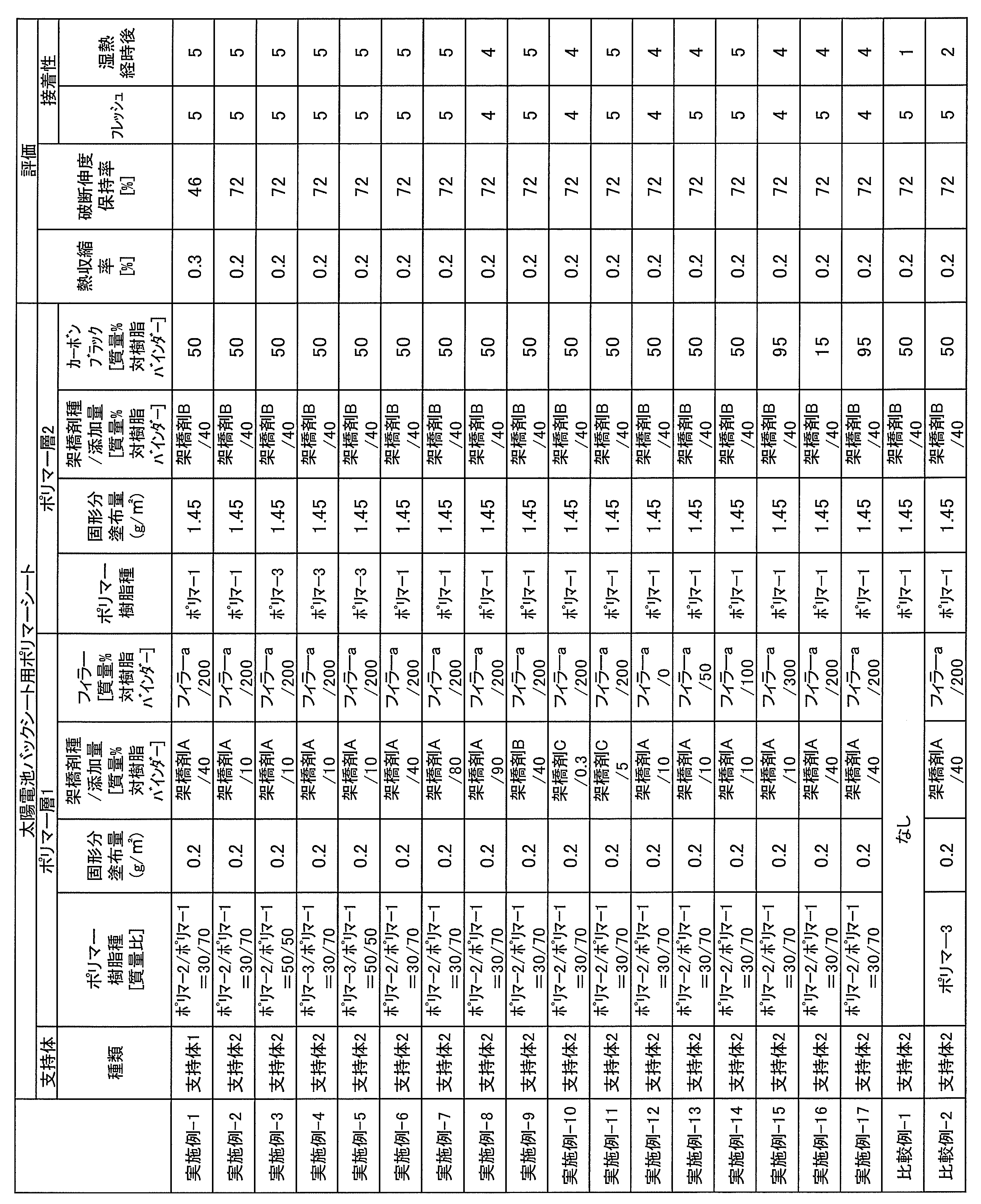
上記表1より、本発明の太陽電池バックシート用ポリマーシートは、湿熱経時後のポリエステル支持体と第1のポリマー層との接着性が良好であり、カーボンブラックを含む層(黒色層)を有する黒色太陽電池バックシート用ポリマーシートの湿熱耐久性が改善できたことがわかった。
一方、比較例1より、第1のポリマー層を設けずに直接ポリエステル支持体上にカーボンブラックを含む層(黒色層)を設けると、湿熱経時後の接着性が悪いことがわかった。比較例2より、第1のポリマー層のバインダー樹脂がゴム系樹脂のみであると、湿熱経時後の接着性が悪いことがわかった。
一方、比較例1より、第1のポリマー層を設けずに直接ポリエステル支持体上にカーボンブラックを含む層(黒色層)を設けると、湿熱経時後の接着性が悪いことがわかった。比較例2より、第1のポリマー層のバインダー樹脂がゴム系樹脂のみであると、湿熱経時後の接着性が悪いことがわかった。
[実施例101~117]
<太陽電池バックシートの作製>
実施例1~17の太陽電池バックシート用ポリマーシート試料を用いて以下の方法で図1に示す構成の太陽電池バックシート30を作製した。太陽電池バックシートを作製した。
実施例1~17の太陽電池バックシート用ポリマーシート試料の第2のポリマー層(黒色層)側の面と、厚さ約20μmのアルミシートと、厚さ100μmの耐候性ポリエチレンテレフタレートシートをこの順に接着剤で貼りあわせて、40℃で4日間熱処理した。その後、貼りあわせた試料は25℃、相対湿度60%の雰囲気で24時間調湿した。なお、接着剤の厚みはそれぞれ約5μmであった。得られたシートを実施例101~117の太陽電池用バックシートとした。
(接着剤)
タケラックA-1143(三井化学(株)製、接着剤) ・・・9質量部
タケネートA-50(三井化学(株)製、硬化剤) ・・・1質量部
酢酸ブチル ・・・10質量部
<太陽電池バックシートの作製>
実施例1~17の太陽電池バックシート用ポリマーシート試料を用いて以下の方法で図1に示す構成の太陽電池バックシート30を作製した。太陽電池バックシートを作製した。
実施例1~17の太陽電池バックシート用ポリマーシート試料の第2のポリマー層(黒色層)側の面と、厚さ約20μmのアルミシートと、厚さ100μmの耐候性ポリエチレンテレフタレートシートをこの順に接着剤で貼りあわせて、40℃で4日間熱処理した。その後、貼りあわせた試料は25℃、相対湿度60%の雰囲気で24時間調湿した。なお、接着剤の厚みはそれぞれ約5μmであった。得られたシートを実施例101~117の太陽電池用バックシートとした。
(接着剤)
タケラックA-1143(三井化学(株)製、接着剤) ・・・9質量部
タケネートA-50(三井化学(株)製、硬化剤) ・・・1質量部
酢酸ブチル ・・・10質量部
[実施例201~217]
<太陽電池モジュールの作製>
実施例101~117の太陽電池用バックシートを用いて以下の方法で、図1に示す構成の太陽電池モジュール10を作製した。
厚さ3mmの強化ガラスと、EVAシート(三井化学ファブロ(株)製のSC50B)と、結晶系太陽電池セルと、EVAシート(三井化学ファブロ(株)製のSC50B)と、バックシートをこの順に重ね合わせ、真空ラミネータ(日清紡(株)製、真空ラミネート機)を用いてホットプレスすることにより、EVAと接着させた。この時、実施例101~114の太陽電池用バックシートの第4のポリマー層がEVAシートと接触するように配置した。また、接着方法は、以下の通りである。
<接着方法>
真空ラミネータを用いて、128℃で3分間の真空引き後、2分間加圧して仮接着した。その後、ドライオーブンにて150℃で30分間、本接着処理を施した。
<太陽電池モジュールの作製>
実施例101~117の太陽電池用バックシートを用いて以下の方法で、図1に示す構成の太陽電池モジュール10を作製した。
厚さ3mmの強化ガラスと、EVAシート(三井化学ファブロ(株)製のSC50B)と、結晶系太陽電池セルと、EVAシート(三井化学ファブロ(株)製のSC50B)と、バックシートをこの順に重ね合わせ、真空ラミネータ(日清紡(株)製、真空ラミネート機)を用いてホットプレスすることにより、EVAと接着させた。この時、実施例101~114の太陽電池用バックシートの第4のポリマー層がEVAシートと接触するように配置した。また、接着方法は、以下の通りである。
<接着方法>
真空ラミネータを用いて、128℃で3分間の真空引き後、2分間加圧して仮接着した。その後、ドライオーブンにて150℃で30分間、本接着処理を施した。
作製した実施例201~217の太陽電池モジュールについて、発電運転をしたところ、いずれも太陽電池として良好な発電性能を示した。
10 太陽電池モジュール
11 第4のポリマー層
12 第3のポリマー層
14 第1のポリマー層
16 第2のポリマー層(黒色層)
18 ポリエステル支持体(基材フィルム)
19 支持体の黒色面
20 太陽電池モジュール用ポリマーシート
22 太陽電池素子
24 封止材
26 透明性の基板
27 アルミシート
28 耐候性ポリエチレンテレフタレートシート
29 接着剤
30 太陽電池バックシート
11 第4のポリマー層
12 第3のポリマー層
14 第1のポリマー層
16 第2のポリマー層(黒色層)
18 ポリエステル支持体(基材フィルム)
19 支持体の黒色面
20 太陽電池モジュール用ポリマーシート
22 太陽電池素子
24 封止材
26 透明性の基板
27 アルミシート
28 耐候性ポリエチレンテレフタレートシート
29 接着剤
30 太陽電池バックシート
Claims (8)
- ポリエステル支持体と、前記ポリエステル支持体の少なくとも片面に第1のポリマー層と第2のポリマー層をこの順に有し、
前記第1のポリマー層が第一のバインダー樹脂としてのアクリル樹脂と、第二のバインダー樹脂としてのポリオレフィン樹脂とゴム系樹脂から選ばれる少なくとも1種の樹脂と、架橋剤由来の構造とを含有し、
前記第2のポリマー層がバインダー樹脂と該バインダー樹脂に対して10~100質量%のカーボンブラックを含有することを特徴とする太陽電池モジュール用ポリマーシート。 - 前記第1のポリマー層中の前記架橋剤由来の構造が、前記第1のポリマー層中の全ポリマー樹脂に対して0.5~80質量%含まれていることを特徴とする請求項1に記載の太陽電池モジュール用ポリマーシート。
- 150℃で30分間熱処理した時の収縮率が1%以下であることを特徴とする請求項1または2に記載の太陽電池モジュール用ポリマーシート。
- 前記ポリエステル支持体が、120℃、相対湿度100%の雰囲気下で48時間経時した後の破断伸びが経時前の前記ポリエステル支持体の長さの50%以上であるポリエステル支持体であることを特徴とする請求項1~3のいずれか一項に記載の太陽電池モジュール用ポリマーシート。
- 120℃、相対湿度100%の雰囲気下で48時間経時した後の破断伸びが経時前の長さの50%以上であることを特徴とする請求項1~4のいずれか一項に記載の太陽電池モジュール用ポリマーシート。
- 前記第1のポリマー層にフィラーを含むことを特徴とする請求項1~5のいずれか一項に記載の太陽電池モジュール用ポリマーシート。
- 請求項1~6のいずれか一項に記載の太陽電池モジュール用ポリマーシートを具備することを特徴とする太陽電池モジュール用バックシート。
- 請求項7に記載の太陽電池モジュール用バックシートを具備することを特徴とする太陽電池モジュール。
Applications Claiming Priority (4)
| Application Number | Priority Date | Filing Date | Title |
|---|---|---|---|
| JP2011-223096 | 2011-10-07 | ||
| JP2011223096 | 2011-10-07 | ||
| JP2012-221516 | 2012-10-03 | ||
| JP2012221516A JP5848682B2 (ja) | 2011-10-07 | 2012-10-03 | 太陽電池モジュール用ポリマーシート及びバックシート並びに太陽電池モジュール |
Publications (1)
| Publication Number | Publication Date |
|---|---|
| WO2013051649A1 true WO2013051649A1 (ja) | 2013-04-11 |
Family
ID=48043802
Family Applications (1)
| Application Number | Title | Priority Date | Filing Date |
|---|---|---|---|
| PCT/JP2012/075801 Ceased WO2013051649A1 (ja) | 2011-10-07 | 2012-10-04 | 太陽電池モジュール用ポリマーシート及びバックシート並びに太陽電池モジュール |
Country Status (2)
| Country | Link |
|---|---|
| JP (1) | JP5848682B2 (ja) |
| WO (1) | WO2013051649A1 (ja) |
Cited By (2)
| Publication number | Priority date | Publication date | Assignee | Title |
|---|---|---|---|---|
| JPWO2016104413A1 (ja) * | 2014-12-26 | 2017-10-05 | 大日本印刷株式会社 | 太陽電池モジュール用の集電シート |
| TWI756661B (zh) * | 2019-04-09 | 2022-03-01 | 日商斯庫林集團股份有限公司 | 熱處理方法及熱處理裝置 |
Citations (5)
| Publication number | Priority date | Publication date | Assignee | Title |
|---|---|---|---|---|
| JP2001181588A (ja) * | 1999-12-24 | 2001-07-03 | Mitsui Chemicals Inc | 熱シール接着剤組成物 |
| JP2002105418A (ja) * | 2000-09-27 | 2002-04-10 | Mitsui Chemicals Inc | 接着剤組成物およびそれを用いた熱シール接着用材料 |
| WO2010005029A1 (ja) * | 2008-07-11 | 2010-01-14 | 三菱樹脂株式会社 | 太陽電池用バックシート |
| JP2011073311A (ja) * | 2009-09-30 | 2011-04-14 | Dainippon Printing Co Ltd | 太陽電池モジュール用裏面保護シート、及び太陽電池モジュール |
| JP2011184488A (ja) * | 2010-03-04 | 2011-09-22 | Fujifilm Corp | ポリエステルフィルム及びその製造方法、並びに太陽電池モジュール |
-
2012
- 2012-10-03 JP JP2012221516A patent/JP5848682B2/ja not_active Expired - Fee Related
- 2012-10-04 WO PCT/JP2012/075801 patent/WO2013051649A1/ja not_active Ceased
Patent Citations (5)
| Publication number | Priority date | Publication date | Assignee | Title |
|---|---|---|---|---|
| JP2001181588A (ja) * | 1999-12-24 | 2001-07-03 | Mitsui Chemicals Inc | 熱シール接着剤組成物 |
| JP2002105418A (ja) * | 2000-09-27 | 2002-04-10 | Mitsui Chemicals Inc | 接着剤組成物およびそれを用いた熱シール接着用材料 |
| WO2010005029A1 (ja) * | 2008-07-11 | 2010-01-14 | 三菱樹脂株式会社 | 太陽電池用バックシート |
| JP2011073311A (ja) * | 2009-09-30 | 2011-04-14 | Dainippon Printing Co Ltd | 太陽電池モジュール用裏面保護シート、及び太陽電池モジュール |
| JP2011184488A (ja) * | 2010-03-04 | 2011-09-22 | Fujifilm Corp | ポリエステルフィルム及びその製造方法、並びに太陽電池モジュール |
Cited By (3)
| Publication number | Priority date | Publication date | Assignee | Title |
|---|---|---|---|---|
| JPWO2016104413A1 (ja) * | 2014-12-26 | 2017-10-05 | 大日本印刷株式会社 | 太陽電池モジュール用の集電シート |
| TWI756661B (zh) * | 2019-04-09 | 2022-03-01 | 日商斯庫林集團股份有限公司 | 熱處理方法及熱處理裝置 |
| US11282708B2 (en) | 2019-04-09 | 2022-03-22 | SCREEN Holdings Co., Ltd. | Light irradiation type heat treatment method and heat treatment apparatus |
Also Published As
| Publication number | Publication date |
|---|---|
| JP2013093569A (ja) | 2013-05-16 |
| JP5848682B2 (ja) | 2016-01-27 |
Similar Documents
| Publication | Publication Date | Title |
|---|---|---|
| JP5896787B2 (ja) | 易接着シート、太陽電池用保護シート、太陽電池用バックシート部材、太陽電池用バックシート及び太陽電池モジュール | |
| JP5734569B2 (ja) | 太陽電池用バックシート及びその製造方法、並びに太陽電池モジュール | |
| JP5705643B2 (ja) | 太陽電池用バックシート用ポリマーシート、及び太陽電池モジュール | |
| JP6068236B2 (ja) | 積層フィルム、太陽電池モジュール用バックシート及び太陽電池モジュール | |
| CN105459541A (zh) | 太阳能电池背板膜及其生产方法 | |
| JP2006255927A (ja) | 太陽電池用表面保護フィルムおよびそれを用いた太陽電池積層体 | |
| WO2011118844A1 (en) | Solar cell backsheet | |
| WO2012063945A1 (ja) | 太陽電池用バックシート及び太陽電池モジュール | |
| JP5848682B2 (ja) | 太陽電池モジュール用ポリマーシート及びバックシート並びに太陽電池モジュール | |
| JP5606849B2 (ja) | 太陽電池用バックシート用ポリマーシート及び太陽電池モジュール | |
| JP5833981B2 (ja) | ポリマーシートとその製造方法、太陽電池用バックシートおよび太陽電池モジュール | |
| JP5727319B2 (ja) | ポリマーシート、太陽電池用保護シート及び太陽電池モジュール | |
| JP2012222227A (ja) | 太陽電池用バックシート、太陽電池用積層体及び太陽電池モジュール並びにそれらの製造方法 | |
| JP5778593B2 (ja) | 太陽電池モジュール用ポリマーシート及びバックシート並びに太陽電池モジュール | |
| JP2013165255A (ja) | 太陽電池モジュール用ポリマーシート及びバックシート並びに太陽電池モジュール | |
| JP5705769B2 (ja) | 太陽電池用保護シート及びその製造方法、太陽電池用バックシート、並びに太陽電池モジュール | |
| JP2013042016A (ja) | 太陽電池用ポリマーシート、太陽電池用バックシート、及び太陽電池モジュール | |
| JP2013139526A (ja) | 太陽電池モジュール用ポリマーシート及びバックシート並びに太陽電池モジュール | |
| JP6305082B2 (ja) | 太陽電池用保護シート、太陽電池用バックシート、太陽電池モジュール及太陽電池モジュールの再加工方法 | |
| JP2012231029A (ja) | 太陽電池用保護シート及びその製造方法並びに太陽電池モジュール | |
| JP6050652B2 (ja) | 太陽電池用ポリマーシートおよび太陽電池モジュール | |
| JP5995769B2 (ja) | 積層フィルム、太陽電池モジュール用バックシート及び太陽電池モジュール | |
| JP2013021188A (ja) | 太陽電池バックシート用基材フィルム及びその製造方法、並びに太陽電池モジュール | |
| JP5694881B2 (ja) | 太陽電池用ポリマーシート、太陽電池用バックシート、及び太陽電池モジュール | |
| JP2013042006A (ja) | 太陽電池モジュール用ポリマーシートとその製造方法、太陽電池モジュール用バックシート及び太陽電池モジュール |
Legal Events
| Date | Code | Title | Description |
|---|---|---|---|
| 121 | Ep: the epo has been informed by wipo that ep was designated in this application |
Ref document number: 12838354 Country of ref document: EP Kind code of ref document: A1 |
|
| NENP | Non-entry into the national phase |
Ref country code: DE |
|
| 122 | Ep: pct application non-entry in european phase |
Ref document number: 12838354 Country of ref document: EP Kind code of ref document: A1 |