WO2012172843A1 - 情報処理装置および方法、並びにプログラム - Google Patents
情報処理装置および方法、並びにプログラム Download PDFInfo
- Publication number
- WO2012172843A1 WO2012172843A1 PCT/JP2012/056565 JP2012056565W WO2012172843A1 WO 2012172843 A1 WO2012172843 A1 WO 2012172843A1 JP 2012056565 W JP2012056565 W JP 2012056565W WO 2012172843 A1 WO2012172843 A1 WO 2012172843A1
- Authority
- WO
- WIPO (PCT)
- Prior art keywords
- game
- player
- unit
- corner
- model
- Prior art date
- Legal status (The legal status is an assumption and is not a legal conclusion. Google has not performed a legal analysis and makes no representation as to the accuracy of the status listed.)
- Ceased
Links
Images







Classifications
-
- G—PHYSICS
- G07—CHECKING-DEVICES
- G07F—COIN-FREED OR LIKE APPARATUS
- G07F17/00—Coin-freed apparatus for hiring articles; Coin-freed facilities or services
- G07F17/32—Coin-freed apparatus for hiring articles; Coin-freed facilities or services for games, toys, sports, or amusements
- G07F17/3241—Security aspects of a gaming system, e.g. detecting cheating, device integrity, surveillance
-
- G—PHYSICS
- G06—COMPUTING OR CALCULATING; COUNTING
- G06V—IMAGE OR VIDEO RECOGNITION OR UNDERSTANDING
- G06V40/00—Recognition of biometric, human-related or animal-related patterns in image or video data
- G06V40/10—Human or animal bodies, e.g. vehicle occupants or pedestrians; Body parts, e.g. hands
- G06V40/16—Human faces, e.g. facial parts, sketches or expressions
-
- G—PHYSICS
- G07—CHECKING-DEVICES
- G07F—COIN-FREED OR LIKE APPARATUS
- G07F17/00—Coin-freed apparatus for hiring articles; Coin-freed facilities or services
- G07F17/32—Coin-freed apparatus for hiring articles; Coin-freed facilities or services for games, toys, sports, or amusements
- G07F17/3225—Data transfer within a gaming system, e.g. data sent between gaming machines and users
- G07F17/3232—Data transfer within a gaming system, e.g. data sent between gaming machines and users wherein the operator is informed
- G07F17/3234—Data transfer within a gaming system, e.g. data sent between gaming machines and users wherein the operator is informed about the performance of a gaming system, e.g. revenue, diagnosis of the gaming system
-
- G—PHYSICS
- G07—CHECKING-DEVICES
- G07F—COIN-FREED OR LIKE APPARATUS
- G07F17/00—Coin-freed apparatus for hiring articles; Coin-freed facilities or services
- G07F17/32—Coin-freed apparatus for hiring articles; Coin-freed facilities or services for games, toys, sports, or amusements
- G07F17/3225—Data transfer within a gaming system, e.g. data sent between gaming machines and users
- G07F17/3232—Data transfer within a gaming system, e.g. data sent between gaming machines and users wherein the operator is informed
- G07F17/3237—Data transfer within a gaming system, e.g. data sent between gaming machines and users wherein the operator is informed about the players, e.g. profiling, responsible gaming, strategy/behavior of players, location of players
-
- G—PHYSICS
- G07—CHECKING-DEVICES
- G07F—COIN-FREED OR LIKE APPARATUS
- G07F17/00—Coin-freed apparatus for hiring articles; Coin-freed facilities or services
- G07F17/32—Coin-freed apparatus for hiring articles; Coin-freed facilities or services for games, toys, sports, or amusements
- G07F17/3225—Data transfer within a gaming system, e.g. data sent between gaming machines and users
- G07F17/3232—Data transfer within a gaming system, e.g. data sent between gaming machines and users wherein the operator is informed
- G07F17/3237—Data transfer within a gaming system, e.g. data sent between gaming machines and users wherein the operator is informed about the players, e.g. profiling, responsible gaming, strategy/behavior of players, location of players
- G07F17/3239—Tracking of individual players
Definitions
- the present invention relates to an information processing apparatus, method, and program, and in particular, only a player who wants to play a game machine model at an amusement store or an operation rate for each model provided in an island facility with the model as a first candidate.
- the present invention relates to an information processing apparatus and method, and a program which are obtained from the game information.
- Patent Document 1 a technique for calculating the operating rate of a game machine using a member recording medium has been proposed.
- the timing for changing the game machine at the current game store is determined from the machine type of the game machine or the average operating rate of the whole island required by such technology.
- the present invention has been made in view of such a situation, and in particular, when determining the operating rate of each gaming machine in a gaming store, the model of the first candidate gaming machine that the player wanted to play for each player was selected.
- the specific availability is determined for each type of game machine or each island facility using only the game information when the first candidate model is played.
- An information processing apparatus includes a gaming table imaging unit that images a player who plays on the gaming table for each gaming table installed in a gaming store, and a corner provided with a plurality of the gaming tables, or A corner imaging unit that images a player entering or leaving the island facility unit, the game table imaging unit, a verification unit that matches a player imaged by the corner imaging unit with a registrant, and the verification unit Among the corners where the players verified by the verification unit managed by the admission management unit and the entrance management unit that manages the entrance time of each corner for each of the players verified by When the player performs a predetermined action, the first candidate determination unit that determines the model of the game machine installed in the corner as the first candidate model most desired to be played by the player is verified by the verification unit.
- a game start management unit for managing a game start time for each game table, a game end management unit for managing a game end time for each game table for each player collated by the collation unit, and the game store Based on information about the game start time and the game end time of only the player determined as the first candidate model by the first candidate determination unit for the predetermined model of the game machine installed in A first candidate game model operation rate calculation unit that calculates an operation rate based on the first candidate game model of the gaming machine that is the model of the game machine.
- the present invention it is possible to calculate the operating rate for each model of the gaming machine suitable for considering replacement of the gaming machine.
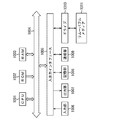
- FIG. 1 It is a figure which shows the structure of one Embodiment of the monitoring system to which this invention is applied. It is a figure which shows the example of installation of the camera of FIG. It is a figure which shows the example of installation of the camera of FIG. It is a figure which shows the example of installation of the camera of FIG. It is a figure which shows the example of installation of the camera of FIG. It is a figure which shows the example of installation of the camera of FIG. It is a figure which shows the example of installation of the camera of FIG. It is a figure which shows the example of installation of the camera of FIG. It is a figure which shows the example of installation of the entrance camera and shop camera of FIG. It is a figure explaining the structural example of the image processing unit of FIG. 1, a biometric information recognition apparatus, and a game store management apparatus.
- FIG. 11 is a diagram illustrating a configuration example of a personal computer.
- Embodiments of the present invention will be described below. Correspondences between the configuration requirements of the present invention and the embodiments described in the detailed description of the invention are exemplified as follows. This description is to confirm that the embodiments supporting the present invention are described in the detailed description of the invention. Accordingly, although there are embodiments that are described in the detailed description of the invention but are not described here as embodiments corresponding to the constituent elements of the present invention, It does not mean that the embodiment does not correspond to the configuration requirements. Conversely, even if an embodiment is described here as corresponding to a configuration requirement, that means that the embodiment does not correspond to a configuration requirement other than the configuration requirement. It's not something to do.
- an information processing apparatus includes a game table imaging unit (for example, each camera 38 in FIG. 9) that images a player who plays on the game table for each game table installed in a game store.
- a corner provided with a plurality of the game tables, or a corner image pickup unit (for example, the in-store camera 42 in FIG. 9) that picks up an image of a player who enters or leaves an island facility, and the game table image pickup unit;
- a collation unit (for example, collation unit 293 in FIG. 9) that collates a player imaged by the corner imaging unit with a registrant, and manages an entry time for each corner for each player collated by the collation unit.
- a first candidate determination unit for example, the first candidate determination unit 275e in FIG. 9 that determines the model of the gaming table installed in the player as the first candidate model that the player most desires to play;
- a game start management unit for example, the game start management unit 275c in FIG. 9) that manages the game start time for each gaming table for each player collated by the collation unit, and for each player collated by the collation unit
- a game end management unit for example, the game end management unit 275d in FIG.
- the operation rate is calculated by the first candidate game model of the gaming machine to be the predetermined model First candidate play Model operating rate calculating unit (for example, operating rate calculating unit 278 of FIG. 9) and a.
- the verification is performed based on the entrance time and the exit time.
- the player in the stay time calculation unit (for example, the stay time calculation unit 275f in FIG. 9) that calculates the stay time of the corner for each player collated by the unit, and the type of the game stand installed in the corner Can be further included with an operating rate calculating unit (for example, an operating rate calculating unit 275g in FIG.
- a corner managed by the admission management unit and entered by the player collated by the collation unit is a corner first entered after entering the amusement store.
- the game machine type of the corner can be determined as the first candidate model of the player, and is managed by the admission management unit.
- the model of the gaming machine installed at the corner can be determined as the first candidate model of the player.
- a detection unit for example, the game table signal management unit 271 in FIG. 9 for detecting an out ball for each gaming table may be further included, and the game start management unit may include an out ball by the detection unit.
- the game start time for each gaming table can be managed for each player verified by the verification unit, the game end management unit, By changing from a state where there is an out ball to a state where there is no out ball by the detection unit, it is possible to manage the game end time for each gaming table for each player collated by the collation unit.
- An information processing method and program is provided for each game machine installed in a game store in a game machine imaging unit that captures an image of a player playing a game on the game machine for each game machine installed in a game shop.
- a game table imaging step (for example, step S11 in FIG. 10) for imaging a player who plays on the game table, and a player who enters or leaves a corner or island facility unit provided with a plurality of the game tables.
- a corner imaging step for example, step S31 in FIG.
- an admission management step for managing the admission time of each corner for each player collated by the process of the collation step, and the admission management unit.
- the player is most likely to play the model of the gaming table installed in the corner.
- the reference is managed by the process of the admission management step.
- the model of the game stand installed in the corner is set as the first candidate model most desired for the player to play.
- a game start management step for example, steps S124 and S125 in FIG.
- a game end management step to be managed (for example, steps S138 and S139 in FIG.
- the game determined as the first candidate model by the first candidate determination unit In the first candidate game model operation rate calculation unit that calculates the operation rate by the first candidate game model of the gaming machine that is the predetermined model based on the information of the game start time and the game end time of only the player Information on the game start time and the game end time of only the player determined as the first candidate model by the processing of the first candidate determination step for the predetermined model of the game machine installed in the game store Based on the first candidate gaming machine utilization rate calculating step (for example, the step of FIG. 19) for calculating the utilization rate by the first candidate gaming machine of the gaming machine as the predetermined model. S166, S167) and a.
- FIG. 1 is a diagram showing a configuration example of an embodiment of a monitoring system using an information processing apparatus according to the present invention.
- the game stores 1-1 to 1-n are so-called pachinko stores, pachislot stores, or casino stores. These amusement stores 1-1 to 1-n are affiliated stores or affiliated stores of the biometric information management center and the third party amusement store management center, and stores that need to manage a plurality of stores in an integrated manner. It is.
- the game stores 1-1 to 1-n are connected by a third-party game store management bus 4 and are connected to each other via a public communication line network 5 represented by the bus and the Internet. Amusement store management information is exchanged.
- the game store 1 if it is not necessary to distinguish each of the game stores 1-1 to 1-n, it will be simply referred to as the game store 1 and the other configurations will be referred to in the same manner.
- the third-party amusement store management bus 4 functions as a transmission path for distributing medium lending management information mainly managed by the medium lending management device 27 of each amusement store 1.
- the third-party amusement store management center 2 is a server used by a business operator that manages and operates the third-party amusement store management center, and the medium lending management managed by the third-party amusement store management database (DB) 3
- DB third-party amusement store management database
- the updated latest medium lending management information is distributed to the medium lending management device 27 of each game store 1.
- the biological information recognizing device 21 is configured so that each of the image processing units 39 is based on images captured by the cameras 38-1 to 38-m, the entrance cameras 41-1 to 41-p, and the in-store cameras 42-1 to 42-q. -1 to 39-m, and image processing units 40-1 to 40- (p + q), which are stored in the biological information database 22 in advance based on the facial image information supplied via the biological information bus 31.
- image processing units 40-1 to 40- (p + q) which are stored in the biological information database 22 in advance based on the facial image information supplied via the biological information bus 31.
- the display unit 23 such as an organic EL (Electro Luminescence) or LCD (Liquid Crystal Display).
- the amusement store management device 24 is a so-called hall computer, and amusement island facility (amusement island) 111 (via the amusement store management information bus 30 and the island facility management computer (Island Con) 201 (FIG. 9).
- the operation of the in-ball counter 251 and the out-ball counter 252 of the game table 36 in FIG. 9) is monitored.
- the game store management device 24 is configured to provide information on the game table 36 for playing or paying out medals, the number of out-balls that are discharged without winning a prize, and each of the game tables 36-1 to 36-m.
- a predetermined process is executed according to the call information of the player or the monitoring situation such as the occurrence of an error, and the execution result is displayed on the display unit 25 such as an organic EL or LCD.
- the game store management device 24 uses the identification information for identifying each of the information supplied from the counter 35, the game machines 36-1 to 36-m, and the game machine peripheral terminals 37-1 to 37-m. For example, it is managed by the gaming machine management database 26 in association with the gaming machine number.
- the medium lending management device 27 manages the medium lending management information of the rented game media using the medium lending management database 29 based on the information from the payment machine 33 and the lending machine 34, and also the medium lending management database.
- the medium lending management information registered in 29 is updated, the updated information is sent to the third party amusement store management center 2 via the third party amusement store management bus 4 and the public communication network 5.
- the medium lending management device 27 acquires the medium lending management information supplied by the third party amusement store management center 2 via the third party amusement store management bus 4 and the public communication line network 5, and the medium lending management is performed. Store in the database 29.
- the lending machine 34 lends a number of game media corresponding to the amount when the player accepts a predetermined amount by cash or a prepaid card when playing on the game stand 36. At this time, the lending machine 34 supplies information on the number of lent gaming media to the medium lending management device 27 together with information such as the accepted cash and the remaining number of prepaid cards. Thereby, the medium lending management device 27 registers information on the number of lent gaming media in the medium lending management information database 29 together with information such as the received cash and the remaining number of prepaid cards.
- the checkout machine 33 sells prepaid cards with a frequency for borrowing a ball. At this time, the checkout machine 33 supplies the frequency of the prepaid card sold and the amount paid to the medium lending management device 27. Further, the settlement vending machine 33 settles and pays out cash based on the remaining number of game media lent as a frequency such as a prepaid card. At this time, the checkout machine 33 supplies the remaining number of prepaid cards and the amount of cash refunded to the medium lending management device 27.
- the counting machine 35 counts the number of game media acquired by the player playing on the gaming table 36, and outputs the counting result as a magnetic card or a receipt.
- the gaming tables 36-1 to 36-m execute a game when a predetermined operation is performed by the player, and pay out a game ball or a medal according to a so-called small hit or big hit.
- the game machine peripheral terminals 37-1 to 37-m are so-called machine machines provided corresponding to the game machines 36-1 to 36-m. The same as the lending machine 34) is provided. Further, the gaming machine peripheral terminal 37 acquires biological information such as a face image of the player who plays the gaming machine 36 and transmits it to the biological information recognition device 21 together with the gaming machine identification information (game machine number). Note that FIG. 1 shows an example in which each camera 38-1 to 38-m that acquires a player's face image is provided for each gaming table 36 as a function for acquiring biological information.
- the entrance cameras 41-1 to 41-p and the in-store cameras 42-1 to 42-q are installed at entrances and predetermined places in the store of the amusement store 1, and imaged units 40-1 to 40- (P + q).
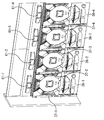
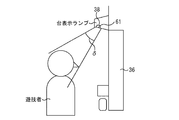
- the stand cameras 38-1 to 38-m are provided with stand display lamps 61-1 to 61-4 provided above the respective game stands 36-1 to 36-4.
- the player may be provided within the reading range ⁇ so that the player can take an image so that a face image can be taken. It can be used as a stand ID.
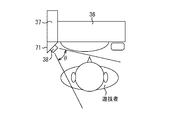
- each of the cameras 38-1 to 38-m is provided with convex portions 71-1 to 71-4 on the gaming machine peripheral terminals 37-1 to 37-4, and FIG. As shown by the above, it may be provided so that a player's face image can be captured within the reading range ⁇ .
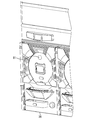
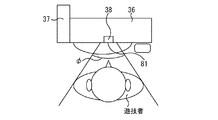
- each of the cameras 38-1 to 38-m may be provided in the center of the game table 36 (on the board surface of the game table 36), for example, as shown in FIG. Good. That is, as each camera 38 is installed in the installation unit 81 in FIG. 6, the player is imaged within the reading range ⁇ as shown in FIG. [Installation position of entrance camera and in-store camera]
- the entrance cameras 41-1 to 41-p and the in-store cameras 42-1 to 42-q are installed at entrances and predetermined places in the store of the amusement store 1, and imaged units 40-1 to 40- (P + q).
- FIG. 8 shows an installation example of the entrance cameras 41-1 to 41-p and the in-store cameras 42-1 to 42-q in the game store 1.
- the entrances 112-1 to 112-3 are provided, and the entrance cameras 41-1 to 41-3 take images of the players who enter the store through the respective entrances 112.
- the in-store cameras 42-1 to 42-16 are provided at positions where it is possible to confirm the entry / exit of the player to / from the corner set by the island facilities 111-1 to 111-5, respectively.
- the in-store cameras 42-1 to 42-4 take images of players who enter and leave the corners in the island facilities 111-1, 111-2. That is, here, the in-store cameras 42-2 and 42-3 take images of the players who enter the corners of the island facilities 111-1 and 111-2, and the in-store cameras 42-1 and 42-4 The player who leaves the corners 111-1 and 111-2 is photographed.
- the in-store cameras 42-5 to 42-8 capture images of players who enter and exit the corners in the island facilities 111-2 and 111-3.
- the in-store cameras 42-9 to 42-12 take pictures of players entering and exiting the corners in the island facilities 111-3 and 111-4, and the in-store cameras 42-13 to 42-16 are used to capture the island facilities 111-4. , 111-5, the player entering and exiting the corner is imaged. Since each of the cameras 38, the entrance camera 41, and the in-store camera 42 all have a pan / tilt / zoom function, the in-store cameras 42-1 to 42-16 are arranged as shown in FIG. All players who play on the game stand 36 can take an image with any of the in-store cameras 42-1 to 42-16.
- the in-store camera 42-a is provided in front of the lending machine 34
- the in-store camera 42-b is provided in front of the checkout machine 33
- the in-store camera 42-c is connected to the counter 35. It is provided in front, and a player who uses the rental machine 34, the checkout machine 33, and the counter 35 can be imaged.
- Each table image processing unit 39 includes an image acquisition unit 211, a face image detection unit 212, a feature amount extraction unit 213, a feature amount data table 214, a collation unit 215, and a transmission unit 216.
- the image acquisition unit 211 of each stand image processing unit 39 acquires an image captured by each stand camera 38 and supplies the acquired image to the face image extraction unit 212.
- the face image extraction unit 212 extracts a rectangular image made up of a face image from the image supplied from the image acquisition unit 211 using a pattern such as the arrangement of the parts constituting the face, and supplies the extracted rectangular image to the feature amount extraction unit 213.
- the feature amount extraction unit 213 extracts a feature amount for identifying the face image, and supplies the feature amount together with the face image to the collation unit 215 and the feature amount data table 214.
- the feature amount data table 214 stores the feature amount extracted from the face image of the immediately preceding frame in association with the frame number, and supplies it to the collation unit 215.
- the collation unit 215 obtains the similarity between the feature amount of the latest frame supplied from the feature amount extraction unit 213 and the feature amount obtained from the immediately preceding frame, and compares the face value of the immediately preceding frame with a predetermined threshold value. The image is compared with the face image of the current frame, and in the latest frame, a new face image is detected, the game starts, the same person exists and the game continues, immediately after the person is replaced It is determined whether the game has been started or the person has finished the game, and information on the feature amount is supplied to the transmission unit 216 together with the determination result.
- the transmission unit 216 transmits the face image and the collation result of the collation unit 215 to the biometric information recognition device 21. When transmitting the face image and the determination result, the transmission unit 216 transmits the face ID and the determination result to the biometric information authentication device 21 together with a camera ID for identifying which game stand 36 each camera 38 is provided on.
- the image processing unit 40 includes an image acquisition unit 231, a face image detection unit 232, and a transmission unit 233.
- the image acquisition unit 231 of the image processing unit 40 acquires an image captured by the entrance camera 41 or the in-store camera 42 and supplies it to the face image extraction unit 232.
- the face image extraction unit 232 extracts a rectangular image made up of face images from the image supplied from the image acquisition unit 231 by using a pattern such as the arrangement of parts constituting the face, and supplies the extracted image to the transmission unit 233.
- the transmission unit 233 transmits the face image to the biological information recognition device 21. When transmitting the face image, the transmission unit 233 transmits the face image to the biometric information authentication apparatus 21 together with a camera ID for identifying where the entrance camera 41 or the in-store camera 42 is provided.
- the island facility 111 is provided with a plurality of game tables 36, and each game table 36 indicates the number of game balls won in the in-ball counter 251 when a game ball wins a winning opening. And the result is supplied to an island facility management computer (island computer) 201 that manages the entire island facility.
- the island facility 111 is provided with an out ball counter 252 that counts out balls discharged from each game stand 36 without winning.
- the out ball counter 252 supplies information on the counted number of out balls to the island controller 201.
- the island controller 201 includes a signal detection unit 261, and information on the number of in-balls supplied from the in-ball counter 251 supplied from the game table 36 and the number of out-balls supplied from the out-ball counter 252. Are supplied to the game store management device 24 together with information for identifying each game machine 36.
- the game store management device 24 includes a game machine signal management unit 271, an operation information DB 272, a machine allocation DB 273, a transmission / reception unit 274, a DB registration management unit 275, a customer management DB 276, and an operation rate calculation unit 278.
- the gaming table signal management unit 271 is provided for each gaming table 36. Operation information is generated and registered in the operation information DB 272.
- the table allocation DB 273 includes information indicating which game machine number of the game machine 36 is set and which corner exit or entrance is set by the island facility 111. It is an assigned database.
- the transmission / reception unit 274 receives the face image collation result supplied from the biometric information recognition device 21 and information such as the absence detection, the same person detection, or the new person detection, and supplies them to the DB registration update unit 275.
- the DB registration update unit 275 registers the customer management DB 276 based on information such as absence detection, same person detection, or new person detection supplied from the transmission / reception unit 274. More specifically, the DB registration update unit 275 includes a corner entrance management unit 275a, a corner exit management unit 275b, a game start management unit 275c, a game end management unit 275d, a first candidate determination unit 275e, a stay time calculation unit 275f, and An operating rate calculation unit 275g is provided.
- the corner entrance management unit 275a correlates to the supplied authenticated player's person ID based on the new person detection information, and the face imaged by the in-store camera 42 at the entrance of a predetermined corner from the camera ID Information on the time of entering the corner of the person of the image is registered in the customer management DB 276.
- the corner exit management unit 275b associates the supplied person ID of the authenticated player based on the new person detection information with the face captured by the in-store camera 42 at the predetermined corner exit from the camera ID. Information on the time of leaving the corner of the person in the image is registered in the customer management DB 276.
- the game start management unit 275c uses each camera 38 of the gaming machine 36 having a predetermined gaming machine number from the camera ID based on the supplied person ID of the authenticated player.
- the operation information of the corresponding gaming table 36 is read from the operation information DB 272 and if it is operating, the time information is registered in the customer management DB 276 as the game start information.
- the game end management unit 275d is in a state where the face image captured by each camera 38 of the game machine 36 of the predetermined game machine number is not detected from the supplied camera ID.
- the operation information of the corresponding gaming table 36 is read from the operation information DB 272 and is not in operation, the information on the time is registered in the customer management DB 276 as game end information.
- the first candidate determination unit 275e controls the stay time calculation unit 275f based on the information stored in the customer management DB 276 of the player of the face image captured by the in-store camera 42 at the predetermined corner exit from the camera ID. Then, the stay time of the corner is calculated, and the operation rate calculation unit 275g is controlled to calculate the operation rate of the gaming machine 36 of the model installed in the corner. Then, based on the information, the first candidate determination unit 275e is the first candidate that the player wants to play the most in the model of the game stand 36 installed in the corner where the player is about to appear. It is determined whether or not it is a model, and the determination result is registered in the customer management DB 276.
- the occupancy rate calculation unit 278 seeks the occupancy rate for a specific model of the gaming machine 36, the operation unit 277 including a keyboard and operation buttons is operated, and an instruction to that effect is registered in the customer management DB 276.
- the occupancy rate appropriate for examining the replacement of the gaming machine 36 is calculated only from the customer information of the player whose first candidate is the model of the gaming machine 36 for which the operating rate is to be obtained. To do.
- the transmission / reception unit 291 of the biological information recognition apparatus 21 acquires the face image and various notifications supplied from each of the image processing units 39 and the image processing unit 40, and supplies them to the notification determination unit 292. In addition, the transmission / reception unit 291 transmits various face images and notifications supplied from the notification determination unit 292 and the collation unit 293 to the amusement shop management device 24.
- the notification determination unit 292 determines whether the notification supplied from the transmission / reception unit 291 is the absence detection, the same person detection, or the person detection, and for the absence notification, the information is sent to the transmission / reception unit 291. It is controlled and transmitted to the game store management device 24. In addition, in the case of person detection, the notification determination unit 292 supplies person detection information to the collation unit 293.
- the collation unit 293 registers the face image information supplied by the person detection in the store visitor DB 295 and collates with any person registered in the store visitor DB 295 as a collation result. Along with the person ID, it is transmitted from the transmission / reception unit 291 to the amusement store management apparatus 24. More specifically, the collation unit 293 includes a feature amount extraction unit 311, a similarity calculation unit 312, a similarity calculation result accumulation unit 313, a similarity calculation result totaling unit 314, and a similarity determination unit 315.
- the feature amount extraction unit 311 extracts various feature amounts necessary for matching the face image from the face image, and supplies the face image to the similarity calculation unit 312 together with the extracted feature amount.
- the similarity calculation unit 312 is based on the feature amounts of all the face images registered in the store visitor DB 295 supplied from the database management unit 296 and the feature amounts supplied from the feature amount extraction unit 311.
- the similarity is calculated and stored in the similarity calculation result storage unit 313.
- the similarity calculation result totaling unit 314 includes a face image having the highest similarity among all the similarities accumulated in the similarity calculation result accumulating unit 313 and information on the degree of similarity. 315 is supplied.
- the similarity determination unit 315 regards the face image registered in the visitor DB 295 as a match, and the corresponding person ID The notification supplied together with this is transmitted from the transmission / reception unit 291 to the game store management device 24 as a new person detection.
- the similarity determination unit 315 considers that the supplied topmost similarity is not higher than a predetermined threshold value and does not match the face image registered in the visitor DB 295, The face image is supplied to the registration unit 294, a new person ID is set and registered in the store visitor DB 295, and the notification supplied with the registered person ID is detected by the transmission / reception unit 291 as a new person detection. 24 to transmit.
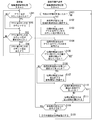
- [Face image detection processing by each stand image processing unit] Next, the face image detection process by each stand image processing unit 39 will be described with reference to the flowchart of FIG.
- each camera 38 captures the direction in which the player exists from the installed position, and supplies the captured image to each camera image processing unit 39.
- the image acquisition unit 211 of each stand image processing unit 39 acquires the supplied image and supplies it to the face image detection unit 212.
- step S ⁇ b> 12 the face image extraction unit 212 extracts a rectangular image composed of the face image from the image supplied from the image acquisition unit 211 using a pattern such as the arrangement of the parts constituting the face, and the feature amount extraction unit 213. To supply.
- step S13 the face image extraction unit 212 determines whether a face image has been extracted from the image. If the face image can be extracted in step S13, the process proceeds to step S14.
- step S14 the feature amount extraction unit 213 extracts a feature amount for identifying the face image, and supplies the feature amount together with the face image to the matching unit 215 and the feature amount data table 214.
- the feature amount data table 214 stores the feature amount extracted from the face image of the immediately preceding frame in association with the frame number, and supplies it to the collation unit 215.
- step S15 the collation unit 215 obtains the similarity between the feature amount of the latest frame supplied from the feature amount extraction unit 213 and the feature amount obtained from the immediately preceding frame.
- step S ⁇ b> 16 the matching unit 215 determines that the calculated similarity is higher than a predetermined threshold, the face image of the previous frame matches the face image of the current frame, and When it is determined that the same player is captured, the process proceeds to step S17.
- step S17 the collation unit 215 controls the transmission unit 216 to identify the previous player including the camera ID for identifying each camera 38 that captured the face image, information about the imaging time, and information about the face image.
- a notification of the same person detection indicating that the same player is imaged is transmitted to the biometric information recognition device 21.
- step S16 determines whether the similarity is higher than the predetermined threshold and a face image of a new player different from the player imaged in the immediately preceding frame has been captured. If it is determined in step S16 that the similarity is not higher than the predetermined threshold and a face image of a new player different from the player imaged in the immediately preceding frame has been captured, the process proceeds to step S18. move on.
- step S18 the collation unit 215 controls the transmission unit 216 to perform collation of the face image including the camera ID for identifying each camera 38 that captured the face image, information on the imaging time, and information on the face image.
- a notification of person detection indicating that a face image that has not been detected has been detected is transmitted to the biometric information recognition device 21.
- step S13 If it is determined in step S13 that the face image could not be extracted, the process proceeds to step S19.
- step S19 the matching unit 215 determines whether or not a face image has been detected in the immediately preceding frame based on information recorded in the feature amount data table 214. That is, when it is known that the player has played a game until just before, the process proceeds to step S20.
- step S20 the collation unit 215 controls the transmission unit 216 to play the game of the face image that has been collated immediately before, including the camera ID for identifying each camera 38 that captured the face image and the information of the imaging time.
- a notification of absence detection is transmitted to the biometric information recognition device 21 to indicate that the person has finished the game and has left the game.
- step S19 if no face image is detected in the immediately preceding frame, the process in step S20 is skipped.
- each of the stand image processing units 39 includes the camera ID for picking up the image, the time of image pickup, and the face image as necessary according to the face image of the player picked up by each stand camera 38.
- the three types of notifications of the same person detection, the person detection, and the absence detection can be transmitted to the biometric information recognition device 21.
- step S31 the in-store camera 42 takes an image of the entrance or exit near the corner set by the game island 111 from the installed position, and takes an image in the direction in which the player entering or leaving the corner exists. Then, the captured image is supplied to the image processing unit 40.
- the image acquisition unit 231 of the image processing unit 40 acquires the supplied image and supplies it to the face image extraction unit 212.
- step S ⁇ b> 32 the face image extraction unit 232 extracts a rectangular image composed of the face image from the image supplied from the image acquisition unit 231 using a pattern such as the arrangement of the parts constituting the face, and supplies the extracted rectangular image to the transmission unit 233. To do.
- step S33 the face image extraction unit 232 determines whether a face image has been extracted from the image. If the face image can be extracted in step S33, the process proceeds to step S34.
- step S34 the transmission unit 233 detects that a face image that has not been collated is detected, including a camera ID that identifies the in-store camera 42 that captured the face image, imaging time, and face image information. The notification of person detection shown in FIG. still. If the face image cannot be extracted in step S33, the process in step S34 is skipped.
- the image processing unit 40 extracts the face image of the player who enters or leaves each corner imaged by the in-store camera 42, and captures the camera ID, the imaging time, and the face image. It is possible to transmit a person detection notification including the information to the biometric information recognition device 21.
- biometric information recognition processing Next, biometric information recognition processing by the biometric information recognition device 21 will be described with reference to the flowchart of FIG.
- step S61 the notification determination unit 292 controls the transmission / reception unit 291 to determine whether or not a person detection notification has been transmitted from each of the image processing units 39 or the image processing unit 40.
- step S61 for example, when a person detection notification is transmitted from each of the image processing units 39 or the image processing unit 40 by the processing of step S18 of FIG. 10 or the processing of step S34 of FIG. Advances to step S62.
- step S ⁇ b> 69 the similarity determination unit 315 determines whether or not the calculated highest similarity is higher than a predetermined threshold value and matches the player's face image registered in the store visitor DB 295. .
- step S69 for example, when it is determined that the highest similarity is higher than a predetermined threshold and matches the player's face image registered in the visitor DB 295, the process proceeds to step S70.
- step S ⁇ b> 70 the similarity determination unit 315 completes the face image collation including the person ID of the face image having the highest similarity, the camera ID that captured the face image, and information on the imaging time.
- the transmission / reception unit 291 is controlled to transmit the new person detection indicating this information to the amusement store management apparatus 24.
- step S73 the notification determination unit 292 determines whether or not the transmitted notification is absence detection.
- step S73 for example, in the case of absence detection by the process of step S20 of FIG. 10, in step S74, the notification determination unit 292 controls the transmission / reception unit 291 to include information on the camera ID and imaging time. The absence detection is transmitted to the game store management device 24.
- the face image of the player registered in the visitor DB 295 is collated, and the person ID of the authenticated face image is added to the game store as a new person detection. It is transmitted to the management device 24. At this time, if it does not match any player registered in the visitor DB 295, a new person ID is given and registered as a new visitor in the visitor DB 295. Further, in the case of absence detection and detection of the same person, it is transmitted to the game store management device 24 as it is. [Operation information management processing] Next, the operation information management process by the game island 111, the island con 201, and the game shop management device 24 will be described with reference to the flowchart of FIG.
- step S102 the gaming table signal management unit 271 sets an unprocessed gaming table 36 as a gaming table 36 to be processed.
- step S123 if the position is not the gaming table 36, or if the operation information in the gaming table 36 is not a game start in step S124, the process of step S125 is skipped.
- step S129 the first candidate determination unit 275e determines whether or not the information of the first candidate corner is registered in the information of the customer management DB 276 of the person ID included in the new person detection. In step S129, for example, when the information of the first candidate corner is not registered as in the customer management information of the player whose person ID is P2 in FIG. 18, the process proceeds to step S130.
- step S132 the first candidate determination unit 275e controls the operation rate calculation unit 275g to access the operation information DB 272 and read the operation information of all the game tables 36 existing in the corresponding corner, The percentage of the gaming machines 36 that are operating while staying at the corner is calculated as the operating rate. And the 1st candidate determination part 275e determines whether the calculated operation rate is higher than a predetermined threshold value.
- step S132 for example, when the operation rate is higher than a predetermined threshold, the process proceeds to step S134, and it is registered that it is also the first candidate corner. In other words, it was considered that the player who entered the predetermined corner and stayed for the predetermined time or more despite not playing a game wanted to play because of the high availability, but could not play. Is considered to be the first candidate corner.
- the first candidate determination unit 275e sets the corresponding corner to the second corner in step S133. Register as a candidate corner.
- the corner is registered as the second candidate corner because it is registered as information indicating that it is not the first candidate corner, so it is not always necessary to register as the second candidate corner.
- only the information on the first candidate corner may be managed without being registered.
- step S136 if the absence detection is not detected, or in step S138, the game end management unit 275d accesses the operation information DB 272, and if the operation information of the corresponding gaming table 36 is not the game end, the process is performed. Return to step S121.
- step S162 the operation rate calculation unit 278 displays an image requesting input of information specifying the corner or the model of the gaming machine 36 specifying the corner on the display unit 25.
- step S164 the operation rate calculation unit 278 specifies a corner based on the input information.
- step S165 the operation rate calculation unit 278 accesses the customer management DB 275, and extracts only the customer management information specified by the person ID having the specified corner as the first candidate corner from the customer management information.
- the step of describing the program recorded on the recording medium is not limited to the processing performed in time series in the order described, but of course, it is not necessarily performed in time series. Or the process performed separately is included.
- system represents the entire apparatus composed of a plurality of apparatuses.
- the stay time Is longer than a predetermined time, and when the operating rate during which the player is staying at the corner is higher than a predetermined value, the model of the gaming machine installed at the corner is set as the first candidate model of the player. It can be made to judge.
- the game unit may further include a detection unit that detects an out ball, and the game start management unit is changed from a state without an out ball to a state by the detection unit, The game start time for each gaming table can be managed for each player collated by the collation unit, and the game end management unit is not in a state where there is an out ball by the detection unit By changing to, it is possible to manage the game end time for each gaming table for each player collated by the collating unit.
- the information processing method provides a game machine for each game machine installed in a game store in a game machine imaging unit that captures an image of a player playing on the game machine for each game machine installed in a game shop.
- a gaming table imaging step for imaging a player playing a game on a table, and the gaming table in a corner provided with a plurality of the gaming tables, or a corner imaging unit for imaging a player entering or leaving in units of island facilities
- a corner imaging step for imaging a player who enters or leaves a plurality of corners or island facility units, the game table imaging unit, and a player imaged by the corner imaging unit as a registrant.
- the model of the game machine installed at the corner is determined as the first candidate model most desired for the player to play.
- the first candidate determination step and the game for each player collated by the process of the collation step in the game start management unit for managing the game start time for each gaming table for each player collated by the collation unit In the game start management step for managing the game start time for each table, and in the game end management unit for managing the game end time for each game table for each player verified by the verification unit, verification is performed by the verification step process.
- a program includes a game table imaging unit that images a player who plays on the game table for each game table installed in a game store, and a corner or an island provided with a plurality of the game tables.
- a corner imaging unit that images a player entering or leaving a facility unit, the game table imaging unit, a verification unit that matches a player imaged by the corner imaging unit with a registrant, and a verification by the verification unit.
- the entrance management unit that manages the entry time for each corner for each player who has been played, and the corner that is managed by the entrance management unit and entered by the player verified by the verification unit, is determined by the player When the action is performed, the game machine installed at the corner is verified by the verification unit with the first candidate determination unit that determines the model as the first candidate model most desired to be played by the player.
- the game table imaging unit that images a player who plays on the game table for each game table installed in a game store is, for example, each camera
- the game table Is a corner imaging unit that images a player entering or leaving the island facility unit, for example, an in-store camera, and is imaged by the game table imaging unit and the corner imaging unit
- the collation unit that collates the registered player with the registrant is, for example, a collation unit
- the admission management unit that manages the admission time for each corner for each player collated by the collation unit is, for example,
- a corner entrance management unit which is managed by the entrance management unit, out of the corners entered by the player verified by the verification unit, when the player performs a predetermined action, a game installed in the corner Stand
- the first candidate determination unit that determines the seed as the first candidate model most desired to be played by the player is, for example, the first candidate determination unit, and is for each player verified by the verification unit.
- the corner admission management unit based on the time of entering the corner, for example, when playing the game table of the corner that entered first, the player wants to play the most It is considered as the desired first candidate model. Then, when calculating the operating rate of each model, the operating rate calculation unit is based on only the information of the game start time and game end time of the player regarded as the first candidate model for each model. Calculate the operating rate.
Landscapes
- Physics & Mathematics (AREA)
- General Physics & Mathematics (AREA)
- Engineering & Computer Science (AREA)
- Health & Medical Sciences (AREA)
- General Health & Medical Sciences (AREA)
- Social Psychology (AREA)
- Computer Security & Cryptography (AREA)
- General Engineering & Computer Science (AREA)
- Oral & Maxillofacial Surgery (AREA)
- Human Computer Interaction (AREA)
- Multimedia (AREA)
- Theoretical Computer Science (AREA)
- Pinball Game Machines (AREA)
Abstract
DB登録更新部(275)は、生体情報認識装置(21)より順次供給されてくる新人物検知の通知により、遊技者が撮像されたカメラを識別するカメラIDに対応付けて、遊技者毎に行動履歴を顧客管理DB(276)に登録する。その際、第1候補判定部(275e)は、遊技者が遊技したいと考える機種が存在するコーナを第1候補コーナとして登録する。稼働率算出部(278)は、コーナ毎の稼働率を算出する際、稼働率を算出しようとするコーナが第1候補コーナとして登録されている遊技者の顧客管理情報のみを使って稼働率を算出する。本発明は、台入替をする機種の検討をする際の適切な稼働率の算出技術に適用することができる。
Description
本発明は、情報処理装置および方法、並びにプログラムに関し、特に、遊技店における遊技台の機種、または島設備に設けられた機種毎の稼働率を、その機種を第1候補として遊技したい遊技者のみの遊技情報から求めるようにした情報処理装置および方法、並びにプログラムに関する。
遊技店のおかれている環境は、遊技人口の減少が進み、自店に来店していただいている固定遊技者の維持確保と、来店経験の無い新規遊技者の拡大とを狙った、近隣の遊技店との差別化をはかるべく、遊技台の入れ替えやイベントなどを中心とした熾烈な遊技者獲得競争が繰り広げている状況にある。
その一つの取り組みとして、(1)会員カードなどの媒体を発行する、(2)来店時に会員カードを利用していただく、(3)遊技者の動向を会員カードの利用状況から把握する、(4)遊技者の動向(来店データ)をもとに、イベントの有効性を検討し、従業員のサービスに反映させる、といったことをしている。この取り組みを通じて、固定遊技者の維持や新規遊技者の取り込みを計画している。
しかしながら、こうした媒体による取り組みは、会員カードを発行する部分は進んでいるものの、持参しないまたは持参しても挿入しないなどの実態により、現実には正確な遊技者の動向(来店データ)が把握できず、イベントの有効性や従業員のサービスに反映できていないのが現状である。
この問題を解決するために媒体を用いないバイオメトリクス、特に顔認証システムがある。
近年、携帯電話や入退室ゲートなどのアプリケーションを代表とするように、カメラによる撮像手段の普及や1対1での顔認証システムの性能向上が進み、遊技店においても遊技者一人一人を特定することが可能となった。
これにより会員カードの課題であった媒体を利用するハードルがなくなることで、本人他人を識別し、各遊技台でどんな遊技者が遊技をしているのか、遊技店内および遊技台ごとに設置したカメラを使うことによって遊技者の動向を把握することが可能となっている。
そして、この遊技者の動向(来店データ)を把握することにより、固定遊技者の維持や新規遊技者の取り込みに向けたイベントの有効性や従業員のサービスに反映させることができる。
このような技術として、会員記録媒体を使った遊技台の稼働率を算出する技術が提案されている(特許文献1参照)。
現在の遊技店における遊技台の入れ替えタイミングは、このような技術により求められる、遊技台の機種、または島全体の平均稼働率から決定されている。
しかしながら、遊技台の稼働率から入れ替えを決定することによって、実際に来店した遊技客が嗜好する遊技台かどうかは判断がつかないため、実際に入れ替えしてみたものの、遊技客が付かず、その結果、入れ替え後の遊技台の稼働率が下がったりすることがあった。
本発明はこのような状況に鑑みてなされたものであり、特に、遊技店における各遊技台の稼働率を求めるに当たり、遊技者毎に遊技したいと思っていた第1候補の遊技台の機種を特定し、第1候補の機種を遊技した場合の遊技情報のみを用いて遊技台の機種毎、または島設備毎の適切な稼働率を求められるようにするものである。
本発明の一側面の情報処理装置は、遊技店に設置された遊技台毎に前記遊技台で遊技する遊技者を撮像する遊技台撮像部と、前記遊技台が複数に設けられたコーナ、または、島設備単位で入場、または退場する遊技者を撮像するコーナ撮像部と、前記遊技台撮像部、および前記コーナ撮像部により撮像された遊技者を登録者と照合する照合部と、前記照合部により照合された遊技者毎に前記コーナ毎の入場時刻を管理する入場管理部と、前記入場管理部により管理された、前記照合部により照合された遊技者が入場したコーナのうち、前記遊技者が所定の行動をした場合、前記コーナに設置された遊技台の機種を、前記遊技者が遊技することを最も希望する第1候補機種として判定する第1候補判定部と、前記照合部により照合された遊技者毎に前記遊技台毎の遊技開始時刻を管理する遊技開始管理部と、前記照合部により照合された遊技者毎に前記遊技台毎の遊技終了時刻を管理する遊技終了管理部と、前記遊技店に設置された遊技台の所定の機種について、前記第1候補判定部により第1候補機種として判定された遊技者のみの、前記遊技開始時刻、および前記遊技終了時刻の情報に基づいて、前記所定の機種となる遊技台の第1候補遊技機種により稼働率を計算する第1候補遊技機種稼働率計算部とを含む。
本発明によれば、遊技台の入替を検討するのに適切な遊技台の機種毎の稼働率を算出することが可能となる。
以下に本発明の実施の形態を説明するが、本発明の構成要件と、発明の詳細な説明に記載の実施の形態との対応関係を例示すると、次のようになる。この記載は、本発明をサポートする実施の形態が、発明の詳細な説明に記載されていることを確認するためのものである。従って、発明の詳細な説明中には記載されているが、本発明の構成要件に対応する実施の形態として、ここには記載されていない実施の形態があったとしても、そのことは、その実施の形態が、その構成要件に対応するものではないことを意味するものではない。逆に、実施の形態が構成要件に対応するものとしてここに記載されていたとしても、そのことは、その実施の形態が、その構成要件以外の構成要件には対応しないものであることを意味するものでもない。
すなわち、本発明の一側面の情報処理装置は、遊技店に設置された遊技台毎に前記遊技台で遊技する遊技者を撮像する遊技台撮像部(例えば、図9の各台カメラ38)と、前記遊技台が複数に設けられたコーナ、または、島設備単位で入場、または退場する遊技者を撮像するコーナ撮像部(例えば、図9の店内カメラ42)と、前記遊技台撮像部、および前記コーナ撮像部により撮像された遊技者を登録者と照合する照合部(例えば、図9の照合部293)と、前記照合部により照合された遊技者毎に前記コーナ毎の入場時刻を管理する入場管理部(例えば、図9のコーナ入場管理部275a)と、前記入場管理部により管理された、前記照合部により照合された遊技者が入場したコーナのうち、前記遊技者が所定の行動をした場合、前記コーナに設置された遊技台の機種を、前記遊技者が遊技することを最も希望する第1候補機種として判定する第1候補判定部(例えば、図9の第1候補判定部275e)と、前記照合部により照合された遊技者毎に前記遊技台毎の遊技開始時刻を管理する遊技開始管理部(例えば、図9の遊技開始管理部275c)と、前記照合部により照合された遊技者毎に前記遊技台毎の遊技終了時刻を管理する遊技終了管理部(例えば、図9の遊技終了管理部275d)と、前記遊技店に設置された遊技台の所定の機種について、前記第1候補判定部により第1候補機種として判定された遊技者のみの、前記遊技開始時刻、および前記遊技終了時刻の情報に基づいて、前記所定の機種となる遊技台の第1候補遊技機種により稼働率を計算する第1候補遊技機種稼働率計算部(例えば、図9の稼働率算出部278)とを含む。
前記照合部により照合された遊技者毎に前記コーナ毎の退場時刻を管理する退場管理部(例えば、図9のコーナ退場管理部275b)と、前記入場時刻および前記退場時刻に基づいて、前記照合部により照合された遊技者毎に前記コーナの滞在時間を算出する滞在時間算出部(例えば、図9の滞在時間算出部275f)と、前記コーナに設置された遊技台の機種における、前記遊技者が前記コーナに滞在中の前記コーナにおける全遊技台の稼働割合を示す稼働率を算出する稼働率算出部(例えば、図9の稼働率算出部275g)とさらに含ませるようにすることができ、前記第1候補判定部には、前記入場管理部により管理された、前記照合部により照合された遊技者が入場したコーナが、前記遊技店に入店後最初に入場したコーナである場合、前記コーナに設置された遊技台の機種を遊技したとき、前記コーナの遊技台の機種を前記遊技者の第1候補機種として判定させるようにすることができ、前記入場管理部により管理された、前記照合部により照合された遊技者が入場したコーナが、前記遊技店に入店後最初に入場したコーナではない場合、前記滞在時間が所定時間よりも長く、かつ、前記遊技者が前記コーナに滞在中の稼働率が所定値よりも高いとき、前記コーナに設置された遊技台の機種を、前記遊技者の第1候補機種として判定させるようにすることができる。
前記遊技台毎にアウト球を検出する検出部(例えば、図9の遊技台信号管理部271)をさらに含ませるようにすることができ、前記遊技開始管理部には、前記検出部によりアウト球が無い状態から有りの状態に変化することにより、前記照合部により照合された遊技者毎に前記遊技台毎の遊技開始時刻を管理させるようにすることができ、前記遊技終了管理部には、前記検出部によりアウト球が有りの状態から無い状態に変化することにより、前記照合部により照合された遊技者毎に前記遊技台毎の遊技終了時刻を管理させるようにすることができる。
本発明の一側面の情報処理方法およびプログラムは、遊技店に設置された遊技台毎に前記遊技台で遊技する遊技者を撮像する遊技台撮像部における、遊技店に設置された遊技台毎に前記遊技台で遊技する遊技者を撮像する遊技台撮像ステップ(例えば、図10のステップS11)と、前記遊技台が複数に設けられたコーナ、または、島設備単位で入場、または退場する遊技者を撮像するコーナ撮像部における、前記遊技台が複数に設けられたコーナ、または、島設備単位で入場、または退場する遊技者を撮像するコーナ撮像ステップ(例えば、図11のステップS31)と、前記遊技台撮像部、および前記コーナ撮像部により撮像された遊技者を登録者と照合する照合部における、前記遊技台撮像ステップの処理、および前記コーナ撮像ステップの処理により撮像された遊技者を登録者と照合する照合ステップ(例えば、図12のステップS64乃至S72)と、前記照合部により照合された遊技者毎に前記コーナ毎の入場時刻を管理する入場管理部における、前記照合ステップの処理により照合された遊技者毎に前記コーナ毎の入場時刻を管理する入場管理ステップ(例えば、図16のステップS126,S127)と、前記入場管理部により管理された、前記照合部により照合された遊技者が入場したコーナのうち、前記遊技者が所定の行動をした場合、前記コーナに設置された遊技台の機種を、前記遊技者が遊技することを最も希望する第1候補機種として判定する第1候補判定部における、前記入場管理ステップの処理により管理された、前記照合ステップの処理により照合された遊技者が入場したコーナのうち、前記遊技者が所定の行動をした場合、前記コーナに設置された遊技台の機種を、前記遊技者が遊技することを最も希望する第1候補機種として判定する第1候補判定ステップ(例えば、図16のステップS130乃至S134)と、前記照合部により照合された遊技者毎に前記遊技台毎の遊技開始時刻を管理する遊技開始管理部における、前記照合ステップの処理により照合された遊技者毎に前記遊技台毎の遊技開始時刻を管理する遊技開始管理ステップ(例えば、図16のステップS124,S125)と、前記照合部により照合された遊技者毎に前記遊技台毎の遊技終了時刻を管理する遊技終了管理部における、前記照合ステップの処理により照合された遊技者毎に前記遊技台毎の遊技終了時刻を管理する遊技終了管理ステップ(例えば、図16のステップS138,S139)と、前記遊技店に設置された遊技台の所定の機種について、前記第1候補判定部により第1候補機種として判定された遊技者のみの、前記遊技開始時刻、および前記遊技終了時刻の情報に基づいて、前記所定の機種となる遊技台の第1候補遊技機種により稼働率を計算する第1候補遊技機種稼働率計算部における、前記遊技店に設置された遊技台の所定の機種について、前記第1候補判定ステップの処理により第1候補機種として判定された遊技者のみの、前記遊技開始時刻、および前記遊技終了時刻の情報に基づいて、前記所定の機種となる遊技台の第1候補遊技機種により稼働率を計算する第1候補遊技機種稼働率計算ステップ(例えば、図19のステップS166,S167)とを含む。
[監視システムの実施の形態の構成例]
図1は、本発明に係る情報処理装置を利用した監視システムの実施の形態の構成例を示す図である。
[監視システムの構成例]
遊技店1-1乃至1-nは、いわゆるパチンコ店、パチスロ店、または、カジノ店である。また、これらの遊技店1-1乃至1-nは、系列店舗または生体情報管理センタや第3者遊技店管理センタの加盟店であって、複数の店舗を統括的に管理する必要のある店舗である。各遊技店1-1乃至1-nは、第3者遊技店管理バス4により接続されており、それらのバスおよびインターネット等に代表される公衆通信回線網5を介して、相互に第3者遊技店管理情報を授受している。尚、以降において、遊技店1-1乃至1-nのそれぞれについて、特に区別する必要がない場合、単に、遊技店1と称するものとし、その他の構成についても同様に称するものとする。
[監視システムの実施の形態の構成例]
図1は、本発明に係る情報処理装置を利用した監視システムの実施の形態の構成例を示す図である。
[監視システムの構成例]
遊技店1-1乃至1-nは、いわゆるパチンコ店、パチスロ店、または、カジノ店である。また、これらの遊技店1-1乃至1-nは、系列店舗または生体情報管理センタや第3者遊技店管理センタの加盟店であって、複数の店舗を統括的に管理する必要のある店舗である。各遊技店1-1乃至1-nは、第3者遊技店管理バス4により接続されており、それらのバスおよびインターネット等に代表される公衆通信回線網5を介して、相互に第3者遊技店管理情報を授受している。尚、以降において、遊技店1-1乃至1-nのそれぞれについて、特に区別する必要がない場合、単に、遊技店1と称するものとし、その他の構成についても同様に称するものとする。
第3者遊技店管理バス4は、主に各遊技店1の媒体貸出管理装置27により管理される媒体貸出管理情報を流通させるための伝送路として機能する。
第3者遊技店管理センタ2は、第3者遊技店管理センタを管理運営する事業者により使用されるサーバであり、第3者遊技店管理データベース(DB)3で管理されている媒体貸出管理情報からなるDBを各遊技店1より供給されてくる情報に基づいて更新すると供に、更新した最新の媒体貸出管理情報を各遊技店1の媒体貸出管理装置27に対して配信する。
生体情報認識装置21は、各台カメラ38-1乃至38-m、入口カメラ41-1乃至41-p、および店内カメラ42-1乃至42-qにより撮像された画像より各台画像処理ユニット39-1乃至39-m、および画像処理ユニット40-1乃至40-(p+q)により抽出されて、生体情報バス31を介して供給されてくる顔画像の情報に基づいて、生体情報データベース22に予め登録されている顔画像と照合し、一致する場合、登録遊技者の来店を携帯端末20に通知したり、有機EL(Electro Luminescence)またはLCD(Liquid Crystal Display)などからなる表示部23に表示する。
遊技店管理装置24は、いわゆるホールコンピュータと呼ばれるものであり、遊技店管理情報バス30、および島設備管理コンピュータ(島コン)201(図9)を介して、遊技島設備(遊技島)111(図9)における遊技台36のイン球カウンタ251およびアウト球カウンタ252の動作を監視している。遊技店管理装置24は、遊技台36の出球もしくはメダルの払い出しの情報、入賞口に入賞せずに排出される遊技球の数量であるアウト球数量、各遊技台36-1乃至36-mの遊技者の呼び出し情報、またはエラーの発生などの監視状況に応じて、所定の処理を実行し、実行結果を有機ELやLCDなどからなる表示部25に表示する。遊技店管理装置24は、計数機35、遊技台36-1乃至36-m、および遊技台周辺端末37-1乃至37-mのそれぞれより供給されてくる情報を、それぞれを識別する識別情報(例えば、遊技台番号)とを対応付けて遊技台管理データベース26により管理する。
媒体貸出管理装置27は、精算販売機33、および貸出機34からの情報に基づいて、貸し出される遊技媒体の媒体貸出管理情報を媒体貸出管理データベース29を用いて管理すると供に、媒体貸出管理データベース29に登録されている媒体貸出管理情報を更新する際、その更新情報を、第3者遊技店管理バス4および公衆通信回線網5を介して第3者遊技店管理センタ2に送る。さらに、媒体貸出管理装置27は、第3者遊技店管理バス4および公衆通信回線網5を介して第3者遊技店管理センタ2により供給されてくる媒体貸出管理情報を取得し、媒体貸出管理データベース29に蓄積させる。
貸出機34は、遊技者が遊技台36で遊技する際、現金やプリペイドカードなどにより所定の金額を受け付けると、金額に応じた個数の遊技媒体を貸し出す。この際、貸出機34は、受け付けた現金やプリペイドカードの残数などの情報と供に、貸し出した遊技媒体の個数の情報を媒体貸出管理装置27に供給する。これにより、媒体貸出管理装置27は、受け付けた現金やプリペイドカードの残数などの情報と供に、貸し出した遊技媒体の個数の情報を媒体貸出管理情報データベース29に登録する。
精算販売機33は、貸球を借りるための度数をつけてプリペイドカードを販売する。このとき、精算販売機33は、販売したプリペイドカードの度数と払いうけた金額とを媒体貸出管理装置27に供給する。また、精算販売機33は、プリペイドカードなどの度数として貸し出した遊技媒体の残数に基づいて現金を精算して払い出す。このとき、精算販売機33は、プリペイドカードの残数と払い戻した現金の金額を媒体貸出管理装置27に供給する。
計数機35は、遊技者が遊技台36により遊技することにより獲得した遊技媒体の数を、計数し、計数結果を磁気カードやレシートなどとして出力する。
遊技台36-1乃至36-mは、遊技者により所定の操作がなされることにより、遊技を実行し、いわゆる小当たりや大当たりに応じて、遊技球、または、メダルを払い出す。
遊技台周辺端末37-1乃至37-mは、各遊技台36-1乃至36-mに対応して設けられている、いわゆる台間機であり、台間球貸機(原理的には、貸出機34と同様のもの)などが設けられている。また、遊技台周辺端末37は、遊技台36を遊技する遊技者の顔画像などの生体情報を取得し、遊技台識別情報(遊技台番号)と共に生体情報認識装置21に送信する。尚、図1においては、生体情報を取得する機能として、遊技台36毎に遊技者の顔画像を取得する各台カメラ38-1乃至38-mが設けられている例が示されている。
入口カメラ41-1乃至41-pおよび店内カメラ42-1乃至42-qは、遊技店1の店内における出入口および所定の場所に設置され、撮像した画像をそれぞれ画像処理ユニット40-1乃至40-(p+q)に供給する。
各台カメラ38-1乃至38-mは、例えば、図2で示されるように、各遊技台36-1乃至36-4のそれぞれの上部に設けられた台表示ランプ61-1乃至61-4の下部に図3で示されるように、読取範囲δ内に遊技者が撮像できるように設け、顔画像を撮像するようにしてもよく、このようにすることにより、各カメラIDは、同時に遊技台IDとして使用することが可能となる。
また、各台カメラ38-1乃至38-mは、例えば、図4で示されるように、遊技台周辺端末37-1乃至37-4に凸部71-1乃至71-4を設け、図5で示されるように読取範囲θ内に遊技者の顔画像が撮像できるように設けるようにしてもよい。
さらに、各台カメラ38-1乃至38-mは、例えば、図6で示されるように、遊技台36の中央部(遊技台36の盤面上)に設けるようにして、撮像するようにしてもよい。すなわち、図6の設置部81に各台カメラ38が設置されることにより、図7で示されるように、読取範囲φ内に遊技者を撮像する。
[入口カメラおよび店内カメラの設置位置]
入口カメラ41-1乃至41-pおよび店内カメラ42-1乃至42-qは、遊技店1の店内における出入口および所定の場所に設置され、撮像した画像をそれぞれ画像処理ユニット40-1乃至40-(p+q)に供給する。
[入口カメラおよび店内カメラの設置位置]
入口カメラ41-1乃至41-pおよび店内カメラ42-1乃至42-qは、遊技店1の店内における出入口および所定の場所に設置され、撮像した画像をそれぞれ画像処理ユニット40-1乃至40-(p+q)に供給する。
入口カメラ41-1乃至41-pおよび店内カメラ42-1乃至42-qは、例えば、図8で示されるように設定される。図8は、遊技店1内の入口カメラ41-1乃至41-pおよび店内カメラ42-1乃至42-qの設置例を示している。
すなわち、図8においては、出入口112-1乃至112-3が設けられており、入口カメラ41-1乃至41-3は、それぞれの出入口112より入店してくる遊技者を撮像する。また、店内カメラ42-1乃至42-16は、島設備111-1乃至111-5でそれぞれ設定されるコーナへの遊技者の出入を確認できる位置に設けられている。より具体的には、店内カメラ42-1乃至42-4は、島設備111-1,111-2内のコーナを出入する遊技者を撮像する。すなわち、ここでは、店内カメラ42-2,42-3が、島設備111-1,111-2内のコーナに入場する遊技者を撮像し、店内カメラ42-1,42-4が、島設備111-1,111-2内のコーナから退場する遊技者を撮像する。同様に、店内カメラ42-5乃至42-8は、島設備111-2,111-3内のコーナを出入する遊技者を撮像する。また、店内カメラ42-9乃至42-12は、島設備111-3,111-4内のコーナを出入する遊技者を撮像し、店内カメラ42-13乃至42-16は、島設備111-4,111-5内のコーナを出入する遊技者を撮像する。各台カメラ38、入口カメラ41および店内カメラ42は、いずれにおいてもパンチルトズーム機能を備えているため、図8で示されるように、店内カメラ42-1乃至42-16が配置されることにより、遊技台36で遊技する全遊技者が、店内カメラ42-1乃至42-16のいずれかで撮像できる。
さらに、店内カメラ42-aは、貸出機34の前に設けられており、店内カメラ42-bは、精算販売機33の前に設けられており、店内カメラ42-cは、計数機35の前に設けられており、それぞれ、貸出機34、精算販売機33、および計数機35を利用する遊技者を撮像することができる。
すなわち、図8で示されるように、遊技店1においては、来店する遊技者、遊技台36で遊技する遊技者、並びに、貸出機34、精算販売機33、および計数機35を利用する遊技者といった、遊技店1において遊技者が取るであろうことが想定される行動のほぼ全てを監視できるように、各台カメラ38、入口カメラ41、および店内カメラ42が設置されている。
[遊技店の設備により実現される機能の構成例]
次に、図9を参照して、遊技店1内の設備により実現される機能の構成例について説明する。
[遊技店の設備により実現される機能の構成例]
次に、図9を参照して、遊技店1内の設備により実現される機能の構成例について説明する。
各台画像処理ユニット39は、画像取得部211、顔画像検出部212、特徴量抽出部213、特徴量データテーブル214、照合部215、および送信部216を備えている。
各台画像処理ユニット39の画像取得部211は、各台カメラ38により撮像された画像を取得し、顔画像抽出部212に供給する。顔画像抽出部212は、画像取得部211より供給されてきた画像内に、顔を構成する部位の配置などのパターンにより顔画像からなる矩形画像を抽出して特徴量抽出部213に供給する。特徴量抽出部213は、顔画像を識別するための特徴量を抽出して、顔画像と共に照合部215、および特徴量データテーブル214に供給する。特徴量データテーブル214は、直前のフレームの顔画像より抽出された特徴量をフレーム番号に対応付けて記憶して、照合部215に供給する。照合部215は、特徴量抽出部213より供給される最新のフレームの特徴量と、直前のフレームから得られた特徴量との類似度を求め、所定の閾値との比較により直前のフレームの顔画像と今現在のフレームの顔画像とを照合し、最新のフレームにおいて、新規に顔画像が検出されて、遊技を開始した、同一人物が存在し遊技を継続している、人物が入れ替わって直ぐに遊技が開始された、または、人物が遊技を終了したかを判定し、判定結果と共に特徴量の情報を送信部216に供給する。送信部216は、顔画像、および照合部215の照合結果を生体情報認識装置21に送信する。送信部216は、顔画像、および判定結果を送信する際、各台カメラ38がどの遊技台36に設けられたものであるかを識別するカメラIDと共に生体情報認証装置21に送信する。
画像処理ユニット40は、画像取得部231、顔画像検出部232、および送信部233を備えている。画像処理ユニット40の画像取得部231は、入口カメラ41または店内カメラ42により撮像された画像を取得し、顔画像抽出部232に供給する。顔画像抽出部232は、画像取得部231より供給されてきた画像内に、顔を構成する部位の配置などのパターンにより顔画像からなる矩形画像を抽出して送信部233に供給する。送信部233は、顔画像を生体情報認識装置21に送信する。送信部233は、顔画像を送信する際、入口カメラ41または店内カメラ42がどこに設けられたものであるかを識別するカメラIDと共に生体情報認証装置21に送信する。
島設備111には、図8で示されるように、複数の遊技台36が設けられており、各遊技台36は、遊技球が入賞口に入賞すると、入賞した遊技球数をイン球カウンタ251により検出し、その結果を島設備の全体を管理する島設備管理コンピュータ(島コン)201に供給する。また、島設備111には、各遊技台36より入賞せずに排出されるアウト球をカウントするアウト球カウンタ252が設けられている。アウト球カウンタ252は、カウントしたアウト球数の情報を島コン201に供給する。島コン201は、信号検出部261を備えており、遊技台36より供給されてくるイン球カウンタ251より供給されてくるイン球数、およびアウト球カウンタ252より供給されてくるアウト球数の情報を各遊技台36を識別する情報と共に遊技店管理装置24に供給する。
遊技店管理装置24は、遊技台信号管理部271、稼働情報DB272、台割付DB273、送受信部274、DB登録管理部275、顧客管理DB276、および稼働率算出部278を備えている。
遊技台信号管理部271は、島コン201より供給されてくる遊技台36ごとのイン球カウンタ251、およびアウト球カウンタ252のカウント値の情報を示す信号の情報に基づいて、遊技台36毎の稼働情報を生成して、稼働情報DB272に登録する。台割付DB273は、カメラIDに基づいて、設定される遊技台36の遊技台番号、島設備111により設定される、どのコーナの出口、または入口を撮像しているカメラであるかを示す情報が割付けられたデータベースである。送受信部274は、生体情報認識装置21より供給されてくる顔画像の照合結果、並びに、離席検知、同一人物検知、または新人物検知といった情報を受信し、DB登録更新部275に供給する。
DB登録更新部275は、送受信部274より供給されてくる離席検知、同一人物検知、または新人物検知といった情報に基づいて、顧客管理DB276を登録する。より詳細には、DB登録更新部275は、コーナ入場管理部275a、コーナ退場管理部275b、遊技開始管理部275c、遊技終了管理部275d、第1候補判定部275e、滞在時間算出部275f、および稼働率算出部275gを備えている。コーナ入場管理部275aは、新人物検知の情報に基づいて、供給されてくる認証された遊技者の人物IDに対応付けて、カメラIDから所定のコーナの入口の店内カメラ42により撮像された顔画像の人物のコーナへと入場した時刻の情報を顧客管理DB276に登録する。コーナ退場管理部275bは、新人物検知の情報に基づいて、供給されてくる認証された遊技者の人物IDに対応付けて、カメラIDから所定のコーナの出口の店内カメラ42により撮像された顔画像の人物のコーナへと退場した時刻の情報を顧客管理DB276に登録する。
遊技開始管理部275cは、新人物検知の情報に基づいて、供給されてくる認証された遊技者の人物IDに基づいて、カメラIDから所定の遊技台番号の遊技台36の各台カメラ38により撮像された顔画像が検出されたとき、対応する遊技台36の稼働情報を稼働情報DB272より読み出して稼働中であれば、その時刻の情報を遊技開始情報として顧客管理DB276に登録する。遊技終了管理部275dは、離席検知の情報に基づいて、供給されてくるカメラIDから所定の遊技台番号の遊技台36の各台カメラ38により撮像された顔画像が検出されない状態となったとき、対応する遊技台36の稼働情報を稼働情報DB272より読み出して稼働中でなければ、その時刻の情報を遊技終了情報として顧客管理DB276に登録する。
第1候補判定部275eは、カメラIDから所定のコーナの出口の店内カメラ42により撮像された顔画像の遊技者の顧客管理DB276に記憶されている情報に基づいて、滞在時間算出部275fを制御してコーナの滞在時間を算出させると共に、稼働率算出部275gを制御して、そのコーナに設置されている機種の遊技台36の稼働率を算出させる。そして、第1候補判定部275eは、それらの情報から、今遊技者が出ようとしているコーナに設置されている遊技台36の機種が、遊技者が最も遊技したいと考えている第1候補の機種であるか否かを判定し、判定結果を顧客管理DB276に登録する。
稼働率算出部278は、特定の遊技台36の機種について稼働率を求めようとする場合、キーボードや操作ボタンからなる操作部277が操作されて、その旨の指示を受けると顧客管理DB276に登録されている遊技情報のうち、稼働率を求めようとする遊技台36の機種を第1候補としている遊技者の顧客情報のみから、遊技台36の入替を検討するのに適切な稼働率を算出する。
生体情報認識装置21の送受信部291は、各台画像処理ユニット39、および画像処理ユニット40より供給されてくる顔画像、および、各種の通知を取得すると通知判定部292に供給する。また、送受信部291は、通知判定部292、および照合部293より供給されてくる各種の顔画像、および通知を遊技店管理装置24に送信する。通知判定部292は、送受信部291より供給されてくる通知が、離席検知、同一人物検知、または人物検知のいずれであるかを判定し、離席通知については、その情報を送受信部291を制御して遊技店管理装置24に送信させる。また、通知判定部292は、人物検知の場合、人物検知の情報を照合部293に供給する。
照合部293は、人物検知により供給されてくる顔画像の情報を来店者DB295に登録すると共に、来店者DB295に登録されているいずれの人物と一致するか否かを照合し、照合結果である人物IDと共に、送受信部291から遊技店管理装置24に送信させる。より詳細には、照合部293は、特徴量抽出部311、類似度算出部312、類似度計算結果蓄積部313、類似度計算結果集計部314、および類似度判定部315を備えている。特徴量抽出部311は、顔画像より顔画像の照合に必要とされる各種の特徴量を抽出し、抽出した特徴量と共に、その顔画像を類似度計算部312に供給する。類似度計算部312は、データベース管理部296より供給されてくる来店者DB295に登録されている全ての顔画像の特徴量と、特徴量抽出部311より供給されてきた特徴量とに基づいて、類似度を算出して類似度計算結果蓄積部313に蓄積させる。類似度計算結果集計部314は、類似度計算結果蓄積部313に蓄積された全ての類似度のうち、最上位となる類似度となった顔画像と、その類似度の情報を類似度判定部315に供給する。類似度判定部315は、供給されてきた最上位の類似度が、所定の閾値よりも高いものである場合、来店者DB295に登録されていた顔画像と一致したものとみなし、対応する人物IDと共に供給されてきた通知を新人物検知として送受信部291より遊技店管理装置24に送信させる。また、類似度判定部315は、供給されてきた最上位の類似度が、所定の閾値よりも高いものではない場合、来店者DB295に登録されていた顔画像と一致していないものとみなし、顔画像を登録部294に供給して、新たに人物IDを設定して来店者DB295に登録させると共に、登録した人物IDと共に供給されてきた通知を新人物検知として送受信部291より遊技店管理装置24に送信させる。
[各台画像処理ユニットによる顔画像検出処理]
次に、図10のフローチャートを参照して、各台画像処理ユニット39による顔画像検出処理について説明する。
[各台画像処理ユニットによる顔画像検出処理]
次に、図10のフローチャートを参照して、各台画像処理ユニット39による顔画像検出処理について説明する。
ステップS11において、各台カメラ38は、設置された位置から遊技者が存在する方向を撮像し、撮像した画像を各台画像処理ユニット39に供給する。各台画像処理ユニット39の画像取得部211は、供給されてきた画像を取得し、顔画像検出部212に供給する。
ステップS12において、顔画像抽出部212は、画像取得部211より供給されてきた画像内に、顔を構成する部位の配置などのパターンにより顔画像からなる矩形画像を抽出して特徴量抽出部213に供給する。
ステップS13において、顔画像抽出部212は、画像より顔画像が抽出できたか否かを判定する。ステップS13において、顔画像が抽出できた場合、処理は、ステップS14に進む。
ステップS14において、特徴量抽出部213は、顔画像を識別するための特徴量を抽出して、顔画像と共に照合部215、および特徴量データテーブル214に供給する。特徴量データテーブル214は、直前のフレームの顔画像より抽出された特徴量をフレーム番号に対応付けて記憶して、照合部215に供給する。
ステップS15において、照合部215は、特徴量抽出部213より供給される最新のフレームの特徴量と、直前のフレームから得られた特徴量との類似度を求める。
ステップS16において、照合部215は、求められた類似度が所定の閾値よりも高く、直前のフレームの顔画像と今現在のフレームの顔画像とが一致し、直前に撮像されていた遊技者と同一の遊技者が撮像されているとみなされた場合、処理は、ステップS17に進む。
ステップS17において、照合部215は、送信部216を制御して、顔画像を撮像した各台カメラ38を識別するカメラID、撮像時刻の情報、および顔画像の情報を含む、直前の遊技者と同一の遊技者が撮像されていることを示す、同一人物検知の通知を生体情報認識装置21に送信させる。
一方、ステップS16において、類似度が所定の閾値よりも高くなく、直前のフレームで撮像した遊技者とは異なる新たな遊技者の顔画像が撮像されたとみなされた場合、処理は、ステップS18に進む。
ステップS18において、照合部215は、送信部216を制御して、顔画像を撮像した各台カメラ38を識別するカメラID、撮像時刻の情報、および顔画像の情報を含む、顔画像の照合がなされていない顔画像が検知されたことを示す、人物検知の通知を生体情報認識装置21に送信させる。
また、ステップS13において、顔画像が抽出できなかったとみなされた場合、処理は、ステップS19に進む。
ステップS19において、照合部215は、特徴量データテーブル214に記録されている情報に基づいて、直前のフレームにおいて顔画像が検出されていたか否かを判定し、顔画像が検出されている場合、すなわち、直前まで遊技者が遊技していたことが判っている場合、処理は、ステップS20に進む。
ステップS20において、照合部215は、送信部216を制御して、顔画像を撮像した各台カメラ38を識別するカメラID、および撮像時刻の情報を含む、直前に照合されていた顔画像の遊技者が遊技を終了して離席したことを示す、離席検知の通知を生体情報認識装置21に送信させる。
また、ステップS19において、直前のフレームにおいて顔画像が検出されていない場合、ステップS20の処理がスキップされる。
以上の処理により、各台画像処理ユニット39は、各台カメラ38により撮像された遊技者の顔画像に応じて、画像を撮像したカメラID、および撮像時刻、並びに必要に応じて顔画像を含む、同一人物検知、人物検知、および離席検知の三種類の通知を生体情報認識装置21に送信することが可能となる。
[画像処理ユニットによる顔画像検出処理]
次に、図11のフローチャートを参照して、画像処理ユニット40による顔画像検出処理について説明する。
[画像処理ユニットによる顔画像検出処理]
次に、図11のフローチャートを参照して、画像処理ユニット40による顔画像検出処理について説明する。
ステップS31において、店内カメラ42は、設置された位置から遊技島111により設定されるコーナに入口、または出口付近を撮像し、コーナに入場、または退場する遊技者の存在する方向の画像を撮像し、撮像した画像を画像処理ユニット40に供給する。画像処理ユニット40の画像取得部231は、供給されてきた画像を取得し、顔画像抽出部212に供給する。
ステップS32において、顔画像抽出部232は、画像取得部231より供給されてきた画像内に、顔を構成する部位の配置などのパターンにより顔画像からなる矩形画像を抽出して送信部233に供給する。
ステップS33において、顔画像抽出部232は、画像より顔画像が抽出できたか否かを判定する。ステップS33において、顔画像が抽出できた場合、処理は、ステップS34に進む。
ステップS34において、送信部233は、顔画像を撮像した店内カメラ42を識別するカメラID、撮像時刻、および顔画像の情報を含む、顔画像の照合がなされていない顔画像が検知されたことを示す、人物検知の通知を生体情報認識装置21に送信する。尚。ステップS33において、顔画像が抽出できなかった場合、ステップS34の処理はスキップされる。
以上の処理により、画像処理ユニット40は、店内カメラ42により撮像された各コーナに入場、または退場する遊技者の顔画像を抽出して、画像を撮像したカメラID、および撮像時刻、並びに顔画像を含む、人物検知の通知を生体情報認識装置21に送信することが可能となる。
[生体情報認識処理]
次に、図12のフローチャートを参照して、生体情報認識装置21による生体情報認識処理について説明する。
[生体情報認識処理]
次に、図12のフローチャートを参照して、生体情報認識装置21による生体情報認識処理について説明する。
ステップS61において、通知判定部292は、送受信部291を制御して、各台画像処理ユニット39、または画像処理ユニット40より人物検知の通知が送信されてきたか否かを判定する。ステップS61において、例えば、図10のステップS18の処理、または、図11のステップS34の処理により、各台画像処理ユニット39、または画像処理ユニット40より人物検知の通知が送信されてきた場合、処理は、ステップS62に進む。
ステップS62において、通知判定部292は、送信されてきた人物検知の通知と共に、そこに含まれるカメラID、撮像時刻、および顔画像の情報を取得し、照合部293の特徴量抽出部311に供給する。
ステップS63において、特徴量抽出部311は、供給されてきた人物検知の通知に付されている顔画像より特徴量を抽出し、人物検知の情報と共に、類似度計算部312に供給する。
ステップS64において、類似度計算部312は、データベース管理部296を制御して、来店者DB295に登録されている遊技者の顔画像のうち、未処理の顔画像を処理対象顔画像に設定して、読み出させる。
ステップS65において、類似度計算部312は、処理対象顔画像の特徴量と、特徴量抽出部311より供給されてきた特徴量とを用いて類似度を計算する。
ステップS66において、類似度計算部312は、処理対象顔画像、すなわち、処理対象顔画像を識別する人物IDに対応付けて、計算した類似度の情報を類似度計算結果蓄積部313に蓄積させる。
ステップS67において、類似度計算部312は、データベース管理部296を制御して、来店者DB295に登録されている遊技者の顔画像のうち、未処理の顔画像が存在するか否かを判定する。ステップS67において、未処理の顔画像が存在する場合、処理は、ステップS64に戻る。すなわち、来店者DB295に登録されている全ての遊技者の顔画像との類似度が求められるまで、ステップS64乃至S67の処理が繰り返される。そして、ステップS67において、未処理の顔画像が無く、来店者DB295に登録されている全ての遊技者の顔画像との類似度が求められたとみなされた場合、処理は、ステップS68に進む。
ステップS68において、類似度計算結果集計部314は、類似度計算結果蓄積部313に蓄積されている全ての類似度について、類似度の値に応じて順位を求め、類似度判定部315に供給する。
ステップS69において、類似度判定部315は、求められた最上位の類似度が所定の閾値よりも高く、来店者DB295に登録されていた遊技者の顔画像と一致しているか否かを判定する。ステップS69において、例えば、最上位の類似度が所定の閾値よりも高く、来店者DB295に登録されていた遊技者の顔画像と一致したとみなされた場合、処理は、ステップS70に進む。
ステップS70において、類似度判定部315は、最上位の類似度となった顔画像の人物ID、顔画像を撮像したカメラID、および撮像時刻の情報を含む、顔画像の照合が完了した顔画像の情報を示す、新人物検知を送受信部291を制御して、遊技店管理装置24に送信させる。
一方、ステップS69において、最上位の類似度が所定の閾値を超えておらず、人物検知として通知されてきた顔画像が、来店者DB295に登録されたいずれの顔画像とも一致しないとみなされた場合、処理は、ステップS71に進む。
ステップS71において、類似度判定部315は、人物検知として供給されてきた顔画像を登録部294に供給する。登録部294は、新たな人物IDを発行して、例えば、図13で示されるように、来店者DB295に登録すると共に、登録した新たな人物IDの情報を類似度判定部315に供給する。図13においては、左に人物IDが登録され、その人物IDに対応付けて顔画像が登録されている。
ステップS72において、類似度判定部315は、新たに来店者DB295に登録された顔画像の人物ID、顔画像を撮像したカメラID、および撮像時刻の情報を含む、顔画像の照合が完了した顔画像の情報を示す、新人物検知を送受信部291を制御して、遊技店管理装置24に送信させる。
また、ステップS61において、人物検知ではないとみなされた場合、処理は、ステップS73に進む。
ステップS73において、通知判定部292は、送信されてきた通知が離席検知であるか否かを判定する。ステップS73において、例えば、図10のステップS20の処理による離席検知である場合、ステップS74において、通知判定部292は、送受信部291を制御して、カメラID、および撮像時刻の情報を含む、離席検知を遊技店管理装置24に送信させる。
また、ステップS73において、離席検知ではない場合、ステップS75において、通知判定部292は、同一人物検知であるか否かを判定する。ステップS75において、例えば、図10のステップS17の処理により同一人物検知が通知されてきていた場合、ステップS76において、通知判定部292は、送受信部291を制御して、顔画像、カメラID、および撮像時刻の情報を含む、同一人物検知を遊技店管理装置24に送信させる。
そして、ステップS75において、同一人物検知ではない場合、処理は、ステップS61に戻る。
すなわち、以上の処理により、人物検知の場合、来店者DB295に登録されている遊技者の顔画像との照合がなされて、認証された顔画像の人物IDが付されて新人物検知として遊技店管理装置24に送信される。この際、来店者DB295に登録されているいずれの遊技者とも一致しない場合、新たな人物IDが付されて、新たな来店者として来店者DB295に登録される。また、離席検知、および同一人物検知の場合については、そのまま遊技店管理装置24に送信される。
[稼働情報管理処理]
次に、図14のフローチャートを参照して、遊技島111、島コン201、および遊技店管理装置24による稼働情報管理処理について説明する。
[稼働情報管理処理]
次に、図14のフローチャートを参照して、遊技島111、島コン201、および遊技店管理装置24による稼働情報管理処理について説明する。
ステップS91において、遊技島111のアウト球カウンタ252は、遊技台36が遊技されることにより、発射された遊技球のうち、入賞口に入賞せずに排出されるアウト球が発生しているか否かを判定し、アウト球が発生している場合、発生したアウト球を計数して、アウト球カウントとして島コン201に供給する。島コン201の信号検出部261は、アウト球カウンタによりカウントされてきたアウト球カウント数を遊技台36を識別する遊技台番号(台番号)に対応付けて記憶する。
尚、ステップS91において、アウト球がカウントされていない場合、ステップS92の処理はスキップされる。
一方、ステップS101において、遊技店管理装置24の遊技台信号管理部271は、所定の時間が経過したか否かを判定し、経過するまで、同様の処理を繰り返す。そして、所定の時間が経過したとみなされた場合、処理は、ステップS102に進む。
ステップS102において、遊技台信号管理部271は、未処理の遊技台36を処理対象の遊技台36に設定する。
ステップS103において、遊技台信号管理部271は、処理対象遊技台のアウト球カウンタのカウント値を島コン201に要求する。
これに応じて、ステップS93において、島コン201の信号検出部261は、処理対象遊技台を示す台番号と、そのアウト球カウンタのカウント値が要求されてきた否かを判定し、例えば、ステップS103の処理により、要求されてきた場合、処理は、ステップS94に進む。
ステップS94において、信号検出部261は、遊技島111より供給されてきた遊技台36の台番号毎に記憶しているアウト球カウンタのカウント値を遊技店管理装置24の遊技台信号管理部271に供給する。
ステップS104において、遊技台信号管理部271は、供給されてきた処理対象遊技台のアウト球カウンタのカウント値の情報を取得し、遊技台36を識別する台番号に対応付けて記憶する。
ステップS105において、遊技台信号管理部271は、処理対象遊技台のアウト球カウンタのカウント値が、直前に記憶されていたカウント値と比べて増えているか否かを判定する。ステップS105において、増えていないと判定された場合、処理は、ステップS106に進む。
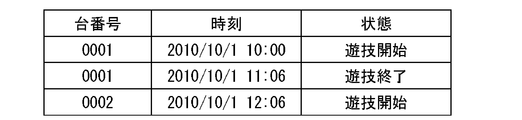
ステップS106において、遊技台信号管理部271は、稼働情報DB272にアクセスし、処理対象遊技台の稼働情報が遊技中であったか否かを判定する。すなわち、稼働情報DB272は、例えば、図15で示されるようなものであり、左から台番号欄、データが記録された時刻を示す時刻欄、および状態欄が設けられている。図15においては、台番号0001の遊技台36が、2010年10月1日10時から遊技が開始されて、同日の11時6分に遊技が終了していることが記録されている。したがって、現時点では、台番号0001は遊技が終了しているとみなされる。一方、台番号0002の遊技台36は、同日12時6分から遊技が開始されているが、遊技が終了したことが記録されていない。このため、処理対象遊技台が台番号0002の遊技台であるような場合、今現在、遊技中であると考えることができる。
ステップS106において、遊技中であるとみなされた場合、処理は、ステップS107に進む。
ステップS107において、遊技台信号管理部271は、稼働情報DB272に、例えば、図15における2段目で示されるように、遊技終了を示す情報を登録する。すなわち、アウト球カウンタのカウント値に変化がなく、遊技開始が登録された状態であるので、直前までは遊技が継続していたものとみなされるが、今現在は遊技が終了したものとみなされる。そこで、遊技台信号管理部271は、処理対象遊技台の台番号に対応付けて、遊技終了を示す稼働情報を時刻情報とともに稼働情報DB272に登録する。尚、ステップS106において、遊技中ではない、すなわち、遊技が終了したままの状態である場合、稼働していないことになるので、この場合、ステップS107の処理はスキップされる。
ステップS108において、遊技台信号管理部271は、未処理の遊技台36が存在するか否かを判定し、未処理の遊技台36が存在する場合、処理は、ステップS102に戻る。
一方、ステップS105において、アウト球カウンタのカウント値が増えているとみなされた場合、処理は、ステップS110に進む。
ステップS110において、遊技台信号管理部271は、稼働情報DB272にアクセスし、処理対象遊技台の稼働情報が遊技中であったか否かを判定する。例えば、台番号0001の遊技台36は、2010年10月1日11時6分から遊技が終了されて、遊技中ではないことが記録されているのに、アウト球カウンタのカウント値が増えているということは、今現在、遊技中になったものと考えることができる。
ステップS110において、遊技中ではないとみなされた場合、処理は、ステップS111に進む。
ステップS111において、遊技台信号管理部271は、稼働情報DB272に、例えば、図15における3段目で示されるように、遊技開始を示す情報を登録する。すなわち、アウト球カウンタのカウント値に変化があり、遊技終了が登録された状態であるので、直前までは遊技がなされていないものとみなされるが、今現在は遊技が開始したものとみなされる。そこで、遊技台信号管理部271は、処理対象遊技台の台番号に対応付けて、遊技開始を示す稼働情報を時刻情報とともに稼働情報DB272に登録する。尚、ステップS110において、遊技中である、すなわち、遊技が開始した情報が登録されたままの状態である場合、稼働が継続していることになるので、この場合、ステップS111の処理はスキップされる。
そして、ステップS108において、未処理の遊技台が存在しないとみなされた場合、処理は、ステップS109に進む。
ステップS109において、遊技台信号管理部271は、全ての遊技台を未処理の状態に戻して、処理は、ステップS101に戻る。
すなわち、所定の時間間隔で、全ての遊技台36についてアウト球カウンタのカウント値が確認されて、直前までの稼働情報と、今現在のカウント値の変化の状況から今現在の稼働情報が稼働情報DB272に順次登録されていく。
[顧客管理DB管理処理]
次に、図16のフローチャートを参照して、遊技店管理装置24による顧客管理DB管理処理について説明する。
[顧客管理DB管理処理]
次に、図16のフローチャートを参照して、遊技店管理装置24による顧客管理DB管理処理について説明する。
ステップS121において、DB管理更新部275は、送受信部274を制御して、生体情報認識装置21より新人物検知が通知されてきたか否かを判定する。ステップS121において、例えば、図12のステップS70またはS72の処理により、新人物検知が通知されてきた場合、処理は、ステップS122に進む。
ステップS122において、DB登録更新部275は、台割付DB273にアクセスし、新人物検知に含まれているカメラIDに基づいて、対応する位置を特定する。台割付DB273は、例えば、図17で示されるようなものである。図17の台割付DB273では、左から、カメラID欄、エリア欄、詳細欄、機種欄、およびコーナ情報欄が設けられている。
図17の最上段で示されるように、例えば、カメラIDがC1のカメラは、1円コーナである第1島設備111の入口に設けられた店内カメラ42であることが示されている。また、2段目は、カメラIDがC2のカメラは、1円コーナである第1島設備111の出口に設けられた店内カメラ42であることが示されている。さらに、3段目は、カメラIDがC3のカメラは、1円コーナである第1島設備111の、機種がXXXXXの1番台に設けられた各台カメラ38であることが示されている。また、4段目は、カメラIDがC4のカメラは、1円コーナである第1島設備111の、機種がXXXXXの2番台に設けられた各台カメラ38であることが示されている。さらに、5段目は、カメラIDがC5のカメラは、4円コーナである第2島設備111の入口に設けられた店内カメラ42であることが示されている。また、6段目は、カメラIDがC6のカメラは、4円コーナである第2島設備111の出口に設けられた店内カメラ42であることが示されている。さらに、7段目は、カメラIDがC7のカメラは、4円コーナである第2島設備111の、機種がYYYYYの3番台に設けられた各台カメラ38であることが示されている。
このように台割付DB273における情報により、カメラIDに対応付けてその位置の情報が登録されているので、撮像された画像がどの位置の各台カメラ38、入口カメラ41、または店内カメラ42で撮像されたものであるかを識別することが可能となる。
ステップS123において、遊技開始管理部275cは、カメラIDから特定された新人物検知に含まれる顔画像を撮像したカメラが、遊技台36のいずれかの各台カメラ38であるか否かを判定する。
ステップS124において、カメラIDから特定された新人物検知に含まれる顔画像を撮像したカメラが、遊技台36のいずれかの各台カメラ38である場合、遊技開始管理部275cは、稼働情報DB272にアクセスし、対応する遊技台36の稼働情報が遊技開始であるか否かを判定する。すなわち、ステップS124において、例えば、図15における3段目で示されるように、台番号0002の遊技台36が2010年10月1日の12:06に遊技開始が登録された状態が最新の情報である場合、稼動中であるとみなされるので、処理は、ステップS125に進む。
ステップS125において、遊技開始管理部275cは、新人物検知に含まれる人物IDに対応付けて、時刻情報、遊技台の台番号、および遊技開始であることを含む情報を顧客管理DB276に登録する。顧客管理DB276とは、例えば、図18で示されるものである。図18の顧客管理DB276においては、左から、人物ID欄、時刻欄、エリア移動履歴欄、および第1候補コーナ欄が設けられている。
すなわち、最上段においては、人物IDがP1の遊技者が、2010年10月1日10時に第1島設備111の入口の店内カメラ42により撮像され、第1島設備に入場していることが示されている。そして、この人物IDがP1の遊技者が遊技したい第1候補となるコーナが第1島設備111であることが示されている。また、2段目においては、人物IDがP1の遊技者が、2010年10月1日10時6分に第1島設備111の出口の店内カメラ42により撮像され、第1島設備111から退場していることが示されている。さらに、3段目においては、人物IDがP1の遊技者が、2010年10月1日10時30分に第2島設備111の入口の店内カメラ42により撮像され、第2島設備111に入場していることが示されている。また、4段目においては、人物IDがP1の遊技者が、2010年10月1日10時50分に台番号が001の遊技台36の各台カメラ38により撮像され、台番号が001の遊技台36において遊技を開始したことが示されている。また、5段目においては、人物IDがP1の遊技者が、2010年10月1日12時に第2島設備111の出口の店内カメラ42により撮像され、第2島設備111から退場していることが示されている。
また、6段目においては、人物IDがP2の遊技者が、2010年10月1日14時に第1島設備111の入口の店内カメラ42により撮像され、第1島設備に入場していることが示されている。そして、この人物IDがP2の遊技者が遊技したい第1候補となるコーナの情報が未登録であることが示されている。また、7段目においては、人物IDがP2の遊技者が、2010年10月1日14時2分に台番号が001の遊技台36の各台カメラ38により撮像され、台番号が001の遊技台36において遊技を開始したことが示されている。さらに、8段目においては、人物IDがP2の遊技者が、2010年10月1日16時に第1島設備111の出口の店内カメラ42により撮像され、第1島設備から退場していることが示されている。
すなわち、顧客管理DB276は、遊技者の時刻、位置、および行動の履歴が順次蓄積されていくものである。
尚、ステップS123において、位置が遊技台36ではない場合、または、ステップS124において、遊技台36における稼働情報が遊技開始ではない場合、ステップS125の処理はスキップされる。
ステップS126において、コーナ入場管理部275aは、カメラIDにより特定された新人物検知に含まれる顔画像を撮像したカメラが、いずれかの島設備111により特定される所定のコーナの入口であるか否かを判定する。
ステップS126において、カメラIDから特定された新人物検知に含まれる顔画像を撮像したカメラが、いずれかの島設備111からなる所定のコーナの入口を撮像する店内カメラ42である場合、処理は、ステップS127に進む。
ステップS127において、コーナ入場管理部275aは、例えば、図18の最上段で示されるように、第1島設備111のコーナの入口を撮像する画像である場合、コーナ入場管理部275aは、新人物検知に含まれる人物IDに対応付けて、時刻情報、および所定のコーナに進入し、入場したことを含む情報を顧客管理DB276に登録する。
尚、ステップS126において、カメラIDから特定された新人物検知に含まれる顔画像を撮像したカメラが、いずれかの島設備111からなる所定のコーナの入口を撮像する店内カメラ42ではない場合、ステップS127の処理がスキップされる。
ステップS128において、コーナ退場管理部275bは、カメラIDにより特定された新人物検知に含まれる顔画像を撮像したカメラが、いずれかの島設備111により特定される所定のコーナの出口であるか否かを判定する。
ステップS128において、カメラIDにより特定された新人物検知に含まれる顔画像を撮像したカメラが、いずれかの島設備111により特定される所定のコーナの出口である場合、処理は、ステップS129に進む。
ステップS129において、第1候補判定部275eは、新人物検知に含まれる人物IDの顧客管理DB276の情報に第1候補コーナの情報が登録されているか否かを判定する。ステップS129において、例えば、図18の人物IDがP2の遊技者の顧客管理情報のように、第1候補コーナの情報が登録されていない場合、処理は、ステップS130に進む。
ステップS130において、第1候補判定部275eは、稼働情報DB272にアクセスし、島設備111により特定される所定のコーナの出口とされるカメラIDのコーナにおいて、新人物検知に含まれる人物IDの遊技者が遊技しているか否かを判定する。ステップS130において、そのコーナに設置されている遊技台36のいずれかを遊技している場合、処理は、ステップS134に進む。
ステップS134において、第1候補判定部275eは、人物IDに対応付けて、そのコーナを第1候補コーナとして顧客管理DB276に登録する。すなわち、第1候補コーナが登録されていないということは、人物IDで特定される遊技者は、来店後、ほぼ最初にそのコーナに入場しているとみなされ、そのコーナに設けられている遊技台36で遊技することが来店の目的であった可能性が高いので、第1候補コーナであるものとみなされる。すなわち、図18の場合、人物IDがP2となる遊技者は、第1島設備111のコーナに入場し、退場するまでの間に、台番号001の遊技台36において遊技しているので、この第1島設備111のコーナが第1候補コーナとして登録される。
また、ステップS130において、そのコーナに設けられたいずれの遊技台36においても遊技していないとみなされた場合、処理は、ステップS131に進む。
ステップS131において、第1候補判定部275eは、滞在時間算出部275fを制御して、顧客管理DB276へとアクセスさせ、そのコーナへの入場時刻と、退場時刻との差分から、滞在時間を算出させる。そして、第1候補判定部275eは、算出された滞在時間が所定時間よりも長いか否かを判定する。ここで、所定時間とは、例えば、通常の遊技者がそのコーナを歩行により通過するのに必要とされる時間である。すなわち、人物IDで特定される遊技者が、他のコーナへ向かうための、そのコーナを通過するためだけであれば、通行に必要とされる時間以上は、そのコーナには滞在しないことになるので、ただ通過しただけであったか否かが判定されることになる。ステップS131において、例えば、所定時間以上であった場合、処理は、ステップS132に進む。
ステップS132において、第1候補判定部275eは、稼働率計算部275gを制御して、稼働情報DB272にアクセスさせ、該当するコーナに存在する全ての遊技台36の稼働情報を読み出させ、遊技者がそのコーナに滞在している間に稼働している遊技台36の割合を、稼働率として計算させる。そして、第1候補判定部275eは、算出された稼働率が所定の閾値よりも高いか否かを判定する。ステップS132において、例えば、稼働率が所定の閾値よりも高い場合、処理は、ステップS134に進み、やはり、第1候補コーナであることが登録される。すなわち、遊技しなかったのにも拘らず、所定のコーナに入場し、所定の時間以上滞在していたのは、稼働率の高さから遊技したかったが、遊技できなかったものとみなされて、第1候補コーナであるものとみなされる。
一方、ステップS131において、滞在時間が所定時間よりも短い、または、ステップS132において、稼働率が所定の閾値よりも低い場合、ステップS133において、第1候補判定部275eは、該当するコーナを第2候補コーナとして登録する。ここでは、そのコーナが第2候補コーナとして登録されるのは、第1候補コーナではないことが示される情報として登録されるものであるので、必ずしも第2候補コーナとして登録する必要はなく、例えば、未登録のままとして、第1候補コーナの情報だけを管理するようにしてもよい。
すなわち、滞在時間が所定時間よりも短い、または、稼働率が所定の閾値よりも低い場合、そのコーナに滞在した理由が、そのコーナを通過する必要があったか、または、遊技できた状況であったのにも拘わらず遊技しなかったとみなされて、第1候補コーナではないことが登録される。
尚、ステップS129において、第1候補コーナが登録されている場合、ステップS130乃至S134の処理がスキップされる。
ステップS135において、コーナ退場管理部275bは、例えば、図18の2段目で示されるように、新人物検知に含まれる人物IDに対応付けて、時刻情報、および所定のコーナから出て、退場したことを含む情報を顧客管理DB276に登録し、処理は、ステップS121に戻る。
尚、ステップS128において、所定のコーナの出口ではない場合、ステップS129乃至S135の処理がスキップされる。
一方、ステップS121において、新人物検知ではない場合、処理は、ステップS136に進む。
ステップS136において、DB登録更新部275は、送受信部274を制御して、生体情報認識装置21より離席検知が通知されてきたか否かを判定する。ステップS136において、例えば、図12のステップS74の処理により、離席検知が通知されてきた場合、処理は、ステップS137に進む。
ステップS137において、DB登録更新部275は、台割付DB273にアクセスし、新人物検知に含まれているカメラIDに基づいて、対応する位置を特定する。
ステップS138において、遊技終了管理部275dは、稼働情報DB272にアクセスし、対応する遊技台36の稼働情報が遊技終了であるか否かを判定する。すなわち、ステップS138において、例えば、図15における2段目で示されるように、台番号0001の遊技台36が2010年10月1日の11:06に遊技終了が登録された状態が最新の情報である場合、処理は、ステップS139に進む。
ステップS139において、遊技終了管理部275dは、離席検知に含まれる人物IDに対応付けて、時刻情報、遊技台の台番号、および遊技終了であることを含む情報を顧客管理DB276に登録する。
尚、ステップS136において、離席検知ではない場合、または、ステップS138において、遊技終了管理部275dは、稼働情報DB272にアクセスし、対応する遊技台36の稼働情報が遊技終了ではない場合、処理は、ステップS121に戻る。
以上の処理により、図18で示されるような顧客管理DB275が順次最新の情報により蓄積されていくことになるので、遊技者一人一人が、いつ、どこのコーナに入退場し、どの遊技台36をいつからいつまで遊技したかを登録させることが可能となる。
[稼働率算出処理]
次に、図19のフローチャートを参照して、遊技店管理装置24における稼働率算出処理について説明する。
[稼働率算出処理]
次に、図19のフローチャートを参照して、遊技店管理装置24における稼働率算出処理について説明する。
ステップS161において、稼働率算出部278は、操作部277が操作されて、遊技台のコーナ毎の稼働率の算出が要求されたか否かを判定し、要求されるまで、同様の処理を繰り返す。ステップS161において、例えば、稼働率の算出が要求された場合、処理は、ステップS162に進む。
ステップS162において、稼働率算出部278は、コーナ、またはコーナを特定する遊技台36の機種を特定する情報の入力を要求する画像を表示部25に表示する。
ステップS163において、稼働率算出部278は、コーナ、または、コーナを特定する遊技台36の機種を特定する情報の入力があったか否かを判定し、入力されるまで、同様の処理を繰り返す。ステップS163において、例えば、操作部277が操作されて、コーナ、または、コーナを特定する遊技台36の機種の情報の入力があった場合、処理は、ステップS164に進む。
ステップS164において、稼働率算出部278は、入力された情報に基づいて、コーナを特定する。
ステップS165において、稼働率算出部278は、顧客管理DB275にアクセスし、顧客管理情報のうち、特定されたコーナを第1候補コーナとする人物IDで特定される顧客管理情報のみを抽出する。
ステップS166において、稼働率算出部278は、特定されたコーナを第1候補コーナとする人物IDで特定される顧客管理情報、すなわち、遊技開始時刻、および遊技終了時刻のみを利用して、指定されたコーナの全ての遊技台36の稼働状態から、稼働率を算出
する。
する。
ステップS167において、稼働率算出部278は、算出した稼働率の情報を表示部25に表示する。
以上の処理により、稼働率を算出する際、第1候補コーナとする遊技者による稼働率を算出することができるので、台入替を検討するのに適切な稼働率を算出することが可能となる。すなわち、例えば、これまでは、人気コーナの傍にあって、人気コーナの遊技台36を遊技することができず、止むを得ず遊技しているような遊技者が多く遊技していただけにも拘らず、稼働率が高かったような遊技台36については、台入替の対象とすることができなかった。しかしながら、以上のように、第1候補コーナである遊技者のみの顧客管理情報を利用して稼働率を求めるようにすることで、止むを得ず遊技しているような遊技者による遊技履歴が排除された状態の稼働率を求めることが可能となるため、実際には、止むを得ず遊技していた人が多くても、求められる稼働率は低い値となるので、台入替の検討に適切な稼働率を算出することが可能となる。
ところで、上述した一連の処理は、ハードウェアにより実行させることもできるが、ソフトウェアにより実行させることもできる。一連の処理をソフトウェアにより実行させる場合には、そのソフトウェアを構成するプログラムが、専用のハードウェアに組み込まれているコンピュータ、または、各種のプログラムをインストールすることで、各種の機能を実行することが可能な、例えば汎用のパーソナルコンピュータなどに、記録媒体からインストールされる。
図20は、汎用のパーソナルコンピュータの構成例を示している。このパーソナルコンピュータは、CPU(Central Processing Unit)1001を内蔵している。CPU1001にはバス1004を介して、入出力インタフェース1005が接続されている。バス1004には、ROM(Read Only Memory)1002およびRAM(Random Access Memory)1003が接続されている。
入出力インタフェース1005には、ユーザが操作コマンドを入力するキーボード、マウスなどの入力デバイスよりなる入力部1006、処理操作画面や処理結果の画像を表示デバイスに出力する出力部1007、プログラムや各種データを格納するハードディスクドライブなどよりなる記憶部1008、LAN(Local Area Network)アダプタなどよりなり、インターネットに代表されるネットワークを介した通信処理を実行する通信部1009が接続されている。また、磁気ディスク(フレキシブルディスクを含む)、光ディスク(CD-ROM(Compact Disc-Read Only Memory)、DVD(Digital Versatile Disc)を含む)、光磁気ディスク(MD(Mini Disc)を含む)、もしくは半導体メモリなどのリムーバブルメディア1011に対してデータを読み書きするドライブ1010が接続されている。
CPU1001は、ROM1002に記憶されているプログラム、または磁気ディスク、光ディスク、光磁気ディスク、もしくは半導体メモリ等のリムーバブルメディア1011から読み出されて記憶部1008にインストールされ、記憶部1008からRAM1003にロードされたプログラムに従って各種の処理を実行する。RAM1003にはまた、CPU1001が各種の処理を実行する上において必要なデータなども適宜記憶される。
尚、本明細書において、記録媒体に記録されるプログラムを記述するステップは、記載された順序に沿って時系列的に行われる処理は、もちろん、必ずしも時系列的に処理されなくとも、並列的あるいは個別に実行される処理を含むものである。
また、本明細書において、システムとは、複数の装置により構成される装置全体を表すものである。
本発明の一側面の情報処理装置は、遊技店に設置された遊技台毎に前記遊技台で遊技する遊技者を撮像する遊技台撮像部と、前記遊技台が複数に設けられたコーナ、または、島設備単位で入場、または退場する遊技者を撮像するコーナ撮像部と、前記遊技台撮像部、および前記コーナ撮像部により撮像された遊技者を登録者と照合する照合部と、前記照合部により照合された遊技者毎に前記コーナ毎の入場時刻を管理する入場管理部と、前記入場管理部により管理された、前記照合部により照合された遊技者が入場したコーナのうち、前記遊技者が所定の行動をした場合、前記コーナに設置された遊技台の機種を、前記遊技者が遊技することを最も希望する第1候補機種として判定する第1候補判定部と、前記照合部により照合された遊技者毎に前記遊技台毎の遊技開始時刻を管理する遊技開始管理部と、前記照合部により照合された遊技者毎に前記遊技台毎の遊技終了時刻を管理する遊技終了管理部と、前記遊技店に設置された遊技台の所定の機種について、前記第1候補判定部により第1候補機種として判定された遊技者のみの、前記遊技開始時刻、および前記遊技終了時刻の情報に基づいて、前記所定の機種となる遊技台の第1候補遊技機種により稼働率を計算する第1候補遊技機種稼働率計算部とを含む。
前記照合部により照合された遊技者毎に前記コーナ毎の退場時刻を管理する退場管理部と、前記入場時刻および前記退場時刻に基づいて、前記照合部により照合された遊技者毎に前記コーナの滞在時間を算出する滞在時間算出部と、前記コーナに設置された遊技台の機種における、前記遊技者が前記コーナに滞在中の前記コーナにおける全遊技台の稼働割合を示す稼働率を算出する稼働率算出部とさらに含ませるようにすることができ、前記第1候補判定部には、前記入場管理部により管理された、前記照合部により照合された遊技者が入場したコーナが、前記遊技店に入店後最初に入場したコーナである場合、前記コーナに設置された遊技台の機種を遊技したとき、前記コーナの遊技台の機種を前記遊技者の第1候補機種として判定させるようにすることができ、前記入場管理部により管理された、前記照合部により照合された遊技者が入場したコーナが、前記遊技店に入店後最初に入場したコーナではない場合、前記滞在時間が所定時間よりも長く、かつ、前記遊技者が前記コーナに滞在中の稼働率が所定値よりも高いとき、前記コーナに設置された遊技台の機種を、前記遊技者の第1候補機種として判定させるようにすることができる。
前記遊技台毎にアウト球を検出する検出部をさらに含ませるようにすることができ、前記遊技開始管理部には、前記検出部によりアウト球が無い状態から有りの状態に変化することにより、前記照合部により照合された遊技者毎に前記遊技台毎の遊技開始時刻を管理させるようにすることができ、前記遊技終了管理部には、前記検出部によりアウト球が有りの状態から無い状態に変化することにより、前記照合部により照合された遊技者毎に前記遊技台毎の遊技終了時刻を管理させるようにすることができる。
本発明の一側面の情報処理方法は、遊技店に設置された遊技台毎に前記遊技台で遊技する遊技者を撮像する遊技台撮像部における、遊技店に設置された遊技台毎に前記遊技台で遊技する遊技者を撮像する遊技台撮像ステップと、前記遊技台が複数に設けられたコーナ、または、島設備単位で入場、または退場する遊技者を撮像するコーナ撮像部における、前記遊技台が複数に設けられたコーナ、または、島設備単位で入場、または退場する遊技者を撮像するコーナ撮像ステップと、前記遊技台撮像部、および前記コーナ撮像部により撮像された遊技者を登録者と照合する照合部における、前記遊技台撮像ステップの処理、および前記コーナ撮像ステップの処理により撮像された遊技者を登録者と照合する照合ステップと、前記照合部により照合された遊技者毎に前記コーナ毎の入場時刻を管理する入場管理部における、前記照合ステップの処理により照合された遊技者毎に前記コーナ毎の入場時刻を管理する入場管理ステップと、前記入場管理部により管理された、前記照合部により照合された遊技者が入場したコーナのうち、前記遊技者が所定の行動をした場合、前記コーナに設置された遊技台の機種を、前記遊技者が遊技することを最も希望する第1候補機種として判定する第1候補判定部における、前記入場管理ステップの処理により管理された、前記照合ステップの処理により照合された遊技者が入場したコーナのうち、前記遊技者が所定の行動をした場合、前記コーナに設置された遊技台の機種を、前記遊技者が遊技することを最も希望する第1候補機種として判定する第1候補判定ステップと、前記照合部により照合された遊技者毎に前記遊技台毎の遊技開始時刻を管理する遊技開始管理部における、前記照合ステップの処理により照合された遊技者毎に前記遊技台毎の遊技開始時刻を管理する遊技開始管理ステップと、前記照合部により照合された遊技者毎に前記遊技台毎の遊技終了時刻を管理する遊技終了管理部における、前記照合ステップの処理により照合された遊技者毎に前記遊技台毎の遊技終了時刻を管理する遊技終了管理ステップと、前記遊技店に設置された遊技台の所定の機種について、前記第1候補判定部により第1候補機種として判定された遊技者のみの、前記遊技開始時刻、および前記遊技終了時刻の情報に基づいて、前記所定の機種となる遊技台の第1候補遊技機種により稼働率を計算する第1候補遊技機種稼働率計算部における、前記遊技店に設置された遊技台の所定の機種について、前記第1候補判定ステップの処理により第1候補機種として判定された遊技者のみの、前記遊技開始時刻、および前記遊技終了時刻の情報に基づいて、前記所定の機種となる遊技台の第1候補遊技機種により稼働率を計算する第1候補遊技機種稼働率計算ステップとを含む。
本発明の一側面のプログラムは、遊技店に設置された遊技台毎に前記遊技台で遊技する遊技者を撮像する遊技台撮像部と、前記遊技台が複数に設けられたコーナ、または、島設備単位で入場、または退場する遊技者を撮像するコーナ撮像部と、前記遊技台撮像部、および前記コーナ撮像部により撮像された遊技者を登録者と照合する照合部と、前記照合部により照合された遊技者毎に前記コーナ毎の入場時刻を管理する入場管理部と、前記入場管理部により管理された、前記照合部により照合された遊技者が入場したコーナのうち、前記遊技者が所定の行動をした場合、前記コーナに設置された遊技台の機種を、前記遊技者が遊技することを最も希望する第1候補機種として判定する第1候補判定部と、前記照合部により照合された遊技者毎に前記遊技台毎の遊技開始時刻を管理する遊技開始管理部と、前記照合部により照合された遊技者毎に前記遊技台毎の遊技終了時刻を管理する遊技終了管理部と、前記遊技店に設置された遊技台の所定の機種について、前記第1候補判定部により第1候補機種として判定された遊技者のみの、前記遊技開始時刻、および前記遊技終了時刻の情報に基づいて、前記所定の機種となる遊技台の第1候補遊技機種により稼働率を計算する第1候補遊技機種稼働率計算部とを含む情報処理装置を制御するコンピュータに、前記遊技台撮像部における、前記遊技店に設置された遊技台毎に前記遊技台で遊技する遊技者を撮像する遊技台撮像ステップと、前記コーナ撮像部における、前記遊技台が複数に設けられたコーナ、または、島設備単位で入場、または退場する遊技者を撮像するコーナ撮像ステップと、前記照合部における、前記遊技台撮像ステップの処理、および前記コーナ撮像ステップの処理により撮像された遊技者を登録者と照合する照合ステップと、前記入場管理部における、前記照合ステップの処理により照合された遊技者毎に前記コーナ毎の入場時刻を管理する入場管理ステップと、前記第1候補判定部における、前記入場管理部により管理された、前記照合部により照合された遊技者が入場したコーナのうち、前記遊技者が所定の行動をした場合、前記コーナに設置された遊技台の機種を、前記遊技者が遊技することを最も希望する第1候補機種として判定する第1候補判定ステップと、前記遊技開始管理部における、前記照合ステップの処理により照合された遊技者毎に前記遊技台毎の遊技開始時刻を管理する遊技開始管理ステップと、前記遊技終了管理部における、前記照合ステップの処理により照合された遊技者毎に前記遊技台毎の遊技終了時刻を管理する遊技終了管理ステップと、前記第1候補遊技機種稼働率計算部における、前記遊技店に設置された遊技台の所定の機種について、前記第1候補判定ステップの処理により第1候補機種として判定された遊技者のみの、前記遊技開始時刻、および前記遊技終了時刻の情報に基づいて、前記所定の機種となる遊技台の第1候補遊技機種により稼働率を計算する第1候補遊技機種稼働率計算ステップとを含む処理を実行させる。
本発明の一側面においては、遊技店に設置された遊技台毎に前記遊技台で遊技する遊技者が撮像され、前記遊技台が複数に設けられたコーナ、または、島設備単位で入場、または退場する遊技者が撮像され、撮像された遊技者が登録者と照合され、照合された遊技者毎に前記コーナ毎の入場時刻が管理され、照合された遊技者が入場したコーナのうち、前記遊技者が所定の行動をした場合、前記コーナに設置された遊技台の機種が、前記遊技者が遊技することを最も希望する第1候補機種として判定され、照合された遊技者毎に前記遊技台毎の遊技開始時刻が管理され、照合された遊技者毎に前記遊技台毎の遊技終了時刻が管理され、前記遊技店に設置された遊技台の所定の機種について、第1候補機種として判定された遊技者のみの、前記遊技開始時刻、および前記遊技終了時刻の情報に基づいて、前記所定の機種となる遊技台の第1候補遊技機種により稼働率が計算される。
本発明の一側面の情報処理装置における、遊技店に設置された遊技台毎に前記遊技台で遊技する遊技者を撮像する遊技台撮像部とは、例えば、各台カメラであり、前記遊技台が複数に設けられたコーナ、または、島設備単位で入場、または退場する遊技者を撮像するコーナ撮像部とは、例えば、店内カメラであり、前記遊技台撮像部、および前記コーナ撮像部により撮像された遊技者を登録者と照合する照合部とは、例えば、照合部であり、前記照合部により照合された遊技者毎に前記コーナ毎の入場時刻を管理する入場管理部とは、例えば、コーナ入場管理部であり、前記入場管理部により管理された、前記照合部により照合された遊技者が入場したコーナのうち、前記遊技者が所定の行動をした場合、前記コーナに設置された遊技台の機種を、前記遊技者が遊技することを最も希望する第1候補機種として判定する第1候補判定部とは、例えば、第1候補判定部であり、前記照合部により照合された遊技者毎に前記遊技台毎の遊技開始時刻を管理する遊技開始管理部とは、例えば、遊技開始管理部であり、前記照合部により照合された遊技者毎に前記遊技台毎の遊技終了時刻を管理する遊技終了管理部とは、例えば、遊技終了管理部であり、前記遊技店に設置された遊技台の所定の機種について、前記第1候補判定部により第1候補機種として判定された遊技者のみの、前記遊技開始時刻、および前記遊技終了時刻の情報に基づいて、前記所定の機種となる遊技台の第1候補遊技機種により稼働率を計算する第1候補遊技機種稼働率計算部とは、例えば、稼働率算出部である。
すなわち、照合部により照合された遊技者毎にコーナ入場管理部により、コーナに入場した時刻に基づいて、例えば、最初に入場したコーナの遊技台を遊技した場合、遊技者が、最も遊技したいと希望する第1候補の機種であるとみなす。そして、稼働率算出部は、各機種の稼働率を算出する際、各機種について、第1候補の機種であるとしてみなされた遊技者の遊技開始時刻、および遊技終了時刻の情報のみに基づいて、稼働率を算出する。
結果として、遊技台の機種毎に稼働率を求める際、遊技者が遊技することを希望している第1候補となる機種を遊技している場合の遊技情報のみが使用されることになるため、遊技台の入替を検討するのに適切な稼働率を求めることが可能となる。
1,1-1乃至1-n 遊技店
2 第3者遊技店管理センタ
3 第3者遊技店管理データベース
4 第3者遊技店管理バス
5 公衆通信回線網
21 生体情報認識装置
22 生体情報データベース
24 遊技店管理装置
26 遊技台管理データベース
27 媒体貸出管理装置
29 媒体貸出管理データベース
30 遊技店管理情報バス
31 生体情報バス
33 精算販売機
34 貸出機
35 計数機
36,36-1乃至36-m 遊技台
37,37-1乃至37-m 遊技台周辺端末
38,38-1乃至38-m 各台カメラ
39,39-1乃至39-m 各台画像処理ユニット
40,40-1乃至40-(p+q) 画像処理ユニット
41,41-1乃至41-p 入口カメラ
42,42-1乃至42-q 店内カメラ
2 第3者遊技店管理センタ
3 第3者遊技店管理データベース
4 第3者遊技店管理バス
5 公衆通信回線網
21 生体情報認識装置
22 生体情報データベース
24 遊技店管理装置
26 遊技台管理データベース
27 媒体貸出管理装置
29 媒体貸出管理データベース
30 遊技店管理情報バス
31 生体情報バス
33 精算販売機
34 貸出機
35 計数機
36,36-1乃至36-m 遊技台
37,37-1乃至37-m 遊技台周辺端末
38,38-1乃至38-m 各台カメラ
39,39-1乃至39-m 各台画像処理ユニット
40,40-1乃至40-(p+q) 画像処理ユニット
41,41-1乃至41-p 入口カメラ
42,42-1乃至42-q 店内カメラ
Claims (5)
- 遊技店に設置された遊技台毎に前記遊技台で遊技する遊技者を撮像する遊技台撮像部と、
前記遊技台が複数に設けられたコーナ、または、島設備単位で入場、または退場する遊技者を撮像するコーナ撮像部と、
前記遊技台撮像部、および前記コーナ撮像部により撮像された遊技者を登録者と照合する照合部と、
前記照合部により照合された遊技者毎に前記コーナ毎の入場時刻を管理する入場管理部と、
前記入場管理部により管理された、前記照合部により照合された遊技者が入場したコーナのうち、前記遊技者が所定の行動をした場合、前記コーナに設置された遊技台の機種を、前記遊技者が遊技することを最も希望する第1候補機種として判定する第1候補判定部と、
前記照合部により照合された遊技者毎に前記遊技台毎の遊技開始時刻を管理する遊技開始管理部と、
前記照合部により照合された遊技者毎に前記遊技台毎の遊技終了時刻を管理する遊技終了管理部と、
前記遊技店に設置された遊技台の所定の機種について、前記第1候補判定部により第1候補機種として判定された遊技者のみの、前記遊技開始時刻、および前記遊技終了時刻の情報に基づいて、前記所定の機種となる遊技台の第1候補遊技機種により稼働率を計算する第1候補遊技機種稼働率計算部とを含む情報処理装置。 - 前記照合部により照合された遊技者毎に前記コーナ毎の退場時刻を管理する退場管理部と、
前記入場時刻および前記退場時刻に基づいて、前記照合部により照合された遊技者毎に前記コーナの滞在時間を算出する滞在時間算出部と、
前記コーナに設置された遊技台の機種における、前記遊技者が前記コーナに滞在中の前記コーナにおける全遊技台の稼働割合を示す稼働率を算出する稼働率算出部とさらに含み、
前記第1候補判定部は、
前記入場管理部により管理された、前記照合部により照合された遊技者が入場したコーナが、前記遊技店に入店後最初に入場したコーナである場合、前記コーナに設置された遊技台の機種を遊技したとき、前記コーナの遊技台の機種を前記遊技者の第1候補機種として判定し、
前記入場管理部により管理された、前記照合部により照合された遊技者が入場したコーナが、前記遊技店に入店後最初に入場したコーナではない場合、前記滞在時間が所定時間よりも長く、かつ、前記遊技者が前記コーナに滞在中の稼働率が所定値よりも高いとき、前記コーナに設置された遊技台の機種を、前記遊技者の第1候補機種として判定する請求項1に記載の情報処理装置。 - 前記遊技台毎にアウト球を検出する検出部をさらに含み、
前記遊技開始管理部は、前記検出部によりアウト球が無い状態から有りの状態に変化することにより、前記照合部により照合された遊技者毎に前記遊技台毎の遊技開始時刻を管理し、
前記遊技終了管理部は、前記検出部によりアウト球が有りの状態から無い状態に変化することにより、前記照合部により照合された遊技者毎に前記遊技台毎の遊技終了時刻を管理する請求項1に記載の情報処理装置。 - 遊技店に設置された遊技台毎に前記遊技台で遊技する遊技者を撮像する遊技台撮像部における、遊技店に設置された遊技台毎に前記遊技台で遊技する遊技者を撮像する遊技台撮像ステップと、
前記遊技台が複数に設けられたコーナ、または、島設備単位で入場、または退場する遊技者を撮像するコーナ撮像部における、前記遊技台が複数に設けられたコーナ、または、島設備単位で入場、または退場する遊技者を撮像するコーナ撮像ステップと、
前記遊技台撮像部、および前記コーナ撮像部により撮像された遊技者を登録者と照合する照合部における、前記遊技台撮像ステップの処理、および前記コーナ撮像ステップの処理により撮像された遊技者を登録者と照合する照合ステップと、
前記照合部により照合された遊技者毎に前記コーナ毎の入場時刻を管理する入場管理部における、前記照合ステップの処理により照合された遊技者毎に前記コーナ毎の入場時刻を管理する入場管理ステップと、
前記入場管理部により管理された、前記照合部により照合された遊技者が入場したコーナのうち、前記遊技者が所定の行動をした場合、前記コーナに設置された遊技台の機種を、前記遊技者が遊技することを最も希望する第1候補機種として判定する第1候補判定部における、前記入場管理ステップの処理により管理された、前記照合ステップの処理により照合された遊技者が入場したコーナのうち、前記遊技者が所定の行動をした場合、前記コーナに設置された遊技台の機種を、前記遊技者が遊技することを最も希望する第1候補機種として判定する第1候補判定ステップと、
前記照合部により照合された遊技者毎に前記遊技台毎の遊技開始時刻を管理する遊技開始管理部における、前記照合ステップの処理により照合された遊技者毎に前記遊技台毎の遊技開始時刻を管理する遊技開始管理ステップと、
前記照合部により照合された遊技者毎に前記遊技台毎の遊技終了時刻を管理する遊技終了管理部における、前記照合ステップの処理により照合された遊技者毎に前記遊技台毎の遊技終了時刻を管理する遊技終了管理ステップと、
前記遊技店に設置された遊技台の所定の機種について、前記第1候補判定部により第1候補機種として判定された遊技者のみの、前記遊技開始時刻、および前記遊技終了時刻の情報に基づいて、前記所定の機種となる遊技台の第1候補遊技機種により稼働率を計算する第1候補遊技機種稼働率計算部における、前記遊技店に設置された遊技台の所定の機種について、前記第1候補判定ステップの処理により第1候補機種として判定された遊技者のみの、前記遊技開始時刻、および前記遊技終了時刻の情報に基づいて、前記所定の機種となる遊技台の第1候補遊技機種により稼働率を計算する第1候補遊技機種稼働率計算ステップとを含む情報処理方法。 - 遊技店に設置された遊技台毎に前記遊技台で遊技する遊技者を撮像する遊技台撮像部と、
前記遊技台が複数に設けられたコーナ、または、島設備単位で入場、または退場する遊技者を撮像するコーナ撮像部と、
前記遊技台撮像部、および前記コーナ撮像部により撮像された遊技者を登録者と照合する照合部と、
前記照合部により照合された遊技者毎に前記コーナ毎の入場時刻を管理する入場管理部と、
前記入場管理部により管理された、前記照合部により照合された遊技者が入場したコーナのうち、前記遊技者が所定の行動をした場合、前記コーナに設置された遊技台の機種を、前記遊技者が遊技することを最も希望する第1候補機種として判定する第1候補判定部と、
前記照合部により照合された遊技者毎に前記遊技台毎の遊技開始時刻を管理する遊技開始管理部と、
前記照合部により照合された遊技者毎に前記遊技台毎の遊技終了時刻を管理する遊技終了管理部と、
前記遊技店に設置された遊技台の所定の機種について、前記第1候補判定部により第1候補機種として判定された遊技者のみの、前記遊技開始時刻、および前記遊技終了時刻の情報に基づいて、前記所定の機種となる遊技台の第1候補遊技機種により稼働率を計算する第1候補遊技機種稼働率計算部とを含む情報処理装置を制御するコンピュータに、
前記遊技台撮像部における、前記遊技店に設置された遊技台毎に前記遊技台で遊技する遊技者を撮像する遊技台撮像ステップと、
前記コーナ撮像部における、前記遊技台が複数に設けられたコーナ、または、島設備単位で入場、または退場する遊技者を撮像するコーナ撮像ステップと、
前記照合部における、前記遊技台撮像ステップの処理、および前記コーナ撮像ステップの処理により撮像された遊技者を登録者と照合する照合ステップと、
前記入場管理部における、前記照合ステップの処理により照合された遊技者毎に前記コーナ毎の入場時刻を管理する入場管理ステップと、
前記第1候補判定部における、前記入場管理部により管理された、前記照合部により照合された遊技者が入場したコーナのうち、前記遊技者が所定の行動をした場合、前記コーナに設置された遊技台の機種を、前記遊技者が遊技することを最も希望する第1候補機種として判定する第1候補判定ステップと、
前記遊技開始管理部における、前記照合ステップの処理により照合された遊技者毎に前記遊技台毎の遊技開始時刻を管理する遊技開始管理ステップと、
前記遊技終了管理部における、前記照合ステップの処理により照合された遊技者毎に前記遊技台毎の遊技終了時刻を管理する遊技終了管理ステップと、
前記第1候補遊技機種稼働率計算部における、前記遊技店に設置された遊技台の所定の機種について、前記第1候補判定ステップの処理により第1候補機種として判定された遊技者のみの、前記遊技開始時刻、および前記遊技終了時刻の情報に基づいて、前記所定の機種となる遊技台の第1候補遊技機種により稼働率を計算する第1候補遊技機種稼働率計算ステップとを含む処理を実行させるプログラム。
Priority Applications (1)
| Application Number | Priority Date | Filing Date | Title |
|---|---|---|---|
| US14/122,077 US20140094297A1 (en) | 2011-06-15 | 2012-03-14 | Information processing device, method, and computer readable medium |
Applications Claiming Priority (2)
| Application Number | Priority Date | Filing Date | Title |
|---|---|---|---|
| JP2011133365A JP5891613B2 (ja) | 2011-06-15 | 2011-06-15 | 情報処理装置および方法、並びにプログラム |
| JP2011-133365 | 2011-06-15 |
Publications (1)
| Publication Number | Publication Date |
|---|---|
| WO2012172843A1 true WO2012172843A1 (ja) | 2012-12-20 |
Family
ID=47356842
Family Applications (1)
| Application Number | Title | Priority Date | Filing Date |
|---|---|---|---|
| PCT/JP2012/056565 Ceased WO2012172843A1 (ja) | 2011-06-15 | 2012-03-14 | 情報処理装置および方法、並びにプログラム |
Country Status (3)
| Country | Link |
|---|---|
| US (1) | US20140094297A1 (ja) |
| JP (1) | JP5891613B2 (ja) |
| WO (1) | WO2012172843A1 (ja) |
Cited By (1)
| Publication number | Priority date | Publication date | Assignee | Title |
|---|---|---|---|---|
| CN109857114A (zh) * | 2019-02-26 | 2019-06-07 | 温州市职业中等专业学校 | 校园移动智能机器人及校园智能管理系统 |
Families Citing this family (4)
| Publication number | Priority date | Publication date | Assignee | Title |
|---|---|---|---|---|
| JP5617627B2 (ja) * | 2010-12-28 | 2014-11-05 | オムロン株式会社 | 監視装置および方法、並びにプログラム |
| US20140211017A1 (en) * | 2013-01-31 | 2014-07-31 | Wal-Mart Stores, Inc. | Linking an electronic receipt to a consumer in a retail store |
| KR102222318B1 (ko) * | 2014-03-18 | 2021-03-03 | 삼성전자주식회사 | 사용자 인식 방법 및 장치 |
| US9524631B1 (en) * | 2015-06-23 | 2016-12-20 | Motorola Mobility Llc | Method and apparatus for setting a notification readout mode based on proximity detection |
Citations (5)
| Publication number | Priority date | Publication date | Assignee | Title |
|---|---|---|---|---|
| JPH1176577A (ja) * | 1997-09-12 | 1999-03-23 | Arutoron:Kk | 遊技場管理装置 |
| JP2004065689A (ja) * | 2002-08-07 | 2004-03-04 | Glory Ltd | 遊技客情報管理システム |
| JP2006055183A (ja) * | 2004-08-17 | 2006-03-02 | Kita Denshi Corp | 遊技場管理装置 |
| JP2007135743A (ja) * | 2005-11-16 | 2007-06-07 | Pa Net Gijutsu Kenkyusho:Kk | 遊技管理システム |
| JP2008125732A (ja) * | 2006-11-20 | 2008-06-05 | Omron Corp | 情報処理装置および方法、並びにプログラム |
Family Cites Families (5)
| Publication number | Priority date | Publication date | Assignee | Title |
|---|---|---|---|---|
| US8979646B2 (en) * | 2002-06-12 | 2015-03-17 | Igt | Casino patron tracking and information use |
| JP2007300363A (ja) * | 2006-04-28 | 2007-11-15 | Omron Corp | 監視装置および方法、並びにプログラム |
| US8758102B2 (en) * | 2008-03-25 | 2014-06-24 | Wms Gaming, Inc. | Generating casino floor maps |
| US8177647B2 (en) * | 2008-11-18 | 2012-05-15 | Patent Investment & Licensing Company | System for processing gaming activity |
| US20110128382A1 (en) * | 2009-12-01 | 2011-06-02 | Richard Pennington | System and methods for gaming data analysis |
-
2011
- 2011-06-15 JP JP2011133365A patent/JP5891613B2/ja active Active
-
2012
- 2012-03-14 US US14/122,077 patent/US20140094297A1/en not_active Abandoned
- 2012-03-14 WO PCT/JP2012/056565 patent/WO2012172843A1/ja not_active Ceased
Patent Citations (5)
| Publication number | Priority date | Publication date | Assignee | Title |
|---|---|---|---|---|
| JPH1176577A (ja) * | 1997-09-12 | 1999-03-23 | Arutoron:Kk | 遊技場管理装置 |
| JP2004065689A (ja) * | 2002-08-07 | 2004-03-04 | Glory Ltd | 遊技客情報管理システム |
| JP2006055183A (ja) * | 2004-08-17 | 2006-03-02 | Kita Denshi Corp | 遊技場管理装置 |
| JP2007135743A (ja) * | 2005-11-16 | 2007-06-07 | Pa Net Gijutsu Kenkyusho:Kk | 遊技管理システム |
| JP2008125732A (ja) * | 2006-11-20 | 2008-06-05 | Omron Corp | 情報処理装置および方法、並びにプログラム |
Cited By (1)
| Publication number | Priority date | Publication date | Assignee | Title |
|---|---|---|---|---|
| CN109857114A (zh) * | 2019-02-26 | 2019-06-07 | 温州市职业中等专业学校 | 校园移动智能机器人及校园智能管理系统 |
Also Published As
| Publication number | Publication date |
|---|---|
| JP5891613B2 (ja) | 2016-03-23 |
| US20140094297A1 (en) | 2014-04-03 |
| JP2013000281A (ja) | 2013-01-07 |
Similar Documents
| Publication | Publication Date | Title |
|---|---|---|
| JP5824806B2 (ja) | 顔画像管理装置、顔画像管理方法、並びにプログラム | |
| JP5617627B2 (ja) | 監視装置および方法、並びにプログラム | |
| WO2013011714A1 (ja) | 情報処理装置および方法、注目度算出装置、並びにプログラム | |
| JP4924883B2 (ja) | 監視装置および方法、並びにプログラム | |
| JP5891613B2 (ja) | 情報処理装置および方法、並びにプログラム | |
| JP2009000367A (ja) | 監視装置および方法、並びにプログラム | |
| JP2009000324A (ja) | 監視装置および方法、並びにプログラム | |
| JP5853455B2 (ja) | 情報処理装置および方法、並びにプログラム | |
| JP2009086932A (ja) | 画像処理装置および方法、並びにプログラム | |
| JP5678708B2 (ja) | 監視システム、監視方法およびプログラム | |
| JP2012014568A (ja) | 監視装置および方法、並びにプログラム | |
| JP5186756B2 (ja) | 情報処理装置および方法、並びにプログラム | |
| JP5724662B2 (ja) | 情報処理装置および方法、並びにプログラム | |
| JP4877005B2 (ja) | 監視装置および方法、並びにプログラム | |
| JP4760717B2 (ja) | 監視装置および方法、並びにプログラム | |
| JP5678700B2 (ja) | 遊技店管理装置、遊技店管理方法およびプログラム | |
| JP5294020B2 (ja) | 画像処理装置および方法、並びにプログラム | |
| JP5401755B2 (ja) | 監視システムおよび方法、並びにプログラム | |
| JP4807267B2 (ja) | 監視装置および方法、並びにプログラム | |
| JP4807291B2 (ja) | 監視装置および方法、監視システム、並びにプログラム | |
| JP2021137339A (ja) | 情報管理システム、情報管理装置及び情報管理方法 | |
| JP2012139351A (ja) | 画像処理装置および方法、並びにプログラム | |
| JP5549418B2 (ja) | 情報処理装置および方法、並びにプログラム | |
| JP2011120691A (ja) | 監視装置および方法、並びにプログラム | |
| JP2010033151A (ja) | 監視装置および方法、並びにプログラム |
Legal Events
| Date | Code | Title | Description |
|---|---|---|---|
| 121 | Ep: the epo has been informed by wipo that ep was designated in this application |
Ref document number: 12801436 Country of ref document: EP Kind code of ref document: A1 |
|
| WWE | Wipo information: entry into national phase |
Ref document number: 14122077 Country of ref document: US |
|
| NENP | Non-entry into the national phase |
Ref country code: DE |
|
| 122 | Ep: pct application non-entry in european phase |
Ref document number: 12801436 Country of ref document: EP Kind code of ref document: A1 |