WO2012137734A1 - 情報処理装置および方法、並びにプログラム - Google Patents
情報処理装置および方法、並びにプログラム Download PDFInfo
- Publication number
- WO2012137734A1 WO2012137734A1 PCT/JP2012/058953 JP2012058953W WO2012137734A1 WO 2012137734 A1 WO2012137734 A1 WO 2012137734A1 JP 2012058953 W JP2012058953 W JP 2012058953W WO 2012137734 A1 WO2012137734 A1 WO 2012137734A1
- Authority
- WO
- WIPO (PCT)
- Prior art keywords
- information acquisition
- inspection
- acquisition unit
- related information
- hygiene management
- Prior art date
- Legal status (The legal status is an assumption and is not a legal conclusion. Google has not performed a legal analysis and makes no representation as to the accuracy of the status listed.)
- Ceased
Links
Images





Classifications
-
- G—PHYSICS
- G06—COMPUTING OR CALCULATING; COUNTING
- G06Q—INFORMATION AND COMMUNICATION TECHNOLOGY [ICT] SPECIALLY ADAPTED FOR ADMINISTRATIVE, COMMERCIAL, FINANCIAL, MANAGERIAL OR SUPERVISORY PURPOSES; SYSTEMS OR METHODS SPECIALLY ADAPTED FOR ADMINISTRATIVE, COMMERCIAL, FINANCIAL, MANAGERIAL OR SUPERVISORY PURPOSES, NOT OTHERWISE PROVIDED FOR
- G06Q10/00—Administration; Management
- G06Q10/06—Resources, workflows, human or project management; Enterprise or organisation planning; Enterprise or organisation modelling
Definitions
- the present invention relates to an information processing device and method, and a program, and more particularly, to an information processing device and method, and a program that make it possible to more accurately grasp and manage hygiene.
- the information on bacteria in the method of Patent Document 1 includes the test results such as the number of bacteria, but the bacteria test is performed according to environmental conditions such as the number of days from the collection of the test object to the test and the environmental conditions such as temperature. May die, and the test result may change depending on the situation (condition). Therefore, a technique that can more accurately grasp and manage the sanitary condition in restaurants and the like is desired.
- the present invention has been made in view of such a situation, and in particular, makes it possible to more accurately grasp and manage the sanitary state.
- An information processing apparatus includes a hygiene management information acquisition unit that acquires a test result regarding the state of hygiene management of an establishment that handles food and its employees, and an inspection result about bacteria of the establishment and the employees
- a bacteria-related information acquisition unit that acquires the inspection results regarding the health management status of the establishment and the employee from the viewpoint of the customer of the establishment
- a physics and chemistry related information acquisition unit for acquiring a test result related to a physicochemical test, a gene related information acquisition unit for acquiring a test result related to a genetic test of the food, the hygiene management information acquisition unit, the bacteria related information acquisition unit, and the customer viewpoint
- the test result acquired by the hygiene management information acquisition unit, the physics and chemistry related information acquisition unit, and the gene related information acquisition unit is converted into a score, Comprising a score processor for calculating the overall judgment result of overall judgment of the serial score as the office, and a list display unit that displays a list of the overall determination results of the plurality of the sites.
- An information processing method is an information processing method of an information processing apparatus that performs hygiene management of a business office that handles food, and the hygiene management information acquisition unit includes a business office that handles food and an employee of the business office.
- the test result on the health management status of the person is acquired, the bacteria-related information acquisition unit acquires the test result on the bacteria of the establishment and the employee, and the customer viewpoint hygiene management information acquisition part is the customer of the establishment.
- the physics and chemistry related information acquisition unit acquires the test results of the physics and chemistry test of the food, the gene related information acquisition unit, The test result of the genetic test of the food is acquired, and the score processing unit is configured to acquire the hygiene management information acquisition unit, the bacteria related information acquisition unit, the customer viewpoint hygiene management information acquisition unit, and the physical and chemical related information acquisition. And a test result acquired by the gene-related information acquisition unit is converted into a score, and a comprehensive determination result obtained by comprehensively determining the score as the business site is calculated.
- a list display unit includes a plurality of business sites Displaying a list of the comprehensive judgment results.
- a computer program comprising: a hygiene management information acquisition unit configured to acquire a test result relating to a state of hygiene management of an establishment that handles food and an employee of the establishment; and the office and the employee.
- a bacteria-related information acquisition unit for acquiring test results on bacteria
- a customer viewpoint hygiene management information acquisition unit for acquiring test results on the health management status of the establishment and the employee from the viewpoint of the customer of the establishment;
- a physics and chemistry related information acquisition unit for acquiring a test result of a physicochemical test of the food, a gene related information acquisition unit for acquiring a test result of a genetic test of the food, the hygiene management information acquisition unit, and the bacteria related information acquisition unit
- test results relating to the state of hygiene management of establishments that handle foods and employees of establishments are obtained, and examination results relating to bacteria of establishments and employees are obtained, and Test results regarding the state of hygiene management of business establishments and employees from the viewpoint are acquired, test results of physical and chemical tests of food are acquired, and test results of genetic tests of food are acquired. Then, the acquired inspection result is converted into a score, a comprehensive determination result obtained by comprehensively determining the score as an establishment is calculated, and a list of comprehensive determination results of a plurality of establishments is displayed.
- the sanitary condition can be grasped and managed more accurately.
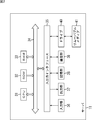
- FIG. 1 is a block diagram showing a configuration example of a sanitary management system to which the present invention is applied.
- the hygiene management system 1 in FIG. 1 is a system that manages the hygiene status of establishments such as kitchens such as elementary and junior high schools, factories, offices, nursing homes, restaurants, and restaurants.
- This hygiene management system 1 can centrally manage the hygiene status of many business establishments, and is particularly useful when a large number (multiple) business establishments are deployed nationwide or in a certain area. It is.
- the hygiene management performed by the hygiene management system 1 is called “hygiene management (inspection)”, “sanitation management (inspection)”, or “store inspection”. Below, in order to demonstrate the example which checks the hygiene state of the store of the chain store of the company which carries out the chain development of the restaurant, it will be called “store inspection”.
- the sanitation management system 1 in FIG. 1 centrally confirms (understands) the hygiene status of a plurality of stores in a chain store of a company that operates a chain of restaurants, and stores stores as needed. (In store managers) will be given guidance for improvement and the progress of improvement will be confirmed.
- the sanitation management system 1 includes a server 11 and one or more terminal devices 12. In FIG. 1, three terminal apparatuses 12-1 to 12-3 are shown, but the number of terminal apparatuses 12 can be increased or decreased as necessary.
- the server 11 and the terminal device 12 are connected by a network such as the Internet, a LAN (Local Area Network), or a VPN (Virtual Private Network).
- the server 11 as an information processing apparatus that processes information for performing a store inspection executes an application program (hereinafter referred to as a store inspection program) for performing the store inspection.
- a store inspection program an application program for performing the store inspection.
- the terminal device 12 is, for example, a personal computer (including a notebook type), a tablet terminal, a high-function mobile phone called a so-called smartphone, a dedicated input terminal, or the like.
- the terminal device 12 is deferred at each store, or is carried by an auditor who visits each store and checks the hygienic state of the store.
- a store manager such as a store manager of each store, a manager responsible for managing the hygiene of the company that operates the store, or an auditor (hereinafter collectively referred to as a user) operates the terminal device 12 to operate the terminal device. 12 accesses the server 11 on which the store inspection program is executed.
- the store inspection program executed by the server 11 is a WEB application created in a markup language such as HTML, and a predetermined screen created by the store inspection program is displayed on the terminal device by a browser executed on the terminal device 12. 12 displays.
- the browser interprets an HTML (Hypertext Markup Language) document and displays a screen on a display or the like, or sets a URL (Uniform Resource Locators) to access the Web site of the server 11 and transfer data. It has basic functions such as a communication function for downloading or sending data to the site, and a jump function for jumping to a linked URL in an HTML document.
- the terminal device 12 receives an operation (input) performed by the user on a predetermined screen displayed on the display by the store inspection program, and transmits the operated content to the server 11 via the network.
- the server 11 on which the store inspection program is executed receives the content operated on the terminal device 12, performs predetermined data processing according to the operated content, and displays the next screen on the terminal device 12. Display.
- FIG. 2 shows a hardware configuration example of the server 11.
- a CPU (Central Processing Unit) 31 executes various processes according to a program stored in a ROM (Read Only Memory) 32 or a storage unit 38.
- the program here includes not only the above-described store inspection program but also an OS (Operating System) such as Windows (registered trademark), a network adapter driver, and the like.
- a RAM (Random Access Memory) 33 appropriately stores programs executed by the CPU 31, data, and the like.
- the CPU 31, ROM 32, and RAM 33 are connected to each other by a bus 34.
- the CPU 31 is also connected with an input / output interface 35 via the bus 34.
- the input / output interface 35 is connected to an input unit 36 including a keyboard, a mouse, and a microphone, and an output unit 37 including a display and a speaker.
- the CPU 31 executes various processes in response to commands input from the input unit 36. Then, the CPU 31 outputs the processing result to the output unit 37.
- a storage unit 38 made of, for example, a hard disk.
- the storage unit 38 stores programs executed by the CPU 31 and various data. This program may be acquired from an external device by the communication unit 39.
- the input / output interface 35 is connected to a communication unit 39 and a drive 40 that communicate with an external device via a network.
- a removable medium 41 such as a magnetic disk, an optical disk, a magneto-optical disk, or a semiconductor memory
- the drive 40 drives them and acquires programs and data recorded therein. The acquired program and data are transferred to and stored in the storage unit 38 as necessary.
- the hardware configuration of the terminal device 12 in FIG. 1 is basically the same as the configuration of the server 11, and thus description thereof is omitted.
- the store inspection server 11 centrally manages inspection results obtained by inspecting the sanitary condition of a large number of stores scattered all or part of the country.
- the inspection items for inspecting the hygienic state of the store include items determined by different indexes, and the store inspection server 11 scores each of the plurality of inspection items represented by the different indexes according to predetermined criteria. (Numericalization), and stores can be checked and compared with one standard.
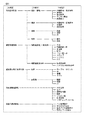
- FIG. 3 shows an example of inspection items that can be inspected by the store inspection server 11.
- the inspection items that can be inspected by the store inspection server 11 include, as major classification items (major items), “hygiene management status”, “bacteria related information”, “customer perspective hygiene management status”, “physical and chemistry related information”, and There is “gene related information”. Further, the large items are further classified into items of middle classification (medium items) and items of small classification (small items) as necessary.
- Hygiene management status one of the major items, is an inspection item related to the hygiene management status of the store and its employees (employees). Specifically, it includes the equipment, fixtures and ingredients in the store. This is an inspection item related to the degree of arrangement and organization, and the degree of appearance of employees.
- the “hygiene management state” is classified into four middle items of “organization / organization”, “cleaning”, “cleanliness”, and “education”.
- the sub-items of “Organization / Organization” include small items of “inside refrigerator / freezer”, “cupboard”, “cooking utensil”, “kitchen area”, and “room temperature food”.
- the sub-items “cleaning” include sub-items “inside refrigerator / freezer”, “cupboard”, and “cooking utensil”.
- the sub items of “clothing”, “head hair”, and “nail” are included in the middle items of “cleanliness”.
- the middle item of “Education” includes sub-items of “morning meeting” and “end of life”.
- Bacteria-related information one of the major items, is a test item related to bacteria in stores and their employees. Specifically, it is attached to equipment and supplies in stores and employees' hands and fingers. This is an inspection item related to the number of bacteria, the rate of bacteria testing for employees, etc.
- the “bacteria-related information” has two middle items of “bacteria count test (general live bacteria)” and “bacteria test implementation rate”.
- the sub items of “Bacteria count test (general live bacteria)” are “Finger”, “Refrigerator handle”, “Cutting board”, “Fauce”, “Jar handle”, “Door knob”, “Shamoji”, and “Knife” Contains small items.
- the sub-items “Bacteria test execution rate” and “Norovirus test execution rate” are included in the middle items of “Bacteria test execution rate”.
- customer-viewed hygiene management status is an inspection item related to the hygiene management status of the store and its employees from the customer perspective of the store. Specifically, the viewpoint of the customer visiting the store The inspection items such as the equipment and equipment in the store, the degree of arrangement and organization of ingredients, and the degree of appearance of employees.
- the “customer perspective hygiene management state” has two middle items of “in-store” and “employee”.
- the sub-items “table counter”, “floor”, “tableware”, and “toilet” are included in the middle items of “inside the store”.
- the middle items of “employee” include sub items “clothing”, “head hair”, and “nail”.
- “physical and chemical related information” includes, as small items, “water activity”, “pH”, “peroxide value”, “acid value”, “sorbic acid”, “nitrite group”, and “Propylene glycol” is included.
- Gene-related information one of the major items, is a test item related to genetic testing of food (foodstuffs).
- the “gene-related information” includes “Vero toxin factor”, “Salmonella factor”, “S. aureus factor”, and “Vibrio parahaemolyticus factor” as small items.
- classification method of the large item, the middle item, and the small item shown in the example of FIG. 3 and the inspection items belonging to them are merely examples, and are not limited to this, and are set as needed. can do.
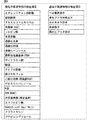
- test items belonging to “physics and chemistry related information” and test items belonging to “gene related information” include the items shown in FIG. 4 including those shown in FIG.
- Bacteriological factors for carnivorous toxins are 90%, and physicochemically detectable factors account for the remaining 10%.
- the effectiveness of the physicochemical method is that there are standard materials that have been priced, and if the method is the same, it is possible to obtain almost the same numerical value even if the laboratory is different, and the same judgment result can be reached. Even in individual tests, certain judgments can be made by using official standards and customary standards.
- the bacteriological method may kill bacteria due to environmental conditions such as the number of days and temperature after sampling the object to be inspected, and depending on the situation (condition) May change. Therefore, it is possible to perform store inspection more effectively by comprehensively evaluating not only bacteriological methods but also physicochemical methods.
- the inspected objects for bacteriological examination, physicochemical examination, and genetic examination are not limited to food and food, but may be water, air, soil, or other commonly called specimens.
- the hygienic state that can be managed by the store inspection server 11 is obtained by using visual confirmation, bacteriological methods, physicochemical methods, and genetic methods. There is something to check by the numerical value.
- these inspection results can be comprehensively determined for each store, and stores can be compared with each other.
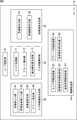
- FIG. 5 is a block diagram illustrating a functional configuration example of the store inspection server 11.
- the store inspection server 11 includes a user authentication unit 51, an input information screen generation unit 52, an input information analysis unit 53, an information storage unit 54, and a management screen generation unit 55.
- the user authentication unit 51 authenticates the user of the terminal device 12 that has accessed the store inspection server 11 based on a predetermined user ID, password, and the like.
- the information that can be browsed or entered differs for each authenticated user. For example, if it is a company manager, the hygiene condition and improvement status of all stores can be confirmed, and if it is the store manager of each store, only the hygiene condition and improvement status of its own store can be confirmed.
- An ID unique to the terminal device 12 may be used as an authentication password.
- the input information screen generation unit 52 generates an input screen for inputting predetermined information and displays the input screen on the terminal device 12.
- the input information screen generation unit 52 includes an evaluation value input unit 61, an evaluation reference value input unit 62, an importance setting unit 63, and an alert setting unit 64.
- the evaluation value input unit 61 generates an evaluation value input screen for allowing the user to input an evaluation value (inspection result) that is a result of evaluating (inspecting) each inspection item, and causes the terminal device 12 to display the evaluation value input screen.
- the evaluation value input unit 61 acquires the evaluation value of each inspection item input by the user on the evaluation value input screen displayed on the terminal device 12 and supplies the acquired evaluation value to the input information analysis unit 53.
- the evaluation reference value input unit 62 generates an evaluation reference value input screen for inputting the evaluation reference value of each inspection item, which is a reference for inputting the evaluation value, and displays it on the terminal device 12. Further, the evaluation reference value input unit 62 acquires the evaluation reference value input by the user on the evaluation reference value input screen displayed on the terminal device 12 and supplies it to the information storage unit 54.
- the importance level setting unit 63 generates an importance level setting screen for setting the importance level of each inspection item and displays it on the terminal device 12. Further, the importance level setting unit 63 supplies the importance level of each inspection item set by the user on the importance level setting screen displayed on the terminal device 12 to the information storage unit 54.
- the alert setting unit 64 generates an alert setting screen for registering an alert notification destination and displays the alert setting screen on the terminal device 12. That is, the store inspection server 11 has a function of notifying an alert when the evaluation value for each inspection item is equal to or lower than a preset level, and the alert is sent to the notification destination input on the alert setting screen. Be notified.
- the alert setting screen also has a function of setting a special alert notification condition (special alert condition) different from the alert notification condition as a default.
- the alert setting unit 64 supplies information such as an alert notification destination set by the user on the alert setting screen displayed on the terminal device 12 to the information storage unit 54.
- Analysis processing based on information input by the user on each screen generated by the input information screen generation unit 52 is performed by the input information analysis unit 53.
- the input information analysis unit 53 includes a score processing unit 71, an alert notification unit 72, and an inspection report generation unit 73.
- the score processing unit 71 performs score processing for converting the evaluation value of each inspection item input by the user on the evaluation value input screen into a score based on the evaluation reference value.
- the scored result is supplied to and stored in the information storage unit 54.
- the alert notification unit 72 compares the evaluation value of each inspection item input by the user on the evaluation value input screen with the alert notification condition to determine whether or not the alert is necessary. When it is determined that an alert is necessary, the alert notification unit 72 also performs a process of notifying an alert.
- the inspection report generation unit 73 generates an inspection report for each store based on the evaluation value of each inspection item input by the user on the evaluation value input screen, and supplies it to the information storage unit 54.
- the inspection report stored in the information storage unit 54 can be browsed as necessary.
- the inspection report can be generated for each category of large items, medium items, and small items in addition to each store.
- the information storage unit 54 includes a score information storage unit 81, an evaluation criterion information storage unit 82, an importance level information storage unit 83, an alert information storage unit 84, and an inspection report storage unit 85.
- the score information storage unit 81 stores score information that is a result scored by the score processing unit 71.
- the score information is stored in a hierarchical structure such as a store, a large item of inspection items, a medium item, and a small item.
- the evaluation criterion information storage unit 82 stores evaluation criterion information that is an evaluation criterion value of each inspection item input by the user on the evaluation criterion value input screen, and the score processing unit 71 of the input information analysis unit 53 or the like as necessary.
- the alert notification unit 72 is supplied.
- the importance level information storage unit 83 stores the importance level of each inspection item input by the user on the importance level setting screen as importance level information.
- the alert information storage unit 84 stores the default alert notification condition, the alert notification destination and the special alert condition input by the user on the alert setting screen as alert information, and the score processing of the input information analysis unit 53 as necessary. To the unit 71 and the alert notification unit 72.
- the inspection report storage unit 85 stores the inspection report generated by the inspection report generation unit 73.
- the management screen generation unit 55 generates a management screen for confirming the inspection result of each store, that is, the score of each inspection item of each store, and the progress of improvement of the inspection item determined to be improved, and the terminal device 12 To display.
- the management screen generation unit 55 includes a list screen generation unit 91 and a detailed screen generation unit 92.
- the list screen generation unit 91 generates an inspection result list screen in which the inspection results of each store can be browsed, and displays the inspection result list screen on the terminal device 12.
- the inspection result list screen if the logged-in user is a user in charge of managing multiple stores, such as a company manager who manages all stores, multiple stores such as all stores or stores in the area in charge The inspection results can be viewed.
- the logged-in user is a user such as a store manager who is only allowed to view inspection results of one store, only the inspection results of one store are displayed on the inspection result list screen.
- the detailed screen generation unit 92 generates a detailed screen of the inspection result and displays it on the terminal device 12.
- the detailed screen is a screen on which the inspection result of one store among the inspection results of a plurality of stores stored (managed) in the information storage unit 54 can be viewed. This detailed screen is displayed on the terminal device 12 when one predetermined store is selected from the inspection results of one or more stores displayed in the list screen generation unit 91.
- FIG. 6 is a block diagram illustrating a detailed configuration example of the evaluation value input unit 61.
- the evaluation value input unit 61 corresponds to the large items of the test items, the hygiene management information screen generation unit 101, the bacteria related information screen generation unit 102, the customer viewpoint hygiene management information screen generation unit 103, the physics and chemistry related information screen generation unit 104, And a gene-related information screen generation unit 105.
- the hygiene management information screen generation unit 101 generates a hygiene management information input screen for inputting the inspection result of each inspection item belonging to the large item “hygiene management state” and displays the screen on the terminal device 12.
- the bacteria-related information screen generation unit 102 generates a bacteria-related information input screen for inputting the test result of each test item belonging to the large item “bacteria-related information” and displays the screen on the terminal device 12.
- the customer viewpoint hygiene management information screen generation unit 103 generates a customer viewpoint hygiene management information input screen for inputting the inspection result of each inspection item belonging to the large item “customer viewpoint hygiene management state”, and displays it on the terminal device 12.
- the physics and chemistry related information screen generation unit 104 generates a physics and chemistry related information input screen for inputting the inspection result of each inspection item belonging to the large item “physical and chemistry related information” and displays it on the terminal device 12.
- the gene-related information screen generation unit 105 generates a gene-related information input screen for inputting the test result of each test item belonging to the large item “gene-related information” and displays it on the terminal device 12.
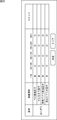
- FIG. 7 shows an example of a hygiene management information input screen displayed on the display of the terminal device 12 by the hygiene management information screen generation unit 101.
- the middle items “organization / cleanup”, “cleaning”, “cleanliness”, and “education” belonging to the large item “hygiene management status” are shown.
- the middle item “Organization / Sort” there are 5 items, “Fridge / Freezer”, “Cupboard”, “Cooking utensil”, “Kitchen area” and “Room temperature food”. ing.
- radio buttons of “very good”, “good”, “normal”, “bad”, and “very bad” that are evaluations (inspection results) for each of the inspection items Is provided.
- the auditor can select any one of “very good”, “good”, “normal”, “bad”, and “very bad” based on the predetermined evaluation criteria determined by the evaluation value criterion input unit 62. Enter for each inspection item.
- each inspection item there is a comment column for inputting a comment about the inspection result.
- Necessary improvement items (instruction contents) are entered in the comment column for the inspection items that require improvement.
- a “Determination” button for determining the evaluation of each inspection item selected by the auditor and the evaluation of each inspection item selected by the auditor are cleared (reset) "Clear” button is provided.
- the auditor inputs the inspection result of the inspection of the sanitary condition of the visited store on the hygiene management information input screen shown in FIG. 7, and presses the “OK” button.
- FIG. 8 shows an example of a bacteria count input screen for inputting the test result of the middle item “Bacteria count test” displayed on the display of the terminal device 12 by the bacteria related information screen generation unit 102. Show.
- Radio buttons “ 6 " and "10 6- " are provided.
- “ ⁇ 10 2 ” represents that the number of bacteria obtained as a result of the wiping test is less than 10 2 .
- “10 2 to 10 3 ” represents that the number of bacteria is 10 2 or more and less than 10 3 .
- “10 3 to 10 4 ” represents that the number of bacteria is 10 3 or more and less than 10 4 .
- “10 4 to 10 6 ” represents that the number of bacteria is 10 4 or more and less than 10 6 .
- “10 6- ” indicates that the number of bacteria is 10 6 or more. Auditors, based on the test results, "- 10 2", “10 2 to 10 3", “10 3 to 10 4", “10 4 to 10 6", and any of "106 to" Select (input) a radio button.
- the numerical value of the number of bacteria corresponding to each evaluation is input (determined) on the evaluation reference value input screen generated by the evaluation reference value input unit 62.
- FIG. 9 shows a bacteria test execution rate input screen for inputting test results of the middle item “bacteria test execution rate” displayed on the display of the terminal device 12 by the bacteria related information screen generation unit 102. An example is shown.
- radio buttons of “100%”, “ ⁇ 90%”, “ ⁇ 80%”, “ ⁇ 70%”, and “ ⁇ 69%” are provided. “100%” indicates that the inspection implementation rate is 100%. “ ⁇ 90%” indicates that the inspection implementation rate is 90% or more and less than 100%. “ ⁇ 80%” represents that the inspection implementation rate is 80% or more and less than 90%. “ ⁇ 70%” indicates that the inspection implementation rate is 70% or more and less than 80%. “ ⁇ 69%” indicates that the inspection implementation rate is 69% or less.
- the auditor selects (inputs) one of the radio buttons of “100%”, “ ⁇ 90%”, “ ⁇ 80%”, “ ⁇ 70%”, and “ ⁇ 69%” based on the inspection result. To do.
- the numerical value of the implementation rate corresponding to each evaluation is input (determined) on the evaluation reference value input screen generated by the evaluation reference value input unit 62.
- FIG. 10 shows an example of a customer viewpoint hygiene management information input screen for inputting the inspection result of the large item “customer viewpoint hygiene management state” displayed on the display of the terminal device 12 by the customer viewpoint hygiene management information screen generation unit 103. ing.
- the middle items “in-store” and “employee” belonging to the large item “customer perspective hygiene management status” are shown.
- the middle item “inside the store” four items of the small items “table counter”, “floor”, “tableware”, and “toilet” belonging to the middle item are shown.
- the middle item “employee” three items “subjects”, “head hair”, and “nails” belonging to the sub items are shown.
- radio buttons of “very good”, “good”, “normal”, “bad”, and “very bad” that are evaluations (inspection results) for each of the inspection items Is provided.
- the auditor can select any one of “very good”, “good”, “normal”, “bad”, and “very bad” based on the predetermined evaluation criteria determined by the evaluation value criterion input unit 62. Enter for each inspection item.
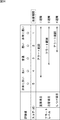
- FIG. 11 shows an example of a physics and chemistry related information input screen displayed on the display of the terminal device 12 by the physics and chemistry related information screen generation unit 104.
- moisture activity”, “pH”, “peroxide value”, and “acid value” for the ingredient “cake” are “water activity”, “pH” for the ingredient “salad”. ”,“ Sorbic acid ”, and“ nitrite ”, and in the ingredient“ rice ball ”,“ water activity ”,“ pH ”,“ nitrite ”, and“ propylene glycol ”are shown, respectively.
- the evaluation criteria corresponding to the five-level evaluation of “very good”, “good”, “normal”, “bad”, and “very bad” Although the value is shown, the evaluation standard value of the physics and chemistry related information differs depending on the inspection item.
- test item “water activity” when the measured values are “A1”, “A2” “A3”, “A4”, and “A5”, “very good” and “good”, respectively. “,” Normal “,” bad “, and” very bad “.
- inspection item “pH” when the measured values are “B1”, “B2”, “B3”, “B4”, and “B5”, “very good”, “good”, “normal”
- the evaluation is “bad” and “very bad”.
- test items “water activity” and “pH” differ depending on the food to be tested, specific values are omitted, and “A1”, “A2” “A3”, “A4”, and “A5”
- B1”, “B2”, “B3”, “B4”, and “B5” were described. “A1,” “A2,” “A3,” “A4,” and “A5” and “B1,” “B2,” “B3,” “B4,” and “B5” have values in a specified range. Assigned.
- the content [mg / kg] is “-0.1”, “0.1-0.25”, “0.25-0.50”, “0.50-1.0”, “1.0 In the case of “ ⁇ ”, the evaluation is “very good”, “good”, “normal”, “bad”, and “very bad”, respectively.
- the evaluation reference value of each inspection item is generally different depending on the substance (foodstuff), and the numerical value shown in FIG. 11 is an example and is not limited to this.
- the evaluation reference value of each test item of the physics and chemistry related information can be appropriately input (determined) on the evaluation reference value input screen generated by the evaluation reference value input unit 62.
- FIG. 12 shows an example of a gene related information input screen for inputting a test result of the large item “gene related information” displayed on the display of the terminal device 12 by the gene related information screen generation unit 105.
- “ ⁇ 50” indicates that the measured value is less than 50 [copy].
- 50 to 100 indicates that the measured value is 50 or more and less than 100 [copy].
- 100 to 150 represents that the measured value is 100 or more and less than 150 [copy].
- 150 to 200 represents that the measured value is 150 or more and less than 200 [copy].
- “200 to” represents that the measured value is 200 [copy] or more.
- the auditor selects (inputs) one of the radio buttons of “-50”, “50-100”, “100-150”, “150-200”, and “200-” based on the inspection result. .
- the criteria of “ ⁇ 50”, “50-100”, “100-150”, “150-200”, and “200-” shown in FIG. 12 are “very good” and “good” shown in FIG. ”,“ Normal ”,“ bad ”, and“ very bad ”.
- these evaluation reference values are generally different depending on substances (foodstuffs), and the numerical values shown in FIG. 12 are also examples and are not limited thereto.
- the evaluation reference value of each test item of the gene-related information can be appropriately input (determined) on the evaluation reference value input screen generated by the evaluation reference value input unit 62.
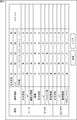
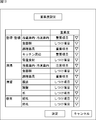
- FIG. 13 shows an example of the importance setting screen displayed on the display of the terminal device 12 by the importance setting unit 63.
- the importance level setting screen shown in FIG. 13 is a screen for setting the importance level for each inspection item of the large item “hygiene management state”, but the same applies to other inspection items.
- the importance level that can be set for each inspection item is “important item” having the highest importance level, “caution item” having the second highest importance level, and the most important level among settable importance levels.
- the most important “important item” is set in the small item “in the refrigerator / in the freezer” of the middle item “organize / organize”.
- the second most important “caution item” is set in the small item “inside the refrigerator / freezer” of the middle item “cleaning”.
- a “discipline item” is set for the small item “clothes” of the medium item “clean”.
- the importance setting screen also includes a “decision” button that is operated when the importance setting is finished and confirmed (stored), and a “cancel” button that is operated when the importance setting is canceled. Is provided.
- the score processing unit 71 converts the input evaluation value into a score. Perform score processing.
- the score processing unit 71 scores the result of each inspection item by assigning a score corresponding to the input evaluation value.
- a default alert level is set for the importance set for each inspection item.
- the alert notification unit 72 compares the input evaluation value with the alert level based on the alert level (reference value) corresponding to the importance.
- the alert notification unit 72 is registered. An alert e-mail is notified to the notification destination (normal notification destination described later in FIG. 15).
- an alert is sent to the registered notification destination when an evaluation value of “Normal”, “Bad”, or “Very Bad” is entered. Is done.
- an evaluation value of “bad” or “very bad” is input to an inspection item for which “discipline item” is set as the importance, an alert is notified to the registered notification destination.
- the inspection items for which alerts have been notified are items that need improvement in principle. Therefore, on the inspection item notified of the alert, a time limit (improvement time limit) until necessary improvement is determined and displayed on a detailed screen (FIG. 18) to be described later.
- a deadline of one week is set for the inspection item as a time limit for improvement.
- a deadline of 4 weeks is set for the inspection item.
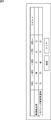
- FIG. 15 shows an example of an alert setting screen displayed on the display of the terminal device 12 by the alert setting unit 64.
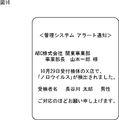
- a message as shown in FIG. 16 is displayed on the display of the mobile phone of the notification destination 1.
- [Special Alert Settings] has a tab structure similar to [Normal Notification Destination], and allows you to select a mobile type and enter an e-mail address, company name and department name, job title and person in charge. ing.
- FIG. 15 shows an example in which there are four fields for inputting the notification destination, the inspection item, and the alert level, the number of inputs can be set as appropriate.
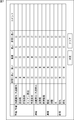
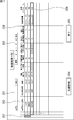
- FIG. 17 shows an example of an inspection result list screen displayed on the display of the terminal device 12 by the list screen generation unit 91.
- the inspection result list screen includes a title of “inspection result list” arranged at the top thereof, a store search input unit 201, a display period input unit 202, a store list display unit 203, a store detail button 204, and an end button 205. Is provided.
- the store search input unit 201 when a user searches for an inspection result of a predetermined store, a store name to be searched is input.
- the store list display unit 203 displays the input store (moves to the input store) and the cursor 206. Is displayed at the store where is entered.
- the display period input unit 202 specifies a store for which the inspection result is displayed on the store list display unit 203 according to the execution period in which the inspection is performed.
- a list of stores audited during that period is displayed on the store list display unit 203.
- the store list display section 203 from the horizontal direction, from the left, establishment name (store name), comprehensive judgment result, implementation date, result report date, hygiene management status, bacteria related information, customer viewpoint hygiene management status, physics and chemistry related information
- establishment name store name
- comprehensive judgment result implementation date
- result report date hygiene management status
- bacteria related information bacteria related information
- customer viewpoint hygiene management status physics and chemistry related information
- the items of gene related information, test report, and improvement schedule are arranged.
- the vertical direction of the store list display unit 203 is divided for each store.
- the name of the establishment (store) that performed the audit is displayed in the item of the establishment name (store name).
- the comprehensive determination result of the audit execution store that is, the total value (sum) of the scores given to each inspection item is displayed.
- the date of the audit is displayed in the execution date item.
- the result report date item the date when the audit result is input to the store inspection server 11 is displayed.
- the score of the large item “hygiene management state” is displayed.
- the score of the large item “bacteria-related information” is displayed.
- a score of the large item “customer viewpoint hygiene management state” is displayed.
- the score of the large item “physical and chemical related information” is displayed in the physical and chemical related information item.
- the score of the large item “gene related information” is displayed.
- a “download” button is displayed. When the “download” button is pressed, the inspection report of the store is displayed. In the improvement schedule item, the improvement status is displayed as an achievement rate.
- the manager in charge of managing a plurality of stores moves the cursor 206 up and down or moves the scroll bar 207 up and down from a plurality of stores displayed in the vertical direction of the store list display unit 203. By changing the store to be displayed, the desired store can be searched and displayed.
- a sort button 208 is provided for each item of the hygiene management state, the bacteria related information, the customer viewpoint hygiene management state, the physics and chemistry related information, and the gene related information of the store list display unit 203, and the sort button 208 is pressed.
- the stores can be rearranged in ascending or descending order with the score of the large item.
- the hygiene management state and customer viewpoint hygiene management state scores of the store name “Gotanda store” are displayed differently from the other scores. This indicates that there is an item that has been informed of an alert and is in need of improvement, but has not yet been improved, for the major item.
- the store list display unit 203 when the cursor 206 is moved to the store name “Gotanda store” and the store detail button 204 is pressed, a detailed screen showing details of the improvement items of the Gotanda store designated by the cursor 206 is displayed. .
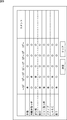
- FIG. 18 shows an example of a detail screen displayed when the store detail button 204 is pressed in the store list display unit 203. 18 is not a detailed screen of the store name “Gotanda store” in FIG. 17 (the contents do not match those in FIG. 17).
- the improvement measure that displays the importance set for the inspection item and the improvement content (guidance content) entered as a comment on the evaluation value input screen Whether or not improvement has been performed (implementation check) and a schedule in which an improvement due date is set are displayed.
- a progress graph in which the achievement rate of improvement items of the entire store is graphed is displayed.
- the small item “floor” of the middle item “inside the store” of the large item “hygiene management state” is displayed as the inspection item for the first improvement.
- “Cleaning schedule creation and implementation” is displayed. Since the first inspection item has an importance level of “caution item”, two weeks are set as the time limit until improvement. Therefore, in the improvement schedule column, “expiration date” indicating that the improvement is due on September 30th, two weeks after September 16, which is the result report date, is displayed. In addition, since the inspection item described first is an item that has already been improved by the store manager, “completed” is displayed in the column of the execution check.
- the evaluation value is initially set to “not yet”, but if the store manager has implemented the guidance contents entered in the improvement measures column, pressing the button displays “completed”. At the same time, the numerical value and graph of the achievement rate of improvement items for the entire store are updated.
- the small item “in the refrigerator / freezer” of the middle item “organization / tidy up” in the large item “sanitary management status” is displayed, and the countermeasures (contents of instruction) "The cardboard is not put in the refrigerator, it is replaced with a washable container, and a hygienic state is always maintained” is displayed. Since the importance of the second inspection item is “important item”, the “expiration date” is set as the deadline until improvement in the first week from the result report date. In addition, “completed” is displayed in the execution check column, indicating that the improvement has been completed.
- the minor item “nail” of the middle item “cleaning” of the large item “hygiene management state” is displayed as the third improvement necessary inspection item in FIG. Replace with a new one "is displayed. Since the importance level of the third inspection item is “disciplined item”, “expiration date” is set as the expiration date until improvement in the fourth week from the result report date. In addition, “not yet” is displayed in the execution check column, indicating that improvement has not yet been performed.
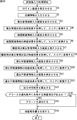
- step S ⁇ b> 1 the user authentication unit 51 displays a login screen on the display of the terminal device 12.
- the auditor inputs his / her user ID and password, and the user authentication unit 51 authenticates the user ID and password input at the terminal device 12, the process proceeds to step S2.
- the store inspection server 11 causes the store information about the store to input the inspection result to be input.
- the store inspection server 11 inputs information such as the store name, the implementation date, and the name of the auditor as displayed as items on the inspection result list screen shown in FIG.
- the photographed image is uploaded (transmitted) as necessary.
- step S ⁇ b> 3 the hygiene management information screen generation unit 101 generates the hygiene management information input screen of FIG. 7 that causes the inspection result of each inspection item belonging to the large item “hygiene management state” to be input and displays the screen on the terminal device 12. .
- step S ⁇ b> 4 the score processing unit 71 acquires the inspection result of each inspection item belonging to the large item “hygiene management state” input on the hygiene management information input screen, and stores it in the evaluation criterion information storage unit 82. The score is converted based on the evaluation standard value.
- step S5 the bacteria related information screen generation unit 102 inputs a test result of each test item belonging to the large item “bacteria related information” (bacteria count input screen of FIG. 8 and bacteria of FIG. 9). An inspection execution rate input screen) is generated and displayed on the terminal device 12.
- step S ⁇ b> 6 the score processing unit 71 acquires the test result of each test item belonging to the large item “bacteria-related information” input to the bacteria-related information input screen, and stores it in the evaluation criterion information storage unit 82. The score is converted based on the evaluation standard value.
- step S7 the customer viewpoint hygiene management information screen generation unit 103 generates the customer viewpoint hygiene management information input screen of FIG. 10 for inputting the inspection result of each inspection item belonging to the large item “customer viewpoint hygiene management state”. It is displayed on the terminal device 12.
- step S8 the score processing unit 71 acquires the inspection result of each inspection item belonging to the large item “customer viewpoint hygiene management state” input on the customer viewpoint hygiene management information input screen, and stores the evaluation criterion information. Based on the evaluation reference value stored in the unit 82, the score is converted.
- step S ⁇ b> 9 the physics and chemistry related information screen generation unit 104 generates the physics and chemistry related information input screen of FIG. 11 that causes the inspection result of each inspection item belonging to the large item “physical and chemistry related information” to be input and displays it on the terminal device 12. .
- step S ⁇ b> 10 the score processing unit 71 acquires the inspection result of each inspection item belonging to the large item “physical and chemistry related information” input on the physics and chemistry related information input screen, and stores it in the evaluation criterion information storage unit 82. The score is converted based on the evaluation standard value.
- step S11 the gene-related information screen generation unit 105 generates the gene-related information input screen in FIG. 12 for inputting the test result of each test item belonging to the large item “gene-related information” and displays the screen on the terminal device 12. .
- step S ⁇ b> 12 the score processing unit 71 acquires the test result of each test item belonging to the large item “gene related information” input to the gene related information input screen, and stores it in the evaluation criterion information storage unit 82. The score is converted based on the evaluation standard value.
- step S13 the score processing unit 71 calculates a comprehensive determination result obtained by summing up the scores acquired in the processes in steps S4 to S12. In addition, the score processing unit 71 collectively stores the calculated comprehensive determination result and the information acquired in the processes of steps S2 to S12 in the score information storage unit 81.
- the data stored in the score information storage unit 81 is used when displaying the inspection result list screen of FIG. 17 and the detailed screen of FIG. In the score information storage unit 81, for example, store information, scores, comments, photographed images, and the like are classified and stored in a hierarchical structure in the order of stores, large items of inspection items, medium items, and small items.
- step S14 the alert notification unit 72 determines whether there is an inspection item that matches the default or special alert notification condition in the scores obtained in the processes in steps S4 to S12.
- step S14 If it is determined in step S14 that there is an inspection item that matches the default or special alert notification condition, the process proceeds to step S15, and the alert notification unit 72 notifies the set notification destination of the alert. On the other hand, if it is determined in step S14 that there is no inspection item that matches the default or special alert notification condition, the process of step S15 is skipped.
- step S16 the inspection report generation unit 73 generates an inspection report for the store based on the evaluation value input by the user on the evaluation value input screen, and stores the inspection report in the inspection report storage unit 85. The process is terminated.
- the overall evaluation value obtained by evaluating the store's hygiene management status, bacteria-related information, customer viewpoint hygiene management status, physics and chemistry-related information, and gene-related information according to a predetermined evaluation standard value is calculated. Can be recorded. Thereby, the hygiene state of a store can be determined comprehensively.
- the evaluation value input process when the evaluation value when the store is evaluated matches a predetermined alarm notification condition, an alarm by e-mail is notified to a mobile phone or the like. Therefore, when an auditor inputs an evaluation value into the store inspection server 11, the manager or store manager is notified of the evaluation content (inspection result) that needs to be improved immediately, and encourages improvement (improves the improvement). )be able to.
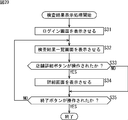
- step S ⁇ b> 31 the user authentication unit 51 displays a login screen on the display of the terminal device 12.
- the user authentication unit 51 authenticates the user ID and password input at the terminal device 12, the process proceeds to step S32.
- step S ⁇ b> 32 the list screen generation unit 91 generates an inspection result list screen in which inspection results of a predetermined store can be browsed, and displays the inspection result list screen on the terminal device 12.
- the list screen generation unit 91 determines the logged-in user, and if it is a manager of all stores operated by the company or a manager of an area in charge of a plurality of stores, the management The terminal device 12 displays an inspection result list screen in which inspection results of one or more stores in charge of the responsible person can be viewed.
- the terminal device 12 displays an inspection result list screen in which the inspection results of only that store can be browsed.
- step S33 the list screen generation unit 91 determines whether the store detail button 204 has been operated (pressed).
- step S33 If it is determined in step S33 that the store detail button 204 has been operated, the process proceeds to step S34, and the detail screen generation unit 92 displays a detail screen that displays details of the improvement item of the store where the cursor 206 is located on the terminal. It is displayed on the display of the device 12. On the other hand, if it is determined in step S33 that the store detail button 204 has not been operated, the process of step S34 is skipped.
- step S35 the list screen generation unit 91 determines whether the end button 205 has been operated.
- step S35 If it is determined in step S35 that the end button 205 has not been operated, the process returns to step S32.
- step S35 if it is determined in step S35 that the end button 205 has been operated, the process ends.
- the manager in charge of managing a plurality of stores can check the inspection results of all stores in charge. Can be easily (at a glance) confirmed.
- the overall judgment result of each store and the score (evaluation) for each classification when the inspection item is classified into a predetermined large item can be confirmed, so all the stores in charge are It is possible to easily compare with the comprehensive judgment result and the score for each classification.
- the display of the score on the inspection result list screen is different from normal inspection items, so inspection items that need improvement can be easily I can grasp it.
- the specific contents of the improvement items of the store and the contents of the countermeasures are displayed.
- the improvement items displayed on this detailed screen correspond to items for which an alarm notification has been made in the evaluation value input process of FIG. Therefore, the manager in charge or the store manager can immediately recognize the item that needs to be improved and how to improve it, so that a quick response is possible.
- the improvement deadline is automatically set (by the store inspection server 11) according to the importance for the inspection items requiring improvement. It is possible to make appropriate improvements from items that require countermeasures.
- the evaluation value input process in FIG. 19 and the inspection result display process in FIG. 20 display, for example, a screen for selecting either an evaluation value input or an inspection result display on the initial screen after login. And can be executed according to the user's selection.
- the evaluation value is input by selecting a radio button on the input screen for inputting the evaluation value.
- the present invention is not limited to this.
- the evaluation value is displayed in a tabular input form. You may make it input a value directly.
- the score is assigned to each inspection item on a one-to-one basis.
- the score is assigned to the total value or average value of the evaluation values of a plurality of inspection items. May be.
- one or more scores of the small item, the medium item, and the large item may be weighted according to a predetermined criterion, and the comprehensive determination result may be calculated based on the score considering the weight.
- the program executed by the computer may be a program that is processed in time series in the order described in this specification, or may be processed in parallel or at a necessary timing such as when a call is made. It may be a program to be performed.
- system represents the entire apparatus composed of a plurality of apparatuses.
Landscapes
- Engineering & Computer Science (AREA)
- Business, Economics & Management (AREA)
- Human Resources & Organizations (AREA)
- Economics (AREA)
- Strategic Management (AREA)
- Entrepreneurship & Innovation (AREA)
- Operations Research (AREA)
- Physics & Mathematics (AREA)
- Educational Administration (AREA)
- Marketing (AREA)
- Development Economics (AREA)
- Quality & Reliability (AREA)
- Tourism & Hospitality (AREA)
- Game Theory and Decision Science (AREA)
- General Business, Economics & Management (AREA)
- General Physics & Mathematics (AREA)
- Theoretical Computer Science (AREA)
- Medical Treatment And Welfare Office Work (AREA)
- Management, Administration, Business Operations System, And Electronic Commerce (AREA)
- General Factory Administration (AREA)
Priority Applications (2)
| Application Number | Priority Date | Filing Date | Title |
|---|---|---|---|
| SG2013073705A SG193641A1 (en) | 2011-04-01 | 2012-04-02 | Information processing device, method, and program |
| CN2012800165677A CN103460240A (zh) | 2011-04-01 | 2012-04-02 | 信息处理装置、方法以及程序 |
Applications Claiming Priority (2)
| Application Number | Priority Date | Filing Date | Title |
|---|---|---|---|
| JP2011081629A JP2012216114A (ja) | 2011-04-01 | 2011-04-01 | 情報処理装置および方法、並びにプログラム |
| JP2011-081629 | 2011-04-01 |
Publications (1)
| Publication Number | Publication Date |
|---|---|
| WO2012137734A1 true WO2012137734A1 (ja) | 2012-10-11 |
Family
ID=46969132
Family Applications (1)
| Application Number | Title | Priority Date | Filing Date |
|---|---|---|---|
| PCT/JP2012/058953 Ceased WO2012137734A1 (ja) | 2011-04-01 | 2012-04-02 | 情報処理装置および方法、並びにプログラム |
Country Status (5)
| Country | Link |
|---|---|
| JP (1) | JP2012216114A (cg-RX-API-DMAC7.html) |
| CN (1) | CN103460240A (cg-RX-API-DMAC7.html) |
| SG (1) | SG193641A1 (cg-RX-API-DMAC7.html) |
| TW (1) | TWI557675B (cg-RX-API-DMAC7.html) |
| WO (1) | WO2012137734A1 (cg-RX-API-DMAC7.html) |
Cited By (2)
| Publication number | Priority date | Publication date | Assignee | Title |
|---|---|---|---|---|
| CN111514341A (zh) * | 2020-03-11 | 2020-08-11 | 河南帅臣物联网科技有限责任公司 | 智慧卫生间的消毒控制方法及系统 |
| CN115210731A (zh) * | 2020-05-28 | 2022-10-18 | 3M创新有限公司 | 卫生管理系统、卫生管理方法和卫生管理程序 |
Families Citing this family (8)
| Publication number | Priority date | Publication date | Assignee | Title |
|---|---|---|---|---|
| JP5500224B2 (ja) * | 2012-09-10 | 2014-05-21 | ミック株式会社 | 拭き取り検査システム |
| JP6054790B2 (ja) * | 2013-03-28 | 2016-12-27 | 三菱スペース・ソフトウエア株式会社 | 遺伝子情報記憶装置、遺伝子情報検索装置、遺伝子情報記憶プログラム、遺伝子情報検索プログラム、遺伝子情報記憶方法、遺伝子情報検索方法及び遺伝子情報検索システム |
| WO2015145729A1 (ja) * | 2014-03-28 | 2015-10-01 | 富士通株式会社 | 点検結果の更新制御方法、点検結果の記憶制御方法、点検結果の更新制御プログラム、点検結果の記憶制御プログラム及び点検結果の更新制御システム、点検結果の記憶制御システム |
| JP6324226B2 (ja) * | 2014-06-11 | 2018-05-16 | ライオン株式会社 | 検査結果シート作成装置、検査結果シート作成方法、検査結果シート作成プログラム、検査結果シート、及び、検査装置 |
| JP5866542B1 (ja) * | 2014-10-28 | 2016-02-17 | パナソニックIpマネジメント株式会社 | 施設管理支援装置、施設管理支援システムおよび施設管理支援方法 |
| US20210080937A1 (en) * | 2018-02-15 | 2021-03-18 | Mitsubishi Electric Corporation | Information analysis device, information analysis method, and storage medium storing information analysis program |
| CN113196409B (zh) * | 2018-12-05 | 2024-08-30 | 梦莲株式会社 | 卫生评价装置、卫生评价拍摄系统、拍摄用底座以及卫生评价方法 |
| CN111290679A (zh) * | 2020-01-20 | 2020-06-16 | 北京无限光场科技有限公司 | 评价菜单变动方法、装置、设备、存储介质 |
Citations (6)
| Publication number | Priority date | Publication date | Assignee | Title |
|---|---|---|---|---|
| JP2002230179A (ja) * | 2001-01-31 | 2002-08-16 | Johnson Professional Co Ltd | 総合衛生管理システム及びそのためのコンピュータ・プログラム |
| JP2003132182A (ja) * | 2001-10-19 | 2003-05-09 | Yoshinori Tanaka | 食品検査報告システム、食品検査報告装置、食品検査報告方法、食品検査報告装置の制御方法、食品検査報告プログラムおよび食品検査報告装置の制御プログラム |
| JP2005332270A (ja) * | 2004-05-20 | 2005-12-02 | Toshiba Corp | 情報処理システム |
| JP2005339057A (ja) * | 2004-05-25 | 2005-12-08 | Kao Corp | 衛生管理システム |
| JP2007120998A (ja) * | 2005-10-25 | 2007-05-17 | Meiji Milk Prod Co Ltd | 食品品質の自動検査装置および検査方法 |
| JP2010287166A (ja) * | 2009-06-15 | 2010-12-24 | Life:Kk | 情報処理装置および方法、並びにプログラム |
Family Cites Families (7)
| Publication number | Priority date | Publication date | Assignee | Title |
|---|---|---|---|---|
| JP2000155778A (ja) * | 1998-11-20 | 2000-06-06 | Hitachi Ltd | 災害対策業務管理支援装置、及び災害対策業務管理のためのプログラムを記憶した記憶媒体 |
| JP2002159286A (ja) * | 2000-11-27 | 2002-06-04 | Internatl Reagents Corp | 微生物検査システム |
| NZ532906A (en) * | 2004-05-13 | 2006-10-27 | Fonterra Co Operative Group | Customised nutritional food and beverage dispensing system for dispensing a customised nutritional serving |
| CN1804602B (zh) * | 2005-12-15 | 2010-05-05 | 卢麟麟 | 表面清洁程度及细菌污染快速检测方法和装置 |
| CN1919086A (zh) * | 2006-09-28 | 2007-02-28 | 中国农业科学院北京畜牧兽医研究所 | 一种熟鲜水饺保鲜方法 |
| JP2009098898A (ja) * | 2007-10-16 | 2009-05-07 | Sharp Corp | チェック項目表示装置、チェック項目表示方法、プログラムおよび記録媒体 |
| JP2010148428A (ja) * | 2008-12-25 | 2010-07-08 | Asahi Beer Moruto Kk | スナック食品及びその製造方法 |
-
2011
- 2011-04-01 JP JP2011081629A patent/JP2012216114A/ja active Pending
-
2012
- 2012-03-30 TW TW101111230A patent/TWI557675B/zh not_active IP Right Cessation
- 2012-04-02 SG SG2013073705A patent/SG193641A1/en unknown
- 2012-04-02 WO PCT/JP2012/058953 patent/WO2012137734A1/ja not_active Ceased
- 2012-04-02 CN CN2012800165677A patent/CN103460240A/zh active Pending
Patent Citations (6)
| Publication number | Priority date | Publication date | Assignee | Title |
|---|---|---|---|---|
| JP2002230179A (ja) * | 2001-01-31 | 2002-08-16 | Johnson Professional Co Ltd | 総合衛生管理システム及びそのためのコンピュータ・プログラム |
| JP2003132182A (ja) * | 2001-10-19 | 2003-05-09 | Yoshinori Tanaka | 食品検査報告システム、食品検査報告装置、食品検査報告方法、食品検査報告装置の制御方法、食品検査報告プログラムおよび食品検査報告装置の制御プログラム |
| JP2005332270A (ja) * | 2004-05-20 | 2005-12-02 | Toshiba Corp | 情報処理システム |
| JP2005339057A (ja) * | 2004-05-25 | 2005-12-08 | Kao Corp | 衛生管理システム |
| JP2007120998A (ja) * | 2005-10-25 | 2007-05-17 | Meiji Milk Prod Co Ltd | 食品品質の自動検査装置および検査方法 |
| JP2010287166A (ja) * | 2009-06-15 | 2010-12-24 | Life:Kk | 情報処理装置および方法、並びにプログラム |
Cited By (2)
| Publication number | Priority date | Publication date | Assignee | Title |
|---|---|---|---|---|
| CN111514341A (zh) * | 2020-03-11 | 2020-08-11 | 河南帅臣物联网科技有限责任公司 | 智慧卫生间的消毒控制方法及系统 |
| CN115210731A (zh) * | 2020-05-28 | 2022-10-18 | 3M创新有限公司 | 卫生管理系统、卫生管理方法和卫生管理程序 |
Also Published As
| Publication number | Publication date |
|---|---|
| TWI557675B (zh) | 2016-11-11 |
| SG193641A1 (en) | 2013-11-29 |
| TW201246111A (en) | 2012-11-16 |
| JP2012216114A (ja) | 2012-11-08 |
| CN103460240A (zh) | 2013-12-18 |
Similar Documents
| Publication | Publication Date | Title |
|---|---|---|
| WO2012137734A1 (ja) | 情報処理装置および方法、並びにプログラム | |
| WO2012137735A1 (ja) | 情報処理装置および方法、並びにプログラム | |
| JP2016009211A (ja) | ユーザ嗜好に合わせたワイン自動選定システム | |
| JPWO2020004154A1 (ja) | 情報処理装置、情報処理方法及びプログラム | |
| Ovca et al. | Food safety practices of future food handlers and their teachers, observed during practical lessons | |
| Soon | Finger licking good? An observational study of hand hygiene practices of fast food restaurant employees and consumers | |
| Sal Moslehian et al. | The impacts of kitchen and dining spatial design on cooking and eating experience in residential buildings: a scoping review | |
| JP5597226B2 (ja) | 料理検索装置、料理検索方法、プログラムおよびコンピュータ読み取り可能な記憶媒体 | |
| JP4977171B2 (ja) | 情報処理装置および方法、並びにプログラム | |
| JP7609467B2 (ja) | 情報処理装置 | |
| WO2024203982A1 (ja) | 感染対策支援システム | |
| HK1188320A (en) | Information processing device, method, and program | |
| HK1188319A (en) | Information processing device, method, and program | |
| Roberts et al. | Analysis of school food safety programs based on HACCP principles | |
| Munir | Towards Sustainable Food Waste Management in Restaurants: A Case Study by applying Social Practice Theory | |
| Wagner et al. | Towards a pervasive kitchen infrastructure for measuring cooking competence | |
| JP7428841B1 (ja) | 曝露リスク評価システム | |
| JP2005339057A (ja) | 衛生管理システム | |
| Xue et al. | Research on Age-Friendly Smart Kitchen Design Based on User Behavior and Cognition | |
| Dodd | Research and design success | |
| Jorgensen et al. | Cantonese-style barbecue meat food safety in Vancouver Coastal Health | |
| Zaki et al. | Analysis of Food Safety Programs in Three University Restaurants at Some Central-Delta Region Universities, Egypt Based on HACCP Principles | |
| van Gameren et al. | How to assess risks of valve surgery: quality, implementation and future of risk models | |
| Duong | Assessment of Farmers Market Practices and Characteristics to Inform the Development of Tailored Educational Materials | |
| JP6422817B2 (ja) | 検査結果管理装置、検査結果管理方法及び検査結果管理システム |
Legal Events
| Date | Code | Title | Description |
|---|---|---|---|
| 121 | Ep: the epo has been informed by wipo that ep was designated in this application |
Ref document number: 12767615 Country of ref document: EP Kind code of ref document: A1 |
|
| NENP | Non-entry into the national phase |
Ref country code: DE |
|
| 122 | Ep: pct application non-entry in european phase |
Ref document number: 12767615 Country of ref document: EP Kind code of ref document: A1 |