WO2012133548A1 - 硬化性樹脂組成物、及び、硬化物 - Google Patents
硬化性樹脂組成物、及び、硬化物 Download PDFInfo
- Publication number
- WO2012133548A1 WO2012133548A1 PCT/JP2012/058177 JP2012058177W WO2012133548A1 WO 2012133548 A1 WO2012133548 A1 WO 2012133548A1 JP 2012058177 W JP2012058177 W JP 2012058177W WO 2012133548 A1 WO2012133548 A1 WO 2012133548A1
- Authority
- WO
- WIPO (PCT)
- Prior art keywords
- group
- fluorine
- bond
- carbon atoms
- resin composition
- Prior art date
- Legal status (The legal status is an assumption and is not a legal conclusion. Google has not performed a legal analysis and makes no representation as to the accuracy of the status listed.)
- Ceased
Links
- 0 C[Si](C)(C)O*C1=CCC*C1 Chemical compound C[Si](C)(C)O*C1=CCC*C1 0.000 description 1
Images

Classifications
-
- C—CHEMISTRY; METALLURGY
- C09—DYES; PAINTS; POLISHES; NATURAL RESINS; ADHESIVES; COMPOSITIONS NOT OTHERWISE PROVIDED FOR; APPLICATIONS OF MATERIALS NOT OTHERWISE PROVIDED FOR
- C09J—ADHESIVES; NON-MECHANICAL ASPECTS OF ADHESIVE PROCESSES IN GENERAL; ADHESIVE PROCESSES NOT PROVIDED FOR ELSEWHERE; USE OF MATERIALS AS ADHESIVES
- C09J133/00—Adhesives based on homopolymers or copolymers of compounds having one or more unsaturated aliphatic radicals, each having only one carbon-to-carbon double bond, and at least one being terminated by only one carboxyl radical, or of salts, anhydrides, esters, amides, imides, or nitriles thereof; Adhesives based on derivatives of such polymers
- C09J133/04—Homopolymers or copolymers of esters
- C09J133/14—Homopolymers or copolymers of esters of esters containing halogen, nitrogen, sulfur or oxygen atoms in addition to the carboxy oxygen
- C09J133/16—Homopolymers or copolymers of esters containing halogen atoms
-
- C—CHEMISTRY; METALLURGY
- C08—ORGANIC MACROMOLECULAR COMPOUNDS; THEIR PREPARATION OR CHEMICAL WORKING-UP; COMPOSITIONS BASED THEREON
- C08L—COMPOSITIONS OF MACROMOLECULAR COMPOUNDS
- C08L27/00—Compositions of homopolymers or copolymers of compounds having one or more unsaturated aliphatic radicals, each having only one carbon-to-carbon double bond, and at least one being terminated by a halogen; Compositions of derivatives of such polymers
- C08L27/02—Compositions of homopolymers or copolymers of compounds having one or more unsaturated aliphatic radicals, each having only one carbon-to-carbon double bond, and at least one being terminated by a halogen; Compositions of derivatives of such polymers not modified by chemical after-treatment
- C08L27/12—Compositions of homopolymers or copolymers of compounds having one or more unsaturated aliphatic radicals, each having only one carbon-to-carbon double bond, and at least one being terminated by a halogen; Compositions of derivatives of such polymers not modified by chemical after-treatment containing fluorine atoms
- C08L27/14—Homopolymers or copolymers of vinyl fluoride
-
- H—ELECTRICITY
- H10—SEMICONDUCTOR DEVICES; ELECTRIC SOLID-STATE DEVICES NOT OTHERWISE PROVIDED FOR
- H10W—GENERIC PACKAGES, INTERCONNECTIONS, CONNECTORS OR OTHER CONSTRUCTIONAL DETAILS OF DEVICES COVERED BY CLASS H10
- H10W74/00—Encapsulations, e.g. protective coatings
- H10W74/40—Encapsulations, e.g. protective coatings characterised by their materials
- H10W74/47—Encapsulations, e.g. protective coatings characterised by their materials comprising organic materials, e.g. plastics or resins
- H10W74/476—Organic materials comprising silicon
-
- C—CHEMISTRY; METALLURGY
- C08—ORGANIC MACROMOLECULAR COMPOUNDS; THEIR PREPARATION OR CHEMICAL WORKING-UP; COMPOSITIONS BASED THEREON
- C08K—Use of inorganic or non-macromolecular organic substances as compounding ingredients
- C08K5/00—Use of organic ingredients
- C08K5/54—Silicon-containing compounds
- C08K5/541—Silicon-containing compounds containing oxygen
- C08K5/5415—Silicon-containing compounds containing oxygen containing at least one Si—O bond
-
- H—ELECTRICITY
- H10—SEMICONDUCTOR DEVICES; ELECTRIC SOLID-STATE DEVICES NOT OTHERWISE PROVIDED FOR
- H10W—GENERIC PACKAGES, INTERCONNECTIONS, CONNECTORS OR OTHER CONSTRUCTIONAL DETAILS OF DEVICES COVERED BY CLASS H10
- H10W72/00—Interconnections or connectors in packages
- H10W72/20—Bump connectors, e.g. solder bumps or copper pillars; Dummy bumps; Thermal bumps
Definitions
- the present invention relates to a curable resin composition and a cured product obtained by curing the curable resin composition.
- an image sensor such as a CCD used in a camera module of a mobile phone
- electrical connection is made by wire bonding, and then covered with a transparent lid such as glass and sealed.
- a transparent lid such as glass and sealed.
- the way to stop was taken.
- the connection by wire bonding has a drawback that the overall size of the image sensor is significantly larger than that of the sensor element.
- Patent Document 1 describes a curable fluorine-containing polymer having a specific structure having a hydrolyzable metal alkoxide moiety.
- the curable resin composition described in Patent Document 1 has a high refractive index, and a low refractive index is required for use as a sealing member for a CCD element.
- Patent Document 2 discloses a structural unit having a fluorine-containing alkyl group having an ethylenic carbon-carbon double bond at the terminal as a curable composition for forming an antireflection film having a low refractive index and excellent antifouling property.
- a curable composition containing a curable fluorine-containing polymer (A), a fluorine-containing surface modifier (B), and hollow silica fine particles (C) is disclosed.
- the curable resin composition described in Patent Document 2 has no problem with transparency as long as it is a thin film of about 100 nm.
- the thickness is about 1 to 10 ⁇ m, which is a necessary thickness for a sealing member, hollow silica is used. The haze was increased by the aggregation of the fine particles, which was not sufficient from the viewpoint of transparency.
- the present invention provides a curable resin composition that can form a cured product having a low refractive index, high transparency, and excellent heat resistance.
- X 1 and X 2 are the same or different and H or F;
- X 3 is H, F, CH 3 or CF 3 ;
- X 4 and X 5 are the same or different and H, F or CF 3 ;
- Rf is a fluorine-containing hydrocarbon group having 1 to 40 carbon atoms which may have an amide bond or a urea bond, or 2 carbon atoms which may have an amide bond, a carbonate bond, a urethane bond or a urea bond.
- a curable resin composition comprising a fluorine-containing polymer (B) having a structural unit represented by:
- the organosilicon compound (A) has the following formula (1): ⁇ Si (R a ) s (R b ) t (R c ) u (R d ) v (R e ) w ⁇ n (1) (Wherein R a , R b , R c and R d are the same or different and are hydrogen, halogen, an alkoxyl group having 1 to 10 carbon atoms, an amino group, an alkyl group having 1 to 10 carbon atoms, or 5 to 5 carbon atoms) An aryl group having 10 carbon atoms, an allyl group having 1 to 10 carbon atoms, or a glycidyl group, and R e is the same or different and is —O—, —NH—, —C ⁇ C—, or a silane single bond.
- s, t, u and v are the same or different and are 0 or 1
- w is an integer of 0 to 4
- n is 1 to 20.
- n is 1, s + t + u + v is 4 and w Is 0, when n is 2 to 20, s + t + u + v is the same or different and is 0 to 4, w is the same or different and is 0 to 4, and when w is an integer of 1 or more, at least 2 This of Si through R e, linear, ladder, attached cyclic, or double cyclic It is preferably a compound represented by (A1) in).
- the organosilicon compound (A) is preferably tetraalkoxysilane.
- the organosilicon compound (A) is preferably 50% by mass or more based on the total mass of the organosilicon compound (A) and the fluoropolymer (B).
- the curable resin composition of the present invention preferably contains an organic solvent.
- the curable resin composition of the present invention is preferably for optical element sealing.
- the present invention is also a cured product obtained by curing the curable resin composition.
- the cured product preferably has a refractive index of 1.35 or less.
- the optical element is preferably a light receiving element.
- the optical element is preferably a light emitting element.
- the curable resin composition of the present invention can form a cured product having a low refractive index, high transparency, and excellent heat resistance.
- FIG. 1 is a schematic cross-sectional view showing an example of the structure of a CCD module.
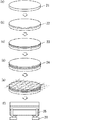
- FIGS. 2A to 2F are flowcharts schematically showing the manufacturing flow of the CCD module.
- the curable resin composition of this invention consists of an organosilicon compound (A).
- the organosilicon compound (A) is a compound containing carbon and silicon.
- the organosilicon compound (A) is preferably liquid at normal temperature (for example, 25 ° C.).
- organosilicon compound (A) examples include Si—H compounds having Si—H bonds; Si—N compounds having Si—N bonds such as aminosilane compounds, silazanes, silylacetamides, and silylimidazoles; monoalkoxysilanes, dialkoxys.
- Si—O compounds having Si—O bonds such as silane, trialkoxysilane, tetraalkoxysilane, siloxane, silyl ester, silanol; Si—Cl having Si—Cl bonds such as monochlorosilane, dichlorosilane, trichlorosilane, tetrachlorosilane Examples include halogenosilanes such as Cl compounds, Si— (C) 4 compounds, Si—Si compounds having a Si—Si bond, vinyl silane, allyl silane, and ethynyl silane.
- the organosilicon compound (A) is selected from the group consisting of Si—H compounds, Si—N compounds, halogenosilanes, Si— (C) 4 compounds, Si—Si compounds, vinylsilanes, allylsilanes, and ethynylsilanes. Preferably it is at least one compound.
- the organosilicon compound a compound in which at least one atom selected from the group consisting of hydrogen, oxygen and halogen is bonded to Si is more preferable. Specific examples of the above compounds are shown below.
- Halogenosilanes other than Si-Cl compounds are Halogenosilanes other than Si-Cl compounds:
- the organosilicon compound (A) is represented by the following formula (1): ⁇ Si (R a ) s (R b ) t (R c ) u (R d ) v (R e ) w ⁇ n (1) (Wherein R a , R b , R c and R d are the same or different and are hydrogen, halogen, an alkoxyl group having 1 to 10 carbon atoms, an amino group, an alkyl group having 1 to 10 carbon atoms, or 5 to 5 carbon atoms) An aryl group having 10 carbon atoms, an allyl group having 1 to 10 carbon atoms, or a glycidyl group, and R e is the same or different and is —O—, —NH—, —C ⁇ C—, or a silane single bond.
- s, t, u and v are the same or different and are 0 or 1
- w is an integer of 0 to 4
- n is 1 to 20.
- n is 1, s + t + u + v is 4 and w Is 0, when n is 2 to 20, s + t + u + v is the same or different and is 0 to 4, w is the same or different and is 0 to 4, and when w is an integer of 1 or more, at least 2 This of Si through R e, linear, ladder, attached cyclic, or double cyclic And more preferably a compound represented by (A1) in).
- R a , R b , R c , and R d are monovalent groups bonded to Si.
- R e is a divalent group bonded to two Si atoms.
- the amino group includes —NH 2 , —NHR, and —NRR ′ (R and R ′ are the same or different and are alkyl groups having 1 to 10 carbon atoms).
- R a , R b , R c and R d are the same or different, and at least one is hydrogen, halogen, an alkoxy group having 1 to 10 carbon atoms, or an amino group, otherwise An alkyl group having 1 to 10 carbon atoms, an aryl group having 5 to 10 carbon atoms, an allyl group having 1 to 10 carbon atoms, or a glycidyl group is preferable.
- n is 2 to 20
- s + t + u + v is the same or different, and is preferably 1 to 3
- w is preferably 1 to 3.
- R a , R b , R c and R d are the same or different and are an alkyl group having 1 to 6 carbon atoms, an aryl group having 5 to 8 carbon atoms, an alkoxy group having 1 to 6 carbon atoms, Alternatively, it is preferably an amino group, and more preferably an alkoxy group having 1 to 4 carbon atoms.
- the alkyl group preferably has 1 to 5 carbon atoms.
- the alkyl group may be linear, cyclic or branched. Further, a hydrogen atom may be substituted with a fluorine atom or the like.
- Examples of the alkyl group include a methyl group, an ethyl group, a propyl group, and a butyl group.
- R a , R b , R c, and R d a methyl group, an ethyl group, a propyl group, or An isopropyl group is preferred. More preferably, they are a methyl group and an ethyl group.
- the aryl group is preferably, for example, a pentyl group, a phenyl group, a naphthyl group, a methylphenyl group, an ethylphenyl group, or a dimethylphenyl group.
- halogen fluorine, chlorine, bromine or iodine is preferable, and chlorine is particularly preferable.
- the alkoxy group preferably has 1 to 5 carbon atoms.
- the alkoxy group may be chained, cyclic or branched. Further, a hydrogen atom may be substituted with a fluorine atom or the like.
- a methoxy group, an ethoxy group, a propyloxy group, or a butoxy group is preferable, More preferably, it is a methoxy group or an ethoxy group.
- R e is the same or different and is —O—, —NH—, —C ⁇ C—, or a silane single bond.
- the case R e is a silane bond is substantially not through the R h, it refers to the case where Si and Si are directly bonded.
- R e is preferably —O—, —NH—, or —C ⁇ C—.
- R e is a divalent group which is bonded to two Si, that two or more silicon atoms by R e via the R e, binds a linear, ladder-type, cyclic, or double cyclic Can do.
- n is an integer of 2 or more, silicon atoms may be bonded to each other.
- the compound (A1) include one Si such as the Si—H compound, Si—N compound, halogenosilane, Si— (C) 4 compound, Si—Si compound, vinylsilane, allylsilane, ethynylsilane, etc. Or the compound containing 2 or more is mentioned.
- the compound (A1) is preferably tetraalkoxysilane, and in the above formula (1), n is 1, and R a , R b , R c and R d are the same or different and have the same number of carbon atoms. More preferred is an alkoxy group of 1 to 10.
- the alkoxy group may be chained, cyclic or branched. Further, a hydrogen atom may be substituted with a fluorine atom.
- the alkoxy group preferably has 1 to 8 carbon atoms, more preferably 1 to 6 carbon atoms, and particularly preferably 1 to 4 carbon atoms.
- Examples of the compound (A1) include tetramethoxysilane, tetraethoxysilane, tetra-n-propoxysilane, tetra-iso-propoxysilane, tetra-n-butoxysilane, tetra-sec-butoxysilane, and tetra-tert-butoxysilane.
- Tetraphenoxysilane and the like, and among these, at least one compound selected from the group consisting of tetramethoxysilane and tetraethoxysilane is preferable, and more preferably, it is easily available and inexpensive, and is used for glass. It is tetraethoxysilane (TEOS) in terms of a close refractive index.
- TEOS tetraethoxysilane
- the fluorine-containing polymer (B) has the following formula (L):
- X 1 and X 2 are the same or different and H or F;
- X 3 is H, F, CH 3 or CF 3 ;
- X 4 and X 5 are the same or different and H, F or CF 3 ;
- Rf is a fluorine-containing hydrocarbon group having 1 to 40 carbon atoms which may have an amide bond or a urea bond, or 2 carbon atoms which may have an amide bond, a carbonate bond, a urethane bond or a urea bond.
- the ether bond is a divalent group represented by —O—.
- the amide bond is a divalent group represented by —CONH—.
- the carbonate bond is a divalent group represented by —O—COO—.
- the urethane bond is a divalent group represented by —O—CONH—.
- the urea bond is a divalent group represented by —NH—CONH—.
- the “hydrocarbon group” described later is an organic group composed of carbon and hydrogen, and the “fluorinated hydrocarbon group” means that some or all of the hydrogen atoms of the hydrocarbon group are fluorine. It is substituted with an atom.
- Examples of the “hydrocarbon group” include an alkyl group, an allyl group, a cyclic alkyl group, and an unsaturated alkyl group.
- fluorinated hydrocarbon group examples include a fluorine-containing alkyl group, a fluorine-containing allyl group, a fluorine-containing cyclic alkyl group, and a fluorine-containing unsaturated alkyl group.
- Y may have a ketone bond (—CO—), an ether bond or an ester bond (—COO—).
- the fluoropolymer (B) can be suitably crosslinked with SiOx formed from the compound (A), and the formed cured product has excellent flexibility. it can. Moreover, since the hardened
- the fluorine-containing polymer (B) containing the structural unit L1 has a particularly low refractive index, can increase the transparency of the thin film obtained from the curable resin composition of the present invention, and can be used for various substrates. It is preferable in that it can improve the adhesion durability. Moreover, it is also preferable in that the curing reactivity due to contact with heat, radicals and cations can be increased.
- Rf is the same as described above, which is a structural unit L2 derived from a fluorine-containing ethylenic monomer.
- This structural unit L2 has a low refractive index, can increase the transparency of a thin film obtained from the curable resin composition of the present invention, has good adhesion to various substrates, and improves durability. In addition to being excellent in that it can be produced, it is preferable because it has good copolymerizability with other fluorine-containing ethylene monomers. Moreover, it is preferable not only because the near-infrared transparency can be increased but also the refractive index can be lowered.
- Rf is, for example, — (CF (CF 3 ) CF 2 —O) n —T (T is —CH 2 O— (CO) —CF ⁇ CH 2 , or —Ry—Si (OR 20 ) (OR 21 ) (OR 22 ) and (Ry are the same as those described later.
- R 20 , R 21 and R 22 are the same or different and each represents an alkyl group having 1 to 5 carbon atoms. Where n is 0, 1 or 2).
- Rf is the same as described above, which is a structural unit L3 derived from a fluorine-containing ethylenic monomer.
- This structural unit L3 has a low refractive index, is excellent in that it has good adhesion to various base materials and can improve adhesion durability, and other structural units L3. It is also preferable in terms of good copolymerizability. Moreover, it is preferable not only because the near-infrared transparency can be increased but also the refractive index can be lowered.
- Rf contained in the structural units L, L1, L2, and L3 is, as described above, a fluorine-containing hydrocarbon group having 1 to 40 carbon atoms that may have an amide bond or a urea bond, or an amide bond, a carbonate.
- the upper limit of the carbon number thereof is preferably 30, more preferably 20, and particularly preferably 10.
- Rf is Rf 1 (a fluorine-containing hydrocarbon group having 1 to 40 carbon atoms which may have an amide bond or a urea bond, or an amide bond, a carbonate bond, a urethane bond or a urea bond).
- An organic group substituted with 1), or Rf 2 (a fluorinated hydrocarbon group having 1 to 40 carbon atoms which may have an amide bond or a urea bond).
- a fluorine-containing hydrocarbon group having an ether bond having 2 to 100 carbon atoms, which may have an amide bond, a carbonate bond, a urethane bond or a urea bond 1-3 are Y 2 (Y 2 is an organic group substituted with a C 2-10 monovalent organic group having an ethylenic carbon-carbon double bond at its end)) Or Rf 3 (a fluorine-containing hydrocarbon group having 1 to 40 carbon atoms which may have an amide bond or a urea bond, or an amide bond, a carbonate bond, a urethane bond or a urea bond).
- Rf is preferably Rf 1 or Rf 2 .
- the Rf is preferably one of Rf 1 .
- the structural unit in which Rf of the structural unit L is Rf 1 is hereinafter referred to as the structural unit M.
- structural units L1, L2, and L3 structural units in which Rf is Rf 1 are hereinafter referred to as structural units M1, M2, and M3, respectively.
- the hydrolyzable metal alkoxide having 1 to 30 carbon atoms plays a role of causing hydrolysis / polycondensation reaction, thereby cross-linking with SiOx formed from the compound (A), heat resistance and transparency.
- a cured product having excellent properties and flexibility can be formed.
- Rf 1 is the formula (Rf 1 ): -D-Ry (Rf 1 ) [Wherein -D- represents the formula (D):
- R is a divalent fluorinated alkylene group having 1 to 5 carbon atoms in which at least one hydrogen atom is substituted with a fluorine atom
- n is 2 or more Ry may have an amide bond or a urea bond, and a part or all of the hydrogen atoms may be substituted with fluorine atoms.
- Ry may have an amide bond, a carbonate bond, a urethane bond, a urea bond, or an ether bond, and part or all of the hydrogen atoms may be substituted with a fluorine atom.
- R is a divalent fluorine-containing alkylene group having 1 to 5 carbon atoms and having at least one fluorine atom, whereby a conventional fluorine-free alkoxyl group or alkylene ether unit can be used.
- the viscosity of the compound can be further reduced as compared with those having it, and it can contribute to an improvement in heat resistance, a decrease in refractive index, an improvement in solubility in a general-purpose solvent, and the like.
- -D- is-(OCFQ 1 CF 2 )-,-(OCF 2 CF 2 CF 2 )-,-(OCH 2 CF 2 CF 2 )-,-(OCFQ 2 )-,-(OCQ 3 2 )-,-(CFQ 1 CF 2 O)-,-(CFQ 1 CH 2 O)-,-(CF 2 CF 2 CF 2 O)-,-(CH 2 CF 2 CF 2 O)-,-( One or more repeating units selected from CFQ 2 O) — and — (CQ 3 2 O) — are preferred, and in particular, — (OCFQ 1 CF 2 ) —, — (OCF 2 CF 2 CF 2 )-,-(OCH 2 CF 2 CF 2 )-,-(CFQ 1 CF 2 O)-,-(CFQ 1 CH 2 O)-,-(CF 2 CF 2 CF 2 O)-and-(CH One or more repeating units selected from 2
- R is — (CFQ 1 CF 2 O) —, — (CFQ 1 CH 2 O) —, — (CF 2 CF 2 CF 2).
- O) — and — (CH 2 CF 2 CF 2 O) — are preferably at least one selected from the group consisting of — (CFQ 1 CF 2 O) —, — (CFQ 1 CH 2 O) — And at least one selected from the group consisting of — (CF 2 CF 2 CF 2 O) —.
- Q 1 is H, F or CF 3 .
- Q 1 is preferably CF 3 .
- Ry 1 represents the formula (Ry 1 ): - (R 11) q - ( A) p -R 12 - (Y 1a) m (Ry 1)
- q is 0 or 1
- p is 0 or 1
- m is an integer of 1 to 3
- R 11 may have a hydrogen atom partially or entirely substituted with a fluorine atom.
- a divalent hydrocarbon group having 1 to 5 carbon atoms, A is —O—, —CONH—, —O—COO—, —O—CONH— or —NH—CONH—
- R 12 represents one hydrogen atom.
- a part or all of which may be substituted with a fluorine atom, a divalent to tetravalent hydrocarbon group having 1 to 38 carbon atoms, or a part or all of hydrogen atoms may be substituted with fluorine atoms.
- Y 1a is a divalent to tetravalent hydrocarbon group having an ether bond of the formula: -[M 1 O (R 29 ) a (R 30 ) b (R 31 ) c (R 32 ) d ] n -M 2 (R 33 ) e (R 34 ) f (R 35 ) g (R 36 ) h (R 37 ) i (wherein M 1 and M 2 are the same or different, a divalent to hexavalent metal atom; a, b, c and d are 0 or 1, and a + b + c + d + 2 is a metal atom M 1 E, f, g, h and i are 0 or 1, and e + f + g + h + i + 1 is equal to the valence of the metal atom M 2 ; R 29 , R 30 , R 31 , R 32 , R 33 , R 34 , R 35 , R 36 and R 37
- R 12 for example, at least one selected from the group consisting of — (CH 2 ) 3 — and — (CH 2 ) 2 — is preferable.
- Metals M 1 and M 2 in Y 1a include: Cu as group IB; Ca, Sr, Ba as group IIA; Zn as group IIB; B as group IIIA, B, Al, Ga; Y as group IIIB; Si as group IVA , Ge; Pb as the IVB group; P as the VA group, Sb; V as the VB group, Ta; W as the VIB group; La and Nd as the lanthanides.
- Y 1a is preferably a group IVA, of which Si is preferable, in particular, —Si (OCH 3 ) 3 , —Si (OC 2 H 5 ) 3 , —SiCH 3 (OC 2 H 5 ) 2 and the like are hydrolyzed and heavy.
- Y 1a is at least one selected from the group consisting of —Si (OCH 3 ) 3 , —Si (OC 2 H 5 ) 3 , and —SiCH 3 (OC 2 H 5 ) 2. Particularly preferred.
- Group IIA is Ca: —Ca (OR 39 ), and preferred examples are —Ca (OCH 3 );
- Group IIB is Zn: —Zn (OR 39 ), and preferred examples are —Zn (OC 2 H 5 );
- Group IIIA is B: —B (OR 39 ) 2 , preferred specific examples are —B (OCH 3 ) 2 ;
- Group IIIB is Y: —Y (OR 39 ) 2 , with preferred examples being —Y (OC 4 H 9 ) 2 ;
- Group IVB is Pb: —Pb (OR 39 ) 3 , with preferred examples being —Pb (OC 4 H 9 ) 3 ;
- Group VB is Ta: -Ta (OR 39 ) 4 , with preferred examples being -Ta (OC 3 H 7 ) 4 ;
- Group VIB is W: —W (OR 39 ) 5 , preferred specific examples are —W (OC 2 H
- the structural unit M As the structural unit M, the structural unit M1 is preferable, and as the structural unit M1, the structural unit M2 or the structural unit M3 is more preferable. Therefore, when —Rf 1 is represented as —D—Ry, the structural unit M is represented by the formula (2-2):
- the structural unit of the formula (2-2) is preferably the formula (2-3):
- the structural unit of the formula (2-3) is more specifically
- the Rf it is also one of the preferred embodiments is Rf 2.
- the carbon-carbon double bond in Y 2 has the ability to cause a polycondensation reaction and the like, and can give a cured (crosslinked) product. Specifically, for example, by contact with radicals or cations, a polymerization reaction or a condensation reaction is caused between the fluorine-containing polymer molecules or between the compound (A) and a curing (crosslinking) agent that is added as necessary. ) Things that can be given.
- Rf of the structural unit L has Rf 2 (a fluorine-containing hydrocarbon group having 1 to 40 carbon atoms which may have an amide bond or a urea bond, or an amide bond, a carbonate bond, a urethane bond or a urea bond.
- Rf 2 a fluorine-containing hydrocarbon group having 1 to 40 carbon atoms which may have an amide bond or a urea bond, or an amide bond, a carbonate bond, a urethane bond or a urea bond.
- the structural unit that is a monovalent organic group having 2 to 10 carbon atoms)) is also referred to as a structural unit N hereinafter.
- the structural unit L1, L2, and L3, a structural unit Rf is Rf 2,
- Rf 2 is the formula (Rf 2 ): -D-Ry 2 (Rf 2 ) [Wherein, -D- is the same as defined above.
- Ry 2 may have an amide bond or a urea bond, a hydrocarbon group having 1 to 39 carbon atoms, in which part or all of the hydrogen atoms may be substituted with fluorine atoms, or an amide bond,
- An organic group in which 1 to 3 hydrogen atoms are substituted with Y 2 (Y 2 is as defined above) is preferable.
- a preferred form of -D-Ry 2 is the preferred form exemplified by -D-Ry, wherein Ry is changed to Ry 2 .
- Ry 2 may have an amide bond, a carbonate bond, a urethane bond, a urea bond, or an ether bond, and a part or all of the hydrogen atoms may be substituted with a fluorine atom.
- 1 to 3 hydrogen atoms are substituted with Y 2 (Y 2 is as defined above).
- Y 2a is an alkenyl group having 2 to 5 carbon atoms or a fluorine-containing alkenyl group having an ethylenic carbon-carbon double bond at the terminal; d and e are the same or different and are 0 or 1).
- preferable Y 2a include
- CX 6 CX 7 X 8 (Wherein X 6 is H, F, CH 3 or CF 3 ; X 7 and X 8 are the same or different, H or F), and this group is more highly reactive to curing, particularly by contact with a radical. It is preferable at a point, and it is preferable at the point which can obtain hardened
- those having a structure of —O (C ⁇ O) CF ⁇ CH 2 can improve near-infrared transparency, and particularly have a high curing (crosslinking) reactivity, so that a cured product can be obtained efficiently. It is preferable at the point which can do.
- the organic group Y 2 having a carbon-carbon double bond in the side chain may be introduced at the end of the polymer main chain.
- the —Rf 2a — group (the group obtained by removing Y 2 from the aforementioned —Rf 2 ) contained in the structural units N, N1, N2, and N3 has an amide bond or a urea bond.
- This —Rf 2a — has only to have a fluorine atom bonded to the carbon atom contained, and generally has a divalent fluorine-containing hydrocarbon group in which a fluorine atom and a hydrogen atom or a chlorine atom are bonded to the carbon atom, or an ether bond. Although it is a divalent fluorine-containing hydrocarbon group, those containing more fluorine atoms (high fluorine content) are preferred, and more preferably a divalent perfluorohydrocarbon group having a perfluoroalkylene group or an ether bond It is.
- the fluorine content in the fluoropolymer is 25% by mass or more, preferably 40% by mass or more.
- the carbon number of the —Rf 2a — group is too large, in the case of a divalent fluorine-containing hydrocarbon group, the solubility in a solvent may be lowered or the transparency may be lowered. In the case of a fluorine-containing hydrocarbon group, the hardness and mechanical properties of the polymer itself and its cured product may be lowered, which is not preferable.
- the number of carbon atoms of the divalent fluorine-containing hydrocarbon group is preferably 1-20, more preferably 1-10.
- the carbon number of the divalent fluorine-containing hydrocarbon group having an ether bond is preferably 2 to 30, more preferably 2 to 20.
- the structural unit N constituting the fluoropolymer used in the present invention is preferably the structural unit N1, and the structural unit N1 is more preferably the structural unit N2 or the structural unit N3. Therefore, specific examples of the structural unit N2 and the structural unit N3 will be described below.
- Rf 7 and Rf 8 are perfluoroalkyl groups having 1 to 5 carbon atoms, n is an integer of 0 to 30; X is H, CH 3 , F or CF 3 ) Etc.
- n is an integer of 1 to 30.
- Rf 9 and Rf 10 are perfluoroalkyl groups having 1 to 5 carbon atoms; m is an integer of 0 to 30; n is an integer of 1 to 3; X is H, CH 3 , F or CF 3 ) can give.
- the fluorine-containing polymer (B) may further comprise a structural unit A.
- the structural unit A may be a structural unit derived from a monomer copolymerizable with the fluorine-containing ethylenic monomer that gives the structural unit L represented by the formula (L).
- the structural unit A is an optional component and is not particularly limited as long as it is a monomer that can be copolymerized with the fluorinated ethylenic monomer that gives the structural unit L, and the intended use of the fluorinated polymer and its cured product, What is necessary is just to select suitably according to a required characteristic.
- Examples of the structural unit A include the following structural units.
- This structural unit A1 is an adhesive property of a fluorine-containing polymer and its cured product to a substrate and solubility in a solvent, particularly a general-purpose solvent. It is preferable at the point which can provide, and it is preferable at the point which can provide functions, such as crosslinkability, in addition.
- the structural unit A1 of a preferred fluorine-containing ethylenic monomer having a functional group has the formula (A1):
- X 11 , X 12 and X 13 are the same or different H or F;
- X 14 is H, F, CF 3 ;
- h is an integer from 0 to 2;
- i is 0 or 1;
- Rf 4 is carbon number A divalent fluorine-containing alkylene group having 1 to 40 carbon atoms or a divalent fluorine-containing alkylene group having an ether bond having 2 to 100 carbon atoms;
- a structural unit represented by the formula (wherein Rf 4 and Z 1 are the same as those in formula (A1)) is preferable.
- a structural unit derived from a fluorine-containing ethylenic monomer such as (Z 1 is the same as above) is preferred.
- CF 2 CFORf 4 -Z 1
- Rf 4 and Z 1 are as defined above (A1-2):
- a structural unit represented by the formula (wherein Rf 4 and Z 1 are the same as those in the formula (A1)) can also be preferably exemplified.
- CF 2 CFCF 2 —O—Rf 4 —Z 1
- CF 2 CF—Rf 4 —Z 1
- CH 2 CH-Rf 4 -Z 1
- CH 2 CHO-Rf 4 -Z 1
- (A2) A structural unit derived from a fluorine-containing ethylenic monomer that does not contain a functional group.
- This structural unit A2 has a lower refractive index in that the refractive index of the fluorine-containing polymer or its cured product can be kept low. It is preferable at the point which can do. Further, by selecting a monomer, the mechanical properties and glass transition temperature of the polymer can be adjusted, and in particular, it can be copolymerized with the structural unit L to increase the glass transition point, which is preferable.
- X 15 , X 16 and X 18 are the same or different H or F;
- X 17 is H, F or CF 3 ;
- h1, i1 and j are the same or different 0 or 1;
- Z 2 is H, F, Cl or a linear or branched perfluoroalkyl group having 1 to 16 carbon atoms;
- Rf 5 is a divalent fluorinated alkylene group having 1 to 20 carbon atoms or an ether bond having 2 to 100 carbon atoms. (A valent fluorine-containing alkylene group) is preferable.
- these are at least one unit selected from the group consisting of tetrafluoroethylene, vinylidene fluoride, chlorotrifluoroethylene, and hexafluoropropylene because the refractive index of the curable fluorine-containing polymer or its cured product can be kept low.
- a structural unit derived from a monomer is preferable.
- (A3) Aliphatic cyclic structural unit having fluorine When this structural unit A3 is introduced, transparency can be increased, a fluorine-containing polymer having a high glass transition temperature can be obtained, and further hardness can be expected in the cured product. This is preferable.
- the fluorine-containing aliphatic cyclic structural unit A3 is represented by the formula (A3):
- X 19 , X 20 , X 23 , X 24 , X 25 and X 26 are the same or different H or F;
- X 21 and X 22 are the same or different H, F, Cl or CF 3 ;
- Rf 6 is a fluorine-containing alkylene group having 1 to 10 carbon atoms or a fluorine-containing alkylene group having an ether bond having 2 to 10 carbon atoms;
- n2 is an integer of 0 to 3; n1, n3, n4 and n5 are the same or different and 0 or An integer of 1 is preferable.
- Acrylic or methacrylic monomers In addition to acrylic acid, methacrylic acid, acrylic esters, and methacrylic esters, maleic anhydride, maleic acid, maleic esters, and the like can be given.
- (A5) As a copolymerization component of structural units M and N derived from an alicyclic monomer, the structural units M and N and the above-mentioned fluorine-containing ethylenic monomer or non-fluorine ethylenic monomer are more preferable.
- the alicyclic monomer structural unit A5 may be introduced as the third component, thereby increasing the glass transition temperature and increasing the hardness. .
- m is an integer of 0 to 3; A, B, C, and D are the same or different, and H, F, Cl, COOH, CH 2 OH, a perfluoroalkyl group having 1 to 5 carbon atoms, or the like)
- the fluorine-containing polymer (B) may be a polymer composed only of the structural unit L, or may be a copolymer composed of the structural unit L and the structural unit A. Further, the structural unit L may be only the structural unit M, or may be only the structural unit N, and the fluorine-containing polymer (B) is composed of both the structural unit M and the structural unit N. It may be contained in the polymer (B). Moreover, the copolymer which consists of the structural unit M, the structural unit N, and the structural unit A may be sufficient.
- the fluorine-containing polymer is composed only of the structural unit L, it is advantageous in that it can provide a function of imparting adhesion durability to the substrate and further increase the hardness of the coating.
- the structural unit L may be 0.1 mol% or more with respect to all structural units constituting the fluoropolymer (B), but the hardness is increased by curing (crosslinking).
- the structural unit L is at least 2 mol%, preferably at least 5 mol%, more preferably at least 10 mol%. It is preferable.
- a cured product that is particularly excellent in heat resistance, transparency, and low water absorption
- it is contained in an amount of 10 mol% or more, preferably 20 mol% or more, more preferably 30 mol% or more, particularly 40 mol% or more. It is preferable to do.
- the structural unit L is less than 100 mol% with respect to all the structural units which comprise a fluorine-containing polymer (B).
- the molecular weight of the fluorine-containing polymer (B) can be selected, for example, from the range of 500 to 1,000,000 in the number average molecular weight, but preferably from 1,000 to 500,000, particularly from the range of 2,000 to 200,000 What is chosen is preferred.
- the number average molecular weight is selected from the range of 5,000 to 100,000.
- the number average molecular weight is a value measured by gel permeation chromatography (GPC) based on polystyrene.
- the fluorine-containing polymer (B) is composed of, for example, the structural unit L, and if necessary, further composed of the structural unit A.
- the structural unit L is 0.1 to 100 with respect to all the structural units constituting the fluoropolymer. It may be a fluorine-containing polymer having a number average molecular weight of 500 to 1,000,000 containing 0% to 99.9% by mole of the structural unit A.
- the structural unit L may have a structural unit M of 0.1 to 100 mol%, a structural unit N of 0 to 99.9 mol%, or a structural unit N of 0.1 to 100 mol%. %,
- the structural unit M may be 0 to 99.9 mol%.
- the fluorine-containing polymer (B) is also composed of the structural unit L and, if necessary, further composed of the structural unit A1 and the structural unit A2, with respect to all the structural units constituting the fluoropolymer (B).
- the unit L is 0.1 to 90 mol%
- the structural unit A1 is 0 to 99.9 mol%
- the structural unit A2 is 0 to 99.9 mol%
- the total of the structural unit A1 and the structural unit A2 is It is also a preferred embodiment that the number average molecular weight is 10 to 99.9 mol% and the number average molecular weight is 500 to 1,000,000.
- the content of the structural unit L in the fluoropolymer (B) may be 0.1 mol% or more with respect to all the structural units constituting the fluoropolymer, but it has high hardness and wear resistance by curing (crosslinking).
- it is preferably 2 mol% or more, preferably 5 mol% or more, more preferably 10 mol% or more.
- it is preferably contained in an amount of 10 mol% or more, preferably 20 mol% or more, and more preferably 50 mol% or more.
- the upper limit is less than 100 mol%.
- the contents of structural units A1 and A2 are both 99.9 mol% or less.
- the total mol% of A1 + A2 is 10 to 99.9 mol%. If it is less than 10 mol%, the refractive index cannot be kept low, and the film hardness after curing tends to be low, which is not preferable. More preferably, the total mol% of A1 + A2 is 20 mol% or more, further 30 mol% or more, 60 mol% or less, and further 50 mol% or less. Moreover, 90 mol% or less may be sufficient, 80 mol% or less may be sufficient, and 50 mol% or less may be sufficient.
- the combination of the structural unit M, the structural unit N, and the structural unit A is variously selected from the above examples depending on the intended application, physical properties (especially glass transition temperature, hardness, etc.), function (transparency), etc. That's fine.
- the molecular weight of the fluorine-containing polymer (B) can be selected, for example, from the range of 500 to 1,000,000 in the number average molecular weight, but preferably from 1,000 to 500,000, particularly from the range of 2,000 to 200,000 What is chosen is preferred.
- the number average molecular weight is selected from the range of 5,000 to 100,000.
- the fluoropolymer (B) is preferably soluble in a general-purpose solvent.
- the fluorine-containing polymer (B) is soluble in at least one of a ketone solvent, an acetate ester solvent, an alcohol solvent, and an aromatic solvent, or at least one general-purpose solvent. It is preferably soluble in a mixed solvent containing seeds.
- the fluoropolymer (B) is (1) A method in which a monomer having Rf is synthesized beforehand and polymerized (2) Once a polymer having another functional group is synthesized, the functional group is converted into a functional group by a polymer reaction.
- Method of introducing group Rf (3) Any of the methods of introducing by using both methods (1) and (2) can be adopted. Among these methods, the method (3) is a method of obtaining a curable fluoropolymer having a hydrolyzable metal alkoxide moiety of the present invention without causing a curing reaction of the carbon-carbon double bond at the end of the fluoropolymer side chain. To the method (3) is preferred.
- the fluorine-containing polymer (B) can be produced, for example, by the method described in International Publication No. 02/18457 pamphlet and Japanese Patent Application Laid-Open No. 2006-027958.
- Examples of the polymerization method include a radical polymerization method, an anionic polymerization method, and a cationic polymerization method, and the monomers exemplified for obtaining a polymer having a hydrolyzable metal alkoxide moiety can control quality such as composition and molecular weight.
- the radical polymerization method is particularly preferred from the viewpoint of easy production and industrialization.
- the fluorine-containing ethylenic monomer giving the structural unit L has the following formula:
- X 1 and X 2 are the same or different and H or F;
- X 3 is H, F, CH 3 or CF 3 ;
- X 4 and X 5 are the same or different and H, F or CF 3 ;
- Rf is the same as above;
- a is an integer of 0 to 3;
- b and c are the same or different and are monomers represented by 0 or 1).
- the preferred embodiment of X 1, X 2, X 3 , X 4, X 5, a, b, c, and Rf are the same as those described above.
- the compound (A) is preferably 50% by mass or more based on the total mass of the compound (A) and the fluoropolymer (B). More preferably, a compound (A) is 60 mass% or more, More preferably, it is 80 mass% or more. When there are too few compounds (A), there exists a possibility that it may be inferior to heat resistance or transparency. Moreover, it is preferable that a fluorine-containing polymer (B) is 0.1 mass% or more with respect to the total mass of a compound (A) and a fluorine-containing polymer (B), and it is 0.5 mass% or more. Is more preferable. When there is too little fluoropolymer (B), there exists a possibility that a dielectric constant may become high and it may be inferior to flexibility.
- the curable resin composition preferably contains an organic solvent in addition to the compound (A) and the fluoropolymer (B).
- the organic solvent is preferably one that can dissolve the fluorine-containing polymer (B).
- organic solvents examples include cellosolve solvents such as methyl cellosolve, ethyl cellosolve, methyl cellosolve acetate, ethyl cellosolve acetate; diethyl oxalate, ethyl pyruvate, ethyl-2-hydroxybutyrate, ethyl acetoacetate, butyl acetate, amyl acetate
- Ester solvents such as ethyl butyrate, butyl butyrate, methyl lactate, ethyl lactate, methyl 3-methoxypropionate, ethyl 3-methoxypropionate, methyl 2-hydroxyisobutyrate, ethyl 2-hydroxyisobutyrate; propylene glycol monomethyl ether , Propylene glycol monoethyl ether, propylene glycol monobutyl ether, propylene glycol monomethyl ether acetate, propylene glycol monoethyl ether
- a fluorine-based solvent may be used as necessary.
- fluorine-based solvent examples include CH 3 CCl 2 F (HCFC-141b), CF 3 CF 2 CHCl 2 / CClF 2 CF 2 CHClF mixture (HCFC-225), perfluorohexane, perfluoro (2-butyltetrahydrofuran). , Methoxy-nonafluorobutane, 1,3-bistrifluoromethylbenzene, etc.
- Fluorinated alcohols such as Examples thereof include benzotrifluoride, perfluorobenzene, perfluoro (tributylamine), ClCF 2 CFClCF 2 CFCl 2 and the like.
- fluorinated solvents may be used singly or as a mixed solvent of fluorinated solvents or one or more of non-fluorinated and fluorinated solvents.
- At least one solvent selected from the group consisting of ketone solvents, acetate solvents, alcohol solvents, and aromatic solvents is preferable. More specifically, methyl isobutyl ketone, propylene glycol At least one solvent selected from the group consisting of methyl ether acetate (PGMEA), 2-heptanone (MAK) and ethyl lactate is preferable in terms of paintability and coating productivity.
- the curable resin composition of the present invention further contains a curing initiator.
- Y is Y 2 which is a monovalent organic group having 2 to 10 carbon atoms having an ethylenic carbon-carbon double bond at the end, it is preferable that a curing initiator is included.
- Examples of the curing initiator in the curable resin composition of the present invention include a photo radical generator and a heat radical generator.
- a photo radical generator for example, in addition to the active energy ray curing initiator, heat curing or room temperature two-component curing agent can be used.
- An active energy ray curing initiator is preferable from the viewpoint that a curing reaction can be performed at a relatively low temperature. It is appropriately selected depending on the type of Y (radical reactivity or cation (acid) reactivity), the type of active energy ray to be used (wavelength range, etc.) and irradiation intensity.
- the active energy ray curing initiator for example, generates radicals and cations (acids) for the first time by irradiating an active energy ray such as an electromagnetic wave having a wavelength region of 350 nm or less, that is, ultraviolet rays, electron beams, X rays, ⁇ rays, Acts as a catalyst for initiating curing (crosslinking reaction) of the crosslinking group (for example, carbon-carbon double bond) of the fluorine-containing polymer (B), and usually generates radicals and cations (acids) with ultraviolet rays, particularly Use those that generate radicals.
- an active energy ray such as an electromagnetic wave having a wavelength region of 350 nm or less, that is, ultraviolet rays, electron beams, X rays, ⁇ rays
- the curable resin composition of the present invention can be easily cured by the active energy ray. Is preferable because
- examples of the curing initiator include the following.
- Benzoin benzoin benzoin, benzoin methyl ether, benzoin ethyl ether, benzoin isopropyl ether, benzoin isobutyl ether, benzyldimethyl ketal, etc.
- Benzophenone benzophenone benzoylbenzoic acid, methyl benzoylbenzoate, 4-phenylbenzophenone, hydroxybenzophenone, hydroxy-propylbenzophenone, acrylated benzophenone, Michler's ketone, etc.
- Thioxanthones Thioxanthone, Chlorothioxanthone, Methylthioxanthone, Diethylthioxanthone, Dimethylthioxanthone, etc.
- photoinitiator adjuvants such as amines, sulfones, and sulfines, as needed.
- cation (acid) reactive initiator photoacid generator
- Sulfonic acid esters alkyl sulfonic acid esters, haloalkyl sulfonic acid esters, aryl sulfonic acid esters, imino sulfonates, etc.
- the addition amount of the curing initiator is the content of the crosslinking group in the fluorine-containing polymer (B), and when the compound (A) has a crosslinking group, the crosslinking group.
- the curing initiator is appropriately selected depending on the type of curing initiator used, the type of active energy rays, and the amount of irradiation energy (such as strength and time).
- the curing initiator may be compound (A) and fluoropolymer ( The amount is preferably 0.01 to 30 parts by mass with respect to 100 parts by mass as a total of B). More preferably, it is 0.05 to 20 parts by mass, and still more preferably 0.1 to 10 parts by mass.
- the curable resin composition of the present invention preferably contains a curing agent.
- Y is a monovalent organic group having 2 to 10 carbon atoms having an ethylenic carbon-carbon double bond at the terminal, it is preferable to include a curing agent.
- the curing agent preferably has one or more carbon-carbon unsaturated bonds and can be polymerized with radicals or acids.
- radically polymerizable monomers such as acrylic monomers, vinyl ether monomers, etc.
- cationically polymerizable monomers These monomers may be monofunctional having one carbon-carbon double bond or polyfunctional monomers having two or more carbon-carbon double bonds.
- the fluorine-containing polymer (B) in the composition can be cross-linked by copolymerization with a carbon-carbon double bond in the side chain.
- Monofunctional acrylic monomers include acrylic acid, acrylic esters, methacrylic acid, methacrylic esters, ⁇ -fluoroacrylic acid, ⁇ -fluoroacrylic esters, maleic acid, maleic anhydride, maleic acid
- esters (meth) acrylic acid esters having an epoxy group, a hydroxyl group, a carboxyl group, and the like are exemplified.
- an acrylate monomer having a fluoroalkyl group is preferable.
- a compound represented by (X is H, CH 3 or F, and Rfa is a fluorine-containing alkyl group having 2 to 40 carbon atoms or a fluorine-containing alkyl group having an ether bond having 2 to 100 carbon atoms) is preferable.
- X is H, CH 3 or F
- Rfa is a fluorine-containing alkyl group having 2 to 40 carbon atoms or a fluorine-containing alkyl group having an ether bond having 2 to 100 carbon atoms
- Etc As polyfunctional acrylic monomers, compounds in which the hydroxyl groups of polyhydric alcohols such as diols, triols, and tetraols are replaced with acrylate groups, methacrylate groups, or ⁇ -fluoroacrylate groups are generally known. . Specifically, 1,3-butanediol, 1,4-butanediol, 1,6-hexanediol, diethylene glycol, tripropylene glycol, neopentyl glycol, trimethylolpropane, pentaerythritol, dipentaerythritol, etc.
- Examples thereof include compounds in which two or more hydroxyl groups of polyhydric alcohols are replaced with acrylate groups, methacrylate groups or ⁇ -fluoroacrylate groups.
- two or more hydroxyl groups of a polyhydric alcohol having a fluorine-containing alkyl group, a fluorine-containing alkyl group containing an ether bond, a fluorine-containing alkylene group or a fluorine-containing alkylene group containing an ether bond are converted into an acrylate group, a methacrylate group, ⁇ -A polyfunctional acrylic monomer substituted with a fluoroacrylate group can also be used, and is particularly preferable in that the refractive index of the cured product can be kept low.
- a specific example
- an ⁇ -fluoroacrylate compound is particularly preferred from the viewpoint of good curing reactivity.
- the amount of the active energy ray curing initiator added depends on the content of the carbon-carbon double bond in the fluoropolymer (B), whether or not the curing agent is used, and the amount of the curing agent used. Furthermore, the curing initiator used, the type of active energy rays, and the amount of irradiation energy (strength and time, etc.) are appropriately selected. When no curing agent is used, the amount of the fluoropolymer (B) is 100 parts by weight. 0.01 to 30 parts by weight, further 0.05 to 20 parts by weight, and most preferably 0.1 to 10 parts by weight.
- it is 0.05 to 50 mol%, preferably 0.1 to 20 mol%, most preferably based on the content (number of moles) of carbon-carbon double bonds contained in the fluoropolymer (B). 0.5 to 10 mol%.
- the total number of moles of the carbon-carbon double bond content (number of moles) contained in the fluoropolymer (B) and the number of moles of carbon-carbon unsaturated bonds of the curing agent 0.05 to 50 mol%, preferably 0.1 to 20 mol%, most preferably 0.5 to 10 mol%.
- the amount of curing agent used is appropriately selected according to the target hardness and refractive index, the type of curing agent, the content of the curable group of the curable fluorinated polymer used, and preferably curable. It is 1 to 80% by weight, preferably 5 to 70% by weight, more preferably 10 to 50% by weight, based on the fluorine-containing polymer. If the addition amount of the curing agent is too large, the refractive index tends to increase, which is not preferable.
- the curable resin composition of the present invention may further contain hollow fine particles.
- the curable resin composition of the present invention contains hollow fine particles having a low refractive index, the refractive index can be lowered.
- the hollow fine particles are components to be blended in order to lower the refractive index.
- the upper limit of the refractive index of the hollow fine particles is, for example, 1.48.
- the hollow fine particles preferably have a refractive index of 1.45 or less, and more preferably 1.40 or less. If the refractive index is too high, it may be difficult to use depending on applications such as a sealing agent for CCD modules. By being the said range, the refractive index of the thin film obtained from the curable resin composition of this invention can be made low.
- the lower limit of the refractive index is, for example, 1.15.
- the refractive index of the hollow fine particles can be measured by the methods described in Japanese Patent Nos. 3716189 and 4046921.
- the hollow fine particles preferably have a porosity of 1 to 60%, more preferably 2 to 40%.
- the porosity of the hollow fine particles is converted into air using the refractive index obtained by the above method, for example, in the case of silica hollow fine particles, from the difference from the refractive index of pure SiO 2 (1.45).
- the voids included can be calculated and obtained.
- the hollow fine particles are preferably 1 to 150 nm, more preferably 10 to 80 nm, from the viewpoint of particularly good optical properties of the sealing member (protective layer) and the antireflection film obtained from the curable resin composition of the present invention. .
- the hollow fine particles are preferably hollow silica fine particles.
- the hollow silica fine particle is a known material used in JP 2002-277604 A, JP 2002-265866 A, and the like.
- hollow silica fine particles described in JP 2004-203683 A, JP 2006-021938 A, and the like can be used.
- Preferable examples include through rears manufactured by JGC Catalysts & Chemicals.
- the hollow silica fine particles are preferably 1 to 1000 parts by weight, more preferably 3 to 250 parts by weight, and particularly preferably 5 to 150 parts by weight with respect to 100 parts by weight of the fluoropolymer (B).
- the refractive index of the thin film obtained from the curable resin composition of the present invention can be lowered, which is suitable for a sealant for a CCD module.
- characteristics such as heat resistance and chemical resistance are particularly excellent.
- the curable resin composition of the present invention may contain various additives as necessary in addition to those described above.
- additives include silane coupling agents, plasticizers, discoloration inhibitors, antioxidants, inorganic fillers, leveling agents, viscosity modifiers, light stabilizers, moisture absorbers, pigments, dyes, and reinforcing agents. It is done.
- the curable resin composition of the present invention may contain fine particles or ultrafine particles of an inorganic compound for the purpose of increasing the hardness of the cured product and controlling the refractive index.
- the inorganic compound fine particles are not particularly limited, but compounds having a refractive index of 1.5 or less are preferable. Specifically, magnesium fluoride (refractive index 1.38), silicon oxide (refractive index 1.46), aluminum fluoride (refractive index 1.33-1.39), calcium fluoride (refractive index 1.44) Fine particles such as lithium fluoride (refractive index 1.36 to 1.37), sodium fluoride (refractive index 1.32 to 1.34), thorium fluoride (refractive index 1.45 to 1.50) are desirable. .
- the particle diameter of the fine particles is desirably sufficiently smaller than the wavelength of visible light in order to ensure the transparency of the low refractive index material. Specifically, it is preferably 300 nm or less, particularly 100 nm or less.
- Voids can be formed by fine particles or ultrafine particles of an inorganic compound. That is, a film in which fine particles or ultrafine particles of an inorganic compound are blended in the composition of the present invention can have a refractive index lower than the refractive index of a single film by utilizing this void.
- the surface of the inorganic fine particle compound may be modified in advance using various coupling agents.
- various coupling agents include organically substituted silicon compounds; metal alkoxides such as aluminum, titanium, zirconium, antimony or mixtures thereof; salts of organic acids; coordination compounds bonded to coordination compounds, and the like.
- the curable resin composition of the present invention may be a dispersion-like or solution-containing fluoropolymer (B) or additive with respect to the organic solvent, but from the viewpoint of forming a uniform thin film, A uniform solution is preferable in that the film can be formed at a relatively low temperature.
- the curable resin composition of the present invention preferably has a corresponding viscosity, that is, about 1 to 10 cp, so that the formed film has a thickness of 0.1 to 5 ⁇ m. Therefore, the total mass of the compound (A) and the fluoropolymer (B) is preferably 10 to 100% by mass with respect to the total mass. More preferably, it is 20 to 50% by mass.
- the curable resin composition of the present invention is necessary, for example, by adding a fluorine-containing polymer (B) and, if necessary, a curing initiator, a crosslinking agent, and other additives to the liquid compound (A). It can manufacture by stirring and mixing according to.
- the curable resin composition of the present invention can form a cured product by crosslinking, for example, thermal crosslinking or photocrosslinking.
- the cured product may be crosslinked by applying the curable resin composition of the present invention to a substrate, drying, and then baking, or irradiating with active energy rays such as ultraviolet rays, electron beams or radiation. It may be formed by photocuring.
- the present invention is also a cured product obtained by curing the curable resin composition.
- the cured product preferably has a refractive index of 1.35 or less.
- a thin film having a film thickness of 1 to 10 ⁇ m, a refractive index of 1.35 or less, and a haze value of 5% or less can be produced.
- such a low refractive index and haze value are obtained after a heat resistance test at 125 ° C. for 1000 hours, a heat resistance test at 85 ° C. and a humidity of 85% for 500 hours, and a heat resistance test at 265 ° C. for 10 minutes. But it does not fluctuate. Furthermore, it does not fluctuate even after the light resistance test exposed to 1000 lux for 1 hour.
- the curable resin composition of this invention can utilize the hardened
- a cured film can be formed and used for various purposes.
- a method of forming the film a known method suitable for the application can be employed. For example, when it is necessary to control the film thickness, roll coating, gravure coating, micro gravure coating, flow coating, bar coating, spray coating, die coating, spin coating, dip coating, etc. are used. it can.
- the curable resin composition of the present invention may be used for film formation, but is particularly useful as a molding material for various molded products.
- As the molding method extrusion molding, injection molding, compression molding, blow molding, transfer molding, stereolithography, nanoimprinting, vacuum molding and the like can be adopted.
- the curable resin composition of the present invention is preferably for optical element sealing. That is, the curable resin composition of the present invention can be suitably used as a sealant used for optical elements.
- the curable resin composition of the present invention is preferably a sealant.
- a sealant used for a light receiving element such as a phototransistor, a photodiode, or a CCD
- a light emitting element such as an LED or an organic EL
- a semiconductor element such as an EPROM
- the sealing agent can be cured to obtain a sealing member (cured product).
- the cured product of the present invention is preferably a sealing member for an optical element, and particularly preferably a sealing member for a light receiving element or a light emitting element.
- FIG. 1 is a schematic cross-sectional view showing an example of the structure of a CCD module.
- the sealing agent layer 13 since the light reaching the CCD element portion 12 passes through the sealing agent layer 13, the sealing agent layer 13 has a low refractive index and transparency. High is required. Since the curable resin composition of the present invention can form a thin film having a low refractive index and high transparency, it is suitable as a sealing material for forming a sealing agent applied to the CCD module.
- FIGS. 2A to 2F are flowcharts schematically showing the manufacturing flow of the CCD module.
- a method for manufacturing a CCD module will be described with reference to FIGS.
- a silicon wafer 21 is prepared, and a CCD element portion 22 is formed thereon (FIG. 2B).
- the curable resin composition of the present invention is applied on the CCD element portion 22 by using a coating method such as spin coating to form the sealant layer 23 (FIG. 2C).
- a glass 24 is laminated on the sealant layer 23 (FIG. 2 (d)), and then, as shown in FIG. 2 (e), dicing is performed to manufacture a CCD element.
- holes are formed in the silicon wafer 21 by anisotropic etching using RIE or the like, and the through electrodes 25 are formed on the back surface of the silicon wafer 21.
- the semiconductor chip thus manufactured can be bonded to the electrode 26 connected to the outside, and the CCD module shown in FIG. 2F can be manufactured.
- a sealing member for a light emitting element such as an LED or an organic EL
- it may be one that is directly sealed.
- the curable resin composition of the present invention is laminated on the outermost surface, so that the light emitting device is turned into the air layer.
- a structure in which the refractive index decreases gradually may be employed. For example, when sealing with an epoxy sealing resin having a refractive index of 1.57, the loss based on Fresnel reflection at the air interface is calculated to be 4.92%.
- the curable resin composition of the present invention is also suitably used for a coated article having a thin film imparting low reflectivity on a substrate.
- the substrate include inorganic materials such as glass, stone, concrete, and tile; metals such as iron, aluminum, and copper; wood, paper, printed matter, photographic paper, and painting.
- the base material examples include cellulose resins such as vinyl chloride resin, polyethylene terephthalate, and triacetyl cellulose, polycarbonate resins, polyolefin resins, acrylic resins, phenol resins, xylene resins, urea resins, melamine resins, diallyl phthalate resins, furans.
- cellulose resins such as vinyl chloride resin, polyethylene terephthalate, and triacetyl cellulose
- polycarbonate resins examples include polyolefin resins, acrylic resins, phenol resins, xylene resins, urea resins, melamine resins, diallyl phthalate resins, furans.
- synthetic resin base materials such as resins, amino resins, alkyd resins, urethane resins, vinyl ester resins, polyimide resins, and polyamide resins.
- an antiglare substrate for liquid crystal display (LCD) display is preferably used because its surface is coated with fine inorganic fine particles, and can effectively exhibit antiglare and low reflection effects.
- the curable resin composition of the present invention is also effective when applied to articles having the following forms.
- the curable resin composition of the present invention is also suitable as an adhesive when applied to an article having the following form.
- a thin film is formed on a portion other than a specific portion of the article, and the shape of the specific portion is raised by reflected light, thereby improving the decorativeness of the article. Is possible.
- a copolymer for example, a copolymer having a structure of (L2)-(N)
- Solvent ketone solvent, acetate ester solvent, alcohol solvent, fluorine-containing alcohol solvent, or aromatic solvent composition ratio
- Curing initiator Ultraviolet light radical generator
- Solvent Ketone solvent, acetate solvent, alcohol solvent, fluorine-containing alcohol
- the solvent or aromatic solvent composition ratio (A)
- the component (B) is 1 to 50 parts by weight, the crosslinking agent is 0.1 to 10 parts by weight, and the initiator is 0 parts by weight with respect to 100 parts by weight (solid content). .01-0.5 parts by mass, appropriate amount of solvent as required
- Synthesis Example 2 Synthesis of fluorinated curable polymer having ⁇ -fluoroacryloyl group
- a reflux condenser thermometer
- stirrer stirrer
- dropping funnel 80 mL of diethyl ether
- pyridine 1.0 g was charged and ice-cooled to 5 ° C. or lower.
- Synthesis Example 3 (Synthesis of fluorine-containing curable polymer having ⁇ -fluoroacryloyl group) A homopolymer of fluorine-containing allyl ether containing —O—COCF ⁇ CH 2 groups was obtained in the same manner as in Synthesis Example 2 except that 2.5 g of ⁇ -fluoroacrylic acid fluoride [CH 2 ⁇ CFCOF] was used.
- Synthesis Example 4 Synthesis of fluorine-containing curable polymer having triethoxysilane group
- MIBK 150 mL 20.0 g of the hydroxyl group-containing fluorine-containing allyl ether homopolymer obtained in Synthesis Example 1, and isocyanatopropyltriethoxysilane 17 .4g was charged and ice-cooled to 5 ° C or lower. While stirring in a nitrogen stream, 18 mg of lauryl dibutyltin was further added, and then the temperature was raised to room temperature and stirring was continued for 4.0 hours.
- Synthesis Example 5 Synthesis of fluorinated curable polymer having triethoxysilane group and ⁇ -fluoroacryloyl group
- Synthesis Example 5 Synthesis of fluorinated curable polymer having triethoxysilane group and ⁇ -fluoroacryloyl group
- Example 1 To 20 g of the polymer-containing MIBK solution obtained in Synthesis Example 4, 36 g of tetraethoxysilane (TEOS) and 54 g of MIBK were added and stirred sufficiently to prepare a thermal hydrolysis type insulating film material solution.
- TEOS / Synthesis Example 4 Obtained polymer] 9/1, and a MIBK solution having a total of 40 wt% of TEOS and the polymer obtained in Synthesis Example 4 was obtained.
- Example 2 10 g of the polymer-containing MIBK solution obtained in Synthesis Example 4, 18 g of TEOS, and 72 g of MIBK were prepared in the same manner as in Example 1.
- [TEOS / polymer obtained in Synthesis Example 4] 9/1, which was synthesized with TEOS.
- a MIBK solution having a total of 20 wt% with the polymer obtained in Example 4 was obtained.
- Example 6 Example 5 26.7 g of the polymer-containing MIBK solution obtained in Synthesis Example 2; 15.5 g of TEOS; 0.5 g of tripropoxypropyl methacrylate; 0.1 g of polymerization initiator Irgacure 907 (manufactured by Ciba Specialty); 57.3 g of MIBK.
- Example 8 Example 5: 17.5 g of TEOS, 0.5 g of tripropoxypropyl methacrylate, 0.1 g of polymerization initiator Irgacure 907 (manufactured by Ciba Specialty) and 68.7 g of MIBK were added to 13.3 g of the polymer-containing MIBK solution obtained in Synthesis Example 5.
- a MIBK solution in which [TEOS / polymer obtained in Synthesis Example 5] 9/1 and the total of TEOS and the polymer obtained in Synthesis Example 5 was 20 wt% was obtained.
- Example 10 26.7 g of the polymer-containing MIBK solution obtained in Synthesis Example 5 and 16.0 g of TEOS, 0.1 g of polymerization initiator Irgacure 907 (manufactured by Ciba Specialty), and 57.3 g of MIBK were prepared in the same manner as in Example 5.
- / Polymer obtained in Synthesis Example 5] 4/1, and a MIBK solution having a total of 20 wt% of TEOS and the polymer obtained in Synthesis Example 5 was obtained.
- the MIBK solution was prepared and the polymer obtained in Synthesis Example 2 was 20 wt%.
- Test Example 1 (Curing conditions and appearance evaluation of cured product) Each of the compositions obtained in Examples 1 to 10 and Comparative Example was applied using a spin coater while first rotating the wafer at 300 rpm for 3 seconds and then at 4000 rpm for 20 seconds. After drying, the composition was 1 to 2 ⁇ m. A film was formed while adjusting the film thickness. When the film obtained by the above method was thermally cured using a hot stage at 120 ° C. for 1 hour, absorption of Si—OH could be confirmed by IR. As a result, the absorption of Si—OH disappeared and a transparent cured film was obtained.
- Test example 2 With respect to each cured film obtained in Test Example 1, the glass transition temperature (Tg) and the thermal decomposition temperature (Td) were measured. The results are shown in Table 1.
- Glass transition temperature (Tg) Using a differential scanning calorimeter (manufactured by SEIKO, RTG220), the temperature range from 30 ° C. to 600 ° C. is raised / decreased / heated under the condition of 10 ° C./min (the second temperature rise is called a second run). ) Is the intermediate point of the endothermic curve in the second run obtained as Tg (° C.).
- Test example 3 Using the compositions (MIBK solutions) obtained in Examples 1 to 10 and Comparative Example, the transmittance and refractive index of the cured films were measured by the following methods. The results are shown in Table 1.
- Sample preparation Each of the compositions obtained in Examples 1 to 10 was applied to an 8-inch silicon wafer substrate by using a spin coater while first rotating the wafer at 300 rpm for 3 seconds and then at 4000 rpm for 20 seconds, and after drying. A film was formed while adjusting to a film thickness of 1 to 2 ⁇ m.
- Refractive index measurement The refractive index and film thickness of each wavelength light are measured using a spectroscopic ellipsometer (VASE ellipsometer manufactured by JA Woollam).
- Test Example 4 Measurement of haze value and total light transmittance
- the compositions obtained in Examples 1 to 10 or Comparative Example were applied on a slide glass using a spin coater at 500 rpm for 30 seconds. Using a hot stage, it was heat-cured under conditions of 120 ° C., 1 hour, 200 ° C. and 10 minutes, and the haze value and total light transmittance were measured. The results are shown in Table 1.
- Test Example 5 (Durability evaluation) Among the cured films obtained in Test Example 4, a cured film prepared using the composition obtained in Example 3, 6 or 9 was measured for an absorption spectrum using a Hitachi spectrophotometer U-4100. (default value). The coating film obtained by heat curing exhibited very high transparency in the visible band (400 to 650 nm). Next, the durability of the coating film was evaluated under the following three conditions. [1] High temperature heat resistance test at 265 ° C. for 10 minutes [2] High temperature and high humidity durability test at 85 ° C.
- composition of the present invention is particularly suitable as a raw material for a sealing member used in a light receiving element such as a CCD module because it can form a thin film having a low refractive index, high transparency, and excellent heat resistance. is there.
Landscapes
- Chemical & Material Sciences (AREA)
- Organic Chemistry (AREA)
- Health & Medical Sciences (AREA)
- Chemical Kinetics & Catalysis (AREA)
- Medicinal Chemistry (AREA)
- Polymers & Plastics (AREA)
- Macromonomer-Based Addition Polymer (AREA)
- Compositions Of Macromolecular Compounds (AREA)
- Structures Or Materials For Encapsulating Or Coating Semiconductor Devices Or Solid State Devices (AREA)
- Solid State Image Pick-Up Elements (AREA)
- Light Receiving Elements (AREA)
- Surface Treatment Of Optical Elements (AREA)
- Addition Polymer Or Copolymer, Post-Treatments, Or Chemical Modifications (AREA)
Abstract
屈折率が低く、かつ透明性が高く、更には、耐熱性にも優れる硬化物を形成できる硬化性樹脂組成物を提供する。 本発明は、有機ケイ素化合物(A)、及び、下記式(L):(式中、X1およびX2は同じか又は異なり、H又はF;X3はH、F、CH3又はCF3;X4およびX5は同じか又は異なり、H、F又はCF3;Rfは、アミド結合若しくはウレア結合を有していてもよい炭素数1~40の含フッ素炭化水素基、又は、アミド結合、カーボネート結合、ウレタン結合若しくはウレア結合を有していてもよい炭素数2~100のエーテル結合を有する含フッ素炭化水素基であって、水素原子の1~3個がY(Yは、末端に炭素数1~30の加水分解性金属アルコキシド部位を少なくとも1個含む1価の有機基、又は、末端にエチレン性炭素-炭素二重結合を有する炭素数2~10の1価の有機基である。)で置換されている有機基;aは0~3の整数;bおよびcは同じか又は異なり、0又は1である。)で示される構造単位を有する含フッ素ポリマー(B)、からなることを特徴とする硬化性樹脂組成物である。
Description
本発明は、硬化性樹脂組成物、及び、該硬化性樹脂組成物を硬化して得られる硬化物に関する。
近年、CCD素子、CMOS素子、液晶、MEMS等の各種デバイスが広く利用されているが、このようなデバイスは、構造上外部環境に影響されやすく、これを避けるために気密パッケージして使用されている。
例えば、携帯電話のカメラモジュール内に採用されているCCD等のイメージセンサでは、セラミックパッケージにセンサを収納後、ワイヤボンディングで電気的接続を行い、その上からガラスなどの透明な蓋で覆って封止する方法がとられていた。しかしながら、ワイヤボンディングによる接続は、イメージセンサ全体の寸法がセンサ素子に比べて格段に大きくなってしまうという欠点があった。
そこで、イメージセンサ全体を小型化する方法として、CCDやCMOS素子が形成されたシリコンウェハーの裏面から表面に貫通する孔や溝を設け、ウェハーの表側と裏側を電気的に接続し、外部回路への接続をウェハーの裏面に配置したボールバンプにより行う方法が提案されている。このような手法を用いることにより、イメージセンサ全体を小型化することができる。
しかしながら、この手法を用いた場合であっても、封止方法としては、ガラス等の透明な蓋でセンサ素子を覆うことで封止を行っており、このような方法はセンサ素子部をシール剤で囲むため、イメージセンサの小型化に限界がある上、工程数が増加する。また、センサ素子と蓋との間に空間が存在し、界面の反射により、視認性が劣るため、上記方法に代わる封止方法が求められるところである。
しかしながら、この手法を用いた場合であっても、封止方法としては、ガラス等の透明な蓋でセンサ素子を覆うことで封止を行っており、このような方法はセンサ素子部をシール剤で囲むため、イメージセンサの小型化に限界がある上、工程数が増加する。また、センサ素子と蓋との間に空間が存在し、界面の反射により、視認性が劣るため、上記方法に代わる封止方法が求められるところである。
これに対して、例えば、センサ素子の表面を、直接封止部材を介してガラス等の透明な蓋で封止することが考えられる。この方法はウェハーレベルで封止部材を介してガラスと積層後、ダイシング等によりデバイスが作製可能となるため、工程数も大幅に削減できる。しかしながら、このような構造のCCD素子を製造する場合、封止部材としては、低屈折率であり、かつ透明性が高いものが必要となるが、従来、充分な特性の封止部材がなかった。
例えば、特許文献1には、加水分解性金属アルコキシド部位を有する特定構造の硬化性含フッ素ポリマーが記載されている。しかしながら、特許文献1に記載された硬化性樹脂組成物は屈折率が高く、CCD素子用の封止部材に用いるには低屈折率化が必要であった。
特許文献2には、低屈折率でかつ防汚性に優れた反射防止膜形成用の硬化性組成物として、末端にエチレン性炭素-炭素二重結合を有する含フッ素アルキル基を有する構造単位を含む硬化性含フッ素ポリマー(A)と、含フッ素表面改質剤(B)、及び、中空シリカ微粒子(C)を含む硬化性組成物が開示されている。しかしながら、特許文献2に記載された硬化性樹脂組成物は、100nm程度の薄膜であれば透明性は問題なかったが、封止部材として必要な厚みである1~十数μm程度になると中空シリカ微粒子の凝集によってヘイズが高くなり、透明性の観点から充分なものではなかった。
本発明は、屈折率が低く、かつ透明性が高く、更には、耐熱性にも優れる硬化物を形成できる硬化性樹脂組成物を提供する。
本発明者らが光学素子の封止剤としても好適に用いることができる封止用の含フッ素樹脂組成物について鋭意検討したところ、特定の構造の変性含フッ素アリルエーテルポリマーと、特定の有機ケイ素化合物とからなる含フッ素樹脂組成物を用いることによって、低屈折率で、かつ透明性が高く、更には、耐熱性にも優れる硬化物が得られることを見出した。
すなわち、本発明は、
有機ケイ素化合物(A)、及び、
下記式(L):
有機ケイ素化合物(A)、及び、
下記式(L):

有機ケイ素化合物(A)は、下記式(1):
{Si(Ra)s(Rb)t(Rc)u(Rd)v(Re)w}n (1)
(式中、Ra、Rb、Rc及びRdは、同一又は異なり、水素、ハロゲン、炭素数1~10のアルコキシル基、アミノ基、炭素数1~10のアルキル基、炭素数5~10のアリール基、炭素数1~10のアリル基、又はグリシジル基である。Reは、同一又は異なり、-O-、-NH-、-C≡C-、又は、シラン単結合である。s、t、u及びvは、同一又は異なり0又は1であり、wは0~4の整数であり、nは1~20である。nが1である場合、s+t+u+vは4であり、wは0である。nが2~20である場合、s+t+u+vは、同一又は異なり0~4であり、wは、同一又は異なり0~4であり、wが1以上の整数である場合、少なくとも2個のSiはReを介して、直鎖、梯子型、環状、又は複環状に結合している。)で表される化合物(A1)であることが好ましい。
{Si(Ra)s(Rb)t(Rc)u(Rd)v(Re)w}n (1)
(式中、Ra、Rb、Rc及びRdは、同一又は異なり、水素、ハロゲン、炭素数1~10のアルコキシル基、アミノ基、炭素数1~10のアルキル基、炭素数5~10のアリール基、炭素数1~10のアリル基、又はグリシジル基である。Reは、同一又は異なり、-O-、-NH-、-C≡C-、又は、シラン単結合である。s、t、u及びvは、同一又は異なり0又は1であり、wは0~4の整数であり、nは1~20である。nが1である場合、s+t+u+vは4であり、wは0である。nが2~20である場合、s+t+u+vは、同一又は異なり0~4であり、wは、同一又は異なり0~4であり、wが1以上の整数である場合、少なくとも2個のSiはReを介して、直鎖、梯子型、環状、又は複環状に結合している。)で表される化合物(A1)であることが好ましい。
有機ケイ素化合物(A)は、テトラアルコキシシランであることが好ましい。
本発明の硬化性樹脂組成物は、有機ケイ素化合物(A)と含フッ素ポリマー(B)との合計質量に対して、有機ケイ素化合物(A)が50質量%以上であることが好ましい。
本発明の硬化性樹脂組成物は、有機溶剤を含むものであることが好ましい。
本発明の硬化性樹脂組成物は、光学素子封止用であることが好ましい。
本発明はまた、上記硬化性樹脂組成物を硬化して得られることを特徴とする硬化物でもある。
上記硬化物は、屈折率が1.35以下であることが好ましい。
上記光学素子は、受光素子であることが好ましい。
上記光学素子は、発光素子であることが好ましい。
本発明の硬化性樹脂組成物は、屈折率が低く、かつ透明性が高く、更には、耐熱性にも優れる硬化物を形成することができる。
本発明の硬化性樹脂組成物は、有機ケイ素化合物(A)からなる。有機ケイ素化合物(A)は、炭素とケイ素を含む化合物である。上記有機ケイ素化合物(A)は、常温(例えば、25℃)で液体であることが好ましい。
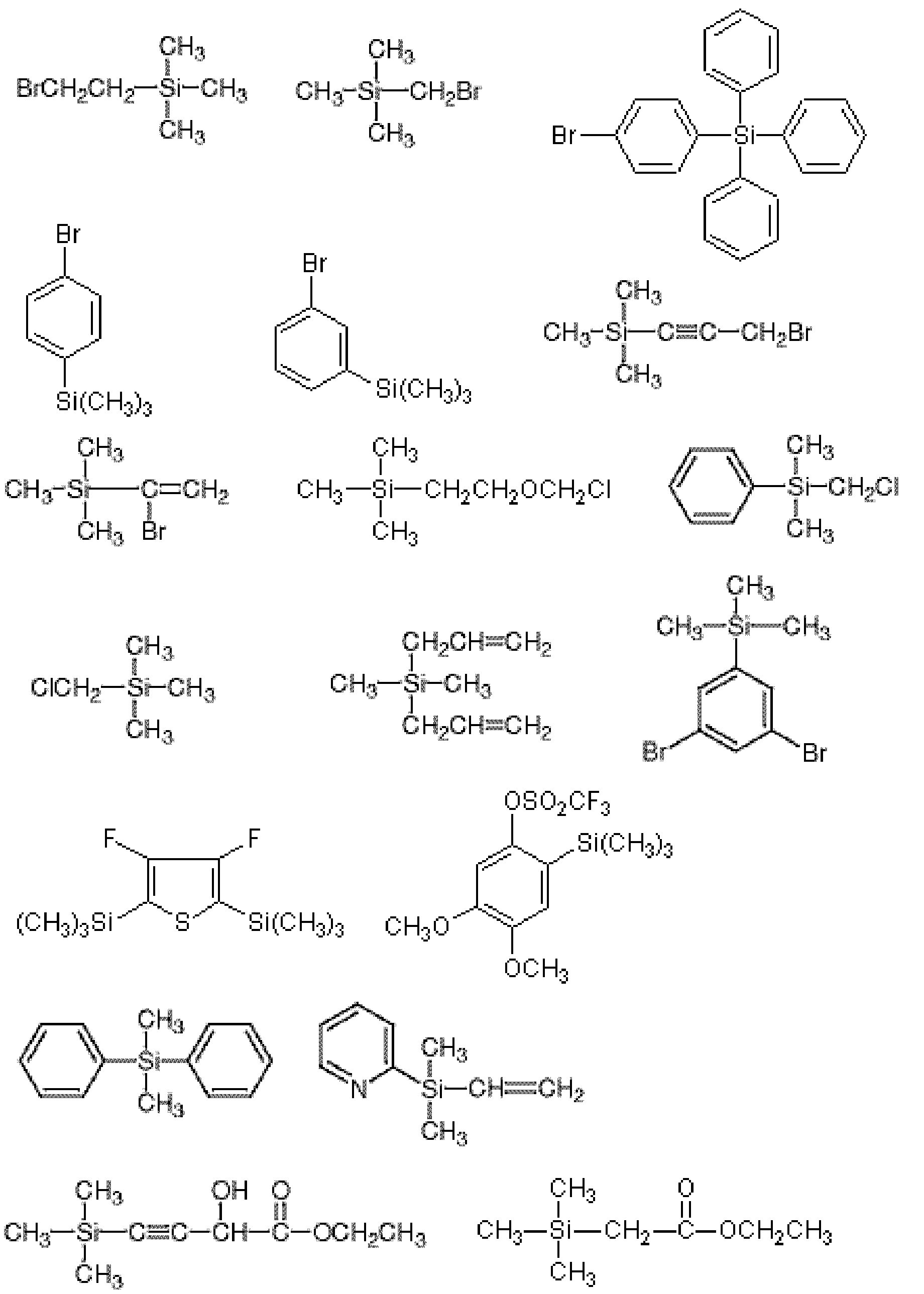
上記有機ケイ素化合物(A)としては、Si-H結合を有するSi-H化合物;アミノシラン化合物、シラザン、シリルアセトアミド、シリルイミダゾール等のSi-N結合を有するSi-N化合物;モノアルコキシシラン、ジアルコキシシラン、トリアルコキシシラン、テトラアルコキシシラン、シロキサン、シリルエステル、シラノール等のSi-O結合を有するSi-O化合物;モノクロロシラン、ジクロロシラン、トリクロロシラン、テトラクロロシラン等のSi-Cl結合を有するSi-Cl化合物等のハロゲノシラン、Si-(C)4化合物、Si-Si結合を有するSi-Si化合物、ビニルシラン、アリルシラン、エチニルシラン等が挙げられる。すなわち、有機ケイ素化合物(A)は、Si-H化合物、Si-N化合物、ハロゲノシラン、Si-(C)4化合物、Si-Si化合物、ビニルシラン、アリルシラン、及びエチニルシランからなる群より選択される少なくとも1種の化合物であることが好ましい。上記有機ケイ素化合物としては、Siに、水素、酸素及びハロゲンからなる群より選択される少なくとも1種の原子が結合した化合物がより好ましい。
以下に、上記化合物の具体例を示す。
以下に、上記化合物の具体例を示す。
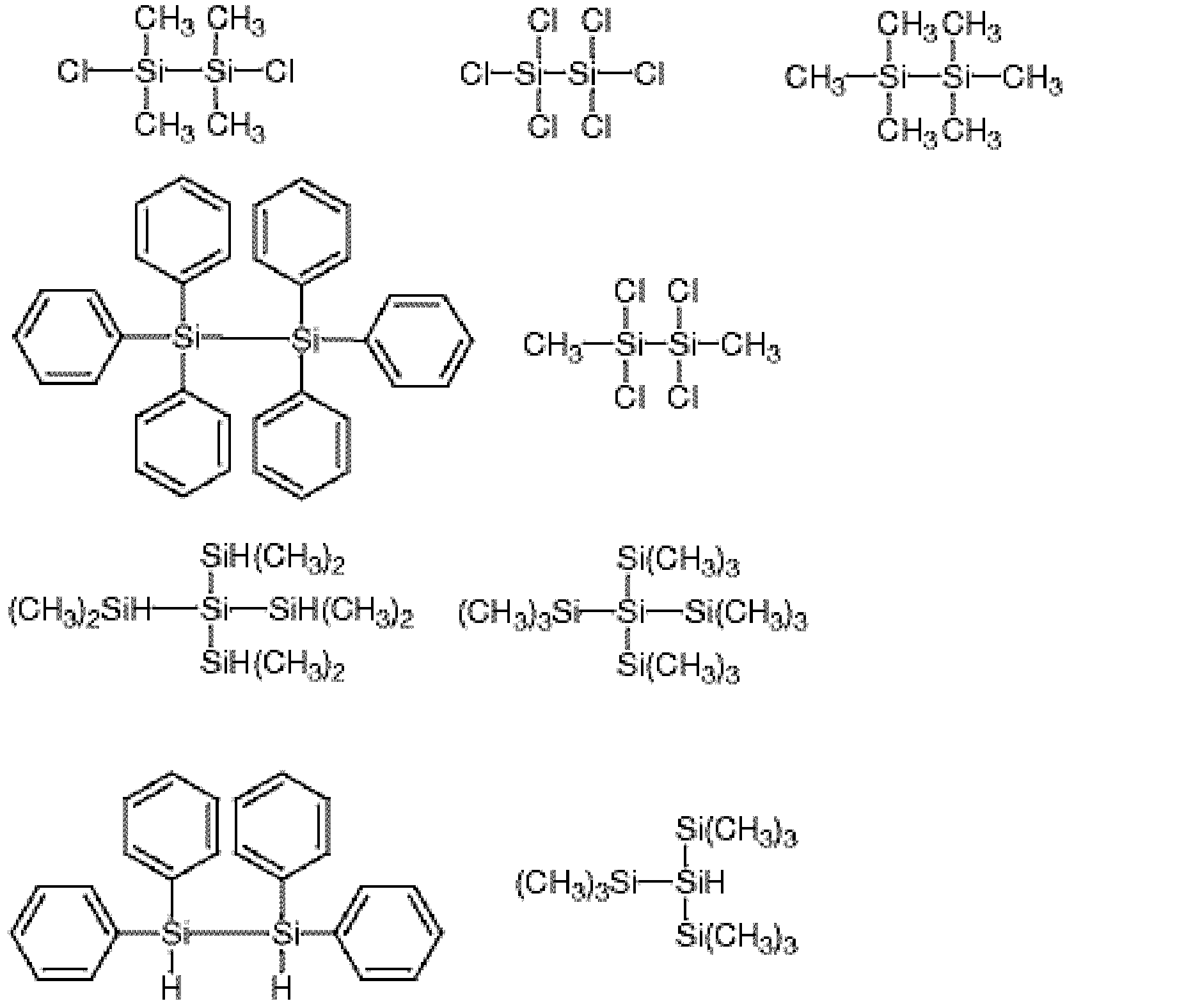
〔Si-H化合物〕
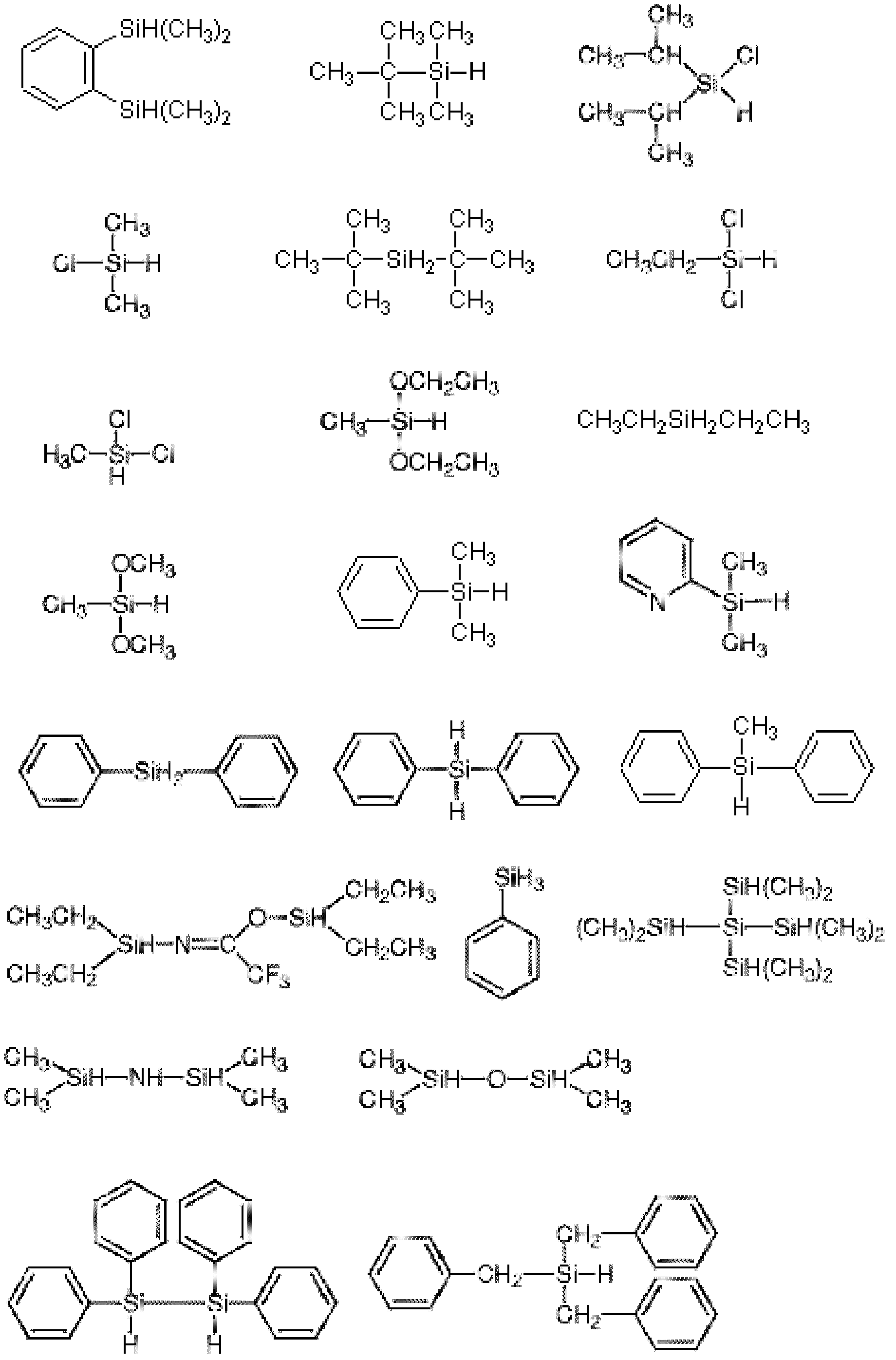
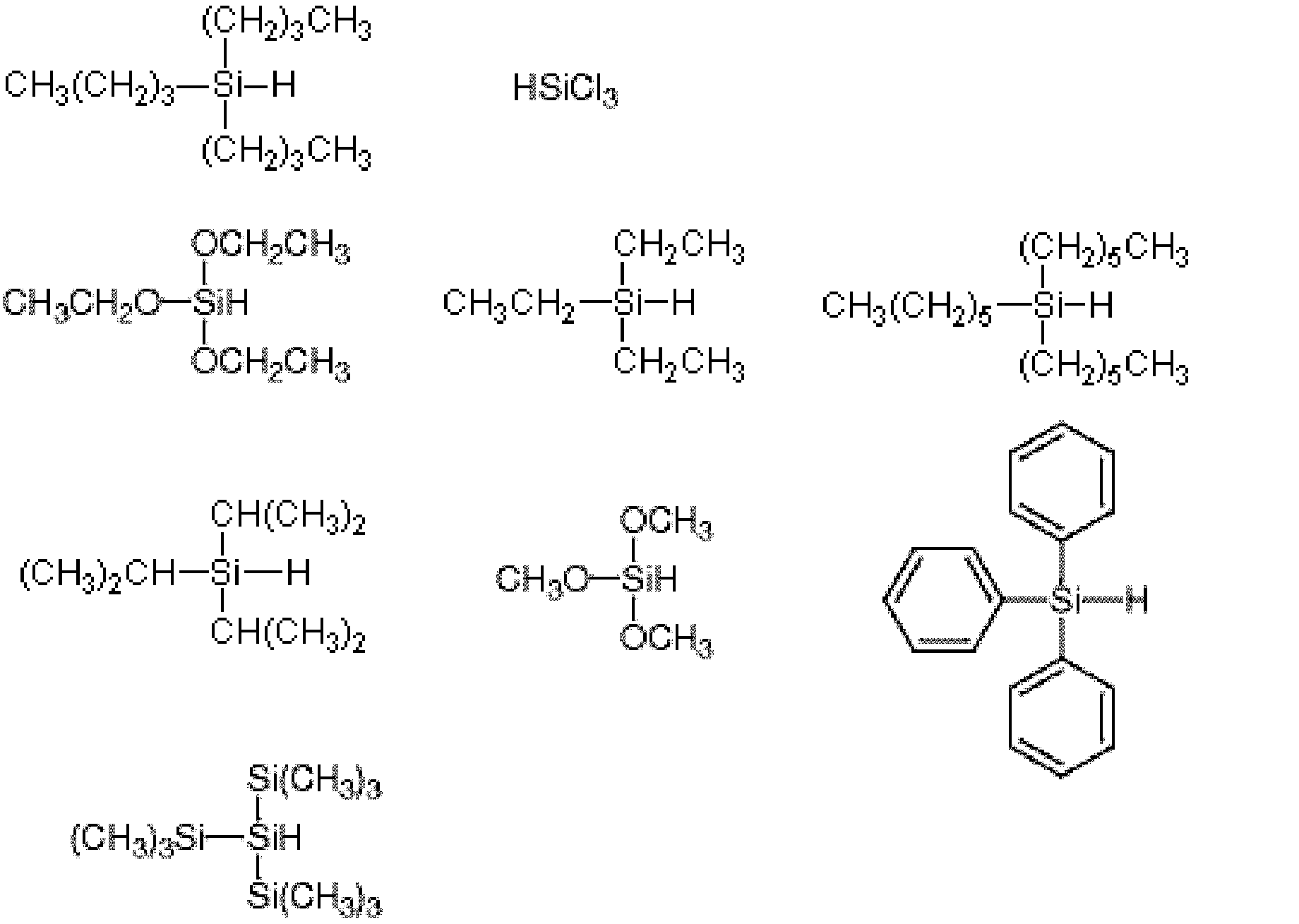
〔Si-N化合物〕
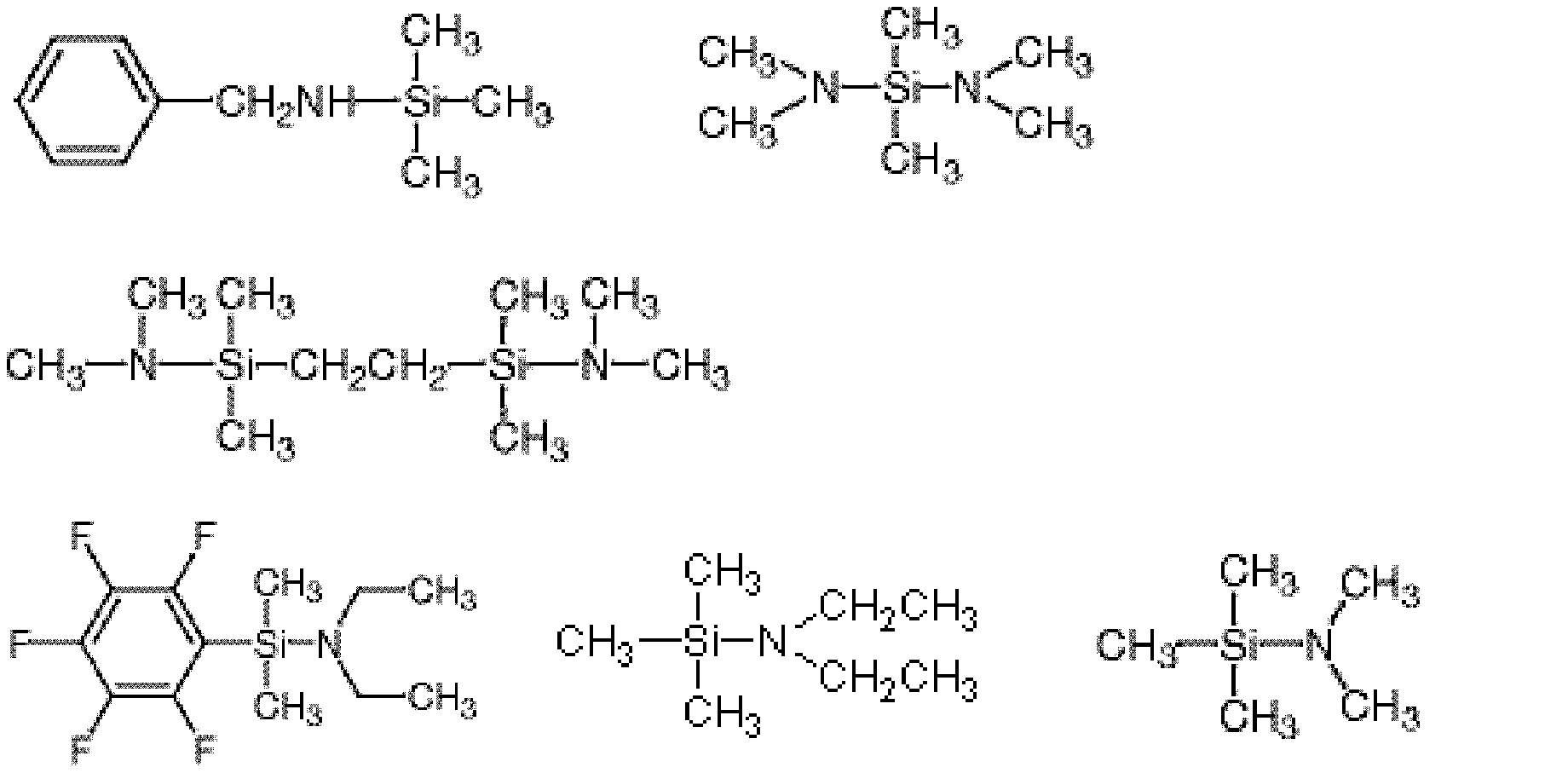

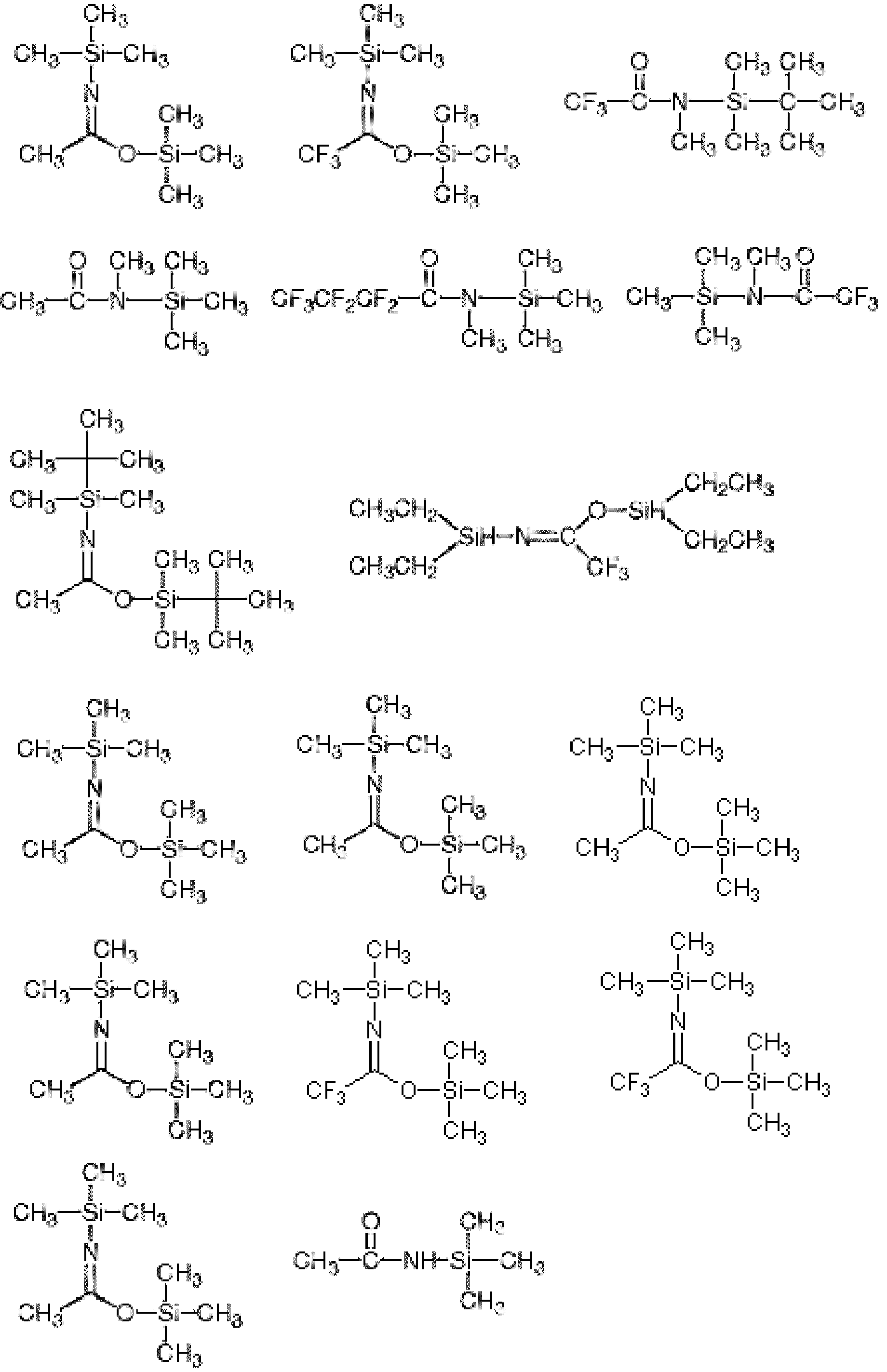
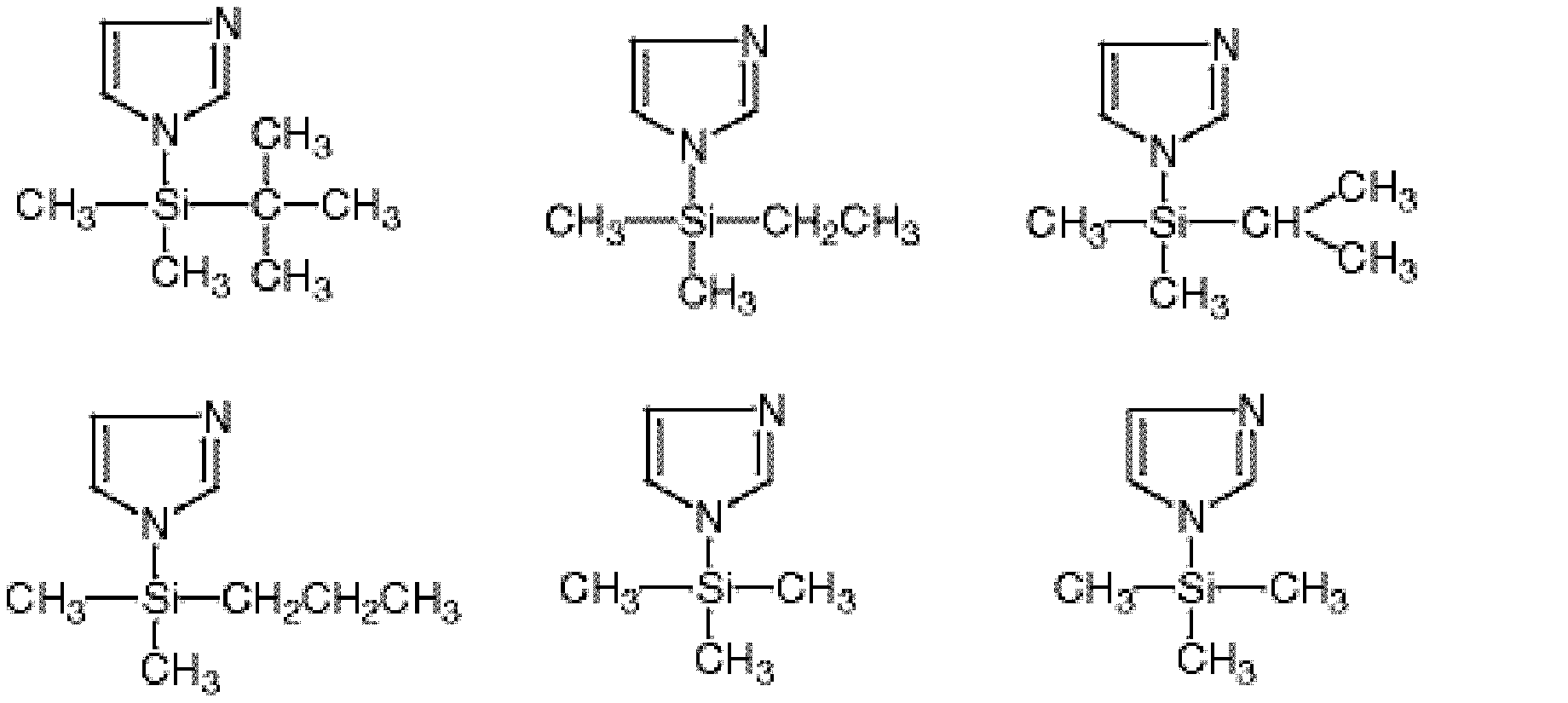
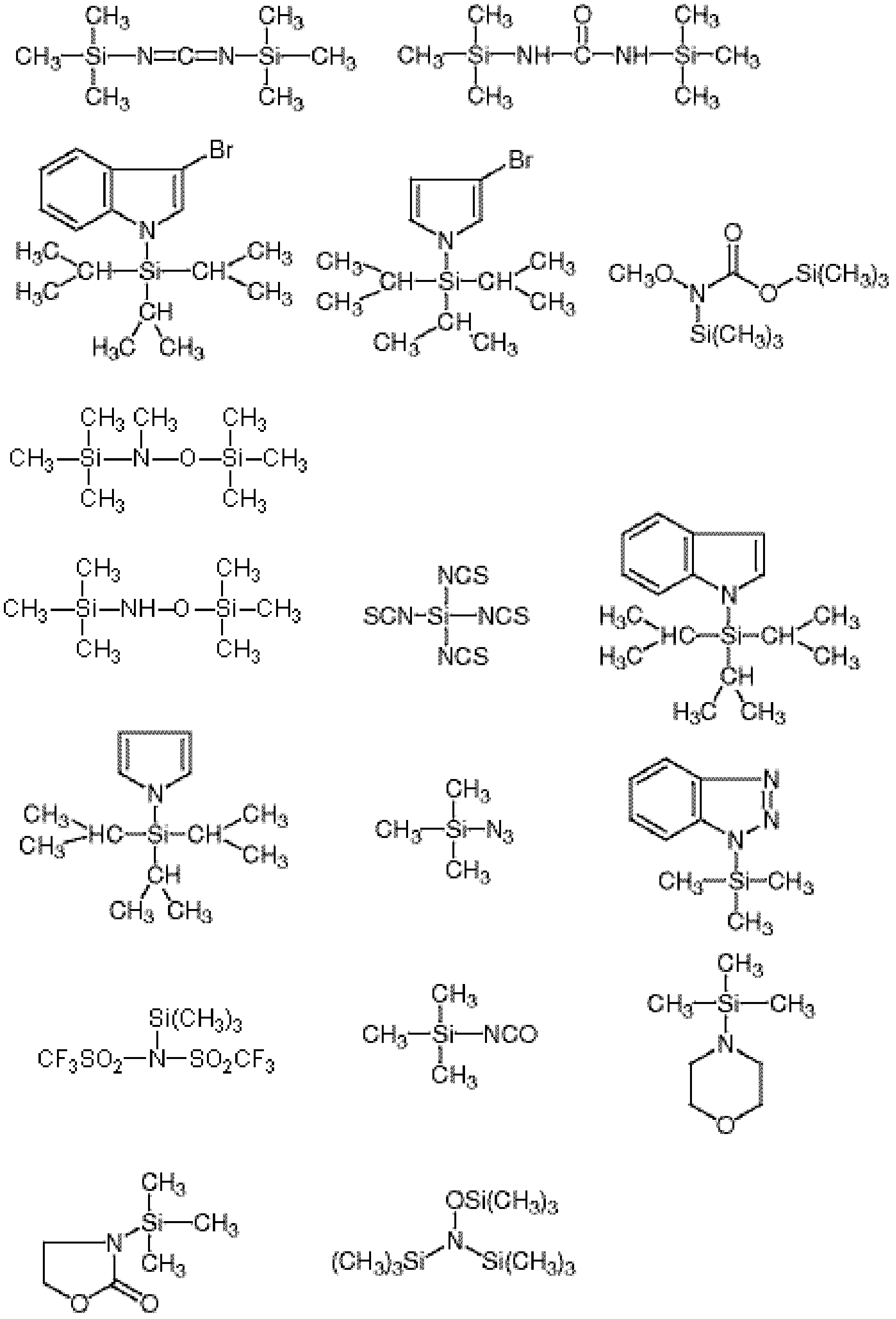
〔Si-O化合物〕

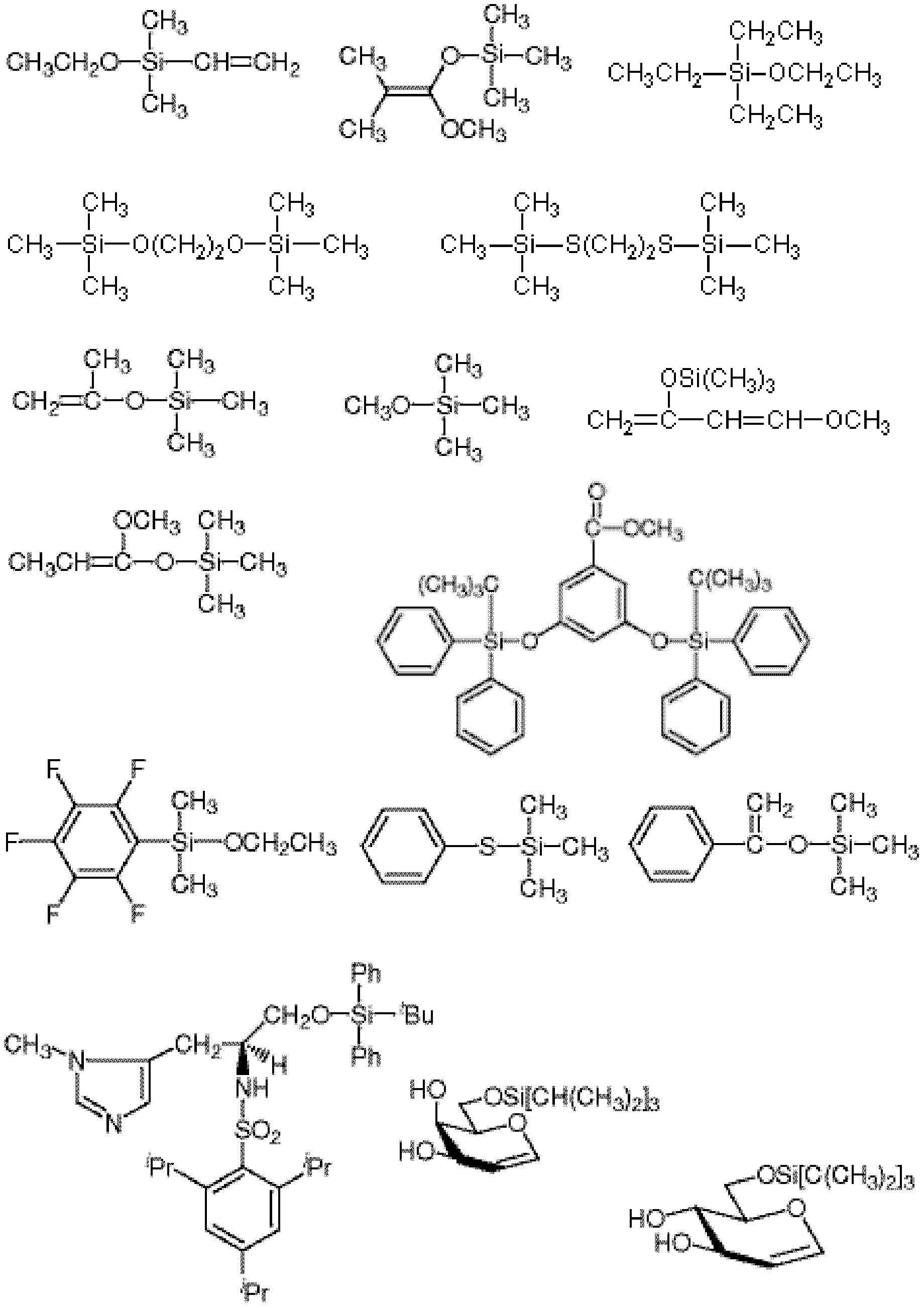
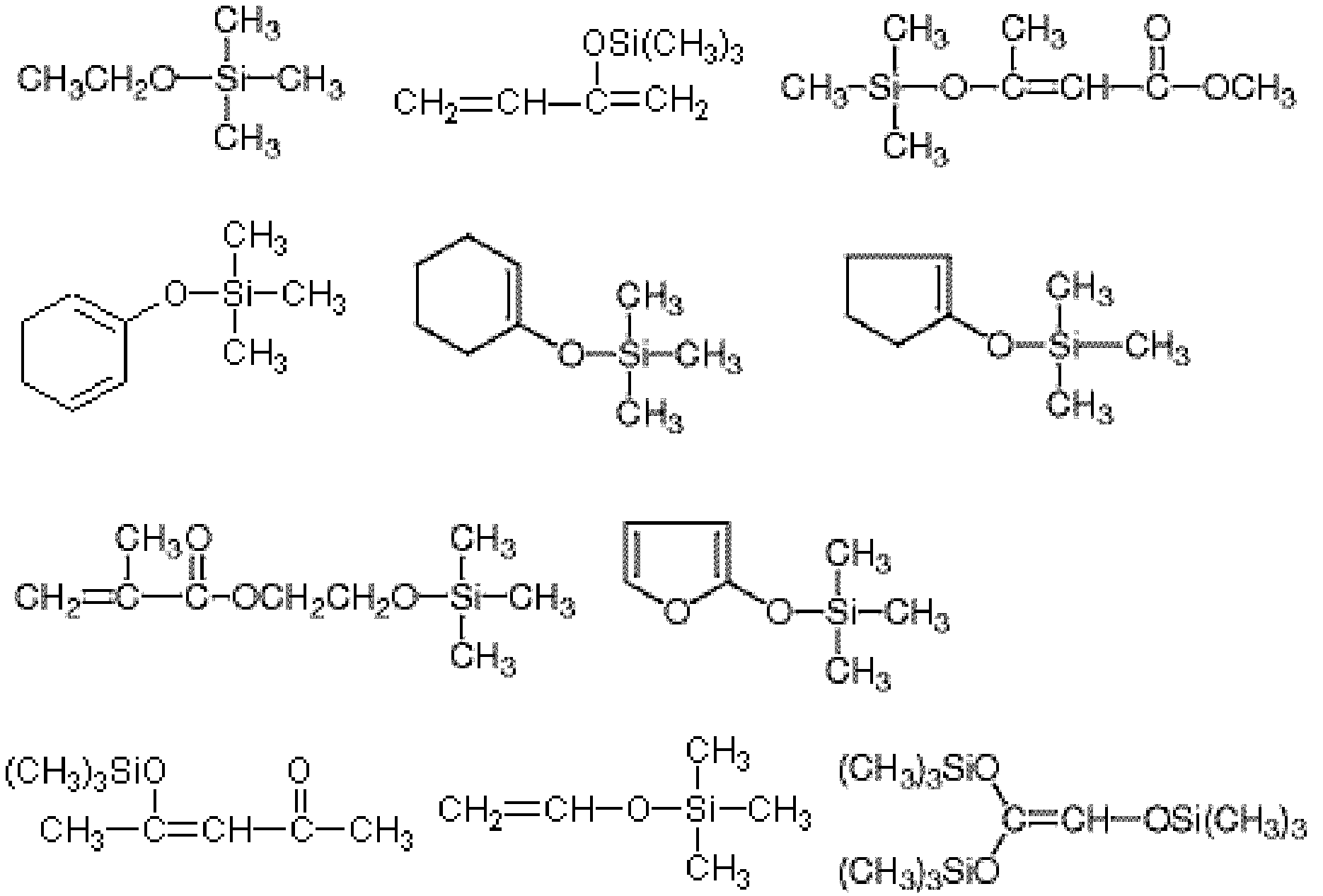

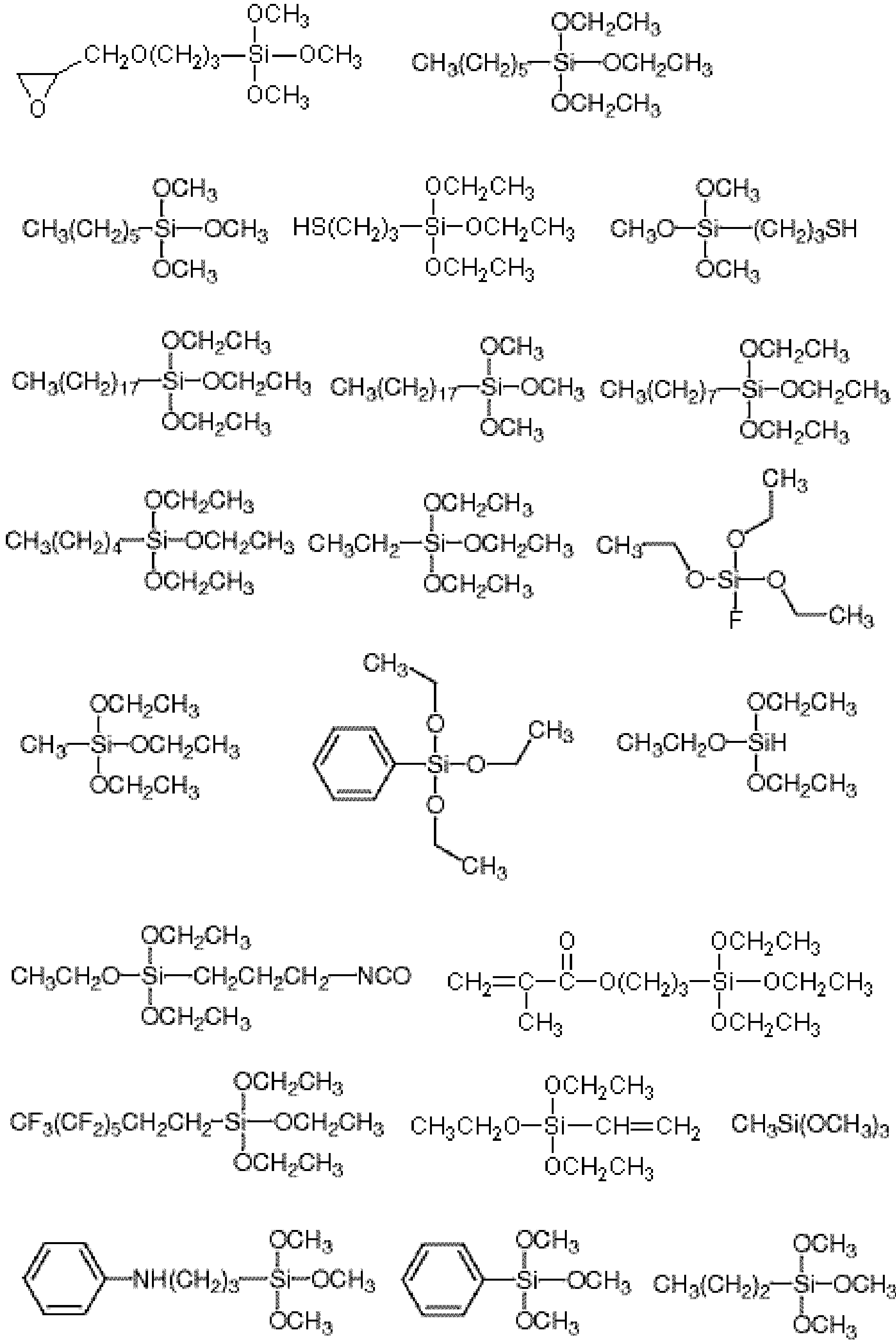
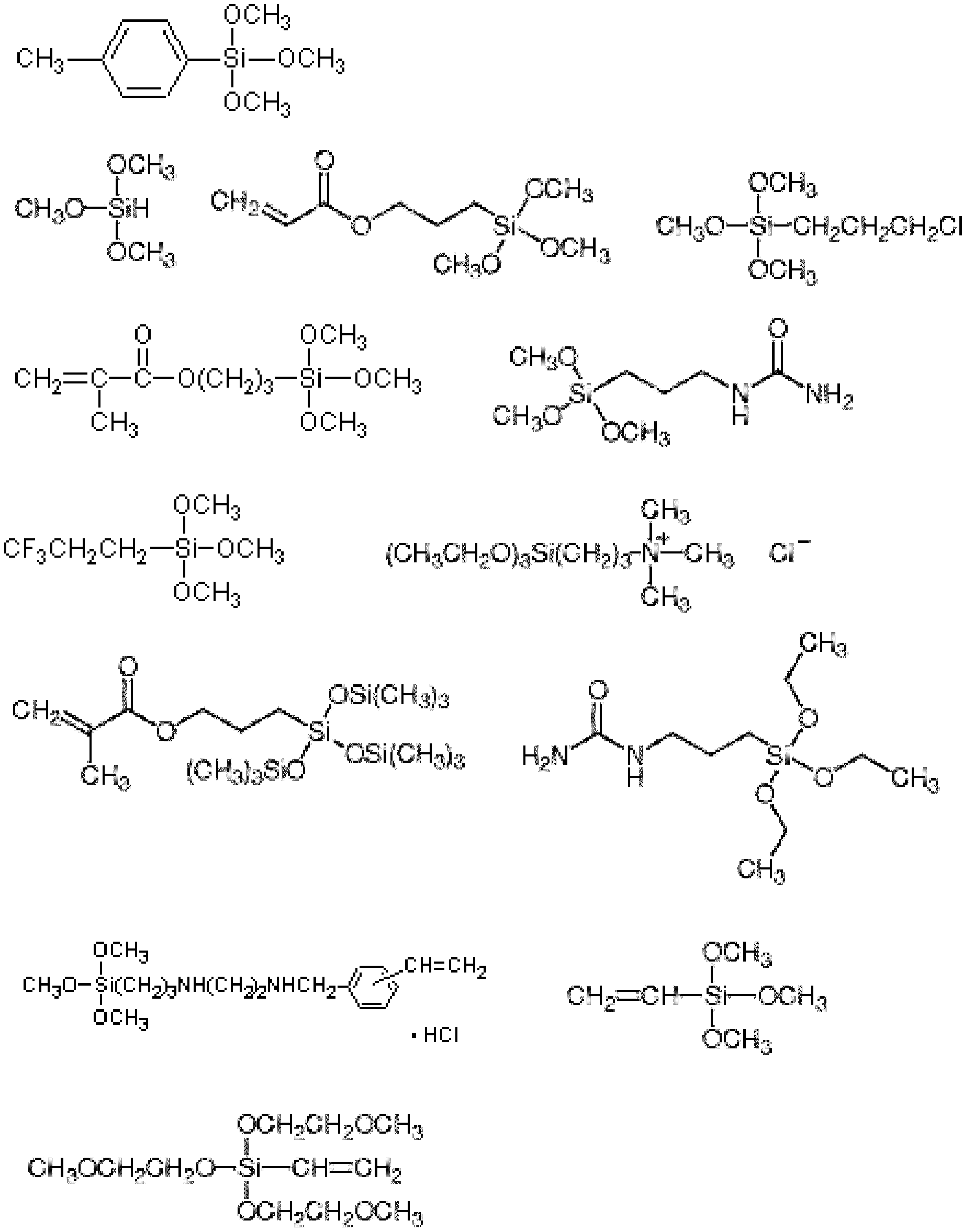
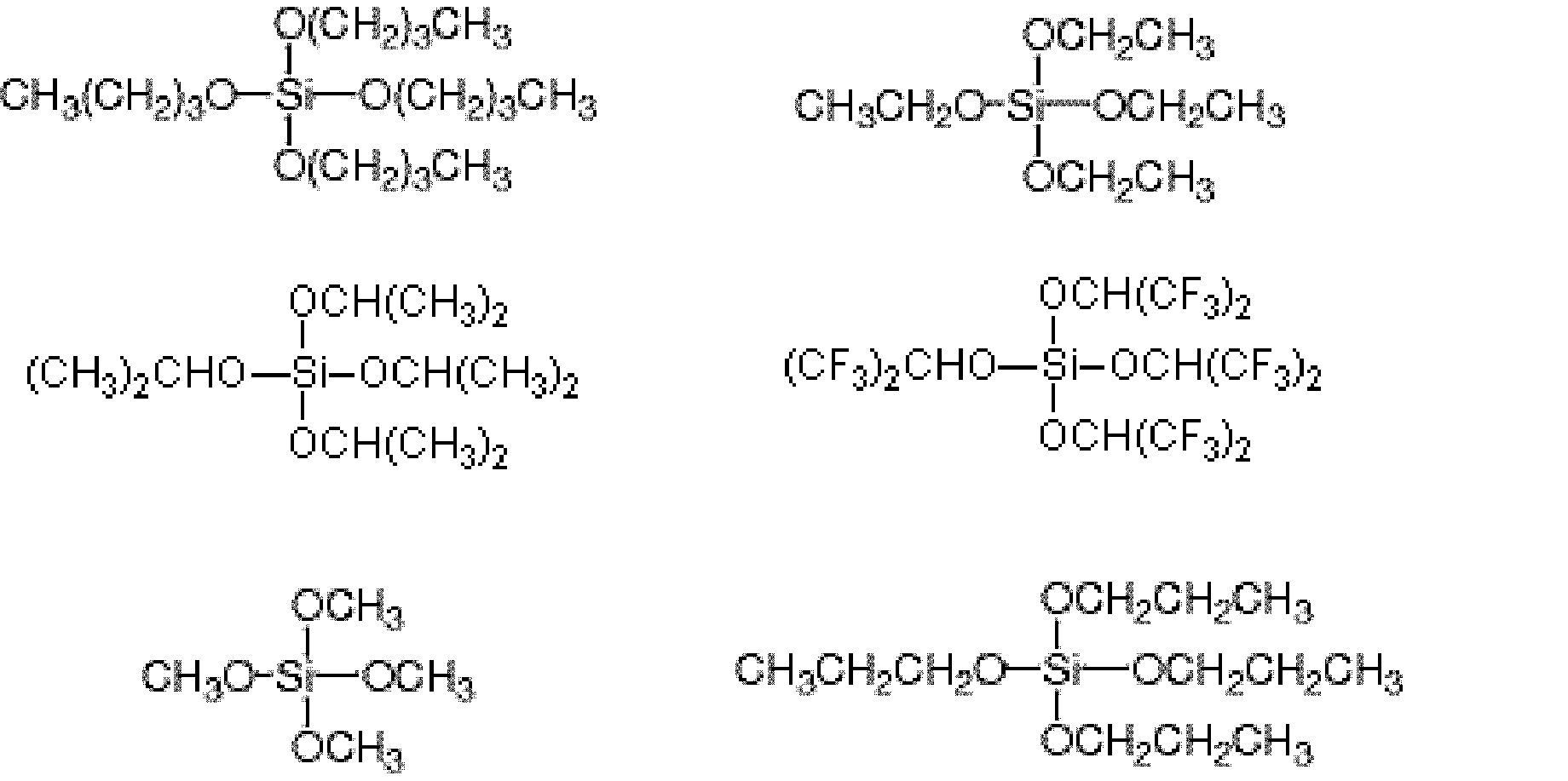


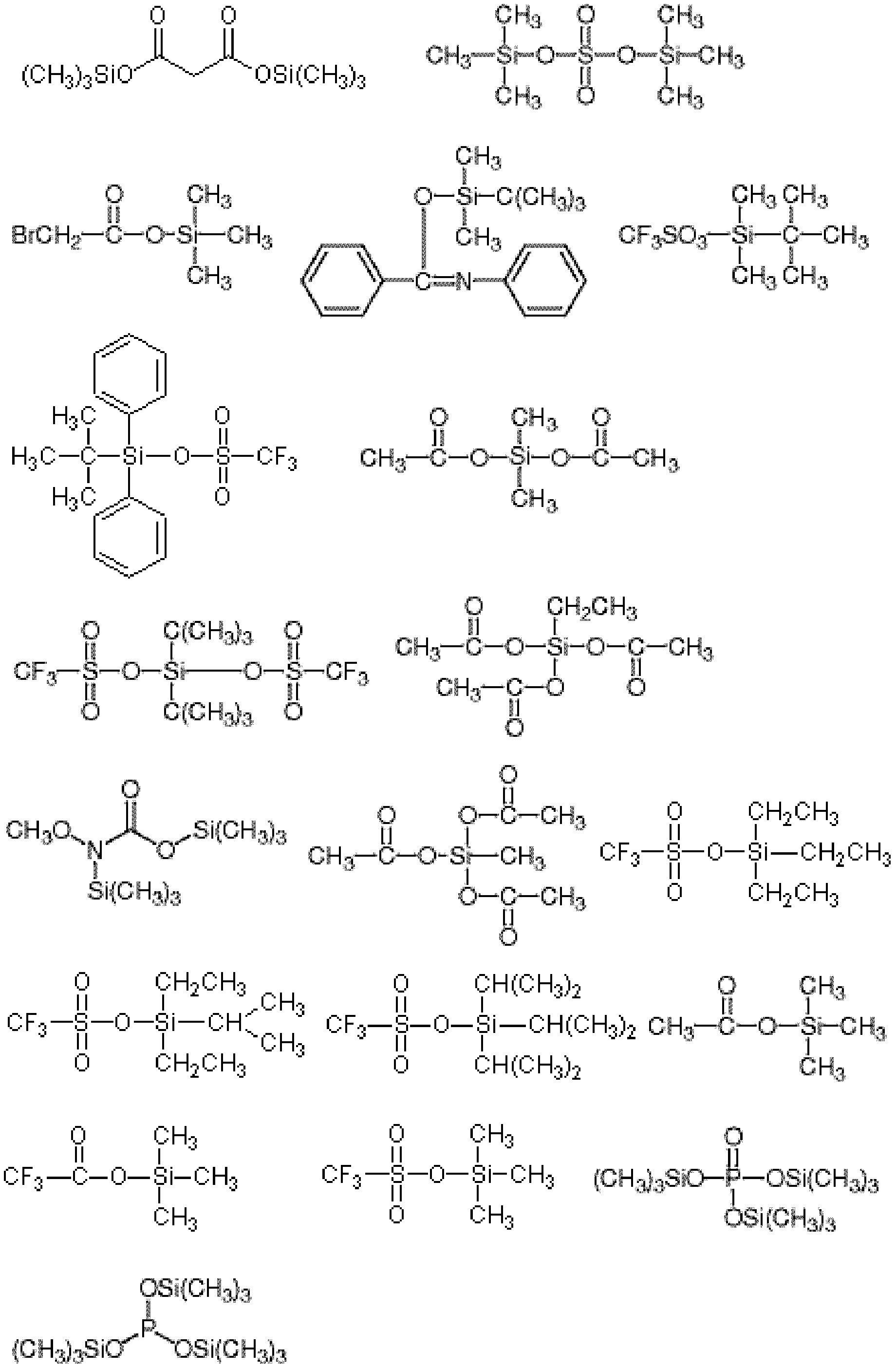

〔ハロゲノシラン〕
Si-Cl化合物:
Si-Cl化合物:

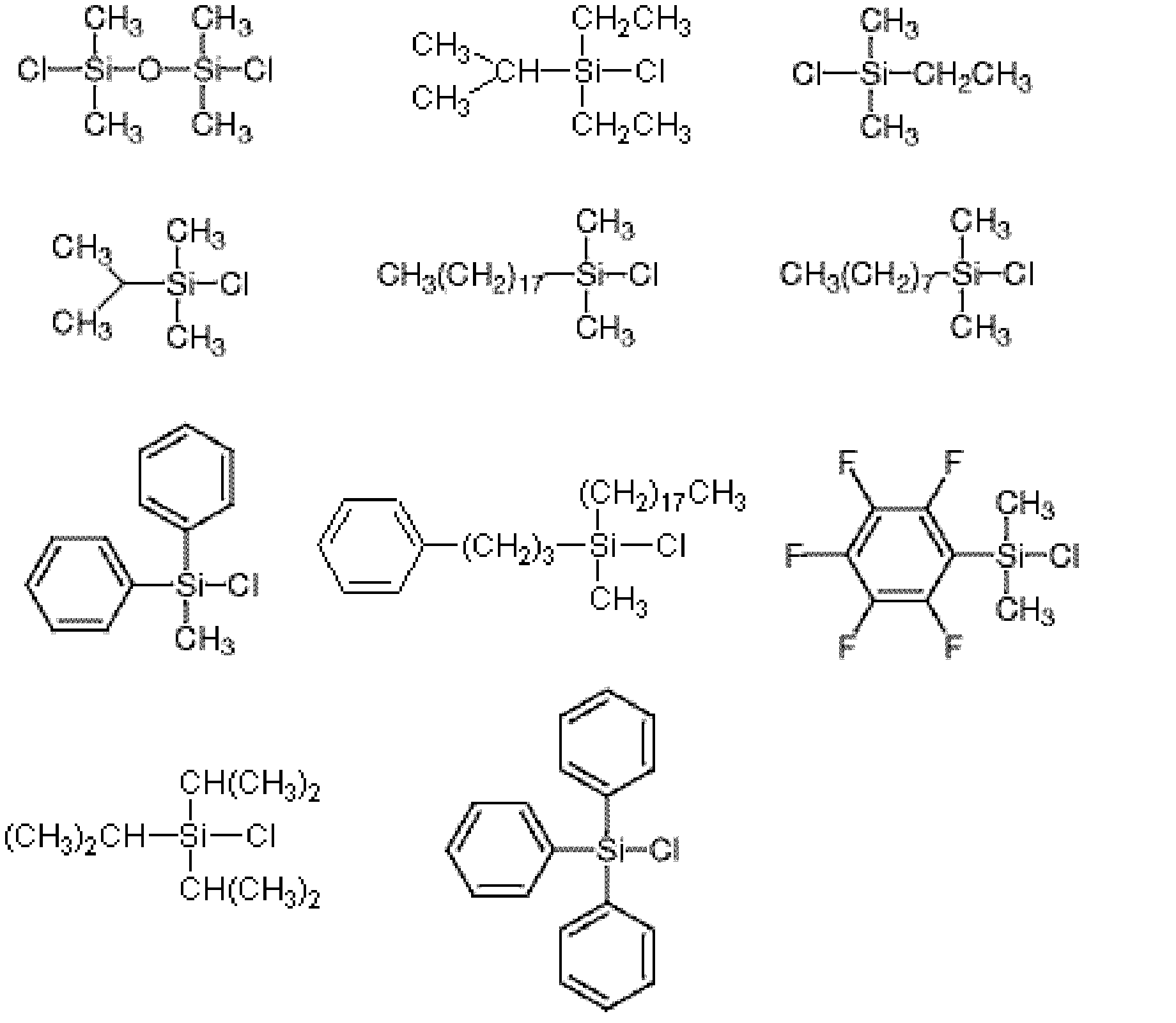

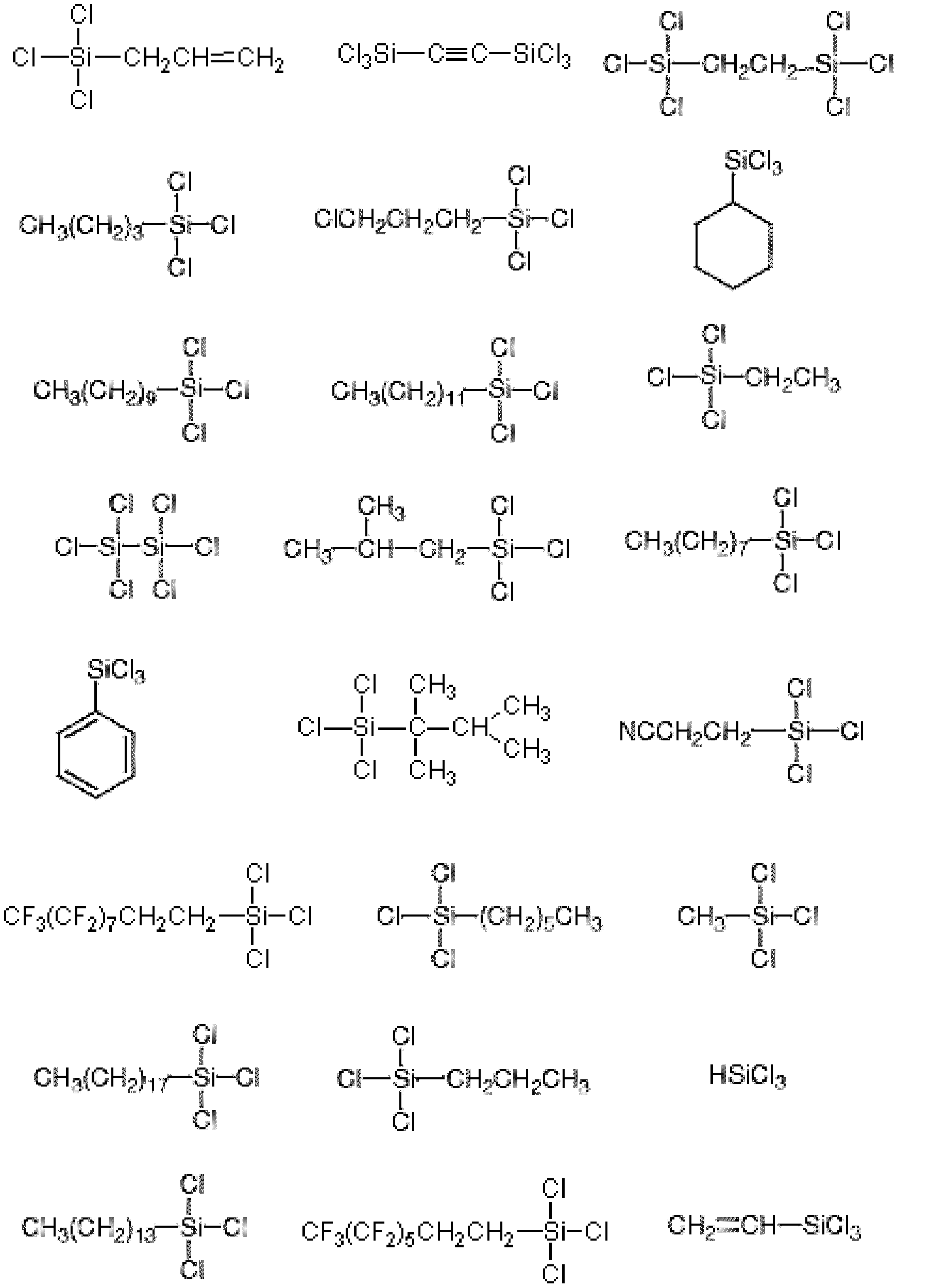
Si-Cl化合物以外のハロゲノシラン:

〔Si-(C)4化合物〕

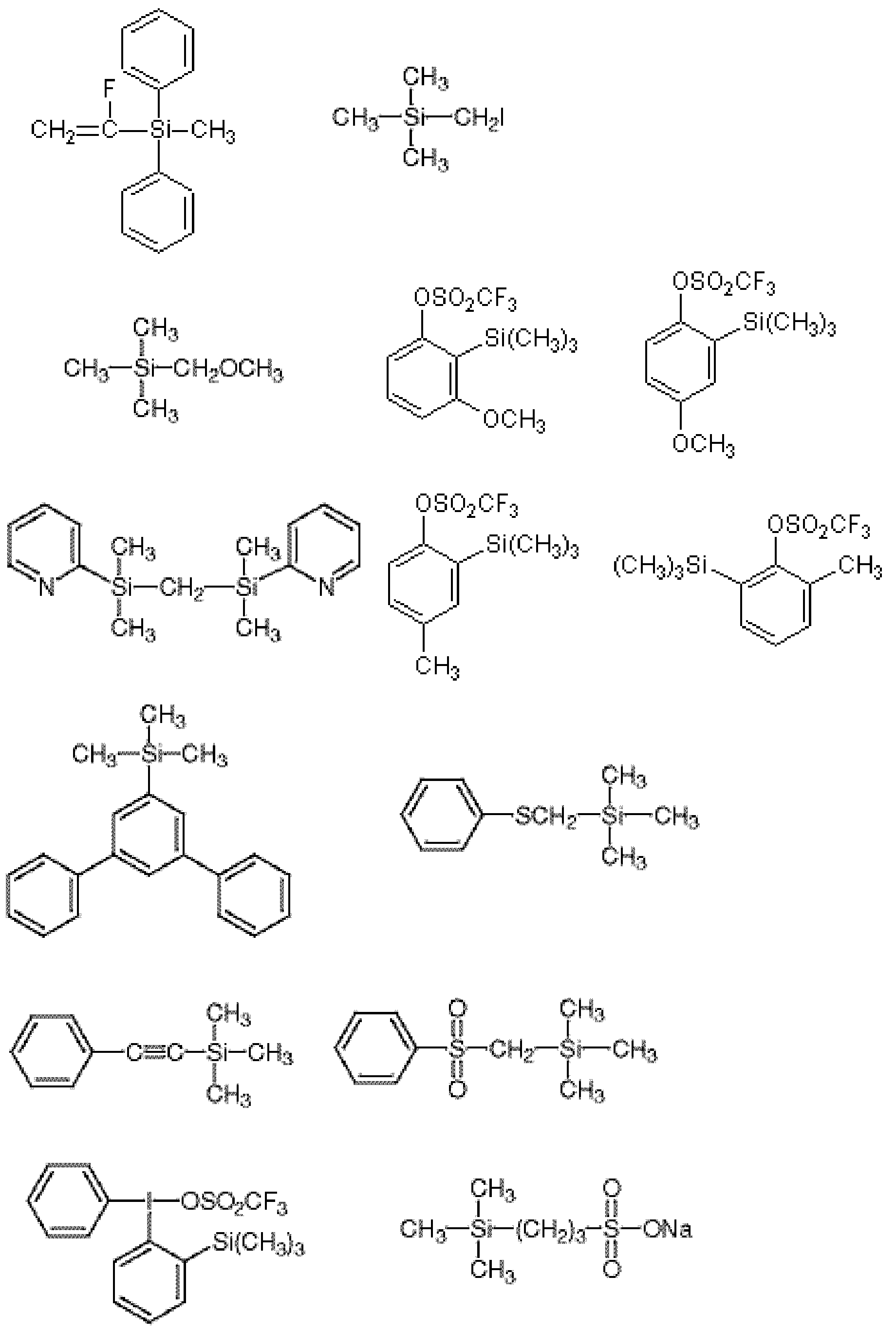
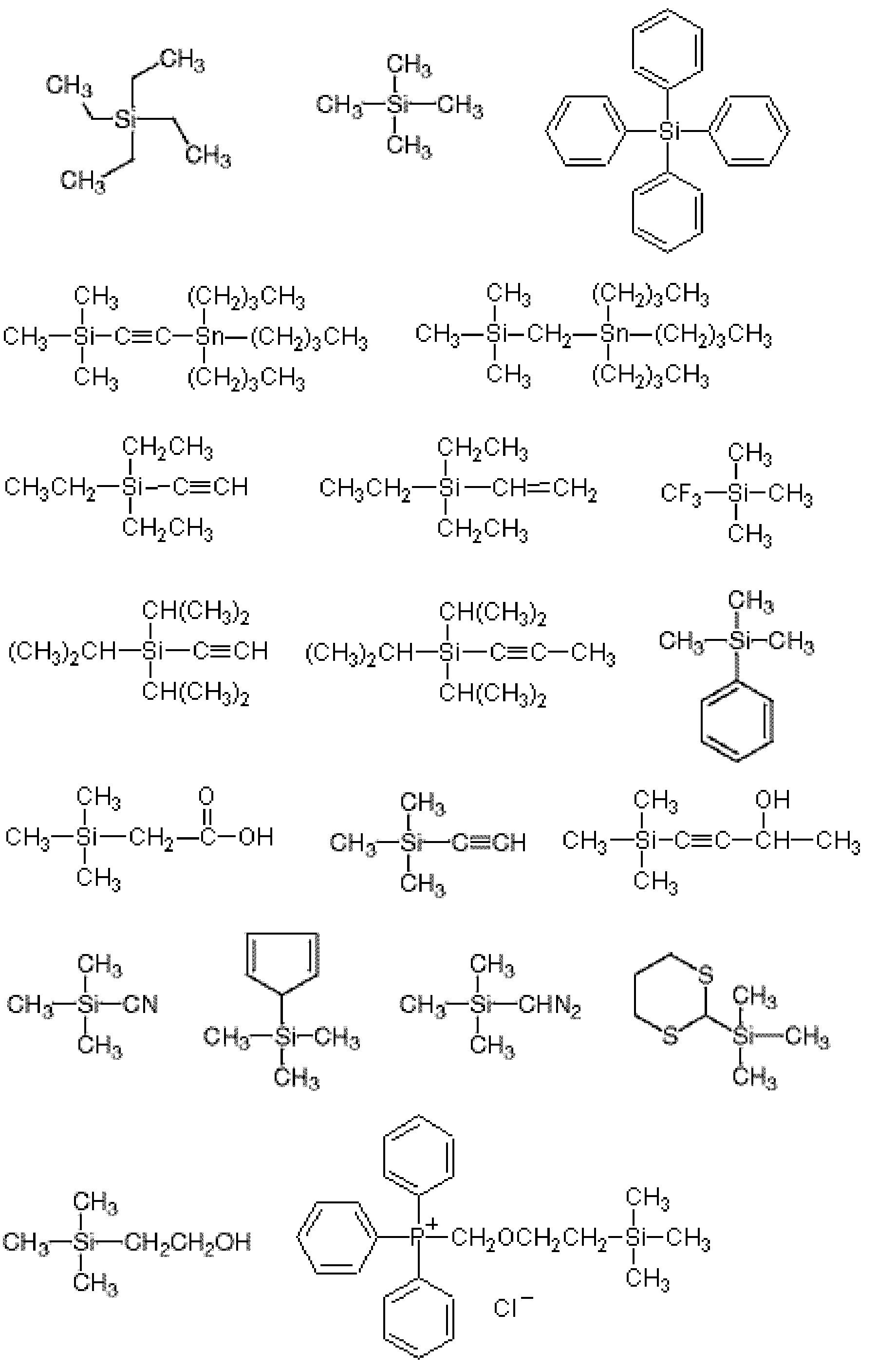
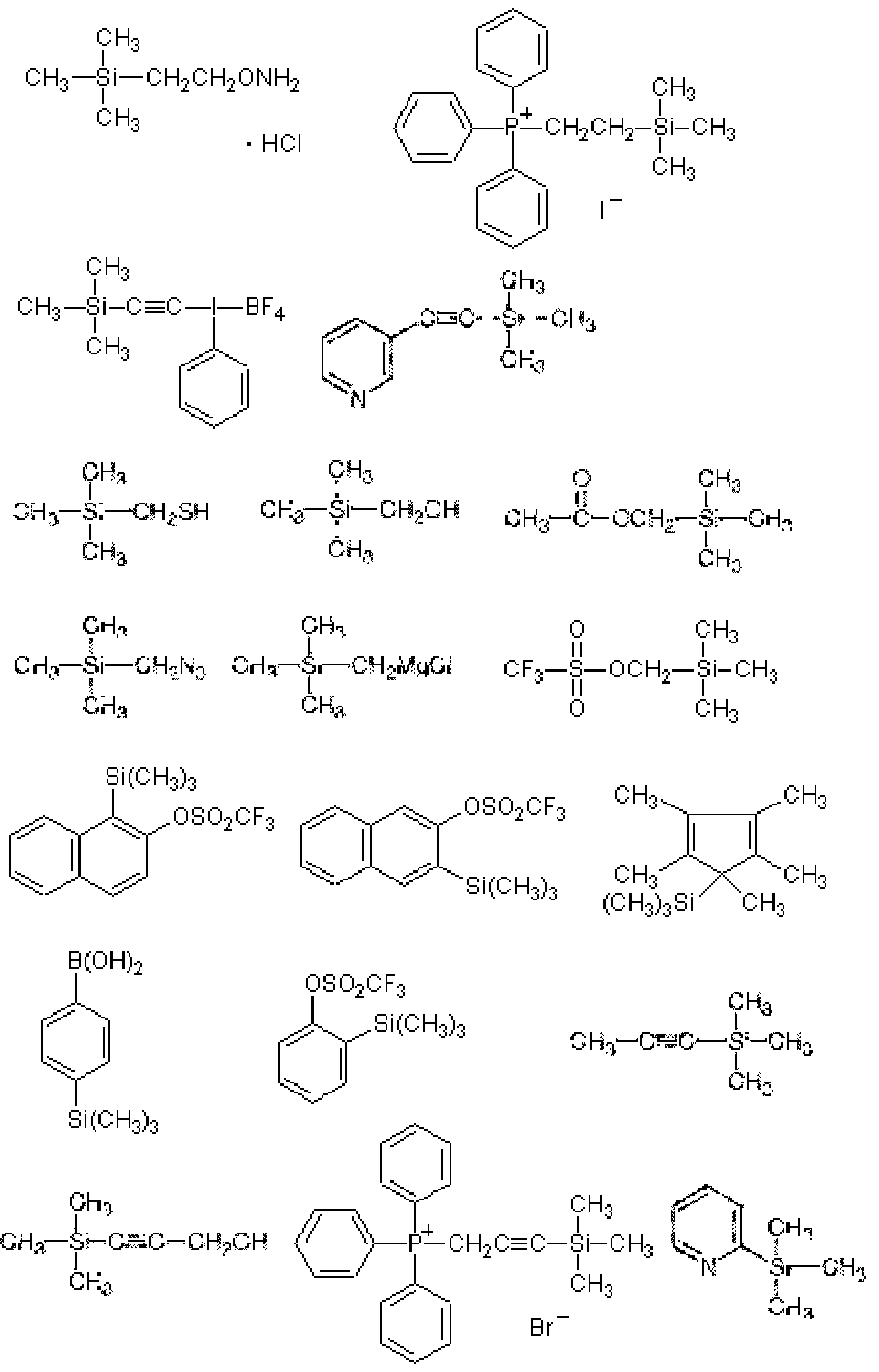
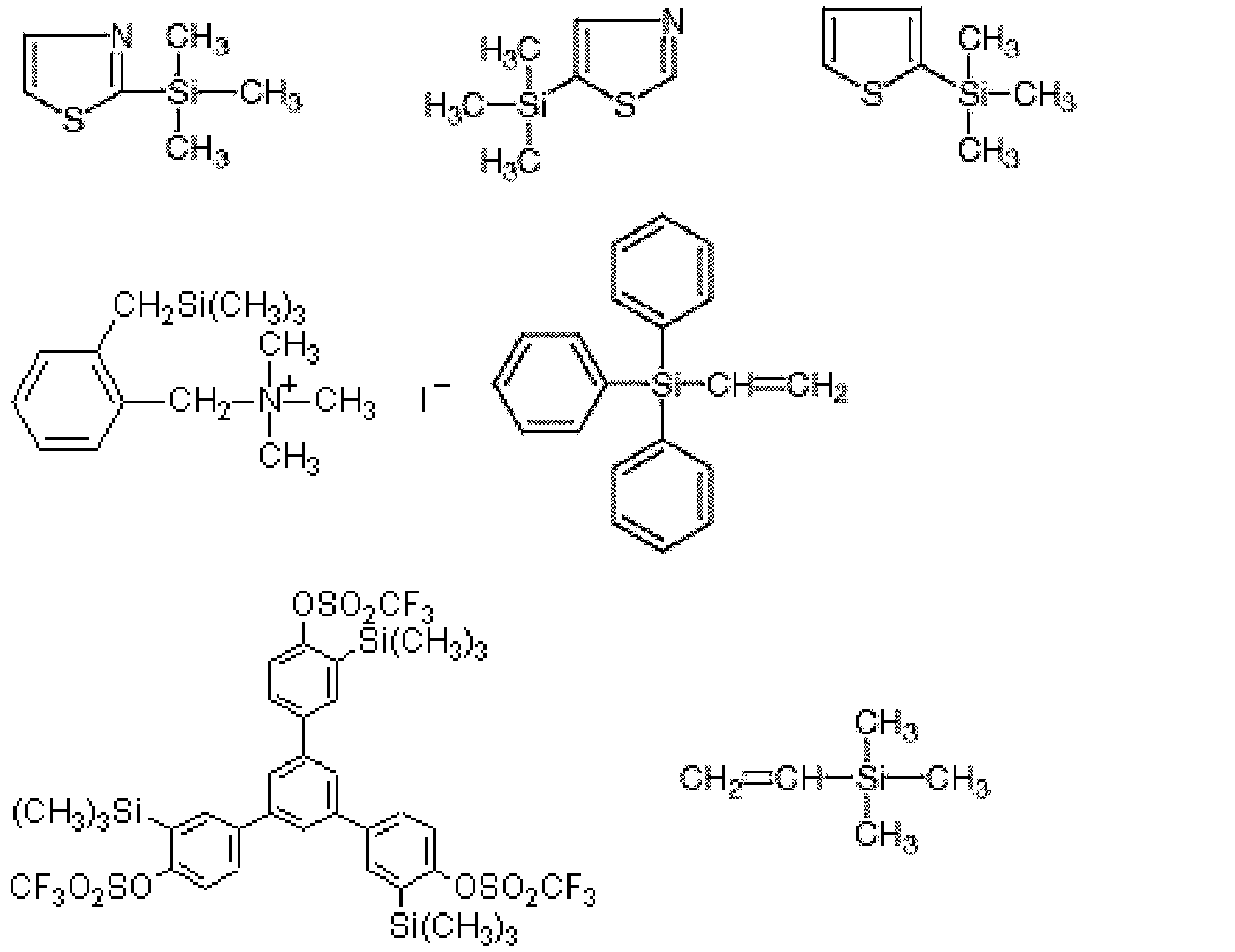
〔Si-Si化合物〕
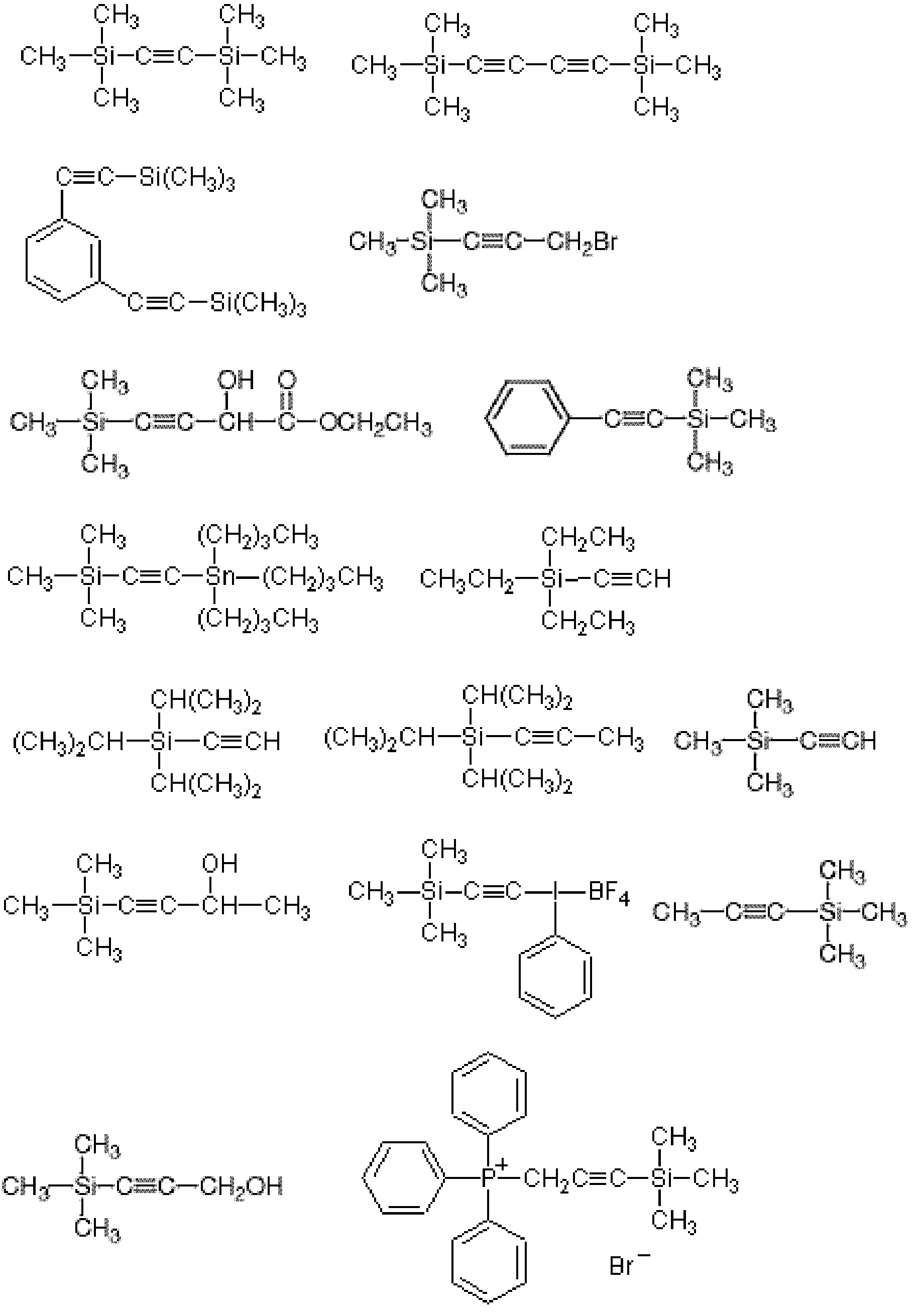
〔ビニルシラン、アリルシラン、及びエチニルシラン〕


上記有機ケイ素化合物(A)は、下記式(1):
{Si(Ra)s(Rb)t(Rc)u(Rd)v(Re)w}n (1)
(式中、Ra、Rb、Rc及びRdは、同一又は異なり、水素、ハロゲン、炭素数1~10のアルコキシル基、アミノ基、炭素数1~10のアルキル基、炭素数5~10のアリール基、炭素数1~10のアリル基、又はグリシジル基である。Reは、同一又は異なり、-O-、-NH-、-C≡C-、又は、シラン単結合である。s、t、u及びvは、同一又は異なり0又は1であり、wは0~4の整数であり、nは1~20である。nが1である場合、s+t+u+vは4であり、wは0である。nが2~20である場合、s+t+u+vは、同一又は異なり0~4であり、wは、同一又は異なり0~4であり、wが1以上の整数である場合、少なくとも2個のSiはReを介して、直鎖、梯子型、環状、又は複環状に結合している。)で表される化合物(A1)であることがより好ましい。Ra、Rb、Rc、及びRdは、Siに結合している1価の基である。Reは、2個のSiに結合している2価の基である。
なお、上記アミノ基は、-NH2、-NHR、および、-NRR’(RおよびR’は、同じ又は異なり、炭素数1~10のアルキル基である)を包含する。
{Si(Ra)s(Rb)t(Rc)u(Rd)v(Re)w}n (1)
(式中、Ra、Rb、Rc及びRdは、同一又は異なり、水素、ハロゲン、炭素数1~10のアルコキシル基、アミノ基、炭素数1~10のアルキル基、炭素数5~10のアリール基、炭素数1~10のアリル基、又はグリシジル基である。Reは、同一又は異なり、-O-、-NH-、-C≡C-、又は、シラン単結合である。s、t、u及びvは、同一又は異なり0又は1であり、wは0~4の整数であり、nは1~20である。nが1である場合、s+t+u+vは4であり、wは0である。nが2~20である場合、s+t+u+vは、同一又は異なり0~4であり、wは、同一又は異なり0~4であり、wが1以上の整数である場合、少なくとも2個のSiはReを介して、直鎖、梯子型、環状、又は複環状に結合している。)で表される化合物(A1)であることがより好ましい。Ra、Rb、Rc、及びRdは、Siに結合している1価の基である。Reは、2個のSiに結合している2価の基である。
なお、上記アミノ基は、-NH2、-NHR、および、-NRR’(RおよびR’は、同じ又は異なり、炭素数1~10のアルキル基である)を包含する。
式(1)中、Ra、Rb、Rc及びRdは、同一又は異なり、少なくとも1つは、水素、ハロゲン、炭素数1~10のアルコキシ基、又はアミノ基であり、それ以外は炭素数1~10のアルキル基、炭素数5~10のアリール基、炭素数1~10のアリル基、又はグリシジル基であることが好ましい。nが2~20である場合、s+t+u+vは、同一又は異なり、1~3であり、wは1~3であることが好ましい。
式(1)において、Ra、Rb、Rc及びRdは、同一又は異なり、炭素数1~6のアルキル基、炭素数5~8のアリール基、炭素数1~6のアルコキシ基、又は、アミノ基であることが好ましく、更に好ましくは、炭素数1~4のアルコキシ基である。
上記Ra、Rb、Rc及びRdにおいて、アルキル基の炭素数は、1~5であることが好ましい。上記アルキル基は鎖状でも、環状でも、分岐していてもよい。また、水素原子がフッ素原子などに置換されていてもよい。アルキル基としては、メチル基、エチル基、プロピル基、ブチル基などが挙げられるが、例えば、Ra、Rb、Rc又はRdとしては、それぞれ、メチル基、エチル基、プロピル基、又はイソプロピル基であることが好ましい。より好ましくは、メチル基、エチル基である。
アリール基としては、例えば、ペンチル基、フェニル基、ナフチル基、メチルフェニル基、エチルフェニル基、又はジメチルフェニル基であることが好ましい。
ハロゲンとしては、フッ素、塩素、臭素、又はヨウ素が好ましく、特に塩素が好ましい。
アリール基としては、例えば、ペンチル基、フェニル基、ナフチル基、メチルフェニル基、エチルフェニル基、又はジメチルフェニル基であることが好ましい。
ハロゲンとしては、フッ素、塩素、臭素、又はヨウ素が好ましく、特に塩素が好ましい。
上記Ra、Rb、Rc及びRdにおいて、アルコキシ基の炭素数は、1~5であることが好ましい。上記アルコキシ基は鎖状でも、環状でも、分岐していてもよい。また、水素原子がフッ素原子などに置換されていてもよい。アルコキシ基としては、メトキシ基、エトキシ基、プロピロキシ基、又はブトキシ基が好ましく、より好ましくは、メトキシ基、又はエトキシ基である。
Reは、同一又は異なり、-O-、-NH-、-C≡C-、又は、シラン単結合である。
なお、Reがシラン単結合である場合とは、実質的にはRhを介さず、SiとSiが直接結合した場合をいう。Reとしては、-O-、-NH-、又は、-C≡C-が好ましい。Reは、2個のSiに結合している2価の基であり、Reによって2以上のケイ素原子がReを介して、直鎖、梯子型、環状、又は複環状に結合することができる。nが2以上の整数である場合、ケイ素原子同士で結合していてもよい。化合物(A1)の具体例としては、上述したSi-H化合物、Si-N化合物、ハロゲノシラン、Si-(C)4化合物、Si-Si化合物、ビニルシラン、アリルシラン、エチニルシラン等のSiを1個又は2個以上含む化合物が挙げられる。
なお、Reがシラン単結合である場合とは、実質的にはRhを介さず、SiとSiが直接結合した場合をいう。Reとしては、-O-、-NH-、又は、-C≡C-が好ましい。Reは、2個のSiに結合している2価の基であり、Reによって2以上のケイ素原子がReを介して、直鎖、梯子型、環状、又は複環状に結合することができる。nが2以上の整数である場合、ケイ素原子同士で結合していてもよい。化合物(A1)の具体例としては、上述したSi-H化合物、Si-N化合物、ハロゲノシラン、Si-(C)4化合物、Si-Si化合物、ビニルシラン、アリルシラン、エチニルシラン等のSiを1個又は2個以上含む化合物が挙げられる。
化合物(A1)としては、中でも、テトラアルコキシシランであることが好ましく、上記式(1)において、nは1であり、Ra、Rb、Rc及びRdは、同一又は異なり、炭素数1~10のアルコキシ基であることがより好ましい。上記アルコキシ基は鎖状でも、環状でも、分岐していてもよい。また、水素原子がフッ素原子に置換されていてもよい。上記アルコキシ基の炭素数は、1~8であることがより好ましく、1~6であることが更に好ましく、1~4であることが特に好ましい。
化合物(A1)としては、例えば、テトラメトキシシラン、テトラエトキシシラン、テトラ-n-プロポキシシラン、テトラ-iso-プロポキシシラン、テトラ-n-ブトキシラン、テトラ-sec-ブトキシシラン、テトラ-tert-ブトキシシラン、テトラフェノキシシランなどを挙げることができ、これらの中でもテトラメトキシシラン及びテトラエトキシシランからなる群より選択される少なくとも1種の化合物が好ましく、より好ましくは、入手が容易で低価格でありガラスに近い屈折率の点でテトラエトキシシラン(TEOS)である。
架橋性を向上させる観点からは、上記化合物(A1)は、炭素数1~5のアリル基、炭素数1~5のグリシジル基、アクリル基(CH2=CHCOO-)、又はメタクリル基(CH2=CCH3COO-)を有することも好ましい。すなわち、化合物(A1)において、Ra、Rb、Rc及びRdの少なくとも1つが、炭素数1~5のアリル基、炭素数1~5のグリシジル基、アクリル基、又はメタクリル基であることが好ましい。
含フッ素ポリマー(B)は、下記式(L):

なお、本明細書中で、後述する「炭化水素基」は、炭素及び水素からなる有機基であり、「含フッ素炭化水素基」は、炭化水素基が有する一部又は全部の水素原子がフッ素原子で置換されたものである。「炭化水素基」としては、例えば、アルキル基、アリル基、環状アルキル基、不飽和アルキル基等が挙げられる。「含フッ素炭化水素基」としては、含フッ素アルキル基、含フッ素アリル基、含フッ素環状アルキル基、含フッ素不飽和アルキル基等が挙げられる。
上記Yは、ケトン結合(-CO-)、エーテル結合又はエステル結合(-COO-)を有していてもよい。
含フッ素ポリマー(B)は、上記構成を有することによって、化合物(A)から形成されるSiOxと好適に架橋することができ、形成される硬化物を可撓性に優れたものとすることができる。また、形成される硬化物は、SiOxからなるものであるため、耐熱性及び透明性に優れる。
構造単位Lとしては、なかでも式(L1):

(式中、X1、X2、X3、X4、X5、Rf、aおよびcは前記と同じ)で示される構造単位L1が好ましい。
この構造単位L1を含む含フッ素ポリマー(B)は、特に屈折率が低く、また、本発明の硬化性樹脂組成物から得られる薄膜の透明性を高くすることができ、更に、種々の基材との密着性がよく、密着耐久性を向上させることができる点で好ましい。また、熱、ラジカルやカチオンの接触による硬化反応性を高くすることができる点でも好ましい。
さらに構造単位L1のより好ましい具体例の1つは式(L2):

(式中、Rfは前記と同じ)で示される含フッ素エチレン性単量体に由来する構造単位L2である。
この構造単位L2は屈折率が低く、また、本発明の硬化性樹脂組成物から得られる薄膜の透明性を高くすることができ、種々の基材との密着性がよく耐久性を向上させることができる点で優れているほか、他の含フッ素エチレン系単量体との共重合性が良好であるため好ましい。また、近赤外透明性を高くできるだけでなく屈折率を低くできる点でも好ましい。
上記構造単位L2において、Rfは、例えば、-(CF(CF3)CF2-O)n-T(Tは、-CH2O-(CO)-CF=CH2、又は、-Ry-Si(OR20)(OR21)(OR22)、(Ryは、後述するものと同じである。R20、R21及びR22は、同一又は異なって、炭素数1~5のアルキル基である。nは、0、1又は2である。)であることも好ましい形態の一つである。
また、構造単位L1の別の好ましい具体例は式(L3):

(式中、Rfは前記と同じ)で示される含フッ素エチレン性単量体に由来する構造単位L3である。
この構造単位L3は屈折率が低く、また、種々の基材との密着性がよく、密着耐久性を向上させることができる点で優れているほか、他の含フッ素エチレン系単量体との共重合性が良好である点でも好ましい。また、近赤外透明性を高くできるだけでなく屈折率を低くできる点でも好ましい。
上記構造単位L、L1、L2およびL3に含まれるRfは、上記のとおり、アミド結合若しくはウレア結合を有していてもよい炭素数1~40の含フッ素炭化水素基、又は、アミド結合、カーボネート結合、ウレタン結合若しくはウレア結合を有していてもよい炭素数2~100のエーテル結合を有する含フッ素炭化水素基であって、水素原子の1~3個がY(Yは、末端に炭素数1~30の加水分解性金属アルコキシド部位を少なくとも1個含む有機基、又は、末端にエチレン性炭素-炭素二重結合を有する炭素数2~10の1価の有機基である。)で置換されている有機基である。
アミド結合若しくはウレア結合を有していてもよい炭素数1~40の含フッ素炭化水素基、又は、アミド結合、カーボネート結合、ウレタン結合若しくはウレア結合を有していてもよい炭素数2~100のエーテル結合を有する含フッ素炭化水素基において、その炭素数の上限は、好ましくは30、より好ましくは20、特に好ましくは10である。
アミド結合若しくはウレア結合を有していてもよい炭素数1~40の含フッ素炭化水素基、又は、アミド結合、カーボネート結合、ウレタン結合若しくはウレア結合を有していてもよい炭素数2~100のエーテル結合を有する含フッ素炭化水素基において、その炭素数の上限は、好ましくは30、より好ましくは20、特に好ましくは10である。
Rfは、Rf1(アミド結合若しくはウレア結合を有していてもよい炭素数1~40の含フッ素炭化水素基、又は、アミド結合、カーボネート結合、ウレタン結合若しくはウレア結合を有していてもよい炭素数2~100のエーテル結合を有する含フッ素炭化水素基であって、水素原子の1~3個がY1(Y1は、末端に炭素数1~30の加水分解性金属アルコキシド部位を少なくとも1個含む有機基である。)で置換されている有機基)であってもよいし、Rf2(アミド結合若しくはウレア結合を有していてもよい炭素数1~40の含フッ素炭化水素基、又は、アミド結合、カーボネート結合、ウレタン結合若しくはウレア結合を有していてもよい炭素数2~100のエーテル結合を有する含フッ素炭化水素基であって、水素原子の1~3個がY2(Y2は、末端にエチレン性炭素-炭素二重結合を有する炭素数2~10の1価の有機基である。)で置換されている有機基)であってもよいし、Rf3(アミド結合若しくはウレア結合を有していてもよい炭素数1~40の含フッ素炭化水素基、又は、アミド結合、カーボネート結合、ウレタン結合若しくはウレア結合を有していてもよい炭素数2~100のエーテル結合を有する含フッ素炭化水素基であって、水素原子の1~2個がY1で置換されており、水素原子の1~2個がY2で置換されている有機基)であってもよい。製造の容易さからは、Rfは、Rf1又はRf2であることが好ましい。
上記Rfは、Rf1であることが好ましい形態の一つである。上記構造単位LのRfがRf1である構造単位を、以下、構造単位Mという。また、構造単位L1、L2及びL3において、RfがRf1である構造単位を、以下、それぞれ、構造単位M1、M2及びM3という。上記Rf1中で、炭素数1~30の加水分解性金属アルコキシドは加水分解・重縮合反応を起こす役割を果たし、これにより、化合物(A)から形成されるSiOxと架橋し、耐熱性、透明性、及び可撓性に優れる硬化物を形成することができる。
好ましいRf1としては、式(Rf1):
-D-Ry (Rf1)
[式中、-D-は、式(D):
-D-Ry (Rf1)
[式中、-D-は、式(D):

(式中、nは0~20の整数であり、Rは水素原子の少なくとも1個がフッ素原子に置換されている炭素数1~5の2価の含フッ素アルキレン基であり、nが2以上の場合は同じでも異なっていてもよい)で示されるフルオロエーテルの単位であり、Ryは、アミド結合若しくはウレア結合を有していてもよく、水素原子の一部若しくは全部がフッ素原子で置換されていてもよい、炭素数1~39の炭化水素基、又は、アミド結合、カーボネート結合、ウレタン結合若しくはウレア結合を有していてもよく、水素原子の一部若しくは全部がフッ素原子で置換されていてもよい、炭素数1~99のエーテル結合を有する炭化水素基であって、水素原子の1~3個がY1(Y1は前記と同じ)で置換されている有機基)]があげられる。
上記Ryは、アミド結合、カーボネート結合、ウレタン結合、ウレア結合又はエーテル結合を有していてもよく、水素原子の一部若しくは全部がフッ素原子で置換されていてもよい、炭素数1~39の炭化水素基であって、水素原子の1~3個がY1(Y1は前記と同じ)で置換されている有機基が好ましい。
上記Ryは、アミド結合、カーボネート結合、ウレタン結合、ウレア結合又はエーテル結合を有していてもよく、水素原子の一部若しくは全部がフッ素原子で置換されていてもよい、炭素数1~39の炭化水素基であって、水素原子の1~3個がY1(Y1は前記と同じ)で置換されている有機基が好ましい。
Rは炭素数1~5の2価の含フッ素アルキレン基であって、少なくとも1個のフッ素原子を有するものであり、それによって、従来のフッ素を含まないアルコキシル基を有するものやアルキレンエーテル単位を有するものに比べて、化合物の粘性をさらに低粘性化できる他、耐熱性向上、屈折率の低下、汎用溶剤への溶解性向上などに寄与することができる。
-D-中の-(O-R)-又は(R-O)-として、具体的には、-(OCF2CF2CF2)-、-(CF2CF2CF2O)-、-(OCFQ1CF2)-、-(CFQ1CH2O)-、-(CFQ1CF2O)-、-(OCF2CFQ1)-、-(OCFQ2)-、-(CFQ2O)-、-(OCH2CF2CF2)-、(OCF2CF2CH2)-、-(OCH2CH2CF2)-、-(OCF2CH2CH2)-、-(CH2CF2CF2O)-、-(OCF2CF2CF2CF2)-、-(CF2CF2CF2CF2O)-、-(OCFQ2CH2)-、-(CH2CFQ2O)-、-(OCH(CH3)CF2CF2)-、-(OCF2CF2CH(CH3))-、-(OCQ3
2)-および-(CQ3
2O)-(Q1、Q2は同じか又は異なり、H、F又はCF3;Q3はCF3)などがあげられ、-D-はこれらの1種又は2種以上の繰り返し単位であることが好ましい。
なかでも、-D-は、-(OCFQ1CF2)-、-(OCF2CF2CF2)-、-(OCH2CF2CF2)-、-(OCFQ2)-、-(OCQ3
2)-、-(CFQ1CF2O)-、-(CFQ1CH2O)-、-(CF2CF2CF2O)-、-(CH2CF2CF2O)-、-(CFQ2O)-および-(CQ3
2O)-から選ばれる1種又は2種以上の繰り返し単位であることが好ましく、特には-(OCFQ1CF2)-、-(OCF2CF2CF2)-、-(OCH2CF2CF2)-、-(CFQ1CF2O)-、-(CFQ1CH2O)-、-(CF2CF2CF2O)-および-(CH2CF2CF2O)-から選ばれる1種又は2種以上の繰り返し単位、さらには-(OCFQ1CF2)-、-(OCF2CF2CF2)-、-(CFQ1CF2O)-、-(CFQ1CH2O)-および-(CF2CF2CF2O)-から選ばれる1種又は2種以上の繰り返し単位であることが好ましい。また、構造単位Lが上記構造単位L2である場合、-D-としては、Rが-(CFQ1CF2O)-、-(CFQ1CH2O)-、-(CF2CF2CF2O)-および-(CH2CF2CF2O)-からなる群より選択される少なくとも1種であることが好ましく、-(CFQ1CF2O)-、-(CFQ1CH2O)-および-(CF2CF2CF2O)-からなる群より選択される少なくとも1種であることがより好ましい。上記式中、Q1は、H、F又はCF3である。Q1としては、CF3が好ましい。
ただし、上記の含フッ素エーテルの単位-D-中および前記Rf1中において、-OO-(具体的には、-R-O-O-R-、-O-O-R-および-R-O-O-など)構造単位を含まないものとする。
式(Rf1)におけるRyとして、より具体的には、式(Ry):
-Ry1 (Ry)
[式中、Ry1は式(Ry1):
-(R11)q-(A)p-R12-(Y1a)m (Ry1)
(式中、qは0又は1であり、pは0又は1であり、mは1~3の整数であり、R11は水素原子の一部若しくは全部がフッ素原子で置換されていてもよい炭素数1~5の2価の炭化水素基、Aは-O-、-CONH-、-O-COO-、-O-CONH-又は-NH-CONH-であり、R12は水素原子の一部若しくは全部がフッ素原子で置換されていてもよい炭素数1~38の2~4価の炭化水素基又は水素原子の一部若しくは全部がフッ素原子で置換されていてもよい炭素数1~98のエーテル結合を有する2~4価の炭化水素基である。Y1aは式:
-[M1O(R29)a(R30)b(R31)c(R32)d]n-M2(R33)e(R34)f(R35)g(R36)h(R37)i(式中、M1およびM2は同じか又は異なり、2~6価の金属原子;a、b、cおよびdは0又は1であって、かつa+b+c+d+2が金属原子M1の価数に等しい;e、f、g、hおよびiは0又は1であって、e+f+g+h+i+1が金属原子M2の価数に等しい;R29、R30、R31、R32、R33、R34、R35、R36およびR37は同じか又は異なり、式OR38又はR38(式中、R38は水素原子、若しくは水素原子の一部又は全部がフッ素原子で置換されていてもよい炭素数1~10の炭化水素基)で示される有機基であって、かつR29、R30、R31、R32、R33、R34、R35、R36およびR37の少なくともひとつがOR38である;n=0~11の整数)で示される官能基)で示される有機-無機複合基]で示される基であることが好ましい。構造単位Mが構造単位M2である場合、上記Ryは、-Ry1であることが好ましい。
-Ry1 (Ry)
[式中、Ry1は式(Ry1):
-(R11)q-(A)p-R12-(Y1a)m (Ry1)
(式中、qは0又は1であり、pは0又は1であり、mは1~3の整数であり、R11は水素原子の一部若しくは全部がフッ素原子で置換されていてもよい炭素数1~5の2価の炭化水素基、Aは-O-、-CONH-、-O-COO-、-O-CONH-又は-NH-CONH-であり、R12は水素原子の一部若しくは全部がフッ素原子で置換されていてもよい炭素数1~38の2~4価の炭化水素基又は水素原子の一部若しくは全部がフッ素原子で置換されていてもよい炭素数1~98のエーテル結合を有する2~4価の炭化水素基である。Y1aは式:
-[M1O(R29)a(R30)b(R31)c(R32)d]n-M2(R33)e(R34)f(R35)g(R36)h(R37)i(式中、M1およびM2は同じか又は異なり、2~6価の金属原子;a、b、cおよびdは0又は1であって、かつa+b+c+d+2が金属原子M1の価数に等しい;e、f、g、hおよびiは0又は1であって、e+f+g+h+i+1が金属原子M2の価数に等しい;R29、R30、R31、R32、R33、R34、R35、R36およびR37は同じか又は異なり、式OR38又はR38(式中、R38は水素原子、若しくは水素原子の一部又は全部がフッ素原子で置換されていてもよい炭素数1~10の炭化水素基)で示される有機基であって、かつR29、R30、R31、R32、R33、R34、R35、R36およびR37の少なくともひとつがOR38である;n=0~11の整数)で示される官能基)で示される有機-無機複合基]で示される基であることが好ましい。構造単位Mが構造単位M2である場合、上記Ryは、-Ry1であることが好ましい。
式(Ry1)における-R12-の具体例としては、例えばつぎのものがあげられる。
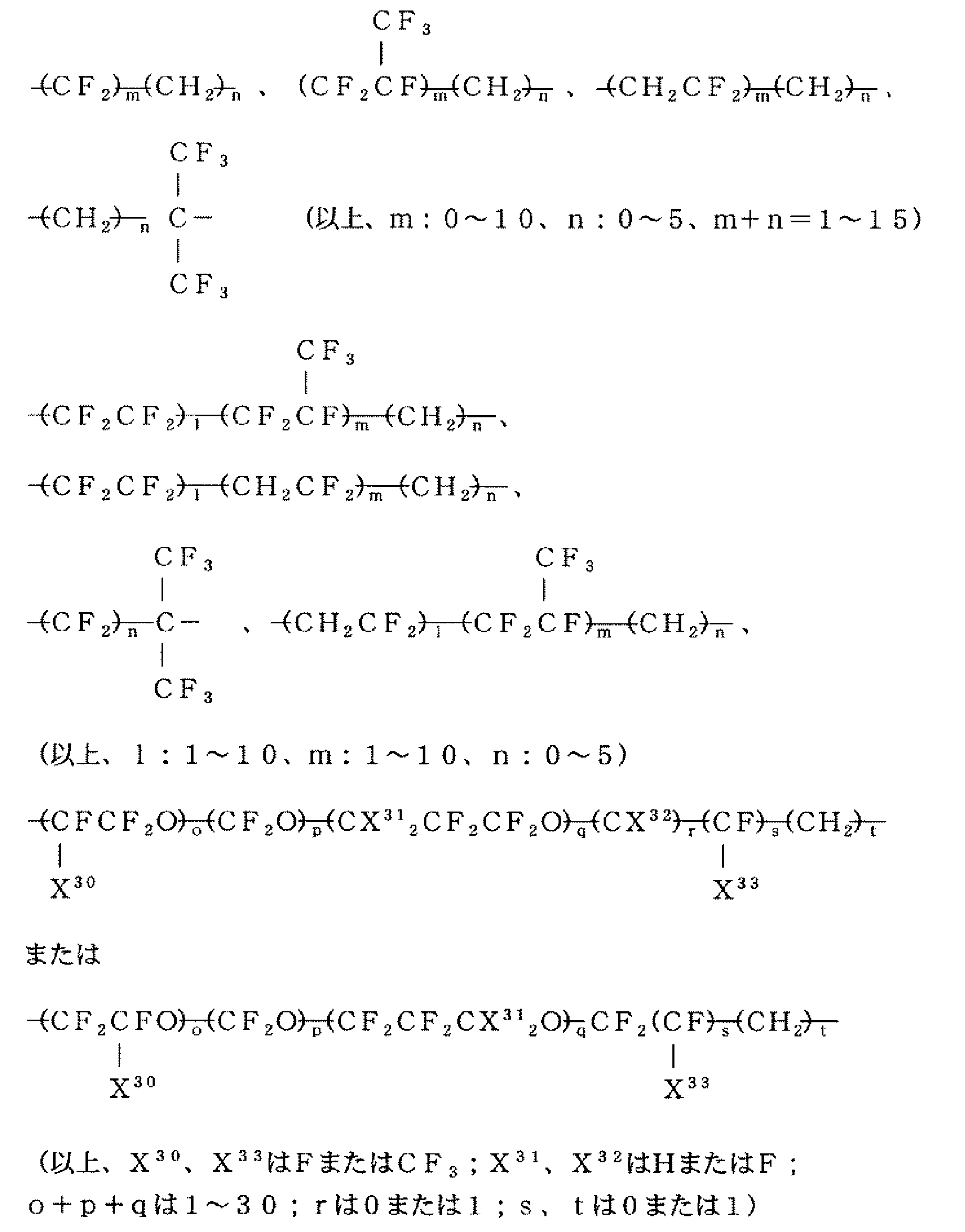
-R12-としては、例えば、-(CH2)3-、及び、-(CH2)2-からなる群より選択される少なくとも1種が好ましい。
Y1a中の金属M1およびM2としては、IB族としてCu;IIA族としてCa、Sr、Ba;IIB族としてZn;IIIA族としてB、Al、Ga;IIIB族としてY;IVA族としてSi、Ge;IVB族としてPb;VA族としてP、Sb;VB族としてV、Ta;VIB族としてW;ランタニドとしてLa、Ndがあげられる。
特にY1aとしては、IVA族、そのうちでもSiが好ましく、特に-Si(OCH3)3、-Si(OC2H5)3、-SiCH3(OC2H5)2などが加水分解・重縮合後に、水酸基を有する基材との良好な密着性および密着耐久性の点で好ましく、また、-[SiO(OCH3)2]n-Si(OCH3)3、-[SiO(OC2H5)2]n-Si(OC2H5)3(nは1~11の整数)などが加水分解・重縮合後に水酸基を有する基材との良好な密着性およびその耐久性の他、表面硬度の向上の点で好ましい。
これらのなかでも、Y1aとしては、-Si(OCH3)3、-Si(OC2H5)3、及び-SiCH3(OC2H5)2からなる群より選択される少なくとも1種が特に好ましい。
IVA族以外の金属の具体例としては、例えばY1aとしては、
IIA族がCa:-Ca(OR39)、好適な具体例としては-Ca(OCH3);
IIB族がZn:-Zn(OR39)、好適な具体例としては-Zn(OC2H5);
IIIA族がB:-B(OR39)2、好適な具体例としては-B(OCH3)2;
IIIB族がY:-Y(OR39)2、好適な具体例としては-Y(OC4H9)2;
IVB族がPb:-Pb(OR39)3、好適な具体例としては-Pb(OC4H9)3;
VB族がTa:-Ta(OR39)4、好適な具体例としては-Ta(OC3H7)4;
VIB族がW:-W(OR39)5、好適な具体例としては-W(OC2H5)5;
ランタニドがLa:-La(OR39)2、好適な具体例としては-La(OC3H7)2
(式中、R39は水素原子の一部又は全部がフッ素原子で置換されていてもよい炭素数1~10の炭化水素基)などが例示できる。
IIA族がCa:-Ca(OR39)、好適な具体例としては-Ca(OCH3);
IIB族がZn:-Zn(OR39)、好適な具体例としては-Zn(OC2H5);
IIIA族がB:-B(OR39)2、好適な具体例としては-B(OCH3)2;
IIIB族がY:-Y(OR39)2、好適な具体例としては-Y(OC4H9)2;
IVB族がPb:-Pb(OR39)3、好適な具体例としては-Pb(OC4H9)3;
VB族がTa:-Ta(OR39)4、好適な具体例としては-Ta(OC3H7)4;
VIB族がW:-W(OR39)5、好適な具体例としては-W(OC2H5)5;
ランタニドがLa:-La(OR39)2、好適な具体例としては-La(OC3H7)2
(式中、R39は水素原子の一部又は全部がフッ素原子で置換されていてもよい炭素数1~10の炭化水素基)などが例示できる。
これら各種金属は、同一のものに限らず、異種のものを組みあわせてもよい。
構造単位Mとしては、構造単位M1が好ましく、構造単位M1としてはさらに構造単位M2又は構造単位M3が好ましい。そこで、-Rf1を-D-Ryと表した場合、構造単位Mは、式(2-2):

(式中、X1、X2、X3、X4、X5、D、Ry、a、bおよびcは前記と同じ)で示される構造単位であることが、基材との密着耐久性、さらに低粘性化や耐熱性が優れる点で好ましい。
具体的には、式(2-2)の構造単位M1は、
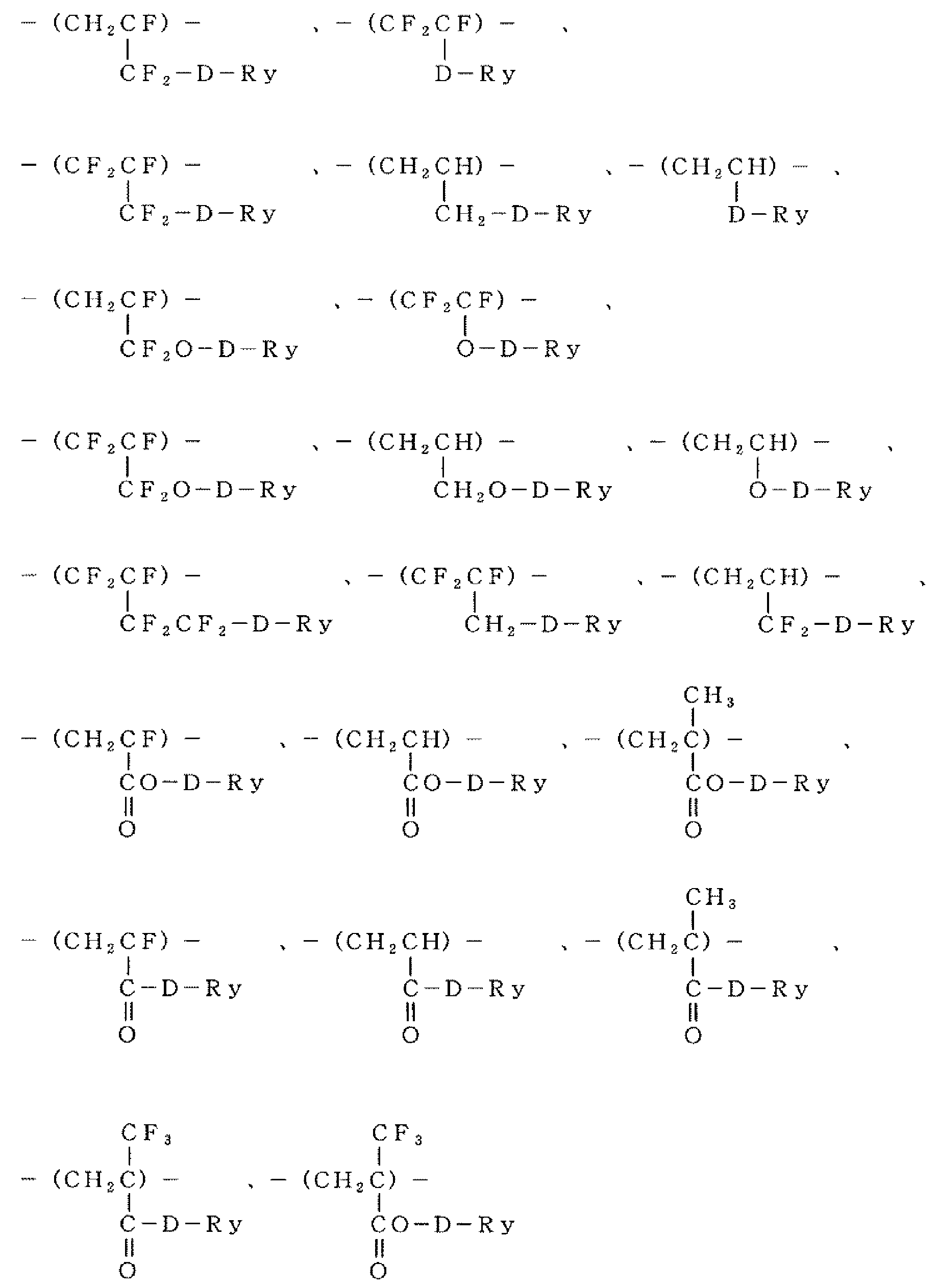
などが好ましく挙げられ、なかでも式(2-2)の構造単位は、式(2-3):

(式中、X1、X2、X3、X4、X5、D、Ry、aおよびcは前記と同じ)で示される構造単位であることが、耐熱性および耐薬品性が優れる点で好ましい。
式(2-3)の構造単位は、より具体的には

などが好ましく挙げられ、なかでも特に、
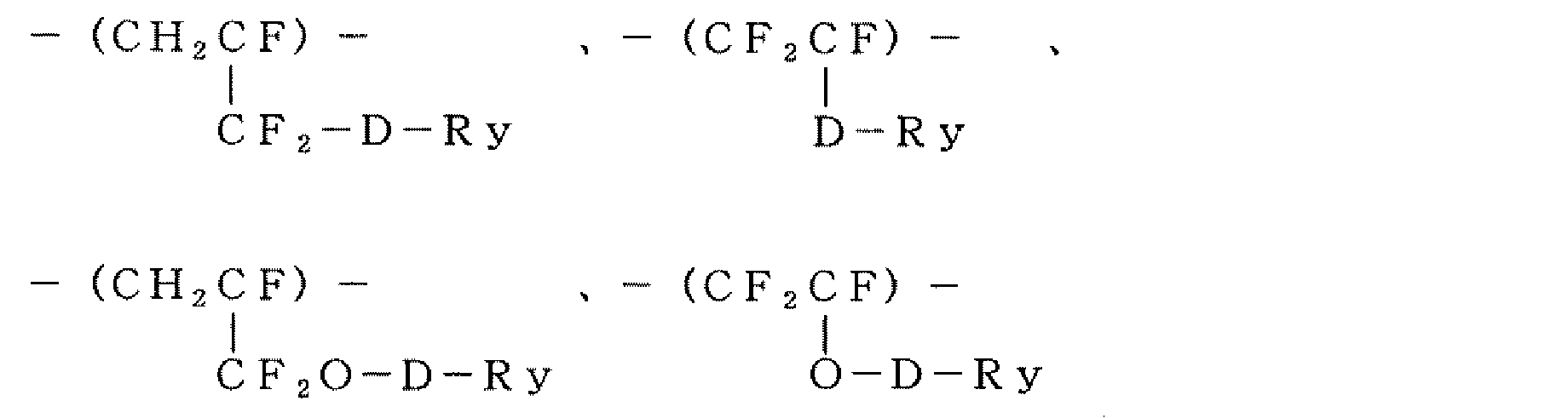
の構造単位が耐熱性および耐薬品性においてより好ましい。
上記Rfは、Rf2であることも好ましい形態の一つである。Y2中の炭素-炭素二重結合は重縮合反応などを起こす能力を有し、硬化(架橋)体を与えることができるものである。詳しくは、例えばラジカルやカチオンの接触によって、含フッ素ポリマー分子間で、又は化合物(A)と必要に応じて加えられる硬化(架橋)剤との間で重合反応や縮合反応を起こし、硬化(架橋)物を与えることができるものである。
上記構造単位LのRfがRf2(アミド結合若しくはウレア結合を有していてもよい炭素数1~40の含フッ素炭化水素基、又は、アミド結合、カーボネート結合、ウレタン結合若しくはウレア結合を有していてもよい炭素数2~100のエーテル結合を有する含フッ素炭化水素基であって、水素原子の1~3個がY2(Y2は、末端にエチレン性炭素-炭素二重結合を有する炭素数2~10の1価の有機基である。)で置換されている有機基)である構造単位を以下、構造単位Nともいう。また、構造単位L1、L2、及びL3において、RfがRf2である構造単位を、それぞれ、構造単位N1、N2、及びN3という。
好ましいRf2としては、式(Rf2):
-D-Ry2 (Rf2)
[式中、-D-は、前記と同じである。Ry2は、アミド結合若しくはウレア結合を有していてもよく、水素原子の一部若しくは全部がフッ素原子で置換されていてもよい、炭素数1~39の炭化水素基、又は、アミド結合、カーボネート結合、ウレタン結合若しくはウレア結合を有していてもよく、水素原子の一部若しくは全部がフッ素原子で置換されていてもよい、炭素数1~99のエーテル結合を有する炭化水素基であって、水素原子の1~3個がY2(Y2は前記と同じ)で置換されている有機基]が好ましい。-D-Ry2の好ましい形態としては、上記-D-Ryで例示された好ましい形態において、RyをRy2に変更したものが挙げられる。
上記Ry2は、アミド結合、カーボネート結合、ウレタン結合、ウレア結合又はエーテル結合を有していてもよく、水素原子の一部若しくは全部がフッ素原子で置換されていてもよい、炭素数1~39の炭化水素基であって、水素原子の1~3個がY2(Y2は前記と同じ)で置換されている有機基が好ましい。
-D-Ry2 (Rf2)
[式中、-D-は、前記と同じである。Ry2は、アミド結合若しくはウレア結合を有していてもよく、水素原子の一部若しくは全部がフッ素原子で置換されていてもよい、炭素数1~39の炭化水素基、又は、アミド結合、カーボネート結合、ウレタン結合若しくはウレア結合を有していてもよく、水素原子の一部若しくは全部がフッ素原子で置換されていてもよい、炭素数1~99のエーテル結合を有する炭化水素基であって、水素原子の1~3個がY2(Y2は前記と同じ)で置換されている有機基]が好ましい。-D-Ry2の好ましい形態としては、上記-D-Ryで例示された好ましい形態において、RyをRy2に変更したものが挙げられる。
上記Ry2は、アミド結合、カーボネート結合、ウレタン結合、ウレア結合又はエーテル結合を有していてもよく、水素原子の一部若しくは全部がフッ素原子で置換されていてもよい、炭素数1~39の炭化水素基であって、水素原子の1~3個がY2(Y2は前記と同じ)で置換されている有機基が好ましい。
好ましいY2の第1としては、

(式中、Y2aは末端にエチレン性炭素-炭素二重結合を有する炭素数2~5のアルケニル基又は含フッ素アルケニル基;dおよびeは同じか又は異なり、0又は1)である。
好ましいY2aとしては、
-CX6=CX7X8
(式中、X6はH、F、CH3又はCF3;X7およびX8は同じか又は異なり、H又はF)であり、この基はラジカルやカチオンの接触による硬化反応性が高く、好ましいものである。
-CX6=CX7X8
(式中、X6はH、F、CH3又はCF3;X7およびX8は同じか又は異なり、H又はF)であり、この基はラジカルやカチオンの接触による硬化反応性が高く、好ましいものである。
好ましいY2aの具体例としては、

などがあげられる。
またより好ましいY2としては、
-O(C=O)CX6=CX7X8
(式中、X6はH、F、CH3又はCF3;X7およびX8は同じか又は異なり、H又はF)があげられ、この基は特にラジカルの接触による硬化反応性がより高い点で好ましく、光硬化などにより容易に硬化物を得ることができる点で好ましい。
-O(C=O)CX6=CX7X8
(式中、X6はH、F、CH3又はCF3;X7およびX8は同じか又は異なり、H又はF)があげられ、この基は特にラジカルの接触による硬化反応性がより高い点で好ましく、光硬化などにより容易に硬化物を得ることができる点で好ましい。
上記のより好ましいY2の具体例としては、

などがあげられる。
その他の好ましいY2の具体例としては、

などがあげられる。
Y2のなかでも、-O(C=O)CF=CH2の構造を有するものが近赤外透明性を高くでき、さらに硬化(架橋)反応性が特に高く、効率よく硬化物を得ることができる点で好ましい。
なお、上述の側鎖中に炭素-炭素二重結合を有する有機基Y2は、ポリマー主鎖末端に導入してもよい。
本発明で用いる含フッ素ポリマーにおいて、構造単位N、N1、N2およびN3に含まれる-Rf2a-基(前記-Rf2からY2を除いた基)は、アミド結合若しくはウレア結合を有していてもよい炭素数1~40の2価の含フッ素炭化水素基、又は、アミド結合、カーボネート結合、ウレタン結合若しくはウレア結合を有していてもよい炭素数2~100のエーテル結合を有する2価の含フッ素炭化水素基である。この-Rf2a-は含まれる炭素原子にフッ素原子が結合していればよく、一般に、炭素原子にフッ素原子と水素原子又は塩素原子が結合した2価の含フッ素炭化水素基、エーテル結合を有する2価の含フッ素炭化水素基であるが、フッ素原子をより多く含有する(フッ素含有率が高い)ものが好ましく、より好ましくはパーフルオロアルキレン基又はエーテル結合を有する2価のパーフルオロ炭化水素基である。含フッ素ポリマー中のフッ素含有率は25質量%以上、好ましくは40質量%以上である。これらによって、含フッ素ポリマー(B)の近赤外透明性を高くできるだけでなく屈折率を低くできることが可能となり、特に硬化物の耐熱性や弾性率を高くする目的で硬化度(架橋密度)を高くしても近赤外透明性を高く、若しくは低屈折率性を維持できるため好ましい。
-Rf2a-基の炭素数は大きすぎると、2価の含フッ素炭化水素基の場合は溶剤への溶解性を低下させたり透明性が低下することがあり、またエーテル結合を有する2価の含フッ素炭化水素基の場合はポリマー自身やその硬化物の硬度や機械特性を低下させることがあるため好ましくない。2価の含フッ素炭化水素基の炭素数は、好ましくは1~20、より好ましくは1~10である。エーテル結合を有する2価の含フッ素炭化水素基の炭素数は好ましくは2~30、より好ましくは2~20である。
-Rf2a-の好ましい具体例としては、

などがあげられる。
本発明で用いる含フッ素ポリマーを構成する構造単位Nは構造単位N1が好ましく、構造単位N1としてはさらに構造単位N2又は構造単位N3が好ましい。そこで、つぎに構造単位N2および構造単位N3の具体例について述べる。
構造単位N2を構成する単量体として好ましい具体例としては、
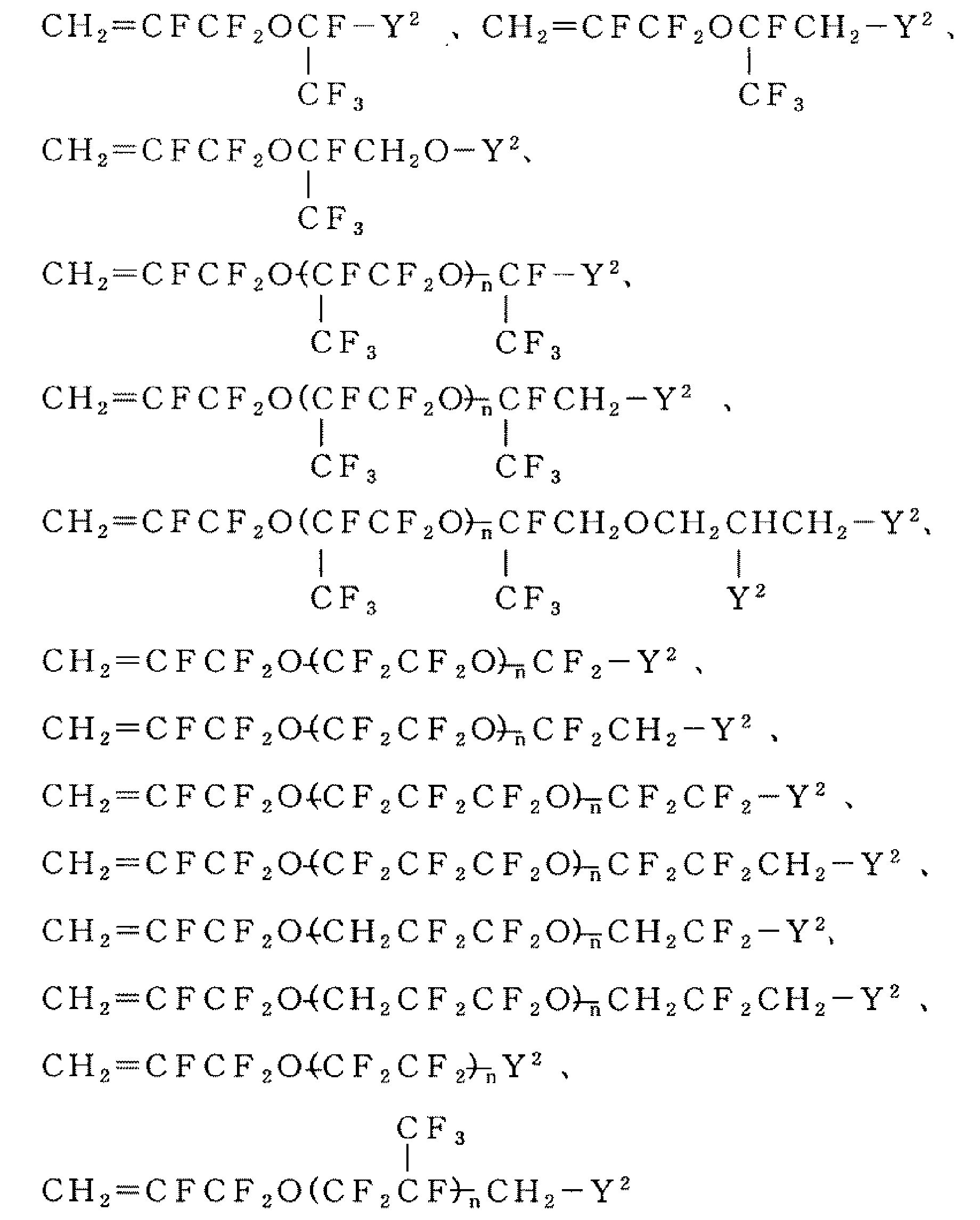
(以上、nは1~30の整数;Y2は前記と同じ)があげられる。
より詳しくは、

(以上、Rf7、Rf8は炭素数1~5のパーフルオロアルキル基、nは0~30の整数;XはH、CH3、F又はCF3)
などがあげられる。
などがあげられる。
構造単位N3を構成する単量体として好ましい具体例としては、

(以上、Y2は前記と同じ;nは1~30の整数)などがあげられる。
さらに詳しくは、

(以上、Rf9、Rf10は炭素数1~5のパーフルオロアルキル基;mは0~30の整数;nは1~3の整数;XはH、CH3、F又はCF3)などがあげられる。
これらの構造単位N2およびN3以外に、含フッ素ポリマーの構造単位Nを構成する単量体の好ましい具体例としては、例えば、

(以上、Y2およびRf2は上述の例と同じ)
などがあげられる。
などがあげられる。
より具体的には、

(以上、Y2は前記と同じ)などがあげられる。
含フッ素ポリマー(B)は、更に、構造単位Aからなるものであってもよい。構造単位Aは式(L)で示される構造単位Lを与える含フッ素エチレン性単量体と共重合可能な単量体に由来する構造単位であればよい。構造単位Aは任意成分であり、構造単位Lを与える含フッ素エチレン性単量体と共重合し得る単量体であれば特に限定されず、目的とする含フッ素ポリマーやその硬化物の用途、要求特性などに応じて適宜選択すればよい。
構造単位Aとしては、例えばつぎの構造単位が例示できる。
(A1)官能基を有する含フッ素エチレン性単量体から誘導される構造単位
この構造単位A1は、含フッ素ポリマーおよびその硬化物の基材への密着性や溶剤、特に汎用溶剤への溶解性を付与できる点で好ましく、そのほか架橋性などの機能を付与できる点で好ましい。
この構造単位A1は、含フッ素ポリマーおよびその硬化物の基材への密着性や溶剤、特に汎用溶剤への溶解性を付与できる点で好ましく、そのほか架橋性などの機能を付与できる点で好ましい。
官能基を有する好ましい含フッ素エチレン性単量体の構造単位A1は、式(A1):

(式中、X11、X12およびX13は同じか又は異なりH又はF;X14はH、F、CF3;hは0~2の整数;iは0又は1;Rf4は炭素数1~40の2価の含フッ素アルキレン基又は炭素数2~100のエーテル結合を有する2価の含フッ素アルキレン基;Z1は-OH、-CH2OH、-COOH、カルボン酸誘導体、-SO3H、スルホン酸誘導体、エポキシ基およびシアノ基よりなる群から選ばれる官能基)で示される構造単位であり、なかでも、
CH2=CFCF2ORf4-Z1
(式中、Rf4およびZ1は前記と同じ)から誘導される式(A1-1):
CH2=CFCF2ORf4-Z1
(式中、Rf4およびZ1は前記と同じ)から誘導される式(A1-1):

(式中、Rf4およびZ1は式(A1)と同じ)で示される構造単位が好ましい。
より具体的には、
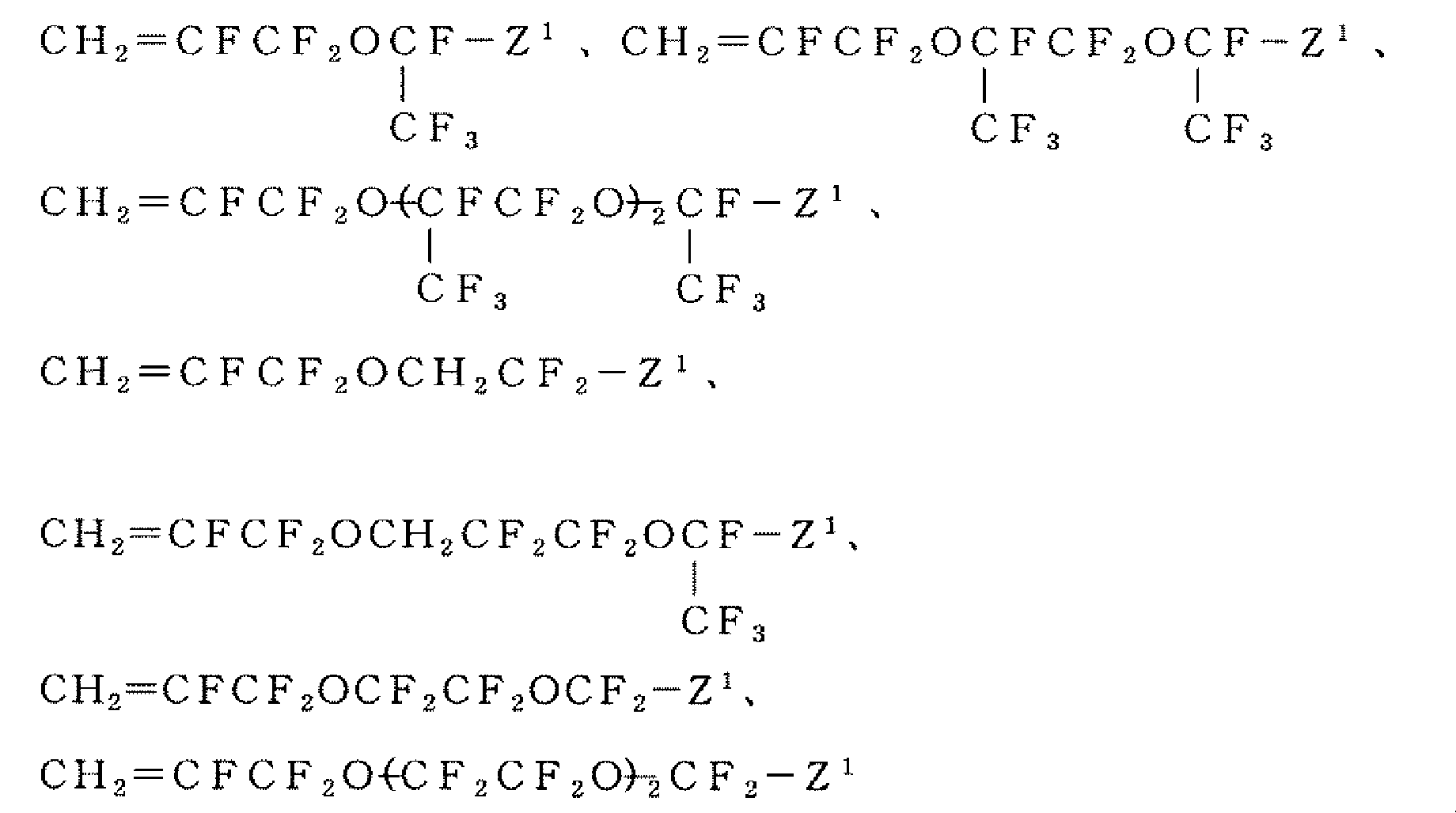
(以上、Z1は前記と同じ)などの含フッ素エチレン性単量体から誘導される構造単位が好ましくあげられる。
また、
CF2=CFORf4-Z1
(式中、Rf4およびZ1は前記と同じ)から誘導される式(A1-2):
CF2=CFORf4-Z1
(式中、Rf4およびZ1は前記と同じ)から誘導される式(A1-2):

(式中、Rf4およびZ1は式(A1)と同じ)で示される構造単位も好ましく例示できる。
より具体的には、
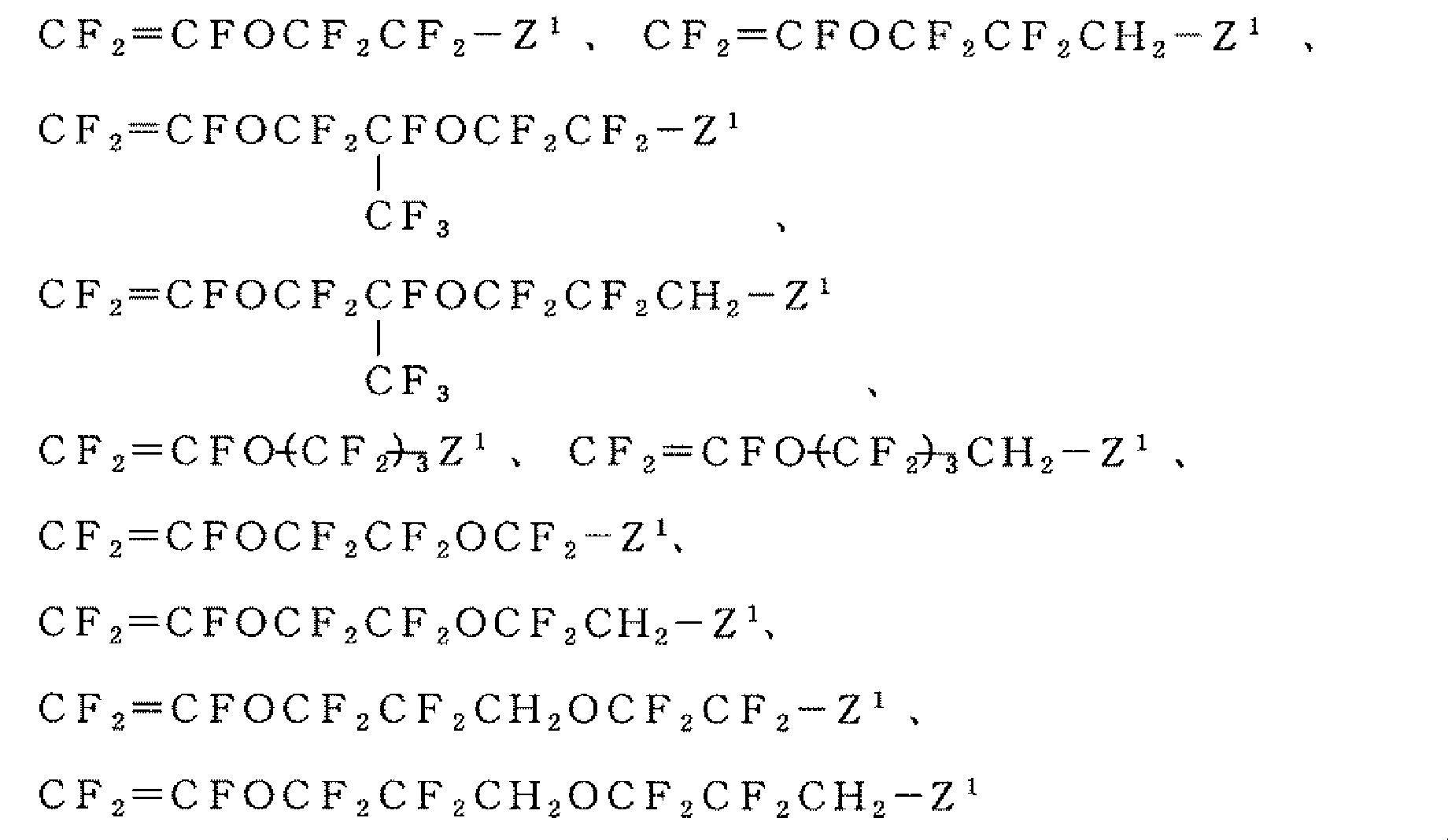
(以上、Z1は前記と同じ)などの単量体から誘導される構造単位があげられる。
その他、官能基含有含フッ素エチレン性単量体としては、
CF2=CFCF2-O-Rf4-Z1、CF2=CF-Rf4-Z1、
CH2=CH-Rf4-Z1、CH2=CHO-Rf4-Z1
(以上、-Rf4-は前記の-Rf4-と同じ;Z1は前記と同じ)などがあげられ、より具体的には、
CF2=CFCF2-O-Rf4-Z1、CF2=CF-Rf4-Z1、
CH2=CH-Rf4-Z1、CH2=CHO-Rf4-Z1
(以上、-Rf4-は前記の-Rf4-と同じ;Z1は前記と同じ)などがあげられ、より具体的には、

(以上、Z1は前記と同じ)などがあげられる。
(A2)官能基を含まない含フッ素エチレン性単量体から誘導される構造単位
この構造単位A2は含フッ素ポリマー又はその硬化物の屈折率を低く維持できる点で、さらに低屈折率化することができる点で好ましい。また単量体を選択することでポリマーの機械的特性やガラス転移温度などを調整でき、特に構造単位Lと共重合してガラス転移点を高くすることができ、好ましいものである。
この構造単位A2は含フッ素ポリマー又はその硬化物の屈折率を低く維持できる点で、さらに低屈折率化することができる点で好ましい。また単量体を選択することでポリマーの機械的特性やガラス転移温度などを調整でき、特に構造単位Lと共重合してガラス転移点を高くすることができ、好ましいものである。
この含フッ素エチレン性単量体の構造単位(A2)としては、式(A2):

(式中、X15、X16およびX18は同じか又は異なりH又はF;X17はH、F又はCF3;h1、i1およびjは同じか又は異なり0又は1;Z2はH、F、Cl又は炭素数1~16の直鎖状若しくは分岐鎖状パーフルオロアルキル基;Rf5は炭素数1~20の2価の含フッ素アルキレン基又は炭素数2~100のエーテル結合を含む2価の含フッ素アルキレン基)で示されるものが好ましい。
具体例としては、

などの単量体から誘導される構造単位が好ましくあげられる。
特に、これらは硬化性含フッ素ポリマー又はその硬化物の屈折率を低く維持できる点から、テトラフルオロエチレン、フッ化ビニリデン、クロロトリフルオロエチレンおよびヘキサフルオロプロピレンよりなる群から選ばれる少なくとも1種の単量体に由来する構造単位であることが好ましい。
(A3)フッ素を有する脂肪族環状の構造単位
この構造単位A3を導入すると、透明性を高くでき、また、高ガラス転移温度の含フッ素ポリマーが得られ、硬化物にさらなる高硬度化が期待できる点で好ましい。
この構造単位A3を導入すると、透明性を高くでき、また、高ガラス転移温度の含フッ素ポリマーが得られ、硬化物にさらなる高硬度化が期待できる点で好ましい。
含フッ素脂肪族環状の構造単位A3としては式(A3):

(式中、X19、X20、X23、X24、X25およびX26は同じか又は異なりH又はF;X21およびX22は同じか又は異なりH、F、Cl又はCF3;Rf6は炭素数1~10の含フッ素アルキレン基又は炭素数2~10のエーテル結合を有する含フッ素アルキレン基;n2は0~3の整数;n1、n3、n4およびn5は同じか又は異なり0又は1の整数)で示されるものが好ましい。
例えば、
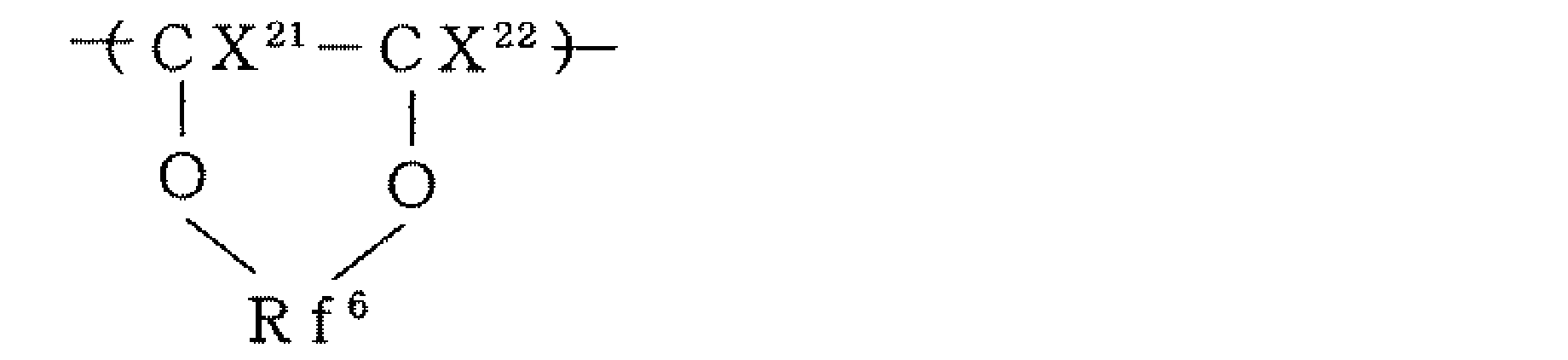
(式中、Rf6、X21およびX22は前記と同じ)で示される構造単位があげられる。
具体的には、

(式中、X19、X20、X23およびX24は前記と同じ)などがあげられる。
そのほかの含フッ素脂肪族環状構造単位としては、例えば
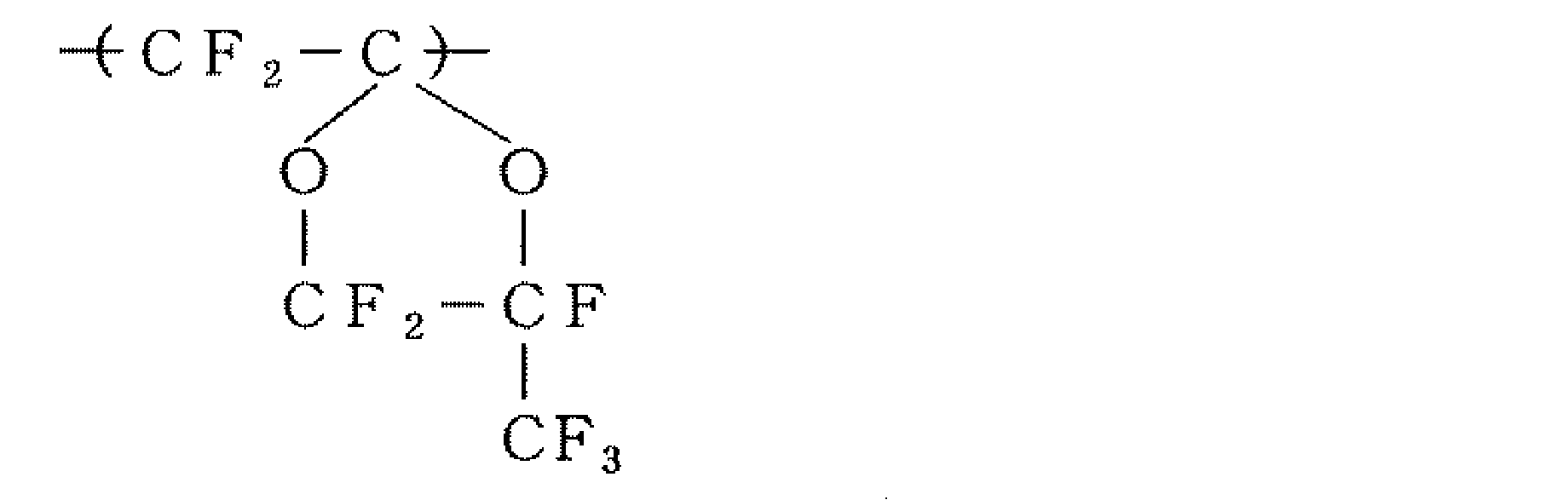
などがあげられる。
(A4)フッ素を含まないエチレン性単量体から誘導される構造単位
構造単位A4を導入することによって、汎用溶剤への溶解性が向上したり、添加剤、例えば光触媒や必要に応じて添加する硬化剤との相溶性を改善できる。
構造単位A4を導入することによって、汎用溶剤への溶解性が向上したり、添加剤、例えば光触媒や必要に応じて添加する硬化剤との相溶性を改善できる。
非フッ素系エチレン性単量体の具体例としては、
αオレフィン類:
エチレン、プロピレン、ブテン、塩化ビニル、塩化ビニリデンなど
ビニルエーテル系又はビニルエステル系単量体:
CH2=CHOR、CH2=CHOCOR10(R10:炭素数1~20の炭化水素基)など
アリル系単量体:
CH2=CHCH2Cl、CH2=CHCH2OH、CH2=CHCH2COOH、CH2=CHCH2Brなど
アリルエーテル系単量体:
CH2=CHCH2OR10(R10:炭素数1~20の炭化水素基)、
CH2=CHCH2OCH2CH2COOH、
αオレフィン類:
エチレン、プロピレン、ブテン、塩化ビニル、塩化ビニリデンなど
ビニルエーテル系又はビニルエステル系単量体:
CH2=CHOR、CH2=CHOCOR10(R10:炭素数1~20の炭化水素基)など
アリル系単量体:
CH2=CHCH2Cl、CH2=CHCH2OH、CH2=CHCH2COOH、CH2=CHCH2Brなど
アリルエーテル系単量体:
CH2=CHCH2OR10(R10:炭素数1~20の炭化水素基)、
CH2=CHCH2OCH2CH2COOH、
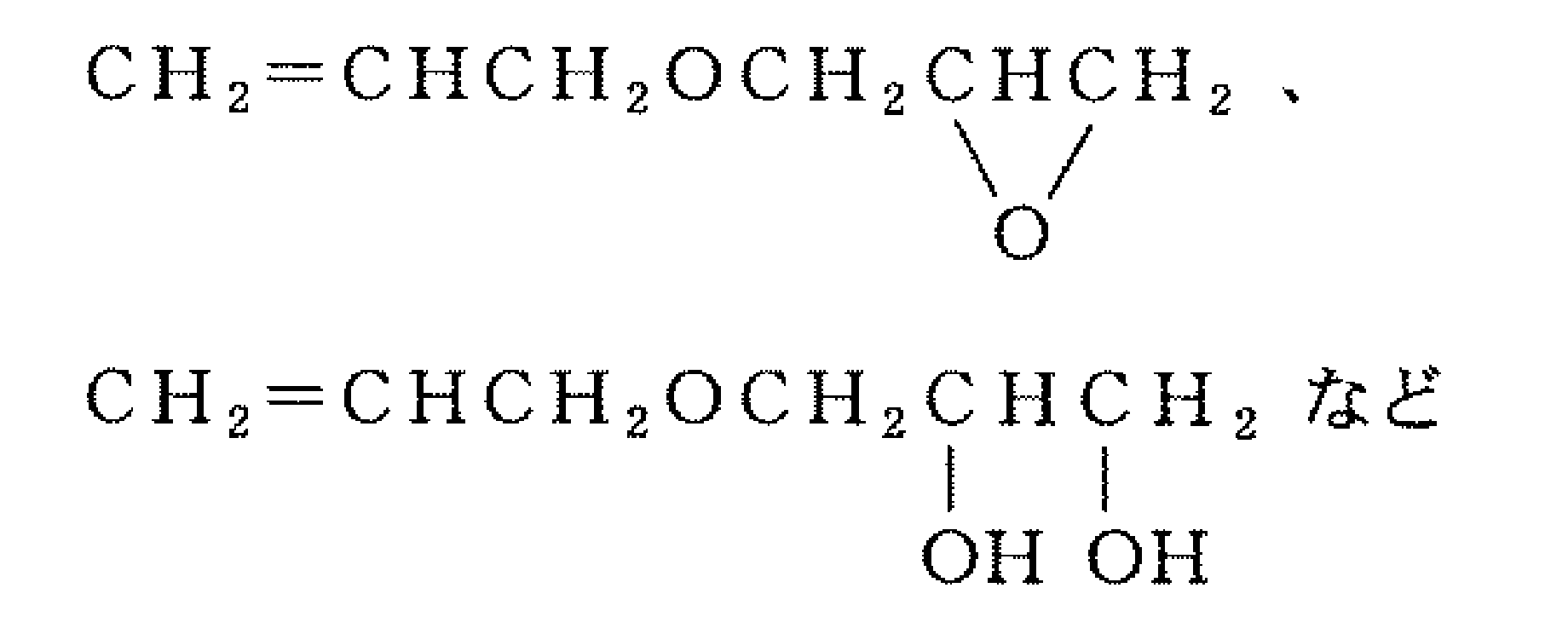
アクリル系又はメタクリル系単量体:
アクリル酸、メタクリル酸、アクリル酸エステル類、メタクリル酸エステル類のほか、無水マレイン酸、マレイン酸、マレイン酸エステル類など
などがあげられる。
アクリル酸、メタクリル酸、アクリル酸エステル類、メタクリル酸エステル類のほか、無水マレイン酸、マレイン酸、マレイン酸エステル類など
などがあげられる。
これらの非フッ素系エチレン性単量体の水素原子を重水素原子に一部又は全部置換したものは透明性の点でより好ましい。
(A5)脂環式単量体から誘導される構造単位
構造単位M、Nの共重合成分として、より好ましくは構造単位M、Nと上述の含フッ素エチレン性単量体又は非フッ素エチレン性単量体(上述のA3、A4)の構造単位に加えて、第3成分として脂環式単量体構造単位A5を導入してもよく、それによって高ガラス転移温度化や高硬度化が図られる。
構造単位M、Nの共重合成分として、より好ましくは構造単位M、Nと上述の含フッ素エチレン性単量体又は非フッ素エチレン性単量体(上述のA3、A4)の構造単位に加えて、第3成分として脂環式単量体構造単位A5を導入してもよく、それによって高ガラス転移温度化や高硬度化が図られる。
脂環式単量体A5の具体例としては、
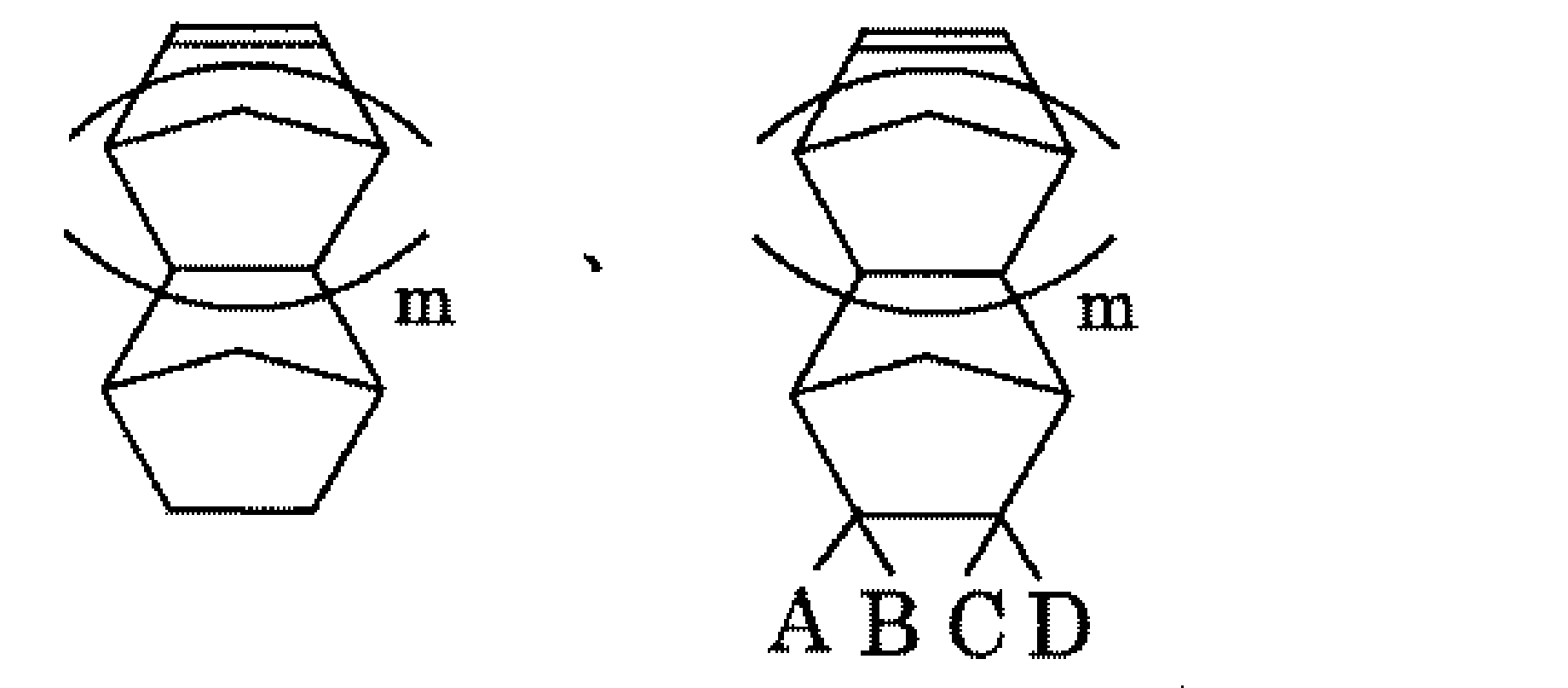
(mは0~3の整数;A、B、CおよびDは同じか又は異なり、H、F、Cl、COOH、CH2OH又は炭素数1~5のパーフルオロアルキル基など)で示されるノルボルネン誘導体、

などの脂環式単量体や、これらに置換基を導入した誘導体などがあげられる。
含フッ素ポリマー(B)は、構造単位Lのみからなる重合体であってもよいし、構造単位Lと構造単位Aとからなる共重合体であってもよい。また、構造単位Lとしては、構造単位Mのみであってよいし、構造単位Nのみであってもよいし、含フッ素ポリマー(B)は、構造単位Mと構造単位Nの両方が、含フッ素ポリマー(B)中に含まれていてもよい。また、構造単位M、構造単位N、及び構造単位Aからなる共重合体であってもよい。
含フッ素ポリマーが構造単位Lのみからなる場合、基材との密着耐久性を付与する機能、さらには被膜の高硬度化を付与できるといった点で有利である。
また含フッ素ポリマーが共重合体である場合、構造単位Lは、含フッ素ポリマー(B)を構成する全構造単位に対し0.1モル%以上であればよいが、硬化(架橋)により高硬度で耐摩耗性、耐擦傷性に優れ、耐薬品性、耐溶剤性に優れた硬化物を得るためには、2モル%以上、好ましくは5モル%以上、より好ましくは10モル%以上であることが好ましい。
特に耐熱性、透明性、低吸水性に優れた硬化物の形成が必要な用途においては、10モル%以上、好ましくは20モル%以上、さらには30モル%以上、特には40モル%以上含有することが好ましい。また、構造単位Lは、含フッ素ポリマー(B)を構成する全構造単位に対し100モル%未満であることが好ましい。
含フッ素ポリマー(B)の分子量は、例えば数平均分子量において500~1,000,000の範囲から選択できるが、好ましくは1,000~500,000、特に2,000~200,000の範囲から選ばれるものが好ましい。
分子量が低すぎると、硬化後であっても機械的物性が不充分となりやすく、特に硬化物が脆く強度不足となりやすい。分子量が高すぎると、溶剤溶解性が悪くなったり、特に薄膜形成時に成膜性やレベリング性が悪くなりやすく、また含フッ素ポリマー(B)の貯蔵安定性も不安定になりやすい。最も好ましくは数平均分子量が5,000~100,000の範囲から選ばれるものである。
数平均分子量は、ポリスチレンに準拠してゲルパーミエーションクロマトグラフィー(GPC)により測定した値である。
数平均分子量は、ポリスチレンに準拠してゲルパーミエーションクロマトグラフィー(GPC)により測定した値である。
含フッ素ポリマー(B)は、例えば、構造単位Lからなり、必要に応じて、更に構造単位Aからなり、含フッ素ポリマーを構成する全構造単位に対して、構造単位Lを0.1~100モル%、および構造単位Aを0~99.9モル%含む数平均分子量が500~1,000,000である含フッ素ポリマーであってもよい。この場合、構造単位Lは、構造単位Mが0.1~100モル%であり、構造単位Nが0~99.9モル%であってもよいし、構造単位Nが0.1~100モル%であり、構造単位Mが0~99.9モル%であってもよい。
含フッ素ポリマー(B)としてはまた、構造単位Lからなり、必要に応じて、更に、構造単位A1及び構造単位A2からなり、含フッ素ポリマー(B)を構成する全構造単位に対して、構造単位Lが0.1~90モル%、構造単位A1が0~99.9モル%および構造単位A2が0~99.9モル%であり、かつ構造単位A1と構造単位A2との合計が、10~99.9モル%であり、数平均分子量が500~1,000,000であることも好ましい形態の一つである。
含フッ素ポリマー(B)における構造単位Lの含有量は、含フッ素ポリマーを構成する全構造単位に対し0.1モル%以上であればよいが、硬化(架橋)により高硬度で耐摩耗性、耐擦傷性に優れ、耐薬品性、耐溶剤性に優れた硬化物を得るためには2モル%以上、好ましくは5モル%以上、より好ましくは10モル%以上とすることが好ましい。特に耐熱性、透明性、低吸水性に優れた硬化被膜の形成が必要な用途においては、10モル%以上、好ましくは20モル%以上、さらには50モル%以上含有することが好ましい。上限は100モル%未満である。
構造単位A1およびA2の含有量はいずれも99.9モル%以下である。また、A1+A2の合計モル%は10~99.9モル%とする。10モル%未満の場合は屈折率が低く維持できず、さらに硬化後の被膜硬度が低くなる傾向となり好ましくない。より好ましいA1+A2の合計モル%は20モル%以上、さらには30モル%以上であり、60モル%以下、さらには50モル%以下である。また、90モル%以下であってもよいし、80モル%以下であってもよいし、50モル%以下であってもよい。
含フッ素ポリマー(B)において、構造単位L〔構造単位M(M1、M2、及びM3)と構造単位N(N1、N2、及びN3)〕と、構造単位A(A1及びA2)との組合せや組成比率は、構造単位Mと構造単位Nと構造単位Aの組合せが、上記の例示から、目的とする用途、物性(特にガラス転移温度、硬度など)、機能(透明性)などによって種々選択すればよい。
含フッ素ポリマー(B)の分子量は、例えば数平均分子量において500~1,000,000の範囲から選択できるが、好ましくは1,000~500,000、特に2,000~200,000の範囲から選ばれるものが好ましい。
分子量が低すぎると、硬化後であっても機械的物性が不充分となりやすく、特に硬化物や硬化膜が脆く強度不足となりやすい。分子量が高すぎると、溶剤溶解性が悪くなったり、特に薄膜形成時に成膜性やレベリング性が悪くなりやすく、また含フッ素ポリマーの貯蔵安定性も不安定となりやすい。最も好ましくは数平均分子量が5,000から100,000の範囲から選ばれるものである。
含フッ素ポリマー(B)は、汎用溶剤に可溶であることが好ましく、例えばケトン系溶剤、酢酸エステル系溶剤、アルコール系溶剤、芳香族系溶剤の少なくとも1種に可溶又は汎用溶剤を少なくとも1種含む混合溶剤に可溶であることが好ましい。
汎用溶剤に可溶であることは、特に、被膜を形成するプロセスにおいて3μm以下、例えば約0.1μm程度の薄膜形成が必要な際、成膜性、均質性に優れるため好ましく、生産性の面でも有利である。
上記含フッ素ポリマー(B)は、
(1)Rfを有する単量体を予め合成し、重合して得る方法
(2)一旦、他の官能基を有する重合体を合成し、その重合体に高分子反応により官能基変換し、官能基Rfを導入する方法
(3)(1)と(2)の両方の方法を用いて導入する方法
のいずれの方法も採用できる。
これらの方法のうち、(3)の方法は含フッ素ポリマー側鎖末端の炭素―炭素二重結合を硬化反応させずに、本発明の加水分解性金属アルコキシド部位を有する硬化性フッ素ポリマーを得る点から(3)の方法が好ましい。
(1)Rfを有する単量体を予め合成し、重合して得る方法
(2)一旦、他の官能基を有する重合体を合成し、その重合体に高分子反応により官能基変換し、官能基Rfを導入する方法
(3)(1)と(2)の両方の方法を用いて導入する方法
のいずれの方法も採用できる。
これらの方法のうち、(3)の方法は含フッ素ポリマー側鎖末端の炭素―炭素二重結合を硬化反応させずに、本発明の加水分解性金属アルコキシド部位を有する硬化性フッ素ポリマーを得る点から(3)の方法が好ましい。
上記含フッ素ポリマー(B)は、例えば、国際公開第02/18457号パンフレット、特開2006-027958号公報に記載の方法により製造することができる。
重合方法としては、ラジカル重合法、アニオン重合法、カチオン重合法などが例示でき、加水分解性金属アルコキシド部位を有する重合体を得るために例示した単量体は組成や分子量などの品質のコントロールがしやすい点や工業化しやすい点からラジカル重合法が特に好ましい。
構造単位Lを与える含フッ素エチレン性単量体は、下記式:

(式中、X1およびX2は同じか又は異なり、H又はF;X3はH、F、CH3又はCF3;X4およびX5は同じか又は異なり、H、F又はCF3;Rfは上記と同じである。;aは0~3の整数;bおよびcは同じか又は異なり、0又は1)で示される単量体である。上記の単量体において、X1、X2、X3、X4、X5、a、b、c、及びRfにおける好ましい形態は上記したものと同じである。
本発明の硬化性樹脂組成物は、化合物(A)と含フッ素ポリマー(B)との合計質量に対して、化合物(A)が50質量%以上であることが好ましい。より好ましくは、化合物(A)が60質量%以上であり、更に好ましくは、80質量%以上である。化合物(A)が少なすぎると、耐熱性や透明性に劣るおそれがある。また、化合物(A)と含フッ素ポリマー(B)との合計質量に対して、含フッ素ポリマー(B)は、0.1質量%以上であることが好ましく、0.5質量%以上であることがより好ましい。含フッ素ポリマー(B)が少なすぎると、誘電率が高くなり可撓性に劣るおそれがある。
硬化性樹脂組成物は、化合物(A)及び含フッ素ポリマー(B)以外に、有機溶剤を含むことが好ましい。有機溶剤は、上記含フッ素ポリマー(B)を溶解可能なものであることが好ましい。
有機溶剤としては、例えばメチルセロソルブ、エチルセロソルブ、メチルセロソルブアセテート、エチルセロソルブアセテートなどのセロソルブ系溶剤;ジエチルオキサレート、ピルビン酸エチル、エチル-2-ヒドロキシブチレート、エチルアセトアセテート、酢酸ブチル、酢酸アミル、酪酸エチル、酪酸ブチル、乳酸メチル、乳酸エチル、3-メトキシプロピオン酸メチル、3-メトキシプロピオン酸エチル、2-ヒドロキシイソ酪酸メチル、2-ヒドロキシイソ酪酸エチルなどのエステル系溶剤;プロピレングリコールモノメチルエーテル、プロピレングリコールモノエチルエーテル、プロピレングリコールモノブチルエーテル、プロピレングリコールモノメチルエーテルアセテート、プロピレングリコールモノエチルエーテルアセテート、プロピレングリコールモノブチルエーテルアセテート、ジプロピレングリコールジメチルエーテルなどのプロピレングリコール系溶剤;2-ヘキサノン、シクロヘキサノン、メチルアミノケトン、2-ヘプタノン、メチルイソブチルケトンなどのケトン系溶剤;メタノール、エタノール、プロパノール、イソプロパノール、ブタノールなどのアルコール系溶剤;トルエン、キシレンなどの芳香族炭化水素類あるいはこれらの2種以上の混合溶剤などがあげられる。
またさらに、含フッ素ポリマー(B)の溶解性を向上させるために、必要に応じてフッ素系の溶剤を用いてもよい。
フッ素系の溶剤としては、例えばCH3CCl2F(HCFC-141b)、CF3CF2CHCl2/CClF2CF2CHClF混合物(HCFC-225)、パーフルオロヘキサン、パーフルオロ(2-ブチルテトラヒドロフラン)、メトキシ-ノナフルオロブタン、1,3-ビストリフルオロメチルベンゼンなどのほか、

などのフッ素系アルコール類;
ベンゾトリフルオライド、パーフルオロベンゼン、パーフルオロ(トリブチルアミン)、ClCF2CFClCF2CFCl2などがあげられる。
ベンゾトリフルオライド、パーフルオロベンゼン、パーフルオロ(トリブチルアミン)、ClCF2CFClCF2CFCl2などがあげられる。
これらフッ素系溶剤は単独でも、またフッ素系溶剤同士、非フッ素系とフッ素系の1種以上との混合溶剤として用いてもよい。
これらのなかでも、ケトン系溶剤、酢酸エステル系溶剤、アルコール系溶剤、及び芳香族系溶剤からなる群より選択される少なくとも1種の溶剤が好ましく、より具体的には、メチルイソブチルケトン、プロピレングリコールメチルエーテルアセテート(PGMEA)、2-ヘプタノン(MAK)及び乳酸エチルからなる群より選択される少なくとも1種の溶剤が、塗装性、塗布の生産性などの面で好ましい。
本発明の硬化性樹脂組成物は、更に、硬化開始剤を含むことが好ましい。特に、上記Yが、末端にエチレン性炭素-炭素二重結合を有する炭素数2~10の1価の有機基であるY2である場合に、硬化開始剤を含むことが好ましい。
本発明の硬化性樹脂組成物における硬化開始剤としては、光ラジカル発生剤、熱ラジカル発生剤等が挙げられる。例えば、活性エネルギー線硬化開始剤のほか、加熱硬化や常温2液硬化系の硬化剤が使用できる。比較的低温で硬化反応が可能である点からは、活性エネルギー線硬化開始剤が好ましい。上記Yの種類(ラジカル反応性か、カチオン(酸)反応性か)、使用する活性エネルギー線の種類(波長域など)と照射強度などによって適宜選択される。
活性エネルギー線硬化開始剤は、例えば350nm以下の波長領域の電磁波、つまり紫外線、電子線、X線、γ線などの活性エネルギー線を照射することによって初めてラジカルやカチオン(酸)などを発生し、含フッ素ポリマー(B)の架橋基(例えば炭素-炭素二重結合)の硬化(架橋反応)を開始させる触媒として働くものであり、通常、紫外線でラジカルやカチオン(酸)を発生させるもの、特にラジカルを発生するものを使用する。
上記Yが、末端にエチレン性炭素-炭素二重結合を有する炭素数2~10の1価の有機基である場合、本発明の硬化性樹脂組成物は、前記活性エネルギー線により容易に硬化反応を開始できるため好ましい。
紫外線領域の活性エネルギー線を用いて硬化させる場合、硬化開始剤としては、例えばつぎのものが例示できる。
アセトフェノン系
アセトフェノン、クロロアセトフェノン、ジエトキシアセトフェノン、ヒドロキシアセトフェノン、α-アミノアセトフェノンなど
アセトフェノン、クロロアセトフェノン、ジエトキシアセトフェノン、ヒドロキシアセトフェノン、α-アミノアセトフェノンなど
ベンゾイン系
ベンゾイン、ベンゾインメチルエーテル、ベンゾインエチルエーテル、ベンゾインイソプロピルエーテル、ベンゾインイソブチルエーテル、ベンジルジメチルケタールなど
ベンゾイン、ベンゾインメチルエーテル、ベンゾインエチルエーテル、ベンゾインイソプロピルエーテル、ベンゾインイソブチルエーテル、ベンジルジメチルケタールなど
ベンゾフェノン系
ベンゾフェノン、ベンゾイル安息香酸、ベンゾイル安息香酸メチル、4-フェニルベンゾフェノン、ヒドロキシベンゾフェノン、ヒドロキシ-プロピルベンゾフェノン、アクリル化ベンゾフェノン、ミヒラーケトンなど
ベンゾフェノン、ベンゾイル安息香酸、ベンゾイル安息香酸メチル、4-フェニルベンゾフェノン、ヒドロキシベンゾフェノン、ヒドロキシ-プロピルベンゾフェノン、アクリル化ベンゾフェノン、ミヒラーケトンなど
チオキサンソン類
チオキサンソン、クロロチオキサンソン、メチルチオキサンソン、ジエチルチオキサンソン、ジメチルチオキサンソンなど
チオキサンソン、クロロチオキサンソン、メチルチオキサンソン、ジエチルチオキサンソン、ジメチルチオキサンソンなど
その他
ベンジル、α-アシルオキシムエステル、アシルホスフィンオキサイド、グリオキシエステル、3-ケトクマリン、2-エチルアンスラキノン、カンファーキノン、アンスラキノンなど
ベンジル、α-アシルオキシムエステル、アシルホスフィンオキサイド、グリオキシエステル、3-ケトクマリン、2-エチルアンスラキノン、カンファーキノン、アンスラキノンなど
また、必要に応じてアミン類、スルホン類、スルフィン類などの光開始助剤を添加してもよい。
また、カチオン(酸)反応性の開始剤(光酸発生剤)としては、つぎのものが例示できる。
オニウム塩
ヨードニウム塩、スルホニウム塩、ホスホニウム塩、ジアゾニウム塩、アンモニウム塩、ピリジニウム塩など
ヨードニウム塩、スルホニウム塩、ホスホニウム塩、ジアゾニウム塩、アンモニウム塩、ピリジニウム塩など
スルホン化合物
β-ケトエステル、β-スルホニルスルホンとこれらのα-ジアゾ化合物など
β-ケトエステル、β-スルホニルスルホンとこれらのα-ジアゾ化合物など
スルホン酸エステル類
アルキルスルホン酸エステル、ハロアルキルスルホン酸エステル、アリールスルホン酸エステル、イミノスルホネートなど
アルキルスルホン酸エステル、ハロアルキルスルホン酸エステル、アリールスルホン酸エステル、イミノスルホネートなど
その他
スルホンイミド化合物類、ジアゾメタン化合物類など
スルホンイミド化合物類、ジアゾメタン化合物類など
本発明の硬化性樹脂組成物において、硬化開始剤の添加量は、含フッ素ポリマー(B)中の架橋基の含有量、化合物(A)が架橋性基を有する場合には、その架橋性基の含有量、さらには用いる硬化開始剤、活性エネルギー線の種類や、照射エネルギー量(強さと時間など)によって適宜選択されるが、例えば、硬化開始剤は、化合物(A)及び含フッ素ポリマー(B)の合計100質量部に対して0.01~30質量部であることが好ましい。より好ましくは、0.05~20質量部であり、更に好ましくは、0.1~10質量部である。
本発明の硬化性樹脂組成物は、硬化剤を含むことも好ましい。特に、上記Yが、末端にエチレン性炭素-炭素二重結合を有する炭素数2~10の1価の有機基である場合に、硬化剤を含むことが好ましい。
硬化剤としては、炭素-炭素不飽和結合を1つ以上有しかつラジカル又は酸で重合できるものが好ましく、具体的にはアクリル系モノマーなどのラジカル重合性の単量体、ビニルエーテル系モノマーなどのカチオン重合性の単量体があげられる。これら単量体は、炭素-炭素二重結合を1つ有する単官能であっても炭素-炭素二重結合を2つ以上有する多官能の単量体であってもよい。
これらの炭素-炭素不飽和結合を有するいわゆる硬化剤は、本発明の組成物中の活性エネルギー線硬化開始剤と光などの活性エネルギー線との反応で生じるラジカルやカチオンで反応し、本発明の組成物中の含フッ素ポリマー(B)の側鎖の炭素-炭素二重結合と共重合によって架橋することができるものである。
単官能のアクリル系単量体としては、アクリル酸、アクリル酸エステル類、メタクリル酸、メタクリル酸エステル類、α-フルオロアクリル酸、α-フルオロアクリル酸エステル類、マレイン酸、無水マレイン酸、マレイン酸エステル類のほか、エポキシ基、ヒドロキシル基、カルボキシル基などを有する(メタ)アクリル酸エステル類などが例示される。
なかでも硬化物の屈折率を低く維持するために、フルオロアルキル基を有するアクリレート系単量体が好ましく、例えば一般式:
なかでも硬化物の屈折率を低く維持するために、フルオロアルキル基を有するアクリレート系単量体が好ましく、例えば一般式:

具体的には、

多官能アクリル系単量体としては、ジオール、トリオール、テトラオールなどの多価アルコール類のヒドロキシル基をアクリレート基、メタアクリレート基、α-フルオロアクリレート基に置き換えた化合物が一般的に知られている。
具体的には、1,3-ブタンジオール、1,4-ブタンジオール、1,6-ヘキサンジオール、ジエチレングリコール、トリプロピレングリコール、ネオペンチルグリコール、トリメチロールプロパン、ペンタエリスリトール、ジペンタエリスリトールなどのそれぞれの多価アルコール類の2個以上のヒドロキシル基がアクリレート基、メタクリレート基、α-フルオロアクリレート基のいずれかに置き換えられた化合物があげられる。
また、含フッ素アルキル基、エーテル結合を含む含フッ素アルキル基、含フッ素アルキレン基又はエーテル結合を含む含フッ素アルキレン基を有する多価アルコールの2個以上のヒドロキシル基をアクリレート基、メタアクリレート基、α-フルオロアクリレート基に置き換えた多官能アクリル系単量体も利用でき、特に硬化物の屈折率を低く維持できる点で好ましい。
具体例としては、
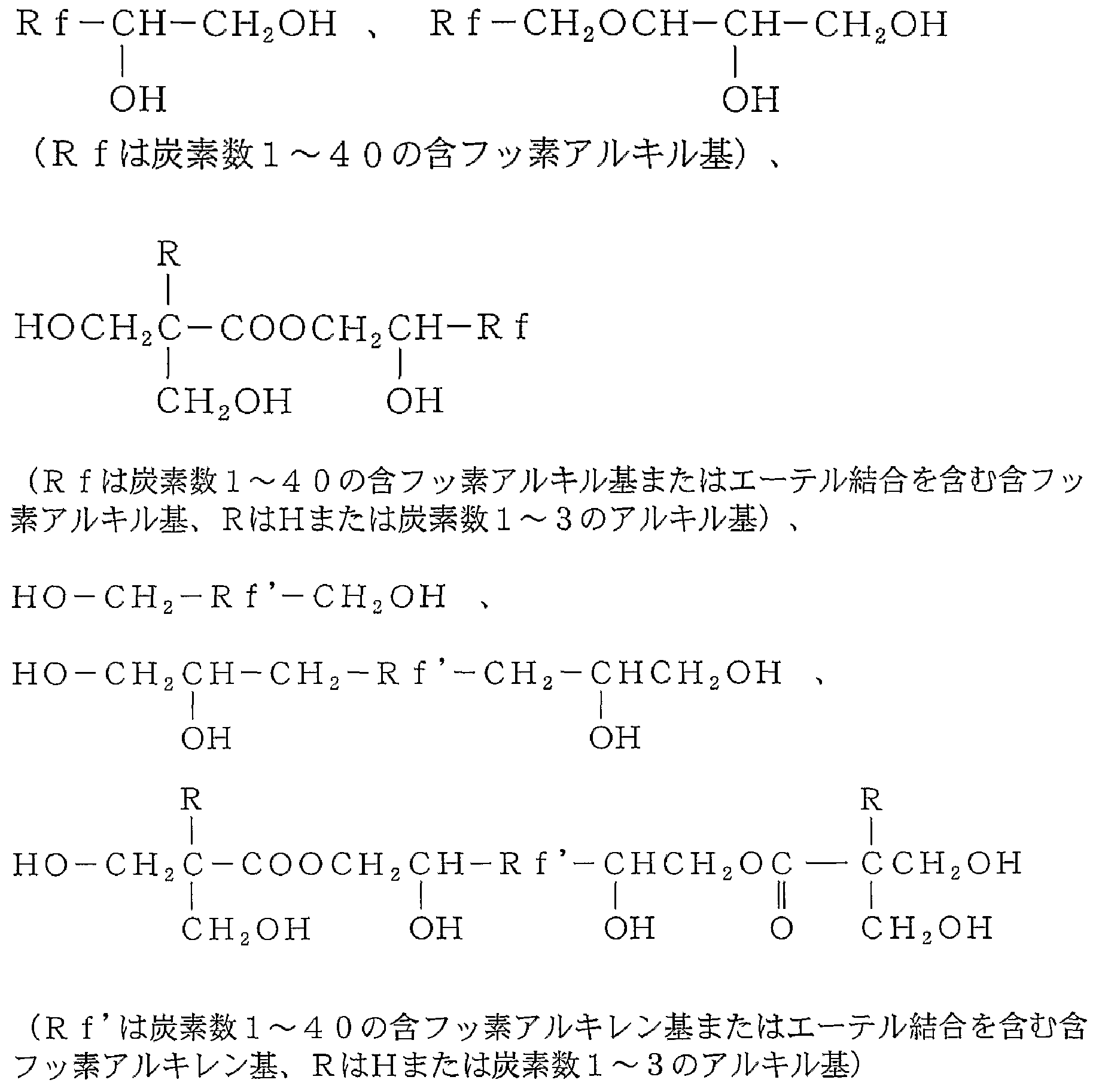
また、これら例示の単官能、多官能アクリル系単量体を硬化剤として本発明の組成物に用いる場合、なかでも特にα-フルオロアクリレート化合物が硬化反応性が良好な点で好ましい。
本発明の組成物において、活性エネルギー線硬化開始剤の添加量は、含フッ素ポリマー(B)中の炭素-炭素二重結合の含有量、上記硬化剤の使用の有無や硬化剤の使用量によって、さらには用いる硬化開始剤、活性エネルギー線の種類や、照射エネルギー量(強さと時間など)によって適宜選択されるが、硬化剤を使用しない場合では、含フッ素ポリマー(B)100重量部に対して0.01~30重量部、さらには0.05~20重量部、最も好ましくは、0.1~10重量部である。
詳しくは、含フッ素ポリマー(B)中に含まれる炭素-炭素二重結合の含有量(モル数)に対し、0.05~50モル%、好ましくは0.1~20モル%、最も好ましくは、0.5~10モル%である。
詳しくは、含フッ素ポリマー(B)中に含まれる炭素-炭素二重結合の含有量(モル数)に対し、0.05~50モル%、好ましくは0.1~20モル%、最も好ましくは、0.5~10モル%である。
硬化剤を使用する場合は、含フッ素ポリマー(B)中に含まれる炭素-炭素二重結合の含有量(モル数)と硬化剤の炭素-炭素不飽和結合のモル数の合計モル数に対して0.05~50モル%、好ましくは0.1~20モル%、最も好ましくは0.5~10モル%である。
硬化剤を使用する場合、硬化剤の使用量は目的とする硬度や屈折率、硬化剤の種類、使用する硬化性含フッ素ポリマーの硬化性基の含有量などによって適宜選択され、望ましくは硬化性含フッ素ポリマーに対して、1~80重量%、好ましくは5~70重量%、より好ましくは10~50重量%である。硬化剤の添加量が多すぎると屈折率が高くなる傾向にあり、好ましくない。
本発明の硬化性樹脂組成物は、更に、中空微粒子を含んでもよい。本発明の硬化性樹脂組成物が屈折率の低い中空微粒子を含むことによって、屈折率を低下させることができる。
上記中空微粒子は、屈折率を低下させるために配合される成分である。上記中空微粒子の屈折率の上限は、例えば、1.48である。中空微粒子は、屈折率が1.45以下であることが好ましく、1.40以下であることがより好ましい。屈折率が高すぎると、CCDモジュールの封止剤等、用途によっては使用が困難となる場合がある。上記範囲であることにより、本発明の硬化性樹脂組成物から得られる薄膜の屈折率を低くすることができる。屈折率の下限は、例えば、1.15である。中空微粒子の屈折率は、特許第3761189号や特許第4046921号記載の方法で測定することができる。
中空微粒子は、気孔率が1~60%であることが好ましく、2~40%であることがより好ましい。中空微粒子の気孔率は、上記の方法で求めた屈折率を用いて、例えばシリカの中空微粒子の場合であれば、純粋なSiO2の屈折率(1.45)との差から、空気に換算して含まれている空隙を算出して求めることができる。
中空微粒子は、本発明の硬化性樹脂組成物から得られる封止部材(保護層)や反射防止膜の光学特性が特に良好な点から、1~150nm、さらには10~80nmであることが好ましい。
中空微粒子としては、中空シリカ微粒子であることが好ましい。中空シリカ微粒子は、特開2002-277604号公報、特開2002-265866号公報などで使用されている公知の材料である。
具体的には、特開2004-203683号公報、特開2006-021938号公報などに記載されている中空シリカ微粒子が使用できる。好ましいものとして、日揮触媒化成工業(株)製のスルーリアが例示できる。
中空シリカ微粒子は、含フッ素ポリマー(B)100質量部に対し、1~1000質量部、さらには3~250質量部であることが好ましく、特に5~150質量部であることが好ましい。この範囲で配合するとき、本発明の硬化性樹脂組成物から得られる薄膜の屈折率を低くすることができ、CCDモジュールの封止剤に好適である。また、耐熱性および耐薬品性などの特性が特に優れたものになる。
本発明の硬化性樹脂組成物は、上述したものの他に、必要に応じて種々の添加剤を含むものであってもよい。
添加剤としては、例えばシランカップリング剤、可塑剤、変色防止剤、酸化防止剤、無機充填剤、レベリング剤、粘度調整剤、光安定剤、水分吸収剤、顔料、染料、補強剤などがあげられる。
また、本発明の硬化性樹脂組成物は、硬化物の硬度を高め、また屈折率の制御を行う目的で無機化合物の微粒子又は超微粒子を含むものであってもよい。
無機化合物微粒子としては特に限定されないが、屈折率が1.5以下の化合物が好ましい。具体的にはフッ化マグネシウム(屈折率1.38)、酸化珪素(屈折率1.46)、フッ化アルミニウム(屈折率1.33~1.39)、フッ化カルシウム(屈折率1.44)、フッ化リチウム(屈折率1.36~1.37)、フッ化ナトリウム(屈折率1.32~1.34)、フッ化トリウム(屈折率1.45~1.50)などの微粒子が望ましい。微粒子の粒径については、低屈折率材料の透明性を確保するために可視光の波長に比べて充分に小さいことが望ましい。具体的には300nm以下、特に100nm以下が好ましい。
無機化合物の微粒子又は超微粒子によって、空隙を形成することが可能である。すなわち、本発明の組成物に無機化合物の微粒子又は超微粒子を配合させた被膜は、この空隙を利用して被膜単体の屈折率よりもさらに低屈折率にすることが可能である。
無機化合物微粒子を使用する際は、組成物中での分散安定性、低屈折率材料中での密着性などを低下させないために、予め有機分散媒中に分散した有機ゾルの形態で使用するのが望ましい。さらに、組成物中において、無機化合物微粒子の分散安定性、低屈折率材料中での密着性などを向上させるために、予め無機微粒子化合物の表面を各種カップリング剤などを用いて修飾することができる。各種カップリング剤としては、例えば有機置換された珪素化合物;アルミニウム、チタニウム、ジルコニウム、アンチモン又はこれらの混合物などの金属アルコキシド;有機酸の塩;配位性化合物と結合した配位化合物などがあげられる。
本発明の硬化性樹脂組成物は、有機溶剤に対して含フッ素ポリマー(B)又は添加物がディスパージョン状のものでも、溶液状のものでもよいが、均一な薄膜を形成する観点からは、比較的低温で成膜が可能となる点で、均一な溶液状であることが好ましい。
本発明の硬化性樹脂組成物は、形成された膜が0.1~5μmとなるために相応の粘度、すなわち1~10cp程度であることが好ましい。その為に全質量に対して、化合物(A)及び含フッ素ポリマー(B)の質量の合計が、10~100質量%であることが好ましい。より好ましくは、20~50質量%である。
本発明の硬化性樹脂組成物は、例えば、液体の化合物(A)に、含フッ素ポリマー(B)、並びに、必要に応じて硬化開始剤、架橋剤、その他の添加剤を添加して、必要に応じて撹拌して混合することにより、製造することができる。
本発明の硬化性樹脂組成物は、架橋、例えば熱架橋又は光架橋させることによって、硬化物を形成することが可能である。硬化物は、本発明の硬化性樹脂組成物を基材に塗布し、乾燥し、そののち、焼成することで架橋させてもよいし、紫外線、電子線又は放射線などの活性エネルギー線を照射することによって光硬化させて形成してもよい。本発明は、上記硬化性樹脂組成物を硬化して得られる硬化物でもある。
上記硬化物は、屈折率が1.35以下であることが好ましい。例えば、本発明の硬化性樹脂組成物からは、膜厚が1~10μmであり、屈折率が1.35以下であり、ヘイズ値が5%以下である薄膜を製造することできる。しかも、このような低い屈折率及びヘイズ値は、125℃で1000時間の耐熱性試験、85℃かつ湿度85%で500時間の耐熱性試験、265℃で10分間の耐熱性試験を実施した後でも変動することがない。更に、1000ルックスに一時間暴露する耐光性試験後でも変動しない。
本発明の硬化性樹脂組成物は、得られる硬化物を種々の形態で各種の用途に利用できる。
例えば硬化膜を形成して各種用途に利用できる。膜を形成する方法としては用途に応じた適切な公知の方法を採用することができる。例えば膜厚をコントロールする必要がある場合は、ロールコート法、グラビアコート法、マイクログラビアコート法、フローコート法、バーコート法、スプレーコート法、ダイコート法、スピンコート法、ディップコート法などが採用できる。
本発明の硬化性樹脂組成物は、膜形成に用いてもよいが、各種成形品の成形材料として特に有用である。成形方法としては、押出成形、射出成形、圧縮成形、ブロー成形、トランスファー成形、光造形、ナノインプリント、真空成形などが採用できる。
本発明の硬化性樹脂組成物は、光学素子封止用であることが好ましい。すなわち、本発明の硬化性樹脂組成物は、光学素子に使用される封止剤として好適に使用できる。
本発明の硬化性樹脂組成物は、封止剤であることが好ましい。例えば、フォトトランジスター、フォトダイオード、CCDなどの受光素子、LED、有機ELなどの発光素子、EPROM等の半導体素子(光半導体素子)などに用いられる封止剤であることが好ましい。上記封止剤を硬化させて封止部材(硬化物)を得ることができる。本発明の硬化物は、光学素子用の封止部材であることが好ましく、特に、受光素子用又は発光素子用の封止部材であることが好ましい。
図1は、CCDモジュールの構造の一例を示す断面模式図である。図1に示す構造のCCDモジュールは、CCD素子部12に到達する光が封止剤層13を通過することになるため、該封止剤層13には、低屈折率であり、透明性が高いことが要求される。本発明の硬化性樹脂組成物は、低屈折率であり、かつ透明性が高い薄膜を形成することができるため、上記CCDモジュールに適用する封止剤形成用の封止材料として好適である。
図2(a)~(f)は、CCDモジュールの製造フローを簡略的に示したフロー図である。以下に、CCDモジュールの製造方法について、図2(a)~(f)を用いて説明する。まず、図2(a)のように、シリコンウェハー21を準備し、その上に、CCD素子部22を作成する(図2(b))。次に、CCD素子部22上に、スピンコート等の塗布方法を用いて本発明の硬化性樹脂組成物を塗布して封止剤層23を作成する(図2(c))。その後、封止剤層23上にガラス24を積層し(図2(d))、その後、図2(e)に示すように、ダイシングを行い、CCD素子を製造する。
その後、RIE等を用いた異方性エッチングによりシリコンウェハー21に穴を形成し、シリコンウェハー21裏面に貫通電極25を形成する。このようにして製造された半導体チップを外部に接続する電極26に接着して、図2(f)に示すCCDモジュールを製造することができる。
LED、有機ELなどの発光素子の封止部材としては、直接封止するものであってもよい。また、例えば、従来用いられているエポキシ系やシリコーン系の封止部材を用いて素子を封止後、本発明の硬化性樹脂組成物を最表面に積層することで、発光デバイスから空気層に向けて屈折率が段階的に減少していく構造にしてもよい。例えば屈折率1.57のエポキシ封止樹脂で封止した場合、空気界面でのフレネル反射に基づくロスは4.92%と計算される。このエポキシ封止樹脂の最表面に本発明の硬化性樹脂組成物を用いて屈折率1.32の層を形成させたとすると、界面の数は増えるが、トータルのフレネル反射は2.65%と計算され、反射ロスを大きく減少させることが可能になり、その結果、発光素子からの光の取り出し効率を向上させることが可能となる。
本発明の硬化性樹脂組成物はまた、基材上に低反射性を付与する薄膜を有する被覆物品に好適に用いられる。基材としては、例えばガラス、石材、コンクリート、タイルなどの無機材料;鉄、アルミ、銅などの金属;木、紙、印刷物、印画紙、絵画などをあげることができる。
また上記基材としては、塩化ビニル樹脂、ポリエチレンテレフタレート、トリアセチルセルロースなどのセルロース系樹脂、ポリカーボネート樹脂、ポリオレフィン樹脂、アクリル系樹脂、フェノール樹脂、キシレン樹脂、ユリア樹脂、メラミン樹脂、ジアリルフタレート樹脂、フラン樹脂、アミノ樹脂、アルキド樹脂、ウレタン樹脂、ビニルエステル樹脂、ポリイミド樹脂、ポリアミド樹脂などの合成樹脂基材などもあげることができる。
基材の中でも液晶ディスプレイ(LCD)表示用のアンチグレア基材は表面が微細な無機微粒子でコーティングされており好ましく用いられ、効果的に防眩性かつ低反射効果を発揮できる。
本発明の硬化性樹脂組成物は、以下のような形態の物品に適用した場合にも効果的である。
プリズム、レンズシート、偏光板、光学フィルター、レンチキュラーレンズ、フレネルレンズ、背面投写型ディスプレイのスクリーン、縮小投影型露光機レンズ、光ファイバーや光カプラーなどの光学部品;ショーウインドーのガラス、ショーケースのガラス、広告用カバー、フォトスタンド用のカバーなどに代表される透明な保護版;CRT、液晶ディスプレイ、プラズマディスプレイ、背面投写型ディスプレイなどの保護板;光磁気ディスク、CD・LD・DVDなどのリードオンリー型光ディスク、PDなどの相転移型光ディスク、ホログラム記録などに代表される光記録媒体;フォトレジスト、フォトマスク、ペリクル、レチクルなどの半導体製造時のフォトリソグラフィー関連部材;ハロゲンランプ、蛍光灯、白熱電灯などの発光体の保護カバー;上記物品に貼り付けるためのシート又はフィルム。
プリズム、レンズシート、偏光板、光学フィルター、レンチキュラーレンズ、フレネルレンズ、背面投写型ディスプレイのスクリーン、縮小投影型露光機レンズ、光ファイバーや光カプラーなどの光学部品;ショーウインドーのガラス、ショーケースのガラス、広告用カバー、フォトスタンド用のカバーなどに代表される透明な保護版;CRT、液晶ディスプレイ、プラズマディスプレイ、背面投写型ディスプレイなどの保護板;光磁気ディスク、CD・LD・DVDなどのリードオンリー型光ディスク、PDなどの相転移型光ディスク、ホログラム記録などに代表される光記録媒体;フォトレジスト、フォトマスク、ペリクル、レチクルなどの半導体製造時のフォトリソグラフィー関連部材;ハロゲンランプ、蛍光灯、白熱電灯などの発光体の保護カバー;上記物品に貼り付けるためのシート又はフィルム。
本発明の硬化性樹脂組成物は、下記のような形態の物品に適用した場合には接着剤としても好適である。
半導体装置のキャリア用テープ・基板、リードフレーム、プリント基板、モジュール基板などの配線基板や配線シート、さらにパッケージ用基板の表面層あるいは層間絶縁層表面。
半導体装置のキャリア用テープ・基板、リードフレーム、プリント基板、モジュール基板などの配線基板や配線シート、さらにパッケージ用基板の表面層あるいは層間絶縁層表面。
また、本発明の硬化性樹脂組成物を用いて、物品の特定部分以外の部分に薄膜を形成し、その特定部分の形状を反射光によって浮かび上がらせることにより、物品の装飾性を向上させることも可能である。
本発明の硬化性樹脂組成物のより好ましい構成としては、例えばつぎのものが例示できるが、本発明はこれらのみに限定されるものではない。
(例I)
有機ケイ素化合物(A)成分:加水分解縮合性シラン化合物
含フッ素ポリマー(B)成分:側鎖にシランカップリング基を持つ構造単位L2からなるホモポリマー、若しくは、構造単位L2、及び構造単位Nからなる共重合体(例えば、(L2)-(N)の構造を有する共重合体)
溶剤:ケトン系溶剤、酢酸エステル系溶剤、アルコール系溶剤、含フッ素アルコール系溶剤、又は芳香族系溶剤
組成割合
(A)成分100質量部(固形分)に対して、(B)成分を1~50質量部
溶剤:必要に応じて適量
有機ケイ素化合物(A)成分:加水分解縮合性シラン化合物
含フッ素ポリマー(B)成分:側鎖にシランカップリング基を持つ構造単位L2からなるホモポリマー、若しくは、構造単位L2、及び構造単位Nからなる共重合体(例えば、(L2)-(N)の構造を有する共重合体)
溶剤:ケトン系溶剤、酢酸エステル系溶剤、アルコール系溶剤、含フッ素アルコール系溶剤、又は芳香族系溶剤
組成割合
(A)成分100質量部(固形分)に対して、(B)成分を1~50質量部
溶剤:必要に応じて適量
(例II)
有機ケイ素化合物(A)成分:加水分解縮合性シラン化合物
含フッ素ポリマー(B)成分:側鎖にラジカル重合性基を持つL2のホモポリマー、若しくは、構造単位L2、及び構造単位Nからなる共重合体(例えば、(L2)-(N)の構造を有する共重合体)
硬化剤(架橋剤):ラジカル性架橋基と加水分解性シランカップリング基を持つ化合物
硬化開始剤:紫外光ラジカル発生剤
溶剤:ケトン系溶剤、酢酸エステル系溶剤、アルコール系溶剤、含フッ素アルコール系溶剤、又は芳香族系溶剤
組成割合
(A)成分100質量部(固形分)に対して、(B)成分を1~50質量部、架橋剤を0.1~10質量部、開始剤を0.01~0.5質量部、溶剤を必要に応じて適量
有機ケイ素化合物(A)成分:加水分解縮合性シラン化合物
含フッ素ポリマー(B)成分:側鎖にラジカル重合性基を持つL2のホモポリマー、若しくは、構造単位L2、及び構造単位Nからなる共重合体(例えば、(L2)-(N)の構造を有する共重合体)
硬化剤(架橋剤):ラジカル性架橋基と加水分解性シランカップリング基を持つ化合物
硬化開始剤:紫外光ラジカル発生剤
溶剤:ケトン系溶剤、酢酸エステル系溶剤、アルコール系溶剤、含フッ素アルコール系溶剤、又は芳香族系溶剤
組成割合
(A)成分100質量部(固形分)に対して、(B)成分を1~50質量部、架橋剤を0.1~10質量部、開始剤を0.01~0.5質量部、溶剤を必要に応じて適量
つぎに本発明を合成例、製造例および実施例などに基づいて説明するが、本発明はこれらの例に限定されるものではない。なお、物性の評価に使用した装置および測定条件は以下のとおりである。
(1)NMR:BRUKER社製
1H-NMR測定条件:300MHz(テトラメチルシラン=0ppm)
19F-NMR測定条件:282MHz(トリクロロフルオロメタン=0ppm)
1H-NMR測定条件:300MHz(テトラメチルシラン=0ppm)
19F-NMR測定条件:282MHz(トリクロロフルオロメタン=0ppm)
(2)IR分析:PERKIN ELMER社製のFT-IR SPECTROMETER 1760X
(3)重量平均分子量Mwおよび数平均分子量Mn:
ゲルパーミエーションクロマトグラフィ(GPC)による。昭和電工(株)製のShodex GPC-104を用い、Shodex社製のカラム(GPC KF-604を1本、GPC KF-603を1本、GPC KF-602を2本直列に接続)を使用し、溶媒としてテトラヒドロフラン(THF)を流速0.5ml/分で流して測定したデータより算出する。
ゲルパーミエーションクロマトグラフィ(GPC)による。昭和電工(株)製のShodex GPC-104を用い、Shodex社製のカラム(GPC KF-604を1本、GPC KF-603を1本、GPC KF-602を2本直列に接続)を使用し、溶媒としてテトラヒドロフラン(THF)を流速0.5ml/分で流して測定したデータより算出する。
合成例1(OH基を有する含フッ素アリルエーテルのホモポリマーの合成)
攪拌装置および温度計を備えた100mLのガラス製四ツ口フラスコに、下記式:

で表されるパーフルオロ(1,1,9,9-テトラハイドロ-2,5-ビストリフルオロメチル-3,6-ジオキサノネノール)を20g、下記式:
[H-(CF2CF2)3-COO-]2
で表される化合物の8.0質量%パーフルオロヘキサン溶液を21.2g入れ、十分に窒素置換を行った後、窒素気流下20℃で24時間攪拌を行ったところ、高粘度の固体が生成した。得られた固体をジエチルエーテルに溶解させたものをパーフルオロヘキサンに注ぎ、分離、真空乾燥させ、重合体17.6gを得た。この重合体を19F-NMR、1H-NMR分析、IR分析により分析したところ、上記含フッ素アリルエーテルに由来する構造単位のみからなり、側鎖末端にヒドロキシル基を有する含フッ素重合体であった。また、テトラヒドロフラン(THF)を溶媒に用いるGPC分析により測定した数平均分子量は9000、重量平均分子量は22000であった。
攪拌装置および温度計を備えた100mLのガラス製四ツ口フラスコに、下記式:
[H-(CF2CF2)3-COO-]2
で表される化合物の8.0質量%パーフルオロヘキサン溶液を21.2g入れ、十分に窒素置換を行った後、窒素気流下20℃で24時間攪拌を行ったところ、高粘度の固体が生成した。得られた固体をジエチルエーテルに溶解させたものをパーフルオロヘキサンに注ぎ、分離、真空乾燥させ、重合体17.6gを得た。この重合体を19F-NMR、1H-NMR分析、IR分析により分析したところ、上記含フッ素アリルエーテルに由来する構造単位のみからなり、側鎖末端にヒドロキシル基を有する含フッ素重合体であった。また、テトラヒドロフラン(THF)を溶媒に用いるGPC分析により測定した数平均分子量は9000、重量平均分子量は22000であった。
合成例2(α-フルオロアクリロイル基を有する含フッ素硬化性ポリマーの合成)
還流冷却器、温度計、攪拌装置、滴下漏斗を備えた200mLの四ツ口フラスコに、ジエチルエーテル80mL、合成例1で得たヒドロキシル基含有含フッ素アリルエーテルの単独重合体5.0gと、ピリジン1.0gを仕込み5℃以下に氷冷した。窒素気流下、攪拌を行いながら、さらに、ジエチルエーテル20mLにα-フルオロアクリル酸フルオライド〔CH2=CFCOF〕1.2gを溶解したものを、約30分間かけて滴下した。滴下終了後、室温まで温度を上げさらに4.0時間攪拌を継続した。反応後のエーテル溶液を分液漏斗に入れ、水洗、2%塩酸水洗浄、5%NaCl水洗浄、さらに水洗を繰返したのち、無水硫酸マグネシウムで乾燥し、ついでエーテル溶液を濾過により分離した。このエーテル溶液を19F-NMR分析により調べたところ、〔-O-COCF=CH2基含有含フッ素アリルエーテル〕/〔OH基含有含フッ素アリルエーテル〕=50/50モル%の共重合体を含んでいた。また、NaCl板に塗布し、室温にてキャスト膜としたものをIR分析したところ、炭素-炭素二重結合の吸収が1661cm-1に、C=O基の吸収が1770cm-1に観測された。得られたα-フルオロアクリロイル基を有する含フッ素硬化性ポリマー(エーテル溶液)を反応物をn-ヘキサン100ml中に投入し沈殿物を分取。室温減圧下で乾燥することで目的のポリマーを得た。
還流冷却器、温度計、攪拌装置、滴下漏斗を備えた200mLの四ツ口フラスコに、ジエチルエーテル80mL、合成例1で得たヒドロキシル基含有含フッ素アリルエーテルの単独重合体5.0gと、ピリジン1.0gを仕込み5℃以下に氷冷した。窒素気流下、攪拌を行いながら、さらに、ジエチルエーテル20mLにα-フルオロアクリル酸フルオライド〔CH2=CFCOF〕1.2gを溶解したものを、約30分間かけて滴下した。滴下終了後、室温まで温度を上げさらに4.0時間攪拌を継続した。反応後のエーテル溶液を分液漏斗に入れ、水洗、2%塩酸水洗浄、5%NaCl水洗浄、さらに水洗を繰返したのち、無水硫酸マグネシウムで乾燥し、ついでエーテル溶液を濾過により分離した。このエーテル溶液を19F-NMR分析により調べたところ、〔-O-COCF=CH2基含有含フッ素アリルエーテル〕/〔OH基含有含フッ素アリルエーテル〕=50/50モル%の共重合体を含んでいた。また、NaCl板に塗布し、室温にてキャスト膜としたものをIR分析したところ、炭素-炭素二重結合の吸収が1661cm-1に、C=O基の吸収が1770cm-1に観測された。得られたα-フルオロアクリロイル基を有する含フッ素硬化性ポリマー(エーテル溶液)を反応物をn-ヘキサン100ml中に投入し沈殿物を分取。室温減圧下で乾燥することで目的のポリマーを得た。
合成例3(α-フルオロアクリロイル基を有する含フッ素硬化性ポリマーの合成)
α-フルオロアクリル酸フルオライド〔CH2=CFCOF〕を2.5gとした以外は合成例2と同様に処理し-O-COCF=CH2基含有含フッ素アリルエーテルのホモポリマーを得た。
α-フルオロアクリル酸フルオライド〔CH2=CFCOF〕を2.5gとした以外は合成例2と同様に処理し-O-COCF=CH2基含有含フッ素アリルエーテルのホモポリマーを得た。
合成例4(トリエトキシシラン基を有する含フッ素硬化性ポリマーの合成)
温度計、攪拌装置、滴下漏斗を備えた300mLの四ツ口フラスコに、MIBK150mL、合成例1で得たヒドロキシル基含有含フッ素アリルエーテルの単独重合体20.0gと、イソシアナトプロピルトリエトキシシラン17.4gを仕込み5℃以下に氷冷した。窒素気流下、攪拌を行いながら、さらにラウリルジブチルスズ18mgを加えた後、室温まで温度を上げさらに4.0時間攪拌を継続した。NaCl板に塗布し、室温にてキャスト膜としたものをIR分析したところ、水酸基の吸収が消失し、反応が完了したことが確認できた。反応物をn-ヘキサン1L中に投入し沈殿物を分取。室温減圧下で乾燥することで、下記式で表される目的のポリマーを得た。

温度計、攪拌装置、滴下漏斗を備えた300mLの四ツ口フラスコに、MIBK150mL、合成例1で得たヒドロキシル基含有含フッ素アリルエーテルの単独重合体20.0gと、イソシアナトプロピルトリエトキシシラン17.4gを仕込み5℃以下に氷冷した。窒素気流下、攪拌を行いながら、さらにラウリルジブチルスズ18mgを加えた後、室温まで温度を上げさらに4.0時間攪拌を継続した。NaCl板に塗布し、室温にてキャスト膜としたものをIR分析したところ、水酸基の吸収が消失し、反応が完了したことが確認できた。反応物をn-ヘキサン1L中に投入し沈殿物を分取。室温減圧下で乾燥することで、下記式で表される目的のポリマーを得た。
合成例5(トリエトキシシラン基とα-フルオロアクリロイル基を有する含フッ素硬化性ポリマーの合成)
合成例3で得られたα-フルオロアクリロイル基を有する含フッ素アリルエーテルの単独重合体20.0gと、イソシアナトプロピルトリエトキシシラン8.7gを合成例4と同様に反応させることにより、トリエトキシシラン基とα-フルオロアクリロイル基が50:50であるポリマーを得ることができた。
合成例3で得られたα-フルオロアクリロイル基を有する含フッ素アリルエーテルの単独重合体20.0gと、イソシアナトプロピルトリエトキシシラン8.7gを合成例4と同様に反応させることにより、トリエトキシシラン基とα-フルオロアクリロイル基が50:50であるポリマーを得ることができた。
実施例1
合成例4で得られたポリマー含有のMIBK溶液20gに、テトラエトキシシラン(TEOS)36g、MIBK54gを加え充分攪拌して熱加水分解型絶縁膜材料溶液を調製し、〔TEOS/合成例4で得られたポリマー〕=9/1であり、TEOSと合成例4で得られたポリマーとの合計が40wt%であるMIBK溶液を得た。
合成例4で得られたポリマー含有のMIBK溶液20gに、テトラエトキシシラン(TEOS)36g、MIBK54gを加え充分攪拌して熱加水分解型絶縁膜材料溶液を調製し、〔TEOS/合成例4で得られたポリマー〕=9/1であり、TEOSと合成例4で得られたポリマーとの合計が40wt%であるMIBK溶液を得た。
実施例2
合成例4で得られたポリマー含有のMIBK溶液10g、TEOS18g、MIBK72gを実施例1と同様にして調製し、〔TEOS/合成例4で得られたポリマー〕=9/1であり、TEOSと合成例4で得られたポリマーとの合計が20wt%であるMIBK溶液を得た。
合成例4で得られたポリマー含有のMIBK溶液10g、TEOS18g、MIBK72gを実施例1と同様にして調製し、〔TEOS/合成例4で得られたポリマー〕=9/1であり、TEOSと合成例4で得られたポリマーとの合計が20wt%であるMIBK溶液を得た。
実施例3
合成例4で得られたポリマー含有のMIBK溶液40g、TEOS32g、MIBK28gを実施例1と同様に調製し、〔TEOS/合成例4で得られたポリマー〕=4/1であり、TEOSと合成例4で得られたポリマーとの合計が40wt%であるMIBK溶液を得た。
合成例4で得られたポリマー含有のMIBK溶液40g、TEOS32g、MIBK28gを実施例1と同様に調製し、〔TEOS/合成例4で得られたポリマー〕=4/1であり、TEOSと合成例4で得られたポリマーとの合計が40wt%であるMIBK溶液を得た。
実施例4
合成例4で得られたポリマー含有のMIBK溶液20g、TEOS16g、MIBK64gを実施例1と同様に調製し、〔TEOS/合成例4で得られたポリマー〕=4/1であり、TEOSと合成例4で得られたポリマーとの合計が20wt%であるMIBK溶液を得た。
合成例4で得られたポリマー含有のMIBK溶液20g、TEOS16g、MIBK64gを実施例1と同様に調製し、〔TEOS/合成例4で得られたポリマー〕=4/1であり、TEOSと合成例4で得られたポリマーとの合計が20wt%であるMIBK溶液を得た。
実施例5
合成例2で得られたポリマー含有のMIBK溶液13.3gにTEOS17.5g、トリプロポキシプロピルメタクリレート0.5g、重合開始剤イルガキュア907(チバスペシャリティー製)0.1g、MIBK68.7gを加え室温で充分攪拌して紫外熱加水分解型絶縁膜材料溶液を調製し、〔TEOS/合成例2で得られたポリマー〕=9/1であり、TEOSと合成例2で得られたポリマーとの合計が20wt%であるMIBK溶液を得た。
合成例2で得られたポリマー含有のMIBK溶液13.3gにTEOS17.5g、トリプロポキシプロピルメタクリレート0.5g、重合開始剤イルガキュア907(チバスペシャリティー製)0.1g、MIBK68.7gを加え室温で充分攪拌して紫外熱加水分解型絶縁膜材料溶液を調製し、〔TEOS/合成例2で得られたポリマー〕=9/1であり、TEOSと合成例2で得られたポリマーとの合計が20wt%であるMIBK溶液を得た。
実施例6
合成例2で得られたポリマー含有のMIBK溶液26.7g、TEOS15.5g、トリプロポキシプロピルメタクリレート0.5g、重合開始剤イルガキュア907(チバスペシャリティー製)0.1g、MIBK57.3gを実施例5と同様に調製し、〔TEOS/合成例2で得られたポリマー〕=4/1であり、TEOSと合成例2で得られたポリマーとの合計が20wt%であるMIBK溶液を得た。
合成例2で得られたポリマー含有のMIBK溶液26.7g、TEOS15.5g、トリプロポキシプロピルメタクリレート0.5g、重合開始剤イルガキュア907(チバスペシャリティー製)0.1g、MIBK57.3gを実施例5と同様に調製し、〔TEOS/合成例2で得られたポリマー〕=4/1であり、TEOSと合成例2で得られたポリマーとの合計が20wt%であるMIBK溶液を得た。
実施例7
合成例5で得られたポリマー含有のMIBK溶液20.0gにTEOS36.0g、重合開始剤イルガキュア907(チバスペシャリティー製)0.1g、MIBK68.7gを実施例5と同様に調製し、〔TEOS/合成例5で得られたポリマー〕=9/1であり、TEOSと合成例5で得られたポリマーとの合計が40wt%であるMIBK溶液を得た。
合成例5で得られたポリマー含有のMIBK溶液20.0gにTEOS36.0g、重合開始剤イルガキュア907(チバスペシャリティー製)0.1g、MIBK68.7gを実施例5と同様に調製し、〔TEOS/合成例5で得られたポリマー〕=9/1であり、TEOSと合成例5で得られたポリマーとの合計が40wt%であるMIBK溶液を得た。
実施例8
合成例5で得られたポリマー含有のMIBK溶液13.3gにTEOS17.5g、トリプロポキシプロピルメタクリレート0.5g、重合開始剤イルガキュア907(チバスペシャリティー製)0.1g、MIBK68.7gを実施例5と同様に調製し、〔TEOS/合成例5で得られたポリマー〕=9/1であり、TEOSと合成例5で得られたポリマーとの合計が20wt%であるMIBK溶液を得た。
合成例5で得られたポリマー含有のMIBK溶液13.3gにTEOS17.5g、トリプロポキシプロピルメタクリレート0.5g、重合開始剤イルガキュア907(チバスペシャリティー製)0.1g、MIBK68.7gを実施例5と同様に調製し、〔TEOS/合成例5で得られたポリマー〕=9/1であり、TEOSと合成例5で得られたポリマーとの合計が20wt%であるMIBK溶液を得た。
実施例9
合成例5で得られたポリマー含有のMIBK溶液40.0g、TEOS18.0g、重合開始剤イルガキュア907(チバスペシャリティー製)0.1g、MIBK28.0gを実施例5と同様に調製し、〔TEOS/合成例5で得られたポリマー〕=4/1であり、TEOSと合成例5で得られたポリマーとの合計が40wt%であるMIBK溶液を得た。
合成例5で得られたポリマー含有のMIBK溶液40.0g、TEOS18.0g、重合開始剤イルガキュア907(チバスペシャリティー製)0.1g、MIBK28.0gを実施例5と同様に調製し、〔TEOS/合成例5で得られたポリマー〕=4/1であり、TEOSと合成例5で得られたポリマーとの合計が40wt%であるMIBK溶液を得た。
実施例10
合成例5で得られたポリマー含有のMIBK溶液26.7g、TEOS16.0g、重合開始剤イルガキュア907(チバスペシャリティー製)0.1g、MIBK57.3gを実施例5と同様に調製し、〔TEOS/合成例5で得られたポリマー〕=4/1であり、TEOSと合成例5で得られたポリマーとの合計が20wt%であるMIBK溶液を得た。
合成例5で得られたポリマー含有のMIBK溶液26.7g、TEOS16.0g、重合開始剤イルガキュア907(チバスペシャリティー製)0.1g、MIBK57.3gを実施例5と同様に調製し、〔TEOS/合成例5で得られたポリマー〕=4/1であり、TEOSと合成例5で得られたポリマーとの合計が20wt%であるMIBK溶液を得た。
比較例
合成例2で得られたα-フルオロアクリロイル基を有する含フッ素硬化性ポリマー5.6gと重合開始剤イルガキュア907(チバスペシャリティー製)0.1g、MIBK22.4gを実施例5と同様に調製し、合成例2で得られたポリマーが20wt%であるMIBK溶液を得た。
合成例2で得られたα-フルオロアクリロイル基を有する含フッ素硬化性ポリマー5.6gと重合開始剤イルガキュア907(チバスペシャリティー製)0.1g、MIBK22.4gを実施例5と同様に調製し、合成例2で得られたポリマーが20wt%であるMIBK溶液を得た。
試験例1(硬化条件および硬化物の外観評価)
実施例1~10及び比較例で得られた組成物のそれぞれを、スピンコーターを用いて、はじめに300rpmで3秒間、ついで4000rpmで20秒間ウェハーを回転させながら塗布し、乾燥後、1~2μmの膜厚になるように調整しながら被膜を形成した。
上記方法で得られた被膜を、ホットステージを用いて120℃で1時間の条件で熱硬化させたところ、IRでSi-OHの吸収が確認できたので、さらに、200℃、10分の条件で加熱した結果、Si-OHの吸収が消え、透明な硬化膜が得られた。
また、実施例5~10及び比較例1で得られた組成物を使用した場合、熱硬化後の被膜に高圧水銀灯を用い、室温にて1J/cm2の強度で紫外線を照射し光硬化させた。外観を目視で確認した。結果を表1に示す。
目視確認による判定基準を以下に示す。
○:透明
△:一部白濁
×:全体白濁
実施例1~10及び比較例で得られた組成物のそれぞれを、スピンコーターを用いて、はじめに300rpmで3秒間、ついで4000rpmで20秒間ウェハーを回転させながら塗布し、乾燥後、1~2μmの膜厚になるように調整しながら被膜を形成した。
上記方法で得られた被膜を、ホットステージを用いて120℃で1時間の条件で熱硬化させたところ、IRでSi-OHの吸収が確認できたので、さらに、200℃、10分の条件で加熱した結果、Si-OHの吸収が消え、透明な硬化膜が得られた。
また、実施例5~10及び比較例1で得られた組成物を使用した場合、熱硬化後の被膜に高圧水銀灯を用い、室温にて1J/cm2の強度で紫外線を照射し光硬化させた。外観を目視で確認した。結果を表1に示す。
目視確認による判定基準を以下に示す。
○:透明
△:一部白濁
×:全体白濁
試験例2
試験例1で得られたそれぞれの硬化膜について、ガラス転移温度(Tg)および熱分解温度(Td)を測定した。結果を表1に示す。
ガラス転移温度(Tg):
示差走査熱量計(SEIKO社製、RTG220)を用いて、30℃から600℃までの温度範囲を10℃/分の条件で昇温-降温-昇温(2回目の昇温をセカンドランと呼ぶ)させて得られるセカンドランにおける吸熱曲線の中間点をTg(℃)とする。
熱分解温度(Td):
島津製作所製TGA-50型熱天秤を用い、10℃/分の昇温速度で1%質量減少の始まる温度を測定する。
試験例1で得られたそれぞれの硬化膜について、ガラス転移温度(Tg)および熱分解温度(Td)を測定した。結果を表1に示す。
ガラス転移温度(Tg):
示差走査熱量計(SEIKO社製、RTG220)を用いて、30℃から600℃までの温度範囲を10℃/分の条件で昇温-降温-昇温(2回目の昇温をセカンドランと呼ぶ)させて得られるセカンドランにおける吸熱曲線の中間点をTg(℃)とする。
熱分解温度(Td):
島津製作所製TGA-50型熱天秤を用い、10℃/分の昇温速度で1%質量減少の始まる温度を測定する。
試験例3
実施例1~10及び比較例で得られた組成物(MIBK溶液)を用いて、つぎの方法により、硬化膜の透過率ならびに屈折率を測定した。結果を表1に示す。
試料の作製:
8インチのシリコンウェハー基板に、実施例1~10で得られた組成物のそれぞれを、スピンコーターを用いて、はじめに300rpmで3秒間、ついで4000rpmで20秒間ウェハーを回転させながら塗布し、乾燥後、1~2μmの膜厚になるように調整しながら被膜を形成した。
屈折率の測定:
分光エリプソメーター(J.A.Woollam社製のVASE ellipsometer)を用いて各波長光における屈折率および膜厚を測定する。
実施例1~10及び比較例で得られた組成物(MIBK溶液)を用いて、つぎの方法により、硬化膜の透過率ならびに屈折率を測定した。結果を表1に示す。
試料の作製:
8インチのシリコンウェハー基板に、実施例1~10で得られた組成物のそれぞれを、スピンコーターを用いて、はじめに300rpmで3秒間、ついで4000rpmで20秒間ウェハーを回転させながら塗布し、乾燥後、1~2μmの膜厚になるように調整しながら被膜を形成した。
屈折率の測定:
分光エリプソメーター(J.A.Woollam社製のVASE ellipsometer)を用いて各波長光における屈折率および膜厚を測定する。
試験例4(ヘイズ値および全光線透過率の測定)
実施例1~10又は比較例で得られた組成物をスピンコーターを用いて500rpm、30秒の条件で、スライドガラス上に塗布した。ホットステージを用いて120℃、1時間、200℃、10分の条件で加熱硬化させ、ヘイズ値、および全光線透過率を測定した。結果を表1に示す。
実施例1~10又は比較例で得られた組成物をスピンコーターを用いて500rpm、30秒の条件で、スライドガラス上に塗布した。ホットステージを用いて120℃、1時間、200℃、10分の条件で加熱硬化させ、ヘイズ値、および全光線透過率を測定した。結果を表1に示す。
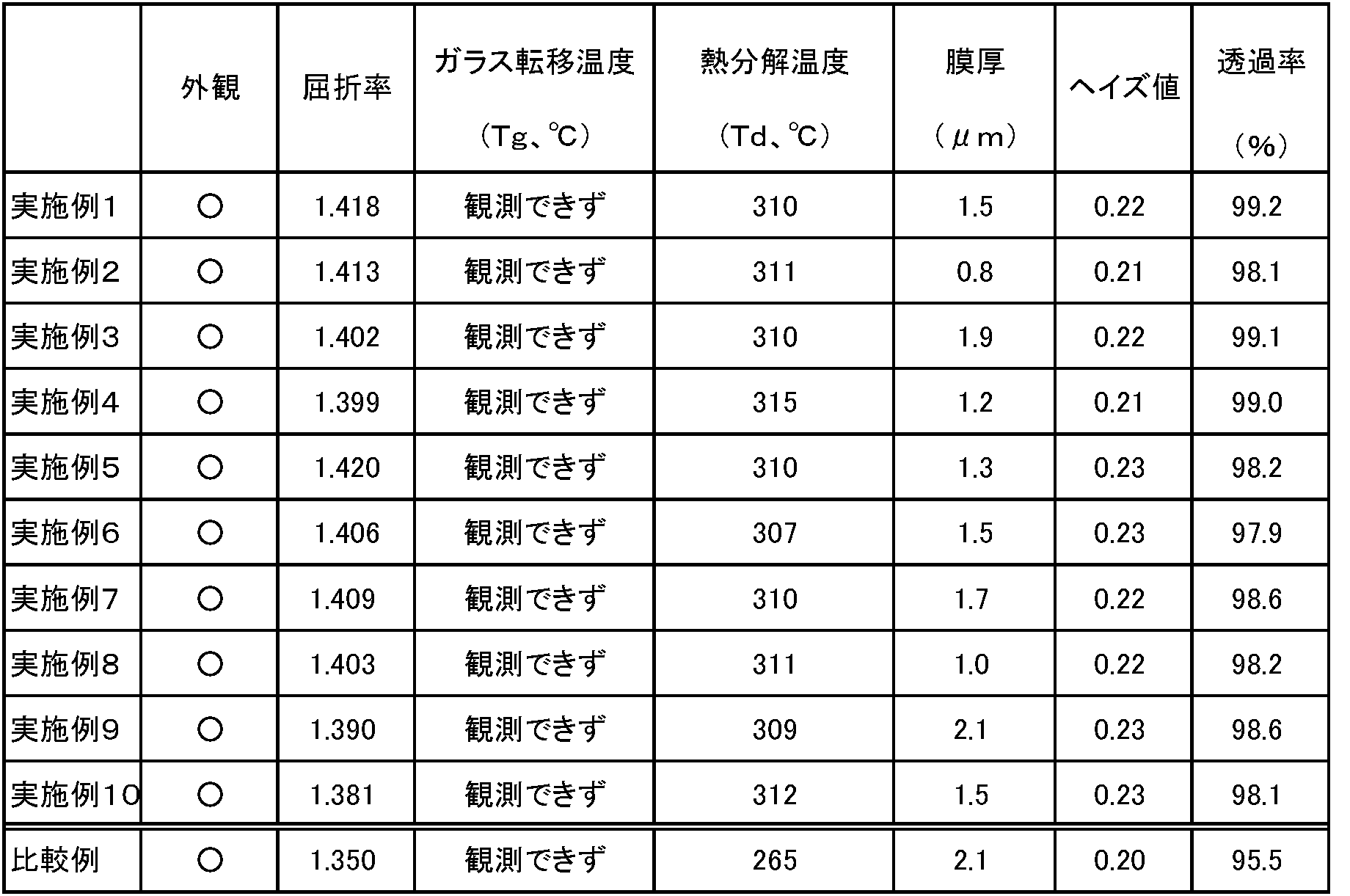
試験例5(耐久性評価)
試験例4で得られた硬化膜のうち、実施例3、6又は9で得られた組成物を使用して作製した硬化膜を、日立分光光度計 U-4100を用いて吸収スペクトルを測定した(初期値)。加熱硬化させて得られた塗膜は、可視帯域(400~650nm)において非常に高い透明性をしめした。
次に、以下の3種類の条件で塗膜の耐久性を評価した。
〔1〕265℃10分間の高温耐熱試験
〔2〕85℃、85%の高温高湿耐久試験(600時間経過後の吸収スペクトルを測定)
〔3〕125℃における乾熱耐久試験(1050時間経過後の吸収スペクトルを測定)265℃、10分間経過後(高温耐熱試験)、85℃、85%、600時間経過後(高温高湿耐久試験)、および、125℃、1050時間経過後(乾熱耐久試験)、の着色の有無、屈折率の変化、および、450nmおよび550nmにおける透過率の変化(初期値を100にしたときの相対値)を表2に示す。ほぼ、初期値を維持しており、高い耐久性が確認できた。
試験例4で得られた硬化膜のうち、実施例3、6又は9で得られた組成物を使用して作製した硬化膜を、日立分光光度計 U-4100を用いて吸収スペクトルを測定した(初期値)。加熱硬化させて得られた塗膜は、可視帯域(400~650nm)において非常に高い透明性をしめした。
次に、以下の3種類の条件で塗膜の耐久性を評価した。
〔1〕265℃10分間の高温耐熱試験
〔2〕85℃、85%の高温高湿耐久試験(600時間経過後の吸収スペクトルを測定)
〔3〕125℃における乾熱耐久試験(1050時間経過後の吸収スペクトルを測定)265℃、10分間経過後(高温耐熱試験)、85℃、85%、600時間経過後(高温高湿耐久試験)、および、125℃、1050時間経過後(乾熱耐久試験)、の着色の有無、屈折率の変化、および、450nmおよび550nmにおける透過率の変化(初期値を100にしたときの相対値)を表2に示す。ほぼ、初期値を維持しており、高い耐久性が確認できた。
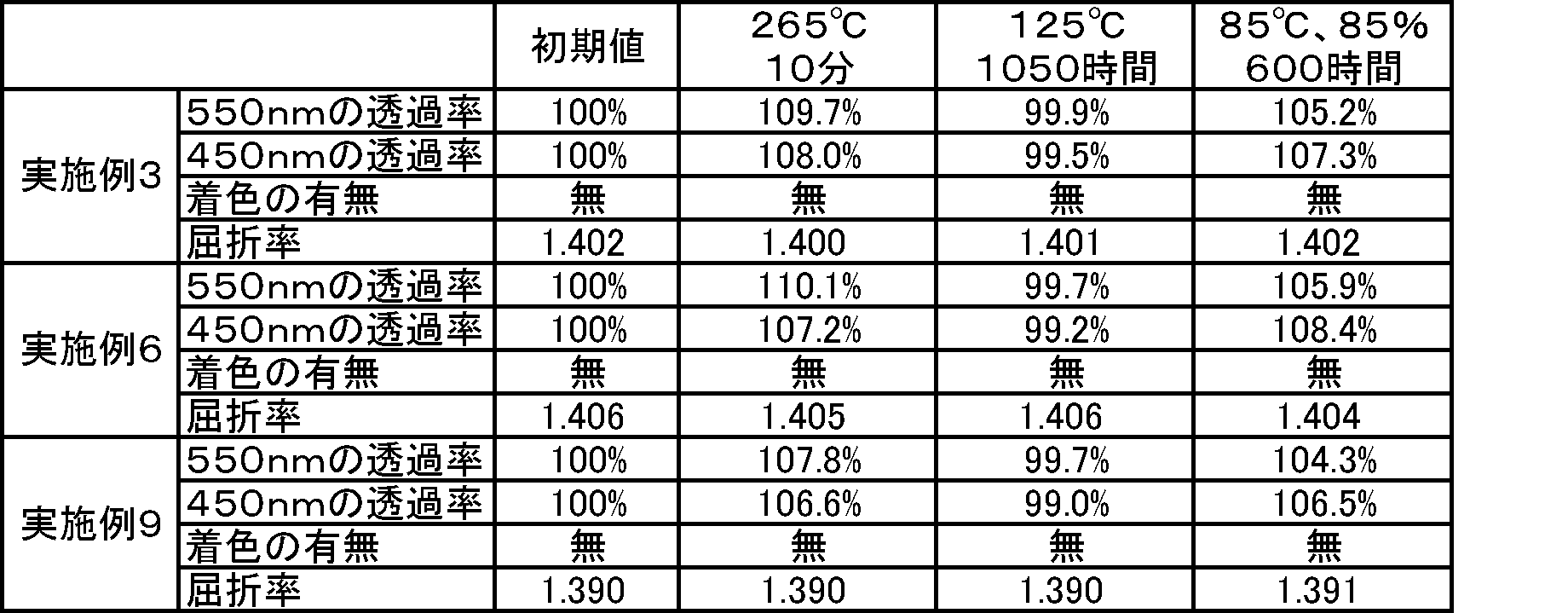
本発明の組成物は、屈折率が低く、かつ透明性が高く、更には耐熱性に優れる薄膜を形成することができるため、CCDモジュール等の受光素子に用いる封止部材の原料として特に好適である。
11、21:シリコンウェハー
12、22:CCD素子部
13、23:封止剤層
14、24:ガラス
15、25:貫通電極
16、26:外部に接続する電極
12、22:CCD素子部
13、23:封止剤層
14、24:ガラス
15、25:貫通電極
16、26:外部に接続する電極
Claims (11)
- 有機ケイ素化合物(A)、及び、
下記式(L):

からなることを特徴とする硬化性樹脂組成物。 - 有機ケイ素化合物(A)は、下記式(1):
{Si(Ra)s(Rb)t(Rc)u(Rd)v(Re)w}n (1)
(式中、Ra、Rb、Rc及びRdは、同一又は異なり、水素、ハロゲン、炭素数1~10のアルコキシル基、アミノ基、炭素数1~10のアルキル基、炭素数5~10のアリール基、炭素数1~10のアリル基、又はグリシジル基である。Reは、同一又は異なり、-O-、-NH-、-C≡C-、又は、シラン単結合である。s、t、u及びvは、同一又は異なり0又は1であり、wは0~4の整数であり、nは1~20である。nが1である場合、s+t+u+vは4であり、wは0である。nが2~20である場合、s+t+u+vは、同一又は異なり0~4であり、wは、同一又は異なり0~4であり、wが1以上の整数である場合、少なくとも2個のSiはReを介して、直鎖、梯子型、環状、又は複環状に結合している。)で表される化合物(A1)である請求項1記載の硬化性樹脂組成物。 - 有機ケイ素化合物(A)は、テトラアルコキシシランである請求項1又は2記載の硬化性樹脂組成物。
- 有機ケイ素化合物(A)と含フッ素ポリマー(B)との合計質量に対して、有機ケイ素化合物(A)が50質量%以上である
請求項1、2又は3記載の硬化性樹脂組成物。 - 有機溶剤を含む請求項1、2、3又は4記載の硬化性樹脂組成物。
- 光学素子封止用である請求項1、2、3又は4記載の硬化性樹脂組成物。
- 請求項1、2、3、4、5又は6記載の硬化性樹脂組成物を硬化して得られることを特徴とする硬化物。
- 屈折率が1.35以下である請求項7記載の硬化物。
- 光学素子用の封止部材である請求項7又は8記載の硬化物。
- 光学素子が受光素子である請求項9記載の硬化物。
- 光学素子が発光素子である請求項9記載の硬化物。
Applications Claiming Priority (2)
| Application Number | Priority Date | Filing Date | Title |
|---|---|---|---|
| JP2011076471 | 2011-03-30 | ||
| JP2011-076471 | 2011-03-30 |
Publications (1)
| Publication Number | Publication Date |
|---|---|
| WO2012133548A1 true WO2012133548A1 (ja) | 2012-10-04 |
Family
ID=46931256
Family Applications (1)
| Application Number | Title | Priority Date | Filing Date |
|---|---|---|---|
| PCT/JP2012/058177 Ceased WO2012133548A1 (ja) | 2011-03-30 | 2012-03-28 | 硬化性樹脂組成物、及び、硬化物 |
Country Status (3)
| Country | Link |
|---|---|
| JP (1) | JP5288018B2 (ja) |
| TW (1) | TW201307466A (ja) |
| WO (1) | WO2012133548A1 (ja) |
Families Citing this family (5)
| Publication number | Priority date | Publication date | Assignee | Title |
|---|---|---|---|---|
| CN104201115A (zh) | 2014-09-12 | 2014-12-10 | 苏州晶方半导体科技股份有限公司 | 晶圆级指纹识别芯片封装结构及封装方法 |
| KR101908186B1 (ko) * | 2016-06-15 | 2018-10-15 | 삼성에스디아이 주식회사 | 윈도우 필름용 조성물, 이로부터 형성된 윈도우 필름 및 이를 포함하는 플렉시블 디스플레이 장치 |
| KR101924174B1 (ko) * | 2018-04-04 | 2019-02-22 | (주)유티아이 | 근적외선 필터 및 그 필터의 제조방법 |
| EP4089447A4 (en) * | 2020-01-08 | 2024-01-24 | Daikin Industries, Ltd. | PROTECTIVE FILM FOR DISPLAY |
| JP7787425B2 (ja) * | 2023-04-19 | 2025-12-17 | ダイキン工業株式会社 | 表面撥液性付与剤及びレジスト用樹脂組成物 |
Citations (8)
| Publication number | Priority date | Publication date | Assignee | Title |
|---|---|---|---|---|
| JPH0841415A (ja) * | 1994-07-28 | 1996-02-13 | Dainippon Ink & Chem Inc | 樹脂組成物 |
| JP2002012769A (ja) * | 2000-06-29 | 2002-01-15 | Shin Etsu Chem Co Ltd | 硬化性フルオロポリエーテルゴム組成物 |
| WO2002018457A1 (en) * | 2000-08-29 | 2002-03-07 | Daikin Industries, Ltd. | Curable fluoropolymer, curable resin composition containing the same, and antireflection film |
| JP2007217702A (ja) * | 2002-03-14 | 2007-08-30 | Daikin Ind Ltd | 含フッ素共重合体、含フッ素共重合体製造方法、含フッ素共重合体硬化用組成物及び硬化体 |
| WO2008044765A1 (en) * | 2006-10-12 | 2008-04-17 | Daikin Industries, Ltd. | Curable fluorine-containing polymer composition |
| JP2008274306A (ja) * | 1998-05-26 | 2008-11-13 | Jsr Corp | 組成物 |
| JP2010047638A (ja) * | 2008-08-19 | 2010-03-04 | Kaneka Corp | 上塗り塗料用硬化性樹脂組成物 |
| JP2010248280A (ja) * | 2009-04-10 | 2010-11-04 | Shin-Etsu Chemical Co Ltd | 含フッ素硬化性組成物及びその製造方法 |
-
2012
- 2012-03-28 WO PCT/JP2012/058177 patent/WO2012133548A1/ja not_active Ceased
- 2012-03-28 JP JP2012073522A patent/JP5288018B2/ja not_active Expired - Fee Related
- 2012-03-30 TW TW101111434A patent/TW201307466A/zh unknown
Patent Citations (8)
| Publication number | Priority date | Publication date | Assignee | Title |
|---|---|---|---|---|
| JPH0841415A (ja) * | 1994-07-28 | 1996-02-13 | Dainippon Ink & Chem Inc | 樹脂組成物 |
| JP2008274306A (ja) * | 1998-05-26 | 2008-11-13 | Jsr Corp | 組成物 |
| JP2002012769A (ja) * | 2000-06-29 | 2002-01-15 | Shin Etsu Chem Co Ltd | 硬化性フルオロポリエーテルゴム組成物 |
| WO2002018457A1 (en) * | 2000-08-29 | 2002-03-07 | Daikin Industries, Ltd. | Curable fluoropolymer, curable resin composition containing the same, and antireflection film |
| JP2007217702A (ja) * | 2002-03-14 | 2007-08-30 | Daikin Ind Ltd | 含フッ素共重合体、含フッ素共重合体製造方法、含フッ素共重合体硬化用組成物及び硬化体 |
| WO2008044765A1 (en) * | 2006-10-12 | 2008-04-17 | Daikin Industries, Ltd. | Curable fluorine-containing polymer composition |
| JP2010047638A (ja) * | 2008-08-19 | 2010-03-04 | Kaneka Corp | 上塗り塗料用硬化性樹脂組成物 |
| JP2010248280A (ja) * | 2009-04-10 | 2010-11-04 | Shin-Etsu Chemical Co Ltd | 含フッ素硬化性組成物及びその製造方法 |
Also Published As
| Publication number | Publication date |
|---|---|
| JP2012214753A (ja) | 2012-11-08 |
| TW201307466A (zh) | 2013-02-16 |
| JP5288018B2 (ja) | 2013-09-11 |
Similar Documents
| Publication | Publication Date | Title |
|---|---|---|
| JP5223978B2 (ja) | 光学素子封止用含フッ素樹脂組成物、及び、硬化物 | |
| JP5589387B2 (ja) | シロキサン樹脂組成物およびそれを用いたタッチパネル用保護膜 | |
| EP1389634B1 (en) | Surface-treating agent comprising inorganic/organic composite material | |
| CN101910318B (zh) | 硅氧烷类树脂组合物 | |
| JP5293588B2 (ja) | 光硬化性含フッ素ポリマーを含む光学材料および光硬化性含フッ素樹脂組成物 | |
| JP7027886B2 (ja) | 樹脂組成物、その硬化膜およびその製造方法ならびに固体撮像素子 | |
| KR20150143573A (ko) | 실록산 올리고머 및 무기미립자를 포함하는 경화성 조성물 | |
| JP5288018B2 (ja) | 硬化性樹脂組成物、及び、硬化物 | |
| JP4284728B2 (ja) | 反射防止膜、反射防止膜を含む積層体および反射防止膜の製造方法 | |
| JP2011173738A (ja) | 透明焼成体 | |
| JP2012109542A (ja) | 塗布型絶縁膜形成用含フッ素組成物、絶縁膜、及び薄膜トランジスタ | |
| JP2013087162A (ja) | 含フッ素ポリマー、硬化性樹脂組成物、及び、硬化物 | |
| JP5353011B2 (ja) | シロキサン系樹脂組成物、これを用いた光学デバイスおよびシロキサン系樹脂組成物の製造方法 | |
| JP5012025B2 (ja) | 加水分解性金属アルコキシド部位を有する含フッ素化合物、該化合物から得られる硬化性含フッ素ポリマーおよび該ポリマーを含む硬化性含フッ素樹脂組成物 | |
| WO2010055758A1 (ja) | 含フッ素重合体、該含フッ素重合体よりなる硬化性樹脂組成物および反射防止膜 | |
| JP7420852B2 (ja) | 硬化型樹脂組成物、これから製造される薄膜、前記薄膜を含む色変換パネルおよび前記色変換パネルを含む表示装置 | |
| JP5223977B2 (ja) | 硬化性樹脂組成物及び硬化物 | |
| KR20200095249A (ko) | 경화형 수지 조성물, 그로부터 형성된 경화막, 및 상기 경화막을 갖는 전자 장치 |
Legal Events
| Date | Code | Title | Description |
|---|---|---|---|
| 121 | Ep: the epo has been informed by wipo that ep was designated in this application |
Ref document number: 12764651 Country of ref document: EP Kind code of ref document: A1 |
|
| NENP | Non-entry into the national phase |
Ref country code: DE |
|
| 122 | Ep: pct application non-entry in european phase |
Ref document number: 12764651 Country of ref document: EP Kind code of ref document: A1 |