WO2012090952A1 - 表示装置、テレビジョン受像機、表示装置の制御方法 - Google Patents
表示装置、テレビジョン受像機、表示装置の制御方法 Download PDFInfo
- Publication number
- WO2012090952A1 WO2012090952A1 PCT/JP2011/080108 JP2011080108W WO2012090952A1 WO 2012090952 A1 WO2012090952 A1 WO 2012090952A1 JP 2011080108 W JP2011080108 W JP 2011080108W WO 2012090952 A1 WO2012090952 A1 WO 2012090952A1
- Authority
- WO
- WIPO (PCT)
- Prior art keywords
- video
- display device
- display
- aspect ratio
- area
- Prior art date
- Legal status (The legal status is an assumption and is not a legal conclusion. Google has not performed a legal analysis and makes no representation as to the accuracy of the status listed.)
- Ceased
Links
Images






Classifications
-
- H—ELECTRICITY
- H04—ELECTRIC COMMUNICATION TECHNIQUE
- H04N—PICTORIAL COMMUNICATION, e.g. TELEVISION
- H04N5/00—Details of television systems
- H04N5/44—Receiver circuitry for the reception of television signals according to analogue transmission standards
- H04N5/445—Receiver circuitry for the reception of television signals according to analogue transmission standards for displaying additional information
-
- H—ELECTRICITY
- H04—ELECTRIC COMMUNICATION TECHNIQUE
- H04N—PICTORIAL COMMUNICATION, e.g. TELEVISION
- H04N21/00—Selective content distribution, e.g. interactive television or video on demand [VOD]
- H04N21/40—Client devices specifically adapted for the reception of or interaction with content, e.g. set-top-box [STB]; Operations thereof
- H04N21/43—Processing of content or additional data, e.g. demultiplexing additional data from a digital video stream; Elementary client operations, e.g. monitoring of home network or synchronising decoder's clock; Client middleware
- H04N21/431—Generation of visual interfaces for content selection or interaction; Content or additional data rendering
- H04N21/4312—Generation of visual interfaces for content selection or interaction; Content or additional data rendering involving specific graphical features, e.g. screen layout, special fonts or colors, blinking icons, highlights or animations
- H04N21/4316—Generation of visual interfaces for content selection or interaction; Content or additional data rendering involving specific graphical features, e.g. screen layout, special fonts or colors, blinking icons, highlights or animations for displaying supplemental content in a region of the screen, e.g. an advertisement in a separate window
-
- G—PHYSICS
- G09—EDUCATION; CRYPTOGRAPHY; DISPLAY; ADVERTISING; SEALS
- G09G—ARRANGEMENTS OR CIRCUITS FOR CONTROL OF INDICATING DEVICES USING STATIC MEANS TO PRESENT VARIABLE INFORMATION
- G09G3/00—Control arrangements or circuits, of interest only in connection with visual indicators other than cathode-ray tubes
- G09G3/20—Control arrangements or circuits, of interest only in connection with visual indicators other than cathode-ray tubes for presentation of an assembly of a number of characters, e.g. a page, by composing the assembly by combination of individual elements arranged in a matrix no fixed position being assigned to or needed to be assigned to the individual characters or partial characters
-
- G—PHYSICS
- G09—EDUCATION; CRYPTOGRAPHY; DISPLAY; ADVERTISING; SEALS
- G09G—ARRANGEMENTS OR CIRCUITS FOR CONTROL OF INDICATING DEVICES USING STATIC MEANS TO PRESENT VARIABLE INFORMATION
- G09G3/00—Control arrangements or circuits, of interest only in connection with visual indicators other than cathode-ray tubes
- G09G3/20—Control arrangements or circuits, of interest only in connection with visual indicators other than cathode-ray tubes for presentation of an assembly of a number of characters, e.g. a page, by composing the assembly by combination of individual elements arranged in a matrix no fixed position being assigned to or needed to be assigned to the individual characters or partial characters
- G09G3/2085—Special arrangements for addressing the individual elements of the matrix, other than by driving respective rows and columns in combination
- G09G3/2088—Special arrangements for addressing the individual elements of the matrix, other than by driving respective rows and columns in combination with use of a plurality of processors, each processor controlling a number of individual elements of the matrix
-
- G—PHYSICS
- G09—EDUCATION; CRYPTOGRAPHY; DISPLAY; ADVERTISING; SEALS
- G09G—ARRANGEMENTS OR CIRCUITS FOR CONTROL OF INDICATING DEVICES USING STATIC MEANS TO PRESENT VARIABLE INFORMATION
- G09G3/00—Control arrangements or circuits, of interest only in connection with visual indicators other than cathode-ray tubes
- G09G3/20—Control arrangements or circuits, of interest only in connection with visual indicators other than cathode-ray tubes for presentation of an assembly of a number of characters, e.g. a page, by composing the assembly by combination of individual elements arranged in a matrix no fixed position being assigned to or needed to be assigned to the individual characters or partial characters
- G09G3/34—Control arrangements or circuits, of interest only in connection with visual indicators other than cathode-ray tubes for presentation of an assembly of a number of characters, e.g. a page, by composing the assembly by combination of individual elements arranged in a matrix no fixed position being assigned to or needed to be assigned to the individual characters or partial characters by control of light from an independent source
- G09G3/3406—Control of illumination source
-
- G—PHYSICS
- G09—EDUCATION; CRYPTOGRAPHY; DISPLAY; ADVERTISING; SEALS
- G09G—ARRANGEMENTS OR CIRCUITS FOR CONTROL OF INDICATING DEVICES USING STATIC MEANS TO PRESENT VARIABLE INFORMATION
- G09G3/00—Control arrangements or circuits, of interest only in connection with visual indicators other than cathode-ray tubes
- G09G3/20—Control arrangements or circuits, of interest only in connection with visual indicators other than cathode-ray tubes for presentation of an assembly of a number of characters, e.g. a page, by composing the assembly by combination of individual elements arranged in a matrix no fixed position being assigned to or needed to be assigned to the individual characters or partial characters
- G09G3/34—Control arrangements or circuits, of interest only in connection with visual indicators other than cathode-ray tubes for presentation of an assembly of a number of characters, e.g. a page, by composing the assembly by combination of individual elements arranged in a matrix no fixed position being assigned to or needed to be assigned to the individual characters or partial characters by control of light from an independent source
- G09G3/36—Control arrangements or circuits, of interest only in connection with visual indicators other than cathode-ray tubes for presentation of an assembly of a number of characters, e.g. a page, by composing the assembly by combination of individual elements arranged in a matrix no fixed position being assigned to or needed to be assigned to the individual characters or partial characters by control of light from an independent source using liquid crystals
- G09G3/3611—Control of matrices with row and column drivers
- G09G3/3674—Details of drivers for scan electrodes
-
- G—PHYSICS
- G09—EDUCATION; CRYPTOGRAPHY; DISPLAY; ADVERTISING; SEALS
- G09G—ARRANGEMENTS OR CIRCUITS FOR CONTROL OF INDICATING DEVICES USING STATIC MEANS TO PRESENT VARIABLE INFORMATION
- G09G3/00—Control arrangements or circuits, of interest only in connection with visual indicators other than cathode-ray tubes
- G09G3/20—Control arrangements or circuits, of interest only in connection with visual indicators other than cathode-ray tubes for presentation of an assembly of a number of characters, e.g. a page, by composing the assembly by combination of individual elements arranged in a matrix no fixed position being assigned to or needed to be assigned to the individual characters or partial characters
- G09G3/34—Control arrangements or circuits, of interest only in connection with visual indicators other than cathode-ray tubes for presentation of an assembly of a number of characters, e.g. a page, by composing the assembly by combination of individual elements arranged in a matrix no fixed position being assigned to or needed to be assigned to the individual characters or partial characters by control of light from an independent source
- G09G3/36—Control arrangements or circuits, of interest only in connection with visual indicators other than cathode-ray tubes for presentation of an assembly of a number of characters, e.g. a page, by composing the assembly by combination of individual elements arranged in a matrix no fixed position being assigned to or needed to be assigned to the individual characters or partial characters by control of light from an independent source using liquid crystals
- G09G3/3611—Control of matrices with row and column drivers
- G09G3/3685—Details of drivers for data electrodes
-
- G—PHYSICS
- G09—EDUCATION; CRYPTOGRAPHY; DISPLAY; ADVERTISING; SEALS
- G09G—ARRANGEMENTS OR CIRCUITS FOR CONTROL OF INDICATING DEVICES USING STATIC MEANS TO PRESENT VARIABLE INFORMATION
- G09G5/00—Control arrangements or circuits for visual indicators common to cathode-ray tube indicators and other visual indicators
- G09G5/14—Display of multiple viewports
-
- H—ELECTRICITY
- H04—ELECTRIC COMMUNICATION TECHNIQUE
- H04N—PICTORIAL COMMUNICATION, e.g. TELEVISION
- H04N21/00—Selective content distribution, e.g. interactive television or video on demand [VOD]
- H04N21/20—Servers specifically adapted for the distribution of content, e.g. VOD servers; Operations thereof
- H04N21/23—Processing of content or additional data; Elementary server operations; Server middleware
- H04N21/234—Processing of video elementary streams, e.g. splicing of video streams or manipulating encoded video stream scene graphs
- H04N21/2343—Processing of video elementary streams, e.g. splicing of video streams or manipulating encoded video stream scene graphs involving reformatting operations of video signals for distribution or compliance with end-user requests or end-user device requirements
- H04N21/234327—Processing of video elementary streams, e.g. splicing of video streams or manipulating encoded video stream scene graphs involving reformatting operations of video signals for distribution or compliance with end-user requests or end-user device requirements by decomposing into layers, e.g. base layer and one or more enhancement layers
-
- H—ELECTRICITY
- H04—ELECTRIC COMMUNICATION TECHNIQUE
- H04N—PICTORIAL COMMUNICATION, e.g. TELEVISION
- H04N21/00—Selective content distribution, e.g. interactive television or video on demand [VOD]
- H04N21/40—Client devices specifically adapted for the reception of or interaction with content, e.g. set-top-box [STB]; Operations thereof
- H04N21/43—Processing of content or additional data, e.g. demultiplexing additional data from a digital video stream; Elementary client operations, e.g. monitoring of home network or synchronising decoder's clock; Client middleware
- H04N21/44—Processing of video elementary streams, e.g. splicing a video clip retrieved from local storage with an incoming video stream or rendering scenes according to encoded video stream scene graphs
- H04N21/4402—Processing of video elementary streams, e.g. splicing a video clip retrieved from local storage with an incoming video stream or rendering scenes according to encoded video stream scene graphs involving reformatting operations of video signals for household redistribution, storage or real-time display
- H04N21/440263—Processing of video elementary streams, e.g. splicing a video clip retrieved from local storage with an incoming video stream or rendering scenes according to encoded video stream scene graphs involving reformatting operations of video signals for household redistribution, storage or real-time display by altering the spatial resolution, e.g. for displaying on a connected PDA
- H04N21/440272—Processing of video elementary streams, e.g. splicing a video clip retrieved from local storage with an incoming video stream or rendering scenes according to encoded video stream scene graphs involving reformatting operations of video signals for household redistribution, storage or real-time display by altering the spatial resolution, e.g. for displaying on a connected PDA for performing aspect ratio conversion
-
- H—ELECTRICITY
- H04—ELECTRIC COMMUNICATION TECHNIQUE
- H04N—PICTORIAL COMMUNICATION, e.g. TELEVISION
- H04N21/00—Selective content distribution, e.g. interactive television or video on demand [VOD]
- H04N21/40—Client devices specifically adapted for the reception of or interaction with content, e.g. set-top-box [STB]; Operations thereof
- H04N21/47—End-user applications
-
- G—PHYSICS
- G09—EDUCATION; CRYPTOGRAPHY; DISPLAY; ADVERTISING; SEALS
- G09G—ARRANGEMENTS OR CIRCUITS FOR CONTROL OF INDICATING DEVICES USING STATIC MEANS TO PRESENT VARIABLE INFORMATION
- G09G2310/00—Command of the display device
- G09G2310/02—Addressing, scanning or driving the display screen or processing steps related thereto
- G09G2310/0202—Addressing of scan or signal lines
- G09G2310/0221—Addressing of scan or signal lines with use of split matrices
-
- G—PHYSICS
- G09—EDUCATION; CRYPTOGRAPHY; DISPLAY; ADVERTISING; SEALS
- G09G—ARRANGEMENTS OR CIRCUITS FOR CONTROL OF INDICATING DEVICES USING STATIC MEANS TO PRESENT VARIABLE INFORMATION
- G09G2340/00—Aspects of display data processing
- G09G2340/04—Changes in size, position or resolution of an image
- G09G2340/0407—Resolution change, inclusive of the use of different resolutions for different screen areas
-
- G—PHYSICS
- G09—EDUCATION; CRYPTOGRAPHY; DISPLAY; ADVERTISING; SEALS
- G09G—ARRANGEMENTS OR CIRCUITS FOR CONTROL OF INDICATING DEVICES USING STATIC MEANS TO PRESENT VARIABLE INFORMATION
- G09G2340/00—Aspects of display data processing
- G09G2340/04—Changes in size, position or resolution of an image
- G09G2340/0442—Handling or displaying different aspect ratios, or changing the aspect ratio
-
- G—PHYSICS
- G09—EDUCATION; CRYPTOGRAPHY; DISPLAY; ADVERTISING; SEALS
- G09G—ARRANGEMENTS OR CIRCUITS FOR CONTROL OF INDICATING DEVICES USING STATIC MEANS TO PRESENT VARIABLE INFORMATION
- G09G2340/00—Aspects of display data processing
- G09G2340/04—Changes in size, position or resolution of an image
- G09G2340/0457—Improvement of perceived resolution by subpixel rendering
Definitions
- the present invention relates to a display device that simultaneously displays a plurality of videos.
- the sub content video When simultaneously displaying a main content video such as a television broadcast (TV) and a sub content video such as a program guide, the sub content video is displayed in an empty area generated by reducing the main content video, or the main content video and the sub content video are displayed. The content video is superimposed and displayed (a part of the main content video is replaced with the sub content video).
- a main content video such as a television broadcast (TV)
- a sub content video such as a program guide
- the aspect ratio of the display unit (horizontal size in viewing state: vertical size) is 16: 9 and the main content video is HDTV broadcast (the aspect ratio is 16: 9), only the main content video is displayed.
- the main content video is displayed at an aspect ratio of 16: 9 with the vertical size of the main content video matched to the vertical size of the display unit, and the main content video and the sub content video are displayed simultaneously, the main content video is resized (main content Display the sub-content video in an empty area created by making the vertical size of the video smaller than the vertical size of the display unit and display it at an aspect ratio of 16: 9, or the main content video without resizing the main content video Part of (for example, the peripheral edge) It is displayed over the blanking content video.
- Patent Document 1 in the instrument panel that simultaneously displays the navigation video and the speedometer video, when the navigation video needs to be enlarged, only the horizontal size is enlarged without changing the vertical size of the navigation video.
- a technique for displaying the speedometer video by changing the horizontal size to a smaller form is disclosed.
- Patent No. 4302964 Japanese Patent Gazette "Patent No. 4302964"
- the conventional technology has a problem in that when displaying a sub-content video in addition to the main content video, viewing of the main content video is hindered by resizing or overlapping display of the sub-content video. In addition, there is a problem that a load is applied to the display device due to the resizing process of the main content video and the superimposing process of the sub content video.
- An object of the present invention is to propose a display device with improved user convenience.
- the display device includes a display unit having an aspect ratio of (16 + a): 9, where a is a positive number, the aspect ratio indicates horizontal size: vertical size, and the first image having an aspect ratio of 16: 9 is displayed.
- the second image is displayed so as not to overlap the first image, while displaying the entire size so that the vertical size is substantially equal to the vertical size of the display unit.
- a display device with improved user convenience can be realized.
- Embodiments of the present invention will be described with reference to FIGS. 1 to 15 as follows. In the following description, it is assumed that a is a positive number and the aspect ratio indicates horizontal size: vertical size. “Full display” means that the entire video is displayed without changing its aspect ratio.
- FIG. 1 is a schematic diagram showing a configuration of a display unit 1 of the present television receiver (for example, a mobile liquid crystal display mounted on a liquid crystal television or a mobile phone).
- the television receiver includes a display unit with an aspect ratio of (16 + a): 9, and the first image with an aspect ratio of 16: 9 has a vertical size that is the vertical size of the display unit.
- the second image is displayed so as not to overlap with the first image, while being displayed in full so as to be substantially equal to the first image.
- the main area MAR (first region) having an aspect ratio of 16: 9 and the sub-area SAR (second region) having an aspect ratio of a: 9 are not overlapped on the display unit 1.
- the vertical sizes of the display unit 1 and the main area MAR and the sub area SAR are substantially equal, the first video is displayed in the main area MAR, and the second video is displayed in the sub area SAR.
- the first video displayed in the main area MAR is, for example, a full HDTV (high-definition television broadcast, so-called high-definition broadcast) video with an aspect ratio of 16: 9, or a one-segment TV with an aspect ratio of 16: 9 ( 1 segment partial reception service for mobile devices) TV image (see FIGS. 2A and 2B).
- the first video is not limited in resolution and video source as long as the aspect ratio is 16: 9.
- video with a resolution higher than full HDTV is preferred.
- the second video displayed in the sub-area SAR may be anything such as a user interface video (UI video), a gadget video, a video supplied from an external network or an external device, a television broadcast video different from the main area MAR, Any aspect ratio, resolution, or video source may be used.
- UI video user interface video
- gadget video a video supplied from an external network or an external device
- television broadcast video different from the main area MAR
- Any aspect ratio, resolution, or video source may be used.
- a plurality of content videos may be displayed.
- the first video having an aspect ratio of 16: 9 is fully displayed so that the vertical size is substantially equal to the vertical size of the display unit, and the second video is the same as the first video. Since the images are displayed so as not to overlap, there is an advantage that viewing of the first video is not hindered by the display of the second video. In addition, since the resizing process of the first video and the overlaying process of the second video are unnecessary, there is an advantage that the load on the television receiver can be reduced. In addition, the configuration of FIG. 1 reduces the load on the source driver that drives the data signal lines as compared to the configuration of FIG. 13 as a reference diagram (a configuration in which the first and second videos are arranged in the vertical direction). There are also benefits.
- the first video is displayed in the main area MAR with the display size fixed regardless of whether or not the second video is displayed.
- the third image having an aspect ratio of (16 + a): 9 is substantially the same as the vertical size of the display unit 1 in the entire display unit (main area MAR + subarea SAR). All displays are made to be equal (see FIG. 4).
- the resolution of the main area MAR is set to vertical (number of scanning signal lines) 1080 ⁇ horizontal 1920. It is desirable to set it above.
- the sub-area SAR may have the same definition as the main area MAR or a definition that is lower than that of the main area MAR.
- the scanning signal lines extend in the horizontal direction
- the data signal lines extend in the vertical direction.
- FIG. 6 is a schematic diagram showing a configuration of the present television receiver 100.
- the television receiver 100 includes a liquid crystal panel LCP, a backlight BL, a source driver SD, a gate driver GD, a display control unit, and a sub-area control unit that constitute the display unit 1.
- the source driver SD drives the data signal line of the liquid crystal panel LCP
- the gate driver GD drives the scanning signal line of the liquid crystal panel LCP
- the tuner receives a television broadcast.
- the user input processing unit processes the user input and outputs the processing result to the main area control unit and the sub area control unit.
- the main area control unit outputs video data for the main area corresponding to the processing result of the user input processing unit to the display control unit.
- the sub area control unit outputs video data for the sub area corresponding to the processing result of the user input processing unit to the display control unit.
- the display control unit includes a timing controller, receives the video data for the main area and the video data for the sub area, and controls the liquid crystal panel drive circuit including the gate driver GD and the source driver SD.
- the main area control unit that has received the processing result from the user input processing unit sends the corresponding HDTV video via the tuner. Take in the data and output it to the display controller.
- the main area control unit that receives the processing result from the user input processing unit performs communication.
- the HDTV video data recorded on the recording medium is taken in via the unit and output to the display control unit.
- the main area control unit that receives the processing result from the user input processing unit transmits the result on the network via the communication unit. Captures HDTV video data and outputs it to the display controller.
- the main area control unit that receives the processing result from the user input processing unit passes through the communication unit.
- the video data of the HDTV of the video camera is captured and output to the display control unit.
- the subarea control unit that receives the processing result from the user input processing unit transmits the video of Twitter on the network via the communication unit. Take in the data and output it to the display controller.
- the subarea control unit that receives the processing result from the user input processing unit sends the videophone from the TV phone line via the communication unit.
- Video data is captured and output to the display controller.
- the subarea control unit that receives the processing result from the user input processing unit receives the corresponding HDTV video via the tuner. Take in the data and output it to the display controller.
- the configuration of the data signal line and the scanning signal line of the liquid crystal panel LCP is such that the main area MAR and the sub area SAR have the same configuration, and both sides of the scanning signal line are connected to the gate driver GD.
- the main area MAR and the sub-area SAR have the same structure, and both sides of the scanning signal line are connected to the gate driver GD.
- the data signal lines can be divided into the upper half and the lower half of the display portion, and the divided data signal lines can be driven separately (so-called source double insertion configuration). Further, as shown in FIG.
- the resolution of the sub area SAR (total number of scanning signal lines and data signal lines in the sub area SAR) is set to the resolution of the main area MAR (sub The total number of scanning signal lines and data signal lines in the area SAR can also be made lower.
- Example 3 As the pixel configuration of the liquid crystal panel LCP (display unit 1), as shown in FIGS. 9A and 9B, the configuration of the minimum display unit can be changed between the main area MAR and the sub-area SAR. That is, in the main area MAR, a table unit is composed of 6 pixels of R, G, B, Y, M, and C, while in the sub area SAR, a table unit is composed of 3 pixels of R, G, and B.
- the first backlight MBL corresponding to the main area MAR, the second backlight SBL corresponding to the sub area SAR, and the first and second backlights are provided.
- a backlight control unit that is individually controlled may be provided. More specifically, in the first backlight MBL, LED elements (plural) including LEDs of R, G, and B colors are arranged in a matrix, and a plurality of LED elements (for example, one set is vertically 2 ⁇ horizontal). 2 LED elements), and the brightness of each LED element is controlled for each group (2D type brightness control). In the second backlight SBL, LED elements (plural) including R, G, and B three-color LEDs are arranged in a matrix, and all the LED elements (of the second backlight SBL) are similarly controlled in luminance. (0D luminance control).
- FIG. 10 and the configuration of FIG. 8 are combined to form the sub area SAR. It is also possible to display only (main area MAR is OFF). Further, only the main area MAR can be displayed (the sub area SAR is turned off).
- the present television receiver may be configured to include a sub-area sensor in the sub-area SAR.
- This sub-area sensor has a function for accepting user input and an environment (external light quantity / temperature) measurement function, and is controlled by the sub-area control unit. If it carries out like this, a user input will become possible by the touch to the subarea surface of the display part 1, or approach, and a user's convenience will increase.
- the present television receiver may be configured to provide a main area sensor in the main area MAR and a sub area sensor in the sub area SAR.
- This main area sensor has a function for accepting user input and an environment (external light quantity / temperature) measurement function, and is controlled by the main area control unit.
- the sub-area sensor has a function for accepting user input and an environment (external light quantity / temperature) measurement function, and is controlled by the sub-area control unit.
- the sensitivity (control method), function, or configuration itself can be changed between the sub area sensor and the main area sensor.
- the display device includes a display unit having an aspect ratio of (16 + a): 9, where a is a positive number, the aspect ratio indicates horizontal size: vertical size, and the first image having an aspect ratio of 16: 9 is displayed.
- the second image is displayed so as not to overlap the first image, while displaying the entire size so that the vertical size is substantially equal to the vertical size of the display unit.
- This display device may be configured to fix the display size of the first video regardless of whether or not the second video is displayed.
- the present display device may be configured to display the first video so that one of the vertical edges thereof coincides with one of the vertical edges of the display unit.
- the first video can be configured to have a resolution higher than that of high definition television broadcasting (HDTV).
- HDMI high definition television broadcasting
- This display device may be configured to display all the third video having an aspect ratio of (16 + a): 9 so that the vertical size is substantially equal to the vertical size of the display unit.
- the first video may be a high-definition television broadcast (HDTV) video or a one-segment broadcast video.
- HDMI high-definition television broadcast
- the scanning signal line may be extended in the horizontal direction, and the data signal line may be extended in the vertical direction.
- the second video may include a plurality of content videos.
- the second video can be configured to be a video for a user interface.
- the display unit includes a first region having an aspect ratio of 16: 9 and a second region having an aspect ratio of a: 9 that does not overlap the first region.
- the vertical size of each of the first and second areas may be equal, and the first video may be displayed in the first area and the second video may be displayed in the second area.
- the first region and the second region may have different pixel structures.
- the first region and the second region may have different driving methods.
- the display device may include a first sensor provided in the first area and a second sensor provided in the second area, and the first and second sensors may be individually controlled.
- the display unit may be composed of a liquid crystal panel.
- the display device may include a first backlight corresponding to the first region and a second backlighter corresponding to the second region, and the first and second backlights may be individually controlled. it can.
- the horizontal display position of the first video and the horizontal display position of the second video are set according to a user instruction (for example, as shown in FIG. Accordingly, the first video may be on the right side and the second video on the left side, or the first video may be on the left side and the second video on the right side.
- an area corresponding to a from the left edge is an area corresponding to the left edge area, and an area corresponding to a from the right edge.
- the area corresponding to the remaining 16-a is the central area, and the backlight controls the backlight corresponding to the left end area, the right end area, and the central area respectively.
- This television receiver includes the above display device.
- the control method of the display device is a control method of a display device including a display unit in which a is a positive number, the aspect ratio indicates horizontal size: vertical size, and the aspect ratio is (16 + a): 9.
- the first video having an aspect ratio of 16: 9 is fully displayed so that its vertical size is substantially equal to the vertical size of the display unit, and the second video is displayed so as not to overlap the first video. .
- the present invention is not limited to the above-described embodiments, and those obtained by appropriately modifying the above-described embodiments based on common general technical knowledge and those obtained by combining them are also included in the embodiments of the present invention.
- This display device is suitable for a television receiver, for example.
Landscapes
- Engineering & Computer Science (AREA)
- Physics & Mathematics (AREA)
- Theoretical Computer Science (AREA)
- General Physics & Mathematics (AREA)
- Computer Hardware Design (AREA)
- Multimedia (AREA)
- Signal Processing (AREA)
- Chemical & Material Sciences (AREA)
- Crystallography & Structural Chemistry (AREA)
- Business, Economics & Management (AREA)
- Marketing (AREA)
- Controls And Circuits For Display Device (AREA)
- Control Of Indicators Other Than Cathode Ray Tubes (AREA)
Abstract
本表示装置は、aを正の数とし、アスペクト比が横サイズ:縦サイズを示すものとして、アスペクト比が(16+a):9の表示部を備え、アスペクト比が16:9の第1映像を、その縦サイズが表示部の縦サイズに実質的に等しくなるように全表示しつつ、第2映像を上記第1映像と重ならないように表示する。こうすれば、ユーザの利便性を高めることができる。
Description
本発明は、複数の映像を同時表示する表示装置に関する。
テレビジョン放送(TV)等のメインコンテンツ映像と、番組表等のサブコンテンツ映像とを同時表示する場合、メインコンテンツ映像を縮小することで生まれる空き領域にサブコンテンツ映像を表示するか、あるいはメインコンテンツ映像とサブコンテンツ映像とを重ねて表示している(メインコンテンツ映像の一部をサブコンテンツ映像に置き換える)。
例えば、表示部のアスペクト比(視聴状態での横サイズ:縦サイズ)を16:9とし、メインコンテンツ映像をHDTV放送(アスペクト比は16:9)とするとき、メインコンテンツ映像のみを表示する場合には、メインコンテンツ映像の縦サイズを表示部の縦サイズに一致させてメインコンテンツ映像をアスペクト比16:9で表示し、メインコンテンツ映像とサブコンテンツ映像とを同時表示する場合には、メインコンテンツ映像をリサイズする(メインコンテンツ映像の縦サイズを表示部の縦サイズよりも小さくしてアスペクト比16:9で表示する)ことで生まれる空き領域にサブコンテンツ映像を表示するか、あるいは、メインコンテンツ映像をリサイズすることなく、メインコンテンツ映像の一部(例えば、周端部分)等にサブコンテンツ映像を重ねて表示する。
なお、特許文献1には、ナビゲーション映像とスピードメータ映像とを同時表示するインスツルメントパネルにおいて、ナビゲーション映像を拡大する必要がある場合に、ナビゲーション映像の縦サイズを変えずに横サイズのみを拡大し、スピードメータ映像を横サイズが小さくなる形態に変更して表示する手法が開示されている。
上記従来の技術では、メインコンテンツ映像に加えてサブコンテンツ映像を表示するときに、メインコンテンツ映像の視聴が、リサイズやサブコンテンツ映像の重ね表示によって妨げられるという問題がある。加えて、メインコンテンツ映像のリサイズ処理やサブコンテンツ映像の重ね合わせ処理によって表示装置に負荷がかかるという問題もある。
本発明の目的は、ユーザの利便性を高めた表示装置を提案することにある。
本表示装置は、aを正の数とし、アスペクト比が横サイズ:縦サイズを示すものとして、アスペクト比が(16+a):9の表示部を備え、アスペクト比が16:9の第1映像を、その縦サイズが表示部の縦サイズに実質的に等しくなるように全表示しつつ、第2映像を上記第1映像と重ならないように表示する。
上記構成によれば、第1映像の視聴が、リサイズや第2映像の重ね表示によって妨げられるという問題を解消することができる。
本発明によれば、ユーザの利便性を高めた表示装置を実現することができる。
本発明の実施の形態を、図1~15を用いて説明すれば、以下のとおりである。以下の説明では、aを正の数とし、アスペクト比を横サイズ:縦サイズを示すものとする。また、「全表示」とは、映像全体をそのアスペクト比を変えることなく表示することを意味するものとする。
〔実施例1〕
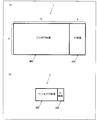
図1は本テレビジョン受像機(例えば、液晶テレビや携帯電話等に搭載されるモバイル液晶ディスプレイ)の表示部1の構成を示す模式図である。図1に示されるように、本テレビジョン受像機は、アスペクト比が(16+a):9の表示部を備え、アスペクト比が16:9の第1映像を、その縦サイズが表示部の縦サイズに実質的に等しくなるように全表示しつつ、第2映像を第1映像と重ならないように表示する。より具体的には、表示部1に、アスペクト比が16:9のメインエリアMAR(第1領域)と、アスペクト比がa:9のサブエリアSAR(第2領域)とが、互いに重ならないように横方向に並べられ、表示部1並びにメインエリアMARおよびサブエリアSARそれぞれの縦サイズが実質的に等しくされ、メインエリアMARに第1映像が表示され、サブエリアSARに第2映像が表示される。
図1は本テレビジョン受像機(例えば、液晶テレビや携帯電話等に搭載されるモバイル液晶ディスプレイ)の表示部1の構成を示す模式図である。図1に示されるように、本テレビジョン受像機は、アスペクト比が(16+a):9の表示部を備え、アスペクト比が16:9の第1映像を、その縦サイズが表示部の縦サイズに実質的に等しくなるように全表示しつつ、第2映像を第1映像と重ならないように表示する。より具体的には、表示部1に、アスペクト比が16:9のメインエリアMAR(第1領域)と、アスペクト比がa:9のサブエリアSAR(第2領域)とが、互いに重ならないように横方向に並べられ、表示部1並びにメインエリアMARおよびサブエリアSARそれぞれの縦サイズが実質的に等しくされ、メインエリアMARに第1映像が表示され、サブエリアSARに第2映像が表示される。
メインエリアMARに表示される第1映像は、例えば、アスペクト比が16:9であるフルHDTV(高精細度テレビジョン放送、いわゆるハイビジョン放送)映像や、同じくアスペクト比が16:9であるワンセグ(モバイル機器向けの1セグメント部分受信サービス)TV映像である(図2(a)(b)参照)。なお、第1映像は、アスペクト比が16:9の映像であれば、解像度や映像ソースは問わない。もっとも、フルHDTV以上の解像度の映像が好適ではある。
また、サブエリアSARに表示される第2映像は、ユーザインターフェース映像(UI映像)、ガジェット映像、外部ネットワークや外部機器から供給される映像、メインエリアMARと異なるテレビジョン放送映像等、何でもよく、アスペクト比や解像度あるいは映像ソースは問わない。また、複数のコンテンツ映像を表示してもよい。
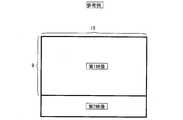
本テレビジョン受像機では、アスペクト比が16:9の第1映像を、その縦サイズが表示部の縦サイズに実質的に等しくなるように全表示しつつ、第2映像を上記第1映像と重ならないように表示するため、第1映像の視聴が第2映像の表示によって妨げられないというメリットがある。加えて、第1映像のリサイズ処理や第2映像の重ね合わせ処理が不要であるため、テレビジョン受像機の負荷を低減することができるというメリットもある。さらに、図1の構成は、参考図である図13の構成(第1および第2映像を縦方向に並べる構成)と比較して、データ信号線を駆動するソースドライバの負荷が低減されるというメリットもある。
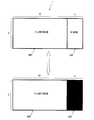
本テレビジョン受像機では、図3に示すように、第2映像の表示の有無にかかわらず、第1映像を、その表示サイズを固定してメインエリアMARに表示する。
さらに、本テレビジョン受像機では、アスペクト比が(16+a):9の第3映像を、表示部全体(メインエリアMAR+サブエリアSAR)に、その縦サイズが表示部1の縦サイズに実質的に等しくなるように全表示する(図4参照)。第3映像は、例えば、アスペクト比が21:9のシネマサイズ映像である。これに鑑み、上記正の数a=5とすることが好ましい。
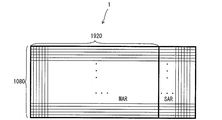
本テレビジョン受像機では、メインエリアMARにフルHDTV映像以上の解像度の映像をそのまま表示するため、図5に示すように、メインエリアMARの解像度を、縦(走査信号線数)1080×横1920以上とすることが望ましい。なお、サブエリアSARについては、メインエリアMARの同一の精細度としてもよいし、メインエリアMARよりも低い精細度としてもよい。また、メインエリアMARおよびサブエリアSARについて、走査信号線が横方向に延伸し、データ信号線が縦方向に延伸する。
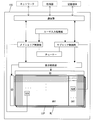
図6は、本テレビジョン受像機100の構成を示す模式図である。図6に示すように、本テレビジョン受像機100は、表示部1を構成する液晶パネルLCPと、バックライトBLと、ソースドライバSDと、ゲートドライバGDと、表示制御部と、サブエリア制御部と、メインエリア制御部と、ユーザ入力処理部と、チューナと、通信部とを備える。
ソースドライバSDは液晶パネルLCPのデータ信号線を駆動し、ゲートドライバGDは液晶パネルLCPの走査信号線を駆動し、チューナは、テレビジョン放送を受信する。
ユーザ入力処理部は、ユーザの入力を処理し、その処理結果をメインエリア制御部およびサブエリア制御部に出す。メインエリア制御部は、ユーザ入力処理部の処理結果に応じたメインエリア用の映像データを表示制御部に出力する。サブエリア制御部は、ユーザ入力処理部の処理結果に応じたサブエリア用の映像データを表示制御部に出力する。
表示制御部は、タイミングコントローラを含んでおり、メインエリア用の映像データとサブエリア用の映像データとを受けて、ゲートドライバGDおよびソースドライバSDを含む液晶パネル駆動回路を制御する。
例えば、ユーザによって放送中のHDTV映像をメインエリアMARに表示する旨の入力がなされたときには、ユーザ入力処理部からの処理結果を受けたメインエリア制御部が、チューナを介して該当するHDTVの映像データを取り込んで表示制御部に出力する。
また、ユーザによって記録媒体(例えば、ハードディスク)に記録されたHDTV映像をメインエリアMARに表示する旨の入力がなされたときには、ユーザ入力処理部からの処理結果を受けたメインエリア制御部が、通信部を介して、記録媒体に記録されたHDTVの映像データを取り込んで表示制御部に出力する。
また、ユーザによってネットワーク上のHDTV映像をメインエリアMARに表示する旨の入力がなされたときには、ユーザ入力処理部からの処理結果を受けたメインエリア制御部が、通信部を介して、ネットワーク上のHDTVの映像データを取り込んで表示制御部に出力する。
また、ユーザによってビデオカメラ(他機器)のHDTV映像をメインエリアMARに表示する旨の入力がなされたときには、ユーザ入力処理部からの処理結果を受けたメインエリア制御部が、通信部を介して、ビデオカメラのHDTVの映像データを取り込んで表示制御部に出力する。
また、ユーザによってツィッター映像をサブエリアSARに表示する旨の入力がなされたときには、ユーザ入力処理部からの処理結果を受けたサブエリア制御部が、通信部を介して、ネットワーク上のツィッターの映像データを取り込んで表示制御部に出力する。
また、ユーザによってTV電話映像をサブエリアSARに表示する旨の入力がなされたときには、ユーザ入力処理部からの処理結果を受けたサブエリア制御部が、通信部を介してTV電話回線からTV電話の映像データを取り込んで表示制御部に出力する。
また、ユーザによって放送中のHDTV映像をサブエリアSARに表示する旨の入力がなされたときには、ユーザ入力処理部からの処理結果を受けたサブエリア制御部が、チューナを介して該当するHDTVの映像データを取り込んで表示制御部に出力する。
〔実施例2〕
液晶パネルLCPのデータ信号線および走査信号線の構成としては、図7(a)に示すように、メインエリアMARとサブエリアSARとを同一構成とし、走査信号線の両側をゲートドライバGDに接続する構成(いわゆるゲート両入れ構成)とすることもできるし、また、図7(b)に示すように、メインエリアMARとサブエリアSARとを同一構成とし、走査信号線の両側をゲートドライバGDに接続する構成に加えて、表示部の上半分と下半分とでデータ信号線を分割し、分割されたデータ信号線それぞれを別駆動する構成(いわゆるソース両入れ構成)とすることもできる。また、図8(a)に示すように、メインエリアMARとサブエリアSARとで走査信号線を分割し、分割された走査信号線を別駆動する構成とすることもできる。さらに、図8(b)に示すように、図8(a)の構成において、サブエリアSARの解像度(サブエリアSARにおける走査信号線およびデータ信号線それぞれの総数)をメインエリアMARの解像度(サブエリアSARにおける走査信号線およびデータ信号線それぞれの総数)よりも低くすることもできる。
液晶パネルLCPのデータ信号線および走査信号線の構成としては、図7(a)に示すように、メインエリアMARとサブエリアSARとを同一構成とし、走査信号線の両側をゲートドライバGDに接続する構成(いわゆるゲート両入れ構成)とすることもできるし、また、図7(b)に示すように、メインエリアMARとサブエリアSARとを同一構成とし、走査信号線の両側をゲートドライバGDに接続する構成に加えて、表示部の上半分と下半分とでデータ信号線を分割し、分割されたデータ信号線それぞれを別駆動する構成(いわゆるソース両入れ構成)とすることもできる。また、図8(a)に示すように、メインエリアMARとサブエリアSARとで走査信号線を分割し、分割された走査信号線を別駆動する構成とすることもできる。さらに、図8(b)に示すように、図8(a)の構成において、サブエリアSARの解像度(サブエリアSARにおける走査信号線およびデータ信号線それぞれの総数)をメインエリアMARの解像度(サブエリアSARにおける走査信号線およびデータ信号線それぞれの総数)よりも低くすることもできる。
〔実施例3〕
液晶パネルLCP(表示部1)の画素構成としては、図9(a)(b)に示すように、メインエリアMARとサブエリアSARとで最小表示単位の構成を変えることもできる。すなわち、メインエリアMARではR・G・B・Y・M・Cの6画素で表単位を構成する一方、サブエリアSARではR・G・Bの3画素で表単位を構成する。
液晶パネルLCP(表示部1)の画素構成としては、図9(a)(b)に示すように、メインエリアMARとサブエリアSARとで最小表示単位の構成を変えることもできる。すなわち、メインエリアMARではR・G・B・Y・M・Cの6画素で表単位を構成する一方、サブエリアSARではR・G・Bの3画素で表単位を構成する。
〔実施例4〕
また、本テレビジョン受像機では、図10に示すように、メインエリアMARに対応する第1バックライトMBLと、サブエリアSARに対応する第2バックライトSBLと、第1および第2バックライトを個別に制御するバックライト制御部とを設ける構成とすることもできる。より具体的には、第1バックライトMBLには、R・G・B3色のLEDを含むLED素子(複数)がマトリクス状に配置され、複数のLED素子(例えば、1組を縦2×横2の4つのLED素子)を組として、各LED素子が組ごとに輝度制御される(2D型輝度制御)。また、第2バックライトSBLでは、R・G・B3色のLEDを含むLED素子(複数)がマトリクス状に配置され、(第2バックライトSBLの)全てのLED素子が同様に輝度制御される(0D型輝度制御)。
また、本テレビジョン受像機では、図10に示すように、メインエリアMARに対応する第1バックライトMBLと、サブエリアSARに対応する第2バックライトSBLと、第1および第2バックライトを個別に制御するバックライト制御部とを設ける構成とすることもできる。より具体的には、第1バックライトMBLには、R・G・B3色のLEDを含むLED素子(複数)がマトリクス状に配置され、複数のLED素子(例えば、1組を縦2×横2の4つのLED素子)を組として、各LED素子が組ごとに輝度制御される(2D型輝度制御)。また、第2バックライトSBLでは、R・G・B3色のLEDを含むLED素子(複数)がマトリクス状に配置され、(第2バックライトSBLの)全てのLED素子が同様に輝度制御される(0D型輝度制御)。
なお、この図10の構成と、図8の構成(液晶パネルのメインエリアに対応する部分と液晶パネルのサブエリアに対応する部分とを個別に駆動する構成)とを組み合わせることで、サブエリアSARのみ表示させる(メインエリアMARはOFFしておく)ことも可能となる。また、メインエリアMARのみ表示させる(サブエリアSARはOFFしておく)ことも可能となる。
〔実施例5〕
また、本テレビジョン受像機は、図11に示すように、サブエリアSARにサブエリアセンサを設ける構成とすることもできる。このサブエリアセンサは、ユーザ入力の受け付け機能や環境(外光量・気温)測定機能を持ち、サブエリア制御部によって制御される。こうすれば、表示部1のサブエリア表面へのタッチや接近によってユーザ入力が可能となり、ユーザの利便性が高まる。
また、本テレビジョン受像機は、図11に示すように、サブエリアSARにサブエリアセンサを設ける構成とすることもできる。このサブエリアセンサは、ユーザ入力の受け付け機能や環境(外光量・気温)測定機能を持ち、サブエリア制御部によって制御される。こうすれば、表示部1のサブエリア表面へのタッチや接近によってユーザ入力が可能となり、ユーザの利便性が高まる。
なお、本テレビジョン受像機は、図12に示すように、メインエリアMARにメインエリアセンサを設けるとともに、サブエリアSARにサブエリアセンサを設ける構成とすることもできる。このメインエリアセンサは、ユーザ入力の受け付け機能や環境(外光量・気温)測定機能を持ち、メインエリア制御部によって制御される。一方、サブエリアセンサは、ユーザ入力の受け付け機能や環境(外光量・気温)測定機能を持ち、サブエリア制御部によって制御される。図12の構成では、サブエリアセンサとメインエリアセンサとで、感度(制御方法)や機能あるいは構成自体を変えることもできる。
本表示装置は、aを正の数とし、アスペクト比が横サイズ:縦サイズを示すものとして、アスペクト比が(16+a):9の表示部を備え、アスペクト比が16:9の第1映像を、その縦サイズが表示部の縦サイズに実質的に等しくなるように全表示しつつ、第2映像を上記第1映像と重ならないように表示する。
上記構成によれば、第1映像の視聴が、リサイズや第2映像の重ね表示によって妨げられるという問題を解消することができる。
本表示装置では、第2映像の表示の有無にかかわらず、第1映像の表示サイズを固定とする構成とすることもできる。
本表示装置では、第1映像を、その縦エッジの1つが表示部の縦エッジの1つに一致するように表示する構成とすることもできる。
本表示装置では、第1映像は、高精細度テレビジョン放送(HDTV)以上の解像度を有する構成とすることもできる。
本表示装置では、アスペクト比が(16+a):9の第3映像を、その縦サイズが表示部の縦サイズに実質的に等しくなるように全表示する構成とすることもできる。
本表示装置では、a=5である構成とすることもできる。
本表示装置では、第1映像は、高精細度テレビジョン放送(HDTV)の映像またはワンセグメント放送の映像である構成とすることもできる。
本表示装置では、上記走査信号線が横方向に延伸し、データ信号線が縦方向に延伸する構成とすることもできる。
本表示装置では、上記第2映像に複数のコンテンツ映像が含まれる構成とすることもできる。
本表示装置では、上記第2映像は、ユーザインターフェース用の映像である構成とすることもできる。
本表示装置では、上記表示部に、アスペクト比が16:9の第1領域と、第1領域に重ならず、アスペクト比がa:9の第2領域とが設けられ、上記表示部並びに第1および第2領域それぞれの縦サイズが等しく、上記第1領域に第1映像を表示し、第2領域に第2映像を表示する構成とすることもできる。
本表示装置では、第1領域と2領域とで、画素構造が異なる構成とすることもできる。
本表示装置では、第1領域と2領域とで、駆動方法が異なる構成とすることもできる。
本表示装置では、第1領域に設けられた第1センサと、第2領域に設けられた第2センサとを備え、第1および第2センサが個別に制御される構成とすることもできる。
本表示装置では、表示部が液晶パネルで構成されていてもよい。
本表示装置では、第1領域に対応する第1バックライトと、第2領域に対応する第2バックライトサとを備え、第1および第2バックライトが個別に制御される構成とすることもできる。
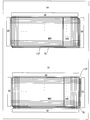
本表示装置では、第1映像の横方向の表示位置と第2映像の横方向の表示位置とが、ユーザの指示に応じて設定される(例えば、図14に示すように、ユーザの指示に応じて、第1映像が右側で第2映像が左側としたり、第1映像が左側で第2映像が右側としたりする)構成とすることもできる。
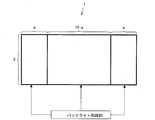
この場合、図15に示すように、表示部1を横方向に(16+a)等分したときの、左エッジからa個分に相当するエリアを左端エリア、右エッジからa個分に相当するエリアを右端エリア、残りの16-a個分に相当するエリアを中央エリアとして、バックライトの、左端エリアに対応する部分、右端エリアに対応する部分、および中央エリアに対応する部分それぞれがバックライト制御部によって個別制御されるようにしておくことで、第1映像に対応するエリアと第2映像に対応するエリアとでバックライトの輝度を変えて消費電力を低減させることができる。
本テレビジョン受像機は、上記表示装置を備える。
本表示装置の制御方法は、aを正の数とし、アスペクト比が横サイズ:縦サイズを示すものとし、アスペクト比が(16+a):9の表示部を備えた表示装置の制御方法であって、アスペクト比が16:9の第1映像を、その縦サイズが表示部の縦サイズに実質的に等しくなるように全表示しつつ、第2映像を上記第1映像と重ならないように表示する。
本発明は上記の実施の形態に限定されるものではなく、上記実施の形態を技術常識に基づいて適宜変更したものやそれらを組み合わせて得られるものも本発明の実施の形態に含まれる。
本表示装置は、例えばテレビジョン受像機に好適である。
1 表示部
MAR メインエリア
SAR サブエリア
LCP 液晶パネル
BL バックライト
SD ソースドライバ
GD ゲートドライバ
SEN ユーザ入力用のセンサ
MAR メインエリア
SAR サブエリア
LCP 液晶パネル
BL バックライト
SD ソースドライバ
GD ゲートドライバ
SEN ユーザ入力用のセンサ
Claims (20)
- aを正の数とし、アスペクト比が横サイズ:縦サイズを示すものとして、アスペクト比が(16+a):9の表示部を備え、
アスペクト比が16:9の第1映像を、その縦サイズが表示部の縦サイズに実質的に等しくなるように全表示しつつ、第2映像を上記第1映像と重ならないように表示する表示装置。 - 第2映像の表示の有無にかかわらず、第1映像の表示サイズを固定とする請求項1記載の表示装置。
- 第1映像を、その縦エッジの1つが表示部の縦エッジの1つに一致するように表示する請求項1または2記載の表示装置。
- 第1映像は、高精細度テレビジョン放送(HDTV)以上の解像度を有する請求項1~3のいずれか1項に記載の表示装置。
- アスペクト比が(16+a):9の第3映像を、その縦サイズが表示部の縦サイズに実質的に等しくなるように全表示する請求項1~4のいずれか1項に記載の表示装置。
- a=5である請求項1~5のいずれか1項に記載の表示装置。
- 第1映像は、高精細度テレビジョン放送(HDTV)の映像またはワンセグメント放送の映像である請求項1~6のいずれか1項に記載の表示装置。
- 走査信号線が横方向に延伸し、データ信号線が縦方向に延伸する請求項1~7のいずれか1項に記載の表示装置。
- 第2映像に複数のコンテンツ映像が含まれる請求項1~8のいずれか1項に記載の表示装置。
- 第2映像は、ユーザインターフェース用の映像である請求項1~9のいずれか1項に記載の表示装置。
- 上記表示部に、アスペクト比が16:9の第1領域と、第1領域に重ならず、アスペクト比がa:9の第2領域とが設けられ、
上記表示部並びに第1および第2領域それぞれの縦サイズが等しく、
上記第1領域に第1映像を表示し、第2領域に第2映像を表示する表示装置。 - 第1領域と第2領域とで、画素構造が異なる請求項11に記載の表示装置。
- 第1領域と第2領域とで、駆動方法が異なる請求項11に記載の表示装置。
- 第2領域に、ユーザ入力用のセンサを備える請求項11のいずれか1項に記載の表示装置。
- 第1領域に設けられた第1センサと、第2領域に設けられた第2センサとを備え、
上記第1および第2センサが個別に制御される請求項1~14のいずれか1項に記載の表示装置。 - 表示部が液晶パネルで構成される請求項1~15のいずれか1項に記載の表示装置。
- 第1領域に対応する第1バックライトと、第2領域に対応する第2バックライトサとを備え、
上記第1および第2バックライトが個別に制御される請求項16記載の表示装置。 - 第1映像の横方向の表示位置と第2映像の横方向の表示位置とが、ユーザの指示に応じて設定される請求項1記載の表示装置。
- 請求項1~18のいずれか1項に記載の表示装置を備えるテレビジョン受像機。
- aを正の数とし、アスペクト比が横サイズ:縦サイズを示すものとし、アスペクト比が(16+a):9の表示部を備えた表示装置の制御方法であって、
アスペクト比が16:9の第1映像を、その縦サイズが表示部の縦サイズに実質的に等しくなるように全表示しつつ、第2映像を上記第1映像と重ならないように表示する表示装置の制御方法。
Priority Applications (1)
| Application Number | Priority Date | Filing Date | Title |
|---|---|---|---|
| US13/976,145 US20130271661A1 (en) | 2010-12-28 | 2011-12-26 | Display device, television receiver, control method for display device |
Applications Claiming Priority (2)
| Application Number | Priority Date | Filing Date | Title |
|---|---|---|---|
| JP2010-294106 | 2010-12-28 | ||
| JP2010294106 | 2010-12-28 |
Publications (1)
| Publication Number | Publication Date |
|---|---|
| WO2012090952A1 true WO2012090952A1 (ja) | 2012-07-05 |
Family
ID=46383052
Family Applications (1)
| Application Number | Title | Priority Date | Filing Date |
|---|---|---|---|
| PCT/JP2011/080108 Ceased WO2012090952A1 (ja) | 2010-12-28 | 2011-12-26 | 表示装置、テレビジョン受像機、表示装置の制御方法 |
Country Status (2)
| Country | Link |
|---|---|
| US (1) | US20130271661A1 (ja) |
| WO (1) | WO2012090952A1 (ja) |
Families Citing this family (11)
| Publication number | Priority date | Publication date | Assignee | Title |
|---|---|---|---|---|
| US9756282B2 (en) * | 2012-11-20 | 2017-09-05 | Sony Corporation | Method and apparatus for processing a video signal for display |
| KR102254838B1 (ko) | 2014-08-04 | 2021-05-24 | 엘지전자 주식회사 | 영상 표시 장치 및 그의 동작 방법 |
| CN104318890A (zh) * | 2014-11-18 | 2015-01-28 | 合肥鑫晟光电科技有限公司 | 一种阵列基板及其驱动方法、显示装置 |
| KR20160115214A (ko) * | 2015-03-26 | 2016-10-06 | 삼성전자주식회사 | 디스플레이 장치 및 그의 디스플레이 방법 |
| KR102353177B1 (ko) * | 2015-04-08 | 2022-01-20 | 삼성디스플레이 주식회사 | 표시 패널 |
| CN104933984B (zh) * | 2015-07-20 | 2017-12-05 | 京东方科技集团股份有限公司 | 显示装置及其驱动方法和驱动模块 |
| CN104952425B (zh) * | 2015-07-21 | 2017-10-13 | 京东方科技集团股份有限公司 | 显示基板、显示装置以及显示基板分辨率调节方法 |
| KR102388082B1 (ko) | 2017-05-23 | 2022-04-19 | 엘지전자 주식회사 | 디스플레이 디바이스 및 그의 동작 방법 |
| US20210027724A1 (en) * | 2018-02-26 | 2021-01-28 | Sharp Kabushiki Kaisha | Video processer, display device, method of video processing, and recording medium |
| CN109348276B (zh) * | 2018-11-08 | 2019-12-17 | 北京微播视界科技有限公司 | 视频画面调整方法、装置、计算机设备和存储介质 |
| KR102762863B1 (ko) * | 2023-08-04 | 2025-02-05 | 엘지전자 주식회사 | 멀티미디어 장치 및 이를 위한 데이터 처리 방법 |
Citations (7)
| Publication number | Priority date | Publication date | Assignee | Title |
|---|---|---|---|---|
| JPH04257173A (ja) * | 1991-02-08 | 1992-09-11 | Sony Corp | 画像表示装置 |
| JPH07312731A (ja) * | 1994-05-18 | 1995-11-28 | Toshiba Corp | 2画面テレビ受像機 |
| JPH08149389A (ja) * | 1994-11-25 | 1996-06-07 | Mitsubishi Electric Corp | ワイドアスペクトテレビジョン受像機 |
| JP2006047511A (ja) * | 2004-08-02 | 2006-02-16 | Oki Electric Ind Co Ltd | 表示パネル駆動装置 |
| JP2008042726A (ja) * | 2006-08-09 | 2008-02-21 | Matsushita Electric Ind Co Ltd | 映像表示装置 |
| WO2010021183A1 (ja) * | 2008-08-19 | 2010-02-25 | シャープ株式会社 | データ処理装置、液晶表示装置、テレビジョン受像機、およびデータ処理方法 |
| JP2010166593A (ja) * | 2010-03-04 | 2010-07-29 | Sharp Corp | テレビジョン受像機 |
Family Cites Families (17)
| Publication number | Priority date | Publication date | Assignee | Title |
|---|---|---|---|---|
| US6002797A (en) * | 1994-06-22 | 1999-12-14 | Hitachi, Ltd. | Apparatus for detecting position of featuring region of picture, such as subtitle or imageless part |
| US6496122B2 (en) * | 1998-06-26 | 2002-12-17 | Sharp Laboratories Of America, Inc. | Image display and remote control system capable of displaying two distinct images |
| KR100631499B1 (ko) * | 2000-01-24 | 2006-10-09 | 엘지전자 주식회사 | 디지털 티브이의 캡션 표시 방법 |
| US6714137B1 (en) * | 2000-03-23 | 2004-03-30 | Mitsubishi Digital Electronics America, Inc. | Protocol for avoiding interference between transmission device |
| JP3670934B2 (ja) * | 2000-06-01 | 2005-07-13 | 三洋電機株式会社 | デジタルテレビ放送受信機における文字データの表示方法 |
| US7023492B2 (en) * | 2000-10-19 | 2006-04-04 | Microsoft Corporation | Method and apparatus for encoding video content |
| JP4218249B2 (ja) * | 2002-03-07 | 2009-02-04 | 株式会社日立製作所 | 表示装置 |
| US20050015803A1 (en) * | 2002-11-18 | 2005-01-20 | Macrae Douglas B. | Systems and methods for providing real-time services in an interactive television program guide application |
| JP2006166133A (ja) * | 2004-12-08 | 2006-06-22 | Samsung Techwin Co Ltd | カメラ及び画像表示方法 |
| US7710504B2 (en) * | 2006-02-21 | 2010-05-04 | Mitsubishi Digital Electronics America, Inc. | Remote control system and method for controlling a television |
| JP4332566B2 (ja) * | 2007-03-23 | 2009-09-16 | キヤノン株式会社 | 撮像装置 |
| US20090007170A1 (en) * | 2007-06-26 | 2009-01-01 | At&T Knowledge Ventures, Lp | System and method for monitoring a real time event |
| CN101626472B (zh) * | 2008-07-11 | 2011-03-23 | 鸿富锦精密工业(深圳)有限公司 | 媒体播放装置及其健康提示方法 |
| US20100053436A1 (en) * | 2008-08-29 | 2010-03-04 | Kabushiki Kaisha Toshiba | Video Display Apparatus and Video Display Method |
| US8937687B2 (en) * | 2008-09-30 | 2015-01-20 | Echostar Technologies L.L.C. | Systems and methods for graphical control of symbol-based features in a television receiver |
| JP2010108372A (ja) * | 2008-10-31 | 2010-05-13 | Toshiba Corp | 映像表示装置、映像表示方法および映像システム |
| JP5035702B2 (ja) * | 2009-02-27 | 2012-09-26 | カシオ計算機株式会社 | 撮像装置、オートフォーカス方法及びプログラム |
-
2011
- 2011-12-26 WO PCT/JP2011/080108 patent/WO2012090952A1/ja not_active Ceased
- 2011-12-26 US US13/976,145 patent/US20130271661A1/en not_active Abandoned
Patent Citations (7)
| Publication number | Priority date | Publication date | Assignee | Title |
|---|---|---|---|---|
| JPH04257173A (ja) * | 1991-02-08 | 1992-09-11 | Sony Corp | 画像表示装置 |
| JPH07312731A (ja) * | 1994-05-18 | 1995-11-28 | Toshiba Corp | 2画面テレビ受像機 |
| JPH08149389A (ja) * | 1994-11-25 | 1996-06-07 | Mitsubishi Electric Corp | ワイドアスペクトテレビジョン受像機 |
| JP2006047511A (ja) * | 2004-08-02 | 2006-02-16 | Oki Electric Ind Co Ltd | 表示パネル駆動装置 |
| JP2008042726A (ja) * | 2006-08-09 | 2008-02-21 | Matsushita Electric Ind Co Ltd | 映像表示装置 |
| WO2010021183A1 (ja) * | 2008-08-19 | 2010-02-25 | シャープ株式会社 | データ処理装置、液晶表示装置、テレビジョン受像機、およびデータ処理方法 |
| JP2010166593A (ja) * | 2010-03-04 | 2010-07-29 | Sharp Corp | テレビジョン受像機 |
Also Published As
| Publication number | Publication date |
|---|---|
| US20130271661A1 (en) | 2013-10-17 |
Similar Documents
| Publication | Publication Date | Title |
|---|---|---|
| WO2012090952A1 (ja) | 表示装置、テレビジョン受像機、表示装置の制御方法 | |
| CN204190885U (zh) | 拼接显示系统、led液晶显示器及电视机 | |
| US10593273B2 (en) | Image display apparatus capable of improving sharpness of an edge area | |
| CN1591559A (zh) | 多屏幕显示系统及其控制方法 | |
| JP2007322747A (ja) | 表示パネル、及び表示装置 | |
| JP2020071469A (ja) | 画像制御装置およびそれを用いたディスプレイウォールシステム並びにディスプレイウォールに画像を出力する制御方法 | |
| CN102708840A (zh) | 一种图像显示系统和显示单元 | |
| WO2015074487A1 (zh) | 一种在拼接显示屏上点对点显示输入视频的方法 | |
| US12142187B2 (en) | Image display device and operating method therefor | |
| WO2012090953A1 (ja) | 表示装置、テレビジョン受像機 | |
| CN101986384A (zh) | 适用于dlp多屏拼接显示墙的多层画中画显示处理方法 | |
| JP2011096084A (ja) | 表示装置 | |
| CN202677808U (zh) | 一种图像显示系统和显示单元 | |
| EP2688293A2 (en) | Method and apparatus for displaying an image, and computer readable recording medium | |
| WO2012090958A1 (ja) | 表示装置、液晶表示装置、テレビジョン受像機 | |
| US12603062B2 (en) | Image display device | |
| CN102625066A (zh) | 图像处理装置和图像处理方法 | |
| KR20170000904A (ko) | 표시 장치 및 이의 구동 방법 | |
| JP2007324667A (ja) | 映像表示装置、およびテレビジョン放送受信装置 | |
| JP3625180B2 (ja) | オンスクリーン表示装置 | |
| KR20180113149A (ko) | 다중 디스플레이 시스템을 구성하는 디스플레이 장치 및 그 제어 방법 | |
| KR101012585B1 (ko) | 다채널 영상 정합 시스템 및 그 방법 | |
| JP2014186275A (ja) | 表示装置、テレビジョン受像機、および、表示装置の制御方法 | |
| JP2006319509A (ja) | 表示装置および表示方法 | |
| JP2007102005A (ja) | 表示装置 |
Legal Events
| Date | Code | Title | Description |
|---|---|---|---|
| 121 | Ep: the epo has been informed by wipo that ep was designated in this application |
Ref document number: 11852843 Country of ref document: EP Kind code of ref document: A1 |
|
| WWE | Wipo information: entry into national phase |
Ref document number: 13976145 Country of ref document: US |
|
| NENP | Non-entry into the national phase |
Ref country code: DE |
|
| 122 | Ep: pct application non-entry in european phase |
Ref document number: 11852843 Country of ref document: EP Kind code of ref document: A1 |
|
| NENP | Non-entry into the national phase |
Ref country code: JP |