WO2012086191A1 - 濃縮グリセリンの製造方法 - Google Patents
濃縮グリセリンの製造方法 Download PDFInfo
- Publication number
- WO2012086191A1 WO2012086191A1 PCT/JP2011/007129 JP2011007129W WO2012086191A1 WO 2012086191 A1 WO2012086191 A1 WO 2012086191A1 JP 2011007129 W JP2011007129 W JP 2011007129W WO 2012086191 A1 WO2012086191 A1 WO 2012086191A1
- Authority
- WO
- WIPO (PCT)
- Prior art keywords
- glycerin
- aqueous solution
- concentrated
- atomization
- concentration
- Prior art date
- Legal status (The legal status is an assumption and is not a legal conclusion. Google has not performed a legal analysis and makes no representation as to the accuracy of the status listed.)
- Ceased
Links
Images

Classifications
-
- C—CHEMISTRY; METALLURGY
- C07—ORGANIC CHEMISTRY
- C07B—GENERAL METHODS OF ORGANIC CHEMISTRY; APPARATUS THEREFOR
- C07B63/00—Purification; Separation; Stabilisation; Use of additives
-
- C—CHEMISTRY; METALLURGY
- C07—ORGANIC CHEMISTRY
- C07C—ACYCLIC OR CARBOCYCLIC COMPOUNDS
- C07C29/00—Preparation of compounds having hydroxy or O-metal groups bound to a carbon atom not belonging to a six-membered aromatic ring
- C07C29/74—Separation; Purification; Use of additives, e.g. for stabilisation
-
- B—PERFORMING OPERATIONS; TRANSPORTING
- B05—SPRAYING OR ATOMISING IN GENERAL; APPLYING FLUENT MATERIALS TO SURFACES, IN GENERAL
- B05B—SPRAYING APPARATUS; ATOMISING APPARATUS; NOZZLES
- B05B17/00—Apparatus for spraying or atomising liquids or other fluent materials, not covered by the preceding groups
- B05B17/04—Apparatus for spraying or atomising liquids or other fluent materials, not covered by the preceding groups operating with special methods
- B05B17/06—Apparatus for spraying or atomising liquids or other fluent materials, not covered by the preceding groups operating with special methods using ultrasonic or other kinds of vibrations
- B05B17/0607—Apparatus for spraying or atomising liquids or other fluent materials, not covered by the preceding groups operating with special methods using ultrasonic or other kinds of vibrations generated by electrical means, e.g. piezoelectric transducers
- B05B17/0615—Apparatus for spraying or atomising liquids or other fluent materials, not covered by the preceding groups operating with special methods using ultrasonic or other kinds of vibrations generated by electrical means, e.g. piezoelectric transducers spray being produced at the free surface of the liquid or other fluent material in a container and subjected to the vibrations
Definitions
- the present invention relates to a method for producing concentrated glycerol from an aqueous glycerol solution.
- glycerin As one of the manufacturing methods of glycerin, the manufacturing method through the process of transesterifying, hydrolyzing, or saponifying fats and oils is known. Since glycerin obtained by this method is obtained as an aqueous solution, it is generally concentrated by removing water.
- the concentration is usually performed by a distillation operation (for example, Patent Document 1) or a flash operation (for example, Patent Document 2). These methods are generally performed under a high temperature condition of about 120 ° C. and a reduced pressure condition of 40 kPa or less. This is an operating condition used from the viewpoints of efficiently concentrating glycerin and suppressing quality deterioration.
- a concentration operation at a lower temperature is preferable from the viewpoint of suppressing quality degradation. Further, from the viewpoint of efficient concentration, a concentration operation at a lower temperature or a pressure closer to normal pressure is desired.
- Patent Document 3 In recent years, methods for concentrating alcohols such as ethanol using ultrasonic waves are known (for example, Patent Document 3 and Patent Document 4). This method collects atomized alcohol by ultrasonically vibrating an alcohol aqueous solution.
- the present invention is a method for producing concentrated glycerin from an aqueous glycerin solution, and has an atomization dehydration concentration step of dehydrating and concentrating water by atomizing a glycerin aqueous solution having a viscosity of 25 mPa ⁇ s or less by ultrasonic vibration.
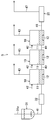
- FIG. 1 It is a block diagram which shows the manufacturing system of the concentrated glycerin which concerns on embodiment. It is a block diagram which shows the modification of the manufacturing system of concentrated glycerol. It is a block diagram which shows the manufacturing system of the concentrated glycerol used in Example 1.
- FIG. 1 It is a block diagram which shows the manufacturing system of the concentrated glycerin which concerns on embodiment. It is a block diagram which shows the modification of the manufacturing system of concentrated glycerol. It is a block diagram which shows the manufacturing system of the concentrated glycerol used in Example 1.
- FIG. 1 It is a block diagram which shows the manufacturing system of the concentrated glycerin which concerns on embodiment. It is a block diagram which shows the modification of the manufacturing system of concentrated glycerol. It is a block diagram which shows the manufacturing system of the concentrated glycerol used in Example 1.
- FIG. 1 It is a block diagram which shows the manufacturing system of the concentrated glycerin which concerns on embodiment. It is a block
- the method for producing concentrated glycerin according to the present embodiment includes an atomization dehydration concentration step in which water is atomized to dehydrate and concentrate by ultrasonically vibrating a glycerin aqueous solution having a viscosity of 25 mPa ⁇ s or less.
- the method for producing concentrated glycerin according to the present embodiment heats and dehydrates and concentrates water by evaporating water by heating the dehydrated and concentrated glycerin aqueous solution obtained in the atomization dehydration and concentration step. You may have a process.
- the glycerin concentration of the concentrated glycerin produced by the production method according to the present embodiment is preferably 80 to 100% by mass, more preferably 85 to 100% by mass, still more preferably 95 to 100% by mass, from the viewpoint of industrial use. More preferably, it is 98 to 100% by mass.
- Patent Documents 3 and 4 disclose a method of obtaining concentrated alcohol by recovering atomized alcohol by ultrasonically vibrating an alcohol aqueous solution.
- the glycerin solution is vibrated ultrasonically, the glycerin is not atomized, and therefore a similar concentration method cannot be employed.
- the viscosity increases and the dehydrated concentration by ultrasonic vibration is performed.
- the glycerin aqueous solution can be dehydrated and concentrated as a whole with less energy by heating and evaporating water to further dehydrate and concentrate the glycerin aqueous solution.
- the glycerin concentration of the raw glycerin aqueous solution used in the atomization dehydration concentration step is not particularly limited as long as it can atomize water by ultrasonic vibration, but is preferably 0.1 to 80% by mass from the viewpoint of atomization efficiency and energy consumption, More preferably, the content is 0.1 to 60% by mass.
- the raw material glycerin aqueous solution includes components that are removed by ultrasonic vibration or heating, such as methanol and propanediol, or components that remain without being removed by ultrasonic vibration or heating. It may be.
- the frequency of ultrasonic vibration applied to the glycerin aqueous solution is preferably 20 kHz to 10 MHz, more preferably 1 to 5 MHz.
- the application of ultrasonic vibration to the glycerin aqueous solution can be performed by an ultrasonic vibrator provided in the glycerin aqueous solution.
- the temperature of the glycerin aqueous solution at the time of applying ultrasonic vibration is not particularly limited as long as the glycerin aqueous solution is in a liquid state, but preferably 10 ° C. from the viewpoint of atomization efficiency and energy consumption reduction by applying ultrasonic vibration. Above, more preferably 30 ° C. or higher, further preferably 50 ° C. or higher, further preferably 60 ° C. or higher.
- the temperature is preferably 100 ° C. or less, more preferably 90 ° C. or less, and still more preferably 80 ° C. or less from the viewpoint of reducing equipment loads such as pressurization and temperature control. More specifically, the temperature is preferably 10 to 100 ° C, more preferably 30 to 90 ° C, still more preferably 50 to 80 ° C, still more preferably 60 to 80 ° C.
- the water atomized from the glycerin aqueous solution by ultrasonic vibration is discharged together with the carrier gas.
- carrier gas For example, air, nitrogen gas, other inert gas, etc. are used.
- the temperature of the carrier gas is not particularly limited as long as there is no extreme difference from the temperature of the glycerin aqueous solution to which ultrasonic vibration is applied, but it is preferably normal temperature or the same temperature as the glycerol aqueous solution.
- the raw glycerin aqueous solution may be added to the glycerin aqueous solution at the time of applying the ultrasonic vibration, and components removed by ultrasonic vibration or heating, such as methanol and propanediol, or removed by ultrasonic vibration or heating. The remaining components may be added.
- the viscosity of the aqueous glycerin solution when dehydrating and concentrating by ultrasonic vibration is 25 mPa ⁇ s or less from the viewpoint of obtaining high dehydrating and concentrating efficiency with low energy.
- the viscosity of the glycerol aqueous solution at this time is preferably 20 mPa ⁇ s or less. This viscosity can be measured by a single cylindrical rotational viscometer (based on JIS Z Z 8803). Further, if it is difficult to measure the viscosity and the glycerin concentration in the glycerin aqueous solution can be measured or calculated, for example, “Chemical Handbook Basic Edition II Revised 3rd Edition, Japan Chemical Society, p. 53” ( (Issued in 1984) or the like.
- the viscosity of the glycerin aqueous solution at that time is preferably 25 mPa ⁇ s or less, more preferably 20 mPa ⁇ s or less. Therefore, in the actual operation, when further dehydrating and concentrating by heating after dehydrating and concentrating by ultrasonic vibration, the glycerin aqueous solution is sampled to measure the viscosity, or the viscosity detecting sensor incorporated in the apparatus is used to measure the viscosity.
- the dehydration concentration by ultrasonically vibrating the glycerin aqueous solution is preferably completed at a viscosity of the glycerin aqueous solution of 25 mPa ⁇ s or less, more preferably 20 mPa ⁇ s or less from the viewpoint of atomization efficiency. After that, it is preferable to switch to a further dehydration concentration step by heating.
- the operating temperature from the viewpoint of reducing energy consumption, it is 3 mPa ⁇ s or more, more preferably 5 mPa ⁇ s or more, more preferably 10 mPa ⁇ s or more, and further preferably 15 mPa ⁇ s or more. It is preferable to switch to a further dehydration concentration step by heating.
- the dehydration concentration of the glycerin aqueous solution by application of ultrasonic vibration is preferably such that the viscosity of the glycerin aqueous solution is between 3 and 25 mPa ⁇ s, more preferably between 5 and 20 mPa ⁇ s, and even more preferably between 10 and 20 mPa ⁇ s. It is preferable to finish during s, more preferably between 15 and 20 mPa ⁇ s.
- the glycerin concentration in the dehydrated and concentrated glycerin or glycerin aqueous solution obtained in this atomization dehydration and concentration step is not particularly limited as long as it is higher than the glycerin aqueous solution concentration of the raw material, but is preferably 60% by mass or more, more preferably 80 from the viewpoint of energy consumption. % By mass or more, more preferably 85% by mass or more, and still more preferably 90% by mass or more.
- Heating dehydration concentration process when the dehydrated and concentrated glycerin aqueous solution obtained in the atomization dehydration concentration step is heated, the temperature of the glycerin aqueous solution rises to evaporate water, and as a result, the glycerin aqueous solution is further dehydrated and concentrated.
- This heating dehydration concentration step may be carried out continuously following the atomization dehydration concentration step, or the glycerin aqueous solution dehydrated and concentrated in the atomization dehydration concentration step is once recovered and then carried out batchwise. May be.
- the temperature of the glycerin aqueous solution at the time of heating is preferably 70 to 180 ° C., and more preferably 70 to 140 ° C. from the viewpoint of suppressing deterioration of the odor and hue of the obtained glycerin.
- the heating means of glycerol aqueous solution is not specifically limited, For example, it is an electric heater etc.
- Concentrated glycerin obtained by combining dehydration concentration by atomization and dehydration concentration by heating can obtain concentrated glycerin having a concentration of 100% by mass with less energy compared to dehydration concentration by heating in the conventional method.
- the produced concentrated glycerin can be used as various industrial materials.
- FIG. 1 shows a concentrated glycerin production system S that can be used in the method for producing concentrated glycerin according to the present embodiment.
- the manufacturing system S for concentrated glycerin includes an ultrasonic atomizer 10 for performing the atomization dehydration concentration process and a residual water evaporation apparatus 20 for performing the heating dehydration concentration process.
- the ultrasonic atomization apparatus 10 has an ultrasonic atomization tank 11 in which an ultrasonic vibrator 12 is provided in the tank. It is preferable that the ultrasonic atomization tank 11 has a temperature control function. Moreover, the viscosity measuring device 13 is attached so that the viscosity sensor 13a may be arrange
- PZT lead zirconate titanate
- the residual water evaporator 20 is provided with heating means inside.
- the heating means include an electric heater.
- a raw material supply pipe 41 extends from a raw material storage tank 31 having a stirrer 31 a and is connected to the ultrasonic atomization tank 11 of the ultrasonic atomizer 10.
- a liquid feed pump 32 is interposed in the raw material supply pipe 41.
- a carrier gas supply pipe 42 extending from a gas supply source (not shown) is connected to the ultrasonic atomization tank 11.
- a first water discharge pipe 43 extends from the ultrasonic atomization tank 11.
- a concentrated aqueous solution discharge pipe 44 extends from the ultrasonic atomization tank 11 and is connected to the A port 33 a of the three-way valve 33.
- a return pipe 45 extends from the B port 33 b of the three-way valve 33 and is connected to the raw material storage tank 31.
- a concentrated aqueous solution supply pipe 46 extends from the C port 33 c of the three-way valve 33 and is connected to the residual water evaporator 20. Further, a wiring 51 extends from the three-way valve 33 and is connected to the viscosity measuring device 13.
- a second water discharge pipe 47 and a product recovery pipe 48 extend from the residual water evaporator 20.
- the production system S for concentrated glycerin includes an ultrasonic vibrator 12 and a viscosity measuring device 13 of the ultrasonic atomizer 10, a heating means of the residual water evaporator 20, a liquid feed pump 32, a gas supply source, and a three-way valve 33.
- the wiring extends from the terminal and is connected to a control unit (not shown). Under the control of the control unit, the viscosity of the glycerin aqueous solution detected by the viscosity sensor 13a of the viscosity measuring device 13 is equal to or lower than a predetermined set value (for example, 3 to 25 mPa).
- the A port 33a and the B port 33b of the three-way valve 33 are connected to each other, and the viscosity of the glycerin aqueous solution detected by the viscosity sensor 13a exceeds a predetermined set value.
- the A port 33a and the C port 33c of the three-way valve 33 are configured to communicate with each other.
- the glycerin aqueous solution is supplied from the raw material storage tank 31 to the raw material supply pipe 41 by a liquid feed pump. And continuously supplied to the ultrasonic atomization tank 11 of the ultrasonic atomizer 10. Further, the carrier gas is continuously supplied from the gas supply source to the ultrasonic atomizing tank 11 through the carrier gas supply pipe 42.
- the carrier gas for example, air, nitrogen gas, other inert gas, or the like is used.
- ultrasonic vibration is applied to the glycerin aqueous solution by the ultrasonic vibrator 12.
- a liquid column of the glycerin aqueous solution stands from the liquid surface of the glycerin aqueous solution, and water is atomized from the liquid column.
- the glycerin aqueous solution in the tank is dehydrated and concentrated. 1 is discharged from the water discharge pipe 43.
- the viscosity of the glycerin aqueous solution is detected by the viscosity sensor 13a of the viscosity measuring device 13 arranged in the glycerin aqueous solution.
- the A port 33a and the B port 33b of the three-way valve 33 are communicated by the control unit. Therefore, the dehydrated and concentrated glycerin aqueous solution discharged from the ultrasonic atomization tank 11 through the concentrated aqueous solution discharge pipe 44 is returned to the raw material storage tank 31 through the return pipe 45.
- the glycerin aqueous solution has a circulation flow path that returns to the raw material storage tank 31 through the raw material storage tank 31, the raw material supply pipe 41, the ultrasonic atomization tank 11, the concentrated aqueous solution discharge pipe 44, the three-way valve 33, and the return pipe 45 in this order. Circulate.
- the glycerin aqueous solution that circulates in the circulation channel increases in viscosity as the dehydration concentration proceeds with time.
- the A port 33a and the C port 33c of the three-way valve 33 are communicated by the control unit. Accordingly, the dehydrated and concentrated glycerin aqueous solution discharged from the ultrasonic atomization tank 11 through the concentrated aqueous solution discharge pipe 44 is supplied to the residual water evaporation apparatus 20 through the concentrated aqueous solution supply pipe 46 as necessary. .
- the glycerin aqueous solution dehydrated and concentrated by the ultrasonic atomizer 10 is heated. At this time, the glycerin aqueous solution is further dehydrated and concentrated as the water evaporates. For example, as shown in FIG. 2, if a concentrated glycerin manufacturing system S in which a plurality of ultrasonic atomizers 10 are connected in series by a connecting pipe 49 is configured, concentrated glycerin can be manufactured more efficiently. it can.
- a concentration measuring device is added to the ultrasonic atomization tank 11
- the concentration of the glycerin aqueous solution detected by the concentration measuring device is equal to or lower than a predetermined set value
- the A port 33a and the B port 33b of the three-way valve 33 are communicated, and the concentration of the glycerin aqueous solution detected by the concentration measuring device is predetermined.
- the configuration may be such that the A port 33a and the C port 33c of the three-way valve 33 communicate with each other when the set value is exceeded.
- the present invention further discloses the following manufacturing method regarding the above-described embodiment.
- a method for producing concentrated glycerin from a glycerin aqueous solution wherein the glycerin aqueous solution having a viscosity of 25 mPa ⁇ s or less, preferably 20 mPa ⁇ s or less is ultrasonically vibrated to atomize water to dehydrate and concentrate it.
- the concentrated glycerol according to the above ⁇ 1>, wherein the concentrated glycerin to be produced has a glycerin concentration of preferably 80 to 100% by mass, more preferably 85 to 100% by mass, further preferably 95 to 100% by mass, and further preferably 100% by mass.
- a method for producing glycerin preferably 80 to 100% by mass, more preferably 85 to 100% by mass, further preferably 95 to 100% by mass, and further preferably 100% by mass.
- the dehydration concentration of the glycerin aqueous solution by applying ultrasonic vibration is finished when the viscosity of the glycerin aqueous solution is preferably 25 mPa ⁇ s or less, more preferably 20 mPa ⁇ s or less ⁇ 1> to ⁇ 3>
- the manufacturing method of the concentrated glycerol in any one of.
- the dehydration concentration of the glycerin aqueous solution by applying ultrasonic vibration is preferably a viscosity of 3 mPa ⁇ s or more, more preferably 5 mPa ⁇ s or more, more preferably 10 mPa ⁇ s or more, even more preferably.
- the dehydration concentration of the glycerin aqueous solution by applying ultrasonic vibration is preferably performed so that the viscosity of the glycerin aqueous solution is preferably between 3 and 25 mPa ⁇ s, more preferably between 5 and 20 mPa ⁇ s, and even more preferably 10
- the temperature of the glycerin aqueous solution at the time of applying ultrasonic vibration is preferably 10 ° C. or higher, more preferably 30 ° C. or higher, further preferably 50 ° C. or higher, and further preferably 60 ° C. or higher.
- any of the above ⁇ 1> to ⁇ 7>, wherein the temperature of the glycerin aqueous solution when applying ultrasonic vibration is preferably 100 ° C. or less, more preferably 90 ° C. or less, and still more preferably 80 ° C. or less.
- the temperature of the glycerin aqueous solution at the time of applying ultrasonic vibration is preferably 10 to 100 ° C., more preferably 30 to 90 ° C., further preferably 50 to 80 ° C., and further preferably 60 to 80 ° C.
- the glycerin concentration in the dehydrated and concentrated glycerin or glycerin aqueous solution obtained in the atomization dehydration and concentration step is 60% by mass or more, more preferably 80% by mass, still more preferably 85% by mass or more, and further preferably 90% by mass or more.
- the glycerin concentration in the raw glycerin aqueous solution used in the atomization dehydration concentration step is 0.1 to 80% by mass, more preferably 0.1 to 60% by mass, according to any one of ⁇ 1> to ⁇ 10> above.
- a method for producing concentrated glycerin is 0.1 to 80% by mass, more preferably 0.1 to 60% by mass, according to any one of ⁇ 1> to ⁇ 10> above.
- the concentrated glycerin according to any one of ⁇ 1> to ⁇ 11> above, wherein the frequency of ultrasonic vibration applied to the glycerin aqueous solution is preferably 20 kHz to 10 MHz, more preferably 1 to 5 MHz. Manufacturing method.
- a concentrated glycerin production system including an ultrasonic atomizer for performing the atomization dehydration concentration step and a residual water evaporation device for performing the heating dehydration concentration step is used.
- a method for producing concentrated glycerin is used.
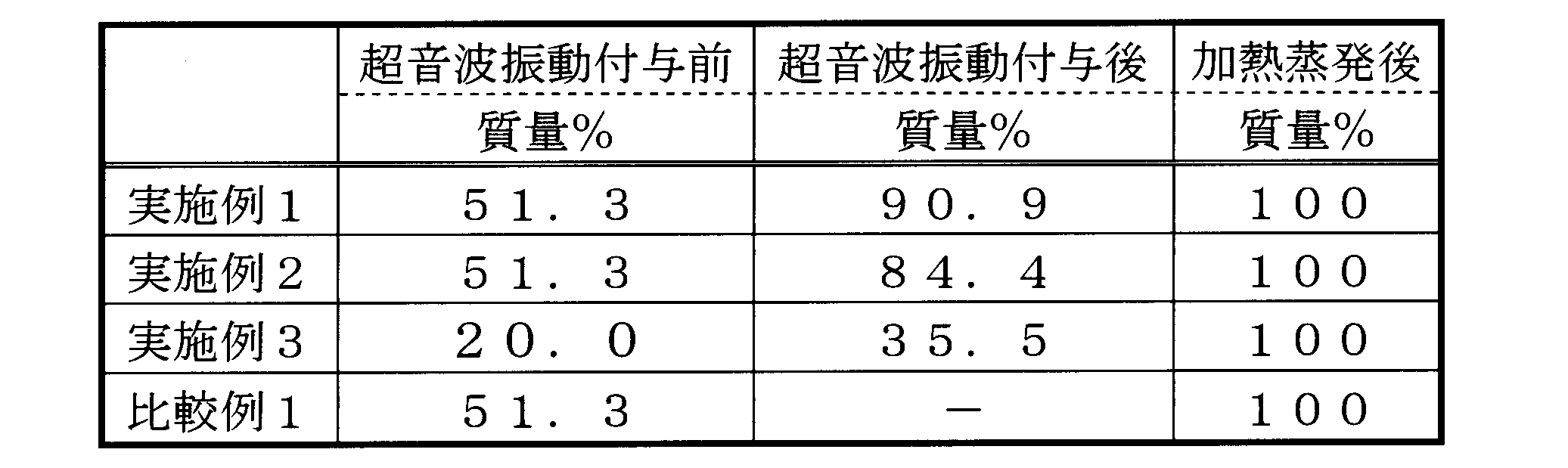
- Table 2 shows the glycerin concentration of each glycerin aqueous solution of Examples 1, 2, and 3 and Comparative Example 1 before application of ultrasonic vibration, after application of ultrasonic vibration, and after heating and evaporation.
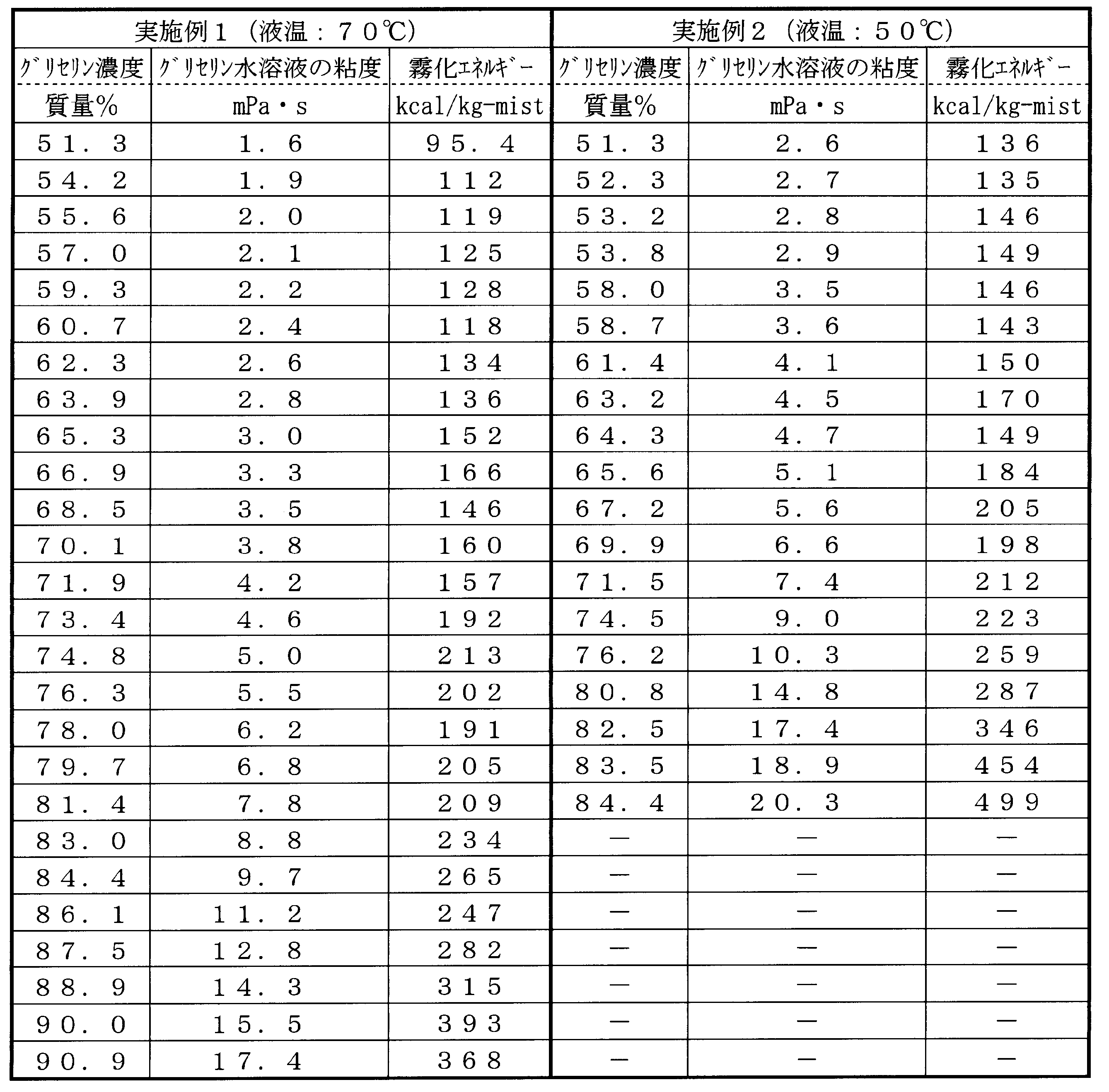
- Viscosity of the glycerin aqueous solution is 50 ° C. and 70 ° C. described in Tables 6 and 39 of “Chemical Handbook Basic Edition II Revised 3rd Edition, The Chemical Society of Japan, p. 53” (issued in 1984).
- the viscosity at each concentration was calculated based on the numerical value of the viscosity of the glycerin aqueous solution at a temperature of ° C.
- the viscosity at 50 ° C. of the 51.3 mass% glycerin aqueous solution is 2.37 mPa ⁇ s at 50 ° C. and the viscosity coefficient of the 60 mass% glycerin aqueous solution at 50 ° C.
- the atomization energy was determined by dividing the energy (electric power) [kcal] charged into the ultrasonic atomization tank for 10 minutes by the amount of water [kg] atomized for 10 minutes at each time point.
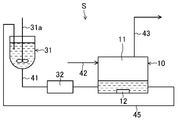
- FIG. 3 shows the concentrated glycerin production system S used in Example 1.
- the part of the same name as the said embodiment is shown with the same code
- the ultrasonic atomizing device 10 is connected to the raw material storage tank 31 with a return pipe 45 extending from the ultrasonic atomizing tank 11.
- the other raw material supply systems from the raw material storage tank 31 to the ultrasonic atomization apparatus 10 and the configurations of the carrier gas supply pipe 42 and the first water discharge pipe 43 connected to the ultrasonic atomization tank 11 are the same as those in the above embodiment. is there. Therefore, the manufacturing system S is configured such that the glycerin aqueous solution circulates between the raw material storage tank 31 and the ultrasonic atomizer 10 and is dehydrated and concentrated by ultrasonic vibration in the ultrasonic atomizer 10. Yes.
- the feed liquid pump 32 was operated to circulate the glycerin aqueous solution between the ultrasonic atomizer 10 and the raw material storage tank 31, and the glycerin aqueous solution was heated to 70 ° C. At this time, the viscosity of the glycerin aqueous solution was 1.6 mPa ⁇ s.
- the vibration frequency of the ultrasonic vibrator 12 is set to 2.4 MHz and the applied voltage is set to 25 V, and the aqueous glycerin solution is vibrated ultrasonically. Water was atomized and concentrated by dehydration. The application time of ultrasonic vibration was 4 hours and 22 minutes.
- the glycerin concentration of the glycerin aqueous solution collected after application of ultrasonic vibration was 90.9 mass%, the viscosity was 17.4 mPa ⁇ s, and the atomization amount was 339.5 g.
- the energy consumed at this time was 57.3 kcal.
- the glycerin concentration increased from 51.3 mass% to 90.9 mass%, and the viscosity increased from 1.6 mPa ⁇ s to 17.4 mPa ⁇ s.
- the atomization energy tends to increase as a whole, but it did not exceed the latent heat of vaporization of water at 70 ° C.
- the recovered glycerin aqueous solution was charged into a water evaporation device (not shown), and the glycerin aqueous solution was heated to evaporate residual water and further dehydrate and concentrate.
- the glycerin concentration of the collected concentrated glycerin was 100% by mass.
- the energy consumed at this time was 39.8 kcal as calculated from the latent heat of water.
- Example 2 780.0 g of a glycerin aqueous solution having a glycerin concentration of 51.3% by mass was prepared and charged in the raw material storage tank 31 shown in FIG.
- the liquid feed pump 32 was operated to circulate the glycerin aqueous solution between the ultrasonic atomizer 10 and the raw material storage tank 31, and the glycerin aqueous solution was heated to 50 ° C.
- the viscosity of the glycerin aqueous solution at this time was 2.6 mPa ⁇ s.
- the ultrasonic atomizing tank 11 is maintained at 50 ° C.
- the frequency of the ultrasonic vibrator 12 is set to 2.4 MHz
- the applied voltage is set to 25 V
- the aqueous glycerin solution is vibrated ultrasonically.
- Water was atomized and concentrated by dehydration.
- the glycerin aqueous solution collected from the ultrasonic atomization tank 11 after applying ultrasonic vibration for 4 hours and 45 minutes had a glycerin concentration of 84.4% by mass and a viscosity of 20.3 mPa ⁇ s. .4 g.
- the energy consumed at this time was 61.3 kcal.
- the glycerin concentration increased from 51.3 mass% to 84.4 mass%, and the viscosity increased from 2.6 mPa ⁇ s to 20.3 mPa ⁇ s.
- the collected glycerin aqueous solution was charged into a water evaporation apparatus, and the residual water was evaporated by heating the glycerin aqueous solution to further dehydrate and concentrate it.
- the glycerin concentration of the collected concentrated glycerin was 100% by mass.
- the energy consumed at this time was 69.3 kcal as calculated from the latent heat of water.
- the energy required for dehydrating and concentrating the glycerin aqueous solution is 130.6 kcal.
- Example 3 800.5 g of a glycerin aqueous solution having a glycerin concentration of 20.0% by mass was prepared and charged in the raw material storage tank 31 shown in FIG.
- the liquid feed pump 32 was operated to circulate the glycerin aqueous solution between the ultrasonic atomizer 10 and the raw material storage tank 31, and the glycerin aqueous solution was heated to 50 ° C.
- the viscosity of the glycerin aqueous solution at this time was 0.9 mPa ⁇ s.
- the ultrasonic atomizing tank 11 is maintained at 50 ° C.
- the frequency of the ultrasonic vibrator 12 is set to 2.4 MHz
- the applied voltage is set to 25 V
- the aqueous glycerin solution is vibrated ultrasonically.
- Water was atomized and concentrated by dehydration.
- the glycerin aqueous solution collected after applying ultrasonic vibration for 2 hours and 15 minutes had a glycerin concentration of 35.5% by mass and a viscosity of 1.4 mPa ⁇ s, and the amount of atomization during that period was 434.4 g.
- the energy consumed at this time was 28.9 kcal.
- the glycerin concentration increased from 20.0% by mass to 35.5% by mass, and the viscosity increased from 0.9 mPa ⁇ s to 1.4 mPa ⁇ s.
- the recovered aqueous glycerin solution was charged into a water evaporation apparatus, and the residual aqueous water was evaporated by heating the aqueous glycerin solution, followed by dehydration and concentration.
- the glycerin concentration of the collected concentrated glycerin was 100% by mass.
- the energy consumed at this time was 127.5 kcal as calculated from the latent heat of water.
- the glycerin concentration of the collected concentrated glycerin was 100% by mass.
- the energy consumed at this time was 212.2 kcal as calculated from the latent heat of water.
- the present invention is useful for a method for producing concentrated glycerin from a glycerin aqueous solution.
Landscapes
- Chemical & Material Sciences (AREA)
- Organic Chemistry (AREA)
- Organic Low-Molecular-Weight Compounds And Preparation Thereof (AREA)
- Vaporization, Distillation, Condensation, Sublimation, And Cold Traps (AREA)
Abstract
Description
本実施形態に係る濃縮グリセリンの製造方法は、粘度が25mPa・s以下のグリセリン水溶液を超音波振動させることにより水を霧化させて脱水濃縮する霧化脱水濃縮工程を有する。また、本実施形態に係る濃縮グリセリンの製造方法は、エネルギー効率の観点から、霧化脱水濃縮工程で得た脱水濃縮したグリセリン水溶液を加熱することにより水を蒸発させてさらに脱水濃縮する加熱脱水濃縮工程を有してもよい。
<原料グリセリン水溶液>
霧化脱水濃縮工程で用いる原料のグリセリン水溶液のグリセリン濃度は、超音波振動による水の霧化ができれば特に限定されないが、霧化効率やエネルギー消費の観点から好ましくは0.1~80質量%、より好ましくは0.1~60質量%である。なお、原料のグリセリン水溶液には、グリセリン及び水以外に、メタノールやプロパンジオール等、超音波振動又は加熱によって除去される成分、或いは、超音波振動又は加熱によって除去されずに残留する成分が含まれていてもよい。
霧化脱水濃縮工程において、グリセリン水溶液を超音波振動させると、液面からグリセリン水溶液の液柱が立ち、その液柱から水が霧化し、その結果、グリセリン水溶液が脱水濃縮される。
加熱脱水濃縮工程において、霧化脱水濃縮工程で得た脱水濃縮したグリセリン水溶液を加熱すると、グリセリン水溶液の温度が上昇して水が蒸発し、その結果、グリセリン水溶液がさらに脱水濃縮される。なお、この加熱脱水濃縮工程は、霧化脱水濃縮工程に引き続いて連続式で実施してもよく、また、霧化脱水濃縮工程で脱水濃縮したグリセリン水溶液を一旦回収し、その後に回分式で実施してもよい。
図1は、本実施形態に係る濃縮グリセリンの製造方法において使用することができる濃縮グリセリンの製造システムSを示す。
グリセリン水溶液から濃縮グリセリンを製造する方法であって、粘度が25mPa・s以下、好ましくは20mPa・s以下のグリセリン水溶液を超音波振動させることにより水を霧化させて脱水濃縮する霧化脱水濃縮工程を有する濃縮グリセリンの製造方法。
製造する濃縮グリセリンのグリセリン濃度が好ましくは80~100質量%、より好ましくは85~100質量%、更に好ましくは95~100質量%、更に好ましくは100質量%である上記<1>に記載の濃縮グリセリンの製造方法。
上記霧化脱水濃縮工程で得た脱水濃縮したグリセリン水溶液を加熱することにより水を蒸発させてさらに脱水濃縮する加熱脱水濃縮工程を有する上記<1>又は<2>に記載の濃縮グリセリンの製造方法。
上記霧化脱水濃縮工程において、超音波振動付与によるグリセリン水溶液の脱水濃縮を、グリセリン水溶液の粘度が好ましくは25mPa・s以下、より好ましくは20mPa・s以下で終了する上記<1>~<3>の何れかに記載の濃縮グリセリンの製造方法。
上記霧化脱水濃縮工程において、超音波振動付与によるグリセリン水溶液の脱水濃縮を、グリセリン水溶液の粘度が好ましくは3mPa・s以上、より好ましくは5mPa・s以上、更に好ましくは10mPa・s以上、更に好ましくは15mPa・s以上で終了する上記<1>~<4>の何れかに記載の濃縮グリセリンの製造方法。
上記霧化脱水濃縮工程において、超音波振動付与によるグリセリン水溶液の脱水濃縮を、グリセリン水溶液の粘度が好ましくは3~25mPa・sの間、より好ましくは5~20mPa・sの間、更に好ましくは10~20mPa・sの間、更に好ましくは15~20mPa・sの間に終了する上記<4>又は<5>に記載の濃縮グリセリンの製造方法。
上記霧化脱水濃縮工程において、超音波振動付与時のグリセリン水溶液の温度が好ましくは10℃以上、より好ましくは30℃以上、更に好ましくは50℃以上、更に好ましくは60℃以上である上記<1>~<6>の何れかに記載の濃縮グリセリンの製造方法。
上記霧化脱水濃縮工程において、超音波振動付与時のグリセリン水溶液の温度が好ましくは100℃以下、より好ましくは90℃以下、更に好ましくは80℃以下である上記<1>~<7>の何れかに記載の濃縮グリセリンの製造方法。
上記霧化脱水濃縮工程において、超音波振動付与時のグリセリン水溶液の温度が好ましくは10~100℃、より好ましくは30~90℃、更に好ましくは50~80℃、更に好ましくは60~80℃である上記<7>又は<8>に記載の濃縮グリセリンの製造方法。
上記霧化脱水濃縮工程で得た脱水濃縮したグリセリン又はグリセリン水溶液のグリセリン濃度が60質量%以上、より好ましくは80質量%、更に好ましくは85質量%以上、更に好ましくは90質量%以上である上記<1>~<9>の何れかに記載の濃縮グリセリンの製造方法。
上記霧化脱水濃縮工程で用いる原料のグリセリン水溶液のグリセリン濃度が0.1~80質量%、より好ましくは0.1~60質量%である上記<1>~<10>の何れかに記載の濃縮グリセリンの製造方法。
上記霧化脱水濃縮工程において、グリセリン水溶液に付与する超音波振動の振動数が好ましくは20kHz~10MHz、より好ましくは1~5MHzである上記<1>~<11>の何れかに記載の濃縮グリセリンの製造方法。
上記加熱脱水濃縮工程において、加熱時のグリセリン水溶液の温度が70~180℃、より好ましくは70~140℃である上記<3>に記載の濃縮グリセリンの製造方法。
上記霧化脱水濃縮工程を行うための超音波霧化装置と上記加熱脱水濃縮工程を行うための残留水蒸発装置とを備えた濃縮グリセリン製造システムを使用する上記<3>又は<13>に記載の濃縮グリセリンの製造方法。
51.3質量%グリセリン水溶液の粘度(50℃時)[mPa・s]
=50質量%グリセリン水溶液の粘度(50℃時)+(60質量%グリセリン水溶液の粘度(50℃時)―50質量%グリセリン水溶液の粘度(50℃時))×(51.3質量%-50質量%)/(60質量%-50質量%)
=2.6[mPa・s]
のように算出した。
図3は実施例1で用いた濃縮グリセリンの製造システムSを示す。なお、上記実施形態と同一名称の部分は上記実施形態と同一符号で示す。
グリセリン濃度が51.3質量%のグリセリン水溶液を780.0g調製し、それを図3に示す原料貯槽31に仕込んだ。
グリセリン濃度が20.0質量%のグリセリン水溶液を800.5g調製し、それを図3に示す原料貯槽31に仕込んだ。
グリセリン濃度が51.3質量%のグリセリン水溶液を780.5g調製し、それを水蒸発装置に仕込み、グリセリン水溶液を加熱することにより水を蒸発させて脱水濃縮した。

10 超音波霧化装置
11 超音波霧化槽
12 超音波振動子
13 粘度測定器
13a 粘度センサ
20 水蒸発装置
31 原料貯槽
31a 攪拌機
32 液送ポンプ
33 三方弁
33a Aポート
33b Bポート
33c Cポート
41 原料供給管
42 キャリアガス供給管
43 第1水排出管
44 濃縮水溶液排出管
45 戻り配管
46 濃縮水溶液供給管
47 第2水排出管
48 製品回収管
49 連結管
51 配線
Claims (10)
- グリセリン水溶液から濃縮グリセリンを製造する方法であって、
粘度が25mPa・s以下のグリセリン水溶液を超音波振動させることにより水を霧化させて脱水濃縮する霧化脱水濃縮工程を有する濃縮グリセリンの製造方法。 - 製造する濃縮グリセリンのグリセリン濃度が80~100質量%である請求項1に記載の濃縮グリセリンの製造方法。
- 上記霧化脱水濃縮工程で得た脱水濃縮したグリセリン水溶液を加熱することにより水を蒸発させてさらに脱水濃縮する加熱脱水濃縮工程を有する請求項1又は2に記載の濃縮グリセリンの製造方法。
- 上記霧化脱水濃縮工程において、超音波振動付与によるグリセリン水溶液の脱水濃縮を、グリセリン水溶液の粘度が3~25mPa・sの間に終了する請求項1~3の何れか1項に記載の濃縮グリセリンの製造方法。
- 上記霧化脱水濃縮工程において、超音波振動付与時のグリセリン水溶液の温度が10~100℃である請求項1~4の何れか1項に記載の濃縮グリセリンの製造方法。
- 上記霧化脱水濃縮工程で得た脱水濃縮したグリセリン又はグリセリン水溶液のグリセリン濃度が60質量%以上である請求項1~5の何れか1項に記載の濃縮グリセリンの製造方法。
- 上記霧化脱水濃縮工程で用いる原料のグリセリン水溶液のグリセリン濃度が0.1~80質量%である請求項1~6の何れか1項に記載の濃縮グリセリンの製造方法。
- 上記霧化脱水濃縮工程において、グリセリン水溶液に付与する超音波振動の振動数が20kHz~10MHzである請求項1~7の何れか1項に記載の濃縮グリセリンの製造方法。
- 上記加熱脱水濃縮工程において、加熱時のグリセリン水溶液の温度が70~180℃である請求項3に記載の濃縮グリセリンの製造方法。
- 上記霧化脱水濃縮工程を行うための超音波霧化装置と上記加熱脱水濃縮工程を行うための残留水蒸発装置とを備えた濃縮グリセリン製造システムを使用する請求項3又は9に記載の濃縮グリセリンの製造方法。
Priority Applications (3)
| Application Number | Priority Date | Filing Date | Title |
|---|---|---|---|
| CN2011800613594A CN103261135A (zh) | 2010-12-20 | 2011-12-20 | 浓缩甘油的制造方法 |
| BR112013015562A BR112013015562A2 (pt) | 2010-12-20 | 2011-12-20 | método para produzir glicerol concentrado a partir de uma solução aquosa de glicerol |
| PH1/2013/501276A PH12013501276A1 (en) | 2010-12-20 | 2011-12-20 | Method for producing concentrated glycerol |
Applications Claiming Priority (2)
| Application Number | Priority Date | Filing Date | Title |
|---|---|---|---|
| JP2010283536 | 2010-12-20 | ||
| JP2010-283536 | 2010-12-20 |
Publications (1)
| Publication Number | Publication Date |
|---|---|
| WO2012086191A1 true WO2012086191A1 (ja) | 2012-06-28 |
Family
ID=46313482
Family Applications (1)
| Application Number | Title | Priority Date | Filing Date |
|---|---|---|---|
| PCT/JP2011/007129 Ceased WO2012086191A1 (ja) | 2010-12-20 | 2011-12-20 | 濃縮グリセリンの製造方法 |
Country Status (5)
| Country | Link |
|---|---|
| JP (1) | JP2012144530A (ja) |
| CN (1) | CN103261135A (ja) |
| BR (1) | BR112013015562A2 (ja) |
| PH (1) | PH12013501276A1 (ja) |
| WO (1) | WO2012086191A1 (ja) |
Cited By (2)
| Publication number | Priority date | Publication date | Assignee | Title |
|---|---|---|---|---|
| EP2862607A4 (en) * | 2012-06-19 | 2016-03-16 | Kao Corp | PROCESS FOR THE PREPARATION OF AQUEOUS CONCENTRATED SOLUTION OF AN ORGANIC COMPOUND |
| WO2019202940A1 (ja) * | 2018-04-20 | 2019-10-24 | シャープ株式会社 | 超音波霧化分離装置および調湿装置 |
Families Citing this family (3)
| Publication number | Priority date | Publication date | Assignee | Title |
|---|---|---|---|---|
| JP5967659B2 (ja) * | 2013-03-13 | 2016-08-10 | 花王株式会社 | 濃縮グリセリンの製造方法 |
| DE112016007052T5 (de) * | 2016-07-11 | 2019-03-21 | Toshiba Mitsubishi-Electric Industrial Systems Corporation | Sprühbeschichtungsfilmbildungsvorrichtung und Sprühbeschichtungsfilmbildungsverfahren |
| JPWO2020059284A1 (ja) * | 2018-09-18 | 2021-08-30 | シャープ株式会社 | 調湿システム |
Citations (6)
| Publication number | Priority date | Publication date | Assignee | Title |
|---|---|---|---|---|
| JPS5948428A (ja) * | 1982-09-10 | 1984-03-19 | Daicel Chem Ind Ltd | グリセリン水溶液の濃縮方法 |
| JPS60109534A (ja) * | 1983-10-28 | 1985-06-15 | ヘンケル・コマンデイツトゲゼルシヤフト・アウフ・アクチエン | 蒸留によるグリセリンの処理方法 |
| JPH01135735A (ja) * | 1987-11-20 | 1989-05-29 | Miyoshi Oil & Fat Co Ltd | グリセリンの回収方法 |
| JP2001213827A (ja) * | 2000-01-28 | 2001-08-07 | Kao Corp | グリセリンの製造方法 |
| JP2008030026A (ja) * | 2006-07-05 | 2008-02-14 | Choonpa Jozosho Kk | 溶液の超音波分離装置 |
| JP2010011787A (ja) * | 2008-07-03 | 2010-01-21 | Takuma Co Ltd | エタノール濃縮方法および熱利用システム |
Family Cites Families (1)
| Publication number | Priority date | Publication date | Assignee | Title |
|---|---|---|---|---|
| JPH0819735A (ja) * | 1994-07-06 | 1996-01-23 | Oozeki Kk | 濃縮・分画装置およびそれを用いる濃縮・分画方法ならびに酒類の製造方法 |
-
2011
- 2011-12-20 WO PCT/JP2011/007129 patent/WO2012086191A1/ja not_active Ceased
- 2011-12-20 CN CN2011800613594A patent/CN103261135A/zh active Pending
- 2011-12-20 BR BR112013015562A patent/BR112013015562A2/pt not_active IP Right Cessation
- 2011-12-20 JP JP2011278775A patent/JP2012144530A/ja active Pending
- 2011-12-20 PH PH1/2013/501276A patent/PH12013501276A1/en unknown
Patent Citations (6)
| Publication number | Priority date | Publication date | Assignee | Title |
|---|---|---|---|---|
| JPS5948428A (ja) * | 1982-09-10 | 1984-03-19 | Daicel Chem Ind Ltd | グリセリン水溶液の濃縮方法 |
| JPS60109534A (ja) * | 1983-10-28 | 1985-06-15 | ヘンケル・コマンデイツトゲゼルシヤフト・アウフ・アクチエン | 蒸留によるグリセリンの処理方法 |
| JPH01135735A (ja) * | 1987-11-20 | 1989-05-29 | Miyoshi Oil & Fat Co Ltd | グリセリンの回収方法 |
| JP2001213827A (ja) * | 2000-01-28 | 2001-08-07 | Kao Corp | グリセリンの製造方法 |
| JP2008030026A (ja) * | 2006-07-05 | 2008-02-14 | Choonpa Jozosho Kk | 溶液の超音波分離装置 |
| JP2010011787A (ja) * | 2008-07-03 | 2010-01-21 | Takuma Co Ltd | エタノール濃縮方法および熱利用システム |
Non-Patent Citations (1)
| Title |
|---|
| SHIRO HATAKEYAMA: "Higashi Asia ni Okeru Minsei-yo Nenryo kara no Sanseiu Gen'in Busshitsu Haishutsu Taisaku Gijutsu no Kaihatsu to Samazama na Kankyo eno Eikyo Hyoka to sono Shuho ni Kansuru Kenkyu (2) Bio Briquet Gijutsu no Minkan Iten to Fukyu Hosaku ni Kansuru Kenkyu, 3. Tei Kogai Nenryo no Kaihatsu ni Kansuru Sen", CHIKYU KANKYO KENKYU SOGO SUISHINHI HEISEI 16 NENDO KENKYU SEIKA HOKOKUSHU, 2005, pages 89 - 106, Retrieved from the Internet <URL:http://www.airies.or.jp/wise/j/J04C0300.htm>,<http://www.airies.or.jp/wise/j/pdf/J04C0323.pdf> [retrieved on 20120227] * |
Cited By (3)
| Publication number | Priority date | Publication date | Assignee | Title |
|---|---|---|---|---|
| EP2862607A4 (en) * | 2012-06-19 | 2016-03-16 | Kao Corp | PROCESS FOR THE PREPARATION OF AQUEOUS CONCENTRATED SOLUTION OF AN ORGANIC COMPOUND |
| US9855513B2 (en) | 2012-06-19 | 2018-01-02 | Kao Corporation | Method for producing concentrated aqueous solution of organic compound |
| WO2019202940A1 (ja) * | 2018-04-20 | 2019-10-24 | シャープ株式会社 | 超音波霧化分離装置および調湿装置 |
Also Published As
| Publication number | Publication date |
|---|---|
| PH12013501276A1 (en) | 2019-03-22 |
| JP2012144530A (ja) | 2012-08-02 |
| BR112013015562A2 (pt) | 2016-09-27 |
| CN103261135A (zh) | 2013-08-21 |
Similar Documents
| Publication | Publication Date | Title |
|---|---|---|
| JP2012144530A (ja) | 濃縮グリセリンの製造方法 | |
| US9868682B2 (en) | Production of partially refined waste glycerol | |
| WO2009084522A1 (ja) | 脱水装置及び方法 | |
| EP3234084B1 (en) | Systems and methods for the non-catalytic production of biodiesel from oils | |
| US20100063332A1 (en) | Glycerol (Medical Grade) Preparation Method using a By-Product of a Bio-Diesel Process | |
| JP5415030B2 (ja) | エタノール濃縮方法および熱利用システム | |
| US20100206789A1 (en) | Dehydrator | |
| KR101957449B1 (ko) | 물과 적어도 하나의 휘발성 산성 및/또는 염기성 물질을 함유하는 혼합물로부터 물을 분리시키기 위한 방법 | |
| CN203845838U (zh) | 热泵型海水淡化装置 | |
| Tao et al. | Determination and correlation of solubility for D-xylose in volatile fatty acid solvents | |
| CN104693060B (zh) | 一种n-月桂酰基谷氨酸钠的制备方法 | |
| JP6095492B2 (ja) | 有機化合物の濃縮水溶液の製造方法 | |
| CN105923673A (zh) | 己二酸废水蒸发浓缩工艺及其装置 | |
| JP2016107201A (ja) | ゼオライト膜を用いた脱水方法 | |
| CN102952631B (zh) | 一种用于脱除脂肪甘油酯中游离脂肪酸的方法 | |
| US20170349857A1 (en) | Method for the purification of fatty acid aklyl esters | |
| CN220676798U (zh) | 便于脱除反应副产乙醇的系统 | |
| US20170096379A1 (en) | Production of partially refined waste glycerol | |
| CN101891279A (zh) | 环氧增塑剂生产废水处理系统及其方法 | |
| Gu | Esterification by the plasma acidic water: Novel application of plasma acid | |
| CN103266017B (zh) | 一种提高生物柴油合成反应效率的方法 | |
| JP2008106097A (ja) | バイオディーゼル燃料製造装置およびバイオディーゼル燃料製造方法 | |
| Ding et al. | Studies on synthesis and properties of hydrophobic Brønsted acidic ionic liquid | |
| CN105085176A (zh) | 一种粗甘油的浓缩方法 | |
| CN114605642A (zh) | 一种更为环保的硅油制备方法 |
Legal Events
| Date | Code | Title | Description |
|---|---|---|---|
| 121 | Ep: the epo has been informed by wipo that ep was designated in this application |
Ref document number: 11851941 Country of ref document: EP Kind code of ref document: A1 |
|
| WWE | Wipo information: entry into national phase |
Ref document number: 12013501276 Country of ref document: PH |
|
| NENP | Non-entry into the national phase |
Ref country code: DE |
|
| 122 | Ep: pct application non-entry in european phase |
Ref document number: 11851941 Country of ref document: EP Kind code of ref document: A1 |
|
| REG | Reference to national code |
Ref country code: BR Ref legal event code: B01A Ref document number: 112013015562 Country of ref document: BR |
|
| ENP | Entry into the national phase |
Ref document number: 112013015562 Country of ref document: BR Kind code of ref document: A2 Effective date: 20130620 |