WO2012056959A1 - 水中油型日焼け止め化粧料 - Google Patents
水中油型日焼け止め化粧料 Download PDFInfo
- Publication number
- WO2012056959A1 WO2012056959A1 PCT/JP2011/074007 JP2011074007W WO2012056959A1 WO 2012056959 A1 WO2012056959 A1 WO 2012056959A1 JP 2011074007 W JP2011074007 W JP 2011074007W WO 2012056959 A1 WO2012056959 A1 WO 2012056959A1
- Authority
- WO
- WIPO (PCT)
- Prior art keywords
- cosmetic
- dimethicone
- oil
- peg
- ultraviolet absorber
- Prior art date
- Legal status (The legal status is an assumption and is not a legal conclusion. Google has not performed a legal analysis and makes no representation as to the accuracy of the status listed.)
- Ceased
Links
Images


Classifications
-
- A—HUMAN NECESSITIES
- A61—MEDICAL OR VETERINARY SCIENCE; HYGIENE
- A61K—PREPARATIONS FOR MEDICAL, DENTAL OR TOILETRY PURPOSES
- A61K8/00—Cosmetics or similar toiletry preparations
- A61K8/02—Cosmetics or similar toiletry preparations characterised by special physical form
- A61K8/04—Dispersions; Emulsions
- A61K8/06—Emulsions
- A61K8/062—Oil-in-water emulsions
-
- A—HUMAN NECESSITIES
- A61—MEDICAL OR VETERINARY SCIENCE; HYGIENE
- A61K—PREPARATIONS FOR MEDICAL, DENTAL OR TOILETRY PURPOSES
- A61K8/00—Cosmetics or similar toiletry preparations
- A61K8/18—Cosmetics or similar toiletry preparations characterised by the composition
- A61K8/72—Cosmetics or similar toiletry preparations characterised by the composition containing organic macromolecular compounds
- A61K8/84—Cosmetics or similar toiletry preparations characterised by the composition containing organic macromolecular compounds obtained by reactions otherwise than those involving only carbon-carbon unsaturated bonds
- A61K8/89—Polysiloxanes
- A61K8/891—Polysiloxanes saturated, e.g. dimethicone, phenyl trimethicone, C24-C28 methicone or stearyl dimethicone
- A61K8/894—Polysiloxanes saturated, e.g. dimethicone, phenyl trimethicone, C24-C28 methicone or stearyl dimethicone modified by a polyoxyalkylene group, e.g. cetyl dimethicone copolyol
-
- A—HUMAN NECESSITIES
- A61—MEDICAL OR VETERINARY SCIENCE; HYGIENE
- A61Q—SPECIFIC USE OF COSMETICS OR SIMILAR TOILETRY PREPARATIONS
- A61Q17/00—Barrier preparations; Preparations brought into direct contact with the skin for affording protection against external influences, e.g. sunlight, X-rays or other harmful rays, corrosive materials, bacteria or insect stings
- A61Q17/04—Topical preparations for affording protection against sunlight or other radiation; Topical sun tanning preparations
Definitions
- the present invention relates to a UV care cosmetic. More specifically, the present invention relates to an oil-in-water emulsified cosmetic, particularly a sunscreen cosmetic, capable of obtaining a high SPF without highly blending an oil-soluble ultraviolet absorber.
- Sunscreen cosmetics which is a type of UV care cosmetics, is a cosmetic that protects the skin from UV rays by cutting UVA and UVB by blending UV absorbers and UV scattering agents.
- oil-in-water emulsified bases As a base for UV care cosmetics, particularly sunscreen cosmetics, oil-in-water emulsified bases, water-in-oil emulsified bases, oily bases and the like are generally used.
- the oil-in-water emulsified base is sticky when the blending amount of the oil-soluble UV absorber is increased to increase the SPF (Sun® Protection® Factor). In some cases, the characteristic of “use feeling” was lost.
- a water-soluble ultraviolet absorber is also added, but the influence of the salt constituting the water-soluble ultraviolet absorber As a result, the stability of the emulsion is reduced.
- a highly hydrophilic surfactant such as a fatty acid PEG glyceryl surfactant
- Patent Document 2 an alkylmethyl taurate
- Patent Document 3 describes that by incorporating an extender pigment and making the total amount and ratio of the higher alcohol and the surfactant within a specific range, there is no stickiness, a fresh feeling of use, and a high SPF can be achieved. Has been. However, in order to obtain a stable preparation with good usability, it is essential to add a higher alcohol.
- the oil-in-water type emulsifying base has a problem that the emulsified particles are destroyed when a high amount of alcohol is blended, and it is difficult to obtain a sufficiently stable base.
- Lower alcohol 50% by weight or more, water the following general formula as an emulsifier: (Wherein m is 50 to 1000, n is 1 to 40, a is an integer of 5 to 50, and b is an integer of 5 to 50).
- An alcohol / oil-in-water emulsified composition characterized by substantially not containing other surfactant as an emulsifier is disclosed, and has the effect of giving gloss, softness and moisture to the hair and improving combing. It is described.
- Patent Document 4 contains a large amount of lower alcohol, application to a general skin care base was difficult.
- the present invention can achieve high SPF without adding a high amount of oil-soluble UV absorber, which is the main cause of stickiness in sunscreen cosmetics, and without adding a water-soluble UV absorber, and is excellent in stability.
- Another object of the present invention is to provide an oil-in-water emulsified cosmetic.
- the present inventors have (A) a polyether-modified silicone, (B) a predetermined amount of extender pigment, and (C) an absorption ability in the UV-A region.
- A a polyether-modified silicone
- B a predetermined amount of extender pigment
- C an absorption ability in the UV-A region.
- An oil-in-water sunscreen cosmetic comprising (A) a polyether-modified silicone (B) 3 to 8% by mass of an extender pigment and (C) an ultraviolet absorber having an absorption ability in the UV-A region I will provide a.
- the emulsified cosmetic composition of the present invention is not sticky and maintains the fresh feeling of use of the oil-in-water emulsion, because it does not contain a high amount of oil-soluble UV absorbers, is excellent in safety and stable. Thus, a high ultraviolet shielding effect (high SPF) can be achieved. Furthermore, after application to the skin, the phase is reversed to show excellent water resistance.
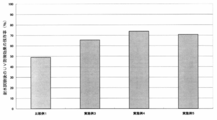
- FIG. 5 is a graph showing the residual ratio of the ultraviolet protective effect after the water resistance test for the compositions of Examples 3 to 5 and Comparative Example 1.
- the polyether-modified silicone (component A) in the cosmetic of the present invention is not particularly limited as long as it is a silicone derivative having a polyoxyalkylene group such as polyoxyethylene (POE) or polyoxypropylene (POP), One or more selected from those conventionally used for cosmetics and the like are preferably used.
- a silicone derivative having a polyoxyalkylene group such as polyoxyethylene (POE) or polyoxypropylene (POP),
- PEO polyoxyethylene
- POP polyoxypropylene
- cetyl dimethicone copolyol lauryl PEG-9 polydimethylsiloxyethyl dimethicone, PEG / PPG-19 / 19 dimethicone, PEG-10 dimethicone, PEG-9 polydimethylsiloxyethyl dimethicone, (dimethicone / (PEG-10 / 15)) Cross polymer, Polysilicone-13 and the like.
- a polyether-modified silicone having a molecular weight of 50,000 or more and a hydrophilic group selected from polyoxyethylene (POE) or polyoxypropylene (POP) is particularly preferable.
- polyether-modified silicones represented by the following general formula are preferably used.
- m is 50 to 1000, preferably 150 to 1000, and n is 1 to 40.
- m: n is preferably 200: 1 to 5: 1, and particularly preferably 60: 1 to 15: 1.
- a is 5 to 50 and b is 5 to 50, and the content of these polyoxyalkylene groups in the molecule is not particularly limited, but the content of polyoxyalkylene groups exceeds 20% by weight in the total molecular weight. Things are desirable.
- HLB (Si) is 5 or more and is less than 10, less than 9, less than 8, or less than 7 is mentioned as a particularly preferable example.
- HLB (Si) in this specification is a value calculated
- the polyether-modified silicone used in the present invention may be commercially available, for example, trade name BY11-030 (manufactured by Toray Dow Corning Silicone: 50% by mass of PEG / PPG-19 / 19 dimethicone and 50% by mass).
- the blending amount of the polyether-modified silicone (component A) in the cosmetic of the present invention is 0.1 to 10% by mass, preferably 0.1 to 5% by mass, more preferably 0.1 to 3% by mass.
- the blending amount is less than 0.1% by mass, when it exceeds 10% by mass, a stable oil-in-water emulsion may not be obtained.
- the extender pigment (component B) blended in the cosmetic of the present invention is not particularly limited as long as it is commonly used in cosmetics.
- An extender is an inorganic pigment that is generally used to maintain the dosage form of a product, not for the purpose of coloring. By incorporating an extender, the usability (extensibility and adhesion) of the product and gloss The color tone is adjusted.
- the extender examples include talc, kaolin, mica, synthetic mica, sericite, magnesium carbonate, calcium carbonate, and talc / silica / titanium oxide composite.
- two or more extender pigments may be combined and blended. Among these, it is preferable to use one or more selected from talc, kaolin, and mica.
- the extender pigment used in the present invention is preferably non-hydrophobized. Hydrophobic treated extender pigments tend to be inferior in UV protection and emulsification stability compared to non-hydrophobic treated pigments.
- the blending amount of the extender pigment in the cosmetic of the present invention is 3 to 8% by mass, preferably 4 to 8% by mass. If the blending amount is less than 3% by mass, the object of the present invention is not achieved. If the blending amount exceeds 8% by mass, the emulsion stability may be lowered.
- An ultraviolet absorber having an absorption ability in the UV-A region blended in the cosmetic of the present invention (component C: hereinafter also simply referred to as “ultraviolet absorber”) is in the UV-A region (wavelength region of 320 to 400 nm). As long as it has absorptive capacity, it is not particularly limited and may be those conventionally used in cosmetics.
- the blending amount of the ultraviolet absorber in the cosmetic of the present invention is 5 to 30% by mass, preferably 10 to 25% by mass, more preferably 10 to 20% by mass. If the blending amount is less than 5% by mass, the object of the present invention is not achieved. If the blending amount exceeds 30% by mass, stickiness or irritation to the skin may occur.
- the blending amount thereof is preferably 1.1 to 5% by mass. If the blending amount is less than 1.1% by mass, it is difficult to further improve the ultraviolet absorption effect. If the blending amount exceeds 5% by mass, stickiness and irritation to the skin may occur.
- the cosmetic of the present invention may contain, in addition to the above essential components A to C, other optional components conventionally used in cosmetics as long as the effects of the present invention are not impaired.
- other optional components conventionally used in cosmetics as long as the effects of the present invention are not impaired.
- Specific examples include thickeners, humectants, oils, buffers, chelating agents, coloring materials, preservatives, and the like.
- a hydrophilic thickener is preferably added to the cosmetic of the present invention.
- the hydrophilic thickener is not particularly limited as long as it is used in cosmetics, and examples thereof include natural water-soluble polymers, semi-synthetic water-soluble polymers, and synthetic water-soluble polymers.
- Examples of natural water-soluble polymers include arabia gum, tragacanth gum, galactan, guar gum, carob gum, caraya gum, carrageenan, pectin, agar, quince seed (malmello), alge colloid (gypsum extract), starch (rice, corn, potato, wheat). And plant polymers such as glycyrrhizic acid; microbial polymers such as xanthan gum, dextran, succinoglucan, and bullulan; and animal polymers such as collagen, casein, albumin, and gelatin.
- semi-synthetic water-soluble polymers include starch polymers such as carboxymethyl starch and methylhydroxypropyl starch; methylcellulose, nitrocellulose, ethylcellulose, methylhydroxypropylcellulose, hydroxyethylcellulose, sodium cellulose sulfate, hydroxypropylcellulose, carboxy Cellulose polymers such as sodium methylcellulose (CMC), crystalline cellulose and cellulose powder; and alginic acid polymers such as sodium alginate and propylene glycol alginate.
- starch polymers such as carboxymethyl starch and methylhydroxypropyl starch
- Cellulose polymers such as sodium methylcellulose (CMC), crystalline cellulose and cellulose powder
- alginic acid polymers such as sodium alginate and propylene glycol alginate.
- Examples of synthetic water-soluble polymers include vinyl polymers such as polyvinyl alcohol, polyvinyl methyl ether, polyvinyl pyrrolidone, and carboxyvinyl polymer (carbomer); polyoxyethylene polymers such as polyethylene glycol (molecular weight 1500, 4000, 6000). Molecule: Polyoxyethylene polyoxypropylene copolymer copolymer polymer; sodium polyacrylate, polyethyl acrylate, polyacrylamide, acrylic acid / alkyl methacrylate copolymer (trade name “Pemulene TR-1”), etc. Acrylic polymer; polyethyleneimine, cationic polymer and the like.
- the blending amount is 0.01 to 5% by mass, preferably 0.1 to 3% by mass. If the blending amount is less than 0.01% by mass, no contribution to improving the emulsion stability may be observed. If the blending amount exceeds 5% by mass, a heavy feel may be caused during application.
- the cosmetic of the present invention can be produced according to a method conventionally used for producing an emulsion.
- the oil phase component is mixed, the water phase component is mixed with the extender pigment, and the water phase and the oil phase are mixed and emulsified with a homomixer or the like to obtain the oil-in-water emulsion sunscreen cosmetic of the present invention.
- Example 1 An emulsion composition having the composition listed in Table 1 below was prepared according to a conventional method, and the emulsion stability was evaluated. Moreover, the UV absorption spectrum about each composition was measured.
- Emulsion stability evaluation method and criteria Attempts to prepare an oil-in-water emulsion composition with the composition listed in Table 1, and as a result of visual observation, an example in which a stable oil-in-water emulsion with small emulsion particles was obtained was “ ⁇ ”, an example where emulsification was not possible It was set as “x”.
- the compositions of Examples 1 to 5 were excellent in emulsion stability.
- stable emulsions could not be obtained in the compositions of Comparative Example 3 in which extender pigments and the like were blended in excess (10% by mass) and Comparative Example 4 in which hydrophobized talc was blended.
- Comparative Example 1 and Examples 3 to 5 were subjected to a water resistance test for UV protection effect.
- the evaluation method is as follows. A 2 mg / cm 2 composition (Comparative Example 1 or Examples 3 to 5) was uniformly applied to a PMMA (polymethyl methacrylate) plate having a rough surface, and a spectrophotometer (U-4100 Hitachi Ltd.) Absorbance was measured. Next, the PMMA plate (coated with each composition) was exposed to strong water for 15 minutes and dried sufficiently, and the absorbance was measured again.
- PMMA polymethyl methacrylate
- Example 6 Oil-in-water sunscreen cosmetic ion-exchanged water Residual ethyl alcohol 20 Dipropylene glycol 3 Acrylic acid / alkyl acrylate (C10-30) copolymer 0.5 Xanthan gum 0.1 Aminomethylpropanediol appropriate amount polyoxybutylene polyoxypropylene glycol 2 PEG / PPG-19 / 19 Dimethicone 2 Polyethylene glycol 1 Cyclopentasiloxane 2 Hydrogenated polyisobutene 3 Caprylyl Methicone 5 Octocrylene 3 t-Butylmethoxydibenzoylmethane 1 Benzotriazole 1 Oxybenzone-3 0.1 Talc 6 Chelating agent appropriate amount ethyl paraben appropriate amount perfume appropriate amount
- Example 7 Oil-in-water sunscreen cosmetic ion-exchanged water Residual ethyl alcohol 15 1,3-butylene glycol 7 Carbomer 0.15 Acrylic acid / alkyl acrylate (C10-30) copolymer 0.15 Aminomethylpropanol appropriate amount polypropylene glycol 3 PEG / PPG-19 / 19 Dimethicone 1.5 Dimethicone 1.5 Cyclopentasiloxane 2 Dimethylpolysiloxane 2 Pentaerythrityl tetraethylhexanoate 3 Isododecane 2 Ethyl hexyl methoxycinnamate 5 Phenylbenzimidazolesulfonic acid 2 2,4,6-Tris [4- (2-ethylhexyloxycarbonyl) anilino] -1,3,5-triazine 0.3 Benzylidene camphor 0.2 Methyl bis (trimethylsiloxy) silylisopen
Landscapes
- Health & Medical Sciences (AREA)
- Life Sciences & Earth Sciences (AREA)
- Veterinary Medicine (AREA)
- Animal Behavior & Ethology (AREA)
- General Health & Medical Sciences (AREA)
- Public Health (AREA)
- Birds (AREA)
- Epidemiology (AREA)
- Chemical & Material Sciences (AREA)
- Dermatology (AREA)
- Oil, Petroleum & Natural Gas (AREA)
- Dispersion Chemistry (AREA)
- Cosmetics (AREA)
Abstract
(A)ポリエーテル変性シリコーン、(B)3~8質量%の体質顔料、及び(C)UV-A領域に吸収能を持つ紫外線吸収剤を含有することを特徴とする水中油型日焼け止め化粧料を提供する。当該水中油型日焼け止め化粧料は、油溶性紫外線吸収剤を高配合せず、安定でべたつきがなく、なおかつ高いSPFを達成できる。本発明の日焼け止め化粧料は、親水性増粘剤を更に含有しているのが好ましい。
Description
本発明は、UVケア化粧料に関する。より詳細には、油溶性紫外線吸収剤を高配合することなく、高いSPFを得ることのできる水中油型乳化化粧料、特に日焼け止め化粧料に関する。
スキンケア、ボディケアにおいて紫外線の害から皮膚を守ることは重要な課題の一つであり、UVケア化粧料は紫外線が皮膚に与える悪影響を最小限に抑えることを主たる目的にしている。UVケア化粧料の1種である日焼け止め化粧料(サンスクリーン化粧料)は、紫外線吸収剤や紫外線散乱剤等を配合することによりUVA及びUVBをカットし、紫外線から肌を守る化粧料である(非特許文献1)。
UVケア化粧料、特に日焼け止め化粧料の基剤としては、水中油型乳化系基剤、油中水型乳化系基剤、油性基剤などが一般的に用いられている。水中油型乳化基剤は、SPF(Sun Protection Factor)を高めるために油溶性紫外線吸収剤の配合量を増加させると、べたつきを生じ、水中油型乳化基剤が元来有している「みずみずしい使用感」という特徴が失われてしまう場合があった。
一方、水中油型乳化基剤のみずみずしさを維持しつつ高いSPFを達成するために、水溶性紫外線吸収剤を配合することも行われているが、水溶性紫外線吸収剤を構成する塩の影響により乳化物の安定性が低下するという問題があった。このような問題を解決するため、親水性の高い界面活性剤(脂肪酸PEGグリセリル系界面活性剤など)を用いる(特許文献1)、アルキルメチルタウリン酸塩を配合する(特許文献2)といった試みがなされ、或る程度の効果を上げている。
また、特許文献3では、体質顔料を配合し、高級アルコールと界面活性剤の総量及び比率を特定範囲内とすることにより、べたつきがなく、みずみずしい使用感であり、なおかつ高いSPFを達成できることが記載されている。しかし、安定かつ使用性の良好な製剤を得るには高級アルコールの配合が必須とされている。
一方、水中油型乳化基剤は、アルコールを高配合すると乳化粒子が破壊されてしまい、十分に安定な基剤を得ることが困難であるという問題もあったが、特許文献4には、油分、低級アルコール50重量%以上、水、乳化剤として下記一般式:
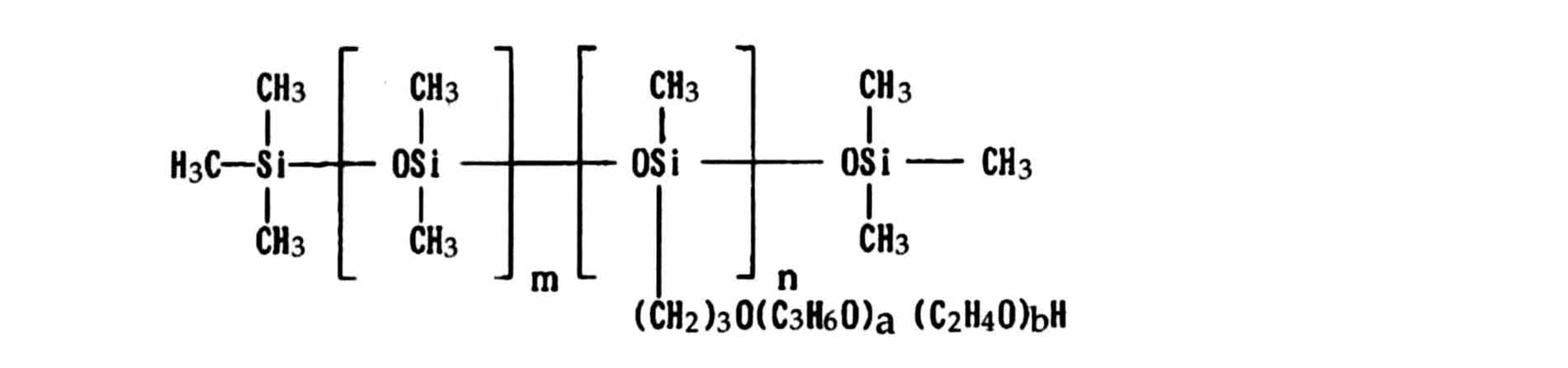
(上記式中、mは50~1000、nは1~40、aは5~50、bは5~50の整数である)で示されるポリエーテル変性シリコーンの一種又は二種以上を含有し、乳化剤として他の界面活性剤を実質的に含有しないことを特徴とするアルコール・水中油型乳化組成物が開示され、頭髪につや、柔軟性、潤いを与えるとともに、櫛通りをよくする効果があると記載さている。
しかしながら、特許文献4に記載された組成物では、低級アルコールが非常に多く含まれているため一般的なスキンケア基剤への応用は困難であった。
しかしながら、特許文献4に記載された組成物では、低級アルコールが非常に多く含まれているため一般的なスキンケア基剤への応用は困難であった。
「新化粧品学」第2版、光井武夫編、2001年、南山堂発行、第497~504頁
本発明は、日焼け止め化粧料においてべたつきの主な原因となる油溶性紫外線吸収剤を高配合せず、水溶性紫外線吸収剤を添加しなくても、高いSPFを達成でき、なおかつ安定性に優れた水中油型乳化化粧料を提供することを目的とする。
本発明者等は、前記の課題を解決すべく鋭意研究を重ねた結果、(A)ポリエーテル変性シリコーン、(B)所定量の体質顔料、及び(C)UV-A領域に吸収能を持つ紫外線吸収剤を組み合わせて配合することにより、べたつきがなく、みずみずしい使用感であり、安定で、なおかつ高いSPFを達成することができることを見出し、本発明を完成するに至った。
即ち、本発明は、
(A)ポリエーテル変性シリコーン
(B)3~8質量%の体質顔料、及び
(C)UV-A領域に吸収能を持つ紫外線吸収剤を含有することを特徴とする水中油型日焼け止め化粧料を提供する。
(A)ポリエーテル変性シリコーン
(B)3~8質量%の体質顔料、及び
(C)UV-A領域に吸収能を持つ紫外線吸収剤を含有することを特徴とする水中油型日焼け止め化粧料を提供する。
本発明の乳化化粧料は、油溶性紫外線吸収剤を高配合していないため、べたつかず、水中油型乳化物が有するみずみずしい使用感を維持しており、安全性にも優れているとともに、安定で高い紫外線遮蔽効果(高SPF)を達成することができる。さらに皮膚への塗布後は転相して優れた耐水性を示す。
本発明の化粧料におけるポリエーテル変性シリコーン(成分A)は、ポリオキシエチレン(POE)やポリオキシプロピレン(POP)等のポリオキシアルキレン基を有するシリコーン誘導体であれば特に限定されるものではなく、従来から化粧料等に用いられているものから選択される1種又は2種以上が好ましく使用される。
具体例としては、セチルジメチコンコポリオール、ラウリルPEG-9 ポリジメチルシロキシエチルジメチコン、PEG/PPG-19/19 ジメチコン、PEG-10ジメチコン、PEG-9 ポリジメチルシロキシエチルジメチコン、(ジメチコン/(PEG-10/15))クロスポリマー、ポリシリコーン-13等が挙げられる。
具体例としては、セチルジメチコンコポリオール、ラウリルPEG-9 ポリジメチルシロキシエチルジメチコン、PEG/PPG-19/19 ジメチコン、PEG-10ジメチコン、PEG-9 ポリジメチルシロキシエチルジメチコン、(ジメチコン/(PEG-10/15))クロスポリマー、ポリシリコーン-13等が挙げられる。
本発明においては、分子量が50000以上であり、親水基がポリオキシエチレン(POE)又はポリオキシプロピレン(POP)から選択されるポリエーテル変性シリコーンが特に好ましい。
中でも、下記一般式で表されるポリエーテル変性シリコーンが好ましく用いられる。
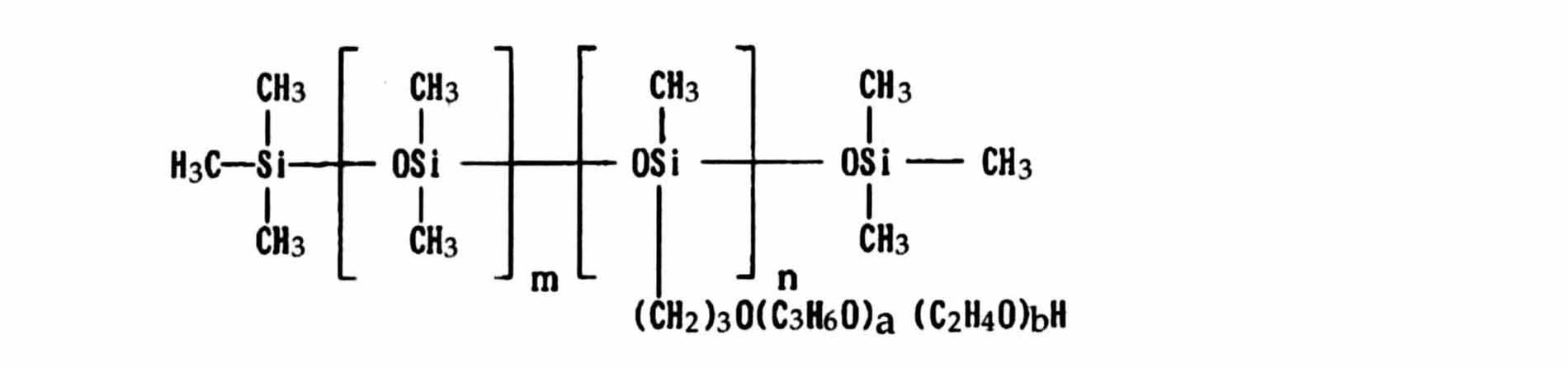
上記式中、mは50~1000、好ましくは150~1000であり、nは1~40である。また、m:nは200:1~5:1であることが好ましく、60:1~15:1であることが特に好ましい。
また、aは5~50、bは5~50であり、これらポリオキシアルキレン基の分子中での含有量は特に限定されないが、ポリオキシアルキレン基の含有量が全分子量中20重量%を超えるものが望ましい。
中でも、下記一般式で表されるポリエーテル変性シリコーンが好ましく用いられる。
また、aは5~50、bは5~50であり、これらポリオキシアルキレン基の分子中での含有量は特に限定されないが、ポリオキシアルキレン基の含有量が全分子量中20重量%を超えるものが望ましい。
特に限定されないが、例えば、HLB(Si)が5以上で、10未満、9未満、8未満、又は7未満であるポリエーテル変性シリコーンが特に好ましい例として挙げられる。
なお、本明細書におけるHLB(Si)とは、下記の計算式で求められる値である。

HLB(Si)が5以上のポリエーテル変性シリコーンを用いた場合、5~50質量%以下のエタノールを配合するとより安定に乳化ができる。
なお、本明細書におけるHLB(Si)とは、下記の計算式で求められる値である。
本発明で使用するポリエーテル変性シリコーンは市販されているものでもよく、例えば、商品名BY11-030(東レ・ダウコーニングシリコーン社製:50質量%のPEG/PPG-19/19 ジメチコンと50質量%のシクロペンタシロキサンを含む。PEG/PPG-19/19 ジメチコンとは、上記一般式においてm=400、n=10、a=19、b=19となる分子量55000のポリエーテル変性シリコーンである;HLB(Si)=7)、商品名KF-6012(信越シリコーン社製:PEG/PPG-20/22ブチルエテルジメチコン)、商品名SH3749(信越シリコーン社製:PEG/PPG-20/20ジメチコン)等を挙げることができる。
本発明の化粧料におけるポリエーテル変性シリコーン(成分A)の配合量は、0.1~10質量%、好ましくは0.1~5質量%、より好ましくは0.1~3質量%である。配合量が0.1質量%未満である場合、10質量%を越えて配合した場合には、安定な水中油型乳化物が得られない場合がある。
本発明の化粧料に配合される体質顔料(成分B)は、化粧料に通常用いられているものであればよく特に限定されない。体質顔料とは、一般的には着色目的ではなく製品の剤形を保つために用いられる無機顔料のことであり、体質顔料を配合することにより製品の使用性(伸展性、付着性)や光沢、色調などが調節されている。
体質顔料の具体例としては、タルク、カオリン、マイカ、合成マイカ、セリサイト、炭酸マグネシウム、炭酸カルシウム、タルク/シリカ/酸化チタン複合体が挙げられる。また、本発明では、2種以上の体質顔料を組み合わせて配合してもよい。中でも、タルク、カオリン、マイカから選択される1種又は2種以上を用いるのが好ましい。
本発明で使用する体質顔料は疎水化処理していないものが好ましい。疎水化処理された体質顔料は、疎水化処理していない場合と比較して、紫外線防御効果及び乳化安定性が劣る傾向がある。
本発明で使用する体質顔料は疎水化処理していないものが好ましい。疎水化処理された体質顔料は、疎水化処理していない場合と比較して、紫外線防御効果及び乳化安定性が劣る傾向がある。
本発明の化粧料における体質顔料の配合量は、3~8質量%、好ましくは4~8質量%である。配合量が3質量%未満であると本発明の目的が達成されず、8質量%を越えて配合すると乳化安定性が低下する場合がある。
本発明の化粧料に配合されるUV-A領域に吸収能を持つ紫外線吸収剤(成分C:以下、単に「紫外線吸収剤」とも呼ぶ)は、UV-A領域(320~400nmの波長領域)に吸収能を持つものであれば特に限定されず、従来から化粧料に使用されているものであってよい。
具体例としては、メトキシケイヒ酸エチルヘキシル、ジエチルアミノヒドロキシベンゾイル安息香酸ヘキシル、オクトクリレン、ポリシリコン-15、ビスエチルヘキシルオキシフェノールメトキシフェニルトリアジン、オキシベンゾン-3、2,4,6-トリス〔4-(2-エチルヘキシルオキシカルボニル)アニリノ〕-1,3,5-トリアジン、t-ブチルメトキシジベンゾイルメタン、ベンゾトリアゾール、ベンジリデンカンファー、トリメトキシケイヒ酸メチルビス(トリメチルシロキシ)シリルイソペンチル、及びフェニルベンズイミダゾールスルホン酸などが挙げられる。これらは、必要に応じて1種又は2種以上を適宜選択して用いることができる。
これらの中でも、ジエチルアミノヒドロキシベンゾイル安息香酸ヘキシル、ビスエチルヘキシルオキシフェノールメトキシフェニルトリアジンはべたつきも少なく、紫外線吸収効果も高いため好ましい。特に、ジエチルアミノヒドロキシベンゾイル安息香酸ヘキシルとビスエチルヘキシルオキシフェノールメトキシフェニルトリアジンの2種を組み合わせて配合することにより紫外線吸収効果が更に向上するので好ましい。
本発明の化粧料における紫外線吸収剤の配合量は、5~30質量%、好ましくは10~25質量%、より好ましくは10~20質量%である。配合量が5質量%未満であると本発明の目的が達成されず、30質量%を越えて配合すると、べたつきや皮膚への刺激性を生ずる場合がある。
特に、紫外線吸収剤としてジエチルアミノヒドロキシベンゾイル安息香酸ヘキシル及び/又はビスエチルヘキシルオキシフェノールメトキシフェニルトリアジンを配合する場合には、これらの配合量を1.1~5質量%とすることが好ましい。これらの配合量が1.1質量%未満であると紫外線吸収効果の更なる向上が得られ難く、5質量%を越えて配合すると、べたつきや皮膚への刺激性を生ずる場合がある。
特に、紫外線吸収剤としてジエチルアミノヒドロキシベンゾイル安息香酸ヘキシル及び/又はビスエチルヘキシルオキシフェノールメトキシフェニルトリアジンを配合する場合には、これらの配合量を1.1~5質量%とすることが好ましい。これらの配合量が1.1質量%未満であると紫外線吸収効果の更なる向上が得られ難く、5質量%を越えて配合すると、べたつきや皮膚への刺激性を生ずる場合がある。
本発明の化粧料は、上記の必須成分A~Cに加えて、従来から化粧品に使用されている他の任意成分を、本発明の効果を阻害しない範囲で含有していてもよい。具体的には、増粘剤、保湿剤、油分、緩衝剤、キレート剤、色材、防腐剤などが挙げられる。
本発明の化粧料には、これら任意成分の中でも親水性増粘剤を配合するのが好ましい。親水性増粘剤としては、化粧品に使用されるものであれば特に限定されず、例えば、天然の水溶性高分子、半合成の水溶性高分子、合成の水溶性高分子等が挙げられる。
天然の水溶性高分子としては、例えばアラアビアガム、トラガカントガム、ガラクタン、グアガム、キャロブガム、カラヤガム、カラギーナン、ペクチン、カンテン、クインスシード(マルメロ)、アルゲコロイド(カッソウエキス)、デンプン(コメ、トウモロコシ、バレイショ、コムギ)、グリチルリチン酸等の植物系高分子;キサンタンガム、デキストラン、サクシノグルカン、ブルラン等の微生物系高分子;コラーゲン、カゼイン、アルブミン、ゼラチン等の動物系高分子等が挙げられる。
半合成の水溶性高分子としては、例えばカルボキシメチルデンプン、メチルヒドロキシプロピルデンプン等のデンプン系高分子;メチルセルロース、ニトロセルロース、エチルセルロース、メチルヒドロキシプロピルセルロース、ヒドロキシエチルセルロース、セルロース硫酸ナトリウム、ヒドロキシプロピルセルロース、カルボキシメチルセルロースナトリウム(CMC)、結晶セルロース、セルロース末等のセルロース系高分子;アルギン酸ナトリウム、アルギン酸プロピレングリコールエステル等のアルギン酸系高分子等が挙げられる。
合成の水溶性高分子としては、例えばポリビニルアルコール、ポリビニルメチルエーテル、ポリビニルピロリドン、カルボキシビニルポリマー(カルボマー)等のビニル系高分子;ポリエチレングリコール(分子量 1500、4000、6000)等のポリオキシエチレン系高分子;ポリオキシエチレンポリオキシプロピレン共重合体共重合系高分子;ポリアクリル酸ナトリウム、ポリエチルアクリレート、ポリアクリルアミド、アクリル酸・メタクリル酸アルキル共重合体(商品名「ペミュレンTR-1」)等のアクリル系高分子;ポリエチレンイミン、カチオンポリマー等が挙げられる。
本発明の化粧料に親水性増粘剤を配合する場合の配合量は、0.01~5質量%、好ましくは0.1~3質量%である。配合量が0.01質量%未満であると乳化安定性向上への寄与が見られない場合があり、5質量%を越えて配合すると、塗布時に重い感触となる場合がある。
本発明の化粧料は、乳化物の製造に従来から使用されている方法に準じて製造することができる。例えば、油相成分を混合し、水相成分を体質顔料等とともに混合し、水相及び油相を混合してホモミキサー等で乳化することにより、本発明の水中油型乳化日焼け止め化粧料を得ることができる。
以下に具体例を挙げて本発明を更に詳細に説明するが、本発明は以下の実施例に限定されるものではない。また、以下の実施例等における配合量は特に断らない限り質量%を示す。
(実施例及び比較例)
下記の表1に掲げた組成を有する乳化組成物を常法に従って調製し、その乳化安定性を評価した。また、各組成物についてのUV吸収スペクトルを測定した。
下記の表1に掲げた組成を有する乳化組成物を常法に従って調製し、その乳化安定性を評価した。また、各組成物についてのUV吸収スペクトルを測定した。
乳化安定性の評価方法及び基準:
表1に掲げた組成で水中油型乳化組成物の調製を試み、目視観察の結果、乳化粒子が小さく安定な水中油型乳化物が得られた例を「○」、乳化できなかった例を「×」とした。
表1に掲げた組成で水中油型乳化組成物の調製を試み、目視観察の結果、乳化粒子が小さく安定な水中油型乳化物が得られた例を「○」、乳化できなかった例を「×」とした。
表1に示した結果から明らかなように、ポリエーテル変性シリコーン、紫外線吸収剤を含有し、タルク、マイカ、カオリン等の体質顔料の配合量が8質量%以下である比較例1、2及び実施例1~5の組成物は乳化安定性に優れていた。これに対して、体質顔料等を過剰に(10質量%)配合した比較例3及び疎水化処理タルクを配合した比較例4の組成では安定した乳化物が得られなかった。
一方、本発明に係る実施例1~5の組成では、体質顔料を配合しない又はその配合量が3質量%未満である比較例1及び2に比べて紫外線吸収能が格段に向上した(図1及び2)。
一方、本発明に係る実施例1~5の組成では、体質顔料を配合しない又はその配合量が3質量%未満である比較例1及び2に比べて紫外線吸収能が格段に向上した(図1及び2)。
次に、前記比較例1及び実施例3~5の組成物について紫外線防御効果の耐水性試験を実施した。評価方法は次の通りである。
表面を荒らしたPMMA(ポリメタクリル酸メチル)の板に2mg/cm2の組成物(比較例1又は実施例3~5)を均一に塗布し、分光光度計(U-4100 日立製作所)にて吸光度を測定した。次いで、上記PMMAの板(各組成物を塗布したもの)を強流水に15分さらし、十分に乾燥させた後、吸光度を再度測定した。耐水性試験後の波長310nmにおける吸光度が耐水性試験前の同波長の吸光度に対して何パーセントに該当するかを算出し、その値をUV防御効果の残存率(%)とした。
各例で得られたUV防御効果の残存率を図3のグラフに示す。体質顔料を含まない比較例1では、耐水性試験後の残存率が50%に満たなかったのに対し、ポリエーテル変性シリコーン、紫外線吸収剤に加えてタルク、マイカ、カオリン等の体質顔料を所定量配合した実施例3~5では、残存率が65%~75%に向上した。
以下に、本発明の他の実施例を示す。
実施例6:水中油型日焼け止め化粧料
イオン交換水 残余
エチルアルコール 20
ジプロピレングリコール 3
アクリル酸/アクリル酸アルキル(C10-30)コポリマー 0.5
キサンタンガム 0.1
アミノメチルプロパンジオール 適量
ポリオキシブチレンポリオキシプロピレングリコール 2
PEG/PPG-19/19 ジメチコン 2
ポリエチレングリコール 1
シクロペンタシロキサン 2
水添ポリイソブテン 3
カプリリルメチコン 5
オクトクリレン 3
t-ブチルメトキシジベンゾイルメタン 1
ベンゾトリアゾール 1
オキシベンゾン-3 0.1
タルク 6
キレート剤 適量
エチルパラベン 適量
香料 適量
実施例7:水中油型日焼け止め化粧料
イオン交換水 残余
エチルアルコール 15
1,3-ブチレングリコール 7
カルボマー 0.15
アクリル酸/アクリル酸アルキル(C10-30)コポリマー 0.15
アミノメチルプロパノール 適量
ポリプロピレングリコール 3
PEG/PPG-19/19 ジメチコン 1.5
ジメチコン 1.5
シクロペンタシロキサン 2
ジメチルポリシロキサン 2
テトラエチルヘキサン酸ペンタエリスリチル 3
イソドデカン 2
メトキシケイヒ酸エチルヘキシル 5
フェニルベンズイミダゾールスルホン酸 2
2,4,6-トリス〔4-(2-エチルヘキシルオキシカルボニル)アニリノ〕-1,3,5-トリアジン 0.3
ベンジリデンカンファー 0.2
トリメトキシケイヒ酸メチルビス(トリメチルシロキシ)シリルイソペンチル
0.2
マイカ 2
カオリン 1
キレート剤 適量
フェノキシエタノール 適量
Claims (7)
- (A)ポリエーテル変性シリコーン
(B)3~8質量%の体質顔料、及び
(C)UV-A領域に吸収能を持つ紫外線吸収剤を含有することを特徴とする水中油型日焼け止め化粧料。 - 前記体質顔料が、タルク、カオリン、及びマイカから選択される1種又は2種以上であることを特徴とする、請求項1に記載の化粧料。
- 前記紫外線吸収剤が、メトキシケイヒ酸エチルヘキシル、ジエチルアミノヒドロキシベンゾイル安息香酸ヘキシル、オクトクリレン、ポリシリコン-15、ビスエチルヘキシルオキシフェノールメトキシフェニルトリアジン、オキシベンゾン-3、2,4,6-トリス〔4-(2-エチルヘキシルオキシカルボニル)アニリノ〕-1,3,5-トリアジン、t-ブチルメトキシジベンゾイルメタン、ベンゾトリアゾール、ベンジリデンカンファー、トリメトキシケイヒ酸メチルビス(トリメチルシロキシ)シリルイソペンチル、及びフェニルベンズイミダゾールスルホン酸から選択される1種又は2種以上であることを特徴とする、請求項1又は2に記載の化粧料。
- 前記ポリエーテル変性シリコーンが、セチルジメチコンコポリオール、ラウリルPEG-9 ポリジメチルシロキシエチルジメチコン、PEG/PPG-19/19 ジメチコン、PEG-10ジメチコン、PEG-9 ポリジメチルシロキシエチルジメチコン、(ジメチコン/(PEG-10/15))クロスポリマー、及びポリシリコーン-13から選択される1種又は2種以上であることを特徴とする、請求項1から3のいずれか一項に記載の化粧料。
- 親水性増粘剤を更に含有することを特徴とする、請求項1から4のいずれか一項に記載の化粧料。
- 前記紫外線吸収剤が、ジエチルアミノヒドロキシベンゾイル安息香酸ヘキシル及びビスエチルヘキシルオキシフェノールメトキシフェニルトリアジンから選択される1種又は2種を含むことを特徴とする、請求項1から5のいずれか一項に記載の化粧料。
- 前記ジエチルアミノヒドロキシベンゾイル安息香酸ヘキシル及び/又はビスエチルヘキシルオキシフェノールメトキシフェニルトリアジンの配合量が、1.1~5.0質量%であることを特徴とする、請求項6に記載の化粧料。
Applications Claiming Priority (4)
| Application Number | Priority Date | Filing Date | Title |
|---|---|---|---|
| JP2010-242793 | 2010-10-28 | ||
| JP2010242793 | 2010-10-28 | ||
| JP2011-184643 | 2011-08-26 | ||
| JP2011184643A JP5537513B2 (ja) | 2010-10-28 | 2011-08-26 | 水中油型日焼け止め化粧料 |
Publications (1)
| Publication Number | Publication Date |
|---|---|
| WO2012056959A1 true WO2012056959A1 (ja) | 2012-05-03 |
Family
ID=45993672
Family Applications (1)
| Application Number | Title | Priority Date | Filing Date |
|---|---|---|---|
| PCT/JP2011/074007 Ceased WO2012056959A1 (ja) | 2010-10-28 | 2011-10-19 | 水中油型日焼け止め化粧料 |
Country Status (3)
| Country | Link |
|---|---|
| JP (1) | JP5537513B2 (ja) |
| TW (1) | TW201223550A (ja) |
| WO (1) | WO2012056959A1 (ja) |
Cited By (3)
| Publication number | Priority date | Publication date | Assignee | Title |
|---|---|---|---|---|
| WO2015089035A1 (en) * | 2013-12-09 | 2015-06-18 | Momentive Performance Materials Inc. | Emulsion compositions and applications therefor |
| WO2016080056A1 (ja) * | 2014-11-20 | 2016-05-26 | 花王株式会社 | 皮膚化粧料 |
| WO2017069157A1 (ja) * | 2015-10-20 | 2017-04-27 | ロート製薬株式会社 | 皮膚外用組成物 |
Families Citing this family (7)
| Publication number | Priority date | Publication date | Assignee | Title |
|---|---|---|---|---|
| JP6068097B2 (ja) * | 2012-11-02 | 2017-01-25 | 花王株式会社 | 化粧料 |
| JP6165797B2 (ja) * | 2014-04-04 | 2017-07-19 | 富士フイルム株式会社 | リキッドファンデーション |
| CN106232084A (zh) | 2014-06-30 | 2016-12-14 | 株式会社资生堂 | 水性化妆品 |
| KR20170018849A (ko) | 2014-06-30 | 2017-02-20 | 가부시키가이샤 시세이도 | 수중유형 유화 조성물 |
| WO2016068300A1 (ja) * | 2014-10-31 | 2016-05-06 | 株式会社 資生堂 | 日焼け止め化粧料 |
| JP7195908B2 (ja) * | 2018-12-13 | 2022-12-26 | 株式会社ナリス化粧品 | 油性液状化粧料 |
| EP3975980A1 (en) * | 2019-05-31 | 2022-04-06 | L'oreal | Water-resistant cosmetic composition comprising light green clay and a probiotic-derived active ingredient |
Citations (4)
| Publication number | Priority date | Publication date | Assignee | Title |
|---|---|---|---|---|
| JPS6448881A (en) * | 1987-08-17 | 1989-02-23 | Kao Corp | Long wavelength ultraviolet absorber and cosmetic preparation containing the same |
| JP2010059076A (ja) * | 2008-09-02 | 2010-03-18 | Shiseido Co Ltd | 水中油型乳化組成物 |
| JP2010189281A (ja) * | 2009-02-16 | 2010-09-02 | Shiseido Co Ltd | 水中油型乳化組成物 |
| WO2010113795A1 (ja) * | 2009-03-30 | 2010-10-07 | 株式会社 資生堂 | 水中油型乳化組成物 |
Family Cites Families (1)
| Publication number | Priority date | Publication date | Assignee | Title |
|---|---|---|---|---|
| JP5378753B2 (ja) * | 2008-10-22 | 2013-12-25 | 株式会社 資生堂 | 乳化組成物 |
-
2011
- 2011-08-26 JP JP2011184643A patent/JP5537513B2/ja active Active
- 2011-10-19 WO PCT/JP2011/074007 patent/WO2012056959A1/ja not_active Ceased
- 2011-10-27 TW TW100139211A patent/TW201223550A/zh unknown
Patent Citations (4)
| Publication number | Priority date | Publication date | Assignee | Title |
|---|---|---|---|---|
| JPS6448881A (en) * | 1987-08-17 | 1989-02-23 | Kao Corp | Long wavelength ultraviolet absorber and cosmetic preparation containing the same |
| JP2010059076A (ja) * | 2008-09-02 | 2010-03-18 | Shiseido Co Ltd | 水中油型乳化組成物 |
| JP2010189281A (ja) * | 2009-02-16 | 2010-09-02 | Shiseido Co Ltd | 水中油型乳化組成物 |
| WO2010113795A1 (ja) * | 2009-03-30 | 2010-10-07 | 株式会社 資生堂 | 水中油型乳化組成物 |
Cited By (7)
| Publication number | Priority date | Publication date | Assignee | Title |
|---|---|---|---|---|
| WO2015089035A1 (en) * | 2013-12-09 | 2015-06-18 | Momentive Performance Materials Inc. | Emulsion compositions and applications therefor |
| US9751063B2 (en) | 2013-12-09 | 2017-09-05 | Momentive Performance Materials Inc. | Emulsion compositions and applications therefor |
| WO2016080056A1 (ja) * | 2014-11-20 | 2016-05-26 | 花王株式会社 | 皮膚化粧料 |
| WO2017069157A1 (ja) * | 2015-10-20 | 2017-04-27 | ロート製薬株式会社 | 皮膚外用組成物 |
| JPWO2017069157A1 (ja) * | 2015-10-20 | 2018-08-09 | ロート製薬株式会社 | 皮膚外用組成物 |
| JP2021165314A (ja) * | 2015-10-20 | 2021-10-14 | ロート製薬株式会社 | 皮膚外用組成物 |
| JP7315302B2 (ja) | 2015-10-20 | 2023-07-26 | ロート製薬株式会社 | 皮膚外用組成物 |
Also Published As
| Publication number | Publication date |
|---|---|
| JP5537513B2 (ja) | 2014-07-02 |
| TW201223550A (en) | 2012-06-16 |
| JP2012162515A (ja) | 2012-08-30 |
Similar Documents
| Publication | Publication Date | Title |
|---|---|---|
| JP5537513B2 (ja) | 水中油型日焼け止め化粧料 | |
| JP5058353B2 (ja) | 水中油型乳化組成物 | |
| JP4854051B2 (ja) | 水中油型乳化組成物 | |
| JP6689608B2 (ja) | 水中油型皮膚化粧料 | |
| CN103402488B (zh) | 防晒化妆品 | |
| TWI853897B (zh) | 紫外線阻斷效率因紫外線而增加的紫外線阻斷用化妝料組合物、其製備方法及其用途 | |
| AU2003213592B2 (en) | Spherical powder components and solid cosmetic compositions comprising thereof | |
| EP2915524A1 (en) | Sunscreen cosmetic | |
| US20170304658A1 (en) | Gel/gel composition comprising a uv-screening agent | |
| JP2016523983A (ja) | 安定かつ高塩濃度含有スキンケア組成物 | |
| JP2018095637A (ja) | 水中油型紫外線防御化粧料 | |
| JP2019038781A (ja) | 油中水型化粧料 | |
| JP2023524565A (ja) | 化粧品およびメイクアップ方法 | |
| ES3002384T3 (en) | Photoprotective composition | |
| WO2012043614A1 (ja) | 水中油型乳化化粧料 | |
| JP6903024B2 (ja) | 皮膚外用剤 | |
| JP7172174B2 (ja) | 化粧料 | |
| JP6995182B1 (ja) | 水中油型乳化化粧料 | |
| WO2026042634A1 (ja) | 乳化化粧料組成物 | |
| JP2025051749A (ja) | 油中水型外用組成物 | |
| JP2026000657A (ja) | 化粧料 | |
| TW202446357A (zh) | 紫外線阻斷效率因紫外線而增加的紫外線阻斷用化妝料組合物、其製備方法及其用途 | |
| WO2026042629A1 (ja) | 水中油型乳化化粧料組成物 | |
| WO2020075785A1 (ja) | ハリ感を付与する皮膚外用剤 | |
| HK1164723B (en) | Oil-in-water emulsion composition |
Legal Events
| Date | Code | Title | Description |
|---|---|---|---|
| 121 | Ep: the epo has been informed by wipo that ep was designated in this application |
Ref document number: 11836095 Country of ref document: EP Kind code of ref document: A1 |
|
| NENP | Non-entry into the national phase |
Ref country code: DE |
|
| 122 | Ep: pct application non-entry in european phase |
Ref document number: 11836095 Country of ref document: EP Kind code of ref document: A1 |