WO2012008097A1 - アニメーション制御装置、アニメーション制御方法、プログラムおよび集積回路 - Google Patents
アニメーション制御装置、アニメーション制御方法、プログラムおよび集積回路 Download PDFInfo
- Publication number
- WO2012008097A1 WO2012008097A1 PCT/JP2011/003561 JP2011003561W WO2012008097A1 WO 2012008097 A1 WO2012008097 A1 WO 2012008097A1 JP 2011003561 W JP2011003561 W JP 2011003561W WO 2012008097 A1 WO2012008097 A1 WO 2012008097A1
- Authority
- WO
- WIPO (PCT)
- Prior art keywords
- animation
- priority
- component
- control content
- control
- Prior art date
- Legal status (The legal status is an assumption and is not a legal conclusion. Google has not performed a legal analysis and makes no representation as to the accuracy of the status listed.)
- Ceased
Links
Images







Classifications
-
- G—PHYSICS
- G06—COMPUTING OR CALCULATING; COUNTING
- G06F—ELECTRIC DIGITAL DATA PROCESSING
- G06F9/00—Arrangements for program control, e.g. control units
- G06F9/06—Arrangements for program control, e.g. control units using stored programs, i.e. using an internal store of processing equipment to receive or retain programs
- G06F9/44—Arrangements for executing specific programs
- G06F9/451—Execution arrangements for user interfaces
-
- G—PHYSICS
- G06—COMPUTING OR CALCULATING; COUNTING
- G06T—IMAGE DATA PROCESSING OR GENERATION, IN GENERAL
- G06T13/00—Animation
-
- G—PHYSICS
- G06—COMPUTING OR CALCULATING; COUNTING
- G06T—IMAGE DATA PROCESSING OR GENERATION, IN GENERAL
- G06T15/00—Three-dimensional [3D] image rendering
- G06T15/005—General purpose rendering architectures
Definitions
- the present invention relates to an apparatus for controlling animation of an image displayed on a display.
- a GUI displaying an image for receiving the operation on a display such as a television
- Graphical (User Interface) application program hereinafter referred to as application
- animation means that the state of an animation part (for example, at least one of position, size, shape, color, transparency, etc.) is changed little by little at regular time intervals and the animation part is displayed. is there.
- the fixed time interval is determined in advance for each display, and specifically, is determined by a display update rate called a vertical synchronization frequency set in the display.
- An animation part is an image (GUI part) displayed as an object of animation by an application.
- the animation control device provided in the conventional device performs a drawing content update process at regular time intervals in order to realize an animation according to the application.
- the vertical synchronization frequency set for the display is 60 Hz
- the display content can be updated only 60 times per second on the display.
- the above-mentioned fixed time interval is 16.6 ms.
- the above-described fixed time interval is hereinafter referred to as an update interval.
- FIG. 11 is a diagram showing an example of animation by a conventional animation control device.
- the conventional animation control apparatus executes an application, and in accordance with the application, as shown in FIG. 11A, the animation component 202 displayed on the display 201 is displayed for a predetermined time (drawing processing time). , The image is moved in a predetermined drawing direction (arrow in FIG. 11A) and displayed as an animation part 203.
- the animation control apparatus performs a drawing content update process at each update interval during the drawing process time, as shown in FIG. That is, when the update interval elapses after the animation is started, the animation control device enlarges the animation part 202 slightly and moves it in the above drawing direction slightly.
- the animation control apparatus repeatedly performs the above-described enlargement and movement (drawing content update process) on the displayed animation component 202 every time the update interval elapses, thereby rendering the drawing process time from the start of the animation.
- the animation part 203 is displayed on the display 201.
- the application is set to perform the above-described drawing content update processing as many times as the update interval elapses during the drawing processing time. For example, when the vertical synchronization frequency set on the display is 60 Hz and the drawing processing time until the animation component 202 moves and is displayed as the animation component 203 is 2 seconds, the application can display the drawing contents for 120 times.
- the update process must be set.
- Animation is realized by performing this drawing content update process at each update interval. That is, the animation part 202 moves in the drawing direction during the drawing processing time, and is finally displayed as the animation part 203.
- the same application distributed by, for example, a network may be executed by a plurality of different devices.
- the animation control devices provided in these devices for example, because the number of CPU (Central Processing Unit) clocks of these devices is different, the number of animation parts that can be moved may be different at each display update interval. is there.
- the number of animation parts that can be moved may differ depending on the usage state of the CPU.
- Patent Document 1 an animation control apparatus that switches the display quality of animation between high quality and low quality according to the CPU usage rate.
- the animation control device disclosed in Patent Document 1 changes the frame rate of icons, menus, and moving images to lower the CPU usage rate.
- Patent Document 1 has a problem that the overall display quality of the animation is deteriorated and the animation intended by the application developer cannot be realized.
- the animation control device of Patent Document 1 performs animation according to the application when the CPU usage rate is low, but when the CPU usage rate is high, the animation control device includes an application so that the CPU usage rate decreases. Accordingly, the frame rate of the animation, that is, the drawing processing amount of the animation is changed. At this time, the quality of the entire screen displayed by the application, that is, the quality of the animation of all animation parts on the display is deteriorated, and the animation intended by the application developer is not performed.
- the present invention has been made in view of such a problem, and provides an animation control device that can suppress the deterioration of the display quality of the entire animation and can perform the animation intended by the application developer.
- the purpose is to do.
- an animation control device is an animation control device that controls animation by an application program, and is a plurality of images to be displayed that are preset for the application program.
- a priority specifying unit for specifying the priority of each of the plurality of drawing parts by referring to component priority information indicating the priority of each of the drawing parts, and animation execution for animating the plurality of drawing parts
- a determination value that is a calculation processing amount required for the animation according to the first control content by the animation execution unit of the plurality of drawing parts and the plurality of drawing parts is greater than a first appropriate value
- the priority is determined to be large by the determination unit, The lower the priority specified, the less the calculation processing amount necessary for the animation of the change target part that is the drawing part corresponding to the priority, the control content of the animation of the change target part,
- a component control unit that changes from the first control content to the second control content, and the animation execution unit performs an animation of the change target component according to the second control content, and
- An animation of a non-change target component that is a
- the animation control device further includes a CPU, and the animation execution unit causes the CPU to perform arithmetic processing necessary for animation according to the first control content of the plurality of drawing parts, and the determination The unit performs the determination by treating the usage rate of the CPU used for the arithmetic processing as the determination value.
- Animation of drawing parts can be performed appropriately. Therefore, it is possible to prevent all animations of a plurality of drawing parts from being restricted, and it is possible to suppress deterioration in display quality of the entire animation. Furthermore, if the application developer sets a high priority in the component priority information for the drawing component that is the target of the animation intended by the application developer, even if the CPU usage rate is high, Can perform the intended animation.
- the animation control device further includes, for each priority, a storage unit that stores component state control information indicating first control content corresponding to the priority, and the animation execution of the plurality of drawing components.
- a measurement unit that measures the amount of calculation processing used for the animation according to the first control content by the unit, and the determination unit uses the calculation processing amount measured by the measurement unit as the determination value
- the component control unit determines the first control content corresponding to the priority of the change target component indicated by the component state control information stored in the storage unit as the second control content.
- the animation execution unit changes the control contents of the first and second control contents indicated by the component state control information stored in the storage unit. Therefore perform animation of the plurality of drawing components.
- the calculation processing amount used for the animation is measured, and the measured actual calculation processing amount is treated as a determination value. Therefore, it is possible to determine whether or not it is larger than the first appropriate value using an accurate determination value. Furthermore, the control content of the component state control information stored in the storage unit is changed according to the determination result. Therefore, when the animation of a plurality of drawing parts is performed again, the animation is performed according to the component state control information that is updated and stored in the storage unit, so that the animation can be appropriately controlled based on past experience. it can.
- the component control unit changes the control content of the animation of the change target component from the first control content indicating that the animation is executed to the second control content indicating that the animation is not executed.
- the animation execution unit animates the non-change target part according to the first control content and does not animate the change target part according to the second control content.
- the component control unit indicates a second frame rate lower than the first frame rate from the first control content indicating the first frame rate, based on the control content of the animation of the change target component.
- the animation execution unit performs an animation of the non-change target component at a first frame rate according to the first control content, and changes according to the second control content. Animation of the target part is performed at the second frame rate.
- the animation control device further includes an information generation unit that determines a priority for each of the plurality of drawing components and generates the component priority information indicating the determined priority.
- the plurality of drawing parts include a first drawing part and a second drawing part having a smaller size of the area displayed than the first drawing part, and the information generation unit includes the first drawing part. Priorities of the first and second drawing parts are determined so that one drawing part has a higher priority than the second drawing part.
- the plurality of drawing components include a first drawing component and a second drawing component having a data size smaller than that of the first drawing component, and the information generation unit includes the first drawing component. The priorities of the first and second drawing parts are determined so that the priority is higher than that of the second drawing part.
- application developers tend to be more eager to animate a drawing part with a larger drawing part size or data size. Therefore, priorities are determined according to their sizes, and component priority information indicating the determined priorities is generated, so that the application developer needs to set the priority in the component priority information. In addition, application development efficiency can be improved.
- the animation control apparatus further includes a history recording unit that records, as an operation history, a history of operations of the drawing component by a user for each of the plurality of drawing components. For each component, a priority is determined based on the operation history recorded for the drawing component.
- the priority is determined based on the operation history of the drawing component, and component priority information indicating the determined priority is generated, so that the application developer sets the priority in the component priority information. It is not necessary to improve the application development efficiency.
- the determination unit further determines whether or not the determination value is smaller than a second appropriate value that is smaller than the first appropriate value, and the component control unit is further reduced by the determination unit.
- the priority specified by the priority specifying unit is lower, the amount of calculation processing necessary for the animation of the change processing target component, which is a drawing component corresponding to the priority, increases with a small change rate.
- the control content of the animation of the change process target component is changed from the first control content to the third control content, and the animation execution unit further changes the animation of the change process target component to the first control content. 3, and the animation of the non-change process target part that is a drawing part other than the change process target part among the plurality of drawing parts. Carried out in accordance with the contents.
- the first control content for a drawing component with a low priority is a content for limiting the animation
- the first control content for a drawing component with a high priority is a content for not limiting the animation.
- the CPU usage rate CPU average usage rate
- priority is given.
- the restriction on the animation of the change processing target component is released by changing the control content of the animation of the drawing component with a low degree, that is, the change processing target component from the first control content to the third control content. Therefore, when the restriction of animation for a drawing component with a low priority is more than necessary due to the first control content, the restriction can be lifted.
- the calculation process required for the animation of drawing parts with medium priority than the calculation process required for the animation of drawing parts with low priority.
- the control contents of the animations of the drawing components with medium and low priority are changed from the first control contents to the third control contents so that the amount increases with a large change rate.
- the drawing part with the medium priority has priority over the drawing part with the lower priority, and the restriction on the animation is relaxed. Therefore, even when the restriction on the animation is lifted, the animation for the drawing component with a low priority can be kept in a state that is more restricted than the animation for the drawing component with the medium and high priority.
- the present invention can be realized not only as such an animation control device, but also as a processing operation method in the animation processing device, a program for causing a computer to perform the processing operation, a storage medium storing the program, Alternatively, it can be realized as an integrated circuit that functions as an animation control device.
- the animation control apparatus can suppress the deterioration of the display quality of the entire animation and can perform the animation intended by the application developer.
- FIG. 1 is a block diagram showing an example of the configuration of the animation control apparatus according to the embodiment of the present invention.
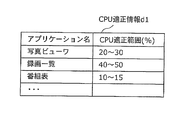
- FIG. 2 is a diagram showing an example of the CPU appropriate information.
- FIG. 3 is a diagram illustrating an example of the component priority information.
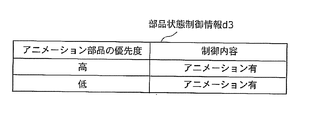
- FIG. 4 is a diagram showing an example of the component state control information.
- FIG. 5 is a diagram showing an example of the updated component state control information.
- FIG. 6 is a diagram showing an animation by the animation control apparatus same as above.
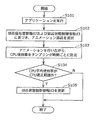
- FIG. 7 is a flowchart showing the overall operation of the animation control apparatus of the above.
- FIG. 8 is a flowchart showing the operation of the execution unit.
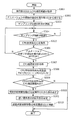
- FIG. 9 is a flowchart showing the operation of the component control unit described above.
- FIG. 10 is a block diagram showing the configuration of the animation control apparatus according to the present invention.
- FIG. 11 is a diagram showing an example of animation by a conventional animation control device.
- the animation control device in the present embodiment is a device that performs animation of an animation component (drawing component) for realizing a function as a GUI by executing a GUI application program (application).
- an animation control device is provided in a device such as a moving image or still image recording / playback device (for example, a DVD player) and executes thumbnails of recorded moving images and still images by executing an application. Display a list of At this time, the animation control apparatus uses thumbnails as animation parts, for example, performs animation of those animation parts (thumbnails), and displays the list.
- an animation control device there is an effect that an animation intended by an application developer can be performed by suppressing a decrease in display quality of the entire animation.
- an animation is an animation part in which the state of the animation part (for example, at least one of position, size, shape, color, and transparency) is changed little by little at each update interval. Is displayed. Also, the process of performing animation is a process of changing the state of the animation part at each update interval and displaying the animation part in the changed state.
- FIG. 1 is a block diagram showing an example of the configuration of the animation control apparatus according to the present embodiment.
- the animation control apparatus 100 in this embodiment includes a storage unit 101, an execution unit 102, a CPU 103, a component control unit 104, and a display unit 105.
- the storage unit 101 corresponds to a plurality of applications ap, CPU appropriate information d1 indicating an appropriate usage rate of the CPU 103, component priority information d2 indicating the priority of each of the plurality of animation components, and the priority of the animation components.
- the component state control information d3 indicating the control content of the state (animation) of the animation component is stored.
- the execution unit 102 selects any one application ap from the plurality of applications ap stored in the storage unit 101, and reads and executes the selected application ap.
- the application ap executed by the execution unit 102 is referred to as an execution application ap.
- the execution unit 102 specifies the animation control contents of the plurality of animation parts based on the part priority information d2 and the part state control information d3 stored in the storage unit 101. Then, the execution unit 102 animates a plurality of animation parts according to the specified control content. When the specified control content indicates that no animation is performed, the execution unit 102 does not perform animation of the animation component corresponding to the control content.
- the execution unit 102 when performing an animation of a plurality of animation parts, performs a drawing content update process at each update interval during the drawing process time.
- This drawing processing time is a time during which animation is performed, which is determined by the execution application ap.
- the execution unit 102 generates a display image in which at least a part of one or more animation parts to be animated is drawn in the drawing content update process, and outputs the display image to the display unit 105. .
- Such a display image is generated at each update interval, and the plurality of display images generated at each update interval are different from each other. That is, when performing an animation, the execution unit 102 sequentially generates different display images at each update interval so that the state of one or more animation parts to be animated changes gradually on the display image.
- the execution unit 102 reads out a plurality of animation parts set in advance in the execution application ap from the part storage unit 200 and uses them for the above-described drawing content update process.
- the execution unit 102 when executing the application ap and performing animation, the execution unit 102 causes the CPU 103 to perform arithmetic processing necessary for them.
- the CPU 103 performs arithmetic processing necessary for the execution and animation of the application ap by the execution unit 102 in accordance with an instruction from the execution unit 102.
- the component control unit 104 calculates the CPU average usage rate of the CPU 103, and based on the CPU average usage rate and the CPU appropriate information d1 stored in the storage unit 101, the control content of the component state control information d3 is determined. change.
- the component control unit 104 calculates the arithmetic processing amount (CPU usage rate or CPU average usage rate) used for the animation according to the component state control information d3 by the execution unit 102 of the plurality of animation components. It is comprised as a measurement part to measure.
- the display unit 105 includes, for example, a liquid crystal display or a PDP (Plasma Display Panel), and receives a display image output from the execution unit 102 at each update interval, and displays the display image.
- a liquid crystal display or a PDP Plasma Display Panel
- FIG. 2 is a diagram illustrating an example of the CPU proper information d1.
- the CPU appropriate information d1 includes, for each application ap stored in the storage unit 101, the name of the application ap (application name) and the range of the appropriate usage rate of the CPU 103 for the application ap ( CPU proper range).
- the CPU appropriate range is an appropriate ratio (for example, percentage) that the application ap may use the CPU 103 as viewed from the entire device (for example, recording / reproducing apparatus), and is determined by the developer of the application ap.
- the CPU appropriate information d1 includes the application name “photo viewer” for the application ap for viewing the recorded photograph and the CPU appropriate range “20 to 30%” for the application ap. Show.
- the upper limit value of the CPU appropriate range is the first appropriate value, and the lower limit value is the second appropriate value.
- FIG. 3 is a diagram illustrating an example of the component priority information d2.
- the part priority information d2 indicates the priority of the animation part for each animation part preset in the application ap as shown in FIG. Such priority is determined by the developer of the application ap.
- the component priority information d2 shown in FIG. 3 indicates the priority of each of the animation components A to E preset in the photo viewer application ap.
- the component priority information d2 indicates that the priority of the animation components A and B is “high” and that each of the animation components C to E is “low”.
- FIG. 4 is a diagram illustrating an example of the component state control information d3.
- the part state control information d3 indicates the control content of the animation of the animation part corresponding to the priority for each priority.
- the control content is, for example, “with animation” or “without animation”. “With animation” indicates that animation is performed, and “No animation” indicates that animation is not performed. That is, the component state control information d3 shown in FIG. 4 indicates that “animation is present”, that is, animation is performed for both of the priority levels “high” and “low”.
- the control content of the component state control information d3 is updated by the component control unit 104 for each priority.
- FIG. 5 is a diagram illustrating an example of the updated component state control information d3.
- the updated component state control information d3 indicates the control content “animation present” for the priority “high”, while the priority “low”. Indicates the control content “no animation”. That is, the component state control information d3 shown in FIG. 5 indicates that animation is performed for the animation component corresponding to the priority “high”, and no animation is performed for the animation component corresponding to the priority “low”. Indicates.
- FIG. 6 is a diagram showing an animation by the animation control apparatus 100.
- the execution unit 102 when the execution unit 102 reads the above-described photo viewer application ap from the storage unit 101 as the execution application ap and executes it, the execution unit 102 performs an animation for displaying a list of photos as thumbnails. That is, the execution unit 102 generates a different display image and displays it on the display unit 105 at each update interval.
- the list of photos includes animation parts A to E which are thumbnails.
- the execution unit 102 first reads the component priority information d2 and the component state control information d3 from the storage unit 101 before performing animation, and selects an animation component to be animated based on them. That is, the execution unit 102 determines that the priority of the animation parts A and B is “high” and the priority of the animation parts C to E is “low” based on the part priority information d2. To do. Furthermore, the execution unit 102 determines to animate the animation parts with the priority “high” and “low” based on the part state control information d3 shown in FIG. As a result, the execution unit 102 selects animation parts A to E as animation parts to be animated.
- the execution unit 102 animates the selected animation part.
- the execution unit 102 generates a display image and displays it on the display unit 105 at the start of the animation.
- FIG. 6A only a part of the animation part A among the animation parts A to E is displayed on the upper part of the display area 105a of the display unit 105.
- the execution unit 102 generates a new display image and displays it on the display unit 105 when the update interval elapses. As a result, as shown in FIG. 6B, a part of each of the animation parts A to E is displayed in the display area 105a of the display unit 105. Further, the execution unit 102 generates a new display image and displays it on the display unit 105 when the drawing processing time has elapsed. As a result, as shown in FIG. 6C, all of the animation parts A to E are stopped and displayed at a predetermined position in the display area 105a of the display unit 105.
- the animation shown in FIGS. 6A to 6C is performed without any restriction according to the part state control information d3, and the animation parts A to E are respectively outside the display area 105a. Appears to fade in from the inside.
- a dotted arrow starting from the animation part in FIG. 6 indicates the direction (drawing direction) in which the animation part moves.
- the component control unit 104 acquires the CPU appropriate information d1 from the storage unit 101 and starts the animation of the execution application ap (for example, the animation shown in (a) ⁇ (b) ⁇ (c) in FIG. 6).
- the usage rate of the CPU 103 is monitored.
- the CPU appropriate information d1 indicates the CPU appropriate range of the execution application ap, that is, the photo viewer application ap. Therefore, the component control unit 104 determines whether or not the CPU average usage rate based on the usage rate of the CPU 103 for the animation is out of the CPU proper range, and if it is out of the range, the component state control information d3 is updated.
- the component control unit 104 displays the control content “no animation” for the priority “low”.
- the component state control information d3 is updated. That is, the component state control information d3 shown in FIG. 4 is updated to the component state control information d3 shown in FIG.
- the execution unit 102 performs the animation according to the updated component state control information d3 shown in FIG.
- the execution unit 102 sets the priority of the animation parts A and B to “high” and the priority of the animation parts C to E based on the part priority information d2. Each is judged to be “low”.
- the execution unit 102 determines to animate only the animation component with the priority “high” based on the updated component state control information d3 shown in FIG. As a result, the execution unit 102 selects only the animation parts A and B as animation parts to be animated.
- the execution unit 102 animates the selected animation part as shown in (a) ⁇ (d) ⁇ (c) of FIG.
- the execution unit 102 generates a display image and displays it on the display unit 105 at the start of the animation.
- FIG. 6A only a part of the animation part A among the animation parts A to E is displayed on the upper part of the display area 105a of the display unit 105.
- the execution unit 102 generates a new display image and displays it on the display unit 105 when the update interval elapses. As a result, a part of the animation parts A and B is displayed in the display area 105 a of the display unit 105 as shown in FIG. At this time, the animation parts C to E are not displayed. Further, the execution unit 102 generates a new display image and displays it on the display unit 105 when the drawing processing time has elapsed. As a result, all of the animation parts A to E are displayed in the display area 105a of the display unit 105, as shown in FIG.
- the animations shown in FIGS. 6A to 6D are limited by the component state control information d3, and only the animation components A and B are respectively displayed from the outside of the display area 105a. Appears to fade in. That is, as shown in FIG. 6D, the animation parts C to D are not displayed while the animation is performed, and when the animation ends, that is, the movement of the animation parts A and B stops. Sometimes, as shown in FIG. 6C, it is displayed suddenly at a predetermined position.
- FIG. 7 is a flowchart showing the overall operation of the animation control apparatus 100.
- the animation control device 100 executes the execution target application ap stored in the storage unit 101 (step S101). Furthermore, the animation control apparatus 100 selects an animation part to be animated from a plurality of animation parts set for animation by the execution application ap based on the part priority information d2 and the part state control information d3. Select (step S102).
- the animation control apparatus 100 animates the animation part selected in step S102, and calculates the CPU usage rate (usage rate used for the entire device) of the CPU 103 during the animation. Measure (or obtain) every sampling time (step S103).
- the animation control apparatus 100 calculates, as the CPU average usage rate, an average value of the usage rate in which the CPU 103 is used only for the animation from the CPU usage rate measured in step S103. It is determined whether or not the CPU average usage rate is out of the CPU proper range (step S104).
- step S104 if the animation control device 100 determines that the CPU is out of the appropriate range of the CPU (Y in step S104), the animation state control information d3 is updated (step S105). On the other hand, if the animation control apparatus 100 determines that it is not out of the CPU proper range (N in step S104), the process is terminated without updating the component state control information d3.
- steps S101 to S105 are repeatedly executed every time an instruction to execute the application ap is received. Therefore, when the animation control apparatus 100 receives an instruction to execute the application ap after step S104 or S105, the animation control apparatus 100 repeatedly executes the process from step S101 again. That is, when the component state control information d3 is updated in step S105, the updated component state control information d3 is used for the next step S102.
- FIG. 8 is a flowchart showing the operation of the execution unit 102.
- the execution unit 102 reads the application ap to be executed, the CPU appropriate information d1, the component priority information d2, and the component state control information d3 from the storage unit 101 (step S201).
- the execution unit 102 executes the application ap to be executed, identifies the CPU proper range corresponding to the execution application ap from the CPU proper information d1, and notifies the component control unit 104 of the CPU proper range (step S202).
- the execution unit 102 selects an animation part to be animated from a plurality of animation parts set in advance in the execution application ap based on the part priority information d2 and the part state control information d3. Select (step S203). Furthermore, the execution unit 102 notifies the component control unit 104 that the animation has started (step S204).
- step S205 When the execution unit 102 notifies the component control unit 104 of the start of the animation, the execution unit 102 starts the animation and executes a drawing content update process (step S205). That is, the execution unit 102 generates a display image using the animation part selected in step S ⁇ b> 203 and outputs the display image to the display unit 105.
- the display unit 105 receives the display image from the execution unit 102 and displays it. Further, when such step S205 is repeated, the execution unit 102 determines the state (position, size, shape, and position) of the animation component in the display image based on the control content of the execution application ap and the component state control information d3.
- the display image is updated so that at least one of color, transparency, and the like is changed, and the updated display image is output to the display unit 105.
- Such an animation is realized by repeating the process of step S205.
- step S206 determines whether or not the drawing process time has elapsed. If it is determined that the time has elapsed (Y in step S206), the execution unit 102 notifies the component control unit 104 that the animation has ended (step S207). On the other hand, if it is determined that it has not elapsed (N in step S206), the execution unit 102 further determines whether or not the update interval has elapsed (step S208). If it is determined that the time has elapsed (Y in step S208), the execution unit 102 repeatedly executes the processing from step S205.
- step S208 the execution unit 102 repeatedly executes the processing from step S206. That is, the execution unit 102 waits for the drawing processing time or the update interval to elapse.
- FIG. 9 is a flowchart showing the operation of the component control unit 104.
- the component control unit 104 acquires the CPU proper range from the execution unit 102 (step S301), and upon receiving notification of the start of animation (step S302), starts the repeated measurement of the sampling time (step S303).
- the component control unit 104 determines whether or not the CPU average usage rate Ra calculated in step S308 is out of the CPU proper range acquired in step S301 (step S309). If the component control unit 104 determines that the component control unit 104 is disconnected (Y in step S309), the component state control information d3 is read from the storage unit 101 (step S310), and is indicated in the component state control information d3. The control content corresponding to the low priority is changed (step S311). For example, the component control unit 104 changes the control content associated with the priority lower than the threshold or the lowest priority among the priorities indicated in the component state control information d3. Thereby, the component state control information d3 is updated. Thereafter, the component control unit 104 stores the updated component state control information d3 in the storage unit 101 (step S312). At this time, the old part state control information d3 before update stored in the storage unit 101 is overwritten and deleted.
- the CPU usage rate (CPU average usage rate), which is the calculation processing amount required for the animation according to the first control content of the plurality of animation parts, is larger than the first appropriate value.
- the animation content of the low-priority drawing component that is, the change-target component animation is changed from the first control content to the second control content, so that the animation of the low-priority animation component is restricted.
- the control content of the animation of the drawing component with a high priority that is, the non-change target component is not changed
- the animation of the animation component with the high priority is performed without restriction according to the first control content. .
- Animation of animation parts can be performed appropriately. Therefore, it is possible to prevent all the animations of the plurality of animation parts from being restricted, and to suppress a reduction in the overall animation display quality. Furthermore, if the application developer sets a high priority in the component priority information d2 for the animation component that is the target of the animation intended by the application developer, even if the CPU usage rate is high, You can perform the animation you intended.
- FIG. 10 is a block diagram showing the configuration of the animation control apparatus according to the present invention.
- the animation control apparatus 10 is an apparatus for controlling animation by an application program, and component priority information indicating the priority of each of a plurality of drawing parts that are images to be displayed, which is set in advance for the application program.
- the priority specifying unit 11 that specifies the priority of each of the plurality of drawing parts
- the animation execution unit 14 that animates the plurality of drawing parts
- the animation execution unit 14 of the plurality of drawing parts When the determination unit 12 determines whether or not the determination value, which is the amount of calculation processing necessary for the animation according to the first control content, is larger than the first appropriate value, and the determination unit 12 determines that the determination value is larger
- a component control unit 13 that changes the control content of the animation of the change target component from the first control content to the second control content so that the amount of calculation processing required for the animation of the change target component that is a drawing component is reduced.
- the animation execution unit 14 performs the animation of the change target part according to the second control content, and performs the first animation of a non-change target part that is a drawing part other than the change target part among the plurality of drawing parts. Perform according to the control details of
- the animation control device 10 corresponds to the animation control device 100 of the above embodiment.
- the components including the priority specifying unit 11 and the animation execution unit 14 correspond to the execution unit 102 of the above embodiment, and the components including the determination unit 12 and the component control unit 13 are included in the component control unit 104 of the above embodiment.
- the application program and the drawing component correspond to the application and the animation component in the above embodiment, respectively.
- the first control content corresponds to the control content for each priority included in the component state control information d3 shown in FIG.
- the second control content is This corresponds to the control content for each priority included in the component state control information d3 shown in FIG. 5 of the above embodiment, for example, “with animation” or “without animation”.
- the first control content is control content defined for each of the animations of the drawing parts
- the second control content is control content changed from the first control content. Therefore, when the determination content is repeatedly determined by the determination unit 12 after the control content for the animation of the change target component is changed from the first control content to the second control content, The second control content is treated as the first control content.
- the animation control apparatus 10 may not include components such as the display unit 105 and the CPU 103 as shown in FIG. 1 of the above embodiment.
- the priority is expressed in two stages of “high” and “low” as shown in the component priority information d2 in FIG. May be represented.
- the part priority information d2 is set so that the priority of the animation parts is expressed in five levels, and the animation parts A, B, C, D, and E are in descending order of priority. May be.
- each animation of animation parts A, B, C, D, and E can be restricted or controlled individually.
- the component state control information is displayed.
- the control content for the animation part is changed from “animation present” to “no animation” in the order from the animation part E having a low priority to D, C, and B.
- the control content is “animation present” or “no animation” as shown in the component state control information d3 in FIGS. 4 and 5.
- “normal frame rate” "Or” low frame rate ", the control content may be a frame rate.
- the normal frame rate is higher than the low frame rate.
- the animation of the animation component having a high priority is performed at a normal frame rate
- the animation of the animation component having a low priority is performed at a low frame rate.
- the display image is thinned out so that the above-described drawing content update process is performed only once every two update intervals.
- the average CPU usage rate for animation can be set within an appropriate range, and deterioration of the user's appearance can be suppressed to a minimum as compared with the case where no low priority animation is performed.
- the component priority information d2 is stored in advance in the storage unit 101.
- the component priority information d2 may be automatically generated.
- the animation control device 100 determines the priority for each of the plurality of animation parts, and generates an information generation unit that generates part priority information d2 indicating the priority determined for each of the plurality of animation parts.
- the information generation unit uses at least one of the size of the area where the animation part is displayed, the data size, the user operation history, and the animation effect of the animation part as a parameter for determining the priority of the animation part.
- the parameter is the size of the area where the animation part is displayed.
- the plurality of animation parts include a first animation part and a second area where the size of the area displayed is smaller than that of the first animation part.
- the information generation unit determines the priority of the first and second animation parts so that the first animation part has a higher priority than the second animation part.
- the parameter is the data size of the animation part
- the plurality of animation parts include a first animation part and a second animation part having a data size smaller than that of the first animation part.
- the information generation unit determines the priority of the first and second animation parts so that the first animation part has a higher priority than the second animation part.
- the parameter is a user operation history.
- the animation control device 100 further includes a history recording unit that records, as an operation history, a history of operation of the animation component by the user for each of the plurality of animation components. Each time, the priority is determined based on the operation history recorded for the animation part.
- application developers tend to be more eager to animate animation parts that are frequently operated by the user or animation parts that have a short elapsed time since the last time they were operated. is there. Accordingly, the priority is determined based on the operation history of the animation component, and the component priority information d2 indicating the determined priority is generated, so that the application developer can change the priority to the component priority information d2. There is no need to set it up, and application development efficiency can be improved.
- the case where the CPU average usage rate is higher than the appropriate range is mainly given. That is, the component state control information d3 is updated so that the animation of the animation component having a low priority is restricted when the CPU average usage rate is higher than the first appropriate value that is the upper limit value of the appropriate range.
- the fact that the CPU average usage rate for the animation is out of the appropriate range may be a case where the CPU average usage rate is lower than the appropriate range. That is, when the CPU average usage rate is lower than the second appropriate value that is the lower limit value of the appropriate range, the component state control information d3 is updated so that the animation restriction of the animation component with the lower priority is released. May be. In such a case, the component control unit 104 (determination unit 12) further determines whether the CPU average usage rate is smaller than the second appropriate value that is smaller than the first appropriate value, and the component control unit 104.
- the control content of the animation of the change process target part is changed from the first control content to the third control content so as to increase.
- the execution unit 102 animation execution unit 14
- the animation execution unit 14 further performs the animation of the change process target part according to the third control content, and is a non-animation part other than the change process target part among the plurality of animation parts. Animation of the part to be changed is performed according to the first control content.
- the restriction of animation for the low priority animation part when the restriction of animation for the low priority animation part is performed more than necessary by the first control content, the restriction can be released.
- the CPU average usage rate for the animation of a plurality of animation parts may be smaller than the CPU appropriate range (second appropriate value).
- the component control unit 104 relaxes the first control content “no animation” set for the low priority of the component state control information d3 and updates the third control content “low frame rate”. To do. Thereby, the CPU average usage rate for the animation of a plurality of animation parts can be within the CPU proper range, and more appropriate animation can be realized.
- the calculation process required for the animation of the animation part with medium priority than the calculation process required for the animation of the animation part with low priority.
- the control content of the animation of each of the animation parts with medium and low priority is changed from the first control content to the third control content so that the amount increases with a large change rate.
- the animation part with the medium priority has priority over the animation part with the lower priority, and the restriction of the animation is relaxed. Therefore, even when the restriction on the animation is released, the animation for the animation component with a low priority can be kept in a state of being restricted more than the animation with the medium and high priority.
- the usage rate (CPU usage rate or CPU average usage rate) is used as the calculation processing amount of the CPU 103, but it is not a ratio (percentage) that is such a relative value but an absolute value. A value may be used.
- the animation according to the part state control information d3 shown in FIG. 4 of the plurality of animation parts A to E is executed, and the CPU average usage rate during the execution is acquired, calculated, or measured.
- the CPU average usage rate may be estimated without executing the animation.
- the CPU average usage rate is estimated based on the data size of the animation parts A to E and the control content indicated in the part state control information d3.
- the animation control apparatus 100 can appropriately update the component state control information d3 without executing the animation.
- the animation control device is a computer system including a microprocessor, a ROM, a RAM, a hard disk unit, a display unit, a keyboard, a mouse, and the like.
- a computer program is stored in the RAM or hard disk unit.
- the animation control apparatus achieves its functions by the microprocessor operating according to the computer program.
- the computer program is configured by combining a plurality of instruction codes indicating instructions for the computer in order to achieve a predetermined function.
- Part or all of the constituent elements constituting the animation control apparatus may be configured by one system LSI (Large Scale Integration).
- the system LSI is a super multifunctional LSI manufactured by integrating a plurality of components on a single chip, and specifically, a computer system including a microprocessor, a ROM, a RAM, and the like. .
- a computer program is stored in the RAM.
- the system LSI achieves its functions by the microprocessor operating according to the computer program.
- each part of the constituent elements constituting the animation control apparatus may be individually made into one chip, or may be made into one chip so as to include a part or all of them.
- the system LSI is called here, but it may be called IC, LSI, super LSI, or ultra LSI depending on the degree of integration.
- the method of circuit integration is not limited to LSI's, and implementation using dedicated circuitry or general purpose processors is also possible.
- an FPGA Field Programmable Gate Array
- a reconfigurable processor that can reconfigure the connection and setting of circuit cells inside the LSI may be used.
- a part or all of the components constituting the animation control device may be constituted by an IC card or a single module that can be attached to and detached from each device.
- the IC card or the module is a computer system including a microprocessor, a ROM, a RAM, and the like.
- the IC card or the module may include the super multifunctional LSI.
- the IC card or the module achieves its function by the microprocessor operating according to the computer program. This IC card or this module may have tamper resistance.
- the present invention may be the method described above. Further, the present invention may be a computer program that realizes these methods by a computer, or may be a digital signal composed of the computer program.
- the present invention also provides a computer-readable recording medium such as a flexible disk, hard disk, CD-ROM, MO, DVD, DVD-ROM, DVD-RAM, BD (Blu-ray Disc). ), Recorded in a semiconductor memory or the like. Further, the digital signal may be recorded on these recording media.
- a computer-readable recording medium such as a flexible disk, hard disk, CD-ROM, MO, DVD, DVD-ROM, DVD-RAM, BD (Blu-ray Disc).
- the computer program or the digital signal may be transmitted via an electric communication line, a wireless or wired communication line, a network represented by the Internet, a data broadcast, or the like.
- the present invention may also be a computer system including a microprocessor and a memory.
- the memory may store the computer program, and the microprocessor may operate according to the computer program.
- the program or the digital signal is recorded on the recording medium and transferred, or the program or the digital signal is transferred via the network or the like, and is executed by another independent computer system. It is good.
- a drawing device suitable for various applications can be configured by combining a semiconductor chip in which the animation control device according to the present invention is integrated and a display for drawing an image.
- the present invention can be used as information drawing means in a mobile phone, a television, a digital video recorder, a digital video camera, a car navigation, and the like.
- a display a cathode ray tube (CRT), a liquid crystal, a PDP (plasma display panel), a flat display such as an organic EL, a projection display typified by a projector, or the like can be combined.
- the animation control device has the effect of suppressing the deterioration of the display quality of the entire animation and performing the animation intended by the application developer.
- a mobile phone, a portable music player, a digital camera It can be applied to a battery-driven portable display terminal such as a digital video camera, and a menu display, a web browser, an editor, an EPG, in a high-resolution information display device such as a television, a digital video recorder, or a car navigation system.
- a high-resolution information display device such as a television, a digital video recorder, or a car navigation system.
- it is highly useful as an information display means for displaying a map or the like.
- Animation control apparatus 11 Priority specification part 12 Judgment part 13 Component control part 14 Animation execution part 100 Animation control apparatus 101 Storage part 102 Execution part 103 CPU 104 Component control unit 105 Display unit 200 Component storage unit ap application d1 CPU proper information d2 component priority information d3 component state control information
Landscapes
- Engineering & Computer Science (AREA)
- Theoretical Computer Science (AREA)
- Physics & Mathematics (AREA)
- General Physics & Mathematics (AREA)
- Software Systems (AREA)
- Computer Graphics (AREA)
- Human Computer Interaction (AREA)
- General Engineering & Computer Science (AREA)
- Processing Or Creating Images (AREA)
- User Interface Of Digital Computer (AREA)
Abstract
Description
11 優先度特定部
12 判定部
13 部品制御部
14 アニメーション実行部
100 アニメーション制御装置
101 記憶部
102 実行部
103 CPU
104 部品制御部
105 表示部
200 部品格納部
ap アプリケーション
d1 CPU適正情報
d2 部品優先度情報
d3 部品状態制御情報
Claims (13)
- アプリケーションプログラムによるアニメーションを制御するアニメーション制御装置であって、
前記アプリケーションプログラムに対して予め設定されている、表示対象の画像である複数の描画部品のそれぞれの優先度を示す部品優先度情報を参照することにより、前記複数の描画部品のそれぞれの優先度を特定する優先度特定部と、
前記複数の描画部品のアニメーションを行うアニメーション実行部と、
前記複数の描画部品の前記アニメーション実行部による第1の制御内容にしたがったアニメーションに必要な演算処理量である判定値が、第1の適正値よりも大きいか否かを判定する判定部と、
前記判定部によって大きいと判定された際に、前記優先度特定部によって特定される優先度が低いほど、当該優先度に対応する描画部品である変更対象部品のアニメーションに必要な演算処理量が少なくなるように、当該変更対象部品のアニメーションの制御内容を、前記第1の制御内容から第2の制御内容に変更する部品制御部とを備え、
前記アニメーション実行部は、前記変更対象部品のアニメーションを前記第2の制御内容にしたがって行い、前記複数の描画部品のうちの前記変更対象部品以外の描画部品である非変更対象部品のアニメーションを前記第1の制御内容にしたがって行う、
アニメーション制御装置。 - 前記アニメーション制御装置は、さらに、
優先度ごとに、当該優先度に対応する第1の制御内容を示す部品状態制御情報を記憶している記憶部と、
前記複数の描画部品の前記アニメーション実行部による第1の制御内容にしたがったアニメーションに使用された演算処理量を計測する計測部とを備え、
前記判定部は、前記計測部によって計測された前記演算処理量を前記判定値として用いることによって前記判定を行い、
前記部品制御部は、前記記憶部に記憶されている前記部品状態制御情報によって示される、前記変更対象部品の優先度に対応する前記第1の制御内容を、前記第2の制御内容に変更し、
前記アニメーション実行部は、前記記憶部に記憶されている前記部品状態制御情報によって示される第1および第2の制御内容にしたがって前記複数の描画部品のアニメーションを行う、
請求項1に記載のアニメーション制御装置。 - 前記アニメーション制御装置は、さらに、
CPUを備え、
前記アニメーション実行部は、前記複数の描画部品の前記第1の制御内容にしたがったアニメーションに必要な演算処理を前記CPUに実行させ、
前記判定部は、前記演算処理に使用される前記CPUの使用率を前記判定値として扱うことによって前記判定を行う、
請求項1または2に記載のアニメーション制御装置。 - 前記部品制御部は、前記変更対象部品のアニメーションの制御内容を、アニメーションを実行することを示す前記第1の制御内容から、アニメーションを実行しないことを示す前記第2の制御内容に変更し、
前記アニメーション実行部は、前記第1の制御内容にしたがって前記非変更対象部品のアニメーションを行い、前記第2の制御内容にしたがって前記変更対象部品のアニメーションを行わない、
請求項1~3の何れか1項に記載のアニメーション制御装置。 - 前記部品制御部は、前記変更対象部品のアニメーションの制御内容を、第1のフレームレートを示す前記第1の制御内容から、前記第1のフレームレートよりも低い第2のフレームレートを示す前記第2の制御内容に変更し、
前記アニメーション実行部は、前記第1の制御内容にしたがって前記非変更対象部品のアニメーションを第1のフレームレートで行い、前記第2の制御内容にしたがって前記変更対象部品のアニメーションを前記第2のフレームレートで行う、
請求項1~3の何れか1項に記載のアニメーション制御装置。 - 前記アニメーション制御装置は、さらに、
前記複数の描画部品のそれぞれに対して優先度を決定し、決定された優先度を示す前記部品優先度情報を生成する情報生成部を備える
請求項1~5の何れか1項に記載のアニメーション制御装置。 - 前記複数の描画部品には、第1の描画部品と、前記第1の描画部品よりも表示される領域のサイズが小さい第2の描画部品とがあり、
前記情報生成部は、前記第1の描画部品の方が前記第2の描画部品よりも優先度が高くなるように、前記第1および第2の描画部品の優先度を決定する
請求項6に記載のアニメーション制御装置。 - 前記複数の描画部品には、第1の描画部品と、前記第1の描画部品よりもデータサイズが小さい第2の描画部品とがあり、
前記情報生成部は、前記第1の描画部品の方が前記第2の描画部品よりも優先度が高くなるように、前記第1および第2の描画部品の優先度を決定する
請求項6に記載のアニメーション制御装置。 - 前記アニメーション制御装置は、さらに、
前記複数の描画部品のそれぞれに対して、当該描画部品がユーザによって操作された履歴を操作履歴として記録する履歴記録部を備え、
前記情報生成部は、描画部品ごとに、当該描画部品に対して記録されている前記操作履歴に基づいて優先度を決定する
請求項6に記載のアニメーション制御装置。 - 前記判定部は、さらに、
前記第1の適正値よりも小さい第2の適正値よりも前記判定値が小さいか否かを判定し、
前記部品制御部は、さらに、
前記判定部によって小さいと判定された際に、前記優先度特定部によって特定される優先度が低いほど、当該優先度に対応する描画部品である変更処理対象部品のアニメーションに必要な演算処理量が小さい変化率で多くなるように、当該変更処理対象部品のアニメーションの制御内容を、前記第1の制御内容から第3の制御内容に変更し、
前記アニメーション実行部は、さらに、前記変更処理対象部品のアニメーションを前記第3の制御内容にしたがって行い、前記複数の描画部品のうちの前記変更処理対象部品以外の描画部品である非変更処理対象部品のアニメーションを前記第1の制御内容にしたがって行う、
請求項1~9の何れか1項に記載のアニメーション制御装置。 - アプリケーションプログラムによるアニメーションを制御するアニメーション制御方法であって、
前記アプリケーションプログラムに対して予め設定されている、表示対象の画像である複数の描画部品のそれぞれの優先度を示す部品優先度情報を参照することにより、前記複数の描画部品のそれぞれの優先度を特定する優先度特定ステップと、
前記複数の描画部品のアニメーションを行うアニメーション実行ステップと、
前記複数の描画部品の前記アニメーション実行ステップによる第1の制御内容にしたがったアニメーションに必要な演算処理量である判定値が、第1の適正値よりも大きいか否かを判定する判定ステップと、
前記判定ステップによって大きいと判定された際に、前記優先度特定ステップによって特定される優先度が低いほど、当該優先度に対応する描画部品である変更対象部品のアニメーションに必要な演算処理量が少なくなるように、当該変更対象部品のアニメーションの制御内容を、前記第1の制御内容から第2の制御内容に変更する部品制御ステップとを含み、
前記アニメーション実行ステップでは、前記変更対象部品のアニメーションを前記第2の制御内容にしたがって行い、前記複数の描画部品のうちの前記変更対象部品以外の描画部品である非変更対象部品のアニメーションを前記第1の制御内容にしたがって行う、
アニメーション制御方法。 - アプリケーションプログラムによるアニメーションを制御するためのプログラムであって、
前記アプリケーションプログラムに対して予め設定されている、表示対象の画像である複数の描画部品のそれぞれの優先度を示す部品優先度情報を参照することにより、前記複数の描画部品のそれぞれの優先度を特定する優先度特定ステップと、
前記複数の描画部品のアニメーションを行うアニメーション実行ステップと、
前記複数の描画部品の前記アニメーション実行ステップによる第1の制御内容にしたがったアニメーションに必要な演算処理量である判定値が、第1の適正値よりも大きいか否かを判定する判定ステップと、
前記判定ステップによって大きいと判定された際に、前記優先度特定ステップによって特定される優先度が低いほど、当該優先度に対応する描画部品である変更対象部品のアニメーションに必要な演算処理量が少なくなるように、当該変更対象部品のアニメーションの制御内容を、前記第1の制御内容から第2の制御内容に変更する部品制御ステップとをコンピュータに実行させ、
前記アニメーション実行ステップでは、前記変更対象部品のアニメーションを前記第2の制御内容にしたがって行い、前記複数の描画部品のうちの前記変更対象部品以外の描画部品である非変更対象部品のアニメーションを前記第1の制御内容にしたがって行う、
プログラム。 - アプリケーションプログラムによるアニメーションを制御する集積回路であって、
前記アプリケーションプログラムに対して予め設定されている、表示対象の画像である複数の描画部品のそれぞれの優先度を示す部品優先度情報を参照することにより、前記複数の描画部品のそれぞれの優先度を特定する優先度特定部と、
前記複数の描画部品のアニメーションを行うアニメーション実行部と、
前記複数の描画部品の前記アニメーション実行部による第1の制御内容にしたがったアニメーションに必要な演算処理量である判定値が、第1の適正値よりも大きいか否かを判定する判定部と、
前記判定部によって大きいと判定された際に、前記優先度特定部によって特定される優先度が低いほど、当該優先度に対応する描画部品である変更対象部品のアニメーションに必要な演算処理量が少なくなるように、当該変更対象部品のアニメーションの制御内容を、前記第1の制御内容から第2の制御内容に変更する部品制御部とを備え、
前記アニメーション実行部は、前記変更対象部品のアニメーションを前記第2の制御内容にしたがって行い、前記複数の描画部品のうちの前記変更対象部品以外の描画部品である非変更対象部品のアニメーションを前記第1の制御内容にしたがって行う、
集積回路。
Priority Applications (3)
| Application Number | Priority Date | Filing Date | Title |
|---|---|---|---|
| JP2011538780A JP5722229B2 (ja) | 2010-07-15 | 2011-06-22 | アニメーション制御装置、アニメーション制御方法、プログラムおよび集積回路 |
| CN201180003797.5A CN102483855B (zh) | 2010-07-15 | 2011-06-22 | 动画控制装置、动画控制方法及集成电路 |
| US13/395,663 US8917277B2 (en) | 2010-07-15 | 2011-06-22 | Animation control device, animation control method, program, and integrated circuit |
Applications Claiming Priority (2)
| Application Number | Priority Date | Filing Date | Title |
|---|---|---|---|
| JP2010160997 | 2010-07-15 | ||
| JP2010-160997 | 2010-07-15 |
Publications (1)
| Publication Number | Publication Date |
|---|---|
| WO2012008097A1 true WO2012008097A1 (ja) | 2012-01-19 |
Family
ID=45469117
Family Applications (1)
| Application Number | Title | Priority Date | Filing Date |
|---|---|---|---|
| PCT/JP2011/003561 Ceased WO2012008097A1 (ja) | 2010-07-15 | 2011-06-22 | アニメーション制御装置、アニメーション制御方法、プログラムおよび集積回路 |
Country Status (4)
| Country | Link |
|---|---|
| US (1) | US8917277B2 (ja) |
| JP (1) | JP5722229B2 (ja) |
| CN (1) | CN102483855B (ja) |
| WO (1) | WO2012008097A1 (ja) |
Cited By (1)
| Publication number | Priority date | Publication date | Assignee | Title |
|---|---|---|---|---|
| JP2024531066A (ja) * | 2021-09-22 | 2024-08-29 | インターナショナル・ビジネス・マシーンズ・コーポレーション | 動的リソース使用量のウェブブラウザ |
Families Citing this family (11)
| Publication number | Priority date | Publication date | Assignee | Title |
|---|---|---|---|---|
| US20070016456A1 (en) * | 2005-07-12 | 2007-01-18 | International Business Machines Corporation | System, method and program product for reporting status of contract performance or a process |
| US9396167B2 (en) | 2011-07-21 | 2016-07-19 | Flipboard, Inc. | Template-based page layout for hosted social magazines |
| US9037592B2 (en) | 2012-09-12 | 2015-05-19 | Flipboard, Inc. | Generating an implied object graph based on user behavior |
| CN103530898B (zh) * | 2013-01-06 | 2017-04-05 | Tcl集团股份有限公司 | 一种基于3d实时渲染的动画处理方法和系统 |
| US10332233B2 (en) * | 2013-08-14 | 2019-06-25 | Flipboard, Inc. | Preloading animation files in a memory of a client device |
| CN104461520B (zh) * | 2014-11-25 | 2018-04-03 | 广州酷狗计算机科技有限公司 | 动画的播放帧频调整方法及装置 |
| JP6542706B2 (ja) * | 2016-04-13 | 2019-07-10 | ファナック株式会社 | 数値制御装置 |
| CN106227482B (zh) * | 2016-07-25 | 2019-03-15 | 广东小天才科技有限公司 | 一种游戏画面刷新的控制方法及相关设备 |
| CN110634174B (zh) * | 2018-06-05 | 2023-10-10 | 深圳市优必选科技有限公司 | 一种表情动画过渡方法、系统及智能终端 |
| CN111324407A (zh) * | 2020-01-23 | 2020-06-23 | 努比亚技术有限公司 | 一种动画显示方法、终端及计算机可读存储介质 |
| US11703990B2 (en) * | 2020-08-17 | 2023-07-18 | Microsoft Technology Licensing, Llc | Animated visual cues indicating the availability of associated content |
Citations (3)
| Publication number | Priority date | Publication date | Assignee | Title |
|---|---|---|---|---|
| JPH11203504A (ja) * | 1998-01-20 | 1999-07-30 | Taito Corp | ビデオゲーム装置に於ける画像処理方法 |
| JPH11339060A (ja) * | 1998-03-24 | 1999-12-10 | Yamaha Corp | 楽音および画像生成装置 |
| JP2002018122A (ja) * | 2000-07-04 | 2002-01-22 | Namco Ltd | ゲーム装置、及び情報記憶媒体 |
Family Cites Families (12)
| Publication number | Priority date | Publication date | Assignee | Title |
|---|---|---|---|---|
| US6396509B1 (en) * | 1998-02-21 | 2002-05-28 | Koninklijke Philips Electronics N.V. | Attention-based interaction in a virtual environment |
| JP2002238003A (ja) * | 2000-12-07 | 2002-08-23 | Matsushita Electric Ind Co Ltd | 動画再生用ミドルウェア選択実行装置および方法 |
| JP2002278658A (ja) | 2001-03-19 | 2002-09-27 | Fujitsu Ltd | 情報処理装置 |
| JP3926203B2 (ja) * | 2002-05-15 | 2007-06-06 | シャープ株式会社 | コンテンツ表示装置、コンテンツ表示プログラム、該プログラムを記録した記録媒体、およびコンテンツ表示方法 |
| JP2004318332A (ja) * | 2003-04-14 | 2004-11-11 | Sharp Corp | テキストデータ表示装置、携帯電話装置、テキストデータ表示方法、およびテキストデータ表示プログラム |
| JP4520229B2 (ja) * | 2003-07-01 | 2010-08-04 | 株式会社エヌ・ティ・ティ・ドコモ | 通信装置およびプログラム |
| WO2006064698A1 (ja) * | 2004-12-15 | 2006-06-22 | Pioneer Corporation | 操作指示装置、電子機器、操作指示方法、および操作指示プログラム |
| FR2881261A1 (fr) * | 2005-01-26 | 2006-07-28 | France Telecom | Procede et dispositif de selection du niveau de detail par calcul de visibilite pour des scenes 3d multi-niveaux de details |
| US7990386B2 (en) * | 2005-03-24 | 2011-08-02 | Oracle America, Inc. | Method for correlating animation and video in a computer system |
| US7477254B2 (en) * | 2005-07-13 | 2009-01-13 | Microsoft Corporation | Smooth transitions between animations |
| US8013861B2 (en) * | 2007-10-31 | 2011-09-06 | International Business Machines Corporation | Reducing a display quality of an area in a virtual universe to conserve computing resources |
| US20100127971A1 (en) * | 2008-11-21 | 2010-05-27 | Geovector Corp. | Methods of rendering graphical images |
-
2011
- 2011-06-22 US US13/395,663 patent/US8917277B2/en not_active Expired - Fee Related
- 2011-06-22 CN CN201180003797.5A patent/CN102483855B/zh not_active Expired - Fee Related
- 2011-06-22 WO PCT/JP2011/003561 patent/WO2012008097A1/ja not_active Ceased
- 2011-06-22 JP JP2011538780A patent/JP5722229B2/ja not_active Expired - Fee Related
Patent Citations (3)
| Publication number | Priority date | Publication date | Assignee | Title |
|---|---|---|---|---|
| JPH11203504A (ja) * | 1998-01-20 | 1999-07-30 | Taito Corp | ビデオゲーム装置に於ける画像処理方法 |
| JPH11339060A (ja) * | 1998-03-24 | 1999-12-10 | Yamaha Corp | 楽音および画像生成装置 |
| JP2002018122A (ja) * | 2000-07-04 | 2002-01-22 | Namco Ltd | ゲーム装置、及び情報記憶媒体 |
Cited By (2)
| Publication number | Priority date | Publication date | Assignee | Title |
|---|---|---|---|---|
| JP2024531066A (ja) * | 2021-09-22 | 2024-08-29 | インターナショナル・ビジネス・マシーンズ・コーポレーション | 動的リソース使用量のウェブブラウザ |
| JP7762484B2 (ja) | 2021-09-22 | 2025-10-30 | インターナショナル・ビジネス・マシーンズ・コーポレーション | 動的リソース使用量のウェブブラウザ |
Also Published As
| Publication number | Publication date |
|---|---|
| US20120169741A1 (en) | 2012-07-05 |
| JP5722229B2 (ja) | 2015-05-20 |
| JPWO2012008097A1 (ja) | 2013-09-05 |
| CN102483855A (zh) | 2012-05-30 |
| CN102483855B (zh) | 2016-04-13 |
| US8917277B2 (en) | 2014-12-23 |
Similar Documents
| Publication | Publication Date | Title |
|---|---|---|
| JP5722229B2 (ja) | アニメーション制御装置、アニメーション制御方法、プログラムおよび集積回路 | |
| KR101408168B1 (ko) | 그래픽 사용자 인터페이스를 제공하는 방법 및 장치 | |
| KR102762358B1 (ko) | 영상 특수 효과 처리 방법 및 장치 | |
| JP6689561B2 (ja) | アプリケーションを管理する方法及びアプリケーションの管理を行うデバイス | |
| EP2796975B1 (en) | Screen control method and electronic device thereof | |
| JP5761953B2 (ja) | 情報処理装置およびその制御方法 | |
| CN103761132B (zh) | 一种智能终端开机动画播放控制方法 | |
| US8713472B2 (en) | Display apparatus, a method for a display control, and program | |
| US20110167388A1 (en) | Electronic device and method of browsing images thereon | |
| CN111580917A (zh) | 一种信息显示方法、装置、电子设备及存储介质 | |
| CN106605198A (zh) | 基于组的用户界面重排 | |
| WO2014187043A1 (zh) | 应用程序的显示处理方法及装置 | |
| WO2011158446A1 (ja) | アニメーション制御装置、アニメーション制御方法およびアニメーション制御プログラム | |
| CN107807760A (zh) | 屏幕显示方法及装置 | |
| KR20170011363A (ko) | 디스플레이 장치 및 디스플레이 방법 | |
| US8810588B2 (en) | Display switching apparatus | |
| WO2007072640A1 (ja) | マルチウィンドウ表示装置、マルチウィンドウ表示方法、及び集積回路 | |
| US10120636B2 (en) | Display control device and display control method for displaying content on multiple display screens | |
| CN109819329B (zh) | 一种窗口显示方法及智能电视 | |
| US11582514B2 (en) | Source apparatus and control method therefor | |
| CN114020376B (zh) | 一种处理方法及设备 | |
| RU2622873C2 (ru) | Способ и устройство для управления приложениями | |
| JP4698430B2 (ja) | 画面表示制御装置および画面表示制御方法 | |
| CN120386884A (zh) | 一种显示设备 | |
| CN120196393A (zh) | 一种客户端的窗口展示方法、装置、存储介质及电子设备 |
Legal Events
| Date | Code | Title | Description |
|---|---|---|---|
| WWE | Wipo information: entry into national phase |
Ref document number: 201180003797.5 Country of ref document: CN |
|
| WWE | Wipo information: entry into national phase |
Ref document number: 2011538780 Country of ref document: JP |
|
| 121 | Ep: the epo has been informed by wipo that ep was designated in this application |
Ref document number: 11806434 Country of ref document: EP Kind code of ref document: A1 |
|
| WWE | Wipo information: entry into national phase |
Ref document number: 13395663 Country of ref document: US |
|
| NENP | Non-entry into the national phase |
Ref country code: DE |
|
| 122 | Ep: pct application non-entry in european phase |
Ref document number: 11806434 Country of ref document: EP Kind code of ref document: A1 |