WO2011132667A1 - 偽陰性を排除するpcr検査方法およびそれに使用するプライマー - Google Patents
偽陰性を排除するpcr検査方法およびそれに使用するプライマー Download PDFInfo
- Publication number
- WO2011132667A1 WO2011132667A1 PCT/JP2011/059608 JP2011059608W WO2011132667A1 WO 2011132667 A1 WO2011132667 A1 WO 2011132667A1 JP 2011059608 W JP2011059608 W JP 2011059608W WO 2011132667 A1 WO2011132667 A1 WO 2011132667A1
- Authority
- WO
- WIPO (PCT)
- Prior art keywords
- primer
- sequence
- primer pair
- positive control
- sample
- Prior art date
- Legal status (The legal status is an assumption and is not a legal conclusion. Google has not performed a legal analysis and makes no representation as to the accuracy of the status listed.)
- Ceased
Links
Images
Classifications
-
- C—CHEMISTRY; METALLURGY
- C12—BIOCHEMISTRY; BEER; SPIRITS; WINE; VINEGAR; MICROBIOLOGY; ENZYMOLOGY; MUTATION OR GENETIC ENGINEERING
- C12Q—MEASURING OR TESTING PROCESSES INVOLVING ENZYMES, NUCLEIC ACIDS OR MICROORGANISMS; COMPOSITIONS OR TEST PAPERS THEREFOR; PROCESSES OF PREPARING SUCH COMPOSITIONS; CONDITION-RESPONSIVE CONTROL IN MICROBIOLOGICAL OR ENZYMOLOGICAL PROCESSES
- C12Q1/00—Measuring or testing processes involving enzymes, nucleic acids or microorganisms; Compositions therefor; Processes of preparing such compositions
- C12Q1/68—Measuring or testing processes involving enzymes, nucleic acids or microorganisms; Compositions therefor; Processes of preparing such compositions involving nucleic acids
- C12Q1/6844—Nucleic acid amplification reactions
- C12Q1/6848—Nucleic acid amplification reactions characterised by the means for preventing contamination or increasing the specificity or sensitivity of an amplification reaction
Definitions
- the present invention relates to a microorganism testing method by PCR.
- the present invention relates to a microorganism testing method in which a PCR reaction is performed with primers designed for a gene specific to a microorganism to be tested, and the presence or absence of microorganisms is qualitatively determined based on the presence or absence of a PCR product.
- PCR-based testing to increase detection sensitivity and specificity, for example, concentrate samples, use highly specific probes or primers, combine multiple probes or primers, Increasing efficiency has been devised.
- a method for avoiding false positives and false negatives by using a combination of a plurality of specific probes in a method for identifying species of food poisoning bacteria (Reference 1), sample concentration and gene in a test method for Legionella fungi
- a method to increase the efficiency of target gene extraction by devising the extraction method of the target and avoid false negatives (Reference 2), and use a highly specific primer not found in closely related bacterial species in the detection method by the LAMP method of S. pastrianus
- a method (Document 3) for increasing detection sensitivity and accuracy is known.
- PCR is also performed for housekeeping genes (eg bacteria; 16S rDNA, yeast; 26S rDNA) to confirm that genomic DNA has been reliably extracted from microbial specimens.
- housekeeping genes eg bacteria; 16S rDNA, yeast; 26S rDNA
- housekeeping genes have a higher copy number than normal genes, so when PCR of target genes and housekeeping genes is performed using genomic DNA extracted from the same sample, the concentration of DNA extracted from the cells If it is low, only housekeeping genes may be detected. As a result, even when harmful microorganisms are mixed in the product or the like, it is determined to be negative, which causes a problem in quality control.
- the present invention uses a first primer pair that amplifies a target gene sequence of a microorganism to be detected that may be present in a sample, and a second primer pair that amplifies a positive control gene sequence in the sample. Determining that the microorganism does not exist when the positive control gene sequence is amplified but the target gene sequence is not amplified, and the positive control gene sequence is amplified and the target gene sequence is amplified. In this case, the microorganism detection method determines that the microorganism is present, and the detection sensitivity of the target gene and the detection sensitivity of the positive control gene in the PCR reaction are equivalent.
- the present invention provides that at least one primer of the first primer pair has a mutation relative to the complementary sequence of the target gene sequence and / or is positive control for at least one primer of the second primer pair.
- the above method wherein there is a mutation to the complementary sequence of the gene sequence, preferably a nucleotide insertion into the primer.
- the present invention is the above method, wherein the microorganism to be detected that may be present in the sample is Saccharomyces diastaticus, the target gene is STA1, and the positive control gene is yeast 26S rDNA.
- the first primer pair is a primer pair comprising the sequence of SEQ ID NO: 1 and a primer pair comprising the sequence of SEQ ID NO: 3, and / or the second primer pair Are a primer pair consisting of the sequence of SEQ ID NO: 4 and a primer pair consisting of the sequence of SEQ ID NO: 5.
- the present invention also relates to a primer set comprising a first primer pair that amplifies a target gene sequence of a microorganism that may be present in a sample, and a second primer pair that amplifies a positive control gene sequence in the sample.
- the primer set in which the detection sensitivity of the target gene and the detection sensitivity of the positive control gene are the same under the same PCR reaction conditions. More specifically, the present invention provides that at least one primer of the first primer pair has a mutation relative to the complementary sequence of the target gene sequence and / or is positive for at least one primer of the second primer pair. Said primer set in which there is a mutation relative to the complementary sequence of the control gene sequence, preferably a nucleotide insertion into the primer.
- the first primer pair is a primer pair consisting of the sequence of SEQ ID NO: 1 and the primer pair consisting of the sequence of SEQ ID NO: 3 and / or the second primer pair consists of the sequence of SEQ ID NO: 4. It is also the said invention which is a primer pair which consists of a primer and the arrangement
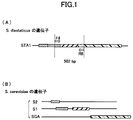
- FIG. 1 shows the difference in the structure of the glucoamylase gene (STA1) between S. diastaticus (A) and S. cerevisiae (B), and the region corresponding to the STA1 gene amplification primers (F4 and R6).
- STA1 of S. diastaticus has a structure in which S. cerevisiae S2, S1, and a part of SGA are fused.
- F4 and F6 represent the positions of the primers STA1-F4 and STA1-R6 used in Example 1, respectively.
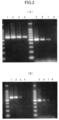
- lanes 1 and 5 are sample stock solutions
- lanes 2 and 6 are sample 10-fold dilutions
- lanes 3 and 7 are sample 100-fold dilutions
- lanes 4 and 8 are sample 1000-fold dilutions. Shows a DNA fragment amplified when subjected to PCR.
- Lanes 1 to 4 show the results of amplification of the positive control gene 26S rDNA
- lanes 5 to 8 show the results of amplification of the target gene STA1.
- a specific embodiment of the present invention includes DNA extraction from a sample (eg, a bacterial colony isolated from a product by agar culture), PCR using primers designed for the microorganism-specific gene to be tested, In this method, a series of operations including subsequent electrophoresis of PCR reaction products are performed, and the presence or absence of microbial contamination is qualitatively determined based on the presence or absence of amplification products by PCR.
- the present invention provides PCR using a first primer pair that amplifies a target gene sequence of a microorganism to be detected that may be present in a sample, and a second primer pair that amplifies a positive control gene sequence in the sample. Including conducting a reaction.
- the positive control gene when the positive control gene is a microbial gene, the microorganism to be detected that may be present in the sample and the microorganism that holds the positive control gene are typically different, but may be the same. .
- the storability of the positive control gene may be different if both microorganisms are closely related species. If it is high, the sequence of the positive control gene may be identical to the sequence of the corresponding gene of the microorganism to be detected.
- the second primer pair that amplifies the positive control gene sequence and the target gene sequence in the sample is selected as a sequence and a primer pair that are confirmed to produce an amplification product when PCR is performed under certain conditions. It is.
- the positive control gene is preferably selected from housekeeping genes of yeast used for brewing beer, depending on the nature of the sample, such as bacteria, fungi including gonococci, etc. Housekeeping genes can also be used. Housekeeping genes suitable as positive control genes of the present invention include, but are not limited to, bacterial 16S rDNA, yeast 18S rDNA, 26S rDNA, act1 and GAPDH.
- Microorganisms that can be detected according to the present invention include yeasts, in particular Saccharomyces cerevisiae, Saccharomyces pastrianus, Saccharomyces bayanus, Pichia anomala, Pichia jadinii, Kluyveromyces lactis, Dekkera anomala, Dekkera bruxellenis, Shulchara ischards, Torulaspora delbruecki, Including but not limited to Saccharomycodes ludwigii.
- a target gene sequence of a microorganism to be detected that may be present in a sample
- a gene sequence specific to a microorganism considered to be harmful in the sample is selected, and the first primer pair specifically identifies the sequence.
- a primer pair to be amplified is selected.
- the target gene sequence includes STA1 (glucoamylase gene).
- the STA1 gene of Saccharomyces diastaticus has a structure in which parts of three different DNA regions (S1, S2, SGA) of Saccharomyces cerevisiae are fused (Fig. 1).
- Saccharomyces diastaticus can be detected separately from brewery yeast (which can be included in a beer sample).
- a primer pair consisting of the sequences described in SEQ ID NO: 1 and SEQ ID NO: 3 (a yeast 26S rDNA sequence is amplified)
- the primer pair consisting of the sequences of SEQ ID NO: 4 and SEQ ID NO: 5 (primer pair for amplifying the STA1 gene sequence of S. diastaticus) is preferable as the second primer pair.
- the sample is pretreated under conditions where nucleic acids are extracted from both the microorganism to be detected and the microorganism having the positive control gene.
- the pretreatment conditions depend on the microorganisms, but nucleic acid extraction conditions well known to those skilled in the art for those microorganisms can be used.
- the sample may be pretreated by combining appropriate nucleic acid conditions for each microorganism, or the sample may be pretreated step by step under appropriate conditions for each microorganism.
- At least one primer of the first primer pair has a mutation relative to the complementary sequence of the target gene sequence so that the detection sensitivity of the target gene in the PCR reaction is equal to the detection sensitivity of the positive control gene.
- This mutation can be caused by nucleotide insertion, deletion or substitution in the primer.
- the mutation is caused by the insertion of a nucleotide in the primer.
- This mutation can also be caused by non-natural nucleotides that alter hydrogen bonding between bases or alter steric hindrance.
- a housekeeping gene is selected as a positive control gene, and the number of copies of the housekeeping gene is generally large. Therefore, it is preferable to cause the mutation in the second primer pair, and mismatch by nucleotide insertion, deletion or substitution.
- PCR In microorganism detection methods using PCR, since it is generally assumed that PCR is performed routinely with fixed PCR conditions, the first primer pair or the second primer pair with PCR conditions fixed at the same conditions, Preferably, various nucleotides are inserted, deleted or substituted in the second primer pair, PCR is performed using these primer pairs, and the amplification product obtained is analyzed to detect the target gene detection sensitivity and the positive Optimal mutations with comparable control gene detection sensitivity, particularly nucleotide insertions, deletions or substitutions can be selected.
- the amount of amplification product can be conveniently analyzed by gel electrophoresis of the amplification product and comparing the amount of amplification product. If necessary, the amount of amplification product can also be analyzed by real-time PCR.
- the detection sensitivity of the target gene and the detection sensitivity of the positive control gene in the PCR reaction is equivalent to that prepared by preparing a 2-fold dilution series, 5-fold dilution series, or 10-fold dilution series of samples, etc.
- the dilution rate at which no band is detected visually or by the measuring instrument is the same for the target gene and the positive control gene. It can be defined to mean something.
- the detection sensitivity of the target gene and the detection sensitivity of the positive control gene are equivalent, for example, the above-mentioned sample dilution sequence is prepared, and the conditions other than the sample are the same for these diluted samples PCR can be performed, and the amount of amplification becomes less than the detection limit of the measuring device within a predetermined time (amplification can no longer be detected), meaning that the dilution factor is the same for the target gene and the positive control gene. .
- the positive control gene sequence is amplified and the target gene sequence is amplified, it is determined that the microorganism is present, so that the microorganism that actually holds the target gene sequence is present in the sample.
- STA1 glucoamylase gene of S. diastaticus.
- STA1 is thought to be a fusion of three DNA regions (S1, S2, SGA) at different positions on the genomic DNA of S. cerevisiae, and the primers are designed in the region shown in Fig. 1. By doing so, it becomes possible to specifically detect only S. diastaticus.
- 26S rDNA a gene common to general yeasts including S. diastaticus, was selected.
- adenine (a) and thymine (Tt) were designed to be inserted at the positions indicated by the underline in Table 2 (CYEAST-R2; SEQ ID NO: 3).
- Primer synthesis was outsourced to Operon Biotechnology Co., Ltd.
- S. diastaticus ATCC13007 purchased from American Type Culture Collection (ATCC) was cultured in Potato Dextrose Agar (PDA) medium at 25 ° C. for 3-5 days. A small amount of a colony grown on the medium was collected with a sterile chip and suspended in 50 ⁇ l of PrepMan Ultra Sample Preparation Reagent (Applied Biosystems).
- the forward primer CYEAST-F1 (SEQ ID NO: 1) was used as a primer for 26S rDNA amplification, and CYEAST-R2 (SEQ ID NO: 3) having a mismatch with CYEAST-R1 (SEQ ID NO: 2) having no mismatch was used as a reverse primer (Table 3). 1).
- STA1-F4 was used as a forward primer and STA1-R6 was used as a reverse primer (Table 2).
- the PCR reaction was performed using PerfectShot Ex Taq (Loading dye mix) (Takara Bio), and the amplification reaction was performed using GeneAmp PCR System 9700 (Applied Biosystems).
- the reaction solution composition shown in Table 3 and the reaction conditions shown in Table 4 were used. It carried out in. 5 ⁇ l of the PCR reaction solution was subjected to agarose gel electrophoresis according to a conventional method (100 V, 30 minutes). After electrophoresis, 10 ⁇ l of SYBR Green I Nucleic Acid Gel Stain (Cambrex) was added to 100 ml of TAE buffer and stained for 30 minutes.
- the detection sensitivity of the target gene to be detected and the detection sensitivity of the positive control gene may be equivalent. confirmed.
- false negatives can be avoided in microbial testing by PCR.
- the possibility that the sample may contain a substance that interferes with PCR and the quantity and quality of the extracted DNA are used for PCR, based on the absence of amplification of positive control gene sequences such as housekeeping gene sequences. It is possible to estimate the possibility of being insufficient, and to avoid the problem of overlooking the presence of microorganisms (which were present in the sample) that should have been detected.
Landscapes
- Chemical & Material Sciences (AREA)
- Organic Chemistry (AREA)
- Life Sciences & Earth Sciences (AREA)
- Chemical Kinetics & Catalysis (AREA)
- Zoology (AREA)
- Wood Science & Technology (AREA)
- Proteomics, Peptides & Aminoacids (AREA)
- Health & Medical Sciences (AREA)
- Engineering & Computer Science (AREA)
- Biophysics (AREA)
- Immunology (AREA)
- Microbiology (AREA)
- Molecular Biology (AREA)
- Biotechnology (AREA)
- Analytical Chemistry (AREA)
- Physics & Mathematics (AREA)
- Biochemistry (AREA)
- Bioinformatics & Cheminformatics (AREA)
- General Engineering & Computer Science (AREA)
- General Health & Medical Sciences (AREA)
- Genetics & Genomics (AREA)
- Measuring Or Testing Involving Enzymes Or Micro-Organisms (AREA)
Abstract
本発明は、微生物が製品等に混入していた場合に、偽陰性判定をすることなくPCR法で確実に検出可能なPCR検査システムを提供する。本発明によって、サンプル中に存在し得る微生物の標的遺伝子配列を増幅する第1のプライマー対、および、前記サンプル中の陽性対照遺伝子配列を増幅する第2のプライマー対、を用いてPCR反応を行うことを含む微生物検出方法であって、前記PCR反応における前記標的遺伝子の検出感度と前記陽性対照遺伝子の検出感度が同等である、前記微生物検出方法が提供される。
Description
本発明はPCR法による微生物検査方法に関する。特に本発明は検査対象となる微生物に特異的な遺伝子に対して設計されたプライマーによるPCR反応を行い、PCR産物の有無によって定性的に微生物の存在の有無を判定する微生物検査方法に関する。
ビール製品等のサンプルにおいて、微生物検査を行うことは品質を担保していく上で非常に重要である。サンプル中に存在し得る微生物の検出方法としていくつかの方法が知られている。サンプル中の有害微生物の検査法の一つとして、PCRによる判定が行われており、簡便、迅速かつ確実な方法として、ビール、他の食品等のサンプル中の微生物検査において広く用いられている。PCRを利用した検査法において、検出の感度と特異性を高めるため、例えば、サンプルを濃縮すること、特異性の高いプローブまたはプライマーを使用すること、複数のプローブまたはプライマーを組み合わせること、遺伝子抽出の効率を高めることなどが考案されている。具体的には、食中毒菌の菌種同定方法において複数の特異的プローブを組み合わせて使用することで擬陽性および偽陰性を回避する方法(文献1)、レジオネラ菌族の検査方法においてサンプルの濃縮および遺伝子の抽出方法を工夫することによって標的遺伝子の抽出効率を高め偽陰性を回避する方法(文献2)、S. pastrianusのLAMP法による検出法方において近縁菌種に無い特異性の高いプライマーを用いることで検出感度および精度を高める方法(文献3)等が知られている。
PCRによる微生物検出を行う際、微生物検体からゲノムDNAが確実に抽出されたことを確認するために、ハウスキーピング遺伝子(例として、細菌;16S rDNA、酵母;26S rDNA)についてもPCR反応を行う場合がある。ハウスキーピング遺伝子は、通常の遺伝子に比べてコピー数が多いため、同一試料から抽出されたゲノムDNAを用いて標的遺伝子およびハウスキーピング遺伝子のPCRを行った場合、菌体から抽出されたDNAの濃度が低いと、ハウスキーピング遺伝子のみ検出されることがある。その結果、製品等に有害微生物が混入していた場合でも陰性と判定されてしまい、品質管理上問題となる。従って、当該微生物が製品等に混入していた場合に、偽陰性判定をすることなくPCR法で確実に検出可能なPCR検査システムを構築することが必要である。したがって、検出すべき対象遺伝子の検出感度と、菌体からのDNA抽出を確認するためのハウスキーピング遺伝子の検出感度とを同等にすることが望まれている。
本発明は、サンプル中に存在し得る検出すべき微生物の標的遺伝子配列を増幅する第1のプライマー対、および、前記サンプル中の陽性対照遺伝子配列を増幅する第2のプライマー対、を用いてPCR反応を行うことを含む、前記陽性対照遺伝子配列が増幅されるが前記標的遺伝子配列が増幅されない場合に前記微生物が存在しないと判定し、前記陽性対照遺伝子配列が増幅され且つ前記標的遺伝子配列が増幅される場合に前記微生物が存在すると判定する微生物検出方法であって、前記PCR反応における前記標的遺伝子の検出感度と前記陽性対照遺伝子の検出感度が同等である、前記微生物検出方法である。
より具体的には、本発明は、第1のプライマー対の少なくとも1つのプライマーに標的遺伝子配列の相補配列に対する変異が存在する、および/または、第2のプライマー対の少なくとも1つのプライマーに陽性対照遺伝子配列の相補配列に対する変異、好ましくはプライマーへのヌクレオチド挿入、が存在する、上記方法である。
特に、本発明は、サンプル中に存在し得る検出すべき微生物がサッカロミセス・ジアスタチカスであり、標的遺伝子がSTA1であり、陽性対照遺伝子が酵母の26S rDNAである、上記方法である。
より具体的には、本発明は、上記発明において第1のプライマー対が配列番号1の配列からなるプライマーおよび配列番号3の配列からなるプライマーの対である、および/または、第2のプライマー対が配列番号4の配列からなるプライマーおよび配列番号5の配列からなるプライマーの対である。
また、本発明は、サンプル中に存在し得る微生物の標的遺伝子配列を増幅する第1のプライマー対、および、前記サンプル中の陽性対照遺伝子配列を増幅する第2のプライマー対からなるプライマーセットであって、同一のPCR反応条件における前記標的遺伝子の検出感度と前記陽性対照遺伝子の検出感度が同等である、前記プライマーセットでもある。
より具体的には、本発明は、上記第1のプライマー対の少なくとも1つのプライマーに標的遺伝子配列の相補配列に対する変異が存在する、および/または、第2のプライマー対の少なくとも1つのプライマーに陽性対照遺伝子配列の相補配列に対する変異、好ましくはプライマーへのヌクレオチド挿入、が存在する、上記プライマーセットである。
特に、本発明は第1のプライマー対が配列番号1の配列からなるプライマーおよび配列番号3の配列からなるプライマーの対である、および/または、第2のプライマー対が配列番号4の配列からなるプライマーおよび配列番号5の配列からなるプライマーの対である、上記発明でもある。
より具体的には、本発明は、第1のプライマー対の少なくとも1つのプライマーに標的遺伝子配列の相補配列に対する変異が存在する、および/または、第2のプライマー対の少なくとも1つのプライマーに陽性対照遺伝子配列の相補配列に対する変異、好ましくはプライマーへのヌクレオチド挿入、が存在する、上記方法である。
特に、本発明は、サンプル中に存在し得る検出すべき微生物がサッカロミセス・ジアスタチカスであり、標的遺伝子がSTA1であり、陽性対照遺伝子が酵母の26S rDNAである、上記方法である。
より具体的には、本発明は、上記発明において第1のプライマー対が配列番号1の配列からなるプライマーおよび配列番号3の配列からなるプライマーの対である、および/または、第2のプライマー対が配列番号4の配列からなるプライマーおよび配列番号5の配列からなるプライマーの対である。
また、本発明は、サンプル中に存在し得る微生物の標的遺伝子配列を増幅する第1のプライマー対、および、前記サンプル中の陽性対照遺伝子配列を増幅する第2のプライマー対からなるプライマーセットであって、同一のPCR反応条件における前記標的遺伝子の検出感度と前記陽性対照遺伝子の検出感度が同等である、前記プライマーセットでもある。
より具体的には、本発明は、上記第1のプライマー対の少なくとも1つのプライマーに標的遺伝子配列の相補配列に対する変異が存在する、および/または、第2のプライマー対の少なくとも1つのプライマーに陽性対照遺伝子配列の相補配列に対する変異、好ましくはプライマーへのヌクレオチド挿入、が存在する、上記プライマーセットである。
特に、本発明は第1のプライマー対が配列番号1の配列からなるプライマーおよび配列番号3の配列からなるプライマーの対である、および/または、第2のプライマー対が配列番号4の配列からなるプライマーおよび配列番号5の配列からなるプライマーの対である、上記発明でもある。
本発明の具体的な一態様は、サンプル(例えば寒天培地培養により製品から分離された菌種のコロニー)からのDNA抽出、検査対象となる微生物特有の遺伝子に対して設計されたプライマーによるPCR、それに続くPCR反応物の電気泳動、を含む一連の操作を行い、前記PCRによる増幅産物の有無を基準として定性的に微生物混入の有無を判定する方法である。本発明は、サンプル中に存在し得る検出すべき微生物の標的遺伝子配列を増幅する第1のプライマー対、および、前記サンプル中の陽性対照遺伝子配列を増幅する第2のプライマー対を用いてそれぞれPCR反応を行うことを含む。本発明において、前記陽性対照遺伝子が微生物の遺伝子である場合、前記サンプル中に存在し得る検出すべき微生物と前記陽性対照遺伝子を保持する微生物は典型的には異なるが、同一であってもよい。また、記サンプル中に存在し得る検出すべき微生物と前記陽性対照遺伝子を保持する微生物が異なっている場合であっても、両微生物が近縁種である場合や陽性対照遺伝子の保存性が種にわたって高い場合は前記陽性対照遺伝子の配列は検出すべき微生物の対応する遺伝子の配列と同一となることもある。前記サンプル中の陽性対照遺伝子配列と前記対象遺伝子配列を増幅する第2のプライマー対は、一定条件の下でPCRを行った場合に増幅産物が生じることが確認されている配列およびプライマー対が選ばれる。例えば、サンプルがビールである場合には、前記陽性対照遺伝子はビール醸造に用いられる酵母のハウスキーピング遺伝子の中から選ばれるのが好ましく、サンプルの性質に依存して細菌、麹菌を含む菌類等のハウスキーピング遺伝子等も使用することができる。本発明の陽性対照遺伝子として適したハウスキーピング遺伝子としてはバクテリアの16S rDNA、酵母の18S rDNA、26S rDNA、act1およびGAPDHが含まれるがこれらに限定されない。本発明により検出し得る微生物には、酵母、特に、Saccharomyces cerevisiae、Saccharomyces pastrianus、Saccharomyces bayanus、Pichia anomala、Pichia jadinii、Kluyveromyces lactis、Dekkera anomala、Dekkera bruxellensis、Torulaspora delbrueckii、Issatchenkia orientalis、Candida ishiwadae、Shizosaccharomyces pombe、Saccharomycodes ludwigiiが含まれるが、これらに限定されない。
一方、サンプル中に存在し得る検出すべき微生物の標的遺伝子配列としては、例えば前記サンプルにおいて有害と考えられる微生物に特異的な遺伝子配列が選ばれ、第1のプライマー対はその配列を特異的に増幅するプライマー対が選ばれる。例えば、サンプルがビールである場合、そのような有害微生物にはサッカロミセス・ジアスタチカス(S. diastaticus)が含まれ、標的遺伝子配列にはSTA1(グルコアミラーゼ遺伝子)が含まれる。サッカロミセス・ジアスタチカスのSTA1遺伝子はサッカロミセス・セレビシェの異なる3つのDNA領域(S1、S2、SGA)のそれぞれの一部が融合した構造を有しており(図1)、ビール醸造用酵母はこの構造を有しないため、標的遺伝子としてSTA1遺伝子を選択することによってサッカロミセス・ジアスタチカスを(ビールサンプル中に含まれ得る)ビール醸造用酵母と区別して検出することができる。
サンプルがビールであって検出すべき微生物がS. diastaticusである場合は、第1のプライマー対として配列番号1および配列番号3記載の配列からなるプライマーの対(酵母の26S rDNA配列が増幅される)が好ましく、第2のプライマー対として配列番号4および配列番号5の配列からなるプライマーの対(S. diastaticusのSTA1遺伝子配列を増幅するプライマー対)が好ましい。
本発明の一態様においては、検出対象である微生物および前記陽性対照遺伝子を保持する微生物のいずれからも核酸が抽出される条件でサンプルが前処理される。この前処理条件は微生物に依存するが、それらの微生物について当業者によく知られた核酸抽出条件を使用することができる。各微生物について適切な核酸条件を組み合わせてサンプルを前処理してもよく、各微生物について適切な条件で順次段階的にサンプルを前処理しても良い。
一方、サンプル中に存在し得る検出すべき微生物の標的遺伝子配列としては、例えば前記サンプルにおいて有害と考えられる微生物に特異的な遺伝子配列が選ばれ、第1のプライマー対はその配列を特異的に増幅するプライマー対が選ばれる。例えば、サンプルがビールである場合、そのような有害微生物にはサッカロミセス・ジアスタチカス(S. diastaticus)が含まれ、標的遺伝子配列にはSTA1(グルコアミラーゼ遺伝子)が含まれる。サッカロミセス・ジアスタチカスのSTA1遺伝子はサッカロミセス・セレビシェの異なる3つのDNA領域(S1、S2、SGA)のそれぞれの一部が融合した構造を有しており(図1)、ビール醸造用酵母はこの構造を有しないため、標的遺伝子としてSTA1遺伝子を選択することによってサッカロミセス・ジアスタチカスを(ビールサンプル中に含まれ得る)ビール醸造用酵母と区別して検出することができる。
サンプルがビールであって検出すべき微生物がS. diastaticusである場合は、第1のプライマー対として配列番号1および配列番号3記載の配列からなるプライマーの対(酵母の26S rDNA配列が増幅される)が好ましく、第2のプライマー対として配列番号4および配列番号5の配列からなるプライマーの対(S. diastaticusのSTA1遺伝子配列を増幅するプライマー対)が好ましい。
本発明の一態様においては、検出対象である微生物および前記陽性対照遺伝子を保持する微生物のいずれからも核酸が抽出される条件でサンプルが前処理される。この前処理条件は微生物に依存するが、それらの微生物について当業者によく知られた核酸抽出条件を使用することができる。各微生物について適切な核酸条件を組み合わせてサンプルを前処理してもよく、各微生物について適切な条件で順次段階的にサンプルを前処理しても良い。
本発明においては、前記PCR反応における前記標的遺伝子の検出感度と前記陽性対照遺伝子の検出感度が同等となるように、第1のプライマー対の少なくとも1つのプライマーに標的遺伝子配列の相補配列に対する変異が存在する、および/または、第2のプライマー対の少なくとも1つのプライマーに陽性対照遺伝子配列の相補配列に対する変異が存在し、その結果、前記標的遺伝子配列または前記陽性対照遺伝子配列との間にミスマッチが存在するか、前記標的遺伝子配列または前記陽性対照遺伝子配列との間の相補性が変化している。この変異はプライマーにおけるヌクレオチドの挿入、欠失または置換によって生じさせることができる。特に本発明の一実施態様においては、前記変異はプライマーにおけるヌクレオチドの挿入によって生じる。また、この変異は塩基間の水素結合を変化させる、または、立体障害を変化させるような非天然ヌクレオチドによって生じさせることもできる。一般には陽性対照遺伝子としてはハウスキーピング遺伝子が選択され、ハウスキーピング遺伝子のコピー数は一般に多いため、前記変異は第2のプライマー対に生じさせることが好ましく、ヌクレオチドの挿入、欠失または置換によってミスマッチを生じさせることが簡便であろう。
PCRを利用する微生物検出法においては、一般にはPCR条件を固定してルーチンで行われることが想定されるため、PCR条件を同一条件に固定して第1のプライマー対または第2のプライマー対、好ましくは第2のプライマー対において種々のヌクレオチドの挿入、欠失または置換を行い、これらのプライマー対を用いてPCRを行い、得られた増幅産物を解析することによって標的遺伝子の検出感度と前記陽性対照遺伝子の検出感度が同等となる最適な変異、特にヌクレオチドの挿入、欠失または置換を選択することができる。増幅産物量は簡便には増幅産物をゲル電気泳動し、増幅産物の量を比較することによって解析することができ、必要であればリアルタイムPCRによって増幅産物量を解析することもできる。
PCRを利用する微生物検出法においては、一般にはPCR条件を固定してルーチンで行われることが想定されるため、PCR条件を同一条件に固定して第1のプライマー対または第2のプライマー対、好ましくは第2のプライマー対において種々のヌクレオチドの挿入、欠失または置換を行い、これらのプライマー対を用いてPCRを行い、得られた増幅産物を解析することによって標的遺伝子の検出感度と前記陽性対照遺伝子の検出感度が同等となる最適な変異、特にヌクレオチドの挿入、欠失または置換を選択することができる。増幅産物量は簡便には増幅産物をゲル電気泳動し、増幅産物の量を比較することによって解析することができ、必要であればリアルタイムPCRによって増幅産物量を解析することもできる。
本発明において、PCR反応における標的遺伝子の検出感度と陽性対照遺伝子の検出感度が同等であるとは、サンプルの2倍希釈系列、5倍希釈系列、または10倍希釈系列等を作製し、これらの希釈サンプルに対してサンプル以外の条件を同一にしてPCRを行い、増幅産物をゲル電気泳動で泳動した場合にバンドが目視または測定機器によって検出されなくなる希釈倍率が標的遺伝子と陽性対照遺伝子について同一であることを意味すると定義することができる。リアルタイムPCRによって解析する場合は、標的遺伝子の検出感度と陽性対照遺伝子の検出感度が同等であるとは、例えば前述のサンプル希釈列を作製し、これらの希釈サンプルに対してサンプル以外の条件を同一にしてPCRを行い、増幅量が所定時間内に測定装置の検出限界未満となる(増幅が検出できなくなる)希釈倍率が標的遺伝子と陽性対照遺伝子について同一であることを意味すると定義することができる。
このようにPCR反応における標的遺伝子の検出感度と陽性対照遺伝子の検出感度が同等である条件の下で、サンプル中に存在し得る微生物の標的遺伝子配列を増幅する第1のプライマー対、および、前記サンプル中の陽性対照遺伝子配列を増幅する第2のプライマー対を用いてそれぞれPCR反応を行い、前記陽性対照遺伝子配列が増幅され、かつ、前記標的遺伝子配列が増幅されない場合に前記微生物が存在しないと判定し、前記陽性対照遺伝子配列が増幅され、かつ、前記標的遺伝子配列が増幅される場合に前記微生物が存在すると判定することにより、実際には前記標的遺伝子配列を保持する微生物がサンプル中に存在するにもかかわらず存在しない(陰性である)と誤って判定すること(偽陰性)が回避できる。
以下の実施例は本発明の理解を助けるための特定の態様を示すものであり、本発明の範囲は以下の実施例に限られないことは言うまでもない。
このようにPCR反応における標的遺伝子の検出感度と陽性対照遺伝子の検出感度が同等である条件の下で、サンプル中に存在し得る微生物の標的遺伝子配列を増幅する第1のプライマー対、および、前記サンプル中の陽性対照遺伝子配列を増幅する第2のプライマー対を用いてそれぞれPCR反応を行い、前記陽性対照遺伝子配列が増幅され、かつ、前記標的遺伝子配列が増幅されない場合に前記微生物が存在しないと判定し、前記陽性対照遺伝子配列が増幅され、かつ、前記標的遺伝子配列が増幅される場合に前記微生物が存在すると判定することにより、実際には前記標的遺伝子配列を保持する微生物がサンプル中に存在するにもかかわらず存在しない(陰性である)と誤って判定すること(偽陰性)が回避できる。
以下の実施例は本発明の理解を助けるための特定の態様を示すものであり、本発明の範囲は以下の実施例に限られないことは言うまでもない。
標的遺伝子としては、S. diastaticusのグルコアミラーゼ遺伝子(STA1)に着目した。STA1は、S. cerevisiaeのゲノムDNA上の異なる位置にある3つのDNA領域(S1、S2、SGA)が進化の過程で融合したものと考えられており、図1のような領域でプライマーを設計することでS. diastaticusのみを特異的に検出することが可能となる。ハウスキーピング遺伝子として、S. diastaticusを含む一般の酵母に共通の遺伝子である26S rDNAを選択した。
リバースプライマー(CYEAT-R1;配列番号2)に対し、アデニン(a)およびチミン(Tt)を表2の下線で示す箇所に挿入するように設計した(CYEAST-R2;配列番号3)。プライマー合成は、オペロンバイオテクノロジー株式会社に委託した。
American Type Culture Collection(ATCC)より購入したS. diastaticus ATCC13007をPotato Dextrose Agar(PDA)培地で、25℃、3~5日間培養した。培地上に生育したコロニーの一部を滅菌チップにて微量採取し、PrepMan Ultra Sample Preparation Reagent(Applied Biosystems)50μlに懸濁した。同試薬にて103倍までの10倍段階希釈系列を作成後、業者指定のプロトコールに従ってDNAの抽出を行った。調製したS. diastaticusの段階希釈DNAを用いて、どの希釈系列まで検出されるか調査した。26S rDNA増幅用プライマーとして、フォワードプライマーCYEAST-F1(配列番号1)、およびリバースプライマーとしてミスマッチのないCYEAST-R1(配列番号2)とミスマッチを有するCYEAST-R2(配列番号3)を使用した(表1)。STA1遺伝子増幅用のプライマーとして、STA1-F4をフォワードプライマー、STA1-R6をリバースプライマーとして使用した(表2)。
リバースプライマー(CYEAT-R1;配列番号2)に対し、アデニン(a)およびチミン(Tt)を表2の下線で示す箇所に挿入するように設計した(CYEAST-R2;配列番号3)。プライマー合成は、オペロンバイオテクノロジー株式会社に委託した。
American Type Culture Collection(ATCC)より購入したS. diastaticus ATCC13007をPotato Dextrose Agar(PDA)培地で、25℃、3~5日間培養した。培地上に生育したコロニーの一部を滅菌チップにて微量採取し、PrepMan Ultra Sample Preparation Reagent(Applied Biosystems)50μlに懸濁した。同試薬にて103倍までの10倍段階希釈系列を作成後、業者指定のプロトコールに従ってDNAの抽出を行った。調製したS. diastaticusの段階希釈DNAを用いて、どの希釈系列まで検出されるか調査した。26S rDNA増幅用プライマーとして、フォワードプライマーCYEAST-F1(配列番号1)、およびリバースプライマーとしてミスマッチのないCYEAST-R1(配列番号2)とミスマッチを有するCYEAST-R2(配列番号3)を使用した(表1)。STA1遺伝子増幅用のプライマーとして、STA1-F4をフォワードプライマー、STA1-R6をリバースプライマーとして使用した(表2)。
表1

表2

PCR反応はPerfectShot Ex Taq (Loading dye mix)(タカラバイオ)を用い、増幅反応にはGeneAmp PCR System 9700(Applied Biosystems)を用いて、表3に示すような反応液組成および表4に示す反応条件にて実施した。PCR反応液5μlを常法に従いアガロースゲル電気泳動に供した(100 V、30分間)。泳動後、SYBR Green I Nucleic Acid Gel Stain (Cambrex) 10μlを100 mlのTAE緩衝液に添加して調製したゲル染色液により30分間染色した。アガロースはシグマ社のA-9539を用い、TAE緩衝液はナカライテスク社製品(4.84 w/v% Tris、1.20 w/v% acetate、0.37w/v% EDTA、pH8.3(at 25℃))の50倍濃縮液を希釈して用いた。
表3
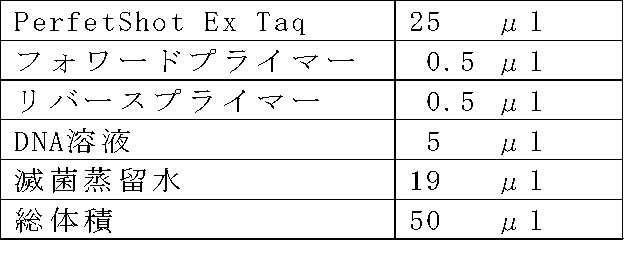 反応液中の各プライマー濃度は、1.0μM
Ex Taqの酵素活性は、 1.25 unit/μl
Ex Taqの酵素活性は、 1.25 unit/μl
表4
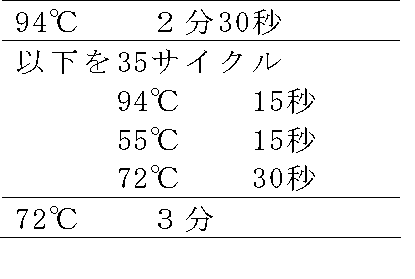
その結果を図2に示す。陽性対照遺伝子である26S rDNA(ハウスキーピング遺伝子)を増幅するためのプライマーとしてミスマッチのないプライマー対(CYEAST-F1とCYEAST-R1)を用いた場合、サンプルを1000倍希釈した場合、26S rDNAについては増幅産物が確認されたがSTA1については増幅産物が確認されなかった。一方、陽性対照遺伝子である酵母の26S rDNAに対してミスマッチのある改変プライマー(CYEAST-R2)を用いた場合、100倍希釈まで26S rDNAとSTA1の両方について増幅産物が確認され、サンプルを1000倍希釈するとどちらについても増幅産物は確認されなかった。すなわち、ミスマッチを有する改変プライマーを含むプライマー対(CYEAST-F1とCYEAST-R2)を用いてPCRを行った場合、検出すべき標的遺伝子の検出感度と陽性対照遺伝子の検出感度が同等となることが確認された。
本発明により、PCRによる微生物検査において偽陰性を回避することができる。PCR検査において、陽性対照遺伝子配列、たとえばハウスキーピング遺伝子配列の増幅が見られないことを指標としてサンプルにPCRを妨害する物質が含まれている可能性や抽出したDNAの量や質がPCRに供するには不十分である可能性などを推定することができ、検出されるべきであった(サンプル中に存在していた)微生物の存在を見落とすという問題を回避することができる。
参考文献
1.特開2003-284559号公報
2.特開2005-265580号公報
3.特開2008-259454号公報
1.特開2003-284559号公報
2.特開2005-265580号公報
3.特開2008-259454号公報
Claims (12)
- サンプル中に存在し得る微生物の標的遺伝子配列を増幅する第1のプライマー対、および、前記サンプル中の陽性対照遺伝子配列を増幅する第2のプライマー対、を用いてPCR反応を行うことを含む、前記陽性対照遺伝子配列が増幅されるが前記標的遺伝子配列が増幅されない場合に前記微生物が存在しないと判定し、前記陽性対照遺伝子配列が増幅され且つ前記標的遺伝子配列が増幅される場合に前記微生物が存在すると判定する微生物検出方法であって、前記PCR反応における前記標的遺伝子の検出感度と前記陽性対照遺伝子の検出感度が同等である、前記微生物検出方法。
- 第1のプライマー対の少なくとも1つのプライマーに標的遺伝子配列の相補配列に対する変異が存在する、および/または、第2のプライマー対の少なくとも1つのプライマーに陽性対照遺伝子配列の相補配列に対する変異が存在する、請求項1記載の方法。
- 微生物がサッカロミセス・ジアスタチカスであり、標的遺伝子がSTA1であり、陽性対照遺伝子が酵母の26S rDNAである、請求項1または2記載の方法。
- 変異が第1のプライマー対または第2のプライマー対の少なくとも1つのプライマーにおけるヌクレオチドの挿入である、請求項2または3記載の方法。
- 第1のプライマー対が、配列番号1の配列からなるプライマーおよび配列番号3の配列からなるプライマーの対である、請求項4記載の方法。
- 第2のプライマー対が、配列番号4の配列からなるプライマーおよび配列番号5の配列からなるプライマーの対である、請求項2~5のいずれか1項記載の方法。
- サンプル中に存在し得る微生物の標的遺伝子配列を増幅する第1のプライマー対、および、前記サンプル中の陽性対照遺伝子配列を増幅する第2のプライマー対からなるプライマーセットであって、同一のPCR反応条件における前記標的遺伝子の検出感度と前記陽性対照遺伝子の検出感度が同等である、前記プライマーセット。
- 第1のプライマー対の少なくとも1つのプライマーに標的遺伝子配列の相補配列に対する変異が存在する、および/または、第2のプライマー対の少なくとも1つのプライマーに陽性対照遺伝子配列の相補配列に対する変異が存在する、請求項7記載のプライマーセット。
- 変異が第1のプライマー対または第2のプライマー対の少なくとも1つのプライマーにおけるヌクレオチドの挿入である、請求項7または8記載のプライマーセット。
- 第1のプライマー対が、配列番号1の配列からなるプライマーおよび配列番号3の配列からなるプライマーの対である、請求項9記載のプライマーセット。
- 第2のプライマー対が配列番号4の配列からなるプライマーおよび配列番号5の配列からなるプライマーの対である、請求項9または10記載のプライマーセット。
- 請求項7~11のいずれか1項記載のプライマーセットを含む微生物検出用PCRキット。
Priority Applications (1)
| Application Number | Priority Date | Filing Date | Title |
|---|---|---|---|
| CN201180020046.4A CN102859002B (zh) | 2010-04-21 | 2011-04-19 | 排除假阴性的pcr检测方法和其中使用的引物 |
Applications Claiming Priority (2)
| Application Number | Priority Date | Filing Date | Title |
|---|---|---|---|
| JP2010097584A JP2011223940A (ja) | 2010-04-21 | 2010-04-21 | 偽陰性を排除するpcr検査方法およびそれに使用するプライマー |
| JP2010-097584 | 2010-04-21 |
Publications (1)
| Publication Number | Publication Date |
|---|---|
| WO2011132667A1 true WO2011132667A1 (ja) | 2011-10-27 |
Family
ID=44834186
Family Applications (1)
| Application Number | Title | Priority Date | Filing Date |
|---|---|---|---|
| PCT/JP2011/059608 Ceased WO2011132667A1 (ja) | 2010-04-21 | 2011-04-19 | 偽陰性を排除するpcr検査方法およびそれに使用するプライマー |
Country Status (3)
| Country | Link |
|---|---|
| JP (1) | JP2011223940A (ja) |
| CN (1) | CN102859002B (ja) |
| WO (1) | WO2011132667A1 (ja) |
Cited By (2)
| Publication number | Priority date | Publication date | Assignee | Title |
|---|---|---|---|---|
| EP3714062A4 (en) * | 2017-11-24 | 2021-01-13 | Ricoh Company, Ltd. | DETECTION DETERMINATION METHOD, DETECTION DETERMINATION DEVICE, DETECTION DETERMINATION PROGRAM AND DEVICE |
| CN112280894A (zh) * | 2019-07-22 | 2021-01-29 | 株式会社岛津制作所 | 核酸的检测方法 |
Families Citing this family (6)
| Publication number | Priority date | Publication date | Assignee | Title |
|---|---|---|---|---|
| CN103409541B (zh) * | 2013-08-19 | 2014-10-01 | 苏州吉泰生物科技有限公司 | 一种试剂盒在检测多种生物pcr反应假阴性中的用途 |
| CN103409544B (zh) * | 2013-08-19 | 2014-08-20 | 苏州吉泰生物科技有限公司 | 一种引物在检测多种生物的pcr反应假阴性中的用途 |
| CN103409548B (zh) * | 2013-08-19 | 2014-12-03 | 苏州吉泰生物科技有限公司 | 一种适用于多种生物的检测pcr反应假阴性的引物 |
| CN103409542B (zh) * | 2013-08-19 | 2015-04-22 | 苏州吉泰生物科技有限公司 | 一种检测多种生物的pcr反应假阴性的试剂盒 |
| WO2019093530A1 (ja) | 2017-11-13 | 2019-05-16 | 株式会社リコー | 検出判定用デバイス |
| US20220235424A1 (en) | 2019-05-31 | 2022-07-28 | Teknologian Tutkimuskeskus Vtt Oy | A METHOD FOR DETERMINING A YEAST HAVING EXTRACELLULAR GLUCOAMYLASE STA1p ACTIVITY IN A SAMPLE AND TOOLS AND USES RELATED THERETO |
Citations (5)
| Publication number | Priority date | Publication date | Assignee | Title |
|---|---|---|---|---|
| JPH09299090A (ja) * | 1996-05-09 | 1997-11-25 | Suntory Ltd | S.diastaticusの検出に用いるプライマー |
| JP2005052028A (ja) * | 2003-07-31 | 2005-03-03 | Hamamatsu Kagaku Gijutsu Kenkyu Shinkokai | バラ香気成分の生合成酵素とこれを利用したバラ香気成分製造方法 |
| JP2005102623A (ja) * | 2003-09-30 | 2005-04-21 | Toru Nishikawa | 統合失調症関連タンパク質及びそれをコードする遺伝子 |
| JP2006525809A (ja) * | 2003-05-13 | 2006-11-16 | ジェン−プロウブ インコーポレイテッド | 抗生物質耐性微生物を同定するための方法およびキット |
| JP2008289493A (ja) * | 1996-11-04 | 2008-12-04 | Geneohm Sciences Canada Inc | 微生物研究室での診断のための臨床検体からの共通の細菌性及び真菌性病原体並びに関連する抗生物質耐性遺伝子を迅速に検出及び同定するための種特異的、属特異的及び普遍的プローブ及びプライマー |
Family Cites Families (5)
| Publication number | Priority date | Publication date | Assignee | Title |
|---|---|---|---|---|
| PT1334210E (pt) * | 2000-11-16 | 2006-07-31 | Danmarks Jordbrugsforskning Mi | Ensaio genetico para identificacao de portadores de malformacao vertebral complexa em gado bovino |
| WO2003064615A2 (en) * | 2002-01-31 | 2003-08-07 | University Of Utah | Amplifying repetitive nucleic acid sequences |
| EP2418287B1 (en) * | 2002-10-11 | 2013-09-18 | Erasmus Universiteit Rotterdam | Nucleic acid amplification primers for PCR-based clonality studies of the TCR-beta gene |
| WO2008059578A1 (en) * | 2006-11-16 | 2008-05-22 | Olympus Corporation | Multiplex pcr method |
| JP2008125471A (ja) * | 2006-11-22 | 2008-06-05 | Olympus Corp | マルチプレックスな核酸増幅方法 |
-
2010
- 2010-04-21 JP JP2010097584A patent/JP2011223940A/ja active Pending
-
2011
- 2011-04-19 WO PCT/JP2011/059608 patent/WO2011132667A1/ja not_active Ceased
- 2011-04-19 CN CN201180020046.4A patent/CN102859002B/zh active Active
Patent Citations (5)
| Publication number | Priority date | Publication date | Assignee | Title |
|---|---|---|---|---|
| JPH09299090A (ja) * | 1996-05-09 | 1997-11-25 | Suntory Ltd | S.diastaticusの検出に用いるプライマー |
| JP2008289493A (ja) * | 1996-11-04 | 2008-12-04 | Geneohm Sciences Canada Inc | 微生物研究室での診断のための臨床検体からの共通の細菌性及び真菌性病原体並びに関連する抗生物質耐性遺伝子を迅速に検出及び同定するための種特異的、属特異的及び普遍的プローブ及びプライマー |
| JP2006525809A (ja) * | 2003-05-13 | 2006-11-16 | ジェン−プロウブ インコーポレイテッド | 抗生物質耐性微生物を同定するための方法およびキット |
| JP2005052028A (ja) * | 2003-07-31 | 2005-03-03 | Hamamatsu Kagaku Gijutsu Kenkyu Shinkokai | バラ香気成分の生合成酵素とこれを利用したバラ香気成分製造方法 |
| JP2005102623A (ja) * | 2003-09-30 | 2005-04-21 | Toru Nishikawa | 統合失調症関連タンパク質及びそれをコードする遺伝子 |
Non-Patent Citations (1)
| Title |
|---|
| YAMAUCHI, H. ET AL.: "Rapid methods for detecting Saccharomyces diastaticus, a beer spoilage yeast, using the polymerase chain reaction", J. AM. SOC. BRE. CHEM., vol. 56, no. 2, 1998, pages 58 - 63 * |
Cited By (2)
| Publication number | Priority date | Publication date | Assignee | Title |
|---|---|---|---|---|
| EP3714062A4 (en) * | 2017-11-24 | 2021-01-13 | Ricoh Company, Ltd. | DETECTION DETERMINATION METHOD, DETECTION DETERMINATION DEVICE, DETECTION DETERMINATION PROGRAM AND DEVICE |
| CN112280894A (zh) * | 2019-07-22 | 2021-01-29 | 株式会社岛津制作所 | 核酸的检测方法 |
Also Published As
| Publication number | Publication date |
|---|---|
| CN102859002B (zh) | 2016-05-25 |
| CN102859002A (zh) | 2013-01-02 |
| JP2011223940A (ja) | 2011-11-10 |
Similar Documents
| Publication | Publication Date | Title |
|---|---|---|
| WO2011132667A1 (ja) | 偽陰性を排除するpcr検査方法およびそれに使用するプライマー | |
| Cocolin et al. | Molecular detection and identification of Brettanomyces/Dekkera bruxellensis and Brettanomyces/Dekkera anomalus in spoiled wines | |
| Chen et al. | Rapid Sanger sequencing of the 16S rRNA gene for identification of some common pathogens | |
| Torija et al. | Identification and quantification of acetic acid bacteria in wine and vinegar by TaqMan–MGB probes | |
| Rodríguez-Lázaro et al. | Real-time PCR in food science: PCR diagnostics | |
| CN103328652B (zh) | 测量用于测定未纯化的样品中细胞生活力的酶活性的方法 | |
| WO2011053871A2 (en) | Multi-primer assay for mycoplasma detection | |
| Bruno et al. | One step forwards for the routine use of high‐throughput DNA sequencing in environmental monitoring. An efficient and standardizable method to maximize the detection of environmental bacteria | |
| Jara et al. | Analysis of several methods for the extraction of high quality DNA from acetic acid bacteria in wine and vinegar for characterization by PCR-based methods | |
| DK3105324T3 (en) | NGS SYSTEM CONTROL AND PROCEDURES COMPREHENSIVE THESE | |
| WO2021072057A1 (en) | Highly multiplexed detection of nucleic acids | |
| CN105368950B (zh) | 一种检测蓝藻质粒的定量pcr试剂盒及应用 | |
| US20090136930A1 (en) | Method for the identification of microorganisms by means of in situ hybridization and flow cytometry | |
| JP5048622B2 (ja) | 乳酸菌検出用pcrプライマー | |
| Lee et al. | Field applications for on-site DNA extraction and qPCR | |
| CN116926216A (zh) | 一种不动杆菌属微生物的快速分析方法 | |
| JP2005525804A (ja) | insituハイブリダイゼーションおよびフローサイトメトリーを用いる微生物の同定方法 | |
| US9738939B2 (en) | Method for differentiating between living and dead cells | |
| CN114317808A (zh) | 嗜热真菌的定量检测试剂盒、检测方法及应用 | |
| RU2432402C2 (ru) | НАБОР ПРАЙМЕРОВ, ИСПОЛЬЗУЕМЫЙ ДЛЯ ОПРЕДЕЛЕНИЯ ДРОЖЖЕЙ РОДА Saccharomyces | |
| JP2005006556A (ja) | ビール有害菌の検出方法 | |
| JP2010046016A (ja) | 微生物の検出方法 | |
| JP5873356B2 (ja) | モニリエラ属真菌の検出方法 | |
| RU2716115C1 (ru) | Способ идентификации и количественной оценки патогенных и условно-патогенных бактерий в пищевых субстратах с использованием высокопроизводительного секвенирования | |
| KR101657043B1 (ko) | 그람양성 식중독 유발 세균 검출용 올리고뉴클레오타이드 및 이의 용도 |
Legal Events
| Date | Code | Title | Description |
|---|---|---|---|
| WWE | Wipo information: entry into national phase |
Ref document number: 201180020046.4 Country of ref document: CN |
|
| 121 | Ep: the epo has been informed by wipo that ep was designated in this application |
Ref document number: 11772002 Country of ref document: EP Kind code of ref document: A1 |
|
| NENP | Non-entry into the national phase |
Ref country code: DE |
|
| 122 | Ep: pct application non-entry in european phase |
Ref document number: 11772002 Country of ref document: EP Kind code of ref document: A1 |